EP3379791A1 - Procédé et système pour faciliter la sécurité de réseaux - Google Patents
Procédé et système pour faciliter la sécurité de réseaux Download PDFInfo
- Publication number
- EP3379791A1 EP3379791A1 EP17186978.7A EP17186978A EP3379791A1 EP 3379791 A1 EP3379791 A1 EP 3379791A1 EP 17186978 A EP17186978 A EP 17186978A EP 3379791 A1 EP3379791 A1 EP 3379791A1
- Authority
- EP
- European Patent Office
- Prior art keywords
- devices
- security
- network
- security system
- sensors
- Prior art date
- Legal status (The legal status is an assumption and is not a legal conclusion. Google has not performed a legal analysis and makes no representation as to the accuracy of the status listed.)
- Withdrawn
Links
Images

Classifications
-
- H—ELECTRICITY
- H04—ELECTRIC COMMUNICATION TECHNIQUE
- H04L—TRANSMISSION OF DIGITAL INFORMATION, e.g. TELEGRAPHIC COMMUNICATION
- H04L63/00—Network architectures or network communication protocols for network security
- H04L63/14—Network architectures or network communication protocols for network security for detecting or protecting against malicious traffic
- H04L63/1408—Network architectures or network communication protocols for network security for detecting or protecting against malicious traffic by monitoring network traffic
- H04L63/1425—Traffic logging, e.g. anomaly detection
-
- G—PHYSICS
- G06—COMPUTING OR CALCULATING; COUNTING
- G06N—COMPUTING ARRANGEMENTS BASED ON SPECIFIC COMPUTATIONAL MODELS
- G06N20/00—Machine learning
Definitions
- the present subject matter is related, in general to network security and more particularly, but not exclusively to a method and a system for facilitating network security.
- the method includes configuring a network comprising a plurality of devices associated with the security system. Further, each of the plurality of devices is provided with one or more sensors for detecting one or more security threats or anomalies in behavior of the plurality of devices. The method further includes generating a security grid for the network using the plurality of devices such that the one or more sensors of one device of the plurality of devices are peered with the one or more sensors of one or more other devices. Further, the method includes building a behavior pattern corresponding to each of the plurality of devices. The behavior pattern is built by continuously monitoring and learning from one or more security related events being captured by the one or more sensors of the plurality of devices.
- the method includes capturing an activity performed by at least one device of the plurality of devices.
- the method further includes identifying a context of an operating environment of the network when the activity is performed.
- the operating environment comprises one or more operating parameters of the network.
- the method further includes determining a deviation of the at least one device by comparing the activity with the behavior pattern associated with the at least one device.
- the method includes determining a level of the deviation based on the context of the operating environment.
- the method further includes determining occurrences of the activity performed by the other devices, apart from the at least one device, of the plurality of devices.
- the method includes tagging the at least one device as an anomalous device or a non-anomalous device based on the level of deviation and the occurrences of the activity.
- the present disclosure relates to security system for facilitating network security.
- the system comprises a processor and a memory communicatively coupled to the processor.
- the memory stores processor-executable instructions, which, on execution, cause the processor to configure a network comprising a plurality of devices associated with the security system.
- each of the plurality of devices is provided with one or more sensors for detecting one or more security threats or anomalies in behavior of the plurality of devices.
- the processor further generates a security grid for the network using the plurality of devices such that the one or more sensors of one device of the plurality of devices are peered with the one or more sensors of one or more other devices. Further, the processor builds a behavior pattern corresponding to each of the plurality of devices.
- the behavior pattern is built by continuously monitoring and learning from one or more security related events being captured by the one or more sensors of the plurality of devices.
- the processor further captures an activity performed by at least one device of the plurality of devices. Further, the processor identifies a context of an operating environment of the network when the activity is performed. The operating environment comprises one or more operating parameters of the network.
- the processor further determines a deviation of the at least one device by comparing the activity with the behavior pattern associated with the at least one device. Further, the processor determines a level of the deviation based on the context of the operating environment.
- the processor further determines occurrences of the activity performed by the other devices, apart from the at least one device, of the plurality of devices. Further, the processor tags the at least one device as an anomalous device or a non-anomalous device based on the level of deviation and the occurrences of the activity.
- the present disclosure relates to a non-transitory computer readable medium including instructions stored thereon that when processed by at least one processor cause a security system to perform the acts of configuring a network comprising a plurality of devices associated with the security system.
- each of the plurality of devices is provided with one or more sensors for detecting one or more security threats or anomalies in behavior of the plurality of devices.
- the security system further generates a security grid for the network using the plurality of devices such that the one or more sensors of one device of the plurality of devices are peered with the one or more sensors of one or more other devices. Further, the security system builds a behavior pattern corresponding to each of the plurality of devices.
- the behavior pattern is built by continuously monitoring and learning from one or more security related events being captured by the one or more sensors of the plurality of devices.
- the security system further captures an activity performed by at least one device of the plurality of devices. Further, the security system identifies a context of an operating environment of the network when the activity is performed. The operating environment comprises one or more operating parameters of the network.
- the security system further determines a deviation of the at least one device by comparing the activity with the behavior pattern associated with the at least one device. Further, the security system determines a level of the deviation based on the context of the operating environment.
- the security system further determines occurrences of the activity performed by the other devices, apart from the at least one device, of the plurality of devices. Further, the security system tags the at least one device as an anomalous device or a non-anomalous device based on the level of deviation and the occurrences of the activity.
- the present disclosure relates to a method and a security system for facilitating network security.
- the network security may be provided in any enterprise or to a network like internet of things (IOT) or Supervisory control and data acquisition (SCADA) network.
- IOT internet of things
- SCADA Supervisory control and data acquisition
- the method for facilitating the network security is described in conjunction with a server, the said method can also be implemented in various computing systems/devices, other than the server.
- a lot of computing devices like computers, laptops, desktops, smartphones and other computing devices are deployed. These computing devices may be located at same location or may be remotely located.
- the computing devices connected in a home network of the enterprise, interact with each other, and various sensitive information is transmitted and received. However, many times, the computing devices are accessed outside the home network either due to requirement of project or due to wish of a user. In any of these scenarios, there may be a high risk of cyber-attacks or network threat on the computing devices. Even within the home network, the computing devices are prone to the security attacks. These attacks may be disastrous as they not only lead to data/information loss, but may also result in financial losses for the enterprise.
- the present disclosure focusses on different perspectives. For example, from the device perspective, the present disclosure discloses a monitoring and learning technique in which the security system learns from the activities of the devices. This helps in understanding the behavior of the devices.
- the present disclosure identifies context of an operating environment of the network.
- the operating environment includes the operating parameters like a geography or location of devices, a type of network, a type of applications, and a type of operating system running on the devices. Consideration of both perspectives provides an overall view of the environment and makes the network robust and secure.
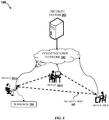
- FIG. 1 shows an exemplary environment for facilitating network security in accordance with some embodiments of the present disclosure.
- the environment 100 includes a communication network 101, a security system 102, device 103-1, device 103-2 and device 103-3.
- the device 103-1, device 103-2 and device 103-3 may be collectively and individually referred to as devices 103, are provided with one or more sensors 104.
- the one or more sensors 104 may include an anti-malware sensor, an anti-phishing sensor, an anti-bot sensor, an anti-data theft sensor, and an anti-ransomware sensor.
- the devices 103 may be located at the same location or may be remotely located.
- a security grid 105 (shown as dotted lines) is generated for the network such that the sensors from one device 103 are connected with the sensor(s) of another device 103.
- the security grid 105 generated may indicate different groups.
- the security grid 105 may be a financial grid i.e., a grid indicating a group of devices 103 employed for financial activities.
- other security grids 105 like mobile grid or administrator grid or any other grid may be generated based on the types of activities in which the devices 103 are involved.
- FIG. 1 only one security grid 105 is shown for ease of understanding. However, any number of security grids 105 may be generated depending upon the size of the network.
- the security system 102 may monitor the activities of the devices 103 and security related events captured by the sensors 104. Based on the monitoring, the security system 102 learns about the behaviors of the devices 103 and may build a behavior pattern. This helps the security system 102 to differentiate between normal and abnormal activities performed by the devices 103. However, the security system 102 of the present disclosure not only relies on the behavior pattern, but may also consider the various factors affecting the activities of the devices. One of the factors may be the operating environment of the network in which the devices 103 are deployed. Thus, based on the above, the security system 102 may identify abnormality in the devices 103 if any deviation is detected from the normal behavior.
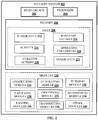
- FIG. 2 shows a detailed block diagram illustrating a security system 102 for facilitating network security in accordance with some embodiments of the present disclosure.
- the security system 102 includes an I/O interface 202, a processor 204, and a memory 206.
- the I/O interface 202 may be configured to receive sensor data 212 captured by one or more sensors 104 provided in the devices 103.
- the memory 206 may be communicatively coupled to the processor 202.
- the processor 202 may be configured to perform one or more functions of the security system 102 for facilitating network security.
- the security system 102 may include data 208 and modules 210 for performing various operations in accordance with the embodiments of the present disclosure.
- the data 208 may be stored within the memory 206 and may include, without limiting to, sensor data 212, behavior pattern 214, activity 216, operating parameters 218, curative actions 220, and other data 222.
- the data 208 may be stored within the memory 206 in the form of various data structures. Additionally, the data 208 may be organized using data models, such as relational or hierarchical data models.
- the other data 222 may store data, including temporary data and temporary files, generated by the modules 210 for performing the various functions of the security system 102.
- the sensor data 212 may include data captured by the one or more sensors 104 provided in the devices 103. Since the devices 103 may be involved in different activities, various security related events occurred while performing the activities may be captured by the sensors 104 as a sensor data 212 and transmitted to the security device 102.
- the behavior pattern 214 may be generated based on continuous monitoring and learning from the security related events captured by the sensors 104.
- the behavior pattern indicates the nature of activities performed by the devices 103. This helps the security system 102 detect any abnormal behavior of the devices 103 due to any possible network security attacks.
- the activity 216 may be one or more operations performed by the devices 103.
- the activity 216 is captured by the security system 102 and further utilized for determining any deviation from the normal behavior.
- the operating environment includes the operating parameters 218 of the network in which the devices 103 are deployed.
- the operating parameters 218 may include geography or location associated with the devices, type of network, and type of applications and type of operating system running on the devices 103.
- the curative actions 220 may be a remediation package which includes different actions for addressing any abnormality detected in the devices 103.
- the curative actions 220 may include creating new policy, modifying an existing policy, deleting files, deleting processes, deleting registries, updating software modules installed in the devices 103 and the like.
- the data 208 may be processed by one or more modules 210 of the security system 102.
- the one or more modules 210 may be stored as a part of the processor 204.
- the one or more modules 210 may be communicatively coupled to the processor 204 for performing one or more functions of the security system 102.
- the modules 210 may include, without limiting to, a configuring module 224, a generating module 226, a building module 228, a capturing module 230, an identifying module 232, a determining module 234, a tagging module 236, a transmitting module 238, and other modules 240.
- module' refers to an application specific integrated circuit (ASIC), an electronic circuit, a processor (shared, dedicated, or group) and memory that execute one or more software or firmware programs, a combinational logic circuit, and/or other suitable components that provide the described functionality.
- ASIC application specific integrated circuit
- the other modules 240 may be used to perform various miscellaneous functionalities of the security system 102. It will be appreciated that such modules 210 may be represented as a single module or a combination of different modules.
- the configuring module 224 may configure a network comprising a plurality of devices 103 associated with the security system 102.
- Each of the plurality of devices 103 is provided with one or more sensors 104.
- the sensors 104 may detect one or more security threats or anomalies in behavior of the plurality of devices 103.
- the sensors 104 may include, but not limited to, an anti-malware sensor, anti-phishing sensor, anti-bot sensor, anti-data theft sensor, and anti-ransomware sensor.
- the generating module 226 may generate a security grid 105 for the network by using the plurality of devices 103.
- the security grid 105 is generated such that the sensors 104 of one device 103, of the plurality of devices 103, is peered with the one or more sensors 104 of other devices 103.
- the generation of the security grid 105 may allow the devices to interact with each other for sharing any relevant information.
- the security grid 105 may also help the security system 102 to quickly enquire amongst the devices 103 if any malicious activity is detected in any one device 103.
- the security system 102 continuously monitors the activities of the devices 103.
- the devices 103 may start interacting with each other. During the interaction, the devices 103 may go through various security related events associated with network environment, processes, services, registry, and hardware interrupts. All the events may be captured by the sensors 104 provided in the devices 103.
- the device 103 may receive an email from an unknown sender.
- the anti-phishing sensor of the device 103 may monitor the email closely and may capture the event of receiving an email from an unknown sender.
- the user may read that email and may click on a link (URL) mentioned in the email.
- URL link
- the anti-bot sensor of the device 103 may capture such events and may stop the service and inform the abnormality to the security system 102.
- All the data captured by the sensors 104 may be referred as sensor data 212.
- the sensor data 212 may be captured and transmitted to the security system 102 for analysis.
- the security system 102 may create a log of the sensor data 212 and may analyze it from time to time.
- the aforementioned events are not only continuously captured and monitored by the security system 102, but also allow the security system 102 to learn (i.e., self-learning) from such continuous monitoring.
- the building module 228 of the security system 102 may build a behavior pattern 214 corresponding to each device 103 of the plurality of devices 103.
- the building of the behavior pattern 214 may help the security system 102 understand about the routine activities being performed by each of the plurality of devices 103.
- the capturing module 230 of the security system 102 may capture an activity performed by the plurality of devices 102.
- the activity may indicate the current activity being performed by the device 102.
- the activities may include a login activity, email reading, opening of an attachment, browsing internet, visiting a website, downloading software, and installing software on the device 103. It would be understood by a person skilled in art that the capturing module 230 may also capture any activity performed by the device 103. The captured activities are used for determining any deviation or abnormality in the behavior of the devices 103.
- the security system 102 is not only dependent upon the current activities captured for determining the deviation, but also considers the operating environment of the network.
- the identifying module 232 of the security system 102 may identify a context of the operating environment of the network once the activity is performed and captured.
- the operating environment includes one or more operating parameters 218 of the network.
- the operating parameters 218 may include geography or current location of the devices 103, a type of network, a type of applications, and/or type of operating systems running on the devices 103. The consideration of the operating environment makes the security system 102 mature and robust while determining the abnormality in the devices 103.
- the determining module 234 of the security system 102 may determine the deviation of any device 103 by comparing its activity with the behavior pattern associated with that device 103. This provides clarity to the security system 102 that whether the device 103 has been deviating from its normal behavior as per the behavior pattern 214 built for that device 103. Even if it is determined that device 102 has been deviating from its normal behavior, the security system 102 does not finalize the abnormality of the device 103 at this stage. This is because there may be other perspectives or valid reasons due to which such a deviation is detected in the normal behavior.
- the determining module 234 of security system 102 may now determine a level of the deviation based on the context of the operating environment. As discussed above, there may be different operating parameters 218 in which the devices 103 may operate. Post determining the level of deviation, the determining module 234 may now determine the occurrences of the activity in other devices 103 in the network. The operating parameters 218 and occurrences are considered to determine the genuineness of the deviation of the device 103. For example, if the deviation is determined due to a change in the location and the operating system of the device 103, and such a change is genuine or, in other words, is required as per the project requirement, the device 103 may not be determined as the abnormal device.
- the tagging module 236 may tag the device 103 as an anomalous device. For example, if the device 103 in the entire security grid 105 is the only device which has changed its operating system or changed its location without any valid requirement, such device 103 is tagged as the anomalous device. Further, it may also happen that the anomalous device may affect other devices in the security grid 105. Thus, once the device 103 or any other devices 103 is determined to be anomalous, the one or more curative actions 220 are required to be taken.
- the generating module 226 of the security system 102 may generate one or more curative actions 220 for the device 103 and the other devices 103 in order to address the anomaly detected in the behavior of that device 103 and the other devices 103 due to the deviation.
- the curative actions 220 may include creating new policies, modifying existing policies, deleting files present in the devices, deleting processes, deleting registries, updating software modules installed in the devices 103 and/or the like.
- the transmitting module 238 of the security system 102 may transmit the curative actions 220 to the device 103 and the other devices 103 determined to be anomalous. This way the security device 102 facilitates the network security to devices 103 connected in the network.
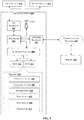
- FIG. 3 shows a flowchart illustrating a method for facilitating network security in an enterprise in accordance with some embodiments of the present disclosure.
- the method 300 includes one or more blocks illustrating a method of facilitating network security using security system 102.
- the method 300 may be described in the general context of computer executable instructions.
- computer executable instructions can include routines, programs, objects, components, data structures, procedures, modules, and functions, which perform specific functions or implement specific abstract data types.
- the order in which the method 300 is described is not intended to be construed as a limitation, and any number of the described method blocks can be combined in any order to implement the method. Additionally, individual blocks may be deleted from the methods without departing from the scope of the subject matter described herein. Furthermore, the method can be implemented in any suitable hardware, software, firmware, or combination thereof.
- the method 300 includes configuring, by a security system 102, a network comprising a plurality of devices 103 associated with the security system 102. Further, each of the plurality of devices 103 is provided with one or more sensors 104 for detecting one or more security threats or anomalies in behavior of the plurality of devices.
- the one or more sensors 104 may include at least one of an anti-malware sensor, an anti-phishing sensor, an anti-bot sensor, an anti-data theft sensor, and an anti-ransomware sensor.
- the method 300 includes generating, by the security system 102, a security grid 105 for the network using the plurality of devices 103 such that the one or more sensors 104 of one device 103 of the plurality of devices 103 are peered with the one or more sensors 104 of other devices 103.
- the method 300 includes building, by the security system 102, a behavior pattern corresponding to each of the plurality of devices 103.
- the behavior pattern is built by continuously monitoring and learning from one or more security related events being captured by the one or more sensors 104.
- the one or more security related events may be associated with at least one of a network environment, processes, services, a registry, and hardware interrupts.
- the device 103 may receive an email from an unknown sender (i.e., from a sender not in a sender list).
- the anti-phishing sensor may monitor the email closely.
- the user may read the email and may click on a link mentioned in the email.
- the other security related events may include downloading of an office document, opening and executing a script, connecting to a malicious website.
- the anti-bot sensor may stop the service and inform the abnormality to the security system 102.
- the method 300 includes capturing, by the security system 102, an activity performed by at least one device of the plurality of devices 103.
- the activity may include at least one of a login activity, email reading, opening of an attachment, browsing internet, visiting a website, downloading software, and installing software.
- the method 300 includes identifying, by the security system 102, a context of an operating environment of the network when the activity is performed.
- the operating environment may include one or more operating parameters 218 of the network.
- the one or more operating parameters 218 include geography associated with the plurality of devices 103, a type of network, a type of applications, and/or a type of operating system running on the plurality of devices 103.
- the method 300 includes determining, by the security system 102, a deviation of the at least one device 103 by comparing the activity with the behavior pattern associated with the at least one device 103, a level of the deviation based on the context of the operating environment, and occurrences of the activity performed by the other devices 103, apart from the at least one device 103, of the plurality of devices 103.
- the method 300 includes tagging, by the security system 102, the at least one device 103 as an anomalous device or a non-anomalous device based on the level of deviation and the occurrences of the activity.
- FIG. 4 illustrates a block diagram of an exemplary computer system 400 for implementing embodiments consistent with the present disclosure.
- the computer system 400 may be the security system 102 which is used for facilitating network security.
- the computer system 400 may include a central processing unit (“CPU” or "processor") 402.
- the processor 402 may comprise at least one data processor for executing program components for executing user- or system-generated business processes.
- a user may include a person, a person using a device such as such as those included in this invention, or such a device itself.
- the processor 402 may include specialized processing units such as integrated system (bus) controllers, memory management control units, floating point units, graphics processing units, digital signal processing units, etc.
- the processor 402 may be disposed in communication with one or more input/output (I/O) devices ( 411 and 412 ) via I/O interface 401.
- the I/O interface 401 may employ communication protocols/methods such as, without limitation, audio, analog, digital, stereo, IEEE-1394, serial bus, Universal Serial Bus (USB), infrared, PS/2, BNC, coaxial, component, composite, Digital Visual Interface (DVI), high-definition multimedia interface (HDMI), Radio Frequency (RF) antennas, S-Video, Video Graphics Array (VGA), IEEE 802.n /b/g/n/x, Bluetooth, cellular (e.g., Code-Division Multiple Access (CDMA), HighSpeed Packet Access (HSPA+), Global System For Mobile Communications (GSM), Long-Term Evolution (LTE) or the like), etc.
- CDMA Code-Division Multiple Access
- HSPA+ HighSpeed Packet Access
- GSM Global System For Mobile Communications
- LTE Long-Term Evolution
- the computer system 400 may communicate with one or more I/O devices ( 411 and 412 ).
- the processor 402 may be disposed in communication with a communication network 409 via a network interface 403.
- the network interface 403 may communicate with the communication network 409.
- the network interface 403 may employ connection protocols including, without limitation, direct connect, Ethernet (e.g., twisted pair 10/100/1000 Base T), Transmission Control Protocol/Internet Protocol (TCP/IP), token ring, IEEE 802.11a/b/g/n/x, etc.
- TCP/IP Transmission Control Protocol/Internet Protocol
- IEEE 802.11a/b/g/n/x IEEE 802.11a/b/g/n/x
- the communication network 409 can be implemented as one of the different types of networks, such as intranet or Local Area Network (LAN) and such within the organization.
- the communication network 409 may either be a dedicated network or a shared network, which represents an association of the different types of networks that use a variety of protocols, for example, Hypertext Transfer Protocol (HTTP), Transmission Control Protocol/Internet Protocol (TCP/IP), Wireless Application Protocol (WAP), etc., to communicate with each other.
- HTTP Hypertext Transfer Protocol
- TCP/IP Transmission Control Protocol/Internet Protocol
- WAP Wireless Application Protocol
- the communication network 409 may include a variety of network devices, including routers, bridges, servers, computing devices, storage devices, etc.
- the processor 402 may be disposed in communication with a memory 405 (e.g., RAM 413, ROM 414, etc. as shown in FIG. 4 ) via a storage interface 404.
- the storage interface 404 may connect to memory 405 including, without limitation, memory drives, removable disc drives, etc., employing connection protocols such as Serial Advanced Technology Attachment (SATA), Integrated Drive Electronics (IDE), IEEE-1394, Universal Serial Bus (USB), fiber channel, Small Computer Systems Interface (SCSI), etc.
- the memory drives may further include a drum, magnetic disc drive, magnetooptical drive, optical drive, Redundant Array of Independent Discs (RAID), solid-state memory devices, solid-state drives, etc.
- the memory 405 may store a collection of program or database components, including, without limitation, user/application 406, an operating system 407, web browser 408, etc.
- computer system 400 may store user/application data 406, such as the data, variables, records, etc. as described in this disclosure.
- databases may be implemented as fault-tolerant, relational, scalable, secure databases such as Oracle or Sybase.
- the operating system 407 may facilitate resource management and operation of the computer system 400.
- Examples of operating systems include, without limitation, Apple Macintosh OS X, UNIX, Unix-like system distributions (e.g., Berkeley Software Distribution (BSD), FreeBSD, Net BSD, Open BSD, etc.), Linux distributions (e.g., Red Hat, Ubuntu, K-Ubuntu, etc.), International Business Machines (IBM) OS/2, Microsoft Windows (XP, Vista/7/8, etc.), Apple iOS, Google Android, Blackberry Operating System (OS), or the like.
- a user interface may facilitate display, execution, interaction, manipulation, or operation of program components through textual or graphical facilities.
- GUIs may provide computer interaction interface elements on a display system operatively connected to the computer system 400, such as cursors, icons, check boxes, menus, windows, widgets, etc.
- Graphical User Interfaces may be employed, including, without limitation, Apple Macintosh operating systems' Aqua, IBM OS/2, Microsoft Windows (e.g., Aero, Metro, etc.), Unix X-Windows, web interface libraries (e.g., ActiveX, Java, JavaScript, AJAX, HTML, Adobe Flash, etc.), or the like.
- the computer system 400 may implement a web browser 408.
- the web browser 408 may be a hypertext viewing application, such as Microsoft Internet Explorer, Google Chrome, Mozilla Firefox, Apple Safari, etc. Secure web browsing may be provided using Secure Hypertext Transport Protocol (HTTPS) secure sockets layer (SSL), Transport Layer Security (TLS), etc. Web browsers may utilize facilities such as AJAX, DHTML, Adobe Flash, JavaScript, Java, Application Programming Interfaces (APIs), etc.
- the computer system 400 may implement a mail server stored program component.
- the mail server 416 may be an Internet mail server such as Microsoft Exchange, or the like.
- the mail server 416 may utilize facilities such as Active Server Pages (ASP), ActiveX, American National Standards Institute (ANSI) C++/C#, Microsoft .NET, CGI scripts, Java, JavaScript, PERL, PHP, Python, WebObjects, etc.
- the mail server may utilize communication protocols such as Internet Message Access Protocol (IMAP), Messaging Application Programming Interface (MAPI), Microsoft Exchange, Post Office Protocol (POP), Simple Mail Transfer Protocol (SMTP), or the like.
- the computer system 400 may implement a mail client 415.
- the mail client 415 may be a mail viewing application, such as Apple Mail, Microsoft Entourage, Microsoft Outlook, Mozilla Thunderbird, etc.
- a computer-readable storage medium refers to any type of physical memory on which information or data readable by a processor may be stored.
- a computer-readable storage medium may store instructions for execution by one or more processors, including instructions for causing the processor(s) to perform steps or stages consistent with the embodiments described herein.
- the term "computer-readable medium” should be understood to include tangible items and exclude carrier waves and transient signals, i.e., non-transitory. Examples include Random Access Memory (RAM), Read-Only Memory (ROM), volatile memory, nonvolatile memory, hard drives, Compact Disc (CD) ROMs, Digital Video Disc (DVDs), flash drives, disks, and any other known physical storage media.
- the present disclosure provides a method for facilitating network security by considering different perspectives associated with the network, thereby making the method robust.
- the method of the present disclosure provides a minimal human interaction while facilitating the network security.
- the method of the present disclosure provides self-learning from the activities of the devices monitored in the network.
- the method of the present disclosure helps in reducing the management overheads by providing end-to-end management of the security threats.
- an embodiment means “one or more (but not all) embodiments of the invention(s)" unless expressly specified otherwise.
Landscapes
- Engineering & Computer Science (AREA)
- Computer Security & Cryptography (AREA)
- General Engineering & Computer Science (AREA)
- Computing Systems (AREA)
- Signal Processing (AREA)
- Computer Networks & Wireless Communication (AREA)
- Computer Hardware Design (AREA)
- Software Systems (AREA)
- Theoretical Computer Science (AREA)
- Medical Informatics (AREA)
- General Physics & Mathematics (AREA)
- Mathematical Physics (AREA)
- Physics & Mathematics (AREA)
- Evolutionary Computation (AREA)
- Data Mining & Analysis (AREA)
- Computer Vision & Pattern Recognition (AREA)
- Artificial Intelligence (AREA)
- Data Exchanges In Wide-Area Networks (AREA)
- Computer And Data Communications (AREA)
- Alarm Systems (AREA)
Applications Claiming Priority (1)
| Application Number | Priority Date | Filing Date | Title |
|---|---|---|---|
| IN201741009670 | 2017-03-20 |
Publications (1)
| Publication Number | Publication Date |
|---|---|
| EP3379791A1 true EP3379791A1 (fr) | 2018-09-26 |
Family
ID=59772385
Family Applications (1)
| Application Number | Title | Priority Date | Filing Date |
|---|---|---|---|
| EP17186978.7A Withdrawn EP3379791A1 (fr) | 2017-03-20 | 2017-08-18 | Procédé et système pour faciliter la sécurité de réseaux |
Country Status (2)
| Country | Link |
|---|---|
| US (1) | US20180270260A1 (fr) |
| EP (1) | EP3379791A1 (fr) |
Families Citing this family (5)
| Publication number | Priority date | Publication date | Assignee | Title |
|---|---|---|---|---|
| US11429725B1 (en) * | 2018-04-26 | 2022-08-30 | Citicorp Credit Services, Inc. (Usa) | Automated security risk assessment systems and methods |
| US11546327B2 (en) * | 2018-05-04 | 2023-01-03 | T-Mobile Usa, Inc. | Behavior-based photo identification |
| US11336684B2 (en) * | 2019-06-07 | 2022-05-17 | Lookout, Inc. | Mobile device security using a secure execution context |
| US11790251B1 (en) * | 2019-10-23 | 2023-10-17 | Architecture Technology Corporation | Systems and methods for semantically detecting synthetic driven conversations in electronic media messages |
| CN119150189B (zh) * | 2024-09-02 | 2025-04-11 | 广州来米科技股份有限公司 | 一种基于大数据的电力数据异常检测分析方法及系统 |
Citations (2)
| Publication number | Priority date | Publication date | Assignee | Title |
|---|---|---|---|---|
| US20130031037A1 (en) * | 2002-10-21 | 2013-01-31 | Rockwell Automation Technologies, Inc. | System and methodology providing automation security analysis and network intrusion protection in an industrial environment |
| WO2016073379A2 (fr) * | 2014-11-03 | 2016-05-12 | Vectra Networks, Inc. | Système permettant la mise en œuvre d'une détection de menaces à l'aide de valeurs aberrantes communautaires d'un trafic de réseau quotidien |
Family Cites Families (3)
| Publication number | Priority date | Publication date | Assignee | Title |
|---|---|---|---|---|
| US7930752B2 (en) * | 2005-11-18 | 2011-04-19 | Nexthink S.A. | Method for the detection and visualization of anomalous behaviors in a computer network |
| US9058486B2 (en) * | 2011-10-18 | 2015-06-16 | Mcafee, Inc. | User behavioral risk assessment |
| US20160359695A1 (en) * | 2015-06-04 | 2016-12-08 | Cisco Technology, Inc. | Network behavior data collection and analytics for anomaly detection |
-
2017
- 2017-03-23 US US15/467,192 patent/US20180270260A1/en not_active Abandoned
- 2017-08-18 EP EP17186978.7A patent/EP3379791A1/fr not_active Withdrawn
Patent Citations (2)
| Publication number | Priority date | Publication date | Assignee | Title |
|---|---|---|---|---|
| US20130031037A1 (en) * | 2002-10-21 | 2013-01-31 | Rockwell Automation Technologies, Inc. | System and methodology providing automation security analysis and network intrusion protection in an industrial environment |
| WO2016073379A2 (fr) * | 2014-11-03 | 2016-05-12 | Vectra Networks, Inc. | Système permettant la mise en œuvre d'une détection de menaces à l'aide de valeurs aberrantes communautaires d'un trafic de réseau quotidien |
Also Published As
| Publication number | Publication date |
|---|---|
| US20180270260A1 (en) | 2018-09-20 |
Similar Documents
| Publication | Publication Date | Title |
|---|---|---|
| US11438361B2 (en) | Method and system for predicting an attack path in a computer network | |
| EP3379791A1 (fr) | Procédé et système pour faciliter la sécurité de réseaux | |
| EP3489828B1 (fr) | Procédé et système pour résoudre des événements d'anomalies survenant dans un environnement virtuel en temps réel | |
| US11300481B2 (en) | Method and system for predicting failures in diverse set of asset types in an enterprise | |
| CN106561025B (zh) | 用于提供计算机网络安全的系统和方法 | |
| US20160147646A1 (en) | Method and system for executing automated tests in an integrated test environment | |
| US10459951B2 (en) | Method and system for determining automation sequences for resolution of an incident ticket | |
| EP3147791A1 (fr) | Système et procédé permettant d'améliorer des tests d'intégration dans un environnement informatique en nuage | |
| US20170153936A1 (en) | Root-cause identification system and method for identifying root-cause of issues of software applications | |
| US10824514B2 (en) | Method and system of automating data backup in hybrid cloud and data centre (DC) environment | |
| CA3234316A1 (fr) | Systemes et procedes pour detecter une activite mains-sur-clavier malveillante par l'intermediaire d'un apprentissage automatique | |
| EP3293663A1 (fr) | Procédés et systèmes de gestion intégrée du risque dans des environnements d'entreprise | |
| US9992218B2 (en) | Method and system for managing compliance of one or more network devices | |
| US10249106B2 (en) | Method and system for performing vehicle inspection | |
| US20200226222A1 (en) | Method and system for preventing failures of a product in a virtual testing environment | |
| US11461155B2 (en) | Method and system for predicting an occurrence of a failure condition in a VDI environment | |
| US11847598B2 (en) | Method and system for analyzing process flows for a process performed by users | |
| CA3250981A1 (fr) | Méthode et système de résolution d’incident de cybersécurité | |
| US20180115461A1 (en) | System and method for facilitating optimization and analytics of a managed network | |
| US20230319063A1 (en) | Method and system for securing network functions in disaggregated networks | |
| US10275296B2 (en) | Method and system for resolving one or more errors in an enterprise storage system | |
| US12386986B1 (en) | Endpoint security synchronization | |
| EP4399580B1 (fr) | Moteur de règles pré-entraîné et procédé pour fournir une assistance pour corriger des événements anormaux dans un équipement | |
| US20240012369A1 (en) | Method and a Control System for Dynamic Provisioning of Visual Contents Using Machine Learning | |
| US10341169B2 (en) | Method and a system for generating a notification for an event |
Legal Events
| Date | Code | Title | Description |
|---|---|---|---|
| PUAI | Public reference made under article 153(3) epc to a published international application that has entered the european phase |
Free format text: ORIGINAL CODE: 0009012 |
|
| AK | Designated contracting states |
Kind code of ref document: A1 Designated state(s): AL AT BE BG CH CY CZ DE DK EE ES FI FR GB GR HR HU IE IS IT LI LT LU LV MC MK MT NL NO PL PT RO RS SE SI SK SM TR |
|
| AX | Request for extension of the european patent |
Extension state: BA ME |
|
| STAA | Information on the status of an ep patent application or granted ep patent |
Free format text: STATUS: THE APPLICATION IS DEEMED TO BE WITHDRAWN |
|
| 18D | Application deemed to be withdrawn |
Effective date: 20190327 |