EP3382602A1 - Lebendigkeitstestverfahren und vorrichtung - Google Patents
Lebendigkeitstestverfahren und vorrichtung Download PDFInfo
- Publication number
- EP3382602A1 EP3382602A1 EP18164299.2A EP18164299A EP3382602A1 EP 3382602 A1 EP3382602 A1 EP 3382602A1 EP 18164299 A EP18164299 A EP 18164299A EP 3382602 A1 EP3382602 A1 EP 3382602A1
- Authority
- EP
- European Patent Office
- Prior art keywords
- liveness
- score
- determining
- sub
- post
- Prior art date
- Legal status (The legal status is an assumption and is not a legal conclusion. Google has not performed a legal analysis and makes no representation as to the accuracy of the status listed.)
- Granted
Links
Images





Classifications
-
- G—PHYSICS
- G06—COMPUTING OR CALCULATING; COUNTING
- G06V—IMAGE OR VIDEO RECOGNITION OR UNDERSTANDING
- G06V40/00—Recognition of biometric, human-related or animal-related patterns in image or video data
- G06V40/40—Spoof detection, e.g. liveness detection
- G06V40/45—Detection of the body part being alive
-
- G—PHYSICS
- G06—COMPUTING OR CALCULATING; COUNTING
- G06V—IMAGE OR VIDEO RECOGNITION OR UNDERSTANDING
- G06V10/00—Arrangements for image or video recognition or understanding
- G06V10/70—Arrangements for image or video recognition or understanding using pattern recognition or machine learning
- G06V10/82—Arrangements for image or video recognition or understanding using pattern recognition or machine learning using neural networks
-
- G—PHYSICS
- G06—COMPUTING OR CALCULATING; COUNTING
- G06V—IMAGE OR VIDEO RECOGNITION OR UNDERSTANDING
- G06V40/00—Recognition of biometric, human-related or animal-related patterns in image or video data
- G06V40/10—Human or animal bodies, e.g. vehicle occupants or pedestrians; Body parts, e.g. hands
- G06V40/16—Human faces, e.g. facial parts, sketches or expressions
- G06V40/161—Detection; Localisation; Normalisation
- G06V40/167—Detection; Localisation; Normalisation using comparisons between temporally consecutive images
-
- G—PHYSICS
- G06—COMPUTING OR CALCULATING; COUNTING
- G06V—IMAGE OR VIDEO RECOGNITION OR UNDERSTANDING
- G06V40/00—Recognition of biometric, human-related or animal-related patterns in image or video data
- G06V40/10—Human or animal bodies, e.g. vehicle occupants or pedestrians; Body parts, e.g. hands
- G06V40/16—Human faces, e.g. facial parts, sketches or expressions
- G06V40/168—Feature extraction; Face representation
- G06V40/171—Local features and components; Facial parts ; Occluding parts, e.g. glasses; Geometrical relationships
-
- G—PHYSICS
- G06—COMPUTING OR CALCULATING; COUNTING
- G06V—IMAGE OR VIDEO RECOGNITION OR UNDERSTANDING
- G06V40/00—Recognition of biometric, human-related or animal-related patterns in image or video data
- G06V40/10—Human or animal bodies, e.g. vehicle occupants or pedestrians; Body parts, e.g. hands
- G06V40/16—Human faces, e.g. facial parts, sketches or expressions
- G06V40/172—Classification, e.g. identification
-
- G—PHYSICS
- G06—COMPUTING OR CALCULATING; COUNTING
- G06V—IMAGE OR VIDEO RECOGNITION OR UNDERSTANDING
- G06V40/00—Recognition of biometric, human-related or animal-related patterns in image or video data
- G06V40/40—Spoof detection, e.g. liveness detection
Definitions
- the following description relates to a liveness test method and apparatus.
- a computing device determines whether to allow an access based on verification information provided from a user.
- the verification information may include information, such as, for example, a password input from the user, a pattern input from the user, and biometric information of the user.
- the face anti-spoofing technique verifies whether a face of a user input to the computing device is a fake face or a genuine face.
- Features such as, local binary patterns (LBP), histogram of oriented gradients (HOG), and difference of Gaussians, are extracted from an input image and a determination is made whether the input face is the fake face based on the extracted features.
- Face spoofing may attack photos, moving pictures, masks, and the like. In terms of face verification, it is important to recognize such biometric mimicking.
- a liveness test method including determining a pre-liveness score based on sub-images acquired from an input image, determining a post-liveness score based on a recognition model for recognizing an object included in the input image, and determining a liveness of the object based on any one or any combination of the pre-liveness score and the post-liveness score.
- the pre-liveness score may include acquiring different types of the sub-images from the input image based on the object included in the input image, determining liveness scores corresponding to the sub-images, and determining the pre-liveness score based on the determined liveness scores.
- the sub-images may include any two or any combination of a first sub-image corresponding to an object area that includes the object, a second sub-image corresponding to a partial area of the object area, and a third sub-image corresponding to the object area and a background area of the object.
- the determined liveness scores may include a first liveness score corresponding to the first sub-image, a second liveness score corresponding to the second sub-image, and a third liveness score corresponding to the third sub-image, and the first liveness score is determined based on a first liveness test model, the second liveness score is determined based on a second liveness test model, and the third liveness score is determined based on a third liveness test model.
- the determining of the liveness scores may include resizing a size of the first sub-image, and determining a first liveness score from the resized first sub-image using a first liveness test model.
- the determining of the liveness scores may include acquiring the second sub-image by cropping the partial area from the object area, and determining a second liveness score from the cropped second sub-image using a second liveness test model.
- the determining of the pre-liveness score based on the determined liveness scores may include applying a weight to one or more of the determined liveness scores, and determining the pre-liveness score based on a result of the applying of the weight.
- the determining of the post-liveness score may include determining fourth liveness scores from feature vectors output from hidden layers within the recognition model, and determining the post-liveness score based on the fourth liveness scores.
- the determining of the fourth liveness scores may include determining the fourth liveness scores from the feature vectors using a fourth liveness test model.
- determining of the post-liveness score based on the fourth liveness scores may include applying a weight to at least one of the fourth liveness scores, and determining the post-liveness score based on a result of the applying of the weight.
- the determining of the post-liveness score may include determining the post-liveness score in response to the object being determined to be live based on the pre-liveness score.
- the determining the liveness of the object may include determining the liveness of the object based on whether any one or any combination of the pre-liveness score and the post-liveness score satisfies a threshold condition.
- the method may include determining whether the object is a pre-registered object based on the recognition model.
- the determining of the post-liveness score may include determining the post-liveness score in response to the object being determined to be live based on the pre-liveness score, and the object being determined to be the pre-registered object.
- a liveness test apparatus including a processor configured to determine a pre-liveness score based on sub-images acquired from an input image, to determine a post-liveness score based on a recognition model for recognizing an object included in the input image, and to determine a liveness of the object based on any one or any combination of the pre-liveness score and the post-liveness score.
- the processor may be configured to acquire different types of sub-images from the input image based on the object included in the input image, to determine liveness scores corresponding to the sub-images, and to determine the pre-liveness score based on the determined liveness scores.
- the processor may be configured to determine fourth liveness scores from feature vectors output from hidden layers within the recognition model and to determine the post-liveness score based on the fourth liveness scores.
- the processor may be configured to determine the fourth liveness scores from the feature vectors using a fourth liveness test model.
- the processor may be configured to apply a weight to at least one of the fourth liveness scores, and to determine the post-liveness score based on a result of the applying of the weight.
- the liveness test apparatus may include a memory configured to store instructions to be executed by the processor.
- first, second, A, B, (a), and (b) may be used herein to describe components. However, such terms are not used to define an essence, order, or sequence of a corresponding component, but are used merely to distinguish the corresponding component from other components. For example, a component referred to as a first component may be referred to instead as a second component, and another component referred to as a second component may be referred to instead as a first component.
- the first component may be directly “connected,” “coupled,” or “joined” to the second component, or a third component may be “connected,” “coupled,” or “joined” between the first component and the second component.
- a third component may not be “connected” or “joined” between the first component and the second component. Similar expressions, for example, “between” and “immediately between” and “adjacent to” and “immediately adjacent to,” are also to be construed in this manner.
- FIGS. 1 and 2 illustrate examples of a liveness test.
- a liveness test refers to a test for determining whether a test subject is a live object.
- the liveness test may be used to test whether a face in an image captured from a camera is a true face or a fake face.
- the liveness test may be used to test a liveness of a verification subject, i.e., a test subject in association with a user verification that is performed in, for example, a user log-in, a payment service, and an entrance control.
- the liveness test may be used to distinguish a non-live object, for example, a photo, paper, an image, and a model, from a live object, for example, a live person.
- An invalid user may attempt to cause a false acceptance of the user verification system using spoofing techniques.
- face verification the invalid user may submit a color photo or a moving picture that includes a face of a valid user, or a model that mimics a facial shape of the valid user to a camera to cause false acceptance.
- the liveness test serves to filter out a verification attack, such as a spoofing attack that is launched using substitutes such as a photo, a moving picture, mask, or a model, and prevents the false acceptance. If the verification target is determined to not be live as a result of the liveness test, a user verification procedure is not executed. In another example, the user verification is determined as a failure in a final stage regardless of a result of the user verification.
- a liveness test apparatus is included in a computing device 120.
- the computing device 120 is a device, such as, for example, an intelligent agent, a mobile phone, a cellular phone, a smart phone, a wearable device (such as, a ring, a watch, a pair of glasses, glasses-type device, a bracelet, an ankle bracket, a belt, a necklace, an earring, a headband, a helmet, a device embedded in the cloths, or an eye glass display (EGD)), a server, a personal computer (PC), a laptop, a notebook, a subnotebook, a netbook, an ultra-mobile PC (UMPC), a tablet personal computer (tablet), a phablet, a mobile internet device (MID), a personal digital assistant (PDA), an enterprise digital assistant (EDA), a digital camera, a digital video camera, a portable game console, an MP3 player, a portable/personal multimedia player (PMP), a
- MID mobile internet device
- PND personal computer
- HDTV high definition television
- smart appliance communication systems, image processing systems, graphics processing systems, various Internet of Things (IoT) devices that are controlled through a network, a smart vehicle, an intelligent automobile, an autonomous driving vehicle, a vehicle starting device, a biometric door lock, a security device, other consumer electronics/information technology(CE/IT) device, or any other device capable of wireless communication or network communication consistent with that disclosed herein.
- IoT Internet of Things
- a user 110 attempts facial verification in the computing device 120. For example, if the user 110 attempts face verification to release a lock state of the computing device 120, i.e., to unlock the computing device 120.
- the computing device 120 acquires a facial image of the user 110 using a camera 130, analyzes the acquired face image, and determined whether to release a lock state of the computing device 120. If the user verification succeeds, the computing device 120 releases the lock state and allows access to the user 110. If the user verification fails, the computing device 120 remains in the lock state.
- the computing device 120 may acquire a face image of the user 110. If the user 110 is recognized as a right user as a result of analyzing the face image, the computing device 120 approves a payment request, and otherwise refuses the payment request.
- the liveness test of determining whether an object of the user verification is a live object may be performed by the liveness test apparatus either before or after a result of user verification is determined. If the verification subject is determined to be live as a result of performing the liveness test and also is recognized as a right user as a result of verification, the computing device 120 may release the lock state or may approve the payment request. If the verification subject is determined to not be the live object or is not recognized as the right user, the computing device 120 may continue to operate in the lock state or may refuse the payment request.
- the liveness test result may be determined as a failure although the user verification result is determined as a success, i.e., the verification subject may be determined as an object that is not live. In this case, a final result of the user verification may be determined as a failure.
- the liveness test apparatus may test a liveness of the object by collectively considering various factors present in an image captured from the camera 130. For example, the liveness test apparatus determines whether the test subject is live, i.e., the object is live based on any one or any combination of shape information of the entire face included in the captured image, texture information of a partial face, and context information.
- An image captured from the object present at a remote distance may include a clue regarding whether the object is a screen of an electronic device or paper. For example, a hand of the user holding the electronic device or the paper may appear in the image, which is used as a clue to determine whether the object is a fake. In an example, a fake attempt is effectively detected based on the context information.
- reflection of light and distortion of a shape is applied to the liveness test result based on shape information of the entire face. For example, optical reflection of a photo or paper that differs from that of a true face of a person. In another example, the bending or wrinkling of the photo or paper may cause the distortion of the shape. In an example, the liveness test is performed by considering one or more of these factors. A minute texture difference capable of distinguishing between the skin of a person and a screen of the electronic device/paper may be used based on the texture information. Accordingly, the liveness test apparatus may enhance the accuracy of the liveness test and may robustly perform the liveness test by collectively using various levels of liveness determination factors.
- the liveness test apparatus tests the liveness of the object using a recognition model for recognizing a user face. For example, the liveness test apparatus determines liveness scores from the respective feature vectors output from a plurality of hidden layers within the recognition mode, and may determine whether the object is live based on the determined liveness scores.
- the recognition model may be trained based on many face images and may effectively extract features from a live real face.
- the liveness test apparatus may perform an effective liveness test at low cost by testing the liveness based on feature vectors output from the hidden layers of the recognition model.
- FIG. 2 illustrates an example of a fake face 210 and a true face 220 determined by a liveness test apparatus.
- the fake face 210 includes a smartphone screen, a user face displayed on a personal computer (PC) screen, a user face displayed on a photo, and a user face printed on paper.
- PC personal computer
- FIG. 3 illustrates an example of a of a liveness test.
- the input image 310 includes an object that is a test subject, such as, an image captured from a camera.
- the object may include a face, a palm, a fingerprint, an iris, and a limb as a body portion of a user.
- plurality of sub-images is acquired from the input image 310.
- the plurality of sub-images includes, for example, a first sub-image corresponding to an object area that includes the object in the input image 310, a second sub-image corresponding to a partial area of the object area, and a third sub-image corresponding to the object area and a background area of the object as different types of sub-images.
- Other number and combinations of sub-images may be used without departing from the scope of the illustrative examples described.
- Liveness scores are determined through liveness test models for each sub-image based on the respective liveness test model.
- a pre-liveness score 320 is determined based on the plurality of liveness scores.
- the liveness of the object is determined based on whether the pre-liveness score 320 satisfies a first condition 330.
- a first condition 330 In an example in which the pre-liveness score 320 has a value within a section of [0, 1] and the first condition 330 is set to 0.4, if the pre-liveness score 320 has a value greater than 0.4, the object is determined to be live and otherwise, the object is determined to not be live, i.e., to be a fake.
- a post-liveness score 340 is determined based on a recognition model.
- a final decision on the liveness of the object may be made based on whether the post-liveness score 340 satisfies a second condition 350.
- the post-liveness score 340 has a value within a section of [0, 1] and the second condition 350 is set to 0.5
- the pre-liveness score 320 has a value greater than 0.5
- the final decision is made that the object is live and otherwise, the final decision is made that the object is not live, i.e., a fake.
- the final decision on the liveness of the object may be made using the post-liveness score 340 by setting the first condition 330 to be less than the second condition 350.
- the combination between the pre-liveness score 320 and the post-liveness score 340 may be determined by applying a weight to at least one of the pre-liveness score 320 and the post-liveness score 340.
- the liveness of the object may be robustly determined even in a handicapped condition, for example, low illumination and backlight, and accuracy may be effectively improved.
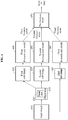
- FIG. 4 illustrates an example of a process of determining a pre-liveness score.
- an object area 420 is detected in an input image 410. Detection of the object area 420 is performed based an object detection schemes. Also, a partial area 430 of the object area 420 is determined. In an example, the partial area 430 is randomly determined within the object area 420.
- a first sub-image 425 is acquired by resizing the object area 420 to a desired size.
- a second sub-image 435 is acquired by resizing the partial area to a desired size.
- a third sub-image 415 is determined by resizing a sum area of the object area 420 and a background area of an object.
- the background area represents a portion of a remaining area excluding the object area 420 in the input image 410 or the full input image 410.
- Liveness scores corresponding to a plurality of sub-images are determined based on a plurality of neural network-based liveness test model.
- the liveness test model provides information, for example, a probability value or a feature value, for determining a liveness score of the object.
- the liveness test model may include a plurality of layers. The respective layers may include nodes and may be executed by a processor of a liveness data test apparatus.
- the liveness test model may include an input layer, at least one hidden layer, and an output layer. Based on a structure of the neural network, nodes included in adjacent layers may be selectively inter-connected based on each connection weight. Data input to the liveness test model is processed and transformed while going through the nodes and is converted to a specific result value through the output layer.
- the liveness test model may be based on a deep convolutional neural network (DCNN) including a plurality of hidden layers.
- the DCNN may include a convolution layer, a pooling layer, and a fully connected layer, and may provide information for determining a liveness of the object from image data that is input to the liveness test model through an operation process performed in each layer.
- the image data is a pixel value, for example, a color value and/or a brightness value, of pixels included in an image.
- the DCNN is provided as an example only and the liveness test model may operate based on a different structure of a neural network in addition to the DCNN.
- Internal parameters of the liveness test model may be determined through a training process of the liveness test model. For example, during the training process, a large number of training data and a desired value of the liveness test model corresponding to each piece of training data are present. In response to specific training data being input to the liveness test model, a process of adjusting the internal parameters of the liveness test model is performed such that the liveness test model outputs a desired value corresponding to the training data. In an example, a loss is calculated based on a difference between a result value output from the liveness test model and the desired value and the internal parameters of the liveness test model are adjusted to reduce the loss. By repeatedly performing the process on each piece of training data, the internal parameters may be adjusted to output a desirable output value from the liveness test model.
- a liveness score may be determined by a liveness test model based on a type of a sub-image. For example, referring to FIG. 4 , a first liveness score is determined from the first sub-image 425 by a first liveness test model 440. Also, a second liveness score is determined from the second sub-image 435 by a second liveness test model 450, and a third liveness score is determined from a third sub-image 415 by a third liveness test model 460.
- the first, second, and third liveness test models 440, 450, and 460 may be trained based on corresponding types of images.
- the first liveness test model 440 may be trained based on training data corresponding to a face area.
- the second liveness test model 450 may be trained based on training data corresponding to a partial area of the face.
- the third liveness test model 460 may be trained based on training data corresponding to the face area and a background.
- a pre-liveness score 470 is determined based on the first, second, and third liveness scores. In an example, the pre-liveness score 470 is determined using a weighted average or arithmetic averages of the first through the third liveness scores.
- the pre-liveness score 470 is determined by applying a weight to at least one of the first through the third liveness scores.
- Score 1 denotes the first liveness score
- Score 2 denotes the second liveness score
- Score 3 denotes the third liveness score
- Score pre denotes the pre-liveness score 470.
- the pre-liveness score 470 may have a value within a section of [0, 1].
- the liveness of the object may be determined based on whether the determined pre-liveness score 470 satisfies a threshold condition.
- FIG. 5 illustrates an example of sub-images.
- the sub-images include a first sub-image 520, a second sub-image 530, and a third sub-image 540 acquired from an input image 510.
- the input image 510 is a captured image that is resized to have a size of 640x640.
- the first sub-image 520 is acquired by cropping a face area detected in the input image 510 and by resizing the cropped face area to have a size of 128x128.
- the second sub-image 530 is acquired by cropping a partial area that is randomly determined in the face area and by resizing the cropped partial area to have a size of 128x128.
- the third sub-image 540 is acquired by cropping a sum area of the face area and the background area and by resizing the cropped sum area to have a size of 64x64.
- the sizes of the input image 510, the first sub-image 520, the second sub-image 530, and the third sub-image 540 are provided as examples only and various sizes may be applicable to the sub-images without departing from the scope of the illustrative examples described.
- FIG. 6 illustrates an example of a liveness test model used to determine a pre-liveness score.
- an input image with a size of 128x128x3 is input to a liveness test model 600.
- the input image with the size of 128x128x3 includes three color channels of red, green, blue (RGB) with resolution of 128x128.
- the input image is cropped to 120x120x3.
- the liveness test model 600 includes six convolution layers.
- the six convolution layers includes 16 3x3x3 convolution kernels, 16 3x3x16 convolution kernels, 32 3x3x16 convolution kernels, 32 3x3x32 convolution kernels, 64 3x3x32convolution kernels, and 64 3x3x64convolution kernels, respectively.
- a number of convolution kernels included in a convolution layer increases to 16, 16, 32, 32, 64, and 64 sequentially as a convolution layer depth becomes deeper. Accordingly, representation capability of the liveness test model 600 may be enhanced.
- the liveness test model 600 includes a batch normalization (BN) layer and a rectified linear unit (ReLU) layer and/or a pooling layer that are provided after at least one convolution layer and before a subsequent convolution layer.
- BN layers BN1, BN2, BN3, BN4, BN5, and BN6 are provided after first through sixth convolution layers, respectively, and a normalized characteristic map may be acquired from a characteristic curve output from each convolution layer.
- a ReLU layer and a pooling layer are absent after the fifth convolution layer and before the sixth convolution layer.
- a pooling layer has a pooling area size of 2x2.
- a pooling layer after each convolution layer excluding the fifth and sixth convolution layers is a maximum pooling layer.
- an average pooling layer is provided after the sixth convolution layer.
- a fully connected layer and a softmax layer are provided after the average pooling layer followed by the sixth convolution layer.
- a final output i.e., the pre-liveness score of the liveness test model 600 may be acquired.
- Other number and configuration of layers in the liveness test model 600 are considered to be are considered to be well within the scope of the present disclosure.
- a different type pooling layer for example, an averaging pooling layer and an L2 norm pooling layer, may be applied to the pooling layer.
- the ReLU layer may be replaced with an active layer, for example, a sigmoid layer and a tanh layer, having similar functions.
- the softmax layer may be replaced with a loss layer, for example, a sigmoid cross entropy layer and a Euclidean layer, having similar functions.
- a number of convolution kernels of each convolution layer and a size thereof are not limited to the structure of FIG. 6 and various structures may be applicable without departing from the scope of the illustrative examples described.
- FIGS. 7 and 8 illustrate examples of a process of determining a post-liveness score.
- an object image 710 is input to a recognition model 720.
- the object image 710 refers to an image that includes an object.
- the object image 710 may be an input image that includes the object or an image corresponding to an object area of the input image.
- the recognition model 720 refers to a model based on a neural network for recognizing the object.
- Fourth liveness scores 730 are determined based on feature vectors acquired from hidden layers within the recognition model 720.
- a post-liveness score 740 is determined based on the fourth liveness scores 730. In an example, a final decision on a liveness of the object is made based on the post-liveness score 740.
- a post-liveness score determining process will be further described with reference to FIG. 8 .
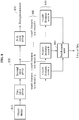
- FIG. 8 illustrates an example of determining a post-liveness score based on a recognition model 820 and a fourth liveness test model.
- the recognition model 820 may include a plurality of layers and a portion of the plurality of layers may be grouped into a single layer group.
- the layer group will be described with reference to FIG. 9 .
- feature vectors are output from hidden layers in the recognition model 820.
- the feature vectors are output from the respective layer groups within the recognition model 820.
- each of the output feature vectors are input to a corresponding fourth liveness test model 840.
- the fourth liveness test model 840 determines a fourth liveness score of a corresponding feature vector. The fourth liveness test model 840 will be further described with reference to FIG. 10 .
- a post-liveness score 860 is determined based on fourth liveness scores.
- the post-liveness score 860 is determined based on an average weight or arithmetic averages of fourth liveness scores.
- a weight may be applied to at least one of the fourth liveness scores to determine the post-liveness score 860.
- final decision on the liveness of the object i.e ., whether the object is live or a fake is made based on the post-liveness score 860.
- whether the object included in the object image 810 is a pre-registered object may be determined based on the recognition model 820.
- the pre-registered object may be pre-stored in a database and whether the object included in the object image 810 matches the registered object that is stored in a database may be determined based on the recognition model 820.
- Whether the object is the pre-registered object and/or object identification information may be output based on a recognition result 830 of the recognition model 820.
- the recognition result 830 may be additionally used to determine the liveness of the object.
- the post-liveness score 860 may be determined once the object is verified, for example, authenticated as the pre-registered object based on the recognition result 830.
- the post-liveness score 860 is determined before the object is verified as the pre-registered object based on the recognition result 830, the object may be determined to be live when the post-liveness score 860 satisfies a threshold condition and the object is verified as the pre-registered object based on the recognition result 830.
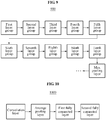
- FIG. 9 illustrates an example of a layer group included in a recognition model.
- a layer group 900 includes a plurality of convolution layers and a maximum pooling layer.
- the recognition model includes a plurality of layer groups.
- the layer group 900 includes, for example, 10 convolution layers and a single maximum pooling layer.
- FIG. 9 is provided as an example only and various numbers and structures of convolution layers and pooling layers may be applicable, without departing from the scope of the illustrative examples described.
- another layer may be included in addition to a convolution layer and a pooling layer.
- an additional connection may be present.
- a superposition between an output of a first convolution layer and an output of a third convolution layer may be input to a fourth convolution layer.
- a further superposition between the super-position between the output of the first convolution layer and the output of the third convolution layer and an output of a fifth convolution layer may be input to a sixth convolution layer.
- FIG. 10 illustrates an example of a fourth liveness test model used to determine a fourth liveness score.
- a fourth liveness test model 1000 determines a fourth liveness score corresponding to a feature vector output from a hidden layer of a recognition model.
- the fourth liveness test model 1000 includes a convolution layer, an average pooling layer, a first fully connected layer, and a second fully connected layer.
- it is provided as an example only for the fourth liveness test model 1000.
- Various numbers and/or structures of layers may be applicable without departing from the scope of the illustrative examples described.
- Another type layer for example, a maximum pooling layer and an L2 norm pooling layer, may be applicable.
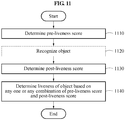
- FIG. 11 illustrates an example of a liveness test method.
- the operations in FIG. 11 may be performed in the sequence and manner as shown, although the order of some operations may be changed or some of the operations omitted without departing from the scope of the illustrative examples described. Many of the operations shown in FIG. 11 may be performed in parallel or concurrently.
- One or more blocks of FIG. 11 , and combinations of the blocks, can be implemented by special purpose hardware-based computer that perform the specified functions, or combinations of special purpose hardware and computer instructions.
- FIGS. 1-10 are also applicable to FIG. 11 , and are incorporated herein by reference. Thus, the above description may not be repeated here.
- the liveness test method of FIG. 11 is performed by a processor of a liveness test apparatus.
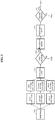
- the liveness test apparatus determines a pre-liveness score based on a plurality of sub-images acquired from an input image.
- the liveness test apparatus acquires different types of a plurality of sub-images from the input image based on an object included in the input image, determined liveness scores corresponding to the plurality of sub-images, respectively.
- the liveness test apparatus determines a pre-liveness score based on the determined liveness scores.
- the plurality of sub-images includes any two or any combination of a first sub-image corresponding to an object area that includes an object in the input image, a second sub-image corresponding to a partial area of the object area, and a third sub-image corresponding to the object area and a background area of the object.
- the determined liveness scores includes a first liveness score corresponding to the first sub-image, a second liveness score corresponding to the second sub-image, and a third liveness score corresponding to the third sub-image.
- the first liveness score is determined based on a first liveness test model
- the second liveness score is determined based on the second liveness test model
- the third liveness score is determined based on the third liveness test model.
- the liveness test apparatus resizes a size of the first sub-image, and determines the first liveness score corresponding to the first sub-image from the resized first sub-image using the first liveness test model.
- the liveness test apparatus acquires the second sub-image by cropping the partial area from the object area, and determines the second liveness score corresponding to the second sub-image from the second sub-image using the second liveness test model.
- the liveness test apparatus determines whether the object is a pre-registered object based on the recognition model. For example, the liveness test apparatus may determine whether the object matches the pre-registered object stored in a database through the recognition model. Depending on examples, operation 1120 may be omitted.
- the liveness test apparatus determines a post-liveness score based on the recognition model for recognizing the object included in the input image.
- the liveness test apparatus determines fourth liveness scores from feature vectors output from a plurality of hidden layers within the recognition model, respectively. In an example, t, and may determine the post-liveness score based on the fourth liveness scores. In an example, the liveness test apparatus may determine the fourth liveness scores from the feature vectors, respectively, using the fourth liveness test model.
- the liveness test apparatus determines the post-liveness score.
- the liveness test apparatus determines a liveness of the object based on any one or any combination of the pre-liveness score and the post-liveness score. In an example, the liveness test apparatus determines the liveness of the object based on whether any one or any combination of the pre-liveness score and the post-liveness score satisfies a threshold condition.
- FIG. 12 illustrates an example of a liveness test apparatus.
- a liveness test apparatus 1200 includes a memory 1210 and a processor 1220. Also, the liveness test apparatus 1200 further includes a camera 1230. Also, the liveness test apparatus 1200 further includes a display 1250. The memory 1210, the processor 1220, and the camera 1230 may communicate with one another through a bus 1240.
- the memory 1210 includes computer-readable instructions. In response to an instruction stored in the memory 1210 being executed at the processor 1220, the processor 1220 performs the aforementioned operations.
- the memory 1210 may be a volatile memory or a non-volatile memory, and further description of the memory is provided below.
- the liveness test apparatus 1200 provides the result of the liveness determination to a display 1250.
- the display 1250 is a physical structure that includes one or more hardware components that provide the ability to render a user interface and/or receive user input.
- the display 1250 can encompass any combination of display region, gesture capture region, a touch sensitive display, and/or a configurable area.
- the display 1250 is an external peripheral device that may be attached to and detached from the virtual lane generating device.
- the display 1250 may be a single-screen or a multi-screen display. A single physical screen can include multiple displays that are managed as separate logical displays permitting different content to be displayed on separate displays although part of the same physical screen.
- the display 1250 may also be the display of a smart phone or an eye glass display (EGD), which includes one-eyed glass or two-eyed glasses.
- the liveness test apparatus 1200 outputs the result of the liveness determination through an audio signal.
- the processor 1220 may be an apparatus configured to execute instructions or programs or to control the liveness test apparatus 1200.
- the processor 1220 acquires an input image from the camera 1230, or receives the input image from an external apparatus through a wired or wireless network.
- the processor 1220 determines a pre-liveness score based on a plurality of sub-images acquired from the input image, determines a post-liveness score based on a recognition model for recognizing an object included in the input image, and determines a liveness of the object based on any one or any combination of the pre-liveness score and the post-liveness score. Further description of the processor 1220 is provided below
- the liveness test apparatus 1200 may perform the aforementioned operation.
- the liveness test apparatus, liveness test apparatus 1200, and other apparatuses, units, modules, devices, and other components described herein are implemented by hardware components.
- hardware components that may be used to perform the operations described in this application where appropriate include controllers, sensors, generators, drivers, memories, comparators, arithmetic logic units, adders, subtractors, multipliers, dividers, integrators, and any other electronic components configured to perform the operations described in this application.
- one or more of the hardware components that perform the operations described in this application are implemented by computing hardware, for example, by one or more processors or computers.
- a processor or computer may be implemented by one or more processing elements, such as an array of logic gates, a controller and an arithmetic logic unit, a digital signal processor, a microcomputer, a programmable logic controller, a field-programmable gate array, a programmable logic array, a microprocessor, or any other device or combination of devices that is configured to respond to and execute instructions in a defined manner to achieve a desired result.
- a processor or computer includes, or is connected to, one or more memories storing instructions or software that are executed by the processor or computer.
- Hardware components implemented by a processor or computer may execute instructions or software, such as an operating system (OS) and one or more software applications that run on the OS, to perform the operations described in this application.
- OS operating system
- the hardware components may also access, manipulate, process, create, and store data in response to execution of the instructions or software.
- the hardware components also access, manipulate, process, create, and store data in response to execution of the instructions or software.
- the singular term "processor” or "computer” may be used in the description of the examples described in this application, but in other examples multiple processors or computers may be used, or a processor or computer includes multiple processing elements, or multiple types of processing elements, or both.
- a single hardware component or two or more hardware components may be implemented by a single processor, or two or more processors, or a processor and a controller.
- One or more hardware components may be implemented by one or more processors, or a processor and a controller, and one or more other hardware components may be implemented by one or more other processors, or another processor and another controller.
- One or more processors, or a processor and a controller may implement a single hardware component, or two or more hardware components.
- a hardware component has any one or more of different processing configurations, examples of which include a single processor, independent processors, parallel processors, single-instruction single-data (SISD) multiprocessing, single-instruction multiple-data (SIMD) multiprocessing, multiple-instruction single-data (MISD) multiprocessing, and multiple-instruction multiple-data (MIMD) multiprocessing.
- SISD single-instruction single-data
- SIMD single-instruction multiple-data
- MIMD multiple-instruction multiple-data
- the methods that perform the operations described in this application are performed by computing hardware, for example, by one or more processors or computers, implemented as described above executing instructions or software to perform the operations described in this application that are performed by the methods.
- a single operation or two or more operations may be performed by a single processor, or two or more processors, or a processor and a controller.
- One or more operations may be performed by one or more processors, or a processor and a controller, and one or more other operations may be performed by one or more other processors, or another processor and another controller.
- One or more processors, or a processor and a controller may perform a single operation, or two or more operations.
- Instructions or software to control a processor or computer to implement the hardware components and perform the methods as described above are written as computer programs, code segments, instructions or any combination thereof, for individually or collectively instructing or configuring the processor or computer to operate as a machine or special-purpose computer to perform the operations performed by the hardware components and the methods as described above.
- the instructions or software includes at least one of an applet, a dynamic link library (DLL), middleware, firmware, a device driver, an application program storing the method of preventing the collision.
- the instructions or software include machine code that is directly executed by the one or more processors or computers, such as machine code produced by a compiler.
- the instructions or software includes higher-level code that is executed by the one or more processors or computer using an interpreter.
- the instructions or software may be written using any programming language based on the block diagrams and the flow charts illustrated in the drawings and the corresponding descriptions in the specification, which disclose algorithms for performing the operations that are performed by the hardware components and the methods as described above.
- Non-transitory computer-readable storage medium examples include read-only memory (ROM), random-access programmable read only memory (PROM), electrically erasable programmable read-only memory (EEPROM), random-access memory (RAM), dynamic random access memory (DRAM), static random access memory (SRAM), flash memory, non-volatile memory, CD-ROMs, CD-Rs, CD+Rs, CD-RWs, CD+RWs, DVD-ROMs, DVD-Rs, DVD+Rs, DVD-RWs, DVD+RWs, DVD-RAMs, BD-ROMs, BD-Rs, BD-R LTHs, BD-REs, blue-ray or optical disk storage, hard disk drive (HDD), solid state drive (SSD), flash memory,
- HDD hard disk drive
- SSD solid state drive
- the instructions or software and any associated data, data files, and data structures are distributed over network-coupled computer systems so that the instructions and software and any associated data, data files, and data structures are stored, accessed, and executed in a distributed fashion by the one or more processors or computers.
Landscapes
- Engineering & Computer Science (AREA)
- Theoretical Computer Science (AREA)
- Multimedia (AREA)
- General Physics & Mathematics (AREA)
- Physics & Mathematics (AREA)
- Health & Medical Sciences (AREA)
- Human Computer Interaction (AREA)
- Oral & Maxillofacial Surgery (AREA)
- General Health & Medical Sciences (AREA)
- Computer Vision & Pattern Recognition (AREA)
- Evolutionary Computation (AREA)
- Software Systems (AREA)
- Medical Informatics (AREA)
- Databases & Information Systems (AREA)
- Computing Systems (AREA)
- Artificial Intelligence (AREA)
- Collating Specific Patterns (AREA)
- Image Analysis (AREA)
Applications Claiming Priority (2)
| Application Number | Priority Date | Filing Date | Title |
|---|---|---|---|
| CN201710192070.5A CN108664843B (zh) | 2017-03-27 | 2017-03-27 | 活体对象识别方法、设备和计算机可读存储介质 |
| KR1020180000230A KR102352345B1 (ko) | 2017-03-27 | 2018-01-02 | 라이브니스 검사 방법 및 장치 |
Publications (2)
| Publication Number | Publication Date |
|---|---|
| EP3382602A1 true EP3382602A1 (de) | 2018-10-03 |
| EP3382602B1 EP3382602B1 (de) | 2023-11-22 |
Family
ID=61827627
Family Applications (1)
| Application Number | Title | Priority Date | Filing Date |
|---|---|---|---|
| EP18164299.2A Active EP3382602B1 (de) | 2017-03-27 | 2018-03-27 | Lebendigkeitstestverfahren und vorrichtung |
Country Status (2)
| Country | Link |
|---|---|
| US (2) | US10679083B2 (de) |
| EP (1) | EP3382602B1 (de) |
Cited By (2)
| Publication number | Priority date | Publication date | Assignee | Title |
|---|---|---|---|---|
| GB2607496A (en) * | 2018-12-04 | 2022-12-07 | Yoti Holding Ltd | Anti-spoofing |
| EP4210006A1 (de) * | 2022-01-05 | 2023-07-12 | Samsung Electronics Co., Ltd. | Vorrichtung und verfahren mit liveness-berücksichtigung |
Families Citing this family (16)
| Publication number | Priority date | Publication date | Assignee | Title |
|---|---|---|---|---|
| JP6464323B2 (ja) * | 2015-11-18 | 2019-02-06 | コーニンクレッカ フィリップス エヌ ヴェKoninklijke Philips N.V. | 検査対象の絶対的なサイズ寸法を推定する方法及び装置 |
| KR102374747B1 (ko) * | 2017-12-15 | 2022-03-15 | 삼성전자주식회사 | 객체를 인식하는 장치 및 방법 |
| US10740637B2 (en) * | 2018-09-18 | 2020-08-11 | Yoti Holding Limited | Anti-spoofing |
| JPWO2020095350A1 (ja) * | 2018-11-05 | 2021-09-24 | 日本電気株式会社 | 情報処理装置、情報処理方法及びプログラム |
| JP2020089947A (ja) * | 2018-12-06 | 2020-06-11 | ソニー株式会社 | 情報処理装置、情報処理方法及びプログラム |
| US12353971B1 (en) * | 2018-12-13 | 2025-07-08 | Amazon Technologies, Inc. | Machine learning model adaptation via segment replacement and student-teacher training |
| KR102665968B1 (ko) * | 2019-06-27 | 2024-05-16 | 삼성전자주식회사 | 블러 추정 방법 및 장치 |
| KR102748555B1 (ko) * | 2019-12-12 | 2025-01-02 | 삼성전자주식회사 | 라이브니스 검사 방법 및 라이브니스 검사 장치 |
| US11462050B2 (en) * | 2019-12-19 | 2022-10-04 | Certify Global Inc. | Systems and methods of liveness determination |
| US11687778B2 (en) | 2020-01-06 | 2023-06-27 | The Research Foundation For The State University Of New York | Fakecatcher: detection of synthetic portrait videos using biological signals |
| CN113408561B (zh) * | 2020-03-17 | 2024-06-18 | 北京京东乾石科技有限公司 | 模型生成方法、目标检测方法、装置、设备及存储介质 |
| CN111507262B (zh) * | 2020-04-17 | 2023-12-08 | 北京百度网讯科技有限公司 | 用于检测活体的方法和装置 |
| JP7400959B2 (ja) * | 2020-05-11 | 2023-12-19 | 日本電気株式会社 | 判定装置、判定方法およびプログラム |
| US12094243B2 (en) * | 2020-05-19 | 2024-09-17 | Board Of Regents, The University Of Texas System | Method and apparatus for discreet person identification on pocket-size offline mobile platform with augmented reality feedback with real-time training capability for usage by universal users |
| WO2022059180A1 (ja) * | 2020-09-18 | 2022-03-24 | 日本電気株式会社 | サービス提供装置、サービス提供システム、サービス提供方法及び非一時的なコンピュータ可読媒体 |
| TWI796063B (zh) * | 2021-12-23 | 2023-03-11 | 新加坡商瑞昱新加坡有限公司 | 真人辨識方法及其系統 |
Citations (1)
| Publication number | Priority date | Publication date | Assignee | Title |
|---|---|---|---|---|
| WO2016084072A1 (en) * | 2014-11-26 | 2016-06-02 | Isityou Ltd. | Anti-spoofing system and methods useful in conjunction therewith |
Family Cites Families (15)
| Publication number | Priority date | Publication date | Assignee | Title |
|---|---|---|---|---|
| KR100442835B1 (ko) | 2002-08-13 | 2004-08-02 | 삼성전자주식회사 | 인공 신경망을 이용한 얼굴 인식 방법 및 장치 |
| JP2005316888A (ja) | 2004-04-30 | 2005-11-10 | Japan Science & Technology Agency | 顔認識システム |
| US7702599B2 (en) | 2004-10-07 | 2010-04-20 | Bernard Widrow | System and method for cognitive memory and auto-associative neural network based pattern recognition |
| ES2495425T3 (es) * | 2011-07-11 | 2014-09-17 | Accenture Global Services Limited | Detección de vida |
| US9025830B2 (en) | 2012-01-20 | 2015-05-05 | Cyberlink Corp. | Liveness detection system based on face behavior |
| US8542879B1 (en) * | 2012-06-26 | 2013-09-24 | Google Inc. | Facial recognition |
| US9202119B2 (en) | 2013-10-18 | 2015-12-01 | Daon Holdings Limited | Methods and systems for determining user liveness |
| KR101412727B1 (ko) | 2013-11-15 | 2014-07-01 | 동국대학교 산학협력단 | 얼굴 인식 장치 및 방법 |
| JP6127214B2 (ja) | 2013-11-30 | 2017-05-10 | ペキン センスタイム テクノロジー ディベロップメント カンパニー リミテッド | 顔画像認識のための方法とシステム |
| WO2015180101A1 (en) | 2014-05-29 | 2015-12-03 | Beijing Kuangshi Technology Co., Ltd. | Compact face representation |
| US9396537B2 (en) | 2014-09-09 | 2016-07-19 | EyeVerify, Inc. | Systems and methods for liveness analysis |
| US9767358B2 (en) | 2014-10-22 | 2017-09-19 | Veridium Ip Limited | Systems and methods for performing iris identification and verification using mobile devices |
| CN106062774B (zh) | 2014-11-15 | 2020-01-03 | 北京旷视科技有限公司 | 使用机器学习进行面部检测 |
| US9852492B2 (en) | 2015-09-18 | 2017-12-26 | Yahoo Holdings, Inc. | Face detection |
| KR101687217B1 (ko) | 2015-11-30 | 2016-12-16 | 수원대학교산학협력단 | 인터벌 타입-2 rbf 신경회로망 기반 ct 기법을 이용한 강인한 얼굴 인식 패턴 분류 방법 및 이를 실행하기 위한 시스템 |
-
2018
- 2018-03-15 US US15/921,740 patent/US10679083B2/en active Active
- 2018-03-27 EP EP18164299.2A patent/EP3382602B1/de active Active
-
2020
- 2020-04-29 US US16/861,497 patent/US11138455B2/en active Active
Patent Citations (1)
| Publication number | Priority date | Publication date | Assignee | Title |
|---|---|---|---|---|
| WO2016084072A1 (en) * | 2014-11-26 | 2016-06-02 | Isityou Ltd. | Anti-spoofing system and methods useful in conjunction therewith |
Non-Patent Citations (2)
| Title |
|---|
| MAATTA J ET AL: "Face spoofing detection from single images using texture and local shape analysis", IET BIOMETRICS, IEEE, MICHAEL FARADAY HOUSE, SIX HILLS WAY, STEVENAGE, HERTS. SG1 2AY, UK, vol. 1, no. 1, 1 March 2012 (2012-03-01), pages 3 - 10, XP011441244, ISSN: 2047-4938, DOI: 10.1049/IET-BMT.2011.0009 * |
| ZAHID AKHTAR ET AL: "Face Spoof Attack Recognition Using Discriminative Image Patches", JOURNAL OF ELECTRICAL AND COMPUTER ENGINEERING, vol. 2016, 1 January 2016 (2016-01-01), pages 1 - 14, XP055498477, ISSN: 2090-0147, DOI: 10.1155/2016/4721849 * |
Cited By (4)
| Publication number | Priority date | Publication date | Assignee | Title |
|---|---|---|---|---|
| GB2607496A (en) * | 2018-12-04 | 2022-12-07 | Yoti Holding Ltd | Anti-spoofing |
| GB2607496B (en) * | 2018-12-04 | 2023-04-26 | Yoti Holding Ltd | Anti-spoofing |
| EP4210006A1 (de) * | 2022-01-05 | 2023-07-12 | Samsung Electronics Co., Ltd. | Vorrichtung und verfahren mit liveness-berücksichtigung |
| US12530924B2 (en) | 2022-01-05 | 2026-01-20 | Samsung Electronics Co., Ltd. | Apparatus and method with liveness consideration |
Also Published As
| Publication number | Publication date |
|---|---|
| EP3382602B1 (de) | 2023-11-22 |
| US10679083B2 (en) | 2020-06-09 |
| US20200257913A1 (en) | 2020-08-13 |
| US11138455B2 (en) | 2021-10-05 |
| US20180276489A1 (en) | 2018-09-27 |
Similar Documents
| Publication | Publication Date | Title |
|---|---|---|
| US11138455B2 (en) | Liveness test method and apparatus | |
| US12300025B2 (en) | Facial verification method and apparatus | |
| US11783639B2 (en) | Liveness test method and apparatus | |
| US11971924B2 (en) | Liveness test method and apparatus | |
| US10726244B2 (en) | Method and apparatus detecting a target | |
| US11682232B2 (en) | Device and method with image matching | |
| EP3321850A1 (de) | Verfahren und vorrichtung mit irisbereichsextraktion | |
| CN108664782A (zh) | 面部验证方法和设备 | |
| KR102352345B1 (ko) | 라이브니스 검사 방법 및 장치 | |
| US11836235B2 (en) | Method and apparatus for testing liveness | |
| US20190180128A1 (en) | Device and method to register user | |
| EP4210006A1 (de) | Vorrichtung und verfahren mit liveness-berücksichtigung | |
| CN112989902B (zh) | 活体测试方法和活体测试装置 | |
| KR20210050649A (ko) | 모바일 기기의 페이스 인증 방법 |
Legal Events
| Date | Code | Title | Description |
|---|---|---|---|
| PUAI | Public reference made under article 153(3) epc to a published international application that has entered the european phase |
Free format text: ORIGINAL CODE: 0009012 |
|
| STAA | Information on the status of an ep patent application or granted ep patent |
Free format text: STATUS: THE APPLICATION HAS BEEN PUBLISHED |
|
| AK | Designated contracting states |
Kind code of ref document: A1 Designated state(s): AL AT BE BG CH CY CZ DE DK EE ES FI FR GB GR HR HU IE IS IT LI LT LU LV MC MK MT NL NO PL PT RO RS SE SI SK SM TR |
|
| AX | Request for extension of the european patent |
Extension state: BA ME |
|
| STAA | Information on the status of an ep patent application or granted ep patent |
Free format text: STATUS: REQUEST FOR EXAMINATION WAS MADE |
|
| 17P | Request for examination filed |
Effective date: 20190124 |
|
| RBV | Designated contracting states (corrected) |
Designated state(s): AL AT BE BG CH CY CZ DE DK EE ES FI FR GB GR HR HU IE IS IT LI LT LU LV MC MK MT NL NO PL PT RO RS SE SI SK SM TR |
|
| STAA | Information on the status of an ep patent application or granted ep patent |
Free format text: STATUS: EXAMINATION IS IN PROGRESS |
|
| 17Q | First examination report despatched |
Effective date: 20210517 |
|
| REG | Reference to a national code |
Ref country code: DE Ref legal event code: R079 Free format text: PREVIOUS MAIN CLASS: G06K0009000000 Ipc: G06V0010820000 Ref country code: DE Ref legal event code: R079 Ref document number: 602018061349 Country of ref document: DE Free format text: PREVIOUS MAIN CLASS: G06K0009000000 Ipc: G06V0010820000 |
|
| GRAP | Despatch of communication of intention to grant a patent |
Free format text: ORIGINAL CODE: EPIDOSNIGR1 |
|
| STAA | Information on the status of an ep patent application or granted ep patent |
Free format text: STATUS: GRANT OF PATENT IS INTENDED |
|
| INTG | Intention to grant announced |
Effective date: 20230119 |
|
| RIC1 | Information provided on ipc code assigned before grant |
Ipc: G06V 10/82 20220101AFI20230112BHEP |
|
| GRAJ | Information related to disapproval of communication of intention to grant by the applicant or resumption of examination proceedings by the epo deleted |
Free format text: ORIGINAL CODE: EPIDOSDIGR1 |
|
| STAA | Information on the status of an ep patent application or granted ep patent |
Free format text: STATUS: EXAMINATION IS IN PROGRESS |
|
| INTC | Intention to grant announced (deleted) | ||
| GRAP | Despatch of communication of intention to grant a patent |
Free format text: ORIGINAL CODE: EPIDOSNIGR1 |
|
| STAA | Information on the status of an ep patent application or granted ep patent |
Free format text: STATUS: GRANT OF PATENT IS INTENDED |
|
| P01 | Opt-out of the competence of the unified patent court (upc) registered |
Effective date: 20230530 |
|
| INTG | Intention to grant announced |
Effective date: 20230623 |
|
| GRAS | Grant fee paid |
Free format text: ORIGINAL CODE: EPIDOSNIGR3 |
|
| GRAA | (expected) grant |
Free format text: ORIGINAL CODE: 0009210 |
|
| STAA | Information on the status of an ep patent application or granted ep patent |
Free format text: STATUS: THE PATENT HAS BEEN GRANTED |
|
| AK | Designated contracting states |
Kind code of ref document: B1 Designated state(s): AL AT BE BG CH CY CZ DE DK EE ES FI FR GB GR HR HU IE IS IT LI LT LU LV MC MK MT NL NO PL PT RO RS SE SI SK SM TR |
|
| REG | Reference to a national code |
Ref country code: GB Ref legal event code: FG4D |
|
| REG | Reference to a national code |
Ref country code: CH Ref legal event code: EP Ref country code: DE Ref legal event code: R096 Ref document number: 602018061349 Country of ref document: DE |
|
| REG | Reference to a national code |
Ref country code: IE Ref legal event code: FG4D |
|
| REG | Reference to a national code |
Ref country code: LT Ref legal event code: MG9D |
|
| REG | Reference to a national code |
Ref country code: NL Ref legal event code: MP Effective date: 20231122 |
|
| PG25 | Lapsed in a contracting state [announced via postgrant information from national office to epo] |
Ref country code: GR Free format text: LAPSE BECAUSE OF FAILURE TO SUBMIT A TRANSLATION OF THE DESCRIPTION OR TO PAY THE FEE WITHIN THE PRESCRIBED TIME-LIMIT Effective date: 20240223 |
|
| PG25 | Lapsed in a contracting state [announced via postgrant information from national office to epo] |
Ref country code: IS Free format text: LAPSE BECAUSE OF FAILURE TO SUBMIT A TRANSLATION OF THE DESCRIPTION OR TO PAY THE FEE WITHIN THE PRESCRIBED TIME-LIMIT Effective date: 20240322 |
|
| PG25 | Lapsed in a contracting state [announced via postgrant information from national office to epo] |
Ref country code: LT Free format text: LAPSE BECAUSE OF FAILURE TO SUBMIT A TRANSLATION OF THE DESCRIPTION OR TO PAY THE FEE WITHIN THE PRESCRIBED TIME-LIMIT Effective date: 20231122 |
|
| REG | Reference to a national code |
Ref country code: AT Ref legal event code: MK05 Ref document number: 1634542 Country of ref document: AT Kind code of ref document: T Effective date: 20231122 |
|
| PG25 | Lapsed in a contracting state [announced via postgrant information from national office to epo] |
Ref country code: NL Free format text: LAPSE BECAUSE OF FAILURE TO SUBMIT A TRANSLATION OF THE DESCRIPTION OR TO PAY THE FEE WITHIN THE PRESCRIBED TIME-LIMIT Effective date: 20231122 |
|
| PG25 | Lapsed in a contracting state [announced via postgrant information from national office to epo] |
Ref country code: AT Free format text: LAPSE BECAUSE OF FAILURE TO SUBMIT A TRANSLATION OF THE DESCRIPTION OR TO PAY THE FEE WITHIN THE PRESCRIBED TIME-LIMIT Effective date: 20231122 |
|
| PG25 | Lapsed in a contracting state [announced via postgrant information from national office to epo] |
Ref country code: ES Free format text: LAPSE BECAUSE OF FAILURE TO SUBMIT A TRANSLATION OF THE DESCRIPTION OR TO PAY THE FEE WITHIN THE PRESCRIBED TIME-LIMIT Effective date: 20231122 |
|
| PG25 | Lapsed in a contracting state [announced via postgrant information from national office to epo] |
Ref country code: NL Free format text: LAPSE BECAUSE OF FAILURE TO SUBMIT A TRANSLATION OF THE DESCRIPTION OR TO PAY THE FEE WITHIN THE PRESCRIBED TIME-LIMIT Effective date: 20231122 Ref country code: LT Free format text: LAPSE BECAUSE OF FAILURE TO SUBMIT A TRANSLATION OF THE DESCRIPTION OR TO PAY THE FEE WITHIN THE PRESCRIBED TIME-LIMIT Effective date: 20231122 Ref country code: IS Free format text: LAPSE BECAUSE OF FAILURE TO SUBMIT A TRANSLATION OF THE DESCRIPTION OR TO PAY THE FEE WITHIN THE PRESCRIBED TIME-LIMIT Effective date: 20240322 Ref country code: GR Free format text: LAPSE BECAUSE OF FAILURE TO SUBMIT A TRANSLATION OF THE DESCRIPTION OR TO PAY THE FEE WITHIN THE PRESCRIBED TIME-LIMIT Effective date: 20240223 Ref country code: ES Free format text: LAPSE BECAUSE OF FAILURE TO SUBMIT A TRANSLATION OF THE DESCRIPTION OR TO PAY THE FEE WITHIN THE PRESCRIBED TIME-LIMIT Effective date: 20231122 Ref country code: BG Free format text: LAPSE BECAUSE OF FAILURE TO SUBMIT A TRANSLATION OF THE DESCRIPTION OR TO PAY THE FEE WITHIN THE PRESCRIBED TIME-LIMIT Effective date: 20240222 Ref country code: AT Free format text: LAPSE BECAUSE OF FAILURE TO SUBMIT A TRANSLATION OF THE DESCRIPTION OR TO PAY THE FEE WITHIN THE PRESCRIBED TIME-LIMIT Effective date: 20231122 Ref country code: PT Free format text: LAPSE BECAUSE OF FAILURE TO SUBMIT A TRANSLATION OF THE DESCRIPTION OR TO PAY THE FEE WITHIN THE PRESCRIBED TIME-LIMIT Effective date: 20240322 |
|
| PG25 | Lapsed in a contracting state [announced via postgrant information from national office to epo] |
Ref country code: SE Free format text: LAPSE BECAUSE OF FAILURE TO SUBMIT A TRANSLATION OF THE DESCRIPTION OR TO PAY THE FEE WITHIN THE PRESCRIBED TIME-LIMIT Effective date: 20231122 Ref country code: RS Free format text: LAPSE BECAUSE OF FAILURE TO SUBMIT A TRANSLATION OF THE DESCRIPTION OR TO PAY THE FEE WITHIN THE PRESCRIBED TIME-LIMIT Effective date: 20231122 Ref country code: PL Free format text: LAPSE BECAUSE OF FAILURE TO SUBMIT A TRANSLATION OF THE DESCRIPTION OR TO PAY THE FEE WITHIN THE PRESCRIBED TIME-LIMIT Effective date: 20231122 Ref country code: NO Free format text: LAPSE BECAUSE OF FAILURE TO SUBMIT A TRANSLATION OF THE DESCRIPTION OR TO PAY THE FEE WITHIN THE PRESCRIBED TIME-LIMIT Effective date: 20240222 Ref country code: LV Free format text: LAPSE BECAUSE OF FAILURE TO SUBMIT A TRANSLATION OF THE DESCRIPTION OR TO PAY THE FEE WITHIN THE PRESCRIBED TIME-LIMIT Effective date: 20231122 Ref country code: HR Free format text: LAPSE BECAUSE OF FAILURE TO SUBMIT A TRANSLATION OF THE DESCRIPTION OR TO PAY THE FEE WITHIN THE PRESCRIBED TIME-LIMIT Effective date: 20231122 |
|
| PG25 | Lapsed in a contracting state [announced via postgrant information from national office to epo] |
Ref country code: DK Free format text: LAPSE BECAUSE OF FAILURE TO SUBMIT A TRANSLATION OF THE DESCRIPTION OR TO PAY THE FEE WITHIN THE PRESCRIBED TIME-LIMIT Effective date: 20231122 |
|
| PG25 | Lapsed in a contracting state [announced via postgrant information from national office to epo] |
Ref country code: CZ Free format text: LAPSE BECAUSE OF FAILURE TO SUBMIT A TRANSLATION OF THE DESCRIPTION OR TO PAY THE FEE WITHIN THE PRESCRIBED TIME-LIMIT Effective date: 20231122 |
|
| PG25 | Lapsed in a contracting state [announced via postgrant information from national office to epo] |
Ref country code: SK Free format text: LAPSE BECAUSE OF FAILURE TO SUBMIT A TRANSLATION OF THE DESCRIPTION OR TO PAY THE FEE WITHIN THE PRESCRIBED TIME-LIMIT Effective date: 20231122 |
|
| PG25 | Lapsed in a contracting state [announced via postgrant information from national office to epo] |
Ref country code: SM Free format text: LAPSE BECAUSE OF FAILURE TO SUBMIT A TRANSLATION OF THE DESCRIPTION OR TO PAY THE FEE WITHIN THE PRESCRIBED TIME-LIMIT Effective date: 20231122 Ref country code: SK Free format text: LAPSE BECAUSE OF FAILURE TO SUBMIT A TRANSLATION OF THE DESCRIPTION OR TO PAY THE FEE WITHIN THE PRESCRIBED TIME-LIMIT Effective date: 20231122 Ref country code: RO Free format text: LAPSE BECAUSE OF FAILURE TO SUBMIT A TRANSLATION OF THE DESCRIPTION OR TO PAY THE FEE WITHIN THE PRESCRIBED TIME-LIMIT Effective date: 20231122 Ref country code: IT Free format text: LAPSE BECAUSE OF FAILURE TO SUBMIT A TRANSLATION OF THE DESCRIPTION OR TO PAY THE FEE WITHIN THE PRESCRIBED TIME-LIMIT Effective date: 20231122 Ref country code: EE Free format text: LAPSE BECAUSE OF FAILURE TO SUBMIT A TRANSLATION OF THE DESCRIPTION OR TO PAY THE FEE WITHIN THE PRESCRIBED TIME-LIMIT Effective date: 20231122 Ref country code: DK Free format text: LAPSE BECAUSE OF FAILURE TO SUBMIT A TRANSLATION OF THE DESCRIPTION OR TO PAY THE FEE WITHIN THE PRESCRIBED TIME-LIMIT Effective date: 20231122 Ref country code: CZ Free format text: LAPSE BECAUSE OF FAILURE TO SUBMIT A TRANSLATION OF THE DESCRIPTION OR TO PAY THE FEE WITHIN THE PRESCRIBED TIME-LIMIT Effective date: 20231122 |
|
| REG | Reference to a national code |
Ref country code: DE Ref legal event code: R097 Ref document number: 602018061349 Country of ref document: DE |
|
| PLBE | No opposition filed within time limit |
Free format text: ORIGINAL CODE: 0009261 |
|
| STAA | Information on the status of an ep patent application or granted ep patent |
Free format text: STATUS: NO OPPOSITION FILED WITHIN TIME LIMIT |
|
| PG25 | Lapsed in a contracting state [announced via postgrant information from national office to epo] |
Ref country code: SI Free format text: LAPSE BECAUSE OF FAILURE TO SUBMIT A TRANSLATION OF THE DESCRIPTION OR TO PAY THE FEE WITHIN THE PRESCRIBED TIME-LIMIT Effective date: 20231122 |
|
| 26N | No opposition filed |
Effective date: 20240823 |
|
| PG25 | Lapsed in a contracting state [announced via postgrant information from national office to epo] |
Ref country code: SI Free format text: LAPSE BECAUSE OF FAILURE TO SUBMIT A TRANSLATION OF THE DESCRIPTION OR TO PAY THE FEE WITHIN THE PRESCRIBED TIME-LIMIT Effective date: 20231122 |
|
| REG | Reference to a national code |
Ref country code: CH Ref legal event code: PL |
|
| PG25 | Lapsed in a contracting state [announced via postgrant information from national office to epo] |
Ref country code: LU Free format text: LAPSE BECAUSE OF NON-PAYMENT OF DUE FEES Effective date: 20240327 |
|
| PG25 | Lapsed in a contracting state [announced via postgrant information from national office to epo] |
Ref country code: MC Free format text: LAPSE BECAUSE OF FAILURE TO SUBMIT A TRANSLATION OF THE DESCRIPTION OR TO PAY THE FEE WITHIN THE PRESCRIBED TIME-LIMIT Effective date: 20231122 |
|
| PG25 | Lapsed in a contracting state [announced via postgrant information from national office to epo] |
Ref country code: MC Free format text: LAPSE BECAUSE OF FAILURE TO SUBMIT A TRANSLATION OF THE DESCRIPTION OR TO PAY THE FEE WITHIN THE PRESCRIBED TIME-LIMIT Effective date: 20231122 Ref country code: LU Free format text: LAPSE BECAUSE OF NON-PAYMENT OF DUE FEES Effective date: 20240327 |
|
| REG | Reference to a national code |
Ref country code: BE Ref legal event code: MM Effective date: 20240331 |
|
| PG25 | Lapsed in a contracting state [announced via postgrant information from national office to epo] |
Ref country code: BE Free format text: LAPSE BECAUSE OF NON-PAYMENT OF DUE FEES Effective date: 20240331 |
|
| PG25 | Lapsed in a contracting state [announced via postgrant information from national office to epo] |
Ref country code: IE Free format text: LAPSE BECAUSE OF NON-PAYMENT OF DUE FEES Effective date: 20240327 |
|
| PG25 | Lapsed in a contracting state [announced via postgrant information from national office to epo] |
Ref country code: IE Free format text: LAPSE BECAUSE OF NON-PAYMENT OF DUE FEES Effective date: 20240327 Ref country code: BE Free format text: LAPSE BECAUSE OF NON-PAYMENT OF DUE FEES Effective date: 20240331 Ref country code: CH Free format text: LAPSE BECAUSE OF NON-PAYMENT OF DUE FEES Effective date: 20240331 |
|
| PG25 | Lapsed in a contracting state [announced via postgrant information from national office to epo] |
Ref country code: CY Free format text: LAPSE BECAUSE OF FAILURE TO SUBMIT A TRANSLATION OF THE DESCRIPTION OR TO PAY THE FEE WITHIN THE PRESCRIBED TIME-LIMIT; INVALID AB INITIO Effective date: 20180327 |
|
| PG25 | Lapsed in a contracting state [announced via postgrant information from national office to epo] |
Ref country code: HU Free format text: LAPSE BECAUSE OF FAILURE TO SUBMIT A TRANSLATION OF THE DESCRIPTION OR TO PAY THE FEE WITHIN THE PRESCRIBED TIME-LIMIT; INVALID AB INITIO Effective date: 20180327 |
|
| PG25 | Lapsed in a contracting state [announced via postgrant information from national office to epo] |
Ref country code: FI Free format text: LAPSE BECAUSE OF FAILURE TO SUBMIT A TRANSLATION OF THE DESCRIPTION OR TO PAY THE FEE WITHIN THE PRESCRIBED TIME-LIMIT Effective date: 20231122 |
|
| PG25 | Lapsed in a contracting state [announced via postgrant information from national office to epo] |
Ref country code: TR Free format text: LAPSE BECAUSE OF FAILURE TO SUBMIT A TRANSLATION OF THE DESCRIPTION OR TO PAY THE FEE WITHIN THE PRESCRIBED TIME-LIMIT Effective date: 20231122 |
|
| PGFP | Annual fee paid to national office [announced via postgrant information from national office to epo] |
Ref country code: GB Payment date: 20260216 Year of fee payment: 9 |
|
| PGFP | Annual fee paid to national office [announced via postgrant information from national office to epo] |
Ref country code: DE Payment date: 20260211 Year of fee payment: 9 |
|
| PGFP | Annual fee paid to national office [announced via postgrant information from national office to epo] |
Ref country code: FR Payment date: 20260209 Year of fee payment: 9 |