EP3383377B1 - Composés et méthodes permettant d'inhiber la production de triméthylamine - Google Patents
Composés et méthodes permettant d'inhiber la production de triméthylamine Download PDFInfo
- Publication number
- EP3383377B1 EP3383377B1 EP16820393.3A EP16820393A EP3383377B1 EP 3383377 B1 EP3383377 B1 EP 3383377B1 EP 16820393 A EP16820393 A EP 16820393A EP 3383377 B1 EP3383377 B1 EP 3383377B1
- Authority
- EP
- European Patent Office
- Prior art keywords
- alkyl
- isothiocyanato
- tma
- compound
- aminium
- Prior art date
- Legal status (The legal status is an assumption and is not a legal conclusion. Google has not performed a legal analysis and makes no representation as to the accuracy of the status listed.)
- Active
Links
Classifications
-
- A—HUMAN NECESSITIES
- A61—MEDICAL OR VETERINARY SCIENCE; HYGIENE
- A61K—PREPARATIONS FOR MEDICAL, DENTAL OR TOILETRY PURPOSES
- A61K31/00—Medicinal preparations containing organic active ingredients
- A61K31/21—Esters, e.g. nitroglycerine, selenocyanates
- A61K31/26—Cyanate or isocyanate esters; Thiocyanate or isothiocyanate esters
-
- A—HUMAN NECESSITIES
- A61—MEDICAL OR VETERINARY SCIENCE; HYGIENE
- A61K—PREPARATIONS FOR MEDICAL, DENTAL OR TOILETRY PURPOSES
- A61K31/00—Medicinal preparations containing organic active ingredients
- A61K31/13—Amines
- A61K31/145—Amines having sulfur, e.g. thiurams (>N—C(S)—S—C(S)—N< and >N—C(S)—S—S—C(S)—N<), Sulfinylamines (—N=SO), Sulfonylamines (—N=SO2)
-
- A—HUMAN NECESSITIES
- A61—MEDICAL OR VETERINARY SCIENCE; HYGIENE
- A61K—PREPARATIONS FOR MEDICAL, DENTAL OR TOILETRY PURPOSES
- A61K31/00—Medicinal preparations containing organic active ingredients
- A61K31/16—Amides, e.g. hydroxamic acids
- A61K31/165—Amides, e.g. hydroxamic acids having aromatic rings, e.g. colchicine, atenolol, progabide
- A61K31/166—Amides, e.g. hydroxamic acids having aromatic rings, e.g. colchicine, atenolol, progabide having the carbon of a carboxamide group directly attached to the aromatic ring, e.g. procainamide, procarbazine, metoclopramide, labetalol
-
- A—HUMAN NECESSITIES
- A61—MEDICAL OR VETERINARY SCIENCE; HYGIENE
- A61K—PREPARATIONS FOR MEDICAL, DENTAL OR TOILETRY PURPOSES
- A61K31/00—Medicinal preparations containing organic active ingredients
- A61K31/21—Esters, e.g. nitroglycerine, selenocyanates
- A61K31/215—Esters, e.g. nitroglycerine, selenocyanates of carboxylic acids
- A61K31/216—Esters, e.g. nitroglycerine, selenocyanates of carboxylic acids of acids having aromatic rings, e.g. benactizyne, clofibrate
-
- A—HUMAN NECESSITIES
- A61—MEDICAL OR VETERINARY SCIENCE; HYGIENE
- A61K—PREPARATIONS FOR MEDICAL, DENTAL OR TOILETRY PURPOSES
- A61K31/00—Medicinal preparations containing organic active ingredients
- A61K31/21—Esters, e.g. nitroglycerine, selenocyanates
- A61K31/215—Esters, e.g. nitroglycerine, selenocyanates of carboxylic acids
- A61K31/22—Esters, e.g. nitroglycerine, selenocyanates of carboxylic acids of acyclic acids, e.g. pravastatin
-
- A—HUMAN NECESSITIES
- A61—MEDICAL OR VETERINARY SCIENCE; HYGIENE
- A61K—PREPARATIONS FOR MEDICAL, DENTAL OR TOILETRY PURPOSES
- A61K31/00—Medicinal preparations containing organic active ingredients
- A61K31/21—Esters, e.g. nitroglycerine, selenocyanates
- A61K31/27—Esters, e.g. nitroglycerine, selenocyanates of carbamic or thiocarbamic acids, meprobamate, carbachol, neostigmine
-
- A—HUMAN NECESSITIES
- A61—MEDICAL OR VETERINARY SCIENCE; HYGIENE
- A61K—PREPARATIONS FOR MEDICAL, DENTAL OR TOILETRY PURPOSES
- A61K31/00—Medicinal preparations containing organic active ingredients
- A61K31/325—Carbamic acids; Thiocarbamic acids; Anhydrides or salts thereof
-
- A—HUMAN NECESSITIES
- A61—MEDICAL OR VETERINARY SCIENCE; HYGIENE
- A61K—PREPARATIONS FOR MEDICAL, DENTAL OR TOILETRY PURPOSES
- A61K31/00—Medicinal preparations containing organic active ingredients
- A61K31/33—Heterocyclic compounds
- A61K31/335—Heterocyclic compounds having oxygen as the only ring hetero atom, e.g. fungichromin
- A61K31/336—Heterocyclic compounds having oxygen as the only ring hetero atom, e.g. fungichromin having three-membered rings, e.g. oxirane, fumagillin
-
- A—HUMAN NECESSITIES
- A61—MEDICAL OR VETERINARY SCIENCE; HYGIENE
- A61K—PREPARATIONS FOR MEDICAL, DENTAL OR TOILETRY PURPOSES
- A61K31/00—Medicinal preparations containing organic active ingredients
- A61K31/33—Heterocyclic compounds
- A61K31/335—Heterocyclic compounds having oxygen as the only ring hetero atom, e.g. fungichromin
- A61K31/35—Heterocyclic compounds having oxygen as the only ring hetero atom, e.g. fungichromin having six-membered rings with one oxygen as the only ring hetero atom
- A61K31/351—Heterocyclic compounds having oxygen as the only ring hetero atom, e.g. fungichromin having six-membered rings with one oxygen as the only ring hetero atom not condensed with another ring
-
- A—HUMAN NECESSITIES
- A61—MEDICAL OR VETERINARY SCIENCE; HYGIENE
- A61K—PREPARATIONS FOR MEDICAL, DENTAL OR TOILETRY PURPOSES
- A61K31/00—Medicinal preparations containing organic active ingredients
- A61K31/33—Heterocyclic compounds
- A61K31/395—Heterocyclic compounds having nitrogen as a ring hetero atom, e.g. guanethidine or rifamycins
- A61K31/435—Heterocyclic compounds having nitrogen as a ring hetero atom, e.g. guanethidine or rifamycins having six-membered rings with one nitrogen as the only ring hetero atom
- A61K31/439—Heterocyclic compounds having nitrogen as a ring hetero atom, e.g. guanethidine or rifamycins having six-membered rings with one nitrogen as the only ring hetero atom the ring forming part of a bridged ring system, e.g. quinuclidine
-
- A—HUMAN NECESSITIES
- A61—MEDICAL OR VETERINARY SCIENCE; HYGIENE
- A61K—PREPARATIONS FOR MEDICAL, DENTAL OR TOILETRY PURPOSES
- A61K31/00—Medicinal preparations containing organic active ingredients
- A61K31/33—Heterocyclic compounds
- A61K31/395—Heterocyclic compounds having nitrogen as a ring hetero atom, e.g. guanethidine or rifamycins
- A61K31/435—Heterocyclic compounds having nitrogen as a ring hetero atom, e.g. guanethidine or rifamycins having six-membered rings with one nitrogen as the only ring hetero atom
- A61K31/44—Non condensed pyridines; Hydrogenated derivatives thereof
- A61K31/4425—Pyridinium derivatives, e.g. pralidoxime, pyridostigmine
-
- A—HUMAN NECESSITIES
- A61—MEDICAL OR VETERINARY SCIENCE; HYGIENE
- A61K—PREPARATIONS FOR MEDICAL, DENTAL OR TOILETRY PURPOSES
- A61K31/00—Medicinal preparations containing organic active ingredients
- A61K31/33—Heterocyclic compounds
- A61K31/395—Heterocyclic compounds having nitrogen as a ring hetero atom, e.g. guanethidine or rifamycins
- A61K31/435—Heterocyclic compounds having nitrogen as a ring hetero atom, e.g. guanethidine or rifamycins having six-membered rings with one nitrogen as the only ring hetero atom
- A61K31/44—Non condensed pyridines; Hydrogenated derivatives thereof
- A61K31/445—Non condensed piperidines, e.g. piperocaine
- A61K31/4453—Non condensed piperidines, e.g. piperocaine only substituted in position 1, e.g. propipocaine, diperodon
-
- A—HUMAN NECESSITIES
- A61—MEDICAL OR VETERINARY SCIENCE; HYGIENE
- A61K—PREPARATIONS FOR MEDICAL, DENTAL OR TOILETRY PURPOSES
- A61K31/00—Medicinal preparations containing organic active ingredients
- A61K31/33—Heterocyclic compounds
- A61K31/395—Heterocyclic compounds having nitrogen as a ring hetero atom, e.g. guanethidine or rifamycins
- A61K31/435—Heterocyclic compounds having nitrogen as a ring hetero atom, e.g. guanethidine or rifamycins having six-membered rings with one nitrogen as the only ring hetero atom
- A61K31/44—Non condensed pyridines; Hydrogenated derivatives thereof
- A61K31/445—Non condensed piperidines, e.g. piperocaine
- A61K31/452—Piperidinium derivatives
-
- A—HUMAN NECESSITIES
- A61—MEDICAL OR VETERINARY SCIENCE; HYGIENE
- A61K—PREPARATIONS FOR MEDICAL, DENTAL OR TOILETRY PURPOSES
- A61K31/00—Medicinal preparations containing organic active ingredients
- A61K31/33—Heterocyclic compounds
- A61K31/395—Heterocyclic compounds having nitrogen as a ring hetero atom, e.g. guanethidine or rifamycins
- A61K31/535—Heterocyclic compounds having nitrogen as a ring hetero atom, e.g. guanethidine or rifamycins having six-membered rings with at least one nitrogen and one oxygen as the ring hetero atoms, e.g. 1,2-oxazines
- A61K31/5375—1,4-Oxazines, e.g. morpholine
-
- A—HUMAN NECESSITIES
- A61—MEDICAL OR VETERINARY SCIENCE; HYGIENE
- A61K—PREPARATIONS FOR MEDICAL, DENTAL OR TOILETRY PURPOSES
- A61K45/00—Medicinal preparations containing active ingredients not provided for in groups A61K31/00 - A61K41/00
- A61K45/06—Mixtures of active ingredients without chemical characterisation, e.g. antiphlogistics and cardiaca
-
- A—HUMAN NECESSITIES
- A61—MEDICAL OR VETERINARY SCIENCE; HYGIENE
- A61P—SPECIFIC THERAPEUTIC ACTIVITY OF CHEMICAL COMPOUNDS OR MEDICINAL PREPARATIONS
- A61P9/00—Drugs for disorders of the cardiovascular system
-
- C—CHEMISTRY; METALLURGY
- C07—ORGANIC CHEMISTRY
- C07D—HETEROCYCLIC COMPOUNDS
- C07D211/00—Heterocyclic compounds containing hydrogenated pyridine rings, not condensed with other rings
- C07D211/04—Heterocyclic compounds containing hydrogenated pyridine rings, not condensed with other rings with only hydrogen or carbon atoms directly attached to the ring nitrogen atom
- C07D211/06—Heterocyclic compounds containing hydrogenated pyridine rings, not condensed with other rings with only hydrogen or carbon atoms directly attached to the ring nitrogen atom having no double bonds between ring members or between ring members and non-ring members
- C07D211/36—Heterocyclic compounds containing hydrogenated pyridine rings, not condensed with other rings with only hydrogen or carbon atoms directly attached to the ring nitrogen atom having no double bonds between ring members or between ring members and non-ring members with hetero atoms or with carbon atoms having three bonds to hetero atoms with at the most one bond to halogen, e.g. ester or nitrile radicals, directly attached to ring carbon atoms
- C07D211/40—Oxygen atoms
- C07D211/44—Oxygen atoms attached in position 4
- C07D211/46—Oxygen atoms attached in position 4 having a hydrogen atom as the second substituent in position 4
-
- C—CHEMISTRY; METALLURGY
- C07—ORGANIC CHEMISTRY
- C07D—HETEROCYCLIC COMPOUNDS
- C07D213/00—Heterocyclic compounds containing six-membered rings, not condensed with other rings, with one nitrogen atom as the only ring hetero atom and three or more double bonds between ring members or between ring members and non-ring members
- C07D213/02—Heterocyclic compounds containing six-membered rings, not condensed with other rings, with one nitrogen atom as the only ring hetero atom and three or more double bonds between ring members or between ring members and non-ring members having three double bonds between ring members or between ring members and non-ring members
- C07D213/04—Heterocyclic compounds containing six-membered rings, not condensed with other rings, with one nitrogen atom as the only ring hetero atom and three or more double bonds between ring members or between ring members and non-ring members having three double bonds between ring members or between ring members and non-ring members having no bond between the ring nitrogen atom and a non-ring member or having only hydrogen or carbon atoms directly attached to the ring nitrogen atom
-
- C—CHEMISTRY; METALLURGY
- C07—ORGANIC CHEMISTRY
- C07D—HETEROCYCLIC COMPOUNDS
- C07D213/00—Heterocyclic compounds containing six-membered rings, not condensed with other rings, with one nitrogen atom as the only ring hetero atom and three or more double bonds between ring members or between ring members and non-ring members
- C07D213/02—Heterocyclic compounds containing six-membered rings, not condensed with other rings, with one nitrogen atom as the only ring hetero atom and three or more double bonds between ring members or between ring members and non-ring members having three double bonds between ring members or between ring members and non-ring members
- C07D213/04—Heterocyclic compounds containing six-membered rings, not condensed with other rings, with one nitrogen atom as the only ring hetero atom and three or more double bonds between ring members or between ring members and non-ring members having three double bonds between ring members or between ring members and non-ring members having no bond between the ring nitrogen atom and a non-ring member or having only hydrogen or carbon atoms directly attached to the ring nitrogen atom
- C07D213/24—Heterocyclic compounds containing six-membered rings, not condensed with other rings, with one nitrogen atom as the only ring hetero atom and three or more double bonds between ring members or between ring members and non-ring members having three double bonds between ring members or between ring members and non-ring members having no bond between the ring nitrogen atom and a non-ring member or having only hydrogen or carbon atoms directly attached to the ring nitrogen atom with substituted hydrocarbon radicals attached to ring carbon atoms
- C07D213/28—Radicals substituted by singly-bound oxygen or sulphur atoms
- C07D213/30—Oxygen atoms
-
- C—CHEMISTRY; METALLURGY
- C07—ORGANIC CHEMISTRY
- C07D—HETEROCYCLIC COMPOUNDS
- C07D213/00—Heterocyclic compounds containing six-membered rings, not condensed with other rings, with one nitrogen atom as the only ring hetero atom and three or more double bonds between ring members or between ring members and non-ring members
- C07D213/02—Heterocyclic compounds containing six-membered rings, not condensed with other rings, with one nitrogen atom as the only ring hetero atom and three or more double bonds between ring members or between ring members and non-ring members having three double bonds between ring members or between ring members and non-ring members
- C07D213/04—Heterocyclic compounds containing six-membered rings, not condensed with other rings, with one nitrogen atom as the only ring hetero atom and three or more double bonds between ring members or between ring members and non-ring members having three double bonds between ring members or between ring members and non-ring members having no bond between the ring nitrogen atom and a non-ring member or having only hydrogen or carbon atoms directly attached to the ring nitrogen atom
- C07D213/60—Heterocyclic compounds containing six-membered rings, not condensed with other rings, with one nitrogen atom as the only ring hetero atom and three or more double bonds between ring members or between ring members and non-ring members having three double bonds between ring members or between ring members and non-ring members having no bond between the ring nitrogen atom and a non-ring member or having only hydrogen or carbon atoms directly attached to the ring nitrogen atom with hetero atoms or with carbon atoms having three bonds to hetero atoms with at the most one bond to halogen, e.g. ester or nitrile radicals, directly attached to ring carbon atoms
- C07D213/62—Oxygen or sulfur atoms
- C07D213/63—One oxygen atom
- C07D213/65—One oxygen atom attached in position 3 or 5
-
- C—CHEMISTRY; METALLURGY
- C07—ORGANIC CHEMISTRY
- C07D—HETEROCYCLIC COMPOUNDS
- C07D295/00—Heterocyclic compounds containing polymethylene-imine rings with at least five ring members, 3-azabicyclo [3.2.2] nonane, piperazine, morpholine or thiomorpholine rings, having only hydrogen atoms directly attached to the ring carbon atoms
- C07D295/04—Heterocyclic compounds containing polymethylene-imine rings with at least five ring members, 3-azabicyclo [3.2.2] nonane, piperazine, morpholine or thiomorpholine rings, having only hydrogen atoms directly attached to the ring carbon atoms with substituted hydrocarbon radicals attached to ring nitrogen atoms
- C07D295/12—Heterocyclic compounds containing polymethylene-imine rings with at least five ring members, 3-azabicyclo [3.2.2] nonane, piperazine, morpholine or thiomorpholine rings, having only hydrogen atoms directly attached to the ring carbon atoms with substituted hydrocarbon radicals attached to ring nitrogen atoms substituted by singly or doubly bound nitrogen atoms
- C07D295/125—Heterocyclic compounds containing polymethylene-imine rings with at least five ring members, 3-azabicyclo [3.2.2] nonane, piperazine, morpholine or thiomorpholine rings, having only hydrogen atoms directly attached to the ring carbon atoms with substituted hydrocarbon radicals attached to ring nitrogen atoms substituted by singly or doubly bound nitrogen atoms with the ring nitrogen atoms and the substituent nitrogen atoms attached to the same carbon chain, which is not interrupted by carbocyclic rings
- C07D295/13—Heterocyclic compounds containing polymethylene-imine rings with at least five ring members, 3-azabicyclo [3.2.2] nonane, piperazine, morpholine or thiomorpholine rings, having only hydrogen atoms directly attached to the ring carbon atoms with substituted hydrocarbon radicals attached to ring nitrogen atoms substituted by singly or doubly bound nitrogen atoms with the ring nitrogen atoms and the substituent nitrogen atoms attached to the same carbon chain, which is not interrupted by carbocyclic rings to an acyclic saturated chain
-
- C—CHEMISTRY; METALLURGY
- C07—ORGANIC CHEMISTRY
- C07D—HETEROCYCLIC COMPOUNDS
- C07D303/00—Compounds containing three-membered rings having one oxygen atom as the only ring hetero atom
- C07D303/02—Compounds containing oxirane rings
- C07D303/36—Compounds containing oxirane rings with hydrocarbon radicals, substituted by nitrogen atoms
-
- C—CHEMISTRY; METALLURGY
- C07—ORGANIC CHEMISTRY
- C07D—HETEROCYCLIC COMPOUNDS
- C07D453/00—Heterocyclic compounds containing quinuclidine or iso-quinuclidine ring systems, e.g. quinine alkaloids
- C07D453/02—Heterocyclic compounds containing quinuclidine or iso-quinuclidine ring systems, e.g. quinine alkaloids containing not further condensed quinuclidine ring systems
-
- Y—GENERAL TAGGING OF NEW TECHNOLOGICAL DEVELOPMENTS; GENERAL TAGGING OF CROSS-SECTIONAL TECHNOLOGIES SPANNING OVER SEVERAL SECTIONS OF THE IPC; TECHNICAL SUBJECTS COVERED BY FORMER USPC CROSS-REFERENCE ART COLLECTIONS [XRACs] AND DIGESTS
- Y02—TECHNOLOGIES OR APPLICATIONS FOR MITIGATION OR ADAPTATION AGAINST CLIMATE CHANGE
- Y02A—TECHNOLOGIES FOR ADAPTATION TO CLIMATE CHANGE
- Y02A50/00—TECHNOLOGIES FOR ADAPTATION TO CLIMATE CHANGE in human health protection, e.g. against extreme weather
- Y02A50/30—Against vector-borne diseases, e.g. mosquito-borne, fly-borne, tick-borne or waterborne diseases whose impact is exacerbated by climate change
Definitions
- the invention relates to quaternary amine derivatives and their use in the treatment or prevention of trimethylaminuria, kidney disease, diabetes mellitus, or cardiovascular disease conditions by and their non-therapeutic use for inhibiting trimethylamine production.
- Trimethylamine (TMA) and its derivative trimethylamine-N-oxide (TMAO) are metabolites linked to disorders such as kidney disease, diabetes mellitus, trimethylaminuria, and cardiovascular disease (CVD).
- Trimethylamine (TMA) is produced in the gut by bacteria which are capable of converting substrates including but not limited to, choline and carnitine, to TMA.
- Increased levels of TMA may also be produced by bacteria in the vagina leading to vaginal odor, or by bacteria on the body leading to body odor. There is an unmet need for compounds which inhibit the production of TMA by bacteria.
- CVD is a general term encompassing a range of conditions affecting the heart and blood vessels, including atherosclerosis, coronary heart disease, cerebrovascular disease, heart failure, cardiomyopathy, atherothrombotic disease, aorto-iliac disease, and peripheral vascular disease.
- CVD is generally associated with conditions that involve narrowed, blocked, aneurysmal or dissection of one or more blood vessels, or thrombosis (blood clot formation).
- Complications associated with CVD include, but are not limited to, myocardial infarction, stroke, angina pectoris, acute coronary syndrome, transient ischemic attacks, congestive heart failure, aortic aneurysm, atrial fibrillation or flutter, ventricular arrhythmias, cardiac conduction abnormalities, need for revascularization and death.
- Revascularization can include but is not limited to angioplasty, stenting, coronary artery bypass grafting, repair or replacement of vascular shunt or access such as an arteriovenous fistula.
- Complications associated with atherothrombotic disease include, but are not limited to, myocardial infarction, stroke, pulmonary embolism, deep venous thrombosis.
- references to methods of treatment in the subsequent paragraphs of this description are to be interpreted as references to the compounds, pharmaceutical compositions and medicaments of the present invention for use in a method for treatment of the human (or animal) body by therapy.
- the disclosure is based, at least in part, on the discovery that compounds of Formula (I), and Formula (II) as claimed in claims 1, 5 and 12, inhibit choline and carnitine metabolism by gut microbiota resulting in reduction in the formation of trimethylamine (TMA).
- TMA trimethylamine
- the disclosure provides compositions and methods for, e.g., inhibiting the conversion of choline or carnitine to TMA in vitro (claim 5) and in vivo (claim 1 or 12), for improving or maintaining cardiovascular, cerebrovascular, and peripherovascular health, and for improving or preventing a condition associated with TMA and TMAO.
- the invention provides one or more non-therapeutic methods according to claim 5 and medical treatment according to claim 1 of reducing the production of TMAO comprising inhibiting the conversion of choline or carnitine to trimethylamine (TMA) by a bacterium, by contacting the bacterium with one or more compounds as set forth in Formula (I): wherein:
- Medical us claim 1 is directed to inhibiting the conversion of choline or carnitine to trimethylamine (TMA) in an individual.
- the invention provides one or more compunds comprising: wherein R 1 is H, C 1 -C 4 alkoxy, Br, Cl, F, I, or is selected from
- Y + is selected from a quaternary nitrogen;
- X - is any pharmaceutically acceptable salt;
- n is selected from 1, 2 or 3;
- R 2 and R 3 are independently selected from C1-4 alkyl or bound together forming an aliphatic, aromatic or heterocyclic ring system;
- the invention further provides for methods to synthesize amino and quaternary amino alkyl isothiocyanate derivatives.
- Such compounds derivatives may also be used to inhibit the production of TMA by a bacterium, by contacting the bacterium with a composition comprising a composition as set forth in Formula (II). wherein R 1 is H, C 1 -C 4 alkoxy, Br, Cl, F, I, or is selected from
- Y, X - , n, R 2 and R 3 are as described in Formula (I); Z is O, CH 2 , or H, H; m is 0, 1 or 2; R 5 is hydroxyl, or hydroxyl alkyl, and R 7 is H, or C 1 - 4 alkyl, wherein the compound is selected from ID numbers 3 to 45 in TABLE 1.
- the invention provides one or more methods of inhibiting the conversion of choline or carnitine to trimethylamine (TMA) in an individual.
- the method comprises administering to the individual a compound set forth in Formula (II).
- the compounds of Formula (I), or Formula (II) may be administered to an individual in an amount effective to inhibit the production of TMA by bacteria, for example from substrates including but not limited to choline and/or carnitine.
- the invention further provides one or more methods of improving or maintaining cardiovascular health.
- a method comprises administering to the individual one or more compounds as set forth in Formula (I) according to claim 1, or Formula (II) according to claim 12, as described herein in an amount that improves or maintains cardiovascular health.
- the invention also provides one or more methods of improving a condition associated with the conversion of choline or carnitine to trimethylamine (TMA) in an individual.
- a method comprises administering to the individual one or more compositions comprising a compound as set forth in Formula (I), or Formula (II), as described herein in claims 1 or 12 in an amount effective to improve the condition.
- the condition is trimethylaminuria, kidney disease, diabetes mellitus, or cardiovascular disease, e.g., angina, arrhythmia, atherosclerosis, cardiomyopathy, congestive heart failure, coronary artery disease (CAD), carotid artery disease, endocarditis, coronary thrombosis, myocardial infarction (MI), high blood pressure/hypertension, hypercholesterolemia/hyperlipidemia, peripheral artery disease (PAD), or stroke.
- CAD coronary artery disease
- MI myocardial infarction
- MI myocardial infarction
- PAD peripheral artery disease
- the invention further provides use of the compounds of Formula (I) according to claim 1 or 5, or Formula (II) according to claim 12, for inhibiting the conversion of choline or carnitine to TMA in vivo or in vitro, for improving or maintaining cardiovascular health, and for improving a condition associated with the conversion of choline or carnitine to TMA. Also provided is the compound of Formula (I) according to claim 1 or 5, or Formula (II) according to claim 12, for use in inhibiting the conversion of choline or carnitine to TMA in vivo or in vitro, for improving or maintaining cardiovascular health, and for improving a condition associated with the conversion of choline or carnitine to TMA.
- the present invention provides one or more methods of reducing the production of TMA comprising: inhibiting the conversion of choline or carnitine to trimethylamine (TMA) by a bacterium using a composition comprising a compound set forth in Formula (I) according to claims 1 or 5, or Formula (II), wherein the compound is at least one compound selected from ID numbers 3 to 45 in TABLE 1.
- TMA trimethylamine
- the present invention also provides synthesis methods to produce a series of amino and quaternary amino alkyl isothiocyanate derivatives, as exemplified in Formula (II), wherein the compound is at least one compound selected from ID numbers 3 to 45 in TABLE 1. Such compounds maybe used to inhibit the production of TMA by bacteria.
- Said compounds of Formula (I), or Formula (II) may be administered to an individual in an amount effective to inhibit the production of TMA and TMAO by bacteria in the gut of an individual, for example from substrates including but not limited to choline and/or carnitine.
- Trimethylamine (TMA) synthesized by bacteria resident in the gut of mammals is oxidized in the liver to trimethylamine oxide (TMAO).
- TMAO trimethylamine oxide
- exemplary precursors to TMA include choline, betaine, phosphatidylcholine, phosphocholine, glycerophosphocholine, carnitine, acylcarnitines, gamma-butyrobetaine, crotonobetaine, dehydrocarnitine, TMAO, sphingomyelin, and lecithin, many of which are derived from dietary sources such as, for example, dairy products, whole eggs and meats and beef liver. These sources may act as substrates for bacteria that can metabolize them to TMA.
- TMAO levels are related to a lower incidence of major cardiovascular events in humans.
- the conversion of choline to TMA may be mediated by one species of bacteria or comprise a multi-step process involving two, three or more species of bacteria.
- TMAO levels are related to a lower incidence of maj or cardiovascular events in humans.
- the conversion of carnitine to TMA in the gut of an individual may occur via a multi-step process, for example, by a two-step process via the metabolism of carnitine to gamma-butyrobetaine followed by the metabolism of gamma butyrobetaine to TMA, facilitated by at least two functionally different bacteria.
- modulating the "conversion of carnitine to TMA” encompasses the conversion of carnitine-associated intermediates to TMA, including intermediates such as, but not limited to, gamma-butyrobetaine, crotonobetaine, dehydrocarnitine (Koeth et al.; Kleber (1997) FEMS Microbiolo. Lett. 147: 1-9 ), and TMAO.
- the invention further provides a method of improving or maintaining cardiovascular health.
- a method may comprise administering to the individual a composition comprising a compound as set forth in Formula (I), or Formula (II), as described herein in an amount that improves or maintains cardiovascular health.
- the invention also provides a method of improving a condition associated with the conversion of choline and/or carnitine to trimethylamine (TMA) in an individual.
- the method comprises administering to the individual a composition comprising a compound as set forth in Formula (I) according to claim 1, or Formula (II), wherein the compound is at least one compound selected from ID numbers 3 to 45 in TABLE 1, as described herein in an amount effective to improve the condition.
- the condition is trimethylaminuria, kidney disease, diabetes mellitus, or cardiovascular disease, such as angina, arrhythmia, atherosclerosis, cardiomyopathy, congestive heart failure, coronary artery disease (CAD), carotid artery disease, endocarditis, coronary thrombosis, myocardial infarction (MI), high blood pressure/hypertension, hypercholesterolemia/hyperlipidemia, peripheral artery disease (PAD), or stroke.
- the condition is adverse ventricular remodeling, ventricular systolic dysfunction, ventricular diastolic dysfunction, cardiac dysfunction, ventricular arrhythmia, or oral biofilm formation due to periodontal disease as a symptom of cardiovascular disease.
- Trimethylaminuria is a condition characterized by an inability of individuals to convert TMA to TMAO, wherein affected individuals may have a fish-like body odor present in their urine, sweat and/or breath. ( Yamazaki et al. Life Sciences (2004) 74: 2739-2747 ). Such individuals may benefit from a reduction in metabolism of substrates to TMA by bacteria in the gut. Individuals with TMAU or those wishing to reduce their levels of TMA and TMAO, may also consume activated charcoal or copper chlorophyllin, which act as sequestering agents, for example to make TMA unavailable to transfer into the blood stream of an individual. Such sequestering agents may adsorb TMA, which is then excreted from the digestive tract along with the sequestering agent.
- the invention further provides the compounds of Formula (I) according to claims 1 or 5, or Formula (II), wherein the compound is at least one compound selected from ID numbers 3 to 45 in TABLE 1 for use in inhibiting the conversion of choline or carnitine to TMA in vivo or in vitro, for improving or maintaining a condition associated with the conversion of choline or carnitine to TMA; and use of said compounds of Formula (I), or Formula (II), for inhibiting the conversion of choline or carnitine to TMA in vivo or in vitro, for improving or maintaining a condition associated with the conversion of choline or carnitine to TMA.
- the present invention is based, at least in part, on the discovery said compounds of Formula (I), or Formula (II), inhibit choline and carnitine metabolism by gut microbiota resulting in reduction in the formation of trimethylamine (TMA) and trimethylamine N-oxide (TMAO).
- TMA trimethylamine
- TMAO trimethylamine N-oxide
- the disclosure provides compositions and methods that for example inhibit the conversion of choline or carnitine to TMA in vitro and in vivo, improve or maintain cardiovascular, cerebrovascular, and peripherovascular health, and improve or prevent a condition associated with TMA and TMAO.
- dose refers to a volume of medication, such as liquid medication or oral dosage unit, containing an amount of a drug active suitable for administration on a single occasion, according to sound medical practice.
- a dose can be orally administered.
- a dose can be a liquid medication and can be about 30 mL, in another example about 25 mL, in another example about 20 mL, in another example about 15 mL, and in another example about 10 mL.
- a dose of liquid medication can be from about 10 mL to about 75 mL, in another example from about 15 mL to about 50 mL, in another example from about 25 mL to about 40 mL, and in another example from about 28 mL to about 35 mL.
- the dose can be a solid dosage form and can be from about 25 mg to about 5 g, in another example from about 100 mg to about 3 g, in another example from about 250 mg to about 2 g, in another example from about 500 mg to about 1.6 g, and in another example from about 750 mg to about 1 g.
- a dose may be a solid dosage form wherein one dose is about 3 g or a dose can be about 1.6 g.
- the concentration of active ingredients can be adjusted to provide the proper doses of actives given the liquid or solid dose size.
- a dose can be administered about every 4 hours, about every 6 hours, about every 8 hours, about every 12 hours, or about every 24 hours.
- a medication refers to compositions comprising a compound of Formula (I), or Formula (II), as described herein, such as pharmaceuticals, including prescription medications, over-the-counter medications, behind-the-counter medications and combinations thereof.
- a medication can be a supplement which can contain vitamins, minerals, and supplements (VMS) including supplements such as botanicals.
- VMS vitamins, minerals, and supplements
- Medication compositions can be in any suitable form including liquid compositions and solid oral dosage forms.
- liquid compositions can include syrups, beverages, supplemental water, foam compositions, gel compositions, particles suspended in a liquid formulation, a solid in a gelatin or foam, saline wash and combinations thereof.
- Nonlimiting examples of solid oral dosage forms can include tablets, capsules, caplets, sachets, sublingual dosage forms, buccal dosage forms, soft gels, and other liquid filled capsules, dissolvable dosage forms including dissolvable strips, films, gums including a center filled gum, gummies including a center filled gummy, lozenges, edible foods, such as food bars, center filled tablets, powder, granules, pellets, microspheres, nanospheres, beads, or nonpareils, and combinations thereof. Tablets can include compressed tablets, chewable tablets, dissolvable tablets, and the like.
- the medication can be applied to the skin, in an ointment such as a petroleum jelly based ointment.
- the medication may be provided in a delivery device.
- the medication can be inhaled, such as a nose spray or inhaler.
- the medication can be in a drink, such as a warm beverage.
- the medication can contain a pharmaceutical active.
- the medications can be in a form that is directly deliverable to the mouth, throat, and/or skin.
- the medication compositions can be delivered by a delivery device selected from droppers, pump, sprayers, liquid dropper, saline wash delivered via nasal passageway, cup, bottle, canister, pressurized sprayers, atomizers, air inhalation devices, squeezable sachets, power shots, blister cards, and other packaging and equipment, and combinations thereof.
- the sprayer, atomizer, and air inhalation devices can be associated with a battery or electric power source.
- the term "individual” includes both humans and other types of mammals sharing the TMAO pathway, such as domesticated animals, including but not limited to, domestic dogs (canines), cats (feline), horses, cows, ferrets, rabbits, pigs, rats, mice, gerbils, hamsters, horses, and the like.
- TMA TMA produced by bacteria in their digestive tract.
- individuals diagnosed with cardiovascular disease may be directed by a physician to take prescription drugs or effect lifestyle changes to modulate blood cholesterol levels to reduce the risk of serious cardiovascular events.
- Other individuals not previously diagnosed with cardiovascular disease but who wish to improve or maintain cardiovascular health may also wish to reduce plasma TMAO levels by reducing the level of TMA produced by digestive tract bacteria.
- TMAO TMAO
- a reduction in TMA (and, by extension, TMAO) is achieved by the compositions described herein, which include, for example, a dietary supplement comprising isothiocyanates, such as the compounds of Formula (I), or Formula (II), as described herein.
- the disclosure includes, processes for the synthesis of amine and quaternary amine derivatives, one or more methods of inhibiting the conversion of choline or carnitine to trimethylamine (TMA), one or more methods of improving cardiovascular health, and one or more methods of improving a condition associated with conversion of choline or carnitine to trimethylamine (TMA) comprising administering to the individual a composition comprising a compound of Formula (I), or Formula (II), as described herein.
- TMA trimethylamine
- the invention provides one or more methods of reducing the production of TMAO comprising inhibiting the conversion of choline or carnitine to trimethylamine (TMA) by a bacterium using one or more compositions comprising a compound set forth in Formula (I). wherein:
- the compound may be administered to an individual in an amount effective to achieve the desired effect, e.g., inhibit conversion of choline or carnitine to TMA, improve or maintain cardiovascular health, and/or improve a condition associated with conversion of choline or carnitine to TMA.
- the invention further provides for methods to synthesize amino and quaternary amino alkyl isothiocyanate derivatives.
- Such compounds derivatives maybe used to inhibit the production of TMA by bacteria.
- Such compounds are described by Formula (II).
- R 1 is H, C 1 -C 4 alkoxy, Br, Cl, F, I, or is selected from
- Y, X - , n, R 2 and R 3 are as described in Formula (I), Z is O, CH 2 , or H, H; m is 0, 1 or 2, R 5 is hydroxyl, or hydroxyl alkyl, and R 7 is H, or C 1 - 4 alkyl, wherein the compound is at least one compound selected from ID numbers 3 to 45 in TABLE 1.
- X - is an anion capable of forming a salt with a quaternary ammonium group.
- X - is a pharmaceutically acceptable anion selected from chloride, bromide, iodide, phosphate, and sulfate salts.
- Additional pharmaceutically acceptable acid addition salts include, for example, succinate, maleate, tartrate, citrate and glycolate thus X - may be selected from succinate, maleate, tartrate, citrate and glycolate.
- X - is preferably a chloride, bromide, iodide, or trifluoromethanesulfonate or triflate salt form.
- Formula (II) also includes one or more salts of any compound encompassed by Formula (II), wherein the compound is at least one compound selected from ID numbers 3 to 45 in TABLE 1.
- Alkyl refers to straight chained and branched saturated hydrocarbon groups containing 1-30 carbon atoms (i.e., C 1 -C 30 ), for example, 1-20 carbon atoms (i.e., C 1 -C 20 ) or 1-10 carbon atoms (i.e., C 1 -C 10 ).
- the alkyl groups of R 2 and R 3 are independently selected from C 1 -C 4 alkyls, i.e., alkyl groups having a number of carbon atoms encompassing the entire range (i.e., 1 to about 4 carbon atoms), as well as all subgroups (e.g., 1-2, 1-3, 1-4, 2-3, 2-4, 3-4, 1, 2, 3, and 4 carbon atoms).
- alkyl groups include allyl, methyl, ethyl, n-propyl, isopropyl, n-butyl, sec-butyl (2-methylpropyl), t-butyl (1,1-dimethylethyl) and propargyl.
- an alkyl group can be an unsubstituted alkyl group or a substituted alkyl group.
- Alkyl groups optionally can be substituted, for example, with one or more of hydroxy (OH), alkoxy, carboxy, cycloalkyl, heterocycloalkyl, and halo.
- heterocycloalkyl or “heterocyclic” are defined similarly as cycloalkyl, except the ring contains one to three heteroatoms independently selected from oxygen, nitrogen, or sulfur.
- heterocycloalkyl groups include piperdine, tetrahydrofuran, tetrahydropyran, 4H-pyran, dihydrofuran, morpholine, thiophene, 1,4-dioxane, furan, pyridine, pyrrole, pyrrolidine, imidazole, pyrazole, triazole, thiazole, pyrazine, pyran, oxazole, oxazine, thiazine, pyrimidine, and the like.
- Heterocycloalkyl groups optionally can be further N-substituted with alkyl, hydroxyalkyl, alkoxyaryl, alkylenearyl, and alkyleneheteroaryl.
- cycloalkyl or “carbocyclic” refer to an aliphatic cyclic hydrocarbon group containing 3-8 carbon atoms (e.g., 3-5, 5-8, 3, 4, 5, 6, 7, or 8 carbon atoms).
- Nonlimiting examples of cycloalkyl groups include cyclopropyl, cyclobutyl, cyclopentyl, cyclohexyl, cycloheptyl, and cyclooctyl.
- a cycloalkyl group can be an unsubstituted cycloalkyl group or a substituted cycloalkyl group.
- hydroxy or “hydroxyl” refers to a "-OH” group.
- amino or “amine” refers to a -NH 2 , or a -NH- group, wherein each hydrogen in each of Formula (I), or Formula (II), can be replaced with an alkyl, cycloalkyl, aryl, heteroaryl, or heterocycloalkyl group.
- Amin includes cyclic amines optionally substituted with one or more additional heteroatoms.
- carbboxy or “carboxyl” refers to a "-COOH” group.
- thiol or “sulfhydryl” refers to a "-SH” group.
- isocyanyl refers to a -N ⁇ C group.
- nitro refers to a -NO 2 group.
- a "substituted" alkyl, alkenyl, alkynyl, cycloalkyl, cycloalkenyl, aryl, heteroaryl, or alkoxyl refers to an alkyl, alkenyl, alkynyl, cycloalkyl, cycloalkenyl, aryl, heteroaryl, or alkoxyl having at least one hydrogen radical that is substituted with a non-hydrogen radical (i.e., a substituent).
- non-hydrogen radicals include, but are not limited to, alkyl, cycloalkyl, alkenyl, cycloalkenyl, alkynyl, ether, aryl, heteroaryl, heterocycloalkyl, hydroxyl, oxy (or oxo), alkoxyl, ester, thioester, acyl, carboxyl, cyano, nitro, amino, amido, or sulfur.
- substituents can be bound to the same carbon or two or more different carbon atoms.
- Physiologically acceptable salts of quaternary amines are contemplated and can be formed by reacting a tertiary amine compound with an alkylating agent containing a suitable leaving group. Leaving groups commonly employed in alkylation reactions with amines are known in the art. Leaving groups such as, but not limited to those skilled in the art, include the halides (chlorine, bromine, iodine, etc.) and sulfonate esters of alcohols (tosylate, mesylate, triflate, etc.). Physiologically accepted salts can be formed directly from the alkylation reaction of a tertiary amine with an alkylating agent or can be prepared by an ion exchange process. Physiologically accepted salts include but are not limited to quaternary amine halides, phosphates, carboxylates, and sulfonates.
- Salts such as physiologically acceptable salts, of the disclosed compounds are contemplated and optionally are prepared by alkylation.
- Acids commonly employed to form physiologically acceptable salts include inorganic acids such as hydrogen bisulfide, hydrochloric acid, hydrobromic acid, hydroiodic acid, sulfuric acid and phosphoric acid, as well as organic acids such as para-toluenesulfonic acid, salicylic acid, tartaric acid, bitartaric acid, ascorbic acid, maleic acid, besylic acid, fumaric acid, gluconic acid, glucuronic acid, formic acid, glutamic acid, methanesulfonic acid, ethanesulfonic acid, benzenesulfonic acid, lactic acid, oxalic acid, para-bromophenylsulfonic acid, carbonic acid, succinic acid, citric acid, benzoic acid and acetic acid, as well as related inorganic and organic acids.
- Physiologically acceptable salts include sulfate, pyrosulfate, bisulfate, sulfite, bisulfite, phosphate, monohydrogenphosphate, dihydrogenphosphate, metaphosphate, pyrophosphate, chloride, bromide, iodide, trifluoromethanesulfonate or triflate, acetate, propionate, decanoate, caprylate, acrylate, formate, isobutyrate, caprate, heptanoate, propiolate, oxalate, malonate, succinate, suberate, sebacate, fumarate, maleate, butyne-1,4-dioate, hexyne-1,6-dioate, benzoate, chlorobenzoate, methylbenzoate, dinitrobenzoate, hydroxybenzoate, methoxybenzoate, phthalate, terephthalate, sulfonate, xylene sulf
- Physiologically acceptable base addition salts may be formed with metals or amines, such as alkali and alkaline earth metals or organic amines.
- Physiologically acceptable salts of compounds may also be prepared with a physiologically acceptable cation. Suitable physiologically acceptable cations are well known in the art and include alkaline, alkaline earth, ammonium and quaternary ammonium cations. Carbonates or hydrogen carbonates are also options in this regard. Examples of metals used as cations are sodium, potassium, magnesium, ammonium, calcium, ferric, and the like.
- Suitable amines include, but are not limited to, isopropylamine, histidine, N,N'-dibenzylethylenediamine, chloroprocaine, diethanolamine, dicyclohexylamine, ethylenediamine, N-methylglucamine, and procaine.
- the compound of Formula (I) according to claims 1 or 5, or Formula (II), wherein the compound is at least one compound selected from ID numbers 3 to 45 in TABLE 1, demonstrates an IC 50 of 1 ⁇ 10 -3 or less, 5 ⁇ 10 -3 or less, 1 ⁇ 10 -4 or less, 5 ⁇ 10 -4 or less, 1 ⁇ 10 -5 or less, 5 ⁇ 10 -5 or less, or 1 ⁇ 10 -6 or less, or 1 ⁇ 10 -7 or less, or 1 ⁇ 10 -8 or less, or 1 ⁇ 10 -9 or less, or between 1 ⁇ 10 -9 and 1 ⁇ 10 -3 , or between 1 ⁇ 10 -9 and 1 ⁇ 10 -6 , or between 1 ⁇ 10 -8 and 1 ⁇ 10 -6 , or between 1 ⁇ 10 -6 and 1 ⁇ 10 -3 , between 1 ⁇ 10 -6 and 1 ⁇ 10 -4 , between 1 ⁇ 10 -6 and 1 ⁇ 10 -5 , between 1 ⁇ 10 -5 and 1 ⁇ 10 -3 , or between 1 ⁇ 10 -4 and 1 ⁇ 10 -3 (observed 50%
- said compound of Formula (I), or Formula (II) demonstrates an IC 50 of between 1 ⁇ 10 -8 to 1 ⁇ 10 -3 , or between 1.2 ⁇ 10 -6 to 2 ⁇ 10 -3 , or between 1 ⁇ 10 -6 to 1 ⁇ 10 -4 (observed 50% inhibition of TMA formation from choline; mol/L) in the assay described in Example 2.
- said compound of Formula (I), or Formula (II) demonstrates an IC 50 of between 1 ⁇ 10 -5 to 1 ⁇ 10 -2 , or 1 ⁇ 10 -4 to 1 ⁇ 10 -3 (observed 50% inhibition of TMA formation from carnitine; mol/L) in the assay described in Example 3.
- the invention includes a method of inhibiting the conversion of choline or carnitine to trimethylamine (TMA) in an individual which may comprise administering to an individual a composition comprising a compound set forth in Formula (I), or Formula (II), as described previously.
- TMA trimethylamine
- an individual may be in need of reduced TMA levels, improvement of cardiovascular health, and the like.
- An individual may exhibit an elevated level of TMA or a metabolite thereof (e.g., TMAO, dimethylamine (DMA), or methylamine (MA, also known as monomethylamine or MMA)) prior to administration.
- TMA trimethylamine
- an individual suffers from cardiovascular disease, ingests a diet high in choline or carnitine, or exhibits one or more CVD risk factors (e.g., smoking, stress, high total cholesterol, high LDL cholesterol, low HDL cholesterol, age, hypertension, family history of CVD, obesity, prediabetes, diabetes, or the like).
- CVD risk factors e.g., smoking, stress, high total cholesterol, high LDL cholesterol, low HDL cholesterol, age, hypertension, family history of CVD, obesity, prediabetes, diabetes, or the like.
- a method of inhibiting the conversion of choline or carnitine to TMA in vitro may comprise contacting a bacterium, such as a bacterium that is represented in the gut microbiota, or a bacterial lysate that metabolizes choline or carnitine to produce TMA with a compound of Formula (I), or Formula (II), as described previously.
- a bacterium may be selected from Proteus mirabilis, Desulfovibrio alaskensis, Clostridium ljungdahlii, C. scindens, C. aldenense, C.
- the bacterium may be one which expresses the cut C/D gene cluster. In certain embodiments, the bacterium may be one which expresses oxygenase/reductase CntAB. The disclosure further provides a method of identifying a compound that inhibits TMA production.
- the method comprises contacting a bacterium, such as a bacterium that is part of the gut microbiota, or a bacterial lysate that metabolizes choline or carnitine to produce TMA with a candidate compound, such as a compound of Formula (I), or Formula (II), as described herein and detecting TMA (or a metabolite thereof).
- a candidate compound such as a compound of Formula (I), or Formula (II)
- TMA or a metabolite thereof
- the level of TMA (or metabolite thereof) produced by the bacterium in contact with the candidate compound is compared to (a) the level of TMA produced by a bacterium or lysate not contacted with a candidate compound or known TMA inhibitor or (b) the level of TMA produced by the bacterium prior to contact with the candidate compound.
- a reduction in the level of TMA produced by the bacterium indicates that the candidate compound inhibits conversion of choline or carnitine to TMA.
- a method of inhibiting the conversion of choline or carnitine to TMA in vitro comprises contacting bacteria or bacterial lysate with one or more compounds of Formula (I), or Formula (II), as described herein.
- the bacteria comprises a single bacterial species or strain, or contains a mixture of two or more (for example three, four, five, or more) different bacterial species or bacterial strains.
- a bacterial lysate may be produced from a single bacterial species or strain, or a mixture of two or more (for example three, four, five, or more) different bacterial species or bacterial strains.
- inhibiting conversion of choline or carnitine to TMA does not require complete elimination of TMA production via choline or carnitine metabolism. Any reduction in TMA formation from choline or a choline related metabolite as a precursor is contemplated. Any reduction in TMA formation from carnitine or a carnitine related metabolite as a precursor is contemplated.
- TMA any suitable method for measuring TMA in vitro or in vivo can be used in the context of the invention.
- TMA metabolites of TMA (including TMAO, DMA, or MA), stable isotopes of TMA (such as deuterium labeled TMA, such as d3-, d6-, or d9-TMA), stable isotopes of TMAO (such as deuterium labeled TMAO, such as d3-, d6-, or d9-TMAO), stable isotopes of DMA (such as deuterium labeled DMA, such as d3-, or d6-DMA), stable isotopes of MA (such as deuterium labeled MA, such as d3-MA), and/or choline (including stable isotopes of choline, for example d9-choline), and/or carnitine (including stable isotopes of carnitine, for example d9-carnitine
- TMA trimethylamine-N-oxide
- DMA dimethylamine-N-oxide
- MA trimethylamine-N-oxide
- carnitine and/or choline are optionally measured via mass spectrometry, ultraviolet spectroscopy, or nuclear magnetic resonance spectroscopy.
- Mass spectrometers include an ionizing source (such as electrospray ionization, MS-ESI), an analyzer to separate the ions formed in the ionization source according to their mass-to-charge (m/z) ratios, and a detector for the charged ions.
- MS-ESI electrospray ionization
- m/z mass-to-charge
- two or more analyzers are included. Such methods are standard in the art and include, for example, HPLC with on-line electrospray ionization (ESI) and tandem mass spectrometry.
- TMA and/or TMAO is measured in a biological sample from an individual.
- Biological samples include, but are not limited to, whole blood, plasma, serum, urine, feces, saliva, sweat, vaginal fluids, and/or tissue.
- the sample may be collected using any clinically-acceptable practice and, if desired, diluted in an appropriate buffer solution, heparinized, concentrated, or fractionated. Any of a number of aqueous buffer solutions at physiological pH, such as phosphate, Tris, or the like, can be used. Acidified buffers also may be used.
- the final pH after adding buffer to sample may optionally be between pH 1 and pH 6, or between pH 1.5 and pH 3.0.
- control value utilized will depend on the embodiment of the invention.
- the control value may be the level of TMA and/or TMAO produced in the individual (or by the bacterium) prior to administration or exposure to a compound of Formula (I), or Formula (II), as described herein.
- control value may be based on levels measured in comparable samples obtained from a reference group such as a group of individuals from the general population, individuals diagnosed with a CVD or other TMA-associated condition, individuals not previously diagnosed with a TMA-associated condition, nonsmokers, and the like, who have not been exposed to a compound of Formula (I), or Formula (II), as described herein.
- Levels of TMA and/or TMAO, carnitine, and/or choline may be compared to a single control value or to a range of control values.
- An individual is optionally identified as having an enhanced or elevated level of TMA prior to administration by comparing the amount of TMA in a biological sample from the individual with a control value.
- the invention further provides a method of improving cardiovascular health of an individual.
- the method comprises administering to the individual a composition comprising a compound set forth in Formula (I), or Formula (II), as described above under the subheading "Compounds" in an amount effective to improve cardiovascular health.
- Cardiovascular health is assessed by testing arterial elasticity, blood pressure, ankle/brachial index, electrocardiogram, ventricular ultrasound, platelet function (for example platelet aggregation), and blood/urine tests to measure, for example cholesterol, albumin excretion, C-reactive protein, or plasma B-type peptide (BNP) concentration.
- administration of the compound of Formula (I), or Formula (II), as described herein improves or maintains one or more of the assay outcomes within normal ranges.
- Improvement in cardiovascular health is, in some embodiments, marked by a reduction in circulating total cholesterol levels, reduction in circulating low density lipoproteins (LDLs), reduction in circulating triglycerides, and/or reduction in blood pressure.
- LDLs low density lipoproteins
- the invention also includes a method of improving a condition associated with conversion of choline or carnitine to trimethylamine (TMA) in an individual in need thereof.
- the method comprises administering to an individual a composition comprising a compound of Formula (I), or Formula (II), as described previously, in an amount effective to improve the condition.
- "Improving a condition” refers to any reduction in the severity and/or onset of symptoms associated with a disorder caused, at least in part, by TMA.
- TMA trimethylamine
- the quality of life of an individual is improved by reducing to any degree the severity of symptoms in an individual and/or delaying the appearance of symptoms. Accordingly, a method in certain aspects is performed as soon as possible after it has been determined that an individual is at risk for developing a TMA-related disorder or as soon as possible after a TMA-related disorder is detected.
- administration of the compound of Formula (I), or Formula (II), as described herein results in reduced TMA and/or TMAO levels, reduced total cholesterol levels, reduced LDL levels, increased HDL levels, reduced triglyceride levels, and/or normalized levels of other biomarkers associated with CVD (for example excreted albumin, C-reactive protein, or plasma B-type peptide (BNP)).
- the compound of Formula (I), or Formula (II), as described herein reduces the risk of cardiovascular disease, reduced or impaired kidney function, chronic kidney disease, trimethylaminuria, or diabetes mellitus, when administered to an individual.
- the amount of compound administered to the individual is sufficient to inhibit (in whole or in part) formation of TMA from choline or carnitine.
- the amount improves cardiovascular health and/or achieves a beneficial biological response with respect to an unwanted condition associated with TMA (for instance the amount is sufficient to ameliorate, slow the progression, or prevent a condition (such as CVD)).
- the effect can be detected by, for example, an improvement in clinical condition, reduction in symptoms, or by any of the assays or clinical diagnostic tests described herein.
- the precise effective amount for an individual can depend upon the individual's body weight, size, and health; the nature and extent of the condition; and the compound or combination of agents selected for administration.
- the amount of compound administered to an individual is about 0.001 mg/kg to about 1000 mg/kg. Specific ranges of doses in mg/kg include about 0.1 mg/kg to about 500 mg/kg, about 0.5 mg/kg to about 200 mg/kg, about 1 mg/kg to about 100 mg/kg, about 2 mg/kg to about 50 mg/kg, and about 5 mg/kg to about 30 mg/kg.
- An effective amount may be administered to an individual as a single deployment of compound or as a divided dose (such as a single dose administered in multiple subunits contemporaneously or close in time).
- An amount of compound is optionally delivered one, two, or three times a day; one, two, or three times a week; or one, two, three, or four times a month.
- the compound may be delivered as a prodrug which is converted to an active drug in vitro or in vivo.
- the compound or composition comprising the compound is administered by any route that allows inhibition of choline conversion to TMA, or carnitine conversion to TMA.
- the compound or composition comprising the compound is, in various aspects of the invention, delivered to an individual parenterally (for example intravenously, intraperitoneally, intrapulmonary, subcutaneously or intramuscularly), intrathecally, topically, transdermally, rectally, orally, sublingually, nasally or by inhalation.
- the compound is administered to the gastrointestinal tract via, such as by ingestion.
- Sustained release formulations may also be employed to achieve a controlled release of the compound when in contact with body fluids in the gastrointestinal tract.
- Sustained release formulations are known in the art, and typically include a polymer matrix of a biological degradable polymer, a watersoluble polymer, or a mixture of both, optionally with suitable surfactants.
- the invention provides a composition comprising the compound of Formula (I), or Formula (II), as described herein, formulated with one or more physiologically acceptable excipients, carriers, stabilizers, or diluent for use in the methods described herein.
- Excipients include, but are not limited to, carrier molecules that include large, slowly metabolized macromolecules such as proteins, polysaccharides, polylactic acids, polyglycolic acids, polymeric amino acids, amino acid copolymers, antioxidants (for example ascorbic acid), chelating agents (for example EDTA), carbohydrates (for example dextrin, hydroxyalkylcellulose, and/or hydroxyalkylmethylcellulose), liposomes, stearic acid, liquids (for example oils, water, saline, glycerol and/or ethanol), wetting or emulsifying agents, pH buffering substances, and the like.
- Formulations such as for parenteral or oral administration, are typically solids (for example, a lyophilized powder or cake), liquid solutions, emulsions or suspensions, while inhalable formulations for pulmonary administration are generally liquids or powders.
- Exemplary dosage forms include, but are not limited to, tablets, troches, lozenges, aqueous or oil suspensions, non-aqueous solutions, powders, dispersible powders or granules (including micronized particles or nanoparticles), emulsions, hard or soft capsules, hard or soft liquid-filled capsules, gelatin capsules, syrups, and elixirs.
- Solid dose formulations for example tablets or liquid filled capsules may be uncoated or may be coated by known techniques including microencapsulation to delay disintegration and adsorption in the gastrointestinal tract.
- Solid dose formulations may be coated to target delivery to a specific region of the digestive tract.
- the formulation may be enteric coated to target delivery of the formulation to the small intestine, the large intestine, or to the colon.
- Additional exemplary dosage forms may comprise coated microcapsules or coated microbeads in a suspension or liquid chassis.
- the compound of Formula (I), or Formula (II), as described herein, is provided as a dietary (for example food or drink) supplement.
- Dietary supplements are orally dosed and typically comprise vitamins, minerals, herbs or other botanicals, amino acids, enzymes, organ tissues, tissues from glands, or metabolites.
- Dietary supplements are orally dosed and typically comprise vitamins, minerals, herbs or other botanicals, amino acids, enzymes, organ tissues, tissues from glands, or metabolites.
- the compound of Formula (I), or Formula (II), as described herein may be provided as a food in the form of a bar.
- the compounds described herein may be formulated for oral administration in a lipid-based formulation suitable for low solubility compounds.
- Lipid-based formulations can generally enhance the oral bioavailability of such compounds.
- the composition comprises in some aspects, an amount of a compound described herein together with at least one excipient selected from medium chain fatty acids and propylene glycol esters thereof (e.g., propylene glycol esters of edible fatty acids, such as caprylic and capric fatty acids) and physiologically acceptable surfactants, such as polyoxyl 40 hydrogenated castor oil.
- medium chain fatty acids and propylene glycol esters thereof e.g., propylene glycol esters of edible fatty acids, such as caprylic and capric fatty acids
- physiologically acceptable surfactants such as polyoxyl 40 hydrogenated castor oil.
- the compounds described herein may be provided in a delayed release formulation, and are optionally released in a specific region of the digestive tract of an individual.
- the formulation may be provided such that the compounds are released from an orally dosed formulation in the distal portion of the digestive tract such as the ileum or the colon.
- the delayed release formulation releases the compounds at a specific pH, or at a range of pH for targeted delivery within the digestive tract of an individual.
- the compounds may be released, for example, between pH 6.0 and pH 9.0, between pH 6.5 and pH 8.0, between pH 6.5 and pH 7.5, between pH 7.0 and pH 7.5, or between pH 7.0 and pH 8.0.
- a method of the invention may comprise administering a second agent to an individual.
- second agent merely serves to distinguish the agent from the compound of Formula (I), or Formula (II), and is not meant to limit the number of additional agents used in a method or denote an order of administration.
- One or more second agents are optionally incorporated in the composition with the compound of Formula (I), or Formula (II), as described herein, administered concurrently but in separate dosage forms, or administered separately in time.
- Exemplary second agents include, but are not limited to: antimicrobials (such as antibiotics that kill bacteria in the gut); agents that improve intestinal motility (such as fiber or psyllium); agents that further reduce TMA levels in the gut including sequestering agents (such as activated charcoal or copper chlorophyllin); agents that further reduce the production of TMA metabolites; agents that improve one or more aspects of cardiovascular health, such as agents that normalize blood pressure, decrease vascular inflammation, reduce platelet activation, normalize lipid abnormalities; agents that promote the excretion of TMA from the body; or agents that bind TMA so that it cannot be converted into TMAO
- the second agent is selected from the group consisting of Omega 3 oil, salicylic acid (aspirin), dimethylbutanol, garlic oil, olive oil, krill oil, Co enzyme Q-10, a probiotic, a prebiotic, a dietary fiber, psyllium husk, bismuth salts, phytosterols, grape seed oil, green tea extract, vitamin D,
- a method of the disclosure may further comprise administration of one or more cardiovascular disease therapies.
- therapies include, but are not limited to, statins (e.g., Lipitor TM (atorvastatin), Pravachol TM (pravastatin), Zocor TM (simvastatin), Mevacor TM (lovastatin), and Lescol TM (fluvastatin)) or other agents that interfere with the activity of HMGCoA reductase, nicotinic acid (niacin, which lowers LDL cholesterol levels), fibrates (which lower blood triglyceride levels and include, for example Bezafibrate (such as Bezalip ® ), Ciprofibrate (such as Modalim ® ), Clofibrate, Gemfibrozil (such as Lopid ® ) and Fenofibrate (such as TriCor ® )), bile acid resins (such as Cholestyramine, Colestipol (Colestid), and Cholse
- statins
- Cholestaway TM 700 mg Calcium carbonate, 170 mg magnesium oxidem 50 ⁇ g chromium picolinate
- Cholest-Off TM 900 mg of plant sterols/stanols
- Guggul Bolic 750 mg gugulipid (Commiphora mukul gum resin)
- Kyolic ® 600 mg aged garlic extract and 380 mg lecithin
- a composition comprising a compound of Formula (I), or Formula (II), described herein, alone or in combination with one or more second agents(s), may optionally be arranged in a kit or package or unit dose, such as a kit or package or unit dose permitting co-administration of multiple agents.
- the composition comprising a compound of Formula (I), or Formula (II), as described herein, and the one or more second agents are in admixture.
- the component(s) of the kit or package or unit dose are packaged with instructions for administering the component(s) to an individual.
- Example 1.1 Synthesis of N,N-Diethyl-2-isothiocyanato-N-methylpropanaminium iodide.
- Example 1.2 Synthesis of 3-Isothiocyanato-N,N-diethyl-N-methylpropanaminium iodide.
- Example 1.3 Synthesis of N-(Ethoxycarbonylethyl)-3-isothiocyanato-N,N-diethylpropan-1-aminium bromide.
- Example 1.4 Synthesis of N-(Ethoxycarbonylethyl)-2-isothiocyanato-N,N-dimethylethan-1-aminium bromide.
- Example 1.5 Synthesis of N-(Ethoxypropyl-2,3-dione)-2-isothiocyanato-N,N-dimethylethan-1-aminium bromide.
- Example 1.6 Synthesis of N-(Ethoxypropyl-2,3-dione)-3-isothiocyanato-N,N-diethylpropan-1-aminium bromide.
- Example 1.7 Synthesis of N-(2-Bromoethyl)-3-isothiocyanato-N,N-diethylpropan-1-aminium triflate.
- Example 1.8 Synthesis of N-Cyanomethyl-2-isothiocyanato-N,N-diethylethan-1-aminium bromide.
- Example 1.10 Synthesis of N-(2-Phenoxyethyl)-3-isothiocyanato-N,N-diethylpropan-1-aminium triflate.
- Example 1.12 Synthesis of N-(2-Benzyloxyethyl)-3-isothiocyanato-N,N-diethylpropan-1-aminium triflate.
- Example 1.15 Synthesis of N-(Oxiranylmethyl)-2-isothiocyanato-N,N-dimethylethan-1-aminium triflate.
- Example 1.16 Synthesis of N-(Oxiranylmethyl)-3-isothiocyanato-N,N-diethylpropan-1-aminium triflate.
- Example 1.17 Synthesis of N-(2-Methoxyethyl)-2-isothiocyanato-N,N-dimethylethan-1-aminium triflate.
- Example 1.18 Synthesis of N-(2-Methoxyethyl)-3-isothiocyanato-N,N-diethylpropan-1-aminium triflate.
- Example 1.20 Synthesis of N-(2-Ethoxyethyl)-3-isothiocyanato-N,N-diethylpropan-1-aminium triflate.
- Example 1.21 Synthesis of N-(3-Methoxypropyl)-2-isothiocyanato-N,N-dimethylethan-1-aminium triflate.
- Example 1.22 Synthesis of N-(3-Methoxyethyl)-3-isothiocyanato-N,N-diethylpropan-1-aminium triflate.
- Example 1.24 Synthesis of N-(3-Chloropropyl)-2-isothiocyanato-N,N-dimethylethan-1-aminium triflate.
- Example 1.25 Synthesis of N-(2-Chloroethyl)-3-isothiocyanato-N,N-diethylpropan-1-aminium triflate.
- Example 1.31 Synthesis of 2-(hydroxymethyl)-1-(3-isothiocyanatopropyl)pyridin-1-ium trifluoromethanesulfonate.
- Example 1.32 Synthesis of 3-hydroxy-1-(3-isothiocyanatopropyl)pyridin-1-ium trifluoromethanesulfonate.
- Example 1.33 Synthesis of 1-(2-hydroxyethyl)-1-(2-isothiocyanatoethyl)piperidin-1-ium trifluoromethanesulfonate.
- Example 1.34 Synthesis of 2-(hydroxymethyl)-1-(2-isothiocyanatoethyl)-1-methylpiperidin-1-ium trifluoromethanesulfonate.
- Example 1.35 Synthesis of 1-(2-hydroxyethyl)-1-(3-isothiocyanatopropyl)piperidin-1-ium trifluoromethanesulfonate.
- Example 1.36 Synthesis of N-(2-hydroxyethyl)-3-isothiocyanato-N,N-dimethylpropan-1-aminium trifluoromethanesulfonate.
- Example 1.37 Synthesis of N-(2-isothiocyanatoethyl)-N,N-dimethylprop-2-yn-1-aminium bromide.
- Example 1.38 Synthesis of N-(2-isothiocyanatoethyl)-2-(methoxycarbonyl)-N,N-dimethylprop-2-en-1-aminium bromide.
- Example 1.40 Synthesis of 4-Methyl-4-(2-isothiocyanatoethyl)morpholinium trifluoromethanesulfonate.
- Example 1.41 Synthesis of 1-Methyl-1-(2-isothiocyanatoethyl)piperidium trifluoromethanesulfonate.
- Example 1.42 Synthesis of 1-(2-Isothiocyanatoethyl)quinuclidinium trifluoromethanesulfonate.
- Example 1.43 Synthesis of 4-Methyl-4-(3-isothiocyanatopropyl) morpholinium trifluoromethanesulfonate.
- Example 1.44 Synthesis of 1-Methyl-1-(3-isothiocyanatopropyl)piperidinium trifluoromethanesulfonate.
- Example 1.45 Synthesis of 1-(3-Isothiocyanatopropyl) quinuclidinium trifluoromethanesulfonate.
- EXAMPLES 2 and 3 provide exemplary methods of identifying and quantitating TMA in a sample, as well as screening candidate inhibitory compounds of Formula (I), or Formula (II). All compounds in TABLE 2 were found to inhibit the conversion of choline to TMA. All compounds in TABLE 3 were found to inhibit the conversion of carnitine to TMA.
- This example provides an exemplary assay for identifying and characterizing compounds that inhibit the formation of TMA from choline.
- Proteus mirabilis 29906 (Pm) strain was grown aerobically overnight in 500 ml of Nutrient Broth media (3g/L beef extract, 5g/L Peptone; Difco #234000) at 37°C with 250 rpm shaking. The biomass was pelleted by centrifugation at 6000 x g for 12 minutes at 4°C. The cell pellet was suspended in 240 mL of ice-cold 1X Phosphate Buffered Saline (Ca 2+ and Mg 2+ free).
- Lysozyme Sigma# L6876 Lot# SLBG8654V; Sigma-Aldrich Corp., St.
- Proteus mirabilis 29906 (Pm) lysate was diluted to 1.5 mg/mL protein with 1 x DPBS. Choline chloride (CC) (1M stock) was added to reach a final concentration of 2.5 mM choline chloride. The mixture was mixed using a vortex mixer for approximately 15 seconds and incubated at 37°C for 22 hours. After incubation, 150 ⁇ L of CC-treated Pm lysate was dispensed into a deep-well plate (polypropylene, 2 mL volume, Corning Axygen catalogue # P-DW-20-C).
- CC Choline chloride
- Candidate IC 50 compounds from TABLE 1 and vehicle control (respective vehicle control of DMSO or water), or control compounds (IC50 control, 8-Quinolinol hemisulfate salt (Sigma Catalog # 55100)) were added at a 1:100 dilution (e.g., 1.5 ⁇ L per well). The plates were agitated on a plate shaker for 1 minute. d9-choline chloride (1.5 ⁇ L of 5 mM) was added to all wells to reach a final d9-choline chloride concentration of 50 ⁇ M.
- the TMA, d9-TMA and 13C3-TMA in the isolated supernatant samples were subjected to gradient High Performance Liquid Chromatography (HPLC) analysis on a Waters Atlantis HILIC Silica column, from Waters Corp., Milford, Mass., (2.1 x 50 mm, 3 ⁇ m particles) with an Atlantis Silica HILIC Sentry guard column, from Waters Corp., Milford, Mass., (100 ⁇ , 3 ⁇ m, 2.1 mm X 10 mm), 10 mM ammonium formate in water with 0.1% formic acid as mobile phase A and 0.1% formic acid in acetonitrile as mobile phase B.
- HPLC High Performance Liquid Chromatography
- TMA and d9-TMA calibration standards prepared in 80/20/0.1% acetonitrile/Water/Formic Acid, were used to construct a regression curve by plotting the response (peak area TMA/peak area 13C3-TMA) versus concentration for each standard.
- concentrations of TMA and d9-TMA in the cell lysate were determined by interpolation from the quadratic (1/x2) regression curve.
- EXAMPLE 3 provides an exemplary assay for identifying and characterizing compounds from Formula (I), or Formula (II), that inhibit the formation of TMA from carnitine.
- Escherichia coli BL21* DE3 :: pET30a -Ec yeaWX #1 ( Ec YeaWX) strain was generated as described below.
- the contiguous Escherichia coli coding sequence yeaW (equivalent to uniprot ID P0ABR7.1 (YeaW) (SEQ ID NO: 2)) and yeaX (equivalent to uniprot ID P76254.1 (YeaX) (SEQ ID NO: 3)) were PCR amplified from Escherichia coli strain K-12 substr. BW25113 genomic DNA.
- PCR primers (YeaW_Nde I_fwd2 -SEQ ID NO: 4; YeaX_rev2 -SEQ ID NO: 5) were designed to create a 5' NdeI restriction site including the ATG start codon of yeaW and create a PstI restriction site just 3' of the yeaX TAG stop codon.
- the amplicon was restricted and cloned into the NdeI and PstI sites of the plasmid pET30a downstream of the inducible T7 promoter.
- a blast search of the resulting cloned amplicon DNA sequence corresponded to nucleotide range 1884665 to 1886810 of Escherichia coli str. K-12 substr. MG1655 (NCBI Accession # NC_000913).
- the construct was transformed and grown in E. coli BL21(DE3) and the recombinant yeaWX overexpressed by addition of isopropyl ⁇ - D -1-thiogalactopyranoside (IPTG).
- the bacteria were grown aerobically in 50 mL LB broth (Difco #244620; 10g/L Tryptone, 5g/L yeast extract, 10g/L NaCl, 50 ⁇ g/mL kanamycin), in a 500 mL Erlenmeyer flask.
- the cultures were inoculated from glycerol stock of BL21* DE3 :: pET30a-Ec yeaWX #1 strain. Strains were cultured all day at 37°C with 250 rpm shaking.
- Two 300 mL Minimal M9 Medium (6g/L Na 2 HPO 4 , 3g/L KH 2 PO 4 , 0.5 g/L NaCl, 1g/L NH 4 Cl, 0.1 mM CaCl 2 , 1 mM MgSO 4 , 0.2% Dextrose, 1mg/L Thiamine, 50 ⁇ g/mL kanamycin), in 1 L Erlenmeyer flasks, were inoculated with 5 mL of the LB broth day culture and cultured overnight at 37°C with 250 rpm shaking.
- the overnight cultures were used to inoculate twelve 1 L cultures of Minimal M9 media in 2.8 L fluted Erlenmeyer flasks to an OD 600nm of 0.05 (typically approximately 28 mLs), which were grown at 37°C with 250 rpm shaking until an OD 600 of approximately 0.4 was reached.
- Expression of YeaWX was induced with 1 mM IPTG and the induced cultures were further grown overnight at 37°C with 250 rpm shaking.
- the biomass was pelleted by centrifugation at 6000 x g for 12 minutes at 4°C.
- the cell pellet was suspended in 240 mL of ice-cold 1X Phosphate Buffered Saline (Ca 2+ and Mg 2+ free).
- Lysozyme Sigma# L6876 Lot# SLBG8654V; Sigma-Aldrich Corp., St. Louis, MO
- Lysis was achieved via French press with a 4°C prechilled 1" diameter chamber at 1000 psi (high ratio; internal PSI equivalent ⁇ 16000).
- the lysate was centrifuged at 6,000 x g for 12 minutes at 4°C to pellet extra debris.
- Glycerol was added to the centrifuged lysate supernatant at a final concentration of 15% A protein concentration of the centrifuged lysate supernatant was determined by a BCA Protein Assay Kit (Pierce #23225), typically in the 2.5 to 4.5 mg/ml range.
- the centrifuged Ec YeaWX lysate supernatant was aliquoted into 20 mL volumes and stored frozen at -80°C.
- Ec YeaWX lysate was diluted to 2.0 mg/mL protein with 1 x Dulbecco's phosphate buffered saline (DPBS) plus 15% glycerol. Nicotinamide adenine dinucleotide phosphate (NADPH) was added to 250 ⁇ M. One hundred and fifty microliters of Ec YeaWX lysate was dispensed into a deep-well plate (polypropylene, 2 mL volume, Corning Axygen catalogue # P-DW-20-C).
- DPBS Dulbecco's phosphate buffered saline
- NADPH Nicotinamide adenine dinucleotide phosphate
- Candidate IC 50 compounds from TABLE 1 and vehicle control (respective vehicle control of DMSO or water), or control compounds (IC50 control, 8-Quinolinol hemisulfate salt (Sigma Catalog # 55100)) were added at a 1:100 dilution (e.g., 1.5 ⁇ L per well). The plates were agitated on a plate shaker for 1 minute. d9-carnitine chloride (1.5 ⁇ L of 5 mM) was added to all wells to reach a final d9-carnitine chloride concentration of 50 ⁇ M.
- the TMA, d9-TMA and 13C3-TMA in the isolated supernatant samples were subjected to gradient High Performance Liquid Chromatography (HPLC) analysis on a Waters Atlantis HILIC Silica column, from Waters Corp., Milford, Mass., (2.1 ⁇ 50 mm, 3 ⁇ m particles) with an Atlantis Silica HILIC Sentry guard column, from Waters Corp., Milford, Mass., (100 ⁇ , 3 ⁇ m, 2.1 mm X 10 mm), 10 mM ammonium formate in water with 0.1% formic acid as mobile phase A and 0.1% formic acid in acetonitrile as mobile phase B.
- HPLC High Performance Liquid Chromatography
- TMA and d9-TMA calibration standards prepared in 80/20/0.1% acetonitrile/Water/Formic Acid, were used to construct a regression curve by plotting the response (peak area TMA/peak area 13C3-TMA) versus concentration for each standard.
- concentrations of TMA and d9-TMA in the cell lysate were determined by interpolation from the quadratic (1/x2) regression curve.
Landscapes
- Health & Medical Sciences (AREA)
- Chemical & Material Sciences (AREA)
- Organic Chemistry (AREA)
- Veterinary Medicine (AREA)
- Medicinal Chemistry (AREA)
- Pharmacology & Pharmacy (AREA)
- Life Sciences & Earth Sciences (AREA)
- Animal Behavior & Ethology (AREA)
- General Health & Medical Sciences (AREA)
- Public Health (AREA)
- Epidemiology (AREA)
- Emergency Medicine (AREA)
- Engineering & Computer Science (AREA)
- Bioinformatics & Cheminformatics (AREA)
- Cardiology (AREA)
- Heart & Thoracic Surgery (AREA)
- Chemical Kinetics & Catalysis (AREA)
- General Chemical & Material Sciences (AREA)
- Nuclear Medicine, Radiotherapy & Molecular Imaging (AREA)
- Acyclic And Carbocyclic Compounds In Medicinal Compositions (AREA)
- Pharmaceuticals Containing Other Organic And Inorganic Compounds (AREA)
- Medicines That Contain Protein Lipid Enzymes And Other Medicines (AREA)
Claims (14)
- Composé comme indiqué dans la formule (I) :
 Y+ étant choisi parmi un azote quaternaire ;X- étant un quelconque sel pharmaceutiquement acceptable ;n étant choisi parmi 1, 2 ou 3 ;R2 et R3 étant indépendamment choisis parmi C1-4 alkyle ou liés ensemble pour former un système cyclique aliphatique, aromatique ou hétérocyclique ;R4 étant choisi parmi C1-4 alkyle, alcényle, alcynyle, alcoxycarbonyle, alcoxydicarbonyle, acrylique, alcoxy, alcoxyalkyle, aryloxyalkyle, carboxylates d'alkyle comme une partie d'une forme de bétaïne, de sel interne ou de zwitterion, halogénoalkyle, hydroxyalkyle, nitrile ou propargyle ;R6 étant choisi parmi C1-4 alkyle, alcoxy, hydroxy, alcoxyalkyle, hydroxyalkyle ou époxy ; ety compris de quelconques sels et/ou solvates acceptables correspondantspour une utilisation dans le traitement ou la prévention d'affections de type triméthylaminurie, maladie rénale, diabète sucré ou maladie cardiovasculaire, par inhibition de la conversion de la choline ou de la carnitine en triméthylamine (TMA) par une bactérie.
 - Composé selon la revendication 1 pour une utilisation selon la revendication 1, le composé étant au moins l'un parmi triflate de N-(2-phénoxyéthyl)-2-isothiocyanato-N,N-diméthyléthan-1-aminium, bromure de N-(2-isothiocyanatoéthyl)-N,N-diméthylprop-2-yn-1-aminium, iodure de 3-isothiocyanato-N,N-diéthyl-N-méthylpropanaminium et bromure de N-(2-isothiocyanatoéthyl)-2-(méthoxycarbonyl)-N,N-diméthylprop-2-én-1-aminium ou des sels pharmaceutiquement acceptables correspondants.
- Composé selon la revendication 1 pour une utilisation selon la revendication 1, le composé étant au moins l'un parmi iodure de N,N-diéthyl-2-isothiocyanato-N-méthylpropan-aminium, triflate de N-(2-bromoéthyl)-3-isothiocyanato-N,N-diéthylpropan-1-aminium, bromure de N-(éthoxypropyl-2,3-dione)-3-isothiocyanato-N,N-diéthylpropan-1-aminium ou des sels pharmaceutiquement acceptables correspondants.
- Composé selon l'une quelconque des revendications 1 à 3 pour une utilisation selon la revendication 1, comprenant en outre un deuxième agent qui est au moins l'un parmi une huile d'oméga 3, l'acide salicylique, le diméthylbutanol, l'huile d'ail, l'huile d'olive, l'huile de krill, la coenzyme Q-10, un probiotique, un prébiotique, une fibre diététique, l'écorce de psyllium, des sels de bismuth, des phytostérols, l'huile de pépins de raisin, un extrait de thé vert, la vitamine D, un antioxydant, le curcuma, la curcumine, le resvératrol, du charbon activé ou la chlorophylline de cuivre.
- Procédé non thérapeutique d'inhibition de la conversion de la choline ou de la carnitine en triméthylamine (TMA) par une bactérie comprenant :la mise en contact de la bactérie avec un composé comme indiqué dans la formule (I) :
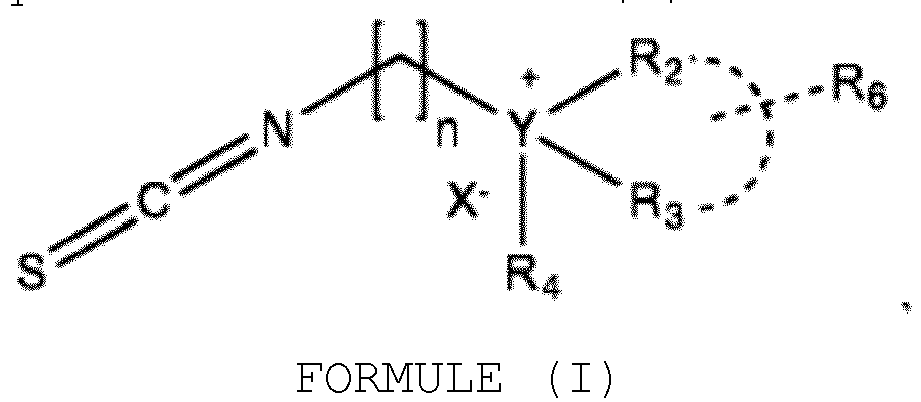 Y+ étant choisi parmi un azote quaternaire ; X- étant un quelconque sel pharmaceutiquement acceptable ; n étant choisi parmi 1, 2 ou 3 ; R2 et R3 étant indépendamment choisis parmi C1-4 alkyle ou liés ensemble pour former un système cyclique aliphatique, aromatique ou hétérocyclique ;R4 étant choisi parmi C1-4 alkyle, alcényle, alcynyle, alcoxycarbonyle, alcoxydicarbonyle, acrylique, alcoxy, alcoxyalkyle, aryloxyalkyle, carboxylates d'alkyle comme une partie d'une forme de bétaïne, de sel interne ou de zwitterion, halogénoalkyle, hydroxyalkyle, nitrile ou propargyle ;R6 étant choisi parmi C1-4 alkyle, alcoxy, hydroxy, alcoxyalkyle, hydroxyalkyle ou époxy ; ety compris de quelconques sels et/ou solvates acceptables correspondants.
 - Procédé non thérapeutique selon la revendication 5, le composé étant au moins l'un parmi triflate de N-(2-phénoxyéthyl)-2-isothiocyanato-N,N-diméthyléthan-1-aminium, bromure de N-(2-isothiocyanatoéthyl)-N,N-diméthylprop-2-yn-1-aminium, iodure de 3-isothiocyanato-N,N-diéthyl-N-méthylpropanaminium et bromure de N-(2-isothiocyanatoéthyl)-2-(méthoxycarbonyl)-N,N-diméthylprop-2-én-1-aminium ou des sels pharmaceutiquement acceptables correspondants.
- Procédé non thérapeutique selon la revendication 5, le composé étant au moins l'un parmi iodure de N,N-diéthyl-2-isothiocyanato-N-méthylpropan-aminium, triflate de N-(2-bromoéthyl)-3-isothiocyanato-N,N-diéthylpropan-1-aminium, bromure de N-(éthoxypropyl-2,3-dione)-3-isothiocyanato-N,N-diéthylpropan-1-aminium ou des sels pharmaceutiquement acceptables correspondants.
- Procédé non thérapeutique selon l'une quelconque des revendications 5 à 7 comprenant en outre la mise en contact de la bactérie avec un deuxième agent qui est au moins l'un parmi une huile d'oméga 3, l'acide salicylique, le diméthylbutanol, l'huile d'ail, l'huile d'olive, l'huile de krill, la coenzyme Q-10, un probiotique, un prébiotique, une fibre diététique, l'écorce de psyllium, des sels de bismuth, des phytostérols, l'huile de pépins de raisin, un extrait de thé vert, la vitamine D, un antioxydant, le curcuma, la curcumine, le resvératrol, du charbon activé ou la chlorophylline de cuivre.
- Procédé non thérapeutique selon l'une quelconque des revendications 5 à 8, la conversion de la choline ou de la carnitine en triméthylamine (TMA) étant inhibée d'environ 1 % à environ 100 %.
- Procédé non thérapeutique selon la revendication 9, la conversion de la choline ou de la carnitine en triméthylamine (TMA) étant inhibée d'environ 50 %.
- Procédé non thérapeutique selon l'une quelconque des revendications 5 à 10, la bactérie étant au moins l'une parmi Proteus mirabilis, Desulfovibrio alaskensis, Clostridium ljungdahlii, C. scindens, C. aldenense, C. aminobutyricum, Collinsella tanakaei, Anaerococcus vaginalis, Streptococcus dysgalactiae, Desultitobacterium hafniense, Klebsiella variicola, K. pneumonia, Proteus penneri, Eggerthella lenta, Edwardsiella tarda, Escherichia coli ou E. fergusonii.
- Composé comprenant :
 R1 étant H, C1-4 alcoxy, Br, Cl, F, I ou étant choisi parmi
 Y+ étant choisi parmi un azote quaternaire ; X- étant un quelconque sel pharmaceutiquement acceptable ; n étant choisi parmi 1, 2 ou 3 ; R2 et R3 étant indépendamment choisis parmi C1-4 alkyle ou liés ensemble pour former un système cyclique aliphatique, aromatique ou hétérocyclique ;Z étant O, CH2 ou H, H ;m étant 0, 1 ou 2 ;R5 étant hydroxyle ou hydroxyalkyle ; etR7 étant H ou C1-4 alkyle ety compris de quelconques sels et/ou solvates acceptables correspondants ; le composé étant choisi parmi les numéros ID 3 à 45 dans le TABLEAU 1.
 - Procédé de préparation d'un composé comme décrit dans la FORMULE (II) comprenant :
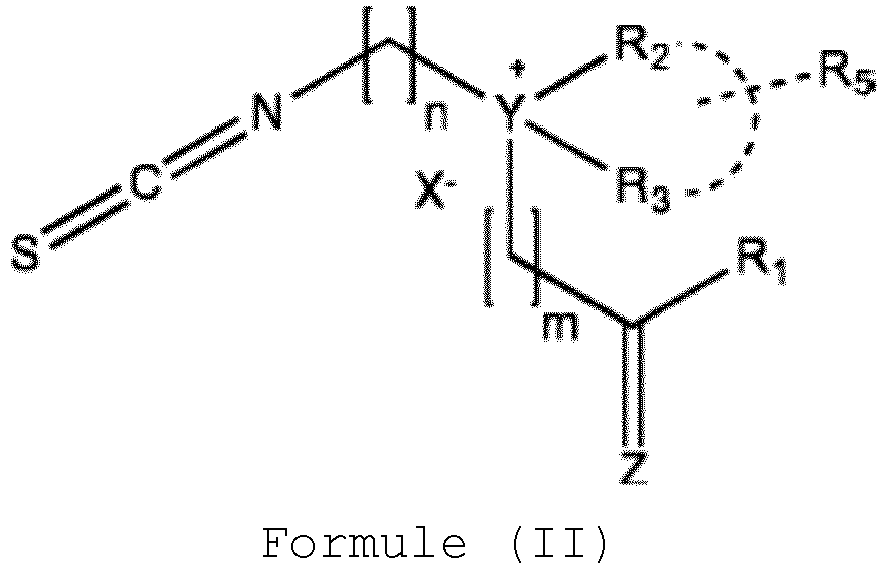 R1 étant H, C1-4 alcoxy, Br, Cl, F, I ou étant choisi parmi
 Y+ étant choisi parmi un azote quaternaire ; X- étant un quelconque sel pharmaceutiquement acceptable ; n étant choisi parmi 1, 2 ou 3 ; R2 et R3 étant indépendamment choisis parmi C1-4 alkyle ou liés ensemble pour former un système cyclique aliphatique, aromatique ou hétérocyclique ;Z étant O, CH2 ou H, H ;m étant 0, 1 ou 2 ;R5 étant hydroxyle ou hydroxyalkyle ; etR7 étant H ou C1-4 alkyle ; ety compris de quelconques sels et/ou solvates acceptables correspondants ; le composé étant choisi parmi les numéros ID 3 à 45 dans le TABLEAU 1 ;la mise en réaction du composé A ;
 avec un composé de structure B :
 LG étant un groupe partant approprié connu de l'homme de l'art.
 - Procédé selon la revendication 13, le groupe partant LG étant au moins l'un parmi chlorure, bromure, iodure, triflate, mésylate ou tosylate.
Applications Claiming Priority (4)
| Application Number | Priority Date | Filing Date | Title |
|---|---|---|---|
| US201562261662P | 2015-12-01 | 2015-12-01 | |
| US201562261645P | 2015-12-01 | 2015-12-01 | |
| US201662356422P | 2016-06-29 | 2016-06-29 | |
| PCT/US2016/064299 WO2017095975A1 (fr) | 2015-12-01 | 2016-12-01 | Composés et méthodes permettant d'inhiber la production de triméthylamine |
Publications (2)
| Publication Number | Publication Date |
|---|---|
| EP3383377A1 EP3383377A1 (fr) | 2018-10-10 |
| EP3383377B1 true EP3383377B1 (fr) | 2024-04-17 |
Family
ID=57680518
Family Applications (3)
| Application Number | Title | Priority Date | Filing Date |
|---|---|---|---|
| EP16819754.9A Active EP3383376B1 (fr) | 2015-12-01 | 2016-12-01 | Procédés pour inhiber la conversion de la carnitine en triméthylamine (tma) |
| EP16820393.3A Active EP3383377B1 (fr) | 2015-12-01 | 2016-12-01 | Composés et méthodes permettant d'inhiber la production de triméthylamine |
| EP16823075.3A Active EP3383378B1 (fr) | 2015-12-01 | 2016-12-01 | Procédés pour inhiber la conversion de la choline en triméthylamine (tma) |
Family Applications Before (1)
| Application Number | Title | Priority Date | Filing Date |
|---|---|---|---|
| EP16819754.9A Active EP3383376B1 (fr) | 2015-12-01 | 2016-12-01 | Procédés pour inhiber la conversion de la carnitine en triméthylamine (tma) |
Family Applications After (1)
| Application Number | Title | Priority Date | Filing Date |
|---|---|---|---|
| EP16823075.3A Active EP3383378B1 (fr) | 2015-12-01 | 2016-12-01 | Procédés pour inhiber la conversion de la choline en triméthylamine (tma) |
Country Status (10)
| Country | Link |
|---|---|
| US (3) | US10786479B2 (fr) |
| EP (3) | EP3383376B1 (fr) |
| CN (3) | CN108601754A (fr) |
| AU (4) | AU2016365314A1 (fr) |
| BR (3) | BR112018011216A2 (fr) |
| CA (3) | CA3007061C (fr) |
| MX (3) | MX383038B (fr) |
| PL (1) | PL3383376T3 (fr) |
| RU (3) | RU2018116864A (fr) |
| WO (3) | WO2017095995A1 (fr) |
Families Citing this family (14)
| Publication number | Priority date | Publication date | Assignee | Title |
|---|---|---|---|---|
| BR112018011216A2 (pt) | 2015-12-01 | 2018-11-21 | Cleveland Clinic Found | métodos para inibir a conversão de colina em trimetilamina (tma) |
| EP3446689B1 (fr) * | 2016-04-22 | 2025-01-08 | JC (Wuxi) COMPANY, Inc. | Composé d'isothiocyanate pour utilisation dans le traitement de l'hyperbilirubinémie |
| EP3478276B1 (fr) | 2016-06-29 | 2021-10-06 | The Procter & Gamble Company | Procédés pour inhiber la conversion de la choline en triméthylamine (tma) |
| US11419882B2 (en) * | 2017-06-08 | 2022-08-23 | Allergyintellect, Inc | Vitamin D compounds and methods of using the same |
| EP3641748B1 (fr) * | 2017-06-19 | 2023-11-29 | The Cleveland Clinic Foundation | Traitement d'une maladie et promotion de la perte de poids par inhibition de la voie tma/fmo3/tmao |
| KR20200052298A (ko) * | 2017-08-14 | 2020-05-14 | 소마젠 인크 | 트리메틸아민 및/또는 트리메틸아민 n-옥사이드 관련 표적화된 약물 |
| MX390468B (es) * | 2017-10-02 | 2025-03-20 | Procter & Gamble | Metodos para inhibir la conversion de colina en trimetilamina (tma) |
| WO2019070676A1 (fr) | 2017-10-02 | 2019-04-11 | The Procter & Gamble Company | Procédés d'inhibition de la conversion de choline en triméthylamine (tma) |
| AU2018345749B2 (en) * | 2017-10-02 | 2021-03-11 | The Cleveland Clinic Foundation | Methods for inhibiting conversion of choline to trimethylamine (TMA) |
| CN108976485B (zh) * | 2018-01-22 | 2020-11-03 | 内蒙古大学 | 一种凝胶多糖与稀土复合的柔性发光薄膜及其制备方法 |
| US12576055B2 (en) | 2018-02-01 | 2026-03-17 | The Cleveland Clinic Foundation | Disease detection and treatment based on trimethyl-lysine levels |
| EP3876920A1 (fr) * | 2018-11-06 | 2021-09-15 | The Procter & Gamble Company | Procédés pour inhiber la conversion de la choline en triméthylamine (tma) |
| CA3117566C (fr) * | 2018-11-06 | 2024-04-09 | The Procter & Gamble Company | Procedes pour inhiber la conversion de la choline en trimethylamine (tma) |
| AU2019395020A1 (en) * | 2018-12-06 | 2021-06-17 | Senda Biosciences, Inc. | Decarboxylase inhibitors for treating Parkinson's disease |
Family Cites Families (23)
| Publication number | Priority date | Publication date | Assignee | Title |
|---|---|---|---|---|
| GB1242863A (en) * | 1968-05-10 | 1971-08-18 | Pharmacia As | 2,3-DIHYDRO-5H-THIAZOLO[2,3-b]QUINAZOLINES AND PROCESSES FOR THE PREPARATION THEREOF |
| US4335141A (en) | 1979-12-26 | 1982-06-15 | Merck & Co., Inc. | 2-Substituted-aminopropene-and propanenitrile antimicrobial and anti-inflammatory agents |
| US4874788A (en) | 1985-10-01 | 1989-10-17 | Ethyl Corporation | Quaternary ammonium compounds |
| US5547677A (en) | 1994-05-20 | 1996-08-20 | Novavax, Inc. | Antimicrobial oil-in-water emulsions |
| EP1112288A1 (fr) | 1998-08-21 | 2001-07-04 | Ciba SC Holding AG | Polymerisation radicale thermique et photoamorcee en presence d'un agent de fragmentation d'addition |
| WO2002016366A1 (fr) | 2000-08-23 | 2002-02-28 | Itoi Textile Co., Ltd | Chlorophylline de cuivre ou de fer sodee, pate, solution aqueuse de pigment, file de papier et procede de production de celui-ci |
| JP4099012B2 (ja) | 2002-07-12 | 2008-06-11 | 富士フイルム株式会社 | 画像形成材料 |
| JP4798973B2 (ja) * | 2004-08-04 | 2011-10-19 | 丸善製薬株式会社 | 抗菌用組成物 |
| US20070199890A1 (en) | 2006-02-27 | 2007-08-30 | Agion Technologies, Inc. | Antimicrobial activated carbon and use thereof |
| US8859798B2 (en) | 2006-07-06 | 2014-10-14 | Rutgers, The State University Of New Jersey | Isothiocyanate compounds, pharmaceutical compositions, and uses thereof |
| AU2007285775B2 (en) * | 2006-08-17 | 2011-03-03 | Sanofi Pasteur Ltd. | Immunogenic PcpA polypeptides and uses thereof |
| US9423405B2 (en) | 2007-12-05 | 2016-08-23 | The Cleveland Clinic Foundation | Trimethylamine compounds as risk predictors of cardiovascular disease |
| WO2010084661A1 (fr) * | 2009-01-23 | 2010-07-29 | 金印株式会社 | Composition, aliment, substance alimentaire, préparation pharmaceutique, produit cosmétique et matière première contenant chacun un composé d'isothiocyanate |
| US10241093B2 (en) * | 2009-05-28 | 2019-03-26 | The Cleveland Clinic Foundation | Trimethylamine-containing compounds for diagnosis and prediction of disease |
| CN102458481A (zh) * | 2009-05-28 | 2012-05-16 | 克里夫兰诊所基金会 | 用于诊断和预测疾病的含三甲胺的化合物 |
| WO2010140902A1 (fr) * | 2009-06-02 | 2010-12-09 | Mark Hampton | Inhibiteurs du facteur d'inhibition de la migration des macrophages |
| GB0922505D0 (en) * | 2009-12-23 | 2010-02-10 | Plant Bioscience Ltd | Use |
| US20120225020A1 (en) | 2011-02-24 | 2012-09-06 | Chekmenev Eduard Y | Unsaturated choline analogs and chemical synthesis thereof |
| CA2876177C (fr) | 2012-06-11 | 2022-06-14 | The Cleveland Clinic Foundation | Traitement et prevention d'une maladie cardiovasculaire et de la thrombose |
| US20140271923A1 (en) * | 2013-03-14 | 2014-09-18 | Christopher Brian Reid | Compositions & formulations for preventing and treating chronic diseases that cluster in patients such as cardiovascular disease, diabetes, obesity, polycystic ovary syndrome, hyperlipidemia and hypertension, as well as for preventing and treating other diseases and conditions |
| EP3200792A4 (fr) | 2014-10-03 | 2018-05-09 | The Institute for Cancer Research d/b/a The Research Institute of Fox Chase Cancer Center | Inhibiteurs de poly(adp-ribose) polymérase 1 structurellement non apparentés à nad |
| BR112018011216A2 (pt) | 2015-12-01 | 2018-11-21 | Cleveland Clinic Found | métodos para inibir a conversão de colina em trimetilamina (tma) |
| EP3478276B1 (fr) | 2016-06-29 | 2021-10-06 | The Procter & Gamble Company | Procédés pour inhiber la conversion de la choline en triméthylamine (tma) |
-
2016
- 2016-12-01 BR BR112018011216A patent/BR112018011216A2/pt not_active Application Discontinuation
- 2016-12-01 CN CN201680070816.9A patent/CN108601754A/zh active Pending
- 2016-12-01 CA CA3007061A patent/CA3007061C/fr active Active
- 2016-12-01 US US15/366,877 patent/US10786479B2/en active Active
- 2016-12-01 BR BR112018011210A patent/BR112018011210A2/pt not_active Application Discontinuation
- 2016-12-01 EP EP16819754.9A patent/EP3383376B1/fr active Active
- 2016-12-01 MX MX2018006758A patent/MX383038B/es unknown
- 2016-12-01 WO PCT/US2016/064341 patent/WO2017095995A1/fr not_active Ceased
- 2016-12-01 BR BR112018010873-1A patent/BR112018010873A2/pt active Search and Examination
- 2016-12-01 PL PL16819754T patent/PL3383376T3/pl unknown
- 2016-12-01 RU RU2018116864A patent/RU2018116864A/ru not_active Application Discontinuation
- 2016-12-01 CA CA3005760A patent/CA3005760C/fr active Active
- 2016-12-01 WO PCT/US2016/064339 patent/WO2017095993A1/fr not_active Ceased
- 2016-12-01 WO PCT/US2016/064299 patent/WO2017095975A1/fr not_active Ceased
- 2016-12-01 CA CA3007081A patent/CA3007081C/fr active Active
- 2016-12-01 AU AU2016365314A patent/AU2016365314A1/en not_active Abandoned
- 2016-12-01 AU AU2016365316A patent/AU2016365316B2/en active Active
- 2016-12-01 CN CN201680068820.1A patent/CN108472267B/zh active Active
- 2016-12-01 US US15/366,819 patent/US10780072B2/en active Active
- 2016-12-01 AU AU2016362298A patent/AU2016362298B2/en active Active
- 2016-12-01 RU RU2018120183A patent/RU2018120183A/ru not_active Application Discontinuation
- 2016-12-01 RU RU2018120189A patent/RU2018120189A/ru not_active Application Discontinuation
- 2016-12-01 MX MX2018006757A patent/MX380818B/es unknown
- 2016-12-01 US US15/366,940 patent/US10213407B2/en active Active
- 2016-12-01 CN CN201680070716.6A patent/CN108601753A/zh active Pending
- 2016-12-01 MX MX2018006756A patent/MX378437B/es unknown
- 2016-12-01 EP EP16820393.3A patent/EP3383377B1/fr active Active
- 2016-12-01 EP EP16823075.3A patent/EP3383378B1/fr active Active
-
2019
- 2019-12-13 AU AU2019280094A patent/AU2019280094B2/en active Active
Non-Patent Citations (1)
| Title |
|---|
| MENTE ANDREW ET AL: "The Relationship Between Trimethylamine-N-Oxide and Prevalent Cardiovascular Disease in a Multiethnic Population Living in Canada", CANADIAN JOURNAL OF CARDIOLOGY, vol. 31, no. 9, 1 September 2015 (2015-09-01), CANADA, pages 1189 - 1194, XP093065524, ISSN: 0828-282X, Retrieved from the Internet <URL:http://dx.doi.org/10.1016/j.cjca.2015.06.016> DOI: 10.1016/j.cjca.2015.06.016 * |
Also Published As
Similar Documents
| Publication | Publication Date | Title |
|---|---|---|
| EP3383377B1 (fr) | Composés et méthodes permettant d'inhiber la production de triméthylamine | |
| EP3478276B1 (fr) | Procédés pour inhiber la conversion de la choline en triméthylamine (tma) | |
| EP3522927B1 (fr) | Procédés d'inhibition de la conversion de choline en triméthylamine (tma) | |
| EP3522878B1 (fr) | Procédés d'inhibition de la conversion de choline en triméthylamine (tma) | |
| EP3522876B1 (fr) | Procédés d'inhibition de la conversion de choline en triméthylamine (tma) |
Legal Events
| Date | Code | Title | Description |
|---|---|---|---|
| STAA | Information on the status of an ep patent application or granted ep patent |
Free format text: STATUS: UNKNOWN |
|
| STAA | Information on the status of an ep patent application or granted ep patent |
Free format text: STATUS: THE INTERNATIONAL PUBLICATION HAS BEEN MADE |
|
| PUAI | Public reference made under article 153(3) epc to a published international application that has entered the european phase |
Free format text: ORIGINAL CODE: 0009012 |
|
| STAA | Information on the status of an ep patent application or granted ep patent |
Free format text: STATUS: REQUEST FOR EXAMINATION WAS MADE |
|
| 17P | Request for examination filed |
Effective date: 20180502 |
|
| AK | Designated contracting states |
Kind code of ref document: A1 Designated state(s): AL AT BE BG CH CY CZ DE DK EE ES FI FR GB GR HR HU IE IS IT LI LT LU LV MC MK MT NL NO PL PT RO RS SE SI SK SM TR |
|
| AX | Request for extension of the european patent |
Extension state: BA ME |
|
| DAV | Request for validation of the european patent (deleted) | ||
| DAX | Request for extension of the european patent (deleted) | ||
| STAA | Information on the status of an ep patent application or granted ep patent |
Free format text: STATUS: EXAMINATION IS IN PROGRESS |
|
| 17Q | First examination report despatched |
Effective date: 20190626 |
|
| P01 | Opt-out of the competence of the unified patent court (upc) registered |
Effective date: 20230602 |
|
| REG | Reference to a national code |
Ref legal event code: R079 Ipc: A61K0031260000 Ref country code: DE Ref legal event code: R079 Ref document number: 602016087003 Country of ref document: DE Free format text: PREVIOUS MAIN CLASS: A61K0031040000 Ipc: A61K0031260000 |
|
| RIC1 | Information provided on ipc code assigned before grant |
Ipc: C07D 211/46 20060101ALI20230720BHEP Ipc: A61P 9/00 20060101ALI20230720BHEP Ipc: A61K 31/275 20060101ALI20230720BHEP Ipc: A61K 31/26 20060101AFI20230720BHEP |
|
| GRAP | Despatch of communication of intention to grant a patent |
Free format text: ORIGINAL CODE: EPIDOSNIGR1 |
|
| STAA | Information on the status of an ep patent application or granted ep patent |
Free format text: STATUS: GRANT OF PATENT IS INTENDED |
|
| INTG | Intention to grant announced |
Effective date: 20230828 |
|
| RIN1 | Information on inventor provided before grant (corrected) |
Inventor name: WOS, JOHN AUGUST Inventor name: HAZEN, STANLEY LEON Inventor name: GARCIA-GARCIA, JOSE CARLOS |
|
| GRAS | Grant fee paid |
Free format text: ORIGINAL CODE: EPIDOSNIGR3 |
|
| GRAA | (expected) grant |
Free format text: ORIGINAL CODE: 0009210 |
|
| STAA | Information on the status of an ep patent application or granted ep patent |
Free format text: STATUS: THE PATENT HAS BEEN GRANTED |
|
| AK | Designated contracting states |
Kind code of ref document: B1 Designated state(s): AL AT BE BG CH CY CZ DE DK EE ES FI FR GB GR HR HU IE IS IT LI LT LU LV MC MK MT NL NO PL PT RO RS SE SI SK SM TR |
|
| REG | Reference to a national code |
Ref country code: GB Ref legal event code: FG4D |
|
| REG | Reference to a national code |
Ref country code: CH Ref legal event code: EP |
|
| REG | Reference to a national code |
Ref country code: IE Ref legal event code: FG4D Ref country code: DE Ref legal event code: R096 Ref document number: 602016087003 Country of ref document: DE |
|
| REG | Reference to a national code |
Ref country code: LT Ref legal event code: MG9D |
|
| REG | Reference to a national code |
Ref country code: NL Ref legal event code: MP Effective date: 20240417 |
|
| REG | Reference to a national code |
Ref country code: AT Ref legal event code: MK05 Ref document number: 1676581 Country of ref document: AT Kind code of ref document: T Effective date: 20240417 |
|
| PG25 | Lapsed in a contracting state [announced via postgrant information from national office to epo] |
Ref country code: NL Free format text: LAPSE BECAUSE OF FAILURE TO SUBMIT A TRANSLATION OF THE DESCRIPTION OR TO PAY THE FEE WITHIN THE PRESCRIBED TIME-LIMIT Effective date: 20240417 |
|
| PG25 | Lapsed in a contracting state [announced via postgrant information from national office to epo] |
Ref country code: NL Free format text: LAPSE BECAUSE OF FAILURE TO SUBMIT A TRANSLATION OF THE DESCRIPTION OR TO PAY THE FEE WITHIN THE PRESCRIBED TIME-LIMIT Effective date: 20240417 |
|
| PG25 | Lapsed in a contracting state [announced via postgrant information from national office to epo] |
Ref country code: IS Free format text: LAPSE BECAUSE OF FAILURE TO SUBMIT A TRANSLATION OF THE DESCRIPTION OR TO PAY THE FEE WITHIN THE PRESCRIBED TIME-LIMIT Effective date: 20240817 |
|
| PG25 | Lapsed in a contracting state [announced via postgrant information from national office to epo] |
Ref country code: BG Free format text: LAPSE BECAUSE OF FAILURE TO SUBMIT A TRANSLATION OF THE DESCRIPTION OR TO PAY THE FEE WITHIN THE PRESCRIBED TIME-LIMIT Effective date: 20240417 |
|
| PG25 | Lapsed in a contracting state [announced via postgrant information from national office to epo] |
Ref country code: FI Free format text: LAPSE BECAUSE OF FAILURE TO SUBMIT A TRANSLATION OF THE DESCRIPTION OR TO PAY THE FEE WITHIN THE PRESCRIBED TIME-LIMIT Effective date: 20240417 Ref country code: HR Free format text: LAPSE BECAUSE OF FAILURE TO SUBMIT A TRANSLATION OF THE DESCRIPTION OR TO PAY THE FEE WITHIN THE PRESCRIBED TIME-LIMIT Effective date: 20240417 |
|
| PG25 | Lapsed in a contracting state [announced via postgrant information from national office to epo] |
Ref country code: GR Free format text: LAPSE BECAUSE OF FAILURE TO SUBMIT A TRANSLATION OF THE DESCRIPTION OR TO PAY THE FEE WITHIN THE PRESCRIBED TIME-LIMIT Effective date: 20240718 |
|
| PG25 | Lapsed in a contracting state [announced via postgrant information from national office to epo] |
Ref country code: PT Free format text: LAPSE BECAUSE OF FAILURE TO SUBMIT A TRANSLATION OF THE DESCRIPTION OR TO PAY THE FEE WITHIN THE PRESCRIBED TIME-LIMIT Effective date: 20240819 |
|
| PG25 | Lapsed in a contracting state [announced via postgrant information from national office to epo] |
Ref country code: ES Free format text: LAPSE BECAUSE OF FAILURE TO SUBMIT A TRANSLATION OF THE DESCRIPTION OR TO PAY THE FEE WITHIN THE PRESCRIBED TIME-LIMIT Effective date: 20240417 |
|
| PG25 | Lapsed in a contracting state [announced via postgrant information from national office to epo] |
Ref country code: AT Free format text: LAPSE BECAUSE OF FAILURE TO SUBMIT A TRANSLATION OF THE DESCRIPTION OR TO PAY THE FEE WITHIN THE PRESCRIBED TIME-LIMIT Effective date: 20240417 |
|
| PG25 | Lapsed in a contracting state [announced via postgrant information from national office to epo] |
Ref country code: PL Free format text: LAPSE BECAUSE OF FAILURE TO SUBMIT A TRANSLATION OF THE DESCRIPTION OR TO PAY THE FEE WITHIN THE PRESCRIBED TIME-LIMIT Effective date: 20240417 |
|
| PG25 | Lapsed in a contracting state [announced via postgrant information from national office to epo] |
Ref country code: LV Free format text: LAPSE BECAUSE OF FAILURE TO SUBMIT A TRANSLATION OF THE DESCRIPTION OR TO PAY THE FEE WITHIN THE PRESCRIBED TIME-LIMIT Effective date: 20240417 |
|
| PG25 | Lapsed in a contracting state [announced via postgrant information from national office to epo] |
Ref country code: PT Free format text: LAPSE BECAUSE OF FAILURE TO SUBMIT A TRANSLATION OF THE DESCRIPTION OR TO PAY THE FEE WITHIN THE PRESCRIBED TIME-LIMIT Effective date: 20240819 Ref country code: PL Free format text: LAPSE BECAUSE OF FAILURE TO SUBMIT A TRANSLATION OF THE DESCRIPTION OR TO PAY THE FEE WITHIN THE PRESCRIBED TIME-LIMIT Effective date: 20240417 Ref country code: NO Free format text: LAPSE BECAUSE OF FAILURE TO SUBMIT A TRANSLATION OF THE DESCRIPTION OR TO PAY THE FEE WITHIN THE PRESCRIBED TIME-LIMIT Effective date: 20240717 Ref country code: LV Free format text: LAPSE BECAUSE OF FAILURE TO SUBMIT A TRANSLATION OF THE DESCRIPTION OR TO PAY THE FEE WITHIN THE PRESCRIBED TIME-LIMIT Effective date: 20240417 Ref country code: IS Free format text: LAPSE BECAUSE OF FAILURE TO SUBMIT A TRANSLATION OF THE DESCRIPTION OR TO PAY THE FEE WITHIN THE PRESCRIBED TIME-LIMIT Effective date: 20240817 Ref country code: HR Free format text: LAPSE BECAUSE OF FAILURE TO SUBMIT A TRANSLATION OF THE DESCRIPTION OR TO PAY THE FEE WITHIN THE PRESCRIBED TIME-LIMIT Effective date: 20240417 Ref country code: GR Free format text: LAPSE BECAUSE OF FAILURE TO SUBMIT A TRANSLATION OF THE DESCRIPTION OR TO PAY THE FEE WITHIN THE PRESCRIBED TIME-LIMIT Effective date: 20240718 Ref country code: FI Free format text: LAPSE BECAUSE OF FAILURE TO SUBMIT A TRANSLATION OF THE DESCRIPTION OR TO PAY THE FEE WITHIN THE PRESCRIBED TIME-LIMIT Effective date: 20240417 Ref country code: ES Free format text: LAPSE BECAUSE OF FAILURE TO SUBMIT A TRANSLATION OF THE DESCRIPTION OR TO PAY THE FEE WITHIN THE PRESCRIBED TIME-LIMIT Effective date: 20240417 Ref country code: BG Free format text: LAPSE BECAUSE OF FAILURE TO SUBMIT A TRANSLATION OF THE DESCRIPTION OR TO PAY THE FEE WITHIN THE PRESCRIBED TIME-LIMIT Effective date: 20240417 Ref country code: AT Free format text: LAPSE BECAUSE OF FAILURE TO SUBMIT A TRANSLATION OF THE DESCRIPTION OR TO PAY THE FEE WITHIN THE PRESCRIBED TIME-LIMIT Effective date: 20240417 Ref country code: RS Free format text: LAPSE BECAUSE OF FAILURE TO SUBMIT A TRANSLATION OF THE DESCRIPTION OR TO PAY THE FEE WITHIN THE PRESCRIBED TIME-LIMIT Effective date: 20240717 |
|
| PG25 | Lapsed in a contracting state [announced via postgrant information from national office to epo] |
Ref country code: DK Free format text: LAPSE BECAUSE OF FAILURE TO SUBMIT A TRANSLATION OF THE DESCRIPTION OR TO PAY THE FEE WITHIN THE PRESCRIBED TIME-LIMIT Effective date: 20240417 |
|
| REG | Reference to a national code |
Ref country code: DE Ref legal event code: R097 Ref document number: 602016087003 Country of ref document: DE |
|
| PG25 | Lapsed in a contracting state [announced via postgrant information from national office to epo] |
Ref country code: EE Free format text: LAPSE BECAUSE OF FAILURE TO SUBMIT A TRANSLATION OF THE DESCRIPTION OR TO PAY THE FEE WITHIN THE PRESCRIBED TIME-LIMIT Effective date: 20240417 |
|
| PG25 | Lapsed in a contracting state [announced via postgrant information from national office to epo] |
Ref country code: CZ Free format text: LAPSE BECAUSE OF FAILURE TO SUBMIT A TRANSLATION OF THE DESCRIPTION OR TO PAY THE FEE WITHIN THE PRESCRIBED TIME-LIMIT Effective date: 20240417 |
|
| PG25 | Lapsed in a contracting state [announced via postgrant information from national office to epo] |
Ref country code: SK Free format text: LAPSE BECAUSE OF FAILURE TO SUBMIT A TRANSLATION OF THE DESCRIPTION OR TO PAY THE FEE WITHIN THE PRESCRIBED TIME-LIMIT Effective date: 20240417 Ref country code: RO Free format text: LAPSE BECAUSE OF FAILURE TO SUBMIT A TRANSLATION OF THE DESCRIPTION OR TO PAY THE FEE WITHIN THE PRESCRIBED TIME-LIMIT Effective date: 20240417 |
|
| PG25 | Lapsed in a contracting state [announced via postgrant information from national office to epo] |
Ref country code: SM Free format text: LAPSE BECAUSE OF FAILURE TO SUBMIT A TRANSLATION OF THE DESCRIPTION OR TO PAY THE FEE WITHIN THE PRESCRIBED TIME-LIMIT Effective date: 20240417 |
|
| PG25 | Lapsed in a contracting state [announced via postgrant information from national office to epo] |
Ref country code: SM Free format text: LAPSE BECAUSE OF FAILURE TO SUBMIT A TRANSLATION OF THE DESCRIPTION OR TO PAY THE FEE WITHIN THE PRESCRIBED TIME-LIMIT Effective date: 20240417 Ref country code: SK Free format text: LAPSE BECAUSE OF FAILURE TO SUBMIT A TRANSLATION OF THE DESCRIPTION OR TO PAY THE FEE WITHIN THE PRESCRIBED TIME-LIMIT Effective date: 20240417 Ref country code: RO Free format text: LAPSE BECAUSE OF FAILURE TO SUBMIT A TRANSLATION OF THE DESCRIPTION OR TO PAY THE FEE WITHIN THE PRESCRIBED TIME-LIMIT Effective date: 20240417 Ref country code: EE Free format text: LAPSE BECAUSE OF FAILURE TO SUBMIT A TRANSLATION OF THE DESCRIPTION OR TO PAY THE FEE WITHIN THE PRESCRIBED TIME-LIMIT Effective date: 20240417 Ref country code: DK Free format text: LAPSE BECAUSE OF FAILURE TO SUBMIT A TRANSLATION OF THE DESCRIPTION OR TO PAY THE FEE WITHIN THE PRESCRIBED TIME-LIMIT Effective date: 20240417 Ref country code: CZ Free format text: LAPSE BECAUSE OF FAILURE TO SUBMIT A TRANSLATION OF THE DESCRIPTION OR TO PAY THE FEE WITHIN THE PRESCRIBED TIME-LIMIT Effective date: 20240417 |
|
| PG25 | Lapsed in a contracting state [announced via postgrant information from national office to epo] |
Ref country code: IT Free format text: LAPSE BECAUSE OF FAILURE TO SUBMIT A TRANSLATION OF THE DESCRIPTION OR TO PAY THE FEE WITHIN THE PRESCRIBED TIME-LIMIT Effective date: 20240417 |
|
| PLBE | No opposition filed within time limit |
Free format text: ORIGINAL CODE: 0009261 |
|
| STAA | Information on the status of an ep patent application or granted ep patent |
Free format text: STATUS: NO OPPOSITION FILED WITHIN TIME LIMIT |
|
| 26N | No opposition filed |
Effective date: 20250120 |
|
| PG25 | Lapsed in a contracting state [announced via postgrant information from national office to epo] |
Ref country code: SI Free format text: LAPSE BECAUSE OF FAILURE TO SUBMIT A TRANSLATION OF THE DESCRIPTION OR TO PAY THE FEE WITHIN THE PRESCRIBED TIME-LIMIT Effective date: 20240417 |
|
| PG25 | Lapsed in a contracting state [announced via postgrant information from national office to epo] |
Ref country code: MC Free format text: LAPSE BECAUSE OF FAILURE TO SUBMIT A TRANSLATION OF THE DESCRIPTION OR TO PAY THE FEE WITHIN THE PRESCRIBED TIME-LIMIT Effective date: 20240417 |
|
| REG | Reference to a national code |
Ref country code: CH Ref legal event code: PL |
|
| PG25 | Lapsed in a contracting state [announced via postgrant information from national office to epo] |
Ref country code: LU Free format text: LAPSE BECAUSE OF NON-PAYMENT OF DUE FEES Effective date: 20241201 |
|
| PG25 | Lapsed in a contracting state [announced via postgrant information from national office to epo] |
Ref country code: SE Free format text: LAPSE BECAUSE OF FAILURE TO SUBMIT A TRANSLATION OF THE DESCRIPTION OR TO PAY THE FEE WITHIN THE PRESCRIBED TIME-LIMIT Effective date: 20240417 |
|
| REG | Reference to a national code |
Ref country code: BE Ref legal event code: MM Effective date: 20241231 |
|
| PG25 | Lapsed in a contracting state [announced via postgrant information from national office to epo] |
Ref country code: BE Free format text: LAPSE BECAUSE OF NON-PAYMENT OF DUE FEES Effective date: 20241231 |
|
| PG25 | Lapsed in a contracting state [announced via postgrant information from national office to epo] |
Ref country code: CH Free format text: LAPSE BECAUSE OF NON-PAYMENT OF DUE FEES Effective date: 20241231 |
|
| PG25 | Lapsed in a contracting state [announced via postgrant information from national office to epo] |
Ref country code: IE Free format text: LAPSE BECAUSE OF NON-PAYMENT OF DUE FEES Effective date: 20241201 |
|
| PGFP | Annual fee paid to national office [announced via postgrant information from national office to epo] |
Ref country code: GB Payment date: 20251223 Year of fee payment: 10 |
|
| PGFP | Annual fee paid to national office [announced via postgrant information from national office to epo] |
Ref country code: FR Payment date: 20251217 Year of fee payment: 10 |
|
| PG25 | Lapsed in a contracting state [announced via postgrant information from national office to epo] |
Ref country code: CY Free format text: LAPSE BECAUSE OF FAILURE TO SUBMIT A TRANSLATION OF THE DESCRIPTION OR TO PAY THE FEE WITHIN THE PRESCRIBED TIME-LIMIT; INVALID AB INITIO Effective date: 20161201 |
|
| PGFP | Annual fee paid to national office [announced via postgrant information from national office to epo] |
Ref country code: DE Payment date: 20251222 Year of fee payment: 10 |