EP3385258B1 - Procédé d'oxydation permettant la production d'un produit de type furane-acide di-carboxylique brut et/ou purifié - Google Patents
Procédé d'oxydation permettant la production d'un produit de type furane-acide di-carboxylique brut et/ou purifié Download PDFInfo
- Publication number
- EP3385258B1 EP3385258B1 EP18172100.2A EP18172100A EP3385258B1 EP 3385258 B1 EP3385258 B1 EP 3385258B1 EP 18172100 A EP18172100 A EP 18172100A EP 3385258 B1 EP3385258 B1 EP 3385258B1
- Authority
- EP
- European Patent Office
- Prior art keywords
- carboxylic acid
- weight
- acid composition
- ppm
- stream
- Prior art date
- Legal status (The legal status is an assumption and is not a legal conclusion. Google has not performed a legal analysis and makes no representation as to the accuracy of the status listed.)
- Active
Links
Images


Classifications
-
- C—CHEMISTRY; METALLURGY
- C07—ORGANIC CHEMISTRY
- C07D—HETEROCYCLIC COMPOUNDS
- C07D307/00—Heterocyclic compounds containing five-membered rings having one oxygen atom as the only ring hetero atom
- C07D307/02—Heterocyclic compounds containing five-membered rings having one oxygen atom as the only ring hetero atom not condensed with other rings
- C07D307/34—Heterocyclic compounds containing five-membered rings having one oxygen atom as the only ring hetero atom not condensed with other rings having two or three double bonds between ring members or between ring members and non-ring members
- C07D307/56—Heterocyclic compounds containing five-membered rings having one oxygen atom as the only ring hetero atom not condensed with other rings having two or three double bonds between ring members or between ring members and non-ring members with hetero atoms or with carbon atoms having three bonds to hetero atoms with at the most one bond to halogen, e.g. ester or nitrile radicals, directly attached to ring carbon atoms
- C07D307/68—Carbon atoms having three bonds to hetero atoms with at the most one bond to halogen
Definitions
- the present invention relates to a purified carboxylic acid composition produced by a process comprising oxidizing 5-hydroxylmethyl)furfural in the presence of oxygen, a saturated organic acid solvent having from 2-6 carbon atoms, and a catalyst system comprising cobalt, manganese and bromine, wherein the source of bromine includes hydrobromic acid, at a temperature of 100°C to 220°C to produce the carboxylic acid composition comprising furan-2,5-dicarboxylic acid, as defined in claim 1.
- Aromatic dicarboxylic acids such as terephthalic acid and isophthalic acid, are used to produce a variety of polyester products. Important examples of which are poly (ethylene terephthalate) and its copolymers. These aromatic dicarboxylic acids are synthesized by the catalytic oxidation of the corresponding dialkyl aromatic compounds which are obtained from fossil fuels, which is disclosed in U.S. Patent Application 2006/0205977 A1 .
- Furan-2,5-dicarboxylic acid is a versatile intermediate considered as a promising closest biobased alternative to terephthalic acid and isophthalic acid.
- FDCA can be condensed with diols such as ethylene glycol to make polyester resins similar to polyethylene terephthalate (PET) ( Gandini, A.; Silvestre, A. J; Neto, C. P.; Sousa, A. F.; Gomes, M. J. Poly. Sci. A 2009, 47, 295 .). Therefore, there is a need in the chemical industry for an efficient process to produce carboxylic acid compositions, especially FDCA.
- a high yield process minimum of 90% FDCA yield
- WO 2001072732 discloses the oxidation of hydroxymethyl furfural in acetic acid in the presence of oxygen and catalyst metals based on Co/Mn/Br.
- the term "and/or,” when used in a list of two or more items, means that any one of the listed items can be employed by itself or any combination of two or more of the listed items can be employed.
- the composition can contain A alone; B alone; C alone; A and B in combination; A and C in combination, B and C in combination; or A, B, and C in combination.
- the terms “comprising,” “comprises,” and “comprise” are open-ended transition terms used to transition from a subject recited before the term to one or more elements recited after the term, where the element or elements listed after the transition term are not necessarily the only elements that make up the subject.
- each specific numerical value provided herein is to be construed as providing literal support for a broad, intermediate, and narrow range.
- the broad range associated with each specific numerical value is the numerical value plus and minus 60 percent of the numerical value, rounded to two significant digits.
- the intermediate range associated with each specific numerical value is the numerical value plus and minus 30 percent of the numerical value, rounded to two significant digits.
- the narrow range associated with each specific numerical value is the numerical value plus and minus 15 percent of the numerical value, rounded to two significant digits.
- the invention relates to a purified carboxylic composition as defined in claim 1.
- Preferred embodiments are defined in the claims depending thereon.
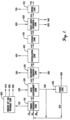
- Embodiments of the process are represented in Figure 1 .
- the process comprises oxidizing at least one oxidizable compound in an oxidizable raw material stream 30 in the presence of an oxidizing gas stream 10 , solvent stream 20 , and at least one catalyst system.
- the oxidizable raw material stream 30 comprises at least one oxidizable compound suitable to produce a carboxylic acid composition 110 comprising FDCA.
- the amount of FDCA in the carboxylic acid composition 110 can range from greater than 10 by weight percent in the carboxylic acid composition 110 , greater than 20 by weight percent in the carboxylic acid composition 110 , greater than 30 by weight percent in the carboxylic acid composition 110.
- the carboxylic acid composition 110 comprises FDCA and solvent.
- the process comprises oxidizing at least one oxidizable compound in an oxidizable raw material stream 30 in the presence of an oxidizing gas stream 10 , solvent stream 20 , and at least one catalyst system.
- 5-HMF 5-(hydroxymethyl)furfural
- the process includes removing impurities from the carboxylic acid composition 110 in a liquid displacement zone 225 to form a low impurity slurry stream 210.
- the low impurity slurry stream 210 can be further treated in a secondary oxidation zone 335 to produce a secondary oxidation slurry stream 310 which can be routed to a crystallization zone 425 to form a crystallized slurry stream 410.
- the crystallized slurry stream 410 is cooled in a cooling zone 430 and the cooled crystallized slurry stream 510 can be routed to a solid-liquid separation zone 625 to generate a purified wet cake stream 610 comprising FDCA that is dried in a drying zone 725 to generate a dried, purified carboxylic acid 710 comprising purified FDCA.
- the 5-HMF or said mixed feedstocks of 5-HMF and 5-HMF esters, 5-HMF and 5-HMF ethers, or 5-HMF and 5-alkyl furfurals are oxidized with elemental O 2 in a multi-step reactions, eqs 1 and 2, to form FDCA with 5-formyl furan-2-carboxyic acid (FFCA) as a key intermediate.
- FFCA 5-formyl furan-2-carboxyic acid
- streams routed to the primary oxidation zone 125 comprises an oxidizing gas stream 10 comprising oxygen and a solvent stream 20 comprising solvent, an oxidizable raw material stream 30 , and a catalyst system.
- Oxidizable raw material stream 30 comprises a continuous liquid phase.
- the oxidizable raw material stream 30 , the oxidizing gas stream 10 , the solvent stream 20 and the catalyst system can be fed to the primary oxidization zone 125 as separate and individual streams or combined in any combination prior to entering the primary oxidation zone 125 wherein said feed streams may enter at a single location or in multiple locations in the primary oxidization zone 125.
- the carboxylic acid composition 110 comprises FDCA and FFCA, wherein the FFCA in the carboxylic acid composition 110 ranges from 0.1 wt% (weight percent) to 4 wt% or 0.1 wt% to 0.5 wt%, or 0.1wt% to 1wt%.
- the carboxylic acid composition 110 comprises FDCA and FFCA and at least one of 2,5-diformylfuran in an amount ranging from 0 wt% to 0.2 wt%, levulinic acid in an amount ranging from 0 wt% to 0.5 wt%, succinic acid in an amount ranging from 0 wt% to 0.5 wt% and acetoxy acetic acid in an amount ranging from 0 wt% to 0.5 wt%.
- the carboxylic acid composition 110 comprises FDCA, FFCA and EFCA.
- the EFCA in the carboxylic acid composition 110 in an range from 0.05 wt% to 4 wt%, or 1 wt% to 2 wt%.
- the catalyst system comprises at least one catalyst suitable for oxidation comprising cobalt, bromine and manganese compounds as defined in claim 1, which are soluble in the selected oxidation solvent.
- the catalyst system comprises cobalt, manganese and bromine wherein the weight ratio of cobalt to manganese in the reaction mixture is from about 10 to about 400 and the weight ratio of cobalt to bromine is from about 0.7 to about 3.5.
- the oxidizing gas stream comprises oxygen.
- oxygen examples include, but are not limited to, air and purified oxygen.
- the amount of oxygen in the primary oxidation zone ranges from 5 mole % to 45 mole %, 5 mole % to 60 mole % 5 mole % to 80 mole %.
- Suitable solvents include water and the aliphatic solvents.
- the solvents are aliphatic carboxylic acids which include, but are not limited to, aqueous solutions of C 2 to C 6 monocarboxylic acids, e.g., acetic acid, propionic acid, n-butyric acid, isobutyric acid, n-valeric acid, trimethylacetic acid, caprioic acid, and mixtures thereof.
- the most common solvent used for the oxidation is an aqueous acetic acid solution, typically having a concentration of 80 to 99 wt. %.
- the solvent comprises a mixture of water and acetic acid which has a water content of 0% to 15% by weight.
- a portion of the solvent feed to the primary oxidation reactor may be obtained from a recycle stream obtained by displacing 80 to 90% of the mother liquor taken from the crude reaction mixture stream discharged from the primary oxidation reactor with fresh, wet acetic acid containing 0 to 15% water.
- Suitable solvents comprise mixtures of aliphatic mono-carboxylic acids containing 2 to 6 carbon atoms and water.
- aliphatic mono-carboxylic acids include, but are not limited to acetic acid.
- the oxidation temperature varies from 100°C to 220°C and from 110°C to 160°C.
- the process is provided to produce furan-2,5-dicarboxylic acid (FDCA) in high yields by liquid phase oxidation that minimizes solvent and starting material loss through carbon burn.
- the process comprises oxidizing at least one oxidizable compound in an oxidizable raw material stream 30 in the presence of an oxidizing gas stream 10 , solvent stream 20 , and at least one catalyst system in a primary oxidation zone 125 ; wherein the oxidizable compound is 5-(hydroxymethyl)furfural (5-HMF).
- the oxidizable compound can be oxidized in a solvent comprising acetic acid with or without the presence of water with oxygen in the presence of a catalyst system comprising cobalt, manganese and bromine, wherein the weight ratio of cobalt to manganese in the reaction mixture is from about 10 to about 400 and the weight ratio of cobalt to bromine is from about 0.7 to about 3.5.
- a catalyst system with improved Co:Mn ratio can lead to high yield of FDCA.
- the oxidation temperature varies from 100°C to 220°C, or another range from 110°C to 160°C, which can minimize carbon burn.
- the cobalt concentration of the catalyst can range from 1000 ppm to 6000 ppm, and the amount of manganese ranges from 2 ppm to 600 ppm, and the amount of bromine ranges from 300 ppm to 4500 ppm with respect to the total weight of the liquid in the reaction medium of the primary oxidation zone 125.
- process temperature is the temperature of the reaction mixture within the primary oxidation zone where liquid is present as the continuous phase.
- the primary oxidizer reactor will typically be characterized by a lower section where gas bubbles are dispersed in a continuous liquid phase. Solids can also be present in the lower section. In the upper section of the primary oxidizer, gas is in the continuous phase and entrained liquid drops can also be present.
- the catalyst compositions employed in the process of the invention comprise cobalt atoms, manganese atoms, and bromine atoms, supplied by any suitable means, as further described below.
- the catalyst composition is typically soluble in the solvent under reaction conditions, or it is soluble in the reactants fed to the oxidation zone.
- the catalyst composition is soluble in the solvent at 40° C. and 0.96 bar (1 atm), and is soluble in the solvent under the reaction conditions.
- the cobalt atoms may be provided in ionic form as inorganic cobalt salts, such as cobalt bromide, cobalt nitrate, or cobalt chloride, or organic cobalt compounds such as cobalt salts of aliphatic or aromatic acids having 2-22 carbon atoms, including cobalt acetate, cobalt octanoate, cobalt benzoate, cobalt acetylacetonate, and cobalt naphthalate.
- inorganic cobalt salts such as cobalt bromide, cobalt nitrate, or cobalt chloride
- organic cobalt compounds such as cobalt salts of aliphatic or aromatic acids having 2-22 carbon atoms, including cobalt acetate, cobalt octanoate, cobalt benzoate, cobalt acetylacetonate, and cobalt naphthalate.
- the oxidation state of cobalt when added as a compound to the reaction mixture is not limited, and includes both the +2 and +3 oxidation states.
- the manganese atoms may be provided as one or more inorganic manganese salts, such as manganese borates, manganese halides, manganese nitrates, or organometallic manganese compounds such as the manganese salts of lower aliphatic carboxylic acids, including manganese acetate, and manganese salts of beta-diketonates, including manganese acetylacetonate.
- inorganic manganese salts such as manganese borates, manganese halides, manganese nitrates, or organometallic manganese compounds such as the manganese salts of lower aliphatic carboxylic acids, including manganese acetate, and manganese salts of beta-diketonates, including manganese acetylacetonate.
- suitable sources of bromine include hydrobromic acid.
- a process for producing furan-2,5-dicarboxylic acid (FDCA) in high yields by liquid phase oxidation that minimizes solvent and starting material loss through carbon burn.
- the process comprises oxidizing at least one oxidizable compound in an oxidizable raw material stream 30 in the presence of an oxidizing gas stream 10 , solvent stream 20 , and at least one catalyst system in a primary oxidation zone 125; wherein said oxidizable compound is 5-(hydroxymethyl)furfural (5-HMF); wherein said solvent stream comprises acetic acid with or without the presence of water; wherein said catalyst system comprising cobalt, manganese and bromine, wherein the weight ratio of cobalt to manganese in the reaction mixture is from 10 to 400.
- the temperature varies from 100°C to 220°C, from 105°C to 180°C, and from 110°C to 160°C.
- the cobalt concentration of the catalyst system can range from 1000 ppm to 6000 ppm, and the amount of manganese ranges from 2 ppm to 600 ppm, and the amount of bromine ranges from 300 ppm to 4500 ppm with respect to the total weight of the liquid in the reaction medium.
- the process comprises oxidizing at least one oxidizable compound in an oxidizable raw material stream 30 in the presence of an oxidizing gas stream 10 , solvent stream 20 , and at least one catalyst system in a primary oxidation zone 125; wherein said oxidizable compound is 5-(hydroxymethyl)furfural (5-HMF); wherein said solvent stream comprises a saturated organic acid having from 2-6 carbon atoms with or without the presence of water at a temperature of 100°C to 220°C to produce a dicarboxylic acid composition; wherein the primary oxidation zone 125 comprises at least one primary oxidation reactor and wherein the catalyst system comprises cobalt ranging from 500 ppm by weight to 6000 ppm by weight with respect to the weight of the liquid in the reaction medium, manganese in an amount ranging from 2 ppm by weight to 600 ppm by weight with respect to the weight of the liquid in the reaction medium and bromine in an amount ranging from 300 ppm by weight to 4500 ppm by weight with respect to
- the cobalt to manganese ratio by weight is at least 10:1, 15:1, 20:1, 25:1, 30:1, 40:1, 50:1, 60:1, or 400 to 1.
- furan-2,5-dicarboxylic acid can be obtained by liquid phase oxidation of 5-(hydroxymethyl)furfural (5-HMF), 5-(acetoxymethyl)furfural (5-AMF) and 5-(ethoxymethyl)furfural (5-EMF) with molecular oxygen using Co/Mn/Br catalyst system in acetic acid solvent.
- 5-HMF hydroxymethyl)furfural
- 5-AMF amino acid-acetoxymethyl
- 5-EMF 5-(ethoxymethyl)furfural
- the FDCA precipitates out of solution.
- solids were obtained with a minimum of 90%, 92%, 94%, 96% FDCA content by weight.
- FDCA is obtained by liquid phase oxidation of 5-HMF, 5-AMF and 5-EMF with molecular oxygen using Co/Mn/Br catalyst system in acetic acid solvent. After the oxidation of 5-HMF/5-AMF/5-EMF in acetic acid, the FDCA precipitates out of solution. After filtration, washing with acetic acid and then with water, and drying, solids were obtained with a minimum of 96% FDCA content and a maximum b* of 15, 16, 17, 18, 19, or 20.
- the b* is one of the three-color attributes measured on a spectroscopic reflectance-based instrument.
- the color can be measured by any device known in the art.
- a Hunter Ultrascan XE instrument is typically the measuring device. Positive readings signify the degree of yellow (or absorbance of blue), while negative readings signify the degree of blue (or absorbance of yellow).
- a process for producing furan-2,5-dicarboxylic acid (FDCA) in minimum yields of 80% or 85% or 90% or greater by liquid phase oxidation that minimizes solvent and starting material loss through carbon burn.
- Such a catalyst system with improved Co:Mn and Co:Br ratio can lead to high yield of FDCA (minimum of 90%), decrease in the formation of impurities (measured by b*) causing color in the downstream polymerization process while keeping the amount of CO and CO 2 in the off-gas at a minimum.
- the temperature in the primary oxidation zone ranges from 100 °C to 220°C, and can range from 110°C to 160 °C or can range from 105°C to 180°C or 100°C to 200°C, or 100°C to 190°C.
- One advantage of the disclosed primary oxidation conditions is low carbon burn as illustrated in Table 1.
- Oxidizer off gas stream 120 is routed to the oxidizer off gas treatment zone 825 to generate an inert gas stream 810 , liquid stream 820 comprising water, and a recovered solvent stream 830 comprising condensed solvent.
- At least a portion of recovered solvent stream 830 is routed to wash fed stream 620 and the combined stream is routed to the solid-liquid separation zone 625 for the purpose of washing the solids present in the solid-liquid separation zone 625.
- the inert gas stream 810 can be vented to the atmosphere.
- at least a portion of the inert gas stream 810 can be used as an inert gas in the process for inerting vessels and or used for conveying gas for solids in the process.
- the composition of the liquid phase within the primary oxidizer can have a pH from -4.0 to 1.0 or the feedstock pH is from -1.8 to 1.0, or the feedstock pH is from -1.5 to 1.0. It should be understood that steps (b)- (g) are optional and only one possible embodiment of a process to purified the carboxylic acid composition.
- Step (b) comprises routing the crude carboxylic composition 110 and fresh solvent stream 220 to a liquid displacement zone 225 to produce a displaced mother liquor stream 230 and low impurity slurry stream 210 comprising FDCA.
- the displaced mother liquor stream 230 comprises solvent and soluble matter dissolved in the solvent comprising dissolved impurities and dissolved catalyst.
- from 5% to 99%, from 30% to 90%, and most preferably from 50 to 85% of mother liquor present in the carboxylic acid composition 110 is displaced in the liquid displacement zone 225 resulting in dissolved matter comprising impurities present in the displaced mother liquor not going forward in the process.
- Sufficient fresh solvent is fed to the liquid displacement zone 225 that becomes mixed with solids present resulting in a low impurity slurry stream 210 being pumpable with weight % solids ranging from 1% to 50%, 10% to 40%, and preferably the weight % solids in stream 210 will range from 25% to 38%.
- the liquid displacement zone may be a single unit operation or multiple unit operations.
- the liquid displacement zone 225 may be any solid-liquid separation device capable of generating an isolated wet cake from a feed slurry and then mixing the isolated wet cake with fresh solvent in a separate mixing device to generate the low impurity slurry stream 210.
- suitable solid-liquid separation devices include, but are not limited to, a continuous pressure drum filter, solid bowl centrifuges including, but not limited to, decanter and disc stack centrifuges, and batch pressure filters including, but not limited to, candle and leaf filters.
- the preferred solid-liquid separation device for this application is a continuous pressure drum filter.
- the solid-liquid separator is operated at temperatures between about 30 degrees C.
- the solid-liquid separator in the liquid displacement zone 225 may be operated in continuous or batch mode, although it will be appreciated that for commercial processes, the continuous mode is preferred. Alternatively, a portion of the mother liquor in stream 110 is displaced with fresh liquor stream 220 in a single device to form the low impurity slurry stream 210 without forming an isolated wet cake.
- Recovered solvent stream 910 comprises solvent and catalyst isolated from stream 230 and is recycled to the process. In one embodiment, recovered solvent stream 910 is recycled to the primary oxidation zone 125 and contains greater than 30% of the catalyst that entered the purge zone 235 in stream 230.
- stream 910 is recycled to the primary oxidation zone 125 and contains greater than 50 weight %, contains greater than 70 weight %, and preferably greater than 90 weight % of the catalyst that enters the purge zone 235 in stream 230 on a continuous or batch basis.
- a portion up to 100% of the carboxylic acid composition 110 may be routed directly to a secondary oxidation zone 335 without being subjected to the liquid displacement zone 225.
- up to 100% of the feed to the purge zone 235 may be a mother liquor stream 630 generated in a solid-liquid separation zone 625 which also produces the purified wet cake stream 610.
- up to 100% of the feed to the purge zone 235 may be mother liquor generated in a secondary liquid displacement zone located at some location downstream of the secondary oxidation zone 325.
- a secondary liquid displacement zone is not show in Figure 1 , and it comprises equipment like that described for the liquid displacement zone 225 located after the primary oxidation zone 125 , and must be located after the secondary oxidation zone 335.
- Step (c) comprises oxidizing the low impurity slurry stream 210 in a secondary oxidation zone 335 to form a purified slurry stream 310.
- the low impurity slurry stream 210 is routed to a secondary oxidation zone 335 where it is heated to between 115 degrees C. and 220 degrees C., and preferably between 120 degrees C. to 200 degrees C. and further oxidized with an oxidizing gas, such as air, fed by line 320 to produce a purified slurry stream 310.
- the secondary oxidation zone comprises at least one oxidation reactor vessel. In one embodiment, the secondary oxidation zone can be one or more oxidation vessels.
- the secondary oxidation zone is operated at a temperature ranging from 115 degrees C. to 220 degrees C., preferably between 120 degrees C. to 200 degrees C., and stream 210 is further oxidized with an oxidizing gas stream fed by line 320 to produce a purified slurry stream 310.
- oxidation in the secondary oxidation zone 335 is at a higher temperature than the oxidation in the primary oxidation zone 125 to enhance the impurity removal.
- the secondary oxidation zone 335 is operated at 30°C, 20°C, and preferably 10°C higher temperature than the oxidation temperature in the primary oxidation zone 125 to enhance the impurity removal.
- the secondary oxidation zone 335 can be heated directly with solvent vapor, or steam via stream 320 or indirectly by any means known in the art.
- Additional purification of the low impurity slurry stream 210 is accomplished in the secondary oxidation zone by a mechanism involving recrystallization or crystal growth and oxidation of impurities and intermediates including FFCA.
- One of the functions of the secondary oxidation zone is to convert FFCA to FDCA.
- FFCA is considered monofunctional relative to a polyester condensation reaction because it contains only one carboxylic acid.
- FFCA is present in the carboxylic acid composition stream 110 and the low impurity slurry stream 210.
- FFCA is generated in the primary oxidation zone 125 because the reaction of 5-HMF to FFCA can be about eight times faster than the reaction of FFCA to the desired di-functional product FDCA.
- Additional air or molecular oxygen may be fed in stream 320 to the secondary oxidation zone 335 in an amount necessary to oxidize a substantial portion of the partially oxidized products such as FFCA in the stream 210 to the corresponding carboxylic acid FDCA.
- FFCA partially oxidized products
- the secondary oxidation zone 335 At least 70% by weight of the FFCA present in the low impurity slurry stream 210 is converted to FDCA in the secondary oxidation zone 335.
- At least 80% by weight of the FFCA present in the low impurity slurry stream 210 is converted to FDCA in the secondary oxidation zone 335 , and most preferably, at least 90% by weight of the FFCA present in the low impurity slurry stream 210 is converted to FDCA in the secondary oxidation zone 335.
- Significant concentrations of monofunctional molecules like FFCA in the dried, purified FDCA product are particularly detrimental to polymerization processes as they may act as chain terminators during the polyester condensation reaction.
- the amount of oxygen fed in the secondary oxidation zone 335 in controlled to limit the burning of organic molecules to CO 2 .
- the amount of oxygen in stream 330 is monitored and used to control the amount of oxygen fed in stream 320.
- Another function of the secondary oxidation zone 335 is to dissolve and recrystallize solids present in the low impurity slurry stream 210 fed to the secondary oxidation zone. At least 10% by weight, 25% by weight, 50% by weight, and preferably at least 85% by weight of solid impurities and oxidation by-products in stream 210 feed to the secondary oxidation zone 335 go into solution as the FDCA particles are dissolved and re-crystallized in the secondary oxidation zone 335.
- VOCs volatile organic compounds
- VOCs including methyl bromide may be treated, for example by incineration in a catalytic oxidation unit.
- the purified slurry stream 310 generated in the secondary oxidation zone is routed to the crystallization zone 425.
- Step (d) comprises crystallizing the secondary oxidation slurry 310 in a crystallization zone 425 to form a crystallized slurry stream 410.
- the crystallization zone 425 comprises at least one crystallizer. Vapor from the crystallization zone can be condensed in at least one condenser and returned to the crystallization zone 425 or routed away from crystallization zone 425. Optionally, the liquid from the condenser or vapor product from the crystallization zone can be recycled, or it can be withdrawn or sent to an energy recovery device.
- the crystallizer off gas is removed via line 420 and can be routed to a recovery system where the solvent is removed, and crystallizer off gas comprising VOCs may be treated, for example, by incineration in a catalytic oxidation unit.
- the carboxylic acid is FDCA
- the purified slurry stream 310 from the secondary oxidation zone 335 is fed to a crystallization zone 425 comprising at least one crystallizer where it is cooled to a temperature between 40.degrees C. to 175 degrees C. to form a crystallized slurry stream 410 , preferably to a temperature between 50 degrees C. to 170 degrees C., and most preferably from 60 degrees C. to 165 degrees C.
- the crystallized slurry stream 410 is then routed to a cooling zone 430 to generate a cooled crystallized slurry stream 510.
- the cooling of the crystallized slurry stream 410 can be accomplished by any means known in the art.
- the cooling zone 430 comprises a flash tank.
- the temperature of stream 510 can range from 35°C to 160°C, 45°C to 120°C, and preferably from 55°C to 95°C.
- a portion of up to 100% of the secondary oxidation slurry stream 310 is routed directly to the cooling zone 425 , thus the portion is not subjected to a crystallization zone 430.
- a portion of up to 100% of the crystallized slurry stream 410 is routed directly to a secondary liquid displacement zone which is not illustrated in Figure 1 .
- Up to 100% of the slurry effluent comprising FDCA from a secondary liquid displacement zone can be routed to the solid-liquid separation zone 625 and or routed directly to the cooling zone 430.
- the function of the secondary liquid displacement zone is to displace a portion of solvent in the crystallized slurry stream 410 with fresh solvent and or water wherein a portion must be greater than 5 weight percent.
- the secondary liquid displacement zone is separate and distinct from the liquid displacement zone 225 located after the primary oxidation zone 125.
- the same type of equipment may be used for both the primary and secondary liquid displacement zones.
- crystallized slurry stream 410 can be routed directly to the solid-liquid separation zone 625 without being first processed in the cooling zone 430.
- Step (e) comprises isolating, washing, and dewatering solids present in the cooled, crystallized slurry stream 510 in the solid-liquid separation zone 625.
- the solid-liquid separation zone 625 comprises at least one solid-liquid separation device capable of separating solids and liquids, washing solids with a wash solvent stream 620, and reducing the % moisture in the washed solids to less than 30 weight %, less than 25 weight %, less than 20 weight%, less than 15 weight %, and preferably less than 10 weight %.
- Equipment suitable for the solid liquid separation zone 625 can typically be comprised of, but not limited to, the following types of devices: centrifuges, cyclones, rotary drum filter, belt filters, pressure leaf filters, candle filters, etc.
- the preferred solid liquid separation device for the solid liquid separation zone 625 is a rotary pressure drum filter.
- the temperature of the cooled, crystallized slurry steam 510 which is routed to the solid-liquid separation zone 625 can range from 50°C to 140°C, 70°C to 120°C, and is preferably from 75°C to 95°C.
- the wash solvent stream 620 comprises a liquid suitable for displacing and washing mother liquor from the solids.
- a suitable wash solvent comprises acetic acid and water.
- a suitable solvent comprises water up to 100% water.
- the temperature of the wash solvent can range from 20°C to 135°C, 40°C and 110°C, and preferably from 50°C to 90°C.
- the amount of wash solvent used is defined as the wash ratio and equals the mass of wash divided by the mass of solids on a batch or continuous basis.
- the wash ratio can range from 0.3 to 5, 0.4 to 4, and preferably from 0.5 to 3.
- dewatering involves reducing the mass of moisture present with the solids to less than 30% by weight, less than 25% by weight, less than 20% by weight, less than 15% by weight, and most preferably less than 10% by weight resulting in the generation of a purified wet cake stream 610.
- dewatering is accomplished in a filter by passing a gas stream through the solids to displace free liquid after the solids have been washed with a wash solvent.
- dewatering is achieved by centrifugal forces in a perforated bowl or solid bowl centrifuge.
- Stream 630 generated in the solid-liquid separation zone 625 is a mother liquor stream comprising oxidation solvent, catalyst, and some impurities and oxidation byproducts.
- a portion of stream 630 is routed to a purge zone 235 and a portion is routed back to the primary oxidation zone 125 wherein a portion is at least 5 weight %.
- Wash liquor stream 640 is also generated in the solid-liquid separation zone 625 and comprises a portion of the mother liquor present in stream 510 and wash solvent wherein the ratio of mother liquor mass to wash solvent mass is less than 3 and preferably less than 2.
- Step (f) comprises drying the purified wet cake stream 610 in a drying zone 725 to generate a dry purified carboxylic acid 710 and a vapor stream 720.
- vapor stream 720 comprises wash solvent vapor.
- vapor stream 720 comprises oxidation solvent and wash solvent.
- the drying zone 725 comprises at least one dryer and can be accomplished by any means known in the art that is capable of evaporating at least 10% of the volatiles remaining in the purified wet cake stream 610 to produce the dried, purified carboxylic acid 710 comprising purified FDCA and a vapor stream 720.
- indirect contact dryers include, but are not limited to, a rotary steam tube dryer, a Single Shaft Porcupine RTM dryer, and a Bepex Solidaire RTM dryer.
- Direct contact dryers include, but are not limited to, a fluid bed dryer and drying in a convey line can be used for drying to produce stream 710.
- the dried, purified carboxylic acid 710 comprising purified FDCA can be a carboxylic acid composition with less than 8% moisture, preferably less than 5% moisture, and more preferably less than 1% moisture, and even more preferably less than 0.5%, and yet more preferably less than 0.1%.
- the liquid portion of the purified wet cake stream 610 comprises water and contains less than 0.1 weight % acetic acid, less than 500 ppm wt acetic acid, and preferably less than 200 ppm wt, the stream 610 can be fed directly to a polymerization zone without first being dried.
- a vacuum system can be utilized to draw vapor stream 720 from the drying zone 725. If a vacuum system is used in this fashion, the pressure of stream 720 at the dryer outlet can range from 1.01 bar (760 mmHg) to 0.53 bar (400 mmHg), from 1.01 bar (760 mmHg) to 0.8 bar (600 mmHg), from 1.01 bar (760 mmHg) to 0.93 bar (700 mmHg), from 1.01 bar (760 mmHg) to 0.95 bar (720 mmHg), and from 1.01 bar (760 mmHg) to 0.98 bar (740 mmHg) wherein pressure is measured in mmHg above absolute vacuum.
- the contents of the conduit between solid-liquid separation zone 625 and drying zone 725 utilized to transfer the purified wet cake stream 610 comprises wet cake stream and gas wherein gas is the continuous phase.
- the pressure at the exit of the solid liquid separation zone 625 can be close to that of the pressure where vapor stream 720 exits the drying zone 725 , wherein close is defined as within 0.14 bar (2 psig), within 0.06 bar (0.8 psig), and preferably within 0.03 bar (0.4 psig).
- the dried, purified carboxylic acid 710 has a b* less than 9.0. In another embodiment of the invention, the b* color of the dried, purified carboxylic acid 710 is less than 6.0. In another embodiment of the invention, the b* color of the dried, purified carboxylic acid 710 is less than 5.0. In another embodiment of the invention, the b* color of the dried, purified carboxylic acid 7 10 is less than 4.0. In another embodiment of the invention, the b* color of the dried, purified carboxylic acid 710 is less than 3.
- the b* color is one of the three-color attributes measured on a spectroscopic reflectance-based instrument. A Hunter Ultrascan XE instrument in reflectance mode is typically the measuring device. Positive readings signify the degree of yellow (or absorbance of blue), while negative readings signify the degree of blue (or absorbance of yellow).
- process zones previously described can be utilized in any other logical order to produce the dried, purified carboxylic acid 710. It should also be appreciated that when the process zones are reordered that the process conditions may change. It is also understood that all percent values are weight percents.
- Step (g) is an optionally step comprising decolorizing the FDCA in this process or an esterified FDCA with a diol stream via hydrogenation.
- the diol stream comprises ethylene glycol.
- the diol stream comprises isomers of cyclohexane diol, preferably the 1-4 cyclohexane diol isomer.
- the decolorizing of the FDCA in this process or an esterified FDCA can be accomplished by any means known in the art and is not limited to hydrogenation.
- the decolorizing can be accomplished by reacting a carboxylic acid that has undergone esterification treatment, for example with ethylene glycol, with molecular hydrogen in the presence of a hydrogenation catalyst in a reactor zone to produce a decolorized carboxylic acid solution or a decolorized ester product.
- the reactor zone there are no special limitations in the form or construction thereof, subject to an arrangement that allows supply of hydrogen to effect intimate contact of the carboxylic acid or ester product with the catalyst in the reactor zone.
- the hydrogenation catalyst is usually a single Group VIII metal or combination of Group VIII metals.
- the catalyst is selected from a group consisting of palladium, ruthenium, rhodium and combination thereof.
- the reactor zone comprises a hydrogenation reactor that operates at a temperature and pressure sufficient to hydrogenate a portion of the characteristically yellow compounds to colorless derivatives.
- the heterogeneous mixture was filtered to isolate the crude FDCA.
- the mass of the filtrate was recorded.
- the crude FDCA was washed with 60 mL of acetic acid two times and then twice with 100 mL of DI water.
- the washed crude FDCA was oven dried at 110 °C under vacuum overnight and then weighed.
- the solid and the filtrate were analyzed by Gas Chromatography using BSTFA derivatization method.
- the Off-gas was analyzed for CO and CO 2 by ND-1R (ABB, Advanced Optima) and O 2 by a paramagnetism detection system (Servomex, 1440 Model).
- the column temperature was programmed as follows: The initial oven temperature was set at 80 °C and was held for 6 minutes, the oven was ramped up to 150 °C at 4°C/minute and was held at 150 °C for 0 minute, the oven was ramped up to 240 °C at 10°C/minute and was held at 240 °C for 5 minutes, then the oven was ramped up to 290 °C at 10°C/minute and was held at 290 °C for 17.5 minutes (the total run time was 60 mins). 1.0- ⁇ l of the prepared sample solution was injected with a split ratio of 40:1. EZ-Chrom Elite chromatography data system software was used for data acquisition and data processing.
- the sample preparation was done by weighing 0.1 g (accurate to 0.1 mg) of sample in a GC vial and adding 200.0 ⁇ l ISTD solution (1% by volume of decane in pyridine) and 1000 ⁇ l of BSTFA ( N , O -bis(trimethylsilyl) trifluoroacetamide) with 1% TMSCl (trimethylchlorosilane) to the GC vial.
- the content was heated at 80 °C for 30 minutes to ensure complete derivatization.
- 1.0- ⁇ l of this prepared sample solution was injected for GC analysis.
- Oxidation of 5-AMF (not belonging to the invention), which contains an oxidizable ester and aldehydes moieties, produced FDCA, FFCA, and acetic acid, eq 4.
- Examples 2a to 2b (Table-2 ) demonstrate that a minimum of 99% purity FDCA solid with a b* of about 7 or less can be achieved using cobalt, manganese and aqueous hydrobromic acid catalyst system.
- Air oxidation of 5-HMF using cobalt, manganese and ionic bromine catalysts system in acetic acid solvent were conducted. After reaction the heterogeneous mixture was filtered to isolate the crude FDCA. The crude FDCA was washed with acetic acid two times and then twice with DI water. The washed crude FDCA was oven dried at 110 °C under vacuum overnight. The solid and the filtrate were analyzed by Gas Chromatography using BSTFA derivatization method. b* of the solid was measured using a Hunter Ultrascan XE instrument.
- the heterogeneous mixture was filtered to isolate the crude FDCA.
- the mass of the filtrate was recorded.
- the crude FDCA was washed with 60 mL of acetic acid two times and then twice with 100 mL of DI water.
- the washed crude FDCA was oven dried at 110 °C under vacuum overnight and then weighed.
- the solid and the filtrate were analyzed by Gas Chromatography using BSTFA derivatization method.
- the Off-gas was analyzed for CO and CO 2 by ND-1R (ABB, Advanced Optima) and O 2 by a paramagnetism detection system (Servomex, 1440 Model).
- the column temperature was programmed as follows: The initial oven temperature was set at 80°C and was held for 6 minutes, the oven was ramped up to 150°C at 4°C/minute and was held at 150 for 0 minute, the oven was ramped up to 240°C at 10°C/minute and was held at 240 for 5 minutes, then the oven was ramped up to 290°C at 10°C/minute and was held at 290 for 17.5 minutes (the total run time was 60 mins). 1.0- ⁇ l of the prepared sample solution was injected with a split ratio of 40:1. EZ-Chrom Elite chromatography data system software was used for data acquisition and data processing.
- the sample preparation was done by weighing 0.1 g (accurate to 0.1 mg) of sample in a GC vial and adding 200.0 ⁇ l ISTD solution (1% by volume of decane in pyridine) and 1000 ⁇ l of BSTFA (N, O-bis(trimethylsilyl) trifluoroacetamide) with 1% TMSCl (trimethylchlorosilane) to the GC vial.
- the content was heated at 80°C for 30 minutes to ensure complete derivatization.
- 1.0- ⁇ l of this prepared sample solution was injected for GC analysis.
- the electrode for determining non-aqueous pH and millivolts was a Schott N6480-eth series electrode.
- the LiCl/EtOH filling solution was replaced with (Et) 4 N + Br-/ethylene glycol.
- the electrode response was monitored by Multi-T 2.2 software through a Jensen Systems cdv-70 series Sensolab interface box.
- the buffers ( pH 4 and 7) were purchased from VWR, and the (Et) 4 N + Br/ethylene glycol filling solution was from Metrohm.
- a non-aqueous electrode was initially calibrated using aqueous buffers of 4 and 7 allowing the electrode to equilibrate with each for two to three minutes before calibrating at the respective level.
- the samples were portioned ( ⁇ 15 mL) into smaller vials with mini-Teflon stir bars. The samples were then placed on a stir plate, and the electrode was lowered into the sample. The depth of the electrode was set to where the sample covered about half of the junction slide. Once the sample and electrode was ready, the sample was measured for non-aqueous pH over a period of three minutes. The time was sufficient for equilibration between the electrode and the sample. Between each sample measurement, the electrode was rinsed with Millipore-grade water and wiped with a Kimwipe. The results were recorded in non-aqueous pH units. The millivolts results were also recorded.
- Examples 5c, 5d, 5e and 5f which use catalyst systems consisting of cobalt, manganese and aqueous hydrobromic acid or aqueous hydrobromic acid and sodium bromide as a bromide source produced about 90 % yield of FDCA, minimum colored impurities (measured by b*) and a minimum level of CO and CO 2 (CO x , mol/min) in the off-gas.
- catalyst systems consisting of cobalt, manganese and aqueous hydrobromic acid or aqueous hydrobromic acid and sodium bromide
- Comparative examples 5g and 5h show the inhibiting effect of excess manganese. Therefore it is desirable to limit the amount of manganese, during the oxidation process, to achieve high yield of FDCA.
- Examples 5a and 5b are also comparative.
- the heterogeneous mixture was filtered to isolate the crude FDCA.
- the mass of the filtrate was recorded.
- the crude FDCA was washed with 60 mL of acetic acid two times and then twice with 100 mL of DI water.
- the washed crude FDCA was oven dried at 110 °C under vacuum overnight and then weighed.
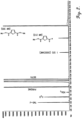
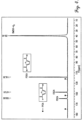
- the solid and the filtrate were analyzed by Gas Chromatography using BSTFA derivatization method. A typical GC-chromatogram for isolated crude FDCA sample is shown in Figure 2 . The purity of this solid was confirmed by NMR spectroscopy, Figures 3 and 4 .
- the Off-gas was analyzed for CO and CO 2 by ND-1R (ABB, Advanced Optima) and O 2 by a paramagnetism detection system (Servomex, 1440 Model).
- Gas Chromatographic Method Process sample was analyzed using a Shimadzu gas chromatograph Model 2010 (or equivalent) equipped with a split/heated injector (300°C) and a flame ionization detector (300°C).
- a capillary column 60 meter x 0.32mm ID coated with (6% cyanopropylphenyl)-methylpolysiloxane at 1.0 ⁇ m film thickness (such as DB-1301 or equivalent) was employed.
- Helium was used as the carrier gas with an initial column head pressure of 29.5 psi and an initial column flow of 3.93 ml/minute while the carrier gas linear velocity of 45 cm/second was maintained constant throughout the entire oven temperature program.
- the column temperature was programmed as follows: The initial oven temperature was set at 80°C and was held for 6 minutes, the oven was ramped up to 150°C at 4°C/minute and was held at 150 for 0 minute, the oven was ramped up to 240°C at 10°C/minute and was held at 240 for 5 minute, then the oven was ramped up to 290°C at 10°C/minute and was held at 290 for 17.5 minutes (the total run time was 60mins). 1.0- ⁇ l of the prepared sample solution was injected with a split ratio of 40:1. EZ-Chrom Elite chromatography data system software was used for data acquisition and data processing.
- the sample preparation was done by weighing 0.1g (accurate to 0.1mg) of sample in a GC vial and adding 200.0 ⁇ l ISTD solution (1% by volume of decane in pyridine) and 1000 ⁇ l of BSTFA (N, O-bis(trimethylsilyl) trifluoroacetamide) with 1% TMSCl (trimethylchlorosilane) to the GC vial.
- the content was heated at 80°C for 30 minutes to ensure complete derivatization.
- 1.0- ⁇ l of this prepared sample solution was injected for GC analysis.
- Table 6 The data presented in Table 6 was used to develop a theoretical polynomial model to predict FDCA yield under different conditions, eq - 7. Examples of predicted FDCA yields using this model is given in Table 7. Experiments No 72, 73, 85, and 86, Table 7 , were conducted under the predicted conditions. As can be seen from the results they agree well with the predicted values within experimental error.
- the heterogeneous mixture was filtered to isolate the crude FDCA.
- the mass of the filtrate was recorded.
- the crude FDCA was washed with 60 mL of acetic acid two times and then twice with 100 mL of DI water.
- the washed crude FDCA was oven dried at 110 °C under vacuum overnight and then weighed.
- the solid and the filtrate were analyzed by Gas Chromatography using BSTFA derivatization method.
- the off-gas was analyzed for CO and CO 2 by ND-1R (ABB, Advanced Optima) and O 2 by a paramagnetism detection system (Servomex, 1440 Model).
- the column temperature was programmed as follows: The initial oven temperature was set at 80 °C and was held for 6 minutes, the oven was ramped up to 150 °C at 4°C/minute and was held at 150 °C for 0 minute, the oven was ramped up to 240 °C at 10°C/minute and was held at 240 °C for 5 minutes, then the oven was ramped up to 290 °C at 10°C/minute and was held at 290 °C for 17.5 minutes (the total run time was 60 mins). 1.0- ⁇ l of the prepared sample solution was injected with a split ratio of 40:1. EZ-Chrom Elite chromatography data system software was used for data acquisition and data processing.
- the sample preparation was done by weighing 0.1 g (accurate to 0.1 mg) of sample in a GC vial and adding 200.0 ⁇ l ISTD solution (1% by volume of decane in pyridine) and 1000 ⁇ l of BSTFA (N, O-bis(trimethylsilyl) trifluoroacetamide) with 1% TMSCl (trimethylchlorosilane) to the GC vial.
- the content was heated at 80 °C for 30 minutes to ensure complete derivatization.
- 1.0- ⁇ l of this prepared sample solution was injected for GC analysis.
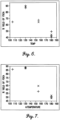
- Experiments 9a-9k, Table 9 were conducted by varying temperature, and levels of cobalt and bromine concentrations to determine optimum conditions and catalyst compositions that produces very high yield of FDCA with minimum amount of carbon burn.
- the weight ratio of cobalt to manganese was deliberately kept very high (i.e. 21) in all the reactions to avoid the inhibiting effect of excess manganese especially below 160 °C. Further discussion on mechanism of initiation and inhibition by Mn(II) in oxidation can be found in Zakharov, I. V.
Landscapes
- Chemical & Material Sciences (AREA)
- Organic Chemistry (AREA)
- Low-Molecular Organic Synthesis Reactions Using Catalysts (AREA)
- Organic Low-Molecular-Weight Compounds And Preparation Thereof (AREA)
- Furan Compounds (AREA)
Claims (11)
- Composition d'acide carboxylique comprenant :(a) de l'acide 2,5-furane dicarboxylique en une quantité supérieure à 92 pour cent en poids ; et(b) du FFCA en une quantité comprise entre 0,1 et 4,0 pour cent en poids ;dans laquelle la valeur b* de la composition est inférieure à 10, la méthode de mesure pour la détermination de la valeur b* étant définie dans la description ;la composition d'acide carboxylique étant produite par un procédé comprenant :(a) l'oxydation dans une zone d'oxydation primaire d'au moins un composé oxydable dans un flux de matières premières oxydables comprenant du 5-HMF en présence d'un flux de solvant comprenant un solvant d'acide organique saturé ayant de 2 à 6 atomes de carbone et un système de catalyseur à une température de 100 °C à 220 °C afin de produire une composition d'acide carboxylique ; dans laquelle ladite composition d'acide carboxylique comprend du FDCA ; dans laquelle ladite zone d'oxydation primaire comprend au moins un réacteur d'oxydation et dans laquelle ledit système de catalyseur comprend du cobalt en une quantité comprise entre 500 ppm en poids et 6000 ppm en poids par rapport au poids du liquide dans la zone d'oxydation primaire, du manganèse en une quantité comprise entre 2 ppm en poids et 600 ppm en poids par rapport au poids du liquide dans la zone d'oxydation primaire et du brome en une quantité comprise entre 300 ppm en poids et 4500 ppm en poids par rapport au poids du liquide dans la zone d'oxydation primaire, dans laquelle la source de brome comprend l'acide bromhydrique ; et dans laquelle l'oxydation est réalisée en présence d'eau ;(b) la purification de ladite composition d'acide carboxylique afin de produire ladite composition d'acide carboxylique purifié sec; dans laquelle ladite purification comprend une étape de cristallisation, une étape de filtration et une étape de séchage.
- Composition d'acide carboxylique selon la revendication 1, dans laquelle ladite composition d'acide carboxylique a une valeur b* inférieure à 5.
- Composition d'acide carboxylique selon la revendication 1 où ledit acide 2,5-furane dicarboxylique est présent en une quantité supérieure à 94 pour cent en poids.
- Composition d'acide carboxylique selon la revendication 3, dans laquelle ladite composition d'acide carboxylique a une valeur b* inférieure à 10.
- Composition d'acide carboxylique selon la revendication 3, dans laquelle ladite composition d'acide carboxylique a une valeur b* inférieure à 5.
- Composition d'acide carboxylique selon la revendication 1 où ledit acide 2,5-furane dicarboxylique est présent en une quantité supérieure à 96 pour cent en poids.
- Composition d'acide carboxylique selon la revendication 6, dans laquelle ladite composition d'acide carboxylique a une valeur b* inférieure à 10.
- Composition d'acide carboxylique selon la revendication 6, dans laquelle ladite composition d'acide carboxylique a une valeur b* inférieure à 5.
- Composition d'acide carboxylique selon la revendication 1 où ledit acide 2,5-furane dicarboxylique est présent en une quantité supérieure à 98 pour cent en poids.
- Composition selon la revendication 1, dans laquelle ledit réacteur d'oxydation comprend une colonne à bulles.
- Composition selon la revendication 1, dans laquelle ledit système de catalyseur comprend du cobalt en une quantité comprise entre 700 ppm et 4500 ppm en poids par rapport au poids du liquide dans la zone d'oxydation primaire, du manganèse en une quantité comprise entre 20 ppm en poids et 400 ppm en poids par rapport au poids du liquide dans la zone d'oxydation primaire et du brome en une quantité comprise entre 700 ppm en poids et 4000 ppm en poids par rapport au poids du liquide dans la zone d'oxydation primaire.
Applications Claiming Priority (4)
| Application Number | Priority Date | Filing Date | Title |
|---|---|---|---|
| US201161489496P | 2011-05-24 | 2011-05-24 | |
| US13/228,816 US20120302773A1 (en) | 2011-05-24 | 2011-09-09 | Oxidation process to produce a crude and/or purified carboxylic acid product |
| EP12789055.6A EP2714672B1 (fr) | 2011-05-24 | 2012-05-10 | Procédé d'oxydation permettant la production d'un produit de type acide carboxylique brut et/ou purifié |
| PCT/US2012/037228 WO2012161973A1 (fr) | 2011-05-24 | 2012-05-10 | Procédé d'oxydation permettant la production d'un produit de type acide carboxylique brut et/ou purifié |
Related Parent Applications (2)
| Application Number | Title | Priority Date | Filing Date |
|---|---|---|---|
| EP12789055.6A Division-Into EP2714672B1 (fr) | 2011-05-24 | 2012-05-10 | Procédé d'oxydation permettant la production d'un produit de type acide carboxylique brut et/ou purifié |
| EP12789055.6A Division EP2714672B1 (fr) | 2011-05-24 | 2012-05-10 | Procédé d'oxydation permettant la production d'un produit de type acide carboxylique brut et/ou purifié |
Publications (2)
| Publication Number | Publication Date |
|---|---|
| EP3385258A1 EP3385258A1 (fr) | 2018-10-10 |
| EP3385258B1 true EP3385258B1 (fr) | 2024-04-24 |
Family
ID=47217611
Family Applications (2)
| Application Number | Title | Priority Date | Filing Date |
|---|---|---|---|
| EP12789055.6A Active EP2714672B1 (fr) | 2011-05-24 | 2012-05-10 | Procédé d'oxydation permettant la production d'un produit de type acide carboxylique brut et/ou purifié |
| EP18172100.2A Active EP3385258B1 (fr) | 2011-05-24 | 2012-05-10 | Procédé d'oxydation permettant la production d'un produit de type furane-acide di-carboxylique brut et/ou purifié |
Family Applications Before (1)
| Application Number | Title | Priority Date | Filing Date |
|---|---|---|---|
| EP12789055.6A Active EP2714672B1 (fr) | 2011-05-24 | 2012-05-10 | Procédé d'oxydation permettant la production d'un produit de type acide carboxylique brut et/ou purifié |
Country Status (4)
| Country | Link |
|---|---|
| US (1) | US20120302773A1 (fr) |
| EP (2) | EP2714672B1 (fr) |
| ES (2) | ES2712953T3 (fr) |
| WO (1) | WO2012161973A1 (fr) |
Families Citing this family (27)
| Publication number | Priority date | Publication date | Assignee | Title |
|---|---|---|---|---|
| US9573120B2 (en) | 2014-05-08 | 2017-02-21 | Eastman Chemical Company | Furan-2,5-dicarboxylic acid purge process |
| US9199958B2 (en) | 2011-05-24 | 2015-12-01 | Eastman Chemical Company | Oxidation process to produce a crude and/or purified carboxylic acid product |
| US8796477B2 (en) | 2011-05-24 | 2014-08-05 | Eastman Chemical Company | Oxidation process to produce a crude and/or purified carboxylic acid product |
| US8969404B2 (en) | 2012-06-22 | 2015-03-03 | Eastman Chemical Company | Purifying crude furan 2,5-dicarboxylic acid by hydrogenation |
| US8809556B2 (en) * | 2012-07-20 | 2014-08-19 | Eastman Chemical Company | Oxidation process to produce a purified carboxylic acid product via solvent displacement and post oxidation |
| US9029580B2 (en) | 2012-07-20 | 2015-05-12 | Eastman Chemical Company | Oxidation process to produce a purified carboxylic acid product via solvent displacement and post oxidation |
| US8772513B2 (en) | 2012-08-30 | 2014-07-08 | Eastman Chemical Company | Oxidation process to produce a crude dry carboxylic acid product |
| US9156805B2 (en) | 2012-11-20 | 2015-10-13 | Eastman Chemical Company | Oxidative purification method for producing purified dry furan-2,5-dicarboxylic acid |
| KR20140127587A (ko) * | 2013-04-25 | 2014-11-04 | (주)프론트바이오 | 5원 헤테로사이클릭 유도체, 이의 제조방법 및 이를 포함하는 약제학적 조성물 |
| MX374703B (es) * | 2013-08-30 | 2025-03-06 | Furanix Technologies Bv | Proceso para purificar una composicion acida que comprende acido 2-formil-furan-5-carboxilico y acido 2,5-furandicarboxilico. |
| US9943834B2 (en) * | 2014-05-08 | 2018-04-17 | Eastman Chemical Company | Furan-2,5-dicarboxylic acid purge process |
| US10010812B2 (en) | 2014-05-08 | 2018-07-03 | Eastman Chemical Company | Furan-2,5-dicarboxylic acid purge process |
| US9944615B2 (en) | 2014-05-08 | 2018-04-17 | Eastman Chemical Company | Purifying crude furan 2,5-dicarboxylic acid by hydrogenation and a purge zone |
| CN105688988B (zh) | 2014-12-16 | 2018-11-27 | 财团法人工业技术研究院 | 糠醛化合物的氧化反应催化剂及糠醛化合物的氧化方法 |
| AU2016271835B2 (en) * | 2015-06-05 | 2019-02-21 | Synvina C.V. | Process for the preparation of a purified acid composition |
| CN108779088B (zh) | 2016-01-13 | 2021-10-08 | 斯道拉恩索公司 | 2,5-呋喃二甲酸及其中间体和衍生物的制备方法 |
| CN109195961A (zh) | 2016-03-24 | 2019-01-11 | 孟山都技术公司 | 用于制备杂芳基羧酸的方法 |
| WO2018017382A1 (fr) | 2016-07-22 | 2018-01-25 | Eastman Chemical Company | Processus de purge d'acide furane-2,5-dicarboxylique |
| EP3652161A1 (fr) | 2017-07-12 | 2020-05-20 | Stora Enso Oyj | Produits purifiés de la voie de l'acide 2,5-furandicarboxylique |
| US20190023838A1 (en) | 2017-07-20 | 2019-01-24 | Eastman Chemical Company | Production of polyethylene furanoate in a retrofitted pet plant |
| US11440895B2 (en) | 2018-06-25 | 2022-09-13 | Eastman Chemical Company | Oxidation process to produce 5-(alkoxycarbonyl)furan-2-carboxylic acids (ACFC) |
| US11236199B2 (en) * | 2018-06-25 | 2022-02-01 | Eastman Chemical Company | Oxidation process to produce 5-(alkoxycarbonyl)furan-2-carboxylic acids (ACFC) |
| US10526301B1 (en) | 2018-10-18 | 2020-01-07 | Eastman Chemical Company | Production of purified dialkyl-furan-2,5-dicarboxylate (DAFD) in a retrofitted DMT plant |
| US11787774B2 (en) | 2019-09-05 | 2023-10-17 | Eastman Chemical Company | Efficient process for producing 5-(alkoxycarbonyl)-furan-2-carboxylic acids |
| CA3162304A1 (fr) * | 2019-12-20 | 2021-06-24 | Hendrikus Jacob Baars | Procede de production d'acide 2,5-furandicarboxylique a partir d'ethers de 5-hydroxymethylfurfural |
| IT201900025096A1 (it) | 2019-12-20 | 2021-06-20 | Novamont Spa | Processo per la sintesi di acido 2,5-furandicarbossilico |
| EP4763836A1 (fr) | 2024-12-19 | 2026-06-24 | Stora Enso Oyj | Prévention de décoloration |
Family Cites Families (12)
| Publication number | Priority date | Publication date | Assignee | Title |
|---|---|---|---|---|
| CH400184A (de) * | 1960-08-11 | 1965-10-15 | Ciba Geigy | Verfahren zur Herstellung von heterocyclischen Verbindungen |
| SU448177A2 (fr) | 1972-10-30 | 1974-10-30 | ||
| CA2400165A1 (fr) | 2000-03-27 | 2001-10-04 | Vladimir Grushin | Oxydation de 5-(hydroxymethyl) furfural en 2,5-diformylfurane et decarbonylation subsequente en furane non substitue |
| AU2003293252A1 (en) | 2002-12-09 | 2004-06-30 | Eastman Chemical Company | Process for the oxidative purification of terephthalic acid |
| US7399882B2 (en) | 2004-09-02 | 2008-07-15 | Eastman Chemical Company | Optimized liquid-phase oxidation |
| US20060205977A1 (en) | 2005-03-08 | 2006-09-14 | Sumner Charles E Jr | Processes for producing terephthalic acid |
| US20070179312A1 (en) | 2006-02-02 | 2007-08-02 | O'meadhra Ruairi Seosamh | Process for the purification of a crude carboxylic axid slurry |
| JP5252969B2 (ja) | 2008-03-31 | 2013-07-31 | エア・ウォーター株式会社 | 2,5−フランジカルボン酸の製造方法 |
| ES2542972T3 (es) | 2009-05-14 | 2015-08-13 | Archer Daniels Midland Company | Oxidación de compuestos de furfural |
| EP2486027B2 (fr) | 2009-10-07 | 2022-01-19 | Furanix Technologies B.V. | Procédé de préparation d'acide 2,5-furandicarboxylique et de ses esters |
| JP5550303B2 (ja) * | 2009-10-19 | 2014-07-16 | キヤノン株式会社 | 2,5−フランジカルボン酸の製造方法 |
| US8796477B2 (en) * | 2011-05-24 | 2014-08-05 | Eastman Chemical Company | Oxidation process to produce a crude and/or purified carboxylic acid product |
-
2011
- 2011-09-09 US US13/228,816 patent/US20120302773A1/en not_active Abandoned
-
2012
- 2012-05-10 WO PCT/US2012/037228 patent/WO2012161973A1/fr not_active Ceased
- 2012-05-10 ES ES12789055T patent/ES2712953T3/es active Active
- 2012-05-10 EP EP12789055.6A patent/EP2714672B1/fr active Active
- 2012-05-10 EP EP18172100.2A patent/EP3385258B1/fr active Active
- 2012-05-10 ES ES18172100T patent/ES2982492T3/es active Active
Also Published As
| Publication number | Publication date |
|---|---|
| WO2012161973A1 (fr) | 2012-11-29 |
| WO2012161973A8 (fr) | 2013-01-17 |
| ES2712953T3 (es) | 2019-05-16 |
| EP2714672B1 (fr) | 2018-12-19 |
| EP2714672A1 (fr) | 2014-04-09 |
| US20120302773A1 (en) | 2012-11-29 |
| ES2982492T3 (es) | 2024-10-16 |
| EP3385258A1 (fr) | 2018-10-10 |
| EP2714672A4 (fr) | 2014-11-26 |
Similar Documents
| Publication | Publication Date | Title |
|---|---|---|
| EP2714672B1 (fr) | Procédé d'oxydation permettant la production d'un produit de type acide carboxylique brut et/ou purifié | |
| EP3686192B1 (fr) | Procédé d'oxydation pour produire un produit d'acide furan-2,5-dicarboxylique brut et/ou purifié | |
| EP2714671B1 (fr) | Procédé d'oxydation pour produire un produit d'acide carboxylique brut et/ou purifié | |
| US8791278B2 (en) | Oxidation process to produce a crude and/or purified carboxylic acid product | |
| US8846960B2 (en) | Oxidation process to produce a crude and/or purified carboxylic acid product | |
| EP2875009B1 (fr) | Procédé d'oxydation pour produire un produit d'acide carboxylique purifié par le biais du déplacement de solvant de post-oxydation | |
| EP2875008B1 (fr) | Procédé d'oxydation pour obtenir un produit d'acide carboxylique purifié par déplacement de solvant et post-oxydation | |
| US9199958B2 (en) | Oxidation process to produce a crude and/or purified carboxylic acid product |
Legal Events
| Date | Code | Title | Description |
|---|---|---|---|
| PUAI | Public reference made under article 153(3) epc to a published international application that has entered the european phase |
Free format text: ORIGINAL CODE: 0009012 |
|
| STAA | Information on the status of an ep patent application or granted ep patent |
Free format text: STATUS: THE APPLICATION HAS BEEN PUBLISHED |
|
| AC | Divisional application: reference to earlier application |
Ref document number: 2714672 Country of ref document: EP Kind code of ref document: P |
|
| AK | Designated contracting states |
Kind code of ref document: A1 Designated state(s): AL AT BE BG CH CY CZ DE DK EE ES FI FR GB GR HR HU IE IS IT LI LT LU LV MC MK MT NL NO PL PT RO RS SE SI SK SM TR |
|
| RIN1 | Information on inventor provided before grant (corrected) |
Inventor name: BOWERS, BRADFORD RUSSELL Inventor name: SUMNER, CHARLES EDWAN JR. Inventor name: MORROW, MICHAEL CHARLES Inventor name: PARTIN, LEE REYNOLDS Inventor name: JANKA, MESFIN EJERSSA Inventor name: LANGE, DAVID MILTON Inventor name: PARKER, KENNY RANDOLPH Inventor name: SHAIKH, ASHFAQ |
|
| STAA | Information on the status of an ep patent application or granted ep patent |
Free format text: STATUS: REQUEST FOR EXAMINATION WAS MADE |
|
| 17P | Request for examination filed |
Effective date: 20190405 |
|
| RBV | Designated contracting states (corrected) |
Designated state(s): AL AT BE BG CH CY CZ DE DK EE ES FI FR GB GR HR HU IE IS IT LI LT LU LV MC MK MT NL NO PL PT RO RS SE SI SK SM TR |
|
| STAA | Information on the status of an ep patent application or granted ep patent |
Free format text: STATUS: EXAMINATION IS IN PROGRESS |
|
| 17Q | First examination report despatched |
Effective date: 20190909 |
|
| REG | Reference to a national code |
Ref country code: DE Ref legal event code: R079 Free format text: PREVIOUS MAIN CLASS: C07D0307480000 Ipc: C07D0307680000 Ref country code: DE Ref legal event code: R079 Ref document number: 602012080742 Country of ref document: DE Free format text: PREVIOUS MAIN CLASS: C07D0307480000 Ipc: C07D0307680000 |
|
| GRAP | Despatch of communication of intention to grant a patent |
Free format text: ORIGINAL CODE: EPIDOSNIGR1 |
|
| STAA | Information on the status of an ep patent application or granted ep patent |
Free format text: STATUS: GRANT OF PATENT IS INTENDED |
|
| RIC1 | Information provided on ipc code assigned before grant |
Ipc: C07D 307/68 20060101AFI20231208BHEP |
|
| INTG | Intention to grant announced |
Effective date: 20240105 |
|
| GRAS | Grant fee paid |
Free format text: ORIGINAL CODE: EPIDOSNIGR3 |
|
| GRAA | (expected) grant |
Free format text: ORIGINAL CODE: 0009210 |
|
| STAA | Information on the status of an ep patent application or granted ep patent |
Free format text: STATUS: THE PATENT HAS BEEN GRANTED |
|
| P01 | Opt-out of the competence of the unified patent court (upc) registered |
Effective date: 20240220 |
|
| AC | Divisional application: reference to earlier application |
Ref document number: 2714672 Country of ref document: EP Kind code of ref document: P |
|
| AK | Designated contracting states |
Kind code of ref document: B1 Designated state(s): AL AT BE BG CH CY CZ DE DK EE ES FI FR GB GR HR HU IE IS IT LI LT LU LV MC MK MT NL NO PL PT RO RS SE SI SK SM TR |
|
| REG | Reference to a national code |
Ref country code: GB Ref legal event code: FG4D |
|
| REG | Reference to a national code |
Ref country code: CH Ref legal event code: EP |
|
| REG | Reference to a national code |
Ref country code: DE Ref legal event code: R096 Ref document number: 602012080742 Country of ref document: DE |
|
| REG | Reference to a national code |
Ref country code: IE Ref legal event code: FG4D |
|
| REG | Reference to a national code |
Ref country code: NL Ref legal event code: FP |
|
| REG | Reference to a national code |
Ref country code: LT Ref legal event code: MG9D |
|
| REG | Reference to a national code |
Ref country code: AT Ref legal event code: MK05 Ref document number: 1679487 Country of ref document: AT Kind code of ref document: T Effective date: 20240424 |
|
| PG25 | Lapsed in a contracting state [announced via postgrant information from national office to epo] |
Ref country code: IS Free format text: LAPSE BECAUSE OF FAILURE TO SUBMIT A TRANSLATION OF THE DESCRIPTION OR TO PAY THE FEE WITHIN THE PRESCRIBED TIME-LIMIT Effective date: 20240824 |
|
| PG25 | Lapsed in a contracting state [announced via postgrant information from national office to epo] |
Ref country code: BG Free format text: LAPSE BECAUSE OF FAILURE TO SUBMIT A TRANSLATION OF THE DESCRIPTION OR TO PAY THE FEE WITHIN THE PRESCRIBED TIME-LIMIT Effective date: 20240424 |
|
| PG25 | Lapsed in a contracting state [announced via postgrant information from national office to epo] |
Ref country code: HR Free format text: LAPSE BECAUSE OF FAILURE TO SUBMIT A TRANSLATION OF THE DESCRIPTION OR TO PAY THE FEE WITHIN THE PRESCRIBED TIME-LIMIT Effective date: 20240424 Ref country code: FI Free format text: LAPSE BECAUSE OF FAILURE TO SUBMIT A TRANSLATION OF THE DESCRIPTION OR TO PAY THE FEE WITHIN THE PRESCRIBED TIME-LIMIT Effective date: 20240424 |
|
| PG25 | Lapsed in a contracting state [announced via postgrant information from national office to epo] |
Ref country code: GR Free format text: LAPSE BECAUSE OF FAILURE TO SUBMIT A TRANSLATION OF THE DESCRIPTION OR TO PAY THE FEE WITHIN THE PRESCRIBED TIME-LIMIT Effective date: 20240725 |
|
| PG25 | Lapsed in a contracting state [announced via postgrant information from national office to epo] |
Ref country code: PT Free format text: LAPSE BECAUSE OF FAILURE TO SUBMIT A TRANSLATION OF THE DESCRIPTION OR TO PAY THE FEE WITHIN THE PRESCRIBED TIME-LIMIT Effective date: 20240826 |
|
| REG | Reference to a national code |
Ref country code: ES Ref legal event code: FG2A Ref document number: 2982492 Country of ref document: ES Kind code of ref document: T3 Effective date: 20241016 |
|
| PG25 | Lapsed in a contracting state [announced via postgrant information from national office to epo] |
Ref country code: AT Free format text: LAPSE BECAUSE OF FAILURE TO SUBMIT A TRANSLATION OF THE DESCRIPTION OR TO PAY THE FEE WITHIN THE PRESCRIBED TIME-LIMIT Effective date: 20240424 |
|
| PG25 | Lapsed in a contracting state [announced via postgrant information from national office to epo] |
Ref country code: PL Free format text: LAPSE BECAUSE OF FAILURE TO SUBMIT A TRANSLATION OF THE DESCRIPTION OR TO PAY THE FEE WITHIN THE PRESCRIBED TIME-LIMIT Effective date: 20240424 |
|
| PG25 | Lapsed in a contracting state [announced via postgrant information from national office to epo] |
Ref country code: LV Free format text: LAPSE BECAUSE OF FAILURE TO SUBMIT A TRANSLATION OF THE DESCRIPTION OR TO PAY THE FEE WITHIN THE PRESCRIBED TIME-LIMIT Effective date: 20240424 |
|
| PG25 | Lapsed in a contracting state [announced via postgrant information from national office to epo] |
Ref country code: PT Free format text: LAPSE BECAUSE OF FAILURE TO SUBMIT A TRANSLATION OF THE DESCRIPTION OR TO PAY THE FEE WITHIN THE PRESCRIBED TIME-LIMIT Effective date: 20240826 Ref country code: PL Free format text: LAPSE BECAUSE OF FAILURE TO SUBMIT A TRANSLATION OF THE DESCRIPTION OR TO PAY THE FEE WITHIN THE PRESCRIBED TIME-LIMIT Effective date: 20240424 Ref country code: NO Free format text: LAPSE BECAUSE OF FAILURE TO SUBMIT A TRANSLATION OF THE DESCRIPTION OR TO PAY THE FEE WITHIN THE PRESCRIBED TIME-LIMIT Effective date: 20240724 Ref country code: LV Free format text: LAPSE BECAUSE OF FAILURE TO SUBMIT A TRANSLATION OF THE DESCRIPTION OR TO PAY THE FEE WITHIN THE PRESCRIBED TIME-LIMIT Effective date: 20240424 Ref country code: IS Free format text: LAPSE BECAUSE OF FAILURE TO SUBMIT A TRANSLATION OF THE DESCRIPTION OR TO PAY THE FEE WITHIN THE PRESCRIBED TIME-LIMIT Effective date: 20240824 Ref country code: HR Free format text: LAPSE BECAUSE OF FAILURE TO SUBMIT A TRANSLATION OF THE DESCRIPTION OR TO PAY THE FEE WITHIN THE PRESCRIBED TIME-LIMIT Effective date: 20240424 Ref country code: GR Free format text: LAPSE BECAUSE OF FAILURE TO SUBMIT A TRANSLATION OF THE DESCRIPTION OR TO PAY THE FEE WITHIN THE PRESCRIBED TIME-LIMIT Effective date: 20240725 Ref country code: FI Free format text: LAPSE BECAUSE OF FAILURE TO SUBMIT A TRANSLATION OF THE DESCRIPTION OR TO PAY THE FEE WITHIN THE PRESCRIBED TIME-LIMIT Effective date: 20240424 Ref country code: BG Free format text: LAPSE BECAUSE OF FAILURE TO SUBMIT A TRANSLATION OF THE DESCRIPTION OR TO PAY THE FEE WITHIN THE PRESCRIBED TIME-LIMIT Effective date: 20240424 Ref country code: AT Free format text: LAPSE BECAUSE OF FAILURE TO SUBMIT A TRANSLATION OF THE DESCRIPTION OR TO PAY THE FEE WITHIN THE PRESCRIBED TIME-LIMIT Effective date: 20240424 Ref country code: RS Free format text: LAPSE BECAUSE OF FAILURE TO SUBMIT A TRANSLATION OF THE DESCRIPTION OR TO PAY THE FEE WITHIN THE PRESCRIBED TIME-LIMIT Effective date: 20240724 |
|
| REG | Reference to a national code |
Ref country code: CH Ref legal event code: PL |
|
| PG25 | Lapsed in a contracting state [announced via postgrant information from national office to epo] |
Ref country code: DK Free format text: LAPSE BECAUSE OF FAILURE TO SUBMIT A TRANSLATION OF THE DESCRIPTION OR TO PAY THE FEE WITHIN THE PRESCRIBED TIME-LIMIT Effective date: 20240424 |
|
| PG25 | Lapsed in a contracting state [announced via postgrant information from national office to epo] |
Ref country code: LU Free format text: LAPSE BECAUSE OF NON-PAYMENT OF DUE FEES Effective date: 20240510 |
|
| PG25 | Lapsed in a contracting state [announced via postgrant information from national office to epo] |
Ref country code: EE Free format text: LAPSE BECAUSE OF FAILURE TO SUBMIT A TRANSLATION OF THE DESCRIPTION OR TO PAY THE FEE WITHIN THE PRESCRIBED TIME-LIMIT Effective date: 20240424 |
|
| PG25 | Lapsed in a contracting state [announced via postgrant information from national office to epo] |
Ref country code: CZ Free format text: LAPSE BECAUSE OF FAILURE TO SUBMIT A TRANSLATION OF THE DESCRIPTION OR TO PAY THE FEE WITHIN THE PRESCRIBED TIME-LIMIT Effective date: 20240424 |
|
| PG25 | Lapsed in a contracting state [announced via postgrant information from national office to epo] |
Ref country code: SK Free format text: LAPSE BECAUSE OF FAILURE TO SUBMIT A TRANSLATION OF THE DESCRIPTION OR TO PAY THE FEE WITHIN THE PRESCRIBED TIME-LIMIT Effective date: 20240424 Ref country code: RO Free format text: LAPSE BECAUSE OF FAILURE TO SUBMIT A TRANSLATION OF THE DESCRIPTION OR TO PAY THE FEE WITHIN THE PRESCRIBED TIME-LIMIT Effective date: 20240424 |
|
| REG | Reference to a national code |
Ref country code: DE Ref legal event code: R097 Ref document number: 602012080742 Country of ref document: DE |
|
| PG25 | Lapsed in a contracting state [announced via postgrant information from national office to epo] |
Ref country code: SM Free format text: LAPSE BECAUSE OF FAILURE TO SUBMIT A TRANSLATION OF THE DESCRIPTION OR TO PAY THE FEE WITHIN THE PRESCRIBED TIME-LIMIT Effective date: 20240424 |
|
| PG25 | Lapsed in a contracting state [announced via postgrant information from national office to epo] |
Ref country code: SM Free format text: LAPSE BECAUSE OF FAILURE TO SUBMIT A TRANSLATION OF THE DESCRIPTION OR TO PAY THE FEE WITHIN THE PRESCRIBED TIME-LIMIT Effective date: 20240424 Ref country code: SK Free format text: LAPSE BECAUSE OF FAILURE TO SUBMIT A TRANSLATION OF THE DESCRIPTION OR TO PAY THE FEE WITHIN THE PRESCRIBED TIME-LIMIT Effective date: 20240424 Ref country code: RO Free format text: LAPSE BECAUSE OF FAILURE TO SUBMIT A TRANSLATION OF THE DESCRIPTION OR TO PAY THE FEE WITHIN THE PRESCRIBED TIME-LIMIT Effective date: 20240424 Ref country code: LU Free format text: LAPSE BECAUSE OF NON-PAYMENT OF DUE FEES Effective date: 20240510 Ref country code: EE Free format text: LAPSE BECAUSE OF FAILURE TO SUBMIT A TRANSLATION OF THE DESCRIPTION OR TO PAY THE FEE WITHIN THE PRESCRIBED TIME-LIMIT Effective date: 20240424 Ref country code: DK Free format text: LAPSE BECAUSE OF FAILURE TO SUBMIT A TRANSLATION OF THE DESCRIPTION OR TO PAY THE FEE WITHIN THE PRESCRIBED TIME-LIMIT Effective date: 20240424 Ref country code: CZ Free format text: LAPSE BECAUSE OF FAILURE TO SUBMIT A TRANSLATION OF THE DESCRIPTION OR TO PAY THE FEE WITHIN THE PRESCRIBED TIME-LIMIT Effective date: 20240424 Ref country code: MC Free format text: LAPSE BECAUSE OF FAILURE TO SUBMIT A TRANSLATION OF THE DESCRIPTION OR TO PAY THE FEE WITHIN THE PRESCRIBED TIME-LIMIT Effective date: 20240424 Ref country code: CH Free format text: LAPSE BECAUSE OF NON-PAYMENT OF DUE FEES Effective date: 20240531 |
|
| PLBE | No opposition filed within time limit |
Free format text: ORIGINAL CODE: 0009261 |
|
| STAA | Information on the status of an ep patent application or granted ep patent |
Free format text: STATUS: NO OPPOSITION FILED WITHIN TIME LIMIT |
|
| 26N | No opposition filed |
Effective date: 20250127 |
|
| PG25 | Lapsed in a contracting state [announced via postgrant information from national office to epo] |
Ref country code: IE Free format text: LAPSE BECAUSE OF NON-PAYMENT OF DUE FEES Effective date: 20240510 |
|
| PG25 | Lapsed in a contracting state [announced via postgrant information from national office to epo] |
Ref country code: SI Free format text: LAPSE BECAUSE OF FAILURE TO SUBMIT A TRANSLATION OF THE DESCRIPTION OR TO PAY THE FEE WITHIN THE PRESCRIBED TIME-LIMIT Effective date: 20240424 |
|
| PG25 | Lapsed in a contracting state [announced via postgrant information from national office to epo] |
Ref country code: CY Free format text: LAPSE BECAUSE OF FAILURE TO SUBMIT A TRANSLATION OF THE DESCRIPTION OR TO PAY THE FEE WITHIN THE PRESCRIBED TIME-LIMIT; INVALID AB INITIO Effective date: 20120510 |
|
| PG25 | Lapsed in a contracting state [announced via postgrant information from national office to epo] |
Ref country code: HU Free format text: LAPSE BECAUSE OF FAILURE TO SUBMIT A TRANSLATION OF THE DESCRIPTION OR TO PAY THE FEE WITHIN THE PRESCRIBED TIME-LIMIT; INVALID AB INITIO Effective date: 20120510 |
|
| PG25 | Lapsed in a contracting state [announced via postgrant information from national office to epo] |
Ref country code: SE Free format text: LAPSE BECAUSE OF FAILURE TO SUBMIT A TRANSLATION OF THE DESCRIPTION OR TO PAY THE FEE WITHIN THE PRESCRIBED TIME-LIMIT Effective date: 20240424 |
|
| PG25 | Lapsed in a contracting state [announced via postgrant information from national office to epo] |
Ref country code: IT Free format text: LAPSE BECAUSE OF FAILURE TO SUBMIT A TRANSLATION OF THE DESCRIPTION OR TO PAY THE FEE WITHIN THE PRESCRIBED TIME-LIMIT Effective date: 20240424 |
|
| PGFP | Annual fee paid to national office [announced via postgrant information from national office to epo] |
Ref country code: GB Payment date: 20260324 Year of fee payment: 15 |
|
| PG25 | Lapsed in a contracting state [announced via postgrant information from national office to epo] |
Ref country code: TR Free format text: LAPSE BECAUSE OF FAILURE TO SUBMIT A TRANSLATION OF THE DESCRIPTION OR TO PAY THE FEE WITHIN THE PRESCRIBED TIME-LIMIT Effective date: 20240424 |
|
| PGFP | Annual fee paid to national office [announced via postgrant information from national office to epo] |
Ref country code: NL Payment date: 20260526 Year of fee payment: 15 |
|
| PG25 | Lapsed in a contracting state [announced via postgrant information from national office to epo] |
Ref country code: LT Free format text: LAPSE BECAUSE OF FAILURE TO SUBMIT A TRANSLATION OF THE DESCRIPTION OR TO PAY THE FEE WITHIN THE PRESCRIBED TIME-LIMIT Effective date: 20240424 |
|
| PGFP | Annual fee paid to national office [announced via postgrant information from national office to epo] |
Ref country code: ES Payment date: 20260618 Year of fee payment: 15 |
|
| PGFP | Annual fee paid to national office [announced via postgrant information from national office to epo] |
Ref country code: DE Payment date: 20260520 Year of fee payment: 15 |
|
| PGFP | Annual fee paid to national office [announced via postgrant information from national office to epo] |
Ref country code: BE Payment date: 20260521 Year of fee payment: 15 |
|
| PGFP | Annual fee paid to national office [announced via postgrant information from national office to epo] |
Ref country code: FR Payment date: 20260522 Year of fee payment: 15 |