EP3385342A1 - Encre conductrice à base d'eau pour prototype rapide en électronique inscriptible - Google Patents
Encre conductrice à base d'eau pour prototype rapide en électronique inscriptible Download PDFInfo
- Publication number
- EP3385342A1 EP3385342A1 EP18157848.5A EP18157848A EP3385342A1 EP 3385342 A1 EP3385342 A1 EP 3385342A1 EP 18157848 A EP18157848 A EP 18157848A EP 3385342 A1 EP3385342 A1 EP 3385342A1
- Authority
- EP
- European Patent Office
- Prior art keywords
- weight
- conductive
- composition
- ink
- water
- Prior art date
- Legal status (The legal status is an assumption and is not a legal conclusion. Google has not performed a legal analysis and makes no representation as to the accuracy of the status listed.)
- Granted
Links
Images
Classifications
-
- C—CHEMISTRY; METALLURGY
- C09—DYES; PAINTS; POLISHES; NATURAL RESINS; ADHESIVES; COMPOSITIONS NOT OTHERWISE PROVIDED FOR; APPLICATIONS OF MATERIALS NOT OTHERWISE PROVIDED FOR
- C09D—COATING COMPOSITIONS, e.g. PAINTS, VARNISHES OR LACQUERS; FILLING PASTES; CHEMICAL PAINT OR INK REMOVERS; INKS; CORRECTING FLUIDS; WOODSTAINS; PASTES OR SOLIDS FOR COLOURING OR PRINTING; USE OF MATERIALS THEREFOR
- C09D11/00—Inks
- C09D11/52—Electrically conductive inks
-
- B—PERFORMING OPERATIONS; TRANSPORTING
- B41—PRINTING; LINING MACHINES; TYPEWRITERS; STAMPS
- B41M—PRINTING, DUPLICATING, MARKING, OR COPYING PROCESSES; COLOUR PRINTING
- B41M5/00—Duplicating or marking methods; Sheet materials for use therein
- B41M5/0023—Digital printing methods characterised by the inks used
-
- B—PERFORMING OPERATIONS; TRANSPORTING
- B41—PRINTING; LINING MACHINES; TYPEWRITERS; STAMPS
- B41M—PRINTING, DUPLICATING, MARKING, OR COPYING PROCESSES; COLOUR PRINTING
- B41M7/00—After-treatment of prints, e.g. heating, irradiating, setting of the ink, protection of the printed stock
- B41M7/009—After-treatment of prints, e.g. heating, irradiating, setting of the ink, protection of the printed stock using thermal means, e.g. infrared radiation, heat
-
- C—CHEMISTRY; METALLURGY
- C09—DYES; PAINTS; POLISHES; NATURAL RESINS; ADHESIVES; COMPOSITIONS NOT OTHERWISE PROVIDED FOR; APPLICATIONS OF MATERIALS NOT OTHERWISE PROVIDED FOR
- C09D—COATING COMPOSITIONS, e.g. PAINTS, VARNISHES OR LACQUERS; FILLING PASTES; CHEMICAL PAINT OR INK REMOVERS; INKS; CORRECTING FLUIDS; WOODSTAINS; PASTES OR SOLIDS FOR COLOURING OR PRINTING; USE OF MATERIALS THEREFOR
- C09D11/00—Inks
- C09D11/16—Writing inks
-
- C—CHEMISTRY; METALLURGY
- C09—DYES; PAINTS; POLISHES; NATURAL RESINS; ADHESIVES; COMPOSITIONS NOT OTHERWISE PROVIDED FOR; APPLICATIONS OF MATERIALS NOT OTHERWISE PROVIDED FOR
- C09D—COATING COMPOSITIONS, e.g. PAINTS, VARNISHES OR LACQUERS; FILLING PASTES; CHEMICAL PAINT OR INK REMOVERS; INKS; CORRECTING FLUIDS; WOODSTAINS; PASTES OR SOLIDS FOR COLOURING OR PRINTING; USE OF MATERIALS THEREFOR
- C09D11/00—Inks
- C09D11/16—Writing inks
- C09D11/17—Writing inks characterised by colouring agents
-
- H—ELECTRICITY
- H05—ELECTRIC TECHNIQUES NOT OTHERWISE PROVIDED FOR
- H05K—PRINTED CIRCUITS; CASINGS OR CONSTRUCTIONAL DETAILS OF ELECTRIC APPARATUS; MANUFACTURE OF ASSEMBLAGES OF ELECTRICAL COMPONENTS
- H05K3/00—Apparatus or processes for manufacturing printed circuits
- H05K3/10—Apparatus or processes for manufacturing printed circuits in which conductive material is applied to the insulating support in such a manner as to form the desired conductive pattern
- H05K3/12—Apparatus or processes for manufacturing printed circuits in which conductive material is applied to the insulating support in such a manner as to form the desired conductive pattern using thick film techniques, e.g. printing techniques to apply the conductive material or similar techniques for applying conductive paste or ink patterns
Definitions
- the present application relates to a water-based metallic ink composition and printed electronics on flexible substrates.
- Print electronics is one of the fastest growing technologies in the world. It makes much more possibilities to kinds of industries such as consumer goods, healthcare, aerospace, electronics, media and transit. It allows electronics to be used in field of it has never been before and improving existing electronic products and electrics. It is specifically a set of printing methods used to create electrical devices on various substrates. Printing typically uses common printing equipment suitable for defining patterns on materials, such as screen printing, flexography, gravure, offset lithography, and inkjet printing. The printed electronics offer an attractive alternative to conventional technologies by enabling creation of large-area, flexible devices at a low cost. There is a plethora of applications for high-conductivity materials with fine-scale features in modern electronics such as solar cell electrodes, flexible displays, radio frequency identification tags, antennas, etc.
- the printed electronics are expected to facilitate widespread, very low-cost, low-performance electronics for applications such as flexible displays, smart labels, decorative and animated posters, and active clothing that do not require high performance.
- For the preparation of printed electronics nearly all industrial printing methods can be employed. Similar to conventional printing, printed electronics apply ink layers one atop another. So, the coherent development of printing methods and ink materials are the field's essential tasks.
- Flexible substrates offer many advantages for printed electronic devices. Not only are flexible substrates widely available and much more convenient, they are lightweight, biodegradable, and can be rolled or folded into three-dimensional (3D) configurations. Functional electronic components, including thermochromic displays, disposable radio frequency identification (RFID) tags, and cellulose-based batteries have recently been produced on flexible substrates.
- the wide variety of flexible substrates such as polyethylene terephthalate (PET), polyimide (PI), paper substrates etc., and coatings can be exploited to enable specific device architectures. Facile routes to creating devices with inks which are immediately conductive upon writing under ambient conditions could make it possible to fully exploit the potential of flexible printed electronics.
- the present application relates to a water-based, low-cost conductive ink comprising micro-sized conductive metallic particles for formation of a metallic trace on a plurality of substrates to be used in the field of printed electronics.
- a water-based conductive ink having at least micro sized particles with little or no drying time and which forms a conductive trace immediately upon writing which is prepared in a suitable solvent and binders such that it can be smoothly dispensed by gel pen and may be adjusted from erasable to inerasable.
- compositions for a conductive ink comprising a solvent; conductive particles free from any nanoparticles, wherein the conductive particles further comprise one or more metals; an edible thickener; a surfactant; water in the range of 30% - 60% weight by weight of the composition; and optionally a dispersant comprising a water-based resin having concentration in a range of 1% to less than 5% weight by weight of the composition.
- a composition for a conductive ink wherein said conductive particles comprise one or more of silver, copper, gold, carbon or any other conductive metal alloy particles, and wherein the conductive particles have a size in a range of 1 to 15 micrometres and are further added at a concentration in a range of 15% to 50% weight by weight of the composition.
- the features of formation of a conductive trace are disclosed, wherein the conductive trace is formed by: providing a water-based conductive ink in a writing device, said ink comprising, a solvent, conductive particles comprising one or more metals, an edible thickener, a surfactant, water in the range of 30% - 60% weight by weight of the composition, and optionally a dispersant comprising a water-based resin having concentration in a range of 1% to less than 5% weight by weight of the composition; moving said writing device over a surface comprising one or more substrates; and drying said ink at room temperature for a time period not exceeding 30 seconds thereby forming a conductive trace on the surface.
- features of a conductive trace are disclosed, wherein the resistivity of said conductive trace written by writing devices is in the range of 0.5 to 30 ⁇ cm depending on different substrates and wherein said conductive trace can load at least 6A current flow depending on different substrates.
- features of a conductive trace are disclosed, wherein the conductive trace can be converted from erasable to inerasable by adjusting the amount of said water-based resin.
- a method for formation of a conductive trace comprising a first step of providing a water-based conductive ink in a writing device, said ink comprising a solvent, conductive particles comprising one or more metals having a size in the range of I to 15 micrometres and at a concentration in the range of 15% to 50% weight by weight of said ink composition, a surfactant, and water in the range of 30% - 60% weight by weight of the composition , an edible thickener, and optionally a dispersant comprising a water-based resin having concentration in a range of 1% to less than 5% weight by weight of the composition; a second step of moving said writing device over a surface comprising one or more substrates; and, a third step of drying said ink at room temperature for a time period not exceeding 30 seconds thereby forming a conductive trace, wherein the conductive trace is immediately conductive upon writing on the surface without requiring high temperature curing for becoming conductive.
- the substrate includes but is not limited to, copy paper, photo paper, PET, flexible printed circuit (FPC), bulk plastic, or metal substrate.
- a range of "about 0.1% to about 5%” or “about 0.1% to 5%” may be interpreted to include not just about 0.1% to about 5%, but also the individual values (e.g., 1%, 2%, 3%, and 4%) and the sub-ranges (e.g., 0.1% to 0.5%, 1.1% to 2.2%, 3.3% to 4.4%) within the indicated range.
- the present application relates to compositions of a conductive ink and methods of formation of a conductive trace which is water-based, environment friendly, low-cost and comprising of micro-conductive particles to form a conductive trace on suitable substrate to be used in one or more applications of conductive electronic instruments particularly in the toy and education industries. It is a further feature of the present application to produce said conductive ink and said conductive trace in an easily writable form without requiring any additional curing time and cost.
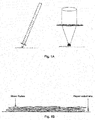
- a water-based conductive silver ink for kinds of writing devices including but not limited to gel pen, ball point pen, ink pen and brushes
- Figure 1A a water-based conductive silver ink for kinds of writing devices including but not limited to gel pen, ball point pen, ink pen and brushes
- suitable portable substrates including but not limited to copy paper, photo paper, card paper, PET, flexible printed circuit (FPC), plastic or even some of metal alloy surface to form a conductive trace comprising metal microparticles
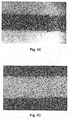
- the conductive trace so formed has a metallic appearance upon writing and can be characterized by optical microscopy as well as scanning electron microscopy as can be seen in Figure 1C and Figure 1D respectively.
- the present application may relate to composition of a conductive ink to form conductive trace on a desired substrate to be employed in the toy industry and the education industry.
- the substrate of choice for such a writable conductive ink may preferably be paper substrates.
- the present application may relate to composition of a conductive ink to form a conductive trace on a substrate including but not limited to portable substrates like copy paper, photo paper, card paper, PET, FPC, plastic or even some of metal alloy surface or any combination thereof.
- the present application may relate to composition of a conductive ink to form a conductive trace on a paper substrate which can be incorporated and used in a suitable writing device including but not limited to gel pen, ball point pen, ink pen and brushes.
- the present application may relate to formation of water-based conductive ink for forming a conductive trace on a suitable substrate.
- the conductive ink may comprise of conductive particles in an amount in the range of 15% to 50% weight by weight and may comprise one or more metals selected from the transition metals, the metalloids, and/or some other metallic oxides and may be selected from the group consisting of: Al, Ti, Mn, Fe, Co, Ni, Cu, Zn, Mo, Pd, Ag, In, Sn, Sb, W, Pt, and Au etc, common used metal and TiO 2 , Fe 3 O 4 , Cu 2 O, ZnO, SnO, InO, etc.
- the present application may relate to a conductive ink composition for forming conductive trace on a suitable substrate comprising conductive particles selected preferably from one or more metals including Ag, Au, Cu, Ni, Pt, and/or Pd.
- the conductive particles may comprise substantially pure metals containing only incidental impurities, metal alloys, and/or metal oxides (e.g., tin oxide or indium-tin oxide).
- the conductive particles may include a coating (e.g., a conductive coating or a passivation layer) on individual flakes and/or particles.
- the coating may include one or more of the metals mentioned above.
- the present application may relate to a conductive ink composition for forming conductive trace on a suitable substrate comprising conductive particles which are silver flakes. Fine silver flake is particularly desirable to establish a percolated network with each other to realize a conductive trace on 2D platform.
- the silver flakes may be present in said conductive ink at a concentration of 15 % to 50% weight by weight, preferably at a concentration of 15% to 35% weight by weight, more preferably at a concentration of 15% to 30% weight by weight and more preferably at a concentration of 15% to 25% weight by weight.
- the percolated network is too thin to form a conductive trace, a very high resistivity or no response will be detected to the writing trace and, on the contrary. If silver exceeds 50% by weight, the viscosity of the ink increases significantly due to the high solid content, not allowing smooth trace writing on the desired substrate because of the poor fluidity of the system leading to silver sedimentation.
- the silver flake used in the conductive ink formation comprise of micro particles in the size range of 1 to 15 ⁇ m, preferably in the size range of 3 to 15 ⁇ m and more preferably in the size range of 9 to 15 ⁇ m.
- the size is lower than 1 ⁇ m, the trace written will be barely conductive because of the poor percolation effect.
- the size is above 15 ⁇ m, the powder can hardly come out of the writing device and will result in serious sedimentation in the ink.
- the present application may relate to composition of conductive ink for forming conductive trace on a paper substrate, said composition may additionally comprise of a suitable solvent which may preferably be a water-based organic solvent for the purposes of improving the qualities of the ink for a writing device.
- a suitable solvent which may preferably be a water-based organic solvent for the purposes of improving the qualities of the ink for a writing device.
- the water-based solvent may prevent the ink from drying at the pen point, from freezing at a low temperature and may prevent from lower dry speed on the paper substrate.
- Nonlimiting examples of water-based organic solvents include glycols such as ethylene glycol, diethylene glycol, and triethylene glycol, propanols such as 2-propanol, and methoxy-propanol, ethers such as ethylene glycol monomethyl ether, triethylene glycol monomethyl ether, and propylene glycol monomethyl ether, and acetates such as methyl acetate, ethyl acetate, and butyl acetate. They are used either individually or in the form of a mixture of two or more of solvent.
- the amount of such solvent is preferably less than 10%, more preferably less than 20% and even more preferably less than 30% by weight based on the total amount of the ink.
- the present application may relate to composition of conductive ink for forming conductive trace on a paper substrate wherein the conductive ink composition may additionally comprise a dispersant comprising a water-based resin to assist in the dispersion of said conductive particles in said solvent.
- the water-based resin used in the formulation may be the key component enabling the interconversion of said conductive ink from erasable / removable to non-removable or inerasable.
- the concentration of the water-based resin may be increased when silver ink is required to be non-erasable and may be decreased to make the ink erasable, i.e. said water-based resin composition may be suitably adjusted as per the requirement.
- the present application may comprise a kind of removable ink or permanent ink can be acquired by increase or decrease mass loading of the resin and the amount of resin incorporated in the conductive ink may range from 1% weight by weight to preferably 3% weight by weight to more preferably 5% weight by weight.
- the present application may relate to composition of conductive ink for forming conductive trace on a paper substrate, wherein said water-based resin may comprise one or more selected from amongst aldehyde ketone resin, polyacrylic acid (PAA), acrylic acid resin (AA), epoxy such as Araldite 506 epoxy resin, phenol-formaldehyde resin, polyvinyl alcohol (PVA), polyvinylidene difluoride (PVDF) at a concentration of at least 1%, preferably at least 3% and more preferably at least 5%.
- PPA polyacrylic acid
- AA acrylic acid resin
- epoxy such as Araldite 506 epoxy resin
- PVA polyvinyl alcohol
- PVDF polyvinylidene difluoride
- the present application may relate to composition of conductive ink for forming conductive trace on a paper substrate wherein the conductive ink composition may additionally comprise a surfactant for efficient formulation of said conductive ink composition.
- Surfactants may be used to dissolve the conductive silver micro particles since the commercial silver flake cannot be dissolved in the water directly.
- the present application may comprise one or more surfactants selected from amongst disodium monolauryl sulfosuccinate (DLS), disodium laureth sulfosuccinate (MES), disodium cocoyl monoethanolamide sulfosuccinate (DMSSDCMS), sodium dodecyl sulfate (SDS) or sodium lauryl sulfate (SLS), soap of fatty acid potassium (SFP), BYK series and polyvinylpyrrolidone (PVP).
- DLS disodium monolauryl sulfosuccinate
- MES disodium laureth sulfosuccinate
- DMSSDCMS disodium cocoyl monoethanolamide sulfosuccinate
- SDS sodium dodecyl sulfate
- SFP soap of fatty acid potassium
- BYK series polyvinylpyrrolidone
- composition of conductive ink for forming conductive trace on a paper substrate wherein said surfactants are added by less than preferably at an amount of less than 5% weight by weight of the conductive ink composition and more preferably at an amount of less than 3% weight by weight of the conductive ink composition.
- the present application may relate to composition of conductive ink for forming conductive trace on a paper substrate wherein the composition may additionally comprise a thickener used in ink which may help to prevent the silver particle from sedimentation and may help to achieve the viscosity suitable for a roller ball pen. It's better to choose one of the thickeners that may increase the thixotropic property of the ink. Due to the high mass loading of the silver flake, the ink is expected to show high viscous property in static condition, on the contrary, when the ink is under use, the ink will be expected to show good fluidity which will let user have a better experience with the writing devices.
- a thickener used in ink which may help to prevent the silver particle from sedimentation and may help to achieve the viscosity suitable for a roller ball pen. It's better to choose one of the thickeners that may increase the thixotropic property of the ink. Due to the high mass loading of the silver flake, the ink is expected to show high viscous property in static condition
- the present application may comprise use of thickeners including but not limited to biological gums, e.g. Cyamopsis tetragonoloba gum, Xanthomonas polysaccharide and carrageenan gum, sodium alginate; cellulose, e.g. carboxy methyl cellulose (CMC), hydroxyethyl cellulose (HEC), hydroxypropyl methyl cellulose (HPMC) or carboxymethyl cellulose.
- biological gums e.g. Cyamopsis tetragonoloba gum, Xanthomonas polysaccharide and carrageenan gum, sodium alginate
- cellulose e.g. carboxy methyl cellulose (CMC), hydroxyethyl cellulose (HEC), hydroxypropyl methyl cellulose (HPMC) or carboxymethyl cellulose.
- the present application may relate to composition of conductive ink for forming conductive trace on a paper substrate wherein the biological gum is the preferred thickener of choice due to stable rheological property under static status and good fluidity performance under dynamic status, which is called shear thinning behaviour.
- Inks formulated with these thickeners can be smoothly delivered to paper substrates by writing devices.
- the present application may use a thickener in the conductive ink composition at a concentration of less 5% weight by weight of the ink composition, preferably at less than 3% weight by weight of the ink composition and more preferably at a concentration of less than 1% weight by weight of the ink composition.
- the present application may relate to composition of conductive ink for forming conductive trace on a paper substrate, wherein water is used as the main solvent of the writable conductive ink.
- the ink may be mainly formulated with 30 to 60 % weight by weight of the conductive ink composition to promote the safety of the ink and make it safe, non-toxic particularly for use by children.
- the present application may comprise of a conductive ink composition for producing a conductive trace on a suitable paper substrate, wherein the said conductive ink composition has the following properties: PARAMETER PROPERTIES Solids (%) - amount of conductive metal microparticles 15 ⁇ 50% w/w Viscosity (cP) 100 ⁇ 10000 (@20rpm) Main solvent Water Shelf Life (months) At least 12 months and preferably 24 months Suitable substrates Copy paper, photo paper, PET, FPC, plastic surface Resistivity ( ⁇ cm) 1 ⁇ 3 /write with gel pen; (adjustable) Adhesion Adjustable Curing Temperature (°C) 25 Drying time (s) Less than 30 seconds
- the present application relates to composition for conductive ink wherein said ink may be a water-based conductive ink and may comprise of non-toxic conductive particle, water, edible level thickener, surfactant and optionally dispersant resin, making said composition a highly safe conductive ink.
- the present application relates to composition for conductive ink wherein said ink may be a water-based conductive ink which may comprise cost effective micro-sized silver particles or flakes with a size in the range of 1-15 ⁇ m enabling easy market access and large-scale availability.
- said ink may be a water-based conductive ink which may comprise cost effective micro-sized silver particles or flakes with a size in the range of 1-15 ⁇ m enabling easy market access and large-scale availability.
- the present application relates to composition for conductive ink wherein said ink may be a water-based conductive ink which may comprise an edible biological gum or cellulose is used as thickener to improve the rheological properties of the conductive trace and which may further comprise a dispersant resin whose amount may be suitably adjusted to make said conductive ink composition removable or un-removable from smooth surface of the substrates for a plurality of applications.
- said ink may be a water-based conductive ink which may comprise an edible biological gum or cellulose is used as thickener to improve the rheological properties of the conductive trace and which may further comprise a dispersant resin whose amount may be suitably adjusted to make said conductive ink composition removable or un-removable from smooth surface of the substrates for a plurality of applications.
- the present application relates to composition for conductive ink wherein said ink may be a water-based conductive ink which may comprise highly stable, non-toxic, environment friendly, water-based composition for conductive ink to form a conductive trace on a suitable surface, wherein said composition may be free from nano-particles, may comprise mass loading of large silver microparticles having size preferably greater than 9 micrometres and preferably in an amount more preferably in the range of 15% to 50% weight by weight of the composition, may comprise a water at an amount of at least 30 to 60 weight percent of the total conductive ink composition and wherein said composition may be adjusted from inerasable to erasable by change amount of said water-based resin.
- said ink may be a water-based conductive ink which may comprise highly stable, non-toxic, environment friendly, water-based composition for conductive ink to form a conductive trace on a suitable surface
- said composition may be free from nano-particles, may comprise mass loading of large silver microparticles having size preferably greater than
- a water-based conductive ink formulation is produced by dispersing 25% by weight silver microparticles (average size 9 - 15 microns) using hydroxyethyl cellulose (HEC) as a thickener at a mass loading concentration of 0.5 wt % and ethylene glycol as a solvent at a concentration of 25 wt% and keeping the final water concentration at 46.5 wt%. Further, BYK190 is added as a surfactant at a loading rate of 3 wt%.
- the conductive silver ink is thoroughly mixed up to a viscosity ratio from 1rpm to 10 rpm of approximately 3.1 rpm.
- the ink is deposited onto a substrate (paper) and dries rapidly at room temperature to form a silver trace. Upon drying, the silver trace is observed to have a resistivity of 3 ⁇ cm and appears to have a metallic appearance.
- a water-based conductive ink formulation is produced by dispersing 25% by weight silver microparticles (average size 9 - 15 microns) using terpineol at a mass loading concentration of 3.5 wt % and 2-propanol as a solvent at a concentration of 23 wt% and keeping the final water concentration at 43.5 wt%. Further, polyacrylic acid is added at a loading rate of 5 wt%.
- the conductive silver ink is thoroughly mixed up to a viscosity ratio from 1rpm to 10 rpm of approximately 2.9 rpm.
- the ink is deposited onto a substrate (paper) and dries rapidly at room temperature to form a silver trace. Upon drying, the silver trace is observed to have a resistivity of 3.1 ⁇ cm and appears to have a metallic appearance.
- a water-based conductive ink formulation is produced by dispersing 18% by weight silver microparticles (average size 9 - 15 microns) using carboxy methyl cellulose (CMC) as a thickener at a mass loading concentration of 0.5 wt % and 2-propanol as a solvent at a concentration of 25 wt% and keeping the final water concentration at 54.5 wt%. Further, sodium dodecyl sulfate (SDS) is added as a surfactant at a loading rate of 2 wt%.
- SDS sodium dodecyl sulfate
- the conductive silver ink is thoroughly mixed up to a viscosity ratio from 1rpm to 10 rpm of approximately 3.5 rpm.
- the ink is deposited onto a substrate (paper) and dries rapidly at room temperature to form a silver trace. Upon drying, the silver trace is observed to have a resistivity of 3.5 ⁇ cm and appears to have a metallic appearance.
Landscapes
- Chemical & Material Sciences (AREA)
- Engineering & Computer Science (AREA)
- Life Sciences & Earth Sciences (AREA)
- Materials Engineering (AREA)
- Wood Science & Technology (AREA)
- Organic Chemistry (AREA)
- Physics & Mathematics (AREA)
- Health & Medical Sciences (AREA)
- General Health & Medical Sciences (AREA)
- Thermal Sciences (AREA)
- Toxicology (AREA)
- Microelectronics & Electronic Packaging (AREA)
- Manufacturing & Machinery (AREA)
- Inks, Pencil-Leads, Or Crayons (AREA)
- Conductive Materials (AREA)
- Parts Printed On Printed Circuit Boards (AREA)
- Manufacturing Of Electric Cables (AREA)
Applications Claiming Priority (1)
| Application Number | Priority Date | Filing Date | Title |
|---|---|---|---|
| US201762601802P | 2017-04-03 | 2017-04-03 |
Publications (2)
| Publication Number | Publication Date |
|---|---|
| EP3385342A1 true EP3385342A1 (fr) | 2018-10-10 |
| EP3385342B1 EP3385342B1 (fr) | 2020-03-25 |
Family
ID=61256676
Family Applications (1)
| Application Number | Title | Priority Date | Filing Date |
|---|---|---|---|
| EP18157848.5A Active EP3385342B1 (fr) | 2017-04-03 | 2018-02-21 | Encre conductrice à base d'eau pour prototype rapide en électronique inscriptible |
Country Status (4)
| Country | Link |
|---|---|
| US (1) | US10442946B2 (fr) |
| EP (1) | EP3385342B1 (fr) |
| JP (1) | JP2018178086A (fr) |
| CN (1) | CN108707369B (fr) |
Cited By (2)
| Publication number | Priority date | Publication date | Assignee | Title |
|---|---|---|---|---|
| WO2021038066A1 (fr) * | 2019-08-29 | 2021-03-04 | Societe Bic | Procédé de préparation d'une encre gélifiée aqueuse à couleur fixe comprenant des nanoparticules d'argent ou d'or |
| WO2021038065A1 (fr) * | 2019-08-29 | 2021-03-04 | Societe Bic | Procédé de préparation d'une encre gel aqueuse à couleur variable comprenant des nanoparticules d'argent |
Families Citing this family (7)
| Publication number | Priority date | Publication date | Assignee | Title |
|---|---|---|---|---|
| JP6541837B1 (ja) * | 2018-05-01 | 2019-07-10 | 億奇生物科技責任有限公司Aidmics Biotechnology (Hk) Co., Limited | 手作りの回路基板 |
| JP7400256B2 (ja) * | 2019-08-08 | 2023-12-19 | 株式会社村田製作所 | 機能材料インク |
| CN114450356B (zh) * | 2019-08-29 | 2023-03-14 | 法国比克公司 | 制备包括金纳米颗粒的具有固定颜色的水性凝胶油墨的方法 |
| CN111148363B (zh) * | 2019-12-31 | 2021-06-11 | 浙江理工大学 | 一种在高分子膜表面刻蚀-书写纳米导电材料制备柔性电路板的方法 |
| TW202140695A (zh) * | 2020-03-05 | 2021-11-01 | 英商先進材料發展有限公司 | 碳基導電墨水 |
| JP2022099135A (ja) * | 2020-12-22 | 2022-07-04 | 花王株式会社 | 筆記具用インク |
| JP2023134118A (ja) * | 2022-03-14 | 2023-09-27 | 信越ポリマー株式会社 | カーボンインク、電子部品及びその製造方法 |
Citations (4)
| Publication number | Priority date | Publication date | Assignee | Title |
|---|---|---|---|---|
| US20030185971A1 (en) * | 2002-03-26 | 2003-10-02 | Saksa Thomas A. | Methods for ink-jet printing circuitry |
| CN102504647A (zh) * | 2011-10-31 | 2012-06-20 | 天津大学 | 一种基于纳米金属的导电墨水及其在不同喷印方式及相纸中的应用 |
| CN103073953A (zh) * | 2013-02-07 | 2013-05-01 | 苏州牛剑新材料有限公司 | 一种水性导电油墨及其制备方法 |
| WO2017026717A2 (fr) * | 2015-08-13 | 2017-02-16 | 주식회사 네패스 | Composition d'encre conductrice à base d'eau respectueuse de l'environnement, et stylet conducteur la comprenant |
Family Cites Families (27)
| Publication number | Priority date | Publication date | Assignee | Title |
|---|---|---|---|---|
| US5013361A (en) | 1985-01-23 | 1991-05-07 | The Gillette Company | Ball-point writing instrument containing an aqueous ink composition |
| US5286415A (en) * | 1992-12-28 | 1994-02-15 | Advanced Products, Inc. | Water-based polymer thick film conductive ink |
| KR100309197B1 (ko) | 1993-01-29 | 2001-12-28 | 아사베 히로시 | 볼펜용수성금속분잉크 |
| JP2001080263A (ja) | 1999-09-13 | 2001-03-27 | Sakura Color Prod Corp | ボールペン |
| US6325845B1 (en) | 1999-11-05 | 2001-12-04 | Sakura Color Products Corporation | Aqueous ink for ball point pens |
| JP4190684B2 (ja) | 1999-12-02 | 2008-12-03 | 株式会社サクラクレパス | 水性メタリックインキ組成物及びそれを用いた筆記具 |
| DE60215508T2 (de) | 2001-07-03 | 2007-06-28 | Sakura Color Products Corp. | Wässrige pigmenthaltige Tinte für kernmittige Markierstifte |
| TWI243193B (en) * | 2002-05-07 | 2005-11-11 | Reveo Inc | Conductive ink |
| US7566360B2 (en) | 2002-06-13 | 2009-07-28 | Cima Nanotech Israel Ltd. | Nano-powder-based coating and ink compositions |
| US6866378B2 (en) * | 2002-10-28 | 2005-03-15 | Hewlett-Packard Development Company, L.P. | Conductive additives for use in printing processes employing radiational drying |
| JP4967223B2 (ja) * | 2004-07-15 | 2012-07-04 | 株式会社村田製作所 | 水系電極インクおよびその製造方法 |
| US20070144305A1 (en) * | 2005-12-20 | 2007-06-28 | Jablonski Gregory A | Synthesis of Metallic Nanoparticle Dispersions |
| DE102006017696A1 (de) * | 2006-04-15 | 2007-10-18 | Bayer Technology Services Gmbh | Verfahren zur Herstellung von Metallpartikeln, hieraus hergestellte Metallpartikel und deren Verwendung |
| US8709288B2 (en) * | 2006-09-08 | 2014-04-29 | Sun Chemical Corporation | High conductive water-based silver ink |
| JP5220029B2 (ja) * | 2006-12-22 | 2013-06-26 | ヘンケル・アクチェンゲゼルシャフト・ウント・コムパニー・コマンディットゲゼルシャフト・アウフ・アクチェン | 水性導電性組成物 |
| CA2727611A1 (fr) | 2008-06-12 | 2009-12-17 | Nanomas Technologies, Inc. | Encres et pates conductrices |
| CN101624490B (zh) * | 2008-07-07 | 2012-10-10 | 鹤山雅图仕印刷有限公司 | 导电高分子印刷油墨及其制作方法 |
| JP2010269516A (ja) * | 2009-05-21 | 2010-12-02 | Dic Corp | 導電性水性インクを充填した筆記具、銀配線回路及びその製造方法 |
| JP2013115004A (ja) * | 2011-11-30 | 2013-06-10 | Nippon Parkerizing Co Ltd | 水系銅ペースト材料及び導電層の形成方法 |
| US9175182B2 (en) * | 2012-02-29 | 2015-11-03 | Dip-Tech Ltd. | Ink |
| TWI632207B (zh) * | 2013-07-01 | 2018-08-11 | 德商漢高智慧財產控股公司 | 奈米粒子墨水組成物、方法及應用 |
| US20150166810A1 (en) * | 2013-12-16 | 2015-06-18 | Nano And Advanced Materials Institute Limited | Metal Nanoparticle Synthesis and Conductive Ink Formulation |
| US10266709B2 (en) * | 2014-05-22 | 2019-04-23 | Sun Chemical Corporation | Offset conductive inks and compositions |
| CN106661360A (zh) | 2014-05-30 | 2017-05-10 | 电子墨水书写公司 | 用于滚珠笔的导电墨水和衬底上形成的导电迹线 |
| CN104817891B (zh) * | 2015-04-13 | 2017-03-22 | 中国科学院宁波材料技术与工程研究所 | 一种直写式纳米银导电墨水及其制备方法 |
| CN105348923A (zh) * | 2015-10-29 | 2016-02-24 | 苏州市博来特油墨有限公司 | 一种新型金属导电油墨 |
| WO2017127708A1 (fr) * | 2016-01-22 | 2017-07-27 | Voxel8, Inc. | Dispersions à base d'eau composites imprimables en 3d |
-
2018
- 2018-02-21 EP EP18157848.5A patent/EP3385342B1/fr active Active
- 2018-02-22 US US15/901,916 patent/US10442946B2/en active Active
- 2018-03-14 JP JP2018047185A patent/JP2018178086A/ja active Pending
- 2018-03-22 CN CN201810242475.XA patent/CN108707369B/zh active Active
Patent Citations (4)
| Publication number | Priority date | Publication date | Assignee | Title |
|---|---|---|---|---|
| US20030185971A1 (en) * | 2002-03-26 | 2003-10-02 | Saksa Thomas A. | Methods for ink-jet printing circuitry |
| CN102504647A (zh) * | 2011-10-31 | 2012-06-20 | 天津大学 | 一种基于纳米金属的导电墨水及其在不同喷印方式及相纸中的应用 |
| CN103073953A (zh) * | 2013-02-07 | 2013-05-01 | 苏州牛剑新材料有限公司 | 一种水性导电油墨及其制备方法 |
| WO2017026717A2 (fr) * | 2015-08-13 | 2017-02-16 | 주식회사 네패스 | Composition d'encre conductrice à base d'eau respectueuse de l'environnement, et stylet conducteur la comprenant |
Cited By (6)
| Publication number | Priority date | Publication date | Assignee | Title |
|---|---|---|---|---|
| WO2021038066A1 (fr) * | 2019-08-29 | 2021-03-04 | Societe Bic | Procédé de préparation d'une encre gélifiée aqueuse à couleur fixe comprenant des nanoparticules d'argent ou d'or |
| WO2021038065A1 (fr) * | 2019-08-29 | 2021-03-04 | Societe Bic | Procédé de préparation d'une encre gel aqueuse à couleur variable comprenant des nanoparticules d'argent |
| CN114207056A (zh) * | 2019-08-29 | 2022-03-18 | 法国比克公司 | 用于制备包含银或金纳米颗粒的具有固定颜色的水性凝胶墨水的方法 |
| CN114207056B (zh) * | 2019-08-29 | 2023-08-11 | 法国比克公司 | 用于制备包含银或金纳米颗粒的具有固定颜色的水性凝胶墨水的方法 |
| US12202989B2 (en) | 2019-08-29 | 2025-01-21 | Societe Bic | Process of preparation of an aqueous gel ink with variable color comprising silver nanoparticles |
| US12240984B2 (en) | 2019-08-29 | 2025-03-04 | Societe Bic | Process for preparing an aqueous gel ink with fixed color comprising silver or gold nanoparticles |
Also Published As
| Publication number | Publication date |
|---|---|
| US10442946B2 (en) | 2019-10-15 |
| CN108707369A (zh) | 2018-10-26 |
| CN108707369B (zh) | 2021-04-30 |
| EP3385342B1 (fr) | 2020-03-25 |
| JP2018178086A (ja) | 2018-11-15 |
| US20180282566A1 (en) | 2018-10-04 |
Similar Documents
| Publication | Publication Date | Title |
|---|---|---|
| US10442946B2 (en) | Water-based conductive ink for rapid prototype in writable electronics | |
| KR102032108B1 (ko) | 금속성 나노섬유 잉크, 실질적으로 투명한 전도체, 및 제조 방법 | |
| US11776708B2 (en) | Liquid metal conductive paste and electronic device | |
| CN106867315B (zh) | 一种基于金属纳米线和氧化石墨烯的导电墨水的制备方法及用途 | |
| JP2025142096A (ja) | 基材上に形成されたローラーボールペンおよび導電性トレースのための導電性インク | |
| CN111180107B (zh) | 一种用于电场驱动喷射微纳3d打印纳米银浆的制备方法 | |
| JP2009197325A (ja) | 金属ナノ粒子分散液及びその製造方法 | |
| JP2013069654A (ja) | 低温焼成用導電性ペースト組成物 | |
| CN106158065A (zh) | 一种手机触摸屏专用低温固化抗银迁移激光蚀刻导电银浆及其制备方法 | |
| CN101719392B (zh) | 基于碳-铜复合填料的丝网印刷水性导电浆料的制备方法 | |
| JP2018178086A5 (fr) | ||
| US20110193032A1 (en) | Composition for making transparent conductive coating based on nanoparticle dispersion | |
| CN106590173A (zh) | 可低温固化的纳米金属墨水及其制备方法和应用 | |
| JP2010199034A (ja) | 太陽電池用導電性ペースト及びその製造方法 | |
| JP2009515023A (ja) | 金属インク、並びにそれを用いた電極形成方法及び基板 | |
| CN102167926B (zh) | 一种新型纳米氧化亚铜导电油墨及其制备方法 | |
| JP5368925B2 (ja) | 銀超微粒子の製造方法 | |
| WO2010144790A1 (fr) | Compositions d'argent/chlorure d'argent pour impression jet d'encre | |
| JPWO2019069936A1 (ja) | 銀微粒子分散液 | |
| JP7355700B2 (ja) | 分極処理用導電性組成物、仮電極および圧電セラミックスの製造方法 | |
| CN105419483B (zh) | 一种复合导电喷墨墨水及其制备方法 | |
| CN108530994A (zh) | 粗糙表面上导电性能良好的油墨及其应用 | |
| US11450447B2 (en) | Fine silver particle dispersion | |
| JP5775438B2 (ja) | 銀微粒子分散液 | |
| CN116631671A (zh) | 可细线线宽印刷的太阳能电池用导电浆料及其制备方法 |
Legal Events
| Date | Code | Title | Description |
|---|---|---|---|
| PUAI | Public reference made under article 153(3) epc to a published international application that has entered the european phase |
Free format text: ORIGINAL CODE: 0009012 |
|
| STAA | Information on the status of an ep patent application or granted ep patent |
Free format text: STATUS: REQUEST FOR EXAMINATION WAS MADE |
|
| 17P | Request for examination filed |
Effective date: 20180221 |
|
| AK | Designated contracting states |
Kind code of ref document: A1 Designated state(s): AL AT BE BG CH CY CZ DE DK EE ES FI FR GB GR HR HU IE IS IT LI LT LU LV MC MK MT NL NO PL PT RO RS SE SI SK SM TR |
|
| AX | Request for extension of the european patent |
Extension state: BA ME |
|
| STAA | Information on the status of an ep patent application or granted ep patent |
Free format text: STATUS: EXAMINATION IS IN PROGRESS |
|
| 17Q | First examination report despatched |
Effective date: 20190225 |
|
| GRAP | Despatch of communication of intention to grant a patent |
Free format text: ORIGINAL CODE: EPIDOSNIGR1 |
|
| STAA | Information on the status of an ep patent application or granted ep patent |
Free format text: STATUS: GRANT OF PATENT IS INTENDED |
|
| INTG | Intention to grant announced |
Effective date: 20191129 |
|
| GRAS | Grant fee paid |
Free format text: ORIGINAL CODE: EPIDOSNIGR3 |
|
| GRAA | (expected) grant |
Free format text: ORIGINAL CODE: 0009210 |
|
| STAA | Information on the status of an ep patent application or granted ep patent |
Free format text: STATUS: THE PATENT HAS BEEN GRANTED |
|
| AK | Designated contracting states |
Kind code of ref document: B1 Designated state(s): AL AT BE BG CH CY CZ DE DK EE ES FI FR GB GR HR HU IE IS IT LI LT LU LV MC MK MT NL NO PL PT RO RS SE SI SK SM TR |
|
| REG | Reference to a national code |
Ref country code: GB Ref legal event code: FG4D |
|
| REG | Reference to a national code |
Ref country code: DE Ref legal event code: R096 Ref document number: 602018003187 Country of ref document: DE |
|
| REG | Reference to a national code |
Ref country code: AT Ref legal event code: REF Ref document number: 1248516 Country of ref document: AT Kind code of ref document: T Effective date: 20200415 Ref country code: IE Ref legal event code: FG4D |
|
| PG25 | Lapsed in a contracting state [announced via postgrant information from national office to epo] |
Ref country code: NO Free format text: LAPSE BECAUSE OF FAILURE TO SUBMIT A TRANSLATION OF THE DESCRIPTION OR TO PAY THE FEE WITHIN THE PRESCRIBED TIME-LIMIT Effective date: 20200625 Ref country code: RS Free format text: LAPSE BECAUSE OF FAILURE TO SUBMIT A TRANSLATION OF THE DESCRIPTION OR TO PAY THE FEE WITHIN THE PRESCRIBED TIME-LIMIT Effective date: 20200325 Ref country code: FI Free format text: LAPSE BECAUSE OF FAILURE TO SUBMIT A TRANSLATION OF THE DESCRIPTION OR TO PAY THE FEE WITHIN THE PRESCRIBED TIME-LIMIT Effective date: 20200325 |
|
| PG25 | Lapsed in a contracting state [announced via postgrant information from national office to epo] |
Ref country code: SE Free format text: LAPSE BECAUSE OF FAILURE TO SUBMIT A TRANSLATION OF THE DESCRIPTION OR TO PAY THE FEE WITHIN THE PRESCRIBED TIME-LIMIT Effective date: 20200325 Ref country code: LV Free format text: LAPSE BECAUSE OF FAILURE TO SUBMIT A TRANSLATION OF THE DESCRIPTION OR TO PAY THE FEE WITHIN THE PRESCRIBED TIME-LIMIT Effective date: 20200325 Ref country code: HR Free format text: LAPSE BECAUSE OF FAILURE TO SUBMIT A TRANSLATION OF THE DESCRIPTION OR TO PAY THE FEE WITHIN THE PRESCRIBED TIME-LIMIT Effective date: 20200325 Ref country code: BG Free format text: LAPSE BECAUSE OF FAILURE TO SUBMIT A TRANSLATION OF THE DESCRIPTION OR TO PAY THE FEE WITHIN THE PRESCRIBED TIME-LIMIT Effective date: 20200625 Ref country code: GR Free format text: LAPSE BECAUSE OF FAILURE TO SUBMIT A TRANSLATION OF THE DESCRIPTION OR TO PAY THE FEE WITHIN THE PRESCRIBED TIME-LIMIT Effective date: 20200626 |
|
| REG | Reference to a national code |
Ref country code: NL Ref legal event code: MP Effective date: 20200325 |
|
| REG | Reference to a national code |
Ref country code: LT Ref legal event code: MG4D |
|
| PG25 | Lapsed in a contracting state [announced via postgrant information from national office to epo] |
Ref country code: NL Free format text: LAPSE BECAUSE OF FAILURE TO SUBMIT A TRANSLATION OF THE DESCRIPTION OR TO PAY THE FEE WITHIN THE PRESCRIBED TIME-LIMIT Effective date: 20200325 |
|
| PG25 | Lapsed in a contracting state [announced via postgrant information from national office to epo] |
Ref country code: SM Free format text: LAPSE BECAUSE OF FAILURE TO SUBMIT A TRANSLATION OF THE DESCRIPTION OR TO PAY THE FEE WITHIN THE PRESCRIBED TIME-LIMIT Effective date: 20200325 Ref country code: EE Free format text: LAPSE BECAUSE OF FAILURE TO SUBMIT A TRANSLATION OF THE DESCRIPTION OR TO PAY THE FEE WITHIN THE PRESCRIBED TIME-LIMIT Effective date: 20200325 Ref country code: RO Free format text: LAPSE BECAUSE OF FAILURE TO SUBMIT A TRANSLATION OF THE DESCRIPTION OR TO PAY THE FEE WITHIN THE PRESCRIBED TIME-LIMIT Effective date: 20200325 Ref country code: SK Free format text: LAPSE BECAUSE OF FAILURE TO SUBMIT A TRANSLATION OF THE DESCRIPTION OR TO PAY THE FEE WITHIN THE PRESCRIBED TIME-LIMIT Effective date: 20200325 Ref country code: LT Free format text: LAPSE BECAUSE OF FAILURE TO SUBMIT A TRANSLATION OF THE DESCRIPTION OR TO PAY THE FEE WITHIN THE PRESCRIBED TIME-LIMIT Effective date: 20200325 Ref country code: IS Free format text: LAPSE BECAUSE OF FAILURE TO SUBMIT A TRANSLATION OF THE DESCRIPTION OR TO PAY THE FEE WITHIN THE PRESCRIBED TIME-LIMIT Effective date: 20200725 Ref country code: PT Free format text: LAPSE BECAUSE OF FAILURE TO SUBMIT A TRANSLATION OF THE DESCRIPTION OR TO PAY THE FEE WITHIN THE PRESCRIBED TIME-LIMIT Effective date: 20200818 Ref country code: CZ Free format text: LAPSE BECAUSE OF FAILURE TO SUBMIT A TRANSLATION OF THE DESCRIPTION OR TO PAY THE FEE WITHIN THE PRESCRIBED TIME-LIMIT Effective date: 20200325 |
|
| REG | Reference to a national code |
Ref country code: AT Ref legal event code: MK05 Ref document number: 1248516 Country of ref document: AT Kind code of ref document: T Effective date: 20200325 |
|
| REG | Reference to a national code |
Ref country code: DE Ref legal event code: R097 Ref document number: 602018003187 Country of ref document: DE |
|
| PG25 | Lapsed in a contracting state [announced via postgrant information from national office to epo] |
Ref country code: DK Free format text: LAPSE BECAUSE OF FAILURE TO SUBMIT A TRANSLATION OF THE DESCRIPTION OR TO PAY THE FEE WITHIN THE PRESCRIBED TIME-LIMIT Effective date: 20200325 Ref country code: AT Free format text: LAPSE BECAUSE OF FAILURE TO SUBMIT A TRANSLATION OF THE DESCRIPTION OR TO PAY THE FEE WITHIN THE PRESCRIBED TIME-LIMIT Effective date: 20200325 Ref country code: IT Free format text: LAPSE BECAUSE OF FAILURE TO SUBMIT A TRANSLATION OF THE DESCRIPTION OR TO PAY THE FEE WITHIN THE PRESCRIBED TIME-LIMIT Effective date: 20200325 Ref country code: ES Free format text: LAPSE BECAUSE OF FAILURE TO SUBMIT A TRANSLATION OF THE DESCRIPTION OR TO PAY THE FEE WITHIN THE PRESCRIBED TIME-LIMIT Effective date: 20200325 |
|
| PLBE | No opposition filed within time limit |
Free format text: ORIGINAL CODE: 0009261 |
|
| STAA | Information on the status of an ep patent application or granted ep patent |
Free format text: STATUS: NO OPPOSITION FILED WITHIN TIME LIMIT |
|
| PG25 | Lapsed in a contracting state [announced via postgrant information from national office to epo] |
Ref country code: PL Free format text: LAPSE BECAUSE OF FAILURE TO SUBMIT A TRANSLATION OF THE DESCRIPTION OR TO PAY THE FEE WITHIN THE PRESCRIBED TIME-LIMIT Effective date: 20200325 |
|
| 26N | No opposition filed |
Effective date: 20210112 |
|
| PG25 | Lapsed in a contracting state [announced via postgrant information from national office to epo] |
Ref country code: SI Free format text: LAPSE BECAUSE OF FAILURE TO SUBMIT A TRANSLATION OF THE DESCRIPTION OR TO PAY THE FEE WITHIN THE PRESCRIBED TIME-LIMIT Effective date: 20200325 |
|
| PG25 | Lapsed in a contracting state [announced via postgrant information from national office to epo] |
Ref country code: MC Free format text: LAPSE BECAUSE OF FAILURE TO SUBMIT A TRANSLATION OF THE DESCRIPTION OR TO PAY THE FEE WITHIN THE PRESCRIBED TIME-LIMIT Effective date: 20200325 |
|
| REG | Reference to a national code |
Ref country code: BE Ref legal event code: MM Effective date: 20210228 |
|
| PG25 | Lapsed in a contracting state [announced via postgrant information from national office to epo] |
Ref country code: CH Free format text: LAPSE BECAUSE OF NON-PAYMENT OF DUE FEES Effective date: 20210228 Ref country code: LI Free format text: LAPSE BECAUSE OF NON-PAYMENT OF DUE FEES Effective date: 20210228 Ref country code: LU Free format text: LAPSE BECAUSE OF NON-PAYMENT OF DUE FEES Effective date: 20210221 |
|
| PG25 | Lapsed in a contracting state [announced via postgrant information from national office to epo] |
Ref country code: FR Free format text: LAPSE BECAUSE OF NON-PAYMENT OF DUE FEES Effective date: 20210228 Ref country code: IE Free format text: LAPSE BECAUSE OF NON-PAYMENT OF DUE FEES Effective date: 20210221 |
|
| PG25 | Lapsed in a contracting state [announced via postgrant information from national office to epo] |
Ref country code: BE Free format text: LAPSE BECAUSE OF NON-PAYMENT OF DUE FEES Effective date: 20210228 |
|
| PGFP | Annual fee paid to national office [announced via postgrant information from national office to epo] |
Ref country code: GB Payment date: 20230221 Year of fee payment: 6 Ref country code: DE Payment date: 20230120 Year of fee payment: 6 |
|
| P01 | Opt-out of the competence of the unified patent court (upc) registered |
Effective date: 20230522 |
|
| PG25 | Lapsed in a contracting state [announced via postgrant information from national office to epo] |
Ref country code: CY Free format text: LAPSE BECAUSE OF FAILURE TO SUBMIT A TRANSLATION OF THE DESCRIPTION OR TO PAY THE FEE WITHIN THE PRESCRIBED TIME-LIMIT Effective date: 20200325 |
|
| PG25 | Lapsed in a contracting state [announced via postgrant information from national office to epo] |
Ref country code: HU Free format text: LAPSE BECAUSE OF FAILURE TO SUBMIT A TRANSLATION OF THE DESCRIPTION OR TO PAY THE FEE WITHIN THE PRESCRIBED TIME-LIMIT; INVALID AB INITIO Effective date: 20180221 |
|
| PG25 | Lapsed in a contracting state [announced via postgrant information from national office to epo] |
Ref country code: MK Free format text: LAPSE BECAUSE OF FAILURE TO SUBMIT A TRANSLATION OF THE DESCRIPTION OR TO PAY THE FEE WITHIN THE PRESCRIBED TIME-LIMIT Effective date: 20200325 |
|
| REG | Reference to a national code |
Ref country code: DE Ref legal event code: R119 Ref document number: 602018003187 Country of ref document: DE |
|
| PG25 | Lapsed in a contracting state [announced via postgrant information from national office to epo] |
Ref country code: MT Free format text: LAPSE BECAUSE OF FAILURE TO SUBMIT A TRANSLATION OF THE DESCRIPTION OR TO PAY THE FEE WITHIN THE PRESCRIBED TIME-LIMIT Effective date: 20200325 |
|
| GBPC | Gb: european patent ceased through non-payment of renewal fee |
Effective date: 20240221 |
|
| PG25 | Lapsed in a contracting state [announced via postgrant information from national office to epo] |
Ref country code: DE Free format text: LAPSE BECAUSE OF NON-PAYMENT OF DUE FEES Effective date: 20240903 |
|
| PG25 | Lapsed in a contracting state [announced via postgrant information from national office to epo] |
Ref country code: GB Free format text: LAPSE BECAUSE OF NON-PAYMENT OF DUE FEES Effective date: 20240221 |
|
| PG25 | Lapsed in a contracting state [announced via postgrant information from national office to epo] |
Ref country code: GB Free format text: LAPSE BECAUSE OF NON-PAYMENT OF DUE FEES Effective date: 20240221 Ref country code: DE Free format text: LAPSE BECAUSE OF NON-PAYMENT OF DUE FEES Effective date: 20240903 |
|
| PG25 | Lapsed in a contracting state [announced via postgrant information from national office to epo] |
Ref country code: TR Free format text: LAPSE BECAUSE OF FAILURE TO SUBMIT A TRANSLATION OF THE DESCRIPTION OR TO PAY THE FEE WITHIN THE PRESCRIBED TIME-LIMIT Effective date: 20200325 |