EP3386140A1 - Datenübertragungsverfahren, -vorrichtung und -einrichtung - Google Patents
Datenübertragungsverfahren, -vorrichtung und -einrichtung Download PDFInfo
- Publication number
- EP3386140A1 EP3386140A1 EP15911978.3A EP15911978A EP3386140A1 EP 3386140 A1 EP3386140 A1 EP 3386140A1 EP 15911978 A EP15911978 A EP 15911978A EP 3386140 A1 EP3386140 A1 EP 3386140A1
- Authority
- EP
- European Patent Office
- Prior art keywords
- network device
- data packet
- terminal
- public key
- data
- Prior art date
- Legal status (The legal status is an assumption and is not a legal conclusion. Google has not performed a legal analysis and makes no representation as to the accuracy of the status listed.)
- Granted
Links
Images





Classifications
-
- H—ELECTRICITY
- H04—ELECTRIC COMMUNICATION TECHNIQUE
- H04W—WIRELESS COMMUNICATION NETWORKS
- H04W12/00—Security arrangements; Authentication; Protecting privacy or anonymity
- H04W12/08—Access security
-
- H—ELECTRICITY
- H04—ELECTRIC COMMUNICATION TECHNIQUE
- H04L—TRANSMISSION OF DIGITAL INFORMATION, e.g. TELEGRAPHIC COMMUNICATION
- H04L12/00—Data switching networks
- H04L12/66—Arrangements for connecting between networks having differing types of switching systems, e.g. gateways
-
- H—ELECTRICITY
- H04—ELECTRIC COMMUNICATION TECHNIQUE
- H04L—TRANSMISSION OF DIGITAL INFORMATION, e.g. TELEGRAPHIC COMMUNICATION
- H04L5/00—Arrangements affording multiple use of the transmission path
- H04L5/003—Arrangements for allocating sub-channels of the transmission path
- H04L5/0053—Allocation of signalling, i.e. of overhead other than pilot signals
- H04L5/0055—Physical resource allocation for ACK/NACK
-
- H—ELECTRICITY
- H04—ELECTRIC COMMUNICATION TECHNIQUE
- H04L—TRANSMISSION OF DIGITAL INFORMATION, e.g. TELEGRAPHIC COMMUNICATION
- H04L9/00—Cryptographic mechanisms or cryptographic arrangements for secret or secure communications; Network security protocols
-
- H—ELECTRICITY
- H04—ELECTRIC COMMUNICATION TECHNIQUE
- H04L—TRANSMISSION OF DIGITAL INFORMATION, e.g. TELEGRAPHIC COMMUNICATION
- H04L9/00—Cryptographic mechanisms or cryptographic arrangements for secret or secure communications; Network security protocols
- H04L9/30—Public key, i.e. encryption algorithm being computationally infeasible to invert or user's encryption keys not requiring secrecy
-
- H—ELECTRICITY
- H04—ELECTRIC COMMUNICATION TECHNIQUE
- H04L—TRANSMISSION OF DIGITAL INFORMATION, e.g. TELEGRAPHIC COMMUNICATION
- H04L9/00—Cryptographic mechanisms or cryptographic arrangements for secret or secure communications; Network security protocols
- H04L9/32—Cryptographic mechanisms or cryptographic arrangements for secret or secure communications; Network security protocols including means for verifying the identity or authority of a user of the system or for message authentication, e.g. authorization, entity authentication, data integrity or data verification, non-repudiation, key authentication or verification of credentials
-
- H—ELECTRICITY
- H04—ELECTRIC COMMUNICATION TECHNIQUE
- H04W—WIRELESS COMMUNICATION NETWORKS
- H04W12/00—Security arrangements; Authentication; Protecting privacy or anonymity
- H04W12/04—Key management, e.g. using generic bootstrapping architecture [GBA]
- H04W12/043—Key management, e.g. using generic bootstrapping architecture [GBA] using a trusted network node as an anchor
- H04W12/0431—Key distribution or pre-distribution; Key agreement
-
- H—ELECTRICITY
- H04—ELECTRIC COMMUNICATION TECHNIQUE
- H04W—WIRELESS COMMUNICATION NETWORKS
- H04W12/00—Security arrangements; Authentication; Protecting privacy or anonymity
- H04W12/04—Key management, e.g. using generic bootstrapping architecture [GBA]
- H04W12/043—Key management, e.g. using generic bootstrapping architecture [GBA] using a trusted network node as an anchor
- H04W12/0433—Key management protocols
-
- H—ELECTRICITY
- H04—ELECTRIC COMMUNICATION TECHNIQUE
- H04W—WIRELESS COMMUNICATION NETWORKS
- H04W12/00—Security arrangements; Authentication; Protecting privacy or anonymity
- H04W12/10—Integrity
- H04W12/106—Packet or message integrity
-
- H—ELECTRICITY
- H04—ELECTRIC COMMUNICATION TECHNIQUE
- H04W—WIRELESS COMMUNICATION NETWORKS
- H04W12/00—Security arrangements; Authentication; Protecting privacy or anonymity
- H04W12/10—Integrity
- H04W12/108—Source integrity
-
- H—ELECTRICITY
- H04—ELECTRIC COMMUNICATION TECHNIQUE
- H04W—WIRELESS COMMUNICATION NETWORKS
- H04W76/00—Connection management
- H04W76/20—Manipulation of established connections
- H04W76/27—Transitions between radio resource control [RRC] states
-
- H—ELECTRICITY
- H04—ELECTRIC COMMUNICATION TECHNIQUE
- H04L—TRANSMISSION OF DIGITAL INFORMATION, e.g. TELEGRAPHIC COMMUNICATION
- H04L63/00—Network architectures or network communication protocols for network security
- H04L63/04—Network architectures or network communication protocols for network security for providing a confidential data exchange among entities communicating through data packet networks
- H04L63/0428—Network architectures or network communication protocols for network security for providing a confidential data exchange among entities communicating through data packet networks wherein the data content is protected, e.g. by encrypting or encapsulating the payload
- H04L63/0442—Network architectures or network communication protocols for network security for providing a confidential data exchange among entities communicating through data packet networks wherein the data content is protected, e.g. by encrypting or encapsulating the payload wherein the sending and receiving network entities apply asymmetric encryption, i.e. different keys for encryption and decryption
Definitions
- the present invention relates to the communications field, and in particular, to a data transmission method, apparatus, and device.
- UE User Equipment
- a network side need to perform a security authentication and key negotiation process before performing data transmission.
- UE In an existing Long Term Evolution (Long Term Evolution, LTE for short) mechanism, UE needs to perform a security authentication and key negotiation process with a network side (including a base station and a mobility management entity (Mobility Management Entity, MME for short)) after the UE has established a radio resource control (Radio Resource Control, RRC for short) connection to an evolved NodeB (evolved Node B, eNB for short).
- RRC Radio Resource Control
- the UE and the network side implement the security authentication and key negotiation process between each other according to an evolved packet system (Evolved Packet System, EPS for short) authentication and key agreement (Authentication and Key Agreement, AKA for short) protocol by using an authentication, authorization, and accounting (Authentication Authorization Accounting, AAA for short) server.
- EPS evolved Packet System
- AKA authentication and Key Agreement
- AAA Authentication Authorization Accounting
- the UE before performing data encryption transmission, the UE needs to negotiate with a third-party AAA server to obtain an encryption key. Consequently, an entire data transmission process is complex.
- This application provides a data transmission method, apparatus, and device, so as to resolve a problem in the prior art that an entire data transmission process is complex because UE needs to negotiate with a third-party AAA server to obtain an encryption key.
- a data transmission method includes:
- the terminal performs encryption on the data packet by using the public key of the network device and performs integrity protection on the data packet by using the private key of the terminal, and then sends the data packet to the network device, to send the user data to the server by using the network device.
- an asymmetric encryption manner is directly used to perform encryption and integrity protection on the user data, and steps such as performing security authentication and key negotiation with an AAA server are not required.
- the data transmission process is simple, and transmitted data security is ensured.
- the obtaining, by the terminal, a public key of the network device includes:
- the base station adds the public key of the network device to the system message and transmits the system message to the terminal, instead of using a new message to transmit the public key of the network device. This saves resources.
- the system information when the network device is a gateway, the system information further includes a network device identifier corresponding to the public key of the network device.
- the network device identifier is carried in the system information.
- the system information can carry public keys of a plurality of network devices, and the terminal can select, depending on a service requirement, a public key corresponding to a suitable network device identifier for data encryption.
- system information further includes algorithm indication information
- the algorithm indication information is used to indicate an encryption algorithm and an integrity protection algorithm that are to be used by the terminal to perform encryption and integrity protection on the data packet.
- the performing, by the terminal, encryption on a data packet by using the public key of the network device, and performing integrity protection on the data packet by using a private key of the terminal includes:
- the terminal obtains the algorithm indication information from the system information and then, performs encryption and integrity protection on the data packet based on the algorithm indication information, the public key of the network device, and the private key of the terminal.
- the sending, by the terminal, the data packet to the network device includes: sending, by the terminal, the data packet to the network device when no radio resource control RRC connection is established.
- the sending, by the terminal, the data packet to the network device when no radio resource control RRC connection is established includes: when no radio resource control RRC connection to the base station is established, sending, by the terminal, the data packet to the network device by using an uplink resource allocated by the base station, where the uplink resource allocated by the base station is a resource occupied for sending a preamble sequence by the terminal or a resource occupied for sending an RRC connection setup request message.
- the data packet is sent by using the resource occupied for sending the preamble sequence by the terminal or the resource occupied for sending the RRC connection setup request message, without establishing an RRC connection or an S 1 connection. This reduces resource consumption.
- the data packet further includes a user identifier and a uniform resource locator of the server, and the user identifier is used to identify the terminal in a data transmission process.
- the method further includes:
- the user identifier is updated after the acknowledgment data packet is obtained and verified. This updating is performed simultaneously with a gateway, to prevent the terminal being faked during subsequent data transmission.
- the network device is a base station or a gateway.
- a data transmission method includes:
- the network device receives the data packet that is sent by the terminal.
- the data packet is encrypted by using the public key of the network device and is integrity protected by using the private key of the terminal, and the data packet is sent by the terminal when no RRC connection is established.
- the network device After performing decryption on the data packet and verifying the integrity of the data packet, the network device sends the user data to the server.
- an asymmetric encryption manner is directly used to perform encryption and integrity protection on the user data, and steps such as performing security authentication and key negotiation with an AAA server are not required.
- the data transmission process is simple, and transmitted data security is ensured.
- the data packet is sent by the terminal when no radio resource control RRC connection is established.
- the data packet further includes a user identifier, and the user identifier is used to identify the terminal in a data transmission process.
- the method further includes: obtaining, by the network device, the public key of the terminal.
- the obtaining, by the network device, the public key of the terminal includes:
- the network device if the network device locally stores the context information corresponding to the user identifier, the network device directly obtains the public key of the terminal from the local context information. If there is no context information corresponding to the user identifier on the network device, the network device needs to obtain the public key of the terminal from the home subscriber server.
- the obtaining, by the network device from a home subscriber server based on the user identifier, the public key of the terminal corresponding to the user identifier includes:
- the obtaining, by the network device from a home subscriber server based on the user identifier, the public key of the terminal corresponding to the user identifier includes:
- the data packet further includes a uniform resource locator of the server.
- the sending, by the network device, the user data to a server includes:
- the sending, by the network device, the user data to a server includes: sending, by the network device, the uniform resource locator of the server and the user data to a gateway, so that the gateway sends the user data to the server.
- the method further includes: updating, by the network device, the user identifier when the data packet passes integrity check.
- the method further includes: sending, by the network device, an acknowledgment data packet to the terminal after the data packet passes integrity check, where the acknowledgment data packet is sent after the network device receives the data packet and the data packet passes integrity check.
- the method further includes: sending, by the network device, the public key of the network device and algorithm indication information to the terminal.
- the method further includes: sending, by the network device, a network device identifier corresponding to the public key of the network device to the terminal.
- a data transmission apparatus includes several units, such as an obtaining unit, an encryption unit, and a sending unit, and the several units are configured to implement the method provided in the first aspect.
- a data transmission apparatus includes several units, such as a receiving unit, a decryption unit, a verification unit, and a sending unit, and the several units are configured to implement the method provided in the second aspect.
- a data transmission device includes a processor, a memory, and a communications unit.
- the memory is configured to store a software program and a module.
- the processor runs or executes the software program and/or the module stored in the memory, to implement the method according to the first aspect.
- a data transmission device includes a processor, a memory, and a communications unit.
- the communications unit includes a communications interface or a receiver and a transmitter.
- the memory is configured to store a software program and a module.
- the processor runs or executes the software program and/or the module stored in the memory, to implement the method according to the second aspect.
- a computer readable storage medium configured to store program code that is executed by the foregoing processor during service transmission.
- the program code includes an instruction that is used to implement the method provided in the first aspect.
- a computer readable storage medium configured to store program code that is executed by the foregoing processor during service transmission.
- the program code includes an instruction that is used to implement the method provided in the second aspect.
- the terminal performs encryption on the data packet by using the public key of the network device and performs integrity protection on the data packet by using the private key of the terminal, and then sends the data packet to the network device, to send the user data to the server by using the network device.
- an asymmetric encryption manner is directly used to perform encryption and integrity protection on the user data, and steps such as performing security authentication and key negotiation with an AAA server are not required.
- the data transmission process is simple, and transmitted data security is ensured.
- FIG. 1 shows an application architecture that is provided in an embodiment of the present invention.
- the application architecture mainly includes a terminal 11, a base station 12, a gateway 13, and a server 14.
- the terminal 11 transmits data to the server 14 through the base station 12 and the gateway 13 in sequence.
- the data transmitted by the terminal 11 may be a small-sized traffic data packet or may be another type of data packet.
- Small-sized traffic is a service for which a data amount of user data transmitted each time is relatively small.
- MTC Machine Type Communication
- a size of user data transmitted each time is usually 20 to 200 bytes.
- the small-sized traffic data packet is usually transmitted periodically, for example, transmitted once per second or transmitted once per hour.
- the base station 12 may be an eNB
- the gateway 13 may be an MTC gateway
- the server 14 may be an MTC server.
- the UE For small-sized traffic (such as an MTC service), data packets are transmitted at intervals, and a data amount transmitted each time is very small.
- the UE enters an active (active) state when there is data to be transmitted; the UE enters an idle (idle) state when there is no data to be transmitted.
- an RRC connection needs to be re-established, and a security authentication and key negotiation process needs to be performed.
- an RRC connection does not need to be established between the terminal 11 and the base station 12 before data packet transmission. Instead, a data packet is directly sent in a connectionless state (when no RRC connection is established), and data encryption and integrity protection, and identity verification of a terminal and a network device are implemented in an asymmetric key manner.
- a connectionless state when no RRC connection is established
- data encryption and integrity protection, and identity verification of a terminal and a network device are implemented in an asymmetric key manner.
- An asymmetric key includes two keys: a public key and a private key.
- the public key and the private key are a pair. If a transmitter uses a public key to encrypt data, a receiver can decrypt the data by using only a corresponding private key. If the transmitter uses a private key to perform integrity protection on data, the receiver can perform integrity check on the data by using only a corresponding public key.
- the terminal 11 in the present invention may include a wireless communication function-embedded handheld device, an in-vehicle device, a wearable device, a computing device, or another processing device connected to a wireless modem, or various forms of user equipment (User Equipment, UE for short), mobile stations (Mobile station, MS for short), terminal equipment (Terminal Equipment), or the like.
- UE User Equipment
- UE mobile stations
- MS mobile station
- Terminal Equipment Terminal Equipment
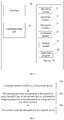
- FIG. 2 is a schematic diagram of a possible hardware structure of the terminal shown in FIG. 1 .
- the terminal 11 includes a processor 10, a memory 20, and a communications unit 30.
- the structure shown in FIG. 2 does not constitute any limitation to the terminal.
- the terminal may include more or fewer components than those shown in the figure, or a combination of some components, or components disposed differently.
- the processor 10 is a control center of the terminal, and connects various parts of the entire terminal by using various interfaces or lines, and performs various functions of the terminal and processes data by running or executing a software program stored in the memory 20 and/or a module stored in the memory 20 and invoking data stored in the memory 20, to perform overall control on the terminal.
- the processor 10 may be implemented by a CPU or may be implemented by a network processor (network processor, NP for short) having a control plane function.
- the memory 20 may be configured to store a software program and a module.
- the processor 10 runs the software program and the module that are stored in the memory 20, to implement various function applications and process data.
- the memory 20 may mainly include a program storage area and a data storage area.
- the program storage area may store an operating system 21, an obtaining module 22, an encryption module 23, a sending module 24, an application program 25 (for example, an encryption program) required by at least one function, and the like.
- the data storage area may store data (for example, a public key of a network device) created based on use of the terminal, and the like.
- the memory 20 may be implemented by any type of volatile or non-volatile storage device or by a combination thereof, for example, a static random access memory (Static Random Access Memory, SRAM for short), an electrically erasable programmable read-only memory (Electrically Erasable Programmable Read-Only Memory, EEPROM for short), an erasable programmable read-only memory (Erasable Programmable Read Only Memory, EPROM for short), a programmable read-only memory (Programmable Read-Only Memory, PROM for short), a read-only memory (Read Only Memory, ROM for short), a magnetic memory, a flash memory, a magnetic disk, or an optical disc. Accordingly, the memory 20 may further include a memory controller to support access of the processor 10 to the memory 20.
- SRAM static random access memory
- EEPROM Electrically erasable programmable read-only memory
- EPROM Erasable Programmable Read Only Memory
- PROM Programmable Read-Only Memory
- PROM Programmable Read
- the processor 20 runs the obtaining module 22 to perform the following function: obtaining the public key of the network device.
- the processor 20 runs the encryption module 23 to perform the following functions: performing encryption on a data packet by using the public key of the network device, and performing integrity protection on the data packet by using a private key of the terminal, where the data packet includes user data.
- the processor 20 runs the sending module 24 to perform the following function: sending the data packet to the network device by using the communications unit 30, to send the user data to a server by using the network device.
- the communications unit 30 is configured to establish a communication channel, so that the terminal device communicates with the network device by using the communication channel, to implement data transmission.
- the communications unit 30 may include a communications module such as a wireless local area network (Wireless Local Area Network, wireless LAN for short) module, a Bluetooth module, or a baseband (Base Band) module, and a radio frequency (Radio Frequency, RF for short) circuit that is corresponding to the communications module and that is configured to perform wireless local area network communication, Bluetooth communication, infrared communication, and/or cellular communications system communication, for example, Wideband Code Division Multiple Access (Wideband Code Division Multiple Access, W-CDMA for short) and/or High Speed Downlink Packet Access (High Speed Downlink Packet Access, HSDPA for short).
- the communications unit 30 is configured to control communication of components of the terminal device 200, and may support direct memory access (Direct Memory Access).
- various communications modules of the communications unit 30 are usually in a form of an integrated circuit chip (Integrated Circuit Chip), and may be selectively combined and all communications modules and corresponding antenna groups are not necessarily included.
- the communications unit 30 may include only a baseband chip, a radio frequency chip, and a corresponding antenna, to provide a communication function in a cellular communications system.
- the terminal device 200 may be connected to a cellular network (Cellular Network) or the Internet (Internet) through a wireless communication connection established by the communications unit, for example, wireless local area network access or WCDMA access.
- the radio frequency circuit is configured to send and receive information or send and receive a signal during a call.
- the radio frequency circuit receives downlink information from a base station and sends the downlink information to a processing unit for processing, and sends uplink data to the base station.
- the radio frequency circuit includes a known circuit configured to perform these functions, including but not limited to an antenna system, a radio frequency transceiver, one or more amplifiers, a tuner, one or more oscillators, a digital signal processor, a codec (Codec) chipset, a subscriber identity module (SIM) card, a memory, and the like.
- the radio frequency circuit may further bidirectionally communicate with a network and another device through radio communications.
- the radio communications may be implemented by using any communications standard or protocol, including but not limited to GSM, GPRS, CDMA, WCDMA, High Speed Uplink Packet Access (High Speed Uplink Packet Access, HSUPA for short), WiMAX, LTE, email, short message service (Short Messaging Service, SMS for short), and the like.
- the terminal 11 may further include an input unit 40, an output unit 50, and the like.
- the input unit 40 is configured to implement interaction between a user and the terminal device and/or information input into the terminal device.
- the input unit 40 may receive number or character information that is entered by the user, to generate signal input related to user settings or function control.
- the input unit 40 may be a touch panel, may be another human-computer interaction interface, for example, a substantive input key or a microphone, or may be another external information capture apparatus, for example, a camera.
- the touch panel also referred to as a touchscreen, can collect an operation action that is performed by a user by touching the touch panel or performed in a position near the touch panel, for example, an operation action that is performed by the user on the touch panel or in a position near the touch panel by using a finger, a stylus, or any other suitable object or accessory, and drive a corresponding connection apparatus according to a preset program.
- the touch panel may include two parts: a touch detection apparatus and a touch controller.
- the touch detection apparatus detects a touch operation of the user, converts the detected touch operation into an electrical signal, and transmits the electrical signal to the touch controller.
- the touch controller receives the electrical signal from the touch detection apparatus, converts the electrical signal into contact coordinates, and then sends the contact coordinates to a processing unit.
- the touch controller can further receive and execute a command that is sent by the processing unit.
- the touch panel may be implemented in a plurality of types, such as a resistive type, a capacitive type, an infrared (Infrared) type, and a surface acoustic wave type.
- the substantive input key used by the input unit may include but is not limited to one or more of a physical keyboard, a function button (for example, a volume control button or an on/off button), a trackball, a mouse, a joystick, and the like.
- a microphone-form input unit can collect voice that is input by the user or from an environment, and convert the voice into a command that is in a form of an electrical signal and that can be executed by the processing unit.
- the input unit 40 may further be various sensing devices, such as a Hall device, configured to detect a physical quantity of the terminal device such as force, torque, pressure, stress, a location, displacement, a speed, acceleration, an angle, an angular speed, a revolution, a rotating speed, or a working state change time, and convert the physical quantity into an electric quantity to perform detection and control.
- sensing devices may include a gravity sensor, a tri-axis accelerometer, a gyroscope, and the like.
- the output unit 50 includes but is not limited to an image output unit and a sound output unit.
- the image output unit is configured to output a character, a picture, and/or a video.
- the image output unit may include a display panel, for example, a display panel configured in a form of a liquid crystal display (Liquid Crystal Display, LCD), an organic light-emitting diode (Organic Light-Emitting Diode, OLED), a field emission display (Field EmissionDisplay, FED), or the like.
- the image output unit may include a reflective display, for example, an electrophoretic (electrophoretic) display or a display using an interferometric modulation of light (Interferometric Modulation of Light) technology.
- the image output unit may include a single display or a plurality of displays of different sizes.
- the touch panel used by the input unit 40 may also be used as the display panel of the output unit. For example, after the touch panel detects a gesture operation performed by touching the touch panel or performed in a position near the touch panel, the touch panel transfers the gesture operation to a processing unit to determine a touch event type. Then, the processing unit provides corresponding visual output on the display panel based on the touch event type.
- the input unit 40 and the output unit 50 are used as two separate components to implement input and output functions of the terminal device 200, in some embodiments, the touch panel and the display panel may be integrated as a whole to implement the input and output functions of the terminal device.
- the image output unit may display various graphical user interfaces (Graphical User Interface, GUI for short) that are used as virtual control components, including but not limited to a window, a scroll bar, an icon, and a scrapbook, for a user to perform an operation in a touch manner.
- GUI Graphic User Interface
- FIG. 3 is a schematic diagram of a possible hardware structure of the network device shown in FIG. 1 .
- the base station 12 or the gateway 13 includes a processor 10, a memory 20, and a communications unit 30 (the communications unit includes a receiver and a transmitter (corresponding to the base station)).
- the communications unit includes a communications interface (corresponding to the gateway).
- a person skilled in the art may understand that the structure shown in FIG. 3 does not constitute any limitation to the network device.
- the network device may include more or fewer components than those shown in the figure, or a combination of some components, or components disposed differently.
- the processor 10 is a control center of the network device, and connects various parts of the entire network device by using various interfaces or lines, and performs various functions of the network device and processes data by running or executing a software program stored in the memory 20 and/or a module stored in the memory 20 and invoking data stored in the memory 20, to perform overall control on the network device.
- the processor 10 may be implemented by a CPU or may be implemented by a network processor (network processor, NP for short) having a control plane function.
- the memory 20 may be configured to store a software program and a module.
- the processor 10 runs the software program and the module that are stored in the memory 20, to implement various function applications and process data.
- the memory 20 may mainly include a program storage area and a data storage area.
- the program storage area may store an operating system 21, a receiving module 22, a decryption module 23, a verification module 24, a sending module 25, and an application program 26 (such as a decryption program) required by at least one function, and the like.
- the data storage area may store data (such as a private key of the network device) that is created based on use of the network device, and the like.
- the memory 20 may be implemented by any type of volatile or non-volatile storage device or by a combination thereof, for example, a static random access memory (English: Static Random Access Memory, SRAM for short), an electrically erasable programmable read-only memory (English: Electrically Erasable Programmable Read-Only Memory, EEPROM for short), an erasable programmable read-only memory (English: Erasable Programmable Read Only Memory, EPROM for short), a programmable read-only memory (Programmable Read-Only Memory, PROM for short), a read-only memory (English: Read Only Memory, ROM for short), a magnetic memory, a flash memory, a magnetic disk, or an optical disc. Accordingly, the memory 20 may further include a memory controller to support access of the processor 10 to the memory 20.
- a static random access memory English: Static Random Access Memory, SRAM for short
- an electrically erasable programmable read-only memory English: Electrically Erasable Programmable Read-Only Memory
- the processor 20 runs the receiving module 22 to perform the following function: receiving, by using the communications unit 30, a data packet that is sent by a terminal, where the data packet is encrypted by using a public key of the network device and is integrity protected by using a private key of the terminal.
- the processor 20 runs the decryption module 23 to perform the following function: using the private key of the network device to decrypt the data packet, to obtain user data, where the data packet includes the user data.
- the processor 20 runs the verification module 24 to perform the following function: performing integrity check on the data packet by using a public key of the terminal, to verify validity of a terminal identity and integrity of the data packet.
- the processor 20 runs the sending module 25 to perform the following function: sending, by using the communications unit 30, the user data to a server when the data packet passes integrity check.
- FIG. 4 is a flowchart of a data transmission method according to an embodiment of the present invention. The flowchart is applied to the terminal in the foregoing scenario. Referring to FIG. 4 , the method includes the following steps.
- Step 101 The terminal obtains a public key of a network device.
- Step 102 The terminal performs encryption on a data packet by using the public key of the network device, and performs integrity protection on the data packet by using a private key of the terminal, where the data packet includes user data.
- the public key is publicly released, and therefore the terminal can obtain the public key of the network device.
- the private key is a privately owned key.
- the private key of the terminal is solely owned by the terminal and not open to the public.
- Step 103 The terminal sends the data packet to the network device, to send the user data to a server by using the network device.
- the terminal performs encryption on the data packet by using the public key of the network device and performs integrity protection on the data packet by using the private key of the terminal, and then sends the data packet to the network device, to send the user data to the server by using the network device.
- a data transmission process an asymmetric encryption manner is directly used to perform encryption and integrity protection on the user data, and steps such as performing security authentication and key negotiation with an AAA server are not required.
- the data transmission process is simple, and transmitted data security is ensured.
- FIG. 5 is a flowchart of a data transmission method according to an embodiment of the present invention. The flowchart is applied to the terminal in the foregoing scenario. Referring to FIG. 5 , the method includes the following steps.
- Step 201 The terminal obtains a public key of a network device.
- step 201 may include the following steps.
- Step 1 The terminal receives system information that is sent by a base station, where the system information includes the public key of the network device.
- the public key is publicly released, and therefore the terminal can obtain the public key of the network device.
- the system information may not only include the public key of the network device but also include a network device identifier corresponding to the public key of the network device.
- the system information may include one or more gateway identifiers and a corresponding gateway public key. The terminal can select, depending on a service requirement, a public key corresponding to a suitable gateway identifier for data encryption.
- the terminal may alternatively use a public key corresponding to a same gateway identifier each time, so that data of the terminal is processed by a same gateway, and the gateway does not need to obtain a public key of the terminal from a home subscriber server (except at the first time).
- the system information may be a master information block (Master Information Block, MIB for short) or a system information block (System Information Block, SIB for short).
- the SIB includes a SIB1, a SIB2, a SIB3, and the like.
- the MIB and the SIB 1 may be sent periodically. Sending time of a SIB other than the SIB 1 (such as the SIB2 or the SIB3) is specified in the SIB1.
- Step 2 The terminal obtains the public key of the network device from the system information.
- the terminal may locally store the public key of the network device once after the terminal obtains the public key of the network device. When step 201 is performed subsequently, the terminal obtains the local public key directly.
- Step 202 The terminal performs encryption on a data packet by using the public key of the network device, and performs integrity protection on the data packet by using a private key of the terminal.
- the data packet includes a user identifier, a uniform resource locator of a server, and user data, and the user identifier is used to identify the terminal in a data transmission process.
- the system information further includes algorithm indication information, and the algorithm indication information is used to indicate an encryption algorithm and an integrity protection algorithm that are to be used by the terminal to perform encryption and integrity protection on the data packet.
- step 202 may include:
- the public key of the network device is used to change the data packet from a plaintext to a ciphertext; the private key of the terminal is used to protect integrity of the data packet.
- an order of encryption and integrity protection is not limited. Encryption may be performed after integrity protection, or encryption may be performed before integrity protection.
- the data packet further includes a network device identifier.
- Step 203 When no RRC connection to a base station is established, the terminal sends the data packet to the network device by using an uplink resource allocated by the base station, to send the user data to the server by using the network device.
- the uplink resource allocated by the base station is a resource occupied for sending a preamble sequence by the terminal or a resource occupied for sending an RRC connection setup request message.
- the terminal may alternatively send, in the connectionless state, the data packet to the network device in another manner.
- a small-sized traffic data packet in the present invention is very small. Therefore, the foregoing data packet may be sent by using the resource occupied for sending the preamble sequence by the terminal or the resource occupied for sending the RRC connection setup request message, without establishing an RRC connection or an S 1 connection.
- the network device may be a base station or a gateway.
- the terminal directly sends the data packet to the base station by using the resource occupied for sending the preamble sequence or the resource occupied for sending the RRC connection setup request message.
- the network device is the gateway, the terminal sends the data packet to a base station by using the resource occupied for sending the preamble sequence or the resource occupied for sending the RRC connection setup request message, and then, the base station sends the data packet to the gateway by using an Internet Protocol Security (Internet Protocol Security, IPsec for short) tunneling technology.
- Internet Protocol Security Internet Protocol Security, IPsec for short
- the method further includes: when receiving an acknowledgment data packet that is sent by the network device, performing, by the terminal, integrity check on the acknowledgment data packet by using the public key of the network device, to verify validity of a network device identity and integrity of the acknowledgment data packet; and updating the user identifier when the acknowledgment data packet passes integrity check, where the acknowledgment data packet is sent after the network device receives the data packet and the data packet passes integrity check.
- the acknowledgment data packet may be encrypted and integrity protected by using the encryption algorithm and the integrity protection algorithm that are indicated by the algorithm indication information, the public key of the terminal, and a private key of the gateway. Therefore, after receiving the acknowledgment data packet, the terminal may perform decryption by using the private key of the terminal, and perform integrity check by using the public key of the network device.
- the network device identity is valid only when the acknowledgment data packet passes integrity check, and the terminal updates the user identifier.
- Performing integrity protection on the acknowledgment data packet is mandatory, whereas performing encryption processing on the acknowledgment data packet is optional.
- updating the user identifier may be implemented in the following manner: using the user identifier (a last used user identifier or an initial user identifier) and a random number randomly generated by the terminal that are included in the data packet, as parameters, and calculating a new user identifier by using a preset algorithm.
- the user identifier is an international mobile subscriber identity (International Mobile Subscriber Identification Number, IMSI for short) of the terminal.
- the data packet may further include the random number, so that the network device can update the user identifier based on the random number.
- the terminal performs encryption on the data packet by using the public key of the network device and performs integrity protection on the data packet by using the private key of the terminal, and then sends the data packet to the network device when no RRC connection is established, to send the user data to the server by using the network device.
- no RRC connection needs to be established, and steps such as performing security authentication and key negotiation with an AAA server are not required. This reduces signaling overheads and resource consumption.
- encryption and integrity protection are performed on the user data in an asymmetric key manner, ensuring transmitted data security in the connectionless state.
- FIG. 6 is a flowchart of a data transmission method according to an embodiment of the present invention. The flowchart is applied to the network device (the base station or the gateway) in the foregoing scenario. Referring to FIG. 6 , the method includes the following steps.
- Step 301 The network device receives a data packet that is sent by a terminal, where the data packet is encrypted by using a public key of the network device and is integrity protected by using a private key of the terminal.
- Step 302 The network device performs decryption on the data packet by using a private key of the network device, to obtain user data, where the data packet includes the user data.
- the private key is a privately owned key.
- the private key of the network device is solely owned by the network device and not open to the public.
- Step 303 The network device performs integrity check on the data packet by using a public key of the terminal, to verify validity of a terminal identity and integrity of the data packet.
- the public key is publicly released, and therefore the network device can obtain the public key of the terminal.
- Verifying the integrity of the data packet means performing authentication on the terminal identity. That the data packet passes integrity check means that the terminal identity has been authenticated. That the data packet does not pass integrity check means that the terminal identity fails to be authenticated.
- Step 304 The network device sends the user data to a server when the data packet passes integrity check.
- the network device receives the data packet that is sent by the terminal.
- the data packet is encrypted by using the public key of the network device and is integrity protected by using the private key of the terminal.
- the network device After performing decryption on the data packet and verifying the integrity of the data packet, the network device sends the user data to the server.
- an asymmetric encryption manner is directly used to perform encryption and integrity protection on the user data, and steps such as performing security authentication and key negotiation with an AAA server are not required.
- the data transmission process is simple, and transmitted data security is ensured.
- FIG. 7 is a flowchart of a data transmission method according to an embodiment of the present invention.
- the flowchart is applied to the network device (the base station or the gateway) in the foregoing scenario.
- the method includes the following steps.
- Step 401 The network device receives a data packet that is sent by a terminal, where the data packet is encrypted by using a public key of the network device and is integrity protected by using a private key of the terminal, and the data packet is sent by the terminal when no RRC connection is established.
- the data packet includes a user identifier, a uniform resource locator of a server, and user data, and the user identifier is used to identify the terminal in a data transmission process.
- the network device identifies the data packet as a data packet that is sent in a non-RRC-connection state, and processes the data packet in subsequent steps. For the network device, whether the RRC connection has been established between the network device and the terminal is known to the network device. Therefore, if no RRC connection is established, the data packet that is sent by the terminal and that is received by the network device is the foregoing data packet that is sent in the non-RRC-connection state.
- the data packet further includes a network device identifier.
- Step 402 The network device performs decryption on the data packet by using a private key of the network device, to obtain a user identifier, a uniform resource locator of a server, and user data.
- the private key is a privately owned key.
- the private key of the network device is solely owned by the network device and not open to the public.
- Step 403 The network device obtains a public key of the terminal.
- the obtaining a public key of the terminal may be implemented in the following two implementations:
- the network device may first use implementation 2 to obtain the public key of the terminal; if the public key of the terminal cannot be obtained by using implementation 2, the network device then uses implementation 1 to obtain the public key of the terminal from the home subscriber server.
- the network device When the network device is a gateway, that the network device obtains, from a home subscriber server based on the user identifier, the public key of the terminal corresponding to the user identifier includes:
- the public key of the terminal corresponding to the user identifier includes:
- the network device sends the user identifier to the gateway by using an Internet Protocol Security IPsec tunneling technology, so that the gateway sends the user identifier to the home subscriber server; and the network device receives the user identifier and the corresponding public key of the terminal that are returned by the gateway by using the IPsec tunneling technology.
- Step 404 The network device performs integrity check on the data packet by using the public key of the terminal, to verify validity of a terminal identity and integrity of the data packet. If the data packet passes integrity check, step 405 is performed; if the data packet does not pass integrity check, the data packet is discarded.
- the terminal performs integrity protection on the data packet by using the private key of the terminal and generates an integrity check value MAC-I.
- the terminal sends the generated integrity check value, together with the data packet, to the network device.
- the network device performs integrity check on the data packet by using the public key of the terminal and generates an integrity check value MAC-I'. If the value MAC-I' generated by the network device is exactly the same as the value MAC-I that is sent by the terminal, the data packet passes integrity check; otherwise, the data packet does not pass integrity check.
- Verifying the integrity of the data packet means performing authentication on the terminal identity. That the data packet passes integrity check means that the terminal identity has been authenticated. That the data packet does not pass integrity check means that the terminal identity fails to be authenticated.
- Step 405 The network device updates the user identifier.
- updating the user identifier may be implemented in the following manner: using the user identifier (a last used user identifier or an initial user identifier) and a random number that are included in the data packet, as parameters, and calculating a new user identifier by using a preset algorithm.
- the random number is randomly generated by the terminal, and may be included in the data packet.
- the data packet further includes the random number randomly generated by the terminal.
- the user identifier is an IMSI of the terminal.
- the network device After completing updating the user identifier, the network device performs mapping between the new user identifier and context information of the terminal and stores the mapping.
- Step 406 The network device sends an acknowledgment data packet to the terminal, where the acknowledgment data packet is sent after the network device receives the data packet and the data packet passes integrity check.
- the network device performs encryption and integrity protection on the acknowledgment data packet by using an encryption algorithm and an integrity protection algorithm that are indicated by algorithm indication information, the public key of the terminal, and the private key of the network device, and then sends the acknowledgment data packet to the terminal.
- the acknowledgment data packet is used to confirm that the data packet is received and the terminal completes verification on validity of a network device identity and integrity check on the data packet.
- Performing integrity protection on the acknowledgment data packet is mandatory, whereas performing encryption processing on the acknowledgment data packet is optional.
- Step 407 The network device sends the user data to the server.
- the sending the user data to the server includes: obtaining, by the network device, an Internet Protocol (Internet Protocol, IP for short) address (which may be specifically found by using a domain name system (Domain Name System, DNS for short)) of the server based on the uniform resource locator of the server; establishing a Transmission Control Protocol (Transmission Control Protocol, TCP for short) connection to the server by using the IP address of the server; and sending the user data to the server through the TCP connection.
- IP Internet Protocol
- DNS Domain Name System
- the sending the user data to the server includes: sending, by the network device, the uniform resource locator of the server and the user data to a gateway by using the IPsec tunneling technology, so that the gateway sends the user data to the server.
- a specific process of sending the user data to the server by the gateway is the same as the procedure performed in the case of "when the network device is a gateway, transmitting the user data to the server".
- the network device may send the uniform resource locator of the server and the user data to the gateway by using the IPsec tunneling technology.
- the method further includes: sending, by the network device, the public key of the network device and the algorithm indication to the terminal.
- the base station directly sends the public key of the network device, the algorithm indication, and the like to the terminal by using system information.
- the gateway first sends the public key of the network device, the algorithm indication, and the like to a base station, and then, the base station sends the public key of the network device, the algorithm indication, and the like to the terminal by using system information.
- the network device may send a network device identifier corresponding to the public key of the network device to the terminal.
- the system information may be used for implementation.
- the system information may further include the network device identifier corresponding to the public key of the network device.
- the system information may include one or more gateway identifiers and a corresponding gateway public key.
- the network device receives the data packet that is sent by the terminal.
- the data packet is encrypted by using the public key of the network device and is integrity protected by using the private key of the terminal, and the data packet is sent by the terminal when no RRC connection is established.
- the network device After performing decryption on the data packet and verifying the integrity of the data packet, the network device sends the user data to the server.
- no RRC connection to the terminal needs to be established, and steps such as performing security authentication and key negotiation with an AAA server are not required. This reduces signaling overheads and resource consumption.
- encryption and integrity protection are performed on the user data in an asymmetric key manner, ensuring transmitted data security in the connectionless state.
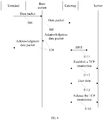
- FIG. 8 is a flowchart of a data transmission method according to an embodiment of the present invention. Referring to FIG. 8 , the method includes the following steps.
- Step 501 A gateway sends a gateway identifier, a public key of the gateway, and an algorithm indication to a base station.
- the gateway may not only send the public key of the gateway to the base station but also send a gateway identifier corresponding to the public key of the gateway to the base station.
- Step 502 The base station sends, to a terminal, the gateway identifier, the public key of the gateway, and the algorithm indication by using system information.
- Step 503 The terminal obtains the public key of the gateway from the system information, and performs encryption and integrity protection on a data packet by using an encryption algorithm and an integrity protection algorithm that are indicated by the algorithm indication information, the public key of the gateway, and a private key of the terminal.
- the public key of the gateway is used to change the data packet from a plaintext to a ciphertext; the private key of the terminal is used to protect integrity of the data packet.
- Step 504 The terminal sends the data packet to the base station when no RRC connection is established.
- the terminal sends the data packet to the base station by using an uplink resource allocated by the base station.
- the uplink resource allocated by the base station may be a resource occupied for sending a preamble sequence by the terminal, may be a resource occupied for sending an RRC connection setup request message, or may be another form.
- Step 505 The base station sends the data packet to the gateway.
- Step 506 The gateway performs decryption on the data packet by using a private key of the gateway, to obtain a user identifier, a uniform resource locator of a server, user data, and a random number.
- Step 507 The gateway obtains, from a home subscriber server based on the user identifier, a public key of the terminal corresponding to the user identifier.
- the gateway sends the user identifier to the home subscriber server and receives the user identifier and the corresponding public key of the terminal that are returned by the home subscriber server.
- the base station may send an identifier and a public key that are of a same gateway to the terminal each time, so that data of the terminal is processed by the same gateway, and the gateway does not need to obtain the public key of the terminal from the home subscriber server (except at the first time).
- the public key of the terminal may not only be obtained in the manner in step 507, but also be obtained in the following manner: locally searching for, by the gateway, context information corresponding to the user identifier; and obtaining the public key of the terminal from the context information corresponding to the user identifier.
- Step 508 The gateway performs integrity check on the data packet by using the public key of the terminal and verifies validity of a terminal identity. If the data packet passes integrity check, the gateway performs steps 509 and 510; if the data packet does not pass integrity check, the data packet is discarded.
- the terminal performs integrity protection on the data packet by using the private key of the terminal and generates an integrity check value MAC-I.
- the terminal sends the generated integrity check value, together with the data packet, to the network device.
- the network device performs integrity check on the data packet by using the public key of the terminal and generates an integrity check value MAC-I'. If the value MAC-I' generated by the network device is exactly the same as the value MAC-I that is sent by the terminal, the data packet passes integrity check; otherwise, the data packet does not pass integrity check.
- Step 509 The gateway updates the user identifier.
- updating the user identifier may be implemented in the following manner: using the user identifier and the random number that are included in the data packet, as parameters, and calculating a new user identifier by using a preset algorithm.
- the random number is randomly generated by the terminal, and may be included in the data packet.
- the data packet further includes the random number randomly generated by the terminal.
- Step 510 The gateway sends an acknowledgment data packet to the terminal.
- the gateway performs encryption and integrity protection on the acknowledgment data packet by using the encryption algorithm and the integrity protection algorithm that are indicated by the algorithm indication information, the public key of the terminal, and the private key of the gateway, and then sends the acknowledgment data packet to the terminal.
- Performing integrity protection on the acknowledgment data packet is mandatory, whereas performing encryption processing on the acknowledgment data packet is optional.
- Step 511 The gateway sends the user data to the server.
- the gateway obtains an Internet Protocol IP address of the server based on the uniform resource locator of the server, establishes a Transmission Control Protocol TCP connection to the server by using the IP address of the server, and sends the user data to the server through the TCP connection.
- the gateway after obtaining the data packet that is sent by the base station and returning the acknowledgment data packet, the gateway performs the following steps, to complete step 511:
- the terminal After receiving the acknowledgment data packet, the terminal performs decryption by using the private key of the terminal, and performs integrity check by using the public key of the gateway, and updates the user identifier only when the acknowledgment data packet passes integrity check.
- a manner of updating the user identifier is the same as that in step 509.
- the terminal performs encryption on the data packet by using the public key of the network device and performs integrity protection on the data packet by using the private key of the terminal, and then sends the data packet to the network device when no RRC connection is established, to send the user data to the server by using the network device.
- no RRC connection needs to be established, and steps such as performing security authentication and key negotiation with an AAA server are not required. This reduces signaling overheads and resource consumption.
- encryption and integrity protection are performed on the user data in an asymmetric key manner, ensuring transmitted data security in the connectionless state.
- FIG. 10 is a flowchart of a data transmission method according to an embodiment of the present invention. Referring to FIG. 10 , the method includes the following steps.
- Step 601 A base station sends, to a terminal, a public key of the base station and an algorithm indication by using system information.
- Step 602 The terminal obtains the public key of the base station and the algorithm indication information from the system information, and performs encryption and integrity protection on a data packet by using an encryption algorithm and an integrity protection algorithm that are indicated by the algorithm indication information, the public key of the base station, and a private key of the terminal.
- the public key of the gateway is used to change the data packet from a plaintext to a ciphertext; the private key of the terminal is used to protect integrity of the data packet.
- Step 603 The terminal sends the data packet to the base station when no RRC connection is established.
- the terminal sends the data packet to the base station by using an uplink resource allocated by the base station.
- the uplink resource allocated by the base station may be a resource occupied for sending a preamble sequence by the terminal, may be a resource occupied for sending an RRC connection setup request message, or may be another form.
- Step 604 The base station performs decryption on the data packet by using a private key of the base station, to obtain a user identifier, a uniform resource locator of a server, user data, and a random number randomly generated by the terminal.
- Step 605 The base station obtains, from a home subscriber server based on the user identifier, a public key of the terminal corresponding to the user identifier.
- the base station sends the user identifier to a gateway, so that the gateway sends the user identifier to the home subscriber server; and the base station receives the user identifier and the corresponding public key of the terminal that are returned by the gateway. More specifically, the base station sends the user identifier to the gateway by using an IPsec tunneling technology; and the base station receives the user identifier and the corresponding public key of the terminal that are returned by the gateway by using the IPsec tunneling technology.
- the public key of the terminal may not only be obtained in the manner in step 605, but also be obtained in the following manner: locally searching for, by the base station, context information corresponding to the user identifier; and obtaining the public key of the terminal from the context information corresponding to the user identifier.
- Step 606 The base station performs integrity check on the data packet by using the public key of the terminal. If the data packet passes integrity check, the base station performs steps 607 to 609; if the data packet does not pass integrity check, the data packet is discarded.
- the terminal performs integrity protection on the data packet by using the private key of the terminal and generates an integrity check value MAC-I.
- the terminal sends the generated integrity check value, together with the data packet, to the network device.
- the network device performs integrity check on the data packet by using the public key of the terminal and generates an integrity check value MAC-I'. If the value MAC-I' generated by the network device is exactly the same as the value MAC-I that is sent by the terminal, the data packet passes integrity check; otherwise, the data packet does not pass integrity check.
- Step 607 The base station updates the user identifier.
- updating the user identifier may be implemented in the following manner: using the user identifier and the random number that are included in the data packet, as parameters, and calculating a new user identifier by using a preset algorithm.
- the random number is randomly generated by the terminal, and may be included in the data packet.
- the data packet further includes the random number randomly generated by the terminal.
- Step 608 The base station sends an acknowledgment data packet to the terminal.
- the base station performs encryption and integrity protection on the acknowledgment data packet by using the encryption algorithm and the integrity protection algorithm that are indicated by the algorithm indication information, the public key of the terminal, and the private key of the gateway, and then sends the acknowledgment data packet to the terminal.
- Performing integrity protection on the acknowledgment data packet is mandatory, whereas performing encryption processing on the acknowledgment data packet is optional.
- Step 609 The base station sends the uniform resource locator of the server and the user data to a gateway.
- the base station sends the uniform resource locator of the server and the user data to the gateway by using the IPsec tunneling technology.
- Step 610 The gateway sends the user data to the server.
- the gateway obtains an Internet Protocol IP address of the server based on the uniform resource locator of the server, establishes a Transmission Control Protocol TCP connection to the server by using the IP address of the server, and sends the user data to the server through the TCP connection.
- Step 611 The terminal updates the user identifier after receiving the acknowledgment data packet.
- the terminal may perform decryption by using the private key of the terminal, and perform integrity check by using the public key of the base station, and update the user identifier only when the acknowledgment data packet passes integrity check.
- a manner of updating the user identifier is the same as that in step 607.
- the terminal performs encryption on the data packet by using the public key of the network device and performs integrity protection on the data packet by using the private key of the terminal, and then sends the data packet to the network device when no RRC connection is established, to send the user data to the server by using the network device.
- no RRC connection needs to be established, and steps such as performing security authentication and key negotiation with an AAA server are not required. This reduces signaling overheads and resource consumption.
- encryption and integrity protection are performed on the user data in an asymmetric key manner, ensuring transmitted data security in the connectionless state.
- FIG. 11 is a block diagram of a data transmission apparatus according to an embodiment of the present invention.
- the data transmission apparatus may become a part of a terminal or an entire terminal by using software, hardware, or a combination of software and hardware.
- the data transmission apparatus may include an obtaining unit 701, an encryption unit 702, and a sending unit 703.
- the obtaining unit 701 may be implemented by using the processor 10 and the communications unit 30 of the terminal 11.
- the encryption unit 702 may be implemented by using the processor 10 of the terminal 11.
- the sending unit 703 may be implemented by using the communications unit 30 of the terminal 11.
- the obtaining unit 701 is configured to obtain a public key of a network device.
- the encryption unit 702 is configured to perform encryption on a data packet by using the public key of the network device, and perform integrity protection on the data packet by using a private key of the terminal.
- the data packet includes user data.
- the sending unit 703 is configured to send the data packet to the network device, to send the user data to a server by using the network device.
- the obtaining unit 701 is configured to:
- the system information further includes a network device identifier corresponding to the public key of the network device.
- system information further includes algorithm indication information, and the algorithm indication information is used to indicate an encryption algorithm and an integrity protection algorithm that are to be used by the terminal to perform encryption and integrity protection on the data packet.
- the encryption unit 702 is configured to:
- the sending unit 703 is configured to: send the data packet to the network device when no RRC connection is established.
- the sending unit 703 is configured to: when no radio resource control RRC connection to the base station is established, send the data packet to the network device by using an uplink resource allocated by the base station, where the uplink resource allocated by the base station is a resource occupied for sending a preamble sequence by the terminal or a resource occupied for sending an RRC connection setup request message.
- the data packet further includes a user identifier and a uniform resource locator of a server.
- the user identifier is used to identify the terminal in a data transmission process.
- the apparatus further includes:
- the network device is a base station or a gateway.
- FIG. 12 is a block diagram of a data transmission apparatus according to an embodiment of the present invention.
- the data transmission apparatus may become a part of the base station 12 or the gateway 13 or the entire base station 12 or the entire gateway 13 by using software, hardware, or a combination of software and hardware.
- the data transmission apparatus may include a receiving unit 801, a decryption unit 802, a verification unit 803, and a sending unit 804.
- the receiving unit 801 may be implemented by using a receiver of the base station 12 or a communications interface of the gateway 13.
- the decryption unit 802 and the verification unit 803 may be implemented by using a processor of the base station 12 or the gateway 13.
- the sending unit 804 may be implemented by using a transmitter of the base station 12 or a communications interface of the gateway 13.
- the receiving unit 801 is configured to receive a data packet that is sent by a terminal.
- the data packet is encrypted by using a public key of a network device and is integrity protected by using a private key of the terminal.
- the decryption unit 802 is configured to decrypt the data packet by using a private key of the network device, to obtain user data.
- the data packet includes the user data.
- the verification unit 803 is configured to perform integrity check on the data packet by using a public key of the terminal, to verify validity of a terminal identity and integrity of the data packet.
- the sending unit 804 is configured to send the user data to a server when the data packet passes integrity check.
- the data packet is sent by the terminal when no RRC connection is established.
- the data packet further includes a user identifier.
- the user identifier is used to identify the terminal in a data transmission process.
- the apparatus further includes: an obtaining unit 805, configured to obtain the public key of the terminal.
- the obtaining unit 805 is configured to:
- the obtaining unit 805 is configured to:
- the obtaining unit 805 is configured to:
- the obtaining unit 805 is configured to:
- the data packet further includes a uniform resource locator of the server.
- the sending unit 804 is configured to:
- the sending unit 804 is configured to: send the uniform resource locator of the server and the user data to a gateway, so that the gateway sends the user data to the server.
- the apparatus further includes: an updating unit 806, configured to update the user identifier when the data packet passes integrity check.
- the sending unit 804 is further configured to: send an acknowledgment data packet to the terminal after the data packet passes integrity check, where the acknowledgment data packet is sent after the network device receives the data packet and the data packet passes integrity check.
- the sending unit 804 is further configured to: send the public key of the network device and algorithm indication information to the terminal.
- the sending unit 804 is further configured to: send a network device identifier corresponding to the public key of the network device to the terminal.
- the data transmission apparatus provided in the foregoing embodiment transmits data
- division of the foregoing function modules is used as an example for illustration.
- the foregoing functions may be allocated to different function modules and implemented depending on a requirement, that is, an inner structure of a device is divided into different function modules to implement some or all of the functions described above.
- the data transmission apparatus provided in the foregoing embodiment and the data transmission method embodiments belong to a same idea. For a specific implementation process of the data transmission apparatus, refer to the method embodiments, and details are not repeated herein.
- the program may be stored in a computer-readable storage medium.
- the storage medium may include a read-only memory, a magnetic disk, or an optical disc.
Landscapes
- Engineering & Computer Science (AREA)
- Computer Security & Cryptography (AREA)
- Signal Processing (AREA)
- Computer Networks & Wireless Communication (AREA)
- Computing Systems (AREA)
- Theoretical Computer Science (AREA)
- Mobile Radio Communication Systems (AREA)
Applications Claiming Priority (1)
| Application Number | Priority Date | Filing Date | Title |
|---|---|---|---|
| PCT/CN2015/100252 WO2017113353A1 (zh) | 2015-12-31 | 2015-12-31 | 数据传输方法、装置和设备 |
Publications (3)
| Publication Number | Publication Date |
|---|---|
| EP3386140A4 EP3386140A4 (de) | 2018-10-10 |
| EP3386140A1 true EP3386140A1 (de) | 2018-10-10 |
| EP3386140B1 EP3386140B1 (de) | 2020-08-26 |
Family
ID=59224291
Family Applications (1)
| Application Number | Title | Priority Date | Filing Date |
|---|---|---|---|
| EP15911978.3A Active EP3386140B1 (de) | 2015-12-31 | 2015-12-31 | Datenübertragungsverfahren, -vorrichtung und -einrichtung |
Country Status (4)
| Country | Link |
|---|---|
| US (1) | US10904760B2 (de) |
| EP (1) | EP3386140B1 (de) |
| CN (1) | CN108476131B (de) |
| WO (1) | WO2017113353A1 (de) |
Families Citing this family (12)
| Publication number | Priority date | Publication date | Assignee | Title |
|---|---|---|---|---|
| EP3386140B1 (de) * | 2015-12-31 | 2020-08-26 | Huawei Technologies Co., Ltd. | Datenübertragungsverfahren, -vorrichtung und -einrichtung |
| EP3501234A4 (de) * | 2016-08-22 | 2020-04-01 | Nokia Technologies Oy | Sicherheitsverfahren |
| CN107566119A (zh) * | 2017-09-28 | 2018-01-09 | 中国—东盟信息港股份有限公司 | 一种eSIM卡数据安全的保护方法及系统 |
| CN111866872B (zh) * | 2019-04-29 | 2023-06-02 | 华为技术有限公司 | 一种通信方法及装置 |
| CN110475034B (zh) * | 2019-07-23 | 2020-12-22 | 深圳市六度人和科技有限公司 | 提高话机安全性的方法、用户端装置、服务器装置及系统 |
| WO2021180557A1 (en) * | 2020-03-13 | 2021-09-16 | Sony Group Corporation | An apparatus, a method and a computer program for verifying an integrity of a device connected to a telecommunication network |
| WO2021195894A1 (zh) * | 2020-03-30 | 2021-10-07 | Oppo广东移动通信有限公司 | 完整性保护方法和通信设备 |
| CN114189858B (zh) * | 2021-12-09 | 2023-10-24 | 国网江苏省电力有限公司泰州供电分公司 | 一种基于非对称加密的电力5g公网安全传输方法 |
| CN114301663B (zh) * | 2021-12-27 | 2024-06-28 | 中国电信股份有限公司 | 数据处理方法、装置、电子设备及计算机可读存储介质 |
| CN114697022A (zh) * | 2022-03-18 | 2022-07-01 | 北京国泰网信科技有限公司 | 应用于配电网系统的加密认证方法 |
| CN115314242B (zh) * | 2022-06-24 | 2024-06-21 | 贵州省气象信息中心(贵州省气象档案馆、贵州省气象职工教育培训中心) | 一种网络数据安全加密方法及其装置 |
| CN116418580B (zh) * | 2023-04-10 | 2023-11-24 | 广东粤密技术服务有限公司 | 用于局域网的数据完整性保护检测方法、装置及电子设备 |
Family Cites Families (18)
| Publication number | Priority date | Publication date | Assignee | Title |
|---|---|---|---|---|
| US6272631B1 (en) * | 1997-06-30 | 2001-08-07 | Microsoft Corporation | Protected storage of core data secrets |
| US6842628B1 (en) * | 2001-08-31 | 2005-01-11 | Palmone, Inc. | Method and system for event notification for wireless PDA devices |
| US20040111610A1 (en) * | 2002-12-05 | 2004-06-10 | Canon Kabushiki Kaisha | Secure file format |
| KR20060087271A (ko) * | 2005-01-28 | 2006-08-02 | 엘지전자 주식회사 | 이동통신 가입자 인증의 보안 전송 방법 |
| CN101159639B (zh) * | 2007-11-08 | 2010-05-12 | 西安西电捷通无线网络通信有限公司 | 一种单向接入认证方法 |
| CN100488099C (zh) * | 2007-11-08 | 2009-05-13 | 西安西电捷通无线网络通信有限公司 | 一种双向接入认证方法 |
| CN101626294A (zh) * | 2008-07-07 | 2010-01-13 | 华为技术有限公司 | 基于身份的认证方法、保密通信方法、设备和系统 |
| KR20120071229A (ko) * | 2010-12-22 | 2012-07-02 | 한국전자통신연구원 | 이동통신 시스템의 데이터 전송 방법 |
| ES2960797T3 (es) * | 2011-06-10 | 2024-03-06 | Blackberry Ltd | Encadenamiento seguro e implícito de certificados |
| US8650404B2 (en) * | 2012-02-28 | 2014-02-11 | Motorola Solutions, Inc. | Communication protocol for secure communications systems |
| CN102761560B (zh) * | 2012-08-01 | 2015-01-14 | 飞天诚信科技股份有限公司 | 一种验证信息完整性的方法和系统 |
| US9681261B2 (en) | 2012-11-01 | 2017-06-13 | Lg Electronics Inc. | Method and apparatus of providing integrity protection for proximity-based service discovery with extended discovery range |
| US9220012B1 (en) * | 2013-01-15 | 2015-12-22 | Marvell International Ltd. | Systems and methods for provisioning devices |
| US9350550B2 (en) * | 2013-09-10 | 2016-05-24 | M2M And Iot Technologies, Llc | Power management and security for wireless modules in “machine-to-machine” communications |
| CN103813333B (zh) * | 2014-02-21 | 2017-12-19 | 天地融科技股份有限公司 | 一种基于协商密钥的数据处理方法 |
| CN104955040B (zh) * | 2014-03-27 | 2019-12-24 | 西安西电捷通无线网络通信股份有限公司 | 一种网络鉴权认证的方法及设备 |
| US9825928B2 (en) * | 2014-10-22 | 2017-11-21 | Radware, Ltd. | Techniques for optimizing authentication challenges for detection of malicious attacks |
| EP3386140B1 (de) * | 2015-12-31 | 2020-08-26 | Huawei Technologies Co., Ltd. | Datenübertragungsverfahren, -vorrichtung und -einrichtung |
-
2015
- 2015-12-31 EP EP15911978.3A patent/EP3386140B1/de active Active
- 2015-12-31 WO PCT/CN2015/100252 patent/WO2017113353A1/zh not_active Ceased
- 2015-12-31 CN CN201580085587.3A patent/CN108476131B/zh active Active
-
2018
- 2018-06-29 US US16/023,170 patent/US10904760B2/en active Active
Also Published As
| Publication number | Publication date |
|---|---|
| CN108476131A (zh) | 2018-08-31 |
| EP3386140A4 (de) | 2018-10-10 |
| CN108476131B (zh) | 2021-02-12 |
| EP3386140B1 (de) | 2020-08-26 |
| WO2017113353A1 (zh) | 2017-07-06 |
| US20180323971A1 (en) | 2018-11-08 |
| US10904760B2 (en) | 2021-01-26 |
Similar Documents
| Publication | Publication Date | Title |
|---|---|---|
| US10904760B2 (en) | Data transmission method, apparatus, and device | |
| US11272365B2 (en) | Network authentication method, and related device and system | |
| US11038846B2 (en) | Internet protocol security tunnel maintenance method, apparatus, and system | |
| CN109257740B (zh) | Profile下载方法、移动终端及可读存储介质 | |
| US11088836B2 (en) | Key updating method, apparatus, and system | |
| JP6548348B2 (ja) | メッセージ保護方法、ならびに関連デバイスおよびシステム | |
| EP3499936B1 (de) | Verfahren zum aufbau einer assoziierung in einem drahtlosen lokalen netzwerk, endgerät und zugangspunkt | |
| AU2017428472B2 (en) | Wi-Fi hotspot connection method and terminal | |
| EP3641366B1 (de) | Verfahren und vorrichtung zur konfiguration eines drahtlosen lokalen netzwerks | |
| JP4804983B2 (ja) | 無線端末、認証装置、及び、プログラム | |
| US12167239B2 (en) | Identity authentication method and apparatus | |
| CN109033801B (zh) | 应用程序验证用户身份的方法、移动终端以及存储介质 | |
| WO2018176781A1 (zh) | 信息发送方法、信息接收方法、装置及系统 | |
| CN108616499B (zh) | 一种应用程序的鉴权方法、终端和计算机可读存储介质 | |
| EP3648488B1 (de) | Verfahren, vorrichtungen, system und computerlesbares speichermedium zur erfassung des identifikators eines endgeräts | |
| CN109391937B (zh) | 公钥的获取方法、设备及系统 | |
| CN113286294A (zh) | 设备无线网络信息配置方法及装置 | |
| CN106714170A (zh) | 投影设备、用户终端和投影设备接入局域网的方法 | |
| CN117040862A (zh) | 一种虚拟专用拨号网的接入方法、系统、装置及存储介质 | |
| EP3131325A1 (de) | Verfahren, vorrichtung und kommunikationssystem für ein endgerät zum zugriff auf ein kommunikationsnetzwerk | |
| CN116782234B (zh) | WiFi连接方法及相关设备 | |
| US20250373440A1 (en) | Method, communication device and storage medium for authenticating and authorizing | |
| CN110061833B (zh) | 一种身份位置的绑定更新方法及装置 | |
| CN118035976A (zh) | 一种冒用访问凭证的检测方法和相关装置 |
Legal Events
| Date | Code | Title | Description |
|---|---|---|---|
| STAA | Information on the status of an ep patent application or granted ep patent |
Free format text: STATUS: THE INTERNATIONAL PUBLICATION HAS BEEN MADE |
|
| PUAI | Public reference made under article 153(3) epc to a published international application that has entered the european phase |
Free format text: ORIGINAL CODE: 0009012 |
|
| STAA | Information on the status of an ep patent application or granted ep patent |
Free format text: STATUS: REQUEST FOR EXAMINATION WAS MADE |
|
| 17P | Request for examination filed |
Effective date: 20180705 |
|
| A4 | Supplementary search report drawn up and despatched |
Effective date: 20180821 |
|
| AK | Designated contracting states |
Kind code of ref document: A1 Designated state(s): AL AT BE BG CH CY CZ DE DK EE ES FI FR GB GR HR HU IE IS IT LI LT LU LV MC MK MT NL NO PL PT RO RS SE SI SK SM TR |
|
| AX | Request for extension of the european patent |
Extension state: BA ME |
|
| STAA | Information on the status of an ep patent application or granted ep patent |
Free format text: STATUS: EXAMINATION IS IN PROGRESS |
|
| DAV | Request for validation of the european patent (deleted) | ||
| DAX | Request for extension of the european patent (deleted) | ||
| 17Q | First examination report despatched |
Effective date: 20190313 |
|
| GRAP | Despatch of communication of intention to grant a patent |
Free format text: ORIGINAL CODE: EPIDOSNIGR1 |
|
| STAA | Information on the status of an ep patent application or granted ep patent |
Free format text: STATUS: GRANT OF PATENT IS INTENDED |
|
| RIC1 | Information provided on ipc code assigned before grant |
Ipc: H04W 12/04 20090101ALN20200302BHEP Ipc: H04L 9/32 20060101ALI20200302BHEP Ipc: H04W 12/06 20090101ALI20200302BHEP Ipc: H04W 12/10 20090101ALI20200302BHEP Ipc: H04W 12/08 20090101ALI20200302BHEP Ipc: H04L 29/06 20060101ALN20200302BHEP Ipc: H04L 9/00 20060101AFI20200302BHEP |
|
| INTG | Intention to grant announced |
Effective date: 20200325 |
|
| GRAS | Grant fee paid |
Free format text: ORIGINAL CODE: EPIDOSNIGR3 |
|
| GRAA | (expected) grant |
Free format text: ORIGINAL CODE: 0009210 |
|
| STAA | Information on the status of an ep patent application or granted ep patent |
Free format text: STATUS: THE PATENT HAS BEEN GRANTED |
|
| AK | Designated contracting states |
Kind code of ref document: B1 Designated state(s): AL AT BE BG CH CY CZ DE DK EE ES FI FR GB GR HR HU IE IS IT LI LT LU LV MC MK MT NL NO PL PT RO RS SE SI SK SM TR |
|
| REG | Reference to a national code |
Ref country code: GB Ref legal event code: FG4D |
|
| REG | Reference to a national code |
Ref country code: CH Ref legal event code: EP |
|
| REG | Reference to a national code |
Ref country code: AT Ref legal event code: REF Ref document number: 1307430 Country of ref document: AT Kind code of ref document: T Effective date: 20200915 |
|
| REG | Reference to a national code |
Ref country code: IE Ref legal event code: FG4D |
|
| REG | Reference to a national code |
Ref country code: DE Ref legal event code: R096 Ref document number: 602015058214 Country of ref document: DE |
|
| REG | Reference to a national code |
Ref country code: LT Ref legal event code: MG4D |
|
| PG25 | Lapsed in a contracting state [announced via postgrant information from national office to epo] |
Ref country code: PT Free format text: LAPSE BECAUSE OF FAILURE TO SUBMIT A TRANSLATION OF THE DESCRIPTION OR TO PAY THE FEE WITHIN THE PRESCRIBED TIME-LIMIT Effective date: 20201228 Ref country code: BG Free format text: LAPSE BECAUSE OF FAILURE TO SUBMIT A TRANSLATION OF THE DESCRIPTION OR TO PAY THE FEE WITHIN THE PRESCRIBED TIME-LIMIT Effective date: 20201126 Ref country code: SE Free format text: LAPSE BECAUSE OF FAILURE TO SUBMIT A TRANSLATION OF THE DESCRIPTION OR TO PAY THE FEE WITHIN THE PRESCRIBED TIME-LIMIT Effective date: 20200826 Ref country code: LT Free format text: LAPSE BECAUSE OF FAILURE TO SUBMIT A TRANSLATION OF THE DESCRIPTION OR TO PAY THE FEE WITHIN THE PRESCRIBED TIME-LIMIT Effective date: 20200826 Ref country code: HR Free format text: LAPSE BECAUSE OF FAILURE TO SUBMIT A TRANSLATION OF THE DESCRIPTION OR TO PAY THE FEE WITHIN THE PRESCRIBED TIME-LIMIT Effective date: 20200826 Ref country code: NO Free format text: LAPSE BECAUSE OF FAILURE TO SUBMIT A TRANSLATION OF THE DESCRIPTION OR TO PAY THE FEE WITHIN THE PRESCRIBED TIME-LIMIT Effective date: 20201126 Ref country code: GR Free format text: LAPSE BECAUSE OF FAILURE TO SUBMIT A TRANSLATION OF THE DESCRIPTION OR TO PAY THE FEE WITHIN THE PRESCRIBED TIME-LIMIT Effective date: 20201127 Ref country code: FI Free format text: LAPSE BECAUSE OF FAILURE TO SUBMIT A TRANSLATION OF THE DESCRIPTION OR TO PAY THE FEE WITHIN THE PRESCRIBED TIME-LIMIT Effective date: 20200826 |
|
| REG | Reference to a national code |
Ref country code: NL Ref legal event code: MP Effective date: 20200826 |
|
| REG | Reference to a national code |
Ref country code: AT Ref legal event code: MK05 Ref document number: 1307430 Country of ref document: AT Kind code of ref document: T Effective date: 20200826 |
|
| PG25 | Lapsed in a contracting state [announced via postgrant information from national office to epo] |
Ref country code: IS Free format text: LAPSE BECAUSE OF FAILURE TO SUBMIT A TRANSLATION OF THE DESCRIPTION OR TO PAY THE FEE WITHIN THE PRESCRIBED TIME-LIMIT Effective date: 20201226 Ref country code: RS Free format text: LAPSE BECAUSE OF FAILURE TO SUBMIT A TRANSLATION OF THE DESCRIPTION OR TO PAY THE FEE WITHIN THE PRESCRIBED TIME-LIMIT Effective date: 20200826 Ref country code: LV Free format text: LAPSE BECAUSE OF FAILURE TO SUBMIT A TRANSLATION OF THE DESCRIPTION OR TO PAY THE FEE WITHIN THE PRESCRIBED TIME-LIMIT Effective date: 20200826 Ref country code: NL Free format text: LAPSE BECAUSE OF FAILURE TO SUBMIT A TRANSLATION OF THE DESCRIPTION OR TO PAY THE FEE WITHIN THE PRESCRIBED TIME-LIMIT Effective date: 20200826 Ref country code: PL Free format text: LAPSE BECAUSE OF FAILURE TO SUBMIT A TRANSLATION OF THE DESCRIPTION OR TO PAY THE FEE WITHIN THE PRESCRIBED TIME-LIMIT Effective date: 20200826 |
|
| PG25 | Lapsed in a contracting state [announced via postgrant information from national office to epo] |
Ref country code: EE Free format text: LAPSE BECAUSE OF FAILURE TO SUBMIT A TRANSLATION OF THE DESCRIPTION OR TO PAY THE FEE WITHIN THE PRESCRIBED TIME-LIMIT Effective date: 20200826 Ref country code: RO Free format text: LAPSE BECAUSE OF FAILURE TO SUBMIT A TRANSLATION OF THE DESCRIPTION OR TO PAY THE FEE WITHIN THE PRESCRIBED TIME-LIMIT Effective date: 20200826 Ref country code: SM Free format text: LAPSE BECAUSE OF FAILURE TO SUBMIT A TRANSLATION OF THE DESCRIPTION OR TO PAY THE FEE WITHIN THE PRESCRIBED TIME-LIMIT Effective date: 20200826 Ref country code: CZ Free format text: LAPSE BECAUSE OF FAILURE TO SUBMIT A TRANSLATION OF THE DESCRIPTION OR TO PAY THE FEE WITHIN THE PRESCRIBED TIME-LIMIT Effective date: 20200826 Ref country code: DK Free format text: LAPSE BECAUSE OF FAILURE TO SUBMIT A TRANSLATION OF THE DESCRIPTION OR TO PAY THE FEE WITHIN THE PRESCRIBED TIME-LIMIT Effective date: 20200826 |
|
| REG | Reference to a national code |
Ref country code: DE Ref legal event code: R097 Ref document number: 602015058214 Country of ref document: DE |
|
| PG25 | Lapsed in a contracting state [announced via postgrant information from national office to epo] |
Ref country code: ES Free format text: LAPSE BECAUSE OF FAILURE TO SUBMIT A TRANSLATION OF THE DESCRIPTION OR TO PAY THE FEE WITHIN THE PRESCRIBED TIME-LIMIT Effective date: 20200826 Ref country code: AT Free format text: LAPSE BECAUSE OF FAILURE TO SUBMIT A TRANSLATION OF THE DESCRIPTION OR TO PAY THE FEE WITHIN THE PRESCRIBED TIME-LIMIT Effective date: 20200826 Ref country code: AL Free format text: LAPSE BECAUSE OF FAILURE TO SUBMIT A TRANSLATION OF THE DESCRIPTION OR TO PAY THE FEE WITHIN THE PRESCRIBED TIME-LIMIT Effective date: 20200826 |
|
| PG25 | Lapsed in a contracting state [announced via postgrant information from national office to epo] |
Ref country code: SK Free format text: LAPSE BECAUSE OF FAILURE TO SUBMIT A TRANSLATION OF THE DESCRIPTION OR TO PAY THE FEE WITHIN THE PRESCRIBED TIME-LIMIT Effective date: 20200826 |
|
| PLBE | No opposition filed within time limit |
Free format text: ORIGINAL CODE: 0009261 |
|
| STAA | Information on the status of an ep patent application or granted ep patent |
Free format text: STATUS: NO OPPOSITION FILED WITHIN TIME LIMIT |
|
| PG25 | Lapsed in a contracting state [announced via postgrant information from national office to epo] |
Ref country code: IT Free format text: LAPSE BECAUSE OF FAILURE TO SUBMIT A TRANSLATION OF THE DESCRIPTION OR TO PAY THE FEE WITHIN THE PRESCRIBED TIME-LIMIT Effective date: 20200826 |
|
| REG | Reference to a national code |
Ref country code: CH Ref legal event code: PL |
|
| 26N | No opposition filed |
Effective date: 20210527 |
|
| PG25 | Lapsed in a contracting state [announced via postgrant information from national office to epo] |
Ref country code: SI Free format text: LAPSE BECAUSE OF FAILURE TO SUBMIT A TRANSLATION OF THE DESCRIPTION OR TO PAY THE FEE WITHIN THE PRESCRIBED TIME-LIMIT Effective date: 20200826 Ref country code: MC Free format text: LAPSE BECAUSE OF FAILURE TO SUBMIT A TRANSLATION OF THE DESCRIPTION OR TO PAY THE FEE WITHIN THE PRESCRIBED TIME-LIMIT Effective date: 20200826 |
|
| REG | Reference to a national code |
Ref country code: BE Ref legal event code: MM Effective date: 20201231 |
|
| PG25 | Lapsed in a contracting state [announced via postgrant information from national office to epo] |
Ref country code: IE Free format text: LAPSE BECAUSE OF NON-PAYMENT OF DUE FEES Effective date: 20201231 Ref country code: LU Free format text: LAPSE BECAUSE OF NON-PAYMENT OF DUE FEES Effective date: 20201231 Ref country code: FR Free format text: LAPSE BECAUSE OF NON-PAYMENT OF DUE FEES Effective date: 20201231 |
|
| PG25 | Lapsed in a contracting state [announced via postgrant information from national office to epo] |
Ref country code: CH Free format text: LAPSE BECAUSE OF NON-PAYMENT OF DUE FEES Effective date: 20201231 Ref country code: LI Free format text: LAPSE BECAUSE OF NON-PAYMENT OF DUE FEES Effective date: 20201231 |
|
| PG25 | Lapsed in a contracting state [announced via postgrant information from national office to epo] |
Ref country code: TR Free format text: LAPSE BECAUSE OF FAILURE TO SUBMIT A TRANSLATION OF THE DESCRIPTION OR TO PAY THE FEE WITHIN THE PRESCRIBED TIME-LIMIT Effective date: 20200826 Ref country code: MT Free format text: LAPSE BECAUSE OF FAILURE TO SUBMIT A TRANSLATION OF THE DESCRIPTION OR TO PAY THE FEE WITHIN THE PRESCRIBED TIME-LIMIT Effective date: 20200826 Ref country code: CY Free format text: LAPSE BECAUSE OF FAILURE TO SUBMIT A TRANSLATION OF THE DESCRIPTION OR TO PAY THE FEE WITHIN THE PRESCRIBED TIME-LIMIT Effective date: 20200826 |
|
| PG25 | Lapsed in a contracting state [announced via postgrant information from national office to epo] |
Ref country code: MK Free format text: LAPSE BECAUSE OF FAILURE TO SUBMIT A TRANSLATION OF THE DESCRIPTION OR TO PAY THE FEE WITHIN THE PRESCRIBED TIME-LIMIT Effective date: 20200826 |
|
| PG25 | Lapsed in a contracting state [announced via postgrant information from national office to epo] |
Ref country code: BE Free format text: LAPSE BECAUSE OF NON-PAYMENT OF DUE FEES Effective date: 20201231 |
|
| PGFP | Annual fee paid to national office [announced via postgrant information from national office to epo] |
Ref country code: DE Payment date: 20241105 Year of fee payment: 10 |
|
| PGFP | Annual fee paid to national office [announced via postgrant information from national office to epo] |
Ref country code: GB Payment date: 20251114 Year of fee payment: 11 |