EP3386253B1 - Procédé, dispositif et système de communication sans fil - Google Patents
Procédé, dispositif et système de communication sans fil Download PDFInfo
- Publication number
- EP3386253B1 EP3386253B1 EP15912019.5A EP15912019A EP3386253B1 EP 3386253 B1 EP3386253 B1 EP 3386253B1 EP 15912019 A EP15912019 A EP 15912019A EP 3386253 B1 EP3386253 B1 EP 3386253B1
- Authority
- EP
- European Patent Office
- Prior art keywords
- spatial
- resource
- signal
- network device
- spatial resources
- Prior art date
- Legal status (The legal status is an assumption and is not a legal conclusion. Google has not performed a legal analysis and makes no representation as to the accuracy of the status listed.)
- Active
Links
Images






Classifications
-
- H—ELECTRICITY
- H04—ELECTRIC COMMUNICATION TECHNIQUE
- H04W—WIRELESS COMMUNICATION NETWORKS
- H04W72/00—Local resource management
- H04W72/50—Allocation or scheduling criteria for wireless resources
- H04W72/56—Allocation or scheduling criteria for wireless resources based on priority criteria
-
- H—ELECTRICITY
- H04—ELECTRIC COMMUNICATION TECHNIQUE
- H04L—TRANSMISSION OF DIGITAL INFORMATION, e.g. TELEGRAPHIC COMMUNICATION
- H04L5/00—Arrangements affording multiple use of the transmission path
- H04L5/0001—Arrangements for dividing the transmission path
- H04L5/0014—Three-dimensional division
- H04L5/0023—Time-frequency-space
-
- H—ELECTRICITY
- H04—ELECTRIC COMMUNICATION TECHNIQUE
- H04L—TRANSMISSION OF DIGITAL INFORMATION, e.g. TELEGRAPHIC COMMUNICATION
- H04L5/00—Arrangements affording multiple use of the transmission path
- H04L5/003—Arrangements for allocating sub-channels of the transmission path
- H04L5/0058—Allocation criteria
- H04L5/0064—Rate requirement of the data, e.g. scalable bandwidth, data priority
-
- H—ELECTRICITY
- H04—ELECTRIC COMMUNICATION TECHNIQUE
- H04L—TRANSMISSION OF DIGITAL INFORMATION, e.g. TELEGRAPHIC COMMUNICATION
- H04L5/00—Arrangements affording multiple use of the transmission path
- H04L5/0091—Signalling for the administration of the divided path, e.g. signalling of configuration information
- H04L5/0094—Indication of how sub-channels of the path are allocated
-
- H—ELECTRICITY
- H04—ELECTRIC COMMUNICATION TECHNIQUE
- H04W—WIRELESS COMMUNICATION NETWORKS
- H04W72/00—Local resource management
- H04W72/04—Wireless resource allocation
-
- H—ELECTRICITY
- H04—ELECTRIC COMMUNICATION TECHNIQUE
- H04W—WIRELESS COMMUNICATION NETWORKS
- H04W72/00—Local resource management
- H04W72/04—Wireless resource allocation
- H04W72/044—Wireless resource allocation based on the type of the allocated resource
- H04W72/046—Wireless resource allocation based on the type of the allocated resource the resource being in the space domain, e.g. beams
-
- H—ELECTRICITY
- H04—ELECTRIC COMMUNICATION TECHNIQUE
- H04L—TRANSMISSION OF DIGITAL INFORMATION, e.g. TELEGRAPHIC COMMUNICATION
- H04L5/00—Arrangements affording multiple use of the transmission path
- H04L5/0001—Arrangements for dividing the transmission path
- H04L5/0003—Two-dimensional division
- H04L5/0005—Time-frequency
- H04L5/0007—Time-frequency the frequencies being orthogonal, e.g. OFDM(A) or DMT
Definitions
- the present invention relates to the field of communications technologies, and in particular, to a wireless communication method and system, and a device.
- a massive multiple-input multiple-output (Massive MIMO) beamforming (Beam Forming) technology needs to be used to form very high antenna gains to compensate the path loss.
- massive MIMO antennas and even hundreds of antennas.
- a formed beam has a greater spatial coverage length, but has a smaller spatial coverage width.
- UE User Equipment
- UE2 User Equipment
- a formed beam can cover only user equipment (User Equipment, UE) 1, and UE2 cannot be covered by the beam. Therefore, one beam cannot cover all user equipments in a cell.
- UE User Equipment
- a wireless signal is usually sent to the user equipment by using each narrow beam, thereby resulting in an increase in system resource overheads.
- a wireless signal is usually sent to the user equipment by using each narrow beam, thereby resulting in an increase in system resource overheads.
- a wireless signal is usually sent to the user equipment by using each narrow beam, thereby resulting in an increase in system resource overheads.
- access signals such as synchronization information and system information need to be sent by using each narrow beam of a beam 0 to a beam 7 shown in FIG. 2 . It can be learned from FIG.
- EP 2 897 305 A1 discloses apparatuses, methods and a computer programs for a base station transceiver and a mobile transceiver.
- An apparatus operable in a base station transceiver of a mobile communication system comprises a transceiver module, which comprises interfaces to a plurality of antennas, and which is operable to transmit radio signals using combinations of time and frequency radio resources.
- the transceiver module is further operable to form a first set of beam patterns using the plurality of antennas.
- the first set of beam patterns comprises two or more spatially differing beam patterns.
- the base station transceiver apparatus comprises a control module, which is operable to control the transceiver module and to transmit a common control signal for a plurality of mobile transceivers using the beam patterns of the set of first beam patterns on the same time and frequency radio resource.
- An apparatus operable in a mobile transceiver of a mobile communication system comprises a transceiver module, which is operable to receive radio signals using combinations of time and frequency radio resources.
- the mobile transceiver apparatus comprises a control module operable to control the transceiver module.
- the control module is operable to receive a common control signal from a base station transceiver using different time and frequency resources, to determine a time and frequency resource, which provides the common control signal with a highest quality, and to determine information related to at least one beam pattern used on the time and frequency resource providing the common control signal with the highest quality.
- the control module is operable to transmit a signal comprising the information related to the at least one beam pattern to the base station transceiver.
- WO 2015/020404 A1 discloses a method for transmitting a reference signal by a base station in a wireless communication system, according to the present invention, comprising: transmitting configuration information for a reference signal to a terminal; performing a scrambling operation which multiplies the reference signal by a sequence on the basis of a beam group identifier for each of at least two beam groups set on a single cell; and transmitting the reference signal, to which the scrambling operation has been performed on the basis of the configuration information, to the terminal.
- US 2004/0214606 A1 discloses a method and a communication system wherein stations communicate on a wireless interface.
- the method includes the steps of including beam identity information into signals transmitted on multiple beams provided by a first station, receiving at a second station signals transmitted from the first station, and identifying beams via which the second station received signals from the first station based on said identity information. At least one beam for transmission on the wireless interface between the stations is then selected.
- a station configured for the communication comprises antenna means for receiving signals transmitted from the other station on multiple beams and a controller for identifying beams based on beam identity information associated with signals received from the other station.
- EP 3 101 942 A1 describes a user apparatus configured to communicate with a base station in a radio communication system, including: first reference signal reception means configured to measure a received power of first reference signals, transmitted from the base station, that are associated with a plurality of different identifiers, and to select a specific first reference signal; report means configured to report an identifier and a received power of the first reference signal selected by the first reference signal reception means to the base station or a macro cell base station; second reference signal reception means configured to receive a plurality of second reference signals transmitted from the base station; and measurement means configured to measure a reception quality of the second reference signals received by the second reference signal reception means, and to transmit feedback information based on the reception quality to the base station.
- the invention is defined by the subject-matter of independent claims 1, 8 and 13-15, so as to resolve a problem of large system overheads caused in the prior art in which each beam is used to send a wireless signal to serve user equipment in a narrow beam coverage scenario Preferred embodiments are defined in the dependent claims.
- a wireless communication method is provided.
- a first network device sends m first signals by using first spatial resources in different resource sets, wherein m is a positive integer greater than 1, and the quantity of resource sets to which the m first spatial resources belong is greater than or equal to 2, and each first signal includes corresponding identification information, and the corresponding identification information is used to indicate a first spatial resource corresponding to a first signal and is further used to indicate a resource set to which a first spatial resource belongs.
- a second network device selects at least one first spatial resource according to at least one received first signal, a first spatial resource corresponding to a first signal, and a resource set to which each first spatial resource belongs, and indicates the selected first spatial resource to the first network device by using a response signal.
- the first network device learns of, according to the response signal, the existing second network device, and a correspondence between the second wireless network and the indicated first spatial resource, and therefore determines k second spatial resources that can meet a preset coverage requirement, and sends a second signal on the k second spatial resources, where k is a relatively small value.
- the sending, by the first network device, the second signal to the second network device on the k second spatial resources according to the response signal comprises: determining, by the first network device, s first spatial resources according to the response signal, wherein s is a positive integer; and determining, by the first network device, the k second spatial resources that are corresponding to the s first spatial resources, and sending the second signal to the second network device on the k second spatial resources.
- the second signal can be sent more efficiently, thereby saving second spatial resources, and saving system resource overheads required for sending the second signal on an invalid second spatial resource.
- interference may be further avoided when the second signal is sent on an invalid second spatial resource other than the k second spatial resources.
- m first spatial resources that are corresponding to the m first signals and that are determined by the first network device belong to different resource sets.
- first spatial resources indicated in the response signal sent by the second network device may also belong to different resource sets. Because spatial coverage areas of first spatial resources in different resource sets are not the same, first spatial resources with different coverage areas can meet coverage requirements of different quantities of second network devices. Therefore, the first network device may determine, according to correspondences between the second network devices and the first spatial resources indicated in the sent response signals and according to coverage areas of the first spatial resources that belong to different resource sets, a combination of a relatively small quantity of second spatial resources that can meet the preset coverage requirement, and send the second signal by using the determined second spatial resources, thereby reducing a quantity of second spatial resources that serve the second network devices, and reducing system resource overheads.
- first spatial resources that are in the m first spatial resources and that belong to a same resource set are corresponding to coverage of one area, and the area is in a same cell.
- second network devices in the same cell may be synchronized in a timely manner.
- an amount of information contained in the first signal is less than an amount of information contained in the second signal.
- the second signal that contains a relatively large amount of information is sent by using a relatively small quantity of second spatial resources, whereas the first signal that contains a relatively small amount of information is sent by using a relatively large quantity of first spatial resources. This may reduce power overheads and energy overheads of the first network device, thereby reducing the system resource overheads.
- the corresponding identification information includes set identification information that is used to indicate the resource set to which the first spatial resource belongs, and the set identification information is:
- the second network device determines, among the at least one received first signal, a first signal that meets a preset condition.
- the first signal that meets the preset condition is a first signal with signal strength greater than or equal to a threshold, where the threshold is a threshold corresponding to a resource set to which a first spatial resource corresponding to the first signal belongs.
- signal strength of a first signal received by the second network device is greater than or equal to a preset threshold, it may indicate that the signal of the first signal is relatively strong, and that a first spatial resource corresponding to the first signal can meet the coverage requirement of the second network device.
- a set of first signals that meet a first preset condition includes first signals, among the first signals received by the second network device, that are corresponding to first spatial resources agreed between the second network device and the first network device.
- the second network device selects, according to priorities corresponding to resource sets or priorities corresponding to first spatial resources, at least one first spatial resource among first spatial resources corresponding to first signals that meet the preset condition, and adds identification information of the selected first spatial resource to the response signal.
- the first network device determines, among n first spatial resources indicated by the response signal, s first spatial resources according to priorities corresponding to resource sets to which the first spatial resources belong or priorities corresponding to the first spatial resources, where s is a positive integer, determines the k second spatial resources that are corresponding to the s first spatial resources, and sends the second signal to the second network device on the k second spatial resources.
- a resource set to which a first spatial resource with a greater coverage width belongs is corresponding to a smaller threshold, and a resource set with a smaller threshold is corresponding to a higher priority.
- the second network device may preferably send first spatial resources with a greater coverage width in different resource sets to the first network device.
- the first spatial resources with a greater coverage width may meet coverage requirements of more second network devices, so that the first network device may more easily determine, according to the first spatial resources with a greater coverage width, a relatively small quantity of second spatial resources that can meet the preset coverage requirement, thereby reducing the system resource overheads.
- the first spatial resource has a high priority.
- the first network device may preferably select a first spatial device that can meet the coverage requirements of the plurality of second network devices, thereby reducing a quantity of the s first spatial resources that can meet the preset coverage requirement, further reducing a quantity of the corresponding second spatial resources, k, and reducing the system resource overheads.
- the priorities corresponding to the resource sets and the priorities corresponding to the first spatial resources are pre-negotiated between the first network device and the second network device.
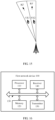
- a network device including a processor, a memory, and a transceiver.
- the memory is configured to store an instruction.
- the processor is configured to execute the instruction stored in the memory, to control the transceiver to perform signal reception and transmission.
- the network device is configured to perform an action corresponding to the first network device in the method according to any one of the first example and all possible implementations of the first example.
- a network device including a processor, a memory, and a transceiver.
- the memory is configured to store an instruction.
- the processor is configured to execute the instruction stored in the memory, to control the transceiver to perform signal reception and transmission.
- the network device is configured to perform an action corresponding to the second network device in the method according to any one of the first example and all possible implementations of the first example.
- a wireless communications system including the network device described in the second example and the network device described in the third example.
- the 3rd Generation Partnership Project (English: 3rd Generation Partnership Project, 3GPP for short) is a project devoted to developing a wireless communications network.
- 3GPP related institution is referred to as a 3GPP institution.
- a wireless communications network is a network that provides a wireless communications function.
- the wireless communications network may use different communications technologies, for example, Code Division Multiple Access (English: Code Division Multiple Access, CDMA for short), Wideband Code Division Multiple Access (Wideband Code Division Multiple Access, WCDMA for short), Time Division Multiple Access (English: Time Division Multiple Access, TDMA for short), Frequency Division Multiple Access (English: Frequency Division Multiple Access, FDMA for short), orthogonal frequency division multiple access (English: Orthogonal Frequency-division Multiple access, OFDMA for short), single carrier frequency division multiple access (English: Single Carrier FDMA, SC-FDMA for short), or carrier sense multiple access with collision avoidance (English: Carrier Sense Multiple Access with Collision Avoidance).
- networks may be classified into 2G (English: Generation) networks, 3G networks, or 4G networks.
- a typical 2G network includes a Global system for mobile communications (English: Global System For Mobile Communications/General Packet Radio Service, GSM for short) network or a general packet radio service (English: General Packet Radio Service, GPRS for short) network.
- a typical 3G network includes a Universal Mobile Telecommunications System (English: Universal Mobile Telecommunications system, UMTS for short) network.
- a typical 4G network includes a Long Term Evolution (English: Long Term Evolution, LTE for short) network.
- the UMTS network may sometimes be referred to as a universal terrestrial radio access network (English: Universal Terrestrial Radio Access Network, UTRAN for short).
- the LTE network may sometimes be referred to as an evolved universal terrestrial radio access network (English: Evolved Universal Terrestrial Radio Access Network, E-UTRAN for short).
- networks may be classified into cellular communications networks and wireless local area networks (English: Wireless Local Area Networks, WLAN for short).
- the cellular communications networks are scheduling-dominated, and the WLANs are competition-dominated. All the foregoing 2G, 3G, and 4G networks are the cellular communications networks.
- the technical solutions provided in the embodiments of the present invention may also be applied to another wireless communications network, for example, a 4.5G or a 5G network, or another non-cellular communications network.
- the wireless communications network may sometimes be simply referred to as a network in the embodiments of the present invention.
- FDMA is a frequency division multiplexing multi-carrier transmission manner. Multiplexed signals (subcarriers) are orthogonal.
- a cellular communications network is one of wireless communications networks.
- the cellular communications network connects a terminal device and a wireless network device by using a wireless channel in a cellular wireless networking manner, so that users can communicate with each other when being in activities.
- a main feature of the cellular communications network is terminal mobility.
- the cellular communications network supports functions of performing a handover across cells and automatic roaming across local area networks.
- User equipment (English: User Equipment, UE for short) is a terminal device.
- the user equipment may be a mobile terminal device, or may be a non-mobile terminal device.
- the equipment is mainly configured to receive or send service data.
- User equipments may be distributed in a network.
- the user equipments have different names in different networks, for example, a terminal, a mobile station, a user unit, a station, a cellular phone, a wireless modem, a wireless communications device, Session Initiation Protocol (SIP) phone, a smart phone, a wireless local loop (WLL) station, a personal digital assistant (PDA), a laptop computer, a handheld communications device, and a satellite wireless device.
- SIP Session Initiation Protocol
- WLL wireless local loop
- PDA personal digital assistant
- the user equipment may communicate with one or more core networks by using a radio access network (Radio Access Network, RAN for short) (an access part of the wireless communications network).
- the user equipment may be configured to communicate with one or more user equipments (for example, D2D communication), or may be configured to communicate with one or more base stations.
- the user equipment may also be referred to as a user terminal, and may include some or all of functions of a system, a user unit, a user station, a mobile station, a mobile wireless terminal, a mobile device, a node, a device, a remote station, a remote terminal, a terminal, a wireless communications device, a wireless communications apparatus, or a user agent.
- a base station (English: Base Station, BS for short) device may also be referred to as a base station, and is an apparatus deployed on a radio access network to provide a wireless communications function.
- devices that provide a base station function in a 2G network include a base wireless transceiver station (English: Base Transceiver Station, BTS for short) and a base station controller (English: Base Station Controller, BSC for short)
- devices that provide a base station function in a 3G network include a node B (English abbreviation: NodeB) and a radio network controller (English: Radio Network Controller, RNC for short)
- a device that provides a base station function in a 4G network includes an evolved node B (English: Evolved NodeB, eNB for short)
- a device that provides a base station function in a WLAN is an access point (English: Access Point, AP for short).
- the base station may be configured to communicate with one or more user equipments, or may be configured to communicate with one or more base stations with some user equipment functions (for example, communication between a macro base station and a micro base station or communication between access points).
- the base station may communicate with a wireless terminal by using an air interface.
- the communication may be implemented by using one or more sectors.
- the base station may also convert a received air interface frame into an IP packet, to serve as a router between a wireless terminal and another part of an access network, where the access network includes an Internet Protocol (IP) network.
- IP Internet Protocol
- the base station may coordinate management of an air interface attribute, and may also be a gateway between a wired network and a wireless network.
- a wireless network device is a device located in a wireless communications network.
- the device may be a base station, user equipment, or the like.
- the frame structure is a structure showing division of a time resource (a time domain) used to transmit a signal.
- time units in the frame structure are a radio frame, a subframe, and a timeslot in descending order. Specifically, a time length corresponding to each time unit may be set according to a specific protocol requirement.
- a frame structure in LTE is used as an example.
- a radio frame (Radio Frame) has a length of 10 ms and includes 10 subframes (Subframe). Each subframe has a length of 1 ms and further includes two timeslots.
- Each timeslot (Slot) is 0.5 ms.
- the symbol (Symbol) is a minimum unit of a signal.
- An LTE network is used as an example.
- Each OFDM subcarrier is corresponding to an OFDM symbol.
- a length (an occupied time) of an OFDM symbol is 1/an interval between subcarriers.
- a time occupied by an OFDM symbol is a sum of a length of the OFDM symbol and a length of a cyclic prefix (CP).
- a guard interval In an OFDM system, in order to eliminate intersymbol interference to a maximum extent, a guard interval needs to be inserted between each OFDM symbol.
- a length Tg of the guard interval should be generally greater than a maximum delay spread of a radio channel. In this way, a multipath component of a symbol does not interfere with a next symbol.
- the guard interval no signal may be inserted. That is, the guard interval is an idle transmission time segment.
- interchannel interference is generated. That is, orthogonality between subcarriers is damaged, and as a result, interference is generated between different subcarriers.
- periodic extension is performed for the OFDM symbol with an original width of T, and an extension signal is used to fill the guard interval.
- a frame number is a number of each radio frame.
- An LTE network is used as an example. Frames in LTE are numbered from 0 to 1023 and then re-numbered from 0.
- Resources include a time resource, a frequency resource, a code resource, and a spatial resource.
- the time resource is a resource that is occupied by a signal and measured by time. For example, a signal occupies two OFDM symbols, or one subframe, or three radio frames in time.
- the time resource may include an absolute time resource and a relative time resource, for example, at least one of a radio frame number, a relative position of a subframe in a radio frame, and a relative position of a symbol in a subframe.
- a common description that a time resource is fixed or variable is for the relative time resource. However, a common description that time resources are the same may mean that absolute time resources are the same, or may mean that relative time resources are the same.
- the frequency resource is a resource that is occupied by a signal and measured by frequency. For example, a signal occupies 10 MHz in frequency.
- a subcarrier quantity is generally used to describe an occupied frequency resource.
- a time-frequency resource is a resource that is occupied by a signal and measured by time and frequency. For example, a signal occupies two OFDM symbols in time and occupies 10 MHz in frequency.
- the code resource is a resource that is occupied by a signal and measured by code, for example, a spreading code in WCDMA.
- a sequence resource used by a signal is also referred to as the code resource, for example, a sequence used by a synchronization signal.
- a sequence is one of code resources.
- the spatial resource is a resource that is occupied by a signal and measured by beam.
- MIMO Multiple Input Multiple Output
- signals may be transmitted in parallel on a same time-frequency resource by using beams that point to different directions.
- Access is a process of establishing an initial connection between wireless network devices. Specific types of the wireless network devices may not be limited. Access is commonly performed between UE and a base station, and between a micro base station and a macro base station. In the embodiments of the present invention, access is also applied between UEs.
- a synchronization signal is a signal used by a receiver to implement at least one of frequency synchronization or time synchronization with a sender.
- a cell-specific reference signal (English: Cell Reference Signal, CRS for short) carries information related to channel precoding, assists UE in performing downlink channel estimation, and may also be used for channel quality detection.
- CRS Cell Reference Signal
- a channel state information-reference signal (English: Channel State Information-Reference Signal, CSI-RS for short) is used to measure information such as a channel quality indicator, a precoding indicator, or a rank when a reference signal is located.
- CSI-RS Channel State Information-Reference Signal
- a physical broadcast channel (English: Physical Broadcast Channel, PBCH for short) carries a broadcast channel and uses QPSK modulation.
- a duration of a transport block is 40 ms.
- System information that is, system information broadcast (System Information Broadcast), and mainly provides main information of a to-be-accessed network for establishing a wireless connection with UE, so that the UE obtains enough access information and public configuration parameters of cell selection and reselection.
- System information in LTE is divided into a plurality of system information blocks (System Information Block, SIB).
- SIB System Information Block
- One of the system information blocks is called a master information block (Master Information Block, MIB).
- MIB Master Information Block
- Other SIBs are referred to as the system information.
- LTE system information broadcasting and 3G system information broadcasting are the same in function, but there is still a big difference in scheduling and specific information content.
- the MIB usually includes a limited quantity of most important and most commonly used transmission parameters, whereas the other SIBs usually include a cell radio configuration, cell reselection information, a neighboring cell list, a home eNB identifier (Home eNB Identifier), notification information such as an earthquake and tsunami warning system (ETWS) or a commercial mobile alert system (CMAS), and a parameter such as multimedia multicast (MBMS) control information.
- a cell radio configuration cell reselection information
- a neighboring cell list usually includes a cell radio configuration, cell reselection information, a neighboring cell list, a home eNB identifier (Home eNB Identifier), notification information such as an earthquake and tsunami warning system (ETWS) or a commercial mobile alert system (CMAS), and a parameter such as multimedia multicast (MBMS) control information.
- EWS earthquake and tsunami warning system
- CMAS commercial mobile alert system
- MBMS multimedia multicast
- a component may be, but is not limited to, a process that runs on a processor, a processor, an object, an executable file, a thread of execution, a program, and/or a computer.
- a computing device and an application that runs on the computing device may be components.
- One or more components may reside within a process and/or a thread of execution, and a component may be located on one computer and/or distributed between two or more computers.
- these components may be executed from various computer-readable media that have various data structures.
- These components may communicate by using a local and/or remote process and according to, for example, a signal having one or more data packets (for example, data from one component, where the component interacts with another component in a local system or a distributed system, and/or interacts with other systems via a network such as the Internet by using a signal).
- a signal having one or more data packets (for example, data from one component, where the component interacts with another component in a local system or a distributed system, and/or interacts with other systems via a network such as the Internet by using a signal).
- example in the embodiments of the present invention is used to represent giving an example, an illustration, or a description. Any embodiment or design scheme described as an “example” in this application should not be explained as being more preferred or having more advantages than another embodiment or design scheme. Exactly, “for example” is used to present a concept in a specific manner.
- one of information (Information), signal (Signal), message (Message), or channel (Channel) may be used sometimes. It should be noted that expressed meanings are consistent when differences are not emphasized. One of “of (of)”, “corresponding (Corresponding, Relevant)”, or “corresponding (Corresponding)” may be used sometimes. It should be noted that expressed meanings are consistent when differences are not emphasized.
- a network architecture and a service scenario described in the embodiments of the present invention are intended to describe the technical solutions in the embodiments of the present invention more clearly, and do not constitute any limitation on the technical solutions provided in the embodiments of the present invention. Persons of ordinary skill in the art may understand that with the evolution of network architectures and the emergence of a new service scenario, the technical solutions provided in the embodiments of the present invention are also applicable to a similar technical problem.
- the embodiments of the present invention may be applied not only to a time division duplex (Time Division Duplexing, TDD) scenario but also to a frequency division duplex (Frequency Division Duplexing, FDD) scenario.
- TDD Time Division Duplexing
- FDD Frequency Division Duplexing
- the embodiments of the present invention are described based on a scenario of an LTE network in wireless communications networks. It should be noted that the solutions in the embodiments of the present invention may also be applied to another wireless communications network. A corresponding name may also be replaced with a name of a corresponding function in the another wireless communications network.
- the LTE network uses an OFDM technology.
- the OFDM technology converts a high-speed data stream into a plurality of parallel low-speed data streams by means of serial/parallel conversion, and then allocates the low-speed data streams to subchannels on several subcarriers of different frequencies for transmission.
- the OFDM technology utilizes subcarriers that are orthogonal to each other. Because each subcarrier is corresponding to a symbol, spectra of the subcarriers overlap, thereby greatly improving spectrum utilization.
- subcarrier spacing ⁇ f is a frequency difference between two adjacent subcarriers in the OFDM system.
- a bandwidth of the OFDM system is equal to the subcarrier spacing multiplied by a theoretical maximum quantity of subcarriers of the system.
- the theoretical maximum quantity of subcarriers of the system is a maximum quantity of subcarriers when a frequency guard bandwidth is not considered.
- the OFDM system usually reserves about 10% of the guard bandwidth. Therefore, a quantity of subcarriers actually configured for the system is less than the maximum quantity of subcarriers.
- Methods or devices in the embodiments of the present invention may be applied between a base station and user equipment in a narrow beam coverage scenario, or may be applied between base stations (for example, between a macro base station and a micro base station), or may be applied between user equipments (for example, in a D2D scenario). This is not limited herein.
- a wireless signal is usually sent by using each beam to serve the user equipment, thereby resulting in a problem of large system resource overheads.
- a first network device sends m first signals by using first spatial resources in different resource sets, where each first signal includes corresponding identification information, and the corresponding identification information is used to indicate a first spatial resource corresponding to a first signal and is further used to indicate a resource set to which a first spatial resource belongs.
- a second network device selects at least one first spatial resource according to at least one received first signal, a first spatial resource corresponding to a first signal, and a resource set to which each first spatial resource belongs, and indicates the selected first spatial resource to the first network device by using a response signal.
- the first network device learns of the existing second network device and a correspondence between the second wireless network and the indicated first spatial resource according to the response signal, and therefore determines k second spatial resources that can meet a preset coverage requirement, and sends a second signal on the k second spatial resources, where k is a relatively small value. In this way, the first network device serves the second network device by using the k second spatial resources. Therefore, the second signal can be sent more efficiently, thereby saving second spatial resources, and saving system resource overheads required for sending the second signal on an invalid second spatial resource.
- the first signal and the second signal may be various types of wireless signals interacted in a wireless communication process.
- information types of the first signal and the second signal are not limited.
- the first signal may be a synchronization signal, a measurement signal such as a CRS or a CSI-RS, a PBCH broadcast signal, or the like
- the second signal may be system information, a synchronization signal, a reference signal, a data signal, or the like.
- the foregoing preset coverage requirement may be set according to an actual requirement.
- meeting the preset coverage requirement may be meeting coverage requirements of all second network devices, or meeting coverage requirements of 95% of second network devices.
- signal strength of a second signal received by the second network device by using a second spatial resource is greater than or equal to a preset value, it indicates that a coverage requirement of the second network device is met.
- first spatial resources indicated in the response signal sent by the second network device may also belong to different resource sets. Because spatial coverage areas of first spatial resources in different resource sets are not the same, first spatial resources with different coverage areas can meet coverage requirements of different quantities of second network devices. Therefore, the first network device may determine, according to correspondences between the second network devices and the first spatial resources indicated in the sent response signals and according to coverage areas of the first spatial resources that belong to different resource sets, a combination of a relatively small quantity of second spatial resources that can meet the preset coverage requirement, and send the second signal by using the determined second spatial resources, thereby reducing a quantity of second spatial resources that serve the second network devices, and reducing system resource overheads.
- the first network device occupies certain spatial resources, time resources, frequency resources, and code resources.
- time resources, frequency resources, and code resources that serve the second network devices decrease accordingly, thereby further reducing the system resource overheads.
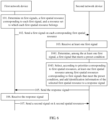
- an embodiment of the present invention provides a wireless communication method, which may include the following steps.
- a first network device determines m first signals, a first spatial resource corresponding to each first signal, and a resource set to which each first spatial resource belongs, where m is a positive integer.
- the first network device may determine the m first signals, m first spatial resources sending the m first signals, and resource sets to which the m first spatial resources belong, where m may be a positive integer greater than 1.
- the spatial resource herein has a same meaning as a beam. Each beam has a certain spatial coverage area, including a coverage width and a coverage length.
- the resource set herein has a same meaning as a beam set.
- the m first spatial resources may belong to different resource sets. Beams in different resource sets do not have an exactly same coverage length or an exactly same coverage width. Different first spatial resources in a same resource set have a roughly same coverage length and a roughly same coverage width.
- the first network device may send the first signals by using 12 beams in two resource sets shown in FIG. 4a .
- the 12 beams may have a same cell identifier, or be controlled by a same radio resource control layer.
- beams in each resource set may be corresponding to coverage of an area of a cell 1.
- a beam 0 to a beam 7 may belong to a resource set 1 and cover the cell 1.
- a beam 8 to a beam 11 may belong to a resource set 2 and cover the cell 1.
- the first network device may send the first signals by using 14 beams in three resource sets shown in FIG. 4b .
- the 14 beams may have a same cell identifier, or be controlled by a same radio resource control layer.
- a beam 0 to a beam 7 may belong to a resource set 1
- a beam 8 to a beam 11 may belong to a resource set 2
- a beam 12 and a beam 13 may belong to a resource set 3.
- the beam 12 and the beam 13 may also cover the cell 1.
- the beams 0 to the beams 7 shown in FIG. 4a and FIG. 4b are the same as a beam 0 to a beam 7 in a narrow beam set shown in FIG. 2 .
- the beams in the resource set 1 have smaller coverage widths and greater coverage lengths; and compared with the beams in the resource set 1, the beams in the resource set 2 have greater coverage widths and smaller coverage lengths.
- FIG. 4b when beams in the resource set 1, beams in the resource set 2, and beams in the resource set 3 are compared, the beams in the resource set 1 have smallest coverage widths and greatest coverage lengths, the beams in the resource set 3 have greatest coverage widths and smallest coverage lengths, and the beams in the resource set 2 have medium coverage widths and also medium coverage lengths.
- coverage widths and coverage lengths of formed beams are usually inversely proportional.
- this embodiment of the present invention does not make any limitations on a specific quantity of first spatial resources used for sending the first signals and a specific quantity of resource sets to which the first spatial resources belong.
- a quantity of resource sets to which the m first spatial resources belong is greater than or equal to 2.
- the first spatial resources used for sending the first signals are the 12 beams in the two resource sets shown in FIG. 4a
- a base station shown in FIG. 4a is the first network device
- user equipment UE1 and user equipment UE2 shown in FIG. 4a are the second network devices.
- the first network device sends a first signal on each corresponding first spatial resource, where each first signal includes corresponding identification information, the corresponding identification information is used to indicate a first spatial resource corresponding to a first signal, and the corresponding identification information is further used to indicate a resource set to which a first spatial resource belongs.
- the first network device sends one first signal on each first spatial resource shown in FIG. 4a .
- a first spatial resource on which a first signal is sent is a first spatial resource corresponding to the first signal.
- time resources, frequency resources, and code resources that are used for sending the first signals may be set according to an actual requirement of a system. This is not limited herein.
- Each first signal includes the corresponding identification information.
- the corresponding identification information may be used to indicate a first spatial resource corresponding to a first signal, and a resource set to which a first spatial resource belongs.
- the corresponding identification information may include resource identification information that is used to indicate a first spatial resource corresponding to a first signal.
- a wireless signal is usually sent on each beam of the beam 0 to the beam 7 that are corresponding to a beam set 1, and the wireless signal usually includes beam identification information that is used to identify a beam. Therefore, in this embodiment of the present invention, an identification manner existing in the prior art, for example, a beam number, may be used for the resource identification information in the identification information. Details are not described herein.
- the corresponding identification information may further include set identification information that is used to indicate the resource set to which the first spatial resource belongs.
- the set identification information may be:
- the first signal includes a synchronization signal.
- the synchronization signal includes a primary synchronization signal PSS and/or a secondary synchronization signal SSS.
- the set identification information is a type of a sequence in the PSS and/or the SSS.
- the primary synchronization signal PSS in the synchronization signal may use a sequence 1-8 to identify, as a resource set 1, a resource set to which a first spatial resource corresponding to a first signal belongs, and use a sequence 9-12 to identify, as a resource set 2, a resource set to which a first spatial resource corresponding to a first signal belongs.
- the synchronization signal further includes the SSS, different sequence types may be used in the PSS and/or the SSS to identify different resource sets.
- the first signal includes physical broadcast channel PBCH-carried information
- the set identification information is a resource set identification character in the PBCH-carried information.
- the PBCH-carried information includes 14-bit indication information.
- the indication information is mainly used to indicate a downlink system bandwidth, a system frame number, physical hybrid automatic repeat indicator channel (Physical Hybrid ARQ Indicator Channel, PHICH) configuration, and the like.
- the PBCH-carried information further includes 10 idle bits.
- the first network device may use the 10 idle bits to carry the set identification character, and use the set identification character as the set identification information to identify a resource set to which a first spatial resource corresponding to a first signal belongs.
- a 15 th bit is used to carry the set identification character.
- the character in the 15 th bit is 0, it may represent that a resource set to which a first spatial resource corresponding to a first signal belongs is a resource set 1.
- the character in the 15 th bit is 1, it may represent that a resource set to which a first spatial resource corresponding to a first signal belongs is a resource set 2.
- the first signal includes physical broadcast channel PBCH-carried information
- the set identification information is a type of a scrambling code added for the PBCH-carried information.
- a scrambling code 1 added for the PBCH-carried information in the first signal may be used to identify, as a resource set 1, a resource set to which a first spatial resource corresponding to a first signal belongs
- a scrambling code 2 added for the PBCH-carried information in the first signal may be used to identify, as a resource set 2, a resource set to which a first spatial resource corresponding to a first signal belongs.
- the first signal includes a CSR or a CSI-RS
- the set identification information is a type of a scrambling code added for the CSR or the CSI-RS.
- the first signal includes physical broadcast channel PBCH-carried information
- the set identification information is a type of a mask added for a cyclic redundancy check code CRC of the PBCH-carried information.
- a mask 1 added for the cyclic redundancy check code CRC of the PBCH-carried information in the first signal may be used to identify, as a resource set 1, a resource set to which a first spatial resource corresponding to a first signal belongs
- a mask 2 added for the cyclic redundancy check code CRC of the PBCH-carried information in the first signal may be used to identify, as a resource set 2, a resource set to which a first spatial resource corresponding to a first signal belongs.
- the first signal includes physical broadcast channel PBCH-carried information
- the set identification information is a calculation manner of a cyclic redundancy check code CRC of the PBCH-carried information.
- a calculation manner 1 used by the cyclic redundancy check code CRC of the PBCH-carried information in the first signal may be used to identify, as a first beam set, a first spatial resource set in which a first signal is located
- a calculation manner 2 used by the cyclic redundancy check code CRC of the PBCH-carried information in the first signal may be used to identify, as a second beam set, a first spatial resource set in which a first signal is located.
- set identification information in the first signal are merely examples, and the set identification information may also be in another form. Examples are not described herein one by one.
- a second network device receives at least one first signal.
- the second network device receives the at least one first signal sent by the first network device.
- Each first signal includes corresponding identification information.
- the corresponding identification information is used to indicate a first spatial resource corresponding to a first signal, and the corresponding identification information is further used to indicate a resource set to which a first spatial resource belongs.
- First signals that the second network device receives on different first spatial resources have different signal strength.
- the second network device determines a response signal according to the at least one first signal, a first spatial resource corresponding to a first signal, and a resource set to which each first spatial resource belongs, where the response signal is used to indicate at least one selected first spatial resource.
- the second network device may select, according to the at least one first signal, the first spatial resource corresponding to the first signal, and the resource set to which each first spatial resource belongs, at least one first spatial resource corresponding to the second network device, and indicate the selected first spatial resource to the first network device by using the response signal.
- the second network device sends the response signal to the first network device.
- the first network device receives the response signal sent by the second network device, where the response signal is used to indicate n first spatial resources, and n is a positive integer.
- the first network device receives a response signal sent by each second network device, and obtains n first spatial resources indicated in the response signal, where n is a positive integer.
- the first network device sends a second signal to the second network device on k second spatial resources according to the response signal, where k is a positive integer.
- the first network device may learn of, according to the response signal, the second network device existing in the cell 1, and correspondences between the second wireless network and the indicated first spatial resources, and therefore determine k second spatial resources that can meet a preset coverage requirement, where k is a relatively small value. In this way, the first network device serves the second network device by using the k second spatial resources. Therefore, the second signal can be sent more efficiently, thereby saving second spatial resources, and saving system resource overheads required for sending the second signal on an invalid second spatial resource. In addition, interference may be further avoided when the second signal is sent on an invalid second spatial resource other than the k second spatial resources.
- the first network device may determine, according to correspondences between the second network devices and the first spatial resources indicated in the sent response signals and according to coverage areas of the first spatial resources that belong to different resource sets, a relatively small quantity of second spatial resources that can meet the preset coverage requirement, and send the second signal by using the determined second spatial resources, thereby reducing a quantity of second spatial resources that serve the second network devices, and reducing system resource overheads.
- the first signal may be a signal that contains a relatively small amount of information
- the second signal may be a signal that contains a relatively large amount of information.
- the second signal is sent on a relatively small quantity of second spatial resources determined by the first network device. Therefore, when the second signal that contains the relatively large amount of information is sent by using the relatively small quantity of second spatial resources, and the first signal that contains the relatively small amount of information is sent by using a relatively large quantity of first spatial resources, power overheads and energy overheads of the first network device may be further reduced.
- the foregoing step 104 specifically includes a combination of the following steps 1041 and 1042, or a combination of the following steps 1041 and 1043.
- the foregoing step 104 may include a combination of the following steps 1041 and 1044.
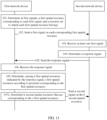
- the second network device determines, among the at least one first signal, a first signal that meets a preset condition.
- the determining, by the second network device, a first signal that meets a preset condition may include: determining, by the second network device, a first signal with signal strength greater than or equal to a corresponding threshold, where the corresponding threshold is a threshold corresponding to a resource set to which a first spatial resource corresponding to the first signal belongs.
- first spatial resources corresponding to first signals that meet the preset condition and that are determined by the UE1 may be a beam 2 and a beam 9
- first spatial resources corresponding to first signals that meet the preset condition and that are determined by the UE2 may be a beam 3 and the beam 9.
- the preset condition is merely an example, and the preset condition may be specifically set according to an actual requirement.
- the first signal that meets the preset condition may also be a first signal sent on a first spatial resource that is agreed in advance between the first network device and the second network device.
- the second network device receives a first signal, if a first spatial resource corresponding to the first signal is a first spatial resource that is agreed in advance between the second network device and the first network device, the first signal is the first signal that meets the preset condition.
- the second network device may select at least one first spatial resource among first spatial resources corresponding to the first signals that meet the preset condition.
- the at least one first spatial resource may include one first spatial resource, a plurality of first spatial resources, or all first spatial resources of the first spatial resources corresponding to the first signals that meet the preset condition.
- the UE1 may select the beam 2 or the beam 9 in the beam 2 and the beam 9 that are corresponding to the first signals that meet the preset condition, and indicate the selected beam to the base station, or select the beam 2 and the beam 9 and indicate the two beams to the base station; and the UE2 may select the beam 3 or the beam 9 in the beam 3 and the beam 9 that are corresponding to the first signals that meet the preset condition, and indicate the selected beam to the base station, or select the beam 3 and the beam 9 and indicate the two beams to the base station.
- the second network device selects, by performing step 1042 or step 1043, the at least one first spatial resource among the first spatial resources corresponding to the first signals that meet the preset condition.
- the second network device selects, according to priorities corresponding to resource sets, at least one first spatial resource among first spatial resources corresponding to first signals that meet the preset condition, and adds identification information of the selected first spatial resource to the response signal.
- the second network device may select, according to the priorities corresponding to the resource sets and among the first spatial resources corresponding to the first signals that meet the preset condition, one or more first spatial resources that belong to a resource set that is corresponding to a relatively high priority, and add identification information of the selected one or more first spatial resources to the response signal, to indicate the selected one or more first spatial resources to the first network device.
- the priorities corresponding to the resource sets may be set according to an actual case.
- the priorities of the resource sets may be pre-sorted according to the set identification information. For example, when the set identification information is the set identification character carried in the PBCH-carried information, the 15 th bit, 0, in the PBCH-carried information is corresponding to the resource set 1, and the 15 th bit, 1, in the PBCH-carried information is corresponding to the resource set 2, it may be pre-set that a priority of the resource set 2 corresponding to the set identification character 1 is higher than a priority of the resource set 1 corresponding to the set identification character 0. For example, a resource set with a smaller threshold is corresponding to a higher priority.
- the foregoing step 1042 may be specifically: 10420.
- the second network device selects, according to the priorities corresponding to the resource sets and among the first spatial resources corresponding to the first signals that meet the preset condition, a first spatial resource that belongs to a resource set with a highest priority.
- the second network device may select, according to the priorities corresponding to the resource sets and among the first spatial resources corresponding to the first signals that meet the preset condition, a first spatial resource that belongs to a resource set with a smallest threshold.
- a resource set to which a first spatial resource with a greater coverage width belongs is corresponding to a smaller threshold.
- a threshold that is used to detect signal strength and that is corresponding to the set of beams should also be larger, for example, a beam set 1 shown in FIG.
- a gain of an antenna is smaller, a coverage length of a beam in a set of beams emitted by the antenna is smaller, a coverage width is greater, and a threshold that is used to detect signal strength and that is corresponding to the set of beams should also be smaller, for example, a beam set 2 shown in FIG. 4a .
- the second network device may select a first spatial resource with a greatest coverage width among the first signals that meet the preset condition.
- a resource set to which the first spatial resource with a greatest coverage width belongs is corresponding to a smallest threshold, and therefore, a priority of the resource set is the highest.
- the UE1 may select, as a selected first spatial resource, the beam 9 with a greater coverage width in the beam 2 and the beam 9, or the UE2 may also select, as a selected first spatial resource, the beam 9 with a greater coverage width in the beam 2 and the beam 9.
- a narrow beam coverage scenario is to meet a coverage requirement of a second network device that is farther away from the first network device
- the first network device is usually disposed in a position where second wireless networks are relatively centralized, a proportion of second wireless networks that are far away from the first network device (for example, a cell edge) is relatively small, and therefore generally, compared with a narrow beam with a relatively small coverage width but a relatively great coverage length, a wide beam with a relatively great coverage width but a relatively smallcoverage length is more likely to meet coverage requirements of a relatively large quantity of second network devices.
- a resource set to which a first spatial resource with a greater coverage width belongs is corresponding to a smaller threshold. Therefore, when a resource set with a smaller threshold is corresponding to a higher priority, and when the second network device selects, among the first spatial resources corresponding to the first signals that meet the preset condition, a first spatial resource that is corresponding to a resource set with a highest priority, the second network device may select, among the first spatial resources corresponding to the first signals that meet the preset condition, a first spatial resource set with a greatest coverage width. In addition, when second network devices are closer to the first network device, a first spatial resource with a relatively great coverage width may simultaneously meet coverage requirements of a plurality of UEs.
- the coverage requirements may be understood as that signal strength of a first signal that is sent on a first spatial resource and that is received by UE is greater than or equal to a threshold corresponding to a resource set to which the first spatial resource belongs. Therefore, the response signal is used to indicate a first spatial resource with a relatively great coverage width to the first wireless device, so that the first network device can determine, according to first spatial resources with a relatively great coverage width indicated by different second network devices, a relatively small quantity of second spatial resources that can meet the preset coverage requirement, thereby reducing a quantity of second spatial resources that serve the second network devices, and reducing the system resource overheads.
- the second network device selects, according to priorities corresponding to first spatial resources, at least one first spatial resource among first spatial resources corresponding to first signals that meet the preset condition, and adds identification information of the selected first spatial resource to the response signal.
- the priorities corresponding to the first spatial resources may be set according to an actual case. For example, priority sorting may be performed for the resource sets according to the resource identification information.
- information about preset priorities corresponding to first spatial resources may include that a priority of the beam 9 is higher than a priority of the beam 2, and the priority of the beam 9 is higher than a priority of the beam 3.
- the UE1 may use the beam 9 with a higher priority as the selected first spatial resource, and indicate the beam 9 to the base station.
- the UE2 may use the beam 9 with a higher priority as the selected first spatial resource, and indicate the beam 9 to the base station.
- the second network device selects first spatial resources corresponding to all first signals that meet the preset condition, and adds identification information of the selected first spatial resources to the response signal.
- the second network device may select the first spatial resources corresponding to all the first signals that meet the preset condition, and add the identification information of the selected first spatial resources to the response signal, to indicate the selected first spatial resources to the first network device.
- the UE1 determines that the first spatial resources corresponding to the first signals that meet the preset condition are the beam 2 and the beam 9, the UE1 selects to indicate both the beam 2 and the beam 9 to the base station by using the response signal.
- the UE2 determines that the first spatial resources corresponding to the first signals that meet the preset condition are the beam 3 and the beam 9, the UE2 selects to indicate both the beam 3 and the beam 9 to the base station by using the response signal.
- the sending, by the first network device, a second signal to the second network device on k second spatial resources according to the response signal includes: 1071.
- the first network device determines s first spatial resources according to the response signal, where s is a positive integer.
- the first network device determines the k second spatial resources that are corresponding to the s first spatial resources, and sends the second signal to the second network device on the k second spatial resources.
- Each of the s first spatial resources in step 1072 may have its corresponding second spatial resource.
- Correspondences between the first spatial resources and the second spatial resources herein may mean that coverage areas are roughly the same. For example, main lobes of beams have consistent coverage, or coverage areas have a high correlation.
- a beam width of a first spatial resource and a beam width of a corresponding second spatial resource may be the same or may be different.
- a beam direction of a first spatial resource and a beam direction of a corresponding second spatial resource may be the same or may be different.
- First spatial resources and second spatial resources may use same space division granularity or different space division granularity (small or large).
- first spatial resources there are eight first spatial resources, and the eight first spatial resources are second spatial resources; or there are eight first spatial resources and four second spatial resources, and every two first spatial resources are corresponding to one second spatial resource.
- a specific correspondence between a first spatial resource and a second spatial resource may be set according to an actual requirement, and may be a one-to-many correspondence, a many-to-one correspondence, or a many-to-many correspondence. This is not limited herein.
- the corresponding second spatial resource and the first spatial resource have a same beam width and direction; or, the corresponding second spatial resource and the first spatial resource have a same beam width, but there is a phase deviation within a certain threshold between the beam direction of the second spatial resource and the beam direction of the first spatial resource, where the threshold may be defined according to an actual requirement, for example, 10 degrees or 20 degrees; or the corresponding second spatial resource and the first spatial resource have a same beam direction or there is a phase deviation within a certain threshold, and the beam width of the second spatial resource is greater or less than the beam width of the first spatial resource.
- One second spatial resource may be corresponding to more than one first spatial resource, or one first spatial resource is corresponding to more than one second spatial resource. Because the foregoing correspondences exist between the s first spatial resources and the k second spatial resources, k and s may be equal, or may be different.
- first spatial resources used by the first network device for sending the first signals belong to different resource sets
- the first spatial resources indicated in the response signal sent by the second network device may also belong to different resource sets. Because spatial coverage areas of first spatial resources in different resource sets are not the same, first spatial resources with different coverage areas can meet coverage requirements of different quantities of second network devices.
- the first network device may determine, among first spatial resources in a plurality of resource sets by using a combination of the first spatial resources with different spatial coverage areas, the s first spatial resources that can meet the preset coverage requirement, where s is as small as possible; determine, according to the s first spatial resources, the k second spatial resources that are corresponding to the s first spatial resources, where s and k are relatively small values; and send the second signal on the k second spatial resources, thereby reducing a quantity of second spatial resources that serve the second network devices, and reducing the system resource overheads.
- the foregoing step 1071 may be specifically: 108.
- the first network device determines, among the n first spatial resources indicated by the response signal, the s first spatial resources according to priorities corresponding to resource sets to which the first spatial resources belong.
- the first network device receives a response signal sent by each second network device.
- the response signal indicates n first spatial resources selected by the second network device.
- the first network device may determine the s first spatial resources according to the priorities corresponding to the resource sets. For a description of the priorities corresponding to the resource sets, refer to the foregoing step 1042.
- a resource set to which a first spatial resource with a greater coverage width belongs is corresponding to a higher priority.
- step 108 may be specifically: 1080.
- the first network device determines, among first spatial resources indicated by each response signal, a first spatial resource that belongs to a resource set with a highest priority, and uses, among first spatial resources indicated by all the response signals, first spatial resources that belong to a resource set with a highest priority, to form the s first spatial resources.
- the s first spatial resources are the first spatial resources that belong to a resource set with a highest priority in the first spatial resources indicated by all the response signals. Therefore, the s first spatial resources may meet coverage requirements of all second network devices that send the response signals. Because a first spatial resource with a relatively great coverage width may meet coverage requirements of more second network devices, the resource set to which the first spatial resource with a greater coverage width belongs has a higher priority, so that less first spatial resources are determined by the first network device, that is, the first spatial resource quantity s is smaller.
- second spatial resources corresponding to all first spatial resources have a roughly same coverage area, and therefore when the quantity s is relatively small, the second spatial resource quantity k may also be relatively small, thereby reducing the quantity of the second spatial resources that serve the second network devices, and reducing the system resource overheads.
- first spatial resources indicated by the response signal sent by the UE1 include the beam 2 and the beam 9
- first spatial resources indicated by the response signal sent by the UE2 include the beam 3 and the beam 9
- the base station determines, among the first spatial resources indicated by each response signal, a first spatial resource that belongs to a resource set with a highest priority.
- the base station may determine, among the first spatial resources indicated by the response signal sent by the UE1, the beam 9 with a greatest coverage width as a first spatial resource that belongs to a resource set with a highest priority, and the base station may determine, among the first spatial resources indicated by the response signal sent by the UE2, the beam 9 with a greatest coverage width as a first spatial resource that belongs to a resource set with a highest priority. Therefore, the formed s first spatial resources are the beam 9, and s is 1.
- the base station may determine, according to the beam 9 (the s first spatial resources), that a second spatial resource corresponding to the beam 9 is a beam 9' that has a roughly same coverage area as the beam 9. For details, refer to a schematic beam coverage diagram shown in FIG. 12 .
- the base station sends the second signal by using one beam 9', to simultaneously serve the UE1 and the UE2. Compared with that the base station sends the second signal by using a beam 2' that has a roughly same coverage area as the beam 2 and by using a beam 3' that has a roughly same coverage area as the beam 3, or compared with that the base station sends wireless signals (including the first signal and the second signal in this embodiment of the present invention) by using the beam 0 to the beam 7 shown in FIG. 2 , sending the second signal by using the beam 9' may reduce a quantity of beams that serve the UEs, thereby reducing the system resource overheads.
- first spatial resources indicated by the response signal sent by the UE1 include only the beam 9 with a relatively wide coverage area
- first spatial resources indicated by the response signal sent by the UE2 include only the beam 9 with a relatively wide coverage area
- first spatial resources indicated by all the response signals include only the beam 9 with a relatively wide coverage area
- the s first spatial resources determined by the base station according to all the response signals need to be the beam 9.
- the base station may determine, according to the beam 9 (the s first spatial resources), that a second spatial resource corresponding to the beam 9 is a beam 9' that has a roughly same coverage area as the beam 9.
- first spatial resources indicated by the response signal sent by the UE1 include the beam 2 and the beam 9
- the base station may determine, among the first spatial resources indicated by the response signal sent by the UE1, the beam 9 with a greatest coverage width as a first spatial resource that belongs to a resource set with a highest priority
- the base station may determine, among the first spatial resources indicated by the response signal sent by the UE2, the beam 9 with a greatest coverage width as a first spatial resource that belongs to a resource set with a highest priority. Therefore, the formed s first spatial resources are the beam 9.
- the base station may determine, according to the beam 9 (the s first spatial resources), that a second spatial resource corresponding to the beam 9 is a beam 9' that has a roughly same coverage area as the beam 9.
- the foregoing step 1071 may be specifically: 109.
- the first network device determines, among the n first spatial resources indicated by the response signal, the s first spatial resources according to priorities corresponding to the first spatial resources.
- the first network device receives a response signal sent by each second network device.
- the response signal indicates n first spatial resources selected by the second network device.
- the first network device may determine the s first spatial resources according to the priorities corresponding to the first spatial resources. For a description of the priorities corresponding to the first spatial resources, refer to the foregoing step 1043.
- the first spatial resource has a high priority.
- step 109 may be specifically: 1090.
- the first network device preferably selects a first spatial resource with a higher priority among the n first spatial resources indicated by the response signal, until the selected s first spatial resources meet the preset condition.
- the preset condition herein may be set according to a requirement, and the preset condition may be the preset coverage requirement.
- the preset condition is that coverage requirements of all second network devices are met, or the preset condition is that coverage requirements of 95% of second network devices are met, or the like. All the second network devices herein are all second network devices in the cell 1 covered by first spatial resources.
- a larger quantity of corresponding response signals that indicate a first spatial resource indicate that the indicated first spatial resource can meet coverage requirements of more second network devices. Therefore, a relatively small quantity of first spatial resources may meet coverage requirements of all or some of second network devices. That is, the quantity s may be relatively small. In this way, the second spatial resource quantity k corresponding to the first spatial resource quantity s may also be relatively small, thereby reducing a quantity of second spatial resources that serve the second network devices, and reducing the system resource overheads.
- first spatial resources indicated by the response signal sent by the UE1 include the beam 2 and the beam 9
- first spatial resources indicated by the response signal sent by the UE2 include the beam 3 and the beam 9
- a quantity of UEs that indicate the beam 2 by using a response signal is 1
- a quantity of UEs that indicate the beam 3 by using a response signal is 1
- a quantity of UEs that indicate the beam 9 by using a response signal is 2. Therefore, the beam 9 is corresponding to a highest priority.
- the beam 9 can meet not only a coverage requirement of the UE1 but also a coverage requirement of the UE2, the beam 9 is the determined s first spatial resources.
- the base station may determine that the beam 9' that has a roughly same coverage area as the beam 9 and that is corresponding to the beam 9 (the s first spatial resources) is the k second spatial resources, and therefore send the second signal on the beam 9', to simultaneously serve the UE1 and the UE2.
- a first spatial resource corresponding to a second spatial resource may be determined among the beam 0 to the beam 7.
- a second signal may be sent to the UE1 by using a second spatial resource beam 2' that is corresponding to the first spatial resource beam 2
- a second signal may be sent to the UE2 by using a second spatial resource beam 3' that is corresponding to the first spatial resource beam 3.
- a first spatial resource corresponding to a second spatial resource may be determined among the beam 0 to the beam 11.
- a second signal may be simultaneously sent to the UE1 and the UE2 by using a second spatial resource beam 9' that is corresponding to the first spatial resource beam 9, thereby reducing a quantity of second spatial resources that serve the UEs, and reducing the system resource overheads.
- a first network device may send, in a first signal, a synchronization signal with a relatively small amount of information by using the foregoing wireless communication method, so that a second network device that receives the first signal may be synchronized with the first network device.
- the first network device determines, according to the foregoing wireless communication method, a relatively small quantity of second spatial resources that can meet a preset coverage requirement, and sends a second signal on the second spatial resources.
- the second signal includes another signal that contains a relatively large amount of information and that is required for access.
- the foregoing wireless communication method may reduce system resource overheads when the second network device accesses a wireless network.
- the first network device may determine, by using the foregoing wireless communication method, a relatively small quantity of second spatial resources that can meet the preset coverage requirement, and configure a CSI-RS on each second spatial resource.
- a CSI-RS may be configured only on each first spatial resource. Therefore, compared with the prior art, configuring the CSI-RS by using the foregoing wireless communication method may reduce the system resource overheads.
- the foregoing embodiment of the present invention provides the wireless communication method.
- the first network device sends the m first signals by using the first spatial resources in the different resource sets, where each first signal includes corresponding identification information, and the corresponding identification information is used to indicate a first spatial resource corresponding to a first signal and is further used to indicate a resource set to which a first spatial resource belongs.
- the second network device selects at least one first spatial resource according to at least one received first signal, a first spatial resource corresponding to a first signal, and a resource set to which each first spatial resource belongs, and indicates the selected first spatial resource to the first network device by using the response signal.
- the first network device learns of, according to the response signal, the existing second network device, and the correspondence between the second wireless network and the first spatial resource, and therefore determines the k second spatial resources that can meet the preset coverage requirement, and sends the second signal on the k second spatial resources, where k is a relatively small value, thereby serving the second network device by using the k second spatial resources. Therefore, the second signal can be sent more efficiently, thereby saving second spatial resources, and saving system resource overheads required for sending the second signal on an invalid second spatial resource.
- first spatial resources indicated in the response signal sent by the second network device may also belong to different resource sets. Because spatial coverage areas of first spatial resources in different resource sets are not the same, first spatial resources with different coverage areas can meet coverage requirements of different quantities of second network devices. Therefore, the first network device may determine, according to correspondences between the second network devices and the first spatial resources indicated in the sent response signals and according to coverage areas of the first spatial resources that belong to different resource sets, a relatively small quantity of second spatial resources that can meet the preset coverage requirement, and send the second signal by using the determined second spatial resources, thereby reducing a quantity of second spatial resources that serve the second network devices, and reducing system resource overheads.
- an embodiment of the present invention further provides a network device 100, as shown in FIG. 16 .
- the network device 100 is corresponding to the first network device in the foregoing method embodiment, and may include a processor 110, a memory 120, a system bus 130, a receiver 140, and a transmitter 150.
- the memory 120 is configured to store an instruction.
- the processor 110 is configured to execute the instruction stored in the memory 120, to control the receiver 140 to receive a signal and to control the transmitter 150 to transmit a signal, so as to perform the steps in the foregoing wireless communication method.
- the receiver 140 and the transmitter 150 may be a same physical entity or different physical entities. When being the same physical entity, the receiver 140 and the transmitter 150 may be collectively referred to as a transceiver.
- functions of the receiver 140 and the transmitter 150 may be implemented by using a transceiver circuit or a dedicated transceiver chip.
- the processor 110 may be implemented by using a dedicated processing chip, a processing circuit, a processor, or a general-purpose chip.
- the steps in the foregoing wireless communication method may at least include:
- the corresponding identification information includes set identification information that is used to indicate the resource set to which the first spatial resource belongs, and the set identification information is:
- the sending a second signal to the second network device on k second spatial resources according to the response signal includes:
- the determining s first spatial resources according to the response signal includes: determining, among the n first spatial resources indicated by the response signal, the s first spatial resources according to priorities corresponding to resource sets to which the first spatial resources belong.
- the determining, among the n first spatial resources indicated by the response signal, the s first spatial resources according to priorities corresponding to resource sets to which the first spatial resources belong includes:
- a resource set to which a first spatial resource with a greater coverage width belongs is corresponding to a higher priority.
- the determining s first spatial resources according to the response signal includes: determining, among the n first spatial resources indicated by the response signal, the s first spatial resources according to priorities corresponding to the first spatial resources.
- the determining, among the n first spatial resources indicated by the response signal, the s first spatial resources according to priorities corresponding to the first spatial resources includes: preferably selecting a first spatial resource with a higher priority among the n first spatial resources indicated by the response signal, until the selected s first spatial resources meet a preset condition.
- the preset condition is that coverage requirements of all second network devices are met.
- the first spatial resource has a high priority.
- an embodiment of the present invention further provides a network device 200.
- the network device 200 is corresponding to the second network device in the foregoing method embodiment, and may include a processor 210, a memory 220, a system bus 230, a receiver 240, and a transmitter 250.
- the processor 210, the memory 220, the receiver 240, and the transmitter 250 are connected by using the system bus 230.
- the memory 220 is configured to store an instruction.
- the processor 210 is configured to execute the instruction stored in the memory 220, to control the receiver 240 to receive a signal and to control the transmitter 250 to transmit a signal, so as to perform the steps in the foregoing wireless communication method.
- the receiver 240 and the transmitter 250 may be a same physical entity or different physical entities. When being the same physical entity, the receiver 240 and the transmitter 250 may be collectively referred to as a transceiver.
- functions of the receiver 240 and the transmitter 250 may be implemented by using a transceiver circuit or a dedicated transceiver chip.
- the processor 210 may be implemented by using a dedicated processing chip, a processing circuit, a processor, or a general-purpose chip.
- the steps in the foregoing wireless communication method may at least include:
- the determining a response signal according to the at least one first signal, the first spatial resource corresponding to the first signal, and a resource set to which each first spatial resource belongs, where the response signal is used to indicate at least one selected first spatial resource includes:
- the selecting, according to priorities corresponding to resource sets, at least one first spatial resource among first spatial resources corresponding to first signals that meet the preset condition includes: selecting, according to the priorities corresponding to the resource sets and among the first spatial resources corresponding to the first signals that meet the preset condition, a first spatial resource that belongs to a resource set with a highest priority.
- the determining a first signal that meets a preset condition includes: determining a first signal with signal strength greater than or equal to a corresponding threshold, where the corresponding threshold is a threshold corresponding to a resource set to which a first spatial resource corresponding to the first signal belongs.
- a resource set with a smaller threshold is corresponding to a higher priority.
- a resource set to which a first spatial resource with a greater coverage width belongs is corresponding to a smaller threshold.
- the determining a response signal according to the at least one first signal, the first spatial resource corresponding to the first signal, and a resource set to which each first spatial resource belongs, where the response signal is used to indicate at least one selected first spatial resource includes:
- the processor 110 or 210 may be a central processing unit (Central Processing Unit, "CPU” for short), or the processor may be another general-purpose processor, a digital signal processor (DSP), an application-specific integrated circuit (ASIC), a field programmable gate array (FPGA) or another programmable logic device, a discrete gate or a transistor logic device, a discrete hardware assembly, or the like.
- the general-purpose processor may be a microprocessor, or the processor may be any conventional processor or the like.
- the memory 120 or 220 may include a read-only memory and a random access memory, and provide instructions and data for the processor. A part of the memory may further include a non-volatile random access memory. For example, the memory may further store device type information.
- the system bus 130 or 230 may include not only a data bus but also a power supply bus, a control bus, a status signal bus, and the like. However, for clear description, various buses are denoted by the system bus in the diagram.
- the steps of the foregoing method may be implemented by an integrated logic circuit of hardware in the processor 110 or 210, or by using an instruction in a form of software.
- the steps of the methods disclosed with reference to the embodiments of the present invention may be directly executed by a hardware processor, or may be executed by a combination of hardware and a software module in a processor.
- the software module may be located in a storage medium that is mature in the art, such as a random access memory, a flash memory, a read-only memory, a programmable read-only memory or an electrically erasable programmable memory, or a register.
- the storage medium is located in the memory, and the processor reads information in the memory and completes the steps of the foregoing methods in combination with hardware of the processor. To avoid repetition, details are not described herein.
- an embodiment of the present invention further provides a wireless communications system 300.
- the wireless communications system 300 may include the first network device shown in FIG. 16 and the second network device shown in FIG. 17 .
- the first network device and the second network device are configured to execute the steps in the foregoing method embodiment.
- the disclosed device, method, and system may be implemented in other manners.
- the described apparatus embodiments are merely examples.
- the unit division is merely logical function division and may be other division in an actual implementation.
- a plurality of units or components may be combined or integrated into another system, or some features may be ignored or not performed.
- the displayed or discussed mutual couplings or direct couplings or communications connections may be implemented by using some interfaces.
- the indirect couplings or communications connections between the apparatuses or units may be implemented in electrical, mechanical, or other forms.
- the units described as separate parts may or may not be physically separate, and parts displayed as units may or may not be physical units, may be located in one position, or may be distributed on a plurality of network units. A part or all of the units may be selected according to actual needs to achieve the objectives of the solutions of the embodiments of the present invention.
- functional units in the embodiments of the present invention may be integrated into one processing unit, or each of the units may exist alone physically, or two or more units are integrated into one unit.
- the integrated unit may be implemented in a form of hardware, or may be implemented in a form of hardware in addition to a software functional unit.
- the integrated unit may be stored in a computer-readable storage medium.
- the software functional unit is stored in a storage medium and includes several instructions for instructing a computer device (which may be a personal computer, a server, or a wireless network device) to perform some of the steps of the methods described in the embodiments of the present invention.
- the foregoing storage medium includes: any medium that can store program code, such as a USB flash drive, a removable hard disk, a read-only memory (Read-Only Memory, ROM for short), a random access memory (Random Access Memory, RAM for short), a magnetic disk, or an optical disc.
Landscapes
- Engineering & Computer Science (AREA)
- Signal Processing (AREA)
- Computer Networks & Wireless Communication (AREA)
- Mobile Radio Communication Systems (AREA)
Claims (15)
- Procédé de communication sans fil, comprenant :la détermination, au moyen d'un premier dispositif de réseau, de m premiers signaux, d'une première ressource spatiale correspondant à chaque premier signal, et d'un ensemble de ressources auquel appartient chaque première ressource spatiale (101), dans lequel m est un entier positif supérieur à 1, et la quantité d'ensembles de ressources auxquels appartiennent les m premières ressources spatiales est supérieur ou égal à 2 ;l'envoi, au moyen du premier dispositif de réseau à un second dispositif de réseau, de chaque premier signal sur chaque première ressource spatiale correspondante (102), dans lequel chaque premier signal comprend des informations d'identification correspondantes, les informations d'identification correspondantes sont utilisées pour indiquer la première ressource spatiale correspondant au premier signal, et les informations d'identification correspondantes sont en outre utilisées pour indiquer l'ensemble de ressources auquel appartient la première ressource spatiale ;la réception, au moyen du premier dispositif de réseau, d'un signal de réponse envoyé par le second dispositif de réseau (106), dans lequel le signal de réponse est utilisé pour indiquer n premières ressources spatiales déterminées par le second dispositif de réseau en fonction d'au moins un premier signal reçu en provenance du premier dispositif de réseau, la première ressource spatiale correspondant au premier signal, et l'ensemble de ressources auquel appartient la première ressource spatiale, et n est un entier positif ; etl'envoi, au moyen du premier dispositif de réseau, d'un second signal au second dispositif de réseau sur k secondes ressources spatiales en fonction du signal de réponse (107), dans lequel k est un entier positif ;caractérisé en ce quel'envoi (107), au moyen du premier dispositif de réseau, d'un second signal au second dispositif de réseau sur k secondes ressources spatiales en fonction du signal de réponse comprend :la détermination (108), au moyen du premier dispositif de réseau, parmi les n premières ressources spatiales indiquées par le signal de réponse, de s premières ressources spatiales en fonction de priorités correspondant à des ensembles de ressources auxquels appartiennent les premières ressources spatiales ; ou la détermination (1080), au moyen du premier dispositif de réseau, parmi les n premières ressources spatiales indiquées par le signal de réponse, de s premières ressources spatiales en fonction de priorités correspondant aux premières ressources spatiales ; etla détermination (1072), au moyen du premier dispositif de réseau, des k secondes ressources spatiales qui correspondent aux s premières ressources spatiales, et l'envoi du second signal au second dispositif de réseau sur les k secondes ressources spatiales.
- Procédé selon la revendication 1, dans lequel les informations d'identification correspondantes comprennent des informations d'identification d'ensemble qui sont utilisées pour indiquer l'ensemble de ressources auquel appartient la première ressource spatiale, et les informations d'identification d'ensemble sont :un caractère d'identification d'ensemble compris dans le premier signal ; ouun type d'une séquence comprise dans le premier signal ; ouun type d'un code de brouillage ajouté pour information dans le premier signal ; ouun type de masque ajouté pour information dans le premier signal ; ouune manière de calculer un code de redondance cyclique CRC d'informations dans le premier signal.
- Procédé selon la revendication 1 ou 2, dans lequel la détermination, parmi les n premières ressources spatiales indiquées par le signal de réponse, des s premières ressources spatiales en fonction de priorités correspondant à des ensembles de ressources auxquels appartiennent les premières ressources spatiales comprend :la détermination, au moyen du premier dispositif de réseau, parmi des premières ressources spatiales indiquées par le signal de réponse, d'une première ressource spatiale qui appartient à un ensemble de ressources ayant la priorité la plus élevée ; etla détermination, au moyen du premier dispositif de réseau, parmi les premières ressources spatiales indiquées par le signal de réponse, de premières ressources spatiales qui appartiennent à un ensemble de ressources ayant la priorité la plus élevée, pour former les s premières ressources spatiales.
- Procédé selon les revendications 1 à 3, dans lequel un ensemble de ressources auquel appartient une première ressource spatiale ayant une plus grande largeur de couverture correspond à une priorité plus élevée.
- Procédé selon la revendication 1, dans lequel la détermination, parmi les n premières ressources spatiales indiquées par le signal de réponse, des s premières ressources spatiales en fonction de priorités correspondant aux premières ressources spatiales comprend :
la sélection de préférence d'une première ressource spatiale ayant une priorité plus élevée parmi les n premières ressources spatiales indiquées par le signal de réponse, jusqu'à ce que les s premières ressources spatiales sélectionnées satisfassent à une condition prédéfinie. - Procédé selon la revendication 5, dans lequel la condition prédéfinie est que les exigences de couverture de tous les seconds dispositifs de réseau soient satisfaites.
- Procédé selon l'une quelconque des revendications 5 ou 6, dans lequel s'il existe une grande quantité de seconds dispositifs de réseau qui indiquent la première ressource spatiale en utilisant le signal de réponse, la première ressource spatiale a une priorité élevée.
- Procédé de communication sans fil, comprenant :la réception, au moyen d'un second dispositif de réseau, d'au moins un premier signal (103) parmi m premiers signaux envoyés par un premier dispositif de réseau, dans lequel m est un entier positif supérieur à 1 et dans lequel chaque premier signal comprend des informations d'identification correspondantes, les informations d'identification correspondantes sont utilisées pour indiquer une première ressource spatiale correspondant au premier signal, etles informations d'identification correspondantes sont en outre utilisées pour indiquer un ensemble de ressources auquel appartient la première ressource spatiale, dans lequel la quantité d'ensembles de ressources auxquels appartiennent les m premières ressources spatiales sont supérieure ou égale à 2 ;la détermination, au moyen du second dispositif de réseau, d'un signal de réponse en fonction de l'au moins un premier signal, de la première ressource spatiale correspondant au premier signal (104) et de l'ensemble de ressources auquel appartient la première ressource spatiale, dans lequel le signal de réponse est utilisé pour indiquer au moins une première ressource spatiale sélectionnée par le second dispositif de réseau ; etl'envoi, au moyen du second dispositif de réseau, du signal de réponse au premier dispositif de réseau (105) ;la réception, au moyen du second dispositif de réseau, d'un second signal sur k secondes ressources spatiales déterminées par le premier dispositif de réseau en fonction du signal de réponse, dans lequel k est un entier positif ;caractérisé en ce quela détermination (104) d'un signal de réponse en fonction de l'au moins un premier signal, de la première ressource spatiale correspondant au premier signal et de l'ensemble de ressources auquel appartient la première ressource spatiale, dans lequel le signal de réponse est utilisé pour indiquer au moins une première ressource spatiale sélectionnée par le second dispositif de réseau comprend :la détermination (1041), au moyen du second dispositif de réseau, parmi l'au moins un premier signal, d'un premier signal qui répond à une condition prédéfinie ; etla sélection (1042), au moyen du second dispositif de réseau, en fonction de priorités correspondant à des ensembles de ressources, d'au moins une première ressource spatiale parmi des premières ressources spatiales correspondant à des premiers signaux qui satisfont à la condition prédéfinie, et l'ajout d'informations d'identification de la première ressource spatiale sélectionnée au signal de réponse ; oula sélection (1043), au moyen du second dispositif de réseau, en fonction de priorités correspondant à des premières ressources spatiales, d'au moins une première ressource spatiale parmi des premières ressources spatiales correspondant à des premiers signaux qui satisfont à la condition prédéfinie, et l'ajout d'informations d'identification de la première ressource spatiale sélectionnée au signal de réponse.
- Procédé selon la revendication 8, dans lequel la détermination d'un premier signal qui satisfait une condition prédéfinie comprend :
la détermination, au moyen du second dispositif de réseau, d'un premier signal avec une intensité de signal supérieure ou égale à un seuil correspondant, dans lequel le seuil correspondant est un seuil correspondant à un ensemble de ressources auquel appartient une première ressource spatiale correspondant au premier signal. - Procédé selon la revendication 8 ou 9, dans lequel la sélection, en fonction de priorités correspondant à des ensembles de ressources, d'au moins une première ressource spatiale parmi des premières ressources spatiales correspondant à des premiers signaux qui satisfont à la condition prédéfinie comprend :
la sélection, au moyen du second dispositif de réseau, en fonction des priorités correspondant aux ensembles de ressources et parmi les premières ressources spatiales correspondant aux premiers signaux qui satisfont à la condition prédéfinie, d'une première ressource spatiale qui appartient à un ensemble de ressources ayant la priorité la plus élevée. - Procédé selon la revendication 10, dans lequel un ensemble de ressources ayant un seuil plus petit correspond à une priorité plus élevée.
- Procédé selon la revendication 11, dans lequel un ensemble de ressources auquel appartient une première ressource spatiale ayant une plus grande largeur de couverture correspond à un seuil plus petit.
- Premier dispositif de réseau, comprenant un processeur, une mémoire et un émetteur-récepteur, dans lequel la mémoire est configurée pour stocker une instruction, le processeur est configuré pour exécuter l'instruction stockée dans la mémoire, afin de commander l'émetteur-récepteur à mettre en oeuvre la réception et la transmission de signaux, et lorsque le processeur exécute l'instruction stockée dans la mémoire, le premier dispositif de réseau est configuré pour mettre en oeuvre le procédé selon l'une quelconque des revendications 1 à 7.
- Second dispositif de réseau, comprenant un processeur, une mémoire et un émetteur-récepteur, dans lequel la mémoire est configurée pour stocker une instruction, le processeur est configuré pour exécuter l'instruction stockée dans la mémoire, afin de commander l'émetteur-récepteur à mettre en oeuvre la réception et la transmission de signaux, et lorsque le processeur exécute l'instruction stockée dans la mémoire, le second dispositif de réseau est configuré pour mettre en oeuvre le procédé selon l'une quelconque des revendications 8 à 12.
- Système de communications sans fil, comprenant le premier dispositif de réseau selon la revendication 13 et le second dispositif de réseau selon la revendication 14.
Applications Claiming Priority (1)
| Application Number | Priority Date | Filing Date | Title |
|---|---|---|---|
| PCT/CN2015/100316 WO2017113395A1 (fr) | 2015-12-31 | 2015-12-31 | Procédé, dispositif et système de communication sans fil |
Publications (3)
| Publication Number | Publication Date |
|---|---|
| EP3386253A1 EP3386253A1 (fr) | 2018-10-10 |
| EP3386253A4 EP3386253A4 (fr) | 2018-12-26 |
| EP3386253B1 true EP3386253B1 (fr) | 2024-04-17 |
Family
ID=59224267
Family Applications (1)
| Application Number | Title | Priority Date | Filing Date |
|---|---|---|---|
| EP15912019.5A Active EP3386253B1 (fr) | 2015-12-31 | 2015-12-31 | Procédé, dispositif et système de communication sans fil |
Country Status (5)
| Country | Link |
|---|---|
| US (2) | US10582518B2 (fr) |
| EP (1) | EP3386253B1 (fr) |
| JP (1) | JP6679733B2 (fr) |
| CN (1) | CN108476491B (fr) |
| WO (1) | WO2017113395A1 (fr) |
Families Citing this family (8)
| Publication number | Priority date | Publication date | Assignee | Title |
|---|---|---|---|---|
| WO2018054459A1 (fr) * | 2016-09-21 | 2018-03-29 | Telefonaktiebolaget Lm Ericsson (Publ) | Formation de faisceau de faisceaux |
| WO2019061354A1 (fr) * | 2017-09-29 | 2019-04-04 | Oppo广东移动通信有限公司 | Procédé et dispositif de communication radio |
| US10812202B2 (en) * | 2017-10-02 | 2020-10-20 | Qualcomm Incorporated | Resources for channel measurements |
| JP2021061566A (ja) * | 2019-10-09 | 2021-04-15 | ソニー株式会社 | 端末装置及び通信方法 |
| US11540239B2 (en) * | 2020-01-24 | 2022-12-27 | Qualcomm Incorporated | Synchronization signal block transmission using spatial division multiplexing |
| US12143948B2 (en) * | 2020-04-28 | 2024-11-12 | Samsung Electronics Co., Ltd. | Method and apparatus for indication and transmission of downlink signal/channel for initial access |
| US12556333B2 (en) * | 2020-09-03 | 2026-02-17 | Iucf-Hyu (Industry-University Cooperation Foundation Hanyang University) | Method and device for reducing overhead of positioning reference signal transmission |
| CN114430371B (zh) * | 2020-10-15 | 2023-12-19 | 中国移动通信集团设计院有限公司 | 面向垂直行业专网的5g网络容量配置方法和装置 |
Citations (1)
| Publication number | Priority date | Publication date | Assignee | Title |
|---|---|---|---|---|
| WO2015115376A1 (fr) * | 2014-01-31 | 2015-08-06 | 株式会社Nttドコモ | Dispositif utilisateur, station de base et procédé de communication |
Family Cites Families (14)
| Publication number | Priority date | Publication date | Assignee | Title |
|---|---|---|---|---|
| US7310537B2 (en) * | 2003-04-25 | 2007-12-18 | Nokia Corporation | Communication on multiple beams between stations |
| US8248303B2 (en) | 2007-01-23 | 2012-08-21 | Nec Corporation | Radio control method |
| US8660598B2 (en) * | 2009-11-06 | 2014-02-25 | Nec Laboratories America, Inc. | Systems and methods for prioritizing beams to enable efficient determination of suitable communication links |
| WO2011068385A2 (fr) * | 2009-12-03 | 2011-06-09 | 엘지전자 주식회사 | Procédé et appareil permettant une transmission en mode contention efficace dans un système de communication sans fil |
| CN103354478A (zh) | 2011-03-31 | 2013-10-16 | 北京新岸线移动多媒体技术有限公司 | 一种用于实现链路自适应的方法、网络设备和终端设备 |
| CN103327630B (zh) * | 2012-03-23 | 2016-12-14 | 华为技术有限公司 | 用于无线网络中的无线资源调度的方法和装置 |
| WO2014109689A1 (fr) * | 2013-01-08 | 2014-07-17 | Telefonaktiebolaget L M Ericsson (Publ) | Nœud de radio, nœud de commande, nœud de coordination et procédés associés |
| US9282051B2 (en) * | 2013-06-26 | 2016-03-08 | Netronome Systems, Inc. | Credit-based resource allocator circuit |
| CN105453629B (zh) * | 2013-08-05 | 2019-03-15 | 三星电子株式会社 | 在无线通信系统中用于通过波束分组发送和接收参考信号的方法和装置 |
| CN103688474B (zh) * | 2013-09-27 | 2018-06-05 | 华为技术有限公司 | 通信方法、基站和用户设备 |
| US9806926B2 (en) * | 2013-11-04 | 2017-10-31 | Samsung Electronics Co., Ltd. | Multistage beamforming of multiple-antenna communication system |
| EP2897305A1 (fr) * | 2014-01-21 | 2015-07-22 | Alcatel Lucent | Procédés, appareils et programmes informatiques pour émetteur/récepteur mobile et émetteur/récepteur de station de base |
| KR102177804B1 (ko) * | 2014-03-25 | 2020-11-11 | 삼성전자주식회사 | 다중입력 다중출력 시스템에서 스케줄링 방법 및 장치 |
| CN105490719B (zh) * | 2014-09-17 | 2020-11-24 | 中兴通讯股份有限公司 | 一种上行同步方法、装置和系统 |
-
2015
- 2015-12-31 EP EP15912019.5A patent/EP3386253B1/fr active Active
- 2015-12-31 JP JP2018534609A patent/JP6679733B2/ja active Active
- 2015-12-31 CN CN201580085430.0A patent/CN108476491B/zh active Active
- 2015-12-31 WO PCT/CN2015/100316 patent/WO2017113395A1/fr not_active Ceased
-
2018
- 2018-06-29 US US16/023,390 patent/US10582518B2/en not_active Expired - Fee Related
-
2020
- 2020-02-10 US US16/786,966 patent/US11096187B2/en active Active
Patent Citations (2)
| Publication number | Priority date | Publication date | Assignee | Title |
|---|---|---|---|---|
| WO2015115376A1 (fr) * | 2014-01-31 | 2015-08-06 | 株式会社Nttドコモ | Dispositif utilisateur, station de base et procédé de communication |
| EP3101942A1 (fr) * | 2014-01-31 | 2016-12-07 | NTT DoCoMo, Inc. | Dispositif utilisateur, station de base et procédé de communication |
Also Published As
| Publication number | Publication date |
|---|---|
| CN108476491A (zh) | 2018-08-31 |
| US11096187B2 (en) | 2021-08-17 |
| EP3386253A4 (fr) | 2018-12-26 |
| WO2017113395A1 (fr) | 2017-07-06 |
| EP3386253A1 (fr) | 2018-10-10 |
| JP2019500815A (ja) | 2019-01-10 |
| US20180310323A1 (en) | 2018-10-25 |
| US20200205167A1 (en) | 2020-06-25 |
| US10582518B2 (en) | 2020-03-03 |
| JP6679733B2 (ja) | 2020-04-15 |
| CN108476491B (zh) | 2023-07-18 |
Similar Documents
| Publication | Publication Date | Title |
|---|---|---|
| US11902063B2 (en) | PDCCH DMRS mapping and coreset resource allocation | |
| US11096187B2 (en) | Wireless communication method and system, and device | |
| US11405858B2 (en) | Wireless access method and apparatus, communications system, and terminal | |
| US10728891B2 (en) | Information sending and receiving methods and devices | |
| US11219061B2 (en) | Listen-before-talk (LBT) modes for random access procedures | |
| EP3497854B1 (fr) | Sélection de ressources basée sur la priorité dans un système de communication de dispositif à dispositif | |
| JP6942731B2 (ja) | 非対称的キャリアアグリゲーションにおける衝突を伴うサウンディング基準信号 | |
| US10791579B2 (en) | Random access response (RAR) monitoring for multiple preamble transmissions in multi-beam operation | |
| EP3349522B1 (fr) | Procédé d'accès radio, ue et station de base | |
| CN112567808A (zh) | 用于ue特定rs复用的方法 | |
| TWI704790B (zh) | 使用者設備及其無線通訊方法 | |
| EP3673706B1 (fr) | Nprach ayant des performances de fiabilité améliorées | |
| US12238767B2 (en) | Channel occupancy information multi-access reporting | |
| JP2018525923A (ja) | ビークルツービークルのためのLTE(登録商標)−Direct通信 |
Legal Events
| Date | Code | Title | Description |
|---|---|---|---|
| STAA | Information on the status of an ep patent application or granted ep patent |
Free format text: STATUS: THE INTERNATIONAL PUBLICATION HAS BEEN MADE |
|
| PUAI | Public reference made under article 153(3) epc to a published international application that has entered the european phase |
Free format text: ORIGINAL CODE: 0009012 |
|
| STAA | Information on the status of an ep patent application or granted ep patent |
Free format text: STATUS: REQUEST FOR EXAMINATION WAS MADE |
|
| 17P | Request for examination filed |
Effective date: 20180703 |
|
| AK | Designated contracting states |
Kind code of ref document: A1 Designated state(s): AL AT BE BG CH CY CZ DE DK EE ES FI FR GB GR HR HU IE IS IT LI LT LU LV MC MK MT NL NO PL PT RO RS SE SI SK SM TR |
|
| AX | Request for extension of the european patent |
Extension state: BA ME |
|
| A4 | Supplementary search report drawn up and despatched |
Effective date: 20181123 |
|
| RIC1 | Information provided on ipc code assigned before grant |
Ipc: H04B 7/06 20060101ALI20181119BHEP Ipc: H04W 72/10 20090101ALI20181119BHEP Ipc: H04W 72/04 20090101AFI20181119BHEP |
|
| DAV | Request for validation of the european patent (deleted) | ||
| DAX | Request for extension of the european patent (deleted) | ||
| STAA | Information on the status of an ep patent application or granted ep patent |
Free format text: STATUS: EXAMINATION IS IN PROGRESS |
|
| 17Q | First examination report despatched |
Effective date: 20210630 |
|
| REG | Reference to a national code |
Ref country code: DE Ref legal event code: R079 Free format text: PREVIOUS MAIN CLASS: H04W0072040000 Ipc: H04B0007060000 Ref document number: 602015088384 Country of ref document: DE |
|
| RIC1 | Information provided on ipc code assigned before grant |
Ipc: H04L 5/00 20060101ALI20230630BHEP Ipc: H04B 7/06 20060101AFI20230630BHEP |
|
| GRAP | Despatch of communication of intention to grant a patent |
Free format text: ORIGINAL CODE: EPIDOSNIGR1 |
|
| STAA | Information on the status of an ep patent application or granted ep patent |
Free format text: STATUS: GRANT OF PATENT IS INTENDED |
|
| INTG | Intention to grant announced |
Effective date: 20231109 |
|
| GRAS | Grant fee paid |
Free format text: ORIGINAL CODE: EPIDOSNIGR3 |
|
| GRAA | (expected) grant |
Free format text: ORIGINAL CODE: 0009210 |
|
| STAA | Information on the status of an ep patent application or granted ep patent |
Free format text: STATUS: THE PATENT HAS BEEN GRANTED |
|
| AK | Designated contracting states |
Kind code of ref document: B1 Designated state(s): AL AT BE BG CH CY CZ DE DK EE ES FI FR GB GR HR HU IE IS IT LI LT LU LV MC MK MT NL NO PL PT RO RS SE SI SK SM TR |
|
| REG | Reference to a national code |
Ref country code: GB Ref legal event code: FG4D |
|
| REG | Reference to a national code |
Ref country code: CH Ref legal event code: EP |
|
| REG | Reference to a national code |
Ref country code: IE Ref legal event code: FG4D Ref country code: DE Ref legal event code: R096 Ref document number: 602015088384 Country of ref document: DE |
|
| REG | Reference to a national code |
Ref country code: LT Ref legal event code: MG9D |
|
| REG | Reference to a national code |
Ref country code: NL Ref legal event code: MP Effective date: 20240417 |
|
| REG | Reference to a national code |
Ref country code: AT Ref legal event code: MK05 Ref document number: 1678256 Country of ref document: AT Kind code of ref document: T Effective date: 20240417 |
|
| PG25 | Lapsed in a contracting state [announced via postgrant information from national office to epo] |
Ref country code: NL Free format text: LAPSE BECAUSE OF FAILURE TO SUBMIT A TRANSLATION OF THE DESCRIPTION OR TO PAY THE FEE WITHIN THE PRESCRIBED TIME-LIMIT Effective date: 20240417 |
|
| PG25 | Lapsed in a contracting state [announced via postgrant information from national office to epo] |
Ref country code: NL Free format text: LAPSE BECAUSE OF FAILURE TO SUBMIT A TRANSLATION OF THE DESCRIPTION OR TO PAY THE FEE WITHIN THE PRESCRIBED TIME-LIMIT Effective date: 20240417 |
|
| PG25 | Lapsed in a contracting state [announced via postgrant information from national office to epo] |
Ref country code: IS Free format text: LAPSE BECAUSE OF FAILURE TO SUBMIT A TRANSLATION OF THE DESCRIPTION OR TO PAY THE FEE WITHIN THE PRESCRIBED TIME-LIMIT Effective date: 20240817 |
|
| PG25 | Lapsed in a contracting state [announced via postgrant information from national office to epo] |
Ref country code: BG Free format text: LAPSE BECAUSE OF FAILURE TO SUBMIT A TRANSLATION OF THE DESCRIPTION OR TO PAY THE FEE WITHIN THE PRESCRIBED TIME-LIMIT Effective date: 20240417 |
|
| PG25 | Lapsed in a contracting state [announced via postgrant information from national office to epo] |
Ref country code: HR Free format text: LAPSE BECAUSE OF FAILURE TO SUBMIT A TRANSLATION OF THE DESCRIPTION OR TO PAY THE FEE WITHIN THE PRESCRIBED TIME-LIMIT Effective date: 20240417 Ref country code: FI Free format text: LAPSE BECAUSE OF FAILURE TO SUBMIT A TRANSLATION OF THE DESCRIPTION OR TO PAY THE FEE WITHIN THE PRESCRIBED TIME-LIMIT Effective date: 20240417 |
|
| PG25 | Lapsed in a contracting state [announced via postgrant information from national office to epo] |
Ref country code: GR Free format text: LAPSE BECAUSE OF FAILURE TO SUBMIT A TRANSLATION OF THE DESCRIPTION OR TO PAY THE FEE WITHIN THE PRESCRIBED TIME-LIMIT Effective date: 20240718 |
|
| PG25 | Lapsed in a contracting state [announced via postgrant information from national office to epo] |
Ref country code: PT Free format text: LAPSE BECAUSE OF FAILURE TO SUBMIT A TRANSLATION OF THE DESCRIPTION OR TO PAY THE FEE WITHIN THE PRESCRIBED TIME-LIMIT Effective date: 20240819 |
|
| PG25 | Lapsed in a contracting state [announced via postgrant information from national office to epo] |
Ref country code: ES Free format text: LAPSE BECAUSE OF FAILURE TO SUBMIT A TRANSLATION OF THE DESCRIPTION OR TO PAY THE FEE WITHIN THE PRESCRIBED TIME-LIMIT Effective date: 20240417 |
|
| PG25 | Lapsed in a contracting state [announced via postgrant information from national office to epo] |
Ref country code: AT Free format text: LAPSE BECAUSE OF FAILURE TO SUBMIT A TRANSLATION OF THE DESCRIPTION OR TO PAY THE FEE WITHIN THE PRESCRIBED TIME-LIMIT Effective date: 20240417 |
|
| PG25 | Lapsed in a contracting state [announced via postgrant information from national office to epo] |
Ref country code: PL Free format text: LAPSE BECAUSE OF FAILURE TO SUBMIT A TRANSLATION OF THE DESCRIPTION OR TO PAY THE FEE WITHIN THE PRESCRIBED TIME-LIMIT Effective date: 20240417 |
|
| PG25 | Lapsed in a contracting state [announced via postgrant information from national office to epo] |
Ref country code: LV Free format text: LAPSE BECAUSE OF FAILURE TO SUBMIT A TRANSLATION OF THE DESCRIPTION OR TO PAY THE FEE WITHIN THE PRESCRIBED TIME-LIMIT Effective date: 20240417 |
|
| PG25 | Lapsed in a contracting state [announced via postgrant information from national office to epo] |
Ref country code: PT Free format text: LAPSE BECAUSE OF FAILURE TO SUBMIT A TRANSLATION OF THE DESCRIPTION OR TO PAY THE FEE WITHIN THE PRESCRIBED TIME-LIMIT Effective date: 20240819 Ref country code: PL Free format text: LAPSE BECAUSE OF FAILURE TO SUBMIT A TRANSLATION OF THE DESCRIPTION OR TO PAY THE FEE WITHIN THE PRESCRIBED TIME-LIMIT Effective date: 20240417 Ref country code: NO Free format text: LAPSE BECAUSE OF FAILURE TO SUBMIT A TRANSLATION OF THE DESCRIPTION OR TO PAY THE FEE WITHIN THE PRESCRIBED TIME-LIMIT Effective date: 20240717 Ref country code: LV Free format text: LAPSE BECAUSE OF FAILURE TO SUBMIT A TRANSLATION OF THE DESCRIPTION OR TO PAY THE FEE WITHIN THE PRESCRIBED TIME-LIMIT Effective date: 20240417 Ref country code: IS Free format text: LAPSE BECAUSE OF FAILURE TO SUBMIT A TRANSLATION OF THE DESCRIPTION OR TO PAY THE FEE WITHIN THE PRESCRIBED TIME-LIMIT Effective date: 20240817 Ref country code: HR Free format text: LAPSE BECAUSE OF FAILURE TO SUBMIT A TRANSLATION OF THE DESCRIPTION OR TO PAY THE FEE WITHIN THE PRESCRIBED TIME-LIMIT Effective date: 20240417 Ref country code: GR Free format text: LAPSE BECAUSE OF FAILURE TO SUBMIT A TRANSLATION OF THE DESCRIPTION OR TO PAY THE FEE WITHIN THE PRESCRIBED TIME-LIMIT Effective date: 20240718 Ref country code: FI Free format text: LAPSE BECAUSE OF FAILURE TO SUBMIT A TRANSLATION OF THE DESCRIPTION OR TO PAY THE FEE WITHIN THE PRESCRIBED TIME-LIMIT Effective date: 20240417 Ref country code: ES Free format text: LAPSE BECAUSE OF FAILURE TO SUBMIT A TRANSLATION OF THE DESCRIPTION OR TO PAY THE FEE WITHIN THE PRESCRIBED TIME-LIMIT Effective date: 20240417 Ref country code: BG Free format text: LAPSE BECAUSE OF FAILURE TO SUBMIT A TRANSLATION OF THE DESCRIPTION OR TO PAY THE FEE WITHIN THE PRESCRIBED TIME-LIMIT Effective date: 20240417 Ref country code: AT Free format text: LAPSE BECAUSE OF FAILURE TO SUBMIT A TRANSLATION OF THE DESCRIPTION OR TO PAY THE FEE WITHIN THE PRESCRIBED TIME-LIMIT Effective date: 20240417 Ref country code: RS Free format text: LAPSE BECAUSE OF FAILURE TO SUBMIT A TRANSLATION OF THE DESCRIPTION OR TO PAY THE FEE WITHIN THE PRESCRIBED TIME-LIMIT Effective date: 20240717 |
|
| PG25 | Lapsed in a contracting state [announced via postgrant information from national office to epo] |
Ref country code: DK Free format text: LAPSE BECAUSE OF FAILURE TO SUBMIT A TRANSLATION OF THE DESCRIPTION OR TO PAY THE FEE WITHIN THE PRESCRIBED TIME-LIMIT Effective date: 20240417 |
|
| REG | Reference to a national code |
Ref country code: DE Ref legal event code: R097 Ref document number: 602015088384 Country of ref document: DE |
|
| PG25 | Lapsed in a contracting state [announced via postgrant information from national office to epo] |
Ref country code: EE Free format text: LAPSE BECAUSE OF FAILURE TO SUBMIT A TRANSLATION OF THE DESCRIPTION OR TO PAY THE FEE WITHIN THE PRESCRIBED TIME-LIMIT Effective date: 20240417 |
|
| PG25 | Lapsed in a contracting state [announced via postgrant information from national office to epo] |
Ref country code: CZ Free format text: LAPSE BECAUSE OF FAILURE TO SUBMIT A TRANSLATION OF THE DESCRIPTION OR TO PAY THE FEE WITHIN THE PRESCRIBED TIME-LIMIT Effective date: 20240417 |
|
| PG25 | Lapsed in a contracting state [announced via postgrant information from national office to epo] |
Ref country code: SK Free format text: LAPSE BECAUSE OF FAILURE TO SUBMIT A TRANSLATION OF THE DESCRIPTION OR TO PAY THE FEE WITHIN THE PRESCRIBED TIME-LIMIT Effective date: 20240417 Ref country code: RO Free format text: LAPSE BECAUSE OF FAILURE TO SUBMIT A TRANSLATION OF THE DESCRIPTION OR TO PAY THE FEE WITHIN THE PRESCRIBED TIME-LIMIT Effective date: 20240417 |
|
| PG25 | Lapsed in a contracting state [announced via postgrant information from national office to epo] |
Ref country code: SM Free format text: LAPSE BECAUSE OF FAILURE TO SUBMIT A TRANSLATION OF THE DESCRIPTION OR TO PAY THE FEE WITHIN THE PRESCRIBED TIME-LIMIT Effective date: 20240417 |
|
| PG25 | Lapsed in a contracting state [announced via postgrant information from national office to epo] |
Ref country code: SM Free format text: LAPSE BECAUSE OF FAILURE TO SUBMIT A TRANSLATION OF THE DESCRIPTION OR TO PAY THE FEE WITHIN THE PRESCRIBED TIME-LIMIT Effective date: 20240417 Ref country code: SK Free format text: LAPSE BECAUSE OF FAILURE TO SUBMIT A TRANSLATION OF THE DESCRIPTION OR TO PAY THE FEE WITHIN THE PRESCRIBED TIME-LIMIT Effective date: 20240417 Ref country code: RO Free format text: LAPSE BECAUSE OF FAILURE TO SUBMIT A TRANSLATION OF THE DESCRIPTION OR TO PAY THE FEE WITHIN THE PRESCRIBED TIME-LIMIT Effective date: 20240417 Ref country code: EE Free format text: LAPSE BECAUSE OF FAILURE TO SUBMIT A TRANSLATION OF THE DESCRIPTION OR TO PAY THE FEE WITHIN THE PRESCRIBED TIME-LIMIT Effective date: 20240417 Ref country code: DK Free format text: LAPSE BECAUSE OF FAILURE TO SUBMIT A TRANSLATION OF THE DESCRIPTION OR TO PAY THE FEE WITHIN THE PRESCRIBED TIME-LIMIT Effective date: 20240417 Ref country code: CZ Free format text: LAPSE BECAUSE OF FAILURE TO SUBMIT A TRANSLATION OF THE DESCRIPTION OR TO PAY THE FEE WITHIN THE PRESCRIBED TIME-LIMIT Effective date: 20240417 |
|
| PG25 | Lapsed in a contracting state [announced via postgrant information from national office to epo] |
Ref country code: IT Free format text: LAPSE BECAUSE OF FAILURE TO SUBMIT A TRANSLATION OF THE DESCRIPTION OR TO PAY THE FEE WITHIN THE PRESCRIBED TIME-LIMIT Effective date: 20240417 |
|
| PLBE | No opposition filed within time limit |
Free format text: ORIGINAL CODE: 0009261 |
|
| STAA | Information on the status of an ep patent application or granted ep patent |
Free format text: STATUS: NO OPPOSITION FILED WITHIN TIME LIMIT |
|
| 26N | No opposition filed |
Effective date: 20250120 |
|
| PG25 | Lapsed in a contracting state [announced via postgrant information from national office to epo] |
Ref country code: SI Free format text: LAPSE BECAUSE OF FAILURE TO SUBMIT A TRANSLATION OF THE DESCRIPTION OR TO PAY THE FEE WITHIN THE PRESCRIBED TIME-LIMIT Effective date: 20240417 |
|
| PG25 | Lapsed in a contracting state [announced via postgrant information from national office to epo] |
Ref country code: MC Free format text: LAPSE BECAUSE OF FAILURE TO SUBMIT A TRANSLATION OF THE DESCRIPTION OR TO PAY THE FEE WITHIN THE PRESCRIBED TIME-LIMIT Effective date: 20240417 |
|
| REG | Reference to a national code |
Ref country code: CH Ref legal event code: PL |
|
| PG25 | Lapsed in a contracting state [announced via postgrant information from national office to epo] |
Ref country code: LU Free format text: LAPSE BECAUSE OF NON-PAYMENT OF DUE FEES Effective date: 20241231 |
|
| GBPC | Gb: european patent ceased through non-payment of renewal fee |
Effective date: 20241231 |
|
| PG25 | Lapsed in a contracting state [announced via postgrant information from national office to epo] |
Ref country code: SE Free format text: LAPSE BECAUSE OF FAILURE TO SUBMIT A TRANSLATION OF THE DESCRIPTION OR TO PAY THE FEE WITHIN THE PRESCRIBED TIME-LIMIT Effective date: 20240417 |
|
| REG | Reference to a national code |
Ref country code: BE Ref legal event code: MM Effective date: 20241231 |
|
| PG25 | Lapsed in a contracting state [announced via postgrant information from national office to epo] |
Ref country code: GB Free format text: LAPSE BECAUSE OF NON-PAYMENT OF DUE FEES Effective date: 20241231 Ref country code: BE Free format text: LAPSE BECAUSE OF NON-PAYMENT OF DUE FEES Effective date: 20241231 |
|
| PG25 | Lapsed in a contracting state [announced via postgrant information from national office to epo] |
Ref country code: FR Free format text: LAPSE BECAUSE OF NON-PAYMENT OF DUE FEES Effective date: 20241231 |
|
| PG25 | Lapsed in a contracting state [announced via postgrant information from national office to epo] |
Ref country code: CH Free format text: LAPSE BECAUSE OF NON-PAYMENT OF DUE FEES Effective date: 20241231 |
|
| PG25 | Lapsed in a contracting state [announced via postgrant information from national office to epo] |
Ref country code: IE Free format text: LAPSE BECAUSE OF NON-PAYMENT OF DUE FEES Effective date: 20241231 |
|
| PGFP | Annual fee paid to national office [announced via postgrant information from national office to epo] |
Ref country code: DE Payment date: 20251104 Year of fee payment: 11 |