EP3386383B1 - Diagnostic et surveillance sans contact de troubles du sommeil - Google Patents
Diagnostic et surveillance sans contact de troubles du sommeil Download PDFInfo
- Publication number
- EP3386383B1 EP3386383B1 EP16823166.0A EP16823166A EP3386383B1 EP 3386383 B1 EP3386383 B1 EP 3386383B1 EP 16823166 A EP16823166 A EP 16823166A EP 3386383 B1 EP3386383 B1 EP 3386383B1
- Authority
- EP
- European Patent Office
- Prior art keywords
- processor
- signals
- motion signals
- motion
- movement
- Prior art date
- Legal status (The legal status is an assumption and is not a legal conclusion. Google has not performed a legal analysis and makes no representation as to the accuracy of the status listed.)
- Active
Links
Images






Classifications
-
- A—HUMAN NECESSITIES
- A61—MEDICAL OR VETERINARY SCIENCE; HYGIENE
- A61B—DIAGNOSIS; SURGERY; IDENTIFICATION
- A61B5/00—Measuring for diagnostic purposes; Identification of persons
- A61B5/72—Signal processing specially adapted for physiological signals or for diagnostic purposes
- A61B5/7271—Specific aspects of physiological measurement analysis
- A61B5/7275—Determining trends in physiological measurement data; Predicting development of a medical condition based on physiological measurements, e.g. determining a risk factor
-
- A—HUMAN NECESSITIES
- A61—MEDICAL OR VETERINARY SCIENCE; HYGIENE
- A61B—DIAGNOSIS; SURGERY; IDENTIFICATION
- A61B5/00—Measuring for diagnostic purposes; Identification of persons
- A61B5/05—Detecting, measuring or recording for diagnosis by means of electric currents or magnetic fields; Measuring using microwaves or radio waves
-
- A—HUMAN NECESSITIES
- A61—MEDICAL OR VETERINARY SCIENCE; HYGIENE
- A61B—DIAGNOSIS; SURGERY; IDENTIFICATION
- A61B5/00—Measuring for diagnostic purposes; Identification of persons
- A61B5/05—Detecting, measuring or recording for diagnosis by means of electric currents or magnetic fields; Measuring using microwaves or radio waves
- A61B5/0507—Detecting, measuring or recording for diagnosis by means of electric currents or magnetic fields; Measuring using microwaves or radio waves using microwaves or terahertz waves
-
- A—HUMAN NECESSITIES
- A61—MEDICAL OR VETERINARY SCIENCE; HYGIENE
- A61B—DIAGNOSIS; SURGERY; IDENTIFICATION
- A61B5/00—Measuring for diagnostic purposes; Identification of persons
- A61B5/103—Measuring devices for testing the shape, pattern, colour, size or movement of the body or parts thereof, for diagnostic purposes
- A61B5/11—Measuring movement of the entire body or parts thereof, e.g. head or hand tremor or mobility of a limb
- A61B5/1101—Detecting tremor
-
- A—HUMAN NECESSITIES
- A61—MEDICAL OR VETERINARY SCIENCE; HYGIENE
- A61B—DIAGNOSIS; SURGERY; IDENTIFICATION
- A61B5/00—Measuring for diagnostic purposes; Identification of persons
- A61B5/103—Measuring devices for testing the shape, pattern, colour, size or movement of the body or parts thereof, for diagnostic purposes
- A61B5/11—Measuring movement of the entire body or parts thereof, e.g. head or hand tremor or mobility of a limb
- A61B5/1113—Local tracking of patients, e.g. in a hospital or private home
-
- A—HUMAN NECESSITIES
- A61—MEDICAL OR VETERINARY SCIENCE; HYGIENE
- A61B—DIAGNOSIS; SURGERY; IDENTIFICATION
- A61B5/00—Measuring for diagnostic purposes; Identification of persons
- A61B5/103—Measuring devices for testing the shape, pattern, colour, size or movement of the body or parts thereof, for diagnostic purposes
- A61B5/11—Measuring movement of the entire body or parts thereof, e.g. head or hand tremor or mobility of a limb
- A61B5/1121—Determining geometric values, e.g. centre of rotation or angular range of movement
-
- A—HUMAN NECESSITIES
- A61—MEDICAL OR VETERINARY SCIENCE; HYGIENE
- A61B—DIAGNOSIS; SURGERY; IDENTIFICATION
- A61B5/00—Measuring for diagnostic purposes; Identification of persons
- A61B5/103—Measuring devices for testing the shape, pattern, colour, size or movement of the body or parts thereof, for diagnostic purposes
- A61B5/11—Measuring movement of the entire body or parts thereof, e.g. head or hand tremor or mobility of a limb
- A61B5/1126—Measuring movement of the entire body or parts thereof, e.g. head or hand tremor or mobility of a limb using a particular sensing technique
-
- A—HUMAN NECESSITIES
- A61—MEDICAL OR VETERINARY SCIENCE; HYGIENE
- A61B—DIAGNOSIS; SURGERY; IDENTIFICATION
- A61B5/00—Measuring for diagnostic purposes; Identification of persons
- A61B5/103—Measuring devices for testing the shape, pattern, colour, size or movement of the body or parts thereof, for diagnostic purposes
- A61B5/11—Measuring movement of the entire body or parts thereof, e.g. head or hand tremor or mobility of a limb
- A61B5/113—Measuring movement of the entire body or parts thereof, e.g. head or hand tremor or mobility of a limb occurring during breathing
-
- A—HUMAN NECESSITIES
- A61—MEDICAL OR VETERINARY SCIENCE; HYGIENE
- A61B—DIAGNOSIS; SURGERY; IDENTIFICATION
- A61B5/00—Measuring for diagnostic purposes; Identification of persons
- A61B5/40—Detecting, measuring or recording for evaluating the nervous system
- A61B5/4076—Diagnosing or monitoring particular conditions of the nervous system
- A61B5/4082—Diagnosing or monitoring movement diseases, e.g. Parkinson, Huntington or Tourette
-
- A—HUMAN NECESSITIES
- A61—MEDICAL OR VETERINARY SCIENCE; HYGIENE
- A61B—DIAGNOSIS; SURGERY; IDENTIFICATION
- A61B5/00—Measuring for diagnostic purposes; Identification of persons
- A61B5/48—Other medical applications
- A61B5/4806—Sleep evaluation
- A61B5/4818—Sleep apnoea
-
- A—HUMAN NECESSITIES
- A61—MEDICAL OR VETERINARY SCIENCE; HYGIENE
- A61B—DIAGNOSIS; SURGERY; IDENTIFICATION
- A61B5/00—Measuring for diagnostic purposes; Identification of persons
- A61B5/72—Signal processing specially adapted for physiological signals or for diagnostic purposes
- A61B5/7235—Details of waveform analysis
- A61B5/7264—Classification of physiological signals or data, e.g. using neural networks, statistical classifiers, expert systems or fuzzy systems
-
- A—HUMAN NECESSITIES
- A61—MEDICAL OR VETERINARY SCIENCE; HYGIENE
- A61B—DIAGNOSIS; SURGERY; IDENTIFICATION
- A61B2505/00—Evaluating, monitoring or diagnosing in the context of a particular type of medical care
- A61B2505/07—Home care
-
- A—HUMAN NECESSITIES
- A61—MEDICAL OR VETERINARY SCIENCE; HYGIENE
- A61B—DIAGNOSIS; SURGERY; IDENTIFICATION
- A61B2562/00—Details of sensors; Constructional details of sensor housings or probes; Accessories for sensors
- A61B2562/02—Details of sensors specially adapted for in-vivo measurements
- A61B2562/0228—Microwave sensors
-
- A—HUMAN NECESSITIES
- A61—MEDICAL OR VETERINARY SCIENCE; HYGIENE
- A61B—DIAGNOSIS; SURGERY; IDENTIFICATION
- A61B5/00—Measuring for diagnostic purposes; Identification of persons
- A61B5/48—Other medical applications
- A61B5/4806—Sleep evaluation
- A61B5/4815—Sleep quality
-
- A—HUMAN NECESSITIES
- A61—MEDICAL OR VETERINARY SCIENCE; HYGIENE
- A61B—DIAGNOSIS; SURGERY; IDENTIFICATION
- A61B5/00—Measuring for diagnostic purposes; Identification of persons
- A61B5/68—Arrangements of detecting, measuring or recording means, e.g. sensors, in relation to patient
- A61B5/6887—Arrangements of detecting, measuring or recording means, e.g. sensors, in relation to patient mounted on external non-worn devices, e.g. non-medical devices
- A61B5/6889—Rooms
-
- A—HUMAN NECESSITIES
- A61—MEDICAL OR VETERINARY SCIENCE; HYGIENE
- A61B—DIAGNOSIS; SURGERY; IDENTIFICATION
- A61B5/00—Measuring for diagnostic purposes; Identification of persons
- A61B5/68—Arrangements of detecting, measuring or recording means, e.g. sensors, in relation to patient
- A61B5/6887—Arrangements of detecting, measuring or recording means, e.g. sensors, in relation to patient mounted on external non-worn devices, e.g. non-medical devices
- A61B5/6891—Furniture
Definitions
- a pulse Doppler motion sensor is described in U.S. Pat. No. 4,197,537 to Follen et al.
- a short pulse is transmitted and its echo is self-mixed with the transmitted pulse.
- the pulse width defines the range-gated region.
- a modulated pulse Doppler sensor is described in U.S. Patent No. 6,426,716 to McEwan .
- the range gated microwave motion sensor includes adjustable minimum and maximum detection ranges.
- the apparatus includes an RF oscillator with associated pulse generating and delay elements to produce the transmit and mixer pulses, a single transmit (TX)/receive (RX) antenna or a pair of separate TX and RX antennas, and an RF receiver, including a detector/mixer with associated filtering, amplifying and demodulating elements to produce a range gated Doppler signal from the mixer and echo pulses.
- McEwan discloses an RF magnitude sampler for holographic radar. McEwan describes that the RF magnitude sampler can finely resolve interferometric patterns produced by narrowband holographic pulse radar.
- Periodic Limb Movement is a sleep disorder characterized by rhythmic movements of the limbs during sleep. The movements typically involve the legs, but upper extremity movements may also occur. Movements occur periodically throughout the night, such as every 30-40 seconds, and can fluctuate in severity from one night to the next. They tend to cluster in episodes known as PLM series that last anywhere from a few minutes to several hours.
- RLS Restless Legs Syndrome
- RRLMs respiratory-related limb movements
- RLS affects both men and women, can start at any age and can run in families. In addition, the severity of the disorder appears to increase with age. Older patients experience symptoms more frequently and for longer periods of time. ( See, http://www.ninds.nih.gov/disorders/restless_legs/detail_restless_legs.htm).
- PLM had been shown to be more prevalent in patients with congestive heart failure (Hanly and Zuberi-Khokhar, 1996), however it is not clear how PLM impacts cardiovascular health.
- Untreated PLM can affect quality of life, due to poor sleep and daytime sleepiness. For example, evidence has shown that sleep deprivation adversely alters the balance of leptin and ghrelin, two hormones which are significantly involved with the body's appetite control system. Voluntary sleep deprivation over a period of time (due to lifestyle choice) has been correlated with increased Body-Mass-Index (an indicator of obesity). Hence, objective measurement and control of sleep patterns may play a role in weight management.
- PSG polysomnography
- EMG bilateral electromyography
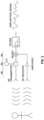
- One aspect of some embodiments of the present technology relates to a sensor for detecting particular bodily movements, such as bodily movements related to sleep disorders.
- An aspect of some embodiments of the present technology relates to a sensor for detecting a particular bodily movement with radio frequency signals.
- Another aspect of some embodiments of the technology relates to such a sensor with a circuit configured to generate pulsed radio frequency (RF) signals such as for bodily movement type detection.
- RF radio frequency
- the apparatus may include a radio frequency transmitter configured to emit radio frequency signals.
- the apparatus may include a receiver.
- the receiver may be configured to receive reflected ones of the emitted radio frequency signals.
- the receiver may be configured to process the received reflected ones of the emitted radio frequency signals to produce motion signals.
- the apparatus may include a processor.
- the processor may be configured to evaluate the motion signals.
- the processor may be configured to generate an indicator to identify occurrence of periodic limb movement in the motion signals based on the evaluation of the motion signals.
- the receiver may be configured to mix the received radio frequency signals with the emitted signals to produce the motion signals.
- the processor may be configured to measure a phase difference between the received radio frequency signals and the emitted signals.
- the motion signals may include in-phase and quadrature motion signals.
- the emitted radio frequency signals may include pulsed radio frequency oscillating signals.
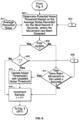
- the evaluation may involve comparing the motion signals to a noise threshold. Portions of the in-phase and quadrature motion signals may be compared to a noise threshold.
- the processor may be configured to update an action counter based on the comparing.
- the processor may be configured to increase the action counter when a portion of the motion signal is greater than the noise threshold.
- the processor may be configured to decrease the action counter when a portion of the motion signal is less than the noise threshold.
- the noise threshold may be defined as a frequency range in-band power of noise of the motion signal.
- the frequency range may be or include a range of four Hertz to eight Hertz.
- the processor may be configured to update the noise threshold based on determined average noise of the motion signals.
- the processor may be configured to detect a movement incident based on a comparison of a determined action count and a count threshold.
- the processor may be configured to determine a velocity of the movement incident.
- the processor may determine, or be configured to determine, the velocity based on a difference between the phase of the motion signals at adjacent samples.
- the processor may determine, or be configured to determine, displacement based on the determined velocity.
- the processor may determine, or be configured to determine, mean displacement from absolute values of determined velocities.
- the processor may characterize, or be configured to characterize, the movement incident based on a determined mean displacement of the movement incident.
- the processor may generate, or be configured to generate, a mapped activity value from the mean displacement.
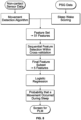
- the evaluation of the processor may involve calculating and assessing a plurality of features derived from the motion signals.
- the plurality of features may include at least one of the following: a duration of a movement incident; a total activity of a detected movement incident; a mapped total activity of a detected movement incident; a cross-correlation of in-phase and quadrature motion signals of the motion signals during a detected movement incident; and a mean of a four quadrant inverse tangent function of real parts of in-phase and quadrature motion signals of the motion signals during a detected movement incident.
- the assessing may involve logistic regression and the indicator may include a probability value representing a likelihood of periodic limb movement during sleep.
- the processor may be configured to: partition the motion signals into breath sections; classify each breath section of the motion signals as containing a limb movement or not containing a limb movement; and generate the indicator based on the classified breath sections.
- the processor may be further configured to pre-process the motion signals before the partitioning to de-trend and smooth the motion signals.
- the processor may be further configured to combine the motion signals to form a combined signal.
- the processor may be configured to perform principal component analysis to combine the motion signals.
- the processor may be further configured to discard periods of absence from the combined signal before the partitioning.
- the processor may be configured to detect zero-crossings of the combined signal to perform the partitioning.
- the processor may be configured to extract a waveform length feature from each breath section to perform the classifying.
- the processor may be configured to score the breath sections containing limb movements as part of a periodic limb movement (PLM) series according to scoring criteria. In some cases, to generate the indicator, the processor may be configured to count limb movements forming part of a PLM series from a night's sleep session.
- PLM periodic limb movement
- Some versions of the present technology may include a method for detecting periodic limb movement by a sleeping person.
- the method may include emitting, by a radio frequency transmitter, radio frequency signals toward the person.
- the method may include receiving, by a receiver, reflected ones of the emitted radio frequency signals.
- the method may include processing, by the receiver, the reflected ones of the emitted radio frequency signals to produce motion signals.
- the method may include, such by or in a processor, evaluating the motion signals and generating an indicator to identify occurrence of periodic limb movement present in the motion signals based on the evaluation of the motion signals.
- the received radio frequency signals are mixed with emitted signals to produce the motion signals.
- the processor may measure a phase difference between the received radio frequency signals and the emitted signals.
- the motion signals may include in-phase and quadrature motion signals.
- the emitted radio frequency signals may include epulsed radio frequency oscillating signals.
- the evaluating may include comparing the motion signals to a noise threshold. Portions of the in-phase and quadrature motion signals may be compared to a noise threshold.
- the method may include updating an action counter based on the comparing.
- the method may include increasing the action counter when a portion of the motion signal is greater than the noise threshold.
- the method may include decreasing the action counter when a portion of the motion signal is less than the noise threshold.
- the noise threshold may be defined as a frequency range in-band power of noise of the motion signal.
- the frequency range may be or include a range of four Hertz to eight Hertz.
- the method may include adjusting the noise threshold based on determined average noise of the motion signals
- the processor may detect a movement incident based on a comparison of a determined action count and a count threshold.
- the processor may determine a velocity of the movement incident.
- the processor may determine the velocity with a difference between the phase of the motion signals at adjacent samples.
- the processor may determine displacement based on the determined velocity.
- the processor may determine mean displacement with absolute values of determined velocities.
- the processor may characterize the movement incident based on a determined mean displacement.
- the processor may compare the determined mean displacement to a threshold and generates a mapped activity value with the mean displacement.
- the evaluation may include calculating and assessing a plurality of features derived from the motion signals.
- the plurality of features may include at least one of the following: a duration of a movement incident; a total activity count of a detected movement incident; a mapped total activity of a detected movement incident; a cross-correlation of in-phase and quadrature motion signals of the motion signals during a detected movement incident; and a mean of a four quadrant inverse tangent function of real parts of in-phase and quadrature motion signals of the motion signals during a detected movement incident.
- the assessing may include logistic regression and the indicator may include a probability value representing a likelihood of periodic limb movement during sleep.
- the evaluating may include any one or more of partitioning the motion signals into breath sections; classifying each breath section of the motion signals as containing a limb movement or not containing a limb movement; and generating the indicator based on the classified breath sections.
- the method may include pre-processing the motion signals before the partitioning to de-trend and smooth the motion signals.
- the method may include combining the motion signals to form a combined signal.
- the combining the motion signals may involve principal component analysis.
- the method may include discarding periods of absence from the combined signal before the partitioning.
- the partitioning may include detecting zero-crossings of the combined signal.
- the classifying may include extracting a waveform length feature from each breath section.
- the generating the indicator may include scoring the breath sections containing limb movements as part of a periodic limb movement (PLM) series according to scoring criteria.
- the generating the indicator may include counting limb movements forming part of a PLM series from a night's sleep session.
- Some versions of the present technology may include a periodic limb movement detection system.
- the system may include means for emitting radio frequency signals.
- the system may include means for receiving reflected ones of the emitted radio frequency signals.
- the system may include means for processing the received radio frequency signals to produce motion signals.
- the system may include means for evaluating the motion signals.
- the system may include means for generating an indicator to identify occurrence of periodic limb movement in the motion signals based on the evaluation of the motion signals.
- PLM Periodic Limb Movement
- RLS Restless Legs Syndrome
- detecting PLMs can enhance the accuracy of OSA monitoring by discarding PLMs which might otherwise corrupt the scoring of obstructive events.
- Example scoring criteria for detection of PLM series may be as follows:
- the diagnosis of PLM can be made when patients present with insomnia, tiredness and daytime sleepiness in the presence of a high PLM Index (PLMI).
- a PLMI may be calculated by counting the number of PLMs during a night's sleep and dividing that number by sleep time in hours. The resulting PLMI may then be used to determine a diagnosis and severity of a patient's PLM. For example, a PLMI reading of more than 5 and less than 25 may be considered mild; a PLMI reading of more than 25 and less than 50 may be considered moderate, and a PLMI reading of more than 50 may be severe.
- a respiratory treatment apparatus with a controller and a flow generator may be configured with the above-described sensor and may be configured to adjust a pressure treatment generated at a patient interface (e.g., mask) in response to particular motions detected by the sensor or avoid adjusting a pressure treatment in response to particular motions detected by the sensor.
- the respiratory treatment apparatus may be for example, a respiratory therapy or PAP apparatus, such as one described in International Patent Application Publication No. WO 2013/152403 .
- FIG. 11A shows that the filter is a bandpass filter with a peak around 0.4 Hz (24 cycles per minute) and low DC response to remove the mean of the I and Q motion signals.
- Fig. 11B shows the result of filtering example I and Q motion signals 1110 and 1120 with the filter of Fig. 11A . Before filtering, the I and Q motion signals 1110 and 1120 are DC shifted, and after filtering have corrected baselines as well as cleaner morphology.
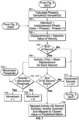
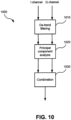
- step 1010 the method 1000 proceeds to step 1020 which applies principal component analysis (PCA) to the filtered I and Q motion signals to project the signals into two principal components in which the first component has the majority of the energy (variance).
- PCA uses a singular value decomposition (SVD) of a data matrix of the filtered I and Q motion signals.
- Step 1030 then combines the two principal components into one signal which captures the total information contained in the original I and Q motion signals.
- step 1030 discards the lower-energy component of the two principal components from step 1020.
- L-moments can be used to calculate quantities analogous to standard deviation, skewness and kurtosis, termed the L-scale, L-skewness and L-kurtosis respectively (the L-mean is identical to the conventional mean).
- L-moments have the theoretical advantages over conventional moments of being able to characterize a wider range of distributions and, when estimated from a sample, of being more robust to the presence of outliers in the sample. Compared with conventional moments, L-moments are less subject to bias in estimation and approximate their asymptotic normal distribution more closely in finite samples. Parameter estimates obtained from L-moments are sometimes more accurate in small samples than even the maximum likelihood estimates.
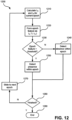
- step 1250 marks the current epoch as one in which the patient was present. Otherwise (“N"), step 1240 marks the current epoch as one in which the patient was absent.
- step 1260 determines whether the end of the combined signal has been reached. If so ("Y"), the method 1200 concludes at step 1280. Otherwise, step 1270 slides to the next epoch of the combined signal. In one implementation, the slide distance is equal to the epoch duration, so the epochs are non-overlapping. The method 1200 then returns to step 1210 to analyse the next epoch.
- the motion signals may be partitioned into breath sections.
- step 930 of the method 900 partitions the presence periods of the combined signal into successive breath sections where each section, or breath section, is at least associated with breathing movement representing a discrete patient breath or single respiratory cycle.
- One implementation of step 930 uses zero-crossing detection on the combined signal.
- the positive-going zero-crossing sampling instants are the locations of the start of inspiration of each breath, and the negative-going zero-crossing sampling instants are the locations of the start of expiration of each breath.
- Step 930 may first apply a finite impulse response (FIR) filter to the combined signal to force any zeros toward either the positive or the negative side of zero.
- FIR finite impulse response
- the FIR filter is chosen so that the most recent +1 or -1 has proportionally the most influence on the state of the zero.
- the FIR filter has the form exp(-n) where n runs from 0 to the sampling frequency in Hz (one second's worth of sampling instants).
- Fig. 13 is a graph illustrating the result of a zero-crossing implementation of partitioning step 930 applied to a combined signal 1310.
- the three-valued trace 1320 has the value +1 for positive-going zero-crossings indicating the start of inspiration, -1 for negative-going zero-crossings indicating the start of expiration, and zero everywhere else.
- step 940 extracts the waveform length feature from each breath section of the combined signal as returned by the partitioning step 930.
- Step 940 measures the cumulative changes in the combined signal from sampling instant to sampling instant over the breath section (e.g., data sample by data sample analysis of the breath section). Metaphorically, extracting the waveform length is the equivalent of treating both ends of the combined signal like the ends of a jumbled string, pulling on them until it forms a straight line, then measuring the straight-line distance.
- Waveform length effectively encapsulates the amplitude, frequency, and duration of the combined signal in one formula.
- This feature provides excellent discriminatory power for a classifier to distinguish normal breaths from those affected by limb movements (LMs).
- LMs limb movements
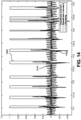
- One reason for selecting the waveform length feature for the specific purpose of detecting LMs in step 950 is that once an LM is initiated the effect of the LM usually shows on the motion signals as an amplified peak which has a sudden jump in amplitude in comparison to previous peaks as per the example in Fig. 14 .
- the waveform length feature produces an amplified output for such a different peak, this feature lends itself to the specific task of LM detection.
- Fig. 14 is a graph illustrating the result of applying a classifier to the waveform length feature extracted from a combined signal obtained from example I and Q motion signals 1410 and 1420.
- the binary trace 1430 is high for breaths classified in step 950 as containing an LM based on the waveform length feature. These generally coincide with abnormally high excursions in the I or Q motion signal.
Landscapes
- Health & Medical Sciences (AREA)
- Life Sciences & Earth Sciences (AREA)
- Engineering & Computer Science (AREA)
- Physics & Mathematics (AREA)
- Veterinary Medicine (AREA)
- Public Health (AREA)
- Pathology (AREA)
- Biophysics (AREA)
- Biomedical Technology (AREA)
- Heart & Thoracic Surgery (AREA)
- Medical Informatics (AREA)
- Molecular Biology (AREA)
- Surgery (AREA)
- Animal Behavior & Ethology (AREA)
- General Health & Medical Sciences (AREA)
- Physiology (AREA)
- Dentistry (AREA)
- Oral & Maxillofacial Surgery (AREA)
- Neurology (AREA)
- Neurosurgery (AREA)
- Artificial Intelligence (AREA)
- Radiology & Medical Imaging (AREA)
- Nuclear Medicine, Radiotherapy & Molecular Imaging (AREA)
- Psychiatry (AREA)
- Signal Processing (AREA)
- Computer Vision & Pattern Recognition (AREA)
- Developmental Disabilities (AREA)
- Geometry (AREA)
- Evolutionary Computation (AREA)
- Fuzzy Systems (AREA)
- Mathematical Physics (AREA)
- Measurement Of The Respiration, Hearing Ability, Form, And Blood Characteristics Of Living Organisms (AREA)
Claims (32)
- Appareil de détection de mouvements par radiofréquence pour la détection de mouvements périodiques de membres d'une personne endormie, l'appareil comprenant :un émetteur de radiofréquence configuré de manière à émettre des signaux de radiofréquence ;un récepteur configuré de manière à :recevoir des signaux de radiofréquence réfléchis parmi les signaux de radiofréquence émis ; ettraiter les signaux de radiofréquence réfléchis reçus parmi les signaux de radiofréquence émis, en vue de produire des signaux de mouvement, dans lequel le traitement comprend le mélange des signaux émis avec les signaux émis ; etun processeur configuré de manière à :partitionner les signaux de mouvement en sections de respiration ;classer chaque section de respiration des signaux de mouvement comme contenant un mouvement de membre ou ne contenant pas de mouvement de membre ; etgénérer un indicateur qui identifie une ou plusieurs occurrences de mouvement périodique des membres dans les signaux de mouvement sur la base des sections de respiration classées.
- Appareil selon la revendication 1, comprenant en outre un ou plusieurs des éléments ci-dessous :(a) dans lequel le traitement comprend en outre le filtrage du signal mélangé ;(b) dans lequel le processeur est configuré de manière à mesurer une différence de phase entre les signaux de radiofréquence reçus et les signaux émis ;(c) dans lequel les signaux de mouvement comprennent des signaux de mouvement en phase et en quadrature ; et(d) dans lequel les signaux de radiofréquence émis comprennent des signaux d'oscillation de radiofréquence pulsés.
- Appareil selon l'une quelconque des revendications 1 à 2, dans lequel le processeur est configuré de manière à évaluer les signaux de mouvement en comparant les signaux de mouvement à un seuil de bruit ;
et facultativement dans lequel des parties des signaux de mouvement en phase et en quadrature sont comparées à un seuil de bruit. - Appareil selon la revendication 3, comprenant en outre la mise à jour d'un compteur d'actions sur la base de la comparaison ; et
comprenant en outre facultativement le fait de :(a) augmenter le compteur d'actions lorsqu'une partie du signal de mouvement est supérieure au seuil de bruit ; et/ou(b) diminuer le compteur d'actions lorsqu'une partie du signal de mouvement est inférieure au seuil de bruit. - Appareil selon l'une quelconque des revendications 3 à 4, dans lequel le seuil de bruit est défini comme une puissance de bruit intra-bande de plage de fréquences du signal de mouvement ;
et facultativement dans lequel la plage de fréquences comprend une plage de quatre Hertz à huit Hertz. - Appareil selon l'une quelconque des revendications 3 à 5, comprenant en outre l'actualisation du seuil de bruit sur la base du bruit moyen déterminé des signaux de mouvement.
- Appareil selon l'une quelconque des revendications 1 à 6, dans lequel le processeur est configuré de manière à détecter un incident de mouvement sur la base d'une comparaison entre un comptage d'actions déterminé et un seuil de comptage.
- Appareil selon la revendication 7, dans lequel le processeur est configuré de manière à déterminer la vitesse de l'incident de mouvement ;
et facultativement dans lequel le processeur détermine la vitesse sur la base d'une différence entre la phase des signaux de mouvement au niveau d'échantillons adjacents. - Appareil selon la revendication 8, dans lequel le processeur détermine un déplacement sur la base de la vitesse déterminée ;
et facultativement dans lequel le processeur détermine un déplacement moyen à partir de valeurs absolues des vitesses déterminées. - Appareil selon l'une quelconque des revendications 7 à 9, dans lequel le processeur caractérise l'incident de mouvement sur la base d'un déplacement moyen déterminé de l'incident de mouvement ;
et facultativement dans lequel le processeur génère une valeur d'activité mise en correspondance à partir du déplacement moyen. - Appareil selon l'une quelconque des revendications 1 à 10, dans lequel le processeur est configuré de manière à évaluer les signaux de mouvement en calculant et en évaluant une pluralité de caractéristiques dérivées des signaux de mouvement et, facultativement :(a) dans lequel la pluralité de caractéristiques comprend au moins l'un des éléments suivants :
une durée d'un incident de mouvement; un comptage d'activité totale d'un incident de mouvement détecté ; une activité totale mise en correspondance d'un incident de mouvement détecté ; une corrélation croisée de signaux de mouvement en phase et en quadrature des signaux de mouvement pendant un incident de mouvement détecté ; et une moyenne d'une fonction tangente inverse à quatre quadrants de parties réelles de signaux de mouvement en phase et en quadrature des signaux de mouvement pendant un incident de mouvement détecté ; et/ou(b) dans lequel l'évaluation comprend une régression logistique et l'indicateur comprend une valeur de probabilité représentant une probabilité d'un mouvement périodique des membres pendant le sommeil. - Appareil selon l'une quelconque des revendications 1 à 11, dans lequel le processeur est en outre configuré de manière à prétraiter les signaux de mouvement avant le partitionnement afin de redresser et de lisser les signaux de mouvement.
- Appareil selon l'une quelconque des revendications 1 à 12, dans lequel :(a) le processeur est en outre configuré de manière à combiner les signaux de mouvement en vue de former un signal combiné ;(b) le processeur est configuré de manière à mettre en oeuvre une analyse en composantes principales afin de combiner les signaux de mouvement ;(c) le processeur est en outre configuré de manière à éliminer les périodes d'absence du signal combiné avant le partitionnement ; et/ou(d) le processeur est configuré de manière à détecter les passages par zéro du signal combiné afin de mettre en oeuvre le partitionnement.
- Appareil selon l'une quelconque des revendications 1 à 13, dans lequel le processeur est configuré de manière à extraire une caractéristique de longueur de forme d'onde de chaque section de respiration pour mettre en oeuvre la classification.
- Appareil selon l'une quelconque des revendications 1 à 14, dans lequel, pour générer l'indicateur, le processeur est configuré de manière à noter les sections de respiration contenant des mouvements de membres dans le cadre d'une série de mouvements périodiques de membres (PLM) selon des critères de notation.
- Appareil selon la revendication 15, dans lequel, pour générer l'indicateur, le processeur est configuré de manière à compter des mouvements de membres faisant partie d'une série de mouvements PLM à partir d'une session de sommeil nocturne.
- Programme pour un processeur comprenant des instructions qui, lorsque les instructions du programme sont exécutées par le processeur, amènent le processeur à mettre en oeuvre un procédé de détection de mouvements périodiques de membres d'une personne endormie à l'aide d'un appareil de détection de mouvements par radiofréquence selon la revendication 1, qui :(a) émet, par le biais d'un émetteur de radiofréquence de l'appareil, des signaux de radiofréquence en direction de la personne ; (b) reçoit, par le biais d'un récepteur de l'appareil, des signaux de radiofréquence réfléchis parmi les signaux de radiofréquence émis ; et (c) traite, par le biais du récepteur, les signaux de radiofréquence réfléchis parmi les signaux de radiofréquence émis en vue de produire des signaux de mouvement, dans lesquels les signaux réfléchis reçus sont mélangés avec les signaux émis,le procédé de détection de mouvements périodiques de membres d'une personne endormie comprenant le fait de :partitionner, par le biais du processeur, les signaux de mouvement en sections de respiration ;classer, par le biais du processeur, chaque section de respiration des signaux de mouvement comme contenant un mouvement de membre ou ne contenant pas de mouvement de membre ; etgénérer, par le biais du processeur, un indicateur qui identifie une ou plusieurs occurrences de mouvement périodique des membres, présentes dans les signaux de mouvement, sur la base des sections de respiration classées.
- Programme pour un processeur selon la revendication 17, dans lequel :(a) le traitement comprend en outre le filtrage du signal mélangé ;(b) le processeur mesure une différence de phase entre les signaux de radiofréquence reçus et les signaux émis ;(c) les signaux de mouvement comprennent des signaux de mouvement en phase et en quadrature ; et/ou(d) les signaux de radiofréquence émis comprennent des signaux d'oscillation de radiofréquence pulsés.
- Programme pour un processeur selon l'une quelconque des revendications 17 à 18, dans lequel le processeur évalue les signaux de mouvement en comparant les signaux de mouvement à un seuil de bruit,
et facultativement dans lequel des parties des signaux de mouvement en phase et en quadrature sont comparées à un seuil de bruit. - Programme pour un processeur selon la revendication 19, comprenant en outre la mise à jour d'un compteur d'actions sur la base de la comparaison,
et comprenant en outre, facultativement, le fait de :(a) augmenter le compteur d'actions lorsqu'une partie du signal de mouvement est supérieure au seuil de bruit ; et/ou(b) diminuer le compteur d'actions lorsqu'une partie du signal de mouvement est inférieure au seuil de bruit. - Programme pour un processeur selon l'une quelconque des revendications 19 à 20, dans lequel le seuil de bruit est défini comme une puissance de bruit intra-bande de plage de fréquences du signal de mouvement ; et
facultativement dans lequel la plage de fréquences comprend une plage de quatre Hertz à huit Hertz. - Programme pour un processeur selon l'une quelconque des revendications 19 à 21, comprenant en outre l'ajustement du seuil de bruit sur la base du bruit moyen déterminé des signaux de mouvement.
- Programme pour un processeur selon l'une quelconque des revendications 17 à 22, dans lequel le processeur est configuré de manière à détecter un incident de mouvement sur la base d'une comparaison entre un comptage d'actions déterminé et un seuil de comptage.
- Programme pour un processeur selon la revendication 23, dans lequel le processeur est configuré de manière à déterminer une vitesse de l'incident de mouvement ;
et facultativement dans lequel le processeur détermine la vitesse à l'aide d'une différence entre la phase des signaux de mouvement au niveau d'échantillons adjacents. - Programme pour un processeur selon la revendication 24, dans lequel le processeur détermine un déplacement sur la base de la vitesse déterminée,
et facultativement dans lequel le processeur détermine un déplacement moyen à partir de valeurs absolues des vitesses déterminées. - Programme pour un processeur selon l'une quelconque des revendications 23 à 25, dans lequel le processeur caractérise l'incident de mouvement sur la base d'un déplacement moyen déterminé,
et facultativement dans lequel le processeur compare le déplacement moyen déterminé à un seuil et génère une valeur d'activité mise en correspondance avec le déplacement moyen. - Programme pour un processeur selon l'une quelconque des revendications 17 à 26, dans lequel le processeur est configuré de manière à évaluer les signaux de mouvement en calculant et en évaluant une pluralité de caractéristiques dérivées des signaux de mouvement,
et facultativement :(a) dans lequel la pluralité de caractéristiques comprend au moins l'un des éléments suivants :
une durée d'un incident de mouvement; un comptage d'activité totale d'un incident de mouvement détecté ; une activité totale mise en correspondance d'un incident de mouvement détecté ; une corrélation croisée de signaux de mouvement en phase et en quadrature des signaux de mouvement pendant un incident de mouvement détecté ; et une moyenne d'une fonction tangente inverse à quatre quadrants de parties réelles de signaux de mouvement en phase et en quadrature des signaux de mouvement pendant un incident de mouvement détecté ; et/ou(b) dans lequel l'évaluation comprend une régression logistique et l'indicateur comprend une valeur de probabilité représentant une probabilité d'un mouvement périodique des membres pendant le sommeil. - Programme pour un processeur selon l'une quelconque des revendications 17 à 27, dans lequel le processeur évalue les signaux de mouvement en :
prétraitant les signaux de mouvement avant le partitionnement afin de redresser et de lisser les signaux de mouvement. - Programme pour un processeur selon l'une quelconque des revendications 17 à 28, comprenant en outre la combinaison des signaux de mouvement en vue de former un signal combiné ;
et facultativement :(a) dans lequel la combinaison des signaux de mouvement comprend une analyse en composantes principales ;(b) comprenant en outre l'élimination des périodes d'absence du signal combiné avant le partitionnement ; et/ou(c) dans lequel le partitionnement comprend la détection des passages par zéro du signal combiné. - Programme pour un processeur selon l'une quelconque des revendications 17 à 29, dans lequel la classification comprend l'extraction d'une caractéristique de longueur de forme d'onde de chaque section de respiration.
- Programme pour un processeur selon l'une quelconque des revendications 17 à 30, dans lequel la génération de l'indicateur comprend la notation des sections de respiration contenant des mouvements de membres dans le cadre d'une série de mouvements périodiques de membres (PLM) selon des critères de notation.
- Programme pour un processeur selon la revendication 31, dans lequel la génération de l'indicateur comprend le comptage de mouvements de membres faisant partie d'une série de mouvements PLM à partir d'une session de sommeil nocturne.
Applications Claiming Priority (2)
| Application Number | Priority Date | Filing Date | Title |
|---|---|---|---|
| US201562264477P | 2015-12-08 | 2015-12-08 | |
| PCT/EP2016/080267 WO2017097907A1 (fr) | 2015-12-08 | 2016-12-08 | Diagnostic et surveillance sans contact de troubles du sommeil |
Publications (2)
| Publication Number | Publication Date |
|---|---|
| EP3386383A1 EP3386383A1 (fr) | 2018-10-17 |
| EP3386383B1 true EP3386383B1 (fr) | 2024-11-20 |
Family
ID=57758559
Family Applications (1)
| Application Number | Title | Priority Date | Filing Date |
|---|---|---|---|
| EP16823166.0A Active EP3386383B1 (fr) | 2015-12-08 | 2016-12-08 | Diagnostic et surveillance sans contact de troubles du sommeil |
Country Status (3)
| Country | Link |
|---|---|
| US (1) | US12207949B2 (fr) |
| EP (1) | EP3386383B1 (fr) |
| WO (1) | WO2017097907A1 (fr) |
Families Citing this family (12)
| Publication number | Priority date | Publication date | Assignee | Title |
|---|---|---|---|---|
| KR102437150B1 (ko) | 2017-12-15 | 2022-08-26 | 한국전자통신연구원 | 다중 주파수 신호를 사용하는 사물의 변위 측정 방법 및 장치 |
| EP3727145B1 (fr) | 2017-12-22 | 2024-01-24 | ResMed Sensor Technologies Limited | Appareil, système et procédé de détection physiologique dans les véhicules |
| CN116898406A (zh) | 2017-12-22 | 2023-10-20 | 瑞思迈传感器技术有限公司 | 用于运动感测的设备、系统和方法 |
| CN111655125B (zh) | 2017-12-22 | 2023-08-18 | 瑞思迈传感器技术有限公司 | 用于健康和医学感测的设备、系统和方法 |
| US11320530B2 (en) | 2018-11-26 | 2022-05-03 | Electronics And Telecommunications Research Institute | Method and apparatus for removing motion artifact of unfixed radar |
| CA3128973A1 (fr) | 2019-03-04 | 2020-09-10 | Bhaskar Bhattacharyya | Compression et communication de donnees a l'aide d'un apprentissage automatique |
| US11585913B2 (en) * | 2019-03-07 | 2023-02-21 | Logistics And Supply Chain Multi Tech R&D Centre Limited | Ultra-wideband-based system and method for detecting properties associated with a movable object in an environment |
| CN112205964A (zh) * | 2019-07-11 | 2021-01-12 | 京东方科技集团股份有限公司 | 睡眠干预设备和睡眠干预管理系统 |
| CN110693454B (zh) * | 2019-08-23 | 2023-04-25 | 深圳大学 | 基于雷达的睡眠特征事件检测方法、装置及存储介质 |
| EP4143849A1 (fr) | 2020-04-30 | 2023-03-08 | ResMed Sensor Technologies Limited | Systèmes et méthodes pour favoriser un stade de sommeil d'un utilisateur |
| EP4284242A1 (fr) | 2021-01-29 | 2023-12-06 | ResMed Sensor Technologies Limited | Systèmes et procédés d'estimation d'un niveau de confort subjectif |
| WO2026062528A1 (fr) * | 2024-09-18 | 2026-03-26 | Nox Medical Ehf | Systèmes, dispositifs et procédé de détermination et de surveillance des troubles du sommeil fondées sur la détermination des réveils et d'événements associés aux réveils utilisant des signaux corporels non cérébraux ou ne nécessitant pas de signaux cérébraux |
Family Cites Families (33)
| Publication number | Priority date | Publication date | Assignee | Title |
|---|---|---|---|---|
| US4197537A (en) | 1976-08-19 | 1980-04-08 | Honeywell Inc. | Intruder detection system |
| US5361070B1 (en) | 1993-04-12 | 2000-05-16 | Univ California | Ultra-wideband radar motion sensor |
| US5682164A (en) | 1994-09-06 | 1997-10-28 | The Regents Of The University Of California | Pulse homodyne field disturbance sensor |
| US5966090A (en) | 1998-03-16 | 1999-10-12 | Mcewan; Thomas E. | Differential pulse radar motion sensor |
| US6426716B1 (en) | 2001-02-27 | 2002-07-30 | Mcewan Technologies, Llc | Modulated pulse doppler sensor |
| US6932774B2 (en) * | 2002-06-27 | 2005-08-23 | Denso Corporation | Respiratory monitoring system |
| US7220235B2 (en) * | 2003-06-27 | 2007-05-22 | Zoll Medical Corporation | Method and apparatus for enhancement of chest compressions during CPR |
| US7887493B2 (en) | 2003-09-18 | 2011-02-15 | Cardiac Pacemakers, Inc. | Implantable device employing movement sensing for detecting sleep-related disorders |
| US7616988B2 (en) | 2003-09-18 | 2009-11-10 | Cardiac Pacemakers, Inc. | System and method for detecting an involuntary muscle movement disorder |
| AU2007256872B2 (en) | 2006-06-01 | 2013-03-14 | Resmed Sensor Technologies Limited | Apparatus, system, and method for monitoring physiological signs |
| KR100809041B1 (ko) * | 2006-06-20 | 2008-03-03 | 삼성전자주식회사 | 수면 상태 감지 장치 및 그 방법 |
| US20100152600A1 (en) * | 2008-04-03 | 2010-06-17 | Kai Sensors, Inc. | Non-contact physiologic motion sensors and methods for use |
| US10575751B2 (en) * | 2008-11-28 | 2020-03-03 | The University Of Queensland | Method and apparatus for determining sleep states |
| US9526429B2 (en) * | 2009-02-06 | 2016-12-27 | Resmed Sensor Technologies Limited | Apparatus, system and method for chronic disease monitoring |
| US7952515B2 (en) | 2009-02-26 | 2011-05-31 | Mcewan Technologies, Llc | Range gated holographic radar |
| US7994968B2 (en) | 2009-02-26 | 2011-08-09 | Mcewan Technologies, Llc | RF magnitude sampler for holographic radar |
| US8098165B2 (en) * | 2009-02-27 | 2012-01-17 | Toyota Motor Engineering & Manufacturing North America (Tema) | System, apparatus and associated methodology for interactively monitoring and reducing driver drowsiness |
| WO2011143631A2 (fr) * | 2010-05-14 | 2011-11-17 | Kai Medical, Inc. | Systèmes et procédés pour le monitorage des signes vitaux multi-paramètres sans contact, la thérapie de l'apnée, l'annulation des vibrations, l'identification de patient, et capteurs de monitorage de sujet |
| US20130131465A1 (en) * | 2010-07-26 | 2013-05-23 | Sharp Kabushiki Kaisha | Biomeasurement device, biomeasurement method, control program for a biomeasurement device, and recording medium with said control program recorded thereon |
| WO2012131589A2 (fr) * | 2011-03-30 | 2012-10-04 | Koninklijke Philips Electronics N.V. | Système sans contact pour le dépistage des troubles du sommeil |
| EP2510974B1 (fr) * | 2011-04-15 | 2013-12-25 | Sorin CRM SAS | Dispositif médical actif, notamment défibrillateur implantable, à détection des complexes QRS dans un signal fortement bruité |
| US20140139616A1 (en) * | 2012-01-27 | 2014-05-22 | Intouch Technologies, Inc. | Enhanced Diagnostics for a Telepresence Robot |
| US8740793B2 (en) * | 2011-08-29 | 2014-06-03 | General Electric Company | Radar based systems and methods for monitoring a subject |
| EP4137185B1 (fr) | 2012-04-13 | 2025-07-09 | ResMed Pty Ltd | Appareil et procédés pour traitement ventilatoire |
| CN104736055A (zh) * | 2012-05-30 | 2015-06-24 | 瑞思迈传感器技术有限公司 | 用于监控心肺健康的方法和设备 |
| US9445729B2 (en) | 2012-07-20 | 2016-09-20 | Resmed Sensor Technologies Limited | Range gated radio frequency physiology sensor |
| TWI459247B (zh) * | 2012-11-14 | 2014-11-01 | Univ Nat Central | 運動軌跡重建系統及運動軌跡重建方法 |
| US10524661B2 (en) * | 2013-06-12 | 2020-01-07 | Proactive Live, Inc. | Sleep monitoring and stimulation |
| WO2015069778A1 (fr) * | 2013-11-05 | 2015-05-14 | The General Hospital Corporation | Système et procédé pour déterminer des états neuronaux à partir de mesures physiologiques |
| US20150374310A1 (en) * | 2014-06-26 | 2015-12-31 | Salutron, Inc. | Intelligent Sampling Of Heart Rate |
| US10736517B2 (en) * | 2014-10-09 | 2020-08-11 | Panasonic Intellectual Property Management Co., Ltd. | Non-contact blood-pressure measuring device and non-contact blood-pressure measuring method |
| EP3217874B1 (fr) * | 2014-11-12 | 2022-03-09 | Koninklijke Philips N.V. | Appareil et procédé permettant d'évaluer la gravité d'une maladie pulmonaire obstructive chronique, la bpco, chez un sujet |
| US11241167B2 (en) * | 2016-08-17 | 2022-02-08 | The Regents Of The University Of Colorado, A Body Corporate | Apparatus and methods for continuous and fine-grained breathing volume monitoring |
-
2016
- 2016-12-08 EP EP16823166.0A patent/EP3386383B1/fr active Active
- 2016-12-08 US US15/778,511 patent/US12207949B2/en active Active
- 2016-12-08 WO PCT/EP2016/080267 patent/WO2017097907A1/fr not_active Ceased
Also Published As
| Publication number | Publication date |
|---|---|
| US12207949B2 (en) | 2025-01-28 |
| WO2017097907A1 (fr) | 2017-06-15 |
| EP3386383A1 (fr) | 2018-10-17 |
| US20180353138A1 (en) | 2018-12-13 |
Similar Documents
| Publication | Publication Date | Title |
|---|---|---|
| EP3386383B1 (fr) | Diagnostic et surveillance sans contact de troubles du sommeil | |
| US12324652B2 (en) | Apparatus, system, and method for monitoring physiological signs | |
| Acharya et al. | Automated detection of sleep apnea from electrocardiogram signals using nonlinear parameters | |
| JP6208372B2 (ja) | うつ状態判別方法、及びうつ状態判定装置 | |
| US20200107775A1 (en) | Methods and Systems for Monitoring Sleep Apnea | |
| US20100331715A1 (en) | Systems and methods for detecting effort events | |
| JP6310401B2 (ja) | 生理的リズムを表す信号を処理する方法、システム及びコンピュータプログラム | |
| Ahmed et al. | Noncontact assessment for fatigue based on heart rate variability using IR-UWB radar | |
| Yen et al. | Non-contact estimation of cardiac inter-beat interval and heart rate variability using time-frequency domain analysis for CW radar | |
| Wang et al. | The Respiratory Fluctuation Index: A global metric of nasal airflow or thoracoabdominal wall movement time series to diagnose obstructive sleep apnea | |
| EP4327743A1 (fr) | Système d'estimation d'état de sommeil | |
| Yin et al. | Unobtrusive sleep health assessment using impulse radar: a pilot study in older people | |
| Taheri et al. | Non-invasive breathing rate detection using a very low power ultra-wide-band radar | |
| Sarteschi et al. | Respiratory rate estimation via sensor pressure mattress: a single subject evaluation. | |
| Marcos et al. | A classification algorithm based on spectral features from nocturnal oximetry and support vector machines to assist in the diagnosis of obstructive sleep apnea | |
| Aittokallio et al. | Detection of high-frequency respiratory movements during sleep | |
| CN118161127A (zh) | 一种基于雷达信号的婴儿呼吸问题检测系统 | |
| Cybulski et al. | Marcel Młyńczak, M. Sc. | |
| Yen et al. | Heart Rate Variability Monitoring under Stimulation Input Using Non-Contact CW Radar | |
| Servín-Aguilar et al. | Optimized Sleep Apnea Detector using UWB Signals. | |
| Lee | Detection and analysis of human respiration using microwave Doppler radar | |
| HK1135868B (en) | Apparatus, system, and method for monitoring physiological signs |
Legal Events
| Date | Code | Title | Description |
|---|---|---|---|
| STAA | Information on the status of an ep patent application or granted ep patent |
Free format text: STATUS: UNKNOWN |
|
| STAA | Information on the status of an ep patent application or granted ep patent |
Free format text: STATUS: THE INTERNATIONAL PUBLICATION HAS BEEN MADE |
|
| PUAI | Public reference made under article 153(3) epc to a published international application that has entered the european phase |
Free format text: ORIGINAL CODE: 0009012 |
|
| STAA | Information on the status of an ep patent application or granted ep patent |
Free format text: STATUS: REQUEST FOR EXAMINATION WAS MADE |
|
| 17P | Request for examination filed |
Effective date: 20180704 |
|
| AK | Designated contracting states |
Kind code of ref document: A1 Designated state(s): AL AT BE BG CH CY CZ DE DK EE ES FI FR GB GR HR HU IE IS IT LI LT LU LV MC MK MT NL NO PL PT RO RS SE SI SK SM TR |
|
| AX | Request for extension of the european patent |
Extension state: BA ME |
|
| DAV | Request for validation of the european patent (deleted) | ||
| DAX | Request for extension of the european patent (deleted) | ||
| RAP1 | Party data changed (applicant data changed or rights of an application transferred) |
Owner name: RESMED SENSOR TECHNOLOGIES LIMITED Owner name: RESMED PTY LTD |
|
| STAA | Information on the status of an ep patent application or granted ep patent |
Free format text: STATUS: EXAMINATION IS IN PROGRESS |
|
| 17Q | First examination report despatched |
Effective date: 20211216 |
|
| GRAP | Despatch of communication of intention to grant a patent |
Free format text: ORIGINAL CODE: EPIDOSNIGR1 |
|
| STAA | Information on the status of an ep patent application or granted ep patent |
Free format text: STATUS: GRANT OF PATENT IS INTENDED |
|
| INTG | Intention to grant announced |
Effective date: 20240611 |
|
| GRAS | Grant fee paid |
Free format text: ORIGINAL CODE: EPIDOSNIGR3 |
|
| GRAA | (expected) grant |
Free format text: ORIGINAL CODE: 0009210 |
|
| STAA | Information on the status of an ep patent application or granted ep patent |
Free format text: STATUS: THE PATENT HAS BEEN GRANTED |
|
| RAP3 | Party data changed (applicant data changed or rights of an application transferred) |
Owner name: RESMED SENSOR TECHNOLOGIES LIMITED Owner name: RESMED PTY LTD |
|
| RIN1 | Information on inventor provided before grant (corrected) |
Inventor name: ZAFFARONI, ALBERTO Inventor name: O'HARE, EMER Inventor name: KHUSHABA, RAMI Inventor name: GAHAN, LUKE Inventor name: DOHENY, EMER |
|
| AK | Designated contracting states |
Kind code of ref document: B1 Designated state(s): AL AT BE BG CH CY CZ DE DK EE ES FI FR GB GR HR HU IE IS IT LI LT LU LV MC MK MT NL NO PL PT RO RS SE SI SK SM TR |
|
| REG | Reference to a national code |
Ref country code: GB Ref legal event code: FG4D |
|
| REG | Reference to a national code |
Ref country code: CH Ref legal event code: EP |
|
| REG | Reference to a national code |
Ref country code: DE Ref legal event code: R096 Ref document number: 602016090325 Country of ref document: DE |
|
| REG | Reference to a national code |
Ref country code: IE Ref legal event code: FG4D |
|
| REG | Reference to a national code |
Ref country code: LT Ref legal event code: MG9D |
|
| REG | Reference to a national code |
Ref country code: NL Ref legal event code: MP Effective date: 20241120 |
|
| PG25 | Lapsed in a contracting state [announced via postgrant information from national office to epo] |
Ref country code: IS Free format text: LAPSE BECAUSE OF FAILURE TO SUBMIT A TRANSLATION OF THE DESCRIPTION OR TO PAY THE FEE WITHIN THE PRESCRIBED TIME-LIMIT Effective date: 20250320 Ref country code: HR Free format text: LAPSE BECAUSE OF FAILURE TO SUBMIT A TRANSLATION OF THE DESCRIPTION OR TO PAY THE FEE WITHIN THE PRESCRIBED TIME-LIMIT Effective date: 20241120 Ref country code: PT Free format text: LAPSE BECAUSE OF FAILURE TO SUBMIT A TRANSLATION OF THE DESCRIPTION OR TO PAY THE FEE WITHIN THE PRESCRIBED TIME-LIMIT Effective date: 20250320 |
|
| PG25 | Lapsed in a contracting state [announced via postgrant information from national office to epo] |
Ref country code: FI Free format text: LAPSE BECAUSE OF FAILURE TO SUBMIT A TRANSLATION OF THE DESCRIPTION OR TO PAY THE FEE WITHIN THE PRESCRIBED TIME-LIMIT Effective date: 20241120 Ref country code: NL Free format text: LAPSE BECAUSE OF FAILURE TO SUBMIT A TRANSLATION OF THE DESCRIPTION OR TO PAY THE FEE WITHIN THE PRESCRIBED TIME-LIMIT Effective date: 20241120 |
|
| REG | Reference to a national code |
Ref country code: AT Ref legal event code: MK05 Ref document number: 1742797 Country of ref document: AT Kind code of ref document: T Effective date: 20241120 |
|
| PG25 | Lapsed in a contracting state [announced via postgrant information from national office to epo] |
Ref country code: BG Free format text: LAPSE BECAUSE OF FAILURE TO SUBMIT A TRANSLATION OF THE DESCRIPTION OR TO PAY THE FEE WITHIN THE PRESCRIBED TIME-LIMIT Effective date: 20241120 |
|
| PG25 | Lapsed in a contracting state [announced via postgrant information from national office to epo] |
Ref country code: ES Free format text: LAPSE BECAUSE OF FAILURE TO SUBMIT A TRANSLATION OF THE DESCRIPTION OR TO PAY THE FEE WITHIN THE PRESCRIBED TIME-LIMIT Effective date: 20241120 |
|
| PG25 | Lapsed in a contracting state [announced via postgrant information from national office to epo] |
Ref country code: NO Free format text: LAPSE BECAUSE OF FAILURE TO SUBMIT A TRANSLATION OF THE DESCRIPTION OR TO PAY THE FEE WITHIN THE PRESCRIBED TIME-LIMIT Effective date: 20250220 |
|
| PG25 | Lapsed in a contracting state [announced via postgrant information from national office to epo] |
Ref country code: LV Free format text: LAPSE BECAUSE OF FAILURE TO SUBMIT A TRANSLATION OF THE DESCRIPTION OR TO PAY THE FEE WITHIN THE PRESCRIBED TIME-LIMIT Effective date: 20241120 Ref country code: AT Free format text: LAPSE BECAUSE OF FAILURE TO SUBMIT A TRANSLATION OF THE DESCRIPTION OR TO PAY THE FEE WITHIN THE PRESCRIBED TIME-LIMIT Effective date: 20241120 Ref country code: GR Free format text: LAPSE BECAUSE OF FAILURE TO SUBMIT A TRANSLATION OF THE DESCRIPTION OR TO PAY THE FEE WITHIN THE PRESCRIBED TIME-LIMIT Effective date: 20250221 |
|
| PG25 | Lapsed in a contracting state [announced via postgrant information from national office to epo] |
Ref country code: PL Free format text: LAPSE BECAUSE OF FAILURE TO SUBMIT A TRANSLATION OF THE DESCRIPTION OR TO PAY THE FEE WITHIN THE PRESCRIBED TIME-LIMIT Effective date: 20241120 |
|
| PG25 | Lapsed in a contracting state [announced via postgrant information from national office to epo] |
Ref country code: RS Free format text: LAPSE BECAUSE OF FAILURE TO SUBMIT A TRANSLATION OF THE DESCRIPTION OR TO PAY THE FEE WITHIN THE PRESCRIBED TIME-LIMIT Effective date: 20250220 |
|
| PG25 | Lapsed in a contracting state [announced via postgrant information from national office to epo] |
Ref country code: SM Free format text: LAPSE BECAUSE OF FAILURE TO SUBMIT A TRANSLATION OF THE DESCRIPTION OR TO PAY THE FEE WITHIN THE PRESCRIBED TIME-LIMIT Effective date: 20241120 |
|
| PG25 | Lapsed in a contracting state [announced via postgrant information from national office to epo] |
Ref country code: DK Free format text: LAPSE BECAUSE OF FAILURE TO SUBMIT A TRANSLATION OF THE DESCRIPTION OR TO PAY THE FEE WITHIN THE PRESCRIBED TIME-LIMIT Effective date: 20241120 |
|
| PG25 | Lapsed in a contracting state [announced via postgrant information from national office to epo] |
Ref country code: EE Free format text: LAPSE BECAUSE OF FAILURE TO SUBMIT A TRANSLATION OF THE DESCRIPTION OR TO PAY THE FEE WITHIN THE PRESCRIBED TIME-LIMIT Effective date: 20241120 |
|
| PG25 | Lapsed in a contracting state [announced via postgrant information from national office to epo] |
Ref country code: RO Free format text: LAPSE BECAUSE OF FAILURE TO SUBMIT A TRANSLATION OF THE DESCRIPTION OR TO PAY THE FEE WITHIN THE PRESCRIBED TIME-LIMIT Effective date: 20241120 |
|
| PG25 | Lapsed in a contracting state [announced via postgrant information from national office to epo] |
Ref country code: SK Free format text: LAPSE BECAUSE OF FAILURE TO SUBMIT A TRANSLATION OF THE DESCRIPTION OR TO PAY THE FEE WITHIN THE PRESCRIBED TIME-LIMIT Effective date: 20241120 |
|
| PG25 | Lapsed in a contracting state [announced via postgrant information from national office to epo] |
Ref country code: CZ Free format text: LAPSE BECAUSE OF FAILURE TO SUBMIT A TRANSLATION OF THE DESCRIPTION OR TO PAY THE FEE WITHIN THE PRESCRIBED TIME-LIMIT Effective date: 20241120 |
|
| PG25 | Lapsed in a contracting state [announced via postgrant information from national office to epo] |
Ref country code: IT Free format text: LAPSE BECAUSE OF FAILURE TO SUBMIT A TRANSLATION OF THE DESCRIPTION OR TO PAY THE FEE WITHIN THE PRESCRIBED TIME-LIMIT Effective date: 20241120 |
|
| REG | Reference to a national code |
Ref country code: CH Ref legal event code: PL |
|
| PG25 | Lapsed in a contracting state [announced via postgrant information from national office to epo] |
Ref country code: LU Free format text: LAPSE BECAUSE OF NON-PAYMENT OF DUE FEES Effective date: 20241208 |
|
| REG | Reference to a national code |
Ref country code: DE Ref legal event code: R097 Ref document number: 602016090325 Country of ref document: DE |
|
| PG25 | Lapsed in a contracting state [announced via postgrant information from national office to epo] |
Ref country code: SE Free format text: LAPSE BECAUSE OF FAILURE TO SUBMIT A TRANSLATION OF THE DESCRIPTION OR TO PAY THE FEE WITHIN THE PRESCRIBED TIME-LIMIT Effective date: 20241120 |
|
| PG25 | Lapsed in a contracting state [announced via postgrant information from national office to epo] |
Ref country code: MC Free format text: LAPSE BECAUSE OF FAILURE TO SUBMIT A TRANSLATION OF THE DESCRIPTION OR TO PAY THE FEE WITHIN THE PRESCRIBED TIME-LIMIT Effective date: 20241120 |
|
| PLBE | No opposition filed within time limit |
Free format text: ORIGINAL CODE: 0009261 |
|
| STAA | Information on the status of an ep patent application or granted ep patent |
Free format text: STATUS: NO OPPOSITION FILED WITHIN TIME LIMIT |
|
| REG | Reference to a national code |
Ref country code: BE Ref legal event code: MM Effective date: 20241231 |
|
| PG25 | Lapsed in a contracting state [announced via postgrant information from national office to epo] |
Ref country code: BE Free format text: LAPSE BECAUSE OF NON-PAYMENT OF DUE FEES Effective date: 20241231 |
|
| PG25 | Lapsed in a contracting state [announced via postgrant information from national office to epo] |
Ref country code: CH Free format text: LAPSE BECAUSE OF NON-PAYMENT OF DUE FEES Effective date: 20241231 |
|
| 26N | No opposition filed |
Effective date: 20250821 |
|
| PG25 | Lapsed in a contracting state [announced via postgrant information from national office to epo] |
Ref country code: IE Free format text: LAPSE BECAUSE OF NON-PAYMENT OF DUE FEES Effective date: 20241208 |
|
| GBPC | Gb: european patent ceased through non-payment of renewal fee |
Effective date: 20250220 |
|
| PGFP | Annual fee paid to national office [announced via postgrant information from national office to epo] |
Ref country code: DE Payment date: 20251126 Year of fee payment: 10 |
|
| PG25 | Lapsed in a contracting state [announced via postgrant information from national office to epo] |
Ref country code: GB Free format text: LAPSE BECAUSE OF NON-PAYMENT OF DUE FEES Effective date: 20250220 |
|
| PGFP | Annual fee paid to national office [announced via postgrant information from national office to epo] |
Ref country code: FR Payment date: 20251120 Year of fee payment: 10 |