EP3386508B1 - Cpap-tubulin-modul - Google Patents
Cpap-tubulin-modul Download PDFInfo
- Publication number
- EP3386508B1 EP3386508B1 EP16808670.0A EP16808670A EP3386508B1 EP 3386508 B1 EP3386508 B1 EP 3386508B1 EP 16808670 A EP16808670 A EP 16808670A EP 3386508 B1 EP3386508 B1 EP 3386508B1
- Authority
- EP
- European Patent Office
- Prior art keywords
- cancer
- compound
- alkyl
- pharmaceutical composition
- phenyl
- Prior art date
- Legal status (The legal status is an assumption and is not a legal conclusion. Google has not performed a legal analysis and makes no representation as to the accuracy of the status listed.)
- Active
Links
Images





Classifications
-
- C—CHEMISTRY; METALLURGY
- C07—ORGANIC CHEMISTRY
- C07D—HETEROCYCLIC COMPOUNDS
- C07D471/00—Heterocyclic compounds containing nitrogen atoms as the only ring hetero atoms in the condensed system, at least one ring being a six-membered ring with one nitrogen atom, not provided for by groups C07D451/00 - C07D463/00
- C07D471/02—Heterocyclic compounds containing nitrogen atoms as the only ring hetero atoms in the condensed system, at least one ring being a six-membered ring with one nitrogen atom, not provided for by groups C07D451/00 - C07D463/00 in which the condensed system contains two hetero rings
- C07D471/04—Ortho-condensed systems
-
- A—HUMAN NECESSITIES
- A61—MEDICAL OR VETERINARY SCIENCE; HYGIENE
- A61K—PREPARATIONS FOR MEDICAL, DENTAL OR TOILETRY PURPOSES
- A61K31/00—Medicinal preparations containing organic active ingredients
- A61K31/33—Heterocyclic compounds
- A61K31/395—Heterocyclic compounds having nitrogen as a ring hetero atom, e.g. guanethidine or rifamycins
- A61K31/435—Heterocyclic compounds having nitrogen as a ring hetero atom, e.g. guanethidine or rifamycins having six-membered rings with one nitrogen as the only ring hetero atom
- A61K31/47—Quinolines; Isoquinolines
- A61K31/4738—Quinolines; Isoquinolines ortho- or peri-condensed with heterocyclic ring systems
- A61K31/4745—Quinolines; Isoquinolines ortho- or peri-condensed with heterocyclic ring systems condensed with ring systems having nitrogen as a ring hetero atom, e.g. phenantrolines
-
- A—HUMAN NECESSITIES
- A61—MEDICAL OR VETERINARY SCIENCE; HYGIENE
- A61K—PREPARATIONS FOR MEDICAL, DENTAL OR TOILETRY PURPOSES
- A61K31/00—Medicinal preparations containing organic active ingredients
- A61K31/33—Heterocyclic compounds
- A61K31/395—Heterocyclic compounds having nitrogen as a ring hetero atom, e.g. guanethidine or rifamycins
- A61K31/495—Heterocyclic compounds having nitrogen as a ring hetero atom, e.g. guanethidine or rifamycins having six-membered rings with two or more nitrogen atoms as the only ring heteroatoms, e.g. piperazine or tetrazines
- A61K31/505—Pyrimidines; Hydrogenated pyrimidines, e.g. trimethoprim
- A61K31/517—Pyrimidines; Hydrogenated pyrimidines, e.g. trimethoprim ortho- or peri-condensed with carbocyclic ring systems, e.g. quinazoline, perimidine
-
- A—HUMAN NECESSITIES
- A61—MEDICAL OR VETERINARY SCIENCE; HYGIENE
- A61K—PREPARATIONS FOR MEDICAL, DENTAL OR TOILETRY PURPOSES
- A61K31/00—Medicinal preparations containing organic active ingredients
- A61K31/33—Heterocyclic compounds
- A61K31/395—Heterocyclic compounds having nitrogen as a ring hetero atom, e.g. guanethidine or rifamycins
- A61K31/55—Heterocyclic compounds having nitrogen as a ring hetero atom, e.g. guanethidine or rifamycins having seven-membered rings, e.g. azelastine, pentylenetetrazole
-
- A—HUMAN NECESSITIES
- A61—MEDICAL OR VETERINARY SCIENCE; HYGIENE
- A61K—PREPARATIONS FOR MEDICAL, DENTAL OR TOILETRY PURPOSES
- A61K45/00—Medicinal preparations containing active ingredients not provided for in groups A61K31/00 - A61K41/00
- A61K45/06—Mixtures of active ingredients without chemical characterisation, e.g. antiphlogistics and cardiaca
-
- A—HUMAN NECESSITIES
- A61—MEDICAL OR VETERINARY SCIENCE; HYGIENE
- A61P—SPECIFIC THERAPEUTIC ACTIVITY OF CHEMICAL COMPOUNDS OR MEDICINAL PREPARATIONS
- A61P35/00—Antineoplastic agents
-
- C—CHEMISTRY; METALLURGY
- C07—ORGANIC CHEMISTRY
- C07D—HETEROCYCLIC COMPOUNDS
- C07D495/00—Heterocyclic compounds containing in the condensed system at least one hetero ring having sulfur atoms as the only ring hetero atoms
- C07D495/12—Heterocyclic compounds containing in the condensed system at least one hetero ring having sulfur atoms as the only ring hetero atoms in which the condensed system contains three hetero rings
- C07D495/14—Ortho-condensed systems
Definitions
- the invention relates to CPAP-tubulin inhibitors and their use as cancer therapeutics.
- Centrosome amplification is a hallmark of human cancers that can trigger cancer cell invasion.
- Centrosomes are major microtubule organizing centers in mammalian cells whose numerical abnormalities contribute to increased cellular invasiveness.
- cancer cells display supernumerary centrosomes.
- non-small-cell lung cancer cells harboring somatic activating and resistance mutations in epidermal growth factor receptor (EGFR) gene exhibit an extreme increase in centrosome numbers.
- Cancer cells cluster their supernumerary centrosomes both at interphase and mitosis to generate pseudo-bipolar spindles so as to circumvent the deleterious effects of centrosomal amplification caused by mitotic catastrophe.
- centrosomes While the mechanisms by which cancer cells cluster their supernumerary centrosomes are largely unknown, it is known that extra-centrosomes remain inactive with no or less microtubule nucleating activity both during and after centrosomal clustering at the interphase of cell cycle. Further, it is known that microtubule-nucleating activity of centrosomes is spatiotemporally regulated so that they nucleate less during interphase and more during mitosis. Still further, it is known that in order to combat cancer, centrosomes can be removed. However, cancer cells can proliferate upon centrosome removal, raising the possibility that cancer cells use the extra-centrosomes for the benefit of cellular invasion.
- centrosomes In the context of centrosomes, reference can be made, for example, to Blachon and Gopalakrishnan et al., Genetics 2008 ; Gopalakrishnan et al., JBC 2010 ; Gopalakrishnan et al., Nature Commun 2011 ; Gopalakrishnan et al., Nature Cell Biology 2012 ; Gopalakrishnan et al., Current Opinion in Cell Biol 2013 ; Zheng et al., PNAS 2014 ; and Pannu et al., Cell Death and Dis 2014 .
- anti-microtubule agents that block cell division by preventing microtubule function.
- the two main groups of anti-microtubule agents are vinca alkaloids and taxanes.
- the vinca alkaloids prevent the formation of the microtubules, whereas the taxanes prevent the microtubule disassembly. By doing so, they prevent the cancer cells from completing mitosis. Following this, cell cycle arrest occurs, which induces programmed cell death (apoptosis).
- topoisomerase inhibitors are employed in cancer therapies. These inhibitors affect the activity of topoisomerase enzymes which unwind DNA during replication or transcription.
- Another group of compounds for cancer therapy are tyrosine-kinase inhibitors such as compounds kown under the name of Imatinib, Gefitinib, Erlotinib, Sunitinib and Cabozantinib.
- US 2009/0118135 discloses an assay for determining compounds that inhibit activity of a Bcl-2-protein, or affect conversion of Bcl-2 from antiapoptotic to a proapoptotic form. Further, US 2009/0118135 relates to a pro-apoptotic modulator of Bcl which can be linked through GX to a cyclic disulfide loop peptide that binds specifically to breast cancer cells.
- US 6,864,238 relates to polypeptides that comprise approx. 100-amino acid residue region of a centrosomal P4.1-associated protein (CPAP) that possess microtubule-destabilizing activity, polynucleotides encoding such polypeptides, compositions comprising the polypeptides and polynucleotides, and methods of use thereof.
- the invention is useful for destabilizing microtubules in eukaryotic cells, including but not limited to cancer cells.
- Centrosome activation mediated by the CPAP-tubulin inhibitors according to the invention has broad anti-invasive activity against a wide-spectrum of cancers including tyrosine-kinase inhibitor (TKI) resistant EGFR and KRAS mutant cancers. Further, centrosome activation by the CPAP-tubulin inhibitors according to the invention effectively synergizes these cells to EGFR inhibition.
- TKI tyrosine-kinase inhibitor
- the present invention is defined by the independent claims.
- the dependent claims depict other embodiments of the invention. Any embodiment not falling under the scope of the appended claims does not form part of the invention.
- the invention relates to a compound
- compositions may also contain adjuvants, such as preservative agents, wetting agents, emulsifying agents, and dispersing agents. Prevention of the action of microorganisms may be ensured by various antibacterial and antifungal agents, for example, parabens, phenol, chlorobutanol, sorbic acid, and the like. It also may be desirable to include isotonic agents, for example, sugars, sodium chloride and the like. Prolonged absorption of the injectable pharmaceutical form may be brought about by the use of agents delaying absorption, for example, aluminum monostearate and gelatin.
- the compounds may be incorporated into slow-release or targeted-delivery systems such as polymer matrices, liposomes, and microspheres. They may be sterilized, for example, by filtration through a bacteria-retaining filter or by incorporation of sterilizing agents in the form of sterile solid compositions, which may be dissolved in sterile water or some other sterile injectable medium immediately before use.
- Dosage forms for topical or transdermal administration of a compound include ointments, pastes, creams, lotions, gels, powders, solutions, sprays, inhalants or patches.
- a desired compound is admixed under sterile conditions with a pharmaceutically acceptable carrier and any needed preservatives or buffers as may be required.
- Ophthalmic formulation, eardrops, eye ointments, powders and solutions are also contemplated as being within the scope of this disclosure.
- the ointments, pastes, creams and gels may contain, in addition to an active compound, animal and vegetable fats, oils, waxes, paraffins, starch, tragacanth, cellulose derivatives, polyethylene glycols, silicones, bentonites, silicic acid, talc and zinc oxide, or mixtures thereof.
- Powders and sprays may contain, in addition to the compounds, lactose, talc, silicic acid, aluminum hydroxide, calcium silicates and polyamide powder, or mixtures of these substances. Sprays additionally may contain customary propellants such as chlorofluorohydrocarbons.
- liposomes are generally derived from phospholipids or other lipid substances. Liposomes are formed by mono- or multi-lamellar hydrated liquid crystals that are dispersed in an aqueous medium. Any non-toxic, physiologically acceptable and metabolizable lipid capable of forming liposomes may be used.
- the present compositions in liposome form may contain, in addition to the compounds, stabilizers, preservatives, and the like.
- the preferred lipids are the natural and synthetic phospholipids and phosphatidylcholines (lecithins) used separately or together. Methods to form liposomes are known in the art.
- Dosage forms for topical administration of a compound according to the invention as described above include powders, sprays, ointments and inhalants.
- the active compound is mixed under sterile conditions with a pharmaceutically acceptable carrier and any needed preservatives, buffers or propellants.
- Ophthalmic formulations, eye ointments, powders and solutions are also possible.
- Aqueous liquid compositions may also be useful.
- the compounds according to the invention are preferably administered once daily, twice daily, thrice daily or more often to a subject in need thereof.
- the compounds according to the invention are preferably administered orally, rectally, intravenously, intramuscularly, intraperitoneally, intrasternally, subcutaneously, by intraarticular injection, by infusion, intravaginally, intracisternally, intraperitoneally, topically, bucally or extracorporeally.
- a combination of cancer medicaments to achieve the desired remission of cancer cells.
- the need for such a combination of cancer medicaments i.e. a combination therapy, particularly arises when cancer cells are or become resistant to conventional cancer medicaments such as e.g. tyrosine-kinase inhibitors.
- conventional cancer medicaments such as e.g. tyrosine-kinase inhibitors.
- Such a resistance to conventional cancer medicaments has for example been observed in lung cancer cells which may exhibit a resistance to tyrosine-kinase inhibitors after the patient has been treated with tyrosine-kinase inhibitors for a while.
- Another aspect of the invention relates to a pharmaceutical composition
- a pharmaceutical composition comprising a combination of
- the second pharmacologically active compound is a tyrosine-kinase inhibitor, more preferred the second pharmacologically active compound is selected from the group consisting of Imatinib, Gefitinib, Erlotinib, Sunitinib and Cabozantinib.
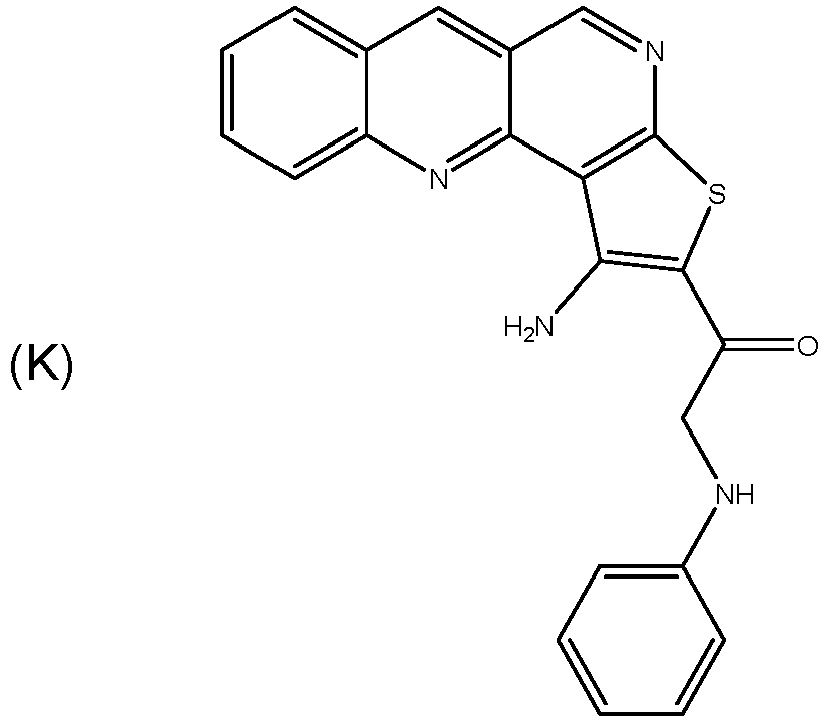
- the combination of a compound according to any of formulae (2), (3), (4), (A), (B), (D), (E), (G), (I), (J), (K) or (L) and a second pharmacologically active compound is used in the treatment of cancer, more preferred in the treatment of drug resistant cancer, even more preferred in the treatment of cancer selected from the group consisting of tyrosine-kinase inhibitor (TKI) resistant EGFR and KRAS mutant cancers.
- TKI tyrosine-kinase inhibitor
- a compound according to any of formulae (2), (3), (4), (A), (B), (D), (E), (G), (I), (J), (K) or (L) and a second pharmacologically active compound in the treatment of cancer selected from the group consisting of lung cancer, brain cancer, eye cancer, oral cancer, throat cancer, tongue cancer, trachea cancer, stomach cancer, liver cancer, kidney cancer, pancreatic cancer, gallbladder cancer, colorectal cancer, cancer of the urinary tract, bladder cancer, testicular cancer, ovarian cancer, cervical cancer, endometrial cancer, pancreatic cancer, skin cancer, Hodgkin's lymphoma, non-Hodgkin's lymphoma, breast cancer, and prostate cancer.
- NSCLC non-small cell lung cancer
- Another aspect of the invention relates to a kit comprising
- the first pharmaceutical composition and the second pharmaceutical composition of said kit are for administration through the same route.
- the first pharmaceutical composition is for administration through a different route than the second pharmaceutical composition.
- Preferred administration routes for the first and second pharmaceutical composition of said kit are oral, rectal parenteral, intravaginal, intracisternal, intraperitoneal, topical or bucal administration to a patient.
- the first pharmaceutical composition and the second pharmaceutical composition of said kit are administered to a patient subsequent to each other, wherein
- the period of time between the administration of the first pharmaceutical composition and the second pharmaceutical composition, or vice versa is at least 1 hour, at least 2 hours, at least 3 hours, at least 4 hours or at least 5 hours.
- the period of time between the administration of the first pharmaceutical composition and the second pharmaceutical composition, or vice versa is at least 1 day, at least 2 days, at least 3 days, at least 4 days, at least 5 days, at least 6 days, at least 7 days or at least 8n days.
- the period of time between the administration of the first pharmaceutical composition and the second pharmaceutical composition, or vice versa is at least 2 weeks, at least 3 weeks, at least 4 weeks, at least 5 weeks, at least 6 weeks or at least 7 weeks or at least 8 weeks.
- the second pharmacologically active compound of said kit is a tyrosine-kinase inhibitor, more preferably the second pharmacologically active compound of said kit is selected from the group consisting of Imatinib, Gefitinib, Erlotinib, Sunitinib and Cabozantinib.
- kits in the treatment of cancer selected from the group consisting of lung cancer, brain cancer, eye cancer, oral cancer, throat cancer, tongue cancer, trachea cancer, stomach cancer, liver cancer, kidney cancer, pancreatic cancer, gallbladder cancer, colorectal cancer, cancer of the urinary tract, bladder cancer, testicular cancer, ovarian cancer, cervical cancer, endometrial cancer, pancreatic cancer, skin cancer, Hodgkin's lymphoma, non-Hodgkin's lymphoma, breast cancer, and prostate cancer.
- kits in the treatment of lung cancer, particularly non-small cell lung cancer (NSCLC).
- NSCLC non-small cell lung cancer
- CPAP ⁇ T cells resided in mitosis ⁇ 10 times much longer than control cells and eventually underwent apoptosis as characterized by the formation of apoptopic blebs.
- a three-dimensional (3D) organotypic culture model for cancer cells was adapted that recapitulates many aspects of human epithelial cancer tissue architecture. Inducing CPAP ⁇ T in H1975 organoids prevented the formation of actin-positive invasive protrusions that invade the surrounding matrix.
- CPAP ⁇ T cells resulted in significant decrease in in vivo growth of breast cancer xenografts accompanied by reduced cell proliferation.
- Compound (B) was synthesized according to the scheme provided with FIGURE 17 .
- the educt 3-Chlorobenzo[b][1,6]naphthyridine-4-carbonitrile was synthesized as described in Russ. Chem.Bull., Int. Ed. 2002, 51, 2121-2128 , Chem. Heterocycl. Compd. 1986, 22, 909-914 , Russ.Chem.Bull., Int.Ed. 2004, 873-881 .
- Compound (B) (3-Methoxybenzo[b][1,6]naphthyridine-4-carbonitrile) was prepared from Chlorobenzo[b][1,6]naphthyridine-4-carbonitrile according to the following procedure: A suspension of 3-Chlorobenzo[b] [1,6]naphthyridine-4-carbonitrile (400 mg, 1.67 mmol) in a mixture of absolute methanol (30 mL) and dry tetrahydrofuran (20 mL) was stirred at reflux and 0.5 M solution of sodium methoxide in methanol (4.00 mL, 2.00 mmol, 1.2 eq) was added dropwise over 1 h.
- IR (ATR) vmax (cm-1) 3044, 3019, 2958, 2894, 2847, 2224, 1605, 1557, 1512, 1466, 1411, 1331, 1285, 1181, 1140, 1107, 1041, 969, 800, 741, 613.
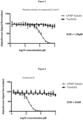
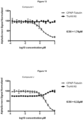
- Compound (B) prevented cancer cell proliferation with IC50 values between 0.86-2.9 ⁇ M. Analyzing centrosomes revealed that compound (B) prevented clustering of extra centrosomes during interphase, with each nucleating enhanced microtubule asters, suggesting that compound (B) prematurely activates extra centrosomes in interphase resulting in the formation of multipolar spindles in interphase and mitosis.
- tubulin-binding agents act on spindle microtubules and thus prevent mitosis nonspecifically.
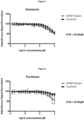
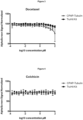
- compound (B) was compared to known tubulin binders such as Taxol, Bactallin III, Docetaxel and Vinblastine ( Figures 1 , 3 , 19 , 20 ).
- mice bearing tumor volume >100 mm 3 were used.
- Compound (B) (10 or 20 mg, Kg-1 /day) by oral gavage was delivered.
- TKI (tyrosine kinase inhibitor) resistant lung cancer cell lines (A549, HCC827-GR and H1975) were treated with Erlotinib and compound (B).
Landscapes
- Health & Medical Sciences (AREA)
- Chemical & Material Sciences (AREA)
- Organic Chemistry (AREA)
- Medicinal Chemistry (AREA)
- Pharmacology & Pharmacy (AREA)
- Life Sciences & Earth Sciences (AREA)
- Animal Behavior & Ethology (AREA)
- General Health & Medical Sciences (AREA)
- Public Health (AREA)
- Veterinary Medicine (AREA)
- Epidemiology (AREA)
- Chemical Kinetics & Catalysis (AREA)
- General Chemical & Material Sciences (AREA)
- Nuclear Medicine, Radiotherapy & Molecular Imaging (AREA)
- Pharmaceuticals Containing Other Organic And Inorganic Compounds (AREA)
- Medicinal Preparation (AREA)
- Medicines That Contain Protein Lipid Enzymes And Other Medicines (AREA)
Claims (9)
- Eine Verbindung(i) mit der allgemeinen Formel (2)
 R2 für -F, -Cl, -Br, -I, -O-C1-8-Alkyl, -S-Phenyl, -S-C1-8-Alkyl-C(=O)NH-Phenyl, - NH-C1-8-Alkyl, -NH-C1-8-Alkyl-CO2H, oder -NH-C1-8-Alkyl-Phenyl steht;oder mit der allgemeinen Formel (3)
 X für -S- steht;Y für -C-R10 steht;R9 und R10 unabhängig voneinander für -C(=O)-C1-8-Alkyl-NH-Phenyl oder -NH2 stehen;
oder(ii) mit der allgemeinen Formel (4) X für -S- steht;Y für -C-R10 steht;R10 für -C(=O)-CH2-NH-Phenyl oder -NH2 steht;
oder(iii) mit der allgemeinen Formel (2) R2 für -Cl, -O-C1-8-Alkyl, -S-Phenyl, -S-C1-8-Alkyl-C(=O)NH-Phenyl, -NH-C1-8-Alkyl, -NH-C1-8-Alkyl-CO2H, oder -NH-C1-8-Alkyl-Phenyl steht;oder mit der allgemeinen Formel (4)
 X für -S- steht;Y für -C-R10 steht;R10 für -C(=O)-CH2-NH-Phenyl steht;
oder(iv) mit der allgemeinen Formel (2) R2 für -NH-C1-8-Alkyl oder -NH-C1-8-Alkyl-CO2H steht, wobei -C1-8-Alkyl unsubstituiert ist;
oder(v) mit der allgemeinen Formel (2)
R2 für -O-C1-8-Alkyl oder -NH-C1-8-Alkyl-CO2H steht, wobei -C1-8-Alkyl unsubstituiert ist;
oder(vi) mit der Formel (J) (vii) mit der Formel (L)
 oder ein physiologisch akzeptables Salz davon;zur Verwendung bei der Behandlung von Krebs.
 - Verbindung zur Verwendung nach Anspruch 1, die ausgewählt wird aus der Gruppe bestehend aus


- Die Verbindung zur Verwendung nach Anspruch 1 oder 2, die

- Die Verbindung zur Verwendung nach einem der vorhergehenden Ansprüche, wobei die Verbindung verabreicht wird- einmal täglich, zweimal täglich, dreimal täglich oder öfter an eine Person, die dies benötigt; und/oder- oral, rektal, intravenös, intramuskulär, intraperitoneal, intrasternal, subkutan, durch intraartikuläre Injektion, durch Infusion, intravaginal, intrazisternal, intraperitoneal, topisch, bukkal oder extrakorporal.
- Eine pharmazeutische Zusammensetzung, die eine Kombination aus- eine Verbindung gemäß einer der Formeln (2), (3), (4), (A), (B), (D), (E), (G), (I), (J), (K) oder (L), wie in einem der Ansprüche 1 bis 3 definiert, und- eine zweite pharmakologisch wirksame Verbindung, bei der es sich bevorzugt um einen Tyrosinkinase-Inhibitor handelt und/oder die bevorzugt aus der Gruppe bestehend aus Imatinib, Gefitinib, Erlotinib, Sunitinib und Cabozantinib ausgewählt wird;und wobei die pharmazeutische Zusammensetzung bevorzugt zur Verwendung bei der Behandlung von Krebs bestimmt ist.
- Ein Kit umfassend- eine erste pharmazeutische Zusammensetzung, die eine Verbindung gemäß einer der Formeln (2), (3), (4), (A), (B), (D), (E), (G), (I), (J), (K) oder (L), wie in einem der Ansprüche 1 bis 3 definiert, und- eine zweite pharmazeutische Zusammensetzung, die eine zweite pharmakologisch wirksame Verbindung enthält, bei der es sich bevorzugt um einen Tyrosinkinase-Inhibitor handelt und/oder die bevorzugt aus der Gruppe bestehend aus Imatinib, Gefitinib, Erlotinib, Sunitinib und Cabozantinib ausgewählt wird;wobei die erste pharmazeutische Zusammensetzung und die zweite pharmazeutische Zusammensetzung voneinander getrennt sindund wobei bevorzugt sowohl die erste pharmazeutische Zusammensetzung als auch die zweite pharmazeutische Zusammensetzung zur Verwendung bei der Behandlung von Krebs bestimmt sind.
- Das Kit zur Verwendung nach Anspruch 6, wobei die erste pharmazeutische Zusammensetzung und die zweite pharmazeutische Zusammensetzung zur Verabreichung über denselben Weg oder die erste pharmazeutische Zusammensetzung und die zweite pharmazeutische Zusammensetzung zur Verabreichung über verschiedene Wege bestimmt sind.
- Die Verbindung zur Verwendung nach einem der Ansprüche 1 bis 3, die pharmazeutische Zusammensetzung zur Verwendung nach Anspruch 5 oder das Kit zur Verwendung nach Anspruch 6 oder 7, wobei der Krebs- ausgewählt wird aus der Gruppe bestehend aus Tyrosinkinase-Inhibitoren (TKI) resistenten EGFR- und KRAS-mutierten Krebsarten; oder- ausgewählt wird aus der Gruppe bestehend aus Lungenkrebs, Hirnkrebs, Augenkrebs, Mundkrebs, Kehlkopfkrebs, Zungenkrebs, Luftröhrenkrebs, Magenkrebs, Leberkrebs, Nierenkrebs, Bauchspeicheldrüsenkrebs, Gallenblasenkrebs, Darmkrebs, Krebs der Harnwege, Blasenkrebs, Hodenkrebs, Eierstockkrebs, Gebärmutterhalskrebs, Endometriumkrebs, Bauchspeicheldrüsenkrebs, Hautkrebs, Hodgkin-Lymphom, Non-Hodgkin-Lymphom, Brustkrebs und Prostatakrebs; oder- arzneimittelresistenter Krebs; oder- Lungenkrebs; oder- nicht-kleinzelliger Lungenkrebs (NSCLC).
- Eine Verbindung, die ausgewählt wird aus der Gruppe bestehend aus

Applications Claiming Priority (2)
| Application Number | Priority Date | Filing Date | Title |
|---|---|---|---|
| EP15198526 | 2015-12-08 | ||
| PCT/EP2016/080316 WO2017097928A1 (en) | 2015-12-08 | 2016-12-08 | Cpap-tubulin module |
Publications (2)
| Publication Number | Publication Date |
|---|---|
| EP3386508A1 EP3386508A1 (de) | 2018-10-17 |
| EP3386508B1 true EP3386508B1 (de) | 2025-04-16 |
Family
ID=54843723
Family Applications (1)
| Application Number | Title | Priority Date | Filing Date |
|---|---|---|---|
| EP16808670.0A Active EP3386508B1 (de) | 2015-12-08 | 2016-12-08 | Cpap-tubulin-modul |
Country Status (6)
| Country | Link |
|---|---|
| US (1) | US10875856B2 (de) |
| EP (1) | EP3386508B1 (de) |
| JP (1) | JP6984824B2 (de) |
| CN (1) | CN108601779B (de) |
| CA (1) | CA3006413C (de) |
| WO (1) | WO2017097928A1 (de) |
Families Citing this family (1)
| Publication number | Priority date | Publication date | Assignee | Title |
|---|---|---|---|---|
| US20240041859A1 (en) * | 2020-12-03 | 2024-02-08 | Washington University | Methods of treating and preventing kidney disease |
Family Cites Families (4)
| Publication number | Priority date | Publication date | Assignee | Title |
|---|---|---|---|---|
| AUPS234402A0 (en) * | 2002-05-15 | 2002-06-13 | Auckland Uniservices Limited | Anti-tumour polycyclic carboxamides |
| US6864238B1 (en) * | 2003-10-06 | 2005-03-08 | Academia Sinica | Methods and compositions for destabilizing microtubules |
| US20090118135A1 (en) * | 2007-06-08 | 2009-05-07 | The Burnham Institute | Methods and compounds for regulating apoptosis |
| CN103483255B (zh) * | 2012-06-13 | 2015-02-18 | 中国科学院上海有机化学研究所 | 氟代异喹啉类化合物及其制备方法 |
-
2016
- 2016-12-08 WO PCT/EP2016/080316 patent/WO2017097928A1/en not_active Ceased
- 2016-12-08 EP EP16808670.0A patent/EP3386508B1/de active Active
- 2016-12-08 CN CN201680071539.3A patent/CN108601779B/zh active Active
- 2016-12-08 JP JP2018528348A patent/JP6984824B2/ja active Active
- 2016-12-08 US US16/060,425 patent/US10875856B2/en active Active
- 2016-12-08 CA CA3006413A patent/CA3006413C/en active Active
Non-Patent Citations (2)
| Title |
|---|
| DATABASE CAPLUS, CHEMICAL ABSTRACT [online] 1 January 2011 (2011-01-01), CHERKASOV ARTEM: "Targeting the Binding Function 3 (BF3) Site of the Human Androgen Receptor through Virtual Screening", XP002755369, retrieved from CAPLUS; STN Database accession no. 2011-1619070 * |
| DATABASE CAPLUS, CHEMICAL ABSTRACT [online] 1 January 2011 (2011-01-01), LACK N A ET AL: "Tarteting the Binding Function 3 (BF3) Site of the Human Androgen Receptor through Virtual Screening", XP002755370, retrieved from CAPLUS; STN Database accession no. 2011-1407166 * |
Also Published As
| Publication number | Publication date |
|---|---|
| JP2018536670A (ja) | 2018-12-13 |
| CN108601779B (zh) | 2021-11-12 |
| CA3006413C (en) | 2025-06-10 |
| US10875856B2 (en) | 2020-12-29 |
| CN108601779A (zh) | 2018-09-28 |
| WO2017097928A1 (en) | 2017-06-15 |
| JP6984824B2 (ja) | 2021-12-22 |
| EP3386508A1 (de) | 2018-10-17 |
| CA3006413A1 (en) | 2017-06-15 |
| US20180362527A1 (en) | 2018-12-20 |
Similar Documents
| Publication | Publication Date | Title |
|---|---|---|
| JP7792942B2 (ja) | テトラヒドロ-ピリド[3,4-b]インドールエストロゲン受容体モジュレーター及びその使用 | |
| EP3440067B1 (de) | Tetrahydroisochinolin-östrogen-rezeptor-modulatoren und deren verwendungen | |
| EP3472162B1 (de) | Heteroaryl-östrogenrezeptormodulatoren und verwendungen davon | |
| US10654867B2 (en) | Heteroaryl estrogen receptor modulators and uses thereof | |
| JP2018536658A (ja) | テトラヒドロナフタレンエストロゲン受容体モジュレーター及びその使用 | |
| JP2018508563A (ja) | Usp7阻害剤化合物及び使用方法 | |
| LV13360B (en) | (2-carboxamido)(3-amino)thiophene compounds | |
| CA3181909A1 (en) | 4-ethynylpyridine derivatives useful as gcn2 inhibitors | |
| Li et al. | Novel 4, 5-dihydrospiro [benzo [c] azepine-1, 1′-cyclohexan]-3 (2H)-one derivatives as PARP-1 inhibitors: design, synthesis and biological evaluation | |
| TWI441829B (zh) | 三環吡唑并嘧啶衍生物 | |
| EP3386508B1 (de) | Cpap-tubulin-modul | |
| EP1265898A2 (de) | 1,8-naphthalimid imidazo[4,5,1-de]acridone mit antitumorwirkung | |
| EP2864332B1 (de) | Bicyclische imidazoimminiumverbindungen als antitumormittel | |
| EP4448520A1 (de) | 4-(2-pyrazolo[3,4-b!pyridin-5-yl)ethinyl-2-pyridin-derivate verwendbar als gcn2-inhibitoren | |
| WO2016153394A1 (ru) | Применение новых химических соединений (варианты) в качестве ингибиторов nuak1 киназы для лечения онкологических заболеваний | |
| HK40003208B (zh) | 四氢异喹啉雌激素受体调节剂及其用途 | |
| HK1190142A (en) | Pyridonaphthyridine pi3k/mtor dual inhibitors and preparation and use thereof | |
| NZ730448B2 (en) | TETRAHYDRO-PYRIDO[3,4-b]INDOLE ESTROGEN RECEPTOR MODULATORS AND USES THEREOF |
Legal Events
| Date | Code | Title | Description |
|---|---|---|---|
| STAA | Information on the status of an ep patent application or granted ep patent |
Free format text: STATUS: UNKNOWN |
|
| STAA | Information on the status of an ep patent application or granted ep patent |
Free format text: STATUS: THE INTERNATIONAL PUBLICATION HAS BEEN MADE |
|
| PUAI | Public reference made under article 153(3) epc to a published international application that has entered the european phase |
Free format text: ORIGINAL CODE: 0009012 |
|
| STAA | Information on the status of an ep patent application or granted ep patent |
Free format text: STATUS: REQUEST FOR EXAMINATION WAS MADE |
|
| 17P | Request for examination filed |
Effective date: 20180709 |
|
| AK | Designated contracting states |
Kind code of ref document: A1 Designated state(s): AL AT BE BG CH CY CZ DE DK EE ES FI FR GB GR HR HU IE IS IT LI LT LU LV MC MK MT NL NO PL PT RO RS SE SI SK SM TR |
|
| AX | Request for extension of the european patent |
Extension state: BA ME |
|
| RIN1 | Information on inventor provided before grant (corrected) |
Inventor name: KOMAL, SONI Inventor name: SCHORPP, KARL KENJI Inventor name: SATTLER, MICHAEL Inventor name: GOPALAKRISHNAN, JAY Inventor name: HADIAN, KAMYAR |
|
| DAV | Request for validation of the european patent (deleted) | ||
| DAX | Request for extension of the european patent (deleted) | ||
| STAA | Information on the status of an ep patent application or granted ep patent |
Free format text: STATUS: EXAMINATION IS IN PROGRESS |
|
| 17Q | First examination report despatched |
Effective date: 20200319 |
|
| GRAP | Despatch of communication of intention to grant a patent |
Free format text: ORIGINAL CODE: EPIDOSNIGR1 |
|
| STAA | Information on the status of an ep patent application or granted ep patent |
Free format text: STATUS: GRANT OF PATENT IS INTENDED |
|
| RIC1 | Information provided on ipc code assigned before grant |
Ipc: C07D 495/14 20060101ALI20241213BHEP Ipc: C07D 471/04 20060101ALI20241213BHEP Ipc: A61K 31/55 20060101ALI20241213BHEP Ipc: A61K 31/517 20060101ALI20241213BHEP Ipc: A61P 35/00 20060101ALI20241213BHEP Ipc: A61K 31/4745 20060101AFI20241213BHEP |
|
| INTG | Intention to grant announced |
Effective date: 20250120 |
|
| GRAS | Grant fee paid |
Free format text: ORIGINAL CODE: EPIDOSNIGR3 |
|
| GRAA | (expected) grant |
Free format text: ORIGINAL CODE: 0009210 |
|
| STAA | Information on the status of an ep patent application or granted ep patent |
Free format text: STATUS: THE PATENT HAS BEEN GRANTED |
|
| AK | Designated contracting states |
Kind code of ref document: B1 Designated state(s): AL AT BE BG CH CY CZ DE DK EE ES FI FR GB GR HR HU IE IS IT LI LT LU LV MC MK MT NL NO PL PT RO RS SE SI SK SM TR |
|
| REG | Reference to a national code |
Ref country code: GB Ref legal event code: FG4D |
|
| REG | Reference to a national code |
Ref country code: CH Ref legal event code: EP |
|
| REG | Reference to a national code |
Ref country code: IE Ref legal event code: FG4D |
|
| REG | Reference to a national code |
Ref country code: DE Ref legal event code: R096 Ref document number: 602016091928 Country of ref document: DE |
|
| REG | Reference to a national code |
Ref country code: DE Ref legal event code: R081 Ref document number: 602016091928 Country of ref document: DE Owner name: UNIVERSITAET ZU KOELN, KOERPERSCHAFT DES OEFFE, DE Free format text: FORMER OWNER: ANMELDERANGABEN UNKLAR / UNVOLLSTAENDIG, 80297 MUENCHEN, DE Ref country code: DE Ref legal event code: R081 Ref document number: 602016091928 Country of ref document: DE Owner name: HELMHOLTZ ZENTRUM MUENCHEN DEUTSCHES FORSCHUNG, DE Free format text: FORMER OWNER: ANMELDERANGABEN UNKLAR / UNVOLLSTAENDIG, 80297 MUENCHEN, DE |
|
| REG | Reference to a national code |
Ref country code: NL Ref legal event code: MP Effective date: 20250416 |
|
| PG25 | Lapsed in a contracting state [announced via postgrant information from national office to epo] |
Ref country code: NL Free format text: LAPSE BECAUSE OF FAILURE TO SUBMIT A TRANSLATION OF THE DESCRIPTION OR TO PAY THE FEE WITHIN THE PRESCRIBED TIME-LIMIT Effective date: 20250416 |
|
| REG | Reference to a national code |
Ref country code: AT Ref legal event code: MK05 Ref document number: 1785089 Country of ref document: AT Kind code of ref document: T Effective date: 20250416 |
|
| PG25 | Lapsed in a contracting state [announced via postgrant information from national office to epo] |
Ref country code: PT Free format text: LAPSE BECAUSE OF FAILURE TO SUBMIT A TRANSLATION OF THE DESCRIPTION OR TO PAY THE FEE WITHIN THE PRESCRIBED TIME-LIMIT Effective date: 20250818 Ref country code: FI Free format text: LAPSE BECAUSE OF FAILURE TO SUBMIT A TRANSLATION OF THE DESCRIPTION OR TO PAY THE FEE WITHIN THE PRESCRIBED TIME-LIMIT Effective date: 20250416 Ref country code: ES Free format text: LAPSE BECAUSE OF FAILURE TO SUBMIT A TRANSLATION OF THE DESCRIPTION OR TO PAY THE FEE WITHIN THE PRESCRIBED TIME-LIMIT Effective date: 20250416 |
|
| REG | Reference to a national code |
Ref country code: LT Ref legal event code: MG9D |
|
| PG25 | Lapsed in a contracting state [announced via postgrant information from national office to epo] |
Ref country code: GR Free format text: LAPSE BECAUSE OF FAILURE TO SUBMIT A TRANSLATION OF THE DESCRIPTION OR TO PAY THE FEE WITHIN THE PRESCRIBED TIME-LIMIT Effective date: 20250717 Ref country code: NO Free format text: LAPSE BECAUSE OF FAILURE TO SUBMIT A TRANSLATION OF THE DESCRIPTION OR TO PAY THE FEE WITHIN THE PRESCRIBED TIME-LIMIT Effective date: 20250716 |
|
| PG25 | Lapsed in a contracting state [announced via postgrant information from national office to epo] |
Ref country code: PL Free format text: LAPSE BECAUSE OF FAILURE TO SUBMIT A TRANSLATION OF THE DESCRIPTION OR TO PAY THE FEE WITHIN THE PRESCRIBED TIME-LIMIT Effective date: 20250416 |
|
| PG25 | Lapsed in a contracting state [announced via postgrant information from national office to epo] |
Ref country code: BG Free format text: LAPSE BECAUSE OF FAILURE TO SUBMIT A TRANSLATION OF THE DESCRIPTION OR TO PAY THE FEE WITHIN THE PRESCRIBED TIME-LIMIT Effective date: 20250416 |
|
| PG25 | Lapsed in a contracting state [announced via postgrant information from national office to epo] |
Ref country code: HR Free format text: LAPSE BECAUSE OF FAILURE TO SUBMIT A TRANSLATION OF THE DESCRIPTION OR TO PAY THE FEE WITHIN THE PRESCRIBED TIME-LIMIT Effective date: 20250416 |
|
| PG25 | Lapsed in a contracting state [announced via postgrant information from national office to epo] |
Ref country code: AT Free format text: LAPSE BECAUSE OF FAILURE TO SUBMIT A TRANSLATION OF THE DESCRIPTION OR TO PAY THE FEE WITHIN THE PRESCRIBED TIME-LIMIT Effective date: 20250416 |
|
| PG25 | Lapsed in a contracting state [announced via postgrant information from national office to epo] |
Ref country code: RS Free format text: LAPSE BECAUSE OF FAILURE TO SUBMIT A TRANSLATION OF THE DESCRIPTION OR TO PAY THE FEE WITHIN THE PRESCRIBED TIME-LIMIT Effective date: 20250716 |
|
| PG25 | Lapsed in a contracting state [announced via postgrant information from national office to epo] |
Ref country code: IS Free format text: LAPSE BECAUSE OF FAILURE TO SUBMIT A TRANSLATION OF THE DESCRIPTION OR TO PAY THE FEE WITHIN THE PRESCRIBED TIME-LIMIT Effective date: 20250816 |
|
| PG25 | Lapsed in a contracting state [announced via postgrant information from national office to epo] |
Ref country code: LV Free format text: LAPSE BECAUSE OF FAILURE TO SUBMIT A TRANSLATION OF THE DESCRIPTION OR TO PAY THE FEE WITHIN THE PRESCRIBED TIME-LIMIT Effective date: 20250416 |
|
| PG25 | Lapsed in a contracting state [announced via postgrant information from national office to epo] |
Ref country code: DK Free format text: LAPSE BECAUSE OF FAILURE TO SUBMIT A TRANSLATION OF THE DESCRIPTION OR TO PAY THE FEE WITHIN THE PRESCRIBED TIME-LIMIT Effective date: 20250416 Ref country code: SM Free format text: LAPSE BECAUSE OF FAILURE TO SUBMIT A TRANSLATION OF THE DESCRIPTION OR TO PAY THE FEE WITHIN THE PRESCRIBED TIME-LIMIT Effective date: 20250416 |
|
| REG | Reference to a national code |
Ref country code: DE Ref legal event code: R097 Ref document number: 602016091928 Country of ref document: DE |
|
| PG25 | Lapsed in a contracting state [announced via postgrant information from national office to epo] |
Ref country code: CZ Free format text: LAPSE BECAUSE OF FAILURE TO SUBMIT A TRANSLATION OF THE DESCRIPTION OR TO PAY THE FEE WITHIN THE PRESCRIBED TIME-LIMIT Effective date: 20250416 |
|
| PG25 | Lapsed in a contracting state [announced via postgrant information from national office to epo] |
Ref country code: EE Free format text: LAPSE BECAUSE OF FAILURE TO SUBMIT A TRANSLATION OF THE DESCRIPTION OR TO PAY THE FEE WITHIN THE PRESCRIBED TIME-LIMIT Effective date: 20250416 |
|
| PG25 | Lapsed in a contracting state [announced via postgrant information from national office to epo] |
Ref country code: SK Free format text: LAPSE BECAUSE OF FAILURE TO SUBMIT A TRANSLATION OF THE DESCRIPTION OR TO PAY THE FEE WITHIN THE PRESCRIBED TIME-LIMIT Effective date: 20250416 Ref country code: RO Free format text: LAPSE BECAUSE OF FAILURE TO SUBMIT A TRANSLATION OF THE DESCRIPTION OR TO PAY THE FEE WITHIN THE PRESCRIBED TIME-LIMIT Effective date: 20250416 |
|
| PG25 | Lapsed in a contracting state [announced via postgrant information from national office to epo] |
Ref country code: IT Free format text: LAPSE BECAUSE OF FAILURE TO SUBMIT A TRANSLATION OF THE DESCRIPTION OR TO PAY THE FEE WITHIN THE PRESCRIBED TIME-LIMIT Effective date: 20250416 |
|
| PLBE | No opposition filed within time limit |
Free format text: ORIGINAL CODE: 0009261 |
|
| STAA | Information on the status of an ep patent application or granted ep patent |
Free format text: STATUS: NO OPPOSITION FILED WITHIN TIME LIMIT |
|
| REG | Reference to a national code |
Ref country code: CH Ref legal event code: L10 Free format text: ST27 STATUS EVENT CODE: U-0-0-L10-L00 (AS PROVIDED BY THE NATIONAL OFFICE) Effective date: 20260225 |
|
| 26N | No opposition filed |
Effective date: 20260119 |
|
| PGFP | Annual fee paid to national office [announced via postgrant information from national office to epo] |
Ref country code: DE Payment date: 20260120 Year of fee payment: 10 |