EP3387634B1 - Rahmen und verfahren zur ermöglichung von adaptiver bereitstellung von fähigkeitstrainingsdaten in echtzeit basierend auf der überwachung der benutzerleistung über eine leistungsüberwachungshardware - Google Patents
Rahmen und verfahren zur ermöglichung von adaptiver bereitstellung von fähigkeitstrainingsdaten in echtzeit basierend auf der überwachung der benutzerleistung über eine leistungsüberwachungshardware Download PDFInfo
- Publication number
- EP3387634B1 EP3387634B1 EP16871832.8A EP16871832A EP3387634B1 EP 3387634 B1 EP3387634 B1 EP 3387634B1 EP 16871832 A EP16871832 A EP 16871832A EP 3387634 B1 EP3387634 B1 EP 3387634B1
- Authority
- EP
- European Patent Office
- Prior art keywords
- performance
- data
- rate
- psd
- progression
- Prior art date
- Legal status (The legal status is an assumption and is not a legal conclusion. Google has not performed a legal analysis and makes no representation as to the accuracy of the status listed.)
- Not-in-force
Links
Images






Classifications
-
- G—PHYSICS
- G09—EDUCATION; CRYPTOGRAPHY; DISPLAY; ADVERTISING; SEALS
- G09B—EDUCATIONAL OR DEMONSTRATION APPLIANCES; APPLIANCES FOR TEACHING, OR COMMUNICATING WITH, THE BLIND, DEAF OR MUTE; MODELS; PLANETARIA; GLOBES; MAPS; DIAGRAMS
- G09B9/00—Simulators for teaching or training purposes
-
- G—PHYSICS
- G09—EDUCATION; CRYPTOGRAPHY; DISPLAY; ADVERTISING; SEALS
- G09B—EDUCATIONAL OR DEMONSTRATION APPLIANCES; APPLIANCES FOR TEACHING, OR COMMUNICATING WITH, THE BLIND, DEAF OR MUTE; MODELS; PLANETARIA; GLOBES; MAPS; DIAGRAMS
- G09B19/00—Teaching not covered by other main groups of this subclass
-
- G—PHYSICS
- G09—EDUCATION; CRYPTOGRAPHY; DISPLAY; ADVERTISING; SEALS
- G09B—EDUCATIONAL OR DEMONSTRATION APPLIANCES; APPLIANCES FOR TEACHING, OR COMMUNICATING WITH, THE BLIND, DEAF OR MUTE; MODELS; PLANETARIA; GLOBES; MAPS; DIAGRAMS
- G09B19/00—Teaching not covered by other main groups of this subclass
- G09B19/003—Repetitive work cycles; Sequence of movements
- G09B19/0038—Sports
-
- A—HUMAN NECESSITIES
- A63—SPORTS; GAMES; AMUSEMENTS
- A63B—APPARATUS FOR PHYSICAL TRAINING, GYMNASTICS, SWIMMING, CLIMBING, OR FENCING; BALL GAMES; TRAINING EQUIPMENT
- A63B24/00—Electric or electronic controls for exercising apparatus of preceding groups; Controlling or monitoring of exercises, sportive games, training or athletic performances
- A63B24/0003—Analysing the course of a movement or motion sequences during an exercise or trainings sequence, e.g. swing for golf or tennis
- A63B24/0006—Computerised comparison for qualitative assessment of motion sequences or the course of a movement
-
- A—HUMAN NECESSITIES
- A63—SPORTS; GAMES; AMUSEMENTS
- A63B—APPARATUS FOR PHYSICAL TRAINING, GYMNASTICS, SWIMMING, CLIMBING, OR FENCING; BALL GAMES; TRAINING EQUIPMENT
- A63B69/00—Training appliances or apparatus for special sports
- A63B69/36—Training appliances or apparatus for special sports for golf
-
- A—HUMAN NECESSITIES
- A63—SPORTS; GAMES; AMUSEMENTS
- A63B—APPARATUS FOR PHYSICAL TRAINING, GYMNASTICS, SWIMMING, CLIMBING, OR FENCING; BALL GAMES; TRAINING EQUIPMENT
- A63B71/00—Games or sports accessories not covered in groups A63B1/00 - A63B69/00
- A63B71/06—Indicating or scoring devices for games or players, or for other sports activities
- A63B71/0619—Displays, user interfaces and indicating devices, specially adapted for sport equipment, e.g. display mounted on treadmills
- A63B71/0622—Visual, audio or audio-visual systems for entertaining, instructing or motivating the user
-
- G—PHYSICS
- G06—COMPUTING OR CALCULATING; COUNTING
- G06V—IMAGE OR VIDEO RECOGNITION OR UNDERSTANDING
- G06V40/00—Recognition of biometric, human-related or animal-related patterns in image or video data
- G06V40/20—Movements or behaviour, e.g. gesture recognition
- G06V40/23—Recognition of whole body movements, e.g. for sport training
-
- G—PHYSICS
- G09—EDUCATION; CRYPTOGRAPHY; DISPLAY; ADVERTISING; SEALS
- G09B—EDUCATIONAL OR DEMONSTRATION APPLIANCES; APPLIANCES FOR TEACHING, OR COMMUNICATING WITH, THE BLIND, DEAF OR MUTE; MODELS; PLANETARIA; GLOBES; MAPS; DIAGRAMS
- G09B15/00—Teaching music
-
- G—PHYSICS
- G09—EDUCATION; CRYPTOGRAPHY; DISPLAY; ADVERTISING; SEALS
- G09B—EDUCATIONAL OR DEMONSTRATION APPLIANCES; APPLIANCES FOR TEACHING, OR COMMUNICATING WITH, THE BLIND, DEAF OR MUTE; MODELS; PLANETARIA; GLOBES; MAPS; DIAGRAMS
- G09B15/00—Teaching music
- G09B15/001—Boards or like means for providing an indication of chords
- G09B15/002—Electrically operated systems
-
- G—PHYSICS
- G09—EDUCATION; CRYPTOGRAPHY; DISPLAY; ADVERTISING; SEALS
- G09B—EDUCATIONAL OR DEMONSTRATION APPLIANCES; APPLIANCES FOR TEACHING, OR COMMUNICATING WITH, THE BLIND, DEAF OR MUTE; MODELS; PLANETARIA; GLOBES; MAPS; DIAGRAMS
- G09B15/00—Teaching music
- G09B15/02—Boards or like means for providing an indication of notes
- G09B15/023—Electrically operated
-
- G—PHYSICS
- G09—EDUCATION; CRYPTOGRAPHY; DISPLAY; ADVERTISING; SEALS
- G09B—EDUCATIONAL OR DEMONSTRATION APPLIANCES; APPLIANCES FOR TEACHING, OR COMMUNICATING WITH, THE BLIND, DEAF OR MUTE; MODELS; PLANETARIA; GLOBES; MAPS; DIAGRAMS
- G09B19/00—Teaching not covered by other main groups of this subclass
- G09B19/18—Book-keeping or economics
-
- G—PHYSICS
- G09—EDUCATION; CRYPTOGRAPHY; DISPLAY; ADVERTISING; SEALS
- G09B—EDUCATIONAL OR DEMONSTRATION APPLIANCES; APPLIANCES FOR TEACHING, OR COMMUNICATING WITH, THE BLIND, DEAF OR MUTE; MODELS; PLANETARIA; GLOBES; MAPS; DIAGRAMS
- G09B5/00—Electrically-operated educational appliances
- G09B5/06—Electrically-operated educational appliances with both visual and audible presentation of the material to be studied
-
- A—HUMAN NECESSITIES
- A63—SPORTS; GAMES; AMUSEMENTS
- A63B—APPARATUS FOR PHYSICAL TRAINING, GYMNASTICS, SWIMMING, CLIMBING, OR FENCING; BALL GAMES; TRAINING EQUIPMENT
- A63B24/00—Electric or electronic controls for exercising apparatus of preceding groups; Controlling or monitoring of exercises, sportive games, training or athletic performances
- A63B24/0003—Analysing the course of a movement or motion sequences during an exercise or trainings sequence, e.g. swing for golf or tennis
- A63B24/0006—Computerised comparison for qualitative assessment of motion sequences or the course of a movement
- A63B2024/0012—Comparing movements or motion sequences with a registered reference
- A63B2024/0015—Comparing movements or motion sequences with computerised simulations of movements or motion sequences, e.g. for generating an ideal template as reference to be achieved by the user
-
- A—HUMAN NECESSITIES
- A63—SPORTS; GAMES; AMUSEMENTS
- A63B—APPARATUS FOR PHYSICAL TRAINING, GYMNASTICS, SWIMMING, CLIMBING, OR FENCING; BALL GAMES; TRAINING EQUIPMENT
- A63B71/00—Games or sports accessories not covered in groups A63B1/00 - A63B69/00
- A63B71/06—Indicating or scoring devices for games or players, or for other sports activities
- A63B71/0619—Displays, user interfaces and indicating devices, specially adapted for sport equipment, e.g. display mounted on treadmills
- A63B71/0622—Visual, audio or audio-visual systems for entertaining, instructing or motivating the user
- A63B2071/0625—Emitting sound, noise or music
- A63B2071/063—Spoken or verbal instructions
Definitions
- the present invention relates to frameworks and methodologies configured to enable real-time adaptive delivery of skills training data based on monitoring of user performance data, for example user performance data derived from performance monitoring hardware (such as motion sensors, vibration/sound sensors, and so on).
- Embodiments of the invention have been particularly developed to enable real-time control over a performance instruction user interface, for example to enable real-time training based on analysis of a physical performance. While some embodiments will be described herein with particular reference to that application, it will be appreciated that the invention is not limited to such a field of use, and is applicable in broader contexts.
- Various technologies have been developed thereby to enable delivery of skills training content, with mechanisms to monitor user performances and provide feedback.
- a particular example is found in the field of musical instrument training; a software application delivers a scrolling instruction display, which provides a user with instructions for playing particular notes at a particular rate. The rate is adjustable via difficulty settings.
- a feedback mechanism is configured to provide a user with feedback based on accuracy in playing the instructed notes in the instructed manner.
- US2011259176 discloses an invention relating to systems, methods, and apparatus for assessing a musical performance.
- the musical performance can include a user's performance of a musical instrument. MIDI or audio notes are input and compared to the notes of a music track. An indication is provided to assess the musical performance. The assessment can be on the basis of timing and/or pitch errors.
- One embodiment provides a system configured to provide training to a as defined in independent claims 1 and 7.
- Described herein are to frameworks and methodologies configured to enable real-time adaptive delivery of skills training data based on monitoring of user performance data.
- Embodiments of the invention have been particularly to enable real-time control over a performance instruction user interface (for example in terms of rate), and/or control over delivery of media data (for example in terms of rate and/or pan/zoom position). While some embodiments will be described herein with particular reference to that application, it will be appreciated that the invention is not limited to such a field of use, and is applicable in broader contexts.
- Technology and methodologies described herein relate, in general terms, to technical environments wherein various forms of sensors are used to gather data, thereby to enable monitoring and analysis of skills that are physically performed by users. For example, this includes:
- monitoring and processing of sensor data enables the delivery of an automated adaptive coaching curriculum.
- PSU and/or PSD are used, those are able to include either or both of MSU/ASU and MSD/ADS respectively. Specific examples are provided further below in both the motion and audio space.
- PCT/AU2016/000020 PCT/AU2016/000026 ; PCT/AU2016/050348 ; and PCT/AU2016/050349 .
- those applications provide substantial context relating to technologies that are optionally applied in relation to hardware, software and methodologies in support of technology described herein.
- embodiments described herein optionally make use of MSU-enabled garments described in those PCT applications.
- Embodiments described herein include frameworks and methodologies configured to enable real-time adaptive delivery of skills training data based on monitoring of user performance data. For example, these enable real-time control over a performance instruction user interface (for example in terms of rate), and/or control over delivery of media data (for example in terms of rate and/or pan/zoom position).
- a performance instruction user interface for example in terms of rate
- media data for example in terms of rate and/or pan/zoom position
- Some embodiments provide a computer implemented method for adaptive delivery of skills training data.
- the method includes: (i) receiving performance data derived from one or more performance sensor units; (ii) processing the performance data derived from the one or more performance sensor units; (iii) based on processing the data derived from the one or more performance sensor units, making a determination to vary a delivery attribute of one or more user interface components; and (iv) providing a signal thereby to effect the determined variation in delivery attributes of the one or more user interface components.
- the received performance data includes performance data derived from one or more ASUs configured to monitor user operation of a piece of equipment, such as a musical instrument.
- the one or more ASUs may include sensors configured to generate digital data in response to audio data generated by the guitar.
- This may include an audio sensor, which is in some embodiments an audio sensor including a microphone component, and in some embodiments is an audio sensor that is configured to monitor vibrational activity in the guitar's strings.
- the term ASD or "audio sensor" refers to any sensor device that is configured to provide digital information that is represented, directly or indirectly, of audible sounds generated by a performance.
- the digital information may in some embodiments takes the form of MIDI data.
- the received performance data in some embodiments includes performance data derived from one or more motion sensor units (such as motion sensor units provided by a motion sensor enabled garment, the processing the performance data derived from the one or more motion sensor units including identifying characteristics of simultaneous motions of individual motion sensors). Examples are provided in relating to golf swing tuition.
- processing sensor data (PSD) derived from the one or more PSUs includes motion sensor data (MSD) derived from the one or more MSUs.
- MSD motion sensor data
- This optionally includes monitoring motion attributes, thereby to determine physical motion attributes of a performance based on motion and/or relative motion of one or more PSUs. As described below, this allows determination of PSU positioning (and/or motion) at defined moments in time, and comparison of that positioning (and/or motion) with predefined target positioning (and/or motion).
- technology described in the cross-referenced PCT application is used thereby to provide a deeper understanding into the meaning and relevance of PSD in the context of skills training, for example using symptoms, causes, and observable data conditions (ODCs).
- PSD is utilised as an input to control aspects of a user interface, being a user interface that is configured to provide training data for a skill that is analysed via PSD. That is, observed attributes of a user performance are used to provide real-time control over attributes of a user interface, by way of effecting variation in delivery attributes of the one or more user interface components.
- the delivery attributes include one or more of the following:
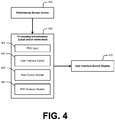
- FIG. 4 illustrates a system configured to provide training to a user.
- the system includes an input 461 configured to receive performance sensor data from one or more performance sensor units 450. (PSUs), wherein the one or more performance sensor units are configured to receive performance sensor data (PSD) representative of a physical performance of a skill by a human user.
- PSUs performance sensor units
- PSD performance sensor data
- the received PSD includes performance data derived from one or more sensors configured to monitor user operation of a piece of musical instrument.
- the received PSD includes performance data derived from one or more motion sensor units (for example the one or more motion sensor units are provided by a motion sensor enabled garment).
- a processing device 460 includes a PSD analysis module 464 that is configured to process the PSD, thereby to identify attributes of the PSD, and compare those attributes with predefined baseline performance data.
- the baseline performance data includes data representative of a set of performance events, defined relative to a performance timeline (for example as a skill performance stream). For each performance event, there is defined data representative of attributes that are able to be satisfied by PSD. For example, in the case of ASD, this may include any one or more of pitch, playing style, duration, and so on. For MSD, this may include any one or more of relative position, velocity, acceleration, and the like.
- the baseline performance data also includes inter-event relative timing data for one more combinations of the performance events. This provides a rate-independent tempo (for example the baseline temporal spacing between a first and second performance event is defined to be twice the temporal baseline spacing between the second and a third performance event).
- the baseline data may also include a target performance rate.
- Device 460 includes a user interface control component that is configured to control the rendering of a graphical user interface (in this example rendered on a display 470).
- the graphical user interface provides one or more resources that are delivered at a controlled performance rate.
- these resources include a progression object (described in detail below) which progresses at the performance rate, and optionally media (such as video and audio) which is also rendered at the controlled performance rate.
- a rate control module 465 is configured to control the controlled performance rate based on comparison of the PSD and the predefined baseline performance data.
- the one or more resources that are delivered at the controlled rate include a rendered progression object that progresses at the controlled performance rate.
- the rendered progression object is controlled to progress along a pathway that includes a plurality of performance event identification objects, wherein the performance event identification objects correspond to the performance events.
- a progression object 500 includes a timeline 501 and a plurality of performance event identification objects 502a to 502j.
- an identifier object indicates a current position of progression along the timeline (this may move relative to a stationary timeline and objects, or the timeline and objects may mode relative to the identifier object.
- a second example of progression object 510 is illustrated in a graphical manner in FIG. 5B , this showing objects 502a to 502j in a manner that indicates musical notes playable by an instrument, with inter-object spacing along timeline 501 being representative of tempo.
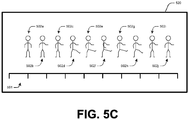
- a third example object 520 is illustrated in a graphical manner in FIG. 5C , this showing objects 502a t0 502j as body positions through which a user progresses whilst performing a motion-based skill.
- the rate control module is operated such that the rendered progression object is prevented from progressing along the pathway beyond a given one of the performance event identification objects in absence of performance data that is: (i) reconciled temporally with the performance event identification object; and/or (ii) reconciled accurately with the performance event identification object.
- this includes hitting the correct musical note.
- this includes hitting each of the relevant body positions (optionally defined by motion attributes other than position alone, for example by reference to acceleration attributes).
- the rate dynamically adjusts in real time based upon a user's success in performing the performance events.
- the controlled performance rate is adjusted for a rate of progression between successive performance event identification objects based upon a prediction of an anticipated time for receipt of performance data reconcilable with an upcoming performance event identification object.
- the system preferably includes a feedback control module, wherein the feedback control module is configured to perform a defined feedback action in response to predefined conditions, the predefined conditions including identification of performance data that is: (i) reconciled temporally with the performance event corresponding to the performance event identification object; and (ii) not reconciled accurately with the performance event corresponding to the performance event identification object. Examples are provided further below.
- the system also includes a rating module, wherein the rating module is configured to score characteristics of a performance based on comparison of the received PSD with the predefined baseline performance data.
- rating module is configured to operate in multiple modes, including:
- some examples provide an "adaptive tempo" mode for a skills training user interface. Examples are described initially by reference to FIG. 1A .
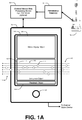
- FIG. 1A illustrates an exemplary framework for delivery of an adaptive skills training program.
- a user interface device 100 (illustrated in a manner representative of a touch screen mobile device, such as a smartphone or tablet for the sake of example only, and a wide range of other devices may alternately be used, including devices that provide a display via a headset and/or retinal display/projection) provides a rendering of a user interface via a display screen 101.
- the rendering of the user interface is controlled by the execution of software instructions via a microprocessor of device 100, which may include software instructions executing at device 100 and/or at one or more devices in communication with device 100 (for example a networked device that communicates with device 100 via the Internet, and/or another local device configured to perform processing functions.
- the user interface device 100 is configured to provide an adaptive skills training program for musical tuition, specifically guitar tuition.
- a guitar 140 is operated by a user, with one or more PSUs 141 being configured to monitor the performance.
- a PSEs 140 may include a PSU that is configured to monitor vibrational energy in the strings of guitar 140, and provide PSD for analysis.
- the PSD preferably is in MIDI format, but other data formats may also be used.
- PSUs 141 transmit the PSD to an external sensor data processing device 120, referred to as a POD device.
- Device 120 is configured to execute computer executable code representative of state engine data, being data that configures device 120 to process the PSD thereby to identify ODCs that are specific to the form of guitar tuition being delivered. Alternate state engine data may also be executed by device 120 where alternate PSD and ODCs are relevant (for example where the POD device is used to process PSD relating to alternate forms of musical instruments, PSD derived from MSUs in the context of a motion-based activity, and so on).
- an external device 120 is optional, and in some embodiments the functionality of device 120 is provided by way of software executing on the hardware provided by device 100 (and/or at a remote networked device).
- Communications between sensors 141, device 120 (where used) and device 100 may be wired and/or wireless, depending on a particular implementation environment (and availability of adequately reliable wireless communications protocols).
- the underlying technical methodology includes analysing PSD, thereby to determine a performance rate.
- This is a performance rate inherently defined by a user, based on the rate at which they are actually performing (as opposed to a performance rate that is predefined based on analysis of user attributes, such as an ability level, and forced upon a user).
- a performance includes a plurality of "performance events", being events defined along a performance timeline.
- the performance rate is set such that a user interface that displays data representative of the performance events reaches the performance events at the same time as the user performance.
- a user interface in some embodiments includes a performance timeline object that graphically progresses along a performance timeline that includes performance event identification objects. The rate at which the performance timeline object progresses is responsive to the rate at which the user's actual performance occurs in real time, such that the physical performance and performance timeline are time synchronised across performance events.
- the user interface provides a rendered object that progresses at a rate, in the form of an instruction object 103.
- Instruction object 103 is configured to progress along a pathway that includes a plurality of performance event identification objects 111.
- the performance event identification objects are icons displayed on a musical tuition ribbon 110, this ribbon moving from right to left.
- FIG. 1A additionally illustrates, in dashed lines, a previously displayed portion 114 of ribbon 110, and an upcoming portion 113 of ribbon 110.
- a current position is visually represented by a display a progression object 112. That is, display progression object 112 overlaps a given one of performance event identification objects 111 at a point in time when that event occurs in the user's real world performance.
- display progression object 112 overlaps a given one of performance event identification objects 111 at a point in time when that event occurs in the user's real world performance.
- a user interface of similar external appearance is provided, but is configured such that the display progression object overlaps a given one of performance event identification objects at a point in time when a user is instructed to perform that event occurs in the real world performance.
- the ribbon continues to progress at a defined rate (although the rate may increase or decrease based on user accuracy).
- PSD is processed in real time to perform dynamic progression rate adjustment such that display progression object 112 overlaps a given one of performance event identification objects 111 at a point in time when a corresponding event actually occurs in the user's real world performance.
- the performance rate is adjusted such that the rendered object is prevented from progressing along the pathway beyond a given one of the performance event identification objects in absence of performance data that is reconciled with the performance event identification object. That is, in the context of FIG. 1A , ribbon 110 is prevented from progressing a given one of event objects 111 beyond progression object 112 unless analysis of PSD identifies a real world event that is able to be reconciled with that progression object.
- the reconciliation may include either or both of: (i) temporal reconciliation with the performance event identification object (e.g. a note is played at the relevant point in time); and (ii) accuracy-based reconciliation with the performance event identification object (e.g. the correct note is played).
- rate control in the context of limiting progression beyond performance event identification objects in response to analysis of PSD.
- rate control is also applied in relation to progression rates between performance event objects.
- an algorithm is configured to control the progression rate between a performance event identification object EO n (corresponding to a performance event PE n ), and a subsequent performance event identification object EO n+1 (corresponding to a performance event PE n+1 ).
- the performance rate is adjusted based upon a prediction of an anticipated time for receipt of performance data reconcilable with an upcoming performance event identification object.
- a range of inputs are used in various embodiments to support such a prediction, and examples include:
- an "adaptive tempo" mode is able to be delivered via object 103, with the rate of movement of ribbon 110 being dynamically controlled in real time based on observation of the user's real-world performance.
- a user is free to play a tune represented on ribbon 110 at whatever variable tempo the user desires, with the graphical user interface adapting reactively to accommodate the user's tempo.
- one or more further user interface objects are effected by the determination of a progression rate.
- these may include a media display object, which is configured to display rendered media such as video (including in some embodiments video with overlays), audio and/or an animation.
- the media is played at the determined dynamically varying progression rate.
- media display object is configured to display a rendering of a video file, and the video file is time-synchronised with instruction object 103. That is, for example, each performance event identification object 111 corresponds to a particular frame of video, such that the particular frame is displayed when progression object 112 overlaps with the relevant object 111.
- the video shows a person playing guitar, and notes are struck in synchronicity with the progression of ribbon 110.
- the video has associated audio, for example accompanying music coinciding with the time being played by the user.
- predictive rate adjustment assists in enabling a user to play along with the accompanying music in the adaptive tempo mode. In some embodiments this is further facilitated by rate adjustment that causes progressive rate slowing (or perpetuation of a sound associated with a particular frame) to account for situations where a performance event is delayed beyond what was predicted.
- the video may include an overlay representative of predicted user finger positions (derived from processing of PSD), thereby to show a comparison between user finger positioning and correct finger positioning.
- the user interface is configured to perform predefined actions in response to monitoring and processing of failed reconciliation events in respect of processing of PSD to identify performance events corresponding to performance event identification objects. For example, in the case that performance data that is not (i) reconciled temporally with the performance event identification object; and (ii) not reconciled accurately with the performance event identification object, a defined action may be triggered.
- the defined action may include any one or more of the following:
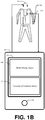
- FIG. 1B illustrates an alternate framework which is in some embodiments used to enable delivery of an "adaptive tempo" mode in respect of a motion-based skill.
- a user interface device 100 (illustrated in a manner representative of a touch screen mobile device, such as a smartphone or tablet for the sake of example only, and a wide range of other devices may alternately be used, including devices that provide a display via a headset and/or retinal display/projection) provides a rendering of a user interface via a display screen 101.
- the user interface device 100 is configured to provide an adaptive skills training program for training of a motion-based skill, for example a sports skill (such as juggling, kicking a soccer ball, rowing, and so on).
- a user wears a MSU enable garment 130, which includes a plurality of MSUs configured to deliver MSD to a POD device 120.
- POD device 120 is configured to identify ODCs in the MSD, thereby to provide inputs that affect delivery of the training program delivered via device 100.
- the user also wears a headset 170, which enables delivery of audible feedback.
- This audible feedback is illustrated as emanating from device 100, although in some embodiments it is provided directly by POD device 120.
- a headset is useful as it is often inconvenient to use a mobile device when practicing motion-based skills.
- device 100 takes the form of a wearable unit, for example an augmented realty headset, glasses/goggles with a screen display, a retinal display/projector, and so on.
- the user interface displayed on screen 101 in FIG. 1B includes a media display object 160 and an instructions/feedback object 161.
- object 161 provides a progressive timeline representative of motion aspect events that make up the skill
- object 160 provides an animation or video showing correct form (optionally with an overlay representative of actual user motion as derived from MSD).
- Objects 160 and 161 are controlled in rate in a similar manner to objects 103 and 105 described above, based on analysis of MSD derived from MSUs provided on MSU enabled garment 130.
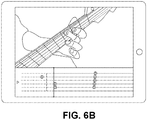
- FIG. 6A and FIG. 6B illustrate example user interface displays for a guitar training program using technology described herein.
- FIG. 6A shows a progression object configured to provide instructions with respect to playing of notes on a guitar via a scrolling ribbon object, similar to that shown in FIG. 5A .
- the scrolling occurs at a controlled rate, for example based on processing of ASD received from an ASU coupled to the user's guitar.
- a progress bar shows a user's current position with respect to performance event identification objects.
- a media object is also provided, this providing rendering of a video that depicts striking of the notes corresponding to the performance event identification objects.
- the video is payed at a rate bound to the progression object, thereby to assist a user in visualising how to strike the instructed notes.
- the video is shown cropped more rightly about the videoed player's fingers, with instructional icons superimposed for additional guidance.
- the display of FIG. 6B may be provided as part of an error identification and training sub process.
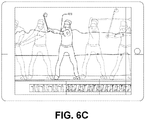
- FIG. 6C shows a progression object configured to provide instructions with respect to swinging a golf club.
- a plurality of MSU location zones (such as zone 600) are shown thereby to instruct a player as to the correct position of MSUs carried by a MSU-enabled garment during a gold swing motion.
- a real-time display of actual MSU locations is also provided, thereby to assist the user in visualising and effecting motion/position corrections.
- progressing through a physical activity (such as golf swing) is presented via a progression object in a manner similar to striking notes in a musical piece; the notes are replaced by body part positions, and a user progresses between those to perform the physical activity.
- Transition between the positions shown in FIG. 6C may be stepwise or incrementally animated for a smooth transition.
- FIG. 6C also shows a video animation ribbon at a lower portion of the screen.
- observed attributes of an attempt are displayed, including a comparison between observed and target tempo (in this example "2.1.1” vs "5.1.1”) and a calculated club head speed based on the observed attempt (compared with a target).
- This allows a user to practice the motion by: firstly moving slowly from position to position to achieve accurate positioning and position transitions; secondly practicing tempo of transitions between positions, and then practicing rate (whilst maintaining accuracy of position and tempo).
- the view of FIG. 6E shows a post-facto analysis display, which assists in identifying errors in motion at particular portions of the motion (for example using cause/symptom/ODC based analysis as disclosed in the cross-referenced PCT applications).
- This shows actual observed MSU locations relative to instructed MSU locations, and provides feedback thereby to assist in improving performance.
- the view of FIG. 6F shows the motion graphic from an alternate angle, thereby to assist in visualisation of further MSU locations.
- some embodiments provide computer implemented methods for adaptive delivery of skills training data, including: receiving performance data derived from a set of motion sensor units (MSUs); causing a graphical object to be displayed on a display screen, wherein the graphical object includes a representation of phases of physical performance of a motion-based skill, including target locations for one or more MSUs at each phase of the physical performance; progressing between display of the phases of the physical performance based on analysis of the performance data derived from the set of motion sensor units; and displaying via the graphical object a relationship between an observed position of a given one of the motion sensor units determined based on analysis of the performance data derived from the set of motion sensor units.
- MSUs motion sensor units
- some examples provide for efficient utilisation of media content in an adaptive skills training program. This is relevant in the context of training programs that display media content to assist in training, for example video data. Based on analysis of PSD, the display of media content is varied, for example in terms of pan/zoom position and/or rate. This allows a significantly richer user experience to be delivered via a single or limited collection of media files, avoiding a need to collect and/or maintain an extensive collection of media files.
- One embodiment provides a computer implemented method including receiving performance data derived from one or more performance sensor units; processing performance data derived from one or more performance sensor units; and based on identification of predefined observable data conditions in the performance data, performing a media adjustment action.
- a given one of the user interface components includes a media object that has a playback rate and a viewport definition, and performing the media adjustment action includes making a determination to adjust the playback rate and/or viewport definition.
- processing of PSD enables determination of a rate associated with a user's physical performance, and that rate is applied to media playback.
- this includes providing an overlay on video data, thereby to show a relationship between a user's actual performance (for example by way of a virtual body model constructed from MSD) and a benchmark performance (for example a benchmark performance captured in the video data).
- Adjustments to viewport definitions are achieved by applying digital pan/zoom transformations to video data, thereby to display a selection of pixels (a viewport) that is less than the full frame rendering of video data.
- FIG.2 illustrates an exemplary full frame video rendering 200, and a set of viewport definitions. These are illustrated by reference to a video of an expert playing guitar in a video file use for a guitar training program.
- High definition (for example 4K) high-framerate video is initially captured, this containing at least a maximum field of view that is desired for the training program.
- rules are defined which cause adjustments to viewport definitions in response to defined conditions being met. These defined conditions may include conditions that are satisfied in PSD, or by reference to PSD.
- the viewport definitions include: (i) a viewport definition 201 which provides a partial zoom showing the player's body; (ii) a viewport definition 202 zoomed to show the player's right hand on the guitar; and (iii) a viewport definition 203 zoomed to show the player's left hand on the guitar. These are used, for example, to provide a user (i.e. a student) a detailed view of how a particular segment of music is played by the videoed expert.
- the guitar is tracked in video data thereby to enable application of overlays to the video data at appropriate positions on the guitar (e.g. relative to the strings), which are used for instance to identify correct finger positions and/or user finger positions (as predicted based on analysis of PSD, such as predictions derived from determination of last finger position from sound/vibration generated).
- Association of viewport definitions with PSD-related observations enables dynamic modification of displayed video data thereby to assist in providing a visual aid for skills training that is appropriate for a given point in time for an adaptive training process, without requiring a library of separate video files for a given skill (for example a skill in the context of playing a particular piece of music, or a skill in the form of a particular motion-based skill).
- a single video file is able to provide multiple forms of visual aid content by adjusting viewport definitions to focus on particular important areas. For example, based on processing of ODCs, a particular body part (or the like) is identified in respect of which feedback and/or tuition is to be provided, and the viewport definition adjusted to focus on that particular body art (or the like).
- video capture technology enabling angle alteration is used. This enhances the above embodiments by enabling not only viewport adjustments, but also view angle adjustments.
- "bullet time” technology enables angle adjustment in video data by capturing a given scene from multiple angles.
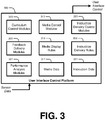
- FIG. 3 illustrates an example user interface control platform 300. This is illustrated by reference to a plurality of functionally defined components, which may in practice be provided by one or more software applications and/or data management components.
- the platform may execute based on software instructions executed at a single device, or across multiple devices (for example a POD device and smartphone in combination, and/or a server device).
- the platform is configured to receive sensor data from one or more PSUs, or in some embodiments data derived from sensor data (for example based on a degree of pre-processing). That data is analysed by performance analysis module 301. These, for example, processor sensor data thereby to identify ODCs, and hence determine attributes of an observed physical performance such as symptoms and causes.
- This analysis provides input that enables driving of feedback delivery modules 302 and curriculum control modules 303, which provide logic that guides an adaptive training process (for example by providing a user with instructions and feedback in an adaptive manner in response to attributes identified in PSD).
- a repository of media data 311 contains video files which are configured to be rendered in a user interface (for example a touchscreen device, retina projection display, HUD eyewear, or the like).
- Media display rules are responsive to modules 302 and/or 303 thereby to (i) select media to display; and (ii) determine attributes for display, such as frame rate, viewport definition, and/or viewing angle.
- Media control modules 313 are configured to, in response to input from application of display rules 312, provide instructions thereby to control operation of a media display object rendered in a user interface (for example by controlling frame rate, viewport, and so on).
- Instruction data 231 includes data configured to enable rendering of user interface instructions, for example a scrolling ribbon object as shown in FIG. 1A .
- Instruction delivery rules are configured to determine a manner by which the instruction data is to be delivered, for example by determining a dynamically variable progression rate in response to analysis of PSD.
- Instruction delivery control modules are configured to implement those determinations, for example by dynamically controlling progress rate for an object rendered in the user interface.
- an overlay is applied to video data.
- Embodiments include methods configured to enable the application of such an overlay to video data, using a predefined 3D overlay model.
- Overlay model data is defined in a first orientation.
- this orientation is defined relative to:
- the model is defined to provide visual information, which is able to be applied as an overlay to video data thereby to convey additional information.
- this visual information may show any one or more of: user positioning as derived from processing of PSD; particular regions of importance; and so on.
- a method includes identifying, in video data, physical positional points (such as physical instrument positional points or physical body positional points) that correspond to virtual points defined in the model. Transformations are then applied to the 3D overlay model, such that it is able to be superimposed on the video data at a correct position. In some embodiments this requires capturing and processing of MCD and/or MSD (or depth-specific data) associated with the video data, which is otherwise two-dimensional.
- processor may refer to any device or portion of a device that processes electronic data, e.g., from registers and/or memory to transform that electronic data into other electronic data that, e.g., may be stored in registers and/or memory.
- a "computer” or a “computing machine” or a “computing platform” may include one or more processors.
- the methodologies described herein are, in one embodiment, performable by one or more processors that accept computer-readable (also called machine-readable) code containing a set of instructions that when executed by one or more of the processors carry out at least one of the methods described herein.
- Any processor capable of executing a set of instructions (sequential or otherwise) that specify actions to be taken are included.
- a typical processing system that includes one or more processors.
- Each processor may include one or more of a CPU, a graphics processing unit, and a programmable DSP unit.
- the processing system further may include a memory subsystem including main RAM and/or a static RAM, and/or ROM.
- a bus subsystem may be included for communicating between the components.
- the processing system further may be a distributed processing system with processors coupled by a network. If the processing system requires a display, such a display may be included, e.g., a liquid crystal display (LCD) or a cathode ray tube (CRT) display. If manual data entry is required, the processing system also includes an input device such as one or more of an alphanumeric input unit such as a keyboard, a pointing control device such as a mouse, and so forth.
- the processing system in some configurations may include a sound output device, and a network interface device.
- the memory subsystem thus includes a computer-readable carrier medium that carries computer-readable code (e.g., software) including a set of instructions to cause performing, when executed by one or more processors, one of more of the methods described herein.
- computer-readable code e.g., software
- the software may reside in the hard disk, or may also reside, completely or at least partially, within the RAM and/or within the processor during execution thereof by the computer system.
- the memory and the processor also constitute computer-readable carrier medium carrying computer-readable code.
- a computer-readable carrier medium may form, or be included in a computer program product.
- the one or more processors operate as a standalone device or may be connected, e.g., networked to other processor(s), in a networked deployment, the one or more processors may operate in the capacity of a server or a user machine in server-user network environment, or as a peer machine in a peer-to-peer or distributed network environment.
- the one or more processors may form a personal computer (PC), a tablet PC, a set-top box (STB), a Personal Digital Assistant (PDA), a cellular telephone, a web appliance, a network router, switch or bridge, or any machine capable of executing a set of instructions (sequential or otherwise) that specify actions to be taken by that machine.
- PC personal computer
- PDA Personal Digital Assistant
- machine shall also be taken to include any collection of machines that individually or jointly execute a set (or multiple sets) of instructions to perform any one or more of the methodologies discussed herein.
- each of the methods described herein is in the form of a computer-readable carrier medium carrying a set of instructions, e.g., a computer program that is for execution on one or more processors, e.g., one or more processors that are part of web server arrangement.
- a computer-readable carrier medium carrying computer readable code including a set of instructions that when executed on one or more processors cause the processor or processors to implement a method.
- aspects of the present invention may take the form of a method, an entirely hardware embodiment, an entirely software embodiment or an embodiment combining software and hardware aspects.
- the present invention may take the form of carrier medium (e.g., a computer program product on a computer-readable storage medium) carrying computer-readable program code embodied in the medium.
- the software may further be transmitted or received over a network via a network interface device.
- the carrier medium is shown in an exemplary embodiment to be a single medium, the term “carrier medium” should be taken to include a single medium or multiple media (e.g., a centralized or distributed database, and/or associated caches and servers) that store the one or more sets of instructions.
- the term “carrier medium” shall also be taken to include any medium that is capable of storing, encoding or carrying a set of instructions for execution by one or more of the processors and that cause the one or more processors to perform any one or more of the methodologies of the present invention.
- a carrier medium may take many forms, including but not limited to, non-volatile media, volatile media, and transmission media.
- Non-volatile media includes, for example, optical, magnetic disks, and magneto-optical disks.
- Volatile media includes dynamic memory, such as main memory.
- Transmission media includes coaxial cables, copper wire and fiber optics, including the wires that comprise a bus subsystem. Transmission media also may also take the form of acoustic or light waves, such as those generated during radio wave and infrared data communications.
- carrier medium shall accordingly be taken to included, but not be limited to, solid-state memories, a computer product embodied in optical and magnetic media; a medium bearing a propagated signal detectable by at least one processor of one or more processors and representing a set of instructions that, when executed, implement a method; and a transmission medium in a network bearing a propagated signal detectable by at least one processor of the one or more processors and representing the set of instructions.
- an element described herein of an apparatus embodiment is an example of a means for carrying out the function performed by the element for the purpose of carrying out the invention.
- Coupled when used in the claims, should not be interpreted as being limited to direct connections only.
- the terms “coupled” and “connected,” along with their derivatives, may be used. It should be understood that these terms are not intended as synonyms for each other.
- the scope of the expression a device A coupled to a device B should not be limited to devices or systems wherein an output of device A is directly connected to an input of device B. It means that there exists a path between an output of A and an input of B which may be a path including other devices or means.
- Coupled may mean that two or more elements are either in direct physical or electrical contact, or that two or more elements are not in direct contact with each other but yet still co-operate or interact with each other.
Landscapes
- Engineering & Computer Science (AREA)
- Business, Economics & Management (AREA)
- Theoretical Computer Science (AREA)
- Physics & Mathematics (AREA)
- General Physics & Mathematics (AREA)
- Educational Administration (AREA)
- Educational Technology (AREA)
- Multimedia (AREA)
- Entrepreneurship & Innovation (AREA)
- General Health & Medical Sciences (AREA)
- Health & Medical Sciences (AREA)
- Human Computer Interaction (AREA)
- Physical Education & Sports Medicine (AREA)
- Psychiatry (AREA)
- Social Psychology (AREA)
- Computer Vision & Pattern Recognition (AREA)
- Accounting & Taxation (AREA)
- Development Economics (AREA)
- Economics (AREA)
- General Business, Economics & Management (AREA)
- User Interface Of Digital Computer (AREA)
- Auxiliary Devices For Music (AREA)
- Electrophonic Musical Instruments (AREA)
Claims (14)
- System, das konfiguriert ist, um einem Benutzer Schulung anzubieten, wobei das System Folgendes umfasst:einen Eingang (461), der zum Empfangen von Darbietungssensordaten von einer oder mehreren Darbietungssensoreinheiten (PSUs) (450) konfiguriert ist, wobei die ein oder mehreren Darbietungssensoreinheiten zum Empfangen von Darbietungssensordaten (PSD) konfiguriert sind, die für eine physische Darbietung einer Fertigkeit durch einen menschlichen Benutzer repräsentativ sind;eine Verarbeitungsvorrichtung (460), die zum Verarbeiten der PSD konfiguriert ist, um dadurch Attribute der PSD zu identifizieren und diese Attribute mit vordefinierten Basislinien-Darbietungsdaten zu vergleichen, wobei die vordefinierten Basislinien-Darbietungsdaten Folgendes umfassen:Daten, die für einen Satz von Darbietungsevents repräsentativ sind, wobei der Satz von Darbietungsevents relativ zu einer Darbietungszeitlinie definiert ist;für jedes Darbietungsevent Daten, die für Attribute repräsentativ sind, die durch PSD erfüllt werden können; undrelative Inter-Event-Zeitdaten für eine oder mehrere Kombinationen der Darbietungsevents;eine Benutzeroberflächensteuerkomponente (462), die zum Steuern des Renderns einer grafischen Benutzeroberfläche konfiguriert ist, wobei die grafische Benutzeroberfläche eine oder mehrere Ressourcen bereitstellt, die mit einer geregelten Darbietungsgeschwindigkeit geliefert werden; undein Geschwindigkeitsregelmodul (463), wobei das Geschwindigkeitsregelmodul zum Regeln der geregelten Darbietungsgeschwindigkeits auf der Basis eines Vergleichs der PSD und der vordefinierten Basislinien-Darbietungsdaten konfiguriert ist, wobei:die mit der geregelten Geschwindigkeit gelieferten ein oder mehreren Ressourcen ein gerendertes Fortschrittsobjekt (500) umfassen, das mit der geregelten Darbietungsgeschwindigkeit fortschreitet;das gerenderte Fortschrittsobjekt so gesteuert wird, dass es entlang eines Pfades fortschreitet, der mehrere Darbietungsevent-Identifikationsobjekte (502a-502j) umfasst;die Darbietungsevent-Identifikationsobjekte den Darbietungsevents entsprechen; unddas Geschwindigkeitsregelmodul (463) so betrieben wird, dass verhindert wird, dass das gerenderte Fortschrittsobjekt entlang des Pfades über ein gegebenes der Darbietungsevent-Identifikationsobjekte hinaus fortschreitet, wenn keine Darbietungsdaten vorhanden sind, die: (i) zeitlich mit dem Darbietungsevent-Identifikationsobjekt abgestimmt sind; und/oder (ii) genau mit dem Darbietungsevent-Identifikationsobjekt abgestimmt sind, um dadurch einen adaptiven Tempomodus bereitzustellen,wodurch die Geschwindigkeit des gerenderten Fortschrittsobjekts auf der Basis der Geschwindigkeit geregelt wird, mit der die empfangene PSD Darbietungsevents mit Attributen zeigt, die durch die empfangene PSD erfüllt werden.
- System nach Anspruch 1, wobei die empfangene PSD Darbietungsdaten enthält, die von einem oder mehreren Sensoren (450) abgeleitet sind, die zum Überwachen der Bedienung eines Musikinstruments durch einen Benutzer konfiguriert sind.
- System nach Anspruch 1, wobei die empfangene PSD Darbietungsdaten enthält, die von einer oder mehreren Bewegungssensoreinheiten (450) abgeleitet sind, die von einem bewegungssensorfähigen Kleidungsstück bereitgestellt werden.
- System nach Anspruch 1, wobei:
die geregelte Darbietungsgeschwindigkeit für eine Fortschrittsgeschwindigkeit zwischen aufeinanderfolgenden Darbietungsevent-Identifikationsobjekten auf der Basis einer Vorhersage einer erwarteten Zeit für den Empfang von Darbietungsdaten justiert wird, die mit einem bevorstehenden Darbietungsevent-Identifikationsobjekt abstimmbar sind. - System nach Anspruch 1 mit einem Feedback-Steuermodul, wobei das Feedback-Steuermodul zum Durchführen einer definierten Feedback-Aktion als Reaktion auf vordefinierte Bedingungen konfiguriert ist, wobei die vordefinierten Bedingungen die Identifikation von Darbietungsdaten umfassen, die: (i) zeitlich mit dem Darbietungsevent, das einem der Darbietungsevent-Identifikationsobjekte entspricht, abgestimmt sind; und (ii) nicht genau mit dem Darbietungsevent, das dem Darbietungsevent-Identifikationsobjekt entspricht, abgestimmt sind.
- System nach einem vorherigen Anspruch, das ein Bewertungsmodul enthält, wobei:das Bewertungsmodul zum Bewerten von Charakteristiken einer Darbietung auf der Basis des Vergleichs der empfangenen PSD mit den vordefinierten Basislinien-Darbietungsdaten konfiguriert ist, unddas Bewertungsmodul zum Arbeiten in mehreren Modi konfiguriert ist, einschließlich:eines ersten Modus, in dem die geregelte Darbietungsgeschwindigkeit auf der Basis einer Analyse der PSD gesteuert wird und in dem die Bewertung auf der Genauigkeit basiert, mit der die PSD Daten erfüllt, die für Attribute für jedes aufeinanderfolgende Darbietungsevent repräsentativ sind;eines zweiten Modus, in dem die geregelte Darbietungsgeschwindigkeit auf der Basis einer Analyse der PSD gesteuert wird und in dem die Bewertung auf der Genauigkeit, mit der die PSD Daten erfüllt, die für Attribute für jedes aufeinanderfolgende Darbietungsevent repräsentativ sind, und dem Vergleich von beobachteten relativen Inter-Event-Zeitdaten für eine oder mehrere Kombinationen der Darbietungsevents mit den relativen Inter-Event-Zeitdaten für eine oder mehrere Kombinationen der Darbietungsevents der Basislinien-Darbietungsdaten basiert; undeines dritten Modus, in dem die geregelte Darbietungsgeschwindigkeit auf einen konstanten Wert unabhängig von der Echtzeitüberwachung der PSD gesetzt wird und in der die Bewertung auf der Genauigkeit basiert, mit der die PSD Daten erfüllt, die für Attribute für jedes aufeinanderfolgende Darbietungsevent repräsentativ sind.
- Computerimplementiertes Verfahren zur adaptiven Lieferung von Fähigkeitstrainingsdaten nach Anspruch 1, wobei das Verfahren Folgendes beinhaltet:(i) Empfangen von von den ein oder mehreren Darbietungssensoreinheiten (450) abgeleiteten Darbietungsdaten;(ii) Verarbeiten der von von den ein oder mehreren Darbietungssensoreinheiten abgeleiteten Darbietungsdaten;(iii) Beschließen, auf der Basis der Verarbeitung der von den ein oder mehreren Darbietungssensoreinheiten abgeleiteten Daten, ein Lieferattribut einer oder mehrerer Benutzeroberflächenkomponenten zu variieren;(iv) Bereitstellen eines Signals, um dadurch die bestimmte Variation der Lieferattribute der ein oder mehreren Benutzeroberflächenkomponenten während der Darbietung durch den Benutzer zu bewirken.
- Verfahren nach Anspruch 7, wobei die empfangenen Darbietungsdaten Darbietungsdaten enthalten, die von einer oder mehreren Audiosensoreinheiten oder einem oder mehreren Sensoren abgeleitet sind, die zur Überwachung der Bedienung eines Musikinstruments durch einen Benutzer konfiguriert sind.
- Verfahren nach Anspruch 7, wobei:die empfangenen Darbietungsdaten Darbietungsdaten enthalten, die von einer oder mehreren Bewegungssensoreinheiten abgeleitet sind, die von einem bewegungssensorfähigen Kleidungsstück bereitgestellt werden; unddie Verarbeitung der von den ein oder mehreren Bewegungssensoreinheiten abgeleiteten Darbietungsdaten das Identifizieren von Charakteristiken von gleichzeitigen Bewegungen einzelner Bewegungssensoren beinhaltet.
- Verfahren nach Anspruch 7, wobei:das Verarbeiten der von den ein oder mehreren Darbietungssensoreinheiten (450) abgeleiteten Darbietungsdaten das Identifizieren des Vorhandenseins eines oder mehrerer vordefinierter beobachtbarer Datenzustände umfasst und einer der vordefinierten beobachtbaren Datenzustände mit einem Symptom assoziiert ist; unddas Verarbeiten ferner das Bestimmen einer mit dem Symptom assoziierten Ursache durch Analysieren der von den ein oder mehreren Darbietungssensoreinheiten abgeleiteten Daten umfasst, um dadurch das Vorhandensein eines oder mehrerer weiterer beobachtbarer Datenzustände zu identifizieren.
- Verfahren nach Anspruch 7, wobei:das Verarbeiten der von den ein oder mehreren Darbietungssensoreinheiten (450) abgeleiteten Darbietungsdaten das Bestimmen einer Darbietungsgeschwindigkeit beinhaltet; undeine oder mehrere der Benutzeroberflächenkomponenten ein Geschwindigkeitsattribut beinhalten, und wobei das Beschließen, ein Lieferattribut einer oder mehrerer Benutzeroberflächenkomponenten zu variieren, das Setzen des Geschwindigkeitsattributs auf der Basis der bestimmten Darbietungsgeschwindigkeit beinhaltet, oderdie Darbietungsgeschwindigkeit eine prädiktive Darbietungsgeschwindigkeit ist, wobei die prädiktive Darbietung als Reaktion auf die Validierung von Vorhersagen kontinuierlich variiert wird.
- Verfahren nach Anspruch 7, wobei:das Verarbeiten der von den ein oder mehreren Darbietungssensoreinheiten (450) abgeleiteten Darbietungsdaten das Bestimmen einer Darbietungsgeschwindigkeit beinhaltet;eine gegebene der Benutzeroberflächenkomponenten ein gerendertes Fortschrittsobjekt (500) enthält, das mit einer Geschwindigkeit fortschreitet, wobei das gerenderte Fortschrittsobjekt entlang eines Pfades fortschreitet, der mehrere Darbietungsevent-Identifikationsobjekte (502a-502j) enthält;die Darbietungsgeschwindigkeit so justiert wird, dass verhindert wird, dass das gerenderte Fortschrittsobjekt entlang des Pfades über ein gegebenes der Darbietungsevent-Identifikationsobjekte hinaus fortschreitet, wenn keine Darbietungsdaten vorliegen, die (i) zeitlich mit dem Darbietungsevent-Identifikationsobjekt abgestimmt sind oder (ii) genau mit dem Darbietungsevent-Identifikationsobjekt abgestimmt sind; unddie Darbietungsgeschwindigkeit auf der Basis einer Vorhersage einer erwarteten Zeit für den Empfang von Darbietungsdaten justiert wird, die mit einem bevorstehenden Darbietungsevent-Identifikationsobjekt abstimmbar sind, oderals Reaktion auf vordefinierte Bedingungen, wobei die vordefinierten Bedingungen die Identifikation von Darbietungsdaten einschließen, die (i) zeitlich mit dem Darbietungsevent-Identifikationsobjekt abgestimmt sind; und (ii) nicht genau mit dem Darbietungsevent-Identifikationsobjekt abgestimmt sind, eine definierte Aktion durchgeführt wird.
- Verfahren nach Anspruch 7, wobei:die definierte Aktion Folgendes umfasst:Bereitstellen eines Signals, um dadurch Lieferattribute einer weiteren Benutzeroberflächenkomponente zu verändern;Geben von Feedback;Justieren der Position des Fortschrittsobjekts (500); oderBewirken, dass das Fortschrittsobjekt in eine vordefinierte Schleife eintritt, oder Initiieren eines definierten Untertutorials; unddie Variation eine Sichtfenstervariation für ein Medienobjekt beinhaltet; unddas Justieren der Position des Fortschrittsobjekts das Zurückfahren des Fortschrittsobjekts zu einem definierten Punkt beinhaltet.
- Verfahren nach Anspruch 7, wobei:eine gegebene der Benutzeroberflächenkomponenten ein Medienobjekt enthält, das eine Wiedergabegeschwindigkeit und eine Sichtfensterdefinition hat;das Beschließen, ein Lieferattribut einer oder mehrerer Benutzeroberflächenkomponenten zu variieren, das Beschließen beinhaltet, die Wiedergabegeschwindigkeit und/oder die Sichtfensterdefinition zu justieren;die Wiedergabegeschwindigkeit als Reaktion auf eine aus der Verarbeitung der Darbietungsdaten abgeleitete Darbietungsgeschwindigkeit justiert wird;die Sichtfensterdefinition als Reaktion auf eine Bestimmung der Genauigkeit justiert wird, die aus der Verarbeitung der Darbietungsdaten oder der Identifizierung einer oder mehrerer beobachtbarer Datenzustände in den Darbietungsdaten abgeleitet wird;eine Sichtfensterdefinition das Justieren einer digitalen Schwenk-, Zoomoperations- oder Winkeleinstellung beinhaltet; undein Satz von Regeln definiert wird, wobei die Regeln beobachtbare Datenzustände und Sichtfensterdefinitionsjustierungen assoziieren.
Applications Claiming Priority (4)
| Application Number | Priority Date | Filing Date | Title |
|---|---|---|---|
| AU2015905108A AU2015905108A0 (en) | 2015-12-10 | Frameworks and methodologies configured to enable real-time adaptive delivery of skills training data based on monitoring of user performance data | |
| PCT/AU2016/000020 WO2016123648A1 (en) | 2015-02-02 | 2016-02-02 | Frameworks, devices and methodologies configured to enable delivery of interactive skills training content, including content with multiple selectable expert knowledge variations |
| PCT/AU2016/000026 WO2016123654A1 (en) | 2015-02-02 | 2016-02-02 | Frameworks, devices and methodologies configured to provide of interactive skills training content, including delivery of adaptive training programs based on analysis of performance sensor data |
| PCT/AU2016/051220 WO2017096436A1 (en) | 2015-12-10 | 2016-12-12 | Frameworks and methodologies configured to enable real-time adaptive delivery of skills training data based on monitoring of user performance via performance monitoring hardware |
Publications (3)
| Publication Number | Publication Date |
|---|---|
| EP3387634A1 EP3387634A1 (de) | 2018-10-17 |
| EP3387634A4 EP3387634A4 (de) | 2019-05-01 |
| EP3387634B1 true EP3387634B1 (de) | 2021-02-24 |
Family
ID=59012470
Family Applications (1)
| Application Number | Title | Priority Date | Filing Date |
|---|---|---|---|
| EP16871832.8A Not-in-force EP3387634B1 (de) | 2015-12-10 | 2016-12-12 | Rahmen und verfahren zur ermöglichung von adaptiver bereitstellung von fähigkeitstrainingsdaten in echtzeit basierend auf der überwachung der benutzerleistung über eine leistungsüberwachungshardware |
Country Status (6)
| Country | Link |
|---|---|
| US (1) | US11074826B2 (de) |
| EP (1) | EP3387634B1 (de) |
| JP (1) | JP2019505832A (de) |
| KR (1) | KR20190038748A (de) |
| CN (1) | CN109074752A (de) |
| WO (1) | WO2017096436A1 (de) |
Families Citing this family (5)
| Publication number | Priority date | Publication date | Assignee | Title |
|---|---|---|---|---|
| JP7066116B2 (ja) * | 2017-11-27 | 2022-05-13 | 地方独立行政法人東京都立産業技術研究センター | 人体形状モデル可視化システム、人体形状モデル可視化方法およびプログラム |
| CN110706553B (zh) * | 2019-11-13 | 2022-02-01 | 北京音悦荚科技有限责任公司 | 一种基于ar增强现实的乐器辅助学习系统及方法和装置 |
| KR20220089513A (ko) | 2020-12-21 | 2022-06-28 | 삼성전자주식회사 | 컨텐츠 기반 케어 서비스를 제공하는 전자 장치 및 그 제어 방법 |
| WO2023105601A1 (ja) * | 2021-12-07 | 2023-06-15 | ヤマハ株式会社 | 情報処理装置、情報処理方法、及びプログラム |
| KR20240113066A (ko) * | 2023-01-13 | 2024-07-22 | 한국전자통신연구원 | 멀티 페르소나를 생성하는 전자 장치 및 그것의 동작 방법 |
Family Cites Families (74)
| Publication number | Priority date | Publication date | Assignee | Title |
|---|---|---|---|---|
| US6293802B1 (en) | 1998-01-29 | 2001-09-25 | Astar, Inc. | Hybrid lesson format |
| US6389368B1 (en) | 1999-10-01 | 2002-05-14 | Randal R. Hampton | Basketball goal sensor for detecting shots attempted and made |
| JP4151189B2 (ja) | 2000-03-06 | 2008-09-17 | ヤマハ株式会社 | 音楽ゲーム装置及び方法並びに記憶媒体 |
| AU2002255568B8 (en) | 2001-02-20 | 2014-01-09 | Adidas Ag | Modular personal network systems and methods |
| US20040219498A1 (en) | 2002-04-09 | 2004-11-04 | Davidson Lance Samuel | Training apparatus and methods |
| KR20050055072A (ko) * | 2002-10-09 | 2005-06-10 | 보디미디어 인코퍼레이티드 | 인체의 생리 및 컨텍스츄얼 정보를 검출, 수신, 유도 및디스플레이하는 장치 |
| US20060025229A1 (en) | 2003-12-19 | 2006-02-02 | Satayan Mahajan | Motion tracking and analysis apparatus and method and system implementations thereof |
| US20050196737A1 (en) | 2004-01-26 | 2005-09-08 | Mann Ralph V. | Systems and methods of measuring and evaluating performance of a physical skill and equipment used to perform the physical skill |
| KR20070095407A (ko) | 2005-01-26 | 2007-09-28 | 벤틀리 키네틱스 인코포레이티드 | 운동동작의 분석 및 지도를 위한 방법 및 시스템 |
| US10741218B2 (en) * | 2005-02-14 | 2020-08-11 | Koninklijke Philips N.V. | Electronic device and method for reproducing a human perceptual signal |
| WO2007033194A2 (en) | 2005-09-13 | 2007-03-22 | Aware Technologies, Inc. | Method and system for proactive telemonitor with real-time activity and physiology classification and diary feature |
| US7602301B1 (en) | 2006-01-09 | 2009-10-13 | Applied Technology Holdings, Inc. | Apparatus, systems, and methods for gathering and processing biometric and biomechanical data |
| WO2008027053A1 (en) | 2006-08-31 | 2008-03-06 | Achieve3000, Inc. | System and method for providing differentiated content based on skill level |
| JP2008073285A (ja) | 2006-09-22 | 2008-04-03 | Seiko Epson Corp | 靴、その靴を履いた人の歩行・走行動作評価支援装置 |
| WO2008132265A1 (en) | 2007-04-27 | 2008-11-06 | Nokia Corporation | Modifying audiovisual output in a karaoke system based on performance context |
| JP2009169103A (ja) | 2008-01-16 | 2009-07-30 | Yamaha Corp | 練習支援装置 |
| US8270952B2 (en) | 2009-01-28 | 2012-09-18 | Headwater Partners I Llc | Open development system for access service providers |
| CN101441776B (zh) | 2008-12-04 | 2010-12-29 | 浙江大学 | 示范表演驱动的基于加速传感器的三维人体动作编排方法 |
| US9060714B2 (en) | 2008-12-04 | 2015-06-23 | The Regents Of The University Of California | System for detection of body motion |
| US8172722B2 (en) | 2008-12-05 | 2012-05-08 | Nike, Inc. | Athletic performance monitoring systems and methods in a team sports environment |
| US8988240B2 (en) | 2009-01-15 | 2015-03-24 | AvidaSports, LLC | Performance metrics |
| EP2389152A4 (de) | 2009-01-20 | 2016-05-11 | Univ Northeastern | Mehrbenutzer-smartglove für rehabilitation auf grundlage virtueller umgebungen |
| GB0901020D0 (en) | 2009-01-21 | 2009-03-04 | Birmingham City University | A motion capture apparatus |
| AU2010229693B2 (en) | 2009-03-27 | 2014-04-03 | Russell Brands, Llc | Monitoring of physical training events |
| US8289185B2 (en) | 2009-05-05 | 2012-10-16 | Advanced Technologies Group, LLC | Sports telemetry system for collecting performance metrics and data |
| US8629342B2 (en) * | 2009-07-02 | 2014-01-14 | The Way Of H, Inc. | Music instruction system |
| CN102598086B (zh) | 2009-09-04 | 2015-06-17 | 耐克创新有限合伙公司 | 监控和跟踪运动活动的设备及方法 |
| US20110270135A1 (en) | 2009-11-30 | 2011-11-03 | Christopher John Dooley | Augmented reality for testing and training of human performance |
| IT1397737B1 (it) | 2010-01-18 | 2013-01-24 | Giovanni Saggio | Apparecchiatura e metodo di rilevamento, addestramento e allenamento di attivita' motorie |
| US8338684B2 (en) * | 2010-04-23 | 2012-12-25 | Apple Inc. | Musical instruction and assessment systems |
| GB2482729A (en) | 2010-08-13 | 2012-02-15 | Monnowtone Ltd | An augmented reality musical instrument simulation system |
| US9076041B2 (en) | 2010-08-26 | 2015-07-07 | Blast Motion Inc. | Motion event recognition and video synchronization system and method |
| US10216893B2 (en) | 2010-09-30 | 2019-02-26 | Fitbit, Inc. | Multimode sensor devices |
| WO2012051605A2 (en) | 2010-10-15 | 2012-04-19 | Jammit Inc. | Dynamic point referencing of an audiovisual performance for an accurate and precise selection and controlled cycling of portions of the performance |
| WO2012061804A1 (en) * | 2010-11-05 | 2012-05-10 | Nike International Ltd. | Method and system for automated personal training |
| US9223936B2 (en) | 2010-11-24 | 2015-12-29 | Nike, Inc. | Fatigue indices and uses thereof |
| US9457256B2 (en) | 2010-11-05 | 2016-10-04 | Nike, Inc. | Method and system for automated personal training that includes training programs |
| JP5641222B2 (ja) | 2010-12-06 | 2014-12-17 | セイコーエプソン株式会社 | 演算処理装置、運動解析装置、表示方法及びプログラム |
| JP5419171B2 (ja) | 2011-02-15 | 2014-02-19 | 株式会社河合楽器製作所 | 電子楽器 |
| KR101767794B1 (ko) | 2011-02-17 | 2017-08-11 | 나이키 이노베이트 씨.브이. | 위치 맵핑 |
| US8696450B2 (en) | 2011-07-27 | 2014-04-15 | The Board Of Trustees Of The Leland Stanford Junior University | Methods for analyzing and providing feedback for improved power generation in a golf swing |
| FI20115791A0 (fi) * | 2011-08-10 | 2011-08-10 | Polar Electro Oy | Harjoittelun ohjauslaite |
| US9886871B1 (en) * | 2011-12-27 | 2018-02-06 | PEAR Sports LLC | Fitness and wellness system with dynamically adjusting guidance |
| WO2013113036A1 (en) | 2012-01-26 | 2013-08-01 | Healthmantic, Inc | System and method for processing motion-related sensor data with social mind-body games for health application |
| ITMI20120494A1 (it) | 2012-03-27 | 2013-09-28 | B10Nix S R L | Apparato e metodo per l'acquisizione ed analisi di una attivita' muscolare |
| US9737261B2 (en) | 2012-04-13 | 2017-08-22 | Adidas Ag | Wearable athletic activity monitoring systems |
| US8929709B2 (en) | 2012-06-11 | 2015-01-06 | Alpinereplay, Inc. | Automatic digital curation and tagging of action videos |
| CN102819863B (zh) | 2012-07-31 | 2015-01-21 | 中国科学院计算技术研究所 | 一种三维人体运动的实时在线获取方法及其系统 |
| US10008237B2 (en) | 2012-09-12 | 2018-06-26 | Alpinereplay, Inc | Systems and methods for creating and enhancing videos |
| US10548514B2 (en) | 2013-03-07 | 2020-02-04 | Alpinereplay, Inc. | Systems and methods for identifying and characterizing athletic maneuvers |
| US9498128B2 (en) | 2012-11-14 | 2016-11-22 | MAD Apparel, Inc. | Wearable architecture and methods for performance monitoring, analysis, and feedback |
| US9278255B2 (en) | 2012-12-09 | 2016-03-08 | Arris Enterprises, Inc. | System and method for activity recognition |
| US9043004B2 (en) | 2012-12-13 | 2015-05-26 | Nike, Inc. | Apparel having sensor system |
| US9226706B2 (en) | 2012-12-19 | 2016-01-05 | Alert Core, Inc. | System, apparatus, and method for promoting usage of core muscles and other applications |
| CA2900102A1 (en) | 2013-02-06 | 2014-08-14 | Blur Sports Inc. | Performance monitoring systems and methods for edging sports |
| CN103135765A (zh) | 2013-02-20 | 2013-06-05 | 兰州交通大学 | 一种基于微机械传感器的人体动作信息捕捉系统 |
| US9713852B2 (en) | 2013-03-15 | 2017-07-25 | Illinois Tool Works Inc. | Welding training systems and devices |
| US9728103B2 (en) | 2013-03-15 | 2017-08-08 | Illinois Tool Works Inc. | Data storage and analysis for a welding training system |
| US20140320481A1 (en) | 2013-04-30 | 2014-10-30 | Hewlett-Packard Development Company, L.P. | Display control |
| EP3003149A4 (de) | 2013-06-03 | 2017-06-14 | Kacyvenski, Isaiah | Bewegungssensor und analyse |
| US8901405B1 (en) * | 2013-08-22 | 2014-12-02 | McCarthy Music Corp. | Electronic piano training device |
| US10687193B2 (en) | 2013-09-19 | 2020-06-16 | Unaliwear, Inc. | Assist device and system |
| EP3060119B1 (de) * | 2013-10-21 | 2021-06-23 | Apple Inc. | Verfahren zur erfassung der körperlichen aktivität eines benutzers |
| CN105793849B (zh) | 2013-10-31 | 2022-08-19 | 德克斯康公司 | 用于连续监测装置的自适应界面 |
| CH709324A2 (fr) | 2014-01-06 | 2015-08-28 | Cédric Mangaud | Dispositif de création de vidéos augmentées. |
| CN103990285B (zh) | 2014-05-12 | 2017-02-22 | 宁波市智能制造产业研究院 | 表演机器人 |
| US20160180248A1 (en) | 2014-08-21 | 2016-06-23 | Peder Regan | Context based learning |
| US9772684B2 (en) | 2014-09-17 | 2017-09-26 | Samsung Electronics Co., Ltd. | Electronic system with wearable interface mechanism and method of operation thereof |
| CN106794371B (zh) | 2014-10-10 | 2019-09-03 | 富士通株式会社 | 技能判定方法、技能判定装置以及服务器 |
| US10806982B2 (en) | 2015-02-02 | 2020-10-20 | Rlt Ip Ltd | Frameworks, devices and methodologies configured to provide of interactive skills training content, including delivery of adaptive training programs based on analysis of performance sensor data |
| US10854104B2 (en) | 2015-08-28 | 2020-12-01 | Icuemotion Llc | System for movement skill analysis and skill augmentation and cueing |
| US11030918B2 (en) * | 2015-09-10 | 2021-06-08 | Kinetic Telemetry, LLC | Identification and analysis of movement using sensor devices |
| US10970661B2 (en) | 2016-01-11 | 2021-04-06 | RaceFit International Company Limited | System and method for monitoring motion and orientation patterns associated to physical activities of users |
| US10220255B2 (en) | 2017-04-12 | 2019-03-05 | Russell Copelan | Wearable measuring apparatus for sports training |
-
2016
- 2016-12-12 EP EP16871832.8A patent/EP3387634B1/de not_active Not-in-force
- 2016-12-12 CN CN201680081654.9A patent/CN109074752A/zh active Pending
- 2016-12-12 US US16/060,586 patent/US11074826B2/en active Active
- 2016-12-12 JP JP2018530155A patent/JP2019505832A/ja active Pending
- 2016-12-12 KR KR1020187019592A patent/KR20190038748A/ko not_active Withdrawn
- 2016-12-12 WO PCT/AU2016/051220 patent/WO2017096436A1/en not_active Ceased
Non-Patent Citations (1)
| Title |
|---|
| None * |
Also Published As
| Publication number | Publication date |
|---|---|
| JP2019505832A (ja) | 2019-02-28 |
| EP3387634A4 (de) | 2019-05-01 |
| WO2017096436A1 (en) | 2017-06-15 |
| KR20190038748A (ko) | 2019-04-09 |
| US11074826B2 (en) | 2021-07-27 |
| EP3387634A1 (de) | 2018-10-17 |
| CN109074752A (zh) | 2018-12-21 |
| US20190228672A1 (en) | 2019-07-25 |
Similar Documents
| Publication | Publication Date | Title |
|---|---|---|
| CN112153468B (zh) | 视频回放与用户运动的同步方法、计算机可读介质和系统 | |
| EP3387634B1 (de) | Rahmen und verfahren zur ermöglichung von adaptiver bereitstellung von fähigkeitstrainingsdaten in echtzeit basierend auf der überwachung der benutzerleistung über eine leistungsüberwachungshardware | |
| US12189841B2 (en) | Input prediction for pre-loading of rendering data | |
| CN116867554A (zh) | 针对电子竞技流的数据显示叠加 | |
| US12594496B2 (en) | Translation of sign language in a virtual environment | |
| US12145060B2 (en) | Methods and systems to activate selective navigation or magnification of screen content | |
| JP6999543B2 (ja) | インタラクティブスキルトレーニングコンテンツの配信への応用を含む、身体的に実行されるスキルの分析を可能にするように構成されるフレームワークおよび方法 | |
| US12300221B2 (en) | Methods for examining game context for determining a user's voice commands | |
| CN112204570A (zh) | 动态地确定区域 | |
| US20260042024A1 (en) | Methods and systems for assistive chat interactivity | |
| CN119730930A (zh) | 用于预测多玩家游戏会话的持续时间的方法和系统 | |
| EP4556088A1 (de) | Kontextbewusste ki-nichtspielerzeichen für videospielinteraktivität | |
| US20250058227A1 (en) | Systems and methods for providing assistance to a user during gameplay | |
| US20240050857A1 (en) | Use of ai to monitor user controller inputs and estimate effectiveness of input sequences with recommendations to increase skill set | |
| CN117122907A (zh) | 用于提供游戏重新沉浸的方法和系统 | |
| CN116020104A (zh) | 一种辅助健身的方法及相关装置 | |
| US20260124533A1 (en) | Gameplay input timer training to reinforce muscle memory | |
| US20250121289A1 (en) | AI Generated Ghost Player | |
| US20250339774A1 (en) | Retraining players to resume gameplay using key event replay mode | |
| US12179099B2 (en) | Method and system for processing gender voice compensation | |
| CN120752695A (zh) | 信息处理方法、信息处理系统及程序 |
Legal Events
| Date | Code | Title | Description |
|---|---|---|---|
| STAA | Information on the status of an ep patent application or granted ep patent |
Free format text: STATUS: THE INTERNATIONAL PUBLICATION HAS BEEN MADE |
|
| PUAI | Public reference made under article 153(3) epc to a published international application that has entered the european phase |
Free format text: ORIGINAL CODE: 0009012 |
|
| STAA | Information on the status of an ep patent application or granted ep patent |
Free format text: STATUS: REQUEST FOR EXAMINATION WAS MADE |
|
| 17P | Request for examination filed |
Effective date: 20180605 |
|
| AK | Designated contracting states |
Kind code of ref document: A1 Designated state(s): AL AT BE BG CH CY CZ DE DK EE ES FI FR GB GR HR HU IE IS IT LI LT LU LV MC MK MT NL NO PL PT RO RS SE SI SK SM TR |
|
| AX | Request for extension of the european patent |
Extension state: BA ME |
|
| RAP1 | Party data changed (applicant data changed or rights of an application transferred) |
Owner name: GUIDED KNOWLEDGE IP PTY LTD |
|
| RAP1 | Party data changed (applicant data changed or rights of an application transferred) |
Owner name: GN IP PTY LTD |
|
| DAV | Request for validation of the european patent (deleted) | ||
| DAX | Request for extension of the european patent (deleted) | ||
| A4 | Supplementary search report drawn up and despatched |
Effective date: 20190329 |
|
| RIC1 | Information provided on ipc code assigned before grant |
Ipc: H04W 4/021 20180101ALI20190325BHEP Ipc: G09B 19/18 20060101ALI20190325BHEP Ipc: G09B 15/02 20060101ALI20190325BHEP Ipc: G09B 19/00 20060101ALI20190325BHEP Ipc: G09B 5/00 20060101ALI20190325BHEP Ipc: A63B 24/00 20060101ALI20190325BHEP Ipc: A63B 69/36 20060101ALI20190325BHEP Ipc: G06K 9/00 20060101ALI20190325BHEP Ipc: G09B 15/00 20060101ALI20190325BHEP Ipc: G09B 5/12 20060101ALI20190325BHEP Ipc: G06F 3/01 20060101ALI20190325BHEP Ipc: G06F 9/06 20060101ALI20190325BHEP Ipc: G09B 9/00 20060101AFI20190325BHEP |
|
| STAA | Information on the status of an ep patent application or granted ep patent |
Free format text: STATUS: EXAMINATION IS IN PROGRESS |
|
| 17Q | First examination report despatched |
Effective date: 20191014 |
|
| GRAP | Despatch of communication of intention to grant a patent |
Free format text: ORIGINAL CODE: EPIDOSNIGR1 |
|
| STAA | Information on the status of an ep patent application or granted ep patent |
Free format text: STATUS: GRANT OF PATENT IS INTENDED |
|
| INTG | Intention to grant announced |
Effective date: 20200918 |
|
| GRAS | Grant fee paid |
Free format text: ORIGINAL CODE: EPIDOSNIGR3 |
|
| GRAA | (expected) grant |
Free format text: ORIGINAL CODE: 0009210 |
|
| STAA | Information on the status of an ep patent application or granted ep patent |
Free format text: STATUS: THE PATENT HAS BEEN GRANTED |
|
| AK | Designated contracting states |
Kind code of ref document: B1 Designated state(s): AL AT BE BG CH CY CZ DE DK EE ES FI FR GB GR HR HU IE IS IT LI LT LU LV MC MK MT NL NO PL PT RO RS SE SI SK SM TR |
|
| REG | Reference to a national code |
Ref country code: CH Ref legal event code: EP |
|
| REG | Reference to a national code |
Ref country code: AT Ref legal event code: REF Ref document number: 1365483 Country of ref document: AT Kind code of ref document: T Effective date: 20210315 |
|
| REG | Reference to a national code |
Ref country code: IE Ref legal event code: FG4D |
|
| REG | Reference to a national code |
Ref country code: DE Ref legal event code: R096 Ref document number: 602016053346 Country of ref document: DE |
|
| REG | Reference to a national code |
Ref country code: LT Ref legal event code: MG9D |
|
| REG | Reference to a national code |
Ref country code: NL Ref legal event code: MP Effective date: 20210224 Ref country code: GB Ref legal event code: 732E Free format text: REGISTERED BETWEEN 20210701 AND 20210707 |
|
| PG25 | Lapsed in a contracting state [announced via postgrant information from national office to epo] |
Ref country code: GR Free format text: LAPSE BECAUSE OF FAILURE TO SUBMIT A TRANSLATION OF THE DESCRIPTION OR TO PAY THE FEE WITHIN THE PRESCRIBED TIME-LIMIT Effective date: 20210525 Ref country code: FI Free format text: LAPSE BECAUSE OF FAILURE TO SUBMIT A TRANSLATION OF THE DESCRIPTION OR TO PAY THE FEE WITHIN THE PRESCRIBED TIME-LIMIT Effective date: 20210224 Ref country code: HR Free format text: LAPSE BECAUSE OF FAILURE TO SUBMIT A TRANSLATION OF THE DESCRIPTION OR TO PAY THE FEE WITHIN THE PRESCRIBED TIME-LIMIT Effective date: 20210224 Ref country code: NO Free format text: LAPSE BECAUSE OF FAILURE TO SUBMIT A TRANSLATION OF THE DESCRIPTION OR TO PAY THE FEE WITHIN THE PRESCRIBED TIME-LIMIT Effective date: 20210524 Ref country code: PT Free format text: LAPSE BECAUSE OF FAILURE TO SUBMIT A TRANSLATION OF THE DESCRIPTION OR TO PAY THE FEE WITHIN THE PRESCRIBED TIME-LIMIT Effective date: 20210624 Ref country code: BG Free format text: LAPSE BECAUSE OF FAILURE TO SUBMIT A TRANSLATION OF THE DESCRIPTION OR TO PAY THE FEE WITHIN THE PRESCRIBED TIME-LIMIT Effective date: 20210524 Ref country code: LT Free format text: LAPSE BECAUSE OF FAILURE TO SUBMIT A TRANSLATION OF THE DESCRIPTION OR TO PAY THE FEE WITHIN THE PRESCRIBED TIME-LIMIT Effective date: 20210224 |
|
| REG | Reference to a national code |
Ref country code: AT Ref legal event code: MK05 Ref document number: 1365483 Country of ref document: AT Kind code of ref document: T Effective date: 20210224 |
|
| PG25 | Lapsed in a contracting state [announced via postgrant information from national office to epo] |
Ref country code: PL Free format text: LAPSE BECAUSE OF FAILURE TO SUBMIT A TRANSLATION OF THE DESCRIPTION OR TO PAY THE FEE WITHIN THE PRESCRIBED TIME-LIMIT Effective date: 20210224 Ref country code: NL Free format text: LAPSE BECAUSE OF FAILURE TO SUBMIT A TRANSLATION OF THE DESCRIPTION OR TO PAY THE FEE WITHIN THE PRESCRIBED TIME-LIMIT Effective date: 20210224 Ref country code: LV Free format text: LAPSE BECAUSE OF FAILURE TO SUBMIT A TRANSLATION OF THE DESCRIPTION OR TO PAY THE FEE WITHIN THE PRESCRIBED TIME-LIMIT Effective date: 20210224 Ref country code: RS Free format text: LAPSE BECAUSE OF FAILURE TO SUBMIT A TRANSLATION OF THE DESCRIPTION OR TO PAY THE FEE WITHIN THE PRESCRIBED TIME-LIMIT Effective date: 20210224 Ref country code: SE Free format text: LAPSE BECAUSE OF FAILURE TO SUBMIT A TRANSLATION OF THE DESCRIPTION OR TO PAY THE FEE WITHIN THE PRESCRIBED TIME-LIMIT Effective date: 20210224 |
|
| PG25 | Lapsed in a contracting state [announced via postgrant information from national office to epo] |
Ref country code: IS Free format text: LAPSE BECAUSE OF FAILURE TO SUBMIT A TRANSLATION OF THE DESCRIPTION OR TO PAY THE FEE WITHIN THE PRESCRIBED TIME-LIMIT Effective date: 20210624 |
|
| PG25 | Lapsed in a contracting state [announced via postgrant information from national office to epo] |
Ref country code: SM Free format text: LAPSE BECAUSE OF FAILURE TO SUBMIT A TRANSLATION OF THE DESCRIPTION OR TO PAY THE FEE WITHIN THE PRESCRIBED TIME-LIMIT Effective date: 20210224 Ref country code: AT Free format text: LAPSE BECAUSE OF FAILURE TO SUBMIT A TRANSLATION OF THE DESCRIPTION OR TO PAY THE FEE WITHIN THE PRESCRIBED TIME-LIMIT Effective date: 20210224 Ref country code: CZ Free format text: LAPSE BECAUSE OF FAILURE TO SUBMIT A TRANSLATION OF THE DESCRIPTION OR TO PAY THE FEE WITHIN THE PRESCRIBED TIME-LIMIT Effective date: 20210224 Ref country code: EE Free format text: LAPSE BECAUSE OF FAILURE TO SUBMIT A TRANSLATION OF THE DESCRIPTION OR TO PAY THE FEE WITHIN THE PRESCRIBED TIME-LIMIT Effective date: 20210224 |
|
| REG | Reference to a national code |
Ref country code: DE Ref legal event code: R097 Ref document number: 602016053346 Country of ref document: DE |
|
| PG25 | Lapsed in a contracting state [announced via postgrant information from national office to epo] |
Ref country code: SK Free format text: LAPSE BECAUSE OF FAILURE TO SUBMIT A TRANSLATION OF THE DESCRIPTION OR TO PAY THE FEE WITHIN THE PRESCRIBED TIME-LIMIT Effective date: 20210224 Ref country code: RO Free format text: LAPSE BECAUSE OF FAILURE TO SUBMIT A TRANSLATION OF THE DESCRIPTION OR TO PAY THE FEE WITHIN THE PRESCRIBED TIME-LIMIT Effective date: 20210224 Ref country code: DK Free format text: LAPSE BECAUSE OF FAILURE TO SUBMIT A TRANSLATION OF THE DESCRIPTION OR TO PAY THE FEE WITHIN THE PRESCRIBED TIME-LIMIT Effective date: 20210224 |
|
| PLBE | No opposition filed within time limit |
Free format text: ORIGINAL CODE: 0009261 |
|
| STAA | Information on the status of an ep patent application or granted ep patent |
Free format text: STATUS: NO OPPOSITION FILED WITHIN TIME LIMIT |
|
| PG25 | Lapsed in a contracting state [announced via postgrant information from national office to epo] |
Ref country code: ES Free format text: LAPSE BECAUSE OF FAILURE TO SUBMIT A TRANSLATION OF THE DESCRIPTION OR TO PAY THE FEE WITHIN THE PRESCRIBED TIME-LIMIT Effective date: 20210224 Ref country code: AL Free format text: LAPSE BECAUSE OF FAILURE TO SUBMIT A TRANSLATION OF THE DESCRIPTION OR TO PAY THE FEE WITHIN THE PRESCRIBED TIME-LIMIT Effective date: 20210224 |
|
| PGFP | Annual fee paid to national office [announced via postgrant information from national office to epo] |
Ref country code: GB Payment date: 20211130 Year of fee payment: 6 |
|
| 26N | No opposition filed |
Effective date: 20211125 |
|
| PG25 | Lapsed in a contracting state [announced via postgrant information from national office to epo] |
Ref country code: SI Free format text: LAPSE BECAUSE OF FAILURE TO SUBMIT A TRANSLATION OF THE DESCRIPTION OR TO PAY THE FEE WITHIN THE PRESCRIBED TIME-LIMIT Effective date: 20210224 |
|
| PG25 | Lapsed in a contracting state [announced via postgrant information from national office to epo] |
Ref country code: IT Free format text: LAPSE BECAUSE OF FAILURE TO SUBMIT A TRANSLATION OF THE DESCRIPTION OR TO PAY THE FEE WITHIN THE PRESCRIBED TIME-LIMIT Effective date: 20210224 |
|
| PG25 | Lapsed in a contracting state [announced via postgrant information from national office to epo] |
Ref country code: IS Free format text: LAPSE BECAUSE OF FAILURE TO SUBMIT A TRANSLATION OF THE DESCRIPTION OR TO PAY THE FEE WITHIN THE PRESCRIBED TIME-LIMIT Effective date: 20210624 |
|
| REG | Reference to a national code |
Ref country code: DE Ref legal event code: R119 Ref document number: 602016053346 Country of ref document: DE |
|
| PG25 | Lapsed in a contracting state [announced via postgrant information from national office to epo] |
Ref country code: MC Free format text: LAPSE BECAUSE OF FAILURE TO SUBMIT A TRANSLATION OF THE DESCRIPTION OR TO PAY THE FEE WITHIN THE PRESCRIBED TIME-LIMIT Effective date: 20210224 |
|
| REG | Reference to a national code |
Ref country code: CH Ref legal event code: PL |
|
| REG | Reference to a national code |
Ref country code: BE Ref legal event code: MM Effective date: 20211231 |
|
| PG25 | Lapsed in a contracting state [announced via postgrant information from national office to epo] |
Ref country code: LU Free format text: LAPSE BECAUSE OF NON-PAYMENT OF DUE FEES Effective date: 20211212 Ref country code: IE Free format text: LAPSE BECAUSE OF NON-PAYMENT OF DUE FEES Effective date: 20211212 Ref country code: DE Free format text: LAPSE BECAUSE OF NON-PAYMENT OF DUE FEES Effective date: 20220701 |
|
| PG25 | Lapsed in a contracting state [announced via postgrant information from national office to epo] |
Ref country code: FR Free format text: LAPSE BECAUSE OF NON-PAYMENT OF DUE FEES Effective date: 20211231 Ref country code: BE Free format text: LAPSE BECAUSE OF NON-PAYMENT OF DUE FEES Effective date: 20211231 |
|
| PG25 | Lapsed in a contracting state [announced via postgrant information from national office to epo] |
Ref country code: LI Free format text: LAPSE BECAUSE OF NON-PAYMENT OF DUE FEES Effective date: 20211231 Ref country code: CH Free format text: LAPSE BECAUSE OF NON-PAYMENT OF DUE FEES Effective date: 20211231 |
|
| PG25 | Lapsed in a contracting state [announced via postgrant information from national office to epo] |
Ref country code: HU Free format text: LAPSE BECAUSE OF FAILURE TO SUBMIT A TRANSLATION OF THE DESCRIPTION OR TO PAY THE FEE WITHIN THE PRESCRIBED TIME-LIMIT; INVALID AB INITIO Effective date: 20161212 |
|
| PG25 | Lapsed in a contracting state [announced via postgrant information from national office to epo] |
Ref country code: CY Free format text: LAPSE BECAUSE OF FAILURE TO SUBMIT A TRANSLATION OF THE DESCRIPTION OR TO PAY THE FEE WITHIN THE PRESCRIBED TIME-LIMIT Effective date: 20210224 |
|
| GBPC | Gb: european patent ceased through non-payment of renewal fee |
Effective date: 20221212 |
|
| PG25 | Lapsed in a contracting state [announced via postgrant information from national office to epo] |
Ref country code: GB Free format text: LAPSE BECAUSE OF NON-PAYMENT OF DUE FEES Effective date: 20221212 |
|
| PG25 | Lapsed in a contracting state [announced via postgrant information from national office to epo] |
Ref country code: MK Free format text: LAPSE BECAUSE OF FAILURE TO SUBMIT A TRANSLATION OF THE DESCRIPTION OR TO PAY THE FEE WITHIN THE PRESCRIBED TIME-LIMIT Effective date: 20210224 |
|
| PG25 | Lapsed in a contracting state [announced via postgrant information from national office to epo] |
Ref country code: MT Free format text: LAPSE BECAUSE OF FAILURE TO SUBMIT A TRANSLATION OF THE DESCRIPTION OR TO PAY THE FEE WITHIN THE PRESCRIBED TIME-LIMIT Effective date: 20210224 |
|
| PG25 | Lapsed in a contracting state [announced via postgrant information from national office to epo] |
Ref country code: TR Free format text: LAPSE BECAUSE OF FAILURE TO SUBMIT A TRANSLATION OF THE DESCRIPTION OR TO PAY THE FEE WITHIN THE PRESCRIBED TIME-LIMIT Effective date: 20210224 |