EP3388512A1 - Verfahren zur trennung und kultivierung mesenchymaler stammzellen aus wharton-sulze der nabelschnur - Google Patents
Verfahren zur trennung und kultivierung mesenchymaler stammzellen aus wharton-sulze der nabelschnur Download PDFInfo
- Publication number
- EP3388512A1 EP3388512A1 EP15910085.8A EP15910085A EP3388512A1 EP 3388512 A1 EP3388512 A1 EP 3388512A1 EP 15910085 A EP15910085 A EP 15910085A EP 3388512 A1 EP3388512 A1 EP 3388512A1
- Authority
- EP
- European Patent Office
- Prior art keywords
- cells
- mesenchymal stem
- stem cells
- tissue
- volume
- Prior art date
- Legal status (The legal status is an assumption and is not a legal conclusion. Google has not performed a legal analysis and makes no representation as to the accuracy of the status listed.)
- Granted
Links
Images




Classifications
-
- C—CHEMISTRY; METALLURGY
- C12—BIOCHEMISTRY; BEER; SPIRITS; WINE; VINEGAR; MICROBIOLOGY; ENZYMOLOGY; MUTATION OR GENETIC ENGINEERING
- C12N—MICROORGANISMS OR ENZYMES; COMPOSITIONS THEREOF; PROPAGATING, PRESERVING, OR MAINTAINING MICROORGANISMS; MUTATION OR GENETIC ENGINEERING; CULTURE MEDIA
- C12N5/00—Undifferentiated human, animal or plant cells, e.g. cell lines; Tissues; Cultivation or maintenance thereof; Culture media therefor
- C12N5/06—Animal cells or tissues; Human cells or tissues
- C12N5/0602—Vertebrate cells
- C12N5/0652—Cells of skeletal and connective tissues; Mesenchyme
- C12N5/0662—Stem cells
- C12N5/0665—Blood-borne mesenchymal stem cells, e.g. from umbilical cord blood
-
- C—CHEMISTRY; METALLURGY
- C12—BIOCHEMISTRY; BEER; SPIRITS; WINE; VINEGAR; MICROBIOLOGY; ENZYMOLOGY; MUTATION OR GENETIC ENGINEERING
- C12N—MICROORGANISMS OR ENZYMES; COMPOSITIONS THEREOF; PROPAGATING, PRESERVING, OR MAINTAINING MICROORGANISMS; MUTATION OR GENETIC ENGINEERING; CULTURE MEDIA
- C12N5/00—Undifferentiated human, animal or plant cells, e.g. cell lines; Tissues; Cultivation or maintenance thereof; Culture media therefor
- C12N5/0018—Culture media for cell or tissue culture
- C12N5/0031—Serum-free culture media
-
- C—CHEMISTRY; METALLURGY
- C12—BIOCHEMISTRY; BEER; SPIRITS; WINE; VINEGAR; MICROBIOLOGY; ENZYMOLOGY; MUTATION OR GENETIC ENGINEERING
- C12N—MICROORGANISMS OR ENZYMES; COMPOSITIONS THEREOF; PROPAGATING, PRESERVING, OR MAINTAINING MICROORGANISMS; MUTATION OR GENETIC ENGINEERING; CULTURE MEDIA
- C12N5/00—Undifferentiated human, animal or plant cells, e.g. cell lines; Tissues; Cultivation or maintenance thereof; Culture media therefor
- C12N5/06—Animal cells or tissues; Human cells or tissues
- C12N5/0602—Vertebrate cells
- C12N5/0652—Cells of skeletal and connective tissues; Mesenchyme
- C12N5/0662—Stem cells
- C12N5/0668—Mesenchymal stem cells from other natural sources
-
- C—CHEMISTRY; METALLURGY
- C12—BIOCHEMISTRY; BEER; SPIRITS; WINE; VINEGAR; MICROBIOLOGY; ENZYMOLOGY; MUTATION OR GENETIC ENGINEERING
- C12N—MICROORGANISMS OR ENZYMES; COMPOSITIONS THEREOF; PROPAGATING, PRESERVING, OR MAINTAINING MICROORGANISMS; MUTATION OR GENETIC ENGINEERING; CULTURE MEDIA
- C12N2500/00—Specific components of cell culture medium
- C12N2500/05—Inorganic components
- C12N2500/10—Metals; Metal chelators
- C12N2500/20—Transition metals
- C12N2500/24—Iron; Fe chelators; Transferrin
-
- C—CHEMISTRY; METALLURGY
- C12—BIOCHEMISTRY; BEER; SPIRITS; WINE; VINEGAR; MICROBIOLOGY; ENZYMOLOGY; MUTATION OR GENETIC ENGINEERING
- C12N—MICROORGANISMS OR ENZYMES; COMPOSITIONS THEREOF; PROPAGATING, PRESERVING, OR MAINTAINING MICROORGANISMS; MUTATION OR GENETIC ENGINEERING; CULTURE MEDIA
- C12N2500/00—Specific components of cell culture medium
- C12N2500/30—Organic components
- C12N2500/32—Amino acids
-
- C—CHEMISTRY; METALLURGY
- C12—BIOCHEMISTRY; BEER; SPIRITS; WINE; VINEGAR; MICROBIOLOGY; ENZYMOLOGY; MUTATION OR GENETIC ENGINEERING
- C12N—MICROORGANISMS OR ENZYMES; COMPOSITIONS THEREOF; PROPAGATING, PRESERVING, OR MAINTAINING MICROORGANISMS; MUTATION OR GENETIC ENGINEERING; CULTURE MEDIA
- C12N2500/00—Specific components of cell culture medium
- C12N2500/30—Organic components
- C12N2500/44—Thiols, e.g. mercaptoethanol
-
- C—CHEMISTRY; METALLURGY
- C12—BIOCHEMISTRY; BEER; SPIRITS; WINE; VINEGAR; MICROBIOLOGY; ENZYMOLOGY; MUTATION OR GENETIC ENGINEERING
- C12N—MICROORGANISMS OR ENZYMES; COMPOSITIONS THEREOF; PROPAGATING, PRESERVING, OR MAINTAINING MICROORGANISMS; MUTATION OR GENETIC ENGINEERING; CULTURE MEDIA
- C12N2500/00—Specific components of cell culture medium
- C12N2500/60—Buffer, e.g. pH regulation, osmotic pressure
-
- C—CHEMISTRY; METALLURGY
- C12—BIOCHEMISTRY; BEER; SPIRITS; WINE; VINEGAR; MICROBIOLOGY; ENZYMOLOGY; MUTATION OR GENETIC ENGINEERING
- C12N—MICROORGANISMS OR ENZYMES; COMPOSITIONS THEREOF; PROPAGATING, PRESERVING, OR MAINTAINING MICROORGANISMS; MUTATION OR GENETIC ENGINEERING; CULTURE MEDIA
- C12N2500/00—Specific components of cell culture medium
- C12N2500/90—Serum-free medium, which may still contain naturally-sourced components
-
- C—CHEMISTRY; METALLURGY
- C12—BIOCHEMISTRY; BEER; SPIRITS; WINE; VINEGAR; MICROBIOLOGY; ENZYMOLOGY; MUTATION OR GENETIC ENGINEERING
- C12N—MICROORGANISMS OR ENZYMES; COMPOSITIONS THEREOF; PROPAGATING, PRESERVING, OR MAINTAINING MICROORGANISMS; MUTATION OR GENETIC ENGINEERING; CULTURE MEDIA
- C12N2501/00—Active agents used in cell culture processes, e.g. differentation
- C12N2501/10—Growth factors
- C12N2501/115—Basic fibroblast growth factor (bFGF, FGF-2)
Definitions
- the invention relates to a stable method for separating and extracting mesenchymal stem cells from umbilical cord, especially a method for separating and culturing mesenchymal stem cells from Wharton's jelly tissue of umbilical cord.
- MSC Mesenchymal stem cell
- Mesenchymal stem cell belongs to pluripotent stem cells.
- MSCs can be induced to differentiate into many types of tissue cells and the like cells, such as fat cells, bone cells, bone ligament cells, nerve cells, liver cells, myocardium cells, endothelium cells, islet cells and so on.
- mesenchymal stem cells have significant effects, for example on immunosuppression, regulation of endocrine system, modulation of nervous system and improvement in cardiovascular function.
- mesenchymal stem cells from various tissues and organs have been widely studied, including from fat, bone marrow, amniotic fluid, placenta, umbilical cord, cord blood, and periodontium.
- the mesenchymal stem cells from umbilical cord which are available in high purity and large quantity because of the simple growth environment and convenient extraction in vitro, may become an ideal substitute for mesenchymal stem cells of bone marrow, and have a wider potential of clinical application.
- cord mesenchymal stem cells are prepared by enzyme digestion and tissue adherence method.
- red blood cells the interference from red blood cells is an important factor affecting the quality and quantity of cord mesenchymal stem cells.
- the existence of a large number of red blood cells limits the growth space of mesenchymal stem cells, and affects viability of the stem cells, thereby having a great influence on the separation, extraction, exploitation and utilization of cord mesenchymal stem cells.
- the purpose of the invention is to provide an improved method for separating and extracting umbilical cord mesenchymal stem cells to overcome the interference from red blood cells, so as to meet the needs in this field.
- Another purpose of the invention is to provide umbilical cord mesenchymal stem cells obtained by the method of the present invention.
- the present invention employs red blood cell lysis buffer and suspension culture to separate primary mesenchymal stem cells from fresh Wharton's jelly tissue of umbilical cord, and employs serum-free culture system for primary culture and stable passage, thereby increasing the rate of successful separation and extraction and improving the purity of umbilical cord mesenchymal stem cells, and making the clinical application of human umbilical cord mesenchymal stem cells possible.
- the present invention provides a method for separating and extracting mesenchymal stem cells from freshly isolated Wharton's jelly tissue of umbilical cord, which is a method for separating and culturing umbilical cord mesenchymal stem cells, the method comprising: using a red blood cell lysis buffer to treat the Wharton's jelly tissue separated from umbilical cord, and using a serum-free medium for mesenchymal stem cells for culture.
- the red blood cell lysis buffer used in the present invention is an aqueous solution comprising NH 4 Cl and Na 2 -EDTA, preferably an aqueous solution comprising 1-20 g/L NH 4 Cl and 0.05-0.2 mM Na 2 -EDTA, more preferably an aqueous solution comprising 5-10 g/L NH 4 Cl and 0.1 mM Na 2 -EDTA, pH 7.2-7.4.
- the red blood cell lysis buffer is filtered through 0.22 ⁇ m microfiltration membrane and equilibrated to room temperature.
- the serum-free medium for mesenchymal stem cells used in the present invention comprises a-MEM/DMEM-F12, ⁇ -mercapto ethanol, non-essential amino acids, recombinant human basic fibroblast growth factor (b-FGF) and serum substitute.
- the serum-free medium for mesenchymal stem cells comprises 0.05-0.2 parts by volume of ⁇ -mercapto ethanol, 0.5-2 parts by volume of an aqueous solution of non-essential amino acids, 8-12 parts by volume of serum substitute, 85-95 parts by volume of a-MEM/DMEM-F12 and recombinant human basic fibroblast growth factor at a final concentration of 5-15 ng/ml, wherein the aqueous solution of non-essential amino acids comprises glycine, alanine, L-asparagine, L-aspartic acid, glutamic acid, proline and serine each at a concentration of 8-12 mM; more preferably, the serum-free medium for mesenchymal stem cells comprises 0.1 parts by volume of ⁇ -mercapto ethanol, 1 part by volume of the aqueous solution of non-essential amino acids, 10 parts by volume of the serum substitute, 89 parts by volume of a-MEM/DMEM-F12 and the re
- the product available from Gibco under Catalog No. 11140 can be used as the aqueous solution of non-essential amino acids.
- the KnockOutTM Serum Replacement available from Gibco under Catalog No. 10828-010 can be used as the serum substitute.
- the method of the present invention specifically comprises: cutting the obtained Wharton's jelly tissue into tissue blocks, adding the red blood cell lysis buffer with a volume of 1-3 times the volume of the tissue blocks, and treating the tissue blocks with the buffer at room temperature for 2-5 minutes; and, culturing the obtained tissue with the serum-free medium for mesenchymal stem cells to obtain primary mesenchymal stem cells.
- the method comprises the following steps: cutting washed Wharton's jelly tissue of umbilical cord into tissue blocks each in size of 1-3 mm 3 , adding the red blood cell lysis buffer with a volume of 1.5-2 times the volume of the tissue blocks, and treating the tissue blocks with the buffer at room temperature for 2-5 minutes; and, plating the obtained tissue blocks evenly on a culture dish to reach a coverage of 60-80%, and adding the serum-free medium for mesenchymal stem cells with a volume of 3-5 times the volume of the tissue blocks, then culturing at 37 °C, 5% CO 2 , during which replacing half the medium with fresh medium at 3-5 days, and removing the tissue blocks when cells have uniformly grown out of the bottom of the tissue blocks at 5-15 days; and, replacing the medium in entirety with fresh serum-free medium for mesenchymal stem cells for further culture during which the medium is replaced with fresh medium every 3-4 days.
- the method comprises the following steps:
- the method further comprises the following steps:
- the step (1) includes: cutting the fresh umbilical cord into segments each of 2-3 cm in length, removing the intravascular blood, longitudinally cutting each segment, eliminating the umbilical artery and the umbilical vein, bluntly dissecting the Wharton's jelly tissue, adding PBS with a volume of 2-5 times the volume of the tissue, and washing the tissue by shaking slightly.
- the step (2) includes: Cutting the washed Wharton's jelly tissue into tissue blocks each in size of 1-3 mm 3 , adding the red blood cell lysis buffer with a volume of 1.5-2 times the volume of the tissue blocks, treating the tissue blocks with the buffer at room temperature for 2-5 minutes, collecting the treated tissue blocks by centrifugation, and washing 2-3 times with PBS; wherein the centrifugation preferably is performed at 1000-1200 rpm, 4 °C for 6 minutes.
- the step (3) includes: Plating the tissue blocks obtained by step (2) evenly on a culture dish to reach a coverage of 60-80%, preferably 70%, adding the serum-free medium for mesenchymal stem cells with a volume of 3-5 times the volume of the tissue blocks, then culturing at 37 °C, 5% CO 2 , during which replacing half the medium with fresh medium at 3-5 days, and removing the tissue blocks when cells have evenly grown out of the bottom of the tissue blocks at 5-15 days, preferably at 7-10 days; and, replacing the medium in entirety with fresh serum-free medium for mesenchymal stem cells for further culture during which the medium is replaced with fresh medium every 3-4 days.
- the step (4) includes: Taking the supernatant of cell culture obtained by step (3) and detecting all of the followings: hepatitis A, hepatitis B, hepatitis C, syphilis, human immunodeficiency virus, mycoplasma, chlamydia and endotoxin.
- the step (5) includes: Selecting the cultured cells with all negative results in step (4), performing trypsin digestion at 30-80%, preferably 40-50% confluence, collecting cells by centrifugation, passage culturing the cells in serum-free medium for mesenchymal stem cells to reach 50-90%, preferably 80-90% confluence, and collecting the cells for reserving or freezing conservation, or continuing passage culture; wherein preferably, the trypsin is used at a mass percent concentration of 0.125%, and the digestion is performed for 1-2 minutes while patting the side walls of culture dish or culture flask used; and wherein preferably, the centrifugation is performed at 1000-1200 rpm, 4 °C for 6 minutes.
- the collected cells are freezing conserved in liquid nitrogen at -196 °C at a density of 2-3 ⁇ 10 6 cells/ml; or preferably, the collected cells are passage cultured in a rate of 1:3-1:4.
- the step (6) includes: Taking the cells cultured in step (5), and detecting all of the followings: differentiation, cell activity, cell purity, cell contamination and proliferation profile.
- the method further comprises washing, preserving and pre-processing the umbilical cord, preferably comprising: collecting aseptically umbilical cord tissue from a healthy newborn by natural or cesarean section delivery, putting the umbilical cord tissue into preservation and transportion solution for umbilical cord after surface washing with sterile saline, preferably transporting the umbilical cord in ice to a clean cell laboratory within 6 hours; and before use, washing the fresh umbilical cord 2-3 times with 75% aqueous ethanol, then 3-5 times with sterile saline.
- the preservation and transportion solution for umbilical cord is magnesium and calcium free D-Hank's comprising penicillin sodium, streptomycin sulfate, gentamicin and amphotericin B for injection; more preferably, the concentration of each of penicillin sodium, streptomycin sulfate and gentamicin is 100-200 U/ml, preferably 150 U/ml, and the concentration of amphotericin B is 200-400 U/ml, preferably 300 U/ml.
- the method for separating and extracting mesenchymal stem cells from freshly isolated umbilical cord tissue comprises the following steps:
- the sample is fresh umbilical cord tissue.
- the medium for the mesenchymal stem cells is serum-free medium, which comprises 0.1 parts by volume of ⁇ -mercapto ethanol, 1 part by volume of the aqueous solution of non-essential amino acids, 10 parts by volume of serum substitute, 89 parts by volume of a-MEM/DMEM-F12 and b-FGF at a final concentration of 10 ng/ml.
- the red blood cell lysis buffer is an aqueous solution comprising 5-20 g/L NH 4 Cl and 0.1 mmol/L Na 2 -EDTA, pH 7.2-7.4, which is filtered through 0.22 ⁇ m micro filtration membrane and equilibrated to room temperature before use.
- the trypsin has a concentration of 0.125%, and the digestion is performed for 1-2 minutes while patting the side walls of culture dishe or culture flask used.
- the present invention further provides the mesenchymal stem cells prepared by the methods mentioned above.
- the mesenchymal stem cells have characteristics as follows:
- the present invention provides the use of the red blood cell lysis buffer and/or the serum-free medium for mesenchymal stem cells in the preparation of an agent for separating and culturing mesenchymal stem cells.
- the present invention provides a kit for separating and culturing mesenchymal stem cells, which comprises the red blood cell lysis buffer and/or the serum-free medium for mesenchymal stem cells of the present invention.
- Cell viability is the most important quality index for controlling mesenchymal stem cells.
- the interference from red blood cells is an important factor affecting the quality and quantity of umbilical cord mesenchymal stem cells, because the existence of a large number of red blood cells limits the growth space of mesenchymal stem cells, and affects the viability of the stem cells, thereby having a great influence on the separation, extraction, exploitation and utilization of umbilical cord mesenchymal stem cells.
- the present invention employs red blood cell lysis buffer to extract the umbilical cord mesenchymal stem cells, which can significantly mitigate the interference from red blood cells in the primary culture of umbilical cord mesenchymal stem cells.
- the treatment with red blood cell lysis buffer used in the primary culture avoids the interference from red blood cells on the migration, adherence and proliferation of mesenchymal stem cells, ensures the successful separation of the mesenchymal stem cells, and improves cell purity, thereby meeting the requirements for the quantity of mesenchymal stem cells of clinical level, and further guaranteeing the viability of the stem cells as well.
- sufficient and viable mesenchymal stem cells are available for subsequent passage culture, cryopreservation and resuscitation, even clinical application, which is beneficial to the clinical conversion and application of the stem cells in the future.
- the present invention combines the use of red blood cell lysis buffer with the serum-free culture medium, and ensures the successful extraction and high purity of umbilical cord mesenchymal stem cells, thus providing stable service for the storage and follow-up clinical application of umbilical cord mesenchymal stem cells.
- the culture medium is serum-free with a well defined composition, thereby avoiding instability of the cell growth during the culture due to batch difference of the serum, and also excluding the possibility of spreading xenogeneic pathogens.
- the method of the present invention is simple and easy to operate, which shortens the time for the primary culture.
- results of flow cytometry detection, viability determination, differentiation identification and pluripotency gene analysis have shown that the mesenchymal stem cells obtained by the method of present invention have high viability and purity, and strong differentiation capability, and the cell bank established with the stem cells can be directly utilized in scientific research and clinical adjuvant treatment.
- Medium to be tested 0.1 parts by volume of ⁇ -mercapto, 10 ng/ml recombinant human basic fibroblast growth factor (b-FGF, Peprotech), 1 part by volume of aqueous solution of non-essential amino acids (Catalog No. 11140, Gibco), 1, 2, 5, 8, 10, 12, 15, or 20 parts by volume of Knockout FBS serum substitute (Catalog No. 10828-028, Gibco), and 89 parts by volume of a-MEM.
- b-FGF human basic fibroblast growth factor
- the third-passage hUC-MSCs separated from Wharton's jelly tissue of umbilical cord from a healthy neoborn by natural delivery were inoculated into a T75 cell culture flask at a density of 2 ⁇ 10 4 cells/cm 2 , and 12-15 ml of medium commercially available were added as well to culture the cells.
- the cells were cultured till cells were observed to have completely adhered to walls of the flask, and the medium was replaced with 15 ml of medium to be tested. The growth of the cells was observed.
- the cells grew well in the medium comprising 8, 10 or 12 parts by volume of serum substitute respectively, and 24 hours after inoculation, it was observed that the hUC-MSCs appeared as spindle-shape and gathered in whorls spreading much more, and the cells were bright, and 40-60% confluence was reached; and subsequent observation 48 hours after inoculation showed that the hUC-MSCs were bright and more than 90% confluence was reached. Similar to those in the low concentrations of serum substitute, the cells proliferated slowly in the medium comprising 15 or 20 parts by volume of serum substitute respectively, and the cells were flat with a clear outline (see panel 1B).
- Medium to be tested 0.1 parts by volume of ⁇ -mercapto ethanol, 1, 2, 5, 8, 10, 12, 15, 18, or 20 ng/ml recombinant human basic fibroblast growth factor (b-FGF, Peprotech), 1 part by volume of aqueous solution of non-essential amino acids (Catalog No.11140, Gibco), 10 parts by volume of Knockout FBS serum substitute (Catalog No. 10828-028, Gibco), and 89 parts by volume of a-MEM.
- b-FGF human basic fibroblast growth factor
- the stem cells from the same source were inoculated at the same density, and cultured in 12-15 ml medium commercially available.
- the cells were cultured till cells were observed to have completely adhered to walls of the flask, the medium was replaced with 15 ml of medium to be tested. The growth of the cells was observed.
- the cells grew normally in the medium comprising 5, 8, 10, 12 or 15 ng/ml bFGF respectively, and the cells were bright and in a good state.
- the cells grew well and were bright in the medium comprising 18 or 20 ng/ml bFGF respectively; however after several passages, the cells were prone to differentiate, and formed into clusters, or had tentacles stretched out (see panel ID).
- a umbilical cord tissue sample from a newborn by cesarean section delivery was collected aseptically, put into the preservation and transportion solution for umbilical cord comprising penicillin sodium, streptomycin sulfate, gentamicin and amphotericin B (the final concentration of each of penicillin sodium, streptomycin sulfate and gentamicin in D-Hank's was 150 U/ml respectively, while that of amphotericin B was 300 U/ml.), then transported in ice to a clean GMP cell laboratory within 2 hours.
- the fresh umbilical cord sample was placed in a 50 ml aseptic centrifuge tube, washed 2 times with 75% aqueous ethanol, then washed 3 times with sterile saline.
- the umbilical cord was cut into segments each of about 2-3 cm in length with ophthalmic scissors, the intravascular blood was removed with tweezers. Then each segment was longitudinally cut, two umbilical arteries and one umbilical vein were eliminated with hemostatic forceps, and the Wharton's jelly tissue was bluntly dissected and put into a 50 ml centrifuge tube. PBS with a volume of 2-5 times volume of the tissue was added, and the tissue was washed by shaking slightly.
- Wharton's jelly tissue was transferred to a clean and sterile culture dish and cut into tissue blocks each in size of 1-3 mm 3 ; the minced cord tissues were transferred into a centrifuge tube, and the red blood cell lysis buffer was added with a volume of 1.5-2 times the volume of the tissue blocks.
- the tissue blocks were treated with the buffer for 3 minutes at room temperature, the tissue blocks were collected by centrifugation at 1200 rpm, 4 °C for 6 minutes and the supernatant was discarded.
- the red blood cell lysis buffer comprised 5g/L NH 4 Cl and 0.1 mM Na 2 -EDTA, pH7.2-7.4.
- the minced tissue blocks of Wharton's jelly tissue were plated evenly on 100 mm sterile culture dishes to reach a coverage of 70% respectively, the serum-free medium for mesenchymal stem cells with a volume of 4 times the volume of the blocks (about 10 ml) was added to each dish; then the dishes were transferred into an incubator at 37 °C, 5% CO 2 for culture. The dishes were removed out of the incubator on the 3 rd day to supply 5 ml of fresh medium; and the tissue blocks were removed when cells have uniformly grown out of the bottom of the tissue blocks on the 7 th day (see panel 2A).
- the serum-free medium for mesenchymal stem cells comprised 0.1 parts by volume of ⁇ -mercapto ethanol, 1 part by volume of aqueous solution of non-essential amino acids (Catalog No. 11140, Gibco), 10 parts by volume of KnockoutTM serum substitute, 89 parts by volume of a-MEM/DMEM-F12 and b-FGF at a final concentration of 10 ng/ml.
- the cells were digested with trypsin at a mass faction of 0.125% for 1-2 minutes (the side walls of culture dishes or flasks were patted during the digestion), then the cells were collected by centrifugation at 1200 rpm, 4 °C for 6 minutes and the supernatant was discarded.
- the cells were inoculated in a T75 cell culture flask and cultured in the serum-free medium for mesenchymal stem cells till 80-90% confluence was reached, then the cells were collected for reserving or were further passage cultured.
- Panel 2B showed the fibrous morphology of cells cultured after passage.
- the red blood cell lysis buffer used in this Example comprised 10 g/L NH 4 Cl and 0.1 mM Na 2 -EDTA, pH 7.2-7.4.
- the process was carried out with reference to the method described in Example 2 above.
- the mesenchymal stem cells grew out of the bottom of the tissue blocks on the 5 th day of culture, and formed cell-clusters in whorls around the 7 th day of culture. After the removal of the tissue blocks and replacement with fresh medium, 60% confluence was reached around 12 th day, and the cells were passaged after trypsin digestion. The purity of the cells after three passages was greater than 99% while the viability was more than 95%.
- Collecting, transporting, pre-processing and the like of the cord tissue sample were performed with reference to those described in Example 2 above.
- the Wharton's jelly tissue was cut into minced tissue blocks each in size of 1-3 mm 3 and directly plated evenly on 100 mm sterile culture dishes to reach a coverage of 70% of the dish bottom without treatment with the red blood cell lysis buffer. 10 ml of serum-free medium for mesenchymal stem cells was added to each dish, and then the dishes were transferred into an incubator at 37 °C, 5% CO 2 for culture.
- Collecting, transporting, pre-processing and the like of the cord tissue sample were performed with reference to those described in Example 2 above.
- the Wharton's jelly tissue was cut into minced tissue blocks each in size of 1-3 mm 3 , and red blood cell lysis buffer comprising 1, 2, 5, 7, 10, 15 or 20 g/L NH 4 Cl and 0.1 mM Na 2 -EDTA (pH 7.2-7.4) was added and treated the blocks for 2 minutes.
- the blocks were directly plated evenly on 100 mm sterile culture dishes to reach a coverage of 70% area of the dish bottom, and 10 ml of serum-free medium for mesenchymal stem cells was added to each dish, then the dishes were transferred into an incubator at 37 °C, 5% CO 2 . The growth of the cells was observed.
- red blood cell lysis buffer comprising 1 or 2g/L NH 4 Cl
- red blood cell lysis buffer comprising 5 or 10 g/L NH 4 Cl
- red blood cell lysis buffer comprising 15 or 20 g/L NH 4 Cl
- Collecting, transporting, pre-processing and the like of the cord tissue sample were performed with reference to those described in Example 2 above.
- the Wharton's jelly tissue were cut into minced tissue blocks each in size of 1-3 mm 3 , and red blood cell lysis buffer comprising 5g/L NH 4 Cl and 0.1 mM Na 2 -EDTA (pH 7.2-7.4) was added and treated the cord tissue blocks for 1, 2, 5, 7 or 10 minutes respectively. Then the blocks were directly plated evenly on 100 mm sterile culture dishes to reach a coverage of 70% area of the dish bottom, and 10 ml of serum-free medium for mesenchymal stem cells was added to each dish, then the dishes were transferred into an incubator at 37 °C, 5% CO 2 . The growth of the cells was observed.
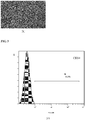
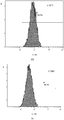
- EXAMPLE 8 Analysis of surface markers of umbilical cord mesenchymal stem cells by flow cytometry
- Example 3 The third-passage cells separated and cultured in Example 3 grew to 90% confluence, and digested with 2 ml 0.125% trypsin. The cells were collected by centrifugation at 1200 rpm, 4 °C for 6 minutes and the supernatant was discarded. After washed 2 times with PBS, the cells were transferred to flow cytometry tubes with 1 ⁇ 10 5 cells in each tube.
- the cells were washed once with PBS, the supernatant was discarded by centrifugation, and the cells were re-suspended and mixed evenly in 500 ⁇ l of PBS, and then detected on a flow cytometer (Flow Cytometer XL, Beckman), with 1 ⁇ 10 4 cells collected for each sample.
- Flow Cytometer XL Flow Cytometer XL, Beckman
- the immunophenotypes of the cells were as follows:
- Results are provided in Figure 3 .
- EXAMPLE 9 Analysis of cell viability and growth profile of the umbilical cord mesenchymal stem cells by cell viability analyzer
- Example 2 The second-passage cells separated and cultured in Example 2 were inoculated into a T25 culture flask. The cells grew to 90%-100% confluence, and were digested with 2 ml 0.125% trypsin. Then the cells were collected and inoculated to two 6-well plates at a density of 1 ⁇ 10 5 cells per well. After all the cells had adhered and grown for 10 hours, cells in two wells were collected and prepared into a cell suspension in 500 ⁇ l of PBS which was then analyzed on a cell viability analyzer (Cell Viability Analyzer Vi-Cell XR, Beckman). Then, sampling analyzing were performed every 12 hours, and growth curve was drawn accordingly.
- a cell viability analyzer Cell Viability Analyzer Vi-Cell XR, Beckman
- results showed that the viability of the umbilical cord mesenchymal stem cells was above 99.7% with a diameter distribution of 9-12 ⁇ m.
- the umbilical cord mesenchymal stem cells which appeared as spindle-shape and grew in whorlshad a perfect roundness after digestion, and a proliferation profile characterized by latent stage, logarithmic growth stage and platform stage.
- the fourth-passage umbilical cord pluripotent stem cells separated and cultured in Example 2 were inoculated to a 6-well cell culture plate at a density of 3 ⁇ 10 4 cells/cm 2 .
- 2 ml of freshly prepared human UC MSC osteogenic differentiation medium (HUXUC-90021, Cyagen) was added to each well, and the medium was replaced with fresh osteogenic differentiation medium every 3 days.
- the cells were fixed with paraformaldehyde, and stained with alizarin red for 3-5 minutes.
- RT-PCR was performed to identify the expression level of osteogenic marker gene OPN at transcriptional level.
- Results showed that alizarin red reacted with calcium nodules during osteogenesis to give a dark red color, after two weeks of osteogenic induction of the umbilical cord mesenchymal stem cells obtained by the method of present invention; furthermore, the osteogenic marker gene OPN also showed differential expression level before and after induction.
- the fourth-passage umbilical cord pluripotent stem cells separated and cultured in Example 3 were inoculated to a 6-well cell culture plate at a density of 2 ⁇ 10 4 cells/cm 2 .
- fresh adipogenic differentiation medium A solution (HUXUC-90031, Cyagen) was added to each well to start induction; after 3 days, the medium was replaced with adipogenic differentiation medium B solution and the culture was maintained for 24 hours. The medium replacement happened in such a cycle.
- the culture system was maintained with adipogenic differentiation medium B solution for 7 days; and after induction, the cells were fixed with 4% paraformaldehyde and stained with oil red O.
- RT-PCR was performed to identify adipogenic marker gene PPAR- ⁇ at transcriptional level.
- Results showed that oil red O staining of adipogenic cells were obvious after two weeks of adipogenic induction of the hUC-MSCs obtained by the method of present invention. Furthermore, the adipogenic marker gene PPAR- ⁇ also showed differential expression level before and after induction.
- the third-passage umbilical cord pluripotent stem cells separated and cultured in Example 2 were inoculated to a T25 cell culture flask at a density of 5 ⁇ 10 5 cells/cm 2 . 2-3 days later when 100% confluence had reached, RNA was extracted, and the extracted RNA was reverse transcribed to obtain cDNA sample which was then amplified by PCR. Then agarose gel electrophoresis was performed, and the results were observed by electrophoresis gel imager.
Landscapes
- Health & Medical Sciences (AREA)
- Life Sciences & Earth Sciences (AREA)
- Engineering & Computer Science (AREA)
- Biomedical Technology (AREA)
- Biotechnology (AREA)
- Genetics & Genomics (AREA)
- Wood Science & Technology (AREA)
- Organic Chemistry (AREA)
- Chemical & Material Sciences (AREA)
- Bioinformatics & Cheminformatics (AREA)
- Zoology (AREA)
- Developmental Biology & Embryology (AREA)
- Microbiology (AREA)
- Cell Biology (AREA)
- Biochemistry (AREA)
- General Engineering & Computer Science (AREA)
- General Health & Medical Sciences (AREA)
- Rheumatology (AREA)
- Hematology (AREA)
- Micro-Organisms Or Cultivation Processes Thereof (AREA)
Applications Claiming Priority (1)
| Application Number | Priority Date | Filing Date | Title |
|---|---|---|---|
| PCT/CN2015/097126 WO2017096611A1 (zh) | 2015-12-11 | 2015-12-11 | 一种从脐带华通氏胶组织中分离培养脐带间充质干细胞的方法 |
Publications (3)
| Publication Number | Publication Date |
|---|---|
| EP3388512A1 true EP3388512A1 (de) | 2018-10-17 |
| EP3388512A4 EP3388512A4 (de) | 2019-07-31 |
| EP3388512B1 EP3388512B1 (de) | 2023-08-23 |
Family
ID=59013661
Family Applications (1)
| Application Number | Title | Priority Date | Filing Date |
|---|---|---|---|
| EP15910085.8A Active EP3388512B1 (de) | 2015-12-11 | 2015-12-11 | Verfahren zur trennung und kultivierung mesenchymaler stammzellen aus wharton-sulze der nabelschnur |
Country Status (3)
| Country | Link |
|---|---|
| US (1) | US11254915B2 (de) |
| EP (1) | EP3388512B1 (de) |
| WO (1) | WO2017096611A1 (de) |
Cited By (2)
| Publication number | Priority date | Publication date | Assignee | Title |
|---|---|---|---|---|
| CN107385517A (zh) * | 2017-08-07 | 2017-11-24 | 章毅 | 间充质干细胞库的构建方法 |
| CN109957542A (zh) * | 2019-03-09 | 2019-07-02 | 和携科技(北京)有限公司 | 一种用于常规抗衰老治疗的人源脐带间充质干细胞制剂的制备方法 |
Families Citing this family (21)
| Publication number | Priority date | Publication date | Assignee | Title |
|---|---|---|---|---|
| CN108077243A (zh) * | 2018-01-24 | 2018-05-29 | 北京臻溪谷医学研究中心(有限合伙) | 一种冷冻保存人胎盘羊膜和绒毛膜的保护液及其制备方法和使用方法 |
| CN108888633A (zh) * | 2018-09-21 | 2018-11-27 | 北京泰盛生物科技有限公司 | 一种牙龈间充质干细胞制剂及其应用和制备方法 |
| CN110564678B (zh) * | 2019-10-12 | 2023-04-07 | 广东唯泰生物科技有限公司 | 脐带华通氏胶间充质干细胞成骨定向分化的方法 |
| CN112972493A (zh) * | 2019-12-12 | 2021-06-18 | 郝志号 | 一种抗衰老剂的制备方法及其应用 |
| CN111759791B (zh) * | 2020-06-23 | 2023-10-27 | 金紫晶(南京)生物医药技术有限公司 | 一种间充质干细胞因子的制备方法及其应用 |
| CN112111450A (zh) * | 2020-11-02 | 2020-12-22 | 贵州北科生物科技有限公司 | 一种脐带间充质干细胞的培养方法及其应用 |
| CN112514888A (zh) * | 2020-12-02 | 2021-03-19 | 江苏拓弘康恒医药有限公司 | 一种用于脐带间充质干细胞的冻存保护液制备工艺 |
| CN112608892B (zh) * | 2020-12-25 | 2023-11-14 | 深圳博雅感知药业有限公司 | 血小板裂解物用于无血清分离和传代培养脐带间充质干细胞的方法 |
| CN112538416A (zh) * | 2020-12-27 | 2021-03-23 | 弘康信达(江苏)医学研究有限公司 | 快速分离和培养脐带间充质干细胞的试剂盒及使用方法 |
| CN112587720A (zh) * | 2021-01-06 | 2021-04-02 | 浙江卫未生物医药科技有限公司 | 一种cgf和脐带间充质干细胞外泌体混合物、制备及应用 |
| CN113174065B (zh) * | 2021-06-09 | 2023-07-25 | 西北农林科技大学 | 含有人脐带间充质干细胞冻干粉的抑菌水凝胶的制备方法 |
| CN113789296B (zh) * | 2021-09-15 | 2023-07-18 | 淮安市第一人民医院 | 高效诱导人脐带间充质干细胞分化为肝细胞的方法及应用 |
| CN113908111A (zh) * | 2021-10-11 | 2022-01-11 | 李俊 | 一种含脐带干细胞外泌体的眼膜贴及其制备方法 |
| CN113832548B (zh) * | 2021-10-21 | 2024-04-26 | 上海市东方医院(同济大学附属东方医院) | 一种临床级人脐带间充质干细胞资源库多级库的构建方法 |
| CN115025035A (zh) * | 2022-07-11 | 2022-09-09 | 睿博斯(北京)生物科技有限公司 | 一种冻干粉、制备方法和面膜 |
| CN115671367A (zh) * | 2022-11-04 | 2023-02-03 | 河北本源生物科技有限公司 | 含有间充质干细胞的活性因子敷料及其制备方法 |
| CN117643570A (zh) * | 2023-10-20 | 2024-03-05 | 张家口健垣精准医学有限公司 | 一种人脐带间充质干细胞注射液的制备及应用 |
| CN117503799B (zh) * | 2023-11-15 | 2024-05-28 | 数字辉煌(北京)科技有限公司 | 一种脐带间充质干细胞上清液的制备方法及其在眼腺体修复中的应用 |
| CN117778310B (zh) * | 2023-12-26 | 2025-02-11 | 广州市第一人民医院(广州消化疾病中心、广州医科大学附属市一人民医院、华南理工大学附属第二医院) | 一种脐带间充质干细胞的制备方法及其应用 |
| CN117965441B (zh) * | 2024-04-02 | 2024-09-06 | 河北意和医学检验实验室有限公司 | 一种提高脐带间充质干细胞免疫调节能力的方法 |
| CN119385919B (zh) * | 2024-10-28 | 2025-07-01 | 沈阳农业大学 | 负载无血清培养间充质干细胞上清液的水凝胶及其制备方法和应用 |
Family Cites Families (18)
| Publication number | Priority date | Publication date | Assignee | Title |
|---|---|---|---|---|
| US6372494B1 (en) | 1999-05-14 | 2002-04-16 | Advanced Tissue Sciences, Inc. | Methods of making conditioned cell culture medium compositions |
| WO2005010040A1 (en) * | 2003-07-15 | 2005-02-03 | Barros Research Institute | Eimeria tenella antigen for immunotherapy of coccidiosis |
| GB0616045D0 (en) * | 2006-08-11 | 2006-09-20 | Univ Bristol | Blood cell separation |
| US20080118477A1 (en) * | 2006-11-09 | 2008-05-22 | Rush University Medical Center | Umbilical cord mesenchymal stem cells support cord blood hematopoiesis |
| PT103843B (pt) * | 2007-10-04 | 2008-08-12 | Medinfar Produtos Farmaceutico | Método de isolamento de células precursoras a partir do cordão umbilical humano |
| US20130302283A1 (en) | 2012-05-14 | 2013-11-14 | Advanced Technologies And Regenerative Medicine, Llc | hUTC MODULATION OF PRO-INFLAMMATORY MEDIATORS OF LUNG AND PULMONARY DISEASES AND DISORDERS |
| WO2011060184A1 (en) * | 2009-11-12 | 2011-05-19 | Cermed Corporation | Cervical cancer screening by molecular detection of human papillomavirus-induced neoplasia |
| SG187741A1 (en) * | 2010-08-05 | 2013-03-28 | Agency Science Tech & Res | Fibrous substrates for cell propagation and differentiation |
| KR101313535B1 (ko) | 2011-04-26 | 2013-10-01 | 차의과학대학교 산학협력단 | 인간 배아줄기세포 또는 역분화 만능줄기세포의 줄기세포성 유지용 배지 및 이를 이용한 배양방법 |
| US9315776B2 (en) * | 2011-11-09 | 2016-04-19 | National University Of Singapore | Wharton's jelly mesenchymal stem cells and uses thereof |
| EP2788476B1 (de) * | 2011-12-08 | 2019-05-22 | Fred Hutchinson Cancer Research Center | Zusammensetzungen und verfahren zur erhöhten erzeugung von hämatopoietischen stamm-/vorläuferzellen |
| CN102559590B (zh) | 2012-01-16 | 2013-11-06 | 遵义医学院附属医院 | 用两种培养基序贯培养人脐带血间充质干细胞的方法 |
| US8940294B2 (en) * | 2012-03-02 | 2015-01-27 | Tissuetech, Inc. | Methods of isolating and culturing stem cells |
| CN103805562B (zh) | 2014-01-13 | 2015-08-05 | 章毅 | 培养胎盘间充质干细胞的无血清培养基 |
| CN105420188B (zh) | 2015-12-11 | 2019-06-21 | 郭镭 | 一种hUC-MSC的无血清分步培养方法及采用所述方法获得的hUC-MSC |
| WO2017096616A1 (zh) | 2015-12-11 | 2017-06-15 | 郭镭 | 一种无血清培养基及其制备方法和用途 |
| WO2017096617A1 (zh) | 2015-12-11 | 2017-06-15 | 郭镭 | 一种用于分步培养hUC-MSC的试剂盒及采用所述试剂盒获得的hUC-MSC |
| CN105420187B (zh) | 2015-12-11 | 2019-06-21 | 郭镭 | 一种用于分步培养hUC-MSC的试剂盒及采用所述试剂盒获得的hUC-MSC |
-
2015
- 2015-12-11 US US16/061,304 patent/US11254915B2/en active Active
- 2015-12-11 EP EP15910085.8A patent/EP3388512B1/de active Active
- 2015-12-11 WO PCT/CN2015/097126 patent/WO2017096611A1/zh not_active Ceased
Cited By (2)
| Publication number | Priority date | Publication date | Assignee | Title |
|---|---|---|---|---|
| CN107385517A (zh) * | 2017-08-07 | 2017-11-24 | 章毅 | 间充质干细胞库的构建方法 |
| CN109957542A (zh) * | 2019-03-09 | 2019-07-02 | 和携科技(北京)有限公司 | 一种用于常规抗衰老治疗的人源脐带间充质干细胞制剂的制备方法 |
Also Published As
| Publication number | Publication date |
|---|---|
| WO2017096611A1 (zh) | 2017-06-15 |
| US20200165571A1 (en) | 2020-05-28 |
| EP3388512B1 (de) | 2023-08-23 |
| EP3388512A4 (de) | 2019-07-31 |
| US11254915B2 (en) | 2022-02-22 |
Similar Documents
| Publication | Publication Date | Title |
|---|---|---|
| EP3388512B1 (de) | Verfahren zur trennung und kultivierung mesenchymaler stammzellen aus wharton-sulze der nabelschnur | |
| US20180362923A1 (en) | Method for separating and extracting huc-msc from wharton's jelly tissue of umbilical cord | |
| WO2017096607A1 (zh) | 一种从脐带外层羊膜组织中分离提取hUC-MSC的方法 | |
| WO2017096618A1 (zh) | 一种从脐带外层羊膜组织中分离培养脐带间充质干细胞的方法 | |
| Patel et al. | Multipotent menstrual blood stromal stem cells: isolation, characterization, and differentiation | |
| CN105420183A (zh) | 一种从脐带华通氏胶组织中分离培养脐带间充质干细胞的方法 | |
| TWI535377B (zh) | Storage, culture and application of umbilical cord tissue and its derived cells | |
| KR101211913B1 (ko) | 양막유래 중간엽 줄기세포 배양을 위한 배지조성물 및 이를 이용한 양막유래 중간엽 줄기세포의 배양방법 | |
| US11091739B2 (en) | Reagent kit for step-by-step hUC-MSC culture and hUC-MSC acquired using said reagent kit | |
| CN104560870B (zh) | 一种制备蜕膜间充质干细胞的方法 | |
| US11098280B2 (en) | Serum-free culture medium and preparation method and application therefor | |
| CN105420184A (zh) | 一种从脐带外层羊膜组织中分离培养脐带间充质干细胞的方法 | |
| CN109234229B (zh) | 从胎盘血管分离间充质干细胞的方法和所用消化酶组合物 | |
| CN113249317A (zh) | 一种人脐带间充质干细胞的分离培养扩增方法及系统 | |
| CN107022521A (zh) | 壁蜕膜组织冻存、复苏及分离培养间充质干细胞的方法 | |
| CN105950550A (zh) | 一种间充质干细胞无血清培养基、细胞分离培养方法 | |
| CN105462919A (zh) | 一种从脐带华通氏胶组织中分离提取hUC-MSC的方法 | |
| TW201812004A (zh) | 區別間質幹細胞的方法及測定間質幹細胞的純度的方法 | |
| CN102965337A (zh) | 分离提取人皮下脂肪间充质干细胞的方法和提取专用培养基 | |
| CN107385517A (zh) | 间充质干细胞库的构建方法 | |
| CN109628388B (zh) | 用消化酶组合物从胎盘血管分离间充质干细胞 | |
| CN105420185A (zh) | 一种从脐带外层羊膜组织中分离提取hUC-MSC的方法 | |
| Mahmood et al. | Biological properties of mesenchymal stem cells derived from adipose tissue, umbilical cord tissue and bone marrow | |
| CN105420187B (zh) | 一种用于分步培养hUC-MSC的试剂盒及采用所述试剂盒获得的hUC-MSC | |
| CN114058573B (zh) | 一种含有生物素的培养基 |
Legal Events
| Date | Code | Title | Description |
|---|---|---|---|
| STAA | Information on the status of an ep patent application or granted ep patent |
Free format text: STATUS: THE INTERNATIONAL PUBLICATION HAS BEEN MADE |
|
| PUAI | Public reference made under article 153(3) epc to a published international application that has entered the european phase |
Free format text: ORIGINAL CODE: 0009012 |
|
| STAA | Information on the status of an ep patent application or granted ep patent |
Free format text: STATUS: REQUEST FOR EXAMINATION WAS MADE |
|
| 17P | Request for examination filed |
Effective date: 20180710 |
|
| AK | Designated contracting states |
Kind code of ref document: A1 Designated state(s): AL AT BE BG CH CY CZ DE DK EE ES FI FR GB GR HR HU IE IS IT LI LT LU LV MC MK MT NL NO PL PT RO RS SE SI SK SM TR |
|
| AX | Request for extension of the european patent |
Extension state: BA ME |
|
| DAV | Request for validation of the european patent (deleted) | ||
| DAX | Request for extension of the european patent (deleted) | ||
| A4 | Supplementary search report drawn up and despatched |
Effective date: 20190628 |
|
| RIC1 | Information provided on ipc code assigned before grant |
Ipc: C12N 5/0735 20100101ALI20190624BHEP Ipc: C12N 5/0775 20100101AFI20190624BHEP |
|
| STAA | Information on the status of an ep patent application or granted ep patent |
Free format text: STATUS: EXAMINATION IS IN PROGRESS |
|
| 17Q | First examination report despatched |
Effective date: 20210615 |
|
| GRAP | Despatch of communication of intention to grant a patent |
Free format text: ORIGINAL CODE: EPIDOSNIGR1 |
|
| STAA | Information on the status of an ep patent application or granted ep patent |
Free format text: STATUS: GRANT OF PATENT IS INTENDED |
|
| INTG | Intention to grant announced |
Effective date: 20230508 |
|
| GRAS | Grant fee paid |
Free format text: ORIGINAL CODE: EPIDOSNIGR3 |
|
| GRAA | (expected) grant |
Free format text: ORIGINAL CODE: 0009210 |
|
| STAA | Information on the status of an ep patent application or granted ep patent |
Free format text: STATUS: THE PATENT HAS BEEN GRANTED |
|
| AK | Designated contracting states |
Kind code of ref document: B1 Designated state(s): AL AT BE BG CH CY CZ DE DK EE ES FI FR GB GR HR HU IE IS IT LI LT LU LV MC MK MT NL NO PL PT RO RS SE SI SK SM TR |
|
| REG | Reference to a national code |
Ref country code: GB Ref legal event code: FG4D |
|
| REG | Reference to a national code |
Ref country code: CH Ref legal event code: EP |
|
| REG | Reference to a national code |
Ref country code: IE Ref legal event code: FG4D |
|
| REG | Reference to a national code |
Ref country code: DE Ref legal event code: R096 Ref document number: 602015085335 Country of ref document: DE |
|
| REG | Reference to a national code |
Ref country code: LT Ref legal event code: MG9D |
|
| REG | Reference to a national code |
Ref country code: NL Ref legal event code: MP Effective date: 20230823 |
|
| REG | Reference to a national code |
Ref country code: AT Ref legal event code: MK05 Ref document number: 1602628 Country of ref document: AT Kind code of ref document: T Effective date: 20230823 |
|
| PG25 | Lapsed in a contracting state [announced via postgrant information from national office to epo] |
Ref country code: GR Free format text: LAPSE BECAUSE OF FAILURE TO SUBMIT A TRANSLATION OF THE DESCRIPTION OR TO PAY THE FEE WITHIN THE PRESCRIBED TIME-LIMIT Effective date: 20231124 |
|
| PG25 | Lapsed in a contracting state [announced via postgrant information from national office to epo] |
Ref country code: IS Free format text: LAPSE BECAUSE OF FAILURE TO SUBMIT A TRANSLATION OF THE DESCRIPTION OR TO PAY THE FEE WITHIN THE PRESCRIBED TIME-LIMIT Effective date: 20231223 |
|
| PG25 | Lapsed in a contracting state [announced via postgrant information from national office to epo] |
Ref country code: SE Free format text: LAPSE BECAUSE OF FAILURE TO SUBMIT A TRANSLATION OF THE DESCRIPTION OR TO PAY THE FEE WITHIN THE PRESCRIBED TIME-LIMIT Effective date: 20230823 Ref country code: RS Free format text: LAPSE BECAUSE OF FAILURE TO SUBMIT A TRANSLATION OF THE DESCRIPTION OR TO PAY THE FEE WITHIN THE PRESCRIBED TIME-LIMIT Effective date: 20230823 Ref country code: PT Free format text: LAPSE BECAUSE OF FAILURE TO SUBMIT A TRANSLATION OF THE DESCRIPTION OR TO PAY THE FEE WITHIN THE PRESCRIBED TIME-LIMIT Effective date: 20231226 Ref country code: NO Free format text: LAPSE BECAUSE OF FAILURE TO SUBMIT A TRANSLATION OF THE DESCRIPTION OR TO PAY THE FEE WITHIN THE PRESCRIBED TIME-LIMIT Effective date: 20231123 Ref country code: NL Free format text: LAPSE BECAUSE OF FAILURE TO SUBMIT A TRANSLATION OF THE DESCRIPTION OR TO PAY THE FEE WITHIN THE PRESCRIBED TIME-LIMIT Effective date: 20230823 Ref country code: LV Free format text: LAPSE BECAUSE OF FAILURE TO SUBMIT A TRANSLATION OF THE DESCRIPTION OR TO PAY THE FEE WITHIN THE PRESCRIBED TIME-LIMIT Effective date: 20230823 Ref country code: LT Free format text: LAPSE BECAUSE OF FAILURE TO SUBMIT A TRANSLATION OF THE DESCRIPTION OR TO PAY THE FEE WITHIN THE PRESCRIBED TIME-LIMIT Effective date: 20230823 Ref country code: IS Free format text: LAPSE BECAUSE OF FAILURE TO SUBMIT A TRANSLATION OF THE DESCRIPTION OR TO PAY THE FEE WITHIN THE PRESCRIBED TIME-LIMIT Effective date: 20231223 Ref country code: HR Free format text: LAPSE BECAUSE OF FAILURE TO SUBMIT A TRANSLATION OF THE DESCRIPTION OR TO PAY THE FEE WITHIN THE PRESCRIBED TIME-LIMIT Effective date: 20230823 Ref country code: GR Free format text: LAPSE BECAUSE OF FAILURE TO SUBMIT A TRANSLATION OF THE DESCRIPTION OR TO PAY THE FEE WITHIN THE PRESCRIBED TIME-LIMIT Effective date: 20231124 Ref country code: FI Free format text: LAPSE BECAUSE OF FAILURE TO SUBMIT A TRANSLATION OF THE DESCRIPTION OR TO PAY THE FEE WITHIN THE PRESCRIBED TIME-LIMIT Effective date: 20230823 Ref country code: AT Free format text: LAPSE BECAUSE OF FAILURE TO SUBMIT A TRANSLATION OF THE DESCRIPTION OR TO PAY THE FEE WITHIN THE PRESCRIBED TIME-LIMIT Effective date: 20230823 |
|
| PG25 | Lapsed in a contracting state [announced via postgrant information from national office to epo] |
Ref country code: PL Free format text: LAPSE BECAUSE OF FAILURE TO SUBMIT A TRANSLATION OF THE DESCRIPTION OR TO PAY THE FEE WITHIN THE PRESCRIBED TIME-LIMIT Effective date: 20230823 |
|
| PG25 | Lapsed in a contracting state [announced via postgrant information from national office to epo] |
Ref country code: ES Free format text: LAPSE BECAUSE OF FAILURE TO SUBMIT A TRANSLATION OF THE DESCRIPTION OR TO PAY THE FEE WITHIN THE PRESCRIBED TIME-LIMIT Effective date: 20230823 |
|
| PG25 | Lapsed in a contracting state [announced via postgrant information from national office to epo] |
Ref country code: SM Free format text: LAPSE BECAUSE OF FAILURE TO SUBMIT A TRANSLATION OF THE DESCRIPTION OR TO PAY THE FEE WITHIN THE PRESCRIBED TIME-LIMIT Effective date: 20230823 Ref country code: RO Free format text: LAPSE BECAUSE OF FAILURE TO SUBMIT A TRANSLATION OF THE DESCRIPTION OR TO PAY THE FEE WITHIN THE PRESCRIBED TIME-LIMIT Effective date: 20230823 Ref country code: ES Free format text: LAPSE BECAUSE OF FAILURE TO SUBMIT A TRANSLATION OF THE DESCRIPTION OR TO PAY THE FEE WITHIN THE PRESCRIBED TIME-LIMIT Effective date: 20230823 Ref country code: EE Free format text: LAPSE BECAUSE OF FAILURE TO SUBMIT A TRANSLATION OF THE DESCRIPTION OR TO PAY THE FEE WITHIN THE PRESCRIBED TIME-LIMIT Effective date: 20230823 Ref country code: DK Free format text: LAPSE BECAUSE OF FAILURE TO SUBMIT A TRANSLATION OF THE DESCRIPTION OR TO PAY THE FEE WITHIN THE PRESCRIBED TIME-LIMIT Effective date: 20230823 Ref country code: CZ Free format text: LAPSE BECAUSE OF FAILURE TO SUBMIT A TRANSLATION OF THE DESCRIPTION OR TO PAY THE FEE WITHIN THE PRESCRIBED TIME-LIMIT Effective date: 20230823 Ref country code: SK Free format text: LAPSE BECAUSE OF FAILURE TO SUBMIT A TRANSLATION OF THE DESCRIPTION OR TO PAY THE FEE WITHIN THE PRESCRIBED TIME-LIMIT Effective date: 20230823 |
|
| REG | Reference to a national code |
Ref country code: DE Ref legal event code: R097 Ref document number: 602015085335 Country of ref document: DE |
|
| PG25 | Lapsed in a contracting state [announced via postgrant information from national office to epo] |
Ref country code: IT Free format text: LAPSE BECAUSE OF FAILURE TO SUBMIT A TRANSLATION OF THE DESCRIPTION OR TO PAY THE FEE WITHIN THE PRESCRIBED TIME-LIMIT Effective date: 20230823 |
|
| PLBE | No opposition filed within time limit |
Free format text: ORIGINAL CODE: 0009261 |
|
| STAA | Information on the status of an ep patent application or granted ep patent |
Free format text: STATUS: NO OPPOSITION FILED WITHIN TIME LIMIT |
|
| 26N | No opposition filed |
Effective date: 20240524 |
|
| PG25 | Lapsed in a contracting state [announced via postgrant information from national office to epo] |
Ref country code: SI Free format text: LAPSE BECAUSE OF FAILURE TO SUBMIT A TRANSLATION OF THE DESCRIPTION OR TO PAY THE FEE WITHIN THE PRESCRIBED TIME-LIMIT Effective date: 20230823 |
|
| REG | Reference to a national code |
Ref country code: CH Ref legal event code: PL |
|
| PG25 | Lapsed in a contracting state [announced via postgrant information from national office to epo] |
Ref country code: LU Free format text: LAPSE BECAUSE OF NON-PAYMENT OF DUE FEES Effective date: 20231211 |
|
| PG25 | Lapsed in a contracting state [announced via postgrant information from national office to epo] |
Ref country code: MC Free format text: LAPSE BECAUSE OF FAILURE TO SUBMIT A TRANSLATION OF THE DESCRIPTION OR TO PAY THE FEE WITHIN THE PRESCRIBED TIME-LIMIT Effective date: 20230823 |
|
| GBPC | Gb: european patent ceased through non-payment of renewal fee |
Effective date: 20231211 |
|
| REG | Reference to a national code |
Ref country code: BE Ref legal event code: MM Effective date: 20231231 |
|
| PG25 | Lapsed in a contracting state [announced via postgrant information from national office to epo] |
Ref country code: MC Free format text: LAPSE BECAUSE OF FAILURE TO SUBMIT A TRANSLATION OF THE DESCRIPTION OR TO PAY THE FEE WITHIN THE PRESCRIBED TIME-LIMIT Effective date: 20230823 Ref country code: LU Free format text: LAPSE BECAUSE OF NON-PAYMENT OF DUE FEES Effective date: 20231211 |
|
| REG | Reference to a national code |
Ref country code: IE Ref legal event code: MM4A |
|
| PG25 | Lapsed in a contracting state [announced via postgrant information from national office to epo] |
Ref country code: IE Free format text: LAPSE BECAUSE OF NON-PAYMENT OF DUE FEES Effective date: 20231211 |
|
| PG25 | Lapsed in a contracting state [announced via postgrant information from national office to epo] |
Ref country code: GB Free format text: LAPSE BECAUSE OF NON-PAYMENT OF DUE FEES Effective date: 20231211 |
|
| PG25 | Lapsed in a contracting state [announced via postgrant information from national office to epo] |
Ref country code: BE Free format text: LAPSE BECAUSE OF NON-PAYMENT OF DUE FEES Effective date: 20231231 |
|
| PG25 | Lapsed in a contracting state [announced via postgrant information from national office to epo] |
Ref country code: FR Free format text: LAPSE BECAUSE OF NON-PAYMENT OF DUE FEES Effective date: 20231231 |
|
| PG25 | Lapsed in a contracting state [announced via postgrant information from national office to epo] |
Ref country code: CH Free format text: LAPSE BECAUSE OF NON-PAYMENT OF DUE FEES Effective date: 20231231 |
|
| PG25 | Lapsed in a contracting state [announced via postgrant information from national office to epo] |
Ref country code: IE Free format text: LAPSE BECAUSE OF NON-PAYMENT OF DUE FEES Effective date: 20231211 Ref country code: GB Free format text: LAPSE BECAUSE OF NON-PAYMENT OF DUE FEES Effective date: 20231211 Ref country code: FR Free format text: LAPSE BECAUSE OF NON-PAYMENT OF DUE FEES Effective date: 20231231 Ref country code: CH Free format text: LAPSE BECAUSE OF NON-PAYMENT OF DUE FEES Effective date: 20231231 Ref country code: BE Free format text: LAPSE BECAUSE OF NON-PAYMENT OF DUE FEES Effective date: 20231231 |
|
| PG25 | Lapsed in a contracting state [announced via postgrant information from national office to epo] |
Ref country code: BG Free format text: LAPSE BECAUSE OF FAILURE TO SUBMIT A TRANSLATION OF THE DESCRIPTION OR TO PAY THE FEE WITHIN THE PRESCRIBED TIME-LIMIT Effective date: 20230823 |
|
| PG25 | Lapsed in a contracting state [announced via postgrant information from national office to epo] |
Ref country code: BG Free format text: LAPSE BECAUSE OF FAILURE TO SUBMIT A TRANSLATION OF THE DESCRIPTION OR TO PAY THE FEE WITHIN THE PRESCRIBED TIME-LIMIT Effective date: 20230823 |
|
| PG25 | Lapsed in a contracting state [announced via postgrant information from national office to epo] |
Ref country code: CY Free format text: LAPSE BECAUSE OF FAILURE TO SUBMIT A TRANSLATION OF THE DESCRIPTION OR TO PAY THE FEE WITHIN THE PRESCRIBED TIME-LIMIT; INVALID AB INITIO Effective date: 20151211 |
|
| PG25 | Lapsed in a contracting state [announced via postgrant information from national office to epo] |
Ref country code: HU Free format text: LAPSE BECAUSE OF FAILURE TO SUBMIT A TRANSLATION OF THE DESCRIPTION OR TO PAY THE FEE WITHIN THE PRESCRIBED TIME-LIMIT; INVALID AB INITIO Effective date: 20151211 |
|
| PG25 | Lapsed in a contracting state [announced via postgrant information from national office to epo] |
Ref country code: TR Free format text: LAPSE BECAUSE OF FAILURE TO SUBMIT A TRANSLATION OF THE DESCRIPTION OR TO PAY THE FEE WITHIN THE PRESCRIBED TIME-LIMIT Effective date: 20230823 |
|
| PGFP | Annual fee paid to national office [announced via postgrant information from national office to epo] |
Ref country code: DE Payment date: 20251222 Year of fee payment: 11 |