EP3389043A1 - Dispositif d'interaction vocale et procédé d'interaction vocale - Google Patents
Dispositif d'interaction vocale et procédé d'interaction vocale Download PDFInfo
- Publication number
- EP3389043A1 EP3389043A1 EP16872840.0A EP16872840A EP3389043A1 EP 3389043 A1 EP3389043 A1 EP 3389043A1 EP 16872840 A EP16872840 A EP 16872840A EP 3389043 A1 EP3389043 A1 EP 3389043A1
- Authority
- EP
- European Patent Office
- Prior art keywords
- voice
- response
- speech
- speech sound
- prosody
- Prior art date
- Legal status (The legal status is an assumption and is not a legal conclusion. Google has not performed a legal analysis and makes no representation as to the accuracy of the status listed.)
- Withdrawn
Links
- 238000000034 method Methods 0.000 title claims description 38
- 230000004044 response Effects 0.000 claims abstract description 619
- 239000011295 pitch Substances 0.000 claims abstract description 270
- 230000003993 interaction Effects 0.000 claims abstract description 242
- 230000007704 transition Effects 0.000 claims description 31
- 238000004458 analytical method Methods 0.000 claims description 23
- 230000007423 decrease Effects 0.000 claims description 21
- 238000012545 processing Methods 0.000 description 70
- 230000005236 sound signal Effects 0.000 description 43
- 238000010586 diagram Methods 0.000 description 17
- 241000282412 Homo Species 0.000 description 12
- 230000008901 benefit Effects 0.000 description 11
- 230000006870 function Effects 0.000 description 9
- 230000004048 modification Effects 0.000 description 8
- 238000012986 modification Methods 0.000 description 8
- 230000002123 temporal effect Effects 0.000 description 8
- 230000000977 initiatory effect Effects 0.000 description 5
- 230000015572 biosynthetic process Effects 0.000 description 4
- 230000008859 change Effects 0.000 description 4
- 238000005516 engineering process Methods 0.000 description 4
- 238000003786 synthesis reaction Methods 0.000 description 4
- 241001465754 Metazoa Species 0.000 description 3
- 230000003466 anti-cipated effect Effects 0.000 description 3
- 230000000694 effects Effects 0.000 description 3
- 230000010365 information processing Effects 0.000 description 3
- RZVAJINKPMORJF-UHFFFAOYSA-N Acetaminophen Chemical compound CC(=O)NC1=CC=C(O)C=C1 RZVAJINKPMORJF-UHFFFAOYSA-N 0.000 description 2
- 238000012935 Averaging Methods 0.000 description 2
- 238000004891 communication Methods 0.000 description 2
- 230000003247 decreasing effect Effects 0.000 description 2
- 230000003287 optical effect Effects 0.000 description 2
- 239000004065 semiconductor Substances 0.000 description 2
- 230000004913 activation Effects 0.000 description 1
- 238000004364 calculation method Methods 0.000 description 1
- 230000021615 conjugation Effects 0.000 description 1
- 230000008451 emotion Effects 0.000 description 1
- 238000011156 evaluation Methods 0.000 description 1
- 238000010295 mobile communication Methods 0.000 description 1
- 230000008447 perception Effects 0.000 description 1
- 230000008569 process Effects 0.000 description 1
- 230000001902 propagating effect Effects 0.000 description 1
- 230000033764 rhythmic process Effects 0.000 description 1
- 238000013179 statistical model Methods 0.000 description 1
- 238000012549 training Methods 0.000 description 1
Images


Classifications
-
- G—PHYSICS
- G10—MUSICAL INSTRUMENTS; ACOUSTICS
- G10L—SPEECH ANALYSIS TECHNIQUES OR SPEECH SYNTHESIS; SPEECH RECOGNITION; SPEECH OR VOICE PROCESSING TECHNIQUES; SPEECH OR AUDIO CODING OR DECODING
- G10L25/00—Speech or voice analysis techniques not restricted to a single one of groups G10L15/00 - G10L21/00
- G10L25/90—Pitch determination of speech signals
-
- G—PHYSICS
- G10—MUSICAL INSTRUMENTS; ACOUSTICS
- G10L—SPEECH ANALYSIS TECHNIQUES OR SPEECH SYNTHESIS; SPEECH RECOGNITION; SPEECH OR VOICE PROCESSING TECHNIQUES; SPEECH OR AUDIO CODING OR DECODING
- G10L13/00—Speech synthesis; Text to speech systems
-
- G—PHYSICS
- G10—MUSICAL INSTRUMENTS; ACOUSTICS
- G10L—SPEECH ANALYSIS TECHNIQUES OR SPEECH SYNTHESIS; SPEECH RECOGNITION; SPEECH OR VOICE PROCESSING TECHNIQUES; SPEECH OR AUDIO CODING OR DECODING
- G10L13/00—Speech synthesis; Text to speech systems
- G10L13/08—Text analysis or generation of parameters for speech synthesis out of text, e.g. grapheme to phoneme translation, prosody generation or stress or intonation determination
- G10L13/10—Prosody rules derived from text; Stress or intonation
-
- G—PHYSICS
- G10—MUSICAL INSTRUMENTS; ACOUSTICS
- G10L—SPEECH ANALYSIS TECHNIQUES OR SPEECH SYNTHESIS; SPEECH RECOGNITION; SPEECH OR VOICE PROCESSING TECHNIQUES; SPEECH OR AUDIO CODING OR DECODING
- G10L15/00—Speech recognition
- G10L15/02—Feature extraction for speech recognition; Selection of recognition unit
-
- G—PHYSICS
- G10—MUSICAL INSTRUMENTS; ACOUSTICS
- G10L—SPEECH ANALYSIS TECHNIQUES OR SPEECH SYNTHESIS; SPEECH RECOGNITION; SPEECH OR VOICE PROCESSING TECHNIQUES; SPEECH OR AUDIO CODING OR DECODING
- G10L15/00—Speech recognition
- G10L15/08—Speech classification or search
- G10L15/18—Speech classification or search using natural language modelling
- G10L15/1807—Speech classification or search using natural language modelling using prosody or stress
-
- G—PHYSICS
- G10—MUSICAL INSTRUMENTS; ACOUSTICS
- G10L—SPEECH ANALYSIS TECHNIQUES OR SPEECH SYNTHESIS; SPEECH RECOGNITION; SPEECH OR VOICE PROCESSING TECHNIQUES; SPEECH OR AUDIO CODING OR DECODING
- G10L15/00—Speech recognition
- G10L15/22—Procedures used during a speech recognition process, e.g. man-machine dialogue
-
- G—PHYSICS
- G10—MUSICAL INSTRUMENTS; ACOUSTICS
- G10L—SPEECH ANALYSIS TECHNIQUES OR SPEECH SYNTHESIS; SPEECH RECOGNITION; SPEECH OR VOICE PROCESSING TECHNIQUES; SPEECH OR AUDIO CODING OR DECODING
- G10L25/00—Speech or voice analysis techniques not restricted to a single one of groups G10L15/00 - G10L21/00
- G10L25/48—Speech or voice analysis techniques not restricted to a single one of groups G10L15/00 - G10L21/00 specially adapted for particular use
-
- G—PHYSICS
- G10—MUSICAL INSTRUMENTS; ACOUSTICS
- G10L—SPEECH ANALYSIS TECHNIQUES OR SPEECH SYNTHESIS; SPEECH RECOGNITION; SPEECH OR VOICE PROCESSING TECHNIQUES; SPEECH OR AUDIO CODING OR DECODING
- G10L13/00—Speech synthesis; Text to speech systems
- G10L13/02—Methods for producing synthetic speech; Speech synthesisers
- G10L13/033—Voice editing, e.g. manipulating the voice of the synthesiser
- G10L13/0335—Pitch control
-
- G—PHYSICS
- G10—MUSICAL INSTRUMENTS; ACOUSTICS
- G10L—SPEECH ANALYSIS TECHNIQUES OR SPEECH SYNTHESIS; SPEECH RECOGNITION; SPEECH OR VOICE PROCESSING TECHNIQUES; SPEECH OR AUDIO CODING OR DECODING
- G10L21/00—Speech or voice signal processing techniques to produce another audible or non-audible signal, e.g. visual or tactile, in order to modify its quality or its intelligibility
- G10L21/003—Changing voice quality, e.g. pitch or formants
- G10L21/007—Changing voice quality, e.g. pitch or formants characterised by the process used
- G10L21/013—Adapting to target pitch
Definitions
- the present invention relates to a voice interaction (spoken dialog) technology that reproduces a voice in response to a speech sound.
- Patent Document 1 discloses a technology in which speech content is analyzed by voice recognition of a speech sound of a user, and a response voice that is in accordance with a result of the analysis is synthesized and reproduced.
- Patent Document 1 Japanese Patent Application Laid-Open Publication No. 2012-128440
- a voice interaction method includes: a voice acquisition step of acquiring a speech signal indicative of a speech sound; a voice analysis step of identifying a series of pitches of the speech sound from the speech signal; and a response generation step of causing a reproduction device to reproduce a response voice of pitches controlled in accordance with the lowest pitch of the pitches identified, in the voice analysis step, during a tailing section proximate to an end point within the speech sound.
- a voice interaction apparatus includes: a voice acquirer configured to acquire a speech signal indicative of a speech sound; a voice analyzer configured to identify a series of pitches of the speech sound from the speech signal; and a response generator configured to cause a reproduction device to reproduce a response voice of pitches controlled in accordance with the lowest pitch of the pitches identified by the voice analyzer during a tailing section proximate to an end point within the speech sound.
- a voice interaction method includes: a voice acquisition step of acquiring a speech signal indicative of a speech sound; a voice analysis step of identifying a series of pitches of the speech sound from the speech signal; and a voice analysis step of causing a reproduction device to reproduce a response voice that has a prosody corresponding to transition of the pitches identified in the voice analysis step during a tailing section proximate to an end point within the end point of the speech sound.
- a voice interaction apparatus includes: a voice acquirer configured to acquire a speech signal indicative of a speech sound; a voice analyzer configured to identify a series of pitches of the speech sound from the speech signal; and a response generator configured to cause a reproduction device to reproduce a response voice that has a prosody corresponding to transition of the pitches identified by the voice analyzer during a tailing section proximate to an end point within the speech sound.
- a voice interaction method includes: a voice acquisition step of acquiring a speech signal indicative of a speech sound; and a response generation step of causing a reproduction device to selectively reproduce either a first response voice or a second response voice, wherein the first response voice represents an inquiry directed toward the speech sound and the second response voice represents a response other than an inquiry.
- a voice interaction apparatus includes: a voice acquirer configured to acquire a speech signal indicative of a speech sound; and a response generator configured to cause a reproduction device to selectively reproduce either a first response voice or a second response voice, wherein the first response voice represents an inquiry directed toward the speech sound and the second response voice represents a response other than an inquiry.
- a voice interaction method is a method for executing a voice interaction in which a response voice directed toward a speech sound is reproduced, the method including: a voice acquisition step of acquiring a speech signal indicative of the speech sound; a history management step of generating a usage history of the voice interaction; and a response generation step of causing a reproduction device to reproduce the response voice that has a prosody corresponding to the usage history.
- a voice interaction apparatus is an apparatus that executes a voice interaction in which a response voice directed toward a speech sound is reproduced, the apparatus including: a voice acquirer configured to acquire a speech signal indicative of the speech sound; a history manager configured to generate a usage history of the voice interaction; and a response generator configured to cause a reproduction device to reproduce the response voice that has a prosody corresponding to the usage history.
- FIG. 1 is a diagram showing a configuration of a voice interaction apparatus 100A according to a first embodiment of the present invention.
- the voice interaction apparatus 100A in the first embodiment is a voice interaction system that reproduces a voice (hereinafter referred to as a "response voice") Vy directed to an input voice (hereinafter referred to as "speech sound") Vx uttered by a user U.
- a voice interaction apparatus 100A a portable information processing device, such as a mobile phone or a smartphone, or an information processing device, such as a personal computer, may be used.
- the voice interaction apparatus 100A may be realized in the form of a robot or a toy that imitates appearances of an animal (e.g., a stuffed animal).
- the speech sound Vx is a voice (an example of the input voice) of speech that includes, for example, an inquiry (question) addressed to a person and a statement addressed to a person.
- the response voice Vy is a responsive voice that includes an answer to an inquiry or a response to a statement.
- the response voice Vy includes, for example, a voice indicative of an interjection.
- An interjection is an independent word (ejaculation or exclamation) that is used independently of other clauses and has no conjugation.
- examples of an interjection may include: words expressing a backchannel to speech, such as “un” or “ee” (corresponding to “aha” or “right” in English); words indicative of hesitation in speech (stagnant response), such as “eto” or “ano” ("um” or “er” in English); words expressing responses (affirmation or negation to a question), such as “hai” or “iie” ("yes” or “no” in English); words expressing emotions of a speaker, such as “aa” or “oo” (“ah” or “wow” in English); and words indicative of an inquiry concerning speech (a request to repeat a part of speech), such as "e?" or “nani?” ("pardon?" or "sorry?” in English).
- the voice interaction apparatus 100A in the first embodiment generates a response voice Vy with a prosody that corresponds to a prosody of a speech sound Vx.
- a prosody of a sound is a linguistic and phonetic characteristic perceivable by a person who hears the sound; and is a characteristic that cannot be understood from general writings of a language alone (e.g., written form without special notation that represents a prosody).
- a prosody is a characteristic that causes a hearer to conjure or conjecture intentions or feelings of a speaker.
- the concept of prosody includes a variety of characteristics, such as inflection (variation in a sound key or intonation), sound tone (pitch or dynamic of a sound), sound length (speech length), speech rate, rhythm (structure of temporal variation in a sound tone), or accent (accent in a pitch or dynamic).
- inflection variation in a sound key or intonation
- sound tone pitch or dynamic of a sound
- sound length sound length
- speech rate structure of temporal variation in a sound tone
- rhythm structure of temporal variation in a sound tone
- accent accent in a pitch or dynamic
- a typical example of a prosody is a pitch (fundamental frequency) or a volume.
- the voice interaction apparatus 100A in the first embodiment includes a control device 20, a storage device 22, a voice input device 24, and a reproduction device 26.
- the voice input device 24 generates a sound signal (hereinafter referred to as "speech signal") X indicative of, for example, a speech sound Vx of the user U, and includes a sound reception device 242 and an A/D converter 244.
- the sound reception device (microphone) 242 receives the speech sound Vx uttered by the user U and generates an analog sound signal representative of variations in sound pressure of the received speech sound Vx.
- the A/D converter 244 converts the sound signal generated by the sound reception device 242 into a digital speech signal X.
- the control device 20 is an arithmetic processing device (e.g., CPU) that centrally controls each element in the voice interaction apparatus 100A.
- the control device 20 in the first embodiment acquires the speech signal X provided by the voice input device 24 and generates a response signal Y indicative of a response voice Vy directed toward the speech sound Vx.
- the reproduction device 26 reproduces a response voice Vy that corresponds to the response signal Y generated by the control device 20, and includes a D/A converter 262 and a sound output device 264.
- the D/A converter 262 converts the digital response signal Y generated by the control device 20 into an analog sound signal.
- the sound output device 264 (e.g., a loudspeaker or headphones) outputs a response voice Vy that corresponds to the converted sound signal in the form of sound waves.
- the reproduction device 26 may include processing circuitry, such as an amplifier that amplifies the response signal Y.
- the storage device 22 stores a program executed by the control device 20 together with various data used by the control device 20. Any publicly known recording medium, such as a semiconductor recording medium or a magnetic recording medium, or a combination of recording media may be used as the storage device 22.
- the storage device 22 in the first embodiment stores sound signals Z indicative of response voices indicating particular speech contents. In the following description, an exemplary case is described in which the storage device 22 stores a sound signal Z indicative of a response voice, such as "un" serving as a backchannel, where a backchannel is an example of an interjection.
- the sound signal Z is recorded in advance, and can be stored in the storage device 22 as a sound file in any format, such as a wav format.
- the control device 20 realizes functions (a voice acquirer 32, a voice analyzer 34A, and a response generator 36A) for establishing an interaction with the user U by executing the program stored in the storage device 22.
- functions of the control device 20 may be realized by use of multiple devices (i.e., by a system), or a part of the functions of the control device 20 may be realized by dedicated electronic circuitry.
- the voice acquirer 32 in FIG. 1 acquires a speech signal X that is indicative of a speech sound Vx.
- the voice acquirer 32 in the first embodiment acquires the speech signal X generated by the voice input device 24 from the voice input device 24.
- the voice analyzer 34A identifies a series of pitches (fundamental frequencies) P of the speech sound Vx from the speech signal X acquired by the voice acquirer 32.
- the voice analyzer 34A identifies the series of pitches P at predetermined intervals. In other words, a pitch P is identified at each of different time points along a time-axis. Any publicly known technique may be used to identify the pitches P of the speech sound Vx.
- the pitches P may be identified by extracting a sound component of a particular frequency band in the speech signal X.
- the frequency band that is to be analyzed by the voice analyzer 34A may be changed in accordance with an instruction (e.g., an instruction to specify a male voice or female voice) made by the user U, for example. Furthermore, the frequency band to be analyzed may be dynamically changed in accordance with the pitches P of the speech sound Vx.
- an instruction e.g., an instruction to specify a male voice or female voice
- the frequency band to be analyzed may be dynamically changed in accordance with the pitches P of the speech sound Vx.
- the response generator 36A causes the reproduction device 26 to reproduce a response voice Vy directed to the speech sound Vx, which is represented by the speech signal X acquired by the voice acquirer 32. More specifically, with utterance of the speech sound Vx by the user U serving as a trigger, the response generator 36A generates a response signal Y indicative of the response voice Vy and provides the generated response signal Y to the reproduction device 26, thereby causing the reproduction device 26 to reproduce the response voice Vy.
- the response generator 36A in the first embodiment generates the response signal Y indicative of the response voice Vy by adjusting, in accordance with the pitches P of the speech sound Vx identified by the voice analyzer 34A, a prosody of the sound signal Z stored in the storage device 22. That is, the reproduction device 26 reproduces the response voice Vy that is an initial response voice represented by the sound signal Z having been adjusted in accordance with a prosody of the speech sound Vx.
- the response generator 36A in the first embodiment generates the response signal Y indicative of the response voice Vy by adjusting pitches of the sound signal Z in accordance with the pitches P of the speech sound Vx identified by the voice analyzer 34A.
- FIG. 2 is a flowchart showing processing executed by the control device 20 in the first embodiment.
- An instruction e.g., instruction to activate a program for voice interaction
- An instruction to activate a program for voice interaction from the user U to the voice interaction apparatus 100A, for example, serves as a trigger for initiation of the processing shown in FIG. 2 .
- the voice acquirer 32 waits until the user U starts to utter a speech sound Vx (S10:NO). More specifically, the voice acquirer 32 successively identifies volumes of a speech signal X provided by the voice input device 24, and in a case where a condition exists in which the volume is higher than a predetermined threshold value (e.g., a fixed value selected in advance or a variable value in accordance with an instruction from the user U), and is maintained for a predetermined length of time, the voice acquirer 32 determines that the speech sound Vx has started. Any method may be used to detect the start of the speech sound Vx (i.e., a start point of a speech section). For example, the voice acquirer 32 may determine that the speech sound Vx has started in a case where the volume of the speech signal X is higher than the threshold value and the voice analyzer 34A has detected a valid pitch P.
- a predetermined threshold value e.g., a fixed value selected in advance or a variable value in accordance with an instruction from the user U
- the voice acquirer 32 acquires the speech signal X from the voice input device 24 and stores the speech signal X in the storage device 22 (S11).
- the voice analyzer 34A identifies pitches P of the speech sound Vx from the speech signal X acquired by the voice acquirer 32, and stores the pitches P in the storage device 22 (S12).
- the voice acquirer 32 determines whether the user U has finished uttering the speech sound Vx (S13). More specifically, the voice acquirer 32 determines that the speech sound Vx has ended in a case where a condition in which the volume of the speech signal X is lower than a predetermined threshold value (e.g., a fixed value selected in advance or a variable value in accordance with an instruction made by the user U) is maintained for a predetermined length of time.
- a predetermined threshold value e.g., a fixed value selected in advance or a variable value in accordance with an instruction made by the user U
- any publicly known technique may be used to detect the end of the speech sound Vx (i.e., an end point of the speech section).
- a time series of pitches P of the speech sound Vx are identified during the speech section that is a period from the start point to the end point tB of the speech sound Vx.
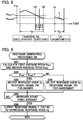
- FIG. 3 it is assumed that the user U has uttered the speech sound Vx of a question "tanoshii-ne?" ("it's fun, isn't it?" in English), where a speaker is asking about a speaking partner's perception, such as feelings or intentions.
- FIG. 4 it is assumed that the user U has uttered the speech sound Vx of a declarative sentence in which a speaker expresses his/her own feelings or intentions, or a speaker is asking a speaking partner for his/her agreement.
- the response generator 36A executes processing (hereinafter referred to as "response generating processing") SA to cause the reproduction device 26 to reproduce a response voice Vy directed toward the speech sound Vx.
- response generating processing As described above, in the response generating processing SA in the first embodiment, a response signal Y indicative of a response voice Vy is generated by adjusting pitches of the sound signal Z in accordance with the pitches P of the speech sound Vx identified by the voice analyzer 34A.
- FIG. 5 is a flowchart showing a specific example of the response generating processing SA.
- the response generating processing SA of FIG. 5 is initiated.
- the response generator 36A identifies, as a prosody of the speech sound Vx, a lowest pitch (hereinafter referred to as "minimum pitch") P min among pitches P identified by the voice analyzer 34A during a section (hereinafter referred to as "tailing section") E that is in the speech sound Vx and includes the end point tB of the speech sound Vx (SA1).
- minimum pitch a lowest pitch
- P min among pitches P identified by the voice analyzer 34A during a section (hereinafter referred to as "tailing section") E that is in the speech sound Vx and includes the end point tB of the speech sound Vx (SA1).
- the tailing section E is a section that is a part of the speech sound Vx, and extends over a predetermined period ending on the end point tB of the speech sound Vx.
- the time length of the tailing section E is set to be a value within a range from a few dozen milliseconds to a few seconds (e.g., somewhere around 180 milliseconds), for example.
- pitches P tend to increase proximate to the end point tB in the speech sound Vx representative of a question. Accordingly, the pitch P at a minimum point is identified as the minimum pitch P min , wherein the minimum point is where a transition state of the pitches P of the speech sound Vx changes from a decrease to an increase.
- pitches P tend to decrease monotonically toward the end point tB in the speech sound Vx representative of a declarative sentence. Accordingly, the pitch P at the end point tB of the speech sound Vx is identified as the minimum pitch P min .
- the response generator 36A generates a response signal Y indicative of a response voice Vy of pitches controlled in accordance with the minimum pitch P min of the speech sound Vx (SA2). More specifically, as shown in FIG. 3 and FIG. 4 , the response generator 36A generates the response signal Y indicative of the response voice Vy by adjusting pitches of the sound signal Z such that the pitch at a particular time point (hereinafter referred to as a "target point") ⁇ along a time-axis within the response voice Vy corresponds to the minimum pitch P min .
- a suitable example of the target point ⁇ is a start point of a particular mora (typically a final mora) among morae that form the response voice Vy.
- a sound signal Z for a response voice "un” may be assumed.
- the response signal Y indicative of the response voice Vy is generated by adjusting (shifting) pitches in all sections in the sound signal Z such that the pitch at the start point (an initial pitch) of the final mora "n" in the sound signal Z corresponds to the minimum pitch P min .
- any publicly known technique may be used for adjustment of pitches.
- the target point ⁇ is not limited to the start point of the final mora in the response voice Vy.
- pitches may be adjusted with either the start point or the end point of the response voice Vy serving as the target point ⁇ .
- the response generator 36A awaits arrival of a time point (hereinafter referred to as a "response start point") ty at which reproduction of the response voice Vy is to start (SA3:NO).
- the response start point ty may be, for example, a time point at which a predetermined time period (e.g., 150 ms) has passed since the end point tB of the speech sound Vx.
- the response generator 36A Upon arrival of the response start point ty (SA3:YES), the response generator 36A causes the reproduction device 26 to reproduce the response voice Vy by providing to the reproduction device 26 the response signal Y, which signal has been adjusted in accordance with the minimum pitch P min (SA4). That is, reproduction of the response voice Vy starts at the response start point ty at which point the predetermined period has passed since the end point tB of the speech sound Vx.
- the response generator 36A may cause the reproduction device 26 to reproduce the response voice Vy by sequentially providing, concurrently with generation (pitch shifting) of the response signal Y, the reproduction device 26 with the response signal Y from the response start point ty in real time.
- the response generator 36A in the first embodiment serves as an element that causes the reproduction device 26 to reproduce the response voice Vy of pitches controlled in accordance with the minimum pitch P min in the tailing section E of the speech sound Vx.
- the control device 20 determines whether the user U has instructed termination of the voice interaction (S14). In a case where termination of the voice interaction has not been instructed (S14:NO), the processing transits to step S10. That is, with a start of the speech sound Vx (S10: YES) serving as a trigger, acquisition of the speech signal X by the voice acquirer 32 (S11), identification of the pitches P by the voice analyzer 34A (S12), and the response generating processing SA by the response generator 36A are executed.
- the reproduction device 26 reproduces the response voice Vy of pitches controlled in accordance with the minimum pitch P min of the tailing section E including the end point tB of the speech sound Vx. Accordingly, it is possible to realize natural voice interaction that is imitative of real-life interaction where an interacting partner tends to utter a response voice at pitches corresponding to pitches that occur proximate to the end point of a speech sound.
- the response voice Vy is reproduced such that the pitch at the start point (target point ⁇ ) of the final mora of the response voice Vy corresponds to the minimum pitch P min .
- one of the multiple sound signals Z having different pitches may be selectively used for reproduction of the response voice Vy.
- the sound signals Z are generated by recording voices that are uttered at different pitches; or are generated by adjusting the pitches of a voice uttered at a particular pitch.
- multiple sound signals Z with pitches differing from each other by a predetermined interval e.g., by 100 cent, which corresponds to a half-tone are stored in advance in the storage device 22.
- the response generator 36A selects, for example, from among the multiple sound signals Z stored in the storage device 22, a sound signal Z with a pitch that is closest to the minimum pitch P min of the speech sound Vx as the response signal Y, and provides the reproduction device 26 with the selected sound signal Z, thereby causing the reproduction device 26 to reproduce the response voice Vy.
- adjustment of pitches of the sound signal Z by the response generator 36A may be omitted. In the above configuration where adjustment of the sound signal Z is omitted, an advantage is obtained in that a processing load imposed on the response generator 36A is reduced.
- a sound signal Z preferably may be selected from among the sound signals Z stored in the storage device 22, the sound signal Z having a pitch closest to one of pitches derived by shifting the minimum pitch P min of the speech sound Vx by a unit of an octave.
- FIG. 6 is a diagram showing a configuration of a voice interaction apparatus 100B according to the second embodiment of the present invention.
- the voice interaction apparatus 100B in the second embodiment reproduces a response voice Vy directed toward a speech sound Vx uttered by the user U.
- the response generator 36A in the voice interaction apparatus 100A in the first embodiment is replaced by a response generator 36B.
- Configurations and operations of other elements in the voice interaction apparatus 100B are similar to those in the first embodiment.
- a prosody In real-life interaction between humans, there is observed a tendency for an interacting partner to utter a response voice with a prosody that corresponds to a content of speech (whether the speech consists of a question or a declarative sentence) uttered by a speaker.
- a prosody differs between a response voice that is directed toward a question and a response voice that is directed toward a declarative sentence.
- a voice of an answer directed toward a question tends to be uttered at a relatively high volume, and with an emphasized inflection (temporal variation in volume or in pitches); this occurs so as to enable the speaker to clearly recognize the answer (affirmative or negative) of a respondent, for example.
- the response generator 36B in the second embodiment causes the reproduction device 26 to reproduce the response voice Vy that has a prosody corresponding to the content (a question or a declarative sentence) of speech of the speech sound Vx.
- FIG. 7 shows an example of transition of the pitches P of the speech sound Vx representative of a question
- FIG. 8 shows an example of transition of the pitches P of the speech sound Vx representative of a declarative sentence.
- transition a tendency in temporal variation
- the pitches P of the speech sound Vx of a question decrease and then increase, or increase monotonically within the tailing section E.
- FIG. 7 shows an example of transition of the pitches P of the speech sound Vx representative of a question
- FIG. 8 shows an example of transition of the pitches P of the speech sound Vx representative of a declarative sentence.
- the pitches P of the speech sound Vx of a declarative sentence decrease monotonically from the start point tA to the end point tB of the tailing section E. Accordingly, by analyzing the transition of the pitches P proximate to the end of the speech sound Vx (in the tailing section E), it is possible to estimate whether the content of the speech of the speech sound Vx corresponds to a question or to a declarative sentence.
- the response generator 36B in the second embodiment causes the reproduction device 26 to reproduce the response voice Vy that has a prosody corresponding to transition of the pitches P in the tailing section E of the speech sound Vx (i.e., a question or a declarative sentence). More specifically, as shown in the example of FIG. 7 , in a case where the transition state of the pitches P of the speech sound Vx changes from a decrease to an increase within the tailing section E or in a case where the pitches P of the speech sound Vx increase monotonically in the tailing section E (i.e., in a case where the content of speech is inferred to be a question), the response voice Vy with a prosody appropriate for a question is reproduced by the reproduction device 26.
- the response voice Vy with a prosody appropriate for a declarative sentence is reproduced by the reproduction device 26.
- the storage device 22 of the voice interaction apparatus 100B in the second embodiment stores a response signal YA and a response signal YB that each represent a response voice Vy of a particular speech content recorded in advance. Between the response signal YA and the response signal YB, literation of the speech content is common, but their respective prosodies differ.
- a response voice Vy represented by the response signal YA is a voiced sound "un” uttered with an intention to convey an affirmative answer to the speech sound Vx of a question; and a response voice Vy represented by the response signal YB is a voiced sound "un” uttered with an intention to convey a backchannel directed toward the speech sound Vx of a declarative sentence.
- the volume of the response voice Vy of the response signal YA is higher than that of the response voice Vy of the response signal YB; and there exists in the prosody a difference that the response voice Vy of the response signal YA has a wider range of variations in volume and pitches (i.e., inflection) than the response voice Vy of the response signal YB.
- the response generator 36B in the second embodiment selectively provides the reproduction device 26 with one of the response signal YA and the response signal YB stored in the storage device 22, thereby causing the reproduction device 26 to selectively reproduce one of the response voices Vy with different prosodies.
- the content of utterance may differ between the response signal YA and the response signal YB.
- FIG. 9 is a flowchart showing response generating processing SB for the response generator 36B of the second embodiment that causes the reproduction device 26 to reproduce a response voice Vy.
- the response generating processing SA of FIG. 2 shown as an example in the first embodiment is replaced by the response generating processing SB of FIG. 9 .
- Processing other than the response generating processing SB is similar to that described in the first embodiment.
- the response generating processing SB of FIG. 9 is initiated with an end of the speech sound Vx serving as a trigger (S13:YES).
- the response generator 36B calculates an average (hereinafter referred to as "first average pitch”) P avel of pitches P in a first section E1 and an average (hereinafter referred to as "second average pitch”) P avel of pitches P in a second section E2 (SB1), the first section E1 and the second section E2 being within the tailing section E of the speech sound Vx. As shown in the examples of FIG. 7 and FIG.
- the first section E1 is a front section within the tailing section E (e.g., a section that includes the start point tA of the tailing section E); and the second section E2 is a section that comes after the first section E1 within the tailing section E (e.g., a section that includes the end point tB of the tailing section E). More specifically, the first half of the tailing section E is defined as the first section E1, and the second half of the tailing section E is defined as the second section E2.
- the definition of the first section E1 and the second section E2 is not limited to the above example. For instance, the second section E2 may follow the first section E1 with an interval therebetween, or a time length of the first section E1 and that of the second section E2 may be different.
- the response generator 36B compares the first average pitch P avel of the first section E1 with the second average pitch P ave2 of the second section E2, and determines whether the first average pitch P ave1 is lower than the second average pitch P ave2 (SB2).
- the transition state of the pitches P of the speech sound Vx of a question tends to change from a decrease to an increase, or the pitches P tend to monotonically increase, within the tailing section E. Accordingly, as shown in the example in FIG. 7 , the first average pitch P ave1 is likely to be lower than the second average pitch P ave2 (P ave1 ⁇ P ave2 ).
- the pitches P of the speech sound Vx of a declarative sentence tend to monotonically decrease within the tailing section E. Accordingly, as shown in the example in FIG. 8 , the first average pitch P ave1 is likely to be higher than the second average pitch P ave2 (P ave1 > P ave2 ).
- the response generator 36B of the second embodiment selects from the storage device 22 a response signal YA corresponding to a response voice Vy representative of an answer to the question (SB3).
- the response generator 36B selects from the storage device 22 a response signal YB corresponding to a response voice Vy representative of agreement with the declarative sentence (SB4).
- the response generator 36B After selecting a response signal Y (Y1 or Y2) that is in accordance with the transition of the pitches P of the speech sound Vx by the above steps, similarly to the first embodiment, the response generator 36B provides the response signal Y to the reproduction device 26 upon arrival of the response start point ty (SB5:YES), thereby causing the reproduction device 26 to reproduce the response voice Vy (SB6). More specifically, in a case where the pitches P of the speech sound Vx decrease and then increase within the tailing section E, or the pitches P of the speech sound Vx monotonically increase within the tailing section E (SB2:YES), a response voice Vy representative of an answer to a question is reproduced.
- a response voice Vy representative of agreement with a declarative sentence is reproduced.
- a prosody of the response voice Vy that is reproduced by the reproduction device 26 differs between a case where the speech sound Vx is representative of a question and a case where the speech sound Vx is representative of a declarative sentence.
- voice interaction is realized in which utterance of a freely-chosen speech sound Vx by the user U and reproduction of a response voice Vy directed toward the speech sound Vx are alternately repeated.
- the reproduction device 26 there is reproduced by the reproduction device 26 a response voice Vy that has a prosody corresponding to transition of the pitches P in the tailing section E of the speech sound Vx. Accordingly, it is possible to realize natural voice interaction that is imitative of real-life interaction where an interacting partner of a speaker tends to utter a response voice with a prosody that is in accordance with the content of speech of the speaker.
- the prosody of a response voice Vy differs between a case where a transition state of the pitches P in the tailing section E changes from a decrease to an increase or the pitches P monotonically increase in the tailing section E; and a case where the pitches P monotonically decrease from the start point tA to the end point tB of the tailing section E.
- the prosody of the response voice Vy is changed in accordance with a result of a comparison between the first average pitch P ave1 of the first section E1 within the tailing section E and the second average pitch P ave2 of the second section E2 within the tailing section E. Accordingly, an advantage is obtained in that the transition of the pitches P can be evaluated (thus the prosody of the response voice Vy can be selected) by simple processing involving averaging and comparing pitches P.
- response signals Y with different prosodies are generated by adjustment of a single response signal Y
- response signals Y (YA and YB) with different prosodies since there is no need for the storage device 22 to store response signals Y (YA and YB) with different prosodies, an advantage is obtained in that a required storage capacity of the storage device 22 can be reduced.
- a configuration of the second embodiment in which one of response signals Y with different prosodies is selectively used since there is no need to adjust the prosody of the initial response signal Y in accordance with the content of speech represented by the speech sound Vx, an advantage is obtained in that a processing load on the response generator 36B is reduced.
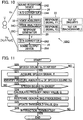
- FIG. 10 is a diagram showing a configuration of a voice interaction apparatus 100C according to a third embodiment of the present invention.
- the voice interaction apparatus 100C in the third embodiment reproduces a response voice Vy directed toward a speech sound Vx uttered by the user U, similarly to the voice interaction apparatus 100A in the first embodiment.
- a response voice hereinafter referred to as "second response voice”
- Vy2 representative of an answer or a backchannel directed toward the speech sound Vx
- first response voice a response voice (hereinafter referred to as "first response voice”) Vy1 representative of an inquiry directed toward the speech sound Vx can be reproduced by the reproduction device 26.
- the first response voice Vy1 is a voiced sound, such as "e?" ("pardon?" in English), or "nani?" ("sorry?" in English), which is uttered to prompt the speaker to repeat the speech sound Vx.
- the storage device 22 in the voice interaction apparatus 100C of the third embodiment stores a response signal Y1 that is indicative of the recorded first response voice Vy1 representative of an inquiry and a response signal Y2 that is indicative of the recorded second response voice Vy2 representative of a response other than an inquiry (e.g., a backchannel such as "un”).
- the voice interaction apparatus 100C of the third embodiment is configured in a manner such that the voice analyzer 34A and the response generator 36A in the voice interaction apparatus 100A of the first embodiment are replaced with a voice analyzer 34C and a response generator 36C.
- Configurations and operations of other elements (the voice input device 24, the reproduction device 26, and the voice acquirer 32) in the voice interaction apparatus 100C are similar to those in the first embodiment.
- the voice analyzer 34C of the third embodiment identifies a prosody index value Q from the speech signal X acquired by the voice acquirer 32.
- the prosody index value Q is an index value related to a prosody of the speech sound Vx, and is calculated for each speech sound Vx (for each unit, where a series of speech from a start point to an end point of the speech sound Vx is deemed to be a unit). More specifically, an average value of pitches, an extent of variation in the pitches, an average value of the volume, or an extent of variation in the volume, in a speech section of the speech sound Vx, is calculated as the prosody index value Q from the speech signal X.
- the response generator 36C of the third embodiment causes the reproduction device 26 to selectively reproduce either the first response voice Vy1, which is representative of an inquiry directed toward the speech sound Vx, or the second response voice Vy2, which is representative of a response other than an inquiry.
- the response generator 36C of the third embodiment compares the prosody index value Q identified by the voice analyzer 34C with a threshold value Q TH , and in accordance with a result of the comparison, the response generator 36C causes the reproduction device 26 to reproduce either the first response voice Vy1 or the second response voice Vy2.
- the threshold value Q TH is set to be a representative value (e.g., an average value) of prosody index values Q of multiple speech sounds Vx uttered at different timings by the user U in the past. That is, the threshold value Q TH corresponds to a standard prosody that is estimated from prior speeches of the user U.
- the prosody index value Q of the speech sound Vx deviates from the threshold value Q TH
- the first response voice Vy1 representative of an inquiry is reproduced; while in a case where the prosody index value Q is close to the threshold value Q TH , the second response voice Vy2 representative of a backchannel is reproduced.
- FIG. 11 is a flowchart showing processing executed by the control device 20 of the third embodiment. For example, with an instruction (e.g., instruction to activate a program for voice interaction) issued to the voice interaction apparatus 100C by the user U serving as a trigger, the processing shown in FIG. 11 is initiated.
- an instruction e.g., instruction to activate a program for voice interaction
- the voice acquirer 32 acquires a speech signal X from the voice input device 24 and stores the speech signal X in the storage device 22 (S21).
- the voice analyzer 34C identifies a series of feature amounts q related to a prosody of the speech sound Vx from the speech signal X acquired by the voice acquirer 32 (S22).
- the feature amount q is for example a pitch P or a volume of the speech sound Vx. Acquisition of the speech signal X by the voice acquirer 32 (S21) and identification of the feature amounts q by the voice analyzer 34C (S22) are repeated until the end of the speech sound Vx (S23:NO). That is, during a speech section from the start point to the end point tB of the speech sound Vx, a time series of feature amounts q for the speech sound Vx are identified.
- the voice analyzer 34C calculates a prosody index value Q from the time series of feature amounts q identified for the speech section from the start point to the end point of the speech sound Vx (S24). More specifically, the voice analyzer 34C calculates, as the prosody index value Q, an average value or an extent of variation (a range) of the feature amounts q within the speech section.
- the response generator 36C executes response generating processing SC for causing the reproduction device 26 to reproduce a response voice Vy.
- the response generator 36C causes the reproduction device 26 to selectively reproduce either the first response voice Vy1 or the second response voice Vy2 in accordance with the prosody index value Q calculated by the voice analyzer 34C.
- the voice analyzer 34C updates the threshold value Q TH in accordance with the prosody index value Q of the speech sound Vx for this time (S25). More specifically, the voice analyzer 34C calculates, as the updated threshold value Q TH , a representative value (e.g., an average value or a median value) of prosody index values Q of past speech sounds Vx including the speech sound Vx for this time. For example, as expressed by the following equation (1), a weighted average (index moving average) of the prosody index value Q for this time and the pre-update threshold value Q TH is calculated as the updated threshold value Q TH . Sign ⁇ in the equation (1) indicates a predetermined positive number below one (forgetting coefficient).
- Q TH ⁇ ⁇ Q + 1 ⁇ ⁇ Q TH
- the voice analyzer 34C of the third embodiment serves as an element that sets a representative value of prosody index values Q in the past speech sounds Vx as a threshold value Q TH .
- the threshold value Q TH is updated to a value that reflects the prosody index value Q of the speech sound Vx, and the threshold value Q TH consequently becomes a value that corresponds to a standard prosody estimated from the speech of the user U at different timings.
- the threshold value Q TH may be fixed at a predetermined value. For example, an average value of prosody index values Q identified from speech sounds of many and unspecified speakers may be set as a threshold value Q TH .
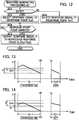
- FIG. 12 is a flowchart showing the response generating processing SC in the third embodiment.
- the response generator 36C compares the prosody index value Q identified by the voice analyzer 34C with the threshold value Q TH at the current stage, and determines whether the prosody index value Q is included in a predetermined range (hereinafter referred to as "accepted range") R that includes the threshold value Q TH (SC1).
- accepted range a predetermined range
- FIG. 13 and FIG. 14 there are shown exemplary transitions of the feature amounts q identified from the speech sound Vx by the voice analyzer 34C.
- the accepted range R is a range with a predetermined width having the threshold value Q TH as the median value.
- Processing carried out to compare the prosody index value Q with the threshold value Q TH may be realized as processing that determines whether an absolute value of a difference between the prosody index value Q and the threshold value Q TH is higher than a predetermined value (e.g., a half of the range width of the accepted range R).
- a predetermined value e.g., a half of the range width of the accepted range R.
- the prosody index value Q is a value within the accepted range R. If the prosody index value Q is included in the accepted range R, this means that the prosody of the speech sound Vx for this time is close to the standard prosody (tendencies in prior speeches) of the user U. That is, assuming a situation in real-life interaction between humans, the situation can be evaluated as one in which it is easy for an interacting partner to catch the speech sound (a situation that is unlikely to require an inquiry to be directed to a speaker).
- the response generator 36C selects from the storage device 22 a response signal Y2 indicative of a second response voice Vy2 representative of a backchannel directed toward the speech sound Vx (SC2).
- the prosody index value Q is a value outside the accepted range R (more specifically, a value lower than the lower limit of the accepted range R). If the prosody index value Q is not included in the accepted range R, this means that the prosody of the speech sound Vx for this time deviates from the standard prosody of the user U. That is, assuming a situation in real-life interaction between humans, the situation can be evaluated as one in which it is difficult for an interacting partner to catch the speech sound (a situation that is likely to require an inquiry to be directed to a speaker).
- the response generator 36C selects from the storage device 22 a response signal Y1 indicative of a second response voice Vy1 (e.g., a voiced sound such as "e?" or "nani?") that is representative of an inquiry directed toward the speech sound Vx, as a signal to be provided to the reproduction device 26 (SC3).
- a response signal Y1 indicative of a second response voice Vy1 (e.g., a voiced sound such as "e?” or "nani?”) that is representative of an inquiry directed toward the speech sound Vx, as a signal to be provided to the reproduction device 26 (SC3).
- the response generator 36C After selecting a response signal Y that is in accordance with the prosody index value Q (selecting a response voice Vy to be reproduced), similarly to the first embodiment, the response generator 36C provides the response signal Y to the reproduction device 26 upon arrival of the response start point ty (SC4:YES), thereby causing the reproduction device 26 to reproduce the response voice Vy (the first response voice Vy1 or the second response voice Vy2) (SC5).
- the response voice Vy the first response voice Vy1 or the second response voice Vy2
- either the first response voice Vy 1 representative of an inquiry directed toward the speech sound Vx or the second response voice Vy2 representative of a response other than an inquiry is selectively reproduced by the reproduction device 26. Accordingly, it is possible to realize natural voice interaction that is imitative of real-life interaction where there tends to arise on occasion an inquiry (request for repetition of speech) directed to a speaker, in addition to a backchannel directed to the speech of the speaker.
- either the first response voice Vy1 or the second response voice Vy2 is selected in accordance with a result of comparison between the threshold value Q TH and the prosody index value Q representative of the prosody of the speech sound Vx. Accordingly, it is possible to realize natural voice interaction that is imitative of real-life interaction where there is a tendency that, when the prosody of the speech sound changes unexpectedly, catching the speech sound becomes difficult and a necessity to make an inquiry increases.
- a representative value of prosody index values Q of past speech sounds Vx is set as the threshold value Q TH .
- the first response voice Vy1 is selected in a case where the prosody index value Q is a value outside the accepted range R including the threshold value Q TH
- the second response voice Vy2 is selected in a case where the prosody index value Q is a value within the accepted range R.
- the first response voice Vy1 and the second response voice Vy2 are selected in accordance with a magnitude of the prosody index value Q relative to the threshold value Q TH alone, it is possible to reduce a possibility of the first response voice Vy1 being reproduced at an excessively high frequency (i.e., possible to reproduce the first response voice Vy1 at an appropriate frequency).
- reproduction of the first response voice Vy1 or reproduction of the second response voice Vy2 is selected in accordance with the prosody index value Q of the speech sound Vx.
- the first response voice Vy1 representative of an inquiry may be reproduced at a predetermined frequency, regardless of characteristics of the speech sound Vx.
- the response generator 36C causes the reproduction device 26 to reproduce the first response voice Vy1 representative of an inquiry in response to speech sounds Vx that are randomly selected from speech sounds Vx uttered in series by the user U, and causes the reproduction device 26 to reproduce the second response voice Vy2 representative of a backchannel in response to other speech sounds Vx.
- the response generator 36C may generate a random number that falls within a predetermined range for each utterance of a speech sound Vx. In a case where the random number is greater than a threshold value, the response generator 36C selects the first response voice Vy1; and in a case where the random number is lower than the threshold value, the response generator 36C selects the second response voice Vy2.
- the first response voice Vy1 representative of an inquiry is reproduced in response to speech sounds Vx that are randomly selected from speech sounds Vx, it is possible to realize natural voice interaction that is imitative of real-life voice interaction where an inquiry directed toward a speech sound tends to occur randomly.
- the response generator 36C may change a ratio of a number of times the first response voice Vy1 is reproduced (i.e., a frequency of reproducing the first response voice Vy1) to the number of times a speech sound Vx is uttered. For example, by adjusting the threshold value, which is compared with the random number, the response generator 36C controls a frequency of reproduction of the first response voice Vy1. For example, in a case where the frequency of reproducing the first response voice Vy1 is set at 30%, the first response voice Vy1 is reproduced for 30% of the total number of utterances of the speech sound Vx, and the second response voice Vy2 is reproduced for the remaining 70%, out of the total number of utterances of the speech sound Vx.
- the frequency of reproducing the first response voice Vy1 (e.g., the threshold value that is compared with the random number) may, for example, be changed in accordance with an instruction made by the user U.
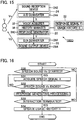
- FIG. 15 is a diagram showing a configuration of a voice interaction apparatus 100D according to a fourth embodiment of the present invention. Similarly to the voice interaction apparatus 100A of the first embodiment, the voice interaction apparatus 100D of the fourth embodiment reproduces a response voice Vy directed toward a speech sound Vx uttered by the user U.
- the voice interaction apparatus 100D of the fourth embodiment is configured in a manner such that the voice analyzer 34A and the response generator 36A in the voice interaction apparatus 100A of the first embodiment are replaced by a history manager 38 and a response generator 36D. Configurations and operations of other elements (the voice input device 24, the reproduction device 26, and the voice acquirer 32) in the voice interaction apparatus 100D are similar to those in the first embodiment.
- the storage device 22 of the fourth embodiment stores a response signal Y indicative of a response voice Vy with a specific speech content.
- a response voice Vy of "un" representative of a backchannel directed toward a speech sound Vx is provided as an example.
- the history manager 38 in FIG. 15 generates a history (hereinafter referred to as "usage history”) H of a voice interaction by the voice interaction apparatus 100D.
- the usage history H of the fourth embodiment is a number of times (hereinafter referred to as "usage frequency") N a voice interaction is executed in the past using the voice interaction apparatus 100D. More specifically, the history manager 38 counts a number of times of the voice interaction as a usage frequency N, treating a sequence from a beginning of the voice interaction (activation of the voice interaction apparatus 100D) to an end of the voice interaction as one use (i.e., one time of a voice interaction that includes multiple pairs of utterances of a speech sound Vx and reproduction of a response voice Vy).
- the usage history H generated by the history manager 38 is stored in the storage device 22.
- the response generator 36D of the fourth embodiment causes the reproduction device 26 to reproduce a response voice Vy that has a prosody corresponding to the usage history H generated by the history manager 38.
- the prosody of the response voice Vy is controlled to be variable in accordance with the usage history H.
- a waiting period W for reproduction of the response voice Vy is treated as the prosody of the response voice Vy, and is controlled in accordance with the usage history H.
- the waiting period W is a time length from the end point tB of the speech sound Vx to the response start point ty of the response voice Vy (i.e., an interval between the speech sound Vx and the response voice Vy).
- the response generator 36D of the fourth embodiment controls the waiting period W in accordance with the usage history H such that the waiting period W for the response voice Vy is shorter in a case where the usage frequency N indicated by the usage history H is high as compared to a case where the usage frequency N is low.
- the voice acquirer 32 acquires a speech signal X from the voice input device 24 and stores the speech signal X in the storage device 22 (S31). Acquisition of a speech signal X by the voice acquirer 32 is repeated until the end of the speech sound Vx (S32:NO).
- the response generator 36D executes response generating processing SD for causing the reproduction device 26 to reproduce a response voice Vy with a prosody that corresponds to the usage history H, which is stored in the storage device 22.
- the waiting period W is controlled in accordance with the usage history H, the waiting period W being from the end point tB of the speech sound Vx to the response start point ty at which reproduction of the response voice Vy is started. Acquisition of the speech signal X by the voice acquirer 32 (S31) and the response generating processing SD by the response generator 36D are repeated until termination of the voice interaction is instructed by the user U (S33:NO). Accordingly, similarly to the first embodiment, voice interaction is realized in which utterance of a freely-chosen speech sound Vx by the user U and reproduction of a response voice Vy directed toward the speech sound Vx are alternately repeated.
- the history manager 38 updates the usage history H stored in the storage device 22 to a content that takes the just ended voice interaction into account (S34). More specifically, the history manager 38 increases the usage frequency N indicated by the usage history H by one. In this way, the usage history H is increased by one for every execution of a voice interaction by the voice interaction apparatus 100D.
- the processing of FIG. 16 ends after the usage history H is updated.
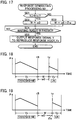
- FIG. 17 is a flowchart of the response generating processing SD of the fourth embodiment
- FIG. 18 and FIG. 19 are explanatory diagrams for the response generating processing SD.
- the response generator 36D sets the waiting period W to be variable in accordance with the usage history H stored in the storage device 22 (SD1 to SD3). More specifically, the response generator 36D first determines whether the usage frequency N indicated by the usage history H is higher than a predetermined threshold value N TH (SD1). In a case where the usage frequency N is higher than the threshold value N TH (SD1:YES), as shown in the example of FIG.
- the response generator 36D sets a predetermined baseline value w0 (e.g., 150 ms) as the waiting period W (SD2).
- a predetermined baseline value w0 e.g. 150 ms
- the response generator 36D sets a value (w0 + ⁇ w) derived by adding a predetermined adjustment value (offset) ⁇ w to the baseline value w0 as the waiting period W (SD3).
- the adjustment value ⁇ w is set to be a predetermined positive value.
- the waiting period W is controlled in a binary manner in accordance with whether the usage frequency N is higher than the threshold value N TH .
- the waiting period W may be changed in multivalue manner in accordance with the usage frequency N.
- the response generator 36D waits until the waiting period W, which has been set in accordance with the usage history H in the above processing, has passed since the end point tB of the speech sound Vx (SD4:NO). Upon arrival of the response start point ty by passage of the waiting period W (SD4:YES), the response generator 36D provides the response signal Y stored in the storage device 22 to the reproduction device 26, thereby causing the response voice Vy to be reproduced (SD5). As will be understood from the above description, the response generator 36D of the fourth embodiment causes the reproduction device 26 to reproduce the response voice Vy that has a prosody (the waiting period W in the fourth embodiment) corresponding to the usage history H of the voice interaction apparatus 100D.
- the response voice Vy is reproduced after passage of the waiting period W having the baseline value w0; and in a case where the usage frequency N is low, the response voice Vy is reproduced after passage of the waiting period W having a value derived by adding the adjustment value ⁇ w to the baseline value w0.
- the waiting period W is set to be short.
- the response voice Vy with a prosody (waiting period W) corresponding to the usage history H of a voice interaction by the voice interaction apparatus 100D. Accordingly, it is possible to realize natural voice interaction that is imitative of real-life interaction where a prosody of a speech sound tends to change with time as an interaction with a particular partner is repeated.
- the waiting period W which is an interval between a speech sound Vx and a response voice Vy, is controlled in accordance with the usage history H. In this way, natural voice interaction is realized that is imitative of real-life interaction where an interval between speech and a response tends to be protracted immediately after a person first interacts with a stranger, and the interval becomes shorter as interaction with the interacting partner is repeated.
- the voice interaction apparatuses 100 (100A, 100B, 100C, and 100D) shown as examples in the above-described embodiments can be modified in various manners. Specific modes of modification are described below as examples. Two or more modes freely selected from the following examples can be combined, as appropriate, so long as they do not contradict each other.
- the configuration of the third embodiment in which either the first response voice Vy 1 representative of an inquiry directed toward a speech sound Vx or the second response voice Vy2 representative of a response other than an inquiry is selectively reproduced, may be applied to each embodiment other than the third embodiment. Additionally or alternatively, the configuration of the fourth embodiment, in which the prosody (e.g., waiting period W) of the response voice Vy is controlled in accordance with the usage history H of a voice interaction, may be applied to the first to the third embodiments.
- the prosody e.g., waiting period W
- the response generator 36A of the first embodiment selects one of sound signals Z with different speech contents from the storage device 22 and provides a response signal Y corresponding to the selected sound signal Z to the reproduction device 26, thereby causing a response voice Vy to be reproduced.
- a manner to select a sound signal Z is freely chosen; for example, a manner to randomly select one of sound signals Z may be assumed.
- the voice analyzer 34 34A, 34C, or 34D
- the voice analyzer 34 may be omitted. Accordingly, there is an advantage that a processing load on the control device 20 is reduced.
- a sound signal Z selected from the storage device 22 may be provided to the reproduction device 26 as a response signal Y as it is, or a response signal Y generated by adjusting a prosody (e.g., pitches or volume) of the sound signal Z may be provided to the reproduction device 26.
- a prosody typically pitches
- a configuration in which a prosody (typically pitches) of the sound signal Z is adjusted in accordance with the minimum pitch P min of a speech sound Vx as shown in the example of the first embodiment, or a configuration in which a prosody of the sound signal Z is randomly adjusted is preferred.
- a program causes a computer to execute: voice acquiring processing of acquiring a speech signal indicative of a speech sound; voice analyzing processing of identifying a series of pitches of the speech sound from the speech signal; and response generating processing of causing a reproduction device to reproduce a response voice of pitches controlled in accordance with the lowest pitch of the pitches identified in the voice analyzing processing during a tailing section proximate to an end point within the speech sound.
- a program causes a computer to execute: voice acquiring processing of acquiring a speech signal indicative of a speech sound; voice analyzing processing of identifying a series of pitches of the speech sound from the speech signal; and response generating processing of causing a reproduction device to reproduce a response voice that has a prosody corresponding to transition of the pitches identified in the voice analyzing processing during a tailing section proximate to an end point within the speech sound.
- a program causes a computer to execute: voice acquiring processing of acquiring a speech signal indicative of a speech sound; and response generating processing of causing a reproduction device to selectively reproduce either a first response voice or a second response voice, wherein the first response voice represents an inquiry directed toward the speech sound and the second response voice represents a response other than an inquiry.
- a program according to a fourth mode of the present invention is for a voice interaction in which a response voice directed toward a speech sound is reproduced, the program causing a computer to execute: voice acquiring processing of acquiring a speech signal indicative of the speech sound; history managing processing of generating a usage history of the voice interaction; and response generating processing of causing a reproduction device to reproduce the response voice that has a prosody corresponding to the usage history.
- a program according to each of the above modes may be provided in a format stored in a computer-readable recording medium and be installed in a computer.
- the recording medium is for example a non-transitory recording medium; a good example of which is an optical recording medium (optical disk), such as a CD-ROM.
- the recording medium can encompass any of publicly known formats, such as a semiconductor recording medium or a magnetic recording medium.
- the "non-transitory recording medium” here includes all computer-readable recording medium except for a transitory, propagating signal, and a volatile recording medium is not excluded.
- the program can be delivered to the computer by distribution via a communication network.
- a voice interaction method includes: a voice acquisition step of acquiring a speech signal indicative of a speech sound; a voice analysis step of identifying a series of pitches (e.g., a time series of values representative of temporal variations of the pitches) of the speech sound from the speech signal; and a response generation step of causing a reproduction device to reproduce a response voice of pitches controlled in accordance with the lowest pitch (e.g., a lowest value among values representing temporal variations of the pitches within the tailing section) of the pitches identified, in the voice analysis step, during a tailing section proximate to an end point within the speech sound.
- a voice acquisition step of acquiring a speech signal indicative of a speech sound
- a voice analysis step of identifying a series of pitches (e.g., a time series of values representative of temporal variations of the pitches) of the speech sound from the speech signal
- a response generation step of causing a reproduction device to reproduce a response voice of pitches controlled in accordance with the lowest pitch (e.g., a
- mode 2 of mode 1 in the response generation step, the reproduction device is caused to reproduce the response voice such that an initial pitch of the final mora of the response voice corresponds to the lowest pitch of the tailing section within the speech sound.
- mode 2 since the response voice is reproduced such that the initial pitch of the final mora of the response voice corresponds to the lowest pitch of the tailing section of the speech sound, an advantageous effect is obtained in that a particularly natural voice interaction close to real-life interaction can be realized.
- mode 3 of mode 1 or mode 2 in the response generation step, the pitches of the response voice vary with each speech sound.
- this mode since the pitches of the response voice vary for each utterance of a speech sound, compared to a configuration in which there is no variation in pitches of a response voice responding to speech sounds, an advantage is obtained in that natural voice interaction close to real-life interaction can be realized.
- a voice interaction apparatus includes: a voice acquirer configured to acquire a speech signal indicative of a speech sound; a voice analyzer configured to identify a series of pitches of the speech sound from the speech signal; and a response generator configured to cause a reproduction device to reproduce a response voice of pitches controlled in accordance with the lowest pitch of the pitches identified by the voice analyzer during a tailing section proximate to an end point within the speech sound.
- the response voice is reproduced by the reproduction device with pitches controlled in accordance with the lowest pitch within the tailing section proximate to the end point of the speech sound. Accordingly, it is possible to realize natural voice interaction that is imitative of real-life interaction where an interacting partner tends to utter a response voice of pitches that correspond to a pitch that occurs proximate to an end point of a speech sound.
- a voice interaction method includes: a voice acquisition step of acquiring a speech signal indicative of a speech sound; a voice analysis step of identifying a series of pitches (e.g., a time series of values representing temporal variations of the pitches) of the speech sound from the speech signal; and a voice analysis step of causing a reproduction device to reproduce a response voice that has a prosody corresponding to transition of the pitches identified in the voice analysis step during a tailing section proximate to an end point within the end point of the speech sound.
- this mode there is reproduced by the reproduction device a response voice with a prosody that corresponds to transition of the pitches in the tailing section of the speech sound. Accordingly, it is possible to realize natural voice interaction that is imitative of real-life interaction where an interacting partner tends to utter a response voice with a prosody that is in accordance with a content of speech of a speaker.
- the reproduction device in the response generation step, is caused to reproduce the response voice that has a different prosody between a case where the identified pitches decrease and then increase within the tailing section and a case where the identified pitches decrease from a start point to an end point of the tailing section.
- the prosody of the response voice since the prosody of the response voice differs between a case where the pitches decrease and then increase within the tailing section and a case where the pitches decrease from the start point to the end point of the tailing section, it is possible to realize natural voice interaction imitative of real-life interaction where a prosody of a response voice tends to differ between a question and a declarative sentence.
- the causing of the response generation step includes: comparing a first average pitch with a second average pitch, wherein the first average pitch is an average pitch in a first section within the tailing section (e.g., an average of values representing temporal variations of pitches within the first section) and the second average pitch is an average pitch in a second section within the tailing section (e.g., an average of values representing temporal variations of pitches within the second section), the second section coming after the first section; and causing the reproduction device to reproduce the response voice that has a different prosody between a case where the first average pitch is lower than the second average pitch and a case where the first average pitch is higher than the second average pitch.
- the first average pitch is an average pitch in a first section within the tailing section (e.g., an average of values representing temporal variations of pitches within the first section)
- the second average pitch is an average pitch in a second section within the tailing section (e.g., an average of values representing temporal variations of pitches within the second section)
- the prosody of the response voice differs depending on a result of the comparison between the first average pitch in the first section situated in a front portion of the tailing section and the second average pitch in the second section situated in a rear portion of the tailing section. Accordingly, an advantage is obtained in that transition of pitches can be evaluated by simple processing involving averaging and comparing pitches.
- the response generation step includes: acquiring a response signal indicative of a response voice that is in accordance with the transition of the identified pitches in the tailing section from a storage device that stores a plurality of response signals indicative of response voices with different prosodies; and causing the reproduction device to reproduce the response voice by outputting the acquired response signal.
- the response voice is reproduced by selective use of response signals stored in the storage device. Accordingly, compared with a configuration in which a prosody of a response signal is adjusted in accordance with transition of pitches within the tailing section, an advantage is obtained in that a processing load on the response generator can be reduced.
- the response generation step includes: generating, from a response signal indicative of a response voice with a predetermined prosody, a response signal indicative of a response voice with a prosody that corresponds to the transition of the pitches in the tailing section; and causing the reproduction device to reproduce the response voice indicated by the generated response signal by outputting the generated response signal.
- a response signal with a prosody that corresponds to the transition of the pitches within the tailing section of a speech sound is generated from an initial response signal. Accordingly, an advantage is obtained in that there is no need to retain response signals with different prosodies in the storage device.
- a voice interaction apparatus includes: a voice acquirer configured to acquire a speech signal indicative of a speech sound; a voice analyzer configured to identify a series of pitches of the speech sound from the speech signal; and a response generator configured to cause a reproduction device to reproduce a response voice that has a prosody corresponding to transition of the pitches identified by the voice analyzer during a tailing section proximate to an end point within the speech sound.
- a response voice with a prosody that corresponds to transition of pitches in the tailing section of a speech sound. Accordingly, it is possible to realize natural voice interaction that is imitative of real-life interaction where an interacting partner tends to utter a response voice with a prosody that is in accordance with a content of speech of a speaker.
- a voice interaction method includes: a voice acquisition step of acquiring a speech signal indicative of a speech sound; and a response generation step of causing a reproduction device to selectively reproduce either a first response voice or a second response voice, wherein the first response voice represents an inquiry directed toward the speech sound and the second response voice represents a response other than an inquiry.
- the first response voice representing an inquiry directed toward a speech sound and the second response voice representing a response other than an inquiry are selectively reproduced by the reproduction device. Accordingly, it is possible to realize natural voice interaction that is imitative of real-life interaction where there tends to arise on occasion an inquiry (a request to repeat a speech) directed toward a speaker, as well as a backchannel to the speech of the speaker.
- a preferred example (mode 12) of mode 11 further includes a voice analysis step of identifying from the speech signal a prosody index value indicative of a prosody of the speech sound, wherein the response generation step includes: comparing the prosody index value of the speech sound with a threshold value; and selecting either the first response voice or the second response voice in accordance with a result of the comparison.
- the response generation step includes: comparing the prosody index value of the speech sound with a threshold value; and selecting either the first response voice or the second response voice in accordance with a result of the comparison.
- the response generation step includes: comparing the prosody index value of the speech sound with a threshold value; and selecting either the first response voice or the second response voice in accordance with a result of the comparison.
- this mode in accordance with a result of the comparison between the prosody index value representing the prosody of the speech sound and the threshold value, one of the first response voice and the second response voice is selected.
- the threshold value is set to a representative value of prosody index values of past speech sounds.
- a representative value of prosody index values of the past speech sounds is set as the threshold value, it is possible to realize natural voice interaction that is imitative of real-life interaction where there is a tendency that, when a prosody of a speech sound of a speaker deviates from a standard prosody of the speaker (i.e., a prosody anticipated by an interacting partner), it is more likely that the interacting partner will make an inquiry.
- the first response voice is selected in a case where the prosody index value is a value outside a predetermined range that includes the threshold value, and the second response voice is selected in a case where the prosody index value is a value within the predetermined range.
- the first response voice is selected, and in a case where the prosody index value is within the predetermined range, the second response voice is selected. Accordingly, it is possible to reduce a possibility of reproducing the first response voice at an excessively high frequency.
- the reproduction device in the response generation step, is caused to reproduce the first response voice as a response to a speech sound that is selected randomly from among a plurality of speech sounds.
- the first response voice since the first response voice is reproduced as a response to a speech sound randomly selected from among speech sounds, it is possible to realize natural voice interaction that is imitative of real-life voice interaction where an inquiry directed toward a speech sound tends to occur randomly.
- the response generation step includes setting a frequency for reproducing the first response voice as a response to the plurality of speech sounds.
- the frequency for reproducing the first response voice is set in accordance with a usage history of a voice interaction.
- a voice interaction apparatus includes: a voice acquirer configured to acquire a speech signal indicative of a speech sound; and a response generator configured to cause a reproduction device to selectively reproduce either a first response voice or a second response voice, wherein the first response voice represents an inquiry directed toward the speech sound and the second response voice represents a response other than an inquiry.
- a voice acquirer configured to acquire a speech signal indicative of a speech sound
- a response generator configured to cause a reproduction device to selectively reproduce either a first response voice or a second response voice, wherein the first response voice represents an inquiry directed toward the speech sound and the second response voice represents a response other than an inquiry.
- the reproduction device includes: a voice acquirer configured to acquire a speech signal indicative of a speech sound; and a response generator configured to cause a reproduction device to selectively reproduce either a first response voice or a second response voice, wherein the first response voice represents an inquiry directed toward the speech sound and the second response voice represents a response other than an inquiry.
- a voice interaction method is a method for executing a voice interaction in which a response voice directed toward a speech sound is reproduced.
- the voice interaction method includes: a voice acquisition step of acquiring a speech signal indicative of the speech sound; a history management step of generating a usage history of the voice interaction; and a response generation step of causing a reproduction device to reproduce the response voice that has a prosody corresponding to the usage history.
- the response generation step includes controlling a waiting period in accordance with the usage history, wherein the waiting period is an interval between the speech sound and the response voice.
- the waiting period which is an interval between a speech sound and a response voice
- the waiting period is controlled in accordance with the usage history, natural voice interaction is realized that is imitative of real-life interaction where an interval between a speech and a response tends to be protracted immediately after a speaker first interacts with an interacting partner, and an interval between speech and a response becomes shorter as an interaction with the interacting partner is repeated.
- a voice interaction apparatus is an apparatus that executes a voice interaction in which a response voice directed toward a speech sound is reproduced.
- the voice interaction apparatus includes: a voice acquirer configured to acquire a speech signal indicative of the speech sound; a history manager configured to generate a usage history of the voice interaction; and a response generator configured to cause a reproduction device to reproduce the response voice that has a prosody corresponding to the usage history.
- a response voice with a prosody that corresponds to a usage history of a voice interaction is reproduced, it is possible to realize natural voice interaction that is imitative of real-life interaction where a prosody of a speech sound tends to vary with time as an interaction with a particular interacting partner is repeated.
- 100 100 (100A, 100B, 100C, and 100D).
- voice interaction apparatus 20... control device, 22... storage device, 24... voice input device, 242... sound reception device, 244... A/D converter, 26... reproduction device, 262... D/A converter, 264... sound output device, 32... voice acquirer, 34A and 34C... voice analyzer, 36A, 36B, 36C, and 36D... response generator, 38... history manager.
Landscapes
- Engineering & Computer Science (AREA)
- Physics & Mathematics (AREA)
- Computational Linguistics (AREA)
- Health & Medical Sciences (AREA)
- Audiology, Speech & Language Pathology (AREA)
- Human Computer Interaction (AREA)
- Acoustics & Sound (AREA)
- Multimedia (AREA)
- Signal Processing (AREA)
- Artificial Intelligence (AREA)
- Computer Vision & Pattern Recognition (AREA)
- Toys (AREA)
- Electrically Operated Instructional Devices (AREA)
Applications Claiming Priority (6)
| Application Number | Priority Date | Filing Date | Title |
|---|---|---|---|
| JP2015238912A JP6657888B2 (ja) | 2015-12-07 | 2015-12-07 | 音声対話方法、音声対話装置およびプログラム |
| JP2015238914 | 2015-12-07 | ||
| JP2015238913A JP6728660B2 (ja) | 2015-12-07 | 2015-12-07 | 音声対話方法、音声対話装置およびプログラム |
| JP2015238911A JP6657887B2 (ja) | 2015-12-07 | 2015-12-07 | 音声対話方法、音声対話装置およびプログラム |
| JP2016088720A JP6569588B2 (ja) | 2015-12-07 | 2016-04-27 | 音声対話装置およびプログラム |
| PCT/JP2016/085126 WO2017098940A1 (fr) | 2015-12-07 | 2016-11-28 | Dispositif d'interaction vocale et procédé d'interaction vocale |
Publications (2)
| Publication Number | Publication Date |
|---|---|
| EP3389043A1 true EP3389043A1 (fr) | 2018-10-17 |
| EP3389043A4 EP3389043A4 (fr) | 2019-05-15 |
Family
ID=63012663
Family Applications (1)
| Application Number | Title | Priority Date | Filing Date |
|---|---|---|---|
| EP16872840.0A Withdrawn EP3389043A4 (fr) | 2015-12-07 | 2016-11-28 | Dispositif d'interaction vocale et procédé d'interaction vocale |
Country Status (3)
| Country | Link |
|---|---|
| US (1) | US10854219B2 (fr) |
| EP (1) | EP3389043A4 (fr) |
| CN (1) | CN108369804A (fr) |
Families Citing this family (12)
| Publication number | Priority date | Publication date | Assignee | Title |
|---|---|---|---|---|
| JP6365915B2 (ja) | 2016-06-13 | 2018-08-01 | 日本電気株式会社 | 応対装置、応対システム、応対方法、及び記録媒体 |
| US10957306B2 (en) * | 2016-11-16 | 2021-03-23 | International Business Machines Corporation | Predicting personality traits based on text-speech hybrid data |
| US10600408B1 (en) * | 2018-03-23 | 2020-03-24 | Amazon Technologies, Inc. | Content output management based on speech quality |
| US10777203B1 (en) * | 2018-03-23 | 2020-09-15 | Amazon Technologies, Inc. | Speech interface device with caching component |
| US10981073B2 (en) * | 2018-10-22 | 2021-04-20 | Disney Enterprises, Inc. | Localized and standalone semi-randomized character conversations |
| JP2020091302A (ja) * | 2018-12-03 | 2020-06-11 | 本田技研工業株式会社 | 感情推定装置、感情推定方法、およびプログラム |
| JP7135896B2 (ja) * | 2019-01-28 | 2022-09-13 | トヨタ自動車株式会社 | 対話装置、対話方法及びプログラム |
| CN110297616B (zh) * | 2019-05-31 | 2023-06-02 | 百度在线网络技术(北京)有限公司 | 话术的生成方法、装置、设备以及存储介质 |
| CN111246148A (zh) * | 2020-01-19 | 2020-06-05 | 北京九方广维科技有限公司 | 一种双卡双待双通对讲系统 |
| US11393471B1 (en) * | 2020-03-30 | 2022-07-19 | Amazon Technologies, Inc. | Multi-device output management based on speech characteristics |
| US11978445B1 (en) * | 2021-03-30 | 2024-05-07 | Amazon Technologies, Inc. | Confidence scoring for selecting tones and text of voice browsing conversations |
| US12579969B1 (en) * | 2023-06-05 | 2026-03-17 | Amazon Technologies, Inc. | Component-based self-learning in natural language processing systems |
Family Cites Families (17)
| Publication number | Priority date | Publication date | Assignee | Title |
|---|---|---|---|---|
| SE9601811L (sv) * | 1996-05-13 | 1997-11-03 | Telia Ab | Metod och system för tal-till-tal-omvandling med extrahering av prosodiinformation |
| JP4054507B2 (ja) * | 2000-03-31 | 2008-02-27 | キヤノン株式会社 | 音声情報処理方法および装置および記憶媒体 |
| TW589618B (en) * | 2001-12-14 | 2004-06-01 | Ind Tech Res Inst | Method for determining the pitch mark of speech |
| JP3881932B2 (ja) * | 2002-06-07 | 2007-02-14 | 株式会社ケンウッド | 音声信号補間装置、音声信号補間方法及びプログラム |
| JP4256189B2 (ja) * | 2003-03-28 | 2009-04-22 | 株式会社ケンウッド | 音声信号圧縮装置、音声信号圧縮方法及びプログラム |
| CN1813285B (zh) * | 2003-06-05 | 2010-06-16 | 株式会社建伍 | 语音合成设备和方法 |
| JP4758879B2 (ja) | 2006-12-14 | 2011-08-31 | 日本電信電話株式会社 | 仮音声区間決定装置、方法、プログラム及びその記録媒体、音声区間決定装置、方法 |
| US9536523B2 (en) * | 2011-06-22 | 2017-01-03 | Vocalzoom Systems Ltd. | Method and system for identification of speech segments |
| JP2012128440A (ja) | 2012-02-06 | 2012-07-05 | Denso Corp | 音声対話装置 |
| US8949118B2 (en) * | 2012-03-19 | 2015-02-03 | Vocalzoom Systems Ltd. | System and method for robust estimation and tracking the fundamental frequency of pseudo periodic signals in the presence of noise |
| JP2014191029A (ja) | 2013-03-26 | 2014-10-06 | Fuji Soft Inc | 音声認識システムおよび音声認識システムの制御方法 |
| CN105247609B (zh) * | 2013-05-31 | 2019-04-12 | 雅马哈株式会社 | 利用言语合成对话语进行响应的方法及装置 |
| CN104123085B (zh) * | 2014-01-14 | 2015-08-12 | 腾讯科技(深圳)有限公司 | 通过语音访问多媒体互动网站的方法和装置 |
| FR3020732A1 (fr) * | 2014-04-30 | 2015-11-06 | Orange | Correction de perte de trame perfectionnee avec information de voisement |
| US9711133B2 (en) * | 2014-07-29 | 2017-07-18 | Yamaha Corporation | Estimation of target character train |
| JP6448950B2 (ja) * | 2014-08-20 | 2019-01-09 | シャープ株式会社 | 音声対話装置及び電子機器 |
| US10394358B2 (en) * | 2016-06-06 | 2019-08-27 | Nureva, Inc. | Method, apparatus and computer-readable media for touch and speech interface |
-
2016
- 2016-11-28 EP EP16872840.0A patent/EP3389043A4/fr not_active Withdrawn
- 2016-11-28 CN CN201680071706.4A patent/CN108369804A/zh not_active Withdrawn
-
2018
- 2018-06-07 US US16/002,208 patent/US10854219B2/en not_active Expired - Fee Related
Also Published As
| Publication number | Publication date |
|---|---|
| EP3389043A4 (fr) | 2019-05-15 |
| US20180294001A1 (en) | 2018-10-11 |
| CN108369804A (zh) | 2018-08-03 |
| US10854219B2 (en) | 2020-12-01 |
Similar Documents
| Publication | Publication Date | Title |
|---|---|---|
| US10854219B2 (en) | Voice interaction apparatus and voice interaction method | |
| US10789937B2 (en) | Speech synthesis device and method | |
| US20180130462A1 (en) | Voice interaction method and voice interaction device | |
| JP4355772B2 (ja) | 力み変換装置、音声変換装置、音声合成装置、音声変換方法、音声合成方法およびプログラム | |
| US10553240B2 (en) | Conversation evaluation device and method | |
| EP3065130A1 (fr) | Synthèse de la parole | |
| CN110663080A (zh) | 通过频谱包络共振峰的频移动态修改语音音色的方法和装置 | |
| EP3770906B1 (fr) | Dispositif de traitement de son, procédé de traitement de son et programme | |
| JP6657888B2 (ja) | 音声対話方法、音声対話装置およびプログラム | |
| JP6569588B2 (ja) | 音声対話装置およびプログラム | |
| JP6728660B2 (ja) | 音声対話方法、音声対話装置およびプログラム | |
| JP6657887B2 (ja) | 音声対話方法、音声対話装置およびプログラム | |
| US20190392814A1 (en) | Voice dialogue method and voice dialogue apparatus | |
| WO2017098940A1 (fr) | Dispositif d'interaction vocale et procédé d'interaction vocale | |
| WO2019059094A1 (fr) | Procédé de traitement de parole et dispositif de traitement de parole | |
| JP2015179198A (ja) | 読み上げ装置、読み上げ方法及びプログラム | |
| JP2018146907A (ja) | 音声対話方法および音声対話装置 |
Legal Events
| Date | Code | Title | Description |
|---|---|---|---|
| PUAI | Public reference made under article 153(3) epc to a published international application that has entered the european phase |
Free format text: ORIGINAL CODE: 0009012 |
|
| STAA | Information on the status of an ep patent application or granted ep patent |
Free format text: STATUS: REQUEST FOR EXAMINATION WAS MADE |
|
| 17P | Request for examination filed |
Effective date: 20180627 |
|
| AK | Designated contracting states |
Kind code of ref document: A1 Designated state(s): AL AT BE BG CH CY CZ DE DK EE ES FI FR GB GR HR HU IE IS IT LI LT LU LV MC MK MT NL NO PL PT RO RS SE SI SK SM TR |
|
| AX | Request for extension of the european patent |
Extension state: BA ME |
|
| DAV | Request for validation of the european patent (deleted) | ||
| DAX | Request for extension of the european patent (deleted) | ||
| A4 | Supplementary search report drawn up and despatched |
Effective date: 20190415 |
|
| RIC1 | Information provided on ipc code assigned before grant |
Ipc: G06F 3/16 20060101ALI20190409BHEP Ipc: G10L 25/90 20130101ALI20190409BHEP Ipc: G10L 15/18 20130101ALI20190409BHEP Ipc: G10L 13/00 20060101AFI20190409BHEP Ipc: G10L 13/10 20130101ALI20190409BHEP |
|
| STAA | Information on the status of an ep patent application or granted ep patent |
Free format text: STATUS: THE APPLICATION HAS BEEN WITHDRAWN |
|
| 18W | Application withdrawn |
Effective date: 20210128 |