EP3389331A1 - Verfahren zur mobilitätsverwaltung, benutzergerät und basisstation - Google Patents
Verfahren zur mobilitätsverwaltung, benutzergerät und basisstation Download PDFInfo
- Publication number
- EP3389331A1 EP3389331A1 EP16880337.7A EP16880337A EP3389331A1 EP 3389331 A1 EP3389331 A1 EP 3389331A1 EP 16880337 A EP16880337 A EP 16880337A EP 3389331 A1 EP3389331 A1 EP 3389331A1
- Authority
- EP
- European Patent Office
- Prior art keywords
- terminal
- base station
- identifier
- cell
- source identifier
- Prior art date
- Legal status (The legal status is an assumption and is not a legal conclusion. Google has not performed a legal analysis and makes no representation as to the accuracy of the status listed.)
- Granted
Links
Images




Classifications
-
- H—ELECTRICITY
- H04—ELECTRIC COMMUNICATION TECHNIQUE
- H04W—WIRELESS COMMUNICATION NETWORKS
- H04W36/00—Hand-off or reselection arrangements
- H04W36/0005—Control or signalling for completing the hand-off
- H04W36/0011—Control or signalling for completing the hand-off for data sessions of end-to-end connection
- H04W36/0033—Control or signalling for completing the hand-off for data sessions of end-to-end connection with transfer of context information
-
- H—ELECTRICITY
- H04—ELECTRIC COMMUNICATION TECHNIQUE
- H04W—WIRELESS COMMUNICATION NETWORKS
- H04W4/00—Services specially adapted for wireless communication networks; Facilities therefor
- H04W4/02—Services making use of location information
-
- H—ELECTRICITY
- H04—ELECTRIC COMMUNICATION TECHNIQUE
- H04W—WIRELESS COMMUNICATION NETWORKS
- H04W36/00—Hand-off or reselection arrangements
- H04W36/0005—Control or signalling for completing the hand-off
-
- H—ELECTRICITY
- H04—ELECTRIC COMMUNICATION TECHNIQUE
- H04W—WIRELESS COMMUNICATION NETWORKS
- H04W36/00—Hand-off or reselection arrangements
- H04W36/0005—Control or signalling for completing the hand-off
- H04W36/0011—Control or signalling for completing the hand-off for data sessions of end-to-end connection
-
- H—ELECTRICITY
- H04—ELECTRIC COMMUNICATION TECHNIQUE
- H04W—WIRELESS COMMUNICATION NETWORKS
- H04W36/00—Hand-off or reselection arrangements
- H04W36/0005—Control or signalling for completing the hand-off
- H04W36/0055—Transmission or use of information for re-establishing the radio link
-
- H—ELECTRICITY
- H04—ELECTRIC COMMUNICATION TECHNIQUE
- H04W—WIRELESS COMMUNICATION NETWORKS
- H04W36/00—Hand-off or reselection arrangements
- H04W36/08—Reselecting an access point
-
- H—ELECTRICITY
- H04—ELECTRIC COMMUNICATION TECHNIQUE
- H04W—WIRELESS COMMUNICATION NETWORKS
- H04W48/00—Access restriction; Network selection; Access point selection
- H04W48/08—Access restriction or access information delivery, e.g. discovery data delivery
- H04W48/10—Access restriction or access information delivery, e.g. discovery data delivery using broadcasted information
-
- H—ELECTRICITY
- H04—ELECTRIC COMMUNICATION TECHNIQUE
- H04W—WIRELESS COMMUNICATION NETWORKS
- H04W52/00—Power management, e.g. Transmission Power Control [TPC] or power classes
- H04W52/02—Power saving arrangements
- H04W52/0209—Power saving arrangements in terminal devices
-
- H—ELECTRICITY
- H04—ELECTRIC COMMUNICATION TECHNIQUE
- H04W—WIRELESS COMMUNICATION NETWORKS
- H04W76/00—Connection management
- H04W76/10—Connection setup
- H04W76/11—Allocation or use of connection identifiers
-
- H—ELECTRICITY
- H04—ELECTRIC COMMUNICATION TECHNIQUE
- H04W—WIRELESS COMMUNICATION NETWORKS
- H04W76/00—Connection management
- H04W76/20—Manipulation of established connections
-
- H—ELECTRICITY
- H04—ELECTRIC COMMUNICATION TECHNIQUE
- H04W—WIRELESS COMMUNICATION NETWORKS
- H04W76/00—Connection management
- H04W76/20—Manipulation of established connections
- H04W76/27—Transitions between radio resource control [RRC] states
-
- H—ELECTRICITY
- H04—ELECTRIC COMMUNICATION TECHNIQUE
- H04W—WIRELESS COMMUNICATION NETWORKS
- H04W76/00—Connection management
- H04W76/20—Manipulation of established connections
- H04W76/28—Discontinuous transmission [DTX]; Discontinuous reception [DRX]
-
- H—ELECTRICITY
- H04—ELECTRIC COMMUNICATION TECHNIQUE
- H04W—WIRELESS COMMUNICATION NETWORKS
- H04W36/00—Hand-off or reselection arrangements
- H04W36/0005—Control or signalling for completing the hand-off
- H04W36/0055—Transmission or use of information for re-establishing the radio link
- H04W36/0061—Transmission or use of information for re-establishing the radio link of neighbour cell information
-
- H—ELECTRICITY
- H04—ELECTRIC COMMUNICATION TECHNIQUE
- H04W—WIRELESS COMMUNICATION NETWORKS
- H04W76/00—Connection management
- H04W76/10—Connection setup
- H04W76/19—Connection re-establishment
-
- Y—GENERAL TAGGING OF NEW TECHNOLOGICAL DEVELOPMENTS; GENERAL TAGGING OF CROSS-SECTIONAL TECHNOLOGIES SPANNING OVER SEVERAL SECTIONS OF THE IPC; TECHNICAL SUBJECTS COVERED BY FORMER USPC CROSS-REFERENCE ART COLLECTIONS [XRACs] AND DIGESTS
- Y02—TECHNOLOGIES OR APPLICATIONS FOR MITIGATION OR ADAPTATION AGAINST CLIMATE CHANGE
- Y02D—CLIMATE CHANGE MITIGATION TECHNOLOGIES IN INFORMATION AND COMMUNICATION TECHNOLOGIES [ICT], I.E. INFORMATION AND COMMUNICATION TECHNOLOGIES AIMING AT THE REDUCTION OF THEIR OWN ENERGY USE
- Y02D30/00—Reducing energy consumption in communication networks
- Y02D30/70—Reducing energy consumption in communication networks in wireless communication networks
Definitions
- Embodiments of the present invention relate to the communications field, and more specifically, to a mobility management method, a terminal, and a base station.
- Mobility management is important in a wireless mobile communications system. Mobility management may generally include mobile network handover, cell reselection, and the like of user equipment (User Equipment, UE).
- UE User Equipment
- UE In a Long Term Evolution (Long Term Evolution, LTE)/LTE-Advanced (LTE-Advanced, LTE-A) system of the 3rd Generation Partnership Project (3rd Generation Partnership Project, 3GPP), UE includes UE in an idle (Idle) mode and UE in a connected mode.
- the UE in the idle mode is not connected to a base station, and cannot send data; and performs cell reselection during movement. If the UE in this mode needs to send data, the UE first needs to switch to the connected mode.
- the UE in the idle mode may enter the connected mode after obtaining a connection context and a dedicated intra-cell UE identifier by using a radio resource control (Radio Resource Control, RRC) connection setup procedure.
- RRC Radio Resource Control
- the UE in the connected mode is connected to a base station, and can send data; and performs a handover (handover) during movement.
- the UE in the connected mode may enter the idle mode by using an R
- a typical handover procedure of the UE in the connected mode may include the following key steps:
- a source base station that is, a current serving base station of the UE, configures a measurement parameter for the UE.
- the UE performs measurement and reports a measurement result to the source base station.
- the source base station sends a handover request to a target base station, and after receiving an acknowledgment from the target base station, sends a handover command to the UE.
- the UE accesses the target base station, implements uplink synchronization, and sends a handover complete message and the like.
- networks are deployed in more forms, such as a heterogeneous network, coordinated multipoint (CoMP) transmission, small cell networking, and dense small cell networking.
- CoMP coordinated multipoint
- These network deployment forms pose a new challenge to UE mobility management. If a current handover procedure is still used, the UE needs to constantly perform measurement and reporting, leading to huge handover signaling overheads and radio resource waste.
- embodiments of the present invention provide a mobility management method, a terminal, and a base station, so as to resolve prior-art problems of handover signaling overheads and radio resource waste that are caused during movement by frequent handovers of UE in a connected mode that does not need to transmit data.
- an embodiment of the present invention provides a mobility management method, where the method may include:
- the first base station after the terminal enters the low-overhead state, the first base station does not need to frequently participate in handover procedures during movement of the terminal, and stores the connection context of the terminal, so that the connection context can be transferred anytime when the terminal needs to transmit data, thereby reducing communication resources of a network device and improving network communication efficiency.
- the allocating, by a first base station to which a first cell belongs, a source identifier to a terminal in a connected mode in the first cell includes: allocating, by the first base station to which the first cell belongs, the source identifier to the terminal in the connected mode in the first cell by using a cell broadcast message or a dedicated message or in a random access channel RACH procedure.
- the preset activation condition includes at least one of the following conditions:
- the method further includes: sending, by the first base station, radio resource control RRC configuration information to the terminal for use by the terminal in the low-overhead state.
- the RRC configuration information includes an RRC configuration index, and the configuration index is used to indicate the RRC configuration information.
- the method further includes:
- the method further includes: sending, by the first base station, the connection context and the source identifier of the terminal to the second base station when downlink data of the terminal arrives at the first base station, where the second base station is a base station to which the second cell belongs.
- the first base station does not need to frequently participate in handover procedures during movement of the terminal, thereby reducing communication resources of a network device.
- the base station needs to send downlink data to the terminal, the base station can actively hand over, according to location information reported by the terminal to a network, the context of the terminal to the base station in which the terminal is currently located, thereby ensuring data transmission efficiency.
- the notification message carries verification information of the terminal, and the verification information is identity authentication information generated by the terminal according to the source identifier and a key that is included in the connection context; and after the receiving, by the first base station, a notification message sent by a second base station, the method further includes: determining, by the first base station according to the source identifier and the verification information, whether the terminal is valid terminal.
- the method further includes:
- the method further includes: sending, by the first base station, a second paging message to a third base station when downlink data of the terminal arrives at the first base station or after a first paging message from a core network is received, where the third base station and the first base station belong to a same paging area.
- the method when the downlink data of the terminal arrives at the first base station or before the first paging message from the core network is received, the method further includes: receiving information that is about a paging parameter and that is sent by the core network, where the paging parameter includes a paging index of the terminal or a DRX cycle of the terminal, and the paging is used to calculate a paging offset of the terminal.
- the method further includes: the second paging message includes a paging parameter, a TMSI, and/or the source identifier of the terminal, and the paging parameter includes a paging index of the terminal and/or a DRX cycle of the terminal.
- the method further includes: receiving a paging response message sent by the third base station, and determining, according to the paging response message, that the terminal is currently located in the third base station.
- the method further includes:
- the first base station does not need to frequently participate in handover procedures during movement of the terminal, thereby reducing communication resources of a network device.
- the terminal can request, according to the source identifier reported by the terminal to a network, to hand over the context of the terminal to the base station in which the terminal is currently located, thereby ensuring data transmission efficiency.
- an embodiment of the present invention provides a mobility management method, where the method may include:
- the terminal autonomously performs mobility based on cell reselection after the terminal enters the low-overhead state, and reports only location change information of the terminal, thereby simplifying a handover procedure and reducing communication resources of a network device.
- the terminal may send a notification to a network, so that the network hands over the context of the terminal to the first base station in which the terminal is currently located, thereby ensuring data transmission efficiency.
- the preset activation condition includes at least one of the following conditions:
- the method further includes:
- the exiting, by the terminal, the low-overhead state when a second preset condition is satisfied includes: clearing, by the terminal, the connection context and entering an idle mode when the second preset condition is satisfied.
- the first preset condition includes:
- the method before the reporting, by the terminal when a first preset condition is satisfied, the source identifier to a second base station to which a second cell belongs, the method includes:
- the indication information of the second base station is indication information configured by using a system broadcast or is authorization information sent to the terminal by using an authorization command
- the determining, by the terminal according to indication information sent by the second base station, to report a long source identifier or a short source identifier includes:
- the method before the reporting, by the terminal when a first preset condition is satisfied, the source identifier to a second base station to which a second cell belongs, the method further includes:
- the random access preamble within the preset range is a predefined preamble or a received preamble configured by the second base station.
- the reporting, by the terminal, the source identifier to a second base station to which a second cell belongs includes:
- the determining, according to the acknowledgment information, whether to apply the dedicated terminal identifier includes:
- the method includes: updating a key in the connection context according to a cell identifier of the currently camped serving cell.
- the source identifier further includes verification information
- the verification information is identity authentication information generated by the terminal according to the source identifier and an updated key.
- the method further includes: performing, by the terminal, paging listening by using the source identifier.
- the method further includes:
- the reporting, by the terminal when a first preset condition is satisfied, the source identifier to a second base station to which a second cell belongs includes: reporting, by the terminal, the source identifier including the RRC configuration index to the second base station to which the second cell belongs, so that the second base station determines, according to the RRC configuration index, the RRC configuration information used by the terminal.
- the first preset condition is that the terminal needs to send uplink data
- the reporting, by the terminal, the source identifier to a second base station to which a second cell belongs further includes: reporting, by the terminal when or after reporting the source identifier, an uplink data indication to the second base station to which the second cell belongs.
- an embodiment of the present invention provides a mobility management method, where the method may include:
- a network device does not need to frequently participate in handover procedures during movement of the terminal, thereby reducing communication resources of the network device.
- the network device hands over, according to location information reported by the terminal to a network, the context of the terminal to the first base station in which the terminal is currently located, thereby ensuring data transmission efficiency.
- the source identifier further includes indication information, and the indication information is used to notify the second base station that the terminal is in the low-overhead state.
- the method before the receiving, by a second base station to which a second cell belongs, a source identifier that is reported by a terminal in a low-overhead state, the method includes: sending, by the second base station, a system information broadcast, where the system information carries an indication that access of the terminal in the low-overhead state is allowed, so that the terminal determines, according to the access indication, whether to send the source identifier to the second base station.
- the method before the receiving, by a second base station to which a second cell belongs, a source identifier that is reported by a terminal in a low-overhead state, the method further includes:
- the random access preamble within the preset range is a predefined preamble or a received preamble configured by the second base station.
- the receiving, by a second base station to which a second cell belongs, a source identifier that is reported by a terminal in a low-overhead state includes:
- the sending acknowledgment information including the source identifier to the terminal includes: sending, to the terminal, an acknowledgment message that includes the source identifier and that carries an instruction used to instruct the terminal to exit the low-overhead state, so that the terminal applies the dedicated terminal identifier and exits the low-overhead state according to the instruction.
- the sending the first terminal identifier to the first base station according to the source identifier includes: sending a notification message to the first base station according to the source identifier, where the notification message carries the source identifier of the terminal and a second cell identifier of the second cell in which the terminal is currently located, so that the first base station determines, according to the source identifier and the second cell identifier, that the serving cell on which the terminal currently camps is the second cell.
- the method further includes:
- the method further includes:
- the method further includes:
- the triggering uplink access of the terminal according to the source identifier includes:
- the source identifier further includes a radio resource control RRC configuration index
- the method further includes: determining, by the second base station according to the RRC configuration index, RRC configuration information used by the terminal.
- the sending the first terminal identifier to the first base station according to the source identifier includes:
- an embodiment of the present invention provides a base station, where the base station is a first base station, and the first base station may include: an output unit, a storage unit, and a processing unit, where the storage unit is configured to store program code, and the processing unit is configured to invoke the program code stored in the storage unit, to perform the following steps:
- the processing unit is configured to allocate a source identifier to a terminal in a connected mode in the first cell by using the output unit is specifically: allocating the source identifier to the terminal in the connected mode in the first cell by using a cell broadcast message or a dedicated message that is output by the output unit or in a random access channel RACH procedure.
- the preset activation condition includes at least one of the following conditions:
- the processing unit is further configured to: send, by using the output unit, radio resource control RRC configuration information to the terminal for use by the terminal in the low-overhead state.
- the RRC configuration information includes an RRC configuration index, and the configuration index is used to indicate the RRC configuration information.
- the base station further includes an input unit, and the processing unit is further configured to:
- the processing unit is further configured to: after determining, according to the source identifier and the second cell identifier, that the serving cell on which the terminal currently camps is the second cell, send, by using the output unit, the connection context and the source identifier of the terminal to the second base station when downlink data of the terminal arrives at the first base station, where the second base station is a base station to which the second cell belongs.
- the base station further includes the input unit; and the notification message carries verification information of the terminal, and the verification information is identity authentication information generated by the terminal according to the source identifier and a key that is included in the connection context; and the processing unit is further configured to: after receiving, by using the input unit, the notification message sent by the second base station, determine, according to the source identifier and the verification information, whether the terminal is valid terminal.
- the base station further includes the input unit, and the processing unit is further configured to:
- the base station further includes the processing unit, and the processing unit is further configured to:
- an embodiment of the present invention provides a terminal, where the terminal may include: an input unit, an output unit, a storage unit, and a processing unit, where the storage unit is configured to store program code, and the processing unit is configured to invoke the program code stored in the storage unit, to perform the following steps:
- the preset activation condition includes at least one of the following conditions:
- the processing unit is further configured to:
- processing unit is configured to enable the terminal to exit the low-overhead state when a second preset condition is satisfied is specifically: clearing the connection context and enabling the terminal to enter an idle mode when the second preset condition is satisfied.
- the first preset condition includes:
- the processing unit is further configured to: before reporting, by using the output unit and when the first preset condition is satisfied, the source identifier to the second base station to which the second cell belongs, receive and read a system information broadcast of the second cell by using the input unit, and if the system information broadcast carries an indication that access of the terminal in the low-overhead state is allowed, determine, according to the access indication, to send the source identifier to the second base station by using the output unit.
- the processing unit is further configured to: before reporting, by using the output unit and when the first preset condition is satisfied, the source identifier to the second base station to which the second cell belongs, send a random access preamble within a preset range to the second base station by using the output unit, where the random access preamble within the preset range is used to indicate that the source identifier needs to be sent to the second base station or a message of a length that is greater than a preset length threshold needs to be sent to the second base station; receive, by using the input unit, a preset-size transmission resource that is allocated by the second base station and that is used to transmit the source identifier; and send, by using the output unit, the source identifier to the second base station by using the transmission resource.
- the random access preamble within the preset range is a predefined preamble or a received preamble configured by the second base station.
- processing unit is configured to report the source identifier to a second base station to which a second cell belongs is specifically:
- processing unit is configured to determine, according to the acknowledgment information, whether to apply the dedicated terminal identifier is specifically:
- the processing unit is further configured to: after the terminal applies the dedicated terminal identifier, update a key in the connection context according to a cell identifier of the currently camped serving cell.
- the source identifier further includes verification information
- the verification information is identity authentication information generated by the terminal according to the source identifier and an updated key.
- the processing unit is further configured to: after the terminal enters the low-overhead state when the preset activation condition is satisfied, perform paging listening by using the source identifier.
- the processing unit is further configured to:
- the first preset condition is that the terminal needs to send uplink data
- the processing unit is configured to report the source identifier to a second base station to which a second cell belongs is specifically: reporting, by using the output unit, an uplink data indication including the source identifier to the second base station to which the second cell belongs.
- the processing unit is configured to:
- the indication information is authorization information sent to the terminal by using an authorization command
- the processing unit is further configured to: determine, according to the authorization information, a size of a message that can be transmitted, and choose, according to the size of the message that can be transmitted, to use the long source identifier or the short source identifier.
- an embodiment of the present invention provides a base station, where the base station is a second base station, and the second base station may include: an input unit, an output unit, a storage unit, and a processing unit, where the storage unit is configured to store program code, and the processing unit is configured to invoke the program code stored in the storage unit, to perform the following steps:
- the source identifier further includes indication information, and the indication information is used to notify the second base station that the terminal is in the low-overhead state.
- the processing unit is further configured to: before receiving, by using the input unit, the source identifier that is reported by the terminal in the low-overhead state, send a system information broadcast by using the output unit, where the system information carries an indication that access of the terminal in the low-overhead state is allowed, so that the terminal determines, according to the access indication, whether to send the source identifier to the second base station.
- the processing unit is further configured to: before receiving, by using the input unit, the source identifier that is reported by the terminal in the low-overhead state, receive, by using the input unit, a random access preamble sent by the terminal; and when the random access preamble falls within a preset range, allocate a preset-size transmission resource to the terminal by using the output unit, so that the terminal sends the source identifier by using the transmission resource.
- the random access preamble within the preset range is a predefined preamble or a received preamble configured by the second base station.
- processing unit is configured to receive, by using the input unit, a source identifier that is reported by a terminal in a low-overhead state is specifically:
- that the processing unit sends acknowledgment information including the source identifier to the terminal by using the output unit is specifically: sending, to the terminal by using the output unit, an acknowledgment message that includes the source identifier and that carries an instruction used to instruct the terminal to exit the low-overhead state, so that the terminal applies the dedicated terminal identifier and exits the low-overhead state according to the instruction.
- that the processing unit sends the first terminal identifier to the first base station according to the source identifier by using the output unit is specifically: sending a notification message to the first base station according to the source identifier by using the output unit, where the notification message carries the source identifier of the terminal and a second cell identifier of the second cell in which the terminal is currently located, so that the first base station determines, according to the source identifier and the second cell identifier, that the serving cell on which the terminal currently camps is the second cell.
- the processing unit is further configured to:
- the processing unit is further configured to:
- the processing unit is further configured to:
- processing unit is configured to trigger uplink access of the terminal according to the source identifier is specifically:
- the source identifier further includes a radio resource control RRC configuration index
- the processing unit is further configured to: after receiving, by using the output unit, the source identifier that is reported by the terminal in the low-overhead state, determine, according to the RRC configuration index, RRC configuration information used by the terminal.
- processing unit is configured to send the first terminal identifier to the first base station according to the source identifier by using the output unit is specifically:
- the source identifier includes a first cell identifier that identifies the first cell and the first terminal identifier that uniquely identifies the terminal in the first cell
- the first cell identifier includes at least one of a cell global identifier ECGI, a physical cell identifier PCI, or a cell identifier including an identifier of an area and an identifier of the first cell in the area
- the source identifier includes a first base station identifier that uniquely identifies the first base station and the first terminal identifier that uniquely identifies the terminal in the first base station.
- a low-overhead state is designed, and a terminal in the state stores a connection context of the terminal in a connected mode, and camps on a cell according to a cell reselection criterion during movement.
- the terminal in the low-overhead state receives a source identifier sent by a source base station, and reports the source identifier to a current serving base station of the terminal during movement when a specific condition is satisfied.
- the serving base station sends the source identifier to the source base station, so that both the serving base station and the source base station can learn location information of the terminal.
- the terminal autonomously performs mobility based on cell reselection after the terminal enters the low-overhead state, and reports only location change information of the terminal, thereby simplifying a handover procedure and reducing communication resources of a network device. Further, because both the source base station and the terminal store the connection context of the terminal after the terminal enters the low-overhead state, when the terminal needs to perform uplink or downlink data communication, the connection context of the terminal can be handed over to the current serving base station of the terminal for data transmission, thereby ensuring data transmission efficiency.
- GSM Global System for Mobile Communications
- CDMA Code Division Multiple Access
- WCDMA Wideband Code Division Multiple Access
- GPRS General Packet Radio Service
- LTE Long Term Evolution
- FDD Frequency Division Duplex
- TDD Time Division Duplex
- Universal Mobile Telecommunications System Universal Mobile Telecommunication System
- a base station may be a base transceiver station (Base Transceiver Station, BTS) in the GSM or CDMA system, may be a NodeB (NodeB) in the WCDMA system, or may be an evolved NodeB (Evolutional Node B, eNB, or eNodeB) in the LTE system, or a base station device in a future 5G network. This is not limited in the present invention.
- BTS Base Transceiver Station
- NodeB NodeB
- eNB evolved NodeB
- eNodeB evolved NodeB
- UE may communicate with one or more core networks (Core Network) by using a radio access network (Radio Access Network, RAN), and the UE may be referred to as an access terminal, a terminal device, a subscriber unit, a subscriber station, a mobile station, a mobile console, a remote station, a remote terminal, a mobile device, a user terminal, a terminal, a radio communications device, a user agent, or a user apparatus.
- Core Network Radio Access Network
- the UE may be a cellular phone, a cordless phone, a smartphone, a Session Initiation Protocol (Session Initiation Protocol, SIP) phone, a wireless local loop (Wireless Local Loop, WLL) station, a smart band, a smart wearable device, an MP3 (Moving Picture Experts Group Audio Layer III, Moving Picture Experts Group Audio Layer III) player, an MP4 (Moving Picture Experts Group Audio Layer IV, Moving Picture Experts Group Audio Layer IV) player, a personal digital assistant (Personal Digital Assistant, PDA), a handheld device having a wireless communication function, a computing device or another processing device connected to a wireless modem, an in-vehicle device, a terminal device in the future 5G network, or the like.
- SIP Session Initiation Protocol
- WLL Wireless Local Loop
- MP3 Moving Picture Experts Group Audio Layer III, Moving Picture Experts Group Audio Layer III
- MP4 Motion Picture Experts Group Audio Layer IV, Moving Picture Experts Group Audio
- the network architecture includes a base station, a core network, and user equipment UE.
- the UE implements data transmission by means of wireless communication with a corresponding first base station, second base station, and N th base station.
- the base stations are connected to the core network by using fibers, to implement data or service connection, management, bearers, and the like.
- the foregoing network architecture in FIG. 1 is merely a preferred implementation in the embodiments of the present invention, and the network architecture in the embodiments of the present invention includes but is not limited to the foregoing network architecture.
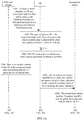
- FIG. 2 is a schematic flowchart of a mobility management method according to an embodiment of the present invention. The following gives a detailed description with reference to FIG. 2 from the perspective of interaction between a first base station, user equipment UE, and a second base station. As shown in FIG. 2 , the method may include the following step S201 to step S207.
- a first base station to which a first cell belongs allocates a source identifier to user equipment UE in a connected mode in the first cell, where the source identifier includes a first UE identifier that identifies the UE in the first base station.
- the first base station allocates the source identifier to the UE in the connected mode in the first cell by using a cell broadcast message or a dedicated message or in a random access channel RACH procedure.
- the source identifier may be allocated by using the dedicated message or a radio resource control RRC (Radio Resource Control, RRC) message, for example, a radio bearer re-configuration message, a radio bearer release message, or a radio bearer re-establishment message.
- RRC Radio Resource Control
- the source identifier may be carried in a preamble response message.
- the source identifier includes a first cell identifier that identifies the first cell and the first UE identifier that uniquely identifies the UE in the first cell, or the source identifier includes a first base station identifier that uniquely identifies the first base station and the first UE identifier that uniquely identifies the UE in the first base station.
- a method for uniquely identifying the UE in the first cell by using the first UE identifier is not limited to uniquely identifying the UE only by using the first UE identifier.
- the UE may be uniquely identified by using both the first UE identifier and other auxiliary information such as authentication information.
- the authentication information is generated according to a key of the UE.
- the first cell identifier includes at least one of a cell global identifier ECGI, a physical cell identifier PCI, or a cell identifier that includes an identifier of an area and an identifier of the first cell in the area.
- the area is a specific cell range obtained by division by a network. For example, if an area includes 256 cells, an identifier of the area has 8 bits; if a maximum of 256 cells are supported in an area, a cell identifier in the area has 8 bits.
- a corresponding cell identifier includes 16 bits, the first 8 bits are the identifier of the area, and the last 8 bits are the cell identifier in the area.
- the base station identifier may also include an identifier of an area and an identifier of a base station in the area.
- the source identifier may further include identifier division indication information, and the identifier division indication information is used to indicate bits in the source identifier that are divided for the base station identifier and the first UE identifier that identifies the UE in the base station.
- Different values of the identifier division indication information represent different division rules. For example, the source identifier occupies 50 bits, and 2 bits in the 50 bits are the identifier division indication information.
- the source identifier may further include identifier division indication information, and the identifier division indication information is used to indicate bits in the source identifier that are divided for the first cell identifier and the first UE identifier that identifies the UE in the first cell identifier.
- a specific method is the same as division for the base station identifier and the UE identifier.
- the user equipment UE in the connected mode in the first cell receives the source identifier that is allocated by the first base station to which the first cell belongs, where the source identifier includes the first UE identifier that uniquely identifies the UE in a cell of the first base station.
- the UE receives the source identifier by using the cell broadcast message or the dedicated message of the first base station to which the first cell belongs, or in the random access channel RACH procedure.
- the UE enters a low-overhead state when a preset activation condition is satisfied, where in the low-overhead state, the UE stores a connection context of the UE in the connected mode, and camps on a cell according to a cell reselection criterion during movement.
- the preset activation condition includes at least one of the following conditions:
- the UE exits the low-overhead state when a second preset condition is satisfied.
- the second preset condition includes at least one of the following conditions:
- That a serving cell on which the UE currently camps and the first cell do not belong to a same preset area or a same base station is specifically as follows: The UE determines, according to area identifiers carried in system information broadcasts of the first cell and the currently camped cell, whether the serving cell on which the UE currently camps and the first cell belong to a same preset area; or the UE determines, according to base station identifiers carried in system information broadcasts of the first cell and the currently camped cell, whether the serving cell on which the UE currently camps and the first cell belong to a same preset area.
- the reference signal measurement result includes a path loss, signal strength, or signal quality.
- the predetermined result is "greater than”, “equal to”, “less than”, or a combination thereof.
- the UE obtains the reference signal measurement result, compares the reference signal measurement result with the first predetermined threshold, and exits the low-overhead state when the result conforms to the preset result. For example, a predetermined path loss is greater than the first threshold.
- That a PLMN (Public Land Mobile Network, public land mobile network) of the UE changes includes: a home PLMN of a cell currently selected by the UE does not belong to a PLMN set that is currently set by the UE. Specifically, none of current home PLMNs belongs to the PLMN set that is currently set by the UE.
- the PLMN set that is currently set by the UE includes any one or a combination of the following three items: a PLMN that the UE currently registers, or a PLMN selected by the UE, or an equivalent PLMN of the UE.
- the UE clears the connection context and enters an idle mode when the second preset condition is satisfied. Furthermore, the UE notifies a high layer of the UE that the UE has exited the low-overhead state. Alternatively, the UE notifies a high layer of the UE that the UE has exited the low-overhead state, and the high layer of the UE triggers tracking area update, or the UE triggers tracking area update. Further optionally, the UE adds an indication to a tracking area update message, and the indication is used to notify a core network that the UE is previously in the low-overhead state, so that the core network triggers connection release of the UE according to the information.
- the UE exits the low-overhead state when the second preset condition is satisfied, and the exiting the low-overhead state includes clearing the stored connection context.
- the connection context includes a configuration parameter for connection between the first base station and the UE, and may specifically include a radio bearer configuration of the UE and identification information of the UE.
- the radio bearer configuration includes a signaling radio bearer configuration and/or a data radio bearer configuration.
- the identification information of the UE may include the source identifier of the UE.
- the connection context may further include key information, and the key information is used during encrypted transmission or generation of UE verification information.
- the UE receives radio resource control RRC configuration information sent by the first base station.
- the RRC configuration information includes an RRC configuration index, and the configuration index is used to indicate the RRC configuration information.
- the UE uses the RRC configuration information in the low-overhead state.
- the UE releases the dedicated UE identifier of the UE in the first cell.
- the UE after the UE enters the low-overhead state when the preset activation condition is satisfied, the UE performs paging listening by using the source identifier.
- the low-overhead state in the present invention is a UE state defined in the present invention, and a characteristic of the low-overhead state includes connection context storage, and mobility based on cell reselection.
- the low-overhead state is characterized by low signaling overheads and low power overheads, and therefore is named "low-overhead state" in the present invention.
- the low-overhead state may be a sub-state of the connected mode or an enhanced state of the idle mode. This is not limited in the present invention.
- the low-overhead state may be a state in which the UE is in the idle mode and the connection context is stored, and the UE in the low-overhead state enters a normal idle mode after clearing the context.
- the low-overhead state may be a state in which the UE is in the connected mode and is allowed to perform mobility based on cell reselection, and the UE in the low-overhead state enters a normal connected mode after stopping performing mobility based on cell reselection.
- the first base station stores the connection context of the UE in the connected mode after determining that the UE enters the low-overhead state.
- the preset activation condition includes at least one of the following conditions:
- the first base station further sends the radio resource control RRC configuration information to the UE for use by the UE in the low-overhead state.
- the RRC configuration information includes the RRC configuration index, and the configuration index is used to indicate the RRC configuration information.
- the RRC configuration includes the radio bearer configuration of the UE in the low-overhead state, and the radio bearer configuration includes the signaling radio bearer configuration and/or the data radio bearer configuration.
- the RRC configuration may further include the key information, and the key information is used during encrypted transmission.
- the UE reports, when a first preset condition is satisfied, the source identifier to a second base station to which a second cell belongs, where the second cell is a serving cell on which the UE currently camps.
- the first preset condition includes:
- the UE before the UE reports the source identifier to the second base station when the first preset condition is satisfied, the UE receives and reads a system information broadcast of the second cell. If the system information broadcast carries an indication that access of the UE in the low-overhead state is allowed, the UE determines, according to the access indication, to send the source identifier to the second base station.
- the UE determines, according to a reference signal measurement result, to report the source identifier.
- the reference signal measurement result includes a path loss, signal quality, or signal strength.
- the UE compares the reference signal measurement result with a first predetermined threshold, and determines, according to a result of the comparison, whether to report the identifier.
- the first predetermined threshold may be a preset constant value, or a threshold configured by the base station for the UE. For example, if the reference signal measurement result is the path loss, the UE determines that the source identifier can be reported only when the path loss is less than the first predetermined threshold. Otherwise, the UE exits the low-overhead state, and clears the stored context.
- the UE before the UE reports the source identifier to the second base station when the first preset condition is satisfied, the UE sends a random access preamble within a preset range to the second base station, where the random access preamble within the preset range is used to indicate that the source identifier needs to be sent to the second base station or a message of a length that is greater than a preset length threshold needs to be sent to the second base station; receives a preset-size transmission resource that is allocated by the second base station and that is used to transmit the source identifier; and sends the source identifier to the second base station by using the transmission resource.
- the random access preamble within the preset range is a predefined preamble or a received preamble configured by the second base station.
- the reporting, by the UE, the source identifier to a second base station may be specifically: reporting, by the UE, the source identifier including the RRC configuration index to the second base station, so that the second base station determines, according to the RRC configuration index, the RRC configuration information used by the UE.
- the reporting, by the UE, the source identifier to a second base station may be specifically: sending, by the UE, a random access preamble to the second base station; receiving a dedicated UE identifier sent by the second base station and a transmission resource that is sent by the second base station, allocated according to the random access preamble, and used to transmit the source identifier, where the dedicated UE identifier is an identifier that uniquely identifies the UE in the second cell; sending the source identifier to the second base station by using the transmission resource; receiving acknowledgment information that is sent by the second base station and that includes the source identifier; and determining, according to the acknowledgment information, whether to apply the dedicated UE identifier. Further, the determining, by the UE according to the acknowledgment information, whether to apply the dedicated UE identifier is specifically:
- the source identifier reported by the UE further includes indication information, and the indication information is used to notify the second base station that the UE is in the low-overhead state.
- the source identifier includes a long source identifier and a short source identifier
- the reporting, by the UE, the source identifier to a second base station may be specifically as follows:
- the UE determines, according to indication information of the second base station or a reference signal measurement result, to report the long source identifier or the short source identifier.
- the long source identifier and the short source identifier may be two independent source identifiers, or the short source identifier is partial information of the long source identifier.
- the long source identifier has a length of N bits
- the short source identifier may be M bits in the N bits
- M is less than N.
- the indication information of the second base station may be indication information configured by using a system broadcast or may be authorization information sent to the UE by using an authorization command.
- the indication information configured by using the system broadcast may be an indication used to instruct the UE to use the long source identifier or the short source identifier, and the UE may determine, according to the indication, a source identifier type used to report the source identifier.
- the indication information is the authorization information sent to the UE by using the authorization command, and the UE determines, according to the authorization information, a size of a message that can be transmitted, and chooses, according to the size of the message that can be transmitted, to use the long source identifier or the short source identifier.
- the determining, by the UE according to a reference signal measurement result, to report the long source identifier or the short source identifier includes the following:
- the reference signal measurement result includes a path loss, signal quality, or signal strength.
- the UE compares the reference signal measurement result with a first predetermined threshold, and determines, according to a result of the comparison, to report the long source identifier or the short source identifier.
- the first predetermined threshold may be a preset constant value, or a threshold configured by the base station for the UE.
- the source identifier includes a long source identifier and a short source identifier
- the reporting, by the UE, the source identifier to a second base station may be specifically as follows: The UE determines to first report the short source identifier and then report, in a subsequent message according to an indication of the second base station, the long source identifier or content other than the short source identifier in the long source identifier. After receiving the short source identifier, the second base station determines the first base station according to the short source identifier and sends a context transfer request to the first base station.
- the second base station further instructs the UE to report the long source identifier or the content other than the short source identifier in the long source identifier. In this way, the long source identifier is prevented from being first reported.
- the short source identifier is partial information of the long source identifier.
- the long source identifier has a length of N bits, and the short source identifier may be M bits in the N bits.
- the short source identifier may be the least significant N bits of the long source identifier or the most significant N bits of the long source identifier. M is less than N.
- a serving cell of the UE when the first preset condition is satisfied may still be the first cell, or may be a cell other than the first cell. Therefore, the second cell and the first cell may be a same cell or may be different cells.
- the second base station to which the second cell belongs receives the source identifier that is reported by the user equipment UE in the low-overhead state.
- the first cell is a serving cell when the UE enters the low-overhead state
- the second cell is a current serving cell of the UE
- the source identifier includes the first UE identifier that identifies the UE in the first base station to which the first cell belongs.
- the second base station before the second base station receives the source identifier that is reported by the user equipment UE in the low-overhead state, the second base station sends the system information broadcast.
- the system information carries the indication that access of the UE in the low-overhead state is allowed, so that the UE determines, according to the access indication, whether to send the source identifier to the second base station.
- the second base station controls, by using the system information broadcast, whether access of the UE in the low-overhead state is allowed. Therefore, the UE determines, by determining the indication carried in the broadcast, whether the source identifier can be reported.
- the second base station before receiving the source identifier that is reported by the user equipment UE in the low-overhead state, receives the random access preamble sent by the UE; and allocates the preset-size transmission resource to the UE when the random access preamble falls within the preset range, so that the UE sends the source identifier by using the transmission resource.
- the random access preamble within the preset range is a predefined preamble or a received preamble configured by the second base station.
- the receiving, by the second base station, the source identifier that is reported by the user equipment UE in the low-overhead state is specifically: receiving, by the second base station to which the second cell belongs, the random access preamble that is sent by the user equipment UE in the low-overhead state; allocating, to the UE according to the random access preamble, the dedicated UE identifier and the transmission resource that is used to transmit the source identifier, where the dedicated UE identifier is an identifier that uniquely identifies the UE in the second cell; receiving the source identifier by using the transmission resource; and sending the acknowledgment information including the source identifier to the UE.
- the sending, by the second base station, the acknowledgment information including the source identifier to the UE is specifically: sending, by the second base station to the UE, an acknowledgment message that includes the source identifier and that carries an instruction used to instruct the UE to exit the low-overhead state, so that the UE applies the dedicated UE identifier and exits the low-overhead state according to the instruction.
- the source identifier reported by the UE and received by the second base station further includes the radio resource control RRC configuration index, and after receiving the source identifier that is reported by the UE in the low-overhead state, the second base station determines, according to the RRC configuration index, the RRC configuration information used by the UE.
- the second base station sends the first UE identifier to the first base station according to the source identifier, to notify the first base station that the current serving cell of the UE is the second cell.
- the second base station sends the source identifier to the first base station according to the source identifier by using an interface between the second base station and the first base station; or sends the source identifier to the first base station according to the source identifier by using the core network.
- the second base station sends a notification message to the first base station according to the source identifier.
- the notification message carries the source identifier of the UE and a second cell identifier of the second cell in which the UE is currently located, and the second cell is the serving cell on which the UE currently camps.
- the first base station receives the notification message sent by the second base station, and determines, according to the source identifier and the second cell identifier, that the serving cell on which the UE currently camps is the second cell.
- the notification message carries verification information of the UE, and the verification information is identity authentication information generated by the UE according to the source identifier and a key that is included in the connection context.
- the first base station determines, according to the source identifier and the verification information, whether the UE is valid UE.
- the second base station after sending the first UE identifier to the first base station according to the source identifier, receives the connection context and the source identifier of the UE that are sent by the first base station; and determines configuration information of the UE according to the received connection context and source identifier, and triggers uplink access of the UE according to the source identifier.
- the interaction procedure implemented in the present invention is not limited to execution of all steps at a time, that is, processing steps of the UE, the first base station, and the second base station may be independently performed in the UE, the first base station, and the second base station.
- processing steps of the UE, the first base station, and the second base station may be independently performed in the UE, the first base station, and the second base station.
- Separate implementation of any device including the UE, the first base station, or the second base station falls within the protection scope of this embodiment of the present invention.
- a low-overhead state is designed, and UE in the state stores a connection context of the UE in a connected mode, and camps on a cell according to a cell reselection criterion during movement.
- the UE in the low-overhead state receives a source identifier sent by a source base station, and reports the source identifier to a current serving base station of the UE during movement when a specific condition is satisfied.
- the serving base station sends the source identifier to the source base station, so that both the serving base station and the source base station can learn location information of the UE.
- the UE autonomously performs mobility based on cell reselection after the UE enters the low-overhead state, and reports only location change information of the UE, thereby simplifying a handover procedure and reducing communication resources of a network device.
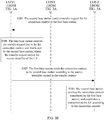
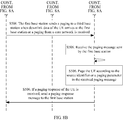
- FIG. 3A and FIG. 3B are a schematic flowchart of another mobility management method according to an embodiment of the present invention.
- the following gives a description with reference to FIG. 3A and FIG. 3B from the perspective of interaction between a first base station, UE, and a second base station.
- the method may include the following step S301 to step S313.
- Step S301 A first base station to which a first cell belongs allocates a source identifier to UE in a connected mode in the first cell by using a cell broadcast message or a dedicated message or in a random access channel RACH procedure.
- Step S302 The user equipment UE in the connected mode in the first cell receives the source identifier that is allocated by the first base station to which the first cell belongs, where the source identifier includes a first UE identifier that uniquely identifies the UE in a cell of the first base station.
- Step S303 The UE enters a low-overhead state when a preset activation condition is satisfied, where in the low-overhead state, the UE stores a connection context of the UE in the connected mode, and camps on a cell according to a cell reselection criterion during movement.
- Step S304 The first base station stores the connection context of the UE in the connected mode after determining that the UE enters the low-overhead state.
- the UE enters the low-overhead state when the preset activation condition is satisfied, and in the low-overhead state, the UE stores the connection context of the UE, and camps on a cell according to the cell reselection criterion during movement.
- step S301 to step S304 correspondingly refer to step S201 to step S204 in the embodiment in FIG. 2 . Details are not described herein again.
- Step S305 This step includes processing in step 205 when the first preset condition is that the UE needs to send uplink data, and the reporting, by the UE, the source identifier to a second base station to which a second cell belongs further includes: reporting, by the UE when or after reporting the source identifier, an uplink data indication to the second base station to which the second cell belongs.
- the source identifier and the uplink data indication may be carried in a same report message or different report messages, and the report message may be an RRC message, a MAC control information element, or a physical layer control message.
- the uplink data indication may be a bit used to indicate that data of the UE arrives, or may be a data amount indication.
- Step S306 The second base station receives the source identifier and the uplink data indication that are sent by the UE.
- Step S307 The second base station sends a transfer request for the connection context to the first base station, where the connection context is a connection context that is of the UE in the connected mode and that is stored by the first base station when the UE enters the low-overhead state, and the context transfer request carries the source identifier of the UE.
- Step S308 The first base station receives the transfer request that is for the connection context and that is sent by the second base station to which the second cell belongs, where the transfer request carries the source identifier of the UE, and the second cell is a cell on which the UE currently camps.
- Step S309 The first base station sends the connection context to the second base station according to the source identifier carried in the transfer request.
- the first base station after the first base station sends the connection context to the second base station, the first base station further sends a handover indication for a core network data path to the second base station, so that the second base station determines whether to hand over the core network data path to the second base station.
- the first base station sends a paging parameter to the second base station when, before, or after the first base station sends the connection context to the second base station.
- the paging parameter includes a paging index of the UE or a DRX cycle of the UE.
- the second base station may trigger paging on the UE according to the paging parameter.
- Step S310 The second base station receives the connection context transferred by the first base station, and establishes a connection to the UE according to the connection context.
- the second base station determines configuration information of the UE according to the connection context together with the source identifier, and triggers uplink access of the UE according to the source identifier. Further, the triggering uplink access of the UE according to the source identifier is specifically:
- the second base station after receiving the connection context transferred by the first base station, the second base station further sends a re-allocated source identifier to the UE, where the re-allocated source identifier includes a second UE identifier that identifies the UE in the second base station; and sends an instruction to the UE to instruct the UE to exit the low-overhead state.
- the interaction procedure implemented in the present invention is not limited to execution of all steps at a time, that is, processing steps of the UE, the first base station, and the second base station may be independently performed in the UE, the first base station, and the second base station.
- processing steps of the UE, the first base station, and the second base station may be independently performed in the UE, the first base station, and the second base station.
- Separate implementation of any device including the UE, the first base station, or the second base station falls within the protection scope of this embodiment of the present invention.
- a low-overhead state is designed, and UE in the state stores a connection context of the UE in a connected mode, and camps on a cell according to a cell reselection criterion during movement.
- the UE in the low-overhead state receives a source identifier sent by a source base station, and reports the source identifier to a current serving base station of the UE during movement when a specific condition is satisfied.
- the serving base station sends the source identifier to the source base station, so that both the serving base station and the source base station can learn location information of the UE.
- the UE autonomously performs mobility based on cell reselection after the UE enters the low-overhead state, and reports only location change information of the UE, thereby simplifying a handover procedure and reducing communication resources of a network device. Further, because both the source base station and the UE store the connection context of the UE after the UE enters the low-overhead state, when the UE needs to perform uplink or downlink data communication, the connection context of the UE can be handed over to the current serving base station of the UE for data transmission, thereby ensuring data transmission efficiency.
- FIG. 4A and FIG. 4B are a schematic flowchart of still another mobility management method according to an embodiment of the present invention.
- the following gives a description with reference to FIG. 4A and FIG. 4B from the perspective of interaction between a first base station, UE, and a second base station.
- the method may include the following step S401 to step S410.
- Step S401 A first base station to which a first cell belongs allocates a source identifier to UE in a connected mode in the first cell by using a cell broadcast message or a dedicated message or in a random access channel RACH procedure.
- Step S402 The user equipment UE in the connected mode in the first cell receives the source identifier that is allocated by the first base station to which the first cell belongs, where the source identifier includes a first UE identifier that uniquely identifies the UE in a cell of the first base station.
- Step S403 The UE enters a low-overhead state when a preset activation condition is satisfied, where in the low-overhead state, the UE stores a connection context of the UE in the connected mode, and camps on a cell according to a cell reselection criterion during movement.
- Step S404 The first base station stores the connection context of the UE in the connected mode after determining that the UE enters the low-overhead state.
- the UE stores the connection context, and camps on a cell according to the cell reselection criterion during movement.
- Step S405 The UE reports, when a first preset condition is satisfied, the source identifier to a second base station to which a second cell belongs, where the second cell is a serving cell on which the UE currently camps.
- Step S406 The second base station to which the second cell belongs receives the source identifier that is reported by the user equipment UE in the low-overhead state.
- the UE stores the connection context of the UE in the connected mode, and camps on a cell according to the cell reselection criterion during movement, the first cell is a serving cell when the UE enters the low-overhead state, the second cell is a current serving cell of the UE, and the source identifier includes the first UE identifier that identifies the UE in the first base station to which the first cell belongs.
- Step S407 The second base station sends the first UE identifier to the first base station according to the source identifier.
- step S401 to step S407 correspondingly refer to step S201 to step S207 in the embodiment in FIG. 2 . Details are not described herein again.
- Step S408 The first base station sends the connection context and the source identifier of the UE to the second base station when downlink data of the UE arrives at the first base station, where the second base station is a base station to which the second cell belongs.
- the first base station when the downlink data of the UE arrives at the first base station, the first base station sends the connection context and the source identifier of the UE to the second base station, so that the second base station performs data communication with the UE according to the connection context.
- the first base station further forwards the downlink data of the UE to the second base station, so that the second base station, as a current serving base station of the UE, can send the downlink data to the UE.
- Step S409 Receive the connection context and the source identifier of the UE that are sent by the first base station.
- Step S410 Determine configuration information of the UE according to the received connection context and source identifier, and trigger uplink access of the UE according to the source identifier.
- step S409 and step S410 correspondingly refer to step S207 in the embodiment in FIG. 2 . Details are not described herein again.
- the interaction procedure implemented in the present invention is not limited to execution of all steps at a time, that is, processing steps of the UE, the first base station, and the second base station may be independently performed in the UE, the first base station, and the second base station.
- processing steps of the UE, the first base station, and the second base station may be independently performed in the UE, the first base station, and the second base station.
- Separate implementation of any device including the UE, the first base station, or the second base station falls within the protection scope of this embodiment of the present invention.
- a low-overhead state is designed, and UE in the state stores a connection context of the UE in a connected mode, and camps on a cell according to a cell reselection criterion during movement.
- the UE in the low-overhead state receives a source identifier sent by a source base station, and reports the source identifier to a current serving base station of the UE during movement when a specific condition is satisfied.
- the serving base station sends the source identifier to the source base station, so that both the serving base station and the source base station can learn location information of the UE.
- the UE autonomously performs mobility based on cell reselection after the UE enters the low-overhead state, and reports only location change information of the UE, thereby simplifying a handover procedure and reducing communication resources of a network device. Further, because both the source base station and the UE store the connection context of the UE after the UE enters the low-overhead state, when the UE needs to perform uplink or downlink data communication, the connection context of the UE can be handed over to the current serving base station of the UE for data transmission, thereby ensuring data transmission efficiency.
- FIG. 8A and FIG. 8B are a schematic flowchart of yet another mobility management method according to an embodiment of the present invention.
- the following gives a description with reference to FIG. 8A and FIG. 8B from the perspective of interaction between a first base station, UE, and a second base station.
- the method may include the following step S501 to step S506.
- Step S501 A first base station to which a first cell belongs allocates a source identifier to UE in a connected mode in the first cell by using a cell broadcast message or a dedicated message or in a random access channel RACH procedure.
- Step S502 The user equipment UE in the connected mode in the first cell receives the source identifier that is allocated by the first base station to which the first cell belongs, where the source identifier includes a first UE identifier that uniquely identifies the UE in a cell of the first base station.
- Step S503 The UE enters a low-overhead state when a preset activation condition is satisfied, where in the low-overhead state, the UE stores a connection context of the UE in the connected mode, and camps on a cell according to a cell reselection criterion during movement.
- Step S504 The first base station stores the connection context of the UE in the connected mode after determining that the UE enters the low-overhead state.
- the UE stores the connection context, and camps on a cell according to the cell reselection criterion during movement.
- Step S505 The UE reports, when a first preset condition is satisfied, the source identifier to a second base station to which a second cell belongs, where the second cell is a serving cell on which the UE currently camps.
- step S501 to step S505 correspondingly refer to step S201 to step S205 in the embodiment in FIG. 2 . Details are not described herein again.
- Step S506 The first base station sends a second paging message to a third base station when downlink data of the UE arrives at the first base station or a first paging message from a core network device arrives at the first base station, where the third base station and the first base station are base stations belonging to a same paging area range.
- the UE in the low-overhead state may move within a specific area range according to a configuration without notifying the base station. Consequently, the first base station cannot learn an accurate location of the UE, and can page the UE only within the specific range.
- the UE reports the source identifier to the second base station to which the second cell belongs.
- the first preset condition includes: the second cell on which the UE currently camps goes beyond a specified cell set range; or the second cell on which the UE currently camps and the first cell do not belong to a same preset area or a same base station.
- the UE may not send a UE identifier to the second base station. Consequently, the first base station cannot learn a specific cell, in which the UE is located, in the cell set or the preset area.
- the cell set or the preset area is defined as a paging area.
- the cell set is configured by the base station for the UE when the UE enters the low-overhead state, and the preset area is an area in which the serving cell of the UE is located when the UE enters the low-overhead state. Therefore, the first base station needs to send the second paging message to the third base station.
- the third base station pages the UE according to the second paging message.
- the third base station If the third base station receives a paging response message of the UE, the third base station returns a second paging response message to the first base station, so that the first base station can learn that the UE is currently located in the third base station, and can further trigger sending of the context of the UE to the third base station. In addition, the first base station also pages the UE, to determine whether the UE is located in the first base station.
- the base station triggers paging according to arrival of the downlink data, and before the triggering, the base station needs to obtain information about a paging parameter of the UE from the core network.
- the paging parameter includes a paging index of the UE or a DRX cycle of the UE.
- the paging is used to calculate a paging offset of the UE, and the DRX cycle is a DRX cycle configured by a high layer of the UE.
- a specific message from which the base station obtains the information about the paging parameter of the UE from the core network may be an initial context setup message, or a context modification message, or an E-RAB setup message, or an E-RAB modification message.
- the first base station triggers paging according to a paging from the core network device, and the first base station obtains information about a paging parameter of the UE from the paging message.
- the paging parameter includes a paging index of the UE or a DRX cycle of the UE.
- the second paging message sent by the first base station to the third base station includes a paging parameter
- the paging parameter includes a paging index of the UE or a DRX cycle of the UE.
- the second paging message sent by the first base station to the third base station includes a paging parameter
- the paging parameter includes the source identifier of the UE.
- the interaction procedure implemented in the present invention is not limited to execution of all steps at a time, that is, processing steps of the UE, the first base station, and the third base station may be independently performed in the UE, the first base station, and the second base station. Separate implementation of any device including the UE, the first base station, or the third base station falls within the protection scope of this embodiment of the present invention.
- a low-overhead state is designed, and UE in the state stores a connection context of the UE in a connected mode, and camps on a cell according to a cell reselection criterion during movement. That is, the UE autonomously performs mobility based on cell reselection after the UE enters the low-overhead state, and reports only location area change information of the UE, thereby simplifying a handover procedure and reducing communication resources of a network device.
- both a source base station and the UE store the connection context of the UE after the UE enters the low-overhead state, when the UE needs to perform uplink or downlink data communication, the connection context of the UE can be handed over to a current serving base station of the UE for data transmission, thereby ensuring data transmission efficiency.
- the present invention further provides related base stations and user equipment configured to cooperatively implement the method embodiments.
- the following gives a detailed description with reference to schematic diagrams: FIG. 5, FIG. 6 , and FIG. 7 of the related base stations and user equipment provided in the present invention:
- FIG. 5 shows a base station 10 according to an embodiment of the present invention.
- the base station 10 is a first base station, and the base station 10 includes an output unit 102, a storage unit 103, and a processing unit 104.
- an input unit 101, the storage unit 103, and the processing unit 104 may be connected by using a bus or in another manner.
- FIG. 5 shows bus connection as an example.
- the processing unit 104 invokes program code in the storage unit 103, to perform the following operations:
- the source identifier includes a first cell identifier that identifies the first cell and the first UE identifier that uniquely identifies the UE in the first cell
- the first cell identifier includes at least one of a cell global identifier ECGI, a physical cell identifier PCI, or a cell identifier that includes an identifier of an area and an identifier of the first cell in the area
- the source identifier includes a first base station identifier that uniquely identifies the first base station and the first UE identifier that uniquely identifies the UE in the first base station.
- processing unit 104 is configured to allocate a source identifier to user equipment UE in a connected mode in the first cell by using the output unit 102 is specifically: allocating the source identifier to the UE in the connected mode in the first cell by using a cell broadcast message or a dedicated message that is output by the output unit 102 or in a random access channel RACH procedure.
- the preset activation condition includes at least one of the following conditions:
- the processing unit 104 is further configured to: send, by using the output unit 102 after determining that the UE enters the low-overhead state, radio resource control RRC configuration information to the UE for use by the UE in the low-overhead state.
- the RRC configuration information includes an RRC configuration index, and the configuration index is used to indicate the RRC configuration information.
- the base station further includes an input unit 101, and the processing unit 104 is further configured to:
- the processing unit 104 is further configured to: after determining, according to the source identifier and the second cell identifier, that the serving cell on which the UE currently camps is the second cell, send, by using the output unit 102, the connection context and the source identifier of the UE to the second base station when downlink data of the UE arrives at the first base station, where the second base station is a base station to which the second cell belongs.
- the base station further includes the input unit 101; and the notification message carries verification information of the UE, and the verification information is identity authentication information generated by the UE according to the source identifier and a key that is included in the connection context; and the processing unit 104 is further configured to: after receiving, by using the input unit 101, the notification message sent by the second base station, determine, according to the source identifier and the verification information, whether the UE is valid UE.
- the base station further includes the input unit 101, and the processing unit 104 is further configured to:
- the base station further includes an input unit 101
- the processing unit 104 is further configured to: send, by the first base station by using the output unit 102, a paging message to a third base station when downlink data of the UE arrives at the first base station or a paging from a core network device arrives at the first base station, where the third base station and the first base station are base stations belonging to a same paging area range.
- the input unit 101 is configured to receive a paging response message of the UE from the third base station, so that the first base station can learn that the UE is currently located in the third base station.
- the input unit 101 is further configured to: before the downlink data arrives at the base station, the base station needs to obtain information about a paging parameter of the UE from the core network.
- the paging parameter includes a paging index of the UE or a DRX cycle of the UE.
- FIG. 6 shows user equipment UE 20 according to an embodiment of the present invention.
- the UE 20 may include: an input unit 201, an output unit 202, a storage unit 203, and a processing unit 204.
- a bus is configured to implement communication connections between these components.
- the input unit 201 may be specifically a touch panel of a terminal, including a touchscreen configured to detect an operation instruction on the touch panel of the terminal.
- the output unit 202 may include a display (Display) of the terminal, configured to output and display image or data.
- the memory 203 may be a high-speed RAM display, or may be a non-volatile display (non-volatile memory), for example, at least one magnetic display.
- the memory 203 may be at least one display apparatus that is far away from the processor 201.
- the memory 203 may include an operating system, a network communications module, a user interface module, and a data processing program.
- the processing unit 204 of the UE in FIG. 6 invokes program code in the storage unit 203, to perform the following operations:
- the source identifier includes a first cell identifier that identifies the first cell and the first UE identifier that uniquely identifies the UE in the first cell
- the first cell identifier includes at least one of a cell global identifier ECGI, a physical cell identifier PCI, or a cell identifier that includes an identifier of an area and an identifier of the first cell in the area
- the source identifier includes a first base station identifier that uniquely identifies the first base station and the first UE identifier that uniquely identifies the UE in the first base station.
- the preset activation condition includes at least one of the following conditions:
- processing unit 204 is further configured to:
- processing unit 204 is configured to enable the UE to exit the low-overhead state when a second preset condition is satisfied is specifically: clearing the connection context and enabling the UE to enter an idle mode when the second preset condition is satisfied.
- the first preset condition includes:
- the processing unit 204 is further configured to: before reporting, by using the output unit 202 and when the first preset condition is satisfied, the source identifier to the second base station to which the second cell belongs, receive and read a system information broadcast of the second cell by using the input unit 201, and if the system information broadcast carries an indication that access of the UE in the low-overhead state is allowed, determine, according to the access indication, to send the source identifier to the second base station by using the output unit 202.
- a reference signal measurement result is obtained by using the input unit 201 and compared with a first predetermined threshold, and it is determined, according to a result of the comparison, to send the source identifier to the second base station by using the output unit 202.
- the processing unit 204 is further configured to: before reporting, by using the output unit 202 and when the first preset condition is satisfied, the source identifier to the second base station to which the second cell belongs, send a random access preamble within a preset range to the second base station by using the output unit 202, where the random access preamble within the preset range is used to indicate that the source identifier needs to be sent to the second base station or a message of a length that is greater than a preset length threshold needs to be sent to the second base station; receive, by using the input unit 201, a preset-size transmission resource that is allocated by the second base station and that is used to transmit the source identifier; and send, by using the output unit 202, the source identifier to the second base station by using the transmission resource.
- the random access preamble within the preset range is a predefined preamble or a received preamble configured by the second base station.
- processing unit 204 is configured to report the source identifier to a second base station to which a second cell belongs is specifically:
- processing unit 204 is configured to determine, according to the acknowledgment information, whether to apply the dedicated UE identifier is specifically:
- the processing unit 204 is further configured to: after the UE applies the dedicated UE identifier, update a key in the connection context according to a cell identifier of the currently camped serving cell.
- the source identifier further includes verification information
- the verification information is identity authentication information generated by the UE according to the source identifier and an updated key.
- the processing unit 204 is further configured to: after the UE enters the low-overhead state when the preset activation condition is satisfied, perform paging listening by using the source identifier.
- processing unit 204 is further configured to:
- processing unit 204 is configured to report, when a first preset condition is satisfied, the source identifier to a second base station to which a second cell belongs is specifically: reporting, by using the output unit 202, the source identifier including the RRC configuration index to the second base station to which the second cell belongs, so that the second base station determines, according to the RRC configuration index, the RRC configuration information used by the UE.
- the first preset condition is that the UE needs to send uplink data
- the processing unit 204 is configured to report the source identifier to a second base station to which a second cell belongs is specifically: reporting, by using the output unit 202, an uplink data indication including the source identifier to the second base station to which the second cell belongs.
- the first preset condition is that the UE needs to send uplink data
- the processing unit 204 is configured to report the source identifier to a second base station to which a second cell belongs is specifically: reporting, according to indication information of the second base station by using the output unit 202, a long source identifier or a short source identifier to the second base station to which the second cell belongs.
- FIG. 7 shows a base station 30 according to an embodiment of the present invention.
- the base station 30 is a second base station, and the base station 30 includes an input unit 301, an output unit 302, a storage unit 303, and a processing unit 304.
- the input unit 301, the storage unit 303, and the processing unit 304 may be connected by using a bus or in another manner.
- FIG. 7 shows bus connection as an example.
- the processing unit 304 invokes program code in the storage unit 303, to perform the following operations:
- the source identifier includes a first cell identifier that identifies the first cell and the first UE identifier that uniquely identifies the UE in the first cell
- the first cell identifier includes at least one of a cell global identifier ECGI, a physical cell identifier PCI, or a cell identifier that includes an identifier of an area and an identifier of the first cell in the area
- the source identifier includes a first base station identifier that uniquely identifies the first base station and the first UE identifier that uniquely identifies the UE in the first base station.
- the source identifier further includes indication information, and the indication information is used to notify the second base station that the UE is in the low-overhead state.
- the processing unit 304 is further configured to: before receiving, by using the input unit 301, the source identifier that is reported by the user equipment UE in the low-overhead state, send a system information broadcast by using the output unit 302, where the system information carries an indication that access of the UE in the low-overhead state is allowed, so that the UE determines, according to the access indication, whether to send the source identifier to the second base station.
- the processing unit 304 is further configured to: before receiving, by using the input unit 301, the source identifier that is reported by the user equipment UE in the low-overhead state, receive, by using the input unit 301, a random access preamble sent by the UE; and when the random access preamble falls within a preset range, allocate a preset-size transmission resource to the UE by using the output unit 302, so that the UE sends the source identifier by using the transmission resource.
- the random access preamble within the preset range is a predefined preamble or a received preamble configured by the second base station.
- processing unit 304 is configured to receive, by using the input unit 301, a source identifier that is reported by user equipment UE in a low-overhead state is specifically:
- that the processing unit 304 sends acknowledgment information including the source identifier to the UE by using the output unit 302 is specifically: sending, to the UE by using the output unit 302, an acknowledgment message that includes the source identifier and that carries an instruction used to instruct the UE to exit the low-overhead state, so that the UE applies the dedicated UE identifier and exits the low-overhead state according to the instruction.
- that the processing unit 304 sends the first UE identifier to the first base station according to the source identifier by using the output unit 302 is specifically: sending a notification message to the first base station according to the source identifier by using the output unit 302, where the notification message carries the source identifier of the UE and a second cell identifier of the second cell in which the UE is currently located, so that the first base station determines, according to the source identifier and the second cell identifier, that the serving cell on which the UE currently camps is the second cell.
- processing unit 304 is further configured to:
- processing unit 304 is further configured to:
- processing unit 304 is further configured to:
- processing unit 304 is configured to trigger uplink access of the UE according to the source identifier is specifically:
- the source identifier further includes a radio resource control RRC configuration index
- the processing unit 304 is further configured to: after receiving, by using the output unit 302, the source identifier that is reported by the user equipment UE in the low-overhead state, determine, according to the RRC configuration index, RRC configuration information used by the UE.
- processing unit 304 is configured to send the first UE identifier to the first base station according to the source identifier by using the output unit 302 is specifically:
- the processor may be an integrated circuit chip having a signal processing capability.
- steps in the foregoing method embodiments can be implemented by using a hardware integrated logical circuit in the processor, or by using instructions in a form of software.
- the processor may be a general-purpose processor, a digital signal processor (Digital Signal Processor, DSP), an application-specific integrated circuit (Application Specific Integrated Circuit, ASIC), a field programmable gate array (Field Programmable Gate Array, FPGA) or another programmable logical device, a discrete gate or transistor logic device, or a discrete hardware component.
- DSP Digital Signal Processor
- ASIC Application Specific Integrated Circuit
- FPGA Field Programmable Gate Array
- the processor may implement or perform the methods, the steps, and schematic logical diagrams that are disclosed in the embodiments of the present invention.
- the general-purpose processor may be a microprocessor or the processor may be any normal processor, or the like. Steps of the methods disclosed with reference to the embodiments of the present invention may be directly executed and accomplished by using a hardware decoding processor, or may be executed and accomplished by using a combination of hardware and software modules in a decoding processor.
- the software module may be located in a mature storage medium in the art, such as a random access memory, a flash memory, a read-only memory, a programmable read-only memory, an electrically erasable programmable memory, a register, or the like. The storage medium is located in the memory, and a processor reads information in the memory and completes the steps in the foregoing methods in combination with hardware of the processor.
- the memory in the embodiments of the present invention may be a volatile memory or a non-volatile memory, or may include a volatile memory and a non-volatile memory.
- the non-volatile memory may be a read-only memory (Read-Only Memory, ROM), a programmable read-only memory (Programmable ROM, PROM), an erasable programmable read-only memory (Erasable PROM, EPROM), an electrically erasable programmable read-only memory (Electrically EPROM, EEPROM), or a flash memory.
- the volatile memory may be a random access memory (Random Access Memory, RAM), used as an external cache.
- RAMs may be used, for example, a static random access memory (Static RAM, SRAM), a dynamic random access memory (Dynamic RAM, DRAM), a synchronous dynamic random access memory (Synchronous DRAM, SDRAM), a double data rate synchronous dynamic random access memory (Double Data Rate SDRAM, DDR SDRAM), an enhanced synchronous dynamic random access memory (Enhanced SDRAM, ESDRAM), a synchronous link dynamic random access memory (Synchlink DRAM, SLDRAM), and a direct rambus random access memory (Direct Rambus RAM, DR RAM).
- Static RAM static random access memory
- DRAM dynamic random access memory
- DRAM synchronous dynamic random access memory
- SDRAM synchronous dynamic random access memory
- DDR SDRAM double data rate synchronous dynamic random access memory
- Enhanced SDRAM, ESDRAM enhanced synchronous dynamic random access memory
- Synchrobus RAM synchronous link dynamic random access memory
- Direct Rambus RAM Direct Rambus RAM
- the disclosed system, apparatus, and method may be implemented in other manners.
- the described apparatus embodiment is merely an example.
- the unit division is merely logical function division and may be other division in actual implementation.
- a plurality of units or components may be combined or integrated into another system, or some features may be ignored or not performed.
- the displayed or discussed mutual couplings or direct couplings or communication connections may be implemented by using some interfaces.
- the indirect couplings or communication connections between the apparatuses or units may be implemented in electronic, mechanical, or other forms.
- the units described as separate parts may or may not be physically separate, and parts displayed as units may or may not be physical units, may be located in one position, or may be distributed on a plurality of network units. Some or all of the units may be selected according to actual requirements to achieve the objectives of the solutions of the embodiments.
- functional units in the embodiments of the present invention may be integrated into one processing unit, or each of the units may exist alone physically, or two or more units are integrated into one unit.
- the functions When the functions are implemented in the form of a software functional unit and sold or used as an independent product, the functions may be stored in a computer-readable storage medium. Based on such an understanding, the technical solutions of the present invention essentially, or the part contributing to the prior art, or some of the technical solutions may be implemented in a form of a software product.
- the computer software product is stored in a storage medium, and includes several instructions for instructing a computer device (which may be a personal computer, a server, or a network device) to perform all or some of the steps of the methods described in the embodiments of the present invention.
- the foregoing storage medium includes: any medium that can store program code, such as a USB flash drive, a removable hard disk, a read-only memory (Read-Only Memory, ROM), a random access memory (Random Access Memory, RAM), a magnetic disk, or an optical disc.
- program code such as a USB flash drive, a removable hard disk, a read-only memory (Read-Only Memory, ROM), a random access memory (Random Access Memory, RAM), a magnetic disk, or an optical disc.
Landscapes
- Engineering & Computer Science (AREA)
- Computer Networks & Wireless Communication (AREA)
- Signal Processing (AREA)
- Computer Security & Cryptography (AREA)
- Mobile Radio Communication Systems (AREA)
Priority Applications (2)
| Application Number | Priority Date | Filing Date | Title |
|---|---|---|---|
| EP23204192.1A EP4333549A3 (de) | 2015-12-31 | 2016-03-31 | Mobilitätsverwaltungsverfahren, endgerät und basisstation |
| EP20188913.6A EP3809756B1 (de) | 2015-12-31 | 2016-03-31 | Mobilitätsverwaltungsverfahren, vorrichtung, kommunikationssystem und speichermedium |
Applications Claiming Priority (2)
| Application Number | Priority Date | Filing Date | Title |
|---|---|---|---|
| CN2015100336 | 2015-12-31 | ||
| PCT/CN2016/078165 WO2017113529A1 (zh) | 2015-12-31 | 2016-03-31 | 移动性管理的方法、用户设备和基站 |
Related Child Applications (2)
| Application Number | Title | Priority Date | Filing Date |
|---|---|---|---|
| EP23204192.1A Division EP4333549A3 (de) | 2015-12-31 | 2016-03-31 | Mobilitätsverwaltungsverfahren, endgerät und basisstation |
| EP20188913.6A Division EP3809756B1 (de) | 2015-12-31 | 2016-03-31 | Mobilitätsverwaltungsverfahren, vorrichtung, kommunikationssystem und speichermedium |
Publications (3)
| Publication Number | Publication Date |
|---|---|
| EP3389331A1 true EP3389331A1 (de) | 2018-10-17 |
| EP3389331A4 EP3389331A4 (de) | 2018-12-12 |
| EP3389331B1 EP3389331B1 (de) | 2020-08-26 |
Family
ID=59224382
Family Applications (5)
| Application Number | Title | Priority Date | Filing Date |
|---|---|---|---|
| EP20188913.6A Active EP3809756B1 (de) | 2015-12-31 | 2016-03-31 | Mobilitätsverwaltungsverfahren, vorrichtung, kommunikationssystem und speichermedium |
| EP23204192.1A Pending EP4333549A3 (de) | 2015-12-31 | 2016-03-31 | Mobilitätsverwaltungsverfahren, endgerät und basisstation |
| EP16880337.7A Active EP3389331B1 (de) | 2015-12-31 | 2016-03-31 | Verfahren zur mobilitätsverwaltung, vorrichtung und computerlesbares speichermedium |
| EP16880777.4A Active EP3393196B1 (de) | 2015-12-31 | 2016-11-04 | Mobilitätsverwaltungverfahren, basisstation und nichtflüchtiges computerlesbares speichermedium |
| EP20192490.9A Pending EP3823349A1 (de) | 2015-12-31 | 2016-11-04 | Mobilitätsverwaltungsverfahren, benutzergerät, computerlesbares medium und kommunikationssystem |
Family Applications Before (2)
| Application Number | Title | Priority Date | Filing Date |
|---|---|---|---|
| EP20188913.6A Active EP3809756B1 (de) | 2015-12-31 | 2016-03-31 | Mobilitätsverwaltungsverfahren, vorrichtung, kommunikationssystem und speichermedium |
| EP23204192.1A Pending EP4333549A3 (de) | 2015-12-31 | 2016-03-31 | Mobilitätsverwaltungsverfahren, endgerät und basisstation |
Family Applications After (2)
| Application Number | Title | Priority Date | Filing Date |
|---|---|---|---|
| EP16880777.4A Active EP3393196B1 (de) | 2015-12-31 | 2016-11-04 | Mobilitätsverwaltungverfahren, basisstation und nichtflüchtiges computerlesbares speichermedium |
| EP20192490.9A Pending EP3823349A1 (de) | 2015-12-31 | 2016-11-04 | Mobilitätsverwaltungsverfahren, benutzergerät, computerlesbares medium und kommunikationssystem |
Country Status (7)
| Country | Link |
|---|---|
| US (5) | US11178583B2 (de) |
| EP (5) | EP3809756B1 (de) |
| JP (3) | JP6844913B2 (de) |
| KR (1) | KR102191334B1 (de) |
| CN (7) | CN114095864A (de) |
| RU (2) | RU2710665C1 (de) |
| WO (2) | WO2017113529A1 (de) |
Cited By (1)
| Publication number | Priority date | Publication date | Assignee | Title |
|---|---|---|---|---|
| EP4054239A1 (de) * | 2016-08-12 | 2022-09-07 | Huawei Technologies Co., Ltd. | Kommunikationsverfahren, -vorrichtung und -system |
Families Citing this family (17)
| Publication number | Priority date | Publication date | Assignee | Title |
|---|---|---|---|---|
| CN107295578B (zh) * | 2016-03-30 | 2020-01-21 | 中兴通讯股份有限公司 | 一种无线通信方法和设备 |
| JP6549785B2 (ja) | 2016-04-01 | 2019-07-24 | 京セラ株式会社 | ユーザ装置及び方法 |
| CN113630832B (zh) * | 2016-06-30 | 2023-09-26 | 北京小米移动软件有限公司 | 寻呼方法、装置及设备 |
| US10531388B2 (en) * | 2017-02-06 | 2020-01-07 | Qualcomm Incorporated | Data transmission in inactive state |
| US11451926B2 (en) | 2018-10-31 | 2022-09-20 | Qualcomm Incorporated | Methods and systems for on-demand transmission of a positioning reference signal in a wireless network |
| US12041578B2 (en) | 2018-10-31 | 2024-07-16 | Qualcomm Incorporated | System and methods for supporting uplink and downlink positioning procedures in a wireless network |
| KR102543222B1 (ko) * | 2018-11-02 | 2023-06-13 | 삼성전자 주식회사 | 무선 통신 시스템에서 비직교 다중접속 신호 송수신 방법 및 장치 |
| CN111372225B (zh) * | 2018-12-26 | 2022-04-05 | 华为技术有限公司 | 小区驻留的方法、终端及系统 |
| US12284556B2 (en) * | 2019-06-10 | 2025-04-22 | Beijing Xiaomi Mobile Software Co., Ltd. | Method and device for cell handover |
| CN114557064B (zh) * | 2019-10-17 | 2023-06-20 | 华为技术有限公司 | 一种通信方法及装置 |
| CN110958103B (zh) * | 2019-12-23 | 2021-04-27 | 展讯半导体(南京)有限公司 | 上行数据传输方法、用户设备及可读存储介质 |
| CN115486124A (zh) | 2020-02-16 | 2022-12-16 | 谷歌有限责任公司 | 在有条件过程中管理无条件过程 |
| EP4193677A4 (de) | 2020-08-06 | 2024-08-28 | Telefonaktiebolaget LM Ericsson (publ.) | Verfahren und vorrichtung zur durchführung von messungen im zusammenhang mit ressourcen |
| US12262344B2 (en) | 2021-10-12 | 2025-03-25 | Samsung Electronics Co., Ltd. | Method and article of manufacture for providing a mobility management with optimized paging |
| KR20240121834A (ko) * | 2021-12-17 | 2024-08-09 | 베이징 시아오미 모바일 소프트웨어 컴퍼니 리미티드 | 사이드링크 불연속 수신 설정을 결정하는 방법 및 장치 |
| EP4541091A4 (de) | 2022-10-28 | 2025-10-08 | Samsung Electronics Co Ltd | System und verfahren zur adaptiven zellensuche auf der basis eines modells der künstlichen intelligenz einer elektronischen vorrichtung |
| CN120883646A (zh) * | 2023-04-17 | 2025-10-31 | 华为技术有限公司 | 通信方法、通信装置、计算机可读存储介质和程序产品 |
Family Cites Families (86)
| Publication number | Priority date | Publication date | Assignee | Title |
|---|---|---|---|---|
| US7047009B2 (en) | 2003-12-05 | 2006-05-16 | Flarion Technologies, Inc. | Base station based methods and apparatus for supporting break before make handoffs in a multi-carrier system |
| JP4522920B2 (ja) | 2005-07-26 | 2010-08-11 | 日本電信電話株式会社 | 無線ネットワーク |
| EP1985137B1 (de) * | 2006-02-03 | 2018-05-09 | Vodafone Group PLC | Netzwerk und verfahren zur optimierung der schätzung der mobilität eines mobilen gerätes |
| WO2007095473A1 (en) * | 2006-02-10 | 2007-08-23 | Qualcomm Incorporated | Signaling with opaque ue identities |
| CN102170626B (zh) * | 2006-04-07 | 2013-04-17 | 华为技术有限公司 | 用户设备的移动性管理实体用户面实体重选方法和系统 |
| EP2129138B1 (de) | 2007-01-22 | 2015-04-22 | Fujitsu Limited | System, Mobilstation und Verfahren zur intermittierenden Kommunikation |
| EP2123088B1 (de) * | 2007-03-12 | 2013-09-11 | Nokia Corporation | Vorrichtung und verfahren zur bereitstellung eines hilfs-handover-befehls |
| US8588759B2 (en) * | 2007-08-14 | 2013-11-19 | Telefonaktiebolaget Lm Ericsson (Publ) | Cell identifier conflict avoidance |
| WO2009045149A1 (en) | 2007-10-03 | 2009-04-09 | Telefonaktiebolaget L M Ericsson (Publ) | Access control during relocation of a user equipment into a femto base station |
| JP2011009798A (ja) * | 2007-10-29 | 2011-01-13 | Mitsubishi Electric Corp | 再接続方法および通信システム |
| GB2457653A (en) | 2008-02-04 | 2009-08-26 | Nec Corp | User communications device which maintains and provides idle state cell/tracking area history |
| US9161378B2 (en) | 2008-06-23 | 2015-10-13 | Qualcomm Incorporated | Concentrator for multiplexing access point to wireless network connections |
| CN101662487A (zh) | 2008-08-29 | 2010-03-03 | 华为技术有限公司 | 一种实现周期性位置业务的方法、装置和系统 |
| CN101668280B (zh) * | 2008-09-01 | 2012-07-04 | 华为技术有限公司 | 网络切换方法和管理设备、终端及归属位置服务器 |
| WO2010062043A2 (en) | 2008-11-03 | 2010-06-03 | Lg Electronics Inc. | Method and apparatus for rrc connection reestablishment in wireless communication system |
| CN101771952B (zh) | 2008-12-31 | 2014-04-09 | 中兴通讯股份有限公司 | 终端在多播广播业务区域间保持业务连续性的方法 |
| JP5069704B2 (ja) | 2009-02-02 | 2012-11-07 | 株式会社エヌ・ティ・ティ・ドコモ | 移動通信方法及び無線基地局 |
| EP2432287A4 (de) * | 2009-05-13 | 2012-03-21 | Huawei Tech Co Ltd | Verfahren, einrichtung und system zum paging von benutzergeräten |
| US8265039B2 (en) * | 2009-06-05 | 2012-09-11 | Qualcomm Incorporated | Apparatus and method for improved idle state handoff |
| CN101626565B (zh) * | 2009-07-28 | 2011-11-09 | 重庆邮电大学 | 一种移动中继系统中组用户的切换方法 |
| CN101998332B (zh) * | 2009-08-17 | 2013-08-07 | 中兴通讯股份有限公司 | 一种寻呼紧急业务用户的方法和系统 |
| MY159641A (en) | 2009-09-02 | 2017-01-13 | ERICSSON TELEFON AB L M (publ) | Solution for paging differentiation in communication network |
| CN102026408A (zh) * | 2009-09-23 | 2011-04-20 | 中兴通讯股份有限公司 | 一种释放本地连接的方法及系统 |
| KR101650608B1 (ko) * | 2009-10-30 | 2016-08-23 | 인터디지탈 패튼 홀딩스, 인크 | 무선 통신을 위한 시그널링 |
| KR101505478B1 (ko) | 2009-11-02 | 2015-03-24 | 노키아 솔루션스 앤드 네트웍스 오와이 | 개선된 셀 등록 |
| JP5123274B2 (ja) | 2009-11-02 | 2013-01-23 | 株式会社エヌ・ティ・ティ・ドコモ | 移動通信方法及び無線基地局 |
| WO2011097766A1 (zh) * | 2010-02-12 | 2011-08-18 | 上海贝尔股份有限公司 | 无限资源控制状态优化方法和mtc设备 |
| CN102300309B (zh) * | 2010-06-22 | 2016-04-13 | 中兴通讯股份有限公司 | 空闲模式下移动站的识别信息的分配方法和装置 |
| CN103026641B (zh) * | 2010-07-22 | 2015-07-22 | Lg电子株式会社 | 在无线通信系统中发送/接收处于空闲状态的非移动性移动站的标识符的方法和设备 |
| WO2012034580A1 (en) * | 2010-09-13 | 2012-03-22 | Nokia Siemens Networks Oy | Reduced radio resource control connectivity |
| EP2625922B1 (de) | 2010-10-08 | 2015-08-26 | Nokia Solutions and Networks Oy | Vorrichtung und verfahren zur kommunikaiton |
| CN102469548A (zh) * | 2010-11-05 | 2012-05-23 | 中兴通讯股份有限公司 | 接入处理方法、装置及系统 |
| WO2012097527A1 (zh) * | 2011-01-21 | 2012-07-26 | 华为技术有限公司 | 一种连接重建方法、设备和系统 |
| WO2012104644A1 (en) * | 2011-02-04 | 2012-08-09 | Wireless Technology Solutions Llc | Mobile communications system, infrastructure equipment and method using short identifier for resource scheduling |
| US8532006B2 (en) * | 2011-03-25 | 2013-09-10 | Renesas Mobile Corporation | Discontinuous reception with user equipment based mobility |
| WO2012131568A2 (en) * | 2011-03-25 | 2012-10-04 | Renesas Mobile Corporation | Discontinuous reception with user equipment based mobility |
| US9185595B2 (en) | 2011-08-01 | 2015-11-10 | Telefonaktiebolaget L M Ericsson (Publ) | Method, apparatus and system for moving wireless terminals in mobility management serving node pool |
| CN102915701B (zh) | 2011-08-04 | 2015-09-16 | 昂宝电子(上海)有限公司 | 用于led通道的电流匹配的系统和方法 |
| EP2740295B1 (de) | 2011-09-12 | 2018-10-17 | Nokia Technologies Oy | Verfahren, vorrichtung, system und computerprogramm zum ermöglichen der mobilität eines mobilen endgerätes in einem semi-ruhestand |
| CN103188750B (zh) * | 2011-12-30 | 2017-04-12 | 华为技术有限公司 | 切换方法、节点和系统 |
| EP2621222B1 (de) * | 2012-01-24 | 2015-12-30 | BlackBerry Limited | Durchführung von Ruhezustandsmobilitätsmessungen in einem mobilen Kommunikationsnetzwerk |
| CN104285469B (zh) * | 2012-01-27 | 2019-04-12 | 华为技术有限公司 | 无线链路或切换故障的移动鲁棒性优化 |
| JP5906763B2 (ja) * | 2012-01-27 | 2016-04-20 | 富士通株式会社 | 基地局および移動検出方法 |
| WO2013112031A1 (ko) | 2012-01-29 | 2013-08-01 | 엘지전자 주식회사 | 무선 통신 시스템에서 제한된 포지셔닝을 기반으로하는 보고 방법 및 이를 지원하는 장치 |
| US20130229931A1 (en) * | 2012-03-02 | 2013-09-05 | Electronics And Telecommunications Research Institute | Methods of managing terminal performed in base station and terminal |
| EP2645803B1 (de) * | 2012-03-27 | 2019-07-31 | BlackBerry Limited | ENB-Speicherung der RRC-Konfigurationsinformation an einer anderen Netzwerkkomponente |
| US9247575B2 (en) * | 2012-03-27 | 2016-01-26 | Blackberry Limited | eNB storing RRC configuration information at another network component |
| EP2645804B1 (de) * | 2012-03-27 | 2017-12-20 | BlackBerry Limited | Wiederherstellung der suspendierten RRC-Verbindung an einem anderen ENB |
| WO2013144613A1 (en) * | 2012-03-27 | 2013-10-03 | Research In Motion Limited | eNB STORING RRC CONFIGURATION INFORMATION AT ANOTHER NETWORK COMPONENT |
| GB201207816D0 (en) * | 2012-05-04 | 2012-06-13 | Vodafone Ip Licensing Ltd | Telecommunication networks |
| WO2013180447A1 (ko) * | 2012-05-28 | 2013-12-05 | 엘지전자 주식회사 | 무선 통신 시스템에서 이동성 정보 보고 방법 및 이를 지원하는 장치 |
| US9451585B2 (en) * | 2012-08-21 | 2016-09-20 | Nec Corporation | Communication system, base station, host node, and communication method |
| CN103687053A (zh) | 2012-09-20 | 2014-03-26 | 电信科学技术研究院 | 一种连接重建的方法及设备 |
| CN103686955B (zh) | 2012-09-24 | 2018-10-16 | 中兴通讯股份有限公司 | 电能优化方法及系统 |
| CN103687055B (zh) * | 2012-09-25 | 2019-02-26 | 中兴通讯股份有限公司 | 一种承载分配和管理的方法及设备 |
| US9432932B2 (en) | 2012-09-27 | 2016-08-30 | Electronics And Telecommunications Research Institute | Method and apparatus for controlling signal transmission of wireless communication system |
| CN103716771B (zh) * | 2012-09-28 | 2016-12-21 | 电信科学技术研究院 | 非无缝wlan分流连接的信息维护方法、装置及系统 |
| CN104025680A (zh) * | 2012-12-06 | 2014-09-03 | 华为技术有限公司 | 寻呼方法和设备 |
| CN103906152B (zh) * | 2012-12-24 | 2022-02-25 | 北京三星通信技术研究有限公司 | 支持ue快速恢复的方法 |
| CN114449603B (zh) * | 2012-12-24 | 2024-06-07 | 北京三星通信技术研究有限公司 | 无线通信系统中的基站及由其执行的方法 |
| CN103906262B (zh) | 2012-12-26 | 2019-02-26 | 中兴通讯股份有限公司 | 一种承载分配方法及用户设备、基站和服务网关 |
| US9131441B2 (en) * | 2013-03-12 | 2015-09-08 | Qualcomm Incorporated | Apparatus and method for performing better PLMN search during connected mode DRX |
| US9002334B2 (en) | 2013-03-13 | 2015-04-07 | Cequint, Inc. | Systems and methods for delivering multimedia information to mobile devices |
| US20140286315A1 (en) | 2013-03-22 | 2014-09-25 | Mediatek Inc. | Methods for rapidly switching between different rats and communications apparatuses utilizing the same |
| CN104247553B (zh) * | 2013-03-22 | 2019-07-26 | 华为技术有限公司 | 建立连接的方法及设备 |
| CN105144768B (zh) * | 2013-04-26 | 2019-05-21 | 英特尔Ip公司 | 频谱共享情境中的共享频谱重新分配 |
| CN104144524B (zh) * | 2013-05-08 | 2018-05-11 | 电信科学技术研究院 | 一种小数据传输方法和演进基站及用户终端 |
| US10164693B2 (en) | 2013-05-09 | 2018-12-25 | Intel IP Corporation | Reduction of buffer overflow |
| EP2804441A1 (de) * | 2013-05-15 | 2014-11-19 | Alcatel Lucent | Netzwerkknoten und Verfahren |
| JP6125939B2 (ja) * | 2013-07-29 | 2017-05-10 | 京セラ株式会社 | ユーザ端末及びプロセッサ |
| EP3028502A1 (de) * | 2013-07-31 | 2016-06-08 | Nokia Solutions and Networks Oy | Verfahren und vorrichtung zur handhabung von benutzergerätekontext für duale konnektivität in erweiterten kleinzelligen netzwerken |
| CN111385852A (zh) | 2013-08-09 | 2020-07-07 | 三菱电机株式会社 | 移动通信系统、基站、移动终端 |
| CN104427565B (zh) * | 2013-08-28 | 2020-04-14 | 中兴通讯股份有限公司 | 切换处理方法、接入网信息处理方法及装置 |
| CN104754759B (zh) * | 2013-12-31 | 2018-11-23 | 中国移动通信集团公司 | 一种rrc状态转移控制与数据传输方法、设备及系统 |
| US9185610B2 (en) * | 2014-01-06 | 2015-11-10 | Qualcomm Incorporated | Handling cell reselection to intra-frequency, inter-frequency, and inter-rat cells of home PLMN |
| US9253705B1 (en) | 2014-02-07 | 2016-02-02 | Clearwire Ip Holdings Llc | Resolving handover in presence of coverage area identifier conflict |
| WO2015136893A1 (ja) * | 2014-03-11 | 2015-09-17 | 日本電気株式会社 | メータリング装置、及び通信制御方法 |
| JP6407304B2 (ja) * | 2014-05-08 | 2018-10-17 | シャープ株式会社 | デバイス・ツー・デバイス通信装置および方法 |
| CN105228229A (zh) * | 2014-06-27 | 2016-01-06 | 中兴通讯股份有限公司 | 用户设备ue资源处理方法、装置、基站及终端 |
| BR112016028140B1 (pt) * | 2014-06-30 | 2023-11-21 | Apple Inc | Impedir que um dispositivo móvel repita uma solicitação a uma rede móvel |
| PT3634035T (pt) * | 2014-10-28 | 2023-07-11 | Ericsson Telefon Ab L M | Nós de rede, um equipamento de utilizador e métodos associados para tratamento de uma conexão entre o equipamento de utilizador e uma rede de comunicações sem fios |
| US9723651B2 (en) * | 2014-11-10 | 2017-08-01 | Qualcomm Incorporated | Enhanced connection management for multiple access networks |
| US10470090B2 (en) * | 2014-11-14 | 2019-11-05 | Qualcomm Incorporated | Data compression techniques for handover and radio link failure recovery |
| US10045261B2 (en) | 2014-12-10 | 2018-08-07 | Intel Corporation | Methods, systems, and devices for handover in multi-cell integrated networks |
| WO2018027528A1 (en) | 2016-08-09 | 2018-02-15 | Panasonic Intellectual Property Corporation Of America | Improved radio resource selection and sensing for v2x transmissions |
| US10791562B2 (en) * | 2017-01-05 | 2020-09-29 | Samsung Electronics Co., Ltd. | Method and apparatus for transmitting and receiving data in wireless communication system |
-
2016
- 2016-03-31 KR KR1020187021122A patent/KR102191334B1/ko active Active
- 2016-03-31 EP EP20188913.6A patent/EP3809756B1/de active Active
- 2016-03-31 EP EP23204192.1A patent/EP4333549A3/de active Pending
- 2016-03-31 CN CN202111211594.7A patent/CN114095864A/zh active Pending
- 2016-03-31 EP EP16880337.7A patent/EP3389331B1/de active Active
- 2016-03-31 WO PCT/CN2016/078165 patent/WO2017113529A1/zh not_active Ceased
- 2016-03-31 JP JP2018533744A patent/JP6844913B2/ja active Active
- 2016-03-31 CN CN201680077432.XA patent/CN108476445B/zh active Active
- 2016-03-31 CN CN201810850435.3A patent/CN108811015B/zh active Active
- 2016-11-04 WO PCT/CN2016/104700 patent/WO2017113986A1/zh not_active Ceased
- 2016-11-04 EP EP16880777.4A patent/EP3393196B1/de active Active
- 2016-11-04 CN CN202011639549.7A patent/CN112867174B/zh active Active
- 2016-11-04 RU RU2018127785A patent/RU2710665C1/ru active
- 2016-11-04 CN CN202110515663.7A patent/CN113411849B/zh active Active
- 2016-11-04 CN CN202110514820.2A patent/CN113411848B/zh active Active
- 2016-11-04 EP EP20192490.9A patent/EP3823349A1/de active Pending
- 2016-11-04 CN CN201680077421.1A patent/CN108476544B/zh active Active
- 2016-11-04 RU RU2019140615A patent/RU2721232C2/ru active
-
2018
- 2018-06-29 US US16/023,856 patent/US11178583B2/en active Active
- 2018-07-02 US US16/025,659 patent/US11589272B2/en active Active
-
2020
- 2020-06-04 JP JP2020097850A patent/JP7107989B2/ja active Active
-
2021
- 2021-11-15 US US17/527,153 patent/US12192833B2/en active Active
-
2022
- 2022-07-14 JP JP2022113083A patent/JP7469392B2/ja active Active
- 2022-08-11 US US17/886,306 patent/US12335793B2/en active Active
-
2025
- 2025-05-14 US US19/207,851 patent/US20250274817A1/en active Pending
Cited By (3)
| Publication number | Priority date | Publication date | Assignee | Title |
|---|---|---|---|---|
| EP4054239A1 (de) * | 2016-08-12 | 2022-09-07 | Huawei Technologies Co., Ltd. | Kommunikationsverfahren, -vorrichtung und -system |
| US11457385B2 (en) | 2016-08-12 | 2022-09-27 | Huawei Technologies Co., Ltd. | Communication method, apparatus, and system |
| US12317141B2 (en) | 2016-08-12 | 2025-05-27 | Huawei Technologies Co., Ltd. | Communication method, apparatus, and system |
Also Published As
Similar Documents
| Publication | Publication Date | Title |
|---|---|---|
| US12335793B2 (en) | Mobility management method, terminal, and base station | |
| EP3996394B1 (de) | Datenübertragungsverfahren, kommunikationsvorrichtung und kommunikationssystem | |
| US10708971B2 (en) | Mobility management method, user equipment, storage node, and base station | |
| US11252558B2 (en) | Mobility management method, user equipment, and base station |
Legal Events
| Date | Code | Title | Description |
|---|---|---|---|
| STAA | Information on the status of an ep patent application or granted ep patent |
Free format text: STATUS: THE INTERNATIONAL PUBLICATION HAS BEEN MADE |
|
| PUAI | Public reference made under article 153(3) epc to a published international application that has entered the european phase |
Free format text: ORIGINAL CODE: 0009012 |
|
| STAA | Information on the status of an ep patent application or granted ep patent |
Free format text: STATUS: REQUEST FOR EXAMINATION WAS MADE |
|
| 17P | Request for examination filed |
Effective date: 20180709 |
|
| AK | Designated contracting states |
Kind code of ref document: A1 Designated state(s): AL AT BE BG CH CY CZ DE DK EE ES FI FR GB GR HR HU IE IS IT LI LT LU LV MC MK MT NL NO PL PT RO RS SE SI SK SM TR |
|
| AX | Request for extension of the european patent |
Extension state: BA ME |
|
| A4 | Supplementary search report drawn up and despatched |
Effective date: 20181112 |
|
| RIC1 | Information provided on ipc code assigned before grant |
Ipc: H04W 76/27 20180101AFI20181106BHEP Ipc: H04W 76/19 20180101ALN20181106BHEP Ipc: H04W 36/08 20090101ALI20181106BHEP |
|
| DAV | Request for validation of the european patent (deleted) | ||
| DAX | Request for extension of the european patent (deleted) | ||
| STAA | Information on the status of an ep patent application or granted ep patent |
Free format text: STATUS: EXAMINATION IS IN PROGRESS |
|
| 17Q | First examination report despatched |
Effective date: 20190923 |
|
| REG | Reference to a national code |
Ref country code: DE Ref legal event code: R079 Ref document number: 602016042970 Country of ref document: DE Free format text: PREVIOUS MAIN CLASS: H04W0076040000 Ipc: H04W0036000000 |
|
| GRAP | Despatch of communication of intention to grant a patent |
Free format text: ORIGINAL CODE: EPIDOSNIGR1 |
|
| STAA | Information on the status of an ep patent application or granted ep patent |
Free format text: STATUS: GRANT OF PATENT IS INTENDED |
|
| RIC1 | Information provided on ipc code assigned before grant |
Ipc: H04W 52/02 20090101ALI20200225BHEP Ipc: H04W 36/00 20090101AFI20200225BHEP Ipc: H04W 76/19 20180101ALN20200225BHEP Ipc: H04W 76/27 20180101ALI20200225BHEP |
|
| INTG | Intention to grant announced |
Effective date: 20200320 |
|
| GRAS | Grant fee paid |
Free format text: ORIGINAL CODE: EPIDOSNIGR3 |
|
| GRAA | (expected) grant |
Free format text: ORIGINAL CODE: 0009210 |
|
| STAA | Information on the status of an ep patent application or granted ep patent |
Free format text: STATUS: THE PATENT HAS BEEN GRANTED |
|
| AK | Designated contracting states |
Kind code of ref document: B1 Designated state(s): AL AT BE BG CH CY CZ DE DK EE ES FI FR GB GR HR HU IE IS IT LI LT LU LV MC MK MT NL NO PL PT RO RS SE SI SK SM TR |
|
| REG | Reference to a national code |
Ref country code: GB Ref legal event code: FG4D |
|
| REG | Reference to a national code |
Ref country code: CH Ref legal event code: EP |
|
| REG | Reference to a national code |
Ref country code: AT Ref legal event code: REF Ref document number: 1307611 Country of ref document: AT Kind code of ref document: T Effective date: 20200915 |
|
| REG | Reference to a national code |
Ref country code: IE Ref legal event code: FG4D |
|
| REG | Reference to a national code |
Ref country code: DE Ref legal event code: R096 Ref document number: 602016042970 Country of ref document: DE |
|
| REG | Reference to a national code |
Ref country code: NL Ref legal event code: FP |
|
| REG | Reference to a national code |
Ref country code: LT Ref legal event code: MG4D |
|
| PG25 | Lapsed in a contracting state [announced via postgrant information from national office to epo] |
Ref country code: FI Free format text: LAPSE BECAUSE OF FAILURE TO SUBMIT A TRANSLATION OF THE DESCRIPTION OR TO PAY THE FEE WITHIN THE PRESCRIBED TIME-LIMIT Effective date: 20200826 Ref country code: SE Free format text: LAPSE BECAUSE OF FAILURE TO SUBMIT A TRANSLATION OF THE DESCRIPTION OR TO PAY THE FEE WITHIN THE PRESCRIBED TIME-LIMIT Effective date: 20200826 Ref country code: NO Free format text: LAPSE BECAUSE OF FAILURE TO SUBMIT A TRANSLATION OF THE DESCRIPTION OR TO PAY THE FEE WITHIN THE PRESCRIBED TIME-LIMIT Effective date: 20201126 Ref country code: BG Free format text: LAPSE BECAUSE OF FAILURE TO SUBMIT A TRANSLATION OF THE DESCRIPTION OR TO PAY THE FEE WITHIN THE PRESCRIBED TIME-LIMIT Effective date: 20201126 Ref country code: LT Free format text: LAPSE BECAUSE OF FAILURE TO SUBMIT A TRANSLATION OF THE DESCRIPTION OR TO PAY THE FEE WITHIN THE PRESCRIBED TIME-LIMIT Effective date: 20200826 Ref country code: GR Free format text: LAPSE BECAUSE OF FAILURE TO SUBMIT A TRANSLATION OF THE DESCRIPTION OR TO PAY THE FEE WITHIN THE PRESCRIBED TIME-LIMIT Effective date: 20201127 Ref country code: PT Free format text: LAPSE BECAUSE OF FAILURE TO SUBMIT A TRANSLATION OF THE DESCRIPTION OR TO PAY THE FEE WITHIN THE PRESCRIBED TIME-LIMIT Effective date: 20201228 Ref country code: HR Free format text: LAPSE BECAUSE OF FAILURE TO SUBMIT A TRANSLATION OF THE DESCRIPTION OR TO PAY THE FEE WITHIN THE PRESCRIBED TIME-LIMIT Effective date: 20200826 |
|
| REG | Reference to a national code |
Ref country code: AT Ref legal event code: MK05 Ref document number: 1307611 Country of ref document: AT Kind code of ref document: T Effective date: 20200826 |
|
| PG25 | Lapsed in a contracting state [announced via postgrant information from national office to epo] |
Ref country code: PL Free format text: LAPSE BECAUSE OF FAILURE TO SUBMIT A TRANSLATION OF THE DESCRIPTION OR TO PAY THE FEE WITHIN THE PRESCRIBED TIME-LIMIT Effective date: 20200826 Ref country code: RS Free format text: LAPSE BECAUSE OF FAILURE TO SUBMIT A TRANSLATION OF THE DESCRIPTION OR TO PAY THE FEE WITHIN THE PRESCRIBED TIME-LIMIT Effective date: 20200826 Ref country code: LV Free format text: LAPSE BECAUSE OF FAILURE TO SUBMIT A TRANSLATION OF THE DESCRIPTION OR TO PAY THE FEE WITHIN THE PRESCRIBED TIME-LIMIT Effective date: 20200826 Ref country code: IS Free format text: LAPSE BECAUSE OF FAILURE TO SUBMIT A TRANSLATION OF THE DESCRIPTION OR TO PAY THE FEE WITHIN THE PRESCRIBED TIME-LIMIT Effective date: 20201226 |
|
| PG25 | Lapsed in a contracting state [announced via postgrant information from national office to epo] |
Ref country code: SM Free format text: LAPSE BECAUSE OF FAILURE TO SUBMIT A TRANSLATION OF THE DESCRIPTION OR TO PAY THE FEE WITHIN THE PRESCRIBED TIME-LIMIT Effective date: 20200826 Ref country code: EE Free format text: LAPSE BECAUSE OF FAILURE TO SUBMIT A TRANSLATION OF THE DESCRIPTION OR TO PAY THE FEE WITHIN THE PRESCRIBED TIME-LIMIT Effective date: 20200826 Ref country code: CZ Free format text: LAPSE BECAUSE OF FAILURE TO SUBMIT A TRANSLATION OF THE DESCRIPTION OR TO PAY THE FEE WITHIN THE PRESCRIBED TIME-LIMIT Effective date: 20200826 Ref country code: DK Free format text: LAPSE BECAUSE OF FAILURE TO SUBMIT A TRANSLATION OF THE DESCRIPTION OR TO PAY THE FEE WITHIN THE PRESCRIBED TIME-LIMIT Effective date: 20200826 Ref country code: RO Free format text: LAPSE BECAUSE OF FAILURE TO SUBMIT A TRANSLATION OF THE DESCRIPTION OR TO PAY THE FEE WITHIN THE PRESCRIBED TIME-LIMIT Effective date: 20200826 |
|
| REG | Reference to a national code |
Ref country code: DE Ref legal event code: R097 Ref document number: 602016042970 Country of ref document: DE |
|
| PG25 | Lapsed in a contracting state [announced via postgrant information from national office to epo] |
Ref country code: ES Free format text: LAPSE BECAUSE OF FAILURE TO SUBMIT A TRANSLATION OF THE DESCRIPTION OR TO PAY THE FEE WITHIN THE PRESCRIBED TIME-LIMIT Effective date: 20200826 Ref country code: AL Free format text: LAPSE BECAUSE OF FAILURE TO SUBMIT A TRANSLATION OF THE DESCRIPTION OR TO PAY THE FEE WITHIN THE PRESCRIBED TIME-LIMIT Effective date: 20200826 Ref country code: AT Free format text: LAPSE BECAUSE OF FAILURE TO SUBMIT A TRANSLATION OF THE DESCRIPTION OR TO PAY THE FEE WITHIN THE PRESCRIBED TIME-LIMIT Effective date: 20200826 |
|
| PG25 | Lapsed in a contracting state [announced via postgrant information from national office to epo] |
Ref country code: SK Free format text: LAPSE BECAUSE OF FAILURE TO SUBMIT A TRANSLATION OF THE DESCRIPTION OR TO PAY THE FEE WITHIN THE PRESCRIBED TIME-LIMIT Effective date: 20200826 |
|
| PLBE | No opposition filed within time limit |
Free format text: ORIGINAL CODE: 0009261 |
|
| STAA | Information on the status of an ep patent application or granted ep patent |
Free format text: STATUS: NO OPPOSITION FILED WITHIN TIME LIMIT |
|
| PG25 | Lapsed in a contracting state [announced via postgrant information from national office to epo] |
Ref country code: IT Free format text: LAPSE BECAUSE OF FAILURE TO SUBMIT A TRANSLATION OF THE DESCRIPTION OR TO PAY THE FEE WITHIN THE PRESCRIBED TIME-LIMIT Effective date: 20200826 |
|
| 26N | No opposition filed |
Effective date: 20210527 |
|
| PG25 | Lapsed in a contracting state [announced via postgrant information from national office to epo] |
Ref country code: SI Free format text: LAPSE BECAUSE OF FAILURE TO SUBMIT A TRANSLATION OF THE DESCRIPTION OR TO PAY THE FEE WITHIN THE PRESCRIBED TIME-LIMIT Effective date: 20200826 |
|
| PG25 | Lapsed in a contracting state [announced via postgrant information from national office to epo] |
Ref country code: MC Free format text: LAPSE BECAUSE OF FAILURE TO SUBMIT A TRANSLATION OF THE DESCRIPTION OR TO PAY THE FEE WITHIN THE PRESCRIBED TIME-LIMIT Effective date: 20200826 |
|
| REG | Reference to a national code |
Ref country code: CH Ref legal event code: PL |
|
| REG | Reference to a national code |
Ref country code: BE Ref legal event code: MM Effective date: 20210331 |
|
| PG25 | Lapsed in a contracting state [announced via postgrant information from national office to epo] |
Ref country code: IE Free format text: LAPSE BECAUSE OF NON-PAYMENT OF DUE FEES Effective date: 20210331 Ref country code: FR Free format text: LAPSE BECAUSE OF NON-PAYMENT OF DUE FEES Effective date: 20210331 Ref country code: LI Free format text: LAPSE BECAUSE OF NON-PAYMENT OF DUE FEES Effective date: 20210331 Ref country code: LU Free format text: LAPSE BECAUSE OF NON-PAYMENT OF DUE FEES Effective date: 20210331 Ref country code: CH Free format text: LAPSE BECAUSE OF NON-PAYMENT OF DUE FEES Effective date: 20210331 |
|
| PG25 | Lapsed in a contracting state [announced via postgrant information from national office to epo] |
Ref country code: BE Free format text: LAPSE BECAUSE OF NON-PAYMENT OF DUE FEES Effective date: 20210331 |
|
| P01 | Opt-out of the competence of the unified patent court (upc) registered |
Effective date: 20230514 |
|
| PG25 | Lapsed in a contracting state [announced via postgrant information from national office to epo] |
Ref country code: CY Free format text: LAPSE BECAUSE OF FAILURE TO SUBMIT A TRANSLATION OF THE DESCRIPTION OR TO PAY THE FEE WITHIN THE PRESCRIBED TIME-LIMIT Effective date: 20200826 |
|
| PG25 | Lapsed in a contracting state [announced via postgrant information from national office to epo] |
Ref country code: HU Free format text: LAPSE BECAUSE OF FAILURE TO SUBMIT A TRANSLATION OF THE DESCRIPTION OR TO PAY THE FEE WITHIN THE PRESCRIBED TIME-LIMIT; INVALID AB INITIO Effective date: 20160331 |
|
| PG25 | Lapsed in a contracting state [announced via postgrant information from national office to epo] |
Ref country code: MK Free format text: LAPSE BECAUSE OF FAILURE TO SUBMIT A TRANSLATION OF THE DESCRIPTION OR TO PAY THE FEE WITHIN THE PRESCRIBED TIME-LIMIT Effective date: 20200826 |
|
| PG25 | Lapsed in a contracting state [announced via postgrant information from national office to epo] |
Ref country code: MT Free format text: LAPSE BECAUSE OF FAILURE TO SUBMIT A TRANSLATION OF THE DESCRIPTION OR TO PAY THE FEE WITHIN THE PRESCRIBED TIME-LIMIT Effective date: 20200826 |
|
| PG25 | Lapsed in a contracting state [announced via postgrant information from national office to epo] |
Ref country code: TR Free format text: LAPSE BECAUSE OF FAILURE TO SUBMIT A TRANSLATION OF THE DESCRIPTION OR TO PAY THE FEE WITHIN THE PRESCRIBED TIME-LIMIT Effective date: 20200826 |
|
| PGFP | Annual fee paid to national office [announced via postgrant information from national office to epo] |
Ref country code: NL Payment date: 20260213 Year of fee payment: 11 |
|
| PGFP | Annual fee paid to national office [announced via postgrant information from national office to epo] |
Ref country code: GB Payment date: 20260209 Year of fee payment: 11 |
|
| PGFP | Annual fee paid to national office [announced via postgrant information from national office to epo] |
Ref country code: DE Payment date: 20260204 Year of fee payment: 11 |