EP3391340B1 - Verfahren, informationsverarbeitungsvorrichtung und server zur bestimmung eines physiologischen parameters eines individuums - Google Patents
Verfahren, informationsverarbeitungsvorrichtung und server zur bestimmung eines physiologischen parameters eines individuums Download PDFInfo
- Publication number
- EP3391340B1 EP3391340B1 EP16816366.5A EP16816366A EP3391340B1 EP 3391340 B1 EP3391340 B1 EP 3391340B1 EP 16816366 A EP16816366 A EP 16816366A EP 3391340 B1 EP3391340 B1 EP 3391340B1
- Authority
- EP
- European Patent Office
- Prior art keywords
- physiological parameter
- frequency
- individual
- periodogram
- determining
- Prior art date
- Legal status (The legal status is an assumption and is not a legal conclusion. Google has not performed a legal analysis and makes no representation as to the accuracy of the status listed.)
- Active
Links
Images




Classifications
-
- A—HUMAN NECESSITIES
- A61—MEDICAL OR VETERINARY SCIENCE; HYGIENE
- A61B—DIAGNOSIS; SURGERY; IDENTIFICATION
- A61B5/00—Measuring for diagnostic purposes; Identification of persons
- A61B5/02—Detecting, measuring or recording for evaluating the cardiovascular system, e.g. pulse, heart rate, blood pressure or blood flow
- A61B5/024—Measuring pulse rate or heart rate
- A61B5/02405—Determining heart rate variability
-
- A—HUMAN NECESSITIES
- A61—MEDICAL OR VETERINARY SCIENCE; HYGIENE
- A61B—DIAGNOSIS; SURGERY; IDENTIFICATION
- A61B5/00—Measuring for diagnostic purposes; Identification of persons
- A61B5/0059—Measuring for diagnostic purposes; Identification of persons using light, e.g. diagnosis by transillumination, diascopy, fluorescence
- A61B5/0077—Devices for viewing the surface of the body, e.g. camera, magnifying lens
-
- A—HUMAN NECESSITIES
- A61—MEDICAL OR VETERINARY SCIENCE; HYGIENE
- A61B—DIAGNOSIS; SURGERY; IDENTIFICATION
- A61B5/00—Measuring for diagnostic purposes; Identification of persons
- A61B5/02—Detecting, measuring or recording for evaluating the cardiovascular system, e.g. pulse, heart rate, blood pressure or blood flow
- A61B5/024—Measuring pulse rate or heart rate
-
- A—HUMAN NECESSITIES
- A61—MEDICAL OR VETERINARY SCIENCE; HYGIENE
- A61B—DIAGNOSIS; SURGERY; IDENTIFICATION
- A61B5/00—Measuring for diagnostic purposes; Identification of persons
- A61B5/08—Measuring devices for evaluating the respiratory organs
- A61B5/0816—Measuring devices for examining respiratory frequency
-
- A—HUMAN NECESSITIES
- A61—MEDICAL OR VETERINARY SCIENCE; HYGIENE
- A61B—DIAGNOSIS; SURGERY; IDENTIFICATION
- A61B5/00—Measuring for diagnostic purposes; Identification of persons
- A61B5/103—Measuring devices for testing the shape, pattern, colour, size or movement of the body or parts thereof, for diagnostic purposes
- A61B5/1032—Determining colour of tissue for diagnostic purposes
-
- A—HUMAN NECESSITIES
- A61—MEDICAL OR VETERINARY SCIENCE; HYGIENE
- A61B—DIAGNOSIS; SURGERY; IDENTIFICATION
- A61B5/00—Measuring for diagnostic purposes; Identification of persons
- A61B5/145—Measuring characteristics of blood in vivo, e.g. gas concentration or pH-value ; Measuring characteristics of body fluids or tissues, e.g. interstitial fluid or cerebral tissue
- A61B5/1455—Measuring characteristics of blood in vivo, e.g. gas concentration or pH-value ; Measuring characteristics of body fluids or tissues, e.g. interstitial fluid or cerebral tissue using optical sensors, e.g. spectral photometrical oximeters
- A61B5/14551—Measuring characteristics of blood in vivo, e.g. gas concentration or pH-value ; Measuring characteristics of body fluids or tissues, e.g. interstitial fluid or cerebral tissue using optical sensors, e.g. spectral photometrical oximeters for measuring blood gases
-
- A—HUMAN NECESSITIES
- A61—MEDICAL OR VETERINARY SCIENCE; HYGIENE
- A61B—DIAGNOSIS; SURGERY; IDENTIFICATION
- A61B5/00—Measuring for diagnostic purposes; Identification of persons
- A61B5/72—Signal processing specially adapted for physiological signals or for diagnostic purposes
- A61B5/7225—Details of analogue processing, e.g. isolation amplifier, gain or sensitivity adjustment, filtering, baseline or drift compensation
-
- G—PHYSICS
- G06—COMPUTING OR CALCULATING; COUNTING
- G06T—IMAGE DATA PROCESSING OR GENERATION, IN GENERAL
- G06T7/00—Image analysis
- G06T7/0002—Inspection of images, e.g. flaw detection
- G06T7/0012—Biomedical image inspection
-
- G—PHYSICS
- G06—COMPUTING OR CALCULATING; COUNTING
- G06T—IMAGE DATA PROCESSING OR GENERATION, IN GENERAL
- G06T7/00—Image analysis
- G06T7/90—Determination of colour characteristics
-
- G—PHYSICS
- G16—INFORMATION AND COMMUNICATION TECHNOLOGY [ICT] SPECIALLY ADAPTED FOR SPECIFIC APPLICATION FIELDS
- G16H—HEALTHCARE INFORMATICS, i.e. INFORMATION AND COMMUNICATION TECHNOLOGY [ICT] SPECIALLY ADAPTED FOR THE HANDLING OR PROCESSING OF MEDICAL OR HEALTHCARE DATA
- G16H30/00—ICT specially adapted for the handling or processing of medical images
- G16H30/20—ICT specially adapted for the handling or processing of medical images for handling medical images, e.g. DICOM, HL7 or PACS
-
- G—PHYSICS
- G16—INFORMATION AND COMMUNICATION TECHNOLOGY [ICT] SPECIALLY ADAPTED FOR SPECIFIC APPLICATION FIELDS
- G16H—HEALTHCARE INFORMATICS, i.e. INFORMATION AND COMMUNICATION TECHNOLOGY [ICT] SPECIALLY ADAPTED FOR THE HANDLING OR PROCESSING OF MEDICAL OR HEALTHCARE DATA
- G16H30/00—ICT specially adapted for the handling or processing of medical images
- G16H30/40—ICT specially adapted for the handling or processing of medical images for processing medical images, e.g. editing
-
- G—PHYSICS
- G16—INFORMATION AND COMMUNICATION TECHNOLOGY [ICT] SPECIALLY ADAPTED FOR SPECIFIC APPLICATION FIELDS
- G16H—HEALTHCARE INFORMATICS, i.e. INFORMATION AND COMMUNICATION TECHNOLOGY [ICT] SPECIALLY ADAPTED FOR THE HANDLING OR PROCESSING OF MEDICAL OR HEALTHCARE DATA
- G16H50/00—ICT specially adapted for medical diagnosis, medical simulation or medical data mining; ICT specially adapted for detecting, monitoring or modelling epidemics or pandemics
- G16H50/30—ICT specially adapted for medical diagnosis, medical simulation or medical data mining; ICT specially adapted for detecting, monitoring or modelling epidemics or pandemics for calculating health indices; for individual health risk assessment
-
- H—ELECTRICITY
- H04—ELECTRIC COMMUNICATION TECHNIQUE
- H04N—PICTORIAL COMMUNICATION, e.g. TELEVISION
- H04N9/00—Details of colour television systems
- H04N9/12—Picture reproducers
- H04N9/31—Projection devices for colour picture display, e.g. using electronic spatial light modulators [ESLM]
- H04N9/3179—Video signal processing therefor
- H04N9/3182—Colour adjustment, e.g. white balance, shading or gamut
-
- G—PHYSICS
- G06—COMPUTING OR CALCULATING; COUNTING
- G06T—IMAGE DATA PROCESSING OR GENERATION, IN GENERAL
- G06T2207/00—Indexing scheme for image analysis or image enhancement
- G06T2207/10—Image acquisition modality
- G06T2207/10016—Video; Image sequence
-
- G—PHYSICS
- G06—COMPUTING OR CALCULATING; COUNTING
- G06T—IMAGE DATA PROCESSING OR GENERATION, IN GENERAL
- G06T2207/00—Indexing scheme for image analysis or image enhancement
- G06T2207/20—Special algorithmic details
- G06T2207/20048—Transform domain processing
- G06T2207/20056—Discrete and fast Fourier transform, [DFT, FFT]
-
- G—PHYSICS
- G06—COMPUTING OR CALCULATING; COUNTING
- G06T—IMAGE DATA PROCESSING OR GENERATION, IN GENERAL
- G06T2207/00—Indexing scheme for image analysis or image enhancement
- G06T2207/20—Special algorithmic details
- G06T2207/20076—Probabilistic image processing
-
- G—PHYSICS
- G06—COMPUTING OR CALCULATING; COUNTING
- G06T—IMAGE DATA PROCESSING OR GENERATION, IN GENERAL
- G06T2207/00—Indexing scheme for image analysis or image enhancement
- G06T2207/30—Subject of image; Context of image processing
- G06T2207/30004—Biomedical image processing
- G06T2207/30076—Plethysmography
-
- G—PHYSICS
- G06—COMPUTING OR CALCULATING; COUNTING
- G06T—IMAGE DATA PROCESSING OR GENERATION, IN GENERAL
- G06T2207/00—Indexing scheme for image analysis or image enhancement
- G06T2207/30—Subject of image; Context of image processing
- G06T2207/30004—Biomedical image processing
- G06T2207/30088—Skin; Dermal
-
- G—PHYSICS
- G06—COMPUTING OR CALCULATING; COUNTING
- G06T—IMAGE DATA PROCESSING OR GENERATION, IN GENERAL
- G06T2207/00—Indexing scheme for image analysis or image enhancement
- G06T2207/30—Subject of image; Context of image processing
- G06T2207/30196—Human being; Person
-
- G—PHYSICS
- G06—COMPUTING OR CALCULATING; COUNTING
- G06T—IMAGE DATA PROCESSING OR GENERATION, IN GENERAL
- G06T2207/00—Indexing scheme for image analysis or image enhancement
- G06T2207/30—Subject of image; Context of image processing
- G06T2207/30196—Human being; Person
- G06T2207/30201—Face
-
- G—PHYSICS
- G06—COMPUTING OR CALCULATING; COUNTING
- G06T—IMAGE DATA PROCESSING OR GENERATION, IN GENERAL
- G06T2207/00—Indexing scheme for image analysis or image enhancement
- G06T2207/30—Subject of image; Context of image processing
- G06T2207/30232—Surveillance
-
- G—PHYSICS
- G16—INFORMATION AND COMMUNICATION TECHNOLOGY [ICT] SPECIALLY ADAPTED FOR SPECIFIC APPLICATION FIELDS
- G16H—HEALTHCARE INFORMATICS, i.e. INFORMATION AND COMMUNICATION TECHNOLOGY [ICT] SPECIALLY ADAPTED FOR THE HANDLING OR PROCESSING OF MEDICAL OR HEALTHCARE DATA
- G16H50/00—ICT specially adapted for medical diagnosis, medical simulation or medical data mining; ICT specially adapted for detecting, monitoring or modelling epidemics or pandemics
- G16H50/20—ICT specially adapted for medical diagnosis, medical simulation or medical data mining; ICT specially adapted for detecting, monitoring or modelling epidemics or pandemics for computer-aided diagnosis, e.g. based on medical expert systems
Definitions
- the method may further comprise determining the power of each frequency component within the periodogram and determining the physiological parameter as the frequency component having the highest power within the periodogram.
- the physiological parameter may be the frequency component having the highest power at or below a threshold power.
- the band pass filtering may include a plurality of bands and the method further comprises: determining the number of frequency components within each of the bands and determining the physiological parameter based on the number of frequency components within each of the bands.
- Number FirstFreq is the number of frequencies in a first frequency band
- Number SecondFreq is the number of frequencies in a second frequency band, the frequency of the second frequency band being higher than the first frequency band.
- an information processing apparatus according to claim 8 is provided.
- the physiological parameter may be the frequency component having the highest power at or below a threshold power.
- the band pass filter circuitry may include a plurality of bands and the processing circuitry is further configured to determine the number of frequency components within each of the bands and determining the physiological parameter based on the number of frequency components within each of the bands.
- a server comprising communication circuitry and server processing circuitry configured to receive the physiological parameter from an information processing apparatus according to any one of the embodiments and in the event that the physiological parameter exceeds a threshold value, the server processing circuitry is configured to control the communication circuitry to issue an alert over a network.
- a system 100 according to one embodiment of the disclosure is shown.
- a camera 105 that captures an image.
- the camera 105 is a webcam, although the disclosure is not so limited.
- the camera 105 may be a video camera or a surveillance type camera, or alternatively may be a camera mounted in a telephone (smartphone) or a laptop computer.
- an individual 102 is located in front of the camera 105 and so the camera 105 is capturing an image for which a large proportion of the image is the individual.
- the camera 105 may instead capture a scene including one or more individuals.
- the camera 105 feeds the captured image to an information processing device 110.
- the camera 105 may be connected to the information processing device 110 using a wired or wireless connection. This connection may be a point to point connection or may be over a network. Alternatively, the camera 105 may be integrated into the information processing device 110. This is particularly the case where the information processing device 110 is embodied as a telephone or laptop and the camera 105 is provided as part of the telephone or laptop.
- the information processing device 110 is connected to the Internet 115. This connection may be over a network or the like.
- a server 120 is provided within the Internet 115. This server 120 contains a server storage device and a server processing device (neither are shown).
- the information processing device 110 comprises an image processing device 210.
- the image captured by the camera 105 is fed into the image processing device 210.
- the image processing device 210 is connected to a central processing unit (CPU) 205 that controls the operation of the information processing device 110.
- the operation of the CPU is controlled by computer readable code stored on a storage unit 215 also connected to the CPU 205.
- the computer readable code comprises software instructions, which when read and performed by the CPU 205, controls the information processing device 110 to operate according to embodiments of the disclosure.
- the storage unit 215 may be magnetically or optically readable storage medium.
- the storage unit 215 may contain solid-state type memory or the like.
- the face of the first individual 305 is surrounded by first box 305A and the face of the second individual 310 is surrounded by second box 310A.
- the image contained within the first box 305A and the image contained within the second box 310A will be subsequently processed by the information processing device 110. This reduces the processing required to determine the heart rate as only the pertinent part of the image is processed.
- the information processing device 110 may additionally perform object recognition and/or tracking. This known technique allows the information processing device 110 in this embodiment to associate the heart rate that has been detected with the individual. This is useful where, as in this case, the image contains two or more individuals. In other words, using object detection and recognition, the heart rate of two or more individuals may be determined simultaneously.
- the information processing device 110 then captures the image, detects the face of each elderly resident and recognises the resident so that their heart rate can be monitored and their profile updated.
- Figure 4 shows a table containing the vital signs captured using the system.
- the vital signs for two individuals Edna and Tony
- the table contains the vital signs (pulse, breathing rate and HRV) at consecutive moments in time. This enables trends within the individual's vital signs to be monitored automatically. For example, if during the course of a short period of time, the individual's pulse rate increases by 20%, this may indicate a problem. However, if the individual has a relatively low resting pulse, then an increase of 20%, if taken in isolation, may not be regarded as a problem. This ability to observe trends over a period of time is useful because the vital signs at any point in time are comparable to the normal resting vital signs of that individual rather than an arbitrary general figure. This allows for better vital signs analysis for an individual.
- a flowchart 500 explaining the operation of an embodiment of the disclosure is shown.
- the operation starts at step 502 when a frame of an image is captured.
- the camera 105 captures a frame of an image and the image is passed to the information processing device 110.
- the image processing device 110 then performs processing on the frame of the image to detect any faces within the image.
- the image processing unit 210 processes the image to detect any faces within the image.
- the image processing unit 210 may additionally perform object recognition on the detected faces to identify specific individuals within the image.
- the image processing unit 210 identifies each individual's forehead in the image using known techniques such as that explained in https://github.com/thearn/webcam-pulse-dctector .
- the content of this webpage is incorporated herein by reference. This is step 506.
- the image processing unit 210 under control of the CPU 205, performs a known Independent Component Analysis on the detected individual's forehead.
- the ICA is performed to remove noise from the captured frame of the image.
- the noise may be categorised into a number of categories.
- four noise sources are categorised. These are mechanical noise, white noise, Gaussian Noise and other (or unknown) sources.
- various techniques are applied to deal with each of these sources.
- Ambient lighting noise can be periodic such as sub-harmonics of artificial lighting flicker, or aperiodic such as sudden power dropouts.
- Periodic noise can be detected as waveforms with amplitudes higher than would be expected from the physiological signals sought.
- Periodic noise can be filtered by removing signals with frequencies outside of expected range and those with amplitude above a empirically determined threshold.
- Aperiodic noise can be detected as sudden changes in white balance and mitigated in the same way as mechanical artefacts described below.
- the techniques used for detecting mechanical noise in [1] are different to the present disclosure.
- the white balance data associated with each frame is captured from the camera 105.
- the inventors have identified that when sudden changes occur in white balance between consecutive frames or frames over a predetermined time frame then mechanical noise exists.
- the inventors have identified that when the white balance for the overall image changes by 20% over a period of 5 frames, then some form of mechanical noise exists.
- mechanical noise is a sudden movement of a user's face.
- the sample values derived from the affected images are not used in further analysis.
- the accuracy of the average measured characteristics of the user over a sampling period of more than 30 seconds is improved.
- this captured image is then separated into its constituent Red, Green and Blue (R, G, B) signals.
- the process then moves to step 508 where a Hamming window is created for each colour channel in a number of captured images of the individual's forehead.
- the Hamming Window is created for each of the R, G and B signals, and number of samples, over a period of time. This period of time may be 10 seconds, or 15 seconds, or 30 seconds or any appropriate period.
- a Hamming Window is specifically noted, the disclosure is not limited and any windowing function may be used. This known technique allows for a section of the continuous R, G, B signals to be processed.
- Jitter noise is temporal distortion where a host device (such as the image processing device 110) processes at a varying frame rate. For example, in periods of heavy processing, the image processing device 110 may not process the captured images at the same rate as during periods where the image processing device is operating under less heavy processing. In order to reduce this jitter noise, a timestamp may be recorded with each image. The time stamp indicates the time at which the image is captured. Prior to further processing, the captured images can be resampled to ensure that the signals to be analysed feature a constant sample rate.
- a Fast Fourier Transform (FFT) is used convert the R, G, B signal into its frequency components for later processing.
- FFT Fast Fourier Transform
- the use of artificial lights flickering at a high frequency produces noise, and means that the subsequent measurement of the heart rate can be erroneous. This is because the lighting applied to the individual's forehead changes between consecutive frames.
- a periodogram is calculated instead of the FFT described in WO 2013/027027 .
- a Lomb-Scargle Periodogram is calculated.
- the inventors found that the loss of regular samples caused irregularly sampled data.
- the use of the periodogram, and especially the Lomb-Scargle Periodogram is more effective at finding periodicity in irregularly-sampled data than the known FFT mechanism which assumes regularly sampled data. This is step 510.
- the output from the periodogram analysis is a set of frequency components of each of the R, G and B signals for the region of interest over the period determined by the Hamming Window.
- the power of each frequency component is then calculated in step 512 using a known technique.
- the output of step 512 is a two dimensional data set with all the frequencies contained within each of the R, G and B signals over the period and their respective power.
- the disclosure is not so limited.
- the periodogram analysis may be performed on one or more of the R, G, B channels instead.
- the Hue-Saturation-Value (HSV) colour domain channels for each image may be used in the process of Figure 5 .
- the forehead is detected in step 506 of Figure 5 with the associated noise reduction applied.
- the HSV colour domain components are derived.
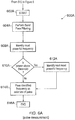
- a flowchart 600A describing the measurement of the individual's pulse is shown.
- the output of step 512 is fed into the start phase 602A of the flowchart 600A.
- the output of step 512 (which is a two dimensional data set with all the frequencies contained within each of the R, G and B signals over the period and their respective power) is applied to a band pass filter.
- the band pass filter has a pass range of 0.7 to 3Hz.
- the frequency range of the band pass filter is selected to pass through typical frequencies of pulse.
- the purpose of the band pass filter therefore is to remove any harmonics or spurious high or low frequency components (e.g. from head movement, flickering light sources or reflections) which could produce erroneous results.
- the band pass filter is applied to each of the R, G, B colour channels.
- the band pass filtering occurs at step 604A.
- the band pass filtering step is carried out using a 5 th order Butterworth filter to remove the low and high frequency components.
- step 608A the frequency component having the highest power for each of the R, G and B (or HSV) channels is identified.
- step 610A the power level of the highest power frequency component is compared with a threshold.
- the threshold of the power spectral density is 20. This is because the pulse is detected using slight skin colour changes on the individual's face. As these are only slight skin colour variations, any very large power frequency components will be due to artificial artefacts such as shadows or lighting changes that cause much higher variations in colour in the image.
- step 612A the next highest power frequency level is identified. Although not shown in Figure 6A , this next highest power level is compared against the threshold. In the event that the next highest power level is above the threshold, the next highest power level is identified and so on until the highest power level at or under the threshold is identified. Then the process moves to step 614A.
- step 512 (which is a two dimensional data set with all the frequencies contained within each of the R, G and B signals over the period and their respective power) is fed into the start phase 602B of the flowchart 600B.
- the output of step 512 is applied to a band pass filter.
- the band pass filter has a pass range of 0.1Hz to 0.5Hz.
- the frequency range of the band pass filter is selected to pass through typical frequencies of breathing rates. This purpose of the band pass filter therefore is to remove any harmonics or spurious high or low frequency components which could produce erroneous results.
- the band pass filter is applied to each of the R, G, B colour channels.
- the band pass filtering occurs at step 604B.
- the band pass filtering step is carried out using a 5 th order Butterworth filter to remove the low and high frequency components.
- step 608B the frequency component having the highest power for each of the R, G and B (or HSV) channels is identified.
- step 610B the power level of the highest power frequency component is compared with a threshold.
- the threshold of the power spectral density is 10. This is because the breathing is detected using slight skin colour changes on the individual's face. As these are only slight skin colour variations, any very large power frequency components will be due to artificial artefacts such as shadows or light flicker that cause much higher variations in colour in the image.
- step 612B the next highest power frequency level is identified. Although not shown in Figure 6B , this next highest power level is compared against the threshold. In the event that the next highest power level is above the threshold, the next highest power level is identified and so on until the highest power level at or under the threshold is identified. Then the process moves to step 614B.
- the “no" path is followed and the process also moves to step 614B.
- the frequency having the highest power level is determined to be the value of the breathing rate of the individual. This value is passed, along with an identifier which uniquely identifies each individual, to the server 120 for storage in the table shown in Figure 4 .
- a timestamp is sent so that the moment the measurements were captured is recorded in the table. It is of course possible for the server 120 to apply the timestamp when the measurements are received. However, in the event that the server 120 is offline or there is a backlog of measurements to be recorded, then the synchronisation between the measurements and the time recording will be lost.
- step 602C the output of step 512 (which is a two dimensional data set with all the frequencies contained within each of the R, G and B signals over the period and their respective power) is provided.
- step 604C band-pass filtering is performed.
- the band-pass filters have the range 0 to 0.04Hz to extract very low frequencies; 0.04 to 0.15Hz to extract low frequencies and 0.15 to 0.4Hz to extract high frequencies.
- This band pass filtering is carried out on each of the red, green and blue channels.
- the band pass filtering step is carried out using a 5 th order Butterworth filter to remove the low and high frequency components.
- step 606C the number of frequencies in each of the extracted bands are counted. Again this is done for each colour channel. It is important to note here that for HRV, the number of frequencies within each band is important rather than the power of each frequency.
- step 608C the HRV for each colour channel is calculated.
- HRV Number LowFreq Number HighFreq
- Number LowFreq is the number of frequencies in the low frequency band and Number HighFreq is the number of frequencies in the high frequency band.
- step 610C a check is made to ensure that all colour channels have been analysed. In the event that not all of the channels have been analysed, the "no" path is followed and the process returns to step 604C and one other channel is analysed. Alternatively, if all the colour channels have been analysed, the process follows the "yes" path to step 612C.
- step 612C the HRV values for each of the channels are summed. This summed value is sent to the server 120 as the measured HRV value for the individual in step 614C. In addition, or alternatively, the HRV values for each individual channel may be sent to the server 120. In other words, although the foregoing describes the summed value of HRV being sent to the server 120 to update the table in Figure 4 , the disclosure is not limited to this and the HRV value for the red channel, the HRV value for the green channel and the HRV value for the blue channel may be sent to the server 120.
- step 616C The process ends in step 616C.
- Oxygen saturation, SPO2 is then calculated as where a and b are empirical coefficients determined by calibration as explained in [2].
- the process 600D associated with SPO2 measurement starts at step 602D.
- the R,G,B camera signal from step 512 of Figure 5 is converted to the HSV colour space in step 604D.
- the images are then narrowly filtered closely around light wavelengths (520nm and 660nm).
- Bandpass filtering of the HSV colour space signals occurs in step 606D. Specifically, a 0.7Hz-3.0Hz band pass filter is applied to the HSV colour space signal in step 606D.
- SPO2 extraction is performed in step 608D.
- the extracted SPO2 signal is applied to a 10 second moving average in step 610D. This smooths variations during each cardiac cycle. The process ends in step 612D.
- the calculated parameters can be used to estimate the individual's blood pressure.
- further analysis of the captured signals permit an estimation of systolic and diastolic blood pressure to be determined by one of two methods.
- the first method can provide an estimation derived from heart rate using a formula based on the subject's age, gender, weight and height.
- This method consists of firstly calculating the body surface area ( BSA ) of the user using a known technique such as the DuBois formula explained in https://en.wikipedia.org/wiki/Body_surface_area#Calculation .
- BSA 0.007184 ⁇ W 0.425 ⁇ H 0.725
- Stroke Volume ( SV ) is derived from the heart rate ( HR ) from the process of Figure 6A , BSA, ET and the user's age (A) in years. This is equation (3) below.
- SV a ⁇ b ET ⁇ c ⁇ dHR + eBSA ⁇ fA
- the second method consists of taking two pulse signals from separate parts of the body and comparing them in order to calculate the pulse transmit time (pulse wave velocity) through the arterial system. Blood pressure can then be estimated using a method as described at http://link.springer.com/chapter/10.1007%2F978-3-540-36841-0_144 .
- the content of the generated table is analysed. Specifically, the content of the generated table is compared to the Early Warning Score which has been developed by the Royal College of Physicians in the United Kingdom.
- a diagram showing the Early Warning Score is provided in Figure 7 .
- the purpose of the Early Warning Score currently is to provide a monitor for patients who present in hospitals with acute illness. The physiological parameters, respiratory rate, oxygen saturations, temperature, systolic blood pressure, pulse rate and level of consciousness are monitored. A score is then applied to each parameter as it is measured. The value of the score reflects how extreme the parameter is from the normal parameter. The score is then aggregated and if the aggregated score is too high (i.e. above a threshold), the patient is in need of urgent medical treatment. In the known implementation of the Early Warning System, trained staff need to periodically and regularly measure these physiological parameters.
- the individual is monitored and the server 120 issues an alert to a monitoring station (not shown) over the Internet.
- the server 120 will issue the alert and will identify the individual with the aggregated score that is above the threshold.
- the monitoring station will alert the trained member of staff to indicate that an alert has been issued, and the identity and possibly current location of the individual.
- the trained member of staff can then visit the individual to apply medical aid.
- the disclosure is not so limited. In fact, it is possible that if the score of any one or any particular one of the physiological parameters is above a threshold score, then the alert will be issued. It is envisaged that the alert will also include the parameter that has exceeded the score, as well as the value of that physiological parameter. This will assist the trained member of staff in providing medical aid.
- a Complex Event Processor is set up to monitor each of the physiological parameters (including the aggregate value) and to issue the alert should one of the parameters, or the aggregate of the parameters exceeds a threshold value.
- the monitoring system may be provided in care homes, such as elderly residential care, where the individuals within the home have higher than average medical care needs.
- the monitoring station may be located in the home.
- the physiological parameters may be relevant to the Early Warning System, the disclosure is not so limited. Specifically, the monitored parameters may be used to detect higher than average levels of stress or other medical conditions.
- the server may receive the image prior to analysis and the server may perform the analysis to determine the physiological parameter.
- the processing may be distributed between the information processing apparatus and the server in any suitable manner as would be appreciated.
Landscapes
- Health & Medical Sciences (AREA)
- Life Sciences & Earth Sciences (AREA)
- Engineering & Computer Science (AREA)
- Medical Informatics (AREA)
- Physics & Mathematics (AREA)
- General Health & Medical Sciences (AREA)
- Public Health (AREA)
- Biomedical Technology (AREA)
- Pathology (AREA)
- Heart & Thoracic Surgery (AREA)
- Molecular Biology (AREA)
- Biophysics (AREA)
- Surgery (AREA)
- Animal Behavior & Ethology (AREA)
- Veterinary Medicine (AREA)
- Cardiology (AREA)
- Physiology (AREA)
- Nuclear Medicine, Radiotherapy & Molecular Imaging (AREA)
- Primary Health Care (AREA)
- Epidemiology (AREA)
- Radiology & Medical Imaging (AREA)
- Computer Vision & Pattern Recognition (AREA)
- Pulmonology (AREA)
- Theoretical Computer Science (AREA)
- General Physics & Mathematics (AREA)
- Signal Processing (AREA)
- Data Mining & Analysis (AREA)
- Spectroscopy & Molecular Physics (AREA)
- Optics & Photonics (AREA)
- Databases & Information Systems (AREA)
- Dentistry (AREA)
- Oral & Maxillofacial Surgery (AREA)
- Quality & Reliability (AREA)
- Multimedia (AREA)
- Power Engineering (AREA)
- Artificial Intelligence (AREA)
- Psychiatry (AREA)
- Measuring And Recording Apparatus For Diagnosis (AREA)
- Measurement Of The Respiration, Hearing Ability, Form, And Blood Characteristics Of Living Organisms (AREA)
Claims (15)
- Verfahren zum Bestimmen eines physiologischen Parameters einer Person, wobei das Verfahren die folgenden Schritte umfasst: Beschaffen einer Reihe von Bildern eines entblößten Hautbereichs der Person; Durchführen eines Periodogramms an mindestens einem der Rot-, Grün- und Blaukanäle des entblößten Hautbereichs der Reihe von Bildern, um Frequenzanteile des Kanals zu beschaffen; und Bestimmen des physiologischen Parameters basierend auf dem Periodogramm; und Durchführen einer Bandpassfilterung an dem Periodogramm, wobei das Bandpassfilter ausgelegt ist, Frequenzen des Pulses der Person durchzulassen.
- Verfahren nach Anspruch 1, ferner umfassend Bestimmen der Leistung jedes Frequenzanteils in dem Periodogramm und Bestimmen des physiologischen Parameters als den Frequenzanteil mit der höchsten Leistung in dem Periodogramm.
- Verfahren nach Anspruch 2, wobei der physiologische Parameter der Frequenzanteil mit der höchsten Leistung bei oder unterhalb einer Schwellenleistung ist.
- Verfahren nach Anspruch 1, wobei die Bandpassfilterung eine Mehrzahl von Bändern umfasst und das Verfahren ferner umfasst: Bestimmen der Anzahl von Frequenzanteilen in jedem der Bänder und Bestimmen des physiologischen Parameters basierend auf der Anzahl von Frequenzanteilen in jedem der Bänder.
- Verfahren nach Anspruch 4, wobei der physiologische Parameter eine HRV ist und die HRV gemäß
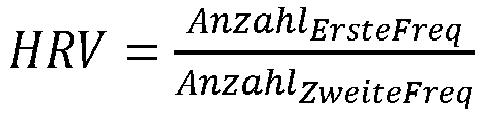
Wobei AnzahlErsteFreq die Anzahl von Frequenzen in einem ersten Frequenzband ist und AnzahlZweiteFreq die Anzahl von Frequenzen in einem zweiten Frequenzband ist, wobei die Frequenz des zweiten Frequenzbands höher als des ersten Frequenzbands ist. - Verfahren nach Anspruch 1, umfassend Aufbringen eines Zeitstempels auf jedes Bild in der Reihe von Bildern und Bereitstellen einer konstanten Abtastrate von Bildern basierend auf dem aufgebrachten Zeitstempel.
- Verfahren nach Anspruch 1, umfassend Umwandeln jedes der R-, G-, B-Signale in einen Farbsättigungswert vor der Bandpassfilterung.
- Informationsverarbeitungseinrichtung (110) zum Bestimmen eines physiologischen Parameters einer Person, wobei die Einrichtung umfasst: eine Bildgebungsschaltung, die ausgelegt ist, eine Reihe von Bildern eines entblößten Hautbereichs der Person zu beschaffen; eine Verarbeitungsschaltung (205), die ausgelegt ist, ein Periodogramm an mindestens einem der Rot-, Grün- und Blaukanäle des entblößten Hautbereichs der Reihe von Bildern durchzuführen, um Frequenzanteile des Kanals zu beschaffen; und um den physiologischen Parameter basierend auf dem Periodogramm zu bestimmen; und eine Bandpassfilterschaltung, die ausgelegt ist, eine Bandpassfilterung an dem Periodogramm durchzuführen, wobei die Bandpassfilterschaltung ausgelegt ist, Frequenzen des Pulses der Person durchzulassen.
- Einrichtung nach Anspruch 8, wobei die Verarbeitungsschaltung ausgelegt ist, die Leistung jedes Frequenzanteils in dem Periodogramm zu bestimmen und den physiologischen Parameter als den Frequenzanteil mit der höchsten Leistung in dem Periodogramm zu bestimmen.
- Einrichtung nach Anspruch 9, wobei der physiologische Parameter der Frequenzanteil mit der höchsten Leistung bei oder unterhalb einer Schwellenleistung ist.
- Einrichtung nach Anspruch 8, wobei die Bandpassfilterschaltung eine Mehrzahl von Bändern umfasst und die Verarbeitungsschaltung ferner ausgelegt ist, die Anzahl von Frequenzanteilen in jedem der Bänder zu bestimmen und den physiologischen Parameter basierend auf der Anzahl von Frequenzanteilen in jedem der Bänder zu bestimmen.
- Einrichtung nach Anspruch 16, wobei der physiologische Parameter eine HRV ist und die HRV gemäß

- Einrichtung nach Anspruch 8, wobei die Verarbeitungsschaltung ausgelegt ist, einen Zeitstempel auf jedes Bild in der Reihe von Bildern aufzubringen und eine konstante Abtastrate von Bildern basierend auf dem aufgebrachten Zeitstempel bereitzustellen.
- Server (120), umfassend eine Kommunikationsschaltung und eine Serververarbeitungsschaltung, die ausgelegt sind, den physiologischen Parameter von einer Informationsverarbeitungseinrichtung nach Anspruch 8 zu empfangen, und wobei in dem Fall, dass der physiologische Parameter einen Schwellenwert übersteigt, die Serververarbeitungsschaltung ausgelegt ist, die Kommunikationsschaltung derart zu steuern, dass eine Warnung über ein Netzwerk ausgegeben wird.
- Computerprogramm umfassend computerlesbare Anweisungen, die, wenn sie auf einen Computer geladen werden, den Computer dazu auslegen, ein Verfahren nach Anspruch 1 durchzuführen.
Applications Claiming Priority (2)
| Application Number | Priority Date | Filing Date | Title |
|---|---|---|---|
| GBGB1522406.6A GB201522406D0 (en) | 2015-12-18 | 2015-12-18 | A method, information processing apparatus and server for determining a physiological parameter of an individual |
| PCT/GB2016/053973 WO2017103616A1 (en) | 2015-12-18 | 2016-12-16 | A method, information processing apparatus and server for determining a physiological parameter of an individual |
Publications (2)
| Publication Number | Publication Date |
|---|---|
| EP3391340A1 EP3391340A1 (de) | 2018-10-24 |
| EP3391340B1 true EP3391340B1 (de) | 2020-10-14 |
Family
ID=55311239
Family Applications (1)
| Application Number | Title | Priority Date | Filing Date |
|---|---|---|---|
| EP16816366.5A Active EP3391340B1 (de) | 2015-12-18 | 2016-12-16 | Verfahren, informationsverarbeitungsvorrichtung und server zur bestimmung eines physiologischen parameters eines individuums |
Country Status (4)
| Country | Link |
|---|---|
| US (2) | US10806353B2 (de) |
| EP (1) | EP3391340B1 (de) |
| GB (1) | GB201522406D0 (de) |
| WO (1) | WO2017103616A1 (de) |
Families Citing this family (7)
| Publication number | Priority date | Publication date | Assignee | Title |
|---|---|---|---|---|
| GB201522406D0 (en) * | 2015-12-18 | 2016-02-03 | Xim Ltd | A method, information processing apparatus and server for determining a physiological parameter of an individual |
| GB2564135A (en) * | 2017-07-04 | 2019-01-09 | Xim Ltd | A method, apparatus and program |
| US11798460B2 (en) * | 2019-08-08 | 2023-10-24 | Apple Inc. | Electronic devices with display aging compensation |
| WO2021111436A1 (en) * | 2019-12-02 | 2021-06-10 | Binah.Ai Ltd | System and method for physiological measurements from optical data |
| CN111297347B (zh) * | 2020-02-21 | 2022-07-29 | 乐普(北京)医疗器械股份有限公司 | 一种生成光体积变化描记图法信号的方法和装置 |
| CN111297339B (zh) * | 2020-02-21 | 2022-07-29 | 乐普(北京)医疗器械股份有限公司 | 一种光体积变化描记图法信号的生成方法和装置 |
| US12557996B1 (en) | 2024-01-18 | 2026-02-24 | National Technology & Engineering Solutions Of Sandia, Llc | Processing short video to obtain frequency information |
Family Cites Families (15)
| Publication number | Priority date | Publication date | Assignee | Title |
|---|---|---|---|---|
| JP3664582B2 (ja) * | 1998-03-17 | 2005-06-29 | 富士写真フイルム株式会社 | ホワイトバランス調整方法および装置 |
| WO2006058306A2 (en) * | 2004-11-29 | 2006-06-01 | Hypermed, Inc. | Medical hyperspectral imaging for evaluation of tissue and tumor |
| AU2009246917A1 (en) * | 2008-05-13 | 2009-11-19 | Spectral Image, Inc. | Systems and methods for hyperspectral medical imaging using real-time projection of spectral information |
| KR20090120991A (ko) * | 2008-05-21 | 2009-11-25 | 엘지이노텍 주식회사 | 자동 화이트 밸런스 영역 설정 방법 |
| US20110251493A1 (en) * | 2010-03-22 | 2011-10-13 | Massachusetts Institute Of Technology | Method and system for measurement of physiological parameters |
| GB201114406D0 (en) | 2011-08-22 | 2011-10-05 | Isis Innovation | Remote monitoring of vital signs |
| EP2774533A1 (de) | 2013-03-06 | 2014-09-10 | Machine Perception Technologies, Inc. | Vorrichtungen und Verfahren zur Bestimmung und Verwendung der Herzfrequenzvariation |
| US10238292B2 (en) * | 2013-03-15 | 2019-03-26 | Hill-Rom Services, Inc. | Measuring multiple physiological parameters through blind signal processing of video parameters |
| US20140378810A1 (en) | 2013-04-18 | 2014-12-25 | Digimarc Corporation | Physiologic data acquisition and analysis |
| CN105377126B (zh) * | 2013-07-10 | 2019-02-05 | 皇家飞利浦有限公司 | 用于筛查对象的氧合状态的系统 |
| TWI546052B (zh) | 2013-11-14 | 2016-08-21 | 財團法人工業技術研究院 | 影像式心率活動偵測裝置及其方法 |
| US20160007864A1 (en) * | 2014-07-11 | 2016-01-14 | Kadence Lab, Llc | System and method for lactic threshold and entrainment detection |
| EP3307141A1 (de) * | 2015-06-09 | 2018-04-18 | University of Connecticut | Verfahren und vorrichtung zur herzfrequenzüberwachung mit verwendung eines elektrokardiogrammsensors |
| US9931042B2 (en) * | 2015-12-07 | 2018-04-03 | Vivint Inc. | Monitoring baby physical characteristics |
| GB201522406D0 (en) * | 2015-12-18 | 2016-02-03 | Xim Ltd | A method, information processing apparatus and server for determining a physiological parameter of an individual |
-
2015
- 2015-12-18 GB GBGB1522406.6A patent/GB201522406D0/en not_active Ceased
-
2016
- 2016-12-16 EP EP16816366.5A patent/EP3391340B1/de active Active
- 2016-12-16 WO PCT/GB2016/053973 patent/WO2017103616A1/en not_active Ceased
- 2016-12-16 US US16/060,558 patent/US10806353B2/en active Active
-
2020
- 2020-08-10 US US16/989,711 patent/US11083382B2/en active Active
Non-Patent Citations (1)
| Title |
|---|
| None * |
Also Published As
| Publication number | Publication date |
|---|---|
| US10806353B2 (en) | 2020-10-20 |
| GB201522406D0 (en) | 2016-02-03 |
| US20180360330A1 (en) | 2018-12-20 |
| EP3391340A1 (de) | 2018-10-24 |
| US11083382B2 (en) | 2021-08-10 |
| US20200367772A1 (en) | 2020-11-26 |
| WO2017103616A1 (en) | 2017-06-22 |
Similar Documents
| Publication | Publication Date | Title |
|---|---|---|
| EP3391340B1 (de) | Verfahren, informationsverarbeitungsvorrichtung und server zur bestimmung eines physiologischen parameters eines individuums | |
| EP3229676B1 (de) | Verfahren und vorrichtung zur physiologischen überwachung | |
| US8768438B2 (en) | Determining cardiac arrhythmia from a video of a subject being monitored for cardiac function | |
| KR102622403B1 (ko) | 생물학적 데이터 처리 | |
| US10285650B2 (en) | Heart monitoring device and method | |
| US20140221845A1 (en) | Determining cardiac arrhythmia from a video of a subject being monitored for cardiac function | |
| WO2017179694A1 (ja) | 生体情報分析装置、システム、プログラム、及び、生体情報分析方法 | |
| JP2010535047A (ja) | 呼吸数を測定するための方法および装置 | |
| JP6620999B2 (ja) | 生体情報計測装置、生体情報計測プログラム、及び生体情報計測方法 | |
| Banerjee et al. | Noise cleaning and Gaussian modeling of smart phone photoplethysmogram to improve blood pressure estimation | |
| EP3052008A1 (de) | Verbesserte signalauswahl zur herstellung einer entfernten fotoplethysmografischen wellenform | |
| KR102243012B1 (ko) | 피부 영상을 이용한 혈관탄성도와 부정맥 진단 방법 | |
| CN113518582B (zh) | 脉搏血氧测定系统 | |
| CN109620208A (zh) | 睡眠呼吸暂停低通气综合征检测系统和方法 | |
| CN107106080A (zh) | 呼吸状态估计装置、便携式设备、佩戴型仪器、程序、介质、呼吸状态估计方法以及呼吸状态估计器 | |
| US11989884B2 (en) | Method, apparatus and program | |
| KR102305309B1 (ko) | 영상 이미지를 통해 사용자의 피부 및 건강 지표를 측정하는 방법 및 그를 이용한 장치 | |
| CN117729879A (zh) | 用于确定与对象的心血管系统有关的健康信息的设备、系统和方法 | |
| KR20170004549A (ko) | 동공 크기 변화율을 이용한 심장 주파수 영역의 정보 추출 방법 및 그 장치 | |
| Nair et al. | Illumination invariant non-invasive heart rate and blood pressure estimation from facial thermal images using deep learning | |
| JP2016043191A (ja) | 生体信号解析装置、生体信号解析システム、及び、生体信号解析方法 | |
| Ganeshmurthy et al. | Toward accurate estimation of respiratory rate from the photoplethysmogram: effect of different window period of PPG signals | |
| Malar et al. | FPGA Implementation of Heart Rate Variability using rPPG and Peak Detection | |
| Penke | An Efficient Approach to Estimating Heart Rate from Facial Videos with Accurate Region of Interest | |
| Hurtado et al. | Respiratory Rate Estimation by a Non-invasive Optical Method Based on Video |
Legal Events
| Date | Code | Title | Description |
|---|---|---|---|
| STAA | Information on the status of an ep patent application or granted ep patent |
Free format text: STATUS: UNKNOWN |
|
| STAA | Information on the status of an ep patent application or granted ep patent |
Free format text: STATUS: THE INTERNATIONAL PUBLICATION HAS BEEN MADE |
|
| PUAI | Public reference made under article 153(3) epc to a published international application that has entered the european phase |
Free format text: ORIGINAL CODE: 0009012 |
|
| STAA | Information on the status of an ep patent application or granted ep patent |
Free format text: STATUS: REQUEST FOR EXAMINATION WAS MADE |
|
| 17P | Request for examination filed |
Effective date: 20180618 |
|
| AK | Designated contracting states |
Kind code of ref document: A1 Designated state(s): AL AT BE BG CH CY CZ DE DK EE ES FI FR GB GR HR HU IE IS IT LI LT LU LV MC MK MT NL NO PL PT RO RS SE SI SK SM TR |
|
| AX | Request for extension of the european patent |
Extension state: BA ME |
|
| DAV | Request for validation of the european patent (deleted) | ||
| DAX | Request for extension of the european patent (deleted) | ||
| REG | Reference to a national code |
Ref country code: DE Ref legal event code: R079 Ref document number: 602016045948 Country of ref document: DE Free format text: PREVIOUS MAIN CLASS: G06T0007900000 Ipc: G06T0007000000 |
|
| GRAP | Despatch of communication of intention to grant a patent |
Free format text: ORIGINAL CODE: EPIDOSNIGR1 |
|
| STAA | Information on the status of an ep patent application or granted ep patent |
Free format text: STATUS: GRANT OF PATENT IS INTENDED |
|
| RIC1 | Information provided on ipc code assigned before grant |
Ipc: A61B 5/00 20060101ALI20200406BHEP Ipc: G06T 7/90 20170101ALI20200406BHEP Ipc: A61B 5/1455 20060101ALI20200406BHEP Ipc: G06T 7/00 20170101AFI20200406BHEP Ipc: G16H 30/40 20180101ALI20200406BHEP Ipc: A61B 5/08 20060101ALI20200406BHEP Ipc: G16H 50/30 20180101ALI20200406BHEP Ipc: A61B 5/024 20060101ALI20200406BHEP Ipc: G16H 30/20 20180101ALI20200406BHEP Ipc: A61B 5/103 20060101ALI20200406BHEP |
|
| INTG | Intention to grant announced |
Effective date: 20200506 |
|
| GRAS | Grant fee paid |
Free format text: ORIGINAL CODE: EPIDOSNIGR3 |
|
| GRAA | (expected) grant |
Free format text: ORIGINAL CODE: 0009210 |
|
| STAA | Information on the status of an ep patent application or granted ep patent |
Free format text: STATUS: THE PATENT HAS BEEN GRANTED |
|
| AK | Designated contracting states |
Kind code of ref document: B1 Designated state(s): AL AT BE BG CH CY CZ DE DK EE ES FI FR GB GR HR HU IE IS IT LI LT LU LV MC MK MT NL NO PL PT RO RS SE SI SK SM TR |
|
| REG | Reference to a national code |
Ref country code: GB Ref legal event code: FG4D |
|
| REG | Reference to a national code |
Ref country code: AT Ref legal event code: REF Ref document number: 1324328 Country of ref document: AT Kind code of ref document: T Effective date: 20201015 Ref country code: CH Ref legal event code: EP |
|
| REG | Reference to a national code |
Ref country code: DE Ref legal event code: R096 Ref document number: 602016045948 Country of ref document: DE |
|
| REG | Reference to a national code |
Ref country code: IE Ref legal event code: FG4D |
|
| REG | Reference to a national code |
Ref country code: AT Ref legal event code: MK05 Ref document number: 1324328 Country of ref document: AT Kind code of ref document: T Effective date: 20201014 |
|
| PG25 | Lapsed in a contracting state [announced via postgrant information from national office to epo] |
Ref country code: NO Free format text: LAPSE BECAUSE OF FAILURE TO SUBMIT A TRANSLATION OF THE DESCRIPTION OR TO PAY THE FEE WITHIN THE PRESCRIBED TIME-LIMIT Effective date: 20210114 Ref country code: PT Free format text: LAPSE BECAUSE OF FAILURE TO SUBMIT A TRANSLATION OF THE DESCRIPTION OR TO PAY THE FEE WITHIN THE PRESCRIBED TIME-LIMIT Effective date: 20210215 Ref country code: RS Free format text: LAPSE BECAUSE OF FAILURE TO SUBMIT A TRANSLATION OF THE DESCRIPTION OR TO PAY THE FEE WITHIN THE PRESCRIBED TIME-LIMIT Effective date: 20201014 Ref country code: GR Free format text: LAPSE BECAUSE OF FAILURE TO SUBMIT A TRANSLATION OF THE DESCRIPTION OR TO PAY THE FEE WITHIN THE PRESCRIBED TIME-LIMIT Effective date: 20210115 Ref country code: FI Free format text: LAPSE BECAUSE OF FAILURE TO SUBMIT A TRANSLATION OF THE DESCRIPTION OR TO PAY THE FEE WITHIN THE PRESCRIBED TIME-LIMIT Effective date: 20201014 |
|
| REG | Reference to a national code |
Ref country code: LT Ref legal event code: MG4D |
|
| PG25 | Lapsed in a contracting state [announced via postgrant information from national office to epo] |
Ref country code: ES Free format text: LAPSE BECAUSE OF FAILURE TO SUBMIT A TRANSLATION OF THE DESCRIPTION OR TO PAY THE FEE WITHIN THE PRESCRIBED TIME-LIMIT Effective date: 20201014 Ref country code: AT Free format text: LAPSE BECAUSE OF FAILURE TO SUBMIT A TRANSLATION OF THE DESCRIPTION OR TO PAY THE FEE WITHIN THE PRESCRIBED TIME-LIMIT Effective date: 20201014 Ref country code: BG Free format text: LAPSE BECAUSE OF FAILURE TO SUBMIT A TRANSLATION OF THE DESCRIPTION OR TO PAY THE FEE WITHIN THE PRESCRIBED TIME-LIMIT Effective date: 20210114 Ref country code: IS Free format text: LAPSE BECAUSE OF FAILURE TO SUBMIT A TRANSLATION OF THE DESCRIPTION OR TO PAY THE FEE WITHIN THE PRESCRIBED TIME-LIMIT Effective date: 20210214 Ref country code: LV Free format text: LAPSE BECAUSE OF FAILURE TO SUBMIT A TRANSLATION OF THE DESCRIPTION OR TO PAY THE FEE WITHIN THE PRESCRIBED TIME-LIMIT Effective date: 20201014 Ref country code: PL Free format text: LAPSE BECAUSE OF FAILURE TO SUBMIT A TRANSLATION OF THE DESCRIPTION OR TO PAY THE FEE WITHIN THE PRESCRIBED TIME-LIMIT Effective date: 20201014 Ref country code: SE Free format text: LAPSE BECAUSE OF FAILURE TO SUBMIT A TRANSLATION OF THE DESCRIPTION OR TO PAY THE FEE WITHIN THE PRESCRIBED TIME-LIMIT Effective date: 20201014 |
|
| PG25 | Lapsed in a contracting state [announced via postgrant information from national office to epo] |
Ref country code: HR Free format text: LAPSE BECAUSE OF FAILURE TO SUBMIT A TRANSLATION OF THE DESCRIPTION OR TO PAY THE FEE WITHIN THE PRESCRIBED TIME-LIMIT Effective date: 20201014 |
|
| REG | Reference to a national code |
Ref country code: DE Ref legal event code: R097 Ref document number: 602016045948 Country of ref document: DE |
|
| PG25 | Lapsed in a contracting state [announced via postgrant information from national office to epo] |
Ref country code: SK Free format text: LAPSE BECAUSE OF FAILURE TO SUBMIT A TRANSLATION OF THE DESCRIPTION OR TO PAY THE FEE WITHIN THE PRESCRIBED TIME-LIMIT Effective date: 20201014 Ref country code: RO Free format text: LAPSE BECAUSE OF FAILURE TO SUBMIT A TRANSLATION OF THE DESCRIPTION OR TO PAY THE FEE WITHIN THE PRESCRIBED TIME-LIMIT Effective date: 20201014 Ref country code: EE Free format text: LAPSE BECAUSE OF FAILURE TO SUBMIT A TRANSLATION OF THE DESCRIPTION OR TO PAY THE FEE WITHIN THE PRESCRIBED TIME-LIMIT Effective date: 20201014 Ref country code: CZ Free format text: LAPSE BECAUSE OF FAILURE TO SUBMIT A TRANSLATION OF THE DESCRIPTION OR TO PAY THE FEE WITHIN THE PRESCRIBED TIME-LIMIT Effective date: 20201014 Ref country code: SM Free format text: LAPSE BECAUSE OF FAILURE TO SUBMIT A TRANSLATION OF THE DESCRIPTION OR TO PAY THE FEE WITHIN THE PRESCRIBED TIME-LIMIT Effective date: 20201014 Ref country code: LT Free format text: LAPSE BECAUSE OF FAILURE TO SUBMIT A TRANSLATION OF THE DESCRIPTION OR TO PAY THE FEE WITHIN THE PRESCRIBED TIME-LIMIT Effective date: 20201014 |
|
| REG | Reference to a national code |
Ref country code: CH Ref legal event code: PL |
|
| PLBE | No opposition filed within time limit |
Free format text: ORIGINAL CODE: 0009261 |
|
| STAA | Information on the status of an ep patent application or granted ep patent |
Free format text: STATUS: NO OPPOSITION FILED WITHIN TIME LIMIT |
|
| PG25 | Lapsed in a contracting state [announced via postgrant information from national office to epo] |
Ref country code: MC Free format text: LAPSE BECAUSE OF FAILURE TO SUBMIT A TRANSLATION OF THE DESCRIPTION OR TO PAY THE FEE WITHIN THE PRESCRIBED TIME-LIMIT Effective date: 20201014 Ref country code: DK Free format text: LAPSE BECAUSE OF FAILURE TO SUBMIT A TRANSLATION OF THE DESCRIPTION OR TO PAY THE FEE WITHIN THE PRESCRIBED TIME-LIMIT Effective date: 20201014 |
|
| REG | Reference to a national code |
Ref country code: BE Ref legal event code: MM Effective date: 20201231 |
|
| 26N | No opposition filed |
Effective date: 20210715 |
|
| REG | Reference to a national code |
Ref country code: NL Ref legal event code: FP |
|
| PG25 | Lapsed in a contracting state [announced via postgrant information from national office to epo] |
Ref country code: AL Free format text: LAPSE BECAUSE OF FAILURE TO SUBMIT A TRANSLATION OF THE DESCRIPTION OR TO PAY THE FEE WITHIN THE PRESCRIBED TIME-LIMIT Effective date: 20201014 Ref country code: IE Free format text: LAPSE BECAUSE OF NON-PAYMENT OF DUE FEES Effective date: 20201216 Ref country code: IT Free format text: LAPSE BECAUSE OF FAILURE TO SUBMIT A TRANSLATION OF THE DESCRIPTION OR TO PAY THE FEE WITHIN THE PRESCRIBED TIME-LIMIT Effective date: 20201014 Ref country code: LU Free format text: LAPSE BECAUSE OF NON-PAYMENT OF DUE FEES Effective date: 20201216 |
|
| PG25 | Lapsed in a contracting state [announced via postgrant information from national office to epo] |
Ref country code: SI Free format text: LAPSE BECAUSE OF FAILURE TO SUBMIT A TRANSLATION OF THE DESCRIPTION OR TO PAY THE FEE WITHIN THE PRESCRIBED TIME-LIMIT Effective date: 20201014 Ref country code: CH Free format text: LAPSE BECAUSE OF NON-PAYMENT OF DUE FEES Effective date: 20201231 Ref country code: LI Free format text: LAPSE BECAUSE OF NON-PAYMENT OF DUE FEES Effective date: 20201231 |
|
| PG25 | Lapsed in a contracting state [announced via postgrant information from national office to epo] |
Ref country code: IS Free format text: LAPSE BECAUSE OF FAILURE TO SUBMIT A TRANSLATION OF THE DESCRIPTION OR TO PAY THE FEE WITHIN THE PRESCRIBED TIME-LIMIT Effective date: 20210214 Ref country code: TR Free format text: LAPSE BECAUSE OF FAILURE TO SUBMIT A TRANSLATION OF THE DESCRIPTION OR TO PAY THE FEE WITHIN THE PRESCRIBED TIME-LIMIT Effective date: 20201014 Ref country code: MT Free format text: LAPSE BECAUSE OF FAILURE TO SUBMIT A TRANSLATION OF THE DESCRIPTION OR TO PAY THE FEE WITHIN THE PRESCRIBED TIME-LIMIT Effective date: 20201014 Ref country code: CY Free format text: LAPSE BECAUSE OF FAILURE TO SUBMIT A TRANSLATION OF THE DESCRIPTION OR TO PAY THE FEE WITHIN THE PRESCRIBED TIME-LIMIT Effective date: 20201014 |
|
| PG25 | Lapsed in a contracting state [announced via postgrant information from national office to epo] |
Ref country code: MK Free format text: LAPSE BECAUSE OF FAILURE TO SUBMIT A TRANSLATION OF THE DESCRIPTION OR TO PAY THE FEE WITHIN THE PRESCRIBED TIME-LIMIT Effective date: 20201014 |
|
| PG25 | Lapsed in a contracting state [announced via postgrant information from national office to epo] |
Ref country code: BE Free format text: LAPSE BECAUSE OF NON-PAYMENT OF DUE FEES Effective date: 20201231 |
|
| P01 | Opt-out of the competence of the unified patent court (upc) registered |
Effective date: 20230428 |
|
| PGFP | Annual fee paid to national office [announced via postgrant information from national office to epo] |
Ref country code: GB Payment date: 20251218 Year of fee payment: 10 |
|
| PGFP | Annual fee paid to national office [announced via postgrant information from national office to epo] |
Ref country code: NL Payment date: 20251222 Year of fee payment: 10 Ref country code: FR Payment date: 20251230 Year of fee payment: 10 |
|
| PGFP | Annual fee paid to national office [announced via postgrant information from national office to epo] |
Ref country code: DE Payment date: 20251229 Year of fee payment: 10 |