EP3396010A1 - Tôle en acier revêtue d'alliage d'aluminium-fer pour formage par pressage à chaud, ayant d'excellentes résistance à la facture retardée par hydrogène, résistance au pelage et soudabilité et élément formé à chaud au moyen de celle-ci - Google Patents
Tôle en acier revêtue d'alliage d'aluminium-fer pour formage par pressage à chaud, ayant d'excellentes résistance à la facture retardée par hydrogène, résistance au pelage et soudabilité et élément formé à chaud au moyen de celle-ci Download PDFInfo
- Publication number
- EP3396010A1 EP3396010A1 EP16879392.5A EP16879392A EP3396010A1 EP 3396010 A1 EP3396010 A1 EP 3396010A1 EP 16879392 A EP16879392 A EP 16879392A EP 3396010 A1 EP3396010 A1 EP 3396010A1
- Authority
- EP
- European Patent Office
- Prior art keywords
- steel sheet
- alloy
- content
- layer
- base steel
- Prior art date
- Legal status (The legal status is an assumption and is not a legal conclusion. Google has not performed a legal analysis and makes no representation as to the accuracy of the status listed.)
- Granted
Links
Images

Classifications
-
- C—CHEMISTRY; METALLURGY
- C23—COATING METALLIC MATERIAL; COATING MATERIAL WITH METALLIC MATERIAL; CHEMICAL SURFACE TREATMENT; DIFFUSION TREATMENT OF METALLIC MATERIAL; COATING BY VACUUM EVAPORATION, BY SPUTTERING, BY ION IMPLANTATION OR BY CHEMICAL VAPOUR DEPOSITION, IN GENERAL; INHIBITING CORROSION OF METALLIC MATERIAL OR INCRUSTATION IN GENERAL
- C23C—COATING METALLIC MATERIAL; COATING MATERIAL WITH METALLIC MATERIAL; SURFACE TREATMENT OF METALLIC MATERIAL BY DIFFUSION INTO THE SURFACE, BY CHEMICAL CONVERSION OR SUBSTITUTION; COATING BY VACUUM EVAPORATION, BY SPUTTERING, BY ION IMPLANTATION OR BY CHEMICAL VAPOUR DEPOSITION, IN GENERAL
- C23C2/00—Hot-dipping or immersion processes for applying the coating material in the molten state without affecting the shape; Apparatus therefor
- C23C2/04—Hot-dipping or immersion processes for applying the coating material in the molten state without affecting the shape; Apparatus therefor characterised by the coating material
- C23C2/12—Aluminium or alloys based thereon
-
- B—PERFORMING OPERATIONS; TRANSPORTING
- B32—LAYERED PRODUCTS
- B32B—LAYERED PRODUCTS, i.e. PRODUCTS BUILT-UP OF STRATA OF FLAT OR NON-FLAT, e.g. CELLULAR OR HONEYCOMB, FORM
- B32B15/00—Layered products comprising a layer of metal
- B32B15/01—Layered products comprising a layer of metal all layers being exclusively metallic
- B32B15/012—Layered products comprising a layer of metal all layers being exclusively metallic one layer being formed of an iron alloy or steel, another layer being formed of aluminium or an aluminium alloy
-
- B—PERFORMING OPERATIONS; TRANSPORTING
- B32—LAYERED PRODUCTS
- B32B—LAYERED PRODUCTS, i.e. PRODUCTS BUILT-UP OF STRATA OF FLAT OR NON-FLAT, e.g. CELLULAR OR HONEYCOMB, FORM
- B32B15/00—Layered products comprising a layer of metal
- B32B15/18—Layered products comprising a layer of metal comprising iron or steel
-
- B—PERFORMING OPERATIONS; TRANSPORTING
- B32—LAYERED PRODUCTS
- B32B—LAYERED PRODUCTS, i.e. PRODUCTS BUILT-UP OF STRATA OF FLAT OR NON-FLAT, e.g. CELLULAR OR HONEYCOMB, FORM
- B32B15/00—Layered products comprising a layer of metal
- B32B15/20—Layered products comprising a layer of metal comprising aluminium or copper
-
- C—CHEMISTRY; METALLURGY
- C21—METALLURGY OF IRON
- C21D—MODIFYING THE PHYSICAL STRUCTURE OF FERROUS METALS; GENERAL DEVICES FOR HEAT TREATMENT OF FERROUS OR NON-FERROUS METALS OR ALLOYS; MAKING METAL MALLEABLE, e.g. BY DECARBURISATION OR TEMPERING
- C21D9/00—Heat treatment, e.g. annealing, hardening, quenching or tempering, adapted for particular articles; Furnaces therefor
- C21D9/46—Heat treatment, e.g. annealing, hardening, quenching or tempering, adapted for particular articles; Furnaces therefor for sheet metals
-
- C—CHEMISTRY; METALLURGY
- C22—METALLURGY; FERROUS OR NON-FERROUS ALLOYS; TREATMENT OF ALLOYS OR NON-FERROUS METALS
- C22C—ALLOYS
- C22C21/00—Alloys based on aluminium
-
- C—CHEMISTRY; METALLURGY
- C22—METALLURGY; FERROUS OR NON-FERROUS ALLOYS; TREATMENT OF ALLOYS OR NON-FERROUS METALS
- C22C—ALLOYS
- C22C38/00—Ferrous alloys, e.g. steel alloys
-
- C—CHEMISTRY; METALLURGY
- C22—METALLURGY; FERROUS OR NON-FERROUS ALLOYS; TREATMENT OF ALLOYS OR NON-FERROUS METALS
- C22C—ALLOYS
- C22C38/00—Ferrous alloys, e.g. steel alloys
- C22C38/001—Ferrous alloys, e.g. steel alloys containing N
-
- C—CHEMISTRY; METALLURGY
- C22—METALLURGY; FERROUS OR NON-FERROUS ALLOYS; TREATMENT OF ALLOYS OR NON-FERROUS METALS
- C22C—ALLOYS
- C22C38/00—Ferrous alloys, e.g. steel alloys
- C22C38/002—Ferrous alloys, e.g. steel alloys containing In, Mg, or other elements not provided for in one single group C22C38/001 - C22C38/60
-
- C—CHEMISTRY; METALLURGY
- C22—METALLURGY; FERROUS OR NON-FERROUS ALLOYS; TREATMENT OF ALLOYS OR NON-FERROUS METALS
- C22C—ALLOYS
- C22C38/00—Ferrous alloys, e.g. steel alloys
- C22C38/02—Ferrous alloys, e.g. steel alloys containing silicon
-
- C—CHEMISTRY; METALLURGY
- C22—METALLURGY; FERROUS OR NON-FERROUS ALLOYS; TREATMENT OF ALLOYS OR NON-FERROUS METALS
- C22C—ALLOYS
- C22C38/00—Ferrous alloys, e.g. steel alloys
- C22C38/04—Ferrous alloys, e.g. steel alloys containing manganese
-
- C—CHEMISTRY; METALLURGY
- C22—METALLURGY; FERROUS OR NON-FERROUS ALLOYS; TREATMENT OF ALLOYS OR NON-FERROUS METALS
- C22C—ALLOYS
- C22C38/00—Ferrous alloys, e.g. steel alloys
- C22C38/06—Ferrous alloys, e.g. steel alloys containing aluminium
-
- C—CHEMISTRY; METALLURGY
- C22—METALLURGY; FERROUS OR NON-FERROUS ALLOYS; TREATMENT OF ALLOYS OR NON-FERROUS METALS
- C22C—ALLOYS
- C22C38/00—Ferrous alloys, e.g. steel alloys
- C22C38/18—Ferrous alloys, e.g. steel alloys containing chromium
- C22C38/28—Ferrous alloys, e.g. steel alloys containing chromium with titanium or zirconium
-
- C—CHEMISTRY; METALLURGY
- C22—METALLURGY; FERROUS OR NON-FERROUS ALLOYS; TREATMENT OF ALLOYS OR NON-FERROUS METALS
- C22C—ALLOYS
- C22C38/00—Ferrous alloys, e.g. steel alloys
- C22C38/18—Ferrous alloys, e.g. steel alloys containing chromium
- C22C38/32—Ferrous alloys, e.g. steel alloys containing chromium with boron
-
- C—CHEMISTRY; METALLURGY
- C22—METALLURGY; FERROUS OR NON-FERROUS ALLOYS; TREATMENT OF ALLOYS OR NON-FERROUS METALS
- C22C—ALLOYS
- C22C38/00—Ferrous alloys, e.g. steel alloys
- C22C38/18—Ferrous alloys, e.g. steel alloys containing chromium
- C22C38/40—Ferrous alloys, e.g. steel alloys containing chromium with nickel
- C22C38/44—Ferrous alloys, e.g. steel alloys containing chromium with nickel with molybdenum or tungsten
-
- C—CHEMISTRY; METALLURGY
- C22—METALLURGY; FERROUS OR NON-FERROUS ALLOYS; TREATMENT OF ALLOYS OR NON-FERROUS METALS
- C22C—ALLOYS
- C22C38/00—Ferrous alloys, e.g. steel alloys
- C22C38/18—Ferrous alloys, e.g. steel alloys containing chromium
- C22C38/40—Ferrous alloys, e.g. steel alloys containing chromium with nickel
- C22C38/58—Ferrous alloys, e.g. steel alloys containing chromium with nickel with more than 1.5% by weight of manganese
-
- C—CHEMISTRY; METALLURGY
- C23—COATING METALLIC MATERIAL; COATING MATERIAL WITH METALLIC MATERIAL; CHEMICAL SURFACE TREATMENT; DIFFUSION TREATMENT OF METALLIC MATERIAL; COATING BY VACUUM EVAPORATION, BY SPUTTERING, BY ION IMPLANTATION OR BY CHEMICAL VAPOUR DEPOSITION, IN GENERAL; INHIBITING CORROSION OF METALLIC MATERIAL OR INCRUSTATION IN GENERAL
- C23C—COATING METALLIC MATERIAL; COATING MATERIAL WITH METALLIC MATERIAL; SURFACE TREATMENT OF METALLIC MATERIAL BY DIFFUSION INTO THE SURFACE, BY CHEMICAL CONVERSION OR SUBSTITUTION; COATING BY VACUUM EVAPORATION, BY SPUTTERING, BY ION IMPLANTATION OR BY CHEMICAL VAPOUR DEPOSITION, IN GENERAL
- C23C2/00—Hot-dipping or immersion processes for applying the coating material in the molten state without affecting the shape; Apparatus therefor
- C23C2/02—Pretreatment of the material to be coated, e.g. for coating on selected surface areas
- C23C2/022—Pretreatment of the material to be coated, e.g. for coating on selected surface areas by heating
-
- C—CHEMISTRY; METALLURGY
- C23—COATING METALLIC MATERIAL; COATING MATERIAL WITH METALLIC MATERIAL; CHEMICAL SURFACE TREATMENT; DIFFUSION TREATMENT OF METALLIC MATERIAL; COATING BY VACUUM EVAPORATION, BY SPUTTERING, BY ION IMPLANTATION OR BY CHEMICAL VAPOUR DEPOSITION, IN GENERAL; INHIBITING CORROSION OF METALLIC MATERIAL OR INCRUSTATION IN GENERAL
- C23C—COATING METALLIC MATERIAL; COATING MATERIAL WITH METALLIC MATERIAL; SURFACE TREATMENT OF METALLIC MATERIAL BY DIFFUSION INTO THE SURFACE, BY CHEMICAL CONVERSION OR SUBSTITUTION; COATING BY VACUUM EVAPORATION, BY SPUTTERING, BY ION IMPLANTATION OR BY CHEMICAL VAPOUR DEPOSITION, IN GENERAL
- C23C2/00—Hot-dipping or immersion processes for applying the coating material in the molten state without affecting the shape; Apparatus therefor
- C23C2/26—After-treatment
-
- C—CHEMISTRY; METALLURGY
- C23—COATING METALLIC MATERIAL; COATING MATERIAL WITH METALLIC MATERIAL; CHEMICAL SURFACE TREATMENT; DIFFUSION TREATMENT OF METALLIC MATERIAL; COATING BY VACUUM EVAPORATION, BY SPUTTERING, BY ION IMPLANTATION OR BY CHEMICAL VAPOUR DEPOSITION, IN GENERAL; INHIBITING CORROSION OF METALLIC MATERIAL OR INCRUSTATION IN GENERAL
- C23C—COATING METALLIC MATERIAL; COATING MATERIAL WITH METALLIC MATERIAL; SURFACE TREATMENT OF METALLIC MATERIAL BY DIFFUSION INTO THE SURFACE, BY CHEMICAL CONVERSION OR SUBSTITUTION; COATING BY VACUUM EVAPORATION, BY SPUTTERING, BY ION IMPLANTATION OR BY CHEMICAL VAPOUR DEPOSITION, IN GENERAL
- C23C2/00—Hot-dipping or immersion processes for applying the coating material in the molten state without affecting the shape; Apparatus therefor
- C23C2/26—After-treatment
- C23C2/28—Thermal after-treatment, e.g. treatment in oil bath
-
- C—CHEMISTRY; METALLURGY
- C23—COATING METALLIC MATERIAL; COATING MATERIAL WITH METALLIC MATERIAL; CHEMICAL SURFACE TREATMENT; DIFFUSION TREATMENT OF METALLIC MATERIAL; COATING BY VACUUM EVAPORATION, BY SPUTTERING, BY ION IMPLANTATION OR BY CHEMICAL VAPOUR DEPOSITION, IN GENERAL; INHIBITING CORROSION OF METALLIC MATERIAL OR INCRUSTATION IN GENERAL
- C23C—COATING METALLIC MATERIAL; COATING MATERIAL WITH METALLIC MATERIAL; SURFACE TREATMENT OF METALLIC MATERIAL BY DIFFUSION INTO THE SURFACE, BY CHEMICAL CONVERSION OR SUBSTITUTION; COATING BY VACUUM EVAPORATION, BY SPUTTERING, BY ION IMPLANTATION OR BY CHEMICAL VAPOUR DEPOSITION, IN GENERAL
- C23C2/00—Hot-dipping or immersion processes for applying the coating material in the molten state without affecting the shape; Apparatus therefor
- C23C2/34—Hot-dipping or immersion processes for applying the coating material in the molten state without affecting the shape; Apparatus therefor characterised by the shape of the material to be treated
- C23C2/36—Elongated material
- C23C2/40—Plates; Strips
-
- C—CHEMISTRY; METALLURGY
- C23—COATING METALLIC MATERIAL; COATING MATERIAL WITH METALLIC MATERIAL; CHEMICAL SURFACE TREATMENT; DIFFUSION TREATMENT OF METALLIC MATERIAL; COATING BY VACUUM EVAPORATION, BY SPUTTERING, BY ION IMPLANTATION OR BY CHEMICAL VAPOUR DEPOSITION, IN GENERAL; INHIBITING CORROSION OF METALLIC MATERIAL OR INCRUSTATION IN GENERAL
- C23C—COATING METALLIC MATERIAL; COATING MATERIAL WITH METALLIC MATERIAL; SURFACE TREATMENT OF METALLIC MATERIAL BY DIFFUSION INTO THE SURFACE, BY CHEMICAL CONVERSION OR SUBSTITUTION; COATING BY VACUUM EVAPORATION, BY SPUTTERING, BY ION IMPLANTATION OR BY CHEMICAL VAPOUR DEPOSITION, IN GENERAL
- C23C28/00—Coating for obtaining at least two superposed coatings either by methods not provided for in a single one of groups C23C2/00 - C23C26/00 or by combinations of methods provided for in subclasses C23C and C25C or C25D
- C23C28/30—Coatings combining at least one metallic layer and at least one inorganic non-metallic layer
- C23C28/32—Coatings combining at least one metallic layer and at least one inorganic non-metallic layer including at least one pure metallic layer
-
- C—CHEMISTRY; METALLURGY
- C23—COATING METALLIC MATERIAL; COATING MATERIAL WITH METALLIC MATERIAL; CHEMICAL SURFACE TREATMENT; DIFFUSION TREATMENT OF METALLIC MATERIAL; COATING BY VACUUM EVAPORATION, BY SPUTTERING, BY ION IMPLANTATION OR BY CHEMICAL VAPOUR DEPOSITION, IN GENERAL; INHIBITING CORROSION OF METALLIC MATERIAL OR INCRUSTATION IN GENERAL
- C23C—COATING METALLIC MATERIAL; COATING MATERIAL WITH METALLIC MATERIAL; SURFACE TREATMENT OF METALLIC MATERIAL BY DIFFUSION INTO THE SURFACE, BY CHEMICAL CONVERSION OR SUBSTITUTION; COATING BY VACUUM EVAPORATION, BY SPUTTERING, BY ION IMPLANTATION OR BY CHEMICAL VAPOUR DEPOSITION, IN GENERAL
- C23C28/00—Coating for obtaining at least two superposed coatings either by methods not provided for in a single one of groups C23C2/00 - C23C26/00 or by combinations of methods provided for in subclasses C23C and C25C or C25D
- C23C28/30—Coatings combining at least one metallic layer and at least one inorganic non-metallic layer
- C23C28/34—Coatings combining at least one metallic layer and at least one inorganic non-metallic layer including at least one inorganic non-metallic material layer, e.g. metal carbide, nitride, boride, silicide layer and their mixtures, enamels, phosphates and sulphates
- C23C28/345—Coatings combining at least one metallic layer and at least one inorganic non-metallic layer including at least one inorganic non-metallic material layer, e.g. metal carbide, nitride, boride, silicide layer and their mixtures, enamels, phosphates and sulphates with at least one oxide layer
-
- C—CHEMISTRY; METALLURGY
- C23—COATING METALLIC MATERIAL; COATING MATERIAL WITH METALLIC MATERIAL; CHEMICAL SURFACE TREATMENT; DIFFUSION TREATMENT OF METALLIC MATERIAL; COATING BY VACUUM EVAPORATION, BY SPUTTERING, BY ION IMPLANTATION OR BY CHEMICAL VAPOUR DEPOSITION, IN GENERAL; INHIBITING CORROSION OF METALLIC MATERIAL OR INCRUSTATION IN GENERAL
- C23C—COATING METALLIC MATERIAL; COATING MATERIAL WITH METALLIC MATERIAL; SURFACE TREATMENT OF METALLIC MATERIAL BY DIFFUSION INTO THE SURFACE, BY CHEMICAL CONVERSION OR SUBSTITUTION; COATING BY VACUUM EVAPORATION, BY SPUTTERING, BY ION IMPLANTATION OR BY CHEMICAL VAPOUR DEPOSITION, IN GENERAL
- C23C28/00—Coating for obtaining at least two superposed coatings either by methods not provided for in a single one of groups C23C2/00 - C23C26/00 or by combinations of methods provided for in subclasses C23C and C25C or C25D
- C23C28/30—Coatings combining at least one metallic layer and at least one inorganic non-metallic layer
- C23C28/36—Coatings combining at least one metallic layer and at least one inorganic non-metallic layer including layers graded in composition or physical properties
-
- C—CHEMISTRY; METALLURGY
- C23—COATING METALLIC MATERIAL; COATING MATERIAL WITH METALLIC MATERIAL; CHEMICAL SURFACE TREATMENT; DIFFUSION TREATMENT OF METALLIC MATERIAL; COATING BY VACUUM EVAPORATION, BY SPUTTERING, BY ION IMPLANTATION OR BY CHEMICAL VAPOUR DEPOSITION, IN GENERAL; INHIBITING CORROSION OF METALLIC MATERIAL OR INCRUSTATION IN GENERAL
- C23C—COATING METALLIC MATERIAL; COATING MATERIAL WITH METALLIC MATERIAL; SURFACE TREATMENT OF METALLIC MATERIAL BY DIFFUSION INTO THE SURFACE, BY CHEMICAL CONVERSION OR SUBSTITUTION; COATING BY VACUUM EVAPORATION, BY SPUTTERING, BY ION IMPLANTATION OR BY CHEMICAL VAPOUR DEPOSITION, IN GENERAL
- C23C28/00—Coating for obtaining at least two superposed coatings either by methods not provided for in a single one of groups C23C2/00 - C23C26/00 or by combinations of methods provided for in subclasses C23C and C25C or C25D
- C23C28/40—Coatings including alternating layers following a pattern, a periodic or defined repetition
- C23C28/44—Coatings including alternating layers following a pattern, a periodic or defined repetition characterized by a measurable physical property of the alternating layer or system, e.g. thickness, density, hardness
-
- C—CHEMISTRY; METALLURGY
- C21—METALLURGY OF IRON
- C21D—MODIFYING THE PHYSICAL STRUCTURE OF FERROUS METALS; GENERAL DEVICES FOR HEAT TREATMENT OF FERROUS OR NON-FERROUS METALS OR ALLOYS; MAKING METAL MALLEABLE, e.g. BY DECARBURISATION OR TEMPERING
- C21D1/00—General methods or devices for heat treatment, e.g. annealing, hardening, quenching or tempering
- C21D1/62—Quenching devices
- C21D1/673—Quenching devices for die quenching
-
- C—CHEMISTRY; METALLURGY
- C21—METALLURGY OF IRON
- C21D—MODIFYING THE PHYSICAL STRUCTURE OF FERROUS METALS; GENERAL DEVICES FOR HEAT TREATMENT OF FERROUS OR NON-FERROUS METALS OR ALLOYS; MAKING METAL MALLEABLE, e.g. BY DECARBURISATION OR TEMPERING
- C21D1/00—General methods or devices for heat treatment, e.g. annealing, hardening, quenching or tempering
- C21D1/74—Methods of treatment in inert gas, controlled atmosphere, vacuum or pulverulent material
-
- C—CHEMISTRY; METALLURGY
- C21—METALLURGY OF IRON
- C21D—MODIFYING THE PHYSICAL STRUCTURE OF FERROUS METALS; GENERAL DEVICES FOR HEAT TREATMENT OF FERROUS OR NON-FERROUS METALS OR ALLOYS; MAKING METAL MALLEABLE, e.g. BY DECARBURISATION OR TEMPERING
- C21D2211/00—Microstructure comprising significant phases
- C21D2211/008—Martensite
-
- Y—GENERAL TAGGING OF NEW TECHNOLOGICAL DEVELOPMENTS; GENERAL TAGGING OF CROSS-SECTIONAL TECHNOLOGIES SPANNING OVER SEVERAL SECTIONS OF THE IPC; TECHNICAL SUBJECTS COVERED BY FORMER USPC CROSS-REFERENCE ART COLLECTIONS [XRACs] AND DIGESTS
- Y10—TECHNICAL SUBJECTS COVERED BY FORMER USPC
- Y10T—TECHNICAL SUBJECTS COVERED BY FORMER US CLASSIFICATION
- Y10T428/00—Stock material or miscellaneous articles
- Y10T428/12—All metal or with adjacent metals
- Y10T428/12493—Composite; i.e., plural, adjacent, spatially distinct metal components [e.g., layers, joint, etc.]
- Y10T428/12736—Al-base component
- Y10T428/1275—Next to Group VIII or IB metal-base component
- Y10T428/12757—Fe
Definitions
- the present disclosure relates to an aluminum-iron (Al-Fe) coated steel sheet mainly used for automotive members having crashworthiness such as automotive structural members or reinforcing materials, and a hot formed member manufactured using the Al-Fe coated steel sheet. More particularly, the present disclosure relates to an ultra-high-strength Al-Fe coated steel sheet having a tensile strength of 1000 MPa or greater and a hot-formed member manufactured using the Al-Fe coated steel sheet and having high hydrogen delayed fracture resistance and high spot weldability.
- the invention disclosed in US Patent No. 6296805 B1 may be a typical example thereof.
- an Al-Si coated steel sheet is heated to 850°C or greater, and a hot press forming process and a cooling process are performed to form a member having a martensite phase and thus, ultra-high strength, within the range of 1600 MPa or greater in tensile strength.
- a coating layer having aluminum (Al) as a main phase is formed, and thus, when a blank is heated in a heating furnace, the Al coating layer may melt at a temperature equal to or greater than the melting point of the Al coating layer.
- aluminum (Al) may be fused with rolls provided in the heating furnace.
- hydrogen from steam present in the air may diffuse into steel, and thus hydrogen delayed fracture may occur in a hot-formed member.
- the invention disclosed in Korean Patent Application No. 10-2011-7000520 may be a technique for solving this problem.
- a coil of an Al coated steel sheet is annealed for removing hydrogen introduced during an Al coating process, preventing an Al coating layer from flowing down in a rapid heating process, and thus preventing the occlusion of hydrogen.
- a dew point of -10°C or higher is required in the coil annealing process to prevent the occlusion of hydrogen, and a batch annealing process is performed in air atmosphere to prevent surface quality deterioration of a steel sheet. Therefore, large amounts of oxides may be formed on the surface of a steel sheet, and the spot weldability of a hot-formed member may deteriorate.
- Korean Patent Application No. 10-2010-7019003 discloses a technique in which a batch annealing process is performed to partially alloy an Al-Fe coating layer and reduce a hot forming process time.
- a partially alloyed portion may be separated due to stress.
- an Al-Fe alloy coated steel sheet for hot forming which is capable of guaranteeing the spot weldability of a hot-formed member by suppressing the formation of surface oxides after an Al-Si coated coil is batch annealed, preventing coating layer separation when an Al-Fe coated coil passes through a roll leveller after the batch annealing process, and suppressing the occlusion of hydrogen to guarantee high hydrogen delayed fracture resistance after a hot forming process in air or another atmosphere.
- aspects of the present disclosure may include an ultra-high-strength aluminum-iron (Al-Fe) coated steel sheet having a tensile strength of 1000 MPa or greater after a hot forming process, and a hot-formed member manufactured using the coated steel sheet.
- Al-Fe aluminum-iron
- aspects of the present disclosure may include a method of manufacturing the Al-Fe coated steel sheet and a method of manufacturing a hot-formed member using the Al-Fe coated steel sheet.
- an aluminum-iron (Al-Fe) alloy coated steel sheet for hot forming, having high resistance to hydrogen delayed fracture and coating layer separation and high weldability the Al-Fe alloy coated steel sheet including a base steel sheet and an alloy coating layer formed between the base steel sheet and an oxide layer, wherein the base steel sheet may include, by wt%, carbon (C) : 0.1% to 0.5%, silicon (Si): 0.01% to 2%, manganese (Mn): 0.01% to 10%, phosphorus (P): 0.001% to 0.05%, sulfur (S): 0.0001% to 0.02%, aluminum (Al): 0.001% to 1.0%, nitrogen (N) : 0.001% to 0.02%, and a balance of iron (Fe) and other impurities
- the alloy coating layer may include: an Al-Fe alloy layer I formed on the base steel sheet and having a Vickers hardness of 200 Hv to 800 Hv; an Al-Fe alloy layer III
- the Al-Fe alloy layer I may have an Al content within a range of 5% to 30% by weight
- the Al-Fe alloy layer II may have an Al content within a range of 20% to 50% by weight
- the alloy layer III may have an Al content within a range of 40% to 70% by weight.
- a cross-sectional area fraction of an Al-Fe intermetallic compound phase having an Al content of 70% or less by weight may be greater than 99% in the alloy coating layer.
- the base steel sheet may have a hydrogen content of 0.5 ppmw or less.
- the base steel sheet may further include at least one selected from the group consisting of chromium (Cr), molybdenum (Mo), and tungsten (W) in an amount of 0.01% to 4.0%.
- the base steel sheet may further include at least one selected from the group consisting of titanium (Ti), niobium (Nb), zirconium (Zr), and vanadium (V) in an amount of 0.001% to 0.4%.
- the base steel sheet may further include copper (Cu) + nickel (Ni) in an amount of 0.005% to 2.0%, antimony (Sb) + tin (Sn) in an amount of 0.001% to 1.0%, or boron (B) in an amount of 0.0001% to 0.01%.
- a hot press formed (HPF) member having high resistance to hydrogen delayed fracture and coating layer separation and high weldability, the HPF member being formed by performing a hot press forming process on the Al-Fe alloy coated steel sheet, the HPF member including martensite as a main phase of a microstructure thereof and having a tensile strength of 1000 MPa or greater.
- the product of the tensile strength of the HPF member and the hydrogen content of the base steel sheet may be 1300 or less.
- Surface oxides of the HPF member may have an average oxygen weight percent within a range of 40% or less at a depth of 0.1 ⁇ m from a surface of the surface oxides.
- a method of manufacturing an Al-Fe alloy coated steel sheet for hot forming the Al-Fe alloy coated steel sheet having high resistance to hydrogen delayed fracture and coating layer separation and high weldability, the method including:
- the Al-Si coated base steel sheet Before reaching the heat treatment maximum temperature, the Al-Si coated base steel sheet may be maintained within a temperature within a range of 300°C to less than a melting point of an Al coating layer for 1 to 100 hours.
- the Al-Fe alloy coating layer may include:
- the Al-Fe alloy layer I may have an Al content within a range of 5% to 30% by weight
- the Al-Fe alloy layer II may have an Al content within a range of 20% to 50% by weight
- the Al-Fe alloy layer III may have an Al content within a range of 40% to 70% by weight.
- the base steel sheet may have a hydrogen content of 0.5 ppmw or less.
- an HPF member having high resistance to hydrogen delayed fracture and coating layer separation and high weldability including:
- a coated steel sheet for manufacturing hot-formed members applicable to automotive members having crashworthiness may be effectively provided, and a hot-formed member manufactured using the coated steel sheet may be effectively provided. That is, the steel sheet may have high coating adhesion, and the formed member manufactured using the steel sheet may have high hydrogen embrittlement resistance and spot weldability and may thus be usefully used as an automotive member having crashworthiness.
- the inventors have found that in a method of manufacturing an Al-Fe coated coil by performing a batch annealing process on an Al-Si coated coil, if the atmosphere of the batch annealing process and heat-treatment conditions are properly adjusted, the microstructure and characteristics of an Al-Fe coating layer may be varied for preventing the Al-Fe coating layer from being stripped when passing through a roll leveller and also for suppressing hydrogen delayed fracture and guaranteeing spot weldability. Based on this knowledge, the inventors provide the present invention.
- composition of a base steel sheet for manufacturing an Al-Fe coated steel sheet and a formed member and reasons for limiting the composition of the base steel sheet will be described according to the present disclosure.
- content of each element is in wt% unless otherwise specified.
- Carbon (C) is an element for improving the strength of a heat-treated member, and to this end, carbon (C) is added in proper amounts. If the content of carbon (C) is less than 0.1%, it is difficult to obtain sufficient strength, and thus carbon (C) is added in an amount of 0.1% or greater. However, if the content of carbon (C) is greater than 0.5%, the cold rollability of a hot-rolled steel sheet is markedly lowered in a cold rolling process because the strength of the hot-rolled steel sheet is too high, and also spot weldability is markedly lowered. Thus, it may be preferable that the content of carbon (C) be 0.5% or less. More preferably, the content of carbon (C) may be 0.45% or less, and even more preferably 0.4% or less.
- Silicon (Si) is added to remove oxygen in a steel making process, suppress the formation of carbides markedly affecting the strength of a hot-formed member, and obtain retained austenite by concentrating carbon (C) along grain boundaries of lath martensite after martensite is formed during a hot forming process. If the content of silicon (Si) is less than 0.01%, these effects may not be obtained. In addition, it is difficult to impart a high degree of cleanliness to steel, and excessive costs may be incurred. However, if the content of silicon (Si) is greater than 2%, aluminum (Al) coatability is markedly lowered. Thus, silicon (Si) is added in an amount of 2% or less, and preferably 1.5% or less.
- Manganese (Mn) is added to guarantee solid solution strengthening and also to lower a critical cooling rate of a hot-formed member for guaranteeing the formation of martensite. If the content of manganese (Mn) is less than 0.01%, there is a limit to obtaining these effects. Conversely, if the content of manganese (Mn) is greater than 10%, the strength of a steel sheet is excessively high before a hot forming process, thereby decreasing workability, increasing product cost due to the necessity of adding excessive alloy iron, and decreasing spot weldability. Therefore, preferably, the content of manganese (Mn) may be adjusted to be 9% or less, and more preferably 8% or less.
- aluminum (Al) functions as a deoxidizer during a steel making process and thus may increase the cleanliness of steel. If the content of aluminum (Al) is less than 0.001%, it may be difficult to obtain such effects, and if the content of aluminum (Al) is greater than 1.0%, the Ac3 transformation temperature increases excessively, and thus, a high heating temperature is required. Thus, the upper limit of the content of aluminum (Al) is set to be 1.0%.
- Phosphorus (P) is an impurity. Many manufacturing costs are incurred to adjust the content of phosphorus (P) to be less than 0.001%, and if the content of phosphorus (P) is greater than 0.05%, the weldability of a hot-formed member is markedly decreased. Thus, the upper limit of the content of phosphorus (P) is set to be 0.05%. Preferably, the content of phosphorus (P) may be adjusted to be 0.03% or less.
- Sulfur (S) is an impurity included in steel and having a negative effect on the ductility, impact characteristics, and weldability of a member, and thus, the maximum content of sulfur (S) is set to be 0.02% (preferably 0.01 or less). However, if the minimum content of sulfur (S) is set to be less than 0.0001%, material costs markedly increase.
- Nitrogen (N) is an impurity included in steel. If the content of nitrogen (N) is less than 0.001%, high manufacturing costs are incurred, and if the content of nitrogen (N) is greater than 0.02%, a slab may become sensitive to cracks during a continuous casting process, and impact characteristics may also deteriorate.
- the base steel sheet having the above-described composition may further include: at least one selected from the group consisting of chromium (Cr), molybdenum (Mo), and tungsten (W) in an amount of 0.01% to 4.0%; at least one selected from the group consisting of titanium (Ti), niobium (Nb), zirconium (Zr), and vanadium (V) in an amount of 0.001% to 0.4%; copper (Cu) + nickel (Ni) in an about of 0.005% to 2.0%; antimony (Sb) + tin (Sn) in an amount of 0.001% to 1.0%; and boron (B) in an amount of 0.0001% to 0.01%.
- Chromium (Cr), molybdenum (Mo), and tungsten (W) improve hardenability and have precipitation strengthening effect, thereby guaranteeing strength and grain refinement.
- the total content of at least one selected from chromium (Cr), molybdenum (Mo), and tungsten (W) is less than 0.01%, it is difficult to obtain these effects, and if the total content of at least one selected from chromium (Cr), molybdenum (Mo), and tungsten (W) is greater than 4.0%, these effects are saturated, and a decrease in weldability and an increase in costs are also caused.
- Titanium (Ti), niobium (Nb), and vanadium (V) have an effect of improving a steel sheet as a heat treatment member by forming fine precipitates, as well as an effect of stabilizing retained austenite and improving impact toughness by inducing grain refinement.
- the total content thereof is equal to or less than 0.001%, it is difficult to obtain such effects. If the total content thereof is greater than 0.4%, these effects are saturated, and it is costly to add alloy iron.
- Copper (Cu) may be added as an element forming fine precipitates and thus improving strength.
- nickel (Ni) is optionally added because hot brittleness may be caused when copper (Cu) is solely added.
- the total content of Cu + Ni is less than 0.005%, it may be difficult to obtain the above-mentioned effects. If the total content of Cu + Ni is greater than 2.0%, costs increase excessively, and thus, the upper limit of the total content of Cu + Ni is set to be 2.0%.
- antimony (Sb) and tin (Sn) may be concentrated in a surface, thereby suppressing the formation of silicon (Si) or manganese (Mn) oxides on the surface and improving coatability.
- Antimony (Sb) and tin (Sn) are added in an amount of 0.001% or greater to obtain such effects.
- the upper limit of the total content of Sb + Sn is set to be 1.0%.
- boron (B) improves hardenability, and boron (B) segregates along prior-austenite grain boundaries to suppress embrittlement of a hot-formed member caused by phosphorus (P) and/or sulfur (S) precipitating along grain boundaries.
- the content of boron (B) is less than 0.0001%, it is difficult to obtain these effects.
- the content of boron (B) is greater than 0.01%, these effects are saturated and incur brittleness at hot rolling.
- the content of boron (B) may be set to be 0.01% or less, and more preferably 0.005% or less.
- the Al-Fe coated steel sheet and the formed member of the present disclosure are characterized in that an Al-Fe alloy layer is formed on the base steel sheet having the above-described composition, and the structure thereof is as follows.
- an Al-Fe alloy layer I having a Vickers hardness of 200 to 800 is formed on the base steel sheet, and an Al-Fe alloy layer III having a Vickers hardness of 700 to 1200 is formed on the Al-Fe alloy layer I.
- an Al-Fe alloy layer II having a Vickers hardness of 400 to 900 is formed in the Al-Fe alloy layer III continuously or discontinuously in the length direction of the Al-Fe alloy layer III.
- the content of aluminum (Al) in the Al-Fe alloy layer I be within the range of 5% to 30% by weight
- the content of aluminum (Al) in the Al-Fe alloy layer II be within the range of 20% to 50% by weight
- the content of aluminum (Al) in the Al-Fe alloy layer III be within the range of 40% to 70% by weight.
- the cross-sectional area fraction of an Al-Fe intermetallic compound phase having an aluminum (Al) content of 70% or less by weight is greater than 99% in the Fe-Al alloy coating layer. If the cross-sectional area fraction is 99% or less, the coating layer may be separated from a coil when the coil passes through a roll leveller, thereby contaminating the roll leveller and having a negative effect on the surface of the coil. More preferably, the cross-sectional area fraction may be 100%, that is, complete alloying.
- the content of hydrogen (H) in the base steel sheet of the Al-Fe coated steel sheet may preferably be 0.5 ppmw or less.
- Hydrogen (H) is included in the base steel sheet during an Al-Si coating process and a batch annealing process in which atmosphere control is performed.
- this hydrogen (H) may cause hydrogen delayed fracture of a hot-formed member together with hydrogen (H) introduced into the steel sheet from a heating furnace in a later hot forming process.
- the Al-Fe coating layer of the present disclosure has a melting point of greater than 1000°C, higher than a heating temperature in a general hot forming process, and thus, the Al-Fe coating layer does not melt.
- the inventors have confirmed that the amount of hydrogen (H) introduced into the base steel sheet from a heating furnace during a hot forming process was not markedly increased owing to the Al-Fe coating layer, and it has been analyzed that if the content of hydrogen (H) in a batch-annealed steel sheet is 0.5 ppmw or less, a hot-formed member does not undergo hydrogen delayed fracture.
- an oxide layer is formed on the Al-Fe alloy coating layer, and in this case, the oxide layer is required to have an average oxygen weight percent of 20% or less at a depth of 0.1 ⁇ m from the surface of the coated steel sheet.
- the coated steel sheet including the base steel sheet having the above-described composition and the Al-Fe alloy coating layer, is hot formed, and thus a desired microstructure may be obtained in a final formed member.
- the microstructure of the formed member is not particularly limited as long as the formed member has a tensile strength of 1000 MPa or greater.
- the formed member of the present disclosure may have martensite or bainite as a main phase, and retained austenite in an amount of 30% or less for increasing ductility.
- an Al-Si coating layer is formed on a base steel sheet having the above-described composition.
- a cold-rolled steel sheet or a pickled hot-rolled steel sheet manufactured through well-known manufacturing processes may be used as the base steel sheet without specific limitations on manufacturing conditions thereof.
- Example manufacturing processes will now be briefly described.
- a steel slab having the above-described composition is heated at 1000°C to 1300°C and is then hot rolled. If the heating temperature is less than 1000°C, it is difficult to homogenize the microstructure of the slab, and if the heating temperature is greater than 1300°C, an oxide layer may be excessively formed and manufacturing costs may increase.
- a finish hot rolling process is performed at a temperature within a range of Ar3 to 1000°C. If temperature of the finish hot rolling process is equal to or lower than Ar3, two-phase rolling may easily occur, and thus it may be difficult to control the structure of surface mixed grains and the formation of a steel sheet. If the temperature of the finish hot rolling process is greater than 1000°C, coarse grains may be easily formed during the finish hot rolling process.
- a coiling process is performed at a temperature of higher than Ms temperature but equal to or less than 750°C. If the coiling temperature is equal to or lower than the Ms temperature, the strength of a hot-rolled material is excessively high, and thus it may be difficult to perform a subsequent cold rolling process. If the coiling temperature is greater than 750°C, the thickness of an oxide layer excessively increases, and thus it is difficult to perform a surface pickling process.
- the hot-rolled steel sheet may be coated with Al-Si immediately after a pickling process.
- a pickling process and a cold rolling process may be performed to control the thickness of the steel sheet more precisely.
- the reduction ratio of the cold rolling process after the pickling process is not particularly limited. However, the reduction ratio may be within the range of 30% to 80% to obtain a desired thickness.
- a batch annealing process may be performed on the hot-rolled steel sheet or the picked hot-rolled steel sheet before the cold rolling process so as to reduce the process load in the cold rolling process.
- conditions of the batch annealing process are not particularly limited. However, the batch annealing process may be performed at 400°C to 700°C for 1 to 100 hours to reduce the strength of the hot-rolled steel sheet and thus reduce the process load during the cold rolling process.
- a cold-rolled steel sheet obtained as described above may be processed through a continuous annealing process and an Al-Si coating process.
- the continuous annealing process is not limited to particular conditions. However, the continuous annealing process may preferably be performed at a temperature of 700°C to 900°C.
- an Al-Si coating process is performed by passing the heat-treated steel sheet through a coating bath, and at this time, the coating bath may include aluminum (Al) as a main component, silicon (Si) in an amount of 6% to 12%, iron (Fe) in an amount of 1% to 4%, and other impurities.
- Al aluminum
- Si silicon
- Fe iron
- the coating amount of Al-Si may be adjusted to be within the range of 30 g/m 2 to 130 g/m 2 on each side under general manufacturing conditions. If the coating amount is less than 30 g/m 2 on each side, it is difficult to impart a desired degree of corrosion resistance to a hot-formed member. Conversely, if the coating amount is greater than 130 g/m 2 on each side, manufacturing costs may increase because the coating amount is excessive, and it may be difficult to coat the steel sheet uniformly in width and length directions of a coil.
- the Al-Si coated steel sheet prepared as described above is heated in a batch annealing furnace.
- the atmosphere in the batch annealing furnace may preferably have a dew point of less than -10°C. If the dew point is - 10°C or higher, large amounts of oxides may be formed on the steel sheet, and thus the spot weldability of the steel sheet may deteriorate after a hot forming process.
- batch annealing equipment may be negatively affected by oxidation, thereby increasing equipment maintenance costs and decreasing the lifespan of the equipment. Therefore, air is not used as the gas atmosphere of the furnace, but another gas such as nitrogen or hydrogen having a sufficiently low dew point is used as the gas atmosphere of the furnace.
- the steel sheet may be heated to a target maximum heat treatment temperature preferably at a rate of 1°C/hr to 500°C/hr. If the heating rate is less than 1°C/hr, excessive amounts of oxides are formed on the coating layer because of oxygen existing as an impurity in the furnace, and thus productivity may markedly decrease in addition to difficulty in guaranteeing spot weldability after a hot forming process. Conversely, if the heating rate is greater than 500°C/hr, a non-alloyed layer may partially remain on the coating layer, thereby leading to separation of the coating layer in a subsequent roll leveling process of the steel sheet (coil).
- the maximum heat treatment temperature may be maintained within the range of 450°C to 750°C for 1 to 100 hours. If the maximum heat treatment temperature is less than 450°C, alloying may not sufficiently occur in a surface layer of the coating layer, and thus the coating layer may easily be separated during a roll leveling process. However, if the maximum heat treatment temperature is greater than 750°C, oxides may be excessively formed on the coating layer, and thus spot weldability may deteriorate after a hot forming process.
- the coating layer may not be sufficiently alloyed, and if the maximum heat treatment temperature is maintained for longer than 100 hours, productivity may be decreased.
- a process in which the Al-Si coated steel sheet is maintained at a constant temperature may additionally be performed before the Al-Si coated steel sheet is heated to the maximum heat treatment temperature.
- This maintaining process is for removing rust preventive oil or rolling oil, reducing voids in the coating layer by inducing balanced stable diffusion of elements such as iron (Fe) into the base steel sheet, and making the thickness of an Al-Fe coating layer uniform.
- the Al-Si coated steel sheet be maintained at a temperature equal to or higher than 300°C but less than the melting point of an Al-Si coating layer for 1 to 100 hours. If the maintaining temperature is less than 300°C, it is difficult to obtain the above-described effects, and if the maintaining temperature is equal to or greater than the melting point of the Al-Si coating layer, the Al-Si coating layer melts to result in an uneven surface.
- an Al-Fe alloy coating layer having the following structure is formed on the base steel sheet.
- an Al-Fe alloy layer I having a Vickers hardness of 200 to 800 is formed on the base steel sheet, and an Al-Fe alloy layer III having a Vickers hardness of 700 to 1200 is formed on the Al-Fe alloy layer I.
- an Al-Fe alloy layer II having a Vickers hardness of 400 to 900 is formed in the Al-Fe alloy layer III continuously or discontinuously in the length direction of the Al-Fe alloy layer III.
- the content of aluminum (Al) in the Al-Fe alloy layer I be within the range of 5% to 30% by weight
- the content of aluminum (Al) in the Al-Fe alloy layer II be within the range of 20% to 50% by weight
- the content of aluminum (Al) in the Al-Fe alloy layer III be within the range of 40% to 70% by weight.
- the cross-sectional area fraction of an Al-Fe intermetallic compound phase having an aluminum (Al) content of 70% or less by weight is greater than 99% in the Al-Fe coating layer. More preferably, the cross-sectional area fraction may be 100%, that is, complete alloying.
- the steel sheet (coil) coated with the alloy coating layer is cooled in the furnace or is air-cooled.
- the content of hydrogen (H) in the base steel sheet of the batch-annealed steel sheet manufactured by the above-described method may be 0.5 ppmw or less. Reasons for this have already been described.
- the content of oxygen at a depth of 0.1 ⁇ m from the surface of the coating layer of the batch-annealed steel sheet may preferably be 20% or less by weight. If the content of oxygen is greater than 20%, oxides are formed on the surface of a hot-formed member to a large thickness in a later process, and thus the spot weldability of the hot-formed member deteriorates.
- the above-described conditions of the batch annealing process are closely related to the content of oxygen existing on the surface of the coating layer and also to the spot weldability of a hot-formed member.
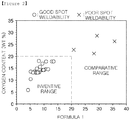
- the inventors have conducted a great deal of research into this relationship and found that if batch annealing conditions are controlled using the following formula 1, the content of oxygen (O) in oxides at a depth of 0.1 ⁇ m from the surface of a coating layer of an Al-Fe coated steel sheet could be 20% or less by weight, and a hot-formed member could have high spot weldability. Specifically, as shown in FIG.
- DP refers to a dew point (°C)
- T max refers to a maximum temperature (K) in a batch annealing heat treatment
- HR refers to a heating rate (°C/hr)
- t mid time
- time time
- t max time
- a coated steel sheet having an Al-Fe coating layer is heated at a heating rate of 1°C/s to 1000°C/s to a temperature equal to or higher than an austenite single phase region.
- the heating rate is less than 1°C/s, it may be difficult to guarantee sufficient productivity.
- the grain size of the steel sheet excessively increases to result in a decrease in impact toughness, and oxides may be excessively formed on the surface of the formed member to result in a decrease in spot weldability.
- the heating rate is greater than 1000°C/s, expensive equipment may be required.
- the steel sheet may be maintained at a heating temperature ranging from Ae3+30°C to Ae3+150°C for 1 second to 1000 seconds. If the heating temperature is less than Ae3+30°C, the possibility of ferrite formation is high while a blank is transferred from a heating furnace to a die, and thus it is difficult to guarantee strength. In addition, if the heating temperature is greater than Ae3+150°C, it is difficult to guarantee spot weldability because of excessive formation of oxides on the surface of the member.
- the formed member is cooled to a temperature equal to or lower than M f simultaneously with a hot forming process, and in this case, the cooling rate may preferably be adjusted to be within the range of 1°C/s to 1000°C/s. If the cooling rate is less than 1°C/s, undesired ferrite is formed, and thus it is difficult to obtain a tensile strength of 1000 MPa or greater. In addition, expensive equipment is required to adjust the cooling rate to be greater than 1000°C/s.
- the hot-formed member manufactured as described above may have a tensile strength of 1000 MPa or greater, and the product of the tensile strength of the hot-formed member and the hydrogen content in a base steel sheet may be less than 1300. If the product is 1300 or greater, a fracture occurs before reaching a maximum strength value in a tension test, and it is difficult to guarantee sufficient elongation.
- the average oxygen content of surface oxides formed on the member may preferably be 40% or less by weight at a depth of 0.1 ⁇ m from the surface of the steel sheet. If the oxygen content is greater than 40%, spot weldability deteriorates because the range of current available for spot welding is less than 1 kA.
- Slabs having a thickness of 40 mm were prepared in a vacuum melting method using general 22MnB5 steel having the composition shown in Table 1.
- the slabs were heated in a heating furnace at 1200°C for 1 hour, and a hot rolling process was performed on the slabs to finally manufacture hot-rolled steel sheets having a thickness of 3 mm.
- the hot rolling process was performed under the following conditions: a hot rolling finish temperature of 900°C, and an in-furnace cooling temperature of 550°C.
- the hot-rolled steel sheets were pickled and were cold rolled with a reduction ratio of 50%.
- the cold-rolled steel sheets were annealed at 780°C and were coated with aluminum (Al).
- Al aluminum
- the composition of an Al coating bath was Al-9%Si-2%Fe and other impurities, and the coating amount was 80 g/m 2 on each side.
- the steel sheets manufactured as described above were batch annealed under different atmosphere conditions as shown in Table 2 above.
- the same batch annealing heat treatment conditions were used: a heating rate from room temperature to a target temperature was 50°C/hr, an intermediate maintaining temperature and time before reaching the target temperature were 500°C and 5 hours, a maximum target temperature and a maintaining time at the maximum target temperature were 650°C and 10 hours, and then cooling to room temperature was performed for 20 hours.
- Conventional Example A-5 was a general Al-coated steel sheet on which a batch annealing was not performed, and Comparative Example A-4 had a relatively high oxygen content and dew point compared to other inventive examples.
- the Al-Fe intermetallic compound fraction refers to a fraction of an alloyed Al-Fe intermetallic compound area measured by subtracting a non-alloyed Al area from the entire analysis area in a cross-section of each coating layer by an optical method.
- the Al content of each Al-Fe coating layer was measured by spot EDS using an SEM, and the hydrogen content in each base steel sheet was measured by measuring the amount of hydrogen emitted from a sample by gas chromatography while heating the sample to 300°C at a rate of 100°C/hr.
- FIG. 1C is an optical photograph of Inventive Example A-3 including: an Al-Fe alloy layer I having an Al content of 13% and a Vickers hardness of 525 and directly formed above the base steel sheet; an Al-Fe coating layer II having an Al content of 35% and a Vickers hardness of 728, the Al-Fe alloy layer II being continuous or discontinuous in the length direction of the coated steel sheet; and an Al-Fe coating layer III having an Al content of 57% and a Vickers hardness of 920.
- Example A-5 being an Al coated steel sheet which was not batch annealed, as shown in FIG. 1A , a coating layer III had a very low Vickers hardness on the level of 60, and an inhibition layer I between the coating layer III and the base steel sheet had a Vickers hardness of 811.
- the fraction of an alloyed Al-Fe intermetallic compound area not including a non-alloyed Al area was relatively low at 19.4%.
- Comparative Example A-4 had a higher oxygen content than Inventive Examples.
- a hot forming process was performed on batch-annealed samples under the following heat treatment conditions. That is, samples prepared as described above were inserted into a heating furnace previously heated to 900°C and held in the heating furnace for 6 minutes, and were air cooled for 12 seconds. Thereafter, the samples were hot formed using a die and were rapidly cooled to room temperature at a cooling rate of 30°C/s or greater.
- Al coated steel sheets were prepared as in Example 1.
- the compositions and manufacturing conditions of base steel sheets of the Al coated steel sheets were the same as in Example 1.
- a coating process for coating the base steel sheets with aluminum (Al) was performed in the same manner as in Example 1.
- Comparative Example A-5 had an excessive intermediate maintaining time
- Comparative Examples A-6 and A-7 had batch annealing heat treatment temperatures outside of the range proposed in the present disclosure
- Comparative Examples A-10 and A-11 had heating rates outside of the range proposed in the present disclosure.
- Comparative Example A-10 had a high hydrogen content in the base steel sheet.
- FIG. 1B illustrates Comparative Example A-7 alloyed to a degree of about 58%, Comparative Example A-7 including a coating layer I formed directly above a base steel sheet and having an Al content of 16% and a Vickers hardness of 816, an Al-Fe coating layer II having an Al content of about 48% and a Vickers hardness of 846, and an Al coating layer III having an Al content of about 92% and a Vickers hardness of 55.
- Comparative Example A-4 did not show a normal fracture in the tension test because of a high hydrogen content in the base steel sheet, and had difficulty in guaranteeing a sufficient spot welding current range because of an excessive surface oxygen content.
- Comparative Example A-6 showed a normal fraction in the tension test but did not have a proper current range, and Comparative Example A-10 did not have sufficient elongatation because of a high hydrogen content in the base steel sheet.
- Slabs having a thickness of 40 mm and compositions as shown in Table 8 below were prepared by a vacuum melting method, and were hot rolled, cold rolled, annealed, and coated with aluminum (Al) to manufacture Al coated steel sheets under the same conditions as in Example 1.
- steels P and Q had a carbon, manganese, or aluminum content outside of the range proposed in the present disclosure.
- a batch annealing process was performed on the steel sheets as shown in Table 9 below.
- the batch annealing process was performed under conditions proposed in the present disclosure.
- the hardness, Al content, fraction, content, and separation of each batch-annealed Al-Fe coating layer were measured in the same manner as in Example 1, and results thereof are shown in Table 10 below. All the results of measurement were within the ranges proposed in the present disclosure. [Table 11] No.
- Example 11 a hot forming process was performed on batch-annealed samples under heat treatment conditions shown in Table 11 above. Other air cooling and rapid cooling processes were performed in the same manner as in Example 1. Thereafter, a tension test, content evaluation, and spot welding current range evaluation were performed on the samples in the same manner as in Example 1.
- Inventive Examples A to O had proper tensile characteristics and spot welding current ranges.
- Comparative Example P had difficulty in guaranteeing a desired degree of strength
- Comparative Example Q had difficulty in guaranteeing a proper spot welding current range because of high carbon, manganese, and aluminum contents in steel.
Landscapes
- Chemical & Material Sciences (AREA)
- Engineering & Computer Science (AREA)
- Materials Engineering (AREA)
- Mechanical Engineering (AREA)
- Metallurgy (AREA)
- Organic Chemistry (AREA)
- Chemical Kinetics & Catalysis (AREA)
- Inorganic Chemistry (AREA)
- Physics & Mathematics (AREA)
- Thermal Sciences (AREA)
- Oil, Petroleum & Natural Gas (AREA)
- Crystallography & Structural Chemistry (AREA)
- Heat Treatment Of Sheet Steel (AREA)
- Coating With Molten Metal (AREA)
- Heat Treatment Of Articles (AREA)
- Other Surface Treatments For Metallic Materials (AREA)
Applications Claiming Priority (2)
| Application Number | Priority Date | Filing Date | Title |
|---|---|---|---|
| KR1020150184975A KR101696121B1 (ko) | 2015-12-23 | 2015-12-23 | 내수소지연파괴특성, 내박리성 및 용접성이 우수한 열간성형용 알루미늄-철 합금 도금강판 및 이를 이용한 열간성형 부재 |
| PCT/KR2016/015155 WO2017111525A1 (fr) | 2015-12-23 | 2016-12-23 | Tôle en acier revêtue d'alliage d'aluminium-fer pour formage par pressage à chaud, ayant d'excellentes résistance à la facture retardée par hydrogène, résistance au pelage et soudabilité et élément formé à chaud au moyen de celle-ci |
Publications (3)
| Publication Number | Publication Date |
|---|---|
| EP3396010A1 true EP3396010A1 (fr) | 2018-10-31 |
| EP3396010A4 EP3396010A4 (fr) | 2018-11-07 |
| EP3396010B1 EP3396010B1 (fr) | 2019-11-20 |
Family
ID=57835324
Family Applications (1)
| Application Number | Title | Priority Date | Filing Date |
|---|---|---|---|
| EP16879392.5A Active EP3396010B1 (fr) | 2015-12-23 | 2016-12-23 | Tôle en acier revêtue d'alliage d'aluminium-fer pour formage par pressage à chaud, ayant d'excellentes résistance à la facture retardée par hydrogène, résistance au pelage et soudabilité, élément formé à chaud au moyen de celle-ci et procédés de leur fabrication |
Country Status (8)
| Country | Link |
|---|---|
| US (1) | US10590522B2 (fr) |
| EP (1) | EP3396010B1 (fr) |
| JP (1) | JP6704995B2 (fr) |
| KR (1) | KR101696121B1 (fr) |
| CN (1) | CN108474096B (fr) |
| ES (1) | ES2770101T3 (fr) |
| MX (1) | MX2018007749A (fr) |
| WO (1) | WO2017111525A1 (fr) |
Cited By (20)
| Publication number | Priority date | Publication date | Assignee | Title |
|---|---|---|---|---|
| EP3632586A4 (fr) * | 2017-06-01 | 2020-06-17 | Posco | Tôle d'acier pour élément formé par pressage à chaud ayant une excellente adhérence de placage, et son procédé de fabrication |
| WO2020128571A1 (fr) * | 2018-12-18 | 2020-06-25 | Arcelormittal | Pièce durcie à la presse ayant une résistance élevée à la rupture différée et procédé de fabrication associé |
| WO2021084376A1 (fr) | 2019-10-30 | 2021-05-06 | Arcelormittal | Procédé de durcissement à la presse |
| WO2021084303A1 (fr) | 2019-10-30 | 2021-05-06 | Arcelormittal | Procédé d'emboutissage à chaud |
| CN113166824A (zh) * | 2018-12-03 | 2021-07-23 | Posco公司 | 耐氢脆性优异的热压成型部件及其制造方法 |
| EP3889314A4 (fr) * | 2018-11-30 | 2021-11-10 | Posco | Tôle d'acier plaquée avec un alliage d'al-fe pour formage à la presse à chaud présentant une excellente résistance à la corrosion et une excellente résistance à la chaleur, pièce formée à la presse à chaud et procédé de fabrication associé |
| EP3889313A4 (fr) * | 2018-11-30 | 2021-11-17 | Posco | Plaque d'acier plaqué à base d'aluminium pour presse à chaud ayant d'excellentes propriétés de résistance contre une rupture différée par l'hydrogène et de soudabilité par points, et son procédé de fabrication |
| EP3933061A1 (fr) * | 2020-06-30 | 2022-01-05 | Hyundai Steel Company | Tôle d'acier pour presse a chaud et procede de fabrication |
| EP3889311A4 (fr) * | 2018-11-30 | 2022-01-26 | Posco | Pièce formée par pressage à chaud et son procédé de fabrication |
| WO2022048990A1 (fr) * | 2020-09-01 | 2022-03-10 | Thyssenkrupp Steel Europe Ag | Pièce en acier fabriquée par formage à chaud d'un produit plat en acier, produit plat en acier et procédé de fabrication d'une pièce en acier |
| RU2773459C1 (ru) * | 2018-12-18 | 2022-06-03 | Арселормиттал | Упрочнённая под прессом деталь с высокой стойкостью к замедленному разрушению и способ её изготовления |
| US20220298595A1 (en) * | 2019-09-03 | 2022-09-22 | Posco | Steel sheet for hot forming, hot-formed member, and method for manufacturing same |
| EP4079925A4 (fr) * | 2019-12-20 | 2022-11-30 | Posco | Tôle d'acier plaquée aluminium-fer présentant une excellente résistance à l'usure du moule pour le formage à chaud et son procédé de fabrication |
| EP4242341A4 (fr) * | 2020-11-09 | 2024-04-10 | POSCO Co., Ltd | Tôles d'acier plaquées destinées au formage à la presse à chaud présentant d'excellentes propriétés de résistance aux chocs et de résistance à la fragilisation par l'hydrogène, éléments formés à la presse à chaud, et procédés de fabrication associés |
| US12123094B2 (en) | 2018-11-30 | 2024-10-22 | Posco Co., Ltd | Aluminum-based plated steel plate for hot press having excellent resistance against hydrogen delayed fracture and spot weldability, and method for manufacturing same |
| CZ310333B6 (cs) * | 2019-12-20 | 2025-03-05 | Hyundai Steel Company | Za tepla lisovaná součást a způsob její výroby |
| US12252755B2 (en) | 2020-08-19 | 2025-03-18 | Thyssenkrupp Steel Europe Ag | Process for manufacturing a flat steel product having an aluminum-based corrosion-resistant coating, and flat steel product having an aluminum-based corrosion-resistant coating |
| US12448664B2 (en) | 2019-10-30 | 2025-10-21 | Arcelormittal | Press hardening method |
| US12584205B2 (en) | 2018-11-30 | 2026-03-24 | Posco | Steel sheet plated with Al—Fe alloy for hot press forming having excellent corrosion resistance and heat resistance, hot press formed part, and manufacturing method therefor |
| US12686926B2 (en) | 2019-10-30 | 2026-07-21 | Arcelormittal | Press hardening method |
Families Citing this family (43)
| Publication number | Priority date | Publication date | Assignee | Title |
|---|---|---|---|---|
| DE102016218957A1 (de) * | 2016-09-30 | 2018-04-05 | Thyssenkrupp Ag | Temporäre Korrosionsschutzschicht |
| WO2018221991A1 (fr) * | 2017-06-01 | 2018-12-06 | 주식회사 포스코 | Tôle d'acier pour élément formé par pressage à chaud ayant une excellente adhérence de placage, et son procédé de fabrication |
| WO2018221992A1 (fr) * | 2017-06-01 | 2018-12-06 | 주식회사 포스코 | Tôle d'acier pour élément formé par pressage à chaud présentant une excellente adhérence de la peinture et une excellente résistance à la corrosion post-peinture, et son procédé de fabrication |
| WO2018221989A1 (fr) * | 2017-06-01 | 2018-12-06 | 주식회사 포스코 | Tôle d'acier pour élément formé à la presse à chaud présentant une excellente résistance à la fracture retardée par l'hydrogène, et son procédé de fabrication |
| WO2018220430A1 (fr) * | 2017-06-02 | 2018-12-06 | Arcelormittal | Tôle d'acier destinée à la fabrication de pièces trempées à la presse, pièce trempée à la presse présentant une association de résistance élevée et de ductilité d'impact, et procédés de fabrication de cette dernière |
| KR102010082B1 (ko) * | 2017-12-26 | 2019-08-12 | 주식회사 포스코 | 열간 프레스용 철-알루미늄계 합금 도금 강판, 그 제조방법 및 열간 프레스 성형 부품 |
| KR102010084B1 (ko) * | 2017-12-26 | 2019-08-12 | 주식회사 포스코 | 수소지연파괴특성이 우수한 철-알루미늄 합금 도금강판, 그 제조방법 및 그로부터 제조된 열간 프레스 성형 부재 |
| KR102010083B1 (ko) * | 2017-12-26 | 2019-08-12 | 주식회사 포스코 | 내식성이 향상된 고내식 철-알루미늄계 합금도금강판, 그 제조방법 및 그로부터 제조된 열간 프레스 성형 부재 |
| IN202017021813A (fr) * | 2018-02-15 | 2020-08-21 | Nippon Steel Corp | |
| WO2019171157A1 (fr) * | 2018-03-09 | 2019-09-12 | Arcelormittal | Procédé de fabrication de pièces durcies à la presse à productivité élevée |
| EP4534706A3 (fr) | 2018-05-31 | 2025-07-23 | POSCO Co., Ltd | Tôle d'acier plaquée d'alliage al-fe destinée à un formage à chaud, présentant d'excellentes caractéristiques de soudage twb et procédés de sa fabrication |
| WO2020111881A1 (fr) | 2018-11-30 | 2020-06-04 | 주식회사 포스코 | Tôle d'acier plaquée avec al-fe pour formage à la presse à chaud ayant une excellente résistance à la corrosion et une excellente soudabilité par points, et son procédé de fabrication |
| KR102378275B1 (ko) * | 2018-11-30 | 2022-03-24 | 주식회사 포스코 | 열간성형용 알루미늄 철 합금 도금강판 및 그 제조방법 |
| JP7251011B2 (ja) * | 2018-11-30 | 2023-04-04 | ポスコ カンパニー リミテッド | 水素遅延破壊特性及びスポット溶接性に優れた熱間プレス用鉄-アルミニウム系めっき鋼板及びその製造方法 |
| CN113166911B (zh) * | 2018-11-30 | 2023-08-22 | 浦项股份有限公司 | 氢致延迟断裂特性和点焊性优异的用于热压的铁铝系镀覆钢板及其制造方法 |
| KR102200174B1 (ko) * | 2018-12-19 | 2021-01-07 | 주식회사 포스코 | 표면품질과 점 용접성이 우수한 아연도금강판 및 그 제조방법 |
| KR102165223B1 (ko) * | 2018-12-19 | 2020-10-13 | 주식회사 포스코 | 열간성형 후 충격특성이 우수한 열간성형용 도금강판, 열간성형 부재 및 이들의 제조방법 |
| KR102512770B1 (ko) * | 2019-03-29 | 2023-03-23 | 닛폰세이테츠 가부시키가이샤 | 피복강 부재, 피복강판 및 그것들의 제조 방법 |
| US11840746B2 (en) * | 2019-07-19 | 2023-12-12 | University Of Florida Research Foundation, Inc. | High temperature lightweight Al—Fe—Si based alloys |
| WO2021100842A1 (fr) * | 2019-11-22 | 2021-05-27 | 日本製鉄株式会社 | Élément d'acier revêtu, tôle d'acier revêtu et procédés de fabrication respectifs de ceux-ci |
| WO2021125577A1 (fr) * | 2019-12-20 | 2021-06-24 | 현대제철 주식회사 | Composant estampé à chaud et procédé de fabrication associé |
| KR102280797B1 (ko) * | 2019-12-20 | 2021-07-23 | 현대제철 주식회사 | 핫 스탬핑용 블랭크, 이의 제조 방법, 핫 스탬핑 부품, 및 이의 제조 방법 |
| EP4105344A4 (fr) * | 2020-02-13 | 2023-03-22 | Nippon Steel Corporation | Composant lié et son procédé de production |
| KR102273869B1 (ko) * | 2020-06-02 | 2021-07-06 | 현대제철 주식회사 | 알루미늄계 도금 블랭크, 이의 제조방법 및 알루미늄계 도금 블랭크 제조장치 |
| KR102348579B1 (ko) | 2020-11-24 | 2022-01-06 | 주식회사 포스코 | 열간성형용 강판의 저항 점용접 방법 |
| KR102885027B1 (ko) | 2020-12-18 | 2025-11-11 | 주식회사 포스코 | 내수소취성 및 내충돌성이 우수한 열간성형용 도금강판, 열간성형 부재 및 이들의 제조방법 |
| KR102413549B1 (ko) * | 2020-12-30 | 2022-06-28 | 현대제철 주식회사 | 핫 스탬핑용 블랭크, 이의 제조 방법, 핫 스탬핑 부품, 및 이의 제조 방법 |
| KR102412116B1 (ko) * | 2020-12-31 | 2022-06-23 | 현대제철 주식회사 | 핫 스탬핑 부품 및 이의 제조 방법 |
| KR102389359B1 (ko) * | 2020-12-31 | 2022-04-22 | 현대제철 주식회사 | 핫 스탬핑 부품, 및 이의 제조 방법 |
| KR20230001146A (ko) | 2021-06-28 | 2023-01-04 | 주식회사 포스코 | 열간성형부재의 저항 점 용접 방법 |
| KR20230001145A (ko) | 2021-06-28 | 2023-01-04 | 주식회사 포스코 | 열간성형부재의 저항 점 용접 방법 |
| JP7898508B2 (ja) * | 2021-12-22 | 2026-07-31 | ポスコ カンパニー リミテッド | 熱間成形用鋼材、熱間成形部材及びそれらの製造方法 |
| KR20240086122A (ko) | 2022-12-09 | 2024-06-18 | 주식회사 포스코 | 열간성형부재의 저항 점 용접 방법 |
| KR20240086121A (ko) | 2022-12-09 | 2024-06-18 | 주식회사 포스코 | 열간성형부재의 저항 점 용접 방법 |
| CN116162823B (zh) * | 2023-03-03 | 2025-12-12 | 山东钢铁集团日照有限公司 | 一种镀层热成形钢的热冲压零部件及其制造方法 |
| CN116770175B (zh) * | 2023-06-12 | 2026-02-13 | 南京工程学院 | 一种高耐延迟断裂的高强度钢及其节能制备方法、应用 |
| WO2025095010A1 (fr) * | 2023-11-01 | 2025-05-08 | 日本製鉄株式会社 | Tôle d'acier plaqué |
| KR20250066828A (ko) | 2023-11-07 | 2025-05-14 | 주식회사 포스코 | 열간 성형 부재의 저항 점 용접 방법 |
| KR20250091772A (ko) | 2023-12-14 | 2025-06-23 | 주식회사 포스코 | 열간성형부재의 저항 점 용접 방법 |
| KR20250091579A (ko) | 2023-12-14 | 2025-06-23 | 주식회사 포스코 | 열간 성형 부재의 저항 점 용접 방법 |
| KR20250094606A (ko) | 2023-12-18 | 2025-06-25 | 주식회사 포스코 | 열간성형용 도금강판 및 그 제조방법 |
| KR20260096574A (ko) * | 2024-12-17 | 2026-06-24 | 주식회사 포스코 | 열간 성형 부재 |
| KR20260102948A (ko) * | 2024-12-24 | 2026-07-02 | 현대제철 주식회사 | 열연강판 및 이를 포함하는 아연도금강판, 및 열연강판의 제조방법 및 이를 포함하는 아연도금강판의 제조방법 |
Family Cites Families (34)
| Publication number | Priority date | Publication date | Assignee | Title |
|---|---|---|---|---|
| FR2780984B1 (fr) | 1998-07-09 | 2001-06-22 | Lorraine Laminage | Tole d'acier laminee a chaud et a froid revetue et comportant une tres haute resistance apres traitement thermique |
| JP4023710B2 (ja) | 2001-06-25 | 2007-12-19 | 新日本製鐵株式会社 | 耐食性,耐熱性に優れたホットプレス用アルミ系めっき鋼板およびそれを使用した自動車用部材 |
| CN100370054C (zh) | 2001-06-15 | 2008-02-20 | 新日本制铁株式会社 | 镀有铝合金体系的高强度钢板以及具有优异的耐热性和喷漆后耐腐蚀性的高强度汽车零件 |
| JP3845271B2 (ja) | 2001-06-15 | 2006-11-15 | 新日本製鐵株式会社 | 高温成形に適し高温成形後に高強度となるアルミもしくはアルミ−亜鉛めっき鋼板およびその製造方法 |
| JP4132950B2 (ja) | 2001-06-29 | 2008-08-13 | 新日本製鐵株式会社 | 高温成形に適し高温成形後に高強度となるアルミもしくはアルミ−亜鉛めっき鋼板およびその製造方法 |
| JP3738754B2 (ja) * | 2002-07-11 | 2006-01-25 | 日産自動車株式会社 | 電着塗装用アルミニウムめっき構造部材及びその製造方法 |
| JP4288201B2 (ja) | 2003-09-05 | 2009-07-01 | 新日本製鐵株式会社 | 耐水素脆化特性に優れた自動車用部材の製造方法 |
| JP2006051543A (ja) * | 2004-07-15 | 2006-02-23 | Nippon Steel Corp | 冷延、熱延鋼板もしくはAl系、Zn系めっき鋼板を使用した高強度自動車部材の熱間プレス方法および熱間プレス部品 |
| CN100471595C (zh) * | 2004-07-15 | 2009-03-25 | 新日本制铁株式会社 | 使用钢板的高强度部件的热压方法和热压部件 |
| KR101133870B1 (ko) | 2006-05-10 | 2012-04-06 | 수미도모 메탈 인더스트리즈, 리미티드 | 열간 프레스 성형 강판 부재 및 그 제조 방법 |
| WO2009090443A1 (fr) | 2008-01-15 | 2009-07-23 | Arcelormittal France | Procédé pour fabriquer des produits estampés, et produits estampés préparés à l'aide de celui-ci |
| DE102008006771B3 (de) | 2008-01-30 | 2009-09-10 | Thyssenkrupp Steel Ag | Verfahren zur Herstellung eines Bauteils aus einem mit einem Al-Si-Überzug versehenen Stahlprodukt und Zwischenprodukt eines solchen Verfahrens |
| MX2010011034A (es) | 2008-04-22 | 2010-11-05 | Nippon Steel Corp | Lamina de acero chapada y metodo para prensar en caliente lamina de acero chapada. |
| JP5444650B2 (ja) | 2008-07-11 | 2014-03-19 | 新日鐵住金株式会社 | ホットプレス用めっき鋼板及びその製造方法 |
| WO2010005121A1 (fr) | 2008-07-11 | 2010-01-14 | 新日本製鐵株式会社 | Tôle d’acier plaquée d’aluminium pour formage à chaud à la presse avec chauffage rapide, processus de production associé, et procédé de formage à chaud à la presse associé avec chauffage rapide |
| JP5131844B2 (ja) | 2008-08-12 | 2013-01-30 | 新日鐵住金株式会社 | 熱間プレス用熱延鋼板およびその製造方法ならびに熱間プレス鋼板部材の製造方法 |
| KR101008042B1 (ko) * | 2009-01-09 | 2011-01-13 | 주식회사 포스코 | 내식성이 우수한 알루미늄 도금강판, 이를 이용한 열간 프레스 성형 제품 및 그 제조방법 |
| JP5327106B2 (ja) | 2010-03-09 | 2013-10-30 | Jfeスチール株式会社 | プレス部材およびその製造方法 |
| KR101253885B1 (ko) | 2010-12-27 | 2013-04-16 | 주식회사 포스코 | 연성이 우수한 성형 부재용 강판, 성형 부재 및 그 제조방법 |
| EP2684972B1 (fr) * | 2011-03-09 | 2017-09-27 | Nippon Steel & Sumitomo Metal Corporation | Tôles d'acier destinées à l'estampage à chaud, procédé pour leur fabrication et leur utilisation pour la fabrication de pièces a haute résistance embouties à chaud |
| RU2563421C2 (ru) * | 2011-04-01 | 2015-09-20 | Ниппон Стил Энд Сумитомо Метал Корпорейшн | Горячештампованная высокопрочная деталь, имеющая превосходное антикоррозийное свойство после окрашивания, и способ ее изготовления |
| EP2728027B1 (fr) | 2011-06-30 | 2019-01-16 | Hyundai Steel Company | Acier thermodurci ayant une excellente résistance aux chocs et procédé de fabrication de pièces thermodurcissables au moyen dudit acier |
| CA2850462C (fr) | 2011-09-30 | 2016-10-11 | Nippon Steel & Sumitomo Metal Corporation | Feuille d'acier galvanise par immersion a chaud et a haute resistance qui presente une excellente resistance a la rupture differee et procede de production correspondant |
| KR101382981B1 (ko) | 2011-11-07 | 2014-04-09 | 주식회사 포스코 | 온간프레스 성형용 강판, 온간프레스 성형 부재 및 이들의 제조방법 |
| WO2014037627A1 (fr) | 2012-09-06 | 2014-03-13 | Arcelormittal Investigación Y Desarrollo Sl | Procede de fabrication de pieces d'acier revêtues et durcies a la presse, et tôles prerevêtues permettant la fabrication de ces pieces |
| PT2984198T (pt) | 2013-04-10 | 2021-09-22 | Tata Steel Ijmuiden Bv | Produto formado por moldação a quente de chapa de aço com revestimento metálico, método de formação do produto, e banda de aço |
| WO2014172242A1 (fr) | 2013-04-15 | 2014-10-23 | Becton, Dickinson And Company | Dispositif de transfert d'échantillon sanguin et système de séparation et d'analyse sanguine |
| JP5994748B2 (ja) | 2013-08-05 | 2016-09-21 | Jfeスチール株式会社 | 高強度プレス部品およびその製造方法 |
| KR101568549B1 (ko) | 2013-12-25 | 2015-11-11 | 주식회사 포스코 | 우수한 굽힘성 및 초고강도를 갖는 열간 프레스 성형품용 강판, 이를 이용한 열간 프레스 성형품 및 이들의 제조방법 |
| KR101585736B1 (ko) | 2013-12-25 | 2016-01-15 | 주식회사 포스코 | 내식성 및 마이크로 균열 저항성이 우수한 알루미늄 합금도금강판, 이를 이용한 열간 프레스 성형품 및 그 제조방법 |
| KR101665820B1 (ko) | 2014-12-24 | 2016-10-25 | 주식회사 포스코 | 내식성이 우수한 열간성형용 강재, 내식성 및 균열전파 저항성이 우수한 열간성형 부재 및 그들의 제조방법 |
| KR101569509B1 (ko) * | 2014-12-24 | 2015-11-17 | 주식회사 포스코 | 프레스성형시 내파우더링성이 우수한 hpf 성형부재 및 이의 제조방법 |
| KR101569505B1 (ko) * | 2014-12-24 | 2015-11-30 | 주식회사 포스코 | 내박리성이 우수한 hpf 성형부재 및 그 제조방법 |
| KR101569508B1 (ko) | 2014-12-24 | 2015-11-17 | 주식회사 포스코 | 굽힘 특성이 우수한 hpf 성형부재 및 그 제조방법 |
-
2015
- 2015-12-23 KR KR1020150184975A patent/KR101696121B1/ko active Active
-
2016
- 2016-12-23 EP EP16879392.5A patent/EP3396010B1/fr active Active
- 2016-12-23 ES ES16879392T patent/ES2770101T3/es active Active
- 2016-12-23 JP JP2018532440A patent/JP6704995B2/ja active Active
- 2016-12-23 WO PCT/KR2016/015155 patent/WO2017111525A1/fr not_active Ceased
- 2016-12-23 US US16/065,330 patent/US10590522B2/en active Active
- 2016-12-23 CN CN201680076257.2A patent/CN108474096B/zh active Active
- 2016-12-23 MX MX2018007749A patent/MX2018007749A/es unknown
Cited By (41)
| Publication number | Priority date | Publication date | Assignee | Title |
|---|---|---|---|---|
| EP4012064A1 (fr) * | 2017-06-01 | 2022-06-15 | Posco | Tôle d'acier pour élément formé par pressage à chaud présentant une excellente adhérence de la peinture et une excellente résistance à la corrosion post-peinture, et son procédé de fabrication |
| EP3632585A4 (fr) * | 2017-06-01 | 2020-06-17 | Posco | Tôle d'acier pour élément formé à la presse à chaud présentant une excellente résistance à la fracture retardée par l'hydrogène, et son procédé de fabrication |
| EP3632587A4 (fr) * | 2017-06-01 | 2020-06-24 | Posco | Tôle d'acier pour élément formé par pressage à chaud présentant une excellente adhérence de la peinture et une excellente résistance à la corrosion post-peinture, et son procédé de fabrication |
| EP3632585B1 (fr) | 2017-06-01 | 2024-04-24 | POSCO Co., Ltd | Tôle d'acier pour élément formé à la presse à chaud présentant une excellente résistance à la fracture retardée par l'hydrogène, et son procédé de fabrication |
| EP3632586A4 (fr) * | 2017-06-01 | 2020-06-17 | Posco | Tôle d'acier pour élément formé par pressage à chaud ayant une excellente adhérence de placage, et son procédé de fabrication |
| US11578397B2 (en) | 2018-11-30 | 2023-02-14 | Posco Co., Ltd | Hot press-formed part, and manufacturing method thereof |
| EP4234732A3 (fr) * | 2018-11-30 | 2023-09-06 | POSCO Co., Ltd | Pièce formée par pressage à chaud et son procédé de fabrication |
| US12584205B2 (en) | 2018-11-30 | 2026-03-24 | Posco | Steel sheet plated with Al—Fe alloy for hot press forming having excellent corrosion resistance and heat resistance, hot press formed part, and manufacturing method therefor |
| US12123094B2 (en) | 2018-11-30 | 2024-10-22 | Posco Co., Ltd | Aluminum-based plated steel plate for hot press having excellent resistance against hydrogen delayed fracture and spot weldability, and method for manufacturing same |
| EP3889314A4 (fr) * | 2018-11-30 | 2021-11-10 | Posco | Tôle d'acier plaquée avec un alliage d'al-fe pour formage à la presse à chaud présentant une excellente résistance à la corrosion et une excellente résistance à la chaleur, pièce formée à la presse à chaud et procédé de fabrication associé |
| EP3889313A4 (fr) * | 2018-11-30 | 2021-11-17 | Posco | Plaque d'acier plaqué à base d'aluminium pour presse à chaud ayant d'excellentes propriétés de résistance contre une rupture différée par l'hydrogène et de soudabilité par points, et son procédé de fabrication |
| US11998971B2 (en) | 2018-11-30 | 2024-06-04 | Posco Co., Ltd | Hot press-formed part, and manufacturing method thereof |
| US11897014B2 (en) | 2018-11-30 | 2024-02-13 | Posco Co., Ltd | Hot press-formed part, and manufacturing method thereof |
| EP3889311B1 (fr) | 2018-11-30 | 2023-11-01 | POSCO Co., Ltd | Pièce formée par pressage à chaud et son procédé de fabrication |
| EP3889311A4 (fr) * | 2018-11-30 | 2022-01-26 | Posco | Pièce formée par pressage à chaud et son procédé de fabrication |
| CN113166824B (zh) * | 2018-12-03 | 2023-09-08 | 浦项股份有限公司 | 耐氢脆性优异的热压成型部件及其制造方法 |
| CN113166824A (zh) * | 2018-12-03 | 2021-07-23 | Posco公司 | 耐氢脆性优异的热压成型部件及其制造方法 |
| EP3892749A4 (fr) * | 2018-12-03 | 2021-12-15 | Posco | Élément formant une presse à chaud ayant une excellente résistance à la fragilisation par l'hydrogène, et son procédé de fabrication |
| RU2773459C1 (ru) * | 2018-12-18 | 2022-06-03 | Арселормиттал | Упрочнённая под прессом деталь с высокой стойкостью к замедленному разрушению и способ её изготовления |
| WO2020128571A1 (fr) * | 2018-12-18 | 2020-06-25 | Arcelormittal | Pièce durcie à la presse ayant une résistance élevée à la rupture différée et procédé de fabrication associé |
| US11725255B2 (en) | 2018-12-18 | 2023-08-15 | Arcelormittal | Press hardened part with high resistance to delayed fracture and a manufacturing process thereof |
| US20220298595A1 (en) * | 2019-09-03 | 2022-09-22 | Posco | Steel sheet for hot forming, hot-formed member, and method for manufacturing same |
| US12686926B2 (en) | 2019-10-30 | 2026-07-21 | Arcelormittal | Press hardening method |
| WO2021084377A1 (fr) | 2019-10-30 | 2021-05-06 | Arcelormittal | Procédé d'emboutissage à chaud |
| RU2803941C1 (ru) * | 2019-10-30 | 2023-09-22 | Арселормиттал | Способ получения стальной детали с покрытием |
| RU2803954C1 (ru) * | 2019-10-30 | 2023-09-22 | Арселормиттал | Способ закалки под прессом |
| WO2021084302A1 (fr) | 2019-10-30 | 2021-05-06 | Arcelormittal | Procédé d'emboutissage à chaud |
| US12448664B2 (en) | 2019-10-30 | 2025-10-21 | Arcelormittal | Press hardening method |
| US12281366B2 (en) | 2019-10-30 | 2025-04-22 | Arcelormittal | Press hardening method |
| WO2021084376A1 (fr) | 2019-10-30 | 2021-05-06 | Arcelormittal | Procédé de durcissement à la presse |
| US12270087B2 (en) | 2019-10-30 | 2025-04-08 | Arcelormittal | Press hardening method |
| WO2021084303A1 (fr) | 2019-10-30 | 2021-05-06 | Arcelormittal | Procédé d'emboutissage à chaud |
| CZ310333B6 (cs) * | 2019-12-20 | 2025-03-05 | Hyundai Steel Company | Za tepla lisovaná součást a způsob její výroby |
| US12241162B2 (en) | 2019-12-20 | 2025-03-04 | Posco | Aluminum-iron-plated steel sheet, having excellent mold wear resistance, for hot press forming, and manufacturing method thereof |
| EP4079925A4 (fr) * | 2019-12-20 | 2022-11-30 | Posco | Tôle d'acier plaquée aluminium-fer présentant une excellente résistance à l'usure du moule pour le formage à chaud et son procédé de fabrication |
| EP3933061A1 (fr) * | 2020-06-30 | 2022-01-05 | Hyundai Steel Company | Tôle d'acier pour presse a chaud et procede de fabrication |
| US11225050B1 (en) | 2020-06-30 | 2022-01-18 | Hyundai Steel Company | Steel sheet for hot press and manufacturing method thereof |
| US12252755B2 (en) | 2020-08-19 | 2025-03-18 | Thyssenkrupp Steel Europe Ag | Process for manufacturing a flat steel product having an aluminum-based corrosion-resistant coating, and flat steel product having an aluminum-based corrosion-resistant coating |
| WO2022048990A1 (fr) * | 2020-09-01 | 2022-03-10 | Thyssenkrupp Steel Europe Ag | Pièce en acier fabriquée par formage à chaud d'un produit plat en acier, produit plat en acier et procédé de fabrication d'une pièce en acier |
| US12269081B2 (en) | 2020-11-09 | 2025-04-08 | Posco Co., Ltd | Plated steel sheets for hot press forming having excellent hydrogen brittleness resistance and impact resistance, hot press formed parts, and manufacturing methods thereof |
| EP4242341A4 (fr) * | 2020-11-09 | 2024-04-10 | POSCO Co., Ltd | Tôles d'acier plaquées destinées au formage à la presse à chaud présentant d'excellentes propriétés de résistance aux chocs et de résistance à la fragilisation par l'hydrogène, éléments formés à la presse à chaud, et procédés de fabrication associés |
Also Published As
| Publication number | Publication date |
|---|---|
| JP6704995B2 (ja) | 2020-06-03 |
| ES2770101T3 (es) | 2020-06-30 |
| CN108474096A (zh) | 2018-08-31 |
| JP2019506523A (ja) | 2019-03-07 |
| EP3396010A4 (fr) | 2018-11-07 |
| KR101696121B1 (ko) | 2017-01-13 |
| WO2017111525A1 (fr) | 2017-06-29 |
| MX2018007749A (es) | 2018-08-09 |
| US10590522B2 (en) | 2020-03-17 |
| US20190003029A1 (en) | 2019-01-03 |
| EP3396010B1 (fr) | 2019-11-20 |
| CN108474096B (zh) | 2020-04-21 |
Similar Documents
| Publication | Publication Date | Title |
|---|---|---|
| EP3396010B1 (fr) | Tôle en acier revêtue d'alliage d'aluminium-fer pour formage par pressage à chaud, ayant d'excellentes résistance à la facture retardée par hydrogène, résistance au pelage et soudabilité, élément formé à chaud au moyen de celle-ci et procédés de leur fabrication | |
| EP3757243B1 (fr) | Tôle d'acier galvanisée à résistance élevée, élément à résistance élevée et leurs procédés de fabrication | |
| EP3719157B1 (fr) | Tôle d'acier galvanisée à résistance élevée et son procédé de fabrication | |
| EP3719156B1 (fr) | Tôle d'acier galvanisée à résistance élevée et son procédé de fabrication | |
| EP3392363B1 (fr) | Tôle en acier galvanisé à chaud à haute résistance ayant d'excellentes qualité de surface et soudabilité par points, et procédé de fabrication de celle-ci | |
| EP3050989B1 (fr) | Tôle d'acier haute résistance et son procédé de production | |
| EP3919645B1 (fr) | Élément pressé à chaud, tôle d'acier laminée à froid pour élément pressé à chaud et procédé de fabrication de cet élément | |
| EP3901315A1 (fr) | Tôle d'acier plaquée destinée au formage à la presse à chaud présentant d'excellentes propriétés de résistance aux chocs après formage à la presse à chaud, élément formé à la presse à chaud, et procédés de fabrication associés | |
| EP2653582B1 (fr) | Tôle d'acier galvanisée à chaud et son procédé de production | |
| EP3889282B1 (fr) | Tôle d'acier à haute résistance et son procédé de fabrication | |
| EP3483297A1 (fr) | Élément de formage à chaud présentant une résistance à la propagation des fissures et une ductilité excellentes, et son procédé de production | |
| JP2005528519A5 (fr) | ||
| EP3647452B1 (fr) | Tôle d'acier ayant une excellente résistance aux fissures de fragilisation par métal liquide et son procédé de fabrication | |
| EP3395977B1 (fr) | Tôle d'acier laminée à froid à haute résistance et tôle d'acier galvanisée à chaud ayant d'excellentes propriétés de dilatation des trous, de ductilité et de traitement de surface, et procédé pour leur fabrication | |
| EP3498876B1 (fr) | Tôle d'acier à haute résistance laminée à froid, et son procédé de production | |
| EP3305932B1 (fr) | Tôle d'acier à haute résistance et son procédé de production | |
| EP3981891A1 (fr) | Tôle d'acier à haute résistance, élément à haute résistance, et procédés respectifs pour fabrication de ces produits | |
| JP5516057B2 (ja) | 高強度溶融亜鉛めっき鋼板およびその製造方法 | |
| EP4079882A1 (fr) | Tôle d'acier, élément et procédés respectivement pour la production de ladite tôle d'acier et dudit élément | |
| EP4079883A1 (fr) | Tôle d'acier, élément et procédés respectivement pour la production de ladite tôle d'acier et dudit élément | |
| EP3330396B1 (fr) | Tôle d'acier laminée à froid, tôle d'acier plaquée et procédés de production associés | |
| EP3521474B1 (fr) | Tôle d'acier revêtue à haute résistance et son procédé de fabrication | |
| EP3901313A1 (fr) | Tôle d'acier laminée à froid à haute résistance possédant une excellente aptitude au cintrage, et procédé de fabrication associé | |
| EP2740813A1 (fr) | Feuille d'acier galvanisée par immersion à chaud et son procédé de fabrication | |
| JP5035268B2 (ja) | 高張力冷延鋼板 |
Legal Events
| Date | Code | Title | Description |
|---|---|---|---|
| STAA | Information on the status of an ep patent application or granted ep patent |
Free format text: STATUS: THE INTERNATIONAL PUBLICATION HAS BEEN MADE |
|
| PUAI | Public reference made under article 153(3) epc to a published international application that has entered the european phase |
Free format text: ORIGINAL CODE: 0009012 |
|
| STAA | Information on the status of an ep patent application or granted ep patent |
Free format text: STATUS: REQUEST FOR EXAMINATION WAS MADE |
|
| 17P | Request for examination filed |
Effective date: 20180713 |
|
| AK | Designated contracting states |
Kind code of ref document: A1 Designated state(s): AL AT BE BG CH CY CZ DE DK EE ES FI FR GB GR HR HU IE IS IT LI LT LU LV MC MK MT NL NO PL PT RO RS SE SI SK SM TR |
|
| AX | Request for extension of the european patent |
Extension state: BA ME |
|
| A4 | Supplementary search report drawn up and despatched |
Effective date: 20181010 |
|
| RIC1 | Information provided on ipc code assigned before grant |
Ipc: C22C 38/44 20060101ALI20181004BHEP Ipc: C23C 2/02 20060101ALI20181004BHEP Ipc: C22C 38/58 20060101ALI20181004BHEP Ipc: C22C 38/00 20060101ALI20181004BHEP Ipc: C22C 38/02 20060101ALI20181004BHEP Ipc: C21D 9/46 20060101ALI20181004BHEP Ipc: C23C 28/00 20060101ALI20181004BHEP Ipc: C23C 2/12 20060101AFI20181004BHEP Ipc: C23C 2/26 20060101ALI20181004BHEP Ipc: C23C 2/28 20060101ALI20181004BHEP Ipc: C22C 38/04 20060101ALI20181004BHEP Ipc: C22C 38/06 20060101ALI20181004BHEP Ipc: C23C 2/40 20060101ALI20181004BHEP |
|
| DAV | Request for validation of the european patent (deleted) | ||
| DAX | Request for extension of the european patent (deleted) | ||
| GRAP | Despatch of communication of intention to grant a patent |
Free format text: ORIGINAL CODE: EPIDOSNIGR1 |
|
| STAA | Information on the status of an ep patent application or granted ep patent |
Free format text: STATUS: GRANT OF PATENT IS INTENDED |
|
| RIC1 | Information provided on ipc code assigned before grant |
Ipc: C22C 38/00 20060101ALI20190517BHEP Ipc: C23C 2/12 20060101AFI20190517BHEP Ipc: C22C 38/28 20060101ALI20190517BHEP Ipc: C23C 2/02 20060101ALI20190517BHEP Ipc: C23C 2/40 20060101ALI20190517BHEP Ipc: C21D 9/46 20060101ALI20190517BHEP Ipc: C22C 38/32 20060101ALI20190517BHEP Ipc: C21D 1/673 20060101ALI20190517BHEP Ipc: C22C 38/44 20060101ALI20190517BHEP Ipc: C22C 38/58 20060101ALI20190517BHEP Ipc: C23C 2/26 20060101ALI20190517BHEP Ipc: C23C 28/00 20060101ALI20190517BHEP Ipc: C22C 21/00 20060101ALI20190517BHEP Ipc: C22C 38/04 20060101ALI20190517BHEP Ipc: B32B 15/01 20060101ALI20190517BHEP Ipc: C22C 38/02 20060101ALI20190517BHEP Ipc: C21D 1/74 20060101ALI20190517BHEP Ipc: C22C 38/06 20060101ALI20190517BHEP Ipc: C23C 2/28 20060101ALI20190517BHEP |
|
| INTG | Intention to grant announced |
Effective date: 20190619 |
|
| GRAS | Grant fee paid |
Free format text: ORIGINAL CODE: EPIDOSNIGR3 |
|
| GRAA | (expected) grant |
Free format text: ORIGINAL CODE: 0009210 |
|
| STAA | Information on the status of an ep patent application or granted ep patent |
Free format text: STATUS: THE PATENT HAS BEEN GRANTED |
|
| AK | Designated contracting states |
Kind code of ref document: B1 Designated state(s): AL AT BE BG CH CY CZ DE DK EE ES FI FR GB GR HR HU IE IS IT LI LT LU LV MC MK MT NL NO PL PT RO RS SE SI SK SM TR |
|
| REG | Reference to a national code |
Ref country code: GB Ref legal event code: FG4D |
|
| REG | Reference to a national code |
Ref country code: CH Ref legal event code: EP |
|
| REG | Reference to a national code |
Ref country code: DE Ref legal event code: R096 Ref document number: 602016024894 Country of ref document: DE |
|
| REG | Reference to a national code |
Ref country code: IE Ref legal event code: FG4D |
|
| REG | Reference to a national code |
Ref country code: AT Ref legal event code: REF Ref document number: 1204273 Country of ref document: AT Kind code of ref document: T Effective date: 20191215 |
|
| REG | Reference to a national code |
Ref country code: LT Ref legal event code: MG4D |
|
| PG25 | Lapsed in a contracting state [announced via postgrant information from national office to epo] |
Ref country code: BG Free format text: LAPSE BECAUSE OF FAILURE TO SUBMIT A TRANSLATION OF THE DESCRIPTION OR TO PAY THE FEE WITHIN THE PRESCRIBED TIME-LIMIT Effective date: 20200220 Ref country code: FI Free format text: LAPSE BECAUSE OF FAILURE TO SUBMIT A TRANSLATION OF THE DESCRIPTION OR TO PAY THE FEE WITHIN THE PRESCRIBED TIME-LIMIT Effective date: 20191120 Ref country code: LT Free format text: LAPSE BECAUSE OF FAILURE TO SUBMIT A TRANSLATION OF THE DESCRIPTION OR TO PAY THE FEE WITHIN THE PRESCRIBED TIME-LIMIT Effective date: 20191120 Ref country code: GR Free format text: LAPSE BECAUSE OF FAILURE TO SUBMIT A TRANSLATION OF THE DESCRIPTION OR TO PAY THE FEE WITHIN THE PRESCRIBED TIME-LIMIT Effective date: 20200221 Ref country code: NO Free format text: LAPSE BECAUSE OF FAILURE TO SUBMIT A TRANSLATION OF THE DESCRIPTION OR TO PAY THE FEE WITHIN THE PRESCRIBED TIME-LIMIT Effective date: 20200220 Ref country code: SE Free format text: LAPSE BECAUSE OF FAILURE TO SUBMIT A TRANSLATION OF THE DESCRIPTION OR TO PAY THE FEE WITHIN THE PRESCRIBED TIME-LIMIT Effective date: 20191120 Ref country code: LV Free format text: LAPSE BECAUSE OF FAILURE TO SUBMIT A TRANSLATION OF THE DESCRIPTION OR TO PAY THE FEE WITHIN THE PRESCRIBED TIME-LIMIT Effective date: 20191120 |
|
| REG | Reference to a national code |
Ref country code: NL Ref legal event code: FP |
|
| PG25 | Lapsed in a contracting state [announced via postgrant information from national office to epo] |
Ref country code: RS Free format text: LAPSE BECAUSE OF FAILURE TO SUBMIT A TRANSLATION OF THE DESCRIPTION OR TO PAY THE FEE WITHIN THE PRESCRIBED TIME-LIMIT Effective date: 20191120 Ref country code: HR Free format text: LAPSE BECAUSE OF FAILURE TO SUBMIT A TRANSLATION OF THE DESCRIPTION OR TO PAY THE FEE WITHIN THE PRESCRIBED TIME-LIMIT Effective date: 20191120 Ref country code: IS Free format text: LAPSE BECAUSE OF FAILURE TO SUBMIT A TRANSLATION OF THE DESCRIPTION OR TO PAY THE FEE WITHIN THE PRESCRIBED TIME-LIMIT Effective date: 20200320 |
|
| PG25 | Lapsed in a contracting state [announced via postgrant information from national office to epo] |
Ref country code: AL Free format text: LAPSE BECAUSE OF FAILURE TO SUBMIT A TRANSLATION OF THE DESCRIPTION OR TO PAY THE FEE WITHIN THE PRESCRIBED TIME-LIMIT Effective date: 20191120 |
|
| REG | Reference to a national code |
Ref country code: ES Ref legal event code: FG2A Ref document number: 2770101 Country of ref document: ES Kind code of ref document: T3 Effective date: 20200630 |
|
| PG25 | Lapsed in a contracting state [announced via postgrant information from national office to epo] |
Ref country code: EE Free format text: LAPSE BECAUSE OF FAILURE TO SUBMIT A TRANSLATION OF THE DESCRIPTION OR TO PAY THE FEE WITHIN THE PRESCRIBED TIME-LIMIT Effective date: 20191120 Ref country code: PT Free format text: LAPSE BECAUSE OF FAILURE TO SUBMIT A TRANSLATION OF THE DESCRIPTION OR TO PAY THE FEE WITHIN THE PRESCRIBED TIME-LIMIT Effective date: 20200412 Ref country code: DK Free format text: LAPSE BECAUSE OF FAILURE TO SUBMIT A TRANSLATION OF THE DESCRIPTION OR TO PAY THE FEE WITHIN THE PRESCRIBED TIME-LIMIT Effective date: 20191120 Ref country code: RO Free format text: LAPSE BECAUSE OF FAILURE TO SUBMIT A TRANSLATION OF THE DESCRIPTION OR TO PAY THE FEE WITHIN THE PRESCRIBED TIME-LIMIT Effective date: 20191120 Ref country code: CZ Free format text: LAPSE BECAUSE OF FAILURE TO SUBMIT A TRANSLATION OF THE DESCRIPTION OR TO PAY THE FEE WITHIN THE PRESCRIBED TIME-LIMIT Effective date: 20191120 |
|
| REG | Reference to a national code |
Ref country code: CH Ref legal event code: PL |
|
| REG | Reference to a national code |
Ref country code: AT Ref legal event code: MK05 Ref document number: 1204273 Country of ref document: AT Kind code of ref document: T Effective date: 20191120 |
|
| REG | Reference to a national code |
Ref country code: DE Ref legal event code: R097 Ref document number: 602016024894 Country of ref document: DE |
|
| REG | Reference to a national code |
Ref country code: BE Ref legal event code: MM Effective date: 20191231 |
|
| PG25 | Lapsed in a contracting state [announced via postgrant information from national office to epo] |
Ref country code: MC Free format text: LAPSE BECAUSE OF FAILURE TO SUBMIT A TRANSLATION OF THE DESCRIPTION OR TO PAY THE FEE WITHIN THE PRESCRIBED TIME-LIMIT Effective date: 20191120 Ref country code: SM Free format text: LAPSE BECAUSE OF FAILURE TO SUBMIT A TRANSLATION OF THE DESCRIPTION OR TO PAY THE FEE WITHIN THE PRESCRIBED TIME-LIMIT Effective date: 20191120 Ref country code: SK Free format text: LAPSE BECAUSE OF FAILURE TO SUBMIT A TRANSLATION OF THE DESCRIPTION OR TO PAY THE FEE WITHIN THE PRESCRIBED TIME-LIMIT Effective date: 20191120 |
|
| PLBE | No opposition filed within time limit |
Free format text: ORIGINAL CODE: 0009261 |
|
| STAA | Information on the status of an ep patent application or granted ep patent |
Free format text: STATUS: NO OPPOSITION FILED WITHIN TIME LIMIT |
|
| 26N | No opposition filed |
Effective date: 20200821 |
|
| PG25 | Lapsed in a contracting state [announced via postgrant information from national office to epo] |
Ref country code: IE Free format text: LAPSE BECAUSE OF NON-PAYMENT OF DUE FEES Effective date: 20191223 |
|
| PG25 | Lapsed in a contracting state [announced via postgrant information from national office to epo] |
Ref country code: LI Free format text: LAPSE BECAUSE OF NON-PAYMENT OF DUE FEES Effective date: 20191231 Ref country code: PL Free format text: LAPSE BECAUSE OF FAILURE TO SUBMIT A TRANSLATION OF THE DESCRIPTION OR TO PAY THE FEE WITHIN THE PRESCRIBED TIME-LIMIT Effective date: 20191120 Ref country code: BE Free format text: LAPSE BECAUSE OF NON-PAYMENT OF DUE FEES Effective date: 20191231 Ref country code: AT Free format text: LAPSE BECAUSE OF FAILURE TO SUBMIT A TRANSLATION OF THE DESCRIPTION OR TO PAY THE FEE WITHIN THE PRESCRIBED TIME-LIMIT Effective date: 20191120 Ref country code: CH Free format text: LAPSE BECAUSE OF NON-PAYMENT OF DUE FEES Effective date: 20191231 Ref country code: SI Free format text: LAPSE BECAUSE OF FAILURE TO SUBMIT A TRANSLATION OF THE DESCRIPTION OR TO PAY THE FEE WITHIN THE PRESCRIBED TIME-LIMIT Effective date: 20191120 |
|
| PG25 | Lapsed in a contracting state [announced via postgrant information from national office to epo] |
Ref country code: IT Free format text: LAPSE BECAUSE OF FAILURE TO SUBMIT A TRANSLATION OF THE DESCRIPTION OR TO PAY THE FEE WITHIN THE PRESCRIBED TIME-LIMIT Effective date: 20191120 |
|
| PG25 | Lapsed in a contracting state [announced via postgrant information from national office to epo] |
Ref country code: CY Free format text: LAPSE BECAUSE OF FAILURE TO SUBMIT A TRANSLATION OF THE DESCRIPTION OR TO PAY THE FEE WITHIN THE PRESCRIBED TIME-LIMIT Effective date: 20191120 |
|
| PG25 | Lapsed in a contracting state [announced via postgrant information from national office to epo] |
Ref country code: MT Free format text: LAPSE BECAUSE OF FAILURE TO SUBMIT A TRANSLATION OF THE DESCRIPTION OR TO PAY THE FEE WITHIN THE PRESCRIBED TIME-LIMIT Effective date: 20191120 Ref country code: HU Free format text: LAPSE BECAUSE OF FAILURE TO SUBMIT A TRANSLATION OF THE DESCRIPTION OR TO PAY THE FEE WITHIN THE PRESCRIBED TIME-LIMIT; INVALID AB INITIO Effective date: 20161223 |
|
| GBPC | Gb: european patent ceased through non-payment of renewal fee |
Effective date: 20201223 |
|
| PG25 | Lapsed in a contracting state [announced via postgrant information from national office to epo] |
Ref country code: GB Free format text: LAPSE BECAUSE OF NON-PAYMENT OF DUE FEES Effective date: 20201223 |
|
| PG25 | Lapsed in a contracting state [announced via postgrant information from national office to epo] |
Ref country code: TR Free format text: LAPSE BECAUSE OF FAILURE TO SUBMIT A TRANSLATION OF THE DESCRIPTION OR TO PAY THE FEE WITHIN THE PRESCRIBED TIME-LIMIT Effective date: 20191120 |
|
| PG25 | Lapsed in a contracting state [announced via postgrant information from national office to epo] |
Ref country code: MK Free format text: LAPSE BECAUSE OF FAILURE TO SUBMIT A TRANSLATION OF THE DESCRIPTION OR TO PAY THE FEE WITHIN THE PRESCRIBED TIME-LIMIT Effective date: 20191120 |
|
| REG | Reference to a national code |
Ref country code: DE Ref legal event code: R081 Ref document number: 602016024894 Country of ref document: DE Owner name: POSCO CO., LTD, POHANG-SI, KR Free format text: FORMER OWNER: POSCO, POHANG-SI, KYUNGSANGBOOK-DO, KR Ref country code: DE Ref legal event code: R081 Ref document number: 602016024894 Country of ref document: DE Owner name: POSCO CO., LTD, POHANG- SI, KR Free format text: FORMER OWNER: POSCO, POHANG-SI, KYUNGSANGBOOK-DO, KR Ref country code: DE Ref legal event code: R081 Ref document number: 602016024894 Country of ref document: DE Owner name: POSCO HOLDINGS INC., KR Free format text: FORMER OWNER: POSCO, POHANG-SI, KYUNGSANGBOOK-DO, KR |
|
| REG | Reference to a national code |
Ref country code: LU Ref legal event code: PD Owner name: POSCO CO., LTD; KR Free format text: FORMER OWNER: POSCO HOLDINGS INC. Effective date: 20221026 Ref country code: LU Ref legal event code: HC Owner name: POSCO HOLDINGS INC.; KR Free format text: FORMER OWNER: POSCO Effective date: 20221006 |
|
| REG | Reference to a national code |
Ref country code: NL Ref legal event code: PD Owner name: POSCO HOLDINGS INC.; KR Free format text: DETAILS ASSIGNMENT: CHANGE OF OWNER(S), CHANGE OF LEGAL ENTITY; FORMER OWNER NAME: POSCO Effective date: 20221026 |
|
| REG | Reference to a national code |
Ref country code: NL Ref legal event code: PD Owner name: POSCO CO., LTD; KO Free format text: DETAILS ASSIGNMENT: CHANGE OF OWNER(S), ASSIGNMENT; FORMER OWNER NAME: POSCO Effective date: 20221109 |
|
| REG | Reference to a national code |
Ref country code: ES Ref legal event code: PC2A Owner name: POSCO HOLDINGS INC. Effective date: 20230303 |
|
| REG | Reference to a national code |
Ref country code: DE Ref legal event code: R081 Ref document number: 602016024894 Country of ref document: DE Owner name: POSCO CO., LTD, POHANG-SI, KR Free format text: FORMER OWNER: POSCO HOLDINGS INC., SEOUL, KR Ref country code: DE Ref legal event code: R081 Ref document number: 602016024894 Country of ref document: DE Owner name: POSCO CO., LTD, POHANG- SI, KR Free format text: FORMER OWNER: POSCO HOLDINGS INC., SEOUL, KR |
|
| PGFP | Annual fee paid to national office [announced via postgrant information from national office to epo] |
Ref country code: LU Payment date: 20251105 Year of fee payment: 10 Ref country code: NL Payment date: 20251105 Year of fee payment: 10 |
|
| PGFP | Annual fee paid to national office [announced via postgrant information from national office to epo] |
Ref country code: DE Payment date: 20251105 Year of fee payment: 10 |
|
| PGFP | Annual fee paid to national office [announced via postgrant information from national office to epo] |
Ref country code: FR Payment date: 20251111 Year of fee payment: 10 |
|
| PGFP | Annual fee paid to national office [announced via postgrant information from national office to epo] |
Ref country code: ES Payment date: 20260122 Year of fee payment: 10 |