EP3396367A1 - Capteur électrochimique et procédé de revêtement, procédé de fabrication et utilisations associés - Google Patents
Capteur électrochimique et procédé de revêtement, procédé de fabrication et utilisations associés Download PDFInfo
- Publication number
- EP3396367A1 EP3396367A1 EP16877827.2A EP16877827A EP3396367A1 EP 3396367 A1 EP3396367 A1 EP 3396367A1 EP 16877827 A EP16877827 A EP 16877827A EP 3396367 A1 EP3396367 A1 EP 3396367A1
- Authority
- EP
- European Patent Office
- Prior art keywords
- plasma
- detection
- organic polymer
- sensor
- carbon
- Prior art date
- Legal status (The legal status is an assumption and is not a legal conclusion. Google has not performed a legal analysis and makes no representation as to the accuracy of the status listed.)
- Pending
Links
Images








Classifications
-
- B—PERFORMING OPERATIONS; TRANSPORTING
- B82—NANOTECHNOLOGY
- B82Y—SPECIFIC USES OR APPLICATIONS OF NANOSTRUCTURES; MEASUREMENT OR ANALYSIS OF NANOSTRUCTURES; MANUFACTURE OR TREATMENT OF NANOSTRUCTURES
- B82Y30/00—Nanotechnology for materials or surface science, e.g. nanocomposites
-
- B—PERFORMING OPERATIONS; TRANSPORTING
- B05—SPRAYING OR ATOMISING IN GENERAL; APPLYING FLUENT MATERIALS TO SURFACES, IN GENERAL
- B05D—PROCESSES FOR APPLYING FLUENT MATERIALS TO SURFACES, IN GENERAL
- B05D5/00—Processes for applying liquids or other fluent materials to surfaces to obtain special surface effects, finishes or structures
- B05D5/12—Processes for applying liquids or other fluent materials to surfaces to obtain special surface effects, finishes or structures to obtain a coating with specific electrical properties
-
- G—PHYSICS
- G01—MEASURING; TESTING
- G01N—INVESTIGATING OR ANALYSING MATERIALS BY DETERMINING THEIR CHEMICAL OR PHYSICAL PROPERTIES
- G01N27/00—Investigating or analysing materials by the use of electric, electrochemical, or magnetic means
- G01N27/26—Investigating or analysing materials by the use of electric, electrochemical, or magnetic means by investigating electrochemical variables; by using electrolysis or electrophoresis
-
- B—PERFORMING OPERATIONS; TRANSPORTING
- B05—SPRAYING OR ATOMISING IN GENERAL; APPLYING FLUENT MATERIALS TO SURFACES, IN GENERAL
- B05D—PROCESSES FOR APPLYING FLUENT MATERIALS TO SURFACES, IN GENERAL
- B05D3/00—Pretreatment of surfaces to which liquids or other fluent materials are to be applied; After-treatment of applied coatings, e.g. intermediate treating of an applied coating preparatory to subsequent applications of liquids or other fluent materials
- B05D3/14—Pretreatment of surfaces to which liquids or other fluent materials are to be applied; After-treatment of applied coatings, e.g. intermediate treating of an applied coating preparatory to subsequent applications of liquids or other fluent materials by electrical means
- B05D3/141—Plasma treatment
- B05D3/145—After-treatment
-
- B—PERFORMING OPERATIONS; TRANSPORTING
- B05—SPRAYING OR ATOMISING IN GENERAL; APPLYING FLUENT MATERIALS TO SURFACES, IN GENERAL
- B05D—PROCESSES FOR APPLYING FLUENT MATERIALS TO SURFACES, IN GENERAL
- B05D7/00—Processes, other than flocking, specially adapted for applying liquids or other fluent materials to particular surfaces or for applying particular liquids or other fluent materials
- B05D7/24—Processes, other than flocking, specially adapted for applying liquids or other fluent materials to particular surfaces or for applying particular liquids or other fluent materials for applying particular liquids or other fluent materials
-
- C—CHEMISTRY; METALLURGY
- C09—DYES; PAINTS; POLISHES; NATURAL RESINS; ADHESIVES; COMPOSITIONS NOT OTHERWISE PROVIDED FOR; APPLICATIONS OF MATERIALS NOT OTHERWISE PROVIDED FOR
- C09D—COATING COMPOSITIONS, e.g. PAINTS, VARNISHES OR LACQUERS; FILLING PASTES; CHEMICAL PAINT OR INK REMOVERS; INKS; CORRECTING FLUIDS; WOODSTAINS; PASTES OR SOLIDS FOR COLOURING OR PRINTING; USE OF MATERIALS THEREFOR
- C09D123/00—Coating compositions based on homopolymers or copolymers of unsaturated aliphatic hydrocarbons having only one carbon-to-carbon double bond; Coating compositions based on derivatives of such polymers
- C09D123/02—Coating compositions based on homopolymers or copolymers of unsaturated aliphatic hydrocarbons having only one carbon-to-carbon double bond; Coating compositions based on derivatives of such polymers not modified by chemical after-treatment
- C09D123/04—Homopolymers or copolymers of ethene
- C09D123/06—Polyethylene
-
- C—CHEMISTRY; METALLURGY
- C09—DYES; PAINTS; POLISHES; NATURAL RESINS; ADHESIVES; COMPOSITIONS NOT OTHERWISE PROVIDED FOR; APPLICATIONS OF MATERIALS NOT OTHERWISE PROVIDED FOR
- C09D—COATING COMPOSITIONS, e.g. PAINTS, VARNISHES OR LACQUERS; FILLING PASTES; CHEMICAL PAINT OR INK REMOVERS; INKS; CORRECTING FLUIDS; WOODSTAINS; PASTES OR SOLIDS FOR COLOURING OR PRINTING; USE OF MATERIALS THEREFOR
- C09D123/00—Coating compositions based on homopolymers or copolymers of unsaturated aliphatic hydrocarbons having only one carbon-to-carbon double bond; Coating compositions based on derivatives of such polymers
- C09D123/02—Coating compositions based on homopolymers or copolymers of unsaturated aliphatic hydrocarbons having only one carbon-to-carbon double bond; Coating compositions based on derivatives of such polymers not modified by chemical after-treatment
- C09D123/10—Homopolymers or copolymers of propene
- C09D123/12—Polypropene
-
- C—CHEMISTRY; METALLURGY
- C09—DYES; PAINTS; POLISHES; NATURAL RESINS; ADHESIVES; COMPOSITIONS NOT OTHERWISE PROVIDED FOR; APPLICATIONS OF MATERIALS NOT OTHERWISE PROVIDED FOR
- C09D—COATING COMPOSITIONS, e.g. PAINTS, VARNISHES OR LACQUERS; FILLING PASTES; CHEMICAL PAINT OR INK REMOVERS; INKS; CORRECTING FLUIDS; WOODSTAINS; PASTES OR SOLIDS FOR COLOURING OR PRINTING; USE OF MATERIALS THEREFOR
- C09D139/00—Coating compositions based on homopolymers or copolymers of compounds having one or more unsaturated aliphatic radicals, each having only one carbon-to-carbon double bond, and at least one being terminated by a single or double bond to nitrogen or by a heterocyclic ring containing nitrogen; Coating compositions based on derivatives of such polymers
- C09D139/04—Homopolymers or copolymers of monomers containing heterocyclic rings having nitrogen as ring member
-
- C—CHEMISTRY; METALLURGY
- C09—DYES; PAINTS; POLISHES; NATURAL RESINS; ADHESIVES; COMPOSITIONS NOT OTHERWISE PROVIDED FOR; APPLICATIONS OF MATERIALS NOT OTHERWISE PROVIDED FOR
- C09D—COATING COMPOSITIONS, e.g. PAINTS, VARNISHES OR LACQUERS; FILLING PASTES; CHEMICAL PAINT OR INK REMOVERS; INKS; CORRECTING FLUIDS; WOODSTAINS; PASTES OR SOLIDS FOR COLOURING OR PRINTING; USE OF MATERIALS THEREFOR
- C09D177/00—Coating compositions based on polyamides obtained by reactions forming a carboxylic amide link in the main chain; Coating compositions based on derivatives of such polymers
-
- G—PHYSICS
- G01—MEASURING; TESTING
- G01N—INVESTIGATING OR ANALYSING MATERIALS BY DETERMINING THEIR CHEMICAL OR PHYSICAL PROPERTIES
- G01N27/00—Investigating or analysing materials by the use of electric, electrochemical, or magnetic means
- G01N27/02—Investigating or analysing materials by the use of electric, electrochemical, or magnetic means by investigating impedance
- G01N27/04—Investigating or analysing materials by the use of electric, electrochemical, or magnetic means by investigating impedance by investigating resistance
- G01N27/12—Investigating or analysing materials by the use of electric, electrochemical, or magnetic means by investigating impedance by investigating resistance of a solid body in dependence upon absorption of a fluid; of a solid body in dependence upon reaction with a fluid, for detecting components in the fluid
- G01N27/125—Composition of the body, e.g. the composition of its sensitive layer
- G01N27/126—Composition of the body, e.g. the composition of its sensitive layer comprising organic polymers
-
- G—PHYSICS
- G01—MEASURING; TESTING
- G01N—INVESTIGATING OR ANALYSING MATERIALS BY DETERMINING THEIR CHEMICAL OR PHYSICAL PROPERTIES
- G01N27/00—Investigating or analysing materials by the use of electric, electrochemical, or magnetic means
- G01N27/26—Investigating or analysing materials by the use of electric, electrochemical, or magnetic means by investigating electrochemical variables; by using electrolysis or electrophoresis
- G01N27/28—Electrolytic cell components
- G01N27/30—Electrodes, e.g. test electrodes; Half-cells
-
- G—PHYSICS
- G01—MEASURING; TESTING
- G01N—INVESTIGATING OR ANALYSING MATERIALS BY DETERMINING THEIR CHEMICAL OR PHYSICAL PROPERTIES
- G01N27/00—Investigating or analysing materials by the use of electric, electrochemical, or magnetic means
- G01N27/26—Investigating or analysing materials by the use of electric, electrochemical, or magnetic means by investigating electrochemical variables; by using electrolysis or electrophoresis
- G01N27/28—Electrolytic cell components
- G01N27/30—Electrodes, e.g. test electrodes; Half-cells
- G01N27/308—Electrodes, e.g. test electrodes; Half-cells at least partially made of carbon
-
- G—PHYSICS
- G01—MEASURING; TESTING
- G01N—INVESTIGATING OR ANALYSING MATERIALS BY DETERMINING THEIR CHEMICAL OR PHYSICAL PROPERTIES
- G01N27/00—Investigating or analysing materials by the use of electric, electrochemical, or magnetic means
- G01N27/26—Investigating or analysing materials by the use of electric, electrochemical, or magnetic means by investigating electrochemical variables; by using electrolysis or electrophoresis
- G01N27/28—Electrolytic cell components
- G01N27/30—Electrodes, e.g. test electrodes; Half-cells
- G01N27/327—Biochemical electrodes, e.g. electrical or mechanical details for in vitro measurements
-
- G—PHYSICS
- G01—MEASURING; TESTING
- G01N—INVESTIGATING OR ANALYSING MATERIALS BY DETERMINING THEIR CHEMICAL OR PHYSICAL PROPERTIES
- G01N33/00—Investigating or analysing materials by specific methods not covered by groups G01N1/00 - G01N31/00
- G01N33/48—Biological material, e.g. blood, urine; Haemocytometers
- G01N33/50—Chemical analysis of biological material, e.g. blood, urine; Testing involving biospecific ligand binding methods; Immunological testing
-
- G—PHYSICS
- G01—MEASURING; TESTING
- G01N—INVESTIGATING OR ANALYSING MATERIALS BY DETERMINING THEIR CHEMICAL OR PHYSICAL PROPERTIES
- G01N33/00—Investigating or analysing materials by specific methods not covered by groups G01N1/00 - G01N31/00
- G01N33/48—Biological material, e.g. blood, urine; Haemocytometers
- G01N33/50—Chemical analysis of biological material, e.g. blood, urine; Testing involving biospecific ligand binding methods; Immunological testing
- G01N33/53—Immunoassay; Biospecific binding assay; Materials therefor
- G01N33/5308—Immunoassay; Biospecific binding assay; Materials therefor for analytes not provided for elsewhere, e.g. nucleic acids, uric acid, worms, mites
-
- G—PHYSICS
- G01—MEASURING; TESTING
- G01N—INVESTIGATING OR ANALYSING MATERIALS BY DETERMINING THEIR CHEMICAL OR PHYSICAL PROPERTIES
- G01N33/00—Investigating or analysing materials by specific methods not covered by groups G01N1/00 - G01N31/00
- G01N33/48—Biological material, e.g. blood, urine; Haemocytometers
- G01N33/50—Chemical analysis of biological material, e.g. blood, urine; Testing involving biospecific ligand binding methods; Immunological testing
- G01N33/62—Chemical analysis of biological material, e.g. blood, urine; Testing involving biospecific ligand binding methods; Immunological testing involving urea
-
- G—PHYSICS
- G01—MEASURING; TESTING
- G01N—INVESTIGATING OR ANALYSING MATERIALS BY DETERMINING THEIR CHEMICAL OR PHYSICAL PROPERTIES
- G01N33/00—Investigating or analysing materials by specific methods not covered by groups G01N1/00 - G01N31/00
- G01N33/48—Biological material, e.g. blood, urine; Haemocytometers
- G01N33/50—Chemical analysis of biological material, e.g. blood, urine; Testing involving biospecific ligand binding methods; Immunological testing
- G01N33/66—Chemical analysis of biological material, e.g. blood, urine; Testing involving biospecific ligand binding methods; Immunological testing involving blood sugars, e.g. galactose
-
- G—PHYSICS
- G01—MEASURING; TESTING
- G01N—INVESTIGATING OR ANALYSING MATERIALS BY DETERMINING THEIR CHEMICAL OR PHYSICAL PROPERTIES
- G01N33/00—Investigating or analysing materials by specific methods not covered by groups G01N1/00 - G01N31/00
- G01N33/48—Biological material, e.g. blood, urine; Haemocytometers
- G01N33/50—Chemical analysis of biological material, e.g. blood, urine; Testing involving biospecific ligand binding methods; Immunological testing
- G01N33/82—Chemical analysis of biological material, e.g. blood, urine; Testing involving biospecific ligand binding methods; Immunological testing involving vitamins or their receptors
-
- G—PHYSICS
- G01—MEASURING; TESTING
- G01N—INVESTIGATING OR ANALYSING MATERIALS BY DETERMINING THEIR CHEMICAL OR PHYSICAL PROPERTIES
- G01N33/00—Investigating or analysing materials by specific methods not covered by groups G01N1/00 - G01N31/00
- G01N33/48—Biological material, e.g. blood, urine; Haemocytometers
- G01N33/50—Chemical analysis of biological material, e.g. blood, urine; Testing involving biospecific ligand binding methods; Immunological testing
- G01N33/94—Chemical analysis of biological material, e.g. blood, urine; Testing involving biospecific ligand binding methods; Immunological testing involving narcotics or drugs or pharmaceuticals, neurotransmitters or associated receptors
- G01N33/9406—Neurotransmitters
- G01N33/9413—Dopamine
-
- C—CHEMISTRY; METALLURGY
- C01—INORGANIC CHEMISTRY
- C01B—NON-METALLIC ELEMENTS; COMPOUNDS THEREOF; METALLOIDS OR COMPOUNDS THEREOF NOT COVERED BY SUBCLASS C01C
- C01B32/00—Carbon; Compounds thereof
- C01B32/15—Nano-sized carbon materials
- C01B32/158—Carbon nanotubes
Definitions
- the invention relates to an electrochemical sensor for the detection of various organic substances, such as, for example, dopamine, glucose, uric acid, and/or ascorbic acid, in various body fluids, such as, for example, in blood and/or urine.
- various organic substances such as, for example, dopamine, glucose, uric acid, and/or ascorbic acid
- the invention also relates to an electrochemical sensor coating method according to the invention, to a production method for producing an electrochemical sensor according to the invention, and to the various uses thereof.
- Dopamine a member of the catecholamine family, acts as an important neurotransmitter in the central nervous system of mammals, modulating vital functions such as voluntary movement. It is related to cognitive and motor functions.
- DA DA-releasing (dopaminergic) neurons in the central nervous system are dysfunctional or dying, causing a lack of dopamine in the target territories, which leads to impaired motor functions.
- Electrochemical techniques have become predominant among the potential methods developed in the past decades for the detection of DA as a result of their significant advantages, such as a quick response, low cost, and high sensitivity.
- the main limitations are related to selectivity for other species coexisting in the organism, such as ascorbic acid (AA) and uric acid (UA), which oxidize at almost the same potential.
- AA ascorbic acid
- U uric acid
- the detection of very low DA levels (10 nM - 10 ⁇ M) represents a challenge for sensitivity.
- Recent publications have reported the existence of various strategies using, among others, nanocomposites, graphene, conductive polymers (CP), catalytic nanoparticles, or carbon nanotubes, to solve said problems. Nevertheless, the development of these electrochemical sensors make it necessary to have a large number of production steps, given that the application of the aforementioned compounds usually requires functionalization, nano-object incorporation, nanocomposition processing, multi-step synthesis processes, etc.
- the object of the invention is to overcome these drawbacks. This objective is achieved by means of an electrochemical sensor coating method, characterized in that it comprises the steps of:
- the plasma preferably is an atmospheric plasma, a vacuum plasma, or a corona energy plasma comprised between 0.1 mJ/cm 2 and 100 J/cm 2 in an atmosphere with oxygen, or nitrogen, or another inert gas.
- the organic polymer is a non-electrochemically active polymer, and preferably a polymer of the group consisting of polyethylene, poly(tetramethylene-succinate), polypropylene, polyvinylpyrrolidone, polyethylene oxide, poly(4-vinylphenol), polycaprolactone, polyamide PA 66, polystyrene, polyacrylic acid, and cellulose.
- the organic polymer can be advantageously an electrochemically active polymer (i.e., a polymer with conjugated bonds or a conductive polymer), and preferably a polymer of the group consisting of poly(3,4-ethylenedioxythiophene) and poly(N-cyanoethylpyrrole).
- electrochemically active polymer i.e., a polymer with conjugated bonds or a conductive polymer
- the plasma application time is more than 1 s (and advantageously more than 15 s) and/or less than 120 s.
- the carbon-rich substrate is of a material from the group consisting of graphite, glassy carbon, nanostructured carbons (preferably graphene or carbon nanotubes), and fullerenes.
- Another object of the invention is a production method for producing an electrochemical sensor comprising a carbon-rich substrate with a carbon content greater than or equal to 50% by weight with respect to the total weight of the substrate, characterized in that it includes a step of performing surface treatment on said substrate by means of plasma.
- Another object of the invention is a production method for producing an electrochemical sensor comprising a carbon-rich substrate with a carbon content greater than or equal to 50% by weight with respect to the total weight of the substrate, characterized in that it comprises a step of coating according to the invention.
- Another object of the invention is an electrochemical sensor, characterized in that it comprises a carbon-rich substrate with a carbon content greater than or equal to 50% by weight with respect to the total weight of the substrate, and an organic modified polymer coating, where the modified polymer coating can be obtained by means of a method according to the invention.
- Another object of the invention is the various uses thereof:
- One of the surprising results of the present invention is the application of a cold plasma (plasma in which the ions and electrons are not in thermal equilibrium) as a very simple and effective technique for preparing electrochemical DA (dopamine) sensors.
- the experiments were initially performed using two conductive polymers, specifically PEDOT and PNCPy, which were deposited on bare GCE electrodes by means of chronoamperometry. The response of the two CPs with respect to DA was completely different.
- PNMPy improves when the film is covered with gold nanoparticles (AuNPs), which demonstrates the electrocatalytic activity that the latter promote.
- AuNPs gold nanoparticles
- Both the PEDOT films and the PNCPy films generated by anodic polymerization on a CGE electrode were modified by means of applying cold plasma surface treatment (corona plasma in ambient atmosphere at about 0.5 J/cm 2 for 2 minutes).
- DA, UA, and AA detection assays were carried out by means of cyclic voltammetry (CV) using a glass cell containing 10 ml of 0.1 M PBS (phosphate-buffered saline solution) at room temperature.
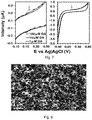
- Figures 1 to 5 show the voltammetric response of PNCPy- and PEDOT-coated GCEs not treated and treated with plasma. The voltammograms recorded using bare GCEs have been included for comparative purposes.
- plasma treatment causes a significant reduction in anodic peak intensity at 0.70 V for all the systems, it must be indicated that this effect is relatively small for anodic intensities associated with the oxidation of the three analytes.
- both the electrode with PEDOT and the electrode with PNCPy treated with plasma are capable of selectively detecting DA, UA, and AA oxidation, whereas PNCPy that is not treated is not capable of selectively distinguishing one from the other.
- the bare GCE it is not capable of selectively detecting the presence of AA in the mixture, regardless of the plasma treatment.
- electrodes treated with plasma small or even imperceptible peaks have been identified in some voltammograms (marked with arrows in Figure 1 ).
- Figures 1 and 2 show the control voltammograms of 100 ⁇ M DA, 100 ⁇ M UA, and 100 ⁇ M AA in 0.1 M PBS for bare GCE, PEDOT-coated GCE, and PNMPy-coated GCE.
- the arrows indicate oxidation processes.
- Scan rate 100 mV/s.
- Initial and final potentials -0.40 V; Reversal potential: +0.80 V.
- Figure 4 shows the determination of the DA detection limit (in the absence of UA, and AA) of PEDOT- and PNCPy-coated GCEs with cold plasma treatment by means of CV using a scan rate of 50 mV ⁇ s -1 .
- the results were derived from the standard addition of 10 ⁇ L of DA in 10 ml of 0.1 M PBS (i.e., a linear interval of 0.5 to 100 ⁇ M DA).
- the anodic peak intensity (ip) increases with the concentration of DA for the two electrodes.
- the detection limit which was determined using a calibration curve for the concentration of DA comprised between 0.5 and 5 ⁇ M (box) was comprised between 140 and 750 nM for PEDOT and PNCPy, respectively. These values are significantly lower than those obtained for the untreated samples, and prove an improvement not of the resolution alone (particularly for PNCPy).
- PEDOT and PNCPy films were prepared by means of chronoamperometry (CA) under a constant potential of 1.40 V using a two-compartment, three-electrode cell under nitrogen atmosphere (99.995% of purity) at 25°C.
- a bare glassy carbon electrode (GCE) with a diameter of 2 mm was used as the working electrode, whereas a AISI 316 steel sheet with a area of 1 cm 2 was used as the counter electrode.
- the surface of the glassy carbon electrode was polished with alumina powder and cleaned by means of ultrasonication before depositing the polymer.
- the reference electrode was an Ag
- AgCl electrode containing a saturated aqueous KCI solution (E° 0.222 V vs.
- PEDOT and PNCPy films were obtained using 10 mM of a monomer solution in acetonitrile with 0.1 M of LiClO 4 and a polymerization period comprised between 6 and 10 s, respectively.
- PEDOT- and PNCPy-coated GCEs were prepared with a corona discharge in ambient atmosphere using a BD-20AC from the company Electro-Technic Products.
- the BD-20AC works at a very high frequency in the MHz range, generating an electric field that is created around the electrode which is used for polymer surface treatment.
- the unit consists of a power control unit and a separate high-voltage handle. What differentiates it from other models is that it generates an adjustable high-voltage output comprised between 10,000 and 45,000 volts at a high frequency of 4.5 MHz.
- the polymers were treated using a spring tip wire electrode and a voltage of 45,000 volts at a high frequency of 4.5 MHz in all cases. After plasma treatment, the coated GCE electrodes were used for DA detection experiments within a period of 24 hours.
- CV cyclic voltammetry
- LDPE Low-density polyethylene
- solution 34.4 mg of LDPE dissolved in 10 ml of dichlorobenzene at 95°C by means of stirring for 4 hours.
- cyclic voltammogram recorded in a 0.1 M PBS solution with 1 mM of DA does not provide any oxidation peak ( Figure 6 ) indicating that, as expected, LDPE is not able to detect said neurotransmitter.
- Figure 6 shows the control voltammogram of 1 mM DA in 0.1 M PBS in the LDPE-coated GCE.
- the voltammograms recorded using untreated electrodes (solid line) and electrodes treated with cold plasma (dash-dot: first detection cycle; dash-dash-dot: third detection cycle (Scan rate: 100 mV/s.
- Initial and final potentials -0.40 V; Reversal potential: +0.80 V
- LDPE-coated electrodes treated with a simple plasma-air for 1 minute are capable of detecting concentrations of DA similar to those estimated for the synapse for several cycles.
- the limit for the electromechanical detection of DA in sophisticated 3-layer films made from PEDOT (outer and inner layer) and poly(N-methylpyrrole) (intermediate layer to create a dielectric effect) coated with AuNPs on the outer layer was 2 ⁇ M, whereas the limit in a GCE coated with a CP particularly designed to detect DA, i.e., poly(hydroxymethyl-3,4-ethylenedioxythiophene), was slightly higher.
- FIG. 8 The surface of PEDOT-coated GCEs treated and untreated with plasma was examined using a scanning electron microscope (SEM) and energy dispersive X-ray spectroscopy (EDX).
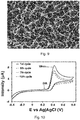
- Figures 8 and 9 show the SEM micrographs of the PEDOT-coated GCE that is not treated and treated with plasma, respectively.
- the relatively compact morphology of the untreated samples ( Figure 8 ) which contains C, S, O, and Cl (chlorine is due to perchlorate dopant) transforms into a highly porous network of active species made up only of C and O ( Figure 10 ).
- electrochemical activity of polymer-coated GCEs treated with plasma could probably be attributed essentially to the surface incorporation of active species, which are possibly responsible for the detection of oxidized and reduced analytes. Similar characteristics have been observed in LDPE-coated GCEs.
- GCE-LDPE with plasma Stability and detection of 10 ⁇ M DA in a urine-like chemical
- the pH of the urine-like chemical is 6.2, and the chemical composition is indicated below: Component mM Urea 200 Uric acid 1 Na 3 C 6 H 5 O 7 5 NaCl 54 KCI 30 NH 4 Cl 15 CaCl 2 3 MgSO 4 2 NaHCO 3 2 Na 2 C 2 O 4 0.1 Na 2 SO 4 9 KH 2 PO 4 3.6 Na 2 HPO 4 0.4 FeSO 4 0.005 Lactic acid 1
- Figure 11 shows the enlargement of the cyclic voltammetries in the area of oxidation of 10 ⁇ M dopamine in a urine-like chemical using an LDPE-coated GCE treated with plasma-air.
- Figure 10 shows the cyclic voltammetries in the complete scan.
- the oxidation potential of dopamine is between 0.230-0.237 V, whereas the oxidation peak of urea and other components is at 0.418-0.425 V.
- Figure 12 shows the oxidation peak intensity of urea and other compounds with respect to oxidation and reduction cycles in a urine-like chemical using an LDPE-coated GCE treated with plasma-air.
- the oxidation potential of urea and other compounds is between 0.418 and 0.425 V.
- the total cycles applied to the system are 10.
- the intensity loss after 10 oxidation/reduction cycles is about 18%.
- Figure 13 shows the oxidation peak intensity of dopamine with respect to oxidation and reduction cycles in a urine-like chemical using an LDPE-coated GCE treated with plasma-air.
- the oxidation potential of dopamine is between 0.230 and 0.237 V.
- the total cycles applied to the system are 10. In this case, there is no intensity loss but there is indeed an increase of 25% after applying 10 oxidation/reduction cycles.
- Figure 14 shows the enlargement of the cyclic voltammetries in the area of oxidation of 10 ⁇ M dopamine in 0.1 M PBS (phosphate-buffered saline, pH 7.2) using an LDPE-coated GCE treated with plasma-air.
- the inserted box shows the cyclic voltammetries in the complete scan.
- the oxidation potential of dopamine is between 0.171 and 0.174 V.
- Figure 15 shows the oxidation peak intensity of dopamine with respect to oxidation and reduction cycles in 0.1 M PBS (phosphate-buffered saline, pH 7.2) using an LDPE-coated GCE treated with plasma-air.
- the oxidation potential of dopamine is between 0.171 and 0.174 V.
- the total cycles applied to the system are 10.
- the intensity loss after 10 oxidation/reduction cycles is about 17%.
- Inorganic base substrates i.e., substrates not rich in carbon (i.e., with less than 50% by weight of carbon with respect to the total weight of the substrate) have been tested.
- ITO indium tin oxide
- AISI 316 stainless steel substrate have been tested, coated in both cases with a low-density polyethylene. In both cases, the substrates are negatively affected by plasma application and favorable results are not obtained.
- POLYMER SOLVENT AMOUNT OF POLYMER (MG) Isotactic polypropylene o-dichlorobenzene, 10 ml 52.4 Polyvinylpyrrolidone chloroform, 10 ml 43 Poly(ethylene oxide) chloroform, 10 ml 43.6 Poly(4-vinylphenol) methanol, 4 ml 11.8 Polycaprolactone chloroform, 10 ml 46.5 Nylon 66 hydrochloric acid, 10 ml 43.5 Polystyrene chloroform, 10 ml 33.5 Polyacrylic acid water 25 wt% poly(butylene succinate) chloroform/dichloromethane (50/50), 10 ml 47.6
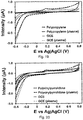
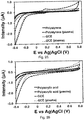
- the following table shows the intensities, labs (absolute, without baseline), and Ipeak (with baseline), and the oxidation potential obtained in the detection of 10 ⁇ M dopamine in 0.1 M PBS for GCE coated with conventional polymer and treated with cold plasma (oxidizing atmosphere).
- Figures 16 to 27 show the results that are obtained. As can be seen, the application of plasma-air on other conventional polymers produces effects similar to those obtained with LDPE.
- Monitoring glucose levels in the human body is fundamental for the diagnosis and treatment of diabetes which has become a public health problem worldwide. Furthermore, monitoring glucose metabolism through the detection of changes in the concentration of this analyte can improve the treatment of brain diseases, such as, for example, tumors and brain injuries. The detection of glucose is also very important in the food processing, fermentation, and bio-fuel cell industry.
- Another surprising result of the present invention is the preparation of electrochemical glucose sensors by means of applying cold plasma surface treatment (corona plasma in ambient atmosphere at about 0.5 J/cm 2 for 2 minutes) to polymer films deposited on a CGE.
- PNMPy improves when the film is covered with gold nanoparticles (AuNPs), which demonstrates the electrocatalytic activity that the latter promote.
- AuNPs gold nanoparticles
- Both the PEDOT films and the PNCPy films generated by anodic polymerization on a CGE electrode were modified by means of applying cold plasma surface treatment (corona plasma in ambient atmosphere at about 0.5 J/cm 2 for 2 minutes).
- Glucose detection assays in the absence and presence of interfering substances (1 mM DA, UA, and AA) were carried out by means of chronoamperometry at room temperature.
- Figures 29 to 30 show the chronoamperometric response of the PEDOT-coated GCEs treated with plasma. As can be seen, the electrodes treated with plasma are capable of selectively detecting glucose oxidation.
- Figure 31 shows the determination of the glucose detection limit of the GCE coated with PEDOT and with cold plasma treatment by means of chronoamperometry. The results were derived from successive standard injection of glucose. The detection limit which was determined using the calibration line obtained for a maximum concentration of glucose 14 mM was 1 mM.
Landscapes
- Life Sciences & Earth Sciences (AREA)
- Health & Medical Sciences (AREA)
- Chemical & Material Sciences (AREA)
- Engineering & Computer Science (AREA)
- Molecular Biology (AREA)
- Immunology (AREA)
- Physics & Mathematics (AREA)
- General Physics & Mathematics (AREA)
- Hematology (AREA)
- Pathology (AREA)
- Analytical Chemistry (AREA)
- General Health & Medical Sciences (AREA)
- Biochemistry (AREA)
- Urology & Nephrology (AREA)
- Biomedical Technology (AREA)
- Chemical Kinetics & Catalysis (AREA)
- Electrochemistry (AREA)
- Biotechnology (AREA)
- Medicinal Chemistry (AREA)
- Food Science & Technology (AREA)
- Cell Biology (AREA)
- Microbiology (AREA)
- Materials Engineering (AREA)
- Wood Science & Technology (AREA)
- Organic Chemistry (AREA)
- Nanotechnology (AREA)
- Crystallography & Structural Chemistry (AREA)
- Condensed Matter Physics & Semiconductors (AREA)
- Bioinformatics & Cheminformatics (AREA)
- Pharmacology & Pharmacy (AREA)
- Composite Materials (AREA)
- Diabetes (AREA)
- Tropical Medicine & Parasitology (AREA)
- Plasma & Fusion (AREA)
- Measuring Or Testing Involving Enzymes Or Micro-Organisms (AREA)
- Treatments Of Macromolecular Shaped Articles (AREA)
- Laminated Bodies (AREA)
- Coating Of Shaped Articles Made Of Macromolecular Substances (AREA)
- Measurement Of The Respiration, Hearing Ability, Form, And Blood Characteristics Of Living Organisms (AREA)
- Investigating Or Analysing Biological Materials (AREA)
Applications Claiming Priority (2)
| Application Number | Priority Date | Filing Date | Title |
|---|---|---|---|
| ES201531868A ES2560577B2 (es) | 2015-12-22 | 2015-12-22 | Sensor electroquímico y procedimiento de recubrimiento, procedimiento de fabricación y usos correspondientes |
| PCT/ES2016/070832 WO2017109244A1 (fr) | 2015-12-22 | 2016-11-22 | Capteur électrochimique et procédé de revêtement, procédé de fabrication et utilisations associés |
Publications (2)
| Publication Number | Publication Date |
|---|---|
| EP3396367A1 true EP3396367A1 (fr) | 2018-10-31 |
| EP3396367A4 EP3396367A4 (fr) | 2020-01-15 |
Family
ID=55306492
Family Applications (1)
| Application Number | Title | Priority Date | Filing Date |
|---|---|---|---|
| EP16877827.2A Pending EP3396367A4 (fr) | 2015-12-22 | 2016-11-22 | Capteur électrochimique et procédé de revêtement, procédé de fabrication et utilisations associés |
Country Status (13)
| Country | Link |
|---|---|
| US (1) | US11067528B2 (fr) |
| EP (1) | EP3396367A4 (fr) |
| JP (1) | JP2019501397A (fr) |
| KR (1) | KR20180098331A (fr) |
| CN (1) | CN108700541A (fr) |
| AU (1) | AU2016378671A1 (fr) |
| BR (1) | BR112018012810A2 (fr) |
| CA (1) | CA3009433A1 (fr) |
| ES (1) | ES2560577B2 (fr) |
| MA (1) | MA45299A (fr) |
| MX (1) | MX2018007699A (fr) |
| RU (1) | RU2018126488A (fr) |
| WO (1) | WO2017109244A1 (fr) |
Families Citing this family (7)
| Publication number | Priority date | Publication date | Assignee | Title |
|---|---|---|---|---|
| CN107941875B (zh) * | 2017-11-25 | 2019-10-22 | 青岛大学附属医院 | 一种尿液中的尿酸的电化学的检测方法及检测电极材料 |
| CN110192868B (zh) * | 2019-05-24 | 2021-01-08 | 厦门大学 | 基于石墨烯复合材料的柔性钙钾离子检测传感器及其制备方法 |
| CN111781258A (zh) * | 2020-02-27 | 2020-10-16 | 中国地质大学(北京) | 一种可快速检测水环境中抗生素的传感器及检测方法 |
| CN114216943B (zh) * | 2021-11-26 | 2023-11-03 | 青岛科技大学 | 一种抗污染电化学免疫传感器及其制备方法与应用 |
| CN115343340B (zh) * | 2022-08-16 | 2026-02-17 | 三诺生物传感股份有限公司 | 一种石墨电极的处理方法 |
| CN115290719B (zh) * | 2022-08-26 | 2024-11-08 | 江苏鱼跃凯立特生物科技有限公司 | 一种用于尿酸检测的电化学试纸及其制备方法与应用 |
| EP4686935A1 (fr) * | 2024-08-02 | 2026-02-04 | Universitat Politècnica de Catalunya | Procede de transformation de materiaux dielectriques en semi-conducteurs electriques, materiaux electrosensibles et leurs utilisations |
Family Cites Families (14)
| Publication number | Priority date | Publication date | Assignee | Title |
|---|---|---|---|---|
| JPS6091983A (ja) * | 1983-10-25 | 1985-05-23 | Susumu Kogyo Kk | タンパク質固定用膜担体およびその製造方法 |
| JPS61274253A (ja) * | 1985-05-30 | 1986-12-04 | Hitachi Ltd | 酵素膜およびその製造方法 |
| FR2590219B1 (fr) | 1985-11-20 | 1991-02-01 | Bendix France | Dispositif de freinage electrique pour vehicule |
| US6103033A (en) | 1998-03-04 | 2000-08-15 | Therasense, Inc. | Process for producing an electrochemical biosensor |
| US6338790B1 (en) | 1998-10-08 | 2002-01-15 | Therasense, Inc. | Small volume in vitro analyte sensor with diffusible or non-leachable redox mediator |
| KR100340174B1 (ko) * | 1999-04-06 | 2002-06-12 | 이동준 | 전기화학적 바이오센서 테스트 스트립, 그 제조방법 및 전기화학적 바이오센서 |
| JP2001159618A (ja) * | 1999-12-03 | 2001-06-12 | Matsushita Electric Ind Co Ltd | バイオセンサ |
| US6863800B2 (en) | 2002-02-01 | 2005-03-08 | Abbott Laboratories | Electrochemical biosensor strip for analysis of liquid samples |
| EP1578612B1 (fr) * | 2002-10-30 | 2007-02-14 | Lifescan Scotland Ltd | Procede a bande continue de fabrication de capteurs electrochimiques |
| US7276283B2 (en) * | 2004-03-24 | 2007-10-02 | Wisconsin Alumni Research Foundation | Plasma-enhanced functionalization of carbon-containing substrates |
| US20080164142A1 (en) | 2006-10-27 | 2008-07-10 | Manuel Alvarez-Icaza | Surface treatment of carbon composite material to improve electrochemical properties |
| KR20140066377A (ko) * | 2012-11-23 | 2014-06-02 | 삼성전자주식회사 | 바이오 센서 |
| CN103487484B (zh) | 2013-10-10 | 2015-05-27 | 佳木斯大学 | 一种超敏感石墨烯电极的制备方法 |
| ES2663899B2 (es) | 2016-10-17 | 2018-09-11 | Universidade Da Coruña | Sistema para asistir a caminar |
-
2015
- 2015-12-22 ES ES201531868A patent/ES2560577B2/es active Active
-
2016
- 2016-11-22 RU RU2018126488A patent/RU2018126488A/ru not_active Application Discontinuation
- 2016-11-22 EP EP16877827.2A patent/EP3396367A4/fr active Pending
- 2016-11-22 WO PCT/ES2016/070832 patent/WO2017109244A1/fr not_active Ceased
- 2016-11-22 KR KR1020187021121A patent/KR20180098331A/ko not_active Withdrawn
- 2016-11-22 US US16/065,080 patent/US11067528B2/en active Active
- 2016-11-22 MX MX2018007699A patent/MX2018007699A/es unknown
- 2016-11-22 CN CN201680082176.3A patent/CN108700541A/zh active Pending
- 2016-11-22 CA CA3009433A patent/CA3009433A1/fr not_active Abandoned
- 2016-11-22 BR BR112018012810-4A patent/BR112018012810A2/pt not_active Application Discontinuation
- 2016-11-22 AU AU2016378671A patent/AU2016378671A1/en not_active Abandoned
- 2016-11-22 JP JP2018552916A patent/JP2019501397A/ja active Pending
- 2016-11-22 MA MA045299A patent/MA45299A/fr unknown
Also Published As
| Publication number | Publication date |
|---|---|
| RU2018126488A (ru) | 2020-01-23 |
| ES2560577B2 (es) | 2017-01-17 |
| WO2017109244A1 (fr) | 2017-06-29 |
| JP2019501397A (ja) | 2019-01-17 |
| KR20180098331A (ko) | 2018-09-03 |
| US20190004001A1 (en) | 2019-01-03 |
| CN108700541A (zh) | 2018-10-23 |
| MA45299A (fr) | 2018-10-31 |
| EP3396367A4 (fr) | 2020-01-15 |
| AU2016378671A1 (en) | 2018-08-09 |
| RU2018126488A3 (fr) | 2020-03-04 |
| MX2018007699A (es) | 2018-11-09 |
| BR112018012810A2 (pt) | 2018-12-04 |
| ES2560577A1 (es) | 2016-02-19 |
| CA3009433A1 (fr) | 2017-06-29 |
| US11067528B2 (en) | 2021-07-20 |
Similar Documents
| Publication | Publication Date | Title |
|---|---|---|
| US11067528B2 (en) | Electro-chemical sensor and coating method, production method and corresponding uses | |
| Alemán et al. | Plasma surface modification of polymers for sensor applications | |
| Abdelwahab et al. | Simultaneous determination of ascorbic acid, dopamine, uric acid and folic acid based on activated graphene/MWCNT nanocomposite loaded Au nanoclusters | |
| Jiang et al. | Overoxidized polypyrrole film directed DNA immobilization for construction of electrochemical micro-biosensors and simultaneous determination of serotonin and dopamine | |
| Huang et al. | Carbon dots and chitosan composite film based biosensor for the sensitive and selective determination of dopamine | |
| Lin et al. | Electrocatalytic oxidation and determination of dopamine in the presence of ascorbic acid and uric acid at a poly (p-nitrobenzenazo resorcinol) modified glassy carbon electrode | |
| Wisitsoraat et al. | Graphene–PEDOT: PSS on screen printed carbon electrode for enzymatic biosensing | |
| Atta et al. | Simultaneous determination of catecholamines, uric acid and ascorbic acid at physiological levels using poly (N-methylpyrrole)/Pd-nanoclusters sensor | |
| Atta et al. | A novel sensor of cysteine self-assembled monolayers over gold nanoparticles for the selective determination of epinephrine in presence of sodium dodecyl sulfate | |
| Lin et al. | Simultaneous determination of dopamine, ascorbic acid and uric acid at poly (Evans Blue) modified glassy carbon electrode | |
| Zhou et al. | Glucose biosensor based on platinum microparticles dispersed in nano-fibrous polyaniline | |
| Tang et al. | Zinc oxide/redox mediator composite films-based sensor for electrochemical detection of important biomolecules | |
| Jacobs et al. | Functional groups modulate the sensitivity and electron transfer kinetics of neurochemicals at carbon nanotube modified microelectrodes | |
| Chiu et al. | Glucose sensing electrodes based on a poly (3, 4-ethylenedioxythiophene)/Prussian blue bilayer and multi-walled carbon nanotubes | |
| Liu et al. | Highly stable and conductive PEDOT: PSS/graphene nanocomposites for biosensor applications in aqueous medium | |
| Shankar et al. | Detection of epinephrine in presence of serotonin and ascorbic acid by TTAB modified carbon paste electrode: a voltammetric study | |
| Varadharaj et al. | Non-invasive potentiometric sensor for measurement of blood urea in human subjects using reverse iontophoresis | |
| Aldea et al. | Gold coated electrospun polymeric fibres as new electrode platform for glucose oxidase immobilization | |
| Senel et al. | Enhanced electrochemical sensing performance by in situ electrocopolymerization of pyrrole and thiophene-grafted chitosan | |
| Sha et al. | Multilayer films of carbon nanotubes and redox polymer on screen-printed carbon electrodes for electrocatalysis of ascorbic acid | |
| Dükar et al. | Highly sensitive and selective dopamine sensing in biological fluids with one-pot prepared graphene/poly (o-phenylenediamine) modified electrodes | |
| Fabregat et al. | Plasma functionalized surface of commodity polymers for dopamine detection | |
| Roushani et al. | Development of sensitive amperometric hydrogen peroxide sensor using a CuNPs/MB/MWCNT-C60-Cs-IL nanocomposite modified glassy carbon electrode | |
| Raoof et al. | Fabrication of layer-by-layer deposited films containing carbon nanotubes and poly (malachite green) as a sensor for simultaneous determination of ascorbic acid, epinephrine, and uric acid | |
| Zhang et al. | Fabrication of poly (orthanilic acid)–multiwalled carbon nanotubes composite film-modified glassy carbon electrode and its use for the simultaneous determination of uric acid and dopamine in the presence of ascorbic acid |
Legal Events
| Date | Code | Title | Description |
|---|---|---|---|
| STAA | Information on the status of an ep patent application or granted ep patent |
Free format text: STATUS: THE INTERNATIONAL PUBLICATION HAS BEEN MADE |
|
| PUAI | Public reference made under article 153(3) epc to a published international application that has entered the european phase |
Free format text: ORIGINAL CODE: 0009012 |
|
| STAA | Information on the status of an ep patent application or granted ep patent |
Free format text: STATUS: REQUEST FOR EXAMINATION WAS MADE |
|
| 17P | Request for examination filed |
Effective date: 20180723 |
|
| AK | Designated contracting states |
Kind code of ref document: A1 Designated state(s): AL AT BE BG CH CY CZ DE DK EE ES FI FR GB GR HR HU IE IS IT LI LT LU LV MC MK MT NL NO PL PT RO RS SE SI SK SM TR |
|
| AX | Request for extension of the european patent |
Extension state: BA ME |
|
| DAX | Request for extension of the european patent (deleted) | ||
| RAV | Requested validation state of the european patent: fee paid |
Extension state: MA Effective date: 20180723 |
|
| A4 | Supplementary search report drawn up and despatched |
Effective date: 20191212 |
|
| RIC1 | Information provided on ipc code assigned before grant |
Ipc: G01N 33/94 20060101ALI20191206BHEP Ipc: G01N 27/26 20060101AFI20191206BHEP Ipc: G01N 27/30 20060101ALI20191206BHEP Ipc: B82Y 30/00 20110101ALI20191206BHEP Ipc: B82Y 15/00 20110101ALI20191206BHEP Ipc: G01N 33/50 20060101ALI20191206BHEP |
|
| STAA | Information on the status of an ep patent application or granted ep patent |
Free format text: STATUS: EXAMINATION IS IN PROGRESS |
|
| 17Q | First examination report despatched |
Effective date: 20220701 |