EP3396383A1 - Analyse du protéome salivaire à la recherche de biomarqueurs de la gingivite et de la parodontite par ft-icr-sm-sm - Google Patents
Analyse du protéome salivaire à la recherche de biomarqueurs de la gingivite et de la parodontite par ft-icr-sm-sm Download PDFInfo
- Publication number
- EP3396383A1 EP3396383A1 EP18173015.1A EP18173015A EP3396383A1 EP 3396383 A1 EP3396383 A1 EP 3396383A1 EP 18173015 A EP18173015 A EP 18173015A EP 3396383 A1 EP3396383 A1 EP 3396383A1
- Authority
- EP
- European Patent Office
- Prior art keywords
- protein
- periodontitis
- isoform
- biomarkers
- gingivitis
- Prior art date
- Legal status (The legal status is an assumption and is not a legal conclusion. Google has not performed a legal analysis and makes no representation as to the accuracy of the status listed.)
- Withdrawn
Links
- 0 CCC(CC1)(C(C)C(C2)CC2C2CCC3(CC4(C5)C(*)(*C(C(*)C(*)C*)N)O)CC2)C14*35NC Chemical compound CCC(CC1)(C(C)C(C2)CC2C2CCC3(CC4(C5)C(*)(*C(C(*)C(*)C*)N)O)CC2)C14*35NC 0.000 description 1
Images







Classifications
-
- G—PHYSICS
- G01—MEASURING; TESTING
- G01N—INVESTIGATING OR ANALYSING MATERIALS BY DETERMINING THEIR CHEMICAL OR PHYSICAL PROPERTIES
- G01N33/00—Investigating or analysing materials by specific methods not covered by groups G01N1/00 - G01N31/00
- G01N33/48—Biological material, e.g. blood, urine; Haemocytometers
- G01N33/50—Chemical analysis of biological material, e.g. blood, urine; Testing involving biospecific ligand binding methods; Immunological testing
- G01N33/68—Chemical analysis of biological material, e.g. blood, urine; Testing involving biospecific ligand binding methods; Immunological testing involving proteins, peptides or amino acids
- G01N33/6803—General methods of protein analysis not limited to specific proteins or families of proteins
- G01N33/6848—Methods of protein analysis involving mass spectrometry
-
- G—PHYSICS
- G01—MEASURING; TESTING
- G01N—INVESTIGATING OR ANALYSING MATERIALS BY DETERMINING THEIR CHEMICAL OR PHYSICAL PROPERTIES
- G01N33/00—Investigating or analysing materials by specific methods not covered by groups G01N1/00 - G01N31/00
- G01N33/48—Biological material, e.g. blood, urine; Haemocytometers
- G01N33/50—Chemical analysis of biological material, e.g. blood, urine; Testing involving biospecific ligand binding methods; Immunological testing
- G01N33/68—Chemical analysis of biological material, e.g. blood, urine; Testing involving biospecific ligand binding methods; Immunological testing involving proteins, peptides or amino acids
- G01N33/6893—Chemical analysis of biological material, e.g. blood, urine; Testing involving biospecific ligand binding methods; Immunological testing involving proteins, peptides or amino acids related to diseases not provided for elsewhere
-
- G—PHYSICS
- G01—MEASURING; TESTING
- G01N—INVESTIGATING OR ANALYSING MATERIALS BY DETERMINING THEIR CHEMICAL OR PHYSICAL PROPERTIES
- G01N2333/00—Assays involving biological materials from specific organisms or of a specific nature
- G01N2333/435—Assays involving biological materials from specific organisms or of a specific nature from animals; from humans
- G01N2333/46—Assays involving biological materials from specific organisms or of a specific nature from animals; from humans from vertebrates
- G01N2333/47—Assays involving proteins of known structure or function as defined in the subgroups
-
- G—PHYSICS
- G01—MEASURING; TESTING
- G01N—INVESTIGATING OR ANALYSING MATERIALS BY DETERMINING THEIR CHEMICAL OR PHYSICAL PROPERTIES
- G01N2800/00—Detection or diagnosis of diseases
- G01N2800/18—Dental and oral disorders
Definitions
- the present application pertains to the fields of proteomics and bioinformatics. More particularly, the present application relates to diagnosing a status of an oral disease, e.g. periodontitis, at varying levels of severity through the quantification of protein biomarkers.
- Gingivitis is a non-destructive form of periodontal disease involving soft tissue inflammation of the gums. Gingivitis typically occurs as a bodily response to bacterial biofilms, or plaques, which have adhered to teeth. In the absence of proper treatment, gingivitis may progress to periodontitis, which represents a destructive form of periodontal disease. Periodontitis may begin with a milder of the disease, which later progresses into severe periodontitis. Periodontitis is always preceded by the onset of gingivitis.
- Periodontal diseases are the leading cause of tooth loss in adults. Accordingly, diagnostic tests have been developed to identify the probability of whether an individual has developed periodontitis.
- Oral-fluid-based point-of-case (POC) diagnostics are commonly used for various diagnostic tests in medicine and more recently are being adapted for the determination of oral diseases ( Tabak, 2007, Ann N Y Acad Sci 1098: 7-14 ).
- the use of oral fluids for POC diagnostics has been shown to be effective in detecting oral cancer ( Li et al., 2004, Clin Cancer Res 10:8442-8450 ; Zimmerman et al., 2008, Oral Oncol. 44(5):425-9 ) or HIV infection ( Delaney et al., 2006, Aids 20: 1655-1660 ).
- Periodontal diseases are presently diagnosed by evaluating clinical parameters such as pocket depth, bleeding on probing, and radiographs. These parameters have limitations in that they lack the ability to predict future attachment loss, and provide information only on the existence of past disease activity. Furthermore, no clinical parameters have been shown to be predictive for periodontal disease activity (" Clinical risk indicators for periodontal attachment loss," Journal of Clinical Periodontology 1991: v. 18:117-125 "). Diagnostic methods in clinical practice today lack the ability to both detect the onset of inflammation, e.g. non-destructive gingivitis, and to identify the likelihood of developing destructive forms of periodontitis in the future.
- oral fluid diagnostic methods should be able to distinguish at least between healthy patients and those that have developed gingivitis, milder forms of periodontitis, and/or more severe forms of periodontitis.
- This diagnostic method may advantageously include the quantification of particular protein biomarkers which are present in oral fluids. These oral fluids may be non-invasively acquired from a patient as gingival crevicular fluid (GCF) and/or saliva fluid.
- GCF gingival crevicular fluid
- the method includes providing at least one of a gingival crevicular fluid (GCF) sample and a saliva sample, selecting a set of protein biomarkers for identifying a particular state of periodontitis, and determining the expression levels in the selected set of protein biomarkers to diagnose the status of periodontitis disease.
- GCF gingival crevicular fluid
- the set of protein biomarkers is selected for distinguishing between a gingivitis state and a periodontitis state.
- the set of protein biomarkers is selected for distinguishing between a periodontal health and a disease state.
- the set of protein biomarkers is selected for distinguishing between a mild periodontitis state and a severe periodontitis state.
- the set of protein biomarkers includes at least one protein selected from the group consisting of haemoglobin chains alpha and beta, carbonic anhydrase 1(International Protein Index or "IPI" #IPI00980674), and plastin 1.
- the set of protein biomarkers includes at least one protein selected from the group consisting of S100-P, transaldolase, S100-A8 (calgranulin-A), myosin-9, Haemoglobin Alpha, and Haemoglobin Beta.
- the set of protein biomarkers includes at least one protein selected from the group consisting of Alpha-1-acid glycoprotein 1 and 2, matrix metalloproteinase-9, Peptidyl-prolyl cis-trans isomerase A, and Haptoglobin-related protein (IPI00431645.1).
- the set of protein biomarkers includes at least one protein selected from the group consisting of NADPH oxidase and Alpha-N-acetylgalactosaminidase.
- the set of protein biomarkers includes Alpha-N-acetylgalactosaminidase.
- the set of protein biomarkers includes at least one protein selected from the group consisting of Protein S100-A11 (IPI00013895.1), Protein IPI00037070.3, catalase (IPI00465436.4), Choline transporter-like protein 2 derivative (IPI00903245.1), and titin isoform N2-B (IPI00985334.2).
- the set of protein biomarkers includes two or more biomarkers.
- the method further includes providing both the GCF sample and saliva sample, generating a first and second protein profile by analyzing the proteome of a GCF sample and a saliva sample, and determining an overlap region between the first and second protein profiles.
- the set of protein biomarkers are selected for distinguishing between particular states of periodontitis, including calculating a change in abundance of proteins within the overlap region during different stages of periodontitis and selecting those proteins which are under or over expressed during a single state of periodontitis.
- the method further includes generating a protein profile by analyzing the proteome of the at least one oral fluid sample, and clustering the protein profile to determine a set of protein biomarkers.
- the kit includes a set of protein biomarkers selected to distinguish between gingivitis and periodontitis.
- the set of protein biomarkers includes at least one protein selected from the group consisting of haemoglobin chains alpha and beta, carbonic anhydrase 1(International Protein Index or "IPI” #IPI00980674), and plastin-1.
- the kit diagnoses gingivitis or mild periodontitis, and the set of protein biomarkers further includes at least one protein biomarkers from saliva data clusters 1B, 1D, 1A4, and 1A5.
- the present application details methods for diagnosing the status of an oral disease, such as periodontitis.
- the methods may comprise determining the expression level of a set of biomarkers.
- the set of protein biomarkers may include one or more protein biomarkers which have been shown to vary in abundance at particular stages of oral disease. Accordingly, the set of protein biomarkers may be identified and quantified in expression in order to distinguish between different states of oral disease.
- the methods of the present application demonstrate a role for biomarkers to serve as indicators of periodontitis at varying levels of severity, e.g. gingivitis, mild periodontitis.
- the work described herein demonstrates that elevated levels of multiple biomarkers can be used as a tool for accurately and rapidly determining the status of an oral disease, for example, periodontitis.
- Periodontal health state is a threshold criteria based and not simply a vague state of health. Patients with a periodontal health state exhibit ⁇ 10% sites with G.I. of 1.0 or B.O.P. and no sites with G.I. of 2.0 or 3.0. Additionally, they have no sites with interproximal attachment loss and no sites with ppd > 3mm.
- gingivitis state is a threshold criteria based on patients exhibiting generalized gingivitis and is not simply a vague state. Generalized gingivitis is shown in patients exhibiting > 30% of sites with G.I. > 2.0, no sites with interproximal attachment loss, and no sites with ppd > 4mm.
- Mild periodontitis state is a threshold criteria based on patients exhibiting mild-moderate periodontitis and is not simply a vague state. Mild-moderate periodontitis is shown in patients exhibiting ppd of 5-7mm and interproximal CAL of 2-4mm at > 8 teeth).
- severe periodontics state is a threshold criteria based on patients exhibiting severe periodontitis and is not simply a vague state. Severe periodontitis is shown in patients exhibiting ppd of > 7mm and an interproximal CAL of > 5mm at > 12 teeth.
- biomarker means a substance that is measured objectively and evaluated as an indicator of normal biologic processes, pathogenic processes, or pharmacologic responses to a therapeutic intervention.
- the oral disease is periodontitis
- the protein biomarkers are indicative of either gingivitis, mild periodontitis, or severe periodontitis.
- GCF gingival cervical fluid
- saliva samples taken from patients with varying states of oral disease protein biomarkers may be identified which are increased or decreased in abundance during distinct phases of periodontitis.
- At least one protein biomarker may be used, alone or in combination, to distinguish between healthy patients, those suffering from gingivitis, and those suffering from mild or severe periodontitis.
- Proteomic analysis may be conducted through a combination of liquid chromatography and mass spectrometry techniques.
- the proteome of GCF and Saliva oral liquid samples may be analyzed by Fourier Transform - tandem Mass Spectrometry (FT MS/MS).
- FT MS/MS proteomic approach may be applied to GCF and Saliva samples collected from periodontally healthy volunteers, those with gingivitis, those with mild and severe periodontitis, and those with no teeth (edentulous controls), in order to try and elucidate a panel of biomarkers that will distinguish between healthy and diseased oral states.
- the FT MS/MS approach may be undertaken to discover novel protein biomarkers capable of distinguishing between periodontal health and disease, between gingivitis and periodontitis, and between mild and severe periodontitis, through the use of non-presumptive proteomic analysis of gingival crevicular fluid (GCF) and stimulated saliva.
- GCF gingival crevicular fluid
- the inventors have astonishingly found that the expression of a small set of particular protein biomarkers may be determined to identify gingivitis or mild periodontitis. These protein biomarkers show an enhanced change (either increase or decrease) in abundance during gingivitis/mild disease states of periodontitis, and show little changes during severe states of periodontitis. Additionally, the expression of a small set of particular protein biomarkers may be determined to identify severe periodontitis. These protein biomarkers show an enhanced change (either increase or decrease) in abundance during the severe state of periodontitis, and show little changes during gingivitis and mild states of periodontitis. The set of protein biomarkers for identifying and distinguishing severe gingivitis relative to mild periodontitis or gingivitis.
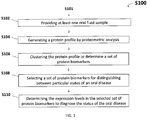
- a method (S100) for diagnosing a status of an oral disease starts at S101.
- the oral disease is periodontitis and the status of periodontitis may include periodontal health, gingivitis, mild periodontitis, and severe periodontitis.
- At S102 at least one oral fluid sample is provided.
- the oral disease is periodontitis and at least one of a GCF and Saliva sample are provided.
- the samples may be non-invasively collected from a patient.
- a protein profile is generated by analyzing the proteome of at least one of GCF and Saliva samples.
- the protein profile is discovered using LC FT MS/MS.
- the protein profile is clustered to determine those proteins which are best fit to serve in a set of protein biomarkers.
- Clustering may be performed using a combination of statistical methods including principle component analysis, gamma statistics, and metric multidimensional scaling (MMDS).
- MMDS metric multidimensional scaling
- group average link hierarchical clustering is employed to determine the set of protein biomarkers.
- complete link hierarchical clustering methods are employed to determine the set of protein biomarkers.
- a set of protein biomarkers is selected for distinguishing between different states of an oral disease.
- the oral disease is periodontitis and the set of protein biomarkers are selected for distinguishing between gingivitis and periodontitis.
- the oral disease is periodontitis and the set of protein biomarkers are selected for distinguishing between mild periodontitis and severe periodontitis.
- the expression levels of the proteins in the selected set of protein biomarkers are determined to diagnose the status of the oral disease.
- a method for diagnosing the status of an oral disease comprises providing at least one oral fluid sample, generating a protein profile by analyzing the proteome of the at least one oral fluid sample, clustering the protein profile to determine a set of protein biomarkers, selecting a set of protein biomarkers for distinguishing between particular states of an oral disease, and determining the expression levels in the selected set of protein biomarkers to diagnose the status of the oral disease.
- a method for diagnosing the status of periodontitis disease comprises providing at least one of a gingival crevicular fluid (GCF) and a saliva sample, selecting a set of protein biomarkers for identifying a particular state of periodontitis, and determining the expression levels in the selected set of protein biomarkers to diagnose the status of the oral disease.
- GCF gingival crevicular fluid
- the set of biomarkers is selected by analyzing the proteome of gingival crevicular fluid (GCF) and saliva.
- Proteomic analysis may include Fourier Transform - tandem Mass Spectrometry (FT MS/MS) analysis of proteins which are identified to be over or under expressed in varying states of periodontitis.
- FT MS/MS Fourier Transform - tandem Mass Spectrometry
- the biomarkers may include only one, or a combination of particular biomarkers which are useful for the diagnosis of a disease state.
- the expression levels of one, two, or more protein biomarkers are determined to determine a status of an oral disease.
- three, four, five, or more biomarkers are determined and used to determine the status of an oral disease.
- the one or more protein biomarkers are selected from the group consisting of haemoglobin chains alpha and beta, carbonic anhydrase 1(International Protein Index or "IPI" #IPI00980674), and plastin 1.
- the method according to this aspect may be used to distinguish between a healthy state, gingivitis state, a mild state, and a severe state of periodontitis.
- one or more protein biomarkers are selected from the group consisting of S100-P, transaldolase, S100-A8 (calgranulin-A), myosin-9, Haemoglobin Alpha, and Haemoglobin Beta.
- the method according to this aspect may be used to identify the severe state of periodontitis, and distinguish to the severe state of periodontitis from the milder states, e.g. mild periodontitis and gingivitis.
- one or more protein biomarkers are selected from the group consisting of Alpha-1-acid glycoprotein 1 and 2, matrix metalloproteinase-9, Peptidyl-prolyl cis-trans isomerase A, and Haptoglobin-related protein (IPI00431645.1).
- the method according to this aspect may be used to identify the severe state of periodontitis, and distinguish to the severe state of periodontitis from the milder states, e.g. mild periodontitis and gingivitis.
- protein biomarker Alpha-N-acetylgalactosaminidase is selected for identifying gingivitis or mild periodontitis state, and distinguishing them from a severe periodontitis state.
- one or more protein biomarkers are selected from NADPH oxidase and Alpha-N-acetylgalactosaminidase for identifying gingivitis or mild periodontitis, and distinguishing them from a severe periodontitis state.
- the method for diagnosing the status of an oral disease further includes providing the GCF and saliva sample, generating a first and second protein profile by analyzing the proteome of a GCF sample and a saliva sample, and determining an overlap region between the first and second protein profiles.
- the selecting the set of protein biomarkers for distinguishing between particular states of periodontitis may include calculating a change in abundance of proteins within the overlap region during different stages of periodontitis and selecting those proteins which are under or over expressed during a single state of periodontitis.
- the method for diagnosing a status of an oral disease as disclosed by the previous embodiments is performed by a diagnostic kit.
- the diagnostic kit comprises a set of protein biomarkers for identifying the status of an oral disease.
- the kit includes the necessary reagents to carry out the assays of the disclosed methods.
- GCF gingival crevicular fluid
- saliva was analyzed to identify biomarkers for different oral disease states, e.g. gingivitis, mild periodontitis, and severe periodontitis.
- GCF and saliva samples were collected non-invasively from the mouths of several patients.
- Liquid chromatography techniques coupled with Fourier Transform - tandem Mass Spectrometry (FT MS/MS) were used to separate protein biomarkers from within the samples and to identify the protein biomarkers.
- the FT MS/MS proteomic approach was applied to samples collected from periodontally healthy volunteers, those with gingivitis, those with mild and severe periodontitis, and those with no teeth (edentulous controls), in order to try and elucidate a panel of biomarkers that will distinguish between healthy and diseased oral states.
- the FTMS/MS approach was undertaken to discover novel protein biomarkers capable of:
- Group 1 Patients with periodontal health ( ⁇ 10% sites with G.I. of 1.0 or B.O.P. & no sites with G.I. of 2.0 or 3.0. No sites with interproximal attachment loss and no sites with ppd > 3mm).
- Group 2 Patients with generalized gingivitis (>30% of sites with G.I. > 2.0, no sites with interproximal attachment loss & no sites with ppd >4mm).
- Group 3 Patients with mild-moderate periodontitis (ppd of 5-7mm and interproximal CAL of 2-4mm at > 8 teeth).
- Group 4 Patients with severe periodontitis (ppd of > 7mm & interproximal CAL of > 5mm at > 12 teeth).
- Group 5 Edentulous patients (no teeth) with no evidence of oral ulceration or erosive disease.
- GCF and saliva were collected from 10 volunteers in each of five clearly defined phenotypic groups: healthy, gingivitis, mild periodontitis, severe periodontitis, and edentulous patients as a -ve control group. A total of 50 patients were therefore recruited and sampled. Volunteers with periodontitis (Groups 3 & 4) were then treated non-surgically in order to remove the periodontal inflammation and restore improved health. GCF and saliva were also collected 3 months post-treatment in these two groups, providing longitudinal data. Table 2 presents the mean clinical data at a time of baseline and post-therapy obtained from 50 patients representing five phenotypic groups.
- GCF and Saliva samples were collected from 10 volunteers in each of five clearly defined phenotypic groups: Group I (healthy), Group II (gingivitis), Group III (mild periodontitis), Group IV (severe periodontitis), Group V (edentulous patients as a negative control group), where the phenotypic groups are defined based on predefined clinical data thresholds. Volunteers with periodontitis (Groups 3 & 4) were treated non-surgically in order to remove the periodontal inflammation and restore improved health, and therefore have both "baseline” and "review” clinical data.
- GCF samples were collected on periopaper strips from the mesio-buccal sites of six teeth per volunteer, for 30 seconds as is convention and volumes read on a Perotron 8000TM (Chapple et al 1999). These were placed in 400 ⁇ L of a 100mM ammonium bicarbonate buffer in 1.5 mL screw top cryo-tubes. The GCF samples were immediately frozen to -80°C.
- GCF Prior to analysis GCF was defrosted on ice. The tubes were vortexed for 30 seconds and the solution removed into a clean snaptop eppendorf tube. 200 ⁇ L of ammonium bicarbonate (100 mM) was added to the strips. These were re-vortexed for 30 seconds and re-centrifuged at 13,000 RPM for five minutes. The solution was removed and added to the previous. From each sample within a group 150 ⁇ L was combined to give a single "pooled" sample per group. Individual patient samples were held back to allow a post-study re-evaluation at a patient-specific level once the preferred biomarker panels had been elucidated.
- ammonium bicarbonate 100 mM
- Saliva production was stimulated using a sterile marble and collected for five minutes into 15 mL Falcon tubes. Tubes were frozen at -80°C. Prior to analysis the saliva was defrosted at 4°C. Additional falcon tubes were weighed prior to defrost to transfer the clarified saliva to. Once defrosted the saliva was aliquoted into 1.5 mL snaptop eppendorf tubes and centrifuged at 13,000 rpm for five minutes. The supernatant was transferred into the pre-weighed tubes. The debris pellet was also retained for potential future analysis. Both the weight and volume of saliva was recorded. 10.5 ⁇ L of each saliva sample per group was combined in the same manner as GCF samples.
- saliva was available from the edentulous patient group (Group 5), therefore a total of 7 x 10⁵ ⁇ L "population" saliva samples resulted.
- GCF the individual patient samples were held back to allow future "patient-level” analysis.
- Ammonium bicarbonate (100 ⁇ L, 200mM) was added to each sample.
- Dithiothrietol was added (20 ⁇ L, 50mM) to both GCF and saliva samples, which were incubated with shaking at 60 °C for 45 minutes to reduce any disulphide bonds. The samples were returned to room temperature prior to addition of iodoacetamide (100 ⁇ L, 22mM) and incubation at room temperature in the dark for 25 minutes. Iodoacetamide alkylates free thiol group on cysteine residues. Dithiothrietol (2.8 ⁇ L, 50mM) was added to quench any remaining iodoacetamide.
- Lys-C cleaves proteins at the C terminus of lysine residues
- trypsin cleaves proteins at the C terminus of lysine and arginine residues
- the samples were vacuum centrifuged dry prior to desalting (required for iTRAQ labelling).
- the samples were acidified (200 ⁇ L, 0.5% TFA) and desalting was performed using a Macrotrap (Michrom).
- the trap was wetted with acetonitrile (3x 50%, 200 ⁇ L) followed by washing with trifluoroacetic acid (3x 0.1%, 200 ⁇ L).
- the sample was then loaded through the trap and the elutant passed through the trap again.
- the trap was washed again with trifluoroacetic acid (3x 0.1%, 200 ⁇ L), finally the peptides were eluted with acetonitrile (70%, 100 ⁇ L).
- the samples were vacuum centrifuged dry.
- the dry samples were labeled with the iTRAQ 8-plex labels as shown in Table 4 below.
- the labeling allows all samples to be subsequently mixed together and run under one set of conditions in triplicate. Subsequently the individual group samples were identified from the iTRAQ labels.
- the samples were incubated with the labels for two hours at room temperature before all individual samples were mixed together for GCF and Saliva respectively.
- the combined samples (1 pooled saliva and 1 pooled GCF) were vacuum centrifuged dry.
- the samples were re-suspended in 100 ⁇ L of mobile phase A for the SCX system (10 mM KH 2 PO 4 , pH 3, 20% MeCN).
- the peptides were separated using strong cation exchange chromatography using the above mobile phase A and mobile phase B (10 mM KH 2 PO 4 , 500 mM KCl, pH 3, 20% MeCN).
- the gradient ran for 90 minutes. 15 fractions were collected. Fractions 15 and 12 were combined as were 13 and 14 to give 13 fractions.
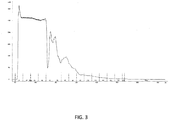
- resulting SCX UV traces with the UV recorded at 214 nm are shown for a Saliva sample and GCF sample respectively.
- the Saliva and GCF samples were then desalted with the Macrotrap LC column as above, vacuum centrifuged and re-suspended in 200 ⁇ L of 0.1% formic acid. 20 ⁇ L of the samples were desalted with two ziptips and eluted in 20 ⁇ L.
- the data were analyzed using Proteome Discoverer (V1.2, Thermo Fisher Scientific). Data were analyzed as the technical repeats. The Mascot and SEQUEST algorithms were used to search the data with identical setting used.
- the database was the IPI human database supplemented with oral bacteria as described by Socransky. This database was concatenated with a reverse version to provide false discovery rates.
- the data were searched with the following settings: semi-trypsin was selected as the enzyme with a maximum of 2 missed cleavages, 5 ppm mass accuracy for the precursor ion, fragment ion mass tolerance was set to 0.5 Da. Carboxyamidomethylation of cysteine and iTRAQ addition to the N-terminus and lysine residues were set as a static modification. Phosphorylation of serine, threonine and tyrosine was set as a variable modification as was oxidation of methionine and iTRAQ addition to tyrosine.
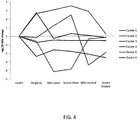
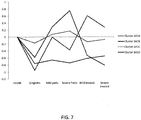
- Cluster 1 contained the majority of the proteins (243 proteins), cluster 2 contained 19 proteins, clusters 3, 5 and 6 each contained only one protein and cluster 4 contained five proteins.
- Cluster 4 may be of interest as it includes a set of proteins which decrease in abundance during disease but do not return to baseline post-resolution.
- the nineteen proteins identified as cluster 2 show an increase in abundance with gingivitis before returning to baseline like levels in periodontitis. This may be due to one of the GCF samples containing blood, however bleeding is a critical clinical sign of gingivitis and periodontitis and blood-related proteins may be very discriminatory between health and disease.
- There are several blood related proteins identified in this group including haemoglobin alpha and beta. This could be of interest as a group that could distinguish between gingivitis and periodontitis and health, notwithstanding the possible presence of blood.
- Clusters 3 and 5 for example appear to distinguish untreated periodontitis from health/gingivitis.
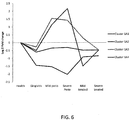
- Group 1A contained the majority of the proteins (233), groups 1B and 1C contained two proteins each and group ID contained six proteins.
- Group ID shows little change between health and gingivitis before increasing with periodontitis. There is a fall in relative abundance between mild periodontitis and treated mild periodontitis and a return to baseline in the treated severe periodontitis.
- the two proteins identified in group 1C appear to follow disease, with a decrease to gingivitis and a larger decrease to the two perio groups before returning towards the baseline in the treated samples.
- Such proteins could be envisaged as being analyzed as outcome measures of whether treatment was successful or not.
- cluster 1A1 the 233 proteins from cluster 1A of FIG. 5 were clustered again, resulting in four clusters, though the change in abundance is now less than 2 on the log scale (4 times increase/decrease).
- the largest cluster (1A1) still contained 171 proteins
- cluster 1A2 contained 50 proteins
- 1A3 contained 10
- 1A4 contained 2 proteins. Again there appear to be groups of potential interest in this analysis.
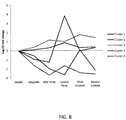
- Clustering analysis was performed using PolySNAP3. With reference to FIG. 8 , the first round of clustering resulted in five clusters. The largest cluster (1) contained 297 proteins, while clusters 2 and 5 each contained one protein. Cluster 3 contained 11 proteins and cluster 4 contained three proteins. As with the GCF dataset there is a group of proteins which are down-regulated with disease and do not return to baseline following treatment. Cluster 2 appears to distinguish severe periodontitis from milder conditions.
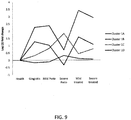
- Cluster 1 from FIG. 8 was re-clustered resulting in an additional 4 groups.
- the largest group contained 166 proteins (cluster 1A).
- Clusters IB and ID contained 14 and one protein respectively. These two groups may distinguish between gingivitis/mild periodontitis and severe periodontitis. However, in both cases, the signal for severe periodontitis is close to healthy levels, though after treatment an increase in protein abundance for both mild and severe periodontitis occurs.
- Cluster 1C contained 116 proteins. In this group, little change is shown between health and gingivitis followed by an increase to mild periodontitis before a large increase to severe periodontitis. These values are reduced in the treated samples but still at greater levels than the gingivitis group.
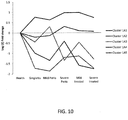
- Cluster 1A from FIG. 9 was re-clustered.
- Cluster 1A gave resulted in 5 groups, the largest cluster (1A1) containing 150 proteins. There do not appear to be any significant clusters here.
- Cluster 1A4 provided 3 proteins
- Cluster 1A5 provided one protein.
- the protein biomarkers in Clusters 1A4 and 1A5 all show an increase or decrease in protein abundance between health and gingivitis which is greater in mild periodontitis but less in severe periodontitis.
- cluster 1C from FIG. 9 was re-clustered, resulting in three clusters.
- Cluster 1C2 contained 7 proteins showing a near linear increase in proteins abundance up to severe periodontitis before a reduction post treatment. This group was not clustered any further.
- the proteins identified in cluster 1C2 are shown in the Appendix, Supplementary Table 9.
- cluster 1A1 from FIG. 10 was re-clustered. Five clusters were observed with a group of proteins showing an increase in abundance for severe periodontitis (cluster 1A1b) but none of the other groups. There were five proteins identified in this cluster. The proteins identified in cluster 1a1b are shown in the Appendix, Supplementary Table 10.
- the proteins observed in the two data sets were compared to identify protein biomarkers that were discovered in both saliva and GCF samples.
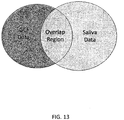
- 95 proteins were identified in both the GCF and saliva, represented by the overlapping region of the Venn diagram of FIG. 13 . This is approximately a third of the total number of proteins identified on the GCF dataset.
- the proteins which are observed in the overlapping region are shown in the Appendix, Supplemental Table 11.
- the associated abundance data for the proteins in Supplemental Table 11 was collected and subsequently transformed to portray the log (2) ratios for the protein abundance observed. Additionally, two values for the GCF was measured, one normalized to the volume collected, and the other not.
- GCF is a component of saliva
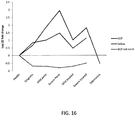
- saliva when saliva is not normalized to the same GCF volumes, it may be of use to compare the three values. Analysis of these triple values shows some of these proteins to have very similar profile. Some of those protein biomarkers with a large increase or decrease in abundance values are depicted in FIGS. 14-17 .
- FIG. 14 shows the three traces for protein S100-P.
- S100-P is involved in the regulation of cell cycle progression and differentiation. It has been observed in both GCF and saliva and has been suggested as a potential biomarker for oral squamous cell carcinoma. As shown in FIG. 14 , iTRAQ measured abundance of S100-P protein show there is a large increase between mild periodontitis and severe periodontitis. Accordingly, S100-P may serve as a useful protein biomarker for distinguishing between mild and severe periodontitis.
- FIG. 15 shows the three traces for protein S100-A8, which is also known as calgranulin-A. It has antimicrobial activity towards bacteria. It is a pro-inflammatory mediator in inflammation and up-regulates the release of IL8. High levels of S100-A8 have been detected in the plasma of patients with chronic periodontitis. As shown in FIG. 15 , iTRAQ measured abundanceof S100-A8 protein show there is a large increase between mild periodontitis and severe periodontitis. Accordingly, S100-A8 may serve as a useful protein biomarker for distinguishing between mild and severe periodontitis.
- FIG. 16 shows the three traces for protein myosin-9.
- iTRAQ measured abundance of myosin-9 protein show there is a large increase between mild periodontitis and severe periodontitis. Accordingly, myosin-9 may serve as a useful protein biomarker for distinguishing between mild and severe periodontitis.
- FIG. 17 shows the three traces for protein transaldolase. As shown in FIG. 17 , iTRAQ measured abundance of transaldolase protein show there is a large increase between mild periodontitis and severe periodontitis. Accordingly, transaldolase may serve as a useful protein biomarker for distinguishing between mild and severe periodontitis.
- FIG. 18 shows the three traces for protein haemoglobin beta.
- iTRAQ measured abundance of haemoglobin beta protein show there is a large increase between mild periodontitis and severe periodontitis.
- the traces also increase and decrease throughout the range of all oral disease states. Accordingly, haemoglobin beta (or alpha) may serve as a useful protein biomarker for distinguishing between mild and severe periodontitis, and/or other oral disease states.
- GCF and saliva identified 270 proteins in GCF and 314 proteins in saliva of which 95 were identified in both. All proteins except one (solely identified in edentulous saliva) were quantified over the different disease and resolution phases. Of the proteins which are identified in both GCF and saliva there are several proteins which show increases (in both GCF and Saliva datasets) with disease which could potentially be used to distinguish between health, gingivitis, mild and severe periodontitis and resolution of disease.
- a method for diagnosing a status of an oral disease includes selecting at least one protein biomarker from the group consisting of: haemoglobin chains alpha and beta, carbonic anhydrase 1(IPI00980674), and plastin-1. The method may further include diagnosing the status at least one of a healthy state, gingivitis state, and a mild and/or severe periodontitis state.
- the at least one protein biomarker is selected from the group consisting of the protein biomarkers in saliva data cluster 1C2 (Supplemental Table 9): Protein #IPI00016347.5, Protein #IPI00377122.4, haemoglobin subunit alpha (IPI00410714.5), haemoglobin subunit delta (IPI00473011.3), haemoglobin subunit beta (IPI00654755.3), protein # IPI00980674.1, and protein accession number #O83773.
- saliva data cluster 1C2 saliva data cluster 1C2 (Supplemental Table 9): Protein #IPI00016347.5, Protein #IPI00377122.4, haemoglobin subunit alpha (IPI00410714.5), haemoglobin subunit delta (IPI00473011.3), haemoglobin subunit beta (IPI00654755.3), protein # IPI00980674.1, and protein accession number #O83773.
- a method for diagnosing severe periodontitis includes selecting at least one protein biomarker from the group consisting of: S100-P, transaldolase, S100-A8 (calgranulin-A), myosin-9, haemoglobin alpha, and haemoglobin beta.
- the method for diagnosing severe periodontitis includes selecting at least one protein biomarker from the group consisting of the protein biomarkers in saliva data cluster 1a1b (Supplemental Table 10): Protein S100-A11 (IPI00013895.1), Protein IPI00037070.3, catalase (IPI00465436.4), Choline transporter-like protein 2 derivative (IPI00903245.1), and titin isoform N2-B (IPI00985334.2).
- the method for diagnosing severe periodontitis includes selecting at least one protein biomarker from the group consisting of: S100-P, transaldolase, S100-A8 (calgranulin-A), myosin-9, haemoglobin alpha, and haemoglobin beta, alpha-1-acid glycoprotein 1 and 2, matrix metalloproteinase-9, peptidyl-prolyl cis-trans isomerase A and haptoglobin-related protein (IPI00431645.1).
- a method for diagnosing gingivitis or mild periodontitis includes selecting at least one protein biomarker from the group consisting of the protein biomarkers in saliva data clusters 1B, 1D (Supplementary Table 7) and/or in saliva data clusters 1A4, 1A5 (Supplementary Table 8). These protein biomarkers all show an increase or decrease in protein abundance between health and gingivitis which is greater in mild periodontitis but less in severe periodontitis. It may be possible to use these to differentiate between gingivitis and mild periodontitis with severe periodontitis.
- a method for diagnosing gingivitis or mild periodontitis includes selecting at least one protein biomarker from NADPH oxidase activator-1 and alpha-N-acetylgalactosaminidase.
- NADPH oxidase activator-1 is involved in the production of reactive oxygen species.
- alpha-N-acetylgalactosaminidase portrays has some of the highest ratios for gingivitis and mild periodontitis compared to severe periodontitis. This protein is involved in the breakdown of glycolipids.
- the method for diagnosing gingivitis or mild periodontitis includes selecting an Alphaa alpha-N-acetylgalactosaminidase biomarker.
Landscapes
- Life Sciences & Earth Sciences (AREA)
- Health & Medical Sciences (AREA)
- Engineering & Computer Science (AREA)
- Molecular Biology (AREA)
- Biomedical Technology (AREA)
- Chemical & Material Sciences (AREA)
- Hematology (AREA)
- Immunology (AREA)
- Urology & Nephrology (AREA)
- Physics & Mathematics (AREA)
- Medicinal Chemistry (AREA)
- General Physics & Mathematics (AREA)
- Cell Biology (AREA)
- Food Science & Technology (AREA)
- Biotechnology (AREA)
- Proteomics, Peptides & Aminoacids (AREA)
- Analytical Chemistry (AREA)
- Biochemistry (AREA)
- General Health & Medical Sciences (AREA)
- Microbiology (AREA)
- Pathology (AREA)
- Bioinformatics & Cheminformatics (AREA)
- Bioinformatics & Computational Biology (AREA)
- Spectroscopy & Molecular Physics (AREA)
- Biophysics (AREA)
- Investigating Or Analysing Biological Materials (AREA)
- Other Investigation Or Analysis Of Materials By Electrical Means (AREA)
- Measuring Or Testing Involving Enzymes Or Micro-Organisms (AREA)
Applications Claiming Priority (3)
| Application Number | Priority Date | Filing Date | Title |
|---|---|---|---|
| US201261699035P | 2012-09-10 | 2012-09-10 | |
| PCT/IB2013/058431 WO2014037924A2 (fr) | 2012-09-10 | 2013-09-10 | Analyse du protéome salivaire à la recherche de biomarqueurs de la gingivite et de la parodontite par ft-icr-sm-sm |
| EP13792089.8A EP2893353A2 (fr) | 2012-09-10 | 2013-09-10 | Analyse du protéome salivaire à la recherche de biomarqueurs de la gingivite et de la parodontite par ft-icr-sm-sm |
Related Parent Applications (1)
| Application Number | Title | Priority Date | Filing Date |
|---|---|---|---|
| EP13792089.8A Division EP2893353A2 (fr) | 2012-09-10 | 2013-09-10 | Analyse du protéome salivaire à la recherche de biomarqueurs de la gingivite et de la parodontite par ft-icr-sm-sm |
Publications (1)
| Publication Number | Publication Date |
|---|---|
| EP3396383A1 true EP3396383A1 (fr) | 2018-10-31 |
Family
ID=49585455
Family Applications (2)
| Application Number | Title | Priority Date | Filing Date |
|---|---|---|---|
| EP13792089.8A Withdrawn EP2893353A2 (fr) | 2012-09-10 | 2013-09-10 | Analyse du protéome salivaire à la recherche de biomarqueurs de la gingivite et de la parodontite par ft-icr-sm-sm |
| EP18173015.1A Withdrawn EP3396383A1 (fr) | 2012-09-10 | 2013-09-10 | Analyse du protéome salivaire à la recherche de biomarqueurs de la gingivite et de la parodontite par ft-icr-sm-sm |
Family Applications Before (1)
| Application Number | Title | Priority Date | Filing Date |
|---|---|---|---|
| EP13792089.8A Withdrawn EP2893353A2 (fr) | 2012-09-10 | 2013-09-10 | Analyse du protéome salivaire à la recherche de biomarqueurs de la gingivite et de la parodontite par ft-icr-sm-sm |
Country Status (10)
| Country | Link |
|---|---|
| US (1) | US20150219665A1 (fr) |
| EP (2) | EP2893353A2 (fr) |
| JP (1) | JP6402106B2 (fr) |
| KR (1) | KR20150052311A (fr) |
| CN (1) | CN104620110A (fr) |
| BR (1) | BR112015004881A2 (fr) |
| CA (1) | CA2884089A1 (fr) |
| IL (1) | IL237600A0 (fr) |
| RU (1) | RU2015113089A (fr) |
| WO (1) | WO2014037924A2 (fr) |
Cited By (5)
| Publication number | Priority date | Publication date | Assignee | Title |
|---|---|---|---|---|
| KR20210057851A (ko) * | 2019-11-12 | 2021-05-24 | 아주대학교산학협력단 | 타액 단백질 마커를 이용한 잇몸 상태의 진단방법 |
| EP3884277A1 (fr) * | 2018-12-26 | 2021-09-29 | Colgate-Palmolive Company | Biomarqueurs de dérégulation des neutrophiles en tant que diagnostic de gingivite |
| RU2773275C1 (ru) * | 2021-07-26 | 2022-06-01 | Федеральное государственное бюджетное образовательное учреждение высшего образования "Дальневосточный государственный медицинский университет" Министерства здравоохранения Российской Федерации (ФГБОУ ВО ДВГМУ Минздрава России) | Способ прогнозирования тяжести пародонтитов по составу условно-пародонтопатогенных видов микробиома корня языка |
| KR102460127B1 (ko) * | 2022-05-25 | 2022-10-28 | 주식회사 바질바이오텍 | 치주 질환 진단용 바이오마커 및 이의 용도 |
| KR20260001832A (ko) * | 2024-06-28 | 2026-01-06 | 주식회사 바질바이오텍 | 치주질환 진단을 위한 바이오마커 및 이의 용도 |
Families Citing this family (32)
| Publication number | Priority date | Publication date | Assignee | Title |
|---|---|---|---|---|
| WO2014150170A1 (fr) | 2013-03-15 | 2014-09-25 | Mayo Foundation For Medical Education And Research | Identification et surveillance d'immunoglobulines monoclonales par la masse moléculaire |
| US10267806B2 (en) | 2014-04-04 | 2019-04-23 | Mayo Foundation For Medical Education And Research | Isotyping immunoglobulins using accurate molecular mass |
| CN106461658A (zh) * | 2014-06-05 | 2017-02-22 | 高露洁-棕榄公司 | 用于口腔炎症的测定 |
| KR20160060288A (ko) * | 2014-11-20 | 2016-05-30 | 서울대학교산학협력단 | Odam의 치주질환 바이오마커로서의 용도 |
| WO2016095202A1 (fr) * | 2014-12-19 | 2016-06-23 | The Procter & Gamble Company | Évaluation de l'état des gencives |
| JP6968058B2 (ja) | 2015-09-24 | 2021-11-17 | メイヨ・ファウンデーション・フォー・メディカル・エデュケーション・アンド・リサーチ | 質量分析法による免疫グロブリン遊離軽鎖の同定 |
| CN106918706B (zh) * | 2015-12-25 | 2019-05-21 | 广州瑞博奥生物科技有限公司 | 一种检测牙周病相关蛋白的抗体芯片试剂盒 |
| EP3441764B1 (fr) * | 2016-04-05 | 2021-01-27 | ARKRAY, Inc. | Procédé de détermination de stade de maladie parodontale |
| CN109863395B (zh) | 2016-09-07 | 2023-05-23 | 梅约医学教育与研究基金会 | 分子量法鉴定和监测裂解免疫球蛋白 |
| JP6917722B2 (ja) * | 2017-02-03 | 2021-08-11 | 花王株式会社 | 口腔の健康状態の評価方法 |
| JP7486316B2 (ja) * | 2017-05-24 | 2024-05-17 | コーニンクレッカ フィリップス エヌ ヴェ | 唾液のil-1ベータ及びmmp-9に基づく軽度の又は進行した歯周炎の診断 |
| KR102079976B1 (ko) * | 2017-08-08 | 2020-02-21 | 전남대학교 산학협력단 | 치주질환 진단용 바이오마커 |
| WO2019055632A1 (fr) | 2017-09-13 | 2019-03-21 | Mayo Foundation For Medical Education And Research | Identification et surveillance de chaînes d'immunoglobulines j |
| EP3681528B1 (fr) | 2017-09-13 | 2025-07-23 | Mayo Foundation for Medical Education and Research | Identification et surveillance d'un inhibiteur d'apoptose de macrophage |
| EP3701269A1 (fr) * | 2017-10-27 | 2020-09-02 | The Regents of The University of California | Biomarqueurs d'arn extracellulaires salivaires pour la gingivite |
| EP3477306A1 (fr) | 2017-10-30 | 2019-05-01 | Koninklijke Philips N.V. | Classification de patients atteints de la parodontite |
| KR102009016B1 (ko) * | 2017-12-06 | 2019-08-08 | 고려대학교 산학협력단 | 오담(ODAM, Odontogenic Ameloblast-Associated protein)에 특이적으로 결합하는 DNA 앱타머 및 그의 용도 |
| EP3511716A1 (fr) * | 2018-01-16 | 2019-07-17 | Koninklijke Philips N.V. | Methodes, usage et kits pour la diagnose de la periodontitits |
| EP3511715A1 (fr) * | 2018-01-16 | 2019-07-17 | Koninklijke Philips N.V. | Procédés, utilisations et trouses pour le diagnostique de maladies périodontiques |
| EP3553520A1 (fr) * | 2018-04-12 | 2019-10-16 | Koninklijke Philips N.V. | Procédés, utilisations et kits de surveillance ou de prédiction de la réponse à un traitement de maladie parodontale |
| EP3553524A1 (fr) * | 2018-04-12 | 2019-10-16 | Koninklijke Philips N.V. | Procédés, utilisations et kits de diagnostic de la parodontite |
| EP3553523A1 (fr) * | 2018-04-12 | 2019-10-16 | Koninklijke Philips N.V. | Diagnostics de parodontite légère ou avancée |
| EP3553526A1 (fr) * | 2018-04-12 | 2019-10-16 | Koninklijke Philips N.V. | Procédés, utilisations et kits de surveillance ou de prédiction de la réponse à un traitement de maladie parodontale |
| EP3553522A1 (fr) * | 2018-04-12 | 2019-10-16 | Koninklijke Philips N.V. | Procédés, utilisations et kits de diagnostic de la gingivite |
| EP3553521A1 (fr) * | 2018-04-12 | 2019-10-16 | Koninklijke Philips N.V. | Procédés, utilisations et kits de diagnostic de la gingivite |
| EP3553518A1 (fr) * | 2018-04-12 | 2019-10-16 | Koninklijke Philips N.V. | Procédés, utilisations et kits de diagnostic de la parodontite |
| EP3553525A1 (fr) * | 2018-04-12 | 2019-10-16 | Koninklijke Philips N.V. | Diagnostics de parodontite légère ou avancée |
| WO2020040609A1 (fr) * | 2018-08-23 | 2020-02-27 | 서울대학교 산학협력단 | Procédé de diagnostic de parodontite précoce au moyen de la protéine s100 dans un fluide corporel, procédé de fourniture d'informations, composition et kit |
| CN110441438A (zh) * | 2019-09-09 | 2019-11-12 | 大连医科大学附属第一医院 | 一种基于s100蛋白家族的急性胰腺炎严重程度预测模型及其检测方法 |
| WO2022096893A1 (fr) | 2020-11-04 | 2022-05-12 | The University Of Birmingham | Dispositif |
| KR20240025138A (ko) | 2022-08-18 | 2024-02-27 | 부산대학교 산학협력단 | 치주염 진단용 바이오마커 조성물 및 이를 이용한 치주염 진단용 키트 |
| CN115980368B (zh) * | 2023-02-08 | 2023-11-21 | 重庆医科大学附属口腔医院 | 一种用于牙周炎检测的标记物组 |
Citations (2)
| Publication number | Priority date | Publication date | Assignee | Title |
|---|---|---|---|---|
| WO1996032647A1 (fr) * | 1995-04-12 | 1996-10-17 | Oy Medix Biochemica Ab | Procede et trousses d'analyse permettant de diagnostiquer des paradontolyses et de prevoir les risques d'evolution de la maladie |
| WO2009018342A1 (fr) * | 2007-07-30 | 2009-02-05 | The Regents Of The University Of Michigan | Analyse multi-analyte de biomarqueurs de la salive comme prédicteurs d'une maladie périodontale et péri-implant |
Family Cites Families (9)
| Publication number | Priority date | Publication date | Assignee | Title |
|---|---|---|---|---|
| AU8017594A (en) * | 1993-10-29 | 1995-05-22 | Institute Of Molecular Biology, Inc. | Osteocalcin as a marker of periodontal and peri-implant disease activity |
| JP4590581B2 (ja) * | 2000-12-13 | 2010-12-01 | 合同酒精株式会社 | 唾液成分の免疫学的測定法 |
| US20040181344A1 (en) * | 2002-01-29 | 2004-09-16 | Massachusetts Institute Of Technology | Systems and methods for providing diagnostic services |
| JP4252812B2 (ja) * | 2003-01-29 | 2009-04-08 | 株式会社ビー・エム・エル | 歯周病菌の定量方法 |
| JP2005201768A (ja) * | 2004-01-15 | 2005-07-28 | Bml Inc | 歯周疾患の検出方法 |
| JP2009145220A (ja) * | 2007-12-14 | 2009-07-02 | Lion Corp | 歯周病の診断方法及び歯周病診断キット |
| US20110065605A1 (en) * | 2008-05-14 | 2011-03-17 | Eth Zurich | Method for biomarker and drug-target discovery for prostate cancer diagnosis and treatment as well as biomarker assays determined therewith |
| KR101222437B1 (ko) * | 2010-03-17 | 2013-01-15 | 경북대학교 산학협력단 | 바이오마커 |
| KR20110135911A (ko) * | 2011-12-05 | 2011-12-20 | 경북대학교 산학협력단 | 바이오마커 |
-
2013
- 2013-09-10 EP EP13792089.8A patent/EP2893353A2/fr not_active Withdrawn
- 2013-09-10 EP EP18173015.1A patent/EP3396383A1/fr not_active Withdrawn
- 2013-09-10 WO PCT/IB2013/058431 patent/WO2014037924A2/fr not_active Ceased
- 2013-09-10 US US14/426,484 patent/US20150219665A1/en not_active Abandoned
- 2013-09-10 KR KR1020157009171A patent/KR20150052311A/ko not_active Withdrawn
- 2013-09-10 CN CN201380047057.0A patent/CN104620110A/zh active Pending
- 2013-09-10 RU RU2015113089A patent/RU2015113089A/ru not_active Application Discontinuation
- 2013-09-10 JP JP2015530542A patent/JP6402106B2/ja not_active Expired - Fee Related
- 2013-09-10 BR BR112015004881A patent/BR112015004881A2/pt not_active IP Right Cessation
- 2013-09-10 CA CA2884089A patent/CA2884089A1/fr not_active Abandoned
-
2015
- 2015-03-08 IL IL237600A patent/IL237600A0/en unknown
Patent Citations (2)
| Publication number | Priority date | Publication date | Assignee | Title |
|---|---|---|---|---|
| WO1996032647A1 (fr) * | 1995-04-12 | 1996-10-17 | Oy Medix Biochemica Ab | Procede et trousses d'analyse permettant de diagnostiquer des paradontolyses et de prevoir les risques d'evolution de la maladie |
| WO2009018342A1 (fr) * | 2007-07-30 | 2009-02-05 | The Regents Of The University Of Michigan | Analyse multi-analyte de biomarqueurs de la salive comme prédicteurs d'une maladie périodontale et péri-implant |
Non-Patent Citations (9)
| Title |
|---|
| "Clinical risk indicators for periodontal attachment loss", JOURNAL OF CLINICAL PERIODONTOLOGY, vol. 18, 1991, pages 117 - 125 |
| DELANEY ET AL., AIDS, vol. 20, 2006, pages 1655 - 1660 |
| LI ET AL., CLIN CANCER RES, vol. 10, 2004, pages 8442 - 8450 |
| NOMURA YOSHIAKI ET AL: "Salivary biomarkers for predicting the progression of chronic periodontitis", ARCHIVES OF ORAL BIOLOGY, vol. 57, no. 4, 24 November 2011 (2011-11-24), pages 413 - 420, XP028908655, ISSN: 0003-9969, DOI: 10.1016/J.ARCHORALBIO.2011.09.011 * |
| RAI BALWANT ET AL: "Biomarkers of periodontitis in oral fluids", JOURNAL OF ORAL SCIENCE, NIHON UNIVERSITY, SCHOOL OF DENTISTRY, JP, vol. 50, no. 1, 1 March 2008 (2008-03-01), pages 53 - 56, XP002612895, ISSN: 1343-4934, DOI: 10.2334/JOSNUSD.50.53 * |
| TABAK, ANN N Y ACAD SCI, vol. 1098, 2007, pages 7 - 14 |
| Y. WU ET AL: "Initial comparison of proteomic profiles of whole unstimulated saliva obtained from generalized aggressive periodontitis patients and healthy control subjects", JOURNAL OF PERIODONTAL RESEARCH, vol. 44, no. 5, 1 October 2009 (2009-10-01), pages 636 - 644, XP055455007, ISSN: 0022-3484, DOI: 10.1111/j.1600-0765.2008.01172.x * |
| YOUNG-JIN CHOI ET AL: "Identification of azurocidin as a potential periodontitis biomarker by a proteomic analysis of gingival crevicular fluid", PROTEOME SCIENCE, BIOMED CENTRAL, LONDON, GB, vol. 9, no. 1, 28 July 2011 (2011-07-28), pages 42, XP021105530, ISSN: 1477-5956, DOI: 10.1186/1477-5956-9-42 * |
| ZIMMERMAN ET AL., ORAL ONCOL., vol. 44, no. 5, 2008, pages 425 - 9 |
Cited By (7)
| Publication number | Priority date | Publication date | Assignee | Title |
|---|---|---|---|---|
| EP3884277A1 (fr) * | 2018-12-26 | 2021-09-29 | Colgate-Palmolive Company | Biomarqueurs de dérégulation des neutrophiles en tant que diagnostic de gingivite |
| KR20210057851A (ko) * | 2019-11-12 | 2021-05-24 | 아주대학교산학협력단 | 타액 단백질 마커를 이용한 잇몸 상태의 진단방법 |
| KR20210075929A (ko) * | 2019-11-12 | 2021-06-23 | 아주대학교산학협력단 | 치주 질환 진단용 마커 단백질을 검출하는 방법 |
| RU2773275C1 (ru) * | 2021-07-26 | 2022-06-01 | Федеральное государственное бюджетное образовательное учреждение высшего образования "Дальневосточный государственный медицинский университет" Министерства здравоохранения Российской Федерации (ФГБОУ ВО ДВГМУ Минздрава России) | Способ прогнозирования тяжести пародонтитов по составу условно-пародонтопатогенных видов микробиома корня языка |
| KR102460127B1 (ko) * | 2022-05-25 | 2022-10-28 | 주식회사 바질바이오텍 | 치주 질환 진단용 바이오마커 및 이의 용도 |
| KR102562614B1 (ko) * | 2022-05-25 | 2023-08-03 | 주식회사 바질바이오텍 | 비침습적 방법을 이용한 치주 질환 진단용 키트 |
| KR20260001832A (ko) * | 2024-06-28 | 2026-01-06 | 주식회사 바질바이오텍 | 치주질환 진단을 위한 바이오마커 및 이의 용도 |
Also Published As
| Publication number | Publication date |
|---|---|
| WO2014037924A3 (fr) | 2014-05-22 |
| IL237600A0 (en) | 2015-04-30 |
| RU2015113089A (ru) | 2016-10-27 |
| WO2014037924A2 (fr) | 2014-03-13 |
| CA2884089A1 (fr) | 2014-03-13 |
| BR112015004881A2 (pt) | 2017-07-04 |
| EP2893353A2 (fr) | 2015-07-15 |
| KR20150052311A (ko) | 2015-05-13 |
| CN104620110A (zh) | 2015-05-13 |
| JP2015529333A (ja) | 2015-10-05 |
| JP6402106B2 (ja) | 2018-10-10 |
| US20150219665A1 (en) | 2015-08-06 |
Similar Documents
| Publication | Publication Date | Title |
|---|---|---|
| EP3396383A1 (fr) | Analyse du protéome salivaire à la recherche de biomarqueurs de la gingivite et de la parodontite par ft-icr-sm-sm | |
| Buzalaf et al. | Saliva as a diagnostic tool for dental caries, periodontal disease and cancer: is there a need for more biomarkers? | |
| Bostanci et al. | Label-free quantitative proteomics reveals differentially regulated proteins in experimental gingivitis | |
| JP4643445B2 (ja) | バイオマーカープロフィールを使用した敗血症またはsirsの診断 | |
| Grant et al. | Proteomic analysis of a noninvasive human model of acute inflammation and its resolution: the twenty-one day gingivitis model | |
| US8068990B2 (en) | Diagnosis of intra-uterine infection by proteomic analysis of cervical-vaginal fluids | |
| EP1618388B1 (fr) | Analyse proteomique de fluides biologiques | |
| KR101559101B1 (ko) | 혈액유래 암 진단용 펩티드 마커 및 이를 이용한 암 진단방법 | |
| Alex et al. | Applications of proteomics in the study of inflammatory bowel diseases: Current status and future directions with available technologies | |
| WO2021221138A1 (fr) | Procédé de détection de la dermatite atopique | |
| Franco-Martínez et al. | Changes in saliva proteins in cows with mastitis: A proteomic approach | |
| CN110325861B (zh) | 检测脓毒症或脓毒性休克(ss)患者血浆中的循环组蛋白h3和h2b的基于质谱的方法 | |
| US20170052200A1 (en) | Methods and compositions for the diagnosis and treatment of kawasaki disease | |
| CN115452521B (zh) | 用于肝棘球蚴病鉴别的标志物、产品及系统 | |
| US20210140979A1 (en) | Method of diagnosing periodontal conditions using salivary protein markers | |
| EP2431745B1 (fr) | Procédé pour utiliser cfh en tant que marqueur biochimique pour le diagnostic d'un rémission complète ou non-rèmission de la leucémie myéloïde aiguë | |
| Kulhavá et al. | Differences of Saliva Composition in Relation to Tooth Decay and Gender. | |
| Lu et al. | Proteomic profiles of bronchoalveolar lavage fluid from patients with ventilator‐associated pneumonia by gel‐assisted digestion and 2‐D‐LC/MS/MS | |
| CN110082540B (zh) | 唾液中干燥综合征的蛋白标志物及其用途 | |
| WO2004019041A1 (fr) | Nouveaux marqueurs pronostiques et diagnostiques d'une exacerbation aigue de la maladie pulmonaire et retablissement | |
| WO2020043864A1 (fr) | Procédé de prédiction du stade de rectocolite hémorragique | |
| Singh | Identification and Validation of Estrus Associated Candidate Protiens in Buffaloes | |
| KR20250071597A (ko) | 미생물 유래 물질에 대한 노출 여부 확인용 바이오마커 및 이의 용도 | |
| EP3221703A1 (fr) | Fétuine a sialylée utilisée en tant que marqueur de l'efficacité immunothérapeutique | |
| WO2007140508A1 (fr) | Marqueur de diagnostic et pronostic d'une exacerbation pulmonaire aiguë |
Legal Events
| Date | Code | Title | Description |
|---|---|---|---|
| PUAI | Public reference made under article 153(3) epc to a published international application that has entered the european phase |
Free format text: ORIGINAL CODE: 0009012 |
|
| STAA | Information on the status of an ep patent application or granted ep patent |
Free format text: STATUS: THE APPLICATION HAS BEEN PUBLISHED |
|
| AC | Divisional application: reference to earlier application |
Ref document number: 2893353 Country of ref document: EP Kind code of ref document: P |
|
| AK | Designated contracting states |
Kind code of ref document: A1 Designated state(s): AL AT BE BG CH CY CZ DE DK EE ES FI FR GB GR HR HU IE IS IT LI LT LU LV MC MK MT NL NO PL PT RO RS SE SI SK SM TR |
|
| STAA | Information on the status of an ep patent application or granted ep patent |
Free format text: STATUS: REQUEST FOR EXAMINATION WAS MADE |
|
| 17P | Request for examination filed |
Effective date: 20190430 |
|
| RBV | Designated contracting states (corrected) |
Designated state(s): AL AT BE BG CH CY CZ DE DK EE ES FI FR GB GR HR HU IE IS IT LI LT LU LV MC MK MT NL NO PL PT RO RS SE SI SK SM TR |
|
| RAP1 | Party data changed (applicant data changed or rights of an application transferred) |
Owner name: KONINKLIJKE PHILIPS N.V. |
|
| STAA | Information on the status of an ep patent application or granted ep patent |
Free format text: STATUS: EXAMINATION IS IN PROGRESS |
|
| 17Q | First examination report despatched |
Effective date: 20200612 |
|
| STAA | Information on the status of an ep patent application or granted ep patent |
Free format text: STATUS: THE APPLICATION HAS BEEN WITHDRAWN |
|
| 18W | Application withdrawn |
Effective date: 20220103 |