EP3399681A1 - Procédé et dispositif de rétroaction pour un canal de liaison montante - Google Patents
Procédé et dispositif de rétroaction pour un canal de liaison montante Download PDFInfo
- Publication number
- EP3399681A1 EP3399681A1 EP16885570.8A EP16885570A EP3399681A1 EP 3399681 A1 EP3399681 A1 EP 3399681A1 EP 16885570 A EP16885570 A EP 16885570A EP 3399681 A1 EP3399681 A1 EP 3399681A1
- Authority
- EP
- European Patent Office
- Prior art keywords
- terminal
- data packet
- base station
- sent
- indication
- Prior art date
- Legal status (The legal status is an assumption and is not a legal conclusion. Google has not performed a legal analysis and makes no representation as to the accuracy of the status listed.)
- Withdrawn
Links
- 238000000034 method Methods 0.000 title claims abstract description 71
- 238000012545 processing Methods 0.000 claims description 63
- 238000012544 monitoring process Methods 0.000 claims description 3
- 239000002699 waste material Substances 0.000 abstract description 7
- 101000741965 Homo sapiens Inactive tyrosine-protein kinase PRAG1 Proteins 0.000 description 29
- 102100038659 Inactive tyrosine-protein kinase PRAG1 Human genes 0.000 description 29
- 238000010586 diagram Methods 0.000 description 18
- 238000004891 communication Methods 0.000 description 13
- 230000008569 process Effects 0.000 description 10
- 238000004590 computer program Methods 0.000 description 7
- 238000001514 detection method Methods 0.000 description 5
- 238000012986 modification Methods 0.000 description 5
- 230000004048 modification Effects 0.000 description 5
- 230000011664 signaling Effects 0.000 description 5
- 238000005516 engineering process Methods 0.000 description 4
- 230000006870 function Effects 0.000 description 3
- 230000004069 differentiation Effects 0.000 description 2
- 230000005540 biological transmission Effects 0.000 description 1
- 230000003287 optical effect Effects 0.000 description 1
Images






Classifications
-
- H—ELECTRICITY
- H04—ELECTRIC COMMUNICATION TECHNIQUE
- H04L—TRANSMISSION OF DIGITAL INFORMATION, e.g. TELEGRAPHIC COMMUNICATION
- H04L1/00—Arrangements for detecting or preventing errors in the information received
- H04L1/12—Arrangements for detecting or preventing errors in the information received by using return channel
- H04L1/16—Arrangements for detecting or preventing errors in the information received by using return channel in which the return channel carries supervisory signals, e.g. repetition request signals
- H04L1/18—Automatic repetition systems, e.g. Van Duuren systems
- H04L1/1829—Arrangements specially adapted for the receiver end
- H04L1/1854—Scheduling and prioritising arrangements
-
- H—ELECTRICITY
- H04—ELECTRIC COMMUNICATION TECHNIQUE
- H04W—WIRELESS COMMUNICATION NETWORKS
- H04W72/00—Local resource management
- H04W72/12—Wireless traffic scheduling
-
- H—ELECTRICITY
- H04—ELECTRIC COMMUNICATION TECHNIQUE
- H04L—TRANSMISSION OF DIGITAL INFORMATION, e.g. TELEGRAPHIC COMMUNICATION
- H04L1/00—Arrangements for detecting or preventing errors in the information received
- H04L1/02—Arrangements for detecting or preventing errors in the information received by diversity reception
- H04L1/06—Arrangements for detecting or preventing errors in the information received by diversity reception using space diversity
-
- H—ELECTRICITY
- H04—ELECTRIC COMMUNICATION TECHNIQUE
- H04L—TRANSMISSION OF DIGITAL INFORMATION, e.g. TELEGRAPHIC COMMUNICATION
- H04L1/00—Arrangements for detecting or preventing errors in the information received
- H04L1/12—Arrangements for detecting or preventing errors in the information received by using return channel
- H04L1/16—Arrangements for detecting or preventing errors in the information received by using return channel in which the return channel carries supervisory signals, e.g. repetition request signals
- H04L1/1607—Details of the supervisory signal
-
- H—ELECTRICITY
- H04—ELECTRIC COMMUNICATION TECHNIQUE
- H04L—TRANSMISSION OF DIGITAL INFORMATION, e.g. TELEGRAPHIC COMMUNICATION
- H04L1/00—Arrangements for detecting or preventing errors in the information received
- H04L1/12—Arrangements for detecting or preventing errors in the information received by using return channel
- H04L1/16—Arrangements for detecting or preventing errors in the information received by using return channel in which the return channel carries supervisory signals, e.g. repetition request signals
- H04L1/18—Automatic repetition systems, e.g. Van Duuren systems
- H04L1/1829—Arrangements specially adapted for the receiver end
- H04L1/1835—Buffer management
-
- H—ELECTRICITY
- H04—ELECTRIC COMMUNICATION TECHNIQUE
- H04L—TRANSMISSION OF DIGITAL INFORMATION, e.g. TELEGRAPHIC COMMUNICATION
- H04L1/00—Arrangements for detecting or preventing errors in the information received
- H04L1/12—Arrangements for detecting or preventing errors in the information received by using return channel
- H04L1/16—Arrangements for detecting or preventing errors in the information received by using return channel in which the return channel carries supervisory signals, e.g. repetition request signals
- H04L1/18—Automatic repetition systems, e.g. Van Duuren systems
- H04L1/1867—Arrangements specially adapted for the transmitter end
- H04L1/1896—ARQ related signaling
-
- H—ELECTRICITY
- H04—ELECTRIC COMMUNICATION TECHNIQUE
- H04L—TRANSMISSION OF DIGITAL INFORMATION, e.g. TELEGRAPHIC COMMUNICATION
- H04L1/00—Arrangements for detecting or preventing errors in the information received
- H04L2001/0092—Error control systems characterised by the topology of the transmission link
- H04L2001/0093—Point-to-multipoint
Definitions
- the present invention relates to the field of communications technologies, and in particular, to a feedback method for an uplink channel, and an apparatus.
- An MTC (Machine Type Communication, machine type communication) technology is an important application in a future communications field. It is predicted that there will be 50 billion connected MTC devices by 2022. In the future, the MTC technology possibly covers the following fields: intelligent meter reading, medical detection, logistics detection, fire detection, wearable device communications, and another field.
- a base station and a terminal usually need to satisfy a requirement of a large coverage, a large quantity of connections, and low power consumption.
- FIG. 1A A format of a downlink channel in the MTC communications system is shown in FIG. 1A .
- a horizontal direction represents time, and a vertical direction represents frequency.
- the downlink is from a wireless communications base station to a wireless terminal, and is simply referred to as a transmission direction of a terminal.
- Downlink channels mainly include:
- Each terminal reads scheduling signaling over a PDCCH of a corresponding coverage level, to determine whether the terminal is scheduled over a subsequent PDSCH or a PUSCH (Physical Uplink Shared Channel, physical uplink shared channel). If the terminal determines that the terminal is scheduled, the terminal sends or receives data (receives data over the PDSCH and sends data over the PUSCH) on an allocated resource.
- PUSCH Physical Uplink Shared Channel, physical uplink shared channel
- uplink feedback is performed mainly in a non-bitmap (bitmap) manner and a bitmap manner:
- an existing feedback method for an uplink channel has the disadvantage of wasting resources.
- Embodiments of the present invention provide a feedback method for an uplink channel, and an apparatus, so as to resolve a resource wasting disadvantage in the prior art.
- a feedback method for an uplink channel including:
- the determining, by a base station, whether a data packet to be sent by a terminal is the last data packet of the terminal includes:
- the method further includes:
- the method further includes:
- a feedback method for an uplink channel including:
- the method before the receiving, by a terminal, a second scheduling command sent by a base station to the terminal, the method further includes: feeding back, by the terminal, a buffer status report to the base station.
- the second scheduling command is used to indicate an uplink resource that is allocated to the terminal for sending the data packet; and the method further includes: sending, by the terminal, the data packet to the base station on the uplink resource allocated to the terminal in the second scheduling command.
- a feedback method for an uplink channel including:
- the method further includes: sending, by the base station, a first scheduling command to the terminal, where the first scheduling command is used to schedule the terminal to resend the data packet or send the next data packet, and the first scheduling command includes an indication bit that is used to indicate whether the base station correctly receives the data packet sent by the terminal.
- the method further includes: when the base station determines that the terminal does not need to send any next data packet after sending the data packet and does not need to retransmit the data packet, sending, by the base station, the first common message to the terminal, where the first common message includes the feedback information, the feedback information can carry the at least two indication bits for the at least two terminals including the terminal, and the indication bit for the terminal in the at least two indication bits is used to indicate whether the base station correctly receives the data packet.
- the determining, by the base station, that the terminal does not need to send any next data packet after sending the data packet includes: determining, by the base station based on an indication identifier carried in the data packet, that the terminal does not need to send any next data packet after sending the data packet, where the indication identifier indicates that the terminal does not need to send any next data packet after sending the data packet.
- the method before the receiving, by a base station, a data packet sent by a terminal, the method further includes:
- a feedback method for an uplink channel including:
- the method further includes: after sending the data packet, receiving, by the terminal, a first scheduling command sent by the base station, where the first scheduling command is used to schedule the terminal to resend the data packet or send the next data packet, and the first scheduling command includes an indication bit that is used to indicate whether the base station correctly receives the data packet sent by the terminal.
- the data packet carries an indication identifier, and the indication identifier indicates that the terminal does not need to send any next data packet after sending the data packet.
- the method further includes:
- the method further includes:
- the terminal determines, based on the indication bit for the terminal in the at least two indication bits, whether the base station correctly receives the data packet sent by the terminal.
- a base station including:
- determining, by the processing unit, whether the data packet to be sent by the terminal is the last data packet of the terminal is specifically:
- the sending unit is further configured to send a second scheduling command to the terminal, where the second scheduling command is used to indicate an uplink resource that is allocated to the terminal for sending the data packet; and the receiving unit is further configured to receive the data packet that is sent by the terminal on the uplink resource.
- the sending unit is further configured to send a second scheduling command to the terminal, where the second scheduling command includes feedback resource indication information; and if the processing unit determines that the data packet to be sent by the terminal is the last data packet of the terminal, the feedback resource indication information instructs the terminal to obtain the feedback information from the first common message after sending the data packet, and indicates a location, in the at least two indication bits, of the indication bit that is used to indicate whether the base station correctly receives the data packet sent by the terminal; or if the processing unit determines that the data packet to be sent by the terminal is not the last data packet of the terminal, the feedback resource indication information instructs the terminal to obtain, from the first scheduling command after sending the data packet, the indication bit that is used to indicate whether the base station correctly receives the data packet sent by the terminal.
- a terminal including:
- the terminal further includes a sending unit, configured to feed back a buffer status report to the base station.
- the second scheduling command is used to indicate an uplink resource that is allocated to the terminal for sending the data packet; and the sending unit is further configured to send the data packet to the base station on the uplink resource allocated to the terminal in the second scheduling command.
- a base station including:
- the sending unit is further configured to: when the processing unit determines that the terminal needs to send the next data packet after sending the data packet or needs to retransmit the data packet, send a first scheduling command to the terminal, where the first scheduling command is used to schedule the terminal to resend the data packet or send the next data packet, and the first scheduling command includes an indication bit that is used to indicate whether the base station correctly receives the data packet sent by the terminal.
- the sending unit is further configured to: when the processing unit determines that the terminal does not need to send any next data packet after sending the data packet and does not need to retransmit the data packet, send the first common message to the terminal, where the first common message includes the feedback information, the feedback information can carry the at least two indication bits for the at least two terminals including the terminal, and the indication bit for the terminal in the at least two indication bits is used to indicate whether the base station correctly receives the data packet.
- the determining, by the processing unit, that the terminal does not need to send any next data packet after sending the data packet is specifically: determining, based on an indication identifier carried in the data packet, that the terminal does not need to send any next data packet after sending the data packet, where the indication identifier indicates that the terminal does not need to send any next data packet after sending the data packet.
- the sending unit is further configured to send a second scheduling command to the terminal, where the second scheduling command is used to indicate an uplink resource that is allocated to the terminal for sending the data packet, and the second scheduling command includes feedback resource indication information; and if the processing unit determines that the data packet to be sent by the terminal is the last data packet of the terminal, the feedback resource indication information instructs the terminal to obtain the feedback information from the first common message after sending the data packet, and indicates a location, in the at least two indication bits, of the indication bit that is used to indicate whether the base station correctly receives the data packet sent by the terminal; or if the processing unit determines that the data packet to be sent by the terminal is not the last data packet of the terminal, the feedback resource indication information instructs the terminal to obtain, from the first scheduling command after sending the data packet, the indication bit that is used to indicate whether the base station correctly receives the data packet sent by the terminal.
- a terminal including:
- the receiving unit is further configured to: after the sending unit sends the data packet, receive a first scheduling command sent by the base station, where the first scheduling command is used to schedule the terminal to resend the data packet or send the next data packet, and the first scheduling command includes an indication bit that is used to indicate whether the base station correctly receives the data packet sent by the terminal.
- the data packet carries an indication identifier, and the indication identifier indicates that the terminal does not need to send any next data packet after sending the data packet.
- the sending unit is further configured to send the data packet to the base station; the processing unit is further configured to: when the sending unit does not need to send any next data packet after sending the data packet, continuously monitor a used-for-scheduling control channel in a preset time period after the data packet is sent; and the processing unit is further configured to: if it is determined that the first scheduling command sent to the terminal is detected in the preset time period, determine, based on the indication bit that is in the first scheduling command and that is used to indicate whether the base station correctly receives the data packet sent by the terminal, whether the base station correctly receives the data packet, where the first scheduling command is used to schedule the terminal to resend the data packet or send the next data packet, and the first scheduling command includes the indication bit that is used to indicate whether the base station correctly receives the data packet sent by the terminal.
- the receiving unit is further configured to receive the first common message sent by the base station, where the first common message includes the feedback information, the feedback information can carry the at least two indication bits for the at least two terminals including the terminal, and the indication bit for the terminal in the at least two indication bits is used to indicate whether the base station correctly receives the data packet; and the processing unit is further configured to determine uplink control information based on the indication bit for the terminal in the at least two indication bits.
- the processing unit is further configured to: if it is determined that the first scheduling command sent to the terminal is not detected in the preset time period, determine, based on the indication bit for the terminal in the at least two indication bits, whether the base station correctly receives the data packet sent by the terminal.
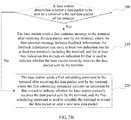
- the embodiments of the present invention propose the feedback method for an uplink channel: determining, by the base station, whether the data packet to be sent by the terminal is the last data packet of the terminal; and if yes, sending, by the base station, the first common message to the terminal after receiving the data packet sent by the terminal, where the first common message includes the feedback information, the feedback information can carry the at least two indication bits for the at least two terminals including the terminal, and the at least two indication bits include the indication bit that is used to indicate whether the base station correctly receives the data packet sent by the base station; or if no, sending, by the base station, the first scheduling command to the terminal after receiving the data packet sent by the terminal, where the first scheduling command includes the indication bit that is used to indicate whether the base station correctly receives the data packet sent by the terminal, and the first scheduling command is used to schedule the terminal to resend the data packet or send the next new data packet.
- the base station instead of always sending the first common message or the first scheduling command in any case, the base station determines, only after determining whether the data packet to be sent by the terminal is the last data packet of the terminal, whether a to-be-sent message including the indication bit that is used to indicate whether the base station correctly receives the data packet sent by the terminal is the first scheduling command or the first common message. Therefore, this avoids a waste of resources.
- the embodiments of the present invention further propose the feedback method for an uplink channel: receiving, by the base station, the data packet sent by the terminal, and determining whether the terminal needs to send the next data packet after sending the data packet or needs to retransmit the data packet; and when determining that the terminal needs to send the next data packet or needs to retransmit the data packet, sending, by the base station, the first common message to the terminal, where the first common message includes the feedback information, the feedback information can carry the at least two indication bits for the at least two terminals including the terminal, and the indication bit for the terminal in the at least two indication bits is used to indicate the uplink control information.
- the indication bit for the terminal in the at least two indication bits is used to indicate the uplink control information, but is not used to indicate ACK/NACK information for the data packet. Therefore, this avoids a waste of resources.
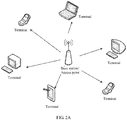
- the wireless communications system includes a base station or an access point, and a wireless terminal.
- the base station or the access point is configured to provide a communications service for at least one wireless terminal.
- the base station, the access point, or the wireless terminal may include at least one antenna.
- the wireless terminal may be a mobile station, a remote station, user equipment, or the like.
- a specific form of the wireless terminal may be a mobile phone, a tablet computer, a personal digital assistant, or other user equipment.
- an uplink feedback process is as follows:
- the base station instead of always sending the first common message or the first scheduling command in any case, the base station determines, only after determining whether the data packet to be sent by the terminal is the last data packet of the terminal, whether a to-be-sent message including the indication bit that is used to indicate whether the base station correctly receives the data packet sent by the terminal is the first scheduling command or the first common message. Therefore, this avoids a waste of resources.
- the indication bit that is included in the first scheduling command and that is used to indicate whether the base station correctly receives the data packet sent by the terminal may be an indication bit that directly indicates whether the base station correctly receives the data packet sent by the terminal, or may be an indication bit that indirectly indicates whether the base station correctly receives the data packet sent by the terminal.
- the indication bit indicates a number of a next data packet, and indicates, by using the number of the next data packet, whether the base station correctly receives the data packet sent by the terminal. If the indication bit indicates a previous data packet instead of a number of a next data packet, it indicates that the previous data packet is not correctly received.
- the feedback information may be a bitmap.
- a resource location in the feedback information is a bit location, and each bit location may be allocated to a terminal.
- the feedback information is carried on a section of a shared resource, and different terminals perform resource multiplexing through code division (CDMA).
- CDMA code division
- a resource location in the feedback information is corresponding to a code resource, and each code resource may be allocated to a terminal to carry ACK/NACK information or other signaling.
- the base station may use the following manner to determine whether the data packet to be sent by the terminal is the last data packet of the terminal:
- the method further includes the following operation:
- the method further includes the following operation:
- the feedback information is for four terminals.
- a first indication bit in the feedback information is corresponding to a terminal 1
- a second indication bit in the feedback information is corresponding to a terminal 2
- a third indication bit in the feedback information is corresponding to a terminal 3.
- the first indication bit in the feedback information indicates ACK/NACK information for a data packet of the terminal 1
- the second indication bit in the feedback information indicates ACK/NACK information for a data packet of the terminal 2
- the third indication bit in the feedback information indicates ACK/NACK information for a data packet of the terminal 3.
- the feedback information sent by the terminal may be for at least two terminals, the feedback information is possibly for only one terminal in actual application.
- the base station may use different indication manners to indicate to the terminal whether ACK/NACK information is determined based on the first common message or the first scheduling command.
- a flag bit in a scheduling command is used for indication. If the flag bit is "1", the terminal determines the ACK/NACK information based on the first scheduling command. If the flag bit is "0", the terminal determines the ACK/NACK information based on the first common message, and determines, according to a preset rule or an indication in the scheduling command, the indication bit corresponding to the terminal in the feedback information.
- different scheduling command formats are used for differentiation. The terminal determines a type of a received indication message through blind detection. If the type is a first indication message type, the terminal determines an ACK/NACK message by using the first common message. If the type is a second indication message type, the terminal determines the ACK/NACK information based on the first scheduling command.
- a process of feedback for an uplink channel is as follows:
- the base station instead of always sending the first common message or the first scheduling command in any case, the base station determines, only after determining whether the data packet to be sent by the terminal is the last data packet of the terminal, whether a to-be-sent message including the indication bit that is used to indicate whether the base station correctly receives the data packet sent by the terminal is the first scheduling command or the first common message. Therefore, this avoids a waste of resources.
- the indication bit that is included in the first scheduling command and that is used to indicate whether the base station correctly receives the data packet sent by the terminal may be an indication bit that directly indicates whether the base station correctly receives the data packet sent by the terminal, or may be an indication bit that indirectly indicates whether the base station correctly receives the data packet sent by the terminal.
- the indication bit indicates a number of a next data packet, and indicates, by using the number of the next data packet, whether the base station correctly receives the data packet sent by the terminal.
- the feedback information may be a bitmap.
- a resource location in the feedback information is a bit location, and each bit location may be allocated to a terminal.
- the feedback information is carried on a section of a shared resource, and different terminals perform resource multiplexing through code division (CDMA).
- CDMA code division
- a resource location in the feedback information is corresponding to a code resource, and each code resource may be allocated to a terminal to carry ACK/NACK information or other signaling.
- the method before the receiving, by a terminal, a second scheduling command sent by a base station to the terminal, the method further includes the following operation: feeding back, by the terminal, a buffer status report to the base station.
- the second scheduling command is used to indicate an uplink resource that is allocated to the terminal for sending the data packet; and the method further includes the following operation: sending, by the terminal, the data packet to the base station on the uplink resource allocated to the terminal in the second scheduling command.
- the feedback information is for four terminals.
- a first indication bit in the feedback information is corresponding to a terminal 1
- a second indication bit in the feedback information is corresponding to a terminal 2
- a third indication bit in the feedback information is corresponding to a terminal 3.
- the first indication bit in the feedback information indicates ACK/NACK information for a data packet of the terminal 1
- the second indication bit in the feedback information indicates ACK/NACK information for a data packet of the terminal 2
- the third indication bit in the feedback information indicates ACK/NACK information for a data packet of the terminal 3.
- the feedback information sent by the terminal may be for at least two terminals, the feedback information is possibly for only one terminal in actual application.
- the base station may use different indication manners to indicate to the terminal whether ACK/NACK information is determined based on the first common message or the first scheduling command.
- a flag bit in a scheduling command is used for indication. If the flag bit is "1", the terminal determines the ACK/NACK information based on the first scheduling command. If the flag bit is "0", the terminal determines the ACK/NACK information based on the first common message, and determines, according to a preset rule or an indication in the scheduling command, the indication bit corresponding to the terminal in the first common message.
- different scheduling command formats are used for differentiation. The terminal determines a type of a received indication message through blind detection. If the type is a first indication message type, the terminal determines an ACK/NACK message by using the first common message. If the type is a second indication message type, the terminal determines the ACK/NACK information based on the first scheduling command.
- a process of feedback for an uplink channel is as follows:
- the method further includes the following operation: sending, by the base station, a first scheduling command to the terminal, where the first scheduling command is used to schedule the terminal to resend the data packet or send the next data packet, and the first scheduling command includes an indication bit that is used to indicate whether the base station correctly receives the data packet sent by the terminal.
- the foregoing describes a case in which the base station determines that the terminal needs to send the next data packet after sending the data packet or needs to retransmit the data packet. In actual application, there is possibly a case in which the base station determines that the terminal does not need to send any next data packet after sending the data packet and does not need to retransmit the data packet.
- the method further includes the following operation: when the base station determines that the terminal does not need to send any next data packet after sending the data packet and does not need to retransmit the data packet, sending, by the base station, the first common message to the terminal, where the first common message includes the feedback information, the feedback information can carry the at least two indication bits for the at least two terminals including the terminal, and the indication bit for the terminal in the at least two indication bits is used to indicate whether the base station correctly receives the data packet.
- the base station may use the following manner to determine that the terminal does not need to send any next data packet after sending the data packet: determining, by the base station based on an indication identifier carried in the data packet, that the terminal does not need to send any next data packet after sending the data packet, where the indication identifier indicates that the terminal does not need to send any next data packet after sending the data packet.
- the method before the receiving, by a base station, a data packet sent by a terminal, the method further includes the following operation:
- the feedback information may be a bitmap.
- a resource location in the feedback information is a bit location, and each bit location may be allocated to a terminal.
- the feedback information is carried on a section of a shared resource, and different terminals perform resource multiplexing through code division (CDMA).
- CDMA code division
- a resource location in the feedback information is corresponding to a code resource, and each code resource may be allocated to a terminal to carry ACK/NACK information or other signaling.
- the uplink control information includes but is not limited to an uplink power control command.
- a process of feedback for an uplink channel is as follows:
- the method further includes the following operation: after sending the data packet, receiving, by the terminal, a first scheduling command sent by the base station, where the first scheduling command is used to schedule the terminal to resend the data packet or send the next data packet, and the first scheduling command includes an indication bit that is used to indicate whether the base station correctly receives the data packet sent by the terminal.
- the data packet carries an indication identifier, and the indication identifier indicates that the terminal does not need to send any next data packet after sending the data packet.
- the method further includes the following operations:
- the method further includes the following operations:
- the terminal determines, based on the indication bit for the terminal in the at least two indication bits, whether the base station correctly receives the data packet sent by the terminal.
- the feedback information may be a bitmap.
- a resource location in the feedback information is a bit location, and each bit location may be allocated to a terminal.
- the feedback information is carried on a section of a shared resource, and different terminals perform resource multiplexing through code division (CDMA).
- CDMA code division
- a resource location in the feedback information is corresponding to a code resource, and each code resource may be allocated to a terminal to carry ACK/NACK information or other signaling.
- the uplink control information includes but is not limited to an uplink power control command.
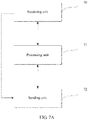
- an embodiment of the present invention provides a base station, including a processing unit 60, a receiving unit 61, and a sending unit 62.
- the processing unit 60 is configured to determine whether a data packet to be sent by a terminal is the last data packet of the terminal.
- the receiving unit 61 is configured to receive the data packet sent by the terminal.
- the sending unit 62 is configured to send a first common message to the terminal after the receiving unit 61 receives the data packet sent by the terminal, where the first common message includes feedback information, the feedback information can carry at least two indication bits for at least two terminals including the terminal, and the at least two indication bits include an indication bit that is used to indicate whether the base station correctly receives the data packet sent by the terminal.
- the sending unit 62 is further configured to send a first scheduling command to the terminal after the receiving unit 61 receives the data packet sent by the terminal, where the first scheduling command includes an indication bit that is used to indicate whether the base station correctly receives the data packet sent by the terminal, and the first scheduling command is used to schedule the terminal to resend the data packet or send a next new data packet.
- determining, by the processing unit 60, whether the data packet to be sent by the terminal is the last data packet of the terminal is specifically:
- the sending unit 62 is further configured to send a second scheduling command to the terminal, where the second scheduling command is used to indicate an uplink resource that is allocated to the terminal for sending the data packet.
- the receiving unit 61 is further configured to receive the data packet that is sent by the terminal on the uplink resource.
- the sending unit 62 is further configured to send the second scheduling command to the terminal, where the second scheduling command includes feedback resource indication information.
- the feedback resource indication information instructs the terminal to obtain the feedback information from the first common message after sending the data packet, and indicates a location, in the at least two indication bits, of the indication bit that is used to indicate whether the base station correctly receives the data packet sent by the terminal.
- the processing unit 60 determines that the data packet to be sent by the terminal is not the last data packet of the terminal, the feedback resource indication information instructs the terminal to obtain, from the first scheduling command after sending the data packet, the indication bit that is used to indicate whether the base station correctly receives the data packet sent by the terminal.
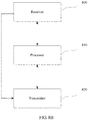
- an embodiment of the present invention further provides a base station, including a processor 600, a receiver 610, and a transmitter 620.
- the processor 600, the receiver 610, and the transmitter 620 all are processors including a plurality of integrated circuit elements.
- the processor 600 is configured to determine whether a data packet to be sent by a terminal is the last data packet of the terminal.
- the receiver 610 is configured to receive the data packet sent by the terminal.
- the transmitter 620 is configured to send a first common message to the terminal after the receiver 610 receives the data packet sent by the terminal, where the first common message includes feedback information, the feedback information can carry at least two indication bits for at least two terminals including the terminal, and the at least two indication bits include an indication bit that is used to indicate whether the base station correctly receives the data packet sent by the terminal.
- the transmitter 620 is further configured to send a first scheduling command to the terminal after the receiver 610 receives the data packet sent by the terminal, where the first scheduling command includes an indication bit that is used to indicate whether the base station correctly receives the data packet sent by the terminal, and the first scheduling command is used to schedule the terminal to resend the data packet or send a next new data packet.
- determining, by the processor 600, whether the data packet to be sent by the terminal is the last data packet of the terminal is specifically:
- the transmitter 620 is further configured to send a second scheduling command to the terminal, where the second scheduling command is used to indicate an uplink resource that is allocated to the terminal for sending the data packet.
- the receiver 610 is further configured to receive the data packet that is sent by the terminal on the uplink resource.
- the transmitter 620 is further configured to send the second scheduling command to the terminal, where the second scheduling command includes feedback resource indication information.
- the feedback resource indication information instructs the terminal to obtain the feedback information from the first common message after sending the data packet, and indicates a location, in the at least two indication bits, of the indication bit that is used to indicate whether the base station correctly receives the data packet sent by the terminal.
- the feedback resource indication information instructs the terminal to obtain, from the first scheduling command after sending the data packet, the indication bit that is used to indicate whether the base station correctly receives the data packet sent by the terminal.
- an embodiment of the present invention provides a terminal, including a receiving unit 70 and a processing unit 71.
- the receiving unit 70 is configured to receive a second scheduling command sent by a base station to the terminal, where the second scheduling command includes feedback resource indication information.
- the processing unit 71 is configured to: if the feedback resource indication information instructs the terminal to obtain feedback information from a first common message after sending a data packet, and indicates a location, in at least two indication bits, of an indication bit that is used to indicate whether the base station correctly receives the data packet sent by the terminal, obtain, from the corresponding indication bit of the at least two indication bits, an indication about whether the base station correctly receives the data packet, to determine whether the base station correctly receives the data packet sent by the terminal, where the feedback information can carry the at least two indication bits for at least two terminals including the terminal, and the at least two indication bits include the indication bit that is used to indicate whether the base station correctly receives the data packet sent by the terminal.
- the processing unit 71 is further configured to: if the feedback resource indication information instructs the terminal to obtain, from a first scheduling command after sending the data packet, an indication bit that is used to indicate whether the base station correctly receives the data packet sent by the terminal, obtain, from the corresponding indication bit in the first scheduling command, an indication about whether the base station correctly receives the data packet sent by the terminal, to determine whether the base station correctly receives the data packet sent by the terminal, where the first scheduling command includes the indication bit that is used to indicate whether the base station correctly receives the data packet sent by the terminal, and the first scheduling command is used to schedule the terminal to resend the data packet or send a next new data packet.
- the terminal further includes a sending unit 72, configured to feed back a buffer status report to the base station.
- the second scheduling command is used to indicate an uplink resource that is allocated to the terminal for sending the data packet.
- the sending unit 72 is further configured to send the data packet to the base station on the uplink resource allocated to the terminal in the second scheduling command.
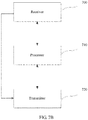
- an embodiment of the present invention provides a terminal, including a receiver 700 and a processor 710.
- the receiver 700 and the processor 710 both are processors including a plurality of integrated circuit elements.
- the receiver 700 is configured to receive a second scheduling command sent by a base station to the terminal, where the second scheduling command includes feedback resource indication information.
- the processor 710 is configured to: if the feedback resource indication information instructs the terminal to obtain feedback information from a first common message after sending a data packet, and indicates a location, in at least two indication bits, of an indication bit that is used to indicate whether the base station correctly receives the data packet sent by the terminal, obtain, from the corresponding indication bit of the at least two indication bits, an indication about whether the base station correctly receives the data packet, to determine whether the base station correctly receives the data packet sent by the terminal, where the feedback information can carry the at least two indication bits for at least two terminals including the terminal, and the at least two indication bits include the indication bit that is used to indicate whether the base station correctly receives the data packet sent by the terminal.
- the processor 710 is further configured to: if the feedback resource indication information instructs the terminal to obtain, from a first scheduling command after sending the data packet, an indication bit that is used to indicate whether the base station correctly receives the data packet sent by the terminal, obtain, from the corresponding indication bit in the first scheduling command, an indication about whether the base station correctly receives the data packet sent by the terminal, to determine whether the base station correctly receives the data packet sent by the terminal, where the first scheduling command includes the indication bit that is used to indicate whether the base station correctly receives the data packet sent by the terminal, and the first scheduling command is used to schedule the terminal to resend the data packet or send a next new data packet.
- the terminal further includes a transmitter 720, configured to feed back a buffer status report to the base station.
- the transmitter 720 may also be a processor including a plurality of integrated circuit elements.
- the second scheduling command is used to indicate an uplink resource that is allocated to the terminal for sending the data packet.
- the transmitter 720 is further configured to send the data packet to the base station on the uplink resource allocated to the terminal in the second scheduling command.
- an embodiment of the present invention further provides a base station, including a receiving unit 80, a processing unit 81, and a sending unit 82.
- the receiving unit 80 is configured to receive a data packet sent by a terminal.
- the processing unit 81 is configured to determine whether the terminal needs to send a next data packet after sending the data packet or needs to retransmit the data packet.
- the sending unit 82 is configured to: when the processing unit 81 determines that the terminal needs to send the next data packet or needs to retransmit the data packet, send a first common message to the terminal, where the first common message includes feedback information, the feedback information can carry at least two indication bits for at least two terminals including the terminal, and an indication bit for the terminal in the at least two indication bits is used to indicate uplink control information.
- the sending unit 82 is further configured to: when the processing unit 81 determines that the terminal needs to send the next data packet after sending the data packet or needs to retransmit the data packet, send a first scheduling command to the terminal, where the first scheduling command is used to schedule the terminal to resend the data packet or send the next data packet, and the first scheduling command includes an indication bit that is used to indicate whether the base station correctly receives the data packet sent by the terminal.
- the sending unit 82 is further configured to: when the processing unit 81 determines that the terminal does not need to send any next data packet after sending the data packet and does not need to retransmit the data packet, send the first common message to the terminal, where the first common message includes the feedback information, the feedback information can carry the at least two indication bits for the at least two terminals including the terminal, and the indication bit for the terminal in the at least two indication bits is used to indicate whether the base station correctly receives the data packet.
- the determining, by the processing unit 81, that the terminal does not need to send any next data packet after sending the data packet is specifically: determining, based on an indication identifier carried in the data packet, that the terminal does not need to send any next data packet after sending the data packet, where the indication identifier indicates that the terminal does not need to send any next data packet after sending the data packet.
- the sending unit 82 is further configured to send a second scheduling command to the terminal, where the second scheduling command is used to indicate an uplink resource that is allocated to the terminal for sending the data packet, and the second scheduling command includes feedback resource indication information.
- the feedback resource indication information instructs the terminal to obtain the feedback information from the first common message after sending the data packet, and indicates a location, in the at least two indication bits, of the indication bit that is used to indicate whether the base station correctly receives the data packet sent by the terminal.
- the processing unit 81 determines that the data packet to be sent by the terminal is not the last data packet of the terminal, the feedback resource indication information instructs the terminal to obtain, from the first scheduling command after sending the data packet, the indication bit that is used to indicate whether the base station correctly receives the data packet sent by the terminal.
- an embodiment of the present invention further provides a base station, including a receiver 800, a processor 810, and a transmitter 820.
- the receiver 800, the processor 810, and the transmitter 820 all are processors including a plurality of integrated circuit elements.
- the receiver 800 is configured to receive a data packet sent by a terminal.
- the processor 810 is configured to determine whether the terminal needs to send a next data packet after sending the data packet or needs to retransmit the data packet.
- the transmitter 820 is configured to: when the processor 810 determines that the terminal needs to send the next data packet or needs to retransmit the data packet, send a first common message to the terminal, where the first common message includes feedback information, the feedback information can carry at least two indication bits for at least two terminals including the terminal, and an indication bit for the terminal in the at least two indication bits is used to indicate uplink control information.
- the transmitter 820 is further configured to: when the processor 810 determines that the terminal needs to send the next data packet after sending the data packet or needs to retransmit the data packet, send a first scheduling command to the terminal, where the first scheduling command is used to schedule the terminal to resend the data packet or send the next data packet, and the first scheduling command includes an indication bit that is used to indicate whether the base station correctly receives the data packet sent by the terminal.
- the transmitter 820 is further configured to: when the processor 810 determines that the terminal does not need to send any next data packet after sending the data packet and does not need to retransmit the data packet, send the first common message to the terminal, where the first common message includes the feedback information, the feedback information can carry the at least two indication bits for the at least two terminals including the terminal, and the indication bit for the terminal in the at least two indication bits is used to indicate whether the base station correctly receives the data packet.
- the determining, by the processor 810, that the terminal does not need to send any next data packet after sending the data packet is specifically: determining, based on an indication identifier carried in the data packet, that the terminal does not need to send any next data packet after sending the data packet, where the indication identifier indicates that the terminal does not need to send any next data packet after sending the data packet.
- the transmitter 820 is further configured to send a second scheduling command to the terminal, where the second scheduling command is used to indicate an uplink resource that is allocated to the terminal for sending the data packet, and the second scheduling command includes feedback resource indication information.
- the feedback resource indication information instructs the terminal to obtain the feedback information from the first common message after sending the data packet, and indicates a location, in the at least two indication bits, of the indication bit that is used to indicate whether the base station correctly receives the data packet sent by the terminal.
- the feedback resource indication information instructs the terminal to obtain, from the first scheduling command after sending the data packet, the indication bit that is used to indicate whether the base station correctly receives the data packet sent by the terminal.
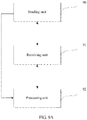
- an embodiment of the present invention further provides a terminal, including a sending unit 90, a receiving unit 91, and a processing unit 92.
- the sending unit 90 is configured to send a data packet to a base station.
- the receiving unit 91 is configured to: when a next data packet needs to be sent after the data packet is sent, receive a first common message sent by the base station, where the first common message includes feedback information, the feedback information can carry at least two indication bits for at least two terminals including the terminal, and an indication bit for the terminal in the at least two indication bits is used to indicate uplink control information.
- the processing unit 92 is configured to determine the uplink control information based on the indication bit for the terminal in the at least two indication bits.
- the receiving unit 91 is further configured to: after the sending unit 90 sends the data packet, receive a first scheduling command sent by the base station, where the first scheduling command is used to schedule the terminal to resend the data packet or send the next data packet, and the first scheduling command includes an indication bit that is used to indicate whether the base station correctly receives the data packet sent by the terminal.
- the data packet carries an indication identifier, and the indication identifier indicates that the terminal does not need to send any next data packet after sending the data packet.
- the sending unit 90 is further configured to send the data packet to the base station.
- the processing unit 92 is further configured to: when the sending unit 90 does not need to send any next data packet after sending the data packet, continuously monitor a used-for-scheduling control channel in a preset time period after the data packet is sent.
- the processing unit 92 is further configured to: if it is determined that the first scheduling command sent to the terminal is detected in the preset time period, determine, based on the indication bit that is in the first scheduling command and that is used to indicate whether the base station correctly receives the data packet sent by the terminal, whether the base station correctly receives the data packet, where the first scheduling command is used to schedule the terminal to resend the data packet or send the next data packet, and the first scheduling command includes the indication bit that is used to indicate whether the base station correctly receives the data packet sent by the terminal.
- the receiving unit 91 is further configured to receive the first common message sent by the base station, where the first common message includes the feedback information, the feedback information can carry the at least two indication bits for the at least two terminals including the terminal, and the indication bit for the terminal in the at least two indication bits is used to indicate whether the base station correctly receives the data packet.
- the processing unit 92 is further configured to determine uplink control information based on the indication bit for the terminal in the at least two indication bits.
- processing unit 92 is further configured to: if it is determined that the first scheduling command sent to the terminal is not detected in the preset time period, determine, based on the indication bit for the terminal in the at least two indication bits, whether the base station correctly receives the data packet sent by the terminal.
- FIG. 9B is another schematic diagram of a terminal according to an embodiment of the present invention.
- the terminal includes a transmitter 900, a receiver 910, and a processor 920.
- the transmitter 900, the receiver 910, and the processor 920 are processors including a plurality of integrated circuit elements.
- the transmitter 900, the receiver 910, and the processor 920 are processors including a plurality of integrated circuit elements.
- the embodiments of the present invention may be provided as a method, a system, or a computer program product. Therefore, the present invention may use a form of hardware-only embodiments, software-only embodiments, or embodiments with a combination of software and hardware. Moreover, the present invention may use a form of a computer program product that is implemented on one or more computer-usable storage media (including but not limited to a magnetic disk memory, a CD-ROM, an optical memory, and the like) that include computer-usable program code.
- computer-usable storage media including but not limited to a magnetic disk memory, a CD-ROM, an optical memory, and the like
- These computer program instructions may be provided for a general-purpose computer, a dedicated computer, an embedded processor, or a processor of any other programmable data processing device to generate a machine, so that the instructions executed by the computer or the processor of any other programmable data processing device generate an apparatus for implementing a specified function in one or more processes in the flowcharts and/or in one or more blocks in the block diagrams.
- These computer program instructions may alternatively be stored in a computer readable memory that can instruct a computer or any other programmable data processing device to work in a specific manner, so that the instructions stored in the computer readable memory generate an artifact that includes an instruction apparatus.
- the instruction apparatus implements a specified function in one or more processes in the flowcharts and/or in one or more blocks in the block diagrams.
- These computer program instructions may alternatively be loaded onto a computer or another programmable data processing device, so that a series of operations and steps are performed on the computer or the another programmable device, thereby generating computer-implemented processing. Therefore, the instructions executed on the computer or the another programmable device provide steps for implementing a specified function in one or more processes in the flowcharts and/or in one or more blocks in the block diagrams.
Landscapes
- Engineering & Computer Science (AREA)
- Computer Networks & Wireless Communication (AREA)
- Signal Processing (AREA)
- Mobile Radio Communication Systems (AREA)
Applications Claiming Priority (1)
| Application Number | Priority Date | Filing Date | Title |
|---|---|---|---|
| PCT/CN2016/071331 WO2017124297A1 (fr) | 2016-01-19 | 2016-01-19 | Procédé et dispositif de rétroaction pour un canal de liaison montante |
Publications (2)
| Publication Number | Publication Date |
|---|---|
| EP3399681A1 true EP3399681A1 (fr) | 2018-11-07 |
| EP3399681A4 EP3399681A4 (fr) | 2018-12-26 |
Family
ID=59361130
Family Applications (1)
| Application Number | Title | Priority Date | Filing Date |
|---|---|---|---|
| EP16885570.8A Withdrawn EP3399681A4 (fr) | 2016-01-19 | 2016-01-19 | Procédé et dispositif de rétroaction pour un canal de liaison montante |
Country Status (4)
| Country | Link |
|---|---|
| US (1) | US20180324822A1 (fr) |
| EP (1) | EP3399681A4 (fr) |
| CN (1) | CN108886433A (fr) |
| WO (1) | WO2017124297A1 (fr) |
Families Citing this family (2)
| Publication number | Priority date | Publication date | Assignee | Title |
|---|---|---|---|---|
| US12177786B2 (en) | 2019-10-03 | 2024-12-24 | Qualcomm Incorporated | Power control for hybrid automatic repeat request feedback signal in random access |
| CN117750519A (zh) * | 2022-09-22 | 2024-03-22 | 华为技术有限公司 | 一种通信方法、网络设备和终端设备 |
Family Cites Families (41)
| Publication number | Priority date | Publication date | Assignee | Title |
|---|---|---|---|---|
| US6272117B1 (en) * | 1998-02-20 | 2001-08-07 | Gwcom, Inc. | Digital sensing multi access protocol |
| US7333439B2 (en) * | 2000-08-24 | 2008-02-19 | Matsushita Electric Industrial Co., Ltd. | Sending/receiving method, and device for the same |
| US7346314B2 (en) * | 2003-08-15 | 2008-03-18 | Telefonaktiebolaget Lm Ericsson (Publ) | Forward link transmit power control based on observed command response |
| FI20045244A0 (fi) * | 2004-06-28 | 2004-06-28 | Nokia Corp | Lähetystehon ohjaus |
| JP4367349B2 (ja) * | 2005-01-31 | 2009-11-18 | ソニー株式会社 | 通信装置、通信方法、およびプログラム |
| JP4680860B2 (ja) * | 2006-09-29 | 2011-05-11 | 富士通株式会社 | データ通信方法 |
| JP4898918B2 (ja) * | 2006-10-02 | 2012-03-21 | エルジー エレクトロニクス インコーポレイティド | 多重搬送波システムに用いられる再伝送方法 |
| CN101179363B (zh) * | 2006-11-06 | 2010-09-29 | 华为技术有限公司 | 一种数据状态信息反馈的方法和接收方设备 |
| ES2954875T3 (es) * | 2007-08-03 | 2023-11-27 | Wireless Future Tech Inc | Agregación de acuses de recibo y acuses de recibo negativos de estaciones móviles en redes inalámbricas |
| JP2009049461A (ja) * | 2007-08-13 | 2009-03-05 | Toshiba Corp | 無線通信装置 |
| WO2009035904A2 (fr) * | 2007-09-11 | 2009-03-19 | Nextwave Broadband Inc. | Allocation de ressources permanente |
| TWI387256B (zh) * | 2008-04-15 | 2013-02-21 | Innovative Sonic Ltd | 改善傳輸時間間隔集束傳輸之方法及通訊裝置 |
| CN101741530B (zh) * | 2008-11-06 | 2013-11-13 | 宏达国际电子股份有限公司 | 传输时间间隔集束机制的上链路传输的方法及相关装置 |
| US8929282B2 (en) * | 2008-11-06 | 2015-01-06 | Htc Corporation | Method and apparatus for TTI bundling transmission in a wireless communications system |
| EP2437561B1 (fr) * | 2009-05-26 | 2018-07-04 | Sharp Kabushiki Kaisha | Système de communication mobile, appareil de station de base, appareil de station mobile et procédé de communication mobile |
| US20100304751A1 (en) * | 2009-06-01 | 2010-12-02 | Samsung Electronics Co., Ltd. | System and method for uplink coordinated multipoint reception operation |
| CN101998539B (zh) * | 2009-08-18 | 2013-07-31 | 电信科学技术研究院 | Ack/nack资源预留的方法、系统和设备 |
| CN101826949B (zh) * | 2010-04-01 | 2015-08-12 | 中兴通讯股份有限公司 | 载波聚合场景下非周期反馈的方法和系统 |
| CN103036660B (zh) * | 2010-04-30 | 2015-09-16 | 北京三星通信技术研究有限公司 | 一种反馈数据接收状况的方法 |
| US20130088996A1 (en) * | 2010-06-08 | 2013-04-11 | Mitsubishi Electric Corporation | Radio communication system and terminal apparatus |
| JP5932809B2 (ja) * | 2010-10-11 | 2016-06-08 | エルジー エレクトロニクス インコーポレイティド | 制御情報を送信する方法及びそのための装置 |
| CN102457363B (zh) * | 2010-10-18 | 2015-01-14 | 电信科学技术研究院 | Ack/nack反馈信息的传输方法和设备 |
| GB2484922B (en) * | 2010-10-25 | 2014-10-08 | Sca Ipla Holdings Inc | Infrastructure equipment and method |
| US9775135B2 (en) * | 2011-03-18 | 2017-09-26 | Lg Electronics Inc. | Method and device for communicating device-to-device |
| CN103095395B (zh) * | 2011-11-02 | 2017-09-22 | 中兴通讯股份有限公司 | Pucch的资源配置方法、传输方法、装置和系统 |
| CN103095429A (zh) * | 2011-11-04 | 2013-05-08 | 华为技术有限公司 | 接收端和发送端数据确认的实现方法及装置 |
| CN103178942B (zh) * | 2011-12-21 | 2016-08-03 | 华为技术有限公司 | 信令传输方法、基站和用户设备 |
| CN102820960B (zh) * | 2012-01-09 | 2014-08-20 | 华为终端有限公司 | 实现混合自动重传请求的方法、用户设备和基站 |
| CN103973391A (zh) * | 2013-01-24 | 2014-08-06 | 北京三星通信技术研究有限公司 | 一种汇报信道状态信息的方法及设备 |
| CN104125045B (zh) * | 2013-04-25 | 2017-12-15 | 上海贝尔股份有限公司 | 一种用于传输ack/nack消息的方法 |
| US9661685B2 (en) * | 2013-05-08 | 2017-05-23 | Panasonic Intellectual Property Management Co., Ltd. | Wireless communication system and communication device therefor |
| CN104640214B (zh) * | 2013-11-15 | 2018-05-18 | 华为技术有限公司 | 传输数据的方法、基站和用户设备 |
| CN104811284B (zh) * | 2014-01-29 | 2019-05-31 | 上海诺基亚贝尔股份有限公司 | 为mtc ue进行上行链路传输反馈的方法和装置 |
| CN106031071B (zh) * | 2014-02-14 | 2019-08-06 | Lg电子株式会社 | 用于在无线通信系统中发送harq-ack的方法和设备 |
| KR102319700B1 (ko) * | 2014-05-02 | 2021-11-01 | 삼성전자 주식회사 | 무선 통신 시스템에서 선택적 채널 피드백 방법 및 장치 |
| EP3188536B1 (fr) * | 2014-08-29 | 2021-04-14 | Kabushiki Kaisha Toshiba | Circuit intégré pour communication sans fil, terminal de communication sans fil et procédé de communication sans fil |
| WO2016045011A1 (fr) * | 2014-09-24 | 2016-03-31 | Telefonaktiebolaget L M Ericsson (Publ) | Procédé et station de base pour planification d'équipement utilisateur, et procédé et équipement utilisateur pour transmission harq |
| CN104507170B (zh) * | 2014-11-21 | 2018-10-30 | 上海华为技术有限公司 | 一种资源调度方法和装置 |
| EP4258578B1 (fr) * | 2015-05-21 | 2025-07-16 | Apple Inc. | Transmission de demande de planification à faible latence non basée sur une contention |
| WO2017070393A1 (fr) * | 2015-10-20 | 2017-04-27 | Marvell World Trade Ltd. | Unité de données d'accusé de réception pour de multiples unités de données de liaison montante |
| US10772124B2 (en) * | 2016-07-11 | 2020-09-08 | Lg Electronics Inc. | Method for transmitting or receiving signal in wireless communication system and apparatus for same |
-
2016
- 2016-01-19 EP EP16885570.8A patent/EP3399681A4/fr not_active Withdrawn
- 2016-01-19 WO PCT/CN2016/071331 patent/WO2017124297A1/fr not_active Ceased
- 2016-01-19 CN CN201680079118.5A patent/CN108886433A/zh active Pending
-
2018
- 2018-07-19 US US16/039,357 patent/US20180324822A1/en not_active Abandoned
Also Published As
| Publication number | Publication date |
|---|---|
| US20180324822A1 (en) | 2018-11-08 |
| WO2017124297A1 (fr) | 2017-07-27 |
| EP3399681A4 (fr) | 2018-12-26 |
| CN108886433A (zh) | 2018-11-23 |
Similar Documents
| Publication | Publication Date | Title |
|---|---|---|
| US9544102B2 (en) | DL scheduling and HARQ-ACK feedback for DL transmissions in flexible-TDD systems without and with cross-subframe scheduling | |
| US20200328850A1 (en) | Method and terminal for data transmission | |
| CN106211345B (zh) | 上行控制信号的发送方法及装置 | |
| EP3563620B1 (fr) | Procédés, appareil et systèmes permettant de déterminer la taille d'un signal de rétroaction dans une communication sans fil | |
| US10873420B2 (en) | Method and terminal for data transmission | |
| JP2023154039A (ja) | 通信方法、送信装置、ネットワーク装置、およびプログラム | |
| KR20190005956A (ko) | Harq의 피드백 정보 전송 방법, ue, 기지국과 시스템 | |
| EP4072166A1 (fr) | Procédé, dispositif et système de transmission de données | |
| CN116671222B (zh) | 用于接收数据的方法与装置和用于发送数据的方法与装置 | |
| US10424197B2 (en) | Apparatus, computer program, and method for supporting vehicle-to-vehicle communication utilizing a base station | |
| CN106304345A (zh) | 一种上行资源分配方法、基站和用户终端 | |
| CN103490864B (zh) | 一种harq‑ack消息的传输及其控制方法、装置 | |
| US10779313B2 (en) | Uplink data transmission method and apparatus | |
| EP3605899B1 (fr) | Dispositif et procédé de traitement d'informations | |
| EP3386254A1 (fr) | Procédé de programmation inter-porteuse, procédé de rétroaction et appareil | |
| CN104735720B (zh) | 一种机器类通信业务信息的传输方法、基站、终端和系统 | |
| EP3609107A1 (fr) | Procédé, appareil et système de transmission de données | |
| US20200178285A1 (en) | Acknowledgement information transmission method, terminal device, and network device | |
| US10492178B2 (en) | Control information transmission method, base station, and user equipment | |
| US20180324822A1 (en) | Feedback method for uplink channel, and apparatus | |
| JPWO2015022736A1 (ja) | 通信システム、基地局、無線装置、通信方法 | |
| EP3972164A1 (fr) | Procédé et appareil pour transmettre des informations de réponse | |
| CN110267352B (zh) | 用户终端调度方法及装置 | |
| CN102404788B (zh) | 一种传输下行动态调度信息的方法、系统和设备 | |
| EP4277407A1 (fr) | Procédé et appareil de renvoi d'acquittement de demande de répétition automatique hybride, et support de stockage |
Legal Events
| Date | Code | Title | Description |
|---|---|---|---|
| STAA | Information on the status of an ep patent application or granted ep patent |
Free format text: STATUS: THE INTERNATIONAL PUBLICATION HAS BEEN MADE |
|
| PUAI | Public reference made under article 153(3) epc to a published international application that has entered the european phase |
Free format text: ORIGINAL CODE: 0009012 |
|
| STAA | Information on the status of an ep patent application or granted ep patent |
Free format text: STATUS: REQUEST FOR EXAMINATION WAS MADE |
|
| 17P | Request for examination filed |
Effective date: 20180803 |
|
| AK | Designated contracting states |
Kind code of ref document: A1 Designated state(s): AL AT BE BG CH CY CZ DE DK EE ES FI FR GB GR HR HU IE IS IT LI LT LU LV MC MK MT NL NO PL PT RO RS SE SI SK SM TR |
|
| AX | Request for extension of the european patent |
Extension state: BA ME |
|
| A4 | Supplementary search report drawn up and despatched |
Effective date: 20181127 |
|
| RIC1 | Information provided on ipc code assigned before grant |
Ipc: H04L 1/18 20060101AFI20181121BHEP Ipc: H04W 72/12 20090101ALI20181121BHEP Ipc: H04L 1/06 20060101ALI20181121BHEP |
|
| DAV | Request for validation of the european patent (deleted) | ||
| DAX | Request for extension of the european patent (deleted) | ||
| STAA | Information on the status of an ep patent application or granted ep patent |
Free format text: STATUS: THE APPLICATION HAS BEEN WITHDRAWN |
|
| 18W | Application withdrawn |
Effective date: 20200720 |