EP3400670B1 - Procédé et appareil d'attribution de ressources d'accusé de réception - Google Patents
Procédé et appareil d'attribution de ressources d'accusé de réception Download PDFInfo
- Publication number
- EP3400670B1 EP3400670B1 EP17701035.2A EP17701035A EP3400670B1 EP 3400670 B1 EP3400670 B1 EP 3400670B1 EP 17701035 A EP17701035 A EP 17701035A EP 3400670 B1 EP3400670 B1 EP 3400670B1
- Authority
- EP
- European Patent Office
- Prior art keywords
- control channel
- resource
- ack
- acknowledgement
- physical uplink
- Prior art date
- Legal status (The legal status is an assumption and is not a legal conclusion. Google has not performed a legal analysis and makes no representation as to the accuracy of the status listed.)
- Active
Links
Images


Classifications
-
- H—ELECTRICITY
- H04—ELECTRIC COMMUNICATION TECHNIQUE
- H04L—TRANSMISSION OF DIGITAL INFORMATION, e.g. TELEGRAPHIC COMMUNICATION
- H04L1/00—Arrangements for detecting or preventing errors in the information received
- H04L1/12—Arrangements for detecting or preventing errors in the information received by using return channel
- H04L1/16—Arrangements for detecting or preventing errors in the information received by using return channel in which the return channel carries supervisory signals, e.g. repetition request signals
- H04L1/18—Automatic repetition systems, e.g. Van Duuren systems
- H04L1/1812—Hybrid protocols; Hybrid automatic repeat request [HARQ]
-
- H—ELECTRICITY
- H04—ELECTRIC COMMUNICATION TECHNIQUE
- H04L—TRANSMISSION OF DIGITAL INFORMATION, e.g. TELEGRAPHIC COMMUNICATION
- H04L1/00—Arrangements for detecting or preventing errors in the information received
- H04L1/12—Arrangements for detecting or preventing errors in the information received by using return channel
- H04L1/16—Arrangements for detecting or preventing errors in the information received by using return channel in which the return channel carries supervisory signals, e.g. repetition request signals
- H04L1/18—Automatic repetition systems, e.g. Van Duuren systems
- H04L1/1829—Arrangements specially adapted for the receiver end
- H04L1/1861—Physical mapping arrangements
-
- H—ELECTRICITY
- H04—ELECTRIC COMMUNICATION TECHNIQUE
- H04L—TRANSMISSION OF DIGITAL INFORMATION, e.g. TELEGRAPHIC COMMUNICATION
- H04L5/00—Arrangements affording multiple use of the transmission path
- H04L5/003—Arrangements for allocating sub-channels of the transmission path
- H04L5/0053—Allocation of signalling, i.e. of overhead other than pilot signals
- H04L5/0055—Physical resource allocation for ACK/NACK
-
- H—ELECTRICITY
- H04—ELECTRIC COMMUNICATION TECHNIQUE
- H04W—WIRELESS COMMUNICATION NETWORKS
- H04W36/00—Hand-off or reselection arrangements
- H04W36/0005—Control or signalling for completing the hand-off
-
- H—ELECTRICITY
- H04—ELECTRIC COMMUNICATION TECHNIQUE
- H04W—WIRELESS COMMUNICATION NETWORKS
- H04W76/00—Connection management
- H04W76/20—Manipulation of established connections
- H04W76/27—Transitions between radio resource control [RRC] states
-
- H—ELECTRICITY
- H04—ELECTRIC COMMUNICATION TECHNIQUE
- H04L—TRANSMISSION OF DIGITAL INFORMATION, e.g. TELEGRAPHIC COMMUNICATION
- H04L1/00—Arrangements for detecting or preventing errors in the information received
- H04L1/12—Arrangements for detecting or preventing errors in the information received by using return channel
- H04L1/16—Arrangements for detecting or preventing errors in the information received by using return channel in which the return channel carries supervisory signals, e.g. repetition request signals
- H04L1/18—Automatic repetition systems, e.g. Van Duuren systems
- H04L1/1829—Arrangements specially adapted for the receiver end
- H04L1/1864—ARQ related signaling
-
- H—ELECTRICITY
- H04—ELECTRIC COMMUNICATION TECHNIQUE
- H04L—TRANSMISSION OF DIGITAL INFORMATION, e.g. TELEGRAPHIC COMMUNICATION
- H04L5/00—Arrangements affording multiple use of the transmission path
- H04L5/0001—Arrangements for dividing the transmission path
- H04L5/0003—Two-dimensional division
- H04L5/0005—Time-frequency
- H04L5/0007—Time-frequency the frequencies being orthogonal, e.g. OFDM(A) or DMT
-
- H—ELECTRICITY
- H04—ELECTRIC COMMUNICATION TECHNIQUE
- H04W—WIRELESS COMMUNICATION NETWORKS
- H04W74/00—Wireless channel access
- H04W74/08—Non-scheduled access, e.g. ALOHA
- H04W74/0833—Random access procedures, e.g. with 4-step access
Definitions
- This disclosure relates to a method and apparatus, and in particular but not exclusively to a method and apparatus in which acknowledgement resources to be used are determined.
- a communication system can be seen as a facility that enables communication between two or more devices such as user terminals, machine-like terminals, base stations and/or other nodes by providing carriers between the communication devices.
- a communication system can be provided for example by means of a communication network and one or more compatible communication devices.
- the communication may comprise, for example, communication of data for carrying communications such as voice, electronic mail (email), text message, multimedia and/or content data and so on.
- Non-limiting examples of services provided include two-way or multi-way calls, data communication or multimedia services and access to a data network system, such as the Internet.
- wireless system at least a part of communications between at least two stations occurs over wireless interfaces.
- wireless systems include public land mobile networks (PLMN), satellite based communication systems and different wireless local networks, for example wireless local area networks (WLAN).
- PLMN public land mobile networks
- WLAN wireless local area networks
- Wi-Fi wireless local area network
- Wi-Fi Wi-Fi is often used synonymously with WLAN.
- the wireless systems can be divided into cells, and are therefore often referred to as cellular systems.
- a user can access a communication system by means of an appropriate communication device or terminal.
- a communication device of a user is often referred to as user equipment (UE).
- UE user equipment
- a communication device is provided with an appropriate signal receiving and transmitting apparatus for enabling communications, for example enabling access to a communication network or communications directly with other users.
- the communication device may access a carrier provided by a station, for example a base station of a cell, and transmit and/or receive communications on the carrier.
- a communication system and associated devices typically operate in accordance with a given standard or specification which sets out what the various entities associated with the system are permitted to do and how that should be achieved. Communication protocols and/or parameters which shall be used for the connection are also typically defined.
- standardised radio access technologies include GSM (Global System for Mobile), EDGE (Enhanced Data for GSM Evolution) Radio Access Networks (GERAN), Universal Terrestrial Radio Access Networks (UTRAN) and evolved UTRAN (E-UTRAN).
- GSM Global System for Mobile
- EDGE Enhanced Data for GSM Evolution
- GERAN Universal Terrestrial Radio Access Networks
- E-UTRAN evolved UTRAN
- An example of standardized communication system architectures is the long-term evolution (LTE) of the Universal Mobile Telecommunications System (UMTS) radio-access technology.
- the LTE is being standardized by the 3rd Generation Partnership Project (3GPP).
- the LTE employs the Evolved Universal Terrestrial Radio Access Network (E-UTRAN) access. Further development of LTE are sometimes referred to as LTE Advanced (LTE-A). The various development stages of 3GPP specifications are referred to as releases. In this description 3GPP release versions are distinguished by acronym "Rel-nn”.
- Rel-13 LTE LAA (Licensed Assisted Access) specifications are aimed to provide definitions for licensed-assisted access to unlicensed radio spectrum. The access is intended to coexist with other technologies and fulfil regulatory requirements. In Rel-13 LAA, unlicensed spectrum is utilized to improve LTE downlink (DL) throughput.
- DL downlink
- Document EP2768265 A1 discloses a scheme for enhanced PUCCH transmission on dedicated PRBs for UEs causing high interference on PUCCH resources of neighbouring cells, and allocation of orthogonal PUCCH resources to such UEs in different cells based on said dedicated resources.
- Document EP2624652 A1 discusses acknowledgement resource allocation in a system using cell/carrier aggregation.
- the document addresses the scenario when DL scheduling information is transmitted via PDCCH of the primary cell and via PDCCH of at least one secondary cell.
- the document discloses use of an implicit allocation scheme based on control channel elements when scheduling information on PDCCH of the primary cell is detected, while an explicit allocation scheme is used when scheduling information on PDCCH of a secondary cell is detected.
- a communication device can be used for accessing various services and/or applications provided via a communication system.
- the access is provided via a wireless access interface between wireless communication devices and an appropriate access system.
- a device may access wirelessly a communication system via a base station.
- a base station site can provide one or more cells of a cellular system.
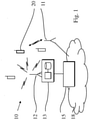
- a base station 12 can provide e.g. three cells on different carriers.
- at least one serving cell can also be provided by means of another station or stations.
- at least one of the carriers may be provided by a station that is not co-located at base station 12. This possibility is denoted by station 11 in Figure 1 .
- Interaction between the different stations and/or controllers thereof can be arranged in various manners.
- Each mobile device 20 and base station may have one or more radio channels open at the same time and may receive signals from more than one source.
- a base station node can be connected to a data network 18 via an appropriate gateway 15.
- a gateway function between the access system and another network such as a packet data network may be provided by means of any appropriate gateway node, for example a packet data gateway and/or an access gateway.
- a communication system may thus be provided by one or more interconnect networks and the elements thereof, and one or more gateway nodes may be provided for interconnecting various networks.
- a communication device can access a communication system based on various access techniques, for example those based on the third Generation Partnership Project (3GPP) specifications.
- 3GPP Third Generation Partnership Project
- a non-limiting example of mobile architectures is known as the Evolved Universal Terrestrial Radio Access Network (E-UTRAN).
- E-UTRAN Evolved Universal Terrestrial Radio Access Network
- a non-limiting example of base station of a cellular system is what is termed as a NodeB or enhanced NodeB (eNB) in the vocabulary of the 3GPP specifications.
- the eNBs may provide E-UTRAN features such as user plane Radio Link Control/Medium Access Control/Physical Layer Protocol (RLC/MAC/PHY) and control plane Radio Resource Control (RRC) protocol terminations towards mobile communication devices.
- RLC/MAC/PHY Radio Link Control/Medium Access Control/Physical Layer Protocol
- RRC Radio Resource Control
- FIG. 2 shows a schematic, partially sectioned view of a communication device 20 that a user can use for communications.
- a communication device is often referred to as user equipment (UE) or terminal.
- An appropriate communication device may be provided by any device capable of sending and receiving radio signals.
- Non-limiting examples include a mobile station (MS) such as a mobile phone or what is known as a 'smart phone', a portable computer provided with a wireless interface card or other wireless interface facility, personal data assistant (PDA) provided with wireless communication capabilities, or any combinations of these or the like.
- a mobile communication device may provide, for example, communication of data for carrying communications such as voice, electronic mail (email), text message, multimedia, positioning data, other data, and so on. Users may thus be offered and provided numerous services via their communication devices. Non-limiting examples of these services include two-way or multi-way calls, data communication or multimedia services or simply an access to a data communications network system, such as the Internet.
- a mobile device is typically provided with at least one data processing entity 23, at least one memory 24 and other possible components 29 for use in software and hardware aided execution of tasks it is designed to perform, including control of access to and communications via base stations and/or other user terminals.
- the data processing, storage and other relevant control apparatus can be provided on an appropriate circuit board and/or in chipsets. This apparatus is denoted by reference 26.
- a user may control the operation of the device 20 by means of a suitable user interface such as key pad, voice commands, touch sensitive screen or pad, combinations thereof or the like.
- a display 25, a speaker and a microphone are also typically provided.
- a mobile communication device may comprise appropriate connectors (either wired or wireless) to other devices and/or for connecting external accessories, for example hands-free equipment, thereto.
- the device 20 may receive and transmit signals 28 via appropriate apparatus for receiving and transmitting signals.
- transceiver apparatus is designated schematically by block 27.
- the transceiver apparatus may be provided with cognitive radio capability.
- the transceiver may be provided for example by means of a radio part and associated antenna arrangement.
- the antenna arrangement may be arranged internally or externally to the mobile device.
- a wireless communication device can be provided with a Multiple Input / Multiple Output (MIMO) antenna system.
- MIMO Multiple Input / Multiple Output
- 3GPP has defined the concepts of user equipment (UE) specific primary cells (PCell) and secondary cells (SCells).
- PCell primary cell
- SCells secondary cells
- UE user equipment
- SCells secondary cells
- UE user equipment
- UE user equipment
- SCells secondary cells
- UE user equipment
- CA carrier aggregation
- UL uplink
- LAA uplink control information
- PCell licensed band
- LAA may be extended with uplink support including PUCCH (physical uplink control channel.
- LAA SCells may be configured to an UE as a part of UL carrier aggregation configuration.
- LAA SCell(s) in unlicensed band use Frame Structure type 3, which is a frame structure introduced in Rel-13 especially for LAA cells.
- LAA with dual connectivity (DC) operation i.e. allow for non-ideal backhaul between PCell in licensed spectrum and SCell(s) in unlicensed spectrum.
- DC dual connectivity
- Standalone LTE operation on unlicensed spectrum might be desired in certain applications.
- LTE standalone operation on unlicensed spectrum would mean that eNB/UE air interface rely solely on unlicensed spectrum without any carrier on licensed spectrum.
- Listen-Before-Talk is a contention-based protocol used in wireless communication by allowing several devices to share the same spectrum or channel. If a device wants to transmit information, the device will have to first check that the channel is not already in use.
- the UE may need to perform LBT prior to any UL transmission. Some exceptions may exist though.
- ACK/NACK acknowledgement/ negative acknowledgement
- transmission of ACK/NACK (acknowledgement/ negative acknowledgement) feedback may be possible without LBT when immediately following a DL transmission (similar to Wi-Fi operation).
- Short control signalling (SCS) rules defined for Europe by ETSI (European Telecommunications Standards Institute) allow for transmission of control signalling with a duty cycle of no more than 5% over 50 ms period without performing LBT.
- Short control signalling transmissions are transmissions used by adaptive equipment to send management and control frames (e.g. ACK/NACK signals) without sensing the channel for the presence of other signals. It may not be required for adaptive equipment to implement short control signalling transmissions. If implemented, short control signalling transmissions of adaptive equipment may have a maximum duty cycle of 5 % within an observation period of 50 ms.
- scheduled UL transmissions may in general be allowed without LBT, when the transmission follows directly a DL transmission before which the eNodeB has performed LBT and total transmission time covering both DL and UL is limited by the maximum Tx burst time defined by the associated regulator.
- LTE standalone operation may be developed in a proprietary manner.
- MulteFire MLF developed by Nokia is such an example.
- MulteFire it has been proposed that two types of PUCCH formats are supported - short PUCCH and long PUCCH.
- Long PUCCH refers to a PUCCH structure occupying a PUSCH B-IFDMA (interleaved frequency division multiple access) interlace and predefined transmission timing (such as 1 ms, i.e.14 SCFDMA (single-carrier frequency division multiplexing) symbols). Long PUCCH is frequency division multiplexed with the PUSCH.
- B-IFDMA interleaved frequency division multiple access
- predefined transmission timing such as 1 ms, i.e.14 SCFDMA (single-carrier frequency division multiplexing) symbols.
- Long PUCCH is frequency division multiplexed with the PUSCH.
- UE and base station have same "understanding" of the PUCCH resource that is allocated to UE for transmission of HARQ-ACK for PDSCH (physical downlink shared control channel.
- UE needs PUCCH resource allocation for the first time when it sends HARQ-ACK for random access Msg4.
- a contention resolution message Msg4 is transmitted by the eNodeB in downlink PDSCH (physical downlink shared channel) based on the PDCCH (physical downlink control channel) containing a C-RNTI (cell-radio network temporary identifier) which is used for further communication.
- eNB has not yet had a possibility for configuring dedicated HARQ-ACK resources for the UE via RRC (radio resource control) signalling.
- PUCCH resource allocation for HARQ-ACK corresponding to DL (PDSCH) transport blocks is primarily implicit (this covers also HARQ-ACK signalling during and after the initial access).
- the PUCCH resource to be used is determined based on the index of the lowest PDCCH Control Channel Element (CCE) scheduling the PDSCH.
- CCE PDCCH Control Channel Element
- HARQ-ACKs for multiple DL sub-frames may need to be carried in one UL sub-frame, meaning that the number of distinct PUCCH resources can become very large.
- UL transmission in proprietary systems such as MulteFire is based on interlaces consisting of multiple (e.g. 6 or 10) equally spaced 1-PRB (physical resource block) clusters.
- 1-PRB physical resource block
- MulteFire is targeting at least mainly small cells, the number of simultaneously scheduled users may be low. Therefore, in some embodiments more resource efficient schemes may be used. In some embodiments, at least partially explicit resource allocation schemes may be used.
- PUCCH resource allocation for HARQ-ACK in LTE is primarily based on one-to-one mapping between an index of the lowest scheduling PDCCH CCE and an index of the PUCCH resource. This is applied in the case of single component carrier operation, and also with carrier aggregation when the scheduling PDCCH is transmitted in the common search space of the primary cell. The same applies to the initial access scenario when RRC connection has not yet been established. However, in certain carrier aggregation cases, when PUCCH format 3, 4, or 5 is used, explicit PUCCH resource allocation is used. The basic approach is as follows. Upon configuring PUCCH format 3/4/5 for the UE, the eNodeB also configures (via dedicated RRC signalling) four corresponding PUCCH resources.
- ACK/NACK Resource Indicator In the scheduling PDCCH DCI (downlink control indicator) formats there is a 2-bit ACK/NACK Resource Indicator (ARI). Each of the four code points of the ARI corresponds to one of the four PUCCH resources. I.e. when the eNB sends a PDCCH scheduling a PDSCH transmission for a UE, the same PDCCH also tells the UE (through ARI) which one of the four PUCCH resources it should use.
- the ARI-based PUCCH resource allocation is in principle a valid approach also in the case of MulteFire.
- the inventors have recognised that there is a problem in how to operate e.g. during initial access or upon handover procedure to another cell, when RRC-configured resources are not yet available. In any case, the UE will need to know which PUCCH resources to use for HARQ-ACK feedback.
- Some embodiments relates to the definition of PUCCH resources corresponding to the ARI in the cases (primarily initial access) when dedicated RRC signalling (and the corresponding dedicated ARI, d-ARI) is not yet available.
- an aspect is the definition of a common-ARI (c-ARI), and the corresponding PUCCH resources.
- the c-ARI is a cell-common set of e.g. four PUCCH resources to be used for HARQ-ACK transmission.
- the PUCCH resources for c-ARI can be for example determined based on the system information signalling such as eSIB (enhanced system information block), and the common PUCCH configuration.
- step S1 the UE received from the eNodeB, via an eSIB, system information which comprises the common PUCCH configuration.
- This PUCCH configuration may comprise one or more of the following:
- Each set of HARQ-ACK resources may correspond to a predetermined PUCCH format.
- one set of resources may be defined for a large HARQ-ACK payload and another set for a small/compact HARQ-ACK payload, respectively).
- Each HARQ-ACK resource may be associated with a predetermined resource index.
- step S2 the UE determines cell common PUCCH resources used in association with common-ARI (C-ARI). This may be determined, based on the common PUCCH configuration.
- C-ARI common-ARI
- four cell-common PUCCH resources may associated with the c-ARI.
- the PUCCH resources associated with c-ARI may be explicitly indicated in the eSIB.
- the PUCCH resources associated with c-ARI may be derived based on predetermined rules (which may or may not include information included in the eSIB).
- the PUCCH resources associated with ARI can be e.g. the ones with the lowest PUCCH resource indices.
- the resource indication may include for example an index for B-IFDMA (Block Interleaved Frequency Division Multiple Access) interlace, cyclic shift and usage of orthogonal cover code (if applied).
- B-IFDMA Block Interleaved Frequency Division Multiple Access
- the PUCCH resources are indicated by at least one resource index in an orthogonal resource space. This may for example be one or more of frequency, time, code and space.
- step S3 the UE selects one of the available RACH preambles which is transmitted from the UE to the eNodeB.
- the eNodeB will, when it receives the UE transmission, transmit a RAR (random access response).
- the RAR may include an uplink grant resource and a timing advance value (if timing advance is applied).
- the RAR step includes providing a PDCCH with a DCI (downlink control information) which includes information about the resource allocation in the PDSCH for the RAR and the PDSCH which carries the RAR.
- step S5 the UE will transmit an Msg3 using the uplink allocations given in RAR.
- Msg3 is a radio resource connection RRC message such a RRC connection request.
- step S6 the eNodeB transmits a contention resolution message Msg4 including a common-ARI value.
- step S7 the UE transmits a HARQ-ACK transmission on the common PUCCH resource associated with the common-ARI value received in step S6.
- two or more signals may be transmitted as combined signals.
- UE may transmit a random access preamble and a radio resource connection message in a combined signal in one step.
- the eNB may transmit random access response and contention resolution message in another combined signal in one step.
- the eNodeB may configure to the UE via dedicated RRC signalling, e.g., as part of UE specific radio resource configuration, UE specific physical channel configuration, and/or UE specific PUCCH configuration a dedicated PUCCH resource subset associated with ARI (for example as in Rel-13). This may include four PUCCH resources of the same or different format.
- the common ARI is common in the cell, i.e. all UE have the same configuration of PUCCH resource subset associated with ARI. This is useful from the signalling point of view since broadcast signalling (system information) can be used. Since all the UEs in the cell share the same (e.g. four assuming 2-bit ARI) PUCCH resources that the ARI can point to, there may be collisions.
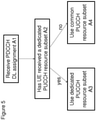
- Figure 5 shows a method used by a UE to determine if a common or dedicated PUCCH resource subset is to be used in the determination of PUCCH resource indicated by ARI.
- step A1 the UE receives a PDCCH DL assignment (including ARI) which schedules PDSCH data.
- step A2 the UE will need to determine whether HARQ-ACK resource allocation based on common PUCCH resource subset is to be used.
- the criterion for using common PUCCH resource subset for HARQ-ACK resource allocation can be for example if UE has not yet received a dedicated PUCCH resource subset configuration.
- the UE determines if it has received a dedicated PUCCH resource subset configuration.
- step A4 the UE will use the common PUCCH resource subset for HARQ-ACK resource allocation based on ARI. If so, then in step A3, the UE, will use the dedicated PUCCH resource subset associated with ARI.
- the eNB may have full freedom to include any PUCCH resource into common and/or dedicated PUCCH resource subset associated with ARI. This would allow for example choosing to use at least one same PUCCH resource with both common and dedicated ARI, and help in avoiding ambiguity in resource allocation during the time when the RRC configuration of the dedicated ARI is underway.
- n ⁇ 2 PUCCH resources are always determined based on the common PUCCH resource subset while some other resources are configured as dedicated resources. This allows for robust operation in for example cases where the eNodeB is not yet sure if the RRC configuration for dedicated PUCCH resource subset associated with ARI has already gone through.
- the eNB may not configure dedicated PUCCH resource subset at all. In those scenarios, the eNB may facilitate HARQ-ACK solely based on common PUCCH resource subset, at least for certain UEs. This may be determined based on for example, the number of UEs in the cell and/or UE service type.
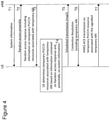
- FIG. 4 shows another embodiment and in particular the associated signal flow.
- temporary PUCCH resource subset is used in association with ARI
- step T1 the eNB will transmit system information to the UE.
- step T2 the UE will transmit a random access preamble to the eNB.
- step T3 the eNB will transmit a random access response including information on temporary PUCCH resources associated with ARI.
- step T4 the UE determines the temporary PUCCH resources associated with the ARI based on the information contained in the random access response and optionally on system information.
- step T5 the UE will transmit an Msg3 using the uplink allocations given in RAR.
- step T6 the eNodeB transmits a contention resolution message Msg4 including a value for the temporary ARI.
- step T7 the UE transmits a HARQ-ACK transmission on the temporary PUCCH resource associated with the signalled temporary ARI value.
- the assignment may done as a part of the random access procedure.
- four temporary PUCCH resources may be associated with the ARI.
- the temporary PUCCH resources associated with ARI may be explicitly indicated during random access procedure as part of the random access process, for example in Msg2 or Msg4.
- the temporary PUCCH resources associated with ARI may thus be signalled to a UE e.g. during the random access procedure using dedicated signalling. This allows for assigning e.g. different sets of four (or other suitable number) PUCCH resources for different UEs, avoiding PUCCH resource collisions. Thus different UEs may be assigned different sets of PUCCHs by the temporary ARI configuration.
- the temporary ARI does not have the same freedom in signalling the PUCCH resources as the "normal", RRC configured ARI associated PUCCH resource set. Therefore it is temporary, and may be used only until the PUCCH resource set associated with ARI can be configured with the RRC.
- the temporary PUCCH resources associated with ARI may be derived based on predetermined rules using information included in one or more of the random access messages Msg2, Msg4, and the eSIB.
- UE may derive two or more sets of temporary PUCCH resources according to predetermined rules (which may or may not include information included in the eSIB), and use the information included in the random access Msg2 to select one temporary PUCCH resource set to be used in association with the ARI.
- predetermined rules which may or may not include information included in the eSIB
- the eNodeB may configure to the UE via dedicated RRC signalling a dedicated PUCCH resource set associated with the ARI (as in Rel-13). This may include e.g. four PUCCH resources of the same or different PUCCH format. This may be as previously described.
- the number of resources associated with the temporary or common ARI may be any suitable number of resources and may differ from the given example number. Generally a subset of some but not all of the resources will be associated with the temporary or common ARI.
- Figures 3 and 4 have been described in the context of a connection being set up. In alternative or additional embodiments may be used in the context of a handover procedure.
- a RRC (Radio Resource Control) reconfiguration message could be used to provide information on PUCCH resources associated with the temporary or common ARI.
- Some embodiments may use compact HARQ-ACK resource.
- compact HARQ-ACK resources may be applied when the PDCCH is transmitted in the Common search space
- compact HARQ-ACK resources may be applied when the PDCCH is transmitted on the Primary cell.
- compact HARQ-ACK resources may be applied in combination with time domain bundling.
- Compact HARQ-ACK resources may apply a separate HARQ-ACK resource set (covering both c-ARI and d-ARI) compared to resources supporting a large HARQ-ACK payload.
- ARI bits may not be available (e.g. in the case when PDCCH is transmitted on the PCell common search space).
- a complementary way to determine PUCCH resource index can be defined. It may be a function of various parameters, such as C-RNTI, index of the lowest PRB of PDSCH, CCE or eCCE.
- the configuration of dedicated HARQ-ACK resource involves RRC signalling which may involve timing uncertainties.
- eNB may not know exactly when dedicated resource configuration has been adopted by UE (because UE processing delay may have not been specified exactly).
- the eNB may monitor multiple PUCCH resources (such as resource corresponding to common PUCCH resource subset and dedicated PUCCH resource subset) at the same time. If the HARQ-ACK is received via resource belonging to the common PUCCH resource subset, then RRC configuration has not yet been adopted by the UE. If the HARQ-ACK is received via a resource belonging to the dedicated PUCCH resource subset, then eNB can be sure that RRC configuration has been adopted by the UE
- Some embodiments facilitate explicit PUCCH resource allocation for HARQ-ACKs, without requiring the UEs to receive a dedicated RRC configuration first. This may be used for example in the case of initial access.
- the PUCCH overhead may be significantly reduced compared to implicit resource allocation. For example, assuming one-to-one mapping between a PDCCH CCE and a PUCCH resource would mean that up to ⁇ 80 PUCCH resources need to be reserved corresponding to each DL sub frame
- Some embodiments may be used in scenarios such as MulteFire scenario having limited multiplexing capacity (in terms of number of simultaneous PUCCH channels) and requiring a relatively large HARQ-ACK payload size.
- the temporary / normal / common ARI are distinguished based on the PUCCH resource set associated (at that time) with the ARI.
- the required data processing apparatus and functions may be provided by means of one or more data processors.
- the described functions may be provided by separate processors or by an integrated processor.
- the data processors may be of any type suitable to the local technical environment, and may include one or more of general purpose computers, special purpose computers, microprocessors, digital signal processors (DSPs), application specific integrated circuits (ASIC), gate level circuits and processors based on multi core processor architecture, as non-limiting examples.
- the data processing may be distributed across several data processing modules.
- a data processor may be provided by means of, for example, at least one chip. Appropriate memory capacity can be provided in the relevant devices.
- the memory or memories may be of any type suitable to the local technical environment and may be implemented using any suitable data storage technology, such as semiconductor based memory devices, magnetic memory devices and systems, optical memory devices and systems, fixed memory and removable memory.
- One or more of the steps discussed in relation to Figures 3 to 5 may be performed by one or more processors in conjunction with one or more memories.
- An appropriately adapted computer program code product or products may be used for implementing the embodiments, when loaded or otherwise provided on an appropriate data processing apparatus.
- the program code product for providing the operation may be stored on, provided and embodied by means of an appropriate carrier medium.
- An appropriate computer program can be embodied on a computer readable record medium.
- a possibility is to download the program code product via a data network.
- the various embodiments may be implemented in hardware or special purpose circuits, software, logic or any combination thereof. Embodiments may thus be practiced in various components such as integrated circuit modules.
- the design of integrated circuits is by and large a highly automated process. Complex and powerful software tools are available for converting a logic level design into a semiconductor circuit design ready to be etched and formed on a semiconductor substrate.
Landscapes
- Engineering & Computer Science (AREA)
- Signal Processing (AREA)
- Computer Networks & Wireless Communication (AREA)
- Mobile Radio Communication Systems (AREA)
Claims (29)
- Procédé réalisé par un dispositif d'utilisateur, comprenant :la réception d'informations de configuration de canal physique de commande de liaison montante commun au niveau du dispositif d'utilisateur en provenance d'une station de base via des informations de système, lesdites informations de configuration de canal physique de commande de liaison montante commun étant associées à un sous-ensemble de ressources d'accusé de réception dans une cellule ;la détermination, en fonction desdites informations de configuration de canal physique de commande de liaison montante commun, laquelle des ressources d'accusé de réception provenant du sous-ensemble doit être utilisée en association avec un indicateur de ressource ACK/NACK commune ;la réception d'un message comportant une valeur d'indicateur de ressource ACK/NACK commune ; etle déclenchement de la transmission, par le dispositif d'utilisateur, d'un accusé de réception sur une ressource d'accusé de réception provenant du sous-ensemble qui est associée à la valeur d'indicateur de ressource ACK/NACK commune reçue ;dans lequel les informations de configuration de canal physique de commande de liaison montante commun sont reçues au niveau du dispositif d'utilisateur pendant l'accès initial lorsqu'une connexion de commande de ressources radio n'a pas encore été établie.
- Procédé selon la revendication 1, dans lequel le message comportant la valeur d'indicateur de ressource ACK/NACK commune est une assignation de canal physique de commande de liaison descendante pour une transmission de liaison descendante.
- Procédé selon l'une quelconque des revendications précédentes, dans lequel l'accusé de réception est transmis en réponse à un message de résolution de conflit d'une procédure d'accès aléatoire.
- Procédé selon l'une quelconque des revendications précédentes, comprenant la réception ultérieure d'informations de ressource d'accusé de réception dédiée et le déclenchement de la transmission, par le dispositif d'utilisateur, d'un accusé de réception dans une ressource associée auxdites informations de ressource d'accusé de réception dédiée.
- Procédé selon l'une quelconque des revendications précédentes, dans lequel les informations de ressource d'accusé de réception des informations de configuration de canal physique de commande de liaison montante commun comprennent un ou plusieurs parmi :- une structure de découpage en canaux de canal physique de commande de liaison montante définissant un ou plusieurs ensembles de ressources HARQ-ACK parallèles ;- un index d'une première ressource à utiliser pour HARQ-ACK ;- un premier entrelacement de canal physique de commande de liaison montante à utiliser pour HARQ-ACK ;- un certain nombre d'entrelacements de canal physique de commande de liaison montante à utiliser pour HARQ-ACK ;- un format de canal physique de commande de liaison montante pris en charge ;- un schéma de regroupement HARQ-ACK à appliquer.
- Procédé selon l'une quelconque des revendications précédentes, dans lequel l'accusé de réception comprend un accusé de réception de demande de répétition automatique hybride sur un canal physique de commande de liaison montante.
- Procédé selon l'une quelconque des revendications précédentes, dans lequel ledit sous-ensemble de ressources d'accusé de réception comprend au moins un index de ressources dans un espace de ressources orthogonal.
- Procédé réalisé par une station de base comprenant :le déclenchement de la transmission à un dispositif d'utilisateur d'informations de configuration de canal physique de commande de liaison montante commun via des informations de système de la station de base, lesdites informations de configuration de canal physique de commande de liaison montante commun étant associées à un sous-ensemble de ressources d'accusé de réception dans une cellule ;la détermination, en fonction desdites informations de configuration de canal physique de commande de liaison montante commun, laquelle des ressources d'accusé de réception provenant du sous-ensemble doit être utilisée en association avec un indicateur de ressource ACK/NACK commune ;la transmission de ladite station de base audit dispositif d'utilisateur d'un message comportant une valeur d'indicateur de ressource ACK/NACK commune ; etla réception, au niveau de ladite station de base et en provenance dudit dispositif d'utilisateur, d'un accusé de réception sur une ressource d'accusé de réception provenant du sous-ensemble qui est associée à la valeur d'indicateur de ressource ACK/NACK commune ;dans lequel les informations de configuration de canal physique de commande de liaison montante commun sont transmises au dispositif d'utilisateur pendant l'accès initial lorsqu'une connexion de commande de ressources radio n'a pas encore été établie.
- Procédé selon la revendication 8, dans lequel le message comportant la valeur d'indicateur de ressource ACK/NACK commune est une assignation de canal physique de commande de liaison descendante pour une transmission de liaison descendante.
- Procédé selon l'une quelconque des revendications 8 à 9, dans lequel l'accusé de réception sur ladite ressource d'accusé de réception est reçu en réponse à un message de résolution de conflit d'une procédure d'accès aléatoire au dispositif d'utilisateur.
- Procédé selon l'une quelconque des revendications 8 à 10, comprenant la transmission ultérieure d'informations de ressource d'accusé de réception dédiée au dispositif d'utilisateur et la réception d'un accusé de réception dans une ressource associée auxdites informations de ressource d'accusé de réception dédiée en provenance du dispositif d'utilisateur.
- Procédé selon l'une quelconque des revendications 8 à 11, dans lequel les informations de ressource d'accusé de réception des informations de configuration de canal physique de commande de liaison montante commun comprennent un ou plusieurs parmi :- une structure de découpage en canaux de canal physique de commande de liaison montante définissant un ou plusieurs ensembles de ressources HARQ-ACK parallèles ;- un index d'une première ressource à utiliser pour HARQ-ACK ;- un premier entrelacement de canal physique de commande de liaison montante à utiliser pour HARQ-ACK ;- un certain nombre d'entrelacements de canal physique de commande de liaison montante à utiliser pour HARQ-ACK ;- un format de canal physique de commande de liaison montante pris en charge ;- un schéma de regroupement HARQ-ACK à appliquer.
- Procédé selon l'une quelconque des revendications 8 à 12, dans lequel l'accusé de réception comprend un accusé de réception de demande de répétition automatique hybride sur un canal physique de commande de liaison montante.
- Procédé selon l'une quelconque des revendications 8 à 13, dans lequel le sous-ensemble de ressources d'accusé de réception comprend au moins un index de ressources dans un espace de ressources orthogonal.
- Dispositif d'utilisateur, le dispositif d'utilisateur (20) comprenant au moins un processeur (23) et au moins une mémoire (24) comportant un code de programme informatique, dans lequel la au moins une mémoire (24) et le code de programme informatique sont configurés, avec le au moins un processeur (23), pour amener le dispositif d'utilisateur (20) à au moins :recevoir des informations de configuration de canal physique de commande de liaison montante commun en provenance d'une station de base via des informations de système, lesdites informations de configuration de canal physique de commande de liaison montante commun étant associées à un sous-ensemble de ressources d'accusé de réception dans une cellule ;déterminer, en fonction desdites informations de configuration de canal physique de commande de liaison montante commun, laquelle des ressources d'accusé de réception communes provenant du sous-ensemble doit être utilisée en association avec un indicateur de ressource ACK/NACK commune ;recevoir un message comportant une valeur d'indicateur de ressource ACK/NACK commune ; etdéclencher la transmission d'un accusé de réception sur une ressource d'accusé de réception provenant du sous-ensemble associée à la valeur d'indicateur ACK/NACK commune reçuedans lequel les informations de configuration de canal physique de commande de liaison montante commun sont reçues au niveau du dispositif d'utilisateur pendant l'accès initial lorsqu'une connexion de commande de ressources radio n'a pas encore été établie.
- Dispositif d'utilisateur selon la revendication 15, dans lequel le message comportant la valeur d'indicateur de ressource ACK/NACK commune est une assignation de canal physique de commande de liaison descendante pour une transmission de liaison descendante.
- Dispositif d'utilisateur selon l'une quelconque des revendications 15 à 16, dans lequel l'accusé de réception est transmis en réponse à un message de résolution de conflit d'une procédure d'accès aléatoire.
- Dispositif d'utilisateur selon l'une quelconque des revendications 15 à 17, dans lequel la au moins une mémoire et le code de programme informatique sont en outre configurés pour amener le dispositif d'utilisateur à recevoir ultérieurement des informations de ressource d'accusé de réception dédiée et à déclencher la transmission d'un accusé de réception dans une ressource associée auxdites informations de ressource d'accusé de réception dédiée.
- Dispositif d'utilisateur selon l'une quelconque des revendications 15 à 18, dans lequel
les informations de ressource d'accusé de réception des informations de configuration de canal physique de commande de liaison montante commun comprennent un ou plusieurs parmi :- une structure de découpage en canaux de canal physique de commande de liaison montante définissant un ou plusieurs ensembles de ressources HARQ-ACK parallèles ;- un index d'une première ressource à utiliser pour HARQ-ACK ;- un premier entrelacement de canal physique de commande de liaison montante à utiliser pour HARQ-ACK ;- un certain nombre d'entrelacements de canal physique de commande de liaison montante à utiliser pour HARQ-ACK ;- un format de canal physique de commande de liaison montante pris en charge ;- un schéma de regroupement HARQ-ACK à appliquer. - Dispositif d'utilisateur selon l'une quelconque des revendications 15 à 19, dans lequel l'accusé de réception comprend un accusé de réception de demande de répétition automatique hybride sur un canal physique de commande de liaison montante.
- Dispositif d'utilisateur selon l'une quelconque des revendications 15 à 20, dans lequel ledit sous-ensemble de ressources d'accusé de réception comprend au moins un index de ressources dans un espace de ressources orthogonal.
- Station de base, la station de base (12) comprenant au moins un processeur et au moins une mémoire comportant un code de programme informatique, dans laquelle la au moins une mémoire et le code de programme informatique sont configurés, avec le au moins un processeur, pour amener la station de base (12) à au moins :déclencher la transmission à un dispositif d'utilisateur d'informations de configuration de canal physique de commande de liaison montante commun via des informations de système, lesdites informations de configuration de canal physique de commande de liaison montante commun étant associées à un sous-ensemble de ressources d'accusé de réception dans une cellule ;déterminer, en fonction desdites informations de configuration de canal physique de commande de liaison montante commun, laquelle des ressources d'accusé de réception provenant du sous-ensemble doit être utilisée en association avec un indicateur de ressource ACK/NACK commune ;transmettre de ladite station de base audit dispositif d'utilisateur un message comportant une valeur d'indicateur de ressource ACK/NACK commune ; etrecevoir en provenance dudit dispositif d'utilisateur un accusé de réception sur une ressource d'accusé de réception provenant du sous-ensemble qui est associée à la valeur d'indicateur de ressource ACK/NACK commune ;dans laquelle les informations de configuration de canal physique de commande de liaison montante commun sont transmises au dispositif d'utilisateur pendant l'accès initial lorsqu'une connexion de commande de ressources radio n'a pas encore été établie.
- Station de base selon la revendication 22, dans laquelle le message comportant la valeur d'indicateur de ressource ACK/NACK commune est une assignation de canal physique de commande de liaison descendante pour une transmission de liaison descendante.
- Station de base selon l'une quelconque des revendications 22 à 23, dans laquelle l'accusé de réception sur ladite ressource d'accusé de réception est reçu en réponse à un message de résolution de conflit d'une procédure d'accès aléatoire au dispositif d'utilisateur.
- Station de base selon l'une quelconque des revendications 22 à 24, dans laquelle la au moins une mémoire et le code de programme informatique sont en outre configurés pour amener la station de base à transmettre ultérieurement des informations de ressource d'accusé de réception dédiée au dispositif d'utilisateur, et recevoir un accusé de réception dans une ressource associée auxdites informations de ressource d'accusé de réception dédiée en provenance du dispositif d'utilisateur.
- Station de base selon l'une quelconque des revendications 22 à 25, dans laquelle
les informations de ressource d'accusé de réception des informations de configuration de canal physique de commande de liaison montante commun comprennent un ou plusieurs parmi :- une structure de découpage en canaux de canal physique de commande de liaison montante définissant un ou plusieurs ensembles de ressources HARQ-ACK parallèles ;- un index d'une première ressource à utiliser pour HARQ-ACK ;- un premier entrelacement de canal physique de commande de liaison montante à utiliser pour HARQ-ACK ;- un certain nombre d'entrelacements de canal physique de commande de liaison montante à utiliser pour HARQ-ACK ;- un format de canal physique de commande de liaison montante pris en charge ;- un schéma de regroupement HARQ-ACK à appliquer. - Station de base selon l'une quelconque des revendications 22 à 26, dans laquelle l'accusé de réception comprend un accusé de réception de demande de répétition automatique hybride sur un canal physique de commande de liaison montante.
- Station de base selon l'une quelconque des revendications 22 à 27, dans laquelle le sous-ensemble de ressources d'accusé de réception comprend au moins un index de ressources dans un espace de ressources orthogonal.
- Programme informatique comprenant des instructions qui, lorsque le programme est exécuté par un ordinateur, amènent l'ordinateur à mettre en œuvre le procédé de l'une quelconque des revendications 1 à 14.
Priority Applications (2)
| Application Number | Priority Date | Filing Date | Title |
|---|---|---|---|
| PL17701035T PL3400670T3 (pl) | 2016-01-07 | 2017-01-03 | Metoda i urządzenie do alokacji zasobów potwierdzeń |
| EP21214437.2A EP4002746B1 (fr) | 2016-01-07 | 2017-01-03 | Procédé et appareil d'attribution de ressources d'accusé de réception |
Applications Claiming Priority (2)
| Application Number | Priority Date | Filing Date | Title |
|---|---|---|---|
| EP2016050188 | 2016-01-07 | ||
| PCT/EP2017/050073 WO2017118627A1 (fr) | 2016-01-07 | 2017-01-03 | Procédé et appareil d'attribution de ressources d'accusé de réception |
Related Child Applications (2)
| Application Number | Title | Priority Date | Filing Date |
|---|---|---|---|
| EP21214437.2A Division EP4002746B1 (fr) | 2016-01-07 | 2017-01-03 | Procédé et appareil d'attribution de ressources d'accusé de réception |
| EP21214437.2A Division-Into EP4002746B1 (fr) | 2016-01-07 | 2017-01-03 | Procédé et appareil d'attribution de ressources d'accusé de réception |
Publications (2)
| Publication Number | Publication Date |
|---|---|
| EP3400670A1 EP3400670A1 (fr) | 2018-11-14 |
| EP3400670B1 true EP3400670B1 (fr) | 2022-01-26 |
Family
ID=57868210
Family Applications (2)
| Application Number | Title | Priority Date | Filing Date |
|---|---|---|---|
| EP21214437.2A Active EP4002746B1 (fr) | 2016-01-07 | 2017-01-03 | Procédé et appareil d'attribution de ressources d'accusé de réception |
| EP17701035.2A Active EP3400670B1 (fr) | 2016-01-07 | 2017-01-03 | Procédé et appareil d'attribution de ressources d'accusé de réception |
Family Applications Before (1)
| Application Number | Title | Priority Date | Filing Date |
|---|---|---|---|
| EP21214437.2A Active EP4002746B1 (fr) | 2016-01-07 | 2017-01-03 | Procédé et appareil d'attribution de ressources d'accusé de réception |
Country Status (10)
| Country | Link |
|---|---|
| US (4) | US10805049B2 (fr) |
| EP (2) | EP4002746B1 (fr) |
| CN (3) | CN113328841B (fr) |
| ES (2) | ES2906767T3 (fr) |
| HU (1) | HUE070598T2 (fr) |
| MY (1) | MY197255A (fr) |
| PH (1) | PH12018501457A1 (fr) |
| PL (2) | PL3400670T3 (fr) |
| SG (1) | SG11201805839YA (fr) |
| WO (1) | WO2017118627A1 (fr) |
Families Citing this family (19)
| Publication number | Priority date | Publication date | Assignee | Title |
|---|---|---|---|---|
| US10856282B2 (en) * | 2016-02-22 | 2020-12-01 | Apple Inc. | Interlaces allocation and indication |
| KR102731031B1 (ko) * | 2017-02-10 | 2024-11-19 | 삼성전자 주식회사 | 무선 셀룰라 통신 시스템에서 동기화 신호 전송 방법 및 장치 |
| CN110313141B (zh) * | 2017-02-13 | 2022-06-10 | 瑞典爱立信有限公司 | 用于pucch的资源信令的方法及相关设备 |
| CN110034861B (zh) * | 2018-01-11 | 2024-06-14 | 北京三星通信技术研究有限公司 | 一种harq-ack信息反馈方法和设备 |
| EP3635894B1 (fr) * | 2017-05-05 | 2026-05-06 | Telefonaktiebolaget LM Ericsson (publ) | Attribution de ressources d'accusé de réception |
| WO2019138563A1 (fr) * | 2018-01-12 | 2019-07-18 | 株式会社Nttドコモ | Équipement utilisateur et procédé de communication radio |
| CN116669199A (zh) | 2018-01-12 | 2023-08-29 | 松下电器(美国)知识产权公司 | 用户设备、基站、通信方法及集成电路 |
| US11452124B2 (en) | 2018-01-12 | 2022-09-20 | Nokia Technologies Oy | Uplink channel scheduling to retain channel occupancy for unlicensed wireless spectrum |
| WO2019142340A1 (fr) * | 2018-01-19 | 2019-07-25 | 株式会社Nttドコモ | Terminal utilisateur et procédé de communication radioélectrique |
| US10849110B2 (en) * | 2018-02-16 | 2020-11-24 | Qualcomm Incorporated | Resource allocation for the physical uplink control channel |
| JP7022848B2 (ja) * | 2018-04-16 | 2022-02-18 | テレフオンアクチーボラゲット エルエム エリクソン(パブル) | 無線リソース制御(rrc)設定前の物理アップリンク制御チャネル(pucch)リソース選択 |
| WO2019216654A1 (fr) * | 2018-05-10 | 2019-11-14 | 엘지전자 주식회사 | Procédé et dispositif permettant de configurer des ressources pucch dans un système de communication sans fil |
| US11902980B2 (en) * | 2018-08-09 | 2024-02-13 | Lg Electronics Inc. | Method and device for transmitting/receiving wireless signal in wireless communication system |
| WO2020112861A1 (fr) * | 2018-11-28 | 2020-06-04 | Qualcomm Incorporated | Mappage de ressources de fréquence pour canal physique de contrôle de liaison montante/accusé de réception (pucch/ack) et liaison montante autonome (aul) dans une nouvelle radio sans licence (nr-u) |
| WO2020168490A1 (fr) * | 2019-02-20 | 2020-08-27 | Qualcomm Incorporated | Renforcement de la diversité de transmission pour canal de commande de liaison montante |
| US11503609B2 (en) * | 2019-09-27 | 2022-11-15 | Qualcomm Incorporated | PUCCH repetition before RRC connection setup |
| US20210203449A1 (en) * | 2020-03-13 | 2021-07-01 | Intel Corporation | Mechanism on response of pre-allocated resource based pusch transmission |
| WO2022252122A1 (fr) * | 2021-06-01 | 2022-12-08 | Nokia Shanghai Bell Co., Ltd. | Transmission d'informations de rétroaction |
| CN115843120A (zh) * | 2022-01-19 | 2023-03-24 | 中兴通讯股份有限公司 | 一种资源配置方法、电子设备和存储介质 |
Family Cites Families (66)
| Publication number | Priority date | Publication date | Assignee | Title |
|---|---|---|---|---|
| EP1758277B1 (fr) * | 1999-12-10 | 2010-01-27 | Lucent Technologies Inc. | Procédé d'accès et d'attribution en rafale pour fournir des services en temps réel |
| ES2313246T3 (es) * | 2005-07-04 | 2009-03-01 | Motorola Inc. | Aparato y metodo para compartir recursos entre una pluralidad de redes de comunicaciones. |
| EP1936853B1 (fr) * | 2006-12-20 | 2018-11-21 | Panasonic Intellectual Property Corporation of America | Neutralisation de collisions de signaux de retour pour des communications mobiles |
| US8379601B2 (en) * | 2007-08-16 | 2013-02-19 | Motorola Mobility Llc | Method and system for selective use of control channel element based implicit pointing |
| US8184579B2 (en) * | 2008-02-15 | 2012-05-22 | Texas Instruments Incorporated | ACK/NAK repetition schemes in wireless networks |
| US8837421B2 (en) | 2008-03-26 | 2014-09-16 | Nokia Siemens Neworks Oy | Channelization procedure for implementing persistent ACK/NACK and scheduling request |
| US9184883B2 (en) * | 2009-03-31 | 2015-11-10 | Lg Electronics Inc. | Method for allocating resource to uplink control signal in wireless communication system and apparatus therefor |
| KR101759933B1 (ko) * | 2009-05-07 | 2017-07-20 | 엘지전자 주식회사 | Ack/nack을 전송하는 방법 및 장치 |
| EP2452535A1 (fr) * | 2009-07-07 | 2012-05-16 | Telefonaktiebolaget LM Ericsson (publ) | Procédure d accès aléatoire faisant appel à un décalage circulaire du signal de référence de démodulation |
| JP5368643B2 (ja) * | 2009-11-23 | 2013-12-18 | エルジー エレクトロニクス インコーポレイティド | Ack/nack伝送方法及びそのための装置 |
| KR101327131B1 (ko) * | 2010-02-12 | 2013-11-07 | 엘지전자 주식회사 | 무선 통신 시스템에서 데이터 전송 방법 및 장치 |
| KR101791266B1 (ko) * | 2010-02-12 | 2017-10-30 | 엘지전자 주식회사 | 무선 통신 시스템에서 데이터 전송 방법 및 장치 |
| CN103109486B (zh) | 2010-09-13 | 2016-09-14 | Lg电子株式会社 | 用于传输控制信息的方法和装置 |
| CN102104962B (zh) * | 2010-09-17 | 2014-02-05 | 电信科学技术研究院 | 多天线场景下的上行控制信道资源的配置方法和设备 |
| JP4923161B1 (ja) * | 2010-09-29 | 2012-04-25 | シャープ株式会社 | 移動通信システム、移動局装置、基地局装置、通信方法および集積回路 |
| US8437705B2 (en) | 2010-10-11 | 2013-05-07 | Sharp Laboratories Of America, Inc. | Resource allocation and encoding for channel quality indicator (CQI) and CQI collided with uplink acknowledgment/negative acknowledgment |
| KR101771550B1 (ko) | 2010-10-15 | 2017-08-29 | 주식회사 골드피크이노베이션즈 | Ack/nack 신호 송수신 방법 및 장치 |
| US20130272294A1 (en) * | 2010-12-20 | 2013-10-17 | Telefonaktiebolaget L M Ericsson (Publ) | Methods and User Equipments for Providing Information About a Connection State |
| KR101165643B1 (ko) * | 2010-12-20 | 2012-07-17 | 엘지전자 주식회사 | Ack/nack 전송방법 및 사용자기기와, ack/nack 수신방법 및 기지국 |
| KR101867311B1 (ko) * | 2010-12-21 | 2018-07-19 | 주식회사 골드피크이노베이션즈 | Ack/nack 자원 할당 방법 및 장치와 이를 이용한 ack/nack 신호 전송 방법 |
| EP2659718B1 (fr) * | 2010-12-31 | 2016-12-21 | Telefonaktiebolaget LM Ericsson (publ) | Attribution de canaux d'accusé de réception à des groupes de canaux ayant des énergies de transmission fixes |
| US20130336226A1 (en) * | 2011-02-24 | 2013-12-19 | Lg Electronics Inc. | Method and device for transmitting data in wireless communication system |
| CN103416012B (zh) * | 2011-03-11 | 2016-10-19 | Lg电子株式会社 | 在无线通信系统中设置动态子帧的方法及其设备 |
| US20120254890A1 (en) * | 2011-04-01 | 2012-10-04 | Renesas Mobile Corporation | Small Data Transmission For Detached Mobile Devices |
| US9413509B2 (en) | 2011-06-17 | 2016-08-09 | Texas Instruments Incorporated | Hybrid automatic repeat request acknowledge resource allocation for enhanced physical downlink control channel |
| CN102843732B (zh) * | 2011-06-20 | 2015-11-25 | 华为技术有限公司 | 一种时分双工tdd通信方法、基站和用户设备 |
| CN103096355B (zh) * | 2011-11-02 | 2015-11-25 | 华为技术有限公司 | 一种处理随机接入参数的方法及设备 |
| CN103095395B (zh) * | 2011-11-02 | 2017-09-22 | 中兴通讯股份有限公司 | Pucch的资源配置方法、传输方法、装置和系统 |
| US20130121304A1 (en) | 2011-11-11 | 2013-05-16 | Motorola Mobility Llc | Acknowledgement signaling in wireless communication network |
| US9271294B2 (en) * | 2011-11-14 | 2016-02-23 | Blackberry Limited | Method and system for requesting a service utilizing a sequence of codes |
| JP5989798B2 (ja) | 2011-12-08 | 2016-09-07 | インターデイジタル パテント ホールディングス インコーポレイテッド | ミリ波通信システムの方法および装置 |
| GB2497734B (en) * | 2011-12-16 | 2014-11-26 | Broadcom Corp | Method and apparatus for mapping to an uplink resource |
| US20130242881A1 (en) * | 2012-03-16 | 2013-09-19 | Yiping Wang | Explicit indication of uplink control channel resources in carrier aggregation systems |
| CN103378951B (zh) * | 2012-04-25 | 2017-10-27 | 电信科学技术研究院 | 一种上行控制信道确定方法及装置 |
| HUE042099T2 (hu) * | 2012-05-10 | 2019-06-28 | Sun Patent Trust | ACK/NACK erõforrások dinamikus lefoglalása |
| WO2013168341A1 (fr) | 2012-05-11 | 2013-11-14 | パナソニック株式会社 | Dispositif de terminal et procédé d'émission |
| EP2847920A1 (fr) * | 2012-05-11 | 2015-03-18 | Telefonaktiebolaget L M Ericsson (PUBL) | Ressources pour le retour d'information d'état de canal de cellules multiples |
| EP3767870B1 (fr) | 2012-08-02 | 2022-04-20 | BlackBerry Limited | Attribution de ressource de canal de commande de liaison montante pour un canal de commande de liaison descendante amélioré d'un système de communication mobile |
| EP2894916B1 (fr) * | 2012-09-28 | 2020-04-22 | Huawei Technologies Co., Ltd. | Procédé de renvoi de réponse correcte/incorrecte, équipement utilisateur et système |
| EP2912796B1 (fr) | 2012-10-26 | 2023-03-29 | Apple Inc. | Attribution de ressources (ra) de canal de commande de liaison montante physique (pucch) pour une transmission d'accusé de réception de demande de retransmission automatique hybride (harq-ack). |
| CN106850157B (zh) * | 2012-10-31 | 2020-08-18 | Lg 电子株式会社 | 用于发送和接收控制信息的方法及其设备 |
| US9515802B2 (en) | 2012-11-14 | 2016-12-06 | Lg Electronics Inc. | Method for operating terminal in carrier aggregation system, and apparatus using said method |
| US9699589B2 (en) * | 2012-12-21 | 2017-07-04 | Blackberry Limited | Managing sessions for direct device to device communications |
| US9112662B2 (en) | 2013-01-17 | 2015-08-18 | Samsung Electronics Co., Ltd. | Overhead reduction for transmission of acknowledgment signals |
| US9860031B2 (en) * | 2013-03-18 | 2018-01-02 | Lg Electronics Inc. | Method and apparatus for data transmission on control channels from base station to user equipments in wireless communication system |
| US9445338B2 (en) | 2013-04-04 | 2016-09-13 | Intel IP Corporation | Reconfiguration control channel resource mapping collision avoidance |
| BR112015028156A2 (pt) * | 2013-08-09 | 2017-07-25 | Mediatek Inc | alocação de recurso físico para canais de controle de ul em sistemas de tdd adaptativa |
| EP2835990A1 (fr) * | 2013-08-09 | 2015-02-11 | Alcatel Lucent | Technique de communication pour fournir des informations aux utilisateurs affectés par une forte atténuation |
| US9900923B2 (en) * | 2013-11-01 | 2018-02-20 | Qualcomm Incorporated | Techniques for using carrier aggregation in dual connectivity wireless communications |
| US20150172988A1 (en) * | 2013-12-18 | 2015-06-18 | Telefonaktiebolaget L M Erisson (Publ) | Reduced wireless communication handover command size during handover execution |
| WO2015103746A1 (fr) * | 2014-01-08 | 2015-07-16 | Qualcomm Incorporated | Amélioration de réseau mbsfn de petite taille |
| CN106105084B (zh) | 2014-03-12 | 2019-07-12 | Lg电子株式会社 | 在支持无线电资源的使用变化的无线通信系统中发送上行链路控制信道的方法及其装置 |
| MY182077A (en) | 2015-01-28 | 2021-01-18 | Sharp Kk | Terminal device, base station device, communication method, and integrated circuit |
| SG11201707572QA (en) * | 2015-04-10 | 2017-10-30 | ERICSSON TELEFON AB L M (publ) | Mapping of control information on carriers in a wireless communications system supporting a plurality of serving cells |
| JP6563514B2 (ja) * | 2015-04-10 | 2019-08-21 | エルジー エレクトロニクス インコーポレイティド | 機械タイプ通信を支援する無線接続システムにおいてサウンディング参照信号の送信を制御する方法及び装置 |
| WO2016161629A1 (fr) | 2015-04-10 | 2016-10-13 | Mediatek Singapore Pte. Ltd. | Procédés et appareil destinés à l'attribution d'une ressource pucch dans une mtc |
| US9948487B2 (en) | 2015-06-15 | 2018-04-17 | Ofinno Technologies, Llc | Uplink resource allocation in a wireless network |
| US20180248669A1 (en) | 2015-08-13 | 2018-08-30 | Ntt Docomo, Inc. | User terminal, radio base station and radio communication method |
| WO2017043916A1 (fr) * | 2015-09-09 | 2017-03-16 | 엘지전자 주식회사 | Procédé et appareil de transmission d'un signal dans un système de communication sans fil |
| PT3351047T (pt) * | 2015-09-18 | 2021-03-08 | Ericsson Telefon Ab L M | Procedimento de acesso aleatório para redução de latência |
| BR112018012471B1 (pt) * | 2015-12-18 | 2024-01-23 | Nokia Solutions And Networks Oy | Método para um equipamento de usuário acessar uma rede de escopo de área local que tem procedimentos de camada de não acesso, método para permitir o acesso de um equipamento de usuário a uma rede de escopo de área local que tem procedimentos de camada de não acesso, aparelho que inclui uma função para um equipamento de usuário acessar uma rede de escopo de área local que tem procedimentos de camada de não acesso e aparelho que inclui uma função para permitir o acesso de um equipamento de usuário a uma rede de escopo de área local que tem procedimentos de camada de não acesso |
| EP3456096B1 (fr) * | 2016-05-12 | 2022-08-03 | Nokia Solutions and Networks Oy | Techniques de prise en charge d'un transfert ultra fiable dans des réseaux sans fil |
| WO2018232368A1 (fr) * | 2017-06-16 | 2018-12-20 | Motorola Mobility Llc | Procédé et appareil de transmission de rétroaction harq-ack sur un canal de commande de liaison montante |
| KR102109412B1 (ko) * | 2018-02-14 | 2020-05-12 | 엘지전자 주식회사 | 무선 통신 시스템에서 무선 신호 송수신 방법 및 장치 |
| US11412439B2 (en) * | 2018-06-21 | 2022-08-09 | Telefonaktiebolaget Lm Ericsson (Publ) | Stop of barring timers |
| US11832296B2 (en) * | 2020-02-21 | 2023-11-28 | Qualcomm Incorporated | Contention resolution in new radio non-terrestrial networks |
-
2017
- 2017-01-03 CN CN202110618704.5A patent/CN113328841B/zh active Active
- 2017-01-03 ES ES17701035T patent/ES2906767T3/es active Active
- 2017-01-03 MY MYPI2018001263A patent/MY197255A/en unknown
- 2017-01-03 US US16/068,174 patent/US10805049B2/en active Active
- 2017-01-03 SG SG11201805839YA patent/SG11201805839YA/en unknown
- 2017-01-03 ES ES21214437T patent/ES3015237T3/es active Active
- 2017-01-03 CN CN201780013093.3A patent/CN108702279B/zh active Active
- 2017-01-03 HU HUE21214437A patent/HUE070598T2/hu unknown
- 2017-01-03 EP EP21214437.2A patent/EP4002746B1/fr active Active
- 2017-01-03 PL PL17701035T patent/PL3400670T3/pl unknown
- 2017-01-03 WO PCT/EP2017/050073 patent/WO2017118627A1/fr not_active Ceased
- 2017-01-03 CN CN202110623297.7A patent/CN113328842B/zh active Active
- 2017-01-03 PL PL21214437.2T patent/PL4002746T3/pl unknown
- 2017-01-03 EP EP17701035.2A patent/EP3400670B1/fr active Active
-
2018
- 2018-07-06 PH PH12018501457A patent/PH12018501457A1/en unknown
-
2020
- 2020-08-19 US US16/997,192 patent/US11646827B2/en active Active
-
2023
- 2023-05-08 US US18/144,556 patent/US12047179B2/en active Active
-
2024
- 2024-06-24 US US18/752,614 patent/US20240348373A1/en active Pending
Non-Patent Citations (1)
| Title |
|---|
| None * |
Also Published As
| Publication number | Publication date |
|---|---|
| CN113328842A (zh) | 2021-08-31 |
| SG11201805839YA (en) | 2018-08-30 |
| US10805049B2 (en) | 2020-10-13 |
| CN108702279A (zh) | 2018-10-23 |
| EP4002746A1 (fr) | 2022-05-25 |
| US20190036653A1 (en) | 2019-01-31 |
| US20240348373A1 (en) | 2024-10-17 |
| MY197255A (en) | 2023-06-08 |
| EP3400670A1 (fr) | 2018-11-14 |
| WO2017118627A1 (fr) | 2017-07-13 |
| EP4002746C0 (fr) | 2025-02-26 |
| CN113328841B (zh) | 2024-04-26 |
| US20200382245A1 (en) | 2020-12-03 |
| CN113328841A (zh) | 2021-08-31 |
| CN113328842B (zh) | 2024-05-31 |
| PH12018501457A1 (en) | 2019-03-04 |
| HUE070598T2 (hu) | 2025-06-28 |
| PL4002746T3 (pl) | 2025-04-14 |
| CN108702279B (zh) | 2021-06-08 |
| US20230275701A1 (en) | 2023-08-31 |
| US11646827B2 (en) | 2023-05-09 |
| EP4002746B1 (fr) | 2025-02-26 |
| ES3015237T3 (en) | 2025-04-30 |
| ES2906767T3 (es) | 2022-04-20 |
| US12047179B2 (en) | 2024-07-23 |
| PL3400670T3 (pl) | 2022-04-04 |
Similar Documents
| Publication | Publication Date | Title |
|---|---|---|
| US12047179B2 (en) | Method and apparatus for allocating acknowledgement resources | |
| KR102848990B1 (ko) | 확장된 업링크 파일럿 시간 슬롯에서 통신하기 위한 기술들 | |
| KR101443317B1 (ko) | 컴포넌트 캐리어 구성 | |
| CN109644466B (zh) | 上行信号的发送方法和终端设备 | |
| CN119766407A (zh) | 用于上行链路传输的波形配置和指示 | |
| US20170099664A1 (en) | Method, apparatus and computer program for transmission scheduling | |
| EP3554031A1 (fr) | Transmission de signaux de référence | |
| EP3211813B1 (fr) | Dispositif et procédé de gestion de transmission de demande de répétition automatique hybride | |
| WO2014179958A1 (fr) | Procédé, appareil et programme informatique pour communications sans fil | |
| WO2021023518A1 (fr) | Équipement utilisateur et station de base réalisant des opérations de transmission et de réception | |
| US10972230B2 (en) | Method and apparatus for sending feedback using two-stage uplink scheduling | |
| US9929799B2 (en) | Network and user equipment of HD-FDD communication system for handling HARQ | |
| JP2023521986A (ja) | 情報送信方法、情報受信方法並びに関連する装置及びデバイス | |
| HK40058063A (en) | Method and apparatus for allocating acknowledgement resources | |
| HK40058062A (en) | Method and apparatus for allocating acknowledgement resources | |
| HK40068521A (en) | Method and apparatus for allocating acknowledgement resources | |
| HK40058062B (en) | Method and apparatus for allocating acknowledgement resources | |
| HK40068521B (en) | Method and apparatus for allocating acknowledgement resources | |
| HK40058063B (en) | Method and apparatus for allocating acknowledgement resources | |
| HK1263029A1 (en) | Method and apparatus for allocating acknowledgement resources | |
| HK1263029B (en) | Method and apparatus for allocating acknowledgement resources |
Legal Events
| Date | Code | Title | Description |
|---|---|---|---|
| STAA | Information on the status of an ep patent application or granted ep patent |
Free format text: STATUS: UNKNOWN |
|
| STAA | Information on the status of an ep patent application or granted ep patent |
Free format text: STATUS: THE INTERNATIONAL PUBLICATION HAS BEEN MADE |
|
| PUAI | Public reference made under article 153(3) epc to a published international application that has entered the european phase |
Free format text: ORIGINAL CODE: 0009012 |
|
| STAA | Information on the status of an ep patent application or granted ep patent |
Free format text: STATUS: REQUEST FOR EXAMINATION WAS MADE |
|
| 17P | Request for examination filed |
Effective date: 20180807 |
|
| AK | Designated contracting states |
Kind code of ref document: A1 Designated state(s): AL AT BE BG CH CY CZ DE DK EE ES FI FR GB GR HR HU IE IS IT LI LT LU LV MC MK MT NL NO PL PT RO RS SE SI SK SM TR |
|
| AX | Request for extension of the european patent |
Extension state: BA ME |
|
| DAV | Request for validation of the european patent (deleted) | ||
| DAX | Request for extension of the european patent (deleted) | ||
| RAP1 | Party data changed (applicant data changed or rights of an application transferred) |
Owner name: NOKIA SOLUTIONS AND NETWORKS OY |
|
| REG | Reference to a national code |
Ref country code: HK Ref legal event code: DE Ref document number: 1263029 Country of ref document: HK |
|
| STAA | Information on the status of an ep patent application or granted ep patent |
Free format text: STATUS: EXAMINATION IS IN PROGRESS |
|
| 17Q | First examination report despatched |
Effective date: 20201126 |
|
| GRAP | Despatch of communication of intention to grant a patent |
Free format text: ORIGINAL CODE: EPIDOSNIGR1 |
|
| RIC1 | Information provided on ipc code assigned before grant |
Ipc: H04L 1/18 20060101ALI20210812BHEP Ipc: H04L 5/00 20060101AFI20210812BHEP |
|
| STAA | Information on the status of an ep patent application or granted ep patent |
Free format text: STATUS: GRANT OF PATENT IS INTENDED |
|
| INTG | Intention to grant announced |
Effective date: 20210916 |
|
| GRAS | Grant fee paid |
Free format text: ORIGINAL CODE: EPIDOSNIGR3 |
|
| GRAA | (expected) grant |
Free format text: ORIGINAL CODE: 0009210 |
|
| STAA | Information on the status of an ep patent application or granted ep patent |
Free format text: STATUS: THE PATENT HAS BEEN GRANTED |
|
| AK | Designated contracting states |
Kind code of ref document: B1 Designated state(s): AL AT BE BG CH CY CZ DE DK EE ES FI FR GB GR HR HU IE IS IT LI LT LU LV MC MK MT NL NO PL PT RO RS SE SI SK SM TR |
|
| REG | Reference to a national code |
Ref country code: GB Ref legal event code: FG4D |
|
| REG | Reference to a national code |
Ref country code: CH Ref legal event code: EP |
|
| REG | Reference to a national code |
Ref country code: AT Ref legal event code: REF Ref document number: 1466123 Country of ref document: AT Kind code of ref document: T Effective date: 20220215 |
|
| REG | Reference to a national code |
Ref country code: IE Ref legal event code: FG4D |
|
| REG | Reference to a national code |
Ref country code: DE Ref legal event code: R096 Ref document number: 602017052727 Country of ref document: DE |
|
| REG | Reference to a national code |
Ref country code: FI Ref legal event code: FGE |
|
| REG | Reference to a national code |
Ref country code: NL Ref legal event code: FP |
|
| REG | Reference to a national code |
Ref country code: SE Ref legal event code: TRGR |
|
| REG | Reference to a national code |
Ref country code: ES Ref legal event code: FG2A Ref document number: 2906767 Country of ref document: ES Kind code of ref document: T3 Effective date: 20220420 |
|
| REG | Reference to a national code |
Ref country code: LT Ref legal event code: MG9D |
|
| REG | Reference to a national code |
Ref country code: AT Ref legal event code: MK05 Ref document number: 1466123 Country of ref document: AT Kind code of ref document: T Effective date: 20220126 |
|
| PG25 | Lapsed in a contracting state [announced via postgrant information from national office to epo] |
Ref country code: RS Free format text: LAPSE BECAUSE OF FAILURE TO SUBMIT A TRANSLATION OF THE DESCRIPTION OR TO PAY THE FEE WITHIN THE PRESCRIBED TIME-LIMIT Effective date: 20220126 Ref country code: PT Free format text: LAPSE BECAUSE OF FAILURE TO SUBMIT A TRANSLATION OF THE DESCRIPTION OR TO PAY THE FEE WITHIN THE PRESCRIBED TIME-LIMIT Effective date: 20220526 Ref country code: NO Free format text: LAPSE BECAUSE OF FAILURE TO SUBMIT A TRANSLATION OF THE DESCRIPTION OR TO PAY THE FEE WITHIN THE PRESCRIBED TIME-LIMIT Effective date: 20220426 Ref country code: LT Free format text: LAPSE BECAUSE OF FAILURE TO SUBMIT A TRANSLATION OF THE DESCRIPTION OR TO PAY THE FEE WITHIN THE PRESCRIBED TIME-LIMIT Effective date: 20220126 Ref country code: HR Free format text: LAPSE BECAUSE OF FAILURE TO SUBMIT A TRANSLATION OF THE DESCRIPTION OR TO PAY THE FEE WITHIN THE PRESCRIBED TIME-LIMIT Effective date: 20220126 Ref country code: BG Free format text: LAPSE BECAUSE OF FAILURE TO SUBMIT A TRANSLATION OF THE DESCRIPTION OR TO PAY THE FEE WITHIN THE PRESCRIBED TIME-LIMIT Effective date: 20220426 |
|
| PG25 | Lapsed in a contracting state [announced via postgrant information from national office to epo] |
Ref country code: LV Free format text: LAPSE BECAUSE OF FAILURE TO SUBMIT A TRANSLATION OF THE DESCRIPTION OR TO PAY THE FEE WITHIN THE PRESCRIBED TIME-LIMIT Effective date: 20220126 Ref country code: GR Free format text: LAPSE BECAUSE OF FAILURE TO SUBMIT A TRANSLATION OF THE DESCRIPTION OR TO PAY THE FEE WITHIN THE PRESCRIBED TIME-LIMIT Effective date: 20220427 Ref country code: AT Free format text: LAPSE BECAUSE OF FAILURE TO SUBMIT A TRANSLATION OF THE DESCRIPTION OR TO PAY THE FEE WITHIN THE PRESCRIBED TIME-LIMIT Effective date: 20220126 |
|
| PG25 | Lapsed in a contracting state [announced via postgrant information from national office to epo] |
Ref country code: IS Free format text: LAPSE BECAUSE OF FAILURE TO SUBMIT A TRANSLATION OF THE DESCRIPTION OR TO PAY THE FEE WITHIN THE PRESCRIBED TIME-LIMIT Effective date: 20220526 |
|
| REG | Reference to a national code |
Ref country code: DE Ref legal event code: R097 Ref document number: 602017052727 Country of ref document: DE |
|
| PG25 | Lapsed in a contracting state [announced via postgrant information from national office to epo] |
Ref country code: SM Free format text: LAPSE BECAUSE OF FAILURE TO SUBMIT A TRANSLATION OF THE DESCRIPTION OR TO PAY THE FEE WITHIN THE PRESCRIBED TIME-LIMIT Effective date: 20220126 Ref country code: SK Free format text: LAPSE BECAUSE OF FAILURE TO SUBMIT A TRANSLATION OF THE DESCRIPTION OR TO PAY THE FEE WITHIN THE PRESCRIBED TIME-LIMIT Effective date: 20220126 Ref country code: RO Free format text: LAPSE BECAUSE OF FAILURE TO SUBMIT A TRANSLATION OF THE DESCRIPTION OR TO PAY THE FEE WITHIN THE PRESCRIBED TIME-LIMIT Effective date: 20220126 Ref country code: EE Free format text: LAPSE BECAUSE OF FAILURE TO SUBMIT A TRANSLATION OF THE DESCRIPTION OR TO PAY THE FEE WITHIN THE PRESCRIBED TIME-LIMIT Effective date: 20220126 Ref country code: DK Free format text: LAPSE BECAUSE OF FAILURE TO SUBMIT A TRANSLATION OF THE DESCRIPTION OR TO PAY THE FEE WITHIN THE PRESCRIBED TIME-LIMIT Effective date: 20220126 Ref country code: CZ Free format text: LAPSE BECAUSE OF FAILURE TO SUBMIT A TRANSLATION OF THE DESCRIPTION OR TO PAY THE FEE WITHIN THE PRESCRIBED TIME-LIMIT Effective date: 20220126 |
|
| PG25 | Lapsed in a contracting state [announced via postgrant information from national office to epo] |
Ref country code: AL Free format text: LAPSE BECAUSE OF FAILURE TO SUBMIT A TRANSLATION OF THE DESCRIPTION OR TO PAY THE FEE WITHIN THE PRESCRIBED TIME-LIMIT Effective date: 20220126 |
|
| PLBE | No opposition filed within time limit |
Free format text: ORIGINAL CODE: 0009261 |
|
| STAA | Information on the status of an ep patent application or granted ep patent |
Free format text: STATUS: NO OPPOSITION FILED WITHIN TIME LIMIT |
|
| 26N | No opposition filed |
Effective date: 20221027 |
|
| PG25 | Lapsed in a contracting state [announced via postgrant information from national office to epo] |
Ref country code: SI Free format text: LAPSE BECAUSE OF FAILURE TO SUBMIT A TRANSLATION OF THE DESCRIPTION OR TO PAY THE FEE WITHIN THE PRESCRIBED TIME-LIMIT Effective date: 20220126 |
|
| P01 | Opt-out of the competence of the unified patent court (upc) registered |
Effective date: 20230527 |
|
| REG | Reference to a national code |
Ref country code: CH Ref legal event code: PL |
|
| PG25 | Lapsed in a contracting state [announced via postgrant information from national office to epo] |
Ref country code: LU Free format text: LAPSE BECAUSE OF NON-PAYMENT OF DUE FEES Effective date: 20230103 |
|
| REG | Reference to a national code |
Ref country code: BE Ref legal event code: MM Effective date: 20230131 |
|
| PG25 | Lapsed in a contracting state [announced via postgrant information from national office to epo] |
Ref country code: LI Free format text: LAPSE BECAUSE OF NON-PAYMENT OF DUE FEES Effective date: 20230131 Ref country code: CH Free format text: LAPSE BECAUSE OF NON-PAYMENT OF DUE FEES Effective date: 20230131 |
|
| PG25 | Lapsed in a contracting state [announced via postgrant information from national office to epo] |
Ref country code: BE Free format text: LAPSE BECAUSE OF NON-PAYMENT OF DUE FEES Effective date: 20230131 |
|
| PG25 | Lapsed in a contracting state [announced via postgrant information from national office to epo] |
Ref country code: IE Free format text: LAPSE BECAUSE OF NON-PAYMENT OF DUE FEES Effective date: 20230103 |
|
| PG25 | Lapsed in a contracting state [announced via postgrant information from national office to epo] |
Ref country code: MC Free format text: LAPSE BECAUSE OF FAILURE TO SUBMIT A TRANSLATION OF THE DESCRIPTION OR TO PAY THE FEE WITHIN THE PRESCRIBED TIME-LIMIT Effective date: 20220126 |
|
| PG25 | Lapsed in a contracting state [announced via postgrant information from national office to epo] |
Ref country code: MC Free format text: LAPSE BECAUSE OF FAILURE TO SUBMIT A TRANSLATION OF THE DESCRIPTION OR TO PAY THE FEE WITHIN THE PRESCRIBED TIME-LIMIT Effective date: 20220126 |
|
| PG25 | Lapsed in a contracting state [announced via postgrant information from national office to epo] |
Ref country code: CY Free format text: LAPSE BECAUSE OF FAILURE TO SUBMIT A TRANSLATION OF THE DESCRIPTION OR TO PAY THE FEE WITHIN THE PRESCRIBED TIME-LIMIT; INVALID AB INITIO Effective date: 20170103 |
|
| PG25 | Lapsed in a contracting state [announced via postgrant information from national office to epo] |
Ref country code: HU Free format text: LAPSE BECAUSE OF FAILURE TO SUBMIT A TRANSLATION OF THE DESCRIPTION OR TO PAY THE FEE WITHIN THE PRESCRIBED TIME-LIMIT; INVALID AB INITIO Effective date: 20170103 |
|
| PGFP | Annual fee paid to national office [announced via postgrant information from national office to epo] |
Ref country code: GB Payment date: 20251204 Year of fee payment: 10 |
|
| PGFP | Annual fee paid to national office [announced via postgrant information from national office to epo] |
Ref country code: FI Payment date: 20251230 Year of fee payment: 10 |
|
| PGFP | Annual fee paid to national office [announced via postgrant information from national office to epo] |
Ref country code: NL Payment date: 20251215 Year of fee payment: 10 Ref country code: FR Payment date: 20251208 Year of fee payment: 10 |
|
| PGFP | Annual fee paid to national office [announced via postgrant information from national office to epo] |
Ref country code: SE Payment date: 20251210 Year of fee payment: 10 |
|
| PGFP | Annual fee paid to national office [announced via postgrant information from national office to epo] |
Ref country code: PL Payment date: 20251219 Year of fee payment: 10 |
|
| PGFP | Annual fee paid to national office [announced via postgrant information from national office to epo] |
Ref country code: ES Payment date: 20260213 Year of fee payment: 10 |
|
| PGFP | Annual fee paid to national office [announced via postgrant information from national office to epo] |
Ref country code: DE Payment date: 20251203 Year of fee payment: 10 |
|
| PGFP | Annual fee paid to national office [announced via postgrant information from national office to epo] |
Ref country code: IT Payment date: 20251219 Year of fee payment: 10 |
|
| PGFP | Annual fee paid to national office [announced via postgrant information from national office to epo] |
Ref country code: TR Payment date: 20260102 Year of fee payment: 10 |