EP3400686B1 - System und verfahren für luftschnittstellenkapazitätsaustausch - Google Patents
System und verfahren für luftschnittstellenkapazitätsaustausch Download PDFInfo
- Publication number
- EP3400686B1 EP3400686B1 EP17741078.4A EP17741078A EP3400686B1 EP 3400686 B1 EP3400686 B1 EP 3400686B1 EP 17741078 A EP17741078 A EP 17741078A EP 3400686 B1 EP3400686 B1 EP 3400686B1
- Authority
- EP
- European Patent Office
- Prior art keywords
- air interface
- configurability
- building block
- configuration
- capability
- Prior art date
- Legal status (The legal status is an assumption and is not a legal conclusion. Google has not performed a legal analysis and makes no representation as to the accuracy of the status listed.)
- Active
Links
Images




Classifications
-
- H—ELECTRICITY
- H04—ELECTRIC COMMUNICATION TECHNIQUE
- H04W—WIRELESS COMMUNICATION NETWORKS
- H04W8/00—Network data management
- H04W8/22—Processing or transfer of terminal data, e.g. status or physical capabilities
-
- H—ELECTRICITY
- H04—ELECTRIC COMMUNICATION TECHNIQUE
- H04W—WIRELESS COMMUNICATION NETWORKS
- H04W8/00—Network data management
- H04W8/22—Processing or transfer of terminal data, e.g. status or physical capabilities
- H04W8/24—Transfer of terminal data
-
- H—ELECTRICITY
- H04—ELECTRIC COMMUNICATION TECHNIQUE
- H04L—TRANSMISSION OF DIGITAL INFORMATION, e.g. TELEGRAPHIC COMMUNICATION
- H04L1/00—Arrangements for detecting or preventing errors in the information received
-
- H—ELECTRICITY
- H04—ELECTRIC COMMUNICATION TECHNIQUE
- H04W—WIRELESS COMMUNICATION NETWORKS
- H04W76/00—Connection management
- H04W76/10—Connection setup
-
- H—ELECTRICITY
- H04—ELECTRIC COMMUNICATION TECHNIQUE
- H04W—WIRELESS COMMUNICATION NETWORKS
- H04W8/00—Network data management
- H04W8/22—Processing or transfer of terminal data, e.g. status or physical capabilities
- H04W8/24—Transfer of terminal data
- H04W8/245—Transfer of terminal data from a network towards a terminal
-
- H—ELECTRICITY
- H04—ELECTRIC COMMUNICATION TECHNIQUE
- H04B—TRANSMISSION
- H04B1/00—Details of transmission systems, not covered by a single one of groups H04B3/00 - H04B13/00; Details of transmission systems not characterised by the medium used for transmission
- H04B1/0003—Software-defined radio [SDR] systems, i.e. systems wherein components typically implemented in hardware, e.g. filters or modulators/demodulators, are implented using software, e.g. by involving an AD or DA conversion stage such that at least part of the signal processing is performed in the digital domain
-
- H—ELECTRICITY
- H04—ELECTRIC COMMUNICATION TECHNIQUE
- H04L—TRANSMISSION OF DIGITAL INFORMATION, e.g. TELEGRAPHIC COMMUNICATION
- H04L5/00—Arrangements affording multiple use of the transmission path
- H04L5/0001—Arrangements for dividing the transmission path
- H04L5/0003—Two-dimensional division
- H04L5/0005—Time-frequency
- H04L5/0007—Time-frequency the frequencies being orthogonal, e.g. OFDM(A) or DMT
-
- H—ELECTRICITY
- H04—ELECTRIC COMMUNICATION TECHNIQUE
- H04W—WIRELESS COMMUNICATION NETWORKS
- H04W88/00—Devices specially adapted for wireless communication networks, e.g. terminals, base stations or access point devices
- H04W88/02—Terminal devices
- H04W88/06—Terminal devices adapted for operation in multiple networks or having at least two operational modes, e.g. multi-mode terminals
Definitions
- the present invention relates to wireless communication generally, and, in particular embodiments, to a system and method for air interface capability exchange.
- An air interface is a wireless communications link between two or more communicating devices, such as an evolved NodeB (also commonly referred to as a NodeB, a base station, a transmit point, a remote radio head, a communications controller, a controller, and the like) and a user equipment (UE) (also commonly referred to as a mobile station, a subscriber, a user, a terminal, a phone, and the like).
- an evolved NodeB also commonly referred to as a NodeB, a base station, a transmit point, a remote radio head, a communications controller, a controller, and the like
- UE user equipment
- both communicating devices need to know the air interface to successfully transmit and receive a transmission.
- the air interface definition is a one-size-fits-all concept.
- the components within the air interface cannot be changed or adapted once the air interface is defined.
- SoftAI software configurable air interface
- US 2014/0016570 A1 discloses a method of transmitting, which includes categorizing a transmission between the first device and a second device as one of a plurality of transmission types. The method further includes selecting an air interface from a plurality of air interface candidates in accordance with the transmission as categorized. The method also includes sending the transmission to the second device using the selected air interface.
- US 2012/0182121 A1 discloses a radio device.
- the radio device may include a configurable component and a configuration information transmitter configured to transmit information identifying the radio device and an identifier of a configuration of the configurable component to a regulation server.
- the device includes a permission information receiver configured to receive from the regulation server information indicating as to whether the radio device is permitted to use the configuration of the configurable component or as to whether a pre-determined configuration of the configurable component is to be used by the radio device.
- US 5,412,375 A discloses a communication system having a plurality of air interfaces.
- One of the air interfaces is assigned for use for a desired communication by transmitting a message, having a list of air interface capabilities of the subscriber, from the subscriber to a base.
- a list of air interface capabilities of the base is then compared, at a controller, with the list from the subscriber.
- a compatible air interface, or list of compatible air interfaces is generated by the controller and provided to the base. The base will then direct the subscriber to access the communication system utilizing a compatible air interface.
- One broad aspect of the present invention provides a method for a device that supports an air interface to advise another device, such as a network device, of its air interface capabilities.
- the method includes transmitting, over a control channel by a user equipment (UE), information related to an air interface configurability of the UE.
- UE user equipment
- the air interface configurability identifies whether the UE supports multiple air interface configurations of the air interface.
- the configurability information is categorized, i.e. the information related to the air interface configurability comprises an air interface configuration capability type of the UE.
- the air interface configuration capability type is one of: a first air interface configuration capability type corresponding to support for only a predefined air interface configuration of the air interface, a second air interface configuration capability type corresponding to support for configurability of a subset of predefined air interface configurations, and a third air interface configuration capability type corresponding to support for configurability of all predefined air interface configurations.
- the method further includes transmitting information regarding predefined air interface configuration options supported by the device.
- the information regarding predefined air interface configuration options supported by the device includes at least one air interface profile index, where each air interface profile index corresponds to a particular predefined air interface configuration.
- the method may further include transmitting information regarding further air interface configuration options supported by the device.
- the air interface may be characterized by a plurality of building blocks, and the information regarding further air interface configuration options supported by the device may include information regarding air interface capability options associated with the plurality of building blocks.
- the information regarding air interface capability options associated with the plurality of building blocks includes air interface capability option indices, where each air interface capability option index corresponds to a respective air interface capability option supported by the device.
- the information regarding the air interface configuration capability type of the device may be transmitted under various circumstances or in response to certain occurrences. For example, in some cases it may be transmitted in response to receiving an enquiry, and in other cases it may be transmitted as part of an initial network access procedure. In some cases, the information may be transmitted over a control channel, such as a radio resource control channel.
- a UE that includes a wireless interface that supports an air interface for the UE, a processor operably coupled to the wireless interface, and a computer readable storage medium operatively coupled to the processor.
- the computer readable storage medium may store programming for execution by the processor.
- the programming may include instructions to implement a method in accordance with any of the above methods.
- Another broad aspect of the present invention provides a method that includes receiving, over a control channel by a base station, information regarding an air interface configurability of a UE that supports an air interface.
- the air interface configurability may identify whether the UE supports multiple air interface configurations of the air interface.
- the information related to the air interface configurability comprises an air interface configuration capability type of the UE, wherein the air interface configuration capability type is one of: a first air interface configuration capability type corresponding to support for only a predefined air interface configuration of the air interface, a second air interface configuration capability type corresponding to support for configurability of a subset of predefined air interface configurations, and a third air interface configuration capability type corresponding to support for configurability of all predefined air interface configurations.
- the method includes determining, by the base station, a configuration of the air interface of the UE based at least in part on the information regarding the air interface configurability of the UE.
- the information related to the air interface configurability includes at least one air interface profile index, where each air interface profile index corresponds to a respective predefined air interface building block supported by the device.
- the information regarding the air interface configuration capability type of the device may be received by first transmitting an enquiry to the device and then receiving the information in a response to the enquiry. In other cases, the information regarding the air interface configuration capability type may be received as part of an initial network access procedure by the device.
- the method also includes transmitting information to the device regarding the configuration of the air interface of the device, where the configuration may have been determined as described above.
- a base station that includes a wireless interface that supports an air interface for the base station, a processor operably coupled to the wireless interface, and a computer readable storage medium operatively coupled to the processor.
- the computer readable storage medium may store programming for execution by the processor.
- the programming may include instructions to implement a method in accordance with any of the immediately above methods.
- the present disclosure will be described with respect to example embodiments in a specific context, namely a heterogeneous communications system with different transmission source types and/or different transmission destination types.
- the different transmission source types may have different transmission capabilities, while the different transmission destination types may have different reception capabilities.
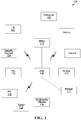
- FIG. 1 illustrates a heterogeneous communications system 100.
- a heterogeneous communications system 100 may include a plurality of transmission sending devices, such as an evolved NodeB (eNB) 105, a relay node (RN) 110, a remote radio head (RRH) 115.
- eNB evolved NodeB
- RN relay node
- RRH remote radio head
- Other non-limiting examples of transmission sending devices include network transmit points located in picocells (e.g., picocell 117), femtocells, low-power cells, full-power cells, and the like. It is noted that many transmission sending devices, especially network side transmission sending devices, may be coupled together via a backhaul, which may be wired or wireless.
- eNB 105 may be connected to RRH 115 and picocell 117 via backhauls.
- Heterogeneous communications system 100 may include a plurality of transmission receiving devices, such as a user equipment (UE) 120, a sensor 122, a security system 124, a personal computer (PC) 126, a tablet computer 128, a multimedia device 130, a television 132, and the like.
- the transmission receiving devices may differ by their communication bandwidth utilization and their capability to support multiple communication formats.
- communications systems may employ multiple transmission sending devices capable of communicating with a number of transmission receiving devices, only a small number of transmission sending devices and transmission receiving devices are illustrated for simplicity.
- a transmitting-receiving device may be used to refer to a transmission sending device and/or a transmission receiving device. It is noted that a single device may be both a transmission sending device and a transmission receiving devices at different times, in different configurations, and/or with different communications partners.
- a communications controller may be a device configured to regulate the communications occurring in communications system 100. Examples of communications controllers include eNBs, a switch coupled to and controlling the eNBs, as well as other controlling entities in communications system 100.
- the different transmission sending devices may have different transmission capabilities and/or requirements.
- an eNB may have multiple transmit antenna, while a picocell may not have multiple transmit antenna or a relatively small number of transmit antennas. Additionally, a picocell may transmit at a lower maximum power level comparable to that of an eNB.
- a PC may have much higher data bandwidth requirements and signal processing capability than a sensor, and a security system may have much stricter reliable message reception requirements than a television. Therefore, in a heterogeneous communications system, such as heterogeneous communications system 100, different pairs of communicating devices (i.e., a transmission sending device and a transmission receiving device) may have different transmission capabilities and/or transmission requirements. The different transmission capabilities and/or transmission requirements typically cannot be met optimally by a single air interface or air interface configuration.
- FIG. 2 illustrates a diagram of an air interface 200.
- Air interface 200 comprises a number of building blocks that collectively specify how a transmission is to be made and/or received.
- the building blocks of air interface 200 may include waveform building block 205, frame structure building block 210, multiple access scheme building block 215, a protocols building block 220, and a coding and modulation building block 225.
- Waveform building block 205 may specify a shape and form of a signal being transmitted.
- waveform options include Orthogonal Frequency Division Multiplexing (OFDM) based waveform such as filtered OFDM (f-OFDM), Low Density Signature Multicarrier Code Division Multiple Access (LDS-MC-CDMA), Wavelet Packet Modulation (WPM), Faster Than Nyquist (FTN) Waveform, low Peak to Average Ratio Waveform (low PAPR WF), Filter Bank Multicarrier (FBMC) Waveform, Single Carrier Frequency Division Multiple Access (SC-FDMA), Sparse Code Multiple Access (SCMA) and the like.
- OFDM Orthogonal Frequency Division Multiplexing
- f-OFDM filtered OFDM
- LDS-MC-CDMA Low Density Signature Multicarrier Code Division Multiple Access
- WPM Wavelet Packet Modulation
- FTN Faster Than Nyquist
- FBMC Filter Bank Multicarrier
- SC-FDMA Single Carrier Frequency
- the waveform building block 205 may specify the associated waveform parameters such as sub-carrier spacings and cyclic prefix (CP) overhead.
- the information provided by the waveform building block 205 may further specify an operational frequency range and a maximum transmission bandwidth of the transmission sending device.
- Frame structure building block 210 may specify a configuration of a frame or group of frames.
- Non-limiting examples of frame structure options include a configurable multi-level transmission time interval (TTI), a fixed TTI, a configurable single-level TTI, a co-existence configuration, and the like.
- the lengths of a TTI may also be specified.
- the frame structure information may also specify the capability of the device for flexible duplex communications and dynamic time division duplex (TDD) configurations.
- Multiple access scheme 215 may specify how access to a channel is granted for one or more users.
- multiple access related information include scheduled access, semi-persistent scheduling (SPS) based access, grant-free access, dedicated channel resource (no sharing between multiple users), contention based shared channel resource, non-contention based shared channel resource, orthogonal / non-orthogonal multiple access, cognitive radio based access, and the like.
- SPS semi-persistent scheduling
- grant-free access dedicated channel resource (no sharing between multiple users), contention based shared channel resource, non-contention based shared channel resource, orthogonal / non-orthogonal multiple access, cognitive radio based access, and the like.
- Protocols building block 220 may specify how a transmission and/or a re-transmission are to be made.
- Non-limiting examples of transmission and/or re-transmission mechanism options include those that provide information related to a scheduled data pipe size, a signaling mechanism for transmission and/or re-transmission, a re-transmission mechanism based on an automatic repeat request (ARQ) including e.g. positive acknowledgement (ACK) and/or negative acknowledgement (NACK), and the like.
- ARQ automatic repeat request
- ACK positive acknowledgement
- NACK negative acknowledgement
- Coding and modulation building block 225 may specify how information being transmitted may be encoded (decoded) and modulated (demodulated) for transmission (reception) purposes.
- Non-limiting examples of coding and/or modulation technique options include turbo trellis codes, turbo product codes, fountain codes, hierarchical modulation, low PAPR modulation, polar codes, and the like.
- each building block may have a plurality of candidate technologies (also referred to herein as air interface capability options), it may be possible to configure a large number of different air interface profiles, where each air interface profile defines a respective air interface configuration option.
- each air interface configuration option may define a respective set of air interface capability options, with a respective interface capability option selected for each of the building blocks of the air interface.
- Each of the different air interface profiles may be targeted to meet a different set of transmission requirements, including transmission content, transmit condition, receive condition, and the like. In general, the transmission requirements specify the transmission.
- one of the different air interface profiles that best meet the transmission requirements (and hence the transmission) may be selected and used for communications between the pair of communicating transmitting-receiving devices.
- FIG. 3 illustrates a high level view of an example software configurable air interface (SoftAI) concept 300, in which an Air Interface Configuration function 305 determines an Optimized Air Interface 320 to meet a different set of transmission requirements 310 by selecting air interface capability options from among the pool 315 of air interface capability options for all of the air interface building blocks.
- SoftAI software configurable air interface
- the building blocks of the air interface include waveform building block 320, frame structure building block 325, multiple access scheme building block 330, coding and modulation building block 325 and protocols building block 340.
- Various potential air interface capability options are shown for each of the building blocks.
- Each building block of the optimized air interface 320 may have an air interface capability option selected out of a plurality of possible air interface capability options that is selected to meet transmission requirements 310, including transmission type, transmit condition, receive condition, and the like.
- waveform building block 320 possible options include f-OFDM, LDS-MC-CDMA, WPM, FTN, low PAPR WF, FBMC, SC-FDMA, SCMA, other variations of single carrier waveforms, and the like. It is further noted that there may be multiple options associated within a given waveform type. For example, a device may have a particular operational frequency range and maximum transmission bandwidth. The device may support multiple different configurations of the f-OFDM waveform type, where each configuration has its own set of associated waveform parameters for the f-OFDM waveform type, e.g. numerology parameters such as subcarrier spacing, CP length, etc.
- numerology parameters such as subcarrier spacing, CP length, etc.
- Different frame structure options 325 may include configurable multi-level TTI, flexible duplex and/or dynamic TDD configurations, and so on.
- Different multiple access scheme options 330 may include scheduled access, grant-free access, access via a dedicated or shared channel resource, contention-based or non-contention based resource, semi-persistence scheduling, orthogonal/non-orthogonal multiple access, etc.
- possible options include rateless codes, hierarchical modulation, low PAPR modulation, polar codes, low-density parity check (LDPC) block codes, multi-dimensional modulation, and the like.
- the protocol options 340 may include scheduled data pipe size signaling mechanism, ARQ based re-transmission with ACK/NACK, etc. For each building block, one of the possible air interface capability options is selected to meet the transmission requirements 310.
- Different devices may differ in the air interface capability options that they support in one or more of the building blocks.
- a first device such as a UE
- a second device such as a sensor
- some devices may support different levels of air interface configurability. Therefore, in order to be able to determine potential air interface configuration options that are supported by a given device, it would be advantageous to be aware of the air interface capabilities of the device, so that the candidates can be limited to only those air interface configuration options that the device is capable of supporting.
- aspects of the present disclosure provide mechanisms for an air interface capability exchange, by which a device signals its air interface capabilities to facilitate SoftAI optimization.
- the signaling of air interface capability may be performed via higher level signaling, for example RRC signaling.
- the air interface capability is communicated via a MAC/physical layer control channel.
- a device supporting an air interface may transmit information related to air interface configurability of the device, which indicates whether the device supports multiple air interface configurations.
- the receiving entity e.g. a base station
- the receiving entity may then determine the air interface configurability based on that information.
- the information may include the service type supported by the device.
- the base station may then determine the air interface configurability of the device based on the service type, since certain service types may support only one air interface configuration, for example, or several pre-determined air interface configurations. Other information related to air interface configurability may also be used if provided.
- a plurality of air interface configuration capability types are defined, with each air interface configuration capability type corresponding to support for a different level of configurability of the air interface.
- first and second air interface configuration capability types may be defined, with the first type corresponding to support for only a predefined air interface configuration, and the second type corresponding to support for multiple air interface configuration options.
- Table 1A below is an example of a table of air interface configuration capability types in accordance with such an embodiment, where the first air interface configuration capability type is referred to as AI Type 0 and the second air interface configuration capability type is referred to as AI Type 1.
- AI Type 0 the first air interface configuration capability type
- AI Type 1 is referred to as AI Type 1.
- Table 1B below further clarifies how implementing air interface configurability may be communicated via a dedicated index for configurability, e.g. AI Type 0 or AI type 1.
- the configurability index defines an air interface capability type. For example, a UE can send the index to a BS. Upon receiving the index, the BS can use a look-up table, e.g. Table 1B below, to identify the UE capability from the index. Table 1B. Index AI Configuration Capability Type Parameter 00 AI Type 0 Not configurable 01 AI Type 1 Configurable
- further or different air interface configuration capability types may be defined.
- a plurality of predefined air interface configuration options may be defined and the second air interface configuration capability type corresponds to support for configurability of only a subset of the predefined air interface configuration options
- a third air interface configuration capability type may be defined that corresponds to support for configurability of all of the predefined air interface configuration options.
- the second air interface configuration capability type may correspond to support for configurability within only a subset of the building blocks of the air interface
- the third air interface configuration capability type may correspond to support for configurability within each of the building blocks of the air interface.
- Table 2A is an example of a table of air interface configuration capability types in accordance with such an embodiment, where the first air interface configuration capability type is referred to as AI Type 0, the second air interface configuration capability type is referred to as AI Type 1, and the third air interface configuration capability type is referred to as AI Type 2.
- AI Type 0 the first air interface configuration capability type
- AI Type 1 the second air interface configuration capability type
- AI Type 2 the third air interface configuration capability type
- Table 2A AI Configuration Capability Type Parameter AI Type 0 Not configurable AI Type 1
- Table 2A may be used to communicate air interface configurability via a dedicated index.
- Table 2B Index AI Configuration Capability Type Parameter 00 AI Type 0 Not configurable 01 AI Type 1 Some Configurability 02 AI Type 2 Full Configurability
- Many communication devices for so-called “vertical” applications such as embedded sensor devices configured for machine type communication (MTC) may have non-configurable air interfaces that only support a predefined air interface configuration, and thus would be categorized as the first air interface configuration capability type.
- MTC machine type communication
- the information about the predefined air interface configuration that they support may either be implied by their air interface configuration capability type (i.e., the first air interface configuration capability type may be associated with a specific predefined air interface configuration) or in addition to signaling their air interface configuration capability type they may further signal information identifying the predefined air interface configuration that they support.
- these devices may also transmit information to inform the network about air interface configuration options that they support.
- such devices may signal information to inform the network about air interface capability options that they support for each of the building blocks of the air interface.
- the third type e.g., AI Type 2
- a communication device may inform the network about its air interface configuration capability type. Some non-limiting examples are discussed below.
- the 3 rd Generation Partnership Project (3GPP) specification for Long Term Evolution (LTE) includes a UE category parameter, where higher data rate devices are designated with a higher category. This category parameter is signaled to the network by a device as part of a UE capability list in order to inform the network of the data rate capabilities/requirements of the device.
- 3GPP 3 rd Generation Partnership Project
- a new parameter identifying a device's air interface configuration capability type may be similarly signaled, e.g. via RRC signaling, or via a MAC/physical layer control channel, to the network as part of the UE capability list along with the UE category in order to advise the network of the device's air interface configuration capability type.
- RRC signaling e.g. via RRC signaling
- MAC/physical layer control channel e.g. MAC/physical layer control channel
- the device's UE category and air interface configuration capability type are independently configured. This can allow a higher UE category device, such as a machine for video surveillance that has a high data rate requirement, to indicate that it can only support a predefined air interface configuration, e.g., that it is an AI Type 0 device.
- the air interface configuration capability type is associated with the UE category.
- an extra field may be added to the list of parameters associated with each UE category to indicate the air interface configuration capability type associated with each UE category.
- An example UE category table in accordance with this embodiment is shown below in Table 3. It is noted that, Table 3 is based Table 4.1A-1 in 3GPP TS 36.306 specification with an extra field added to indicate the air interface configuration capability type associated with each UE category. Table 3.
- UE DL Category Maximum number of DL-SCH transport block bits received within a TTI Maximum number of bits of a DL-SCH transport block received within a TTI Total number of soft channel bits Maximum number of supported layers for spatial multiplexing in DL AI config type (Index) DL Category 0 1000 1000 25344 1 0 DL Category 6 301504 149776 (4 layers, 64QAM) 75376 (2 layers, 64QAM) 3654144 2 or 4 1 DL Category 7 301504 149776 (4 layers, 64QAM) 75376 (2 layers, 64QAM) 3654114 2 or 4 1 DL Category 9 452256 149776 (4 layers, 64 QAM) 75376 (2 layers, 64 QAM) 5481216 2 or 4 1 DL Category 10 452256 149776 (4 layers, 64QAM) 75376 (2 layers, 64QAM) 5481216 2 or 4 1 DL Category 11 603008 149776 (4 layers, 64QAM) 195816 (4 layers, 256QAM) 7536 (2 layers, 64QAM) 978
- the air interface configuration supported by a device can potentially be implicitly indicated (e.g., an indication of AI Type 0 for UE category 0 (MTC) may imply the predefined air interface configuration supported by the device is a specific MTC configuration).
- MTC UE category 0
- one potential drawback of this embodiment is that each UE category can only support one air interface configuration capability type.
- a device may also transmit information regarding the air interface configuration options that it supports.
- the network may maintain an air interface building block table with indices for the potential air interface capability options within each building block and a device may indicate the air interface configuration options that it supports by referencing the corresponding indices in the air interface building block table.
- the different options in each building block represent different air interface capability options in a given building block
- the WF_1, WF_2 and WF_3 indices represent different wave form air interface capability options (e.g., f-OFDM, SC-FDMA, LDS-MC-CDMA, WPM, FBMC, etc., and associated waveform parameters of the waveform)
- the MA_1 and MA_2 indices represent different multiple access scheme air interface capability options (e.g., dedicated channel resource, contention based, grant-free, etc.), and so on for each of the other building blocks.
- the air interface capability options for the waveform building block may include options for the same waveform type but with different associated waveform parameters.
- the waveform indices WF_1 and WF_2 may both correspond to an OFDM based waveform, such as f-OFDM, but differ in terms of associated waveform parameters, such as sub-carrier spacing and/or cyclic prefix overhead.
- the different options for waveform, multiple access, frame structure, protocol, MCS, etc. may be indexed as explicitly shown in Table 4B. Table 4A.
- Waveform Multiple Access Frame Structure Protocol Modulation and Coding WF_1 MA_1 FS_1 P_1 MCS_1 WF_2 MA_2 FS_2 P_2 MCS_2 WF_3 FS_3 Table 4B. index Waveform Multiple Access Frame Structure Protocol Modulation and Coding 00 WF_1 MA_1 FS_1 P_1 MCS_1 01 WF_2 MA_2 FS_2 P_2 MCS_2 10 WF_3 FS_3
- Table 5 A portion of an example of a table that may be used to inform the network about the air interface capability options that are supported by a given device for the waveform, frame structure, multiple access scheme, protocol, and coding and modulation building blocks is shown below in Table 5.
- the air interface capability options are referenced using their corresponding indices in the exemplary air interface building block table shown in Table 4.
- the information conveyed in Table 5 may be transmitted by a device in order to inform the network of the air interface configuration options that it supports.
- This form of table or something similar may be stored in the network to keep a record of the AI capabilities of the device.
- the information conveyed in Table 6, namely the air interface profile indices corresponding to respective air interface profiles may be transmitted by a device in order to inform the network of the air interface profiles that it supports.
- Table 5 UE AI Capability Parameters supportedWaveform WF_1, WF_2 supportedFrameStructureConfig FS_2, FS_3 supportedMultipleAccessScheme MA_1, MA_3 supportedProtocols P_1, P_2, P_3 supportedModulationAndCoding MCS_1, MCS_2 Table 6.
- AI Configuration /Profile 1 AI Configuration /Profile 2
- AI Configuration /Profile 3 Waveform WF_1 WF_2 WF_1 Frame Structure FS_2 FS_1 FS_1 Multiple Access MA_1 MA_1 MA_1 MA_1 Protocol P_1 P_2 P_1 Modulation and Coding MCS_2 MCS_1 MCS_1
- FIGs. 4A to 4C illustrate three examples of air interface capability exchange procedures in which a UE device 405 informs a Radio Access Network (RAN) device 410 of its air interface configuration capabilities according to example embodiments described herein.
- RAN Radio Access Network
- FIG. 4A illustrates an example of a standalone air interface capability exchange procedure 400A.
- the RAN device 410 transmits a UE air interface capability enquiry 415 to UE 405 requesting the UE to identify its air interface configuration capabilities.
- UE 405 transmits a message 420 to RAN 410 containing information regarding its air interface configuration capabilities.
- Both the capability enquiry 415 and the corresponding response message 420 may be transmitted, for example, via RRC signaling, or via a MAC/physical layer control channel.
- FIG. 4B illustrates an example air interface capability exchange procedure 400B that is part of a more general UE capability exchange procedure.
- the RAN device 410 transmits a UE capability enquiry 425 to UE 405 requesting the UE to identify its capabilities.
- UE 405 transmits a message 430 to RAN 410 containing information regarding its capabilities, including its air interface configuration capabilities.
- the message 430 of FIG. 4B includes the message 420 of FIG. 4A , and further specifies other capabilities of the UE, such as retransmission capability, power level, etc.
- FIG. 4C illustrates an example air interface capability exchange procedure 400C that occurs as part of an initial network access procedure.
- UE 405 transmits a message 435 to RAN device 410 as part of its initial access procedure to access the RAN, and the message 435 includes information regarding the UE's air interface configuration capabilities.
- the messages 420, 430 and 435 transmitted by UE 405 may include indices in an air interface building block table, e.g. Table 1B, 2B, 4B, to advise RAN 410 of the air interface capability options that UE 405 supports for each of the building blocks of its air interface.
- air interface capability options identifiable by an index include information related to operational frequency range, maximum transmission bandwidth, and/or service type.
- the air interface capability exchange procedure occurs in the Radio Resource Control (RRC) layer.
- RRC Radio Resource Control
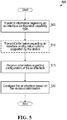
- FIG. 5 illustrates a flow diagram of example operations 500 in a first communication device according to example embodiments described herein.
- Operations 500 may be indicative of operations occurring in a UE device, such as UE 120, sensor 122, PC 126, tablet 128 and the like, a user equipment/device (UE), wireless transmit/receive unit (WTRU), mobile station, fixed or mobile subscriber unit, cellular telephone, personal digital assistant (PDA), smartphone, laptop, computer, touchpad, wireless sensor, or consumer electronics device.
- UE device such as UE 120, sensor 122, PC 126, tablet 128 and the like, a user equipment/device (UE), wireless transmit/receive unit (WTRU), mobile station, fixed or mobile subscriber unit, cellular telephone, personal digital assistant (PDA), smartphone, laptop, computer, touchpad, wireless sensor, or consumer electronics device.
- PDA personal digital assistant
- Operations 500 may begin with the device transmitting information regarding an air interface configuration capability type of the device (block 505) to a network controller or a base station.
- the air interface configuration capability type may identify whether the device supports multiple air interface configurations of the air interface of the device.
- the air interface configuration capability type may be one of a plurality of air interface configuration capability types, where each air interface configuration capability type corresponds to support for a different level of configurability of the air interface.
- the configuration capability type may be indicated by an index, such as the index used in Tables 1B, 2B, and 4B.
- the device can be a fifth-generation device (5G) backward-compatible with a fourth-generation (4G) device, and the configuration capability type information may indicate the AI capability of the 5G device.
- 5G fifth-generation device
- 4G fourth-generation
- the device may optionally transmit further information regarding air interface configuration options supported by the device, as shown by a dashed-line block 510.
- this transmission may occur according to one of the example air interface capability exchange procedures illustrated in Figures 4A to 4C .
- the air interface may be characterized by a plurality of building blocks and the transmission in the dashed-line optional block 510 may include information regarding air interface capability options associated with the plurality of building blocks that characterize the air interface.
- the further information in block 510 maybe in the form of indices for different air interface capability options as described in Table 5. In another embodiment, the information maybe in the form of indices of air interface profiles as described in Table 6.
- the device may receive information from a base station or a central controller regarding configuration of its air interface (block 515).
- the configuration may have been determined based at least in part on the information transmitted at block 505 and/or block 510 regarding the air interface configuration capability type and the air interface configuration options supported by the device.
- the device may configure its air interface based on the received information (block 520).
- the device may select waveform, multiple access scheme, frame structure, communications protocol, and modulation and coding scheme based on information received from the base station.
- the information may include a particular air interface configuration, or various air interface configuration options that the device can then select based on a pre-defined set of criteria.
- the example method 500 is illustrative of an example embodiment. In other embodiments, similar or different operations could be performed in a similar or different order and/or certain operations may be omitted. Various ways to perform the illustrated operations, as well as examples of other operations that may be performed, are described herein. Further variations may be or become apparent.
- the plurality of air interface configuration capability types includes a first air interface configuration capability type corresponding to support for only a predefined air interface configuration of the air interface.
- the operation at block 510 may be omitted if the first air interface configuration capability type is understood to correspond to a specific predefined air interface configuration, such as an MTC configuration.
- FIG. 6 illustrates a flow chart of example operations in a device according to example embodiments described herein.
- Operations 600 may be indicative of operations occurring in a network device such as eNB 105, picocell 117 base transceiver station (BTS), a Node-B (NodeB), an evolved NodeB (eNodeB), a Home NodeB, a Home eNodeB, a site controller, an access point (AP), a wireless router, and the like.
- a network device such as eNB 105, picocell 117 base transceiver station (BTS), a Node-B (NodeB), an evolved NodeB (eNodeB), a Home NodeB, a Home eNodeB, a site controller, an access point (AP), a wireless router, and the like.
- BTS picocell 117 base transceiver station
- NodeB Node-B
- eNodeB evolved NodeB
- AP access point
- AP wireless
- Operations 600 may begin with the network device receiving information regarding an air interface configuration capability type of another device that supports an air interface (block 605).
- the other device may be a UE device, such as UE 120, sensor 122, PC 126, tablet 128, and the like.
- the air interface configuration capability type of the other device may identify whether the other device supports multiple air interface configurations.
- the air interface configuration capability type may be one of a plurality of air interface configuration capability types, where each air interface configuration capability type corresponds to support for a different level of configurability of the air interface.
- the network device may optionally receive further information regarding air interface configuration options supported by the other device.
- This step is shown by a dashed-line block 610.
- this information may be received in accordance with one of the example air capability exchange procedures illustrated in Figures 4A to 4C .
- the air interface may be characterized by a plurality of building blocks and the transmission in block 610 may include information regarding air interface capability options associated with the plurality of building blocks that characterize the air interface, such as building blocks 320-340 described above with reference to FIG. 3 .
- the further information received in the dashed-line optional block 610 of FIG. 6 may be in the form of indices for different air interface capability options as described in Table 5.
- the information maybe in the form of indices of air interface profiles as described in Table 6.
- the network device may determine a configuration of the air interface of the other device based at least in part on the information received at block 605 and/or block 610 regarding the air interface configuration capability type and the air interface configuration options supported by the other device (block 615). In some embodiments the determination may be further based on satisfying transmission requirements, including transmission content, transmit condition, receive condition, and the like, for transmitting to the other device. For example, the determination may be made in accordance with the SoftAI configuration concept illustrated in FIG. 3 . In some embodiments, the determination in block 615 of FIG. 6 may involve the selection of an air interface profile from amongst one or more predefined air interface profiles supported by the other device.
- the air interface configuration determined in block 615 may be transmitted to the other device (block 620).
- the information transmitted to the other device in block 620 may be an index associated with an air interface profile supported by the other device that was selected in block 615.
- both receiving the information (605) and transmitting the information (620) may be performed via RRC signaling, or via a MAC/physical layer control channel.
- the example method 600 is illustrative of an example embodiment. In other embodiments, similar or different operations could be performed in a similar or different order and/or certain operations may be omitted. Various ways to perform the illustrated operations, as well as examples of other operations that may be performed, are described herein. Further variations may be or become apparent.
- the plurality of air interface configuration capability types includes a first air interface configuration capability type corresponding to support for only a predefined air interface configuration of the air interface.
- the operations at blocks 610 and/or 620 may be omitted if the first air interface configuration capability type is understood to correspond to a specific predefined air interface configuration, such as an MTC configuration.
- a method of communication between first and second devices can include transmitting, by the first device to the second device, information indicating configurability type of an air interface of the first device.
- the configurability type indicates whether the first device supports multiple air interface configurations of the air interface.
- the first device can then transmit a data packet to the second device, based on a configuration of the air interface in accordance with the configurability type of the first device.
- the information can include an index indicating the air interface configuration, an air interface configuration type, and/or a plurality of specific air interface parameters.
- the network controller After the air interface capability exchange procedure is completed e.g. as outlined in FIG. 4 , the network controller has information about the air interface capability of the UEs. In one embodiment, the UEs also have information about the air interface capability of the network.
- the network controller can subsequently signal to the UEs, e.g. in step 620 of FIG. 6 , information related to the transmission mechanisms (e.g. waveforms, waveform parameters, numerology parameters, frame structure parameters, multiple access schemes, protocols, coding and modulation schemes etc.).
- This signalling can be done dynamically, semi-statically, or statically. It can be signalled via higher layer signalling (e.g. RRC signalling), broadcast, multi-cast or unicast signalling, MAC/PHY layer control channels (e.g. downlink control channel similar to LTE's PDCCH). In the case of MAC/PHY layer control channels, the signalling can be more dynamic.
- a UE is capable of supporting 2 sets of numerology (e.g. sub-carrier spacing 1 such as 15kHz and sub-carrier spacing 2 such as 30kHz).
- Another UE is capable of supporting only 1 set of numerology (e.g. sub-carrier spacing 1 such as 15kHz).
- the network e.g. scheduler at the base station or central controller
- the network can signal the UEs the resource allocation such as sub-band information for different numerologies.
- This signalling can be via broadcast, multi-cast or unicast signalling.
- the signalling can be sent via common or UE-specific control channels.
- the network can schedule UE 1 in a sub-band with 15kHz sub-carrier spacing and another sub-band with 30kHz sub-carrier spacing).
- the network can schedule UE 2 only in sub-band with 15kHz sub-carrier spacing.
- the network can also only schedule UE 1 in only one of the 2 supported numerologies. This can be left to the decision of the scheduler.
- the scheduling information is sent via downlink control channel.
- a UE in another non-limiting example, is capable of grant-free and scheduled transmission. Another UE (UE 4) is capable of only scheduled transmission.
- the network after the UE air interface capability exchange (e.g. 400A, 400B, or 400C of FIG. 4 ), can signal to UE 3 via broadcast, multi-cast or unicast signalling information related to grant-free transmission. Higher layer signalling, such as RRC signalling, can be used.
- Grant-free transmission information can include, for example, the time-frequency resources, modulation and coding scheme (MCS), signature or codebook information (e.g. SCMA codebook(s)), pilots/reference signals information, etc.
- FIG. 7 illustrates a block diagram of an example communication device 700 according to example embodiments described herein.
- Communication device 700 may be an implementation of a UE device, such as UE 120, sensor 122, PC 126, tablet 128 and the like.
- Communication device 700 may be used to implement various ones of the embodiments discussed herein.
- communication device 700 includes a wireless interface 705 that supports an air interface.
- Wireless interface 705 includes a transmitter 730 configured to send messages, and the like, and a receiver 735 configured to receive messages, and the like.
- a device air interface capabilities informing unit 720 is configured to transmit, via wireless interface 705, information regarding an air interface configuration capability type of the device.
- the air interface configuration capability type identifies whether the device supports multiple air interface configurations of the air interface.
- the air interface configuration capability type may be one of a plurality of air interface configuration capability types, each air interface configuration capability type corresponding to support for a different level of configurability of the air interface.
- device air interface capabilities informing unit 720 is further configured to transmit, via wireless interface 705, further information regarding air interface configuration options supported by the device's air interface.
- the device's air interface may be characterized by a plurality of building blocks, and device air interface capabilities informing unit 720 may be configured to transmit further information regarding air interface capability options associated with the plurality of building blocks.
- device air interface capabilities informing unit 720 is configured to transmit the information regarding the air interface configuration capability type of the device and/or the air interface configuration options supported by the device in response to receiving an enquiry and/or as part of an initial network access procedure.
- device air interface capabilities informing unit 720 may be configured to perform the actions of the UE device 405 according to one or more of the air interface capability exchange procedures illustrated in FIGs. 4A to 4C .
- a device air interface configuration unit 725 is configured to receive, via wireless interface 705, information regarding configuration of the device's air interface. The configuration may have been determined based at least in part on the information transmitted by device air interface capabilities informing unit 720. Device air interface configuration unit 725 may be further configured to configure the device's air interface based on the received information.
- a memory 715 is configured to store information regarding the device's air interface configuration capabilities, detected signals, decoded signals, and the like.
- the elements of communication device 700 may be implemented as specific hardware logic blocks. In an alternative, the elements of communication device 700 may be implemented as software executing in a processor, controller, application specific integrated circuit, or so on. In yet another alternative, the elements of communication device 700 may be implemented as a combination of software and/or hardware.
- transmitter 730 and receiver 735 may be implemented as a specific hardware block, while device air interface capabilities informing unit 720 and device air interface configuration unit 725 may be software modules executing in a processor 710, such as a microprocessor, a digital signal processor, a custom circuit, or a custom compiled logic array of a field programmable logic array.
- Device air interface capabilities informing unit 720 and device air interface configuration unit 725 may be modules stored in memory 715.
- FIG. 8 illustrates a block diagram of an example communication device 800 according to example embodiments described herein.
- Communication device 800 may be an implementation of a network device, such as eNB 105, picocell 117 and the like.
- Communication device 800 may be used to implement various ones of the embodiments discussed herein.
- communication device 800 includes a wireless interface 805.
- Wireless interface 805 includes a transmitter 830 configured to send messages, and the like, and a receiver 835 configured to receive messages, and the like.
- a device air interface capabilities processing unit 820 is configured to receive, via wireless interface 805, information regarding an air interface configuration capability type of another device that supports an air interface.
- the other device may be a UE device, such as UE 120, sensor 122, PC 126, tablet 128 and the like.
- the air interface configuration capability type may identify whether the other device supports multiple air interface configurations of the air interface.
- the air interface configuration capability type may be one of a plurality of air interface configuration capability types, each air interface configuration capability type corresponding to support for a different level of configurability of the air interface.
- device air interface capabilities processing unit 820 is further configured to receive, via wireless interface 805, further information regarding air interface configuration options supported by the other device.
- the air interface may be characterized by a plurality of building blocks, and device air interface capabilities processing unit 820 may be configured to receive further information regarding air interface capability options associated with the plurality of building blocks.
- device air interface capabilities processing unit 820 is configured to transmit an enquiry, via wireless interface 805, to request the information regarding the air interface configuration capability type of the other device and/or the air interface configuration options supported by the other device.
- device air interface capabilities processing unit 820 may be configured to receive the information as part of an initial network access procedure.
- device air interface capabilities processing unit 820 may be configured to perform the actions of the RAN device 410 according to one or more of the air interface capability exchange procedures illustrated in FIGs. 4A to 4C .
- a device air interface configuration determining unit 825 is configured to determine a configuration for the other device's air interface.
- the configuration may be based at least in part on the information received by device air interface capabilities processing unit 820 regarding the air interface configuration capability type and/or the air interface configuration options supported by the other device.
- the configuration may be further based on satisfying transmission requirements, including transmission content, transmit condition, receive condition, and the like, for transmitting to the other device. For example, the determination may be made in accordance with the SoftAI configuration concept illustrated in FIG. 3 .
- Device air interface configuration determining unit 825 may also be configured to transmit, via wireless interface 805, information regarding the configuration of the other device's air interface.
- a memory 815 is configured to store information regarding the other device's air interface configuration capabilities, building block air interface capability options, selected air interface capability options of building blocks, transmission requirements, and the like.
- the elements of communication device 800 may be implemented as specific hardware logic blocks. In an alternative, the elements of communication device 800 may be implemented as software executing in a processor, controller, application specific integrated circuit, or so on. In yet another alternative, the elements of communication device 800 may be implemented as a combination of software and/or hardware.
- transmitter 830 and receiver 835 may be implemented as a specific hardware block, while device air interface capabilities processing unit 820 and device air interface configuration determining unit 825 may be software modules executing in a processor 810, such as a microprocessor, a digital signal processor, a custom circuit, or a custom compiled logic array of a field programmable logic array.
- Device air interface capabilities processing unit 820 and device air interface configuration determining unit 825 may be modules stored in memory 815.
- FIG. 9 is a block diagram of a computing system 900 that may be used for implementing the devices and methods disclosed herein, Specific devices may utilize all of the components shown or only a subset of the components, and levels of integration may vary from device to device. Furthermore, a device may contain multiple instances of a component, such as multiple processing units, processors, memories, transmitters, receivers, etc.
- the computing system 900 includes a processing unit 902.
- the processing unit includes a central processing unit (CPU) 914, memory 908, and may further include a mass storage device 904, a video adapter 910, and an I/O interface 912 connected to a bus 920.
- CPU central processing unit
- memory 908 may further include a mass storage device 904, a video adapter 910, and an I/O interface 912 connected to a bus 920.
- the bus 920 may be one or more of any type of several bus architectures including a memory bus or memory controller, a peripheral bus, or a video bus.
- the CPU 914 may comprise any type of electronic data processor.
- the memory 908 may comprise any type of non-transitory system memory such as static random access memory (SRAM), dynamic random access memory (DRAM), synchronous DRAM (SDRAM), read-only memory (ROM), or a combination thereof.
- the memory 908 may include ROM for use at boot-up, and DRAM for program and data storage for use while executing programs.
- the mass storage 904 may comprise any type of non-transitory storage device configured to store data, programs, and other information and to make the data, programs, and other information accessible via the bus 920.
- the mass storage 904 may comprise, for example, one or more of a solid state drive, hard disk drive, a magnetic disk drive, or an optical disk drive.
- the video adapter 910 and the I/O interface 912 provide interfaces to couple external input and output devices to the processing unit 902.
- input and output devices include a display 918 coupled to the video adapter 910 and a mouse/keyboard/printer 916 coupled to the I/O interface 912.
- Other devices may be coupled to the processing unit 902, and additional or fewer interface cards may be utilized.
- a serial interface such as Universal Serial Bus (USB) (not shown) may be used to provide an interface for an external device.
- USB Universal Serial Bus
- the processing unit 902 also includes one or more network interfaces 906, which may comprise wired links, such as an Ethernet cable, and/or wireless links to access nodes or different networks.
- the network interfaces 906 allow the processing unit 902 to communicate with remote units via the networks.
- the network interfaces 906 may provide wireless communication via one or more transmitters/transmit antennas and one or more receivers/receive antennas.
- the processing unit 902 is coupled to a local-area network 922 or a wide-area network for data processing and communications with remote devices, such as other processing units, the Internet, or remote storage facilities.
- a signal may be transmitted by a transmitting unit or a transmitting module.
- a signal may be received by a receiving unit or a receiving module.
- a signal may be processed by a processing unit or a processing module.
- Other steps may be performed by a establishing unit/module for establishing a serving cluster, a instantiating unit/module, an establishing unit/module for establishing a session link, an maintaining unit/module, other performing unit/module for performing the step of the above step.
- the respective units/modules may be hardware, software, or a combination thereof.
- one or more of the units/modules may be an integrated circuit, such as field programmable gate arrays (FPGAs) or application-specific integrated circuits (ASICs).
- FPGAs field programmable gate arrays
- ASICs application-specific integrated circuits
Landscapes
- Engineering & Computer Science (AREA)
- Computer Networks & Wireless Communication (AREA)
- Signal Processing (AREA)
- Databases & Information Systems (AREA)
- Mobile Radio Communication Systems (AREA)
- Selective Calling Equipment (AREA)
- Telephonic Communication Services (AREA)
Claims (14)
- Verfahren, das umfasst:
das Übertragen (505) über einen Steuerkanal durch ein Teilnehmergerät, UE (en: User Equipment), von Informationen, die eine Luftschnittstellenkonfigurierbarkeit des UE betreffen, wobei die Luftschnittstellenkonfigurierbarkeit ermittelt, ob das UE mehrere Luftschnittstellenkonfigurationen der Luftschnittstelle unterstützt, wobei die Informationen, die die Luftschnittstellenkonfigurierbarkeit betreffen, einen Luftschnittstellenkonfigurationskapazitätstyp des UE umfassen, wobei der Luftschnittstellenkonfigurationskapazitätstyp einer der folgenden ist:ein erster Luftschnittstellenkonfigurationskapazitätstyp entsprechend der Unterstützung für lediglich eine vordefinierte Luftschnittstellenkonfiguration der Luftschnittstelle,ein zweiter Luftschnittstellenkonfigurationskapazitätstyp entsprechend der Unterstützung für eine Konfigurierbarkeit eines Teilsatzes vordefinierter Luftschnittstellenkonfigurationen undein dritter Luftschnittstellenkonfigurationskapazitätstyp entsprechend der Unterstützung für eine Konfigurierbarkeit aller vordefinierten Luftschnittstellenkonfigurationen. - Verfahren nach Anspruch 1, wobei die Informationen, die die Luftschnittstellenkonfigurierbarkeit betreffen, mindestens einen Luftschnittstellenprofilindex umfassen, wobei jeder Luftschnittstellenprofilindex einem jeweiligen vordefinierten Luftschnittstellenbaustein entspricht.
- Verfahren nach Anspruch 2, wobei der jeweilige vordefinierte Luftschnittstellenbaustein ein Wellenformbaustein ist.
- Verfahren nach Anspruch 2, wobei der jeweilige vordefinierte Luftschnittstellenbaustein ein Rahmenstrukturbaustein ist.
- Verfahren nach Anspruch 2, wobei der jeweilige vordefinierte Luftschnittstellenbaustein ein Mehrfachzugriffsbaustein ist.
- Verfahren nach Anspruch 2, wobei der jeweilige vordefinierte Luftschnittstellenbaustein ein Protokollbaustein ist.
- Verfahren nach Anspruch 2, wobei der jeweilige vordefinierte Luftschnittstellenbaustein ein Modulations- und Codierungsbaustein ist.
- Verfahren nach Anspruch 1, wobei das Übertragen von Informationen bezüglich des Luftschnittstellenkonfigurationskapazitätstyps des UE durch das UE mindestens eines der folgenden Elemente umfasst:das Übertragen der Informationen als Reaktion auf das Empfangen einer Anfrage; unddas Übertragen der Informationen als Teil eines Anfangsnetzwerkzugangsverfahrens.
- Teilnehmergerät, UE (en: User Equipment), das aufweist:eine Drahtlosschnittstelle, die eine Luftschnittstelle für das UE unterstützt;einen Prozessor, der funktionswirksam mit der Drahtlosschnittstelle gekoppelt ist; undein computerlesbares Speichermedium, das betriebsmäßig mit dem Prozessor gekoppelt ist, wobei das computerlesbare Speichermedium eine Programmierung zur Ausfuhrung durch den Prozessor speichert, wobei die Programmierung Anweisungen zum Implementieren eines Verfahrens nach einem der Ansprüche 1 bis 8 umfasst.
- Verfahren, das umfasst:
das Empfangen (605) von Informationen, die eine Luftschnittstellenkonfigurierbarkeit eines Teilnehmergeräts, UE, betreffen, das eine Luftschnittstelle unterstützt, über einen Steuerkanal durch eine Basisstation, wobei die Luftschnittstellenkonfigurierbarkeit ermittelt, ob das UE mehrere Luftschnittstellenkonfigurationen der Luftschnittstelle unterstützt, wobei die Informationen, die die Luftschnittstellenkonfigurierbarkeit betreffen, einen Luftschnittstellenkonfigurationskapazitätstyp des UE umfassen, wobei der Luftschnittstellenkonfigurationskapazitätstyp einer der folgenden ist:ein erster Luftschnittstellenkonfigurationskapazitätstyp entsprechend der Unterstützung für lediglich eine vordefinierte Luftschnittstellenkonfiguration der Luftschnittstelle,ein zweiter Luftschnittstellenkonfigurationskapazitätstyp entsprechend der Unterstützung für eine Konfigurierbarkeit eines Teilsatzes vordefinierter Luftschnittstellenkonfigurationen undein dritter Luftschnittstellenkonfigurationskapazitätstyp entsprechend der Unterstützung für eine Konfigurierbarkeit aller vordefinierten Luftschnittstellenkonfigurationen; unddas Bestimmen einer Konfiguration der Luftschnittstelle des UE durch die Basisstation mindestens teilweise auf Grundlage der Informationen bezüglich der Luftschnittstellenkonfigurierbarkeit des UE. - Verfahren nach Anspruch 10, wobei die Informationen, die die Luftschnittstellenkonfigurierbarkeit betreffen, mindestens einen Luftschnittstellenprofilindex umfassen, wobei jeder Luftschnittstellenprofilindex einem jeweiligen vordefinierten Luftschnittstellenbaustein entspricht.
- Verfahren nach Anspruch 10, wobei das Empfangen von Informationen bezüglich der Luftschnittstellenkonfigurierbarkeit des UE ein Teil eines Anfangsnetzwerkzugangsverfahrens von dem UE ist.
- Verfahren nach Anspruch 10, das ferner das Übertragen einer Anfrage an das UE durch die Basisstation umfasst, wobei das Empfangen der Informationen als Reaktion auf die Anfrage erfolgt.
- Basisstation, die aufweist:eine Drahtlosschnittstelle, die eine Luftschnittstelle für die Basisstation unterstützt;einen Prozessor, der funktionswirksam mit der Drahtlosschnittstelle gekoppelt ist; undein computerlesbares Speichermedium, das betriebsmäßig mit dem Prozessor gekoppelt ist, wobei das computerlesbare Speichermedium eine Programmierung zur Ausführung durch den Prozessor speichert, wobei die Programmierung Anweisungen zum Implementieren eines Verfahrens nach einem der Ansprüche 10 bis 13 umfasst.
Priority Applications (1)
| Application Number | Priority Date | Filing Date | Title |
|---|---|---|---|
| EP20164422.6A EP3703402A1 (de) | 2016-01-19 | 2017-01-19 | System und verfahren für luftschnittstellenkapazitätsaustausch |
Applications Claiming Priority (3)
| Application Number | Priority Date | Filing Date | Title |
|---|---|---|---|
| US15/000,611 US10728743B2 (en) | 2016-01-19 | 2016-01-19 | System and method of air interface capability exchange |
| PCT/CN2016/091574 WO2017124720A1 (en) | 2016-01-19 | 2016-07-25 | System and method of air interface capability exchange |
| PCT/CN2017/071737 WO2017125047A1 (en) | 2016-01-19 | 2017-01-19 | System and method of air interface capability exchange |
Related Child Applications (1)
| Application Number | Title | Priority Date | Filing Date |
|---|---|---|---|
| EP20164422.6A Division EP3703402A1 (de) | 2016-01-19 | 2017-01-19 | System und verfahren für luftschnittstellenkapazitätsaustausch |
Publications (3)
| Publication Number | Publication Date |
|---|---|
| EP3400686A1 EP3400686A1 (de) | 2018-11-14 |
| EP3400686A4 EP3400686A4 (de) | 2019-01-09 |
| EP3400686B1 true EP3400686B1 (de) | 2020-04-15 |
Family
ID=59315341
Family Applications (2)
| Application Number | Title | Priority Date | Filing Date |
|---|---|---|---|
| EP20164422.6A Withdrawn EP3703402A1 (de) | 2016-01-19 | 2017-01-19 | System und verfahren für luftschnittstellenkapazitätsaustausch |
| EP17741078.4A Active EP3400686B1 (de) | 2016-01-19 | 2017-01-19 | System und verfahren für luftschnittstellenkapazitätsaustausch |
Family Applications Before (1)
| Application Number | Title | Priority Date | Filing Date |
|---|---|---|---|
| EP20164422.6A Withdrawn EP3703402A1 (de) | 2016-01-19 | 2017-01-19 | System und verfahren für luftschnittstellenkapazitätsaustausch |
Country Status (6)
| Country | Link |
|---|---|
| US (2) | US10728743B2 (de) |
| EP (2) | EP3703402A1 (de) |
| JP (1) | JP2019502338A (de) |
| CN (2) | CN108702329A (de) |
| BR (1) | BR112018014638A2 (de) |
| WO (1) | WO2017124720A1 (de) |
Families Citing this family (19)
| Publication number | Priority date | Publication date | Assignee | Title |
|---|---|---|---|---|
| SG11201703947SA (en) * | 2014-11-14 | 2017-06-29 | Huawei Tech Co Ltd | Systems and methods for software configurable air interface adaptation |
| US10009152B2 (en) * | 2016-03-04 | 2018-06-26 | Huawei Technologies Co., Ltd. | System and method for rate-less multiple access |
| CN107155181A (zh) * | 2016-03-04 | 2017-09-12 | 华为技术有限公司 | 处理用户设备能力信息的方法、用户设备和基站 |
| US11405914B2 (en) * | 2016-09-26 | 2022-08-02 | Qualcomm Incorporated | Waveform selection in wireless communications |
| US11381304B2 (en) * | 2017-08-30 | 2022-07-05 | Iridium Satellite Llc | Satellite communications with multiple classes of terrestrial terminal devices |
| CN109699085A (zh) * | 2018-10-17 | 2019-04-30 | 华为技术有限公司 | 一种传输数据的方法以及终端设备 |
| US11431583B2 (en) * | 2019-11-22 | 2022-08-30 | Huawei Technologies Co., Ltd. | Personalized tailored air interface |
| CA3070530A1 (en) * | 2020-01-30 | 2021-07-30 | Nautel Limited | Iboc compatible superposition modulation by independent modulators utilizing clipping noise from peak-to-average power reduction |
| WO2021155495A1 (en) * | 2020-02-04 | 2021-08-12 | Qualcomm Incorporated | Capability configurations for new radio redcap devices |
| US12568433B2 (en) | 2020-06-10 | 2026-03-03 | Beijing Xiaomi Mobile Software Co., Ltd. | Access method, access apparatus, and storage medium |
| EP4173372A4 (de) * | 2020-06-30 | 2024-12-04 | Qualcomm Incorporated | Vorcodierung für gemeinsame mess- und kommunikationsdienste |
| US12574721B2 (en) * | 2020-08-13 | 2026-03-10 | Telefonaktiebolaget Lm Ericsson (Publ) | Handling UE parameters update data set types which may be unsupported in UE parameters update via UDM control plane procedure |
| US11871250B2 (en) * | 2020-09-25 | 2024-01-09 | Qualcomm Incorporated | Machine learning component management in federated learning |
| CN116711370A (zh) * | 2021-01-15 | 2023-09-05 | 华为技术有限公司 | 一种通信方法与装置 |
| CN115280826A (zh) * | 2022-06-17 | 2022-11-01 | 北京小米移动软件有限公司 | 信息传输方法及装置、存储介质 |
| US20250385844A1 (en) * | 2022-06-22 | 2025-12-18 | Beijing Xiaomi Mobile Software Co., Ltd. | Air interface processing method and apparatus, and storage medium |
| US12328646B2 (en) | 2022-07-27 | 2025-06-10 | Zoom Communications, Inc. | Integrated push-to-talk communication |
| CN115942496A (zh) * | 2023-01-05 | 2023-04-07 | 阿里巴巴(中国)有限公司 | 空口资源调度方法、网络接入设备、终端设备和通信网络 |
| US12375100B2 (en) * | 2023-09-20 | 2025-07-29 | Qualcomm Incorporated | Labeling for higher order modulation polar codes |
Family Cites Families (19)
| Publication number | Priority date | Publication date | Assignee | Title |
|---|---|---|---|---|
| US5412375A (en) | 1993-09-27 | 1995-05-02 | Motorola, Inc. | Method of selecting an air interface for communication in a communication system |
| US6961349B2 (en) * | 2001-05-30 | 2005-11-01 | Telefonaktiebolaget Lm Ericsson (Publ) | Handling TCP protocol for connections transmitted in parallel over radio link |
| US20040076130A1 (en) * | 2002-10-22 | 2004-04-22 | Nobuyuki Uchida | Method, apparatus, and system for selecting a service provider system |
| US7640019B2 (en) * | 2005-03-31 | 2009-12-29 | Adc Telecommunications, Inc. | Dynamic reallocation of bandwidth and modulation protocols |
| US8447968B2 (en) * | 2005-10-28 | 2013-05-21 | Alcatel Lucent | Air-interface application layer security for wireless networks |
| US20070160071A1 (en) | 2005-12-30 | 2007-07-12 | Overtoom Eric J | Framework for a wireless communication device |
| US20070255797A1 (en) | 2006-04-28 | 2007-11-01 | Dunn Douglas L | Method for selecting an air interface using an access list on a multi-mode wireless device |
| CN101159975B (zh) | 2006-09-22 | 2011-07-06 | 华为技术有限公司 | 一种空口资源分配指示方法、装置和用户终端 |
| CN101686510B (zh) | 2008-09-22 | 2012-07-04 | 电信科学技术研究院 | 切换过程中传递ue无线能力信息的方法和装置 |
| US8284725B2 (en) * | 2009-10-30 | 2012-10-09 | Intel Corporation | Techniques to negotiate capabilities between networked devices |
| US20120282922A1 (en) | 2010-01-13 | 2012-11-08 | Telefonaktiebolaget Lm Ericsson (Publ) | Methods and Arrangements in a Cellular Network |
| US8779890B2 (en) | 2011-01-14 | 2014-07-15 | Intel Mobile Communication Technology GmbH | Radio devices, regulation servers, and verification servers |
| GB2497529B (en) | 2011-12-12 | 2014-07-23 | Samsung Electronics Co Ltd | Reporting dual-mode capabilities in a long-term evolution network |
| US20130173765A1 (en) * | 2011-12-29 | 2013-07-04 | United Video Properties, Inc. | Systems and methods for assigning roles between user devices |
| JP5822765B2 (ja) | 2012-03-19 | 2015-11-24 | シャープ株式会社 | 無線通信システム、通信方法、端末装置、および基地局装置 |
| US10616827B2 (en) * | 2012-07-10 | 2020-04-07 | Huawei Technologies Co., Ltd. | System and method for dynamically configurable air interfaces |
| SG11201703947SA (en) * | 2014-11-14 | 2017-06-29 | Huawei Tech Co Ltd | Systems and methods for software configurable air interface adaptation |
| KR20170053174A (ko) * | 2015-01-26 | 2017-05-15 | 엘지전자 주식회사 | 방송 신호 송수신 장치 및 방법 |
| US9883524B2 (en) * | 2015-11-04 | 2018-01-30 | Huawei Technologies Co., Ltd. | Systems and methods for configuring air interfaces with low overhead |
-
2016
- 2016-01-19 US US15/000,611 patent/US10728743B2/en active Active
- 2016-07-25 WO PCT/CN2016/091574 patent/WO2017124720A1/en not_active Ceased
-
2017
- 2017-01-19 CN CN201780007029.4A patent/CN108702329A/zh active Pending
- 2017-01-19 JP JP2018555811A patent/JP2019502338A/ja active Pending
- 2017-01-19 EP EP20164422.6A patent/EP3703402A1/de not_active Withdrawn
- 2017-01-19 CN CN202010050282.1A patent/CN111263353B/zh active Active
- 2017-01-19 EP EP17741078.4A patent/EP3400686B1/de active Active
- 2017-01-19 BR BR112018014638-2A patent/BR112018014638A2/pt not_active IP Right Cessation
-
2020
- 2020-07-23 US US16/936,655 patent/US20200359198A1/en not_active Abandoned
Non-Patent Citations (1)
| Title |
|---|
| None * |
Also Published As
| Publication number | Publication date |
|---|---|
| EP3703402A1 (de) | 2020-09-02 |
| CN111263353B (zh) | 2021-04-09 |
| EP3400686A1 (de) | 2018-11-14 |
| US10728743B2 (en) | 2020-07-28 |
| EP3400686A4 (de) | 2019-01-09 |
| CN108702329A (zh) | 2018-10-23 |
| BR112018014638A2 (pt) | 2018-12-26 |
| US20170208455A1 (en) | 2017-07-20 |
| JP2019502338A (ja) | 2019-01-24 |
| CN111263353A (zh) | 2020-06-09 |
| US20200359198A1 (en) | 2020-11-12 |
| WO2017124720A1 (en) | 2017-07-27 |
Similar Documents
| Publication | Publication Date | Title |
|---|---|---|
| EP3400686B1 (de) | System und verfahren für luftschnittstellenkapazitätsaustausch | |
| CN113767699B (zh) | 确定用于物理下行链路控制信道(pdcch)监测的搜索空间集的方法和设备 | |
| CN114642055B (zh) | 用于在非激活态下进行数据传输的系统和方法 | |
| CN113169851B (zh) | 无线通信系统中的对物理下行控制信道(pdcch)进行盲解码的方法和装置 | |
| EP3479512B1 (de) | Verfahren und vorrichtung zur meldung von kanalstatusinformationen | |
| US11310779B2 (en) | Method and apparatus for transmitting/receiving control information in wireless communication system | |
| CN103733711B (zh) | 用于无线通信的控制信道 | |
| CN105099627B (zh) | 移动通信系统中低成本终端的数据发送/接收方法和装置 | |
| CN103891378B (zh) | 在lte tdd系统中通知ul/dl配置 | |
| CN103959876B (zh) | 在lte tdd系统中通知ul/dl配置 | |
| EP4082142A1 (de) | Hybrider mechanismus zur automatischen wiederholung von anfragen (harq) für multicast in nr | |
| US10368343B2 (en) | Systems and methods for downlink scheduling that mitigate PDCCH congestion | |
| US20130039297A1 (en) | Method for data transmission and base station and user equipment using the same | |
| JP2022526707A (ja) | ネットワークノード、ユーザ装置(ue)、及びネットワークノードによるueのスケジューリングのための関連する方法 | |
| AU2017366070A1 (en) | Method and apparatus for partial retransmission in wireless cellular communication system | |
| CN110463121A (zh) | 用于接收下行链路数据传输的方法和装置 | |
| CN107534964B (zh) | 终端装置、基站装置、通信方法及集成电路 | |
| CN109845169B (zh) | 发送和接收多个定时传输方案的方法和装置 | |
| CN121814280A (zh) | 控制信息接收的确认报告 | |
| CN110447271B (zh) | 用于无线蜂窝通信系统中上行链路功率控制的方法和装置 | |
| CN107534965A (zh) | 终端装置、基站装置、通信方法及集成电路 | |
| CN116076143A (zh) | 发送上行链路信道的方法、用户设备、处理装置、存储介质和计算机程序及接收上行链路信道的方法和基站 | |
| CN110268670A (zh) | 控制区域的数据传输 | |
| EP3895356B1 (de) | Netzzugangsknoten und client-vorrichtung zur anzeige von mehreren datenkanälen in einer einzigen steuernachricht | |
| WO2017125047A1 (en) | System and method of air interface capability exchange |
Legal Events
| Date | Code | Title | Description |
|---|---|---|---|
| STAA | Information on the status of an ep patent application or granted ep patent |
Free format text: STATUS: THE INTERNATIONAL PUBLICATION HAS BEEN MADE |
|
| PUAI | Public reference made under article 153(3) epc to a published international application that has entered the european phase |
Free format text: ORIGINAL CODE: 0009012 |
|
| STAA | Information on the status of an ep patent application or granted ep patent |
Free format text: STATUS: REQUEST FOR EXAMINATION WAS MADE |
|
| 17P | Request for examination filed |
Effective date: 20180807 |
|
| AK | Designated contracting states |
Kind code of ref document: A1 Designated state(s): AL AT BE BG CH CY CZ DE DK EE ES FI FR GB GR HR HU IE IS IT LI LT LU LV MC MK MT NL NO PL PT RO RS SE SI SK SM TR |
|
| AX | Request for extension of the european patent |
Extension state: BA ME |
|
| A4 | Supplementary search report drawn up and despatched |
Effective date: 20181210 |
|
| RIC1 | Information provided on ipc code assigned before grant |
Ipc: H04W 88/06 20090101ALN20181204BHEP Ipc: H04W 8/22 20090101AFI20181204BHEP |
|
| DAV | Request for validation of the european patent (deleted) | ||
| DAX | Request for extension of the european patent (deleted) | ||
| REG | Reference to a national code |
Ref country code: DE Ref legal event code: R079 Ref document number: 602017014893 Country of ref document: DE Free format text: PREVIOUS MAIN CLASS: H04L0012721000 Ipc: H04W0008220000 |
|
| GRAP | Despatch of communication of intention to grant a patent |
Free format text: ORIGINAL CODE: EPIDOSNIGR1 |
|
| STAA | Information on the status of an ep patent application or granted ep patent |
Free format text: STATUS: GRANT OF PATENT IS INTENDED |
|
| RIC1 | Information provided on ipc code assigned before grant |
Ipc: H04W 88/06 20090101ALN20191011BHEP Ipc: H04W 8/22 20090101AFI20191011BHEP |
|
| INTG | Intention to grant announced |
Effective date: 20191029 |
|
| GRAS | Grant fee paid |
Free format text: ORIGINAL CODE: EPIDOSNIGR3 |
|
| GRAA | (expected) grant |
Free format text: ORIGINAL CODE: 0009210 |
|
| STAA | Information on the status of an ep patent application or granted ep patent |
Free format text: STATUS: THE PATENT HAS BEEN GRANTED |
|
| AK | Designated contracting states |
Kind code of ref document: B1 Designated state(s): AL AT BE BG CH CY CZ DE DK EE ES FI FR GB GR HR HU IE IS IT LI LT LU LV MC MK MT NL NO PL PT RO RS SE SI SK SM TR |
|
| REG | Reference to a national code |
Ref country code: CH Ref legal event code: EP |
|
| REG | Reference to a national code |
Ref country code: DE Ref legal event code: R096 Ref document number: 602017014893 Country of ref document: DE |
|
| REG | Reference to a national code |
Ref country code: IE Ref legal event code: FG4D |
|
| REG | Reference to a national code |
Ref country code: AT Ref legal event code: REF Ref document number: 1258721 Country of ref document: AT Kind code of ref document: T Effective date: 20200515 |
|
| REG | Reference to a national code |
Ref country code: NL Ref legal event code: MP Effective date: 20200415 |
|
| REG | Reference to a national code |
Ref country code: LT Ref legal event code: MG4D |
|
| PG25 | Lapsed in a contracting state [announced via postgrant information from national office to epo] |
Ref country code: GR Free format text: LAPSE BECAUSE OF FAILURE TO SUBMIT A TRANSLATION OF THE DESCRIPTION OR TO PAY THE FEE WITHIN THE PRESCRIBED TIME-LIMIT Effective date: 20200716 Ref country code: NO Free format text: LAPSE BECAUSE OF FAILURE TO SUBMIT A TRANSLATION OF THE DESCRIPTION OR TO PAY THE FEE WITHIN THE PRESCRIBED TIME-LIMIT Effective date: 20200715 Ref country code: IS Free format text: LAPSE BECAUSE OF FAILURE TO SUBMIT A TRANSLATION OF THE DESCRIPTION OR TO PAY THE FEE WITHIN THE PRESCRIBED TIME-LIMIT Effective date: 20200815 Ref country code: FI Free format text: LAPSE BECAUSE OF FAILURE TO SUBMIT A TRANSLATION OF THE DESCRIPTION OR TO PAY THE FEE WITHIN THE PRESCRIBED TIME-LIMIT Effective date: 20200415 Ref country code: PT Free format text: LAPSE BECAUSE OF FAILURE TO SUBMIT A TRANSLATION OF THE DESCRIPTION OR TO PAY THE FEE WITHIN THE PRESCRIBED TIME-LIMIT Effective date: 20200817 Ref country code: SE Free format text: LAPSE BECAUSE OF FAILURE TO SUBMIT A TRANSLATION OF THE DESCRIPTION OR TO PAY THE FEE WITHIN THE PRESCRIBED TIME-LIMIT Effective date: 20200415 Ref country code: NL Free format text: LAPSE BECAUSE OF FAILURE TO SUBMIT A TRANSLATION OF THE DESCRIPTION OR TO PAY THE FEE WITHIN THE PRESCRIBED TIME-LIMIT Effective date: 20200415 Ref country code: LT Free format text: LAPSE BECAUSE OF FAILURE TO SUBMIT A TRANSLATION OF THE DESCRIPTION OR TO PAY THE FEE WITHIN THE PRESCRIBED TIME-LIMIT Effective date: 20200415 |
|
| REG | Reference to a national code |
Ref country code: AT Ref legal event code: MK05 Ref document number: 1258721 Country of ref document: AT Kind code of ref document: T Effective date: 20200415 |
|
| PG25 | Lapsed in a contracting state [announced via postgrant information from national office to epo] |
Ref country code: HR Free format text: LAPSE BECAUSE OF FAILURE TO SUBMIT A TRANSLATION OF THE DESCRIPTION OR TO PAY THE FEE WITHIN THE PRESCRIBED TIME-LIMIT Effective date: 20200415 Ref country code: BG Free format text: LAPSE BECAUSE OF FAILURE TO SUBMIT A TRANSLATION OF THE DESCRIPTION OR TO PAY THE FEE WITHIN THE PRESCRIBED TIME-LIMIT Effective date: 20200715 Ref country code: LV Free format text: LAPSE BECAUSE OF FAILURE TO SUBMIT A TRANSLATION OF THE DESCRIPTION OR TO PAY THE FEE WITHIN THE PRESCRIBED TIME-LIMIT Effective date: 20200415 Ref country code: RS Free format text: LAPSE BECAUSE OF FAILURE TO SUBMIT A TRANSLATION OF THE DESCRIPTION OR TO PAY THE FEE WITHIN THE PRESCRIBED TIME-LIMIT Effective date: 20200415 |
|
| PG25 | Lapsed in a contracting state [announced via postgrant information from national office to epo] |
Ref country code: AL Free format text: LAPSE BECAUSE OF FAILURE TO SUBMIT A TRANSLATION OF THE DESCRIPTION OR TO PAY THE FEE WITHIN THE PRESCRIBED TIME-LIMIT Effective date: 20200415 |
|
| REG | Reference to a national code |
Ref country code: DE Ref legal event code: R097 Ref document number: 602017014893 Country of ref document: DE |
|
| PG25 | Lapsed in a contracting state [announced via postgrant information from national office to epo] |
Ref country code: DK Free format text: LAPSE BECAUSE OF FAILURE TO SUBMIT A TRANSLATION OF THE DESCRIPTION OR TO PAY THE FEE WITHIN THE PRESCRIBED TIME-LIMIT Effective date: 20200415 Ref country code: EE Free format text: LAPSE BECAUSE OF FAILURE TO SUBMIT A TRANSLATION OF THE DESCRIPTION OR TO PAY THE FEE WITHIN THE PRESCRIBED TIME-LIMIT Effective date: 20200415 Ref country code: SM Free format text: LAPSE BECAUSE OF FAILURE TO SUBMIT A TRANSLATION OF THE DESCRIPTION OR TO PAY THE FEE WITHIN THE PRESCRIBED TIME-LIMIT Effective date: 20200415 Ref country code: IT Free format text: LAPSE BECAUSE OF FAILURE TO SUBMIT A TRANSLATION OF THE DESCRIPTION OR TO PAY THE FEE WITHIN THE PRESCRIBED TIME-LIMIT Effective date: 20200415 Ref country code: AT Free format text: LAPSE BECAUSE OF FAILURE TO SUBMIT A TRANSLATION OF THE DESCRIPTION OR TO PAY THE FEE WITHIN THE PRESCRIBED TIME-LIMIT Effective date: 20200415 Ref country code: ES Free format text: LAPSE BECAUSE OF FAILURE TO SUBMIT A TRANSLATION OF THE DESCRIPTION OR TO PAY THE FEE WITHIN THE PRESCRIBED TIME-LIMIT Effective date: 20200415 Ref country code: CZ Free format text: LAPSE BECAUSE OF FAILURE TO SUBMIT A TRANSLATION OF THE DESCRIPTION OR TO PAY THE FEE WITHIN THE PRESCRIBED TIME-LIMIT Effective date: 20200415 Ref country code: RO Free format text: LAPSE BECAUSE OF FAILURE TO SUBMIT A TRANSLATION OF THE DESCRIPTION OR TO PAY THE FEE WITHIN THE PRESCRIBED TIME-LIMIT Effective date: 20200415 |
|
| PLBE | No opposition filed within time limit |
Free format text: ORIGINAL CODE: 0009261 |
|
| STAA | Information on the status of an ep patent application or granted ep patent |
Free format text: STATUS: NO OPPOSITION FILED WITHIN TIME LIMIT |
|
| PG25 | Lapsed in a contracting state [announced via postgrant information from national office to epo] |
Ref country code: PL Free format text: LAPSE BECAUSE OF FAILURE TO SUBMIT A TRANSLATION OF THE DESCRIPTION OR TO PAY THE FEE WITHIN THE PRESCRIBED TIME-LIMIT Effective date: 20200415 Ref country code: SK Free format text: LAPSE BECAUSE OF FAILURE TO SUBMIT A TRANSLATION OF THE DESCRIPTION OR TO PAY THE FEE WITHIN THE PRESCRIBED TIME-LIMIT Effective date: 20200415 |
|
| 26N | No opposition filed |
Effective date: 20210118 |
|
| PG25 | Lapsed in a contracting state [announced via postgrant information from national office to epo] |
Ref country code: SI Free format text: LAPSE BECAUSE OF FAILURE TO SUBMIT A TRANSLATION OF THE DESCRIPTION OR TO PAY THE FEE WITHIN THE PRESCRIBED TIME-LIMIT Effective date: 20200415 |
|
| REG | Reference to a national code |
Ref country code: DE Ref legal event code: R119 Ref document number: 602017014893 Country of ref document: DE |
|
| PG25 | Lapsed in a contracting state [announced via postgrant information from national office to epo] |
Ref country code: MC Free format text: LAPSE BECAUSE OF FAILURE TO SUBMIT A TRANSLATION OF THE DESCRIPTION OR TO PAY THE FEE WITHIN THE PRESCRIBED TIME-LIMIT Effective date: 20200415 |
|
| REG | Reference to a national code |
Ref country code: CH Ref legal event code: PL |
|
| PG25 | Lapsed in a contracting state [announced via postgrant information from national office to epo] |
Ref country code: LU Free format text: LAPSE BECAUSE OF NON-PAYMENT OF DUE FEES Effective date: 20210119 |
|
| REG | Reference to a national code |
Ref country code: BE Ref legal event code: MM Effective date: 20210131 |
|
| PG25 | Lapsed in a contracting state [announced via postgrant information from national office to epo] |
Ref country code: FR Free format text: LAPSE BECAUSE OF NON-PAYMENT OF DUE FEES Effective date: 20210131 |
|
| PG25 | Lapsed in a contracting state [announced via postgrant information from national office to epo] |
Ref country code: LI Free format text: LAPSE BECAUSE OF NON-PAYMENT OF DUE FEES Effective date: 20210131 Ref country code: CH Free format text: LAPSE BECAUSE OF NON-PAYMENT OF DUE FEES Effective date: 20210131 Ref country code: DE Free format text: LAPSE BECAUSE OF NON-PAYMENT OF DUE FEES Effective date: 20210803 |
|
| PG25 | Lapsed in a contracting state [announced via postgrant information from national office to epo] |
Ref country code: IE Free format text: LAPSE BECAUSE OF NON-PAYMENT OF DUE FEES Effective date: 20210119 |
|
| PG25 | Lapsed in a contracting state [announced via postgrant information from national office to epo] |
Ref country code: BE Free format text: LAPSE BECAUSE OF NON-PAYMENT OF DUE FEES Effective date: 20210131 |
|
| P01 | Opt-out of the competence of the unified patent court (upc) registered |
Effective date: 20230524 |
|
| PG25 | Lapsed in a contracting state [announced via postgrant information from national office to epo] |
Ref country code: CY Free format text: LAPSE BECAUSE OF FAILURE TO SUBMIT A TRANSLATION OF THE DESCRIPTION OR TO PAY THE FEE WITHIN THE PRESCRIBED TIME-LIMIT Effective date: 20200415 |
|
| PG25 | Lapsed in a contracting state [announced via postgrant information from national office to epo] |
Ref country code: HU Free format text: LAPSE BECAUSE OF FAILURE TO SUBMIT A TRANSLATION OF THE DESCRIPTION OR TO PAY THE FEE WITHIN THE PRESCRIBED TIME-LIMIT; INVALID AB INITIO Effective date: 20170119 |
|
| PG25 | Lapsed in a contracting state [announced via postgrant information from national office to epo] |
Ref country code: MK Free format text: LAPSE BECAUSE OF FAILURE TO SUBMIT A TRANSLATION OF THE DESCRIPTION OR TO PAY THE FEE WITHIN THE PRESCRIBED TIME-LIMIT Effective date: 20200415 |
|
| PG25 | Lapsed in a contracting state [announced via postgrant information from national office to epo] |
Ref country code: MT Free format text: LAPSE BECAUSE OF FAILURE TO SUBMIT A TRANSLATION OF THE DESCRIPTION OR TO PAY THE FEE WITHIN THE PRESCRIBED TIME-LIMIT Effective date: 20200415 |
|
| PG25 | Lapsed in a contracting state [announced via postgrant information from national office to epo] |
Ref country code: TR Free format text: LAPSE BECAUSE OF FAILURE TO SUBMIT A TRANSLATION OF THE DESCRIPTION OR TO PAY THE FEE WITHIN THE PRESCRIBED TIME-LIMIT Effective date: 20200415 |
|
| PGFP | Annual fee paid to national office [announced via postgrant information from national office to epo] |
Ref country code: GB Payment date: 20251204 Year of fee payment: 10 |