EP3400940A1 - Prophylaktischer oder therapeutischer wirkstoff gegen delirium - Google Patents
Prophylaktischer oder therapeutischer wirkstoff gegen delirium Download PDFInfo
- Publication number
- EP3400940A1 EP3400940A1 EP17735993.2A EP17735993A EP3400940A1 EP 3400940 A1 EP3400940 A1 EP 3400940A1 EP 17735993 A EP17735993 A EP 17735993A EP 3400940 A1 EP3400940 A1 EP 3400940A1
- Authority
- EP
- European Patent Office
- Prior art keywords
- ethyl
- indeno
- dihydro
- oxazol
- acetamide
- Prior art date
- Legal status (The legal status is an assumption and is not a legal conclusion. Google has not performed a legal analysis and makes no representation as to the accuracy of the status listed.)
- Granted
Links
- AGFPOHCQQFJZBW-KPKJPENVSA-N CC(NC/C=C(\CC1)/c2c1ccc1c2[o]c(C)n1)=O Chemical compound CC(NC/C=C(\CC1)/c2c1ccc1c2[o]c(C)n1)=O AGFPOHCQQFJZBW-KPKJPENVSA-N 0.000 description 1
- YIMZWSKKOJHNCV-UHFFFAOYSA-N CC(NCCC(CC1)c2c1ccc1c2[o]c(CO)n1)=O Chemical compound CC(NCCC(CC1)c2c1ccc1c2[o]c(CO)n1)=O YIMZWSKKOJHNCV-UHFFFAOYSA-N 0.000 description 1
- PIVAZKMYNFXSKT-UHFFFAOYSA-N CC(NCCC(CC1)c2c1ccc1c2[o]c(SC)n1)=O Chemical compound CC(NCCC(CC1)c2c1ccc1c2[o]c(SC)n1)=O PIVAZKMYNFXSKT-UHFFFAOYSA-N 0.000 description 1
Images




Classifications
-
- A—HUMAN NECESSITIES
- A61—MEDICAL OR VETERINARY SCIENCE; HYGIENE
- A61K—PREPARATIONS FOR MEDICAL, DENTAL OR TOILETRY PURPOSES
- A61K31/00—Medicinal preparations containing organic active ingredients
- A61K31/33—Heterocyclic compounds
- A61K31/395—Heterocyclic compounds having nitrogen as a ring hetero atom, e.g. guanethidine or rifamycins
- A61K31/41—Heterocyclic compounds having nitrogen as a ring hetero atom, e.g. guanethidine or rifamycins having five-membered rings with two or more ring hetero atoms, at least one of which being nitrogen, e.g. tetrazole
- A61K31/42—Oxazoles
- A61K31/423—Oxazoles condensed with carbocyclic rings
-
- A—HUMAN NECESSITIES
- A61—MEDICAL OR VETERINARY SCIENCE; HYGIENE
- A61K—PREPARATIONS FOR MEDICAL, DENTAL OR TOILETRY PURPOSES
- A61K31/00—Medicinal preparations containing organic active ingredients
- A61K31/33—Heterocyclic compounds
- A61K31/395—Heterocyclic compounds having nitrogen as a ring hetero atom, e.g. guanethidine or rifamycins
- A61K31/41—Heterocyclic compounds having nitrogen as a ring hetero atom, e.g. guanethidine or rifamycins having five-membered rings with two or more ring hetero atoms, at least one of which being nitrogen, e.g. tetrazole
- A61K31/425—Thiazoles
- A61K31/428—Thiazoles condensed with carbocyclic rings
-
- A—HUMAN NECESSITIES
- A61—MEDICAL OR VETERINARY SCIENCE; HYGIENE
- A61K—PREPARATIONS FOR MEDICAL, DENTAL OR TOILETRY PURPOSES
- A61K31/00—Medicinal preparations containing organic active ingredients
- A61K31/33—Heterocyclic compounds
- A61K31/395—Heterocyclic compounds having nitrogen as a ring hetero atom, e.g. guanethidine or rifamycins
- A61K31/435—Heterocyclic compounds having nitrogen as a ring hetero atom, e.g. guanethidine or rifamycins having six-membered rings with one nitrogen as the only ring hetero atom
- A61K31/44—Non condensed pyridines; Hydrogenated derivatives thereof
- A61K31/4427—Non condensed pyridines; Hydrogenated derivatives thereof containing further heterocyclic ring systems
- A61K31/4439—Non condensed pyridines; Hydrogenated derivatives thereof containing further heterocyclic ring systems containing a five-membered ring with nitrogen as a ring hetero atom, e.g. omeprazole
-
- A—HUMAN NECESSITIES
- A61—MEDICAL OR VETERINARY SCIENCE; HYGIENE
- A61P—SPECIFIC THERAPEUTIC ACTIVITY OF CHEMICAL COMPOUNDS OR MEDICINAL PREPARATIONS
- A61P25/00—Drugs for disorders of the nervous system
-
- A—HUMAN NECESSITIES
- A61—MEDICAL OR VETERINARY SCIENCE; HYGIENE
- A61P—SPECIFIC THERAPEUTIC ACTIVITY OF CHEMICAL COMPOUNDS OR MEDICINAL PREPARATIONS
- A61P25/00—Drugs for disorders of the nervous system
- A61P25/20—Hypnotics; Sedatives
Definitions
- the present invention relates to a pharmaceutical agent containing a compound possibly having melatonin receptor affinity and expected to be effective for the prophylaxis or treatment of delirium.
- Delirium is said to be among a group of neurocognitive disorders characterized by symptoms such as attention disorder (impaired ability to direct, concentrate, maintain or convert attention), disturbance of consciousness (decrease in orientation to the environment), cognitive impairment (e.g., lack of memory, disorientation, language, spatial cognition, perception) and the like. It is also said that these symptoms appear in a short period of time, show changes from the original attention and consciousness level, and has severity tending to fluctuate in the course of one day. Onset of delirium in hospitalized patients is not rare, and it is found in 14 to 24% of patients and the probability of developing delirium during hospitalization is said to be 6 to 56% of general hospitalized patients.
- delirium occurs in 15 to 53% of aged patients after surgery and 70 to 87% of aged patients in intensive care units. In addition, it is said that delirium occurs in 60% or more of patients in nursing homes or under post-acute care and in 83% or more of patients in the end of life stage. Furthermore, the mortality rate of delirium patients during hospitalization is high and it is said that as many as 40% of the delirium patients die in one year after diagnosis (non-patent document 1).
- Non-patent document 2 As a background of the occurrence of delirium, it is suggested that the environment in which a hospitalized patient is placed disturbs the circadian rhythm of the patient, thus inducing delirium. There are reports teaching that administration of melatonin for regulating the circadian rhythm and light therapy suppresses the occurrence of delirium, and it is considered that a treatment for adjusting circadian rhythm or raising the level of endogenous melatonin may be effective for suppressing delirium (non-patent document 2).
- non-patent document 3 ramelteon was clinically administered to aged people, the prophylactic effect on delirium was verified, and the prophylactic effect of ramelteon on delirium is suggested.
- ramelteon was administered to five patients diagnosed as having delirium, the case of these five patients having recovered from delirium symptoms the next day is reported, and the use of ramelteon for delirium therapy is suggested.
- Non-patent document 6 reports therapeutic effect of ramelteon on delirium when administered to seven patients over 65 years of age and hospitalized for acute heart failure and insomnia, and suggests that melatonin receptor agonist is effective for the treatment of delirium in aged people suffering from acute heart failure.
- Non-patent document 7 reports that delirium was improved in 6 patients when ramelteon was administered to 10 patients over 65 years of age who developed delirium with heart failure etc., and suggests that ramelteon becomes a safe and useful choice that replaces melatonin in the treatment of delirium in aged people.
- ramelteon was administered to three patients who developed delirium, the therapeutic effect on delirium was examined and the possibility that ramelteon may be useful for the treatment of delirium is suggested.
- melatonin was administered to patients before and after hip joint replacement surgery under spinal anesthesia, and the document suggests that melatonin has a prophylactic or therapeutic effect on delirium.
- Patent document 1 discloses use of (S)-N-[2-(1,6,7,8-tetrahydro-2H-indeno[5,4-b]furan-8-yl)ethyl]propionamide (ramelteon) as a prophylactic or therapeutic agent for night behavioral disorder associated with dementia.
- Patent document 2 discloses (S)-N-[2-(2-methyl-7,8-dihydro-6H-indeno[5,4-d][1,3]oxazol-8-yl)ethyl]acetamide.
- An object of the present invention is to provide a pharmaceutical agent comprising a compound possibly having melatonin receptor affinity and expected to be effective for the prophylaxis or treatment of delirium.
- the present inventors have conducted intensive studies and found that the below-mentioned compound of the present invention may be effective for the prophylaxis or treatment of delirium, which resulted in the completion of the present invention.
- the present invention relates to
- a pharmaceutical agent containing a compound possibly having melatonin receptor affinity as an active ingredient and expected to be effective for the prophylaxis or treatment of delirium can be provided.
- a pharmacologically acceptable salt and the like are used.
- examples thereof include salts with inorganic bases, salts with organic bases, salts with inorganic acids, salts with organic acids, salts with basic or acidic amino acids and the like.
- the salts with inorganic bases include alkali metal salts such as sodium salt, potassium salt and the like, alkaline earth metal salts such as calcium salt, magnesium salt and the like, aluminum salt, ammonium salt and the like.
- salts with organic bases include salts with trimethylamine, triethylamine, pyridine, picoline, 2,6-lutidine, ethanolamine, diethanolamine, triethanolamine, cyclohexylamine, dicyclohexylamine, N,N'-dibenzylethylenediamine and the like.
- salts with inorganic acids include salts with hydrochloric acid, hydrobromic acid, nitric acid, sulfuric acid, phosphoric acid and the like.
- salts with organic acids include salts with formic acid, acetic acid, trifluoroacetic acid, phthalic acid, fumaric acid, oxalic acid, tartaric acid, maleic acid, citric acid, succinic acid, malic acid, methanesulfonic acid, benzenesulfonic acid, p-toluenesulfonic acid and the like.
- salts with basic amino acids include salts with arginine, lysine, ornithine and the like and preferable examples of the salts with acidic amino acids include salts with aspartic acid, glutamic acid and the like.
- a pharmaceutically acceptable salt is preferable.
- the compound of the present invention has a basic functional group include salts with inorganic acids such as hydrochloric acid, hydrobromic acid, nitric acid, sulfuric acid, phosphoric acid and the like, and salts with organic acids such as acetic acid, phthalic acid, fumaric acid, tartaric acid, maleic acid, citric acid, succinic acid, methanesulfonic acid, p-toluenesulfonic acid and the like.
- the compound of the present invention has an acidic functional group include alkali metal salts such as sodium salt, potassium salt and the like, alkaline earth metal salts such as calcium salt, magnesium salt and the like, ammonium salt and the like.
- the compound of the present invention may be a hydrate or a non-hydrate.
- the compound of the present invention can be produced according to a method known per se, for example, the production method described in WO 2007/148808 filed on June 18, 2007 as a PCT application and published or a method analogous thereto.
- the compound of the present invention may be a crystal, and both a single crystal and crystal mixtures are encompassed in the compound of the present invention.
- the crystal can be produced by crystallization by applying a crystallization method known per se.
- the compound of the present invention or a salt thereof may be a pharmaceutically acceptable cocrystal or cocrystal salt.
- the cocrystal or cocrystal salt means a crystalline substance consisting of two or more particular substances which are solids at room temperature, each having different physical properties (e.g., structure, melting point, heat of melting, hygroscopicity, solubility, stability etc.).
- the cocrystal and cocrystal salt can be produced by cocrystallization method known per se.
- the compound of the present invention encompasses solvates (e.g., hydrate) and non-solvates within the scope thereof.
- the compound of the present invention may be a compound labeled or substituted with an isotope (e.g., 2 H, 3 H, 11 C, 14 C, 18 F, 35 S, 125 I).
- a compound labeled with or substituted by an isotope may be used, for example, as a tracer used for Positron Emission Tomography (PET) (PET tracer), and may be useful in the field of medical diagnosis and the like.
- PET Positron Emission Tomography
- isomers such as enantiomer, diastereomer and the like may be present. Such isomers and a mixture thereof are all encompassed within the scope of the present invention.
- isomer is formed due to the conformation or tautomerism, such isomers and a mixture thereof are also encompassed in the compound of the present invention.
- stereoisomers may be generated depending on the kind of the substituent. Such isomers singly or a mixture thereof are also encompassed in the present invention.
- the compound of the present invention may be used as a prodrug.
- the prodrug of the compound of the present invention means a compound which can be converted into the compound of the present invention by reaction with an enzyme, gastric acid, or the like under physiological conditions in the living body.
- it means a compound which can be converted into the compound of the present invention by enzymatic oxidation, reduction, hydrolysis or the like, or a compound which can be converted into the compound of the present invention by hydrolysis with gastric acid or the like.
- the compound of the present invention may be used as a prophylactic or therapeutic agent for central nervous system diseases in mammals (e.g., mouse, rat, hamster, rabbit, cat, dog, bovine, sheep, monkey, human and the like).
- mammals e.g., mouse, rat, hamster, rabbit, cat, dog, bovine, sheep, monkey, human and the like.
- the compound of the present invention may be useful as an agent for the prophylaxis or treatment of a disease, particularly delirium.
- the compound of the present invention may have high affinity for melatonin receptors (MT1 receptor, MT2 receptor).
- the compound of the present invention may act as a melatonin agonist and may be useful as a melatonin receptor affinity composition, particularly, a melatonin receptor agonist. Therefore, superior treatment effects for the above-mentioned diseases can be expected.
- pharmaceutical agents such as tasimelteon, agomelatine, melatonin sustained release preparation, melatonin sustained release preparation for children and the like may also be useful for the prophylaxis or treatment of the diseases described above, specifically delirium and the like.
- the compound of the present invention may have superior properties as a pharmaceutical product since it can be expected to be superior in solubility in water, the Japanese Pharmacopoeia dissolution test 2nd fluid or the Japanese Pharmacopoeia disintegration test 2nd fluid, can be expected to be superior in pharmacokinetics (e.g., drug half-life in blood, intracerebral transferability, metabolic stability, CYP inhibition), can be expected to have low toxicity (e.g., more superior as pharmaceutical agent in terms of acute toxicity, chronic toxicity, genetic toxicity, reproductive toxicity, cardiotoxicity, hepatotoxicity, drug interaction, carcinogenicity, phototoxicity and the like), can be expected to show few side effects and the like.
- pharmacokinetics e.g., drug half-life in blood, intracerebral transferability, metabolic stability, CYP inhibition
- low toxicity e.g., more superior as pharmaceutical agent in terms of acute toxicity, chronic toxicity, genetic toxicity, reproductive toxicity, cardiotoxicity, hepatotoxicity,
- the compound of the present invention can be safely administered orally or parenterally to mammals (e.g., mouse, rat, hamster, rabbit, cat, dog, bovine, sheep, monkey, human and the like).
- mammals e.g., mouse, rat, hamster, rabbit, cat, dog, bovine, sheep, monkey, human and the like.
- parenteral includes intravenous, intramuscular, subcutaneous, intraorgan, intranasal, intradermal, instillation, intracerebral, intrarectal, intravaginal, intraperitoneal and intratumor administrations, administration to the vicinity of tumor, and direct administration to the lesion.
- the agent of the present invention may take any form of a solid dosage form such as powder, granule, tablet, capsule, orally disintegrable film or the like, or liquid such as syrup, emulsion, injection or the like.
- the agent of the present invention can be produced by a conventionally-used method, for example, blending, kneading, granulation, tableting, coating, sterilization treatment, emulsification or the like according to the form thereof.
- a conventionally-used method for example, blending, kneading, granulation, tableting, coating, sterilization treatment, emulsification or the like according to the form thereof.
- each section of the Japanese Pharmacopoeia preparation General Rules and the like can be referred to.
- the agent of the present invention may also be formulated as a sustained-release preparation containing the active ingredient and a biodegradable polymer compound. Such sustained-release preparation can be formulated according to the method described in JP-A-9-263545 .
- the content of the compound of the present invention varies depending on the form of the preparation. It is generally about 0.01 - 100 wt%, preferably about 0.1 - 50 wt%, further preferably about 0.5 - 20 wt%, as the amount of the compound of the present invention or a salt thereof relative to the whole preparation (whole pharmaceutical agent).
- the compound of the present invention may be safely administered orally or parenterally as it is or as a solid agent such as powder, sweetening agent, fine granule, granule, tablet, capsule or the like or a liquid dosage form such as injection or the like by mixing with an appropriate pharmacologically acceptable carrier, for example, excipient (e.g., starch, lactose, sucrose, calcium carbonate, calcium phosphate and the like), binder (e.g., starch, gum arabic, carboxymethylcellulose, hydroxypropylcellulose, crystalline cellulose, alginic acid, gelatin, polyvinylpyrrolidone and the like), lubricant (e.g., stearic acid, magnesium stearate, calcium stearate, talc and the like), disintegrant (e.g., calcium carboxymethylcellulose, talc and the like), diluent (e.g., water for injection, saline and the like), additive (e.g., stabilizer
- the compound of the present invention when formulated as a preparation for topical administration, it can be directly administered to the affected parts of an articular disease and the like. In this case, it is preferable to form an injection.
- the compound can be administered as a parenteral agent for topical administration (e.g., intramuscular injection, subcutaneous injection, organ injection, injection into proximal part of joint and the like, a solid dosage form such as implant, granule, powder and the like, liquid such as suspension and the like, ointment etc.) or the like.
- the compound of the present invention is formulated into an aqueous suspension together with dispersing agent (e.g., surfactant such as Tween 80, HCO-60 and the like, polysaccharide such as carboxymethylcellulose, sodium alginate, hyaluronic acid and the like, polysorbate etc.), preservative (e.g., methylparaben, propylparaben etc.), isotonic agent (e.g., sodium chloride, mannitol, sorbitol, glucose etc.), buffering agent (e.g., calcium carbonate etc.), pH adjuster (e.g., sodium phosphate, potassium phosphate etc.) and the like, whereby a practical preparation for injection can be obtained.
- dispersing agent e.g., surfactant such as Tween 80, HCO-60 and the like, polysaccharide such as carboxymethylcellulose, sodium alginate, hyaluronic acid and the like, polysorbate etc.
- preservative
- the compound is dispersed together with a vegetable oil such as sesame oil, corn oil etc., or a mixture thereof with phospholipid such as lecithin and the like or medium-chain fatty acid triglyceride (e.g., miglyol 812 etc.) to obtain an oily suspension to give an injection that can be used in practice.
- a vegetable oil such as sesame oil, corn oil etc., or a mixture thereof with phospholipid such as lecithin and the like or medium-chain fatty acid triglyceride (e.g., miglyol 812 etc.) to obtain an oily suspension to give an injection that can be used in practice.
- phospholipid such as lecithin and the like or medium-chain fatty acid triglyceride (e.g., miglyol 812 etc.)
- the dose of the compound of the present invention varies depending on the subject of administration, administration route and symptom and is not particularly limited.
- the dose as the compound of the present invention is, for example, 0.001 - 1000 mg/kg body weight, preferably 0.01 - 100 mg/kg body weight, further preferably 0.1 - 10 mg/kg body weight, per day. This amount may be administered in one to three portions per day.
- the agent of the present invention may be safely administered solely or in the form of a pharmaceutical composition, for example, tablet (including sugar-coated tablet, film-coated tablet, sublingual tablet, orally disintegrating tablet, buccal and the like), pill, powder, granule, capsule (including soft capsule, microcapsule), troche, syrup, liquid, emulsion, suspension, release control preparation (e.g., immediate-release preparation, sustained-release preparation, sustained-release microcapsule), aerosol, film (e.g., orally disintegrating film, oral mucosa-adhesive film), injection (e.g., subcutaneous injection, intravenous injection (e.g., bolus), intramuscular injection, intraperitoneal injection), drip infusion, transdermal absorption type preparation, ointment, lotion, adhesive preparation, suppository (e.g., rectal suppository, vaginal suppository), pellet, nasal preparation, pulmonary preparation (inhalant), eye drop or the like, which are obtained by mixing with
- various organic or inorganic carriers conventionally used as preparation materials may be used.
- excipient, lubricant, binder and disintegrant and the like may be used for solid preparations, and solvent, solubilizing agent, suspending agent, isotonic agent, buffering agent, and soothing agent and the like may be used for liquid preparations.
- preparation additives such as preservative, antioxidant, colorant, sweetening agent and the like may be used.
- excipient examples include lactose, white sugar, D-mannitol, starch, corn starch, crystalline cellulose, light anhydrous silicic acid and the like.
- lubricant examples include magnesium stearate, calcium stearate, talc, colloidal silica and the like.
- binding agent examples include crystalline cellulose, white sugar, D-mannitol, dextrin, hydroxypropylcellulose, hydroxypropylmethylcellulose, polyvinylpyrrolidone, starch, sucrose, gelatin, methylcellulose, carboxymethylcellulose sodium and the like.
- disintegrant examples include starch, carboxymethylcellulose, carboxymethylcellulose calcium, carboxymethylstarch sodium, L-hydroxypropylcellulose and the like.
- solvent examples include water for injection, isotonic brine, 5% dextrose, alcohol, propylene glycol, macrogol, sesame oil, corn oil, olive oil and the like.
- solubilizing agent examples include polyethylene glycol, propylene glycol, D-mannitol, benzyl benzoate, ethanol, trisaminomethane, cholesterol, triethanolamine, sodium carbonate, sodium citrate and the like.
- suspending agent examples include surfactants such as stearyl triethanolamine, sodium lauryl sulfate, laurylaminopropionic acid, lecithin, benzalkonium chloride, benzetonium chloride, glycerin monostearate and the like; hydrophilic polymers such as poly(vinyl alcohol), polyvinylpyrrolidone, carboxymethylcellulose sodium, methylcellulose, hydroxymethylcellulose, hydroxyethylcellulose, hydroxypropylcellulose and the like; and the like.
- surfactants such as stearyl triethanolamine, sodium lauryl sulfate, laurylaminopropionic acid, lecithin, benzalkonium chloride, benzetonium chloride, glycerin monostearate and the like
- hydrophilic polymers such as poly(vinyl alcohol), polyvinylpyrrolidone, carboxymethylcellulose sodium, methylcellulose, hydroxymethylcellulose, hydroxyethylcellulose,
- isotonic agent examples include glucose, D-sorbitol, sodium chloride, glycerin, D-mannitol and the like.
- buffering agent examples include buffer solutions such as phosphates, acetates, carbonates, citrates and the like.
- Examples of the soothing agent include benzyl alcohol and the like.
- preservative examples include parahydroxybenzoates, chlorobutanol, benzyl alcohol, phenylethyl alcohol, dehydroacetic acid, sorbic acid and the like.
- antioxidant examples include sulfites, ascorbic acid, ⁇ -tocopherol and the like.
- the pharmaceutical composition can be produced according to a conventional method by adding the compound of the present invention in a proportion of generally 0.01 - 100%(w/w), preferably 0.1 - 95%(w/w), relative to the total amount of the preparation, though subject to change depending on the dosage form, administration method, carrier and the like.
- the compound of the present invention can be expected to have extremely low toxicity, can be used for the prophylaxis or treatment of delirium by combining with other pharmaceutical agent, and can be expected to show a superior prophylactic or therapeutic effect by such combined use with other pharmaceutical agents. It can also be expected to reduce side effects of other pharmaceutical agents by reducing the dose thereof by such combination therapy.
- concomitant drug As such pharmaceutical agents that can be used in combination with the compound of the present invention (hereinafter to be abbreviated as concomitant drug), the following can be mentioned.
- Benzodiazepine chlordiazepoxide, diazepam, potassium clorazepate, lorazepam, clonazepam, alprazolam etc.
- L-type calcium channel inhibitor pregabalin etc.
- tricyclic or tetracyclic antidepressant imipramine hydrochloride, amitriptyline hydrochloride, desipramine hydrochloride, clomipramine hydrochloride etc.
- selective serotonin reuptake inhibitor fluvoxamine maleate, fluoxetine hydrochloride, citalopram hydrobromide, sertraline hydrochloride, paroxetine hydrochloride, escitalopram oxalate etc.
- serotonin-noradrenaline reuptake inhibitor (venlafax
- Two or more kinds of the above-mentioned concomitant drugs may be used in combination at an appropriately ratio.
- the amounts of the drugs may be decreased within a safe range in consideration of the counter effect of the drugs. Therefore, the counter effect presumably induced by these drugs can be prevented safely.
- the compound of the present invention may be used in combination with a non-drug therapy.
- the non-drug therapy include (1) surgery; (2) pressurized chemotherapy using angiotensin II and the like; (3) gene therapy; (4) hyperthermia therapy; (5) cryotherapy; (6) laser ablation method; (7) radiation therapy; (8) immunotherapy; (9) regenerative therapy; (10) cell therapy method; (11) psychotherapy or psychosocial therapy.
- These concomitant drugs may be free forms or pharmaceutically acceptable salts.
- examples of such salt when the drug has an acidic functional group include inorganic salts such as alkali metal salt (e.g., sodium salt, potassium salt and the like), alkaline earth metal salt (e.g., calcium salt, magnesium salt, barium salt and the like) and the like, ammonium salt and the like.
- Examples thereof when the drug has a basic functional group include salts with inorganic acids such as hydrochloric acid, hydrobromic acid, nitric acid, sulfuric acid, phosphoric acid and the like, and salts with organic acids such as acetic acid, phthalic acid, fumaric acid, oxalic acid, tartaric acid, maleic acid, citric acid, succinic acid, methanesulfonic acid, p-toluenesulfonic acid and the like.
- the concomitant drugs exemplified here can be easily obtained as commercially available products or can be produced according to a known method.
- the administration form of the combination agent of the present invention is not particularly limited, and the compound of the present invention and a concomitant drug may be combined on administration.
- Examples of such administration mode include the following:
- the dose of the concomitant drug may be appropriately selected using the clinically-used dose as the standard.
- the mixing ratio of the compound of the present invention and the concomitant drugs may be appropriately selected according to the subject of administration, administration route, symptom, the kind of the concomitant drug used and the like. Generally, it may be determined using the general dose of the concomitant drug as the standard.
- the subject of administration is human, for example, 0.01 - 100 parts by weight of the concomitant drug is used per part by weight of the compound of the present invention.
- the combination agent in the present invention is expected to have low toxicity.
- the compound of the present invention or(and) the above-mentioned concomitant drug are mixed with a pharmacologically acceptable carrier according to a known method and a pharmaceutical composition, for example, tablet (including sugar-coated tablet, film-coated tablet), powder, granule, capsule (including soft capsule), liquid, injection, suppository, sustained-release preparation and the like can be prepared.
- a pharmaceutical composition for example, tablet (including sugar-coated tablet, film-coated tablet), powder, granule, capsule (including soft capsule), liquid, injection, suppository, sustained-release preparation and the like can be prepared.
- a pharmaceutical composition for example, tablet (including sugar-coated tablet, film-coated tablet), powder, granule, capsule (including soft capsule), liquid, injection, suppository, sustained-release preparation and the like can be prepared.
- a pharmaceutical composition for example, tablet (including sugar-coated tablet, film-coated tablet), powder,
- the pharmacologically acceptable carrier which may be used for the production of the combination agent of the present invention, is exemplified by various organic or inorganic carrier materials that are conventionally used as preparation materials, for example, excipient, lubricant, binding agent and disintegrant for solid preparations; or solvent, solubilizing agent, suspending agent, isotonic agent, buffering agent, soothing agent and the like for liquid preparations.
- organic or inorganic carrier materials that are conventionally used as preparation materials, for example, excipient, lubricant, binding agent and disintegrant for solid preparations; or solvent, solubilizing agent, suspending agent, isotonic agent, buffering agent, soothing agent and the like for liquid preparations.
- conventional preservative, antioxidant, colorant, sweetening agent, adsorbing agent, wetting agent and the like may also be used as appropriate.
- excipient examples include lactose, white sugar, D-mannitol, starch, corn starch, crystalline cellulose, light anhydrous silicic acid and the like.
- lubricant examples include magnesium stearate, calcium stearate, talc, colloidal silica and the like.
- binding agent examples include crystalline cellulose, white sugar, D-mannitol, dextrin, hydroxypropylcellulose, hydroxypropylmethylcellulose, polyvinylpyrrolidone, starch, sucrose, gelatin, methylcellulose, carboxymethylcellulose sodium and the like.
- disintegrant examples include starch, carboxymethylcellulose, carboxymethylcellulose calcium, carboxymethylstarch sodium, L-hydroxypropylcellulose and the like.
- solvent examples include water for injection, isotonic brine, 5% dextrose, alcohol, propylene glycol, macrogol, sesame oil, corn oil, olive oil and the like.
- solubilizing agent examples include polyethylene glycol, propylene glycol, D-mannitol, benzyl benzoate, ethanol, trisaminomethane, cholesterol, triethanolamine, sodium carbonate, sodium citrate and the like.
- suspending agent examples include surfactants such as stearyl triethanolamine, sodium lauryl sulfate, laurylaminopropionic acid, lecithin, benzalkonium chloride, benzetonium chloride, glycerin monostearate and the like; hydrophilic polymers such as poly(vinyl alcohol), polyvinylpyrrolidone, carboxymethylcellulose sodium, methylcellulose, hydroxymethylcellulose, hydroxyethylcellulose, hydroxypropylcellulose and the like; and the like.
- surfactants such as stearyl triethanolamine, sodium lauryl sulfate, laurylaminopropionic acid, lecithin, benzalkonium chloride, benzetonium chloride, glycerin monostearate and the like
- hydrophilic polymers such as poly(vinyl alcohol), polyvinylpyrrolidone, carboxymethylcellulose sodium, methylcellulose, hydroxymethylcellulose, hydroxyethylcellulose,
- isotonic agent examples include glucose, D-sorbitol, sodium chloride, glycerin, D-mannitol and the like.
- buffering agent examples include buffer solutions such as phosphates, acetates, carbonates, citrates and the like.
- Examples of the soothing agent include benzyl alcohol and the like.
- preservative examples include parahydroxybenzoates, chlorobutanol, benzyl alcohol, phenylethyl alcohol, dehydroacetic acid, sorbic acid and the like.
- antioxidant examples include sulfites, ascorbic acid, ⁇ -tocopherol and the like.
- the mixing ratio of the compound of the present invention and a concomitant drug in the combination agent of the present invention may be appropriately selected based on the subject of administration, administration route, disease and the like.
- the content of the compound of the present invention in the combination agent of the present invention varies depending on the preparation form, it is generally about 0.01 - about 100 wt%, preferably about 0.1 - about 50 wt%, more preferably about 0.5 - about 20 wt%, of the preparation.
- the content of the concomitant drug in the combination agent of the present invention varies depending on the preparation form, and generally about 0.01 to about 100% by weight, preferably about 0.1 to about 50% by weight, further preferably about 0.5 to about 20% by weight, of the preparation.
- the content of the additive such as a carrier and the like in the combination agent of the present invention varies depending on the form of a preparation, it is generally about 1 to about 99.99% by weight, preferably about 10 to about 90% by weight, based on the preparation.
- mice Male Clock mutant mouse (Trans Genic Inc.) and male ICR mouse (CLEA Japan Inc.) were used as a wild-type control in this study. All animals were bred in groups of 4 or 5 animals per cage in a light control room (lights on at 7:00 and 12 hour light/dark cycle) prior to behavioral test. Food and tap water were freely provided.
- the animals were placed in a test room and individually bred under 10 hr/14 hr light/dark cycle (lights on at 7:00 and lights off at 17:00) in a cage provided with a rotating basket (diameter 14.5 cm).
- 15 Clock mutant mice and 10 ICR mice were prepared as extra animals in the same room in each experiment. Data on the rotating basket exercise were collected every minute and analyzed using Clocklab (registered trade mark) (Actimetrics, Evanston, IL, USA).
- the animals were first acclimated to a new light/dark cycle for about 2 weeks. In the acclimation period, a total number of exercises in 24 hours (total number) for each day, and the percentage of the number of exercise in the light period (7: 00 to 17: 00) (percentage in the light period) in the total number were measured. Animals that did not satisfy the following criteria, that is, average % in the light period of not more than 10 for ICR mouse and not more than 25 for Clock mutant mouse, and average total number (number/min) of not less than 10 for ICR mouse and not less than 5 for Clock mutant mouse, were removed and replaced with the extra animal.
- the solvent or compound A was orally administered to the animals at 15:45 to 16:13 once a day for 7 days.
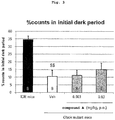
- the solvent-treated Clock mutant mice showed significantly low % values in the initial dark period than ICR mice ( Figs. 1 and 3 ), and this characteristically suggests phase retardation in rotating basket exercise of Clock mutant mouse. This decrease was recovered in a dose-dependent manner by the treatment with compound A, and the improvement effect was significant at the both doses of 0.3 and 1 mg/kg ( Fig. 1 ).
- Compound A at low doses did not have a significant effect on the parameter thereof ( Fig. 3 ).
- a solvent or compound A was orally administered to 11-week-old rats at a dose of 3 mg/kg once per day at 17:00 - 17:15 for 7 days.
- blood samples 500 ⁇ L were successively collected from the tail artery of each rat at 20:00 (ZT (Zeitgeber Time)) 13), 22:00 (ZT15), 0:00 (ZT17), 2:00 (ZT19), 4:00 (ZT21), 6:00 (ZT23) and 8:00 (ZT25) in EDTA-2Na-containing tube (Lot No. MP0831, CAPIJECT (registered trade mark), Terumo Corporation, Japan).
- the blood samples were centrifuged at 15,000 rpm, 4°C for 5 min and the supernatant (200 ⁇ L) was preserved at -80°C until they were treated for radioimmunoassay.
- Melatonin concentration was measured using a kit (Lot No. 2428.10, BUHLMANN Laboratories AG, Switzerland) commercially available from T.N. TECHNOS., Limited, Japan.
- the granules were tableted by a tableting machine with a 7.0 mm ⁇ pounder to a weight of 130 mg to give uncoated tablets.
- a solution of titanium oxide, yellow ferric oxide dispersed in hydroxypropylmethylcellulose 2910, copolyvidone was sprayed on the obtained uncoated tablets in the film coating machine to give about 25000 film-coated tablets containing 4 mg of compound A per tablet and having the formulation shown in Table 1.
- a pharmaceutical agent containing a compound possibly having melatonin receptor affinity as an active ingredient and expected to be effective for the prophylaxis or treatment of delirium can be provided.
Landscapes
- Health & Medical Sciences (AREA)
- Chemical & Material Sciences (AREA)
- Medicinal Chemistry (AREA)
- Pharmacology & Pharmacy (AREA)
- Life Sciences & Earth Sciences (AREA)
- Animal Behavior & Ethology (AREA)
- General Health & Medical Sciences (AREA)
- Public Health (AREA)
- Veterinary Medicine (AREA)
- Epidemiology (AREA)
- Engineering & Computer Science (AREA)
- Bioinformatics & Cheminformatics (AREA)
- Biomedical Technology (AREA)
- Neurology (AREA)
- Neurosurgery (AREA)
- Chemical Kinetics & Catalysis (AREA)
- General Chemical & Material Sciences (AREA)
- Nuclear Medicine, Radiotherapy & Molecular Imaging (AREA)
- Organic Chemistry (AREA)
- Anesthesiology (AREA)
- Pharmaceuticals Containing Other Organic And Inorganic Compounds (AREA)
- Hospice & Palliative Care (AREA)
- Psychiatry (AREA)
Applications Claiming Priority (2)
| Application Number | Priority Date | Filing Date | Title |
|---|---|---|---|
| US201662276366P | 2016-01-08 | 2016-01-08 | |
| PCT/JP2017/000167 WO2017119456A1 (ja) | 2016-01-08 | 2017-01-05 | せん妄の予防または治療剤 |
Publications (3)
| Publication Number | Publication Date |
|---|---|
| EP3400940A1 true EP3400940A1 (de) | 2018-11-14 |
| EP3400940A4 EP3400940A4 (de) | 2019-09-11 |
| EP3400940B1 EP3400940B1 (de) | 2024-08-07 |
Family
ID=59274120
Family Applications (1)
| Application Number | Title | Priority Date | Filing Date |
|---|---|---|---|
| EP17735993.2A Active EP3400940B1 (de) | 2016-01-08 | 2017-01-05 | Verbindungen mit melatoninrezeptor-affinität als prophylaktischer oder therapeutischer wirkstoff gegen delirium |
Country Status (8)
| Country | Link |
|---|---|
| US (2) | US11173147B2 (de) |
| EP (1) | EP3400940B1 (de) |
| JP (2) | JP6893477B2 (de) |
| KR (2) | KR20260008212A (de) |
| AU (1) | AU2017205519B2 (de) |
| CA (1) | CA3010727C (de) |
| ES (1) | ES2987503T3 (de) |
| WO (1) | WO2017119456A1 (de) |
Families Citing this family (4)
| Publication number | Priority date | Publication date | Assignee | Title |
|---|---|---|---|---|
| US10759768B2 (en) * | 2016-01-08 | 2020-09-01 | Takeda Pharmaceutical Company Limited | Prophylactic or therapeutic agent for autism spectrum disorder |
| CA3010727C (en) * | 2016-01-08 | 2023-10-31 | Takeda Pharmaceutical Company Limited | Prophylactic or therapeutic agent for delirium |
| KR102174758B1 (ko) | 2018-11-13 | 2020-11-05 | 광주과학기술원 | 섬망이 유도된 동물모델 및 이의 제조 방법 |
| KR102342184B1 (ko) | 2018-12-12 | 2021-12-22 | 주식회사 누비랩 | 급식관리 시스템 |
Family Cites Families (12)
| Publication number | Priority date | Publication date | Assignee | Title |
|---|---|---|---|---|
| AU3399895A (en) | 1994-09-12 | 1996-03-29 | Takeda Chemical Industries Ltd. | Benzocycloalkene compounds, their production and use |
| US5910492A (en) | 1995-06-05 | 1999-06-08 | Takeda Chemical Industries, Ltd. | Osteogenic promoting pharmaceutical composition |
| JP2992677B2 (ja) | 1995-06-05 | 1999-12-20 | 武田薬品工業株式会社 | 骨形成促進医薬組成物 |
| EP0837850B1 (de) | 1995-06-27 | 2004-09-01 | Takeda Chemical Industries, Ltd. | 4-acylamino(halogen)alkyl-chinolin derivate, deren herstellung und deren verwendung als melatonin-agonisten |
| EP0848699B1 (de) | 1995-07-26 | 2001-10-24 | Takeda Chemical Industries, Ltd. | Benzocycloalken-verbindungen mit bindungsaffinität an den melatonin-rezeptor, ihre herstellung und verwendung |
| ES2175350T5 (es) | 1996-03-08 | 2008-12-16 | Takeda Pharmaceutical Company Limited | Compuestos triciclicos que tienen afinidad de union a receptores de melatonina, su produccion y uso. |
| MY148806A (en) | 2005-04-04 | 2013-05-31 | Takeda Pharmaceutical | Prophylactic or therapeutic agent for nocturnal conduct disorder associated with dementia |
| AR061478A1 (es) | 2006-06-19 | 2008-08-27 | Takeda Pharmaceutical | Compuesto triciclico y composicion farmaceutica |
| CA2671354A1 (en) | 2006-12-08 | 2008-06-12 | Takeda Pharmaceutical Company Limited | Tricyclic compound and medical use thereof |
| CN101622233A (zh) | 2006-12-28 | 2010-01-06 | 武田药品工业株式会社 | 三环化合物及其药物用途 |
| WO2008136382A1 (ja) | 2007-04-26 | 2008-11-13 | Takeda Pharmaceutical Company Limited | 二環性化合物およびその医薬用途 |
| CA3010727C (en) * | 2016-01-08 | 2023-10-31 | Takeda Pharmaceutical Company Limited | Prophylactic or therapeutic agent for delirium |
-
2017
- 2017-01-05 CA CA3010727A patent/CA3010727C/en active Active
- 2017-01-05 KR KR1020267000257A patent/KR20260008212A/ko active Pending
- 2017-01-05 AU AU2017205519A patent/AU2017205519B2/en active Active
- 2017-01-05 US US16/068,509 patent/US11173147B2/en active Active
- 2017-01-05 ES ES17735993T patent/ES2987503T3/es active Active
- 2017-01-05 EP EP17735993.2A patent/EP3400940B1/de active Active
- 2017-01-05 JP JP2017560411A patent/JP6893477B2/ja active Active
- 2017-01-05 WO PCT/JP2017/000167 patent/WO2017119456A1/ja not_active Ceased
- 2017-01-05 KR KR1020187022510A patent/KR20180100627A/ko not_active Ceased
-
2021
- 2021-04-16 JP JP2021069771A patent/JP7167236B2/ja active Active
- 2021-10-07 US US17/496,500 patent/US20220096444A1/en not_active Abandoned
Also Published As
| Publication number | Publication date |
|---|---|
| CA3010727C (en) | 2023-10-31 |
| JP2021107435A (ja) | 2021-07-29 |
| JPWO2017119456A1 (ja) | 2018-10-25 |
| JP6893477B2 (ja) | 2021-06-23 |
| US20190008834A1 (en) | 2019-01-10 |
| EP3400940A4 (de) | 2019-09-11 |
| CA3010727A1 (en) | 2017-07-13 |
| US20220096444A1 (en) | 2022-03-31 |
| AU2017205519B2 (en) | 2022-01-27 |
| US11173147B2 (en) | 2021-11-16 |
| ES2987503T3 (es) | 2024-11-15 |
| AU2017205519A1 (en) | 2018-07-26 |
| EP3400940B1 (de) | 2024-08-07 |
| JP7167236B2 (ja) | 2022-11-08 |
| WO2017119456A1 (ja) | 2017-07-13 |
| KR20180100627A (ko) | 2018-09-11 |
| KR20260008212A (ko) | 2026-01-15 |
Similar Documents
| Publication | Publication Date | Title |
|---|---|---|
| US20220096444A1 (en) | Prophylactic or therapeutic agent for delirium | |
| WO2007093624A2 (en) | Pharmaceutical compositions for the treatment of attention deficit hyperactivity disorder comprising flibanserin | |
| CN118576586A (zh) | 治疗神经和精神疾病的方法 | |
| US20200323823A1 (en) | Methods for the treatment of depression | |
| KR20200110648A (ko) | 비라세믹 혼합물 및 이의 용도 | |
| KR20230003503A (ko) | 신경학적 및 정신의학적 장애의 치료를 위한 (S)-(4,5-디히드로-7H-티에노[2,3-c]피란-7-일)-N-메틸메탄아민 | |
| JP2022524505A (ja) | 閉経周辺期及び閉経期の治療のための方法 | |
| JP6832336B2 (ja) | アルコール乱用の治療におけるγ−ヒドロキシ酪酸の選択されたアミドおよびその使用 | |
| AU2020271363B2 (en) | Carbamoyl cyclohexane derivatives for treating autism spectrum disorder | |
| EP4329751A1 (de) | Behandlungsverfahren mit neuroaktiven steroiden | |
| US20200323842A1 (en) | Carbamoyl cyclohexane derivatives for treating autism spectrum disorder | |
| HK40000275A (en) | Compounds having melatonin receptor affinity as prophylactic or therapeutic agent for delirium | |
| JP7167235B2 (ja) | 自閉症スペクトラム障害の予防または治療剤 | |
| JP2008255064A (ja) | 睡眠障害予防治療剤 | |
| HK40000275B (en) | Compounds having melatonin receptor affinity as prophylactic or therapeutic agent for delirium | |
| WO2025254130A1 (ja) | 遺伝子発現制御剤 | |
| AU6378099A (en) | A new composition | |
| JP2008255058A (ja) | 睡眠障害予防治療剤 | |
| JP2008303146A (ja) | 睡眠障害予防治療剤 |
Legal Events
| Date | Code | Title | Description |
|---|---|---|---|
| STAA | Information on the status of an ep patent application or granted ep patent |
Free format text: STATUS: THE INTERNATIONAL PUBLICATION HAS BEEN MADE |
|
| PUAI | Public reference made under article 153(3) epc to a published international application that has entered the european phase |
Free format text: ORIGINAL CODE: 0009012 |
|
| STAA | Information on the status of an ep patent application or granted ep patent |
Free format text: STATUS: REQUEST FOR EXAMINATION WAS MADE |
|
| 17P | Request for examination filed |
Effective date: 20180706 |
|
| AK | Designated contracting states |
Kind code of ref document: A1 Designated state(s): AL AT BE BG CH CY CZ DE DK EE ES FI FR GB GR HR HU IE IS IT LI LT LU LV MC MK MT NL NO PL PT RO RS SE SI SK SM TR |
|
| AX | Request for extension of the european patent |
Extension state: BA ME |
|
| DAV | Request for validation of the european patent (deleted) | ||
| DAX | Request for extension of the european patent (deleted) | ||
| A4 | Supplementary search report drawn up and despatched |
Effective date: 20190812 |
|
| RIC1 | Information provided on ipc code assigned before grant |
Ipc: A61K 31/423 20060101AFI20190806BHEP Ipc: A61P 25/00 20060101ALI20190806BHEP Ipc: A61K 31/4439 20060101ALI20190806BHEP Ipc: A61K 31/428 20060101ALI20190806BHEP |
|
| REG | Reference to a national code |
Ref country code: HK Ref legal event code: DE Ref document number: 40000275 Country of ref document: HK |
|
| STAA | Information on the status of an ep patent application or granted ep patent |
Free format text: STATUS: EXAMINATION IS IN PROGRESS |
|
| 17Q | First examination report despatched |
Effective date: 20210317 |
|
| GRAP | Despatch of communication of intention to grant a patent |
Free format text: ORIGINAL CODE: EPIDOSNIGR1 |
|
| STAA | Information on the status of an ep patent application or granted ep patent |
Free format text: STATUS: GRANT OF PATENT IS INTENDED |
|
| INTG | Intention to grant announced |
Effective date: 20240229 |
|
| GRAS | Grant fee paid |
Free format text: ORIGINAL CODE: EPIDOSNIGR3 |
|
| GRAA | (expected) grant |
Free format text: ORIGINAL CODE: 0009210 |
|
| STAA | Information on the status of an ep patent application or granted ep patent |
Free format text: STATUS: THE PATENT HAS BEEN GRANTED |
|
| AK | Designated contracting states |
Kind code of ref document: B1 Designated state(s): AL AT BE BG CH CY CZ DE DK EE ES FI FR GB GR HR HU IE IS IT LI LT LU LV MC MK MT NL NO PL PT RO RS SE SI SK SM TR |
|
| P01 | Opt-out of the competence of the unified patent court (upc) registered |
Free format text: CASE NUMBER: APP_38552/2024 Effective date: 20240627 |
|
| REG | Reference to a national code |
Ref country code: GB Ref legal event code: FG4D |
|
| REG | Reference to a national code |
Ref country code: CH Ref legal event code: EP |
|
| REG | Reference to a national code |
Ref country code: IE Ref legal event code: FG4D |
|
| REG | Reference to a national code |
Ref country code: DE Ref legal event code: R096 Ref document number: 602017083889 Country of ref document: DE |
|
| REG | Reference to a national code |
Ref country code: ES Ref legal event code: FG2A Ref document number: 2987503 Country of ref document: ES Kind code of ref document: T3 Effective date: 20241115 |
|
| REG | Reference to a national code |
Ref country code: LT Ref legal event code: MG9D |
|
| REG | Reference to a national code |
Ref country code: NL Ref legal event code: MP Effective date: 20240807 |
|
| PG25 | Lapsed in a contracting state [announced via postgrant information from national office to epo] |
Ref country code: NO Free format text: LAPSE BECAUSE OF FAILURE TO SUBMIT A TRANSLATION OF THE DESCRIPTION OR TO PAY THE FEE WITHIN THE PRESCRIBED TIME-LIMIT Effective date: 20241107 |
|
| REG | Reference to a national code |
Ref country code: AT Ref legal event code: MK05 Ref document number: 1710166 Country of ref document: AT Kind code of ref document: T Effective date: 20240807 |
|
| PG25 | Lapsed in a contracting state [announced via postgrant information from national office to epo] |
Ref country code: FI Free format text: LAPSE BECAUSE OF FAILURE TO SUBMIT A TRANSLATION OF THE DESCRIPTION OR TO PAY THE FEE WITHIN THE PRESCRIBED TIME-LIMIT Effective date: 20240807 Ref country code: NL Free format text: LAPSE BECAUSE OF FAILURE TO SUBMIT A TRANSLATION OF THE DESCRIPTION OR TO PAY THE FEE WITHIN THE PRESCRIBED TIME-LIMIT Effective date: 20240807 Ref country code: GR Free format text: LAPSE BECAUSE OF FAILURE TO SUBMIT A TRANSLATION OF THE DESCRIPTION OR TO PAY THE FEE WITHIN THE PRESCRIBED TIME-LIMIT Effective date: 20241108 Ref country code: PT Free format text: LAPSE BECAUSE OF FAILURE TO SUBMIT A TRANSLATION OF THE DESCRIPTION OR TO PAY THE FEE WITHIN THE PRESCRIBED TIME-LIMIT Effective date: 20241209 Ref country code: PL Free format text: LAPSE BECAUSE OF FAILURE TO SUBMIT A TRANSLATION OF THE DESCRIPTION OR TO PAY THE FEE WITHIN THE PRESCRIBED TIME-LIMIT Effective date: 20240807 |
|
| PG25 | Lapsed in a contracting state [announced via postgrant information from national office to epo] |
Ref country code: BG Free format text: LAPSE BECAUSE OF FAILURE TO SUBMIT A TRANSLATION OF THE DESCRIPTION OR TO PAY THE FEE WITHIN THE PRESCRIBED TIME-LIMIT Effective date: 20240807 |
|
| PG25 | Lapsed in a contracting state [announced via postgrant information from national office to epo] |
Ref country code: LV Free format text: LAPSE BECAUSE OF FAILURE TO SUBMIT A TRANSLATION OF THE DESCRIPTION OR TO PAY THE FEE WITHIN THE PRESCRIBED TIME-LIMIT Effective date: 20240807 |
|
| PG25 | Lapsed in a contracting state [announced via postgrant information from national office to epo] |
Ref country code: IS Free format text: LAPSE BECAUSE OF FAILURE TO SUBMIT A TRANSLATION OF THE DESCRIPTION OR TO PAY THE FEE WITHIN THE PRESCRIBED TIME-LIMIT Effective date: 20241207 Ref country code: AT Free format text: LAPSE BECAUSE OF FAILURE TO SUBMIT A TRANSLATION OF THE DESCRIPTION OR TO PAY THE FEE WITHIN THE PRESCRIBED TIME-LIMIT Effective date: 20240807 |
|
| PG25 | Lapsed in a contracting state [announced via postgrant information from national office to epo] |
Ref country code: HR Free format text: LAPSE BECAUSE OF FAILURE TO SUBMIT A TRANSLATION OF THE DESCRIPTION OR TO PAY THE FEE WITHIN THE PRESCRIBED TIME-LIMIT Effective date: 20240807 |
|
| PG25 | Lapsed in a contracting state [announced via postgrant information from national office to epo] |
Ref country code: RS Free format text: LAPSE BECAUSE OF FAILURE TO SUBMIT A TRANSLATION OF THE DESCRIPTION OR TO PAY THE FEE WITHIN THE PRESCRIBED TIME-LIMIT Effective date: 20241107 |
|
| PG25 | Lapsed in a contracting state [announced via postgrant information from national office to epo] |
Ref country code: RS Free format text: LAPSE BECAUSE OF FAILURE TO SUBMIT A TRANSLATION OF THE DESCRIPTION OR TO PAY THE FEE WITHIN THE PRESCRIBED TIME-LIMIT Effective date: 20241107 Ref country code: PT Free format text: LAPSE BECAUSE OF FAILURE TO SUBMIT A TRANSLATION OF THE DESCRIPTION OR TO PAY THE FEE WITHIN THE PRESCRIBED TIME-LIMIT Effective date: 20241209 Ref country code: PL Free format text: LAPSE BECAUSE OF FAILURE TO SUBMIT A TRANSLATION OF THE DESCRIPTION OR TO PAY THE FEE WITHIN THE PRESCRIBED TIME-LIMIT Effective date: 20240807 Ref country code: NO Free format text: LAPSE BECAUSE OF FAILURE TO SUBMIT A TRANSLATION OF THE DESCRIPTION OR TO PAY THE FEE WITHIN THE PRESCRIBED TIME-LIMIT Effective date: 20241107 Ref country code: NL Free format text: LAPSE BECAUSE OF FAILURE TO SUBMIT A TRANSLATION OF THE DESCRIPTION OR TO PAY THE FEE WITHIN THE PRESCRIBED TIME-LIMIT Effective date: 20240807 Ref country code: LV Free format text: LAPSE BECAUSE OF FAILURE TO SUBMIT A TRANSLATION OF THE DESCRIPTION OR TO PAY THE FEE WITHIN THE PRESCRIBED TIME-LIMIT Effective date: 20240807 Ref country code: IS Free format text: LAPSE BECAUSE OF FAILURE TO SUBMIT A TRANSLATION OF THE DESCRIPTION OR TO PAY THE FEE WITHIN THE PRESCRIBED TIME-LIMIT Effective date: 20241207 Ref country code: HR Free format text: LAPSE BECAUSE OF FAILURE TO SUBMIT A TRANSLATION OF THE DESCRIPTION OR TO PAY THE FEE WITHIN THE PRESCRIBED TIME-LIMIT Effective date: 20240807 Ref country code: GR Free format text: LAPSE BECAUSE OF FAILURE TO SUBMIT A TRANSLATION OF THE DESCRIPTION OR TO PAY THE FEE WITHIN THE PRESCRIBED TIME-LIMIT Effective date: 20241108 Ref country code: FI Free format text: LAPSE BECAUSE OF FAILURE TO SUBMIT A TRANSLATION OF THE DESCRIPTION OR TO PAY THE FEE WITHIN THE PRESCRIBED TIME-LIMIT Effective date: 20240807 Ref country code: BG Free format text: LAPSE BECAUSE OF FAILURE TO SUBMIT A TRANSLATION OF THE DESCRIPTION OR TO PAY THE FEE WITHIN THE PRESCRIBED TIME-LIMIT Effective date: 20240807 Ref country code: AT Free format text: LAPSE BECAUSE OF FAILURE TO SUBMIT A TRANSLATION OF THE DESCRIPTION OR TO PAY THE FEE WITHIN THE PRESCRIBED TIME-LIMIT Effective date: 20240807 |
|
| PG25 | Lapsed in a contracting state [announced via postgrant information from national office to epo] |
Ref country code: SM Free format text: LAPSE BECAUSE OF FAILURE TO SUBMIT A TRANSLATION OF THE DESCRIPTION OR TO PAY THE FEE WITHIN THE PRESCRIBED TIME-LIMIT Effective date: 20240807 Ref country code: DK Free format text: LAPSE BECAUSE OF FAILURE TO SUBMIT A TRANSLATION OF THE DESCRIPTION OR TO PAY THE FEE WITHIN THE PRESCRIBED TIME-LIMIT Effective date: 20240807 Ref country code: RO Free format text: LAPSE BECAUSE OF FAILURE TO SUBMIT A TRANSLATION OF THE DESCRIPTION OR TO PAY THE FEE WITHIN THE PRESCRIBED TIME-LIMIT Effective date: 20240807 |
|
| PG25 | Lapsed in a contracting state [announced via postgrant information from national office to epo] |
Ref country code: EE Free format text: LAPSE BECAUSE OF FAILURE TO SUBMIT A TRANSLATION OF THE DESCRIPTION OR TO PAY THE FEE WITHIN THE PRESCRIBED TIME-LIMIT Effective date: 20240807 |
|
| PG25 | Lapsed in a contracting state [announced via postgrant information from national office to epo] |
Ref country code: CZ Free format text: LAPSE BECAUSE OF FAILURE TO SUBMIT A TRANSLATION OF THE DESCRIPTION OR TO PAY THE FEE WITHIN THE PRESCRIBED TIME-LIMIT Effective date: 20240807 |
|
| PG25 | Lapsed in a contracting state [announced via postgrant information from national office to epo] |
Ref country code: SK Free format text: LAPSE BECAUSE OF FAILURE TO SUBMIT A TRANSLATION OF THE DESCRIPTION OR TO PAY THE FEE WITHIN THE PRESCRIBED TIME-LIMIT Effective date: 20240807 |
|
| REG | Reference to a national code |
Ref country code: DE Ref legal event code: R097 Ref document number: 602017083889 Country of ref document: DE |
|
| PLBE | No opposition filed within time limit |
Free format text: ORIGINAL CODE: 0009261 |
|
| STAA | Information on the status of an ep patent application or granted ep patent |
Free format text: STATUS: NO OPPOSITION FILED WITHIN TIME LIMIT |
|
| 26N | No opposition filed |
Effective date: 20250508 |
|
| PG25 | Lapsed in a contracting state [announced via postgrant information from national office to epo] |
Ref country code: SE Free format text: LAPSE BECAUSE OF FAILURE TO SUBMIT A TRANSLATION OF THE DESCRIPTION OR TO PAY THE FEE WITHIN THE PRESCRIBED TIME-LIMIT Effective date: 20240807 |
|
| PG25 | Lapsed in a contracting state [announced via postgrant information from national office to epo] |
Ref country code: MC Free format text: LAPSE BECAUSE OF FAILURE TO SUBMIT A TRANSLATION OF THE DESCRIPTION OR TO PAY THE FEE WITHIN THE PRESCRIBED TIME-LIMIT Effective date: 20240807 Ref country code: LU Free format text: LAPSE BECAUSE OF NON-PAYMENT OF DUE FEES Effective date: 20250105 |
|
| PG25 | Lapsed in a contracting state [announced via postgrant information from national office to epo] |
Ref country code: IT Free format text: LAPSE BECAUSE OF NON-PAYMENT OF DUE FEES Effective date: 20250105 |
|
| REG | Reference to a national code |
Ref country code: CH Ref legal event code: U11 Free format text: ST27 STATUS EVENT CODE: U-0-0-U10-U11 (AS PROVIDED BY THE NATIONAL OFFICE) Effective date: 20260201 |
|
| PGFP | Annual fee paid to national office [announced via postgrant information from national office to epo] |
Ref country code: GB Payment date: 20260123 Year of fee payment: 10 |
|
| PGFP | Annual fee paid to national office [announced via postgrant information from national office to epo] |
Ref country code: ES Payment date: 20260227 Year of fee payment: 10 |
|
| PGFP | Annual fee paid to national office [announced via postgrant information from national office to epo] |
Ref country code: DE Payment date: 20260121 Year of fee payment: 10 Ref country code: IE Payment date: 20260122 Year of fee payment: 10 |
|
| PG25 | Lapsed in a contracting state [announced via postgrant information from national office to epo] |
Ref country code: IT Free format text: LAPSE BECAUSE OF NON-PAYMENT OF DUE FEES Effective date: 20250105 |
|
| PGFP | Annual fee paid to national office [announced via postgrant information from national office to epo] |
Ref country code: BE Payment date: 20260121 Year of fee payment: 10 Ref country code: IT Payment date: 20260126 Year of fee payment: 10 |
|
| PGRI | Patent reinstated in contracting state [announced from national office to epo] |
Ref country code: IT Effective date: 20250603 |
|
| PGFP | Annual fee paid to national office [announced via postgrant information from national office to epo] |
Ref country code: FR Payment date: 20260123 Year of fee payment: 10 |
|
| PGFP | Annual fee paid to national office [announced via postgrant information from national office to epo] |
Ref country code: CH Payment date: 20260201 Year of fee payment: 10 |