EP3401300A1 - Procédé destiné à effectuer des réactions d'équilibre exothermiques - Google Patents
Procédé destiné à effectuer des réactions d'équilibre exothermiques Download PDFInfo
- Publication number
- EP3401300A1 EP3401300A1 EP17400025.7A EP17400025A EP3401300A1 EP 3401300 A1 EP3401300 A1 EP 3401300A1 EP 17400025 A EP17400025 A EP 17400025A EP 3401300 A1 EP3401300 A1 EP 3401300A1
- Authority
- EP
- European Patent Office
- Prior art keywords
- reaction
- reactor
- cooling
- synthesis gas
- zone
- Prior art date
- Legal status (The legal status is an assumption and is not a legal conclusion. Google has not performed a legal analysis and makes no representation as to the accuracy of the status listed.)
- Granted
Links
Images



Classifications
-
- C—CHEMISTRY; METALLURGY
- C07—ORGANIC CHEMISTRY
- C07C—ACYCLIC OR CARBOCYCLIC COMPOUNDS
- C07C29/00—Preparation of compounds having hydroxy or O-metal groups bound to a carbon atom not belonging to a six-membered aromatic ring
- C07C29/15—Preparation of compounds having hydroxy or O-metal groups bound to a carbon atom not belonging to a six-membered aromatic ring by reduction of oxides of carbon exclusively
- C07C29/151—Preparation of compounds having hydroxy or O-metal groups bound to a carbon atom not belonging to a six-membered aromatic ring by reduction of oxides of carbon exclusively with hydrogen or hydrogen-containing gases
- C07C29/152—Preparation of compounds having hydroxy or O-metal groups bound to a carbon atom not belonging to a six-membered aromatic ring by reduction of oxides of carbon exclusively with hydrogen or hydrogen-containing gases characterised by the reactor used
-
- B—PERFORMING OPERATIONS; TRANSPORTING
- B01—PHYSICAL OR CHEMICAL PROCESSES OR APPARATUS IN GENERAL
- B01J—CHEMICAL OR PHYSICAL PROCESSES, e.g. CATALYSIS OR COLLOID CHEMISTRY; THEIR RELEVANT APPARATUS
- B01J8/00—Chemical or physical processes in general, conducted in the presence of fluids and solid particles; Apparatus for such processes
- B01J8/02—Chemical or physical processes in general, conducted in the presence of fluids and solid particles; Apparatus for such processes with stationary particles, e.g. in fixed beds
- B01J8/04—Chemical or physical processes in general, conducted in the presence of fluids and solid particles; Apparatus for such processes with stationary particles, e.g. in fixed beds the fluid passing successively through two or more beds
- B01J8/0403—Chemical or physical processes in general, conducted in the presence of fluids and solid particles; Apparatus for such processes with stationary particles, e.g. in fixed beds the fluid passing successively through two or more beds the fluid flow within the beds being predominantly horizontal
- B01J8/0423—Chemical or physical processes in general, conducted in the presence of fluids and solid particles; Apparatus for such processes with stationary particles, e.g. in fixed beds the fluid passing successively through two or more beds the fluid flow within the beds being predominantly horizontal through two or more otherwise shaped beds
- B01J8/0438—Chemical or physical processes in general, conducted in the presence of fluids and solid particles; Apparatus for such processes with stationary particles, e.g. in fixed beds the fluid passing successively through two or more beds the fluid flow within the beds being predominantly horizontal through two or more otherwise shaped beds the beds being placed next to each other
-
- B—PERFORMING OPERATIONS; TRANSPORTING
- B01—PHYSICAL OR CHEMICAL PROCESSES OR APPARATUS IN GENERAL
- B01J—CHEMICAL OR PHYSICAL PROCESSES, e.g. CATALYSIS OR COLLOID CHEMISTRY; THEIR RELEVANT APPARATUS
- B01J8/00—Chemical or physical processes in general, conducted in the presence of fluids and solid particles; Apparatus for such processes
- B01J8/02—Chemical or physical processes in general, conducted in the presence of fluids and solid particles; Apparatus for such processes with stationary particles, e.g. in fixed beds
- B01J8/04—Chemical or physical processes in general, conducted in the presence of fluids and solid particles; Apparatus for such processes with stationary particles, e.g. in fixed beds the fluid passing successively through two or more beds
- B01J8/0403—Chemical or physical processes in general, conducted in the presence of fluids and solid particles; Apparatus for such processes with stationary particles, e.g. in fixed beds the fluid passing successively through two or more beds the fluid flow within the beds being predominantly horizontal
- B01J8/0423—Chemical or physical processes in general, conducted in the presence of fluids and solid particles; Apparatus for such processes with stationary particles, e.g. in fixed beds the fluid passing successively through two or more beds the fluid flow within the beds being predominantly horizontal through two or more otherwise shaped beds
- B01J8/0442—Chemical or physical processes in general, conducted in the presence of fluids and solid particles; Apparatus for such processes with stationary particles, e.g. in fixed beds the fluid passing successively through two or more beds the fluid flow within the beds being predominantly horizontal through two or more otherwise shaped beds the beds being placed in separate reactors
-
- B—PERFORMING OPERATIONS; TRANSPORTING
- B01—PHYSICAL OR CHEMICAL PROCESSES OR APPARATUS IN GENERAL
- B01J—CHEMICAL OR PHYSICAL PROCESSES, e.g. CATALYSIS OR COLLOID CHEMISTRY; THEIR RELEVANT APPARATUS
- B01J8/00—Chemical or physical processes in general, conducted in the presence of fluids and solid particles; Apparatus for such processes
- B01J8/02—Chemical or physical processes in general, conducted in the presence of fluids and solid particles; Apparatus for such processes with stationary particles, e.g. in fixed beds
- B01J8/04—Chemical or physical processes in general, conducted in the presence of fluids and solid particles; Apparatus for such processes with stationary particles, e.g. in fixed beds the fluid passing successively through two or more beds
- B01J8/0446—Chemical or physical processes in general, conducted in the presence of fluids and solid particles; Apparatus for such processes with stationary particles, e.g. in fixed beds the fluid passing successively through two or more beds the flow within the beds being predominantly vertical
- B01J8/0449—Chemical or physical processes in general, conducted in the presence of fluids and solid particles; Apparatus for such processes with stationary particles, e.g. in fixed beds the fluid passing successively through two or more beds the flow within the beds being predominantly vertical in two or more cylindrical beds
- B01J8/0457—Chemical or physical processes in general, conducted in the presence of fluids and solid particles; Apparatus for such processes with stationary particles, e.g. in fixed beds the fluid passing successively through two or more beds the flow within the beds being predominantly vertical in two or more cylindrical beds the beds being placed in separate reactors
-
- B—PERFORMING OPERATIONS; TRANSPORTING
- B01—PHYSICAL OR CHEMICAL PROCESSES OR APPARATUS IN GENERAL
- B01J—CHEMICAL OR PHYSICAL PROCESSES, e.g. CATALYSIS OR COLLOID CHEMISTRY; THEIR RELEVANT APPARATUS
- B01J8/00—Chemical or physical processes in general, conducted in the presence of fluids and solid particles; Apparatus for such processes
- B01J8/02—Chemical or physical processes in general, conducted in the presence of fluids and solid particles; Apparatus for such processes with stationary particles, e.g. in fixed beds
- B01J8/04—Chemical or physical processes in general, conducted in the presence of fluids and solid particles; Apparatus for such processes with stationary particles, e.g. in fixed beds the fluid passing successively through two or more beds
- B01J8/0496—Heating or cooling the reactor
-
- B—PERFORMING OPERATIONS; TRANSPORTING
- B01—PHYSICAL OR CHEMICAL PROCESSES OR APPARATUS IN GENERAL
- B01J—CHEMICAL OR PHYSICAL PROCESSES, e.g. CATALYSIS OR COLLOID CHEMISTRY; THEIR RELEVANT APPARATUS
- B01J2208/00—Processes carried out in the presence of solid particles; Reactors therefor
- B01J2208/00008—Controlling the process
- B01J2208/00017—Controlling the temperature
- B01J2208/00106—Controlling the temperature by indirect heat exchange
- B01J2208/00115—Controlling the temperature by indirect heat exchange with heat exchange elements inside the bed of solid particles
- B01J2208/00141—Coils
-
- B—PERFORMING OPERATIONS; TRANSPORTING
- B01—PHYSICAL OR CHEMICAL PROCESSES OR APPARATUS IN GENERAL
- B01J—CHEMICAL OR PHYSICAL PROCESSES, e.g. CATALYSIS OR COLLOID CHEMISTRY; THEIR RELEVANT APPARATUS
- B01J2208/00—Processes carried out in the presence of solid particles; Reactors therefor
- B01J2208/00008—Controlling the process
- B01J2208/00017—Controlling the temperature
- B01J2208/00106—Controlling the temperature by indirect heat exchange
- B01J2208/00168—Controlling the temperature by indirect heat exchange with heat exchange elements outside the bed of solid particles
- B01J2208/00176—Controlling the temperature by indirect heat exchange with heat exchange elements outside the bed of solid particles outside the reactor
-
- B—PERFORMING OPERATIONS; TRANSPORTING
- B01—PHYSICAL OR CHEMICAL PROCESSES OR APPARATUS IN GENERAL
- B01J—CHEMICAL OR PHYSICAL PROCESSES, e.g. CATALYSIS OR COLLOID CHEMISTRY; THEIR RELEVANT APPARATUS
- B01J2208/00—Processes carried out in the presence of solid particles; Reactors therefor
- B01J2208/00008—Controlling the process
- B01J2208/00017—Controlling the temperature
- B01J2208/00106—Controlling the temperature by indirect heat exchange
- B01J2208/00309—Controlling the temperature by indirect heat exchange with two or more reactions in heat exchange with each other, such as an endothermic reaction in heat exchange with an exothermic reaction
-
- B—PERFORMING OPERATIONS; TRANSPORTING
- B01—PHYSICAL OR CHEMICAL PROCESSES OR APPARATUS IN GENERAL
- B01J—CHEMICAL OR PHYSICAL PROCESSES, e.g. CATALYSIS OR COLLOID CHEMISTRY; THEIR RELEVANT APPARATUS
- B01J2208/00—Processes carried out in the presence of solid particles; Reactors therefor
- B01J2208/00008—Controlling the process
- B01J2208/00017—Controlling the temperature
- B01J2208/0053—Controlling multiple zones along the direction of flow, e.g. pre-heating and after-cooling
-
- B—PERFORMING OPERATIONS; TRANSPORTING
- B01—PHYSICAL OR CHEMICAL PROCESSES OR APPARATUS IN GENERAL
- B01J—CHEMICAL OR PHYSICAL PROCESSES, e.g. CATALYSIS OR COLLOID CHEMISTRY; THEIR RELEVANT APPARATUS
- B01J2219/00—Chemical, physical or physico-chemical processes in general; Their relevant apparatus
- B01J2219/00002—Chemical plants
- B01J2219/00027—Process aspects
- B01J2219/0004—Processes in series
-
- C—CHEMISTRY; METALLURGY
- C07—ORGANIC CHEMISTRY
- C07C—ACYCLIC OR CARBOCYCLIC COMPOUNDS
- C07C31/00—Saturated compounds having hydroxy or O-metal groups bound to acyclic carbon atoms
- C07C31/02—Monohydroxylic acyclic alcohols
- C07C31/04—Methanol
Definitions
- the invention relates to a method for carrying out exothermic equilibrium reactions, in particular for carrying out the synthesis of methanol by heterogeneously catalyzed reaction of hydrogen and carbon oxides comprehensive synthesis gas to solid catalysts.
- a more modern, two-stage process for the production of methanol is known for example from the European patent specification EP 0 790 226 B1 known.
- the methanol is in produced a cycle in which a mixture of fresh and partially reacted synthesis gas is first fed to a water-cooled reactor and then a gas-cooled reactor, in which the synthesis gas each to a copper-based catalyst to. Methanol is reacted.
- the methanol produced in the process is separated from the synthesis gas to be recycled, which is then passed as a countercurrent refrigerant through the gas-cooled reactor and preheated to a temperature of 220 to 280 ° C before being introduced into the first synthesis reactor.
- a portion of the synthesis gas to be recycled is removed from the process as a purge stream in order to prevent inert components from accumulating within the synthesis loop. This measure is also in the German patent application DE 2934332 A1 and the European patent application EP 1016643 A1 taught.
- an intermediate condensation stage between the two reaction stages is additionally provided in order to reduce the proportion of formed reaction products (predominantly methanol and water) in the feed gas to the second reaction stage and thus to further increase the achievable conversion of the starting materials.
- formed reaction products randominantly methanol and water
- the water-cooled reactor is usually a tubular reactor with corresponding tube plates, in which the catalyst is filled into the tubes, while the cooling takes place by means of boiling water or steam generation on the shell side around the tubes.
- the cooling is carried out with the feed gas, which is passed through the tubes and heats up on the way to the first reaction stage (WCR), while the catalyst around the tubes is filled and the reaction takes place on the shell side of the GCR.
- the reaction stages are connected in terms of their nominal size with large or very large pipes; Depending on the system capacity, pipe diameters of up to 1 m are possible.
- the object of the present invention is therefore to provide a process which does not have the described disadvantages of the processes known from the prior art and in particular provides a high conversion with respect to the target products of the exothermic reaction and the possibility of the reaction conditions along the longitudinal coordinate of Nachbine and thus to optimize, which leads, for example in the case of methanol synthesis to a reduction of the recycle ratio to smaller values, as they are known using the known from the prior art method.
- Fluid communication between two regions of the reactor according to the invention is understood to mean any type of compound which allows a fluid, for example the feed gas stream or the synthesis gas product stream, to flow from one to the other of the two regions irrespective of any intervening regions or components.
- heat exchange relationship is meant the possibility of heat exchange or heat transfer between two regions of the reactor according to the invention, whereby all mechanisms of heat exchange or heat transfer such as heat conduction, heat radiation or convective heat transport may come to fruition.
- An indirect heat exchange relationship is understood here to be, in particular, the type of heat exchange or heat transfer that occurs through a wall (so-called heat transfer), the stages of the heat transfer from fluid 1 to the surface of the wall, the heat conduction through the wall and the heat transfer from the surface of the wall to fluid 2.
- Methanol reaction conditions are understood to mean the process conditions known to the person skilled in the art, in particular of temperature, pressure and residence time, as exemplified above and discussed in detail in the relevant literature be and in which at least a partial conversion, but preferably technically relevant conversions of the reactants CO or CO 2 and hydrogen to the product methanol. Accordingly, an active catalyst for the synthesis of methanol is understood to mean a catalyst which, under methanol conversion conditions, causes such conversions.
- discharge, etc. all the devices, device components, assemblies and components that enable the fluid in question to leave the considered spatial area, for example a container.
- This is understood to mean, in particular, pipelines, pumps, compressors, other conveying devices and the corresponding passage openings in the container wall.
- the catalytic activity in particular in connection with a different catalytic activity when comparing two different catalysts, is understood to mean the degree of conversion achieved per unit length of the catalyst bed from reactants to products.
- the activity is influenced by the chemical composition, doping, poisoning, available surface etc. of the catalyst material, but also by the geometry of the catalyst particles and textural parameters of the catalyst bed, eg. B. its porosity or packing density. Due to the exothermicity of the reactions under consideration, high catalytic activity correlates with high heat release per unit length of the catalyst bed.
- the invention is based on the finding that the production rates or space-time yields along the reaction path can be significantly improved by optimal temperature control and repeated removal of products from the reaction zone.
- the temperature profile along the reaction path is significantly improved by the use of a multi-stage reaction system, which results in a significantly higher throughput per pass.
- An improved temperature profile in the reactor can in principle also be achieved with the aid of a catalyst layer management. It would be in the area in which you expect the highest conversion (exothermic) and thus the highest temperatures, use a less active catalyst and in areas where less revenue is expected to use a more active catalyst.
- catalyst layer management is relatively inflexible because one must select and set the various catalyst layers based on a particular catalyst activity and gas composition. However, the catalyst activity changes over its runtime of the synthesis plant due to its progressive deactivation.
- the layer management and the associated cooling of the reaction bed must be coordinated.
- the conditions change and adjustment of the reaction temperature and the associated cooling / cooling temperature is desirable to at least partially compensate for the deactivation and ensure high conversion with little by-product formation.
- reaction conditions in the various reaction cells can be adapted individually over a period of time, depending on the catalyst activity and the gas composition in each stage. This achieves high conversion and low by-product formation in the various reaction cells.
- the optimized temperature control also reduces the maximum temperatures (as well as temperature peaks, so-called hot spots) in the catalyst bed. This has a positive effect on the catalyst life in addition to the discharge of the by-product from the reaction system, for example of water in the synthesis of methanol. It is known that both high temperatures in the catalyst bed and high water concentrations in the reaction gas contribute to a faster catalyst deactivation.
- the proposed concept achieves an improved space-time yield;
- the recirculation gas amount gas cycle
- the reactor can thus be downsized and also the pressure loss is reduced.
- the recycle gas amount also results that the amount and the concentration of accumulated inert gases, such as unreacted methane from the syngas production, are significantly reduced in the synthesis gas cycle and thus relieves the entire methanol synthesis cycle with reactor stages, cycle compressors and other equipment.
- Such an approach is also of particular interest for other feed gas compositions with high inert gas contents (eg high nitrogen content in synthesis gas production using air), since in the synthesis gas cycle the amount of inert gas to be recycled increases.
- Controlled deposition of the liquid products and temperature control in the individual reaction cells prevent condensation in the catalyst bed and protect the catalyst.
- the separated condensates with different proportions of methanol can be purified under different conditions or used directly as an insert for downstream processes, which leads to an energy saving in the distillation.
- reaction stages or reaction cells and also several intermediate condensations and cooling and heating stages are realized in a reactor according to the invention.
- Connecting pipelines are avoided as far as possible, so that investment costs for pipelines and the pressure loss are reduced and the stress on the pipelines is reduced by thermal-mechanical stresses.
- the process media are routed from process level to process level as far as possible within the apparatus.
- a particular embodiment of the method according to the invention is characterized in that the return ratio is zero.
- a further advantageous embodiment of the method according to the invention provides that the amount of catalyst in the individual reaction zones (b) of the individual reaction cells decreases in the flow direction of the synthesis gas through the reactor. Comparative tests and Vorretesticianen show that under these conditions the conversion of carbon oxides and the space-time yield in kg of methanol per liter of catalyst volume and per hour kg MeOH / (liter cat h) are higher than with increasing or constant amount of catalyst in the individual reaction zones the individual reaction cells in the flow direction of the synthesis gas.
- a further aspect of the method according to the invention is characterized in that the temperature of the cooling medium in the reaction zones (b) of the individual reaction cells is between 180 and 300 ° C, preferably between 190 and 270 ° C, most preferably between 200 and 260 ° C and in Flow direction of the synthesis gas through the reactor remains the same or decreases. Comparative experiments and comparative calculations show that under these conditions, the conversion of carbon oxides and the space-time yield in kg of methanol per liter of catalyst and per hour kg of MeOH / (liter cat h) are higher than with increasing temperature of the cooling medium in the individual reaction zones individual reaction cells in the flow direction of the synthesis gas.
- a constant temperature of the cooling medium is understood to mean a temperature change of at most 5 K.
- the condensation temperature in the cooling zones of the individual reaction cells is between 20 and 120 ° C., preferably between 40 and 100 ° C., and remains the same or decreases in the flow direction of the synthesis gas through the reactor. Comparative experiments and comparative calculations show that under these conditions the conversion of carbon oxides and the space-time yield in kg of methanol per liter of catalyst and per hour kg MeOH / (liter cat h) are higher than with increasing condensation temperature in the flow direction of the synthesis gas.
- the same heat carrier is used in all reaction cells and worked at different pressure levels and associated steam temperatures at the respective boiling point. This results in logistical and technical advantages, since only a single heat transfer must be maintained and eliminates circuits for the supply and removal of further heat transfer.
- all the reaction cells are connected to the same steam generator and the heat carrier is provided in liquid form and undergoes at least partial evaporation in the region of the reaction cells.
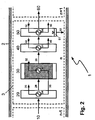
- Fig. 1 is a reaction cell 3 in a reactor 1 according to a first embodiment of the invention shown schematically.
- the reaction cell n is located inside the reactor shell 2, the inner wall of which forms the physical boundary of the reactor to the outside and carries the pressure chosen for carrying out the exothermic equilibrium reaction.
- the preheating zone 20 in the reaction cell n the gaseous, pre-reacted product stream from the upstream, upstream reaction cell n-1 supplied. If the reaction cell n is the first reaction cell in the flow direction, the feed mixture is fed via line 10.
- the gaseous product stream or the feed mixture is heated to the reaction temperature. This is done in indirect heat exchange against a heating fluid, which is supplied via line 22 to the heat exchanger 24 and transfers its heat content there to the gaseous product stream or the feed mixture.
- the cooled heating fluid is removed via line 26 from the heat exchanger and heated in a heater, not shown, to supply it again to the heat exchanger 24.
- the heated feed mixture or heated gaseous product stream is fed via line 28 to the reaction zone 30, which contains a bed of active catalyst 31 for the exothermic equilibrium reaction to be performed and a cooling device 34 in heat exchange relationship with the catalyst.
- the removal of the released by the exothermic reaction heat of reaction is carried out in indirect heat exchange against a cooling fluid, which optionally partially evaporated, which is supplied via line 32 to the heat exchanger 34 and discharged after receiving the released in the catalyst bed heat of reaction via line 36.
- the heated cooling fluid is cooled again in a cooling device, not shown, to re-supply it to the heat exchanger 34.
- the pre-cooling in the first cooling zone but also be carried out so that the dew point of the gas stream is not exceeded.
- the pre-cooling takes place in the indirect heat exchange against a cooling fluid, which is supplied via line 42 to the heat exchanger 44 and discharged after heat absorption via line 46.
- the heated cooling fluid is cooled again in a cooling device, not shown, to re-supply it to the heat exchanger 44.
- the pre-cooled, but still charged at least with a portion of the condensable reaction product, gaseous product stream is discharged via line 48 from the first cooling zone and the second cooling zone 50, respectively.
- a liquid condensate is obtained, which is separated by means of an integrated into the second cooling zone separation device 51 from the gas stream and discharged by line 53 from the reactor and the product processing, not shown, is supplied.
- the cooling takes place in the indirect heat exchange against a cooling fluid, which is supplied via line 52 to the heat exchanger 54 and discharged after heat absorption via line 56.
- the heated cooling fluid is cooled again in a cooling device, not shown, to re-supply it to the heat exchanger 54.
- the cooled and freed of condensate, gaseous product stream is discharged via line 60 from the second cooling zone 50 and thus also from the reaction cell n. It is then fed to the downstream reaction cell n + 1 to allow further conversion of the gaseous reactants to target products. If no further reaction of the gaseous reactants is desired or possible, the remaining residual gas is discharged via line 60 from the reactor and fed to the further processing or disposal. Alternatively, the residual gas stream after recycling and mixing with fresh feed mixture can be re-fed to the reactor.
- Evolved vapor from the reaction zone rises and is at least partially used as heating medium in the preheating zone, condensed vapor flowing as liquid back to the reaction zone.
- the heat fluid cooled by heat exchange with the gas stream supplied in line 10 can then, optionally after further cooling in a cooling device (not shown in the drawing), be recirculated as cooling fluid via line 32 to the heat exchanger 34 of the reaction zone 30.
- the product stream discharged from the reaction zone 30 via line 38 is conducted as heating fluid to the heat exchanger 24 of the preheating zone 20, where it serves for heating the feed mixture or gaseous product stream from the upstream reaction cell via line 10.
- the preheating zone 20 and the first cooling zone 40 thus coincide.
- the cooled by heat exchange product stream is then fed via line 26 to the second cooling zone 50.
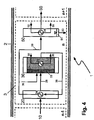
- Fig. 4 contains the reaction zone in Fig. 4 two beds of catalysts 31, 33 with different activity for the exothermic equilibrium reaction, which are successively flowed through by the feed mixture or gaseous product stream from the upstream reaction cell.
- the catalyst bed 33 contains a catalyst which has a higher activity compared to the catalyst bed 31.
- the catalytic reaction can be set in motion first and the amount of heat released contributes to the heating of the reaction mixture to the selected inlet temperature in the catalyst bed 31, whereby the heat exchanger 24 can be reduced in the preheating zone 20.
- a catalyst in the catalyst bed 33, a catalyst can be used, which has a lower activity compared to the catalyst bed 31. This is particularly recommended when the reaction potential of the entering into the reaction zone gas mixture is high. This is in the in Fig. 4 shown embodiment of the case, as n fresh, so not yet pre-reacted feed mixture is fed via line 35 of the reaction zone 30 in the reaction cell. As a result, the reaction is started slower and more controlled and the major part of the heat of reaction is released in the cooled catalyst bed 31.
- the feeding of fresh, not yet pre-reacted feed mixture to reaction cells with n> 1 may also be useful in conjunction with the other embodiments of the reactor according to the invention discussed herein. Furthermore, it may be advantageous to supply fresh, not yet pre-reacted feed mixture to more than one reaction cell with n> 1.
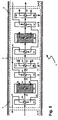
- a Verschaltungsschkeit two successive reaction cells n and n + 1 is shown.
- Corresponding device components of the reaction cell n + 1 are marked with an apostrophe 'at the respective reference numerals.
- cooled heating fluid from the preheating zone 20 'of the reaction cell n + 1 is fed via line 26' to the heat exchanger 44 in the first cooling zone 40 of the reaction cell n and serves there for precooling the gas stream discharged from the reaction zone 30 via line 38.
- cooled heating fluid from the preheating zone 20 of the reaction cell n is supplied via line 26 to the corresponding heat exchanger in the first cooling zone of the reaction cell n-1.
- the heated coolant discharged from the respective first cooling zone 40, 40 ', etc. is supplied to the heat exchanger of the upstream reaction zone 30, 30', etc., as coolant.
- the further heated in the reaction zone coolant is subsequently supplied to the heat exchanger of the respectively upstream preheating as heating fluid.
- This embodiment may be particularly suitable for carrying out exothermic reactions with moderate heat of reaction. It is also advantageous in the context of this embodiment, the use of a cooling fluid or heating fluid with high heat absorption or heat dissipation capacity; For this purpose, fluids are particularly suitable which, when used as cooling fluid or heating fluid, have a phase transition liquid - have vapor or vice versa.
- cooling or heating devices arranged outside the reactor in order to restore the full heat absorption or heat release capacity of the respective fluid.
- the arrangement of these external cooling or heating devices could, for example, in the conduction path of the lines 26, 26 ', etc. (heating), 46, 46', etc. (cooling) or 36, 36 ', etc. (cooling) take place.
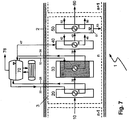
- FIG Fig. 7 shown embodiment, in which a steam generator 70 is disposed outside of the reactor.
- This hot condensate is removed and fed via line 32 to the heat exchanger 34 of the reaction zone 30 as a coolant, wherein it is partially vaporized.
- the resulting two-phase liquid-vapor mixture is returned via line 36 to the steam generator.
- the hot condensate from the steam generator 70 may also be used as the refrigerant in the first cooling zone 40; this is shown schematically by the dashed line 47.
- the steam generator 70 is further taken from saturated steam, which is supplied via line 22 to the heat exchanger 24 of the preheating zone 20.
- the resulting current can either be returned directly via line 26 to the steam generator or collected by other devices (not shown pictorially) and then at least partially returned to the steam generator to there to be evaporated again.
- Fig. 7 can also be discharged via a line 78 saturated steam from the steam generator 70 and discharged as export steam to external consumers.
- heat carrier or cooling medium media are preferably used, which are in the vicinity of their boiling point and therefore easily evaporate (cooling medium) or condense (heat carrier, heating medium). This ensures good heat dissipation through the good heat transfer on the side of the evaporating or condensing medium and allows precise temperature control over the pressure.
- the pressure on the side of the heat carrier or cooling medium is regulated individually for each stage. As the catalyst running time increases, the conditions are adjusted by means of a corresponding adjustment of the pressure on the cooling medium side and thus the reaction temperature is adjusted in order to keep the conversion correspondingly high.
- steam can be used as heat carrier, for example, in the methanol synthesis.
- relatively large pressure differences must be set to cover a wide temperature range (eg 250 ° C: about 40 bar, 264 ° C: about 50 bar).
- an evaporating thermal oil eg Dowtherm A
- a steam generating circuit if an evaporating thermal oil (eg Dowtherm A) is used in a steam generating circuit, then it is possible to work in a very narrow pressure range and still cover a wide temperature range (eg 255 ° C: 0.97 bar, 305 ° C) C: 2.60 bar, corresponding to a temperature range of 50 ° C with a pressure difference of only 1.6 bar, which makes it possible to work with a simple heat transfer oil steam drum at the appropriate system level (approximately 20 to 25 m) and only the height difference use to set the individual pressure or temperature ranges.
- evaporating thermal oil eg Dowtherm A
- cooling water or a vaporizing heat transfer medium can be used, while in the heating zones, a condensing or liquid heat transfer medium can be used.
- the heat transport spaces may be advantageous to form the heat transport spaces by at least one thermal plate in each case.
- Under the heat transport spaces are understood to mean the areas of the reactor, in which there is a heat exchange between the reactants or reaction products containing gas flow and heating or cooling fluids, ie the preheating zone, the reaction zone and the cooling zones.
- thermo sheet according to the invention consists of two sheets, which are connected at the edges, preferably welded together and on the surface of a plurality of additional compounds, preferably spot welds, which also connect the plates together, are distributed.
- Such plates can be produced automatically by robots or machines and thus at very reasonable prices.
- the sheets are expanded by hydraulic forming, typically the pressurization of a liquid under high pressure, thereby creating pillow-like channels between the sheets through which a heating or cooling fluid can be passed. By means of the passage of heating or cooling fluids, heat energy can therefore be dissipated and removed via the heat transport spaces over certain regions of the reactor.
- the reaction zones can be designed in such a way that initially two thermoplates are arranged essentially parallel in the reactor.
- Substantially parallel in the sense of the invention means that the orientation of the thermal sheets to each other from the parallels by a maximum of +/- 20 °, preferably at most +/- 10 °, more preferably at most +/- 5 °, most preferably at most +/- 2 ° apart.
- the space between the thermal sheets can be filled with a bed of solid, granular, particulate or pellet-shaped catalyst, wherein the lateral termination of the resulting catalyst bed by nets, grids, perforated plates, grates, beds of inert material and / or the reactor inner wall is formed.
- thermoblees adjoin, resulting in a total of a plate pack and the free spaces between the thermoplates are filled with catalyst beds.
- a compact, sandwich-like structure with an intensively acting, extending over the length of the reaction zone cooling device is obtained.
- the loading of the individual catalyst beds with the reaction gas mixture takes place in parallel.
- the plate packs can be oriented parallel or perpendicular to the longitudinal axis of the reactor, based on the catalyst-filled free spaces.
- the distances between the thermal plates are selected according to the heat of reaction to be carried out: For highly exothermic reactions, this distance is chosen smaller than for weaker exothermic reactions. In this case, smaller plate distances are preferred in the first reaction zone, since the largest conversion is achieved here and the greatest heat dissipation must be realized.
- the thermoplate distances of the first reaction zone are in the case of methanol synthesis preferably 20 to 45 mm. The distance refers to the distance from the center line to the center line, d. H. the clear distance between the plates is correspondingly smaller depending on the thermal plate thickness and expansion of the cavity. Furthermore, the distance is adapted to the dimensions of the catalyst particles in order to ensure optimum heat dissipation and good bulk behavior during filling and emptying of the catalyst without bridging. In the second and subsequent reaction zones, the distances are usually chosen to be larger.
- adiabatic, ie uncooled reactor beds can be provided both downstream and upstream of the cooled plate packs. This can be especially interesting if only a residual conversion is to be achieved and a cooling of the reaction due to the low heat is no longer necessary or at the entrance to a reaction stage, if it is advantageous to achieve a rapid increase in temperature before the reactants cooled region of the reaction zone.
- thermal sheets can be advantageously used in the sense of a plate heat exchanger.
- the use of pipe end plates, as required in shell and tube heat exchangers, can be dispensed with.
- logistical and manufacturing advantages are obtained, since the number of different components of the reactor and thus reduce the complexity of the apparatus.
- thermoplates A further embodiment possibility is made possible by the design of the heat transport spaces by means of plate fin heat exchangers alternatively or additionally to the use of thermoplates.
- a process according to the invention with a reactor with three reaction cells is compared with a three-stage industrial reactor comprising two water cooled reactors WCR connected in parallel, followed by a gas-cooled reactor GCR downstream.
- the technical system has no intercondensation between WCR and GCR.
- the feed gas is the same in both cases in terms of composition and molar flow, it is a synthesis gas having the following composition: 8.4 vol .-% CO 2 , 20.1 vol .-% CO, 68 vol .-% H 2 , balance inert components.
- the inlet pressure into the reactor is in each case 75 bar, overpressure. Table 1 summarizes the main comparative data for both reactors.
- X pp (k) is the conversion of component k per pass through the reactor (per pass) and X tot (k) is its total conversion via the reactor including gas cycle.
- STY is the space-time yield of methanol in kg / h, based on one liter of catalyst volume.
- Table 2 below compares a process with a single-stage, water-cooled reactor for methanol synthesis with a process according to the invention with a reactor comprising four reaction cells, the process according to the invention being operated without recirculation.
- the feed gas is the same in both cases in terms of composition and molar flow, it is a synthesis gas having the following composition: 7 vol .-% CO 2 , 16 vol .-% CO, 73 vol .-% H 2 , balance inert components.
- the inlet pressure into the reactor is in each case 75 bar, overpressure.
- a reactor for carrying out exothermic equilibrium reactions in particular for carrying out the methanol synthesis by heterogeneously catalyzed conversion of synthesis gas is proposed, which makes it possible to track the reaction conditions along the longitudinal coordinate of the reactor and thus optimize, which for example in the case of methanol synthesis to a reduction the recycle ratio to smaller values, as they are known using the known from the prior art reactors.
- Corresponding return lines, cycle compressors, etc. can therefore be made smaller or it may possibly be completely dispensed with. This reduces the corresponding investment costs.
Landscapes
- Chemical & Material Sciences (AREA)
- Organic Chemistry (AREA)
- Chemical Kinetics & Catalysis (AREA)
- Physics & Mathematics (AREA)
- Fluid Mechanics (AREA)
- Organic Low-Molecular-Weight Compounds And Preparation Thereof (AREA)
- Devices And Processes Conducted In The Presence Of Fluids And Solid Particles (AREA)
Priority Applications (5)
| Application Number | Priority Date | Filing Date | Title |
|---|---|---|---|
| EP17400025.7A EP3401300B1 (fr) | 2017-05-12 | 2017-05-12 | Procédé pour la production du méthanol |
| RU2019138352A RU2787160C2 (ru) | 2017-05-12 | 2018-04-26 | Способ проведения экзотермических равновесных реакций |
| CN201880030215.4A CN110603241B (zh) | 2017-05-12 | 2018-04-26 | 用于进行放热平衡反应的方法 |
| PCT/EP2018/025131 WO2018206155A1 (fr) | 2017-05-12 | 2018-04-26 | Procédé pour conduire des réactions d'équilibre exothermiques |
| US16/612,537 US10913698B2 (en) | 2017-05-12 | 2018-04-26 | Process for conducting exothermic equilibrium reactions |
Applications Claiming Priority (1)
| Application Number | Priority Date | Filing Date | Title |
|---|---|---|---|
| EP17400025.7A EP3401300B1 (fr) | 2017-05-12 | 2017-05-12 | Procédé pour la production du méthanol |
Publications (2)
| Publication Number | Publication Date |
|---|---|
| EP3401300A1 true EP3401300A1 (fr) | 2018-11-14 |
| EP3401300B1 EP3401300B1 (fr) | 2021-06-23 |
Family
ID=59070584
Family Applications (1)
| Application Number | Title | Priority Date | Filing Date |
|---|---|---|---|
| EP17400025.7A Active EP3401300B1 (fr) | 2017-05-12 | 2017-05-12 | Procédé pour la production du méthanol |
Country Status (4)
| Country | Link |
|---|---|
| US (1) | US10913698B2 (fr) |
| EP (1) | EP3401300B1 (fr) |
| CN (1) | CN110603241B (fr) |
| WO (1) | WO2018206155A1 (fr) |
Cited By (2)
| Publication number | Priority date | Publication date | Assignee | Title |
|---|---|---|---|---|
| EP4197994A1 (fr) | 2021-12-20 | 2023-06-21 | L'Air Liquide, Société Anonyme pour l'Etude et l'Exploitation des Procédés Georges Claude | Procédé et installation de production de méthanol |
| EP4327930A1 (fr) | 2022-08-26 | 2024-02-28 | L'air Liquide, Societe Anonyme Pour L'etude Et L'exploitation Des Procedes Georges Claude | Réacteur à étages multiples pour effectuer des réactions exothermes d'équilibre |
Families Citing this family (2)
| Publication number | Priority date | Publication date | Assignee | Title |
|---|---|---|---|---|
| JP7817011B2 (ja) * | 2022-02-25 | 2026-02-18 | 三菱重工業株式会社 | プラント |
| CN114907187B (zh) * | 2022-04-24 | 2023-12-22 | 中国成达工程有限公司 | 一种纯/富二氧化碳和氢气直接制备甲醇的方法 |
Citations (11)
| Publication number | Priority date | Publication date | Assignee | Title |
|---|---|---|---|---|
| DE2934332A1 (de) | 1979-08-24 | 1981-03-26 | Uhde Gmbh, 44141 Dortmund | Verfahren zur katalytischen synthese von methanol |
| EP0483919A2 (fr) * | 1990-10-29 | 1992-05-06 | Shell Internationale Researchmaatschappij B.V. | Procédé pour la fabrication du méthanol |
| EP0494350A2 (fr) * | 1991-01-11 | 1992-07-15 | Uhde GmbH | Procédé et installation pour la synthèse de méthanol |
| EP0682002A1 (fr) * | 1994-05-10 | 1995-11-15 | Metallgesellschaft Aktiengesellschaft | Procédé pour la préparation de méthanol |
| EP0790226A1 (fr) * | 1996-02-15 | 1997-08-20 | Metallgesellschaft Ag | Procédé pour la production de méthanol |
| EP1016643A1 (fr) | 1997-11-27 | 2000-07-05 | Toyo Engineering Corporation | Procede de production de methanol |
| WO2001017936A2 (fr) * | 1999-09-07 | 2001-03-15 | Krupp Uhde Gmbh | Procede et installation pour la production de methanol |
| WO2005115607A1 (fr) * | 2004-05-28 | 2005-12-08 | Ammonia Casale S.A. | Procede pour effectuer des reaction en phase gazeuse exothermiques catalytiques heterogenes |
| DE102008049622A1 (de) * | 2008-09-30 | 2010-04-22 | Lurgi Gmbh | Verfahren und Anlage zur Herstellung von Methanol |
| WO2012139703A1 (fr) * | 2011-04-15 | 2012-10-18 | Lurgi Gmbh | Procédé et installation de production de méthanol à partir de gaz de synthèse riche en éléments inertes |
| EP3219697A1 (fr) * | 2016-03-16 | 2017-09-20 | L'Air Liquide Société Anonyme pour l'Etude et l'Exploitation des Procédés Georges Claude | Synthese de methanol a partir de gaz de synthese ayant un manque d'hydrogene |
Family Cites Families (10)
| Publication number | Priority date | Publication date | Assignee | Title |
|---|---|---|---|---|
| DE19948585A1 (de) * | 1999-09-07 | 2001-03-08 | Krupp Uhde Gmbh | Verfahren und Anlage zur Methanolherstellung |
| RU2455059C2 (ru) | 2005-09-23 | 2012-07-10 | Хитрик 46 Холтон Роуд, Холтон Хит, | Многореакторная химическая производственная система |
| US8497308B2 (en) | 2006-09-05 | 2013-07-30 | Velocys, Inc. | Integrated microchannel synthesis and separation |
| US7820725B2 (en) * | 2006-09-05 | 2010-10-26 | Velocys, Inc. | Integrated microchannel synthesis and separation |
| RU2481151C2 (ru) * | 2008-02-25 | 2013-05-10 | Хальдор Топсеэ А/С | Способ проведения синтеза фишера-тропша и реактор для его осуществления |
| WO2015030578A1 (fr) | 2013-08-27 | 2015-03-05 | Universiteit Twente | Procédé de préparation de méthanol et réacteur utilisable dans ledit procédé |
| CN106458804A (zh) | 2014-06-20 | 2017-02-22 | 托普索公司 | 串联甲醇反应器 |
| US9637433B2 (en) | 2014-11-28 | 2017-05-02 | Pioneer Energy, Inc. | Systems and methods for manufacture of methanol from natural gas and flare gas feedstock |
| CN106518609A (zh) | 2016-11-02 | 2017-03-22 | 成都赛普瑞兴科技有限公司 | 一种甲醇合成装置及甲醇合成方法 |
| CN106380376A (zh) | 2016-11-25 | 2017-02-08 | 北京华福工程有限公司 | 合成系统和制备设备 |
-
2017
- 2017-05-12 EP EP17400025.7A patent/EP3401300B1/fr active Active
-
2018
- 2018-04-26 WO PCT/EP2018/025131 patent/WO2018206155A1/fr not_active Ceased
- 2018-04-26 CN CN201880030215.4A patent/CN110603241B/zh active Active
- 2018-04-26 US US16/612,537 patent/US10913698B2/en active Active
Patent Citations (13)
| Publication number | Priority date | Publication date | Assignee | Title |
|---|---|---|---|---|
| DE2934332A1 (de) | 1979-08-24 | 1981-03-26 | Uhde Gmbh, 44141 Dortmund | Verfahren zur katalytischen synthese von methanol |
| EP0483919A2 (fr) * | 1990-10-29 | 1992-05-06 | Shell Internationale Researchmaatschappij B.V. | Procédé pour la fabrication du méthanol |
| EP0494350A2 (fr) * | 1991-01-11 | 1992-07-15 | Uhde GmbH | Procédé et installation pour la synthèse de méthanol |
| EP0682002A1 (fr) * | 1994-05-10 | 1995-11-15 | Metallgesellschaft Aktiengesellschaft | Procédé pour la préparation de méthanol |
| EP0790226A1 (fr) * | 1996-02-15 | 1997-08-20 | Metallgesellschaft Ag | Procédé pour la production de méthanol |
| EP0790226B1 (fr) | 1996-02-15 | 2000-04-26 | Metallgesellschaft Aktiengesellschaft | Procédé pour la production de méthanol |
| EP1016643A1 (fr) | 1997-11-27 | 2000-07-05 | Toyo Engineering Corporation | Procede de production de methanol |
| WO2001017936A2 (fr) * | 1999-09-07 | 2001-03-15 | Krupp Uhde Gmbh | Procede et installation pour la production de methanol |
| WO2005115607A1 (fr) * | 2004-05-28 | 2005-12-08 | Ammonia Casale S.A. | Procede pour effectuer des reaction en phase gazeuse exothermiques catalytiques heterogenes |
| DE102008049622A1 (de) * | 2008-09-30 | 2010-04-22 | Lurgi Gmbh | Verfahren und Anlage zur Herstellung von Methanol |
| DE102008049622B4 (de) | 2008-09-30 | 2012-10-31 | Lurgi Gmbh | Verfahren und Anlage zur Herstellung von Methanol |
| WO2012139703A1 (fr) * | 2011-04-15 | 2012-10-18 | Lurgi Gmbh | Procédé et installation de production de méthanol à partir de gaz de synthèse riche en éléments inertes |
| EP3219697A1 (fr) * | 2016-03-16 | 2017-09-20 | L'Air Liquide Société Anonyme pour l'Etude et l'Exploitation des Procédés Georges Claude | Synthese de methanol a partir de gaz de synthese ayant un manque d'hydrogene |
Non-Patent Citations (1)
| Title |
|---|
| GEMISCHEN VON WASSERSTOFF; KOHLENOXIDEN: "Ullmann's Encyclopedia of Industrial Chemistry", 1998, article "Methanol" |
Cited By (3)
| Publication number | Priority date | Publication date | Assignee | Title |
|---|---|---|---|---|
| EP4197994A1 (fr) | 2021-12-20 | 2023-06-21 | L'Air Liquide, Société Anonyme pour l'Etude et l'Exploitation des Procédés Georges Claude | Procédé et installation de production de méthanol |
| US11999678B2 (en) | 2021-12-20 | 2024-06-04 | L'air Liquide, Societe Anonyme Pour L'etude Et L'exploitation Des Procedes Georges Claude | Process and plant for producing methanol |
| EP4327930A1 (fr) | 2022-08-26 | 2024-02-28 | L'air Liquide, Societe Anonyme Pour L'etude Et L'exploitation Des Procedes Georges Claude | Réacteur à étages multiples pour effectuer des réactions exothermes d'équilibre |
Also Published As
| Publication number | Publication date |
|---|---|
| RU2019138352A3 (fr) | 2021-08-27 |
| US10913698B2 (en) | 2021-02-09 |
| CN110603241A (zh) | 2019-12-20 |
| WO2018206155A1 (fr) | 2018-11-15 |
| US20200199054A1 (en) | 2020-06-25 |
| CN110603241B (zh) | 2022-09-02 |
| RU2019138352A (ru) | 2021-05-27 |
| EP3401300B1 (fr) | 2021-06-23 |
Similar Documents
| Publication | Publication Date | Title |
|---|---|---|
| EP3401299B1 (fr) | Réacteur destiné à effectuer des réactions d'équilibre exothermiques | |
| DE102008049622B4 (de) | Verfahren und Anlage zur Herstellung von Methanol | |
| EP1773483B1 (fr) | Procede pour effectuer des reaction en phase gazeuse exothermiques catalytiques heterogenes | |
| DE69704566T2 (de) | Verfahren und reaktor zur epoxydierung mit energiezurückgewinnung | |
| EP3401300A1 (fr) | Procédé destiné à effectuer des réactions d'équilibre exothermiques | |
| WO2008128988A2 (fr) | Procédé de mise en oeuvre d'une oxydation en phase gazeuse partielle catalysée hétérogène d'acroléine pour obtenir un acide acrylique ou de méthacroléine pour obtenir un acide méthacrylique | |
| DE3832257A1 (de) | Katalysator-festbettreaktor | |
| EP2391582B1 (fr) | Dispositif et procédé de synthèse de l'ammoniaque | |
| DE102011114228A1 (de) | Gekühlter Reaktor zur Herstellung von Dimethylether aus Methanol | |
| EP2760809B1 (fr) | Procédé et installation destinés à la préparation d'oléfines à partir d'éther diméthylique | |
| EP1309537A2 (fr) | Procede de production catalytique de matieres organiques par oxydation partielle | |
| EP3154672A1 (fr) | Installation et procédé de réalisation de réactions en phase gazeuse à catalyse hétérogène | |
| EP2822921B1 (fr) | Procédé d'integration thermique lors de l'hydrogénation et de la distillation d'aldéhydes en c3-c20 | |
| EP3808725A1 (fr) | Procédé de fabrication en plusieurs étapes de méthanol | |
| WO2009149809A1 (fr) | Procédé de production de formaldéhyde | |
| EP4480575A1 (fr) | Réacteur refroidi pour effectuer des réactions exothermes équilibrées | |
| EP4488256B1 (fr) | Procédé de préparation de diméthyléther (dme) à partir de gaz de synthèse | |
| EP4308283A1 (fr) | Production d'éthylène par déshydrogénation oxydative d'éthane | |
| EP3165517B1 (fr) | Installation et procede de fabrication d'alcools gras | |
| WO2010069486A2 (fr) | Procédé adiabatique à plusieurs niveaux pour réaliser la synthèse fischer-tropsch | |
| DE102005030414A1 (de) | Reaktor und Verfahren zur katalytischen Gasphasenreaktion sowie Verfahren zur Applikation eines Katalysators in einem Reaktor | |
| WO2009039947A1 (fr) | Procédé de préparation d'amines aromatiques | |
| EP3808724A1 (fr) | Procédé de fabrication de méthanol par synthèse en plusieurs étapes | |
| WO2009149808A1 (fr) | Procédé de production d'anhydride d'acide maléique | |
| WO2007088118A1 (fr) | Procede de fabrication de composes dioxo vicinaux |
Legal Events
| Date | Code | Title | Description |
|---|---|---|---|
| PUAI | Public reference made under article 153(3) epc to a published international application that has entered the european phase |
Free format text: ORIGINAL CODE: 0009012 |
|
| STAA | Information on the status of an ep patent application or granted ep patent |
Free format text: STATUS: THE APPLICATION HAS BEEN PUBLISHED |
|
| AK | Designated contracting states |
Kind code of ref document: A1 Designated state(s): AL AT BE BG CH CY CZ DE DK EE ES FI FR GB GR HR HU IE IS IT LI LT LU LV MC MK MT NL NO PL PT RO RS SE SI SK SM TR |
|
| AX | Request for extension of the european patent |
Extension state: BA ME |
|
| STAA | Information on the status of an ep patent application or granted ep patent |
Free format text: STATUS: REQUEST FOR EXAMINATION WAS MADE |
|
| 17P | Request for examination filed |
Effective date: 20190429 |
|
| RBV | Designated contracting states (corrected) |
Designated state(s): AL AT BE BG CH CY CZ DE DK EE ES FI FR GB GR HR HU IE IS IT LI LT LU LV MC MK MT NL NO PL PT RO RS SE SI SK SM TR |
|
| STAA | Information on the status of an ep patent application or granted ep patent |
Free format text: STATUS: EXAMINATION IS IN PROGRESS |
|
| 17Q | First examination report despatched |
Effective date: 20200417 |
|
| RIC1 | Information provided on ipc code assigned before grant |
Ipc: B01J 8/04 20060101ALI20210126BHEP Ipc: C07C 29/152 20060101AFI20210126BHEP Ipc: C07C 31/04 20060101ALI20210126BHEP |
|
| GRAP | Despatch of communication of intention to grant a patent |
Free format text: ORIGINAL CODE: EPIDOSNIGR1 |
|
| STAA | Information on the status of an ep patent application or granted ep patent |
Free format text: STATUS: GRANT OF PATENT IS INTENDED |
|
| INTG | Intention to grant announced |
Effective date: 20210317 |
|
| GRAS | Grant fee paid |
Free format text: ORIGINAL CODE: EPIDOSNIGR3 |
|
| GRAA | (expected) grant |
Free format text: ORIGINAL CODE: 0009210 |
|
| STAA | Information on the status of an ep patent application or granted ep patent |
Free format text: STATUS: THE PATENT HAS BEEN GRANTED |
|
| AK | Designated contracting states |
Kind code of ref document: B1 Designated state(s): AL AT BE BG CH CY CZ DE DK EE ES FI FR GB GR HR HU IE IS IT LI LT LU LV MC MK MT NL NO PL PT RO RS SE SI SK SM TR |
|
| REG | Reference to a national code |
Ref country code: GB Ref legal event code: FG4D Free format text: NOT ENGLISH |
|
| REG | Reference to a national code |
Ref country code: CH Ref legal event code: EP |
|
| REG | Reference to a national code |
Ref country code: AT Ref legal event code: REF Ref document number: 1404195 Country of ref document: AT Kind code of ref document: T Effective date: 20210715 Ref country code: DE Ref legal event code: R096 Ref document number: 502017010727 Country of ref document: DE |
|
| REG | Reference to a national code |
Ref country code: IE Ref legal event code: FG4D Free format text: LANGUAGE OF EP DOCUMENT: GERMAN |
|
| REG | Reference to a national code |
Ref country code: NL Ref legal event code: FP |
|
| REG | Reference to a national code |
Ref country code: LT Ref legal event code: MG9D |
|
| PG25 | Lapsed in a contracting state [announced via postgrant information from national office to epo] |
Ref country code: LT Free format text: LAPSE BECAUSE OF FAILURE TO SUBMIT A TRANSLATION OF THE DESCRIPTION OR TO PAY THE FEE WITHIN THE PRESCRIBED TIME-LIMIT Effective date: 20210623 Ref country code: FI Free format text: LAPSE BECAUSE OF FAILURE TO SUBMIT A TRANSLATION OF THE DESCRIPTION OR TO PAY THE FEE WITHIN THE PRESCRIBED TIME-LIMIT Effective date: 20210623 Ref country code: BG Free format text: LAPSE BECAUSE OF FAILURE TO SUBMIT A TRANSLATION OF THE DESCRIPTION OR TO PAY THE FEE WITHIN THE PRESCRIBED TIME-LIMIT Effective date: 20210923 Ref country code: HR Free format text: LAPSE BECAUSE OF FAILURE TO SUBMIT A TRANSLATION OF THE DESCRIPTION OR TO PAY THE FEE WITHIN THE PRESCRIBED TIME-LIMIT Effective date: 20210623 |
|
| PG25 | Lapsed in a contracting state [announced via postgrant information from national office to epo] |
Ref country code: NO Free format text: LAPSE BECAUSE OF FAILURE TO SUBMIT A TRANSLATION OF THE DESCRIPTION OR TO PAY THE FEE WITHIN THE PRESCRIBED TIME-LIMIT Effective date: 20210923 Ref country code: RS Free format text: LAPSE BECAUSE OF FAILURE TO SUBMIT A TRANSLATION OF THE DESCRIPTION OR TO PAY THE FEE WITHIN THE PRESCRIBED TIME-LIMIT Effective date: 20210623 Ref country code: SE Free format text: LAPSE BECAUSE OF FAILURE TO SUBMIT A TRANSLATION OF THE DESCRIPTION OR TO PAY THE FEE WITHIN THE PRESCRIBED TIME-LIMIT Effective date: 20210623 Ref country code: LV Free format text: LAPSE BECAUSE OF FAILURE TO SUBMIT A TRANSLATION OF THE DESCRIPTION OR TO PAY THE FEE WITHIN THE PRESCRIBED TIME-LIMIT Effective date: 20210623 Ref country code: GR Free format text: LAPSE BECAUSE OF FAILURE TO SUBMIT A TRANSLATION OF THE DESCRIPTION OR TO PAY THE FEE WITHIN THE PRESCRIBED TIME-LIMIT Effective date: 20210924 |
|
| PG25 | Lapsed in a contracting state [announced via postgrant information from national office to epo] |
Ref country code: SM Free format text: LAPSE BECAUSE OF FAILURE TO SUBMIT A TRANSLATION OF THE DESCRIPTION OR TO PAY THE FEE WITHIN THE PRESCRIBED TIME-LIMIT Effective date: 20210623 Ref country code: SK Free format text: LAPSE BECAUSE OF FAILURE TO SUBMIT A TRANSLATION OF THE DESCRIPTION OR TO PAY THE FEE WITHIN THE PRESCRIBED TIME-LIMIT Effective date: 20210623 Ref country code: CZ Free format text: LAPSE BECAUSE OF FAILURE TO SUBMIT A TRANSLATION OF THE DESCRIPTION OR TO PAY THE FEE WITHIN THE PRESCRIBED TIME-LIMIT Effective date: 20210623 Ref country code: EE Free format text: LAPSE BECAUSE OF FAILURE TO SUBMIT A TRANSLATION OF THE DESCRIPTION OR TO PAY THE FEE WITHIN THE PRESCRIBED TIME-LIMIT Effective date: 20210623 Ref country code: ES Free format text: LAPSE BECAUSE OF FAILURE TO SUBMIT A TRANSLATION OF THE DESCRIPTION OR TO PAY THE FEE WITHIN THE PRESCRIBED TIME-LIMIT Effective date: 20210623 Ref country code: PT Free format text: LAPSE BECAUSE OF FAILURE TO SUBMIT A TRANSLATION OF THE DESCRIPTION OR TO PAY THE FEE WITHIN THE PRESCRIBED TIME-LIMIT Effective date: 20211025 Ref country code: RO Free format text: LAPSE BECAUSE OF FAILURE TO SUBMIT A TRANSLATION OF THE DESCRIPTION OR TO PAY THE FEE WITHIN THE PRESCRIBED TIME-LIMIT Effective date: 20210623 |
|
| PG25 | Lapsed in a contracting state [announced via postgrant information from national office to epo] |
Ref country code: PL Free format text: LAPSE BECAUSE OF FAILURE TO SUBMIT A TRANSLATION OF THE DESCRIPTION OR TO PAY THE FEE WITHIN THE PRESCRIBED TIME-LIMIT Effective date: 20210623 |
|
| REG | Reference to a national code |
Ref country code: DE Ref legal event code: R097 Ref document number: 502017010727 Country of ref document: DE |
|
| PG25 | Lapsed in a contracting state [announced via postgrant information from national office to epo] |
Ref country code: DK Free format text: LAPSE BECAUSE OF FAILURE TO SUBMIT A TRANSLATION OF THE DESCRIPTION OR TO PAY THE FEE WITHIN THE PRESCRIBED TIME-LIMIT Effective date: 20210623 |
|
| PLBE | No opposition filed within time limit |
Free format text: ORIGINAL CODE: 0009261 |
|
| STAA | Information on the status of an ep patent application or granted ep patent |
Free format text: STATUS: NO OPPOSITION FILED WITHIN TIME LIMIT |
|
| 26N | No opposition filed |
Effective date: 20220324 |
|
| PG25 | Lapsed in a contracting state [announced via postgrant information from national office to epo] |
Ref country code: AL Free format text: LAPSE BECAUSE OF FAILURE TO SUBMIT A TRANSLATION OF THE DESCRIPTION OR TO PAY THE FEE WITHIN THE PRESCRIBED TIME-LIMIT Effective date: 20210623 |
|
| PG25 | Lapsed in a contracting state [announced via postgrant information from national office to epo] |
Ref country code: IT Free format text: LAPSE BECAUSE OF FAILURE TO SUBMIT A TRANSLATION OF THE DESCRIPTION OR TO PAY THE FEE WITHIN THE PRESCRIBED TIME-LIMIT Effective date: 20210623 |
|
| REG | Reference to a national code |
Ref country code: CH Ref legal event code: PL |
|
| GBPC | Gb: european patent ceased through non-payment of renewal fee |
Effective date: 20220512 |
|
| PG25 | Lapsed in a contracting state [announced via postgrant information from national office to epo] |
Ref country code: MC Free format text: LAPSE BECAUSE OF FAILURE TO SUBMIT A TRANSLATION OF THE DESCRIPTION OR TO PAY THE FEE WITHIN THE PRESCRIBED TIME-LIMIT Effective date: 20210623 Ref country code: LU Free format text: LAPSE BECAUSE OF NON-PAYMENT OF DUE FEES Effective date: 20220512 Ref country code: LI Free format text: LAPSE BECAUSE OF NON-PAYMENT OF DUE FEES Effective date: 20220531 Ref country code: CH Free format text: LAPSE BECAUSE OF NON-PAYMENT OF DUE FEES Effective date: 20220531 |
|
| PG25 | Lapsed in a contracting state [announced via postgrant information from national office to epo] |
Ref country code: IE Free format text: LAPSE BECAUSE OF NON-PAYMENT OF DUE FEES Effective date: 20220512 Ref country code: FR Free format text: LAPSE BECAUSE OF NON-PAYMENT OF DUE FEES Effective date: 20220531 |
|
| PG25 | Lapsed in a contracting state [announced via postgrant information from national office to epo] |
Ref country code: GB Free format text: LAPSE BECAUSE OF NON-PAYMENT OF DUE FEES Effective date: 20220512 |
|
| P01 | Opt-out of the competence of the unified patent court (upc) registered |
Effective date: 20230518 |
|
| PG25 | Lapsed in a contracting state [announced via postgrant information from national office to epo] |
Ref country code: HU Free format text: LAPSE BECAUSE OF FAILURE TO SUBMIT A TRANSLATION OF THE DESCRIPTION OR TO PAY THE FEE WITHIN THE PRESCRIBED TIME-LIMIT; INVALID AB INITIO Effective date: 20170512 |
|
| PG25 | Lapsed in a contracting state [announced via postgrant information from national office to epo] |
Ref country code: MK Free format text: LAPSE BECAUSE OF FAILURE TO SUBMIT A TRANSLATION OF THE DESCRIPTION OR TO PAY THE FEE WITHIN THE PRESCRIBED TIME-LIMIT Effective date: 20210623 Ref country code: CY Free format text: LAPSE BECAUSE OF FAILURE TO SUBMIT A TRANSLATION OF THE DESCRIPTION OR TO PAY THE FEE WITHIN THE PRESCRIBED TIME-LIMIT Effective date: 20210623 |
|
| PG25 | Lapsed in a contracting state [announced via postgrant information from national office to epo] |
Ref country code: MT Free format text: LAPSE BECAUSE OF FAILURE TO SUBMIT A TRANSLATION OF THE DESCRIPTION OR TO PAY THE FEE WITHIN THE PRESCRIBED TIME-LIMIT Effective date: 20210623 |
|
| PGFP | Annual fee paid to national office [announced via postgrant information from national office to epo] |
Ref country code: NL Payment date: 20250521 Year of fee payment: 9 |
|
| PGFP | Annual fee paid to national office [announced via postgrant information from national office to epo] |
Ref country code: DE Payment date: 20250521 Year of fee payment: 9 |
|
| PGFP | Annual fee paid to national office [announced via postgrant information from national office to epo] |
Ref country code: BE Payment date: 20250521 Year of fee payment: 9 |
|
| PGFP | Annual fee paid to national office [announced via postgrant information from national office to epo] |
Ref country code: AT Payment date: 20250522 Year of fee payment: 9 |
|
| PG25 | Lapsed in a contracting state [announced via postgrant information from national office to epo] |
Ref country code: TR Free format text: LAPSE BECAUSE OF FAILURE TO SUBMIT A TRANSLATION OF THE DESCRIPTION OR TO PAY THE FEE WITHIN THE PRESCRIBED TIME-LIMIT Effective date: 20210623 |