EP3401403A1 - Souche produisant de l'allose à partir de fructose et procédé de production d'allose à l'aide de cette souche - Google Patents
Souche produisant de l'allose à partir de fructose et procédé de production d'allose à l'aide de cette souche Download PDFInfo
- Publication number
- EP3401403A1 EP3401403A1 EP16879206.7A EP16879206A EP3401403A1 EP 3401403 A1 EP3401403 A1 EP 3401403A1 EP 16879206 A EP16879206 A EP 16879206A EP 3401403 A1 EP3401403 A1 EP 3401403A1
- Authority
- EP
- European Patent Office
- Prior art keywords
- allose
- fructose
- ion
- seq
- psicose
- Prior art date
- Legal status (The legal status is an assumption and is not a legal conclusion. Google has not performed a legal analysis and makes no representation as to the accuracy of the status listed.)
- Withdrawn
Links
Images







Classifications
-
- C—CHEMISTRY; METALLURGY
- C12—BIOCHEMISTRY; BEER; SPIRITS; WINE; VINEGAR; MICROBIOLOGY; ENZYMOLOGY; MUTATION OR GENETIC ENGINEERING
- C12N—MICROORGANISMS OR ENZYMES; COMPOSITIONS THEREOF; PROPAGATING, PRESERVING, OR MAINTAINING MICROORGANISMS; MUTATION OR GENETIC ENGINEERING; CULTURE MEDIA
- C12N15/00—Mutation or genetic engineering; DNA or RNA concerning genetic engineering, vectors, e.g. plasmids, or their isolation, preparation or purification; Use of hosts therefor
- C12N15/09—Recombinant DNA-technology
- C12N15/63—Introduction of foreign genetic material using vectors; Vectors; Use of hosts therefor; Regulation of expression
- C12N15/70—Vectors or expression systems specially adapted for E. coli
-
- C—CHEMISTRY; METALLURGY
- C12—BIOCHEMISTRY; BEER; SPIRITS; WINE; VINEGAR; MICROBIOLOGY; ENZYMOLOGY; MUTATION OR GENETIC ENGINEERING
- C12N—MICROORGANISMS OR ENZYMES; COMPOSITIONS THEREOF; PROPAGATING, PRESERVING, OR MAINTAINING MICROORGANISMS; MUTATION OR GENETIC ENGINEERING; CULTURE MEDIA
- C12N15/00—Mutation or genetic engineering; DNA or RNA concerning genetic engineering, vectors, e.g. plasmids, or their isolation, preparation or purification; Use of hosts therefor
- C12N15/09—Recombinant DNA-technology
- C12N15/63—Introduction of foreign genetic material using vectors; Vectors; Use of hosts therefor; Regulation of expression
- C12N15/79—Vectors or expression systems specially adapted for eukaryotic hosts
- C12N15/85—Vectors or expression systems specially adapted for eukaryotic hosts for animal cells
- C12N15/86—Viral vectors
- C12N15/861—Adenoviral vectors
-
- C—CHEMISTRY; METALLURGY
- C07—ORGANIC CHEMISTRY
- C07H—SUGARS; DERIVATIVES THEREOF; NUCLEOSIDES; NUCLEOTIDES; NUCLEIC ACIDS
- C07H3/00—Compounds containing only hydrogen atoms and saccharide radicals having only carbon, hydrogen, and oxygen atoms
- C07H3/02—Monosaccharides
-
- C—CHEMISTRY; METALLURGY
- C12—BIOCHEMISTRY; BEER; SPIRITS; WINE; VINEGAR; MICROBIOLOGY; ENZYMOLOGY; MUTATION OR GENETIC ENGINEERING
- C12N—MICROORGANISMS OR ENZYMES; COMPOSITIONS THEREOF; PROPAGATING, PRESERVING, OR MAINTAINING MICROORGANISMS; MUTATION OR GENETIC ENGINEERING; CULTURE MEDIA
- C12N15/00—Mutation or genetic engineering; DNA or RNA concerning genetic engineering, vectors, e.g. plasmids, or their isolation, preparation or purification; Use of hosts therefor
- C12N15/09—Recombinant DNA-technology
- C12N15/11—DNA or RNA fragments; Modified forms thereof; Non-coding nucleic acids having a biological activity
- C12N15/52—Genes encoding for enzymes or proenzymes
-
- C—CHEMISTRY; METALLURGY
- C12—BIOCHEMISTRY; BEER; SPIRITS; WINE; VINEGAR; MICROBIOLOGY; ENZYMOLOGY; MUTATION OR GENETIC ENGINEERING
- C12N—MICROORGANISMS OR ENZYMES; COMPOSITIONS THEREOF; PROPAGATING, PRESERVING, OR MAINTAINING MICROORGANISMS; MUTATION OR GENETIC ENGINEERING; CULTURE MEDIA
- C12N15/00—Mutation or genetic engineering; DNA or RNA concerning genetic engineering, vectors, e.g. plasmids, or their isolation, preparation or purification; Use of hosts therefor
- C12N15/09—Recombinant DNA-technology
- C12N15/63—Introduction of foreign genetic material using vectors; Vectors; Use of hosts therefor; Regulation of expression
-
- C—CHEMISTRY; METALLURGY
- C12—BIOCHEMISTRY; BEER; SPIRITS; WINE; VINEGAR; MICROBIOLOGY; ENZYMOLOGY; MUTATION OR GENETIC ENGINEERING
- C12N—MICROORGANISMS OR ENZYMES; COMPOSITIONS THEREOF; PROPAGATING, PRESERVING, OR MAINTAINING MICROORGANISMS; MUTATION OR GENETIC ENGINEERING; CULTURE MEDIA
- C12N9/00—Enzymes; Proenzymes; Compositions thereof; Processes for preparing, activating, inhibiting, separating or purifying enzymes
- C12N9/90—Isomerases (5.)
-
- C—CHEMISTRY; METALLURGY
- C12—BIOCHEMISTRY; BEER; SPIRITS; WINE; VINEGAR; MICROBIOLOGY; ENZYMOLOGY; MUTATION OR GENETIC ENGINEERING
- C12N—MICROORGANISMS OR ENZYMES; COMPOSITIONS THEREOF; PROPAGATING, PRESERVING, OR MAINTAINING MICROORGANISMS; MUTATION OR GENETIC ENGINEERING; CULTURE MEDIA
- C12N9/00—Enzymes; Proenzymes; Compositions thereof; Processes for preparing, activating, inhibiting, separating or purifying enzymes
- C12N9/96—Stabilising an enzyme by forming an adduct or a composition; Forming enzyme conjugates
-
- C—CHEMISTRY; METALLURGY
- C12—BIOCHEMISTRY; BEER; SPIRITS; WINE; VINEGAR; MICROBIOLOGY; ENZYMOLOGY; MUTATION OR GENETIC ENGINEERING
- C12P—FERMENTATION OR ENZYME-USING PROCESSES TO SYNTHESISE A DESIRED CHEMICAL COMPOUND OR COMPOSITION OR TO SEPARATE OPTICAL ISOMERS FROM A RACEMIC MIXTURE
- C12P19/00—Preparation of compounds containing saccharide radicals
- C12P19/02—Monosaccharides
-
- C—CHEMISTRY; METALLURGY
- C12—BIOCHEMISTRY; BEER; SPIRITS; WINE; VINEGAR; MICROBIOLOGY; ENZYMOLOGY; MUTATION OR GENETIC ENGINEERING
- C12P—FERMENTATION OR ENZYME-USING PROCESSES TO SYNTHESISE A DESIRED CHEMICAL COMPOUND OR COMPOSITION OR TO SEPARATE OPTICAL ISOMERS FROM A RACEMIC MIXTURE
- C12P19/00—Preparation of compounds containing saccharide radicals
- C12P19/24—Preparation of compounds containing saccharide radicals produced by the action of an isomerase, e.g. fructose
-
- C—CHEMISTRY; METALLURGY
- C07—ORGANIC CHEMISTRY
- C07K—PEPTIDES
- C07K2319/00—Fusion polypeptide
-
- C—CHEMISTRY; METALLURGY
- C12—BIOCHEMISTRY; BEER; SPIRITS; WINE; VINEGAR; MICROBIOLOGY; ENZYMOLOGY; MUTATION OR GENETIC ENGINEERING
- C12Y—ENZYMES
- C12Y501/00—Racemaces and epimerases (5.1)
- C12Y501/03—Racemaces and epimerases (5.1) acting on carbohydrates and derivatives (5.1.3)
Definitions
- the present invention relates to a recombinant strain for producing an allose from a fructose, a composition for producing an allose which produces an allose from a fructose-containing raw material comprising the strain, and a method for preparing an allose using the same.
- An allose is a rare sugar monosaccharide known as an isomer of psicose, which is an epimer different from glucose (D-glucose) in the -OH group direction of the 3 carbon.
- the allose has a function of inhibiting thrombogenesis, autoimmune response of organ transplant patient, and proliferation of cancer cell.
- the allose Due to the above characteristics, the allose has high utility value as the next generation core material in the medical field, but it is extremely rare in nature, and thus it is needed to develop an efficient production process for industrial application.
- the allose has been produced mainly by chemical synthesis methods, but there is a problem of production of additional saccharides, and complex purification process due to it and generation of chemical waste in the process.
- a purpose of the present invention is to provide a recombinant vector comprising a nucleotide sequence encoding a psicose epimerase and a nucleotide sequence encoding an allose isomerase.
- Another purpose of the present invention is to provide a recombinant strain comprising the recombinant vector.
- composition for producing an allose comprising one or more kinds selected from the group consisting of the recombinant strain, a culture of the recombinant strain and a lysate of the recombinant strain.
- Other purpose of the present invention is to provide a method for producing an allose from a fructose-containing raw material comprising a step of reacting the recombinant strain, a culture of the recombinant strain and a mixture thereof with a fructose-containing raw material.
- fusion protein for producing an allose from a fructose comprising an amino acid sequence of SEQ ID NO: 23 or 25.
- Another purpose of the present invention is to provide a mixed saccharide composition comprising the fructose, psicose and allose.
- the present invention relates to a recombinant strain for producing an allose from a fructose, a composition for producing an allose which produces an allose from a fructose-containing raw material comprising the strain, and a method for preparing an allose using the same.
- one aspect of the present invention provides a recombinant vector comprising a nucleotide sequence encoding a psicose epimerase and a nucleotide sequence encoding an allose isomerase.
- the psicose epimerase may be derived from Clostridiun scidens, Ensifer adhaerens or Treponema monia.
- the psicose epimerase derived from Clostridiun scidens is a protein having an activity to produce a psicose from a fructose.
- the CDPE may have an amino acid sequence of SEQ ID NO: 1 and have an activity to produce a psicose from a fructose.
- the nucleotide sequence encoding CDPE may comprise a nucleotide sequence encoding a peptide comprising an amino acid sequence of SEQ ID NO: 1, for example, a nucleotide sequence of SEQ ID NO: 5 and/or a nucleotide sequence of SEQ ID NO: 6.
- the CDPE may have a molecular weight of monomer measured by sodium dodecyl sulfate polyacrylamide gel electrophoresis (SDS-PAGE) of 30 to 37 kDa, for example, 30 to 35 kDa.
- the optimum temperature of CDPE may be 40 to 65 °C, specifically 50 to 65 °C.
- the optimum temperature may be the result when the reaction is progressed under pH 7.0 and the presence of 1mM Co 2+ for 5 minutes, but not limited thereto.
- the optimum pH of the protein may be pH 6 to 9, pH 7 to 9, pH 7 to 8.5, or pH 7 to 8.
- the optimum pH may be the result when the reaction is progressed under 60 °C and the presence of 1mM Co 2+ for 5 minutes, but not limited thereto.
- the psicose epimerase derived from Ensifer adhaerens is a protein having an acitivity to produce a psicose from a fructose.
- the EDPE may have an amino acid sequence of SEQ ID NO: 2 and have an activity to produce a psicose from a fructose.
- the nucleotide sequence encoding the EDPE may comprise a nucleic acid sequence encoding a peptide comprising an amino acid sequence of SEQ ID NO: 2, for example, a nucleotide sequence of SEQ ID NO: 7.
- TDPE The psicose epimerase derived from Treponema plania
- TDPE is a protein having an acitivity to produce a psicose from a fructose.
- the TDPE may have an amino acid sequence of SEQ ID NO: 3 and have an activity to produce a psicose from a fructose.
- the nucleotide sequence encoding the TDPE may comprise a nucleotide sequence encoding a peptide comprising an amino acid sequence of SEQ ID NO: 3, for example, a nucleotide sequence of SEQ ID NO: 8 and/or a nucleotide sequence of SEQ ID NO: 9.
- the psicose epimerase may be that a part of amino acid of SEQ ID NO: 1, SEQ ID NO: 2 or SEQ ID NO: 3 is substituted, inserted and/or deleted, as long as the activity to convert a fructose into a psicose is maintained.
- the psicose epimerase may comprise an amino acid sequence having a homology of 70% or more, 80% or more, 90% or more, 95% or more, or 99% or more to the amino acid sequence of SEQ ID NO: 1, SEQ ID NO: 2 or SEQ ID NO: 3.
- the nucleotide sequence encoding the psicose epimerase may be a nucleotide sequence encoding a psicose epimerase obtained from Clostridiun scidens, Ensifer adhaerens or Treponema monia, or may be a nucleotide sequence modified to be optimized for expression in E. coli or Corynebacierium sp. strain.
- the nucleotide sequence encoding the psicose epimerase may be a nucleotide sequence coding a peptide comprising an amino acid sequence of SEQ ID NO: 1, a nucleotide sequence coding a peptide comprising an amino acid sequence of SEQ ID NO: 2 or a nucleotide sequence coding a peptide comprising an amino acid sequence of SEQ ID NO: 3.
- the nucleotide sequence encoding the psicose epimerase may comprise a nucleotide sequence selected from the group consisting of SEQ ID NO: 5 to SEQ ID NO: 9. Otherwise, it may have a nucleotide sequence having a substantial homology to the nucleotide sequence selected from the group consisting of SEQ ID NO: 5 to SEQ ID NO: 9.
- the allose isomerase may be derived from Persephonella marina EX-H1, and preferably, may be an allose isomerase comprising a peptide comprising an amino acid sequence of SEQ ID NO: 4.
- the allose isomerase may be that a part of amino acid of SEQ ID NO: 4 is substituted, inserted and/or deleted, as long as the activity to isomerize a psicose into an allose is maintained.
- the allose isomerase may comprise an amino acid sequence having a homology of 70% or more, 80% or more, 90% or more, 95% or more, or 99% or more to the amino acid sequence of SEQ ID NO: 4.
- the nucleotide sequence encoding the allose isomerase may be a nucleotide sequence encoding an allose isomerase obtained from Persephonella marina EX-H1, or may be a nucleotide sequence modified to be optimized for expression in E. coli or Corynebacterium sp. strain.
- the nucleotide sequence encoding the allose isomerase may be a nucleotide sequence conding a peptide comprising an amino acid sequence of SEQ ID NO: 4.
- it may be a nucleotide comprising a nucleotide sequence of SEQ ID NO: 10.
- it may comprise a nucleotide sequence having a substantial homology to the nucleotide sequence of SEQ ID NO: 10.
- the substantial homology means that the any other nucleotide sequence has a sequence homology of 70% or more, 80% or more, 90% or more, 95% or more, or 99% or more to each nucleotide sequence, by arranging each nucleotide sequence and any other nucleotide sequence to correspond as much as possible and analyzing the sequence.
- nucleotide sequence encoding an enzyme protein which has a same activity in the range of having the substantial homology by substituting, adding or deleting one or more bases of the nucleotide sequence using a gene recombination technology, etc. known in the art.
- This comparison of homology may be performed by calculating the honology between 2 or more sequences as a percentage (%) using a commercially available computer program.
- the psicose epimerase and allose isomerase may be one fusion protein connected by a linker peptide.
- the psicose epimerase may comprise an amino acid sequence selected from the group consisting of SEQ ID NOs: 1 to 3.
- the allose isomerase may comprise an amino acid sequence of SEQ ID NO: 4.
- the linker peptide may consist of 1 to 6 amino acids. When the linker peptide has less than or over the number of amino acids, it may negatively affect the structure of proteins each other during connecting two proteins, so the number is suitable.
- the one fusion protein may comprise an amino acid sequence of SEQ ID NO: 23 or 25.
- the fusion protein may be encoded by one fusion nucleotide sequence of nucleotide sequence encoding a psicose epimerase and nucleotide sequence encoding an allose isomerase, and said one fusion nucleotide sequence may be a sequence comprising a nucleotide sequence of SEQ ID NO: 22 or SEQ ID NO: 24.
- SEQ ID NO Name Nucleotide sequence (5'->3') 24 CDPE_RPI _FUSION 25 CDPE_RPI_ FUSION
- the recombinant vector may be constructed as a vector for cloning or vector for expression by a method widely known in the art ( Francois Baneyx, current Opinion Biotechnology 1999, 10:411-421 ). All vectors used for gene recombination may be used, and for example, the recombinant vector may be selected from the group consisting of plasmid expression vector, virus expression vector (e.g. replication defective retrovirus, adenovirus, and adeno-associated virus) and virus vector which can perform an equivalent function thereto, etc., but not limited thereto.
- virus expression vector e.g. replication defective retrovirus, adenovirus, and adeno-associated virus
- the recombinant vector may be constructed from one selected from the group consisting of pACYC, RSF, pET, pKK223-3, pTrc99a, pKD, pXMJ19, pCES208 vectors, etc., and preferably, may be pACYC or RSF.
- the recombinant vector means a recombinant nucleic acid molecule which can deliver a target polynucleotide connected to be operational, and the target polynucleotide may be operationally connected with one or more transcriptional regulatory factors consisting of promoter and transcription termination factor.
- the transcription termination factor may be rrnB, rrnB_T1, rrnB_T2, T7 terminator, etc., and preferably, may be T7 transcription termination factor after PCR from pET21a vector.
- Another aspect of the present invention relates to a recombinant strain transformed with the recombinant vector.
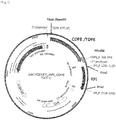
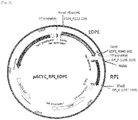
- the cleavage maps of specific recombinant vectors according to the present invention are exemplarily described in FIG. 1 to FIG. 4 .
- all transformation methods known in the art may be selected and used without special limitation, and for example, may be selected from fusion of bacterial protoplasts, electroporation, projectile bombardment and infection using a virus vector, etc.
- the transformed recombinant strain according to the present invention can have high stability and overexpress introduced psicose epimerase and allose isomerase, and thus can provide stably high allose conversion activity for a long period. Therefore, the transformed recombinant strain may be usefully applied for preparation of allose and may further enhance allose production yield.
- Culturing the recombinant strain may be performed in an appropriate medium by various culturing methods known in the art.
- the culturing methods batch culturing, continuous culturing and fed-batch culturing are included.
- the fed-batch culturing includes fed batch and repeated fed batch culturing, but not limited thereto.
- the medium which can be used according to the present invention comprises one or more carbon sources, nitrogen sources, mineral salt, vitamin, and(or) trace elements.
- Preferable carbon source is a saccharide such as monosaccharides, disaccharides or polysaccharides.
- the nitrogen source is generally an organic or inorganic nitrogen compound or a material comprising the compound.
- nitrogen sources there is ammonia gas or ammonium salt, for example, ammonium sulfate, ammonium chloride, ammonium phosphate, ammonium carbonate or ammonium nitrate, nitrate, urea, amino acid or complex nitrogen sources, for example, corn steep liquor, soybean powder, soybean protein, yeast extract, meat extract, etc.
- the nitrogen source may be used alone or as a mixture.
- the inorganic salt compound that may be present in the medium comprises a chloride, phosphate or sulfate of calcium, magnesium, sodium, cobalt, molybdenum, potassium, manganese, zinc, copper and iron.
- a phosphorus source phosphoric acid, potassium dihydrogen phosphate or dipotassium hydrogen phosphate, or corresponding sodium-containing salt may be used.
- a chelating agent may be added into the medium. All components of medium are sterilized by heating (at 1.5 bar and 121 °C for 20 minutes) or sterile filtration. These components may be sterilized together or individually as needed. All components of medium may be present when the culturing starts, or discretionally be added continuously or in batch.
- compositions for producing an allose comprising a microbial cell of the recombinant strain and/or culture of recombinant strain.
- the composition may prepare an allose from a fructose-containing raw material.
- the culture may comprise an enzyme produced from the recombinant strain, and it may comprise the strain or be a cell-free form which does not comprise the strain.
- the recombinant strain used for the preparation of allose is used to mean a microbial cell of the strain and/or culture of the strain.
- the allose may be a form of saccharide composition consisting of fructose, psicose and allose, and for example, may be a form of mixed saccharide composition comprising 60 to 63 % by weight of fructose, 24 to 26 % by weight of psicose, and 12 to 15 % by weight of allose, based on 100% by weight of saccharide composition consisting of fructose, psicose and allose.
- the composition may produce an allose from a fructose with a conversion rate of 12% or more, for example, 12 to 15 %, 12 to 14 % or 12 to 13 %.
- a conversion rate of 12% or more, for example, 12 to 15 %, 12 to 14 % or 12 to 13 %.
- the allose is produced with a converstion rate of about 9%, and a problem that it takes a long time and increases the production cost occurs, because it cannot produce it through one process.
- the allose in case of producing an allose using the composition, since the allose can be produced through a 1-step process, the time is shorten and the production cost may be reduced, and particularly the allose may be produced with 30% or more enhanced yield than the case of producing it through the 2-step process.
- the composition may not comprise one or more metal ions selected from the group consisting of copper ion, manganese ion, calcium ion, magnesium ion, zinc ion, nickel ion, cobalt ion, iron ion, aluminum ion, and calcium ion.
- composition for producing an allose comprising the microbial cell of the recombinant strain and/or culture of the recombinant strain with a fructose-containing raw material.
- the method for producing an allose comprises a step of reacting the recombinant strain with a fructose-containing raw material.
- the step of reacting the recombinant strain with a fructose may be performed by a step of culturing the microbial cell of the recombinant strain in a culture medium comprising a fructose.
- the step of reacting the recombinant strain with a fructose may be performed by a step of contacting the recombinant strain (microbial cell and/or culture of strain) with a fructose, for example, a step of mixing the recombinant strain with a fructose or a step of contacting a fructose into a carrier in which the recombinant strain is immobilized.
- a fructose may be converted into a psicose by reacing the recombinant strain with a fructose, and the psicose may be converted into an allose, thereby producing an allose from a fructose.
- the allose may be a form of saccharide composition consisting of fructose, psicose and allose, and for example, may be a mixed saccharide composition comprising 60 to 63 % by weight of fructose, 24 to 26 % by weight of psicose, and 12 to 15 % by weight of allose, based on 100% by weight of saccharide composition consisting of fructose, psicose and allose.
- the method may produce an allose from a fructose with a conversion rate of 12% or more, for example, 12 to 15 %, 12 to 14 % or 12 to 13 %.
- the concentration of fructose used as a substrate for efficient psicose production may be 10 to 80 %(w/v), 20 to 30 %(w/v), 40 to 80 %(w/v), 10 to 75 %(w/v), 20 to 75 %(w/v), 30 to 75 %(w/v), for example, 40 to 75 %(w/v), based on the total reactants.
- concentration of fructose is lower than the range, economics are lowered, and when it is higher than the range, the fructose is not dissolved well, and therefore, the concentration of fructose in the range is preferable.
- the fructose may be used as a liquid state dissolved in a buffer solution or water (for example, distilled water).
- the reaction may be performed under the condition of pH 6 to 9, for example, pH 7 to 9, pH 7 to 8 or pH 8 to 9.
- the reaction may be performed under the temperature condition of 30°C or higher, for example 40°C or higher.
- the browning reaction of fructose that is a substrate may be occurred, and therefore, the reaction may be performed under the condition of 30 to 80°C, for example, 35 to 80°C, 40 to 80°C, 35 to 75°C, 40 to 75°C, 35 to 70°C or 40 to 70°C.
- the reaction time is preferably 1 hr or more, for example, 2 hrs or more, 3 hrs or more, 4 hrs or more, 5 hrs or more or 6 hrs or more.
- the reaction time is over 48 hours, the rate of increase of allose conversion rate is slight or rather decreased, and therefore the reaction time is preferably not over 48 hours.
- the reaction time may be 1 to 48 hours, 2 to 48 hours, 3 to 48 hours, 4 to 48 hours, 5 to 48 hours, or 6 to 48 hours, and considering industrial and economical aspects, may be approximately 1 to 48 hours, 2 to 36 hours, 3 to 24 hours, 3 to 12 hours, or 3 to 6 hours, but not limited thereto.
- the condition is selected as a condition to maximize the conversion efficiency of allose from a fructose.
- the concentration of microbial cell of recombinant strain used may be 5 mg (dcw: dry cell weight)/ml or more, for example, 5 to 100 mg(dcw)/ml, 10 to 90 mg(dcw)/ml, 20 to 80 mg(dcw)/ml, 30 to 70 mg(dcw)/ml, 40 to 60 mg(dcw)/ml, or 45 to 55 mg(dcw)/ml based on the total reactants.
- the concentratin of microbial cell is preferably in the range.
- the method may not add one or more kinds of metal ions selected from the group consisting of copper ion, manganese ion, calcium ion, magnesium ion, zinc ion, nickel ion, cobalt ion, iron ion, aluminum ion, and calcium ion.
- an enzyme for producing an allose from a fructose comprising a fusion protein in which a psicose epimerase and an allose isomerase are connected by a linker peptide.
- the enzyme is characterized by producing an allose from a fructose with a conversion rate of 12% or more, for example, 12 to 15 %, 12 to 14 % or 12 to 13 %.
- the psicose epimerase may comprise an amino acid sequence selected from the group consisting of SEQ ID NO: 1 to 3.
- the allose isomerase may comprise an amino acid sequence of SEQ ID NO: 4.
- the linker peptide may consist of 1 to 6 amino acids. When the linker peptide is less than or over the number of amino acids, it may negatively affect the structure of proteins each other during connecting two proteins, so the number is suitable.
- the one fusion protein may comprise an amino acid sequence of SEQ ID NO: 23 or 25.
- a mixed saccharide composition comprising 60 to 63 % by weight of fructose, 24 to 26 % by weight of psicose, and 12 to 15 % by weight of allose, based on 100% by weight of saccharide composition consisting of fructose, psicose and allose.
- the present invention relates to a recombinant strain for producing an allose from a fructose, a composition for producing an allose, which produces an allose from a fructose-containing raw material, comprising the recombinant strain, and a method for producing an allose using the same, and by using the recombinant strain and/or method for producing an allolse using the same according to the present invention, an allose can be produced with high yield, without producing by-products, exhibiting temperature and pH conditions appropriate for industrialization and exhibiting high thermal stability.
- Plasmids for expressing enzyme for producing a psicose from a fructose, CDPE, EDPE, or TDPE each, in one strain, with RPI enzyme for producing an allose from a psicose was constructed through gene recombination.
- a recombinant vector was prepared by inserting the polynucleotide encoding the amino acid sequence of SEQ ID NO: 4 which was a RPI protein (SEQ ID NO; 11) into a same restriction enzyme site of pACYC (NOVAGEN) or RSF (NOVAGEN) which was an expression vector using Ndel and XhoI(NEB).
- a sequence encoding psicose epimerase was prepared first.
- polynucleotide encoding the amino acid sequence of SEQ ID NO: 1 derived from Clostridium scindens (Gene bank: EDS06411.1)
- polynucleotide encoding the amino acid sequence of SEQ ID NO: 2 derived from Ensifer adhaerens or polynucleotide encoding the amino acid sequence of SEQ ID NO: 3 derived from Treponema monia (Gene bank: WP_010256447), to be optimized for E.
- restriction enzymes NdeI and XhoI(NEB) the synthesized polynucleotides encoding each psicose epimerase was inserted into same restriction site of pACYC(NOVAGEN) or RSF(NOVAGEN) which was an expressin vector in which RPI gene was inserted, and TDPE, CDPE, EDPE were respectively inserted into the prepared recombinant vector comprising RPI, to make two genes (RPI enzyme gene and psicose epimerase gene) be inserted into one vector.
- the restriction enzymes were shown in the following Table 6.
- E. coli strain was prepared by transforming E. coli BL21(DE3) (invitrogen) with the constructed each recombinant vector by the heat shock method (Sambrook and Russell: Molecular Cloning.).
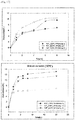
- reaction was done for 2 hours under 60°C, in 5mg/ml_DCW range of microbial cell concentration of strain isolated in Example 2, in a 10%(v/v) fructose 1ml, 50mM PIPES buffer (pH 7.0) solution, and after finishing (stopping) the reaction by heating to stop the substrate reaction, the temperature showing the maximum activity was measured. Then, the allose conversion rate from a fructose for 2 hours was measured, thereby showing the relative value of allose conversion rate at each temperature (RA(%) that is Y axis value of figure) when the allose conversion rate at the optimum temperature was taken as 100%.
- RA(%) that is Y axis value of figure
- Amount of substrate added residual fructose + amount of psicose remained + allose production [Table 7] Classification Conversion rate (%) Temperature (°C) RSF_CDPE_RPI (his tag X) RSF_TDPE_RP I (his tag X) RSF_EDPE_RPI (his tag X) 40 5.46 6.39 6.84 45 8.50 7.27 7.32 50 8.51 8.12 7.81 55 8.17 8.57 7.28 60 7.90 3.99 4.94 70 8.04 2.68 3.71
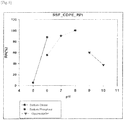
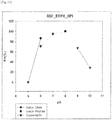
- RSF_TDPE_RPI ( FIG. 5 ) exhibited the optimum activity at 55°C and RSF_CDPE_RPI ( FIG. 6 ) and RSF EDPE RPI ( FIG. 7 ) exhibited the optimum activity at 50°C.
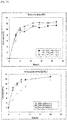
- reaction was done for 2 hours at 50°C under each pH condition using 5mg/ml_DCW of microbial cell concentration of strain isolated in Example 1 and fructose concentration 10%(v/v) buffer solution, 50 mM sodium citrate(pH 4 to 5), 50 mM sodium phosphate(pH 6 to 8), 50 mM glycine NaOH (pH 9 to 10), respectively, and after finishing (stopping) the reaction by heating to stop the substrate reaction, the pH showing the maximum activity was measured.
- Amount of substrate added residual fructose + amount of psicose remained + allose production [Table 8] Classification Converstion rate(%) Buffer pH RSF_CDPE_RP I (his tag X) RSF_TDPE_RP I (his tag X) RSF_EDPE_RP I (his tag X) Sodium citrate 5 0.4 0 0 6 6.5 8.8 8.3 Sodium Phosphate 6 4.1 5.9 6.8 7 6.6 10.0 9.1 8 7.4 8.9 9.6 Glycine -NaOH 9 4.4 5.2 6.5 10 2.8 1.3 2.7
- RSF_TDPE_RPI exhibited the optimum activity at pH 7.0 ( FIG. 8 )
- RSF_CDPE_RPI FIG. 9
- RSF_EDPE_RPI FIG. 10
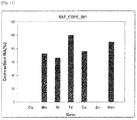
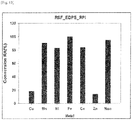
- reaction was done for 2 hours using 1mM metal ion (CuCl 2 , MnCl 2 , FeSO 4 , ZnSO 4 , NiSO 4 , or CoCl 2 ) solution dissolved in 50mM PIPES buffer solution (pH 7.0 or 8.0, performing at the optimum pH of each enzyme), at 5mg/ml_DCW of microbial cell concentration of strain isolated in Example 2 and 50°C, respectively, and after finishing (stopping) the reaction by heating for 5 minutes to stop the substrate reaction, the allose production was measured through HPLC analysis by the same method as the Example 3-1. That was treated with no metal ion was used as a control group (Non).
- 1mM metal ion CuCl 2 , MnCl 2 , FeSO 4 , ZnSO 4 , NiSO 4 , or CoCl 2
- reaction was done for 2 hours using 50mM PIPES buffer solution (pH 7.0 or 8.0, performing at the optimum pH of each enzyme), at 5mg/ml_DCW of microbial cell concentration of strain to which the thermal shock was added and 50°C, respectively, and after finishing (stopping) the reaction by heating for 5 minutes to stop the substrate reaction.
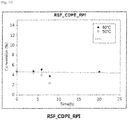
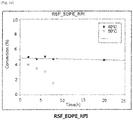
- the allose conversion rate was measured by the following formula. The result was shown in the following Table 10 (40°C) and Table 11 (50°C), and the conversion rate converted into a log value was shown in FIGs. 14 to 16 .
- Conversion rate % Production / amount of substrate added * 100
- Amount of substrate added residual fructose + amount of psicose remained + allose production [Table 12] Enzyme Allose conversion rate(%) Psicose conversion Rate (%) RSF _ CDPE_RPI (Histag x) 11.3 24.9 RSF_TDPE_RPI (Histag x) 12.0 25.3 RSF_EDPE_RPI (Histag x) 12.6 25.3 RSF_CDPE_RPI (Histag O) 13.0 24.8 RSF_TDPE_RPI (Histag O) 11.5 25.3 RSF_EDPE_RPI (Histag O) 12.9 24.9 ACYC_ CDPE_RPI (Histag x) 11.8 25.9 ACYC_TDPE_RPI (Histag x) 12.8 25.7 ACYC_TDPE_RPI (Histag x) 13.6 25.9 ACYC_CDPE_ RPI (Histag O) 13.4 24.7 ACYC_TDPE_RPI (Histag O
- the allose conversion rate was measured by sampling by time as reacting for 0 to 20 hours at 50°C in 5mg/ml_DCW range of microbial cell concentration of strais isolated from Example 2, in 50%(v/v) fructose 1ml as a substrate and 50mM PIPES buffer solution (pH 7.0 or 8.0, performing at the optimum pH of each enzyme). The result was shown in Table 13 and FIG. 18 .
- the encoding gene of psicose epimerase drived from Ensifer adhaerens was synthesized as a form of polynucleotide modified by optimizing for E . coli (SEQ ID NO: 6) and designated as EDPE.
- the encoding genes of PRI secured in gDNA of Persephonella marina EX-H1, the polynucleotide optimized for E. coli (SEQ ID NO: 10) were secured as each template through PCR, and they were linked as one template by an overlap PCR method (SEQ ID NO: 22).
- a recombinant vector was prepared by inserting the polynucleotide linked as one template into the same restriction site of pET21a which was an expression vector using restriction enzymes NdeI and Xhol.
- the cleavage map of prepared recombinant vector was described in FIG. 19 .
- a recombinant strain was prepared by transforming E. coli BL21(DE3) (invitrogen) with the constructed each recombinant vector by the heat shock method (Sambrook and Russell: Molecular Cloning.).
- Example 4 After suspending the microbial cells recovered in the Example 4 into a lysis buffer (50mM Tris-HCl, pH 7.0 300mM NaCl), they were lysated at 4°C for 20 minutes using a ultrasonic processor (ColepParmer). The lysated solution was centrifuged at 13,000rpm and 4°C for 20 minutes to recover the supernatant, and applied for Ni-NTA column equilibrated with a lysis buffer in advance (Ni-NTA Superflow, Qiagen), and then a buffer solution in which 20mM imidazol and 250mM imidazol were contained in 50mM Tris-HCl 300mM NaCl, pH 7.0 was flowed sequentially.
- a lysis buffer 50mM Tris-HCl, pH 7.0 300mM NaCl
- the eluted target protein was converted with a buffer solution for measuring the enzyme activity (50mM Tris-HCl, pH7.0) and used for the next experiment.
- the partially purified enzyme could be obtained by the method, and it was confirmed that the size of monomer was about 47 kDa by SDS-PAGE ( FIG. 20 ).
- the allose conversion rate was measured by sampling by time as reacting for 24 hours at 50°C in 1.0 mg/ml range of concentration of enzyme purified in Example 6, in 50%(v/v) fructose 1ml as a substrate and 50mM PIPES buffer (pH 7.0 or 8.0, performing at the optimum pH of each enzyme).
- the result was shown in Table 14 and FIG. 21 .
Landscapes
- Health & Medical Sciences (AREA)
- Life Sciences & Earth Sciences (AREA)
- Chemical & Material Sciences (AREA)
- Genetics & Genomics (AREA)
- Engineering & Computer Science (AREA)
- Organic Chemistry (AREA)
- Zoology (AREA)
- Wood Science & Technology (AREA)
- Bioinformatics & Cheminformatics (AREA)
- Biotechnology (AREA)
- General Engineering & Computer Science (AREA)
- Biomedical Technology (AREA)
- Biochemistry (AREA)
- General Health & Medical Sciences (AREA)
- Microbiology (AREA)
- Molecular Biology (AREA)
- Biophysics (AREA)
- Physics & Mathematics (AREA)
- Plant Pathology (AREA)
- Medicinal Chemistry (AREA)
- Chemical Kinetics & Catalysis (AREA)
- General Chemical & Material Sciences (AREA)
- Virology (AREA)
- Enzymes And Modification Thereof (AREA)
- Preparation Of Compounds By Using Micro-Organisms (AREA)
- Micro-Organisms Or Cultivation Processes Thereof (AREA)
Applications Claiming Priority (2)
| Application Number | Priority Date | Filing Date | Title |
|---|---|---|---|
| KR1020150183246A KR102069301B1 (ko) | 2015-12-21 | 2015-12-21 | 과당으로부터 알로오스를 생산하는 균주 및 이를 이용한 알로오스 생산방법 |
| PCT/KR2016/014059 WO2017111339A1 (fr) | 2015-12-21 | 2016-12-01 | Souche produisant de l'allose à partir de fructose et procédé de production d'allose à l'aide de cette souche |
Publications (2)
| Publication Number | Publication Date |
|---|---|
| EP3401403A1 true EP3401403A1 (fr) | 2018-11-14 |
| EP3401403A4 EP3401403A4 (fr) | 2019-06-12 |
Family
ID=59090752
Family Applications (1)
| Application Number | Title | Priority Date | Filing Date |
|---|---|---|---|
| EP16879206.7A Withdrawn EP3401403A4 (fr) | 2015-12-21 | 2016-12-01 | Souche produisant de l'allose à partir de fructose et procédé de production d'allose à l'aide de cette souche |
Country Status (6)
| Country | Link |
|---|---|
| US (1) | US10689668B2 (fr) |
| EP (1) | EP3401403A4 (fr) |
| JP (1) | JP6638086B2 (fr) |
| KR (1) | KR102069301B1 (fr) |
| CN (1) | CN108473991A (fr) |
| WO (1) | WO2017111339A1 (fr) |
Families Citing this family (6)
| Publication number | Priority date | Publication date | Assignee | Title |
|---|---|---|---|---|
| EP3565892A4 (fr) | 2017-01-06 | 2020-10-07 | Greenlight Biosciences, Inc. | Production acellulaire de sucres |
| KR102063908B1 (ko) * | 2017-12-27 | 2020-01-08 | 씨제이제일제당 주식회사 | 신규 내열성 과당-6-인산 3-에피머화 효소 및 이를 이용한 알룰로스 제조방법 |
| KR102055875B1 (ko) * | 2017-12-27 | 2019-12-13 | 씨제이제일제당 주식회사 | 신규 내열성 과당-6-인산 3-에피머화 효소 및 이를 이용한 알룰로스 제조방법 |
| CN112501224B (zh) * | 2020-11-26 | 2022-04-19 | 北京化工大学 | 一种利用d-葡萄糖生物合成d-阿洛糖的方法 |
| CN114591939B (zh) * | 2022-03-15 | 2023-11-28 | 天津科技大学 | 一种高耐热d-阿洛酮糖-3-差向异构酶突变体及其应用 |
| EP4488375A1 (fr) | 2023-07-07 | 2025-01-08 | Annikki GmbH | Procédé de préparation d'une solution aqueuse contenant de l'allose |
Family Cites Families (12)
| Publication number | Priority date | Publication date | Assignee | Title |
|---|---|---|---|---|
| US7244601B2 (en) * | 1997-12-15 | 2007-07-17 | National Research Council Of Canada | Fusion proteins for use in enzymatic synthesis of oligosaccharides |
| US8748589B2 (en) | 2005-03-04 | 2014-06-10 | National University Corporation Kagawa University | Complex crystalline sugar comprising D-psicose and D-allose and process for production of the same |
| US9109266B2 (en) * | 2009-03-30 | 2015-08-18 | Matsutani Chemical Industry Co., Ltd. | Process of producing sugar composition comprising D-psicose and D-allose via strong alkaline isomerization of D-glucose/D-fructose or alkaline pre-treatment of D-glucose/D-fructose followed by isomerization in the presence of a basic ion exchange resin |
| KR20110035805A (ko) * | 2009-09-30 | 2011-04-06 | 씨제이제일제당 (주) | 사이코스-에피머화 효소의 고정화 및 이를 이용한 사이코스의 제조방법 |
| US8679822B2 (en) * | 2010-06-29 | 2014-03-25 | E I Du Pont De Nemours And Company | Xylose utilization in recombinant zymomonas |
| JP5859191B2 (ja) * | 2010-09-29 | 2016-02-10 | 松谷化学工業株式会社 | 高甘味度甘味料に対する呈味改良組成物およびその応用 |
| KR101539096B1 (ko) * | 2012-08-10 | 2015-07-24 | 주식회사 삼양제넥스 | 사이코스 에피머화 효소 및 이를 이용한 사이코스로 전환용 조성물 |
| CN102839184A (zh) * | 2012-09-27 | 2012-12-26 | 江南大学 | 一种重组核糖-5-磷酸异构酶及其应用 |
| JP6209526B2 (ja) * | 2012-10-30 | 2017-10-04 | 松谷化学工業株式会社 | D−アロースの生産方法 |
| KR101318422B1 (ko) | 2013-04-09 | 2013-10-15 | 주식회사 삼양제넥스 | D-사이코스 에피머화 효소, 및 이를 이용하는 사이코스 생산방법 |
| JP6774875B2 (ja) * | 2013-09-03 | 2020-10-28 | ロケット フレールRoquette Freres | D−プシコース 3−エピメラーゼの改良された変異体およびその使用 |
| KR101539097B1 (ko) * | 2013-12-26 | 2015-07-23 | 주식회사 삼양제넥스 | 사이코스 에피머화 효소를 암호화 하는 폴리뉴클레오타이드, 및 이를 이용하는 사이코스 생산방법 |
-
2015
- 2015-12-21 KR KR1020150183246A patent/KR102069301B1/ko active Active
-
2016
- 2016-12-01 JP JP2018551733A patent/JP6638086B2/ja active Active
- 2016-12-01 WO PCT/KR2016/014059 patent/WO2017111339A1/fr not_active Ceased
- 2016-12-01 CN CN201680075491.3A patent/CN108473991A/zh active Pending
- 2016-12-01 EP EP16879206.7A patent/EP3401403A4/fr not_active Withdrawn
- 2016-12-01 US US16/060,480 patent/US10689668B2/en active Active
Also Published As
| Publication number | Publication date |
|---|---|
| WO2017111339A1 (fr) | 2017-06-29 |
| US10689668B2 (en) | 2020-06-23 |
| CN108473991A (zh) | 2018-08-31 |
| KR20170074120A (ko) | 2017-06-29 |
| JP6638086B2 (ja) | 2020-01-29 |
| US20190017070A1 (en) | 2019-01-17 |
| JP2019503711A (ja) | 2019-02-14 |
| KR102069301B1 (ko) | 2020-01-22 |
| EP3401403A4 (fr) | 2019-06-12 |
Similar Documents
| Publication | Publication Date | Title |
|---|---|---|
| EP3401403A1 (fr) | Souche produisant de l'allose à partir de fructose et procédé de production d'allose à l'aide de cette souche | |
| EP2990483B1 (fr) | Psicose épimérase mutante et procédé de préparation de psicose correspondant | |
| JP2019517275A (ja) | 微生物発酵によるn−アセチル−d−グルコサミン及び/又はd−グルコサミン塩の製造方法 | |
| KR101656063B1 (ko) | 사이코스 에퍼머화 효소의 발현 시스템 및 이를 이용한 사이코스의 생산 | |
| EP2944691A1 (fr) | Cétose 3-épimérase produite par arthrobacter globiformis | |
| KR101695830B1 (ko) | 사이코스 에퍼머화 효소의 발현 시스템 및 이를 이용한 사이코스의 생산 | |
| CN113186142A (zh) | 一种高效生产2′-岩藻糖基乳糖的大肠杆菌工程菌株 | |
| EP4144754A1 (fr) | Variant d'épimérase d'allulose, son procédé de production et procédé de production d'allulose utilisant un tel variant | |
| EP2948545B1 (fr) | Procede pour preparer des monosaccharides | |
| US12221639B2 (en) | Allulose epimerase variant with excellent thermal stability, preparation method therefor, and preparation method for allulose using same | |
| EP2094840B1 (fr) | Nouvelle n-acetylglucosamine-2-epimerase et procede de production d'acide cmp neuraminique faisant intervenir cette enzyme | |
| EP3865574B1 (fr) | Variant d'épimérase d'allulose, son procédé de production et procédé de production d'allulose l'utilisant | |
| CN108424943B (zh) | 一种生产2’-脱氧-2’-氟-β-D-阿拉伯糖腺苷酸的方法 | |
| CN109312314A (zh) | 新的多磷酸盐依存性葡萄糖激酶与使用其制备葡萄糖-6-磷酸的方法 | |
| KR20170116979A (ko) | 과당 6-인산으로부터 타가토스 6-인산으로의 전환 활성을 가진 락토바실러스 플란타룸에서 분리한 과당 1,6-이인산 알돌레이즈 및 이를 이용한 타가토스 생산 방법 | |
| KR20170116978A (ko) | 비피도박테리움 롱검 균주 유래의 프럭토스 1,6-비스포스페이트 알돌레이즈 효소를 유효성분으로 함유하는 프럭토스 6-포스페이트로부터 인산화 타가토스를 생산하기 위한 조성물 | |
| KR101965210B1 (ko) | 신규 이소프렌 합성 효소 및 이를 이용한 이소프렌 생산 방법 | |
| CN114574472B (zh) | 一种重组多糖降解酶及其编码基因与应用 | |
| KR100941304B1 (ko) | 신규 뉴클레오시드 하이드롤라제ⅰ | |
| KR100942133B1 (ko) | 신규 뉴클레오시드 하이드롤라제 ⅱ | |
| KR101134119B1 (ko) | 릭소스 이성화효소를 이용한 과당으로부터 만노스의 제조방법 | |
| CN114555801A (zh) | 新型岩藻糖异构酶及使用其生产岩藻糖的方法 | |
| KR20180020814A (ko) | 아밀로수크라제 효소의 발현 시스템 및 이를 이용한 투라노스의 생산 |
Legal Events
| Date | Code | Title | Description |
|---|---|---|---|
| STAA | Information on the status of an ep patent application or granted ep patent |
Free format text: STATUS: THE INTERNATIONAL PUBLICATION HAS BEEN MADE |
|
| PUAI | Public reference made under article 153(3) epc to a published international application that has entered the european phase |
Free format text: ORIGINAL CODE: 0009012 |
|
| STAA | Information on the status of an ep patent application or granted ep patent |
Free format text: STATUS: REQUEST FOR EXAMINATION WAS MADE |
|
| 17P | Request for examination filed |
Effective date: 20180719 |
|
| AK | Designated contracting states |
Kind code of ref document: A1 Designated state(s): AL AT BE BG CH CY CZ DE DK EE ES FI FR GB GR HR HU IE IS IT LI LT LU LV MC MK MT NL NO PL PT RO RS SE SI SK SM TR |
|
| AX | Request for extension of the european patent |
Extension state: BA ME |
|
| DAV | Request for validation of the european patent (deleted) | ||
| DAX | Request for extension of the european patent (deleted) | ||
| A4 | Supplementary search report drawn up and despatched |
Effective date: 20190509 |
|
| RIC1 | Information provided on ipc code assigned before grant |
Ipc: C12N 15/63 20060101AFI20190503BHEP Ipc: C12N 15/861 20060101ALI20190503BHEP Ipc: C12N 9/90 20060101ALI20190503BHEP Ipc: C12N 9/96 20060101ALI20190503BHEP Ipc: C12N 15/52 20060101ALI20190503BHEP Ipc: C12P 19/02 20060101ALI20190503BHEP |
|
| STAA | Information on the status of an ep patent application or granted ep patent |
Free format text: STATUS: EXAMINATION IS IN PROGRESS |
|
| 17Q | First examination report despatched |
Effective date: 20200422 |
|
| GRAP | Despatch of communication of intention to grant a patent |
Free format text: ORIGINAL CODE: EPIDOSNIGR1 |
|
| STAA | Information on the status of an ep patent application or granted ep patent |
Free format text: STATUS: GRANT OF PATENT IS INTENDED |
|
| INTG | Intention to grant announced |
Effective date: 20201208 |
|
| STAA | Information on the status of an ep patent application or granted ep patent |
Free format text: STATUS: THE APPLICATION HAS BEEN WITHDRAWN |
|
| 18W | Application withdrawn |
Effective date: 20210204 |