EP3401982B1 - Elektrode für energiespeichervorrichtungen - Google Patents
Elektrode für energiespeichervorrichtungen Download PDFInfo
- Publication number
- EP3401982B1 EP3401982B1 EP16883786.2A EP16883786A EP3401982B1 EP 3401982 B1 EP3401982 B1 EP 3401982B1 EP 16883786 A EP16883786 A EP 16883786A EP 3401982 B1 EP3401982 B1 EP 3401982B1
- Authority
- EP
- European Patent Office
- Prior art keywords
- energy storage
- electrode
- storage device
- undercoat layer
- active material
- Prior art date
- Legal status (The legal status is an assumption and is not a legal conclusion. Google has not performed a legal analysis and makes no representation as to the accuracy of the status listed.)
- Active
Links
Images

Classifications
-
- H—ELECTRICITY
- H01—ELECTRIC ELEMENTS
- H01M—PROCESSES OR MEANS, e.g. BATTERIES, FOR THE DIRECT CONVERSION OF CHEMICAL ENERGY INTO ELECTRICAL ENERGY
- H01M4/00—Electrodes
- H01M4/02—Electrodes composed of, or comprising, active material
- H01M4/13—Electrodes for accumulators with non-aqueous electrolyte, e.g. for lithium-accumulators; Processes of manufacture thereof
- H01M4/131—Electrodes based on mixed oxides or hydroxides, or on mixtures of oxides or hydroxides, e.g. LiCoOx
-
- H—ELECTRICITY
- H01—ELECTRIC ELEMENTS
- H01G—CAPACITORS; CAPACITORS, RECTIFIERS, DETECTORS, SWITCHING DEVICES, LIGHT-SENSITIVE OR TEMPERATURE-SENSITIVE DEVICES OF THE ELECTROLYTIC TYPE
- H01G11/00—Hybrid capacitors, i.e. capacitors having different positive and negative electrodes; Electric double-layer [EDL] capacitors; Processes for the manufacture thereof or of parts thereof
- H01G11/22—Electrodes
- H01G11/26—Electrodes characterised by their structure, e.g. multi-layered, porosity or surface features
- H01G11/28—Electrodes characterised by their structure, e.g. multi-layered, porosity or surface features arranged or disposed on a current collector; Layers or phases between electrodes and current collectors, e.g. adhesives
-
- H—ELECTRICITY
- H01—ELECTRIC ELEMENTS
- H01G—CAPACITORS; CAPACITORS, RECTIFIERS, DETECTORS, SWITCHING DEVICES, LIGHT-SENSITIVE OR TEMPERATURE-SENSITIVE DEVICES OF THE ELECTROLYTIC TYPE
- H01G11/00—Hybrid capacitors, i.e. capacitors having different positive and negative electrodes; Electric double-layer [EDL] capacitors; Processes for the manufacture thereof or of parts thereof
- H01G11/22—Electrodes
- H01G11/30—Electrodes characterised by their material
- H01G11/32—Carbon-based
- H01G11/36—Nanostructures, e.g. nanofibres, nanotubes or fullerenes
-
- H—ELECTRICITY
- H01—ELECTRIC ELEMENTS
- H01G—CAPACITORS; CAPACITORS, RECTIFIERS, DETECTORS, SWITCHING DEVICES, LIGHT-SENSITIVE OR TEMPERATURE-SENSITIVE DEVICES OF THE ELECTROLYTIC TYPE
- H01G11/00—Hybrid capacitors, i.e. capacitors having different positive and negative electrodes; Electric double-layer [EDL] capacitors; Processes for the manufacture thereof or of parts thereof
- H01G11/22—Electrodes
- H01G11/30—Electrodes characterised by their material
- H01G11/32—Carbon-based
- H01G11/38—Carbon pastes or blends; Binders or additives therein
-
- H—ELECTRICITY
- H01—ELECTRIC ELEMENTS
- H01G—CAPACITORS; CAPACITORS, RECTIFIERS, DETECTORS, SWITCHING DEVICES, LIGHT-SENSITIVE OR TEMPERATURE-SENSITIVE DEVICES OF THE ELECTROLYTIC TYPE
- H01G11/00—Hybrid capacitors, i.e. capacitors having different positive and negative electrodes; Electric double-layer [EDL] capacitors; Processes for the manufacture thereof or of parts thereof
- H01G11/22—Electrodes
- H01G11/30—Electrodes characterised by their material
- H01G11/46—Metal oxides
-
- H—ELECTRICITY
- H01—ELECTRIC ELEMENTS
- H01G—CAPACITORS; CAPACITORS, RECTIFIERS, DETECTORS, SWITCHING DEVICES, LIGHT-SENSITIVE OR TEMPERATURE-SENSITIVE DEVICES OF THE ELECTROLYTIC TYPE
- H01G11/00—Hybrid capacitors, i.e. capacitors having different positive and negative electrodes; Electric double-layer [EDL] capacitors; Processes for the manufacture thereof or of parts thereof
- H01G11/66—Current collectors
- H01G11/68—Current collectors characterised by their material
-
- H—ELECTRICITY
- H01—ELECTRIC ELEMENTS
- H01G—CAPACITORS; CAPACITORS, RECTIFIERS, DETECTORS, SWITCHING DEVICES, LIGHT-SENSITIVE OR TEMPERATURE-SENSITIVE DEVICES OF THE ELECTROLYTIC TYPE
- H01G11/00—Hybrid capacitors, i.e. capacitors having different positive and negative electrodes; Electric double-layer [EDL] capacitors; Processes for the manufacture thereof or of parts thereof
- H01G11/66—Current collectors
- H01G11/70—Current collectors characterised by their structure
-
- H—ELECTRICITY
- H01—ELECTRIC ELEMENTS
- H01G—CAPACITORS; CAPACITORS, RECTIFIERS, DETECTORS, SWITCHING DEVICES, LIGHT-SENSITIVE OR TEMPERATURE-SENSITIVE DEVICES OF THE ELECTROLYTIC TYPE
- H01G11/00—Hybrid capacitors, i.e. capacitors having different positive and negative electrodes; Electric double-layer [EDL] capacitors; Processes for the manufacture thereof or of parts thereof
- H01G11/84—Processes for the manufacture of hybrid or EDL capacitors, or components thereof
- H01G11/86—Processes for the manufacture of hybrid or EDL capacitors, or components thereof specially adapted for electrodes
-
- H—ELECTRICITY
- H01—ELECTRIC ELEMENTS
- H01M—PROCESSES OR MEANS, e.g. BATTERIES, FOR THE DIRECT CONVERSION OF CHEMICAL ENERGY INTO ELECTRICAL ENERGY
- H01M10/00—Secondary cells; Manufacture thereof
- H01M10/05—Accumulators with non-aqueous electrolyte
- H01M10/052—Li-accumulators
- H01M10/0525—Rocking-chair batteries, i.e. batteries with lithium insertion or intercalation in both electrodes; Lithium-ion batteries
-
- H—ELECTRICITY
- H01—ELECTRIC ELEMENTS
- H01M—PROCESSES OR MEANS, e.g. BATTERIES, FOR THE DIRECT CONVERSION OF CHEMICAL ENERGY INTO ELECTRICAL ENERGY
- H01M4/00—Electrodes
- H01M4/02—Electrodes composed of, or comprising, active material
- H01M4/04—Processes of manufacture in general
- H01M4/0402—Methods of deposition of the material
- H01M4/0404—Methods of deposition of the material by coating on electrode collectors
-
- H—ELECTRICITY
- H01—ELECTRIC ELEMENTS
- H01M—PROCESSES OR MEANS, e.g. BATTERIES, FOR THE DIRECT CONVERSION OF CHEMICAL ENERGY INTO ELECTRICAL ENERGY
- H01M4/00—Electrodes
- H01M4/02—Electrodes composed of, or comprising, active material
- H01M4/13—Electrodes for accumulators with non-aqueous electrolyte, e.g. for lithium-accumulators; Processes of manufacture thereof
-
- H—ELECTRICITY
- H01—ELECTRIC ELEMENTS
- H01M—PROCESSES OR MEANS, e.g. BATTERIES, FOR THE DIRECT CONVERSION OF CHEMICAL ENERGY INTO ELECTRICAL ENERGY
- H01M4/00—Electrodes
- H01M4/02—Electrodes composed of, or comprising, active material
- H01M4/13—Electrodes for accumulators with non-aqueous electrolyte, e.g. for lithium-accumulators; Processes of manufacture thereof
- H01M4/139—Processes of manufacture
- H01M4/1391—Processes of manufacture of electrodes based on mixed oxides or hydroxides, or on mixtures of oxides or hydroxides, e.g. LiCoOx
-
- H—ELECTRICITY
- H01—ELECTRIC ELEMENTS
- H01M—PROCESSES OR MEANS, e.g. BATTERIES, FOR THE DIRECT CONVERSION OF CHEMICAL ENERGY INTO ELECTRICAL ENERGY
- H01M4/00—Electrodes
- H01M4/02—Electrodes composed of, or comprising, active material
- H01M4/36—Selection of substances as active materials, active masses, active liquids
- H01M4/362—Composites
- H01M4/366—Composites as layered products
-
- H—ELECTRICITY
- H01—ELECTRIC ELEMENTS
- H01M—PROCESSES OR MEANS, e.g. BATTERIES, FOR THE DIRECT CONVERSION OF CHEMICAL ENERGY INTO ELECTRICAL ENERGY
- H01M4/00—Electrodes
- H01M4/02—Electrodes composed of, or comprising, active material
- H01M4/36—Selection of substances as active materials, active masses, active liquids
- H01M4/48—Selection of substances as active materials, active masses, active liquids of inorganic oxides or hydroxides
-
- H—ELECTRICITY
- H01—ELECTRIC ELEMENTS
- H01M—PROCESSES OR MEANS, e.g. BATTERIES, FOR THE DIRECT CONVERSION OF CHEMICAL ENERGY INTO ELECTRICAL ENERGY
- H01M4/00—Electrodes
- H01M4/02—Electrodes composed of, or comprising, active material
- H01M4/36—Selection of substances as active materials, active masses, active liquids
- H01M4/48—Selection of substances as active materials, active masses, active liquids of inorganic oxides or hydroxides
- H01M4/483—Selection of substances as active materials, active masses, active liquids of inorganic oxides or hydroxides for non-aqueous cells
-
- H—ELECTRICITY
- H01—ELECTRIC ELEMENTS
- H01M—PROCESSES OR MEANS, e.g. BATTERIES, FOR THE DIRECT CONVERSION OF CHEMICAL ENERGY INTO ELECTRICAL ENERGY
- H01M4/00—Electrodes
- H01M4/02—Electrodes composed of, or comprising, active material
- H01M4/62—Selection of inactive substances as ingredients for active masses, e.g. binders, fillers
-
- H—ELECTRICITY
- H01—ELECTRIC ELEMENTS
- H01M—PROCESSES OR MEANS, e.g. BATTERIES, FOR THE DIRECT CONVERSION OF CHEMICAL ENERGY INTO ELECTRICAL ENERGY
- H01M4/00—Electrodes
- H01M4/02—Electrodes composed of, or comprising, active material
- H01M4/62—Selection of inactive substances as ingredients for active masses, e.g. binders, fillers
- H01M4/621—Binders
- H01M4/622—Binders being polymers
-
- H—ELECTRICITY
- H01—ELECTRIC ELEMENTS
- H01M—PROCESSES OR MEANS, e.g. BATTERIES, FOR THE DIRECT CONVERSION OF CHEMICAL ENERGY INTO ELECTRICAL ENERGY
- H01M4/00—Electrodes
- H01M4/02—Electrodes composed of, or comprising, active material
- H01M4/62—Selection of inactive substances as ingredients for active masses, e.g. binders, fillers
- H01M4/624—Electric conductive fillers
- H01M4/625—Carbon or graphite
-
- H—ELECTRICITY
- H01—ELECTRIC ELEMENTS
- H01M—PROCESSES OR MEANS, e.g. BATTERIES, FOR THE DIRECT CONVERSION OF CHEMICAL ENERGY INTO ELECTRICAL ENERGY
- H01M4/00—Electrodes
- H01M4/02—Electrodes composed of, or comprising, active material
- H01M4/64—Carriers or collectors
- H01M4/66—Selection of materials
- H01M4/663—Selection of materials containing carbon or carbonaceous materials as conductive part, e.g. graphite, carbon fibres
-
- H—ELECTRICITY
- H01—ELECTRIC ELEMENTS
- H01M—PROCESSES OR MEANS, e.g. BATTERIES, FOR THE DIRECT CONVERSION OF CHEMICAL ENERGY INTO ELECTRICAL ENERGY
- H01M4/00—Electrodes
- H01M4/02—Electrodes composed of, or comprising, active material
- H01M4/64—Carriers or collectors
- H01M4/66—Selection of materials
- H01M4/665—Composites
- H01M4/667—Composites in the form of layers, e.g. coatings
-
- H—ELECTRICITY
- H01—ELECTRIC ELEMENTS
- H01M—PROCESSES OR MEANS, e.g. BATTERIES, FOR THE DIRECT CONVERSION OF CHEMICAL ENERGY INTO ELECTRICAL ENERGY
- H01M4/00—Electrodes
- H01M4/02—Electrodes composed of, or comprising, active material
- H01M4/64—Carriers or collectors
- H01M4/66—Selection of materials
- H01M4/668—Composites of electroconductive material and synthetic resins
-
- Y—GENERAL TAGGING OF NEW TECHNOLOGICAL DEVELOPMENTS; GENERAL TAGGING OF CROSS-SECTIONAL TECHNOLOGIES SPANNING OVER SEVERAL SECTIONS OF THE IPC; TECHNICAL SUBJECTS COVERED BY FORMER USPC CROSS-REFERENCE ART COLLECTIONS [XRACs] AND DIGESTS
- Y02—TECHNOLOGIES OR APPLICATIONS FOR MITIGATION OR ADAPTATION AGAINST CLIMATE CHANGE
- Y02E—REDUCTION OF GREENHOUSE GAS [GHG] EMISSIONS, RELATED TO ENERGY GENERATION, TRANSMISSION OR DISTRIBUTION
- Y02E60/00—Enabling technologies; Technologies with a potential or indirect contribution to GHG emissions mitigation
- Y02E60/10—Energy storage using batteries
-
- Y—GENERAL TAGGING OF NEW TECHNOLOGICAL DEVELOPMENTS; GENERAL TAGGING OF CROSS-SECTIONAL TECHNOLOGIES SPANNING OVER SEVERAL SECTIONS OF THE IPC; TECHNICAL SUBJECTS COVERED BY FORMER USPC CROSS-REFERENCE ART COLLECTIONS [XRACs] AND DIGESTS
- Y02—TECHNOLOGIES OR APPLICATIONS FOR MITIGATION OR ADAPTATION AGAINST CLIMATE CHANGE
- Y02E—REDUCTION OF GREENHOUSE GAS [GHG] EMISSIONS, RELATED TO ENERGY GENERATION, TRANSMISSION OR DISTRIBUTION
- Y02E60/00—Enabling technologies; Technologies with a potential or indirect contribution to GHG emissions mitigation
- Y02E60/13—Energy storage using capacitors
Definitions
- Illustrative examples of such other monomers include (meth)acrylic ester monomers such as methyl (meth)acrylate, ethyl (meth)acrylate, butyl (meth)acrylate, 2-ethylhexyl (meth)acrylate, stearyl (meth)acrylate, perfluoroethyl (meth)acrylate and phenyl (meth)acrylate; ⁇ -olefin monomers such as ethylene, propylene, butene and pentene; haloolefin monomers such as vinyl chloride, vinylidene chloride and vinyl fluoride; styrene monomers such as styrene and ⁇ -methylstyrene; vinyl carboxylate monomers such as vinyl acetate and vinyl propionate; and vinyl ether monomers such as methyl vinyl ether and ethyl vinyl ether. These may each be used singly, or two or more may be used in combination.
- These compounds that give rise to crosslinking reactions with oxazoline groups may be acquired as commercial products.
- commercial products include sodium polyacrylate (Wako Pure Chemical Industries Co., Ltd.; degree of polymerization, 2,700 to 7,500), carboxymethylcellulose sodium (Wako Pure Chemical Industries, Ltd.), sodium alginate (Kanto Chemical Co., Ltd.; extra pure reagent), Aron® A-30 (ammonium polyacrylate, from Toagosei Co., Ltd.; solids concentration, 32 wt%; aqueous solution), DN-800H (carboxymethylcellulose ammonium, from Daicel FineChem, Ltd.), and ammonium alginate (Kimica Corporation).
- crosslinkable functional groups which react with one another, such as a hydroxyl group with an aldehyde group, epoxy group, vinyl group, isocyanate group or alkoxy group
- the amount in which these crosslinking agents is added varies according to, for example, the solvent to be used, the substrate to be used, the required viscosity and the required film shape, but is generally from 0.001 to 80 wt%, preferably from 0.01 to 50 wt%, and more preferably from 0.05 to 40 wt%, based on the dispersant.
- These crosslinking agents although they sometimes give rise to crosslinking reactions due to self-condensation, induce crosslinking reactions with the dispersant. In cases where crosslinkable substituents are present in the dispersant, crosslinking reactions are promoted by these crosslinkable substituents.
- the active material includes a titanium-containing oxide.
- titanium-containing oxides include titanium oxide and lithium titanate. Of these, in terms of capacity, life, voltage and the like, titanium oxide is preferred. Titanium oxide having a bronze-type crystal structure (TiO 2 (B)) is especially preferred.
- Illustrative examples of lithium ion-containing chalcogen compounds include LiCoO 2 , LiMnO 2 , LiMn 2 O 4 , LiMo 2 O 4 , LiV 3 O 8 , LiNiO 2 and Li x Ni y M 1-y O 2 (wherein M is one or more metal element selected from cobalt, manganese, titanium, chromium, vanadium, aluminum, tin, lead and zinc, 0.05 ⁇ x ⁇ 1.10, and 0.5 ⁇ y ⁇ 1.0).
- An example of a polyanion compound is LiFePO 4 .
- Illustrative examples of sulfur compounds include Li 2 S and rubeanic acid.
- the negative electrode may be one that is commonly used in energy storage devices, such as one that has a current-collecting substrate and has a negative electrode active material layer formed on top thereof.
- the current-collecting substrate is exemplified in the same way as above.
- negative electrode active materials include metallic lithium, lithium alloys, at least one elemental substance selected from among group 4 to 15 elements of the periodic table which intercalate and deintercalate lithium ions, as well as oxides, sulfides and nitrides thereof, and carbon materials which are capable of reversibly intercalating and deintercalating lithium ions.
- metallic lithium and lithium alloys are used as the negative electrode active material, these may also serve as the current-collecting substrate.
- separator examples include cellulose-based separators and polyolefin-based separators.
- the electrolyte may be either a liquid or a solid, and moreover may be either aqueous or non-aqueous, the energy storage device electrode of the invention being capable of exhibiting a performance sufficient for practical purposes even when employed in devices that use a non-aqueous electrolyte.
- the non-aqueous electrolyte is exemplified by a non-aqueous electrolyte solution obtained by dissolving an electrolyte salt in a non-aqueous organic solvent.
- the electrolyte salt include lithium salts such as lithium tetrafluoroborate, lithium hexafluorophosphate, lithium perchlorate and lithium trifluoromethanesulfonate; quaternary ammonium salts such as tetramethylammonium hexafluorophosphate, tetraethylammonium hexafluorophosphate, tetrapropylammonium hexafluorophosphate, methyltriethylammonium hexafluorophosphate, tetraethylammonium tetrafluoroborate and tetraethylammonium perchlorate; and lithium imides such as lithium bis(trifluoromethanesulfony
- non-aqueous organic solvents include alkylene carbonates such as propylene carbonate, ethylene carbonate and butylene carbonate, dialkyl carbonates such as dimethyl carbonate, methyl ethyl carbonate and diethyl carbonate, nitriles such as acetonitrile, and amides such as dimethylformamide.
- alkylene carbonates such as propylene carbonate, ethylene carbonate and butylene carbonate
- dialkyl carbonates such as dimethyl carbonate, methyl ethyl carbonate and diethyl carbonate
- nitriles such as acetonitrile
- amides such as dimethylformamide.
- the electrodes making up the electrode assembly may each consist of a single plate or a plurality of plates, although a plurality of plates are generally used for both the positive and the negative electrodes.
- Ultrasonic welding methods are exemplified by a technique in which a plurality of electrode plates are placed between an anvil and a horn, the metal tabs are placed at the welding regions, and welding is carried out collectively at one time by the application of ultrasonic energy; and a technique in which the electrode plates are first welded together, following which the metal tabs are welded.
- the plurality of electrode plates are ultrasonically welded to each other.
- the pressure, frequency, output power, treatment time, etc. during welding are not particularly limited, and may be suitably set while taking into account the material to be used, the presence or absence of an undercoat layer at the welding region, and the coating weight and other characteristics of the undercoat layer.
- the resulting Undercoat Slurry A1 was uniformly spread with a wire bar coater (OSP 30, wet film thickness, 30 ⁇ m) onto aluminum foil (thickness, 15 ⁇ m) as the current-collecting substrate and subsequently dried for 20 minutes at 150°C to form an undercoat layer, thereby producing Undercoat Foil B1.
- Twenty pieces of the undercoat foil cut to dimensions of 5 cm ⁇ 10 cm were prepared and their weights were measured, following which the weight of the metal foil from which the undercoat layer had been rubbed off using paper permeated with 0.5 mol/L hydrochloric acid was measured.
- the coating weight of the undercoat layer as calculated from the weight difference before and after rubbing off the undercoat layer, was 0.302 g/m 2 .
- Electrode C1 having an active material layer thickness of 45 ⁇ m.
- a stack of six pieces of lithium foil (Honjo Chemical Corporation; thickness, 0.17 mm) that had been die-cut to a diameter of 14 mm was set on a 2032 coin cell (Hohsen Corporation) cap to which a washer and a spacer had been welded, and one piece of separator (Celgard 2400) die-cut to a diameter of 16 mm that had been permeated for at least 24 hours with an electrolyte solution (Kishida Chemical Co., Ltd.; an ethylene carbonate : diethyl carbonate 1:1 (volume ratio) solution containing 1 mol/L of lithium hexafluorophosphate as the electrolyte) was laid on the foil.
- Electrode C1 was then placed on top thereof with the active material-coated side facing down.
- One drop of electrolyte solution was deposited thereon, after which the coin cell case and gasket were placed on top and sealing was carried out with a coin cell crimper.
- the cell was then left at rest for 24 hours, giving a secondary battery for testing.
- Electrode C5 and a secondary battery for testing were successively produced in the same way as in Working Example 1.
- the secondary battery produced in Comparative Example 3 using pure aluminum foil had a charge/discharge capacity of only about 40 mAh/g, whereas the secondary batteries produced in Working Examples 1 and 2 that used an undercoat foil containing MWCNTs had a charge/discharge capacity of about 65 mAh/g even at a low coating weight.
Landscapes
- Engineering & Computer Science (AREA)
- Chemical & Material Sciences (AREA)
- Power Engineering (AREA)
- Chemical Kinetics & Catalysis (AREA)
- Electrochemistry (AREA)
- General Chemical & Material Sciences (AREA)
- Materials Engineering (AREA)
- Microelectronics & Electronic Packaging (AREA)
- Manufacturing & Machinery (AREA)
- Composite Materials (AREA)
- Inorganic Chemistry (AREA)
- Crystallography & Structural Chemistry (AREA)
- Nanotechnology (AREA)
- Battery Electrode And Active Subsutance (AREA)
- Electric Double-Layer Capacitors Or The Like (AREA)
- Cell Electrode Carriers And Collectors (AREA)
Claims (10)
- Elektrode für eine Energiespeichervorrichtung, die ein Stromabnehmersubstrat, eine Kohlenstoffnanoröhrchen-hältige Grundschicht auf zumindest einer Seite des Stromabnehmersubstrats umfasst, dadurch gekennzeichnet, dass die Elektrode außerdem eine Schicht aus aktivem Material umfasst, die 100 Gewichtsteile Titanoxid als aktives Material, 0,1 bis 20 Gewichtsteile eines Bindemittelpolymers und gegebenenfalls 0,1 bis 20 Gewichtsteile eines Verdickungsmittels umfasst und auf einer Oberfläche der Grundschicht ausgebildet ist.
- Energiespeichervorrichtungselektrode nach Anspruch 1, wobei die Grundschicht ein Kohlenstoffnanoröhrchendispergiermittel umfasst, das aus einem Polymer besteht, das eine seitenständige Oxazolingruppe enthält.
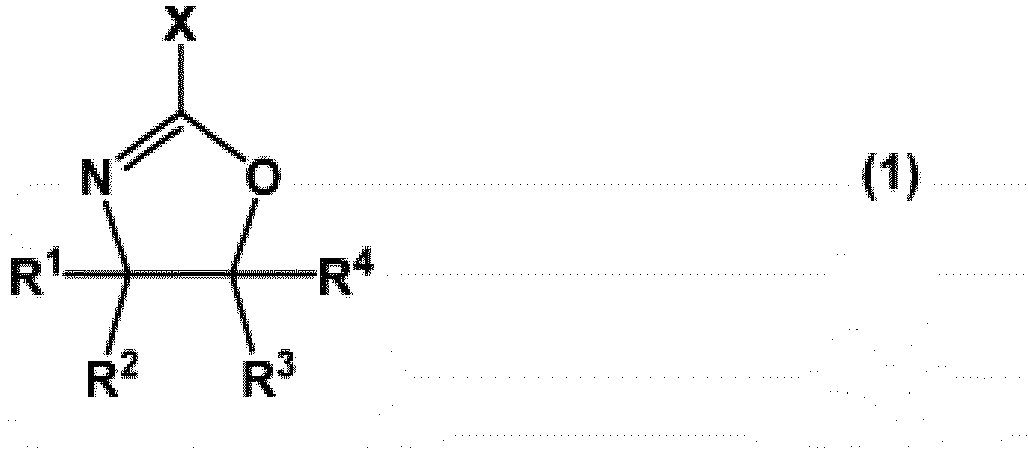
- Energiespeichervorrichtungselektrode nach Anspruch 2, wobei das Polymer durch radikalische Polymerisation eines Oxazolinmonomers der nachstehenden Formel (1) erhältlich ist:
- Energiespeichervorrichtungselektrode nach einem der Ansprüche 1 bis 3, wobei das Titanoxid Titanoxid mit einer Kristallstruktur vom Bronzetyp ist.
- Energiespeichervorrichtungselektrode nach einem der Ansprüche 1 bis 4, wobei die Schicht aus aktivem Material einen Styrol-Butadien-Kautschuk als Bindemittel und ein Carboxymethylcellulosesalz als Verdickungsmittel umfasst.
- Energiespeichervorrichtungselektrode nach einem der Ansprüche 1 bis 5, wobei die Grundschicht ein Beschichtungsgewicht pro Seite des Stromabnehmersubstrats von nicht mehr als 0,1 g/m2 aufweist.
- Energiespeichervorrichtung, die eine Energiespeichervorrichtungselektrode nach einem der Ansprüche 1 bis 6 umfasst.
- Energiespeichervorrichtung nach Anspruch 7, wobei die Energiespeichervorrichtungselektrode eine negative Elektrode ist.
- Energiespeichervorrichtung nach Anspruch 7 oder 8, die eine Lithiumionen-Sekundärbatterie ist.
- Verfahren zur Herstellung einer Energiespeichervorrichtungselektrode nach Anspruch 1, das die folgenden Schritte umfasst: das Aufbringen einer Elektrodenaufschlämmung, die durch Vermischen eines Titanoxids, eines Bindemittels und eines optionalen Verdickungsmittels unter Verwendung von Wasser als Dispergiermittel hergestellt wird, auf die Oberfläche einer Kohlenstoffnanoröhrchen-hältigen Grundschicht, die auf zumindest einer Seite eines Stromabnehmersubstrats ausgebildet ist; und das Trocknen der aufgebrachten Aufschlämmung.
Applications Claiming Priority (2)
| Application Number | Priority Date | Filing Date | Title |
|---|---|---|---|
| JP2016001842 | 2016-01-07 | ||
| PCT/JP2016/088013 WO2017119287A1 (ja) | 2016-01-07 | 2016-12-21 | エネルギー貯蔵デバイス用電極 |
Publications (3)
| Publication Number | Publication Date |
|---|---|
| EP3401982A1 EP3401982A1 (de) | 2018-11-14 |
| EP3401982A4 EP3401982A4 (de) | 2019-01-02 |
| EP3401982B1 true EP3401982B1 (de) | 2021-09-22 |
Family
ID=59273518
Family Applications (1)
| Application Number | Title | Priority Date | Filing Date |
|---|---|---|---|
| EP16883786.2A Active EP3401982B1 (de) | 2016-01-07 | 2016-12-21 | Elektrode für energiespeichervorrichtungen |
Country Status (7)
| Country | Link |
|---|---|
| US (1) | US10749183B2 (de) |
| EP (1) | EP3401982B1 (de) |
| JP (1) | JP6962199B2 (de) |
| KR (1) | KR102740268B1 (de) |
| CN (1) | CN108475771A (de) |
| TW (1) | TWI720103B (de) |
| WO (1) | WO2017119287A1 (de) |
Families Citing this family (9)
| Publication number | Priority date | Publication date | Assignee | Title |
|---|---|---|---|---|
| CN106415919A (zh) * | 2014-03-31 | 2017-02-15 | 泰克年研究发展基金会公司 | 钝态金属活化方法和其用途 |
| CN110024192B (zh) * | 2016-12-02 | 2022-07-26 | 日产化学株式会社 | 储能器件用底涂层和储能器件电极用底涂箔 |
| JPWO2019188540A1 (ja) * | 2018-03-29 | 2021-04-08 | 日産化学株式会社 | エネルギー貯蔵デバイスのアンダーコート層形成用組成物 |
| WO2019188550A1 (ja) * | 2018-03-29 | 2019-10-03 | 日産化学株式会社 | エネルギー貯蔵デバイスのアンダーコート層形成用組成物 |
| EP3783697A4 (de) * | 2018-03-29 | 2021-12-29 | Nissan Chemical Corporation | Zusammensetzung zur herstellung einer unterschicht für eine energiespeichervorrichtung |
| US20220037655A1 (en) * | 2018-11-02 | 2022-02-03 | Nissan Chemical Corporation | Composition for forming an active material composite, an active material composite, and a method for producing an active material composite |
| CN112919588A (zh) * | 2021-01-26 | 2021-06-08 | 重庆大学 | 高析氧电位二氧化锡电极 |
| JP7729479B2 (ja) * | 2022-04-27 | 2025-08-26 | 日産化学株式会社 | エネルギー貯蔵デバイス電極用薄膜形成組成物 |
| KR20250086229A (ko) * | 2023-12-06 | 2025-06-13 | 삼성에스디아이 주식회사 | 리튬 이차 전지용 전극 및 이를 포함하는 리튬 이차 전지 |
Family Cites Families (11)
| Publication number | Priority date | Publication date | Assignee | Title |
|---|---|---|---|---|
| JP3286516B2 (ja) * | 1995-12-06 | 2002-05-27 | 三洋電機株式会社 | 非水電解液二次電池 |
| JP4623786B2 (ja) | 1999-11-10 | 2011-02-02 | 住友電気工業株式会社 | 非水二次電池 |
| FR2902577B1 (fr) * | 2006-06-20 | 2009-04-24 | Commissariat Energie Atomique | Accumulateur lithium-ion comprenant tio2-b comme materiau actif d'electrode negative |
| WO2008114667A1 (ja) | 2007-03-16 | 2008-09-25 | Ishihara Sangyo Kaisha, Ltd. | 電極活物質及びそれを用いてなるリチウム電池 |
| KR101494435B1 (ko) * | 2008-01-15 | 2015-02-23 | 삼성전자주식회사 | 전극, 리튬 전지, 전극 제조 방법 및 전극 코팅용 조성물 |
| AU2012267770A1 (en) | 2011-06-07 | 2014-01-23 | Fastcap Systems Corporation | Energy storage media for ultracapacitors |
| JP5871302B2 (ja) * | 2011-08-03 | 2016-03-01 | 昭和電工株式会社 | 二次電池用負極および二次電池 |
| JP2013045984A (ja) * | 2011-08-26 | 2013-03-04 | Nippon Zeon Co Ltd | 蓄電デバイス用電極、蓄電デバイスおよび蓄電デバイス用電極の製造方法 |
| WO2014034113A1 (ja) * | 2012-08-29 | 2014-03-06 | 昭和電工株式会社 | 蓄電デバイスおよびその製造方法 |
| JP5773097B1 (ja) | 2013-08-27 | 2015-09-02 | 日産化学工業株式会社 | 導電性結着層用組成物 |
| US20150086860A1 (en) * | 2013-09-26 | 2015-03-26 | Semiconductor Energy Laboratory Co., Ltd. | Power storage device |
-
2016
- 2016-12-21 EP EP16883786.2A patent/EP3401982B1/de active Active
- 2016-12-21 US US16/068,544 patent/US10749183B2/en active Active
- 2016-12-21 WO PCT/JP2016/088013 patent/WO2017119287A1/ja not_active Ceased
- 2016-12-21 CN CN201680078103.7A patent/CN108475771A/zh active Pending
- 2016-12-21 JP JP2017560093A patent/JP6962199B2/ja active Active
- 2016-12-21 KR KR1020187022654A patent/KR102740268B1/ko active Active
- 2016-12-29 TW TW105143933A patent/TWI720103B/zh active
Also Published As
| Publication number | Publication date |
|---|---|
| TWI720103B (zh) | 2021-03-01 |
| KR102740268B1 (ko) | 2024-12-09 |
| EP3401982A1 (de) | 2018-11-14 |
| JP6962199B2 (ja) | 2021-11-05 |
| TW201801377A (zh) | 2018-01-01 |
| US20190020038A1 (en) | 2019-01-17 |
| KR20180100205A (ko) | 2018-09-07 |
| WO2017119287A1 (ja) | 2017-07-13 |
| JPWO2017119287A1 (ja) | 2018-10-25 |
| CN108475771A (zh) | 2018-08-31 |
| EP3401982A4 (de) | 2019-01-02 |
| US10749183B2 (en) | 2020-08-18 |
Similar Documents
| Publication | Publication Date | Title |
|---|---|---|
| US11326010B2 (en) | Agent for dispersing electrically conductive carbon material, and dispersion of electrically conductive carbon material | |
| EP3401981B1 (de) | Elektrode für energiespeichervorrichtungen | |
| EP3306716B1 (de) | Unterschichtfolie für eine energiespeichervorrichtungselektrode | |
| US10749183B2 (en) | Electrode for energy storage devices | |
| EP3550646B1 (de) | Grundierungsschicht für energiespeichervorrichtung und grundierungsfolie für die elektrode der energiespeichervorrichtung | |
| WO2018101299A1 (ja) | 導電性組成物 | |
| EP3780191A1 (de) | Unterschichtfolie für eine energiespeichervorrichtungselektrode | |
| EP3783696A1 (de) | Grundierungsschichtbildende zusammensetzung für energiespeichervorrichtung | |
| EP3780160A1 (de) | Grundierungsschichtbildende zusammensetzung für energiespeichervorrichtung | |
| EP3783697A1 (de) | Zusammensetzung zur herstellung einer unterschicht für eine energiespeichervorrichtung | |
| EP3780158A1 (de) | Energiespeichervorrichtungselektrode und energiespeichervorrichtung | |
| EP3780159A1 (de) | Zusammensetzung zur herstellung einer unterschicht für eine energiespeichervorrichtung |
Legal Events
| Date | Code | Title | Description |
|---|---|---|---|
| STAA | Information on the status of an ep patent application or granted ep patent |
Free format text: STATUS: THE INTERNATIONAL PUBLICATION HAS BEEN MADE |
|
| PUAI | Public reference made under article 153(3) epc to a published international application that has entered the european phase |
Free format text: ORIGINAL CODE: 0009012 |
|
| STAA | Information on the status of an ep patent application or granted ep patent |
Free format text: STATUS: REQUEST FOR EXAMINATION WAS MADE |
|
| 17P | Request for examination filed |
Effective date: 20180719 |
|
| AK | Designated contracting states |
Kind code of ref document: A1 Designated state(s): AL AT BE BG CH CY CZ DE DK EE ES FI FR GB GR HR HU IE IS IT LI LT LU LV MC MK MT NL NO PL PT RO RS SE SI SK SM TR |
|
| AX | Request for extension of the european patent |
Extension state: BA ME |
|
| A4 | Supplementary search report drawn up and despatched |
Effective date: 20181203 |
|
| RIC1 | Information provided on ipc code assigned before grant |
Ipc: H01G 11/86 20130101ALI20181127BHEP Ipc: H01M 4/1391 20100101ALI20181127BHEP Ipc: H01M 4/48 20100101ALI20181127BHEP Ipc: H01G 11/28 20130101ALI20181127BHEP Ipc: H01G 11/36 20130101ALI20181127BHEP Ipc: H01G 11/46 20130101ALI20181127BHEP Ipc: H01M 4/62 20060101ALI20181127BHEP Ipc: H01M 4/131 20100101AFI20181127BHEP |
|
| STAA | Information on the status of an ep patent application or granted ep patent |
Free format text: STATUS: EXAMINATION IS IN PROGRESS |
|
| 17Q | First examination report despatched |
Effective date: 20190108 |
|
| DAV | Request for validation of the european patent (deleted) | ||
| DAX | Request for extension of the european patent (deleted) | ||
| GRAP | Despatch of communication of intention to grant a patent |
Free format text: ORIGINAL CODE: EPIDOSNIGR1 |
|
| STAA | Information on the status of an ep patent application or granted ep patent |
Free format text: STATUS: GRANT OF PATENT IS INTENDED |
|
| INTG | Intention to grant announced |
Effective date: 20210525 |
|
| GRAS | Grant fee paid |
Free format text: ORIGINAL CODE: EPIDOSNIGR3 |
|
| GRAA | (expected) grant |
Free format text: ORIGINAL CODE: 0009210 |
|
| STAA | Information on the status of an ep patent application or granted ep patent |
Free format text: STATUS: THE PATENT HAS BEEN GRANTED |
|
| RAP3 | Party data changed (applicant data changed or rights of an application transferred) |
Owner name: NISSAN CHEMICAL CORPORATION |
|
| AK | Designated contracting states |
Kind code of ref document: B1 Designated state(s): DE FR GB |
|
| RBV | Designated contracting states (corrected) |
Designated state(s): DE FR GB |
|
| REG | Reference to a national code |
Ref country code: GB Ref legal event code: FG4D |
|
| REG | Reference to a national code |
Ref country code: DE Ref legal event code: R096 Ref document number: 602016064162 Country of ref document: DE |
|
| REG | Reference to a national code |
Ref country code: DE Ref legal event code: R097 Ref document number: 602016064162 Country of ref document: DE |
|
| PLBE | No opposition filed within time limit |
Free format text: ORIGINAL CODE: 0009261 |
|
| STAA | Information on the status of an ep patent application or granted ep patent |
Free format text: STATUS: NO OPPOSITION FILED WITHIN TIME LIMIT |
|
| 26N | No opposition filed |
Effective date: 20220623 |
|
| P01 | Opt-out of the competence of the unified patent court (upc) registered |
Effective date: 20230522 |
|
| PGFP | Annual fee paid to national office [announced via postgrant information from national office to epo] |
Ref country code: DE Payment date: 20251028 Year of fee payment: 10 |
|
| PGFP | Annual fee paid to national office [announced via postgrant information from national office to epo] |
Ref country code: GB Payment date: 20251030 Year of fee payment: 10 |
|
| PGFP | Annual fee paid to national office [announced via postgrant information from national office to epo] |
Ref country code: FR Payment date: 20251110 Year of fee payment: 10 |