EP3402131B1 - Ressourcenkonfigurationsverfahren, manager für virtualisierte netzwerkfunktionen und verwaltungssystem für netzwerkelemente - Google Patents
Ressourcenkonfigurationsverfahren, manager für virtualisierte netzwerkfunktionen und verwaltungssystem für netzwerkelemente Download PDFInfo
- Publication number
- EP3402131B1 EP3402131B1 EP16891991.8A EP16891991A EP3402131B1 EP 3402131 B1 EP3402131 B1 EP 3402131B1 EP 16891991 A EP16891991 A EP 16891991A EP 3402131 B1 EP3402131 B1 EP 3402131B1
- Authority
- EP
- European Patent Office
- Prior art keywords
- vnf instance
- deployment flavor
- vnf
- vnfm
- flavor
- Prior art date
- Legal status (The legal status is an assumption and is not a legal conclusion. Google has not performed a legal analysis and makes no representation as to the accuracy of the status listed.)
- Active
Links
Images




Classifications
-
- H—ELECTRICITY
- H04—ELECTRIC COMMUNICATION TECHNIQUE
- H04L—TRANSMISSION OF DIGITAL INFORMATION, e.g. TELEGRAPHIC COMMUNICATION
- H04L41/00—Arrangements for maintenance, administration or management of data switching networks, e.g. of packet switching networks
- H04L41/08—Configuration management of networks or network elements
- H04L41/0803—Configuration setting
- H04L41/0813—Configuration setting characterised by the conditions triggering a change of settings
- H04L41/0816—Configuration setting characterised by the conditions triggering a change of settings the condition being an adaptation, e.g. in response to network events
-
- H—ELECTRICITY
- H04—ELECTRIC COMMUNICATION TECHNIQUE
- H04L—TRANSMISSION OF DIGITAL INFORMATION, e.g. TELEGRAPHIC COMMUNICATION
- H04L12/00—Data switching networks
- H04L12/28—Data switching networks characterised by path configuration, e.g. LAN [Local Area Networks] or WAN [Wide Area Networks]
- H04L12/46—Interconnection of networks
-
- H—ELECTRICITY
- H04—ELECTRIC COMMUNICATION TECHNIQUE
- H04L—TRANSMISSION OF DIGITAL INFORMATION, e.g. TELEGRAPHIC COMMUNICATION
- H04L41/00—Arrangements for maintenance, administration or management of data switching networks, e.g. of packet switching networks
- H04L41/08—Configuration management of networks or network elements
- H04L41/0895—Configuration of virtualised networks or elements, e.g. virtualised network function or OpenFlow elements
-
- H—ELECTRICITY
- H04—ELECTRIC COMMUNICATION TECHNIQUE
- H04L—TRANSMISSION OF DIGITAL INFORMATION, e.g. TELEGRAPHIC COMMUNICATION
- H04L41/00—Arrangements for maintenance, administration or management of data switching networks, e.g. of packet switching networks
- H04L41/08—Configuration management of networks or network elements
- H04L41/0896—Bandwidth or capacity management, i.e. automatically increasing or decreasing capacities
-
- H—ELECTRICITY
- H04—ELECTRIC COMMUNICATION TECHNIQUE
- H04L—TRANSMISSION OF DIGITAL INFORMATION, e.g. TELEGRAPHIC COMMUNICATION
- H04L41/00—Arrangements for maintenance, administration or management of data switching networks, e.g. of packet switching networks
- H04L41/20—Network management software packages
-
- H—ELECTRICITY
- H04—ELECTRIC COMMUNICATION TECHNIQUE
- H04L—TRANSMISSION OF DIGITAL INFORMATION, e.g. TELEGRAPHIC COMMUNICATION
- H04L41/00—Arrangements for maintenance, administration or management of data switching networks, e.g. of packet switching networks
- H04L41/40—Arrangements for maintenance, administration or management of data switching networks, e.g. of packet switching networks using virtualisation of network functions or resources, e.g. SDN or NFV entities
-
- H—ELECTRICITY
- H04—ELECTRIC COMMUNICATION TECHNIQUE
- H04L—TRANSMISSION OF DIGITAL INFORMATION, e.g. TELEGRAPHIC COMMUNICATION
- H04L43/00—Arrangements for monitoring or testing data switching networks
- H04L43/08—Monitoring or testing based on specific metrics, e.g. QoS, energy consumption or environmental parameters
- H04L43/0805—Monitoring or testing based on specific metrics, e.g. QoS, energy consumption or environmental parameters by checking availability
- H04L43/0817—Monitoring or testing based on specific metrics, e.g. QoS, energy consumption or environmental parameters by checking availability by checking functioning
-
- H—ELECTRICITY
- H04—ELECTRIC COMMUNICATION TECHNIQUE
- H04L—TRANSMISSION OF DIGITAL INFORMATION, e.g. TELEGRAPHIC COMMUNICATION
- H04L43/00—Arrangements for monitoring or testing data switching networks
- H04L43/08—Monitoring or testing based on specific metrics, e.g. QoS, energy consumption or environmental parameters
- H04L43/0876—Network utilisation, e.g. volume of load or congestion level
-
- H—ELECTRICITY
- H04—ELECTRIC COMMUNICATION TECHNIQUE
- H04L—TRANSMISSION OF DIGITAL INFORMATION, e.g. TELEGRAPHIC COMMUNICATION
- H04L43/00—Arrangements for monitoring or testing data switching networks
- H04L43/20—Arrangements for monitoring or testing data switching networks the monitoring system or the monitored elements being virtualised, abstracted or software-defined entities, e.g. SDN or NFV
-
- H—ELECTRICITY
- H04—ELECTRIC COMMUNICATION TECHNIQUE
- H04L—TRANSMISSION OF DIGITAL INFORMATION, e.g. TELEGRAPHIC COMMUNICATION
- H04L41/00—Arrangements for maintenance, administration or management of data switching networks, e.g. of packet switching networks
- H04L41/08—Configuration management of networks or network elements
- H04L41/0803—Configuration setting
- H04L41/0806—Configuration setting for initial configuration or provisioning, e.g. plug-and-play
Definitions
- This application relates to the field of communications technologies, and in particular, to a virtualization resource management technology in Network Functions Virtualization.
- Network Functions Virtualization means that a telecommunication network operator implements some telecommunications network functions in general-purpose cloud servers, switches, and storage devices with reference to a virtualization technology in the information technology field, so as to implement fast and efficient deployment of a network service.
- VNFM Virtualised Network Function Manager
- VNF deployment flavor DF, Deployment Flavor
- 3GPP document S5-153104 discloses that an EM sends VNF scaling request to the VNFM with information which indicates the scaling direction as the scaling target (i.e. expansion or contraction). According to the scaling target, the VNFM determines the target deployment flavour based on the information of the VNF descriptor. VNFM initiates the scaling operation to expand or contract the capacity of the VNF according to the selected deployment flavour.
- EP 2 849 064 A1 discloses that an NCP Cloud Agent receives a list of KPIs and a VNF description template.
- the NCP Cloud Agent calculates how many servers of each type contribute to the KPIs according to a mapping of hardware resources (e.g. GFLOPS, RAM, IO Capacity) to KPIs in the VNF description template.
- hardware resources e.g. GFLOPS, RAM, IO Capacity
- EP 2 955 631 A1 discloses that an OSS sends an indication to the VNF orchestrator that a load level in the present communication network is exceeded. This information is a trigger for the VNF orchestrator to conduct an adjustment of amount and type of VNFs being instantiated in the virtualization infrastructure for a usage in the communication network managed by the OSS.
- the OSS sends control information containing traffic pattern information or traffic mix information of communications to the VNF orchestrator.
- the VNF orchestrator requests control information from the virtualization infrastructure, e.g. via the VNF infrastructure manager, in order to learn the available hardware capability or resources which can be used by the VNF orchestrator for the instantiation of at least one VNF.
- the VNF orchestrator conducts a processing for selecting at least one suitable VNF for usage in the communication network.
- the selection is based, for example, on a comparison of parameters derived from the control information (i.e. traffic pattern, HW resources) and corresponding parameters indicated in the data sets, which are provided e.g. in the VNF description types.
- ETSI technical specification (ETSI GS NFV-MAN 001 v1.1.1) discloses network function virtualisation management and orchestration.
- VNFM collects performance metrics related with the VNF application and with infrastructure resources. Based on the retrieved performance metrics and an auto-scaling policies included in the VNFD, the VNFM detects the need to scale. The VNFM decides that the best option is to scale-out the VNF.
- this invention provides a resource configuration method of claim 1, a virtualized network function manager (VNFM) of claim 4, and a computer program product of claim 7 and a system of claim 8, so as to alleviate inability of a VNF instance to meet a service processing requirement
- VNFM virtualized network function manager
- a system architecture described in the embodiments of the present invention is intended to describe the technical solutions of the embodiments of the present invention more clearly, and do not constitute any limitation to the technical solutions provided in the embodiments of the present invention.
- a person of ordinary skill in the art may know that, with evolution of the system architecture and emergence of a new service scenario, the technical solutions provided in the embodiments of the present invention are also applicable to similar technical problems
- FIG. 1 is an architectural diagram of a network functions virtualization NFV system according to this application.
- a resource configuration method in this application is mainly applied to the NFV system.
- an architecture of the NFV system mainly includes the following several function components:
- the VNF is a software implementation of a network function (NF, Network Function) that can run on the NFVI.
- NF Network Function
- the VNF is equivalent to an entity of a network node, and is expected to be delivered by using only software that is independent of hardware.
- the VNF and a physical network function (PNF, Physical Network Function) in a non-virtualized network are expected to have a same functional behavior and external interface.
- the VNFM may configure a deployment flavor for the VNF.
- the deployment flavor (DF, Deployment Flavor) is also referred to as a VNF deployment flavor, and reflects a deployment view of a VNF on a network functions virtualization infrastructure (for example, a virtualized data unit and a virtual machine).
- the VNF DF defines deployable configuration of a virtualized data unit (VDU, Virtualised Data Unit) and deployable configuration of a connection between virtualized data units in a VNF deployment view, and generally includes a minimum quantity and a maximum quantity of components that can instantiate the VNF from a virtualized data unit.
- the deployment flavor specifies a range interval of available virtual resources of the VNF. After a deployment flavor is configured for the VNF instance, the scaling operation of the VNF is performed, so that a capacity change range of the VNF can be kept within a resource range limited by the deployment flavor configured for the VNF. However, when a resource range required by service processing of the VNF exceeds a maximum resource range specified by the deployment flavor, a service processing requirement of the VNF cannot be met.
- An embodiment of the present invention provides a resource configuration method and a virtualized network function manager VNFM based on the method.
- the VNFM obtains a performance parameter that reflects a running status of a VNF instance (for example, a performance indication parameter and virtual resource usage).
- a target deployment flavor that needs to be configured to meet a requirement of service processing of the VNF instance in a running status of the VNF instance is determined based on a mapping relationship between the performance parameter and a deployment flavor in a descriptor file corresponding to the VNF instance, and resource configuration is performed for the VNF instance based on a currently configured deployment flavor of the VNF instance and the target deployment flavor, so that resource configuration is performed for the VNF instance more properly in a current running status of the VNF instance, and a resource range specified by the deployment flavor configured for the VNF instance can meet a running requirement of the VNF instance, thereby ensuring a normal running status of the VNF instance, and alleviating service exceptions.
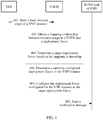
- the resource configuration method provided in this embodiment of this application may include the following steps.
- a VNFM obtains a performance parameter that reflects a running status of a virtualized network function VNF instance.
- the performance parameter may be a performance indication parameter of the VNF instance.
- the performance indication parameter may be understood as a parameter of a VNF indicator that is commonly known in the field, and the performance indication parameter is used to indicate a performance running status of an application layer of the VNF instance.
- the performance indication parameter includes at least one monitored value. The monitored value may be considered as a status value of the indicator. An actual performance running status of the application layer of the VNF instance may be reflected by the monitored value.
- a specific type and meaning of the performance indication parameter may be predetermined by a VNF provider.
- the performance indication parameter may be a set of enumerated values that represent a running health index of the VNF application layer.
- the monitored value of the performance indication parameter and a meaning thereof may include: green (indicating that an application layer running status is healthy), yellow (indicating that an application layer running status is sub-healthy), orange (indicating that an application layer running status is severely sub-healthy), and red (indicating that an application layer running status is unhealthy and serious performance deterioration occurs).
- a manner of obtaining the performance indication parameter may be as follows: An element management system EMS sends the performance indication parameter of the VNF instance to the VNFM, or the VNF instance sends the performance indication parameter of the VNF instance to the VNFM.
- the performance parameter may be virtual resource usage of the VNF instance, for example, CPU usage or network bandwidth usage.
- a manner in which the VNFM obtains the virtual resource usage may be monitoring the virtual resource usage of the VNF instance by using a virtualized infrastructure manager VIM, and reporting the virtual resource usage to the VNFM by the VIM.
- the VNFM obtains a mapping relationship between the performance parameter and a deployment flavor in the descriptor file.
- the descriptor file describes deployment flavors that need to be configured for performance parameters of the VNF instance within different ranges.
- the mapping relationship may be written into the descriptor file in a design phase of the VNF.
- the descriptor file may be understood as a VNF descriptor (VNFD, VNF Descriptor).
- VNFD is a deployment flavor file that is used to describe deployment and operation behavior requirements of a virtualized network function (VNF), and further includes descriptions about connectivity and a function interface of the VNF, and a requirement for virtualized resources.
- VNFD virtualized network function
- a VNF developer provides descriptor files corresponding to different types of VNF instances, one descriptor file may include one or more deployment flavors, and deployment flavors included in different descriptor files may be different. Therefore, a descriptor file corresponding to the VNF instance needs to be determined, so as to determine at least one deployment flavor that can be configured for the VNF instance and a range of a performance parameter corresponding to the at least one deployment flavor.
- the VNFM may access the descriptor file corresponding to the VNF instance, so as to obtain the mapping relationship from the descriptor file. Further, before accessing the VNF instance, the VNFM may determine identification information of the VNF instance. For example, the VNFM obtains both the performance parameter of the VNF instance and an identifier of the VNF instance, and then accesses the descriptor file corresponding to the VNF instance based on the identifier of the VNF instance.
- the identification information of the VNF instance may be a name or a unique identifier of the VNF instance.
- the mapping relationship may include at least one monitored value corresponding to each deployment flavor in the at least one deployment flavor that can be selected by the VNF instance or a range of the monitored value.
- the descriptor file corresponding to the VNF instance describes the at least one deployment flavor that can be selected by the VNF instance, and a deployment flavor that is suitable for selection within different monitored values or different monitored value ranges of the performance indication parameter.
- the mapping relationship may include a value range of virtual resource usage corresponding to each deployment flavor of a plurality of deployment flavors that can be selected by the VNF instance. For example, when the virtual resource usage is within a first value range, a deployment flavor that is suitable to be configured is a deployment flavor 1; or when the virtual resource usage is within a second value range, a deployment flavor that is suitable to be configured is a deployment flavor 2.
- the VNFM determines, based on the mapping relationship and the performance parameter that reflects the running status of the VNF instance, a target deployment flavor required by the VNF instance in the running status.
- a deployment flavor that is suitable to be configured for the VNF instance in the current performance running status may be determined based on the mapping relationship in the descriptor file and a performance parameter that reflects a current running status of the VNF instance.
- the determined deployment flavor that is suitable for the VNF in the current performance running status is referred to as the target deployment flavor.
- the VNFM performs resource configuration for the VNF instance based on a currently configured deployment flavor of the VNF instance and the target deployment flavor.
- the VNFM may change the currently configured deployment flavor of the VNF instance to the target deployment flavor. For example, the VNFM deletes a binding relationship between the VNF instance and the currently bound deployment flavor of the VNF, and establishes a binding relationship between the VNF instance and the target deployment flavor.
- the currently configured deployment flavor of the VNF is the target deployment flavor, the currently configured deployment flavor of the VNF instance may be kept unchanged.
- the VNFM does not need to consider whether the currently deployed deployment flavor of the VNF is the same as the target deployment flavor. After determining the target deployment flavor, the VNFM only needs to change the currently configured deployment flavor of the VNF instance to the target deployment flavor.
- Configuring a deployment flavor for the VNF instance may be understood as establishing or storing a binding relationship between the VNF instance and the deployment flavor.
- the VNFM may allocate a resource for performing a task to the VNF instance based on a resource range corresponding to the deployment flavor configured for the VNF instance.
- this embodiment of this application may further include: sending, by the VNFM, a notification message to any one or more of an NFVO and the EMS, where the notification message is used to instruct the VNFM to perform resource configuration for the VNF instance.
- the notification message is used to notify any one or more of the NFVO and the EMS that the currently configured deployment flavor of the VNF instance is changed to the target deployment flavor.
- the VNFM determines, based on the mapping relationship between the performance parameter and the deployment flavor in the descriptor file corresponding to the VNF instance, a target deployment flavor that is suitable to be configured in the running status of the VNF instance, so as to configure, for the VNF instance, a deployment flavor that matches the running status of the VNF instance, and perform resource configuration for the VNF more properly.
- a resource range specified by the deployment flavor configured for the VNF instance can meet a running requirement of the VNF instance, thereby ensuring a normal running status of the VNF instance.
- this embodiment of this application may further include: determining the currently configured deployment flavor of the VNF instance, for example, determining, based on the identification information of the VNF instance, a deployment flavor that is currently bound to the identification information.
- the deployment flavor configured for the VNF instance when it is determined that the currently configured deployment flavor of the VNF instance is different from the target deployment flavor, and the deployment flavor configured for the VNF instance needs to be changed, it may also be considered to change the deployment flavor of the VNF instance to the target deployment flavor by terminating the VNF instance and then creating a new VNF instance and configuring the target deployment flavor for the newly created VNF instance.
- a process from terminating the VNF instance to creating the new VNF instance is relatively time-consuming, and leads to an excessively long service interruption time.
- the binding relationship between the VNF instance and the deployment flavor is directly changed without terminating the VNF instance, so that a service interruption probability can be reduced, thereby ensuring a running status of the VNF instance.
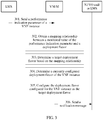
- FIG. 3 shows a schematic communication interaction diagram of a resource configuration method according to an embodiment of the present invention.
- an EMS sends identification information of the VNF instance and the performance indication parameter of the VNF instance to a VNFM, where the performance indication parameter includes a monitored value.
- the EMS may monitor a change status of the performance indication parameter in the VNF instance, to obtain the monitored value of the performance indication parameter of the VNF instance.
- the EMS sends the performance indication parameter to the VNFM is merely used as an example for description.
- the VNF instance may also obtain the identification information and the performance indication parameter that are of the VNF instance and send the identification information and the performance indication parameter to the VNFM.
- step 302 the VNFM queries, based on the identification information of the VNF instance, a database for a VNFD corresponding to the identification information of the VNF instance, and obtains a mapping relationship in the VNFD.
- the VNFD describes one or more deployment flavors that can be selected by the VNF instance, and a deployment flavor corresponding to the performance indication parameter of different monitored values or in monitored value ranges.
- the performance indication parameter may further include a type of the performance indication parameter.
- the "performance indication parameter indicating an enumerated value of a running health index of the VNF application layer" mentioned in the foregoing embodiment is a type of performance indication parameter.
- the mapping relationship may include a type of a performance indication parameter corresponding to each deployment flavor in the VNFD and one or more monitored values of the performance indication parameter or a range of the monitored value.
- step 303 the VNFM determines, based on the mapping relationship obtained in step 302, a target deployment flavor corresponding to the monitored value obtained in step 301.
- step 304 the VNFM determines a currently configured deployment flavor of the VNF instance.
- the VNFM may query for a binding relationship between the identification information of the VNF instance and identification information of the deployment flavor based on the identification information of the VNFM instance, and determine the identification information of the deployment flavor that is currently bound to the identification information of the VNF instance, so as to determine the currently configured deployment flavor of the VNF instance.
- step 305 when determining that the currently configured deployment flavor of the VNF instance is not the target deployment flavor, the VNFM changes the deployment flavor configured for the VNF instance to the target deployment flavor.
- Step 305 may be the same as step 204 in FIG. 2 , and details are not described herein again.
- the VNFM sends a notification message to an NFVO and/or the EMS, where the notification message is used to notify the VNF instance that the currently configured deployment flavor is changed to the target deployment flavor.
- step 306 is optional, and a purpose of performing step 305 is merely to notify the NFVO and the EMS that the deployment flavor configured for the VNF instance is changed.
- FIG. 4 shows another schematic communication interaction diagram of a resource configuration method according to an embodiment of the present invention.
- a VIM sends identification information of the VNF instance and the virtual resource usage of the VNF instance to a VNFM.
- the virtual resource usage may be a ratio of a virtual resource occupied by current running of the VNF instance to a maximum quantity of available resources, for example, a ratio of memory occupied by current service processing of the VNF instance to maximum available memory of the VNF instance.
- the VNFM determines, based on the identification information of the VNF instance, a VNFD corresponding to the identification information of the VNF instance, and obtains a mapping relationship between each deployment flavor of a plurality of deployment flavors that can be selected by the VNFD and a value range of the virtual resource usage.
- a requirement of the VNF instance for a virtual resource in a current running status may be reflected by using the virtual resource usage. Therefore, deployment flavors suitable to be configured when the virtual resource usage of the VNF instance is within different ranges may be preconfigured.
- the VNFM determines, based on the mapping relationship between the deployment flavor and the value range of the virtual resource usage, a target deployment flavor corresponding to the virtual resource usage of the VNF instance.
- step 404 the VNFM determines a currently configured deployment flavor of the VNF instance.
- step 405 when determining that the currently configured deployment flavor of the VNF instance is not the target deployment flavor, the VNFM changes the deployment flavor configured for the VNF instance to the target deployment flavor.
- the VNFM sends a notification message to an NFVO and/or an EMS, where the notification message is used to notify the VNF instance that the currently configured deployment flavor is changed to the target deployment flavor.
- Step 406 is optional.
- Step 404, step 405, and step 406 in the embodiment in FIG. 4 may be respectively the same as step 304, step 305, and step 306 in the embodiment in FIG. 3 , and a same part is not described again.
- the VNFM may determine, based on both a monitored value of a performance indication parameter of the VNF instance and the virtual resource usage of the VNF instance, whether the deployment flavor configured for the VNF instance needs to be changed currently.
- the mapping relationship in the VNFD may include the mapping relationship among the value range of the virtual resource usage, the monitored value of the performance indication parameter or a range of the monitored value, and the deployment flavor. After obtaining a value of the virtual resource usage of the VNF instance and the monitored value of the performance indication parameter of the VNF instance, the VNFD may determine the target deployment flavor based on the mapping relationship.
- an embodiment of this application further provides another resource configuration method, and the resource configuration method may be applied to an EMS.
- FIG. 5 shows a possible schematic flowchart of another resource configuration method according to an embodiment of this application.
- the another resource configuration method may include the following steps.
- the EMS obtains a performance parameter that reflects a running status of a VNF instance.
- the performance parameter is the same as the performance parameter in the foregoing resource configuration method.
- the performance parameter may be a performance indication parameter of the VNF instance.
- the performance indication parameter includes at least one monitored value of the performance indication parameter.
- a specific meaning of the monitored value of the performance indication parameter may be predetermined by a VNF provider.
- the performance parameter may be virtual resource usage of the VNF instance, for example, CPU usage.
- the virtual resource usage of the VNF instance may be monitored by a virtualized infrastructure manager VIM, so that the virtual resource usage of the VNF instance can be obtained by using the VIM.
- the VIM sends the virtual resource usage of the VNF instance to the VNF instance or the EMS.
- the EMS obtains a mapping relationship between the performance parameter of the VNF and a required resource range.
- mapping relationship between the performance parameter of the VNF and the required resource range may be preconfigured in the EMS.
- the EMS determines, based on the mapping relationship and the performance parameter that reflects the running status of the VNF instance, a target resource range required by the VNF instance in the running status.
- the resource range in the mapping relationship may be a range interval that reflects a virtual resource requirement situation.
- the target resource range required by the VNF instance may be a range interval of the virtual resource, for example, required memory is a range interval from a to b.
- the mapping relationship may be specifically at least one monitored value of a performance indication parameter corresponding to each resource range interval of a plurality of resource range intervals that can be selected by the VNF instance or a range of the monitored value. For example, when the monitored value of the performance indication parameter is within a first range, it is suitable to select a first type of resource range interval.
- the mapping relationship may be specifically a value range of virtual resource usage corresponding to each resource range interval of a plurality of resource range intervals that can be selected by the VNF instance. For example, when the virtual resource usage is within a first value range, the required resource range is a first resource range interval.
- the resource range in the mapping relationship may be the deployment flavor.
- determining the target resource range required by the VNF instance may be determining a target deployment flavor that is required in the running status of the VNF instance.
- the mapping relationship may be specifically at least one monitored value of a performance indication parameter corresponding to each deployment flavor in at least one deployment flavor that can be selected by the VNF instance or a range of the monitored value.
- the mapping relationship may be a value range of the virtual resource usage corresponding to each deployment flavor of a plurality of deployment flavors that can be selected by the VNF instance.
- the EMS determines, based on a currently configured deployment flavor of the VNF instance and the target resource range, whether to send a flavor change request to a VNFM.
- the flavor change request is used to request to change the deployment flavor of the VNF instance to a deployment flavor that has the target resource range.
- the EMS may send the flavor change request to the VNFM when the target resource range and a resource range specified by the currently configured deployment flavor of the VNF instance do not match.
- the target resource range is a resource range interval
- the flavor change request may carry information about the resource range interval.
- the VNFM determines, based on the resource range interval carried in the flavor change request, the target deployment flavor that has the target resource range, and configures the deployment flavor of the VNF instance as the target deployment flavor.
- the flavor change request may be sent to the VNFM when the currently configured deployment flavor of the VNF instance is different from the target deployment flavor, so as to request the VNFM to change the deployment flavor configured for the VNF instance to the target deployment flavor.
- the flavor request may carry an identifier of the target deployment flavor, and after receiving the flavor change request, the VNFM deletes a binding relationship between the VNF instance and an identifier of the currently configured deployment flavor, and establishes a binding relationship between the VNF instance and the identifier of the target deployment flavor.
- the EMS may further determine a currently configured deployment flavor of the VNF instance.
- the EMS may store information about the currently configured deployment flavor of the VNF instance, for example, store the identifier of the currently configured deployment flavor of the VNF instance and the resource range deployed by the deployment flavor.
- the EMS may send a query request to the VNFM in real time, so as to request the VNFM to feed back the currently configured deployment flavor of the VNF instance.
- the EMS determines, based on the mapping relationship between the performance parameter of the VNF and the required resource range, the target resource range required by the VNF instance in the running status.
- the EMS may determine, based on the currently configured deployment flavor of the VNF instance and the target deployment range, whether to send the flavor change request to the VNFM, so as to request the VNFM to configure a deployment flavor that has the target resource range for the VNF instance when the deployment flavor configured for the VNF instance cannot meet a current running requirement of the VNF instance, thereby alleviating inability of the VNF instance to meet a service processing requirement, and improving reliability of service processing of the VNF instance.
- the another resource configuration method in FIG. 5 is described by using an example in which an execution body is the EMS. However, during actual application, the resource configuration method in FIG. 5 may also be applied to the VNF instance. A specific implementation process is similar to the process in which the execution body is the EMS, and details are not described herein again.
- an embodiment of this application further provides another resource configuration method.
- the another resource configuration method in this embodiment of this application may include the following steps.
- a VNFM receives a scaling request sent by an NFVO.
- the scaling request carries identification information of a VNF instance and a target quantity of currently required resources.
- an OSS/BSS may send a capacity change indication to the NFVO.
- the NFVO sends the scaling request to the VNFM based on the target quantity of resources that is indicated by the OSS/BSS and that is required by the VNF instance.
- the VNFM When determining that a resource range deployed by a currently configured deployment flavor of the VNF instance cannot meet the target quantity of resources requested by the scaling request, the VNFM obtains a resource range deployed by each deployment flavor in a descriptor file corresponding to the VNF instance.
- the descriptor file may be understood as a VNFD.
- the descriptor file may include at least one deployment flavor that can be selected and configured for the VNF instance and a resource range deployed by each deployment flavor.
- this embodiment of this application may further include: determining, by the VNFM, a currently configured deployment flavor of the VNF instance. For example, the VNFM determines, based on the identification information of the VNF instance, the currently configured deployment flavor of the VNF instance. A specific manner of determining the currently configured deployment flavor of the VNF instance may be the same as the manner described in the embodiment of the foregoing resource configuration method, and details are not described herein again.
- the VNFM may access the descriptor file corresponding to the VNF instance, so as to obtain a resource range deployed by each deployment flavor in the descriptor file.
- the VNFM determines, based on a resource range deployed by each deployment flavor in the descriptor file and the target quantity of resources, a target deployment flavor that has the target quantity of resources.
- Step 604 may be the same as the process in which the VNFM configures the target deployment flavor for the VNF instance in the foregoing embodiment.
- this embodiment of this application may further include: sending, by the VNFM, a notification message to any one or more of the NFVO and an EMS, where the notification message is used to notify any one or more of the NFVO and the EMS that the currently configured deployment flavor of the VNF instance is changed to the target deployment flavor.
- the VNFM may determine, based on the scaling request that is for the VNF instance and that is sent by the NFVO, whether the currently configured deployment flavor of the VNF instance can meet the target quantity of resources requested by the scaling request, and may change the deployment flavor configured for the VNF instance when the currently configured deployment flavor of the VNF instance cannot meet the target quantity of resources requested by the scaling request, so as to meet a service requirement.
- FIG. 7 shows a possible schematic structural diagram of a virtualized network function manager in the foregoing embodiments.
- the virtualized network function manager 700 includes a communications interface 701 and a processor 702.
- the communications interface 701 is configured to: obtain a performance parameter that reflects a running status of a virtualized network function VNF instance, and obtain a mapping relationship between the performance parameter and a deployment flavor in a descriptor file corresponding to the VNF instance.
- the processor 702 is configured to: determine, based on the mapping relationship and the performance parameter that reflects the running status of the VNF instance, a target deployment flavor required by the VNF instance in the running status; and perform resource configuration for the VNF instance based on a currently configured deployment flavor of the VNF instance and the target deployment flavor.
- the virtualized network function manager may further include a memory 703, and the memory 703 is configured to store program code and data that are used by the processor to perform the foregoing operations.
- the memory may be further configured to store a correspondence between the VNF instance and the currently configured deployment flavor of the VNF instance.
- FIG. 7 shows only a simplified design of the virtualized network function manager.
- the virtualized network function manager 700 may further include a communications bus 704, and the communications interface, the processor, and the like may be connected by using the communications bus.
- the virtualized network function manager may further include a memory, any quantity of controllers, a communications unit, and the like; and all virtualized network function managers that can implement the present invention fall within the protection scope of this application.
- the processor performs resource configuration for the VNF instance based on the currently configured deployment flavor of the VNF instance and the target deployment flavor is specifically: when the currently configured deployment flavor of the VNF instance is different from the target deployment flavor, changing the deployment flavor configured for the VNF instance from the current deployment flavor to the target deployment flavor.
- the communications interface may be further configured to access the descriptor file corresponding to the VNF instance before obtaining the mapping relationship between the performance parameter and the deployment flavor in the descriptor file corresponding to the VNF instance.
- that the communications interface obtains the performance parameter that reflects the running status of the VNF instance is specifically obtaining a performance indication parameter of the VNF instance, where the performance indication parameter includes a monitored value, and the performance indication parameter is used to indicate a performance running status of an application layer of the VNF instance.
- the mapping relationship that is between the performance parameter and the deployment flavor and that is obtained by the communications interface includes: at least one monitored value of the performance indication parameter corresponding to each deployment flavor of a plurality of deployment flavors that can be selected by the VNF instance or a range of the monitored value.
- the communications interface obtains the performance indication parameter of the VNF instance is specifically obtaining the performance indication parameter that is of the VNF instance and that is sent by an element management system EMS of the VNF instance.
- the performance indication parameter obtained by the communications interface further includes a type of the performance indication parameter; and the mapping relationship that is between the performance parameter and the deployment flavor and that is obtained by the communications interface includes: the type of the performance indication parameter corresponding to each deployment flavor of the plurality of deployment flavors and one or more monitored values of the performance indication parameter or a range of the monitored value.
- that the communications interface obtains the performance parameter that reflects the running status of the VNF instance is specifically obtaining virtual resource usage of the VNF instance.
- the mapping relationship that is between the performance parameter and the deployment flavor and that is obtained by the communications interface includes: a value range of the virtual resource usage corresponding to each deployment flavor of the plurality of deployment flavors that can be selected by the VNF instance.
- that the communications interface obtains the virtual resource usage of the VNF instance includes: receiving the virtual resource usage that is of the VNF instance and that is sent by a virtualized infrastructure manager VIM.
- the communications interface is further configured to: after the processor configures the deployment flavor configured for the VNF instance as the target deployment flavor, send a notification message to a network functions virtualization orchestrator NFVO and/or an EMS, where the notification message is used to notify the NFVO and/or the EMS that the currently configured deployment flavor of the VNF instance is changed to the target deployment flavor.
- mapping relationship between the performance parameter and the deployment flavor is written into the descriptor file of the VNF in a design phase of the VNF.
- FIG. 8 shows a possible schematic structural diagram of an element management system in the foregoing embodiments.
- the element management system 800 may include a communications interface 801 and a processor 802.
- the communications interface 801 is configured to obtain a performance parameter that reflects a running status of a VNF instance.
- the processor 802 is configured to: obtain a mapping relationship between the performance parameter of the VNF and a required resource range; determine, based on the mapping relationship and the performance parameter that reflects the running status of the VNF instance, a target resource range required by the VNF instance in the running status; and determine, based on a currently configured deployment flavor of the VNF instance and the target resource range, whether to send a flavor change request to a VNFM, where the flavor change request is used to request to change the deployment flavor of the VNF instance to a deployment flavor that has the target resource range.
- the element management system may further include a communications bus 803, and the communications interface, the processor, and the like may be connected by using the communications bus.
- FIG. 8 shows only a simplified design of the element management system.
- the element management system may further include a memory 804, and the memory is configured to store program code and data that are used by the processor to perform the foregoing operation.
- the memory may be further configured to store the mapping relationship between the performance parameter and the resource range.
- the element management system may further include a memory, any quantity of controllers, a communications unit, and the like, and all element management systems that can implement the present invention fall within the protection scope of this application.
- the processor 802 is specifically configured to: when the target resource range and a resource range specified by the currently configured deployment flavor of the VNF instance do not match, control the communications interface to send the flavor change request to the VNFM.
- the communications interface is further configured to: when the target resource range and the resource range specified by the currently configured deployment flavor of the VNF instance do not match, send the flavor change request to the VNFM.
- that the processor obtains the mapping relationship is specifically: obtaining, by the processor, the mapping relationship between a preconfigured performance parameter of the VNF and the required resource range.
- the mapping relationship obtained by the processor 802 is specifically a mapping relationship that is between the performance parameter of the VNF and the deployment flavor and that is obtained by the element management system; and that the processor determines the target resource range is specifically determining, based on the mapping relationship and the performance parameter that reflects the running status of the VNF instance, a target deployment flavor that needs to be configured for the VNF instance in the running status.
- the performance parameter obtained by the communications interface 801 includes:
- an embodiment of this application further provides another virtualized network function manager, and a composition structure of the virtualized network function manager is the same as the composition structure in FIG. 7 .
- the communications interface 701 is configured to: receive a scaling request that is sent by an NFVO, where the scaling request carries identification information of the VNF instance and a target quantity of currently required resources; and obtain a resource range deployed by the currently configured deployment flavor of the VNF instance in a descriptor file corresponding to the VNF instance.
- the processor 702 is configured to: when it is determined that the resource range deployed by the currently configured deployment flavor of the VNF instance cannot meet the target quantity of resources requested by the scaling request, obtain a resource range deployed by each deployment flavor in the descriptor file of the VNF instance; determine, based on a resource range deployed by each deployment flavor in the descriptor file and the target quantity of resources, a target deployment flavor that has the target quantity of resources; and change the currently configured deployment flavor of the VNF instance to the target deployment flavor.
- the processor may further determine the currently configured deployment flavor of the VNF instance, for example, determine, based on the identification information of the VNF instance, the currently configured deployment flavor of the VNF instance.
- the communications interface may be further configured to access the descriptor file corresponding to the VNF instance, so as to obtain a resource range deployed by each deployment flavor in the descriptor file.
- method or algorithm steps may be implemented by hardware, a software module executed by a processor, or a combination thereof.
- the software module may reside in a random access memory (RAM), a memory, a read-only memory (ROM), an electrically programmable ROM, an electrically erasable programmable ROM, a register, a hard disk, a removable disk, a CD-ROM, or any other form of storage medium known in the art.
Landscapes
- Engineering & Computer Science (AREA)
- Computer Networks & Wireless Communication (AREA)
- Signal Processing (AREA)
- Environmental & Geological Engineering (AREA)
- Data Exchanges In Wide-Area Networks (AREA)
Claims (8)
- Betriebsmittelkonfigurationsverfahren, das Folgendes umfasst:Erhalten (201, 301, 401) durch einen virtualisierten Netzfunktionsmanager, VNFM, eines Leistungsparameters, der einen Laufzustand einer virtualisierten Netzfunktionsinstanz, VNF-Instanz, reflektiert, wobei der Leistungsparameter ein Leistungsangabeparameter der VNF-Instanz ist und ein überwachter Wert ist, der einen Laufgesundheitsindex der VNF-Instanz repräsentiert;Erhalten (202, 302, 402) durch den VNFM einer Abbildungsbeziehung in einem VNF-Beschreiber, VNFD, der der VNF-Instanz entspricht, wobei die Abbildungsbeziehung eine Abbildungsbeziehung zwischen dem Leistungsparameter und der Einsatzvariante ist;Bestimmen (203, 303, 403) durch den VNFM anhand der Abbildungsbeziehung und des Leistungsparameters, der den Laufzustand der VNF-Instanz reflektiert, einer Zieleinsatzvariante, die durch die VNF-Instanz in dem Laufzustand benötigt wird; und Ausführen (204) durch den VNFM einer Betriebsmittelkonfiguration für die VNF-Instanz anhand einer aktuell konfigurierten Einsatzvariante der VNF-Instanz und der Zieleinsatzvariante;wobei das Erhalten durch den VNFM des Leistungsangabeparameters der VNF-Instanz Folgendes umfasst:Empfangen durch den VNFM des Leistungsangabeparameters der VNF-Instanz von einem Elementmanagementsystem, EMS, der VNF-Instanz; oderEmpfangen durch den VNFM des Leistungsangabeparameters der VNF-Instanz von der VNF-Instanz.
- Verfahren nach Anspruch 1, wobei das Ausführen durch den VNFM einer Betriebsmittelkonfiguration für die VNF-Instanz anhand einer aktuell konfigurierten Einsatzvariante der VNF-Instanz und der Zieleinsatzvariante Folgendes umfasst:
dann, wenn die aktuell konfigurierte Einsatzvariante der VNF-Instanz von der Zieleinsatzvariante verschieden ist, Ändern durch den VNFM der Einsatzvariante, die für die VNF-Instanz konfiguriert ist, von der aktuellen konfigurierten Einsatzvariante zu der Zieleinsatzvariante. - Verfahren nach Anspruch 1, wobei der Leistungsangabeparameter ein Parameter eines VNF-Indikators ist.
- Virtualisierter Netzfunktionsmanager, VNFM, der Folgendes umfasst:eine Kommunikationsschnittstelle (701), die konfiguriert ist zum: Erhalten eines Leistungsparameters, der einen Laufzustand einer virtualisierten Netzfunktionsinstanz, VNF-Instanz, reflektiert, von einem Elementmanagementsystem, EMS, oder von der VNF-Instanz und Erhalten einer Abbildungsbeziehung in einem VNF-Beschreiber, VNFD, der der VNF-Instanz entspricht, wobei die Abbildungsbeziehung eine Abbildungsbeziehung zwischen dem Leistungsparameter und der Einsatzvariante ist, wobei der Leistungsparameter ein Leistungsangabeparameter der VNF-Instanz ist und ein überwachter Wert ist, der einen Laufgesundheitsindex der VNF-Instanz repräsentiert; undeinen Prozessor (702), der konfiguriert ist zum: Bestimmen anhand der Abbildungsbeziehung und des Leistungsparameters, der den Laufzustand der VNF-Instanz reflektiert, einer Zieleinsatzvariante, die durch die VNF-Instanz in dem Laufzustand benötigt wird; und Ausführen einer Betriebsmittelkonfiguration für die VNF-Instanz anhand einer aktuell konfigurierten Einsatzvariante der VNF-Instanz und der Zieleinsatzvariante.
- Virtualisierter Netzfunktionsmanager nach Anspruch 4, wobei dass der Prozessor konfiguriert ist, eine Betriebsmittelkonfiguration für die VNF-Instanz anhand der aktuell konfigurierten Einsatzvariante der VNF-Instanz und der Zieleinsatzvariante auszuführen, Folgendes umfasst: dass der Prozessor konfiguriert ist, die Einsatzvariante, die für die VNF-Instanz konfiguriert ist, von der aktuellen Einsatzvariante zu der Zieleinsatzvariante zu ändern, wenn die aktuell konfigurierte Einsatzvariante der VNF-Instanz von der Zieleinsatzvariante verschieden ist.
- Virtualisierter Netzfunktionsmanager nach Anspruch 4, wobei der Leistungsangabeparameter ein Parameter eines VNF-Indikators ist.
- Computerprogrammprodukt, das Anweisungen umfasst, die dann, wenn sie durch einen Computer ausgeführt werden, bewirken, dass der Computer das Verfahren nach einem der Ansprüche 1 bis 3 ausführt.
- System, das Folgendes umfasst:einen virtualisierten Netzfünktionsmanager, VNFM, der konfiguriert ist, das Verfahren nach einem der Ansprüche 1 bis 3 auszuführen; undeinen Netzfunktionenvirtualisierungs-Orchestrator, NFVO, oder ein Elementmanagementsystem, EMS, das konfiguriert ist, eine Benachrichtigungsnachricht von dem VNFM zu empfangen, wobei die Benachrichtigungsnachricht dem NFVO oder dem EMS meldet, dass eine aktuell konfigurierte Einsatzvariante einer virtualisierten Netzfunktionsinstanz, VNF-Instanz, zu einer Zieleinsatzvariante geändert wird.
Applications Claiming Priority (1)
| Application Number | Priority Date | Filing Date | Title |
|---|---|---|---|
| PCT/CN2016/075284 WO2017147800A1 (zh) | 2016-03-02 | 2016-03-02 | 资源配置方法、虚拟网络功能管理器和网元管理系统 |
Publications (3)
| Publication Number | Publication Date |
|---|---|
| EP3402131A1 EP3402131A1 (de) | 2018-11-14 |
| EP3402131A4 EP3402131A4 (de) | 2018-12-05 |
| EP3402131B1 true EP3402131B1 (de) | 2021-05-26 |
Family
ID=59743360
Family Applications (1)
| Application Number | Title | Priority Date | Filing Date |
|---|---|---|---|
| EP16891991.8A Active EP3402131B1 (de) | 2016-03-02 | 2016-03-02 | Ressourcenkonfigurationsverfahren, manager für virtualisierte netzwerkfunktionen und verwaltungssystem für netzwerkelemente |
Country Status (4)
| Country | Link |
|---|---|
| US (1) | US20180375726A1 (de) |
| EP (1) | EP3402131B1 (de) |
| CN (1) | CN108370341B (de) |
| WO (1) | WO2017147800A1 (de) |
Families Citing this family (23)
| Publication number | Priority date | Publication date | Assignee | Title |
|---|---|---|---|---|
| KR101846079B1 (ko) * | 2016-07-15 | 2018-04-05 | 주식회사 케이티 | Nfv 환경에서의 가상 cpe 서비스 제공 시스템, 및 이를 위한 nfv 클라우드 |
| WO2018098941A1 (zh) * | 2016-11-30 | 2018-06-07 | 华为技术有限公司 | 一种通信标识绑定的处理方法及终端 |
| US10768963B2 (en) | 2017-07-31 | 2020-09-08 | Hewlett Packard Enterprise Development Lp | Virtual network functions allocation in a datacenter based on extinction factor |
| EP3698246A1 (de) * | 2017-10-17 | 2020-08-26 | Telefonaktiebolaget LM Ericsson (PUBL) | Verwaltung einer funktion eines virtuellen netzwerks |
| FR3081582A1 (fr) * | 2018-06-18 | 2019-11-29 | Orange | Procede d'installation d'une fonction reseau virtualisee |
| US11711273B2 (en) * | 2018-08-08 | 2023-07-25 | Telefonaktiebolaget Lm Ericsson (Publ) | Towards network slice availability |
| CN111143023B (zh) * | 2018-11-05 | 2024-10-18 | 中兴通讯股份有限公司 | 一种资源变更的方法及装置、设备、存储介质 |
| US10880370B2 (en) | 2018-11-27 | 2020-12-29 | At&T Intellectual Property I, L.P. | Virtual network manager system |
| CN111399969B (zh) * | 2019-01-02 | 2023-03-31 | 中国移动通信有限公司研究院 | 一种虚拟资源编排系统、方法、装置、介质和设备 |
| CN111443985A (zh) * | 2019-01-17 | 2020-07-24 | 华为技术有限公司 | 实例化虚拟网络功能的方法及设备 |
| US11212185B2 (en) | 2019-03-11 | 2021-12-28 | At&T Intellectual Property 1, L.P. | Systems and methods for enhanced intent-based self configuration of virtual network functions |
| US11184226B2 (en) | 2019-03-11 | 2021-11-23 | At&T Intellectual Property I, L.P. | Systems and methods for intent-based self configuration of virtual network functions |
| US11490366B2 (en) * | 2019-05-07 | 2022-11-01 | Hewlett Packard Enterprise Development Lp | Network function virtualisation |
| CN112398674B (zh) * | 2019-08-16 | 2022-08-23 | 中国移动通信集团浙江有限公司 | 虚拟网络功能描述vnfd配置模板的生成方法及装置 |
| CN112953751B (zh) * | 2019-12-11 | 2023-11-28 | 中国移动通信有限公司研究院 | 一种模板处理方法、装置、设备及计算机可读存储介质 |
| CN111124618B (zh) * | 2019-12-25 | 2022-08-09 | 南京甄视智能科技有限公司 | 资源部署方法、装置、存储介质及设备 |
| US11687355B1 (en) * | 2020-03-26 | 2023-06-27 | Cisco Technology, Inc. | Methods to extract cloud infrastructure requirements from virtualized applications and autodeploy |
| CN111767136B (zh) * | 2020-06-02 | 2023-04-14 | Oppo(重庆)智能科技有限公司 | 进程管理方法、终端及具有存储功能的装置 |
| CA3196912A1 (en) * | 2020-10-28 | 2022-05-05 | Ping Zhou | Methods and apparatuses for instantiation of ns or vnf |
| CN112564957B (zh) * | 2020-12-01 | 2022-05-17 | 武汉绿色网络信息服务有限责任公司 | 虚拟网元的运行数据采集方法及装置 |
| CN113448731A (zh) * | 2021-07-05 | 2021-09-28 | 浪潮天元通信信息系统有限公司 | Nfv基础设施能效管理方法、装置及计算机可读介质 |
| US12530275B2 (en) | 2022-03-03 | 2026-01-20 | Cisco Technology, Inc. | Orchestration of analytics in workload resource domains |
| US11863450B1 (en) | 2022-12-08 | 2024-01-02 | Cisco Technology, Inc. | Method using network controller to deploy virtual environment in production network |
Family Cites Families (7)
| Publication number | Priority date | Publication date | Assignee | Title |
|---|---|---|---|---|
| EP2849064B1 (de) * | 2013-09-13 | 2016-12-14 | NTT DOCOMO, Inc. | Verfahren und Vorrichtung zur Netzwerkvirtualisierung |
| CN104954220B (zh) * | 2014-03-31 | 2018-01-16 | 华为技术有限公司 | 一种虚拟网络业务部署方法和设备 |
| EP2955631B1 (de) * | 2014-06-09 | 2019-05-01 | Nokia Solutions and Networks Oy | Steuerung von virtualisierten Netzwerkfunktionen zur Verwendung in einem Kommunikationsnetz |
| WO2015199685A1 (en) * | 2014-06-25 | 2015-12-30 | Hewlett Packard Development Company, L.P. | Network function virtualization |
| CN104219127B (zh) * | 2014-08-30 | 2018-06-26 | 华为技术有限公司 | 一种虚拟网络实例的创建方法以及设备 |
| WO2017029097A1 (en) * | 2015-08-14 | 2017-02-23 | Nokia Solutions And Networks Oy | Method and apparatus for virtualized network function scaling that is initiated by network management and/or element management |
| US10348517B2 (en) * | 2015-10-09 | 2019-07-09 | Openet Telecom Ltd. | System and method for enabling service lifecycle based policy, licensing, and charging in a network function virtualization ecosystem |
-
2016
- 2016-03-02 EP EP16891991.8A patent/EP3402131B1/de active Active
- 2016-03-02 CN CN201680073658.2A patent/CN108370341B/zh active Active
- 2016-03-02 WO PCT/CN2016/075284 patent/WO2017147800A1/zh not_active Ceased
-
2018
- 2018-08-31 US US16/120,028 patent/US20180375726A1/en not_active Abandoned
Non-Patent Citations (1)
| Title |
|---|
| None * |
Also Published As
| Publication number | Publication date |
|---|---|
| EP3402131A1 (de) | 2018-11-14 |
| CN108370341B (zh) | 2020-05-08 |
| CN108370341A (zh) | 2018-08-03 |
| US20180375726A1 (en) | 2018-12-27 |
| WO2017147800A1 (zh) | 2017-09-08 |
| EP3402131A4 (de) | 2018-12-05 |
Similar Documents
| Publication | Publication Date | Title |
|---|---|---|
| EP3402131B1 (de) | Ressourcenkonfigurationsverfahren, manager für virtualisierte netzwerkfunktionen und verwaltungssystem für netzwerkelemente | |
| CN110611926B (zh) | 一种告警的方法及装置 | |
| US20190230004A1 (en) | Network slice management method and management unit | |
| EP3530037B1 (de) | System und verfahren zur verwaltung von netzwerk-slices in einer verwaltungsebene | |
| US10999740B2 (en) | Network slice management method, management unit, and system | |
| US11095526B2 (en) | System and method for accelerated provision of network services | |
| EP3291499B1 (de) | Verfahren und vorrichtung zur netzwerkdienstkapazitätserweiterung | |
| EP3905589B1 (de) | Verfahren und vorrichtung zum einsatz von slice-ressourcen, sowie slice-manager und computerspeichermedium | |
| US10848366B2 (en) | Network function management method, management unit, and system | |
| JP2020510384A (ja) | ネットワークスライス管理方法、ユニット、及びシステム | |
| US20180176115A1 (en) | Vnf information obtaining method, apparatus, and system | |
| US20190281503A1 (en) | Management Method, Management Unit, and System | |
| EP3574674B1 (de) | Netzwerküberwachungseinheit, verfahren, system und programm für ein netzwerk-slices implementierendes kommunikationsnetz | |
| US10725810B2 (en) | Migrating virtualized computing instances that implement a logical multi-node application | |
| US20160164828A1 (en) | Adjusting virtual machine resources | |
| EP3422184A1 (de) | Verwaltungsverfahren und -vorrichtung zur anwendung in einer netzwerkfunktionvirtualisierungsumgebung | |
| EP4164183A1 (de) | Standard-gateway-verwaltungsverfahren, gateway-manager, server und speichermedium | |
| WO2017112324A1 (en) | Ranking system | |
| EP3698246A1 (de) | Verwaltung einer funktion eines virtuellen netzwerks | |
| CN109600760A (zh) | 网络管理方法、设备及系统 | |
| EP3402121A1 (de) | Verfahren und vorrichtung zur richtlinienübertragung in nfv-systemen | |
| CN106375372B (zh) | 一种大数据资源分配方法和装置 | |
| CN111124593A (zh) | 信息处理方法及装置、网元及存储介质 | |
| KR20180000204A (ko) | 자동 스케일을 제공하는 방법, 장치 및 시스템 | |
| CN110417568B (zh) | Nfv策略协商方法及系统 |
Legal Events
| Date | Code | Title | Description |
|---|---|---|---|
| STAA | Information on the status of an ep patent application or granted ep patent |
Free format text: STATUS: THE INTERNATIONAL PUBLICATION HAS BEEN MADE |
|
| PUAI | Public reference made under article 153(3) epc to a published international application that has entered the european phase |
Free format text: ORIGINAL CODE: 0009012 |
|
| STAA | Information on the status of an ep patent application or granted ep patent |
Free format text: STATUS: REQUEST FOR EXAMINATION WAS MADE |
|
| 17P | Request for examination filed |
Effective date: 20180808 |
|
| AK | Designated contracting states |
Kind code of ref document: A1 Designated state(s): AL AT BE BG CH CY CZ DE DK EE ES FI FR GB GR HR HU IE IS IT LI LT LU LV MC MK MT NL NO PL PT RO RS SE SI SK SM TR |
|
| AX | Request for extension of the european patent |
Extension state: BA ME |
|
| A4 | Supplementary search report drawn up and despatched |
Effective date: 20181107 |
|
| RIC1 | Information provided on ipc code assigned before grant |
Ipc: H04L 12/46 20060101AFI20181031BHEP Ipc: H04L 12/26 20060101ALI20181031BHEP Ipc: H04L 12/24 20060101ALI20181031BHEP |
|
| DAV | Request for validation of the european patent (deleted) | ||
| DAX | Request for extension of the european patent (deleted) | ||
| STAA | Information on the status of an ep patent application or granted ep patent |
Free format text: STATUS: EXAMINATION IS IN PROGRESS |
|
| 17Q | First examination report despatched |
Effective date: 20191010 |
|
| GRAP | Despatch of communication of intention to grant a patent |
Free format text: ORIGINAL CODE: EPIDOSNIGR1 |
|
| STAA | Information on the status of an ep patent application or granted ep patent |
Free format text: STATUS: GRANT OF PATENT IS INTENDED |
|
| INTG | Intention to grant announced |
Effective date: 20210125 |
|
| GRAS | Grant fee paid |
Free format text: ORIGINAL CODE: EPIDOSNIGR3 |
|
| GRAA | (expected) grant |
Free format text: ORIGINAL CODE: 0009210 |
|
| STAA | Information on the status of an ep patent application or granted ep patent |
Free format text: STATUS: THE PATENT HAS BEEN GRANTED |
|
| AK | Designated contracting states |
Kind code of ref document: B1 Designated state(s): AL AT BE BG CH CY CZ DE DK EE ES FI FR GB GR HR HU IE IS IT LI LT LU LV MC MK MT NL NO PL PT RO RS SE SI SK SM TR |
|
| REG | Reference to a national code |
Ref country code: GB Ref legal event code: FG4D |
|
| REG | Reference to a national code |
Ref country code: CH Ref legal event code: EP |
|
| REG | Reference to a national code |
Ref country code: AT Ref legal event code: REF Ref document number: 1397341 Country of ref document: AT Kind code of ref document: T Effective date: 20210615 |
|
| REG | Reference to a national code |
Ref country code: DE Ref legal event code: R096 Ref document number: 602016058623 Country of ref document: DE |
|
| REG | Reference to a national code |
Ref country code: IE Ref legal event code: FG4D |
|
| REG | Reference to a national code |
Ref country code: LT Ref legal event code: MG9D |
|
| REG | Reference to a national code |
Ref country code: AT Ref legal event code: MK05 Ref document number: 1397341 Country of ref document: AT Kind code of ref document: T Effective date: 20210526 |
|
| PG25 | Lapsed in a contracting state [announced via postgrant information from national office to epo] |
Ref country code: FI Free format text: LAPSE BECAUSE OF FAILURE TO SUBMIT A TRANSLATION OF THE DESCRIPTION OR TO PAY THE FEE WITHIN THE PRESCRIBED TIME-LIMIT Effective date: 20210526 Ref country code: LT Free format text: LAPSE BECAUSE OF FAILURE TO SUBMIT A TRANSLATION OF THE DESCRIPTION OR TO PAY THE FEE WITHIN THE PRESCRIBED TIME-LIMIT Effective date: 20210526 Ref country code: HR Free format text: LAPSE BECAUSE OF FAILURE TO SUBMIT A TRANSLATION OF THE DESCRIPTION OR TO PAY THE FEE WITHIN THE PRESCRIBED TIME-LIMIT Effective date: 20210526 Ref country code: BG Free format text: LAPSE BECAUSE OF FAILURE TO SUBMIT A TRANSLATION OF THE DESCRIPTION OR TO PAY THE FEE WITHIN THE PRESCRIBED TIME-LIMIT Effective date: 20210826 Ref country code: AT Free format text: LAPSE BECAUSE OF FAILURE TO SUBMIT A TRANSLATION OF THE DESCRIPTION OR TO PAY THE FEE WITHIN THE PRESCRIBED TIME-LIMIT Effective date: 20210526 |
|
| REG | Reference to a national code |
Ref country code: NL Ref legal event code: MP Effective date: 20210526 |
|
| PG25 | Lapsed in a contracting state [announced via postgrant information from national office to epo] |
Ref country code: LV Free format text: LAPSE BECAUSE OF FAILURE TO SUBMIT A TRANSLATION OF THE DESCRIPTION OR TO PAY THE FEE WITHIN THE PRESCRIBED TIME-LIMIT Effective date: 20210526 Ref country code: GR Free format text: LAPSE BECAUSE OF FAILURE TO SUBMIT A TRANSLATION OF THE DESCRIPTION OR TO PAY THE FEE WITHIN THE PRESCRIBED TIME-LIMIT Effective date: 20210827 Ref country code: IS Free format text: LAPSE BECAUSE OF FAILURE TO SUBMIT A TRANSLATION OF THE DESCRIPTION OR TO PAY THE FEE WITHIN THE PRESCRIBED TIME-LIMIT Effective date: 20210926 Ref country code: PT Free format text: LAPSE BECAUSE OF FAILURE TO SUBMIT A TRANSLATION OF THE DESCRIPTION OR TO PAY THE FEE WITHIN THE PRESCRIBED TIME-LIMIT Effective date: 20210927 Ref country code: NO Free format text: LAPSE BECAUSE OF FAILURE TO SUBMIT A TRANSLATION OF THE DESCRIPTION OR TO PAY THE FEE WITHIN THE PRESCRIBED TIME-LIMIT Effective date: 20210826 Ref country code: PL Free format text: LAPSE BECAUSE OF FAILURE TO SUBMIT A TRANSLATION OF THE DESCRIPTION OR TO PAY THE FEE WITHIN THE PRESCRIBED TIME-LIMIT Effective date: 20210526 Ref country code: SE Free format text: LAPSE BECAUSE OF FAILURE TO SUBMIT A TRANSLATION OF THE DESCRIPTION OR TO PAY THE FEE WITHIN THE PRESCRIBED TIME-LIMIT Effective date: 20210526 Ref country code: RS Free format text: LAPSE BECAUSE OF FAILURE TO SUBMIT A TRANSLATION OF THE DESCRIPTION OR TO PAY THE FEE WITHIN THE PRESCRIBED TIME-LIMIT Effective date: 20210526 |
|
| PG25 | Lapsed in a contracting state [announced via postgrant information from national office to epo] |
Ref country code: NL Free format text: LAPSE BECAUSE OF FAILURE TO SUBMIT A TRANSLATION OF THE DESCRIPTION OR TO PAY THE FEE WITHIN THE PRESCRIBED TIME-LIMIT Effective date: 20210526 |
|
| PG25 | Lapsed in a contracting state [announced via postgrant information from national office to epo] |
Ref country code: ES Free format text: LAPSE BECAUSE OF FAILURE TO SUBMIT A TRANSLATION OF THE DESCRIPTION OR TO PAY THE FEE WITHIN THE PRESCRIBED TIME-LIMIT Effective date: 20210526 Ref country code: RO Free format text: LAPSE BECAUSE OF FAILURE TO SUBMIT A TRANSLATION OF THE DESCRIPTION OR TO PAY THE FEE WITHIN THE PRESCRIBED TIME-LIMIT Effective date: 20210526 Ref country code: EE Free format text: LAPSE BECAUSE OF FAILURE TO SUBMIT A TRANSLATION OF THE DESCRIPTION OR TO PAY THE FEE WITHIN THE PRESCRIBED TIME-LIMIT Effective date: 20210526 Ref country code: CZ Free format text: LAPSE BECAUSE OF FAILURE TO SUBMIT A TRANSLATION OF THE DESCRIPTION OR TO PAY THE FEE WITHIN THE PRESCRIBED TIME-LIMIT Effective date: 20210526 Ref country code: DK Free format text: LAPSE BECAUSE OF FAILURE TO SUBMIT A TRANSLATION OF THE DESCRIPTION OR TO PAY THE FEE WITHIN THE PRESCRIBED TIME-LIMIT Effective date: 20210526 Ref country code: SM Free format text: LAPSE BECAUSE OF FAILURE TO SUBMIT A TRANSLATION OF THE DESCRIPTION OR TO PAY THE FEE WITHIN THE PRESCRIBED TIME-LIMIT Effective date: 20210526 Ref country code: SK Free format text: LAPSE BECAUSE OF FAILURE TO SUBMIT A TRANSLATION OF THE DESCRIPTION OR TO PAY THE FEE WITHIN THE PRESCRIBED TIME-LIMIT Effective date: 20210526 |
|
| REG | Reference to a national code |
Ref country code: DE Ref legal event code: R097 Ref document number: 602016058623 Country of ref document: DE |
|
| PLBE | No opposition filed within time limit |
Free format text: ORIGINAL CODE: 0009261 |
|
| STAA | Information on the status of an ep patent application or granted ep patent |
Free format text: STATUS: NO OPPOSITION FILED WITHIN TIME LIMIT |
|
| 26N | No opposition filed |
Effective date: 20220301 |
|
| PG25 | Lapsed in a contracting state [announced via postgrant information from national office to epo] |
Ref country code: IS Free format text: LAPSE BECAUSE OF FAILURE TO SUBMIT A TRANSLATION OF THE DESCRIPTION OR TO PAY THE FEE WITHIN THE PRESCRIBED TIME-LIMIT Effective date: 20210926 Ref country code: AL Free format text: LAPSE BECAUSE OF FAILURE TO SUBMIT A TRANSLATION OF THE DESCRIPTION OR TO PAY THE FEE WITHIN THE PRESCRIBED TIME-LIMIT Effective date: 20210526 |
|
| PG25 | Lapsed in a contracting state [announced via postgrant information from national office to epo] |
Ref country code: IT Free format text: LAPSE BECAUSE OF FAILURE TO SUBMIT A TRANSLATION OF THE DESCRIPTION OR TO PAY THE FEE WITHIN THE PRESCRIBED TIME-LIMIT Effective date: 20210526 |
|
| REG | Reference to a national code |
Ref country code: DE Ref legal event code: R119 Ref document number: 602016058623 Country of ref document: DE |
|
| PG25 | Lapsed in a contracting state [announced via postgrant information from national office to epo] |
Ref country code: MC Free format text: LAPSE BECAUSE OF FAILURE TO SUBMIT A TRANSLATION OF THE DESCRIPTION OR TO PAY THE FEE WITHIN THE PRESCRIBED TIME-LIMIT Effective date: 20210526 |
|
| REG | Reference to a national code |
Ref country code: CH Ref legal event code: PL |
|
| REG | Reference to a national code |
Ref country code: BE Ref legal event code: MM Effective date: 20220331 |
|
| PG25 | Lapsed in a contracting state [announced via postgrant information from national office to epo] |
Ref country code: LU Free format text: LAPSE BECAUSE OF NON-PAYMENT OF DUE FEES Effective date: 20220302 Ref country code: LI Free format text: LAPSE BECAUSE OF NON-PAYMENT OF DUE FEES Effective date: 20220331 Ref country code: IE Free format text: LAPSE BECAUSE OF NON-PAYMENT OF DUE FEES Effective date: 20220302 Ref country code: FR Free format text: LAPSE BECAUSE OF NON-PAYMENT OF DUE FEES Effective date: 20220331 Ref country code: DE Free format text: LAPSE BECAUSE OF NON-PAYMENT OF DUE FEES Effective date: 20221001 Ref country code: CH Free format text: LAPSE BECAUSE OF NON-PAYMENT OF DUE FEES Effective date: 20220331 |
|
| PG25 | Lapsed in a contracting state [announced via postgrant information from national office to epo] |
Ref country code: BE Free format text: LAPSE BECAUSE OF NON-PAYMENT OF DUE FEES Effective date: 20220331 |
|
| P01 | Opt-out of the competence of the unified patent court (upc) registered |
Effective date: 20230524 |
|
| PG25 | Lapsed in a contracting state [announced via postgrant information from national office to epo] |
Ref country code: HU Free format text: LAPSE BECAUSE OF FAILURE TO SUBMIT A TRANSLATION OF THE DESCRIPTION OR TO PAY THE FEE WITHIN THE PRESCRIBED TIME-LIMIT; INVALID AB INITIO Effective date: 20160302 |
|
| PG25 | Lapsed in a contracting state [announced via postgrant information from national office to epo] |
Ref country code: MK Free format text: LAPSE BECAUSE OF FAILURE TO SUBMIT A TRANSLATION OF THE DESCRIPTION OR TO PAY THE FEE WITHIN THE PRESCRIBED TIME-LIMIT Effective date: 20210526 Ref country code: CY Free format text: LAPSE BECAUSE OF FAILURE TO SUBMIT A TRANSLATION OF THE DESCRIPTION OR TO PAY THE FEE WITHIN THE PRESCRIBED TIME-LIMIT Effective date: 20210526 |
|
| PG25 | Lapsed in a contracting state [announced via postgrant information from national office to epo] |
Ref country code: MT Free format text: LAPSE BECAUSE OF FAILURE TO SUBMIT A TRANSLATION OF THE DESCRIPTION OR TO PAY THE FEE WITHIN THE PRESCRIBED TIME-LIMIT Effective date: 20210526 |
|
| PG25 | Lapsed in a contracting state [announced via postgrant information from national office to epo] |
Ref country code: TR Free format text: LAPSE BECAUSE OF FAILURE TO SUBMIT A TRANSLATION OF THE DESCRIPTION OR TO PAY THE FEE WITHIN THE PRESCRIBED TIME-LIMIT Effective date: 20210526 |
|
| PGFP | Annual fee paid to national office [announced via postgrant information from national office to epo] |
Ref country code: GB Payment date: 20260202 Year of fee payment: 11 |