EP3403100B1 - Verfahren zur in-vitro-diagnose von lebererkrankungen - Google Patents
Verfahren zur in-vitro-diagnose von lebererkrankungen Download PDFInfo
- Publication number
- EP3403100B1 EP3403100B1 EP17706533.1A EP17706533A EP3403100B1 EP 3403100 B1 EP3403100 B1 EP 3403100B1 EP 17706533 A EP17706533 A EP 17706533A EP 3403100 B1 EP3403100 B1 EP 3403100B1
- Authority
- EP
- European Patent Office
- Prior art keywords
- seq
- adh1b
- marker
- markers
- adh1a
- Prior art date
- Legal status (The legal status is an assumption and is not a legal conclusion. Google has not performed a legal analysis and makes no representation as to the accuracy of the status listed.)
- Active
Links
- 238000000034 method Methods 0.000 title claims description 81
- 230000008569 process Effects 0.000 title claims description 32
- 238000000338 in vitro Methods 0.000 title claims description 24
- 208000019423 liver disease Diseases 0.000 title claims description 17
- 238000003745 diagnosis Methods 0.000 title claims description 15
- 102100034044 All-trans-retinol dehydrogenase [NAD(+)] ADH1B Human genes 0.000 claims description 200
- 101000780453 Homo sapiens All-trans-retinol dehydrogenase [NAD(+)] ADH1B Proteins 0.000 claims description 200
- 102100034035 Alcohol dehydrogenase 1A Human genes 0.000 claims description 184
- 101000780443 Homo sapiens Alcohol dehydrogenase 1A Proteins 0.000 claims description 184
- 108090000765 processed proteins & peptides Proteins 0.000 claims description 128
- 108090000623 proteins and genes Proteins 0.000 claims description 125
- 102000004169 proteins and genes Human genes 0.000 claims description 125
- 102100025991 Betaine-homocysteine S-methyltransferase 1 Human genes 0.000 claims description 108
- 102100031795 All-trans-retinol dehydrogenase [NAD(+)] ADH4 Human genes 0.000 claims description 75
- 101000775437 Homo sapiens All-trans-retinol dehydrogenase [NAD(+)] ADH4 Proteins 0.000 claims description 75
- 102100036475 Alanine aminotransferase 1 Human genes 0.000 claims description 67
- 101710096214 Alanine aminotransferase 1 Proteins 0.000 claims description 66
- 102100037473 Glutathione S-transferase A1 Human genes 0.000 claims description 66
- 101001026125 Homo sapiens Glutathione S-transferase A1 Proteins 0.000 claims description 66
- 102100021723 Arginase-1 Human genes 0.000 claims description 63
- 101000752037 Homo sapiens Arginase-1 Proteins 0.000 claims description 62
- 102100026745 Fatty acid-binding protein, liver Human genes 0.000 claims description 61
- 101000800287 Homo sapiens Tubulointerstitial nephritis antigen-like Proteins 0.000 claims description 61
- 239000003550 marker Substances 0.000 claims description 58
- 102000004196 processed proteins & peptides Human genes 0.000 claims description 58
- 210000004369 blood Anatomy 0.000 claims description 57
- 239000008280 blood Substances 0.000 claims description 57
- 101000933413 Homo sapiens Betaine-homocysteine S-methyltransferase 1 Proteins 0.000 claims description 47
- 210000002966 serum Anatomy 0.000 claims description 43
- 239000000203 mixture Substances 0.000 claims description 41
- 208000008338 non-alcoholic fatty liver disease Diseases 0.000 claims description 32
- 206010067125 Liver injury Diseases 0.000 claims description 24
- 206010053219 non-alcoholic steatohepatitis Diseases 0.000 claims description 24
- 230000029087 digestion Effects 0.000 claims description 21
- 238000004949 mass spectrometry Methods 0.000 claims description 16
- 101000933386 Homo sapiens S-methylmethionine-homocysteine S-methyltransferase BHMT2 Proteins 0.000 claims description 15
- 102100025992 S-methylmethionine-homocysteine S-methyltransferase BHMT2 Human genes 0.000 claims description 15
- 230000002797 proteolythic effect Effects 0.000 claims description 12
- 102000004142 Trypsin Human genes 0.000 claims description 11
- 108090000631 Trypsin Proteins 0.000 claims description 11
- 239000012588 trypsin Substances 0.000 claims description 11
- 108090000288 Glycoproteins Proteins 0.000 claims description 10
- 102000003886 Glycoproteins Human genes 0.000 claims description 10
- 238000012544 monitoring process Methods 0.000 claims description 9
- 238000004393 prognosis Methods 0.000 claims description 7
- 208000004930 Fatty Liver Diseases 0.000 claims description 6
- 230000002255 enzymatic effect Effects 0.000 claims description 5
- 206010019708 Hepatic steatosis Diseases 0.000 claims description 4
- 231100000439 acute liver injury Toxicity 0.000 claims description 4
- 230000006862 enzymatic digestion Effects 0.000 claims description 4
- 231100000419 toxicity Toxicity 0.000 claims description 3
- 230000001988 toxicity Effects 0.000 claims description 3
- FGUUSXIOTUKUDN-IBGZPJMESA-N C1(=CC=CC=C1)N1C2=C(NC([C@H](C1)NC=1OC(=NN=1)C1=CC=CC=C1)=O)C=CC=C2 Chemical compound C1(=CC=CC=C1)N1C2=C(NC([C@H](C1)NC=1OC(=NN=1)C1=CC=CC=C1)=O)C=CC=C2 FGUUSXIOTUKUDN-IBGZPJMESA-N 0.000 claims description 2
- 238000012207 quantitative assay Methods 0.000 claims description 2
- 101000911317 Homo sapiens Fatty acid-binding protein, liver Proteins 0.000 claims 2
- 210000002381 plasma Anatomy 0.000 claims 1
- 235000018102 proteins Nutrition 0.000 description 105
- 101000892220 Geobacillus thermodenitrificans (strain NG80-2) Long-chain-alcohol dehydrogenase 1 Proteins 0.000 description 80
- FQVLRGLGWNWPSS-BXBUPLCLSA-N (4r,7s,10s,13s,16r)-16-acetamido-13-(1h-imidazol-5-ylmethyl)-10-methyl-6,9,12,15-tetraoxo-7-propan-2-yl-1,2-dithia-5,8,11,14-tetrazacycloheptadecane-4-carboxamide Chemical compound N1C(=O)[C@@H](NC(C)=O)CSSC[C@@H](C(N)=O)NC(=O)[C@H](C(C)C)NC(=O)[C@H](C)NC(=O)[C@@H]1CC1=CN=CN1 FQVLRGLGWNWPSS-BXBUPLCLSA-N 0.000 description 78
- 239000000090 biomarker Substances 0.000 description 75
- 108010088623 Betaine-Homocysteine S-Methyltransferase Proteins 0.000 description 61
- 239000000523 sample Substances 0.000 description 55
- 241000282414 Homo sapiens Species 0.000 description 40
- 208000007788 Acute Liver Failure Diseases 0.000 description 36
- 206010000804 Acute hepatic failure Diseases 0.000 description 36
- 238000011002 quantification Methods 0.000 description 36
- 231100000836 acute liver failure Toxicity 0.000 description 35
- 210000004185 liver Anatomy 0.000 description 30
- 238000001514 detection method Methods 0.000 description 28
- 238000004458 analytical method Methods 0.000 description 26
- RZVAJINKPMORJF-UHFFFAOYSA-N Acetaminophen Chemical compound CC(=O)NC1=CC=C(O)C=C1 RZVAJINKPMORJF-UHFFFAOYSA-N 0.000 description 21
- 229960005489 paracetamol Drugs 0.000 description 19
- 231100000234 hepatic damage Toxicity 0.000 description 18
- 230000008818 liver damage Effects 0.000 description 18
- -1 FABP1 Proteins 0.000 description 14
- 238000003556 assay Methods 0.000 description 14
- 230000001154 acute effect Effects 0.000 description 12
- 229940079593 drug Drugs 0.000 description 12
- 239000003814 drug Substances 0.000 description 12
- 150000001413 amino acids Chemical group 0.000 description 11
- 238000011088 calibration curve Methods 0.000 description 11
- LFQSCWFLJHTTHZ-UHFFFAOYSA-N Ethanol Chemical compound CCO LFQSCWFLJHTTHZ-UHFFFAOYSA-N 0.000 description 10
- 102000001708 Protein Isoforms Human genes 0.000 description 10
- 108010029485 Protein Isoforms Proteins 0.000 description 10
- 108090000340 Transaminases Proteins 0.000 description 10
- 210000003494 hepatocyte Anatomy 0.000 description 10
- BDAGIHXWWSANSR-UHFFFAOYSA-N methanoic acid Natural products OC=O BDAGIHXWWSANSR-UHFFFAOYSA-N 0.000 description 10
- 238000002553 single reaction monitoring Methods 0.000 description 10
- 239000000243 solution Substances 0.000 description 10
- WEVYAHXRMPXWCK-UHFFFAOYSA-N Acetonitrile Chemical compound CC#N WEVYAHXRMPXWCK-UHFFFAOYSA-N 0.000 description 9
- 206010019663 Hepatic failure Diseases 0.000 description 9
- 206010061998 Hepatic lesion Diseases 0.000 description 9
- XSQUKJJJFZCRTK-UHFFFAOYSA-N Urea Chemical compound NC(N)=O XSQUKJJJFZCRTK-UHFFFAOYSA-N 0.000 description 9
- 238000005516 engineering process Methods 0.000 description 9
- 102000004190 Enzymes Human genes 0.000 description 8
- 108090000790 Enzymes Proteins 0.000 description 8
- 102100037478 Glutathione S-transferase A2 Human genes 0.000 description 8
- 101001026115 Homo sapiens Glutathione S-transferase A2 Proteins 0.000 description 8
- 208000006454 hepatitis Diseases 0.000 description 8
- 230000004060 metabolic process Effects 0.000 description 8
- 239000002676 xenobiotic agent Substances 0.000 description 8
- 235000001014 amino acid Nutrition 0.000 description 7
- 201000010099 disease Diseases 0.000 description 7
- 208000037265 diseases, disorders, signs and symptoms Diseases 0.000 description 7
- 230000003902 lesion Effects 0.000 description 7
- 102100033305 Glutathione S-transferase A3 Human genes 0.000 description 6
- 208000000857 Hepatic Insufficiency Diseases 0.000 description 6
- 101000870590 Homo sapiens Glutathione S-transferase A3 Proteins 0.000 description 6
- 102000003929 Transaminases Human genes 0.000 description 6
- 210000004027 cell Anatomy 0.000 description 6
- OSWFIVFLDKOXQC-UHFFFAOYSA-N 4-(3-methoxyphenyl)aniline Chemical compound COC1=CC=CC(C=2C=CC(N)=CC=2)=C1 OSWFIVFLDKOXQC-UHFFFAOYSA-N 0.000 description 5
- 102100033370 Glutathione S-transferase A5 Human genes 0.000 description 5
- 101000870521 Homo sapiens Glutathione S-transferase A5 Proteins 0.000 description 5
- 102100027378 Prothrombin Human genes 0.000 description 5
- 108010094028 Prothrombin Proteins 0.000 description 5
- 235000019253 formic acid Nutrition 0.000 description 5
- RWSXRVCMGQZWBV-WDSKDSINSA-N glutathione Chemical compound OC(=O)[C@@H](N)CCC(=O)N[C@@H](CS)C(=O)NCC(O)=O RWSXRVCMGQZWBV-WDSKDSINSA-N 0.000 description 5
- 102000035122 glycosylated proteins Human genes 0.000 description 5
- 108091005608 glycosylated proteins Proteins 0.000 description 5
- 231100000283 hepatitis Toxicity 0.000 description 5
- 238000004895 liquid chromatography mass spectrometry Methods 0.000 description 5
- 238000002552 multiple reaction monitoring Methods 0.000 description 5
- 230000036470 plasma concentration Effects 0.000 description 5
- 229940039716 prothrombin Drugs 0.000 description 5
- 231100000240 steatosis hepatitis Toxicity 0.000 description 5
- 230000007704 transition Effects 0.000 description 5
- 108010088751 Albumins Proteins 0.000 description 4
- 102000009027 Albumins Human genes 0.000 description 4
- IJGRMHOSHXDMSA-UHFFFAOYSA-N Atomic nitrogen Chemical compound N#N IJGRMHOSHXDMSA-UHFFFAOYSA-N 0.000 description 4
- 241000195940 Bryophyta Species 0.000 description 4
- 206010016654 Fibrosis Diseases 0.000 description 4
- 102000005720 Glutathione transferase Human genes 0.000 description 4
- 108010070675 Glutathione transferase Proteins 0.000 description 4
- 206010019799 Hepatitis viral Diseases 0.000 description 4
- 208000026594 alcoholic fatty liver disease Diseases 0.000 description 4
- 239000004202 carbamide Substances 0.000 description 4
- 230000007882 cirrhosis Effects 0.000 description 4
- 208000019425 cirrhosis of liver Diseases 0.000 description 4
- 230000015271 coagulation Effects 0.000 description 4
- 238000005345 coagulation Methods 0.000 description 4
- 230000002596 correlated effect Effects 0.000 description 4
- 230000000875 corresponding effect Effects 0.000 description 4
- 230000009089 cytolysis Effects 0.000 description 4
- 238000000605 extraction Methods 0.000 description 4
- 230000002440 hepatic effect Effects 0.000 description 4
- 230000001965 increasing effect Effects 0.000 description 4
- 210000005229 liver cell Anatomy 0.000 description 4
- 238000002360 preparation method Methods 0.000 description 4
- 230000008929 regeneration Effects 0.000 description 4
- 238000011069 regeneration method Methods 0.000 description 4
- 230000007863 steatosis Effects 0.000 description 4
- 102000014898 transaminase activity proteins Human genes 0.000 description 4
- 201000001862 viral hepatitis Diseases 0.000 description 4
- 108010021809 Alcohol dehydrogenase Proteins 0.000 description 3
- 102000007698 Alcohol dehydrogenase Human genes 0.000 description 3
- 102100034042 Alcohol dehydrogenase 1C Human genes 0.000 description 3
- 208000007082 Alcoholic Fatty Liver Diseases 0.000 description 3
- 239000004475 Arginine Substances 0.000 description 3
- 208000023275 Autoimmune disease Diseases 0.000 description 3
- 206010003827 Autoimmune hepatitis Diseases 0.000 description 3
- 102000004506 Blood Proteins Human genes 0.000 description 3
- 108010017384 Blood Proteins Proteins 0.000 description 3
- 206010053567 Coagulopathies Diseases 0.000 description 3
- 208000005176 Hepatitis C Diseases 0.000 description 3
- 206010019728 Hepatitis alcoholic Diseases 0.000 description 3
- 208000002972 Hepatolenticular Degeneration Diseases 0.000 description 3
- 101000780463 Homo sapiens Alcohol dehydrogenase 1C Proteins 0.000 description 3
- 241000861223 Issus Species 0.000 description 3
- 102100033421 Keratin, type I cytoskeletal 18 Human genes 0.000 description 3
- 108010066327 Keratin-18 Proteins 0.000 description 3
- 102000011782 Keratins Human genes 0.000 description 3
- 108010076876 Keratins Proteins 0.000 description 3
- 208000001940 Massive Hepatic Necrosis Diseases 0.000 description 3
- 206010028851 Necrosis Diseases 0.000 description 3
- 208000008589 Obesity Diseases 0.000 description 3
- 102000004338 Transferrin Human genes 0.000 description 3
- 108090000901 Transferrin Proteins 0.000 description 3
- 241000700605 Viruses Species 0.000 description 3
- 208000018839 Wilson disease Diseases 0.000 description 3
- 208000002353 alcoholic hepatitis Diseases 0.000 description 3
- ODKSFYDXXFIFQN-UHFFFAOYSA-N arginine Natural products OC(=O)C(N)CCCNC(N)=N ODKSFYDXXFIFQN-UHFFFAOYSA-N 0.000 description 3
- 235000009697 arginine Nutrition 0.000 description 3
- 239000013060 biological fluid Substances 0.000 description 3
- 239000012472 biological sample Substances 0.000 description 3
- 230000015572 biosynthetic process Effects 0.000 description 3
- 230000034994 death Effects 0.000 description 3
- 238000001962 electrophoresis Methods 0.000 description 3
- 238000011156 evaluation Methods 0.000 description 3
- 230000014509 gene expression Effects 0.000 description 3
- 208000002672 hepatitis B Diseases 0.000 description 3
- 101150026046 iga gene Proteins 0.000 description 3
- 238000003318 immunodepletion Methods 0.000 description 3
- 238000004811 liquid chromatography Methods 0.000 description 3
- 208000007903 liver failure Diseases 0.000 description 3
- 231100000835 liver failure Toxicity 0.000 description 3
- 238000012986 modification Methods 0.000 description 3
- 230000004048 modification Effects 0.000 description 3
- 230000017074 necrotic cell death Effects 0.000 description 3
- 235000020824 obesity Nutrition 0.000 description 3
- 238000012545 processing Methods 0.000 description 3
- 239000011347 resin Substances 0.000 description 3
- 229920005989 resin Polymers 0.000 description 3
- 230000035945 sensitivity Effects 0.000 description 3
- 239000002904 solvent Substances 0.000 description 3
- 239000012581 transferrin Substances 0.000 description 3
- 238000000108 ultra-filtration Methods 0.000 description 3
- 208000007848 Alcoholism Diseases 0.000 description 2
- 102000005369 Aldehyde Dehydrogenase Human genes 0.000 description 2
- 108020002663 Aldehyde Dehydrogenase Proteins 0.000 description 2
- 101710081722 Antitrypsin Proteins 0.000 description 2
- BPYKTIZUTYGOLE-IFADSCNNSA-N Bilirubin Chemical compound N1C(=O)C(C)=C(C=C)\C1=C\C1=C(C)C(CCC(O)=O)=C(CC2=C(C(C)=C(\C=C/3C(=C(C=C)C(=O)N\3)C)N2)CCC(O)=O)N1 BPYKTIZUTYGOLE-IFADSCNNSA-N 0.000 description 2
- 108010039209 Blood Coagulation Factors Proteins 0.000 description 2
- 102000015081 Blood Coagulation Factors Human genes 0.000 description 2
- 108091003079 Bovine Serum Albumin Proteins 0.000 description 2
- 108010024636 Glutathione Proteins 0.000 description 2
- DHMQDGOQFOQNFH-UHFFFAOYSA-N Glycine Chemical compound NCC(O)=O DHMQDGOQFOQNFH-UHFFFAOYSA-N 0.000 description 2
- 102000014702 Haptoglobin Human genes 0.000 description 2
- 108050005077 Haptoglobin Proteins 0.000 description 2
- 241000282412 Homo Species 0.000 description 2
- 108090000144 Human Proteins Proteins 0.000 description 2
- 102000003839 Human Proteins Human genes 0.000 description 2
- FFFHZYDWPBMWHY-VKHMYHEASA-N L-homocysteine Chemical compound OC(=O)[C@@H](N)CCS FFFHZYDWPBMWHY-VKHMYHEASA-N 0.000 description 2
- KDXKERNSBIXSRK-UHFFFAOYSA-N Lysine Natural products NCCCCC(N)C(O)=O KDXKERNSBIXSRK-UHFFFAOYSA-N 0.000 description 2
- 239000004472 Lysine Substances 0.000 description 2
- 108010026552 Proteome Proteins 0.000 description 2
- 102000007056 Recombinant Fusion Proteins Human genes 0.000 description 2
- 108010008281 Recombinant Fusion Proteins Proteins 0.000 description 2
- 208000005718 Stomach Neoplasms Diseases 0.000 description 2
- 231100000354 acute hepatitis Toxicity 0.000 description 2
- 238000001042 affinity chromatography Methods 0.000 description 2
- 201000007930 alcohol dependence Diseases 0.000 description 2
- 230000001476 alcoholic effect Effects 0.000 description 2
- 150000001299 aldehydes Chemical class 0.000 description 2
- 230000001475 anti-trypsic effect Effects 0.000 description 2
- 230000006907 apoptotic process Effects 0.000 description 2
- 238000013459 approach Methods 0.000 description 2
- 239000011324 bead Substances 0.000 description 2
- 238000001574 biopsy Methods 0.000 description 2
- 208000015294 blood coagulation disease Diseases 0.000 description 2
- 239000003114 blood coagulation factor Substances 0.000 description 2
- 229940098773 bovine serum albumin Drugs 0.000 description 2
- 230000015556 catabolic process Effects 0.000 description 2
- 238000005119 centrifugation Methods 0.000 description 2
- 238000004182 chemical digestion Methods 0.000 description 2
- 239000003153 chemical reaction reagent Substances 0.000 description 2
- 238000004587 chromatography analysis Methods 0.000 description 2
- 230000009852 coagulant defect Effects 0.000 description 2
- 239000002131 composite material Substances 0.000 description 2
- DDRJAANPRJIHGJ-UHFFFAOYSA-N creatinine Chemical compound CN1CC(=O)NC1=N DDRJAANPRJIHGJ-UHFFFAOYSA-N 0.000 description 2
- 238000002405 diagnostic procedure Methods 0.000 description 2
- 235000014113 dietary fatty acids Nutrition 0.000 description 2
- 229940000406 drug candidate Drugs 0.000 description 2
- 230000000694 effects Effects 0.000 description 2
- 230000007717 exclusion Effects 0.000 description 2
- 229930195729 fatty acid Natural products 0.000 description 2
- 239000000194 fatty acid Substances 0.000 description 2
- 150000004665 fatty acids Chemical class 0.000 description 2
- 208000010706 fatty liver disease Diseases 0.000 description 2
- 238000005194 fractionation Methods 0.000 description 2
- 206010017758 gastric cancer Diseases 0.000 description 2
- 230000002068 genetic effect Effects 0.000 description 2
- 229960003180 glutathione Drugs 0.000 description 2
- 208000031169 hemorrhagic disease Diseases 0.000 description 2
- 238000004896 high resolution mass spectrometry Methods 0.000 description 2
- 238000010874 in vitro model Methods 0.000 description 2
- 238000011534 incubation Methods 0.000 description 2
- 238000012317 liver biopsy Methods 0.000 description 2
- 235000018977 lysine Nutrition 0.000 description 2
- 230000035772 mutation Effects 0.000 description 2
- 229910052757 nitrogen Inorganic materials 0.000 description 2
- 230000003647 oxidation Effects 0.000 description 2
- 238000007254 oxidation reaction Methods 0.000 description 2
- 230000007170 pathology Effects 0.000 description 2
- 229920001184 polypeptide Polymers 0.000 description 2
- 238000002203 pretreatment Methods 0.000 description 2
- 238000011084 recovery Methods 0.000 description 2
- 238000011160 research Methods 0.000 description 2
- 238000011895 specific detection Methods 0.000 description 2
- 201000011549 stomach cancer Diseases 0.000 description 2
- 239000000126 substance Substances 0.000 description 2
- 238000012360 testing method Methods 0.000 description 2
- 210000001519 tissue Anatomy 0.000 description 2
- 238000011282 treatment Methods 0.000 description 2
- 239000002753 trypsin inhibitor Substances 0.000 description 2
- 230000004143 urea cycle Effects 0.000 description 2
- 239000011782 vitamin Substances 0.000 description 2
- 235000013343 vitamin Nutrition 0.000 description 2
- 229940088594 vitamin Drugs 0.000 description 2
- 229930003231 vitamin Natural products 0.000 description 2
- KDXKERNSBIXSRK-JMKXWGMHSA-N (2S)-2,6-bis(15N)(azanyl)(1,2,3,4,5,6-13C6)hexanoic acid Chemical compound [15NH2][13CH2][13CH2][13CH2][13CH2][13C@H]([15NH2])[13C](O)=O KDXKERNSBIXSRK-JMKXWGMHSA-N 0.000 description 1
- MTCFGRXMJLQNBG-REOHCLBHSA-N (2S)-2-Amino-3-hydroxypropansäure Chemical compound OC[C@H](N)C(O)=O MTCFGRXMJLQNBG-REOHCLBHSA-N 0.000 description 1
- HRPVXLWXLXDGHG-UHFFFAOYSA-N Acrylamide Chemical compound NC(=O)C=C HRPVXLWXLXDGHG-UHFFFAOYSA-N 0.000 description 1
- 102000011767 Acute-Phase Proteins Human genes 0.000 description 1
- 108010062271 Acute-Phase Proteins Proteins 0.000 description 1
- 235000001674 Agaricus brunnescens Nutrition 0.000 description 1
- 101710096000 Alanine aminotransferase 2 Proteins 0.000 description 1
- 102100033814 Alanine aminotransferase 2 Human genes 0.000 description 1
- 101710193111 All-trans-retinol dehydrogenase [NAD(+)] ADH4 Proteins 0.000 description 1
- 102100026663 All-trans-retinol dehydrogenase [NAD(+)] ADH7 Human genes 0.000 description 1
- 101710129000 Arginase-1 Proteins 0.000 description 1
- 208000014644 Brain disease Diseases 0.000 description 1
- OKTJSMMVPCPJKN-UHFFFAOYSA-N Carbon Chemical compound [C] OKTJSMMVPCPJKN-UHFFFAOYSA-N 0.000 description 1
- 208000005623 Carcinogenesis Diseases 0.000 description 1
- 206010057248 Cell death Diseases 0.000 description 1
- 102000012437 Copper-Transporting ATPases Human genes 0.000 description 1
- 101100326341 Drosophila melanogaster brun gene Proteins 0.000 description 1
- 238000008157 ELISA kit Methods 0.000 description 1
- 208000032274 Encephalopathy Diseases 0.000 description 1
- 208000010334 End Stage Liver Disease Diseases 0.000 description 1
- 101710188974 Fatty acid-binding protein, liver Proteins 0.000 description 1
- 241000233866 Fungi Species 0.000 description 1
- WQZGKKKJIJFFOK-GASJEMHNSA-N Glucose Natural products OC[C@H]1OC(O)[C@H](O)[C@@H](O)[C@@H]1O WQZGKKKJIJFFOK-GASJEMHNSA-N 0.000 description 1
- 239000004471 Glycine Substances 0.000 description 1
- 206010019695 Hepatic neoplasm Diseases 0.000 description 1
- 101000928460 Homo sapiens Alanine aminotransferase 1 Proteins 0.000 description 1
- 101000690766 Homo sapiens All-trans-retinol dehydrogenase [NAD(+)] ADH7 Proteins 0.000 description 1
- 102000004157 Hydrolases Human genes 0.000 description 1
- 108090000604 Hydrolases Proteins 0.000 description 1
- DGAQECJNVWCQMB-PUAWFVPOSA-M Ilexoside XXIX Chemical compound C[C@@H]1CC[C@@]2(CC[C@@]3(C(=CC[C@H]4[C@]3(CC[C@@H]5[C@@]4(CC[C@@H](C5(C)C)OS(=O)(=O)[O-])C)C)[C@@H]2[C@]1(C)O)C)C(=O)O[C@H]6[C@@H]([C@H]([C@@H]([C@H](O6)CO)O)O)O.[Na+] DGAQECJNVWCQMB-PUAWFVPOSA-M 0.000 description 1
- QNAYBMKLOCPYGJ-REOHCLBHSA-N L-alanine Chemical compound C[C@H](N)C(O)=O QNAYBMKLOCPYGJ-REOHCLBHSA-N 0.000 description 1
- ODKSFYDXXFIFQN-BYPYZUCNSA-N L-arginine Chemical compound OC(=O)[C@@H](N)CCCN=C(N)N ODKSFYDXXFIFQN-BYPYZUCNSA-N 0.000 description 1
- 229930064664 L-arginine Natural products 0.000 description 1
- 235000014852 L-arginine Nutrition 0.000 description 1
- ODKSFYDXXFIFQN-BYPYZUCNSA-P L-argininium(2+) Chemical compound NC(=[NH2+])NCCC[C@H]([NH3+])C(O)=O ODKSFYDXXFIFQN-BYPYZUCNSA-P 0.000 description 1
- FFEARJCKVFRZRR-BYPYZUCNSA-N L-methionine Chemical compound CSCC[C@H](N)C(O)=O FFEARJCKVFRZRR-BYPYZUCNSA-N 0.000 description 1
- AYFVYJQAPQTCCC-GBXIJSLDSA-N L-threonine Chemical compound C[C@@H](O)[C@H](N)C(O)=O AYFVYJQAPQTCCC-GBXIJSLDSA-N 0.000 description 1
- 101001018085 Lysobacter enzymogenes Lysyl endopeptidase Proteins 0.000 description 1
- PWHULOQIROXLJO-UHFFFAOYSA-N Manganese Chemical compound [Mn] PWHULOQIROXLJO-UHFFFAOYSA-N 0.000 description 1
- 241001465754 Metazoa Species 0.000 description 1
- 108010062010 N-Acetylmuramoyl-L-alanine Amidase Proteins 0.000 description 1
- 206010028980 Neoplasm Diseases 0.000 description 1
- 108090000854 Oxidoreductases Proteins 0.000 description 1
- 102000004316 Oxidoreductases Human genes 0.000 description 1
- 108010089430 Phosphoproteins Proteins 0.000 description 1
- 102000007982 Phosphoproteins Human genes 0.000 description 1
- 208000005374 Poisoning Diseases 0.000 description 1
- 101100379247 Salmo trutta apoa1 gene Proteins 0.000 description 1
- 206010040047 Sepsis Diseases 0.000 description 1
- MTCFGRXMJLQNBG-UHFFFAOYSA-N Serine Natural products OCC(N)C(O)=O MTCFGRXMJLQNBG-UHFFFAOYSA-N 0.000 description 1
- 241000700584 Simplexvirus Species 0.000 description 1
- AYFVYJQAPQTCCC-UHFFFAOYSA-N Threonine Natural products CC(O)C(N)C(O)=O AYFVYJQAPQTCCC-UHFFFAOYSA-N 0.000 description 1
- 239000004473 Threonine Substances 0.000 description 1
- 206010070863 Toxicity to various agents Diseases 0.000 description 1
- HCHKCACWOHOZIP-UHFFFAOYSA-N Zinc Chemical compound [Zn] HCHKCACWOHOZIP-UHFFFAOYSA-N 0.000 description 1
- 230000002159 abnormal effect Effects 0.000 description 1
- 230000005856 abnormality Effects 0.000 description 1
- 238000009825 accumulation Methods 0.000 description 1
- 235000004279 alanine Nutrition 0.000 description 1
- 150000001298 alcohols Chemical class 0.000 description 1
- 125000003172 aldehyde group Chemical group 0.000 description 1
- 238000010171 animal model Methods 0.000 description 1
- 230000001640 apoptogenic effect Effects 0.000 description 1
- 238000002306 biochemical method Methods 0.000 description 1
- 230000023555 blood coagulation Effects 0.000 description 1
- 230000036765 blood level Effects 0.000 description 1
- 238000009534 blood test Methods 0.000 description 1
- GEHJBWKLJVFKPS-UHFFFAOYSA-N bromochloroacetic acid Chemical compound OC(=O)C(Cl)Br GEHJBWKLJVFKPS-UHFFFAOYSA-N 0.000 description 1
- 201000011510 cancer Diseases 0.000 description 1
- 230000036952 cancer formation Effects 0.000 description 1
- 229910052799 carbon Inorganic materials 0.000 description 1
- 231100000504 carcinogenesis Toxicity 0.000 description 1
- 239000013592 cell lysate Substances 0.000 description 1
- 210000000170 cell membrane Anatomy 0.000 description 1
- 230000001413 cellular effect Effects 0.000 description 1
- 238000006243 chemical reaction Methods 0.000 description 1
- 230000001684 chronic effect Effects 0.000 description 1
- 208000011444 chronic liver failure Diseases 0.000 description 1
- YKCWQPZFAFZLBI-UHFFFAOYSA-N cibacron blue Chemical compound C1=2C(=O)C3=CC=CC=C3C(=O)C=2C(N)=C(S(O)(=O)=O)C=C1NC(C=C1S(O)(=O)=O)=CC=C1NC(N=1)=NC(Cl)=NC=1NC1=CC=CC=C1S(O)(=O)=O YKCWQPZFAFZLBI-UHFFFAOYSA-N 0.000 description 1
- 238000003776 cleavage reaction Methods 0.000 description 1
- 239000012141 concentrate Substances 0.000 description 1
- 230000021615 conjugation Effects 0.000 description 1
- 229940109239 creatinine Drugs 0.000 description 1
- 230000001086 cytosolic effect Effects 0.000 description 1
- 230000006378 damage Effects 0.000 description 1
- 238000006731 degradation reaction Methods 0.000 description 1
- 238000001784 detoxification Methods 0.000 description 1
- 238000011161 development Methods 0.000 description 1
- 230000018109 developmental process Effects 0.000 description 1
- 206010012601 diabetes mellitus Diseases 0.000 description 1
- 238000010586 diagram Methods 0.000 description 1
- 238000010790 dilution Methods 0.000 description 1
- 239000012895 dilution Substances 0.000 description 1
- 230000008030 elimination Effects 0.000 description 1
- 238000003379 elimination reaction Methods 0.000 description 1
- 238000010828 elution Methods 0.000 description 1
- 239000000284 extract Substances 0.000 description 1
- 230000002349 favourable effect Effects 0.000 description 1
- 239000012634 fragment Substances 0.000 description 1
- 230000007614 genetic variation Effects 0.000 description 1
- 230000000762 glandular Effects 0.000 description 1
- 239000008103 glucose Substances 0.000 description 1
- 239000001963 growth medium Substances 0.000 description 1
- 230000036541 health Effects 0.000 description 1
- 230000002008 hemorrhagic effect Effects 0.000 description 1
- 208000007386 hepatic encephalopathy Diseases 0.000 description 1
- 230000009716 hepatic expression Effects 0.000 description 1
- 231100000753 hepatic injury Toxicity 0.000 description 1
- 208000005252 hepatitis A Diseases 0.000 description 1
- 201000010284 hepatitis E Diseases 0.000 description 1
- 231100000844 hepatocellular carcinoma Toxicity 0.000 description 1
- 206010073071 hepatocellular carcinoma Diseases 0.000 description 1
- 230000009390 immune abnormality Effects 0.000 description 1
- 230000001900 immune effect Effects 0.000 description 1
- 238000003018 immunoassay Methods 0.000 description 1
- 238000003364 immunohistochemistry Methods 0.000 description 1
- 238000000126 in silico method Methods 0.000 description 1
- 238000010348 incorporation Methods 0.000 description 1
- 230000001939 inductive effect Effects 0.000 description 1
- 230000003993 interaction Effects 0.000 description 1
- 230000035987 intoxication Effects 0.000 description 1
- 231100000566 intoxication Toxicity 0.000 description 1
- 238000011835 investigation Methods 0.000 description 1
- 238000002955 isolation Methods 0.000 description 1
- 238000004750 isotope dilution mass spectroscopy Methods 0.000 description 1
- 238000001948 isotopic labelling Methods 0.000 description 1
- 230000037356 lipid metabolism Effects 0.000 description 1
- 150000002632 lipids Chemical class 0.000 description 1
- 239000007788 liquid Substances 0.000 description 1
- 208000014018 liver neoplasm Diseases 0.000 description 1
- 125000003588 lysine group Chemical group [H]N([H])C([H])([H])C([H])([H])C([H])([H])C([H])([H])C([H])(N([H])[H])C(*)=O 0.000 description 1
- 229910052748 manganese Inorganic materials 0.000 description 1
- 239000011572 manganese Substances 0.000 description 1
- 238000004519 manufacturing process Methods 0.000 description 1
- 238000005259 measurement Methods 0.000 description 1
- 230000007102 metabolic function Effects 0.000 description 1
- 229930182817 methionine Natural products 0.000 description 1
- 210000003632 microfilament Anatomy 0.000 description 1
- 210000003470 mitochondria Anatomy 0.000 description 1
- 210000003205 muscle Anatomy 0.000 description 1
- 230000001338 necrotic effect Effects 0.000 description 1
- 235000016709 nutrition Nutrition 0.000 description 1
- 230000035764 nutrition Effects 0.000 description 1
- 210000000056 organ Anatomy 0.000 description 1
- 230000036542 oxidative stress Effects 0.000 description 1
- 239000008188 pellet Substances 0.000 description 1
- KHIWWQKSHDUIBK-UHFFFAOYSA-M periodate Chemical compound [O-]I(=O)(=O)=O KHIWWQKSHDUIBK-UHFFFAOYSA-M 0.000 description 1
- 231100000614 poison Toxicity 0.000 description 1
- 231100000572 poisoning Toxicity 0.000 description 1
- 230000000607 poisoning effect Effects 0.000 description 1
- 230000013777 protein digestion Effects 0.000 description 1
- 230000006916 protein interaction Effects 0.000 description 1
- 239000012460 protein solution Substances 0.000 description 1
- 230000017854 proteolysis Effects 0.000 description 1
- 238000000746 purification Methods 0.000 description 1
- 230000004044 response Effects 0.000 description 1
- 238000003757 reverse transcription PCR Methods 0.000 description 1
- 238000005070 sampling Methods 0.000 description 1
- 230000007017 scission Effects 0.000 description 1
- 238000011896 sensitive detection Methods 0.000 description 1
- 229910052708 sodium Inorganic materials 0.000 description 1
- 239000011734 sodium Substances 0.000 description 1
- 230000002269 spontaneous effect Effects 0.000 description 1
- 238000010561 standard procedure Methods 0.000 description 1
- 238000000528 statistical test Methods 0.000 description 1
- 235000000346 sugar Nutrition 0.000 description 1
- 150000008163 sugars Chemical class 0.000 description 1
- 230000009182 swimming Effects 0.000 description 1
- 208000024891 symptom Diseases 0.000 description 1
- 238000003786 synthesis reaction Methods 0.000 description 1
- 238000004885 tandem mass spectrometry Methods 0.000 description 1
- 238000002560 therapeutic procedure Methods 0.000 description 1
- 230000000451 tissue damage Effects 0.000 description 1
- 231100000827 tissue damage Toxicity 0.000 description 1
- 231100000331 toxic Toxicity 0.000 description 1
- 230000002588 toxic effect Effects 0.000 description 1
- 239000003440 toxic substance Substances 0.000 description 1
- 238000002054 transplantation Methods 0.000 description 1
- 230000002034 xenobiotic effect Effects 0.000 description 1
- 239000011701 zinc Substances 0.000 description 1
- 229910052725 zinc Inorganic materials 0.000 description 1
Images






Classifications
-
- G—PHYSICS
- G01—MEASURING; TESTING
- G01N—INVESTIGATING OR ANALYSING MATERIALS BY DETERMINING THEIR CHEMICAL OR PHYSICAL PROPERTIES
- G01N33/00—Investigating or analysing materials by specific methods not covered by groups G01N1/00 - G01N31/00
- G01N33/48—Biological material, e.g. blood, urine; Haemocytometers
- G01N33/50—Chemical analysis of biological material, e.g. blood, urine; Testing involving biospecific ligand binding methods; Immunological testing
- G01N33/68—Chemical analysis of biological material, e.g. blood, urine; Testing involving biospecific ligand binding methods; Immunological testing involving proteins, peptides or amino acids
- G01N33/6893—Chemical analysis of biological material, e.g. blood, urine; Testing involving biospecific ligand binding methods; Immunological testing involving proteins, peptides or amino acids related to diseases not provided for elsewhere
-
- G—PHYSICS
- G01—MEASURING; TESTING
- G01N—INVESTIGATING OR ANALYSING MATERIALS BY DETERMINING THEIR CHEMICAL OR PHYSICAL PROPERTIES
- G01N33/00—Investigating or analysing materials by specific methods not covered by groups G01N1/00 - G01N31/00
- G01N33/48—Biological material, e.g. blood, urine; Haemocytometers
- G01N33/50—Chemical analysis of biological material, e.g. blood, urine; Testing involving biospecific ligand binding methods; Immunological testing
- G01N33/53—Immunoassay; Biospecific binding assay; Materials therefor
- G01N33/576—Immunoassay; Biospecific binding assay; Materials therefor for hepatitis
-
- G—PHYSICS
- G01—MEASURING; TESTING
- G01N—INVESTIGATING OR ANALYSING MATERIALS BY DETERMINING THEIR CHEMICAL OR PHYSICAL PROPERTIES
- G01N33/00—Investigating or analysing materials by specific methods not covered by groups G01N1/00 - G01N31/00
- G01N33/48—Biological material, e.g. blood, urine; Haemocytometers
- G01N33/50—Chemical analysis of biological material, e.g. blood, urine; Testing involving biospecific ligand binding methods; Immunological testing
- G01N33/68—Chemical analysis of biological material, e.g. blood, urine; Testing involving biospecific ligand binding methods; Immunological testing involving proteins, peptides or amino acids
-
- G—PHYSICS
- G01—MEASURING; TESTING
- G01N—INVESTIGATING OR ANALYSING MATERIALS BY DETERMINING THEIR CHEMICAL OR PHYSICAL PROPERTIES
- G01N33/00—Investigating or analysing materials by specific methods not covered by groups G01N1/00 - G01N31/00
- G01N33/48—Biological material, e.g. blood, urine; Haemocytometers
- G01N33/50—Chemical analysis of biological material, e.g. blood, urine; Testing involving biospecific ligand binding methods; Immunological testing
- G01N33/68—Chemical analysis of biological material, e.g. blood, urine; Testing involving biospecific ligand binding methods; Immunological testing involving proteins, peptides or amino acids
- G01N33/6803—General methods of protein analysis not limited to specific proteins or families of proteins
- G01N33/6848—Methods of protein analysis involving mass spectrometry
-
- G—PHYSICS
- G01—MEASURING; TESTING
- G01N—INVESTIGATING OR ANALYSING MATERIALS BY DETERMINING THEIR CHEMICAL OR PHYSICAL PROPERTIES
- G01N2333/00—Assays involving biological materials from specific organisms or of a specific nature
- G01N2333/435—Assays involving biological materials from specific organisms or of a specific nature from animals; from humans
- G01N2333/46—Assays involving biological materials from specific organisms or of a specific nature from animals; from humans from vertebrates
- G01N2333/47—Assays involving proteins of known structure or function as defined in the subgroups
- G01N2333/4701—Details
- G01N2333/4742—Keratin; Cytokeratin
-
- G—PHYSICS
- G01—MEASURING; TESTING
- G01N—INVESTIGATING OR ANALYSING MATERIALS BY DETERMINING THEIR CHEMICAL OR PHYSICAL PROPERTIES
- G01N2333/00—Assays involving biological materials from specific organisms or of a specific nature
- G01N2333/90—Enzymes; Proenzymes
- G01N2333/902—Oxidoreductases (1.)
- G01N2333/904—Oxidoreductases (1.) acting on CHOH groups as donors, e.g. glucose oxidase, lactate dehydrogenase (1.1)
-
- G—PHYSICS
- G01—MEASURING; TESTING
- G01N—INVESTIGATING OR ANALYSING MATERIALS BY DETERMINING THEIR CHEMICAL OR PHYSICAL PROPERTIES
- G01N2333/00—Assays involving biological materials from specific organisms or of a specific nature
- G01N2333/90—Enzymes; Proenzymes
- G01N2333/91—Transferases (2.)
- G01N2333/91005—Transferases (2.) transferring one-carbon groups (2.1)
-
- G—PHYSICS
- G01—MEASURING; TESTING
- G01N—INVESTIGATING OR ANALYSING MATERIALS BY DETERMINING THEIR CHEMICAL OR PHYSICAL PROPERTIES
- G01N2333/00—Assays involving biological materials from specific organisms or of a specific nature
- G01N2333/90—Enzymes; Proenzymes
- G01N2333/91—Transferases (2.)
- G01N2333/91005—Transferases (2.) transferring one-carbon groups (2.1)
- G01N2333/91011—Methyltransferases (general) (2.1.1.)
- G01N2333/91017—Methyltransferases (general) (2.1.1.) with definite EC number (2.1.1.-)
-
- G—PHYSICS
- G01—MEASURING; TESTING
- G01N—INVESTIGATING OR ANALYSING MATERIALS BY DETERMINING THEIR CHEMICAL OR PHYSICAL PROPERTIES
- G01N2333/00—Assays involving biological materials from specific organisms or of a specific nature
- G01N2333/90—Enzymes; Proenzymes
- G01N2333/91—Transferases (2.)
- G01N2333/9116—Transferases (2.) transferring alkyl or aryl groups other than methyl groups (2.5)
- G01N2333/91165—Transferases (2.) transferring alkyl or aryl groups other than methyl groups (2.5) general (2.5.1)
- G01N2333/91171—Transferases (2.) transferring alkyl or aryl groups other than methyl groups (2.5) general (2.5.1) with definite EC number (2.5.1.-)
- G01N2333/91177—Glutathione transferases (2.5.1.18)
-
- G—PHYSICS
- G01—MEASURING; TESTING
- G01N—INVESTIGATING OR ANALYSING MATERIALS BY DETERMINING THEIR CHEMICAL OR PHYSICAL PROPERTIES
- G01N2333/00—Assays involving biological materials from specific organisms or of a specific nature
- G01N2333/90—Enzymes; Proenzymes
- G01N2333/91—Transferases (2.)
- G01N2333/91188—Transferases (2.) transferring nitrogenous groups (2.6)
-
- G—PHYSICS
- G01—MEASURING; TESTING
- G01N—INVESTIGATING OR ANALYSING MATERIALS BY DETERMINING THEIR CHEMICAL OR PHYSICAL PROPERTIES
- G01N2333/00—Assays involving biological materials from specific organisms or of a specific nature
- G01N2333/90—Enzymes; Proenzymes
- G01N2333/914—Hydrolases (3)
- G01N2333/978—Hydrolases (3) acting on carbon to nitrogen bonds other than peptide bonds (3.5)
-
- G—PHYSICS
- G01—MEASURING; TESTING
- G01N—INVESTIGATING OR ANALYSING MATERIALS BY DETERMINING THEIR CHEMICAL OR PHYSICAL PROPERTIES
- G01N2800/00—Detection or diagnosis of diseases
- G01N2800/08—Hepato-biliairy disorders other than hepatitis
-
- G—PHYSICS
- G01—MEASURING; TESTING
- G01N—INVESTIGATING OR ANALYSING MATERIALS BY DETERMINING THEIR CHEMICAL OR PHYSICAL PROPERTIES
- G01N2800/00—Detection or diagnosis of diseases
- G01N2800/08—Hepato-biliairy disorders other than hepatitis
- G01N2800/085—Liver diseases, e.g. portal hypertension, fibrosis, cirrhosis, bilirubin
Definitions
- the invention belongs to the field of hepatology (liver medicine) and relates to the use of biomarkers for diagnosing liver disorders. More specifically, this invention relates to methods of in vitro diagnosis and / or monitoring and / or prognosis in vitro of liver damage such as acute and fulminant hepatic insufficiency or steatohepatitis by the detection and / or determination of certain biomarkers.
- Liver damage includes a multitude of diseases affecting the liver chronically (such as cirrhosis) or acute (this is called acute liver failure). Their causes are varied and include alcoholism, hepatitis A, B, C and E viruses, genetic abnormalities (Wilson's disease) or immune abnormalities (autoimmune hepatitis), drug poisoning or fat overload associated with obesity.
- Acute liver failure (“Acute Liver Injury”, abbreviated here ALI) or fulminant (“Acute Liver Injury”, abbreviated here ALF) suddenly occurs in patients without pre-existing liver disease.
- Their causes are varied: drugs (including paracetamol), virus, autoimmune disease.
- Acute liver failure is characterized by the death of hepatic cells (hepatocytes) in a necrotic and / or apoptotic fashion and lead to a decrease in the functional mass of the liver. These liver damage are associated with blood clotting disorders and modification of the parameters of clinical and biological exploration of the liver (increase in transaminases and serum CK18). In their most severe form (fulminant hepatitis or ALF), encephalopathy is also present. Acute liver damage can lead to patient death without adequate medical care.
- Non-alcohol-induced fatty liver diseases are very common liver diseases. They include a wide range of diseases such as isolated steatosis (known by the acronym NAFL - “Non-Alcoholic Fat Liver”), non-alcoholic steatohepatitis (NASH - “Non-Alcoholic SteatoHepatitis”) and cirrhosis. They are associated with an abnormal accumulation of fat in the liver. They are linked to the increased prevalence of diabetes and obesity.
- Non-alcoholic steatohepatitis is a potentially serious disease that can progress to cirrhosis and lead to chronic or acute liver failure and / or hepatocellular carcinoma.
- Liver damage can be diagnosed by detecting or measuring certain specific molecules (biomarkers) in the blood. Cytolysis (hepatocyte necrosis) is assessed by detecting proteins, contained in liver cells, which are released into the bloodstream following necrosis of liver cells (mechanistic biomarkers): this is the case with transaminases which reflect a lysis of liver cells. Transaminases are not specific to the liver, however, and their blood levels can increase when other organs (heart, muscle) are affected. It can also be molecules synthesized by the liver, whose function is impacted by the decrease in their synthesis (functional biomarkers): this is the case of the prothrombin level which explores the coagulation factors I, II, V, VII and X synthesized by the liver. However, due to the blood half-life of a few hours of clotting factors, coagulation disorders are not immediate.
- non-alcoholic and alcoholic fatty liver disease the diagnosis of certainty is usually carried out on a biopsy of the patient's liver; thus hepatic tissue damage can be assessed and the severity of the disease determined.
- the transcripts of the ADH1 and ADH2 genes are increased in RT-PCR in a liver biopsy sample of individuals suffering from NAFLD or NASH and the protein ADH1B is detectable by immunohistochemistry in a liver biopsy sample of individuals with NAFLD ( An Afida Ashla et al., Hepatology Research, 2010, 40, 594-604 ).
- a biopsy is an invasive examination, associated with hemorrhagic risks, and requires hospital management; it is therefore an expensive examination. It would be preferable to be able to detect liver disorders and follow their evolution by non-invasive methods, preferably from a biological fluid, for example from a simple blood test.
- US 2006/0 172 286 describes a non-invasive method for the diagnosis of non-alcoholic or alcoholic steatohepatitis in a patient, comprising the measurement of the 3 biochemical markers ApoAI, ALT and AST in a serum or plasma sample.
- WO 2010/058,295 describes a method making it possible to quantify the lesions of the liver of a patient by means of the assay of one or more biomarkers (including ALT). Zhiyuan Hu et al. (Theranostics, 2014, 4, 215-228 ) and Beger et al. (Arch.
- Toxicol., 2015, 89, 1497-1552 describe biomarkers of acute liver damage induced by paracetamol including the conventional marker transaminase (ALT1), as well as other markers such as BHMT, in particular BHMT1.
- ALT1 the conventional marker transaminase
- BHMT the conventional marker transaminase
- WO 2015/071 669 describes a method of diagnosis, prognosis or monitoring of a liver tumor in an individual by means of the detection or the quantification of one or more markers present in particular in the blood; the list of markers is extremely wide and includes in particular the proteins ADH1A, ADH1B, GSTA1, FABP1, ARG1, GPT1 (corresponding to ALT1), BHMT and ADH4.
- absolute quantification that is to say the determination of the concentration of proteins or peptides present in a liquid sample, in particular a blood sample, can be a fairly complex process.
- the present invention seeks to propose a method for in vitro diagnosis of liver damage, more particularly a new non-invasive diagnostic test for hepatic disorders which is more precise than the diagnostic methods of the prior art.
- the present invention is as defined in the claims.
- the present invention relates to a method of diagnosis and / or monitoring and / or prognosis and / or theranostic in in vitro of hepatic disorders chosen from acute hepatic insufficiency, hepatic steatosis and steatohepatitis, from a blood sample originating from an individual, in which method the presence and / or the concentration of the marker ADH1B (SEQ ID No. 2) and / or the presence and / or concentration of the combination of markers ADH1B (SEQ ID No. 2) and ADH1A (SEQ ID No. 1).
- the presence and / or the concentration of at least one additional marker is determined.
- markers being selected from the group consisting of: ADH4 (SEQ ID N ° 3 & SEQ ID N ° 4), BHMT (SEQ ID N ° 5, SEQ ID N ° 6 & SEQ ID N ° 7), ARG1 (SEQ ID N ° 8, SEQ ID N ° 9 & SEQ ID N ° 10), FABP1 (SEQ ID N ° 11), GSTA1 (SEQ ID N ° 12) and ALT1 (SEQ ID N ° 13).
- At least the presence and / or the concentration of at least one additional marker selected from ADH4 (SEQ ID No.3 & SEQ ID No.4) and BHMT (SEQ ID) are determined. N ° 5, SEQ ID N ° 6 & SEQ ID N ° 7).
- the BHMT marker is the variant of sequence BHMT1 (SEQ ID No 5) and / or the combination of variants of sequence BHMT1 (SEQ ID No 5) and BHMT2 (SEQ ID N ° 6 & SEQ ID N ° 7).
- the presence and / or the concentration of the marker CK18 is also determined.
- signature peptides present in said markers are used.
- said signature peptides are generated from said markers by a digestion process, preferably enzymatic.
- step b) of the method or of the use described above is carried out by depletion and preferably by glycodepletion.
- step b) of the method or of the use described above is followed by a step of electrophoresis of the blood sample.
- the method is carried out at a time t 0 and at a time t 1 greater than t 0 , and comprises, after step f), the comparison of the concentration of the marker selected in the sample between t 1 and t 0 .
- step c) of the process described above is carried out by enzymatic digestion, preferably by the use of trypsin or of a mixture of EndolysC and trypsin.
- the liver disorder is acute liver failure, fatty liver or steatohepatitis, preferably acute liver failure or nonalcoholic steatohepatitis.
- Acute hepatitis is in particular viral hepatitis, alcoholic hepatitis, drug hepatitis, hepatitis linked to poisoning, for example with mushrooms or vitamins, autoimmune hepatitis or Wilson's disease; preferably it is a non-alcoholic hepatitis, such as in particular drug hepatitis, for example due to paracetamol or another drug.
- Hepatic steatosis is in particular a non-alcoholic steatosis, such as an isolated steatosis (NAFL for “Non-Alcoholic Fat Liver”).
- Steatohepatitis is in particular a non-alcoholic steatohepatitis (NASH for “Non-Alcoholic SteatoHepatitis”).
- NASH non-alcoholic steatohepatitis
- Another subject of the invention relates to a use of the method for evaluating the toxicity of molecules (drug candidates, drug, xenobiotic) previously administered to the individual from whom said blood sample was taken.
- hepatic damage or "hepatic disorders” or “hepatic lesions” means viral hepatitis, alcoholic hepatitis, medicinal hepatitis, hepatitis linked to intoxications such as those due to fungi or vitamins , autoimmune hepatitis, fatty liver disease (NAFLD), steatohepatitis (NASH), cirrhosis and Wilson disease excluding hepatocarcinomas.
- the proteins can be assayed by any technique conventionally used by those skilled in the art such as immunoassay methods using specific antibodies or methods based on mass spectrometry.
- immunoassay methods using specific antibodies or methods based on mass spectrometry.
- mass spectrometry we can cite the AQUA technology ( Gerber et al, “Absolute quantification of proteins and phosphoproteins from cell lysates by tandem MS” Proc Natl Acad Sci US A. (2003) 100 (12): 6940-6945 .) or the PSAQ TM technology (Protein Standard Absolute Quantification) described in the application WO 2008/145 763 .
- the method according to the invention is based on the detection and the determination of certain biomarkers resulting from the lysis of hepatic cells; these biomarkers are proteins.
- the assay is carried out by mass spectrometry via the PSAQ TM technology.
- the absolute quantification of a protein by mass spectrometry requires a standard.
- the expression PSAQ TM protein or PSAQ TM standard or standard protein means any whole recombinant protein isotopically labeled, chemically analogous to the native protein which it is desired to assay.
- the principle of the PSAQ TM method according to the invention is based on the introduction into a blood sample of a known amount of a whole recombinant standard protein isotopically labeled, identical or analogous (ie, structurally close, it may differ for example by adding a purification label) to the native protein which one wishes to assay. Unlike other absolute quantification methods, a known amount of the standard protein is injected directly into the blood sample before any pretreatment of this sample.
- the method according to the invention makes it possible to determine, in a blood sample such as plasma and serum, the concentrations of certain target proteins of which they constitute labeled analogs.
- the method according to the invention is advantageously carried out on a biological sample obtained from a blood sample from an individual.
- the method according to the invention can in particular be carried out on blood, plasma and / or serum.
- proteins contribute to the metabolic functions of the liver.
- the proteins making it possible to characterize lesions of the liver are chosen according to their predominant hepatic expression and their high detectability in plasma, namely ADH1A and ADH1B, ADH4, ARG1, BHMT (sequence variants 1 and 2), FABP1, GSTA1 and ALT1 .
- Alcohol dehydrogenases are oxidoreductases which participate in the detoxification of the organism by the elimination of toxic alcohols.
- DHA Alcohol dehydrogenases
- ADH1A (SEQ ID N ° 1) and ADH1B (SEQ ID N ° 2) participate in the oxidation of ethanol and play a major role in the catabolism of ethanol.
- ADH4 participates in the oxidation of aliphatic alcohols and / or aromatic alcohols.
- ADH4 exists in the form of 2 isoforms (SEQ ID No. 3 & SEQ ID No. 4). In the study, the inventors were interested in ADH1B but also in the mixture of variants ADH1A and ADH1B.
- BHMT Betaine-homocysteine-methyltransferase
- BHMT is a zinc-based metallo-enzyme which participates in the metabolism of homocysteine, glycine, serine, threonine and also methionine.
- BHMT is meant the variants of sequences BHMT1 (SEQ ID No. 5), BHMT2, as well as the isoforms of BHMT2 (SEQ ID No. 6 & SEQ ID No. 7).
- Arginase ARG1 is a hydrolase; this hepatic manganese-based metalloenzyme is involved in the urea cycle.
- ARG1 is meant the three isoforms of arginase 1 (SEQ ID No. 8, SEQ ID No. 9 & SEQ ID No. 10).
- FABP1 Fatty acid-binding protein, Liver
- SEQ ID No. 11 is a protein binding to specific fatty acids of the liver used to transport fatty acids from cell membranes to the mitochondria.
- Glutathione S-transferases are enzymes that catalyze conjugation reactions of reduced glutathione (GSH) with xenobiotics in order to detoxify them.
- GSH reduced glutathione
- the inventors studied the GSTA1 variant (SEQ ID No. 12) but also the pool of several variants, in particular the pool of variants GSTA1, GSTA2, GSTA3 and the pool of the 4 variants GSTA1, GSTA2, GSTA3 and GSTA5.
- the cytosolic alanine aminotransaminase 1 or ALT1 (SEQ ID No. 13), also known as glutamate-pyruvate transaminase 1, is an enzyme that is one of the transaminases that plays an essential role in the intermediate metabolism of glucose. This protein is known as a biomarker of liver damage caused by certain drugs, alcohol, and steatosis.
- the proteins ADH1A and ADH1B, ADH4, ARG1, BHMT (variants 1 and 2), FABP1, GSTA1 and ALT1 are mainly expressed in the liver.
- these proteins are mainly present in the liver (hepatocytes) and in a few other different cell types. This is the case, for example, of the protein ADH1B which is detectable in only three different cell types among the 80 analyzed (cf. table 1, atlas of human proteins).
- ALT1 which is a usual marker of hepatic lesions, is expressed in 29 cell types among the 78 analyzed.
- the proteins ADH1A and ADH1B, ADH4, ARG1, BHMT (variants 1 and 2), FABP1, GSTA1 are therefore much more specific for the liver than ALT1.
- cytokeratin 18 protein can be used in addition to analysis in order to confirm a hepatic disorder and to establish a diagnosis.
- CK18 cytokeratin 18 protein
- the hepatocytes are chronically exposed to oxidative stress and toxic substances, they swell, accumulate fat and show a disturbance in the network of keratin filaments, and form Mallory bodies, ie residual clusters microfilaments.
- a Mallory body is composed of abnormally phosphorylated and crosslinked keratins, such as cytokeratin CK18.
- Hepatocytes containing Mallory bodies are sensitive to apoptosis, inducing significant release of CK18 proteins and Mallory bodies into the blood.
- the proteins ADH1 (variant B or isoforms A and B) and ADH4 are present at concentrations below 2 ⁇ g / mL, ARG1 at concentrations below 0.3 ⁇ g / mL, FABP1 at concentrations below 1 ⁇ g / mL, GSTA1, GSTA2, GSTA2 and GSTA5 at concentrations below 1 ⁇ g / mL, BHMT (variants or isoforms 1 and 2) at concentrations below 2 ⁇ g / mL and the ALT1 at concentrations below 1 ⁇ g / mL (these threshold concentrations were evaluated after analysis of samples according to the protocol described in the figure 6 ).
- the Applicant has realized that the serum or plasma concentration of the proteins ADH1B, ADH1A and B, ADH4, ARG1, BHMT1 and BHMT1 and 2, FABP1, GSTA1 and ALT1 changes as a function of the liver damage and its severity.
- the concentration of the proteins ADH1B, ADH1A and ADH1B, ADH4, ARG1, FABP1, GSTA1, BHMT1 and BHMT increases during the acute phases of hepatic insufficiency induced by xenobiotics such as paracetamol, then drops to very low levels during the recovery / regeneration period of the liver.
- ARG1 variants ADH1A and ADH1B
- the ARG1 protein although detected, exhibits less marked changes in its plasma or serum concentration but which are correlated with the stage of involvement (acute phase / recovery phase).
- the markers ADH1 (ADH1B alone or combination of ADH1B and ADH1A), ADH4 and BHMT (variant 1 alone or combination of the 2 variants 1 and 2) can allow early identification of hepatic lesions induced by drugs such as paracetamol, so to adapt the patient's medical management (in particular the use of liver transplants).
- these markers ADH1 (ADH1B alone or combination of ADH1B and ADH1A), ADH4 and BHMT (variant 1 alone or combination of the 2 variants 1 and 2 ) have low serum levels during spontaneous liver regeneration.
- the markers ADH1 (ADH1B and / or (ADH1B and ADH1A)), ADH4, ARG1, FABP1, GSTA1, ALT1 and BHMT (variant 1 and / or the mixture of the two variants 1 and 2 ) can be used to detect liver damage.
- the detection of a hepatic lesion can be demonstrated by the detection and / or the quantification of the marker ADH1, preferably the marker ADH1B and / or the pool of ADH1A and ADH1B.
- the detection of a hepatic lesion can be demonstrated by the detection and / or the quantification of the marker ADH1 ((ADH1B and / or (ADH1B and ADH1A)) and of at least one additional marker, of at least two markers additional, at least three additional markers, at least four additional markers, at least five additional markers or at least six additional markers selected from: ADH4, BHMT (variant 1 and / or combination of the two variants 1 and 2), ARG1, FABP1, GSTA1 and ALT1.
- Detection of a liver lesion can be demonstrated by the detection and / or quantification of two biomarkers specifically, such as ADH1 ((ADH1B and / or (ADH1B and ADH1A)) and ADH4; ADH1 (ADH1B and / or ( ADH1B and ADH1A)) and BHMT (variant 1 and / or a mixture of the two variants 1 and 2); ADH1 (ADH1B and / or (ADH1B and ADH1A)) and ARG1; ADH1 (ADH1B and / or (ADH1B and ADH1A)) and FABP1; ADH1 (ADH1B and / or (ADH1B and ADH1A)) and GSTA1 or of the 2 biomarkers ADH1 (ADH1B and / or (ADH1B and ADH1A)) and ALT1.
- ADH1 ((ADH1B and / or (ADH1B and ADH1
- ADH1 ADH1B and / or (ADH1B and ADH1A)
- ADH4 and BHMT variant 1 and / or a mixture of the two variants 1 and 2
- ADH1 ADH1B and / or (ADH1B and ADH1A)
- ADH4 and ARG1 ADH1 (ADH1B and / or (ADH1B and ADH1A)), ADH4 and FABP1;
- ADH1 ADH1B and / or (ADH1B and ADH1A)
- ADH1 ADH1B and / or (ADH1B and ADH1A)
- ADH1 ADH1B and / or (ADH1B and ADH1A))
- BHMT variant 1 and / or a mixture of the two variants 1 and
- ADH1 ADH1B and / or (ADH1B and ADH1A)
- ADH4 BHMT variant 1 and / or a mixture of the two variants 1 and 2) and ARG1
- ADH1 ADH1B and / or (ADH1B and ADH1A)
- ADH4, BHMT variant 1 and / or a mixture of the two variants 1 and 2) and FABP1
- ADH1 ADH1B and / or (ADH1B and ADH1A)
- ADH4, BHMT variant 1 and / or a mixture of the two variants 1 and 2) and GSTA1
- ADH1 ADH1B and / or (ADH1B and ADH1A)
- ADH4, BHMT variant 1 and / or a mixture of the two variants 1 and 2) and ALT1
- ADH1 ADH1B and / or (ADH1B and ADH1A)
- ADH4, BHMT variant 1 and / or a mixture of the two
- Detection of a liver lesion can be demonstrated by the detection and / or quantification of five biomarkers specifically, such as ADH1 (ADH1B and / or (ADH1B and ADH1A)), ADH4, BHMT (variant 1 and / or a mixture of the two variants 1 and 2), ARG1 and FABP1; ADH1 (ADH1B and / or (ADH1B and ADH1A)), ADH4, BHMT (variant 1 and / or a mixture of the two variants 1 and 2), ARG1 and GSTA1; ADH1 (ADH1B and / or (ADH1B and ADH1A)), ADH4, BHMT (variant 1 and / or a mixture of the two variants 1 and 2), ARG1 and ALT1; ADH1 (ADH1B and / or (ADH1B and ADH1A)), ADH4, BHMT (variant 1 and / or a mixture of the two variants 1 and 2)
- Detection of a liver lesion can be demonstrated by the detection and / or quantification of six biomarkers specifically, such as ADH1 (ADH1B and / or (ADH1B and ADH1A)), ADH4, BHMT (variant 1 and / or a mixture of the two variants 1 and 2), ARG1, FABP1 and GSTA1; ADH1 (ADH1B and / or (ADH1B and ADH1A)), ADH4, BHMT (variant 1 and / or a mixture of the two variants 1 and 2), ARG1, FABP1 and ALT1; ADH1 (ADH1B and / or (ADH1B and ADH1A)), ADH4, BHMT (variant 1 and / or a mixture of the two variants 1 and 2), ARG1, GSTA1 and ALT1; ADH1 (ADH1B and / or (ADH1B and ADH1A)), ADH4, BHMT (variant 1 and / or a
- the detection of a hepatic lesion can be demonstrated by the detection and / or the quantification of seven biomarkers specifically namely ADH1 (ADH1B and / or (ADH1B and ADH1A)), ADH4, BHMT (variant 1 and / or a mixture of the two variants 1 and 2), ARG1, FABP1, GSTA1 and ALT1.
- the marker ADH4 and / or BHMT will preferably be used; in the event of hepatic injury, the plasma / serum concentration of ADH4 and that of BHMT is high and more easily quantifiable.
- the detection of a hepatic lesion is demonstrated by the detection and / or the quantification of the three biomarkers ADH1 ((ADH1B and / or (ADH1B and ADH1A)), ADH4 and BHMT (variant 1 and / or a mixture of the two variants 1 and 2).
- hepatic lesions can be detected by the analysis of three biomarkers among the proteins: ADH1 (ADH1B and / or ADH1B and ADH1A), ADH4, ARG1, FABP1, GSTA1, ALT1 and BHMT (variant 1 and / or combination of the two variants 1 and 2).
- the more biomarkers are detected in the detection of a hepatic lesion the more the analysis of the hepatic disorder will be improved.
- biomarkers are commonly detected and quantified by immunological methods. This assumes the availability of an antibody specifically binding to the protein to be assayed.
- Mass spectrometry makes it possible to detect and measure molecules, and more particularly peptides, directly and without having an antibody.
- mass spectrometry techniques have been developed over the last decade, in particular methods known under the signs SRM (“Selected Reaction Monitoring”) and MRM (“Multiple Reaction Monitoring”) making it possible to quantify one or more target molecules in a complex biological sample.
- the absolute assay that is to say the determination of the concentration of target proteins
- mass spectrometry requires quantification standards. It is possible to use different types of quantification standards which can correspond to isotopically labeled peptides, concateners of labeled peptides, isotopically labeled protein fragments or isotopically labeled whole proteins (see publications Brun et al, "Isotope dilution strategies for absolute quantitative proteomics.
- isotopically labeled protein homologous to the targeted marker or target biomarker or “standard protein”, any protein having the same amino acid sequence as the native protein which it is desired to assay and of which certain atoms are replaced by labeled atoms with stable isotopes.
- certain particular amino acids can be labeled isotopically, such as arginine and lysine.
- the arginine and lysine residues of the standard proteins are uniformly labeled with isotopes of carbon and nitrogen, ie 13 C and 15 N.
- the standard is introduced into the blood sample so that its final concentration in the blood sample is between 0.5 and 5 ⁇ g / mL, for acute liver disease of the ALI or ALF type.
- the standard is introduced at a concentration of between 20 and 200 ng / mL.
- optimal concentrations for the calibration were determined for each of the standard proteins and presented below in table 2.
- the biomarkers are detected not directly but by means of peptide subunits, called “signature peptides".
- signature peptide is understood here to mean any peptide having an amino acid sequence comprising between 5 and 30 amino acids, which is included in the sequence of the marker to be analyzed, making it possible to specifically identify in the blood sample the presence of said marker .
- signature peptides are generated by an enzymatic or chemical digestion of the sample or of a fraction thereof, as will be explained in more detail below.
- biomarkers chosen are identified by the detection of proteolytic peptides obtained after digestion of the proteins contained in the blood sample, ie signature peptides allowing the quantification of markers in the blood sample, as mentioned in the document. WO 2008/145 763 A1 .
- signature peptides make it possible to follow these biomarkers and in particular their predominant isoforms in the liver. Indeed, certain signature peptides (cf.
- figure 8 are shared between several isoforms, such as ADH1 where the signature peptide INEGFDLLHSGK makes it possible to follow both ADH1B and ADH1A, such as BHMT with the isoforms BHMT1 and BHMT2 or GSTA with the isoforms GSTA1, GSTA2 , GSTA3 or GSTA5 (see table 3, figure 8 ).
- ADH1 where the signature peptide INEGFDLLHSGK makes it possible to follow both ADH1B and ADH1A, such as BHMT with the isoforms BHMT1 and BHMT2 or GSTA with the isoforms GSTA1, GSTA2 , GSTA3 or GSTA5 (see table 3, figure 8 ).
- a digestion step can be carried out so as to obtain the proteolytic peptides of the proteins initially present in the sample, including the signature peptides of the target biomarkers, easily identifiable and quantifiable by LC-MS in SRM or MRM mode.
- isotopically labeled peptide standards called AQUA peptides for "Absolute quantification” or SIL for "Stable Isotope Labeling".
- the digestion of the proteins is carried out enzymatically, and more particularly in the presence of a solution of trypsin or else a mixture of trypsin and EndolysC.
- the amount of enzyme used for digestion generally corresponds to an enzyme / protein ratio (by weight) of 1/100 to 1/10.
- digestion is stopped by adding at least a sufficient amount of formic acid to the blood sample .
- proteolytic peptide means any peptide or amino acid sequence resulting from the degradation of a polypeptide, in particular by enzymatic or chemical digestion of said polypeptide.
- proteolytic peptides (including the signature peptides and the isotopically labeled peptides) thus obtained are then analyzed by LC-MS.
- LC-MS LC-MS
- the signature peptides making it possible to detect and quantify the target proteins will be different.
- These signature peptides can be predicted by carrying out an in silico digestion of the target proteins (the amino acid sequence of which is known). Their detectability in mass spectrometry is then verified experimentally.
- Table 3 lists the signature peptides obtained and monitored after digestion with trypsin or a mixture of trypsin and endolysC. EndolysC is a Lys-C endoproteinase.
- a step of pretreatment of the blood sample can advantageously be carried out. Indeed, this step makes it possible to eliminate at least in part abundant non-targeted proteins present in the blood sample and thus to increase the sensitivity of detection of the target biomarkers while preserving the integrity of the PSAQ TM standard (standard protein). and the target biomarker.
- pretreatment In order to maintain, during the process, the integrity of the target biomarkers and of the PSAQ TM standards, several modes of pretreatment can be used, such as the depletion of abundant proteins by the use of an affinity chromatography device. (immunodepletion), a chemical reagent with an affinity for albumin (cibacron blue type) or a process for glycodepletion of the blood sample (cf. figure 1 ). These pretreatment methods are known as such.
- Depletion of abundant proteins is an affinity method allowing at least part of the majority proteins to be extracted from serum, i.e. abundant proteins such as albumin, IgG, transferrin or even IgA.
- Glycodepletion is a method of capturing and at least partially extracting the glycoproteins present in the blood sample so as to leave in the blood sample other proteins such as target biomarkers which are not glycosilated.
- the glycoproteins are captured by magnetic beads functionalized with hydrazide.
- a sample pretreatment mode is chosen which is suitable for each biomarker.
- the proteins ARG1, ADH1 (variant A and B), BHMT (variants 1 and 2) and GSTA1 will preferably be treated by depletion of abundant proteins by affinity chromatography and the proteins ADH4, FABP1, ALT1 and BHMT by glycodepletion.
- an additional step of processing the blood sample can be performed by electrophoresis. This step refines the extraction of the proteins of interest.
- This electrophoresis step can be carried out on acrylamide gel. In this case, the enzymatic digestion is also carried out in gel.
- An additional step of enriching the target peptides by immunoaffinity before any analysis by LC-MS in SRM or MRM mode can advantageously be carried out. This makes it easier to detect and quantify these peptides by mass spectrometry.
- the proteolytic peptides are then analyzed by LC-MS in SRM mode. Calibration curves were performed for each biomarker in order to assess the analytical performance of the assay and guarantee the reliability of the quantification of target biomarkers in the blood sample.
- the calibration curves were carried out using samples containing an increasing quantity of unlabeled protein and a constant quantity of standard PSAQ TM protein, these samples having undergone the same treatments as the blood sample for which it is desired to detect and quantify a biomarker target, i.e. pretreatments and / or digestion. Blanks containing only endogenous proteins are also produced. All calibration points are carried out several times for the sake of reproducibility (cf. figures 2 and 3 ).
- the quantification results obtained for the different signature peptides of each target biomarker are consistent and show that the method according to the invention makes it possible to precisely detect and quantify target biomarkers.
- the quantification results are presented below in Table 4 for each biomarker and for each signature peptide obtained after immunodepletion or glycodepletion.
- Table 4 presents the lower limit of detection (LID) of the different proteins determined by the previously described calibration curves and the lower limit of quantification (LIQ) defined as being 3 times the LID.
- LC-SRM analyzes were performed on a QTRAP type mass spectrometer in a range from 400 to 1000 m / z. Before any analysis, the proteolytic peptides can be concentrated on a precolumn and separated on a liquid chromatography column in gradient mode so as to facilitate the subsequent analysis.
- the identification of the peaks of each peptide was carried out using Skyline software, known to specialists in mass spectrometry. In addition to the evaluation of the peptide signal (composite signal), all the transitions are individually inspected and excluded if they are deemed unsuitable for quantification (low signal-to-noise ratio, obvious interference). The ratios of the areas of the peaks relating to the labeled and unlabeled peptides are calculated for each SRM transition. These ratios are then used to determine the corresponding average ratio, and finally the average ratio of the abundance of the target protein is calculated from the ratios obtained for the different signature peptides. The concentration of biomarkers was then calculated from the average ratio obtained for each of the proteins.
- the lower limit of detection was determined using the calibration curve method and the lower limit of quantification (LIQ) is defined as being 3 times the LID.
- LIQ lower limit of quantification
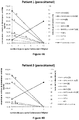
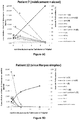
- the serum biomarker concentrations in particular ADH1B, ADH1A and ADH1B, ADH4 and BHMT1, BHMT1 and BHMT2 rise rapidly during the acute phase and drop to very low levels during liver regeneration ( figures 4 and 5 ).
- This serum kinetics is correlated with the evolution of the classic parameters of biological monitoring (coagulation parameters, transaminases and CK18) but the concentrations of the biomarkers ADH1B, ADH1B and ADH1A, ADH4, BHMT1, BHMT1 and BHMT2 recover earlier.
- biomarkers can be very useful for improving the patient's biological monitoring, evaluating the prognosis earlier (hepatic regeneration or worsening) and helping in the decision of liver transplantation.
- prognosis earlier (hepatic regeneration or worsening)
- serum biomarker concentrations may be helpful in the early identification of etiology, which is critical for the rapid administration of therapy and a prognosis favorable.
- biomarkers can also be used for the evaluation of the toxicity of chemical molecules (drug candidates), drugs (pharmacovigilance) or other xenobiotics on humans or on animal models, or on in vitro models (cultures of cell lines hepatic).
- drug candidates drugs
- drugs drugs
- in vitro models cultures of cell lines hepatic
- the assay can be performed on blood samples. In the case of in vitro models , this assay will be carried out from the culture medium.
- the invention is illustrated below by examples which however do not limit the invention. These examples relate to a method of in vitro diagnosis of liver damage from a blood sample and its use, in particular for detecting acute liver failure or non-alcoholic steatohepatitis in a patient.
- Amino acids from PSAQ TM proteins were quantified by high resolution mass spectrometry by comparison of the signals emitted by labeled amino acids from PSAQ TM protein and their unlabeled analogs from bovine serum albumin.
- ALI acute liver failure
- Serum samples from these patients were provided by the Biological Resource Center of the Paris-Sud Faculty of Medicine, France (approval number: 2011/39938 ).
- the French Blood Establishment (French Blood Establishment, The Tronche, France) provided seven anonymous serum samples from healthy donors. These serum samples were then collected in untreated tubes (BD Biosciences, Le Pont de Claix, France) and were centrifuged at 1000 g for 15 min to obtain the serum. Serum samples were aliquoted and immediately frozen at -80 ° C before further use. For each patient, several serum samples were taken on several days of sampling during hospitalization.
- Analyzes were performed on each patient to ensure that these patients were not suffering from viral hepatitis A, B and / or C. All patients were screened for viral hepatitis A, B and C ( HAV, HBV, HCV) and have been found negative for all of these viruses. Biological parameters of liver damage (INR, prothrombin time (PT), levels of transaminases, bilirubin, platelets and creatinine) were determined using standard methods. The levels of soluble CK18 protein and cleaved cytokeratin-18 protein (CK18Asp396) present in serum were measured using the ELISA kits M65 and M30Apoptosense (Peviva, Sweden).
- the PSAQ TM standard protein is injected directly into the serum sample before any pretreatment.
- This approach makes it possible to determine, in blood biological fluids such as plasma and serum, the concentrations of certain target proteins such as biomarkers of pathologies of which they constitute marked analogs.
- Several pretreatment modes such as the depletion of abundant proteins (by immunoaffinity or affinity with a chemical reagent) and the glycodepletion of the blood sample have been considered so as to preserve, during the process, the integrity of the PSAQ TM proteins.
- the proteins ARG1, ADH1B, BHMT1 and GSTA have been subject to the depletion of abundant proteins according to MARS technology from Agilent Technologies and the proteins ADH4, FABP1, ALT1 and BHMT1 to glycodepletion.
- PSAQ TM protein see table 2
- the PSAQ TM serum-protein solution was then left to incubate for 1 hour at 4 ° C. with gentle shaking.
- the sample comprising serum (or plasma) and the PSAQ TM proteins were deposited on an affinity column allowing the extraction of the six most abundant proteins (albumin, IgG, Transferrin, IgA, haptoglobin and antitrypsin) in the serum (MARS technology, spin cartridge from Agilent Technologies, Les Ulis, France) according to the manufacturer's instructions. This method extracts nearly 85 to 90% of all the proteins present in the serum.
- the serum samples thus free of albumin, IgG, transferrin, IgA, haptoglobin and antitrypsin were concentrated until at a volume of 50 ⁇ l on an ultrafiltration device having an exclusion limit of 3000 Da (Merck Millipore, Molsheim, France).
- a solution of 4 M urea and NH 4 HCO 3 at 50 mM was deposited on the sample in the ultrafiltration device so as to exchange the buffer.
- the resulting sparse protein concentrates were then subjected to an enzymatic digestion step.
- PSAQ TM protein Before any pretreatment, defined quantities of PSAQ TM protein (see table 2) were added to 18 ⁇ l of serum or plasma previously withdrawn from an individual, whether he is suffering from acute hepatic insufficiency or a healthy donor so as to be able to quantify the presence of this protein in the patient's serum. The serum-protein PSAQ TM solution was then left to incubate for 1 hour at 4 ° C. with gentle shaking.
- the sample comprising glycoproteins carrying aldehyde groups and non-glycosilated proteins was introduced onto an affinity column of the GlycoLink immobilization kit from Life technologies according to the manufacturer's instructions.
- the affinity column used comprises an UltraLink resin functionalized with hydrazide.
- the resin thus functionalized will make it possible to extract the glycoproteins present in the serum by producing stable bonds between the hydrazide of the resin and the aldehydes of the glycoproteins previously modified.
- the non-glycosylated proteins were then eluted by centrifugation in the presence of 400 ⁇ l of urea at a concentration of 8M.
- the sample was concentrated to 50 ⁇ L on an ultrafiltration device with an exclusion limit of 3000 Da and was then subjected to digestion.
- a digestion solution was prepared using a mixture of EndolysC and trypsin (Promega, Charbonippos-les-Bains, France) at a protein / enzyme ratio of 1/30 by mass in a solution of 4 M urea and NH 4 HCO 3 at 50 mM at 37 ° C.
- the samples were diluted four times and incubated overnight at 37 ° C. The digestion was stopped by adding formic acid (0.1% in final concentration). The samples were purified on a SpinColumns macro C18 column (Harvard Apparatus, Les Ulis, France) and dried by centrifugation under vacuum. The pellets were resolubilized in 15 ⁇ L of a solution containing 2% by volume of acetonitrile, formic acid at 0.1% by volume.
- LC-SRM analyzes were performed on a 6500 QTrap type mass spectrometer (AB Sciex, Les Ulis, France) equipped with a TurboV source and controlled by Analyst software (version 1.6.1, AB Sciex) in a range ranging from 400 to 1000 m / z.
- the instrument was coupled to an Ultima 3000 LC chromatography system (Thermo Scientific, Courtaboeuf, France). Sample chromatography was performed using a system combining 2 solvents, solvent A (2% acetonitrile and 0.1% formic acid) and solvent B (80% acetonitrile, 0.1% formic acid%).
- proteolytic peptides were concentrated on a 1 x 15 mm C18 PepMap precolumn (Thermo Scientific) and then were separated on a Kinetex XB-C18 column (2.1 x 100 mm, 1.7 ⁇ m, 100 ⁇ ; Phenomenex, Le Pecq , France) in gradient mode.
- Kinetex XB-C18 column 2.1 x 100 mm, 1.7 ⁇ m, 100 ⁇ ; Phenomenex, Le Pecq , France
- the graduated elution was carried out so as to modify the concentration of the initial solution of B to 3% to 35% in 30 minutes, then from 35% to 90% in 10 minutes, and this at a flow rate of 50 ⁇ l / min.
- the concentration of the biomarkers was then calculated from the average protein ratio
- the lower limit of detection (LID) was determined using the standard curve method swimming and the lower limit of quantification (LIQ) was defined as being 3 times the LID.
- LIQ lower limit of quantification
- the concentration of target biomarkers was determined at different times t.
- the Figures 4 and 5 set up the longitudinal monitoring of serum concentrations of the various biomarkers in patients with ALI or ALF and whose etiology is either paracetamol ( figure 4 ) or another cause ( figure 5 ). (cf. figures 4 and 5 ). This follow-up is analyzed in parallel with standard clinical and biological parameters (transaminase levels, coagulation parameters).
Landscapes
- Life Sciences & Earth Sciences (AREA)
- Health & Medical Sciences (AREA)
- Engineering & Computer Science (AREA)
- Molecular Biology (AREA)
- Immunology (AREA)
- Biomedical Technology (AREA)
- Chemical & Material Sciences (AREA)
- Urology & Nephrology (AREA)
- Hematology (AREA)
- Physics & Mathematics (AREA)
- Cell Biology (AREA)
- Medicinal Chemistry (AREA)
- Pathology (AREA)
- General Physics & Mathematics (AREA)
- General Health & Medical Sciences (AREA)
- Microbiology (AREA)
- Biochemistry (AREA)
- Analytical Chemistry (AREA)
- Food Science & Technology (AREA)
- Biotechnology (AREA)
- Proteomics, Peptides & Aminoacids (AREA)
- Bioinformatics & Cheminformatics (AREA)
- Bioinformatics & Computational Biology (AREA)
- Spectroscopy & Molecular Physics (AREA)
- Biophysics (AREA)
- Communicable Diseases (AREA)
- Investigating Or Analysing Biological Materials (AREA)
Claims (16)
- Verfahren zur in-vitro-Diagnose, Überwachung, Prognose und/oder Theranostik von Lebererkrankungen, gewählt aus akutem Leberversagen, Lebersteatose und Steatohepatitis, basierend auf einer Blutprobe eines Individuums, wobei das Vorliegen und/oder die Konzentration des Markers ADH1B (SEQ ID NO: 2) und/oder das Vorliegen und/oder die Konzentration der Kombination der Marker ADH1B (SEQ ID NO: 2) und ADH1A (SEQ ID NO: 1) bestimmt werden.
- In-vitro-Verfahren nach Anspruch 1, wobei das Vorliegen und/oder die Konzentration von wenigstens einem zusätzlichen Marker, bevorzugt wenigstens zwei zusätzlichen Markern und noch stärker bevorzugt wenigstens drei zusätzlichen Markern bestimmt werden, wobei die Marker gewählt sind aus der Gruppe, umfassend: ADH4 (SEQ ID NO: 3 & SEQ ID NO: 4), BHMT (SEQ ID NO: 5, SEQ ID NO: 6 & SEQ ID NO: 7), ARG1 (SEQ ID NO: 8, SEQ ID NO: 9 & SEQ ID NO: 10), FABP1 (SEQ ID NO: 11), GSTA1 (SEQ ID NO: 12) und ALT1 (SEQ ID NO: 13).
- In-vitro-Verfahren nach einem der Ansprüche 1 bis 2, wobei wenigstens das Vorliegen und/oder die Konzentration wenigstens eines zusätzlichen Markers, gewählt aus ADH4 (SEQ ID NO: 3 & SEQ ID NO: 4) und BHMT (SEQ ID NO: 5, SEQ ID NO: 6 & SEQ ID NO: 7), bestimmt werden.
- In-vitro-Verfahren nach einem der Ansprüche 1 bis 3, dadurch gekennzeichnet, dass wenigstens das Vorliegen und/oder die Konzentration des Markers ADH1B (SEQ ID NO: 2) oder der Kombination der Marker ADH1B (SEQ ID NO: 2) und ADH1A (SEQ ID NO: 1) einerseits und der Marker ADH4 (SEQ ID NO: 3 & SEQ ID NO: 4) und BHMT (SEQ ID NO: 5, SEQ ID NO: 6 & SEQ ID NO: 7) andererseits bestimmt werden.
- In-vitro-Verfahren nach einem der Ansprüche 2 bis 4, dadurch gekennzeichnet, dass der Marker BHMT und die Sequenzvariante BHMT1 (SEQ ID NO: 5) und/oder die Kombination der Sequenzvarianten BHMT1 (SEQ ID NO: 5) und BHMT2 (SEQ ID NO: 6 & SEQ ID NO: 7) ist.
- In-vitro-Verfahren nach einem der Ansprüche 1 bis 5, dadurch gekennzeichnet, dass zusätzlich das Vorliegen und/oder die Konzentration des Markers CK18 bestimmt werden.
- In-vitro-Verfahren nach einem der Ansprüche 1 bis 6, dadurch gekennzeichnet, dass für die Bestimmung des Vorliegens und/oder Konzentration der Marker in den Markern vorhandene Peptidsignaturen verwendet werden.
- In vitro-Verfahren nach Anspruch 7, wobei die Signaturpeptide ausgehend von den Markern durch einen, bevorzugt enzymatischen, Verdauungsprozess erzeugt werden.
- In vitro-Verfahren nach Anspruch 7 oder 8, wobei das Vorliegen und/oder die Konzentration:a. der Kombination der Marker ADH1A (SEQ ID NO: 1) und ADH1B (SEQ ID NO: 2), falls gewählt, bestimmt wird durch das Vorliegen wenigstens eines Signaturpeptids, gewählt aus INEGFDLLHSGK (SEQ ID NO: 16) und FSLDALITHVLPFEK (SEQ ID NO: 15),b. des Markers ADH1B (SEQ ID NO: 2), falls gewählt, bestimmt wird durch das Vorliegen des Signaturpeptids AAVLWEVK (SEQ ID NO: 17),c. des Markers ADH4 (SEQ ID NO: 3 & SEQ ID NO: 4), falls gewählt, bestimmt wird durch das Vorliegen wenigstens eines Signaturpeptids, gewählt aus FNLDALVTHTLPFDK (SEQ ID NO: 20), IDDDANLER (SEQ ID NO: 18) oder IIGIDINSEK (SEQ ID NO: 19),d. des Markers ARG1 (SEQ ID NO: 8, SEQ ID NO: 9 & SEQ ID NO: 10), falls gewählt, bestimmt wird durch das Vorliegen wenigstens eines Signaturpeptids, gewählt aus DVDPGEHYILK (SEQ ID NO: 25), TIGIIGAPFSK (SEQ ID NO: 24) oder EGLYITEEIYK (SEQ ID NO: 26),e. des Markers BHMT (SEQ ID NO: 5, SEQ ID NO: 6 & SEQ ID NO: 7), falls gewählt, bestimmt wird durch das Vorliegen wenigstens eines Signaturpeptids, gewählt aus EATTEQQLK (SEQ ID NO: 21), AIAEELAPER (SEQ ID NO: 23) oder EAYNLGVR (SEQ ID NO: 22),f. des Markers BHMT1 (SEQ ID NO: 5), falls gewählt, bestimmt wird durch das Vorliegen des Signaturpeptids EATTEQQLK (SEQ ID NO: 21),g. der Kombination der Marker BHMT1 (SEQ ID NO: 5) und BHMT2 (SEQ ID NO: 6 & SEQ ID NO: 7), falls gewählt, bestimmt wird durch das Vorliegen wenigstens eines Signaturpeptids, gewählt aus AIAEELAPER (SEQ ID NO: 23) oder EAYNLGVR (SEQ ID NO: 22),h. des Markers FABP1 (SEQ ID NO: 11), falls gewählt, bestimmt wird durch das Vorliegen wenigstens eines Signaturpeptids, gewählt aus AIGLPEELIQK (SEQ ID NO: 27), FTITAGSK (SEQ ID NO: 28) oder TVVQLEGDNK (SEQ ID NO: 29),i. des Markers GSTA1 (SEQ ID NO: 12), falls gewählt, bestimmt wird durch das Vorliegen des Signaturpeptids LHYFNAR (SEQ ID NO: 30),j. des Markers ALT1 (SEQ ID NO: 13), falls gewählt, bestimmt wird durch das Vorliegen wenigstens eines Signaturpeptids, gewählt aus ALELEQELR (SEQ ID NO: 34), LLVAGEGHTR (SEQ ID NO: 35) oder KPFTEVIR (SEQ ID NO: 36), wobei ALT1 (SEQ ID NO: 13), falls gewählt, insbesondere durch das Vorliegen des Signaturpeptids ALELEQELR (SEQ ID NO: 34) oder LLVAGEGHTR (SEQ ID NO: 35) bestimmt wird.
- In-vitro-Verfahren nach einem der vorstehenden Ansprüche, wobei wenigstens einer der Marker (als "gewählter Marker" bezeichnet), wie er in einem der Ansprüche 1 bis 6 definiert ist, einschließlich wenigstens eines Markers ADH1B (SEQ ID NO: 2) und/oder der Kombination der Marker ADH1B (SEQ ID NO: 2) und ADH1A (SEQ ID NO: 1) basierend auf einer Blutprobe, die einem Individuum zu einem Zeitpunkt t0 entnommen wurde, bestimmt wird, wobei das Verfahren die folgenden Schritte umfasst:a. Zugabe einer bekannten Menge eines isotopisch markierten Proteins, das zu dem aus der Blutprobe gewählten Marker homolog ist,b. Behandlung der Blutprobe zur Extraktion wenigstens eines Teils der in großer Menge vorhandenen Proteine oder wenigstens eines Teils der Glykoproteine,c. Behandlung der Probe nach der Extraktion wenigstens eines Teils der in großer Menge vorhandenen Proteine oder Glykoproteine zur Erzeugung proteolytischer Peptide, bevorzugt durch Verdauung, wobei vorausgesetzt wird, dass sich unter den erhaltenen proteolytischen Peptiden die Signaturpeptide der gewählten Marker gemäß einem der Ansprüche 7 bis 9 befinden,d. quantitative Bestimmung wenigstens eines ausgehend von dem gewählten Marker erzeugten Signaturpeptids mittels Massenspektrometrie,e. Bestimmung eines Verhältnisses der Häufigkeit des in Schritt a) zugegebenen isotopisch markierten Signaturpeptids zur Häufigkeit des unmarkierten Signaturpeptids aus der Blutprobe,f. Berechnung der Konzentration des in der Probe gewählten Markers aus dem in Schritt e) erhaltenen Verhältnis und der bekannten Menge des in Schritt a) zugegebenen isotopisch markierten Proteins.
- In-vitro-Verfahren nach Anspruch 10, dadurch gekennzeichnet, dass Schritt b) durch Depletion und bevorzugt durch Glykodepletion durchgeführt wird.
- In-vitro-Verfahren nach Anspruch 10 oder 11, dadurch gekennzeichnet, dass das Verfahren zu einem Zeitpunkt to und zu einem Zeitpunkt t1 größer als to durchgeführt wird und nach Schritt f) den Vergleich der Konzentration des gewählten Markers in der Probe zwischen t1 und to umfasst.
- In-vitro-Verfahren nach den Ansprüchen 10 bis 12, dadurch gekennzeichnet, dass Schritt c) durch enzymatische Verdauung, bevorzugt unter Verwendung von Trypsin oder einer Mischung aus EndolysC und Trypsin, durchgeführt wird.
- In-vitro-Verfahren nach einem der Ansprüche 1 bis 13, dadurch gekennzeichnet, dass die Lebererkrankung ein akutes Leberversagen oder eine nicht-alkoholische Steatohepatitis ist.
- In-vitro-Verfahren zur Bewertung der hepatischen Toxizität eines Moleküls, umfassend die quantitative Bestimmung wenigstens eines der Marker (als "gewählter Marker" bezeichnet) wie in einem der Ansprüche 1 bis 6 definiert, darunter wenigstens ein Marker ADH1B (SEQ ID NO: 2) und/oder die Kombination der Marker ADH1B (SEQ ID NO: 2) und ADH1A (SEQ ID NO: 1) aus einer Blutprobe eines Individuums, dem dieses Molekül zuvor verabreicht wurde, gemäß den Schritten a) bis f) des Verfahrens nach einem der Ansprüche 10 bis 13.
- In-vitro-Verfahren nach einem der Ansprüche 1 bis 15, dadurch gekennzeichnet, dass die Blutprobe aus der Gruppe, umfassend Blut, Plasma und Serum gewählt wird.
Applications Claiming Priority (3)
| Application Number | Priority Date | Filing Date | Title |
|---|---|---|---|
| FR1600081 | 2016-01-15 | ||
| FR1652087A FR3048780B1 (fr) | 2016-03-11 | 2016-03-11 | Procede de diagnostic in vitro d'atteintes hepatiques |
| PCT/FR2017/050089 WO2017121974A1 (fr) | 2016-01-15 | 2017-01-16 | Procédé de diagnostic in vitro d'atteintes hépatiques |
Publications (2)
| Publication Number | Publication Date |
|---|---|
| EP3403100A1 EP3403100A1 (de) | 2018-11-21 |
| EP3403100B1 true EP3403100B1 (de) | 2020-03-11 |
Family
ID=58098653
Family Applications (1)
| Application Number | Title | Priority Date | Filing Date |
|---|---|---|---|
| EP17706533.1A Active EP3403100B1 (de) | 2016-01-15 | 2017-01-16 | Verfahren zur in-vitro-diagnose von lebererkrankungen |
Country Status (2)
| Country | Link |
|---|---|
| EP (1) | EP3403100B1 (de) |
| WO (1) | WO2017121974A1 (de) |
Family Cites Families (2)
| Publication number | Priority date | Publication date | Assignee | Title |
|---|---|---|---|---|
| EP2864791A2 (de) * | 2012-06-20 | 2015-04-29 | Leibniz - Institut für Analytische Wissenschaften - ISAS - E.V. | Spezifischer biomarker für leberzellkarzinom (hcc) |
| GB201320061D0 (en) * | 2013-11-13 | 2013-12-25 | Electrophoretics Ltd | Materials nad methods for diagnosis and prognosis of liver cancer |
-
2017
- 2017-01-16 WO PCT/FR2017/050089 patent/WO2017121974A1/fr not_active Ceased
- 2017-01-16 EP EP17706533.1A patent/EP3403100B1/de active Active
Non-Patent Citations (1)
| Title |
|---|
| None * |
Also Published As
| Publication number | Publication date |
|---|---|
| WO2017121974A1 (fr) | 2017-07-20 |
| EP3403100A1 (de) | 2018-11-21 |
Similar Documents
| Publication | Publication Date | Title |
|---|---|---|
| Hess et al. | Simultaneous determination and validated quantification of human insulin and its synthetic analogues in human blood serum by immunoaffinity purification and liquid chromatography-mass spectrometry | |
| Kippen et al. | Development of an isotope dilution assay for precise determination of insulin, C-peptide, and proinsulin levels in non-diabetic and type II diabetic individuals with comparison to immunoassay | |
| Rayavarapu et al. | Identification of disease specific pathways using in vivo SILAC proteomics in dystrophin deficient mdx mouse | |
| Tsikas et al. | Homoarginine, arginine, and relatives: analysis, metabolism, transport, physiology, and pathology | |
| EP2339346B1 (de) | Verfahren zur Prognose von Diabetes Typ II | |
| Salomón et al. | Ketone body acetoacetate buffers methylglyoxal via a non-enzymatic conversion during diabetic and dietary ketosis | |
| Thomas et al. | Mass spectrometric identification of degradation products of insulin and its long-acting analogues in human urine for doping control purposes | |
| la Marca et al. | The inclusion of succinylacetone as marker for tyrosinemia type I in expanded newborn screening programs | |
| JP5735500B2 (ja) | エネルギー代謝の極性代謝物を分析するための方法 | |
| US8871527B2 (en) | Method and system for measuring a sample to determine the presence of and optionally treat a pathologic condition | |
| Hashimoto et al. | Highly-sensitive detection of free advanced glycation end-products by liquid chromatography-electrospray ionization-tandem mass spectrometry with 2, 4, 6-trinitrobenzene sulfonate derivatization | |
| Knoop et al. | Development of a mass spectrometry based detection method for the mitochondrion‐derived peptide MOTS‐c in plasma samples for doping control purposes | |
| CN103630693A (zh) | 肝脏炎症的生物标志物 | |
| Klatt et al. | Optimizing red blood cell protein extraction for biomarker quantitation with mass spectrometry | |
| Alayi et al. | Tandem mass tag-based serum proteome profiling for biomarker discovery in young duchenne muscular dystrophy boys | |
| Thevis et al. | Doping control analysis of bovine hemoglobin-based oxygen therapeutics in human plasma by LC− electrospray ionization-MS/MS | |
| Noso et al. | Metabolic signatures of β‐cell destruction in type 1 diabetes | |
| EP2901162B1 (de) | Verfahren zur diagnose von muskeldystrophie | |
| US11221341B2 (en) | Process for in vitro diagnosis of hepatic disorders | |
| EP3403100B1 (de) | Verfahren zur in-vitro-diagnose von lebererkrankungen | |
| Kingon et al. | Multi-peptide nLC-PC-IDMS-SRM-based assay for the quantification of biomarkers in the chicken ovarian cancer model | |
| Masaki et al. | GIP_HUMAN [22–51] is a new proatherogenic peptide identified by native plasma peptidomics | |
| EP1402257B1 (de) | Proteine in der diabetes-proteomanalyse | |
| Bettahi et al. | Differences in protein expression, at the basal state and at 2 h of insulin infusion, in muscle biopsies from healthy Arab men with high or low insulin sensitivity measured by hyperinsulinemic euglycemic clamp | |
| Liu et al. | Multiplexed analysis of endogenous Guanidino compounds via isotope-coded doubly charged labeling: Application to lung Cancer tissues as a case |
Legal Events
| Date | Code | Title | Description |
|---|---|---|---|
| STAA | Information on the status of an ep patent application or granted ep patent |
Free format text: STATUS: UNKNOWN |
|
| STAA | Information on the status of an ep patent application or granted ep patent |
Free format text: STATUS: THE INTERNATIONAL PUBLICATION HAS BEEN MADE |
|
| PUAI | Public reference made under article 153(3) epc to a published international application that has entered the european phase |
Free format text: ORIGINAL CODE: 0009012 |
|
| STAA | Information on the status of an ep patent application or granted ep patent |
Free format text: STATUS: REQUEST FOR EXAMINATION WAS MADE |
|
| 17P | Request for examination filed |
Effective date: 20180711 |
|
| AK | Designated contracting states |
Kind code of ref document: A1 Designated state(s): AL AT BE BG CH CY CZ DE DK EE ES FI FR GB GR HR HU IE IS IT LI LT LU LV MC MK MT NL NO PL PT RO RS SE SI SK SM TR |
|
| AX | Request for extension of the european patent |
Extension state: BA ME |
|
| DAV | Request for validation of the european patent (deleted) | ||
| DAX | Request for extension of the european patent (deleted) | ||
| STAA | Information on the status of an ep patent application or granted ep patent |
Free format text: STATUS: EXAMINATION IS IN PROGRESS |
|
| 17Q | First examination report despatched |
Effective date: 20190604 |
|
| GRAP | Despatch of communication of intention to grant a patent |
Free format text: ORIGINAL CODE: EPIDOSNIGR1 |
|
| STAA | Information on the status of an ep patent application or granted ep patent |
Free format text: STATUS: GRANT OF PATENT IS INTENDED |
|
| INTG | Intention to grant announced |
Effective date: 20191209 |
|
| GRAS | Grant fee paid |
Free format text: ORIGINAL CODE: EPIDOSNIGR3 |
|
| GRAA | (expected) grant |
Free format text: ORIGINAL CODE: 0009210 |
|
| STAA | Information on the status of an ep patent application or granted ep patent |
Free format text: STATUS: THE PATENT HAS BEEN GRANTED |
|
| AK | Designated contracting states |
Kind code of ref document: B1 Designated state(s): AL AT BE BG CH CY CZ DE DK EE ES FI FR GB GR HR HU IE IS IT LI LT LU LV MC MK MT NL NO PL PT RO RS SE SI SK SM TR |
|
| REG | Reference to a national code |
Ref country code: GB Ref legal event code: FG4D Free format text: NOT ENGLISH |
|
| REG | Reference to a national code |
Ref country code: CH Ref legal event code: EP |
|
| REG | Reference to a national code |
Ref country code: AT Ref legal event code: REF Ref document number: 1243787 Country of ref document: AT Kind code of ref document: T Effective date: 20200315 |
|
| REG | Reference to a national code |
Ref country code: DE Ref legal event code: R096 Ref document number: 602017012938 Country of ref document: DE |
|
| REG | Reference to a national code |
Ref country code: IE Ref legal event code: FG4D Free format text: LANGUAGE OF EP DOCUMENT: FRENCH |
|
| REG | Reference to a national code |
Ref country code: SE Ref legal event code: TRGR |
|
| REG | Reference to a national code |
Ref country code: CH Ref legal event code: NV Representative=s name: VALIPAT S.A. C/O BOVARD SA NEUCHATEL, CH |
|
| REG | Reference to a national code |
Ref country code: DE Ref legal event code: R081 Ref document number: 602017012938 Country of ref document: DE Owner name: INSERM, FR Free format text: FORMER OWNERS: CENTRE HOSPITALIER UNIVERSITAIRE GRENOBLE ALPES, LA TRONCHE, FR; COMMISSARIAT A L'ENERGIE ATOMIQUE ET AUX ENERGIES ALTERNATIVES, PARIS, FR; INSERM, PARIS, FR; UNIVERSITE GRENOBLE ALPES, SAINT-MARTIN-D'HERES, FR; UNIVERSITE PARIS SUD, ORSAY, FR Ref country code: DE Ref legal event code: R081 Ref document number: 602017012938 Country of ref document: DE Owner name: CENTRE HOSPITALIER UNIVERSITAIRE GRENOBLE ALPE, FR Free format text: FORMER OWNERS: CENTRE HOSPITALIER UNIVERSITAIRE GRENOBLE ALPES, LA TRONCHE, FR; COMMISSARIAT A L'ENERGIE ATOMIQUE ET AUX ENERGIES ALTERNATIVES, PARIS, FR; INSERM, PARIS, FR; UNIVERSITE GRENOBLE ALPES, SAINT-MARTIN-D'HERES, FR; UNIVERSITE PARIS SUD, ORSAY, FR Ref country code: DE Ref legal event code: R081 Ref document number: 602017012938 Country of ref document: DE Owner name: UNIVERSITE PARIS-SACLAY, FR Free format text: FORMER OWNERS: CENTRE HOSPITALIER UNIVERSITAIRE GRENOBLE ALPES, LA TRONCHE, FR; COMMISSARIAT A L'ENERGIE ATOMIQUE ET AUX ENERGIES ALTERNATIVES, PARIS, FR; INSERM, PARIS, FR; UNIVERSITE GRENOBLE ALPES, SAINT-MARTIN-D'HERES, FR; UNIVERSITE PARIS SUD, ORSAY, FR Ref country code: DE Ref legal event code: R081 Ref document number: 602017012938 Country of ref document: DE Owner name: COMMISSARIAT A L'ENERGIE ATOMIQUE ET AUX ENERG, FR Free format text: FORMER OWNERS: CENTRE HOSPITALIER UNIVERSITAIRE GRENOBLE ALPES, LA TRONCHE, FR; COMMISSARIAT A L'ENERGIE ATOMIQUE ET AUX ENERGIES ALTERNATIVES, PARIS, FR; INSERM, PARIS, FR; UNIVERSITE GRENOBLE ALPES, SAINT-MARTIN-D'HERES, FR; UNIVERSITE PARIS SUD, ORSAY, FR Ref country code: DE Ref legal event code: R081 Ref document number: 602017012938 Country of ref document: DE Owner name: UNIVERSITE GRENOBLE ALPES, FR Free format text: FORMER OWNERS: CENTRE HOSPITALIER UNIVERSITAIRE GRENOBLE ALPES, LA TRONCHE, FR; COMMISSARIAT A L'ENERGIE ATOMIQUE ET AUX ENERGIES ALTERNATIVES, PARIS, FR; INSERM, PARIS, FR; UNIVERSITE GRENOBLE ALPES, SAINT-MARTIN-D'HERES, FR; UNIVERSITE PARIS SUD, ORSAY, FR |
|
| RAP2 | Party data changed (patent owner data changed or rights of a patent transferred) |
Owner name: UNIVERSITE PARIS-SACLAY Owner name: INSERM Owner name: UNIVERSITE GRENOBLE ALPES Owner name: CENTRE HOSPITALIER UNIVERSITAIRE GRENOBLE ALPES Owner name: COMMISSARIAT A L'ENERGIE ATOMIQUE ET AUX ENERGIES ALTERNATIVES |
|
| PG25 | Lapsed in a contracting state [announced via postgrant information from national office to epo] |
Ref country code: RS Free format text: LAPSE BECAUSE OF FAILURE TO SUBMIT A TRANSLATION OF THE DESCRIPTION OR TO PAY THE FEE WITHIN THE PRESCRIBED TIME-LIMIT Effective date: 20200311 Ref country code: FI Free format text: LAPSE BECAUSE OF FAILURE TO SUBMIT A TRANSLATION OF THE DESCRIPTION OR TO PAY THE FEE WITHIN THE PRESCRIBED TIME-LIMIT Effective date: 20200311 Ref country code: NO Free format text: LAPSE BECAUSE OF FAILURE TO SUBMIT A TRANSLATION OF THE DESCRIPTION OR TO PAY THE FEE WITHIN THE PRESCRIBED TIME-LIMIT Effective date: 20200611 |
|
| REG | Reference to a national code |
Ref country code: NL Ref legal event code: MP Effective date: 20200311 |
|
| REG | Reference to a national code |
Ref country code: BE Ref legal event code: PD Owner name: CENTRE HOSPITALIER UNIVERSITAIRE GRENOBLE ALPES; FR Free format text: DETAILS ASSIGNMENT: CHANGE OF OWNER(S), CESSION, OEB; FORMER OWNER NAME: UNIVERSITE PARIS-SUD Effective date: 20200709 |
|
| PG25 | Lapsed in a contracting state [announced via postgrant information from national office to epo] |
Ref country code: BG Free format text: LAPSE BECAUSE OF FAILURE TO SUBMIT A TRANSLATION OF THE DESCRIPTION OR TO PAY THE FEE WITHIN THE PRESCRIBED TIME-LIMIT Effective date: 20200611 Ref country code: GR Free format text: LAPSE BECAUSE OF FAILURE TO SUBMIT A TRANSLATION OF THE DESCRIPTION OR TO PAY THE FEE WITHIN THE PRESCRIBED TIME-LIMIT Effective date: 20200612 Ref country code: LV Free format text: LAPSE BECAUSE OF FAILURE TO SUBMIT A TRANSLATION OF THE DESCRIPTION OR TO PAY THE FEE WITHIN THE PRESCRIBED TIME-LIMIT Effective date: 20200311 Ref country code: HR Free format text: LAPSE BECAUSE OF FAILURE TO SUBMIT A TRANSLATION OF THE DESCRIPTION OR TO PAY THE FEE WITHIN THE PRESCRIBED TIME-LIMIT Effective date: 20200311 |
|
| REG | Reference to a national code |
Ref country code: LT Ref legal event code: MG4D |
|
| PG25 | Lapsed in a contracting state [announced via postgrant information from national office to epo] |
Ref country code: NL Free format text: LAPSE BECAUSE OF FAILURE TO SUBMIT A TRANSLATION OF THE DESCRIPTION OR TO PAY THE FEE WITHIN THE PRESCRIBED TIME-LIMIT Effective date: 20200311 |
|
| REG | Reference to a national code |
Ref country code: GB Ref legal event code: 732E Free format text: REGISTERED BETWEEN 20200917 AND 20200923 |
|
| PG25 | Lapsed in a contracting state [announced via postgrant information from national office to epo] |
Ref country code: SK Free format text: LAPSE BECAUSE OF FAILURE TO SUBMIT A TRANSLATION OF THE DESCRIPTION OR TO PAY THE FEE WITHIN THE PRESCRIBED TIME-LIMIT Effective date: 20200311 Ref country code: IS Free format text: LAPSE BECAUSE OF FAILURE TO SUBMIT A TRANSLATION OF THE DESCRIPTION OR TO PAY THE FEE WITHIN THE PRESCRIBED TIME-LIMIT Effective date: 20200711 Ref country code: PT Free format text: LAPSE BECAUSE OF FAILURE TO SUBMIT A TRANSLATION OF THE DESCRIPTION OR TO PAY THE FEE WITHIN THE PRESCRIBED TIME-LIMIT Effective date: 20200805 Ref country code: LT Free format text: LAPSE BECAUSE OF FAILURE TO SUBMIT A TRANSLATION OF THE DESCRIPTION OR TO PAY THE FEE WITHIN THE PRESCRIBED TIME-LIMIT Effective date: 20200311 Ref country code: EE Free format text: LAPSE BECAUSE OF FAILURE TO SUBMIT A TRANSLATION OF THE DESCRIPTION OR TO PAY THE FEE WITHIN THE PRESCRIBED TIME-LIMIT Effective date: 20200311 Ref country code: SM Free format text: LAPSE BECAUSE OF FAILURE TO SUBMIT A TRANSLATION OF THE DESCRIPTION OR TO PAY THE FEE WITHIN THE PRESCRIBED TIME-LIMIT Effective date: 20200311 Ref country code: CZ Free format text: LAPSE BECAUSE OF FAILURE TO SUBMIT A TRANSLATION OF THE DESCRIPTION OR TO PAY THE FEE WITHIN THE PRESCRIBED TIME-LIMIT Effective date: 20200311 Ref country code: RO Free format text: LAPSE BECAUSE OF FAILURE TO SUBMIT A TRANSLATION OF THE DESCRIPTION OR TO PAY THE FEE WITHIN THE PRESCRIBED TIME-LIMIT Effective date: 20200311 |
|
| REG | Reference to a national code |
Ref country code: AT Ref legal event code: MK05 Ref document number: 1243787 Country of ref document: AT Kind code of ref document: T Effective date: 20200311 |
|
| REG | Reference to a national code |
Ref country code: DE Ref legal event code: R097 Ref document number: 602017012938 Country of ref document: DE |
|
| PLBE | No opposition filed within time limit |
Free format text: ORIGINAL CODE: 0009261 |
|
| STAA | Information on the status of an ep patent application or granted ep patent |
Free format text: STATUS: NO OPPOSITION FILED WITHIN TIME LIMIT |
|
| PG25 | Lapsed in a contracting state [announced via postgrant information from national office to epo] |
Ref country code: IT Free format text: LAPSE BECAUSE OF FAILURE TO SUBMIT A TRANSLATION OF THE DESCRIPTION OR TO PAY THE FEE WITHIN THE PRESCRIBED TIME-LIMIT Effective date: 20200311 Ref country code: ES Free format text: LAPSE BECAUSE OF FAILURE TO SUBMIT A TRANSLATION OF THE DESCRIPTION OR TO PAY THE FEE WITHIN THE PRESCRIBED TIME-LIMIT Effective date: 20200311 Ref country code: DK Free format text: LAPSE BECAUSE OF FAILURE TO SUBMIT A TRANSLATION OF THE DESCRIPTION OR TO PAY THE FEE WITHIN THE PRESCRIBED TIME-LIMIT Effective date: 20200311 Ref country code: AT Free format text: LAPSE BECAUSE OF FAILURE TO SUBMIT A TRANSLATION OF THE DESCRIPTION OR TO PAY THE FEE WITHIN THE PRESCRIBED TIME-LIMIT Effective date: 20200311 |
|
| 26N | No opposition filed |
Effective date: 20201214 |
|
| PG25 | Lapsed in a contracting state [announced via postgrant information from national office to epo] |
Ref country code: SI Free format text: LAPSE BECAUSE OF FAILURE TO SUBMIT A TRANSLATION OF THE DESCRIPTION OR TO PAY THE FEE WITHIN THE PRESCRIBED TIME-LIMIT Effective date: 20200311 Ref country code: PL Free format text: LAPSE BECAUSE OF FAILURE TO SUBMIT A TRANSLATION OF THE DESCRIPTION OR TO PAY THE FEE WITHIN THE PRESCRIBED TIME-LIMIT Effective date: 20200311 |
|
| PG25 | Lapsed in a contracting state [announced via postgrant information from national office to epo] |
Ref country code: MC Free format text: LAPSE BECAUSE OF FAILURE TO SUBMIT A TRANSLATION OF THE DESCRIPTION OR TO PAY THE FEE WITHIN THE PRESCRIBED TIME-LIMIT Effective date: 20200311 |
|
| PG25 | Lapsed in a contracting state [announced via postgrant information from national office to epo] |
Ref country code: LU Free format text: LAPSE BECAUSE OF NON-PAYMENT OF DUE FEES Effective date: 20210116 |
|
| PG25 | Lapsed in a contracting state [announced via postgrant information from national office to epo] |
Ref country code: IE Free format text: LAPSE BECAUSE OF NON-PAYMENT OF DUE FEES Effective date: 20210116 |
|
| PGFP | Annual fee paid to national office [announced via postgrant information from national office to epo] |
Ref country code: FR Payment date: 20211228 Year of fee payment: 6 |
|
| PGFP | Annual fee paid to national office [announced via postgrant information from national office to epo] |
Ref country code: GB Payment date: 20220120 Year of fee payment: 6 Ref country code: DE Payment date: 20220114 Year of fee payment: 6 Ref country code: CH Payment date: 20220124 Year of fee payment: 6 |
|
| PGFP | Annual fee paid to national office [announced via postgrant information from national office to epo] |
Ref country code: SE Payment date: 20220119 Year of fee payment: 6 Ref country code: BE Payment date: 20220127 Year of fee payment: 6 |
|
| PG25 | Lapsed in a contracting state [announced via postgrant information from national office to epo] |
Ref country code: CY Free format text: LAPSE BECAUSE OF FAILURE TO SUBMIT A TRANSLATION OF THE DESCRIPTION OR TO PAY THE FEE WITHIN THE PRESCRIBED TIME-LIMIT Effective date: 20200311 |
|
| PG25 | Lapsed in a contracting state [announced via postgrant information from national office to epo] |
Ref country code: HU Free format text: LAPSE BECAUSE OF FAILURE TO SUBMIT A TRANSLATION OF THE DESCRIPTION OR TO PAY THE FEE WITHIN THE PRESCRIBED TIME-LIMIT; INVALID AB INITIO Effective date: 20170116 |
|
| REG | Reference to a national code |
Ref country code: DE Ref legal event code: R119 Ref document number: 602017012938 Country of ref document: DE |
|
| REG | Reference to a national code |
Ref country code: SE Ref legal event code: EUG |
|
| REG | Reference to a national code |
Ref country code: CH Ref legal event code: PL |
|
| GBPC | Gb: european patent ceased through non-payment of renewal fee |
Effective date: 20230116 |
|
| REG | Reference to a national code |
Ref country code: BE Ref legal event code: MM Effective date: 20230131 |
|
| PG25 | Lapsed in a contracting state [announced via postgrant information from national office to epo] |
Ref country code: SE Free format text: LAPSE BECAUSE OF NON-PAYMENT OF DUE FEES Effective date: 20230117 Ref country code: LI Free format text: LAPSE BECAUSE OF NON-PAYMENT OF DUE FEES Effective date: 20230131 Ref country code: GB Free format text: LAPSE BECAUSE OF NON-PAYMENT OF DUE FEES Effective date: 20230116 Ref country code: DE Free format text: LAPSE BECAUSE OF NON-PAYMENT OF DUE FEES Effective date: 20230801 Ref country code: CH Free format text: LAPSE BECAUSE OF NON-PAYMENT OF DUE FEES Effective date: 20230131 |
|
| PG25 | Lapsed in a contracting state [announced via postgrant information from national office to epo] |
Ref country code: FR Free format text: LAPSE BECAUSE OF NON-PAYMENT OF DUE FEES Effective date: 20230131 Ref country code: BE Free format text: LAPSE BECAUSE OF NON-PAYMENT OF DUE FEES Effective date: 20230131 |
|
| PG25 | Lapsed in a contracting state [announced via postgrant information from national office to epo] |
Ref country code: MK Free format text: LAPSE BECAUSE OF FAILURE TO SUBMIT A TRANSLATION OF THE DESCRIPTION OR TO PAY THE FEE WITHIN THE PRESCRIBED TIME-LIMIT Effective date: 20200311 |
|
| PG25 | Lapsed in a contracting state [announced via postgrant information from national office to epo] |
Ref country code: TR Free format text: LAPSE BECAUSE OF FAILURE TO SUBMIT A TRANSLATION OF THE DESCRIPTION OR TO PAY THE FEE WITHIN THE PRESCRIBED TIME-LIMIT Effective date: 20200311 |
|
| PG25 | Lapsed in a contracting state [announced via postgrant information from national office to epo] |
Ref country code: MT Free format text: LAPSE BECAUSE OF FAILURE TO SUBMIT A TRANSLATION OF THE DESCRIPTION OR TO PAY THE FEE WITHIN THE PRESCRIBED TIME-LIMIT Effective date: 20200311 |