EP3403101B1 - Verfahren zur klassifizierung von mikroorganismen - Google Patents
Verfahren zur klassifizierung von mikroorganismen Download PDFInfo
- Publication number
- EP3403101B1 EP3403101B1 EP17711698.5A EP17711698A EP3403101B1 EP 3403101 B1 EP3403101 B1 EP 3403101B1 EP 17711698 A EP17711698 A EP 17711698A EP 3403101 B1 EP3403101 B1 EP 3403101B1
- Authority
- EP
- European Patent Office
- Prior art keywords
- biofilm
- particles
- microorganism
- mcf
- concentration
- Prior art date
- Legal status (The legal status is an assumption and is not a legal conclusion. Google has not performed a legal analysis and makes no representation as to the accuracy of the status listed.)
- Active
Links
Images


Classifications
-
- G—PHYSICS
- G01—MEASURING; TESTING
- G01N—INVESTIGATING OR ANALYSING MATERIALS BY DETERMINING THEIR CHEMICAL OR PHYSICAL PROPERTIES
- G01N33/00—Investigating or analysing materials by specific methods not covered by groups G01N1/00 - G01N31/00
- G01N33/48—Biological material, e.g. blood, urine; Haemocytometers
- G01N33/50—Chemical analysis of biological material, e.g. blood, urine; Testing involving biospecific ligand binding methods; Immunological testing
- G01N33/53—Immunoassay; Biospecific binding assay; Materials therefor
- G01N33/569—Immunoassay; Biospecific binding assay; Materials therefor for microorganisms, e.g. protozoa, bacteria, viruses
- G01N33/56911—Bacteria
-
- G—PHYSICS
- G01—MEASURING; TESTING
- G01N—INVESTIGATING OR ANALYSING MATERIALS BY DETERMINING THEIR CHEMICAL OR PHYSICAL PROPERTIES
- G01N11/00—Investigating flow properties of materials, e.g. viscosity, plasticity; Analysing materials by determining flow properties
- G01N11/10—Investigating flow properties of materials, e.g. viscosity, plasticity; Analysing materials by determining flow properties by moving a body within the material
-
- G—PHYSICS
- G01—MEASURING; TESTING
- G01N—INVESTIGATING OR ANALYSING MATERIALS BY DETERMINING THEIR CHEMICAL OR PHYSICAL PROPERTIES
- G01N35/00—Automatic analysis not limited to methods or materials provided for in any single one of groups G01N1/00 - G01N33/00; Handling materials therefor
- G01N35/0098—Automatic analysis not limited to methods or materials provided for in any single one of groups G01N1/00 - G01N33/00; Handling materials therefor involving analyte bound to insoluble magnetic carrier, e.g. using magnetic separation
-
- G—PHYSICS
- G01—MEASURING; TESTING
- G01N—INVESTIGATING OR ANALYSING MATERIALS BY DETERMINING THEIR CHEMICAL OR PHYSICAL PROPERTIES
- G01N11/00—Investigating flow properties of materials, e.g. viscosity, plasticity; Analysing materials by determining flow properties
- G01N11/10—Investigating flow properties of materials, e.g. viscosity, plasticity; Analysing materials by determining flow properties by moving a body within the material
- G01N11/14—Investigating flow properties of materials, e.g. viscosity, plasticity; Analysing materials by determining flow properties by moving a body within the material by using rotary bodies, e.g. vane
- G01N2011/147—Magnetic coupling
Definitions
- the present invention relates to a method for determining the biofilm production capacity of a microorganism
- the present invention also relates to a method for classifying microorganisms according to their ability to produce biofilm.
- the present invention finds an application in particular in the analytical fields, in biological and enzymological research, in the pharmaceutical field, in the diagnostic field and/or in the medical field.
- the present invention also finds application in the clinical, environmental or food-processing fields.
- references refer to the list of references presented at the end of the text.
- Biofilm formation is a key property of bacteria, enabling long-term survival both in natural ecosystems and in host animals (H ⁇ iby, 2010b).
- bacteria growing in a biofilm matrix are inherently more resistant to environmental agents as well as antimicrobials compared to growing planktonic cells.
- Bacterial biofilms are a serious problem in industry and medicine, including surgery and dentistry, where they often cause chronic and recurrent infections (Lindsay, 2006). Both Gram-positive and Gram-negative bacteria are capable of forming biofilm (Donlan, 2001). It has been estimated that up to 80% of human infectious diseases that have a significant impact on morbidity and health costs for patients (Romling, 2012; NIH Parent Grant Announcement, 2002) are linked to biofilms.
- biofilms on implantable medical devices causes persistent infections, which represent more than 60% of reported nosocomial infections (Darouiche, 2004).
- catheter-related infections represent the most serious and costly adverse event caused by biofilm produced by bacteria, frequently resulting in treatment failure and requiring removal of the medical device (Costerton et al, 2003). .
- biofilm-associated diseases include “difficult” infections such as bone and joint infections, caused by Staphylococcus aureus which is a highly biofilm-producing bacterium (Kurtz, et al., 2012, Jacqueline, 2014, Gbejuade, 2015 ), infective endocarditis caused mainly by staphylococci or streptococci, which are associated with high mortality rates (Furuya, 2003) and infections affecting patients with cystic fibrosis, where P. aeruginosa causes chronic lung infections and cardiac dysfunction. respiratory (Singh, 2000; H ⁇ iby, 2010a).
- Antibiotic treatment is often unable to control difficult biofilm-related infections such as medical device infections (H ⁇ iby, 2010a). Indeed, the resistance profiles to traditional antibiotics are carried out on micro-organisms with planktonic growth. Thus, antibiotic susceptibility in vitro does not take into account biofilm production and may not be representative of bacterial drug resistance in vivo (Costerton et al., 1999). Therefore, new laboratory tests capable of assessing biofilm production and the susceptibility of biofilm formation to antibiotics of microorganisms are needed and desirable in addition to routine microbiology tests in order to effectively target difficult infectious agents.
- the document FR 2916 761 describes antibiogram tests. More particularly, this document describes a method for determining the sensitivity of a microorganism to an antibiotic capable of preventing the development of a biofilm, the method comprising the introduction into a culture medium inoculated with a microorganism at least one particle magnetic or magnetizable, the addition in said medium of an antibiotic then the maintenance of the culture medium under conditions allowing the development of the microorganism, the sensitivity of the microorganism to said antibiotic is in particular determined by application of a magnetic field intended to put in movement of said particle on a surface immersed in said culture medium or on the surface of said culture medium in the absence of biofilm.
- the document FR 2 866 707 describes a method for measuring the viscosity of a microorganism culture medium comprising the steps consisting successively of:a) immersing at least one electrically or magnetically charged particle, magnetizable or coated with at least one magnetic or magnetizable layer in the culture ,b) subjecting the culture to an electric or magnetic or electromagnetic field so as to set said particle in motion, c) detecting the degree of freedom of movement of the particle in the culture.
- this document describes in particular two incubations of bacteria in order to form a biofilm and a quantification of the bacteria having formed a biofilm, after scraping, resuspension and spreading on a Petri dish.
- An ideal diagnostic technique should be able to provide rapid identification of the microorganism(s), to help guide appropriate antimicrobial therapy.
- BFRT Biofilm Ring Test ®
- the principle is based on the immobilization of magnetic beads by the growing biofilm matrix in vitro (Chavant, 2007). This process does not require no extensive handling (e.g. does not require washing or staining steps), thus ensuring reproducibility of results and reducing standard deviation, a positive criterion for the standardization of procedures.
- the BFRT represents a promising tool for the detection of a biofilm in the clinical setting.
- this method only makes it possible to determine the presence or absence of a biofilm.
- this method does not allow, in particular in a single determination, to provide direct information on the "dynamics" and the "strength" of a microorganism to produce biofilm, in particular compared to a reference standard. of microbial isolates.
- the initial procedure may require repeated measurements, performed at different times, in order to estimate the formation of the microbial biofilm, constituting another important limitation for routine use in laboratory tests.
- the method according to the invention advantageously makes it possible and in a very short time, for example less than 6 hours, to determine the biofilm production capacity of a microorganism and/or to classify the microorganisms into based on their ability to produce biofilm.
- microorganisms there are at least four categories of microorganisms, namely in particular microorganisms that do not produce biofilm, microorganisms that produce little biofilm (low producers), medium microorganisms biofilm producer (intermediate producers), and strong biofilm-producing microorganisms.
- the method according to the invention is based on measuring the formation of biofilm at an early stage.
- they have demonstrated that, in a given period of time, for example 5 hours, the lower the initial concentrations of microorganisms, for example of bacterial cells, which can inhibit the movement/aggregation of particles, the stronger is their ability to produce biofilm.
- the lower the initial concentrations of microorganisms, for example of bacterial cells which can inhibit the movement/aggregation of particles, the stronger is their ability to produce biofilm.
- high concentrations of microorganisms eg, bacteria
- they are considered low risk/non-biofilm producers.
- the inventors evaluated and demonstrated the characterization/biofilm-forming ability of both Gram-positive and Gram-negative clinical isolates and compared it to that of laboratory strains with known biofilm phenotypes as well as controls. negatives, used as an internal reference, to ensure accuracy and reproducibility of results.
- the inter-assay reproducibility was determined by comparison with the Crystal Violet (CV) staining test.
- the inventors have demonstrated that the results obtained concerning the characterization of the microorganisms are consistent with those obtained by the usual techniques such as Crystal Violet staining in a much shorter time, for example 5 to 10 times shorter.
- the inventors have surprisingly demonstrated that the method of the invention makes it possible to obtain a reliable and reproducible result with a specificity similar or even greater than that of the usual methods.
- the method according to the invention advantageously makes it possible to overcome non-specific results linked in particular to the production of mucus by the microorganisms, unlike the usual methods, in particular based on a revelation with dyes such as Crystal Violet, which is known to stain mucus and bacteria, thereby overestimating the presence of biofilm and/or causing false positive results.
- the methods based on revelation with dyes such as Crystal Violet therefore do not precisely quantify the bacterial biomass.
- McFarland unit is meant the international unit known to those skilled in the art, for example as described in particular in the document “National Committee for Clinical Laboratory Standards”, 2001 and 2003.
- one McFarland unit corresponds to approximately 3.10 8 bacteria/ml
- a dilution of 1 ⁇ 10 -6 McF therefore corresponds to approximately 3.10 2 bacteria/ml.
- quantitatively of the order of 60 bacteria for 200 ⁇ l for example used to inoculate microplate wells in the process described.
- strong producer of biofilm is meant a microorganism capable of synthesizing a quantity of biofilm sufficient to prevent the aggregation of the particles during the application of the field, after maintaining the culture medium for a given time. It may be, for example, a microorganism capable of synthesizing a quantity of biofilm sufficient to prevent the aggregation of particles, from an inoculum of the order of 60 to 6000 bacteria, considered very low by the man of the trade.
- intermediate producer of biofilm a microorganism capable of synthesizing a quantity of biofilm sufficient to prevent the aggregation of the particles during the application of the field, after maintaining the culture medium, for a given time. after maintaining the culture medium, from an inoculum of the order of 6000 (6 ⁇ 10 3 ) to 6 ⁇ 10 5 bacteria, considered standard by those skilled in the art.
- low biofilm producer a microorganism capable of synthesizing a quantity of biofilm sufficient to prevent the aggregation of the particles after maintaining the culture medium, for a given time, from a superior inoculum to 6 ⁇ 10 7 bacteria, considered strong by those skilled in the art.
- a "strong biofilm producer" microorganism is a microorganism which, after culture from a low concentration of microorganisms, for example comprised from 1 ⁇ 10 ⁇ 6 to 1 ⁇ 10 ⁇ 4 McF, prevents/impedes the movement of the particles during the implementation of the method preventing their grouping/aggregation, in particular in the form of a spot.
- an "intermediate biofilm producer" microorganism is a microorganism which, after culture from an intermediate concentration of microorganisms, for example comprised greater than 1 ⁇ 10 -4 and less than 1 ⁇ 10 -2 McF, prevents/hinders the movement of the particles during the implementation of the method preventing their grouping/aggregation, in particular in the form of a spot.
- a "low biofilm producer" microorganism is a microorganism which, after culture from a high concentration of microorganisms, for example from a concentration greater than or equal to 1 ⁇ 10 -2 McF, prevents /hinders the movement of the particles during the implementation of the method preventing their grouping/aggregation, in particular in the form of a spot.
- a "non-biofilm-producing" microorganism is a microorganism which, after culture, whatever the concentration of microorganisms, has no effect on the movement of the particles during the implementation of the process and allows aggregation of the particles. .
- the inoculated culture media can be maintained for 1 to 24 hours, preferably 1 to 8 hours, preferably 4 to 6 hours.
- the inoculated culture media can be maintained for 4 to 6 hours.
- maintaining the culture media for 4 to 6 hours makes it possible, during the implementation of the method of the invention, to conclude as to the production capacity of the microorganism and/or its classification according to the invention.
- the inventors have demonstrated that maintaining the culture media in step c) for 4 to 6 hours advantageously allows when the microorganism has been seeded at a concentration of from 1 ⁇ 10 -1 to 1 ⁇ 10 -6 McF to conclude as to the production capacity of the microorganism and/or its classification according to the invention.
- the inoculated culture media can be maintained for 5 to 12 generation times of the microorganism, preferably 6 to 10 generation times of the microorganism.
- the generation time that is to say the doubling time of a population of microorganisms.
- it may be the time mentioned in the document "Microbiochemistry and food", Alain Branger, Educagri Editions, 2012.
- the generation time of a bacterium may be on average 30 minutes.
- the culture container can be any suitable culture container known to those skilled in the art and/or commercially available. It may be, for example, a well of a 96-well plate and/or any culture reactor known to those skilled in the art.
- the culture container may consist of a material favorable to the adhesion of microorganisms, for example polystyrene (Thermo Scientific Technical Bulletin B06a Principles in adsorption to polystyrene, 2010), may be modified in order to promote its adhesion, for example by irradiation of the culture container, for example by irradiation of a polystyrene container (Biofiles, issue 3.8, 21-24).
- the culture container can advantageously be a flat container and/or with a flat bottom.
- the aggregation of the particles is carried out on the plane and/or the flat-bottom.
- the method of the invention can be carried out in a plurality of culture containers.
- the method of the invention can be carried out in at least 6 culture containers, for example wells of 96-well microplates, or of another format.
- It may be, for example, a culture container made of polystyrene, polypropylene, polycarbonate or glass.
- the method when the method comprises 6 culture containers, it can independently comprise in each container an identical culture medium comprising different concentrations of microorganisms.
- said containers may respectively comprise a microorganism concentration of 1 ⁇ 10 -6 McF, 1 ⁇ 10 -5 McF, 1 ⁇ 10 -4 McF, 1 ⁇ 10 -3 McF, 1 ⁇ 10 -2 McF and 1 ⁇ 10 -1 McF.
- An additional container can also be added, containing all the constituents of the medium, with the exception of the microorganism, thus representing a particle aggregation control, or reference.
- liquid culture medium any liquid culture medium known to those skilled in the art and/or commercially available in which at least one microorganism is capable of developing. It may for example be a natural or synthetic medium. It may be, for example, BHI (Brain Heart Infusion; Bouillon C ⁇ ur Cerveau), Mueller-Hinton medium, glucose broth. A person skilled in the art, based on this general knowledge, will know how to choose the appropriate culture medium depending on the microorganism.
- BHI Brain Heart Infusion
- Bouillon C ⁇ ur Cerveau Bouillon C ⁇ ur Cerveau
- Mueller-Hinton medium glucose broth.
- the microorganism can be any microorganism known to those skilled in the art. It may be a prokaryotic cell, for example a bacterium or a eukaryotic cell, for example a fungus, yeast. It may be, for example , Candida, Cryptococcus, Malassezia, Pityrosporum, Pneumocystis, Epidermophyton, Microsporum, Trichophyton. They may also be protozoa, for example Entamoeba histolytica, Acanthamoeba castellanii, Naegleria fowleri.
- prokaryotic cells it may be, for example, any bacterium known to those skilled in the art, for example the bacteria included in the group, without being limited thereto, consisting of Acetobacter aurantius, Actinobacillus actinomycetemcomitans, Agrobacterium tumefaciens , Azorhizobium caulinodans, Azotobacter vinelandii, Bacillus anthracis, Bacillus brevis, Bacillus cereus, Bacillus fusiformis, Bacillus licheniformis, Bacillus megaterium, Bacillus stearothermophilus, Bacillus subtilis, Bacteroides gingivalis, Bacteroides melaninogenicus, Bartonella henselae, Bartonella quintana, Bordetella bronchiseptica, Bordetella pertussis burgdorferi, Branhamella catarrhalis, Brucella abortus, Brucella me
- the anaerobic culture conditions of the microorganism can be obtained by sealing the open end of the culture reactor, for example using parafilm, a stopper, etc. or by placing said reactor under conditions allowing the development of anaerobic bacteria.
- These may be, for example, anaerobiosis jars, sachets generating an atmosphere depleted in oxygen and enriched in carbon dioxide, anaerobic enclosures with controlled atmosphere and/or any suitable means known to those skilled in the art.
- said at least two particles can be chosen from the group comprising an electrically charged particle, a magnetic particle, a particle coated with at least one magnetic layer, a magnetizable particle, a particle coated with a magnetizable layer, or a mixture of two or more of these particles.
- it can be any particle making it possible to implement the present invention.
- the particles can rest on a surface immersed in the culture medium.
- Said particles are in a stable position, that is to say at rest, in the absence of the magnetic, or electric, or electromagnetic field.
- said particles can be particles of any shape suitable for the implementation of the present invention, for example in the form of a ball, of a puck, of asymmetric geometric shape, for example with a flat face, etc.
- any suitable size of magnetic or magnetizable particle can be used.
- the size can be chosen for example according to the size of the microorganism, and/or the size of the compartment containing the culture medium for the implementation of the method of the invention and/or of the microorganism.
- the size may for example be of a size substantially identical to the size of the microorganism generating the biofilm so that the at least two particles can be incorporated into a biofilm, for example formed by said microorganism, the objective being to using the magnetic or magnetizable particles as an inert equivalent of the microorganism.
- these particles are mobile, microorganisms of the same size can also move.
- microorganisms of the same size cannot move either.
- particles of various sizes can allow a finer analysis of the structure of the biofilm: dimension of the spaces within the structure, organization three-dimensional, stability of the adhesion to the surface, for example to the bottom of the tube or the well of the microdilution plate, in which the test is carried out.
- biofilms tend to come off in shreds (squames) from their support as they age.
- a first phase of immobilization of the at least two particles is then observed during the development of the biofilm. Then a phase of degeneration of the biofilm with release of at least two particles.
- the magnetic or magnetizable particles can have a size of, for example from 10 nm to 100 ⁇ m, for example from 0.1 to 10 ⁇ m (size of the most common microorganisms).
- the particles are incorporated into a biofilm, in particular into the complex matrix generated by the growth of microorganisms, composed of cell bodies, adhesion systems of said microorganisms, for example filaments, pili, fimbriae, etc., of substances more or less viscous, for example polysaccharides, alginates, etc. secreted by said microorganisms, the application of the magnetic, or electric, or electromagnetic field does not make it possible to cause movement of said particles incorporated in said biofilm.
- the particles are not incorporated into said biofilm, for example when the mobility of the particles is not hampered by the presence of bodies of microorganisms whose size is close to those of the particles, for example of the order of one to several micrometers , for example when the mobility of the particles is not hindered by the presence of the adhesion systems of said microorganisms, for example the filaments, pili, fimbriae, etc.
- entanglement blocking the progression of the particles for example when the mobility of the particles is not hindered by the presence of more or less viscous substances secreted by said microorganisms, for example polysaccharides, alginates, etc., for example when the mobility of the particles is not hindered by molecules related to the development biofilm of microorganisms, the application of the magnetic, or electric, or electromagnetic field causes the movement of said particles.
- the process of the invention can be implemented with a plurality of particles, for example from 2 to 10,000,000, from 1,000 to 1,000,000, from 10,000 to 1,000,000, from 100,000 to 1,000,000, from 10,000 to 100,000.
- the plurality of particles advantageously makes it possible to directly detect, without a complex visualization device and without dye, the interaction between said substances, unlike the methods of the prior art using a single particle and requiring complex visualization devices or dyes for the detection of the interaction.
- the particles can be illuminated, for example by means of a light source.
- the lighting advantageously makes it possible to increase the contrast between the particles and the solution.
- the observation of can be carried out by any means known to those skilled in the art. It may for example be an optical device, for example a microscope, a camera, a document scanner, for example an EPSON Perfection V600 Photo scanner, visual observation.
- an optical device for example a microscope, a camera, a document scanner, for example an EPSON Perfection V600 Photo scanner, visual observation.
- observation can make it possible to measure, for example the intensity, the contrast, the variance, of the image, for example via any means known to those skilled in the art, for example imaging software, for example ImageJ allowing, for example to measure, for example differences in contrasts, intensities, corresponding for example to particles, in areas of one image to another and thus to determine the differences from one observation to another .
- This may involve, for example, comparing the images obtained before and after application of the mechanical, hydrodynamic or physical action, for example by performing a subtraction between images, for example by measuring the correlation coefficient between the images.
- particles emitting a signal for example colored, excitable, fluorescent, phosphorescent, luminescent, radioactive particles can allow, for example, automated observation
- the conditions for carrying out the method of the invention are standardized culture conditions, for example pH, temperature, oxygenation, etc.
- the inoculated culture media can be maintained at a temperature of from 10 to 45° C., preferably from 25° C. to 42° C., for example equal to 37° C.
- the maintenance of the inoculated culture media can be carried out under a natural atmosphere, in a conventional incubator for example, or under a controlled atmosphere for microanaerophilic or strict anaerobic microorganisms, according to any means known to those skilled in the art.
- the field can be a magnetic, or electric or electromagnetic field.
- the application of the magnetic field can be carried out by any means known to those skilled in the art and/or commercially available and/or suitable.
- the magnetic, or electric or electromagnetic field can be any field making it possible to set in motion said at least two particles on said surface immersed in said solution, for example an electromagnetic field or a magnetic field.
- the magnetic, or electric or electromagnetic field can be generated, for example by a magnet or by a solenoid.
- the magnet can for example be in the form of a bar, a point, a piece, etc. or any suitable form for the implementation of the present invention.
- the field can, for example, be applied by any means known to those skilled in the art, for example by pulse, by gradual increase in the electromagnetic field, by variations in the electromagnetic field or by a combination of these applications.
- the value of BFIn corresponds to the negative control.
- the formation of biofilm can be identified when the BPc value is greater than a threshold value (S).
- the method of the invention can comprise for each measurement at least three negative controls from which the mBFIn value and the stmBFIn value are calculated.
- the method can include at least three BFI values from which the mean BFI of the negative controls (mBFIn) as well as the standard deviation of the mean (stmBFIn) can be calculated.
- the value of BFIn in formula (I) can be equal to the value of mBFIn.
- Biofilm Index is obtained by analyzing the red green blue color components of the image pixels to determine the density of particles per pixel, then by calculating the correlation between the particles to determine the density. particle aggregation expressed by a BFI value.
- the BFI index is described in particular in the document Chavant et al. 2007 [5].
- Example 1 Evaluation of the Microorganism's Biofilm Production Capacity
- characterization method cBFRT method
- Reference strain Staphylococcus aureus American Type Culture Collection (ATCC) 25923, Staphylococcus aureus ATCC 6538, Staphylococcus epidermidis ATCC 14990, Staphylococcus epidermidis ATCC 12228, Klebsiella pneumoniae ATCC 700603, Klebsiella pneumoniae ATCC 13883, Pseudomonas aeruginosa ATCC 47085, Pseudomonas aeruginosa ATCC 47085, Pseudomonas aeruginosa7, ATCC aeruginosa7 Pseudomonas aeruginosa PA14, Ralstonia mannitolilytica LMG 6866, Ralstonia mannitolilytica BK931 and clinical isolates of bacteria were grown aerobically on non-selective agar (blood agar, chocolate agar, McConkey agar) (Oxoid, Hampshire, UK) at 37
- KPC K. pneumoniae producing carbapenemase
- Methicillin-resistant Staphylococcus aureus were penicillin-binding protein (PBP)-producing as confirmed by the latex agglutination test PBP2' kit (OXOID Ltd, Basingstoke, UK). Vancomycin-resistant enterococci (VRE) were identified by susceptibility testing and confirmed by chromogenic chromogenic media chromID VRE (bioMérieux, Florence, Italy). The antibiotic susceptibility rates were compared with those defined by the minimum inhibitory concentration (MIC) according to the interpretation criteria recommended by the European Committee on Antimicrobial Susceptibility Testing (EUCAST). The number of species and the characteristics of the strains tested are reported in Table 2. The isolates were stored at -70°C in CRYOBANK tubes (Copan Italia SpA) and cultured overnight at 37°C on a dish. of specific agar before the test.
- MIC minimum inhibitory concentration
- Biofilm formation was assessed by the BioFilm Ring Test (BFRT) (BioFilm Control, Saint-Beauzire, France) using the commercially available kit (BioFilm Control, Saint Beauzire, France).
- the solution of toner (TON004) containing magnetic beads was mixed in Brain Heart Infusion medium (BHI, Difco, Detroit, MI, USA) according to the manufacturer's instructions.
- BHI Brain Heart Infusion medium
- the cultured bacteria were then transferred through a sterile inoculation loop into a sterile tube containing 2 ml of 0.45% saline equivalent to 1.0 ⁇ 0.3 McFarland turbidity standard (McF) and well mixed. Then, 200 ⁇ l of the inoculum was transferred to the wells of a 96-well polystyrene plate. From this initial inoculum, 10-fold serial dilutions were made, from 1 ⁇ 10 -1 to 1 ⁇ 10 -6 McF by transferring 20 ⁇ l of the microbial suspension into 200 ⁇ l of the BHI/TON mixture.
- McF McFarland turbidity standard
- One or more laboratory strains were included in each plate as a standard reference and quality control. A well containing the BHI/TON mix without microbial cells was used as a negative control in each experiment.
- the BFIn values ranged from 18 to 20.
- the calculated S value was equal to 0.53.
- BPc values above the calculated S value were considered producers of biofilm.
- the last dilution for which the value is above the calculated S value made it possible to identify the ability of the microorganism to form a biofilm.
- the microorganisms were classified into the following categories: non-adherent cells, weak, moderate and strong biofilm producers.
- Each microbial culture was analyzed in duplicate, and experiments were repeated at least 3 times for each strain to assess reproducibility, accuracy, and precision of measurement. Values were considered valid if the standard deviation between duplicates was less than 8%. The replicates showed complete consistency in the classification/categorization of microorganisms.
- the dye incorporated by cells forming a biofilm was dissolved with 200 ⁇ l of an 80/20% ethanol/acetone mixture and the absorbance of each well was measured by spectrophotometry at 570 nm (OD 570 ) using the automated PhD Ix TM System (Bio-Rad Laboratories, Hercules, CA, USA).
- ODC Optical Density
- the results of biofilm formation obtained with the two methods were compared further using McNemar's test. Values of p ⁇ 0.05 were considered significant.
- CFU colony forming unit
- Table 1 Correspondence CFU/ml to 1McFarland for bacteria used to inoculate the cBFRT assay. Values represent mean CFU/ml ⁇ SD of two replicates. Microbial strain CFU/mL P. aeruginosa 1.4 ⁇ 10 9 ⁇ 7.2 ⁇ 10 8 K. pneumoniae 0.9 ⁇ 10 9 ⁇ 7.9 ⁇ 10 8 R. mannitolilytica 0.6 ⁇ 10 9 ⁇ 2.6 ⁇ 10 8 S. aureus 1.3 ⁇ 10 9 ⁇ 8.4 ⁇ 10 8 S. epidermidis 1.1 ⁇ 10 9 ⁇ 7.1 ⁇ 10 8 Other Gram+ 1.1 ⁇ 10 9 ⁇ 8.7 ⁇ 10 8 Mean 1.0 ⁇ 10 9 ⁇ 3.2 ⁇ 10 8
- Catheter-Associated Urinary Tract Infection - (UTI-CA), Central Venous Catheter (CVC), Catheter-Associated Blood Infection (CA-BI).
- Bacterial species Clinical isolates Phenotype Isolation site Gram-negative bacteria P. aeruginosa 9 MRD (2) CA-BI (2) MRD (1) Chronic Ulcer (2) - Wound (1) - Urine (1) - Respiratory (3) K. pneumoniae 8 KPC (1) HVAC (1) - Blood (2) - Wound (1) ESBL (1) CA-UTI (2) - Respiratory (2) R. mannitolilytica 8 - Blood (8) Gram positive bacteria S. aureus 10 MRSA (1) HVAC (1) MRSA (3) Chronic ulcer (6) Skin (2) Respiratory (1) S.
- PA14 was classified as a low biofilm producer (Table 3A).
- strains were found to be strong biofilm producers.
- this includes the three MDR strains, two of which originated from patients with catheter-related blood infections (Pa6020-IFO, Pa5252-IFO), chronic ulcers (Pa5797-IFO), and the strains isolated from bronchoalveolar lavage from a patient with cystic fibrosis (Pa0629-IFO), pleural fluid (Pa5291-IFO) and from a patient with an infected wound (Pa0118-IFO).
- Kp0068-IFO urinary tract infection
- Kp5553-IFO an ESBL strain from urinary catheter
- Kp5668-IFO a KPC strain from a central venous catheter
- Kp5776-IFO from pleural fluid
- bacteria have been classified according to the value of BP, also referred to as BPc, measured.
- the cut-off/threshold has been set at 0.53.
- a value between 1 and 0.53 corresponds to a formation of biofilm, a value lower than 0.53 a possible absence of biofilm, or an insignificant formation of biofilm
- R. mannitolilytica is rarely isolated from clinical specimens and represents the most common species of the genus Ralstonia found in patients with cystic fibrosis (Coenye, 2005).
- R. mannitolilytica has been associated with epidemics around the world (Ryan, 2014) and the ability of this bacterium to form a biofilm has been hypothesized many times as a strategy for surviving in harsh environments and in the medium clinical, although it has rarely been tested.
- the present strains analyzed were isogenic clinical isolates from an epidemic that occurred in the oncology department of the IFO hospital in 2014.
- Staphylococcus epidermidis a major component of the normal microbial population of human skin, is an important nosocomial pathogen in patients with predisposing factors such as a probe or an implanted device (Otto, 2009).
- S. epidermidis has a low pathogenic potential, it has been isolated in 40% of bacteremias or blood infections (Suetens, 2007). This high occurrence probably stems from the fact that it is a ubiquitous colonizer of human skin, and therefore a possible source of contamination of devices during their insertion/removal (Otto, 2009). Nevertheless, the ability of S.
- S. aureus strain Sa6538 was used as a reference strain and the bacteria analyzed included: Staphylococcus haemolyticus, Streptococcus sanguinis, Streptococcus agalactiae, Enterococcus faecium and Enterococcus faecalis.
- S. agalactiae strains Sag0140-IFO and Sag0093-IFO
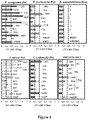
- E. faecium was classified as low biofilm producer while VRE strain (Efm5515-IFO) was identified as intermediate producer ( Figure 3C and 4C).
- aureus strains were strong biofilm producers, 5 (50%) were intermediate producers and 2 were found to be weak biofilm producers (20%).
- 6 strains had a low biofilm-producing phenotype (75%), while the other 2 (25%) strains were intermediate biofilm producers.
- analysis of 52 clinical isolates revealed that more than 44% (23/52) were strong/intermediate biofilm producers and 85% (44/52) were able to produce biofilm.
- this value correlates with the 80% estimated by Romling and Balsalobre (Romling, 2012; NIH Parent Grant Announcement, 2002). The most relevant results were obtained with P. aeruginosa (89%) and S. aureus (80%) as the most efficient biofilm producers ( picture 3 ).
- strains with multiple drug resistances were all found to belong to the strong/intermediate biofilm producing groups. Indeed, as previously indicated, multi-resistant organisms are more frequently associated with high production of biofilms (Kwon, 2008; Rao, 2008; Sanchez, 2013). This point appears to represent a key element that can promote antimicrobial resistance by selecting highly resistant strains exposed to sub-inhibitory antimicrobial concentrations and providing favorable conditions for gene transfer (Wang, 2010).
- the biofilm production phenotype of the clinical isolates was further assessed by the CV assay.
- the average light absorption for the different biofilm-producing bacteria obtained by CV analysis is shown in Figure 6.
- the formation of biofilm was heterogeneous according to the bacterial species and the isolates of the same species.
- the CV is a nonspecific colorimetric assay, which stains live and dead bacteria, as well as the biofilm matrix.
- this test which provides only an indirect quantification of the biofilm, can lead to an overestimation of the results (Pan, 2010; Merritt, 2005; Skogman, 2012), in particular when testing on mucoid strains. Indeed, he was demonstrated that mucus overproduction does not play a significant role in bacterial adhesion and biofilm matrix formation, but has a protective role against host immune response (Stapper, 2004; Leid, 2005). Conversely, the classification process provides a direct estimate of the true ability of different bacterial strains to aggregate or adhere, thus ensuring greater specificity.
- the classification process was developed to work in combination with traditional clinical microbiology procedures, without altering the daily work routine. Immediately after the isolation of the microorganism, for example on an agar plate, it is possible to analyze the ability to produce biofilm.
- the method of the invention makes it possible to characterize biofilm-producing microorganisms, for example bacteria, yeasts, etc. It is therefore obvious that the method can be used for the characterization of the formation of biofilms by other organisms such as yeasts, with an interest and applications similar to those claimed for bacteria.
- the classification process can provide information on the capacity of an unknown bacterial isolate to form a biofilm even before the identification of the microorganism with traditional phenotypic techniques.
- the method according to the invention finds numerous applications, for example in the dental field where biofilms are associated with major dental diseases such as dental caries and periodontal diseases.
- the classification process can represent a valuable tool for example for the food industry as well as the sanitation industry, including water systems.
Landscapes
- Health & Medical Sciences (AREA)
- Life Sciences & Earth Sciences (AREA)
- Immunology (AREA)
- Chemical & Material Sciences (AREA)
- Pathology (AREA)
- General Physics & Mathematics (AREA)
- Engineering & Computer Science (AREA)
- Physics & Mathematics (AREA)
- General Health & Medical Sciences (AREA)
- Biochemistry (AREA)
- Analytical Chemistry (AREA)
- Biomedical Technology (AREA)
- Urology & Nephrology (AREA)
- Molecular Biology (AREA)
- Hematology (AREA)
- Microbiology (AREA)
- Medicinal Chemistry (AREA)
- Food Science & Technology (AREA)
- Cell Biology (AREA)
- Biotechnology (AREA)
- Virology (AREA)
- Tropical Medicine & Parasitology (AREA)
- Measuring Or Testing Involving Enzymes Or Micro-Organisms (AREA)
Claims (16)
- Verfahren zur Bestimmung der biofilmproduzierenden Kapazität eines Mikroorganismus, umfassend die folgenden Schritte:a) Einbringen von mindestens zwei Partikeln in Kulturbehälter, die ein flüssiges, für das Wachstum des Mikroorganismus geeignetes Kulturmedium enthalten, wobei die Partikel auf einer in das Kulturmedium eingetauchten Oberfläche ruhen,b) Einführen und unabhängiges Beimpfen des Kulturmediums der in Schritt a) erhaltenen Behälter mit dem Mikroorganismus in einer Konzentration von 1×10⁻¹ bis 1×10⁻⁶ McFarland (McF), wobei jedes Medium unabhängig eine unterschiedliche Konzentration an Mikroorganismen enthält,c) Halten der beimpften Kulturmedien unter Bedingungen, die das Wachstum des Mikroorganismus ermöglichen,d) Anlegen eines Feldes, das in der Lage ist, die mindestens zwei Partikel zu bewegen, die auf einer in das Kulturmedium eingetauchten Oberfläche ruhen,e) Bestimmung der Fähigkeit des Mikroorganismus zur Bildung eines Biofilms durch Beobachtung und Messung der Aggregation der Partikel wie folgt:- das Fehlen der Aggregation der Partikel, die bei einer Konzentration von 1×10⁻⁶ bis 1×10⁻⁴ McF auftreten, was einem stark biofilmproduzierenden Mikroorganismus entspricht- das Fehlen einer Aggregation der Partikel, die bei einer Konzentration von mehr als 1×10⁻⁴ und weniger als 1×10⁻² McF auftreten, was einem mäßig biofilmproduzierenden Mikroorganismus entspricht,- das Fehlen einer Aggregation der Partikel, die ab einer Konzentration von mindestens 1×10⁻² McF auftreten, was einem schwach biofilmproduzierenden Mikroorganismus entspricht,- eine Aggregation der Partikel, unabhängig von der Konzentration, die einem nicht biofilmproduzierenden Mikroorganismus entspricht.
- Verfahren nach Anspruch 1, wobei das Verfahren einen Schritt e') zur Bestimmung des Biofilm-Index (BFI)-Werts für jedes der Medien umfasst, indem:- Analyse der roten, grünen und blauen Farbkomponenten der Pixel des Bildes, was die Bestimmung der Partikeldichte pro Pixel ermöglicht,- die Berechnung der Korrelation zwischen den Partikeln,- die Berechnung der Aggregationsdichte der Partikel, ausgedrückt als BFI, und
bestimmung des Biofilmbildungspotenzialindex pro Behälter (BPc) gemäß der folgenden Formel (I):
- Verfahren nach Anspruch 2, umfassend einen Schritt e") im Anschluss an oder gleichzeitig mit dem Schritt e') zur Bestimmung des Schwellenwertes (S) gemäß der folgenden Formel (II):

- Verfahren nach Anspruch 3, wobei die biofilmproduzierende Kapazität des Mikroorganismus durch Vergleich des BPc-Wertes in Abhängigkeit von der Konzentration der Mikroorganismen wie folgt bestimmt wird:- ein BPc-Wert größer oder gleich dem Schwellenwert S ab einer Konzentration von Mikroorganismen von 1×10⁻⁶ bis 1×10⁻⁴ McF, was einem stark biofilmproduzierenden Mikroorganismus entspricht,- ein BPc-Wert größer oder gleich dem Schwellenwert S bei einer Konzentration von Mikroorganismen von mehr als 1×10⁻⁴ und weniger als 1×10⁻² McF, was einem mäßig biofilmproduzierenden Mikroorganismus entspricht,- ein BPc-Wert, der größer oder gleich dem Schwellenwert S einer Konzentration von Mikroorganismen von 1×10⁻² McF ist, was einem schwach biofilmproduzierenden Mikroorganismus entspricht,- einen BPc-Wert, der unabhängig von der Konzentration kleiner als der Schwellenwert S ist und einem nicht biofilmproduzierenden Mikroorganismus entspricht.
- Verfahren zur Klassifizierung von Mikroorganismen, umfassend die folgenden Schritte:a) Einbringen von mindestens zwei Partikeln in Kulturbehälter, die ein flüssiges, für das Wachstum des Mikroorganismus geeignetes Kulturmedium enthalten, wobei die Partikel auf einer in das Kulturmedium eingetauchten Oberfläche ruhen,b) Einführen und unabhängiges Beimpfen des Kulturmediums der in Schritt a) erhaltenen Behälter mit dem Mikroorganismus in einer Konzentration von 1×10⁻¹ bis 1×10⁻⁶ McF, wobei jedes Medium unabhängig voneinander eine unterschiedliche Konzentration an Mikroorganismen enthält,c) Halten der beimpften Kulturmedien unter Bedingungen, die das Wachstum des Mikroorganismus ermöglichen,d) Anlegen eines Feldes, das in der Lage ist, die mindestens zwei Teilchen, die auf einer in das Kulturmedium eingetauchten Oberfläche ruhen, zu bewegen, vorzugsweise mit dem Ziel, eine Aggregation, vorzugsweise in Form von Punkten, der mindestens zwei Teilchen zu erhalten,e) Klassifizierung des Mikroorganismus durch Beobachtung der Aggregation der Partikel wie folgt:- Kategorie I: Abwesenheit der Aggregation der Partikel, die in einer Konzentration von 1×10⁻⁶ bis 1×10⁻⁴ McF auftreten- Kategorie II: Abwesenheit von Aggregation der Partikel, die bei einer Konzentration von mehr als 1×10⁻⁴ und weniger als
1×10⁻² McF, was einem mäßig biofilmproduzierenden Mikroorganismus entspricht,- Kategorie III: Abwesenheit von Aggregation der Partikel, die ab einer Konzentration von mindestens 1x10⁻² McF auftreten, was einem schwach biofilmproduzierenden Mikroorganismus entspricht,- Kategorie IV: Aggregation der genannten Partikel, unabhängig von der Konzentration, entsprechend einem nicht biofilmproduzierenden Mikroorganismus. - Verfahren nach einem der vorhergehenden Ansprüche, umfassend sechs Kulturbehälter, in denen die Konzentration der Mikroorganismen in Schritt b) jeweils 1×10⁻⁶ McF, 1×10⁻⁵ McF, 1×10⁻⁴ McF, 1×10⁻³ McF, 1×10⁻² McF und 1×10⁻¹ McF beträgt.
- Verfahren nach einem der vorhergehenden Ansprüche, wobei die beimpften Kulturmedien unter Bedingungen gehalten werden, die das Wachstum des Mikroorganismus für 1 bis 8 Stunden, vorzugsweise 4 bis 6 Stunden, ermöglichen.
- Verfahren nach einem der Ansprüche 1 bis 5, wobei die beimpften Kulturmedien unter Bedingungen gehalten werden, die das Wachstum des Mikroorganismus für 5 bis 12 Generationszeiten des Mikroorganismus ermöglichen.
- Verfahren nach einem der vorhergehenden Ansprüche, wobei die mindestens zwei Teilchen elektrisch geladene, magnetische oder magnetisierbare Teilchen oder mit mindestens einer magnetischen oder magnetisierbaren Schicht bedeckte Teilchen sind.
- Verfahren nach einem der vorhergehenden Ansprüche, wobei die mindestens zwei Teilchen einem elektromagnetischen Feld ausgesetzt werden, das gegebenenfalls in Pulsen angelegt wird.
- Verfahren nach einem der vorhergehenden Ansprüche, bei dem die mindestens zwei Teilchen einem allmählichen Anstieg des elektromagnetischen Feldes unterworfen werden.
- Verfahren nach einem der vorhergehenden Ansprüche, bei dem das Magnetfeld durch Mittel zur Erzeugung eines beweglichen Feldes erzeugt wird.
- Verfahren nach einem der vorhergehenden Ansprüche, bei dem die mindestens zwei Partikel mittels einer Lichtquelle beleuchtet werden, um ihre Bewegung zu erfassen.
- Verfahren nach einem der vorhergehenden Ansprüche, wobei die mindestens zwei Teilchen ein Signal erzeugen.
- Verfahren nach dem vorhergehenden Anspruch, wobei die mindestens zwei Teilchen anregbar, fluoreszierend oder phosphoreszierend oder radioaktiv oder chemilumineszierend sind.
- Verfahren nach einem der vorangehenden Ansprüche, wobei eines der Kompartimente den Mikroorganismus nicht enthält und das Kompartiment eine Kontrolle für das Medium darstellt.
Applications Claiming Priority (3)
| Application Number | Priority Date | Filing Date | Title |
|---|---|---|---|
| FR1650345A FR3046795A1 (fr) | 2016-01-15 | 2016-01-15 | Procede de classification de microorganismes |
| FR1652784A FR3046796B1 (fr) | 2016-01-15 | 2016-03-31 | Procede de classification de microorganismes |
| PCT/FR2017/050033 WO2017121946A1 (fr) | 2016-01-15 | 2017-01-05 | Procédé de classification de microorganismes |
Publications (2)
| Publication Number | Publication Date |
|---|---|
| EP3403101A1 EP3403101A1 (de) | 2018-11-21 |
| EP3403101B1 true EP3403101B1 (de) | 2022-10-19 |
Family
ID=56741138
Family Applications (1)
| Application Number | Title | Priority Date | Filing Date |
|---|---|---|---|
| EP17711698.5A Active EP3403101B1 (de) | 2016-01-15 | 2017-01-05 | Verfahren zur klassifizierung von mikroorganismen |
Country Status (5)
| Country | Link |
|---|---|
| US (1) | US10976316B2 (de) |
| EP (1) | EP3403101B1 (de) |
| CA (1) | CA3009895A1 (de) |
| FR (2) | FR3046795A1 (de) |
| WO (1) | WO2017121946A1 (de) |
Families Citing this family (2)
| Publication number | Priority date | Publication date | Assignee | Title |
|---|---|---|---|---|
| US12228511B1 (en) * | 2023-09-25 | 2025-02-18 | Craig Ellins | Organic plant material microbial test kit devices and processing method |
| US20250347622A1 (en) * | 2023-09-25 | 2025-11-13 | Craig Ellins | Organic plant material microbial test kit devices and processing method |
Family Cites Families (8)
| Publication number | Priority date | Publication date | Assignee | Title |
|---|---|---|---|---|
| US4812401A (en) * | 1987-05-19 | 1989-03-14 | Syntex (U.S.A.) Inc. | Reversible agglutination mediators for separating cells from whole blood |
| FR2866707A1 (fr) * | 2004-02-23 | 2005-08-26 | Thierry Bernardi | Procede et dispositif permettant de detecter la formation et le developpement de biofilms dans un milieu de culture |
| FR2898363B1 (fr) * | 2006-03-10 | 2008-06-13 | Biofilm Control Sarl | Prodede de releves d'images, notamment pour l'etude du developpement d'un biofilm dans un milieu de culture |
| FR2916761B1 (fr) * | 2007-05-30 | 2010-05-07 | Biofilm Control | Test antibiogramme utilisant des microbilles |
| FR2928656B1 (fr) * | 2008-03-14 | 2011-08-26 | Biomerieux Sa | Procede de detection en temps reel de microorganismes dans un milieu de culture liquide par agglutination. |
| FR2962221A1 (fr) * | 2010-07-02 | 2012-01-06 | Biofilm Control | Procede de detection d'interactions moleculaires |
| EP3254762B1 (de) * | 2012-04-12 | 2020-04-29 | Becton Dickinson and Company | Verfahren, systeme und vorrichtungen zur erkennung und identifizierung von mikroorganismen bei mikrobiologischen kulturproben |
| WO2014155020A1 (fr) * | 2013-03-28 | 2014-10-02 | Biofilm Control | Antibiogramme rapide |
-
2016
- 2016-01-15 FR FR1650345A patent/FR3046795A1/fr active Pending
- 2016-03-31 FR FR1652784A patent/FR3046796B1/fr not_active Expired - Fee Related
-
2017
- 2017-01-05 WO PCT/FR2017/050033 patent/WO2017121946A1/fr not_active Ceased
- 2017-01-05 EP EP17711698.5A patent/EP3403101B1/de active Active
- 2017-01-05 CA CA3009895A patent/CA3009895A1/fr active Pending
- 2017-01-05 US US16/069,881 patent/US10976316B2/en not_active Expired - Fee Related
Also Published As
| Publication number | Publication date |
|---|---|
| WO2017121946A1 (fr) | 2017-07-20 |
| EP3403101A1 (de) | 2018-11-21 |
| US20190120836A1 (en) | 2019-04-25 |
| CA3009895A1 (fr) | 2017-07-20 |
| FR3046796B1 (fr) | 2020-10-09 |
| FR3046796A1 (fr) | 2017-07-21 |
| US10976316B2 (en) | 2021-04-13 |
| FR3046795A1 (fr) | 2017-07-21 |
Similar Documents
| Publication | Publication Date | Title |
|---|---|---|
| Di Domenico et al. | Development of an in vitro assay, based on the biofilm ring test®, for rapid profiling of biofilm-growing bacteria | |
| Alshaikh et al. | Correlation between antimicrobial resistance, biofilm formation, and virulence determinants in uropathogenic Escherichia coli from Egyptian hospital | |
| Croxall et al. | Increased human pathogenic potential of Escherichia coli from polymicrobial urinary tract infections in comparison to isolates from monomicrobial culture samples | |
| Grela et al. | Interferences in the optimization of the MTT assay for viability estimation of Proteus mirabilis | |
| JPH07505788A (ja) | 液体中の抗菌性化合物の残留物検出用ユニット | |
| Hassan et al. | Correlation of biofilm formation and antibiotic resistance among clinical and soil isolates of Acinetobacter baumannii in Iraq | |
| JP2010213598A (ja) | 抗菌薬の微生物に対する有効性の検査方法 | |
| Abbood et al. | Molecular detection of genes encoding for adhesion factors in biofilm formation among uropathogenic Escherichia coli isolates | |
| Lyamuya et al. | Prevalence, antimicrobial resistance and associated risk factors for bacteriuria in diabetic women in Dar es Salaam, Tanzania | |
| Yabbarov et al. | Methods for Rapid Evaluation of Microbial Antibiotics Resistance | |
| Rouhi | Phonotypic Investigation of Biofilm Formation and Determination of Presence of bap and bla OXA-51 Genes in Acinetobacter baumannii From Clinical Specimens in Tehran | |
| EP3403101A1 (de) | Verfahren zur klassifizierung von mikroorganismen | |
| AL-Mahfoodh et al. | The molecular study for evaluation the antibiotic resistance of Escherichia coli and Klebsiella pneumoniae bacteria isolated from urinary tract infection patients | |
| Abd El Galil et al. | Detection of biofilm genes among clinical isolates of Pseudomonas aeruginosa recovered from some Egyptian hospitals | |
| WO2014155020A1 (fr) | Antibiogramme rapide | |
| Ali et al. | Correlation between Efflux Pump Genes and Biofilm Formation with Antibiotic Resistance of Klebsiella pneumoniae | |
| Saleem et al. | Antimicrobial Resistance Patterns among Bacterial Pathogens Isolated from Clinical Specimens in Sheikh Zaid Hospital, Lahore | |
| Haghighatian et al. | Prevalence of algD, pslD, and pelF Genes Involved in Biofilm Formation in Clinical MDR Pseudomonas aeruginosa Strains | |
| Mirzaei | Evaluation of Antibiotic Sensitivity, Biofilm Formation Ability, and Prevalence of Extended-Spectrum Beta-Lactamase (ESBLs) in Clinically Isolates Escherichia coli and Klebsiella pneumoniae | |
| Pournajafi et al. | Prevalence of extended-spectrum beta-lactamases production in Escherichia coli isolated from urinary tract infection samples in Zanjan Hospitals, Iran | |
| Shivaji | Methods to Detect Antimicrobial Resistance in Human Ocular Samples | |
| Mustafa et al. | Application of Silver Oxide Nanoparticles as Antibiofilm and Detection of Beta Lactamase Gene in Escherichia Coli Isolated from Diabetic Mellitus Patients. | |
| FR2764305A1 (fr) | Procede de detection et de numeration de cellules viables dans un echantillon biologique et kit pour sa mise en oeuvre | |
| Rao et al. | Pathophysiology of Multidrug Resistant Klebseilla pneumoniae Causing UTI Infection in Pregnant Women | |
| WO2017121964A1 (fr) | Procédé de détection rapide de sensibilité de microorganismes aux drogues |
Legal Events
| Date | Code | Title | Description |
|---|---|---|---|
| STAA | Information on the status of an ep patent application or granted ep patent |
Free format text: STATUS: UNKNOWN |
|
| STAA | Information on the status of an ep patent application or granted ep patent |
Free format text: STATUS: THE INTERNATIONAL PUBLICATION HAS BEEN MADE |
|
| PUAI | Public reference made under article 153(3) epc to a published international application that has entered the european phase |
Free format text: ORIGINAL CODE: 0009012 |
|
| STAA | Information on the status of an ep patent application or granted ep patent |
Free format text: STATUS: REQUEST FOR EXAMINATION WAS MADE |
|
| 17P | Request for examination filed |
Effective date: 20180619 |
|
| AK | Designated contracting states |
Kind code of ref document: A1 Designated state(s): AL AT BE BG CH CY CZ DE DK EE ES FI FR GB GR HR HU IE IS IT LI LT LU LV MC MK MT NL NO PL PT RO RS SE SI SK SM TR |
|
| AX | Request for extension of the european patent |
Extension state: BA ME |
|
| DAV | Request for validation of the european patent (deleted) | ||
| DAX | Request for extension of the european patent (deleted) | ||
| STAA | Information on the status of an ep patent application or granted ep patent |
Free format text: STATUS: EXAMINATION IS IN PROGRESS |
|
| 17Q | First examination report despatched |
Effective date: 20200515 |
|
| GRAP | Despatch of communication of intention to grant a patent |
Free format text: ORIGINAL CODE: EPIDOSNIGR1 |
|
| STAA | Information on the status of an ep patent application or granted ep patent |
Free format text: STATUS: GRANT OF PATENT IS INTENDED |
|
| INTG | Intention to grant announced |
Effective date: 20220525 |
|
| GRAS | Grant fee paid |
Free format text: ORIGINAL CODE: EPIDOSNIGR3 |
|
| GRAA | (expected) grant |
Free format text: ORIGINAL CODE: 0009210 |
|
| STAA | Information on the status of an ep patent application or granted ep patent |
Free format text: STATUS: THE PATENT HAS BEEN GRANTED |
|
| AK | Designated contracting states |
Kind code of ref document: B1 Designated state(s): AL AT BE BG CH CY CZ DE DK EE ES FI FR GB GR HR HU IE IS IT LI LT LU LV MC MK MT NL NO PL PT RO RS SE SI SK SM TR |
|
| REG | Reference to a national code |
Ref country code: GB Ref legal event code: FG4D Free format text: NOT ENGLISH |
|
| REG | Reference to a national code |
Ref country code: CH Ref legal event code: EP |
|
| REG | Reference to a national code |
Ref country code: IE Ref legal event code: FG4D Free format text: LANGUAGE OF EP DOCUMENT: FRENCH |
|
| REG | Reference to a national code |
Ref country code: DE Ref legal event code: R096 Ref document number: 602017062749 Country of ref document: DE |
|
| REG | Reference to a national code |
Ref country code: AT Ref legal event code: REF Ref document number: 1525863 Country of ref document: AT Kind code of ref document: T Effective date: 20221115 |
|
| REG | Reference to a national code |
Ref country code: LT Ref legal event code: MG9D |
|
| REG | Reference to a national code |
Ref country code: NL Ref legal event code: MP Effective date: 20221019 |
|
| REG | Reference to a national code |
Ref country code: AT Ref legal event code: MK05 Ref document number: 1525863 Country of ref document: AT Kind code of ref document: T Effective date: 20221019 |
|
| PG25 | Lapsed in a contracting state [announced via postgrant information from national office to epo] |
Ref country code: NL Free format text: LAPSE BECAUSE OF FAILURE TO SUBMIT A TRANSLATION OF THE DESCRIPTION OR TO PAY THE FEE WITHIN THE PRESCRIBED TIME-LIMIT Effective date: 20221019 |
|
| PG25 | Lapsed in a contracting state [announced via postgrant information from national office to epo] |
Ref country code: SE Free format text: LAPSE BECAUSE OF FAILURE TO SUBMIT A TRANSLATION OF THE DESCRIPTION OR TO PAY THE FEE WITHIN THE PRESCRIBED TIME-LIMIT Effective date: 20221019 Ref country code: PT Free format text: LAPSE BECAUSE OF FAILURE TO SUBMIT A TRANSLATION OF THE DESCRIPTION OR TO PAY THE FEE WITHIN THE PRESCRIBED TIME-LIMIT Effective date: 20230220 Ref country code: NO Free format text: LAPSE BECAUSE OF FAILURE TO SUBMIT A TRANSLATION OF THE DESCRIPTION OR TO PAY THE FEE WITHIN THE PRESCRIBED TIME-LIMIT Effective date: 20230119 Ref country code: LT Free format text: LAPSE BECAUSE OF FAILURE TO SUBMIT A TRANSLATION OF THE DESCRIPTION OR TO PAY THE FEE WITHIN THE PRESCRIBED TIME-LIMIT Effective date: 20221019 Ref country code: FI Free format text: LAPSE BECAUSE OF FAILURE TO SUBMIT A TRANSLATION OF THE DESCRIPTION OR TO PAY THE FEE WITHIN THE PRESCRIBED TIME-LIMIT Effective date: 20221019 Ref country code: ES Free format text: LAPSE BECAUSE OF FAILURE TO SUBMIT A TRANSLATION OF THE DESCRIPTION OR TO PAY THE FEE WITHIN THE PRESCRIBED TIME-LIMIT Effective date: 20221019 Ref country code: AT Free format text: LAPSE BECAUSE OF FAILURE TO SUBMIT A TRANSLATION OF THE DESCRIPTION OR TO PAY THE FEE WITHIN THE PRESCRIBED TIME-LIMIT Effective date: 20221019 |
|
| PG25 | Lapsed in a contracting state [announced via postgrant information from national office to epo] |
Ref country code: RS Free format text: LAPSE BECAUSE OF FAILURE TO SUBMIT A TRANSLATION OF THE DESCRIPTION OR TO PAY THE FEE WITHIN THE PRESCRIBED TIME-LIMIT Effective date: 20221019 Ref country code: PL Free format text: LAPSE BECAUSE OF FAILURE TO SUBMIT A TRANSLATION OF THE DESCRIPTION OR TO PAY THE FEE WITHIN THE PRESCRIBED TIME-LIMIT Effective date: 20221019 Ref country code: LV Free format text: LAPSE BECAUSE OF FAILURE TO SUBMIT A TRANSLATION OF THE DESCRIPTION OR TO PAY THE FEE WITHIN THE PRESCRIBED TIME-LIMIT Effective date: 20221019 Ref country code: IS Free format text: LAPSE BECAUSE OF FAILURE TO SUBMIT A TRANSLATION OF THE DESCRIPTION OR TO PAY THE FEE WITHIN THE PRESCRIBED TIME-LIMIT Effective date: 20230219 Ref country code: HR Free format text: LAPSE BECAUSE OF FAILURE TO SUBMIT A TRANSLATION OF THE DESCRIPTION OR TO PAY THE FEE WITHIN THE PRESCRIBED TIME-LIMIT Effective date: 20221019 Ref country code: GR Free format text: LAPSE BECAUSE OF FAILURE TO SUBMIT A TRANSLATION OF THE DESCRIPTION OR TO PAY THE FEE WITHIN THE PRESCRIBED TIME-LIMIT Effective date: 20230120 |
|
| REG | Reference to a national code |
Ref country code: DE Ref legal event code: R097 Ref document number: 602017062749 Country of ref document: DE |
|
| PG25 | Lapsed in a contracting state [announced via postgrant information from national office to epo] |
Ref country code: SM Free format text: LAPSE BECAUSE OF FAILURE TO SUBMIT A TRANSLATION OF THE DESCRIPTION OR TO PAY THE FEE WITHIN THE PRESCRIBED TIME-LIMIT Effective date: 20221019 Ref country code: RO Free format text: LAPSE BECAUSE OF FAILURE TO SUBMIT A TRANSLATION OF THE DESCRIPTION OR TO PAY THE FEE WITHIN THE PRESCRIBED TIME-LIMIT Effective date: 20221019 Ref country code: EE Free format text: LAPSE BECAUSE OF FAILURE TO SUBMIT A TRANSLATION OF THE DESCRIPTION OR TO PAY THE FEE WITHIN THE PRESCRIBED TIME-LIMIT Effective date: 20221019 Ref country code: DK Free format text: LAPSE BECAUSE OF FAILURE TO SUBMIT A TRANSLATION OF THE DESCRIPTION OR TO PAY THE FEE WITHIN THE PRESCRIBED TIME-LIMIT Effective date: 20221019 Ref country code: CZ Free format text: LAPSE BECAUSE OF FAILURE TO SUBMIT A TRANSLATION OF THE DESCRIPTION OR TO PAY THE FEE WITHIN THE PRESCRIBED TIME-LIMIT Effective date: 20221019 |
|
| REG | Reference to a national code |
Ref country code: DE Ref legal event code: R119 Ref document number: 602017062749 Country of ref document: DE |
|
| PLBE | No opposition filed within time limit |
Free format text: ORIGINAL CODE: 0009261 |
|
| STAA | Information on the status of an ep patent application or granted ep patent |
Free format text: STATUS: NO OPPOSITION FILED WITHIN TIME LIMIT |
|
| PG25 | Lapsed in a contracting state [announced via postgrant information from national office to epo] |
Ref country code: SK Free format text: LAPSE BECAUSE OF FAILURE TO SUBMIT A TRANSLATION OF THE DESCRIPTION OR TO PAY THE FEE WITHIN THE PRESCRIBED TIME-LIMIT Effective date: 20221019 Ref country code: AL Free format text: LAPSE BECAUSE OF FAILURE TO SUBMIT A TRANSLATION OF THE DESCRIPTION OR TO PAY THE FEE WITHIN THE PRESCRIBED TIME-LIMIT Effective date: 20221019 |
|
| REG | Reference to a national code |
Ref country code: CH Ref legal event code: PL |
|
| 26N | No opposition filed |
Effective date: 20230720 |
|
| GBPC | Gb: european patent ceased through non-payment of renewal fee |
Effective date: 20230119 |
|
| PG25 | Lapsed in a contracting state [announced via postgrant information from national office to epo] |
Ref country code: LU Free format text: LAPSE BECAUSE OF NON-PAYMENT OF DUE FEES Effective date: 20230105 |
|
| REG | Reference to a national code |
Ref country code: BE Ref legal event code: MM Effective date: 20230131 |
|
| PG25 | Lapsed in a contracting state [announced via postgrant information from national office to epo] |
Ref country code: LI Free format text: LAPSE BECAUSE OF NON-PAYMENT OF DUE FEES Effective date: 20230131 Ref country code: CH Free format text: LAPSE BECAUSE OF NON-PAYMENT OF DUE FEES Effective date: 20230131 Ref country code: GB Free format text: LAPSE BECAUSE OF NON-PAYMENT OF DUE FEES Effective date: 20230119 Ref country code: DE Free format text: LAPSE BECAUSE OF NON-PAYMENT OF DUE FEES Effective date: 20230801 |
|
| PG25 | Lapsed in a contracting state [announced via postgrant information from national office to epo] |
Ref country code: SI Free format text: LAPSE BECAUSE OF FAILURE TO SUBMIT A TRANSLATION OF THE DESCRIPTION OR TO PAY THE FEE WITHIN THE PRESCRIBED TIME-LIMIT Effective date: 20221019 Ref country code: FR Free format text: LAPSE BECAUSE OF NON-PAYMENT OF DUE FEES Effective date: 20230131 Ref country code: BE Free format text: LAPSE BECAUSE OF NON-PAYMENT OF DUE FEES Effective date: 20230131 |
|
| PG25 | Lapsed in a contracting state [announced via postgrant information from national office to epo] |
Ref country code: IE Free format text: LAPSE BECAUSE OF NON-PAYMENT OF DUE FEES Effective date: 20230105 |
|
| PG25 | Lapsed in a contracting state [announced via postgrant information from national office to epo] |
Ref country code: IT Free format text: LAPSE BECAUSE OF FAILURE TO SUBMIT A TRANSLATION OF THE DESCRIPTION OR TO PAY THE FEE WITHIN THE PRESCRIBED TIME-LIMIT Effective date: 20221019 |
|
| PG25 | Lapsed in a contracting state [announced via postgrant information from national office to epo] |
Ref country code: MC Free format text: LAPSE BECAUSE OF FAILURE TO SUBMIT A TRANSLATION OF THE DESCRIPTION OR TO PAY THE FEE WITHIN THE PRESCRIBED TIME-LIMIT Effective date: 20221019 |
|
| PG25 | Lapsed in a contracting state [announced via postgrant information from national office to epo] |
Ref country code: MC Free format text: LAPSE BECAUSE OF FAILURE TO SUBMIT A TRANSLATION OF THE DESCRIPTION OR TO PAY THE FEE WITHIN THE PRESCRIBED TIME-LIMIT Effective date: 20221019 |
|
| PG25 | Lapsed in a contracting state [announced via postgrant information from national office to epo] |
Ref country code: BG Free format text: LAPSE BECAUSE OF FAILURE TO SUBMIT A TRANSLATION OF THE DESCRIPTION OR TO PAY THE FEE WITHIN THE PRESCRIBED TIME-LIMIT Effective date: 20221019 |
|
| PG25 | Lapsed in a contracting state [announced via postgrant information from national office to epo] |
Ref country code: BG Free format text: LAPSE BECAUSE OF FAILURE TO SUBMIT A TRANSLATION OF THE DESCRIPTION OR TO PAY THE FEE WITHIN THE PRESCRIBED TIME-LIMIT Effective date: 20221019 |
|
| PG25 | Lapsed in a contracting state [announced via postgrant information from national office to epo] |
Ref country code: CY Free format text: LAPSE BECAUSE OF FAILURE TO SUBMIT A TRANSLATION OF THE DESCRIPTION OR TO PAY THE FEE WITHIN THE PRESCRIBED TIME-LIMIT; INVALID AB INITIO Effective date: 20170105 |
|
| PG25 | Lapsed in a contracting state [announced via postgrant information from national office to epo] |
Ref country code: HU Free format text: LAPSE BECAUSE OF FAILURE TO SUBMIT A TRANSLATION OF THE DESCRIPTION OR TO PAY THE FEE WITHIN THE PRESCRIBED TIME-LIMIT; INVALID AB INITIO Effective date: 20170105 |
|
| PG25 | Lapsed in a contracting state [announced via postgrant information from national office to epo] |
Ref country code: TR Free format text: LAPSE BECAUSE OF FAILURE TO SUBMIT A TRANSLATION OF THE DESCRIPTION OR TO PAY THE FEE WITHIN THE PRESCRIBED TIME-LIMIT Effective date: 20221019 |