EP3403367B1 - Verfahren, knoten und kommunikationsvorrichtung zur definition eines schlüssels in bezug auf mindestens zwei netzwerkinstanzen - Google Patents
Verfahren, knoten und kommunikationsvorrichtung zur definition eines schlüssels in bezug auf mindestens zwei netzwerkinstanzen Download PDFInfo
- Publication number
- EP3403367B1 EP3403367B1 EP16700606.3A EP16700606A EP3403367B1 EP 3403367 B1 EP3403367 B1 EP 3403367B1 EP 16700606 A EP16700606 A EP 16700606A EP 3403367 B1 EP3403367 B1 EP 3403367B1
- Authority
- EP
- European Patent Office
- Prior art keywords
- key
- joint
- network
- enb
- slice
- Prior art date
- Legal status (The legal status is an assumption and is not a legal conclusion. Google has not performed a legal analysis and makes no representation as to the accuracy of the status listed.)
- Active
Links
Images





Classifications
-
- H—ELECTRICITY
- H04—ELECTRIC COMMUNICATION TECHNIQUE
- H04L—TRANSMISSION OF DIGITAL INFORMATION, e.g. TELEGRAPHIC COMMUNICATION
- H04L9/00—Cryptographic mechanisms or cryptographic arrangements for secret or secure communications; Network security protocols
- H04L9/08—Key distribution or management, e.g. generation, sharing or updating, of cryptographic keys or passwords
- H04L9/088—Usage controlling of secret information, e.g. techniques for restricting cryptographic keys to pre-authorized uses, different access levels, validity of crypto-period, different key- or password length, or different strong and weak cryptographic algorithms
-
- G—PHYSICS
- G11—INFORMATION STORAGE
- G11B—INFORMATION STORAGE BASED ON RELATIVE MOVEMENT BETWEEN RECORD CARRIER AND TRANSDUCER
- G11B20/00—Signal processing not specific to the method of recording or reproducing; Circuits therefor
- G11B20/00086—Circuits for prevention of unauthorised reproduction or copying, e.g. piracy
- G11B20/0021—Circuits for prevention of unauthorised reproduction or copying, e.g. piracy involving encryption or decryption of contents recorded on or reproduced from a record carrier
-
- G—PHYSICS
- G11—INFORMATION STORAGE
- G11B—INFORMATION STORAGE BASED ON RELATIVE MOVEMENT BETWEEN RECORD CARRIER AND TRANSDUCER
- G11B20/00—Signal processing not specific to the method of recording or reproducing; Circuits therefor
- G11B20/00086—Circuits for prevention of unauthorised reproduction or copying, e.g. piracy
- G11B20/00681—Circuits for prevention of unauthorised reproduction or copying, e.g. piracy involving measures which prevent a specific kind of data access
- G11B20/00695—Circuits for prevention of unauthorised reproduction or copying, e.g. piracy involving measures which prevent a specific kind of data access said measures preventing that data are read from the recording medium
-
- H—ELECTRICITY
- H04—ELECTRIC COMMUNICATION TECHNIQUE
- H04L—TRANSMISSION OF DIGITAL INFORMATION, e.g. TELEGRAPHIC COMMUNICATION
- H04L9/00—Cryptographic mechanisms or cryptographic arrangements for secret or secure communications; Network security protocols
- H04L9/06—Cryptographic mechanisms or cryptographic arrangements for secret or secure communications; Network security protocols the encryption apparatus using shift registers or memories for block-wise or stream coding, e.g. DES systems or RC4; Hash functions; Pseudorandom sequence generators
- H04L9/065—Encryption by serially and continuously modifying data stream elements, e.g. stream cipher systems, RC4, SEAL or A5/3
- H04L9/0656—Pseudorandom key sequence combined element-for-element with data sequence, e.g. one-time-pad [OTP] or Vernam's cipher
- H04L9/0662—Pseudorandom key sequence combined element-for-element with data sequence, e.g. one-time-pad [OTP] or Vernam's cipher with particular pseudorandom sequence generator
-
- H—ELECTRICITY
- H04—ELECTRIC COMMUNICATION TECHNIQUE
- H04W—WIRELESS COMMUNICATION NETWORKS
- H04W12/00—Security arrangements; Authentication; Protecting privacy or anonymity
- H04W12/04—Key management, e.g. using generic bootstrapping architecture [GBA]
- H04W12/041—Key generation or derivation
-
- H—ELECTRICITY
- H04—ELECTRIC COMMUNICATION TECHNIQUE
- H04L—TRANSMISSION OF DIGITAL INFORMATION, e.g. TELEGRAPHIC COMMUNICATION
- H04L9/00—Cryptographic mechanisms or cryptographic arrangements for secret or secure communications; Network security protocols
- H04L9/08—Key distribution or management, e.g. generation, sharing or updating, of cryptographic keys or passwords
- H04L9/0894—Escrow, recovery or storing of secret information, e.g. secret key escrow or cryptographic key storage
Definitions
- the technology disclosed herein relates generally to the field of secure communication in communications networks, and in particular to a method, performed in a network node and communication device, of establishing a key related to at least two network instances.
- the disclosure also relates to corresponding network nodes, communication device, and related computer programs and computer program products.
- Network slicing is a new concept that applies to both Long Term Evolution (LTE) and future fifth generation (5G) radio access technology (RAT) (denoted NX herein).
- LTE Long Term Evolution
- RAT radio access technology
- network slicing logically separated partitions of a network are created, wherein the partitions address different business purposes.
- These "network slices" may be logically separated to a degree such as to be regarded and managed as networks of their own.
- the logical network slices may enable operators to provide networks on an as-a service basis and thereby meet a wide range of expected use cases.
- a driving force for introducing network slicing is a desired business expansion.
- Such business expansion is believed to be achievable by improving a cellular operator's ability to offer connectivity services in various business areas besides the currently provided mobile communication services.
- Such new connectivity services may have different network characteristics, e.g. in view of performance, security, robustness and complexity.
- Figure 1 illustrates an architecture for a current working assumption which is that there will be one shared Radio Access Network (RAN) infrastructure 1 that will connect to several Evolved Packet Core (EPC) instances 2a, 2b, in particular one EPC instance per network slice (Slice 1, Slice 2).
- EPC Evolved Packet Core
- a first slice may for example be a Mobile Broadband slice and a second slice (Slice 2) may for example be a Machine Type Communication network slice.
- the document shows that slicing effectively creates a virtualised core for each service, engineered for requirements of the specific service.
- the specific requirements include authentication and authorisation, implying the use of specific keys for each slice.
- An objective of the present teachings is to address and overcome the above mentioned foreseen difficulties, and this object and others are achieved by the methods, network node, communication device, computer programs and computer program products according to the appended independent claims, and by the embodiments according to the dependent claims.
- the objective is according to an aspect achieved by a method performed in a wireless network node as defined in independent claim 1.
- the method provides a number of advantages. For instance, in the method a joint key replaces different network slice-specific keys, thereby providing a method of protection of the common AS or NAS (or both) that involves low complexity. Further, the generation of the joint key (e.g. a joint K eNB key: K eNB_joint ) in a network node such as a RAN node is also dependent on the behavior of state transition of the different network slices, and the generation of the joint key (K ASME_joint ) in a network node (e.g.
- ASME access security management entity
- MME Mobility Management Entity
- the objective is according to an aspect achieved by a wireless network node as defined in independent claim 7.
- the objective is according to an aspect achieved by a method performed in a wireless communication device as defined in independent claim 8.
- the objective is according to an aspect achieved by a wireless communication device as defined in independent claim 17.
- the NAS is a functional layer for example in the Universal Mobile Telecommunications System (UMTS) and LTE wireless telecom protocol stacks between the core network (e.g. Mobility Management Entity, MME, thereof, or Mobile Switching Center (MSC)/Serving General Packet Radio Service Support Node (SGSN)) and a user equipment (UE).
- MME Mobility Management Entity
- MSC Mobile Switching Center
- SGSN Serving General Packet Radio Service Support Node
- UE user equipment
- This layer is used for managing the establishment of communication sessions and for maintaining continuous communications with the UE as it moves.
- NAS traffic may comprise NAS signaling, but also user plane signaling transmitted from the UE to the MME.
- the AS is a functional layer in the UMTS and LTE wireless telecom protocol stacks between radio access network (e.g. NodeB, evolved NodeB, eNB, Radio Network controller (RNC) thereof) and the UE. While the definition of the AS is very different between UMTS and LTE, in both cases the AS is responsible for transporting data over the wireless connection and managing radio resources.
- radio access network e.g. NodeB, evolved NodeB, eNB, Radio Network controller (RNC) thereof
- RNC Radio Network controller
- a sliced network with UEs capable of attaching to multiple network slices it is foreseen that there will be issues with multiple independent keys specific for each respective network slice.
- the UE and the network side would have to handle one set of keys for each network slice serving the UE.
- the multiple independent keys and their derivatives are used for the encryption and integrity protection of either shared access stratum (AS) or shared non-access stratum (NAS), or both.
- the subscription for each network slice for the UE is provisioned independently of any other subscriptions it might have and is stored for example on a Subscriber Identification Module (SIM) or Universal SIM (USIM).
- SIM Subscriber Identification Module
- USB Universal SIM
- the (U)SIM may or may not be stored in a physically separate Universal Integrated Circuit Card (UICC) or temper resistant module.
- UICC Universal Integrated Circuit Card
- the present teachings suggest a solution with a joint key K eNB_joint (or K ASME_joint in an embodiment) which is consecutively used for deriving keys used for protection of shared AS.
- This joint key K eNB_joint is generated in the eNB and in the UE.
- the joint key K eNB_joint can be generated (or regenerated) each time a slice in the UE goes from IDLE to ACTIVE mode.
- the MME may provide the eNB with new keying material (K eNB_i ) in the SlAP UE INITIAL CONTEXT SETUP message as is also currently done.
- the eNB may derive a new joint key K eNB_joint from at least a possibly existing joint key K eNB_joint and the new keying material (K eNB_i ) received from the MME.
- This newly derived joint key K eNB_joint is used by the UE and the eNB to derive the actual keys used for protection of the AS instead of having to use different slice-specific keys K eNB_Slice 1 , K eNB_Slice 2 , ..., K eNB_slice N .
- the newly derived joint key K eNB_joint is hence used to protect the AS communication between the eNB and the UE.
- a joint key K ASME_joint is generated in the MME and in the UE, and this joint key K ASME_joint is consecutively used for deriving keys used for protection of a shared NAS communication (shared between the different network slices).
- the joint K ASME_joint can be generated (or regenerated) each time the UE authenticates to a network slice.
- the joint K ASME_joint is used by the MME and the UE to derive the actual keys used for protecting the NAS instead of using multiple slice-specific keys K ASME_Slice 1 , K ASME_Slice 2 .
- the joint K ASME can also be used by the MME and UE to derive keys K eNB s for the protection of AS communication.
- FIG. 2 illustrates the architecture of a communications system 10, in particular a LTE system. Embodiments according to the present teachings may be implemented in the communication system 10. It is noted that although LTE is used herein as an exemplary implementation, the teachings are applicable also to other systems and protocols than the specifically mentioned system and protocols.
- the communications system 10 comprises a radio access network (RAN) 13 comprising radio access nodes 11a, 11b (denoted evolved NodeBs, eNBs) communicating over an air interface with communication devices such as the UEs 14.
- RAN radio access network
- eNBs denoted evolved NodeBs
- the communications system 10 also comprises an evolved packet core (EPC) network 15a comprising EPC nodes such as Mobility Management Entity (MME) 12a and Serving Gateway (S-GW) 16a.
- EPC evolved packet core
- the interface connecting eNBs 11a to the MME/S-GW 12a, 16a is denoted S1, while the interface interconnecting peer eNBs 11a, 11b is denoted X2.
- the air interface of the RAN 13 is denoted Evolved Universal Terrestrial Radio Access (EUTRA(N)).
- EUTRA(N) Evolved Universal Terrestrial Radio Access
- the third generation partnership project (3GPP) is currently working on standardization of Release 13 of the Long Term Evolution (LTE) concept.
- the communication system 10 may also comprise a Home Subscriber Server (HSS)/Authentication Centre 17 comprising a database containing subscription related information.
- the HSS/AuC 17 may, for instance, provide keys needed for authentication and authorization of the communication device 14.
- the network slices may be provided to other types of devices, e.g. machine type devices such as sensors, and for various applications.
- the communication device may be a wireless device, and it is noted that the communication device may be a virtual device running on a hardware platform.
- a network slice can thus be tailored for the needs of a specific use case, e.g. in view of speed, capacity, coverage, latency etc.
- the network slice may comprise virtualized network elements and/or physical resources.
- a network slice may comprise a virtualized MME (also denoted MME instance) and an eNB.
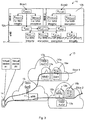
- Figure 3 illustrates a key hierarchy (at uppermost part) and a scenario (at lowermost part) in which embodiments of the present teachings may be implemented.
- the eNB 11/RAN 13 is shared between the different network slices Slice 1, Slice 2 for the UE 14, i.e. a shared AS connection is used for the different network slices.
- Each slice has a respective (different) EPC part 15a, 15b, e.g. MME1 (reference numeral 12a) and MME2 (reference numeral 12b), and the UE 14 therefore has separate NAS connections to the different MMEs 12a, 12b. That is, there are separate NAS connections to the respective MME 12a, 12b, one NAS connection for each network slice Slice 1, Slice 2.
- each network slice Slice 1, Slice 2 may also have a respective HSS/AuC: HSS/AuCi (reference numeral 17a) for a first network slice (Slice 1) and HSS/AuC2 (reference numeral 17b) for a second network slice (Slice 2).
- HSS/AuCi reference numeral 17a
- HSS/AuC2 reference numeral 17b
- S-GW Serving Gateway
- a conceivable situation is that different operators share parts of their networks. For example, two operators may use separate core networks, e.g. using their separate HSS, and share the radio access network. It is thus noted that different network slices may belong to different operators and may partially include physically separate nodes or virtual servers controlled by different operators.
- the figure 3 also shows that the UE 14 may shares its resources, e.g. processing capacity, memory etc., for its various network slices.
- resources e.g. processing capacity, memory etc.
- a first Virtual device #1 and a second Virtual device #2 are shown as examples, and intended to indicate and exemplify such resource sharing in the UE 14 for the different network slices.
- the UE 14 or any other communication device served by the network slices may be a virtual device running on a hardware platform.
- the MME 12a, 12b may also have several instances for creating different network slices for the UEs.
- joint key K eNB_joint is introduced in this embodiment.
- the joint key K eNB_joint is consecutively used for deriving keys used for protection of the shared AS.
- This joint key K eNB_joint is generated in the eNB 11 and in the UE 14.
- the joint key K eNB_joint can be generated each time the UE 14 goes from IDLE to ACTIVE mode in any network slice.
- the UE 14 may be ACTIVE on a first network slice Slice 1 and when going from IDLE to ACTIVE in a second network slice Slice 2, the joint key K eNB_joint is generated and used for all network slices for protection of the shared AS.
- the joint key K eNB_joint may take on the role of a regular K eNB as used in LTE today. More specifically, after generating the joint key K eNB_joint , the UE 14 and eNB 11 can use the joint key K eNB_joint in all subsequent procedures and operations in which the K eNB is used today, such as X2-handovers, intra-cell handovers etc. The joint key K eNB_joint is then used, by the eNB 11 as well as by the UE 14, to derive the actual keys (e.g.
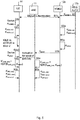
- Figure 4 illustrates a signaling scheme for an authentication and key agreement procedure and key derivation in a communication system 10 according to the present teachings.
- the exemplary use case involves two main components: the UE 14 authenticates to two different MMEs (at least a first MME1 and a second MME2) 12a, 12b in different network slices Slice 1, Slice 2, using different credentials for this, and the eNB 11 and the UE 1 maintain a joint key K eNB_joint when the UE 14 goes from IDLE to ACTIVE mode in the two different network slices Slice 1, Slice 2.
- MMEs at least a first MME1 and a second MME2
- eNB 11 and the UE 1 maintain a joint key K eNB_joint when the UE 14 goes from IDLE to ACTIVE mode in the two different network slices Slice 1, Slice 2.
- the core network interactions i.e., between the UE 14 and the different MMEs 12a, 12b (NAS), and also between the eNB 11 and the MMEs 12a, 12b (eNB over S1 interface to MME) can remain unchanged, i.e. remain as current core network interactions.
- the MMEs 12a, 12b (MME1, MME2) do not even need to be aware of that the key K eNB joining technology according to the present teachings is used between the UE 14 and the eNB 11. However, the UE 14 and eNB 11 need to agree that key K eNB joining shall be used.
- a NAS information element may be used indicating to the MME 12a, 12b that the UE 14 supports key joining, and also a corresponding S1AP (S1 Application Protocol) IE.
- S1AP S1 Application Protocol
- An example on an implementation wherein the MMEs 12a, 12b do not need to be aware that AS key joining is used is to extend existing UE security capability IE in the NAS protocol and in the SlAP protocol.
- the MME currently forwards this IE "transparently" to the eNB.
- a first network slice Slice 1 e.g. a mobile broadband service
- the UE 14 changes mode in one network slice, e.g. enters a sleep mode
- the current NAS and AS keys are still used after this mode change. That is, no new key derivation is performed (for the remaining network slice(s)) due to the detach procedure of one network slice.
- sleep mode may, for the case of LTE, correspond to the IDLE state or detached state.
- the first MME 12a receives a NAS key K ASME1 , based on which the NAS integrity key K NAS-int1 is created for NAS integrity and the NAS encryption key K NAS-enc1 is created for NAS encryption.
- the corresponding is shown for the second network slice Slice 2 and second MME 12b.
- the first MME 12a creates a first AS key K eNB1 and sends it to the eNB 11.
- the second MME 12b creates a second AS key K eNB2 and sends it to the eNB 11.
- a joint key K eNB_joint is created. If joint key for the UE 14 has no value yet, then the eNB 11 sets the joint key K eNB_joint equal to the key K eNB1 . If there already exists a value of the joint key for the UE 14, then the eNB 11 sets the joint key K eNB_joint equal to, for instance, a function of the existing joint key and a key K eNBn corresponding to additional network slice Slice N.
- Figure 6 illustrates a key hierarchy (uppermost part) and a scenario (bottommost part) of another embodiment of an authentication and key agreement procedure and key derivation in a communication system 10.
- joint key K ASME_joint for shared AS and shared NAS is created.
- Both the eNB 11/RAN 13 and the EPC 15 part where the NAS signaling is terminated e.g. the MME 12 as illustrated in the figure
- the different network slices Slice 1, Slice 2 for the UE 14, as is illustrated in the lowermost part of figure 6 .
- the rest of the EPC may be specific for each network slice, as indicated by the network slices Slice 1, Slice 2 having different gateways (GWi, GW2) for connection to the respective service provided by the network slices.
- the joint key K ASME_joint is consecutively used for deriving keys used for protection of the shared NAS.
- This joint key K ASME_joint may be generated in the shared MME 12 (and in the UE 14) during the authentication procedure. It is noted that authentication may be performed at attachment or later as decided by an MME configuration.
- the joint key K ASME_joint can be re-generated each time the UE 14 authenticates to a new network slice.
- the joint key K ASME_joint is used by the shared MME 12 (and the UE 14) to derive the actual keys used for protection of the shared NAS instead of a set of respective slice-specific keys K asme , as well as the keys K eNBs for the RAN.
- each network slice Slice 1, Slice 2 may also in the present scenario have a respective HSS/AuC: HSS/AuC1 (reference numeral 17a) for the first network slice (Slice 1) and HSS/AuC2 (reference numeral 17b) for the second network slice (Slice 2).
- HSS/AuC1 reference numeral 17a
- HSS/AuC2 reference numeral 17b
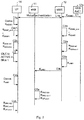
- Figure 7 illustrates a signaling scheme for an authentication and key agreement procedure and key derivation in a communication system 10 according to an embodiment of the present teachings.
- a first network slice Slice 1 e.g. a mobile broadband service
- the MME 12 serving a first network slice Slice 1 obtains (arrow C1) an authentication vector containing at least the key K ASME1 from the HSS/AuC117a serving the first network slice Slice 1.
- the HSS/AuC1 17a for the first network slice need not be the same as the HSS/AuC2 17b as for additional network slices.
- the MME 12 uses data from the authentication vector to run a NAS authentication procedure with the UE 14 which results in that the UE 14 and MME 12 are mutually authenticated (arrow C1b) based on the key K shared between the UE 14 and the AuC/HSSi 17a serving the first network slice Slice 1.
- the UE 14 derives (arrow C1a) the same key K ASME1 as the MME 12 as part of the authentication procedure.
- this corresponds to a conventional LTE authentication, but other authentication methods resulting in a shared key K ASME1 are possible.
- this step is the same as step 1 of the previous embodiment.
- the MME 12 further notices that the UE 14 does not have a joint key K ASME_joint established (i.e. is not connected to another network slice), and hence the MME 12 sets (arrow C4a) the key K ASME-joint equal to K ASME1 .
- the MME 12 sets (arrow C4a) the key K ASME-joint equal to K ASME1 .
- the UE 14 derives (arrow C4b1) the joint key K ASME-joint .
- Arrows C5a Keys K RRC - int1 and K RRC-enc1 are derived (arrow C5a) in the eNB 11 based on the received key K eNB1 for integrity protection and encryption of RRC control plane signaling on PDCP level. These AS level keys apply to the common RRC connection and UP connection (using AS security mode command procedure in case of initial security activation) or RRC reconfiguration procedure for intra-cell handover to trigger "key change on the fly”.
- Keys K UP-enc (and optionally K UP-int ) are derived (also shown at arrow C5a) in the eNB 11 from the received key K eNB1 for encryption (and optionally integrity protection) of PDCP user plane traffic.
- Figure 8 is a signaling scheme for the case when the UE 14 wants to set up yet another service.
- Figure 8 may be seen as a continuation of figure 7 .
- the steps of the signaling schemes may be done in another order than illustrated, as will be exemplified later.
- Step 101 The MME 12 serving a first network slice Slice 1 is also serving the second network slice Slice 2.
- the MME 12 obtains (arrow Di) an authentication vector containing at least the key K ASME2 from the second HSS/AuC2 17b serving the second network slice Slice 2.
- the MME 12 uses data from the authentication vector to run a NAS authentication procedure with the UE 14 which procedure results in that the UE 14 and MME 12 are mutually authenticated (arrow D1b) based on the key K shared between the UE 14 and the second HSS/AuC2 17b serving the second network slice Slice 2.
- the UE 14 derives (arrow D1a) the same key K ASME2 as the MME 12 as part of the authentication procedure.
- This step is the same as step 8 of the embodiments described with reference to figures 3 , 4 and 5 .
- FIG. 8 The MME 12 runs a NAS security mode command procedure (not illustrated in figure 8 ) with the UE 14 indicating that this is a "key K ASME joining" type of key change.
- the indication can be implemented as a special flag, a special Key Set Identifier (KSI), or implicit in the sense that the UE 14 knows that when network slicing is activated this action is always performed by the MME 12, so any NAS Security Mode Command received at this particular point in time is a "K ASME joining" operation.
- the UE 14 also derives (arrow D4b1) the joint key K' ASME-joint .
- the indication may be sent at any time. For instance, a "K ASME joining" type of key change may be sent in a System Information Block (SIB) broadcast from the eNB 11, in which case the UE 14 is aware of the type of key joining already as a first step of the signaling scheme.
- SIB System Information Block
- the integrity key K NAS_int2 and the encryption key K NAS_enc2 for integrity protection and encryption of shared NAS are independently derived in the shared MME 12 (arrow D2a) and in the UE 14 (arrow D2b) attaching to the second network slice Slice 2. These keys are derived from the joint key K' ASME-joint .
- the UE 14 determines that a key joining operation has taken place by other implicit means, e.g., that a radio bearer has been established as a result of the UE 14 going to ACTIVE mode in that network slice. In the latter case a NAS security mode command is not necessary.
- Such agreement may for instance comprise, as mentioned earlier (in relation to figure 5 ), sending an indication for the need of a joint key (as shown by an arrow from the eNB 11 to the UE 14).
- the handling of the AS keys in the eNB 11 and in the UE 14 is independent on whether or not a joint key K ASME-joint is being used in the core network.
- Arrows D3, D3a, D3b When the UE 14 goes from IDLE to ACTIVE in the second network slice Slice 2 (arrow D3), it already is in ACTIVE mode in the first network slice Slice 1 and hence there is an existing NAS security context, including the joint (NAS) key K ASME_joint established earlier, shared between the UE 14 and the MME 12.
- NAS joint
- the MME 12 derives (arrow D3a) a (AS) key K eNB2 from the (NAS) key K ASME_joint and then sends (arrow D3b) the key K eNB2 to the eNB 11 in connection to the UE 14 going from IDLE to ACTIVE state in the second network slice Slice 2, i.e. when the MME 12 modifies the UE context in the eNB 11 due to the activation of the second network slice Slice 2 for the UE 14.
- Keys K UP-enc2 (and optionally K UP-int2 , not illustrated in figure 8 ) are derived (arrow D5a) in the eNB 11 from the received key K eNB2 for encryption (and optionally integrity protection) of PDCP user plane traffic.
- steps 106 to 112 will be applied again
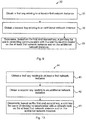
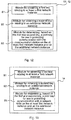
- Figure 9 illustrates a flow chart over steps of a method in a network node in accordance with the present teachings.
- a method 30 of establishing a key related to at least two network instances Slice 1, Slice 2 is provided and may be performed in a network node 11; 12, such as a radio access node or a core network node such as MME.
- the network instances Slice 1, Slice 2 are used in serving a communication device 14. It is noted that when the network node 11; 12 and the communication device 14 establish keys for protecting a connection, this may be done by each entity deriving the keys locally from shared secret data, such as a key (e.g. associated with IMSI).
- the method 30 comprises obtaining 31 a first key K eNB1 ; K ASME1 relating to at least a first network instance Slice 1.
- K eNB1 K ASME1 relating to at least a first network instance Slice 1.
- the joint key corresponds to the first key, else the first key may correspond to the key K eNB1 ; K ASME1 received from the network node of the network instance that is set up for the communication device.
- the method 30 comprises obtaining 32 a second key K eNB2 ; K ASME2 relating to an additional network instance Slice 2.
- the first and second keys may comprise AS related keys (K eNB1 , K eNB2 ), while in other embodiments the first and second keys may comprise NAS related keys (K ASME1 , K ASME2 ).
- the method 30 comprises determining 33, based on the first key K eNB1 ; K ASME1 and the second key K eNB2 ; K ASME2 , a joint key K eNB_joint ; K ASME_joint for use in protecting communication with the communication device 14 on the at least first network instance Slice 1 and on the additional network instance Slice 2.
- the joint key K eNB_joint ; K ASME_joint may be used for protecting communication on active network instances among the at least first and the additional network instances. If one network instance is detached, the joint key may still be used for protecting communication on remaining active network instances.
- the method provides a low-complex authentication solution for use in sliced network scenarios, by the communication device as well as the network side having a joint key for protection of the AS, NAS (or both) that is (are) shared by the different network slices. Thereby there is no need to protect the control plane and user plane with keys that are specific for each respective network slice.
- the joint key may then be used for encryption and integrity protection of the shared AS, NAS (or both).
- the generation of the joint key in a network node is also dependent on the behavior of state transition of the different network slices, and the generation of the joint key (K ASME_joint ) in a network node (e.g. MME) is then also dependent on the order of authentication, IDLE to ACTIVE transition sequence and attach-detach sequence of the network slices.
- the method 30 may entail a joint AS key K eNB_joint .
- the method 30 may a joint NAS key K ASME_joint .
- the determining 33 comprises deriving a first joint key based on the first key K eNB1 ; K ASME1 and, upon obtaining the second key K eNB2 ; K ASME2 , deriving the joint key K eNB_joint ; K ASME_joint based on the first joint key and the second key KeNB2; K ASME2 .
- the deriving the first joint key may comprise an identity mapping. That is, the deriving does not involve any operation other than simply putting the first joint key equal to the first key K eNB1 ; K ASME1 .
- the communication device 14 may then use the first key (e.g. the key K eNB or the key K ASME ) as is without any modifications.
- the first key e.g. the key K eNB or the key K ASME
- step 11 figure 5
- step 109 figure 8
- Any such described way of deriving the joint key may be used.
- the joint key K eNB_joint ; K ASME_joint is used for determining cryptographic keys for protecting communication with the communication device 14 for at least one of the at least two network instances.
- the determining may comprise deriving, based on the joint key K eNB_joint , the cryptographic keys, wherein the cryptographic keys are used for one or more of: access stratum integrity key K RRC_int for integrity protection of radio resource control traffic, access stratum encryption key K RRC_enc for encryption of radio resource control traffic, access stratum encryption key K UP_enc for encryption of user plane traffic, and access stratum integrity key K UP_int for integrity protection user plane traffic.
- the determining the cryptographic keys for protecting communication with the communication device 14 for at least one of the at least two network instances comprises deriving, based on the joint key K ASME_joint , the cryptographic keys, wherein the cryptographic keys are used for one or more of: non-access stratum integrity key K NAS_int for integrity protection of non-access stratum traffic, and non-access stratum encryption key K NAS_enc for encryption of non-access stratum traffic.
- the network node 11 comprises a network node of a radio access network 13.
- the network node may for instance comprise an eNB or other network node in which the AS signaling terminates.
- the joint key K eNB_joint may be used for protecting access stratum communication with the communication device 14.
- the network node 12 comprises a network node of a core network 15.
- the network node may for instance comprise an MME or other network node in which the NAS signaling terminates.
- the joint key K ASME_joint may be used in the protection of non-access stratum communication with the communication device 14.
- the use of the joint key K ASME_joint may be seen as an indirect use in that it is used in deriving keys such as the integrity protection key K NAS_int and the encryption protection key K NAS_enc .
- the method 30 comprises indicating, to the communication device 14, that a joint key K eNB_joint ; K ASME_joint is to be used.
- the communication device 14 can, in different ways, be made aware of that key-jointing is to be used, for instance, by signaling between the communication device 14 and the network node 12. Another way is to have the communication device configured to use key joining when network slicing is used. Various examples on how to implement this indication have been given and may be used.
- the obtaining 31 the first key K eNB1 ; K ASME1 relating to at least the first network instance Slice 1 and the obtaining 32 the second key K eNB2 ; K ASME2 relating to an additional network instance Slice 2 comprises receiving the first key K eNB1 ; K ASME1 and the second key K eNB2 ; K ASME2 from a second network node 12; 17.
- the network node implementing the method 30 is a radio access node such as an eNB
- the first and second keys may be obtained, in particular received, from a core network node such as the MME.
- the network node implementing the method 30 is a core network node such as MME
- the first and second keys may be obtained, in particular received, from a core network node such as the HSS/AuC.
- the method 30 comprises establishing a mode change of an active network instance, and continuing using the current joint key K eNB_joint ; K ASME_joint in protecting communication with the communication device 14 on the remaining active network instances.
- the establishing of a mode change of an active network instance may, for instance, comprise the network node detecting that a set timeout value of a timer has elapsed. Such timeout value may indicate the maximum time that the communication device may be inactive in a network instance before the network node considers the communication device to be in IDLE mode.
- the establishing of mode change may comprise receiving a detach request message from the communication device.
- Figure 10 illustrates a flow chart over steps of a method in a communication device in accordance with the present teachings.
- the method 40 of establishing a key related to at least two network instances Slice 1, Slice 2 is performed in a communication device 14.
- the network instances Slice 1, Slice 2 are used in serving communication device 14.
- the method 40 comprises obtaining 41 a first key K eNB1 ; K ASME1 relating to at least a first network instance Slice 1; obtaining 42 a second key K eNB2 ; K ASME2 relating to an additional network instance Slice 2; and determining 43, based on the first key K eNB1 ; K ASME1 and the second key K eNB2 ; K ASME2 , a joint key K eNB_joint ; K ASME_joint for use in protecting communication with a network node 11; 12 on the at least first network instance and on the additional network instance Slice 1, Slice 2.
- An advantage of the method 40 is that the communication device 14 is provided with a method of protection of the common AS or NAS (or both) having low complexity, owing to the use of the joint key for different network slices.
- the scenario of an attacker having compromised the confidentiality of communication link between the eNB 11 and MME 12 is considered.
- the attacker is not aware of the AS key K eNB sent to the eNB 11 prior to the moment of time that the attacker successfully compromised the confidentiality.
- the attacker will not be able to reconstitute the key K eNB_joint derived by eNB 11 when the communication device 14 wants to set up a new network service on an additional network slice.
- the attacker is not aware of the previous K eNB value and since this previous K eNB value is required to derive the new K eNB_joint the communication link is again secure (for all network slices) from the attacker.
- the determining 43 comprises deriving a first joint key based on the first key K eNB1 ; K ASME1 and, upon obtaining the second key K eNB2 ; K ASME2 , deriving the joint key K eNB_joint ; K ASME_joint based on the first joint key and the second key K eNB2 ; K ASME2 .
- the joint key K eNB_joint ; K ASME_joint is used for determining cryptographic keys for protecting communication with the network node 11; 12 for at least one of the at least two network instances.
- the determining comprises deriving, based on the joint key K eNB_joint , the cryptographic keys, wherein the cryptographic keys are used for one or more of: access stratum integrity key K RRC_int for integrity protection of radio resource control traffic, access stratum encryption key K RRC_enc for encryption of radio resource control traffic, access stratum encryption key K UP_enc for encryption of user plane traffic, and access stratum integrity key K UP_int for integrity protection user plane traffic.
- the determining comprises deriving, based on the joint key K ASME_joint , the cryptographic keys, wherein the cryptographic keys are used for one or more of: non-access stratum integrity key K NAS_int for integrity protection of non-access stratum traffic, and non-access stratum encryption key K NAS_enc for encryption of non-access stratum traffic.
- the method 40 may be used for protecting AS communication and/or NAS communication.
- the network node 11 comprises a network node of a radio access network 13 and wherein the joint key K eNB_joint is used for protecting access stratum communication with the network node 11.
- the network node 12 comprises a network node of a core network 15 and wherein the joint key K ASME_joint is used for protecting non-access stratum communication with the network node 12.
- the method 40 comprises receiving, from the network node 11; 12 and indication that a joint key K eNB_joint ; K ASME_joint is to be used.
- the communication device 14 should be made aware that a joint key is to be used, and this could, for instance, be made in signaling in a system information block, or as a pre-configuration in the communication device (e.g. that joint key is to be used when network slicing is utilized).
- the obtaining the first key K eNB1 ; K ASME1 and the second key KeNB2; K ASME2 comprises deriving the respective key based on a respective secret shared between the communication device 14 and a second network node 17, 17a, 17b.
- FIG 11 illustrates schematically a communications system 10 and means for implementing embodiments in accordance with the present teachings.
- the communications system 10 is shown comprising a communication device 14 (UE), a radio access node 11 (eNB) and a core network node 12 (MME), in which methods according to the present teachings may be implemented.
- UE communication device 14
- eNB radio access node 11
- MME core network node 12
- the radio access node 11, the core network node 12 and the communication device 14, each comprises a processor 50, 60, 70 comprising any combination of one or more of a central processing unit (CPU), multiprocessor, microcontroller, digital signal processor (DSP), application specific integrated circuit etc. capable of executing software instructions stored in a respective memory 51, 61, 71 which can thus be a computer program product 51, 61, 71.
- the processor 50 of the radio access node 11 and the processor 60 of the core network node 12 can be configured to execute any of the various embodiments of the method 30 for instance as described in relation to figure 9 .
- the processor 70 of the communication device 14 can be configured to execute any of the various embodiments of the method 40 for instance as described in relation to figure 10 .
- the respective memory 51, 61, 71 can be any combination of read and write memory (RAM) and read only memory (ROM), Flash memory, magnetic tape, Compact Disc (CD)-ROM, digital versatile disc (DVD), Blu-ray disc etc.
- the memory 51, 61, 71 may also comprise persistent storage, which, for example, can be any single one or combination of magnetic memory, optical memory, solid state memory or even remotely mounted memory.
- Each of the radio access node 11, the core network node 12 and the communication device 14 comprises a respective interface 53, 63, 73 for communication with other devices.
- the interfaces 53, 63, 73 may, for instance, comprise e.g. protocol stacks etc., for communication with other devices.
- Each of the radio access node 11, the core network node 12 and the communication device 14 may comprise additional processing circuitry, schematically indicated at reference numerals 54, 64, 74, respectively, for implementing the various embodiments according to the present teachings.
- a network node 11, 12 for establishing a key related to at least two network instances Slice 1, Slice 2 is provided.
- the network instances Slice 1, Slice 2 are used in serving a communication device 14.
- the network node 11; 12 is configured to:
- the network node 11, 12 may be configured to perform the above steps e.g. by comprising one or more processors 50, 60 and memory 51, 61, the memory 51, 61 containing instructions executable by the processor 50, 60, whereby the network node 11, 12 is operative to perform the steps.
- the network node 11; 12 is configured to determine the joint key K eNB_joint ; K ASME_joint by deriving a first joint key based on the first key K eNB1 ; K ASME1 and configured to, upon obtaining the second key K eNB2 ; K ASME2 , derive the joint key K eNB_joint ; K ASME_joint based on the first joint key and the second key K eNB2 ; K ASME2 .
- the joint key K eNB_joint ; K ASME_joint is used for determining cryptographic keys for protecting communication with the communication device 14 for at least one of the at least two network instances.
- the network node 11; 12 is configured to determine by deriving, based on the joint key K eNB_joint , the cryptographic keys, wherein the cryptographic keys are used for one or more of: access stratum integrity key K RRC_int for integrity protection of radio resource control traffic, access stratum encryption key K RRC_enc for encryption of radio resource control traffic, access stratum encryption key K UP_enc for encryption of user plane traffic, and access stratum integrity key K UP_int for integrity protection user plane traffic.
- the network node 11; 12 is configured to determine by deriving, based on the joint key K ASME_joint , the cryptographic keys, wherein the cryptographic keys are used for one or more of: non-access stratum integrity key K NAS _ int for integrity protection of non-access stratum traffic, and non-access stratum encryption key K NAS_enc for encryption of non-access stratum traffic.
- the network node 11 comprises a network node, e.g. an eNB, of a radio access network 13.
- the network node 11 may be configured to use the joint key K eNB_joint in the protection of access stratum communication with the communication device 14.
- the network node 12 comprises a network node, e.g. an MME, of a core network 15.
- the network node 12 may be configured to use the joint key K ASME_joint in the protection of non-access stratum communication with the communication device 14.
- the network node 11; 12 is configured to indicate, to the communication device 14, that a joint key K eNB_joint ; K ASME_joint is to be used.
- the network node 11 is configured to obtain the first key K eNB1 ; K ASME1 relating to at least the first network instance Slice 1 and to obtain the second key K eNB2 ; K ASME2 relating to an additional network instance Slice 2, by receiving the first key K eNB1 ; K ASME1 and the second key K eNB2 ; K ASME2 from a second network node 12; 17.
- the network node 11 is configured to establish a mode change of an active network instance, and configured to continue using the current joint key K eNB_joint ; K ASME_joint in protecting communication with the communication device 14 on the remaining active network instances.
- the present teachings also encompass a computer program 52, 62 for a network node 11, 12 for establishing a key related to at least two network instances provided for a communication device 14.
- the computer program 52, 62 comprises computer program code, which, when executed on at least one processor on the network node 11, 12 causes the network node 11, 12 to perform the method 30 according to any of the described embodiments.
- the present teachings also encompasses computer program products, such as memory 51, 61, comprising a computer program 52, 62 for implementing the embodiments of the method as described, and a computer readable means on which the computer program 52, 62 is stored.
- the computer program product, or the memory thus comprises instructions executable by the processor 50, 60. Such instructions may be comprised in a computer program, or in one or more software modules or function modules.
- the computer program product 51, 61 may, as mentioned earlier, be any combination of random access memory (RAM) or read only memory (ROM), Flash memory, magnetic tape, Compact Disc (CD)-ROM, digital versatile disc (DVD), Blu-ray disc etc.
- a communication device 14 for establishing a key related to at least two network instances Slice 1, Slice 2 is provided.
- the communication device 14 is configured to:
- the communication device 14 may be configured to perform the above steps e.g. by comprising one or more processors 70 and memory 71, the memory 71 containing instructions executable by the processor 70, whereby the communication device 14 is operative to perform the steps.
- the communication device 14 is configured to determine by deriving a first joint key based on the first key K eNB1 ; K ASME1 and configured to, upon obtaining the second key K eNB2 ; K ASME2 , derive the joint key K eNB_joint ; K ASME_joint based on the first joint key and the second key K eNB2 ; K ASME2 .
- the communication device 14 is configured to use the joint key K eNB_joint ; K ASME_joint for determining cryptographic keys for protecting communication with the network node 11; 12 for at least one of the at least two network instances.
- the communication device 14 is configured to determine the cryptographic keys based on the joint key K eNB_joint , wherein the cryptographic keys are used for one or more of: access stratum integrity key K RRC_int for integrity protection of radio resource control traffic, access stratum encryption key K RRC_enc for encryption of radio resource control traffic, access stratum encryption key K UP_enc for encryption of user plane traffic, and access stratum integrity key K UP_int for integrity protection user plane traffic.
- the communication device 14 is configured to determine the cryptographic keys based on the joint key K ASME_joint , wherein the cryptographic keys are used for one or more of: non-access stratum integrity key K NAS_int for integrity protection of non-access stratum traffic, and non-access stratum encryption key K NAS_enc for encryption of non-access stratum traffic.
- the network node 11 comprises a network node of a radio access network 13 and wherein the joint key K eNB_joint is used for protecting access stratum communication with the network node 11.
- the network node 12 comprises a network node of a core network 15 and wherein the joint key K ASME_joint is used for protecting non-access stratum communication with the network node 12.
- the communication device 14 may be configured to use a joint key according to the method 40 for AS communication, for NAS communication or for both AS and NAS communication.
- the communication device 14 is configured to receive, from the network node 11; 12 and indication that a joint key K eNB_joint ; K ASME_joint is to be used.
- the communication device 14 is configured to obtain the first key K eNB1 ; K ASME1 and the second key K eNB2 ; K ASME2 by deriving the respective key based on a respective secret shared between the communication device 14 and a second network node 17, 17a, 17b.
- the present teachings also encompass a computer program 72 for a communication device 14 for establishing a key related to at least two network instances Slice 1, Slice 2.
- the computer program 72 comprises computer program code, which, when executed on at least one processor on the communication device 14 causes the communication device 14 to perform the method 40 according to any of the described embodiments.
- the present teachings also encompasses computer program products, such as memory 71 comprising a computer program 72 for implementing the embodiments of the method as described, and a computer readable means on which the computer program 72 is stored.
- the computer program product, or the memory thus comprises instructions executable by the processor 70. Such instructions may be comprised in a computer program, or in one or more software modules or function modules.
- the computer program product 71 may, as mentioned earlier, be any combination of random access memory (RAM) or read only memory (ROM), Flash memory, magnetic tape, Compact Disc (CD)-ROM, digital versatile disc (DVD), Blu-ray disc etc.
- Figure 12 illustrates a network node 11, 12 comprising function modules/software modules for implementing embodiments in accordance with the present teachings.
- the function modules can be implemented using software instructions such as computer program executing in a processor and/or using hardware, such as application specific integrated circuits (ASICs), field programmable gate arrays, discrete logical components etc., and any combination thereof.
- ASICs application specific integrated circuits
- Processing circuitry may be provided, which may be adaptable and in particular adapted to perform any of the steps of the method 30 that has been described.
- a network node 11, 12 is provided for establishing a key related to at least two network instances, the network instances used in serving a communication device 14.
- the network node 11, 12 comprises a first module 81 for obtaining a first key relating to a first network instance.
- first module 81 may, for instance, comprise receiving circuitry (e.g. interface 53, 63 described with reference to figure 11 ).
- the network node 11, 12 comprises a second module 82 for obtaining a second key relating to a second network instance.
- Such second module 82 may, for instance, comprise receiving circuitry (e.g. interface 53, 63 described with reference to figure 11 ).
- the network node 11, 12 comprises a third module 83 for determining, based on the first key and the second key, a joint key for use in establishing communication with the communication device on the first network instance and on the second network instance.
- Such third module 83 may, for instance, comprise processing circuitry adapted to perform such determining (e.g. processing circuitry 54, 64 described with reference to figure 11 ).
- the processing circuitry may, for instance, be adapted to perform the determining by implementing a key derivation function.
- modules 81, 82, 83 may be replaced by units.
- FIG. 13 illustrates a communication device 14 comprising function modules/software modules for implementing embodiments in accordance with the present teachings.
- the function modules can be implemented using software instructions such as computer program executing in a processor and/or using hardware, such as application specific integrated circuits (ASICs), field programmable gate arrays, discrete logical components etc., and any combination thereof.
- ASICs application specific integrated circuits
- Processing circuitry may be provided, which may be adaptable and in particular adapted to perform any of the steps of the method 40 that has been described.
- a communication device 14 of establishing a key related to at least two network instances is provided, wherein the network instances are used in serving communication device 14.
- the communication device 14 comprises a first module 91 for obtaining a first key relating to a first network instance.
- first module 91 may, for instance, comprise processing circuitry adapted for deriving the first key based on a secret shared between the communication device 14 and a second network node (e.g. processing circuitry 74 described with reference to figure 11 ).
- the communication device 14 comprises a second module 92 for obtaining a second key relating to an additional network instance.
- Such second module 92 may, for instance, comprise processing circuitry adapted for deriving the second key based on a secret shared between the communication device 14 and a second network node (e.g. processing circuitry 74 described with reference to figure 11 ).
- the communication device 14 comprises a third module 93 for determining, based on the first key and the second key, a joint key for use in protecting communication with a network node on the at least first network instance and on the additional network instance.
- Such third module 93 may, for instance, comprise processing circuitry adapted to perform such determining (e.g. processing circuitry 74 described with reference to figure 11 ).
- the processing circuitry may, for instance, be adapted to perform the determining by implementing a key derivation function.
- modules 91, 92, 93 may be replaced by units.
Landscapes
- Engineering & Computer Science (AREA)
- Computer Security & Cryptography (AREA)
- Signal Processing (AREA)
- Computer Networks & Wireless Communication (AREA)
- Mobile Radio Communication Systems (AREA)
Claims (17)
- Verfahren (30), das in einem drahtlosen Netzwerkknoten (11; 12) zum Erstellen eines Schlüssels ausgeführt wird, der mit mindestens zwei Netzwerk-Slices (15a, 15b) zusammenhängt, wobei die Netzwerk-Slices (15a, 15b) beim Bedienen eines drahtlosen Kommunikationsgeräts (14) verwendet werden, wobei das Verfahren Folgendes umfasst:- Erhalten (31) eines ersten Schlüssels (KeNB1; KASME1), der mit mindestens einer ersten Netzwerk-Slice (15a) zusammenhängt,- Erhalten (32) eines zweiten Schlüssels (KeNB2; KASME2), der mit einer zusätzlichen Netzwerk-Slice (15b) zusammenhängt,- Bestimmen (33) basierend auf dem ersten Schlüssel (KeNB1; KASME1) und dem zweiten Schlüssel (KeNB2; KASME2) eines gemeinsamen Schlüssels (KeNB_joint; KASME_joint) für die Verwendung beim Schützen von Kommunikation mit dem drahtlosen Kommunikationsgerät (14) auf der mindestens ersten Netzwerk-Slice (15a) und auf der zusätzlichen Netzwerk-Slice (15b).
- Verfahren (30) nach Anspruch 1, wobei das Bestimmen (33) das Ableiten eines ersten gemeinsamen Schlüssels basierend auf dem ersten Schlüssel (KeNB1; KASME1) umfasst, und beim Erhalten des zweiten Schlüssels (KeNB2; KASME2) das Ableiten des gemeinsamen Schlüssels (KeNB_joint; KASME_joint) basierend auf dem ersten gemeinsamen Schlüssel und dem zweiten Schlüssel (KeNB2, KASME2).
- Verfahren (30) nach Anspruch 1 oder 2, wobei der gemeinsame Schlüssel (KeNB_joint; KASME_joint) zum Bestimmen kryptografischer Schlüssel zum Schützen von Kommunikation mit dem drahtlosen Kommunikationsgerät (14) für mindestens eine der mindestens zwei Netzwerk-Slices verwendet wird.
- Verfahren (30) nach Anspruch 3, wobei das Bestimmen das Ableiten basierend auf dem gemeinsamen Schlüssel (KeNB_joint) der kryptografischen Schlüssel umfasst, wobei die kryptografischen Schlüssel für ein oder mehr verwendet werden von: Access-Stratum-Integritätsschlüssel (KRRC_int) für Integritätsschutz von Funkressourcensteuerverkehr, Access-Stratum-Verschlüsselungsschlüssel (KRRC_enc) für Verschlüsselung von Funkressourcensteuerverkehr, Access-Stratum-Verschlüsselungsschlüssel (KUP_enc) für Verschlüsselung von Benutzerebenenverkehr, und Access-Stratum-Integritätsschlüssel (KUP_int) für Integritätsschutz des Benutzerebenenverkehrs.
- Verfahren (30) nach Anspruch 3, wobei das Bestimmen das Ableiten basierend auf dem gemeinsamen Schlüssel (KASME_joint) der kryptografischen Schlüssel umfasst, wobei die kryptografischen Schlüssel für ein oder mehr verwendet werden von: Non-Access-Stratum-Integritätsschlüssel (KNAS_int) für Integritätsschutz von Non-Access-Stratum-Verkehr, und Non-Access-Stratum-Verschlüsselungsschlüssel (KNAS_enc) für Verschlüsselung von Non-Access-Stratum-Verkehr.
- Verfahren (30) nach einem der vorstehenden Ansprüche, wobei das Erhalten (31) des ersten Schlüssels (KeNB1; KASME1), der mit mindestens der ersten Netzwerk-Slice (15a) zusammenhängt, und das Erhalten (32) des zweiten Schlüssels (KeNB2; KASME2), der mit einer zusätzlichen Netzwerk-Slice (15b) zusammenhängt, das Empfangen des ersten Schlüssels (KeNB1; KASME1) und des zweiten Schlüssels (KeNB2; KASME2) von einem zweiten drahtlosen Netzwerkknoten (12; 17) umfasst.
- Drahtloser Netzwerkknoten (11; 12) zum Erstellen eines Schlüssels, der mit mindestens zwei Netzwerk-Slices (15a, 15b) zusammenhängt, wobei die Netzwerk-Slices (15a, 15b) beim Bedienen eines drahtlosen Kommunikationsgeräts (14) verwendet werden, wobei der drahtlose Netzwerkknoten (11; 12) konfiguriert ist, um:- einen ersten Schlüssel (KeNB1, KASME1) zu erhalten, der mit mindestens einer ersten Netzwerk-Slice (15a) zusammenhängt,- einen zweiten Schlüssel (KeNB2; KASME2) zu erhalten, der mit einer zusätzlichen Netzwerk-Slice (15b) zusammenhängt,- Bestimmen basierend auf dem ersten Schlüssel (KeNB1; KASME1) und dem zweiten Schlüssel (KeNB2; KASME2) eines gemeinsamen Schlüssels (KeNB_joint; KASME_joint) für die Verwendung beim Schützen von Kommunikation mit dem drahtlosen Kommunikationsgerät (14) auf der mindestens ersten Netzwerk-Slice (15a) und auf der zusätzlichen Netzwerk-Slice (15b).
- Verfahren (40), das in einem drahtlosen Kommunikationsgerät (14) durchgeführt wird, zum Erstellen eines Schlüssels, der mit mindestens zwei Netzwerk-Slices (15a, 15b) zusammenhängt, der beim Bedienen eines drahtlosen Kommunikationsgeräts (14) verwendet wird, wobei das Verfahren (40) Folgendes umfasst:- Erhalten (41) eines ersten Schlüssels (KeNB1; KASME1), der mit mindestens einer ersten Netzwerk-Slice (15a) zusammenhängt,- Erhalten (42) eines zweiten Schlüssels (KeNB2; KASME2), der mit einer zusätzlichen Netzwerk-Slice (15b) zusammenhängt,- Bestimmen (43) basierend auf dem ersten Schlüssel (KeNB1; KASME1) und dem zweiten Schlüssel (KeNB2; KASME2) eines gemeinsamen Schlüssels (KeNB_joint; KASME_joint) für die Verwendung beim Schützen von Kommunikation mit einem drahtlosen Netzwerkknoten (11; 12) auf der mindestens ersten Netzwerk-Slice (15a) und auf der zusätzlichen Netzwerk-Slice (15b).
- Verfahren (40) nach Anspruch 8, wobei das Bestimmen (43) das Ableiten eines ersten gemeinsamen Schlüssels basierend auf dem ersten Schlüssel (KeNB1; KASME1) umfasst, und beim Erhalten des zweiten Schlüssels (KeNB2; KASME2) das Ableiten des gemeinsamen Schlüssels (KeNB_joint; KASME_joint) basierend auf dem ersten gemeinsamen Schlüssel und dem zweiten Schlüssel (KeNB2, KASME2).
- Verfahren (40) nach Anspruch 8 oder 9, wobei der gemeinsame Schlüssel (KeNB_joint; KASME_joint) zum Bestimmen kryptografischer Schlüssel zum Schützen von Kommunikation mit dem drahtlosen Netzwerkknoten (11; 12) für mindestens eine der mindestens zwei Netzwerk-Slices (15a, 15b) verwendet wird.
- Verfahren (40) nach Anspruch 10, wobei das Bestimmen das Ableiten basierend auf dem gemeinsamen Schlüssel (KeNB_joint; KASME_joint) der kryptografischen Schlüssel umfasst, wobei die kryptografischen Schlüssel für ein oder mehr verwendet werden von: Access-Stratum-Integritätsschlüssel (KRRC_int) für Integritätsschutz von Funkressourcensteuerverkehr, Access-Stratum-Verschlüsselungsschlüssel (KRRC_enc) für Verschlüsselung von Funkressourcensteuerverkehr, Access-Stratum-Verschlüsselungsschlüssel (KUP_enc) für Verschlüsselung von Benutzerebenenverkehr, und Access-Stratum-Integritätsschlüssel (KUP_int) für Integritätsschutz des Benutzerebenenverkehrs.
- Verfahren (40) nach Anspruch 10, wobei das Bestimmen das Ableiten basierend auf dem gemeinsamen Schlüssel (KASME_joint) der kryptografischen Schlüssel umfasst, wobei die kryptografischen Schlüssel für ein oder mehr verwendet werden von: Non-Access-Stratum-Integritätsschlüssel (KNAS_int) für Integritätsschutz von Non-Access-Stratum-Verkehr, und Non-Access-Stratum-Verschlüsselungsschlüssel (KNAS_enc) für Verschlüsselung von Non-Access-Stratum-Verkehr.
- Verfahren (40) nach einem der Ansprüche 8-12, wobei der drahtlose Netzwerkknoten (11) einen drahtlosen Netzwerkknoten eines drahtlosen Funkzugangsnetzwerks (13) umfasst, und wobei der gemeinsame Schlüssel (KeNB_joint) zum Schützen von Access-Stratum-Kommunikation mit dem drahtlosen Netzwerkknoten (11) verwendet wird.
- Verfahren (40) nach einem der Ansprüche 8-13, wobei der drahtlose Netzwerkknoten (12) einen drahtlosen Netzwerkknoten eines Kernnetzwerks (15) umfasst, und wobei der gemeinsame Schlüssel (KASME_joint) zum Schützen von Non-Access-Stratum-Kommunikation mit dem drahtlosen Netzwerkknoten (12) verwendet wird.
- Verfahren (40) nach einem der Ansprüche 8-14, das das Empfangen von dem drahtlosen Netzwerkknoten (11; 12) und das Angeben, dass ein gemeinsamer Schlüssel (KeNB_joint; KASME_joint) verwendet werden soll, umfasst.
- Verfahren (40) nach einem der Ansprüche 8-15, wobei das Erhalten des ersten Schlüssels (KeNB1; KASME1) und des zweiten Schlüssels (KeNB2; KASME2) das Ableiten des jeweiligen Schlüssels basierend auf einem jeweiligen Geheimnis umfasst, das das drahtlose Kommunikationsgerät (14) und ein zweiter drahtloser Netzwerkknoten (17, 17a, 17b) gemeinsam haben.
- Drahtloses Kommunikationsgerät (14) zum Erstellen eines Schlüssels, der mit mindestens zwei Netzwerk-Slices (15a, 15b) zusammenhängt, wobei die Netzwerk-Slices (15a, 15b) beim Bedienen des drahtlosen Kommunikationsgeräts (14) verwendet werden, wobei das drahtlose Kommunikationsgerät (14) konfiguriert ist, um:- einen ersten Schlüssel (KeNB1; KASME1) zu erhalten, der mit mindestens einer ersten Netzwerk-Slice (15a) zusammenhängt,- einen zweiten Schlüssel (KeNB2; KASME2) zu erhalten, der mit einer zusätzlichen Netzwerk-Slice (15b) zusammenhängt,- basierend auf dem ersten Schlüssel (KeNB1; KASME1) und dem zweiten Schlüssel (KeNB2; KASME2) einen gemeinsamen Schlüssel (KeNB_joint; KASME_joint) für die Verwendung beim Schützen von Kommunikation mit einem drahtlosen Netzwerkknoten (11; 12) auf der mindestens ersten Netzwerk-Slice (15a) und der zusätzlichen Netzwerk-Slice (15b) zu bestimmen.
Applications Claiming Priority (1)
| Application Number | Priority Date | Filing Date | Title |
|---|---|---|---|
| PCT/EP2016/050650 WO2017121482A1 (en) | 2016-01-14 | 2016-01-14 | Methods, nodes and communication device for establishing a key related to at least two network instances |
Publications (2)
| Publication Number | Publication Date |
|---|---|
| EP3403367A1 EP3403367A1 (de) | 2018-11-21 |
| EP3403367B1 true EP3403367B1 (de) | 2019-09-18 |
Family
ID=55135242
Family Applications (1)
| Application Number | Title | Priority Date | Filing Date |
|---|---|---|---|
| EP16700606.3A Active EP3403367B1 (de) | 2016-01-14 | 2016-01-14 | Verfahren, knoten und kommunikationsvorrichtung zur definition eines schlüssels in bezug auf mindestens zwei netzwerkinstanzen |
Country Status (4)
| Country | Link |
|---|---|
| US (1) | US10270595B2 (de) |
| EP (1) | EP3403367B1 (de) |
| CN (1) | CN108463969B (de) |
| WO (1) | WO2017121482A1 (de) |
Families Citing this family (19)
| Publication number | Priority date | Publication date | Assignee | Title |
|---|---|---|---|---|
| US10433161B2 (en) * | 2012-01-30 | 2019-10-01 | Telefonaktiebolaget Lm Ericsson (Publ) | Call handover between cellular communication system nodes that support different security contexts |
| US10772101B2 (en) * | 2015-12-08 | 2020-09-08 | Huawei Technologies Co., Ltd. | Systems and methods for determining air interface configuration |
| FR3048574A1 (fr) | 2016-03-07 | 2017-09-08 | Orange | Selection d'une instanciation de tranche de reseau pour la transmission de paquets montants |
| EP3434035B1 (de) * | 2016-03-22 | 2023-07-26 | Telefonaktiebolaget LM Ericsson (publ) | Verfahren und netzwerkknoten für mehrfach-konnektivität in einem kommunikationssystem |
| US10880813B2 (en) * | 2016-04-05 | 2020-12-29 | Lg Electronics Inc. | Method for processing access request from UE, and network node |
| US20190110195A1 (en) * | 2016-04-27 | 2019-04-11 | Nec Corporation | Key derivation method, communication system, communication terminal, and communication device |
| WO2018000590A1 (zh) * | 2016-07-01 | 2018-01-04 | 华为技术有限公司 | 安全协商方法、安全功能实体、核心网网元及用户设备 |
| KR102358918B1 (ko) * | 2016-07-04 | 2022-02-07 | 삼성전자 주식회사 | 무선 통신 시스템에서 서비스에 따른 보안 관리 방법 및 장치 |
| CN107666666B (zh) * | 2016-07-27 | 2022-11-08 | 中兴通讯股份有限公司 | 密钥的衍生方法及装置 |
| EP3277008A1 (de) * | 2016-07-29 | 2018-01-31 | Deutsche Telekom AG | Teilnehmeridentitätselement zum authentifizieren eines kommunikationsgerätes gegenüber einem kommunikationsnetzwerk |
| WO2018059689A1 (en) * | 2016-09-29 | 2018-04-05 | Telefonaktiebolaget Lm Ericsson (Publ) | Quality of service differentiation between network slices |
| JPWO2018079690A1 (ja) * | 2016-10-26 | 2019-09-19 | 日本電気株式会社 | システム、ネットワーク装置、端末、及び方法 |
| US10631367B2 (en) * | 2017-04-14 | 2020-04-21 | Verizon Patent And Licensing Inc. | Virtualized equipment for multi-network and cross cell utilization |
| US10470079B2 (en) * | 2017-04-14 | 2019-11-05 | Verizon Patent And Licensing Inc. | Systems and method for cross cell aggregation using virtualized equipment |
| CN110035431A (zh) * | 2018-01-12 | 2019-07-19 | 中国移动通信有限公司研究院 | 信息处理方法及装置、网络实体及存储介质 |
| KR102425582B1 (ko) * | 2018-05-11 | 2022-07-26 | 삼성전자주식회사 | 무선통신 시스템에서 정보 보호 방법 및 장치 |
| US12132732B2 (en) | 2019-06-24 | 2024-10-29 | Nokia Technologies Oy | Dynamic allocation of network slice-specific credentials |
| CN112752265B (zh) * | 2019-10-31 | 2023-09-22 | 华为技术有限公司 | 网络切片的访问控制方法、装置及存储介质 |
| US12294649B2 (en) | 2021-08-04 | 2025-05-06 | Alarm.Com Incorporated | Decentralized home sensor network |
Family Cites Families (4)
| Publication number | Priority date | Publication date | Assignee | Title |
|---|---|---|---|---|
| US5953420A (en) * | 1996-10-25 | 1999-09-14 | International Business Machines Corporation | Method and apparatus for establishing an authenticated shared secret value between a pair of users |
| AU2001268102A1 (en) | 2000-05-30 | 2001-12-11 | Dataplay, Incorporated | Method of decrypting data stored on a storage device using an embedded encryption/decryption means |
| WO2011002974A1 (en) * | 2009-07-02 | 2011-01-06 | Research In Motion Ltd | Methods and apparatus for mobile voice service management |
| US9385862B2 (en) * | 2010-06-16 | 2016-07-05 | Qualcomm Incorporated | Method and apparatus for binding subscriber authentication and device authentication in communication systems |
-
2016
- 2016-01-14 CN CN201680078832.2A patent/CN108463969B/zh active Active
- 2016-01-14 US US14/917,546 patent/US10270595B2/en active Active
- 2016-01-14 EP EP16700606.3A patent/EP3403367B1/de active Active
- 2016-01-14 WO PCT/EP2016/050650 patent/WO2017121482A1/en not_active Ceased
Non-Patent Citations (1)
| Title |
|---|
| None * |
Also Published As
| Publication number | Publication date |
|---|---|
| EP3403367A1 (de) | 2018-11-21 |
| CN108463969A (zh) | 2018-08-28 |
| US20180048465A1 (en) | 2018-02-15 |
| WO2017121482A1 (en) | 2017-07-20 |
| US10270595B2 (en) | 2019-04-23 |
| CN108463969B (zh) | 2022-01-21 |
Similar Documents
| Publication | Publication Date | Title |
|---|---|---|
| US10270595B2 (en) | Methods, nodes and communication device for establishing a key related to at least two network instances | |
| US11653199B2 (en) | Multi-RAT access stratum security | |
| US12574725B2 (en) | Methods, apparatuses, computer programs and carriers for security management before handover from 5G to 4G system | |
| KR102440075B1 (ko) | 무선 장치의 무선 액세스 능력 | |
| US10454686B2 (en) | Method, apparatus, and system for providing encryption or integrity protection in a wireless network | |
| JP6683784B2 (ja) | システム間移動におけるセキュリティ | |
| CN109964453B (zh) | 统一安全性架构 | |
| CN104160730B (zh) | 快速接入方法和装置 | |
| JP6872630B2 (ja) | 通信ネットワーク内での使用のためのネットワークノード、通信デバイス、およびそれらを動作させる方法 | |
| JP6633745B2 (ja) | 通信ネットワークにおいて使用するためのノード、および、それを動作させるための方法 | |
| CN108029015A (zh) | 通信网络中的无线接入点和终端设备 | |
| KR102278296B1 (ko) | 사용자 장비에 대한 라디오 링크 복구 | |
| US20240015607A1 (en) | Methods, apparatuses, computer programs and computer program products for user plane integrity protection during x2 handover | |
| WO2018054461A1 (en) | Methods of protecting communication on two or more network instances, network node, communication device, computer programs and computer program products |
Legal Events
| Date | Code | Title | Description |
|---|---|---|---|
| STAA | Information on the status of an ep patent application or granted ep patent |
Free format text: STATUS: THE INTERNATIONAL PUBLICATION HAS BEEN MADE |
|
| PUAI | Public reference made under article 153(3) epc to a published international application that has entered the european phase |
Free format text: ORIGINAL CODE: 0009012 |
|
| STAA | Information on the status of an ep patent application or granted ep patent |
Free format text: STATUS: REQUEST FOR EXAMINATION WAS MADE |
|
| 17P | Request for examination filed |
Effective date: 20180516 |
|
| AK | Designated contracting states |
Kind code of ref document: A1 Designated state(s): AL AT BE BG CH CY CZ DE DK EE ES FI FR GB GR HR HU IE IS IT LI LT LU LV MC MK MT NL NO PL PT RO RS SE SI SK SM TR |
|
| AX | Request for extension of the european patent |
Extension state: BA ME |
|
| REG | Reference to a national code |
Ref country code: DE Ref legal event code: R079 Ref document number: 602016020779 Country of ref document: DE Free format text: PREVIOUS MAIN CLASS: H04L0009080000 Ipc: H04L0009060000 |
|
| DAV | Request for validation of the european patent (deleted) | ||
| DAX | Request for extension of the european patent (deleted) | ||
| RIC1 | Information provided on ipc code assigned before grant |
Ipc: H04L 9/08 20060101ALI20190415BHEP Ipc: H04L 9/06 20060101AFI20190415BHEP Ipc: G11B 20/00 20060101ALI20190415BHEP Ipc: H04W 12/04 20090101ALI20190415BHEP Ipc: H04L 29/06 20060101ALI20190415BHEP |
|
| GRAP | Despatch of communication of intention to grant a patent |
Free format text: ORIGINAL CODE: EPIDOSNIGR1 |
|
| STAA | Information on the status of an ep patent application or granted ep patent |
Free format text: STATUS: GRANT OF PATENT IS INTENDED |
|
| INTG | Intention to grant announced |
Effective date: 20190606 |
|
| GRAS | Grant fee paid |
Free format text: ORIGINAL CODE: EPIDOSNIGR3 |
|
| GRAA | (expected) grant |
Free format text: ORIGINAL CODE: 0009210 |
|
| STAA | Information on the status of an ep patent application or granted ep patent |
Free format text: STATUS: THE PATENT HAS BEEN GRANTED |
|
| AK | Designated contracting states |
Kind code of ref document: B1 Designated state(s): AL AT BE BG CH CY CZ DE DK EE ES FI FR GB GR HR HU IE IS IT LI LT LU LV MC MK MT NL NO PL PT RO RS SE SI SK SM TR |
|
| REG | Reference to a national code |
Ref country code: GB Ref legal event code: FG4D |
|
| REG | Reference to a national code |
Ref country code: CH Ref legal event code: EP |
|
| REG | Reference to a national code |
Ref country code: DE Ref legal event code: R096 Ref document number: 602016020779 Country of ref document: DE |
|
| REG | Reference to a national code |
Ref country code: AT Ref legal event code: REF Ref document number: 1182591 Country of ref document: AT Kind code of ref document: T Effective date: 20191015 |
|
| REG | Reference to a national code |
Ref country code: IE Ref legal event code: FG4D |
|
| REG | Reference to a national code |
Ref country code: NL Ref legal event code: MP Effective date: 20190918 |
|
| PG25 | Lapsed in a contracting state [announced via postgrant information from national office to epo] |
Ref country code: HR Free format text: LAPSE BECAUSE OF FAILURE TO SUBMIT A TRANSLATION OF THE DESCRIPTION OR TO PAY THE FEE WITHIN THE PRESCRIBED TIME-LIMIT Effective date: 20190918 Ref country code: NO Free format text: LAPSE BECAUSE OF FAILURE TO SUBMIT A TRANSLATION OF THE DESCRIPTION OR TO PAY THE FEE WITHIN THE PRESCRIBED TIME-LIMIT Effective date: 20191218 Ref country code: SE Free format text: LAPSE BECAUSE OF FAILURE TO SUBMIT A TRANSLATION OF THE DESCRIPTION OR TO PAY THE FEE WITHIN THE PRESCRIBED TIME-LIMIT Effective date: 20190918 Ref country code: FI Free format text: LAPSE BECAUSE OF FAILURE TO SUBMIT A TRANSLATION OF THE DESCRIPTION OR TO PAY THE FEE WITHIN THE PRESCRIBED TIME-LIMIT Effective date: 20190918 Ref country code: BG Free format text: LAPSE BECAUSE OF FAILURE TO SUBMIT A TRANSLATION OF THE DESCRIPTION OR TO PAY THE FEE WITHIN THE PRESCRIBED TIME-LIMIT Effective date: 20191218 Ref country code: LT Free format text: LAPSE BECAUSE OF FAILURE TO SUBMIT A TRANSLATION OF THE DESCRIPTION OR TO PAY THE FEE WITHIN THE PRESCRIBED TIME-LIMIT Effective date: 20190918 |
|
| REG | Reference to a national code |
Ref country code: LT Ref legal event code: MG4D |
|
| PG25 | Lapsed in a contracting state [announced via postgrant information from national office to epo] |
Ref country code: RS Free format text: LAPSE BECAUSE OF FAILURE TO SUBMIT A TRANSLATION OF THE DESCRIPTION OR TO PAY THE FEE WITHIN THE PRESCRIBED TIME-LIMIT Effective date: 20190918 Ref country code: LV Free format text: LAPSE BECAUSE OF FAILURE TO SUBMIT A TRANSLATION OF THE DESCRIPTION OR TO PAY THE FEE WITHIN THE PRESCRIBED TIME-LIMIT Effective date: 20190918 Ref country code: AL Free format text: LAPSE BECAUSE OF FAILURE TO SUBMIT A TRANSLATION OF THE DESCRIPTION OR TO PAY THE FEE WITHIN THE PRESCRIBED TIME-LIMIT Effective date: 20190918 Ref country code: GR Free format text: LAPSE BECAUSE OF FAILURE TO SUBMIT A TRANSLATION OF THE DESCRIPTION OR TO PAY THE FEE WITHIN THE PRESCRIBED TIME-LIMIT Effective date: 20191219 |
|
| REG | Reference to a national code |
Ref country code: AT Ref legal event code: MK05 Ref document number: 1182591 Country of ref document: AT Kind code of ref document: T Effective date: 20190918 |
|
| PG25 | Lapsed in a contracting state [announced via postgrant information from national office to epo] |
Ref country code: PT Free format text: LAPSE BECAUSE OF FAILURE TO SUBMIT A TRANSLATION OF THE DESCRIPTION OR TO PAY THE FEE WITHIN THE PRESCRIBED TIME-LIMIT Effective date: 20200120 Ref country code: NL Free format text: LAPSE BECAUSE OF FAILURE TO SUBMIT A TRANSLATION OF THE DESCRIPTION OR TO PAY THE FEE WITHIN THE PRESCRIBED TIME-LIMIT Effective date: 20190918 Ref country code: ES Free format text: LAPSE BECAUSE OF FAILURE TO SUBMIT A TRANSLATION OF THE DESCRIPTION OR TO PAY THE FEE WITHIN THE PRESCRIBED TIME-LIMIT Effective date: 20190918 Ref country code: PL Free format text: LAPSE BECAUSE OF FAILURE TO SUBMIT A TRANSLATION OF THE DESCRIPTION OR TO PAY THE FEE WITHIN THE PRESCRIBED TIME-LIMIT Effective date: 20190918 Ref country code: RO Free format text: LAPSE BECAUSE OF FAILURE TO SUBMIT A TRANSLATION OF THE DESCRIPTION OR TO PAY THE FEE WITHIN THE PRESCRIBED TIME-LIMIT Effective date: 20190918 Ref country code: EE Free format text: LAPSE BECAUSE OF FAILURE TO SUBMIT A TRANSLATION OF THE DESCRIPTION OR TO PAY THE FEE WITHIN THE PRESCRIBED TIME-LIMIT Effective date: 20190918 Ref country code: AT Free format text: LAPSE BECAUSE OF FAILURE TO SUBMIT A TRANSLATION OF THE DESCRIPTION OR TO PAY THE FEE WITHIN THE PRESCRIBED TIME-LIMIT Effective date: 20190918 Ref country code: IT Free format text: LAPSE BECAUSE OF FAILURE TO SUBMIT A TRANSLATION OF THE DESCRIPTION OR TO PAY THE FEE WITHIN THE PRESCRIBED TIME-LIMIT Effective date: 20190918 |
|
| PG25 | Lapsed in a contracting state [announced via postgrant information from national office to epo] |
Ref country code: SM Free format text: LAPSE BECAUSE OF FAILURE TO SUBMIT A TRANSLATION OF THE DESCRIPTION OR TO PAY THE FEE WITHIN THE PRESCRIBED TIME-LIMIT Effective date: 20190918 Ref country code: CZ Free format text: LAPSE BECAUSE OF FAILURE TO SUBMIT A TRANSLATION OF THE DESCRIPTION OR TO PAY THE FEE WITHIN THE PRESCRIBED TIME-LIMIT Effective date: 20190918 Ref country code: IS Free format text: LAPSE BECAUSE OF FAILURE TO SUBMIT A TRANSLATION OF THE DESCRIPTION OR TO PAY THE FEE WITHIN THE PRESCRIBED TIME-LIMIT Effective date: 20200224 Ref country code: SK Free format text: LAPSE BECAUSE OF FAILURE TO SUBMIT A TRANSLATION OF THE DESCRIPTION OR TO PAY THE FEE WITHIN THE PRESCRIBED TIME-LIMIT Effective date: 20190918 |
|
| REG | Reference to a national code |
Ref country code: DE Ref legal event code: R097 Ref document number: 602016020779 Country of ref document: DE |
|
| PLBE | No opposition filed within time limit |
Free format text: ORIGINAL CODE: 0009261 |
|
| STAA | Information on the status of an ep patent application or granted ep patent |
Free format text: STATUS: NO OPPOSITION FILED WITHIN TIME LIMIT |
|
| PG2D | Information on lapse in contracting state deleted |
Ref country code: IS |
|
| PG25 | Lapsed in a contracting state [announced via postgrant information from national office to epo] |
Ref country code: DK Free format text: LAPSE BECAUSE OF FAILURE TO SUBMIT A TRANSLATION OF THE DESCRIPTION OR TO PAY THE FEE WITHIN THE PRESCRIBED TIME-LIMIT Effective date: 20190918 Ref country code: IS Free format text: LAPSE BECAUSE OF FAILURE TO SUBMIT A TRANSLATION OF THE DESCRIPTION OR TO PAY THE FEE WITHIN THE PRESCRIBED TIME-LIMIT Effective date: 20200119 |
|
| 26N | No opposition filed |
Effective date: 20200619 |
|
| PG25 | Lapsed in a contracting state [announced via postgrant information from national office to epo] |
Ref country code: MC Free format text: LAPSE BECAUSE OF FAILURE TO SUBMIT A TRANSLATION OF THE DESCRIPTION OR TO PAY THE FEE WITHIN THE PRESCRIBED TIME-LIMIT Effective date: 20190918 |
|
| REG | Reference to a national code |
Ref country code: CH Ref legal event code: PL |
|
| REG | Reference to a national code |
Ref country code: BE Ref legal event code: MM Effective date: 20200131 |
|
| PG25 | Lapsed in a contracting state [announced via postgrant information from national office to epo] |
Ref country code: LU Free format text: LAPSE BECAUSE OF NON-PAYMENT OF DUE FEES Effective date: 20200114 |
|
| PG25 | Lapsed in a contracting state [announced via postgrant information from national office to epo] |
Ref country code: LI Free format text: LAPSE BECAUSE OF NON-PAYMENT OF DUE FEES Effective date: 20200131 Ref country code: BE Free format text: LAPSE BECAUSE OF NON-PAYMENT OF DUE FEES Effective date: 20200131 Ref country code: CH Free format text: LAPSE BECAUSE OF NON-PAYMENT OF DUE FEES Effective date: 20200131 |
|
| PG25 | Lapsed in a contracting state [announced via postgrant information from national office to epo] |
Ref country code: IE Free format text: LAPSE BECAUSE OF NON-PAYMENT OF DUE FEES Effective date: 20200114 |
|
| PG25 | Lapsed in a contracting state [announced via postgrant information from national office to epo] |
Ref country code: TR Free format text: LAPSE BECAUSE OF FAILURE TO SUBMIT A TRANSLATION OF THE DESCRIPTION OR TO PAY THE FEE WITHIN THE PRESCRIBED TIME-LIMIT Effective date: 20190918 Ref country code: MT Free format text: LAPSE BECAUSE OF FAILURE TO SUBMIT A TRANSLATION OF THE DESCRIPTION OR TO PAY THE FEE WITHIN THE PRESCRIBED TIME-LIMIT Effective date: 20190918 Ref country code: CY Free format text: LAPSE BECAUSE OF FAILURE TO SUBMIT A TRANSLATION OF THE DESCRIPTION OR TO PAY THE FEE WITHIN THE PRESCRIBED TIME-LIMIT Effective date: 20190918 |
|
| PG25 | Lapsed in a contracting state [announced via postgrant information from national office to epo] |
Ref country code: MK Free format text: LAPSE BECAUSE OF FAILURE TO SUBMIT A TRANSLATION OF THE DESCRIPTION OR TO PAY THE FEE WITHIN THE PRESCRIBED TIME-LIMIT Effective date: 20190918 |
|
| PG25 | Lapsed in a contracting state [announced via postgrant information from national office to epo] |
Ref country code: SI Free format text: LAPSE BECAUSE OF FAILURE TO SUBMIT A TRANSLATION OF THE DESCRIPTION OR TO PAY THE FEE WITHIN THE PRESCRIBED TIME-LIMIT Effective date: 20190918 |
|
| PGFP | Annual fee paid to national office [announced via postgrant information from national office to epo] |
Ref country code: GB Payment date: 20260127 Year of fee payment: 11 |
|
| PGFP | Annual fee paid to national office [announced via postgrant information from national office to epo] |
Ref country code: DE Payment date: 20260128 Year of fee payment: 11 |
|
| PGFP | Annual fee paid to national office [announced via postgrant information from national office to epo] |
Ref country code: FR Payment date: 20260126 Year of fee payment: 11 |