EP3404440B1 - Procédé et système de positionnement à atténuation par trajets multiples - Google Patents
Procédé et système de positionnement à atténuation par trajets multiples Download PDFInfo
- Publication number
- EP3404440B1 EP3404440B1 EP18157966.5A EP18157966A EP3404440B1 EP 3404440 B1 EP3404440 B1 EP 3404440B1 EP 18157966 A EP18157966 A EP 18157966A EP 3404440 B1 EP3404440 B1 EP 3404440B1
- Authority
- EP
- European Patent Office
- Prior art keywords
- arrival
- gateways
- time
- range
- gateway
- Prior art date
- Legal status (The legal status is an assumption and is not a legal conclusion. Google has not performed a legal analysis and makes no representation as to the accuracy of the status listed.)
- Active
Links
Images

Classifications
-
- G—PHYSICS
- G01—MEASURING; TESTING
- G01S—RADIO DIRECTION-FINDING; RADIO NAVIGATION; DETERMINING DISTANCE OR VELOCITY BY USE OF RADIO WAVES; LOCATING OR PRESENCE-DETECTING BY USE OF THE REFLECTION OR RERADIATION OF RADIO WAVES; ANALOGOUS ARRANGEMENTS USING OTHER WAVES
- G01S1/00—Beacons or beacon systems transmitting signals having a characteristic or characteristics capable of being detected by non-directional receivers and defining directions, positions, or position lines fixed relatively to the beacon transmitters; Receivers co-operating therewith
- G01S1/02—Beacons or beacon systems transmitting signals having a characteristic or characteristics capable of being detected by non-directional receivers and defining directions, positions, or position lines fixed relatively to the beacon transmitters; Receivers co-operating therewith using radio waves
- G01S1/08—Systems for determining direction or position line
- G01S1/20—Systems for determining direction or position line using a comparison of transit time of synchronised signals transmitted from non-directional antennas or antenna systems spaced apart, i.e. path-difference systems
- G01S1/24—Systems for determining direction or position line using a comparison of transit time of synchronised signals transmitted from non-directional antennas or antenna systems spaced apart, i.e. path-difference systems the synchronised signals being pulses or equivalent modulations on carrier waves and the transit times being compared by measuring the difference in arrival time of a significant part of the modulations, e.g. LORAN systems
-
- G—PHYSICS
- G01—MEASURING; TESTING
- G01S—RADIO DIRECTION-FINDING; RADIO NAVIGATION; DETERMINING DISTANCE OR VELOCITY BY USE OF RADIO WAVES; LOCATING OR PRESENCE-DETECTING BY USE OF THE REFLECTION OR RERADIATION OF RADIO WAVES; ANALOGOUS ARRANGEMENTS USING OTHER WAVES
- G01S5/00—Position-fixing by co-ordinating two or more direction or position line determinations; Position-fixing by co-ordinating two or more distance determinations
- G01S5/02—Position-fixing by co-ordinating two or more direction or position line determinations; Position-fixing by co-ordinating two or more distance determinations using radio waves
- G01S5/0257—Hybrid positioning
- G01S5/0268—Hybrid positioning by deriving positions from different combinations of signals or of estimated positions in a single positioning system
-
- G—PHYSICS
- G01—MEASURING; TESTING
- G01S—RADIO DIRECTION-FINDING; RADIO NAVIGATION; DETERMINING DISTANCE OR VELOCITY BY USE OF RADIO WAVES; LOCATING OR PRESENCE-DETECTING BY USE OF THE REFLECTION OR RERADIATION OF RADIO WAVES; ANALOGOUS ARRANGEMENTS USING OTHER WAVES
- G01S5/00—Position-fixing by co-ordinating two or more direction or position line determinations; Position-fixing by co-ordinating two or more distance determinations
- G01S5/0009—Transmission of position information to remote stations
- G01S5/0018—Transmission from mobile station to base station
-
- G—PHYSICS
- G01—MEASURING; TESTING
- G01S—RADIO DIRECTION-FINDING; RADIO NAVIGATION; DETERMINING DISTANCE OR VELOCITY BY USE OF RADIO WAVES; LOCATING OR PRESENCE-DETECTING BY USE OF THE REFLECTION OR RERADIATION OF RADIO WAVES; ANALOGOUS ARRANGEMENTS USING OTHER WAVES
- G01S5/00—Position-fixing by co-ordinating two or more direction or position line determinations; Position-fixing by co-ordinating two or more distance determinations
- G01S5/02—Position-fixing by co-ordinating two or more direction or position line determinations; Position-fixing by co-ordinating two or more distance determinations using radio waves
- G01S5/0205—Details
- G01S5/0218—Multipath in signal reception
-
- G—PHYSICS
- G01—MEASURING; TESTING
- G01S—RADIO DIRECTION-FINDING; RADIO NAVIGATION; DETERMINING DISTANCE OR VELOCITY BY USE OF RADIO WAVES; LOCATING OR PRESENCE-DETECTING BY USE OF THE REFLECTION OR RERADIATION OF RADIO WAVES; ANALOGOUS ARRANGEMENTS USING OTHER WAVES
- G01S5/00—Position-fixing by co-ordinating two or more direction or position line determinations; Position-fixing by co-ordinating two or more distance determinations
- G01S5/02—Position-fixing by co-ordinating two or more direction or position line determinations; Position-fixing by co-ordinating two or more distance determinations using radio waves
- G01S5/0205—Details
- G01S5/0244—Accuracy or reliability of position solution or of measurements contributing thereto
-
- H—ELECTRICITY
- H04—ELECTRIC COMMUNICATION TECHNIQUE
- H04W—WIRELESS COMMUNICATION NETWORKS
- H04W4/00—Services specially adapted for wireless communication networks; Facilities therefor
- H04W4/02—Services making use of location information
- H04W4/023—Services making use of location information using mutual or relative location information between multiple location based services [LBS] targets or of distance thresholds
-
- H—ELECTRICITY
- H04—ELECTRIC COMMUNICATION TECHNIQUE
- H04W—WIRELESS COMMUNICATION NETWORKS
- H04W64/00—Locating users or terminals or network equipment for network management purposes, e.g. mobility management
- H04W64/006—Locating users or terminals or network equipment for network management purposes, e.g. mobility management with additional information processing, e.g. for direction or speed determination
-
- G—PHYSICS
- G01—MEASURING; TESTING
- G01S—RADIO DIRECTION-FINDING; RADIO NAVIGATION; DETERMINING DISTANCE OR VELOCITY BY USE OF RADIO WAVES; LOCATING OR PRESENCE-DETECTING BY USE OF THE REFLECTION OR RERADIATION OF RADIO WAVES; ANALOGOUS ARRANGEMENTS USING OTHER WAVES
- G01S2205/00—Position-fixing by co-ordinating two or more direction or position line determinations; Position-fixing by co-ordinating two or more distance determinations
- G01S2205/001—Transmission of position information to remote stations
- G01S2205/008—Transmission of position information to remote stations using a mobile telephone network
-
- G—PHYSICS
- G01—MEASURING; TESTING
- G01S—RADIO DIRECTION-FINDING; RADIO NAVIGATION; DETERMINING DISTANCE OR VELOCITY BY USE OF RADIO WAVES; LOCATING OR PRESENCE-DETECTING BY USE OF THE REFLECTION OR RERADIATION OF RADIO WAVES; ANALOGOUS ARRANGEMENTS USING OTHER WAVES
- G01S5/00—Position-fixing by co-ordinating two or more direction or position line determinations; Position-fixing by co-ordinating two or more distance determinations
- G01S5/02—Position-fixing by co-ordinating two or more direction or position line determinations; Position-fixing by co-ordinating two or more distance determinations using radio waves
- G01S5/06—Position of source determined by co-ordinating a plurality of position lines defined by path-difference measurements
Definitions
- Embodiments of the present invention relate to the field of determining a position of a mobile electronic device.
- This invention proposes a wireless network capable of locating its nodes with good accuracy, and that is largely immune from propagation disturbances, as well as the corresponding method.
- a typical location estimation system there are several reference nodes, or gateways, whose locations are known, and one or several target nodes or motes, whose locations are to be estimated.
- some metrics characterising the positioning information of the target node against the reference nodes such as the distance or angles, needs to be measured through either the radio transmission by the target node and received by the reference nodes, or the other way around.
- the target node makes radio transmissions, which are received by the gateways (reference nodes) around it.
- Radiolocation is used in a number of radio location systems and wireless network, including the above-mentioned GPS, LORAN, radar, radio direction finders, and wireless networks such as cellphone networks, Bluetooth, WiFi, and LoRa.
- Radiolocation methods generally rely on some metric characterising the position of the mobile node with reference to the gateways, or reference nodes, whose positions are known.
- the metric information might include the distance, the bearing, or the signal strength. They can be loosely divided between range-based and range-free methods. In the former, the position is determined geometrically, for example by multilateration, based on the ranges, or distances, between the target node and the gateways, while the latter estimate the position from the metric information by some non-geometric algorithm, for example by fingerprinting or weighting.
- Range-based method can provide excellent precision and cover large areas with a limited number of gateways, as proved by the remarkable performance of GPS and other satellite location systems, but they are better suited for free-space propagation, and their performance rapidly degrades with the onset of multipath, and whenever the communication channel is disturbed and deviates from the ideal model.
- range-based methods tend to lose precision when used indoors, especially when used in narrow bandwidth systems.
- Range-free methods ordinarily use the received signal strength (RSSI) as metric and, although their ultimate precision may be lower, they are relatively immune to propagation anomalies, providing useful position information even in conditions characterized by strong multipath, where range-based method would break down. They may need a finer gateways spacing than range-based ones. Despite the considerable interest raised by range-free location, the design of a simple and robust weighting algorithm with good accuracy remains a major challenge.
- RSSI received signal strength
- WO2015118135 discloses a network-centric localization system in which the measurement report from reference nodes are submitted to a location server based on a measure of relevance.
- US20160033613 a system for location estimation in multipath conditions.
- the present invention proposed a weighted Centroid Localisation (WCL) system with the features of appended claim 1, which does the location estimation based only on the known positions of the gateways and the measurements of the time of arrival (TOA) at the gateways, and a corresponding method with the features of appended claim 7.
- WCL weighted Centroid Localisation
- FIG. 1 illustrates a mobile node 110 in a wireless network transmitting a data packet 135.
- Each of the gateways 160 determines the time of arrival TOA of the packet 135, and the corresponding timestamps are collected (arrow 170) in a solver unit 180.
- the solver unit 180 is represented here as a separate functional entity, and may be physically implemented in a separate server, but it could also, without leaving the invention, be hosted in one of the gateways 160. It would be also conceivable, in the frame of the invention, that the position determination be performed in a plurality of solver units, independently or in collaboration.
- timestamps 170 taken by different gateways must be comparable with each other.
- the time references of the gateways 160 could be synchronized, by any suitable synchronization protocol (arrows 140), or the gateways 160 may rely on a common time reference in the form, for example, of GPS-disciplined clocks.
- the time references of the gateways may be independent from each other, but the solver 180 knows their individual timing errors and can correct them, translating the timestamp 170 into a common time reference.
- the signal 135 is a data packet, either; the invention could function with any signal whose time of arrival can be determined.
- the gateways could make other information accessible to the solver 180, for example an indicator of the received signal strength (RSSI), or the direction of the signal, if it is available.
- RSSI received signal strength
- the gateway could transmit the metric relative to one selected antenna, chosen as the best representative of the diversity set, for example based on the RSSI or the first time of arrival.
- the gateway, or the solver could compute "average" metrics, based on the signal received by all its antennas (see steps 210, 220 in figure 2 ).
- the invention is not limited to the transmission and the reception of a single packet, either. If the transmission 135 is repeated, gateway 160 and/or the solver 180 have access also to the average time of arrival at a particular gateway, and to its variation.
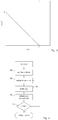
- the range-free location method of the invention proceeds in the solver as follows :
- the TOA are sorted in decreasing order of arrival time, from the first to the last, and each is assigned a numeric rank r i (step 230). For example, the smallest TOA (the first signal to be received) is assigned the highest rank, and the highest the lowest rank. In the case represented, the first gateway to receive the signal could acquire rank 6, and the last one would receive rank 1.
- the solver also computes the time differences of arrival or TDOA, that is the times of arrival of the signal relative to the first reception, ti , and the average distance between all the gateways involved, ⁇ (step 225).
- the weighting factors w i are determined based on the rank and on the value of the TDOA.
- the values of the TDOA may be corrected by a common scale factor ⁇ that is derived from the average distance between the gateways.
- the weights may be calculated by a weight function that is mainly determined by the rank value and, rank being constant, decreases for larger TDOA, such that gateways that are too far away from the target contribute little or nothing to the weighted summation.
- the method described above foresees the transmission of a single packet from the mobile node to the gateways. If more packets are exchanged, the precision can be increased by computing a new location for each packet, as described above, and finally combining the locations in a final estimate.
- the combination may be a simple average, or foresee different options, for example weighting each position in consideration of the number of receiving gateways, the signal received signal strength, etc.
- the weighting factors w i may be partly dependent form the RSSI, if they are available.
- the range-free time position estimate calculated based on the TOA by formula can be combined with position estimates of different nature and origin.
- the combination is made with range-free position estimation based on the RSSI's indication, possibly as described in European application N° EP16196989 in the name of the applicant, which describes a position estimate in which the received gateways are sorted based on their RSSI, and combined with rank-dependent weights. In this manner a completely range-free position estimate is achieved.
- the combination could foresee different options.
- the simplest is the averaging of the two estimates.
- a better accuracy could be obtained by applying weight to the two estimates that account for their different precision or reliability.
- the reliability of the RSSI-based estimate can be deduced by the absolute level of RSSI, and/or by the number of gateway involved.
- a figure of merit of the TOA-based estimation described above, can be judged by the average inter-gateway spacing ⁇ , the number of gateways involved and, when several packets are received, TOA deviations.
- the TOA timestamps will allow also a range-based estimation of the position of the mobile note together with the range-free one.
- This estimation may be obtained by conventional lateration techniques, or possibly by the method described in European patent application EP16180854 in the name of the applicant, which foresees the computation of an extended least median solution, out of a set of three-gateway solutions.
- the solver receives the times of arrival of the packet at the gateways and computes, out of them, both a range-based estimation (x r ,y r ), and, as described above, a range-free estimation (x f ,y f ), which are then combined into one.
- the system of the invention can provide accurate positioning based on ranges when the propagation conditions are optimal or good and, with the onset of multipath, is still capable of positioning the nodes, possibly at the cost of some degradation of precision by using, and giving progressively more weight to, the range-free estimate.
- the range-free and the range-based estimates could be simply averaged, or combined in a weighted average.
- the solver estimates the quality of the range-based estimate, and of the range-free one. These quality parameters are then use to determine their relative weights in the combination, or to select one rather than the other.
- the quality of the range-based estimate can be judged in several ways.
- (x,y) denotes the range-based estimate
- (x i, y i ) the position of the i -th gateway, (x o ,y o ) that the first gateway that received the packet, and t i the i -th TDOA.
- the dilution of precision could also be used.
- the quality of the range-free estimate can be judged, as mentioned above, from the average inter-gateway spacing ⁇ , or also the number of gateways involved and, when several packets are received, TOA deviations.
- the quality parameters are compared with two threshold values. If the TDOA error residue s 2 exceeds the corresponding threshold, the range-based estimation is considered unreliable and is simply discarded; the position is estimated by the range-free method alone. Conversely, if the inter-gateway spacing ⁇ is higher than its corresponding threshold, the range-free estimation is discarded, and the position given by the range-based method only. If, however both estimations appear reliable, from this comparison with the thresholds, then the final estimation of the position will be a weighted average of the two. The relative weights are computed based on the relative quality parameters.
- the position of the mobile node 110 is computed iteratively, with a step in which the time-of arrival timestamps t i are modified after the first position determination, and then a refined position is computed based on the adjusted timestamps.
- the adjustment of the timestamps leads to a better positioning because it is done in order to compensate for multipath propagation.
- the timestamp is corrected toward earlier time of arrival in such a manner that the time-shift introduced by multipath is at least in part eliminated.
- the positioning server 180 includes, or has access to a propagation model 185 ( Figure 1 ) that provides, from a first position estimate, the predicted values of from the first estimated position 310 ( Figure 4 ) to any gateway.
- the model can be setup once and reused as many times as necessary, and requires updates only at major terrain modifications like, in a city, substantial building modification or creation. From this multipath prediction, the timestamps t i can be modified (320) and a refined position 330, closer to the real position of the mobile node, estimated. The cycle of correcting the timestamps and refining the position can be repeated as many times as necessary, until the positioning the position is satisfactory, using a suitable convergence criterion 340.
- the multipath correction is not explicitly based on a prediction, but deduced from indicia of the multipath available to the positioning server.
- P TX denotes the transmitter's power
- G M the antenna gain at the mobile node
- G G the gain of the antenna at the gateway
- rssi the received signal strength
- D distance
- ⁇ the wavelength.
- the loss exponent equals 2 in free-space propagation. Its value will be lower than 2 for guided propagation and, quite often, will be higher than 2.
- L>2 is an indication of an obstruction, the higher the value of L, the larger the obstruction the signal has suffered. Since on average a large obstruction is correlated to higher delay and stronger multipath, high values of L indicate that multipath has taken place, and may prompt a compensation.
- the value of rssi in formula 4 is an aggregated value: a statistic indicator of several rssi determinations. It can be a mean, a median, a maximum value, or a quantile. Favourable results have been obtained taking rssi agg equal to the 80 th percentile of the received rssi values, i.e. a value close to the maximum received signal level.
- the exact function used to compensate the t i may assume different forms, and may be chosen in consideration of the environment around a specific gateway, or mobile node. It has been found advantageous to compensate only those propagation times t i for which the corresponding loss exponent is larger a given exponent, for example compute a compensation only when L ⁇ 4, and zero compensation when L ⁇ 4 .
- the iterative method above foresees at least two, possibly more, estimates of the position. These can be obtained with the rang-free estimate method of the prior embodiments but, in independent aspects of the invention, one all or some position estimates could be obtained otherwise, for example by lateration, based on the times of arrival, or any combination of times of arrival and signal strengths.
Landscapes
- Engineering & Computer Science (AREA)
- Physics & Mathematics (AREA)
- General Physics & Mathematics (AREA)
- Radar, Positioning & Navigation (AREA)
- Remote Sensing (AREA)
- Computer Networks & Wireless Communication (AREA)
- Signal Processing (AREA)
- Position Fixing By Use Of Radio Waves (AREA)
- Mobile Radio Communication Systems (AREA)
Claims (13)
- Un système comprenant au moins un dispositif mobile (110) et une pluralité de passerelles (160) dont les positions sont connues, dans lequel les passerelles sont configurées opératoirement pour recevoir un signal radio du dispositif mobile et déterminer un temps d'arrivée (TOA; ti ) de dit signal à la passerelle, le système comprenant une unité solveur (180) configurée opératoirement pour calculer la position du dispositif mobile (110), se basant sur lesdits temps d'arrivée et pour trier les passerelles selon les temps d'arrivée du signal reçu, caractérisé en ce que l'unité solveur (180) est configurée pour calculer pour chaque passerelle un facteur de pondération basé sur la position de la passerelle dans le tri, dans lequel les passerelles dont le temps d'arrivé est avancé reçoivent un facteur de pondération plus élevé, le système étant en outre configuré pour calculer la position du dit dispositif mobile par une somme pondérée des positions des passerelles utilisant lesdits facteurs de pondération.
- Le système de la revendication précédente, l'unité solveur étant configurée pour calculer les coefficients de pondération se basant sur la position dans le tri et sur la différence de temps d'arrivée des signaux aux passerelles.
- Le système de la revendication précédente, l'unité solveur étant configurée pour diviser la différence de temps d'arrivée par un facteur d'échelle dépendant de la distance moyenne entre les passerelles ayant reçu le signal.
- Le système de l'une quelconque des revendications précédentes, dans lequel les facteurs de pondération sont toujours positifs ou nuls, et/ou ils sont nuls lorsque la différence entre les temps d'arrivée dépasse une valeur prédéterminée.
- Le système de l'une quelconque des revendications précédentes, dans lequel l'unité solveur est configurée pour calculer les facteurs de pondération (wi ) de chaque passerelle par :

- Le système de l'une quelconque des revendications précédentes, dans lequel, configuré pour : calculer aussi une estimation de la position basée sur les distances dérivées par lesdits temps d'arrivée ; déterminer un premier paramètre de qualité exprimant la qualité de l'estimation de la position indépendante des distances, un second paramètre de qualité exprimant la qualité de dite estimation de la position basée sur les distances ; et combiner l'estimation de la position basée sur les distances avec l'estimation de la position indépendante des distances se basant sur lesdits premier et second paramètres de qualité.
- Un procédé pour déterminer la position d'un dispositif mobile (110) relativement à une pluralité de passerelles (160) dont les positions sont connues, comprenant :• déterminer pour chaque passerelle un temps d'arrivée du (TOA; ti ),• trier les passerelles selon leurs temps d'arrivée,caractérisé par• calculer pour chaque passerelle un facteur de pondération dépendant de la position de la passerelle dans le tri, dans lequel les passerelles dont le temps d'arrivée est avancée reçoivent un facteur de pondération plus élevé,• calculer la position du dispositif mobile par une somme pondéré des positions des passerelles utilisant lesdits facteurs de pondération.
- Le procédé de la revendication précédente, dans lequel les facteurs de pondérations sont calculés se basant sur la position dans le tri et sur la différence de temps d'arrivée des signaux aux passerelles.
- Le procédé de la revendication précédente, dans lequel la différence de temps d'arrivée est divisée par un facteur d'échelle dépendant de la distance moyenne entre les passerelles ayant reçu le signal.
- Le procédé de l'une quelconque des revendications 7-9, dans lequel les facteurs de pondération sont toujours positifs ou nuls, et/ou ils sont nuls lorsque la différence entre les temps d'arrivée dépasse une valeur prédéterminée.
- Le procédé de l'une quelconque des revendications 7-10, dans lequel les facteurs de pondération (wi ) sont calculés avec :

- Le procédé de l'une quelconque des revendications 7-11 comprenant aussi : calculer aussi une estimation de la position basée sur les distances dérivées par lesdits temps d'arrivée ; déterminer un premier paramètre de qualité exprimant la qualité de l'estimation de la position indépendante des distances, un second paramètre de qualité exprimant la qualité de dite estimation de la position basée sur les distances; et combiner l'estimation de la position basée sur les distances avec l'estimation de la position indépendante des distances se basant sur lesdits premier et second paramètres de qualité.
- Le procédé de la revendication12, comprenant une opération de corriger les temps d'arrivée (ti) vers des temps d'arrivée anticipés se basant sur une indication de propagation par trajets multiples.
Applications Claiming Priority (1)
| Application Number | Priority Date | Filing Date | Title |
|---|---|---|---|
| EP17164423 | 2017-03-31 |
Publications (3)
| Publication Number | Publication Date |
|---|---|
| EP3404440A2 EP3404440A2 (fr) | 2018-11-21 |
| EP3404440A3 EP3404440A3 (fr) | 2019-03-13 |
| EP3404440B1 true EP3404440B1 (fr) | 2021-09-15 |
Family
ID=58671331
Family Applications (1)
| Application Number | Title | Priority Date | Filing Date |
|---|---|---|---|
| EP18157966.5A Active EP3404440B1 (fr) | 2017-03-31 | 2018-02-21 | Procédé et système de positionnement à atténuation par trajets multiples |
Country Status (4)
| Country | Link |
|---|---|
| US (1) | US10871541B2 (fr) |
| EP (1) | EP3404440B1 (fr) |
| KR (1) | KR102299605B1 (fr) |
| CN (1) | CN108693501B (fr) |
Families Citing this family (9)
| Publication number | Priority date | Publication date | Assignee | Title |
|---|---|---|---|---|
| US11101845B2 (en) | 2017-09-18 | 2021-08-24 | Semtech Corporation | System for wireless power transmission and communication |
| US11276938B2 (en) | 2018-01-11 | 2022-03-15 | Semtech Corporation | Single layer antenna |
| WO2020237935A1 (fr) * | 2019-05-27 | 2020-12-03 | 湖南联智桥隧技术有限公司 | Système de transmission de données et procédé de transmission de données |
| CN111065046B (zh) * | 2019-11-21 | 2020-12-11 | 东南大学 | 一种基于LoRa的室外无人机定位方法与系统 |
| US11310085B2 (en) * | 2019-12-11 | 2022-04-19 | Semtech Corporation | LoRa advanced receiver |
| CN113126026B (zh) * | 2019-12-31 | 2024-04-19 | 中移(成都)信息通信科技有限公司 | 定位系统、方法及存储介质 |
| EP4232839A4 (fr) * | 2020-10-26 | 2024-06-26 | Zainar, Inc. | Procédé hybride de télémétrie basée sur le temps d'arrivée |
| US12301276B2 (en) | 2021-02-05 | 2025-05-13 | Texas Instruments Incorporated | Frequency-division multiplexing |
| EP4345486A1 (fr) * | 2022-09-29 | 2024-04-03 | Nokia Technologies Oy | Procédé de détermination d'intégrité de positionnement sur la base de la vitesse d'estimation de position |
Family Cites Families (16)
| Publication number | Priority date | Publication date | Assignee | Title |
|---|---|---|---|---|
| US6184829B1 (en) * | 1999-01-08 | 2001-02-06 | Trueposition, Inc. | Calibration for wireless location system |
| AU2359200A (en) * | 1999-01-08 | 2000-07-24 | Trueposition, Inc. | Location method for a wireless location system |
| US9699607B2 (en) * | 2005-12-15 | 2017-07-04 | Polte Corporation | Multi-path mitigation in rangefinding and tracking objects using reduced attenuation RF technology |
| US9813867B2 (en) * | 2005-12-15 | 2017-11-07 | Polte Corporation | Angle of arrival (AOA) positioning method and system for positional finding and tracking objects using reduced attenuation RF technology |
| KR100768573B1 (ko) * | 2006-06-17 | 2007-10-19 | 한국항공대학교산학협력단 | 이동 단말기의 위치 정보 보정 방법 및 그 장치 |
| US8570221B2 (en) * | 2008-12-05 | 2013-10-29 | Koninklijke Philips N.V. | Wireless localization techniques in lighting systems |
| CN101715232A (zh) * | 2009-11-20 | 2010-05-26 | 西安电子科技大学 | 基于rssi和lqi加权的无线传感器网络节点定位方法 |
| IT1401771B1 (it) * | 2010-08-31 | 2013-08-02 | St Microelectronics Srl | Sistemi e metodi per la localizzazione in tempo reale. |
| US8315647B2 (en) * | 2010-12-28 | 2012-11-20 | Trueposition, Inc. | Time and power based wireless location detection system |
| WO2014151103A1 (fr) * | 2013-03-15 | 2014-09-25 | Nextnav, Llc | Systèmes et procédés offrant une diversité de transmission pour combattre les effets multitrajets dans l'estimation de position |
| CN106170712B (zh) * | 2014-02-07 | 2019-05-17 | 飞利浦灯具控股公司 | 以网络为中心的定位 |
| US9404993B2 (en) * | 2014-07-30 | 2016-08-02 | Aruba Networks, Inc. | System and methods for information collection and processing for location estimation in MIMO wireless networks |
| EP3173809B1 (fr) | 2015-11-30 | 2023-06-28 | Semtech Corporation | Système et procédé d'estimation d'emplacement basée sur une différence de temps d'arrivée (tdoa) robuste et efficace en présence de retard multitrajet |
| US10492022B2 (en) | 2015-11-30 | 2019-11-26 | Semtech Corporation | System and method for robust and accurate RSSI based location estimation |
| CN105828435A (zh) * | 2016-05-30 | 2016-08-03 | 天津大学 | 基于接收信号强度优化的距离修正加权质心定位方法 |
| US10371787B2 (en) * | 2017-01-13 | 2019-08-06 | Raytheon Company | Emitter geolocation using sorted observations |
-
2018
- 2018-02-21 EP EP18157966.5A patent/EP3404440B1/fr active Active
- 2018-02-22 US US15/902,720 patent/US10871541B2/en active Active
- 2018-03-27 KR KR1020180035022A patent/KR102299605B1/ko active Active
- 2018-03-29 CN CN201810271682.8A patent/CN108693501B/zh active Active
Also Published As
| Publication number | Publication date |
|---|---|
| EP3404440A2 (fr) | 2018-11-21 |
| US10871541B2 (en) | 2020-12-22 |
| KR20180111574A (ko) | 2018-10-11 |
| KR102299605B1 (ko) | 2021-09-09 |
| EP3404440A3 (fr) | 2019-03-13 |
| CN108693501A (zh) | 2018-10-23 |
| US20180284215A1 (en) | 2018-10-04 |
| CN108693501B (zh) | 2022-04-01 |
Similar Documents
| Publication | Publication Date | Title |
|---|---|---|
| EP3404440B1 (fr) | Procédé et système de positionnement à atténuation par trajets multiples | |
| EP3986042B1 (fr) | Procédé et équipement utilisateur capables de s'adapter aux environnements en ligne de vue et non en ligne de vue | |
| US12392859B2 (en) | Line of sight detection based on channel impulse response reported | |
| EP3173807B1 (fr) | Système et procédé d'estimation d'emplacement basé sur rssi fiable et précise | |
| US10557919B2 (en) | Observed time difference of arrival angle of arrival discriminator | |
| EP3173809B1 (fr) | Système et procédé d'estimation d'emplacement basée sur une différence de temps d'arrivée (tdoa) robuste et efficace en présence de retard multitrajet | |
| EP3544323B1 (fr) | Procédé permettant de déterminer un retard de canal, procédé de localisation et dispositif associé | |
| US9426619B2 (en) | Handling complex signal parameters by a positioning device, and apparatus | |
| US9213093B2 (en) | Pairwise measurements for improved position determination | |
| US20160249316A1 (en) | Non-line-of-sight (nlos) and line-of-sight (los) classification techniques for indoor ranging | |
| US20140087754A1 (en) | Detecting Multipath and Determining Positioning Measurement Uncertainty | |
| US20120188938A1 (en) | System and method for providing a location aware wireless network | |
| US12302194B2 (en) | Methods and systems for positioning of wireless devices | |
| US20180081024A1 (en) | Method and apparatus for obtaining time of arrival toa when mobile terminal is located | |
| EP3227710A1 (fr) | Amélioration de précision lors de la détermination de positions dans un réseau sans fil | |
| KR20040067533A (ko) | 기지국 위치정보와 이동전화로부터 수신된 전파특성정보및 기 측정된 전파특성정보를 이용한 이동전화 위치추정방법 | |
| US20250212089A1 (en) | Methods and apparatuses relating to wireless communications |
Legal Events
| Date | Code | Title | Description |
|---|---|---|---|
| PUAI | Public reference made under article 153(3) epc to a published international application that has entered the european phase |
Free format text: ORIGINAL CODE: 0009012 |
|
| STAA | Information on the status of an ep patent application or granted ep patent |
Free format text: STATUS: THE APPLICATION HAS BEEN PUBLISHED |
|
| AK | Designated contracting states |
Kind code of ref document: A2 Designated state(s): AL AT BE BG CH CY CZ DE DK EE ES FI FR GB GR HR HU IE IS IT LI LT LU LV MC MK MT NL NO PL PT RO RS SE SI SK SM TR |
|
| AX | Request for extension of the european patent |
Extension state: BA ME |
|
| PUAL | Search report despatched |
Free format text: ORIGINAL CODE: 0009013 |
|
| AK | Designated contracting states |
Kind code of ref document: A3 Designated state(s): AL AT BE BG CH CY CZ DE DK EE ES FI FR GB GR HR HU IE IS IT LI LT LU LV MC MK MT NL NO PL PT RO RS SE SI SK SM TR |
|
| AX | Request for extension of the european patent |
Extension state: BA ME |
|
| RIC1 | Information provided on ipc code assigned before grant |
Ipc: G01S 5/14 20060101ALI20190206BHEP Ipc: G01S 5/02 20100101AFI20190206BHEP Ipc: G01S 5/06 20060101ALN20190206BHEP |
|
| STAA | Information on the status of an ep patent application or granted ep patent |
Free format text: STATUS: REQUEST FOR EXAMINATION WAS MADE |
|
| 17P | Request for examination filed |
Effective date: 20190627 |
|
| RBV | Designated contracting states (corrected) |
Designated state(s): AL AT BE BG CH CY CZ DE DK EE ES FI FR GB GR HR HU IE IS IT LI LT LU LV MC MK MT NL NO PL PT RO RS SE SI SK SM TR |
|
| STAA | Information on the status of an ep patent application or granted ep patent |
Free format text: STATUS: EXAMINATION IS IN PROGRESS |
|
| 17Q | First examination report despatched |
Effective date: 20200203 |
|
| REG | Reference to a national code |
Ref country code: DE Ref legal event code: R079 Ref document number: 602018023468 Country of ref document: DE Free format text: PREVIOUS MAIN CLASS: G01S0005140000 Ipc: G01S0005020000 |
|
| RIC1 | Information provided on ipc code assigned before grant |
Ipc: G01S 5/02 20100101AFI20210219BHEP Ipc: G01S 5/14 20060101ALI20210219BHEP Ipc: G01S 5/06 20060101ALN20210219BHEP |
|
| GRAP | Despatch of communication of intention to grant a patent |
Free format text: ORIGINAL CODE: EPIDOSNIGR1 |
|
| STAA | Information on the status of an ep patent application or granted ep patent |
Free format text: STATUS: GRANT OF PATENT IS INTENDED |
|
| RIC1 | Information provided on ipc code assigned before grant |
Ipc: G01S 5/06 20060101ALN20210310BHEP Ipc: G01S 5/14 20060101ALI20210310BHEP Ipc: G01S 5/02 20100101AFI20210310BHEP |
|
| INTG | Intention to grant announced |
Effective date: 20210408 |
|
| GRAS | Grant fee paid |
Free format text: ORIGINAL CODE: EPIDOSNIGR3 |
|
| GRAA | (expected) grant |
Free format text: ORIGINAL CODE: 0009210 |
|
| STAA | Information on the status of an ep patent application or granted ep patent |
Free format text: STATUS: THE PATENT HAS BEEN GRANTED |
|
| AK | Designated contracting states |
Kind code of ref document: B1 Designated state(s): AL AT BE BG CH CY CZ DE DK EE ES FI FR GB GR HR HU IE IS IT LI LT LU LV MC MK MT NL NO PL PT RO RS SE SI SK SM TR |
|
| REG | Reference to a national code |
Ref country code: CH Ref legal event code: EP |
|
| REG | Reference to a national code |
Ref country code: DE Ref legal event code: R096 Ref document number: 602018023468 Country of ref document: DE |
|
| REG | Reference to a national code |
Ref country code: IE Ref legal event code: FG4D |
|
| REG | Reference to a national code |
Ref country code: AT Ref legal event code: REF Ref document number: 1430902 Country of ref document: AT Kind code of ref document: T Effective date: 20211015 |
|
| REG | Reference to a national code |
Ref country code: LT Ref legal event code: MG9D |
|
| REG | Reference to a national code |
Ref country code: NL Ref legal event code: MP Effective date: 20210915 |
|
| PG25 | Lapsed in a contracting state [announced via postgrant information from national office to epo] |
Ref country code: LT Free format text: LAPSE BECAUSE OF FAILURE TO SUBMIT A TRANSLATION OF THE DESCRIPTION OR TO PAY THE FEE WITHIN THE PRESCRIBED TIME-LIMIT Effective date: 20210915 Ref country code: BG Free format text: LAPSE BECAUSE OF FAILURE TO SUBMIT A TRANSLATION OF THE DESCRIPTION OR TO PAY THE FEE WITHIN THE PRESCRIBED TIME-LIMIT Effective date: 20211215 Ref country code: NO Free format text: LAPSE BECAUSE OF FAILURE TO SUBMIT A TRANSLATION OF THE DESCRIPTION OR TO PAY THE FEE WITHIN THE PRESCRIBED TIME-LIMIT Effective date: 20211215 Ref country code: SE Free format text: LAPSE BECAUSE OF FAILURE TO SUBMIT A TRANSLATION OF THE DESCRIPTION OR TO PAY THE FEE WITHIN THE PRESCRIBED TIME-LIMIT Effective date: 20210915 Ref country code: RS Free format text: LAPSE BECAUSE OF FAILURE TO SUBMIT A TRANSLATION OF THE DESCRIPTION OR TO PAY THE FEE WITHIN THE PRESCRIBED TIME-LIMIT Effective date: 20210915 Ref country code: FI Free format text: LAPSE BECAUSE OF FAILURE TO SUBMIT A TRANSLATION OF THE DESCRIPTION OR TO PAY THE FEE WITHIN THE PRESCRIBED TIME-LIMIT Effective date: 20210915 Ref country code: HR Free format text: LAPSE BECAUSE OF FAILURE TO SUBMIT A TRANSLATION OF THE DESCRIPTION OR TO PAY THE FEE WITHIN THE PRESCRIBED TIME-LIMIT Effective date: 20210915 |
|
| REG | Reference to a national code |
Ref country code: AT Ref legal event code: MK05 Ref document number: 1430902 Country of ref document: AT Kind code of ref document: T Effective date: 20210915 |
|
| PG25 | Lapsed in a contracting state [announced via postgrant information from national office to epo] |
Ref country code: LV Free format text: LAPSE BECAUSE OF FAILURE TO SUBMIT A TRANSLATION OF THE DESCRIPTION OR TO PAY THE FEE WITHIN THE PRESCRIBED TIME-LIMIT Effective date: 20210915 Ref country code: GR Free format text: LAPSE BECAUSE OF FAILURE TO SUBMIT A TRANSLATION OF THE DESCRIPTION OR TO PAY THE FEE WITHIN THE PRESCRIBED TIME-LIMIT Effective date: 20211216 |
|
| PG25 | Lapsed in a contracting state [announced via postgrant information from national office to epo] |
Ref country code: AT Free format text: LAPSE BECAUSE OF FAILURE TO SUBMIT A TRANSLATION OF THE DESCRIPTION OR TO PAY THE FEE WITHIN THE PRESCRIBED TIME-LIMIT Effective date: 20210915 |
|
| PG25 | Lapsed in a contracting state [announced via postgrant information from national office to epo] |
Ref country code: IS Free format text: LAPSE BECAUSE OF FAILURE TO SUBMIT A TRANSLATION OF THE DESCRIPTION OR TO PAY THE FEE WITHIN THE PRESCRIBED TIME-LIMIT Effective date: 20220115 Ref country code: SM Free format text: LAPSE BECAUSE OF FAILURE TO SUBMIT A TRANSLATION OF THE DESCRIPTION OR TO PAY THE FEE WITHIN THE PRESCRIBED TIME-LIMIT Effective date: 20210915 Ref country code: SK Free format text: LAPSE BECAUSE OF FAILURE TO SUBMIT A TRANSLATION OF THE DESCRIPTION OR TO PAY THE FEE WITHIN THE PRESCRIBED TIME-LIMIT Effective date: 20210915 Ref country code: RO Free format text: LAPSE BECAUSE OF FAILURE TO SUBMIT A TRANSLATION OF THE DESCRIPTION OR TO PAY THE FEE WITHIN THE PRESCRIBED TIME-LIMIT Effective date: 20210915 Ref country code: PT Free format text: LAPSE BECAUSE OF FAILURE TO SUBMIT A TRANSLATION OF THE DESCRIPTION OR TO PAY THE FEE WITHIN THE PRESCRIBED TIME-LIMIT Effective date: 20220117 Ref country code: PL Free format text: LAPSE BECAUSE OF FAILURE TO SUBMIT A TRANSLATION OF THE DESCRIPTION OR TO PAY THE FEE WITHIN THE PRESCRIBED TIME-LIMIT Effective date: 20210915 Ref country code: NL Free format text: LAPSE BECAUSE OF FAILURE TO SUBMIT A TRANSLATION OF THE DESCRIPTION OR TO PAY THE FEE WITHIN THE PRESCRIBED TIME-LIMIT Effective date: 20210915 Ref country code: ES Free format text: LAPSE BECAUSE OF FAILURE TO SUBMIT A TRANSLATION OF THE DESCRIPTION OR TO PAY THE FEE WITHIN THE PRESCRIBED TIME-LIMIT Effective date: 20210915 Ref country code: EE Free format text: LAPSE BECAUSE OF FAILURE TO SUBMIT A TRANSLATION OF THE DESCRIPTION OR TO PAY THE FEE WITHIN THE PRESCRIBED TIME-LIMIT Effective date: 20210915 Ref country code: CZ Free format text: LAPSE BECAUSE OF FAILURE TO SUBMIT A TRANSLATION OF THE DESCRIPTION OR TO PAY THE FEE WITHIN THE PRESCRIBED TIME-LIMIT Effective date: 20210915 Ref country code: AL Free format text: LAPSE BECAUSE OF FAILURE TO SUBMIT A TRANSLATION OF THE DESCRIPTION OR TO PAY THE FEE WITHIN THE PRESCRIBED TIME-LIMIT Effective date: 20210915 |
|
| REG | Reference to a national code |
Ref country code: DE Ref legal event code: R097 Ref document number: 602018023468 Country of ref document: DE |
|
| PLBE | No opposition filed within time limit |
Free format text: ORIGINAL CODE: 0009261 |
|
| STAA | Information on the status of an ep patent application or granted ep patent |
Free format text: STATUS: NO OPPOSITION FILED WITHIN TIME LIMIT |
|
| PG25 | Lapsed in a contracting state [announced via postgrant information from national office to epo] |
Ref country code: DK Free format text: LAPSE BECAUSE OF FAILURE TO SUBMIT A TRANSLATION OF THE DESCRIPTION OR TO PAY THE FEE WITHIN THE PRESCRIBED TIME-LIMIT Effective date: 20210915 |
|
| 26N | No opposition filed |
Effective date: 20220616 |
|
| PG25 | Lapsed in a contracting state [announced via postgrant information from national office to epo] |
Ref country code: SI Free format text: LAPSE BECAUSE OF FAILURE TO SUBMIT A TRANSLATION OF THE DESCRIPTION OR TO PAY THE FEE WITHIN THE PRESCRIBED TIME-LIMIT Effective date: 20210915 |
|
| PG25 | Lapsed in a contracting state [announced via postgrant information from national office to epo] |
Ref country code: MC Free format text: LAPSE BECAUSE OF FAILURE TO SUBMIT A TRANSLATION OF THE DESCRIPTION OR TO PAY THE FEE WITHIN THE PRESCRIBED TIME-LIMIT Effective date: 20210915 |
|
| REG | Reference to a national code |
Ref country code: CH Ref legal event code: PL |
|
| REG | Reference to a national code |
Ref country code: BE Ref legal event code: MM Effective date: 20220228 |
|
| PG25 | Lapsed in a contracting state [announced via postgrant information from national office to epo] |
Ref country code: LU Free format text: LAPSE BECAUSE OF NON-PAYMENT OF DUE FEES Effective date: 20220221 |
|
| PG25 | Lapsed in a contracting state [announced via postgrant information from national office to epo] |
Ref country code: LI Free format text: LAPSE BECAUSE OF NON-PAYMENT OF DUE FEES Effective date: 20220228 Ref country code: IT Free format text: LAPSE BECAUSE OF FAILURE TO SUBMIT A TRANSLATION OF THE DESCRIPTION OR TO PAY THE FEE WITHIN THE PRESCRIBED TIME-LIMIT Effective date: 20210915 Ref country code: IE Free format text: LAPSE BECAUSE OF NON-PAYMENT OF DUE FEES Effective date: 20220221 Ref country code: CH Free format text: LAPSE BECAUSE OF NON-PAYMENT OF DUE FEES Effective date: 20220228 |
|
| PG25 | Lapsed in a contracting state [announced via postgrant information from national office to epo] |
Ref country code: BE Free format text: LAPSE BECAUSE OF NON-PAYMENT OF DUE FEES Effective date: 20220228 |
|
| P01 | Opt-out of the competence of the unified patent court (upc) registered |
Effective date: 20230530 |
|
| PG25 | Lapsed in a contracting state [announced via postgrant information from national office to epo] |
Ref country code: HU Free format text: LAPSE BECAUSE OF FAILURE TO SUBMIT A TRANSLATION OF THE DESCRIPTION OR TO PAY THE FEE WITHIN THE PRESCRIBED TIME-LIMIT; INVALID AB INITIO Effective date: 20180221 |
|
| PG25 | Lapsed in a contracting state [announced via postgrant information from national office to epo] |
Ref country code: MK Free format text: LAPSE BECAUSE OF FAILURE TO SUBMIT A TRANSLATION OF THE DESCRIPTION OR TO PAY THE FEE WITHIN THE PRESCRIBED TIME-LIMIT Effective date: 20210915 Ref country code: CY Free format text: LAPSE BECAUSE OF FAILURE TO SUBMIT A TRANSLATION OF THE DESCRIPTION OR TO PAY THE FEE WITHIN THE PRESCRIBED TIME-LIMIT Effective date: 20210915 |
|
| PG25 | Lapsed in a contracting state [announced via postgrant information from national office to epo] |
Ref country code: MT Free format text: LAPSE BECAUSE OF FAILURE TO SUBMIT A TRANSLATION OF THE DESCRIPTION OR TO PAY THE FEE WITHIN THE PRESCRIBED TIME-LIMIT Effective date: 20210915 |
|
| PG25 | Lapsed in a contracting state [announced via postgrant information from national office to epo] |
Ref country code: TR Free format text: LAPSE BECAUSE OF FAILURE TO SUBMIT A TRANSLATION OF THE DESCRIPTION OR TO PAY THE FEE WITHIN THE PRESCRIBED TIME-LIMIT Effective date: 20210915 |
|
| PGFP | Annual fee paid to national office [announced via postgrant information from national office to epo] |
Ref country code: GB Payment date: 20260227 Year of fee payment: 9 |
|
| PGFP | Annual fee paid to national office [announced via postgrant information from national office to epo] |
Ref country code: DE Payment date: 20260227 Year of fee payment: 9 |
|
| PGFP | Annual fee paid to national office [announced via postgrant information from national office to epo] |
Ref country code: FR Payment date: 20260225 Year of fee payment: 9 |