EP3404561A1 - Hilfssystem zur modellerstellung, hilfsvorrichtung zur modellerstellung und hilfsprogramm zur modellerstellung - Google Patents
Hilfssystem zur modellerstellung, hilfsvorrichtung zur modellerstellung und hilfsprogramm zur modellerstellung Download PDFInfo
- Publication number
- EP3404561A1 EP3404561A1 EP16885070.9A EP16885070A EP3404561A1 EP 3404561 A1 EP3404561 A1 EP 3404561A1 EP 16885070 A EP16885070 A EP 16885070A EP 3404561 A1 EP3404561 A1 EP 3404561A1
- Authority
- EP
- European Patent Office
- Prior art keywords
- model
- cad model
- cad
- mesh
- parts
- Prior art date
- Legal status (The legal status is an assumption and is not a legal conclusion. Google has not performed a legal analysis and makes no representation as to the accuracy of the status listed.)
- Pending
Links
Images






Classifications
-
- G—PHYSICS
- G06—COMPUTING OR CALCULATING; COUNTING
- G06F—ELECTRIC DIGITAL DATA PROCESSING
- G06F30/00—Computer-aided design [CAD]
- G06F30/10—Geometric CAD
-
- G—PHYSICS
- G06—COMPUTING OR CALCULATING; COUNTING
- G06T—IMAGE DATA PROCESSING OR GENERATION, IN GENERAL
- G06T17/00—Three-dimensional [3D] modelling for computer graphics
- G06T17/20—Finite element generation, e.g. wire-frame surface description, tesselation
-
- G—PHYSICS
- G06—COMPUTING OR CALCULATING; COUNTING
- G06F—ELECTRIC DIGITAL DATA PROCESSING
- G06F30/00—Computer-aided design [CAD]
-
- G—PHYSICS
- G06—COMPUTING OR CALCULATING; COUNTING
- G06F—ELECTRIC DIGITAL DATA PROCESSING
- G06F2111/00—Details relating to CAD techniques
- G06F2111/20—Configuration CAD, e.g. designing by assembling or positioning modules selected from libraries of predesigned modules
-
- G—PHYSICS
- G06—COMPUTING OR CALCULATING; COUNTING
- G06F—ELECTRIC DIGITAL DATA PROCESSING
- G06F2119/00—Details relating to the type or aim of the analysis or the optimisation
- G06F2119/20—Design reuse, reusability analysis or reusability optimisation
Definitions
- the present invention relates to a modeling support system, a modeling support method, and a modeling support program.
- the analysis model is usually constituted by a mesh model, and the quality of the mesh model considerably affects the accuracy of simulation results.
- the mesh modeling with sufficient accuracy for simulations requires a lot of modeling steps.
- Patent Literature 1 a technology concerning the mesh modeling is disclosed in which a quadrilateral mesh is automatically generated such that sides of quadrilateral elements are aligned along a boundary as much as possible with respect to a shape which is a mesh modeling object.
- Patent Literature 2 a technology is disclosed in which a plurality of types of bubbles are stably arranged in an object region with respect to a shape to be a mesh modeling object and centers of the plurality of types of bubbles are connected to generate a mesh.
- Patent Literature 3 a mesh modeling system that enables modeling of a desired mesh model by transformation of an existing mesh model is disclosed in which the mesh is generated by transforming the existing mesh model while maintaining its geometric features.
- the mesh size and quality (interior angle, edge length and the like) required for the model may differ depending on the purpose of the numerical simulation, a modeling object of the mesh model, and other factors. Therefore, it is necessary to specify parameters such as mesh size and quality according to the above factors. As a result, the mesh modeling requires know-how of experts and enormous number of modeling steps.
- Patent Literature 4 a technology for supporting generation of a mesh model for analysis using an existing mesh model is disclosed. That is, a set of existing CAD model and mesh model is stored in a database as a reusable model set, and a CAD model as a mesh modeling object is divided into a plurality of parts. In a case of mesh modeling from each division of the CAD model, it is searched whether the CAD model similar to each part of the CAD model out of the CAD models of the reusable model set included in the database exists, and if the similar CAD model exists, a mesh model corresponding to the similar CAD model is applied. If the similar CAD model does not exist, a mesh is automatically generated. Then, by combining respective mesh models, a mesh model of the CAD model to be modeled is generated.
- Patent Literature 4 has a mechanism for the mesh modeling by reusing the reusable model set. Therefore, when the reusable model sets are accumulated by operating the system disclosed in Patent Literature 4, there arises a problem that a great deal of time is spent on searching for a similar CAD model.
- the present invention has been made in view of such circumstances, and an object thereof is to provide a modeling support system, a modeling support method, and a modeling support program capable of generating a mesh model efficiently.
- a modeling support system including a model storing unit that stores a combination of a CAD model and a mesh model corresponding to the CAD model, a CAD model recognizing unit that recognizes a shape indicated by the CAD model, a CAD model classifying unit that classifies respective parts of the stored CAD model into one of a plurality of groups, on the basis of a recognized shape, a group specifying unit that receives an input of a CAD model, specifies component parts of the input CAD model, and further specifies groups corresponding to the specified component parts from the specified groups, a similar-shape-model search unit that searches and obtains the part of the CAD model having a shape most similar to the shape indicated by the specified component part, from the part of the CAD model in the specified groups, and a mesh model generating unit that obtains a mesh model corresponding to the obtained CAD model, from the stored mesh model, and generates a new mesh model corresponding to the input CAD model using the obtained mesh
- a mesh model can be generated efficiently.
- FIG. 1 is a diagram illustrating hardware and software included in the modeling support system according to the present embodiment and functions realized by them.
- a modeling support system 100 includes a computer (Information Processor), and includes, as hardware, a CPU 11 including a processor such as CPU (Central Processing Unit), a main storage device 12 including a memory such as RAM (Random Access Memory), ROM (Read Only Memory), and/or NVRAM (NonVolatile RAM), etc., an auxiliary storage device 13 including a storage device such as HDD (Hard Disc Drive) and/or SSD (Solid State Drive), an input device 14 including a touchscreen for receiving an input signal from a pointing device, operation buttons and other input devices, and an output device 15 including a liquid crystal display monitor, a printer and other output devices.
- a CPU 11 including a processor such as CPU (Central Processing Unit)
- main storage device 12 including a memory such as RAM (Random Access Memory), ROM (Read Only Memory), and/or NVRAM (NonVolatile RAM), etc.
- each function of the modeling support system 100 is fulfilled by a model storing unit 120, a reusable model recognizing unit 103, a duplicated reusable model deleting unit 104, a reusable model classifying unit 105, a search classification specifying unit 107, a similar-shape-part search unit 108, a mesh model generating unit 130, and a CAD model output unit 112.
- the model storing unit 120 includes a CAD data registering unit 101 and a mesh data registration unit 102.
- the CAD data registering unit 101 stores data of a CAD model indicating a shape of predetermined structural objects or product such as each part of a vehicle.
- the mesh model registering unit 102 stores data of a mesh model corresponding to the CAD models.
- the model storing unit 120 stores a combination of the CAD model and the mesh model corresponding to the CAD model as a model set.
- CAD models and the mesh models may be models input from users and other operators, or may be models that are automatically generated by the modeling support system 100.
- the reusable model recognizing unit 103 recognizes the shape indicated by the CAD model stored in the model storing unit 120.
- the reusable model classifying unit 105 classifies each part of the CAD model stored in the model storing unit 120 into one of a plurality of groups on the basis of a shape recognized by the reusable model recognizing unit 103.
- the reusable model classifying unit 105 recognizes the shape of each part of the CAD model and sets the parts of the CAD model having similar shapes to the same group, thereby classifying each part of the CAD model stored in the model storing unit 120 (hereinafter referred to as a reusable model) into one of a plurality of groups.
- the reusable model classifying unit 105 classifies each part of the CAD model classified into the group into a part of the CAD model representing the group (hereinafter referred to as a representative CAD model) and a part of the CAD model belonging to the representative CAD model (hereinafter referred to as a subordinate CAD model).
- the reusable models including representative CAD models and subordinate CAD models classified by the reusable model classifying unit 105 are stored in a reusable model storing device 106 including a storage device such as an HDD, an SSD and other storage devices.
- a combination of the reusable model and the corresponding mesh model is stored as a reusable model set. That is, a combination of the representative CAD model and the corresponding mesh model is stored as a representative reusable model set. In addition, a combination of the subordinate CAD model and the corresponding mesh model is stored as a subordinate reusable model set.
- the duplicated reusable model deleting unit 104 determines whether each part of the CAD model satisfying a predetermined relation exists when the reusable model classifying unit 105 classifies each part of the CAD model, and classifies only the part of the CAD model selected from each part of the CAD models into one of the plurality of groups.
- the duplicated reusable model deleting unit 104 selects the first part of the CAD model and classifies it into one of the plurality of groups.
- the duplicated reusable model deleting unit 104 receives the input of the predetermined relation from the user through the input device 14 and classifies each part of the CAD model into one of the plurality of groups according to contents of the received relation.
- the search classification specifying unit 107 receives the input of the CAD model from the user or the like, specifies a component part of the input CAD model, and specifies a group corresponding to the specified component part from the groups classified by the reusable model classifying unit 105. Specifically, for example, the search classification specifying unit 107 specifies a shape of the component part of the input CAD model, and specifies the group, to which the CAD group including the specified shape belongs, as a group corresponding to the specified component part, from the groups classified by the reusable model classifying unit 105.
- the similar-shape-part search unit 108 searches and obtains a part of the CAD model having a shape most similar to the shape of the specified component part, from the part of the CAD model in the group specified by the search classification specifying unit 107.
- the mesh model generating unit 130 obtains a mesh model corresponding to the part of the CAD model, which is obtained by the similar-shape-part search unit 108, from the mesh model stored in the model storing unit 120, and generates a new mesh model (hereinafter referred to as a mesh model to be generated) corresponding to the input CAD model, using the obtained mesh model.
- the mesh model generating unit includes a similar-part mesh modeling unit 109, a dissimilar-part mesh modeling unit 110, and a mesh combining unit 111.
- the similar-part mesh modeling unit 109 obtains a mesh model corresponding to the CAD model, which is obtained by the similar-shape-part search unit 108, from the mesh model stored in the model storing unit 120, and generates a mesh model of a modeling object on the basis of the obtained mesh model.
- the dissimilar-part mesh modeling unit 110 generates a mesh model corresponding to the component part specified by the search classification specifying unit 107 when the similar-shape-part search unit 108 fails to obtain the part of the CAD model indicating the most similar shape.
- the mesh combining unit 111 combines the mesh model generated by the similar-part mesh modeling unit 109 and the mesh model generated by the dissimilar-part mesh modeling unit 110.
- the CAD model output unit 112 outputs the part of the CAD model classified by the reusable model classifying unit 105 and the new mesh model generated by the mesh model generating unit 130 using the part of the CAD model to the output device 15.
- the respective functions in the modeling support system 100 described above are realized by the hardware of the modeling support system 100, or a program stored in the main storage device 12 or the auxiliary storage device 13 to be read and executed by the CPU 11 of the modeling support system 100.
- the program may be stored in other recording medium such as memory cards and/or optical disks.
- the functions in the modeling support system 100 may be realized by a single information processing device, or a part or all of the functions may be realized by further other information processors.
- the functions may be realized by a so-called web application.
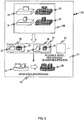
- FIG. 2 is a diagram for describing the process to be executed by the modeling support system 100.
- the modeling support system 100 stores a CAD model 31 and a corresponding mesh model 32 in the reusable model storing device 106, and executes a process (hereinafter referred to as a reusable model recognizing/classifying process S1) of recognizing a shape of the CAD model 31 and classifying each part of the CAD model 31 into a plurality of groups 35 on the basis of the recognized shape.
- a process hereinafter referred to as a reusable model recognizing/classifying process S1
- the reusable model 33 which is the classified part, and a corresponding mesh model 34 are recognized as a reusable model set 36.
- the modeling support system 100 executes a process (hereinafter referred to as a mesh modeling process S2) of, from a CAD model 37 input from the user or the like, generating a mesh model 38 corresponding to the CAD model 37 on the basis of the reusable model 33 generated in the reusable model recognizing/classifying process S1.
- a mesh modeling process S2 a process of, from a CAD model 37 input from the user or the like, generating a mesh model 38 corresponding to the CAD model 37 on the basis of the reusable model 33 generated in the reusable model recognizing/classifying process S1.
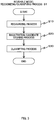
- FIG. 3 is a flowchart illustrating the reusable model recognizing/classifying process S1.
- the reusable model recognizing/classifying process S1 is initiated when the input device 14 of the modeling support system 100 detects a predetermined input by an operator such as a user and other signals.
- the modeling support system 100 executes a process (hereinafter referred to as a recognizing process S10) of recognizing a partial shape (hereinafter referred to as a reusable part) of the CAD model stored in the reusable model storing device 106 (S10). Then, the modeling support system 100 recognizes the recognized reusable part and a mesh model corresponding to the reusable part as a reusable part set.
- a recognizing process S10 A specific example of the recognizing process S10 will be described herein.
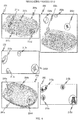
- FIG. 4 is a view illustrating the specific example of the recognizing process S10. As indicated by reference numeral 201 in FIG. 4 , in the present example, assumption is generated that the modeling support system 100 obtained a mesh model 201a from the reusable model storing device 106.
- the modeling support system 100 extracts element edges 211a to 211d (hereinafter referred to as T-connection element edges) in which three elements belong to a side constituting an element of the mesh model 201a.
- the element edge means the above side.
- the modeling support system 100 separates the mesh with T-connection element edges 211a to 211d, and generates mesh models 202a to 202d after separation. Note that, in FIG.4 , although the separated portions are shown as separated from the mesh model for ease of understanding, the actual positions of the portions do not change while only nodes are multiplexed.
- the modeling support system 100 performs grouping on the mesh models 202a to 202d generated after separation for each element group connected to each other. Then, the modeling support system 100 deletes the group including the maximum number of element and then release the grouping of the remaining group.
- the modeling support system 100 performs grouping again into mutually connected element groups, and recognizes the groups subjected to the grouping, as mesh models 213a to 213d (serving as mesh models corresponding to the reusable part).
- the modeling support system 100 draws straight lines in a normal direction from several points of internal points of each element in the mesh models 213a to 213d and obtains component surfaces 204a to 204d (hereinafter referred to as mesh belonging surfaces) of CAD models intersecting with the straight lines and corresponding to the mesh models.
- the modeling support system 100 separates surfaces corresponding to the mesh belonging surfaces 204a to 204d from the CAD model corresponding to the mesh model 201a, performs grouping again with component surface groups connected to each other, and deletes the group having the maximum number of surfaces from the groups subjected to the grouping. Then, as indicated by reference numeral 205, the modeling support system 100 originally restores the component surface group of the separated CAD model, and groups with the component surface groups connected to each other again to generate parts of the CAD model 215a to 215d.
- the modeling support system 100 recognizes each of parts of the CAD model 215a to 215d as a reusable part. Then, the modeling support system 100 recognizes the recognized reusable parts (the part of the CAD model 215a to 215d) and the mesh models corresponding to the reusable parts, as a reusable part set.
- the modeling support system 100 may recognize the entire CAD model stored in the model storing unit 120 as the reusable part without executing the recognizing process of the partial shape as described above.
- the modeling support system 100 executes a process (hereinafter referred to as a registration candidate storing process S20) of storing candidates to be registered as reusable models out of the reusable parts (reusable part set) recognized in the recognizing process S10 ( FIG. 3 ).
- a registration candidate storing process S20 a process of storing candidates to be registered as reusable models out of the reusable parts (reusable part set) recognized in the recognizing process S10 ( FIG. 3 ).
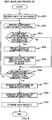
- FIG. 5 is a flowchart illustrating the registration candidate storing process S20.
- the modeling support system 100 determines whether there are a plurality of parts of the CAD model satisfying a predetermined relation in one reusable part (hereinafter referred to as a new reusable CAD model candidate) selected from the reusable parts recognized in the recognizing process S10 and the CAD model (hereinafter referred to as a registered CAD model) stored in the reusable model storing device 106 (S22).
- a new reusable CAD model candidate selected from the reusable parts recognized in the recognizing process S10
- the CAD model hereinafter referred to as a registered CAD model
- the process proceeds to step S23, and if determining not to duplicate (S22: no duplication), the modeling support system 100 stores the new reusable CAD model candidate as a new registration candidate (S26) and stores a combination of the new reusable CAD model candidate and the corresponding mesh model as a registration candidate of the reusable model set. After that, the process proceeds to step S27.
- step S23 the modeling support system 100 compares the quality of a mesh model (first mesh model) corresponding to the new reusable CAD model candidate with the quality of a mesh model (second mesh model) corresponding to the duplicated and registered CAD model.
- step S27 This means the new reusable CAD model candidate is excluded and is not stored as a registration candidate.
- the new reusable CAD model candidate is stored as a registration candidate in place of the registered CAD model (S25), and the new reusable CAD model candidate and the corresponding mesh model are stored as registration candidates of the reusable model set. After that, the process proceeds to step S27.
- the modeling support system 100 compares the quality of the new reusable CAD model candidate with the quality of the registered CAD model (S24).
- step S27 the modeling support system 100 determines whether the comparison of all the new reusable CAD model candidates with the registered CAD model is completed; when it is determined that the comparison has not been completed (S27: NO), the process returns to step S22 in order to perform comparison of other new reusable CAD model candidates, and when it is determined that the comparison is completed (S27: YES), the process is ended (S28).
- S27: NO the comparison candidate storing process S20 will be described on the basis of one example of a monitor display output to the output device 15.
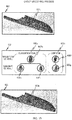
- FIG. 6 is a view illustrating an example of the monitor display output to the output device 15 by the registration candidate storing process S20. Note that, it is assumed that the modeling support system 100 recognizes, as indicated by reference numeral 301 in FIG. 6 , the new reusable CAD model candidate and corresponding mesh model sets 301a, 301b, and 301c, and stores, as indicated by reference numeral 302, the registered CAD model and corresponding reusable mesh model sets 302a and 302b.
- the modeling support system 100 determines a duplicating relation between a new reusable CAD model candidate in the set 301a and a registered CAD model in the set 302a.
- the modeling support system 100 compares the quality of the mesh model in the set 301a with the quality of the mesh model in the set 302a. Specifically, the modeling support system compares the ratio of the triangular elements included in the mesh model of the set 301a with the ratio of the triangular elements included in the CAD model of the set 302a. Then, since the ratio of the triangular elements included in the mesh model of the set 301a is higher than the ratio of the triangular elements included in the CAD model of the set 302a, the modeling support system 100 determines that the quality of the mesh model of the set 302a is higher. Therefore, the new reusable CAD model candidate in the set 301a is excluded from a registration object. In other words, the new reusable CAD model candidate is not stored as a registration object.
- the modeling support system 100 determines a duplicating relation between the new reusable CAD model candidate in the set 301b and the registered CAD model in the set 302b.
- the modeling support system 100 compares the ratio of the triangular elements included in the mesh model of the set 301b with the ratio of the triangular elements included in the mesh model of the set 302b. Since the ratio of the mesh model in the set 301b is equal to the ratio of the mesh model in the set 302b, the modeling support system 100 compares the quality of the new reusable CAD model candidate in the set 301b with the quality of the registered CAD model in the set 302b. Specifically, the modeling support system compares a shortest edge of the new reusable CAD model candidate in the set 301b with that of the registered CAD model in the set 302b.
- the modeling support system 100 determines that the quality of the new reusable CAD model candidate in the set 301b is higher. That is, the modeling support system 100 stores the new reusable CAD model candidate of the set 301b as a registration candidate of a reusable model in place of the registered CAD model in the set 302b. In addition, the modeling support system 100 stores the set 301b as a registration candidate of a reusable model set in place of the set 302b.
- the modeling support system 100 attempts to determine the duplicating relation between a new reusable CAD model candidate of the set 301c and a registered CAD model. Since a CAD model corresponding to the new reusable CAD model candidate of the set 301c does not exist, the modeling support system 100 stores the new reusable CAD model candidate of the set 301c as a registration candidate of a new reusable model. Further, the modeling support system 100 stores the set 301c as a registration candidate of a new reusable model set.
- the set 301c is stored as a registration candidate 303a of a new reusable model set.
- the set 301a is not stored (reference numeral 304a) as a registration candidate of the reusable model set, and the set 301b is stored as a registration candidate 304b.
- the quality comparison of the mesh model and the quality comparison of the CAD model are respectively performed on the basis of the triangular element and the shortest edge.
- the quality comparison may be performed using any other evaluation parameter.
- the new reusable CAD model candidate may be stored directly as the registration candidate of the reusable model without performing the duplication determination and the quality comparison as described above.
- the modeling support system 100 executes a process (hereinafter referred to as a classifying process S30) of classifying the registration candidate of the reusable model stored by the registration candidate storing process S20 ( FIG. 3 ).
- FIG. 7 is a flowchart illustrating the classifying process S30.
- the modeling support system 100 selects one of the registration candidates of the reusable model (S31), and determines an inclusion relation between the selected registration candidate (hereinafter referred to as a classifying objects CAD model) of the reusable model and the representative CAD model stored in the reusable model storing device 106 (S32).
- a process of determining the inclusion relation can be realized using algorithms or technologies relating to boundary representation disclosed in, for example, a related document " Hongshen Wang, Lin Zhang and Yonggui Zhang, "Partial Matching of 3D CAD Models with Attribute Graph", Applied Mechanics and Materials, Vol. 528 (2014), pp. 302-309 ".
- the modeling support system 100 determines whether there is any representative CAD model, in the representative CAD models, included in the classifying objects CAD model (S32); when it is determined that there is the representative CAD model included in the classifying objects CAD model (S32: YES), the modeling support system 100 classifies the classifying objects CAD model as a subordinate CAD model belonging to the representative CAD model (S33). After that, the process proceeds to step S27.
- the modeling support system 100 searches to determine whether the classifying objects CAD model includes any of the representative CAD models (S34); when such a representative CAD model can be searched (S34: YES), the modeling support system 100 classifies the classifying objects CAD model as a new representative CAD model in the group to which the representative CAD model belongs, and classifies the existing representative CAD model as a subordinate CAD model belonging to the corresponding group (S35). Note that, the modeling support system 100 classifies the new representative CAD model and the corresponding mesh model as a representative model set, and classifies the existing representative CAD model and the corresponding mesh model as a subordinate model set. After that, the process proceeds to step S37.
- the modeling support system 100 When the classifying objects CAD model does not include any representative CAD model (S34: NO), the modeling support system 100 generates a new group, and classifies the classifying objects CAD model as a representative CAD model in the generated group (S36). Note that, the modeling support system 100 classifies the representative CAD model and the corresponding mesh model as a representative model set. After that, the process proceeds to step S37.
- step S37 the modeling support system 100 determines whether other non-selected classifying objects CAD models exist; when the non-selected classifying objects CAD models exist (S37: YES), the process of S31 is repeated for the classifying objects CAD model. When no other non-selected classifying objects CAD models do not exist (S37: NO), the process is terminated (S38).
- the classification according to the representative CAD model representing the group and the subordinate CAD model is performed by the classifying process S30. Then, the representative CAD model and the subordinate CAD model have a common shape. This is also applied to these model sets (representative model set and subordinate model set).
- the correspondence relation between the reusable part and the classification (group) is one-to-many and the correspondence relation between the representative CAD model and the classification (group) is one-to-one, the correspondence relation is not limited to this example.
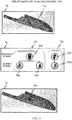
- FIG. 8 is a view illustrating an example of the monitor display output to the output device 15 by the classifying process S30.
- the modeling support system 100 stores classifying objects CAD models 501a, 501b, and 501c as registration candidates.
- the modeling support system 100 classifies the registered reusable model into a group 502a including a representative CAD model 502b and a subordinate CAD model 502c belonging to the representative CAD model 502b.
- the modeling support system 100 determines, in the relation between the classifying objects CAD model 501a and the group 502a, that the representative CAD model 502b is included in the new CAD model 501a and classifies the classifying objects CAD model 501a into the reusable model (subordinate CAD model) belonging to the representative CAD model 502b included in the group 502a.
- the modeling support system 100 determines, in the relation between the classifying objects CAD model 501b and the group 502a, that the classifying objects CAD model 501b does not include the representative CAD model 502b in the group 502a, and classifies the classifying objects CAD model 501b into a new group and into the representative CAD model in the group.
- the modeling support system 100 determines, in the relation between the classifying objects CAD model 501c, the group 502a, and the new group, that the representative CAD model 501c is included in the representative CAD model (classifying objects CAD model 501b) of the new group, the modeling support system 100 classifies the classifying objects CAD model 501c into the reusable model (subordinate CAD model) belonging to the representative CAD model (classifying objects CAD model 501b) in the new group.
- a group 503a including a representative CAD model 503b and subordinate CAD models 503c and 503d is generated as a result of the classifying process described above.
- a new group 503e including a representative CAD model 503f and a subordinate CAD model 503g is generated.
- the modeling support system 100 executes a process of generating the mesh model (analysis model) corresponding to the CAD model input from the user or the like, that is, the mesh modeling process S2, using the reusable model classified by the classifying process S30 and stored in the reusable model storing device 106.
- FIG. 9 is a flowchart illustrating the mesh modeling process S2. Note that, the mesh modeling process S2 is initiated, for example, when the input device 14 of the modeling support system 100 detects a predetermined input by the user and other operators.
- the modeling support system 100 receives the input of the CAD model from the user or the like through the input device 14 (S51).
- the modeling support system 100 specifies each component part of the CAD model (hereinafter referred to as an input CAD model) input in step S51 (S52).
- the modeling support system 100 executes a process (hereinafter referred to as a group specifying process) of specifying a group corresponding to the component part specified in step S52 out of the groups classified in the classifying process S30. Specifically, the modeling support system 100 selects one of the component parts specified in step S52, and specifies a representative CAD model, which has a shape including the shape indicated by the selected component part (hereinafter referred to as a component part for determination), out of representative CAD models (hereinafter referred to as representative CAD models for determination) in the groups stored in the classifying process S30 (S53).
- a process hereinafter referred to as a group specifying process
- the specifying process can be realized using, for example, technologies disclosed in “ Hongshen Wang, Lin Zhang and Yonggui Zhang, "Partial Matching of 3D CAD Models with Attribute Graph", Applied Mechanics and Materials, Vol. 528 (2014), pp. 302-309 " described above and JP-A-2007-280129 .
- the modeling support system 100 stores information that the component part for determination belongs to the group to which the specified representative CAD model belongs (S54), and the process proceeds to step S55.
- the process proceeds to step S56.
- an example of the group specifying process will be described on the basis of one example of a monitor display output to the output device 15.
- FIG. 10 is a view illustrating an example of a monitor display output to the output device 15 in the group specifying process.
- the modeling support system 100 determines an inclusion relation between an input CAD model 601a, a representative CAD model for determination 602b in a group 602a indicated by reference numeral 602, and a representative CAD model for determination 602f in a group 602b.
- reusable models 602c and 602d belong to the representative CAD model for determination 602b and a reusable model 602g belongs to the representative CAD model for determination 602f.
- the modeling support system 100 determines that a component part 603a in the input CAD model 601a includes the representative CAD model for determination 602b in the group 602a. As a result, as indicated by reference numeral 603, the modeling support system 100 specifies that the component part 603a including the component part 603a is included in the group 602a.
- step S55 the modeling support system 100 executes a process (hereinafter referred to as a similar-shape-part searching process S55) of searching and obtaining a CAD model part (hereinafter referred to as a similar shape part) having a shape most similar to the shape of the component part for determination, from the CAD models in the group to which the representative CAD model specified in S54 belongs.
- a similar-shape-part searching process S55 of searching and obtaining a CAD model part (hereinafter referred to as a similar shape part) having a shape most similar to the shape of the component part for determination, from the CAD models in the group to which the representative CAD model specified in S54 belongs.
- the above process can be realized using, for example, the technologies disclosed in " Hongshen Wang, Lin Zhang and Yonggui Zhang, "Partial Matching of 3D CAD Models with Attribute Graph", Applied Mechanics and Materials, Vol. 528 (2014), pp. 302-309 " and JP-
- FIG. 11 is a view illustrating an example of a monitor display output to the output device 15 in the similar-shape-part searching process S55.
- the modeling support system 100 determines an inclusion relation between an input CAD model 701a, and a representative CAD model for determination 702b in a group 702a indicated by reference numeral 702, and a representative CAD model for determination 702f in a group 702b.
- reusable models 702c and 702d are subordinate CAD models belonging to the representative CAD model for determination 702b
- a reusable model 702g is a subordinate CAD model belonging to the representative CAD model for determination 702f.
- the modeling support system 100 determines that a component part 703a in the input CAD model 701a includes the representative CAD model for determination 702b in the group 702a and the input CAD model 701a including the component part 703a belongs to the group 702a. Then, the modeling support system 100 determines that the component part 703a is most similar to the reusable CAD model 702d belonging to the representative CAD model for determination 702a, out of the reusable CAD models in the group 702a.
- the modeling support system 100 determines whether the similar shape part has been searched with respect to all the component parts (S56); when it is determined that the similar shape part has been searched with respect to all the component parts (S56: YES), the process proceeds to step S57. When it is determined that there are similar shape parts which have been searched (S56: NO), the process returns to step S52 so as to search the similar shape part with respect to the component part.
- step S57 the modeling support system 100 executes a process (hereinafter referred to as a similar-shape-part mesh modeling process S57) of generating a mesh model corresponding to the CAD model on the basis of the CAD model of the similar shape part searched and obtained in step S55.
- the modeling support system 100 generates the mesh model by changing a mesh size of the mesh model corresponding to the CAD model of the similar shape part or tailoring such as addition or deletion of the mesh and movement of the node.
- the above modeling is carried out by obtaining geometric features and geometric values of the model as disclosed in JP-A-2006-301753 , for example.
- a specific example of the similar-shape-part mesh modeling process S57 will be described on the basis of one example of a monitor display output to the output device 15.
- FIG. 12 is a view illustrating an example of a monitor display output to the output device 15 in the similar-shape-part mesh modeling process S57.
- the modeling support system 100 specifies a component part 801a in the input CAD model.
- the modeling support system 100 searches and obtains a CAD model 802a of the similar shape part and a mesh model 802b corresponding to the CAD model 801a.
- the modeling support system 100 edits the mesh model 802b and generates a modified mesh model 804a as indicated by reference numeral 804.
- the modeling support system 100 executes a process (hereinafter referred to as a dissimilar-part mesh modeling process S58) of modeling a mesh model corresponding to a component part (hereinafter referred to as a dissimilar shape part) of the input CAD model which has not searched in the similar-shape-part searching process S55 (S58). Specifically, the modeling support system 100 executes the following process, for example.
- a dissimilar-part mesh modeling process S58 of modeling a mesh model corresponding to a component part (hereinafter referred to as a dissimilar shape part) of the input CAD model which has not searched in the similar-shape-part searching process S55 (S58).
- the modeling support system 100 executes the following process, for example.
- the modeling support system 100 deletes the similar-shape-part CAD model from the input CAD model. Then, since the input CAD model after deletion has a partial shape having a hole, the modeling support system 100 performs a process of filling the hole.
- the above process can be realized using a technology for making a hole-filling surface using CAE (Computer Aided Engineering) as disclosed in a related document " Tanimoto, Nakamura, and Takei, "Development of making function of hole-filling surface using CAE simulation", proceedings of Japan Society for Precision Engineering Semestrial Meeting, 2010(0), pp. 133-134 ", for example.
- CAE Computer Aided Engineering
- the modeling support system 100 generates a mesh model corresponding to the input CAD model in which the hole is filled.
- the process of modeling the mesh model can be realized using a technology for generating a quadrilateral element disclosed in JP-A-8-138082 , for example.
- the modeling support system 100 executes a process (hereinafter referred to as a mesh model combining process S59) of generating a mesh model as a modeling object corresponding to the input CAD model by combining the mesh model generated in the similar-shape-part mesh modeling process S57 and the mesh model generated in the dissimilar-part mesh modeling process S58 (S59).
- a mesh model combining process S59 a process of generating a mesh model as a modeling object corresponding to the input CAD model by combining the mesh model generated in the similar-shape-part mesh modeling process S57 and the mesh model generated in the dissimilar-part mesh modeling process S58 (S59).
- the modeling support system 100 generates a mesh model as a modeling object by making a position of the mesh model generated in the similar-shape-part mesh modeling process S57 correspond to a position of the mesh model generated in the dissimilar-part mesh modeling process S58 (for example, change in a mesh size, deletion of mesh, and movement of point).
- a specific example of the mesh model combining process S59 will be described on the basis of one example of a monitor display output to the output device 15.
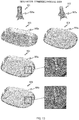
- FIG. 13 is a view illustrating an example of a monitor display output to the output device 15 by the mesh model combining process S59.
- the modeling support system 100 searches a similar shape part 901a, and obtains a mesh model 902a corresponding to the similar shape part 901a (reference numeral 902).
- the modeling support system 100 specifies a dissimilar shape part 903a, and obtains a mesh model 904a corresponding to the dissimilar shape part 903a (reference numeral 904).
- the modeling support system 100 improves elements of the mesh model 905a whose quality is deteriorated due to the combining or the like (for example, converting a triangular element included in the mesh model 905a into a quadrilateral element), and generates a mesh model 906a. That is, the above-described procedures (a) and (b) are repeatedly executed on the mesh model 905a. Note that this process can be realized using a technology for modifying a mesh on the basis of the quality evaluation of the mesh as disclosed in JP-A-2008-107960 , for example.
- FIG. 14 is a view illustrating an example of the monitor display output to the output device 15 by the reusable model recognizing/classifying process S1.
- the model storing unit 120 receives and stores an input of a CAD model 1001a and a mesh model 1002a corresponding to the CAD model 1001a.
- FIG. 15 is a view illustrating an example of the monitor display output to the output device 15 by the mesh modeling process S2.
- the CAD data registering unit 101 receives an input of an input CAD model 1009a from the user and other operators.
- the reusable CAD models in the groups 1008f and 1008i are excluded from the search due to the classification according to the above-described (3).
- a partial shape 1011a similar to the reusable model 1008d and a partial shape 1011b having a shape similar to that of the reusable model 1008a are searched.
- These partial shapes 1011a and 1011b are separated from the input CAD model 1009a.
- a dissimilar part 1012a in the input CAD model 1009a is specified.
- the modeling support system 100 of the present embodiment classifies each of the parts of the CAD model into one of a plurality of groups on the basis of the shape of the CAD model, specifies the group corresponding to the component part of the input CAD model out of the classified groups, searches and obtains the part of the CAD model having the shape most similar to the shape indicated by the component part in the group, and generates a new mesh model corresponding to the input CAD model using the obtains mesh model. That is, the group search related to the component part of the input CAD model is performed on the basis of the CAD model stored in advance to obtain necessary mesh model parts, and thus the modeling object mesh model is generated by combination of these obtains mesh model parts.
- the mesh model of a modeling object can be generated efficiently and quickly.
- the modeling support system 100 of the present embodiment recognizes the shapes of the respective CAD model parts and sets the part of the CAD model having shapes similar to each other to the same group, whereby the respective stored parts of the CAD model are classified into one of the plurality of groups, the criterion of classification is clear, and accurate classification according to the property of the CAD model specifying the shape of the structure or product can be performed.
- the mesh model of a modeling object can be generated efficiently and quickly.
- the modeling support system 100 of the present embodiment classifies the respective parts of the CAD model classified into the group into the part of the CAD model representing the group and part of the other CAD model belonging to part of the representative CAD model step by step, and thus it is possible to search the group related to the CAD model efficiently.
- the mesh model of a modeling object can be generated efficiently and quickly.
- the modeling support system 100 of the present embodiment specifies the shape of the component part of the input CAD model and specifies the group out of the specified groups to which the CAD model including the specified shape belongs as the group corresponding the specified component part, it is possible to specify the group to which the respective component parts of the input CAD model belong according to the its shape.
- the mesh model of a modeling object can be generated efficiently and quickly.
- the modeling support system 100 of the present embodiment when the part of the CAD model having the most similar shape cannot be obtained, the modeling support system 100 of the present embodiment generates the mesh model corresponding to the component part of the input CAD model and generates a new model using the generated mesh model, and thus it is possible to reliably generate the mesh model of a modeling object even when the input CAD model has any shape, for example, even when the input CAD model is complicated or indicates a special shape.
- the modeling support system 100 of the present embodiment determines whether the respective CAD models satisfying a predetermined relation exist at the time of classification, and classifies only one part of the CAD model of the respective parts of the CAD model satisfying the predetermined relation into one of the plurality of groups, that is, performs the duplicate deleting process, the number of CAD models referred to at the time of group search can be minimized, and thus the mesh model of a modeling object can be generated efficiently and quickly.
- the modeling support system 100 of the present embodiment performs the duplicate deleting process of classifying the first CAD model part into one of the plurality of groups on the basis of the model quality, it is possible to generates the mesh model corresponding to the input CAD model on the basis of the high-quality CAD model or mesh model and to generate a high-quality mesh model of a modeling object efficiently and quickly.
- the modeling support system 100 of the present embodiment outputs the classified part of the CAD model (reusable part) and the new mesh model (modeling object mesh model) generated using such a part of the CAD model to the output device 15, the user or the like can easily confirm how to reuse the classified CAD model (reusable model) to generate the model of a modeling object.
- the process of specifying and classifying the inclusion relation described in the present embodiment is merely an example.
- the process of specifying and classifying the inclusion relation is performed on the basis of shapes indicated by the respective CAD models.
- the inclusion relation may be specified and classified on the basis of functions installed in the members having the shapes of the respective CAD models, for example, or the inclusion relation with multiple hierarchies may be specified or classified.
- the duplication determination or the quality comparison of the parts of the CAD model is performed in the registration candidate storing process S20 before the new reusable CAD model candidate is stored in the reusable model storing device 106 (or before being classified into the group).
- the new reusable CAD model candidate is stored in the reusable model storing device 106
- one of the stored new reusable CAD model candidate and the registered CAD model stored in advance may be deleted by comparison.
- the modeling support system 100 automatically performs comparison on the basis of a predetermined relation (duplication determination or quality comparison of the parts of the CAD model) in the registration candidate storing process S20.
- a predetermined relation dueplication determination or quality comparison of the parts of the CAD model
- the user directly receives the input of the relation and the respective parts of the CAD model selected according to contents of the received relation may be classified into one of the plurality of groups. For example, the user may directly select a model with higher quality.
- the types of CAD models desired by the user can be classified, and thus a desired type of mesh model can be generated.
Landscapes
- Engineering & Computer Science (AREA)
- Physics & Mathematics (AREA)
- Theoretical Computer Science (AREA)
- Geometry (AREA)
- General Physics & Mathematics (AREA)
- Evolutionary Computation (AREA)
- General Engineering & Computer Science (AREA)
- Computer Hardware Design (AREA)
- Software Systems (AREA)
- Computer Graphics (AREA)
- Computational Mathematics (AREA)
- Mathematical Analysis (AREA)
- Mathematical Optimization (AREA)
- Pure & Applied Mathematics (AREA)
- Information Retrieval, Db Structures And Fs Structures Therefor (AREA)
- Architecture (AREA)
Applications Claiming Priority (2)
| Application Number | Priority Date | Filing Date | Title |
|---|---|---|---|
| JP2016004409A JP6557606B2 (ja) | 2016-01-13 | 2016-01-13 | モデル作成支援システム、モデル作成支援方法、及びモデル作成支援プログラム |
| PCT/JP2016/086373 WO2017122467A1 (ja) | 2016-01-13 | 2016-12-07 | モデル作成支援システム、モデル作成支援方法、及びモデル作成支援プログラム |
Publications (2)
| Publication Number | Publication Date |
|---|---|
| EP3404561A1 true EP3404561A1 (de) | 2018-11-21 |
| EP3404561A4 EP3404561A4 (de) | 2019-11-27 |
Family
ID=59311318
Family Applications (1)
| Application Number | Title | Priority Date | Filing Date |
|---|---|---|---|
| EP16885070.9A Pending EP3404561A4 (de) | 2016-01-13 | 2016-12-07 | Hilfssystem zur modellerstellung, hilfsvorrichtung zur modellerstellung und hilfsprogramm zur modellerstellung |
Country Status (4)
| Country | Link |
|---|---|
| US (1) | US11520945B2 (de) |
| EP (1) | EP3404561A4 (de) |
| JP (1) | JP6557606B2 (de) |
| WO (1) | WO2017122467A1 (de) |
Families Citing this family (7)
| Publication number | Priority date | Publication date | Assignee | Title |
|---|---|---|---|---|
| US10769850B1 (en) * | 2017-02-13 | 2020-09-08 | Ansys, Inc. | Systems and methods for efficient updating of an analysis mesh |
| JP7286508B2 (ja) * | 2019-10-11 | 2023-06-05 | 株式会社日立製作所 | 設計支援装置、設計支援方法、および設計支援プログラム |
| JP2021067976A (ja) * | 2019-10-17 | 2021-04-30 | 国立大学法人豊橋技術科学大学 | 形状検索方法および形状検索システム |
| JP6833114B1 (ja) | 2019-11-28 | 2021-02-24 | 三菱電機株式会社 | ワーク画像検索装置およびワーク画像検索方法 |
| JP7391698B2 (ja) * | 2020-02-07 | 2023-12-05 | エヌ・ティ・ティ・コミュニケーションズ株式会社 | 製造発注支援装置、方法およびプログラム |
| CN115733414B (zh) * | 2022-09-07 | 2023-06-06 | 南京航空航天大学 | 基于三相九状态的电励磁双凸极电机换相角度自优化方法 |
| US12164847B1 (en) | 2023-05-24 | 2024-12-10 | Scintium Ltd | Method of generating a 3d computer-aided design (CAD) and system therefor |
Family Cites Families (14)
| Publication number | Priority date | Publication date | Assignee | Title |
|---|---|---|---|---|
| JP2642070B2 (ja) | 1994-11-07 | 1997-08-20 | インターナショナル・ビジネス・マシーンズ・コーポレイション | 四角形メッシュの生成方法及びシステム |
| JP3208358B2 (ja) | 1997-09-05 | 2001-09-10 | インターナショナル・ビジネス・マシーンズ・コーポレーション | メッシング方法及びコンピュータ |
| JP3622543B2 (ja) * | 1998-12-22 | 2005-02-23 | 松下電工株式会社 | 金型のキャビティ形状創成方法 |
| WO2004068300A2 (en) * | 2003-01-25 | 2004-08-12 | Purdue Research Foundation | Methods, systems, and data structures for performing searches on three dimensional objects |
| JP2005258839A (ja) * | 2004-03-12 | 2005-09-22 | Hitachi Ltd | 解析メッシュ生成装置 |
| JP2006301753A (ja) | 2005-04-18 | 2006-11-02 | Hitachi Ltd | 解析モデル作成システム |
| JP2007122205A (ja) * | 2005-10-26 | 2007-05-17 | Hitachi Ltd | 解析用モデル作成支援システム |
| JP4785598B2 (ja) | 2006-04-07 | 2011-10-05 | 株式会社日立製作所 | 類似形状検索装置 |
| WO2008114321A1 (ja) * | 2007-03-20 | 2008-09-25 | Fujitsu Limited | 解析用モデル作成装置、解析用モデル作成方法、および解析用モデル作成プログラム |
| JP4968926B2 (ja) * | 2007-06-22 | 2012-07-04 | キヤノン株式会社 | 解析用モデル作成方法及び解析用モデル作成プログラム |
| JP5644606B2 (ja) * | 2011-03-17 | 2014-12-24 | 富士通株式会社 | メッシュ数予測方法、解析装置及びプログラム |
| JP5705788B2 (ja) * | 2012-06-05 | 2015-04-22 | 株式会社日立製作所 | アセンブリモデル類似構造検索システム、及びアセンブリモデル類似構造検索方法 |
| JP5898584B2 (ja) * | 2012-07-31 | 2016-04-06 | 株式会社日立製作所 | 六面体メッシュ生成装置 |
| WO2015092842A1 (ja) | 2013-12-16 | 2015-06-25 | 株式会社日立製作所 | 解析用メッシュデータ生成方法および解析用メッシュデータ生成装置 |
-
2016
- 2016-01-13 JP JP2016004409A patent/JP6557606B2/ja active Active
- 2016-12-07 WO PCT/JP2016/086373 patent/WO2017122467A1/ja not_active Ceased
- 2016-12-07 EP EP16885070.9A patent/EP3404561A4/de active Pending
- 2016-12-07 US US16/069,278 patent/US11520945B2/en active Active
Also Published As
| Publication number | Publication date |
|---|---|
| JP2017126156A (ja) | 2017-07-20 |
| JP6557606B2 (ja) | 2019-08-07 |
| EP3404561A4 (de) | 2019-11-27 |
| US11520945B2 (en) | 2022-12-06 |
| WO2017122467A1 (ja) | 2017-07-20 |
| US20190018907A1 (en) | 2019-01-17 |
Similar Documents
| Publication | Publication Date | Title |
|---|---|---|
| EP3404561A1 (de) | Hilfssystem zur modellerstellung, hilfsvorrichtung zur modellerstellung und hilfsprogramm zur modellerstellung | |
| US9619586B2 (en) | Computer aided design model analysis system | |
| JP6668182B2 (ja) | 回路設計装置及びそれを用いた回路設計方法 | |
| EP2660740B1 (de) | Komponentenanordnungssystem und Betriebsverfahren dafür | |
| CN107077519A (zh) | 用于增材制造的构建取向 | |
| CN102067133B (zh) | 用于分离实体模型上的面的系统和方法 | |
| US20070198587A1 (en) | Numerical analysis data creating method and apparatus, and computer-readable program | |
| Foerster et al. | Towards a formal classification of generalization operators | |
| Salamak et al. | Analytical modelling in Dynamo | |
| Xia et al. | Automated manufacturability analysis in smart manufacturing systems: a signature mapping method for product-centered digital twins | |
| Krishna et al. | Shape organization for enhanced design optimization in generative systems using clustering technology | |
| CN104885084B (zh) | 分析用网格数据生成方法以及分析用网格数据生成装置 | |
| Ćurković et al. | 3D shape acquisition and integral compact representation using optical scanning and enhanced shape parameterization | |
| Tremel et al. | Parallel remeshing of unstructured volume grids for CFD applications | |
| Yousif et al. | Shape clustering using k-medoids in architectural form finding | |
| JP6654939B2 (ja) | 解析モデル作成支援装置、および、解析モデル作成支援方法 | |
| EP4350566A1 (de) | Computergestützte formsynthese mit konnektivitätsfilterung | |
| KR102692574B1 (ko) | 라이브러리 이식을 통한 3차원 설계 모델 자동 상세화 방법 및 장치 | |
| Dommaraju et al. | Simultaneous exploration of geometric features and performance in design optimization | |
| Cooke et al. | A feature extraction algorithm for hybrid manufacturing and its application in robot-based additive and subtractive processes | |
| CN116976034A (zh) | 一种基于cad软件的零件库系统 | |
| CN107403467A (zh) | 一种数据建模系统及方法 | |
| Escobedo et al. | A neural information retrieval system | |
| Wu et al. | An automated framework creating parametric BIM from GIS data to support design decisions | |
| Park | Framework of design interface module in ERP |
Legal Events
| Date | Code | Title | Description |
|---|---|---|---|
| STAA | Information on the status of an ep patent application or granted ep patent |
Free format text: STATUS: THE INTERNATIONAL PUBLICATION HAS BEEN MADE |
|
| PUAI | Public reference made under article 153(3) epc to a published international application that has entered the european phase |
Free format text: ORIGINAL CODE: 0009012 |
|
| STAA | Information on the status of an ep patent application or granted ep patent |
Free format text: STATUS: REQUEST FOR EXAMINATION WAS MADE |
|
| 17P | Request for examination filed |
Effective date: 20180813 |
|
| AK | Designated contracting states |
Kind code of ref document: A1 Designated state(s): AL AT BE BG CH CY CZ DE DK EE ES FI FR GB GR HR HU IE IS IT LI LT LU LV MC MK MT NL NO PL PT RO RS SE SI SK SM TR |
|
| AX | Request for extension of the european patent |
Extension state: BA ME |
|
| DAV | Request for validation of the european patent (deleted) | ||
| DAX | Request for extension of the european patent (deleted) | ||
| A4 | Supplementary search report drawn up and despatched |
Effective date: 20191024 |
|
| RIC1 | Information provided on ipc code assigned before grant |
Ipc: G06T 17/20 20060101ALN20191018BHEP Ipc: G06F 17/50 20060101AFI20191018BHEP |
|
| STAA | Information on the status of an ep patent application or granted ep patent |
Free format text: STATUS: EXAMINATION IS IN PROGRESS |
|
| 17Q | First examination report despatched |
Effective date: 20211105 |
|
| REG | Reference to a national code |
Ref country code: DE Ref legal event code: R079 Free format text: PREVIOUS MAIN CLASS: G06F0017500000 Ipc: G06F0030000000 |
|
| GRAP | Despatch of communication of intention to grant a patent |
Free format text: ORIGINAL CODE: EPIDOSNIGR1 |
|
| STAA | Information on the status of an ep patent application or granted ep patent |
Free format text: STATUS: GRANT OF PATENT IS INTENDED |
|
| RIC1 | Information provided on ipc code assigned before grant |
Ipc: G06F 30/00 20200101AFI20260304BHEP Ipc: G06T 17/20 20060101ALI20260304BHEP |