EP3404991A1 - Procédé et appareil d'accès aléatoire - Google Patents
Procédé et appareil d'accès aléatoire Download PDFInfo
- Publication number
- EP3404991A1 EP3404991A1 EP17738193.6A EP17738193A EP3404991A1 EP 3404991 A1 EP3404991 A1 EP 3404991A1 EP 17738193 A EP17738193 A EP 17738193A EP 3404991 A1 EP3404991 A1 EP 3404991A1
- Authority
- EP
- European Patent Office
- Prior art keywords
- random access
- rnti
- preamble transmission
- preamble
- prachwinlen
- Prior art date
- Legal status (The legal status is an assumption and is not a legal conclusion. Google has not performed a legal analysis and makes no representation as to the accuracy of the status listed.)
- Granted
Links
Images
Classifications
-
- H—ELECTRICITY
- H04—ELECTRIC COMMUNICATION TECHNIQUE
- H04W—WIRELESS COMMUNICATION NETWORKS
- H04W74/00—Wireless channel access
- H04W74/08—Non-scheduled access, e.g. ALOHA
- H04W74/0833—Random access procedures, e.g. with 4-step access
-
- H—ELECTRICITY
- H04—ELECTRIC COMMUNICATION TECHNIQUE
- H04W—WIRELESS COMMUNICATION NETWORKS
- H04W52/00—Power management, e.g. Transmission Power Control [TPC] or power classes
- H04W52/02—Power saving arrangements
- H04W52/0209—Power saving arrangements in terminal devices
- H04W52/0225—Power saving arrangements in terminal devices using monitoring of external events, e.g. the presence of a signal
-
- H—ELECTRICITY
- H04—ELECTRIC COMMUNICATION TECHNIQUE
- H04W—WIRELESS COMMUNICATION NETWORKS
- H04W74/00—Wireless channel access
- H04W74/002—Transmission of channel access control information
-
- H—ELECTRICITY
- H04—ELECTRIC COMMUNICATION TECHNIQUE
- H04W—WIRELESS COMMUNICATION NETWORKS
- H04W74/00—Wireless channel access
- H04W74/08—Non-scheduled access, e.g. ALOHA
- H04W74/0833—Random access procedures, e.g. with 4-step access
- H04W74/0841—Random access procedures, e.g. with 4-step access with collision treatment
- H04W74/085—Random access procedures, e.g. with 4-step access with collision treatment collision avoidance
-
- H—ELECTRICITY
- H04—ELECTRIC COMMUNICATION TECHNIQUE
- H04W—WIRELESS COMMUNICATION NETWORKS
- H04W74/00—Wireless channel access
- H04W74/08—Non-scheduled access, e.g. ALOHA
- H04W74/0866—Non-scheduled access, e.g. ALOHA using a dedicated channel for access
-
- H—ELECTRICITY
- H04—ELECTRIC COMMUNICATION TECHNIQUE
- H04W—WIRELESS COMMUNICATION NETWORKS
- H04W74/00—Wireless channel access
- H04W74/002—Transmission of channel access control information
- H04W74/006—Transmission of channel access control information in the downlink, i.e. towards the terminal
-
- Y—GENERAL TAGGING OF NEW TECHNOLOGICAL DEVELOPMENTS; GENERAL TAGGING OF CROSS-SECTIONAL TECHNOLOGIES SPANNING OVER SEVERAL SECTIONS OF THE IPC; TECHNICAL SUBJECTS COVERED BY FORMER USPC CROSS-REFERENCE ART COLLECTIONS [XRACs] AND DIGESTS
- Y02—TECHNOLOGIES OR APPLICATIONS FOR MITIGATION OR ADAPTATION AGAINST CLIMATE CHANGE
- Y02D—CLIMATE CHANGE MITIGATION TECHNOLOGIES IN INFORMATION AND COMMUNICATION TECHNOLOGIES [ICT], I.E. INFORMATION AND COMMUNICATION TECHNOLOGIES AIMING AT THE REDUCTION OF THEIR OWN ENERGY USE
- Y02D30/00—Reducing energy consumption in communication networks
- Y02D30/70—Reducing energy consumption in communication networks in wireless communication networks
Definitions
- the present application relates to, but is not limited to, the technical field of communications, especially a method and apparatus for random access.
- Machine Machine Type Communication is currently an important focus for research of fifth generation (5G) mobile communication technologies; it is also an important application area for the future of wireless communication.
- MTC topic a research sub-topic of Narrow Band - Internet of thing (NB-IOT) has been proposed for characters of terminal -such as low cost, low power consumption, low mobility, and low throughput, etc; that is, to provide within the frequency band of 200 kHz low-throughput wireless communication services for NB-IoT low-cost user equipment (UE).
- NB-IOT Narrow Band - Internet of thing
- terminals use competitive mechanisms, and transmit a preamble before initiating a random access (RA) response window in the position of the 3rd subframe after the last subframe of the preamble transmission, whereupon the terminal waits to receive the random access response (RAR) message.
- the length of the RA response window is configured by system messaging; the largest length is 10 wireless subframes (i.e., 1 wireless frame).
- Terminals use Random Access-Radio Network Temporary Identity (RA-RNTI) to demodulate the Physical Downlink Control Channel (PDCCH), and then demodulate the Physical Downlink Shared Channel (PDSCH) to obtain the Medium Access Control (MAC) Protocol Data Unit (PDU) containing its RAR.
- RA-RNTI Random Access-Radio Network Temporary Identity
- the time frequency position of the preamble determines the value of the RA-RNTI; the base station and the terminal respectively calculate an identical RA-RNTI value based on the preamble time-frequency position.
- t_id indicates the sequence number for the initial subframe of the preamble transmission (i.e., the first subframe), and the value range is [1, 10), that is, 0 ⁇ t_id ⁇ 10; f_id is the frequency domain position of the Physical Random Access Channel (PRACH) within the subframe, in ascending order, the value range is [0, 6), that is, 0 ⁇ f_id ⁇ 6.
- PRACH Physical Random Access Channel
- t_id indicates the sequence number of the first subframe of the terminal preamble transmission.
- the RA-RNTI calculation only needs to reflect the difference between varying initial subframes of preamble transmissions.
- the related research has introduced repetitive functions during uplink transmission and downlink transmission; that is, no matter if the terminal is transmitting uplink messages or the base station is transmitting downlink messages, a certain number of repeat transmissions is enacted to ensure reception.
- the required time for the terminal to receive downlink information or the base station to receive uplink information could be extended; therefore, the value range for RA response windows in the related research has been expanded, with the largest being 400 subframes (i.e., 40 radio frames).
- the related research has also introduced the concept of coverage rankings to reflect the difference between coverage areas and scenarios. It can be considered that the uplink channels for terminals that are located in the same coverage rankings can use the same repeat factors, and the length of the RA response window can also be the same.
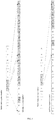
- Figure 1 is an illustration of the RA response window overlap of two terminals caused by the extension of the RA response window.
- the subframe with grid markings is the initial subframe position for the preamble transmission; the subframe with slash markings is the RA response window position.
- the RA-RNTI of the two terminals expressed in Figure 1 is the same; on the one hand, the two terminals may need to demodulate the PDCCH twice within the overlapping RA response window, which will increase power consumption; on the other hand, the two terminals could use the same preamble sequence at the exact same time, and the content of their RAR will be the same, which would require a subsequent interference resolution process, wherein at least one terminal will have a reception failure, which is equivalent to additional interference.
- the embodiments of the present invention provide a method and apparatus for random access that can both ensure that additional interference will not occur when there is random access (RA) response window overlap among terminals, and reduce terminal power consumption.
- RA random access
- the random access methods of the present embodiments comprise: the communication node obtaining the random access information, wherein, the random access information comprises: the subframe sequence number of the preamble transmission, the radio frame sequence number of the preamble transmission; the communication node determining the RA-RNTI based on the random access information.
- the embodiments of the present invention further provide a method for random access, comprising: the communication node obtaining the random access information; wherein, random access information comprises: the time domain position index information of the preamble transmission, the frequency domain position index information of the preamble transmission; the communication node determining the RA-RNTI based on the random access information.
- the embodiments of the present invention further provide a method for random access, comprising: the communication node obtaining the random access information, wherein, random access information comprises: the time domain position index information of the terminal preamble transmission, and the frequency domain position index information of the terminal preamble transmission; the communication node determining the RA-RNTI based on the random access information.
- the embodiments of the present invention further provide a method for random access, comprising: the communication node obtaining the correlation factors of the random access information; the communication node determining the RA-RNTI according to the random access information correlation factors.
- the present invention also provides a random access apparatus, applicable to the communication node and comprising: the information obtainment module, configured to obtain random access information; wherein, random access information comprises: the subframe sequence number of the preamble transmission, the radio frame sequence number of the preamble transmission; a processing module, configured to determine the RA-RNTI according to random access information.
- the embodiments of the present invention further provide a method for random access, comprising: a communication node obtaining random access information, and the communication node determining the random access response window related information based on the random access information.
- the embodiments of the present invention further provide a method for random access, comprising: the communication node obtaining the random access information; wherein, random access information comprises: the superframe sequence number of the preamble transmission ; the communication node determining the RA-RNTI based on the random access information.
- the present embodiments also provide a computer-readable storage medium stored with computer-executable instructions; the computer executable instructions are executed by a processor to implement any of the preceding methods for random access.
- the present embodiments can reflect the factors of differing initial radio frames of preamble transmission or the frequency domain position index information of preamble transmission through the RA-RNTI calculation formula; when RA response windows overlap, the present embodiments both ensure that additional interference will not be created, and reduce power consumption.
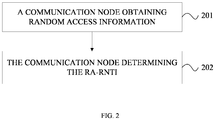
- Figure 2 is a flowchart of a method for random access provided by the present embodiments. As Figure 2 shows, the present embodiments provide a method for random access, comprising the following steps:
- Step 201 a communication node obtaining random access information, wherein, the random access information comprises: the subframe sequence number of the preamble transmission, and the radio frame sequence number of the preamble transmission.
- Step 202 a communication node determining the random access radio network temporary identity (RA-RNTI).
- RA-RNTI random access radio network temporary identity
- the communication node is, for example, a terminal or a base station.
- the terminal can determine the RA-RNTI based on the random access information of the terminal itself, and the base station can determine the RA-RNTI based on the random access information of the corresponding terminal.
- random access information can comprise: the sequence number of the initial or final subframe of the preamble transmission, the sequence number of the initial or final radio frame of the preamble transmission.
- the initial subframe sequence number of the preamble transmission can be determined according to the sequence numbers of non-initial subframe positions and their corresponding information; or, the initial radio frame sequence number can be determined according to the sequence numbers of non-initial radio frame positions and their corresponding information.
- Step 202 can comprise:
- random access information can further comprise: random access (RA) response window length, the interval length of the preamble transmission, wherein, the interval length can be obtained through calculation or pre-configuration.
- RA random access
- u_id is the initial radio frame sequence number of the preamble transmission
- WLen is the RA response window length
- the units are subframes
- u_id is the initial radio frame sequence number of the preamble transmission
- PRACHWinLen is the interval length of the preamble transmission
- the interval length can be obtained through calculation or pre-configuration
- WLen is the RA response window length
- the units are subframes
- u_id is the initial radio frame sequence number of the preamble transmission
- PRACHWinLen is the interval length of the preamble transmission
- the interval length can be obtained through calculation or pre-configuration
- WLen is the RA response window length
- the units are subframes
- mod indicates modulo
- ceil() indicates rounding upward (i.e., returning to the smallest integer greater than or equal to the designated expression)
- u_id is the initial radio frame sequence number of the preamble transmission
- PRACHWinLen is the interval length of the preamble transmission
- the interval length can be obtained through calculation or pre-configuration
- WLen is the RA response window length
- the units are subframes
- u_id is the initial radio frame sequence number of the preamble transmission
- PRACHWinLen is the interval length of the preamble transmission
- the interval length can be obtained through calculation or pre-configuration
- WLen is the RA response window length
- the units are subframes
- mod indicates modulo
- ceil() indicatesrounding upward
- floor() indicates rounding downward
- t_id is the initial subframe sequence number of the preamble transmission
- u_id is the initial radio frame sequence number of the preamble transmission
- PRACHWinLen is the interval length of the preamble transmission
- the interval length can be obtained through calculation or pre-configuration
- the units are subframes
- WLen is the RA response window length
- mod indicates modulo
- PRACHWinLen indicates the interval length of preamble transmission within the same subframe, that is, the interval length between the preamble transmissions within the same subframe of neighboring (the closest) two subframes in different radio frames, using frames as units or subframes as units.
- COM PRACH is P preamble and the least common multiple of N PRACH _ PerFrame ;
- N PRACH_PerFrame indicates the number of PRACH resources configured within every radio frame
- P preamble indicates the repeat factors of the preamble.
- PRACHWinLen 10 ⁇ P preamble /N PRACH_PerFrame ;
- PRACHWinLen indicates the interval length of the preamble transmission
- N PRACH_PerFrame indicates the number of PRACH resources configured within every radio frame
- P preamble indicates the repeat factors of the preamble.
- PRACHWinLen indicates the interval length of the preamble transmission, and is determined according to one of the following or a combination thereof: the PRACH resource initial radio subframe sequence number; the number of PRACH resources configured within every radio frame; the sequence numbers of subframes configured within every radio frame that can be used for preamble transmission; the preamble format; repeat factors of the preamble.
- PRACHWinLen indicates the pre-configured interval length of the preamble transmission, and the units can be one of the following: frames, subframes, the maximum number of preamble transmissions.
- the sequence number of radio frames currently available for preamble transmission is greater than or equal to MAX FrameIndex -PRACHWinLen, then the frames are skipped; the radio frames that can transmit the preamble are re-detected starting from the radio frame with the sequence number of 0, wherein, MAX FrameIndex is the largest value for radio frame sequence numbers.
- the random access method provided by the present embodiment can further comprise: when the determined RA-RNTI exceeds the largest value in the predetermined value range, the communication node determines the RA-RNTI to be a predetermined value.
- step 202 can comprise: when one of the following types of random access information or a combination thereof correspond to coverage rankings: RA response window length, the repeat factors of the preamble, the interval length of the preamble transmission, then the RA-RNTI calculation also corresponds to such coverage rankings.
- terminals at different coverage rankings can search the PDCCH in different search spaces, that is, even if the two terminals have the same RA-RNTI and the response windows overlap, since the PDCCH that needs to be demodulated is different and the terminals belong to different coverage rankings, additional interference will not be caused.
- the present application does not take into account the influence of varying coverage rankings when optimizing the RA-RNTI formula.
- the present application does not take into account the influence of varying narrowband resources when optimizing the RA-RNTI formula.
- the embodiments of the present disclosure further provide a method for random access, comprising: the communication node obtaining the random access information, wherein, random access information comprises: the time domain position index information of the preamble transmission, the frequency domain position index information of the preamble transmission; the communication node determining the RA-RNTI according to random access information; wherein, when the number of radio frames or subframes is insufficient, frequency domain information can be added into the RA-RNTI calculation.
- u_id is the initial radio frame sequence number of the preamble transmission
- PRACHWinLen is the interval length of the preamble transmission
- the interval length can be obtained through calculation or pre-configuration
- WLen is the RA response window length
- the units are subframes
- mod indicates modulo
- ceil() indicates rounding upward
- floor() indicates rounding downward.
- PRACHWinLen indicates the interval length of preamble transmission within the same subframe, that is, the interval length between the preamble transmissions within the same subframe of two neighboring (the closest) subframes in different radio frames, using frames as units or subframes as units.
- COM PRACH is the least common denominator of P preamble and N PRACH_PerFrame;
- N PRACH _ PerFrame indicates the number of PRACH resources configured within every radio frame
- P preamble indicates the repeat factors of the preamble.
- MAX (t_id) indicates the largest value within the t_id value range
- MAX (u_id) indicates the largest value within the u_id value range
- u_id is the initial radio frame sequence number of the preamble transmission
- t_id is the initial subframe sequence number of the preamble transmission
- n0 is 1 and k1 is 10
- k1 1+MAX (t_id)
- MAX (t_id) indicates the largest value within the t_id value range
- t_id is the initial subframe sequence number of the preamble transmission.
- the method for random access of the present embodiments can further comprise: when the determined RA-RNTI exceeds the largest value in the predetermined value range, the communication node determines the RA-RNTI to be a predetermined value.
- the communication node determining the RA-RNTI according to random access information can comprise:
- RA response window length When one of the following types of random access information or a combination thereof corresponds to coverage level: RA response window length, the repeat factors of the preamble, the interval length of the preamble transmission, then the RA-RNTI calculation also corresponds to such coverage rankings.
- the embodiments of the present disclosure further provide a method for random access, comprising: the communication node obtaining the random access information, wherein, random access information comprises: the terminal time domain position index information of the preamble transmission, the terminal frequency domain position index information of the preamble transmission; the communication node determining the RA-RNTI according to random access information.
- random access information can further comprise one of the following or a combination thereof: RA response window length, the interval length of the preamble transmission; the interval length can be obtained through calculation or pre-configuration.
- n0 is a coefficient
- s_id is the time domain position index of the terminal preamble transmission
- w_id is the frequency domain position index of the terminal preamble transmission
- PRACHWinLen is the interval length of the preamble transmission; the interval length can be obtained through calculation or pre-configuration; wherein, for example, n0 is 1.
- PRACHWinLen indicates the interval length of preamble transmission within the same subframe, that is, the interval length between the preamble transmissions within the same subframe of two neighboring (closest) subframes in different radio frames, using frames as units or subframes as units.
- COM PRACH is the least common denominator of P preamble and N PRACH_PerFrame ; N PRACH_PerFrame indicates the number of PRACH resources configured within every radio frame, and P preamble indicates the repeat factors of the preamble.
- PRACHWinLen 10 ⁇ P preamble /N PRACH_PerFrame ;
- PRACHWinLen indicates the interval length of the preamble transmission
- N PRACH_PerFrame indicates the number of PRACH resources configured within every radio frame
- P preamble indicates the repeat factors of the preamble.
- PRACHWinLen indicates the interval length of the preamble transmission, and can be determined according to one of the following or a combination thereof: the PRACH resource initial radio subframe sequence number; the number of PRACH resources configured within every radio frame; the subframe sequence numbers configured within every radio frame that can be used for preamble transmission; the preamble format; and the repeat factors of the preamble.
- PRACHWinLen indicates the pre-configured interval length of the preamble transmission
- the units can be one of the following: frames, subframes, the maximum number of preamble transmissions.
- n0 is a coefficient
- s_id is the time domain position index of the preamble transmission
- w_id is the frequency domain position index of the preamble transmission
- PRACHFreLen is the frequency domain interval length of the preamble transmission or the maximum number of preambles that can be transmitted in frequency domain multiplexing; wherein, for example, n0 is 1; wherein, the maximum number of preambles that can be transmitted in frequency domain multiplexing can be, for example, the maximum number of terminals or the maximum number of preambles.
- PRACHFreLen indicates the frequency domain interval length of the preamble transmission, and can be determined according to one of the following or a combination thereof: the frequency resource configuration information used to transmit the preamble on the physical random access channel, and the frequency hopping mode.
- time domain position index information can comprise any of the following: the subframe sequence number of the preamble transmission; the radio frame sequence number of the preamble transmission.
- the frequency domain position index information can comprise any of the following: the initial frequency domain position index of the preamble transmission; the frequency domain position offset of the preamble transmission; the frequency domain subcarrier index of the preamble transmission.
- the method for random access of the present embodiments can further comprise: when the RA-RNTI is determined to exceed the largest value within the predetermined value range, the communication node determines that the RA-RNTI is a predetermined value.
- the communication node determining the RA-RNTI according to random access information can comprise: when one of the following types of random access information or a combination thereof corresponds to coverage rankings: RA response window length, the repeat factors of the preamble, the interval length of the preamble transmission, then the RA-RNTI calculation also correspond to such coverage rankings.
- the embodiments of the present invention further provide a method for random access, comprising: the communication node obtaining the random access information correlation factors; the communication node determining the RA-RNTI according to the random access information correlation factors.
- n0 is a coefficient
- N is the number of random access correlation factors
- c i is the random access information correlation factor
- the random access information correlation factor can comprise any of the following or a combination thereof: the initial subframe sequence number of the preamble transmission; the initial radio frame sequence number of the preamble transmission; the number of PRACH resources configured within every radio frame; repeat factors of the preamble; the sequence number of the final subframe of the preamble transmission; the sequence number of the final radio frame of the preamble transmission; the frequency domain position offset of the preamble transmission; the frequency domain subcarrier index of the preamble transmission; and the RA response window length.
- the method for random access of the present embodiments can further comprise: when the determined RA-RNTI exceed the largest value in the predetermined value range, the communication node determines the RA-RNTI to be a predetermined value.
- the communication node determining the RA-RNTI according to the random access information correlation factors can comprise:
- RA response window length When one of the following types of random access information or a combination thereof corresponds to coverage rankings: RA response window length, the repeat factors of the preamble, the interval length of the preamble transmission, then the RA-RNTI calculation also corresponds to such coverage rankings.
- RA_RNTI 1+t_id+10 ⁇ u_id
- t_id is the first subframe sequence number of the terminal preamble transmission
- u_id is the first radio frame sequence number of the terminal preamble transmission
- the value range of u_id is [0, 1023]
- the value range of t_id is [1, 10); therefore, based on the RA-RNTI calculation formula of the present embodiment, the range of values for RA-RNTI is [1, 10240].
- RA_RNTI 1+t_id+10 ⁇ v_id
- t_id is the first subframe sequence number of the terminal preamble transmission
- v_id is a comprehensive factor taking into account the sequence number of the first radio frame of the terminal preamble transmission, the RA response window length of the present coverage ranking, and the interval length (using radio subframes as units) of the terminal preamble transmission.
- v_id ((u_id ⁇ 10)/PRACHWinLen) mod WLen, wherein, u_id is the first radio frame sequence number of the terminal preamble transmission.
- PRACHWinLen is a preamble transmission interval length calculated based on the PRACH resource configuration and the repeat factors of the preamble (hereinafter referred to as repeat factors) in the present coverage ranking.
- the terminal can calculate the PRACHWinLen based on the sequence number of subframes and repeat factors that can be used to transmit the preamble configured within every radio frame of the base station.
- WLen is the RA response window length of the present coverage ranking (using radio subframes as units).
- RA_RNTI 1 + t_id + 10 ⁇ v_id
- t_id is the first subframe sequence number of the terminal preamble transmission
- v_id is a comprehensive factor taking into account the sequence number of the first radio frame of the terminal preamble transmission, the RA window length of the current terminal coverage ranking, and the interval length of the terminal preamble transmission (using radio subframes as units).
- v_id ((u_id ⁇ 10)/PRACHWinLen) mod WLen
- u_id is the sequence number of the first radio frame of the terminal preamble transmission.
- PRACHWinLen is the interval length of the preamble transmission calculated based on the PRACH resource configuration and the repeat factors of the preamble of the present coverage ranking; wherein, the PRACHWinLen can be simply deduced according to the following formula:
- PRACHWinLen 10 ⁇ P preamble /N PRACH_PerFrame , wherein, P preamble indicates the repeat factors of the preamble under the terminal's current coverage ranking; here N PRACH_PerFrame indicates the number of PRACH resources configured within every radio frame of the base statio; wherein, WLen is the RA response window length (using radio subframes as units) of the present coverage ranking.
- RA_RNTI 1+(((t_id + u id ⁇ 10)/PRACHWinLen) mod WLen),
- t_id the initial subframe sequence number of the terminal preamble transmission
- u_id the initial radio frame sequence number of the terminal preamble transmission
- PRACHWinLen is the interval length of the terminal preamble transmission determined according to the PRACH resource configuration information and the repeat factors of the preamble under the terminal's current coverage ranking
- WLen is the RA response window length under the terminal's current coverage ranking
- mod indicates modulo.
- the PRACH repeat factors for every user are identical; therefore, the PRACHWinLen should also be the same.
- the available PRACH resources can be grouped according to the PRACHWinLen, and each group of available PRACH resources can only be occupied by one user. Therefore, the RA response window can be further classified into several PRACH resource groups according to the PRACHWinLen, and it can be assumed that the maximum number of users for overlap in the RA response window is equal to the number of usable PRACH resources plus one (the base user and other users able to transmit the preamble and initiate the RA response window within the RA response window of that user), and the actual frame number of these users can be mapped to a set of consecutive frame numbers able to create RA response window overlap.
- RA_RNTI 1 + t_id + 10 ⁇ v_id, wherein, t_id is the first subframe sequence number of the terminal preamble transmission, v_id is a comprehensive factor taking into account the sequence number of the first radio frame of the terminal preamble transmission, the RA response window length of the terminal's current coverage ranking and the interval length of the terminal preamble transmission (using radio subframes as units).
- v_id ((u_id ⁇ 10) /PRACHWinLen) mod (WLen/PRACHWinLen+1), wherein, u_id is the sequence number of the first radio frame of the terminal preamble transmission; PRACHWinLen indicates the interval length of the preamble transmission; the calculation method is the same as Embodiment 2 or Embodiment 3, and will not be repeated here; WLen is the RA response window length under the present coverage ranking (using subframes as units).
- the range of RA-RNTI values is [1, 10 ⁇ (WLen/PRACHWinLen + 1)].
- every radio frame has 2 radio subframes configured as PRACH resources, and the RA-RNTI value range is [1, 110].
- the base station will reasonably configure the RA response window size according to the repeat factors; the larger the repeat factor, the longer the RA response window. Therefore, under reasonable configuration, the RA-RNTI value range can be further reduced.
- the ratio of WLen and PRACHWinLen is not a integer, it needs to be rounded, and then calculated according to the formula.
- the rounding method is, for example, rounding downward.
- the present embodiment is not however limited thereto.
- Embodiment 5 is exemplified by the following examples.
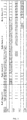
- every radio frame has 2 subframes configured as PRACH resources, and the RA response window length is 20; it is then necessary to distinguish the user scenario of RA_RNTI as shown in Figure 3 .
- the subframes with grid markings are the preamble transmission positions, and the subframes with slash markings are the RA response window positions.
- ⁇ ⁇ indicates rounding downward.
- RA-RNTI of UE1 and UE3 are identical, and the RA-RNTI of UE2 and UE4 are identical, it is allowable since their response windows do not overlap.
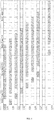
- every radio frame has 10 subframes configured as PRACH resources, and the RA response window length is 20; it is then necessary to distinguish the user scenario of RA_RNTI as shown in Figure 4 .
- the subframes with grid markings are the preamble transmission positions, and the subframes with slash markings are the RA response window positions.
- RA-RNTI of UE1 and UE11 are identical, it is allowable since their response windows do not overlap.
- RA _ RNTI 1 + t _ id + u _ id ⁇ 10 / PRACHWinLen mod WLen / PRACHWinLen + 1 ,
- t_id the initial subframe sequence number of the terminal preamble transmission
- u_id the initial radio frame sequence number of the terminal preamble transmission
- PRACHWinLen is the interval length of the preamble transmission determined based on the PRACH resource configuration information and the repeat factors of the preamble under the terminal's current coverage ranking.
- WLen is the RA response window length of the terminal's current coverage ranking
- mod indicates modulo.
- RA_RNTI 1+t_id+10 ⁇ v_id;
- t_id is the first subframe sequence number of the terminal preamble transmission
- v_id is a comprehensive factor taking into account the sequence number of the first radio frame of the terminal preamble transmission, the RA response window length of the terminal's current coverage ranking, and the interval length of the terminal preamble transmission (using radio subframes as units)
- v_id ((u_id ⁇ 10)/PRACHWinLen) mod (WLen/PRACHWinLen)
- u_id is the sequence number of the first radio frame of the terminal preamble transmission.
- PRACHWinLen is the interval length of the preamble transmission calculated based on the PRACH resource configuration and the repeat factors of the preamble under the current coverage ranking.
- WLen is the RA response window length of the terminal's current coverage ranking, and mod indicates modulo.
- RA _ RNTI 1 + t _ id + u _ id ⁇ 10 / PRACHWinLen mod WLen / PRACHWinLen ,
- t_id is the initial subframe sequence number of the terminal preamble transmission
- u_id is the initial radio frame sequence number of the terminal preamble transmission
- PRACHWinLen is the interval length of the preamble transmission determined based on the PRACH resource configuration information and the repeat factors of the preamble under the terminal's current coverage ranking
- WLen is the RA response window length of the terminal's current coverage ranking
- mod indicates modulo.
- RA_RNTI 1+s_id+w_id ⁇ PRACHWinLen
- s_id is the initial subframe sequence number of the terminal preamble transmission
- w_id the initial frequency domain position index of the terminal preamble transmission
- PRACHWinLen is the interval length of the terminal preamble transmission; wherein, for the PRACHWinLen values one can refer to Embodiment 2 or Embodiment 3; they will not be repeated here.
- RA_RNTI 1+ w_id + s_id ⁇ PRACHFreLen,
- s_id is the initial subframe sequence number of the preamble transmission
- w_id is the frequency domain position index of the preamble transmission
- PRACHFreLen is the frequency domain interval length of the preamble transmission
- PRACHFreLen can be determined according to one of the following or a combination thereof: the frequency resource configuration information used to transmit the preamble on the physical random access channel, and the frequency hopping mode.
- A_RNTI n0+t_id+k1 ⁇ v_i
- n0 and k1 are coefficients
- t_id is the initial subframe sequence number of the preamble transmission
- v_id is a comprehensive factor determined by one of the following or a combination thereof: the initial radio frame sequence number of the preamble transmission; the RA response window length; the interval length of the preamble transmission; the interval length can be obtained through calculation or pre-configuration.
- u_id is the first radio frame sequence number of the terminal preamble transmission
- WLen is the RA response window length under the present coverage ranking (using radio subframes as units)
- mod indicates modulo.
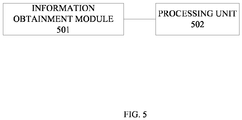
- Figure 5 is an illustration of the random access apparatus of the present invention.
- the random access apparatus provided by the present embodiments can be applied to the communication node, and comprises: information obtainment module 501, configured to obtain random access information; processing module 502, configured to determine RA-RNTI according to random access information.
- Random access information can comprise: the subframe sequence number of the preamble transmission, the radio frame sequence number of the preamble transmission.
- random access information can comprise: the time domain position index information of the preamble transmission, the frequency domain position index information of the preamble transmission.
- random access information can comprise: the time domain position index information of the terminal preamble transmission, the frequency domain position index information of the terminal preamble transmission.
- random access information can further comprise: RA response window length, the interval length of the preamble transmission.
- the interval length can be obtained through calculation or pre-configuration
- the present invention also provides a random access apparatus, applicable to the communication node and comprising: information obtainment module, configured to obtain random access information correlation factors; processing module, configured to determine the RA-RNTI according to the random access information correlation factors.
- the function of the information obtainment module can be implemented, for example, from the wireless communication unit and a calculator.
- the present embodiment is not however limited thereto.
- the functions of the above apparatus can also be implemented by processors executing code and/or instructions stored on memory.
- the primary scenario that causes additional interference is two terminals of the same coverage ranking located within the same subframe of different radio frames transmitting the preamble: their response window length exceeds one radio frame, and they overlap.
- both terminals Based on the existing RA-RNTI calculation formula containing only subframe information, both terminals have the same RA-RNTI for demodulating the PDCCH in the same search space, which creates additional interference.
- the embodiments of the present invention use the RA-RNTI formula to introduce a factor able to reflect the difference of the initial radio frames of the preamble transmission, or to reflect the frequency domain position index information, and thus ensure that RA response window overlap will not produce additional interference, which will reduce terminal power consumption.
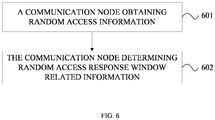
- the present embodiments further provide a method for random access comprising the following steps:
- Step 601 the communication node obtains random access information
- Step 602 the communication node determines the random access response window related information based on the random access information.
- random access information can comprise one of the following or a combination thereof: downlink channel repeat information, or a function with it as its input; downlink control transmission period (PDCCH period), or a function with it as its input; downlink control channel transmission interval (PDCCH transmission duration), or a function with it as its input; downlink shared channel transmission period (PDSCH period), or a function with it as its input; downlink shared channel transmission interval (PDSCH transmission duration), or a function with it as its input; uplink channel repeat information, or a function with it as its input; uplink access channel transmission period (PRACH period), or a function with it as its input; uplink access channel transmission interval (PRACH transmission duration), or a function with it as its input.
- PRACH period uplink access channel transmission period
- PRACH transmission duration uplink access channel transmission interval
- random access response window related information can comprise: random access response window start time; random access response window initial time domain position; the interval between the random access response window start time and the leading transmission end time.
- the embodiments of the present disclosure also provide a method for random access comprising the following steps: the communication node obtaining the random access information; wherein, random access information comprises: the super frame sequence number of the preamble transmission; the communication node determining the RA-RNTI according to random access information.
- n0 and k1 are coefficients
- HSFN_id is the superframe sequence number of the preamble transmission.
- n0 and k1 are coefficients
- f() indicates a function that takes HSFN_id as its input
- HSFN_id is the superframe sequence number of the preamble transmission.
- f() indicates a function that takes ki, C i as its input; C i is random access information; n0, m, and ki are coefficients.
- random access information can comprise one of the following or a combination thereof: the superframe sequence number of the preamble transmission (HSFN_id), or a function with it as its input; the radio frame sequence number of the preamble transmission (SFN_id), or a function with it as its input; the subframe sequence number of the preamble transmission (subSFN_id), or a function with it as its input; the frequency domain position index of the preamble transmission (f_id), or a function with it as its input; the frequency domain offset of the preamble transmission (f_offset), or a function with it as its input; the subcarrier index of the preamble transmission (tone id), or a function with it as its input; the band index of the preamble transmission (band_id), or a function with it as its input; the transmission period of the downlink control channel (PDCCH period) or a function with it as its input; wherein, units for the PDCCH period can be superframes, frames, subframe
- the communication node determining the RA-RNTI according to random access information can further comprise: a communication node determining RA-RNTI as:
- the communication node determining the RA-RNTI according to random access information can further comprise: a communication node determining RA-RNTI as:
- band_id is the band index of the preamble transmission
- SFN_id is the radio frame sequence number of the preamble transmission
- HSFNnumber is the number of radio frames contained within a superframe
- HSFN_id is the superframe sequence number of the preamble transmission
- Rmax is the number of effective subframes in the downlink control channel search space.
- the communication node determining the RA-RNTI according to random access information can further comprise: a communication node determining RA-RNTI as:
- k1 could be 1, and k2 could be the maximum number of bands within the system (e.g., 4), M W_RAR is the largest length sustained by the RA response window length (W_RAR), band_id is the band index of the preamble transmission , SFN_id is the radio frame sequence number of the preamble transmission, Rmax is the number of effective subframes sustained in the downlink control channel search space , HSFN_id is the superframe sequence number of the preamble transmission, minPeriod is the smallest period of random access.
- W_RAR the largest length sustained by the RA response window length
- band_id is the band index of the preamble transmission
- SFN_id is the radio frame sequence number of the preamble transmission
- Rmax is the number of effective subframes sustained in the downlink control channel search space
- HSFN_id is the superframe sequence number of the preamble transmission
- minPeriod is the smallest period of random access.
- the communication node determining the RA-RNTI according to random access information can further comprise: a communication node determining RA-RNTI as:
- M W_RAR can be determined according to the downlink control channel transmission period (PDCCH period); M W_RAR is the maximum number of superframes corresponding to the PDCCH period ⁇ k; or, M W_RAR is the maximum number of superframes corresponding to the RAR detection window; wherein, k is a coefficient.
- At least one of the following: the RA-RNTI calculation formula, or the minPeriod value can be determined by at least one of the following: the number of effective subframes sustained by the downlink control channel search space (Rmax), the downlink control channel transmission period, or the RAR window length.
- determining the minPeriod value based on at least one of the following: Rmax, the downlink control channel transmission period, or the RAR window length can comprise: determining the minPeriod as the smallest PRACH period; for example, 4 radio subframes; or, determining the minPeriod according to the Rmax value; for example, when the Rmax is greater than x1, the minPeriod is 16, 32, 64, 128, 256, 512; when the Rmax is lesser than or equal to x1, the minPeriod is 4; or, determining the minPeriod according to the downlink control channel transmission period value; for example: when downlink control channel transmission period is greater than x2, the minPeriod is 32, 64, 128, 256, 512; when the downlink control channel transmission period is lesser than or equal to x2, the minPeriod is 4; or, determining the minPeriod value according to the RAR window length; for example: the RAR window length is greater than x
- x1 can be 128, x2 can be 512, and x3 can be 512 radio frames.
- determining the RA-RNTI calculation formula according to at least one of the following: Rmax, the downlink control channel transmission period, or the RAR window length can comprise: determining the RA-RNTI calculation formula according to the Rmax; for example, when the Rmax is greater than x1, the RA-RNTI is determined based on superframes, frames, and band_id; when the Rmax is lesser than or equal to x1, the RA-RNTI is determined based on frames and band_id; alternatively, determining the RA-RNTI calculation formula according to the downlink control channel transmission period; for example, when the downlink control channel transmission period is greater than x2, the RA-RNTI is determined based on superframes, frames, and band id; when the downlink control channel transmission period is lesser than or equal to x2, the RA-RNT is determined based on frames and band_id; alternatively, determining the RA-RNTI calculation formula according to the RAR window length; for example, the RAR window length
- x1 can be 128, x2 can be 512, and x3 can be 512 radio frames.
- embodiments of the present invention also provide a computer-readable storage medium, storing computer-executable instructions; the computer-executable instructions, when executed by a processor, can implement the random access methods described above.
- modules/units in all of or some of the steps, systems, and apparatus of the methods disclosed herein can be implemented as software, firmware, or appropriate combinations thereof.
- the division of the functional modules/units described herein does not necessarily correspond to the division of the physical units; for example, a physical component can have multiple functions, or a function or step can be executed by the cooperation of several physical components.
- a few components or all of the components can be implemented by a processor, such as by the software of a digital signal processor or a microprocessor, or can be implemented as an integrated circuit, such as a specialized integrated circuit.
- This software can be distributed on a computer-readable medium; the computer-readable medium can comprise a computer storage medium (or non-temporary medium) and a communication medium (or temporary medium).
- the term computer storage medium comprises the volatile, nonvolatile, removable, and non-removable mediums used in any of the methods or skills to store information (e.g., computer-readable instructions, data structures, program modules, or other data).
- Computer storage mediums comprise, but are not limited to, RAM, ROM, EEPROM, flash memory or other memory technology, CD-ROM, digital versatile disk (DVD) or other CD storage, magnetic cassettes, magnetic tapes, magnetic disks or other magnetic storage devices, or any other medium that may be used to store information and which can be accessed by a computer.
- communication mediums typically contain computer-readable instructions, data structures, program modules or, for example, other data within modulation data signals of carriers or other transmission mechanisms of this type, and can comprise any information delivery medium.
- the embodiments of the present application provide a method and apparatus for random access, and use the RA-RNTI formula to introduce factors able to reflect the difference of the initial radio frames of the preamble transmission, or to reflect the frequency domain position index information, and thus ensure that RA response window overlap will not produce additional interference, as well as reduce terminal power consumption.
Landscapes
- Engineering & Computer Science (AREA)
- Computer Networks & Wireless Communication (AREA)
- Signal Processing (AREA)
- Mobile Radio Communication Systems (AREA)
Priority Applications (2)
| Application Number | Priority Date | Filing Date | Title |
|---|---|---|---|
| EP23171205.0A EP4221436A1 (fr) | 2016-01-13 | 2017-01-13 | Procédé et appareil d'accès aléatoire |
| EP20186397.4A EP3755110B1 (fr) | 2016-01-13 | 2017-01-13 | Procédé et appareil d'accès aléatoire |
Applications Claiming Priority (4)
| Application Number | Priority Date | Filing Date | Title |
|---|---|---|---|
| CN201610020739 | 2016-01-13 | ||
| CN201610081474 | 2016-02-05 | ||
| CN201610286416.3A CN106973441B (zh) | 2016-01-13 | 2016-04-29 | 一种随机接入方法及装置 |
| PCT/CN2017/071105 WO2017121380A1 (fr) | 2016-01-13 | 2017-01-13 | Procédé et appareil d'accès aléatoire |
Related Child Applications (2)
| Application Number | Title | Priority Date | Filing Date |
|---|---|---|---|
| EP20186397.4A Division EP3755110B1 (fr) | 2016-01-13 | 2017-01-13 | Procédé et appareil d'accès aléatoire |
| EP23171205.0A Division EP4221436A1 (fr) | 2016-01-13 | 2017-01-13 | Procédé et appareil d'accès aléatoire |
Publications (3)
| Publication Number | Publication Date |
|---|---|
| EP3404991A4 EP3404991A4 (fr) | 2018-11-21 |
| EP3404991A1 true EP3404991A1 (fr) | 2018-11-21 |
| EP3404991B1 EP3404991B1 (fr) | 2020-07-22 |
Family
ID=59334764
Family Applications (3)
| Application Number | Title | Priority Date | Filing Date |
|---|---|---|---|
| EP23171205.0A Pending EP4221436A1 (fr) | 2016-01-13 | 2017-01-13 | Procédé et appareil d'accès aléatoire |
| EP20186397.4A Active EP3755110B1 (fr) | 2016-01-13 | 2017-01-13 | Procédé et appareil d'accès aléatoire |
| EP17738193.6A Active EP3404991B1 (fr) | 2016-01-13 | 2017-01-13 | Procédé, noeud de communication et support lisible par ordinateur non transitoire d'accès aléatoire |
Family Applications Before (2)
| Application Number | Title | Priority Date | Filing Date |
|---|---|---|---|
| EP23171205.0A Pending EP4221436A1 (fr) | 2016-01-13 | 2017-01-13 | Procédé et appareil d'accès aléatoire |
| EP20186397.4A Active EP3755110B1 (fr) | 2016-01-13 | 2017-01-13 | Procédé et appareil d'accès aléatoire |
Country Status (7)
| Country | Link |
|---|---|
| US (3) | US10736149B2 (fr) |
| EP (3) | EP4221436A1 (fr) |
| JP (1) | JP6936232B2 (fr) |
| KR (1) | KR102687897B1 (fr) |
| CN (3) | CN111107662B (fr) |
| ES (1) | ES2809724T3 (fr) |
| FI (1) | FI3755110T3 (fr) |
Cited By (2)
| Publication number | Priority date | Publication date | Assignee | Title |
|---|---|---|---|---|
| CN109983830A (zh) * | 2019-02-14 | 2019-07-05 | 北京小米移动软件有限公司 | 随机接入的处理方法及装置 |
| EP3713132A4 (fr) * | 2017-11-15 | 2021-07-21 | Sharp Kabushiki Kaisha | Procédé et dispositif de configuration de ressource de transmission de canal d'accès aléatoire |
Families Citing this family (19)
| Publication number | Priority date | Publication date | Assignee | Title |
|---|---|---|---|---|
| EP3281481A4 (fr) * | 2015-04-08 | 2018-12-05 | Nokia Solutions and Networks Oy | Transmission de message de réponse à accès aléatoire |
| CN111107662B (zh) * | 2016-01-13 | 2023-06-20 | 中兴通讯股份有限公司 | 一种随机接入方法及装置 |
| US11528662B2 (en) * | 2017-04-13 | 2022-12-13 | Telefonaktiebolaget Lm Ericsson (Publ) | Sleep handling for user equipment |
| US11166322B2 (en) * | 2017-08-09 | 2021-11-02 | Lg Electronics Inc. | Method for performing random access process and apparatus therefor |
| CN109392125B (zh) * | 2017-08-10 | 2023-04-18 | 华为技术有限公司 | 通信方法和设备 |
| EP3979755B1 (fr) * | 2017-08-11 | 2024-01-31 | Telefonaktiebolaget LM Ericsson (publ) | Technique pour générer des rnti |
| CN108366033B (zh) * | 2018-02-08 | 2021-01-08 | 上海无线通信研究中心 | 通信信号的检测方法/系统、计算机可读存储介质及设备 |
| US11272532B2 (en) | 2018-11-01 | 2022-03-08 | Comcast Cable Communications, Llc | Random access response reception |
| WO2020143549A1 (fr) * | 2019-01-07 | 2020-07-16 | Telefonaktiebolaget Lm Ericsson (Publ) | Procédé et appareil pour une procédure d'accès aléatoire en deux étapes |
| US11265932B2 (en) * | 2019-01-30 | 2022-03-01 | Qualcomm Incorporated | Narrowband selection for measurement reporting in random access |
| WO2020191716A1 (fr) * | 2019-03-28 | 2020-10-01 | Qualcomm Incorporated | Formule de ra-rnti pour fenêtres de réponse d'accès aléatoire étendues |
| CN114342543B (zh) * | 2019-08-28 | 2025-03-25 | 中兴通讯股份有限公司 | 用于减少随机接入过程中的开销的方法和装置 |
| CN110475379B (zh) * | 2019-09-23 | 2022-07-15 | 展讯通信(上海)有限公司 | 频域随机接入机会的选择方法及装置、存储介质、终端 |
| CN114503724A (zh) * | 2019-10-01 | 2022-05-13 | 株式会社Ntt都科摩 | 终端及发送方法 |
| CN111526503B (zh) * | 2020-04-29 | 2022-06-24 | 中国电子科技集团公司第五十四研究所 | 一种geo卫星物联网鉴权方法和系统 |
| CN113677012B (zh) * | 2020-05-15 | 2024-09-24 | 维沃移动通信有限公司 | 随机接入信号的传输方法和终端 |
| CN113811016B (zh) * | 2020-06-16 | 2025-11-07 | 大唐移动通信设备有限公司 | 一种随机接入方法和用户终端ue及网络侧设备 |
| CN116458251B (zh) * | 2020-09-29 | 2024-11-22 | Oppo广东移动通信有限公司 | 随机接入方法和终端设备 |
| WO2022151072A1 (fr) * | 2021-01-13 | 2022-07-21 | Oppo广东移动通信有限公司 | Procédé de transmission d'informations, dispositif de terminal, dispositif de réseau et support de stockage d'ordinateur |
Family Cites Families (17)
| Publication number | Priority date | Publication date | Assignee | Title |
|---|---|---|---|---|
| WO2008038983A1 (fr) * | 2006-09-29 | 2008-04-03 | Samsung Electronics Co., Ltd. | Procédés et appareil d'attribution d'identité temporaire à un réseau radio cellulaire |
| CN101547421B (zh) | 2008-03-25 | 2012-06-13 | 中兴通讯股份有限公司 | 随机接入响应消息的群标识生成方法及随机接入方法 |
| CN101646251B (zh) * | 2008-08-07 | 2012-07-18 | 中兴通讯股份有限公司 | 随机接入过程和测量间隙冲突的处理方法 |
| CN101742682B (zh) * | 2008-11-12 | 2013-03-27 | 中兴通讯股份有限公司 | 一种lte系统中的随机接入方法 |
| CN103582073B (zh) * | 2012-07-31 | 2018-07-27 | 中兴通讯股份有限公司 | 一种mtc ue接入lte系统的方法、演进的基站 |
| CN104144517B (zh) | 2013-05-10 | 2019-05-10 | 中兴通讯股份有限公司 | 一种随机接入方法及系统 |
| CN104254135B (zh) * | 2013-06-27 | 2020-03-31 | 夏普株式会社 | 基站和用户设备及其方法 |
| ES2741750T3 (es) * | 2013-09-27 | 2020-02-12 | Alcatel Lucent | Métodos y dispositivos para acceso aleatorio |
| WO2015109512A1 (fr) * | 2014-01-24 | 2015-07-30 | 华为技术有限公司 | Procédé et dispositif d'accès aléatoire |
| EP3675566B1 (fr) * | 2014-01-29 | 2022-07-06 | InterDigital Patent Holdings, Inc. | Procédé et appareil d'accès et d'adaptation de liaisons pour transmissions sans fil à couverture améliorée |
| EP3105988B1 (fr) * | 2014-02-10 | 2018-09-05 | Telefonaktiebolaget LM Ericsson (publ) | Équipement utilisateur, noeud de réseau et procédés correspondants pour gérer des transmissions de préambule sur un canal d'accès aléatoire dans un réseau de radiocommunication |
| CN105338589A (zh) * | 2014-08-11 | 2016-02-17 | 中兴通讯股份有限公司 | 随机接入响应消息的传输方法及装置 |
| CN105451360A (zh) | 2014-09-26 | 2016-03-30 | 夏普株式会社 | 用于配置随机接入响应窗的方法以及基站和用户设备 |
| CN111107662B (zh) * | 2016-01-13 | 2023-06-20 | 中兴通讯股份有限公司 | 一种随机接入方法及装置 |
| CN113438716A (zh) * | 2016-04-01 | 2021-09-24 | 华为技术有限公司 | 一种资源调度方法、接入网设备以及用户设备 |
| WO2017185304A1 (fr) * | 2016-04-28 | 2017-11-02 | 富士通株式会社 | Dispositif de détermination de ra-rnti, dispositif et procédé de transmission rar, et système de communication |
| EP3979755B1 (fr) * | 2017-08-11 | 2024-01-31 | Telefonaktiebolaget LM Ericsson (publ) | Technique pour générer des rnti |
-
2016
- 2016-04-29 CN CN202010124877.7A patent/CN111107662B/zh active Active
- 2016-04-29 CN CN202310908960.7A patent/CN116709562A/zh active Pending
- 2016-04-29 CN CN201610286416.3A patent/CN106973441B/zh active Active
-
2017
- 2017-01-13 FI FIEP20186397.4T patent/FI3755110T3/fi active
- 2017-01-13 KR KR1020187023225A patent/KR102687897B1/ko active Active
- 2017-01-13 EP EP23171205.0A patent/EP4221436A1/fr active Pending
- 2017-01-13 US US16/068,853 patent/US10736149B2/en active Active
- 2017-01-13 JP JP2018536228A patent/JP6936232B2/ja active Active
- 2017-01-13 ES ES17738193T patent/ES2809724T3/es active Active
- 2017-01-13 EP EP20186397.4A patent/EP3755110B1/fr active Active
- 2017-01-13 EP EP17738193.6A patent/EP3404991B1/fr active Active
-
2020
- 2020-07-23 US US16/937,133 patent/US11051346B2/en active Active
-
2021
- 2021-06-11 US US17/346,047 patent/US11818762B2/en active Active
Cited By (4)
| Publication number | Priority date | Publication date | Assignee | Title |
|---|---|---|---|---|
| EP3713132A4 (fr) * | 2017-11-15 | 2021-07-21 | Sharp Kabushiki Kaisha | Procédé et dispositif de configuration de ressource de transmission de canal d'accès aléatoire |
| US11540315B2 (en) | 2017-11-15 | 2022-12-27 | Sharp Kabushiki Kaisha | Method for configuring random access channel transmitting resource and device thereof |
| CN109983830A (zh) * | 2019-02-14 | 2019-07-05 | 北京小米移动软件有限公司 | 随机接入的处理方法及装置 |
| US12342382B2 (en) | 2019-02-14 | 2025-06-24 | Beijing Xiaomi Mobile Software Co., Ltd. | Method and apparatus for processing random access |
Also Published As
| Publication number | Publication date |
|---|---|
| KR102687897B1 (ko) | 2024-07-23 |
| US10736149B2 (en) | 2020-08-04 |
| JP2019508932A (ja) | 2019-03-28 |
| FI3755110T3 (fi) | 2023-10-10 |
| EP3404991B1 (fr) | 2020-07-22 |
| CN111107662B (zh) | 2023-06-20 |
| EP3404991A4 (fr) | 2018-11-21 |
| CN116709562A (zh) | 2023-09-05 |
| US20210307080A1 (en) | 2021-09-30 |
| JP6936232B2 (ja) | 2021-09-15 |
| CN106973441A (zh) | 2017-07-21 |
| EP3755110A1 (fr) | 2020-12-23 |
| CN111107662A (zh) | 2020-05-05 |
| US11051346B2 (en) | 2021-06-29 |
| US20200367291A1 (en) | 2020-11-19 |
| EP4221436A1 (fr) | 2023-08-02 |
| EP3755110B1 (fr) | 2023-08-02 |
| ES2809724T3 (es) | 2021-03-05 |
| US20190029051A1 (en) | 2019-01-24 |
| KR20180102630A (ko) | 2018-09-17 |
| US11818762B2 (en) | 2023-11-14 |
| CN106973441B (zh) | 2020-01-17 |
Similar Documents
| Publication | Publication Date | Title |
|---|---|---|
| US11818762B2 (en) | Method and apparatus for random access | |
| US20220216949A1 (en) | Uplink HARQ Procedure for MTC Operation | |
| EP3888409B1 (fr) | Procédé et appareil de transmission et de réception d'un signal dans un système de communication sans fil | |
| CN105191416B (zh) | 物理信道增强传输方法、通信设备、用户设备及基站 | |
| US10212573B2 (en) | Coverage-deficient terminal connection procedures | |
| CN103916974B (zh) | 一种前导序列的传输方法、装置及系统 | |
| EP3334111B1 (fr) | Procédé, appareil et système de traitement d'informations | |
| US10349391B2 (en) | Physical downlink data channel transmission method, base station, and user equipment | |
| US20160269163A1 (en) | Method and apparatus for improving random access procedure in wireless network | |
| EP3068061B1 (fr) | Procédé et appareil d'émission d'informations de commande pour communication de dispositif à dispositif | |
| WO2017193350A1 (fr) | Procédé de transmission d'informations et équipement utilisateur | |
| WO2016023379A1 (fr) | Procédé et appareil de transmission d'un message de réponse à accès aléatoire | |
| EP3306997B1 (fr) | Procédé et dispositif de transmission de paquet de données | |
| US11405891B2 (en) | Data transmission method and apparatus, terminal, and base station | |
| CN116782393A (zh) | 一种系统信息发送方法及装置 | |
| CN106470381A (zh) | 随机接入的处理方法及装置 | |
| WO2017121380A1 (fr) | Procédé et appareil d'accès aléatoire |
Legal Events
| Date | Code | Title | Description |
|---|---|---|---|
| STAA | Information on the status of an ep patent application or granted ep patent |
Free format text: STATUS: THE INTERNATIONAL PUBLICATION HAS BEEN MADE |
|
| PUAI | Public reference made under article 153(3) epc to a published international application that has entered the european phase |
Free format text: ORIGINAL CODE: 0009012 |
|
| STAA | Information on the status of an ep patent application or granted ep patent |
Free format text: STATUS: REQUEST FOR EXAMINATION WAS MADE |
|
| 17P | Request for examination filed |
Effective date: 20180810 |
|
| A4 | Supplementary search report drawn up and despatched |
Effective date: 20181024 |
|
| AK | Designated contracting states |
Kind code of ref document: A1 Designated state(s): AL AT BE BG CH CY CZ DE DK EE ES FI FR GB GR HR HU IE IS IT LI LT LU LV MC MK MT NL NO PL PT RO RS SE SI SK SM TR |
|
| AX | Request for extension of the european patent |
Extension state: BA ME |
|
| DAV | Request for validation of the european patent (deleted) | ||
| DAX | Request for extension of the european patent (deleted) | ||
| GRAP | Despatch of communication of intention to grant a patent |
Free format text: ORIGINAL CODE: EPIDOSNIGR1 |
|
| STAA | Information on the status of an ep patent application or granted ep patent |
Free format text: STATUS: GRANT OF PATENT IS INTENDED |
|
| INTG | Intention to grant announced |
Effective date: 20200205 |
|
| GRAS | Grant fee paid |
Free format text: ORIGINAL CODE: EPIDOSNIGR3 |
|
| GRAA | (expected) grant |
Free format text: ORIGINAL CODE: 0009210 |
|
| STAA | Information on the status of an ep patent application or granted ep patent |
Free format text: STATUS: THE PATENT HAS BEEN GRANTED |
|
| AK | Designated contracting states |
Kind code of ref document: B1 Designated state(s): AL AT BE BG CH CY CZ DE DK EE ES FI FR GB GR HR HU IE IS IT LI LT LU LV MC MK MT NL NO PL PT RO RS SE SI SK SM TR |
|
| REG | Reference to a national code |
Ref country code: GB Ref legal event code: FG4D |
|
| REG | Reference to a national code |
Ref country code: CH Ref legal event code: EP |
|
| REG | Reference to a national code |
Ref country code: DE Ref legal event code: R096 Ref document number: 602017020217 Country of ref document: DE |
|
| REG | Reference to a national code |
Ref country code: AT Ref legal event code: REF Ref document number: 1294662 Country of ref document: AT Kind code of ref document: T Effective date: 20200815 |
|
| REG | Reference to a national code |
Ref country code: IE Ref legal event code: FG4D |
|
| REG | Reference to a national code |
Ref country code: NL Ref legal event code: FP |
|
| REG | Reference to a national code |
Ref country code: LT Ref legal event code: MG4D |
|
| REG | Reference to a national code |
Ref country code: AT Ref legal event code: MK05 Ref document number: 1294662 Country of ref document: AT Kind code of ref document: T Effective date: 20200722 |
|
| PG25 | Lapsed in a contracting state [announced via postgrant information from national office to epo] |
Ref country code: HR Free format text: LAPSE BECAUSE OF FAILURE TO SUBMIT A TRANSLATION OF THE DESCRIPTION OR TO PAY THE FEE WITHIN THE PRESCRIBED TIME-LIMIT Effective date: 20200722 Ref country code: LT Free format text: LAPSE BECAUSE OF FAILURE TO SUBMIT A TRANSLATION OF THE DESCRIPTION OR TO PAY THE FEE WITHIN THE PRESCRIBED TIME-LIMIT Effective date: 20200722 Ref country code: FI Free format text: LAPSE BECAUSE OF FAILURE TO SUBMIT A TRANSLATION OF THE DESCRIPTION OR TO PAY THE FEE WITHIN THE PRESCRIBED TIME-LIMIT Effective date: 20200722 Ref country code: SE Free format text: LAPSE BECAUSE OF FAILURE TO SUBMIT A TRANSLATION OF THE DESCRIPTION OR TO PAY THE FEE WITHIN THE PRESCRIBED TIME-LIMIT Effective date: 20200722 Ref country code: PT Free format text: LAPSE BECAUSE OF FAILURE TO SUBMIT A TRANSLATION OF THE DESCRIPTION OR TO PAY THE FEE WITHIN THE PRESCRIBED TIME-LIMIT Effective date: 20201123 Ref country code: AT Free format text: LAPSE BECAUSE OF FAILURE TO SUBMIT A TRANSLATION OF THE DESCRIPTION OR TO PAY THE FEE WITHIN THE PRESCRIBED TIME-LIMIT Effective date: 20200722 Ref country code: BG Free format text: LAPSE BECAUSE OF FAILURE TO SUBMIT A TRANSLATION OF THE DESCRIPTION OR TO PAY THE FEE WITHIN THE PRESCRIBED TIME-LIMIT Effective date: 20201022 Ref country code: GR Free format text: LAPSE BECAUSE OF FAILURE TO SUBMIT A TRANSLATION OF THE DESCRIPTION OR TO PAY THE FEE WITHIN THE PRESCRIBED TIME-LIMIT Effective date: 20201023 Ref country code: NO Free format text: LAPSE BECAUSE OF FAILURE TO SUBMIT A TRANSLATION OF THE DESCRIPTION OR TO PAY THE FEE WITHIN THE PRESCRIBED TIME-LIMIT Effective date: 20201022 |
|
| PG25 | Lapsed in a contracting state [announced via postgrant information from national office to epo] |
Ref country code: IS Free format text: LAPSE BECAUSE OF FAILURE TO SUBMIT A TRANSLATION OF THE DESCRIPTION OR TO PAY THE FEE WITHIN THE PRESCRIBED TIME-LIMIT Effective date: 20201122 Ref country code: RS Free format text: LAPSE BECAUSE OF FAILURE TO SUBMIT A TRANSLATION OF THE DESCRIPTION OR TO PAY THE FEE WITHIN THE PRESCRIBED TIME-LIMIT Effective date: 20200722 Ref country code: PL Free format text: LAPSE BECAUSE OF FAILURE TO SUBMIT A TRANSLATION OF THE DESCRIPTION OR TO PAY THE FEE WITHIN THE PRESCRIBED TIME-LIMIT Effective date: 20200722 Ref country code: LV Free format text: LAPSE BECAUSE OF FAILURE TO SUBMIT A TRANSLATION OF THE DESCRIPTION OR TO PAY THE FEE WITHIN THE PRESCRIBED TIME-LIMIT Effective date: 20200722 |
|
| REG | Reference to a national code |
Ref country code: ES Ref legal event code: FG2A Ref document number: 2809724 Country of ref document: ES Kind code of ref document: T3 Effective date: 20210305 |
|
| REG | Reference to a national code |
Ref country code: DE Ref legal event code: R097 Ref document number: 602017020217 Country of ref document: DE |
|
| PG25 | Lapsed in a contracting state [announced via postgrant information from national office to epo] |
Ref country code: RO Free format text: LAPSE BECAUSE OF FAILURE TO SUBMIT A TRANSLATION OF THE DESCRIPTION OR TO PAY THE FEE WITHIN THE PRESCRIBED TIME-LIMIT Effective date: 20200722 Ref country code: CZ Free format text: LAPSE BECAUSE OF FAILURE TO SUBMIT A TRANSLATION OF THE DESCRIPTION OR TO PAY THE FEE WITHIN THE PRESCRIBED TIME-LIMIT Effective date: 20200722 Ref country code: DK Free format text: LAPSE BECAUSE OF FAILURE TO SUBMIT A TRANSLATION OF THE DESCRIPTION OR TO PAY THE FEE WITHIN THE PRESCRIBED TIME-LIMIT Effective date: 20200722 Ref country code: EE Free format text: LAPSE BECAUSE OF FAILURE TO SUBMIT A TRANSLATION OF THE DESCRIPTION OR TO PAY THE FEE WITHIN THE PRESCRIBED TIME-LIMIT Effective date: 20200722 Ref country code: SM Free format text: LAPSE BECAUSE OF FAILURE TO SUBMIT A TRANSLATION OF THE DESCRIPTION OR TO PAY THE FEE WITHIN THE PRESCRIBED TIME-LIMIT Effective date: 20200722 |
|
| PLBE | No opposition filed within time limit |
Free format text: ORIGINAL CODE: 0009261 |
|
| STAA | Information on the status of an ep patent application or granted ep patent |
Free format text: STATUS: NO OPPOSITION FILED WITHIN TIME LIMIT |
|
| PG25 | Lapsed in a contracting state [announced via postgrant information from national office to epo] |
Ref country code: AL Free format text: LAPSE BECAUSE OF FAILURE TO SUBMIT A TRANSLATION OF THE DESCRIPTION OR TO PAY THE FEE WITHIN THE PRESCRIBED TIME-LIMIT Effective date: 20200722 |
|
| 26N | No opposition filed |
Effective date: 20210423 |
|
| PG25 | Lapsed in a contracting state [announced via postgrant information from national office to epo] |
Ref country code: SK Free format text: LAPSE BECAUSE OF FAILURE TO SUBMIT A TRANSLATION OF THE DESCRIPTION OR TO PAY THE FEE WITHIN THE PRESCRIBED TIME-LIMIT Effective date: 20200722 |
|
| PG25 | Lapsed in a contracting state [announced via postgrant information from national office to epo] |
Ref country code: SI Free format text: LAPSE BECAUSE OF FAILURE TO SUBMIT A TRANSLATION OF THE DESCRIPTION OR TO PAY THE FEE WITHIN THE PRESCRIBED TIME-LIMIT Effective date: 20200722 Ref country code: MC Free format text: LAPSE BECAUSE OF FAILURE TO SUBMIT A TRANSLATION OF THE DESCRIPTION OR TO PAY THE FEE WITHIN THE PRESCRIBED TIME-LIMIT Effective date: 20200722 |
|
| REG | Reference to a national code |
Ref country code: CH Ref legal event code: PL |
|
| PG25 | Lapsed in a contracting state [announced via postgrant information from national office to epo] |
Ref country code: LU Free format text: LAPSE BECAUSE OF NON-PAYMENT OF DUE FEES Effective date: 20210113 |
|
| REG | Reference to a national code |
Ref country code: BE Ref legal event code: MM Effective date: 20210131 |
|
| PG25 | Lapsed in a contracting state [announced via postgrant information from national office to epo] |
Ref country code: CH Free format text: LAPSE BECAUSE OF NON-PAYMENT OF DUE FEES Effective date: 20210131 Ref country code: LI Free format text: LAPSE BECAUSE OF NON-PAYMENT OF DUE FEES Effective date: 20210131 |
|
| PG25 | Lapsed in a contracting state [announced via postgrant information from national office to epo] |
Ref country code: IE Free format text: LAPSE BECAUSE OF NON-PAYMENT OF DUE FEES Effective date: 20210113 |
|
| PG25 | Lapsed in a contracting state [announced via postgrant information from national office to epo] |
Ref country code: BE Free format text: LAPSE BECAUSE OF NON-PAYMENT OF DUE FEES Effective date: 20210131 |
|
| PG25 | Lapsed in a contracting state [announced via postgrant information from national office to epo] |
Ref country code: CY Free format text: LAPSE BECAUSE OF FAILURE TO SUBMIT A TRANSLATION OF THE DESCRIPTION OR TO PAY THE FEE WITHIN THE PRESCRIBED TIME-LIMIT Effective date: 20200722 |
|
| P01 | Opt-out of the competence of the unified patent court (upc) registered |
Effective date: 20230530 |
|
| PG25 | Lapsed in a contracting state [announced via postgrant information from national office to epo] |
Ref country code: HU Free format text: LAPSE BECAUSE OF FAILURE TO SUBMIT A TRANSLATION OF THE DESCRIPTION OR TO PAY THE FEE WITHIN THE PRESCRIBED TIME-LIMIT; INVALID AB INITIO Effective date: 20170113 |
|
| PG25 | Lapsed in a contracting state [announced via postgrant information from national office to epo] |
Ref country code: MK Free format text: LAPSE BECAUSE OF FAILURE TO SUBMIT A TRANSLATION OF THE DESCRIPTION OR TO PAY THE FEE WITHIN THE PRESCRIBED TIME-LIMIT Effective date: 20200722 |
|
| PG25 | Lapsed in a contracting state [announced via postgrant information from national office to epo] |
Ref country code: TR Free format text: LAPSE BECAUSE OF FAILURE TO SUBMIT A TRANSLATION OF THE DESCRIPTION OR TO PAY THE FEE WITHIN THE PRESCRIBED TIME-LIMIT Effective date: 20200722 |
|
| PG25 | Lapsed in a contracting state [announced via postgrant information from national office to epo] |
Ref country code: MT Free format text: LAPSE BECAUSE OF FAILURE TO SUBMIT A TRANSLATION OF THE DESCRIPTION OR TO PAY THE FEE WITHIN THE PRESCRIBED TIME-LIMIT Effective date: 20200722 |
|
| PGFP | Annual fee paid to national office [announced via postgrant information from national office to epo] |
Ref country code: GB Payment date: 20251204 Year of fee payment: 10 |
|
| PGFP | Annual fee paid to national office [announced via postgrant information from national office to epo] |
Ref country code: NL Payment date: 20251215 Year of fee payment: 10 Ref country code: FR Payment date: 20251208 Year of fee payment: 10 |
|
| PGFP | Annual fee paid to national office [announced via postgrant information from national office to epo] |
Ref country code: ES Payment date: 20260212 Year of fee payment: 10 |
|
| PGFP | Annual fee paid to national office [announced via postgrant information from national office to epo] |
Ref country code: DE Payment date: 20251203 Year of fee payment: 10 |
|
| PGFP | Annual fee paid to national office [announced via postgrant information from national office to epo] |
Ref country code: IT Payment date: 20251219 Year of fee payment: 10 |