EP3405040B1 - Procédé de production d'un produit de lait fermenté à l'aide de lactobacillus casei - Google Patents
Procédé de production d'un produit de lait fermenté à l'aide de lactobacillus casei Download PDFInfo
- Publication number
- EP3405040B1 EP3405040B1 EP17701680.5A EP17701680A EP3405040B1 EP 3405040 B1 EP3405040 B1 EP 3405040B1 EP 17701680 A EP17701680 A EP 17701680A EP 3405040 B1 EP3405040 B1 EP 3405040B1
- Authority
- EP
- European Patent Office
- Prior art keywords
- strain
- casei
- milk
- lactic acid
- lactose
- Prior art date
- Legal status (The legal status is an assumption and is not a legal conclusion. Google has not performed a legal analysis and makes no representation as to the accuracy of the status listed.)
- Active
Links
Images


Classifications
-
- A—HUMAN NECESSITIES
- A23—FOODS OR FOODSTUFFS; TREATMENT THEREOF, NOT COVERED BY OTHER CLASSES
- A23C—DAIRY PRODUCTS, e.g. MILK, BUTTER OR CHEESE; MILK OR CHEESE SUBSTITUTES; PREPARATION THEREOF
- A23C9/00—Milk preparations; Milk powder or milk powder preparations
- A23C9/12—Fermented milk preparations; Treatment using microorganisms or enzymes
- A23C9/123—Fermented milk preparations; Treatment using microorganisms or enzymes using only microorganisms of the genus lactobacteriaceae; Yoghurt
-
- A—HUMAN NECESSITIES
- A23—FOODS OR FOODSTUFFS; TREATMENT THEREOF, NOT COVERED BY OTHER CLASSES
- A23C—DAIRY PRODUCTS, e.g. MILK, BUTTER OR CHEESE; MILK OR CHEESE SUBSTITUTES; PREPARATION THEREOF
- A23C9/00—Milk preparations; Milk powder or milk powder preparations
- A23C9/12—Fermented milk preparations; Treatment using microorganisms or enzymes
- A23C9/123—Fermented milk preparations; Treatment using microorganisms or enzymes using only microorganisms of the genus lactobacteriaceae; Yoghurt
- A23C9/1234—Fermented milk preparations; Treatment using microorganisms or enzymes using only microorganisms of the genus lactobacteriaceae; Yoghurt characterised by using a Lactobacillus sp. other than Lactobacillus Bulgaricus, including Bificlobacterium sp.
-
- A—HUMAN NECESSITIES
- A23—FOODS OR FOODSTUFFS; TREATMENT THEREOF, NOT COVERED BY OTHER CLASSES
- A23C—DAIRY PRODUCTS, e.g. MILK, BUTTER OR CHEESE; MILK OR CHEESE SUBSTITUTES; PREPARATION THEREOF
- A23C9/00—Milk preparations; Milk powder or milk powder preparations
- A23C9/12—Fermented milk preparations; Treatment using microorganisms or enzymes
- A23C9/123—Fermented milk preparations; Treatment using microorganisms or enzymes using only microorganisms of the genus lactobacteriaceae; Yoghurt
- A23C9/1238—Fermented milk preparations; Treatment using microorganisms or enzymes using only microorganisms of the genus lactobacteriaceae; Yoghurt using specific L. bulgaricus or S. thermophilus microorganisms; using entrapped or encapsulated yoghurt bacteria; Physical or chemical treatment of L. bulgaricus or S. thermophilus cultures; Fermentation only with L. bulgaricus or only with S. thermophilus
-
- A—HUMAN NECESSITIES
- A23—FOODS OR FOODSTUFFS; TREATMENT THEREOF, NOT COVERED BY OTHER CLASSES
- A23C—DAIRY PRODUCTS, e.g. MILK, BUTTER OR CHEESE; MILK OR CHEESE SUBSTITUTES; PREPARATION THEREOF
- A23C9/00—Milk preparations; Milk powder or milk powder preparations
- A23C9/152—Milk preparations; Milk powder or milk powder preparations containing additives
-
- A—HUMAN NECESSITIES
- A23—FOODS OR FOODSTUFFS; TREATMENT THEREOF, NOT COVERED BY OTHER CLASSES
- A23K—FODDER
- A23K10/00—Animal feeding-stuffs
- A23K10/10—Animal feeding-stuffs obtained by microbiological or biochemical processes
- A23K10/12—Animal feeding-stuffs obtained by microbiological or biochemical processes by fermentation of natural products, e.g. of vegetable material, animal waste material or biomass
-
- A—HUMAN NECESSITIES
- A23—FOODS OR FOODSTUFFS; TREATMENT THEREOF, NOT COVERED BY OTHER CLASSES
- A23K—FODDER
- A23K10/00—Animal feeding-stuffs
- A23K10/10—Animal feeding-stuffs obtained by microbiological or biochemical processes
- A23K10/16—Addition of microorganisms or extracts thereof, e.g. single-cell proteins, to feeding-stuff compositions
- A23K10/18—Addition of microorganisms or extracts thereof, e.g. single-cell proteins, to feeding-stuff compositions of live microorganisms
-
- A—HUMAN NECESSITIES
- A23—FOODS OR FOODSTUFFS; TREATMENT THEREOF, NOT COVERED BY OTHER CLASSES
- A23K—FODDER
- A23K10/00—Animal feeding-stuffs
- A23K10/20—Animal feeding-stuffs from material of animal origin
-
- C—CHEMISTRY; METALLURGY
- C12—BIOCHEMISTRY; BEER; SPIRITS; WINE; VINEGAR; MICROBIOLOGY; ENZYMOLOGY; MUTATION OR GENETIC ENGINEERING
- C12N—MICROORGANISMS OR ENZYMES; COMPOSITIONS THEREOF; PROPAGATING, PRESERVING, OR MAINTAINING MICROORGANISMS; MUTATION OR GENETIC ENGINEERING; CULTURE MEDIA
- C12N1/00—Microorganisms; Compositions thereof; Processes of propagating, maintaining or preserving microorganisms or compositions thereof; Processes of preparing or isolating a composition containing a microorganism; Culture media therefor
- C12N1/20—Bacteria; Culture media therefor
-
- C—CHEMISTRY; METALLURGY
- C12—BIOCHEMISTRY; BEER; SPIRITS; WINE; VINEGAR; MICROBIOLOGY; ENZYMOLOGY; MUTATION OR GENETIC ENGINEERING
- C12N—MICROORGANISMS OR ENZYMES; COMPOSITIONS THEREOF; PROPAGATING, PRESERVING, OR MAINTAINING MICROORGANISMS; MUTATION OR GENETIC ENGINEERING; CULTURE MEDIA
- C12N1/00—Microorganisms; Compositions thereof; Processes of propagating, maintaining or preserving microorganisms or compositions thereof; Processes of preparing or isolating a composition containing a microorganism; Culture media therefor
- C12N1/20—Bacteria; Culture media therefor
- C12N1/205—Bacterial isolates
-
- A—HUMAN NECESSITIES
- A23—FOODS OR FOODSTUFFS; TREATMENT THEREOF, NOT COVERED BY OTHER CLASSES
- A23V—INDEXING SCHEME RELATING TO FOODS, FOODSTUFFS OR NON-ALCOHOLIC BEVERAGES AND LACTIC OR PROPIONIC ACID BACTERIA USED IN FOODSTUFFS OR FOOD PREPARATION
- A23V2400/00—Lactic or propionic acid bacteria
- A23V2400/11—Lactobacillus
- A23V2400/125—Casei
-
- A—HUMAN NECESSITIES
- A23—FOODS OR FOODSTUFFS; TREATMENT THEREOF, NOT COVERED BY OTHER CLASSES
- A23V—INDEXING SCHEME RELATING TO FOODS, FOODSTUFFS OR NON-ALCOHOLIC BEVERAGES AND LACTIC OR PROPIONIC ACID BACTERIA USED IN FOODSTUFFS OR FOOD PREPARATION
- A23V2400/00—Lactic or propionic acid bacteria
- A23V2400/11—Lactobacillus
- A23V2400/137—Delbrueckii
-
- A—HUMAN NECESSITIES
- A23—FOODS OR FOODSTUFFS; TREATMENT THEREOF, NOT COVERED BY OTHER CLASSES
- A23V—INDEXING SCHEME RELATING TO FOODS, FOODSTUFFS OR NON-ALCOHOLIC BEVERAGES AND LACTIC OR PROPIONIC ACID BACTERIA USED IN FOODSTUFFS OR FOOD PREPARATION
- A23V2400/00—Lactic or propionic acid bacteria
- A23V2400/21—Streptococcus, lactococcus
- A23V2400/249—Thermophilus
-
- C—CHEMISTRY; METALLURGY
- C12—BIOCHEMISTRY; BEER; SPIRITS; WINE; VINEGAR; MICROBIOLOGY; ENZYMOLOGY; MUTATION OR GENETIC ENGINEERING
- C12R—INDEXING SCHEME ASSOCIATED WITH SUBCLASSES C12C - C12Q, RELATING TO MICROORGANISMS
- C12R2001/00—Microorganisms ; Processes using microorganisms
- C12R2001/01—Bacteria or Actinomycetales ; using bacteria or Actinomycetales
- C12R2001/225—Lactobacillus
-
- C—CHEMISTRY; METALLURGY
- C12—BIOCHEMISTRY; BEER; SPIRITS; WINE; VINEGAR; MICROBIOLOGY; ENZYMOLOGY; MUTATION OR GENETIC ENGINEERING
- C12R—INDEXING SCHEME ASSOCIATED WITH SUBCLASSES C12C - C12Q, RELATING TO MICROORGANISMS
- C12R2001/00—Microorganisms ; Processes using microorganisms
- C12R2001/01—Bacteria or Actinomycetales ; using bacteria or Actinomycetales
- C12R2001/225—Lactobacillus
- C12R2001/245—Lactobacillus casei
-
- C—CHEMISTRY; METALLURGY
- C12—BIOCHEMISTRY; BEER; SPIRITS; WINE; VINEGAR; MICROBIOLOGY; ENZYMOLOGY; MUTATION OR GENETIC ENGINEERING
- C12R—INDEXING SCHEME ASSOCIATED WITH SUBCLASSES C12C - C12Q, RELATING TO MICROORGANISMS
- C12R2001/00—Microorganisms ; Processes using microorganisms
- C12R2001/01—Bacteria or Actinomycetales ; using bacteria or Actinomycetales
- C12R2001/46—Streptococcus ; Enterococcus; Lactococcus
Definitions
- the present invention relates to a method of producing a fermented milk product comprising adding lactic acid bacteria to milk, wherein the bacteria comprise Lactobacillus casei and at least one further strain of lactic acid bacteria of a species other than Lactobacillus casei, such as Streptococcus thermophilus.
- Cultured probiotic beverages also known as probiotic shots, frequently contain Lactobacillus casei or Lactobacillus paracasei.
- L. casei is used to refer to bacteria of the species L. casei or L. paracasei.
- the product is typically obtained by fermentation of milk using a single strain of L. casei.
- the growth of L. casei in milk is slow and as a consequence the fermentation is slow.
- the fermentation generally requires from 50 to 96 hours As a further consequence of the slow growth, the fermentation often requires specific measures to prevent contamination and cross contamination with other lactic acid bacteria.
- the L. casei strains are grown until reaching a pH value of 4.2 to 3.7. At that stage the fermented milk is processed and optionally diluted with syrup in a ratio of fermented milk:syrup of between 30:60 and 75:25. The final product is typically packaged in servings of 65-100 ml.
- the target cell count of L. casei in the final diluted fermented milk beverage is higher than 1 x 10 8 CFU/ml.
- L. casei has been fermented in combination with other lactic acid bacteria species, including St. thermophilus for example using FD-DVS CT-01.
- the fermentation time was reduced to about 15 to 20 hours.
- the adjunct species grew faster than L. casei and the acid generated due to growth of the adjunct culture caused inhibition of growth of L. casei, which reached a concentration of only to 3 to 5 x 10 7 CFU/ml.
- US 2007/292561 discloses S. thermophilus mutant strains with a deficiency in the AMI oligopeptide transport system.
- the mutant strains are said to have reduced post-acidification as a result of the said deficiency.
- the mutant strains may be used in combination with other lactic acid bacteria, such as L. casei.
- US 2014/220177 discloses nisin resistant mutants of L. helveticus and L. bulgaricus, which have reduced post-acidification, as well as starter cultures comprising the said mutant combined with e.g. a L. casei.
- US 2011/206805 discloses a process for improving the texture and/or taste and/or flavour of cheese comprising adding to milk a lactic acid bacterium, such as a L. casei, and a non-acidifying L. helveticus strain.
- US 2005/196388 discloses a mutant strain of L. bulgaricus lacking beta-galactosidase activity, which is capable of assimilating at least one sugar, e.g. glucose, and grow on this. Post-acidification during storage may be reduced or prevented by adding a desired amount of glucose at the start of the fermentation.
- WO 2015/193459 discloses a method of producing a fermented milk product comprising inoculating a milk base with as starter culture containing lactose-deficient Streptococcus thermophilus strain and lactose-deficient Lactobacillus delbrueckii subsp. bulgaricus strain, bots strains being able to grow on a non-lactose carbohydrate source, and adding a non-lactose carbohydrate source to the milk base in a measured amount, and wherein the fermentation will terminate upon depletion of the non-lactose carbohydrate source.
- US 6 033 691 discloses a process for producing a fermented milk product comprising the co-culture of Streptococcus thermophilus, Lactobacillus casei, and Lactobacillus acidophilus in a milk substrate up to a concentration of Lactobacillus viable cells of 10exp05 to 10exp09 CFU/ml.
- US 2013/149415 discloses a method for selectively enhancing the growth of L. casei in a mixed culture containing lactic acid bacteria, e.g. Lactobacillus delbrueckii subsp. bulgaricus and Streptococcus thermophilus, by the use of a fermentation medium containing manganese.
- lactic acid bacteria e.g. Lactobacillus delbrueckii subsp. bulgaricus and Streptococcus thermophilus
- the present invention is directed to a method of producing a fermented milk product comprising adding lactic acid bacteria to milk, wherein the bacteria comprise Lactobacillus casei and at least one further strain of lactic acid bacteria of a species other than Lactobacillus casei, wherein the further strain has a deficiency in lactose metabolism but is capable of metabolizing one or several carbohydrates other than lactose present in the milk.
- the further strain may for example be capable to metabolize sucrose, galactose and/or glucose.
- One or several of these carbohydrates can be added in low concentration to the milk to be fermented.
- the further strain will metabolize these carbohydrates quickly and thus begin to acidify the milk quickly. The acidification reduces the risk of growth of undesired lactic acid bacteria due to contamination.
- the growth of the further strain accelerates the growth of L. casei.
- L. casei achieves the same maximum cell count than in methods of producing L. casei without the use of a further LAB. In other words a high concentration of L. casei is achieved in a shorter period of time while the risk of contamination is reduced.
- the at least one further strain of lactic acid bacteria having a deficiency in lactose metabolism is a proteolytic strain.
- the at least one further strain of lactic acid bacteria having a deficiency in lactose metabolism is a highly proteolytic strain.
- the at least one further strain of lactic acid bacteria having a deficiency in lactose metabolism is a bacterium of the species Streptococcus thermophilus and/or Lactobacillus delbrueckii subsp. bulgaricus.
- Further embodiments of the invention relate to the use of L. casei bacteria and at least one further strain of lactic acid bacteria of a species other than L. casei, for producing a fermented milk product, wherein the further strain has a deficiency in lactose metabolism but is capable of metabolizing one or several carbohydrates other than lactose present in the milk.
- the present invention also provides compositions comprising bacteria of the species L. casei and bacteria of at least one further strain of lactic acid bacteria of a species other than L. casei, wherein the at least one further strain of lactic acid bacteria has a deficiency in lactose metabolism but is capable of metabolizing one or several carbohydrates other than lactose present in the milk.
- the at least one further bacterium present in the compositions with a deficiency in lactose metabolism is preferably a bacterium of the species Streptococcus thermophilus and/or Lactobacillus delbrueckii subsp. bulgaricus.
- the present invention provides food or feed products comprising bacteria of the species L. casei and bacteria of at least one further strain of lactic acid bacteria of a species other than L. casei, wherein the at least one further strain of lactic acid bacteria has a deficiency in lactose metabolism but is capable of metabolizing one or several carbohydrates other than lactose present in the milk.
- the food or feed product can be a fermented milk beverage.
- the present invention provides methods of producing a fermented milk product comprising adding lactic acid bacteria to milk, wherein the bacteria comprise Lactobacillus casei and at least one further strain of lactic acid bacteria of a species other than Lactobacillus casei, wherein the further strain has a deficiency in lactose metabolism but is capable of metabolizing one or several carbohydrates other than lactose present in the milk.
- milk is broadly used in its common meaning to refer to liquids produced by the mammary glands of animals or by plants.
- the milk may have been processed and the term “milk” includes whole milk, skim milk, fat-free milk, low fat milk, full fat milk, lactose-reduced milk, or concentrated milk.
- Fat-free milk is non-fat or skim milk product.
- Low-fat milk is typically defined as milk that contains from about 1% to about 2% fat. Full fat milk often contains 2% fat or more.
- the term “milk” is intended to encompass milks from different mammals and plant sources.
- Mammal sources of milk include, but are not limited to cow, sheep, goat, buffalo, camel, llama, mare and deer.
- Plant sources of milk include, but are not limited to, milk extracted from soy bean, pea, peanut, barley, rice, oat, quinoa, almond, cashew, coconut, hazelnut, hemp, sesame seed and sunflower seed.
- milk derived from cows is most preferably used as a starting material for the fermentation.
- Lactose-reduced and fat-reduced milk can be used in the methods of the present invention. Lactose-reduced and fat-reduced milk are commercially available and can be produced according to methods well known in the art, including hydrolyzing the lactose by lactase enzyme to glucose and galactose, or by nanofiltration, electrodialysis, ion exchange chromatography and centrifugation.
- milk base is broadly used in the present application to refer to a composition based on milk or milk components which can be used as a medium for growth and fermentation of LAB.
- the milk base comprises components derived from milk and any other component that can be used for the purpose of growing or fermenting LAB.
- L. casei and “L. casei” are used the present application to refer to bacteria of the species L. casei or L. paracasei. Any strain of L. casei can be used in the context of the present invention, including mixtures of strains. Preferably food-grade strains of L. casei are used. Respective strains are available from numerous sources.
- lactic acid bacteria or "LAB” is used to refer to food-grade bacteria producing lactic acid as the major metabolic end-product of carbohydrate fermentation. These bacteria are related by their common metabolic and physiological characteristics and are usually Gram positive, low-GC, acid tolerant, non-sporulating, non-respiring, rod-shaped bacilli or cocci. During the fermentation stage, the consumption of lactose by these bacteria causes the formation of lactic acid, reducing the pH and leading to the formation of a protein coagulum. These bacteria are thus responsible for the acidification of milk and for the texture of the dairy product.
- lactic acid bacteria encompasses, but is not limited to, bacteria belonging to the genus of Lactobacillus spp., Bifidobacterium spp., Streptococcus spp., Lactococcus spp., such as Lactobacillus delbrueckii subsp.
- the fermentation step of the process for manufacturing fermented dairy products comprises the addition of lactic acid bacteria to milk.
- the bacteria added to the milk are often identified as a starter culture.
- starter culture refers to a culture of one or more food-grade microorganisms, in particular lactic acid bacteria, which are responsible for the acidification of the milk base. Starter cultures may be fresh, frozen or freeze-dried.
- the starter can be added in any amount. Typically, the starter is added in an amount to achieve a concentration from 0.001 to 3%, preferably from 0.001 to 0.025 % by volume of the total amount of milk.
- lactose metabolism and "lactose deficient” are used in the context of the present invention to characterize LAB which either partially or completely lost the ability to use lactose as a source for cell growth or maintaining cell viability.
- Respective LAB are capable of metabolizing one or several carbohydrates selected from the group consisting of sucrose, galactose and glucose, or another fermentable carbohydrate. Since these carbohydrates are not naturally present in milk in sufficient amounts to support fermentation by lactose deficient mutants, it will be necessary to add these carbohydrates to the milk.
- Lactose deficient and partially deficient LAB can be characterized as white colonies on a medium containing lactose and X-Gal.
- the present invention therefore provides a method of producing a fermented milk product comprising adding lactic acid bacteria to milk, wherein the bacteria comprise Lactobacillus casei and at least one further strain of lactic acid bacteria of a species other than Lactobacillus casei, wherein the at least one further strain of lactic acid bacteria having a deficiency in lactose metabolism is capable of metabolizing one or more carbohydrates selected from the group consisting of sucrose, galactose and glucose, and wherein the said carbohydrate is added to the milk before fermentation.
- a method of producing a fermented milk product wherein the strain with a deficiency in lactose metabolism is a proteolytic strain, for example a proteolytic strain of S. thermophilus, more preferably the further strain with a deficiency in lactose metabolism is S. thermophilus DSM 28952.
- the growth of the further strain accelerates the growth of L. casei, which is apparently due to the fact that the further strain provides amino acids and peptides in the milk by proteolysis of casein and other milk proteins. Consequently, the use of a further LAB with proteolytic activity represents an advantageous embodiment of the present invention.
- a LAB is a proteolytic LAB if it contains an active cell wall proteinase.
- a cell wall proteinase hydrolyzes milk proteins, such as casein, and thus improves the quality of milk as a medium for rapid growth of LAB having amino acid auxotrophies.
- Cell wall proteinases have been identified and characterized in detail in numerous LAB, including the PrtP of L. lactis, the PrtS of S. thermophilus and the PrtB of Lb. bulgaricus. Proteolytic LAB can thus be identified by the presence of the gene encoding the cell wall proteinase.
- proteolytic LAB can be identified by the fluorescent substrate fluorescein isothiocyanate labeled casein or FITC casein assay, wherein an increase in fluorescence caused by the growth of the strain for 6 hours in a medium containing fluorescently labeled casein in comparison to control samples without cells of the strain is determined. Full details of the assay are provided in Example 1.
- the present invention provides methods of producing a fermented milk product comprising adding lactic acid bacteria to milk, wherein the bacteria comprise Lactobacillus casei and at least one further strain of lactic acid bacteria of a species other than Lactobacillus casei, wherein the further strain has a deficiency in lactose metabolism but is capable of metabolizing one or several carbohydrates other than lactose present in the milk and wherein the further strain with a deficiency in lactose metabolism is a proteolytic strain of S. thermophilus, wherein a proteolytic strain is characterized by:
- the further strain with a deficiency in lactose metabolism is a proteolytic strain of S. thermophilus, wherein a proteolytic strain is characterized by:
- the proteolytic S. thermophilus strain is selected form the group consisting of:
- the Lactobacillus casei strain is selected from the group consisting of L. casei, CRL 431 deposited as ATCC 55544 and L. casei, CHCC2115 deposited as DSM19465.
- lactic acid bacteria selected from one or more of the following strains:
- lactic acid bacteria selected from one of the following combination of strains:
- Lactose deficient LAB and methods of producing the same have been generally described, exemplified and deposited in prior Patent applications, including WO 2013/160413 , PCT/EP2015/063767 and PCT/EP2015/063742 , which describe methods for producing LAB with a deficiency in lactose metabolism and specific strains obtained by these methods.
- any LAB with a deficiency in lactose metabolism and mixtures of different strains can be used in the method of the present invention.
- the further strain with lactose deficiency is selected from the group consisting of Streptococcus thermophilus (ST) and Lactobacillus delbrueckii ssp. bulgaricus (LB). These lactose deficient LAB metabolize a carbohydrate other than lactose, for example sucrose.
- the further strain is selected from the group consisting of:
- the term "capable of metabolizing one or several carbohydrates other than lactose present in the milk” is used in the context of the present invention to describe the metabolic activity of lactose deficient LAB which causes production of lactic acid as the major metabolic end-product of carbohydrate fermentation using a carbohydrate other than lactose.
- the other carbohydrates may have to be added to the milk.
- the methods of the present invention use LAB capable to metabolize sucrose, galactose and/or glucose.
- the invention therefore provides methods, wherein sucrose, galactose and/or glucose are added to the milk before fermentation.
- the amount of carbohydrates to be added to the milk can be easily determined on the basis of the LAB used and the desired acidification primarily caused by the LAB other than L. casei.
- sucrose, galactose and/or glucose are added to the milk in an amount resulting in a concentration in the range of 0.4 g/l to 10 g/l, or in the range of 1 g/l to 8 g/l or in the range of 2 g/l to 6 g/l.
- the ratio of bacterial cell count of L. casei and at the least one further strain of LAB with a deficiency in lactose metabolism in the starter culture or the milk at the beginning of fermentation can be easily determined by one of ordinary skill.
- the ratio is in the range of L. casei : further strain of LAB of 95:5 to 5:95.
- a preferred ratio is in the range of 80:20 to 20:80, preferably 70:30 to 30:70, more preferably 60:40 to 40:60, such as about 50:50.
- the methods of the present invention are in particular characterized by achieving high concentrations of L. casei, preferably a concentration of 1 x 10 8 to 5 x 10 9 CFU/g, more preferably 1 x 10 9 to 5 x 10 9 CFU/g, and most 1 x 10 9 to 3 x 10 9 CFU/g.
- concentrations are achieved in a relatively short period of time, for example in a period of between 30 and 50 hours, most preferably in a period of between 35 and 45 hours.
- the present invention in particular provides methods of producing a fermented milk product comprising adding lactic acid bacteria to milk, wherein the bacteria comprise:
- the present invention further provides methods of producing a fermented milk product comprising adding lactic acid bacteria to milk, wherein the bacteria comprise:
- the at least one further strain of lactic acid bacteria with a deficiency in lactose metabolism is a bacterium of the species selected from the group consisting of Streptococcus thermophilus and Lactobacillus delbrueckii subsp. bulgaricus.
- the at least one further strain of lactic acid bacteria having a deficiency in lactose metabolism is a bacterium of the species Streptococcus thermophilus.
- the at least one further strain of lactic acid bacteria having a deficiency in lactose metabolism is a bacterium of the species Lactobacillus delbrueckii subsp. bulgaricus.
- the present invention provides the use of L. casei bacteria and at least one further strain of lactic acid bacteria of a species other than L. casei, for producing a fermented milk product, wherein the further strain has a deficiency in lactose metabolism but is capable of metabolizing one or several carbohydrates other than lactose present in the milk.
- This use of L. casei bacteria and of the at least one further strain of lactic acid bacteria may comprise the addition of sucrose, galactose and/or glucose to the milk.
- the use is also characterized in that the at least one further strain of lactic acid bacteria with a deficiency in lactose metabolism is a bacterium of the species selected from the group consisting of Streptococcus thermophilus and Lactobacillus delbrueckii subsp. bulgaricus.
- the present invention provides compositions comprising bacteria of the species L. casei and bacteria of at least one further strain of lactic acid bacteria of a species other than L. casei, wherein the at least one further strain of lactic acid bacteria has a deficiency in lactose metabolism but is capable of metabolizing one or several carbohydrates other than lactose present in the milk.
- the composition comprises bacteria of the species Lactobacillus casei and bacteria of at least one further strain of lactic acid bacteria according to claim 10, wherein the at least one further bacterium is a bacterium of the species selected from the group consisting of Streptococcus thermophilus and Lactobacillus delbrueckii subsp. bulgaricus.
- composition of the present invention may comprise any number of further components, including fermented milk, food additives, stabilizers, cryoprotective agents, flavoring agents, artificial sweeteners and the like.
- the composition may be used as a starter culture for the production of fermented milk products using the methods of the present invention as described above.
- compositions represent the fermented milk products as such.
- the present invention further relates to a food or feed product comprising bacteria of the species L. casei and bacteria of at least one further strain of lactic acid bacteria of a species other than L. casei, wherein the at least one further strain of lactic acid bacteria has a deficiency in lactose metabolism but is capable of metabolizing one or several carbohydrates other than lactose present in the milk.
- the at least one further strain of lactic acid bacteria is a bacterium of the species selected from the group consisting of Streptococcus thermophilus and Lactobacillus delbrueckii subsp. bulgaricus.
- a particular embodiment of the food or feed product of the invention comprises L. casei in a concentration of 1 x 10 8 CFU/g to 5 x 10 9 CFU/g, preferably 1 x 10 9 CFU/g to 5 x 10 9 CFU/g, and more preferably 1 x 10 9 CFU/g to 3 x 10 9 CFU/g.
- the food or feed product is a fermented milk beverage.
- the present invention for example provides food or feed products comprising:
- Any food or feed product can be any fermented milk product, including yoghurt, fruit yoghurt, yoghurt beverage or cheese.
- yoghurt refers to products comprising Streptococcus thermophilus and Lactobacillus delbrueckii subsp. bulgaricus and optionally other microorganisms such as Lactobacillus delbrueckii subsp. lactis, Bifidobacterium animalis subsp. lactis, Lactococcus lactis, Lactobacillus acidophilus and Lactobacillus paracasei, or any microorganism derived therefrom.
- lactis lactis, Bifidobacterium animalis subsp. lactis, Lactococcus lactis, Lactobacillus acidophilus and Lactobacillus paracasei, or any microorganism derived therefrom.
- lactis lactis
- lactis Bifidobacterium animalis subsp. lactis
- Lactococcus lactis Lactobacillus acidophilus
- Lactobacillus paracasei or any microorganism derived therefrom
- yoghurt encompasses set yoghurt, stirred yoghurt, drinking yoghurt, Petittreu, heat treated yoghurt, strained or Greek style yoghurt characterized by a high protein level and yoghurt-like products.
- dairy raw materials e.g. Lactobacillus delbrueckii subsp. bulgaricus and Streptococcus thermophilus
- Yoghurts may optionally contain added dairy raw materials (e.g.
- the yoghurt meets the specifications for fermented milks and yoghurts of the AFNOR NF 04-600 standard and/or the codex StanA-Ila-1975 standard.
- the product In order to satisfy the AFNOR NF 04-600 standard, the product must not have been heated after fermentation and the dairy raw materials must represent a minimum of 70% (m/m) of the finished product.
- the food products of the present invention also comprise cheese, including Mozzarella, Pizza and Feta cheese produced by applying the methods described above to the technology of cheesemaking well known in the art ( Hoier et al. (2010) in The Technology of Cheesemaking, 2nd Ed. Blackwell Publishing, Oxford; 166-192 ).
- the present invention provides a fermented milk beverage, such as a fermented yoghurt, obtained by the methods described above.
- a fermented milk beverage may for example be characterized as comprising:
- This fermented milk beverage may in particular comprise:
- FITC Assay Protocol for measuring Proteinase activity in lactic acid bacteria (LAB), employing Hamilton liquid handling unit.
- the cell-wall associated proteinase(s) contribute to rapid growth of LAB in milk.
- the proteinases are also responsible for the first step in degradation of casein and thereby development of flavor.
- the assay is based on the fluorescent substrate fluorescein isothiocyanate labeled casein (FITC).
- the strains are grown overnight in the appropriate dilution, a 10 % inoculation from WS-Plate in deep well plate with 1800 ⁇ l BD5-3 broth. Lactococcus sp. are incubated at 30 °C; Lactobacillus sp. and Streptococcus sp. are incubated at 37 °C. Wash 3 x with cold MES buffer pH 6.5 (centrifuge deep well plate after each wash, 4000 rpm for 4 min at 10°C), measure OD620, and from there take samples for proteinase activity on FITC substrate and incubate the plate at 37°C for 6 h.
- the S. thermophilus strain has a deficiency in lactose metabolism.
- Standard milk was used for the trials (3.8% protein, 1.5% fat).
- Sucrose (0.4% w/v) was added to the milk to allow fast acidification of the S. thermophilus with a deficiency in lactose metabolism to pH 5.50. Acidification was performed at 39°C and at 37°C.
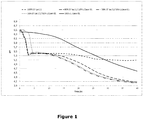
- Typical results are illustrated in Figures 1 and 2 .
- L. casei 01 alone has a very long lag phase and reaches pH 4.5 only after 40h of fermentation.
- the lag phase is significantly reduced (8h for L. casei 01 alone to achieve pH 6.3; whereas only 1h when combined with S. thermophilus with a deficiency in lactose metabolism).
- S. thermophilus with a deficiency in lactose metabolism alone reduced the pH value to a final pH of 5.1 after sucrose depletion.
- the acidification continues due to the presence of L. casei 01, which is capable to use the lactose present in the milk.
- L. casei 01 cell counts are shown in Figure 2.
- Figure 2 shows that the co-culture of L. casei 01 and S. thermophilus with a deficiency in lactose metabolism does not reduce the L. casei cell counts, in comparison to single strain fermentation.
- the combination of L. casei 01 with a Lac (-) ST boosts the L. casei 01 without disturbing its growth (no competition).
- the combination allows a high reduction of the lag phase while maintaining high cell counts.
- the milk base used for the present experiment is Skimmed Milk Powder (SMP) reconstituted at 9.6 %.
- SMP Skimmed Milk Powder
- the milk base was subjected to heat treatment at 99 °C for 15 minutes.
- Sucrose (0.3% w/v) was added to the milk to allow fast acidification of the S. thermophilus with a deficiency in lactose metabolism to pH 5.50. Acidification was performed at 39°C.
- the L. casei cell count was significantly reduced, when the L. casei strain was grown together with a conventional S. thermophilus strain (no deficiency in lactose metabolism (Lac(+)) as compared to when the L. casei is grown alone. Also, the L. casei cell count was significantly increased, when the L. casei strain was grown together with a S . thermophilus strain with a deficiency in lactose metabolism (Lac(-)) as compared to when the L. casei is grown alone.
- the Applicant requests that a sample of the deposited microorganism should be made available only to an expert approved by the Applicant.
Landscapes
- Life Sciences & Earth Sciences (AREA)
- Chemical & Material Sciences (AREA)
- Engineering & Computer Science (AREA)
- Polymers & Plastics (AREA)
- Microbiology (AREA)
- Health & Medical Sciences (AREA)
- Food Science & Technology (AREA)
- Biotechnology (AREA)
- Zoology (AREA)
- Organic Chemistry (AREA)
- Wood Science & Technology (AREA)
- Bioinformatics & Cheminformatics (AREA)
- Genetics & Genomics (AREA)
- Biomedical Technology (AREA)
- Biochemistry (AREA)
- General Health & Medical Sciences (AREA)
- General Engineering & Computer Science (AREA)
- Medicinal Chemistry (AREA)
- Tropical Medicine & Parasitology (AREA)
- Virology (AREA)
- Animal Husbandry (AREA)
- Physiology (AREA)
- Molecular Biology (AREA)
- Sustainable Development (AREA)
- Dairy Products (AREA)
- Micro-Organisms Or Cultivation Processes Thereof (AREA)
- Preparation Of Compounds By Using Micro-Organisms (AREA)
- Fodder In General (AREA)
- Coloring Foods And Improving Nutritive Qualities (AREA)
Claims (15)
- Procédé de production d'un produit de lait fermenté comprenant l'ajout de bactéries d'acide lactique au lait, dans lequel les bactéries comprennent des Lactobacillus casei et au moins une autre souche de bactéries d'acide lactique d'une espèce autre que Lactobacillus casei, dans lequel l'autre souche a une déficience dans le métabolisme du lactose mais est capable de métaboliser un ou plusieurs glucides autres que le lactose présent dans le lait.
- Procédé de production d'un produit de lait fermenté selon la revendication 1, dans lequel l'au moins une autre souche de bactéries d'acide lactique ayant une déficience du métabolisme du lactose est capable de métaboliser un ou plusieurs glucides choisis dans le groupe constitué du saccharose, du galactose et du glucose, et dans lequel ledit glucide est ajouté au lait avant la fermentation.
- Procédé selon la revendication 1 ou 2, dans lequel la souche de Lactobacillus casei est choisie dans le groupe constitué de L. casei, CRL 431 déposé sous le nom ATCC 55544 et L. casei, CHCC2115 déposé sous le nom DSM19465.
- Procédé selon l'une quelconque des revendications 1 à 3, dans lequel l'autre souche est choisie dans le groupe constitué :(a) d'une souche de Streptococcus thermophilus, laquelle souche est :(i) la souche déposée auprès de DSMZ-Deutsche Sammlung von Mikroorganismen und Zellkulturen GmbH, Inhoffenstr. 7B, D-38124 Braunschweig, le 12/06/2014 sous le numéro d'accession DSM 28952 ;(ii) ou une souche dérivée de DSM 28952, dans lequel la souche dérivée est en outre caractérisée comme ayant la capacité de générer des colonies blanches sur un milieu contenant du lactose et du X-Gal ;(b) une souche de Streptococcus thermophilus, laquelle souche est :(i) la souche déposée auprès de DSMZ-Deutsche Sammlung von Mikroorganismen und Zellkulturen GmbH, Inhoffenstr. 7B, D-38124 Braunschweig, le 12/06/2014 sous le numéro d'accession DSM 28953 ;(ii) ou une souche dérivée de DSM 28953, dans lequel la souche dérivée est en outre caractérisée comme ayant la capacité de générer des colonies blanches sur un milieu contenant du lactose et du X-Gal ;(c) une souche Lactobacillus delbrueckii ssp. bulgaricus, laquelle souche est :(i) la souche déposée auprès de DSMZ-Deutsche Sammlung von Mikroorganismen und Zellkulturen GmbH, Inhoffenstr. 7B, D-38124 Braunschweig, le 12/06/2014, sous le numéro d'accession DSM 28910 ;(ii) ou une souche dérivée du DSM 28910, dans lequel la souche dérivée est en outre caractérisée comme ayant la capacité de générer des colonies blanches sur un milieu contenant du lactose et du X-Gal.
- Procédé selon l'une quelconque des revendications 1 à 3, dans lequel l'autre souche présentant une déficience du métabolisme du lactose est une souche protéolytique de S. thermophilus, dans lequel une souche protéolytique est caractérisée par :(a) la présence d'une protéinase de paroi cellulaire active ; et/ou(b) une augmentation de la fluorescence provoquée par la croissance de la souche pendant 6 heures dans un milieu contenant de la caséine marquée par fluorescence par rapport aux échantillons témoins.
- Procédé de production d'un produit de lait fermenté selon l'une des revendications 1 à 5, dans lequel le procédé produit des L. casei à une concentration de 1 x 10⁸ à 5 x 10⁹ CFU/g, de préférence 1 x 10⁹ à 5 x 10⁹ CFU/g, de manière davantage préférée 1 x 10⁹ à 3 x 10⁹ CFU/g.
- Utilisation de bactéries L. casei et d'au moins une autre souche de bactéries d'acide lactique d'une espèce autre que L. casei, pour produire un produit de lait fermenté, dans laquelle l'autre souche a une déficience du métabolisme du lactose mais est capable de métaboliser un ou plusieurs glucides autres que le lactose présent dans le lait.
- Utilisation de bactéries L. casei et d'au moins une autre souche de bactéries d'acide lactique selon la revendication 7, dans laquelle l'utilisation comprend en outre l'ajout de saccharose, de galactose et/ou de glucose au lait.
- Utilisation de bactéries L. casei et d'au moins une autre souche de bactéries d'acide lactique selon la revendication 7 ou 8, dans laquelle l'au moins une autre souche de bactéries d'acide lactique présentant une déficience du métabolisme du lactose est une bactérie de l'espèce choisie dans le groupe constitué de Streptococcus thermophilus et de Lactobacillus delbrueckii subsp. bulgaricus.
- Composition comprenant des bactéries de l'espèce L. casei et des bactéries d'au moins une autre souche de bactéries d'acide lactique d'une espèce autre que Lactobacillus casei, dans laquelle l'au moins une autre souche de bactéries d'acide lactique a une déficience du métabolisme du lactose mais est capable de métaboliser un ou plusieurs glucides autres que le lactose présent dans le lait.
- Composition comprenant des bactéries de l'espèce L. casei et des bactéries d'au moins une autre souche de bactéries d'acide lactique selon la revendication 10, dans laquelle l'au moins une autre bactérie est une bactérie de l'espèce choisie dans le groupe constitué de Streptococcus thermophilus et de Lactobacillus delbrueckii subsp. bulgaricus.
- Aliment ou produit alimentaire comprenant des bactéries de l'espèce L. casei et des bactéries d'au moins une autre souche de bactéries d'acide lactique d'une espèce autre que Lactobacillus casei, dans lequel l'autre souche a une déficience dans le métabolisme du lactose mais est capable de métaboliser un ou plusieurs glucides autres que le lactose présent dans le lait.
- Aliment ou produit alimentaire selon la revendication 12, dans lequel l'au moins une autre souche de bactéries d'acide lactique est une bactérie de l'espèce choisie dans le groupe constitué de Streptococcus thermophilus et de Lactobacillus delbrueckii subsp. bulgaricus.
- Aliment ou produit alimentaire selon la revendication 12 ou 13, comprenant des L. casei à une concentration de 1 x 10⁸ CFU/g à 5 x 10⁹ CFU/g, de préférence 1 x 10⁹ CFU/g à 5 x 10⁹ CFU/g, et de manière davantage préférée 1 x 10⁹ CFU/g à 3 x 10⁹ CFU/g.
- Aliment ou produit alimentaire selon l'une quelconque des revendications 12 à 14, dans lequel l'aliment ou le produit alimentaire est une boisson à base de lait fermenté.
Applications Claiming Priority (2)
| Application Number | Priority Date | Filing Date | Title |
|---|---|---|---|
| EP16152207 | 2016-01-21 | ||
| PCT/EP2017/051299 WO2017125600A1 (fr) | 2016-01-21 | 2017-01-23 | Procédé de production de produit laitier fermenté à l'aide de lactobacillus casei |
Publications (2)
| Publication Number | Publication Date |
|---|---|
| EP3405040A1 EP3405040A1 (fr) | 2018-11-28 |
| EP3405040B1 true EP3405040B1 (fr) | 2021-08-04 |
Family
ID=55398174
Family Applications (1)
| Application Number | Title | Priority Date | Filing Date |
|---|---|---|---|
| EP17701680.5A Active EP3405040B1 (fr) | 2016-01-21 | 2017-01-23 | Procédé de production d'un produit de lait fermenté à l'aide de lactobacillus casei |
Country Status (9)
| Country | Link |
|---|---|
| US (1) | US11744259B2 (fr) |
| EP (1) | EP3405040B1 (fr) |
| JP (2) | JP7316044B2 (fr) |
| KR (1) | KR102824066B1 (fr) |
| CN (2) | CN120788024A (fr) |
| BR (1) | BR112018014104B1 (fr) |
| DK (1) | DK3405040T3 (fr) |
| MX (1) | MX2018008608A (fr) |
| WO (1) | WO2017125600A1 (fr) |
Families Citing this family (9)
| Publication number | Priority date | Publication date | Assignee | Title |
|---|---|---|---|---|
| FI3821712T3 (fi) | 2017-01-13 | 2023-01-13 | Parannetulla menetelmällä saatu hapatettu maitotuote | |
| US12317904B2 (en) | 2018-04-24 | 2025-06-03 | Chr, Hansen A/S | Composition and process for producing a fermented milk product comprising application of a lactose-deficient S. thermophilus strain, a lactose-deficient L. bulgaricus strain and a probiotic strain |
| EA202193114A1 (ru) * | 2019-05-28 | 2022-03-18 | Кхр. Хансен А/С | Способ получения ферментированного молочного продукта с повышенным уровнем пробиотиков |
| CN111676167B (zh) * | 2020-06-30 | 2022-02-11 | 贵州大学 | 一种干酪乳杆菌lb20201及其应用 |
| WO2022039249A1 (fr) * | 2020-08-21 | 2022-02-24 | 株式会社明治 | Ferment à bactéries d'acide lactique, procédé de production de lait fermenté et lait fermenté |
| JP7190773B1 (ja) | 2021-12-22 | 2022-12-16 | オハヨー乳業株式会社 | 乳酸菌スターター及びそれを用いて得られる発酵乳 |
| CN114403220B (zh) * | 2021-12-24 | 2024-03-22 | 昆明生物制造研究院有限公司 | 一种乳酸菌气泡水及其制备方法 |
| JP7089818B1 (ja) | 2022-01-11 | 2022-06-23 | オハヨー乳業株式会社 | 乳酸菌スターター及びそれを用いて得られる発酵乳 |
| CN116250565A (zh) * | 2022-12-23 | 2023-06-13 | 福建君生益本色生物科技有限公司 | 缓解三高的益生菌饮品的制备方法 |
Family Cites Families (23)
| Publication number | Priority date | Publication date | Assignee | Title |
|---|---|---|---|---|
| KR880002178B1 (ko) * | 1982-11-18 | 1988-10-17 | 마쓰 소노 히사미 | 유산균 음료의 제조법 |
| US4912047A (en) * | 1987-05-15 | 1990-03-27 | Microlife Technics, Inc. | Preventing psychrotrophic bacterial spoilage in raw milk |
| DE69205070T2 (de) | 1991-06-14 | 1996-02-29 | Nestle Sa | Lebendige Mikroorganismen enthaltender Joghurt. |
| US6033691A (en) * | 1996-06-13 | 2000-03-07 | Sancor Cooperativas Unidas Limitada | Process for manufacturing a biologically active fermented milk product and product obtained by the process |
| FR2778921B1 (fr) * | 1998-05-22 | 2001-05-11 | Gervais Danone Sa | Souches mutantes de lactobacillus bulgaricus depourvues d'activite beta-galactosidase |
| US7323199B2 (en) * | 2000-06-14 | 2008-01-29 | Vrije Universiteit Brussel | Method for the preparation of yoghurt and other fermented milk products |
| US7465576B2 (en) * | 2004-08-12 | 2008-12-16 | Bhph Company Limited | Method for treating periodontal disease with a bacteriocidal disinfectant |
| FR2877012B1 (fr) * | 2004-10-22 | 2010-09-10 | Gervais Danone Sa | Souches de streptococcus thermophilus ami deficientes a post-acidification reduite |
| FR2886313B1 (fr) * | 2005-05-31 | 2007-08-17 | Gervais Danone Sa | Souches mutantes de bacteries lactiques possedant une lactose permease non phosphorylable. |
| CA2642864C (fr) * | 2006-02-24 | 2013-07-16 | Chr. Hansen A/S | Bacteries de l'acide lactique conferant a des produits laitiers fermentes une meilleure texture |
| FR2930264B1 (fr) | 2008-04-18 | 2013-02-22 | Gervais Danone Sa | Nouvelle souche de lactobacillus paracasei subsp. paracasei dotee de proprietes antimicrobiennes et immunomodulatrices. |
| CN102105065A (zh) * | 2008-08-29 | 2011-06-22 | 科.汉森有限公司 | 发酵乳制品中双歧杆菌生长的改善 |
| EP2334191B1 (fr) * | 2008-08-29 | 2018-10-10 | Chr. Hansen A/S | Utilisation de l. helveticus dans un procédé permettant de produire du fromage |
| CN102595914A (zh) * | 2009-09-11 | 2012-07-18 | 通用工厂公司 | 增加分子转移穿过生物膜以加速乳品发酵的电学的用途 |
| PL2593539T3 (pl) * | 2010-07-15 | 2017-07-31 | Compagnie Gervais Danone | Zastosowanie manganu do wzmacniania wzrostu bakterii L.Casei w mieszanych kulturach |
| CN101971880B (zh) * | 2010-11-30 | 2012-07-25 | 武汉光明乳品有限公司 | 干酪乳杆菌高含量发酵乳及其制造方法 |
| CN102007968A (zh) * | 2010-12-27 | 2011-04-13 | 内蒙古伊利实业集团股份有限公司 | 一种含有干酪乳杆菌的活性乳酸菌饮料及其制作方法 |
| AR084912A1 (es) | 2011-01-21 | 2013-07-10 | Chr Hansen As | Probioticos en bebidas frutales |
| US20140220177A1 (en) * | 2011-04-29 | 2014-08-07 | Compagnie Gervais Danone | Use of Nisin Resistant Mutant Strains of Lactobacilli for Reducing the Post Acidification in Food Products |
| KR102114408B1 (ko) * | 2012-04-25 | 2020-05-25 | 시에이치알. 한센 에이/에스 | 천연 감미가 증강된 발효 식품을 제조하기 위한 유산균의 용도 |
| CN103060219A (zh) * | 2012-04-26 | 2013-04-24 | 常州康乐优生物技术有限公司 | 一种发酵乳饮料制造方法及其所应用的干酪乳杆菌 |
| US10813367B2 (en) * | 2014-06-19 | 2020-10-27 | Chr. Hansen A/S | Method of producing a fermented milk product with improved control of post acidification |
| DK2957180T3 (en) * | 2014-06-19 | 2018-05-28 | Chr Hansen As | Process for preparing a fermented milk product with improved post-acidification regulation |
-
2017
- 2017-01-23 CN CN202511185005.0A patent/CN120788024A/zh active Pending
- 2017-01-23 WO PCT/EP2017/051299 patent/WO2017125600A1/fr not_active Ceased
- 2017-01-23 BR BR112018014104-6A patent/BR112018014104B1/pt active IP Right Grant
- 2017-01-23 KR KR1020187023938A patent/KR102824066B1/ko active Active
- 2017-01-23 MX MX2018008608A patent/MX2018008608A/es unknown
- 2017-01-23 JP JP2018537820A patent/JP7316044B2/ja active Active
- 2017-01-23 CN CN201780007143.7A patent/CN108882718A/zh active Pending
- 2017-01-23 DK DK17701680.5T patent/DK3405040T3/da active
- 2017-01-23 EP EP17701680.5A patent/EP3405040B1/fr active Active
- 2017-01-23 US US16/070,466 patent/US11744259B2/en active Active
-
2021
- 2021-12-03 JP JP2021197045A patent/JP2022033142A/ja active Pending
Non-Patent Citations (1)
| Title |
|---|
| None * |
Also Published As
| Publication number | Publication date |
|---|---|
| JP2022033142A (ja) | 2022-02-28 |
| JP7316044B2 (ja) | 2023-07-27 |
| DK3405040T3 (da) | 2021-09-20 |
| EP3405040A1 (fr) | 2018-11-28 |
| CN108882718A (zh) | 2018-11-23 |
| KR20180103140A (ko) | 2018-09-18 |
| US11744259B2 (en) | 2023-09-05 |
| WO2017125600A1 (fr) | 2017-07-27 |
| MX2018008608A (es) | 2018-11-19 |
| JP2019502393A (ja) | 2019-01-31 |
| KR102824066B1 (ko) | 2025-06-23 |
| CN120788024A (zh) | 2025-10-17 |
| BR112018014104A2 (pt) | 2018-12-11 |
| US20190082707A1 (en) | 2019-03-21 |
| BR112018014104B1 (pt) | 2022-11-29 |
Similar Documents
| Publication | Publication Date | Title |
|---|---|---|
| EP3405040B1 (fr) | Procédé de production d'un produit de lait fermenté à l'aide de lactobacillus casei | |
| EP2957180B1 (fr) | Procédé de production d'un produit laitier fermenté avec contrôle amélioré de post-acidification | |
| JP6633552B2 (ja) | 後酸性化の制御が改善された発酵乳製品の製造方法 | |
| EP3344052B1 (fr) | Bactéries lactobacillus fermentum inhibant la post-acidification | |
| CN103270153B (zh) | 质构化乳酸细菌菌株 | |
| CA3163217C (fr) | Streptococcus thermophilus à saccharose négatif destiné à être utilisé dans la préparation de produits fermentés | |
| WO2015193449A1 (fr) | Procédé de production de produit laitier fermenté ayant une concentration réduite en lactose résiduel | |
| HK1199179A1 (en) | Process for manufacturing of a fermented dairy product | |
| US20180235249A1 (en) | Lactobacillus fermentum bacteria reducing the concentration of acetaldehyde | |
| US20200323227A1 (en) | Fermented dairy compositions and methods of preparing the same | |
| US20220256872A1 (en) | Process for producing a fermented milk product with an enhanced level of probiotics | |
| RU2839701C1 (ru) | Сахарозоотрицательный штамм streptococcus thermophilus для применения при приготовлении ферментированных продуктов | |
| WO2024218223A1 (fr) | Lacticaseibacillus rhamnosus stable au stockage | |
| JP2026513608A (ja) | 保存安定性のラクチカゼイバチルス・ラムノサス | |
| WO2026003080A1 (fr) | Souches de bactéries lactiques à postacidification faible | |
| EA048110B1 (ru) | Способ получения ферментированного молочного продукта с повышенным уровнем пробиотиков |
Legal Events
| Date | Code | Title | Description |
|---|---|---|---|
| STAA | Information on the status of an ep patent application or granted ep patent |
Free format text: STATUS: UNKNOWN |
|
| STAA | Information on the status of an ep patent application or granted ep patent |
Free format text: STATUS: THE INTERNATIONAL PUBLICATION HAS BEEN MADE |
|
| PUAI | Public reference made under article 153(3) epc to a published international application that has entered the european phase |
Free format text: ORIGINAL CODE: 0009012 |
|
| STAA | Information on the status of an ep patent application or granted ep patent |
Free format text: STATUS: REQUEST FOR EXAMINATION WAS MADE |
|
| 17P | Request for examination filed |
Effective date: 20180821 |
|
| AK | Designated contracting states |
Kind code of ref document: A1 Designated state(s): AL AT BE BG CH CY CZ DE DK EE ES FI FR GB GR HR HU IE IS IT LI LT LU LV MC MK MT NL NO PL PT RO RS SE SI SK SM TR |
|
| AX | Request for extension of the european patent |
Extension state: BA ME |
|
| DAV | Request for validation of the european patent (deleted) | ||
| DAX | Request for extension of the european patent (deleted) | ||
| STAA | Information on the status of an ep patent application or granted ep patent |
Free format text: STATUS: EXAMINATION IS IN PROGRESS |
|
| 17Q | First examination report despatched |
Effective date: 20190923 |
|
| GRAP | Despatch of communication of intention to grant a patent |
Free format text: ORIGINAL CODE: EPIDOSNIGR1 |
|
| STAA | Information on the status of an ep patent application or granted ep patent |
Free format text: STATUS: GRANT OF PATENT IS INTENDED |
|
| INTG | Intention to grant announced |
Effective date: 20210331 |
|
| GRAS | Grant fee paid |
Free format text: ORIGINAL CODE: EPIDOSNIGR3 |
|
| GRAA | (expected) grant |
Free format text: ORIGINAL CODE: 0009210 |
|
| STAA | Information on the status of an ep patent application or granted ep patent |
Free format text: STATUS: THE PATENT HAS BEEN GRANTED |
|
| AK | Designated contracting states |
Kind code of ref document: B1 Designated state(s): AL AT BE BG CH CY CZ DE DK EE ES FI FR GB GR HR HU IE IS IT LI LT LU LV MC MK MT NL NO PL PT RO RS SE SI SK SM TR |
|
| REG | Reference to a national code |
Ref country code: GB Ref legal event code: FG4D |
|
| REG | Reference to a national code |
Ref country code: AT Ref legal event code: REF Ref document number: 1416033 Country of ref document: AT Kind code of ref document: T Effective date: 20210815 |
|
| REG | Reference to a national code |
Ref country code: CH Ref legal event code: EP |
|
| REG | Reference to a national code |
Ref country code: DE Ref legal event code: R096 Ref document number: 602017043285 Country of ref document: DE |
|
| REG | Reference to a national code |
Ref country code: IE Ref legal event code: FG4D |
|
| REG | Reference to a national code |
Ref country code: DK Ref legal event code: T3 Effective date: 20210916 |
|
| REG | Reference to a national code |
Ref country code: LT Ref legal event code: MG9D |
|
| REG | Reference to a national code |
Ref country code: NL Ref legal event code: MP Effective date: 20210804 |
|
| REG | Reference to a national code |
Ref country code: AT Ref legal event code: MK05 Ref document number: 1416033 Country of ref document: AT Kind code of ref document: T Effective date: 20210804 |
|
| PG25 | Lapsed in a contracting state [announced via postgrant information from national office to epo] |
Ref country code: RS Free format text: LAPSE BECAUSE OF FAILURE TO SUBMIT A TRANSLATION OF THE DESCRIPTION OR TO PAY THE FEE WITHIN THE PRESCRIBED TIME-LIMIT Effective date: 20210804 Ref country code: SE Free format text: LAPSE BECAUSE OF FAILURE TO SUBMIT A TRANSLATION OF THE DESCRIPTION OR TO PAY THE FEE WITHIN THE PRESCRIBED TIME-LIMIT Effective date: 20210804 Ref country code: HR Free format text: LAPSE BECAUSE OF FAILURE TO SUBMIT A TRANSLATION OF THE DESCRIPTION OR TO PAY THE FEE WITHIN THE PRESCRIBED TIME-LIMIT Effective date: 20210804 Ref country code: FI Free format text: LAPSE BECAUSE OF FAILURE TO SUBMIT A TRANSLATION OF THE DESCRIPTION OR TO PAY THE FEE WITHIN THE PRESCRIBED TIME-LIMIT Effective date: 20210804 Ref country code: ES Free format text: LAPSE BECAUSE OF FAILURE TO SUBMIT A TRANSLATION OF THE DESCRIPTION OR TO PAY THE FEE WITHIN THE PRESCRIBED TIME-LIMIT Effective date: 20210804 Ref country code: NO Free format text: LAPSE BECAUSE OF FAILURE TO SUBMIT A TRANSLATION OF THE DESCRIPTION OR TO PAY THE FEE WITHIN THE PRESCRIBED TIME-LIMIT Effective date: 20211104 Ref country code: PT Free format text: LAPSE BECAUSE OF FAILURE TO SUBMIT A TRANSLATION OF THE DESCRIPTION OR TO PAY THE FEE WITHIN THE PRESCRIBED TIME-LIMIT Effective date: 20211206 Ref country code: AT Free format text: LAPSE BECAUSE OF FAILURE TO SUBMIT A TRANSLATION OF THE DESCRIPTION OR TO PAY THE FEE WITHIN THE PRESCRIBED TIME-LIMIT Effective date: 20210804 Ref country code: BG Free format text: LAPSE BECAUSE OF FAILURE TO SUBMIT A TRANSLATION OF THE DESCRIPTION OR TO PAY THE FEE WITHIN THE PRESCRIBED TIME-LIMIT Effective date: 20211104 Ref country code: LT Free format text: LAPSE BECAUSE OF FAILURE TO SUBMIT A TRANSLATION OF THE DESCRIPTION OR TO PAY THE FEE WITHIN THE PRESCRIBED TIME-LIMIT Effective date: 20210804 |
|
| PG25 | Lapsed in a contracting state [announced via postgrant information from national office to epo] |
Ref country code: PL Free format text: LAPSE BECAUSE OF FAILURE TO SUBMIT A TRANSLATION OF THE DESCRIPTION OR TO PAY THE FEE WITHIN THE PRESCRIBED TIME-LIMIT Effective date: 20210804 Ref country code: LV Free format text: LAPSE BECAUSE OF FAILURE TO SUBMIT A TRANSLATION OF THE DESCRIPTION OR TO PAY THE FEE WITHIN THE PRESCRIBED TIME-LIMIT Effective date: 20210804 Ref country code: GR Free format text: LAPSE BECAUSE OF FAILURE TO SUBMIT A TRANSLATION OF THE DESCRIPTION OR TO PAY THE FEE WITHIN THE PRESCRIBED TIME-LIMIT Effective date: 20211105 |
|
| PG25 | Lapsed in a contracting state [announced via postgrant information from national office to epo] |
Ref country code: NL Free format text: LAPSE BECAUSE OF FAILURE TO SUBMIT A TRANSLATION OF THE DESCRIPTION OR TO PAY THE FEE WITHIN THE PRESCRIBED TIME-LIMIT Effective date: 20210804 |
|
| REG | Reference to a national code |
Ref country code: DE Ref legal event code: R097 Ref document number: 602017043285 Country of ref document: DE |
|
| PG25 | Lapsed in a contracting state [announced via postgrant information from national office to epo] |
Ref country code: SM Free format text: LAPSE BECAUSE OF FAILURE TO SUBMIT A TRANSLATION OF THE DESCRIPTION OR TO PAY THE FEE WITHIN THE PRESCRIBED TIME-LIMIT Effective date: 20210804 Ref country code: SK Free format text: LAPSE BECAUSE OF FAILURE TO SUBMIT A TRANSLATION OF THE DESCRIPTION OR TO PAY THE FEE WITHIN THE PRESCRIBED TIME-LIMIT Effective date: 20210804 Ref country code: RO Free format text: LAPSE BECAUSE OF FAILURE TO SUBMIT A TRANSLATION OF THE DESCRIPTION OR TO PAY THE FEE WITHIN THE PRESCRIBED TIME-LIMIT Effective date: 20210804 Ref country code: EE Free format text: LAPSE BECAUSE OF FAILURE TO SUBMIT A TRANSLATION OF THE DESCRIPTION OR TO PAY THE FEE WITHIN THE PRESCRIBED TIME-LIMIT Effective date: 20210804 Ref country code: CZ Free format text: LAPSE BECAUSE OF FAILURE TO SUBMIT A TRANSLATION OF THE DESCRIPTION OR TO PAY THE FEE WITHIN THE PRESCRIBED TIME-LIMIT Effective date: 20210804 Ref country code: AL Free format text: LAPSE BECAUSE OF FAILURE TO SUBMIT A TRANSLATION OF THE DESCRIPTION OR TO PAY THE FEE WITHIN THE PRESCRIBED TIME-LIMIT Effective date: 20210804 |
|
| PLBE | No opposition filed within time limit |
Free format text: ORIGINAL CODE: 0009261 |
|
| STAA | Information on the status of an ep patent application or granted ep patent |
Free format text: STATUS: NO OPPOSITION FILED WITHIN TIME LIMIT |
|
| 26N | No opposition filed |
Effective date: 20220506 |
|
| PG25 | Lapsed in a contracting state [announced via postgrant information from national office to epo] |
Ref country code: IT Free format text: LAPSE BECAUSE OF FAILURE TO SUBMIT A TRANSLATION OF THE DESCRIPTION OR TO PAY THE FEE WITHIN THE PRESCRIBED TIME-LIMIT Effective date: 20210804 |
|
| PG25 | Lapsed in a contracting state [announced via postgrant information from national office to epo] |
Ref country code: SI Free format text: LAPSE BECAUSE OF FAILURE TO SUBMIT A TRANSLATION OF THE DESCRIPTION OR TO PAY THE FEE WITHIN THE PRESCRIBED TIME-LIMIT Effective date: 20210804 Ref country code: MC Free format text: LAPSE BECAUSE OF FAILURE TO SUBMIT A TRANSLATION OF THE DESCRIPTION OR TO PAY THE FEE WITHIN THE PRESCRIBED TIME-LIMIT Effective date: 20210804 |
|
| REG | Reference to a national code |
Ref country code: CH Ref legal event code: PL |
|
| REG | Reference to a national code |
Ref country code: BE Ref legal event code: MM Effective date: 20220131 |
|
| PG25 | Lapsed in a contracting state [announced via postgrant information from national office to epo] |
Ref country code: LU Free format text: LAPSE BECAUSE OF NON-PAYMENT OF DUE FEES Effective date: 20220123 |
|
| PG25 | Lapsed in a contracting state [announced via postgrant information from national office to epo] |
Ref country code: BE Free format text: LAPSE BECAUSE OF NON-PAYMENT OF DUE FEES Effective date: 20220131 |
|
| PG25 | Lapsed in a contracting state [announced via postgrant information from national office to epo] |
Ref country code: LI Free format text: LAPSE BECAUSE OF NON-PAYMENT OF DUE FEES Effective date: 20220131 Ref country code: CH Free format text: LAPSE BECAUSE OF NON-PAYMENT OF DUE FEES Effective date: 20220131 |
|
| PG25 | Lapsed in a contracting state [announced via postgrant information from national office to epo] |
Ref country code: IE Free format text: LAPSE BECAUSE OF NON-PAYMENT OF DUE FEES Effective date: 20220123 |
|
| P01 | Opt-out of the competence of the unified patent court (upc) registered |
Effective date: 20230511 |
|
| PG25 | Lapsed in a contracting state [announced via postgrant information from national office to epo] |
Ref country code: HU Free format text: LAPSE BECAUSE OF FAILURE TO SUBMIT A TRANSLATION OF THE DESCRIPTION OR TO PAY THE FEE WITHIN THE PRESCRIBED TIME-LIMIT; INVALID AB INITIO Effective date: 20170123 |
|
| PG25 | Lapsed in a contracting state [announced via postgrant information from national office to epo] |
Ref country code: MK Free format text: LAPSE BECAUSE OF FAILURE TO SUBMIT A TRANSLATION OF THE DESCRIPTION OR TO PAY THE FEE WITHIN THE PRESCRIBED TIME-LIMIT Effective date: 20210804 Ref country code: CY Free format text: LAPSE BECAUSE OF FAILURE TO SUBMIT A TRANSLATION OF THE DESCRIPTION OR TO PAY THE FEE WITHIN THE PRESCRIBED TIME-LIMIT Effective date: 20210804 |
|
| PG25 | Lapsed in a contracting state [announced via postgrant information from national office to epo] |
Ref country code: TR Free format text: LAPSE BECAUSE OF FAILURE TO SUBMIT A TRANSLATION OF THE DESCRIPTION OR TO PAY THE FEE WITHIN THE PRESCRIBED TIME-LIMIT Effective date: 20210804 |
|
| PG25 | Lapsed in a contracting state [announced via postgrant information from national office to epo] |
Ref country code: MT Free format text: LAPSE BECAUSE OF FAILURE TO SUBMIT A TRANSLATION OF THE DESCRIPTION OR TO PAY THE FEE WITHIN THE PRESCRIBED TIME-LIMIT Effective date: 20210804 |
|
| PGFP | Annual fee paid to national office [announced via postgrant information from national office to epo] |
Ref country code: GB Payment date: 20251218 Year of fee payment: 10 |
|
| PGFP | Annual fee paid to national office [announced via postgrant information from national office to epo] |
Ref country code: FR Payment date: 20251222 Year of fee payment: 10 |
|
| PGFP | Annual fee paid to national office [announced via postgrant information from national office to epo] |
Ref country code: DE Payment date: 20251216 Year of fee payment: 10 Ref country code: DK Payment date: 20260113 Year of fee payment: 10 |