EP3405148B1 - Patientenwärmevorrichtung für chirurgische eingriffe - Google Patents
Patientenwärmevorrichtung für chirurgische eingriffe Download PDFInfo
- Publication number
- EP3405148B1 EP3405148B1 EP17742017.1A EP17742017A EP3405148B1 EP 3405148 B1 EP3405148 B1 EP 3405148B1 EP 17742017 A EP17742017 A EP 17742017A EP 3405148 B1 EP3405148 B1 EP 3405148B1
- Authority
- EP
- European Patent Office
- Prior art keywords
- patient
- pad
- heating element
- foam
- temperature
- Prior art date
- Legal status (The legal status is an assumption and is not a legal conclusion. Google has not performed a legal analysis and makes no representation as to the accuracy of the status listed.)
- Active
Links
Images


Classifications
-
- A—HUMAN NECESSITIES
- A61—MEDICAL OR VETERINARY SCIENCE; HYGIENE
- A61F—FILTERS IMPLANTABLE INTO BLOOD VESSELS; PROSTHESES; DEVICES PROVIDING PATENCY TO, OR PREVENTING COLLAPSING OF, TUBULAR STRUCTURES OF THE BODY, e.g. STENTS; ORTHOPAEDIC, NURSING OR CONTRACEPTIVE DEVICES; FOMENTATION; TREATMENT OR PROTECTION OF EYES OR EARS; BANDAGES, DRESSINGS OR ABSORBENT PADS; FIRST-AID KITS
- A61F7/00—Heating or cooling appliances for medical or therapeutic treatment of the human body
- A61F7/08—Warming pads, pans or mats; Hot-water bottles
-
- A—HUMAN NECESSITIES
- A61—MEDICAL OR VETERINARY SCIENCE; HYGIENE
- A61F—FILTERS IMPLANTABLE INTO BLOOD VESSELS; PROSTHESES; DEVICES PROVIDING PATENCY TO, OR PREVENTING COLLAPSING OF, TUBULAR STRUCTURES OF THE BODY, e.g. STENTS; ORTHOPAEDIC, NURSING OR CONTRACEPTIVE DEVICES; FOMENTATION; TREATMENT OR PROTECTION OF EYES OR EARS; BANDAGES, DRESSINGS OR ABSORBENT PADS; FIRST-AID KITS
- A61F7/00—Heating or cooling appliances for medical or therapeutic treatment of the human body
- A61F7/007—Heating or cooling appliances for medical or therapeutic treatment of the human body characterised by electric heating
-
- A—HUMAN NECESSITIES
- A61—MEDICAL OR VETERINARY SCIENCE; HYGIENE
- A61G—TRANSPORT, PERSONAL CONVEYANCES, OR ACCOMMODATION SPECIALLY ADAPTED FOR PATIENTS OR DISABLED PERSONS; OPERATING TABLES OR CHAIRS; CHAIRS FOR DENTISTRY; FUNERAL DEVICES
- A61G13/00—Operating tables; Auxiliary appliances therefor
- A61G13/10—Parts, details or accessories
-
- A—HUMAN NECESSITIES
- A61—MEDICAL OR VETERINARY SCIENCE; HYGIENE
- A61G—TRANSPORT, PERSONAL CONVEYANCES, OR ACCOMMODATION SPECIALLY ADAPTED FOR PATIENTS OR DISABLED PERSONS; OPERATING TABLES OR CHAIRS; CHAIRS FOR DENTISTRY; FUNERAL DEVICES
- A61G13/00—Operating tables; Auxiliary appliances therefor
- A61G13/10—Parts, details or accessories
- A61G13/12—Rests specially adapted therefor; Arrangements of patient-supporting surfaces
- A61G13/126—Rests specially adapted therefor; Arrangements of patient-supporting surfaces with specific supporting surface
-
- A—HUMAN NECESSITIES
- A61—MEDICAL OR VETERINARY SCIENCE; HYGIENE
- A61F—FILTERS IMPLANTABLE INTO BLOOD VESSELS; PROSTHESES; DEVICES PROVIDING PATENCY TO, OR PREVENTING COLLAPSING OF, TUBULAR STRUCTURES OF THE BODY, e.g. STENTS; ORTHOPAEDIC, NURSING OR CONTRACEPTIVE DEVICES; FOMENTATION; TREATMENT OR PROTECTION OF EYES OR EARS; BANDAGES, DRESSINGS OR ABSORBENT PADS; FIRST-AID KITS
- A61F7/00—Heating or cooling appliances for medical or therapeutic treatment of the human body
- A61F7/007—Heating or cooling appliances for medical or therapeutic treatment of the human body characterised by electric heating
- A61F2007/0071—Heating or cooling appliances for medical or therapeutic treatment of the human body characterised by electric heating using a resistor, e.g. near the spot to be heated
-
- A—HUMAN NECESSITIES
- A61—MEDICAL OR VETERINARY SCIENCE; HYGIENE
- A61F—FILTERS IMPLANTABLE INTO BLOOD VESSELS; PROSTHESES; DEVICES PROVIDING PATENCY TO, OR PREVENTING COLLAPSING OF, TUBULAR STRUCTURES OF THE BODY, e.g. STENTS; ORTHOPAEDIC, NURSING OR CONTRACEPTIVE DEVICES; FOMENTATION; TREATMENT OR PROTECTION OF EYES OR EARS; BANDAGES, DRESSINGS OR ABSORBENT PADS; FIRST-AID KITS
- A61F7/00—Heating or cooling appliances for medical or therapeutic treatment of the human body
- A61F2007/0086—Heating or cooling appliances for medical or therapeutic treatment of the human body with a thermostat
-
- A—HUMAN NECESSITIES
- A61—MEDICAL OR VETERINARY SCIENCE; HYGIENE
- A61F—FILTERS IMPLANTABLE INTO BLOOD VESSELS; PROSTHESES; DEVICES PROVIDING PATENCY TO, OR PREVENTING COLLAPSING OF, TUBULAR STRUCTURES OF THE BODY, e.g. STENTS; ORTHOPAEDIC, NURSING OR CONTRACEPTIVE DEVICES; FOMENTATION; TREATMENT OR PROTECTION OF EYES OR EARS; BANDAGES, DRESSINGS OR ABSORBENT PADS; FIRST-AID KITS
- A61F7/00—Heating or cooling appliances for medical or therapeutic treatment of the human body
- A61F2007/0093—Heating or cooling appliances for medical or therapeutic treatment of the human body programmed
-
- A—HUMAN NECESSITIES
- A61—MEDICAL OR VETERINARY SCIENCE; HYGIENE
- A61F—FILTERS IMPLANTABLE INTO BLOOD VESSELS; PROSTHESES; DEVICES PROVIDING PATENCY TO, OR PREVENTING COLLAPSING OF, TUBULAR STRUCTURES OF THE BODY, e.g. STENTS; ORTHOPAEDIC, NURSING OR CONTRACEPTIVE DEVICES; FOMENTATION; TREATMENT OR PROTECTION OF EYES OR EARS; BANDAGES, DRESSINGS OR ABSORBENT PADS; FIRST-AID KITS
- A61F7/00—Heating or cooling appliances for medical or therapeutic treatment of the human body
- A61F2007/0095—Heating or cooling appliances for medical or therapeutic treatment of the human body with a temperature indicator
- A61F2007/0096—Heating or cooling appliances for medical or therapeutic treatment of the human body with a temperature indicator with a thermometer
-
- A—HUMAN NECESSITIES
- A61—MEDICAL OR VETERINARY SCIENCE; HYGIENE
- A61F—FILTERS IMPLANTABLE INTO BLOOD VESSELS; PROSTHESES; DEVICES PROVIDING PATENCY TO, OR PREVENTING COLLAPSING OF, TUBULAR STRUCTURES OF THE BODY, e.g. STENTS; ORTHOPAEDIC, NURSING OR CONTRACEPTIVE DEVICES; FOMENTATION; TREATMENT OR PROTECTION OF EYES OR EARS; BANDAGES, DRESSINGS OR ABSORBENT PADS; FIRST-AID KITS
- A61F7/00—Heating or cooling appliances for medical or therapeutic treatment of the human body
- A61F7/02—Compresses or poultices for effecting heating or cooling
- A61F2007/0282—Compresses or poultices for effecting heating or cooling for particular medical treatments or effects
- A61F2007/0288—Compresses or poultices for effecting heating or cooling for particular medical treatments or effects during operations
-
- A—HUMAN NECESSITIES
- A61—MEDICAL OR VETERINARY SCIENCE; HYGIENE
- A61G—TRANSPORT, PERSONAL CONVEYANCES, OR ACCOMMODATION SPECIALLY ADAPTED FOR PATIENTS OR DISABLED PERSONS; OPERATING TABLES OR CHAIRS; CHAIRS FOR DENTISTRY; FUNERAL DEVICES
- A61G2210/00—Devices for specific treatment or diagnosis
- A61G2210/90—Devices for specific treatment or diagnosis for heating
Definitions
- the invention relates generally to pads, cushions, pillows, and supports for cushioning and positioning a patient's body during a surgical procedure and, specifically, to a viscoelastic foam pad configured to support a patient during procedures in which a surgical table is inclined, including a heating element for warming the patient during the procedure.
- Maintaining patient normothermia can be critical for preventing patient complications in the hospital operating room environment. Maintaining patient body temperature has been a challenge for healthcare workers, and is an important issue in assuring patient safety.
- a blanket may not be effective to warm a patient, as it depends solely on the patient's body heat, which may not be sufficient to maintain normothermia.
- An example of a device including an artificial or external heating element is the Bair Hugger ® manufactured by 3M Corporation, which blows heated air into an augmented warming blanket by means of an external blower.
- any warming device that covers a patient may restrict access to a surgical site by a surgeon or operating room staff.
- the Bair Hugger ® requires the use of a blower, which physically heats and forces air into and through compartments of the augmented blanket.
- Use of a blower may increase noise in an operating room.
- the blower may distribute dust, debris, and airborne contaminants throughout the operating room, which can create infection and/or contamination risks during the surgical procedure. Blowers also may be awkward to position during a surgical procedure and may obstruct surgeons or operating room staff while they attempt to perform their duties during surgery.
- a blower might include an air filter, filters need to be cleaned or changed periodically. In addition, no filter is 100 percent effective, and even filtered air blowers create exhaust which may further contribute to migration of contaminants in an operating room.
- Other methods and devices for warming a patient include multi-use cushioning and positioning devices, such as surgical beds, operating tables, and mattresses, which include a non-permeable cover or outer layer so that the device can be cleaned between uses. While such a layer may contribute to the longevity of the device over multiple uses, it has the detriment of allowing fluid to pool against the skin of the patient. Such layers also do not allow air to reach the skin of a patient. These detriments may contribute to the breakdown of the patient's skin, especially over the course of a lengthy surgical procedure. This risk is further exacerbated if the patient is elderly, diabetic, or otherwise susceptible to skin breakdown.
- US 2002/0019654 A1 describes a further heating pad system useable with an upper and a lower foam pad, and a thermal-electric heating element sandwiched between the pads. The heating pad system is enclosed at least partially by a form-fitting waterproof cover.
- Reusable heating devices are also known in the art. Such reusable devices are exposed to multiple patients and require cleaning between uses. Cleaning requires time to be expended by operating room staff and may not be effective to reduce or eliminate the risk of the spread of infection.
- US 2004/256381 A1 discloses a heating device enclosed in a hermetic pouch to enable reuse of heating element in different systems
- a cushion or pad that is breathable does not allow fluid to pool against a patient's skin, and is less harsh to the skin of a patient undergoing a surgical procedure.
- a single-use device would increase hygiene, reduce risk of infection, and reduce set up and cleaning time by operating room staff.
- a patient warming pad and system which are configured to maintain patient normothermia efficiently and effectively, without restricting access to a surgical site, by providing conductive and/or radiative heating from beneath the patient.
- the patient warming pad is a single-use warming pad that is configured to be positioned beneath a patient during a surgical procedure.
- a single-use patient positioning and warming pad configured to be placed between a patient and an operating table during a surgical procedure according to the appended claims.
- the pad generally comprises a viscoelastic foam body comprising a top portion (block) and a bottom portion (block); a heating element at least partially disposed between the top portion (block) and the bottom portion (block) of the foam body; and an electrical connector having a proximal end portion enclosed within the foam body connected to the heating element and a distal end portion extending from the foam body, configured to directly or indirectly connect to a power source and/or control unit for the heating element.
- the foam body may comprise a foam material having sufficient viscosity and resiliency to maintain positioning of the patient relative to the operating table during surgical procedures in which the operating table is moved to an inclined position.
- the foam body is configured to maintain positioning of the patient relative to the operating table, during the surgical procedure, when the patient is placed in one or more of the following: an inclined position, a reverse inclined position, a Trendelenburg position, the reverse Trendelenburg position, and a modified Trendelenburg position.
- an angle of the operating table in the inclined position can be between about 30 degrees and 45 degrees.
- the inventive pad further comprises a hermetically sealed protective sleeve fully enclosing the heating element to protect the heating element from substances contained the pad.
- the pad may also include a heat reflective cover disposed on the bottom surface of the viscoelastic foam body.
- the pad may further comprise one or more temperature sensors positioned within the foam body for measuring a temperature of the foam body which is warmed by the heating element.
- the pad may also include one or more cables at least partially enclosed within the foam body and extending between the one or more temperature sensors and the electrical connector.
- the top portion (block) of the foam body comprises an open cell foam portion having an open cell structure that is permeable to fluid collected on a top surface thereof.
- the bottom portion (block) comprises a foam that is denser than the open cell foam material of the top portion (block).
- the bottom portion (block) of the foam body may include a closed cell foam portion.
- a patient warming system includes the single-use patient positioning and warming pad as described above and further comprises at least one temperature sensor positioned within the foam body for measuring a temperature of the foam body which is warmed by the heating element.
- the system also includes a control unit operatively connected to the warming pad and configured to control power provided to the heating element from a power source.
- the control unit includes: a cable removably connected to the electrical connector of the heating element for providing power and/or operating instructions to the heating element and a processor having computer-readable memory containing instructions.
- the instructions When executed by the processor, the instructions cause the processor to: receive and process information representative of a temperature information from the at least one temperature senor; determine a temperature of the warming and positioning pad based on the received and processed information; compare the determined temperature to a threshold temperature value; and provide a notification to a user when the determined temperature exceeds the threshold value.
- the instructions further cause the processor to one of: increase a power output of the control unit to the heating element when the determined temperature is less than the threshold value; and decrease a power output of the control unit to the heating element when the determined temperature exceeds the threshold value.
- control unit includes a display
- instructions cause the processor to cause the display to display the determined temperature of the warming pad.
- providing the notification to the user when the determined temperature exceeds the threshold value can include causing the display to display a visual indication that the temperature of the positioning and warming pad is excessive.
- the patient warming pad has a heating element at least partially disposed between the top portion (block) and the bottom portion (block) of the foam body, .
- the heating element may be operatively connected to a heating element that is configured to control power provided to the heating element from a power source.
- the heating element is separated from the top portion and the bottom portion by a sleeve.
- a reflective layer may be positioned between the heating element and the bottom portion.
- the patient warming pad may comprise at least one temperature sensor, wherein the at least one temperature sensor is operatively connected to the control unit.
- the patient warming pad may include at least one single-use foam layer that covers or encompasses a heating element.
- the at least one foam layer may include an upper layer and a lower layer, both comprised of a soft viscoelastic foam.
- the heating element may be disposed between the upper layer and a lower layer of foam.
- the heating element further may be disposed in a thermally viable cover able to conduct heat through the foam and to the patient.
- the heating element may be controlled via an external control unit.
- the control unit includes multiple settings to permit optimal thermal settings for various patient applications.
- the control unit also may contain safety factors for controlling the unit in the event of a fault.
- the patient warming pad and system described herein may be used in a method (not part of the claimed invention) for warming a patient during a surgical procedure.
- the method can include placing a patient warming pad on an operating table, positioning a patient on the patient warming pad, setting a desired temperature for the heating element on the control unit, and heating the warming pad to the desired temperature to maintain a condition of normothermia in the patient.
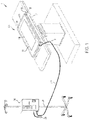
- FIG. 1 shows an embodiment of a patient warming system 1 including warming pad 100 and control unit 200.
- the pad 100 is about 20 to 40 inches long or greater, about 20 to 28 inches wide, and about 1 to 3 inches thick, preferably about 1.5 inches thick.
- the pad 100 can be a full-length pad which extends the full length of the operating table and/or is long enough to support the patient's entire body (e.g., about 60 inches to 72 inches).
- the warming pad 100 is positioned on an operating table 102 and configured to be placed beneath a patient undergoing a surgical procedure. A patient may lie directly on the warming pad 100.
- an additional cover, layer, or cushioning materials may be positioned between the patient and the warming pad 100.
- a lift sheet may be placed on top of the pad 100.
- the warming pad 100 is placed on the operating table 102.
- the patient and, in some cases, the cover or lift sheet are lowered onto the operating table 102, so that the pad 100 is situated between the patient and operating table 102.
- the pad 100 may or may not contact the skin of a patient.
- the pad 100 is configured to at least partially conform to the patient's body shape and, in particular, to form depressions under the patient's body weight for maintaining the patient's body position on the pad 100.
- the pad 100 is configured to provide comfort and to prevent injuries, such as pressure sores, tissue damage, skin breakdown, and muscle damage, which may occur when the patient's skin contacts hard, rigid surfaces for extended periods of time.
- the pad 100 is warmed by actuating a heating element 106 enclosed within the pad 100.
- a level of power provided to the heating element 106 can be modified to adjust heat or warmth emitted from the pad 100, thereby controlling the patient's body temperature during surgery.
- the warming pad 100 comprises a foam body 150 formed from one or more layers of flexible foam materials, such as polyurethane foam, viscoelastic foam, and/or gel foam.
- Material properties of the foam body 150 can be selected to aid in positioning a patient. For example, properties including foam viscosity, density, rebound, and others may be considered in selecting the foam for the warming pad 100.
- a viscoelastic pad formed from viscoelastic polyurethane will have one or more of the following mechanical properties: a ball rebound in the range of approximately 0.1 percent to approximately 1.9 percent; a compression set (22 hrs @ 70°C), for a 25 percent compression, of less than 0.5 percent (ASTM D-3574); an air flow in the range of 0.3 to 1.0 cubic foot per minute (ASTM D-3574); an indentation force deflection in the range of approximately 10 to approximately 15 pounds, and preferably about 11 pounds (ASTM D-3574); a tensile strength in the range of approximately 8 pounds per square inch to approximately 12 pounds per square inch; a coefficient of static friction in the range of 0.2 to 1.0; and a density in the range of approximately 83 kilograms per cubic meter to approximately 103 kilograms per cubic meter, and preferably about 93 kilograms per cubic meter (ASTM D-3574).
- foam of the foam body 150 has the benefit of being sufficiently flexible to be used in surgical procedures requiring adjustable operating tables, or in extreme positions, such as at an incline or a reverse incline, or in Trendelenburg, reverse Trendelenburg, or modified Trendelenburg positions.
- the operating table may be elevated to an angle of between 0 degrees and 45 degrees relative to the horizontal, preferably to an elevation of between 15 degrees and 45 degrees relative to the horizontal, and more preferably to an elevation of between 30 degrees and 45 degrees relative to the horizontal.
- the foam of the warming pad 100 is generally selected to obtain favorable patient positioning results, in particular, to form a depression when the patient's weight is exerted on the top surface of the pad 100.
- the depth and surface area of the depression assists in maintaining patient position.
- the sidewall and lip of the depression amount to structural supports that prevent or restrict a patient lying on the pad 100 from sliding on the operating table 102 during a surgical procedure.
- the foam body may comprise a high viscosity foam which further limits patient movement or sliding.
- foams as are known in the art, are generally referred to as memory or viscoelastic foams.
- the surface of the foam may have a high coefficient of static friction, stickiness, or tackiness. As a result of such surface properties, the patient may, in effect, stick to the pad 100, thereby further limiting patient movement.
- the foam utilized for the construction of the warming pad 100 comprises an open cell structure. Since fluids, such as gases and liquids, can pass through the open cell foam, the pad 100 is breathable, allowing at least some flow of air on the skin of a patient. Further, the porous open cell structure is at least partially permeable to fluids, which prevents fluids from pooling against the skin of a patient. As discussed herein, pooling of fluids and prolonged contact between pooled fluids and patient skin can cause tissue damage, pressure sores, skin deterioration, and similar conditions. The porous open cell structure may also contribute to insulation and heat transferring properties of the warming pad 100.
- the porous open cell foam can be an insulator which separates the patient's body from cool structures, such as the surface of a metal operating table.
- the foam open cell structure also permits heat transfer from the heating element through the pad to the patient. As such, the foam structure contributes to maintaining the patient's body temperature.
- Foam pads, such as the warming pad 100 can be manufactured relatively inexpensively compared with more robust patient positioning and/or warming systems (e.g., systems which are integrated with surgical beds or mattresses). Therefore, foam pads, such as the warming pad 100 disclosed herein, can be made as single-use, disposable products, which are used a single time on a single patient and then discarded.
- single-use products increase the hygiene of an operating room and reduce risk of infection, operating room preparation time, and clean-up time.
- the foam body 150 of the warming pad 100 includes a top foam block or top portion 124 and a bottom foam block or bottom portion 126 mounted together by, for example, a synthetic adhesive 128 (shown in FIG. 2B ).
- the top portion (block) 124 and the bottom portion (block) 126 may each comprise a single foam layer or multiple foam layers mounted together.
- the top portion 124 and bottom portion 126 are formed from different foam materials having different material properties. Specifically, the materials of the respective foam portions 124, 126 are selected to provide different properties or qualities for the pad 100.
- the top portion 124 is a softer, more flexible, or less dense foam for cushioning and to ensure that a suitable depression for patient positioning can be created.
- the bottom portion 126 is formed from a firmer or denser foam to provide structural support for the pad 100 and/or electronic heating components contained therein.
- the top portion 124 and the bottom portion 126 may have substantially similar thicknesses or differing thicknesses depending on the type of surgical procedure or the size of the patient. For example, a thicker foam portion 124, 126 may be needed to provide increased cushioning for longer duration surgical procedures and/or for larger patients. As discussed hereinabove, a total thickness of the foam body 150 is about 1 to 3 inches thick.
- the heating element 106 is disposed between the top portion (block) 124 and the bottom portion (block) 126 of the foam body 150.
- the top portion 124 and the bottom portion 126 may be joined to encompass the heating element 106, and to allow access of power and/or signal leads 122 to heating element 106.
- the heating element 106 can be configured to provide heat to substantially the entire surface of the top portion 124 of the foam body 150. In other examples, the heating element 106 may be configured to provide heat only to a specific portion of the surface area of top portion 124. Heating element 106 is at least partially separated from direct contact with a patient's skin by at least one layer of foam.
- the heating element 106 includes one or more conductive elements 134.
- Conductive elements 134 may be comprised of stranded or twisted copper wire, or some other conductive materials known in the art. Conductive elements 134 may operatively connect to power and/or signal leads 122. Conductive elements 134 may heat heating element 106 by resistance, impedance, or any other manner known in the art. Conductive elements 134 may be arranged in heating element 106 in a variety of patterns, including loops, lines, and serpentine patterns. Individual conductive elements 134 may be arranged in similar or differing patterns. General dimensions and positioning of an exemplary rectangular or loop shaped heating element 106 are shown by dashed lines in FIGS. 1 and 2A .
- heating element 106 is not limited to the above embodiment or embodiments. In another example the heating element 106 may use an exothermic chemical reaction to produce heat. In other examples of heating element 106, the heating element 106 may comprise tubes for conducting heated fluid through the pad 100. For example, heated fluid may pass through warming pad 100 in rubber or plastic tubes, or another manner known in the art. Other examples of the heating element 106 may include one or more carbon polymer sheets and/or carbon fibers embedded in a foam substrate.
- the heating element 106 may be operatively connected to the control unit 200 by cables or cords, such as the power or signal lead 122 extending from the heating element 106 enclosed in the pad 100 to a socket, outlet, or connector 118 outside of the pad 100.
- the connector 118 can be connected to a power and/or signal lead 212 extending from a suitable socket or outlet of the control unit 200 to establish an electrical connection between the control unit 200 and heating element 106.
- the control unit 200 provides power and, in some cases, operating instructions to the heating element 106 through leads 122, 212.
- the leads 122, 212 can be disconnected from the control unit 200 and from each other.
- a user may disconnect the connector 118 from the power and signal lead 212 after a surgical procedure is completed and the patient has been lifted from the pad 100.
- the leads 212 may be reused by connecting them to an appropriate connector 118 of another pad 100.
- the leads 122 and electrical components connected thereto can be single use components that are used by one patient and then discarded along with the pad 100.
- the leads 122 and other portions of the warming pad 100 do not need to be cleaned or disinfected following use by a patient. Instead, these items may be simply discarded and a new warming pad 100 and attached leads 122 may be obtained for the next patient.
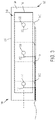
- FIG. 3 illustrates another arrangement of the heating element 106, disposed within the foam body 150.
- the heating element 106 may include at least one temperature sensor 132, such as a commercially available thermocouple.
- the at least one temperature sensor 132 may be operatively connected to the control unit 200 via power and/or signal leads 122, 212 and provide temperature data of the heating element 106 or warming pad 100 to a processor associated with the control unit 200 (shown in FIG. 1 ).
- the processor can be a conventional general-purpose microprocessor for a computer, tablet, or smartphone device, as are known in the art.
- the processor includes or is associated with transitory and non-transitory computer readable memory with instructions that, when executed by the processor, control operation of the control unit 200, heating element 106, and other aspects of the warming pad 100.
- Temperature data obtained by the temperature sensor 132 may be displayed on control unit 200, and be used by operating room staff to maintain the temperature of warming pad 100 within a safe temperature range. In some examples, a suitable temperature range for the pad 100 is between about 37°C and 42°C.
- temperature data from the at least one temperature sensor 132 also may be used by a processor in the control unit 200 to automatically monitor the warming pad 100 and maintain the temperature thereof within the safe range.
- the processor may also cause the control unit 200 to provide a notification and/or warning to a user if a measured temperature is greater than a maximum allowable temperature or target value.
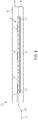
- FIG. 4 shows a cross-sectional side view of another embodiment of the warming pad 100.
- the top portion 124 of the foam body 150 is positioned above and in contact with the bottom portion 126.
- the portions 124, 126 may be held together by a suitable synthetic adhesive, such as adhesive 128.
- the top portion 124 and the bottom portion 126 contain or enclose the heating element 106 and multiple temperature sensors 132.
- the heating element 106 and temperature sensors 132 may be electrically connected to power and/or signal leads 122. In some examples, as shown in FIG.
- the power and/or sensor leads 122 split inside warming pad 100, such that a power lead 110 connects to heating element 106 and a signal lead 112 connects to at least one temperature sensor 132.
- a power lead 110 connects to heating element 106
- a signal lead 112 connects to at least one temperature sensor 132.
- leads 122, 110, and 112 may be used to operatively connect heating element 106 and/or at least one temperature sensor 132 to a power source and/or the control unit 200.
- heating element 106 is situated within a sleeve 136.
- the sleeve 136 may provide insulation of heating element 106.
- the sleeve 136 is a hermetically sealed sleeve at least partially enclosing the heating element 106.
- a hermetic seal 138 is also provided at the point where power leads 110 enter sleeve 136, in a manner known in the art, in order to allow power leads 110 to operatively connect with heating element 106, while maintaining the overall hermetic seal of sleeve 136.
- Sleeve 136 may be comprised of a material that is sufficiently flexible and resilient to allow warming pad 100 to be used on an adjustable operating table during surgical procedures involving extreme patient positioning, such as inclined positions, the Trendelenburg position, the reverse Trendelenburg position, and a modified Trendelenburg position.
- the sleeve 136 may conduct heat sufficiently well to allow effective warming of a patient during a surgical procedure.
- the sleeve 136 may insulate a patient from heating element 106 sufficiently well to protect a patient from overheating or burns.
- a heat reflecting layer 108 may be situated between the heating element 106 and the bottom portion (block) 126.
- the heat reflecting layer 108 may comprise any heat reflective material known in the art. Exemplary reflective materials can include metal foil materials (e.g., aluminum foil), metalized polyesters (e.g., as used in space blankets and insulated clothing), metalized polyimides, and similar materials. Desirably, the reflecting layer 108 is formed from a material that is sufficiently flexible to allow warming pad 100 to be used on an adjustable operating table during surgical procedures involving extreme patient positioning, such as inclined positions, as discussed hereinabove. Heat reflecting layer 108 may increase the efficiency of warming pad 100 by directing heat from heating element 106 toward a patient disposed on top portion (block) 124, and away from an operating table 102.
- the patient warming device 1 includes the control unit 200, which is removably and operatively connected to warming pad 100 by the leads 212.
- the control unit 200 is configured to adjustably connect to an IV post 204.
- the control unit 200 can be configured to rest on a table, tray, shelf, or floor depending on the arrangement of the operating room and surgical instruments.
- the control unit 200 may be configured to allow operating room staff to control power to the heating element 106, and to receive and read temperature data from the temperature sensors 132 situated in an embodiment of warming pad 100.
- control unit 200 may include a processor programmed to automatically control the temperature of the heating element 106 based on data returned from temperature sensors 132.
- control unit 200 may serve as a power supply or power regulator for heating element 106.
- the control unit 200 can receive power from a variety of suitable sources including, for example, AC power from a wall outlet or generator or DC power from a battery.
- a power cord 202 including a plug 224 coupled to an AC adapter is removably connected to the control unit 200.
- the plug 224 can be plugged into a wall outlet in an operating room.
- a power supply such as a battery may be used in place of a wall outlet.
- the control unit 200 includes one or more of a power on/off indicator 210, a temperature indicator display 208, a system status display 214, and a temperature selector 206.
- the power on/off indicator 210 may be a simple switch including a first portion or button to be pressed to turn the power on and a second portion or button to be pushed to turn the power off.
- the on/off switch can include virtual buttons or soft buttons and/or a touch screen display that can be manipulated by the user to turn the control unit 200 and/or heating element 106 (shown in FIGS. 1-4 ) on and off.
- the temperature display indicator 208 can include a display of numeric characters for the measured temperature.
- the control unit 200 also may include a power control switch, not shown in the figure.
- the displayed numeric value may be updated at intervals, or in real time, based on temperature data taken by the at least one temperature sensor 132.
- the temperature selector 206 may include one or more settings allowing a user to choose between one or more ranges of temperature settings.
- the selector 206 may include a setting for standard body temperature (e.g., 37C, 98.6°F), as well as settings for higher temperatures ranging from, for example 38C (101.4°F) to 41C (105.8°F).
- the system status display 214 may show at least one status, including an over temperature status, a power loss status, and a reset status. In an example, these displays and selectors may be positioned on a front face 226 of control unit 200, which may provide ease of operation of the patient warming device 1. It should be understood, however, that the configuration of displays and selectors recited herein is not meant to be limiting, and other data or controls known in the art may be included in various embodiments of control unit 200.
- control unit 200 may also include a power cord 202 and a plug 224 connected to an AC adapter.
- the power cord 202 can be configured to draw power from a standard wall outlet.
- Power cord 202 may include a plug 224, and may connect to control unit 200 via a strain relief 216 known in the art.
- the power and/or signal leads 212 may operatively connect to control unit 200 by with a connector 218. Power and/or signal leads 212 allow control unit 200 to feed electrical current to warming pad 100, and to receive temperature data from the at least one temperature sensor 132. Power for warming pad 100 and for control unit 200 may be drawn from a wall outlet by means of power cord 202.
- the processor of the control unit 200 is configured to receive signals representative of a temperature of the warming pad from the temperature sensors 132 (shown in FIG. 3 ).
- the processor is configured to process the received signals to obtain a temperature of the warming pad.
- the temperature may be based on information received from a single temperature sensor.
- the processor receives signals from a plurality of temperature sensors on the pad.
- the processor may be configured to determine an average temperature value or, in other cases, may record temperature values for different areas of the pad. For example, the processor may record a temperature near the patient's head, a temperature near the patient's torso, and a temperature for portions of the pad which are not in contact with the patient.
- the processor can also receive information from other sensors, monitors, and medical devices at the surgical scene.
- the processor may receive information about a patient skin or internal body temperature from patient monitoring devices or sensors configured to obtain such information.
- the processor may also receive physical and demographic information for the patient (e.g., patient height, weight, gender, age, body mass index, body fat percentage, etc.).
- Patient physical and demographic information can be manually entered by a user of the system or may be automatically downloaded from a database, such as a patient electronic health record database.
- the processor may use the patient temperature information, patient physical information, and/or patient demographic information to determine whether the warming pad is effectively maintaining the patient's body temperature.
- the processor is further configured to compare the determined temperature to one or more threshold values.
- the threshold value can be a target temperature for the pad manually entered by a user using the control unit 200.
- threshold value(s) may be default values for the control unit 200.
- the control unit 200 may be set to operate within a range of minimum and maximum safe temperatures, such as a range of between 37°C and 42°C. In that case, the control unit 200 may be configured to alert a user both when the temperature of the pad 100 has dropped below a safe value (e.g., 37°C), which may indicate that the pad 100 is not preserving the patients' normal body temperature, and when the temperature is above a threshold value (e.g., 42°C), which may indicate an unsafe condition.
- a safe value e.g., 37°C
- a threshold value e.g., 42°C
- the processor may be further configured to adjust operating parameters for the control unit 200 and/or pad based on results of the comparison between the measured and threshold temperature values. For example, when the comparison indicates that the measured temperature is below a threshold value, the processor may cause the control unit to increase power provided from the control unit to the heating element. Conversely, if the comparison indicates that the measured temperature is above the threshold value, the processor may cause the control unit to decrease power provided by the control unit to the heating element. If the comparison indicates that the measured temperature is within an acceptable range (e.g., within a predetermined percentage of the threshold value), the processor may cause the control unit to continue providing power to the heating element at the same level.
- an acceptable range e.g., within a predetermined percentage of the threshold value
Landscapes
- Health & Medical Sciences (AREA)
- Life Sciences & Earth Sciences (AREA)
- Animal Behavior & Ethology (AREA)
- General Health & Medical Sciences (AREA)
- Public Health (AREA)
- Veterinary Medicine (AREA)
- Engineering & Computer Science (AREA)
- Biomedical Technology (AREA)
- Heart & Thoracic Surgery (AREA)
- Vascular Medicine (AREA)
- Accommodation For Nursing Or Treatment Tables (AREA)
- Nursing (AREA)
Claims (9)
- Patientenpositionierungs- und Wärmepad für den Einmalgebrauch (100), das konfiguriert ist, um während eines chirurgischen Eingriffs zwischen einem Patienten und einem Operationstisch platziert zu werden, wobei das Pad Folgendes umfasst:einen viskoelastischen Schaumkörper (150), der Folgendes umfasst: einen oberen Block (124), der einen offenzelligen Schaum umfasst, der eine offenzellige Struktur aufweist, die für Fluid durchlässig ist, das auf einer oberen Oberfläche davon gesammelt wird, und einen unteren Block (126), der an dem oberen Block klebt, der eine untere Schaumoberfläche umfasst, die konfiguriert ist, um während des chirurgischen Eingriffs eine Oberfläche des Operationstisches zu berühren, um das Positionieren des Pads auf dem Tisch aufrechtzuerhalten, wobei der untere Block (126) einen Schaum umfasst, der dichter ist als der offenzellige Schaum des oberen Blocks;ein Heizelement (106), das wenigstens teilweise zwischen dem oberen Block (124) und dem unteren Block (126) des Schaumkörpers (150) angeordnet ist;einen elektrischen Verbinder (118), der Folgendes aufweist: einen proximalen Endabschnitt, der innerhalb des Schaumkörpers (150) eingeschlossen ist, der mit dem Heizelement (106) verbunden ist, und einen distalen Endabschnitt, der sich aus dem Schaumkörper (150) erstreckt und konfiguriert ist, um sich mit einer Stromquelle und/oder einer Steuereinheit (200) für das Heizelement (106) direkt oder indirekt zu verbinden;eine hermetisch abgedichtete Schutzhülle (136), die das Heizelement (106) und einen Abschnitt einer Stromleitung (110) des elektrischen Verbinders (118) vollständig einschließt; undeine hermetische Abdichtung (138) um die Stromleitung (110), die an einem Punkt bereitgestellt ist, an dem die Stromleitung (110) in die Schutzhülle (136) eintritt,wobei die Schutzhülle (136) und die hermetische Abdichtung (138) das Heizelement (106) und den Abschnitt der Stromleitung (110) von dem Schaumkörper (150) hermetisch abdichten.
- Pad (100) nach Anspruch 1, wobei der Schaumkörper (150) konfiguriert ist, um das Positionieren des Patienten relativ zu dem Operationstisch während des chirurgischen Eingriffs aufrechtzuerhalten, wenn der Patient in Folgendem platziert wird: einer rückwärts geneigten Position, einer Trendelenburg-Position, einer umgekehrten Trendelenburg-Position und/oder einer modifizierten Trendelenburg-Position.
- Pad (100) nach Anspruch 1, das ferner eine hitzereflektierende Abdeckung (108) umfasst, die auf der unteren Oberfläche des viskoelastischen Schaumkörpers (150) angeordnet ist.
- Pad (100) nach Anspruch 1, wobei der untere Block (126) des Schaumkörpers (150) einen geschlossenzelligen Schaum umfasst.
- Patientenwärmesystem, das Folgendes umfasst:das Patientenpositionierungs- und Wärmepad für den Einmalgebrauch (100) nach einem der Ansprüche 1-4, wobei das Pad (100) ferner wenigstens einen Temperatursensor (132) umfasst, der innerhalb des Schaumkörpers (150) zum Messen einer Temperatur des Schaumkörpers (150) positioniert ist, der durch das Heizelement (106) erwärmt wird; undeine Steuereinheit (200), die mit dem Wärmepad (100) wirkverbunden und konfiguriert ist, um einen Strom zu steuern, der dem Heizelement (106) von einer Stromquelle bereitgestellt wird, wobei die Steuereinheit (200) Folgendes umfasst:ein Kabel (122), das mit dem elektrischen Verbinder des Heizelements (106) entfernbar verbunden ist, um dem Heizelement (106) Strom und/oder Betriebsanweisungen bereitzustellen, undeinen Prozessor, der einen computerlesbaren Speicher umfasst, der Anweisungen enthält, die, wenn sie durch den Prozessor ausgeführt werden, den Prozessor zu Folgendem veranlassen: Empfangen und Verarbeiten von Temperaturinformationen von dem wenigstens einen Temperatursensor; Bestimmen einer Temperatur des Wärme- und Positionierungspads basierend auf den empfangenen und verarbeiteten Informationen; Vergleichen der bestimmten Temperatur mit einem Temperaturschwellenwert; und Bereitstellen einer Benachrichtigung an einen Benutzer, wenn die bestimmte Temperatur den Schwellenwert überschreitet.
- Patientenwärmesystem nach Anspruch 5, wobei die Anweisungen den Prozessor ferner zu Folgendem veranlassen:Erhöhen einer Stromabgabe der Steuereinheit an das Heizelement, wenn die bestimmte Temperatur niedriger als der Schwellenwert ist; oderVerringern einer Stromabgabe der Steuereinheit an das Heizelement, wenn die bestimmte Temperatur den Schwellenwert überschreitet.
- Patientenwärmesystem nach Anspruch 6, wobei die Steuereinheit (200) eine Anzeige (208) umfasst und wobei die Anweisungen den Prozessor veranlassen, die Anzeige zu veranlassen, eine numerische Darstellung der bestimmten Temperatur auf der Anzeige (208) anzuzeigen.
- Patientenwärmesystem nach Anspruch 7, wobei das Bereitstellen der Benachrichtigung an den Benutzer, wenn die bestimmte Temperatur den Schwellenwert überschreitet, das Anzeigen eines Übertemperaturindikators auf der Anzeige (208) umfasst.
- Pad (100) nach Anspruch 1, das ferner einen synthetischen Klebstoff (128) umfasst, der zwischen einer nach innen gerichteten Oberfläche des oberen Blocks (124) und einer nach innen gerichteten Oberfläche des unteren Blocks (126) des Schaumkörpers (150) zum Kleben des oberen Blocks (124) an den unteren Block (126) angeordnet ist, wobei dadurch die Schutzhülle (136) innerhalb des viskoelastischen Schaumkörpers (150) eingeschlossen wird.
Applications Claiming Priority (2)
| Application Number | Priority Date | Filing Date | Title |
|---|---|---|---|
| US201662281390P | 2016-01-21 | 2016-01-21 | |
| PCT/US2017/014350 WO2017127687A1 (en) | 2016-01-21 | 2017-01-20 | Patient warming device for surgical procedures |
Publications (3)
| Publication Number | Publication Date |
|---|---|
| EP3405148A1 EP3405148A1 (de) | 2018-11-28 |
| EP3405148A4 EP3405148A4 (de) | 2019-10-30 |
| EP3405148B1 true EP3405148B1 (de) | 2022-03-30 |
Family
ID=59360977
Family Applications (1)
| Application Number | Title | Priority Date | Filing Date |
|---|---|---|---|
| EP17742017.1A Active EP3405148B1 (de) | 2016-01-21 | 2017-01-20 | Patientenwärmevorrichtung für chirurgische eingriffe |
Country Status (3)
| Country | Link |
|---|---|
| US (1) | US11266525B2 (de) |
| EP (1) | EP3405148B1 (de) |
| WO (1) | WO2017127687A1 (de) |
Families Citing this family (15)
| Publication number | Priority date | Publication date | Assignee | Title |
|---|---|---|---|---|
| CA2872583C (en) | 2013-11-27 | 2022-06-07 | Sage Products, Llc | Apparatus and system for turning and positioning a patient |
| US9849053B2 (en) | 2015-08-18 | 2017-12-26 | Sage Products, Llc | Apparatus and system for boosting, transferring, turning and positioning a patient |
| US10765576B2 (en) | 2015-08-18 | 2020-09-08 | Sage Products, Llc | Apparatus and system for boosting, transferring, turning and positioning a patient |
| WO2018200743A1 (en) * | 2017-04-25 | 2018-11-01 | Noah Cray Villaflor | Radiolucent medical table heating pad |
| CA3069729A1 (en) | 2017-06-13 | 2018-12-20 | Sage Products, Llc | Patient positioning and support system |
| US20190029880A1 (en) * | 2017-07-26 | 2019-01-31 | Brian R. DuBois | Devices and Methods for Treating Epistaxis |
| WO2020041493A1 (en) | 2018-08-21 | 2020-02-27 | Sage Products, Llc | Systems and methods for lifting and positioning a patient |
| WO2021155146A1 (en) * | 2020-01-31 | 2021-08-05 | American Sterilizer Company | Ptc heating element and warming device including same for use in a patient warming system |
| CN112043534A (zh) * | 2020-09-29 | 2020-12-08 | 河南科技大学第一附属医院 | 一种小儿外科专用手术床 |
| US20220192867A1 (en) * | 2020-12-23 | 2022-06-23 | C. R. Bard, Inc. | Targeted Temperature Management Systems, Pads, and Methods Thereof |
| US11890240B2 (en) | 2021-04-30 | 2024-02-06 | Sage Products, Llc | Method and device for turning and positioning a patient using fillable chambers |
| US12496016B2 (en) | 2022-01-21 | 2025-12-16 | Contract Medical Manufacturing LLC | Patient positioning device |
| US12508182B2 (en) | 2023-04-26 | 2025-12-30 | Sage Products, Llc | Sheet assembly for positioning a patient |
| US12564530B2 (en) | 2023-09-06 | 2026-03-03 | Medline Industries Lp | Inflatable patient positioner with selectively engaging surface gripping zones |
| WO2026015414A1 (en) * | 2024-07-08 | 2026-01-15 | Kriesel Matthew Wayne | Adhesive head securing device |
Citations (3)
| Publication number | Priority date | Publication date | Assignee | Title |
|---|---|---|---|---|
| US20030218003A1 (en) * | 2000-06-14 | 2003-11-27 | Ellis Kent D. | Personal warming systems and apparatuses for use in hospitals and other settings, and associated methods of manufacture and use |
| US20040256381A1 (en) * | 2001-04-19 | 2004-12-23 | Haas William S. | Thermal warming devices |
| US20130174853A1 (en) * | 2012-01-10 | 2013-07-11 | Alessio Pigazzi | Method of securing a patient onto an operating table when the patient is in the trendelenburg position and apparatus therefor including a kit |
Family Cites Families (81)
| Publication number | Priority date | Publication date | Assignee | Title |
|---|---|---|---|---|
| US2764150A (en) | 1954-06-11 | 1956-09-25 | Zimmer Mfg Company | Convex spinal frame |
| US2835902A (en) | 1955-05-24 | 1958-05-27 | Fash Bernice | Lifting sheet |
| US3227440A (en) | 1962-03-09 | 1966-01-04 | Simmons Co | Operating table having a plurality of body supporting tops |
| US3512190A (en) | 1967-07-24 | 1970-05-19 | Tenneco Chem | Cushion construction |
| US3670725A (en) | 1969-06-30 | 1972-06-20 | Medical Specialties Inc | Protective pad |
| US3763507A (en) | 1971-08-27 | 1973-10-09 | Miller Herman Inc | Pediatric bed |
| US4135504A (en) | 1977-03-24 | 1979-01-23 | Spann Donald C | Orthopedic support |
| US4717611A (en) | 1986-12-17 | 1988-01-05 | Air Products And Chemicals, Inc. | Void-free molded polyurethane articles with surface attachment strips |
| JP2585250B2 (ja) | 1987-03-12 | 1997-02-26 | 東芝電池株式会社 | 空気電池用密封材 |
| US5138138A (en) | 1988-02-03 | 1992-08-11 | Stihler Electronic Medizintechnische Gerate Prod. Und Vertriebs-Gmbh | Heating system for an operating table |
| US4840362A (en) | 1988-02-04 | 1989-06-20 | Ross L. Bremer | Apparatus for positioning and supporting a patient for spinal surgery |
| US5054142A (en) | 1988-03-02 | 1991-10-08 | Owens Thomas P | Contoured body cushion |
| US5802640A (en) | 1992-04-03 | 1998-09-08 | Hill-Rom, Inc. | Patient care system |
| US4989849A (en) | 1988-11-23 | 1991-02-05 | Picker International, Inc. | Headrest for medical treatment couch |
| US5015037A (en) | 1989-11-28 | 1991-05-14 | Elizabeth Giblin | Chair assembly having non-slip seat |
| US5324911A (en) | 1990-01-08 | 1994-06-28 | Schroer Manufacturing Company | Heated animal surgery table |
| US5362302A (en) | 1990-06-27 | 1994-11-08 | Jensen Three In One | Therapeutic table |
| US5346278A (en) | 1991-07-11 | 1994-09-13 | Dehondt Jacques H | Non-slip cushion |
| US5306231A (en) | 1992-10-26 | 1994-04-26 | Harry Cullum | Traction system for a patient in a bed |
| US5448790A (en) | 1993-04-28 | 1995-09-12 | Saro; Jack H. B. | Selectively arrangeable cushion assembly |
| US5402544A (en) | 1993-09-17 | 1995-04-04 | Easy Lift Care Products, Inc. | Combination chair and gurney |
| GB2290256B (en) | 1994-06-03 | 1997-10-29 | Fagerdala World Foams Ab | Laminated supports |
| US6038718A (en) * | 1994-08-15 | 2000-03-21 | Midmark Corporation | Surgical table |
| US5794286A (en) | 1995-09-13 | 1998-08-18 | Standex International | Patient treatment apparatus |
| US5661860A (en) | 1995-09-29 | 1997-09-02 | Heitz; Alfred J. | Eye surgery recovery apparatus |
| US5749111A (en) | 1996-02-14 | 1998-05-12 | Teksource, Lc | Gelatinous cushions with buckling columns |
| US5669094A (en) | 1996-02-27 | 1997-09-23 | Swanson; Larry Sven | Mattress with visco-elastic, temperature sensitive top layer |
| US5966763A (en) | 1996-08-02 | 1999-10-19 | Hill-Rom, Inc. | Surface pad system for a surgical table |
| US6536056B1 (en) | 1996-11-18 | 2003-03-25 | John H. Vrzalik | Bariatric treatment system and related methods |
| US5893183A (en) | 1996-12-30 | 1999-04-13 | Bechtold, Jr.; Joseph A. | Dual cushion body support system |
| US6484334B1 (en) | 1997-11-07 | 2002-11-26 | Hill-Rom Services, Inc. | Surgical table |
| EP1028685B1 (de) | 1997-11-07 | 2005-04-06 | Hill-Rom Services, Inc. | Operationstischvorrichtung |
| US6754923B2 (en) | 1997-11-07 | 2004-06-29 | Hill-Rom Services, Inc. | Leg section support for a surgical table |
| US6620488B2 (en) | 1999-08-09 | 2003-09-16 | Inoac Corporation | Skin material, skinned cushion, and process for producing skinned cushion |
| US6237172B1 (en) | 1998-10-01 | 2001-05-29 | Morgan Medesign, Inc. | Patient support table |
| US6568010B1 (en) | 1999-09-24 | 2003-05-27 | Elliot L. Ames | Universal hand surgery table |
| ATE345760T1 (de) | 1999-12-29 | 2006-12-15 | Hill Rom Services Inc | Krankenbett |
| US6866915B2 (en) | 2000-01-11 | 2005-03-15 | Tempur World, Llc | Cushion |
| EP1257239A2 (de) * | 2000-02-22 | 2002-11-20 | M.T.R.E. Advanced Technology Ltd. | Wärmetauscher |
| US6516483B1 (en) | 2000-03-28 | 2003-02-11 | The Or Group, Inc. | Patient support surface |
| AU6687401A (en) * | 2000-06-14 | 2001-12-24 | Inc American Healthcare Produc | Heating pad systems, such as for patient warming applications |
| US6967309B2 (en) * | 2000-06-14 | 2005-11-22 | American Healthcare Products, Inc. | Personal warming systems and apparatuses for use in hospitals and other settings, and associated methods of manufacture and use |
| EP1309304A2 (de) | 2000-07-14 | 2003-05-14 | Hill-Rom Services, Inc. | Lungentherapiegerät |
| AU2002348511A1 (en) | 2001-10-06 | 2003-04-22 | Handle With Care, Inc. | Apparatus and method for transporting and securing a restrained person |
| US7189214B1 (en) | 2002-01-22 | 2007-03-13 | The Saunders Group, Inc. | Multi-axis cervical and lumbar traction table |
| US6622727B2 (en) | 2002-02-05 | 2003-09-23 | Eric S Perry | Perry wedge pillow |
| RU2005100752A (ru) | 2002-06-10 | 2005-10-27 | Эсте Текнолоджиз ЭЛэЛСИ (US) | Устройство (варианты) и способ перемещения тела |
| US6734220B2 (en) | 2002-08-27 | 2004-05-11 | Foamex L.P. | Fine cell, high density viscoelastic polyurethane foams |
| US6653363B1 (en) | 2002-12-04 | 2003-11-25 | Foamex, L.P. | Low energy-loss, high firmness, temperature sensitive polyurethane foams |
| US7240384B2 (en) | 2003-07-08 | 2007-07-10 | Intensive Therapeutics, Inc. | Method of repositioning immobile patient in bed using patient positioning aid |
| US20050210595A1 (en) | 2004-03-23 | 2005-09-29 | Di Stasio Anthony A | Mattress having reticulated viscoelastic foam |
| EP1621172A3 (de) | 2004-07-26 | 2006-05-31 | Hill-Rom Services, Inc. | Modulares Bettsystem |
| US7757318B2 (en) | 2004-09-13 | 2010-07-20 | Kreg Therapeutics, Inc. | Mattress for a hospital bed |
| US7676862B2 (en) | 2004-09-13 | 2010-03-16 | Kreg Medical, Inc. | Siderail for hospital bed |
| US7600281B2 (en) | 2004-11-10 | 2009-10-13 | Allen Medical Systems, Inc. | Body support apparatus for spinal surgery |
| US20060112490A1 (en) | 2004-11-30 | 2006-06-01 | Colleen Chausse | Mattress with chest aperture |
| US7555794B2 (en) | 2005-08-23 | 2009-07-07 | Ge Medical Systems Israel, Ltd. | Methods and apparatus for ergonomic arm and head support |
| DE102005053755A1 (de) | 2005-11-10 | 2007-05-16 | Maquet Gmbh & Co Kg | Polsterelement für eine Patientenliegefläche eines Operationstisches |
| EP1951547B1 (de) | 2005-11-21 | 2015-07-08 | Nightgear LLC | Sitzzubehör |
| US8011045B2 (en) | 2006-06-12 | 2011-09-06 | Allen Medical Systems, Inc. | Localized patient support |
| US7603730B2 (en) | 2006-07-06 | 2009-10-20 | General Electric Company | Apparatus for supporting a patient in a prone position during diagnostic imaging |
| US20080010751A1 (en) | 2006-07-12 | 2008-01-17 | Kemper Christopher E | Spinal tension and pressure relieving body support apparatus |
| US7849540B2 (en) | 2006-08-30 | 2010-12-14 | Health Care Positioners, Inc. | Reusable surgical perioperative positioning system |
| US20080178390A1 (en) | 2007-01-26 | 2008-07-31 | Dudonis Matt | Thigh support with free space for popliteal fossa |
| CL2008000704A1 (es) * | 2007-03-12 | 2008-09-12 | Lma Medical Innovations Ltd | Procedimiento para calentar un fluido intravenoso que comprende unir un elemento calefactor, electricamente resistor, a una linea suministradora de fluido, acoplar electricamente una fuente de energia al elemento calefactor, electricamente resistor; |
| US20090025150A1 (en) | 2007-07-24 | 2009-01-29 | Dreamwell, Ltd. | Systems and methods for hinged bedding assemblies |
| US20100212087A1 (en) | 2007-07-31 | 2010-08-26 | Roger Leib | Integrated patient room |
| US7441293B1 (en) | 2007-09-10 | 2008-10-28 | Singer Starr Stacker, Llc | Support for a lower shoulder and extended arms of a person lying on their side |
| FR2922737B1 (fr) | 2007-10-24 | 2012-01-27 | Jan Edouard Brunie | Coussin corporel asymetrique utilisable en position 3/4 ventrale. |
| WO2009135081A2 (en) | 2008-04-30 | 2009-11-05 | Board Of Regents, The University Of Texas System | Integrated patient bed system |
| US8510885B2 (en) | 2009-01-28 | 2013-08-20 | Casey A. Dennis | Anatomical, pressure-evenizing mattress overlay and associated methodology |
| US10729357B2 (en) | 2010-04-22 | 2020-08-04 | Leaf Healthcare, Inc. | Systems and methods for generating and/or adjusting a repositioning schedule for a person |
| US8539621B2 (en) | 2009-05-04 | 2013-09-24 | Tamra West | Operating table patient positioner and method |
| WO2011049744A2 (en) * | 2009-10-20 | 2011-04-28 | Stryker Corporation | Microclimate management system |
| US8511314B2 (en) * | 2012-01-10 | 2013-08-20 | Khs Gmbh | Method of securing a patient onto an operating table when the patient is in the Trendelenburg position and apparatus therefor including a kit |
| US8555890B2 (en) | 2012-02-01 | 2013-10-15 | Hug-U-Vac Surgical Positioning Systems, Inc. | Surgical positioning system |
| US20130289150A1 (en) | 2012-04-26 | 2013-10-31 | Bayer Materialscience Ag | Viscoelastic polyurethane foams |
| US10413469B2 (en) | 2012-06-06 | 2019-09-17 | Medline Industries, Inc. | Universal Trendelenburg positioner |
| AT513357B1 (de) | 2012-09-13 | 2015-08-15 | Wassermann Klemens Mag | Auflagevorrichtung für Liege- oder Sitzeinrichtungen |
| US20150290062A1 (en) | 2014-04-10 | 2015-10-15 | Augustine Biomedical And Design, Llc | Underbody Supports with Patient Securing Features |
| US20170258630A1 (en) * | 2014-12-10 | 2017-09-14 | Revolutionary Medical Devices, Inc. | Operating room (or) table cover |
-
2017
- 2017-01-20 EP EP17742017.1A patent/EP3405148B1/de active Active
- 2017-01-20 US US15/411,493 patent/US11266525B2/en active Active
- 2017-01-20 WO PCT/US2017/014350 patent/WO2017127687A1/en not_active Ceased
Patent Citations (3)
| Publication number | Priority date | Publication date | Assignee | Title |
|---|---|---|---|---|
| US20030218003A1 (en) * | 2000-06-14 | 2003-11-27 | Ellis Kent D. | Personal warming systems and apparatuses for use in hospitals and other settings, and associated methods of manufacture and use |
| US20040256381A1 (en) * | 2001-04-19 | 2004-12-23 | Haas William S. | Thermal warming devices |
| US20130174853A1 (en) * | 2012-01-10 | 2013-07-11 | Alessio Pigazzi | Method of securing a patient onto an operating table when the patient is in the trendelenburg position and apparatus therefor including a kit |
Also Published As
| Publication number | Publication date |
|---|---|
| WO2017127687A1 (en) | 2017-07-27 |
| US20170209305A1 (en) | 2017-07-27 |
| US11266525B2 (en) | 2022-03-08 |
| EP3405148A4 (de) | 2019-10-30 |
| EP3405148A1 (de) | 2018-11-28 |
Similar Documents
| Publication | Publication Date | Title |
|---|---|---|
| US11266525B2 (en) | Patient warming device for surgical procedures | |
| US6933469B2 (en) | Personal warming systems and apparatuses for use in hospitals and other settings, and associated methods of manufacture and use | |
| US11559259B2 (en) | Patient securing overlay for underbody supports | |
| US6653607B2 (en) | Heating pad systems, such as for patient warming applications | |
| CN101647313B (zh) | 用于加热垫系统的温度管理的设备和方法 | |
| JP4728560B2 (ja) | 電気外科電極 | |
| US20040149711A1 (en) | Personal warming systems and apparatuses for use in hospitals and other settings, and associated methods of manufacture and use | |
| CA2862381C (en) | Pressure measurement systems and methods with moisture vapor control | |
| KR20120022734A (ko) | 욕창 감소 및 발열 능력을 갖는 자기-제한방식의 전기외과수술 복귀 전극 | |
| CN208287134U (zh) | 医用多功能创伤复温毯 | |
| WO2003088881A2 (en) | Personal warming systems and apparatuses for use in hospitals and other settings, and associated methods of manufacture and use | |
| CN113157022B (zh) | 一种围术期病员加温系统及方法 | |
| AU2019100644A4 (en) | A sensor-enabled apparatus | |
| WO2016147115A1 (en) | Heating mattress for hospital use |
Legal Events
| Date | Code | Title | Description |
|---|---|---|---|
| STAA | Information on the status of an ep patent application or granted ep patent |
Free format text: STATUS: THE INTERNATIONAL PUBLICATION HAS BEEN MADE |
|
| PUAI | Public reference made under article 153(3) epc to a published international application that has entered the european phase |
Free format text: ORIGINAL CODE: 0009012 |
|
| STAA | Information on the status of an ep patent application or granted ep patent |
Free format text: STATUS: REQUEST FOR EXAMINATION WAS MADE |
|
| 17P | Request for examination filed |
Effective date: 20180718 |
|
| AK | Designated contracting states |
Kind code of ref document: A1 Designated state(s): AL AT BE BG CH CY CZ DE DK EE ES FI FR GB GR HR HU IE IS IT LI LT LU LV MC MK MT NL NO PL PT RO RS SE SI SK SM TR |
|
| AX | Request for extension of the european patent |
Extension state: BA ME |
|
| DAV | Request for validation of the european patent (deleted) | ||
| DAX | Request for extension of the european patent (deleted) | ||
| A4 | Supplementary search report drawn up and despatched |
Effective date: 20190930 |
|
| RIC1 | Information provided on ipc code assigned before grant |
Ipc: A61F 7/08 20060101ALI20190924BHEP Ipc: A61G 7/005 20060101ALI20190924BHEP Ipc: A61G 13/12 20060101ALI20190924BHEP Ipc: A61F 7/00 20060101AFI20190924BHEP |
|
| STAA | Information on the status of an ep patent application or granted ep patent |
Free format text: STATUS: EXAMINATION IS IN PROGRESS |
|
| 17Q | First examination report despatched |
Effective date: 20200923 |
|
| GRAP | Despatch of communication of intention to grant a patent |
Free format text: ORIGINAL CODE: EPIDOSNIGR1 |
|
| STAA | Information on the status of an ep patent application or granted ep patent |
Free format text: STATUS: GRANT OF PATENT IS INTENDED |
|
| INTG | Intention to grant announced |
Effective date: 20211019 |
|
| GRAS | Grant fee paid |
Free format text: ORIGINAL CODE: EPIDOSNIGR3 |
|
| GRAA | (expected) grant |
Free format text: ORIGINAL CODE: 0009210 |
|
| STAA | Information on the status of an ep patent application or granted ep patent |
Free format text: STATUS: THE PATENT HAS BEEN GRANTED |
|
| AK | Designated contracting states |
Kind code of ref document: B1 Designated state(s): AL AT BE BG CH CY CZ DE DK EE ES FI FR GB GR HR HU IE IS IT LI LT LU LV MC MK MT NL NO PL PT RO RS SE SI SK SM TR |
|
| REG | Reference to a national code |
Ref country code: GB Ref legal event code: FG4D |
|
| REG | Reference to a national code |
Ref country code: CH Ref legal event code: EP |
|
| REG | Reference to a national code |
Ref country code: AT Ref legal event code: REF Ref document number: 1478519 Country of ref document: AT Kind code of ref document: T Effective date: 20220415 |
|
| REG | Reference to a national code |
Ref country code: NL Ref legal event code: FP |
|
| REG | Reference to a national code |
Ref country code: DE Ref legal event code: R096 Ref document number: 602017055206 Country of ref document: DE |
|
| REG | Reference to a national code |
Ref country code: IE Ref legal event code: FG4D |
|
| REG | Reference to a national code |
Ref country code: SE Ref legal event code: TRGR |
|
| REG | Reference to a national code |
Ref country code: LT Ref legal event code: MG9D |
|
| PG25 | Lapsed in a contracting state [announced via postgrant information from national office to epo] |
Ref country code: RS Free format text: LAPSE BECAUSE OF FAILURE TO SUBMIT A TRANSLATION OF THE DESCRIPTION OR TO PAY THE FEE WITHIN THE PRESCRIBED TIME-LIMIT Effective date: 20220330 Ref country code: NO Free format text: LAPSE BECAUSE OF FAILURE TO SUBMIT A TRANSLATION OF THE DESCRIPTION OR TO PAY THE FEE WITHIN THE PRESCRIBED TIME-LIMIT Effective date: 20220630 Ref country code: LT Free format text: LAPSE BECAUSE OF FAILURE TO SUBMIT A TRANSLATION OF THE DESCRIPTION OR TO PAY THE FEE WITHIN THE PRESCRIBED TIME-LIMIT Effective date: 20220330 Ref country code: HR Free format text: LAPSE BECAUSE OF FAILURE TO SUBMIT A TRANSLATION OF THE DESCRIPTION OR TO PAY THE FEE WITHIN THE PRESCRIBED TIME-LIMIT Effective date: 20220330 Ref country code: BG Free format text: LAPSE BECAUSE OF FAILURE TO SUBMIT A TRANSLATION OF THE DESCRIPTION OR TO PAY THE FEE WITHIN THE PRESCRIBED TIME-LIMIT Effective date: 20220630 |
|
| REG | Reference to a national code |
Ref country code: AT Ref legal event code: MK05 Ref document number: 1478519 Country of ref document: AT Kind code of ref document: T Effective date: 20220330 |
|
| PG25 | Lapsed in a contracting state [announced via postgrant information from national office to epo] |
Ref country code: LV Free format text: LAPSE BECAUSE OF FAILURE TO SUBMIT A TRANSLATION OF THE DESCRIPTION OR TO PAY THE FEE WITHIN THE PRESCRIBED TIME-LIMIT Effective date: 20220330 Ref country code: GR Free format text: LAPSE BECAUSE OF FAILURE TO SUBMIT A TRANSLATION OF THE DESCRIPTION OR TO PAY THE FEE WITHIN THE PRESCRIBED TIME-LIMIT Effective date: 20220701 Ref country code: FI Free format text: LAPSE BECAUSE OF FAILURE TO SUBMIT A TRANSLATION OF THE DESCRIPTION OR TO PAY THE FEE WITHIN THE PRESCRIBED TIME-LIMIT Effective date: 20220330 |
|
| PG25 | Lapsed in a contracting state [announced via postgrant information from national office to epo] |
Ref country code: SM Free format text: LAPSE BECAUSE OF FAILURE TO SUBMIT A TRANSLATION OF THE DESCRIPTION OR TO PAY THE FEE WITHIN THE PRESCRIBED TIME-LIMIT Effective date: 20220330 Ref country code: SK Free format text: LAPSE BECAUSE OF FAILURE TO SUBMIT A TRANSLATION OF THE DESCRIPTION OR TO PAY THE FEE WITHIN THE PRESCRIBED TIME-LIMIT Effective date: 20220330 Ref country code: RO Free format text: LAPSE BECAUSE OF FAILURE TO SUBMIT A TRANSLATION OF THE DESCRIPTION OR TO PAY THE FEE WITHIN THE PRESCRIBED TIME-LIMIT Effective date: 20220330 Ref country code: PT Free format text: LAPSE BECAUSE OF FAILURE TO SUBMIT A TRANSLATION OF THE DESCRIPTION OR TO PAY THE FEE WITHIN THE PRESCRIBED TIME-LIMIT Effective date: 20220801 Ref country code: ES Free format text: LAPSE BECAUSE OF FAILURE TO SUBMIT A TRANSLATION OF THE DESCRIPTION OR TO PAY THE FEE WITHIN THE PRESCRIBED TIME-LIMIT Effective date: 20220330 Ref country code: EE Free format text: LAPSE BECAUSE OF FAILURE TO SUBMIT A TRANSLATION OF THE DESCRIPTION OR TO PAY THE FEE WITHIN THE PRESCRIBED TIME-LIMIT Effective date: 20220330 Ref country code: CZ Free format text: LAPSE BECAUSE OF FAILURE TO SUBMIT A TRANSLATION OF THE DESCRIPTION OR TO PAY THE FEE WITHIN THE PRESCRIBED TIME-LIMIT Effective date: 20220330 Ref country code: AT Free format text: LAPSE BECAUSE OF FAILURE TO SUBMIT A TRANSLATION OF THE DESCRIPTION OR TO PAY THE FEE WITHIN THE PRESCRIBED TIME-LIMIT Effective date: 20220330 |
|
| PG25 | Lapsed in a contracting state [announced via postgrant information from national office to epo] |
Ref country code: PL Free format text: LAPSE BECAUSE OF FAILURE TO SUBMIT A TRANSLATION OF THE DESCRIPTION OR TO PAY THE FEE WITHIN THE PRESCRIBED TIME-LIMIT Effective date: 20220330 Ref country code: IS Free format text: LAPSE BECAUSE OF FAILURE TO SUBMIT A TRANSLATION OF THE DESCRIPTION OR TO PAY THE FEE WITHIN THE PRESCRIBED TIME-LIMIT Effective date: 20220730 Ref country code: AL Free format text: LAPSE BECAUSE OF FAILURE TO SUBMIT A TRANSLATION OF THE DESCRIPTION OR TO PAY THE FEE WITHIN THE PRESCRIBED TIME-LIMIT Effective date: 20220330 |
|
| REG | Reference to a national code |
Ref country code: DE Ref legal event code: R097 Ref document number: 602017055206 Country of ref document: DE |
|
| PG25 | Lapsed in a contracting state [announced via postgrant information from national office to epo] |
Ref country code: DK Free format text: LAPSE BECAUSE OF FAILURE TO SUBMIT A TRANSLATION OF THE DESCRIPTION OR TO PAY THE FEE WITHIN THE PRESCRIBED TIME-LIMIT Effective date: 20220330 |
|
| PLBE | No opposition filed within time limit |
Free format text: ORIGINAL CODE: 0009261 |
|
| STAA | Information on the status of an ep patent application or granted ep patent |
Free format text: STATUS: NO OPPOSITION FILED WITHIN TIME LIMIT |
|
| 26N | No opposition filed |
Effective date: 20230103 |
|
| PG25 | Lapsed in a contracting state [announced via postgrant information from national office to epo] |
Ref country code: SI Free format text: LAPSE BECAUSE OF FAILURE TO SUBMIT A TRANSLATION OF THE DESCRIPTION OR TO PAY THE FEE WITHIN THE PRESCRIBED TIME-LIMIT Effective date: 20220330 |
|
| PG25 | Lapsed in a contracting state [announced via postgrant information from national office to epo] |
Ref country code: IT Free format text: LAPSE BECAUSE OF FAILURE TO SUBMIT A TRANSLATION OF THE DESCRIPTION OR TO PAY THE FEE WITHIN THE PRESCRIBED TIME-LIMIT Effective date: 20220330 |
|
| PG25 | Lapsed in a contracting state [announced via postgrant information from national office to epo] |
Ref country code: LU Free format text: LAPSE BECAUSE OF NON-PAYMENT OF DUE FEES Effective date: 20230120 |
|
| REG | Reference to a national code |
Ref country code: BE Ref legal event code: MM Effective date: 20230131 |
|
| PG25 | Lapsed in a contracting state [announced via postgrant information from national office to epo] |
Ref country code: BE Free format text: LAPSE BECAUSE OF NON-PAYMENT OF DUE FEES Effective date: 20230131 |
|
| PG25 | Lapsed in a contracting state [announced via postgrant information from national office to epo] |
Ref country code: IE Free format text: LAPSE BECAUSE OF NON-PAYMENT OF DUE FEES Effective date: 20230120 |
|
| PG25 | Lapsed in a contracting state [announced via postgrant information from national office to epo] |
Ref country code: MC Free format text: LAPSE BECAUSE OF FAILURE TO SUBMIT A TRANSLATION OF THE DESCRIPTION OR TO PAY THE FEE WITHIN THE PRESCRIBED TIME-LIMIT Effective date: 20220330 |
|
| PG25 | Lapsed in a contracting state [announced via postgrant information from national office to epo] |
Ref country code: MC Free format text: LAPSE BECAUSE OF FAILURE TO SUBMIT A TRANSLATION OF THE DESCRIPTION OR TO PAY THE FEE WITHIN THE PRESCRIBED TIME-LIMIT Effective date: 20220330 |
|
| PG25 | Lapsed in a contracting state [announced via postgrant information from national office to epo] |
Ref country code: CY Free format text: LAPSE BECAUSE OF FAILURE TO SUBMIT A TRANSLATION OF THE DESCRIPTION OR TO PAY THE FEE WITHIN THE PRESCRIBED TIME-LIMIT; INVALID AB INITIO Effective date: 20170120 |
|
| PG25 | Lapsed in a contracting state [announced via postgrant information from national office to epo] |
Ref country code: HU Free format text: LAPSE BECAUSE OF FAILURE TO SUBMIT A TRANSLATION OF THE DESCRIPTION OR TO PAY THE FEE WITHIN THE PRESCRIBED TIME-LIMIT; INVALID AB INITIO Effective date: 20170120 |
|
| PG25 | Lapsed in a contracting state [announced via postgrant information from national office to epo] |
Ref country code: TR Free format text: LAPSE BECAUSE OF FAILURE TO SUBMIT A TRANSLATION OF THE DESCRIPTION OR TO PAY THE FEE WITHIN THE PRESCRIBED TIME-LIMIT Effective date: 20220330 |
|
| PGFP | Annual fee paid to national office [announced via postgrant information from national office to epo] |
Ref country code: GB Payment date: 20251127 Year of fee payment: 10 |
|
| PGFP | Annual fee paid to national office [announced via postgrant information from national office to epo] |
Ref country code: NL Payment date: 20251215 Year of fee payment: 10 Ref country code: FR Payment date: 20251124 Year of fee payment: 10 |
|
| PGFP | Annual fee paid to national office [announced via postgrant information from national office to epo] |
Ref country code: SE Payment date: 20251126 Year of fee payment: 10 |
|
| REG | Reference to a national code |
Ref country code: CH Ref legal event code: U11 Free format text: ST27 STATUS EVENT CODE: U-0-0-U10-U11 (AS PROVIDED BY THE NATIONAL OFFICE) Effective date: 20260201 |
|
| PGFP | Annual fee paid to national office [announced via postgrant information from national office to epo] |
Ref country code: DE Payment date: 20251126 Year of fee payment: 10 |
|
| PGFP | Annual fee paid to national office [announced via postgrant information from national office to epo] |
Ref country code: CH Payment date: 20260201 Year of fee payment: 10 |