EP3406701A1 - Récipient de culture et système et procédé de transfert d'un organisme de culture entre des récipients de culture - Google Patents
Récipient de culture et système et procédé de transfert d'un organisme de culture entre des récipients de culture Download PDFInfo
- Publication number
- EP3406701A1 EP3406701A1 EP18173221.5A EP18173221A EP3406701A1 EP 3406701 A1 EP3406701 A1 EP 3406701A1 EP 18173221 A EP18173221 A EP 18173221A EP 3406701 A1 EP3406701 A1 EP 3406701A1
- Authority
- EP
- European Patent Office
- Prior art keywords
- tube
- cover
- culture container
- culture
- organism
- Prior art date
- Legal status (The legal status is an assumption and is not a legal conclusion. Google has not performed a legal analysis and makes no representation as to the accuracy of the status listed.)
- Withdrawn
Links
Images














Classifications
-
- A—HUMAN NECESSITIES
- A01—AGRICULTURE; FORESTRY; ANIMAL HUSBANDRY; HUNTING; TRAPPING; FISHING
- A01G—HORTICULTURE; CULTIVATION OF VEGETABLES, FLOWERS, RICE, FRUIT, VINES, HOPS OR SEAWEED; FORESTRY; WATERING
- A01G9/00—Cultivation in receptacles, forcing-frames or greenhouses; Edging for beds, lawn or the like
- A01G9/02—Receptacles, e.g. flower-pots or boxes; Glasses for cultivating flowers
- A01G9/029—Receptacles for seedlings
-
- A—HUMAN NECESSITIES
- A01—AGRICULTURE; FORESTRY; ANIMAL HUSBANDRY; HUNTING; TRAPPING; FISHING
- A01N—PRESERVATION OF BODIES OF HUMANS OR ANIMALS OR PLANTS OR PARTS THEREOF; BIOCIDES, e.g. AS DISINFECTANTS, AS PESTICIDES OR AS HERBICIDES; PEST REPELLANTS OR ATTRACTANTS; PLANT GROWTH REGULATORS
- A01N1/00—Preservation of bodies of humans or animals, or parts thereof
- A01N1/10—Preservation of living parts
- A01N1/14—Mechanical aspects of preservation; Apparatus or containers therefor
- A01N1/146—Non-refrigerated containers specially adapted for transporting or storing living parts whilst preserving
-
- A—HUMAN NECESSITIES
- A01—AGRICULTURE; FORESTRY; ANIMAL HUSBANDRY; HUNTING; TRAPPING; FISHING
- A01C—PLANTING; SOWING; FERTILISING
- A01C11/00—Transplanting machines
- A01C11/02—Transplanting machines for seedlings
-
- A—HUMAN NECESSITIES
- A01—AGRICULTURE; FORESTRY; ANIMAL HUSBANDRY; HUNTING; TRAPPING; FISHING
- A01G—HORTICULTURE; CULTIVATION OF VEGETABLES, FLOWERS, RICE, FRUIT, VINES, HOPS OR SEAWEED; FORESTRY; WATERING
- A01G9/00—Cultivation in receptacles, forcing-frames or greenhouses; Edging for beds, lawn or the like
- A01G9/02—Receptacles, e.g. flower-pots or boxes; Glasses for cultivating flowers
- A01G9/029—Receptacles for seedlings
- A01G9/0299—Handling or transporting of soil blocks or seedlings
-
- A—HUMAN NECESSITIES
- A01—AGRICULTURE; FORESTRY; ANIMAL HUSBANDRY; HUNTING; TRAPPING; FISHING
- A01K—ANIMAL HUSBANDRY; AVICULTURE; APICULTURE; PISCICULTURE; FISHING; REARING OR BREEDING ANIMALS, NOT OTHERWISE PROVIDED FOR; NEW BREEDS OF ANIMALS
- A01K67/00—Rearing or breeding animals, not otherwise provided for; New or modified breeds of animals
- A01K67/30—Rearing or breeding invertebrates
- A01K67/34—Insects
- A01K67/36—Industrial rearing of insects, e.g. insect farms
-
- A—HUMAN NECESSITIES
- A01—AGRICULTURE; FORESTRY; ANIMAL HUSBANDRY; HUNTING; TRAPPING; FISHING
- A01K—ANIMAL HUSBANDRY; AVICULTURE; APICULTURE; PISCICULTURE; FISHING; REARING OR BREEDING ANIMALS, NOT OTHERWISE PROVIDED FOR; NEW BREEDS OF ANIMALS
- A01K67/00—Rearing or breeding animals, not otherwise provided for; New or modified breeds of animals
- A01K67/30—Rearing or breeding invertebrates
- A01K67/34—Insects
- A01K67/36—Industrial rearing of insects, e.g. insect farms
- A01K67/362—Containers or crates
-
- A—HUMAN NECESSITIES
- A01—AGRICULTURE; FORESTRY; ANIMAL HUSBANDRY; HUNTING; TRAPPING; FISHING
- A01N—PRESERVATION OF BODIES OF HUMANS OR ANIMALS OR PLANTS OR PARTS THEREOF; BIOCIDES, e.g. AS DISINFECTANTS, AS PESTICIDES OR AS HERBICIDES; PEST REPELLANTS OR ATTRACTANTS; PLANT GROWTH REGULATORS
- A01N1/00—Preservation of bodies of humans or animals, or parts thereof
- A01N1/10—Preservation of living parts
- A01N1/14—Mechanical aspects of preservation; Apparatus or containers therefor
- A01N1/142—Apparatus
-
- C—CHEMISTRY; METALLURGY
- C12—BIOCHEMISTRY; BEER; SPIRITS; WINE; VINEGAR; MICROBIOLOGY; ENZYMOLOGY; MUTATION OR GENETIC ENGINEERING
- C12M—APPARATUS FOR ENZYMOLOGY OR MICROBIOLOGY; APPARATUS FOR CULTURING MICROORGANISMS FOR PRODUCING BIOMASS, FOR GROWING CELLS OR FOR OBTAINING FERMENTATION OR METABOLIC PRODUCTS, i.e. BIOREACTORS OR FERMENTERS
- C12M21/00—Bioreactors or fermenters specially adapted for specific uses
-
- C—CHEMISTRY; METALLURGY
- C12—BIOCHEMISTRY; BEER; SPIRITS; WINE; VINEGAR; MICROBIOLOGY; ENZYMOLOGY; MUTATION OR GENETIC ENGINEERING
- C12M—APPARATUS FOR ENZYMOLOGY OR MICROBIOLOGY; APPARATUS FOR CULTURING MICROORGANISMS FOR PRODUCING BIOMASS, FOR GROWING CELLS OR FOR OBTAINING FERMENTATION OR METABOLIC PRODUCTS, i.e. BIOREACTORS OR FERMENTERS
- C12M23/00—Constructional details, e.g. recesses, hinges
- C12M23/02—Form or structure of the vessel
- C12M23/08—Flask, bottle or test tube
-
- C—CHEMISTRY; METALLURGY
- C12—BIOCHEMISTRY; BEER; SPIRITS; WINE; VINEGAR; MICROBIOLOGY; ENZYMOLOGY; MUTATION OR GENETIC ENGINEERING
- C12M—APPARATUS FOR ENZYMOLOGY OR MICROBIOLOGY; APPARATUS FOR CULTURING MICROORGANISMS FOR PRODUCING BIOMASS, FOR GROWING CELLS OR FOR OBTAINING FERMENTATION OR METABOLIC PRODUCTS, i.e. BIOREACTORS OR FERMENTERS
- C12M23/00—Constructional details, e.g. recesses, hinges
- C12M23/24—Gas permeable parts
-
- C—CHEMISTRY; METALLURGY
- C12—BIOCHEMISTRY; BEER; SPIRITS; WINE; VINEGAR; MICROBIOLOGY; ENZYMOLOGY; MUTATION OR GENETIC ENGINEERING
- C12M—APPARATUS FOR ENZYMOLOGY OR MICROBIOLOGY; APPARATUS FOR CULTURING MICROORGANISMS FOR PRODUCING BIOMASS, FOR GROWING CELLS OR FOR OBTAINING FERMENTATION OR METABOLIC PRODUCTS, i.e. BIOREACTORS OR FERMENTERS
- C12M23/00—Constructional details, e.g. recesses, hinges
- C12M23/34—Internal compartments or partitions
-
- C—CHEMISTRY; METALLURGY
- C12—BIOCHEMISTRY; BEER; SPIRITS; WINE; VINEGAR; MICROBIOLOGY; ENZYMOLOGY; MUTATION OR GENETIC ENGINEERING
- C12M—APPARATUS FOR ENZYMOLOGY OR MICROBIOLOGY; APPARATUS FOR CULTURING MICROORGANISMS FOR PRODUCING BIOMASS, FOR GROWING CELLS OR FOR OBTAINING FERMENTATION OR METABOLIC PRODUCTS, i.e. BIOREACTORS OR FERMENTERS
- C12M23/00—Constructional details, e.g. recesses, hinges
- C12M23/38—Caps; Covers; Plugs; Pouring means
-
- C—CHEMISTRY; METALLURGY
- C12—BIOCHEMISTRY; BEER; SPIRITS; WINE; VINEGAR; MICROBIOLOGY; ENZYMOLOGY; MUTATION OR GENETIC ENGINEERING
- C12M—APPARATUS FOR ENZYMOLOGY OR MICROBIOLOGY; APPARATUS FOR CULTURING MICROORGANISMS FOR PRODUCING BIOMASS, FOR GROWING CELLS OR FOR OBTAINING FERMENTATION OR METABOLIC PRODUCTS, i.e. BIOREACTORS OR FERMENTERS
- C12M23/00—Constructional details, e.g. recesses, hinges
- C12M23/50—Means for positioning or orientating the apparatus
-
- C—CHEMISTRY; METALLURGY
- C12—BIOCHEMISTRY; BEER; SPIRITS; WINE; VINEGAR; MICROBIOLOGY; ENZYMOLOGY; MUTATION OR GENETIC ENGINEERING
- C12M—APPARATUS FOR ENZYMOLOGY OR MICROBIOLOGY; APPARATUS FOR CULTURING MICROORGANISMS FOR PRODUCING BIOMASS, FOR GROWING CELLS OR FOR OBTAINING FERMENTATION OR METABOLIC PRODUCTS, i.e. BIOREACTORS OR FERMENTERS
- C12M33/00—Means for introduction, transport, positioning, extraction, harvesting, peeling or sampling of biological material in or from the apparatus
- C12M33/04—Means for introduction, transport, positioning, extraction, harvesting, peeling or sampling of biological material in or from the apparatus by injection or suction, e.g. using pipettes, syringes, needles
-
- C—CHEMISTRY; METALLURGY
- C12—BIOCHEMISTRY; BEER; SPIRITS; WINE; VINEGAR; MICROBIOLOGY; ENZYMOLOGY; MUTATION OR GENETIC ENGINEERING
- C12M—APPARATUS FOR ENZYMOLOGY OR MICROBIOLOGY; APPARATUS FOR CULTURING MICROORGANISMS FOR PRODUCING BIOMASS, FOR GROWING CELLS OR FOR OBTAINING FERMENTATION OR METABOLIC PRODUCTS, i.e. BIOREACTORS OR FERMENTERS
- C12M41/00—Means for regulation, monitoring, measurement or control, e.g. flow regulation
- C12M41/48—Automatic or computerized control
Definitions
- the present invention relates to culture containers, and systems and methods of transferring a cultured organism between culture containers.
- Drosophila species such as Drosophila melanogaster (also known as fruit flies) have been extensively used in genetic research and is a common model organism in biology studies. Cultures of fruit flies are usually made in vials or bottles. For maintaining stocks of the fruit flies for a long period of time, the cultures of fruit flies have to be periodically transferred to new vials or bottles. This transfer process may be challenging to achieve for large-scale cultures involving thousands of stocks, wherein the cultured organism in each vial or bottle has to be transferred to a clean new vial or bottle without introducing contaminants that may alter the cultured stock.
- Some existing equipment may use robot arms to facilitate the transfer process.
- the transfer process includes stunning the fruit flies, opening the two vials, using the robot arms to position the two vials so that their respective openings are in close contact with each other, and transferring the fruit flies from the current vial to the new vial.
- This approach may be time-consuming and require a sophisticated control, e.g., for properly positioning the vials so that the fruit flies can be transferred without introducing contaminants, or without fruit flies dropping outside the vials, which may contaminate subsequently processed vials.
- a culture container described herein includes a tube having a first and a second opening respectively provided at two opposite ends thereof, and a cover installable on and removable from the first opening of the tube, the cover including a receptacle for holding a substance consumable by an organism of interest, the receptacle being enclosed inside the tube when the cover is installed on the first opening of the tube.
- a transfer system described herein includes a first conveyor system, a second conveyor system and an exchanging unit.
- the first conveyor system can transport at least a first culture container along a first path, wherein the first culture container includes a first tube having at least one opening closed with a removable first cover, the first cover including a first receptacle for holding a substance consumable by an organism of interest, the first receptacle being enclosed inside the first tube when the first cover is installed on the first tube.
- the second conveyor system can transport at least a second culture container along a second path, wherein the second culture container includes a second tube having at least one opening closed with a removable second cover, the second cover including a second receptacle for holding a substance consumable by an organism of interest, the second receptacle being enclosed inside the second tube when the second cover is installed on the second tube.
- the exchanging unit is disposed between the first and second conveyor systems, and is operable to interchange the first and second covers between the first and second culture containers so that the first cover is installed on the second tube and the second cover is installed on the first tube.
- the present application provides a method of transferring a cultured organism of interest through a transfer system.
- the method includes providing a first culture container enclosing an organism of interest, and providing a clean second culture container.
- the first culture container includes a first tube having two openings at two opposite ends thereof, a first cover closing one of the two openings of the first tube, and a first air-permeable plug closing the other one of the two openings of the first tube, the first cover including a first receptacle holding a substance consumable by the organism and new generations of the organism, the first receptacle being enclosed inside the first tube.
- the second culture container includes a second tube having two openings at two opposite ends thereof, a second cover closing one of the two openings of the second tube, and a second air-permeable plug closing the other one of the two openings of the second tube, the second cover including a second receptacle holding a substance consumable by the organism, the second receptacle being enclosed inside the second tube.
- the method further includes interchanging the first and second covers between the first and second culture containers so that the first cover is installed on the second tube and the second cover is installed on the first tube.
- FIG. 1 is a side view illustrating an embodiment of a culture container 100
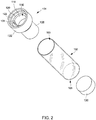
- FIG. 2 is an exploded view of the culture container 100
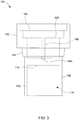
- FIG. 3 is a side view illustrating a cover 104 of the culture container 100.
- the culture container 100 can be used for culturing and maintaining a population of an organism of interest. Examples of organisms that may be grown and maintained inside the culture container 100 may include, without limitation, drosophila species such as fruit flies, or any other insects that may be used as experimental models.
- the culture container 100 can include a tube 102 and a removable cover 104.
- the tube 102 may have any suitable shapes. Examples of shapes for the tube 102 can include, without limitation, a generally cylindrical shape (as shown), a truncated conical shape, a prismatic shape, etc.
- the tube 102 has a hollow interior, and two openings 103 and 105 respectively at two opposite ends that communicates with the hollow interior of the tube 102.
- the tube 102 may be made of a transparent material, such as transparent glass or plastic.
- the cover 104 is installable on and removable from the opening 103 of the tube 102.
- the cover 104 can include a receptacle 106 and an inlet port 108.
- the receptacle 106 can be disposed at an inner side of the cover 104 facing the tube 102, and can be configured to hold a substance consumable by an organism of interest, such as nutritive substance, a drug substance and the like.
- the receptacle 106 may include a base surface 110 and a surrounding wall 112 connected with each other for at least partially delimiting a cavity 114 suitable for receiving the consumable substance.
- the inlet port 108 communicates with the hollow interior of the tube 102 when the cover 104 is installed on and closes the opening 103 of the tube 102.
- a fluid substance may be flowed through the inlet port 108 into the culture container 100 while the cover 104 is installed on the tube 102.
- an outer side of the cover 104 opposite to that of the tube 102 may include a receiving cavity 116 having a sidewall 118, and the inlet port 108 can extend through the cover 104 and respectively open on the sidewall 118 of the receiving cavity 116 and at a side of the receptacle 106 on the inner side of the cover 104.
- the inlet port 108 can have an opening 108A at a side of the receptacle 106, as shown in FIGS. 1 and 3 .
- the inlet port 108 can thereby communicate with the receiving cavity 116.
- the receiving cavity 116 can have an enlarged size so as to facilitate flowing of a fluid substance into the receiving cavity 116, and then through the inlet port 108 to the interior of the culture container 100.
- the inlet port 108 and/or the opening 108A of the inlet port 108 inside the culture container 100 can be sufficiently small to prevent an organism of interest cultured inside the culture container 100 from escaping through the inlet port 108.
- the cover 104 can further include one or more seal receiving surface disposed adjacent to the receiving cavity 116.
- two seal receiving surfaces 120 and 122 may be provided on the cover 104.
- the seal receiving surfaces 120 and 122 can extend generally parallel to each other peripherally around the receiving cavity 116.
- the seal receiving surfaces 120 and 122 may be defined on flange portions projecting at different heights from the sidewall 118 of the receiving cavity 116.
- each of the seal receiving surfaces 120 and 122 can have an annular shape. However, any suitable shapes may be applied for the seal receiving surfaces 120 and 122.
- each of the seal receiving surfaces 120 and 122 can receive the bonding of a sealing film for closing the receiving cavity 116 and preventing fluid passage through the inlet port 108 of the cover 104 into the hollow interior of the tube 102.
- the cover 104 may be attached to the tube 102 by interference fit between the cover 104 and the tube 102.
- the cover 104 may include a coupling portion 124 that may be in frictional contact with a sidewall surface of the tube 102 when the cover 104 is installed to close the opening 103.
- the coupling portion 124 can be exemplary inserted into the opening 103 in frictional contact with an inner surface region of the tube 102 adjacent to the opening 103.
- the frictional contact between the cover 104 and the tube 102 can be achieved on a tapered shape provided on the coupling portion 124 of the cover 104.
- FIG. 4 is a schematic view illustrating a variant construction in which the cover 104 may be attached to the tube 102 by thread engagement between the cover 104 and the tube 102.
- the cover 104 may include a coupling portion 126 having a thread portion 128, and the tube 102 may have another thread portion 130 extending around the opening 103.
- the thread portions 128 and 130 may be engaged with each other for attaching the cover 104 to the tube 102.
- the cover 104 when the cover 104 is installed on the tube 102, there may be a gap G between an inner sidewall surface of the tube 102 and the receptacle 106, the gap G extending along a height of the receptacle 106 to an end rim 106A of the receptacle 106.
- the tube 102 and the receptacle 106 can be dimensioned so that the gap G (especially at the end rim 106A of the receptacle 106) is sufficiently small to prevent passage of a cultured organism in the gap G.
- FIG. 5 is a side view illustrating a variant construction in which the tube 102' may have a tapered portion 102A' adjacent to the receptacle 106 of the cover 104.
- the gap G can be defined between an inner sidewall of the tapered portion 102A' and the receptacle 106. Owing to the tapered portion 102A', the gap G may increasingly reduce toward the end rim 106A of the receptacle 106. In this manner, the gap G can be smallest at the end rim 106A to prevent passage of a cultured organism.
- the cover 104 may further include a catch portion 132 that can project laterally from an outer side surface of the tube 102 when the cover 104 is attached to the tube 102.
- the catch portion 132 may extend continuously along a circumference of the cover 104, or may project locally on a periphery of the cover 104. The catch portion 132 can facilitate grasping of the cover 104 for installation and removal of the cover 104 on the tube 102.
- the culture container 100 may further include an air-permeable plug 136 that may be detachably installed to close the opening 105 of the tube 102.
- the air-permeable plug 136 can prevent the cultured organism of interest from escaping the culture container 100 through the opening 105 of the tube 102 while allowing air passage for breathing of the cultured organism.
- the air-permeable plug 136 can include a breathable material. Examples of materials for the air-permeable plug 136 may include, without limitation, cotton, breathable fibers, porous or perforate materials, and the like.
- the culture container 100 described herein may be implemented as a culture vial having an elongate shape.
- the tube 102 may have a length between about 5 cm and about 20 cm.
- the tube 102 may further exemplary have a radius between about 0.5 cm and about 6 cm.
- the cover 104 may have a height between about 1 cm and about 10 cm.
- the cover 104 may have a radius between about 0.5 cm and about 6 cm.
- the culture container 100 is not limited to vial embodiments, and may take other forms.
- the culture container 100 described herein may also be implemented as a culture bottle for growing a greater population of the organism of interest.
- FIG. 6 is a schematic view illustrating exemplary use of the culture container 100 for culturing and maintaining a population of an organism of interest T.
- the organism T may include, without limitation, fruit flies or any other insects of interest.
- the organism enclosed in the culture container 100 may include an adult form and a non-adult form, such as eggs, larvae and/or pupae.
- the culture container 100 may be used to culture a population of the organism of interest T with the cover 104 closing the opening 103 of the tube 102 and the air-permeable plug 136 closing the opening 105 of the tube 102 opposite to the cover 104.
- the receptacle 106 of the cover 104 may retain a substance 138 consumable by the organism of interest T grown and enclosed inside the culture container 100.
- the consumable substance 138 may include, without limitation, a nutritive substance, a drug substance and the like.
- the receptacle 106 of the cover 104 may receive new generations T' of the organism of interest, which may include, without limitation, a non-adult form of the organism such as eggs, larvae and/or pupae.
- the new generations T' of the organism of interest may adhere to the consumable substance 138 and/or the wall 112 of the receptacle 106.
- a sealing film 140 may be bonded to one of the two seal receiving surfaces 120 and 122 (e.g., the seal receiving surface 120 as shown) to prevent introduction of undesirable substances or contaminants through the inlet port 108 of the cover 104 into the interior of the culture container 100.
- the culture container 100 may be disposed with the cover 104 at the bottom and the air-permeable plug 136 at the top while culturing the organism of interest T.
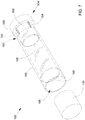
- FIG. 7 is a schematic perspective view illustrating another variant construction of a culture container 100'.
- the culture container 100' can have a structure similar to the aforementioned embodiment, including the tube 102 having two openings 103 and 105 at two opposite ends, the removable cover 104' that can close the opening 103, and the air-permeable plug 136 that can close the other opening 105.
- the tube 102 may have an inner flange 160 provided close to the opening 105.
- the air-permeable plug 136 closing the opening 105 of the tube 102 may contact against the inner flange 160, which can stop the air-permeable plug 136 and prevent its excessive movement into the tube 102.
- the cover 104' is very similar to the aforementioned embodiments, but has no inlet port 108. More specifically, the cover 104' can include the receptacle 106 for holding a substance consumable by the cultured organism of interest. The receptacle 106 can be disposed at the inner side of the cover 104' facing the tube 102, and can have a structure like the aforementioned embodiments. Moreover, the cover 104' can include a throttle portion 162 adjacently connected with the receptacle 106 and the catch portion 132. The throttle portion 162 is narrower in size than the catch portion 132, and a circumferential surface of the throttle portion 162 can be provided with a plurality of protruding ribs 164.
- the cover 104' including the receptacle 106, the catch portion 132, the throttle portion 162 and the ribs 164 may be formed integrally as a single part.
- the cover 104' can be partially inserted into the tube 102 with the ribs 164 in contact against a rim of the opening 103, whereby the throttle portion 162 and the ribs 164 can be at least partially exposed outside the tube 102.
- the contact between the ribs 164 and the rim of the opening 103 can ensure that the cover 104' is stopped in proper position for closing the opening 103 of the tube 102 and further facilitate installation and removal of the cover 104'.
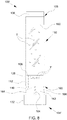
- FIG. 8 is a schematic view illustrating exemplary use of the culture container 100' for culturing and maintaining a population of an organism of interest T.
- the culture container 100' may be used to culture a population of the organism of interest T with the cover 104' closing the opening 103 of the tube 102 and the air-permeable plug 136 closing the opening 105 of the tube 102 opposite to the cover 104'.
- the receptacle 106 of the cover 104' may retain a substance 138 consumable by the organism of interest T grown and enclosed inside the culture container 100'.
- the receptacle 106 of the cover 104' may receive new generations T' of the organism of interest, which may include, without limitation, a non-adult form of the organism such as eggs, larvae and/or pupae.
- the new generations T' of the organism of interest may adhere to the consumable substance 138 and/or the wall 112 of the receptacle 106.
- the culture container 100' may be disposed with the cover 104' at the bottom and the air-permeable plug 136 at the top while culturing the organism of interest T.
- FIG. 9 is a simplified view illustrating an automated transfer system 200 operable to transfer a cultured organism of interest between a plurality of culture containers 100A and 100B.
- Each of the culture containers 100A and 100B can have the same construction, which can be any of the culture containers 100 and 100' described previously.
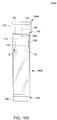
- FIGS. 10A and 10B are schematic views illustrating an embodiment in which the culture containers 100A and 100B are similar in construction to the culture container 100 shown in FIG. 1 , wherein FIG. 10A is a schematic view illustrating an example of one culture container 100A initially provided to the transfer system 200, and FIG. 10B is a schematic view illustrating an example of one culture container 100B initially provided to the transfer system 200. Referring to FIG.
- each of the culture containers 100A initially provided contains a culture of an organism of interest T, which may be exemplary fruit flies or other insects.
- the initial culture container 100A includes a tube 102A that is respectively closed with a cover 104A at one end and an air-permeable plug 136 at the other opposite end.
- the cover 104A can have the same construction as the cover 104 described previously, and can include the inlet port 108 and the receptacle 106 received inside the tube 102A of the culture container 100A.
- the receptacle 106 of the cover 104A may hold a substance 138 consumable by the organism of interest T (e.g., including a nutritive substance, a drug substance and the like), and new generations T 'of the organism of interest T, which can include a non-adult form of the organism such as eggs, larvae and/or pupae.
- a substance 138 consumable by the organism of interest T e.g., including a nutritive substance, a drug substance and the like
- new generations T 'of the organism of interest T which can include a non-adult form of the organism such as eggs, larvae and/or pupae.
- each of the culture containers 100B initially provided is a clean culture container containing no culture of organism.
- the initial culture container 100B includes a tube 102B that is respectively closed with a cover 104B at one end and an air-permeable plug 136 at the other opposite end.
- the cover 104B can have the same construction as the cover 104 described previously, and can include the inlet port 108 and the receptacle 106 received inside the initial culture container 100B.
- the receptacle 106 of the cover 104B may hold a substance 138 consumable by the organism of interest.
- FIGS. 11A and 11B are schematic views illustrating another embodiment in which the culture containers 100A and 100B processed in the transfer system 200 are similar in construction to the culture container 100' shown in FIG. 7 , wherein FIG. 11A is a schematic view illustrating an example of one culture container 100A initially provided to the transfer system 200, and FIG. 11B is a schematic view illustrating an example of one culture container 100B initially provided to the transfer system 200.
- each of the culture containers 100A initially provided contains a culture of an organism of interest T, which may be exemplary fruit flies or other insects.
- the initial culture container 100A includes a tube 102A that is respectively closed with a cover 104A at one end and an air-permeable plug 136 at the other opposite end.
- the cover 104A can have the same construction as the cover 104' described previously with reference to FIGS. 7 and 8 , and can include the receptacle 106 received inside the tube 102A of the culture container 100A.
- the receptacle 106 of the cover 104A may hold a substance 138 consumable by the organism of interest T (e.g., including a nutritive substance, a drug substance and the like), and new generations T 'of the organism of interest T, which can include a non-adult form of the organism such as eggs, larvae and/or pupae.
- each of the culture containers 100B initially provided is a clean culture container containing no culture of organism.
- the initial culture container 100B includes a tube 102B that is respectively closed with a cover 104B at one end and an air-permeable plug 136 at the other opposite end.
- the cover 104B can have the same construction as the cover 104' described previously, and can include the receptacle 106 received inside the initial culture container 100B.
- the receptacle 106 of the cover 104B may hold a substance 138 consumable by the organism of interest.
- an embodiment of the automated transfer system 200 can include two conveyor systems 202 and 204, an anesthetization unit 206, an exchanging unit 208, a reading unit 214, a printing unit 216 and two inspection units 218 and 220.
- the conveyor system 202 can define a transport path P1 along which the culture containers 100A may be conveyed for processing.
- the conveyor system 202 can include a container supplying part 222, a rotary platform 224 and a container discharging part 226.
- the container supplying part 222 may include a ramp or a conveying belt, and can transport the culture containers 100A in a row.
- the container supplying part 222 can deliver each initially provided culture container 100A to the rotary platform 224 with the cover 104A on top of the tube 102A.
- the culture containers 100A may be manually positioned so that the cover 104A of each culture container 100A is on top of the tube 102A thereof.
- a machine equipment may be provided before the conveyor system 202 to flip the culture containers 100A so that the cover 104A of each culture container 100A is on top of the tube 102A thereof.
- the culture containers 100A may be initially placed on a support frame, and a flipping unit 201 (e.g., including robot arms) may be provided to turn over the support frame and culture containers 100A placed thereon so that the cover 104A of each culture container 100A is on top of the tube 102A.
- FIG. 12 is a perspective view schematically illustrating the rotary platform 224.
- the rotary platform 224 may include a fixed base 228, and a rotary plate 230 pivotally connected with the fixed base 228.
- the fixed base 228 may include a sidewall 232 that extends around the rotary plate 230 and has an opening 234 through which culture containers may be loaded on and/or unloaded from the rotary platform 224.
- the rotary plate 230 can have a plurality of slots 236 that are disposed along a circle spaced apart from one another.
- the slot 236 may be shaped and sized so as to receive one culture container 100A, especially the tube 102A thereof.
- the tube 102A of each culture container 100A may be loaded into one slot 236 of the rotary plate 230 through the opening 234, and the rotary plate 230 then can rotate to convey the tube 102A placed in the slot 236 along an arcuate portion of the transport path P1 from the container supplying part 222 through the exchanging unit 208 to the container discharging part 226.
- the container discharging part 226 can include a ramp or a conveying belt.
- the container discharging part 226 can be disposed downstream of the exchanging unit 208 along the transport path PI, and convey processed culture containers 100A' from the rotary platform 224 toward a receiving tray 240.
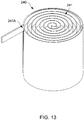
- FIG. 13 is a perspective view illustrating the receiving tray 240.
- the tray 240 can include a spiral track 241 for receiving the processed culture containers 100A'.
- the processed containers 100A' may be pushed to travel through an opening 241A of the receiving tray 240 and enter the spiral track 241 for temporary storage.
- the shape of the spiral track 241 may facilitate discharge of the processed culture containers 100A' from the container discharging part 226.
- the conveyor system 204 can define a transport path P2 along which the culture containers 100B may be conveyed for processing.
- the conveyor system 204 can be similar to the conveyor system 202 in construction, and can include a container supplying part 242, a rotary platform 244 and a container discharging part 246.
- the container supplying part 242 may include a ramp or a conveying belt, and can transport the culture containers 100B in a row.
- the container supplying part 242 can deliver each culture container 100B to the rotary platform 244 with the cover 104B on top of the tube 102B.
- FIG. 14 is a perspective view schematically illustrating the rotary platform 244.
- the rotary platform 244 may include a fixed base 248, and a rotary plate 250 pivotally connected with the fixed base 248.
- the fixed base 248 may include a sidewall 252 that extends around the rotary plate 250 and has an opening 254 through which culture containers may be loaded on and/or unloaded from the rotary platform 244.
- the rotary plate 250 can have a plurality of slots 256 that are disposed along a circle spaced apart from one another.
- the slot 256 may be shaped and sized so as to receive one culture container 100B, especially the tube 102B thereof.
- the tube 102B of each culture container 100B may be loaded into one slot 256 of the rotary plate 250 through the opening 254, and the rotary plate 250 then can rotate to convey the tube 102B placed in the slot 256 along an arcuate portion of the transport path P2 from the container supplying part 242 through the exchanging unit 208 to the container discharging part 246.
- the container discharging part 246 can include a ramp or a conveying belt.
- the container discharging part 246 can be disposed downstream of the exchanging unit 208 along the transport path P2, and convey processed culture containers 100B' from the rotary platform 244 toward a receiving tray 258.
- FIG. 15 is a perspective view illustrating the receiving tray 258.
- the tray 258 may be similar to the receiving tray 240, and can include a spiral track 259 for receiving the processed culture containers 100B'.
- the processed containers 100B' may be pushed to travel through an opening 259A of the receiving tray 258 and enter the spiral track 259 for temporary storage.
- the shape of the spiral track 259 may facilitate discharge of the processed culture containers 100B' from the container discharging part 246.
- the anesthetization unit 206 may be disposed adjacent to the conveyor system 202, and upstream of the exchanging unit 208 along the transport path P1.
- the anesthetization unit 206 is operable to anesthetize the organism of interest T enclosed inside each culture container 100A. More specifically, the anesthetization unit 206 may deliver an anesthetic substance into each culture container 100A through the inlet port 108 provided on the cover 104A in case the provided culture container 100A has a construction as shown in FIG. 10A , or through the air-permeable plug 136 in case the provided culture container 100A has a construction as shown in FIG. 11A . A portion of the anesthetized organism, mostly its adult form, can then fall on the air-permeable plug 136, e.g., by gravity action.
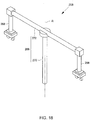
- FIG. 16 is a perspective view schematically illustrating a portion of an anesthetization unit 206 adapted to introduce an anesthetic substance through the cover 104A into the culture container 100A shown in FIG. 10A .
- the anesthetization unit 206 can include a fixed support frame 260, and a nozzle 262 and a conduit 264 connected with each other.
- An anesthetic substance e.g., dioxide carbon, may be flowed along the conduit 264 to the nozzle 262.
- the nozzle 262 can point downward, and can be movably connected with the fixed frame 260 for upward and downward movement.
- the nozzle 262 can move downward to a lower position adjacent to the culture container 100A for facilitating delivery of the anesthetic substance through the cover 104A into the interior of the culture container 100A, and move upward to an upper position to clear the way for displacement of the culture container 100A.
- the culture container 100A processed at the anesthetization unit 206 may have a sealing film 150 that is bonded to the cover 104A (e.g., the seal receiving surface 120 thereof) for preventing fluid passage through the inlet port 108 into the hollow interior of the culture container 100A.
- the nozzle 262 of the anesthetization unit 206 may further include a shape adapted to pierce the sealing film 150 before delivering the anesthetic substance into the culture container 100A.
- FIG. 17 is a perspective view schematically illustrating a portion of an anesthetization unit 206 adapted to introduce an anesthetic substance through the air-permeable plug 136 into the culture container 100A shown in FIG. 11A .
- the anesthetization unit 206 shown in FIG. 17 can be very similar to that shown in FIG. 16 , including the fixed support frame 260, and the nozzle 262 and the conduit 264 connected with each other.
- the nozzle 262 can point upward, and can be movably connected with the fixed frame 260 for upward and downward movement.
- the nozzle 262 can move upward to an upper position adjacent to the culture container 100A for facilitating delivery of the anesthetic substance through the air-permeable plug 136 into the interior of the culture container 100A, and move downward to a lower position to clear the way for displacement of the culture container 100A.
- the anesthetization unit 206 may be disposed adjacent to the rotary platform 224, as shown in FIG. 9 . Once the anesthetic substance is introduced into the culture container 100A, the rotary platform 224 may convey the culture container 100A away from the anesthetization unit 206 toward the exchanging unit 208.
- FIG. 18 is a perspective view schematically illustrating an embodiment of the exchanging unit 208.
- the exchanging unit 208 can be disposed downstream of the anesthetization unit 206 along the transport path P1 and between the two conveyor systems 202 and 204, which can respectively carry the culture containers 100A and 100B toward the exchanging unit 208 with the covers 104A and 104B respectively on top of the tubes 102A and 102B.
- the exchanging unit 208 is operable to interchange the covers 104A and 104B between two culture containers 100A and 100B, so that the cover 104A initially attached to the tube 102A of the culture container 100A becomes attached to the tube 102B of the initially provided culture container 100B, and the cover 104B initially attached to the tube 102B of the culture container 100B becomes attached to the tube 102A of the initially provided culture container 100A.
- the exchanging unit 208 may be operable to respectively separate the two covers 104A and 104B from the two tubes 102A and 102B, switch the two covers 104A and 104B with respect to the two tubes 102A and 102B, and respectively attach the cover 104A to the tube 102B and the cover 104B to the tube 102A.
- the exchanging unit 208 can include a rotary part 266 and two arms 268.
- the rotary part 266 can exemplary include a support stem 270 and a transversal bar 272 fixedly connected with each other.
- the support stem 270 may be rotatable about a pivot axis R, and the transversal bar 272 may extend substantially perpendicular to the pivot axis R.
- the two arms 268 may be attached to the transversal bar 272 of the rotary part 266 at two diametrically opposite positions relative to the pivot axis R of the rotary part 266.
- the two arms 268 can be configured to respectively grasp and hold the two covers 104A and 104B at the catch portions 132 thereof.
- Each of the two arms 268 is operable to separate or attach one cover 104A or 104B with respect to one tube 102A or 102B, and the rotary part 266 is rotatable to switch the two covers 104A and 104B with respect to the two tubes 102A and 102B.
- the rotary part 266 and the two arms 268 may further be slidable in unison along the pivot axis R.
- the rotary part 266 and the two arms 268 can slide upward along the pivot axis R to respectively separate the covers 104A and 104B with respect to the tube 102A and 102B, rotate about the pivot axis R to move and switch the two covers 104A and 104B with respect to the two tubes 102A and 102B which are respectively kept stationary on the rotary platforms 224 and 244, and then slide downward to respectively attach the cover 104A to the tube 102B and the cover 104B cover to the tube 102A.
- each culture container 100A becomes a culture container 100A' comprised of the cover 104B attached to the tube 102A
- each culture container 100B becomes a culture container 100B' comprised of the cover 104A attached to the tube 102B.
- the culture container 100A' can be further transported by the conveyor system 202 along the transport path P1 for further downstream processing, while the culture container 100B' can be further transported by the conveyor system 204 along the transport path P2 for further downstream processing.
- the transfer system 200 may further include two sealing units 210 and 212.
- the sealing unit 210 can be disposed adjacent to the rotary platform 224 downstream of the exchanging unit 208 along the transport path PI, and the sealing unit 212 can be disposed adjacent to the rotary platform 244 downstream of the exchanging unit 208 along the transport path P2.
- the sealing unit 210 can bond a sealing film on the cover 104B attached to the tube 102A (e.g., on the seal receiving surface 120 thereof), and the sealing unit 212 can bond another sealing film on the cover 104A attached to the tube 102B (e.g., on the seal receiving surface 122 thereof).
- FIG. 19 is a schematic view illustrating an example of construction for each of the sealing units 210 and 212.
- Each of the sealing unit 210 and 212 can include a feed drum 274, a take-up drum 276 and a heater 278.
- a roll of a sealing film 279 may be wound around the feed drum 274 and connected with the take-up drum 276.
- the take-up drum 276 can rotate to unwind the sealing film 279 from the feed drum 274, and the heater 278 can operate to thermally bond the sealing onto the seal receiving surface 120 or 122 of the cover 104A or 104B.
- the reading unit 214 can be disposed adjacent to the transport path P2 downstream of the exchanging unit 208.
- Examples of the reading unit 214 may include a scanning device.
- the reading unit 214 can read an identification code on the cover 104A attached to the tube 102B of the culture container 100B'.
- the identification code acquired by the reading unit 214 may include information regarding the organism of interest T initially kept in the culture container 100A comprised of the tube 102A and the cover 104A.
- the printing unit 216 can be disposed adjacent to the transport path P1 downstream of the exchanging unit 208.
- the printing unit 216 can print an identification code on the cover 104B attached to the tube 102A of the culture container 100A' according to the code read on the cover 104A by the reading unit 214.
- the identification code may contain information such as a description of the organism of interest T, the date of transfer, and other useful information. In this manner, the chain of transfer for the cultured organism of interest T can be suitably traced.
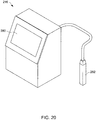
- FIG. 20 is a perspective view schematically illustrating the printing unit 216.
- the printing unit 216 may include a screen 280 and a printing gun 282.
- the screen 280 may display various information or settings for the printing unit 216.
- the printing unit 216 may receive data corresponding to the code read by the reading unit 214 on the cover 104A attached to the tube 102B, and can print a corresponding identification code on the cover 104B attached to the tube 102A via the printing gun 282.
- the inspection units 218 and 220 can include scanning devices.
- the inspection unit 218 can be disposed adjacent to the rotary platform 224 downstream of the printing unit 216 along the transport path PI, e.g., before the container discharging part 226.
- the inspection unit 220 can be disposed adjacent to the rotary platform 244 downstream of the reading unit 214 along the transport path P2, e.g., before the container discharging part 246.
- the inspection units 218 and 220 can respectively read information on the cover 104B attached to the tube 102A and information on the cover 104A attached to the tube 102B, and verify that they are consistent before the culture containers 100A' and 100B' are discharged toward the receiving trays 240 and 258 via the container discharging parts 226 and 246.
- this confined environment can be exemplary provided by a pressurized chamber 284, which can enclose at least partially the conveyor systems 202 and 204 (including the rotary platforms 224 and 244), the anesthetization unit 206, the exchanging unit 208, the sealing units 210 and 212, the reading unit 214 and the inspection units 218 and 220.
- the pressurized chamber 284 can include a plurality of openings 284A, 284B, 284C and 284D for passage of the container discharging part 226, the container supplying part 222, the container supplying part 242 and the container discharging part 246, respectively.
- the conveyor systems 202 and 204 can respectively convey culture containers into and out of the pressurized chamber 284.
- the pressurized chamber 284 can maintain an internal pressure higher than the pressure of an outer environment to prevent introduction of contaminants into the pressurized chamber 284.
- FIG. 21 is a flowchart of method steps executable by the automated transfer system 200 for transferring an organism of interest T from the culture containers 100A to the culture containers 100B.
- the culture containers 100A and 100B can be as shown in FIGS. 10A and 10B , or as shown in FIGS. 11A and 11B .
- the culture containers 100A enclosing an organism of interest T can be provided on the conveyor system 202.
- the organism of interest T can include, without limitation, fruit flies or other insects.
- the organism of interest T enclosed in each culture container 100A can include an adult form, and a non-adult form such as eggs, larvae and/or pupae.
- each culture container 100A can have a same construction, which can be the one shown in FIG. 10A or FIG. 11A . Accordingly, each culture container 100A can include the tube 102A, the cover 104A closing the opening 103 of the tube 102A, and the air-permeable plug 136 closing the opening 105 of the tube 102A.
- the receptacle 106 of the cover 104A is enclosed inside the tube 102A and holds the consumable substance 138 for the organism of interest T, and new generations T' of the organism, which can include, without limitation, the non-adult form of the organism such as eggs, larvae and/or pupae.
- the culture containers 100A can be provided on the conveyor system 202 with the covers 104A on top of the tubes 102A.
- the clean culture containers 100B can be provided on the conveyor system 204. All the culture containers 100B can have a same construction, which can be the one shown in FIG. 10B or FIG. 11B .
- the clean culture containers 100B initially provided may be sterilized containers enclosing no cultured organism.
- Each culture container 100B can include the tube 102B, the cover 104B closing the opening 103 of the tube 102B, and the air-permeable plug 136 closing the opening 105 of the tube 102B.
- the receptacle 106 of the cover 104B is enclosed inside the tube 102B, and can hold the consumable substance 138 for the organism of interest T.
- the culture containers 100B can be provided on the conveyor system 204 with the covers 104B on top of the tubes 102B.
- the anesthetization unit 206 can anesthetize the organism of interest T that is enclosed inside each culture container 100A by delivering an anesthetic substance (e.g., dioxide carbon) through the inlet port 108 provided on the cover 104A, or through the air-permeable plug 136.
- an anesthetic substance e.g., dioxide carbon
- the cover 104A is provided with the inlet port 108 as shown in FIG. 10A
- the nozzle 262 of the anesthetization unit 206 can pierce a sealing film 150 on the cover 104A, and then deliver the anesthetic substance through the inlet port 108 into the interior of the culture container 100A.
- the cover 104A has no inlet port 108 as shown in FIG.
- the nozzle 262 of the anesthetization unit 206 can penetrate the tube 102A through the air-permeable plug 136 at the end of the tube 102A opposite to the cover 104A, and then deliver the anesthetic substance into the interior of the culture container 100A.
- the anesthetization unit 206 may deliver the anesthetic substance into each culture container 100A at a location adjacent to the rotary platform 224, after the culture container 100A is conveyed into the pressurized chamber 284.
- a portion of the anesthetized organism T in particular the adult form thereof, can drop on the air-permeable plug 136 by gravity action. Meanwhile, a portion of the organism T, including the new generations T' thereof, can remain in the receptacle 106 of the cover 104A.
- the exchanging unit 208 can interchange the covers 104A and 104B between two culture containers 100A and 100B so that the cover 104A is attached to the tube 102B and the cover 104B is attached to the tube 102A.
- a portion of the organism T, in particular the new generations T' thereof, can be thereby transferred to a new culture container comprised of the tube 102B and the cover 104A.
- Step 308 may be performed while the two culture containers 100A and 100B are positioned with the two covers 104A and 104B respectively on top of the two tubes 102A and 102B.
- the rotary platform 224 of the conveyor system 202 can rotate to convey one culture container 100A from the anesthetization unit 206 to the exchanging unit 208
- the rotary platform 244 of the conveyor system 204 can rotate to convey one culture container 100B to the exchanging unit 208.
- the rotary part 266 and the two arms 268 of the exchanging unit 208 then can slide downward along the pivot axis R so that the two arms 268 can respectively grasp the covers 104A and 104B.
- the two arms 268 may respectively grasp the covers 104A and 104B at the catch portions 132 thereof, or at the throttle portions 162 thereof (better shown in FIG. 11A and 11B ).
- the rotary part 266 and the two arms 268 of the exchanging unit 208 can slide upward to respectively separate the covers 104A and 104B from the tubes 102A and 102B, rotate about the pivot axis R to move and switch the two covers 104A and 104B with respect to the two tubes 102A and 102B, slide downward to respectively close the tube 102B with the cover 104A and close the tube 102A with the cover 104B, and eventually slide upward to release the covers 104A and 104B and clear the way for downstream travel of the tubes 102A and 102B for further processing.
- the culture container 100A carried by the conveyor system 202 becomes a culture container 100A' comprised of the tube 102A and the cover 104B connected to each other
- the culture container 100B carried by the conveyor system 204 becomes a culture container 100B' comprised of the tube 102B and the cover 104A connected to each other.
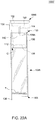
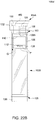
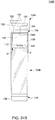
- FIGS. 22A and 22B are schematic views respectively illustrating the culture container 100A' and the culture container 100B' that are obtained when the transfer method described herein is applied on the initial culture containers 100A and 100B shown in FIGS. 10A and 10B .
- the organism of interest T (mostly the adult form thereof) can remain stunned on the air-permeable plug 136, and the consumable substance 138 held in the receptacle 106 of the cover 104B can be used to continue culturing the organism of interest T inside the culture container 100A'.
- FIG. 22A in the culture container 100A', the organism of interest T (mostly the adult form thereof) can remain stunned on the air-permeable plug 136, and the consumable substance 138 held in the receptacle 106 of the cover 104B can be used to continue culturing the organism of interest T inside the culture container 100A'.
- the receptacle 106 of the cover 104A can hold the new generations T' of the organism of interest, which can include the non-adult form of the organism such as eggs, larvae and/or pupae.
- the sealing film 150 on the cover 104A is shown as being broken, which is due to the introduction of the anesthetic substance into the culture container 100A at the anesthetization unit 206 when the cover 104A was attached to the tube 102A.
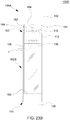
- FIGS. 23A and 23B are schematic views respectively illustrating the culture container 100A' and the culture container 100B' that are obtained when the transfer method described herein is applied on the initial culture containers 100A and 100B shown in FIGS. 11A and 11B .
- the organism of interest T (mostly the adult form thereof) can remain stunned on the air-permeable plug 136, and the consumable substance 138 held in the receptacle 106 of the cover 104B can be used to continue culturing the organism of interest T inside the culture container 100A'.
- the receptacle 106 of the cover 104A can hold the new generations T' of the organism of interest, which can include the non-adult form of the organism such as eggs, larvae and/or pupae.
- the rotary platform 244 can convey the culture container 100B' downstream of the exchanging unit 208 to the reading unit 214, which can read an identification code on the cover 104A attached to the tube 102B.
- the rotary platform 224 can further convey the culture container 100A' to the printing unit 216, which can print an identification code on the cover 104B attached to the tube 102A according to the code read on the cover 104A in step 310.
- the identification code printed on the cover 104B may be similar to that on the cover 104A.
- the identification code printed on the cover 104B may contain information such as a description of the organism of interest T, the date of transfer, and the like. In this manner, the cultured organism of interest T can be adequately identified and its chain of transfer may be suitably traced.
- the method may further include bonding a sealing film 150 to the cover 104A on the tube 102B with the sealing unit 212, and bonding a sealing film 150 to the cover 104B on the tube 102A with the sealing unit 210.
- the sealing unit 210 can bond the sealing film 150 to the seal receiving surface 120 of the cover 104B
- the sealing unit 212 can bond the sealing film 150 to the seal receiving surface 122 of the cover 104A (the other seal receiving surface of the cover 104A may already has another sealing film 150 bonded thereto).
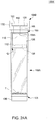
- the culture container 100A' comprised of the cover 104B placed on the tube 102A and the sealing film 150 bonded to the seal receiving surface 120 of the cover 104B is exemplary illustrated in FIG. 24A .
- the culture container 100B' comprised of the cover 104A placed on the tube 102B and the sealing film 150 bonded to the seal receiving surface 122 of the cover 104A is exemplary illustrated in FIG. 24B .
- the inspection units 218 and 220 can respectively read the identification codes on the covers 104B and 104A of the culture containers 100A' and 100B', and verify that they are consistent. In case they are not consistent, suitable correction steps may be taken.
- the transfer system 200 may stop the transfer process, and issue an alert signal requesting further verification and/or correction.
- the default culture containers 100A' and/or 100B' may be automatically evacuated for further verification and/or correction.
- the conveyor systems 202 and 204 in step 316 can respectively convey the culture containers 100A' and 100B' out of the pressurized chamber 284 and respectively discharge them on the receiving trays 240 and 258.
- New generations T' of the organism of interest T can be thereby grown and maintained in the culture containers 100B', whereas the culture containers 100A' can be kept as backup stocks.
- the culture containers 100A' and 100B' may be turned over so that the cover 104 of each culture container 100A' and 100B' is at the bottom for culturing the organism of interest T.
- FIG. 25 is a schematic planar view illustrating a variant construction of an automated transfer system 200' that can transfer a cultured organism of interest between the culture containers 100A and 100B.
- the transfer system 200' can include two conveyor systems 202' and 204', the anesthetization unit 206, an exchanging unit 208', the reading unit 214, the printing unit 216 and the inspection unit 218.
- the conveyor system 202' can define a transport path P1' along which the culture containers 100A may be conveyed in a row for processing
- the conveyor system 204' can define a transport path P2' along which the culture containers 100B may be conveyed in a row for processing.
- the two transport paths P1' and P2' can be substantially linear and parallel to each other, and each of the conveyor systems 202' and 204' can include one or more conveyor belt.
- the two conveyor systems 202' and 204' can respectively carry the culture containers 100A and 100B with the covers 104A and 104B respectively on top of the tubes 102A and 102B.
- the transfer system 200' may further include a flipping unit 201 disposed upstream of the conveyor systems 202' and 204'.
- the flipping unit 201 can have a space that can receive a larger quantity of culture containers 100A and 100B.
- the flipping unit 201 can rotate 180 degrees the culture containers 100A and 100B so that the covers 104A and 104B are respectively on top of the tubes 102A and 102B.
- the anesthetization unit 206 may be disposed adjacent to the conveyor system 202', and upstream of the exchanging unit 208'.
- the anesthetization unit 206 is operable to deliver an anesthetic substance into each culture container 100A for anesthetizing the organism of interest enclosed in the culture container 100A.
- the anesthetization unit 206 may exemplary have a construction similar to that illustrated in FIG. 16 or 17 .
- the exchanging unit 208' is disposed downstream of the anesthetization unit 206 along the transport path P1'.
- the exchanging unit 208' can be positioned between the two conveyor systems 202' and 204', which can respectively carry the culture containers 100A and 100B toward the exchanging unit 208' with the covers 104A and 104B respectively on top of the tubes 102A and 102B.
- the exchanging unit 208 is operable to interchange the covers 104A and 104B between two culture containers 100A and 100B, so that the cover 104A initially attached to the tube 102A of the culture container 100A becomes attached to the tube 102B of the initially provided culture container 100B, and the cover 104B initially attached to the tube 102B of the culture container 100B becomes attached to the tube 102A of the initially provided culture container 100A.
- FIG. 26 is a schematic view illustrating a construction of the exchanging unit 208'.
- the exchanging unit 208' can include a rotary part 266', and two arms 268' extending above the rotary part 266'.
- the rotary part 266' may be a rotary disk.
- the conveyor systems 202' and 204' can respectively transport the culture containers 100A and 100B until they are positioned on the rotary part 266', which can provide support for the tubes 102A and 102B of the culture containers 100A and 100B at an underside thereof.
- the two arms 268' are movable vertically, and can be configured to respectively hold the two covers 104A and 104B at the catch portions 132 thereof.
- Each of the two arms 268' is operable to separate or attach one cover 104A or 104B with respect to one tube 102A or 102B, and the rotary part 266' is rotatable to move the two tubes 102A and 102B while the two covers 104A and 104B are kept stationary by the two arms 268'.
- the exchanging unit 208' can thereby switch the two covers 104A and 104B with respect to the two tubes 102A and 102B.
- the exchanging unit 208' may further include an air curtain 269' operable to prevent air or contaminants from moving into a space where the culture containers 100A and 100B are positioned for switching the two covers 104A and 104B with respect to the two tubes 102A and 102B. This may prevent contamination of the culture container 100A' comprised of the cover 104B attached to the tube 102A and the culture container 100B' comprised of the cover 104A attached to the tube 102B.
- the reading unit 214 can be disposed adjacent to the transport path P2' downstream of the exchanging unit 208'.
- the reading unit 214 can read an identification code on the cover 104A attached to the tube 102B of the culture container 100B'.
- the printing unit 216 can be disposed adjacent to the transport path P1' downstream of the exchanging unit 208'.
- the printing unit 216 can print an identification code on the cover 104B attached to the tube 102A of the culture container 100A' according to the identification code read on the cover 104A by the reading unit 214.
- the inspection unit 218 can be disposed downstream of the printing unit 216 along the transport path P1', and can verify whether the identification code printed on the cover 104B by the printing unit 216 is correct.
- the transfer system 200' may further include two sealing units 210 and 212.
- the two sealing units 210 and 212 may be incorporated when the culture containers 100A and 100B processed by the transfer system 200' have the construction shown in FIGS. 10A and 10B .
- the two sealing units 210 and 212 may be respectively disposed adjacent to the conveyor systems 202' and 204' downstream of the exchanging unit 208' along the transport paths P1' and P2', e.g., the sealing units 210 and 212 can be disposed between the exchanging unit 208' and the printing unit 216.
- the sealing unit 210 can bond a sealing film to the cover 104B on the tube 102A
- the sealing unit 212 can bond another sealing film to the cover 104A on the tube 102B.
- the transfer system 200' may further include a flipping unit 219 disposed adjacent to an end of each of the conveyor system 202' and 204' opposite to the flipping unit 201.
- the flipping unit 219 can rotate 180 degrees the culture containers 100A' and 100B' so that the covers 104B and 104A are respectively at the bottom of the tubes 102A and 102B.
- the transfer system 200' can be adapted to perform the method steps illustrated in the flowchart of FIG. 21 for transferring the organism of interest between the culture containers.
- Advantages of the culture containers, systems and method described herein include the ability to culture and transfer large stocks of an organism of interest in an efficient manner. Rather than transferring the organism itself, the systems and method described herein transfer a cover of the culture container that can hold new generations of the organism of interest, which can greatly facilitate the transfer operation.
Landscapes
- Life Sciences & Earth Sciences (AREA)
- Health & Medical Sciences (AREA)
- Zoology (AREA)
- Chemical & Material Sciences (AREA)
- Engineering & Computer Science (AREA)
- Wood Science & Technology (AREA)
- Organic Chemistry (AREA)
- Bioinformatics & Cheminformatics (AREA)
- Genetics & Genomics (AREA)
- General Health & Medical Sciences (AREA)
- Environmental Sciences (AREA)
- Sustainable Development (AREA)
- Microbiology (AREA)
- Biomedical Technology (AREA)
- Biotechnology (AREA)
- Biochemistry (AREA)
- General Engineering & Computer Science (AREA)
- Clinical Laboratory Science (AREA)
- Biodiversity & Conservation Biology (AREA)
- Animal Behavior & Ethology (AREA)
- Animal Husbandry (AREA)
- Analytical Chemistry (AREA)
- Molecular Biology (AREA)
- Computer Hardware Design (AREA)
- Dentistry (AREA)
- Soil Sciences (AREA)
- Apparatus Associated With Microorganisms And Enzymes (AREA)
- Hematology (AREA)
- Physics & Mathematics (AREA)
- Thermal Sciences (AREA)
Applications Claiming Priority (2)
| Application Number | Priority Date | Filing Date | Title |
|---|---|---|---|
| US201762509719P | 2017-05-22 | 2017-05-22 | |
| US15/692,520 US10863737B2 (en) | 2017-05-22 | 2017-08-31 | Culture container, and system and method of transferring a cultured organism between culture containers |
Publications (1)
| Publication Number | Publication Date |
|---|---|
| EP3406701A1 true EP3406701A1 (fr) | 2018-11-28 |
Family
ID=62217826
Family Applications (1)
| Application Number | Title | Priority Date | Filing Date |
|---|---|---|---|
| EP18173221.5A Withdrawn EP3406701A1 (fr) | 2017-05-22 | 2018-05-18 | Récipient de culture et système et procédé de transfert d'un organisme de culture entre des récipients de culture |
Country Status (6)
| Country | Link |
|---|---|
| US (1) | US10863737B2 (fr) |
| EP (1) | EP3406701A1 (fr) |
| JP (2) | JP2018196372A (fr) |
| CN (1) | CN109041887B (fr) |
| CA (1) | CA3005538A1 (fr) |
| TW (1) | TWI763850B (fr) |
Cited By (1)
| Publication number | Priority date | Publication date | Assignee | Title |
|---|---|---|---|---|
| WO2021163107A1 (fr) * | 2020-02-11 | 2021-08-19 | Verily Life Sciences Llc | Dispositif de libération d'insectes |
Families Citing this family (5)
| Publication number | Priority date | Publication date | Assignee | Title |
|---|---|---|---|---|
| US20190127688A1 (en) * | 2017-10-26 | 2019-05-02 | The Regents Of The University Of California | Drosophila Stock Maintenance |
| KR102510462B1 (ko) * | 2021-03-25 | 2023-03-16 | (주)삼우에스앤티 | 미생물 배양배지 용기 인쇄방법 |
| PY2285359A (es) * | 2021-10-01 | 2023-05-10 | Oxitec Ltd | Aparatos y métodos de control de plagas |
| TWI837752B (zh) * | 2022-08-02 | 2024-04-01 | 豐蠅生物科技股份有限公司 | 生物數值監控與特徵辨識分析系統及其方法 |
| TWI899003B (zh) * | 2025-02-11 | 2025-09-21 | 美榮生醫股份有限公司 | 多功能大型細胞培養室 |
Citations (10)
| Publication number | Priority date | Publication date | Assignee | Title |
|---|---|---|---|---|
| GB1015519A (en) * | 1964-08-14 | 1966-01-05 | Walter Alfred Shields | Means for intermittently conveying vials |
| US4106438A (en) * | 1976-09-03 | 1978-08-15 | Nelson Roger K | Method of handling Drosophila |
| US4212267A (en) * | 1978-12-08 | 1980-07-15 | Patterson Irvin G | Insect study station |
| EP0339775A2 (fr) * | 1988-04-29 | 1989-11-02 | Beckman Instruments, Inc. | Support de flacon |
| US5827174A (en) * | 1995-09-26 | 1998-10-27 | Reuss, Jr.; William Alexander | Biological speciman containment and incubation pouch |
| US5902745A (en) * | 1995-09-22 | 1999-05-11 | Gore Hybrid Technologies, Inc. | Cell encapsulation device |
| US5928935A (en) * | 1995-09-26 | 1999-07-27 | Reuss, Jr.; William Alexander | Biological specimen containment and incubation device |
| US20160075983A1 (en) * | 2014-09-17 | 2016-03-17 | Hunan Xinhui Pharmaceutical Co., LTD | Mycelium Culture Flask |
| US20160108351A1 (en) * | 2013-07-18 | 2016-04-21 | Korea Institute Of Industrial Technology | Simple animal cell culture device and method for culturing animal cells using same |
| WO2016134221A1 (fr) * | 2015-02-20 | 2016-08-25 | Regeneron Pharmaceuticals, Inc. | Systèmes de seringue, systèmes de joint d'étanchéité de piston, systèmes de butée et procédés d'utilisation et d'assemblage |
Family Cites Families (15)
| Publication number | Priority date | Publication date | Assignee | Title |
|---|---|---|---|---|
| US2151589A (en) * | 1937-07-08 | 1939-03-21 | Falls Olive | Container for termites |
| CA1290273C (fr) * | 1986-08-28 | 1991-10-08 | Roy Holbrook | Dispositif et methodes pour la culture et la detection de microorganismes |
| US5272926A (en) * | 1991-11-13 | 1993-12-28 | Wilkins Judd R | Microbial retrieval and sampling pipette with a removable cover |
| US6223687B1 (en) * | 1997-04-07 | 2001-05-01 | Harry N. Windle | High efficiency vermiculture process and apparatus |
| WO2002006456A1 (fr) * | 2000-07-13 | 2002-01-24 | Invitrogen Corporation | Methodes et compositions d'extraction et d'isolation rapides de proteines et de peptides au moyen d'une matrice de lyse |
| JP2004016045A (ja) | 2002-06-13 | 2004-01-22 | Olympus Corp | 培養装置 |
| WO2010132749A2 (fr) | 2009-05-15 | 2010-11-18 | Biomerieux, Inc. | Mécanisme de transfert automatisé pour appareil de détection microbienne |
| KR101243702B1 (ko) * | 2010-11-24 | 2013-03-14 | 신일순 | 초파리 알 채집용기 |
| US9629339B2 (en) * | 2011-02-21 | 2017-04-25 | The University Of Georgia Research Foundation, Inc. | Systems and methods for rearing insect larvae |
| CN203027935U (zh) * | 2013-01-25 | 2013-07-03 | 浙江师范大学 | 一种新型的可拆卸式平底试管 |
| NL2010666B3 (en) * | 2013-04-19 | 2018-11-21 | Buhler Changzhou Insect Tech Co Ltd | Method and system for breeding insects, using a plurality of individual crates. |
| JP2014212724A (ja) * | 2013-04-25 | 2014-11-17 | 実行データサイエンス株式会社 | 収容容器及びサンプル管理方法 |
| CN203523578U (zh) * | 2013-10-14 | 2014-04-09 | 贾庆林 | 果蝇换瓶器 |
| WO2016147897A1 (fr) | 2015-03-18 | 2016-09-22 | ロート製薬株式会社 | Dispositif de production pour produit de cellules après culture |
| CN205567525U (zh) * | 2016-03-14 | 2016-09-14 | 四川农业大学 | 一种单个果蝇的培养容器及组件 |
-
2017
- 2017-08-31 US US15/692,520 patent/US10863737B2/en active Active
-
2018
- 2018-05-18 CA CA3005538A patent/CA3005538A1/fr active Pending
- 2018-05-18 EP EP18173221.5A patent/EP3406701A1/fr not_active Withdrawn
- 2018-05-21 JP JP2018097075A patent/JP2018196372A/ja active Pending
- 2018-05-21 TW TW107117212A patent/TWI763850B/zh active
- 2018-05-21 CN CN201810489617.2A patent/CN109041887B/zh active Active
-
2022
- 2022-05-25 JP JP2022085212A patent/JP7423687B2/ja active Active
Patent Citations (10)
| Publication number | Priority date | Publication date | Assignee | Title |
|---|---|---|---|---|
| GB1015519A (en) * | 1964-08-14 | 1966-01-05 | Walter Alfred Shields | Means for intermittently conveying vials |
| US4106438A (en) * | 1976-09-03 | 1978-08-15 | Nelson Roger K | Method of handling Drosophila |
| US4212267A (en) * | 1978-12-08 | 1980-07-15 | Patterson Irvin G | Insect study station |
| EP0339775A2 (fr) * | 1988-04-29 | 1989-11-02 | Beckman Instruments, Inc. | Support de flacon |
| US5902745A (en) * | 1995-09-22 | 1999-05-11 | Gore Hybrid Technologies, Inc. | Cell encapsulation device |
| US5827174A (en) * | 1995-09-26 | 1998-10-27 | Reuss, Jr.; William Alexander | Biological speciman containment and incubation pouch |
| US5928935A (en) * | 1995-09-26 | 1999-07-27 | Reuss, Jr.; William Alexander | Biological specimen containment and incubation device |
| US20160108351A1 (en) * | 2013-07-18 | 2016-04-21 | Korea Institute Of Industrial Technology | Simple animal cell culture device and method for culturing animal cells using same |
| US20160075983A1 (en) * | 2014-09-17 | 2016-03-17 | Hunan Xinhui Pharmaceutical Co., LTD | Mycelium Culture Flask |
| WO2016134221A1 (fr) * | 2015-02-20 | 2016-08-25 | Regeneron Pharmaceuticals, Inc. | Systèmes de seringue, systèmes de joint d'étanchéité de piston, systèmes de butée et procédés d'utilisation et d'assemblage |
Cited By (1)
| Publication number | Priority date | Publication date | Assignee | Title |
|---|---|---|---|---|
| WO2021163107A1 (fr) * | 2020-02-11 | 2021-08-19 | Verily Life Sciences Llc | Dispositif de libération d'insectes |
Also Published As
| Publication number | Publication date |
|---|---|
| US20180332842A1 (en) | 2018-11-22 |
| CN109041887B (zh) | 2022-08-12 |
| TW201900015A (zh) | 2019-01-01 |
| TWI763850B (zh) | 2022-05-11 |
| CN109041887A (zh) | 2018-12-21 |
| JP7423687B2 (ja) | 2024-01-29 |
| JP2022118732A (ja) | 2022-08-15 |
| JP2018196372A (ja) | 2018-12-13 |
| US10863737B2 (en) | 2020-12-15 |
| CA3005538A1 (fr) | 2018-11-22 |
Similar Documents
| Publication | Publication Date | Title |
|---|---|---|
| EP3406701A1 (fr) | Récipient de culture et système et procédé de transfert d'un organisme de culture entre des récipients de culture | |
| US11885823B2 (en) | System and method for incubation and reading of biological cultures | |
| CN109803529B (zh) | 用于昆虫幼虫的自动化大规模饲养系统 | |
| CA2874990C (fr) | Systeme de traitement pour le transfert d'oeufs, et procede associe | |
| US6688255B2 (en) | Robotic apparatus and methods for maintaining stocks of small organisms | |
| US7816128B2 (en) | Automatic cell cultivation apparatus having a multijoint robot | |
| US20080035234A1 (en) | Automated system and process for filling drug delivery devices of multiple sizes | |
| CN104769408B (zh) | 块料保管装置以及自动薄切装置 | |
| US20180362910A1 (en) | Aseptic pods and load ports | |
| JP2015119727A (ja) | 識別される特性を有する卵を選択的に処理する方法および装置 | |
| CN109311550A (zh) | 用于沿在受控制的环境中操作的自动处理线运输的用于药物用途的主容器的处理方法 | |
| JP2018513984A5 (fr) | ||
| US20250327008A1 (en) | Cell production system | |
| US20170145365A1 (en) | Cell culturing device and closed-system culture vessel | |
| US20180332818A1 (en) | Culture Container, and System and Method of Transferring a Cultured Organism Between Culture Containers | |
| CN111575171B (zh) | Pcr工作站 | |
| JP2007037422A (ja) | 培養処理装置および培養処理方法 | |
| US20180332814A1 (en) | System and method of transferring a cultured organism between culture containers | |
| CN100354405C (zh) | 培养处理装置和自动培养装置 | |
| US20240369591A1 (en) | Automated systems and methods for loading solid reagent pellets into wells of a cartridge | |
| WO2025009203A1 (fr) | Plateau pour flacon, unité pour flacons et système de culture cellulaire | |
| WO2005061693A1 (fr) | Appareil de culture de cellules | |
| JPH02100672A (ja) | 培地充填回収装置 |
Legal Events
| Date | Code | Title | Description |
|---|---|---|---|
| PUAI | Public reference made under article 153(3) epc to a published international application that has entered the european phase |
Free format text: ORIGINAL CODE: 0009012 |
|
| AK | Designated contracting states |
Kind code of ref document: A1 Designated state(s): AL AT BE BG CH CY CZ DE DK EE ES FI FR GB GR HR HU IE IS IT LI LT LU LV MC MK MT NL NO PL PT RO RS SE SI SK SM TR |
|
| AX | Request for extension of the european patent |
Extension state: BA ME |
|
| STAA | Information on the status of an ep patent application or granted ep patent |
Free format text: STATUS: THE APPLICATION IS DEEMED TO BE WITHDRAWN |
|
| 18D | Application deemed to be withdrawn |
Effective date: 20190529 |