EP3407300A1 - Procédé et dispositif pour réaliser une animation intermédiaire en couleur - Google Patents
Procédé et dispositif pour réaliser une animation intermédiaire en couleur Download PDFInfo
- Publication number
- EP3407300A1 EP3407300A1 EP17740974.5A EP17740974A EP3407300A1 EP 3407300 A1 EP3407300 A1 EP 3407300A1 EP 17740974 A EP17740974 A EP 17740974A EP 3407300 A1 EP3407300 A1 EP 3407300A1
- Authority
- EP
- European Patent Office
- Prior art keywords
- fill scheme
- transparent layer
- animation
- transparency
- layer
- Prior art date
- Legal status (The legal status is an assumption and is not a legal conclusion. Google has not performed a legal analysis and makes no representation as to the accuracy of the status listed.)
- Withdrawn
Links
Images


Classifications
-
- G—PHYSICS
- G06—COMPUTING OR CALCULATING; COUNTING
- G06T—IMAGE DATA PROCESSING OR GENERATION, IN GENERAL
- G06T13/00—Animation
- G06T13/80—Two-dimensional [2D] animation, e.g. using sprites
-
- G—PHYSICS
- G06—COMPUTING OR CALCULATING; COUNTING
- G06T—IMAGE DATA PROCESSING OR GENERATION, IN GENERAL
- G06T11/00—Two-dimensional [2D] image generation
- G06T11/10—Texturing; Colouring; Generation of textures or colours
-
- G—PHYSICS
- G06—COMPUTING OR CALCULATING; COUNTING
- G06T—IMAGE DATA PROCESSING OR GENERATION, IN GENERAL
- G06T11/00—Two-dimensional [2D] image generation
- G06T11/40—Filling planar surfaces by adding surface attributes, e.g. adding colours or textures
-
- G—PHYSICS
- G06—COMPUTING OR CALCULATING; COUNTING
- G06T—IMAGE DATA PROCESSING OR GENERATION, IN GENERAL
- G06T15/00—Three-dimensional [3D] image rendering
- G06T15/50—Lighting effects
- G06T15/503—Blending, e.g. for anti-aliasing
-
- G—PHYSICS
- G06—COMPUTING OR CALCULATING; COUNTING
- G06T—IMAGE DATA PROCESSING OR GENERATION, IN GENERAL
- G06T3/00—Geometric image transformations in the plane of the image
- G06T3/40—Scaling of whole images or parts thereof, e.g. expanding or contracting
-
- G—PHYSICS
- G06—COMPUTING OR CALCULATING; COUNTING
- G06T—IMAGE DATA PROCESSING OR GENERATION, IN GENERAL
- G06T2210/00—Indexing scheme for image generation or computer graphics
- G06T2210/62—Semi-transparency
Definitions
- the present application relates to the field of image processing technologies, and in particular, to a method and an apparatus for realizing color tween animation.
- Animation includes frame-by-frame animation and tween animation.
- the frame-by-frame animation is to draw different content frame-by-frame based on the timeline and form an animation by consecutively playing these frames.
- the tween animation is to automatically generate an intermediate part of an animation by using software based on a start frame and an end frame of the known animation, which omits a complex process for making the intermediate part.
- Color tween animation is a type of tween animation.
- the color tween animation means that a fill color in a certain area changes with time to create animation effects.
- the color tween animation can be used alone or in combination with other tween animation (for example, shape tween animation, displacement tween animation, scaling tween animation, or rotation tween animation in a fill area) to create more complex animation effects.
- the existing technology provides an animation realization for gradually changing a fill color in a certain display area from a first solid color to a second solid color.
- a color value of the fill color is gradually changed from a color value of the first solid color to a color value of the second solid color in accordance with a specified rule.
- the fill schemes need to cooperate with each other when the color values change, since the color values of pixels in the display area are mostly different.
- the color value change method generates an awkward and stiff animation with poor effects.
- a designer needs to provide fill schemes for an intermediate part of the animation, which means a high workload and low efficiency of animation realization.
- the present application provides a method for realizing color tween animation, where a display area of the color tween animation includes two overlapping layers: one layer is non-transparent and the other layer is completely transparent.
- the method includes the following: displaying a start fill scheme at the non-transparent layer and displaying an end fill scheme at the completely transparent layer; and gradually changing transparency of the non-transparent layer to completely transparent and gradually changing transparency of the completely transparent layer to completely non-transparent.
- the present application further provides an apparatus for realizing color tween animation, where a display area of the color tween animation includes two overlapping layers: one layer is non-transparent and the other layer is completely transparent.
- the apparatus includes the following: a start and end display unit, configured to display a start fill scheme at the non-transparent layer and display an end fill scheme at the completely transparent layer; and a first transparency change unit, configured to gradually change transparency of the non-transparent layer to completely transparent and gradually change transparency of the completely transparent layer to completely non-transparent.
- the layer displaying the start fill scheme is gradually changed from non-transparent to completely transparent.
- the layer displaying the end fill scheme is gradually changed from completely transparent to non-transparent, through changing transparency of the two overlapping layers in the display area of the color tween animation, to create animation effects of changing the start fill scheme to the end fill scheme. No matter if a fill scheme is complex or not, smooth and natural animation effects can be automatically created by using software without extra work of a designer, thereby improving animation realization efficiency.
- Implementations of the present application provide a new method for realizing color tween animation.
- a start fill scheme and an end fill scheme are respectively displayed on two overlapping layers in a display area.
- the layer displaying the start fill scheme is gradually changed from non-transparent to completely transparent.
- the layer displaying the end fill scheme is gradually changed from completely transparent to non-transparent.
- the layers create animation effects of changing the start fill scheme to the end fill scheme. Smooth and natural animation effects can be created without extra work of a designer, thereby improving animation realization efficiency and resolving a problem in the existing technology.
- the implementations of the present application can be applied to any device having computing, storage and display capabilities, including devices such as a mobile phone, a tablet computer, a personal computer (PC), a notebook, and a server.
- devices such as a mobile phone, a tablet computer, a personal computer (PC), a notebook, and a server.
- the color tween animation is performed in a certain display area.
- the display area can be in any shape, of any size, and at any location.
- the display area can be fixed with a fixed shape, a fixed size, and a fixed location, or can change dynamically with a changing shape, a changing size, and/or a changing location. That is, the technical solutions for realizing color tween animation in the implementations of the present application can be used alone, or can be used in combination with technical solutions for realizing other tween animation (for example, shape tween animation, displacement tween animation, scaling tween animation, or rotation tween animation in a fill area).
- the two layers are generated in the display area of the color tween animation during initialization.
- the two layers overlap each other.
- the transparency of one layer is set to completely transparent, and the transparency of the other layer is set to non-transparent.
- the two overlapping layers have an upper and a lower layer superimposed on each other.
- the upper layer is non-transparent, the lower layer is completely blocked, and the user views content displayed at the upper layer in the display area.
- the upper layer is completely transparent, the lower layer is completely revealed, and the user views content displayed at the lower layer in the display area.
- the transparency of the upper layer is a middle value between completely transparent and non-transparent, the content that the user views in the display area is the visual effects obtained after the upper layer and the lower layer are superimposed based on the middle value of the transparency.
- color tween animation realizes change from the start fill scheme to the end fill scheme with animation effects.
- the start fill scheme or the end fill scheme can be a solid color fill scheme, a fill scheme with fill effects of gradual change, texture, pattern, etc., or various other fill schemes with color change that are generated by the user.
- FIG. 1 is a flowchart illustrating a method for realizing color tween animation in this implementation.
- Step 110 Display a start fill scheme at a non-transparent layer, and display an end fill scheme at a completely transparent layer.
- the start fill scheme is displayed at the non-transparent layer, and the end fill scheme is displayed at the completely transparent layer. As such, the user can view visual effects corresponding to the start fill scheme in the display area.
- Step 120 Gradually change transparency of the non-transparent layer to completely transparent, and gradually change transparency of the completely transparent layer to completely non-transparent.
- an animation duration of the tween animation the transparency of the non-transparent layer is gradually changed from non-transparent to completely transparent.
- the transparency of the completely transparent layer is gradually changed from completely transparent to non-transparent.
- the user can view the visual effects corresponding to the start fill scheme in the display area.
- the visual effects are changed with transparency in the animation duration, and are gradually changed to the visual effects corresponding to the end fill scheme. Therefore, the animation realization from the start fill scheme to the end fill scheme is completed.
- the existing technology provides a plurality of methods for gradually changing transparency in the animation duration. References can be made to these methods for the implementations of the present application. It should be noted that methods for changing the transparency of the two layers can be independently performed, or can be cooperatively performed in an associated method.
- the transparency 0 indicates being completely transparent, and the transparency 1 indicates being non-transparent.
- the transparency of the upper layer can be changed from 0 to 1 at a constant speed in the animation duration, and the transparency of the lower layer can be quickly changed from 1 to 0 in the animation duration.
- the transparency of the upper layer can be quickly changed from 0 to 1 in animation duration, and the sum of the transparency of the upper layer and the transparency of the lower layer is 1.
- the color tween animation ends.
- the current completely transparent layer that is, the layer displaying the start fill scheme in this implementation, can be deleted to release the occupied system resource in a timely manner.
- N there are N fill schemes (N is a natural number greater than or equal to 2).
- the first fill scheme is changed to the second fill scheme with animation effects, and then the second fill scheme is changed to the third fill scheme with animation effects (when N is greater than or equal to 3), until the Nth fill scheme.
- the animation ends.
- Each fill scheme can be a solid color fill scheme, a fill scheme with fill effects of gradual change, texture, pattern, etc., or various other fill schemes with color changes that are generated by the user.
- FIG. 2 is a flowchart illustrating a method for realizing color tween animation in this implementation. This implementation mainly describes parts different from implementation 1. For a same part, references can be made to descriptions in implementation 1, and the description is not repeated here.
- Step 210 Display the first fill scheme at a non-transparent layer, and display the second fill scheme at a completely transparent layer.
- Step 220 Gradually change transparency of the non-transparent layer to completely transparent, and gradually change transparency of the completely transparent layer to completely non-transparent.
- Step 230 After the transparency change is completed, if the kth (k is a natural number not greater than N) fill scheme displayed at a current non-transparent layer is not the Nth fill scheme, display the (k+1)th fill scheme at a current completely transparent layer; gradually change transparency of the current completely transparent layer to non-transparent, and gradually change transparency of the current non-transparent layer to completely transparent; and repeat this step until k is equal to N.
- the kth fill scheme is displayed at the current non-transparent layer (that is, the layer changed from completely transparent to non-transparent in the latest transparency change process), and the kth fill scheme is the last fill scheme of the color tween animation up until now in the current implementation. If k is not equal to N, the kth fill scheme further needs to be changed to the (k+1)th fill scheme through animation. If k is equal to N, the animation ends.
- the (k+1)th fill scheme is displayed at the current completely transparent layer (that is, the layer changed from non-transparent to completely transparent in the latest transparency change process). Then, in an animation duration from the kth fill scheme to the (k+1)th fill scheme, the transparency of the current completely transparent layer is gradually changed to non-transparent, and the transparency of the current non-transparent layer is gradually changed to completely transparent.
- the user can view the visual effects corresponding to the kth fill scheme in the display area.
- the visual effects are changed with transparency in the animation duration and are gradually changed to the visual effects corresponding to the (k+1)th fill scheme.
- the current non-transparent layer and the current completely transparent layer after the transparency change are interchanged with the current non-transparent layer and the current completely transparent layer before the transparency change. This step is repeated until k is equal to N.
- the first fill scheme is changed to the second fill scheme with animation effects in the display area and sequentially changed to the Nth fill scheme one by one based on an arrangement order of the fill schemes. Afterwards, the animation ends.
- the two overlapping layers are arranged in the display area: the first layer is gradually changed from non-transparent to completely transparent, and the second layer is gradually changed from completely transparent to non-transparent, to create animation effects of gradually changing the fill scheme at the first layer to the fill scheme at the second layer.
- the change process is smooth and natural, and extra manual work is avoided while good effects are achieved, thereby improving animation realization efficiency.
- an online credit reference system generates a credit score for each user by using a specified evaluation algorithm based on dimensions such as a credit history, a behavior preference, an agreement fulfillment ability, an identity, and a personal connection, and determines a credit rating of the user based on the credit score of the user.
- Each credit rating corresponds to a specified range of credit scores.
- the range of the credit scores of the user in the credit reference system is 350 to 950, which is divided into five credit ratings from 1 to 5. A higher rating indicates better credit.
- the user can view the user's credit rating at the client application (app) of the credit reference system.
- different credit ratings of the user are displayed in a circular area with a fill scheme with a gradual change effect of different colors.
- the kth fill scheme corresponds to the kth credit rating.
- FIG. 3 shows a correspondence among a credit score of a user, a credit rating, and a fill scheme in the credit reference system.
- the first fill scheme is a red fill scheme where a color value is gradually changed from #EA5254 to #F4653C, and corresponds to the first credit rating.
- the second to the fifth fill schemes are respectively orange, green, cyan, and blue fill schemes with a gradual change effect, and respectively correspond to the second to the fifth credit ratings.
- a credit rating enhancement process of the user is displayed in an animation method from the first credit rating to the credit rating of the user. That is, in the circular area representing the credit rating, the intermediate fill schemes are traversed in an animation method from the first fill scheme to the Nth fill scheme corresponding to a credit rating N of the user. Afterwards, the animation ends.
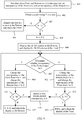
- FIG. 4 shows an animation realization process in this application example.
- Step 401 Initialize two UIViews in a circular area, where an upper layer is a view Front, and a lower layer is a view Bottom; and set transparency of the Front to 0, and set transparency of the Bottom to 1.
- the transparency 0 indicates completely transparent
- the transparency 1 indicates non-transparent.
- Step 402 Obtain a credit rating N of a user.
- Step 403 Determine whether N is 1; and if yes, perform step 404; or if no, go to step 405.
- Step 404 Display the first fill scheme at the Bottom, delete the Front, and end the procedure.
- the credit rating of the user is 1, there is no need to perform animation display, and the first fill scheme is directly displayed.
- Step 405 Set b to 1, and set f to 2.
- b indicates the sequence number of the fill scheme displayed at the Bottom
- f indicates the sequence number of the fill scheme displayed at the Front.
- Step 406 Display the bth fill scheme at the Bottom, and display the fth fill scheme at the Front.
- Step 407 Determine whether transparency of the current Front is 0; and if yes, perform step 408; or if no, go to step 411. This step is used to determine whether the current completely transparent layer is Front or Bottom.
- Step 408 In a predetermined duration, change the transparency of the Front from 0 to 1 at a constant speed, and change the transparency of the Bottom from 1 to 0 at a constant speed.
- the predetermined duration is a predetermined duration for displaying animation effects between adjacent credit ratings.
- Step 409 Determine whether f is equal to N; and if yes, end the animation, and go to step 414; or if no, perform step 410. In this step, alternatively, whether b is equal to (N-1) can be determined.
- Step 410 Add 2 to b, refresh the display at the Bottom (that is, display the (b+2)th fill scheme), and go to step 407.
- Step 411 In a predetermined duration, change the transparency of the Front from 1 to 0 at a constant speed, and change the transparency of the Bottom from 0 to 1 at a constant speed.
- Step 412 Determine whether b is equal to N; and if yes, end the animation, and go to step 414; or if no, perform step 413. In this step, alternatively, whether f is equal to (N-1) can be determined.
- Step 413 Add 2 to f, refresh the display at the Front (that is, display the (f+2)th fill scheme), and go to step 407.
- Step 414 Delete a view whose current transparency is 0.
- the implementations of the present application further provide an apparatus for realizing color tween animation.
- the apparatus can be implemented by software, hardware, or a combination of hardware and software.
- Software implementation is used as an example.
- the software is formed by reading a corresponding computer program instruction in a non-volatile memory and running the instruction in a memory by a processor in a device that the software is located.
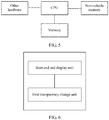
- the device in which the apparatus is located in addition to the CPU, the memory, and the non-volatile memory shown in FIG. 5 , the device in which the apparatus is located generally further includes other hardware such as a chip for sending and receiving radio signals, and/or other hardware such as a card configured to implement a network communication function.
- FIG. 6 shows an apparatus for realizing color tween animation according to an implementation of the present application.
- a display area of the color tween animation includes two overlapping layers: one layer is non-transparent and the other layer is completely transparent.
- the apparatus includes a start and end display unit and a first transparency change unit.
- the start and end display unit is configured to display a start fill scheme at the non-transparent layer and display an end fill scheme at the completely transparent layer.
- the first transparency change unit is configured to gradually change transparency of the non-transparent layer to completely transparent and gradually change transparency of the completely transparent layer to completely non-transparent.
- the color tween animation includes changing from the first fill scheme to the second fill scheme and sequentially changing to the Nth fill scheme one by one, where N is a natural number greater than 1.
- the start fill scheme is the first fill scheme
- the end fill scheme is the second fill scheme.
- the apparatus further includes a second transparency change unit, configured to the following: after the transparency change is completed, if the kth fill scheme displayed at a current non-transparent layer is not the Nth fill scheme, display the (k+1)th fill scheme at a current completely transparent layer; gradually change transparency of the current completely transparent layer to non-transparent, and gradually change transparency of the current completely non-transparent layer to completely transparent; and repeat this step until k is equal to N, where k is a natural number not greater than N.
- N is a credit rating of a user
- the kth credit rating corresponds to the kth fill scheme.
- the apparatus can further include an animation cancellation unit, configured to display the first fill scheme at the non-transparent layer and delete the completely transparent layer for a user whose credit rating is 1.
- the apparatus further includes an animation end unit, configured to delete the current completely transparent layer after the animation ends.
- the start fill scheme and the end fill scheme include a fill scheme with effects of gradual change, texture, or pattern.
- the display area of the color tween animation includes a fixed display area or a dynamically changing display area.
- the computing device includes one or more processors (CPU), an input/output interface, a network interface, and a memory.
- processors CPU
- input/output interface IO
- network interface IO
- memory e.g., RAM
- the memory can include a non-persistent memory, a random access memory (RAM), a non-volatile memory, and/or another form that are in a computer-readable medium, for example, a read-only memory (ROM) or a flash memory (flash memory).
- RAM random access memory
- ROM read-only memory
- flash memory flash memory
- the computer-readable medium includes persistent, non-persistent, movable, and unmovable media that can store information by using any method or technology.
- the information can be a computer-readable instruction, a data structure, a program module, or other data.
- An example of a computer storage medium includes, but is not limited to a phase change memory (PRAM), a static random access memory (SRAM), a dynamic random access memory (DRAM), another type of random access memory (RAM), a read-only memory (ROM), an electrically erasable programmable read-only memory (EEPROM), a flash memory or another memory technology, a compact disc read-only memory (CD-ROM), a digital versatile disc (DVD) or other optical storage, a cassette magnetic tape, tape and disk storage or another magnetic storage device or any other non-transmission media that can be configured to store information that a computing device can access.
- the computer-readable medium does not include transitory computer-readable media (transitory media), such as a modulated data signal and a carrier.
- the term "include”, “contain”, or any other variant thereof is intended to cover a non-exclusive inclusion, so that a process, a method, a commodity, or a device that includes a series of elements not only includes those elements but also includes other elements that are not expressly listed, or further includes elements inherent to such process, method, commodity, or device.
- An element preceded by "includes a " does not, without more constraints, preclude the existence of additional identical elements in the process, method, commodity, or device that includes the element.
- the implementations of the present application can be provided as a method, a system, or a computer program product. Therefore, the present application can use a form of hardware only implementations, software only implementations, or implementations with a combination of software and hardware. In addition, the present application can use a form of a computer program product that is implemented on one or more computer-usable storage media (including but not limited to a disk memory, a CD-ROM, an optical memory, etc.) that include computer-usable program code.
- computer-usable storage media including but not limited to a disk memory, a CD-ROM, an optical memory, etc.
Landscapes
- Engineering & Computer Science (AREA)
- Physics & Mathematics (AREA)
- General Physics & Mathematics (AREA)
- Theoretical Computer Science (AREA)
- Computer Graphics (AREA)
- Processing Or Creating Images (AREA)
- User Interface Of Digital Computer (AREA)
- Image Generation (AREA)
- Controls And Circuits For Display Device (AREA)
Applications Claiming Priority (2)
| Application Number | Priority Date | Filing Date | Title |
|---|---|---|---|
| CN201610037303.XA CN105719332B (zh) | 2016-01-20 | 2016-01-20 | 色彩补间动画的实现方法和装置 |
| PCT/CN2017/070799 WO2017124943A1 (fr) | 2016-01-20 | 2017-01-10 | Procédé et dispositif pour réaliser une animation intermédiaire en couleur |
Publications (2)
| Publication Number | Publication Date |
|---|---|
| EP3407300A1 true EP3407300A1 (fr) | 2018-11-28 |
| EP3407300A4 EP3407300A4 (fr) | 2019-09-18 |
Family
ID=56147779
Family Applications (1)
| Application Number | Title | Priority Date | Filing Date |
|---|---|---|---|
| EP17740974.5A Withdrawn EP3407300A4 (fr) | 2016-01-20 | 2017-01-10 | Procédé et dispositif pour réaliser une animation intermédiaire en couleur |
Country Status (10)
| Country | Link |
|---|---|
| US (3) | US10467778B2 (fr) |
| EP (1) | EP3407300A4 (fr) |
| JP (1) | JP6750020B2 (fr) |
| KR (1) | KR102208183B1 (fr) |
| CN (1) | CN105719332B (fr) |
| MY (1) | MY201896A (fr) |
| PH (1) | PH12018501521A1 (fr) |
| SG (1) | SG11201806009UA (fr) |
| TW (1) | TWI697866B (fr) |
| WO (1) | WO2017124943A1 (fr) |
Families Citing this family (12)
| Publication number | Priority date | Publication date | Assignee | Title |
|---|---|---|---|---|
| CN105719332B (zh) | 2016-01-20 | 2019-02-19 | 阿里巴巴集团控股有限公司 | 色彩补间动画的实现方法和装置 |
| CN107015788B (zh) * | 2016-10-19 | 2020-10-30 | 创新先进技术有限公司 | 在移动设备上动画展现图像的方法和装置 |
| JP6776906B2 (ja) * | 2017-01-20 | 2020-10-28 | セイコーエプソン株式会社 | スキャナー、スキャン制御プログラム、画像データの生成方法 |
| CN110033501B (zh) * | 2018-01-10 | 2023-09-26 | 武汉斗鱼网络科技有限公司 | 一种动画的实现方法及电子终端 |
| CN108985562A (zh) * | 2018-06-11 | 2018-12-11 | 北京玖富普惠信息技术有限公司 | 一种等级信息获取方法、电子设备和可读存储介质 |
| CN108985919A (zh) * | 2018-06-11 | 2018-12-11 | 北京玖富普惠信息技术有限公司 | 一种等级信息统计方法、电子设备和可读存储介质 |
| CN109166024A (zh) * | 2018-06-11 | 2019-01-08 | 北京玖富普惠信息技术有限公司 | 一种等级信息展示方法、电子设备和可读存储介质 |
| CN109785408B (zh) * | 2018-12-29 | 2023-06-27 | 北京金山安全软件有限公司 | 一种填图方法、装置及电子设备 |
| CN111161378B (zh) * | 2019-12-27 | 2023-10-17 | 北京金山安全软件有限公司 | 一种填色方法、装置及电子设备 |
| CN111242682B (zh) * | 2020-01-10 | 2023-10-17 | 腾讯科技(深圳)有限公司 | 物品显示方法 |
| CN116324689A (zh) | 2020-10-30 | 2023-06-23 | 海信视像科技股份有限公司 | 显示设备、几何图形识别方法及多图层叠加显示方法 |
| CN115243094B (zh) * | 2020-12-22 | 2024-10-01 | 海信视像科技股份有限公司 | 一种显示设备及多图层叠加方法 |
Family Cites Families (39)
| Publication number | Priority date | Publication date | Assignee | Title |
|---|---|---|---|---|
| JPS561954B2 (fr) | 1972-05-10 | 1981-01-16 | ||
| JPS561954A (en) | 1979-06-19 | 1981-01-10 | Hitachi Metals Ltd | Electrostatic transferring method |
| JP3096103B2 (ja) * | 1991-08-30 | 2000-10-10 | キヤノン株式会社 | 画像処理装置及び方法 |
| AU2002233955A1 (en) * | 2000-10-30 | 2002-05-15 | Liquidity Direct Technology | Network and method for trading derivatives |
| US7136069B1 (en) * | 2000-10-31 | 2006-11-14 | Sony Corporation | Method and system for texturing |
| JP2003216649A (ja) * | 2002-01-25 | 2003-07-31 | Nippon Hoso Kyokai <Nhk> | 画像検索装置及び画像検索プログラム |
| US7593891B2 (en) * | 2003-05-30 | 2009-09-22 | Experian Scorex Llc | Credit score simulation |
| US8452698B2 (en) * | 2003-10-15 | 2013-05-28 | Blackrock, Inc. | System and method for managing credit risk for investment portfolios |
| US8219487B2 (en) * | 2003-10-15 | 2012-07-10 | Blackrock, Inc. | System and method for managing credit risk for investment portfolios |
| DE602004010777T2 (de) * | 2004-02-18 | 2008-12-04 | Harman Becker Automotive Systems Gmbh | Alphamischung auf Basis einer Nachschlagtabelle |
| US7302094B2 (en) * | 2004-08-27 | 2007-11-27 | Autodesk, Inc. | Transparency and/or color processing |
| US20070103483A1 (en) * | 2005-07-20 | 2007-05-10 | Steven Feldman | Adaptive alpha blending |
| CN101303849B (zh) * | 2007-05-11 | 2011-10-26 | 深圳迈瑞生物医疗电子股份有限公司 | 一种可重叠的任意形状稀疏图形快速无闪烁显示方法和装置 |
| US20090049389A1 (en) * | 2007-08-13 | 2009-02-19 | Siemens Medical Solutions Usa, Inc. | Usage Pattern Driven Graphical User Interface Element Rendering |
| US20140300610A1 (en) * | 2007-11-16 | 2014-10-09 | Adobe Systems Incorporated | System and method for using time re-mapping for computer-generated animation |
| US8149917B2 (en) * | 2008-02-01 | 2012-04-03 | Activevideo Networks, Inc. | Transition creation for encoded video in the transform domain |
| CN101556788B (zh) * | 2008-04-07 | 2011-04-20 | 瑞轩科技股份有限公司 | 具无遮蔽式屏幕选单的显示器及其屏幕选单的工作方法 |
| CN101872600B (zh) * | 2009-04-24 | 2014-07-23 | 深圳Tcl新技术有限公司 | 一种显示装置及其图像显示方法 |
| CN101833447B (zh) * | 2010-04-08 | 2012-12-26 | 广东欧珀移动通信有限公司 | 一种利用补间动画实现桌面Widget动画的方法 |
| JP5650740B2 (ja) * | 2010-07-12 | 2015-01-07 | パナソニック インテレクチュアル プロパティ コーポレーション オブアメリカPanasonic Intellectual Property Corporation of America | 設計支援装置、設計支援プログラム、設計支援方法、及び集積回路 |
| JP2012138042A (ja) * | 2010-12-28 | 2012-07-19 | Kowa Co | 擬似動画作成装置、擬似動画作成方法、及び擬似動画作成プログラム |
| US20140096092A1 (en) * | 2011-03-20 | 2014-04-03 | William J. Johnson | System and Method for Indirect Manipulation of User Interface Object(s) |
| KR20120117578A (ko) * | 2011-04-15 | 2012-10-24 | 삼성전자주식회사 | 디스플레이 방법 및 이를 적용한 디스플레이 장치 |
| US9218676B2 (en) * | 2011-07-11 | 2015-12-22 | International Business Machines Corporation | Displaying computer dashboard information |
| US9007381B2 (en) * | 2011-09-02 | 2015-04-14 | Verizon Patent And Licensing Inc. | Transition animation methods and systems |
| US20130063446A1 (en) * | 2011-09-10 | 2013-03-14 | Microsoft Corporation | Scenario Based Animation Library |
| EP2587456A3 (fr) * | 2011-10-23 | 2017-09-20 | Technion Research & Development Foundation Ltd. | Procédé et systèmes permettant de générer une présentation multidimensionnelle et multimodale dynamique |
| US9135022B2 (en) * | 2011-11-14 | 2015-09-15 | Microsoft Technology Licensing, Llc | Cross window animation |
| CN102541441B (zh) * | 2011-11-18 | 2013-11-06 | 广东欧珀移动通信有限公司 | 一种手持设备的横竖屏切换渐变控制方法 |
| CN102572304A (zh) * | 2011-12-13 | 2012-07-11 | 广东威创视讯科技股份有限公司 | 一种图像叠加处理方法及装置 |
| US9865230B2 (en) * | 2012-07-02 | 2018-01-09 | Microsoft Technology Licensing, Llc | Animated visualization of alpha channel transparency |
| US8948509B2 (en) * | 2012-11-15 | 2015-02-03 | Adobe Systems Incorported | Blending with multiple blend modes for image manipulation |
| CN102981710A (zh) * | 2012-11-16 | 2013-03-20 | 北京奇虎科技有限公司 | 页面变换的方法和装置 |
| US9916621B1 (en) * | 2012-11-30 | 2018-03-13 | Consumerinfo.Com, Inc. | Presentation of credit score factors |
| CN103970415A (zh) * | 2014-04-13 | 2014-08-06 | 数源科技股份有限公司 | 一种基于Android的实现淡入淡出效果的方法 |
| CN104216752B (zh) * | 2014-09-30 | 2017-06-09 | 珠海市君天电子科技有限公司 | 一种基于窗口的信息加载方法及装置 |
| US9466259B2 (en) * | 2014-10-01 | 2016-10-11 | Honda Motor Co., Ltd. | Color management |
| KR102009980B1 (ko) * | 2015-03-25 | 2019-10-21 | 네이버 주식회사 | 만화 데이터 생성 장치, 방법, 컴퓨터 프로그램 |
| CN105719332B (zh) | 2016-01-20 | 2019-02-19 | 阿里巴巴集团控股有限公司 | 色彩补间动画的实现方法和装置 |
-
2016
- 2016-01-20 CN CN201610037303.XA patent/CN105719332B/zh active Active
- 2016-12-27 TW TW105143381A patent/TWI697866B/zh active
-
2017
- 2017-01-10 KR KR1020187023468A patent/KR102208183B1/ko active Active
- 2017-01-10 JP JP2018538133A patent/JP6750020B2/ja active Active
- 2017-01-10 EP EP17740974.5A patent/EP3407300A4/fr not_active Withdrawn
- 2017-01-10 MY MYPI2018702450A patent/MY201896A/en unknown
- 2017-01-10 SG SG11201806009UA patent/SG11201806009UA/en unknown
- 2017-01-10 WO PCT/CN2017/070799 patent/WO2017124943A1/fr not_active Ceased
-
2018
- 2018-07-16 PH PH12018501521A patent/PH12018501521A1/en unknown
- 2018-07-19 US US16/040,256 patent/US10467778B2/en active Active
-
2019
- 2019-11-04 US US16/673,621 patent/US10930026B2/en active Active
-
2021
- 2021-02-22 US US17/181,647 patent/US11328459B2/en active Active
Also Published As
| Publication number | Publication date |
|---|---|
| US10930026B2 (en) | 2021-02-23 |
| PH12018501521A1 (en) | 2019-03-18 |
| KR20180104658A (ko) | 2018-09-21 |
| WO2017124943A1 (fr) | 2017-07-27 |
| TWI697866B (zh) | 2020-07-01 |
| SG11201806009UA (en) | 2018-08-30 |
| CN105719332B (zh) | 2019-02-19 |
| US11328459B2 (en) | 2022-05-10 |
| MY201896A (en) | 2024-03-22 |
| EP3407300A4 (fr) | 2019-09-18 |
| KR102208183B1 (ko) | 2021-01-29 |
| TW201730846A (zh) | 2017-09-01 |
| CN105719332A (zh) | 2016-06-29 |
| US20200066005A1 (en) | 2020-02-27 |
| JP2019508800A (ja) | 2019-03-28 |
| JP6750020B2 (ja) | 2020-09-02 |
| US20210174558A1 (en) | 2021-06-10 |
| US10467778B2 (en) | 2019-11-05 |
| US20180322663A1 (en) | 2018-11-08 |
Similar Documents
| Publication | Publication Date | Title |
|---|---|---|
| EP3407300A1 (fr) | Procédé et dispositif pour réaliser une animation intermédiaire en couleur | |
| EP3618003B1 (fr) | Procédé et appareil de génération d'image synthétique | |
| JP2020500357A (ja) | モバイルデバイス上でアニメーション画像を提示するための方法およびデバイス | |
| US10394935B2 (en) | Dynamically displaying online documents based on document object attributes | |
| TWI698834B (zh) | 用於圖形處理之方法及裝置 | |
| JP2018528634A (ja) | 動画像をプレビューする方法及びデバイス、並びに表現パッケージを表示する方法及びデバイス | |
| CN107170047A (zh) | 虚拟现实场景的更新方法、设备及虚拟现实设备 | |
| WO2022068040A1 (fr) | Procédé et appareil de génération d'image à effet de déchirure, et support d'enregistrement et appareil électronique | |
| US20170315773A1 (en) | Virtualizing Applications for Per-Monitor Displaying | |
| US10621699B2 (en) | Displaying computer graphics according to arrangement and orientation attributes | |
| CN104360854B (zh) | 一种信息处理方法及电子设备 | |
| CN104123003A (zh) | 内容分享方法和装置 | |
| US9478060B2 (en) | Techniques to provide depth-based typeface in digital documents | |
| US11157138B2 (en) | Thumbnail generation for digital images | |
| US20200051208A1 (en) | Methods and systems for managing text in rendered images | |
| US11205294B1 (en) | Computer-implemented optimization of animation speed and spatial aspects of visualized temporal data | |
| CN105740222A (zh) | 用于阅读器排版的方法、设备、阅读器和电子设备 | |
| CN110603516B (zh) | 计算机图形用户界面的个性化可感知性设置 | |
| CN111177609A (zh) | 页面中显示三维数据表格的处理方法、装置及电子设备 | |
| CN117197305A (zh) | 用于显示五官特效的方法、装置及计算机可读介质 | |
| HK1241085A (en) | Method and device for animatedly displaying images on mobile equipment | |
| HK1241085A1 (en) | Method and device for animatedly displaying images on mobile equipment |
Legal Events
| Date | Code | Title | Description |
|---|---|---|---|
| STAA | Information on the status of an ep patent application or granted ep patent |
Free format text: STATUS: THE INTERNATIONAL PUBLICATION HAS BEEN MADE |
|
| PUAI | Public reference made under article 153(3) epc to a published international application that has entered the european phase |
Free format text: ORIGINAL CODE: 0009012 |
|
| STAA | Information on the status of an ep patent application or granted ep patent |
Free format text: STATUS: REQUEST FOR EXAMINATION WAS MADE |
|
| 17P | Request for examination filed |
Effective date: 20180820 |
|
| AK | Designated contracting states |
Kind code of ref document: A1 Designated state(s): AL AT BE BG CH CY CZ DE DK EE ES FI FR GB GR HR HU IE IS IT LI LT LU LV MC MK MT NL NO PL PT RO RS SE SI SK SM TR |
|
| AX | Request for extension of the european patent |
Extension state: BA ME |
|
| DAV | Request for validation of the european patent (deleted) | ||
| DAX | Request for extension of the european patent (deleted) | ||
| A4 | Supplementary search report drawn up and despatched |
Effective date: 20190820 |
|
| RIC1 | Information provided on ipc code assigned before grant |
Ipc: G06T 15/50 20110101ALI20190813BHEP Ipc: G06T 13/80 20110101AFI20190813BHEP |
|
| RAP1 | Party data changed (applicant data changed or rights of an application transferred) |
Owner name: ADVANCED NEW TECHNOLOGIES CO., LTD. |
|
| STAA | Information on the status of an ep patent application or granted ep patent |
Free format text: STATUS: EXAMINATION IS IN PROGRESS |
|
| 17Q | First examination report despatched |
Effective date: 20210610 |
|
| STAA | Information on the status of an ep patent application or granted ep patent |
Free format text: STATUS: THE APPLICATION IS DEEMED TO BE WITHDRAWN |
|
| 18D | Application deemed to be withdrawn |
Effective date: 20230915 |