EP3407323A1 - Fahrbeurteilungsvorrichtung, fahrbeurteilungsverfahren, verfahren zur bereitstellung von referenzdaten, vorrichtung zur bereitstellung von referenzdaten und programm zur bereitstellung von referenzdaten - Google Patents
Fahrbeurteilungsvorrichtung, fahrbeurteilungsverfahren, verfahren zur bereitstellung von referenzdaten, vorrichtung zur bereitstellung von referenzdaten und programm zur bereitstellung von referenzdaten Download PDFInfo
- Publication number
- EP3407323A1 EP3407323A1 EP16886343.9A EP16886343A EP3407323A1 EP 3407323 A1 EP3407323 A1 EP 3407323A1 EP 16886343 A EP16886343 A EP 16886343A EP 3407323 A1 EP3407323 A1 EP 3407323A1
- Authority
- EP
- European Patent Office
- Prior art keywords
- reference data
- vehicle
- evaluation
- driving
- evaluation results
- Prior art date
- Legal status (The legal status is an assumption and is not a legal conclusion. Google has not performed a legal analysis and makes no representation as to the accuracy of the status listed.)
- Withdrawn
Links
Images






Classifications
-
- B—PERFORMING OPERATIONS; TRANSPORTING
- B60—VEHICLES IN GENERAL
- B60K—ARRANGEMENT OR MOUNTING OF PROPULSION UNITS OR OF TRANSMISSIONS IN VEHICLES; ARRANGEMENT OR MOUNTING OF PLURAL DIVERSE PRIME-MOVERS IN VEHICLES; AUXILIARY DRIVES FOR VEHICLES; INSTRUMENTATION OR DASHBOARDS FOR VEHICLES; ARRANGEMENTS IN CONNECTION WITH COOLING, AIR INTAKE, GAS EXHAUST OR FUEL SUPPLY OF PROPULSION UNITS IN VEHICLES
- B60K35/00—Instruments specially adapted for vehicles; Arrangement of instruments in or on vehicles
- B60K35/20—Output arrangements, i.e. from vehicle to user, associated with vehicle functions or specially adapted therefor
- B60K35/28—Output arrangements, i.e. from vehicle to user, associated with vehicle functions or specially adapted therefor characterised by the type of the output information, e.g. video entertainment or vehicle dynamics information; characterised by the purpose of the output information, e.g. for attracting the attention of the driver
-
- B—PERFORMING OPERATIONS; TRANSPORTING
- B60—VEHICLES IN GENERAL
- B60W—CONJOINT CONTROL OF VEHICLE SUB-UNITS OF DIFFERENT TYPE OR DIFFERENT FUNCTION; CONTROL SYSTEMS SPECIALLY ADAPTED FOR HYBRID VEHICLES; ROAD VEHICLE DRIVE CONTROL SYSTEMS FOR PURPOSES NOT RELATED TO THE CONTROL OF A PARTICULAR SUB-UNIT
- B60W40/00—Estimation or calculation of non-directly measurable driving parameters for road vehicle drive control systems not related to the control of a particular sub unit, e.g. by using mathematical models
- B60W40/08—Estimation or calculation of non-directly measurable driving parameters for road vehicle drive control systems not related to the control of a particular sub unit, e.g. by using mathematical models related to drivers or passengers
- B60W40/09—Driving style or behaviour
-
- B—PERFORMING OPERATIONS; TRANSPORTING
- B60—VEHICLES IN GENERAL
- B60K—ARRANGEMENT OR MOUNTING OF PROPULSION UNITS OR OF TRANSMISSIONS IN VEHICLES; ARRANGEMENT OR MOUNTING OF PLURAL DIVERSE PRIME-MOVERS IN VEHICLES; AUXILIARY DRIVES FOR VEHICLES; INSTRUMENTATION OR DASHBOARDS FOR VEHICLES; ARRANGEMENTS IN CONNECTION WITH COOLING, AIR INTAKE, GAS EXHAUST OR FUEL SUPPLY OF PROPULSION UNITS IN VEHICLES
- B60K35/00—Instruments specially adapted for vehicles; Arrangement of instruments in or on vehicles
- B60K35/10—Input arrangements, i.e. from user to vehicle, associated with vehicle functions or specially adapted therefor
-
- B—PERFORMING OPERATIONS; TRANSPORTING
- B60—VEHICLES IN GENERAL
- B60K—ARRANGEMENT OR MOUNTING OF PROPULSION UNITS OR OF TRANSMISSIONS IN VEHICLES; ARRANGEMENT OR MOUNTING OF PLURAL DIVERSE PRIME-MOVERS IN VEHICLES; AUXILIARY DRIVES FOR VEHICLES; INSTRUMENTATION OR DASHBOARDS FOR VEHICLES; ARRANGEMENTS IN CONNECTION WITH COOLING, AIR INTAKE, GAS EXHAUST OR FUEL SUPPLY OF PROPULSION UNITS IN VEHICLES
- B60K35/00—Instruments specially adapted for vehicles; Arrangement of instruments in or on vehicles
- B60K35/20—Output arrangements, i.e. from vehicle to user, associated with vehicle functions or specially adapted therefor
- B60K35/21—Output arrangements, i.e. from vehicle to user, associated with vehicle functions or specially adapted therefor using visual output, e.g. blinking lights or matrix displays
- B60K35/22—Display screens
-
- B—PERFORMING OPERATIONS; TRANSPORTING
- B60—VEHICLES IN GENERAL
- B60K—ARRANGEMENT OR MOUNTING OF PROPULSION UNITS OR OF TRANSMISSIONS IN VEHICLES; ARRANGEMENT OR MOUNTING OF PLURAL DIVERSE PRIME-MOVERS IN VEHICLES; AUXILIARY DRIVES FOR VEHICLES; INSTRUMENTATION OR DASHBOARDS FOR VEHICLES; ARRANGEMENTS IN CONNECTION WITH COOLING, AIR INTAKE, GAS EXHAUST OR FUEL SUPPLY OF PROPULSION UNITS IN VEHICLES
- B60K35/00—Instruments specially adapted for vehicles; Arrangement of instruments in or on vehicles
- B60K35/20—Output arrangements, i.e. from vehicle to user, associated with vehicle functions or specially adapted therefor
- B60K35/29—Instruments characterised by the way in which information is handled, e.g. showing information on plural displays or prioritising information according to driving conditions
-
- B—PERFORMING OPERATIONS; TRANSPORTING
- B60—VEHICLES IN GENERAL
- B60K—ARRANGEMENT OR MOUNTING OF PROPULSION UNITS OR OF TRANSMISSIONS IN VEHICLES; ARRANGEMENT OR MOUNTING OF PLURAL DIVERSE PRIME-MOVERS IN VEHICLES; AUXILIARY DRIVES FOR VEHICLES; INSTRUMENTATION OR DASHBOARDS FOR VEHICLES; ARRANGEMENTS IN CONNECTION WITH COOLING, AIR INTAKE, GAS EXHAUST OR FUEL SUPPLY OF PROPULSION UNITS IN VEHICLES
- B60K35/00—Instruments specially adapted for vehicles; Arrangement of instruments in or on vehicles
- B60K35/85—Arrangements for transferring vehicle- or driver-related data
-
- B—PERFORMING OPERATIONS; TRANSPORTING
- B60—VEHICLES IN GENERAL
- B60W—CONJOINT CONTROL OF VEHICLE SUB-UNITS OF DIFFERENT TYPE OR DIFFERENT FUNCTION; CONTROL SYSTEMS SPECIALLY ADAPTED FOR HYBRID VEHICLES; ROAD VEHICLE DRIVE CONTROL SYSTEMS FOR PURPOSES NOT RELATED TO THE CONTROL OF A PARTICULAR SUB-UNIT
- B60W40/00—Estimation or calculation of non-directly measurable driving parameters for road vehicle drive control systems not related to the control of a particular sub unit, e.g. by using mathematical models
- B60W40/02—Estimation or calculation of non-directly measurable driving parameters for road vehicle drive control systems not related to the control of a particular sub unit, e.g. by using mathematical models related to ambient conditions
- B60W40/06—Road conditions
-
- B—PERFORMING OPERATIONS; TRANSPORTING
- B60—VEHICLES IN GENERAL
- B60W—CONJOINT CONTROL OF VEHICLE SUB-UNITS OF DIFFERENT TYPE OR DIFFERENT FUNCTION; CONTROL SYSTEMS SPECIALLY ADAPTED FOR HYBRID VEHICLES; ROAD VEHICLE DRIVE CONTROL SYSTEMS FOR PURPOSES NOT RELATED TO THE CONTROL OF A PARTICULAR SUB-UNIT
- B60W50/00—Details of control systems for road vehicle drive control not related to the control of a particular sub-unit, e.g. process diagnostic or vehicle driver interfaces
- B60W50/08—Interaction between the driver and the control system
- B60W50/14—Means for informing the driver, warning the driver or prompting a driver intervention
-
- G—PHYSICS
- G08—SIGNALLING
- G08G—TRAFFIC CONTROL SYSTEMS
- G08G1/00—Traffic control systems for road vehicles
- G08G1/01—Detecting movement of traffic to be counted or controlled
- G08G1/0104—Measuring and analyzing of parameters relative to traffic conditions
- G08G1/0108—Measuring and analyzing of parameters relative to traffic conditions based on the source of data
- G08G1/0112—Measuring and analyzing of parameters relative to traffic conditions based on the source of data from the vehicle, e.g. floating car data [FCD]
-
- G—PHYSICS
- G08—SIGNALLING
- G08G—TRAFFIC CONTROL SYSTEMS
- G08G1/00—Traffic control systems for road vehicles
- G08G1/01—Detecting movement of traffic to be counted or controlled
- G08G1/0104—Measuring and analyzing of parameters relative to traffic conditions
- G08G1/0125—Traffic data processing
- G08G1/0129—Traffic data processing for creating historical data or processing based on historical data
-
- G—PHYSICS
- G08—SIGNALLING
- G08G—TRAFFIC CONTROL SYSTEMS
- G08G1/00—Traffic control systems for road vehicles
- G08G1/09—Arrangements for giving variable traffic instructions
- G08G1/0962—Arrangements for giving variable traffic instructions having an indicator mounted inside the vehicle, e.g. giving voice messages
- G08G1/09626—Arrangements for giving variable traffic instructions having an indicator mounted inside the vehicle, e.g. giving voice messages where the origin of the information is within the own vehicle, e.g. a local storage device, digital map
-
- B—PERFORMING OPERATIONS; TRANSPORTING
- B60—VEHICLES IN GENERAL
- B60K—ARRANGEMENT OR MOUNTING OF PROPULSION UNITS OR OF TRANSMISSIONS IN VEHICLES; ARRANGEMENT OR MOUNTING OF PLURAL DIVERSE PRIME-MOVERS IN VEHICLES; AUXILIARY DRIVES FOR VEHICLES; INSTRUMENTATION OR DASHBOARDS FOR VEHICLES; ARRANGEMENTS IN CONNECTION WITH COOLING, AIR INTAKE, GAS EXHAUST OR FUEL SUPPLY OF PROPULSION UNITS IN VEHICLES
- B60K2360/00—Indexing scheme associated with groups B60K35/00 or B60K37/00 relating to details of instruments or dashboards
- B60K2360/16—Type of output information
- B60K2360/167—Vehicle dynamics information
-
- B—PERFORMING OPERATIONS; TRANSPORTING
- B60—VEHICLES IN GENERAL
- B60K—ARRANGEMENT OR MOUNTING OF PROPULSION UNITS OR OF TRANSMISSIONS IN VEHICLES; ARRANGEMENT OR MOUNTING OF PLURAL DIVERSE PRIME-MOVERS IN VEHICLES; AUXILIARY DRIVES FOR VEHICLES; INSTRUMENTATION OR DASHBOARDS FOR VEHICLES; ARRANGEMENTS IN CONNECTION WITH COOLING, AIR INTAKE, GAS EXHAUST OR FUEL SUPPLY OF PROPULSION UNITS IN VEHICLES
- B60K2360/00—Indexing scheme associated with groups B60K35/00 or B60K37/00 relating to details of instruments or dashboards
- B60K2360/16—Type of output information
- B60K2360/169—Remaining operating distance or charge
-
- B—PERFORMING OPERATIONS; TRANSPORTING
- B60—VEHICLES IN GENERAL
- B60K—ARRANGEMENT OR MOUNTING OF PROPULSION UNITS OR OF TRANSMISSIONS IN VEHICLES; ARRANGEMENT OR MOUNTING OF PLURAL DIVERSE PRIME-MOVERS IN VEHICLES; AUXILIARY DRIVES FOR VEHICLES; INSTRUMENTATION OR DASHBOARDS FOR VEHICLES; ARRANGEMENTS IN CONNECTION WITH COOLING, AIR INTAKE, GAS EXHAUST OR FUEL SUPPLY OF PROPULSION UNITS IN VEHICLES
- B60K2360/00—Indexing scheme associated with groups B60K35/00 or B60K37/00 relating to details of instruments or dashboards
- B60K2360/16—Type of output information
- B60K2360/174—Economic driving
-
- B—PERFORMING OPERATIONS; TRANSPORTING
- B60—VEHICLES IN GENERAL
- B60K—ARRANGEMENT OR MOUNTING OF PROPULSION UNITS OR OF TRANSMISSIONS IN VEHICLES; ARRANGEMENT OR MOUNTING OF PLURAL DIVERSE PRIME-MOVERS IN VEHICLES; AUXILIARY DRIVES FOR VEHICLES; INSTRUMENTATION OR DASHBOARDS FOR VEHICLES; ARRANGEMENTS IN CONNECTION WITH COOLING, AIR INTAKE, GAS EXHAUST OR FUEL SUPPLY OF PROPULSION UNITS IN VEHICLES
- B60K2360/00—Indexing scheme associated with groups B60K35/00 or B60K37/00 relating to details of instruments or dashboards
- B60K2360/18—Information management
- B60K2360/188—Displaying information using colour changes
-
- B—PERFORMING OPERATIONS; TRANSPORTING
- B60—VEHICLES IN GENERAL
- B60K—ARRANGEMENT OR MOUNTING OF PROPULSION UNITS OR OF TRANSMISSIONS IN VEHICLES; ARRANGEMENT OR MOUNTING OF PLURAL DIVERSE PRIME-MOVERS IN VEHICLES; AUXILIARY DRIVES FOR VEHICLES; INSTRUMENTATION OR DASHBOARDS FOR VEHICLES; ARRANGEMENTS IN CONNECTION WITH COOLING, AIR INTAKE, GAS EXHAUST OR FUEL SUPPLY OF PROPULSION UNITS IN VEHICLES
- B60K2360/00—Indexing scheme associated with groups B60K35/00 or B60K37/00 relating to details of instruments or dashboards
- B60K2360/589—Wireless data transfers
-
- B—PERFORMING OPERATIONS; TRANSPORTING
- B60—VEHICLES IN GENERAL
- B60K—ARRANGEMENT OR MOUNTING OF PROPULSION UNITS OR OF TRANSMISSIONS IN VEHICLES; ARRANGEMENT OR MOUNTING OF PLURAL DIVERSE PRIME-MOVERS IN VEHICLES; AUXILIARY DRIVES FOR VEHICLES; INSTRUMENTATION OR DASHBOARDS FOR VEHICLES; ARRANGEMENTS IN CONNECTION WITH COOLING, AIR INTAKE, GAS EXHAUST OR FUEL SUPPLY OF PROPULSION UNITS IN VEHICLES
- B60K2360/00—Indexing scheme associated with groups B60K35/00 or B60K37/00 relating to details of instruments or dashboards
- B60K2360/592—Data transfer involving external databases
-
- B—PERFORMING OPERATIONS; TRANSPORTING
- B60—VEHICLES IN GENERAL
- B60K—ARRANGEMENT OR MOUNTING OF PROPULSION UNITS OR OF TRANSMISSIONS IN VEHICLES; ARRANGEMENT OR MOUNTING OF PLURAL DIVERSE PRIME-MOVERS IN VEHICLES; AUXILIARY DRIVES FOR VEHICLES; INSTRUMENTATION OR DASHBOARDS FOR VEHICLES; ARRANGEMENTS IN CONNECTION WITH COOLING, AIR INTAKE, GAS EXHAUST OR FUEL SUPPLY OF PROPULSION UNITS IN VEHICLES
- B60K35/00—Instruments specially adapted for vehicles; Arrangement of instruments in or on vehicles
- B60K35/20—Output arrangements, i.e. from vehicle to user, associated with vehicle functions or specially adapted therefor
- B60K35/26—Output arrangements, i.e. from vehicle to user, associated with vehicle functions or specially adapted therefor using acoustic output
- B60K35/265—Voice
-
- B—PERFORMING OPERATIONS; TRANSPORTING
- B60—VEHICLES IN GENERAL
- B60K—ARRANGEMENT OR MOUNTING OF PROPULSION UNITS OR OF TRANSMISSIONS IN VEHICLES; ARRANGEMENT OR MOUNTING OF PLURAL DIVERSE PRIME-MOVERS IN VEHICLES; AUXILIARY DRIVES FOR VEHICLES; INSTRUMENTATION OR DASHBOARDS FOR VEHICLES; ARRANGEMENTS IN CONNECTION WITH COOLING, AIR INTAKE, GAS EXHAUST OR FUEL SUPPLY OF PROPULSION UNITS IN VEHICLES
- B60K35/00—Instruments specially adapted for vehicles; Arrangement of instruments in or on vehicles
- B60K35/50—Instruments characterised by their means of attachment to or integration in the vehicle
-
- B—PERFORMING OPERATIONS; TRANSPORTING
- B60—VEHICLES IN GENERAL
- B60W—CONJOINT CONTROL OF VEHICLE SUB-UNITS OF DIFFERENT TYPE OR DIFFERENT FUNCTION; CONTROL SYSTEMS SPECIALLY ADAPTED FOR HYBRID VEHICLES; ROAD VEHICLE DRIVE CONTROL SYSTEMS FOR PURPOSES NOT RELATED TO THE CONTROL OF A PARTICULAR SUB-UNIT
- B60W50/00—Details of control systems for road vehicle drive control not related to the control of a particular sub-unit, e.g. process diagnostic or vehicle driver interfaces
- B60W2050/0001—Details of the control system
- B60W2050/0043—Signal treatments, identification of variables or parameters, parameter estimation or state estimation
-
- B—PERFORMING OPERATIONS; TRANSPORTING
- B60—VEHICLES IN GENERAL
- B60W—CONJOINT CONTROL OF VEHICLE SUB-UNITS OF DIFFERENT TYPE OR DIFFERENT FUNCTION; CONTROL SYSTEMS SPECIALLY ADAPTED FOR HYBRID VEHICLES; ROAD VEHICLE DRIVE CONTROL SYSTEMS FOR PURPOSES NOT RELATED TO THE CONTROL OF A PARTICULAR SUB-UNIT
- B60W50/00—Details of control systems for road vehicle drive control not related to the control of a particular sub-unit, e.g. process diagnostic or vehicle driver interfaces
- B60W50/08—Interaction between the driver and the control system
- B60W50/14—Means for informing the driver, warning the driver or prompting a driver intervention
- B60W2050/146—Display means
-
- B—PERFORMING OPERATIONS; TRANSPORTING
- B60—VEHICLES IN GENERAL
- B60W—CONJOINT CONTROL OF VEHICLE SUB-UNITS OF DIFFERENT TYPE OR DIFFERENT FUNCTION; CONTROL SYSTEMS SPECIALLY ADAPTED FOR HYBRID VEHICLES; ROAD VEHICLE DRIVE CONTROL SYSTEMS FOR PURPOSES NOT RELATED TO THE CONTROL OF A PARTICULAR SUB-UNIT
- B60W2556/00—Input parameters relating to data
- B60W2556/10—Historical data
-
- B—PERFORMING OPERATIONS; TRANSPORTING
- B60—VEHICLES IN GENERAL
- B60W—CONJOINT CONTROL OF VEHICLE SUB-UNITS OF DIFFERENT TYPE OR DIFFERENT FUNCTION; CONTROL SYSTEMS SPECIALLY ADAPTED FOR HYBRID VEHICLES; ROAD VEHICLE DRIVE CONTROL SYSTEMS FOR PURPOSES NOT RELATED TO THE CONTROL OF A PARTICULAR SUB-UNIT
- B60W2556/00—Input parameters relating to data
- B60W2556/45—External transmission of data to or from the vehicle
-
- B—PERFORMING OPERATIONS; TRANSPORTING
- B60—VEHICLES IN GENERAL
- B60W—CONJOINT CONTROL OF VEHICLE SUB-UNITS OF DIFFERENT TYPE OR DIFFERENT FUNCTION; CONTROL SYSTEMS SPECIALLY ADAPTED FOR HYBRID VEHICLES; ROAD VEHICLE DRIVE CONTROL SYSTEMS FOR PURPOSES NOT RELATED TO THE CONTROL OF A PARTICULAR SUB-UNIT
- B60W2556/00—Input parameters relating to data
- B60W2556/45—External transmission of data to or from the vehicle
- B60W2556/55—External transmission of data to or from the vehicle using telemetry
Definitions
- the present invention relates to a device and a method for driving evaluation, and to a method, a device, and a program for providing reference data, all of which are provided for evaluating vehicle driving skill.
- Patent Document 1 As a driving evaluation device for evaluating vehicle driving skill, a driving evaluation device as disclosed in JP 2010-231776 A (Patent Document 1) has been proposed. This driving evaluation device calculates an evaluation result corresponding to driving conditions of the vehicle with reference to past evaluation results (such as the highest score), and presents the thus-calculated evaluation result to the driver.
- Patent Document 1 JP 2010-231776 A
- such a conventional driving evaluation device refers to numerical values of scores representing the past evaluation results.
- the conventional driving evaluation device may undesirably calculate an evaluation result based on past evaluation results that are acquired during traveling in unusual situations such as traveling with a tailwind, which is advantageous for fuel economy. This may lead to problems such as, even when a vehicle is traveling with a headwind, which is disadvantageous for fuel economy, an evaluation result calculated based on past evaluation results that are acquired during traveling with a tailwind may be presented to the driver of the vehicle. Such an evaluation result may encourage the driver to make useless attempts to improve fuel economy, even though there actually remains no room for improved fuel economy.
- the present invention has been made to provide a device and a method for driving evaluation, and a method, a device, and a program for providing reference data, all of which allow for determining whether or not there remains any room for improved driving skill.
- a driving evaluation device comprises a communication device for wirelessly communicating with an external device, a display device, and a control device.
- the control device requests, to the external device, reference data that allows identification of distribution of past evaluation results related to an evaluation-target driving condition. Then, the control device calculates an evaluation result corresponding to the driving condition of the vehicle in real time with reference to the reference data returned by the external device, and displays the evaluation result on the display device.
- a control device including a display device and a communication device for wirelessly communicating with an external device requests, to the external device, reference data that allows identification of distribution of past evaluation results related to an evaluation-target driving condition. Then, the control device calculates an evaluation result corresponding to the driving condition of the vehicle in real time with reference to the reference data returned by the external device, and displays the evaluation result on the display device.
- a computer including a storage stores, into the storage, an evaluation result corresponding to a driving condition of a vehicle and being transmitted by an on-board device of the vehicle, and generates, from a plurality of evaluation results stored in the storage, reference data that allows identification of distribution of the evaluation results.
- the computer returns the reference data to the on-board device in response to a request of the reference data from the on-board device.
- FIG. 1 shows an example driving evaluation system for evaluating vehicle driving skill.
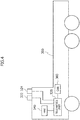
- a driving evaluation system 100 includes an on-board device 300 installed in a vehicle 200 such as a truck, a server computer 400 installed in a service center of an application provider or the like, and a personal computer 500 installed in an office of a transportation company or the like.
- a vehicle 200 such as a truck
- server computer 400 installed in a service center of an application provider or the like
- personal computer 500 installed in an office of a transportation company or the like.
- the server computer 400 may be an example of an external device.
- the on-board device 300 includes a telematics unit 320 for making telematics services available, and a human machine interface (HMI) 340 that provides input-output functionality for the telematics unit 320.
- HMI human machine interface
- the telematics unit 320 includes a global positioning system (GPS) antenna 322 for receiving signals from a GPS satellite 600, and a mobile communication antenna 324 for wirelessly communicating with the server computer 400.
- GPS global positioning system
- the telematics unit 320 contains a processor 320A such as a central processing unit (CPU), a read only memory (ROM) 320B that stores a control program and the like, a random access memory (RAM) 320C that provides a temporary storage area, a GPS processing circuit 320D, an input-output circuit 320E, a mobile communication circuit 320F, and a bus 320G connecting these with each other.
- CPU central processing unit
- ROM read only memory
- RAM random access memory
- the telematics unit 320 may be connected to the GPS processing circuit 320D and mobile communication circuit 320F via the input-output circuit 320E.
- a microcomputer including the processor 320A, ROM 320B, RAM 320C, input-output circuit 320E, and bus 320G may be an example of a control device.
- the GPS processing circuit 320D processes the signals received by the GPS antenna 322 to determine the current location of the vehicle 200.
- the input-output circuit 320E receives digital or analog signals from devices such as various sensors and switches, and outputs a digital or analog drive signal to an external device and/or the like.
- the mobile communication circuit 320F wirelessly communicates with the server computer 400 via the mobile communication antenna 324.
- the mobile communication circuit 320F and mobile communication antenna 324 may collectively be an example of a communication device.
- the HMI 340 includes an input device 342, such as switches and buttons operable by the driver and the like, and a display device 344, such as a liquid crystal monitor for displaying information to the driver and the like.
- the input device 342 allows for specifying, for example, driver information for identifying the driver of the vehicle 200, and the weight of the vehicle 200 (such as how much load is carried by the vehicle 200).
- the HMI 340 may include a touch screen or the like that provides functionality of both of these.
- the HMI 340 may also present a variety of information by voice.
- the telematics unit 320 and HMI 340 are installed at predetermined locations of the vehicle 200 and electrically connected to each other.
- the GPS antenna 322 and mobile communication antenna 324 are mounted in an upper portion of the vehicle 200 such as on the upper surface of the cabin, and electrically connected to the telematics unit 320.
- the telematics unit 320 is connected to a controller area network (CAN) 360, which may be an example of an on-board network, so as to be capable of indirectly receiving signals from devices such as various sensors and switches via the input-output circuit 320E. Accordingly, the telematics unit 320 is capable of reading various signals transmitted through the CAN 360 at any time.
- CAN controller area network
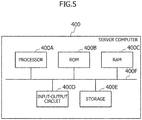
- the server computer 400 contains a processor 400A such as a CPU, a ROM 400B that stores a control program and the like, and a RAM 400C that provides a temporary storage area, an input-output circuit 400D for providing connection with external devices, a storage 400E such as a hard disk drive, and a bus 400F connecting these with each other.
- a processor 400A such as a CPU
- ROM 400B that stores a control program and the like
- RAM 400C that provides a temporary storage area
- an input-output circuit 400D for providing connection with external devices
- a storage 400E such as a hard disk drive
- a bus 400F connecting these with each other.
- a database storing a plurality of past scores (past evaluation results) is established in which the past scores are associated at least with a driver, a vehicle, an area where the vehicle travels (referred to as “traveling area” below), the weight of the vehicle, and a time of day at which the vehicle travels (referred to as “traveling time of day” below).
- the past scores in the database score(s) that meet a predetermined condition may be extracted by using, as a parameter, at least one of the driver, vehicle, traveling area, vehicle weight, and traveling time of day.
- the personal computer 500 is communicatively connected to the server computer 400 via, for example, the Internet 700, which may be an example of a computer network.
- the Internet 700 which may be an example of a computer network.
- a web browser for example, is pre-installed on the personal computer 500 so as to allow for various settings related to the services provided by the application provider.
- the telematics unit 320 of the on-board device 300 requests reference data to the server computer 400 in response to when the ignition switch of the vehicle 200 is turned from off to on.
- the reference data allows identification of the distribution of the past evaluation results related to the evaluation-target driving conditions.
- the telematics unit 320 calculates an evaluation result corresponding to the driving conditions of the vehicle 200 in real time, and displays the evaluation result on the display device 344 of the HMI 340.
- the reference data may contain, for example, a mean value ⁇ and a standard deviation ⁇ , which may express a normal distribution of past evaluation results.
- the server computer 400 stores, into the storage 400E, the evaluation result corresponding to the driving conditions of the vehicle 200, which is transmitted from the telematics unit 320 of the on-board device 300.
- the server computer 400 generates reference data that allows identification of the distribution of the past evaluation results.
- the server computer 400 returns the reference data to the on-board device 300.
- an operator Before evaluating the driving skill for the vehicle 200, an operator such as a transportation operation manager of a transportation company operates the personal computer 500, which is installed in the office, to specify data selection conditions for narrowing down the past evaluation results, display items to be presented to the driver, and the presence or absence of guidance.
- FIG. 6 illustrates a procedure in which an operator such as the transportation operation manager specifies the data selection conditions, the display items and the presence or absence of guidance. Note that, although the transportation operation manager specifies various settings in the following description, another operator may specify various settings under the control of the transportation operation manager, for example.
- step 1 the transportation operation manager interacts with a setting screen displayed on the personal computer 500, and specifies a driver of the vehicle 200, which is one of the data selection conditions.
- the transportation operation manager may omit specifying the driver when there is no need to narrow down the past evaluation results based on the driver.
- step 2 the transportation operation manager interacts with the setting screen displayed on the personal computer 500, and specifies a vehicle (e.g., vehicle identification information), which is one of the data selection conditions.
- a vehicle e.g., vehicle identification information
- the transportation operation manager may omit specifying the vehicle when there is no need to narrow down the past evaluation results based on the vehicle.
- step 3 the transportation operation manager interacts with the setting screen displayed on the personal computer 500, and specifies a traveling area (a path along which the vehicle travels), which is one of the data selection conditions.
- the transportation operation manager may omit specifying the traveling area when there is no need to narrow down the past evaluation results based on the traveling area.
- step 4 the transportation operation manager interacts with the setting screen displayed on the personal computer 500, and specifies a vehicle weight, which is one of the data selection conditions.
- the transportation operation manager may omit specifying the vehicle weight when there is no need to narrow down the past evaluation results based on the vehicle weight.
- step 5 the transportation operation manager interacts with the setting screen displayed on the personal computer 500, and specifies a traveling time of day, which is one of the data selection conditions.
- the transportation operation manager may omit specifying the traveling time of day when there is no need to narrow down the past evaluation results based on the traveling time of day.
- step 6 the transportation operation manager interacts with the setting screen displayed on the personal computer 500, and specifies display items to be presented to the driver of the vehicle 200.
- Examples of the display items may include current fuel economy, average fuel economy, minimum fuel economy, maximum fuel economy, and a target score.
- step 7 the transportation operation manager interacts with the setting screen displayed on the personal computer 500, and specifies the presence or absence of guidance for notifying a change in the evaluation result corresponding to the driving conditions of the vehicle 200.
- the guidance may be set to "ON” or “OFF” by default, for example.
- step 8 the transportation operation manager interacts with the setting screen displayed on the personal computer 500 and confirms the data selection conditions, display items, and presence or absence of guidance that are specified in steps 1 to 7.
- the personal computer 500 reads these data selection conditions, display items, and presence or absence of guidance that are specified with the setting screen and transmits these specified settings to the server computer 400 via the Internet 700.
- the server computer 400 associates them with this service user and stores them in the storage 400E. This allows the server computer 400 to identify the data selection conditions, display items, and presence or absence of guidance that are specified by a service user, by using, for example, the login information of the service user.
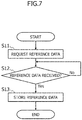
- FIG. 7 illustrates example initialization processing of the driving evaluation that the telematics unit 320 of the on-board device 300 performs in response to when the ignition switch of the vehicle 200 is turned from off to on, i.e., in response to the start of the on-board device 300.
- step 11 the processor 320A of the telematics unit 320 requests reference data to the server computer 400 via the mobile communication circuit 320F and mobile communication antenna 324.
- step 12 the processor 320A of the telematics unit 320 determines whether or not it has received the reference data from the server computer 400 via the mobile communication circuit 320F and mobile communication antenna 324.
- the processor 320A of the telematics unit 320 determines that it has received the reference data (Yes)
- the operation proceeds to step 13.
- the processor 320A of the telematics unit 320 waits until it receives the reference data.
- the processor 320A of the telematics unit 320 stores the reference data into, for example, the RAM 320C so as to be able to refer to the reference data at any time.
- the processor 320A of the telematics unit 320 may alternatively store the reference data into the ROM 320B so as to ensure that the reference data will not be lost even if the battery is instantaneously disconnected.
- the processor 320A of the telematics unit 320 requests, to the server computer 400, reference data that allows identification of the distribution of the past evaluation results related to an evaluation target. Then, when the processor 320A of the telematics unit 320 receives the reference data from the server computer 400, the processor 320A of the telematics unit 320 stores the reference data into the RAM 320C. As a result, the processor 320A of the telematics unit 320 comes to be able to refer to the reference data at any time.
- FIG. 8 illustrates example driving evaluation processing that the telematics unit 320 of the on-board device 300 repeatedly performs at predetermined time intervals after completing the initialization processing.
- the processor 320A of the telematics unit 320 acquires various data on the vehicle 200.
- the data on the vehicle 200 include its location information and the following data from the start: how much fuel has been consumed, what distance has been traveled, how much fuel is consumed during idling, duration of idling, what distance is traveled through the green zone, how long time it takes to travel through the green zone, how much fuel is consumed while it travels through the green zone, how long the cruise control is used, what distance is traveled by coasting, duration of coasting, how long the top gear is used, and how much fuel is consumed with the use of the top gear.
- the processor 320A of the telematics unit 320 acquires at least how much fuel has been consumed.
- the processor 320A of the telematics unit 320 determines the current location of the vehicle 200 by processing the signals from the GPS satellite received by the GPS antenna 322. Then, by reading various signals transmitted through the CAN 360 and processing the signals as necessary, the processor 320A of the telematics unit 320 determines the following data from the start: how much fuel has been consumed, what distance has been traveled, how much fuel is consumed during idling, duration of idling, what distance is traveled through the green zone, how long time it takes to travel through the green zone, how much fuel is consumed while it travels through the green zone, how long the cruise control is used, what distance is traveled by coasting, duration of coasting, how long the top gear is used, and how much fuel is consumed with the use of the top gear.
- the processor 320A of the telematics unit 320 calculates scores that represent the evaluation results corresponding to the driving conditions of the vehicle 200.
- the driving conditions of the vehicle 200 used here include conditions in one driving cycle regarding the operation of the engine and transmission, the vehicle speed, idling, and anticipatory driving.
- the term "one driving cycle" refers to vehicle travel made from when the ignition switch is turned on until the ignition switch is turned off.
- the processor 320A of the telematics unit 320 calculates the scores of the above driving conditions, using, for example, a known statistical method.
- Each score indicates where the corresponding driving condition is located in the distribution of the scores that is identified based on the reference data.
- a deviation in a normal distribution may be used.
- step 23 the processor 320A of the telematics unit 320 determines which score region includes the score for each of the evaluation-target driving conditions of the vehicle 200 based on the mean value ⁇ and standard deviation ⁇ of the reference data. In other words, as shown in FIG.
- the distribution of the past scores may be divided into regions A to D, where the scores that are equal to or above ⁇ + ⁇ belong to the region A, the scores that are equal to or above ⁇ and less than ⁇ + ⁇ belong to the region B, the scores that are equal to or above ⁇ - ⁇ and less than ⁇ belong to the region C, and the scores that are less than ⁇ - ⁇ belong to the region D, and the processor 320A of the telematics unit 320 determines which of these regions A to D includes each of the scores for the driving conditions of the vehicle 200.
- the number of the score regions is not limited to four (A to D), and may be five or more.
- the processor 320A of the telematics unit 320 sets a target score for each driving condition of the vehicle 200 depending on which of the regions A to D includes the current score. Specifically, the processor 320A of the telematics unit 320 sets the target score to 100 when the current score is in the region A, sets the target score to ⁇ + ⁇ when the current score is in the region B, and sets the target score to ⁇ when the current score is in the region C or D. In short, the processor 320A of the telematics unit 320 sets a target score to a value that allows improvement of the actual score at least toward the mean value ⁇ .
- step 25 the processor 320A of the telematics unit 320 displays the current scores and the target scores on the display device 344 of the HMI 340.
- Each current score may be displayed as a position, which is indicated, for example, by colored area, in a bar graph ranging from 0 to 100 that represents the distribution of the scores identified based on the reference data.
- Each target score may be indicated by a triangle symbol at the top of the bar graph, for example.
- FIG. 10 shows a display form of the utilization ratio of the top gear
- FIG. 11 shows a display form of the current fuel economy obtained by dividing a travel distance by a fuel consumption amount. However, as shown in FIG. 11 , both the average fuel economy and the maximum fuel economy may be displayed as the current fuel economy.
- the processor 320A of the telematics unit 320 may calculate the score for each large-category set of driving conditions (such as the conditions regarding the operation of the engine and transmission) by weighting the scores for small-category driving conditions (such as the utilization ratio of automatic transmission while the economy mode is turned on) using predetermined weights and summing the thus-weighted scores.
- the processor 320A of the telematics unit 320 may calculate an overall evaluation score by weighting the scores for the large-category sets of driving conditions using predetermined weights and summing the thus-weighted scores.
- the processor 320A of the telematics unit 320 may calculate the difference between the score for each large-category set of driving conditions and its target score as well as the difference between the overall evaluation score and its target score, and may display these scores and differences on the display device 344 of the HMI 340 as shown in FIG. 12 .
- step 26 among the various data on the vehicle 200 acquired in step 21, the processor 320A of the telematics unit 320 transmits, for example, data, driver information, and the like which are necessary to prepare a daily report to the server computer 400 via the mobile communication circuit 320F and mobile communication antenna 324.
- What data is necessary to prepare the daily report may be defined in advance by an operator such as the transportation operation manager of the transportation company.
- the driver information and the like may be identified based on the way the HMI 340 is operated.
- step 27 the processor 320A of the telematics unit 320 determines whether or not the score region for the evaluation-target driving condition has changed from that determined in the previous iteration of the driving evaluation processing.
- the processor 320A of the telematics unit 320 determines that the score region has changed (Yes)
- the operation proceeds to step 28.
- the processor 320A of the telematics unit 320 determines that the score region has not changed (No)
- the operation ends.
- step 28 when the guidance is set to "ON", the processor 320A of the telematics unit 320 displays, on the display device 344 of the HMI 340, guidance indicating occurrence of a score change. For example, as indications of such a score change, an indication of score increase in an evaluation-target driving condition is displayed when the score region for the evaluation-target driving condition has changed for the better, and an indication of score decrease in an evaluation-target driving condition is displayed when the score region for the evaluation-target driving condition has changed for the worse. Such a score change may alternatively be informed by voice or the like.
- the evaluation result corresponding to the driving conditions of the vehicle 200 is presented in a form that indicates where it is located in the distribution of the scores representing the past evaluation results. This allows the driver of the vehicle 200 to determine whether or not there remains any room for improved driving skill without taking into account traveling in unusual situations such as traveling with a tailwind, which may be represented by a score close to 100, traveling with a headwind, which may be represented by a score close to 0.
- the server computer 400 is also capable of sequentially providing the vehicle data to the transportation operation manager of the transportation company.
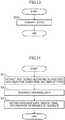
- FIG. 13 illustrates example evaluation result notification processing that the telematics unit 320 of the on-board device 300 performs when it is shutting down, which occurs when the ignition switch of the vehicle 200 is turned from on to off.
- step 31 the processor 320A of the telematics unit 320 transmits the scores for the evaluation-target driving conditions to the server computer 400 via the mobile communication circuit 320F and mobile communication antenna 324.
- the scores representing the evaluation results in one driving cycle are transmitted to the server computer 400. This allows the server computer 400 to accumulate past evaluation results by registering these scores into the database.
- FIG. 14 illustrates example reference data providing processing that the server computer 400 performs in response to the receipt of a request for reference data.
- the storage 400E of the server computer 400 stores, in advance, a reference data providing program for implementing the reference data providing processing and database updating processing to be described later.
- the storage 400E may be an example of a computer-readable recording medium that stores the reference data providing program.
- step 41 among the past scores stored in the storage 400E, the processor 400A of the server computer 400 extracts scores according to the specified display items and data selection conditions. In this score extraction, each data selection condition that is not specified is ignored. Thus, only information on the evaluation-target driving conditions may be displayed by appropriately specifying the display items and data selection conditions.
- step 42 the processor 400A of the server computer 400 generates reference data that contains a mean value ⁇ and a standard deviation ⁇ , using the past scores extracted in step 41.
- step 43 the processor 400A of the server computer 400 returns the reference data, the display items, and the presence or absence of guidance to the on-board device 300 of the vehicle 200.
- the server computer 400 in response to a request for reference data from the on-board device 300, extracts past scores from the storage 400E in accordance with the specified display items and data selection conditions. Then, the server computer 400 generates reference data from these extracted past scores, and returns the reference data, the display items, and the presence or absence of guidance to the on-board device 300 of the vehicle 200.
- server computer 400 to provide the on-board device 300 with reference data that contributes to driving evaluation, and allows the on-board device 300 to evaluate the driving skill of the driver with reference to the reference data, the display items, and the presence or absence of the guidance returned from the server computer 400.
- FIG. 15 illustrates an example database updating processing that the server computer 400 performs in response to the receipt of the vehicle data or scores.
- step 51 the processor 400A of the server computer 400 stores the received vehicle data or scores into the storage 400E and updates the database.
- the server computer 400 can update the database with data transmitted by the on-board device 300 of the vehicle 200. This allows the transportation operation manager of the transportation company to prepare, for example, a daily report or the like by referring to the vehicle data stored in the database. In addition, since scores are sequentially stored in the database, extensive scores, i.e., extensive past evaluation results may be accumulated therein.
- the driving evaluation system 100 described above allows the driver of the vehicle 200 to visually identify where each of the current driving conditions is located in the distribution of the past evaluation results, and thus allows the driver of the vehicle 200 to determine whether or not there remains any room for improved driving skill without taking into account traveling in unusual situations. Thus, when there remains any room for improved driving skill, the driver of the vehicle 200 can improve fuel economy by, for example, revamping the driver's accelerator and gear shift operations and the like.
- the operation is implemented via the server computer 400.
- the operation may be implemented with a configuration from which the server computer 400 is omitted.
- the functionality of the server computer 400 may be given to the on-board device 300.
Landscapes
- Engineering & Computer Science (AREA)
- Transportation (AREA)
- Mechanical Engineering (AREA)
- Chemical & Material Sciences (AREA)
- Combustion & Propulsion (AREA)
- Physics & Mathematics (AREA)
- Automation & Control Theory (AREA)
- General Physics & Mathematics (AREA)
- Analytical Chemistry (AREA)
- Mathematical Physics (AREA)
- Human Computer Interaction (AREA)
- Traffic Control Systems (AREA)
- Instrument Panels (AREA)
Applications Claiming Priority (1)
| Application Number | Priority Date | Filing Date | Title |
|---|---|---|---|
| PCT/JP2016/051839 WO2017126102A1 (ja) | 2016-01-22 | 2016-01-22 | 運転評価装置、運転評価方法、基準データ提供方法、基準データ提供装置及び基準データ提供プログラム |
Publications (2)
| Publication Number | Publication Date |
|---|---|
| EP3407323A1 true EP3407323A1 (de) | 2018-11-28 |
| EP3407323A4 EP3407323A4 (de) | 2019-09-11 |
Family
ID=59362661
Family Applications (1)
| Application Number | Title | Priority Date | Filing Date |
|---|---|---|---|
| EP16886343.9A Withdrawn EP3407323A4 (de) | 2016-01-22 | 2016-01-22 | Fahrbeurteilungsvorrichtung, fahrbeurteilungsverfahren, verfahren zur bereitstellung von referenzdaten, vorrichtung zur bereitstellung von referenzdaten und programm zur bereitstellung von referenzdaten |
Country Status (3)
| Country | Link |
|---|---|
| EP (1) | EP3407323A4 (de) |
| JP (1) | JP7032932B2 (de) |
| WO (1) | WO2017126102A1 (de) |
Cited By (1)
| Publication number | Priority date | Publication date | Assignee | Title |
|---|---|---|---|---|
| CN111290571A (zh) * | 2018-12-07 | 2020-06-16 | 沃尔沃汽车公司 | 评估模拟的车辆相关特征 |
Families Citing this family (7)
| Publication number | Priority date | Publication date | Assignee | Title |
|---|---|---|---|---|
| KR102313790B1 (ko) * | 2019-04-17 | 2021-10-19 | 모트렉스(주) | 차량용 클러스터 장치 및 제어 방법 |
| WO2021079894A1 (ja) * | 2019-10-21 | 2021-04-29 | 本田技研工業株式会社 | 情報管理システム、車両情報管理サーバ、情報管理方法、プログラム及びコンピュータ可読記憶媒体 |
| CN113343448B (zh) * | 2021-05-25 | 2024-03-05 | 京东鲲鹏(江苏)科技有限公司 | 控制效果评估方法、装置、电子设备及存储介质 |
| JP7748310B2 (ja) * | 2022-03-09 | 2025-10-02 | 株式会社豊田中央研究所 | 運転評価システム、運転を評価する方法、及びコンピュータプログラム |
| CN114426025B (zh) * | 2022-03-17 | 2023-11-14 | 一汽解放汽车有限公司 | 驾驶辅助方法、装置、计算机设备和存储介质 |
| WO2023220864A1 (zh) * | 2022-05-16 | 2023-11-23 | 广东逸动科技有限公司 | 评估方法、评估装置、电子设备及计算机可读存储介质 |
| CN116152955B (zh) * | 2023-04-19 | 2023-07-04 | 北京阿帕科蓝科技有限公司 | 车辆状态检测方法、装置、计算机设备和存储介质 |
Family Cites Families (6)
| Publication number | Priority date | Publication date | Assignee | Title |
|---|---|---|---|---|
| JP3044025B1 (ja) * | 1998-12-09 | 2000-05-22 | 株式会社データ・テック | 運転傾向性の分析が可能な運行管理システム及びその構成装置 |
| JP2007271959A (ja) * | 2006-03-31 | 2007-10-18 | Mazda Motor Corp | 車両用運転技量判定装置 |
| JP2011126341A (ja) * | 2009-12-15 | 2011-06-30 | Fuji Heavy Ind Ltd | 車両用情報提示装置 |
| JP5976773B2 (ja) * | 2012-02-27 | 2016-08-24 | ヤマハ発動機株式会社 | 運転技量判定システム、運転技量判定方法および運転技量判定プログラム |
| JP2014092795A (ja) * | 2012-10-31 | 2014-05-19 | Aisin Aw Co Ltd | 運転支援システム、方法およびプログラム |
| JP6194578B2 (ja) * | 2012-11-29 | 2017-09-13 | 富士通株式会社 | 運行管理方法、運行管理装置及びプログラム |
-
2016
- 2016-01-22 WO PCT/JP2016/051839 patent/WO2017126102A1/ja not_active Ceased
- 2016-01-22 JP JP2017562399A patent/JP7032932B2/ja active Active
- 2016-01-22 EP EP16886343.9A patent/EP3407323A4/de not_active Withdrawn
Cited By (2)
| Publication number | Priority date | Publication date | Assignee | Title |
|---|---|---|---|---|
| CN111290571A (zh) * | 2018-12-07 | 2020-06-16 | 沃尔沃汽车公司 | 评估模拟的车辆相关特征 |
| CN111290571B (zh) * | 2018-12-07 | 2023-07-21 | 沃尔沃汽车公司 | 评估模拟的车辆相关特征 |
Also Published As
| Publication number | Publication date |
|---|---|
| EP3407323A4 (de) | 2019-09-11 |
| JPWO2017126102A1 (ja) | 2018-11-15 |
| JP7032932B2 (ja) | 2022-03-09 |
| WO2017126102A1 (ja) | 2017-07-27 |
Similar Documents
| Publication | Publication Date | Title |
|---|---|---|
| EP3407323A1 (de) | Fahrbeurteilungsvorrichtung, fahrbeurteilungsverfahren, verfahren zur bereitstellung von referenzdaten, vorrichtung zur bereitstellung von referenzdaten und programm zur bereitstellung von referenzdaten | |
| US9747730B2 (en) | Driver measurement and incentive system for improving fuel-efficiency | |
| US9477989B2 (en) | Method and apparatus of determining relative driving characteristics using vehicular participative sensing systems | |
| CN106652515B (zh) | 车辆自动控制方法、装置和系统 | |
| CN103661397B (zh) | 机动车驾驶员驾驶行为的评估 | |
| US8258982B2 (en) | Safe driving evaluation system and safe driving evaluation program | |
| US9221452B2 (en) | System and method for optimizing fuel economy using predictive environment and driver behavior information | |
| US10046764B2 (en) | Vehicle control system | |
| RU2549578C1 (ru) | Устройство предоставления информации для использования в транспортном средстве | |
| US8311719B2 (en) | Vehicle operation diagnosis device, vehicle operation diagnosis method, and computer program | |
| JP2010231776A (ja) | 運転支援装置 | |
| US20140330506A1 (en) | Human machine interface for real time trip comparison | |
| CN113701779B (zh) | 一种基于大数据的道路智能导航系统及导航方法 | |
| CN111323034B (zh) | 在车辆的测试行驶期间确定接下来测试路线的方法和设备 | |
| US10556597B2 (en) | Operation information management device, operation information management method, and operation information management system | |
| JP4876880B2 (ja) | 車両用運転支援評価システム | |
| EP4250272A1 (de) | Fahrbeurteilungssystem, lernvorrichtung, beurteilungsergebnisausgabevorrichtung, verfahren und programm | |
| US20210221384A1 (en) | System and method for evaluating recorded vehicle operation data | |
| JP6605381B2 (ja) | 運転診断装置、運転診断システム、端末装置 | |
| JP6827204B2 (ja) | 指導情報の出力方法および指導情報の出力システム | |
| KR20170007084A (ko) | 운전 습관의 평가 및 랭킹을 이용하는 운전 랭킹 장치, 운전 랭킹 시스템 및 운전 랭킹 방법 | |
| CN114475093A (zh) | 轮胎磨损提醒方法、装置、设备及存储介质 | |
| JP2018073233A (ja) | 車両走行管理システム、管理装置、管理方法および管理プログラム | |
| CN118397727A (zh) | 信息处理装置、以及信息处理方法 | |
| CN116380106B (zh) | 掉头路口的导航处理方法及相关装置 |
Legal Events
| Date | Code | Title | Description |
|---|---|---|---|
| STAA | Information on the status of an ep patent application or granted ep patent |
Free format text: STATUS: THE INTERNATIONAL PUBLICATION HAS BEEN MADE |
|
| PUAI | Public reference made under article 153(3) epc to a published international application that has entered the european phase |
Free format text: ORIGINAL CODE: 0009012 |
|
| STAA | Information on the status of an ep patent application or granted ep patent |
Free format text: STATUS: REQUEST FOR EXAMINATION WAS MADE |
|
| 17P | Request for examination filed |
Effective date: 20180619 |
|
| AK | Designated contracting states |
Kind code of ref document: A1 Designated state(s): AL AT BE BG CH CY CZ DE DK EE ES FI FR GB GR HR HU IE IS IT LI LT LU LV MC MK MT NL NO PL PT RO RS SE SI SK SM TR |
|
| AX | Request for extension of the european patent |
Extension state: BA ME |
|
| DAV | Request for validation of the european patent (deleted) | ||
| DAX | Request for extension of the european patent (deleted) | ||
| A4 | Supplementary search report drawn up and despatched |
Effective date: 20190812 |
|
| RIC1 | Information provided on ipc code assigned before grant |
Ipc: B60W 40/09 20120101ALI20190805BHEP Ipc: B60K 35/00 20060101ALI20190805BHEP Ipc: G08G 1/00 20060101AFI20190805BHEP |
|
| RAP1 | Party data changed (applicant data changed or rights of an application transferred) |
Owner name: UD TRUCKS CORPORATION |
|
| STAA | Information on the status of an ep patent application or granted ep patent |
Free format text: STATUS: EXAMINATION IS IN PROGRESS |
|
| 17Q | First examination report despatched |
Effective date: 20211210 |
|
| GRAP | Despatch of communication of intention to grant a patent |
Free format text: ORIGINAL CODE: EPIDOSNIGR1 |
|
| STAA | Information on the status of an ep patent application or granted ep patent |
Free format text: STATUS: GRANT OF PATENT IS INTENDED |
|
| INTG | Intention to grant announced |
Effective date: 20220729 |
|
| STAA | Information on the status of an ep patent application or granted ep patent |
Free format text: STATUS: THE APPLICATION IS DEEMED TO BE WITHDRAWN |
|
| 18D | Application deemed to be withdrawn |
Effective date: 20221209 |