EP3407562A1 - Procédé et système de reconnaissance de flux commun, et procédé d'utilisation de serveur - Google Patents
Procédé et système de reconnaissance de flux commun, et procédé d'utilisation de serveur Download PDFInfo
- Publication number
- EP3407562A1 EP3407562A1 EP17762569.6A EP17762569A EP3407562A1 EP 3407562 A1 EP3407562 A1 EP 3407562A1 EP 17762569 A EP17762569 A EP 17762569A EP 3407562 A1 EP3407562 A1 EP 3407562A1
- Authority
- EP
- European Patent Office
- Prior art keywords
- data
- feature
- distance
- feature distance
- data streams
- Prior art date
- Legal status (The legal status is an assumption and is not a legal conclusion. Google has not performed a legal analysis and makes no representation as to the accuracy of the status listed.)
- Granted
Links
Images




Classifications
-
- G—PHYSICS
- G06—COMPUTING OR CALCULATING; COUNTING
- G06N—COMPUTING ARRANGEMENTS BASED ON SPECIFIC COMPUTATIONAL MODELS
- G06N20/00—Machine learning
-
- H—ELECTRICITY
- H04—ELECTRIC COMMUNICATION TECHNIQUE
- H04L—TRANSMISSION OF DIGITAL INFORMATION, e.g. TELEGRAPHIC COMMUNICATION
- H04L69/00—Network arrangements, protocols or services independent of the application payload and not provided for in the other groups of this subclass
- H04L69/22—Parsing or analysis of headers
-
- G—PHYSICS
- G06—COMPUTING OR CALCULATING; COUNTING
- G06F—ELECTRIC DIGITAL DATA PROCESSING
- G06F16/00—Information retrieval; Database structures therefor; File system structures therefor
-
- G—PHYSICS
- G06—COMPUTING OR CALCULATING; COUNTING
- G06F—ELECTRIC DIGITAL DATA PROCESSING
- G06F16/00—Information retrieval; Database structures therefor; File system structures therefor
- G06F16/30—Information retrieval; Database structures therefor; File system structures therefor of unstructured textual data
- G06F16/35—Clustering; Classification
-
- G—PHYSICS
- G06—COMPUTING OR CALCULATING; COUNTING
- G06F—ELECTRIC DIGITAL DATA PROCESSING
- G06F16/00—Information retrieval; Database structures therefor; File system structures therefor
- G06F16/90—Details of database functions independent of the retrieved data types
- G06F16/906—Clustering; Classification
-
- G—PHYSICS
- G06—COMPUTING OR CALCULATING; COUNTING
- G06N—COMPUTING ARRANGEMENTS BASED ON SPECIFIC COMPUTATIONAL MODELS
- G06N7/00—Computing arrangements based on specific mathematical models
- G06N7/01—Probabilistic graphical models, e.g. probabilistic networks
-
- H—ELECTRICITY
- H04—ELECTRIC COMMUNICATION TECHNIQUE
- H04L—TRANSMISSION OF DIGITAL INFORMATION, e.g. TELEGRAPHIC COMMUNICATION
- H04L47/00—Traffic control in data switching networks
- H04L47/10—Flow control; Congestion control
- H04L47/24—Traffic characterised by specific attributes, e.g. priority or QoS
- H04L47/2441—Traffic characterised by specific attributes, e.g. priority or QoS relying on flow classification, e.g. using integrated services [IntServ]
-
- H—ELECTRICITY
- H04—ELECTRIC COMMUNICATION TECHNIQUE
- H04L—TRANSMISSION OF DIGITAL INFORMATION, e.g. TELEGRAPHIC COMMUNICATION
- H04L47/00—Traffic control in data switching networks
- H04L47/10—Flow control; Congestion control
- H04L47/41—Flow control; Congestion control by acting on aggregated flows or links
-
- H—ELECTRICITY
- H04—ELECTRIC COMMUNICATION TECHNIQUE
- H04L—TRANSMISSION OF DIGITAL INFORMATION, e.g. TELEGRAPHIC COMMUNICATION
- H04L47/00—Traffic control in data switching networks
- H04L47/70—Admission control; Resource allocation
- H04L47/80—Actions related to the user profile or the type of traffic
- H04L47/803—Application aware
Definitions
- the present invention relates to the data processing field in communications networks, and in particular, to a coflow identification method and system, and a server using the method.
- coflow Wide application of an emerging network parallel technology is accompanied with an emergence of a new computer network concept, that is, a coflow (coflow).
- the coflow is defined as a set of data streams that are in a semantic relationship (semantic relationship) or a correlation relationship (correlation relationship). Because data streams in a coflow usually belong to a same task, the coflow has a consistent requirement for network service performance, that is, a completion time of a latest data stream is minimized or the data streams in the coflow need to be transmitted within a same time limit.
- coflow information usually cannot be directly and explicitly obtained from a header of a data stream. This is because a terminal application that generates the data stream usually does not provide any explicit information in the header of the data stream for coflow identification.
- a synergistic relationship between active data streams in a network is identified in a clustering manner.
- a kernel of a terminal application that generates the data streams does not need to be modified, and the terminal application does not need to explicitly provide any information about a coflow or a task aspect to a network provider.
- the technical solution is based on the following principle: Data streams belonging to a same coflow are usually sent at extremely close time points.
- the sending time point of the data stream is extracted as a feature, data streams are clustered by using a k-means algorithm, and then the data streams in the network are scheduled by using a scheduling algorithm and according to coflow information obtained by means of clustering, so that service performance of the network is improved.
- the network generates data streams extremely frequently, even within an extremely short unit time, for example, within one second, a small data center may generate tens of thousands of data streams, and these data streams may not belong to a same coflow. Therefore, if a sending time point of a data stream is used as a unique feature, clustering accuracy may be extremely low. This is because in this solution, data streams that are not in any semantic relationship may be classified into a same coflow just because sending time points of these data streams are extremely close.
- Embodiments of the present invention provide a coflow identification method and system, and a server using the method, so as to effectively improve accuracy of coflow identification without modifying a kernel of an application, thereby improving time validity of the coflow identification and satisfying a real-time requirement of network scheduling.
- a coflow identification method is provided, where the method is used to identify a coflow in a data transmission process in a network, and the method includes: obtaining, by a server, header information of data streams in data transmission in the network; obtaining a stream aspect data feature, an application aspect data stream feature, and a terminal aspect data feature according to the header information of the data streams, where the data stream aspect data feature includes at least one of a sending time point distance metric, a packet length average metric, a packet length variance metric, a packet arrival time interval average metric, a packet arrival time interval variance metric, or a transmission protocol distance metric; the application aspect data stream feature includes an application aspect data stream feature distance, where the application aspect data stream feature distance is used to indicate a degree of aggregation between destination addresses or destination ports in the data transmission or a degree of overlapping between data transmit end IP address sets; and the terminal aspect data feature includes a terminal aspect data feature distance, where the terminal aspect data feature distance is used to indicate whether the data streams belong to
- the header information of the data streams includes source IP addresses of the data streams, source ports of the data streams, destination IP addresses of the data streams, destination ports of the data streams, sending time points of the data streams, and transmission protocols used by the data streams.
- the data features in this embodiment of this application may be extracted according to the header information of the data streams, so that the coflow identification method is applicable to most existing network systems.
- the sending time point distance metric is an absolute value of a difference between sending time points of two data streams;
- the packet length average metric is an absolute value of a difference between packet length averages of two data streams;
- the packet length variance metric is an absolute value of a difference between packet length variances of two data streams;
- the packet arrival time interval average metric is an absolute value of a difference between packet transmission time interval averages of two data streams;
- the packet arrival time interval variance metric is an absolute value of a difference between packet transmission time interval variances of two data streams;
- the transmission protocol distance metric indicates whether packet transmission protocols are the same, and if the packet transmission protocols are the same, the transmission protocol distance metric is a non-zero constant, or if the packet transmission protocols are different, the transmission protocol distance metric is zero.
- the coflow is computed and identified by quantifying the features, so that automation and intelligence of data processing are improved.
- the obtaining a weighted matrix by means of learning according to historical data in the network includes: obtaining a multi-dimensional feature distance vector according to the historical data in the network, where the multi-dimensional feature distance vector includes at least two dimensions, the at least two dimensions correspondingly include at least two of the sending time point distance metric, the packet length average metric, the packet length variance metric, the packet arrival time interval average metric, the packet arrival time interval variance metric, the transmission protocol distance metric, the application aspect data stream feature distance, or the terminal aspect data feature distance, and each metric or each feature distance forms a dimension of the multi-dimensional feature distance vector; and obtaining a weighted matrix of the multi-dimensional feature distance vector by means of learning according to the historical data in the network, so as to allocate different weights by using a learning mechanism and according to different roles that feature distances of different dimensions play in coflow identification, to minimize a feature distance between data streams
- the computing a feature distance between any two data streams in the network according to the metrics in the data stream aspect data feature, the application aspect data stream feature distance, the terminal aspect data feature distance, and the weighted matrix includes: computing the feature distance between the any two data streams in the network according to the multi-dimensional feature distance vector and the weighted matrix.
- the obtaining a weighted matrix of the multi-dimensional feature distance vector by means of learning according to the historical data in the network includes:
- a second aspect provides a server, where the server includes an information obtaining module, a feature extraction module, a weight learning module, a feature distance computation module, and a coflow clustering module, where the information obtaining module is configured to obtain header information of data streams in data transmission in a network and historical data in the network; the feature extraction module is configured to extract a stream aspect data feature, an application aspect data stream feature, and a terminal aspect data feature from the header information of the data streams; the weight learning module is configured to obtain a weighted matrix by means of learning according to the historical data in the network, where the weighted matrix is used to minimize a feature distance between data streams belonging to a same coflow and maximize a feature distance between data streams belonging to different coflows, and the feature distance is a weighted distance of the data stream aspect data feature, the application aspect data stream feature, and the terminal aspect data feature; and the feature distance computation module is configured to compute a feature distance between any two data streams in the network according to metrics in the data stream aspect data feature, the application aspect data stream feature distance,
- a third aspect provides a server, including a receive port, a processor, and a memory, where the receive port is configured to receive header information of data streams in data transmission in a network; the processor is configured to: obtain a stream aspect data feature, an application aspect data stream feature, and a terminal aspect data feature according to the header information of the data streams; obtain a weighted matrix by means of learning according to historical data in the network; compute a feature distance between any two data streams in the network according to metrics in the data stream aspect data feature, the application aspect data stream feature distance, the terminal aspect data feature distance, and the weighted matrix; and finally, divide the data streams in the network into several cluster sets by using a clustering algorithm and according to the feature distance between the any two data streams in the network, where each of the several cluster sets is a coflow; and the memory is configured to store the stream aspect data feature, the application aspect data stream feature, the terminal aspect data feature, the historical data in the network, and the weighted matrix.
- the data stream aspect data feature includes at least one of a sending time point distance metric, a packet length average metric, a packet length variance metric, a packet arrival time interval average metric, a packet arrival time interval variance metric, or a transmission protocol distance metric;
- the application aspect data stream feature includes the application aspect data stream feature distance, where the application aspect data stream feature distance is used to indicate a degree of aggregation between destination addresses or destination ports in the data transmission or a degree of overlapping between data transmit end IP address sets;
- the terminal aspect data feature includes the terminal aspect data feature distance, where the terminal aspect data feature distance is used to indicate whether the data streams belong to a same terminal cluster.
- the weighted matrix is used to minimize a feature distance between data streams belonging to a same coflow and maximize a feature distance between data streams belonging to different coflows
- the feature distance is a weighted distance of at least two of the application aspect data stream feature distance, the terminal aspect data feature distance, or the metrics in the data stream aspect data feature.
- a fourth aspect provides a coflow identification apparatus, configured to identify a coflow in a data transmission process in a network, where the apparatus includes:
- the weight learning module is further configured to: obtain a multi-dimensional feature distance vector according to the historical data in the network, where the multi-dimensional feature distance vector includes at least three dimensions, the at least three dimensions include the application aspect data stream feature distance, the terminal aspect data feature distance, and at least one of the sending time point distance metric, the packet length average metric, the packet length variance metric, the packet arrival time interval average metric, the packet arrival time interval variance metric, or the transmission protocol distance metric, and each metric or each feature distance forms a dimension of the multi-dimensional feature distance vector; and then obtain a weighted matrix of the multi-dimensional feature distance vector by means of learning according to the historical data in the network, so as to allocate different weights by using a learning mechanism and according to different roles that feature distances of different dimensions play in coflow identification, to minimize a feature distance between data streams belonging to a same coflow and maximize a feature distance between data streams belonging to different coflows.
- a fifth aspect provides a coflow identification system, including the server according to any implementation of the second, the third, and the fourth aspects and a slave server, where the slave server includes one or more stream information screening modules, and each stream information screening module is configured to: obtain header information of data streams of at least one terminal, and send the header information of the data streams to the server.
- an effective eigenvector is extracted for behavior modes of different aspects of a terminal, an application, and generated data streams.
- the eigenvector includes a terminal cluster, a data sending path of the application, and stream microscopic behavior modes such as a sending time point of the data stream and a sending time interval of the data streams, so as to provide comprehensive and effective information for coflow identification.
- the eigenvector is constructed by using these features to provide important input for the clustering algorithm, and then a weight of a feature of each dimension in the eigenvector is learned according to training data and depending on different roles that the features play in the coflow identification, to improve accuracy of the coflow identification.
- the present invention mainly relates to how to identify, in real time without modifying a kernel of an application of a terminal and by using a clustering method according to features of data streams and behavior features of the application and the terminal that generate the data streams, a coflow to which the data streams in the network belong.
- an effective eigenvector is extracted.
- the eigenvector includes a terminal cluster mode, a data sending mode of the application, and stream microscopic behavior modes such as a sending time point of the data stream and a sending time interval of the data streams, so as to provide comprehensive and effective information for coflow identification, thereby performing coflow identification by extracting features from three different modes or aspects.
- a weight corresponding to a feature of each dimension is automatically learned by using training data.
- the data streams are clustered by using a clustering algorithm and according to the obtained features of different aspects and corresponding weights, so as to obtain synergistic information of the data streams in the network.
- the present invention mainly includes the following features: Using of features of three aspects is provided, including extracting effective features from a terminal cluster mode, an application sending mode, and a stream microscopic behavior mode, to construct an eigenvector as important input for a clustering algorithm; a weight of a feature of each dimension in the eigenvector is automatically learned according to training data, to improve accuracy of coflow identification; and online clustering is implemented on data streams in a network by using the clustering algorithm and the obtained eigenvector and weights, to obtain coflow information.
- this embodiment of the present invention relates to a coflow identification method that is used to identify a coflow in a data transmission process in a network.
- the network used for data transmission mainly includes a terminal, a slave server, and a master server.
- the slave server includes one or more stream information screening modules.
- Each stream information screening module corresponds to a terminal and is configured to: collect data stream information of the terminal, and transmit the collected data stream information to the master server by adding the collected data stream information to header information of data streams in the data transmission in the network.
- the stream information screening module may be directly disposed on the master server.
- the master server includes a stream aspect data feature extraction module, an application aspect data stream feature extraction module, a terminal aspect data feature extraction module, a weight learning module, a feature distance computation module, and a coflow clustering module.
- the master server extracts, by using the stream aspect data feature extraction module, the application aspect data stream feature extraction module, and the terminal aspect data feature extraction module, a corresponding stream aspect data feature, a corresponding application aspect data stream feature, and a corresponding terminal aspect data feature from the header information of the data streams that is sent by the slave server.
- this embodiment of the present invention relates to a coflow identification method.
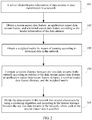
- the method includes the following five steps 101 to 105.
- Step 101 A server obtains header information of data streams in data transmission in a network.
- the server may obtain the header information of the data streams by directly capturing data transmitted in the network, or may obtain the header information of the data streams by using a stream information collection module in a slave server or a terminal.
- the stream information collection module extracts packet header information of a new data stream when the data stream arrives.
- Features that are critical to a coflow include a source IP address (Source IP Address), a source port (Server Port), a destination IP address (Destination IP Address), and a destination port (Client Port) of the data stream, a sending time point (Start Time) of the data stream, and a transmission protocol (Protocol) used by the data stream. Then, the stream information collection module sends the obtained information to the server.
- the information is collected because there may be some user behavior modes in the network. For example, a group of data streams using a particular transmission protocol may be regularly sent from some source IP addresses to some destination IP addresses by using some ports. These data streams may belong to a coflow of a same task.
- the stream information collection and screening module further performs preliminary screening on the data streams, to screen out a data stream that has been transmitted and a data stream that uses a TCP (Transmission Control Protocol), and regularly reports data stream information obtained by means of collection and screening to a master server system.
- TCP Transmission Control Protocol
- Step 102 Obtain a stream aspect data feature, an application aspect data stream feature, and a terminal aspect data feature according to the header information of the data streams, where the data stream aspect data feature includes at least one of a sending time point distance metric, a packet length average metric, a packet length variance metric, a packet arrival time interval average metric, a packet arrival time interval variance metric, or a transmission protocol distance metric;
- the application aspect data stream feature includes an application aspect data stream feature distance, where the application aspect data stream feature distance is used to indicate a degree of overlapping between destination addresses or destination ports in the data transmission or a degree of overlapping between data transmit end IP address sets;
- the terminal aspect data feature includes a terminal aspect data feature distance, where the terminal aspect data feature distance is used to indicate whether the data streams belong to a same terminal cluster, and the terminal cluster is a set including at least one terminal having a common attribute or feature.
- the sending time point distance metric in the stream aspect data feature is an absolute value of a difference between sending time points of two data streams.
- the sending time point distance metric may be defined as an absolute value of a difference between two sending time points.
- a step of obtaining the sending time point distance metric in the stream aspect data feature according to the header information of the data streams is as follows:
- the sending time point distance metric D t ( S i,time , S j,time )
- the packet length average metric in the stream aspect data feature is an absolute value of a difference between packet length averages of two data streams.
- the packet length variance metric in the stream aspect data feature is an absolute value of a difference between packet length variances of two data streams.
- a packet length average and a packet length variance of a data stream are extracted:
- a distance between packet length averages of any two active data streams and a distance between packet length variance metrics of any two active data streams may be computed according to computed packet length averages and packet length variances of the data streams:
- the packet arrival time interval average metric is an absolute value of a difference between packet transmission arrival time interval averages of two data streams.
- the packet arrival time interval variance metric is an absolute value of a difference between packet arrival time interval variances of two data streams.
- a packet transmission time interval average and a packet transmission time interval variance of a data stream are computed first:
- the transmission protocol distance metric indicates whether packet transmission protocols are the same. If the packet transmission protocols are the same, the transmission protocol distance metric is a non-zero constant, and if the packet transmission protocols are different, the transmission protocol distance metric is zero.
- Data of data streams in a same coflow are usually transmitted by using a same transmission protocol, especially, the TCP protocol.
- a same transmission protocol especially, the TCP protocol.
- an i th dimension of the vector is 1 and other dimensions are 0.
- a value of the distance metric of the two protocols is 0 or 2 .
- the application aspect data stream feature includes the application aspect data stream feature distance. The following describes how to specifically extract the application aspect data stream feature and how to compute the application aspect data stream feature distance.
- the application aspect data stream feature mainly reflects a behavior mode feature of an application that generates a data stream. This plays an important role in coflow identification. Some priori knowledge may be obtained by analyzing an application that is most likely to generate a coflow, for example, the coflow is more likely to be an aggregation flow. Data streams not belonging to a same aggregation flow may belong to a same coflow. Data streams not belonging to a same aggregation flow in a parallel computing application usually have a feature that these data streams all come from some common terminals.
- the application aspect feature extraction module identifies an aggregation flow, measures a degree of overlapping between terminals by using a Jacard similarity, and defines a feature distance between any two data streams in an application aspect according to aggregation flow information and the Jacard similarity.
- the application aspect feature distance is mainly computed in the following four steps:
- a principle of computing the application aspect feature distance is that in a parallel computing application such as Spark, one reduce node may process data from multiple map nodes. Therefore, if two data streams have consistent destination IP addresses and consistent destination ports, a probability that the data streams belong to a same coflow is relatively high.
- a Sparkcontext object starts executors on different computing nodes, and allocates tasks to different executors.
- Each executor establishes its own link manager and allocates a fixed port number to the link manager.
- the executor needs to obtain data from another executor, so that a link is established between the current executor and the another executor by using the link manager. Therefore, the another executor sends data to a special port of an executor that executes a reduce task. Therefore, data streams that have consistent destination addresses and consistent destination ports are defined as an aggregation flow (flow aggregation).
- a probability that the data streams belong to a same coflow is quite high, that is, the application aspect feature distance between the data streams is quite small, and 0 is assigned to the feature distance.
- two data streams not belonging to a same aggregation flow need to be treated differently. If a degree of overlapping between transmit end IP address sets of the data streams is quite high, a probability that the data streams belong to a same coflow is still quite high; otherwise, the probability that the data streams belong to a same coflow is quite low.
- D app i , j ⁇ 0 i f i , j i n t h e s a m e aggregation , 1 ⁇ J i , j otherwise
- D app ( i,j ) is an application aspect feature distance
- J ( i,j ) is a similarity between two data streams not belonging to a same aggregation flow.
- a process of computing the similarity is as follows:
- data streams not belonging to a same aggregation flow may belong to a same coflow.
- MapReduce application in a data shuffle phase, a many-to-many communication mode on a running application server usually appears.
- a communication mode shown in FIG. 3A is quite common in data shuffle of MapReduce, that is, although two data streams do not belong to a same aggregation flow, these data streams are usually sent from a same transmit end set.
- a communication mode shown in FIG. 3B is not common in MapReduce. Therefore, when two data streams do not belong to a same aggregation flow, an application aspect feature distance of the two data streams may be computed according to a degree of repetition between transmit end IP address sets of the data streams.
- a specific process of extracting and computing the terminal aspect data feature and the terminal aspect data feature distance is as follows:
- a traffic matrix of a data center is usually quite sparse, that is, terminals of the data center form a cluster, and the cluster formed by the terminals may be defined as a community. Most traffic in the network is generated in a stable community. According to this network behavior mode, although there are many terminals in the network, in an actual scenario, the terminals form a cluster to some extent.
- This clustering phenomenon means that all terminals in the network may be divided into several communities, and traffic of the network is mainly generated by means of communication between terminals within a community.
- traffic of the network is mainly generated by means of communication between terminals within a community.
- a most important task of the terminal aspect feature extraction module is to find a community in the network according to historical sending behavior in the network.
- the terminal aspect data feature distance is obtained in four steps:
- Step 103 Obtain a weighted matrix by means of learning according to historical data in the network, where the weighted matrix is used to minimize a feature distance between data streams belonging to a same coflow and maximize a feature distance between data streams belonging to different coflows, and the feature distance is a weighted distance of at least two of the application aspect data stream feature distance, the terminal aspect data feature distance, or the metrics in the data stream aspect data feature. It should be particularly noted that the feature distance is a weighted distance obtained by using each of the metrics in the data stream aspect data feature.
- Learning of the weighted matrix may be run and completed in a spark application program, and the historical data in the network is obtained by collecting network trace data and collecting coflow information from the application.
- data streams in the network trace data are divided into the following two data stream pair sets according to whether the data streams belong to a same coflow, and the two data pair sets respectively correspond to a coflow data set and a non-coflow data set:
- the target function indicates that an optimal weighted matrix A is found, so as to minimize a feature distance between data streams belonging to a same coflow and maximize a feature distance between data streams belonging to different coflows.
- Step 104 Compute a feature distance between any two data streams in the network according to the metrics in the data stream aspect data feature, the application aspect data stream feature distance, the terminal aspect data feature distance, and the weighted matrix.
- step 104 specifically includes:
- the feature distance between the any two data streams in the network is equal to a root of a product of a transposed matrix D ( i,j ) T of the multi-dimensional feature distance vector, the weighted matrix A, and the multi-dimensional feature distance vector D ( i,j ).
- a smaller feature distance between any two data streams in the network indicates a larger similarity between the two data streams, and a higher probability that the data streams belong to a same coflow.
- Step 105 Divide the data streams in the network into several cluster sets by using a clustering algorithm and according to the feature distance between the any two data streams in the network, where a feature distance between any data stream in each aggregation flow and any other data stream in the same aggregation flow is less than a feature distance between the data stream and any data stream in a different aggregation flow, and each of the several cluster sets is a coflow.
- a data stream set is divided into several clusters by using the clustering algorithm and according to a distance that is between any two active data streams in the network and that is output by the foregoing module.
- Each cluster represents coflow information.
- a clustering method is minimizing a distance between data streams within a cluster and maximizing a distance between data streams in different clusters.
- the foregoing clustering algorithm may be implemented by using multiple clustering algorithms.
- a clustering algorithm with the following features is used: A quantity of clusters does not need to be preset, the clustering algorithm is based on a relative distance between instances and an absolute location of the instance is not required, and a noise instance is allowed.
- a DBSCAN clustering algorithm is preferably used.
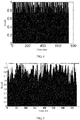
- FIG. 4 shows a situation of identifying a coflow in a network on an experimental platform by using the coflow identification method according to Embodiment 1 of the present invention.
- a horizontal coordinate indicates time
- a vertical coordinate indicates a percentage of data streams that are identified in the coflow. Therefore, it may be learned that a coflow identification solution provided in the coflow identification method can quite accurately identify data streams that belong to a coflow.
- FIG. 5 shows a coflow identification effect of a solution excluding a terminal aspect data feature. It may be learned from FIG. 5 that if the terminal aspect data feature is not considered, a percentage of correctly identified coflows is obviously decreased. Therefore, effectiveness and necessity of extracting the foregoing hierarchical multiple features can be proved.
- the step of obtaining the weighted matrix by means of weight learning may be removed from the solution. As shown in FIG. 6 , it may be found that a coflow identification effect of the solution is severely decreased. Therefore, effectiveness and necessity of obtaining the weighted matrix by means of weight learning can be proved.
- this embodiment of the present invention relates to a coflow identification system, including a terminal, a slave server, and a master server.
- the slave server includes one or more stream information screening modules.
- Each stream information screening module corresponds to a terminal and is configured to: collect data stream information of the terminal, and transmit the collected data stream information to the master server by adding the collected data stream information to header information of data streams in data transmission in a network.
- the stream information screening module may be directly disposed on the master server.
- the master server includes a stream aspect data feature extraction module, an application aspect data stream feature extraction module, a terminal aspect data feature extraction module, a weight learning module, a feature distance computation module, and a coflow clustering module.
- the master server extracts, by using the stream aspect data feature extraction module, the application aspect data stream feature extraction module, and the terminal aspect data feature extraction module, a corresponding stream aspect data feature, a corresponding application aspect data stream feature, and a corresponding terminal aspect data feature from the header information of the data streams that is sent by the slave server.
- the data stream aspect data feature includes at least one of a sending time point distance metric, a packet length average metric, a packet length variance metric, a packet arrival time interval average metric, a packet arrival time interval variance metric, or a transmission protocol distance metric.
- the application aspect data stream feature includes an application aspect data stream feature distance, and the application aspect data stream feature distance is used to indicate a degree of overlapping between destination addresses or destination ports in the data transmission or a degree of overlapping between data transmit end IP address sets.
- the terminal aspect data feature includes a terminal aspect data feature distance, and the terminal aspect data feature distance is used to indicate whether the data streams belong to a same terminal cluster.
- the weight learning module is configured to obtain a weighted matrix by means of learning according to historical data in the network.
- the weighted matrix is used to minimize a feature distance between data streams belonging to a same coflow and maximize a feature distance between data streams belonging to different coflows.
- the feature distance is a weighted distance of at least two of the application aspect data stream feature distance, the terminal aspect data feature distance, or the metrics in the data stream aspect data feature. It should be particularly noted that the feature distance is a weighted distance obtained by using each of the metrics in the data stream aspect data feature.
- the feature distance computation module is configured to compute a feature distance between any two data streams in the network according to the metrics in the data stream aspect data feature, the application aspect data stream feature distance, the terminal aspect data feature distance, and the weighted matrix.
- the coflow clustering module is configured to divide the data streams in the network into several cluster sets by using a clustering algorithm and according to the feature distance between the any two data streams in the network.
- Each of the several cluster sets is a coflow.
- a server provided in Embodiment 3 of the present invention is configured to perform data processing in a network.
- the server includes a receive port, a processor, a memory, and a bus, where the bus is configured to transmit data between the receive port, the processor, and the memory;
- the receive port is configured to receive header information of data streams in data transmission in the network;
- the processor is configured to: obtain a stream aspect data feature, an application aspect data stream feature, and a terminal aspect data feature according to the header information of the data streams; obtain a weighted matrix by means of learning according to historical data in the network; compute a feature distance between any two data streams in the network according to metrics in the data stream aspect data feature, the application aspect data stream feature distance, the terminal aspect data feature distance, and the weighted matrix; and finally, divide the data streams in the network into several cluster sets by using a clustering algorithm and according to the feature distance between the any two data streams in the network, where each of the several cluster sets is a coflow; and the memory is configured to store the stream
- the data stream aspect data feature includes at least one of a sending time point distance metric, a packet length average metric, a packet length variance metric, a packet arrival time interval average metric, a packet arrival time interval variance metric, or a transmission protocol distance metric.
- the application aspect data stream feature includes an application aspect data stream feature distance, and the application aspect data stream feature distance is used to indicate a degree of aggregation between destination addresses or destination ports in the data transmission or a degree of overlapping between data transmit end IP address sets.
- the terminal aspect data feature includes a terminal aspect data feature distance, and the terminal aspect data feature distance is used to indicate whether the data streams belong to a same terminal cluster.
- the weighted matrix is used to minimize a feature distance between data streams belonging to a same coflow and maximize a feature distance between data streams belonging to different coflows, and the feature distance is a weighted distance of at least two of the application aspect data stream feature distance, the terminal aspect data feature distance, or the metrics in the data stream aspect data feature.
- the header information of the data streams includes source IP addresses of the data streams, source ports of the data streams, destination IP addresses of the data streams, destination ports of the data streams, sending time points of the data streams, and transmission protocols used by the data streams.
- the processor is configured to: obtain a multi-dimensional feature distance vector according to the historical data in the network, and obtain a weighted matrix of the multi-dimensional feature distance vector by means of learning according to the historical data in the network, so as to allocate different weights by using a learning mechanism and according to different roles that feature distances of different dimensions play in coflow identification, to minimize a feature distance between data streams belonging to a same coflow and maximize a feature distance between data streams belonging to a same coflow and maximize a feature distance between data streams belonging to different coflows.
- the multi-dimensional feature distance vector includes at least two dimensions or at least three dimensions.
- the at least two dimensions correspondingly include at least two of the sending time point distance metric, the packet length average metric, the packet length variance metric, the packet arrival time interval average metric, the packet arrival time interval variance metric, the transmission protocol distance metric, the application aspect data stream feature distance, or the terminal aspect data feature distance.
- the at least three dimensions include the application aspect data stream feature distance, the terminal aspect data feature distance, and at least one of the sending time point distance metric, the packet length average metric, the packet length variance metric, the packet arrival time interval average metric, the packet arrival time interval variance metric, or the transmission protocol distance metric.
- Each metric or each feature distance forms a dimension of the multi-dimensional feature distance vector.
- the processor is configured to compute a feature distance between any two data streams in the network according to the multi-dimensional feature distance vector and the weighted matrix.
- a server in Embodiment 4 of the present invention is configured to identify a coflow in a data transmission process in a network.
- the server includes:
- the weight learning module is further configured to: obtain a multi-dimensional feature distance vector according to the historical data in the network, where the multi-dimensional feature distance vector includes at least three dimensions, the at least three dimensions include the application aspect data stream feature distance, the terminal aspect data feature distance, and at least one of the sending time point distance metric, the packet length average metric, the packet length variance metric, the packet arrival time interval average metric, the packet arrival time interval variance metric, or the transmission protocol distance metric, and each metric or each feature distance forms a dimension of the multi-dimensional feature distance vector; and then obtain a weighted matrix of the multi-dimensional feature distance vector by means of learning according to the historical data in the network, so as to allocate different weights by using a learning mechanism and according to different roles that feature distances of different dimensions play in coflow identification, to minimize a feature distance between data streams belonging to a same coflow and maximize a feature distance between data streams belonging to different coflows.
Landscapes
- Engineering & Computer Science (AREA)
- Theoretical Computer Science (AREA)
- Physics & Mathematics (AREA)
- General Physics & Mathematics (AREA)
- Software Systems (AREA)
- Data Mining & Analysis (AREA)
- General Engineering & Computer Science (AREA)
- Computer Networks & Wireless Communication (AREA)
- Signal Processing (AREA)
- Artificial Intelligence (AREA)
- Computing Systems (AREA)
- Evolutionary Computation (AREA)
- Mathematical Physics (AREA)
- Databases & Information Systems (AREA)
- Medical Informatics (AREA)
- Computer Vision & Pattern Recognition (AREA)
- Computer Security & Cryptography (AREA)
- Computational Mathematics (AREA)
- Pure & Applied Mathematics (AREA)
- Mathematical Optimization (AREA)
- Mathematical Analysis (AREA)
- Probability & Statistics with Applications (AREA)
- Algebra (AREA)
- Data Exchanges In Wide-Area Networks (AREA)
Applications Claiming Priority (2)
| Application Number | Priority Date | Filing Date | Title |
|---|---|---|---|
| CN201610141226.2A CN107181724B (zh) | 2016-03-11 | 2016-03-11 | 一种协同流的识别方法、系统以及使用该方法的服务器 |
| PCT/CN2017/076469 WO2017152883A1 (fr) | 2016-03-11 | 2017-03-13 | Procédé et système de reconnaissance de flux commun, et procédé d'utilisation de serveur |
Publications (3)
| Publication Number | Publication Date |
|---|---|
| EP3407562A1 true EP3407562A1 (fr) | 2018-11-28 |
| EP3407562A4 EP3407562A4 (fr) | 2019-01-09 |
| EP3407562B1 EP3407562B1 (fr) | 2023-05-03 |
Family
ID=59789019
Family Applications (1)
| Application Number | Title | Priority Date | Filing Date |
|---|---|---|---|
| EP17762569.6A Active EP3407562B1 (fr) | 2016-03-11 | 2017-03-13 | Procédé et système de reconnaissance de flux commun, et procédé d'utilisation de serveur |
Country Status (4)
| Country | Link |
|---|---|
| US (1) | US10567299B2 (fr) |
| EP (1) | EP3407562B1 (fr) |
| CN (1) | CN107181724B (fr) |
| WO (1) | WO2017152883A1 (fr) |
Families Citing this family (49)
| Publication number | Priority date | Publication date | Assignee | Title |
|---|---|---|---|---|
| US9678773B1 (en) | 2014-09-30 | 2017-06-13 | Amazon Technologies, Inc. | Low latency computational capacity provisioning |
| US9733967B2 (en) | 2015-02-04 | 2017-08-15 | Amazon Technologies, Inc. | Security protocols for low latency execution of program code |
| US10102040B2 (en) | 2016-06-29 | 2018-10-16 | Amazon Technologies, Inc | Adjusting variable limit on concurrent code executions |
| CN107689893B (zh) * | 2017-09-18 | 2020-11-13 | 深圳市盛路物联通讯技术有限公司 | 一种数据流交换复用的方法及系统 |
| CN107819698A (zh) * | 2017-11-10 | 2018-03-20 | 北京邮电大学 | 一种基于半监督学习的网络流量分类方法、计算机设备 |
| CN109905328B (zh) * | 2017-12-08 | 2021-06-01 | 华为技术有限公司 | 数据流的识别方法和装置 |
| CN108429802B (zh) * | 2018-03-07 | 2021-01-26 | 国家计算机网络与信息安全管理中心 | 物联网设备信息获取方法及装置 |
| WO2019179473A1 (fr) * | 2018-03-23 | 2019-09-26 | Telefonaktiebolaget Lm Ericsson (Publ) | Procédés et dispositifs d'inspection de service iot sur la base de fragments |
| CN109861953B (zh) * | 2018-05-14 | 2020-08-21 | 新华三信息安全技术有限公司 | 一种异常用户识别方法及装置 |
| US11277455B2 (en) | 2018-06-07 | 2022-03-15 | Mellanox Technologies, Ltd. | Streaming system |
| US10853115B2 (en) | 2018-06-25 | 2020-12-01 | Amazon Technologies, Inc. | Execution of auxiliary functions in an on-demand network code execution system |
| US11099870B1 (en) | 2018-07-25 | 2021-08-24 | Amazon Technologies, Inc. | Reducing execution times in an on-demand network code execution system using saved machine states |
| CN109218223B (zh) * | 2018-08-08 | 2021-07-13 | 西安交通大学 | 一种基于主动学习的鲁棒性网络流量分类方法及系统 |
| CN109271855B (zh) * | 2018-08-09 | 2021-07-09 | 深圳市永达电子信息股份有限公司 | 一种工控信号的特征提取方法 |
| US11243953B2 (en) * | 2018-09-27 | 2022-02-08 | Amazon Technologies, Inc. | Mapreduce implementation in an on-demand network code execution system and stream data processing system |
| US20200106828A1 (en) * | 2018-10-02 | 2020-04-02 | Mellanox Technologies, Ltd. | Parallel Computation Network Device |
| US11943093B1 (en) | 2018-11-20 | 2024-03-26 | Amazon Technologies, Inc. | Network connection recovery after virtual machine transition in an on-demand network code execution system |
| US11625393B2 (en) | 2019-02-19 | 2023-04-11 | Mellanox Technologies, Ltd. | High performance computing system |
| EP3699770B1 (fr) | 2019-02-25 | 2025-05-21 | Mellanox Technologies, Ltd. | Système et procédés de communication collective |
| US12327133B1 (en) | 2019-03-22 | 2025-06-10 | Amazon Technologies, Inc. | Application gateways in an on-demand network code execution system |
| US11861386B1 (en) | 2019-03-22 | 2024-01-02 | Amazon Technologies, Inc. | Application gateways in an on-demand network code execution system |
| CN110034977B (zh) * | 2019-04-18 | 2021-11-09 | 浙江齐治科技股份有限公司 | 一种设备安全性监测方法及安全性监测设备 |
| CN111953552B (zh) * | 2019-05-14 | 2022-12-13 | 华为技术有限公司 | 数据流的分类方法和报文转发设备 |
| US11119809B1 (en) | 2019-06-20 | 2021-09-14 | Amazon Technologies, Inc. | Virtualization-based transaction handling in an on-demand network code execution system |
| CN110321223B (zh) * | 2019-07-03 | 2021-08-17 | 湖南大学 | Coflow协同作业流调度感知的数据流划分方法与装置 |
| CN110728526B (zh) * | 2019-08-19 | 2024-04-02 | 创新先进技术有限公司 | 地址识别方法、设备以及计算机可读介质 |
| US11750699B2 (en) | 2020-01-15 | 2023-09-05 | Mellanox Technologies, Ltd. | Small message aggregation |
| US11252027B2 (en) | 2020-01-23 | 2022-02-15 | Mellanox Technologies, Ltd. | Network element supporting flexible data reduction operations |
| US11714682B1 (en) | 2020-03-03 | 2023-08-01 | Amazon Technologies, Inc. | Reclaiming computing resources in an on-demand code execution system |
| US11876885B2 (en) | 2020-07-02 | 2024-01-16 | Mellanox Technologies, Ltd. | Clock queue with arming and/or self-arming features |
| CN112425149B (zh) * | 2020-10-19 | 2022-01-28 | 深圳市锐明技术股份有限公司 | 图像信息处理方法、终端设备及计算机可读存储介质 |
| US20240129052A1 (en) * | 2020-11-12 | 2024-04-18 | Nippon Telegraph And Telephone Corporation | Sensor Embedded Terminal, Disconnecting Determination Method and Disconnecting Determination Program |
| US11550713B1 (en) | 2020-11-25 | 2023-01-10 | Amazon Technologies, Inc. | Garbage collection in distributed systems using life cycled storage roots |
| US11593270B1 (en) | 2020-11-25 | 2023-02-28 | Amazon Technologies, Inc. | Fast distributed caching using erasure coded object parts |
| TWI753674B (zh) | 2020-11-26 | 2022-01-21 | 國立清華大學 | 基於時間之社群網路中傳播機率之計算方法及其系統 |
| US11556378B2 (en) | 2020-12-14 | 2023-01-17 | Mellanox Technologies, Ltd. | Offloading execution of a multi-task parameter-dependent operation to a network device |
| US11966319B2 (en) * | 2021-02-23 | 2024-04-23 | Mellanox Technologies, Ltd. | Identifying anomalies in a data center using composite metrics and/or machine learning |
| CN112995063B (zh) * | 2021-04-19 | 2021-10-08 | 北京智源人工智能研究院 | 一种流量监测方法、装置、设备及介质 |
| US11388210B1 (en) | 2021-06-30 | 2022-07-12 | Amazon Technologies, Inc. | Streaming analytics using a serverless compute system |
| US11968280B1 (en) | 2021-11-24 | 2024-04-23 | Amazon Technologies, Inc. | Controlling ingestion of streaming data to serverless function executions |
| US12015603B2 (en) | 2021-12-10 | 2024-06-18 | Amazon Technologies, Inc. | Multi-tenant mode for serverless code execution |
| US12309070B2 (en) | 2022-04-07 | 2025-05-20 | Nvidia Corporation | In-network message aggregation for efficient small message transport |
| US11922237B1 (en) | 2022-09-12 | 2024-03-05 | Mellanox Technologies, Ltd. | Single-step collective operations |
| CN115955521B (zh) * | 2022-09-13 | 2023-08-11 | 武汉麦丰创新网络科技有限公司 | 一种私有报文的识别方法及系统 |
| US12381878B1 (en) | 2023-06-27 | 2025-08-05 | Amazon Technologies, Inc. | Architecture for selective use of private paths between cloud services |
| US12489657B2 (en) | 2023-08-17 | 2025-12-02 | Mellanox Technologies, Ltd. | In-network compute operation spreading |
| US12476978B2 (en) | 2023-09-29 | 2025-11-18 | Amazon Technologies, Inc. | Management of computing services for applications composed of service virtual computing components |
| CN120238508A (zh) * | 2023-12-29 | 2025-07-01 | 华为技术有限公司 | 通信系统、通信方法及装置 |
| CN119544547B (zh) * | 2024-11-12 | 2025-10-24 | 哈尔滨工业大学(深圳)(哈尔滨工业大学深圳科技创新研究院) | 大数据流处理方法、设备和存储介质 |
Family Cites Families (8)
| Publication number | Priority date | Publication date | Assignee | Title |
|---|---|---|---|---|
| EP2084854B1 (fr) * | 2006-11-06 | 2012-09-26 | I-Spade Technologies Ltd. | Procédé d'identification de session multimédia pour des réseaux ip |
| CN101714952B (zh) * | 2009-12-22 | 2012-03-07 | 北京邮电大学 | 一种接入网的流量识别方法和装置 |
| US20120072475A1 (en) * | 2010-09-10 | 2012-03-22 | Morrison Gregory C | Measuring "closeness" in a network |
| US8682812B1 (en) * | 2010-12-23 | 2014-03-25 | Narus, Inc. | Machine learning based botnet detection using real-time extracted traffic features |
| US8418249B1 (en) * | 2011-11-10 | 2013-04-09 | Narus, Inc. | Class discovery for automated discovery, attribution, analysis, and risk assessment of security threats |
| CN102739522A (zh) * | 2012-06-04 | 2012-10-17 | 华为技术有限公司 | 互联网数据流的分类方法及装置 |
| US9398034B2 (en) * | 2013-12-19 | 2016-07-19 | Microsoft Technology Licensing, Llc | Matrix factorization for automated malware detection |
| CN105227488B (zh) * | 2015-08-25 | 2018-05-08 | 上海交通大学 | 一种用于分布式计算机平台的网络流组调度方法 |
-
2016
- 2016-03-11 CN CN201610141226.2A patent/CN107181724B/zh active Active
-
2017
- 2017-03-13 EP EP17762569.6A patent/EP3407562B1/fr active Active
- 2017-03-13 WO PCT/CN2017/076469 patent/WO2017152883A1/fr not_active Ceased
-
2018
- 2018-09-11 US US16/127,649 patent/US10567299B2/en active Active
Also Published As
| Publication number | Publication date |
|---|---|
| EP3407562A4 (fr) | 2019-01-09 |
| US10567299B2 (en) | 2020-02-18 |
| CN107181724B (zh) | 2021-02-12 |
| WO2017152883A1 (fr) | 2017-09-14 |
| US20180375781A1 (en) | 2018-12-27 |
| CN107181724A (zh) | 2017-09-19 |
| EP3407562B1 (fr) | 2023-05-03 |
Similar Documents
| Publication | Publication Date | Title |
|---|---|---|
| US10567299B2 (en) | Coflow identification method and system, and server using method | |
| CN110311829B (zh) | 一种基于机器学习加速的网络流量分类方法 | |
| CN105681339B (zh) | 一种融合粗糙集与ds证据理论的增量式入侵检测方法 | |
| CN113378899A (zh) | 非正常账号识别方法、装置、设备和存储介质 | |
| US10848407B2 (en) | Efficient density based geo clustering | |
| CN110661727B (zh) | 数据传输优化方法、装置、计算机设备和存储介质 | |
| WO2019105163A1 (fr) | Procédé et appareil de recherche de personne cible, dispositif, produit-programme et support | |
| CN111191767A (zh) | 一种基于向量化的恶意流量攻击类型的判断方法 | |
| CN119030802A (zh) | 一种加密流量网络的异常行为检测方法和装置 | |
| CN111107107B (zh) | 网络行为的检测方法、装置、计算机设备和存储介质 | |
| US11874901B2 (en) | Method, device for processing network flow, storage medium and computer device | |
| CN106911591A (zh) | 网络流量的分类方法和系统 | |
| Xiao et al. | A traffic classification method with spectral clustering in SDN | |
| CN117829307A (zh) | 一种面向数据异构性的联邦学习方法及系统 | |
| CN109978073B (zh) | 一种空间信息网络任务智能识别方法 | |
| CN106878073A (zh) | 基于t分布混合模型的网络多媒体业务半监督分类方法 | |
| Fellus et al. | Decentralized k-means using randomized gossip protocols for clustering large datasets | |
| CN105812280A (zh) | 一种分类方法及电子设备 | |
| Ma et al. | EFL: elastic federated learning on non-IID data | |
| CN112383488A (zh) | 一种适用于加密与非加密数据流的内容识别方法 | |
| CN119128766A (zh) | 交易数据的异常检测方法及装置、程序产品、存储介质 | |
| CN118585913A (zh) | 一种在线的加密网络流量分类及未知应用识别方法 | |
| CN116016651B (zh) | 一种经纬度校正方法、装置、电子设备及存储介质 | |
| CN110781950A (zh) | 一种报文处理方法及装置 | |
| CN112380406B (zh) | 一种基于爬虫技术的实时网络流量分类方法 |
Legal Events
| Date | Code | Title | Description |
|---|---|---|---|
| STAA | Information on the status of an ep patent application or granted ep patent |
Free format text: STATUS: THE INTERNATIONAL PUBLICATION HAS BEEN MADE |
|
| PUAI | Public reference made under article 153(3) epc to a published international application that has entered the european phase |
Free format text: ORIGINAL CODE: 0009012 |
|
| STAA | Information on the status of an ep patent application or granted ep patent |
Free format text: STATUS: REQUEST FOR EXAMINATION WAS MADE |
|
| 17P | Request for examination filed |
Effective date: 20180824 |
|
| AK | Designated contracting states |
Kind code of ref document: A1 Designated state(s): AL AT BE BG CH CY CZ DE DK EE ES FI FR GB GR HR HU IE IS IT LI LT LU LV MC MK MT NL NO PL PT RO RS SE SI SK SM TR |
|
| AX | Request for extension of the european patent |
Extension state: BA ME |
|
| A4 | Supplementary search report drawn up and despatched |
Effective date: 20181210 |
|
| RIC1 | Information provided on ipc code assigned before grant |
Ipc: G06F 17/30 20060101ALI20181204BHEP Ipc: G06N 99/00 20100101ALI20181204BHEP Ipc: H04L 29/06 20060101AFI20181204BHEP |
|
| DAV | Request for validation of the european patent (deleted) | ||
| DAX | Request for extension of the european patent (deleted) | ||
| STAA | Information on the status of an ep patent application or granted ep patent |
Free format text: STATUS: EXAMINATION IS IN PROGRESS |
|
| 17Q | First examination report despatched |
Effective date: 20210224 |
|
| REG | Reference to a national code |
Ref country code: DE Ref legal event code: R079 Ref document number: 602017068315 Country of ref document: DE Free format text: PREVIOUS MAIN CLASS: H04L0029060000 Ipc: G06N0007000000 |
|
| GRAP | Despatch of communication of intention to grant a patent |
Free format text: ORIGINAL CODE: EPIDOSNIGR1 |
|
| STAA | Information on the status of an ep patent application or granted ep patent |
Free format text: STATUS: GRANT OF PATENT IS INTENDED |
|
| RIC1 | Information provided on ipc code assigned before grant |
Ipc: G06N 20/00 20190101ALI20220610BHEP Ipc: G06F 16/906 20190101ALI20220610BHEP Ipc: G06N 7/00 20060101AFI20220610BHEP |
|
| INTG | Intention to grant announced |
Effective date: 20220628 |
|
| GRAJ | Information related to disapproval of communication of intention to grant by the applicant or resumption of examination proceedings by the epo deleted |
Free format text: ORIGINAL CODE: EPIDOSDIGR1 |
|
| STAA | Information on the status of an ep patent application or granted ep patent |
Free format text: STATUS: EXAMINATION IS IN PROGRESS |
|
| GRAP | Despatch of communication of intention to grant a patent |
Free format text: ORIGINAL CODE: EPIDOSNIGR1 |
|
| STAA | Information on the status of an ep patent application or granted ep patent |
Free format text: STATUS: GRANT OF PATENT IS INTENDED |
|
| INTC | Intention to grant announced (deleted) | ||
| INTG | Intention to grant announced |
Effective date: 20221123 |
|
| GRAS | Grant fee paid |
Free format text: ORIGINAL CODE: EPIDOSNIGR3 |
|
| GRAA | (expected) grant |
Free format text: ORIGINAL CODE: 0009210 |
|
| STAA | Information on the status of an ep patent application or granted ep patent |
Free format text: STATUS: THE PATENT HAS BEEN GRANTED |
|
| AK | Designated contracting states |
Kind code of ref document: B1 Designated state(s): AL AT BE BG CH CY CZ DE DK EE ES FI FR GB GR HR HU IE IS IT LI LT LU LV MC MK MT NL NO PL PT RO RS SE SI SK SM TR |
|
| REG | Reference to a national code |
Ref country code: GB Ref legal event code: FG4D |
|
| REG | Reference to a national code |
Ref country code: DE Ref legal event code: R096 Ref document number: 602017068315 Country of ref document: DE |
|
| REG | Reference to a national code |
Ref country code: AT Ref legal event code: REF Ref document number: 1565291 Country of ref document: AT Kind code of ref document: T Effective date: 20230515 Ref country code: CH Ref legal event code: EP |
|
| REG | Reference to a national code |
Ref country code: IE Ref legal event code: FG4D |
|
| P01 | Opt-out of the competence of the unified patent court (upc) registered |
Effective date: 20230524 |
|
| REG | Reference to a national code |
Ref country code: LT Ref legal event code: MG9D |
|
| REG | Reference to a national code |
Ref country code: NL Ref legal event code: MP Effective date: 20230503 |
|
| REG | Reference to a national code |
Ref country code: AT Ref legal event code: MK05 Ref document number: 1565291 Country of ref document: AT Kind code of ref document: T Effective date: 20230503 |
|
| PG25 | Lapsed in a contracting state [announced via postgrant information from national office to epo] |
Ref country code: SE Free format text: LAPSE BECAUSE OF FAILURE TO SUBMIT A TRANSLATION OF THE DESCRIPTION OR TO PAY THE FEE WITHIN THE PRESCRIBED TIME-LIMIT Effective date: 20230503 Ref country code: PT Free format text: LAPSE BECAUSE OF FAILURE TO SUBMIT A TRANSLATION OF THE DESCRIPTION OR TO PAY THE FEE WITHIN THE PRESCRIBED TIME-LIMIT Effective date: 20230904 Ref country code: NO Free format text: LAPSE BECAUSE OF FAILURE TO SUBMIT A TRANSLATION OF THE DESCRIPTION OR TO PAY THE FEE WITHIN THE PRESCRIBED TIME-LIMIT Effective date: 20230803 Ref country code: NL Free format text: LAPSE BECAUSE OF FAILURE TO SUBMIT A TRANSLATION OF THE DESCRIPTION OR TO PAY THE FEE WITHIN THE PRESCRIBED TIME-LIMIT Effective date: 20230503 Ref country code: ES Free format text: LAPSE BECAUSE OF FAILURE TO SUBMIT A TRANSLATION OF THE DESCRIPTION OR TO PAY THE FEE WITHIN THE PRESCRIBED TIME-LIMIT Effective date: 20230503 Ref country code: AT Free format text: LAPSE BECAUSE OF FAILURE TO SUBMIT A TRANSLATION OF THE DESCRIPTION OR TO PAY THE FEE WITHIN THE PRESCRIBED TIME-LIMIT Effective date: 20230503 |
|
| PG25 | Lapsed in a contracting state [announced via postgrant information from national office to epo] |
Ref country code: RS Free format text: LAPSE BECAUSE OF FAILURE TO SUBMIT A TRANSLATION OF THE DESCRIPTION OR TO PAY THE FEE WITHIN THE PRESCRIBED TIME-LIMIT Effective date: 20230503 Ref country code: PL Free format text: LAPSE BECAUSE OF FAILURE TO SUBMIT A TRANSLATION OF THE DESCRIPTION OR TO PAY THE FEE WITHIN THE PRESCRIBED TIME-LIMIT Effective date: 20230503 Ref country code: LV Free format text: LAPSE BECAUSE OF FAILURE TO SUBMIT A TRANSLATION OF THE DESCRIPTION OR TO PAY THE FEE WITHIN THE PRESCRIBED TIME-LIMIT Effective date: 20230503 Ref country code: LT Free format text: LAPSE BECAUSE OF FAILURE TO SUBMIT A TRANSLATION OF THE DESCRIPTION OR TO PAY THE FEE WITHIN THE PRESCRIBED TIME-LIMIT Effective date: 20230503 Ref country code: IS Free format text: LAPSE BECAUSE OF FAILURE TO SUBMIT A TRANSLATION OF THE DESCRIPTION OR TO PAY THE FEE WITHIN THE PRESCRIBED TIME-LIMIT Effective date: 20230903 Ref country code: HR Free format text: LAPSE BECAUSE OF FAILURE TO SUBMIT A TRANSLATION OF THE DESCRIPTION OR TO PAY THE FEE WITHIN THE PRESCRIBED TIME-LIMIT Effective date: 20230503 Ref country code: GR Free format text: LAPSE BECAUSE OF FAILURE TO SUBMIT A TRANSLATION OF THE DESCRIPTION OR TO PAY THE FEE WITHIN THE PRESCRIBED TIME-LIMIT Effective date: 20230804 |
|
| PG25 | Lapsed in a contracting state [announced via postgrant information from national office to epo] |
Ref country code: FI Free format text: LAPSE BECAUSE OF FAILURE TO SUBMIT A TRANSLATION OF THE DESCRIPTION OR TO PAY THE FEE WITHIN THE PRESCRIBED TIME-LIMIT Effective date: 20230503 |
|
| PG25 | Lapsed in a contracting state [announced via postgrant information from national office to epo] |
Ref country code: SK Free format text: LAPSE BECAUSE OF FAILURE TO SUBMIT A TRANSLATION OF THE DESCRIPTION OR TO PAY THE FEE WITHIN THE PRESCRIBED TIME-LIMIT Effective date: 20230503 |
|
| PG25 | Lapsed in a contracting state [announced via postgrant information from national office to epo] |
Ref country code: SM Free format text: LAPSE BECAUSE OF FAILURE TO SUBMIT A TRANSLATION OF THE DESCRIPTION OR TO PAY THE FEE WITHIN THE PRESCRIBED TIME-LIMIT Effective date: 20230503 Ref country code: SK Free format text: LAPSE BECAUSE OF FAILURE TO SUBMIT A TRANSLATION OF THE DESCRIPTION OR TO PAY THE FEE WITHIN THE PRESCRIBED TIME-LIMIT Effective date: 20230503 Ref country code: RO Free format text: LAPSE BECAUSE OF FAILURE TO SUBMIT A TRANSLATION OF THE DESCRIPTION OR TO PAY THE FEE WITHIN THE PRESCRIBED TIME-LIMIT Effective date: 20230503 Ref country code: EE Free format text: LAPSE BECAUSE OF FAILURE TO SUBMIT A TRANSLATION OF THE DESCRIPTION OR TO PAY THE FEE WITHIN THE PRESCRIBED TIME-LIMIT Effective date: 20230503 Ref country code: DK Free format text: LAPSE BECAUSE OF FAILURE TO SUBMIT A TRANSLATION OF THE DESCRIPTION OR TO PAY THE FEE WITHIN THE PRESCRIBED TIME-LIMIT Effective date: 20230503 Ref country code: CZ Free format text: LAPSE BECAUSE OF FAILURE TO SUBMIT A TRANSLATION OF THE DESCRIPTION OR TO PAY THE FEE WITHIN THE PRESCRIBED TIME-LIMIT Effective date: 20230503 |
|
| REG | Reference to a national code |
Ref country code: DE Ref legal event code: R097 Ref document number: 602017068315 Country of ref document: DE |
|
| PLBE | No opposition filed within time limit |
Free format text: ORIGINAL CODE: 0009261 |
|
| STAA | Information on the status of an ep patent application or granted ep patent |
Free format text: STATUS: NO OPPOSITION FILED WITHIN TIME LIMIT |
|
| 26N | No opposition filed |
Effective date: 20240206 |
|
| PG25 | Lapsed in a contracting state [announced via postgrant information from national office to epo] |
Ref country code: SI Free format text: LAPSE BECAUSE OF FAILURE TO SUBMIT A TRANSLATION OF THE DESCRIPTION OR TO PAY THE FEE WITHIN THE PRESCRIBED TIME-LIMIT Effective date: 20230503 |
|
| PG25 | Lapsed in a contracting state [announced via postgrant information from national office to epo] |
Ref country code: SI Free format text: LAPSE BECAUSE OF FAILURE TO SUBMIT A TRANSLATION OF THE DESCRIPTION OR TO PAY THE FEE WITHIN THE PRESCRIBED TIME-LIMIT Effective date: 20230503 Ref country code: IT Free format text: LAPSE BECAUSE OF FAILURE TO SUBMIT A TRANSLATION OF THE DESCRIPTION OR TO PAY THE FEE WITHIN THE PRESCRIBED TIME-LIMIT Effective date: 20230503 |
|
| REG | Reference to a national code |
Ref country code: CH Ref legal event code: PL |
|
| PG25 | Lapsed in a contracting state [announced via postgrant information from national office to epo] |
Ref country code: BG Free format text: LAPSE BECAUSE OF FAILURE TO SUBMIT A TRANSLATION OF THE DESCRIPTION OR TO PAY THE FEE WITHIN THE PRESCRIBED TIME-LIMIT Effective date: 20230503 |
|
| PG25 | Lapsed in a contracting state [announced via postgrant information from national office to epo] |
Ref country code: LU Free format text: LAPSE BECAUSE OF NON-PAYMENT OF DUE FEES Effective date: 20240313 |
|
| PG25 | Lapsed in a contracting state [announced via postgrant information from national office to epo] |
Ref country code: MC Free format text: LAPSE BECAUSE OF FAILURE TO SUBMIT A TRANSLATION OF THE DESCRIPTION OR TO PAY THE FEE WITHIN THE PRESCRIBED TIME-LIMIT Effective date: 20230503 |
|
| PG25 | Lapsed in a contracting state [announced via postgrant information from national office to epo] |
Ref country code: MC Free format text: LAPSE BECAUSE OF FAILURE TO SUBMIT A TRANSLATION OF THE DESCRIPTION OR TO PAY THE FEE WITHIN THE PRESCRIBED TIME-LIMIT Effective date: 20230503 Ref country code: LU Free format text: LAPSE BECAUSE OF NON-PAYMENT OF DUE FEES Effective date: 20240313 Ref country code: BG Free format text: LAPSE BECAUSE OF FAILURE TO SUBMIT A TRANSLATION OF THE DESCRIPTION OR TO PAY THE FEE WITHIN THE PRESCRIBED TIME-LIMIT Effective date: 20230503 |
|
| REG | Reference to a national code |
Ref country code: BE Ref legal event code: MM Effective date: 20240331 |
|
| PG25 | Lapsed in a contracting state [announced via postgrant information from national office to epo] |
Ref country code: BE Free format text: LAPSE BECAUSE OF NON-PAYMENT OF DUE FEES Effective date: 20240331 |
|
| PG25 | Lapsed in a contracting state [announced via postgrant information from national office to epo] |
Ref country code: IE Free format text: LAPSE BECAUSE OF NON-PAYMENT OF DUE FEES Effective date: 20240313 |
|
| PG25 | Lapsed in a contracting state [announced via postgrant information from national office to epo] |
Ref country code: IE Free format text: LAPSE BECAUSE OF NON-PAYMENT OF DUE FEES Effective date: 20240313 Ref country code: BE Free format text: LAPSE BECAUSE OF NON-PAYMENT OF DUE FEES Effective date: 20240331 Ref country code: CH Free format text: LAPSE BECAUSE OF NON-PAYMENT OF DUE FEES Effective date: 20240331 |
|
| PG25 | Lapsed in a contracting state [announced via postgrant information from national office to epo] |
Ref country code: CY Free format text: LAPSE BECAUSE OF FAILURE TO SUBMIT A TRANSLATION OF THE DESCRIPTION OR TO PAY THE FEE WITHIN THE PRESCRIBED TIME-LIMIT; INVALID AB INITIO Effective date: 20170313 |
|
| PG25 | Lapsed in a contracting state [announced via postgrant information from national office to epo] |
Ref country code: HU Free format text: LAPSE BECAUSE OF FAILURE TO SUBMIT A TRANSLATION OF THE DESCRIPTION OR TO PAY THE FEE WITHIN THE PRESCRIBED TIME-LIMIT; INVALID AB INITIO Effective date: 20170313 |
|
| PG25 | Lapsed in a contracting state [announced via postgrant information from national office to epo] |
Ref country code: TR Free format text: LAPSE BECAUSE OF FAILURE TO SUBMIT A TRANSLATION OF THE DESCRIPTION OR TO PAY THE FEE WITHIN THE PRESCRIBED TIME-LIMIT Effective date: 20230503 |
|
| PGFP | Annual fee paid to national office [announced via postgrant information from national office to epo] |
Ref country code: GB Payment date: 20260202 Year of fee payment: 10 |
|
| PGFP | Annual fee paid to national office [announced via postgrant information from national office to epo] |
Ref country code: DE Payment date: 20260204 Year of fee payment: 10 |
|
| PGFP | Annual fee paid to national office [announced via postgrant information from national office to epo] |
Ref country code: FR Payment date: 20260209 Year of fee payment: 10 |