EP3407970B1 - Mikrowellengestützte medizinische technologien und vorrichtung dafür - Google Patents
Mikrowellengestützte medizinische technologien und vorrichtung dafür Download PDFInfo
- Publication number
- EP3407970B1 EP3407970B1 EP17778496.4A EP17778496A EP3407970B1 EP 3407970 B1 EP3407970 B1 EP 3407970B1 EP 17778496 A EP17778496 A EP 17778496A EP 3407970 B1 EP3407970 B1 EP 3407970B1
- Authority
- EP
- European Patent Office
- Prior art keywords
- tissues
- susceptor
- microwave
- microwave energy
- affected
- Prior art date
- Legal status (The legal status is an assumption and is not a legal conclusion. Google has not performed a legal analysis and makes no representation as to the accuracy of the status listed.)
- Active
Links
Images






Classifications
-
- A—HUMAN NECESSITIES
- A61—MEDICAL OR VETERINARY SCIENCE; HYGIENE
- A61B—DIAGNOSIS; SURGERY; IDENTIFICATION
- A61B18/00—Surgical instruments, devices or methods for transferring non-mechanical forms of energy to or from the body
- A61B18/18—Surgical instruments, devices or methods for transferring non-mechanical forms of energy to or from the body by applying electromagnetic radiation, e.g. microwaves
- A61B18/1815—Surgical instruments, devices or methods for transferring non-mechanical forms of energy to or from the body by applying electromagnetic radiation, e.g. microwaves using microwaves
-
- A—HUMAN NECESSITIES
- A61—MEDICAL OR VETERINARY SCIENCE; HYGIENE
- A61B—DIAGNOSIS; SURGERY; IDENTIFICATION
- A61B18/00—Surgical instruments, devices or methods for transferring non-mechanical forms of energy to or from the body
- A61B18/04—Surgical instruments, devices or methods for transferring non-mechanical forms of energy to or from the body by heating
- A61B18/06—Surgical instruments, devices or methods for transferring non-mechanical forms of energy to or from the body by heating caused by chemical reaction, e.g. moxaburners
-
- A—HUMAN NECESSITIES
- A61—MEDICAL OR VETERINARY SCIENCE; HYGIENE
- A61N—ELECTROTHERAPY; MAGNETOTHERAPY; RADIATION THERAPY; ULTRASOUND THERAPY
- A61N5/00—Radiation therapy
- A61N5/02—Radiation therapy using microwaves
-
- A—HUMAN NECESSITIES
- A61—MEDICAL OR VETERINARY SCIENCE; HYGIENE
- A61B—DIAGNOSIS; SURGERY; IDENTIFICATION
- A61B18/00—Surgical instruments, devices or methods for transferring non-mechanical forms of energy to or from the body
- A61B2018/00315—Surgical instruments, devices or methods for transferring non-mechanical forms of energy to or from the body for treatment of particular body parts
- A61B2018/00345—Vascular system
- A61B2018/00351—Heart
-
- A—HUMAN NECESSITIES
- A61—MEDICAL OR VETERINARY SCIENCE; HYGIENE
- A61B—DIAGNOSIS; SURGERY; IDENTIFICATION
- A61B18/00—Surgical instruments, devices or methods for transferring non-mechanical forms of energy to or from the body
- A61B2018/00571—Surgical instruments, devices or methods for transferring non-mechanical forms of energy to or from the body for achieving a particular surgical effect
- A61B2018/00577—Ablation
-
- A—HUMAN NECESSITIES
- A61—MEDICAL OR VETERINARY SCIENCE; HYGIENE
- A61B—DIAGNOSIS; SURGERY; IDENTIFICATION
- A61B18/00—Surgical instruments, devices or methods for transferring non-mechanical forms of energy to or from the body
- A61B2018/00571—Surgical instruments, devices or methods for transferring non-mechanical forms of energy to or from the body for achieving a particular surgical effect
- A61B2018/00589—Coagulation
-
- A—HUMAN NECESSITIES
- A61—MEDICAL OR VETERINARY SCIENCE; HYGIENE
- A61B—DIAGNOSIS; SURGERY; IDENTIFICATION
- A61B18/00—Surgical instruments, devices or methods for transferring non-mechanical forms of energy to or from the body
- A61B2018/00571—Surgical instruments, devices or methods for transferring non-mechanical forms of energy to or from the body for achieving a particular surgical effect
- A61B2018/00601—Cutting
-
- A—HUMAN NECESSITIES
- A61—MEDICAL OR VETERINARY SCIENCE; HYGIENE
- A61B—DIAGNOSIS; SURGERY; IDENTIFICATION
- A61B18/00—Surgical instruments, devices or methods for transferring non-mechanical forms of energy to or from the body
- A61B2018/00994—Surgical instruments, devices or methods for transferring non-mechanical forms of energy to or from the body combining two or more different kinds of non-mechanical energy or combining one or more non-mechanical energies with ultrasound
Definitions
- the invention relates to apparatus for the enhancement of the efficiency of an ablation procedure.
- a relatively new area is that of microwave-based medical devices. Pare taught that it is possible to selectively heat one or more components of a material while leaving others relatively cool ( US 5,002,784 ; US 5,338,557 ; US 5,458,897 ). Pare also taught that it is possible to selectively heat one phase of a multi-phase system while leaving other phases relatively cool ( US 5,377,426 ; US 5,519,947 ; US 5,675,909 ; US 5,732,476 ). These teachings on how to selectively destroy the microstructure of plant and animal tissues made these techniques most valuable for the extraction of a variety of high value-added compounds for example. Although most of these techniques were performed on ex situ tissues, they were shown to be applicable to in situ work. Hence there is a need to further make use of this selective heating characteristic of microwaves to develop methods and apparatus to be used in medical treatments.
- the fundamental goal of the procedure lies in selectively heating affected tissues in vivo, whether in situ or ex situ, to a temperature and for a period of time sufficient to effectively ablate the affected tissues. It is possible to heat selectively affected tissues over healthy ones because the former exhibit dielectric properties that are significantly different from those of the latter. Thus, in principle it is relatively simple to effect such a procedure. But in actual cases, despite this general trend that affected tissues present dielectric properties favourable to heat selectively over healthy tissues, a universal procedure cannot be used because the dielectric properties of the various types of tissues vary significantly from one type of tissues to another one (e.g., liver versus lung).
- the challenge lies in being able to exercise a good control over the selective heating and to minimise the natural heat transfer that occurs between the heated affected tissues and the relatively cool healthy tissues so as to avoid damaging such healthy tissues and cause undue physiological stress to the patient.
- this invention falls within the area of personalised medicine as each tissue to be treated will be in effect treated uniquely on a per patient basis and the exact treatment will be specific to a given tissue for a given patient and will vary between patients.
- the blood that flows into or in the surroundings of the affected tissues can serve as a natural coolant.
- the relatively large mass of blood that flows into or in the surroundings of the affected tissues compared to the smaller mass of such affected tissues makes this a most suitable means to remove some heat and protect the healthy tissues against temperature increases.
- Such means include, but are not limited to Peltier cooling, closed-loop liquid recirculation, gas expansion (e.g., C0 2 ), and the like.
- This additional cooling means will also have the enhanced benefit of cooling the components of the apparatus used to deliver such energy into affected tissues. This is especially important as thermal losses occur in for example a shaft such as a needle in which is enclosed a means or a plurality of means to deliver the microwave energy, for example micro-coaxial cables, and that is used to guide the insertion and precise and judicious placement of such means to deliver microwave energy into the affected tissues.
- the electric field component of the microwave is a key parameter in the control of the energy transferred into a physiological system. There is a need to concentrate such electric field component into the tissues to be treated.
- US Patent Application 2003/0073988 (Berube et al ) describes a microwave ablation instrument with an insertion probe.
- US Patent Application 2013/0324911 (Ohri et al. ) describes an ablation system that includes a source of electrosurgical energy, a source of coolant fluid, and an ablation electrode assembly operatively connected to the source of electrosurgical energy and fluidly-coupled to the source of coolant fluid.
- the ablation electrode assembly includes a hub defining a chamber therein and one or more electrically conductive ablation needles extending from the hub.
- the ablation system also includes one or more delivery needles extending from the hub.
- the one or more delivery needles are selectively moveable from a first position, wherein the distal end of the delivery needle is disposed proximal to the distal end portion of the ablation needle, to at least a second position, wherein at least the distal end of the delivery needle is disposed distally beyond the distal end portion of the ablation needle.
- US Patent application 2015/0080875 describes balloon catheter apparatus with a microwave emitter. It comprises a catheter configured to house a coaxial cable and one or more coolant channels, an inflatable balloon located at the distal end of the catheter, and an antenna positioned in the inflatable balloon and in communication with the coaxial cable.
- a control system forming part of the apparatus comprises a fluid pump configured to introduce fluid into a proximal end of the catheter, a power amplifier capable of generating microwave energy for delivery to the target tissue zone for at least one energy application cycle ranging from 60 seconds to 600 seconds at a frequency ranging from 2.4 GHz to 2.5 GHz, and a computer system configured to monitor and/or regulate the delivery of microwave energy to the target tissue, the fluid pump, at least one sensor, and antenna reflected power.
- Apparatus for the enhancement of the efficiency of an ablation procedure which comprises:
- the apparatus may further comprise (i) a means to control the repetition of steps (c) to (h) multiple times until the susceptor delivery is complete, the location of said susceptor delivery in steps (c) to (h) being varied between each sequence.
- the apparatus is applicable to coagulation procedures such as thermal coagulation necrosis, atrial fibrillation, resection, cautery, vascular thrombosis, treatment of cardiac arrhythmias and dysrhythmias, electro-surgery, tissue harvest, hemorrhoids thermal coagulation, and other types of thermal alterations and to the removal, ablation, or alteration of external tissues and surface tissues.
- coagulation procedures such as thermal coagulation necrosis, atrial fibrillation, resection, cautery, vascular thrombosis, treatment of cardiac arrhythmias and dysrhythmias, electro-surgery, tissue harvest, hemorrhoids thermal coagulation, and other types of thermal alterations and to the removal, ablation, or alteration of external tissues and surface tissues.
- This can vary from esthetic desire, such as the removal of warts, to more health-threatening congenital growths such as moles that can evolve into melanomas or provide a site for the development of melanomas.
- Such shell can be made as simply as a providing an external jacket in which water is allowed to flow so as to not only absorb the electric field losses but also provide for a constant temperature procedure. It will also be evident to those skilled in the art that such device can be as complicated as to providing an electric means to effectively quench any electric field losses, as for example some form of Faraday cage or microwave choke.
- the above apparatus combined with the insertion of an additional component, provides the means to apply it to surface and external tissues.
- An important aspect of the apparatus is the concentration of the electric field of the microwaves directly into the affected tissues. This can be achieved by various means.
- One such means consists in inserting simultaneously a second device that is coated or made of a material inert to physiological tissues and fluids and that has dielectric properties such that it will effectively serve as the electric load.
- a second device can take various forms, a preferred one consisting of a needle-like probe which preferably has an antenna shape similar to that of the energy delivering antenna.
- a most preferred means consists in delivering a dielectric material directly through the same device used to apply the microwave energy.
- the material is preferably a liquid or is in solution.
- Such dielectric materials are generally called "susceptors". It is thus evident that a judicious selection of the susceptor will make the method effective with any type of affected tissues and a truly universal method.
- the susceptors to be used are selected for their ability to heat more rapidly and to higher temperatures while being subjected to microwave energy, thus reducing the power to be applied and removing the potential for field losses into other physiological components. Those skilled in the art will appreciate that faster heating also makes it possible to reduce the exposure time to the microwaves, thus further reducing the potential for field losses into other physiological components.
- the relatively small mass of the susceptor ensures that thermal losses to the healthy tissues, if any, will be insignificant while providing for a means to ensure efficient control over the thermal diffusion to said healthy physiological components, thus limiting damages and stress to the patient.
- Such materials include, but are not limited to WC and the various forms of SiC.
- Such materials also include, but are not limited to, neat liquid materials and liquid solutions such as saline solutions and other substances having the desired dielectric and thermal properties.
- Such substances have the advantage of providing longer lasting stable impedance conditions by replacing the water being displaced by the heating process and thus provide for a faster means to heat selectively and to facilitate temperature elevation for a given level of energy being imparted while reducing or removing the thermal losses around the shaft of said energy transmitting means.
- the above apparatus permits the treatment of affected tissues by a method comprising the steps of:
- Steps (a) to (f) may be repeated multiple times with a cooling period between each sequence until the ablation or coagulation is complete.
- At least one antenna may be used with said antenna being capable of being retracted and introduced in a different location of tissue during the cooling step or between the repetition of steps (b) to f).
- the susceptor in step d) is a drug to enhance the treatment efficiency or to reduce the post-treatment healing time.
- the affected tissue in step (a) is surface or external tissue.
- the above method utilizes a cooling mechanism that is simultaneous to steps (a) through f).
- a plurality of susceptor-coated antennas can be used to enhance the heating process without potential to have field losses that could harm other physiological components. It will be evident to those skilled in the art that penetration factor issues associated with 2450 MHz versus 915 MHz can be overcome without risk to other physiological components and that the use of 2450 MHz will be more ample than that offered by current technologies.
- the above steps can be repeated a number of times in cases, for example where the affected tissues is tumoral and exhibits multiple nodules. In such cases one can repeat the steps without removing the device or devices allowing for thermal diffusion to a larger diameter around the probe or probes, or alternatively in removing it (them) and reinserting it (them) so as to reach a plurality of affected parts.
- a drug can also be used as the susceptor.
- the present apparatus and method can also be used to enhance the efficiency of drugs.
- the drug can be used to enhance the efficiency of the treatment, for example through toxicity towards the diseased tissues, or to improve the post-treatment process, for example through accelerated healing, or a combination thereof.
- the temperature has a direct effect on the kinetics of a reaction as well as on the equilibrium of the reaction. Hence there is a need to selectively heat a physiological entity such as affected tissues or fluids as a drug is being introduced into said physiological entity. Alternatively, there is a need to selectively heat a drug being introduced into said affected physiological entity.
- the term drug is used to describe generally a substance or a combination of substances used to treat an ailment and that this drug can take various forms such as a pure liquid if it has the desired dielectric properties or a solution, a gel, or any combination thereof that exhibits the desired dielectric properties.
- This list is solely provided as a list of examples and is not exhaustive. It is not intended to limit the range of forms under which the drug can be introduced. The nature of the drug is also not limited by this general description.
- This invention teaches a method to use microwave susceptor-coated devices to selectively heat a physiological entity at the point of introduction of a susceptor such as a drug.
- the above method may also include using microwave susceptor-coated devices to selectively heat a susceptor such as a drug as it is introduced and released within a physiological entity; and using microwave susceptor-coated devices to selectively heat a physiological entity at the point of introduction of a drug simultaneously to selectively heat a drug as it is introduced and released within a physiological entity.
- the present apparatus and method provide numerous advantages over current methods and apparatus such as smaller quantities because no metabolism occurs outside the local area surrounding the affected physiological entity.
- the reaction will exhibit a larger equilibrium constant due to the higher temperature at the reaction site in addition to lesser losses due to secondary reaction.
- the latter also offers the potential to reduce significantly side-effects due to products resulting from said secondary reactions. Side effects will also be reduced by the mere fact that lesser amounts of the drug or drugs will be used, thus reducing the stress on the physiological system and reducing the metabolic changes brought about by these foreign substances.
- the method utilizes at least one antenna with said antenna being capable of being retracted and introduced in a different location of tissue matter during the cooling step or between the repeating of steps b) to d).
- the apparatus may utilize at least one antenna capable of being retracted and introduced in a different location of tissue matter for the purpose of delivering said susceptor or drug into said affected tissues during the cooling step or between the repeating of steps (c) to h).
- the apparatus utilizes a cooling mechanism that is simultaneous to steps (c) through (h).
- the word drug hereinabove contemplates a substance that can be composed of a single compound or a mixture thereof.
- the ethanol is delivered via the same device that is used to transmit the microwave energy through a conduct that is located in the centre of the microwave transmitting device.
- the microwave transmitting device is composed of a metallic substance then such a configuration respects Maxwell Equations in that the ethanol is not exposed to the transmitted microwave energy until it leaves the endpoint of the microwave energy transmitting device.
- the ethanol is heated only once it leaves the energy delivery antenna. By doing so it also can act as coolant for the antenna, thus removing the need for additional external cooling mechanisms used to protect healthy tissues between the point of entry into the body and the actual affected tissue location within the body. This reduces considerably the complexity, costs, and clutter of the apparatus design and simplifies the use thereof.
- Ethanol has a dielectric constant (permittivity) of about 25, while water has one of about 80, thus ethanol will concentrate the electric field by a factor of more than 3 into the ethanol that is in contact with affected tissues. This enhances the selectivity of the heating process within the affected tissues. This leads to much improved predictability of the shape and volume of the ablation zone. It further reduces the risk of damaging healthy tissues because the electric field penetration into surrounding healthy tissues that are devoid of ethanol is greatly hindered.
- the permittivity of the ethanol will vary from about 23 to basically 0 as it reaches its boiling point. Its loss factor on the other hand will not vary significantly while it is in liquid state as it will reduce from about 7.45 to 7.25.
- the permittivity of water will vary from about 75 to about 60 and its loss factor from about 1 to about 40. It will be appreciated that the occurrence of these variations in permittivity values simultaneously will further reduce the field concentrating capacity of the ethanol as one moves away from the introduction point, thus again further protecting the healthy tissues from being harmed by the raise in temperature associated with the ablation procedure. Still further the occurrence of these variations in loss factor values simultaneously will have limit the extent of the thermal gradient from the energy emitting point and offer further protection to the healthy tissues against damages that can arise from the raise in temperature associated with the ablation procedure.
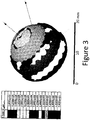
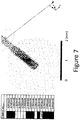
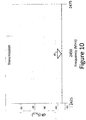
- Figures 1-7 herein provide the results obtained by performing a basic simulation of the present method using the commercially available HFSS software from Ansys.
- One emitting-antenna modelling was performed using a very basic data set selected to represent the variation in electric field strength in function of distance within a spherical structure from the centre of the sphere - which is the delivery point of the ethanol for example - to the healthy tissues.
- this variation in electric field strength is directly related to the evolution of the dielectric properties of the tissue in function of the progression of the necrosis and the variations in temperature.
- the model consisted of a set of 10 spheres of varying diameter (3, 5, 7, 9, 11, 13, 15, 17, 19, and 20 mm) characterized by varying dielectric properties (permittivity and loss factor), such values being chosen to be representative of the evolution of the continuous introduction of ethanol through the center of the microwave-emitting antenna as said ethanol gets diluted by the water contained into the tissues to be treated.
- the antenna was located at the very centre of the smaller sphere.
- the antenna outside diameter was 1,37 mm and was selected to be representative of a typical gage 17 needle-type antenna currently in use in the field.
- the internal diameter allowing for the flow of ethanol was 0,42 mm.
- a nominal power of ca. 100W was applied and the impedance adjusted to ca. 50 ohms.
- Figures 1 to 3 present data representative of the field configuration within the spherical volumes defined at 3, 7, and 20 mm, respectively, from the delivery point of the ethanol into the centre of the concentric spheres. Not only do the results show that near-spherical electric field distribution can be achieved but they show the well-defined gradient in the electric field strength a most desirable parameter to prevent collateral damages to neighbouring healthy tissues.
- Figures 4 and 5 in turn show the electric field distribution along the XY and XZ planes, respectively. They provide ample evidence of the symmetrical pattern of the electric field.
- Figures 6 and 7 show the clear benefit of delivering the chemical substance used for ablation - e.g., ethanol, through the central shaft of the microwave transmitting device and produce near-perfect spherical pattern. More specifically Figure 6 explicitly demonstrates the capacity for the ethanol to concentrate the electric field. Figure 7 in turn shows clearly that no undesirable effect is produced by this approach. Potential undesirable effects that were to be avoided included the potential for field and energy losses within the microwave-transmitting device. As seen in Figure 7 , the use of this invention is devoid from such drawbacks.
- the chemical substance used for ablation - e.g., ethanol
- the presence of the conductor forming the external part of the microwave-emitting device modifies the polarization of the field toward the rear of the antenna.
- this phenomenon can be mitigated and potentially removed by the introduction of at least one other microwave antenna judiciously located to provide similar field intensity variations in the other planes.
- the latter approach is contemplated by this invention and is a most preferred embodiment whenever the location and the nature of the tissue to be treated permit the use of such a multi-antenna method.
- it can also be mitigated by the introduction of short circuit in the microwave emitting means.
- the Applicant performed a two emitting-antenna modelling using very basic data set selected to represent the variation in electric field strength as a function of distance within a spherical structure from the centre of the sphere - which is the delivery point of the ethanol for example - to the healthy tissues. It will be recognized that this variation in electric field strength is directly related to the evolution of the dielectric properties of the tissue in function of the progression of the necrosis and the variations in temperature.
- Applicant performed this modelling with no attempt to improve the performance through well-known techniques and electrical engineering strategies found in currently commercially available ablation tools such as short-circuits, slotted needles, ceramic or other dielectric materials at the end of the antenna, etc. All such configurations are being contemplated as suitable configurations for the present purposes.
- the ethanol, or any other suitable susceptor can be introduced through the central shaft of the microwave transmitting device and allowed to pearl outside the microwave energy delivery means through a suitable orifice such as, for example, a fritted tip made up of suitable dielectric material.
- a suitable orifice such as, for example, a fritted tip made up of suitable dielectric material.
- the nature of the ethanol eluting tip is not limited by this general description.
- the model consisted of a set of 10 spheres of varying diameter (3, 5, 7, 9, 11, 13, 15, 17, 19, and 20 mm) characterized by varying dielectric properties (permittivity and loss factor), such values being representative of the evolution of the continuous introduction of ethanol through the center of the microwave-emitting antenna as said ethanol gets diluted by the water contained into the tissues to be treated.
- Both antennas outside diameter was 1,37 mm, the latter being selected to be representative of a typical gage 17 needle-type antenna currently in use in the field.
- Both internal diameters allowing for the flow of ethanol through each microwave-emitting antenna were 0,42 mm.
- a nominal power of ca. 100W was applied at each antenna and the impedance adjusted to ca. 50 ohms for each antenna.
- the antennas were introduced as follows: one antenna along the z-axis down to 2 mm from the centre of the smaller sphere; the second antenna in the same plane but at an angle of 135 degrees with respect the z-axis and also at 2 mm from the centre of the smaller sphere.
- the quasi-perfect spherical heating pattern is obtained when using the unique combination of introducing the ethanol via the same device that is used to transmit the microwave energy.
- the method introduces the ethanol continuously as the microwaves are being transmitted to the tissues. This allows maintaining the overall dielectric properties of the tissues more constant than when performing an ablation without such addition of ethanol. It will be recognised that the continuous addition of some ethanol provides a means to effect a slower and more progressive reduction in permittivity than that occurring when no ethanol is used or when ethanol is introduced only prior to transmitting the microwave energy.
- the drug can be heated prior to delivery and separately from tissues (i.e., two antennas).
- tissues i.e., two antennas.
- Another alternative contemplated hereiin is the fact that the temperature of tissues can be up to and above necrosis if removal or destruction is the target.
- the temperature of tissues can be kept below necrosis if the target of the invention is a cure. This method is performed to make use of the benefits of the accelerated kinetics of a chemical reaction with increasing temperature as governed by the so-called Arrhenius equation.
- sources of microwave energy can be used. This may be desirable and can bring additional benefits in medical applications for drug efficiency enhancements for example, but not limited to those.
- the use of the words "source of microwave energy” does not limit the method to using a single such microwave generating means, nor does it limit the apparatus to be comprised of a single microwave generator. It is not intended to limit the quantity, nor the type of generators used, nor the frequency at which they operate, the latter can be chosen according to the dielectric properties of the tissues to be treated. It will be known to those skilled in the art that the practice of these teachings lend themselves particularly well to the use of modern variable frequency low- power solid-state generators, but does not preclude the use of any other means to generate microwave energy.
- the energy delivering device or plurality of devices can be used and controlled independently and in real time to adapt to the evolving dielectric nature of the materials under treatment.
- each source can be used to measure the properties of the materials under treatment at the specific location where the energy delivery device is inserted and can react accordingly so as to maintain so-called adapted impedance conditions thus maximising the efficiency of the energy delivery process and reducing the delivery of energy to non-targeted areas.
- variable frequency low-power solid-state generators and generators capable to control the phase of the microwave energy being transmitted to the system to be treated but does not preclude the use of any other means to generate microwave energy.
- the energy delivery device such as the antennas
- the energy delivery device can be moved physically independently one from another in order to be located into areas where the impedance is relatively constant compared to the initial treatment conditions. This is achieved relatively easily by simply deploying an array of antennas at different length and over varying conditions of time according to the evolving dielectric characteristics of the materials under treatment.
- the energy delivery device such as the antennas, can be moved physically independently one from another in order to be located into areas where the impedance is relatively constant compared to the initial treatment conditions as per above. This is combined with the use of a plurality of variable frequency microwave generators that are operated and controlled independently so as to be able to adapt to the prevailing dielectric conditions wherever the microwave energy is being transmitted, such control includes frequency, power, phase, and time.
Landscapes
- Health & Medical Sciences (AREA)
- Life Sciences & Earth Sciences (AREA)
- Surgery (AREA)
- Engineering & Computer Science (AREA)
- Biomedical Technology (AREA)
- Animal Behavior & Ethology (AREA)
- Nuclear Medicine, Radiotherapy & Molecular Imaging (AREA)
- General Health & Medical Sciences (AREA)
- Public Health (AREA)
- Veterinary Medicine (AREA)
- Otolaryngology (AREA)
- Heart & Thoracic Surgery (AREA)
- Medical Informatics (AREA)
- Molecular Biology (AREA)
- Physics & Mathematics (AREA)
- Electromagnetism (AREA)
- Chemical & Material Sciences (AREA)
- Chemical Kinetics & Catalysis (AREA)
- General Chemical & Material Sciences (AREA)
- Plasma & Fusion (AREA)
- Pathology (AREA)
- Radiology & Medical Imaging (AREA)
- Radiation-Therapy Devices (AREA)
- Surgical Instruments (AREA)
- Plasma Technology (AREA)
- Physical Or Chemical Processes And Apparatus (AREA)
Claims (11)
- Vorrichtung zur Steigerung der Effizienz eines Ablationsverfahrens, umfassend:(a) eine Mikrowellen-Energiequelle;(b) einen Suszeptor, der ein dielektrisches Material ist, das eingerichtet ist, um die elektrische Feldkomponente der Energie in dem betroffenen zu behandelnden Gewebe zu konzentrieren und die Temperatur des betroffenen Gewebes selektiv zu erhöhen;(c) ein Mittel zum Übertragen der Mikrowellenenergie von der Quelle durch einen Schaft in betroffene Gewebe und zum Steuern der Mikrowellenenergie in den betroffenen Geweben;(d) ein Mittel zur Abgabe des Suszeptors, gleichzeitig mit der Übertragung der Mikrowellenenergie, in das betroffene Gewebe, wobei der Suszeptor an die betroffenen Gewebe durch eine Röhre abgegeben wird, die sich genau im Zentrum des Mikrowellenenergie-Übertragungsschafts befindet;(e) ein Mittel zur Echtzeit-Überwachung des elektrischen Feldes, das sich aus der gleichzeitigen Übertragung der Mikrowellenenergie ergibt, und der Abgabe des Suszeptors in die betroffenen Gewebe;(f) ein Mittel zum Überwachen und Steuern der Abgabe und der Menge des Suszeptors in die betroffenen Gewebe in Echtzeit;(g) ein Mittel zum Überwachen und Steuern des Temperaturanstiegs aus der gleichzeitigen Übertragung der Mikrowellenenergie in die betroffenen Gewebe und der gesteuerten Abgabe des Suszeptors in die betroffenen Gewebe in Echtzeit, um die Temperatur der betroffenen Gewebe und des Suszeptors in den betroffenen Geweben höher als die Temperatur der umgebenden Gewebe zu halten; und(h) ein Mittel, um in Echtzeit auf die gleichzeitige Exposition der betroffenen Gewebe gegenüber dem elektrischen Feld, dem Suszeptor und der erhöhten Temperatur zu reagieren und diese zu steuern, um dadurch die betroffenen Gewebe zu ablatieren, zu entfernen, zu koagulieren oder anderweitig zu verändern.
- Vorrichtung nach Anspruch 1, des Weiteren umfassend (i) ein Mittel zur Steuerung der mehrfachen Wiederholung der Schritte (c) bis (h), bis die Abgabe des Suszeptors abgeschlossen ist, wobei der Ort der Abgabe des Suszeptors in den Schritten (c) bis (h) zwischen jeder Sequenz variiert wird.
- Vorrichtung nach Anspruch 1 oder 2, wobei die Mikrowellenenergie bei einer Frequenz von (a) 915 MHz oder (b) 2450 MHz liegt.
- Vorrichtung nach Anspruch 1, 2 oder 3, wobei das Mittel zum Übertragen und Steuern der Mikrowellenenergie in betroffene Gewebe eine nadelähnliche Sonde zur Verbindung mit der Mikrowellenenergiequelle und zur Abgabe von Mikrowellenenergie an das betroffene Gewebe in dem Patienten ist.
- Vorrichtung nach Anspruch 4, wobei die Sonde eine dielektrische, gesinterte Elutionsspitze aufweist.
- Vorrichtung nach einem der vorangegangenen Ansprüche, wobei der Suszeptor(i) ein chemisches Ablationsmittel ist, das verwendet wird, um die Effizienz der Ablationsbehandlung weiter zu erhöhen, oder(ii) ein Medikament ist, das verwendet wird, um die Behandlungseffizienz zu erhöhen oder die Heilungsdauer nach der Behandlung zu verkürzen.
- Vorrichtung nach einem der Ansprüche 1-5, wobei der Suszeptor Ethanol ist.
- Vorrichtung nach einem der vorangegangenen Ansprüche, die so eingerichtet ist, dass sie auf und über die Nekrosetemperatur erhitzt werden kann, falls eine Entfernung oder Zerstörung beabsichtigt ist.
- Vorrichtung nach einem der Ansprüche 1-7, die eingerichtet ist, um die Temperatur des Gewebes unter der Nekrosetemperatur zu halten, falls eine Heilung beabsichtigt ist.
- Vorrichtung nach einem der Ansprüche 1-7, aufweisend eine Kühleinrichtung, vorzugsweise eine Peltier-Kühleinrichtung, einen geschlossenen Flüssigkeitskreislauf oder eine Gasexpansionseinrichtung, zur Entnahme von Wärmeenergie aus dem betroffenen Gewebe oder dem umgebenden gesunden Gewebe.
- Vorrichtung nach einem der vorangegangenen Ansprüche zur Behandlung von Oberflächengeweben oder -wucherungen, aufweisend einen äußeren Mantel, in dem Wasser fließen kann, einen Faraday'schen Käfig oder eine Mikrowellendrossel zum Beseitigen von Verlusten im elektrischen Feld auf gesundes Gewebe, andere physiologische Komponenten oder die umgebende Nichtgewebeumgebung.
Applications Claiming Priority (2)
| Application Number | Priority Date | Filing Date | Title |
|---|---|---|---|
| CA2925827A CA2925827A1 (en) | 2016-04-05 | 2016-04-05 | Microwave-assisted medical technologies and apparatus therfor |
| PCT/CA2017/000077 WO2017173523A1 (en) | 2016-04-05 | 2017-04-05 | Microwave-assisted medical technologies and apparatus therefor |
Publications (3)
| Publication Number | Publication Date |
|---|---|
| EP3407970A1 EP3407970A1 (de) | 2018-12-05 |
| EP3407970A4 EP3407970A4 (de) | 2019-07-10 |
| EP3407970B1 true EP3407970B1 (de) | 2020-09-30 |
Family
ID=59997600
Family Applications (1)
| Application Number | Title | Priority Date | Filing Date |
|---|---|---|---|
| EP17778496.4A Active EP3407970B1 (de) | 2016-04-05 | 2017-04-05 | Mikrowellengestützte medizinische technologien und vorrichtung dafür |
Country Status (7)
| Country | Link |
|---|---|
| US (2) | US11090115B2 (de) |
| EP (1) | EP3407970B1 (de) |
| JP (1) | JP6854827B2 (de) |
| CN (1) | CN108883291A (de) |
| AU (1) | AU2017246249B2 (de) |
| CA (2) | CA2925827A1 (de) |
| WO (1) | WO2017173523A1 (de) |
Families Citing this family (6)
| Publication number | Priority date | Publication date | Assignee | Title |
|---|---|---|---|---|
| CA2925827A1 (en) | 2016-04-05 | 2017-10-05 | Atlantic Cancer Research Institute | Microwave-assisted medical technologies and apparatus therfor |
| ES2916523T3 (es) | 2018-05-31 | 2022-07-01 | Bh Scient Llc | Sistema para la ablación con microondas y la medición de la temperatura durante la ablación |
| EP4096547B1 (de) | 2020-01-31 | 2025-08-13 | Hepta Medical SAS | Systeme zur gewebeablation und damit verbundene messungen |
| US12172024B1 (en) | 2020-10-26 | 2024-12-24 | Evanesc Therapeutics, Inc. | Method for electromagnetic absorption in biological tissues |
| WO2022212223A1 (en) * | 2021-03-27 | 2022-10-06 | West Virginia University Board of Governors on behalf of West Virginia University | Compositions, methods, and systems for microwave catalytic ammonia synthesis |
| WO2025094089A1 (en) | 2023-10-31 | 2025-05-08 | Hepta Medical SAS | Systems for adaptive ablation volume prediction based on tissue temperature measurements and anatomical segmentation |
Family Cites Families (44)
| Publication number | Priority date | Publication date | Assignee | Title |
|---|---|---|---|---|
| US834305A (en) | 1906-05-28 | 1906-10-30 | Julius Kozora | Dumping-bucket. |
| CA1336968C (en) | 1989-05-16 | 1995-09-12 | J. R. Jocelyn Pare | Microwave-assisted natural products extraction |
| US5338557A (en) | 1989-05-16 | 1994-08-16 | Her Majesty The Queen In Right Of Canada, As Represented By The Minister Of The Environment | Microwave extraction of volatile oils |
| US5458897A (en) | 1989-05-16 | 1995-10-17 | Her Majesty The Queen In Right Of Canada, As Represented By The Minister Of Environment | Microwave-assisted extraction from materials containing organic matter |
| JP3095241B2 (ja) | 1990-11-15 | 2000-10-03 | カナダ国 | 揮発性油のマイクロ波抽出法及びそのための装置 |
| US5732476A (en) | 1992-02-10 | 1998-03-31 | Pare; J.R. Jocelyn | Microwave-assisted separations using volatiles, and apparatus therefor |
| US5675909A (en) | 1992-02-10 | 1997-10-14 | Her Majesty The Queen In Right Of Canada, As Represented By The Minister Of Environment | Microwave-assisted separations using volatiles |
| CA2060931C (en) | 1992-02-10 | 1996-12-17 | J. R. Jocelyn Pare | Microwave-assisted generation of volatiles, of supercritical fluid, and apparatus therefor |
| US5519947A (en) | 1992-02-10 | 1996-05-28 | Her Majesty The Queen In Right Of Canada, As Represented By The Minister Of The Environment | Microwave-assisted generation of volatiles, of supercritical fluid, and apparatus therefor |
| US5803975A (en) | 1996-03-01 | 1998-09-08 | Canon Kabushiki Kaisha | Microwave plasma processing apparatus and method therefor |
| US6061926A (en) | 1997-11-05 | 2000-05-16 | Her Majesty The Queen In Right Of Canada, As Represented By The Minister Of The Environment | Controlled energy density microwave-assisted processes |
| US6962586B2 (en) * | 1999-05-04 | 2005-11-08 | Afx, Inc. | Microwave ablation instrument with insertion probe |
| US20020133139A1 (en) * | 2001-03-14 | 2002-09-19 | Harry Moulis | Liquid cautery catheter |
| AU2002327779B2 (en) * | 2001-09-28 | 2008-06-26 | Angiodynamics, Inc. | Impedance controlled tissue ablation apparatus and method |
| US6692492B2 (en) | 2001-11-28 | 2004-02-17 | Cardiac Pacemaker, Inc. | Dielectric-coated ablation electrode having a non-coated window with thermal sensors |
| US7197363B2 (en) | 2002-04-16 | 2007-03-27 | Vivant Medical, Inc. | Microwave antenna having a curved configuration |
| CN1290472C (zh) | 2002-04-24 | 2006-12-20 | 广东威尔医学科技股份有限公司 | 肿瘤微波介入治疗多天线热场组合方法 |
| US20120035608A1 (en) | 2002-05-20 | 2012-02-09 | Marchitto Kevin S | Electromagnetic treatment of tissues and cells |
| JP3095241U (ja) | 2003-01-14 | 2003-07-25 | アルプス電気株式会社 | テレビジョンチューナ |
| US7799019B2 (en) * | 2005-05-10 | 2010-09-21 | Vivant Medical, Inc. | Reinforced high strength microwave antenna |
| US10675298B2 (en) * | 2006-07-27 | 2020-06-09 | Boston Scientific Scimed Inc. | Particles |
| CA2679405C (en) * | 2007-02-27 | 2015-12-22 | Erik N. K. Cressman | Thermochemical ablation of bodily tissue |
| CN201108822Y (zh) | 2007-09-07 | 2008-09-03 | 中信国安盟固利新能源科技有限公司 | 一种微波化学反应装置 |
| US8242782B2 (en) | 2008-09-30 | 2012-08-14 | Vivant Medical, Inc. | Microwave ablation generator control system |
| US8444635B2 (en) * | 2008-11-19 | 2013-05-21 | Samuel Victor Lichtenstein | Methods for selectively heating tissue |
| CN102625676A (zh) | 2009-07-28 | 2012-08-01 | 纽韦弗医疗设备公司 | 能量递送系统及其使用 |
| US8690866B2 (en) | 2010-08-23 | 2014-04-08 | Covidien Lp | Ablation devices utilizing exothermic chemical reactions, system including same, and methods of ablating tissue using same |
| GB2487199A (en) * | 2011-01-11 | 2012-07-18 | Creo Medical Ltd | Electrosurgical device with fluid conduit |
| EP2665433B1 (de) * | 2011-01-19 | 2021-03-10 | Fractyl Laboratories Inc. | Vorrichtungen zur gewebebehandlung |
| US9498284B2 (en) | 2011-05-31 | 2016-11-22 | Emblation Limited | Treating and preventing nail disorders |
| US20120310230A1 (en) * | 2011-06-01 | 2012-12-06 | Angiodynamics, Inc. | Coaxial dual function probe and method of use |
| KR20150002677A (ko) | 2012-04-17 | 2015-01-07 | 아사히 가라스 가부시키가이샤 | 유리판의 제조 장치 및 제조 방법과 플로트 유리 제조용 테두리 롤 장치 |
| US20130324911A1 (en) | 2012-05-31 | 2013-12-05 | Covidien Lp | Ablation device with drug delivery component |
| US20130324910A1 (en) | 2012-05-31 | 2013-12-05 | Covidien Lp | Ablation device with drug delivery component and biopsy tissue-sampling component |
| CN110772311A (zh) | 2012-11-02 | 2020-02-11 | 纽敦力公司 | 用于多种疾病治疗的化学消融制剂和方法 |
| US10076384B2 (en) | 2013-03-08 | 2018-09-18 | Symple Surgical, Inc. | Balloon catheter apparatus with microwave emitter |
| US9033972B2 (en) * | 2013-03-15 | 2015-05-19 | Thermedical, Inc. | Methods and devices for fluid enhanced microwave ablation therapy |
| US9987087B2 (en) * | 2013-03-29 | 2018-06-05 | Covidien Lp | Step-down coaxial microwave ablation applicators and methods for manufacturing same |
| JP6177576B2 (ja) * | 2013-04-26 | 2017-08-09 | アルフレッサファーマ株式会社 | マイクロ波供給装置及びこれを備えたマイクロ波手術装置 |
| US10792100B2 (en) | 2014-08-20 | 2020-10-06 | Covidien Lp | Systems and methods for spherical ablations |
| JP6410174B2 (ja) | 2014-10-17 | 2018-10-24 | 本田技研工業株式会社 | 移動ロボット |
| CN104546126B (zh) | 2015-01-21 | 2017-07-18 | 南京维京九洲医疗器械研发中心 | 一种适用于肺癌介入治疗的微波消融天线 |
| ES2964948T3 (es) * | 2015-03-31 | 2024-04-10 | May Health Us Inc | Métodos y sistemas para la manipulación de tejidos ováricos |
| CA2925827A1 (en) | 2016-04-05 | 2017-10-05 | Atlantic Cancer Research Institute | Microwave-assisted medical technologies and apparatus therfor |
-
2016
- 2016-04-05 CA CA2925827A patent/CA2925827A1/en not_active Abandoned
-
2017
- 2017-04-05 AU AU2017246249A patent/AU2017246249B2/en active Active
- 2017-04-05 WO PCT/CA2017/000077 patent/WO2017173523A1/en not_active Ceased
- 2017-04-05 CA CA3017029A patent/CA3017029C/en active Active
- 2017-04-05 JP JP2018551286A patent/JP6854827B2/ja active Active
- 2017-04-05 US US16/088,262 patent/US11090115B2/en active Active
- 2017-04-05 EP EP17778496.4A patent/EP3407970B1/de active Active
- 2017-04-05 CN CN201780017309.3A patent/CN108883291A/zh not_active Withdrawn
-
2021
- 2021-07-09 US US17/372,063 patent/US11589922B2/en active Active
Non-Patent Citations (1)
| Title |
|---|
| None * |
Also Published As
| Publication number | Publication date |
|---|---|
| AU2017246249B2 (en) | 2019-08-15 |
| US11589922B2 (en) | 2023-02-28 |
| US20210386476A1 (en) | 2021-12-16 |
| JP6854827B2 (ja) | 2021-04-07 |
| AU2017246249A1 (en) | 2018-10-04 |
| EP3407970A1 (de) | 2018-12-05 |
| US11090115B2 (en) | 2021-08-17 |
| CA2925827A1 (en) | 2017-10-05 |
| CN108883291A (zh) | 2018-11-23 |
| CA3017029A1 (en) | 2017-10-12 |
| US20190336211A1 (en) | 2019-11-07 |
| JP2019517834A (ja) | 2019-06-27 |
| WO2017173523A1 (en) | 2017-10-12 |
| EP3407970A4 (de) | 2019-07-10 |
| CA3017029C (en) | 2020-11-03 |
Similar Documents
| Publication | Publication Date | Title |
|---|---|---|
| US11589922B2 (en) | Microwave-assisted medical technologies and apparatus therefor | |
| JP4908406B2 (ja) | 放射アプリケータ及び組織に放射する方法 | |
| US10058387B2 (en) | Antenna assemblies for medical applications | |
| US8512328B2 (en) | Antenna assemblies for medical applications | |
| EP1998698B1 (de) | Wärmeübertragungsfähige übertragungsleitung | |
| US20070288079A1 (en) | Energy delivery system and uses thereof | |
| Tabuse | Basic knowledge of a microwave tissue coagulator and its clinical applications | |
| US10058385B2 (en) | Methods and devices for fluid enhanced microwave ablation therapy | |
| CN103190950B (zh) | 用于使用可扩张天线治疗组织的系统和方法 | |
| US20070282319A1 (en) | Center fed dipole for use with tissue ablation systems, devices and methods | |
| JP2011161224A (ja) | 生体組織に短絡させるチョークを備えた電気外科手術装置 | |
| Rappaport | Cardiac tissue ablation with catheter-based microwave heating | |
| Hassan et al. | Applicator design considerations of microwave tumor ablation | |
| Hassan et al. | Investigation of tear drop flared tipped antenna for therapeutic microwave ablation | |
| Alnassan et al. | Targeted radiation dipole antenna using 3D numerical simulation in microwave ablation |
Legal Events
| Date | Code | Title | Description |
|---|---|---|---|
| STAA | Information on the status of an ep patent application or granted ep patent |
Free format text: STATUS: THE INTERNATIONAL PUBLICATION HAS BEEN MADE |
|
| PUAI | Public reference made under article 153(3) epc to a published international application that has entered the european phase |
Free format text: ORIGINAL CODE: 0009012 |
|
| STAA | Information on the status of an ep patent application or granted ep patent |
Free format text: STATUS: REQUEST FOR EXAMINATION WAS MADE |
|
| 17P | Request for examination filed |
Effective date: 20180828 |
|
| AK | Designated contracting states |
Kind code of ref document: A1 Designated state(s): AL AT BE BG CH CY CZ DE DK EE ES FI FR GB GR HR HU IE IS IT LI LT LU LV MC MK MT NL NO PL PT RO RS SE SI SK SM TR |
|
| AX | Request for extension of the european patent |
Extension state: BA ME |
|
| RIC1 | Information provided on ipc code assigned before grant |
Ipc: H05B 6/80 20060101ALI20190121BHEP Ipc: A61N 5/02 20060101AFI20190121BHEP |
|
| A4 | Supplementary search report drawn up and despatched |
Effective date: 20190613 |
|
| DAV | Request for validation of the european patent (deleted) | ||
| DAX | Request for extension of the european patent (deleted) | ||
| RIC1 | Information provided on ipc code assigned before grant |
Ipc: H05B 6/80 20060101ALI20190606BHEP Ipc: A61N 5/02 20060101AFI20190606BHEP |
|
| STAA | Information on the status of an ep patent application or granted ep patent |
Free format text: STATUS: EXAMINATION IS IN PROGRESS |
|
| 17Q | First examination report despatched |
Effective date: 20190805 |
|
| GRAP | Despatch of communication of intention to grant a patent |
Free format text: ORIGINAL CODE: EPIDOSNIGR1 |
|
| STAA | Information on the status of an ep patent application or granted ep patent |
Free format text: STATUS: GRANT OF PATENT IS INTENDED |
|
| INTG | Intention to grant announced |
Effective date: 20200630 |
|
| GRAS | Grant fee paid |
Free format text: ORIGINAL CODE: EPIDOSNIGR3 |
|
| GRAA | (expected) grant |
Free format text: ORIGINAL CODE: 0009210 |
|
| STAA | Information on the status of an ep patent application or granted ep patent |
Free format text: STATUS: THE PATENT HAS BEEN GRANTED |
|
| AK | Designated contracting states |
Kind code of ref document: B1 Designated state(s): AL AT BE BG CH CY CZ DE DK EE ES FI FR GB GR HR HU IE IS IT LI LT LU LV MC MK MT NL NO PL PT RO RS SE SI SK SM TR |
|
| REG | Reference to a national code |
Ref country code: CH Ref legal event code: EP Ref country code: GB Ref legal event code: FG4D |
|
| REG | Reference to a national code |
Ref country code: AT Ref legal event code: REF Ref document number: 1318180 Country of ref document: AT Kind code of ref document: T Effective date: 20201015 |
|
| REG | Reference to a national code |
Ref country code: DE Ref legal event code: R096 Ref document number: 602017024696 Country of ref document: DE |
|
| REG | Reference to a national code |
Ref country code: IE Ref legal event code: FG4D |
|
| REG | Reference to a national code |
Ref country code: CH Ref legal event code: NV Representative=s name: BRAUNPAT BRAUN EDER AG, CH |
|
| PG25 | Lapsed in a contracting state [announced via postgrant information from national office to epo] |
Ref country code: SE Free format text: LAPSE BECAUSE OF FAILURE TO SUBMIT A TRANSLATION OF THE DESCRIPTION OR TO PAY THE FEE WITHIN THE PRESCRIBED TIME-LIMIT Effective date: 20200930 Ref country code: NO Free format text: LAPSE BECAUSE OF FAILURE TO SUBMIT A TRANSLATION OF THE DESCRIPTION OR TO PAY THE FEE WITHIN THE PRESCRIBED TIME-LIMIT Effective date: 20201230 Ref country code: BG Free format text: LAPSE BECAUSE OF FAILURE TO SUBMIT A TRANSLATION OF THE DESCRIPTION OR TO PAY THE FEE WITHIN THE PRESCRIBED TIME-LIMIT Effective date: 20201230 Ref country code: HR Free format text: LAPSE BECAUSE OF FAILURE TO SUBMIT A TRANSLATION OF THE DESCRIPTION OR TO PAY THE FEE WITHIN THE PRESCRIBED TIME-LIMIT Effective date: 20200930 Ref country code: FI Free format text: LAPSE BECAUSE OF FAILURE TO SUBMIT A TRANSLATION OF THE DESCRIPTION OR TO PAY THE FEE WITHIN THE PRESCRIBED TIME-LIMIT Effective date: 20200930 Ref country code: GR Free format text: LAPSE BECAUSE OF FAILURE TO SUBMIT A TRANSLATION OF THE DESCRIPTION OR TO PAY THE FEE WITHIN THE PRESCRIBED TIME-LIMIT Effective date: 20201231 |
|
| REG | Reference to a national code |
Ref country code: AT Ref legal event code: MK05 Ref document number: 1318180 Country of ref document: AT Kind code of ref document: T Effective date: 20200930 |
|
| PG25 | Lapsed in a contracting state [announced via postgrant information from national office to epo] |
Ref country code: LV Free format text: LAPSE BECAUSE OF FAILURE TO SUBMIT A TRANSLATION OF THE DESCRIPTION OR TO PAY THE FEE WITHIN THE PRESCRIBED TIME-LIMIT Effective date: 20200930 Ref country code: RS Free format text: LAPSE BECAUSE OF FAILURE TO SUBMIT A TRANSLATION OF THE DESCRIPTION OR TO PAY THE FEE WITHIN THE PRESCRIBED TIME-LIMIT Effective date: 20200930 |
|
| REG | Reference to a national code |
Ref country code: NL Ref legal event code: MP Effective date: 20200930 |
|
| REG | Reference to a national code |
Ref country code: LT Ref legal event code: MG4D |
|
| PG25 | Lapsed in a contracting state [announced via postgrant information from national office to epo] |
Ref country code: SM Free format text: LAPSE BECAUSE OF FAILURE TO SUBMIT A TRANSLATION OF THE DESCRIPTION OR TO PAY THE FEE WITHIN THE PRESCRIBED TIME-LIMIT Effective date: 20200930 Ref country code: LT Free format text: LAPSE BECAUSE OF FAILURE TO SUBMIT A TRANSLATION OF THE DESCRIPTION OR TO PAY THE FEE WITHIN THE PRESCRIBED TIME-LIMIT Effective date: 20200930 Ref country code: CZ Free format text: LAPSE BECAUSE OF FAILURE TO SUBMIT A TRANSLATION OF THE DESCRIPTION OR TO PAY THE FEE WITHIN THE PRESCRIBED TIME-LIMIT Effective date: 20200930 Ref country code: PT Free format text: LAPSE BECAUSE OF FAILURE TO SUBMIT A TRANSLATION OF THE DESCRIPTION OR TO PAY THE FEE WITHIN THE PRESCRIBED TIME-LIMIT Effective date: 20210201 Ref country code: RO Free format text: LAPSE BECAUSE OF FAILURE TO SUBMIT A TRANSLATION OF THE DESCRIPTION OR TO PAY THE FEE WITHIN THE PRESCRIBED TIME-LIMIT Effective date: 20200930 Ref country code: EE Free format text: LAPSE BECAUSE OF FAILURE TO SUBMIT A TRANSLATION OF THE DESCRIPTION OR TO PAY THE FEE WITHIN THE PRESCRIBED TIME-LIMIT Effective date: 20200930 |
|
| PG25 | Lapsed in a contracting state [announced via postgrant information from national office to epo] |
Ref country code: AL Free format text: LAPSE BECAUSE OF FAILURE TO SUBMIT A TRANSLATION OF THE DESCRIPTION OR TO PAY THE FEE WITHIN THE PRESCRIBED TIME-LIMIT Effective date: 20200930 Ref country code: AT Free format text: LAPSE BECAUSE OF FAILURE TO SUBMIT A TRANSLATION OF THE DESCRIPTION OR TO PAY THE FEE WITHIN THE PRESCRIBED TIME-LIMIT Effective date: 20200930 Ref country code: ES Free format text: LAPSE BECAUSE OF FAILURE TO SUBMIT A TRANSLATION OF THE DESCRIPTION OR TO PAY THE FEE WITHIN THE PRESCRIBED TIME-LIMIT Effective date: 20200930 Ref country code: PL Free format text: LAPSE BECAUSE OF FAILURE TO SUBMIT A TRANSLATION OF THE DESCRIPTION OR TO PAY THE FEE WITHIN THE PRESCRIBED TIME-LIMIT Effective date: 20200930 Ref country code: IS Free format text: LAPSE BECAUSE OF FAILURE TO SUBMIT A TRANSLATION OF THE DESCRIPTION OR TO PAY THE FEE WITHIN THE PRESCRIBED TIME-LIMIT Effective date: 20210130 |
|
| PG25 | Lapsed in a contracting state [announced via postgrant information from national office to epo] |
Ref country code: SK Free format text: LAPSE BECAUSE OF FAILURE TO SUBMIT A TRANSLATION OF THE DESCRIPTION OR TO PAY THE FEE WITHIN THE PRESCRIBED TIME-LIMIT Effective date: 20200930 Ref country code: NL Free format text: LAPSE BECAUSE OF FAILURE TO SUBMIT A TRANSLATION OF THE DESCRIPTION OR TO PAY THE FEE WITHIN THE PRESCRIBED TIME-LIMIT Effective date: 20200930 |
|
| REG | Reference to a national code |
Ref country code: DE Ref legal event code: R097 Ref document number: 602017024696 Country of ref document: DE |
|
| PLBE | No opposition filed within time limit |
Free format text: ORIGINAL CODE: 0009261 |
|
| STAA | Information on the status of an ep patent application or granted ep patent |
Free format text: STATUS: NO OPPOSITION FILED WITHIN TIME LIMIT |
|
| PG25 | Lapsed in a contracting state [announced via postgrant information from national office to epo] |
Ref country code: DK Free format text: LAPSE BECAUSE OF FAILURE TO SUBMIT A TRANSLATION OF THE DESCRIPTION OR TO PAY THE FEE WITHIN THE PRESCRIBED TIME-LIMIT Effective date: 20200930 |
|
| 26N | No opposition filed |
Effective date: 20210701 |
|
| PG25 | Lapsed in a contracting state [announced via postgrant information from national office to epo] |
Ref country code: SI Free format text: LAPSE BECAUSE OF FAILURE TO SUBMIT A TRANSLATION OF THE DESCRIPTION OR TO PAY THE FEE WITHIN THE PRESCRIBED TIME-LIMIT Effective date: 20200930 Ref country code: MC Free format text: LAPSE BECAUSE OF FAILURE TO SUBMIT A TRANSLATION OF THE DESCRIPTION OR TO PAY THE FEE WITHIN THE PRESCRIBED TIME-LIMIT Effective date: 20200930 |
|
| PG25 | Lapsed in a contracting state [announced via postgrant information from national office to epo] |
Ref country code: LU Free format text: LAPSE BECAUSE OF NON-PAYMENT OF DUE FEES Effective date: 20210405 |
|
| REG | Reference to a national code |
Ref country code: BE Ref legal event code: MM Effective date: 20210430 |
|
| PG25 | Lapsed in a contracting state [announced via postgrant information from national office to epo] |
Ref country code: IE Free format text: LAPSE BECAUSE OF NON-PAYMENT OF DUE FEES Effective date: 20210405 |
|
| PG25 | Lapsed in a contracting state [announced via postgrant information from national office to epo] |
Ref country code: IS Free format text: LAPSE BECAUSE OF FAILURE TO SUBMIT A TRANSLATION OF THE DESCRIPTION OR TO PAY THE FEE WITHIN THE PRESCRIBED TIME-LIMIT Effective date: 20210130 |
|
| PG25 | Lapsed in a contracting state [announced via postgrant information from national office to epo] |
Ref country code: BE Free format text: LAPSE BECAUSE OF NON-PAYMENT OF DUE FEES Effective date: 20210430 |
|
| PG25 | Lapsed in a contracting state [announced via postgrant information from national office to epo] |
Ref country code: CY Free format text: LAPSE BECAUSE OF FAILURE TO SUBMIT A TRANSLATION OF THE DESCRIPTION OR TO PAY THE FEE WITHIN THE PRESCRIBED TIME-LIMIT Effective date: 20200930 |
|
| PG25 | Lapsed in a contracting state [announced via postgrant information from national office to epo] |
Ref country code: HU Free format text: LAPSE BECAUSE OF FAILURE TO SUBMIT A TRANSLATION OF THE DESCRIPTION OR TO PAY THE FEE WITHIN THE PRESCRIBED TIME-LIMIT; INVALID AB INITIO Effective date: 20170405 |
|
| PG25 | Lapsed in a contracting state [announced via postgrant information from national office to epo] |
Ref country code: MK Free format text: LAPSE BECAUSE OF FAILURE TO SUBMIT A TRANSLATION OF THE DESCRIPTION OR TO PAY THE FEE WITHIN THE PRESCRIBED TIME-LIMIT Effective date: 20200930 |
|
| PG25 | Lapsed in a contracting state [announced via postgrant information from national office to epo] |
Ref country code: MT Free format text: LAPSE BECAUSE OF FAILURE TO SUBMIT A TRANSLATION OF THE DESCRIPTION OR TO PAY THE FEE WITHIN THE PRESCRIBED TIME-LIMIT Effective date: 20200930 |
|
| PGFP | Annual fee paid to national office [announced via postgrant information from national office to epo] |
Ref country code: DE Payment date: 20250429 Year of fee payment: 9 |
|
| PGFP | Annual fee paid to national office [announced via postgrant information from national office to epo] |
Ref country code: CH Payment date: 20250501 Year of fee payment: 9 |
|
| PG25 | Lapsed in a contracting state [announced via postgrant information from national office to epo] |
Ref country code: TR Free format text: LAPSE BECAUSE OF FAILURE TO SUBMIT A TRANSLATION OF THE DESCRIPTION OR TO PAY THE FEE WITHIN THE PRESCRIBED TIME-LIMIT Effective date: 20200930 |
|
| PGFP | Annual fee paid to national office [announced via postgrant information from national office to epo] |
Ref country code: GB Payment date: 20260319 Year of fee payment: 10 |
|
| PGFP | Annual fee paid to national office [announced via postgrant information from national office to epo] |
Ref country code: IT Payment date: 20260318 Year of fee payment: 10 |
|
| PGFP | Annual fee paid to national office [announced via postgrant information from national office to epo] |
Ref country code: FR Payment date: 20260319 Year of fee payment: 10 |
|
| REG | Reference to a national code |
Ref country code: CH Ref legal event code: U11 Free format text: ST27 STATUS EVENT CODE: U-0-0-U10-U11 (AS PROVIDED BY THE NATIONAL OFFICE) Effective date: 20260501 |