EP3408751B1 - Datenreduktion zur reduzierung eines datensatzes - Google Patents
Datenreduktion zur reduzierung eines datensatzes Download PDFInfo
- Publication number
- EP3408751B1 EP3408751B1 EP17700451.2A EP17700451A EP3408751B1 EP 3408751 B1 EP3408751 B1 EP 3408751B1 EP 17700451 A EP17700451 A EP 17700451A EP 3408751 B1 EP3408751 B1 EP 3408751B1
- Authority
- EP
- European Patent Office
- Prior art keywords
- data
- variables
- reduced
- tuples
- instances
- Prior art date
- Legal status (The legal status is an assumption and is not a legal conclusion. Google has not performed a legal analysis and makes no representation as to the accuracy of the status listed.)
- Active
Links
Images

Classifications
-
- H—ELECTRICITY
- H03—ELECTRONIC CIRCUITRY
- H03M—CODING; DECODING; CODE CONVERSION IN GENERAL
- H03M7/00—Conversion of a code where information is represented by a given sequence or number of digits to a code where the same, similar or subset of information is represented by a different sequence or number of digits
- H03M7/30—Compression; Expansion; Suppression of unnecessary data, e.g. redundancy reduction
- H03M7/3059—Digital compression and data reduction techniques where the original information is represented by a subset or similar information, e.g. lossy compression
-
- G—PHYSICS
- G06—COMPUTING OR CALCULATING; COUNTING
- G06F—ELECTRIC DIGITAL DATA PROCESSING
- G06F16/00—Information retrieval; Database structures therefor; File system structures therefor
- G06F16/20—Information retrieval; Database structures therefor; File system structures therefor of structured data, e.g. relational data
- G06F16/21—Design, administration or maintenance of databases
- G06F16/215—Improving data quality; Data cleansing, e.g. de-duplication, removing invalid entries or correcting typographical errors
-
- G—PHYSICS
- G06—COMPUTING OR CALCULATING; COUNTING
- G06F—ELECTRIC DIGITAL DATA PROCESSING
- G06F16/00—Information retrieval; Database structures therefor; File system structures therefor
- G06F16/20—Information retrieval; Database structures therefor; File system structures therefor of structured data, e.g. relational data
- G06F16/24—Querying
- G06F16/245—Query processing
- G06F16/2458—Special types of queries, e.g. statistical queries, fuzzy queries or distributed queries
- G06F16/2465—Query processing support for facilitating data mining operations in structured databases
-
- G—PHYSICS
- G06—COMPUTING OR CALCULATING; COUNTING
- G06F—ELECTRIC DIGITAL DATA PROCESSING
- G06F16/00—Information retrieval; Database structures therefor; File system structures therefor
- G06F16/20—Information retrieval; Database structures therefor; File system structures therefor of structured data, e.g. relational data
- G06F16/28—Databases characterised by their database models, e.g. relational or object models
- G06F16/284—Relational databases
- G06F16/285—Clustering or classification
-
- G—PHYSICS
- G06—COMPUTING OR CALCULATING; COUNTING
- G06F—ELECTRIC DIGITAL DATA PROCESSING
- G06F17/00—Digital computing or data processing equipment or methods, specially adapted for specific functions
- G06F17/10—Complex mathematical operations
- G06F17/18—Complex mathematical operations for evaluating statistical data, e.g. average values, frequency distributions, probability functions, regression analysis
-
- G—PHYSICS
- G06—COMPUTING OR CALCULATING; COUNTING
- G06F—ELECTRIC DIGITAL DATA PROCESSING
- G06F18/00—Pattern recognition
- G06F18/20—Analysing
- G06F18/21—Design or setup of recognition systems or techniques; Extraction of features in feature space; Blind source separation
- G06F18/211—Selection of the most significant subset of features
-
- G—PHYSICS
- G06—COMPUTING OR CALCULATING; COUNTING
- G06F—ELECTRIC DIGITAL DATA PROCESSING
- G06F18/00—Pattern recognition
- G06F18/20—Analysing
- G06F18/23—Clustering techniques
- G06F18/232—Non-hierarchical techniques
- G06F18/2321—Non-hierarchical techniques using statistics or function optimisation, e.g. modelling of probability density functions
- G06F18/23213—Non-hierarchical techniques using statistics or function optimisation, e.g. modelling of probability density functions with fixed number of clusters, e.g. K-means clustering
-
- H—ELECTRICITY
- H03—ELECTRONIC CIRCUITRY
- H03M—CODING; DECODING; CODE CONVERSION IN GENERAL
- H03M7/00—Conversion of a code where information is represented by a given sequence or number of digits to a code where the same, similar or subset of information is represented by a different sequence or number of digits
- H03M7/30—Compression; Expansion; Suppression of unnecessary data, e.g. redundancy reduction
- H03M7/3068—Precoding preceding compression, e.g. Burrows-Wheeler transformation
- H03M7/3071—Prediction
Definitions
- the invention relates to a data reduction device for reducing a data set based on a subset of variables from a set of variables comprising a plurality of variables and wherein the variables represent different type of data based on measurements of sensors of a machine, the instances of the variables comprising information for predicting an instance of a further type of data, and the further type of data relating to a characteristic of a physical entity of the machine.
- the invention further relates to a corresponding computer-implemented method and computer program product.
- historic data is often used to train the machine to enable the machine to predict an event based on a recent set of data.
- a huge amount of data is available and used to train the machine as good as possible.
- it may require quite a lot of data storage and processing power to use such a long training history.
- some other predictive technologies may directly use a data history of determined events and measured values. Then, the whole stored data history available may be used and when a prediction has to be made on basis of a recent set of data, the whole data history is processed to find similarities between the recent data with the data history - this requires quite a lot of processing power.
- One approach may be to throw away data of variables (e.g. measurements of specific sensors) that are less relevant to predict the event. This is known as feature selection in traditional machine learning.
- feature selection in traditional machine learning.
- Some examples are the following: Principal Component Analysis (PCA), Linear Discriminant Analysis (LDA), Random Forests, and Least Absolute Shrinkage and Selection Operator (LASSO).
- PCA Principal Component Analysis
- LDA Linear Discriminant Analysis
- LASSO Least Absolute Shrinkage and Selection Operator
- the first two methods have in common that they focus on the variance as variable of interest. LASSO focuses on minimizing the sum of squared errors, which is similar in flavor to the variance.
- Random Forest looks at performance loss of randomly permuted data.
- US2007/0122041A1 discloses a computer implemented method maximizes candidate solutions to a cardinality-constrained combinatorial optimization problem of sparse linear discriminant analysis, and implements the above discussed PCA, LDA and derived methods, which are all based on maximizing variance of the remaining data set using correlation measurements. As the variance is a second order statistic it does not take the full information content of the variables into account.
- J. Bala et al Using learning to facilitate the evolution of features for recognizing visual concepts, Evolutionary Computation, Vol. 4, No. 3, 1997 , discloses a feature subset selection method based on a genetic algorithm with fitness function involving an entropy measure as information theoretic measure and a cost function directly proportional to the number of features in the feature subset. The method is applied to select an image feature set for eye detection.
- Event may represent a characteristic of a physical entity, for example, "a component of a machine is going to break down or not", or “the energy consumption of the factory is going to be too high or not". These examples relate to a binary prediction: "something is true or not”.
- the above discussed predictive technologies are not limited to binary characteristics and may predict the characteristics also for characteristics that have a value in a higher base numeral system, for example, "the energy consumption of this city is going to be low, medium, or high”.
- the above discussed predictive technologies may also apply to regression use cases in which a scalar value is obtained based on historical data. The above interpretation also applies to the remaining of this document.
- Relevant means in this context: a reliable prediction of the instance of the further type of data is possible on basis of (more recent) instances of the selected relevant variables.
- the plurality of variables of the larger set of variables represent different types of data, instances of the plurality of variables being based on sensor data of a plurality of a plurality of sensors in a machine, instances of a variable originating from sensors of one type having the same function to predict an instance of a further type of data, the further type of data relating to a characteristic of a physical entity of the machine.
- the features of the data reduction device obtain a subset of variables that has been selected such that the mutual information between the reduced first set of data and the second set of data is still relatively high. Therefore, the reduced first set provides a good basis for reliably predicting instances of the further type of data. Furthermore, because the optimization function takes into account a penalty value that increases if the subset of variables has more variables, the subset of variables is most probably smaller than set of variables and, thus, the (historical) data to be stored, used or kept can be reduced.
- the reduced set of variables By using the reduced set of variables to reduce a data set that comprises tuples (similar to the tuples of the first set of data), the reduced data set still comprises quite a lot of mutual information with respect to instances of the further type of data. Thus, the reduced data set can be well used to predict (unknown) instances of the further type of data.
- the optimization function is being based on the first mutual information value and the penalty value.
- an at least local minimum or an at least local maximum must be found.
- the optimization function is a combination of the first mutual information value minus the penalty value. In that case, in the searching for the reduced set of variables, the at least local maximum must be found for the optimization function.
- the optimization function is a combination of a first conditional entropy for the second set of data given the reduced first set of data plus the penalty value.
- the at least local minimum must be found for the optimization function.
- the data reduction device has embodiments corresponding to the embodiments of the discussed method.
- the embodiments of the device have corresponding effects and advantages as the embodiments of the discussed method.
- the first mutual information value between the reduced first set of data and the second set of data is estimated by determining a second mutual information value between the second set of data and clustered data.
- the clustered data comprises clusters that are based on, e.g. derived from, the reduced first set of data. It may be that the reduced first set of data comprises, per unique tuple, a relatively low number of observations. Then the calculation of the first mutual information becomes relatively unreliable, if not impossible. Furthermore, it may be that the reduced first set of data comprises quite a lot observations, i.e. tuples, which may result in a relatively long processing time because many different probabilities and mutual probabilities must be calculated or estimated.
- the inventors have found that a heuristic that estimates the first mutual information value on basis of a second mutual information value may be useful. In particular, it is their insight that, despite clustering the data in the reduced first set of data, the heuristic still results in a reliable estimation of the mutual information.
- the clusters are based on, e.g. derived from, a combination of the reduced first set of data and the second set of data. The inventors have found that, if the clustering is based on this specific combination, a loss of mutual information between the first mutual information and the second mutual information is relatively low. It is to be noted that the above discussed heuristic is a way of maintaining a relatively large amount of the mutual information between the reduced first set of data and the second set of data.
- clustering algorithms may be used as well as long as they have also the effect of maintaining a relatively large amount of the mutual information between the reduced first set of data and the second set of data- for example, in the detailed description of the embodiments, a reference is provided to an algorithm described by Cardinal that is based on a modification of Lloyd's algorithm for finding a quantize in which an information theoretic measure is used to determine distances between different tuples to be quantized (which are, in this context, the tuples of the first set of data).
- the clusters represents tuples of data that are a combination of a specific tuple of the reduced first set of data that is extended with a value that is based on, e.g. derived from, an instance from the second set of data that corresponds to the specific tuple of the reduced first set of data.
- the values that are used to extend the tuples of the reduced first set of data are in the same order, i.e. are in the same numerical range, as the values of the instances in the tuples of the reduced first set of data.
- the clusters are formed on basis of data that comprises unique tuples of the reduced first set of data that are extended with a value that is based on the instances from the second set of data that correspond to the respective unique tuple.
- the clustered data is obtained by a k-means clustering algorithm.
- the k-means clustering algorithm is, in particular, an effective algorithm to cluster tuples of instances of data.
- the k-means clustering algorithm uses a Euclidean distance measure to determine distances between the tuples to be clustered. It is to be noted that other distance measures may also be used as long as they have an advantageous effect that the loss of mutual information is within acceptable boundaries, for example, it is expected that the KL distance is also a useful distance measure.
- the obtaining of the reduced set of variables representing the at least local maximum of the optimization function is performed by applying an iterative search method to find the at least local maximum to find the reduced set of variables that has a relatively large value for the optimization function.
- An iterative search method is useful to explore at least a portion of the solution space and find within the explored portion of the solution space the at least local maximum. It is to be noted that the found at least local maximum may be the global maximum of the optimization function.
- the iterative search method is based on simulated annealing.
- Simulated annealing is in this particular application an advantageous iterative search algorithm because the optimization function may have several local maxima. Simulated annealing is able to explore different areas of the solution space although the fact that these different areas may be separated from each other by solutions that have a relatively low value for the optimization function. Therefore, the simulated annealing search algorithm is capable of finding one of the best local maxima in an effective and efficient manner and thereby the probability of finding the global optimum is relatively high.
- each iteration of the iterative search method comprising i) forming a proposal of the reduced set of variables to be assessed, ii) determining the value of the optimization function that is provided by the proposed reduced set of variables, iii) storing the proposed reduced set of variables as a best reduced set of variables if the proposed reduced set of variables provides a best value for the optimization function until the currently executed iteration, iv) deciding whether the proposed reduced set of variables is accepted as a basis for a subsequent proposal of the reduced set of variables to be assessed in a subsequent iteration. Continuously storing the best solution found until the specific iteration is advantageous because the iterative search algorithm explores parts of the solution space that are away from the stored best solution found until that specific iteration.
- the proposal of the reduced set of variables is a means to explore the solution space, also at some distance away from the stored best solution.
- Accepting, or not accepting, the proposed reduced set of variables as a basis for a subsequent proposal is a means to direct the iterative search algorithm into a certain direction of the solution space. For example, if the proposed reduced set of variables provides a very worse value for the optimization function, this may be a sign that a solution close to that proposed reduced set of variables may also be worse solution and therefore one may decide not to accept this proposed set of variables as a basis for a subsequent proposed reduced set of variables.
- the proposed reduced set of variables provides a relatively good value for the optimization function
- this may be a sign that a solution close to that proposed reduced set of variables may even be better and, therefore, one may decide to accept this proposed set of variables as a basis for a subsequent proposed reduced set of variables to explore an area of the solution space close to the proposed reduced set of variables.
- the iterative search method starts a first iteration with a proposal of the reduced set of variables comprising a single variable of which the mutual information between the data of that single variable and the second set of data is highest compared to the other variables of the set of variables.
- the choice for the first assessed proposal of the reduced set of variables is based on the insight that if one specific variable has a high mutual information between that one specific variable and the second set of data, then there is in the solution space most probably a good solution (a specific set of selected variables) that results in a relatively high value of the optimization function and that comprises the respective variable with the highest mutual information.
- the proposal of the reduced set of variables to be assessed is formed by extending or reducing the last accepted reduced set of variables.
- One of the variables of the set of variables is randomly selected.
- the randomly selected variable is added to the last accepted reduced set of variables if the randomly selected variable is not yet present in the last accepted reduced set of variables.
- the randomly selected variable is removed from the last accepted reduced set of variables if the randomly selected variable is present in the last accepted reduced set of variables.
- the randomly selected variable is obtained by a random selection that is based on a probability for each variable that is a sum of a first portion of a uniform probability value for each variable and a second portion of a non-uniform probability value that depends on, e.g. has been derived from, the mutual information between the data of the specific variable and the second set of data.
- a random selection that is based on a probability for each variable that is a sum of a first portion of a uniform probability value for each variable and a second portion of a non-uniform probability value that depends on, e.g. has been derived from, the mutual information between the data of the specific variable and the second set of data.
- a computer program product which is operative to cause a processor to perform one of the above discussed methods.
- the computer program product has embodiments corresponding to the embodiments of the above discussed device and methods. The embodiments have corresponding effects and advantages as the embodiments of the above discussed device and methods.
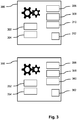
- Fig. 3 schematically shows two machines 300, 350 of the same type. Both machines have a plurality of sensors 302 ... 310, 352 ... 360.
- the data of one specific sensor is termed a variable. Instances of one variable originate from one type of sensor that has the same function. If at one specific moment in time all sensors 302 ... 310, 352 ... 360 of one machine 300, 350 measure and provide a value, instances of the variables are collected and together they form a tuple of instances of the variables. In this document it is assumed that the different variables have a specific order and that the instances of the variables are in the same order in the tuples. Both machines also have a physical entity 312, 362 of which a characteristic may be determined or may be predicted.
- a determined characteristic of physical entity is an instance of a further type of data. It is not necessary that the instances of the data of the further type originate from one specific physical entity, but it is relevant that the instances of the data of the further type originate from one specific type of physical entity, which means: the physical entities are equal to each other and that have the same function.
- a specific obtained characteristic of the physical entity belongs to a corresponding tuple of instances of the variables that is obtained from the same machine 300, 350 at the same moment of time.
- the physical entity 312, 362 is a motor and the characteristic is the operational status of the motor, for example, "operates well” or "malfunctions". If the motors drives, for example, a conveyer belt in the respective machines 300, 350, the sensors may sense different characteristics that may be relevant to predict the operational status of the motors. For example, a first sensor 302, 352 may measure the temperature of the motor. For example, a second sensor 304, 354 may measure the (electrical) power usage of the motor. For example, a third sensor 306, 356 may measure the speed of the conveyer belt. For example, a fourth sensor 308, 358 may measure the weight of the goods that are currently placed on the conveyer belt.
- a first sensor 302, 352 may measure the temperature of the motor.
- a second sensor 304, 354 may measure the (electrical) power usage of the motor.
- a third sensor 306, 356 may measure the speed of the conveyer belt.
- a fourth sensor 308, 358 may measure the weight of the goods that are currently placed
- a fifth sensor 310, 360 may measure the amount of dust in the air present near the motor.
- the variables are: temperature of the motor, power usage of the motor, speed of the conveyor belt, weight of good on conveyor belt and amount of dust near motor.
- the operational status of the motor may be determined and at the same moments all sensor sense their specific characteristic.
- instances of the variables are obtained and these instances form one tuple, in the example, namely the 5-tuple (temp, power, speed, weight, dust-amount).
- the operational status of the motor may be determined and this determined characteristics belong to, corresponds to, the tuple with instances of the variables obtained/determined at the same moment in time. Please note that it may be difficult to obtain all measurements at the exact same moment in time. One may also read "within the same interval of time” instead of "at the same moment of time”.
- the machines 300, 350 have a multitude of sensors 302 ... 310, 352 ... 360.
- the number of sensors per machine 300, 350 may be in the order of at least one hundred sensors, or in other embodiments, at least one thousand sensors.
- the sensors 302 ... 310, 352 ... 360 may provide measurements every relatively short interval or time, for example, every minute, or every five minutes. Therefore, every relatively short interval of time a large amount of data is generated by the sensors 302 ... 310, 352 ... 360 and every day an enormous amount of data has to be processed and/or stored.
- the sensor data is often stored in log-files which have quite often a size in the order of one or a multitude of Terabytes. Examples of machines that deliver such amounts of data are, for example, medical scanners, such as CT scanners, PET scanners, MRI scanners, etc..
- Fig. 3 is an example of sources of data for the variables and for the characteristic of the physical entity. The example will be used in the subsequent discussion of the embodiments of the invention.
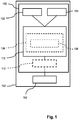
- Fig. 1 schematically shows an embodiment of a data reduction device 150 that comprises a device 100 for selecting a subset of variables from a set of variables comprising a plurality of variables.
- the set of variables is S (and is, for example, defined by the sensors 302 ... 320, 352 ... 360 of the machines 300, 350 of Fig. 3 ).
- the number of variables in the set of variables S is indicated by
- the variables are indicated with v.
- the subset is indicated by S ⁇ and S ⁇ ⁇ S .
- the set of variable S comprises a plurality of variables v
- the subset S ⁇ comprises at least one variable. It is assumed that there is a relation between the instances of variables and an instance of a further type of data.
- the instances of the variables comprise information that may be relevant for predicting the instance of the further type.
- the further type of data relates to a characteristics of a physical entity, for example, the operational status of the motor 322 or 362 of one of the machines 300, 350, respectively.
- the instance of the further type of data is indicated with y.
- the device 100 comprises a first data set unit 102 for obtaining a first of set data X comprising tuples xi of instances of data.
- Each tuples x i comprises an instance of each variable ⁇ j in the set of variable S.
- An instance of variable ⁇ j in tuple x i is indicated by x ij .
- Each tuple xi in the first set of data X comprises the same number of instances x ij as the number of variables in the set of variables S.
- one tuple xi is an observation of time of all sensor values at a specific moment of time or within a specific interval.
- the tuples x i have all an equal length: they all have a number of instances that is equal to the number of variables in the set of variables S.
- the data present in the first set of data is discrete data that is obtained by quantizing continuous data provided by the sensors.
- the device 100 also comprises a second data set unit 104 for obtaining a second set of data Y comprising instances the further type of data.
- this further type of data indicates a characteristics of a physical entity, for example, in the context of Fig. 3 , the operational status of a specific type of motor of the machines.
- the instances of the further type of data are indicated with y i .
- Each instance y i corresponds to a tuple x i in the first set of data X, which means that the instance is determined at the same moment of time, or during the same interval of time, as the instances of the variables of the tuples are obtained.
- the characteristics of the physical entity may be represented by binary values, but also by numbers from higher order numerical systems. If the characteristics of the physical entity are continuous values, the values may be quantized before being used in the device or method of this document.
- the device 100 also comprises a searching unit 110 for obtaining a reduced set of variables S r .
- the searching unit 110 is coupled to the first data set unit 102 and to the second data set unit 104 for receiving the first set of data X and the second set of data Y , respectively.
- the reduced set of variables is a subset of the set of variables S, S r ⁇ S .
- the reduced set of variables S r represents an at least local maximum of an optimization function f that is a function of a reduced first set of data, the second set of data and the reduced set of variables.
- the reduced first set of data comprising reduced tuples being based on the tuples of the first set of data, and the reduced tuples only comprising instances of the reduced set of variables.
- the reduced first set of data being indicated by X r and each reduced tuple in the reduced first set of data X r is indicated with x ri .
- the optimization function is ⁇ (X r , Y, S r ).
- the optimization function ⁇ being a combination of a first mutual information value between the reduced first set of data and the second set of data minus a penalty value that increases with an increasing number of variables in the reduced set of variables.
- the first mutual information is, in accordance with information theory, indicated by I(X r , Y).
- the penalty value is a function of the number of elements in the reduced set of variables, p (
- the penalty value is the number of elements in the reduced set of variables S r that is normalized for the number of variables in the set of variables S, hence, p(
- )
- the device 100 optionally comprises an output 112 for providing the reduced set of variables S r as the selected subset of variables S ⁇ .
- the output 112 is coupled to the searching unit 110 for receiving the reduced set of variables S r .
- the device 100 for selecting a subset of variables from a set of variables comprising a plurality of variables is part of a data reduction device 150.
- the data reduction device also comprises a data reduction unit 152 that is coupled to the output 112 for receiving the selected subset of variables S ⁇ or is directly coupled to the searcher unit for receiving the selected subset of variables S ⁇ .
- the data reduction unit 152 is configured to reduce the tuples x p in a data set X' to obtain a reduced data set Xr' such that the reduced tuples x rp only comprise instances x pj of variables that are present in the selected subset of variables S ⁇ .
- the data reduction unit 152 may be configured to store the reduced data set X r ' .
- the data reduction unit 152 may be configured to provide the reduced data set X r ' to a subsequent device that uses, for example, the reduced data set X r ' in predictions of events (i.e. instance y of the further type of data).
- the data set X' is the first set of data X, and, thus, the data reduction unit 152 may generate a reduced first set of data X r that can be used as a training set in machine learning applications.
- Fig. 2 schematically shows an embodiment of a method 200 of selecting a subset of variables S ⁇ from a set of variables S comprising a plurality of variables ⁇ j .
- the variables ⁇ j represent different type of data based on measurements of sensors, for example the sensors 302..310, 352..360 of the machines 300, 350 of Fig. 3 .
- the instances x ij of the variables ⁇ j comprising information for predict an instance y of further type of data.
- the further type of data relating to a characteristic of a physical entity, for example, the physical entities 312, 362 of the machines 300, 350 of Fig. 3 .
- the method 200 comprises obtaining 202 a first set of data X comprising tuples xi of instances of data. Each tuple comprises an instance x ij of each variable ⁇ j of the set of variables S.
- the method 200 comprises obtaining 204 a second set of data Y comprising instances y i of the further type of data. Each instance y i of the second set of data Y corresponds to one of the tuples xi of the first set of data X.
- the method 200 comprises searching 206 for a reduced set of variables S r that is a subset of the set of variables S.
- the reduced set of variables S r represents an at least local optimum of an optimization function ⁇ being a function of a reduced first set of data, the second set of data and the reduced set of variables, hence, ⁇ (X r , Y, S r ).
- the reduced first set of data X r comprising reduced tuples xr i that are based on the tuples xi of the first set of data X.
- the reduced tuples xr i only comprising instances x ij of variables of the reduced set of variables S r .
- the optimization function ⁇ being a combination of a first mutual information value I between the reduced first set of data X r and the second set of data Y minus a penalty value pv that increases with an increasing number of variables in the reduced set of variables.
- ⁇ (X r , Y, S r ) I(X r , Y) - p(
- the method 200 comprises providing 220 the reduced set of variables S r as the selected subset of variables S ⁇ to, for example, a data reduction arrangement for reducing the amount of data in the first set of data X.
- the method 200 comprises generating 222 the reduced first set of data X r ' as discussed in the context of the data reduction device 150.
- the method 200 may be implemented in and executed by a general purpose computer by means of loading a program into the computer, and the program is operative to cause the processor of the computer to perform the method 200.
- the Input/Output interfaces of the computer are used to receive the first set of data, the second set of data, to output the reduced set of variables and/or to output the reduced first set of data.
- the memory of the computer is used to store the set of data and the sets of variables.
- the method 200 may also be implemented in and executed by dedicated hardware that is specifically designed to execute the method 200.
- the searching 206 for the reduced set of variables S r is based on an iterative searching algorithm.
- the iterative searching algorithm is based on simulated annealing. Several details of the iterative searching algorithm are discussed hereinafter. It is to be noted that other searching algorithms that are capable of finding an at least local maximum of the optimization function can be used as well. Simulated annealing is, in particular, advantageous because it is able to explore many areas of the solutions space and is capable of finding a relatively good local maximum and possibly the global maximum.
- an imaginary temperature function that decreases (or remains equal) during each iteration is important as well as a probability function to accept whether the solution that is assessed during the current iteration is accepted as a basis for a solution to be assessed in a subsequent iteration.
- B réellele is herewith incorporated by reference.
- this article discusses a Metropolis function for the probability function and the inventors have found that this function leads to good results in the context of this document.
- B réellele discusses a logarithmic cooling schedule, for example, the temperature is set to temp / log((floor((t-1) / tmax)) ⁇ tmax + exp(1))), where t is the current iteration step, floor() is a function that returns the integer part of a value, and temp and tmax are variables.
- the subsequent data is used: the combination of S r best , f best which are the best reduced set of variables found until the current iteration and its corresponding value of the optimization function, respectively; S r_accepted which is a reduced set of variables that is accepted at the end of one of the previous iterations as the reduced set of variables that forms the basis for a current or a subsequent proposal of a reduced set of variables that has to be assessed in the current or a subsequent iteration; and S r proposal , which is a proposal for the reduced set of variables that must be assessed during the current iteration, and X r proposal which is a proposed reduced first set of data that comprises proposed reduces tuples of data xr proposed that only comprise instance of variables of the proposed reduced set of variables S r_proposal .
- Being assessed means in this context that, in the iteration, a value for the optimization function is determined for the proposed reduced set of variables S r_proposal and it is checked whether this is the best solution until the current iteration and it is checked whether this is a good solution to be accepted as a basis for a subsequent proposed reduced set of variables.
- the iterative searching algorithm starts a first iteration with proposing 208 a proposal of the reduced set of variables S r proposal comprising a single variable of which the mutual information between the data of the single variable and the second set of data is highest compared to the other variables of the set of variables.
- This is a greedy first selection of the reduced set of variables to be assessed and is a good starting point for finding an at least local maximum of the optimization function.
- P(y k ) is the probability that a value of Y is equal to the value of y k
- P(d 1 ) is the probability that a value of D is equal to the value of d l
- P(y k , d l ) is the probability that a value of Y is equal to y k and a corresponding value of D is equal to d l .
- the best reduced set of variables S r best found until this iteration is set to the selected single variable.
- the value of the optimization function ⁇ best belonging to the best reduced set of variables S r best may be set to the value of the optimization function for a reduced first set that is based on the best reduced set of variable S r_best .
- the accepted reduced set of variables S r_accepted may be set to the first proposal of the reduced set of variables S r proposal .
- each iteration of the iterative searching algorithm comprises determining 210 the value of the optimization function for the proposed reduced first set of data X r proposal that is based on proposed reduced set of variables S r proposal .
- Determining 210 the value of the optimization function for proposed reduced first set of data X r proposal includes forming the proposed reduced first set of data X r_proposal that has reduced tuples xr i proposal wherein each reduced tuple xr i_proposal is based on a corresponding tuple x i of the first set of data X and comprises only instances of variables that are present in the proposed reduced set of variables S r_proposal .
- ⁇ (X r proposal , Y, S r proposal ) is determined.
- the determining 210 of the value of the optimization function ⁇ includes determining the mutual information I between the proposed reduced first set of data X r proposal and the second set of data Y .
- this determining of the mutual information comprises estimating the mutual information between the proposed reduced first set of data X r proposal and the second set of data Y by determining 212 a second mutual information I 2 between the second set of data Y and clustered data Q.
- the clustered data Q comprises clusters that are based on the proposed reduced first set of data X r proposal .
- I(X r proposal , Y) ⁇ I 2 (Q, Y).
- the stage of determining 212 the second mutual information I 2 comprises clustering 214 data.
- Clusters Q are formed that are at least based on the proposed reduced first set of data X r proposal .
- a heuristic is discussed that may be used for clustering the data. The inventors have found that in the hereinafter discussed heuristic maintains a relatively large portion of the mutual information between the proposed reduced first set of data X r_proposal and the second set of data Y such that I(X r proposal , Y) ⁇ I 2 (Q, Y). It is to be noted that embodiments of clustering the data is not limited to this heuristic.
- the data that is the basis for forming the clusters is based on a combination of the reduced tuples of X r_proposal and corresponding instances of the second set of data Y.
- Z comprises tuples of instances of data.
- the total number of tuples of data in Z corresponds to the number of unique tuples in the proposed reduced first set of data X r_proposal .
- each tuple in Z starts with one of the unique tuples of the proposed reduced first set of data X r proposal and is extended with a value that is based on the instances of data of the second set of data Y that correspond to, belong to, the one of the unique tuples.
- the proposed reduced first set of data X r_proposal there may be several unique tuples and a first unique tuple ux 1 occurs, for example, two times.
- the value that is going to be added to the unique tuple ux 1 is in the same order as the possible values of the instances in the unique tuple ux 1 . For example, if the possible values of the instances in the unique tuple can range from 0 to 10, then the value that is added is normalized towards a value that may also end up between 0 and 10.
- is the number of variables in the set of variables; wherein ⁇ n is the square root of the number of rows in the proposed reduced first set of data X r_proposal (and, thus, also the number of rows in the first set of data X and the number of rows of the second set of data Y , hence, the value of n is the number of observations in the first and second set of data X, Y); wherein ⁇ is a variable that may be chosen to, for example, normalize the possible values of ⁇ l to a specific range; and wherein P ( instance of Y y i 1 only ⁇ for l th unique sequence ) represents the probability that instances of the second
- each cluster represents tuples of data Z that are, according to the distance measure, close to each other.
- the distance measure may be a Euclidean distance, or may be a distance measure that is based on information theory such as, for example, a KL distortion (sometimes referred to as KL distance).
- KL distance sometimes referred to as KL distance
- clusters may be formed, but it is known from information theory that when ⁇ n clusters are formed a relatively large amount of mutual information is maintained, while the number of clusters is relatively small.
- the clustering may be based on a k-means algorithm with uses one of the above examples of a distance measure.
- Each cluster is indicated by q i .
- each cluster q i comprises a number of tuples from the data Z
- each tuple of Z corresponds to a number of reduced proposed tuples xr i_proposal in the proposed reduced first set of data X r_proposal (via the unique tuples of the proposed reduced first set of data X r proposal ) and, thus, each cluster q i represents a number of tuples (i.e. observations) of the proposed reduced first set of data X r proposal and this number is indicated by l q i l.
- P(q)
- /(total number tuples in proposed reduced first set of data X r - proposal )
- each iteration of the iterative searching algorithm comprises storing 216 the proposed reduced set of variables S r_proposal as the best reduced set of variables S best if the proposed reduced set of variables S r_proposa l provides a best value for the optimization function until the currently executed iteration.
- the earlier described probability function in the article of C.J.P. Btreule (“Convergence Theorems for a Class of Simulated Annealing Algorithms on R d ”) can be used as an acceptance function.
- the acceptance of the proposed reduced set of variables S r proposal may be based on comparing the value of the optimization function ⁇ (X r proposal , Y, S r proposal ) with the previously stored best value ⁇ best of the optimization function. For example, if the value of the optimization function ⁇ (X r proposal , Y, S r proposal ) is larger than the previously stored best value ⁇ best minus a threshold value, then the proposed reduced set of variables S r proposal is accepted as a basis for a subsequent proposal of the reduced set of variables.
- each iteration of the iterative searching algorithm comprises deciding 219 whether another iteration has to be made or that the iterations stop and that the best found reduced set of variables S r best is considered to be the result of the searching 206 for the reduced set of variables S r .
- the decision whether the iterations have to stop may be based on the number of iterations performed until that moment in time, the amount of computing power used until that moment in time, or the time spent on the searching for the reduced set of variables S r .
- Another stop criterion may be that the iterative searching algorithm administers how large the improvement of the best value for optimization function is during a specific number of previous iterations and if the improvement is below a certain threshold, it may be decided to stop the iterations. In another embodiment, in particular if simulated annealing is used, the iterations may stop if the temperature is below a certain threshold temperature.
- each iteration of the iterative searching algorithm comprises forming 222 a proposal of the reduced set of variables S r_proposal to be assessed.
- the proposed reduced set of variables S r proposal is different from a previous assessed proposed reduced set of variables S r_proposal .
- the previously accepted set of variables S r_accepted is either enlarged with a single variable or reduced with one variable. This may be done by randomly selecting one of the variables ⁇ random of the set of variables S.
- the proposed reduced set of variables S r proposal is equal to previously accepted set of variables S r_accepted plus the selected variable ⁇ random . If the selected variable ⁇ random is already present in the previously accepted set of variables S r_accepted , then the proposed reduced set of variables S r proposal is equal to previously accepted set of variables S r_accepted minus the selected variable ⁇ random . If this would result in an empty proposed reduced set of variables S r proposal , then another variable ⁇ random2 is randomly selected and the proposed reduced set of variables S r proposal comprises one variable, namely the another randomly selected variable ⁇ ramdom2 .
- Randomly selecting the variables from the set of variables S may be based on a uniform selection of one of the variables.
- the probability that a specific variable is selected may, in addition or alternatively, depend on the mutual information between the data of that specific variable and the second set of data Y.
- the selection probability is based strongly based on a uniformly distribution probability (for removing) or based on a probability that strongly depends on a mutual information of the data of the variable and the second set of data Y (for adding).
- it is first randomly determined whether a variable is added or removed (with equal probabilities).
- the random selection of the variable to be added uses probabilities that are strongly based on a mutual information of the data of the variable and the second set of data Y; if a variable must be removed, the probabilities for the random selection may be inverse proportional to this mutual information (e.g.
- the searching unit 110 of device 100 may comprise a second mutual information determining unit 106 for determining a second mutual information 12 and a clustering unit 108 for clustering data.
- the second mutual information determining unit 106 and the clustering unit 108 are configured to perform the function of the above discussed stages of determining 212 a second mutual information I 2 and of clustering 214 data and have similar embodiments with similar effects.
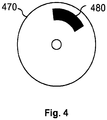
- Fig. 4 schematically shows an embodiment of a computer program product 470 which program is operative to cause a processor to perform one of the previously discussed methods.
- Embodiments also extends to computer program products 470, particularly computer programs 480 on or in a carrier 470, adapted for putting the invention into practice.
- the computer program product may comprises a computer program 480.
- the program may be in the form of source code, object code, a code intermediate source and object code such as partially compiled form, or in any other form suitable for use in the implementation of the one of the above discussed methods. It will also be appreciated that such a program may have many different architectural designs. For example, a program code implementing the functionality of the method or device may be subdivided into one or more subroutines.
- the subroutines may be stored together in one executable file to form a self-contained program.
- Such an executable file may comprise computer executable instructions, for example processor instructions and/or interpreter instructions (e.g. Java interpreter instructions).
- one or more or all of the subroutines may be stored in at least one external library file and linked with a main program either statically or dynamically, e.g. at run-time.
- the main program contains at least one call to at least one of the subroutines.
- the subroutines may comprise function calls to each other.
- An embodiment relating to a computer program product 470 comprises computer executable instructions 480 corresponding to each of the processing steps of at least one of the methods set forth. These instructions may be subdivided into subroutines and/or be stored in one or more files that may be linked statically or dynamically.
- Another embodiment relating to a computer program product 470 comprises computer executable instructions 480 corresponding to each of the means of at least one of the systems and/or products set forth. These instructions may be subdivided into subroutines and/or be stored in one or more files that may be linked statically or dynamically.
- the carrier of a computer program may be any entity or device capable of carrying the program.
- the carrier may include a storage medium, such as a ROM, for example a CD ROM or a semiconductor ROM, or a magnetic recording medium, for example a floppy disc or hard disk.
- the carrier may be a transmissible carrier such as an electrical or optical signal, which may be conveyed via electrical or optical cable or by radio or other means.
- the carrier may be constituted by such cable or other device or means.
- the carrier may be an integrated circuit in which the program is embedded, the integrated circuit being adapted for performing, or for use in the performance of, the relevant method.
- the computer program 480 may be a computer program for a distributed processor system and may comprise computer code which causes a first processor system to perform a subset of the steps of the above discussed method and which causes a second processor system to perform another subset of the steps of the above discussed method.
- the subset of steps and the another subset of steps may be mutually exclusive.
- the invention may be implemented in hardware and/or software, using programmable components.
Landscapes
- Engineering & Computer Science (AREA)
- Theoretical Computer Science (AREA)
- Data Mining & Analysis (AREA)
- Physics & Mathematics (AREA)
- General Physics & Mathematics (AREA)
- Databases & Information Systems (AREA)
- General Engineering & Computer Science (AREA)
- Evolutionary Biology (AREA)
- Bioinformatics & Computational Biology (AREA)
- Bioinformatics & Cheminformatics (AREA)
- Life Sciences & Earth Sciences (AREA)
- Mathematical Physics (AREA)
- Probability & Statistics with Applications (AREA)
- Mathematical Analysis (AREA)
- Pure & Applied Mathematics (AREA)
- Mathematical Optimization (AREA)
- Computational Mathematics (AREA)
- Computer Vision & Pattern Recognition (AREA)
- Evolutionary Computation (AREA)
- Artificial Intelligence (AREA)
- Software Systems (AREA)
- Algebra (AREA)
- Operations Research (AREA)
- Quality & Reliability (AREA)
- Fuzzy Systems (AREA)
- Computational Linguistics (AREA)
- Management, Administration, Business Operations System, And Electronic Commerce (AREA)
Claims (15)
- Ein Datenreduktionsgerät (150) zum Verkleinern eines Datensatzes beruhend auf einer Teilmenge von Variablen eines Variablensatzes, der mehrere Variablen umfasst, wobei die mehreren Variablen verschiedenen Datentypen entsprechen, wobei die Instanzen der mehreren Variablen auf Sensordaten von mehreren Sensoren (302 ... 310, 352 ... 360) in einer Maschine beruhen, wobei die Instanzen einer Variablen von Sensoren eines Typs mit jeweils derselben Funktion stammen, um die Instanz eines weiteren Datentyps vorherzusagen, wobei sich der weitere Datentyp auf eine Eigenschaft einer physischen Einheit (312, 362) der Maschine bezieht, wobei das Datenreduktionsgerät Folgendes umfasst:eine erste Datensatzeinheit (102) zum Abrufen eines ersten Datensatzes, der Tupel von Dateninstanzen umfasst, wobei die einzelnen Tupel jeweils eine Instanz der Variablen des Variablensatzes umfassen,eine zweite Datensatzeinheit (104) zum Abrufen eines zweiten Datensatzes, der Instanzen des weiteren Datentyps umfasst, wobei die einzelnen Instanzen des zweiten Datensatzes jeweils einem der Tupel des ersten Datensatzes entsprechen,eine Sucheinheit (110) zum Abrufen eines reduzierten Variablensatzes, bei dem es sich um eine Teilmenge des Variablensatzes handelt, wobei der reduzierte Variablensatz einem zumindest lokalen Optimum einer Optimierungsfunktion entspricht, bei der es sich um eine Funktion des reduzierten ersten Datensatzes, des zweiten Datensatzes und des reduzierten Variablensatzes handelt, wobei der reduzierte erste Datensatz reduzierte Tupel umfasst, die aus den Tupeln des ersten Datensatzes abgerufen werden, undwobei die reduzierten Tupel ausschließlich Instanzen der Variablen des reduzierten Variablensatzes umfassen, wobei die Optimierungsfunktion auf einer Kombination eines ersten gemeinsamen Datenwerts zwischen dem reduzierten ersten Datensatz und dem zweiten Datensatz und eines Strafwerts beruht, der mit einer zunehmenden Anzahl von Variablen im reduzierten Variablensatz zunimmt, wobei die Sucheinheit (110) den ersten gemeinsamen Datenwert zwischen dem reduzierten ersten Datensatz und dem zweiten Datensatz schätzt, indem sie einen zweiten gemeinsamen Datenwert zwischen dem zweiten Datensatz und den geclusterten Daten ermittelt (212), wobei die geclusterten Daten Cluster umfassen, die aus dem reduzierten ersten Datensatz abgeleitet werden, undeine Datenreduktionseinheit (152) zum Generieren eines reduzierten Datensatzes aus einem Datensatz, der Tupel von Dateninstanzen umfasst, wobei die einzelnen Tupel jeweils eine Instanz der Variablen des Variablensatzes umfassen, wobei die Datenreduktionseinheit (152) die Tupel im Datensatz so reduziert, um den reduzierten Datensatz zu erhalten, dass die reduzierten Tupel nur Variableninstanzen umfassen, die in der ausgewählten Teilmenge von Variablen vorhanden sind,wobei die Datenreduktionseinheit (152) den reduzierten Datensatz speichert und/oder den reduzierten Datensatz für ein Folgegerät bereitstellt.
- Eine auf einem Computer umzusetzende Methode (200) zum Verkleinern eines Datensatzes beruhend auf einer Teilmenge von Variablen eines Variablensatzes, der mehrere Variablen umfasst, wobei die mehreren Variablen verschiedenen Datentypen entsprechen, wobei die Instanzen der mehreren Variablen auf Sensordaten von mehreren Sensoren (302 ... 310, 352 ... 360) in einer Maschine beruhen, wobei die Instanzen einer Variablen von Sensoren eines Typs mit jeweils derselben Funktion stammen, um die Instanz eines weiteren Datentyps vorherzusagen, wobei sich der weitere Datentyp auf eine Eigenschaft einer physischen Einheit (312, 362) der Maschine bezieht, wobei die Methode folgende Schritte umfasst:Abrufen (202) eines ersten Datensatzes, der Tupel von Dateninstanzen umfasst, wobei die einzelnen Tupel jeweils eine Instanz der Variablen des Variablensatzes umfassen,Abrufen (204) eines zweiten Datensatzes, der Instanzen des weiteren Datentyps umfasst, wobei die einzelnen Instanzen des zweiten Datensatzes jeweils einem der Tupel des ersten Datensatzes entsprechen,Suchen (206) nach einem reduzierten Variablensatz, bei dem es sich um eine Teilmenge des Variablensatzes handelt, wobei der reduzierte Variablensatz einem zumindest lokalen Optimum einer Optimierungsfunktion entspricht, bei der es sich um eine Funktion des reduzierten ersten Datensatzes, des zweiten Datensatzes und des reduzierten Variablensatzes handelt, wobei der reduzierte erste Datensatz reduzierte Tupel umfasst, die aus den Tupeln des ersten Datensatzes abgerufen werden, undwobei die reduzierten Tupel ausschließlich Instanzen der Variablen des reduzierten Variablensatzes umfassen, wobei die Optimierungsfunktion auf einer Kombination eines ersten gemeinsamen Datenwerts zwischen dem reduzierten ersten Datensatz und dem zweiten Datensatz und eines Strafwerts beruht, der mit einer zunehmenden Anzahl von Variablen im reduzierten Variablensatz zunimmt, wobei der erste gemeinsame Datenwert zwischen dem reduzierten ersten Datensatz und dem zweiten Datensatz geschätzt wird, indem ein zweiter gemeinsamer Datenwert zwischen dem zweiten Datensatz und den geclusterten Daten ermittelt (212) wird,wobei die geclusterten Daten Cluster umfassen, die aus dem reduzierten ersten Datensatz abgeleitet werden, undGenerieren (222) eines reduzierten Datensatzes aus einem Datensatz, der Tupel von Dateninstanzen umfasst, wobei die einzelnen Tupel jeweils eine Instanz der Variablen des Variablensatzes umfassen, Reduzieren der Tupel im Datensatz, um den reduzierten Datensatz zu erhalten, sodass die reduzierten Tupel nur Variableninstanzen umfassen, die in der ausgewählten Teilmenge von Variablen vorhanden sind, und Speichern des reduzierten Datensatzes und/oder Bereitstellen des reduzierten Datensatzes für ein Folgegerät.
- Eine Methode (200) zum Verkleinern eines Datensatzes anhand einer Teilmenge von Variablen gemäß Anspruch 2, wobei die Cluster aus einer Kombination des reduzierten ersten Datensatzes und des zweiten Datensatzes abgeleitet werden.
- Eine Methode (200) zum Verkleinern eines Datensatzes anhand einer Teilmenge von Variablen gemäß Anspruch 3, wobei die Cluster Datentupeln entsprechen, bei denen es sich um eine Kombination bestimmter Tupel des reduzierten ersten Datensatzes handelt, die um einen Wert erweitert wird, der aus einer dem jeweiligen Tupel des reduzierten ersten Datensatzes entsprechenden Instanz des zweiten Datensatzes abgeleitet wird.
- Eine Methode (200) zum Verkleinern eines Datensatzes anhand einer Teilmenge von Variablen gemäß Anspruch 4, wobei die Cluster anhand von Daten gebildet werden, die eindeutige Tupel des reduzierten ersten Datensatzes umfassen, die um einen Wert erweitert werden, der aus den dem jeweiligen eindeutigen Tupel entsprechenden Instanzen des zweiten Datensatzes abgeleitet werden.
- Eine Methode (200) zum Verkleinern eines Datensatzes anhand einer Teilmenge von Variablen gemäß Anspruch 2, wobei die geclusterten Daten mithilfe eines k-Means-Algorithmus erhalten werden.
- Eine Methode (200) zum Verkleinern eines Datensatzes anhand einer Teilmenge von Variablen gemäß Anspruch 6, wobei der k-Means-Algorithmus ein euklidisches Abstandsmaß verwendet, um die Abstände zwischen den zu clusternden Tupeln zu ermitteln.
- Eine Methode (200) zum Verkleinern eines Datensatzes anhand einer Teilmenge von Variablen gemäß Anspruch 2, wobei das Suchen (206) nach dem reduzierten Variablensatz, der dem zumindest lokalen Optimum der Optimierungsfunktion entspricht, im Rahmen einer iterativen Suchmethode erfolgt, um das zumindest lokale Maximum und den reduzierten Variablensatz zu finden, der über einen relativ großen Wert für die Optimierungsfunktion verfügt.
- Eine Methode (200) zum Verkleinern eines Datensatzes anhand einer Teilmenge von Variablen gemäß Anspruch 8, wobei die einzelnen Iterationen der iterativen Suchmethode folgende Schritte umfasst:- Generieren (222) eines Vorschlags für den zu bewertenden reduzierten Variablensatz,- Ermitteln (210) des Werts der vom vorgeschlagenen reduzierten Variablensatz bereitgestellten Optimierungsfunktion,- Speichern (216) des vorgeschlagenen reduzierten Variablensatz als optimaler reduzierter Variablensatz, wenn der vorgeschlagene reduzierte Variablensatz bis zur aktuell ausgeführten Iteration einen optimalen Wert für die Optimierungsfunktion bereitstellt,Entscheiden (218), ob der vorgeschlagene reduzierte Variablensatz als Grundlage für einen in der nachfolgenden Iteration zu bewertenden vorgeschlagenen reduzierten Variablensatz herangezogen wird.
- Eine Methode (200) zum Verkleinern eines Datensatzes anhand einer Teilmenge von Variablen gemäß Anspruch 8 oder 9, wobei die iterative Suchmethode die erste Iteration mit dem vorgeschlagenen reduzierten Variablensatz beginnt (208), der eine einzelne Variable umfasst, bei der die gemeinsamen Daten zwischen den Daten der einzelnen Variablen und dem zweiten Datensatz im Vergleich zu den anderen Variablen des Variablensatzes am höchsten sind.
- Eine auf einem Computer umzusetzende Methode (200) gemäß einem der Ansprüche 2 bis 10, wobei der weitere Datentyp- einen Betriebszustand der Maschine oder Folgendes angibt:- ob eine Komponente der Maschine ausfallen wird oder nicht, oder- ob der Energieverbrauch der Maschine zu hoch sein wird oder nicht.
- Eine auf einem Computer umzusetzende Methode (200) gemäß einem der Ansprüche 2 bis 11, wobei ein Sensor der mehreren Sensoren die Temperatur, den Energieverbrauch, die Geschwindigkeit, das Gewicht oder die Staubmenge misst.
- Eine auf einem Computer umzusetzende Methode (200) gemäß einem der Ansprüche 2 bis 12, wobei es sich bei der Maschine um einen medizinischen Scanner handelt, z.B. einen CT-Scanner, einen PET-Scanner oder einen MRT-Scanner, wobei die Sensordaten in Protokolldateien gespeichert werden, oder wobei es sich bei der Maschine um einen Motor handelt.
- Ein Computerprogrammprodukt (470) zum Verkleinern eines Datensatzes beruhend auf einer Teilmenge von Variablen eines Variablensatzes, der mehrere Variablen umfasst, wobei die mehreren Variablen verschiedenen Datentypen entsprechen, wobei die Instanzen der mehreren Variablen auf Sensordaten von mehreren Sensoren (302 ... 310, 352 ... 360) in einer Maschine beruhen, wobei die Instanzen einer Variablen von Sensoren eines Typs mit jeweils derselben Funktion stammen, um die Instanz eines weiteren Datentyps vorherzusagen, wobei sich der weitere Typ auf eine Eigenschaft einer physischen Einheit (312, 362) der Maschine bezieht, wobei das Programm (280) einen Prozessor dazu veranlasst, eine der Methoden gemäß einem der Ansprüche 2 bis 13 durchzuführen.
- Eine Maschine (300), die Folgendes umfasst:mehrere Sensoren (302-310) zum Generieren von Sensordaten;eine physische Einheit (312); undeinen Prozessor zum Durchführen einer Methode gemäß einem der Ansprüche 2 bis 13 zum Verkleinern eines Datensatzes beruhend auf einer Teilmenge von Variablen eines Variablensatzes, der mehrere Variablen umfasst, wobei die mehreren Variablen verschiedenen Datentypen entsprechen, wobei die Instanzen der mehreren Variablen auf Sensordaten von mehreren Sensoren (302-310) in einer Maschine beruhen, wobei die Instanzen einer Variablen von Sensoren eines Typs mit jeweils derselben Funktion stammen, um die Instanz eines weiteren Datentyps vorherzusagen, wobei sich der weitere Datentyp auf eine Eigenschaft der physischen Einheit (312) bezieht.
Applications Claiming Priority (2)
| Application Number | Priority Date | Filing Date | Title |
|---|---|---|---|
| EP16153051 | 2016-01-28 | ||
| PCT/EP2017/050851 WO2017129437A1 (en) | 2016-01-28 | 2017-01-17 | Data reduction for reducing a data set |
Publications (2)
| Publication Number | Publication Date |
|---|---|
| EP3408751A1 EP3408751A1 (de) | 2018-12-05 |
| EP3408751B1 true EP3408751B1 (de) | 2021-12-01 |
Family
ID=55273133
Family Applications (1)
| Application Number | Title | Priority Date | Filing Date |
|---|---|---|---|
| EP17700451.2A Active EP3408751B1 (de) | 2016-01-28 | 2017-01-17 | Datenreduktion zur reduzierung eines datensatzes |
Country Status (4)
| Country | Link |
|---|---|
| US (1) | US10762064B2 (de) |
| EP (1) | EP3408751B1 (de) |
| CN (1) | CN108604224B (de) |
| WO (1) | WO2017129437A1 (de) |
Families Citing this family (5)
| Publication number | Priority date | Publication date | Assignee | Title |
|---|---|---|---|---|
| US10951689B1 (en) * | 2018-06-04 | 2021-03-16 | Massachusetts Mutual Life Insurance Company | Electronic device allocation and routing |
| CN110378391A (zh) * | 2019-06-25 | 2019-10-25 | 北京三快在线科技有限公司 | 计算模型的特征筛选方法、装置、电子设备和存储介质 |
| FR3105844A1 (fr) * | 2019-12-31 | 2021-07-02 | Bull Sas | PROCEDE ET système D’IDENTIFICATION DE VARIABLES PERTINENTES |
| CN111597225B (zh) * | 2020-04-21 | 2023-10-27 | 杭州安脉盛智能技术有限公司 | 一种基于分段瞬态识别的自适应数据缩减方法 |
| WO2021229515A1 (en) * | 2020-05-15 | 2021-11-18 | Koch Business Solutions, Lp | Model-independent feature selection |
Family Cites Families (20)
| Publication number | Priority date | Publication date | Assignee | Title |
|---|---|---|---|---|
| US6988076B2 (en) | 1997-05-21 | 2006-01-17 | Khimetrics, Inc. | Strategic planning and optimization system |
| US7117185B1 (en) * | 2002-05-15 | 2006-10-03 | Vanderbilt University | Method, system, and apparatus for casual discovery and variable selection for classification |
| US20070156471A1 (en) * | 2005-11-29 | 2007-07-05 | Baback Moghaddam | Spectral method for sparse principal component analysis |
| US20070122041A1 (en) | 2005-11-29 | 2007-05-31 | Baback Moghaddam | Spectral method for sparse linear discriminant analysis |
| US8131069B2 (en) * | 2007-07-16 | 2012-03-06 | Ecole Centrale De Paris | System and method for optimizing single and dynamic markov random fields with primal dual strategies |
| US8504498B2 (en) * | 2008-02-12 | 2013-08-06 | Codexis, Inc. | Method of generating an optimized, diverse population of variants |
| US8015126B2 (en) * | 2008-04-23 | 2011-09-06 | Xerox Corporation | Scalable feature selection for multi-class problems |
| US8218880B2 (en) * | 2008-05-29 | 2012-07-10 | Microsoft Corporation | Linear laplacian discrimination for feature extraction |
| US8005770B2 (en) * | 2008-06-09 | 2011-08-23 | Microsoft Corporation | Parallel generation of a bayesian network |
| US20100169133A1 (en) | 2008-12-29 | 2010-07-01 | Clicksoftware Technologies Ltd. | Method to enable optimizing towards goals |
| US8655821B2 (en) | 2009-02-04 | 2014-02-18 | Konstantinos (Constantin) F. Aliferis | Local causal and Markov blanket induction method for causal discovery and feature selection from data |
| CN101599072B (zh) * | 2009-07-03 | 2011-07-27 | 南开大学 | 基于信息推理的智能计算机系统构造方法 |
| US8554771B2 (en) * | 2009-12-14 | 2013-10-08 | Sandia Corporation | Technique for fast and efficient hierarchical clustering |
| US8805083B1 (en) * | 2010-03-21 | 2014-08-12 | Jeffrey M. Sieracki | System and method for discriminating constituents of image by complex spectral signature extraction |
| US20110246409A1 (en) * | 2010-04-05 | 2011-10-06 | Indian Statistical Institute | Data set dimensionality reduction processes and machines |
| CN102662952B (zh) * | 2012-03-02 | 2015-04-15 | 成都康赛信息技术有限公司 | 一种基于层次的中文文本并行数据挖掘方法 |
| US9336302B1 (en) * | 2012-07-20 | 2016-05-10 | Zuci Realty Llc | Insight and algorithmic clustering for automated synthesis |
| US9772741B2 (en) * | 2013-03-15 | 2017-09-26 | Konstantinos (Constantin) F. Aliferis | Data analysis computer system and method for organizing, presenting, and optimizing predictive modeling |
| CN103336829B (zh) * | 2013-07-05 | 2017-02-15 | 吉林大学 | 基于模拟退火算法的查询优化方法 |
| US9773211B2 (en) * | 2014-05-19 | 2017-09-26 | Sas Institute Inc. | Systems and methods for interactive graphs for building penalized regression models |
-
2017
- 2017-01-17 EP EP17700451.2A patent/EP3408751B1/de active Active
- 2017-01-17 US US16/072,344 patent/US10762064B2/en active Active
- 2017-01-17 WO PCT/EP2017/050851 patent/WO2017129437A1/en not_active Ceased
- 2017-01-17 CN CN201780008705.XA patent/CN108604224B/zh active Active
Also Published As
| Publication number | Publication date |
|---|---|
| WO2017129437A1 (en) | 2017-08-03 |
| CN108604224A (zh) | 2018-09-28 |
| US10762064B2 (en) | 2020-09-01 |
| EP3408751A1 (de) | 2018-12-05 |
| CN108604224B (zh) | 2023-11-17 |
| US20190034461A1 (en) | 2019-01-31 |
Similar Documents
| Publication | Publication Date | Title |
|---|---|---|
| EP3408751B1 (de) | Datenreduktion zur reduzierung eines datensatzes | |
| US20180018587A1 (en) | Apparatus and method for managing machine learning | |
| CN114556299B (zh) | 一种用于动态地修改管线中的任务并行度的计算机实现方法、程序产品以及系统 | |
| US11860902B2 (en) | Indexing of large scale patient set | |
| US11038984B2 (en) | Data prefetching for large data systems | |
| US10474959B2 (en) | Analytic system based on multiple task learning with incomplete data | |
| US9129228B1 (en) | Robust and fast model fitting by adaptive sampling | |
| US20170061329A1 (en) | Machine learning management apparatus and method | |
| KR20210010505A (ko) | 상이한 데이터 모달리티들에 대한 통계적 모델들을 단일화하기 위한 시스템들 및 방법들 | |
| US11295229B1 (en) | Scalable generation of multidimensional features for machine learning | |
| JP4942479B2 (ja) | 最大エントロピー・モデリングのための高速特徴選択方法及びシステム | |
| US8200588B2 (en) | Information processing device, method and program for selecting expression candidates | |
| CN113902460B (zh) | 物品销量数据可预测性分析方法、装置、计算机设备 | |
| US20190044533A1 (en) | Device for and method of determining clusters | |
| CN114398235A (zh) | 基于融合学习和假设检验的内存回收趋势预警装置及方法 | |
| US20190026323A1 (en) | Device for and method of determining a length of a relevant history | |
| CN119494523A (zh) | 基于能耗分项计量的用电需求自动响应方法 | |
| US20240135047A1 (en) | Systems and methods for improving a design of article using expert emulation | |
| CN117422545A (zh) | 信用风险识别方法、装置、设备及存储介质 | |
| US11379456B2 (en) | Efficient adjustment of spin-locking parameter values | |
| Poghosyan et al. | Compression for time series databases using independent and principal component analysis | |
| CN120564761B (zh) | 一种基于长短期记忆网络优化的变压器故障声纹检测方法 | |
| JP6161581B2 (ja) | モデルパラメータ推定装置、方法、及びプログラム | |
| CN114418058B (zh) | 楼层推荐方法、电子设备和计算机可读存储介质 | |
| US12026619B1 (en) | Slimmable neural network architecture search optimization |
Legal Events
| Date | Code | Title | Description |
|---|---|---|---|
| STAA | Information on the status of an ep patent application or granted ep patent |
Free format text: STATUS: UNKNOWN |
|
| STAA | Information on the status of an ep patent application or granted ep patent |
Free format text: STATUS: THE INTERNATIONAL PUBLICATION HAS BEEN MADE |
|
| PUAI | Public reference made under article 153(3) epc to a published international application that has entered the european phase |
Free format text: ORIGINAL CODE: 0009012 |
|
| STAA | Information on the status of an ep patent application or granted ep patent |
Free format text: STATUS: REQUEST FOR EXAMINATION WAS MADE |
|
| 17P | Request for examination filed |
Effective date: 20180828 |
|
| AK | Designated contracting states |
Kind code of ref document: A1 Designated state(s): AL AT BE BG CH CY CZ DE DK EE ES FI FR GB GR HR HU IE IS IT LI LT LU LV MC MK MT NL NO PL PT RO RS SE SI SK SM TR |
|
| AX | Request for extension of the european patent |
Extension state: BA ME |
|
| DAV | Request for validation of the european patent (deleted) | ||
| DAX | Request for extension of the european patent (deleted) | ||
| RAP1 | Party data changed (applicant data changed or rights of an application transferred) |
Owner name: KONINKLIJKE PHILIPS N.V. |
|
| REG | Reference to a national code |
Ref country code: DE Ref legal event code: R079 Ref document number: 602017050126 Country of ref document: DE Free format text: PREVIOUS MAIN CLASS: G06F0017180000 Ipc: G06K0009620000 |
|
| GRAP | Despatch of communication of intention to grant a patent |
Free format text: ORIGINAL CODE: EPIDOSNIGR1 |
|
| STAA | Information on the status of an ep patent application or granted ep patent |
Free format text: STATUS: GRANT OF PATENT IS INTENDED |
|
| RIC1 | Information provided on ipc code assigned before grant |
Ipc: G06K 9/62 20060101AFI20210610BHEP Ipc: H03M 7/30 20060101ALI20210610BHEP |
|
| INTG | Intention to grant announced |
Effective date: 20210630 |
|
| GRAS | Grant fee paid |
Free format text: ORIGINAL CODE: EPIDOSNIGR3 |
|
| GRAA | (expected) grant |
Free format text: ORIGINAL CODE: 0009210 |
|
| STAA | Information on the status of an ep patent application or granted ep patent |
Free format text: STATUS: THE PATENT HAS BEEN GRANTED |
|
| REG | Reference to a national code |
Ref country code: DE Ref legal event code: R079 Ref document number: 602017050126 Country of ref document: DE Free format text: PREVIOUS MAIN CLASS: G06K0009620000 Ipc: G06V0030190000 |
|
| AK | Designated contracting states |
Kind code of ref document: B1 Designated state(s): AL AT BE BG CH CY CZ DE DK EE ES FI FR GB GR HR HU IE IS IT LI LT LU LV MC MK MT NL NO PL PT RO RS SE SI SK SM TR |
|
| REG | Reference to a national code |
Ref country code: GB Ref legal event code: FG4D |
|
| REG | Reference to a national code |
Ref country code: AT Ref legal event code: REF Ref document number: 1452501 Country of ref document: AT Kind code of ref document: T Effective date: 20211215 Ref country code: CH Ref legal event code: EP |
|
| REG | Reference to a national code |
Ref country code: IE Ref legal event code: FG4D |
|
| REG | Reference to a national code |
Ref country code: DE Ref legal event code: R096 Ref document number: 602017050126 Country of ref document: DE |
|
| REG | Reference to a national code |
Ref country code: LT Ref legal event code: MG9D |
|
| REG | Reference to a national code |
Ref country code: NL Ref legal event code: MP Effective date: 20211201 |
|
| REG | Reference to a national code |
Ref country code: AT Ref legal event code: MK05 Ref document number: 1452501 Country of ref document: AT Kind code of ref document: T Effective date: 20211201 |
|
| PG25 | Lapsed in a contracting state [announced via postgrant information from national office to epo] |
Ref country code: RS Free format text: LAPSE BECAUSE OF FAILURE TO SUBMIT A TRANSLATION OF THE DESCRIPTION OR TO PAY THE FEE WITHIN THE PRESCRIBED TIME-LIMIT Effective date: 20211201 Ref country code: LT Free format text: LAPSE BECAUSE OF FAILURE TO SUBMIT A TRANSLATION OF THE DESCRIPTION OR TO PAY THE FEE WITHIN THE PRESCRIBED TIME-LIMIT Effective date: 20211201 Ref country code: FI Free format text: LAPSE BECAUSE OF FAILURE TO SUBMIT A TRANSLATION OF THE DESCRIPTION OR TO PAY THE FEE WITHIN THE PRESCRIBED TIME-LIMIT Effective date: 20211201 Ref country code: BG Free format text: LAPSE BECAUSE OF FAILURE TO SUBMIT A TRANSLATION OF THE DESCRIPTION OR TO PAY THE FEE WITHIN THE PRESCRIBED TIME-LIMIT Effective date: 20220301 Ref country code: AT Free format text: LAPSE BECAUSE OF FAILURE TO SUBMIT A TRANSLATION OF THE DESCRIPTION OR TO PAY THE FEE WITHIN THE PRESCRIBED TIME-LIMIT Effective date: 20211201 |
|
| PG25 | Lapsed in a contracting state [announced via postgrant information from national office to epo] |
Ref country code: SE Free format text: LAPSE BECAUSE OF FAILURE TO SUBMIT A TRANSLATION OF THE DESCRIPTION OR TO PAY THE FEE WITHIN THE PRESCRIBED TIME-LIMIT Effective date: 20211201 Ref country code: PL Free format text: LAPSE BECAUSE OF FAILURE TO SUBMIT A TRANSLATION OF THE DESCRIPTION OR TO PAY THE FEE WITHIN THE PRESCRIBED TIME-LIMIT Effective date: 20211201 Ref country code: NO Free format text: LAPSE BECAUSE OF FAILURE TO SUBMIT A TRANSLATION OF THE DESCRIPTION OR TO PAY THE FEE WITHIN THE PRESCRIBED TIME-LIMIT Effective date: 20220301 Ref country code: LV Free format text: LAPSE BECAUSE OF FAILURE TO SUBMIT A TRANSLATION OF THE DESCRIPTION OR TO PAY THE FEE WITHIN THE PRESCRIBED TIME-LIMIT Effective date: 20211201 Ref country code: HR Free format text: LAPSE BECAUSE OF FAILURE TO SUBMIT A TRANSLATION OF THE DESCRIPTION OR TO PAY THE FEE WITHIN THE PRESCRIBED TIME-LIMIT Effective date: 20211201 Ref country code: GR Free format text: LAPSE BECAUSE OF FAILURE TO SUBMIT A TRANSLATION OF THE DESCRIPTION OR TO PAY THE FEE WITHIN THE PRESCRIBED TIME-LIMIT Effective date: 20220302 Ref country code: ES Free format text: LAPSE BECAUSE OF FAILURE TO SUBMIT A TRANSLATION OF THE DESCRIPTION OR TO PAY THE FEE WITHIN THE PRESCRIBED TIME-LIMIT Effective date: 20211201 |
|
| PG25 | Lapsed in a contracting state [announced via postgrant information from national office to epo] |
Ref country code: NL Free format text: LAPSE BECAUSE OF FAILURE TO SUBMIT A TRANSLATION OF THE DESCRIPTION OR TO PAY THE FEE WITHIN THE PRESCRIBED TIME-LIMIT Effective date: 20211201 |
|
| PG25 | Lapsed in a contracting state [announced via postgrant information from national office to epo] |
Ref country code: SM Free format text: LAPSE BECAUSE OF FAILURE TO SUBMIT A TRANSLATION OF THE DESCRIPTION OR TO PAY THE FEE WITHIN THE PRESCRIBED TIME-LIMIT Effective date: 20211201 Ref country code: SK Free format text: LAPSE BECAUSE OF FAILURE TO SUBMIT A TRANSLATION OF THE DESCRIPTION OR TO PAY THE FEE WITHIN THE PRESCRIBED TIME-LIMIT Effective date: 20211201 Ref country code: RO Free format text: LAPSE BECAUSE OF FAILURE TO SUBMIT A TRANSLATION OF THE DESCRIPTION OR TO PAY THE FEE WITHIN THE PRESCRIBED TIME-LIMIT Effective date: 20211201 Ref country code: PT Free format text: LAPSE BECAUSE OF FAILURE TO SUBMIT A TRANSLATION OF THE DESCRIPTION OR TO PAY THE FEE WITHIN THE PRESCRIBED TIME-LIMIT Effective date: 20220401 Ref country code: EE Free format text: LAPSE BECAUSE OF FAILURE TO SUBMIT A TRANSLATION OF THE DESCRIPTION OR TO PAY THE FEE WITHIN THE PRESCRIBED TIME-LIMIT Effective date: 20211201 Ref country code: CZ Free format text: LAPSE BECAUSE OF FAILURE TO SUBMIT A TRANSLATION OF THE DESCRIPTION OR TO PAY THE FEE WITHIN THE PRESCRIBED TIME-LIMIT Effective date: 20211201 |
|
| PG25 | Lapsed in a contracting state [announced via postgrant information from national office to epo] |
Ref country code: MC Free format text: LAPSE BECAUSE OF FAILURE TO SUBMIT A TRANSLATION OF THE DESCRIPTION OR TO PAY THE FEE WITHIN THE PRESCRIBED TIME-LIMIT Effective date: 20211201 |
|
| REG | Reference to a national code |
Ref country code: CH Ref legal event code: PL |
|
| REG | Reference to a national code |
Ref country code: DE Ref legal event code: R097 Ref document number: 602017050126 Country of ref document: DE |
|
| PG25 | Lapsed in a contracting state [announced via postgrant information from national office to epo] |
Ref country code: IS Free format text: LAPSE BECAUSE OF FAILURE TO SUBMIT A TRANSLATION OF THE DESCRIPTION OR TO PAY THE FEE WITHIN THE PRESCRIBED TIME-LIMIT Effective date: 20220401 |
|
| REG | Reference to a national code |
Ref country code: BE Ref legal event code: MM Effective date: 20220131 |
|
| PLBE | No opposition filed within time limit |
Free format text: ORIGINAL CODE: 0009261 |
|
| STAA | Information on the status of an ep patent application or granted ep patent |
Free format text: STATUS: NO OPPOSITION FILED WITHIN TIME LIMIT |
|
| PG25 | Lapsed in a contracting state [announced via postgrant information from national office to epo] |
Ref country code: LU Free format text: LAPSE BECAUSE OF NON-PAYMENT OF DUE FEES Effective date: 20220117 Ref country code: DK Free format text: LAPSE BECAUSE OF FAILURE TO SUBMIT A TRANSLATION OF THE DESCRIPTION OR TO PAY THE FEE WITHIN THE PRESCRIBED TIME-LIMIT Effective date: 20211201 Ref country code: AL Free format text: LAPSE BECAUSE OF FAILURE TO SUBMIT A TRANSLATION OF THE DESCRIPTION OR TO PAY THE FEE WITHIN THE PRESCRIBED TIME-LIMIT Effective date: 20211201 |
|
| 26N | No opposition filed |
Effective date: 20220902 |
|
| PG25 | Lapsed in a contracting state [announced via postgrant information from national office to epo] |
Ref country code: SI Free format text: LAPSE BECAUSE OF FAILURE TO SUBMIT A TRANSLATION OF THE DESCRIPTION OR TO PAY THE FEE WITHIN THE PRESCRIBED TIME-LIMIT Effective date: 20211201 Ref country code: BE Free format text: LAPSE BECAUSE OF NON-PAYMENT OF DUE FEES Effective date: 20220131 |
|
| PG25 | Lapsed in a contracting state [announced via postgrant information from national office to epo] |
Ref country code: LI Free format text: LAPSE BECAUSE OF NON-PAYMENT OF DUE FEES Effective date: 20220131 Ref country code: CH Free format text: LAPSE BECAUSE OF NON-PAYMENT OF DUE FEES Effective date: 20220131 |
|
| PG25 | Lapsed in a contracting state [announced via postgrant information from national office to epo] |
Ref country code: IE Free format text: LAPSE BECAUSE OF NON-PAYMENT OF DUE FEES Effective date: 20220117 |
|
| PG25 | Lapsed in a contracting state [announced via postgrant information from national office to epo] |
Ref country code: IT Free format text: LAPSE BECAUSE OF FAILURE TO SUBMIT A TRANSLATION OF THE DESCRIPTION OR TO PAY THE FEE WITHIN THE PRESCRIBED TIME-LIMIT Effective date: 20211201 |
|
| PG25 | Lapsed in a contracting state [announced via postgrant information from national office to epo] |
Ref country code: HU Free format text: LAPSE BECAUSE OF FAILURE TO SUBMIT A TRANSLATION OF THE DESCRIPTION OR TO PAY THE FEE WITHIN THE PRESCRIBED TIME-LIMIT; INVALID AB INITIO Effective date: 20170117 |
|
| PG25 | Lapsed in a contracting state [announced via postgrant information from national office to epo] |
Ref country code: MK Free format text: LAPSE BECAUSE OF FAILURE TO SUBMIT A TRANSLATION OF THE DESCRIPTION OR TO PAY THE FEE WITHIN THE PRESCRIBED TIME-LIMIT Effective date: 20211201 Ref country code: CY Free format text: LAPSE BECAUSE OF FAILURE TO SUBMIT A TRANSLATION OF THE DESCRIPTION OR TO PAY THE FEE WITHIN THE PRESCRIBED TIME-LIMIT Effective date: 20211201 |
|
| PG25 | Lapsed in a contracting state [announced via postgrant information from national office to epo] |
Ref country code: MT Free format text: LAPSE BECAUSE OF FAILURE TO SUBMIT A TRANSLATION OF THE DESCRIPTION OR TO PAY THE FEE WITHIN THE PRESCRIBED TIME-LIMIT Effective date: 20211201 |
|
| PG25 | Lapsed in a contracting state [announced via postgrant information from national office to epo] |
Ref country code: TR Free format text: LAPSE BECAUSE OF FAILURE TO SUBMIT A TRANSLATION OF THE DESCRIPTION OR TO PAY THE FEE WITHIN THE PRESCRIBED TIME-LIMIT Effective date: 20211201 |
|
| PGFP | Annual fee paid to national office [announced via postgrant information from national office to epo] |
Ref country code: GB Payment date: 20260126 Year of fee payment: 10 |
|
| PGFP | Annual fee paid to national office [announced via postgrant information from national office to epo] |
Ref country code: DE Payment date: 20260127 Year of fee payment: 10 |
|
| PGFP | Annual fee paid to national office [announced via postgrant information from national office to epo] |
Ref country code: FR Payment date: 20260126 Year of fee payment: 10 |