EP3408970B1 - Verfahren zur erfassung und bestimmung einer ausfallwahrscheinlichkeit eines funknetzwerkes und zentralrechner - Google Patents
Verfahren zur erfassung und bestimmung einer ausfallwahrscheinlichkeit eines funknetzwerkes und zentralrechner Download PDFInfo
- Publication number
- EP3408970B1 EP3408970B1 EP18718151.6A EP18718151A EP3408970B1 EP 3408970 B1 EP3408970 B1 EP 3408970B1 EP 18718151 A EP18718151 A EP 18718151A EP 3408970 B1 EP3408970 B1 EP 3408970B1
- Authority
- EP
- European Patent Office
- Prior art keywords
- central computer
- radio network
- operating
- operational
- failure
- Prior art date
- Legal status (The legal status is an assumption and is not a legal conclusion. Google has not performed a legal analysis and makes no representation as to the accuracy of the status listed.)
- Active
Links
Images

Classifications
-
- H—ELECTRICITY
- H04—ELECTRIC COMMUNICATION TECHNIQUE
- H04L—TRANSMISSION OF DIGITAL INFORMATION, e.g. TELEGRAPHIC COMMUNICATION
- H04L41/00—Arrangements for maintenance, administration or management of data switching networks, e.g. of packet switching networks
- H04L41/14—Network analysis or design
- H04L41/142—Network analysis or design using statistical or mathematical methods
-
- G—PHYSICS
- G06—COMPUTING OR CALCULATING; COUNTING
- G06N—COMPUTING ARRANGEMENTS BASED ON SPECIFIC COMPUTATIONAL MODELS
- G06N7/00—Computing arrangements based on specific mathematical models
- G06N7/01—Probabilistic graphical models, e.g. probabilistic networks
-
- H—ELECTRICITY
- H04—ELECTRIC COMMUNICATION TECHNIQUE
- H04L—TRANSMISSION OF DIGITAL INFORMATION, e.g. TELEGRAPHIC COMMUNICATION
- H04L41/00—Arrangements for maintenance, administration or management of data switching networks, e.g. of packet switching networks
- H04L41/06—Management of faults, events, alarms or notifications
- H04L41/0686—Additional information in the notification, e.g. enhancement of specific meta-data
-
- H—ELECTRICITY
- H04—ELECTRIC COMMUNICATION TECHNIQUE
- H04L—TRANSMISSION OF DIGITAL INFORMATION, e.g. TELEGRAPHIC COMMUNICATION
- H04L41/00—Arrangements for maintenance, administration or management of data switching networks, e.g. of packet switching networks
- H04L41/14—Network analysis or design
- H04L41/145—Network analysis or design involving simulating, designing, planning or modelling of a network
-
- H—ELECTRICITY
- H04—ELECTRIC COMMUNICATION TECHNIQUE
- H04L—TRANSMISSION OF DIGITAL INFORMATION, e.g. TELEGRAPHIC COMMUNICATION
- H04L43/00—Arrangements for monitoring or testing data switching networks
- H04L43/16—Threshold monitoring
-
- H—ELECTRICITY
- H04—ELECTRIC COMMUNICATION TECHNIQUE
- H04W—WIRELESS COMMUNICATION NETWORKS
- H04W84/00—Network topologies
- H04W84/02—Hierarchically pre-organised networks, e.g. paging networks, cellular networks, WLAN [Wireless Local Area Network] or WLL [Wireless Local Loop]
- H04W84/10—Small scale networks; Flat hierarchical networks
- H04W84/12—WLAN [Wireless Local Area Networks]
Definitions
- the invention relates to a method for detecting and determining a probability of failure of a radio network and to a central computer set up to carry out the method.
- a WLAN network WLAN - Wireless Local Area Network
- Extensive radio network infrastructures which include several access points and are provided for a large number of terminals, require special design and monitoring with regard to their reliability. Errors in the design or overloading of the network infrastructure can lead to functional restrictions or a complete failure of the radio network. In industrial plants in particular, the components of which communicate via radio networks, failures of a radio network can lead to an interruption of the production process, which can be associated with high economic damage.
- the transmission power of a WLAN module is adjusted in such a way that the received signal strength on a reference WLAN module is less than a predefined threshold value.
- a network management of the network management system comprises functions to estimate a failure probability in a cell in which network resources have been arranged.
- the network administration is set up to repeat the rearrangement of the network resources in order to minimize the probability of failure.
- the probability of failure is calculated based on data from previous cells.
- WO 2007/048738 A1 discloses a clustering method for failure prediction of a software server.
- the method provides that real-time statistics of the server are collected and a failure probability of the server is determined on the basis of a ratio of the real-time statistics to profiles.
- the invention provides a method for detecting and determining a probability of failure of a radio network. It is provided that operating parameters are cyclically transmitted to a central computer by devices in the radio network, each transmitted operating parameter including an operating value of the respective device and a time when the operating value was recorded.
- the central computer cyclically stores the operating values of all operating parameters recorded within a given time interval as a respective operating constellation.
- the central computer cyclically creates a model based on the stored operating constellations, which assigns a failure probability to each possible operating constellation.
- the devices of the radio network regularly transmit operating parameters, which each include an operating value and a time of detection, to a central computer.
- the values recorded within a certain time interval are summarized and saved as a respective operating constellation.
- the central computer checks the radio network for a failure in the specific time interval.
- the stored operating constellations and identified failures are used by the central computer to create a model which assigns a failure probability to each possible operating constellation.
- a probability value can be obtained, for example, by counting how often a failure occurred in a given operating constellation. The ratio of counted failures to the total number of observations of this operating constellation gives a probability.
- a failure can be, for example, that at least one of the devices was disconnected or cut off from the wireless network.
- a wireless network can be a WLAN network, for example.
- Devices of the radio network include switching devices or infrastructure devices, including access points and / or routers and / or repeaters, for example, and terminals such as devices with a radio module compatible with the radio network.
- Operating parameters can be parameters that describe a state of a device and relate, for example, to its connection to the radio network.
- An operating parameter comprises an operating value and a detection time of the operating value.
- An operating parameter can each include, for example, a transmit and / or receive power, the number of other devices in the radio network recognized by the respective device, a transmission frequency, a number of transmitted, corrected, incorrect or received packets, error messages or a signal quality.
- the operating parameters that relate to the device itself can include, for example, the power consumption, an operating state, a system version or the temperature or its memory capacity or a geographical position.
- a central computer can be a server or computer with at least one microprocessor.
- a respective operating constellation is a compilation of all operating parameters which were recorded in a given time interval according to their recording time and is to be understood as a snapshot of the radio network in the respective time interval.
- a time interval can, for example, have a duration of 1 minute to 1 hour.
- a failure of the radio network is a state of the radio network in which it does not fulfill a predetermined mode of operation or no longer fulfills a predetermined extent. This is not only to be understood as a complete failure of all devices, but also, for example, a state in which, for example, a single device cannot interact with the radio network to the required extent.
- a model can, for example, be a mathematical model that is based on empirical values or is a simulation.
- the model can be designed in such a way that it outputs a failure probability for an operating constellation. With each additional stored operating constellation and information about the existence of a failure, the model can be adapted with each cycle. In other words, it is improved iteratively.
- the model can not only calculate the failure probability of a real operating constellation, but it can also output at least one operating parameter and / or a failure probability for a changed operating constellation. It may therefore be possible, within the scope of an improvement measure, to predict the received performance when the radio network is expanded to include a repeater at a specific spatial position. A failure probability can therefore also be forecast or extrapolated for a planned operating constellation.
- the central computer cyclically calculates a probability of a failure occurring for each new stored operating constellation.
- the central computer uses the model to calculate the current probability of failure after each transmission of an operating constellation. This has the advantage that a trend towards an increasing failure probability of the radio network can be recognized.
- the current probability of failure is compared with a predetermined warning threshold value, and if the warning threshold value is exceeded, a warning signal is generated.
- a warning threshold value with regard to the probability of failure can be determined, the exceeding of which leads to the output of a warning signal. For example, if the probability of failure is calculated above the warning threshold value, for example 2%, a warning signal in the form of an e-mail can be transmitted or sent out by the central computer. This has the advantage that a countermeasure can be initiated if the failure probability becomes too great, ie is above the warning threshold value.
- a difference is output which, according to the probability distribution, would lead to the warning threshold value being exceeded with the other operating values remaining the same.
- the central computer determines the difference which would lead to the warning threshold value being exceeded.
- a further development of the invention provides that a failure includes at least one occurrence of an indication value of at least one indication parameter in a predetermined value range.
- An indication parameter can comprise an operating parameter, the operating value of which represents a statement about the functioning of the radio network. This can include, for example, the received power and / or the number of incorrect packets received.
- the predetermined value range can be selected in such a way that proper functioning of the radio network is no longer ensured if a respective indication parameter has an indication value in this value range. For example, a failure can be defined as falling below a certain received power of a device.
- a further development of the invention provides that the model for assigning a failure probability is generated by correlating the operating constellations with the failures that have occurred in each case by means of a pattern recognition algorithm.
- the operating constellations and the failures of the radio network are used as input values of a pattern recognition algorithm, which creates a model therefrom.
- a pattern recognition algorithm can be a program code of a program for evaluating large amounts of data (big data tool).
- machine learning methods or artificial neural networks can be used. This has the advantage that there is no need to manually define causal relationships which, due to the complexity and size of the amount of data, cannot be recorded by a user.
- the algorithm can thus create a model for the probability of failure by recognizing patterns between operating constellations and failures.
- a further development of the invention provides that the central computer determines a predicted operating constellation by means of an extrapolation method and generates a warning signal if the warning threshold value is exceeded in the predicted operating constellation.
- a prognosis or a trend for an operating constellation at a future point in time is created from the stored operating constellations and a warning signal is generated if a failure probability is calculated for the predicted operating constellation which exceeds the warning threshold value.
- a received power that is constantly decreasing over a period of hours can be extrapolated linearly and a warning signal generated if the extrapolation predicts an operating constellation for the next hour that has a failure probability above the warning threshold. This means that adjustments to the radio network can be made at an early stage.
- boundary parameters external to the radio network are determined for a certain period of time and assigned to the operating constellation, and the boundary parameters are taken into account by the central computer when creating the model.
- radio network-external boundary parameters can also be assigned to a certain period of time.
- Boundary parameters external to the radio network can include values which describe a boundary condition under which the radio network is operated. These can include, for example, voltage fluctuations in a supply voltage or maintenance work. This has the advantage that boundary conditions can also be recorded which are not directly connected to the radio network, but can have an influence on the failure probability. It can be the case, for example, that a failure can be traced back to maintenance work that was carried out on a device. Using the boundary parameter, the model can associate the failure with this and not with the operating constellation of the time interval.
- the invention also includes a central computer which is set up to carry out one of the methods.
- the invention also includes further developments of the central computer according to the invention which have features as they are already in connection have been described with the developments of the method according to the invention. For this reason, the corresponding developments of the central computer according to the invention are not described again here.
- the described components of the embodiments each represent individual features of the invention that are to be considered independently of one another, which further develop the invention in each case and are therefore also to be regarded as part of the invention individually or in a combination other than the one shown. Furthermore, the described embodiments can also be supplemented by further features of the invention that have already been described.
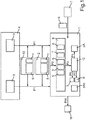
- Fig. 1 shows a central computer 1 to which operating parameters 2 of devices 3 of a radio network 4 are transmitted cyclically.
- Operating parameters 2 can include operating values 5 and respective acquisition times t of the operating values 5.
- a radio network 4 can be, for example, a GSM radio network or a WLAN radio network.
- the devices 3 can be, for example, access points or repeaters that function as infrastructure devices and end devices, such as microcomputers or microcontrollers, which are connected to the via a suitable radio module Radio network are connected.
- Operating parameters 2 can be data which can relate to a respective device 3 itself or the interaction of the device 3 with the radio network 4. For example, the Receive power and / or transmit power.
- the central computer 1 can also receive boundary parameters 6 which have been recorded by an external sensor unit 7.
- the central computer can assign the operating parameters 2 and boundary parameters 6 recorded in a time interval T to a respective operating constellation 8.
- An operating constellation 8 thus represents a snapshot of the radio network 4 in a specific time interval T.
- Information about the presence of a failure A is also assigned to such a time interval T.
- a failure A can include, for example, the occurrence of an indication value 9 of an indication parameter 10 in a predetermined value range 11.
- An indication parameter 10 can be an operating parameter 2, which must have certain values for the radio network 4 to function properly.
- the central computer 1 can be set up to use the stored data to create a model 12 which assigns a failure probability pA to a specific operating constellation 8.
- Fig. 2 shows a possible sequence of a method according to the invention for determining a probability of failure pA of a radio network 4.
- devices 3 of the radio network 4 cyclically transmit operating parameters 2 to the central computer 1.
- the central computer 1 stores the operating values 5 of all operating parameters 2, which in a predetermined time interval T, as the respective operating constellation 8 and checks the radio network 4 for the presence of a failure A.
- the central computer 1 can create P3 on the basis of the stored operating constellations 8, which assigns a failure probability pA to each possible operating constellation 8 .
- the central computer 1 can be set up so that it automatically calculates the failure probability pA for each new stored operating constellation 8 P4.
- a warning threshold value pAc is defined with regard to the failure probability pA. It can be provided that the central computer 1 compares the calculated failure probability pA for a new stored operating constellation 8 with the warning threshold value pAc P5 and generates a warning signal W if the warning threshold value pAc is exceeded PW. It may be that the central computer 1 outputs a difference 2 'for each current operating parameter 2, which would lead to the warning threshold value pAc being exceeded if the operating values 5 of other operating parameters 2 would otherwise remain the same P6.
- the central computer 1 uses an extrapolation method to determine a predicted operating constellation 8 ′ P7 and, in the case of a If the probability of failure pAc is exceeded for the predicted operating constellation 8 ′, a warning signal W generates PW.
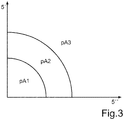
- Fig. 3 shows a possible model for determining the probability of failure of a radio network.
- Three areas pA1, pA2, pA3 are shown, which describe three different failure probabilities as a function of two operating values 5 ', 5 ".
Landscapes
- Engineering & Computer Science (AREA)
- Signal Processing (AREA)
- Computer Networks & Wireless Communication (AREA)
- Physics & Mathematics (AREA)
- General Physics & Mathematics (AREA)
- Mathematical Physics (AREA)
- Probability & Statistics with Applications (AREA)
- Algebra (AREA)
- Mathematical Analysis (AREA)
- Mathematical Optimization (AREA)
- Pure & Applied Mathematics (AREA)
- Theoretical Computer Science (AREA)
- Computational Mathematics (AREA)
- General Engineering & Computer Science (AREA)
- Computing Systems (AREA)
- Software Systems (AREA)
- Evolutionary Computation (AREA)
- Data Mining & Analysis (AREA)
- Artificial Intelligence (AREA)
- Mobile Radio Communication Systems (AREA)
Description
- Die Erfindung betrifft ein Verfahren zur Erfassung und Bestimmung einer Ausfallwahrscheinlichkeit eines Funknetzwerkes und einen zur Durchführung des Verfahrens eingerichteten Zentralrechner. Insbesondere ist ein WLAN-Netzwerk (WLAN - Wireless Local Area Network) gemeint.
- Umfangreiche Funknetzwerkinfrastrukturen, welche mehrere Zugangspunkte umfassen und für eine Vielzahl von Endgeräten vorgesehen sind, erfordern eine besondere Auslegung und Überwachung hinsichtlich ihrer Zuverlässigkeit. Fehler bei der Auslegung oder eine Überlastung der Netzwerkinfrastruktur können zu Funktionseinschränkungen oder einem kompletten Ausfall des Funknetzwerkes führen. Insbesondere in Industrieanlagen, deren Komponenten über Funknetzwerke kommunizieren, können Ausfälle eines Funknetzwerkes zu einer Unterbrechung des Produktionsvorgangs führen, welche mit hohen wirtschaftlichen Schäden verbunden sein kann.
- Um die Zuverlässigkeit von Funknetzen sicherstellen zu können, wurden Verfahren und Vorrichtungen entwickelt, welche die Planung und Regelung einer Funknetzwerkinfrastruktur optimieren können.
- In der
DE 10 2006 016 800 A1 ist ein messtechnisch unterstütztes iteratives Verfahren zum Zweck des Aufbaus eines optimalen drahtlosen Netzwerks in einem Gebäude mithilfe eines 3D-Modells dieses Gebäudes und empirischer Modelle zur Ermittlung der relevanten Performanceparameter beschrieben. Im Rahmen des Verfahrens wird die Anordnung von WLAN Access Points in einem Gebäude mittels eines 3-D Modells und experimentell gesammelter Daten optimiert. In einer Weiterbildung des Verfahrens ist es dabei vorgesehen, die experimentellen Daten auch im realen Datenverkehr wiederholt und iterativ zu erfassen. - In der
US 2002/0168993 A1 wird eine Pfadverlustschätzung zur Leistung Steuerung und Verbindungsanpassung für ein IEEE 802.11h WLAN beschrieben. Im Rahmen des Verfahrens wird der Pfadverlust zwischen einem Empfänger und einem Sender gemessen und basierend auf den Ergebnissen dieser Messung eine Leistungs- und Verbindungsanpassung für den Empfänger vorgenommen. - In der
DE 10 2015 204 246 A1 werden eine Vorrichtung und ein Verfahren zur Leistungsanpassung eines WLAN-Netzwerkes beschrieben. Dabei wird die Sendeleistung eines WLAN-Moduls derart angepasst, dass die empfangene Signalstärke an einem Referenz-WLAN-Modul kleiner als ein vorgegebener Schwellwert ist. - In der
US 2016/0057639 A1 wird ein Verfahren zur dynamischen Bereitstellung von Echtzeitdiensten für ein mobiles Gerät in einem dezentralen drahtlosen Netzwerk beschrieben. Dabei werden ein Empfangsgebiet und eine Wahrscheinlichkeit für ein Auftreten eines Netzwerkfehlers in dem Empfangsgebiet prognostiziert. - In der
US 9 531 522 B2 - In der
US 2015/0148040 A1 wird ein Anomaliekorrelationsmechanismus zur Analyse von Übergabevorgängen in einem Kommunikationsnetz beschrieben. Dabei werden Zeitreihen, welche Fehler bei Übergabevorgängen zwischen Funkzellen betreffen, ausgewertet. - In der
US 2001/0047416 A1 sind ein Netzwerkverwaltungssystem und ein Verfahren zum Umordnen von Netzwerkressourcen offenbart. Eine Netzwerkverwaltung des Netzwerkverwaltungssystems umfasst Funktionen um eine Ausfallwahrscheinlichkeit in einer Zelle, in welcher Netzwerkressourcen angeordnet wurden, abzuschätzen. Die Netzwerkverwaltung ist dazu eingerichtet, die Umordnung der Netzwerkressourcen zu wiederholen, um die Ausfallwahrscheinlichkeit zu minimieren. Dabei wird die Ausfallwahrscheinlichkeit auf Grundlage von Daten früherer Zellen berechnet. - In der
WO 2007/048738 A1 ist ein Clustering-Verfahren für eine Ausfallvorhersage eines Softwareservers offenbart. In dem Verfahren ist es vorgesehen, dass Echtzeitstatistiken des Servers gesammelt werden und auf Grundlage eines Verhältnisses der Echtzeitstatistiken zu Profilen, eine Ausfallwahrscheinlichkeit des Servers bestimmt wird. - In den genannten Erfindungen werden Verfahren beschrieben, welche eine Planung eines Funknetzwerkes beschreiben oder Leistungsanpassungen zur Sicherstellung eines Funknetzwerkbetriebs ermöglichen. In einem Funknetzwerk, welches eine Vielzahl von Teilnehmern umfasst, lässt sich unter Umständen der Betrieb nicht mittels einer Anpassung von Sendeleistungen alleine aufrechterhalten. In solchen Fällen ist es notwendig, vor einem drohenden Ausfall geeignete Maßnahmen treffen zu können, um den Betrieb des Funknetzwerkes noch sicherstellen zu können.
- Es ist eine Aufgabe der Erfindung, ein Verfahren bereitzustellen, welches es ermöglicht, die Auslastung eines Funknetzwerkes zu bestimmen.
- Die Aufgabe wird durch die Gegenstände der unabhängigen Patentansprüche gelöst. Vorteilhafte Weiterbildungen der Erfindung sind durch die Merkmale der abhängigen Patentansprüche, die folgende Beschreibung sowie die Figur offenbart.
- Durch die Erfindung wird ein Verfahren zur Erfassung und Bestimmung einer Ausfallwahrscheinlichkeit eines Funknetzwerkes bereitgestellt. Dabei ist es vorgesehen, dass durch Geräte des Funknetzwerkes zyklisch Betriebsparameter an einen Zentralrechner übermittelt werden, wobei jeder übermittelte Betriebsparameter einen Betriebswert des jeweiligen Gerätes und einen Erfassungszeitpunkt des Betriebswerts umfasst. Der Zentralrechner speichert zyklisch die innerhalb eines jeweils vorgegebenen Zeitintervall erfassten Betriebswerte aller Betriebsparameter als jeweilige Betriebskonstellation ab. Der Zentralrechner erstellt zyklisch auf Grundlage der gespeicherten Betriebskonstellationen ein Modell, welches jeder möglichen Betriebskonstellation eine Ausfallwahrscheinlichkeit zuordnet. Mit anderen Worten übermitteln die Geräte des Funknetzwerkes regelmäßig Betriebsparameter, welche jeweils einen Betriebswert und einen Erfassungszeitpunkt umfassen, an einen Zentralrechner. Die innerhalb eines bestimmten Zeitintervalls erfassten Werte werden dabei zusammengefasst und als eine jeweilige Betriebskonstellation gespeichert. Diese sind über einen Zugang zum Zentralrechner jederzeit einsehbar. Der Zentralrechner prüft das Funknetzwerk auf ein Vorliegen eines Ausfalls in dem bestimmten Zeitintervall. Die gespeicherten Betriebskonstellationen und erkannte Ausfälle werden durch den Zentralrechner zur Erstellung eines Modells benutzt, welches jeder möglichen Betriebskonstellation eine Ausfallwahrscheinlichkeit zuordnet. Ein Wahrscheinlichkeitswert kann sich z.B. ergeben, indem man zählt, wie oft bei einer gegebenen Betriebskonstellation ein Ausfall vorlag. Das Verhältnis aus gezählten Ausfällen zur Gesamtanzahl der Beobachtungen dieser Betriebskonstellation ergibt eine Wahrscheinlichkeit. Ein Ausfall kann z.B. darin bestehen, dass zumindest eines der Geräte vom Funknetzwerk getrennt oder abgeschnitten war.
- Bei einem Funknetzwerk kann es sich beispielsweise um ein WLAN-Netzwerk handeln. Geräte des Funknetzwerkes umfassen Vermittlergeräte oder Infrastrukturgeräte, wozu beispielsweise Zugangspunkte und/oder Router und/oder Repeater gerechnet werden können, und Endgeräte wie beispielsweise Vorrichtungen mit einem zu dem Funknetzwerk kompatiblen Funkmodul.
- Betriebsparameter können Parameter sein, welche einen Zustand eines Gerätes beschreiben und z.B. seine Anbindung an das Funknetzwerk betreffen. Ein Betriebsparameter umfasst einen Betriebswert und einen Erfassungszeitpunkt des Betriebswertes. Ein Betriebsparameter kann jeweils beispielsweise eine Sende- und/oder Empfangsleistung, die Anzahl der durch das jeweilige Gerät erkannten anderen Geräte des Funknetzwerkes, eine Übertragungsfrequenz, eine Anzahl der übertragenen, korrigierten, fehlerhaften oder empfangenen Pakete, Fehlermeldungen oder eine Signalqualität umfassen. Zu den Betriebsparametern, welche das Gerät selbst betreffen, können beispielsweise die Leistungsaufnahme, ein Betriebszustand, eine Systemversion oder die Temperatur oder seine Speicherauslastung oder eine geographische Position gehören. Ein Zentralrechner kann ein Server oder Rechner mit zumindest einem Mikroprozessor sein. Eine jeweilige Betriebskonstellation ist eine Zusammenstellung aller Betriebsparameter, welche gemäß ihrem Erfassungszeitpunkt in einem jeweils vorgegebenen Zeitintervall erfasst wurden und ist als Momentaufnahme des Funknetzwerkes in dem jeweiligen Zeitintervall zu verstehen. Ein Zeitintervall kann z.B. eine Zeitdauer von 1 min bis 1 h groß sein. Ein Ausfall des Funknetzwerkes ist ein Zustand des Funknetzwerkes, in welchem dieses eine vorbestimmte Funktionsweise nicht oder nicht mehr in einem vorbestimmten Umfang erfüllt. Darunter ist nicht nur ein kompletter Ausfall aller Geräte zu verstehen, sondern beispielsweise auch ein Zustand, in welchem beispielsweise ein einziges Gerät nicht in einem erforderlichen Umfang mit dem Funknetzwerk interagieren kann. Ein Modell kann beispielsweise ein mathematisches Modell sein, welches auf empirischen Erfahrungswerten beruht oder eine Simulation ist. Das Modell kann derart gestaltet sein, dass es für eine Betriebskonstellation eine Ausfallwahrscheinlichkeit ausgibt. Mit jeder weiteren gespeicherten Betriebskonstellation und einer Information über ein Vorliegen eines Ausfalls kann das Modell mit jedem Zyklus angepasst werden. Mit anderen Worten wird es iterativ verbessert. Das Modell kann nicht nur die Ausfallwahrscheinlichkeit einer realen Betriebskonstellation berechnen, sondern es kann auch mindestens einen Betriebsparameter und/oder eine Ausfallwahrscheinlichkeit für eine geänderte Betriebskonstellation ausgeben. Somit kann es möglich sein, das im Rahmen einer Verbesserungsmaßnahme die sich ergebene Empfangsleistung bei der Erweiterung des Funknetzwerkes um einen Repeater an einer bestimmten räumlichen Position prognostiziert werden kann. Es kann also für eine geplante Betriebskonstellation ebenfalls eine Ausfallwahrscheinlichkeit prognostiziert oder extrapoliert werden.
- Es ist vorgesehen, dass der Zentralrechner zyklisch eine Wahrscheinlichkeit für ein Auftreten eines Ausfalls für jede neue gespeicherte Betriebskonstellation berechnet. Mit anderen Worten berechnet der Zentralrechner nach jeder erfolgten Übertragung einer Betriebskonstellation mittels des Modells die aktuell bestehende Ausfallwahrscheinlichkeit. Dadurch ergibt sich der Vorteil, dass ein Trend einer steigenden Ausfallwahrscheinlichkeit des Funknetzwerkes erkannt werden kann.
- Die aktuelle Ausfallwahrscheinlichkeit wird mit einem vorbestimmten Warnschwellwert verglichen und eine Überschreitung des Warnschwellwertes führt zu einer Erzeugung eines Warnsignals. Mit anderen Worten kann ein Warnschwellwert bezüglich der Ausfallwahrscheinlichkeit bestimmt werden, dessen Überschreiten zu der Ausgabe eines Warnsignals führt. Beispielsweise kann bei einer berechneten Ausfallwahrscheinlichkeit über dem Warnschwellwert, z.B. 2%, ein Warnsignal in Form einer E-Mail durch den Zentralrechner übermittelt oder ausgesendet werden. Dadurch ergibt sich der Vorteil, dass eine Gegenmaßnahme eingeleitet werden kann, wenn die Ausfallwahrscheinlichkeit zu groß wird, d.h. über dem Warnschwellwert liegt.
- Für jeden aktuellen Betriebsparameter wird eine Differenz ausgegeben, welche nach der Wahrscheinlichkeitsverteilung zu einer Überschreitung des Warnschwellwertes bei ansonsten gleich bleibenden übrigen Betriebswerten führen würde. Mit anderen Worten bestimmt der Zentralrechner für einen aktuellen Betriebswert eines Betriebsparameters die Differenz, welche zu einer Überschreitung des Warnschwellwertes führen würde. Dadurch ergibt sich der Vorteil, dass für einen Anwender ersichtlich ist, wie groß einzelne Reserven bei Betriebsparametern sind oder auf welche Werte zur Senkung der Ausfallwahrscheinlichkeit angepasst werden müssen. Somit können kritische Betriebsparameter ausfindig gemacht werden.
- Eine Weiterbildung der Erfindung sieht vor, dass ein Ausfall zumindest ein Auftreten eines Indikationswertes zumindest eines Indikationsparameters in einem vorbestimmten Wertebereich umfasst. Ein Indikationsparameter kann einen Betriebsparameter umfassen, dessen Betriebswert eine Aussage über das Funktionieren des Funknetzwerkes darstellt. Dazu können beispielsweise die Empfangsleistung und/oder die Zahl der fehlerhaften empfangenen Pakete gehören. Der vorbestimmte Wertebereich kann derart gewählt sein, dass ein ordnungsgemäßes Funktionieren des Funknetzwerkes nicht mehr sichergestellt ist, wenn ein jeweiliger Indikationsparameter einen Indikationswert in diesem Wertebereich aufweist. Beispielsweise kann ein Ausfall als ein Unterschreiten einer bestimmten Empfangsleistung eines Geräts definiert sein.
- Eine Weiterbildung der Erfindung sieht vor, dass das Modell zur Zuordnung einer Ausfallwahrscheinlichkeit durch eine Korrelation der Betriebskonstellationen mit den jeweils aufgetretenen Ausfällen mittels eines Mustererkennungsalgorithmus erzeugt wird. Mit anderen Worten werden die Betriebskonstellationen und die Ausfälle des Funknetzwerkes als Eingangswerte eines Mustererkennungsalgorithmus verwendet, welcher daraus ein Modell erstellt. Bei einem Mustererkennungsalgorithmus kann es sich um einen Programmcode eines Programms zur Auswertung großer Datenmengen (Big-Data-Tool) handeln. Insbesondere können dabei Methoden des maschinellen Lernens oder künstliche neuronale Netze verwendet werden. Dadurch ergibt sich der Vorteil, dass keine manuelle Definition kausaler Zusammenhänge erfolgen muss, welche aufgrund der Komplexität und des Umfangs der Datenmenge nicht durch einen Anwender erfasst werden kann. Der Algorithmus kann somit über Erkennung von Mustern zwischen Betriebskonstellationen und Ausfällen ein Modell für die Ausfallwahrscheinlichkeit erstellen. Eine Weiterbildung der Erfindung sieht vor, dass der Zentralrechner mittels Extrapolationsverfahren eine prognostizierte Betriebskonstellation bestimmt und bei einer Überschreitung des Warnschwellwertes bei der prognostizierten Betriebskonstellation ein Warnsignal erzeugt. Mit anderen Worten wird aus den gespeicherten Betriebskonstellationen eine Prognose oder ein Trend für eine Betriebskonstellation zu einem zukünftigen Zeitpunkt erstellt und ein Warnsignal generiert, wenn für die prognostizierte Betriebskonstellation eine Ausfallwahrscheinlichkeit berechnet wird, welche den Warnschwellwert übersteigt. In einem einfachen Beispiel kann eine über einen Zeitraum von Stunden konstant abnehmende Empfangsleistung linear extrapoliert werden und ein Warnsignal erstellt werden, wenn die Extrapolation für die nächste Stunde eine Betriebskonstellation prognostiziert, welche eine Ausfallwahrscheinlichkeit über der Warnschwelle aufweist. Somit können frühzeitig Anpassungen an dem Funknetzwerk vorgenommen werden.
- Eine Weiterbildung der Erfindung sieht vor, dass einem bestimmten Zeitraum funknetzexterne Randparameter ermitteln und der Betriebskonstellation zugeordnet werden und die Randparameter durch den Zentralrechner bei der Erstellung des Modells berücksichtigt werden. Mit anderen Worten können einem bestimmten Zeitraum neben einem Ausfall und einer Betriebskonstellation auch funknetzexterne Randparameter zugeordnet werden. Funknetzexterne Randparameter können Werte umfassen, welche eine Randbedingung beschreiben unter denen das Funknetzwerk betrieben wird. Diese können beispielsweise Spannungsschwankungen einer Versorgungsspannung oder Wartungsarbeiten umfassen. Dadurch ergibt sich der Vorteil, dass auch Randbedingungen erfasst werden können, welche nicht direkt mit dem Funknetzwerk in Verbindung stehen, jedoch einen Einfluss auf die Ausfallwahrscheinlichkeit haben können. Es kann beispielsweise sein, dass ein Ausfall auf Wartungsarbeiten zurückgeführt werden kann, welche an einem Gerät durchgeführt wurden. Mittels des Randparameters kann das Modell den Ausfall hiermit und nicht mit der Betriebskonstellation des Zeitintervalls assoziieren.
- Die Erfindung umfasst auch einen Zentralrechner, welcher zur Durchführung eines der Verfahren eingerichtet ist.
- Zu der Erfindung gehören auch Weiterbildungen des erfindungsgemäßen Zentralrechners, die Merkmale aufweisen, wie sie bereits im Zusammenhang mit den Weiterbildungen des erfindungsgemäßen Verfahren beschrieben worden sind. Aus diesem Grund sind die entsprechenden Weiterbildungen des erfindungsgemäßen Zentralrechners hier nicht noch einmal beschrieben.
- Im Folgenden sind Ausführungsbeispiele der Erfindung beschrieben. Hierzu zeigen:
- Fig. 1
- eine schematische Darstellung eines Zentralrechners;
- Fig. 2
- einen Verfahrensablauf, wie er durch den Zentralrechner durchgeführt werden kann; und
- Fig. 3
- ein mögliches Modell zur Bestimmung einer Ausfallwahrscheinlichkeit.
- Bei den im Folgenden erläuterten Ausführungsbeispielen handelt es sich um bevorzugte Ausführungsformen der Erfindung. Bei den Ausführungsbeispielen stellen die beschriebenen Komponenten der Ausführungsformen jeweils einzelne, unabhängig voneinander zu betrachtende Merkmale der Erfindung dar, welche die Erfindung jeweils auch unabhängig voneinander weiterbilden und damit auch einzeln oder in einer anderen als der gezeigten Kombination als Bestandteil der Erfindung anzusehen sind. Des Weiteren sind die beschriebenen Ausführungsformen auch durch weitere der bereits beschriebenen Merkmale der Erfindung ergänzbar.
- In den Figuren sind funktionsgleiche Elemente jeweils mit denselben Bezugszeichen versehen.
-
Fig. 1 zeigt einen Zentralrechner 1 an den zyklisch Betriebsparameter 2 von Geräten 3 eines Funknetzwerkes 4 übermittelt werden. Betriebsparameter 2 können Betriebswerte 5 und jeweilige Erfassungszeitpunkte t der Betriebswerte 5 umfassen. Ein Funknetzwerk 4 kann beispielsweise ein GSM-Funknetzwerk oder ein WLAN-Funknetzwerk sein Bei den Geräten 3 kann es sich beispielsweise um Zugangspunkte oder Repeater handeln, welche als Infrastrukturgeräte fungieren und um Endgeräte, wie beispielsweise Mikrocomputer oder Mikrocontroller, welche über ein geeignetes Funkmodul an das Funknetzwerk angebunden sind. Betriebsparameter 2 können Daten sein, welche ein jeweiliges Gerät 3 selbst, oder die Interaktion des Gerätes 3 mit dem Funknetzwerk 4 betreffen können. Dazu können beispielsweise die Empfangsleistung und/oder die Sendeleistung gehören. Der Zentralrechner 1 kann auch Randparameter 6 empfangen, welche von einer externen Sensoreinheit 7 erfasst wurden. Der Zentralrechner kann die in einem Zeitintervall T erfassten Betriebsparameter 2 und Randparameter 6 einer jeweiligen Betriebskonstellation 8 zuordnen. Somit stellt eine Betriebskonstellation 8 eine Momentaufnahme des Funknetzwerkes 4 in einem bestimmten Zeitintervall T dar. Einem solchen Zeitintervall T ist auch eine Information über den Vorliegen eines Ausfalls A zugeordnet. Ein Ausfall A kann beispielsweise ein Auftreten eines Indikationswertes 9 eines Indikationsparameters 10 in einem vorbestimmten Wertebereich 11 umfassen. Ein Indikationsparameter 10 kann ein Betriebsparameter 2 sein, welcher für ein ordnungsgemäßes Funktionieren des Funknetzwerkes 4 bestimmte Werte aufweisen muss. Der Zentralrechner 1 kann dazu eingerichtet sein, anhand der gespeicherten Daten ein Modell 12 zu erstellen, welches einer bestimmten Betriebskonstellation 8 eine Ausfallwahrscheinlichkeit pA zuordnet. -
Fig. 2 zeigt einen möglichen Ablauf eines erfindungsgemäßen Verfahrens zur Bestimmung einer Ausfallwahrscheinlichkeit pA eines Funknetzwerkes 4. In einem Schritt P1 übermitteln Geräte 3 des Funknetzwerkes 4 zyklisch Betriebsparameter 2 an den Zentralrechner 1. In Schritt P2 speichert der Zentralrechner 1 die Betriebswerte 5 aller Betriebsparameter 2, welche in einem vorgegebenen Zeitintervall T erfasst wurden, als jeweilige Betriebskonstellation 8 ab und prüft das Funknetzwerk 4 auf ein Vorliegen eines Ausfalls A. Der Zentralrechner 1 kann auf Grundlage der gespeicherten Betriebskonstellationen 8 ein Modell 12, welches jeder möglichen Betriebskonstellation 8 eine Ausfallwahrscheinlichkeit pA zuordnet, erstellen P3. Der Zentralrechner 1 kann dazu eingerichtet sein, dass er für jede neue gespeicherte Betriebskonstellation 8 automatisch die Ausfallwahrscheinlichkeit pA berechnet P4. Es kann sein, dass ein Warnschwellwert pAc bezüglich der Ausfallwahrscheinlichkeit pA definiert ist. Es kann vorgesehen sein, dass der Zentralrechner 1 die berechnete Ausfallwahrscheinlichkeit pA für eine neue gespeicherte Betriebskonstellation 8 mit dem Warnschwellwert pAc vergleicht P5 und bei einer Überschreitung des Warnschwellwertes pAc ein Warnsignal W erzeugt PW . Es kann sein, dass durch den Zentralrechner 1 für jeden aktuellen Betriebsparameter 2 eine Differenz 2' ausgegeben wird, welche zu einer Überschreitung des Warnschwellwertes pAc bei ansonsten gleich bleibenden Betriebswerten 5 anderer Betriebsparameter 2 führen würde P6. Es kann sein, dass der Zentralrechner 1 mittels eines Extrapolationsverfahrens eine prognostizierte Betriebskonstellation 8' bestimmt P7 und im Fall einer Überschreitung der Ausfallwahrscheinlichkeit pAc für die prognostizierte Betriebskonstellation 8' ein Warnsignal W erzeugt PW. -
Fig. 3 . zeigt ein mögliches Modell zur Bestimmung einer Ausfallwahrscheinlichkeit eines Funknetzwerkes. Dargestellt sind drei Bereiche pA1, pA2, pA3, welche drei verschiedene Ausfallwahrscheinlichkeit in Abhängigkeit von zwei Betriebswerten 5',5"beschreiben. - Insgesamt zeigen die Beispiele, wie durch die Erfindung ein Verfahren zur Überwachung einer Ausfallwahrscheinlichkeit eines Funknetzwerkes bereitgestellt wird.
Claims (6)
- Verfahren zur Erfassung und Bestimmung einer Ausfallwahrscheinlichkeit (pA) eines Funknetzwerkes (4), wobeia. aus Geräten (3) des Funknetzwerkes (4) zyklisch Betriebsparameter (2) durch einen Zentralrechner (1) empfangen werden und über einen Zugang bereitgestellt werden, wobei
jeder übermittelte Betriebsparameter (2) einen Betriebswert (5) des jeweiligen Gerätes (3) und einen Erfassungszeitpunkt t des Betriebswerts (5) umfasst (P1), undb. der Zentralrechner (1) zyklisch die innerhalb eines jeweils vorgegebenen Zeitintervall (T) erfassten Betriebswerte (5) aller Betriebsparameter (2) als jeweilige Betriebskonstellation (8) speichert und ein das Funknetzwerk (4) auf ein Vorliegen eines Ausfalls (A) überprüft (P2),
dadurch gekennzeichnet, dassc. der Zentralrechner zyklisch auf Grundlage der gespeicherten Betriebskonstellationen (8) und Ausfälle (A) ein Modell (12) erstellt, welches jeder möglichen Betriebskonstellation (8) eine Ausfallwahrscheinlichkeit (pA) zuordnet (P3),d. der Zentralrechner (1) die Ausfallwahrscheinlichkeit (pA) für jede neue gespeicherte Betriebskonstellation (8) berechnet,e. der Zentralrechner (1) die Ausfallwahrscheinlichkeit (pA) mit einem vorbestimmten Warnschwellwert (pAc) vergleicht (P5) und bei einer Überschreitung des Warnschwellwertes (pAc) ein Warnsignal (W) erzeugt (PW), undf. für jeden aktuellen Betriebsparameter (2) eine Differenz (2') ausgegeben wird (P6), welche zu einer Überschreitung des Warnschwellwertes (pAc) bei ansonsten gleich bleibenden Betriebswerten (5) anderer Betriebsparametern (2) führen würde. - Verfahren nach Anspruch 1, dadurch gekennzeichnet, dass ein Ausfall (A) zumindest ein Auftreten eines Indikationswertes (9) zumindest eines Indikationsparameters (10) umfasst.
- Verfahren nach einem der vorhergehenden Ansprüche, dadurch gekennzeichnet, dass das Modell (12) zur Zuordnung einer Ausfallwahrscheinlichkeit durch eine Korrelation der Betriebskonstellationen (8) mit den jeweils aufgetretenen Ausfällen (A) mittels eines Mustererkennungsalgorithmus erzeugt wird.
- Verfahren nach einem der vorhergehenden Ansprüche, dadurch gekennzeichnet, dass der Zentralrechner (1) mittels Extrapolationsverfahren eine prognostizierte Betriebskonstellation bestimmt (P7) und bei einer Überschreitung des Warnschwellwertes bei der prognostizierten Betriebskonstellation ein Warnsignal (W) erzeugt (PW).
- Verfahren nach einem der vorhergehenden Ansprüche, dadurch gekennzeichnet, dass einem bestimmten Zeitraum (T) funknetzexterne Randparameter (6) zugeordnet werden, welche durch den Zentralrechner bei der Erstellung des Modells berücksichtigt werden und von externen Sensoren (7) erfasst werden (PE).
- Zentralrechner (1),
eingerichtet zur Durchführung eines der vorhergehenden Verfahren.
Applications Claiming Priority (2)
| Application Number | Priority Date | Filing Date | Title |
|---|---|---|---|
| DE102017206631.8A DE102017206631B4 (de) | 2017-04-20 | 2017-04-20 | Verfahren zur Erfassung und Bestimmung einer Ausfallwahrscheinlichkeit eines Funknetzwerkes und Zentralrechner |
| PCT/EP2018/059701 WO2018192889A1 (de) | 2017-04-20 | 2018-04-17 | Verfahren zur erfassung und bestimmung einer ausfallwahrscheinlichkeit eines funknetzwerkes und zentralrechner |
Publications (2)
| Publication Number | Publication Date |
|---|---|
| EP3408970A1 EP3408970A1 (de) | 2018-12-05 |
| EP3408970B1 true EP3408970B1 (de) | 2021-07-28 |
Family
ID=62002141
Family Applications (1)
| Application Number | Title | Priority Date | Filing Date |
|---|---|---|---|
| EP18718151.6A Active EP3408970B1 (de) | 2017-04-20 | 2018-04-17 | Verfahren zur erfassung und bestimmung einer ausfallwahrscheinlichkeit eines funknetzwerkes und zentralrechner |
Country Status (5)
| Country | Link |
|---|---|
| US (1) | US11159388B2 (de) |
| EP (1) | EP3408970B1 (de) |
| CN (1) | CN110537347B (de) |
| DE (1) | DE102017206631B4 (de) |
| WO (1) | WO2018192889A1 (de) |
Families Citing this family (2)
| Publication number | Priority date | Publication date | Assignee | Title |
|---|---|---|---|---|
| CN109246048B (zh) * | 2018-10-30 | 2021-02-02 | 广州海格通信集团股份有限公司 | 一种基于深度学习的物理层安全通信方法和系统 |
| CN110265888B (zh) * | 2019-06-28 | 2021-01-05 | 贵阳研卓电子科技有限公司 | Pdu电源控制系统 |
Family Cites Families (18)
| Publication number | Priority date | Publication date | Assignee | Title |
|---|---|---|---|---|
| JP3470683B2 (ja) | 2000-05-26 | 2003-11-25 | 日本電気株式会社 | ネットワーク運用管理システム及び装置故障確率管理方法 |
| US6978151B2 (en) | 2001-05-10 | 2005-12-20 | Koninklijke Philips Electronics N.V. | Updating path loss estimation for power control and link adaptation in IEEE 802.11h WLAN |
| US7751325B2 (en) * | 2003-08-14 | 2010-07-06 | At&T Intellectual Property Ii, L.P. | Method and apparatus for sketch-based detection of changes in network traffic |
| US7451210B2 (en) * | 2003-11-24 | 2008-11-11 | International Business Machines Corporation | Hybrid method for event prediction and system control |
| US7484132B2 (en) * | 2005-10-28 | 2009-01-27 | International Business Machines Corporation | Clustering process for software server failure prediction |
| US8145745B1 (en) * | 2005-12-28 | 2012-03-27 | At&T Intellectual Property Ii, L.P. | Method and apparatus for network-level anomaly inference |
| DE102006016800A1 (de) | 2006-01-23 | 2007-08-30 | Ghmt Ag | Messtechnisch unterstütztes iteratives Verfahren zum Zweck des Aufbaus eines optimalen drahtlosen Netzwerks in einem Gebäude mit Hilfe eines 3D-Modells dieses Gebäudes und empirischer Modelle zur Ermittlung der relevanten Performance-Parameter |
| US20090113049A1 (en) * | 2006-04-12 | 2009-04-30 | Edsa Micro Corporation | Systems and methods for real-time forecasting and predicting of electrical peaks and managing the energy, health, reliability, and performance of electrical power systems based on an artificial adaptive neural network |
| US20070192065A1 (en) * | 2006-02-14 | 2007-08-16 | Sun Microsystems, Inc. | Embedded performance forecasting of network devices |
| WO2012050912A1 (en) * | 2010-09-28 | 2012-04-19 | The Ohio State University | System and method for proactive resource allocation |
| US9918258B2 (en) * | 2013-11-26 | 2018-03-13 | At&T Intellectual Property I, L.P. | Anomaly correlation mechanism for analysis of handovers in a communication network |
| US9571982B2 (en) * | 2014-08-20 | 2017-02-14 | Software Ag | System and method for dynamically providing real-time service for a mobile wireless device |
| DE102015204246A1 (de) | 2015-03-10 | 2016-09-15 | Volkswagen Aktiengesellschaft | Vorrichtung und Verfahren zur Leistungsanpassung eines WLAN-Netzwerkes |
| CN104915552A (zh) * | 2015-05-27 | 2015-09-16 | 百度在线网络技术(北京)有限公司 | 一种预测系统故障的方法及装置 |
| CN105743595A (zh) * | 2016-04-08 | 2016-07-06 | 国家新闻出版广电总局无线电台管理局 | 中短波发射机故障预警方法及装置 |
| US10491754B2 (en) * | 2016-07-22 | 2019-11-26 | Level 3 Communications, Llc | Visualizing predicted customer bandwidth utilization based on utilization history |
| US10127125B2 (en) * | 2016-10-21 | 2018-11-13 | Accenture Global Solutions Limited | Application monitoring and failure prediction |
| US9900790B1 (en) * | 2016-12-08 | 2018-02-20 | Futurewei Technologies, Inc. | Prediction of performance indicators in cellular networks |
-
2017
- 2017-04-20 DE DE102017206631.8A patent/DE102017206631B4/de active Active
-
2018
- 2018-04-17 WO PCT/EP2018/059701 patent/WO2018192889A1/de not_active Ceased
- 2018-04-17 EP EP18718151.6A patent/EP3408970B1/de active Active
- 2018-04-17 US US16/606,332 patent/US11159388B2/en active Active
- 2018-04-17 CN CN201880025900.8A patent/CN110537347B/zh active Active
Also Published As
| Publication number | Publication date |
|---|---|
| EP3408970A1 (de) | 2018-12-05 |
| CN110537347B (zh) | 2023-07-14 |
| DE102017206631A1 (de) | 2018-10-25 |
| WO2018192889A1 (de) | 2018-10-25 |
| CN110537347A (zh) | 2019-12-03 |
| DE102017206631B4 (de) | 2025-01-23 |
| US20200351170A1 (en) | 2020-11-05 |
| US11159388B2 (en) | 2021-10-26 |
Similar Documents
| Publication | Publication Date | Title |
|---|---|---|
| EP3662639B1 (de) | Verfahren und vorrichtung zum ermitteln von anomalien in einem kommunikationsnetzwerk | |
| DE112010001370T5 (de) | Signalübertragungsvorrichtung für einen Aufzug | |
| EP3177973B1 (de) | Verfahren zum betreiben einer sicherheitssteuerung und automatisierungsnetzwerk mit einer solchen sicherheitssteuerung | |
| WO2021121695A1 (de) | Verfahren, vorrichtung und system zur detektion von anomalen betriebszuständen eines geräts | |
| EP3715880B1 (de) | Verfahren und vorrichtung zur ermittlung des zustands einer elektrischen leitung | |
| EP3408970B1 (de) | Verfahren zur erfassung und bestimmung einer ausfallwahrscheinlichkeit eines funknetzwerkes und zentralrechner | |
| DE102016102282A1 (de) | Verfahren und Vorrichtung zum Überwachen einer Datenverarbeitung und -übertragung in einer Sicherheitskette eines Sicherheitssystems | |
| DE102011081640B4 (de) | Steuersystem | |
| EP2701018A1 (de) | Verfahren zur sicheren Parametrierung eines Feldgeräts | |
| WO2013107704A1 (de) | Verfahren zum betrieb eines feldgeräts, feldgerät und server für ein weitflächiges automatisierungsnetz | |
| EP2770382B1 (de) | Verfahren zur Inbetriebnahme eines Automatisierungssystems | |
| EP4034448A1 (de) | Verfahren zum überwachen von funktionen einer balise und hierfür geeignetes lesegerät | |
| EP2928157B1 (de) | Verfahren zur Analyse und/oder Evaluierung von mindestens einem Ereignis einer technischen Anlage | |
| DE102010042199A1 (de) | Verfahren zum Betreiben eines Feldbus-Interface sowie Computerprogrammprodukt | |
| EP4338393B1 (de) | Überwachungsvorrichtung für einen daten-router sowie verfahren zum überwachen eines daten-routers | |
| DE102012004854A1 (de) | Verfahren zum effizienten Betrieb eines überwachten Telekommmunikationsnetzes mit Hilfe eines Netzmanagementsystems, von Computerprogrammen und Computerprogrammprodukten | |
| DE102020209171B4 (de) | Verfahren und System zum Überwachen eines drahtlosen Kommunikationsnetzwerkes | |
| EP3011701B1 (de) | Verfahren und system zur planung eines kommunikationsnetzes eines industriellen automatisierungssystems | |
| EP3770785A1 (de) | Verfahren zum erkennen von injektionen falsche daten "bad data" in einem industriellen steuersystem | |
| DE102012100818B3 (de) | Verfahren zur Datenübertragung in einem Feldbussystem | |
| EP2448000A2 (de) | Photovoltaikanlage | |
| DE102009036234B4 (de) | Kommunikationsgerät zur Datenkommunikation in einem Industrienetzwerk, Industrienetzwerk und Verfahren zur Steuerung der Datenkommunikation in einem Industrienetzwerk | |
| EP1385348A1 (de) | Verfahren und Vorrichtung zur wahrscheinlichkeitstheoretischen Betrachtung insbesondere der Luftschnittstelle eines Funkkommunikationssystems | |
| EP4530766A1 (de) | Verfahren und system zur verifikation einer feldgerätefunktion | |
| EP3214789B1 (de) | Verfahren und vorrichtung zur funkübertragung von daten |
Legal Events
| Date | Code | Title | Description |
|---|---|---|---|
| STAA | Information on the status of an ep patent application or granted ep patent |
Free format text: STATUS: UNKNOWN |
|
| STAA | Information on the status of an ep patent application or granted ep patent |
Free format text: STATUS: THE INTERNATIONAL PUBLICATION HAS BEEN MADE |
|
| PUAI | Public reference made under article 153(3) epc to a published international application that has entered the european phase |
Free format text: ORIGINAL CODE: 0009012 |
|
| STAA | Information on the status of an ep patent application or granted ep patent |
Free format text: STATUS: REQUEST FOR EXAMINATION WAS MADE |
|
| 17P | Request for examination filed |
Effective date: 20180711 |
|
| AK | Designated contracting states |
Kind code of ref document: A1 Designated state(s): AL AT BE BG CH CY CZ DE DK EE ES FI FR GB GR HR HU IE IS IT LI LT LU LV MC MK MT NL NO PL PT RO RS SE SI SK SM TR |
|
| AX | Request for extension of the european patent |
Extension state: BA ME |
|
| RIN1 | Information on inventor provided before grant (corrected) |
Inventor name: HAEFFNER, MICHAEL Inventor name: MUENCH, BERTRAM Inventor name: GILSDORF, TIM Inventor name: WOLF, CHRISTIAN |
|
| DAV | Request for validation of the european patent (deleted) | ||
| DAX | Request for extension of the european patent (deleted) | ||
| GRAP | Despatch of communication of intention to grant a patent |
Free format text: ORIGINAL CODE: EPIDOSNIGR1 |
|
| STAA | Information on the status of an ep patent application or granted ep patent |
Free format text: STATUS: GRANT OF PATENT IS INTENDED |
|
| INTG | Intention to grant announced |
Effective date: 20210423 |
|
| GRAS | Grant fee paid |
Free format text: ORIGINAL CODE: EPIDOSNIGR3 |
|
| GRAA | (expected) grant |
Free format text: ORIGINAL CODE: 0009210 |
|
| STAA | Information on the status of an ep patent application or granted ep patent |
Free format text: STATUS: THE PATENT HAS BEEN GRANTED |
|
| AK | Designated contracting states |
Kind code of ref document: B1 Designated state(s): AL AT BE BG CH CY CZ DE DK EE ES FI FR GB GR HR HU IE IS IT LI LT LU LV MC MK MT NL NO PL PT RO RS SE SI SK SM TR |
|
| REG | Reference to a national code |
Ref country code: GB Ref legal event code: FG4D Free format text: NOT ENGLISH |
|
| REG | Reference to a national code |
Ref country code: CH Ref legal event code: EP |
|
| REG | Reference to a national code |
Ref country code: DE Ref legal event code: R096 Ref document number: 502018006323 Country of ref document: DE |
|
| REG | Reference to a national code |
Ref country code: AT Ref legal event code: REF Ref document number: 1415723 Country of ref document: AT Kind code of ref document: T Effective date: 20210815 |
|
| REG | Reference to a national code |
Ref country code: IE Ref legal event code: FG4D Free format text: LANGUAGE OF EP DOCUMENT: GERMAN |
|
| REG | Reference to a national code |
Ref country code: LT Ref legal event code: MG9D |
|
| REG | Reference to a national code |
Ref country code: DE Ref legal event code: R079 Ref document number: 502018006323 Country of ref document: DE Free format text: PREVIOUS MAIN CLASS: H04L0012240000 Ipc: H04L0041000000 |
|
| REG | Reference to a national code |
Ref country code: NL Ref legal event code: MP Effective date: 20210728 |
|
| PG25 | Lapsed in a contracting state [announced via postgrant information from national office to epo] |
Ref country code: LT Free format text: LAPSE BECAUSE OF FAILURE TO SUBMIT A TRANSLATION OF THE DESCRIPTION OR TO PAY THE FEE WITHIN THE PRESCRIBED TIME-LIMIT Effective date: 20210728 Ref country code: BG Free format text: LAPSE BECAUSE OF FAILURE TO SUBMIT A TRANSLATION OF THE DESCRIPTION OR TO PAY THE FEE WITHIN THE PRESCRIBED TIME-LIMIT Effective date: 20211028 Ref country code: NL Free format text: LAPSE BECAUSE OF FAILURE TO SUBMIT A TRANSLATION OF THE DESCRIPTION OR TO PAY THE FEE WITHIN THE PRESCRIBED TIME-LIMIT Effective date: 20210728 Ref country code: NO Free format text: LAPSE BECAUSE OF FAILURE TO SUBMIT A TRANSLATION OF THE DESCRIPTION OR TO PAY THE FEE WITHIN THE PRESCRIBED TIME-LIMIT Effective date: 20211028 Ref country code: PT Free format text: LAPSE BECAUSE OF FAILURE TO SUBMIT A TRANSLATION OF THE DESCRIPTION OR TO PAY THE FEE WITHIN THE PRESCRIBED TIME-LIMIT Effective date: 20211129 Ref country code: HR Free format text: LAPSE BECAUSE OF FAILURE TO SUBMIT A TRANSLATION OF THE DESCRIPTION OR TO PAY THE FEE WITHIN THE PRESCRIBED TIME-LIMIT Effective date: 20210728 Ref country code: ES Free format text: LAPSE BECAUSE OF FAILURE TO SUBMIT A TRANSLATION OF THE DESCRIPTION OR TO PAY THE FEE WITHIN THE PRESCRIBED TIME-LIMIT Effective date: 20210728 Ref country code: FI Free format text: LAPSE BECAUSE OF FAILURE TO SUBMIT A TRANSLATION OF THE DESCRIPTION OR TO PAY THE FEE WITHIN THE PRESCRIBED TIME-LIMIT Effective date: 20210728 Ref country code: RS Free format text: LAPSE BECAUSE OF FAILURE TO SUBMIT A TRANSLATION OF THE DESCRIPTION OR TO PAY THE FEE WITHIN THE PRESCRIBED TIME-LIMIT Effective date: 20210728 Ref country code: SE Free format text: LAPSE BECAUSE OF FAILURE TO SUBMIT A TRANSLATION OF THE DESCRIPTION OR TO PAY THE FEE WITHIN THE PRESCRIBED TIME-LIMIT Effective date: 20210728 |
|
| PG25 | Lapsed in a contracting state [announced via postgrant information from national office to epo] |
Ref country code: PL Free format text: LAPSE BECAUSE OF FAILURE TO SUBMIT A TRANSLATION OF THE DESCRIPTION OR TO PAY THE FEE WITHIN THE PRESCRIBED TIME-LIMIT Effective date: 20210728 Ref country code: LV Free format text: LAPSE BECAUSE OF FAILURE TO SUBMIT A TRANSLATION OF THE DESCRIPTION OR TO PAY THE FEE WITHIN THE PRESCRIBED TIME-LIMIT Effective date: 20210728 Ref country code: GR Free format text: LAPSE BECAUSE OF FAILURE TO SUBMIT A TRANSLATION OF THE DESCRIPTION OR TO PAY THE FEE WITHIN THE PRESCRIBED TIME-LIMIT Effective date: 20211029 |
|
| PG25 | Lapsed in a contracting state [announced via postgrant information from national office to epo] |
Ref country code: DK Free format text: LAPSE BECAUSE OF FAILURE TO SUBMIT A TRANSLATION OF THE DESCRIPTION OR TO PAY THE FEE WITHIN THE PRESCRIBED TIME-LIMIT Effective date: 20210728 |
|
| REG | Reference to a national code |
Ref country code: DE Ref legal event code: R097 Ref document number: 502018006323 Country of ref document: DE |
|
| PG25 | Lapsed in a contracting state [announced via postgrant information from national office to epo] |
Ref country code: SM Free format text: LAPSE BECAUSE OF FAILURE TO SUBMIT A TRANSLATION OF THE DESCRIPTION OR TO PAY THE FEE WITHIN THE PRESCRIBED TIME-LIMIT Effective date: 20210728 Ref country code: SK Free format text: LAPSE BECAUSE OF FAILURE TO SUBMIT A TRANSLATION OF THE DESCRIPTION OR TO PAY THE FEE WITHIN THE PRESCRIBED TIME-LIMIT Effective date: 20210728 Ref country code: RO Free format text: LAPSE BECAUSE OF FAILURE TO SUBMIT A TRANSLATION OF THE DESCRIPTION OR TO PAY THE FEE WITHIN THE PRESCRIBED TIME-LIMIT Effective date: 20210728 Ref country code: EE Free format text: LAPSE BECAUSE OF FAILURE TO SUBMIT A TRANSLATION OF THE DESCRIPTION OR TO PAY THE FEE WITHIN THE PRESCRIBED TIME-LIMIT Effective date: 20210728 Ref country code: CZ Free format text: LAPSE BECAUSE OF FAILURE TO SUBMIT A TRANSLATION OF THE DESCRIPTION OR TO PAY THE FEE WITHIN THE PRESCRIBED TIME-LIMIT Effective date: 20210728 Ref country code: AL Free format text: LAPSE BECAUSE OF FAILURE TO SUBMIT A TRANSLATION OF THE DESCRIPTION OR TO PAY THE FEE WITHIN THE PRESCRIBED TIME-LIMIT Effective date: 20210728 |
|
| PLBE | No opposition filed within time limit |
Free format text: ORIGINAL CODE: 0009261 |
|
| STAA | Information on the status of an ep patent application or granted ep patent |
Free format text: STATUS: NO OPPOSITION FILED WITHIN TIME LIMIT |
|
| 26N | No opposition filed |
Effective date: 20220429 |
|
| PG25 | Lapsed in a contracting state [announced via postgrant information from national office to epo] |
Ref country code: IT Free format text: LAPSE BECAUSE OF FAILURE TO SUBMIT A TRANSLATION OF THE DESCRIPTION OR TO PAY THE FEE WITHIN THE PRESCRIBED TIME-LIMIT Effective date: 20210728 |
|
| REG | Reference to a national code |
Ref country code: CH Ref legal event code: PL |
|
| REG | Reference to a national code |
Ref country code: BE Ref legal event code: MM Effective date: 20220430 |
|
| PG25 | Lapsed in a contracting state [announced via postgrant information from national office to epo] |
Ref country code: MC Free format text: LAPSE BECAUSE OF FAILURE TO SUBMIT A TRANSLATION OF THE DESCRIPTION OR TO PAY THE FEE WITHIN THE PRESCRIBED TIME-LIMIT Effective date: 20210728 Ref country code: LU Free format text: LAPSE BECAUSE OF NON-PAYMENT OF DUE FEES Effective date: 20220417 Ref country code: LI Free format text: LAPSE BECAUSE OF NON-PAYMENT OF DUE FEES Effective date: 20220430 Ref country code: CH Free format text: LAPSE BECAUSE OF NON-PAYMENT OF DUE FEES Effective date: 20220430 |
|
| PG25 | Lapsed in a contracting state [announced via postgrant information from national office to epo] |
Ref country code: BE Free format text: LAPSE BECAUSE OF NON-PAYMENT OF DUE FEES Effective date: 20220430 |
|
| PG25 | Lapsed in a contracting state [announced via postgrant information from national office to epo] |
Ref country code: IE Free format text: LAPSE BECAUSE OF NON-PAYMENT OF DUE FEES Effective date: 20220417 |
|
| P01 | Opt-out of the competence of the unified patent court (upc) registered |
Effective date: 20230530 |
|
| PG25 | Lapsed in a contracting state [announced via postgrant information from national office to epo] |
Ref country code: HU Free format text: LAPSE BECAUSE OF FAILURE TO SUBMIT A TRANSLATION OF THE DESCRIPTION OR TO PAY THE FEE WITHIN THE PRESCRIBED TIME-LIMIT; INVALID AB INITIO Effective date: 20180417 |
|
| PG25 | Lapsed in a contracting state [announced via postgrant information from national office to epo] |
Ref country code: MK Free format text: LAPSE BECAUSE OF FAILURE TO SUBMIT A TRANSLATION OF THE DESCRIPTION OR TO PAY THE FEE WITHIN THE PRESCRIBED TIME-LIMIT Effective date: 20210728 Ref country code: CY Free format text: LAPSE BECAUSE OF FAILURE TO SUBMIT A TRANSLATION OF THE DESCRIPTION OR TO PAY THE FEE WITHIN THE PRESCRIBED TIME-LIMIT Effective date: 20210728 |
|
| REG | Reference to a national code |
Ref country code: AT Ref legal event code: MM01 Ref document number: 1415723 Country of ref document: AT Kind code of ref document: T Effective date: 20230417 |
|
| PG25 | Lapsed in a contracting state [announced via postgrant information from national office to epo] |
Ref country code: TR Free format text: LAPSE BECAUSE OF FAILURE TO SUBMIT A TRANSLATION OF THE DESCRIPTION OR TO PAY THE FEE WITHIN THE PRESCRIBED TIME-LIMIT Effective date: 20210728 |
|
| PG25 | Lapsed in a contracting state [announced via postgrant information from national office to epo] |
Ref country code: AT Free format text: LAPSE BECAUSE OF NON-PAYMENT OF DUE FEES Effective date: 20230417 |
|
| PG25 | Lapsed in a contracting state [announced via postgrant information from national office to epo] |
Ref country code: AT Free format text: LAPSE BECAUSE OF NON-PAYMENT OF DUE FEES Effective date: 20230417 |
|
| PG25 | Lapsed in a contracting state [announced via postgrant information from national office to epo] |
Ref country code: MT Free format text: LAPSE BECAUSE OF FAILURE TO SUBMIT A TRANSLATION OF THE DESCRIPTION OR TO PAY THE FEE WITHIN THE PRESCRIBED TIME-LIMIT Effective date: 20210728 |
|
| PGFP | Annual fee paid to national office [announced via postgrant information from national office to epo] |
Ref country code: DE Payment date: 20250430 Year of fee payment: 8 |
|
| PGFP | Annual fee paid to national office [announced via postgrant information from national office to epo] |
Ref country code: GB Payment date: 20250426 Year of fee payment: 8 |
|
| PGFP | Annual fee paid to national office [announced via postgrant information from national office to epo] |
Ref country code: FR Payment date: 20250426 Year of fee payment: 8 |
|
| PGFP | Annual fee paid to national office [announced via postgrant information from national office to epo] |
Ref country code: AT Payment date: 20260410 Year of fee payment: 5 |