EP3409145A1 - Verbesserte matratzenanordnung - Google Patents
Verbesserte matratzenanordnung Download PDFInfo
- Publication number
- EP3409145A1 EP3409145A1 EP17000927.8A EP17000927A EP3409145A1 EP 3409145 A1 EP3409145 A1 EP 3409145A1 EP 17000927 A EP17000927 A EP 17000927A EP 3409145 A1 EP3409145 A1 EP 3409145A1
- Authority
- EP
- European Patent Office
- Prior art keywords
- mattress
- mattress element
- user
- assembly
- recess
- Prior art date
- Legal status (The legal status is an assumption and is not a legal conclusion. Google has not performed a legal analysis and makes no representation as to the accuracy of the status listed.)
- Granted
Links
Images

Classifications
-
- A—HUMAN NECESSITIES
- A47—FURNITURE; DOMESTIC ARTICLES OR APPLIANCES; COFFEE MILLS; SPICE MILLS; SUCTION CLEANERS IN GENERAL
- A47C—CHAIRS; SOFAS; BEDS
- A47C27/00—Spring, stuffed or fluid mattresses or cushions specially adapted for chairs, beds or sofas
- A47C27/14—Spring, stuffed or fluid mattresses or cushions specially adapted for chairs, beds or sofas with foamed material inlays
- A47C27/15—Spring, stuffed or fluid mattresses or cushions specially adapted for chairs, beds or sofas with foamed material inlays consisting of two or more layers
-
- A—HUMAN NECESSITIES
- A47—FURNITURE; DOMESTIC ARTICLES OR APPLIANCES; COFFEE MILLS; SPICE MILLS; SUCTION CLEANERS IN GENERAL
- A47C—CHAIRS; SOFAS; BEDS
- A47C27/00—Spring, stuffed or fluid mattresses or cushions specially adapted for chairs, beds or sofas
- A47C27/001—Spring, stuffed or fluid mattresses or cushions specially adapted for chairs, beds or sofas with several cushions, mattresses or the like, to be put together in one cover
-
- A—HUMAN NECESSITIES
- A47—FURNITURE; DOMESTIC ARTICLES OR APPLIANCES; COFFEE MILLS; SPICE MILLS; SUCTION CLEANERS IN GENERAL
- A47C—CHAIRS; SOFAS; BEDS
- A47C27/00—Spring, stuffed or fluid mattresses or cushions specially adapted for chairs, beds or sofas
- A47C27/002—Mattress or cushion tickings or covers
-
- A—HUMAN NECESSITIES
- A47—FURNITURE; DOMESTIC ARTICLES OR APPLIANCES; COFFEE MILLS; SPICE MILLS; SUCTION CLEANERS IN GENERAL
- A47C—CHAIRS; SOFAS; BEDS
- A47C27/00—Spring, stuffed or fluid mattresses or cushions specially adapted for chairs, beds or sofas
- A47C27/14—Spring, stuffed or fluid mattresses or cushions specially adapted for chairs, beds or sofas with foamed material inlays
- A47C27/142—Spring, stuffed or fluid mattresses or cushions specially adapted for chairs, beds or sofas with foamed material inlays with projections, depressions or cavities
- A47C27/144—Spring, stuffed or fluid mattresses or cushions specially adapted for chairs, beds or sofas with foamed material inlays with projections, depressions or cavities inside the mattress or cushion
-
- A—HUMAN NECESSITIES
- A47—FURNITURE; DOMESTIC ARTICLES OR APPLIANCES; COFFEE MILLS; SPICE MILLS; SUCTION CLEANERS IN GENERAL
- A47C—CHAIRS; SOFAS; BEDS
- A47C27/00—Spring, stuffed or fluid mattresses or cushions specially adapted for chairs, beds or sofas
- A47C27/14—Spring, stuffed or fluid mattresses or cushions specially adapted for chairs, beds or sofas with foamed material inlays
- A47C27/142—Spring, stuffed or fluid mattresses or cushions specially adapted for chairs, beds or sofas with foamed material inlays with projections, depressions or cavities
- A47C27/146—Spring, stuffed or fluid mattresses or cushions specially adapted for chairs, beds or sofas with foamed material inlays with projections, depressions or cavities on the outside surface of the mattress or cushion
-
- A—HUMAN NECESSITIES
- A47—FURNITURE; DOMESTIC ARTICLES OR APPLIANCES; COFFEE MILLS; SPICE MILLS; SUCTION CLEANERS IN GENERAL
- A47C—CHAIRS; SOFAS; BEDS
- A47C27/00—Spring, stuffed or fluid mattresses or cushions specially adapted for chairs, beds or sofas
- A47C27/14—Spring, stuffed or fluid mattresses or cushions specially adapted for chairs, beds or sofas with foamed material inlays
- A47C27/148—Spring, stuffed or fluid mattresses or cushions specially adapted for chairs, beds or sofas with foamed material inlays of different resilience
-
- A—HUMAN NECESSITIES
- A47—FURNITURE; DOMESTIC ARTICLES OR APPLIANCES; COFFEE MILLS; SPICE MILLS; SUCTION CLEANERS IN GENERAL
- A47C—CHAIRS; SOFAS; BEDS
- A47C27/00—Spring, stuffed or fluid mattresses or cushions specially adapted for chairs, beds or sofas
- A47C27/14—Spring, stuffed or fluid mattresses or cushions specially adapted for chairs, beds or sofas with foamed material inlays
- A47C27/20—Spring, stuffed or fluid mattresses or cushions specially adapted for chairs, beds or sofas with foamed material inlays with springs moulded in, or situated in openings in foamed material
-
- A—HUMAN NECESSITIES
- A61—MEDICAL OR VETERINARY SCIENCE; HYGIENE
- A61G—TRANSPORT, PERSONAL CONVEYANCES, OR ACCOMMODATION SPECIALLY ADAPTED FOR PATIENTS OR DISABLED PERSONS; OPERATING TABLES OR CHAIRS; CHAIRS FOR DENTISTRY; FUNERAL DEVICES
- A61G7/00—Beds specially adapted for nursing; Devices for lifting patients or disabled persons
- A61G7/05—Parts, details or accessories of beds
- A61G7/057—Arrangements for preventing bed-sores or for supporting patients with burns, e.g. mattresses specially adapted therefor
- A61G7/05715—Arrangements for preventing bed-sores or for supporting patients with burns, e.g. mattresses specially adapted therefor with modular blocks, or inserts, with layers of different material
-
- A—HUMAN NECESSITIES
- A61—MEDICAL OR VETERINARY SCIENCE; HYGIENE
- A61G—TRANSPORT, PERSONAL CONVEYANCES, OR ACCOMMODATION SPECIALLY ADAPTED FOR PATIENTS OR DISABLED PERSONS; OPERATING TABLES OR CHAIRS; CHAIRS FOR DENTISTRY; FUNERAL DEVICES
- A61G7/00—Beds specially adapted for nursing; Devices for lifting patients or disabled persons
- A61G7/05—Parts, details or accessories of beds
- A61G7/057—Arrangements for preventing bed-sores or for supporting patients with burns, e.g. mattresses specially adapted therefor
- A61G7/05723—Arrangements for preventing bed-sores or for supporting patients with burns, e.g. mattresses specially adapted therefor with cut-outs or depressions in order to relieve the pressure on a part of the body
Definitions
- the present invention relates to an improved mattress assembly whose properties can be flexibly configured by the user and which can ensure adequate sleeping comfort over an extended period of time.
- the EP 0 782 830 A1 discloses a single-ply mattress with inserts, cavities, and transverse recesses.
- the DE 20 2005 018 810 U1 discloses in the abstract a mattress system into which optional elements can be inserted.
- the EP 1 031 302 A2 discloses a mattress into which inserts with materials of different hardness and different elasticity can be inserted.
- the US 6,115,861 B discloses a support structure for a mattress into which blocks of a different hardness can be inserted.
- the WO 2013/049647 A1 discloses a mattress for medical purposes, which can be composed of different parts. It also includes an insert with an inverse trapezoidal prism shape.
- the US 5,671,492 discloses in summary a multi-insert mattress with the top insert having transverse grooves.
- the WO 95/07679 discloses a mattress with multiple inserts, with an upper layer having transverse grooves.
- the JP 2015-211703 A and the KR 101173167 B1 reveal mattresses with interchangeable inserts.
- the DE 60 2006 000 335 T2 discloses a mattress with a replaceable element at one longitudinal end.
- the EP 0 945 090 A2 discloses a mattress with multiple inserts.
- the AT 010 102 U1 discloses in the abstract a foam mattress with replaceable mattress core elements.
- the WO 2014/111867 A1 and the WO 99/05940 reveal in summary mattresses with inserts to adjust the hardness.
- the present invention has as its object to provide a mattress assembly, which the user can adapt to his preferences after the purchase and the user can adapt to changing sleeping habits.
- the mattress assembly comprises a first mattress element, a replaceable insert and a second mattress element.
- the first mattress element has a recess in an area that is located below the user and between the shoulder and the user's hip when in use.
- the replaceable insert can be detachably inserted into the recess of the first mattress element and is detachably held by the first mattress element.
- the second mattress element is located above the first mattress element when in use.
- the second mattress element has, in an area under the user's shoulders and / or in an area under the user's legs, a plurality of grooves that extend at least partially along the transverse direction of the second mattress element.
- the mattress assembly according to the invention has the advantage that a user can adjust the stiffness of the first mattress element by selecting an insert with a suitable hardness and in the first mattress element introduces.
- the insert may be selected to have the same hardness as the first mattress element, a lower hardness than the first mattress element, or a higher hardness than the first mattress element, depending on the preference of the user. This allows the user to adapt the first mattress element to the body weight, reclining position, personal relief zones and personal preferences at home.
- This mattress is particularly suitable for distance selling, especially for sale via the Internet.
- the side facing away from the user of the first mattress element may have the recess.
- the first mattress element may be formed flat on the user-facing side.
- the second mattress element in one embodiment may be configured to be rotated about its longitudinal axis such that the grooves of the second mattress element are on the user facing side of the mattress element when the weight of the user is less than or equal to a predetermined threshold in that the grooves of the second mattress element are located on the side of the second mattress element facing away from the user when the weight of the user is greater than a predetermined threshold value. Also by this measure, the elasticity of the mattress assembly can be adapted to the needs of the user.
- the predetermined threshold may be a weight of about 80 kg.
- the second mattress element is softer from the user's perception when the grooves are facing up.
- the second mattress element may be rotatable relative to the first mattress element about its vertical axis such that the plurality of grooves are selectively under the user's legs or under the user's shoulders.
- the grooves are under the legs or lower legs of the user because the legs are a relatively light body part. If the user desires more comfort on the shoulder, especially in the side sleeping position the second mattress element are rotated so that the grooves are at shoulder level.
- the second mattress element may have a lower hardness than the first mattress element.
- the recess in the first mattress element may be at least partially trapezoidal in longitudinal section (trapezoidal prism).
- the insert may be at least partially trapezoidal (trapezoidal prism) in longitudinal section. Thereby, the insert can be stably held in its position in the recess and easily replaced.
- the insert may be trapezoidal (trapezoidal prism-shaped) in its longitudinal section at its upper portion and rectangular (cuboid) at its lower portion.
- the recess may be trapezoidal in longitudinal section in its inner region and rectangular (cuboid) in its outer region.
- the volume of the insert may be greater than the volume of the recess.
- the height of the insert may be greater than the depth of the recess in the first mattress element. This achieves a particularly hard application.
- the mattress assembly may further include a third mattress element disposed over the second mattress element and having a lower hardness than the second mattress element. As a result, the mattress arrangement can be made more comfortable.
- the mattress assembly may include a fourth mattress element disposed over the second mattress element or the third mattress element.
- the material of the fourth mattress element may have a lower hardness than the material of the second mattress element. Alternatively or additionally, the material of the fourth mattress element may have a higher hardness than the material of the third mattress element. Alternatively, or in addition, the fourth mattress element may have openings that extend in the extend vertical direction of the fourth mattress element. Thereby, the comfort of the mattress assembly for the user can be increased.
- the mattress assembly may further include a fifth mattress element disposed over the second mattress element, the third mattress element or the fourth mattress element, the fifth mattress element extending over only a portion of the second mattress element.
- the fifth mattress element preferably extends below the legs of the user. This causes a slight elevation of the lower extremities, resulting in better venous return.
- the fifth mattress element may be arranged together with the first, second, third and / or fourth mattress element in a mattress cover. But it is also possible that the fifth mattress element is arranged in a so-called topper, which forms a further mattress assembly that can be placed over the mattress assembly described above.
- the material of the first mattress element may have a support foam.
- the material of the second mattress element may have a comfort foam.
- the material of the third mattress element may have a comfort foam.
- the fourth mattress element may comprise latex.
- the material of the fifth mattress element may have a comfort foam.
- Each of the mattress elements may be enclosed by a separate flexible biased enclosure.
- the mattress elements are not glued together and can therefore be arbitrarily rotated, turned, exchanged and / or combined. Furthermore, the effect of the additional elasticity due to the grooves is enhanced by the flexible biased wrapping of the second mattress element.
- the wrapper may enclose the respective mattress element like a tighter bag. It is understood that the envelope must be formed of an elastic material.
- the invention also relates to a mattress set comprising the first mattress assembly previously described and a plurality of inserts having a different elasticity and / or a different volume and / or a different thickness. This allows the user to flexibly adjust the hardness or elasticity of the first mattress element, whereby the mattress assembly can be distributed by means of distance selling and the user can adapt the mattress to his needs over a longer period of time.
- the mattress set may comprise a second mattress assembly, wherein the second mattress assembly comprises the fifth mattress element and at least one further mattress element.
- the further mattress element may comprise a mattress element having a viscoelasticity and / or a mattress element having a hardness which is lower than the hardness of the first, second, third, fourth and fifth mattress element.
- the second mattress assembly may be a so-called topper, by means of which the mattress assembly can be adapted to the individual needs of the user.
- the inserts fulfill an important function of the mattress assembly.
- Conventional mattresses of the prior art have the problem that the human body, especially in the side sleep position at the height of the hip sinks the most. As a result, the user's spine is no longer in its optimal straight horizontal position but more or less curved. This results in a high pressure on the usually very pressure-sensitive hip. On the other hand, back problems can occur. If a harder insert is used in the first mattress element, the spine is again in its optimal straight horizontal position.
- Foam mattresses settle in the area of the hip after a few months of use, where they can be worn over the years there. If the user uses harder inserts in the first mattress element, can a the mattress assembly can be adapted to the anatomy. On the other hand, the process of setting or passing through can be stopped or compensated. Furthermore, the hip is relieved.
- the fifth mattress element relieves the legs. From an anatomical point of view, the thighs are thicker than the knees and lower legs. Consequently, the fifth mattress element, which extends only in the region of the legs, causes a more even support surface and thus more comfort for the user.
- the mattress assembly can be adapted to any user and can be configured by the user, the mattress can be distributed online to the satisfaction of users. Furthermore, resources are spared because the mattress assembly can be used over a longer period of time.
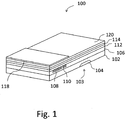
- FIG. 1 shows a perspective view of the first embodiment of the mattress assembly 100
- FIG. 2 1 shows an exploded view of the first embodiment of the mattress assembly 100
- the first mattress assembly 100 comprises a plurality of mattress elements 102, 106, 112, which are arranged one above the other. 114, 118, 120.
- the first mattress element 102 which is arranged at the bottom or furthest away from the user in the mattress assembly 100 according to the invention, has a recess 103 which is formed in a longitudinal section in its upper or inner region substantially trapezoidal and in its outer or lower Region is formed in longitudinal section substantially rectangular.
- a replaceable insert 104 is arranged, which is trapezoidal in longitudinal section in its upper region or the user-facing portion in the solution section and is formed in its lower or the user remote area in longitudinal section rectangular.
- the trapezoidal region of the recess 103 and the insert 104 ensures that the insert 104 can be easily inserted into the recess 103 and is held stable by this.
- the first mattress element 102 may have a so-called support foam.
- the user receives a plurality of inserts 104 with a different hardness or a different volume or a different height. The user can choose the bet as it suits his comfort need.
- the recess 103 has in one embodiment a depth of about 4 to 8 cm, preferably from about 5 to 7 cm.
- the recess is located below the user in an area between the shoulder and the hip.
- the inserts are typically the same height as the depth of the recess 103.
- the recess may have a depth of 6 cm and the inserts may have a height of 6 cm. It is also possible that another insert has a height of 7 cm, so that the hardest possible use is available.
- the second mattress element 106 is located above the first mattress element or on the side of the first mattress element 102 facing the user.
- the second mattress element 106 comprises a plurality of grooves 108, 110 which extend in the transverse direction of the second mattress element 106.
- the second mattress element 106 may have a comfort foam, for example a soft comfort foam.
- the second mattress element may be surrounded by a flexible, biased sheath (not shown).
- the grooves 108, 110 below the shoulder and are directed towards the user.
- This position is suitable for users whose weight is less than 80 kg, for example.
- the second mattress element 106 can be turned relative to the first mattress element 102, so that the grooves 108, 110 are located on the side of the second mattress element 106, which faces away from the user.
- This position of the second mattress element is suitable for users whose weight is higher than a predetermined threshold of, for example, 80 kg.
- the grooves 108, 110 are below the legs.
- the legs are a comparatively light body part. Consequently, the grooves 108, 110 ensure that the legs are as soft as possible.
- a first group 108 of grooves has a plurality of grooves that are a first distance from each other.
- a second group 110 of grooves has a plurality of grooves spaced a second distance apart, the second distance being different from the first distance.
- the user may turn the second mattress element 106 so that the grooves 108, 110 are below the shoulder. As a result, the shoulder is stored softer. It is understood that the second mattress element 106, even if the grooves are located below the legs of the user, depending on the weight of the user facing the user or may be facing away.
- a third mattress element 112 which is formed for example from a particularly soft comfort foam.
- a fourth mattress element 114 which comprises, for example, latex.
- the fourth mattress element 114 may have openings that extend in the vertical direction of the mattress element.
- An optional sixth mattress element 120 is disposed above the fourth mattress element 114. Above the sixth mattress element 120 is a fifth mattress element 118 arranged.
- the fifth mattress element is located below the legs of a user.
- the fifth mattress element 118 may be about 3 cm high and about 60 to 80, preferably about 70 cm long and thus does not extend over the entire length of the other mattress elements.
- the fifth mattress element 118 causes a higher storage of the lower extremities and causes a better venous return.
- FIG. 1 six mattress elements 102, 106, 112, 114, 118, 120 shown may be arranged in a so-called mattress cover (not shown).
- the mattress cover may have a zipper.
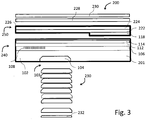
- FIG. 3 shows a second embodiment of the mattress assembly 200 according to the invention, which substantially corresponds to the first embodiment.
- the same elements are provided with the same reference numerals and in the sense of conciseness only the differences from the first embodiment will be described.
- the first mattress element 102, the second mattress element 106, the third mattress element 112 and the fourth mattress element 114 are located in a first mattress cover 201, which may have a zipper.
- the user can adjust the hardness of the mattress in the shoulder area or in the leg area.
- an insert 104 from a plurality of inserts 230, the user may insert that insert into the recess 103 that meets the user's comfort needs.
- the first mattress element 102, the second mattress element 106, the third mattress element 112 and the fourth mattress element 114 in the mattress cover 201 form a first mattress assembly 240.
- the first mattress assembly 240 and the plurality of different inserts 230 form a first mattress set.
- the user can choose from the plurality of bets 230 those in the first Insert mattress element 102 that best suits his comfort needs.
- the second embodiment comprises a second mattress assembly 250 comprising the fifth mattress member 118 which extends only over the region of the legs of the longitudinal direction of the mattress elements.
- a sixth mattress element 222 may be arranged, which has a material with a viscoelasticity.
- a seventh mattress element 224 can be arranged, which has a particularly soft comfort foam.
- the fifth mattress element 118, the sixth mattress element 222, and the seventh mattress element 224 may be disposed in a second mattress cover 226.
- the second mattress assembly 250 may be a so-called topper laid over the first mattress assembly.
- the second mattress assembly may be an eighth mattress element 228 which has a very soft comfort foam and a ninth mattress element 230 which also has a soft comfort foam.
- the present invention has the advantage that the user after buying and also after prolonged use, the mattress can adapt to his comfort needs and his sleep preferences. This increases the user's comfort on the one hand and saves resources on the other hand because a mattress can be used longer.
- the invention has the advantage that both the hardness of the mattress in the hip area and the hardness in the shoulder area or in the leg area can be adjusted by simple means.
Landscapes
- Health & Medical Sciences (AREA)
- Nursing (AREA)
- Life Sciences & Earth Sciences (AREA)
- Animal Behavior & Ethology (AREA)
- General Health & Medical Sciences (AREA)
- Public Health (AREA)
- Veterinary Medicine (AREA)
- Mattresses And Other Support Structures For Chairs And Beds (AREA)
Abstract
Description
- Die vorliegende Erfindung betrifft eine verbesserte Matratzenanordnung, deren Eigenschaften vom Anwender flexibel konfiguriert werden können und die einen angemessenen Schlafkomfort über einen längeren Zeitraum sicherstellen kann.
- Es ist bekannt, Matratzen aus einem geschäumten Material herzustellen, beispielsweise einem geschäumten Kunststoffmaterial. Für die Herstellung von Matratzen wird beispielsweise ein so genannter Kaltschaum verwendet. Ferner sind thermoelastische Matratzen und Matratzen aus einem so genannten Viskose-Material bekannt. Latex wird auch zur Herstellung von Matratzen verwendet.
- Bei herkömmlichen Matratzen besteht das Problem, dass sie nach dem Kauf nicht mehr verändert werden können. Für den Anwender ist es sehr schwer, eine passende Matratze zu finden. Ferner verändert sich über die Jahre der Körper eines Anwenders. Ein weiteres Problem ist, dass durch Verletzungen Rückenbeschwerden oder sonstige Beschwerden auftreten können. Im Laufe der Jahre können sich die Schlafgewohnheiten und/oder die Schlafposition ändern. Mit anderen Worten, im Laufe der Jahre kann sich die Schlafpräferenz eines Anwenders ändern. Beispielsweise kann die Rückenschlafposition, die Seitenschlafposition, die Bauchschlafposition von einem Anwender über den Lauf der Jahre mehr oder weniger preferiert werden.
- Die
EP 0 782 830 A1 offenbart eine einlagige Matratze mit Einsätzen, Hohlräumen und in Querrichtung verlaufenden Vertiefungen. - Die
DE 20 2005 018 810 U1 offenbart in der Zusammenfassung ein Matratzensystem, in das wahlweise Elemente eingesetzt werden können. - Die
EP 1 031 302 A2 offenbart eine Matratze, in die Einschübe bzw. Einsätze mit Materialien unterschiedlicher Härte und unterschiedliche Elastizität eingeführt werden können. - Die
US 6,115,861 B offenbart eine Stützanordnung für eine Matratze, in die Blöcke mit einer unterschiedlichen Härte eingesetzt werden können. - Die
WO 2013/049647 A1 offenbart eine Matratze zu medizinischen Zwecken, die aus unterschiedlichen Teilen zusammengesetzt werden kann. Sie umfasst auch einen Einsatz mit einer inversen Trapez-Prisma-Form. - Die
US 5,671,492 offenbart in der Zusammenfassung eine Matratze mit mehreren Einsätzen, wobei der oberste Einsatz Querrillen aufweist. - Die
WO 95/07679 - Die
US 4,706,313 und dieUS 5,107,558 offenbaren eine mehrteilige Matratze mit Einsätzen. - Die
JP 2015-211703 A KR 101173167 B1 - Die
DE 60 2006 000 335 T2 offenbart eine Matratze mit einem auswechselbaren Element an einem Längsende. - Die
EP 0 945 090 A2 offenbart eine Matratze mit mehreren Einsetzteilen. - Das
AT 010 102 U1 - Die
WO 2014/111867 A1 und dieWO 99/05940 - Die vorliegende Erfindung stellt sich zur Aufgabe, eine Matratzenanordnung zu schaffen, die der Nutzer nach dem Kauf an seine Präferenzen anpassen kann und die der Nutzer an wechselnde Schlafgewohnheiten anpassen kann.
- Die Aufgabe der Erfindung wird durch eine Matratzenanordnung nach Anspruch 1 und ein Matratzen-Satz nach Anspruch 14 gelöst. Die abhängigen Ansprüche beanspruchen bevorzugte Ausführungsformen.
- Die erfindungsgemäße Matratzenanordnung umfasst ein erstes Matratzenelement, einen wechselbaren Einsatz und ein zweites Matratzenelement. Das erste Matratzenelement weist eine Ausnehmung in einem Bereich auf, der sich bei Verwendung unterhalb des Anwenders und zwischen der Schulter und der Hüfte des Anwenders befindet. Der wechselbare Einsatz kann in die Ausnehmung des ersten Matratzenelementes lösbar eingesetzt werden und wird von dem ersten Matratzenelement lösbar gehalten. Das zweite Matratzenelement befindet sich bei Verwendung über dem ersten Matratzenelement. Das zweite Matratzenelement weist in einem Bereich unter den Schultern des Nutzers und/oder in einem Bereich unter den Beinen des Nutzers eine Mehrzahl Rillen auf, die sich zumindest teilweise entlang der Querrichtung des zweiten Matratzenelementes erstrecken.
- Die erfindungsgemäße Matratzenanordnung hat den Vorteil, dass ein Nutzer die Steifigkeit des ersten Matratzenelementes dadurch einstellen kann, dass er einen Einsatz mit einer geeigneten Härte auswählt und in das erste Matratzenelement einführt. Der Einsatz kann je nach Präferenz des Nutzers so ausgewählt werden, dass er die gleiche Härte wie das erste Matratzenelement, eine niedrigere Härte wie das erste Matratzenelement oder eine höhere Härte als das erste Matratzenelement aufweist. Dadurch kann der Nutzer das erste Matratzenelement an das Körpergewicht, die Liegeposition, die persönlichen Entlastungszonen und die persönlichen Präferenzen selbst zuhause anpassen. Diese Matratze eignet sich insbesondere für den Fernabsatz, insbesondere für einen Verkauf über das Internet.
- Bei einer Ausführungsform kann die dem Nutzer abgewandten Seite des ersten Matratzenelementes die Ausnehmung aufweisen. Bei dieser Ausführungsform kann das erste Matratzenelement an der dem Nutzer zugewandten Seite flach ausgebildet sein.
- Das zweite Matratzenelement kann bei einer Ausführungsform dazu ausgebildet sein, um seine Längsachse gedreht zu werden, so dass sich die Rillen des zweiten Matratzenelementes auf der dem Nutzer zugewandten Seite des Matratzenelementes befinden, wenn das Gewicht des Nutzers kleiner gleich einem vorbestimmten Schwellenwert ist, oder so dass sich die Rillen des zweiten Matratzenelementes auf der dem Nutzer abgewandten Seite des zweiten Matratzenelementes befinden, wenn das Gewicht des Nutzer größer einem vorbestimmten Schwellenwert ist. Auch durch diese Maßnahme kann die Elastizität der Matratzenanordnung an die Bedürfnisse des Nutzers angepasst werden. Der vorbestimmte Schwellenwert kann ein Gewicht von etwa 80 kg sein. Das zweite Matratzenelement ist aus der Wahrnehmung des Nutzers weicher, wenn die Rillen nach oben zeigen.
- Das zweite Matratzenelement kann gegenüber dem ersten Matratzenelement um seine vertikale Achse drehbar sein, so dass sich die Mehrzahl Rillen wahlweise unter den Beinen des Nutzers oder unter den Schultern des Nutzers befindet. Üblicherweise befinden sich die Rillen unter den Beinen bzw. Unterschenkel des Nutzers, da die Beine ein relativ leichtes Körperteil sind. Falls der Nutzer insbesondere in der Seitschlafposition mehr Komfort an der Schulter wünscht, kann das zweite Matratzenelement so gedreht werden, dass die Rillen auf Höhe der Schulter liegen.
- Bei einer Ausführungsform kann das zweite Matratzenelement eine geringere Härte als das erste Matratzenelement aufweisen. Die Ausnehmung im ersten Matratzenelement kann im Längsschnitt zumindest teilweise trapezförmig (Trapez-Prisma) sein. Der Einsatz kann im Längsschnitt zumindest teilweise trapezförmig (Trapez-Prisma) sein. Dadurch kann der Einsatz stabil in seiner Lage in der Ausnehmung gehalten werden und einfach ausgetauscht werden. Bei einer Ausführungsform kann der Einsatz im Längsschnitt an seinem oberen Bereich trapezförmig (trapez-prisma-förmig) und an seinem unteren Bereich rechteckförmig (quaderförmig) ausgebildet sein. Die Ausnehmung kann bei einer Ausführungsform im Längsschnitt in ihrem inneren Bereich trapezförmig und in ihrem äußeren Bereich rechteckförmig (quaderförmig) sein.
- Das Volumen des Einsatzes kann größer als das Volumen der Ausnehmung sein. Die Höhe des Einsatzes kann größer als die Tiefe der Ausnehmung im ersten Matratzenelement sein. Dadurch wird ein besonders harter Einsatz erreicht.
- Die Matratzenanordnung kann ferner ein drittes Matratzenelement aufweisen, das über dem zweiten Matratzenelement angeordnet ist, und das eine niedrigere Härte als das zweite Matratzenelement aufweist. Dadurch kann die Matratzenanordnung komfortabler ausgebildet werden.
- Die Matratzenanordnung kann ein viertes Matratzenelement aufweisen, das über dem zweiten Matratzenelement oder dem dritten Matratzenelement angeordnet ist.
- Das Material des vierten Matratzenelements kann eine niedrigere Härte als das Material des zweiten Matratzenelementes aufweisen. Alternativ hierzu oder zusätzlich kann das Material des vierten Matratzenelements eine höhere Härte als das Material des dritten Matratzenelementes aufweisen. Alternativ hierzu oder zusätzlich kann das vierte Matratzenelement Öffnungen aufweisen, die sich in der vertikalen Richtung des vierten Matratzenelementes erstrecken. Dadurch kann der Komfort der Matratzenanordnung für den Nutzer erhöht werden.
- Die Matratzenanordnung kann ferner ein fünftes Matratzenelement aufweisen, das über dem zweiten Matratzenelement, dem dritten Matratzenelement oder dem vierten Matratzenelement angeordnet ist, wobei sich das fünfte Matratzenelement lediglich über einen Teil des zweiten Matratzenelements erstreckt. Das fünfte Matratzenelement erstreckt sich vorzugsweise unterhalb der Beine des Anwenders. Dadurch wird eine leichte Hochlagerung der unteren Extremitäten bewirkt, was einen besseren Venenrückfluss zur Folge hat. Das fünfte Matratzenelement kann zusammen mit dem ersten, zweiten, dritten und/oder vierten Matratzenelement in einer Matratzenhülle angeordnet sein. Es ist aber auch möglich, dass das fünfte Matratzenelement in einem so genannten Topper angeordnet ist, der eine weitere Matratzenanordnung bildet, die über der zuvor beschriebenen Matratzenanordnung gelegt werden kann.
- Das Material des ersten Matratzenelementes kann einen Stützschaum aufweisen. Alternativ hierzu oder zusätzlich kann das Material des zweiten Matratzenelementes einen Komfortschaum aufweisen. Alternativ hierzu oder zusätzlich kann das Material des dritten Matratzenelementes einen Komfortschaum aufweisen. Alternativ hierzu oder zusätzlich kann das vierte Matratzenelement Latex aufweisen. Alternativ hierzu oder zusätzlich kann das Material des fünften Matratzenelementes einen Komfortschaum aufweisen.
- Jedes der Matratzenelemente kann von einer separaten flexiblen vorgespannten Umhüllung umschlossen sein. Die Matratzenelemente sind nicht miteinander verklebt und können daher beliebig gedreht, gewendet, getauscht und/oder kombiniert werden. Ferner wird durch die flexibel vorgespannte Umhüllung des zweiten Matratzenelementes die Wirkung der zusätzlichen Elastizität aufgrund der Rillen verstärkt. Die Umhüllung kann das jeweilige Matratzenelement wie ein enger anliegender Beutel umschließen. Es versteht sich, dass die Umhüllung aus einem elastischen Material gebildet sein muss.
- Die Erfindung betrifft auch einen Matratzen-Satz mit der ersten Matratzenanordnung, die zuvor beschrieben wurde und einer Mehrzahl Einsätze mit einer unterschiedlichen Elastizität und/oder mit einem unterschiedlichen Volumen und/oder mit einer unterschiedlichen Dicken. Dadurch kann der Nutzer die Härte bzw. die Elastizität des ersten Matratzenelementes flexibel anpassen, wodurch die Matratzenanordnung durch Mittel des Fernabsatzes vertrieben werden kann und der Nutzer die Matratze über einen längeren Zeitraum an seine Bedürfnisse anpassen kann.
- Der Matratzensatz kann eine zweite Matratzenanordnung aufweisen, wobei die zweite Matratzenanordnung das fünfte Matratzenelement und zumindest ein weiteres Matratzenelement aufweist. Das weitere Matratzenelement kann ein Matratzenelement mit einer Viskoelastizität aufweisen und/oder ein Matratzenelement mit einer Härte aufweisen, die niedriger als die Härte des ersten, zweiten, dritten, vierten und fünften Matratzenelementes ist. Die zweite Matratzenanordnung kann ein so genannter Topper sein, mittels der die Matratzenanordnung an die individuellen Bedürfnisse des Nutzers angepasst werden kann.
- Bei der erfindungsgemäßen Matratzenanordnung erfüllen die Einsätze eine wichtige Funktion der Matratzenanordnung. Herkömmliche Matratzen des Standes der Technik weisen das Problem auf, dass der menschliche Körper insbesondere in der Seitschlafposition auf Höhe der Hüfte am stärksten einsinkt. Folglich befindet sich die Wirbelsäule des Nutzers nicht mehr in ihrer optimalen gerade horizontalen Lage, sondern mehr oder weniger stark gekrümmt. Dies hat zum einem einen hohen Druck an der meist sehr druckempfindlichen Hüfte zur Folge. Zum anderen können Rückenbeschwerden auftreten. Wird ein härterer Einsatz in das erste Matratzenelement eingesetzt, befindet sich die Wirbelsäule wieder in ihrer optimalen geraden horizontalen Lage.
- Schaumstoffmatratzen setzen sich im Bereich der Hüfte bereits nach einigen Monaten Benutzung, wobei sie im Laufe der Jahre dort durchgelegen sein können. Falls der Nutzer härtere Einsätze in das erste Matratzenelement einsetzt, kann zum einen die Matratzenanordnung an die Anatomie angepasst werden. Zum anderen kann der Vorgang des Setzens bzw. des Durchliegens aufgehalten bzw. ausgeglichen werden. Ferner wird die Hüfte entlastet.
- Das fünfte Matratzenelement entlastet die Beine. Aus anatomischer Sicht sind die Oberschenkel dicker als die Knie und die Unterschenkel. Folglich bewirkt das fünfte Matratzenelement, das sich lediglich im Bereich der Beine erstreckt, eine gleichmäßigere Auflagefläche und folglich mehr Komfort für den Nutzer.
- Dadurch, dass die Matratzenanordnung beliebig an einen Nutzer angepasst werden kann und von diesem konfiguriert werden kann, kann die Matratze zur Zufriedenheit der Nutzer online vertrieben werden. Ferner werden Ressourcen geschont, da die Matratzenanordnung über einen längeren Zeitraum verwendet werden kann.
- Die Erfindung wird nun unter Bezugnahme auf die beigefügten Figuren erläutert, die exemplarische und nicht beschränkende Ausführungsformen der Erfindung zeigen, wobei
-
Figur 1 eine perspektivische Ansicht einer ersten Ausführungsform zeigt, und -
Figur 2 eine Explosionsansicht der ersten Ausführungsform zeigt, und -
Figur 3 eine zweite Ausführungsform der erfindungsgemäßen Matratzenanordnung und einen Matratzen-Satz zeigt. -
Figur 1 zeigt eine perspektivische Ansicht der ersten Ausführungsform der Matratzenanordnung 100 undFigur 2 zeigt eine Explosionsansicht der ersten Ausführungsform der Matratzenanordnung 100. Die erste Matratzenanordnung 100 weist eine Mehrzahl übereinander angeordneten Matratzenelemente 102, 106, 112, 114, 118, 120 auf. Das erste Matratzenelement 102, das bei der erfindungsgemäßen Matratzenanordnung 100 unten bzw. am weitesten vom Nutzer entfernt angeordnet ist, weist eine Ausnehmung 103 auf, die im Längsschnitt in ihrem oberen bzw. inneren Bereich im wesentlichen trapezförmig ausgebildet ist und in ihrem äußeren bzw. unteren Bereich im Längsschnitt im Wesentlichen rechteckförmig ausgebildet ist. In die Ausnehmung 103 im ersten Matratzenelement 102 ist ein auswechselbarer Einsatz 104 angeordnet, der im Längsschnitt in seinem oberen Bereich bzw. dem Nutzer zugewandten Bereich im Lösungsschnitt trapezförmig ausgebildet ist und in seinem unteren bzw. dem Nutzer abgewandten Bereich im Längsschnitt rechteckig ausgebildet ist. Der trapezförmige Bereich der Ausnehmung 103 bzw. des Einsatzes 104 stellt sicher, dass der Einsatz 104 einfach in die Ausnehmung 103 eingesetzt werden kann und von dieser stabil gehalten wird. - Das erste Matratzenelement 102 kann einen so genannten Stützschaum aufweisen. Der Nutzer erhält eine Mehrzahl Einsätze 104 mit einer unterschiedlichen Härte bzw. einem unterschiedlichen Volumen bzw. einer unterschiedlichen Höhe. Der Nutzer kann den Einsatz zu auswählen, wie es seinem Komfortbedürfnis entspricht.
- Die Ausnehmung 103 weist bei einer Ausführungsform eine Tiefe von etwa 4 bis 8 cm, bevorzugt von etwa 5 bis 7 cm auf. Die Ausnehmung befindet sich unterhalb des Nutzers in einem Bereich zwischen dessen Schulter und der Hüfte. Die Einsätze haben in der Regel die gleiche Höhe wie die Tiefe der Ausnehmung 103. Bei einer Ausführungsform kann die Ausnehmung eine Tiefe von 6 cm haben und die Einsätze eine Höhe von 6 cm aufweisen. Es ist auch möglich, dass ein weiterer Einsatz eine Höhe von 7 cm aufweist, damit ein möglichst harter Einsatz zur Verfügung steht.
- Über dem ersten Matratzenelement bzw. an der dem Nutzer zugewandten Seite des ersten Matratzenelementes 102 befindet sich das zweite Matratzenelement 106. Das zweite Matratzenelement 106 umfasst eine Mehrzahl Rillen 108, 110, die sich in Querrichtung des zweiten Matratzenelementes 106 erstrecken. Das zweite Matratzenelement 106 kann einen Komfortschaum, beispielsweise einen weichen Komfortschaum aufweisen. Das zweite Matratzenelement kann von einer flexiblen, vorgespannten Umhüllung (nicht gezeigt) umgeben sein.
- Bei der in
Figur 1 gezeigten Stellung befinden sich die Rillen 108, 110 unterhalb der Schulter und sind in Richtung Nutzer gerichtet. Diese Stellung ist für Nutzer geeignet, deren Gewicht beispielsweise niedriger als 80 kg ist. Das zweite Matratzenelement 106 kann gegenüber dem ersten Matratzenelement 102 gewendet werden, so dass sich die Rillen 108, 110 an der Seite des zweiten Matratzenelementes 106 befinden, die dem Nutzer abgewandt ist. Diese Stellung des zweiten Matratzenelementes ist für Nutzer geeignet, deren Gewicht höher als ein vorbestimmter Schwellenwert von beispielsweise 80 kg ist. - Bei der in
Figur 1 gezeigten Ausführungsform befinden sich die Rillen 108, 110 unterhalb der Beine. Die Beine sind ein vergleichsweise leichtes Körperteil. Folglich stellen die Rillen 108, 110 sicher, dass die Beine möglichst weich liegen.
Eine erste Gruppe 108 von Rillen weist eine Mehrzahl Rillen auf, die einen ersten Abstand von einander haben. Eine zweite Gruppe 110 von Rillen weist eine Mehrzahl Rillen auf, die einen zweiten Abstand voneinander haben, wobei sich der zweite Abstand vom ersten Abstand unterscheidet. - Der Nutzer kann das zweite Matratzenelement 106 wenden, so dass sich die Rillen 108, 110 unterhalb der Schulter befinden. Dadurch wird die Schulter weicher gelagert. Es versteht sich, dass das zweite Matratzenelement 106, auch wenn sich die Rillen unterhalb der Beine des Nutzers befinden, je nach Gewicht des Nutzers dem Nutzer zugewandten oder abgewandt sein können.
- Über dem zweiten Matratzenelement 106 befindet sich ein drittes Matratzenelement 112, das beispielsweise aus einem besonders weichem Komfortschaum gebildet ist. Über dem dritten Matratzenelement 112 befindet sich ein viertes Matratzenelement 114, das beispielsweise Latex aufweist. Das vierte Matratzenelement 114 kann Öffnungen aufweisen, die sich in der vertikalen Richtung des Matratzenelementes erstrecken.
- Über dem vierten Matratzenelement 114 ist ein optionales sechstes Matratzenelement 120 angeordnet. Über dem sechsten Matratzenelement 120 ist ein fünftes Matratzenelement 118 angeordnet. Das fünfte Matratzenelement befindet sich unterhalb der Beine eines Nutzers. Das fünfte Matratzenelement 118 kann etwa 3 cm hoch und etwa 60 bis 80, vorzugsweise etwa 70 cm lang sein und erstreckt sich somit nicht über die gesamte Länge der anderen Matratzenelemente. Das fünfte Matratzenelement 118 bewirkt eine höhere Lagerung der unteren Extremitäten und bewirkt einen besseren Venenrückfluss.
- Die in
Figur 1 gezeigten sechs Matratzenelemente 102, 106, 112, 114, 118, 120 können in einer so genannten Matratzenhülle (nicht gezeigt) angeordnet sein. Die Matratzenhülle kann einen Reißverschluss aufweisen. - Unter Bezugnahme auf
Figur 3 wird eine zweite Ausführungsform der erfindungsgemäßen Matratzenanordnung 200 gezeigt, die im Wesentlichen der ersten Ausführungsform entspricht. Gleiche Elemente werden mit den gleichen Bezugszeichen versehen und im Sinne der Prägnanz werden lediglich die Unterschiede zur ersten Ausführungsform beschrieben. Das erste Matratzenelement 102, das zweite Matratzenelement 106, das dritte Matratzenelement 112 und das vierte Matratzenelement 114 befinden sich in einer ersten Matratzenhülle 201, die einen Reißverschluss aufweisen kann. Der Nutzer kann durch Wenden und Drehen des zweiten Matratzenelementes 106 die Härte der Matratze im Schulterbereich bzw. im Beinbereich einstellen. Ferner kann der Nutzer durch Auswählen eines Einsatzes 104 aus einer Mehrzahl von Einsätzen 230 denjenigen Einsatz in die Ausnehmung 103 einsetzen, der dem Komfortbedürfnis des Nutzers entspricht. Sobald der Nutzer das erste Matratzenelement 102 und das zweite Matratzenelement 106 so konfiguriert bzw. angeordnet hat, wie es seinem Komfortansprüchen entspricht, kann er die erste Matratzenhülle 201 um das erste bis vierte Matratzenelement 102, 106, 112, 114 anbringen. - Das erste Matratzenelement 102, das zweite Matratzenelement 106, das dritte Matratzenelement 112 und das vierte Matratzenelement 114 in der Matratzenhülle 201 bilden eine erste Matratzenanordnung 240. Die erste Matratzenanordnung 240 und die Mehrzahl unterschiedlicher Einsätze 230 bilden einen ersten Matratzen-Satz. Der Nutzer kann aus der Mehrzahl Einsätze 230 denjenigen in das erste Matratzenelement 102 einsetzen, der seinem Komfortbedürfnissen am besten entspricht.
- Die zweite Ausführungsform umfasst eine zweite Matratzenanordnung 250, die das fünfte Matratzenelement 118 umfasst, das sich lediglich über den Bereich der Beine die Längsrichtung der Matratzenelemente erstreckt. Über dem fünften Matratzenelement 118 kann ein sechstes Matratzenelement 222 angeordnet sein, das ein Material mit einer Viskoelastizität aufweist. Über dem sechsten Matratzenelement 118 kann ein siebtes Matratzenelement 224 angeordnet sein, das einen besonders weichen Komfortschaum aufweist. Das fünfte Matratzenelement 118, das sechste Matratzenelement 222 und das siebten Matratzenelement 224 können in einer zweiten Matratzenhülle 226 angeordnet sein. Die zweite Matratzenanordnung 250 kann ein so genannter Topper sein, der über die erste Matratzenanordnung gelegt wird.
- Über der zweiten Matratzenanordnung kann sich ein achtes Matratzenelement 228 befinden, das einen sehr weichen Komfortschaum aufweist und ein neuntes Matratzenelement 230 befinden, das ebenfalls einen weichen Komfortschaum aufweist.
- Die vorliegende Erfindung hat den Vorteil, dass der Nutzer nach dem Kauf und auch nach längerer Benutzung die Matratze an seine Komfortbedürfnisse und seine Schlafpräferenzen anpassen kann. Dadurch wird zum einen der Komfort des Nutzers erhöht und zum anderen werden Ressourcen geschont, weil eine Matratze länger eingesetzt werden kann.
- Ferner hat die Erfindung den Vorteil, dass sowohl die Härte der Matratze im Hüftbereich als auch die Härte im Schulterbereich oder im Beinbereich mit einfachen Mitteln eingestellt werden kann.
Claims (15)
- Matratzenanordnung (100; 200), aufweisend:- ein erstes Matratzenelement (102), das eine Ausnehmung (103) in einem Bereich aufweist, der sich bei Verwendung unterhalb des Anwenders und zwischen der Schulter und der Hüfte eines Nutzer befindet;- einem wechselbaren Einsatz (104), der in die Ausnehmung (103) des ersten Matratzenelementes (102) lösbar eingesetzt werden kann und vom ersten Matratzenelement (102) lösbar gehalten wird; und- einem zweiten Matratzenelement (106), das sich bei Verwendung über dem ersten Matratzenelement (102) befindet und das in einem Bereich unter den Schultern des Nutzers und/oder in einem Bereich unter den Beinen des Nutzers eine Mehrzahl Rillen (108, 110) aufweist, die zumindest teilweise entlang der Querrichtung des zweiten Matratzenelementes (106) erstrecken.
- Matratzenanordnung (100; 200) nach Anspruch 1, dadurch gekennzeichnet, dass- die dem Nutzer abgewandten Seite des ersten Matratzenelementes (102) die Ausnehmung (103) aufweist; und- das erste Matratzenelement (102) an der dem Nutzer zugewandten Seite flach ausgebildet ist.
- Matratzenanordnung (100; 200) nach Anspruch 1 oder 2, dadurch gekennzeichnet, dass das zweite Matratzenelement (106) dazu ausgebildet ist, um seine Längsachse gedreht zu werden, so dass- sich die Rillen (108, 110) des zweiten Matratzenelementes (106) auf der dem Nutzer zugewandten Seite des zweiten Matratzenelementes (106) befinden, wenn das Gewicht des Nutzer kleiner gleich einem vorbestimmten Schwellenwert ist; oder- sich die Rillen (108, 110) des zweiten Matratzenelementes (106) auf der dem Nutzer abgewandten Seite des zweiten Matratzenelementes (106) befinden, wenn das Gewicht des Nutzer größer einem vorbestimmten Schwellenwert ist.
- Matratzenanordnung (100; 200) nach einem der Ansprüche 1 bis 3, dadurch gekennzeichnet, dass das zweite Matratzenelement (106) gegenüber dem ersten Matratzenelement (102) um seine vertikale Achse drehbar ist, so dass sich die Mehrzahl Rillen (108; 110) wahlweise unter den Beinen des Nutzers oder unter den Schultern des Nutzers befinden.
- Matratzenanordnung (100; 200) nach einem der Ansprüche 1 bis 4, dadurch gekennzeichnet, dass das zweite Matratzenelement (106) eine geringere Härte als das erste Matratzenelement (102) aufweist.
- Matratzenanordnung (100; 200) nach einem der Ansprüche 1 bis 5, dadurch gekennzeichnet, dass- die Ausnehmung (103) in dem ersten Matratzenelement im Längsschnitt zumindest teilweise trapezförmig ist; und/oder- der Einsatz (104) im Längsschnitt zumindest teilweise trapezförmig ist.
- Matratzenanordnung (100; 200) nach einem der Ansprüche 1 bis 6, dadurch gekennzeichnet, dass der Einsatz (104) zumindest eine der folgenden Eigenschaften aufweist:- das Volumen des Einsatzes (104) ist größer als das Volumen der Ausnehmung (103) im ersten Matratzenelement;- die Höhe des Einsatzes (104) ist größer als das die Tiefe der Ausnehmung im ersten Matratzenelement (103).
- Matratzenanordnung (100; 200) nach einem der Ansprüche 1 bis 7, gekennzeichnet durch ein drittes Matratzenelement (112), das über dem zweiten Matratzenelement (106) angeordnet ist und das eine niedrigere Härte als das zweite Matratzenelement (106) aufweist.
- Matratzenanordnung (100; 200) nach einem der Ansprüche 1 bis 8, gekennzeichnet durch ein viertes Matratzenelement (114), das über dem zweiten Matratzenelement (106) oder dritten Matratzenelement (112) angeordnet ist.
- Matratzenanordnung (100; 200) nach Anspruch 9, dadurch gekennzeichnet, dass- das Material des vierten Matratzenelements (114) eine niedrigere Härte als das Material des zweiten Matratzenelements (106) aufweist;- das Material des vierte Matratzenelements (114) eine höhere Härte als das dritte Matratzenelement (112) aufweist; und/oder- das vierte Matratzenelement (114) Öffnungen aufweist, die sich in der vertikalen Richtung des vierten Matratzenelementes (114) erstrecken.
- Matratzenanordnung (100; 200) nach einem der Ansprüche 1 bis 10, gekennzeichnet durch ein fünftes Matratzenelement (118), das über dem zweiten Matratzenelement (106), dem dritten Matratzenelement (112) oder dem vierten Matratzenelement (114) angeordnet ist, wobei sich das fünfte Matratzenelement (118) lediglich über einen Teil des zweiten Matratzenelementes (106) erstreckt.
- Matratzenanordnung (100; 200) nach einem der Ansprüche 1 bis 11, dadurch gekennzeichnet, dass- das Material des ersten Matratzenelementes (102) einen Stützschaum aufweist;- das Material des zweiten Matratzenelementes (106) einen Komfortschaum aufweist;- das Material des dritten Matratzenelementes (112) einen Komfortschaum aufweist;- das Material des vierten Matratzenelementes (114) Latex aufweist; und/oder- das Material des fünften Matratzenelementes (118) einen Komfortschaum aufweist.
- Matratzenanordnung (100; 200) nach einem der Ansprüche 1 bis 12, dadurch gekennzeichnet, dass- das erste Matratzenelement (102) von einer flexibel vorgespannten Umhüllung (201) umschlossen ist;- das zweite Matratzenelement (106) von einer flexibel vorgespannten Umhüllung (201) umschlossen ist;- das dritte Matratzenelement (112) von einer flexibel vorgespannten Umhüllung (201) umschlossen ist;- das vierte Matratzenelement (114) von einer flexibel vorgespannten Umhüllung (201) umschlossen ist;- das fünfte Matratzenelement (118) von einer flexibel vorgespannten Umhüllung (201) umschlossen ist; und/oder- die Matratzenelemente (102, 106, 112, 114, 118) nicht miteinander verklebt sind.
- Matratzen-Satz (200), aufweisend- eine erste Matratzenanordnung (240) nach einem der Ansprüche 1 bis 13; und- eine Mehrzahl Einsätze (230) mit unterschiedlicher Elastizität und/oder mit einem unterschiedlichen Volumen und/oder mit einer unterschiedlichen Dicke.
- Matratzen-Satz (200) nach Anspruch 14, gekennzeichnet durch eine zweite Matratzenanordnung (250), wobei die zweite Matratzenanordnung (250)- das fünfte Matratzenelement (118); und- zumindest ein weiteres Matratzenelement (118, 222, 224, 228, 230) aufweist,- wobei das zumindest eine weitere Matratzenelement (118, 222, 224, 228, 230) ein Matratzenelement mit einer Viskoelastizität aufweist und/oder einer Härte aufweist, die niedriger als die Härte des ersten, zweiten, dritten, vierten und fünften Matratzenelementes (102, 106, 112, 114, 118) ist.
Priority Applications (3)
| Application Number | Priority Date | Filing Date | Title |
|---|---|---|---|
| EP17000927.8A EP3409145B1 (de) | 2017-05-31 | 2017-05-31 | Verbesserte matratzenanordnung |
| PT170009278T PT3409145T (pt) | 2017-05-31 | 2017-05-31 | Configuração de colchão melhorada |
| DE202017002880.8U DE202017002880U1 (de) | 2017-05-31 | 2017-05-31 | Verbesserte Matratzenanordnung |
Applications Claiming Priority (2)
| Application Number | Priority Date | Filing Date | Title |
|---|---|---|---|
| EP17000927.8A EP3409145B1 (de) | 2017-05-31 | 2017-05-31 | Verbesserte matratzenanordnung |
| DE202017002880.8U DE202017002880U1 (de) | 2017-05-31 | 2017-05-31 | Verbesserte Matratzenanordnung |
Publications (2)
| Publication Number | Publication Date |
|---|---|
| EP3409145A1 true EP3409145A1 (de) | 2018-12-05 |
| EP3409145B1 EP3409145B1 (de) | 2020-01-08 |
Family
ID=65279316
Family Applications (1)
| Application Number | Title | Priority Date | Filing Date |
|---|---|---|---|
| EP17000927.8A Active EP3409145B1 (de) | 2017-05-31 | 2017-05-31 | Verbesserte matratzenanordnung |
Country Status (2)
| Country | Link |
|---|---|
| EP (1) | EP3409145B1 (de) |
| DE (1) | DE202017002880U1 (de) |
Cited By (1)
| Publication number | Priority date | Publication date | Assignee | Title |
|---|---|---|---|---|
| CN110200445A (zh) * | 2019-06-26 | 2019-09-06 | 东莞市慕思寝室用品有限公司 | 一种床垫 |
Families Citing this family (1)
| Publication number | Priority date | Publication date | Assignee | Title |
|---|---|---|---|---|
| ES2753923B2 (es) * | 2019-12-30 | 2020-11-03 | Dokhand Tech Sl | Regulador biomecánico para colchón. |
Citations (22)
| Publication number | Priority date | Publication date | Assignee | Title |
|---|---|---|---|---|
| US4706313A (en) | 1986-05-01 | 1987-11-17 | Comfortex, Inc. | Decubitus ulcer mattress |
| US5107558A (en) | 1990-07-11 | 1992-04-28 | Lueck Werner | Mattress with removable insert |
| WO1995007679A2 (en) | 1993-09-13 | 1995-03-23 | Woodbridge Foam Corporation | Pressure relief foam mattress |
| EP0782830A1 (de) | 1996-01-08 | 1997-07-09 | SCHLARAFFIA-WERKE HUSER GMBH. & CO. KG. | Matratze |
| US5671492A (en) | 1995-03-14 | 1997-09-30 | Simon; Keith Douglas | Contoured asymmetrical mattress |
| WO1999005940A2 (en) | 1997-07-29 | 1999-02-11 | Marketing Advice Di Maurizio Mazzola E C. S.N.C. | Method for making a variable geometry and hardness mattress, and the mattress made thereby |
| EP0945090A2 (de) | 1998-03-22 | 1999-09-29 | Hubert Hoffmann | Matratze |
| EP1031302A2 (de) | 1999-02-22 | 2000-08-30 | Mario Scheuch | Matratze |
| US6115861A (en) | 1997-10-09 | 2000-09-12 | Patmark Company, Inc. | Mattress structure |
| DE20102701U1 (de) * | 2001-02-16 | 2001-05-03 | Recticel Schlafkomfort GmbH - dormilux -, 97437 Haßfurt | Matratzenkern |
| DE202005018810U1 (de) | 2005-11-30 | 2007-04-05 | Recticel Schlafkomfort Gmbh | Matratzensystem |
| AT10102U1 (de) | 2007-07-03 | 2008-09-15 | Erich Simmer | Energetikmatratze |
| DE602006000335T2 (de) | 2005-05-03 | 2008-12-04 | Irene Clementine Mirjam Best | Antidekubitus-Matratze mit Beschichtung |
| AT507085A4 (de) * | 2008-09-25 | 2010-02-15 | Eurofoam Gmbh | Auflageelement, insbesondere für schwangere |
| US20110010865A1 (en) * | 2006-11-20 | 2011-01-20 | Gaymar Industries, Inc. | Multi-walled gelastic mattress system |
| KR101173167B1 (ko) | 2012-02-21 | 2012-08-16 | 홍영훈 | 매트리스 |
| WO2013049647A1 (en) | 2011-09-30 | 2013-04-04 | Offloading Technologies, Inc. | Methods and systems for a dynamic support mattress to treat and reduce the incidence of pressure ulcers |
| WO2014111867A1 (en) | 2013-01-15 | 2014-07-24 | Katholieke Universiteit Leuven | Modular support system |
| US20150296993A1 (en) * | 2014-04-22 | 2015-10-22 | Dennis M. Boyd | Mattress assembly |
| JP2015211703A (ja) | 2014-05-01 | 2015-11-26 | アイリスオーヤマ株式会社 | 複層構造マットレス |
| US20160100697A1 (en) * | 2014-10-10 | 2016-04-14 | Andrew Antony Prochazka | Field adjustable mattress system and method |
| KR20160107927A (ko) * | 2015-03-06 | 2016-09-19 | (주) 비엠비 | 하중분산형 경량 매트리스 |
-
2017
- 2017-05-31 EP EP17000927.8A patent/EP3409145B1/de active Active
- 2017-05-31 DE DE202017002880.8U patent/DE202017002880U1/de active Active
Patent Citations (22)
| Publication number | Priority date | Publication date | Assignee | Title |
|---|---|---|---|---|
| US4706313A (en) | 1986-05-01 | 1987-11-17 | Comfortex, Inc. | Decubitus ulcer mattress |
| US5107558A (en) | 1990-07-11 | 1992-04-28 | Lueck Werner | Mattress with removable insert |
| WO1995007679A2 (en) | 1993-09-13 | 1995-03-23 | Woodbridge Foam Corporation | Pressure relief foam mattress |
| US5671492A (en) | 1995-03-14 | 1997-09-30 | Simon; Keith Douglas | Contoured asymmetrical mattress |
| EP0782830A1 (de) | 1996-01-08 | 1997-07-09 | SCHLARAFFIA-WERKE HUSER GMBH. & CO. KG. | Matratze |
| WO1999005940A2 (en) | 1997-07-29 | 1999-02-11 | Marketing Advice Di Maurizio Mazzola E C. S.N.C. | Method for making a variable geometry and hardness mattress, and the mattress made thereby |
| US6115861A (en) | 1997-10-09 | 2000-09-12 | Patmark Company, Inc. | Mattress structure |
| EP0945090A2 (de) | 1998-03-22 | 1999-09-29 | Hubert Hoffmann | Matratze |
| EP1031302A2 (de) | 1999-02-22 | 2000-08-30 | Mario Scheuch | Matratze |
| DE20102701U1 (de) * | 2001-02-16 | 2001-05-03 | Recticel Schlafkomfort GmbH - dormilux -, 97437 Haßfurt | Matratzenkern |
| DE602006000335T2 (de) | 2005-05-03 | 2008-12-04 | Irene Clementine Mirjam Best | Antidekubitus-Matratze mit Beschichtung |
| DE202005018810U1 (de) | 2005-11-30 | 2007-04-05 | Recticel Schlafkomfort Gmbh | Matratzensystem |
| US20110010865A1 (en) * | 2006-11-20 | 2011-01-20 | Gaymar Industries, Inc. | Multi-walled gelastic mattress system |
| AT10102U1 (de) | 2007-07-03 | 2008-09-15 | Erich Simmer | Energetikmatratze |
| AT507085A4 (de) * | 2008-09-25 | 2010-02-15 | Eurofoam Gmbh | Auflageelement, insbesondere für schwangere |
| WO2013049647A1 (en) | 2011-09-30 | 2013-04-04 | Offloading Technologies, Inc. | Methods and systems for a dynamic support mattress to treat and reduce the incidence of pressure ulcers |
| KR101173167B1 (ko) | 2012-02-21 | 2012-08-16 | 홍영훈 | 매트리스 |
| WO2014111867A1 (en) | 2013-01-15 | 2014-07-24 | Katholieke Universiteit Leuven | Modular support system |
| US20150296993A1 (en) * | 2014-04-22 | 2015-10-22 | Dennis M. Boyd | Mattress assembly |
| JP2015211703A (ja) | 2014-05-01 | 2015-11-26 | アイリスオーヤマ株式会社 | 複層構造マットレス |
| US20160100697A1 (en) * | 2014-10-10 | 2016-04-14 | Andrew Antony Prochazka | Field adjustable mattress system and method |
| KR20160107927A (ko) * | 2015-03-06 | 2016-09-19 | (주) 비엠비 | 하중분산형 경량 매트리스 |
Cited By (2)
| Publication number | Priority date | Publication date | Assignee | Title |
|---|---|---|---|---|
| CN110200445A (zh) * | 2019-06-26 | 2019-09-06 | 东莞市慕思寝室用品有限公司 | 一种床垫 |
| CN110200445B (zh) * | 2019-06-26 | 2024-06-11 | 慕思健康睡眠股份有限公司 | 一种床垫 |
Also Published As
| Publication number | Publication date |
|---|---|
| DE202017002880U1 (de) | 2017-07-05 |
| EP3409145B1 (de) | 2020-01-08 |
Similar Documents
| Publication | Publication Date | Title |
|---|---|---|
| DE2319801B2 (de) | Kopfkissen | |
| EP0465810A1 (de) | Matratze | |
| DE1485772B2 (de) | ||
| AT504204B1 (de) | Aus schaumstoff bestehende polsterung | |
| EP3706700B1 (de) | Kissen zur verwendung nach einer brustoperation | |
| EP3409145B1 (de) | Verbesserte matratzenanordnung | |
| EP0632702A1 (de) | Polsterelement | |
| DE2200823B2 (de) | ||
| DE2442528A1 (de) | Matratze aus geschaeumtem kunststoff | |
| DE10301563A1 (de) | Matratze | |
| DE29716012U1 (de) | Kissen | |
| DE202007012473U1 (de) | Matratze | |
| WO2003105634A1 (de) | Matratzenartige auflage zur unterstützung des körpers einer schwangeren in bauchlage | |
| DE69804831T2 (de) | Kopfkissen mit nackenunterstützung | |
| DE202007010485U1 (de) | Lastflächen von Matratzen | |
| DE4436694A1 (de) | Variable behindertengerechte Matratze | |
| EP3578087B1 (de) | Matratze mit einem zweilagigen matratzenkern und einsinkzonen für hüft- und schulterbereich | |
| DE10061368A1 (de) | Multifunktionelles Stützkissen | |
| DE69411432T2 (de) | Zubehör für einen sitz, welches im Bereich des Rückens und/oder der Sitzfläche plaziert wird | |
| EP0614636B1 (de) | Anatomisch ausgebildete Liegematratze | |
| AT508596B1 (de) | Mehrkammerkopfkissen | |
| WO2004110219A1 (de) | Polster, insbesondere anti-dekubitus-matratze | |
| AT395287B (de) | Formkissen, insbesondere zur verwendung als kopfkissen | |
| DE3819494A1 (de) | Orthopaedisches kopfkissen | |
| CH698117B1 (de) | Mehrzonenduvet. |
Legal Events
| Date | Code | Title | Description |
|---|---|---|---|
| PUAI | Public reference made under article 153(3) epc to a published international application that has entered the european phase |
Free format text: ORIGINAL CODE: 0009012 |
|
| STAA | Information on the status of an ep patent application or granted ep patent |
Free format text: STATUS: THE APPLICATION HAS BEEN PUBLISHED |
|
| AK | Designated contracting states |
Kind code of ref document: A1 Designated state(s): AL AT BE BG CH CY CZ DE DK EE ES FI FR GB GR HR HU IE IS IT LI LT LU LV MC MK MT NL NO PL PT RO RS SE SI SK SM TR |
|
| AX | Request for extension of the european patent |
Extension state: BA ME |
|
| STAA | Information on the status of an ep patent application or granted ep patent |
Free format text: STATUS: REQUEST FOR EXAMINATION WAS MADE |
|
| 17P | Request for examination filed |
Effective date: 20190530 |
|
| RBV | Designated contracting states (corrected) |
Designated state(s): AL AT BE BG CH CY CZ DE DK EE ES FI FR GB GR HR HU IE IS IT LI LT LU LV MC MK MT NL NO PL PT RO RS SE SI SK SM TR |
|
| GRAP | Despatch of communication of intention to grant a patent |
Free format text: ORIGINAL CODE: EPIDOSNIGR1 |
|
| STAA | Information on the status of an ep patent application or granted ep patent |
Free format text: STATUS: GRANT OF PATENT IS INTENDED |
|
| RIC1 | Information provided on ipc code assigned before grant |
Ipc: A47C 27/14 20060101ALI20190917BHEP Ipc: A47C 27/20 20060101ALI20190917BHEP Ipc: A47C 27/00 20060101ALI20190917BHEP Ipc: A47C 27/15 20060101AFI20190917BHEP Ipc: A61G 7/057 20060101ALI20190917BHEP |
|
| INTG | Intention to grant announced |
Effective date: 20191014 |
|
| RIN1 | Information on inventor provided before grant (corrected) |
Inventor name: HILD, TOBIAS |
|
| GRAS | Grant fee paid |
Free format text: ORIGINAL CODE: EPIDOSNIGR3 |
|
| GRAA | (expected) grant |
Free format text: ORIGINAL CODE: 0009210 |
|
| STAA | Information on the status of an ep patent application or granted ep patent |
Free format text: STATUS: THE PATENT HAS BEEN GRANTED |
|
| AK | Designated contracting states |
Kind code of ref document: B1 Designated state(s): AL AT BE BG CH CY CZ DE DK EE ES FI FR GB GR HR HU IE IS IT LI LT LU LV MC MK MT NL NO PL PT RO RS SE SI SK SM TR |
|
| REG | Reference to a national code |
Ref country code: GB Ref legal event code: FG4D Free format text: NOT ENGLISH |
|
| REG | Reference to a national code |
Ref country code: CH Ref legal event code: EP |
|
| REG | Reference to a national code |
Ref country code: DE Ref legal event code: R096 Ref document number: 502017003395 Country of ref document: DE |
|
| REG | Reference to a national code |
Ref country code: IE Ref legal event code: FG4D Free format text: LANGUAGE OF EP DOCUMENT: GERMAN |
|
| REG | Reference to a national code |
Ref country code: AT Ref legal event code: REF Ref document number: 1221603 Country of ref document: AT Kind code of ref document: T Effective date: 20200215 |
|
| REG | Reference to a national code |
Ref country code: PT Ref legal event code: SC4A Ref document number: 3409145 Country of ref document: PT Date of ref document: 20200305 Kind code of ref document: T Free format text: AVAILABILITY OF NATIONAL TRANSLATION Effective date: 20200224 |
|
| REG | Reference to a national code |
Ref country code: NL Ref legal event code: FP |
|
| REG | Reference to a national code |
Ref country code: LT Ref legal event code: MG4D |
|
| PG25 | Lapsed in a contracting state [announced via postgrant information from national office to epo] |
Ref country code: NO Free format text: LAPSE BECAUSE OF FAILURE TO SUBMIT A TRANSLATION OF THE DESCRIPTION OR TO PAY THE FEE WITHIN THE PRESCRIBED TIME-LIMIT Effective date: 20200408 Ref country code: FI Free format text: LAPSE BECAUSE OF FAILURE TO SUBMIT A TRANSLATION OF THE DESCRIPTION OR TO PAY THE FEE WITHIN THE PRESCRIBED TIME-LIMIT Effective date: 20200108 Ref country code: LT Free format text: LAPSE BECAUSE OF FAILURE TO SUBMIT A TRANSLATION OF THE DESCRIPTION OR TO PAY THE FEE WITHIN THE PRESCRIBED TIME-LIMIT Effective date: 20200108 Ref country code: RS Free format text: LAPSE BECAUSE OF FAILURE TO SUBMIT A TRANSLATION OF THE DESCRIPTION OR TO PAY THE FEE WITHIN THE PRESCRIBED TIME-LIMIT Effective date: 20200108 |
|
| PG25 | Lapsed in a contracting state [announced via postgrant information from national office to epo] |
Ref country code: SE Free format text: LAPSE BECAUSE OF FAILURE TO SUBMIT A TRANSLATION OF THE DESCRIPTION OR TO PAY THE FEE WITHIN THE PRESCRIBED TIME-LIMIT Effective date: 20200108 Ref country code: IS Free format text: LAPSE BECAUSE OF FAILURE TO SUBMIT A TRANSLATION OF THE DESCRIPTION OR TO PAY THE FEE WITHIN THE PRESCRIBED TIME-LIMIT Effective date: 20200508 Ref country code: LV Free format text: LAPSE BECAUSE OF FAILURE TO SUBMIT A TRANSLATION OF THE DESCRIPTION OR TO PAY THE FEE WITHIN THE PRESCRIBED TIME-LIMIT Effective date: 20200108 Ref country code: GR Free format text: LAPSE BECAUSE OF FAILURE TO SUBMIT A TRANSLATION OF THE DESCRIPTION OR TO PAY THE FEE WITHIN THE PRESCRIBED TIME-LIMIT Effective date: 20200409 Ref country code: BG Free format text: LAPSE BECAUSE OF FAILURE TO SUBMIT A TRANSLATION OF THE DESCRIPTION OR TO PAY THE FEE WITHIN THE PRESCRIBED TIME-LIMIT Effective date: 20200408 Ref country code: HR Free format text: LAPSE BECAUSE OF FAILURE TO SUBMIT A TRANSLATION OF THE DESCRIPTION OR TO PAY THE FEE WITHIN THE PRESCRIBED TIME-LIMIT Effective date: 20200108 |
|
| REG | Reference to a national code |
Ref country code: DE Ref legal event code: R097 Ref document number: 502017003395 Country of ref document: DE |
|
| PG25 | Lapsed in a contracting state [announced via postgrant information from national office to epo] |
Ref country code: ES Free format text: LAPSE BECAUSE OF FAILURE TO SUBMIT A TRANSLATION OF THE DESCRIPTION OR TO PAY THE FEE WITHIN THE PRESCRIBED TIME-LIMIT Effective date: 20200108 Ref country code: DK Free format text: LAPSE BECAUSE OF FAILURE TO SUBMIT A TRANSLATION OF THE DESCRIPTION OR TO PAY THE FEE WITHIN THE PRESCRIBED TIME-LIMIT Effective date: 20200108 Ref country code: EE Free format text: LAPSE BECAUSE OF FAILURE TO SUBMIT A TRANSLATION OF THE DESCRIPTION OR TO PAY THE FEE WITHIN THE PRESCRIBED TIME-LIMIT Effective date: 20200108 Ref country code: SM Free format text: LAPSE BECAUSE OF FAILURE TO SUBMIT A TRANSLATION OF THE DESCRIPTION OR TO PAY THE FEE WITHIN THE PRESCRIBED TIME-LIMIT Effective date: 20200108 Ref country code: CZ Free format text: LAPSE BECAUSE OF FAILURE TO SUBMIT A TRANSLATION OF THE DESCRIPTION OR TO PAY THE FEE WITHIN THE PRESCRIBED TIME-LIMIT Effective date: 20200108 Ref country code: SK Free format text: LAPSE BECAUSE OF FAILURE TO SUBMIT A TRANSLATION OF THE DESCRIPTION OR TO PAY THE FEE WITHIN THE PRESCRIBED TIME-LIMIT Effective date: 20200108 Ref country code: RO Free format text: LAPSE BECAUSE OF FAILURE TO SUBMIT A TRANSLATION OF THE DESCRIPTION OR TO PAY THE FEE WITHIN THE PRESCRIBED TIME-LIMIT Effective date: 20200108 |
|
| PLBE | No opposition filed within time limit |
Free format text: ORIGINAL CODE: 0009261 |
|
| STAA | Information on the status of an ep patent application or granted ep patent |
Free format text: STATUS: NO OPPOSITION FILED WITHIN TIME LIMIT |
|
| 26N | No opposition filed |
Effective date: 20201009 |
|
| PG25 | Lapsed in a contracting state [announced via postgrant information from national office to epo] |
Ref country code: MC Free format text: LAPSE BECAUSE OF FAILURE TO SUBMIT A TRANSLATION OF THE DESCRIPTION OR TO PAY THE FEE WITHIN THE PRESCRIBED TIME-LIMIT Effective date: 20200108 Ref country code: IT Free format text: LAPSE BECAUSE OF FAILURE TO SUBMIT A TRANSLATION OF THE DESCRIPTION OR TO PAY THE FEE WITHIN THE PRESCRIBED TIME-LIMIT Effective date: 20200108 Ref country code: CH Free format text: LAPSE BECAUSE OF NON-PAYMENT OF DUE FEES Effective date: 20200531 Ref country code: LI Free format text: LAPSE BECAUSE OF NON-PAYMENT OF DUE FEES Effective date: 20200531 |
|
| PG25 | Lapsed in a contracting state [announced via postgrant information from national office to epo] |
Ref country code: SI Free format text: LAPSE BECAUSE OF FAILURE TO SUBMIT A TRANSLATION OF THE DESCRIPTION OR TO PAY THE FEE WITHIN THE PRESCRIBED TIME-LIMIT Effective date: 20200108 Ref country code: PL Free format text: LAPSE BECAUSE OF FAILURE TO SUBMIT A TRANSLATION OF THE DESCRIPTION OR TO PAY THE FEE WITHIN THE PRESCRIBED TIME-LIMIT Effective date: 20200108 |
|
| REG | Reference to a national code |
Ref country code: BE Ref legal event code: MM Effective date: 20200531 |
|
| PG25 | Lapsed in a contracting state [announced via postgrant information from national office to epo] |
Ref country code: LU Free format text: LAPSE BECAUSE OF NON-PAYMENT OF DUE FEES Effective date: 20200531 |
|
| PG25 | Lapsed in a contracting state [announced via postgrant information from national office to epo] |
Ref country code: IE Free format text: LAPSE BECAUSE OF NON-PAYMENT OF DUE FEES Effective date: 20200531 |
|
| PG25 | Lapsed in a contracting state [announced via postgrant information from national office to epo] |
Ref country code: BE Free format text: LAPSE BECAUSE OF NON-PAYMENT OF DUE FEES Effective date: 20200531 |
|
| REG | Reference to a national code |
Ref country code: DE Ref legal event code: R081 Ref document number: 502017003395 Country of ref document: DE Owner name: OCEAN BLUE GMBH, DE Free format text: FORMER OWNER: SQLAB GMBH, 82024 TAUFKIRCHEN, DE |
|
| GBPC | Gb: european patent ceased through non-payment of renewal fee |
Effective date: 20210531 |
|
| PG25 | Lapsed in a contracting state [announced via postgrant information from national office to epo] |
Ref country code: GB Free format text: LAPSE BECAUSE OF NON-PAYMENT OF DUE FEES Effective date: 20210531 |
|
| REG | Reference to a national code |
Ref country code: NL Ref legal event code: PD Owner name: OCEAN BLUE GMBH; DE Free format text: DETAILS ASSIGNMENT: CHANGE OF OWNER(S), ASSIGNMENT; FORMER OWNER NAME: SQLAB GMBH Effective date: 20220406 |
|
| REG | Reference to a national code |
Ref country code: AT Ref legal event code: PC Ref document number: 1221603 Country of ref document: AT Kind code of ref document: T Owner name: OCEAN BLUE GMBH, DE Effective date: 20220328 |
|
| PG25 | Lapsed in a contracting state [announced via postgrant information from national office to epo] |
Ref country code: TR Free format text: LAPSE BECAUSE OF FAILURE TO SUBMIT A TRANSLATION OF THE DESCRIPTION OR TO PAY THE FEE WITHIN THE PRESCRIBED TIME-LIMIT Effective date: 20200108 Ref country code: MT Free format text: LAPSE BECAUSE OF FAILURE TO SUBMIT A TRANSLATION OF THE DESCRIPTION OR TO PAY THE FEE WITHIN THE PRESCRIBED TIME-LIMIT Effective date: 20200108 Ref country code: CY Free format text: LAPSE BECAUSE OF FAILURE TO SUBMIT A TRANSLATION OF THE DESCRIPTION OR TO PAY THE FEE WITHIN THE PRESCRIBED TIME-LIMIT Effective date: 20200108 |
|
| PG25 | Lapsed in a contracting state [announced via postgrant information from national office to epo] |
Ref country code: MK Free format text: LAPSE BECAUSE OF FAILURE TO SUBMIT A TRANSLATION OF THE DESCRIPTION OR TO PAY THE FEE WITHIN THE PRESCRIBED TIME-LIMIT Effective date: 20200108 Ref country code: AL Free format text: LAPSE BECAUSE OF FAILURE TO SUBMIT A TRANSLATION OF THE DESCRIPTION OR TO PAY THE FEE WITHIN THE PRESCRIBED TIME-LIMIT Effective date: 20200108 |
|
| PGFP | Annual fee paid to national office [announced via postgrant information from national office to epo] |
Ref country code: NL Payment date: 20250522 Year of fee payment: 9 |
|
| PGFP | Annual fee paid to national office [announced via postgrant information from national office to epo] |
Ref country code: DE Payment date: 20250519 Year of fee payment: 9 |
|
| PGFP | Annual fee paid to national office [announced via postgrant information from national office to epo] |
Ref country code: PT Payment date: 20250523 Year of fee payment: 9 |
|
| PGFP | Annual fee paid to national office [announced via postgrant information from national office to epo] |
Ref country code: FR Payment date: 20250523 Year of fee payment: 9 |
|
| PGFP | Annual fee paid to national office [announced via postgrant information from national office to epo] |
Ref country code: AT Payment date: 20250519 Year of fee payment: 9 |