EP3412149A1 - Composition de milieu destinée à la cryoconservation de cellules et son utilisation - Google Patents
Composition de milieu destinée à la cryoconservation de cellules et son utilisation Download PDFInfo
- Publication number
- EP3412149A1 EP3412149A1 EP17747676.9A EP17747676A EP3412149A1 EP 3412149 A1 EP3412149 A1 EP 3412149A1 EP 17747676 A EP17747676 A EP 17747676A EP 3412149 A1 EP3412149 A1 EP 3412149A1
- Authority
- EP
- European Patent Office
- Prior art keywords
- cells
- composition
- medium
- disorder
- cryopreservation
- Prior art date
- Legal status (The legal status is an assumption and is not a legal conclusion. Google has not performed a legal analysis and makes no representation as to the accuracy of the status listed.)
- Withdrawn
Links
Images



Classifications
-
- A—HUMAN NECESSITIES
- A01—AGRICULTURE; FORESTRY; ANIMAL HUSBANDRY; HUNTING; TRAPPING; FISHING
- A01N—PRESERVATION OF BODIES OF HUMANS OR ANIMALS OR PLANTS OR PARTS THEREOF; BIOCIDES, e.g. AS DISINFECTANTS, AS PESTICIDES OR AS HERBICIDES; PEST REPELLANTS OR ATTRACTANTS; PLANT GROWTH REGULATORS
- A01N1/00—Preservation of bodies of humans or animals, or parts thereof
- A01N1/10—Preservation of living parts
- A01N1/12—Chemical aspects of preservation
- A01N1/122—Preservation or perfusion media
- A01N1/125—Freeze protecting agents, e.g. cryoprotectants or osmolarity regulators
-
- A—HUMAN NECESSITIES
- A01—AGRICULTURE; FORESTRY; ANIMAL HUSBANDRY; HUNTING; TRAPPING; FISHING
- A01N—PRESERVATION OF BODIES OF HUMANS OR ANIMALS OR PLANTS OR PARTS THEREOF; BIOCIDES, e.g. AS DISINFECTANTS, AS PESTICIDES OR AS HERBICIDES; PEST REPELLANTS OR ATTRACTANTS; PLANT GROWTH REGULATORS
- A01N1/00—Preservation of bodies of humans or animals, or parts thereof
- A01N1/10—Preservation of living parts
- A01N1/12—Chemical aspects of preservation
- A01N1/122—Preservation or perfusion media
-
- A—HUMAN NECESSITIES
- A01—AGRICULTURE; FORESTRY; ANIMAL HUSBANDRY; HUNTING; TRAPPING; FISHING
- A01N—PRESERVATION OF BODIES OF HUMANS OR ANIMALS OR PLANTS OR PARTS THEREOF; BIOCIDES, e.g. AS DISINFECTANTS, AS PESTICIDES OR AS HERBICIDES; PEST REPELLANTS OR ATTRACTANTS; PLANT GROWTH REGULATORS
- A01N1/00—Preservation of bodies of humans or animals, or parts thereof
- A01N1/10—Preservation of living parts
- A01N1/16—Physical preservation processes
- A01N1/162—Temperature processes, e.g. following predefined temperature changes over time
-
- A—HUMAN NECESSITIES
- A61—MEDICAL OR VETERINARY SCIENCE; HYGIENE
- A61K—PREPARATIONS FOR MEDICAL, DENTAL OR TOILETRY PURPOSES
- A61K35/00—Medicinal preparations containing materials or reaction products thereof with undetermined constitution
- A61K35/12—Materials from mammals; Compositions comprising non-specified tissues or cells; Compositions comprising non-embryonic stem cells; Genetically modified cells
- A61K35/14—Blood; Artificial blood
- A61K35/17—Lymphocytes; B-cells; T-cells; Natural killer cells; Interferon-activated or cytokine-activated lymphocytes
-
- A—HUMAN NECESSITIES
- A61—MEDICAL OR VETERINARY SCIENCE; HYGIENE
- A61K—PREPARATIONS FOR MEDICAL, DENTAL OR TOILETRY PURPOSES
- A61K35/00—Medicinal preparations containing materials or reaction products thereof with undetermined constitution
- A61K35/12—Materials from mammals; Compositions comprising non-specified tissues or cells; Compositions comprising non-embryonic stem cells; Genetically modified cells
- A61K35/28—Bone marrow; Haematopoietic stem cells; Mesenchymal stem cells of any origin, e.g. adipose-derived stem cells
-
- A—HUMAN NECESSITIES
- A61—MEDICAL OR VETERINARY SCIENCE; HYGIENE
- A61K—PREPARATIONS FOR MEDICAL, DENTAL OR TOILETRY PURPOSES
- A61K40/00—Cellular immunotherapy
- A61K40/10—Cellular immunotherapy characterised by the cell type used
- A61K40/15—Natural-killer [NK] cells; Natural-killer T [NKT] cells
-
- A—HUMAN NECESSITIES
- A61—MEDICAL OR VETERINARY SCIENCE; HYGIENE
- A61K—PREPARATIONS FOR MEDICAL, DENTAL OR TOILETRY PURPOSES
- A61K40/00—Cellular immunotherapy
- A61K40/40—Cellular immunotherapy characterised by antigens that are targeted or presented by cells of the immune system
- A61K40/41—Vertebrate antigens
- A61K40/42—Cancer antigens
-
- A—HUMAN NECESSITIES
- A61—MEDICAL OR VETERINARY SCIENCE; HYGIENE
- A61P—SPECIFIC THERAPEUTIC ACTIVITY OF CHEMICAL COMPOUNDS OR MEDICINAL PREPARATIONS
- A61P31/00—Antiinfectives, i.e. antibiotics, antiseptics, chemotherapeutics
-
- A—HUMAN NECESSITIES
- A61—MEDICAL OR VETERINARY SCIENCE; HYGIENE
- A61P—SPECIFIC THERAPEUTIC ACTIVITY OF CHEMICAL COMPOUNDS OR MEDICINAL PREPARATIONS
- A61P35/00—Antineoplastic agents
-
- A—HUMAN NECESSITIES
- A61—MEDICAL OR VETERINARY SCIENCE; HYGIENE
- A61P—SPECIFIC THERAPEUTIC ACTIVITY OF CHEMICAL COMPOUNDS OR MEDICINAL PREPARATIONS
- A61P35/00—Antineoplastic agents
- A61P35/02—Antineoplastic agents specific for leukemia
-
- A—HUMAN NECESSITIES
- A61—MEDICAL OR VETERINARY SCIENCE; HYGIENE
- A61P—SPECIFIC THERAPEUTIC ACTIVITY OF CHEMICAL COMPOUNDS OR MEDICINAL PREPARATIONS
- A61P37/00—Drugs for immunological or allergic disorders
-
- C—CHEMISTRY; METALLURGY
- C12—BIOCHEMISTRY; BEER; SPIRITS; WINE; VINEGAR; MICROBIOLOGY; ENZYMOLOGY; MUTATION OR GENETIC ENGINEERING
- C12N—MICROORGANISMS OR ENZYMES; COMPOSITIONS THEREOF; PROPAGATING, PRESERVING, OR MAINTAINING MICROORGANISMS; MUTATION OR GENETIC ENGINEERING; CULTURE MEDIA
- C12N5/00—Undifferentiated human, animal or plant cells, e.g. cell lines; Tissues; Cultivation or maintenance thereof; Culture media therefor
- C12N5/06—Animal cells or tissues; Human cells or tissues
- C12N5/0602—Vertebrate cells
- C12N5/0634—Cells from the blood or the immune system
- C12N5/0646—Natural killers cells [NK], NKT cells
-
- C—CHEMISTRY; METALLURGY
- C12—BIOCHEMISTRY; BEER; SPIRITS; WINE; VINEGAR; MICROBIOLOGY; ENZYMOLOGY; MUTATION OR GENETIC ENGINEERING
- C12N—MICROORGANISMS OR ENZYMES; COMPOSITIONS THEREOF; PROPAGATING, PRESERVING, OR MAINTAINING MICROORGANISMS; MUTATION OR GENETIC ENGINEERING; CULTURE MEDIA
- C12N5/00—Undifferentiated human, animal or plant cells, e.g. cell lines; Tissues; Cultivation or maintenance thereof; Culture media therefor
- C12N5/06—Animal cells or tissues; Human cells or tissues
- C12N5/0602—Vertebrate cells
- C12N5/0652—Cells of skeletal and connective tissues; Mesenchyme
- C12N5/0662—Stem cells
-
- A—HUMAN NECESSITIES
- A61—MEDICAL OR VETERINARY SCIENCE; HYGIENE
- A61K—PREPARATIONS FOR MEDICAL, DENTAL OR TOILETRY PURPOSES
- A61K2239/00—Indexing codes associated with cellular immunotherapy of group A61K40/00
- A61K2239/46—Indexing codes associated with cellular immunotherapy of group A61K40/00 characterised by the cancer treated
-
- A—HUMAN NECESSITIES
- A61—MEDICAL OR VETERINARY SCIENCE; HYGIENE
- A61K—PREPARATIONS FOR MEDICAL, DENTAL OR TOILETRY PURPOSES
- A61K2239/00—Indexing codes associated with cellular immunotherapy of group A61K40/00
- A61K2239/46—Indexing codes associated with cellular immunotherapy of group A61K40/00 characterised by the cancer treated
- A61K2239/48—Blood cells, e.g. leukemia or lymphoma
-
- C—CHEMISTRY; METALLURGY
- C12—BIOCHEMISTRY; BEER; SPIRITS; WINE; VINEGAR; MICROBIOLOGY; ENZYMOLOGY; MUTATION OR GENETIC ENGINEERING
- C12N—MICROORGANISMS OR ENZYMES; COMPOSITIONS THEREOF; PROPAGATING, PRESERVING, OR MAINTAINING MICROORGANISMS; MUTATION OR GENETIC ENGINEERING; CULTURE MEDIA
- C12N2500/00—Specific components of cell culture medium
- C12N2500/30—Organic components
-
- C—CHEMISTRY; METALLURGY
- C12—BIOCHEMISTRY; BEER; SPIRITS; WINE; VINEGAR; MICROBIOLOGY; ENZYMOLOGY; MUTATION OR GENETIC ENGINEERING
- C12N—MICROORGANISMS OR ENZYMES; COMPOSITIONS THEREOF; PROPAGATING, PRESERVING, OR MAINTAINING MICROORGANISMS; MUTATION OR GENETIC ENGINEERING; CULTURE MEDIA
- C12N2500/00—Specific components of cell culture medium
- C12N2500/30—Organic components
- C12N2500/34—Sugars
Definitions
- the present invention relates to a medium composition for cryopreservation of cells, which exhibits excellent cell recovery rates, cell viability rates and cell activity after thawing, and a pharmaceutical composition comprising the above medium composition and therapeutic cells.
- cryopreservation is mainly used as a preservation method which allows maintaining of the characteristics of cell lines for a long time.
- cryopreservation By cryopreservation, the difficulties in cell culture and maintenance can be overcome, and the contamination from bacteria, mycoplasma, and the like can be prevented. Further, the transformation of cell lines can be prevented, and also the reproducibility of experiments and production can be secured.
- animal cells are subject to cell damages during cryopreservation, that is, exposure of cells to a low temperature can result in impaired cellular organs and cellular functions. Therefore, in order to secure cell identity after cryopreservation, development and validation of a cryopreservation method that can maintain characteristics and viability rates of cells should be carried out.
- DMSO dimethyl sulfoxide
- the present inventors established a medium composition for cryopreservation that allows long-term cryopreservation of animal cells and is free of serum and thus useful as a composition for cell therapeutic agent, and have completed the present invention.
- an object of the present invention is to provide a medium composition for cryopreservation of cells.
- Another object of the present invention is to provide a pharmaceutical composition comprising the above medium composition for cryopreservation.
- a medium composition for cryopreservation of cells comprising 15 to 55 v/v% of albumin, 20 to 30 v/v% of dextran, 2 to 8 v/v% of dimethyl sulfoxide and 15 to 55 v/v% of a cell culture medium based on the total volume of the composition.
- a pharmaceutical composition for preventing or treating a cancer or infectious disorder comprising the medium composition of the present invention and immune cells as active ingredients.
- a pharmaceutical composition for preventing or treating a degenerative disorder and immune-related disorder comprising the medium composition of the present invention and stem cells as active ingredients.
- the viability rates of the cells are high when the cells are thawed, and also the activities of the cells are maintained.
- the medium composition of the present invention allows administering of the cryopreserved therapeutic cells to a subject without additional procedures such as washing, separation, etc. Therefore, the composition may be used as an excellent medium composition for cryopreservation of cells or as an excellent therapeutic composition.
- the present invention provides a medium composition for cryopreservation of cells comprising 15 to 55 v/v% of albumin, 20 to 30 v/v% of dextran, 2 to 8 v/v% of dimethyl sulfoxide and 15 to 55 v/v% of a cell culture medium based on the total composition.
- cryopreservation refers to stably maintaining cells for a long period of time via freezing.
- a mutation occurs in a ratio of one to ten thousand, and when cells go through a long-term subculture, cell populations may change and become different from the original populations. In severe cases, cells may lose their own particular functions by subculture. Further, cells may be infected with mycoplasma or the like during subculture. Because of such problems, cell cryopreservation is performed to freeze and preserve cells before losing their intrinsic characteristics, and to use them when needed.
- Cell cryopreservation may be performed by treating a cryportectant to cells to be cryopreserved, and a composition of the present invention includes albumin, dextran, dimethyl sulfoxide and a cell culture medium to prevent cell damage due to a cryoprotectant, thereby improving safety and stability in cryopreservation of cells.
- cryoprotectant refers to a substance used when the cells are stored at an ultra-low temperature of -80°C to -200°C.
- the substance can minimize the formation of ice crystals and cell damage due to imbalance of ion and osmotic pressure inevitably accompanied by freezing and thawing processes.
- albumin refers to a total human albumin or a portion of human albumin that has biologically activity.
- the albumin can be used as an animal-free substitute which is equivalent to or superior to serum in cryopreservation and is added to the composition for cryopreservation to stabilize cells.
- the albumin may be a protein having an Accession Number of ANC98520.1 in GenBank of the US National Institutes of Health, and may include any amino acid sequences exhibiting similarity to the above protein of 70% or more, specifically 80% or more, more specifically 95% or more, most specifically 98% or more.
- a protein variant having an amino acid sequence in which a partial sequence is deleted, modified, substituted, or added may also included, as long as the amino acid sequence has a biological activity equivalent or corresponding to that of the above albumin
- the content of albumin contained in the composition of the present invention may be 15 to 55 v/v%, specifically 18 to 40 v/v%, more specifically 20 to 35 v/v% based on the total volume of the composition. According to one embodiment of the present invention, the content of albumin may be 20 v/v%, 35 v/v% or 50 v/v% based on the total composition.
- v/v% refers to the volume percentage of each component based on the volume of the total composition.
- the term "dextran” refers to a polysaccharide which is a polymer of D-glucose.
- the dextran can be classified into dextran 1, dextran 40, dextran 70, and the like, according to the weight average molecular weight. In one embodiment, the dextran may be dextran 40.
- the content of dextran contained in a composition of the present invention may be 20 to 30 v/v%, specifically 23 to 27 v/v%, based on the total volume of the composition. According to one embodiment of the present invention, the dextran content may be 25 v/v% based on the total composition.
- DMSO dimethyl sulfoxide
- the content of dimethyl sulfoxide contained in the composition of the present invention may be 2 to 8 v/v%, specifically 4 to 6 v/v%, based on the total volume of the composition. According to one embodiment of the present invention, the content of dimethyl sulfoxide may be 5 v/v% based on the total composition.
- cell culture medium refers to a mixture for growth and proliferation of cells in vitro, which contains essential elements for growth and proliferation of cells such as sugars, amino acids, various nutrients, inorganic substances, etc.
- the cell culture medium may be optimized for specific cell culture, for example, a basic culture medium prepared for sustaining cell growth, a cell culture production medium prepared to promote protein production from cells, a concentration medium prepared by concentrating nutrients in a high concentration.
- the above cell culture medium may contain at least one ingredient selected from the group consisting of L-alanine, L-arginine hydrochloride, L-cysteine hydrochloride-monohydrate, L-glutamine, L-histidine hydrochloride-monohydrate, L-lysine hydrochloride, L-methionine, L-proline, L-serine, L-threonine, L-valine, L-asparagine-monohydrate, L-aspartic acid, L-cysteine 2HCl, L-glutamic acid, L-isoleucine, L-leucine, L-phenylalanine, L-tryptophan, L-tyrosine disodium dihydrate, i-inositol, thiamine hydrochloride, niacinamide, pyridoxine hydrochloride, biotin, calcium D-pantothenate, folic acid, riboflavin, vitamin B12, sodium chloride (Na
- the cell culture medium according to the present invention may be prepared by artificial production or commercially available medium may be used.
- Examples of the commercially available cell culture media include DMEM (Dulbecco's Modified Eagle's Medium), MEM (Minimal Essential Medium), BME (Basal Medium Eagle), RPMI1640, F-10, F-12, ⁇ -MEM ( ⁇ -Minimal Essential Medium), G-MEM (Glasgow's Minimal Essential Medium), cellgro SCGM, X-VIVO, AIM-V, etc.
- the content of the culture medium may be 15 to 55 v/v%, specifically 30 to 52 v/v%, based on the total volume of the composition. According to one embodiment of the present invention, the content of the culture medium may be 20 v/v%, 35 v/v%, or 50 v/v% based on 100 v/v% of the total composition.
- the cells that can be preserved with a composition for cryopreservation of the present invention may be animal cells, but any cells that can be stably cryopreserved by the composition of the present invention can be used.
- the cells may be derived from a human, a monkey, a pig, a horse, a cow, a sheep, a dog, a cat, a mouse, a rabbit or the like, and specifically, may be immune cells, tumor cells, cord blood cells, stem cells, epithelial cells, primary cells, and the like which are derived from the animal.
- a composition for cryopreservation of the present invention may further comprise a buffer, an isotonic agent or an apoptosis inhibitor.
- the buffer may be any one selected from the group consisting of citrate, phosphate, succinate, tartrate, fumarate, gluconate, oxalate, lactate, acetate, histidine and tris.
- the isotonic agent may be selected from the group consisting of citrate, phosphate, succinate, tartrate, fumarate, gluconate, oxalate, lactate, acetate, histidine, and tris.
- the isotonic agent may be one selected from the group consisting of sodium chloride, potassium chloride, boric acid, sodium borate, mannitol, glycerin, propylene glycol, polyethylene glycol, maltose, sucrose, erythritol, arabitol, xylitol, sorbitol trehalose, and glucose.
- the apoptosis inhibitor may be one selected from the group consisting of a Rho associated kinase (ROCK) inhibitor, catalase, and zVAD-fmk.
- ROCK Rho associated kinase
- the present invention provides a method for cryopreservation of cells, comprising the step of freezing cells to which a composition for cryopreservation is added.
- Vitrification freezing is a method of freezing cells by controlling the temperature at a constant rate per minute using a device such as controlled rate freezing (CRF). When the temperature reaches -80°C, the frozen cells are stored in a nitrogen tank.
- slow freezing is a method of freezing cells by placing a vial containing a composition for cryopreservation containing cells into a container box for freezing containing isopropyl alcohol and then dropping the temperature at a constant rate for 12 to 24 hours in an ultra-low temperature freezer at -70°C or lower. Thereafter, the frozen cells are stored in a liquid nitrogen tank.
- the method for cryopreservation of cells may be vitrification freezing.
- the vitrification freezing is performed using CRF by 1) cooling the cells at room temperature to 4°C; 2) cooling to - 8°C at -1°C per minute; 3) cooling to -65°C at -25°C per minute; 4) raising the temperature to -14°C at 15°C per minute; 5) cooling to -45°C at -1°C per minute; and 6) cooling to -90°C at -10°C per minute.
- the above method for cryopreservation of cells can be carried out by containing cells in an appropriate concentration in a vial.
- the concentration of the cells may be 1 x 10 4 to 1 x 10 8 cells/ml, specifically, 1 x 10 5 to 1 x 10 7 cells/ml per vial, but the concentration may vary depending on the type of cells.
- the present invention provides a pharmaceutical composition for preventing or treating a cancer or infectious disorder comprising a composition of the present invention and immune cells as active ingredients.
- the composition is the same as the above-described medium composition for cryopreservation of cells.
- the cell culture medium which can be comprised is preferably a medium supplemented with no toxic substance such as serum, phenol red or ⁇ -mercaptoethanol. Accordingly, the pharmaceutical composition of the present invention has no human toxicity, and thus can be directly administered to a subject after thawing.
- the term "immune cell” refers to the cell that participates in the immune response of the human body, including natural killer cells, T cells, B cells, and dendritic cells, etc. Specifically, the immune cells may be natural killer cells.
- the above cancer may include bladder cancer, breast cancer, stomach cancer, lung cancer, ovarian cancer, thyroid cancer, uterine cervix cancer, central nervous system cancer, glioma, liver cancer, skin cancer, pancreatic cancer, gastric cancer, colon cancer, rectal cancer, esophageal cancer, renal cancer, lung cancer, epithelial cancer, blood cancer, prostate cancer, soft tissue sarcoma, multiple sclerosis, and the like.
- infectious disorder refers to a pathological state caused by infection of viruses or pathogens, including all disorders that may be transmitted or infected through respiratory tract, blood, skin contact, etc.
- infectious disorders include, but are not limited to, hepatitis B and C, human papilloma virus (HPV) infection, cytomegalovirus infection, a viral respiratory disorder, influenza, and the like.
- the present invention also provides a pharmaceutical composition for preventing or treating a degenerative disorder comprising the composition of the present invention and stem cells as active ingredients.
- the composition is the same as the above-described medium composition for cryopreservation of cells.
- the cell culture medium which can be comprised is preferably a medium supplemented with no toxic substance such as serum, phenol red or ⁇ -mercaptoethanol. Accordingly, the pharmaceutical composition of the present invention has no human toxicity, and thus can be directly administered to a subject after thawing.
- stem cell refers to cells having pluripotency capable of differentiating into various cells.
- Such stem cells may include human embryonic stem cells, bone marrow stem cells, mesenchymal stem cells, human neural stem cells, oral mucosal lamina limba stem cells, and the like.
- the stem cells may be mesenchymal stem cells.
- degenerative disorder refers to a pathological state in which the tissue has lost its original function due to irreversible quantitative loss of the tissue.
- degenerative disorder includes, but are not limited to, a cranial nerve disorder, an ischemic disorder, a skin injury, a bone disorder and degenerative arthritis, etc.
- the present invention also provides a pharmaceutical composition for preventing or treating an immune disorder comprising the composition of the present invention and mesenchymal stem cells as active ingredients.
- immune disorder refers to any pathological state in which a tissue is damaged due to an excessive or undesired immune response. Accordingly, the term “immunological disorder” has the same meaning as “hyperactive immune disorder”, and “composition for preventing or treating an immune disorder” has the same meaning as “immunosuppressive agent”.
- Such immune disorders include, but are not limited to, graft-versus-host disease, graft rejection, a chronic inflammatory disorder, inflammatory pain, neuropathic pain, a chronic obstructive pulmonary disorder (COPD) and an autoimmune disorder.
- graft-versus-host disease graft rejection
- COPD chronic obstructive pulmonary disorder
- autoimmune disorder refers to a pathological state that occurs when immune cells attack the self without distinguishing the self from foreign substances.
- the autoimmune disorders include, but not limited to, rheumatoid arthritis, Hashimoto's thyroiditis, Grave's disease, multiple sclerosis, scleroderma, myasthenia gravis, type I diabetes, allergic encephalomyelitis, glomerulonephritis, vitiligo, Bechet's disease, Crohn's disease, ankylosing spondylitis, thrombocytopenic purpura, pemphigus vulgaris, autoimmune anemia, adrenoleukodystrophy (ALD), and systemic lupus erythematosus (SLE).
- ALD adrenoleukodystrophy
- SLE systemic lupus erythematosus
- a pharmaceutical composition according to the present invention may further comprise a pharmaceutically acceptable additive in addition to the above-mentioned active ingredient.
- the pharmaceutical composition may be formulated into a unit dosage form suitable for administration to a patient's body by a conventional method in the field of pharmacy.
- Formulations suitable for such purpose include solutions or suspensions as parenterally administered preparations, or ointments as topical preparations.
- fillers, extenders, binders, humectants, disintegrants, diluents such as surfactants, excipients or the like may be used together.
- the dose of the composition may be about 1 ⁇ g to 50 mg per 1 kg body weight with respect to the total composition, and the dose for adults of the therapeutic cells such as immune cells and stem cells may be 1 to 10 8 , 10 to 10 5 , and 10 2 to 10 3 per day.
- the above administration can be conducted once or in divided doses several times a day. However, the doses and the number of administrations may be determined in consideration of the factors such as the patient's body weight, age and sex as well as the severity of a disease and the administration route.
- a medium composition for cryopreservation 5 ml of DMSO, 25 ml of dextran 40, 50 ml of Albumin Injection, and 20 ml of RPMI1640 as a cell culture medium were mixed (Example 1).
- medium compositions for cryopreservation containing dimethyl sulfoxide (DMSO, BIONICHE PHARMA, USA), dextran 40 (Dai Han Pharm. Co., Ltd.), Albumin Injection (Green Cross, Korea) and RPMI1640 (Gibco, USA) were also prepared by the same method as in Example 1 but in the amounts shown in Table 1 below.
- Comparative Example 1 As the Comparative Examples to the above Examples, 5 ml of DMSO and 95 ml of Albumin Injection were mixed to prepare a medium composition for cryopreservation (Comparative Example 1).
- medium compositions for cryopreservation containing dimethyl sulfoxide (DMSO, BIONICHE PHARMA, USA), dextran 40 (Dai Han Pharm. Co., Ltd.), Albumin Injection (Green Cross, Korea) and RPMI1640 (Gibco, USA) were also prepared by the same method as in Example 1 but in the amounts shown in Table 1 below.
- NK cells were frozen in the medium compositions for cryopreservation prepared in the Examples 1 to 3 and Comparative Examples 1 to 6 and then thawed to evaluate the medium compositions for cryopreservation.
- mononuclear cells were isolated from human peripheral blood (Seoul National University Hospital, Korea). CD3-positive cells were removed from the isolated mononuclear cells using the CliniMACS system, and the resultants were used as seed cells. Meanwhile, the mononuclear cells irradiated with gamma rays at 2,000 cGy were used as supporting cells for NK cell culture.
- the seed cells and supporting cells were cultured in CellGro® SCGM medium (CellGenix, Germany) supplemented with 500 IU/ml of IL-2, 10 ⁇ g/ml of anti-CD3 antibody OKT3 and 1 v/v% of serum with the concentration maintainted at 0.5 X 10 6 to 1 X 10 6 cells/ml.
- the culture was carried out at under the condition of 37°C and 5% CO 2 for 14 to 21 days.
- the cultured NK cells were collected and centrifuged under the condition of 4°C and 1,500 rpm for 10 minutes.
- the obtained pellet was washed with RPMI 1640 medium and the number of cells was counted.
- the cells were dispensed into 15 ml tubes at 1x10 8 cells/tube, and then centrifuged under the same condition as above to obtain pellets.
- the obtained pellets were frozen in the compositions for cryopreservation prepared in Examples 1 to 3 and Comparative Examples 1 to 6.
- the cells were subjected to controlled rate freezing (CRF) under the condition shown in Table 2 below, and the frozen cells were stored in a vapor LN2 tank for a certain period of time to perform cell freezing.
- the frozen cells were collected and thawed rapidly in a constant temperature bath at 37°C.
- the cells were suspended in RPMI1640 medium supplemented with 10% fetal bovine serum, corresponding to 10 times the cell volume, which were then centrifuged under the condition of 4°C and 1,200 rpm for 10 minutes to obtain cells.
- [Table 2] 0 step End Temp. +4°C 1 step End Temp. -8°C; Slope -1°C/minute 2 step End Temp. -65°C; Slope -25°C/minute 3 step End Temp. -14°C; Slope +15°C/minute 4 step End Temp. -45°C; Slope -1°C/minute 5 step End Temp. -90°C; Slope -10.00°C/minute
- the obtained cells were resuspended in RPMI1640 medium supplemented with 500 IU/ml of IL-2 and 10% fetal bovine serum to obtain a concentration of 2 x 10 6 cells/ml.
- the resuspended cells (10 ml) were dispensed in a T75 flask, and on the third day of culture, an equal volume of medium was added and cultured for 7 days.
- the numbers of viable cells and viability rates of the cultured NK cells were measured using ADAM cell counter Accustain kit (DigitalBio) according to the manufacturer's manual.
- the cells cultured in Experimental Example 1.2 were counted and diluted with PBS to a concentration of 1 x 10 6 cells/ml.
- the diluted cells were dispensed into two wells of a round bottomed 96-well plate at 14 ⁇ l/well.
- 14 ⁇ l of T solution by which total number of cells can be measured was added to one of the two wells and mixed with diluted cells, and then 14 ⁇ l of the mixture was collected and put into the T panel of a counter chip.
- 14 ⁇ l of N solution by which the number of dead cells can be measured was added to the other of the two wells and mixed with the diluted cells, and then 14 ⁇ l of the mixture was collected and put into the N panel of the counter chip.
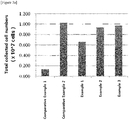
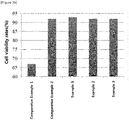
- the chip was inserted into an ADAM counter and the number of viable cells was measured. The results are shown in Figs. 1a to 1d .
- NK cells were treated with NK cells and cytocidal ability on tumor cells was examined.
- the activities of the NK cells obtained immediately after thawing in Experimental Example 1.1 and those of the NK cells obtained after culturing in Experimental Example 1.2 were evaluated, respectively.
- K562 cells which are tumor cells, were cultured in RPMI1640 medium supplemented with 10% fetal bovine serum under the condition of 37°C and 5% CO 2 .
- the cultured cells were recovered by trypsinization and suspended in the culture medium to a concentration of 1 x 10 6 cells/ml.
- 1 mM calcein AM (Life Technologies, USA) was added to obtain a final concentration of 30 ⁇ M.
- the cells were cultured under the condition of 37°C and 5% CO 2 for 1 hour and the tumor cells were labeled with fluorescence.
- the labeled tumor cells were washed with 10 ml of the culture medium, resuspended at a concentration of 1 x 10 5 cells/ml, and then dispensed into a 96-well round bottomed plate at 100 ⁇ l/well.
- the cells obtained immediately after thawing and after culturing in Experimental Example 1.1 and Experimental Example 1.2 were mixed such that the ratios of the NK cells (effector cell, E) and K562 cells (target cell, T) were 10: 1, 3: 1 and 0.3: 1 each, which then added to the plate at 100 ⁇ l/well.
- the tumor cells were added with an equal amount of medium, and for maximal release, the tumor cells were added with an equal amount of 2% Triton X-100.
- the mixtures were reacted under the condition of 37°C and 5% CO 2 for 4 hours, and then centrifuged at 4°C at 2,000 rpm for 3 minutes. Then, 100 ⁇ l of the obtained supernatant was transferred to a black well plate and measured with a fluorescence detector under the condition of 385 nm/450 nm. Using the fluorescence measurement values thus obtained, the dissolution rates (%) of tumor cells by NK cells were calculated by the following Equation (1) and shown in Figs. 2a to 2d , which were shown in Tables 7 to 10 below. The number of the natural killer cell donor is 6 in Table 7, and that of the natural killer cell donor is 3 in Table 8.
- Dissolution rate % Sample well average fluorescence value ⁇ Spontaneous release well average fluorescence value Maximum release well average fluoresence value ⁇ Spontaneous release well average fluorescence value ⁇ 100 [Table 7] Immediately after thawing Comparative Example 1 Comparative Example 2 Example 1 Example 2 Example 3 E10 44 60 59 65 76 E3 22 32 32 42 52 E1 8 13 12 17 24 E0.3 2 4 9 7 8 [Table 8] Immediately after thawing Example 3 Comparative Example 3 Comparative Example 4 Comparative Example 5 Comparative Example 6 E30 90 84 82 77 66 E10 65 53 50 47 37 E3 33 24 21 21 16 E1 13 10 7 9 6 E0.3 5 5 2 3 4 [Table 9] After culture Comparative Example 1 Comparative Example 2 Example 1 Example 2 Example 3 E10 84 87 86 86 88 E3 68 82 77 76 77 E1 45 61 52 46 45 E0.3 17 28 21 19 18 [Table 10] After culture Example 3 Comparative Example 3 Comparative Example 4 Comparative Example 5 Compar
- human T lymphoma cells HuT78 (ATCC, USA) and human leukemia cells K562 (ATCC, USA) were respectively cultured in RPMI1640 medium supplemented with 10% fetal bovine serum and RPMI1640 medium supplemented 20% fetal bovine serum under the condition of 37°C and 5% CO 2 .
- the cultured cells were recovered and suspended in each culture medium.
- the HuT78 cells and the K562 cells were placed in vials and frozen at the concentrations of 1 x 10 7 cells/ml and 4 x 10 6 cells/ml, respectively.
- the cell freezing was performed by the same method as described in Experimental Example 1.1 above.
- the frozen cells were resuspended in each culture medium, and the cells were subcultured to obtain the concentration of 1 x 10 6 cells/ml and cultured under the condition of 37°C and 5% CO 2 for 4 days.
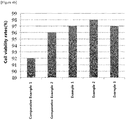
- the cultured cells were measured for the viable cell numbers and viability rates by the same method as in Experimental Example 1.3.
- the viable cell numbers and viability rates of HuT78 cells were shown in Figs. 3a and 3b
- those of K562 cells were shown in Figs. 4a and 4b .
Landscapes
- Health & Medical Sciences (AREA)
- Life Sciences & Earth Sciences (AREA)
- Engineering & Computer Science (AREA)
- General Health & Medical Sciences (AREA)
- Chemical & Material Sciences (AREA)
- Zoology (AREA)
- Veterinary Medicine (AREA)
- Public Health (AREA)
- Animal Behavior & Ethology (AREA)
- Biomedical Technology (AREA)
- Organic Chemistry (AREA)
- Wood Science & Technology (AREA)
- Immunology (AREA)
- Cell Biology (AREA)
- Biotechnology (AREA)
- Pharmacology & Pharmacy (AREA)
- Medicinal Chemistry (AREA)
- Bioinformatics & Cheminformatics (AREA)
- Hematology (AREA)
- Epidemiology (AREA)
- Developmental Biology & Embryology (AREA)
- Genetics & Genomics (AREA)
- General Chemical & Material Sciences (AREA)
- Nuclear Medicine, Radiotherapy & Molecular Imaging (AREA)
- Chemical Kinetics & Catalysis (AREA)
- Environmental Sciences (AREA)
- Dentistry (AREA)
- Virology (AREA)
- Microbiology (AREA)
- Biochemistry (AREA)
- General Engineering & Computer Science (AREA)
- Oncology (AREA)
- Communicable Diseases (AREA)
- Rheumatology (AREA)
- Micro-Organisms Or Cultivation Processes Thereof (AREA)
- Agricultural Chemicals And Associated Chemicals (AREA)
- Medicines Containing Material From Animals Or Micro-Organisms (AREA)
Applications Claiming Priority (2)
| Application Number | Priority Date | Filing Date | Title |
|---|---|---|---|
| KR20160012155 | 2016-02-01 | ||
| PCT/KR2017/000859 WO2017135631A1 (fr) | 2016-02-01 | 2017-01-25 | Composition de milieu destinée à la cryoconservation de cellules et son utilisation |
Publications (2)
| Publication Number | Publication Date |
|---|---|
| EP3412149A1 true EP3412149A1 (fr) | 2018-12-12 |
| EP3412149A4 EP3412149A4 (fr) | 2019-09-18 |
Family
ID=59501037
Family Applications (1)
| Application Number | Title | Priority Date | Filing Date |
|---|---|---|---|
| EP17747676.9A Withdrawn EP3412149A4 (fr) | 2016-02-01 | 2017-01-25 | Composition de milieu destinée à la cryoconservation de cellules et son utilisation |
Country Status (8)
| Country | Link |
|---|---|
| US (2) | US20190037831A1 (fr) |
| EP (1) | EP3412149A4 (fr) |
| JP (1) | JP6727334B2 (fr) |
| KR (1) | KR102175256B1 (fr) |
| CN (1) | CN108934158B (fr) |
| AU (1) | AU2017215955B2 (fr) |
| CA (1) | CA3013187C (fr) |
| WO (1) | WO2017135631A1 (fr) |
Cited By (2)
| Publication number | Priority date | Publication date | Assignee | Title |
|---|---|---|---|---|
| CN109691435A (zh) * | 2019-03-09 | 2019-04-30 | 南京温博生物科技有限公司 | 一种造血干细胞的冻存保护剂和简易冻存方法 |
| EP4192939A4 (fr) * | 2020-08-10 | 2024-10-30 | Angiocrine Bioscience, Inc. | Compositions de cellules endothéliales cryoconservées |
Families Citing this family (25)
| Publication number | Priority date | Publication date | Assignee | Title |
|---|---|---|---|---|
| KR101697473B1 (ko) | 2014-11-26 | 2017-01-18 | 주식회사 녹십자랩셀 | T 세포를 이용한 자연살해세포의 배양방법 |
| CN108235981B (zh) * | 2016-12-23 | 2021-07-23 | 西比曼生物科技(香港)有限公司 | 一种可临床使用的细胞冻存液 |
| EP3567049A4 (fr) | 2016-12-28 | 2020-08-26 | Green Cross Lab Cell Corporation | Récepteur antigénique chimérique et cellules tueuses naturelles exprimant celui-ci |
| EP3633029A4 (fr) | 2017-05-26 | 2021-06-09 | Green Cross Lab Cell Corporation | Procédé de culture de cellules tueuses naturelles au moyen d'un lymphocyte t transformé |
| KR102774451B1 (ko) | 2017-11-14 | 2025-02-28 | 앱클론(주) | 항-her2 항체 또는 그의 항원 결합 단편, 및 이를 포함하는 키메라 항원 수용체 |
| US11649294B2 (en) | 2017-11-14 | 2023-05-16 | GC Cell Corporation | Anti-HER2 antibody or antigen-binding fragment thereof, and chimeric antigen receptor comprising same |
| CN108849859B (zh) * | 2018-07-27 | 2020-12-01 | 武汉大学 | 一种白血病细胞样本的冻存液及其制备方法 |
| AU2019381526B2 (en) | 2018-11-14 | 2023-02-23 | Green Cross Lab Cell Corporation | Method for culturing cord blood-derived natural killer cells using transformed T-cells |
| CN109699634A (zh) * | 2019-01-31 | 2019-05-03 | 和携科技(北京)有限公司 | 一种间充质干细胞的超低温冻存与复苏方法 |
| WO2021030482A1 (fr) * | 2019-08-12 | 2021-02-18 | Bellicum Pharmaceuticals, Inc. | Formulations améliorées pour cellules immunitaires |
| CN114615886A (zh) * | 2019-08-29 | 2022-06-10 | 得克萨斯大学体系董事会 | 细胞冷冻保存培养基 |
| CN110612978A (zh) * | 2019-09-26 | 2019-12-27 | 广东华夏健康生命科学有限公司 | 一种用于人月经血的保存液及其制备方法 |
| US20230016034A1 (en) * | 2019-12-06 | 2023-01-19 | Fate Therapeutics, Inc. | ENHANCEMENT OF iPSC-DERIVED EFFECTOR IMMUNE CELL USING SMALL COMPOUNDS |
| CN111418579B (zh) * | 2020-04-13 | 2021-05-18 | 广东华夏健康生命科学有限公司 | 一种脂肪组织的保存方法、脂肪组织的保存液及其制备方法 |
| US12453805B2 (en) | 2020-09-24 | 2025-10-28 | Everest Medical Innovation GmbH | Cryoprotective compositions, surgical kits, and methods for protection of a surgical site during cryosurgery |
| US12426594B2 (en) | 2020-09-24 | 2025-09-30 | Everest Medical Innovation GmbH | Cryoprotective compositions and methods for protection of a surgical site during cryosurgery |
| WO2022133061A1 (fr) * | 2020-12-17 | 2022-06-23 | Artiva Biotherapeutics, Inc. | Compositions de cryoconservation prêtes pour la perfusion |
| JP7280623B2 (ja) * | 2020-12-28 | 2023-05-24 | 株式会社アビー | 細胞凍結保存液、及び細胞凍結方法 |
| WO2022203220A1 (fr) * | 2021-03-26 | 2022-09-29 | 에이템즈 주식회사 | Procédé de cryoconservation et de décongélation de tissu cartilagineux |
| JP7318983B2 (ja) * | 2021-12-21 | 2023-08-01 | 株式会社アビー | 細胞凍結保存液、及び細胞凍結方法 |
| KR102712040B1 (ko) | 2022-08-17 | 2024-09-30 | 김영생 | 음식물 쓰레기 처리용 바실러스속 호열성 세균 균주의 배양배지 및 이를 이용한 유가 배양방법 |
| KR102712042B1 (ko) | 2022-08-17 | 2024-09-30 | 김영생 | 바실러스속 호열성 세균 균주를 포함하는 생균제 조성물 및 이를 이용한 음식물 쓰레기 또는 유기성 폐기물 처리방법 |
| CN116746572B (zh) * | 2023-08-18 | 2023-10-31 | 深圳市茵冠生物科技有限公司 | 一种皮肤干细胞专用冻存液及其制备方法 |
| WO2025112121A1 (fr) * | 2023-11-28 | 2025-06-05 | 北昊干细胞与再生医学研究院有限公司 | Solution de cryoconservation spéciale pour hépatocytes et sa méthode de préparation |
| WO2025225667A1 (fr) * | 2024-04-26 | 2025-10-30 | 日機装株式会社 | Plaque contenant des agrégats de cellules rénales congelées, kit de test de pharmacocinétique, kit de test de toxicité et kit de découverte et de développement de médicament l'utilisant |
Family Cites Families (22)
| Publication number | Priority date | Publication date | Assignee | Title |
|---|---|---|---|---|
| DE10041515A1 (de) * | 2000-08-24 | 2002-03-14 | Gerold Schuler | Verfahren zur Herstellung gebrauchsfertiger, Antigen-beladener oder -unbeladener, kryokonservierter reifer dendritischer Zellen |
| CA2474968A1 (fr) * | 2002-01-31 | 2003-08-07 | Asahi Techno Glass Corporation | Milieu de cryoconservation pour les cellules souches embryonnaires de primates et procede de cryoconservation |
| CA2596083A1 (fr) * | 2005-01-27 | 2006-08-03 | Regenetech, Inc. | Procede d'obtention de materiau cellulaire derive de sang de cordon facilement utilisable, et compositions correspondantes |
| US7883698B2 (en) * | 2007-01-17 | 2011-02-08 | Maria Michejda | Isolation and preservation of fetal hematopoietic and mesencymal system cells from non-controversial materials and/or tissues resulting from miscarriages and methods of therapeutic use |
| KR20240052847A (ko) * | 2008-08-20 | 2024-04-23 | 셀룰래리티 인코포레이티드 | 개선된 세포 조성물 및 그의 제조 방법 |
| ES2666746T3 (es) * | 2010-07-13 | 2018-05-07 | Anthrogenesis Corporation | Métodos para generar linfocitos citolíticos naturales |
| ES2652666T3 (es) * | 2011-12-22 | 2018-02-05 | Mogam Biotechnology Institute | Procedimiento de producción de linfocitos citolíticos naturales, linfocitos citolíticos naturales producidos de este modo y composición para el tratamiento de cánceres y enfermedades infecciosas que contienen los mismos |
| JP2015526088A (ja) * | 2012-08-13 | 2015-09-10 | アントフロゲネシス コーポレーション | ナチュラルキラー細胞及びその使用 |
| JP6438887B2 (ja) * | 2012-11-30 | 2018-12-19 | ファーマコスモス・アクティーゼルスカブPharmacosmos A/S | 凍結防止剤、凍結防止および凍結保存組成物、その使用ならびに凍結保存方法 |
| US9629357B2 (en) * | 2013-02-01 | 2017-04-25 | Primegen Biotech Llc | Cryopreservation of cells and tissue for clinical application |
| CN103404509B (zh) * | 2013-08-07 | 2015-04-08 | 彭乐 | 一种细胞保存液、其制备方法和应用 |
| JP6512759B2 (ja) * | 2013-08-19 | 2019-05-15 | 国立研究開発法人国立循環器病研究センター | 羊膜間葉系細胞組成物の製造方法及び凍結保存方法、並びに治療剤 |
| CN103563888B (zh) * | 2013-10-31 | 2015-11-25 | 北京永泰生物制品有限公司 | 细胞冻存液 |
| ES2918501T3 (es) * | 2013-12-19 | 2022-07-18 | Novartis Ag | Receptores de antígenos quiméricos de mesotelina humana y usos de los mismos |
| KR101706524B1 (ko) * | 2014-12-03 | 2017-02-14 | 주식회사 녹십자랩셀 | 안정성 높은 자연살해세포의 효율적인 제조방법 |
| CN104694472A (zh) * | 2015-02-13 | 2015-06-10 | 杭州易文赛生物技术有限公司 | 一种扩增并冻存的自然杀伤细胞的方法 |
| CN105087472B (zh) * | 2015-05-20 | 2019-02-12 | 广州赛莱拉干细胞科技股份有限公司 | 一种诱导多能干细胞冻存液、其应用及冻存方法 |
| CN104823967B (zh) * | 2015-05-29 | 2017-06-23 | 广州赛莱拉干细胞科技股份有限公司 | 组合物及其应用、红细胞冻存制剂及其制备方法 |
| CN105076113B (zh) * | 2015-08-20 | 2017-12-05 | 广州赛莱拉干细胞科技股份有限公司 | 免疫细胞的冻存方法 |
| CN105076116B (zh) * | 2015-09-17 | 2017-08-08 | 广州赛莱拉干细胞科技股份有限公司 | 一种细胞冻存液及其应用与巨核祖细胞的冻存方法 |
| EP3369810A4 (fr) * | 2015-10-27 | 2019-05-01 | Kaneka Corporation | Procédé de production d'une population cellulaire comprenant des cellules souches mésenchymateuses, cellules souches mésenchymateuses, population cellulaire, et composition pharmaceutique |
| CN111777434A (zh) * | 2020-06-30 | 2020-10-16 | 宁夏农林科学院农业资源与环境研究所(宁夏土壤与植物营养重点实验室) | 一种畜禽养殖粪污发热微生物腐熟方法及其腐熟装置 |
-
2017
- 2017-01-25 US US16/073,872 patent/US20190037831A1/en not_active Abandoned
- 2017-01-25 KR KR1020187019278A patent/KR102175256B1/ko active Active
- 2017-01-25 WO PCT/KR2017/000859 patent/WO2017135631A1/fr not_active Ceased
- 2017-01-25 CN CN201780007020.3A patent/CN108934158B/zh active Active
- 2017-01-25 AU AU2017215955A patent/AU2017215955B2/en active Active
- 2017-01-25 EP EP17747676.9A patent/EP3412149A4/fr not_active Withdrawn
- 2017-01-25 JP JP2018559661A patent/JP6727334B2/ja active Active
- 2017-01-25 CA CA3013187A patent/CA3013187C/fr active Active
-
2022
- 2022-05-16 US US17/745,774 patent/US20230108578A1/en not_active Abandoned
Cited By (3)
| Publication number | Priority date | Publication date | Assignee | Title |
|---|---|---|---|---|
| CN109691435A (zh) * | 2019-03-09 | 2019-04-30 | 南京温博生物科技有限公司 | 一种造血干细胞的冻存保护剂和简易冻存方法 |
| CN109691435B (zh) * | 2019-03-09 | 2021-01-08 | 北京智能宝生物科技有限公司 | 一种造血干细胞的冻存保护剂和简易冻存方法 |
| EP4192939A4 (fr) * | 2020-08-10 | 2024-10-30 | Angiocrine Bioscience, Inc. | Compositions de cellules endothéliales cryoconservées |
Also Published As
| Publication number | Publication date |
|---|---|
| US20230108578A1 (en) | 2023-04-06 |
| KR102175256B1 (ko) | 2020-11-06 |
| EP3412149A4 (fr) | 2019-09-18 |
| US20190037831A1 (en) | 2019-02-07 |
| JP6727334B2 (ja) | 2020-07-22 |
| CN108934158B (zh) | 2022-11-15 |
| CA3013187A1 (fr) | 2017-08-10 |
| AU2017215955B2 (en) | 2020-01-23 |
| WO2017135631A1 (fr) | 2017-08-10 |
| JP2019504643A (ja) | 2019-02-21 |
| KR20180085796A (ko) | 2018-07-27 |
| CN108934158A (zh) | 2018-12-04 |
| AU2017215955A1 (en) | 2018-08-23 |
| CA3013187C (fr) | 2023-02-28 |
Similar Documents
| Publication | Publication Date | Title |
|---|---|---|
| US20230108578A1 (en) | Medium Composition for Cryopreservation of Cell and Use Thereof | |
| CA2990348C (fr) | Procede de cryoconservation de cellules a visee therapeutique | |
| EP3015545B1 (fr) | Solution contenant un tréhalose et un dextrane pour la transplantation de cellules de mammifères | |
| Izadyar et al. | Development of a cryopreservation protocol for type A spermatogonia | |
| US11889829B2 (en) | Mammalian cell cryopreservation liquid | |
| JP7401865B2 (ja) | 機能的な間葉系幹細胞の富化集団を得る方法、それによって得られる細胞、およびその細胞を含む組成物 | |
| CA2333303A1 (fr) | Procedes ameliores pour un stockage de cellules neuronales | |
| EP3960847A1 (fr) | Liquide contenant du tréhalose pour la conservation de cellules de mammifère | |
| US12520839B2 (en) | Methods and compositions for cryopreservation of cell therapies | |
| EP4338591A1 (fr) | Composition de cryoconservation de cellules nk, et formulation de cryoconservation la comprenant | |
| CN118974242A (zh) | 冷冻和冻干线粒体及其用途 | |
| US20220354108A1 (en) | Preservation methods using trehalose with other cryoprotectants being absent from the cryopreservation protocol | |
| EP3479832B1 (fr) | Milieu de transplantation | |
| CN108285888A (zh) | 新鲜间充质干细胞的制备方法 | |
| US20220195393A1 (en) | Methods for storage of stem cells | |
| WO2025027593A1 (fr) | Composition de cryoconservation comprenant des cellules souches |
Legal Events
| Date | Code | Title | Description |
|---|---|---|---|
| STAA | Information on the status of an ep patent application or granted ep patent |
Free format text: STATUS: THE INTERNATIONAL PUBLICATION HAS BEEN MADE |
|
| PUAI | Public reference made under article 153(3) epc to a published international application that has entered the european phase |
Free format text: ORIGINAL CODE: 0009012 |
|
| STAA | Information on the status of an ep patent application or granted ep patent |
Free format text: STATUS: REQUEST FOR EXAMINATION WAS MADE |
|
| 17P | Request for examination filed |
Effective date: 20180822 |
|
| AK | Designated contracting states |
Kind code of ref document: A1 Designated state(s): AL AT BE BG CH CY CZ DE DK EE ES FI FR GB GR HR HU IE IS IT LI LT LU LV MC MK MT NL NO PL PT RO RS SE SI SK SM TR |
|
| AX | Request for extension of the european patent |
Extension state: BA ME |
|
| DAV | Request for validation of the european patent (deleted) | ||
| DAX | Request for extension of the european patent (deleted) | ||
| A4 | Supplementary search report drawn up and despatched |
Effective date: 20190821 |
|
| RIC1 | Information provided on ipc code assigned before grant |
Ipc: A61K 35/28 20150101ALI20190814BHEP Ipc: A01N 1/00 20060101ALI20190814BHEP Ipc: A61K 35/17 20150101AFI20190814BHEP Ipc: A61P 31/00 20060101ALI20190814BHEP Ipc: A61P 37/00 20060101ALI20190814BHEP Ipc: A61P 35/00 20060101ALI20190814BHEP |
|
| STAA | Information on the status of an ep patent application or granted ep patent |
Free format text: STATUS: EXAMINATION IS IN PROGRESS |
|
| 17Q | First examination report despatched |
Effective date: 20201214 |
|
| RAP1 | Party data changed (applicant data changed or rights of an application transferred) |
Owner name: GC CELL CORPORATION |
|
| STAA | Information on the status of an ep patent application or granted ep patent |
Free format text: STATUS: THE APPLICATION IS DEEMED TO BE WITHDRAWN |
|
| 18D | Application deemed to be withdrawn |
Effective date: 20231114 |