EP3413166B1 - Rendering von inhalt mit vermittelter realität - Google Patents
Rendering von inhalt mit vermittelter realität Download PDFInfo
- Publication number
- EP3413166B1 EP3413166B1 EP17174540.9A EP17174540A EP3413166B1 EP 3413166 B1 EP3413166 B1 EP 3413166B1 EP 17174540 A EP17174540 A EP 17174540A EP 3413166 B1 EP3413166 B1 EP 3413166B1
- Authority
- EP
- European Patent Office
- Prior art keywords
- real space
- user
- reality content
- mediated reality
- space
- Prior art date
- Legal status (The legal status is an assumption and is not a legal conclusion. Google has not performed a legal analysis and makes no representation as to the accuracy of the status listed.)
- Active
Links
Images


Classifications
-
- G—PHYSICS
- G09—EDUCATION; CRYPTOGRAPHY; DISPLAY; ADVERTISING; SEALS
- G09G—ARRANGEMENTS OR CIRCUITS FOR CONTROL OF INDICATING DEVICES USING STATIC MEANS TO PRESENT VARIABLE INFORMATION
- G09G5/00—Control arrangements or circuits for visual indicators common to cathode-ray tube indicators and other visual indicators
- G09G5/36—Control arrangements or circuits for visual indicators common to cathode-ray tube indicators and other visual indicators characterised by the display of a graphic pattern, e.g. using an all-points-addressable [APA] memory
- G09G5/38—Control arrangements or circuits for visual indicators common to cathode-ray tube indicators and other visual indicators characterised by the display of a graphic pattern, e.g. using an all-points-addressable [APA] memory with means for controlling the display position
-
- G—PHYSICS
- G06—COMPUTING OR CALCULATING; COUNTING
- G06F—ELECTRIC DIGITAL DATA PROCESSING
- G06F3/00—Input arrangements for transferring data to be processed into a form capable of being handled by the computer; Output arrangements for transferring data from processing unit to output unit, e.g. interface arrangements
- G06F3/01—Input arrangements or combined input and output arrangements for interaction between user and computer
- G06F3/011—Arrangements for interaction with the human body, e.g. for user immersion in virtual reality
-
- G—PHYSICS
- G06—COMPUTING OR CALCULATING; COUNTING
- G06F—ELECTRIC DIGITAL DATA PROCESSING
- G06F3/00—Input arrangements for transferring data to be processed into a form capable of being handled by the computer; Output arrangements for transferring data from processing unit to output unit, e.g. interface arrangements
- G06F3/01—Input arrangements or combined input and output arrangements for interaction between user and computer
- G06F3/048—Interaction techniques based on graphical user interfaces [GUI]
- G06F3/0481—Interaction techniques based on graphical user interfaces [GUI] based on specific properties of the displayed interaction object or a metaphor-based environment, e.g. interaction with desktop elements like windows or icons, or assisted by a cursor's changing behaviour or appearance
- G06F3/04815—Interaction with a metaphor-based environment or interaction object displayed as three-dimensional [3D], e.g. changing the user viewpoint with respect to the environment or object
-
- G—PHYSICS
- G09—EDUCATION; CRYPTOGRAPHY; DISPLAY; ADVERTISING; SEALS
- G09G—ARRANGEMENTS OR CIRCUITS FOR CONTROL OF INDICATING DEVICES USING STATIC MEANS TO PRESENT VARIABLE INFORMATION
- G09G5/00—Control arrangements or circuits for visual indicators common to cathode-ray tube indicators and other visual indicators
- G09G5/36—Control arrangements or circuits for visual indicators common to cathode-ray tube indicators and other visual indicators characterised by the display of a graphic pattern, e.g. using an all-points-addressable [APA] memory
- G09G5/37—Details of the operation on graphic patterns
- G09G5/373—Details of the operation on graphic patterns for modifying the size of the graphic pattern
-
- G—PHYSICS
- G09—EDUCATION; CRYPTOGRAPHY; DISPLAY; ADVERTISING; SEALS
- G09G—ARRANGEMENTS OR CIRCUITS FOR CONTROL OF INDICATING DEVICES USING STATIC MEANS TO PRESENT VARIABLE INFORMATION
- G09G2340/00—Aspects of display data processing
- G09G2340/04—Changes in size, position or resolution of an image
- G09G2340/045—Zooming at least part of an image, i.e. enlarging it or shrinking it
-
- G—PHYSICS
- G09—EDUCATION; CRYPTOGRAPHY; DISPLAY; ADVERTISING; SEALS
- G09G—ARRANGEMENTS OR CIRCUITS FOR CONTROL OF INDICATING DEVICES USING STATIC MEANS TO PRESENT VARIABLE INFORMATION
- G09G2340/00—Aspects of display data processing
- G09G2340/04—Changes in size, position or resolution of an image
- G09G2340/0464—Positioning
-
- G—PHYSICS
- G09—EDUCATION; CRYPTOGRAPHY; DISPLAY; ADVERTISING; SEALS
- G09G—ARRANGEMENTS OR CIRCUITS FOR CONTROL OF INDICATING DEVICES USING STATIC MEANS TO PRESENT VARIABLE INFORMATION
- G09G2340/00—Aspects of display data processing
- G09G2340/04—Changes in size, position or resolution of an image
- G09G2340/0492—Change of orientation of the displayed image, e.g. upside-down, mirrored
-
- G—PHYSICS
- G09—EDUCATION; CRYPTOGRAPHY; DISPLAY; ADVERTISING; SEALS
- G09G—ARRANGEMENTS OR CIRCUITS FOR CONTROL OF INDICATING DEVICES USING STATIC MEANS TO PRESENT VARIABLE INFORMATION
- G09G2354/00—Aspects of interface with display user
Definitions
- the adapting of the mediated reality content may comprise at least one of; moving, within the second real space, the position at which the mediated reality content is displayed, rotating the mediated reality content within the second real space.
- the method may comprise enabling user control of the adapting wherein the user control of the adapting enables a user to select at least one virtual visual object so that the virtual visual object is displayed in both the first real space or the second real space.
- Using the information relating to the first real space and the second real space may comprise comparing the dimensions of the first real space and the second real space and determining an adaptation of the mediated reality content which ensures that a virtual visual object that is displayed in the first real space will be displayed in the second real space.
- An apparatus comprising: means for storing mediated reality content and associated information relating to a size and/or shape of a first real space in which the mediated reality content has been displayed, wherein a user is able to move within a real space while the mediated reality content is being rendered and wherein the real space includes a closed space such as a room or other suitable environment; means for selecting the mediated reality content for display in a second real space, wherein the first real space and the second real space are different real spaces; means for obtaining information relating to a size and/or shape of the second real space; and means for using the information relating to the size and/or shape of the first real space and the information relating to the size and/or shape of the second real space to adapt the mediated reality content for display in the second real space, wherein adapting the mediated reality content comprises repositioning virtual objects based on a comparison between the size and/or shape of the first real space and the size and/or shape of the second real space, to enable virtual objects displayed in the first real space to be
- a head mounted viewing device comprising an apparatus as described above.
- a computer program that when run on a processor causes storing mediated reality content and associated information relating to a size and/or shape of a first real space in which the mediated reality content has been displayed, wherein a user is able to move within a real space while the mediated reality content is being rendered and wherein the real space includes a closed space such as a room or other suitable environment; selecting the mediated reality content for display in a second real space, wherein the first real space and the second real space are different real spaces; obtaining information relating to a size and/or shape of the second real space; and using the information relating to the size and/or shape of the first real space and the information relating to the size and/or shape of the second real space to adapt the mediated reality content for display in the second real space, wherein adapting the mediated reality content comprises repositioning virtual objects based on a comparison between the size and/or shape of the first real space and the size and/or shape of the second real space, to enable virtual objects displayed in the first real space to be viewed and
- real space refers to a real environment, which may be three dimensional.
- virtual reality in this document refers to a form of mediated reality in which a user experiences a fully artificial environment (a virtual visual space) as a virtual scene displayed by an apparatus to a user.
- first person perspective-mediated as applied to mediated reality, augmented reality or virtual reality means perspective mediated with the additional constraint that the user's real point of view determines the point of view within the virtual space.
- “user interactive” as applied to mediated reality, augmented reality or virtual reality means that user actions at least partially determine what happens within the virtual space.
- displaying means providing in a form that is perceived visually (viewed) by the user.
- Correspondence or “corresponding” when used in relation to a sound space and a virtual visual space means that the sound space and virtual visual space are time and space aligned, that is they are the same space at the same time.
- Correspondence or “corresponding” when used in relation to a sound scene and a virtual visual scene (or visual scene) means that the sound scene and virtual visual scene (or visual scene) are corresponding and a notional listener whose point of view defines the sound scene and a notional viewer whose point of view defines the virtual visual scene (or visual scene) are at the same position and orientation, that is they have the same point of view.
- Figs 1A-1C and 2A-2C illustrate examples of mediated reality.
- the mediated reality may be augmented reality or virtual reality.
- Figs 1A, 1B , 1C illustrate the same virtual visual space 20 comprising the same virtual visual objects 21, however, each Fig. illustrates a different point of view 24.
- the position and direction of a point of view 24 can change independently. The direction but not the position of the point of view 24 changes from Fig. 1A to Fig. 1B . The direction and the position of the point of view 24 changes from Fig. 1B to Fig. 1C .
- the point of view 24 may have discrete quantised positions 23 and/or discrete quantised directions 25 and user action switches by discretely jumping between the allowed positions 23 and/or directions 25 of the point of view 24.
- Fig. 3A illustrates an example of a real space 10 comprising real objects 11 that partially corresponds with the virtual visual space 20 of Fig 1A .
- each real object 11 in the real space 10 has a corresponding virtual object 21 in the virtual visual space 20, however, each virtual object 21 in the virtual visual space 20 does not have a corresponding real object 11 in the real space 10.
- one of the virtual objects 21, the computer-generated visual element 28, is an artificial virtual object 21 that does not have a corresponding real object 11 in the real space 10.
- Fig. 3B illustrates an example of a real visual scene 12 that partially corresponds with the virtual visual scene 22 of Fig. 1A , it includes real objects 11 but not artificial virtual objects.
- the real visual scene is from a perspective corresponding to the point of view 24 in the virtual visual space 20 of Fig. 1A .
- the real visual scene 12 content is determined by that corresponding point of view 24 and the field of view 26 in virtual space 20 (point of view 14 in real space 10).
- Fig. 2A may be an illustration of an augmented reality version of the real visual scene 12 illustrated in Fig. 3B .
- the virtual visual scene 22 comprises the real visual scene 12 of the real space 10 supplemented by one or more visual elements 28 displayed by an apparatus to a user.
- the visual elements 28 may be a computer-generated visual element.
- the virtual visual scene 22 comprises the actual real visual scene 12 which is seen through a display of the supplemental visual element(s) 28.
- the virtual visual scene 22 comprises a displayed real visual scene 12 and displayed supplemental visual element(s) 28.
- the displayed real visual scene 12 may be based on an image from a single point of view 24 or on multiple images from different points of view at the same time, processed to generate an image from a single point of view 24.
- Fig. 4 illustrates an example of an apparatus 30 that is operable to enable mediated reality and/or augmented reality and/or virtual reality.
- the display 32 is for providing at least parts of the virtual visual scene 22 to a user in a form that is perceived visually by the user.
- a virtual visual scene may form part of mediated reality content 52, such as virtual reality content or augmented reality content.
- the display 32 may be a visual display that provides light that displays at least parts of the virtual visual scene 22 to a user.
- visual displays include liquid crystal displays, organic light emitting displays, emissive, reflective, transmissive and transflective displays, direct retina projection display, near eye displays or any other suitable type of display.
- the display 32 is controlled in this example but not necessarily all examples by a controller 42.
- controller 42 may be as controller circuitry.
- the controller 42 may be implemented in hardware alone, have certain aspects in software including firmware alone or can be a combination of hardware and software (including firmware).
- the controller 42 may comprise a processor 40 configured to load computer program instructions 48 from a memory 46.
- the controller 42 may be implemented using instructions that enable hardware functionality, for example, by using executable computer program instructions 48 in a general-purpose or special-purpose processor 40 that may be stored on a computer readable storage medium (disk, memory etc.) to be executed by such a processor 40.
- the processor 40 is configured to read from and write to the memory 46.
- the processor 40 may also comprise an output interface via which data and/or commands are output by the processor 40 and an input interface via which data and/or commands are input to the processor 40.
- the memory 46 stores at least a computer program 48 comprising computer program instructions (computer program code) that controls the operation of the apparatus 30 when loaded into the processor 40.
- the computer program instructions, of the computer program 48 provide the logic and routines that enables the apparatus to perform at least the methods illustrated in Figs 5 and 7 to 11 .
- the processor 40 by reading the memory 46 is able to load and execute the computer program 48.
- the memory 46 also stores information 54 associated with the mediated reality content 52.
- the information 54 may comprise information relating to a real space 10 in which the mediated reality content 52 has been displayed.
- the information 54 may comprise information about the real space which enables a virtual visual scene 22 that has been viewed by a user in the real space 10 to be recreated in a different real space 10.
- the associated information 54 stored with the mediated reality content 52 comprises information relating to at least one of; the size of the first real space 10 and/or the shape of the first real space 10.
- the associated information 54 stored with the mediated reality content 52 may comprise information relating to at least one of: the point of view of the user when the mediated reality content 52 was displayed, the position of the user within the first real space 10 when the mediated reality content 52 was displayed, the orientation of the user within the first real space 10 when the mediated reality content 52 was displayed, the position of real objects 11 within the first real space 10 when the mediated reality content 52 was displayed, the position of virtual objects relative to the first real space 10 when the mediated reality content was displayed or any other suitable information.
- the information 54 may be associated with the mediated reality content 52 such that when the mediated reality content 52 is retrieved or accessed the information 54 is also retrieved or accessed.
- the apparatus 30 may enable user-interactive mediation for mediated reality and/or augmented reality and/or virtual reality.
- the user input circuitry 44 detects user actions using user input 43. These user actions are used by the controller 42 to determine what happens within the virtual visual space 20. This may enable interaction with a visual element 28 within the virtual visual space 20.
- the apparatus 30 may enable perspective mediation for mediated reality and/or augmented reality and/or virtual reality.
- the user input circuitry 44 detects user actions. These user actions are used by the controller 42 to determine the point of view 24 within the virtual visual space 20, changing the virtual visual scene 22.
- the point of view 24 may be continuously variable in position and/or direction and user action changes the position and/or direction of the point of view 24.
- the point of view 24 may have discrete quantised positions and/or discrete quantised directions and user action switches by jumping to the next position and/or direction of the point of view 24.
- the apparatus 30 comprises as part of the input circuitry 44 point of view sensors 45 for determining changes in the real point of view.
- positioning technology such as GPS, triangulation (trilateration) by transmitting to multiple receivers and/or receiving from multiple transmitters, acceleration detection and integration may be used to determine a new physical location 13 of the user 18 and real point of view 14.
- accelerometers may be used to determine a change in an orientation of a user's head or view point and a consequential change in the real direction 15 of the real point of view 14.
- pupil tracking technology based for example on computer vision, may be used to track movement of a user's eye or eyes and therefore determine a direction of a user's gaze and consequential changes in the real direction 15 of the real point of view 14.
- the apparatus 30 may comprise as part of the input circuitry 44 image sensors 47 for imaging the real space 10.
- the input circuitry 44 comprises depth sensors 49.
- a depth sensor 49 may comprise a transmitter and a receiver.
- the transmitter transmits a signal (for example, a signal a human cannot sense such as ultrasound or infrared light) and the receiver receives the reflected signal.
- a signal for example, a signal a human cannot sense such as ultrasound or infrared light
- the receiver receives the reflected signal.
- some depth information may be achieved via measuring the time of flight from transmission to reception. Better resolution may be achieved by using more transmitters and/or more receivers (spatial diversity).
- the transmitter is configured to "paint" the real space 10 with light, preferably invisible light such as infrared light, with a spatially dependent pattern. Detection of a certain pattern by the receiver allows the real space 10 to be spatially resolved. The distance to the spatially resolved portion of the real space 10 may be determined by time of flight and/or stereoscopy (if the receiver is in a stereoscopic position relative to the transmitter).
- the input circuitry 44 may comprise communication circuitry 41 in addition to or as an alternative to one or more of the image sensors 47 and the depth sensors 49.
- Such communication circuitry 41 may communicate with one or more remote image sensors 47 in the real space 10 and/or with remote depth sensors 49 in the real space 10.
- the apparatus 30 may comprise communication circuitry 41 which enables the apparatus 30 to communicate with another apparatus 30.
- the communication circuitry 41 may enable mediated reality content 52 and/or the associated information 54 to be shared with one or more other apparatus 30. This may also enable the apparatus 30 to receive information from another apparatus 30.
- the information that is received may comprise information relating to the real space 10 within which the another apparatus 30 is located.
- the communication circuitry 41 may enable the apparatus 30 to communicate within any suitable communications network such as, a cellular network, internet, Bluetooth, Bluetooth Low Energy, Bluetooth Smart, 6LoWPan (IP v 6 over low power personal area networks) ZigBee, ANT+, near field communication (NFC), Radio frequency identification, wireless local area network (wireless LAN).
- a suitable communications network such as, a cellular network, internet, Bluetooth, Bluetooth Low Energy, Bluetooth Smart, 6LoWPan (IP v 6 over low power personal area networks) ZigBee, ANT+, near field communication (NFC), Radio frequency identification, wireless local area network (wireless LAN).
- Fig. 5B illustrates an example of a method 70 for updating a model of the virtual visual space 20 for mediated reality and/or augmented reality and/or virtual reality.
- the apparatus 30 may enable mediated reality and/or augmented reality and/or virtual reality, for example using the method 60 illustrated in Fig. 5A or a similar method.
- the controller 42 stores and maintains a model 50 of the virtual visual space 20.
- the model 50 is stored in the memory 46.
- the model 50 may be provided to the controller 42 or determined by the controller 42.
- sensors in input circuitry 44 may be used to create overlapping depth maps of the virtual visual space 20 from different points of view and a three dimensional model may then be produced.
- An example of a passive system, used in the Kinect TM device, is when an object is painted with a non-homogenous pattern of symbols using infrared light and the reflected light is measured using multiple cameras and then processed, using the parallax effect, to determine a position of the object.
- a two-dimensional projection of the three-dimensional virtual visual space 20 is taken from the location 23 and in the direction 25 defined by the current point of view 24.
- the projection is then limited by the field of view 26 to produce the virtual visual scene 22.
- the method then returns to block 62.
- Fig. 5B illustrates an example of a method 70 for updating a model of the virtual visual space 20 for augmented reality.
- the virtual visual space 20 comprises objects 11 from the real space 10 and also visual elements 28 not present in the real space 10.
- the combination of such visual elements 28 may be referred to as the artificial virtual visual space.
- Detecting a change in the real space 10 may be achieved at a pixel level using differencing and may be achieved at an object level using computer vision to track objects as they move.
- the model of the virtual visual space 20 is updated.
- the blocks illustrated in the Figs 5A & 5B may represent steps in a method and/or sections of code in the computer program 48.
- the illustration of a particular order to the blocks does not necessarily imply that there is a required or preferred order for the blocks and the order and arrangement of the block may be varied. Furthermore, it may be possible for some blocks to be omitted.
- Figs. 6A to 6C illustrate examples of a user 80 using an apparatus 30 that enables the user to perceive mediated reality content 52.
- the apparatus 30 enables display of at least part of the virtual visual scene 22 to users 80.
- the apparatus 30 may also enable sound scene corresponding to the virtual visual scene 22 to be rendered to the user 80.
- the mediated reality content 52 may be first person perspective mediated content so that the real space 10 and the position of the user 80 within the real space 10 determines the virtual visual scenes 22 that can be viewed by the user 80. In some examples the position of the user 80 within the real space may also determine the sound scenes that can be heard by the user 80.
- the apparatus 30 is provided within a head-mounted viewing device 84.
- the head-mounted viewing device 84 is worn by the user 80 so that the head-mounted viewing device 84 moves when the head of the user 80 moves.
- the head mounted viewing device 84 may be arranged for rendering virtual content.
- the user 80 may be fully immersed in the content so that the real scene 12 is not visible through the head mounted viewing device 84.
- the head-mounted viewing device 84 may be a see-through arrangement for augmented reality that enables a live real scene 12 to be viewed while one or more visual elements 28 are displayed by the display(s) 32 to the user to provide in combination the virtual visual scene 22.
- a visor if present, is transparent or semi-transparent so that the live real scene 12 can be viewed through the visor.
- the head-mounted viewing device 84 may be operated as a see-video arrangement for augmented reality that enables a live or recorded video of a real scene 12 to be displayed by the display(s) 32 for viewing by the user 80 while one or more visual elements 28 are simultaneously displayed by the display(s) 32 for viewing by the user 80.
- the combination of the displayed real scene 12 and displayed one or more visual elements 28 provides the virtual visual scene 22 to the user 80.
- the visor is opaque and may be used as the display(s) 32.
- the processor 40 continually cycles through the method illustrated in Fig. 5A and, in the case of augmented reality content, Fig. 5B .
- the user 80 is positioned within a real space 10.
- the real space 10 comprises an enclosed space such as a room or any other suitable environment.
- a virtual visual space 20 may be displayed within the real space 10.
- the virtual visual space 20 may comprise a portion of the mediated reality content 52.
- the user 80 may be able to move within the virtual visual space 20 by moving within the real space 10. When the user moves within the virtual visual space 20 this may change the virtual visual scenes 22 that they view.
- the virtual visual space 20 within which the user 80 can move is determined by the size and shape of the real space 10 in which the mediated reality content 52 is displayed.
- the user's movements within the virtual space 20 may be restricted by real objects 11 within the real space 10. For instance, if a wall or item of furniture is positioned within the real space 10 this will block the movement of the user 80.
- the real objects 11 may limit the positions in which the user 80 can be positioned relative to the virtual visual object 21 and so may restrict the virtual visual scenes 22 that are available to the user 80.
- the mediated reality content 52 may comprise content which is displayed so that it is perceived to be outside the real space 10. For instance one or more virtual visual objects 21 may be displayed so that they appear to be further away than the limits of the real space 10. However, the user 80 may be prevented from moving to these virtual visual objects 21 by the walls or other real objects in the real space 10. A visual marker or other indication may be provided to the user 80 to indicate the limits of the real space 10.
- the user 80 is viewing mediated reality content 52 in a first real space 10A.
- the first real space 10A comprises a room 82A having a rectangular shape.
- the room 82A may be such that if a virtual visual object 21 is displayed in the room 82A there is sufficient space to allow the user 80 to move around the virtual visual object 21. This may enable the user 80 to view virtual visual scenes 22 comprising different sides of the virtual visual object 21.
- the user 80 is viewing the same mediated reality content 52 in a second real space 10B.
- the second real space 10B also comprises a room 82B having a rectangular shape however the room 82B in the second real space 10B is smaller than the room 82A in the first real space 10A.
- the room 82B in the second real space 10B is smaller than the first room 82A this means that the virtual visual space 20 within which the user 80 can move is reduced in the second room 82B compared to the first room 82A.
- a virtual visual object 21 is displayed in the room 82B there might not be sufficient space within the room 82B to allow the user 80 to move around the virtual visual object 21. This may restrict the virtual visual scenes 22 comprising the virtual visual object 21 that are available to the user 80 in the second real space 10B such that some virtual visual scenes 22 that can be viewed in the first real space 10A cannot be viewed in the second real space 10B.
- the user 80 is viewing the same mediated reality content 52 in a third real space 10C.
- the third real space 10C comprises a different shaped room 82C to the examples of Figs. 6A and 6B .
- the real space 10C comprises an L-shaped room 82C. As the room 82C has a different shape this means that the virtual visual space 20 within which the user 80 can move also has a different shape. This means that the user can move into different parts of the virtual visual space 20 and view different virtual visual scenes 22.
- the way the user 80 experiences the mediated reality content 52 is dependent upon the real space 10 in which the mediated reality content 52 is displayed.
- This may be disadvantageous, for example if a user 80 wishes to share the mediated reality content 52 with a user located in a different real space.
- a user 80 might wish to share the mediated reality content 52 to enable multiplayer games or other multi-user experiences.
- This could also be disadvantageous if the user 80 wants to use the same mediated reality content 52 in different real spaces 10. For example, the user 80 may begin rendering the mediated reality content 52 in a first room 82 but may pause the mediated reality content 52 and continue rendering in a different room 82.
- Fig. 7 illustrates an example of a method which enables users 80 to share and have similar experiences of the same mediated reality content 52 even when the mediated reality content 52 is displayed in different real spaces 10.
- the method may be implemented using apparatus 30 as described above.
- the method comprises, at block 90, storing mediated reality content 52 and associated information 54.
- the associated information 54 relates to a first real space 10 in which the mediated reality content 52 has been displayed.
- the associated information 54 may comprise any information which provides an indication of the virtual visual scenes 22 that were available to the user 80 in the first real space 82.
- the associated information 54 comprises information indicating the size and/or shape of the first real space 10A. This information may indicate the portion of the mediated reality content 52 corresponding to the virtual visual space 20 within which the user 80 could move.
- the associated information 54 may also comprise information relating to the position and/or orientation of the user 80 within the first real space 10A when the mediated reality content 52 was displayed. This information may indicate the point of view of the user 80. This may indicate the virtual visual scenes 22 that have been viewed by the user 80.
- the associated information 54 may also comprise information about the real space 10 which may affect the way in which the user 80 can interact with the mediated reality content 52.
- the associated information 54 may comprise information about real objects 11 within the real space 10A.
- the real objects 11 may restrict the movement of the user 80 within the real space 10 and so may limit the virtual visual space 20 within which the user can move and so determine the virtual visual scenes 22 comprising the virtual visual objects 21 that are available to the user 80.
- the information 54 may be associated with the mediated reality content 52 such that when the mediated reality content 52 is retrieved or accessed the information 54 is also retrieved or accessed.
- the method comprises selecting the mediated reality content 52 for display in a second real space 10B.
- the mediated reality content 52 may be selected in response to a user actuating the input 43.
- the mediated reality content 52 is displayed in the second real space 10B it may be displayed to a second user.
- the second user may be different to the first user who viewed the mediated reality content in the first real space 10A.
- the mediated reality content 52 may be selected by the same user 80 to be viewed at a different real space 10 at a different point in time. For instance, a user 80 may begin rendering the mediated reality content 52 in a first real space 10. The user 80 could then pause the mediated reality content 52 and continue rendering the mediated reality content 52 at a later point in time in a different real space 10.
- the method comprises obtaining information relating to the second real space 10B.
- the information relating to the second real space 10B may be obtained using any suitable means.
- the communication circuitry 41 could be used to receive information from the different apparatus 30.
- the inputs such as the depth sensors 49 and the image sensors 47 could be used to obtain the information about the second real space 10B.
- the information relating to the second real space 10B may comprise information about features of the second real space 10B which affects the virtual visual space 20 within which the user 80 can move.
- the information relating to the second real space 10B comprises information relating to the size and/or shape of the real space 10B.
- the information may comprise information relating to real objects 11 which may affect the way a user can interact with virtual visual objects 21 within the real space 10A, B.
- the method comprises using the information 54 relating to the first real space 10A and the information relating to the second real space 10B to adapt the mediated reality content 52 for display in the second real space 10B.
- the adapting of the mediated reality content 52 modifies the mediated reality content 52 so that a user 80 can move within the same virtual visual space 20 in both the first real space 10A and the second real space 10B.
- This enables a virtual visual scene 22 that has been viewed by a user 80 in the first real space 10A to be viewed by a user 80 in the second real space 10B. This may ensure that the experience that a user 80 has in the first real space 10A is matched or closely matched by the experiences available in the second real space 10B.
- the adapting of the mediated reality content 52 may comprise any modifications which enable a user to be able to move within the same virtual visual space 20 and/or view the same virtual visual scenes 22 in different real spaces 10.
- the adapting of the mediated reality content 52 may comprise controlling the perceived positions of one or more virtual visual objects 21 within the second real space 10B. This may enable the virtual visual objects 21 to be positioned so that a user 80 can move into the same positions relative to the virtual visual objects 21 in both the first real space 10A and the second real space 10B.
- the position of the virtual visual object 21 in the mediated reality content 52 may be modified so that the user 80 can also move around the virtual visual object 21 in the second real space 10B.
- the adapting of the mediated reality content 52 may comprise aligning a virtual visual space 20 that has been rendered in a first real space 10A with a second real space 10B. For instance, where the second real space 10B is smaller than the first real space 10A a user in the second real space 10B can only move within a smaller virtual visual space 20. This may mean that some virtual visual objects 21 that can be reached by a user 80 moving in the first real space 10A cannot be reached by the user 80 moving in the second real space 10B.
- the alignment of the mediated reality content 52 may position the mediated reality content 52 so that the key virtual visual objects 21 or any selected virtual visual objects 21 are positioned within the virtual visual space 20 that the user 80 in the second real space 10 can move to reach them.
- the adapting of the mediated reality content 52 may comprise cropping a virtual visual space 20 of the mediated reality content 52.
- the cropping of the virtual visual space 20 may ensure that one or more virtual visual objects 21 that are displayed in the first real space 10A are also displayed in the second real space 10B.
- the cropping may be made in any suitable positions of the virtual visual space 20. For instance where two virtual visual objects 21 are displayed in the first real space 10A a portion of the virtual visual space 20 between the two virtual visual objects 21 may be cropped when the mediated reality content 52 is displayed in a smaller second real space 10B. This cropping may enable the virtual visual objects 21 to be displayed at the same size in different real spaces 10A, B that have different sizes. This may be useful in cases where the mediated reality content 52 between the virtual visual objects 21 is not considered to be interesting to the users.
- the adapting of the mediated reality content 52 may comprise scaling a virtual visual space 20 of the mediated reality content 52.
- the scaling may comprise resizing the virtual visual space 20 which may enable repositioning of virtual visual objects 21 within the virtual visual space 20.
- the scaling may increase the size of the virtual visual space 20 or decrease the size of the virtual visual space 20 depending on the difference in sizes of the first and second real spaces 10A, B.
- the adapting of the mediated reality content 52 may comprise changing a scale of one or more virtual visual objects 21 within the virtual visual space 20. This may ensure that the whole of a virtual visual object 21 that is displayed in a first real space 10A is also displayed in a second real space 10B.
- the adapting of the mediated reality content 52 may comprise moving at least one virtual visual object 21 within a virtual visual space 20.
- it may comprise moving a virtual visual object 21 so that when the mediated reality content 52 is displayed in the second real space 10B the user can move relative to the virtual visual object 21 in the same way that they could in the first real space 10A. This could ensure that the virtual visual object 21 is not displayed adjacent to any real objects 11, such as walls or items of furniture, which could prevent the user 80 from moving around the virtual visual object 21.
- the adapting of the mediated reality content 52 may comprise moving, within the second real space 10B, the position at which the mediated reality content 52 is displayed.
- the default setting may be to display the mediated reality content 52 in a centre portion of a room 82.
- a different portion of the room 82 is a better location in which to display the mediated reality content 52.
- the different portion of the room 82 may have a better size or shape and/or may have less real objects 11 which restrict the user's experience of the mediated reality content 52.
- the adapting of the mediated reality content 52 may comprise rotating, within the second real space 10B, the position at which the mediated reality content 52 is displayed.
- the rotation of the mediated reality content 52 may be combined with other movements of the mediated reality content 52.
- both the visual content and the audio content of the mediated reality content 52 may be adapted.
- the adaptations of the audio content may correspond to any adaptations that are made to the visual content. For instance, if a virtual visual object 21 corresponds to a sound source then any movement or modification of the virtual visual object 21 would also be accompanied by a corresponding movement or modification of the sound source. Similarly any rotations or movements of the visual content may be accompanied by a corresponding movement or rotation of the audio content.
- the information 54 about the different real spaces 10 is used to determine the adaptation that should be performed on the mediated reality content 52.
- the processor 40 may use the information 54 to compare the first real space 10 and the second real space 10 and determine the changes that need to be made to the mediated reality content 52.
- the apparatus 30 may enable the user 80 to select the adaptation that is to be made to the mediated reality content 52. For example, a preview of the second real space 10 and the virtual visual scene 22 that can be viewed in the second real space 10 could be displayed to the user 80. The user 80 could then select an adaptation of the mediated reality content 52 so that the user 80 can have a similar experience of the mediated reality content 52 in either of the real spaces 10. For instance, the user 80 could select to move or rescale the virtual visual scene 22 as needed to fit certain virtual visual objects 21 within the second real space 10.
- the adaptation of the mediated reality content 52 may be performed by any suitable apparatus.
- the adaptation may be performed by a controller 42 within the rendering device used by the user 80.
- the adaptation may be performed, at least in part by one or more other devices such as a remote server.
- the adaptation of the mediated reality content 52 may be performed automatically in response to any suitable trigger event.
- the trigger event could be the user 80 selecting to share the content with another user or the user 80 selecting to use the mediated reality content 52 in a different real space 10 or any other suitable trigger event.
- the adaptation may require user input. For example the user 80 may select how the mediated reality content 52 is to be rescaled or moved so that the key virtual visual objects 21 are included in the adapted mediated reality content 52.
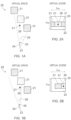
- Figs. 8A to 8C illustrates an example of a first user 80A in a first real space 10A selecting an adaptation of mediated reality content 52 for use by a second user 80B in a second real space 10B.
- the mediated reality content 52 is adapted so that virtual visual space 20 that has been displayed in the first real space 10A is aligned with the second real space 10B.
- the alignment ensures that there is a virtual visual space 20 corresponding to a portion of the mediated reality content 52 that a user 80 can move within in both the first real space 10A and the second real space 10B.
- the alignment ensures that this virtual visual space 20 includes key virtual visual objects 21 so that the user 80 can have a similar experience of these virtual visual objects 21 in both the first real space 10A and the second real space 10B.
- Fig. 8A shows a side view and a plan view of a first user 80A viewing a virtual visual scene 22 of the mediated reality content 52.
- the user 80A is positioned in a first real space 10A which comprises a rectangular room 82A.
- the mediated reality content 52 comprises a first virtual visual space 20A which is perceived to be displayed within the first real space 10A and a second virtual visual space 20B which is not perceived to be displayed within the first real space 10A.
- the first virtual visual space 20A is indicated by the dashed lines in Fig. 8A .
- the second virtual visual space 20B is the area outside the dashed lines in Fig. 8A .
- the user 80A can move within the first virtual visual space 20A. This may enable the user 80A to reach and/or move around the virtual visual objects 21 displayed in the first virtual visual space 20A. However the user 80A can view virtual visual objects 21 which are outside the first virtual visual space 20A but cannot reach or move around them.
- two virtual visual objects 21A and 21B are displayed in the first virtual visual space 20A.
- the first virtual visual object 21A is a tree and the second virtual visual object 21B is a car.
- a third virtual visual object 21C is displayed outside the first virtual visual space 20A.
- the third virtual visual object 21C is a bench.
- the first user 80A in the first room can move around and reach the tree and the car.
- the first user 80A can view the bench but cannot move to the bench because the walls of the room 82A are blocking the way.
- the first user 80A wishes to share the mediated reality content 52 with a second user 80B so that the second user 80B can have a similar experience of the mediated reality content 52. This may enable the second user 80B to view the same virtual visual scene 22 and interact with the same virtual visual objects 21. A user 80 can interact with the virtual visual objects 21 by reaching them or moving around them.
- the second user 80B is positioned in a second real space 10B which comprises a smaller rectangular room 82B.
- the input circuitry 43 may detect the first user 80A making a user input indicating that they wish to share the mediated reality content 52 with the second user 80B. In response to this input the apparatus 30 may obtain information about the real space 10B in which the second user 80B is located. In the example of Figs. 8A to 8C the information may comprise information about the size and shape of the second room 82B.
- the information relating to the second real space 10B is used to create a template 100 of the second room 82B.
- the template 100 of the second room 82B is displayed in the virtual visual scene 22 so that the first user 80A has a preview of the virtual visual space 20C that the second user 80B will be able to move within if they share the mediated reality content 52.
- the template 100 is indicated by the dark grey area.
- the template 100 provides an indication of the boundaries of the virtual visual space 20C that the second user 80B will be able to move within.
- the virtual visual space 20C that the second user 80B can move in is smaller than the virtual visual space 20A that the first user 80A can move in.
- the template 100 only covers a portion of the virtual visual objects 21A, 21B. This means that only a portion of the virtual visual objects 21A, 21B would be in the virtual visual space 20C that the second user 80 can move within. This may prevent the second user 80B from reaching or moving around the virtual visual objects 21A, 21B.
- the first user 80A may want the second user 80B to be able to reach and/or move around both of the virtual visual objects 21A, 21B and so may adapt the mediated reality content 52 before it is shared.
- Fig. 8B shows a side view and a plan view the first user 80A adapting the mediated reality content 52 so that the second user 80B can reach and/or move around both of the virtual visual objects 21A, 21B.
- the user controls the position of the mediated reality content 52 to be displayed in the second real space 10B by moving the position of the template 100 within the virtual visual scene 22.
- the template 100 may be moved in response to a user input detected by the input circuitry 43.
- the user has moved the template 100 so that it covers both of the virtual visual objects 21A and 21B.
- the user also controls the scaling of the mediated reality content by changing the distance between the various virtual visual objects 21A, 21B, 21C.
- the second virtual visual object 21B has been moved so that it is closer to the other virtual visual objects 21A, 21C.
- the mediated reality content 52 could be rotated or otherwise moved within the real spaces 10.
- the audio content may also be adapted.
- the second virtual visual object 21B has been moved closer to the user 80A.
- a sound source corresponding to the second virtual visual object 21B may also be moved closer to the user 80A so that the adapted sounds corresponds to the adapted positions of the second virtual visual object 21B.
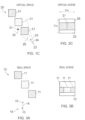
- Fig. 8C shows the first user 80A viewing the mediated reality content 52 in the first real space 10A and the second user 80B viewing the mediated reality content 52 in the second real space 10B.
- the second user 80B is viewing the adapted mediated reality content 52.
- the position of the mediated reality content 52 is aligned with the second room 82B so that the real space 10 in which the second user 80B can move corresponds to a virtual visual space 20C comprising both of the virtual visual objects 21A, 21C.
- Fig. 8C shows plan views of the first user 80A and the second user 80B rendering the mediated reality content 52.
- the mediated reality content 52 has been adapted for the second user 80B as indicated by the first user 80A so that both the first user 80A and the second user 80B are viewing a similar virtual visual scene 22 comprising the virtual visual objects 21A, 21B.
- the virtual visual scene 22 is similar in that it contains the same virtual visual objects 21A, 21B.
- the mediated reality content around the virtual visual objects 21A, 21B may be different for the different users 80A, 80B however both the first user 80A and the second user 80B may be able to move to and move around the virtual visual objects 21A, 21B. This may ensure that the first user 80A and second user 80B can have similar experiences with the mediated reality content 52.
- both of the users 80A, 80B may be viewing the mediated reality content 52 at the same time. This may enable the users 80A, 80B to interact with each other while using the mediated reality content 52.
- the mediated reality content 52 is adapted for the second user 80B but the content as rendered for the first user 80A is unchanged.
- the mediated reality content 52 may be adapted for both the first user 80A and the second user 80B. This may cause the mediated reality content 52 to be changed for the first user 80A but may enable an identical virtual visual scene to be provided to both the first user 80A and the second user 80B.
- Figs. 9A to 9D illustrate an example of a first user 80A selecting an adaptation of mediated reality content 52 for use in different real spaces 10.
- Fig. 9A illustrates a plan view of a first real space 10A which comprises a first room 82A and a second real space 10B which comprises a second room 82B.
- the first room 82A is an L-shaped room.
- the second room 82B is smaller than the first room 82A.
- a first user 80A in the first room 82A may wish to share mediated reality content 52 that they are viewing with a second user 80B in the second room 82B.
- the first user 80A has indicated that they wish to share the mediated reality content 52 information about the second real space 10B is obtained.
- This information comprises the size and shape of the second room 82B.
- this information is used to generate a template 100 of the second room 82B and display this to the first user 80A via the first user's apparatus 30.
- a template 100 of the second room 82B is displayed overlaying the plan 110 of the first room 82A. This provides an indication to the first user 80A which parts of the mediated reality content 52 will be included in the virtual visual space 20 that the second user 80B can move within.
- the template 100 of the second room 82B may initially be displayed in a default position.
- the default position may be in the center of the plan 110 of the first room 82A.
- the first user 80A may want to enable the second user 80B to be able to move within a different part of the mediated reality content 52.
- the virtual visual objects 21 that are most interesting to the first user 80A may be located in a different part of the first room 82A.
- the first user 80A may make a user input to move the template 100 of the second room 82B from the default position to their chosen position.
- Fig. 9C shows the template being moved from a default position to a position chosen by a user 80.
- the template 100 is being moved within the real space and rotated clockwise through 90°. Other movements of the template 100 would be made in other implementations of the disclosure depending on the sizes and shapes of the different real spaces 10.
- Fig. 9D the first user 80A has moved the template 100 to the chosen position.
- the first user 80A may make a user input confirming that they wish to share this portion of the mediated reality content 52.
- the apparatus 30 may adapt the mediated reality content 52 so that it will be repositioned within the second room 82B and enable it to be shared with the second user 80B.
- Fig. 10 illustrates an example method for enabling mediated reality and/or augmented reality and/or virtual reality.
- Fig. 10 illustrates an example where the mediated reality content 52 is used by the same user 80.
- the user 80 may be using the mediated reality content 52 in a first real space 10A at a first time.
- the user 80 may then wish to continue using the mediated reality content 52 in a second real space 10B at a different time.
- the user 80 selects the mediated reality content 52.
- the mediated reality content 52 may be mediated reality content 52 that the user 80 has used at an earlier point in time.
- the mediated reality content 52 is stored with associated information 54 relating to the real space 10A in which the mediated reality content 52 was used.
- the mediated reality content 52 and the associated information 54 is provided to a mapping processing.
- the mapping processing may be performed by a processor 40.
- information 139 about the current real space 10B of the user 80 is also provided to the mapping processing.
- the information 139 about the current real space 10B may be obtained using input circuitry 43 or by any other suitable means.
- the mapping processing uses the information about the respective real spaces to determine how the mediated reality content 52 should be adapted.
- the mediated reality content 52 is rendered by the apparatus 30 at block 134. For instance, it is displayed on a display 32 of the apparatus 30.
- the user views the virtual visual scenes and hears the audio scenes that are presented via the apparatus 30.
- Fig. 11 illustrates another example method for enabling mediated reality and/or augmented reality and/or virtual reality.
- Fig. 11 illustrates an example where the mediated reality content 52 is shared from a first user 80A to a second user 80B.
- the first user 80A selects mediated reality content 52.
- the mediated reality content 52 may be content that has been used by the first user 80A in a first real space 10A.
- the mediated reality content 52 is stored with associated information 54 relating to the real space 10A in which the first user 80A used the mediated reality content 52.
- the first user 80A makes a user input indicating that they wish to share the mediated reality content 52 with a second user 80B.
- the second user 80B makes a user input connecting to the mediated reality content 52. For instance the second user 80B may indicate that they wish to receive the mediated reality content 52.
- the mediated reality content 52 is provided to a mapping processing.
- the mediated reality content 52 may be provided with associated information about the first real space 10A. In some examples the information about the first real space could be obtained separately at block 145.
- the mapping processing also obtains information 149 about the real space 10B in which the second user 80B is located.
- the mapping processing may be performed by a processor 40.
- the mapping processing uses the information about the respective real spaces 10A, 10B to determine how the mediated reality content 52 should be adapted.
- the mediated reality content 52 is rendered by the apparatus 30 at block 146. For instance, it is displayed on a display 32 of the apparatus 30.
- the first user 80A views the virtual visual scenes 22 and hears the audio scenes that are presented via a first apparatus 30 and the second user 80B views the virtual visual scenes 22 that are presented via a second apparatus 30.
- the first user 80A and the second user 80B may view the same virtual visual scenes 22 at the same time.
- the methods as described with reference to Fig 11 to 18 may be performed by any suitable apparatus (e.g. apparatus 30, 400) , computer program (e.g. computer program 46, 416) or system (e.g. system 100) such as those previously described or similar.
- apparatus e.g. apparatus 30, 400
- computer program e.g. computer program 46, 416
- system e.g. system 100
- a computer program for example either of the computer programs 48 or a combination of the computer programs 48 may be configured to perform the methods.
- an apparatus 30 may comprise: at least one processor 40,; and at least one memory 46 including computer program code the at least one memory 46 and the computer program code configured to, with the at least one processor 40, cause the apparatus 30 at least to perform: storing 90 mediated reality content 52 and associated information relating to a first real space 10A in which the mediated reality content 52 has been displayed; selecting 92 the mediated reality content 52 for display in a second real space 10B; obtaining 94 information relating to the second real space 10B; and using the information relating to the first real space 10A and the information relating to the second real space 10B to adapt the mediated reality content 52 for display in the second real space10B.
- the computer program 48 may arrive at the apparatus 30 via any suitable delivery mechanism.
- the delivery mechanism may be, for example, a non-transitory computer-readable storage medium, a computer program product, a memory device, a record medium such as a compact disc read-only memory (CD-ROM) or digital versatile disc (DVD), an article of manufacture that tangibly embodies the computer program 48.
- the delivery mechanism may be a signal configured to reliably transfer the computer program 48.
- the apparatus 30 may propagate or transmit the computer program 48 as a computer data signal.
- the electronic apparatus 30, may in some examples be a part of an audio output device such as a head-mounted audio output device or a module for such an audio output device.
- the electronic apparatus 30, may in some examples additionally or alternatively be a part of a head-mounted apparatus comprising the rendering device(s) 32 that renders information to a user visually and/or aurally and/or haptically.
- references to 'computer-readable storage medium', 'computer program product', 'tangibly embodied computer program' etc. or a 'controller', 'computer', 'processor' etc. should be understood to encompass not only computers having different architectures such as single /multi- processor architectures and sequential (Von Neumann)/parallel architectures but also specialized circuits such as field-programmable gate arrays (FPGA), application specific circuits (ASIC), signal processing devices and other processing circuitry.
- References to computer program, instructions, code etc. should be understood to encompass software for a programmable processor or firmware such as, for example, the programmable content of a hardware device whether instructions for a processor, or configuration settings for a fixed-function device, gate array or programmable logic device etc.
- circuitry refers to all of the following:
- circuitry would also cover an implementation of merely a processor (or multiple processors) or portion of a processor and its (or their) accompanying software and/or firmware.
- circuitry would also cover, for example and if applicable to the particular claim element, a baseband integrated circuit or applications processor integrated circuit for a mobile phone or a similar integrated circuit in a server, a cellular network device, or other network device.
- the blocks, steps and processes illustrated in the Figs 7 to 11 may represent steps in a method and/or sections of code in the computer program.
- the illustration of a particular order to the blocks does not necessarily imply that there is a required or preferred order for the blocks and the order and arrangement of the block may be varied. Furthermore, it may be possible for some blocks to be omitted.
- module refers to a unit or apparatus that excludes certain parts/components that would be added by an end manufacturer or a user.
- the controller 42 may, for example be a module.
- the apparatus may be a module.
- the rendering devices 32 may be a module or separate modules.
- example or “for example” or “may” in the text denotes, whether explicitly stated or not, that such features or functions are present in at least the described example, whether described as an example or not, and that they can be, but are not necessarily, present in some of or all other examples.
- example “for example” or “may” refers to a particular instance in a class of examples.
- a property of the instance can be a property of only that instance or a property of the class or a property of a sub-class of the class that includes some but not all of the instances in the class. It is therefore implicitly disclosed that a features described with reference to one example but not with reference to another example, can where possible be used in that other example but does not necessarily have to be used in that other example.
Landscapes
- Engineering & Computer Science (AREA)
- Theoretical Computer Science (AREA)
- Physics & Mathematics (AREA)
- General Physics & Mathematics (AREA)
- General Engineering & Computer Science (AREA)
- Computer Hardware Design (AREA)
- Human Computer Interaction (AREA)
- Processing Or Creating Images (AREA)
- User Interface Of Digital Computer (AREA)
Claims (15)
- Verfahren, das Folgendes umfasst:Speichern (90) eines Inhalts (52) mit vermittelter Realität und von zugehörigen Informationen, die eine Größe und/oder eine Form eines ersten realen Raums (10A) betreffen, in dem der Inhalt (52) mit vermittelter Realität angezeigt wird, wobei ein Benutzer in der Lage ist, sich in einem realen Raum zu bewegen, während der Inhalt mit vermittelter Realität gerendert wird, und wobei der reale Raum einen geschlossenen Raum wie etwa ein Zimmer oder eine andere geeignete Umgebung beinhaltet;Auswählen (92) des Inhalts (52) mit vermittelter Realität zur Anzeige in einem zweiten realen Raum (10B), wobei der erste reale Raum und der zweite reale Raum verschiedene reale Räume sind;Erhalten (94) von Informationen, die eine Größe und/oder eine Form des zweiten realen Raums (10B) betreffen; undVerwenden der Informationen, die die Größe und/oder die Form des ersten realen Raums (10A) betreffen, und der Informationen, die die Größe und/oder die Form des zweiten realen Raums (10B) betreffen, um den Inhalt (52) mit vermittelter Realität für eine Anzeige im zweiten realen Raum (10B) anzupassen, wobei das Anpassen des Inhalts mit vermittelter Realität das Umpositionieren von virtuellen Objekten auf Basis eines Vergleichs zwischen der Größe und/oder der Form des ersten realen Raums und der Größe und/oder der Form des zweiten realen Raums umfasst, um es zu ermöglichen, dass virtuelle Objekte, die im ersten realen Raum angezeigt werden, von einem Benutzer im zweiten realen Raum betrachtet und erreicht werden können.
- Verfahren nach Anspruch 1, wobei das Anpassen des Inhalts mit vermittelter Realität es einem Benutzer ermöglicht, sich sowohl im ersten realen Raum als auch im zweiten realen Raum in einem virtuellen visuellen Raum zu bewegen.
- Verfahren nach einem der vorhergehenden Ansprüche, wobei das Anpassen des Inhalts mit vermittelter Realität die wahrgenommene Position von virtuellen visuellen Objekten im zweiten realen Raum steuert, derart, dass sich ein Benutzer im zweiten realen Raum relativ zu den virtuellen visuellen Objekten zu denselben Positionen bewegen kann wie der Benutzer im ersten realen Raum.
- Verfahren nach einem der vorhergehenden Ansprüche, wobei das Anpassen des Inhalts mit vermittelter Realität das Ausrichten eines virtuellen visuellen Raums, der im ersten realen Raum angezeigt wird, auf den zweiten realen Raum umfasst.
- Verfahren nach einem der vorhergehenden Ansprüche, wobei das Anpassen des Inhalts mit vermittelter Realität mindestens eines von Folgendem umfasst; Bewegen der Position, in der der Inhalt mit vermittelter Realität angezeigt wird, mit dem zweiten realen Raum, Drehen des Inhalts mit vermittelter Realität im zweiten realen Raum.
- Verfahren nach einem der vorhergehenden Ansprüche, wobei das Anpassen des Inhalts mit vermittelter Realität das Bewegen von mindestens einem virtuellen visuellen Objekt in einem virtuellen visuellen Raum umfasst.
- Verfahren nach einem der vorhergehenden Ansprüche, wobei das Anpassen des Inhalts mit vermittelter Realität das Ändern des Maßstabs von mindestens einem von Folgendem umfasst; einem virtuellen visuellen Raum des Inhalts mit vermittelter Realität, einem oder mehreren virtuellen visuellen Objekten im Inhalt mit vermittelter Realität.
- Verfahren nach einem der vorhergehenden Ansprüche, wobei der Inhalt mit vermittelter Realität einem ersten Benutzer im ersten realen Raum angezeigt wird und der Inhalt mit vermittelter Realität angepasst wird, bevor er für einen zweiten Benutzer freigegeben wird, wo sich der zweite Benutzer in einem zweiten realen Raum befindet.
- Verfahren nach einem der vorhergehenden Ansprüche, das das Ermöglichen umfasst, dass sich ein Benutzer eine Zuordnung des Inhalts mit vermittelter Realität im zweiten realen Raum in der Vorschau ansieht und das Anpassen des Inhalts mit vermittelter Realität für den zweiten realen Raum steuert.
- Verfahren nach einem der vorhergehenden Ansprüche, das das Ermöglichen einer Benutzersteuerung des Anpassens umfasst, wobei die Benutzersteuerung des Anpassens es einem Benutzer ermöglicht, mindestens ein virtuelles visuelles Objekt auszuwählen, derart, dass das virtuelle visuelle Objekt sowohl im ersten realen Raum als auch im zweiten realen Raum angezeigt wird.
- Verfahren nach einem der vorhergehenden Ansprüche, wobei die zugehörigen Informationen, die die Größe und/oder die Form des ersten realen Raums betreffen, die mit dem Inhalt mit vermittelter Realität gespeichert sind, auch Informationen umfassen, die mindestens eines von Folgendem betreffen: die Position des Benutzers im ersten realen Raum, als der Inhalt mit vermittelter Realität angezeigt wurde, die Ausrichtung des Benutzers im ersten realen Raum, als der Inhalt mit vermittelter Realität angezeigt wurde, die Position von Objekten im ersten realen Raum, als der Inhalt mit vermittelter Realität angezeigt wurde.
- Verfahren nach einem der vorhergehenden Ansprüche, wobei das Verwenden der Informationen, die die Größe und/oder die Form des ersten realen Raums und die Größe und/oder die Form des zweiten realen Raums betreffen, das Vergleichen der Abmessungen des ersten realen Raums und des zweiten realen Raums und das Bestimmen einer Anpassung des Inhalts mit vermittelter Realität, die sicherstellt, dass ein virtuelles visuelles Objekt, das im ersten realen Raum angezeigt wird, im zweiten realen Raum angezeigt wird, umfasst.
- Verfahren nach einem der vorhergehenden Ansprüche, wobei das Verwenden der Informationen, die die Größe und/oder die Form des ersten realen Raums und die Größe und/oder die Form des zweiten realen Raums betreffen, das Vergleichen des Ortes von realen Objekten im ersten realen Raum und im zweiten realen Raum und das Steuern der Position, in der virtuelle visuelle Objekte im zweiten realen Raum angezeigt werden, um es einem Benutzer zu ermöglichen, die virtuellen visuellen Objekte sowohl im ersten realen Raum als auch im zweiten realen Raum von denselben relativen Positionen zu betrachten, umfasst.
- Vorrichtung, die Mittel zum Durchführen des Verfahrens von einem der Ansprüche 1 bis 13 umfasst.
- Computerprogramm, das, wenn es auf einem Prozessor ausgeführt wird, das Verfahren von einem der Ansprüche 1 bis 13 bewirkt.
Priority Applications (4)
| Application Number | Priority Date | Filing Date | Title |
|---|---|---|---|
| EP17174540.9A EP3413166B1 (de) | 2017-06-06 | 2017-06-06 | Rendering von inhalt mit vermittelter realität |
| US16/613,892 US11244659B2 (en) | 2017-06-06 | 2018-05-21 | Rendering mediated reality content |
| JP2019566644A JP6979469B2 (ja) | 2017-06-06 | 2018-05-21 | 媒介現実コンテンツのレンダリング |
| PCT/FI2018/050381 WO2018224725A1 (en) | 2017-06-06 | 2018-05-21 | Rendering mediated reality content |
Applications Claiming Priority (1)
| Application Number | Priority Date | Filing Date | Title |
|---|---|---|---|
| EP17174540.9A EP3413166B1 (de) | 2017-06-06 | 2017-06-06 | Rendering von inhalt mit vermittelter realität |
Publications (2)
| Publication Number | Publication Date |
|---|---|
| EP3413166A1 EP3413166A1 (de) | 2018-12-12 |
| EP3413166B1 true EP3413166B1 (de) | 2023-06-21 |
Family
ID=59021381
Family Applications (1)
| Application Number | Title | Priority Date | Filing Date |
|---|---|---|---|
| EP17174540.9A Active EP3413166B1 (de) | 2017-06-06 | 2017-06-06 | Rendering von inhalt mit vermittelter realität |
Country Status (4)
| Country | Link |
|---|---|
| US (1) | US11244659B2 (de) |
| EP (1) | EP3413166B1 (de) |
| JP (1) | JP6979469B2 (de) |
| WO (1) | WO2018224725A1 (de) |
Families Citing this family (10)
| Publication number | Priority date | Publication date | Assignee | Title |
|---|---|---|---|---|
| EP3454174B1 (de) | 2017-09-08 | 2023-11-15 | Nokia Technologies Oy | Verfahren, vorrichtungen, systeme, computerprogramme zur ermöglichung von vermittelter realität |
| EP3726343B1 (de) | 2019-04-15 | 2026-01-07 | Nokia Technologies Oy | Virtuelle realität |
| JP7472912B2 (ja) * | 2019-08-19 | 2024-04-23 | ソニーグループ株式会社 | 情報処理装置、情報処理方法および記録媒体 |
| KR102838557B1 (ko) * | 2020-10-07 | 2025-07-25 | 삼성전자 주식회사 | 이동 통신 시스템에서 컨텐츠를 렌더링하는 방법 및 장치 |
| EP4295314A4 (de) * | 2021-02-08 | 2025-04-16 | Sightful Computers Ltd | Gemeinsame inhaltsnutzung in erweiterter realität |
| JP7651897B2 (ja) * | 2021-03-23 | 2025-03-27 | 株式会社Jvcケンウッド | 表示装置、表示装置の制御方法及びプログラム |
| EP4343705A4 (de) * | 2021-05-19 | 2024-06-19 | Sony Group Corporation | Informationsverarbeitungsvorrichtung, informationsverarbeitungsprogramm und informationsverarbeitungssystem |
| GB2607622B (en) * | 2021-06-10 | 2026-04-22 | Nokia Technologies Oy | Mediated reality with wireless charging. |
| EP4595015A1 (de) | 2022-09-30 | 2025-08-06 | Sightful Computers Ltd | Adaptive inhaltsdarstellung mit erweiterter realität in mehreren physikalischen umgebungen |
| CN117649506A (zh) * | 2023-12-04 | 2024-03-05 | 杭州灵伴科技有限公司 | 一种在虚拟(3d)空间中隔离运行可交互虚拟物体的方法、设备、计算机程序产品 |
Family Cites Families (19)
| Publication number | Priority date | Publication date | Assignee | Title |
|---|---|---|---|---|
| JP4677269B2 (ja) | 2005-04-08 | 2011-04-27 | キヤノン株式会社 | 情報処理方法およびシステム |
| US20120113223A1 (en) * | 2010-11-05 | 2012-05-10 | Microsoft Corporation | User Interaction in Augmented Reality |
| KR20130053466A (ko) * | 2011-11-14 | 2013-05-24 | 한국전자통신연구원 | 인터랙티브 증강공간 제공을 위한 콘텐츠 재생 장치 및 방법 |
| US9183676B2 (en) * | 2012-04-27 | 2015-11-10 | Microsoft Technology Licensing, Llc | Displaying a collision between real and virtual objects |
| US9429912B2 (en) * | 2012-08-17 | 2016-08-30 | Microsoft Technology Licensing, Llc | Mixed reality holographic object development |
| JP2014071499A (ja) * | 2012-09-27 | 2014-04-21 | Kyocera Corp | 表示装置および制御方法 |
| JP6281495B2 (ja) * | 2013-02-01 | 2018-02-21 | ソニー株式会社 | 情報処理装置、端末装置、情報処理方法及びプログラム |
| US9489772B2 (en) * | 2013-03-27 | 2016-11-08 | Intel Corporation | Environment actuation by one or more augmented reality elements |
| JP5790692B2 (ja) | 2013-03-29 | 2015-10-07 | ソニー株式会社 | 情報処理装置、情報処理方法および記録媒体 |
| US9367961B2 (en) * | 2013-04-15 | 2016-06-14 | Tencent Technology (Shenzhen) Company Limited | Method, device and storage medium for implementing augmented reality |
| US9898844B2 (en) * | 2013-12-31 | 2018-02-20 | Daqri, Llc | Augmented reality content adapted to changes in real world space geometry |
| US9766460B2 (en) * | 2014-07-25 | 2017-09-19 | Microsoft Technology Licensing, Llc | Ground plane adjustment in a virtual reality environment |
| US9599821B2 (en) * | 2014-08-08 | 2017-03-21 | Greg Van Curen | Virtual reality system allowing immersion in virtual space to consist with actual movement in actual space |
| JP2016071900A (ja) * | 2014-09-30 | 2016-05-09 | キヤノンマーケティングジャパン株式会社 | 情報処理システム、その制御方法、及びプログラム |
| US9898864B2 (en) * | 2015-05-28 | 2018-02-20 | Microsoft Technology Licensing, Llc | Shared tactile interaction and user safety in shared space multi-person immersive virtual reality |
| EP3128413A1 (de) * | 2015-08-04 | 2017-02-08 | Nokia Technologies Oy | Gemeinsame nutzung von inhalten vermittelter realität |
| US9766713B2 (en) * | 2015-09-08 | 2017-09-19 | Unity IPR ApS | System and method for providing user interface tools |
| JP6920057B2 (ja) * | 2016-12-22 | 2021-08-18 | キヤノンマーケティングジャパン株式会社 | 画像処理装置、画像処理方法、コンピュータプログラム |
| US11189098B2 (en) * | 2019-06-28 | 2021-11-30 | Snap Inc. | 3D object camera customization system |
-
2017
- 2017-06-06 EP EP17174540.9A patent/EP3413166B1/de active Active
-
2018
- 2018-05-21 US US16/613,892 patent/US11244659B2/en active Active
- 2018-05-21 JP JP2019566644A patent/JP6979469B2/ja active Active
- 2018-05-21 WO PCT/FI2018/050381 patent/WO2018224725A1/en not_active Ceased
Non-Patent Citations (1)
| Title |
|---|
| "Handbook of Augmented Reality", 1 January 2011, SPRINGER NEW YORK, New York, NY, ISBN: 978-1-4614-0064-6, article ANDREI SHERSTYUK ET AL: "Virtual Roommates: Sampling and Reconstructing Presence in Multiple Shared Spaces", pages: 211 - 230, XP055381787, DOI: 10.1007/978-1-4614-0064-6_9 * |
Also Published As
| Publication number | Publication date |
|---|---|
| JP6979469B2 (ja) | 2021-12-15 |
| JP2020523672A (ja) | 2020-08-06 |
| US20200143775A1 (en) | 2020-05-07 |
| US11244659B2 (en) | 2022-02-08 |
| EP3413166A1 (de) | 2018-12-12 |
| WO2018224725A1 (en) | 2018-12-13 |
Similar Documents
| Publication | Publication Date | Title |
|---|---|---|
| EP3413166B1 (de) | Rendering von inhalt mit vermittelter realität | |
| US10761595B2 (en) | Content browsing | |
| US11194439B2 (en) | Methods, apparatus, systems, computer programs for enabling mediated reality | |
| US10884576B2 (en) | Mediated reality | |
| US10999412B2 (en) | Sharing mediated reality content | |
| US11209903B2 (en) | Rendering of mediated reality content | |
| EP3287868B1 (de) | Inhaltserkennung | |
| US12190439B2 (en) | Mediated reality | |
| US10559131B2 (en) | Mediated reality | |
| US10650595B2 (en) | Mediated reality |
Legal Events
| Date | Code | Title | Description |
|---|---|---|---|
| PUAI | Public reference made under article 153(3) epc to a published international application that has entered the european phase |
Free format text: ORIGINAL CODE: 0009012 |
|
| STAA | Information on the status of an ep patent application or granted ep patent |
Free format text: STATUS: THE APPLICATION HAS BEEN PUBLISHED |
|
| AK | Designated contracting states |
Kind code of ref document: A1 Designated state(s): AL AT BE BG CH CY CZ DE DK EE ES FI FR GB GR HR HU IE IS IT LI LT LU LV MC MK MT NL NO PL PT RO RS SE SI SK SM TR |
|
| AX | Request for extension of the european patent |
Extension state: BA ME |
|
| STAA | Information on the status of an ep patent application or granted ep patent |
Free format text: STATUS: REQUEST FOR EXAMINATION WAS MADE |
|
| 17P | Request for examination filed |
Effective date: 20190612 |
|
| RBV | Designated contracting states (corrected) |
Designated state(s): AL AT BE BG CH CY CZ DE DK EE ES FI FR GB GR HR HU IE IS IT LI LT LU LV MC MK MT NL NO PL PT RO RS SE SI SK SM TR |
|
| RAP1 | Party data changed (applicant data changed or rights of an application transferred) |
Owner name: NOKIA TECHNOLOGIES OY |
|
| STAA | Information on the status of an ep patent application or granted ep patent |
Free format text: STATUS: EXAMINATION IS IN PROGRESS |
|
| 17Q | First examination report despatched |
Effective date: 20200818 |
|
| GRAP | Despatch of communication of intention to grant a patent |
Free format text: ORIGINAL CODE: EPIDOSNIGR1 |
|
| STAA | Information on the status of an ep patent application or granted ep patent |
Free format text: STATUS: GRANT OF PATENT IS INTENDED |
|
| INTG | Intention to grant announced |
Effective date: 20230110 |
|
| GRAS | Grant fee paid |
Free format text: ORIGINAL CODE: EPIDOSNIGR3 |
|
| GRAA | (expected) grant |
Free format text: ORIGINAL CODE: 0009210 |
|
| STAA | Information on the status of an ep patent application or granted ep patent |
Free format text: STATUS: THE PATENT HAS BEEN GRANTED |
|
| AK | Designated contracting states |
Kind code of ref document: B1 Designated state(s): AL AT BE BG CH CY CZ DE DK EE ES FI FR GB GR HR HU IE IS IT LI LT LU LV MC MK MT NL NO PL PT RO RS SE SI SK SM TR |
|
| REG | Reference to a national code |
Ref country code: CH Ref legal event code: EP |
|
| REG | Reference to a national code |
Ref country code: DE Ref legal event code: R096 Ref document number: 602017070384 Country of ref document: DE |
|
| REG | Reference to a national code |
Ref country code: AT Ref legal event code: REF Ref document number: 1581360 Country of ref document: AT Kind code of ref document: T Effective date: 20230715 |
|
| REG | Reference to a national code |
Ref country code: IE Ref legal event code: FG4D |
|
| REG | Reference to a national code |
Ref country code: NL Ref legal event code: FP |
|
| REG | Reference to a national code |
Ref country code: LT Ref legal event code: MG9D |
|
| PG25 | Lapsed in a contracting state [announced via postgrant information from national office to epo] |
Ref country code: SE Free format text: LAPSE BECAUSE OF FAILURE TO SUBMIT A TRANSLATION OF THE DESCRIPTION OR TO PAY THE FEE WITHIN THE PRESCRIBED TIME-LIMIT Effective date: 20230621 Ref country code: NO Free format text: LAPSE BECAUSE OF FAILURE TO SUBMIT A TRANSLATION OF THE DESCRIPTION OR TO PAY THE FEE WITHIN THE PRESCRIBED TIME-LIMIT Effective date: 20230921 |
|
| REG | Reference to a national code |
Ref country code: AT Ref legal event code: MK05 Ref document number: 1581360 Country of ref document: AT Kind code of ref document: T Effective date: 20230621 |
|
| PG25 | Lapsed in a contracting state [announced via postgrant information from national office to epo] |
Ref country code: RS Free format text: LAPSE BECAUSE OF FAILURE TO SUBMIT A TRANSLATION OF THE DESCRIPTION OR TO PAY THE FEE WITHIN THE PRESCRIBED TIME-LIMIT Effective date: 20230621 Ref country code: LV Free format text: LAPSE BECAUSE OF FAILURE TO SUBMIT A TRANSLATION OF THE DESCRIPTION OR TO PAY THE FEE WITHIN THE PRESCRIBED TIME-LIMIT Effective date: 20230621 Ref country code: LT Free format text: LAPSE BECAUSE OF FAILURE TO SUBMIT A TRANSLATION OF THE DESCRIPTION OR TO PAY THE FEE WITHIN THE PRESCRIBED TIME-LIMIT Effective date: 20230621 Ref country code: HR Free format text: LAPSE BECAUSE OF FAILURE TO SUBMIT A TRANSLATION OF THE DESCRIPTION OR TO PAY THE FEE WITHIN THE PRESCRIBED TIME-LIMIT Effective date: 20230621 Ref country code: GR Free format text: LAPSE BECAUSE OF FAILURE TO SUBMIT A TRANSLATION OF THE DESCRIPTION OR TO PAY THE FEE WITHIN THE PRESCRIBED TIME-LIMIT Effective date: 20230922 |
|
| PG25 | Lapsed in a contracting state [announced via postgrant information from national office to epo] |
Ref country code: FI Free format text: LAPSE BECAUSE OF FAILURE TO SUBMIT A TRANSLATION OF THE DESCRIPTION OR TO PAY THE FEE WITHIN THE PRESCRIBED TIME-LIMIT Effective date: 20230621 |
|
| PG25 | Lapsed in a contracting state [announced via postgrant information from national office to epo] |
Ref country code: SK Free format text: LAPSE BECAUSE OF FAILURE TO SUBMIT A TRANSLATION OF THE DESCRIPTION OR TO PAY THE FEE WITHIN THE PRESCRIBED TIME-LIMIT Effective date: 20230621 |
|
| PG25 | Lapsed in a contracting state [announced via postgrant information from national office to epo] |
Ref country code: ES Free format text: LAPSE BECAUSE OF FAILURE TO SUBMIT A TRANSLATION OF THE DESCRIPTION OR TO PAY THE FEE WITHIN THE PRESCRIBED TIME-LIMIT Effective date: 20230621 |
|
| PG25 | Lapsed in a contracting state [announced via postgrant information from national office to epo] |
Ref country code: IS Free format text: LAPSE BECAUSE OF FAILURE TO SUBMIT A TRANSLATION OF THE DESCRIPTION OR TO PAY THE FEE WITHIN THE PRESCRIBED TIME-LIMIT Effective date: 20231021 |
|
| PG25 | Lapsed in a contracting state [announced via postgrant information from national office to epo] |
Ref country code: SM Free format text: LAPSE BECAUSE OF FAILURE TO SUBMIT A TRANSLATION OF THE DESCRIPTION OR TO PAY THE FEE WITHIN THE PRESCRIBED TIME-LIMIT Effective date: 20230621 Ref country code: SK Free format text: LAPSE BECAUSE OF FAILURE TO SUBMIT A TRANSLATION OF THE DESCRIPTION OR TO PAY THE FEE WITHIN THE PRESCRIBED TIME-LIMIT Effective date: 20230621 Ref country code: RO Free format text: LAPSE BECAUSE OF FAILURE TO SUBMIT A TRANSLATION OF THE DESCRIPTION OR TO PAY THE FEE WITHIN THE PRESCRIBED TIME-LIMIT Effective date: 20230621 Ref country code: PT Free format text: LAPSE BECAUSE OF FAILURE TO SUBMIT A TRANSLATION OF THE DESCRIPTION OR TO PAY THE FEE WITHIN THE PRESCRIBED TIME-LIMIT Effective date: 20231023 Ref country code: IS Free format text: LAPSE BECAUSE OF FAILURE TO SUBMIT A TRANSLATION OF THE DESCRIPTION OR TO PAY THE FEE WITHIN THE PRESCRIBED TIME-LIMIT Effective date: 20231021 Ref country code: ES Free format text: LAPSE BECAUSE OF FAILURE TO SUBMIT A TRANSLATION OF THE DESCRIPTION OR TO PAY THE FEE WITHIN THE PRESCRIBED TIME-LIMIT Effective date: 20230621 Ref country code: EE Free format text: LAPSE BECAUSE OF FAILURE TO SUBMIT A TRANSLATION OF THE DESCRIPTION OR TO PAY THE FEE WITHIN THE PRESCRIBED TIME-LIMIT Effective date: 20230621 Ref country code: CZ Free format text: LAPSE BECAUSE OF FAILURE TO SUBMIT A TRANSLATION OF THE DESCRIPTION OR TO PAY THE FEE WITHIN THE PRESCRIBED TIME-LIMIT Effective date: 20230621 Ref country code: AT Free format text: LAPSE BECAUSE OF FAILURE TO SUBMIT A TRANSLATION OF THE DESCRIPTION OR TO PAY THE FEE WITHIN THE PRESCRIBED TIME-LIMIT Effective date: 20230621 |
|
| PG25 | Lapsed in a contracting state [announced via postgrant information from national office to epo] |
Ref country code: PL Free format text: LAPSE BECAUSE OF FAILURE TO SUBMIT A TRANSLATION OF THE DESCRIPTION OR TO PAY THE FEE WITHIN THE PRESCRIBED TIME-LIMIT Effective date: 20230621 |
|
| REG | Reference to a national code |
Ref country code: DE Ref legal event code: R097 Ref document number: 602017070384 Country of ref document: DE |
|
| PLBE | No opposition filed within time limit |
Free format text: ORIGINAL CODE: 0009261 |
|
| STAA | Information on the status of an ep patent application or granted ep patent |
Free format text: STATUS: NO OPPOSITION FILED WITHIN TIME LIMIT |
|
| PG25 | Lapsed in a contracting state [announced via postgrant information from national office to epo] |
Ref country code: DK Free format text: LAPSE BECAUSE OF FAILURE TO SUBMIT A TRANSLATION OF THE DESCRIPTION OR TO PAY THE FEE WITHIN THE PRESCRIBED TIME-LIMIT Effective date: 20230621 |
|
| PG25 | Lapsed in a contracting state [announced via postgrant information from national office to epo] |
Ref country code: SI Free format text: LAPSE BECAUSE OF FAILURE TO SUBMIT A TRANSLATION OF THE DESCRIPTION OR TO PAY THE FEE WITHIN THE PRESCRIBED TIME-LIMIT Effective date: 20230621 |
|
| 26N | No opposition filed |
Effective date: 20240322 |
|
| PG25 | Lapsed in a contracting state [announced via postgrant information from national office to epo] |
Ref country code: SI Free format text: LAPSE BECAUSE OF FAILURE TO SUBMIT A TRANSLATION OF THE DESCRIPTION OR TO PAY THE FEE WITHIN THE PRESCRIBED TIME-LIMIT Effective date: 20230621 Ref country code: IT Free format text: LAPSE BECAUSE OF FAILURE TO SUBMIT A TRANSLATION OF THE DESCRIPTION OR TO PAY THE FEE WITHIN THE PRESCRIBED TIME-LIMIT Effective date: 20230621 |
|
| PGFP | Annual fee paid to national office [announced via postgrant information from national office to epo] |
Ref country code: NL Payment date: 20240515 Year of fee payment: 8 |
|
| PG25 | Lapsed in a contracting state [announced via postgrant information from national office to epo] |
Ref country code: BG Free format text: LAPSE BECAUSE OF FAILURE TO SUBMIT A TRANSLATION OF THE DESCRIPTION OR TO PAY THE FEE WITHIN THE PRESCRIBED TIME-LIMIT Effective date: 20230621 |
|
| PG25 | Lapsed in a contracting state [announced via postgrant information from national office to epo] |
Ref country code: BG Free format text: LAPSE BECAUSE OF FAILURE TO SUBMIT A TRANSLATION OF THE DESCRIPTION OR TO PAY THE FEE WITHIN THE PRESCRIBED TIME-LIMIT Effective date: 20230621 |
|
| PG25 | Lapsed in a contracting state [announced via postgrant information from national office to epo] |
Ref country code: MC Free format text: LAPSE BECAUSE OF FAILURE TO SUBMIT A TRANSLATION OF THE DESCRIPTION OR TO PAY THE FEE WITHIN THE PRESCRIBED TIME-LIMIT Effective date: 20230621 |
|
| REG | Reference to a national code |
Ref country code: CH Ref legal event code: PL |
|
| PG25 | Lapsed in a contracting state [announced via postgrant information from national office to epo] |
Ref country code: LU Free format text: LAPSE BECAUSE OF NON-PAYMENT OF DUE FEES Effective date: 20240606 |
|
| PG25 | Lapsed in a contracting state [announced via postgrant information from national office to epo] |
Ref country code: IE Free format text: LAPSE BECAUSE OF NON-PAYMENT OF DUE FEES Effective date: 20240606 |
|
| PG25 | Lapsed in a contracting state [announced via postgrant information from national office to epo] |
Ref country code: BE Free format text: LAPSE BECAUSE OF NON-PAYMENT OF DUE FEES Effective date: 20240630 Ref country code: CH Free format text: LAPSE BECAUSE OF NON-PAYMENT OF DUE FEES Effective date: 20240630 |
|
| PG25 | Lapsed in a contracting state [announced via postgrant information from national office to epo] |
Ref country code: FR Free format text: LAPSE BECAUSE OF NON-PAYMENT OF DUE FEES Effective date: 20240630 |
|
| REG | Reference to a national code |
Ref country code: BE Ref legal event code: MM Effective date: 20240630 |
|
| PGFP | Annual fee paid to national office [announced via postgrant information from national office to epo] |
Ref country code: DE Payment date: 20250429 Year of fee payment: 9 |
|
| PGFP | Annual fee paid to national office [announced via postgrant information from national office to epo] |
Ref country code: GB Payment date: 20250501 Year of fee payment: 9 |
|
| PG25 | Lapsed in a contracting state [announced via postgrant information from national office to epo] |
Ref country code: CY Free format text: LAPSE BECAUSE OF FAILURE TO SUBMIT A TRANSLATION OF THE DESCRIPTION OR TO PAY THE FEE WITHIN THE PRESCRIBED TIME-LIMIT; INVALID AB INITIO Effective date: 20170606 |
|
| REG | Reference to a national code |
Ref country code: NL Ref legal event code: MM Effective date: 20250701 |
|
| PG25 | Lapsed in a contracting state [announced via postgrant information from national office to epo] |
Ref country code: HU Free format text: LAPSE BECAUSE OF FAILURE TO SUBMIT A TRANSLATION OF THE DESCRIPTION OR TO PAY THE FEE WITHIN THE PRESCRIBED TIME-LIMIT; INVALID AB INITIO Effective date: 20170606 |
|
| PG25 | Lapsed in a contracting state [announced via postgrant information from national office to epo] |
Ref country code: NL Free format text: LAPSE BECAUSE OF NON-PAYMENT OF DUE FEES Effective date: 20250701 |