EP3413431A1 - Dispositif de climatisation à stockage d'énergie photovoltaïque, et procédé de commande - Google Patents
Dispositif de climatisation à stockage d'énergie photovoltaïque, et procédé de commande Download PDFInfo
- Publication number
- EP3413431A1 EP3413431A1 EP17746866.7A EP17746866A EP3413431A1 EP 3413431 A1 EP3413431 A1 EP 3413431A1 EP 17746866 A EP17746866 A EP 17746866A EP 3413431 A1 EP3413431 A1 EP 3413431A1
- Authority
- EP
- European Patent Office
- Prior art keywords
- power
- energy storage
- photovoltaic
- generation device
- storage device
- Prior art date
- Legal status (The legal status is an assumption and is not a legal conclusion. Google has not performed a legal analysis and makes no representation as to the accuracy of the status listed.)
- Withdrawn
Links
Images


Classifications
-
- F—MECHANICAL ENGINEERING; LIGHTING; HEATING; WEAPONS; BLASTING
- F24—HEATING; RANGES; VENTILATING
- F24F—AIR-CONDITIONING; AIR-HUMIDIFICATION; VENTILATION; USE OF AIR CURRENTS FOR SCREENING
- F24F5/00—Air-conditioning systems or apparatus not covered by F24F1/00 or F24F3/00, e.g. using solar heat or combined with household units such as an oven or water heater
- F24F5/0046—Air-conditioning systems or apparatus not covered by F24F1/00 or F24F3/00, e.g. using solar heat or combined with household units such as an oven or water heater using natural energy, e.g. solar energy, energy from the ground
-
- F—MECHANICAL ENGINEERING; LIGHTING; HEATING; WEAPONS; BLASTING
- F24—HEATING; RANGES; VENTILATING
- F24F—AIR-CONDITIONING; AIR-HUMIDIFICATION; VENTILATION; USE OF AIR CURRENTS FOR SCREENING
- F24F5/00—Air-conditioning systems or apparatus not covered by F24F1/00 or F24F3/00, e.g. using solar heat or combined with household units such as an oven or water heater
- F24F5/0096—Air-conditioning systems or apparatus not covered by F24F1/00 or F24F3/00, e.g. using solar heat or combined with household units such as an oven or water heater combined with domestic apparatus
-
- H—ELECTRICITY
- H02—GENERATION; CONVERSION OR DISTRIBUTION OF ELECTRIC POWER
- H02J—ELECTRIC POWER NETWORKS; CIRCUIT ARRANGEMENTS OR SYSTEMS FOR SUPPLYING OR DISTRIBUTING ELECTRIC POWER; SYSTEMS FOR STORING ELECTRIC ENERGY
- H02J3/00—Circuit arrangements for AC mains or AC distribution networks
- H02J3/28—Arrangements for balancing of the load in networks by storage of energy
- H02J3/32—Arrangements for balancing of the load in networks by storage of energy using batteries or super capacitors with converting means
-
- H—ELECTRICITY
- H02—GENERATION; CONVERSION OR DISTRIBUTION OF ELECTRIC POWER
- H02J—ELECTRIC POWER NETWORKS; CIRCUIT ARRANGEMENTS OR SYSTEMS FOR SUPPLYING OR DISTRIBUTING ELECTRIC POWER; SYSTEMS FOR STORING ELECTRIC ENERGY
- H02J3/00—Circuit arrangements for AC mains or AC distribution networks
- H02J3/38—Arrangements for feeding a single network from two or more generators or sources in parallel; Arrangements for feeding already energised networks from additional generators or sources in parallel
-
- H—ELECTRICITY
- H02—GENERATION; CONVERSION OR DISTRIBUTION OF ELECTRIC POWER
- H02J—ELECTRIC POWER NETWORKS; CIRCUIT ARRANGEMENTS OR SYSTEMS FOR SUPPLYING OR DISTRIBUTING ELECTRIC POWER; SYSTEMS FOR STORING ELECTRIC ENERGY
- H02J3/00—Circuit arrangements for AC mains or AC distribution networks
- H02J3/38—Arrangements for feeding a single network from two or more generators or sources in parallel; Arrangements for feeding already energised networks from additional generators or sources in parallel
- H02J3/381—Dispersed generators
-
- H—ELECTRICITY
- H02—GENERATION; CONVERSION OR DISTRIBUTION OF ELECTRIC POWER
- H02J—ELECTRIC POWER NETWORKS; CIRCUIT ARRANGEMENTS OR SYSTEMS FOR SUPPLYING OR DISTRIBUTING ELECTRIC POWER; SYSTEMS FOR STORING ELECTRIC ENERGY
- H02J3/00—Circuit arrangements for AC mains or AC distribution networks
- H02J3/38—Arrangements for feeding a single network from two or more generators or sources in parallel; Arrangements for feeding already energised networks from additional generators or sources in parallel
- H02J3/46—Controlling the sharing of generated power between the generators, sources or networks
- H02J3/466—Scheduling or selectively controlling the operation of the generators or sources, e.g. connecting or disconnecting generators to meet a demand
- H02J3/472—Scheduling or selectively controlling the operation of the generators or sources, e.g. connecting or disconnecting generators to meet a demand for selectively connecting the AC sources in a particular order, e.g. sequential, alternating or subsets of sources
-
- H—ELECTRICITY
- H02—GENERATION; CONVERSION OR DISTRIBUTION OF ELECTRIC POWER
- H02J—ELECTRIC POWER NETWORKS; CIRCUIT ARRANGEMENTS OR SYSTEMS FOR SUPPLYING OR DISTRIBUTING ELECTRIC POWER; SYSTEMS FOR STORING ELECTRIC ENERGY
- H02J9/00—Circuit arrangements for emergency or stand-by power supply, e.g. for emergency lighting
- H02J9/04—Circuit arrangements for emergency or stand-by power supply, e.g. for emergency lighting in which the distribution system is disconnected from the normal source and connected to a standby source
- H02J9/06—Circuit arrangements for emergency or stand-by power supply, e.g. for emergency lighting in which the distribution system is disconnected from the normal source and connected to a standby source with automatic change-over, e.g. UPS systems
- H02J9/062—Circuit arrangements for emergency or stand-by power supply, e.g. for emergency lighting in which the distribution system is disconnected from the normal source and connected to a standby source with automatic change-over, e.g. UPS systems for AC powered loads
-
- F—MECHANICAL ENGINEERING; LIGHTING; HEATING; WEAPONS; BLASTING
- F24—HEATING; RANGES; VENTILATING
- F24F—AIR-CONDITIONING; AIR-HUMIDIFICATION; VENTILATION; USE OF AIR CURRENTS FOR SCREENING
- F24F5/00—Air-conditioning systems or apparatus not covered by F24F1/00 or F24F3/00, e.g. using solar heat or combined with household units such as an oven or water heater
- F24F5/0046—Air-conditioning systems or apparatus not covered by F24F1/00 or F24F3/00, e.g. using solar heat or combined with household units such as an oven or water heater using natural energy, e.g. solar energy, energy from the ground
- F24F2005/0064—Air-conditioning systems or apparatus not covered by F24F1/00 or F24F3/00, e.g. using solar heat or combined with household units such as an oven or water heater using natural energy, e.g. solar energy, energy from the ground using solar energy
- F24F2005/0067—Air-conditioning systems or apparatus not covered by F24F1/00 or F24F3/00, e.g. using solar heat or combined with household units such as an oven or water heater using natural energy, e.g. solar energy, energy from the ground using solar energy with photovoltaic panels
-
- H—ELECTRICITY
- H02—GENERATION; CONVERSION OR DISTRIBUTION OF ELECTRIC POWER
- H02J—ELECTRIC POWER NETWORKS; CIRCUIT ARRANGEMENTS OR SYSTEMS FOR SUPPLYING OR DISTRIBUTING ELECTRIC POWER; SYSTEMS FOR STORING ELECTRIC ENERGY
- H02J2101/00—Supply or distribution of decentralised, dispersed or local electric power generation
- H02J2101/20—Dispersed power generation using renewable energy sources
- H02J2101/22—Solar energy
- H02J2101/24—Photovoltaics
-
- H—ELECTRICITY
- H02—GENERATION; CONVERSION OR DISTRIBUTION OF ELECTRIC POWER
- H02J—ELECTRIC POWER NETWORKS; CIRCUIT ARRANGEMENTS OR SYSTEMS FOR SUPPLYING OR DISTRIBUTING ELECTRIC POWER; SYSTEMS FOR STORING ELECTRIC ENERGY
- H02J2105/00—Networks for supplying or distributing electric power characterised by their spatial reach or by the load
- H02J2105/40—Networks for supplying or distributing electric power characterised by their spatial reach or by the load characterised by the loads connecting to the networks or being supplied by the networks
- H02J2105/42—Home appliances
-
- H—ELECTRICITY
- H02—GENERATION; CONVERSION OR DISTRIBUTION OF ELECTRIC POWER
- H02J—ELECTRIC POWER NETWORKS; CIRCUIT ARRANGEMENTS OR SYSTEMS FOR SUPPLYING OR DISTRIBUTING ELECTRIC POWER; SYSTEMS FOR STORING ELECTRIC ENERGY
- H02J3/00—Circuit arrangements for AC mains or AC distribution networks
- H02J3/12—Arrangements for adjusting voltage in AC networks by changing a characteristic of the network load
- H02J3/14—Arrangements for adjusting voltage in AC networks by changing a characteristic of the network load by switching loads on to, or off from, the networks, e.g. progressively balanced loading
-
- H—ELECTRICITY
- H02—GENERATION; CONVERSION OR DISTRIBUTION OF ELECTRIC POWER
- H02J—ELECTRIC POWER NETWORKS; CIRCUIT ARRANGEMENTS OR SYSTEMS FOR SUPPLYING OR DISTRIBUTING ELECTRIC POWER; SYSTEMS FOR STORING ELECTRIC ENERGY
- H02J7/00—Circuit arrangements for charging or discharging batteries or for supplying loads from batteries
- H02J7/34—Parallel operation in networks using both storage and other DC sources, e.g. providing buffering
- H02J7/35—Parallel operation in networks using both storage and other DC sources, e.g. providing buffering with light sensitive cells
-
- Y—GENERAL TAGGING OF NEW TECHNOLOGICAL DEVELOPMENTS; GENERAL TAGGING OF CROSS-SECTIONAL TECHNOLOGIES SPANNING OVER SEVERAL SECTIONS OF THE IPC; TECHNICAL SUBJECTS COVERED BY FORMER USPC CROSS-REFERENCE ART COLLECTIONS [XRACs] AND DIGESTS
- Y02—TECHNOLOGIES OR APPLICATIONS FOR MITIGATION OR ADAPTATION AGAINST CLIMATE CHANGE
- Y02B—CLIMATE CHANGE MITIGATION TECHNOLOGIES RELATED TO BUILDINGS, e.g. HOUSING, HOUSE APPLIANCES OR RELATED END-USER APPLICATIONS
- Y02B10/00—Integration of renewable energy sources in buildings
- Y02B10/70—Hybrid systems, e.g. uninterruptible or back-up power supplies integrating renewable energies
-
- Y—GENERAL TAGGING OF NEW TECHNOLOGICAL DEVELOPMENTS; GENERAL TAGGING OF CROSS-SECTIONAL TECHNOLOGIES SPANNING OVER SEVERAL SECTIONS OF THE IPC; TECHNICAL SUBJECTS COVERED BY FORMER USPC CROSS-REFERENCE ART COLLECTIONS [XRACs] AND DIGESTS
- Y02—TECHNOLOGIES OR APPLICATIONS FOR MITIGATION OR ADAPTATION AGAINST CLIMATE CHANGE
- Y02B—CLIMATE CHANGE MITIGATION TECHNOLOGIES RELATED TO BUILDINGS, e.g. HOUSING, HOUSE APPLIANCES OR RELATED END-USER APPLICATIONS
- Y02B70/00—Technologies for an efficient end-user side electric power management and consumption
- Y02B70/30—Systems integrating technologies related to power network operation and communication or information technologies for improving the carbon footprint of the management of residential or tertiary loads, i.e. smart grids as climate change mitigation technology in the buildings sector, including also the last stages of power distribution and the control, monitoring or operating management systems at local level
-
- Y—GENERAL TAGGING OF NEW TECHNOLOGICAL DEVELOPMENTS; GENERAL TAGGING OF CROSS-SECTIONAL TECHNOLOGIES SPANNING OVER SEVERAL SECTIONS OF THE IPC; TECHNICAL SUBJECTS COVERED BY FORMER USPC CROSS-REFERENCE ART COLLECTIONS [XRACs] AND DIGESTS
- Y02—TECHNOLOGIES OR APPLICATIONS FOR MITIGATION OR ADAPTATION AGAINST CLIMATE CHANGE
- Y02B—CLIMATE CHANGE MITIGATION TECHNOLOGIES RELATED TO BUILDINGS, e.g. HOUSING, HOUSE APPLIANCES OR RELATED END-USER APPLICATIONS
- Y02B70/00—Technologies for an efficient end-user side electric power management and consumption
- Y02B70/30—Systems integrating technologies related to power network operation and communication or information technologies for improving the carbon footprint of the management of residential or tertiary loads, i.e. smart grids as climate change mitigation technology in the buildings sector, including also the last stages of power distribution and the control, monitoring or operating management systems at local level
- Y02B70/3225—Demand response systems, e.g. load shedding, peak shaving
-
- Y—GENERAL TAGGING OF NEW TECHNOLOGICAL DEVELOPMENTS; GENERAL TAGGING OF CROSS-SECTIONAL TECHNOLOGIES SPANNING OVER SEVERAL SECTIONS OF THE IPC; TECHNICAL SUBJECTS COVERED BY FORMER USPC CROSS-REFERENCE ART COLLECTIONS [XRACs] AND DIGESTS
- Y02—TECHNOLOGIES OR APPLICATIONS FOR MITIGATION OR ADAPTATION AGAINST CLIMATE CHANGE
- Y02E—REDUCTION OF GREENHOUSE GAS [GHG] EMISSIONS, RELATED TO ENERGY GENERATION, TRANSMISSION OR DISTRIBUTION
- Y02E10/00—Energy generation through renewable energy sources
- Y02E10/50—Photovoltaic [PV] energy
- Y02E10/56—Power conversion systems, e.g. maximum power point trackers
-
- Y—GENERAL TAGGING OF NEW TECHNOLOGICAL DEVELOPMENTS; GENERAL TAGGING OF CROSS-SECTIONAL TECHNOLOGIES SPANNING OVER SEVERAL SECTIONS OF THE IPC; TECHNICAL SUBJECTS COVERED BY FORMER USPC CROSS-REFERENCE ART COLLECTIONS [XRACs] AND DIGESTS
- Y02—TECHNOLOGIES OR APPLICATIONS FOR MITIGATION OR ADAPTATION AGAINST CLIMATE CHANGE
- Y02E—REDUCTION OF GREENHOUSE GAS [GHG] EMISSIONS, RELATED TO ENERGY GENERATION, TRANSMISSION OR DISTRIBUTION
- Y02E70/00—Other energy conversion or management systems reducing GHG emissions
- Y02E70/30—Systems combining energy storage with energy generation of non-fossil origin
-
- Y—GENERAL TAGGING OF NEW TECHNOLOGICAL DEVELOPMENTS; GENERAL TAGGING OF CROSS-SECTIONAL TECHNOLOGIES SPANNING OVER SEVERAL SECTIONS OF THE IPC; TECHNICAL SUBJECTS COVERED BY FORMER USPC CROSS-REFERENCE ART COLLECTIONS [XRACs] AND DIGESTS
- Y04—INFORMATION OR COMMUNICATION TECHNOLOGIES HAVING AN IMPACT ON OTHER TECHNOLOGY AREAS
- Y04S—SYSTEMS INTEGRATING TECHNOLOGIES RELATED TO POWER NETWORK OPERATION, COMMUNICATION OR INFORMATION TECHNOLOGIES FOR IMPROVING THE ELECTRICAL POWER GENERATION, TRANSMISSION, DISTRIBUTION, MANAGEMENT OR USAGE, i.e. SMART GRIDS
- Y04S20/00—Management or operation of end-user stationary applications or the last stages of power distribution; Controlling, monitoring or operating thereof
- Y04S20/20—End-user application control systems
- Y04S20/222—Demand response systems, e.g. load shedding, peak shaving
-
- Y—GENERAL TAGGING OF NEW TECHNOLOGICAL DEVELOPMENTS; GENERAL TAGGING OF CROSS-SECTIONAL TECHNOLOGIES SPANNING OVER SEVERAL SECTIONS OF THE IPC; TECHNICAL SUBJECTS COVERED BY FORMER USPC CROSS-REFERENCE ART COLLECTIONS [XRACs] AND DIGESTS
- Y04—INFORMATION OR COMMUNICATION TECHNOLOGIES HAVING AN IMPACT ON OTHER TECHNOLOGY AREAS
- Y04S—SYSTEMS INTEGRATING TECHNOLOGIES RELATED TO POWER NETWORK OPERATION, COMMUNICATION OR INFORMATION TECHNOLOGIES FOR IMPROVING THE ELECTRICAL POWER GENERATION, TRANSMISSION, DISTRIBUTION, MANAGEMENT OR USAGE, i.e. SMART GRIDS
- Y04S20/00—Management or operation of end-user stationary applications or the last stages of power distribution; Controlling, monitoring or operating thereof
- Y04S20/20—End-user application control systems
- Y04S20/242—Home appliances
-
- Y—GENERAL TAGGING OF NEW TECHNOLOGICAL DEVELOPMENTS; GENERAL TAGGING OF CROSS-SECTIONAL TECHNOLOGIES SPANNING OVER SEVERAL SECTIONS OF THE IPC; TECHNICAL SUBJECTS COVERED BY FORMER USPC CROSS-REFERENCE ART COLLECTIONS [XRACs] AND DIGESTS
- Y04—INFORMATION OR COMMUNICATION TECHNOLOGIES HAVING AN IMPACT ON OTHER TECHNOLOGY AREAS
- Y04S—SYSTEMS INTEGRATING TECHNOLOGIES RELATED TO POWER NETWORK OPERATION, COMMUNICATION OR INFORMATION TECHNOLOGIES FOR IMPROVING THE ELECTRICAL POWER GENERATION, TRANSMISSION, DISTRIBUTION, MANAGEMENT OR USAGE, i.e. SMART GRIDS
- Y04S20/00—Management or operation of end-user stationary applications or the last stages of power distribution; Controlling, monitoring or operating thereof
- Y04S20/20—End-user application control systems
- Y04S20/242—Home appliances
- Y04S20/244—Home appliances the home appliances being or involving heating ventilating and air conditioning [HVAC] units
-
- Y—GENERAL TAGGING OF NEW TECHNOLOGICAL DEVELOPMENTS; GENERAL TAGGING OF CROSS-SECTIONAL TECHNOLOGIES SPANNING OVER SEVERAL SECTIONS OF THE IPC; TECHNICAL SUBJECTS COVERED BY FORMER USPC CROSS-REFERENCE ART COLLECTIONS [XRACs] AND DIGESTS
- Y04—INFORMATION OR COMMUNICATION TECHNOLOGIES HAVING AN IMPACT ON OTHER TECHNOLOGY AREAS
- Y04S—SYSTEMS INTEGRATING TECHNOLOGIES RELATED TO POWER NETWORK OPERATION, COMMUNICATION OR INFORMATION TECHNOLOGIES FOR IMPROVING THE ELECTRICAL POWER GENERATION, TRANSMISSION, DISTRIBUTION, MANAGEMENT OR USAGE, i.e. SMART GRIDS
- Y04S20/00—Management or operation of end-user stationary applications or the last stages of power distribution; Controlling, monitoring or operating thereof
- Y04S20/20—End-user application control systems
- Y04S20/248—UPS systems or standby or emergency generators
Definitions
- the present disclosure relates to the technical field of air conditioners, in particular to a photovoltaic energy storage air conditioner and a control method thereof.
- the existing mature photovoltaic air conditioning system mainly uses photovoltaic power and municipal power in combination.
- the photovoltaic air conditioning system may not operate normally.
- some concepts of photovoltaic energy storage air conditioning systems have been proposed, in which an energy storage unit is added to the photovoltaic air conditioning system to form photovoltaic energy storage air conditioning system architecture so as to ensure energy supply and normal operations.
- the present disclosure provides a photovoltaic energy storage air conditioner and a control method thereof.
- a photovoltaic energy storage air conditioner including: a photovoltaic power generation device, an energy storage device, an air conditioning unit and an energy scheduling and management device, wherein the photovoltaic power generation device, the energy storage device and a public power grid are connected to the air conditioning unit for power supply; the photovoltaic power generation device and the public power grid are connected to the energy storage device for charging; the photovoltaic power generation device is configured to comply a grid-connected power supply to the public power grid; and wherein the energy scheduling and management device includes: a detection module, configured to detect an operation state of the air conditioner, a power supply quantity and a working state of the photovoltaic power generation device and a power supply quantity and a working state of the energy storage device; and a scheduling module, configured to control power supply and/or charging according to the operation state of the air conditioner, the power supply quantity and the working state of the photovoltaic power generation device, the power supply quantity and the working state of the energy storage device, preset power
- the photovoltaic power generation device includes a photovoltaic array, an inverter, a switching means, and an electric energy meter; the photovoltaic array, the switching means and the inverter are successively connected ; the inverter is connected to the public power grid; the switching means is connected to the air conditioning unit; the electric energy meter is arranged on a line between the photovoltaic array and the switching means; and the detection module is connected to the electric energy meter to obtain an electric quantity generated by the photovoltaic array; and the scheduling module is connected to the switching means and the inverter so as to control the photovoltaic array to supply power to the air conditioning unit and/or the public power grid.
- the energy storage device includes an energy storage battery pack and a battery energy management module; and the battery energy management module is connected to the energy storage battery pack; the detection module and the scheduling module are connected to the battery energy management module, the detection module obtains an electric quantity of the energy storage battery pack through the battery energy management module, and the scheduling module controls a working state of the energy storage battery pack through the battery energy management module.
- the energy storage device further includes a direct current converter; and the energy storage battery pack is connected to the public power grid through the direct current converter.
- the air conditioning unit is adapted to connect to the public power grid through a switching device; and the scheduling module is connected to the switching device.
- the air conditioning unit includes a controller, and the controller is connected to the detection module to obtain the operation state of the air conditioner.
- the power supplies selected by the scheduling module according to the highest to lowest order of the power supply priorities are successively the photovoltaic power generation device, the energy storage device and the public power grid; and wherein the devices to be supplied power according to the highest to lowest order of the power supply priorities are successively the air conditioning unit, the energy storage device and the public power grid.
- the scheduling module is adapted to control the photovoltaic power generation device only to be a power supply for supplying power to the air conditioning unit, when determining that power generated by the photovoltaic power generation device is the same as power required for the operation of the air conditioning unit; the scheduling module is adapted to control the photovoltaic power generation device to charge the energy storage device, when determining that the air conditioning unit is not operating and power of the energy storage device is insufficient; and the scheduling module is adapted to control the photovoltaic power generation device to comply the grid-connected power supply to the public power grid, when determining that the air conditioning unit is not operating and the energy storage device has sufficient power or is not working.
- the scheduling module is adapted to control the energy storage device to drive the air conditioning unit to operate when determining that the photovoltaic power generation device is not generating power and power of the energy storage device is sufficient; the scheduling module is adapted to control the public power grid to charge the energy storage device when determining that the photovoltaic power generation device is not generating power and the air conditioning unit is not operating and power of the energy storage device is insufficient; the scheduling module is adapted to control the public power grid to drive the air conditioning unit to operate and control the public power grid to charge the energy storage device when determining that the photovoltaic power generation device is not generating power and power of the energy storage device is insufficient; and the scheduling module is adapted to control the photovoltaic power generation device to supply power to the air conditioning unit and control the photovoltaic power generation device to charge the energy storage device, when determining that power generated by the photovoltaic power generation device is more than power required for the operation of the air conditioning unit, and power of the energy storage device is insufficient.
- the scheduling module is adapted to control the photovoltaic power generation device to supply power to the air conditioning unit and control the photovoltaic power generation device to comply the grid-connected power supply to the public power grid, when determining that power generated by the photovoltaic power generation device is more than power required for the operation of the air conditioning unit, and the energy storage device has sufficient power or is not working; the scheduling module is adapted to control the photovoltaic power generation device and the public power grid to supply power to the air conditioning unit jointly and control the public power grid to charge the energy storage device, when determining that power generated by the photovoltaic power generation device is less than power required for the operation of the air conditioning unit, and power of the energy storage device is insufficient; and the scheduling module is adapted to control the photovoltaic power generation device and the energy storage device to supply power to the air conditioning unit jointly, when determining that power generated by the photovoltaic power generation device is less than power required for the operation of the air conditioning unit and power of the energy storage device is sufficient.
- the scheduling module is adapted to control the photovoltaic power generation device and the public power grid to supply power to the air conditioning unit jointly, when determining that power generated by the photovoltaic power generation device is less than power required for the operation of the air conditioning unit and the energy storage device is not working; and the scheduling module is adapted to control the public power grid to supply power to the air conditioning unit, when determining that the photovoltaic power generation device is not generating power and the energy storage device is not working.
- a control method for a photovoltaic energy storage air conditioner including: detecting an operation state of the air conditioner, a power supply quantity and a working state of the photovoltaic power generation device and a power supply quantity and a working state of the energy storage device; and controlling power supply and/or charging according to the operation state of the air conditioner, the power supply quantity and the working state of the photovoltaic power generation device, the power supply quantity and the working state of the energy storage device, preset power supply priorities and power usage priorities; wherein the photovoltaic power generation device, the energy storage device and a public power grid are connected to the air conditioning unit for power supply; the photovoltaic power generation device and the public power grid are connected to the energy storage device for charging; and the photovoltaic power generation device is further configured to comply a grid-connected power supply to the public power grid.
- controlling power supply and/or charging according to the operation state of the air conditioner, the power supply quantity and the working state of the photovoltaic power generation device, the power supply quantity and the working state of the energy storage device, preset power supply priorities and power usage priorities includes: successively selecting the photovoltaic power generation device, the energy storage device and the public power grid as the power supplies according to the highest to lowest order of the power supply priorities; wherein the devices to be supplied power according to the highest to lowest order of the power supply priorities are successively the air conditioning unit, the energy storage device and the public power grid.
- controlling power supply and/or charging according to the operation state of the air conditioner, the power supply quantity and the working state of the photovoltaic power generation device, the power supply quantity and the working state of the energy storage device, preset power supply priorities and power usage priorities includes: when determining that power generated by the photovoltaic power generation device is the same as power required for the operation of the air conditioning unit, selecting the photovoltaic power generation device only as a power supply for supplying power to the air conditioning unit; when determining that the air conditioning unit is not operating and power of the energy storage device is insufficient, selecting the photovoltaic power generation device to charge the energy storage device; and when determining that the air conditioning unit is not operating and the energy storage device has sufficient power or is not working, selecting the photovoltaic power generation device to comply the grid-connected power supply to the public power grid.
- controlling power supply and/or charging according to the operation state of the air conditioner, the power supply quantity and the working state of the photovoltaic power generation device, the power supply quantity and the working state of the energy storage device, preset power supply priorities and power usage priorities includes: when determining that the photovoltaic power generation device is not generating power and power of the energy storage device is sufficient, the energy storage device drives the air conditioning unit to operate; when determining that the photovoltaic power generation device is not generating power, the air conditioning unit is not operating and power of the energy storage device is insufficient, the public power grid charges the energy storage device; and when determining that the photovoltaic power generation device is not generating power and power of the energy storage device is insufficient, the public power grid drives the air conditioning unit to operate, and the public power grid charges the energy storage device.
- controlling power supply and/or charging according to the operation state of the air conditioner, the power supply quantity and the working state of the photovoltaic power generation device, the power supply quantity and the working state of the energy storage device, preset power supply priorities and power usage priorities includes: when determining that power generated by the photovoltaic power generation device is more than power required for the operation of the air conditioning unit and power of the energy storage device is insufficient, the photovoltaic power generation device supplies power to the air conditioning unit, and the photovoltaic power generation device charges the energy storage device; when determining that power generated by the photovoltaic power generation device is more than power required for the operation of the air conditioning unit and the energy storage device has sufficient power or is not working, the photovoltaic power generation device supplies power to the air conditioning unit, and the photovoltaic power generation device complies the grid-connected power supply to the public power grid; and when determining that power generated by the photovoltaic power generation device is less than power required for the operation of the air conditioning unit and power of the energy storage device is insufficient
- controlling power supply and/or charging according to the operation state of the air conditioner, the power supply quantity and the working state of the photovoltaic power generation device, the power supply quantity and the working state of the energy storage device, preset power supply priorities and power usage priorities includes: when determining that power generated by the photovoltaic power generation device is less than power required for the operation of the air conditioning unit and power of the energy storage device is sufficient, the photovoltaic power generation device and the energy storage device supply power to the air conditioning unit jointly; when determining that power generated by the photovoltaic power generation device is less than power required for the operation of the air conditioning unit and the energy storage device is not working, the photovoltaic power generation device and the public power grid supply power to the air conditioning unit jointly; and when determining that the photovoltaic power generation device is not generating power and the energy storage device is not working, the public power grid supplies power to the air conditioning unit.
- the photovoltaic power generation device, the energy storage device and the municipal public power grid are connected to an air conditioner to form the photovoltaic energy storage air conditioner, which can operate in different working modes according to changes in actual electric quantity generated, power storage, and power usage, thereby implementing real-time operation in multiple working modes, reducing the impact of weather changes, the power storage quantity of a storage battery, and the operation state of a power grid on normal operations, and improving the stability and reliability. Moreover, no generated photovoltaic power is wasted, and the charging/discharging has less impact on the service life of the storage battery.
- the present disclosure provides a photovoltaic energy storage air conditioner, including: a photovoltaic power generation device 11, an energy storage device 12, an air conditioning unit 10, and an energy scheduling and management device 15.
- the photovoltaic power generation device 11, the energy storage device 12 and the public power grid 13 are connected to the air conditioning unit 10 for power supply.
- the photovoltaic power generation device 11 and the public power grid 13 are connected to the energy storage device 12 for charging.
- the photovoltaic power generation unit 12 is configured to comply a grid-connected power supply to the public power grid 13.
- the energy scheduling and management device 15 includes a detection module 151 and a scheduling module 152.
- the detection module 151 detects an operation state of the air conditioner, a power supply quantity and a working state of the photovoltaic power generation device and a power supply quantity and a working state of the energy storage device.
- the scheduling module 152 controls power supply or charging, or power supply and charging simultaneously according to the operation state of the air conditioner, the power supply quantity and the working state of the photovoltaic power generation device, the power supply quantity and the working state of the energy storage device, preset power supply priorities and power usage priorities.
- the photovoltaic power generation device 11, the energy storage device 12 and the public power grid 13 serve as three power supplies for the air conditioning unit 10. According to the operation state of the air conditioner, the power supply quantity and working state of each power supply, as well as power supply priorities and power usage priorities, the scheduling module 152 determines one or more of the three power supplies as actual power supplies that supply power to the air conditioning unit 10, determines one or both of the photovoltaic power generation device 11 and the public power grid 13 to charge the energy storage device 12, and determines the time of power supply and charging.
- the public power grid 13 of the present disclosure may be a municipal power grid or the like.
- Multi-energy configuration flow may be performed in real time among the photovoltaic power generation device 11, the energy storage device 12, the air conditioning unit 10 and the municipal power grid to determine the power supply priorities, wherein photovoltaic power is preferentially used, followed by stored energy, and finally municipal power.
- the power usage priorities are determined is such a manner that air conditioning is preferentially met when the air conditioner is operating, followed by energy storage, and finally municipal power generation.
- the photovoltaic energy storage air conditioner in the above embodiments can realize off-grid operation under the condition of municipal power failure.
- the energy storage device 12 can be automatically and continuously charged using surplus energy in the operation process.
- Power generation of the photovoltaic power generation device 11, charging and discharging of the energy storage device 12 and power usage of the air conditioner can be tracked in real time.
- the dynamic switching time of the power supply energy can be less than 10 ms.
- the photovoltaic power generation device includes: a photovoltaic array 111, an inverter 114, a switching means 113, and an electric energy meter 112.
- the photovoltaic array 111, the switching means 113 and the inverter 114 are successively connected, the inverter 114 is connected to the public power grid 13, and the switching means 113 is connected to the air conditioning unit 10.
- the electric energy meter 112 is arranged on a line between the photovoltaic array 111 and the switching means 113.
- the detection module 151 is connected to the electric energy meter 112 to obtain an electric quantity by the photovoltaic array 111.
- the scheduling module 152 is connected to the switching means 113 and the inverter 114 so as to control the photovoltaic array 111 to supply power to the air conditioning unit 10 or the public power grid 13, and can also supply power to the air conditioning unit 10 and the public power grid 13 at the same time.
- the switching means 113 may not be provided, the power of the photovoltaic array 111 is transmitted to the air conditioning unit through the inverter 114, and the power of the photovoltaic array 111 is transmitted to the public power grid 13 by a internal circuit of the air conditioning unit, such that a grid-connected power supply is realized.
- the power of the photovoltaic array 111 can be connected to the public power grid 13 through the inverter 114, and the inverter 114 can convert the direct current output by the photovoltaic array 111 to 220 or 380 volts of alternating current.
- the power generated by the photovoltaic array 111 is detected by the electric energy meter 112 or a metering module.
- the air conditioner as a power demand side produces a power demand according to the load, and preferentially uses photovoltaic power through a DC/AC module and an energy scheduling and management system.
- the direct current output by the photovoltaic array 111 can be connected to a direct current bus between a converter 101 and a converter 102, or converted into alternating current by the inverter 114, and the alternating current is connected to the converter 101 or the converter 102.
- Photovoltaic power is one of power supplies. If the photovoltaic power can meet the power demand of the air conditioner, the air conditioner is supplied the photovoltaic power completely. If the photovoltaic power cannot meet the power demand of the air conditioner, power is scheduled from other energy sources and then supplied to the air conditioner.
- the energy storage device includes: an energy storage battery pack 121 and a battery energy management module 122, wherein the energy storage battery pack 121 and the battery energy management module 122 are connected to each other.
- the detection module 151 and the scheduling module 152 are connected to the battery energy management module 122.
- the detection module 121 acquires electric quantity of the energy storage battery pack 121 and other information through the battery energy management module.
- the scheduling module 152 controls the working state of the energy storage battery pack 121 through the battery energy management module 122, such as charging, discharging, stopping operation, etc.
- the energy storage device detects electric quantity through the battery energy management module 122, and the battery energy management module 122 controls the charging/discharging operation and depth of the charge/discharge.
- the operation states of the photovoltaic power generation device and the energy storage device are detectable by the energy scheduling and management device 15.
- the photovoltaic power generation device is a one-way power supply. As long as the light condition meets the power generation requirement, the photovoltaic power generation device generates power to the outside. When the photovoltaic condition does not meet the power generation requirement, the power generation is stopped. Thus, the operation state of the photovoltaic power generation device is excited by the light condition.
- the energy storage device is controlled by the battery energy management module to work or not, and the working state of the energy storage device is divided into charging and discharging.
- the energy storage device may further include a direct current converter 123, and the energy storage battery pack 121 is connected to the public power grid 13 through the direct current converter 123.
- the energy storage battery pack 121 may be a lithium battery pack.
- the photovoltaic array 111 When direct current supply is needed, the photovoltaic array 111 generates direct current to directly charge the energy storage battery pack 121, and the energy storage battery pack 121 may also be supplied power through the direct current converter, a rectifying device, etc.
- the public power grid 13 generates low-voltage direct current through the direct current converter 123 to supply power to the energy storage battery pack 121.
- the air conditioning unit 10 is adapted to connect to the public power grid 13 via the switching device 14, and the scheduling module 152 is connected to the switching device 14.
- the scheduling module 152 can control the public power grid 13 to supply power to the air conditioning unit by controlling on and off operation of the switching device 14.
- Switching devices may be provided on power supply lines between a plurality of power supplies and the air conditioning unit to control the plurality of power supplies to supply power to the air conditioning unit.
- the air conditioning unit includes a controller 103.
- the controller 103 acquires an operation state of the air conditioner.
- the controller 103 of the air conditioning unit itself can detect the operation state of the air conditioning unit, including a full set of states such as an electrical parameter and a cooling load parameter.
- the energy scheduling and management module 15 also detects an operation state of the air conditioner in real time, mainly a power demand state.
- the photovoltaic power generation device, the energy storage device and the municipal public power grid are connected to an air conditioner to form the photovoltaic energy storage air conditioner, wherein power supply priorities are determined by formulating a multi-energy linkage operation strategy, that is, photovoltaic power is referentially used, followed by stored energy, and finally municipal power; and power usage priorities are determined in such a manner that power usage of air conditioning is preferentially met when the air conditioner is operating, followed by energy storage, and finally municipal power generation.
- the photovoltaic energy storage air conditioner in the above embodiments is adjusted to work in different modes under different conditions of photovoltaic power generation, energy storage and air conditioner power usage, thereby realizing adaptive multi-mode operation of the photovoltaic energy storage air conditioner.
- the operation state of the air conditioner can be maintained even under insufficient power of the photovoltaic array and extreme emergency of power grid failure, even the off-grid operation of the photovoltaic energy storage air conditioner can be realized, and the operation benefit of the system is maximized.
- the power supplies selected by the scheduling module 152 according to the highest to lowest order of power supply priorities are successively the photovoltaic power generation device 11, the energy storage device 12 and the public power grid 13.
- the devices to be supplied power according to the highest to lowest order of the power supply priorities are successively the air conditioning unit 10, the energy storage device 12 and the public power grid 13.
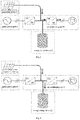
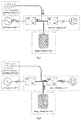
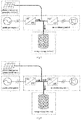
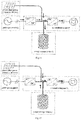
- the scheduling module 152 can switch the most suitable working mode in the current energy state according to the power supply priorities. There are totally 12 working modes, as shown in Figs. 3 to Figs. 14 , thereby ensuring the most efficient usage of energy and the stable and reliable operation of the photovoltaic energy storage air conditioner.
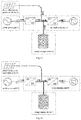
- the scheduling module 152 selects the photovoltaic power generation device 11 only as a power supply for supplying power to the air conditioning unit 10. This is the first working mode. As shown in Fig. 3 , when power generated by the photovoltaic power generation device 11 just satisfies operation of multi-split air conditioners, the photovoltaic power generation device 11 generates power and directly supplies power to the air conditioning unit 10.
- the scheduling module 152 controls the photovoltaic power generation device 11 to charge the energy storage device 12. This is the second working mode. As shown in Fig. 4 , when the air conditioning unit 10 is not operating, and power of the energy storage device 12 is insufficient, the photovoltaic power generation device 11 charges the energy storage device.
- the scheduling module 152 controls the photovoltaic power generation device 11 to comply the grid-connected power supply to the public power grid 13. This is the third working mode. As shown in Fig. 5 , when the air conditioning unit 10 is not operating, and the energy storage device 12 has sufficient power or is not working, all power generated by the photovoltaic power generation device 11 is connected to the grid.
- the scheduling module 152 controls the energy storage device 12 to drive the air conditioning unit 10 to operate. This is the fourth working mode. As shown in Fig. 6 , when the photovoltaic power generation device 11 is not generating power, and power of the energy storage device 12 is sufficient, the energy storage device 12 supplies power to the air conditioning unit 10 so as to drive the unit to operate.
- the scheduling module 152 controls the public power grid 13 to charge the energy storage device 12. This is the fifth working mode. As shown in Fig. 7 , when the photovoltaic power generation device 11 is not generating power, the air conditioning unit 10 is not operating and power of the energy storage device 12 is insufficient, the energy storage device 12 is charged by the public power grid 13. When determining that the photovoltaic power generation device 11 is not generating power and power of the energy storage device 12 is insufficient, the scheduling module 152 controls the public power grid 13 to drive the air conditioning unit 10 to operate, and controls the public power grid 10 to charge the energy storage device 12.
- the scheduling module 152 controls the photovoltaic power generation device 11 to supply power to the air conditioning unit 10, and controls the photovoltaic power generation device 11 to charge the energy storage device. This is the seventh working mode. As shown in Fig. 9 , when power generated by the photovoltaic power generation device 11 is surplus after being supplied for the operation of the air conditioning unit 10, and power of the energy storage device 12 is insufficient, the photovoltaic power is preferentially used to charge the energy storage device 12.
- the scheduling module 152 controls the photovoltaic power generation device 11 to supply power to the air conditioning unit 10, and controls the photovoltaic power generation device 11 to comply the grid-connected power supply to the public power grid 13. This is the eighth working mode. As shown in Fig. 10 , when power generated by the photovoltaic power generation device 11 is surplus after being supplied for the operation of the air conditioning unit 10, and the energy storage device 12 has sufficient power or is not working, the surplus power is supplied to the public power grid.
- the scheduling module 152 controls the photovoltaic power generation device 11 and the public power grid 13 to supply power to the air conditioning unit 10 jointly, and controls the public power grid 13 to charge the energy storage device 12. This is the ninth working mode. As shown in Fig. 11 , when power generated by the photovoltaic power generation device 11 is insufficient for the operation of the air conditioning unit 10, and power of the energy storage device 12 is also insufficient, the insufficient power is supplied by the public power grid 13, and the public power grid 13 also supplies power to the energy storage device 12.
- the scheduling module 152 controls the photovoltaic power generation device 11 and the energy storage device 12 to supply power to the air conditioning unit jointly. This is the tenth working mode. As shown in Fig. 12 , when power generated by the photovoltaic power generation device 11 is insufficient for the operation of the air conditioning unit 10, and power of the energy storage device 12 is sufficient, the insufficient power is supplied by the energy storage device 12.
- the scheduling module 152 controls the photovoltaic power generation device 11 and the public power grid 13 to supply power to the air conditioning unit 10 jointly. This is the eleventh working mode. As shown in Fig. 13 , when the energy storage device 12 is not working, and power generated by the photovoltaic power generation device 11 is insufficient for the operation of the air conditioning unit 10, the insufficient power is supplied by the public power grid 13. When determining that the photovoltaic power generation device 11 is not generating power, and the energy storage device 12 is not working, the scheduling module 152 controls the public power grid 13 to supply power to the air conditioning unit 10. This is the twelfth working mode. When the energy storage device 12 is not working, and the photovoltaic power generation device 11 is not generating power, the public power grid 13 directly supplies power to multi-split air conditioners.
- the photovoltaic energy storage air conditioner of the present disclosure When the photovoltaic energy storage air conditioner of the present disclosure operates in the first mode which is a pure photovoltaic air conditioner mode, self generation and self usage are achieved, and the supply is equal to the demand.
- the air conditioner When operating in the second mode, the air conditioner itself stores power to reduce the loss produced by connection of the inverter to the grid, and stores power as standby energy of the system to improve the reliability.
- the air conditioner operates in the third mode, the air conditioner itself cannot incorporate more energy and the energy is excessive, the photovoltaic power generation device is connected to the grid to achieve no waste of the generated power and maximize photoelectric utilization.
- the air conditioning unit When operating in the fourth mode, the air conditioning unit directly uses the energy stored by the system and does not need to get power from the grid, and the air conditioner has certain self-supply ability.
- the public power grid charges batteries to ensure that the standby energy of the air conditioner is sufficient at all times, thereby promoting the ability to response to emergencies.
- the photovoltaic energy storage air conditioner of the present disclosure When the photovoltaic energy storage air conditioner of the present disclosure operates in the sixth mode, the photovoltaic array cannot meet the load demand, and the air conditioner can operates normally without being affected.
- the excess power When operating in the seventh mode, in addition to meeting power demand of the photovoltaic energy storage air conditioner, the excess power is directly stored as standby energy, thereby avoiding power conversion loss caused by grid connection.
- the air conditioner can output power while meeting power demand of the photovoltaic energy storage air conditioner, thereby improving the benefit of the system.
- the air conditioner When operating in the tenth mode, power generated by the photovoltaic power generation device is insufficient, but the air conditioner can also achieve self-sufficiency. When operating in the eleventh mode, a small amount of power generated by the photovoltaic power generation device can also be fully utilized, and the air conditioner is also ensured to operate normally. When operating in the twelfth mode, the photovoltaic power generation device and the energy storage module, which are not working, do not affect the use of the air conditioner.
- the photovoltaic energy storage air conditioner of the present disclosure can operate in the above 12 modes. Multiple power supplies work alternately or simultaneously to realize optimal use of power under different power generation and usage conditions, thereby ensuring maximum utilization of clean photovoltaic energy, and also ensuring normal operation of the air conditioner.
- the 12 working modes can be switched in real time, ensuring the most efficient usage of energy and the stable and reliable operation of the photovoltaic energy storage air conditioning system.
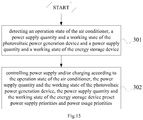
- Fig. 15 is a flow diagram according to some embodiments of a control method for a photovoltaic energy storage air conditioner of the present disclosure, as shown in Fig. 15 :
- Power supplies selected according to the highest to lowest order of the power supply priorities are successively the photovoltaic power generation device, the energy storage device and the public power grid; wherein the devices to be supplied power according to the highest to lowest order of the power supply priorities are successively the air conditioning unit, the energy storage device and the public power grid.
- the photovoltaic power generation device when it is determined that power generated by the photovoltaic power generation device is the same as power required for the operation of the air conditioning unit, the photovoltaic power generation device is selected as a power supply for supplying power to the air conditioning unit only; when it is determined that the air conditioning unit is not operating and power of the energy storage device is insufficient, the photovoltaic power generation device is selected to charge the energy storage device; and when it is determined that the air conditioning unit is not operating and the energy storage device has sufficient power or is not working, the photovoltaic power generation device is selected to comply the grid-connected power supply to the public power grid.
- the energy storage device is controlled to drive the air conditioning unit to operate; when it is determined that the photovoltaic power generation device is not generating power, the air conditioning unit is not operating and power of the energy storage device is insufficient, the public power grid is controlled to charge the energy storage device; and when it is determined that the photovoltaic power generation device is not generating power and power of the energy storage device is insufficient, the public power grid is controlled to drive the air conditioning unit to operate, and the public power grid is controlled to charge the energy storage device.
- the photovoltaic power generation device is controlled to supply power to the air conditioning unit, and the photovoltaic power generation device is controlled to charge the energy storage device; when it is determined that power generated by the photovoltaic power generation device is more than power required for the operation of the air conditioning unit and the energy storage device has sufficient power or is not working, the photovoltaic power generation device is controlled to supply power to the air conditioning unit, and the photovoltaic power generation device is controlled to comply the grid-connected power supply to the public power grid; and when it is determined that power generated by the photovoltaic power generation device is less than power required for the operation of the air conditioning unit and power of the energy storage device is insufficient, the photovoltaic power generation device and the public power grid are controlled to supply power to the air conditioning unit jointly, and the public power grid is controlled to charge the energy storage device.
- the photovoltaic power generation device and the energy storage device are controlled to supply power to the air conditioning unit jointly; when it is determined that power generated by the photovoltaic power generation device is less than power required for the operation of the air conditioning unit and the energy storage device is not working, the photovoltaic power generation device and the public power grid are controlled to supply power to the air conditioning unit jointly; and when it is determined that the photovoltaic power generation device is not generating power and the energy storage device is not working, the public power grid is controlled to supply power to the air conditioning unit.
- the photovoltaic energy storage air conditioner and the control method provided in the above embodiments operate in different working modes according to changes in actual power generation, power storage, and power usage, thereby implementing real-time operation in multiple working modes, reducing the impact of weather changes, the power storage quantity of the storage battery, and the operation state of the power grid on normal operations, and improving the stability and reliability. Moreover, no generated photovoltaic power is wasted, and the charging/discharging has less impact on the service life of the storage battery, such that the maximum benefit can be achieved.
- the method and the system of the present disclosure may be implemented in many ways.
- the method and the system of the present disclosure may be implemented through software, hardware or firmware, or any combination of the software, the hardware and the firmware.
- the above sequence of the steps of the method is only for description, and the steps of the method according to the present disclosure are not limited to the sequence specifically described above, unless otherwise specified.
- the present disclosure may also be implemented as programs recorded in a medium, and these programs include machine readable instructions for implementing the method according to the present disclosure. Therefore, the present disclosure also covers a recording medium storing programs for executing the method according to the present disclosure.
Landscapes
- Engineering & Computer Science (AREA)
- Power Engineering (AREA)
- Life Sciences & Earth Sciences (AREA)
- General Engineering & Computer Science (AREA)
- Sustainable Development (AREA)
- Chemical & Material Sciences (AREA)
- Combustion & Propulsion (AREA)
- Mechanical Engineering (AREA)
- Sustainable Energy (AREA)
- Emergency Management (AREA)
- Business, Economics & Management (AREA)
- Charge And Discharge Circuits For Batteries Or The Like (AREA)
- Supply And Distribution Of Alternating Current (AREA)
Applications Claiming Priority (2)
| Application Number | Priority Date | Filing Date | Title |
|---|---|---|---|
| CN201610076622.1A CN107040034A (zh) | 2016-02-03 | 2016-02-03 | 一种光伏储能空调装置及控制方法 |
| PCT/CN2017/072236 WO2017133546A1 (fr) | 2016-02-03 | 2017-01-23 | Dispositif de climatisation à stockage d'énergie photovoltaïque, et procédé de commande |
Publications (2)
| Publication Number | Publication Date |
|---|---|
| EP3413431A1 true EP3413431A1 (fr) | 2018-12-12 |
| EP3413431A4 EP3413431A4 (fr) | 2019-09-25 |
Family
ID=59499391
Family Applications (1)
| Application Number | Title | Priority Date | Filing Date |
|---|---|---|---|
| EP17746866.7A Withdrawn EP3413431A4 (fr) | 2016-02-03 | 2017-01-23 | Dispositif de climatisation à stockage d'énergie photovoltaïque, et procédé de commande |
Country Status (6)
| Country | Link |
|---|---|
| US (1) | US10784711B2 (fr) |
| EP (1) | EP3413431A4 (fr) |
| CN (1) | CN107040034A (fr) |
| AU (1) | AU2017215605B2 (fr) |
| CA (1) | CA3013515C (fr) |
| WO (1) | WO2017133546A1 (fr) |
Cited By (4)
| Publication number | Priority date | Publication date | Assignee | Title |
|---|---|---|---|---|
| FR3103646A1 (fr) * | 2019-11-27 | 2021-05-28 | Lancey Energy Storage | Micro-réseau résilient d'appareils de chauffage de type radiateur électrique |
| EP3996240A4 (fr) * | 2019-07-03 | 2023-04-05 | Toshiba Mitsubishi-Electric Industrial Systems Corporation | Système d'alimentation |
| CN116336613A (zh) * | 2023-03-27 | 2023-06-27 | 珠海格力电器股份有限公司 | 多联机空调系统控制方法、装置、系统和存储介质 |
| EP4167432A4 (fr) * | 2020-10-16 | 2024-02-28 | Gree Electric Appliances, Inc. of Zhuhai | Circuit d'alimentation électrique sans boucle de charge, et système de gestion d'énergie |
Families Citing this family (55)
| Publication number | Priority date | Publication date | Assignee | Title |
|---|---|---|---|---|
| CN109416191B (zh) * | 2016-06-30 | 2021-08-17 | 江森自控科技公司 | 具有预测控制的变制冷剂流量系统 |
| WO2018200854A1 (fr) | 2017-04-27 | 2018-11-01 | Johnson Controls Technology Company | Système d'énergie à commande prédictive pour bâtiment |
| US11686595B2 (en) * | 2017-05-01 | 2023-06-27 | Ara Petrosyan | Assembly, system, and method for distributing, monitoring, and controlling electrical power |
| US20220268471A1 (en) * | 2017-06-23 | 2022-08-25 | Johnson Controls Tyco IP Holdings LLP | Building equipment with predictive control |
| US11346572B2 (en) * | 2017-06-23 | 2022-05-31 | Johnson Controls Tyco IP Holdings LLP | Building equipment with predictive control |
| CN108616150A (zh) * | 2018-03-30 | 2018-10-02 | 珠海银隆电器有限公司 | 一种光伏储能系统智能供电、储电方法 |
| CN110571904A (zh) * | 2018-06-05 | 2019-12-13 | 汉能移动能源控股集团有限公司 | 车载空调的供电方法、装置和车载式光伏空调系统 |
| CN110858726B (zh) * | 2018-08-22 | 2022-04-26 | 西安西电高压开关有限责任公司 | 远端采集模块箱及其供能方法 |
| CN109462250B (zh) * | 2018-09-12 | 2022-05-24 | 国网浙江省电力有限公司嘉兴供电公司 | 一种光电火电及储能电容的联合调度方法 |
| CN109301864A (zh) * | 2018-09-30 | 2019-02-01 | 珠海格力电器股份有限公司 | 一种对光伏空调的电量进行分配的方法及装置 |
| US11131473B2 (en) | 2019-07-12 | 2021-09-28 | Johnson Controls Tyco IP Holdings LLP | HVAC system design and operational tool for building infection control |
| US11960261B2 (en) | 2019-07-12 | 2024-04-16 | Johnson Controls Tyco IP Holdings LLP | HVAC system with sustainability and emissions controls |
| US12393992B2 (en) | 2018-10-18 | 2025-08-19 | Tyco Fire & Security Gmbh | Systems and methods for assessing and controlling sustainability of an energy plant |
| US12007732B2 (en) | 2019-07-12 | 2024-06-11 | Johnson Controls Tyco IP Holdings LLP | HVAC system with building infection control |
| CN109520073A (zh) * | 2018-11-21 | 2019-03-26 | 珠海格力电器股份有限公司 | 新能源空调器及其运行控制方法 |
| US11761660B2 (en) | 2019-01-30 | 2023-09-19 | Johnson Controls Tyco IP Holdings LLP | Building control system with feedback and feedforward total energy flow compensation |
| CN110323740B (zh) * | 2019-06-24 | 2020-08-21 | 中国农业大学 | 计及光伏出力和空调负荷动态相关性的经济调峰方法 |
| US11274842B2 (en) | 2019-07-12 | 2022-03-15 | Johnson Controls Tyco IP Holdings LLP | Systems and methods for optimizing ventilation, filtration, and conditioning schemes for buildings |
| US11714393B2 (en) | 2019-07-12 | 2023-08-01 | Johnson Controls Tyco IP Holdings LLP | Building control system with load curtailment optimization |
| US12264828B2 (en) | 2019-07-12 | 2025-04-01 | Tyco Fire & Security Gmbh | Air quality control and disinfection system |
| CN110594901A (zh) * | 2019-09-05 | 2019-12-20 | 珠海格力电器股份有限公司 | 光伏空调系统以及应用此系统的方法 |
| CN111678223A (zh) * | 2020-05-15 | 2020-09-18 | 深圳市瑞能创新科技有限公司 | 具有制水装置的储能空调系统及其控制方法 |
| CN111981643B (zh) | 2020-08-03 | 2022-02-11 | 珠海格力电器股份有限公司 | 一种能量调控系统、方法及装置 |
| CN112117818A (zh) * | 2020-08-10 | 2020-12-22 | 珠海格力电器股份有限公司 | 一种车载光伏系统及其控制方法、装置和存储介质 |
| CN111864725A (zh) * | 2020-08-14 | 2020-10-30 | 珠海格力电器股份有限公司 | 基于共直流母线的风光储一体化空调系统及其控制方法 |
| CN112653190A (zh) * | 2020-10-27 | 2021-04-13 | 珠海格力电器股份有限公司 | 一种光伏空调的功率控制方法、装置、系统及光伏空调 |
| CN112484185A (zh) * | 2020-11-20 | 2021-03-12 | 珠海格力电器股份有限公司 | 应用于养殖场的光伏空调控制方法、装置及光伏空调 |
| CN112467794A (zh) * | 2020-11-25 | 2021-03-09 | 珠海格力电器股份有限公司 | 光伏空调供电系统及其供电方法 |
| CN112531780A (zh) * | 2020-12-07 | 2021-03-19 | 珠海格力电器股份有限公司 | 一种充电控制电路、方法及光储变频系统 |
| US12529492B2 (en) | 2021-05-28 | 2026-01-20 | Tyco Fire & Security Gmbh | Building control system with predictive control of carbon emissions using marginal operating emissions rate |
| US12261434B2 (en) | 2022-02-10 | 2025-03-25 | Tyco Fire & Security Gmbh | Control system with multi-factor carbon emissions optimization |
| US12398905B2 (en) | 2021-05-28 | 2025-08-26 | Tyco Fire & Security Gmbh | Building control system with multi-objective control of carbon emissions and occupant comfort |
| CN113746090B (zh) * | 2021-09-01 | 2023-09-26 | 广东电网有限责任公司 | 一种分布式资源电力需求预测系统及方法 |
| CN113809774A (zh) * | 2021-09-22 | 2021-12-17 | 中冶赛迪工程技术股份有限公司 | 一种光伏发电与电网互补的直流冶炼炉供电系统及方法 |
| CN116014830A (zh) * | 2021-10-22 | 2023-04-25 | 佛山市顺德区美的电子科技有限公司 | 无线供电控制方法、装置及可读存储介质 |
| CN114264046A (zh) * | 2021-12-20 | 2022-04-01 | 珠海格力电器股份有限公司 | 空调的控制方法及空调 |
| CN114256982A (zh) * | 2021-12-24 | 2022-03-29 | 珠海格力电器股份有限公司 | 光储充一体的空调系统及其控制方法、存储介质 |
| CN114374212A (zh) * | 2021-12-28 | 2022-04-19 | 珠海格力电器股份有限公司 | 光伏空调及其电能分配方法 |
| CN114531109A (zh) * | 2022-02-24 | 2022-05-24 | 青岛海信日立空调系统有限公司 | 一种光伏供电系统的控制方法及装置 |
| CN116961119B (zh) * | 2022-04-13 | 2025-02-21 | 青岛海尔空调器有限总公司 | 一种光伏发电控制方法及装置 |
| CN117006620A (zh) * | 2022-04-27 | 2023-11-07 | 青岛海尔空调器有限总公司 | 空调系统及其控制方法、装置、存储介质 |
| CN115021289A (zh) * | 2022-06-24 | 2022-09-06 | 上海电力设计院有限公司 | 可蓄能的光伏空调系统及其控制方法 |
| CN115313604A (zh) * | 2022-07-15 | 2022-11-08 | 广东美的白色家电技术创新中心有限公司 | 制冷剂泄漏的检测方法及装置 |
| CN115313600A (zh) * | 2022-07-15 | 2022-11-08 | 广东美的白色家电技术创新中心有限公司 | 制冷剂泄漏检测单元的供电方法及装置 |
| CN115313602B (zh) * | 2022-07-15 | 2026-03-06 | 广东美的白色家电技术创新中心有限公司 | 制冷剂泄漏检测单元的供电方法及装置 |
| CN115313601A (zh) * | 2022-07-15 | 2022-11-08 | 广东美的白色家电技术创新中心有限公司 | 制冷剂泄漏检测单元的供电方法及装置 |
| CN115313598A (zh) * | 2022-07-15 | 2022-11-08 | 广东美的白色家电技术创新中心有限公司 | 制冷剂泄漏检测单元的供电方法及装置 |
| CN115313372B (zh) * | 2022-08-24 | 2026-01-13 | 珠海格力电器股份有限公司 | 建筑物及其电力系统和供电方法、空调设备及其控制方法 |
| CN116007136B (zh) * | 2022-12-13 | 2024-11-05 | 珠海格力电器股份有限公司 | 一种光伏直流空调系统的控制方法 |
| CN116123631A (zh) * | 2022-12-15 | 2023-05-16 | 珠海格力电器股份有限公司 | 一种空调系统、取能方案的确定方法、装置、设备及介质 |
| CN115986784A (zh) * | 2023-01-06 | 2023-04-18 | 珠海格力电器股份有限公司 | 一种储电储冷系统及其运行方法 |
| US20250096560A1 (en) * | 2023-09-14 | 2025-03-20 | Carrier Corporation | Excess energy management for self-powered air conditioning systems |
| CN117608344A (zh) * | 2023-12-18 | 2024-02-27 | 广州城市理工学院 | 基于电源和温湿度的智能化调控方法和系统 |
| CN119051162B (zh) * | 2024-10-28 | 2025-04-22 | 宁波德业储能科技有限公司 | 智能微电网的能量调度方法及系统 |
| CN119492101B (zh) * | 2024-11-20 | 2025-11-04 | 广州庆源电子有限公司 | 一种带基板保护功能的光伏空调 |
Family Cites Families (30)
| Publication number | Priority date | Publication date | Assignee | Title |
|---|---|---|---|---|
| US8872379B2 (en) * | 2007-11-30 | 2014-10-28 | Johnson Controls Technology Company | Efficient usage, storage, and sharing of energy in buildings, vehicles, and equipment |
| US7830038B2 (en) * | 2007-12-17 | 2010-11-09 | Shay-Ping Thomas Wang | Single chip solution for solar-based systems |
| US8138630B2 (en) * | 2009-09-22 | 2012-03-20 | Ebay Inc. | Solar powered system with grid backup |
| JP5479182B2 (ja) * | 2009-09-30 | 2014-04-23 | 三洋電機株式会社 | 発電システムおよび充放電制御装置 |
| JP5520365B2 (ja) | 2010-03-30 | 2014-06-11 | 三洋電機株式会社 | 系統安定化システム、電力供給システム、集中管理装置の制御方法および集中管理装置のプログラム |
| CN102480167A (zh) * | 2010-11-30 | 2012-05-30 | 珠海格力节能环保制冷技术研究中心有限公司 | 空调器及其供电系统 |
| US9228750B2 (en) * | 2011-01-24 | 2016-01-05 | Rocky Research | HVAC/R system with multiple power sources and time-based selection logic |
| US8463449B2 (en) * | 2011-01-28 | 2013-06-11 | Dean Sanders | Systems, apparatus, and methods of a solar energy grid integrated system with energy storage appliance |
| WO2013011758A1 (fr) * | 2011-07-15 | 2013-01-24 | 日本電気株式会社 | Système accumulateur de stockage et procédé de commande de celui-ci |
| US9207735B2 (en) * | 2011-08-02 | 2015-12-08 | Gram Power, Inc. | Power management device and system |
| KR101851931B1 (ko) * | 2011-12-12 | 2018-04-26 | 삼성전자주식회사 | 전력 소비 제어 장치 및 방법 |
| JP2013183577A (ja) * | 2012-03-02 | 2013-09-12 | Kyocera Corp | 電力制御システム、電力制御装置、及び電力制御方法 |
| CN103001289A (zh) * | 2012-11-23 | 2013-03-27 | 博科能源系统(深圳)有限公司 | 太阳能储能发电系统 |
| CN103208837B (zh) * | 2013-03-26 | 2015-04-29 | 武汉喻科电气有限公司 | 太阳能空调及该空调的供电方法 |
| CN103280840A (zh) * | 2013-06-17 | 2013-09-04 | 上海电力学院 | 一种分布式光伏储能系统及其工作方法 |
| US9455577B2 (en) * | 2013-07-25 | 2016-09-27 | Globalfoundries Inc. | Managing devices within micro-grids |
| CN107726496A (zh) * | 2013-12-24 | 2018-02-23 | 珠海格力电器股份有限公司 | 光伏空调系统及其控制方法 |
| CN203797842U (zh) | 2013-12-24 | 2014-08-27 | 珠海格力电器股份有限公司 | 光伏空调系统 |
| JPWO2015125715A1 (ja) * | 2014-02-24 | 2017-03-30 | シャープ株式会社 | 電力システム、充放電制御装置及び充放電制御方法 |
| CN103986226B (zh) * | 2014-06-06 | 2016-08-17 | 珠海格力电器股份有限公司 | 空调及其供电系统和供电方法 |
| CN104092278B (zh) * | 2014-07-11 | 2017-05-17 | 安徽启光能源科技研究院有限公司 | 应用于光伏储能系统的能量管理方法 |
| US10243369B2 (en) * | 2014-10-01 | 2019-03-26 | Embertec Pty Ltd | Power allocation system |
| CN104284494A (zh) * | 2014-10-18 | 2015-01-14 | 深圳市新环能科技有限公司 | 光伏led直流供电控制系统 |
| US20160118846A1 (en) * | 2014-10-28 | 2016-04-28 | Bin-Juine Huang | Isolated-Type Hybrid Solar Photovoltaic System and Switching Control Method |
| US10139846B2 (en) * | 2014-11-16 | 2018-11-27 | Marvin Motsenbocker | DC power grid and equipment |
| CN104501333B (zh) * | 2014-12-10 | 2017-06-06 | 广东美的制冷设备有限公司 | 离网式光伏空调系统及其供电控制方法 |
| CN105071521B (zh) * | 2015-08-19 | 2017-09-05 | 青岛海尔空调器有限总公司 | 空调器的供电控制方法与空调器 |
| CN105186549A (zh) * | 2015-10-27 | 2015-12-23 | 中广核太阳能开发有限公司 | 一种基于直流微电网的v2g系统 |
| US9559521B1 (en) * | 2015-12-09 | 2017-01-31 | King Electric Vehicles Inc. | Renewable energy system with integrated home power |
| CN205489759U (zh) * | 2016-02-03 | 2016-08-17 | 珠海格力电器股份有限公司 | 一种光伏储能空调装置 |
-
2016
- 2016-02-03 CN CN201610076622.1A patent/CN107040034A/zh active Pending
-
2017
- 2017-01-23 EP EP17746866.7A patent/EP3413431A4/fr not_active Withdrawn
- 2017-01-23 CA CA3013515A patent/CA3013515C/fr active Active
- 2017-01-23 US US16/074,966 patent/US10784711B2/en active Active
- 2017-01-23 WO PCT/CN2017/072236 patent/WO2017133546A1/fr not_active Ceased
- 2017-01-23 AU AU2017215605A patent/AU2017215605B2/en active Active
Cited By (7)
| Publication number | Priority date | Publication date | Assignee | Title |
|---|---|---|---|---|
| EP3996240A4 (fr) * | 2019-07-03 | 2023-04-05 | Toshiba Mitsubishi-Electric Industrial Systems Corporation | Système d'alimentation |
| FR3103646A1 (fr) * | 2019-11-27 | 2021-05-28 | Lancey Energy Storage | Micro-réseau résilient d'appareils de chauffage de type radiateur électrique |
| WO2021105621A1 (fr) * | 2019-11-27 | 2021-06-03 | Lancey Energy Storage | Micro-réseau résilient d'appareils de chauffage de type radiateur électrique |
| US11923683B2 (en) | 2019-11-27 | 2024-03-05 | Lancey Energy Storage | Resilient micro-network of electrical radiator-type heating appliances |
| EP4167432A4 (fr) * | 2020-10-16 | 2024-02-28 | Gree Electric Appliances, Inc. of Zhuhai | Circuit d'alimentation électrique sans boucle de charge, et système de gestion d'énergie |
| US12609538B2 (en) | 2020-10-16 | 2026-04-21 | Gree Electric Appliances, Inc. Of Zhuhai | Energy management system including a power supply circuit without a charging loop |
| CN116336613A (zh) * | 2023-03-27 | 2023-06-27 | 珠海格力电器股份有限公司 | 多联机空调系统控制方法、装置、系统和存储介质 |
Also Published As
| Publication number | Publication date |
|---|---|
| EP3413431A4 (fr) | 2019-09-25 |
| WO2017133546A1 (fr) | 2017-08-10 |
| AU2017215605B2 (en) | 2020-10-01 |
| CA3013515A1 (fr) | 2017-08-10 |
| US10784711B2 (en) | 2020-09-22 |
| CN107040034A (zh) | 2017-08-11 |
| CA3013515C (fr) | 2022-01-04 |
| AU2017215605A1 (en) | 2018-08-23 |
| US20190052120A1 (en) | 2019-02-14 |
Similar Documents
| Publication | Publication Date | Title |
|---|---|---|
| US10784711B2 (en) | Photovoltaic energy storage air conditioner and control method thereof | |
| CN205489759U (zh) | 一种光伏储能空调装置 | |
| EP3206276B1 (fr) | Système de stockage d'énergie et son procédé de gestion | |
| KR101093956B1 (ko) | 에너지 저장 시스템 | |
| CN201947021U (zh) | 一种风光电多能源供电管理控制系统 | |
| EP2660951B1 (fr) | Source d'énergie de communication à alimentation à énergie multiple et procédé de commande associé | |
| US20200366101A1 (en) | Energy storage system | |
| WO2011162025A1 (fr) | Système de distribution électrique à courant continu | |
| US9876391B2 (en) | Power conversion apparatus, control system, and control method | |
| KR20130054754A (ko) | 태양광 발전 장치 연계형 전원공급시스템 | |
| JP2002171674A (ja) | 電力貯蔵型太陽光発電システム | |
| WO2010042118A1 (fr) | Bâtiment à multiples sources de génération d’énergie activées par un système d’ascenseur | |
| CN108539780A (zh) | 独立微电网的能源管理系统 | |
| JP2020523971A (ja) | エネルギー貯蔵システム | |
| CN101976986A (zh) | 一种利用多种能源互补发电的独立供电系统 | |
| CN205791745U (zh) | 一种发电机组蓄电池充电系统 | |
| CN114977304A (zh) | 一种风光柴储一体式供电系统及方法 | |
| KR102222560B1 (ko) | 에너지 저장 시스템 | |
| CN220787738U (zh) | 光伏储能电梯 | |
| CN118100239A (zh) | 一种光伏储能系统的运行方法及系统 | |
| KR20220165977A (ko) | 마이크로그리드 ems 운전 장치 및 방법 | |
| CN109861200A (zh) | 离网黑启动的光储直流电网系统及其运行方法 | |
| CN119341092B (zh) | 一种分布式光伏发电的优化管理系统 | |
| CN120033829A (zh) | 一种多能源互补型不间断电源系统 | |
| JP2014230366A (ja) | 発電装置 |
Legal Events
| Date | Code | Title | Description |
|---|---|---|---|
| STAA | Information on the status of an ep patent application or granted ep patent |
Free format text: STATUS: THE INTERNATIONAL PUBLICATION HAS BEEN MADE |
|
| PUAI | Public reference made under article 153(3) epc to a published international application that has entered the european phase |
Free format text: ORIGINAL CODE: 0009012 |
|
| STAA | Information on the status of an ep patent application or granted ep patent |
Free format text: STATUS: REQUEST FOR EXAMINATION WAS MADE |
|
| 17P | Request for examination filed |
Effective date: 20180824 |
|
| AK | Designated contracting states |
Kind code of ref document: A1 Designated state(s): AL AT BE BG CH CY CZ DE DK EE ES FI FR GB GR HR HU IE IS IT LI LT LU LV MC MK MT NL NO PL PT RO RS SE SI SK SM TR |
|
| AX | Request for extension of the european patent |
Extension state: BA ME |
|
| DAV | Request for validation of the european patent (deleted) | ||
| DAX | Request for extension of the european patent (deleted) | ||
| REG | Reference to a national code |
Ref country code: DE Ref legal event code: R079 Free format text: PREVIOUS MAIN CLASS: H02J0007350000 Ipc: F24F0005000000 |
|
| A4 | Supplementary search report drawn up and despatched |
Effective date: 20190828 |
|
| RIC1 | Information provided on ipc code assigned before grant |
Ipc: F24F 5/00 20060101AFI20190822BHEP Ipc: H02J 7/35 20060101ALI20190822BHEP Ipc: H02S 40/38 20140101ALI20190822BHEP Ipc: H02J 3/38 20060101ALI20190822BHEP |
|
| STAA | Information on the status of an ep patent application or granted ep patent |
Free format text: STATUS: EXAMINATION IS IN PROGRESS |
|
| 17Q | First examination report despatched |
Effective date: 20211125 |
|
| P01 | Opt-out of the competence of the unified patent court (upc) registered |
Effective date: 20230530 |
|
| STAA | Information on the status of an ep patent application or granted ep patent |
Free format text: STATUS: THE APPLICATION IS DEEMED TO BE WITHDRAWN |
|
| 18D | Application deemed to be withdrawn |
Effective date: 20241105 |