EP3414351B1 - Procédés d'extraction et de récupération de produits de valeur au lithium à partir de matériaux contenant du lithium - Google Patents
Procédés d'extraction et de récupération de produits de valeur au lithium à partir de matériaux contenant du lithium Download PDFInfo
- Publication number
- EP3414351B1 EP3414351B1 EP17749827.6A EP17749827A EP3414351B1 EP 3414351 B1 EP3414351 B1 EP 3414351B1 EP 17749827 A EP17749827 A EP 17749827A EP 3414351 B1 EP3414351 B1 EP 3414351B1
- Authority
- EP
- European Patent Office
- Prior art keywords
- lithium
- fluoride
- lbs
- slurry
- bearing
- Prior art date
- Legal status (The legal status is an assumption and is not a legal conclusion. Google has not performed a legal analysis and makes no representation as to the accuracy of the status listed.)
- Active
Links
Images
Classifications
-
- C—CHEMISTRY; METALLURGY
- C22—METALLURGY; FERROUS OR NON-FERROUS ALLOYS; TREATMENT OF ALLOYS OR NON-FERROUS METALS
- C22B—PRODUCTION AND REFINING OF METALS; PRETREATMENT OF RAW MATERIALS
- C22B26/00—Obtaining alkali, alkaline earth metals or magnesium
- C22B26/10—Obtaining alkali metals
- C22B26/12—Obtaining lithium
-
- C—CHEMISTRY; METALLURGY
- C01—INORGANIC CHEMISTRY
- C01D—COMPOUNDS OF ALKALI METALS, i.e. LITHIUM, SODIUM, POTASSIUM, RUBIDIUM, CAESIUM, OR FRANCIUM
- C01D15/00—Lithium compounds
- C01D15/08—Carbonates; Bicarbonates
-
- C—CHEMISTRY; METALLURGY
- C22—METALLURGY; FERROUS OR NON-FERROUS ALLOYS; TREATMENT OF ALLOYS OR NON-FERROUS METALS
- C22B—PRODUCTION AND REFINING OF METALS; PRETREATMENT OF RAW MATERIALS
- C22B3/00—Extraction of metal compounds from ores or concentrates by wet processes
- C22B3/04—Extraction of metal compounds from ores or concentrates by wet processes by leaching
- C22B3/06—Extraction of metal compounds from ores or concentrates by wet processes by leaching in inorganic acid solutions, e.g. with acids generated in situ; in inorganic salt solutions other than ammonium salt solutions
-
- C—CHEMISTRY; METALLURGY
- C22—METALLURGY; FERROUS OR NON-FERROUS ALLOYS; TREATMENT OF ALLOYS OR NON-FERROUS METALS
- C22B—PRODUCTION AND REFINING OF METALS; PRETREATMENT OF RAW MATERIALS
- C22B3/00—Extraction of metal compounds from ores or concentrates by wet processes
- C22B3/20—Treatment or purification of solutions, e.g. obtained by leaching
- C22B3/44—Treatment or purification of solutions, e.g. obtained by leaching by chemical processes
-
- Y—GENERAL TAGGING OF NEW TECHNOLOGICAL DEVELOPMENTS; GENERAL TAGGING OF CROSS-SECTIONAL TECHNOLOGIES SPANNING OVER SEVERAL SECTIONS OF THE IPC; TECHNICAL SUBJECTS COVERED BY FORMER USPC CROSS-REFERENCE ART COLLECTIONS [XRACs] AND DIGESTS
- Y02—TECHNOLOGIES OR APPLICATIONS FOR MITIGATION OR ADAPTATION AGAINST CLIMATE CHANGE
- Y02P—CLIMATE CHANGE MITIGATION TECHNOLOGIES IN THE PRODUCTION OR PROCESSING OF GOODS
- Y02P10/00—Technologies related to metal processing
- Y02P10/20—Recycling
Definitions
- the present disclosure relates to processes for extracting and recovering lithium values from lithium bearing silicates.
- the present disclosure relates to processes for extracting and recovering lithium values from lithium-bearing silicates including but not limited to pyroxenes (such as spodumene), the nepheline group (such as petalite), amphiboles (such as homquistite), tourmalines (such as elbaite), micas (such as lepidolite and zinnwaldite), chlorites, and smectites.
- pyroxenes such as spodumene
- the nepheline group such as petalite
- amphiboles such as homquistite
- tourmalines such as elbaite
- micas such as lepidolite and zinnwaldite
- chlorites such as lepidolite and zinnwaldite
- Lithium produced from brines is generally of a low grade and, while the capital input for brine production is high, operating costs are low.
- the acid-roasting method involves firstly decrepitation (at 1070-1090 °C) to convert ⁇ -spodumene to the more reactive ⁇ -structure, followed by sulphation using sulphuric acid at 250 °C and leaching of the calcine at 90 °C to extract lithium into solution.
- the lime-roasting process relies on the roasting of spodumene and lime at 1030-1040 °C before water-leaching the clinker produced to recover lithium.
- Other routes used to extract lithium from spodumene via pressure leaching with soda ash or chlorination roasting have also been proposed.
- CN102417995A relates to a fluorine chemical extraction process for extracting lithium from a spudomene concentrate.
- the present disclosure provides a process for extracting lithium values from a lithium-bearing silicate, in particular from lithium-bearing silicates such as spodumene.
- the present disclosure also provides a process for recovering lithium values from lithium-bearing silicates, in particular as lithium carbonates.
- the process for extracting lithium values from a lithium-bearing silicate comprises the steps of:
- maximum Li extraction achieved by the process may be > 85%. In some embodiments maximum Li extraction may be > 90%, > 95%, or even >98%.
- the lithium-bearing material is a lithium-bearing silicate.
- the slurry may have a solids density in a range of 15-50 wt%. In one embodiment the slurry may have a solids density in a range of 20-25 wt%.
- the source of fluoride may be a fluoride salt or hydrofluoric acid.
- the source of fluoride may be a fluoride-bearing substance which generates hydrofluoric acid in situ by reaction with sulphuric acid.
- fluoride-bearing substances include naturally occurring minerals with fluoride as a major anion in its crystal lattice.
- the source of fluoride is present in the slurry in an amount sufficient to ensure maximum Li extraction (40 to 2000 kg/t).
- the slurry comprises 90 - 1000 kg/t (HF eq.) of the source of fluoride.
- the slurry may comprise a low concentration of the source of fluoride in a range of 40-180 kg/t (HF eq.).
- the slurry may comprise a high concentration of the source of fluoride in a range of 500 to 2000 kg /t (HF eq.).
- Sulphuric acid is present in the slurry to generate hydrofluoric acid in situ, in particular when fluoride-bearing substances are employed as the source of fluoride.
- Sulphuric acid is present in the slurry in an amount sufficient to ensure maximum Li extraction (50 to 5000 kg/t).
- sulphuric acid is present as free acid at a concentration of 50 - 1000 kg/t.
- the slurry may comprise a low concentration of sulphuric acid in a range of 50-100 kg/t sulphuric acid.
- the slurry may comprise a high concentration of sulphuric acid in a range of 500 to 5000 kg /t.
- the slurry may comprise the source of fluoride in an amount of 90-180 kg/t (HF eq.) and sulphuric acid in an amount of 50-300 kg/t.
- the slurry comprises the source of fluoride in a range of 500-2000 kg/t (HF eq.) and sulphuric acid in a range of 1000-5000 kg/t sulphuric acid
- the slurry may be heated to about 90 °C. It will be appreciated by those skilled in the art that the slurry may be heated to a temperature above its boiling point up to 350 °C to increase the kinetics of the reaction between hydrofluoric acid (optionally generated in situ ) and the lithium-bearing silicate.
- step a) may be performed for a period from 3 h to 24 h, in particular 4 h to 8 h.
- the process may achieve Li extraction from the lithium-bearing silicate of > 85%.
- Li extraction from the lithium-bearing silicate may be > 90%, >95%, or even >98%.
- Lithium values may be recovered from the lithium-bearing solution as lithium carbonate or lithium hydroxide.
- the step of removing one or more impurities from the LBS comprises raising the pH of the LBS to 3.5-4.0 to deplete the LBS of fluoride and subsequently raising the pH of the fluoride-depleted LBS to 10.5-11.0 to precipitate one or more remaining impurities therefrom.
- the precipitates may be separated from the LBS using conventional techniques.
- the concentration of fluoride in the LBS may be reduced to about 2 g/L before raising the pH of the fluoride-depleted LBS to 10.5-11.0.
- raising the pH comprises adding a source of carbonate to the LBS.
- the source of carbonate may be an alkali metal carbonate salt such as sodium carbonate, potassium carbonate or lithium carbonate or an alkaline earth metal carbonate salt such as calcium carbonate or magnesium carbonate.
- an alkali metal hydroxide or an alkaline earth metal hydroxide may be added to the LBS while passing carbon dioxide through the LBS, thereby adding carbonate to the LBS.
- Si may be present in the LBS in the form of one or more soluble silicate and metal-silicate complexes.
- adding sodium carbonate removes fluoride and Si from the LBS as a sodium hexafluorosilicate precipitate.
- Al may be present in the LBS in the form of one or more soluble aluminium fluoride complexes.
- raising the pH removes Al from the LBS as a precipitate of sodium aluminium hexafluoride or one or more insoluble aluminium fluoride complexes.
- one or more of the sodium hexafluorosilicate, sodium aluminium hexafluoride, or aluminium fluoride complex precipitates may be separated from the LBS and recycled for use as a source of fluoride in step a) of the process for extracting lithium from a lithium-bearing silicate.
- step c) comprises evaporating the fluoride-depleted LBS produced in step b) until a Li concentration in a range of about 2.8 - 10 g/L is achieved.
- the process prior to performing step c), the process further comprises the step of softening the LBS from step b). Softening may comprise adding a stoichiometric amount of sodium carbonate to bulk remove calcium as calcium sulphate.
- the process further comprises removal of potassium sulphate and/or sodium sulphate from the fluoride-depleted LBS prior to performing step c).
- potassium sulphate and/or sodium sulphate may be precipitated from the fluoride-depleted LBS by cooling to 8 °C.
- the disclosure provides a process for recovery of lithium values as lithium hydroxide, the process comprising the steps of:
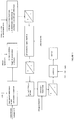
- Figure 1 is a process flow sheet depicting a process for recovery of lithium from lithium bearing silicates.
- the disclosure relates to a process for recovering lithium values from lithium-bearing silicates.
- the present disclosure relates to a process for recovering lithium values from lithium-bearing silicates such as spodumene.
- the lithium-bearing silicate may comprise one or more naturally occurring lithium minerals because they frequently occur together, for example in pegmatite bodies.
- Several metals, such as Mn, Rb and Cs, and other minerals such as quartz, albite, feldspar, topaz and beryl may also be associated with these lithium minerals.
- the term "lithium-bearing silicate” encompasses high grade ores and concentrates as well as medium to low grade ores, concentrates and blends thereof.
- lithium bearing silicate refers to a concentrate, ore, or tailings derived from one or more silicate minerals containing lithium values.
- exemplary lithium bearing silicates include, but are not limited to, jadarite, spodumene and other pyroxenes, trilithionite, petalite and other lithium-bearing silicates from the nepheline group of minerals, holmquistite and other lithium-bearing silicates from the amphibole group of minerals, lepidolite, zinwaldite, elbaite and other tourmalines, chlorites, smectites, lithium-containing micas, and lithium-containing clays.
- 'HF eq.' refers to an amount of the source of fluoride, other than hydrofluoric acid (HF), which would provide an equivalent amount of HF when converted to the free acid form by reaction with a mineral acid such as sulphuric acid.
- a reference to 'g/kg' or 'kg/t' throughout the specification refers to the mass of a substance per kilogram or tonne, respectively, of the lithium-bearing silicate.
- boiling point is used to refer to the temperature at which a liquid or slurry boils under the particular pressure to which it is being subjected. It will be appreciated that the boiling point may also vary according to the various solutes in the liquid or slurry and their concentration.
- Lithium extraction achieved by the process may be > 85%, > 90%, > 95%, or even > 98%.
- the lithium-bearing silicate Prior to undergoing the processes described herein, the lithium-bearing silicate may be ground and milled to P 100 ⁇ 150 ⁇ m. In certain embodiments the lithium-bearing silicate may have a particle size with P 80 in a range of 20-110 ⁇ m, 38-106 ⁇ m, or in the range of 20-50 ⁇ m.
- the lithium-bearing silicate may be ground and milled to the desired particle size by conventional techniques well known in the art in a dry milling process or a wet milling process.
- the process for extracting lithium values from a lithium-bearing silicate comprises the steps of:
- the source of fluoride may be first mixed with the sulphuric acid to liberate free fluoride anions and heated to the desired reaction temperature before mixing with the lithium-bearing silicate.
- the lithium bearing silicate may be first mixed with the source of fluoride, in particular hydrofluoric acid, followed by addition of sulphuric acid.
- the resulting slurry may be stirred or mechanically agitated during the heating step.
- the lithium-bearing silicate When the lithium-bearing silicate is mixed with the source of fluoride in the presence of sulphuric acid, there may be autogenous generation of additional fluoride as the lithium-bearing silicate is progressively dissolved.
- the dissolution of lithium-bearing micas when mixed with the hydrofluoric acid or calcium fluoride in the presence of sulphuric acid releases additional fluoride ions from the crystal structure of the mica into the reaction mixture.
- the resulting increase in fluoride concentration in situ increases the rate of dissolution of the lithium-bearing silicate.
- the effect of the increased rate of dissolution decreases the residence time in comparison to other hydrometallurgical processes, leading to development of a plant design having a reduced footprint and lower capital cost.
- the slurry may be heated for a period of time sufficient to achieve a particular level of extraction of lithium values.
- the time required for the extraction depends upon the mineralogy and particle size of the lithium-bearing silicate, the concentration of the source of fluoride, the concentration of sulphuric acid, the solids density of the slurry, and the temperature at which the slurry is heated.
- the higher the temperature the shorter the reaction time to achieve the desired level of extraction.
- the extraction of lithium may be accelerated by heating the slurry to a temperature up to 350 °C at atmospheric pressure. Typically, however, the temperature of the slurry is maintained at about 90 °C.
- the slury is heated for a period from 3 h to 24 h, in particular 4 h to 10 h.
- the process may be carried out in either a batch mode or a continuous mode.
- the particular choice of operation will depend upon a residence time necessary to extract the desired amount of lithium values.
- the slurry may have a solids density in a range of 15-50 wt%. In one embodiment the slurry may have a solids density in a range of 20-25 wt%.
- the source of fluoride may be a fluoride salt, in particular an alkali metal fluoride salt or an alkaline earth metal fluoride salt, or hydrofluoric acid.
- fluoride salts include sodium fluoride and calcium fluoride.
- the source of fluoride may be a fluoride-bearing substance which generates hydrofluoric acid by reaction with sulphuric acid.
- fluoride-bearing substances include naturally occurring minerals with fluoride as a major anion in its crystal lattice, aluminium hexafluoride, sodium hexafluorosilicates, or other mixed aluminium fluoride or fluorosilicate complexes. It will be appreciated that any fluoride-containing precipitate separated from the LBS to produce the fluoride-depleted LBS may be used as a source of fluoride in step a) of the process for extracting lithium as described herein.
- the source of fluoride is present in the slurry in an amount sufficient to ensure maximum Li extraction (40 to 2000 kg/t).
- the slurry comprises 90 - 1000 kg/t (HF eq.) of the source of fluoride.
- the slurry may comprise a low concentration of the source of fluoride in a range of 40-180 kg/t (HF eq.).
- a low concentration of the source of fluoride may be suitable for lithium-bearing silicates having a crystal lattice structure with fluoride as a major anion.
- the slurry may comprise a high concentration of the source of fluoride in a range of 500 to 2000 kg /t (HF eq.).
- a high concentration of the source of fluoride may be required to extract lithium values from otherwise intractable lithium silicates such as spodumene.
- Sulphuric acid is present in the slurry to generate hydrofluoric acid, in particular when fluoride-bearing substances are employed as the source of fluoride.
- Sulphuric acid is present in the slurry in an amount sufficient to ensure maximum Li extraction (50 to 5000 kg/t).
- Sulphuric acid may be present as free acid at a concentration of 50 - 1000 kg/t.
- the slurry may comprise a low concentration of sulphuric acid in a range of 50-100 kg/t sulphuric acid.
- a low concentration of sulphuric acid may be suitable for lithium-bearing silicates having a crystal lattice structure with fluoride as a major anion.
- the slurry may comprise a high concentration of sulphuric acid in a range of 500 to 5000 kg /t.
- a high concentration of sulphuric acid may be required to extract lithium values from otherwise intractable lithium silicates such as spodumene.
- the slurry may comprise source of fluoride in an amount of 90-180 kg/t (HF eq.) and sulphuric acid in an amount of 50-300 kg/t.
- the slurry comprises source of fluoride in a range of 500-2000 kg/t (HF eq.) and sulphuric acid in a range of 1000-5000 kg/t sulphuric acid
- the heated slurry may then be leached with water or a dilute acid solution to solubilise extracted metal values, in particular lithium values.
- Leaching with water is achieved by mixing the heated slurry with water in a ratio of water:lithium-bearing silicate of up to 10:1. Typically, the leaching step may be performed for 1h.
- the dilute acid solution may have a concentration from about 0.005 - 1.0 M.
- Solids may be removed from the diluted slurry to yield a lithium-bearing solution (LBS) by any suitable conventional technique such as filtration, centrifugation, decantation and so forth.
- LBS lithium-bearing solution
- lithium values may be subsequently recovered from the lithium-bearing solution as lithium carbonate or lithium hydroxide.
- impurities may be co-dissolved into the lithium-bearing solution.
- impurities refers to a metal value, other than lithium, contained in the lithium-bearing silicate which is capable of dissolving in the lithium-bearing solution under the same process conditions.
- typical metal values, other than lithium include but are not limited to K, Na, Cs, Rb, Si, Al and Fe.
- the one or more impurities Prior to recovering the lithium values from the lithium-bearing solutions in the form of lithium carbonate or lithium hydroxide, the one or more impurities may be removed.
- Removing one or more impurities from the LBS comprises raising the pH of the LBS to 3.5-4.0 to deplete the LBS of fluoride and subsequently raising the pH of the fluoride-depleted LBS to 10.5-11.0 to precipitate one or more remaining impurities therefrom.
- the concentration of fluoride in the LBS may be reduced to about 2 g/L before raising the pH of the fluoride-depleted LBS to 10.5-11.0. Reducing the concentration of fluoride in the LBS prior to raising the pH of the LBS to 10.5-11.0 significantly reduces the degree of co-precipitation of lithium salts together with the impurities at higher pH and concomitant reduction in lithium value recovery.
- the one or more impurities are precipitated as either metal salts or their respective metal hydroxides.
- the precipitates may be separated from the LBS using conventional techniques such as filtration, centrifugation, gravity separation, decantation and so forth.
- Raising the pH may comprise adding a source of carbonate to the LBS.
- the source of carbonate may be an alkali metal carbonate salt such as sodium carbonate, potassium carbonate or lithium carbonate or an alkaline earth metal carbonate salt such as calcium carbonate or magnesium carbonate.
- an alkali metal hydroxide or an alkaline earth metal hydroxide may be added to the LBS while passing carbon dioxide through the LBS, thereby adding the source of carbonate to the LBS.
- addition of carbonate to the LBS not only elevates the pH but provides a carbonate counter-anion for production of lithium carbonate.
- adding sodium carbonate removes fluoride and Si from the LBS as a sodium hexafluorosilicate precipitate.
- Al may be present in the LBS in the form of one or more soluble aluminium fluoride complexes.
- raising pH removes Al from the LBS as a precipitate of sodium aluminium hexafluoride or one or more insoluble aluminium fluoride complexes.
- the one or more separated impurities may be converted into one or more valuable byproducts. Alternatively, the one or more separated impurities may undergo further purification processes to recover valuable byproducts. Common byproducts may include, but are not limited to, potassium sulphate, sodium sulphate, aluminium fluoride.
- one or more of the sodium hexafluorosilicate, sodium aluminium hexafluoride, or aluminium fluoride complex precipitates may be separated from the LBS and recycled for use as a source of fluoride in step a) of the process for extracting lithium from a lithium-bearing silicate.
- the lithium-bearing solution may undergo further purification processes, if required, such as by using ion exchange, membrane filtration, electrodialysis, and so forth.
- the fluoride-depleted LBS may undergo a softening step.
- Softening may comprise adding a stoichiometric amount of sodium carbonate to bulk remove calcium as calcium sulphate. This intermediate softening step may be required in embodiments where the source of fluoride comprises calcium fluoride or calcium carbonate or lime has been employed to raise the pH of the LBS.
- the process may further comprise removal of potassium sulphate or sodium sulphate from the fluoride-depleted LBS prior to recovering lithium carbonate
- potassium sulphate may be precipitated from the fluoride-depleted LBS by cooling the fluoride-depleted LBS to 8 °C.
- Recovering lithium values as lithium carbonate may comprise evaporating the fluoride-depleted LBS produced from which one or more impurities have been removed until a Li concentration in a range of about 2.8 - 10 g/L is achieved.
- the fluoride-depleted LBS is heated to 95 °C with addition of sodium carbonate thereto to precipitate lithium carbonate.
- the precipitated lithium carbonate may be separated from the resulting lithium-depleted solution by conventional separation techniques, such as filtration, gravity separation, decantation, centrifugation and so forth.
- Separated lithium carbonate may be converted to lithium hydroxide by dissolving the separated lithium carbonate in water or an aqueous solution to produce a lithium carbonate solution and adding lime to the lithium carbonate solution.
- Lithium hydroxide may be precipitated as a solid by evaporation.
- ROM Spodumene
- HF hydrofluoric acid
- H 2 SO 4 conc. sulphuric acid
- the precipitated solids were separated by filtration to produce a lithium sulphate solution.
- Li extraction was 92.3%, Al extraction was 90% and Si extraction was 86%.
- the lithium sulphate solution was further treated with sodium carbonate to precipitate lithium carbonate.
- the lithium carbonate precipitate was filtered from the solution, redissolved and converted to lithium hydroxide by addition of lime.
- Partial dissolution of the sample was performed at 90 °C in 2L polypropylene beakers with PVC baffled inserts. Sulphuric acid solution with the target concentration was added to the beaker and once the temperature set point was achieved, the required dose of calcium fluoride (CaF 2 ) was added. After allowing the fluoride to react with the sulphuric acid solution for 10 minutes, the lepidolite sample was added.
- CaF 2 calcium fluoride
- the slurry was filtered hot (> 90 °C) and washed on the filter three times with hot 100 g/L H 2 SO 4 (or just below acid concentration for tests performed at lower acid concentration) and finally with deionised water. Solids were dried at 105 °C and submitted for assay by digest/ICP-OES for Li and by XRF for all other elements.
- TDS total dissolved solids
- Lithium may be successfully extracted from the lepidolite sample under low acid/high fluoride conditions as described above. Under these conditions acid addition and consumption may be reduced.
- preferred conditions for extraction of lithium involve high acid/low fluoride conditions as described above, which consistently achieve high Li extractions whilst minimising Si tenors in the PLS.
- the lower fluoride concentration result in a lower likelihood of free HF forming and potentially minimises Li losses downstream as LiF or [(Li/Na) 3 AlF 6 ] precipitates.
- Removal of impurities from the PLS was achieved by step-wise elevation to pH 10.5-11.0 at a temperature between 70-90 °C, using lime or a combination of limestone or lime.
- the precipitation of Li during pH elevation is closely related to the precipitation of Al and fluoride. Aluminium and fluoride precipitate as AlF 2+ and/or AlF 2 + species between pH 3.0 and 4.5, with a pH 5.0 required for complete rejection. However, if the pH is raised too quickly, then excessively high Li precipitation occurs leading to lower Li recovery rates downstream.
- the PLS was subjected to a softening step whereby a stoichiometric amount or a stoichiometric excess of sodium carbonate was added to bulk remove Ca as calcium sulphate precipitate and to achieve a solution concentration of Ca ⁇ 50 mg/L.
- the stoichiometric amount of sodium carbonate added to the PLS in the softening step may be from 100-150 mol%.
- the calcium sulphate precipitate was subsequently removed by filtration.
- the resulting PLS filtrate was evaporated to either a target Li concentration of 13 g/L or a target K concentration of 65-70 g/L to promote potassium sulphate crystallisation.
- the evaporated PLS filtrate may also be cooled to ⁇ 10 °C to precipitate potassium sulphate and sodium sulphate, which are removed by filtration. It is important to reduce the concentration of potassium in the PLS as elevated K concentrations increase the solubility of Li.
- Lithium carbonate precipitation was facilitated by addition of sodium carbonate in a stoichiometric amount or a stoichiometric excess (105-150%) at 95 °C to decrease the residual Li concentration to -1.6 g/L.
- the resultant supernatant underwent a second evaporation step to remove water, targeting a K concentration of from 40-70 g/L and the resulting solution was cooled to ⁇ 10 °C to precipitate potassium sulphate and sodium sulphate.
- composition of the resulting Li 2 CO 3 products were > 98% with the major impurities being K 2 SO4, Na 2 SO4 and Li 2 SO 4 .
- a sample of spodumene mineral concentrate was dried at 110 °C and milled to achieve P 80 less than 45 ⁇ m.
- the PSD as determined by laser sizing, showed that the sample possessed a P 90 from 35-50 ⁇ m, a P 80 from 24-30 ⁇ m and a P 50 from 10-20 ⁇ m.
- Partial dissolution of the sample was performed at 90 °C in a 0.5L Azalon PMP-TQX beakers without baffles and equipped with a Teflon agitator and overhead stirrer. Sulphuric acid solution with the target concentration was added to the beaker and once the temperature set point was achieved, the required dose of hydrofluoric acid (HF) was added.
- HF hydrofluoric acid
- the slurry was filtered hot (> 60-70 °C) and washed on the filter three times with water only. Solids were dried at 105 °C and submitted for assay by digest/ICP-OES for Li and by XRF for all other elements.
- wet feed lepidolite ore (P 80 ⁇ 180 ⁇ m) was mixed with calcium fluoride batchwise in a make-up tank to target a solids density of 37 wt%, which was subsequently fed batchwise to a solids feed tank, at ambient temperature.
- the slurry was then fed to a series of four polypropylene 50 L tanks, controlled at temperature by electrical immersion heaters. Concentrated sulphuric acid was fed to the first tank only, resulting in a target solids density of 22-25 wt%. the exothermic reaction of the acid addition maintained the temperature in the first tank >90 °C, and therefore a water cooled immersion coil was employed to maintain the temperature at approximately 95 °C.
- the initial target residence time in the first four tanks was 12 hours.
- the slurry was pumped to a fifth tank (also controlled at 95 °C), where it was diluted to 15 wt% solids with hot water, to avoid possible gelling of the liquor due to the high TDS (in particular aluminium sulphate).
- the slurry was then fed to a filter feed tank controlled to ⁇ 80 °C, before filtration in a plate and frame filter press, with the solids washed with hot water (-75 oC) at a target wash ratio of 1.3 L/kg. Following filtration, the solids were collected and drummed, with the primary filtrate and washate sent forward to Impurity Removal stage 1.
- the Impurity Removal stage 1 circuit consisted of four jacketed 20 L SS tanks, initially maintained at a target temperature of 70 °C. Leach filtrate (including washate) was fed to the first tank, with limestone slurry added to the first two tanks. The limestone slurry was about 30 wt% and the target residence time for the IR1 circuit was nominall 2 h.
- the pH of the fourth tank was generally maintained in the range of 3.5-4.0 as targeted.
- the slurry overflowing from the fourth tank was fed to a filter feed tank, with the slurry then filtered using a plate and frame filter press and washed with water at a target wash ratio of 1.3 L/kg.
- the primary filtrate and washate were then transferred to Impurity Removal stage 2.
- the Impurity Removal stage 2 circuit consisted of two jacketed 20 L stainless steel tanks maintained at a target temperature of 60 °C with IR primary filtrate and washate and lime slurry (20-25 wt%) added to Tank 1, to target pH 10.5-11.0 in Tank 2. The residence time in the tanks was about 1 h.
- Slurry exiting the second tank was fed to a thickener and dosed with a 0.025 wt% solution of M10 flocculant at a dose of 376 g/t of precipitate.
- the flocculated slurry was fed through the thickener and the entire slurry was filtered. No thickener overflow was collected. Following filtration, the filtrate and washate were forwarded to the softening circuit.
- Lithium precipitation was 6.4% via the overall balance.
- the extent of Li precipitation correlated strongly with the concentration of Al in the feed liquor to the circuit, increasing from 2% at 1.3 g/l Al to 8% at 5.1 g/L Al.
- Softening circuit consisted of two 30 L HDPE tanks maintained at around 50 oC. Residence time in the circuit was 1.3 hours. Sodium carbonate solution (150 g/L) was pumped to the first tank, with the overflow from the second tank fed to a thickener and dosed with M333 flocculent.
- Precipitated carbonate solids were recycled to the IR Stage 1 circuit. Excess carbonate addition did not result in precipitation of lithium carbonate. The majority of residual Al in solution was also removed in softening.
- the Evaporation Circuit consisted of four pan evaporators, three of which were on line at any one time.
- the evaporators were used to evaporate softened liquor or a combination of softened and recycled barren liquor batchwise to target a lithium concentration of ⁇ 9-10 g/L in the concentrate before feeding to the potassium sulphate precipitation circuit.
- the Potassium Sulphate Precipitation circuit consisted of two chilled jacketed 7.2 L tanks. Feed liquor from the evaporation stage were chilled which resulted in saturation and crystallisation of K and Na sulphate. The slurry overflowed continuously from the second tank onto a vacuum filter. The filtrate and washate were brought forward batchwise to the lithium carbonate precipitation circuit.
- the Lithium Carbonate Precipitation circuit consisted of two jacketed 3.6 L tanks heated to a target temperature of 90-95 °C. Sodium carbonate solution (200 g/L) was dosed to the first tank. The solids overflowing from Tank 2 were immediately filtered on a vacuum filter. Filter cakes were collected every 12 h and washed with 2 L/kg of hot (>80 °C) saturated lithium carbonate solution. The filtrate and washate were recycled to the evaporation circuit. Lithium recoveries averaged 61% and 62 %.
Landscapes
- Chemical & Material Sciences (AREA)
- Engineering & Computer Science (AREA)
- Materials Engineering (AREA)
- Organic Chemistry (AREA)
- Environmental & Geological Engineering (AREA)
- Metallurgy (AREA)
- Mechanical Engineering (AREA)
- Life Sciences & Earth Sciences (AREA)
- Manufacturing & Machinery (AREA)
- General Life Sciences & Earth Sciences (AREA)
- Geology (AREA)
- Geochemistry & Mineralogy (AREA)
- Inorganic Chemistry (AREA)
- General Chemical & Material Sciences (AREA)
- Chemical Kinetics & Catalysis (AREA)
- Manufacture And Refinement Of Metals (AREA)
- Silicates, Zeolites, And Molecular Sieves (AREA)
- Secondary Cells (AREA)
- Removal Of Specific Substances (AREA)
Claims (18)
- Procédé pour extraire des valeurs de lithium à partir d'un silicate contenant du lithium comprend les étapes consistant à :a) chauffer une bouillie d'un silicate contenant du lithium, 40 à 2 000 kg/t d'une source de fluorure et 50 à 5 000 kg/t d'acide sulfurique à une température de 70 °C jusqu'à un point d'ébullition de la bouillie ; et,b) laver la bouillie avec de l'eau ou une solution d'acide dilué et à séparer des matières solides de celle-ci pour produire une solution contenant du lithium (LBS).
- Procédé selon la revendication 1, dans lequel la bouillie présente une densité de matières solides dans une plage de 15-50 % en poids.
- Procédé selon la revendication 1 ou la revendication 2, dans lequel la source de fluorure comprend un sel de fluorure, de l'acide fluorhydrique ou une substance contenant du fluorure qui génère l'acide fluorhydrique par réaction avec l'acide sulfurique.
- Procédé selon l'une quelconque des revendications 1 à 3, dans lequel la bouillie comprend 40-180 kg/t de source de fluorure (eq. HF) et/ou 50-100 kg/t d'acide sulfurique.
- Procédé selon l'une quelconque des revendications 1 à 3, dans lequel la bouillie comprend 500-2 000 kg/t de source de fluorure (eq. HF) et/ou 500-5 000 kg/t d'acide sulfurique.
- Procédé selon la revendication 1, dans lequel la bouillie comprend un mica contenant du lithium, 90-180 kg/t de source de fluorure (eq. HF) et 50-300 kg/t d'acide sulfurique.
- Procédé selon la revendication 1, dans lequel la bouillie comprend du spodumène, 500-2 000 kg/t de source de fluorure (eq. HF) et 1 000-5 000 kg/t d'acide sulfurique.
- Procédé selon l'une quelconque des revendications 1 à 7, dans lequel la bouillie est chauffée à environ 90 °C et/ou l'étape a) est réalisée pendant une période de 3 h à 24 h.
- Procédé selon l'une quelconque des revendications 1 à 8, dans lequel l'extraction de Li à partir du silicate contenant du lithium est > 85 %.
- Procédé pour récupérer des valeurs de lithium sous forme de carbonate de lithium à partir d'un silicate contenant du lithium, comprenant les étapes consistant à :a) extraire des valeurs de lithium à partir du silicate contenant du lithium pour produire une solution contenant du lithium selon l'une quelconque des revendications 1 à 9 ;b) éliminer une ou plusieurs impuretés de la solution contenant du lithium (LBS) ; etc) évaporer la solution LBS produite à l'étape b) pour précipiter le carbonate de lithium.
- Procédé selon la revendication 10, dans lequel l'étape d'élimination d'une ou de plusieurs impuretés de la solution LBS comprend l'augmentation du pH de la solution LBS à 3,5-4,0 pour réduire la solution LBS de fluorure et, par la suite, l'augmentation du pH de la solution LBS appauvrie en fluorure à 10,5-11,0 pour précipiter une ou plusieurs impuretés restantes à partir de celle-ci.
- Procédé selon la revendication 11, dans lequel un ou plusieurs précipités contenant du fluorure sont séparés de la solution LBS appauvrie en fluorure et recyclés pour être utilisés comme source de fluorure à l'étape a) du procédé défini dans l'une quelconque des revendications 1 à 9.
- Procédé selon la revendication 11 ou la revendication 12, dans lequel la concentration du fluorure dans la solution LBS est réduite à environ 2g/l avant d'augmenter le pH de la solution LBS appauvrie en fluorure à 10,5-11,0.
- Procédé selon l'une quelconque des revendications 10 à 13, dans lequel l'étape c) comprend l'évaporation de la solution LBS produite à l'étape b) jusqu'à ce qu'une concentration de Li dans une plage d'environ 2,8 g/l-10 g/l soit atteinte.
- Procédé selon l'une quelconque des revendications 10 à 14, dans lequel, avant de réaliser l'étape c), le procédé comprend en outre l'étape d'adoucissement de la solution LBS provenant de l'étape b).
- Procédé selon la revendication 15, dans lequel l'adoucissement comprend l'ajout d'au moins une quantité stœchiométrique de carbone de sodium pour enlever le calcium en vrac sous forme de sulfate de calcium.
- Procédé selon la revendication 16, dans lequel le procédé comprend en outre l'élimination du sulfate de potassium et/ou du sulfate de sodium de la solution LBS avant de réaliser l'étape c).
- Procédé de récupération de valeurs de lithium sous forme d'hydroxyde de lithium, le procédé comprenant les étapes consistant à :a) récupérer des valeurs de lithium à partir d'un silicate contenant du lithium selon l'une quelconque des revendications 10 à 17 ;b) dissoudre le carbonate de lithium séparé dans de l'eau ou une solution aqueuse pour produire une solution de carbonate de lithium, ajouter de la chaux à la solution de carbonate de lithium ; etc) précipiter l'hydroxyde de lithium par évaporation.
Priority Applications (1)
| Application Number | Priority Date | Filing Date | Title |
|---|---|---|---|
| PL17749827T PL3414351T3 (pl) | 2016-02-09 | 2017-02-09 | Procesy ekstrakcji i odzyskiwania wartości litu z materiałów litonośnych |
Applications Claiming Priority (2)
| Application Number | Priority Date | Filing Date | Title |
|---|---|---|---|
| AU2016900428A AU2016900428A0 (en) | 2016-02-09 | Process for recovering lithium values from lithium bearing materials | |
| PCT/AU2017/050104 WO2017136885A1 (fr) | 2016-02-09 | 2017-02-09 | Procédés d'extraction et de récupération de produits de valeur au lithium à partir de matériaux contenant du lithium |
Publications (3)
| Publication Number | Publication Date |
|---|---|
| EP3414351A1 EP3414351A1 (fr) | 2018-12-19 |
| EP3414351A4 EP3414351A4 (fr) | 2019-07-31 |
| EP3414351B1 true EP3414351B1 (fr) | 2021-08-11 |
Family
ID=59562870
Family Applications (1)
| Application Number | Title | Priority Date | Filing Date |
|---|---|---|---|
| EP17749827.6A Active EP3414351B1 (fr) | 2016-02-09 | 2017-02-09 | Procédés d'extraction et de récupération de produits de valeur au lithium à partir de matériaux contenant du lithium |
Country Status (10)
| Country | Link |
|---|---|
| US (1) | US10883157B2 (fr) |
| EP (1) | EP3414351B1 (fr) |
| AU (1) | AU2017218457B2 (fr) |
| BR (1) | BR112018016253B1 (fr) |
| CA (1) | CA3013941C (fr) |
| CL (1) | CL2018002133A1 (fr) |
| ES (1) | ES2893498T3 (fr) |
| PL (1) | PL3414351T3 (fr) |
| PT (1) | PT3414351T (fr) |
| WO (1) | WO2017136885A1 (fr) |
Families Citing this family (27)
| Publication number | Priority date | Publication date | Assignee | Title |
|---|---|---|---|---|
| RS66118B1 (sr) * | 2017-11-09 | 2024-11-29 | United States Borax Inc | Proces za izdvajanje minerala |
| WO2019227158A1 (fr) * | 2018-05-30 | 2019-12-05 | Lithium Australia Nl | Procédé de récupération de phosphate de lithium et de sulfate de lithium à partir de silicates contenant du lithium |
| CN110129571A (zh) * | 2019-06-11 | 2019-08-16 | 中国科学院过程工程研究所 | 一种从废旧锂离子电池材料中提取有价金属的方法 |
| CN110907066B (zh) * | 2019-11-30 | 2020-11-06 | 华能如东八仙角海上风力发电有限责任公司 | 基于深度学习模型的风电机组齿轮箱轴承温度状态监测方法 |
| CN111252749B (zh) * | 2020-01-21 | 2022-11-22 | 曲靖市德方纳米科技有限公司 | 由锂磷铝石制备磷酸铁和氢氧化铝的方法 |
| CN112095013B (zh) * | 2020-09-27 | 2022-04-19 | 贵州中伟资源循环产业发展有限公司 | 去除镍钴锰溶液中的钙镁离子的方法和回收镍钴锰三元废料的方法 |
| US20230406717A1 (en) * | 2020-11-20 | 2023-12-21 | Basf Se | Process for the removal of fluoride from alkaline hydroxide solutions |
| WO2022119564A1 (fr) | 2020-12-02 | 2022-06-09 | U.S. Borax Inc. | Procédé et appareil de production de carbonate de lithium |
| KR102242686B1 (ko) * | 2020-12-14 | 2021-04-21 | 한국지질자원연구원 | 리튬농축액 제조방법 및 이로부터 제조된 리튬농축액을 이용한 리튬화합물 제조방법 |
| CN112340745B (zh) * | 2020-12-28 | 2023-08-18 | 河南省氟基新材料科技有限公司 | 一种利用氟化锂废料制备硅酸锂的工艺 |
| KR102275866B1 (ko) * | 2021-01-18 | 2021-07-12 | 한국지질자원연구원 | 리튬농축액 고효율 제조방법 및 이로부터 제조된 리튬농축액을 이용한 리튬화합물 제조방법 |
| KR102496588B1 (ko) * | 2021-04-14 | 2023-02-06 | (주)세화이에스 | 고회수율의 리튬 농축 용액 제조 방법 및 이를 이용한 리튬 화합물의 제조 방법 |
| WO2023057754A1 (fr) * | 2021-10-06 | 2023-04-13 | Cycladex Ltd | Procédé |
| CN113981232A (zh) * | 2021-11-10 | 2022-01-28 | 福州大学 | 一种铝电解质废渣中锂元素的硫酸铝直接浸出回收方法 |
| CN115198109A (zh) * | 2022-05-27 | 2022-10-18 | 安徽大学绿色产业创新研究院 | 一种通过混合酸从含锂粘土中提锂的方法 |
| CN115557520B (zh) * | 2022-08-29 | 2023-11-10 | 昆明理工大学 | 一种从硅酸锂废渣中回收锂的方法 |
| CN115927877B (zh) * | 2022-09-30 | 2025-03-14 | 江西闪凝科技有限公司 | 一种锂云母中锂的提取方法 |
| GB2623593B (en) * | 2022-10-21 | 2025-07-16 | Imerys British Lithium Ltd | Impurity removal and leaching of lithium material |
| KR102672766B1 (ko) * | 2023-01-03 | 2024-06-07 | 한국지질자원연구원 | 저농도 리튬폐액으로부터 고효율 리튬 회수방법과 이를 통해 제조된 탄산리튬 |
| CN116477858B (zh) * | 2023-02-28 | 2024-06-11 | 四川顺应锂材料科技有限公司 | 一种黏土锂矿有压浸出制备电池级碳酸锂的方法 |
| CN117568623B (zh) * | 2023-11-17 | 2024-07-12 | 徐浩 | 无废弃尾渣的锂矿石湿法冶炼提取含锂多金属卤水的工艺 |
| CN120648918A (zh) * | 2024-03-15 | 2025-09-16 | 美卓芬兰有限公司 | 锂精矿的新型大气压浸出方法 |
| CN120648917A (zh) * | 2024-03-15 | 2025-09-16 | 美卓芬兰有限公司 | 未煅烧的锂精矿的新型大气压浸出方法 |
| KR102791351B1 (ko) * | 2024-08-06 | 2025-04-07 | (주)세화이에스 | 농축 및 결정화를 통한 리튬용액의 수율 향상 방법 |
| CN119710291B (zh) * | 2025-01-15 | 2025-07-11 | 中南大学 | 一种复杂锂矿石或含锂废料预处理低温转型焙烧提锂方法 |
| CN120121699B (zh) * | 2025-05-09 | 2025-08-12 | 四川卡森科技有限公司 | 测定与分析锂矿石转型率及酸化率的方法 |
| CN121250134B (zh) * | 2025-11-06 | 2026-04-10 | 宜丰九宇锂业有限公司 | 一种低品位锂云母提锂方法及其装置 |
Family Cites Families (5)
| Publication number | Priority date | Publication date | Assignee | Title |
|---|---|---|---|---|
| NZ181123A (en) | 1975-06-30 | 1979-12-11 | Univ Melbourne | Treatment of mineralcontaining materials with an acid in the presence of fluoride ion |
| CN102417995A (zh) * | 2011-11-14 | 2012-04-18 | 山东瑞福锂业有限公司 | 锂辉石精矿氟化学提锂工艺 |
| CN102690961A (zh) * | 2012-06-28 | 2012-09-26 | 贵州开磷(集团)有限责任公司 | 用低品位α锂辉石为原料直接提取锂的方法 |
| JP6359018B2 (ja) | 2012-10-10 | 2018-07-18 | ロックウッド リチウム ゲゼルシャフト ミット ベシュレンクテル ハフツングRockwood Lithium GmbH | 使用済みガルバニ電池のリチウム遷移金属酸化物含有部分からの、湿式冶金法によるリチウム、ニッケル、コバルトの回収方法 |
| AR095821A1 (es) | 2014-04-09 | 2015-11-11 | Consejo Nac De Investig Científicas Y Técnicas (Conicet) | Procedimiento de obtención de compuestos de litio |
-
2017
- 2017-02-09 US US16/076,643 patent/US10883157B2/en not_active Expired - Fee Related
- 2017-02-09 AU AU2017218457A patent/AU2017218457B2/en active Active
- 2017-02-09 PT PT177498276T patent/PT3414351T/pt unknown
- 2017-02-09 ES ES17749827T patent/ES2893498T3/es active Active
- 2017-02-09 EP EP17749827.6A patent/EP3414351B1/fr active Active
- 2017-02-09 CA CA3013941A patent/CA3013941C/fr active Active
- 2017-02-09 PL PL17749827T patent/PL3414351T3/pl unknown
- 2017-02-09 WO PCT/AU2017/050104 patent/WO2017136885A1/fr not_active Ceased
- 2017-02-09 BR BR112018016253-1A patent/BR112018016253B1/pt active IP Right Grant
-
2018
- 2018-08-08 CL CL2018002133A patent/CL2018002133A1/es unknown
Non-Patent Citations (1)
| Title |
|---|
| None * |
Also Published As
| Publication number | Publication date |
|---|---|
| EP3414351A4 (fr) | 2019-07-31 |
| CA3013941A1 (fr) | 2017-08-17 |
| PT3414351T (pt) | 2021-10-19 |
| US20190048438A1 (en) | 2019-02-14 |
| WO2017136885A1 (fr) | 2017-08-17 |
| AU2017218457B2 (en) | 2021-01-21 |
| ES2893498T3 (es) | 2022-02-09 |
| BR112018016253B1 (pt) | 2022-03-29 |
| AU2017218457A1 (en) | 2018-08-23 |
| US10883157B2 (en) | 2021-01-05 |
| CL2018002133A1 (es) | 2018-12-28 |
| PL3414351T3 (pl) | 2022-04-04 |
| CA3013941C (fr) | 2021-08-31 |
| BR112018016253A2 (pt) | 2018-12-18 |
| EP3414351A1 (fr) | 2018-12-19 |
Similar Documents
| Publication | Publication Date | Title |
|---|---|---|
| AU2017218457B2 (en) | Processes for extracting and recovering lithium values from lithium bearing materials | |
| EP3802892B1 (fr) | Procédé de récupération de phosphate de lithium et de sulfate de lithium à partir de silicates contenant du lithium | |
| AU2019310188B2 (en) | Caustic conversion process | |
| AU2015330958B2 (en) | Recovery process | |
| CA3014623C (fr) | Recuperation de lithium a partir de mineraux de phosphate | |
| CA3032729C (fr) | Procede de digestion caustique | |
| WO2019094674A1 (fr) | Procédé de recupération de minéraux | |
| AU2016101526B4 (en) | Recovery Process | |
| AU2024390596A1 (en) | Method for the extraction of lithium |
Legal Events
| Date | Code | Title | Description |
|---|---|---|---|
| STAA | Information on the status of an ep patent application or granted ep patent |
Free format text: STATUS: THE INTERNATIONAL PUBLICATION HAS BEEN MADE |
|
| PUAI | Public reference made under article 153(3) epc to a published international application that has entered the european phase |
Free format text: ORIGINAL CODE: 0009012 |
|
| STAA | Information on the status of an ep patent application or granted ep patent |
Free format text: STATUS: REQUEST FOR EXAMINATION WAS MADE |
|
| 17P | Request for examination filed |
Effective date: 20180905 |
|
| AK | Designated contracting states |
Kind code of ref document: A1 Designated state(s): AL AT BE BG CH CY CZ DE DK EE ES FI FR GB GR HR HU IE IS IT LI LT LU LV MC MK MT NL NO PL PT RO RS SE SI SK SM TR |
|
| AX | Request for extension of the european patent |
Extension state: BA ME |
|
| DAV | Request for validation of the european patent (deleted) | ||
| DAX | Request for extension of the european patent (deleted) | ||
| A4 | Supplementary search report drawn up and despatched |
Effective date: 20190628 |
|
| RIC1 | Information provided on ipc code assigned before grant |
Ipc: C22B 3/06 20060101ALI20190624BHEP Ipc: C22B 26/12 20060101AFI20190624BHEP |
|
| STAA | Information on the status of an ep patent application or granted ep patent |
Free format text: STATUS: EXAMINATION IS IN PROGRESS |
|
| 17Q | First examination report despatched |
Effective date: 20201109 |
|
| GRAP | Despatch of communication of intention to grant a patent |
Free format text: ORIGINAL CODE: EPIDOSNIGR1 |
|
| STAA | Information on the status of an ep patent application or granted ep patent |
Free format text: STATUS: GRANT OF PATENT IS INTENDED |
|
| INTG | Intention to grant announced |
Effective date: 20210311 |
|
| GRAS | Grant fee paid |
Free format text: ORIGINAL CODE: EPIDOSNIGR3 |
|
| GRAA | (expected) grant |
Free format text: ORIGINAL CODE: 0009210 |
|
| STAA | Information on the status of an ep patent application or granted ep patent |
Free format text: STATUS: THE PATENT HAS BEEN GRANTED |
|
| AK | Designated contracting states |
Kind code of ref document: B1 Designated state(s): AL AT BE BG CH CY CZ DE DK EE ES FI FR GB GR HR HU IE IS IT LI LT LU LV MC MK MT NL NO PL PT RO RS SE SI SK SM TR |
|
| REG | Reference to a national code |
Ref country code: CH Ref legal event code: EP |
|
| REG | Reference to a national code |
Ref country code: DE Ref legal event code: R096 Ref document number: 602017043852 Country of ref document: DE |
|
| REG | Reference to a national code |
Ref country code: IE Ref legal event code: FG4D Ref country code: AT Ref legal event code: REF Ref document number: 1419453 Country of ref document: AT Kind code of ref document: T Effective date: 20210915 |
|
| REG | Reference to a national code |
Ref country code: PT Ref legal event code: SC4A Ref document number: 3414351 Country of ref document: PT Date of ref document: 20211019 Kind code of ref document: T Free format text: AVAILABILITY OF NATIONAL TRANSLATION Effective date: 20211011 |
|
| RAP4 | Party data changed (patent owner data changed or rights of a patent transferred) |
Owner name: LITHIUM AUSTRALIA NL |
|
| REG | Reference to a national code |
Ref country code: LT Ref legal event code: MG9D |
|
| REG | Reference to a national code |
Ref country code: NL Ref legal event code: MP Effective date: 20210811 |
|
| REG | Reference to a national code |
Ref country code: AT Ref legal event code: MK05 Ref document number: 1419453 Country of ref document: AT Kind code of ref document: T Effective date: 20210811 |
|
| PG25 | Lapsed in a contracting state [announced via postgrant information from national office to epo] |
Ref country code: LT Free format text: LAPSE BECAUSE OF FAILURE TO SUBMIT A TRANSLATION OF THE DESCRIPTION OR TO PAY THE FEE WITHIN THE PRESCRIBED TIME-LIMIT Effective date: 20210811 Ref country code: AT Free format text: LAPSE BECAUSE OF FAILURE TO SUBMIT A TRANSLATION OF THE DESCRIPTION OR TO PAY THE FEE WITHIN THE PRESCRIBED TIME-LIMIT Effective date: 20210811 Ref country code: BG Free format text: LAPSE BECAUSE OF FAILURE TO SUBMIT A TRANSLATION OF THE DESCRIPTION OR TO PAY THE FEE WITHIN THE PRESCRIBED TIME-LIMIT Effective date: 20211111 Ref country code: NO Free format text: LAPSE BECAUSE OF FAILURE TO SUBMIT A TRANSLATION OF THE DESCRIPTION OR TO PAY THE FEE WITHIN THE PRESCRIBED TIME-LIMIT Effective date: 20211111 Ref country code: FI Free format text: LAPSE BECAUSE OF FAILURE TO SUBMIT A TRANSLATION OF THE DESCRIPTION OR TO PAY THE FEE WITHIN THE PRESCRIBED TIME-LIMIT Effective date: 20210811 Ref country code: SE Free format text: LAPSE BECAUSE OF FAILURE TO SUBMIT A TRANSLATION OF THE DESCRIPTION OR TO PAY THE FEE WITHIN THE PRESCRIBED TIME-LIMIT Effective date: 20210811 Ref country code: RS Free format text: LAPSE BECAUSE OF FAILURE TO SUBMIT A TRANSLATION OF THE DESCRIPTION OR TO PAY THE FEE WITHIN THE PRESCRIBED TIME-LIMIT Effective date: 20210811 Ref country code: HR Free format text: LAPSE BECAUSE OF FAILURE TO SUBMIT A TRANSLATION OF THE DESCRIPTION OR TO PAY THE FEE WITHIN THE PRESCRIBED TIME-LIMIT Effective date: 20210811 |
|
| REG | Reference to a national code |
Ref country code: ES Ref legal event code: FG2A Ref document number: 2893498 Country of ref document: ES Kind code of ref document: T3 Effective date: 20220209 |
|
| PG25 | Lapsed in a contracting state [announced via postgrant information from national office to epo] |
Ref country code: LV Free format text: LAPSE BECAUSE OF FAILURE TO SUBMIT A TRANSLATION OF THE DESCRIPTION OR TO PAY THE FEE WITHIN THE PRESCRIBED TIME-LIMIT Effective date: 20210811 Ref country code: GR Free format text: LAPSE BECAUSE OF FAILURE TO SUBMIT A TRANSLATION OF THE DESCRIPTION OR TO PAY THE FEE WITHIN THE PRESCRIBED TIME-LIMIT Effective date: 20211112 |
|
| PG25 | Lapsed in a contracting state [announced via postgrant information from national office to epo] |
Ref country code: NL Free format text: LAPSE BECAUSE OF FAILURE TO SUBMIT A TRANSLATION OF THE DESCRIPTION OR TO PAY THE FEE WITHIN THE PRESCRIBED TIME-LIMIT Effective date: 20210811 |
|
| PG25 | Lapsed in a contracting state [announced via postgrant information from national office to epo] |
Ref country code: DK Free format text: LAPSE BECAUSE OF FAILURE TO SUBMIT A TRANSLATION OF THE DESCRIPTION OR TO PAY THE FEE WITHIN THE PRESCRIBED TIME-LIMIT Effective date: 20210811 |
|
| REG | Reference to a national code |
Ref country code: DE Ref legal event code: R097 Ref document number: 602017043852 Country of ref document: DE |
|
| PG25 | Lapsed in a contracting state [announced via postgrant information from national office to epo] |
Ref country code: SM Free format text: LAPSE BECAUSE OF FAILURE TO SUBMIT A TRANSLATION OF THE DESCRIPTION OR TO PAY THE FEE WITHIN THE PRESCRIBED TIME-LIMIT Effective date: 20210811 Ref country code: SK Free format text: LAPSE BECAUSE OF FAILURE TO SUBMIT A TRANSLATION OF THE DESCRIPTION OR TO PAY THE FEE WITHIN THE PRESCRIBED TIME-LIMIT Effective date: 20210811 Ref country code: RO Free format text: LAPSE BECAUSE OF FAILURE TO SUBMIT A TRANSLATION OF THE DESCRIPTION OR TO PAY THE FEE WITHIN THE PRESCRIBED TIME-LIMIT Effective date: 20210811 Ref country code: EE Free format text: LAPSE BECAUSE OF FAILURE TO SUBMIT A TRANSLATION OF THE DESCRIPTION OR TO PAY THE FEE WITHIN THE PRESCRIBED TIME-LIMIT Effective date: 20210811 Ref country code: AL Free format text: LAPSE BECAUSE OF FAILURE TO SUBMIT A TRANSLATION OF THE DESCRIPTION OR TO PAY THE FEE WITHIN THE PRESCRIBED TIME-LIMIT Effective date: 20210811 |
|
| PLBE | No opposition filed within time limit |
Free format text: ORIGINAL CODE: 0009261 |
|
| STAA | Information on the status of an ep patent application or granted ep patent |
Free format text: STATUS: NO OPPOSITION FILED WITHIN TIME LIMIT |
|
| 26N | No opposition filed |
Effective date: 20220512 |
|
| PG25 | Lapsed in a contracting state [announced via postgrant information from national office to epo] |
Ref country code: SI Free format text: LAPSE BECAUSE OF FAILURE TO SUBMIT A TRANSLATION OF THE DESCRIPTION OR TO PAY THE FEE WITHIN THE PRESCRIBED TIME-LIMIT Effective date: 20210811 |
|
| PG25 | Lapsed in a contracting state [announced via postgrant information from national office to epo] |
Ref country code: MC Free format text: LAPSE BECAUSE OF FAILURE TO SUBMIT A TRANSLATION OF THE DESCRIPTION OR TO PAY THE FEE WITHIN THE PRESCRIBED TIME-LIMIT Effective date: 20210811 |
|
| REG | Reference to a national code |
Ref country code: CH Ref legal event code: PL |
|
| REG | Reference to a national code |
Ref country code: BE Ref legal event code: MM Effective date: 20220228 |
|
| PG25 | Lapsed in a contracting state [announced via postgrant information from national office to epo] |
Ref country code: LU Free format text: LAPSE BECAUSE OF NON-PAYMENT OF DUE FEES Effective date: 20220209 |
|
| PG25 | Lapsed in a contracting state [announced via postgrant information from national office to epo] |
Ref country code: LI Free format text: LAPSE BECAUSE OF NON-PAYMENT OF DUE FEES Effective date: 20220228 Ref country code: CH Free format text: LAPSE BECAUSE OF NON-PAYMENT OF DUE FEES Effective date: 20220228 |
|
| PG25 | Lapsed in a contracting state [announced via postgrant information from national office to epo] |
Ref country code: BE Free format text: LAPSE BECAUSE OF NON-PAYMENT OF DUE FEES Effective date: 20220228 |
|
| P01 | Opt-out of the competence of the unified patent court (upc) registered |
Effective date: 20230518 |
|
| PG25 | Lapsed in a contracting state [announced via postgrant information from national office to epo] |
Ref country code: HU Free format text: LAPSE BECAUSE OF FAILURE TO SUBMIT A TRANSLATION OF THE DESCRIPTION OR TO PAY THE FEE WITHIN THE PRESCRIBED TIME-LIMIT; INVALID AB INITIO Effective date: 20170209 |
|
| PGFP | Annual fee paid to national office [announced via postgrant information from national office to epo] |
Ref country code: IE Payment date: 20240116 Year of fee payment: 8 |
|
| PG25 | Lapsed in a contracting state [announced via postgrant information from national office to epo] |
Ref country code: MK Free format text: LAPSE BECAUSE OF FAILURE TO SUBMIT A TRANSLATION OF THE DESCRIPTION OR TO PAY THE FEE WITHIN THE PRESCRIBED TIME-LIMIT Effective date: 20210811 Ref country code: CY Free format text: LAPSE BECAUSE OF FAILURE TO SUBMIT A TRANSLATION OF THE DESCRIPTION OR TO PAY THE FEE WITHIN THE PRESCRIBED TIME-LIMIT Effective date: 20210811 |
|
| PGFP | Annual fee paid to national office [announced via postgrant information from national office to epo] |
Ref country code: IT Payment date: 20240229 Year of fee payment: 8 |
|
| PG25 | Lapsed in a contracting state [announced via postgrant information from national office to epo] |
Ref country code: TR Free format text: LAPSE BECAUSE OF FAILURE TO SUBMIT A TRANSLATION OF THE DESCRIPTION OR TO PAY THE FEE WITHIN THE PRESCRIBED TIME-LIMIT Effective date: 20210811 |
|
| PG25 | Lapsed in a contracting state [announced via postgrant information from national office to epo] |
Ref country code: MT Free format text: LAPSE BECAUSE OF FAILURE TO SUBMIT A TRANSLATION OF THE DESCRIPTION OR TO PAY THE FEE WITHIN THE PRESCRIBED TIME-LIMIT Effective date: 20210811 |
|
| PG25 | Lapsed in a contracting state [announced via postgrant information from national office to epo] |
Ref country code: IT Free format text: LAPSE BECAUSE OF NON-PAYMENT OF DUE FEES Effective date: 20250209 |
|
| PG25 | Lapsed in a contracting state [announced via postgrant information from national office to epo] |
Ref country code: IE Free format text: LAPSE BECAUSE OF NON-PAYMENT OF DUE FEES Effective date: 20250209 |
|
| PGFP | Annual fee paid to national office [announced via postgrant information from national office to epo] |
Ref country code: GB Payment date: 20260204 Year of fee payment: 10 |
|
| PGFP | Annual fee paid to national office [announced via postgrant information from national office to epo] |
Ref country code: ES Payment date: 20260319 Year of fee payment: 10 |
|
| PGFP | Annual fee paid to national office [announced via postgrant information from national office to epo] |
Ref country code: DE Payment date: 20260217 Year of fee payment: 10 |
|
| PGFP | Annual fee paid to national office [announced via postgrant information from national office to epo] |
Ref country code: FR Payment date: 20260204 Year of fee payment: 10 |
|
| PGFP | Annual fee paid to national office [announced via postgrant information from national office to epo] |
Ref country code: PT Payment date: 20260203 Year of fee payment: 10 Ref country code: CZ Payment date: 20260203 Year of fee payment: 10 |
|
| PGFP | Annual fee paid to national office [announced via postgrant information from national office to epo] |
Ref country code: PL Payment date: 20260204 Year of fee payment: 10 |