EP3414927B1 - Befestigung einer schnittstelle und verfahren zur herstellung einer sicheren kommunikationsverbindung - Google Patents
Befestigung einer schnittstelle und verfahren zur herstellung einer sicheren kommunikationsverbindung Download PDFInfo
- Publication number
- EP3414927B1 EP3414927B1 EP16706001.1A EP16706001A EP3414927B1 EP 3414927 B1 EP3414927 B1 EP 3414927B1 EP 16706001 A EP16706001 A EP 16706001A EP 3414927 B1 EP3414927 B1 EP 3414927B1
- Authority
- EP
- European Patent Office
- Prior art keywords
- authentication
- function
- application function
- interface
- securing
- Prior art date
- Legal status (The legal status is an assumption and is not a legal conclusion. Google has not performed a legal analysis and makes no representation as to the accuracy of the status listed.)
- Active
Links
Images







Classifications
-
- H—ELECTRICITY
- H04—ELECTRIC COMMUNICATION TECHNIQUE
- H04L—TRANSMISSION OF DIGITAL INFORMATION, e.g. TELEGRAPHIC COMMUNICATION
- H04L63/00—Network architectures or network communication protocols for network security
- H04L63/08—Network architectures or network communication protocols for network security for authentication of entities
- H04L63/083—Network architectures or network communication protocols for network security for authentication of entities using passwords
-
- H—ELECTRICITY
- H04—ELECTRIC COMMUNICATION TECHNIQUE
- H04W—WIRELESS COMMUNICATION NETWORKS
- H04W12/00—Security arrangements; Authentication; Protecting privacy or anonymity
- H04W12/06—Authentication
-
- G—PHYSICS
- G06—COMPUTING OR CALCULATING; COUNTING
- G06F—ELECTRIC DIGITAL DATA PROCESSING
- G06F21/00—Security arrangements for protecting computers, components thereof, programs or data against unauthorised activity
- G06F21/50—Monitoring users, programs or devices to maintain the integrity of platforms, e.g. of processors, firmware or operating systems
- G06F21/57—Certifying or maintaining trusted computer platforms, e.g. secure boots or power-downs, version controls, system software checks, secure updates or assessing vulnerabilities
- G06F21/575—Secure boot
-
- H—ELECTRICITY
- H04—ELECTRIC COMMUNICATION TECHNIQUE
- H04L—TRANSMISSION OF DIGITAL INFORMATION, e.g. TELEGRAPHIC COMMUNICATION
- H04L9/00—Cryptographic mechanisms or cryptographic arrangements for secret or secure communications; Network security protocols
- H04L9/32—Cryptographic mechanisms or cryptographic arrangements for secret or secure communications; Network security protocols including means for verifying the identity or authority of a user of the system or for message authentication, e.g. authorization, entity authentication, data integrity or data verification, non-repudiation, key authentication or verification of credentials
- H04L9/3271—Cryptographic mechanisms or cryptographic arrangements for secret or secure communications; Network security protocols including means for verifying the identity or authority of a user of the system or for message authentication, e.g. authorization, entity authentication, data integrity or data verification, non-repudiation, key authentication or verification of credentials using challenge-response
- H04L9/3273—Cryptographic mechanisms or cryptographic arrangements for secret or secure communications; Network security protocols including means for verifying the identity or authority of a user of the system or for message authentication, e.g. authorization, entity authentication, data integrity or data verification, non-repudiation, key authentication or verification of credentials using challenge-response for mutual authentication
-
- H—ELECTRICITY
- H04—ELECTRIC COMMUNICATION TECHNIQUE
- H04W—WIRELESS COMMUNICATION NETWORKS
- H04W12/00—Security arrangements; Authentication; Protecting privacy or anonymity
- H04W12/04—Key management, e.g. using generic bootstrapping architecture [GBA]
- H04W12/043—Key management, e.g. using generic bootstrapping architecture [GBA] using a trusted network node as an anchor
- H04W12/0431—Key distribution or pre-distribution; Key agreement
-
- G—PHYSICS
- G06—COMPUTING OR CALCULATING; COUNTING
- G06F—ELECTRIC DIGITAL DATA PROCESSING
- G06F2221/00—Indexing scheme relating to security arrangements for protecting computers, components thereof, programs or data against unauthorised activity
- G06F2221/03—Indexing scheme relating to G06F21/50, monitoring users, programs or devices to maintain the integrity of platforms
- G06F2221/034—Test or assess a computer or a system
-
- H—ELECTRICITY
- H04—ELECTRIC COMMUNICATION TECHNIQUE
- H04L—TRANSMISSION OF DIGITAL INFORMATION, e.g. TELEGRAPHIC COMMUNICATION
- H04L63/00—Network architectures or network communication protocols for network security
- H04L63/16—Implementing security features at a particular protocol layer
- H04L63/166—Implementing security features at a particular protocol layer at the transport layer
Definitions
- the present disclosure relates to securing an interface and a process for establishing a secure communication link between network entities.
- GBA General Bootstrapping Architecture
- 3GPP TS 33.220 V12.3.0 2014-06 entitled “3rd Generation Partnership Project; Technical Specification Group Services and System Aspects; Generic Authentication Architecture (GAA); Generic Bootstrapping Architecture (GBA) ".
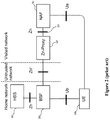
- Figure 1 illustrates the basic elements of GBA, which is a technology that enables authentication of a user.
- the User Equipment (UE) 10 is connected to the Bootstrapping Server Function (BSF) 20 through the Ub interface.
- the UE is also connected to the Network Application Function (NAF) through the Ua interface.
- the NAF 30 is connected to the BSF 20 through the Zn interface 50.
- the BSF 20 is connected to the Home Subscriber Server (HSS) 40 through the Zh interface.
- HSS Home Subscriber Server
- NAF Network Application Function
- BSF Bootstrapping Server Function
- the NAF is pulled out of the secure zone and brought into an enterprise network, for example, thus exposing the Zn interface to an untrusted network.
- IoT Internet of Things
- Patent application EP 1 811 744 A1 discloses a method for authenticating applied to a system including a first service entity requesting a service, a second service entity providing the service and an entity authentication centre, EAC.
- the method includes respectively performing a mutual authentication between the first service entity and the EAC and between the second service entity and the EAC according to the negotiated authentication mode. If the first service entity requests the second service entity to provide the service, the EAC provides authentication inquiring for the first service entity and the second service entity according to the negotiated authentication mode, and generates a shared derived key according to the negotiated authentication mode. The first service entity and the second service entity authenticate each other according to the shared derived key and the negotiated authentication mode.
- Patent application WO 2010/095988 A1 discloses a method of authenticating access to a service which comprises: a) receiving at a mobile terminal, over a bi-directional near-field communication channel between the mobile terminal and a browser, at least part of the identifier of a service; b) comparing, at the mobile terminal, at least part of the identifier received at the mobile terminal with a set of identifiers stored in the mobile device; and c) authenticating access to the service on the basis of whether at least part of the identifier received at the mobile terminal matches an identifier in the set.
- embodiments can be partially or completely embodied in the form of computer-readable carrier or carrier wave containing an appropriate set of computer instructions that would cause processing circuit to carry out the techniques described herein.
- the functions/actions may occur out of the order noted in the sequence of actions.
- some blocks, functions or actions may be optional and may or may not be executed.
- GBA General Bootstrapping Architecture
- NAF Network Application Function
- BSF Bootstrapping Server Function
- TLS Transport Layer Security
- Zn interface which is also called the Zn reference point.
- This TLS connection on the Zn interface can currently be accomplished only with the use of asymmetric encryption through the installation and use of certificates, i.e. private and public keys in the Application Function, e.g. the NAF, and in the Authentication Function, e.g. the BSF, respectively.
- a key pair is used.
- a public key is made public and available to other entities.
- a second, private key is kept secret. Any message that is encrypted by using a public key can only be decrypted by applying the same algorithm with the corresponding private key. Conversely, a message that is encrypted by using the private key can only be decrypted by using the corresponding public key.
- Asymmetric encryption has several disadvantages, especially in the context of the Internet of Things (IoT). First, it is slower than symmetric encryption (which will be described further below). Asymmetric encryption requires more processing power to both encrypt and decrypt the content of the message.
- Symmetric encryption is therefore a more flexible and expandable solution for establishing Transport Layer Security (TLS).
- Symmetric encryption is based on a shared secret, i.e. a secret key, which can be a number, a word, or just a string of random letters that is shared and applied on both ends to encrypt and decrypt messages.
- Embodiments described herein provide a solution for provisioning network nodes with a shared secret in a secure manner and for establishing a secure communication link on an interface between two network nodes using the shared secret.
- a method is defined for an Application Function, e.g. a NAF, located in an unsecure zone, to perform a bootstrapping procedure with an Authentication Function, e.g. a BSF.
- This method is proposed as a way to secure a new interface, called Znb, between the NAF and BSF.
- the NAF and BSF have a pre-shared key (PSK) which can be used to perform a TLS-PSK cipher, thus creating a secure channel, without the need of public/private certificates.
- PSK pre-shared key
- TLS-PSK is based on time-limited session keys from the GBA bootstrapping method and is more secured than TLS-PKI (which is based on certificates).
- the Application function e.g. the NAF
- SIM Subscriber Identity Module
- the GBA session key can then be used by the NAF to create a TLS-PSK tunnel with the Authentication Function, e.g. the BSF.
- FIG. 3 illustrates a system 100 comprising a Device 70, which can be a User Equipment (UE), a Machine-to-Machine (M2M) device, any type of connected computing device or any type of sensor device that needs to transmit and/or receive data.
- the system 100 comprises a secure zone 110, also called militarized zone, in which the Authentication Function 20 and the HSS 40 are located.
- the Authentication Function 20 and the HSS 40 can typically communicate securely in the secure zone.
- the Authentication Function 20 and the HSS 40 could, either or both, be located outside the secure zone 110, e.g. in the cloud.
- these nodes 20, 40 could run in a data center providing a pool of configurable computer resources.
- the system 100 also comprises an unsecure zone 90, in which the Application Function 30 and the Application Server 80 are located, and in which they can communicate with each other. Theses nodes are typically, but not necessarily, owned by the same entity.
- the system 100 includes the new Znb interface 55, which will be details further below.
- Figure 4 illustrates messages exchanged between the Application Function 30, located in an unsecure zone, the Authentication Function 20 and the HSS 40. The messages exchanged between these nodes will be further described in relation to the methods of Figures 5 and 6 .
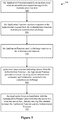
- Figure 5 illustrates a method 300 for securing an interface and for securing a process for establishing a secure communication link between an Application Function 30 located in an unsecure zone and an Authentication Function 20.
- the method 300 comprises step 310 in which the Application Function 30 sends an authentication request message 120 to the Authentication Function 20.
- the method 300 comprises step 320 in which the Application Function 30 receives a response to the authentication request 150 from the Authentication Function including an authentication challenge.
- the method 300 comprises step 330 in which the Application Function 30 sends a challenge response 160 to the Authentication Function 20.
- the method 300 comprises step 340 in which, upon receiving a response indicating success 190 from the Authentication Function 20, the Application Function 30 generates a session key 200 using secret authentication credentials and information included in the authentication challenge (not illustrated).
- the method 300 comprises step 350 in which the Application Function 30 handshakes with the Authentication Function 20 and establishes the secure communication link 210 using the session key 200, thereby securing the interface 55 between the Application Function 30 and
- the Application Function may be a Network Application Function (NAF) 30 and the Authentication Function may be a Bootstrapping Server Functionality (BSF) 20 as defined in Generic Bootstrapping Architecture (GBA).
- NAF Network Application Function
- BAF Bootstrapping Server Functionality
- the interface 55 may be called a Znb interface or reference point between the NAF 30 and the BSF 20.
- Znb the actual "Znb" name could differ, as long as the method for securing the interface and for securing the process for establishing the secure communication link is the same.
- the authentication challenge may be an authentication vector generated by a Home Subscriber Server (HSS) 40 and the session keys may be Bootstrapping Key Session (Ksb) useable for a specific Application Function 30.
- HSS Home Subscriber Server
- Ksb Bootstrapping Key Session
- the information included in the authentication challenge can include a Message Authentication Code (MAC) and Random number (RAND), for example.
- MAC Message Authentication Code
- RAND Random number
- the secret authentication credentials that are stored in the Application Function 30 may comprise a physical Subscriber Identity Module (SIM), an embedded SIM or a software SIM.
- SIM Subscriber Identity Module
- a person skilled in the art would know that other variations of hardware or software authentication credentials, having security levels similar to that of a SIM card, could also be used interchangeably.
- the secure communication link may be a Transport Layer Security based on Pre-Shared Key ciphersuite (TLS-PSK) tunnel.
- TLS-PSK Pre-Shared Key ciphersuite
- Figure 6 illustrates a method 400 for securing an interface and for securing a process for establishing a secure communication link between an Application Function 30 located in an unsecure zone and an Authentication Function 20.
- the method 400 comprises step 410 in which the Authentication Function 20 receives an authentication request message 120 from the Application Function 30.
- the method 400 comprises step 420 in which the Authentication Function 20 sends a request for an authentication vector 130 to a Home Subscriber Server (HSS) 40 for an identifier provided in the authentication request message 120.
- HSS Home Subscriber Server
- the method 400 comprises step 430 in which the Authentication Function 20 receives a response 140 from the HSS 40 including the authentication vector.
- HSS Home Subscriber Server
- the method 400 comprises step 440 in which the Authentication Function 20 sends a response to the authentication request 150 to the Application Function 30 including an authentication challenge derived from the authentication vector.
- the method 400 comprises step 450 in which the Authentication Function 20 receives a challenge response 160 from the Application Function 30.
- the method 400 comprises step 460 in which upon validating the challenge response 170, the Authentication Function 20 generates a session key 180 using information included in the authentication vector.
- the method 400 comprises step 470 in which the Authentication Function 20 sends a response indicating success 190 to the Application Function 30.
- the method 400 comprises step 480 in which the Authentication Function 20 handshakes with the Application Function 30 and establishes the secure communication link 210 using the session key 180, thereby securing the interface between the Application Function 30 and the Authentication Function 20.
- Figure 7 illustrates an Application Function 30 node located in an unsecure zone for securing an interface and a process for establishing a secure communication link towards an Authentication Function 20, as described previously.
- the Application Function node 30 comprises a processor or processing circuit 500 and a memory 510, 520, the memory 510 is a transitory memory and the memory 520 is a non-transitory memory, the memory 510, 520 contains instructions executable by the processing circuit 500 whereby the Application Function 30 node is operative to execute a method 300 as described previously in relation to figure 5 .
- the Application Function 30 node further comprises at least one communications interface 530 to be able to communicate with a network or with other nodes as would be apparent to a person skilled in the art.
- Figure 8 illustrates an Authentication Function node 20 for securing an interface and a process for establishing a secure communication link towards an Application Function 30 located in an unsecure zone, as described previously.
- the Authentication function 20 node comprises a processor or processing circuit 500 and a memory 510, 520, the memory 510 is a transitory memory and the memory 520 is a non-transitory memory, the memory 510, 520 containing instructions executable by the processing circuit 500 whereby the Authentication Function 20 node is operative to execute a method 400 as described previously in relation to figure 6 .
- the Authentication Function node 20 further comprises at least one communications interface 530 to be able to communicate with a network or with other nodes as would be apparent to a person skilled in the art.
- FIG. 9 illustrates an Application Function node 30 located in an unsecure zone for securing an interface and a process for establishing a secure communication link towards an Authentication Function 20.
- the Application Function node 30 comprises a sending module 630 for sending an authentication request message 120 to the Authentication Function 20.
- the Application Function node 30 comprises a receiving module 630 for receiving a response to the authentication request 150 from the Authentication Function 20 including an authentication challenge.
- the sending and the receiving modules 630 could alternatively be separate modules.
- the sending module 630 is further for sending a challenge response 160 to the Authentication Function 20.
- the receiving module 630 is further for receiving a response indicating success 190 from the Authentication Function 20.
- the Application Function node 30 comprises a processing module 600 for generating a session key using secret authentication credentials and information included in the authentication challenge, upon receiving the response indicating success 190.
- the Application Function node 30 comprises a communication module 640 for handshaking with the Authentication Function 20 and establishing the secure communication link 210 using the session key, thereby securing the interface between the Application Function node 30 and the Authentication Function 20.
- the Application Function node 30 also comprises at least one memory module 610, 620, the memory module 610 is a transitory memory and the memory 620 is a non-transitory memory, the memory module 610, 620 containing instructions executable by the processing module.
- the Application Function node 30 is operative to execute a method 300 as described previously in relation to figure 5 .
- FIG 10 illustrates an Authentication Function node 20 for securing an interface and a process for establishing a secure communication link towards an Application Function 30 located in an unsecure zone.
- the Authentication Function node 20 comprises a receiving module 630 for receiving an authentication request message 120 from the Application Function.
- the Authentication Function node 20 comprises a sending module 630 for sending a request for an authentication vector 130 to a Home Subscriber Server (HSS) 40 for an identifier provided in the authentication request message 120.
- HSS Home Subscriber Server
- the sending and the receiving modules 630 could alternatively be separate modules.
- the receiving module 630 is further for receiving a response 140 from the HSS including the authentication vector.
- the sending module 630 is further for sending a response 150 to the authentication request to the Application Function 30 including an authentication challenge derived from the authentication vector.
- the receiving module 630 is further for receiving a challenge response 160 from the Application Function 30.
- the Authentication Function node 20 comprises a processing module 600 for generating a session key 180 using information included in the authentication vector, upon validating 170 the challenge response.
- the sending module 630 is further for sending a response indicating success 190 to the Application Function 30.
- the Authentication Function node 20 comprises a communication module 640 for handshaking with the Application Function 30 and establishing the secure communication link 210 using the session key, thereby securing the interface between the Application Function 30 and the Authentication Function node 20.
- the Authentication Function node 20 also comprises at least one memory module 610, 620, the memory module 610 is a transitory memory and the memory 620 is a non-transitory memory, the memory module 610, 620 containing instructions executable by the processing module.
- the Authentication Function node 20 is operative to execute a method 400 as described previously in relation to figure 6 .
- these nodes 20, 30 comprise one or several general-purpose or special-purpose processors 500, 600 or other microcontrollers programmed with suitable software programming instructions and/or firmware to carry out some or all of the functionality of the nodes 20, 30 described herein.
- the nodes 20, 30 may comprise various digital hardware blocks (e.g., one or more Application Specific Integrated Circuits (ASICs), one or more off-the-shelf digital or analog hardware components, or a combination thereof) (not illustrated) configured to carry out some or all of the functionality of the controller nodes 20, 30 described herein.
- ASICs Application Specific Integrated Circuits
- a memory 510, 610 such as a random access memory (RAM), may be used by the processor, or processing circuit, 500, 600 to store data and programming instructions which, when executed by the processor 500, 600, implement all or part of the functionality described herein.
- the nodes 20, 30 may also include one or more storage media 520, 620 for storing data necessary and/or suitable for implementing the functionality described herein, as well as for storing the programming instructions which, when executed on the processor 500, 600, implement all or part of the functionality described herein.
- One embodiment of the present disclosure may be implemented as a computer program product that is stored on a computer-readable storage medium, the computer program product including programming instructions that are configured to cause the processor 500, 600 to carry out the steps described herein.
- a non-transitory computer media 520, 620 having stored thereon instructions for securing an interface and for securing a process for establishing a secure communication link between an Application Function 30 and an Authentication Function 20.
- the instructions comprise steps of a method 300 as previously described in relation to figure 5 .
- non-transitory computer media 520, 620 having stored thereon instructions for securing an interface and for securing a process for establishing a secure communication link between an Application Function 30 and an Authentication Function 20.
- the instructions comprise steps of a method 400 as previously described in relation to figure 6 .
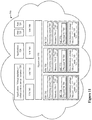
- an Application Function instance 720 located in an unsecure zone in a cloud computing environment 700 which provides processing circuit 760 and memory 790 for running the Application Function instance 720.
- the memory 790 contains instructions 795 executable by said processing circuit 760 whereby the Application Function instance 720 is operative to execute the method 300 as previously described in relation to figure 5 .
- the cloud computing environment 700 comprises a general-purpose network device including hardware 730 comprising a set of one or more processor(s) or processing circuit 760, which can be commercial off-the-shelf (COTS) processors, dedicated Application Specific Integrated Circuits (ASICs), or any other type of processing circuit including digital or analog hardware components or special purpose processors, and network interface controller(s) 770 (NICs), also known as network interface cards, which include physical Network Interface 780.
- the general-purpose network device also includes non-transitory machine readable storage media 790-2 having stored therein software 795 and/or instructions executable by the processor 760.
- the processor(s) 760 execute the software 795 to instantiate a hypervisor 750, sometimes referred to as a virtual machine monitor (VMM), and one or more virtual machines 740 that are run by the hypervisor 750.
- a virtual machine 740 is a software implementation of a physical machine that runs programs as if they were executing on a physical, non-virtualized machine; and applications generally do not know they are running on a virtual machine as opposed to running on a "bare metal" host electronic device, though some systems provide para-virtualization which allows an operating system or application to be aware of the presence of virtualization for optimization purposes.
- Each of the virtual machines 740, and that part of the hardware 730 that executes that virtual machine be it hardware dedicated to that virtual machine and/or time slices of hardware temporally shared by that virtual machine with others of the virtual machine(s) 740, forms a separate virtual network element(s) (VNE).
- VNE virtual network element
- the hypervisor 750 may present a virtual operating platform that appears like networking hardware to virtual machine 740, and the virtual machine 740 may be used to implement functionality such as control communication and configuration module(s) and forwarding table(s), this virtualization of the hardware is sometimes referred to as network function virtualization (NFV).
- NFV network function virtualization
- CPE customer premise equipment
- Different embodiments of the Application Function 30 and Authentication Function 20 instances may be implemented on one or more of the virtual machine(s) 740, and the implementations may be made differently.
- an Authentication Function instance 720 in a cloud computing environment 700 which provides processing circuit 760 and memory 790 for running the Authentication Function instance 720.
- the memory 790 contains instructions 795 executable by the processing circuit 760 whereby the Authentication Function instance 720 is operative to execute the method 400 as previously described in relation to figure 6 .
- a method 900 comprising the step 920 of initiating, by a user 810, an instantiation of an Application Function located in an unsecure zone in a cloud computing environment 800 which provides processing circuit and memory for running the Application Function, the Application function being operative to execute the method 300 as previously described in relation to figure 5 .
- a method 950 comprising the step 960 of initiating, by a user 810, an instantiation of an Authentication Function in a cloud computing environment 800 which provides processing circuit and memory for running the Authentication Function, the Authentication function being operative to execute the method 400 as previously described in relation to figure 6 .
- Figure 15 illustrates an example embodiment comprising a device 70, which can be, but is not limited to, a standalone device such as a sensor, a smart meter, a connected car, a medical device, a user equipment, a watch, a headset, glasses, a home appliance, etc.
- the device 70 may also be a plurality of devices, such as, but not limited to, an electrical grid, a network of connected devices, such as sensors, cameras, microphones, computing devices, cars, trucks, bus, trains, planes, bicycles, vending machines, industrial machinery, public utilities, smart buildings, meters, fixtures (light, heat, cooling), advertisement displays, etc.
- the HSS 40 is provisioned with secret authentication credentials pertaining to each Application Function 30 located in an unsecure zone. The same authentication credentials are also provisioned in the Application Functions 30.
- This step can be done offline (e.g. by inserting a physical SIM) or online (by provisioning the Application Function 30 with a software SIM, for example, as explained previously). This step has to be done in a secure manner, as would be apparent to a person skilled in the art.
- an Application Function 30 When an Application Function 30 is ready to authenticate with the Authentication Function 20, it performs the self-bootstrapping method 300, based on a shared secret, as explained previously in relation to figure 5 .
- a key derivation procedure can be used by the Authentication Function 20 to generate the session keys 180, 200 for a specific Application Function 30.
- a secure TLS PSK communication tunnel 210 is then established between the Application function 30 and the Authentication function 20, using the session keys 180, 200.
- the device 70 and the Authentication Function 20 can mutually authenticate using the second generation (2G) Authentication and Key Agreement (AKA) protocol (as described in the standard document referred to in the background section), and agree on session keys 1030 that are afterwards applied between the device 70 and a specific Application Function 30.
- a TLS PSK communication tunnel 1040 can then also be established between the device 70 and the Application Function 30, using the session keys 1030.
- the device 70 and Application Function 30 can run some application-specific protocol where the authentication of messages are based on the session keys 1030 generated during the mutual authentication between device 70 and Application Function 30.
- the device 70, the Application Function 30 and the Application Server 80 can then communicate securely.
Landscapes
- Engineering & Computer Science (AREA)
- Computer Security & Cryptography (AREA)
- Computer Networks & Wireless Communication (AREA)
- Signal Processing (AREA)
- Computer Hardware Design (AREA)
- General Engineering & Computer Science (AREA)
- Software Systems (AREA)
- Theoretical Computer Science (AREA)
- Physics & Mathematics (AREA)
- General Physics & Mathematics (AREA)
- Computing Systems (AREA)
- Mobile Radio Communication Systems (AREA)
- Telephonic Communication Services (AREA)
Claims (15)
- Verfahren zur Sicherung einer Schnittstelle (55) und zur Sicherung eines Prozesses zum Herstellen einer sicheren Kommunikationsverbindung zwischen einer ersten Anwendungsfunktion (30), die sich in einer unsicheren Zone befindet, und einer zweiten Authentifizierungsfunktion (20), umfassend, dass:- die erste Anwendungsfunktion (30) eine Authentifizierungsanforderungsnachricht an die zweite Authentifizierungsfunktion (20) sendet (310) ;- die erste Anwendungsfunktion (30) eine Antwort von der zweiten Authentifizierungsfunktion (20) auf die Authentifizierungsanforderung empfängt (320), die eine Authentifizierungsabfrage umfasst;- die erste Anwendungsfunktion (30) eine Abfrageantwort an die zweite Authentifizierungsfunktion (20) sendet (330);- die erste Anwendungsfunktion (30) bei Empfang einer Antwort mit einer Erfolgsangabe von der zweiten Authentifizierungsfunktion (20) einen Sitzungsschlüssel unter Verwendung von geheimen Authentifizierungs-Anmeldeinformationen und Informationen erzeugt (340), die in der Authentifizierungsabfrage umfasst sind; und- die erste Anwendungsfunktion (30) Handshake (350) mit der zweiten Authentifizierungsfunktion (20) durchführt und die sichere Kommunikationsverbindung unter Verwendung des Sitzungsschlüssels herstellt, um dadurch die Schnittstelle (55) zwischen der ersten Anwendungsfunktion (30) und der zweiten Authentifizierungsfunktion (20) zu sichern,
wobei die erste Anwendungsfunktion (30) eine Netzwerkanwendungsfunktion, NAF, ist, und die zweite Authentifizierungsfunktion (20) eine Bootstrapping-Server-Funktionalität, BSF, wie in der generischen Bootstrapping-Architektur, GBA, definiert, ist. - Verfahren nach Anspruch 1, wobei die Schnittstelle (55) eine Schnittstelle zwischen der NAF und der BSF ist, und/oder
wobei die Authentifizierungsabfrage ein Authentifizierungsvektor ist, der von einem Heimat-Teilnehmerserver, HSS, (40) erzeugt wird. - Verfahren nach Anspruch 1 oder 2, wobei es sich bei den Sitzungsschlüsseln um eine Bootstrapping-Schlüsselsitzung, Ksb, handelt, die für eine spezifische Anwendungsfunktion (30) verwendet werden kann, und/oder
wobei die geheimen Authentifizierungs-Anmeldeinformationen ein physisches Teilnehmerkennungsmodul, SIM, ein eingebettetes SIM oder ein Software-SIM umfassen. - Verfahren nach einem der Ansprüche 1 bis 3, wobei die in der Authentifizierungsabfrage umfassten Informationen einen Nachrichtenauthentifizierungscode, MAC, und eine Zufallszahl, RAND, umfassen, und/oder
wobei die sichere Kommunikationsverbindung ein Tunnel mit Transportschichtsicherheit basierend auf einer Pre-Shared-Key-Chiffriersuite, TLS-PSK, ist. - Verfahren zur Sicherung einer Schnittstelle (55) und zur Sicherung eines Prozesses zum Herstellen einer sicheren Kommunikationsverbindung zwischen einer ersten Anwendungsfunktion (30), die sich in einer unsicheren Zone befindet, und einer zweiten Authentifizierungsfunktion (20), umfassend, dass:- die zweite Authentifizierungsfunktion (20) eine Authentifizierungsanforderungsnachricht von der ersten Authentifizierungsfunktion (30) empfängt (410) ;- die zweite Authentifizierungsfunktion (20) eine Anforderung eines Authentifizierungsvektors an einen Heimat-Teilnehmerserver, HSS, (40) für eine Kennung sendet (420), die in der Authentifizierungsanforderungsnachricht vorgesehen ist;- die zweite Authentifizierungsfunktion (20) eine Antwort vom HSS (40) mit dem Authentifizierungsvektor empfängt (430);- die zweite Authentifizierungsfunktion (20) eine Antwort auf die Authentifizierungsanforderung an die erste Anwendungsfunktion (30) sendet (440), die eine vom Authentifizierungsvektor abgeleitete Authentifizierungsabfrage umfasst;- die zweite Authentifizierungsfunktion (20) eine Authentifizierungsantwort von der ersten Anwendungsfunktion (30) empfängt (450);- die zweite Authentifizierungsfunktion (20) bei Validierung der Abfrageantwort einen Sitzungsschlüssel unter Verwendung von Informationen erzeugt (460), die im Authentifizierungsvektor umfasst sind;- die zweite Authentifizierungsfunktion (20) eine Antwort mit einer Erfolgsangabe an die erste Anwendungsfunktion (30) sendet (470); und- die zweite Authentifizierungsfunktion (20) Handshake (480) mit der ersten Anwendungsfunktion (30) durchführt und die sichere Kommunikationsverbindung unter Verwendung des Sitzungsschlüssels herstellt, um dadurch die Schnittstelle (55) zwischen der ersten Anwendungsfunktion (30) und der zweiten Authentifizierungsfunktion (20) zu sichern,
wobei die erste Anwendungsfunktion (30) eine Netzwerkanwendungsfunktion, NAF, ist, und die zweite Authentifizierungsfunktion (20) eine Bootstrapping-Server-Funktionalität, BSF, wie in der generischen Bootstrapping-Architektur, GBA, definiert, ist. - Verfahren nach Anspruch 5, wobei die Schnittstelle (55) eine Schnittstelle zwischen der NAF und der BSF ist, und/oder
wobei es sich bei den Sitzungsschlüsseln um eine Bootstrapping-Schlüsselsitzung, Ksb, handelt, die für eine spezifische Anwendungsfunktion (30) verwendet werden kann. - Verfahren nach einem der Ansprüche 5 oder 6, wobei die in der Authentifizierungsabfrage umfassten Informationen einen Nachrichtenauthentifizierungscode, MAC, und eine Zufallszahl, RAND, umfassen, und/oder wobei die sichere Kommunikationsverbindung ein Tunnel mit Transportschichtsicherheit basierend auf einer Pre-Shared-Key-Chiffriersuite, TLS-PSK, ist.
- Knoten mit Anwendungsfunktion (30), der sich in einer unsicheren Zone befindet, zum Sichern einer Schnittstelle (55) und eines Prozesses zur Herstellung einer sicheren Kommunikationsverbindung mit einer zweiten Authentifizierungsfunktion (20), wobei der Knoten mit Anwendungsfunktion (30) eine Verarbeitungsschaltung (500) und einen Speicher (510) umfasst, und der Speicher (510) Anweisungen enthält, die von der Verarbeitungsschaltung (500) ausgeführt werden können, wodurch der Knoten mit Anwendungsfunktion (30) ausgelegt ist zum:- Senden (310) einer Authentifizierungsanforderungsnachricht an die zweite Authentifizierungsfunktion (20);- Empfangen (320) einer Antwort von der zweiten Authentifizierungsfunktion (20) auf die Authentifizierungsanforderung, die eine Authentifizierungsabfrage umfasst;- Senden (330) einer Abfrageantwort an die zweite Authentifizierungsfunktion (20);- Erzeugen (340) eines Sitzungsschlüssels unter Verwendung von geheimen Authentifizierungs-Anmeldeinformationen und Informationen, die in der Authentifizierungsabfrage umfasst sind, bei Empfang einer Antwort mit einer Erfolgsangabe von der zweiten Authentifizierungsfunktion (20); und- Durchführen von Handshake (350) mit der zweiten Authentifizierungsfunktion (20) und Herstellen der sicheren Kommunikationsverbindung unter Verwendung des Sitzungsschlüssels, um dadurch die Schnittstelle (55) zwischen der Anwendungsfunktion (30) und der Authentifizierungsfunktion (20) zu sichern,
wobei der Knoten mit Anwendungsfunktion (30) eine Netzwerkanwendungsfunktion, NAF, ist, und die zweite Authentifizierungsfunktion (20) eine Bootstrapping-Server-Funktionalität, BSF, wie in der generischen Bootstrapping-Architektur, GBA, definiert, ist. - Knoten mit Anwendungsfunktion (30) nach Anspruch 8, wobei die Schnittstelle (55) eine Schnittstelle zwischen der NAF und der BSF ist, und/oder
wobei die Authentifizierungsabfrage ein Authentifizierungsvektor ist, der von einem Heimat-Teilnehmerserver, HSS, (40) erzeugt wird. - Knoten mit Anwendungsfunktion (30) nach Anspruch 8 oder 9, wobei es sich bei den Sitzungsschlüsseln um eine Bootstrapping-Schlüsselsitzung, Ksb, handelt, die für eine spezifische Anwendungsfunktion (30) verwendet werden kann, und/oder
wobei die geheimen Authentifizierungs-Anmeldeinformationen ein physisches Teilnehmerkennungsmodul, SIM, ein eingebettetes SIM oder ein Software-SIM umfassen. - Knoten mit Anwendungsfunktion (30) nach einem der Ansprüche 8 bis 10, wobei die in der Authentifizierungsabfrage umfassten Informationen einen Nachrichtenauthentifizierungscode, MAC, und eine Zufallszahl, RAND, umfassen, und/oder
wobei die sichere Kommunikationsverbindung ein Tunnel mit Transportschichtsicherheit basierend auf einer Pre-Shared-Key-Chiffriersuite, TLS-PSK, ist. - Knoten mit Authentifizierungsfunktion (20) zum Sichern einer Schnittstelle (55) und eines Prozesses zur Herstellung einer sicheren Kommunikationsverbindung mit einer ersten Anwendungsfunktion (30), die sich in einer unsicheren Zone befindet, wobei der Knoten mit Authentifizierungsfunktion (20) eine Verarbeitungsschaltung (500) und einen Speicher (510) umfasst, und der Speicher (510) Anweisungen enthält, die von der Verarbeitungsschaltung (500) ausgeführt werden können, wodurch der Knoten mit Authentifizierungsfunktion (20) ausgelegt ist zum:- Empfangen (410) einer Authentifizierungsanforderungsnachricht von der ersten Anwendungsfunktion (30);- Senden (420) einer Anforderung eines Authentifizierungsvektors an einen Heimat-Teilnehmerserver, HSS, (40) für eine Kennung, die in der Authentifizierungsanforderungsnachricht vorgesehen ist;- Empfangen (430) einer Antwort vom HSS (40) mit dem Authentifizierungsvektor;- Senden (440) einer Antwort auf die Authentifizierungsanforderung an die erste Anwendungsfunktion (30), die eine vom Authentifizierungsvektor abgeleitete Authentifizierungsabfrage umfasst;- Empfangen (450) einer Abfrageantwort von der ersten Anwendungsfunktion (30);- Erzeugen (460) eines Sitzungsschlüssels unter Verwendung von Informationen, die im Authentifizierungsvektor umfasst sind, bei Validierung der Abfrageantwort;- Senden (470) einer Antwort mit einer Erfolgsangabe an die erste Anwendungsfunktion (30); und- Durchführen von Handshake (480) mit der ersten Anwendungsfunktion (30) und Herstellen der sicheren Kommunikationsverbindung unter Verwendung des Sitzungsschlüssels, um dadurch die Schnittstelle (55) zwischen der ersten Anwendungsfunktion (30) und der Authentifizierungsfunktion (20) zu sichern,
wobei die erste Anwendungsfunktion (30) eine Netzwerkanwendungsfunktion, NAF, ist, und der Knoten mit Authentifizierungsfunktion (20) eine Bootstrapping-Server-Funktionalität, BSF, wie in der generischen Bootstrapping-Architektur, GBA, definiert,
ist. - Knoten mit Authentifizierungsfunktion (20) nach Anspruch 12, wobei die Schnittstelle (55) eine Schnittstelle zwischen der NAF und der BSF ist, und/oder
wobei es sich bei den Sitzungsschlüsseln um eine Bootstrapping-Schlüsselsitzung, Ksb, handelt, die für eine spezifische Anwendungsfunktion (30) verwendet werden kann. - Knoten mit Authentifizierungsfunktion (20) nach Anspruch 12 oder 13, wobei die in der Authentifizierungsabfrage umfassten Informationen einen Nachrichtenauthentifizierungscode, MAC, und eine Zufallszahl, RAND, umfassen, und/oder
wobei die sichere Kommunikationsverbindung ein Tunnel mit Transportschichtsicherheit basierend auf einer Pre-Shared-Key-Chiffriersuite, TLS-PSK, ist. - Nicht-transitorisches Computermedium mit darauf gespeicherten Anweisungen zum Sichern einer Schnittstelle und zum Sichern eines Prozesses zur Herstellung einer sicheren Kommunikationsverbindung zwischen einer ersten Anwendungsfunktion (30), die sich in einer unsicheren Zone befindet, und einer zweiten Authentifizierungsfunktion (20), wobei die Anweisungen Anweisungen zum Ausführen des Verfahrens nach einem der Ansprüche 1 bis 7 umfassen.
Applications Claiming Priority (1)
| Application Number | Priority Date | Filing Date | Title |
|---|---|---|---|
| PCT/IB2016/050770 WO2017137809A1 (en) | 2016-02-12 | 2016-02-12 | Securing an interface and a process for establishing a secure communication link |
Publications (2)
| Publication Number | Publication Date |
|---|---|
| EP3414927A1 EP3414927A1 (de) | 2018-12-19 |
| EP3414927B1 true EP3414927B1 (de) | 2020-06-24 |
Family
ID=55409878
Family Applications (1)
| Application Number | Title | Priority Date | Filing Date |
|---|---|---|---|
| EP16706001.1A Active EP3414927B1 (de) | 2016-02-12 | 2016-02-12 | Befestigung einer schnittstelle und verfahren zur herstellung einer sicheren kommunikationsverbindung |
Country Status (4)
| Country | Link |
|---|---|
| US (1) | US20190020643A1 (de) |
| EP (1) | EP3414927B1 (de) |
| CN (1) | CN108702615B (de) |
| WO (1) | WO2017137809A1 (de) |
Families Citing this family (2)
| Publication number | Priority date | Publication date | Assignee | Title |
|---|---|---|---|---|
| GB2540354A (en) * | 2015-07-13 | 2017-01-18 | Vodafone Ip Licensing Ltd | Generci bootstrapping architecture protocol |
| CN119865814A (zh) * | 2024-12-31 | 2025-04-22 | 中移互联网有限公司 | 认证方法以及装置 |
Family Cites Families (20)
| Publication number | Priority date | Publication date | Assignee | Title |
|---|---|---|---|---|
| CN100466515C (zh) * | 2003-11-11 | 2009-03-04 | 华为技术有限公司 | 一种建立会话事务标识和网络应用实体之间关联的方法 |
| CN100512137C (zh) * | 2004-04-22 | 2009-07-08 | 华为技术有限公司 | 一种删除会话事务标识及其对应信息的方法 |
| US8726023B2 (en) * | 2005-02-03 | 2014-05-13 | Nokia Corporation | Authentication using GAA functionality for unidirectional network connections |
| FI20050384A0 (fi) * | 2005-04-14 | 2005-04-14 | Nokia Corp | Geneerisen todentamisarkkitehtuurin käyttö Internet-käytäntöavainten jakeluun matkaviestimissä |
| DE102005026982A1 (de) * | 2005-06-10 | 2006-12-14 | Siemens Ag | Verfahren zur Vereinbarung eines Sicherheitsschlüssels zwischen mindestens einem ersten und einem zweiten Kommunikationsteilnehmer zur Sicherung einer Kommunikationsverbindung |
| US20070101122A1 (en) * | 2005-09-23 | 2007-05-03 | Yile Guo | Method and apparatus for securely generating application session keys |
| US8122240B2 (en) * | 2005-10-13 | 2012-02-21 | Telefonaktiebolaget Lm Ericsson (Publ) | Method and apparatus for establishing a security association |
| JP5123209B2 (ja) * | 2006-01-24 | 2013-01-23 | ▲ホア▼▲ウェイ▼技術有限公司 | モバイルネットワークに基づくエンドツーエンド通信での認証の方法、システム、および認証センタ |
| CN101052032B (zh) * | 2006-04-04 | 2010-05-12 | 华为技术有限公司 | 一种业务实体认证方法及装置 |
| CN101039311B (zh) * | 2006-03-16 | 2010-05-12 | 华为技术有限公司 | 一种身份标识网页业务网系统及其鉴权方法 |
| US8522025B2 (en) * | 2006-03-28 | 2013-08-27 | Nokia Corporation | Authenticating an application |
| ES2706540T3 (es) * | 2006-07-06 | 2019-03-29 | Nokia Technologies Oy | Sistema de credenciales de equipos de usuario |
| CN103001940A (zh) * | 2007-10-05 | 2013-03-27 | 交互数字技术公司 | 由wtru使用的用于建立安全本地密钥的方法 |
| EP2399376A1 (de) * | 2009-02-18 | 2011-12-28 | Telefonaktiebolaget L M Ericsson (publ) | Benutzerauthentifizierung |
| CN102065421B (zh) * | 2009-11-11 | 2014-10-08 | 中国移动通信集团公司 | 一种更新密钥的方法、装置和系统 |
| US8509431B2 (en) * | 2010-09-20 | 2013-08-13 | Interdigital Patent Holdings, Inc. | Identity management on a wireless device |
| JP5865992B2 (ja) * | 2011-03-23 | 2016-02-17 | インターデイジタル パテント ホールディングス インコーポレイテッド | ネットワーク通信をセキュアにするためのシステムおよび方法 |
| US8990554B2 (en) * | 2011-06-30 | 2015-03-24 | Verizon Patent And Licensing Inc. | Network optimization for secure connection establishment or secure messaging |
| MX2014005223A (es) * | 2011-10-31 | 2014-09-01 | Nokia Corp | Mecanismo de seguridad para codigo externo. |
| WO2014067543A1 (en) * | 2012-10-29 | 2014-05-08 | Telefonaktiebolaget L M Ericsson (Publ) | Method and apparatus for securing a connection in a communications network |
-
2016
- 2016-02-12 CN CN201680081522.6A patent/CN108702615B/zh active Active
- 2016-02-12 EP EP16706001.1A patent/EP3414927B1/de active Active
- 2016-02-12 WO PCT/IB2016/050770 patent/WO2017137809A1/en not_active Ceased
- 2016-02-12 US US16/070,080 patent/US20190020643A1/en not_active Abandoned
Non-Patent Citations (1)
| Title |
|---|
| None * |
Also Published As
| Publication number | Publication date |
|---|---|
| CN108702615B (zh) | 2022-08-05 |
| EP3414927A1 (de) | 2018-12-19 |
| CN108702615A (zh) | 2018-10-23 |
| WO2017137809A1 (en) | 2017-08-17 |
| US20190020643A1 (en) | 2019-01-17 |
Similar Documents
| Publication | Publication Date | Title |
|---|---|---|
| US11272365B2 (en) | Network authentication method, and related device and system | |
| US10986083B2 (en) | Hardware identification-based security authentication service for IoT devices | |
| CN113596828B (zh) | 端对端服务层认证 | |
| US9654284B2 (en) | Group based bootstrapping in machine type communication | |
| KR102051492B1 (ko) | 머신-대-머신 서비스 제공 방법 및 장치 | |
| US12118093B2 (en) | Extended authentication method and apparatus for generic bootstrapping architecture, and storage medium | |
| CN105706390B (zh) | 在无线通信网络中执行设备到设备通信的方法和装置 | |
| US11316670B2 (en) | Secure communications using network access identity | |
| WO2018045817A1 (zh) | 移动网络的认证方法、终端设备、服务器和网络认证实体 | |
| JP2018532325A (ja) | ユーザ機器ueのアクセス方法、アクセスデバイス、およびアクセスシステム | |
| EP3652889B1 (de) | Token für sicheren gerätezugang | |
| US20180270653A1 (en) | Methods and apparatus for direct communication key establishment | |
| EP2957114A1 (de) | Verfahren und netzwerkknoten für den erhalt einer permanenten identität einer drahtlosen authentifizierungsvorrichtung | |
| US20240333695A1 (en) | Secure device pairing | |
| CN106031120A (zh) | 密钥管理 | |
| EP3414927B1 (de) | Befestigung einer schnittstelle und verfahren zur herstellung einer sicheren kommunikationsverbindung | |
| WO2020041933A1 (en) | Methods and devices for a secure connection | |
| US9602493B2 (en) | Implicit challenge authentication process | |
| CN118614099A (zh) | 基于tls-psk的用于接入边缘数据网络的认证机制 | |
| US11343675B2 (en) | Communication device authentication for multiple communication devices | |
| TWI656771B (zh) | Bluetooth communication method, device and device thereof | |
| CN121771919A (zh) | 一种配置信息的同步方法、通信节点及存储介质 | |
| CN121312170A (zh) | 基于应用认证和密钥管理(akma)的静默双因素认证 |
Legal Events
| Date | Code | Title | Description |
|---|---|---|---|
| STAA | Information on the status of an ep patent application or granted ep patent |
Free format text: STATUS: THE INTERNATIONAL PUBLICATION HAS BEEN MADE |
|
| PUAI | Public reference made under article 153(3) epc to a published international application that has entered the european phase |
Free format text: ORIGINAL CODE: 0009012 |
|
| STAA | Information on the status of an ep patent application or granted ep patent |
Free format text: STATUS: REQUEST FOR EXAMINATION WAS MADE |
|
| 17P | Request for examination filed |
Effective date: 20180905 |
|
| AK | Designated contracting states |
Kind code of ref document: A1 Designated state(s): AL AT BE BG CH CY CZ DE DK EE ES FI FR GB GR HR HU IE IS IT LI LT LU LV MC MK MT NL NO PL PT RO RS SE SI SK SM TR |
|
| AX | Request for extension of the european patent |
Extension state: BA ME |
|
| DAV | Request for validation of the european patent (deleted) | ||
| DAX | Request for extension of the european patent (deleted) | ||
| GRAP | Despatch of communication of intention to grant a patent |
Free format text: ORIGINAL CODE: EPIDOSNIGR1 |
|
| STAA | Information on the status of an ep patent application or granted ep patent |
Free format text: STATUS: GRANT OF PATENT IS INTENDED |
|
| INTG | Intention to grant announced |
Effective date: 20200302 |
|
| GRAS | Grant fee paid |
Free format text: ORIGINAL CODE: EPIDOSNIGR3 |
|
| GRAA | (expected) grant |
Free format text: ORIGINAL CODE: 0009210 |
|
| STAA | Information on the status of an ep patent application or granted ep patent |
Free format text: STATUS: THE PATENT HAS BEEN GRANTED |
|
| AK | Designated contracting states |
Kind code of ref document: B1 Designated state(s): AL AT BE BG CH CY CZ DE DK EE ES FI FR GB GR HR HU IE IS IT LI LT LU LV MC MK MT NL NO PL PT RO RS SE SI SK SM TR |
|
| REG | Reference to a national code |
Ref country code: GB Ref legal event code: FG4D |
|
| REG | Reference to a national code |
Ref country code: CH Ref legal event code: EP |
|
| REG | Reference to a national code |
Ref country code: AT Ref legal event code: REF Ref document number: 1285130 Country of ref document: AT Kind code of ref document: T Effective date: 20200715 |
|
| REG | Reference to a national code |
Ref country code: DE Ref legal event code: R096 Ref document number: 602016038643 Country of ref document: DE |
|
| REG | Reference to a national code |
Ref country code: IE Ref legal event code: FG4D |
|
| PG25 | Lapsed in a contracting state [announced via postgrant information from national office to epo] |
Ref country code: LT Free format text: LAPSE BECAUSE OF FAILURE TO SUBMIT A TRANSLATION OF THE DESCRIPTION OR TO PAY THE FEE WITHIN THE PRESCRIBED TIME-LIMIT Effective date: 20200624 Ref country code: FI Free format text: LAPSE BECAUSE OF FAILURE TO SUBMIT A TRANSLATION OF THE DESCRIPTION OR TO PAY THE FEE WITHIN THE PRESCRIBED TIME-LIMIT Effective date: 20200624 Ref country code: NO Free format text: LAPSE BECAUSE OF FAILURE TO SUBMIT A TRANSLATION OF THE DESCRIPTION OR TO PAY THE FEE WITHIN THE PRESCRIBED TIME-LIMIT Effective date: 20200924 Ref country code: GR Free format text: LAPSE BECAUSE OF FAILURE TO SUBMIT A TRANSLATION OF THE DESCRIPTION OR TO PAY THE FEE WITHIN THE PRESCRIBED TIME-LIMIT Effective date: 20200925 Ref country code: SE Free format text: LAPSE BECAUSE OF FAILURE TO SUBMIT A TRANSLATION OF THE DESCRIPTION OR TO PAY THE FEE WITHIN THE PRESCRIBED TIME-LIMIT Effective date: 20200624 |
|
| REG | Reference to a national code |
Ref country code: LT Ref legal event code: MG4D |
|
| PG25 | Lapsed in a contracting state [announced via postgrant information from national office to epo] |
Ref country code: BG Free format text: LAPSE BECAUSE OF FAILURE TO SUBMIT A TRANSLATION OF THE DESCRIPTION OR TO PAY THE FEE WITHIN THE PRESCRIBED TIME-LIMIT Effective date: 20200924 Ref country code: RS Free format text: LAPSE BECAUSE OF FAILURE TO SUBMIT A TRANSLATION OF THE DESCRIPTION OR TO PAY THE FEE WITHIN THE PRESCRIBED TIME-LIMIT Effective date: 20200624 Ref country code: HR Free format text: LAPSE BECAUSE OF FAILURE TO SUBMIT A TRANSLATION OF THE DESCRIPTION OR TO PAY THE FEE WITHIN THE PRESCRIBED TIME-LIMIT Effective date: 20200624 Ref country code: LV Free format text: LAPSE BECAUSE OF FAILURE TO SUBMIT A TRANSLATION OF THE DESCRIPTION OR TO PAY THE FEE WITHIN THE PRESCRIBED TIME-LIMIT Effective date: 20200624 |
|
| REG | Reference to a national code |
Ref country code: NL Ref legal event code: MP Effective date: 20200624 |
|
| REG | Reference to a national code |
Ref country code: AT Ref legal event code: MK05 Ref document number: 1285130 Country of ref document: AT Kind code of ref document: T Effective date: 20200624 |
|
| PG25 | Lapsed in a contracting state [announced via postgrant information from national office to epo] |
Ref country code: AL Free format text: LAPSE BECAUSE OF FAILURE TO SUBMIT A TRANSLATION OF THE DESCRIPTION OR TO PAY THE FEE WITHIN THE PRESCRIBED TIME-LIMIT Effective date: 20200624 Ref country code: NL Free format text: LAPSE BECAUSE OF FAILURE TO SUBMIT A TRANSLATION OF THE DESCRIPTION OR TO PAY THE FEE WITHIN THE PRESCRIBED TIME-LIMIT Effective date: 20200624 |
|
| PG25 | Lapsed in a contracting state [announced via postgrant information from national office to epo] |
Ref country code: CZ Free format text: LAPSE BECAUSE OF FAILURE TO SUBMIT A TRANSLATION OF THE DESCRIPTION OR TO PAY THE FEE WITHIN THE PRESCRIBED TIME-LIMIT Effective date: 20200624 Ref country code: ES Free format text: LAPSE BECAUSE OF FAILURE TO SUBMIT A TRANSLATION OF THE DESCRIPTION OR TO PAY THE FEE WITHIN THE PRESCRIBED TIME-LIMIT Effective date: 20200624 Ref country code: PT Free format text: LAPSE BECAUSE OF FAILURE TO SUBMIT A TRANSLATION OF THE DESCRIPTION OR TO PAY THE FEE WITHIN THE PRESCRIBED TIME-LIMIT Effective date: 20201026 Ref country code: AT Free format text: LAPSE BECAUSE OF FAILURE TO SUBMIT A TRANSLATION OF THE DESCRIPTION OR TO PAY THE FEE WITHIN THE PRESCRIBED TIME-LIMIT Effective date: 20200624 Ref country code: EE Free format text: LAPSE BECAUSE OF FAILURE TO SUBMIT A TRANSLATION OF THE DESCRIPTION OR TO PAY THE FEE WITHIN THE PRESCRIBED TIME-LIMIT Effective date: 20200624 Ref country code: SM Free format text: LAPSE BECAUSE OF FAILURE TO SUBMIT A TRANSLATION OF THE DESCRIPTION OR TO PAY THE FEE WITHIN THE PRESCRIBED TIME-LIMIT Effective date: 20200624 Ref country code: RO Free format text: LAPSE BECAUSE OF FAILURE TO SUBMIT A TRANSLATION OF THE DESCRIPTION OR TO PAY THE FEE WITHIN THE PRESCRIBED TIME-LIMIT Effective date: 20200624 Ref country code: IT Free format text: LAPSE BECAUSE OF FAILURE TO SUBMIT A TRANSLATION OF THE DESCRIPTION OR TO PAY THE FEE WITHIN THE PRESCRIBED TIME-LIMIT Effective date: 20200624 |
|
| PG25 | Lapsed in a contracting state [announced via postgrant information from national office to epo] |
Ref country code: IS Free format text: LAPSE BECAUSE OF FAILURE TO SUBMIT A TRANSLATION OF THE DESCRIPTION OR TO PAY THE FEE WITHIN THE PRESCRIBED TIME-LIMIT Effective date: 20201024 Ref country code: PL Free format text: LAPSE BECAUSE OF FAILURE TO SUBMIT A TRANSLATION OF THE DESCRIPTION OR TO PAY THE FEE WITHIN THE PRESCRIBED TIME-LIMIT Effective date: 20200624 Ref country code: SK Free format text: LAPSE BECAUSE OF FAILURE TO SUBMIT A TRANSLATION OF THE DESCRIPTION OR TO PAY THE FEE WITHIN THE PRESCRIBED TIME-LIMIT Effective date: 20200624 |
|
| REG | Reference to a national code |
Ref country code: DE Ref legal event code: R097 Ref document number: 602016038643 Country of ref document: DE |
|
| PG25 | Lapsed in a contracting state [announced via postgrant information from national office to epo] |
Ref country code: DK Free format text: LAPSE BECAUSE OF FAILURE TO SUBMIT A TRANSLATION OF THE DESCRIPTION OR TO PAY THE FEE WITHIN THE PRESCRIBED TIME-LIMIT Effective date: 20200624 |
|
| PLBE | No opposition filed within time limit |
Free format text: ORIGINAL CODE: 0009261 |
|
| STAA | Information on the status of an ep patent application or granted ep patent |
Free format text: STATUS: NO OPPOSITION FILED WITHIN TIME LIMIT |
|
| 26N | No opposition filed |
Effective date: 20210325 |
|
| PG25 | Lapsed in a contracting state [announced via postgrant information from national office to epo] |
Ref country code: SI Free format text: LAPSE BECAUSE OF FAILURE TO SUBMIT A TRANSLATION OF THE DESCRIPTION OR TO PAY THE FEE WITHIN THE PRESCRIBED TIME-LIMIT Effective date: 20200624 |
|
| PG25 | Lapsed in a contracting state [announced via postgrant information from national office to epo] |
Ref country code: MC Free format text: LAPSE BECAUSE OF FAILURE TO SUBMIT A TRANSLATION OF THE DESCRIPTION OR TO PAY THE FEE WITHIN THE PRESCRIBED TIME-LIMIT Effective date: 20200624 |
|
| REG | Reference to a national code |
Ref country code: BE Ref legal event code: MM Effective date: 20210228 |
|
| PG25 | Lapsed in a contracting state [announced via postgrant information from national office to epo] |
Ref country code: LI Free format text: LAPSE BECAUSE OF NON-PAYMENT OF DUE FEES Effective date: 20210228 Ref country code: LU Free format text: LAPSE BECAUSE OF NON-PAYMENT OF DUE FEES Effective date: 20210212 Ref country code: CH Free format text: LAPSE BECAUSE OF NON-PAYMENT OF DUE FEES Effective date: 20210228 |
|
| PG25 | Lapsed in a contracting state [announced via postgrant information from national office to epo] |
Ref country code: IE Free format text: LAPSE BECAUSE OF NON-PAYMENT OF DUE FEES Effective date: 20210212 Ref country code: FR Free format text: LAPSE BECAUSE OF NON-PAYMENT OF DUE FEES Effective date: 20210228 |
|
| PG25 | Lapsed in a contracting state [announced via postgrant information from national office to epo] |
Ref country code: BE Free format text: LAPSE BECAUSE OF NON-PAYMENT OF DUE FEES Effective date: 20210228 |
|
| PG25 | Lapsed in a contracting state [announced via postgrant information from national office to epo] |
Ref country code: CY Free format text: LAPSE BECAUSE OF FAILURE TO SUBMIT A TRANSLATION OF THE DESCRIPTION OR TO PAY THE FEE WITHIN THE PRESCRIBED TIME-LIMIT Effective date: 20200624 |
|
| PG25 | Lapsed in a contracting state [announced via postgrant information from national office to epo] |
Ref country code: HU Free format text: LAPSE BECAUSE OF FAILURE TO SUBMIT A TRANSLATION OF THE DESCRIPTION OR TO PAY THE FEE WITHIN THE PRESCRIBED TIME-LIMIT; INVALID AB INITIO Effective date: 20160212 |
|
| PG25 | Lapsed in a contracting state [announced via postgrant information from national office to epo] |
Ref country code: MK Free format text: LAPSE BECAUSE OF FAILURE TO SUBMIT A TRANSLATION OF THE DESCRIPTION OR TO PAY THE FEE WITHIN THE PRESCRIBED TIME-LIMIT Effective date: 20200624 |
|
| PG25 | Lapsed in a contracting state [announced via postgrant information from national office to epo] |
Ref country code: MT Free format text: LAPSE BECAUSE OF FAILURE TO SUBMIT A TRANSLATION OF THE DESCRIPTION OR TO PAY THE FEE WITHIN THE PRESCRIBED TIME-LIMIT Effective date: 20200624 |
|
| PG25 | Lapsed in a contracting state [announced via postgrant information from national office to epo] |
Ref country code: TR Free format text: LAPSE BECAUSE OF FAILURE TO SUBMIT A TRANSLATION OF THE DESCRIPTION OR TO PAY THE FEE WITHIN THE PRESCRIBED TIME-LIMIT Effective date: 20200624 |
|
| PGFP | Annual fee paid to national office [announced via postgrant information from national office to epo] |
Ref country code: GB Payment date: 20260227 Year of fee payment: 11 |
|
| PGFP | Annual fee paid to national office [announced via postgrant information from national office to epo] |
Ref country code: DE Payment date: 20260227 Year of fee payment: 11 |