EP3416680B1 - Compositions et méthodes d'utilisation d'inhibiteurs des stat1/3 avec un virus oncolytique de l'herpès - Google Patents
Compositions et méthodes d'utilisation d'inhibiteurs des stat1/3 avec un virus oncolytique de l'herpès Download PDFInfo
- Publication number
- EP3416680B1 EP3416680B1 EP17754008.5A EP17754008A EP3416680B1 EP 3416680 B1 EP3416680 B1 EP 3416680B1 EP 17754008 A EP17754008 A EP 17754008A EP 3416680 B1 EP3416680 B1 EP 3416680B1
- Authority
- EP
- European Patent Office
- Prior art keywords
- virus
- inhibitor
- oncolytic
- cancer
- cells
- Prior art date
- Legal status (The legal status is an assumption and is not a legal conclusion. Google has not performed a legal analysis and makes no representation as to the accuracy of the status listed.)
- Active
Links
Images











Classifications
-
- A—HUMAN NECESSITIES
- A61—MEDICAL OR VETERINARY SCIENCE; HYGIENE
- A61K—PREPARATIONS FOR MEDICAL, DENTAL OR TOILETRY PURPOSES
- A61K45/00—Medicinal preparations containing active ingredients not provided for in groups A61K31/00 - A61K41/00
- A61K45/06—Mixtures of active ingredients without chemical characterisation, e.g. antiphlogistics and cardiaca
-
- A—HUMAN NECESSITIES
- A61—MEDICAL OR VETERINARY SCIENCE; HYGIENE
- A61K—PREPARATIONS FOR MEDICAL, DENTAL OR TOILETRY PURPOSES
- A61K35/00—Medicinal preparations containing materials or reaction products thereof with undetermined constitution
- A61K35/66—Microorganisms or materials therefrom
- A61K35/76—Viruses; Subviral particles; Bacteriophages
- A61K35/763—Herpes virus
-
- A—HUMAN NECESSITIES
- A61—MEDICAL OR VETERINARY SCIENCE; HYGIENE
- A61K—PREPARATIONS FOR MEDICAL, DENTAL OR TOILETRY PURPOSES
- A61K35/00—Medicinal preparations containing materials or reaction products thereof with undetermined constitution
- A61K35/66—Microorganisms or materials therefrom
- A61K35/76—Viruses; Subviral particles; Bacteriophages
-
- A—HUMAN NECESSITIES
- A61—MEDICAL OR VETERINARY SCIENCE; HYGIENE
- A61K—PREPARATIONS FOR MEDICAL, DENTAL OR TOILETRY PURPOSES
- A61K39/00—Medicinal preparations containing antigens or antibodies
-
- A—HUMAN NECESSITIES
- A61—MEDICAL OR VETERINARY SCIENCE; HYGIENE
- A61K—PREPARATIONS FOR MEDICAL, DENTAL OR TOILETRY PURPOSES
- A61K39/00—Medicinal preparations containing antigens or antibodies
- A61K39/12—Viral antigens
-
- A—HUMAN NECESSITIES
- A61—MEDICAL OR VETERINARY SCIENCE; HYGIENE
- A61P—SPECIFIC THERAPEUTIC ACTIVITY OF CHEMICAL COMPOUNDS OR MEDICINAL PREPARATIONS
- A61P35/00—Antineoplastic agents
-
- A—HUMAN NECESSITIES
- A61—MEDICAL OR VETERINARY SCIENCE; HYGIENE
- A61K—PREPARATIONS FOR MEDICAL, DENTAL OR TOILETRY PURPOSES
- A61K31/00—Medicinal preparations containing organic active ingredients
- A61K31/33—Heterocyclic compounds
- A61K31/335—Heterocyclic compounds having oxygen as the only ring hetero atom, e.g. fungichromin
- A61K31/34—Heterocyclic compounds having oxygen as the only ring hetero atom, e.g. fungichromin having five-membered rings with one oxygen as the only ring hetero atom, e.g. isosorbide
- A61K31/345—Nitrofurans
-
- A—HUMAN NECESSITIES
- A61—MEDICAL OR VETERINARY SCIENCE; HYGIENE
- A61K—PREPARATIONS FOR MEDICAL, DENTAL OR TOILETRY PURPOSES
- A61K31/00—Medicinal preparations containing organic active ingredients
- A61K31/33—Heterocyclic compounds
- A61K31/395—Heterocyclic compounds having nitrogen as a ring hetero atom, e.g. guanethidine or rifamycins
- A61K31/41—Heterocyclic compounds having nitrogen as a ring hetero atom, e.g. guanethidine or rifamycins having five-membered rings with two or more ring hetero atoms, at least one of which being nitrogen, e.g. tetrazole
- A61K31/425—Thiazoles
- A61K31/429—Thiazoles condensed with heterocyclic ring systems
Definitions
- This patent application relates generally to compositions and to treatment of cancer with oncolytic HSV and a STAT1/3 inhibitor.
- Oncolytic viruses have been a therapeutic arsenal to specifically destroy cancer cells through oncolysis, which is a killing mechanism characterized by cancer cell lysis through the course of virus lytic replication.
- OVs can kill cancer cells via a mechanism distinct from the killing effects of conventional chemotherapy and radiotherapy, OVs are potentially ideal to treat cancers that are non-responsive to conventional treatment.
- herpes simplex virus type 1 based OVs are the farthest advanced, e.g., a herpes virus-based OV (T-Vec) has been approved by the U.S. FDA. for the treatment of melanoma.
- glioblastoma multiforme GBM
- GBM glioblastoma multiforme
- the present invention overcomes shortcomings of current commercial oncolytic viruses, and further provides additional unexpected benefits.
- the present invention provides compositions and methods of treating cancer.
- methods comprising the simultaneous or sequential administration of an oncolytic virus and a STAT1/3 inhibitor.
- the cancer is a breast cancer, brain cancer (e.g., glioblastoma), colon cancer, lung cancer, or prostate cancer.
- the oncolytic virus is herpes simplex virus, and in certain aspects, the HSV is HSV-1.
- the oncolytic virus is a HSV-1 with a defective viral ribonuclease reductase gene, and optionally, an otherwise intact ICP34.5 gene.
- all copies of the ICP34.5 gene in the genome of the oncolytic herpes simplex virus are modified such that the ICP34.5 gene is incapable of expressing a functional ICP34.5 gene product.
- the ICP6 gene is modified such that the ICP6 gene is incapable of expressing a functional ICP6 gene product.
- the ICP47 gene is modified such that the ICP47 gene is incapable of expressing a functional ICP47 gene product.
- the oHSV has modifications of both the ICP34.5 and ICP47 genes.
- the oncolytic herpes simplex virus is a mutant of strain 17.
- the oncolytic virus is HSV-1 strain HrR3.
- the STAT1/3 inhibitor is a nitrofuran; in certain aspects, the nitrofuran is nifuroxazides or a derivative or analog thereof. In other aspects, the STAT1/3 inhibitor is C16 or a derivative or analog thereof.
- the oncolytic virus is herpes simplex virus, and in certain aspects, the HSV is HSV-1.
- the oncolytic virus is a HSV-1 with a defective viral ribonuclease reductase gene, and optionally, an otherwise intact ICP34.5 gene.
- all copies of the ICP34.5 gene in the genome of the oncolytic herpes simplex virus are modified such that the ICP34.5 gene is incapable of expressing a functional ICP34.5 gene product.
- the ICP6 gene is modified such that the ICP6 gene is incapable of expressing a functional ICP6 gene product.
- the ICP47 gene is modified such that the ICP47 gene is incapable of expressing a functional ICP47gene product.
- the oHSV has modifications of both the ICP34.5 and ICP47 genes.
- the oncolytic herpes simplex virus is a mutant of strain 17.
- the STAT1/3 inhibitor is a nitrofuran; in certain aspects, the nitrofuran is nifuroxazides or a derivative or analog thereof. In other aspects, the STAT1/3 inhibitor is C16 or a derivative or analog thereof.
- Claims are also directed to a kit comprising a predetermined amount of an oncolytic virus, which may be herpes simplex virus, and a predetermined amount of a therapeutic agent, wherein the therapeutic agent is STAT1/3 inhibitor.
- the oncolytic virus is herpes simplex virus, and in certain aspects, the HSV is HSV-1.
- the oncolytic virus is a HSV-1 with a defective viral ribonuclease reductase gene, and optionally an otherwise intact ICP34.5 gene.
- all copies of the ICP34.5 gene in the genome of the oncolytic herpes simplex virus are modified such that the ICP34.5 gene is incapable of expressing a functional ICP34.5 gene product.
- the ICP47 gene is modified such that the ICP47 gene is incapable of expressing a functional ICP47gene product.
- the ICP6 gene is modified such that the ICP6 gene is incapable of expressing a functional ICP6 gene product.
- the oHSV has modifications of both the ICP34.5 and ICP47 genes.
- the oncolytic herpes simplex virus is a mutant of strain 17.
- the STAT1/3 inhibitor is a nitrofuran; in certain aspects, the nitrofuran is nifuroxazides or a derivative or analog thereof. In other aspects, the STAT1/3 inhibitor is C16 or a derivative or analog thereof.
- a method for improving efficacy of an oncolytic virotherapy comprising the steps of (a) administering an oncolytic virus to a subject; and (b) administering a STAT1/3 inhibitor in an amount that is effective to reduce microglia- or macrophage-mediated suppression of replication of the oncolytic virus.
- the oncolytic virus and STAT1/3 inhibitor are administered together; in others, the oncolytic virus and STAT1/3 inhibitor are administered in series.
- the STAT1/3 inhibitor is C16, salt forms thereof, prodrugs thereof, or derivatives thereof.
- the STAT1/3 inhibitor is nitrofuran, and in specific aspects, the nitrofuran is nifuroxazide or a derivative or analog thereof.
- a STAT 1/3 phosphorylation inhibitor such as C16 and nifuroxazide
- an oncolytic virus is effective to prevent macrophage and microglia inhibition of oncolytic viral activity, thereby enhancing the efficacy of the oncolytic virus.
- compositions described herein various methods of using such compositions are provided. For examples, a method for improving efficacy of an oncolytic virotherapy, and a method for improving oncolytic activity in a cancer cell (and for preventing macrophage and microglia inhibition of oncolytic viral activity in a cancer cell) are provided.
- the present disclosure provides methods, compositions, and kits for administering both an oncolytic HSV (oHSV) and a STAT1/3 phosphorylation inhibitor, such as a nitrofuran, or C16 or analogues or derivatives thereof, to , to cancer cells, typically in vivo to a subject in need of cancer treatment.
- oHSV oncolytic HSV
- STAT1/3 phosphorylation inhibitor such as a nitrofuran, or C16 or analogues or derivatives thereof
- cancer refers to a cancer of any kind and origin, including tumor-forming cells, blood cancers, and transformed cells.
- cancer cell includes cancer or tumor-forming cells, transformed cells, or a cell that is susceptible to becoming a cancer or tumor-forming cell.
- Representative forms of cancer include carcinomas, sarcomas, myelomas, leukemia's, lymphomas, and mixed types of the above. Further examples include those discussed in more detail below.
- oHSV and a STAT1/3 phosphorylation inhibitor results in more tumor cell death than administration of either oHSV or a STAT1/3 phosphorylation inhibitor alone.
- the combination treatment is synergistic, allowing smaller doses of both the inhibitor and the virus. Smaller doses confers many advantages, such as lessening the morbidity associated with each agent and decreased costs.
- STAT proteins are a family of cytoplasmic transcription factors consisting of 7 members, including STAT1 and STAT3. They play crucial roles in regulating a number of diverse biological functions including cell proliferation, differentiation, apoptosis, inflammatory response, immunity, and angiogenesis. STAT1/3 regulates diverse biological functions including cell growth, differentiation, and apoptosis. In addition, STAT1/3 plays a key role in regulating host immune and inflammatory responses and in the pathogenesis of many cancers. The STAT1/3 signaling pathway is constitutively activated in many cancers and has been the target for development of STAT1/3 inhibitors to treat cancers.
- STATs are activated by tyrosine kinases, including receptor associated tyrosine kinases (e.g., Janus kinases (JAKs)), by receptors with intrinsic tyrosine kinase activity (e.g. PDGFR, EGFR, FLT3), and nonreceptor protein tyrosine kinases (PTKs) (e.g., c-Src Bcr-Abl, and Brk (Breast tumor kinase)).
- receptor associated tyrosine kinases e.g., Janus kinases (JAKs)
- JKs Janus kinases
- PTKs nonreceptor protein tyrosine kinases
- STAT1/3 inhibitors are known. Examples of inhibitors may be found in e.g., Furqan et al. (J of Hemat. & Oncology, 6:90, 2013 ). A variety of commercial sources sell STAT1/3 inhibitors (e.g., R&D Systems, MN, USA; InvivoGen, CA USA). Additional inhibitors may be identified using various assays (e.g., Szelag et al., PLOSOne, http://dx.doi.org/10.1371/journal.pone.0116688 ).
- Examples of two particular STAT1/3 inhibitors that are useful in the compositions disclosed herein are nifuroxazide and C16.
- Nitrofurans are a class of drugs characterized by a having a furan ring and a nitro group.
- This class of drugs includes a wide variety of antibacterial drugs (e.g., Difurazone, Furazolidone, Nifturfoline, Nifuroxazide, Nifurquinazol, Nifurtoinol, Nifurzide, Nitrofural (also referred to as nitrofurazone), Nitrofurantoin and Ranbezolid) and antimicrobial drugs (e.g., Furaltadone, Furazidine, Furylfuramide, Nifuratel, andd Nifurtimox.
- antibacterial drugs e.g., Difurazone, Furazolidone, Nifturfoline, Nifuroxazide, Nifurquinazol, Nifurtoinol, Nifurzide, Nitrofural (also referred to as nitrofurazone), Nitrofurantoin and Ranbezolid
- antimicrobial drugs e.g., Furalt
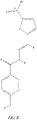
- Nifuroxazide Benzoic acid, 4-hydroxy-, [(5-nitro-2-furanyl)metylene]hydrazide, CAS 965-52-6 , Fig. 7
- Nifuroxazide Benzoic acid, 4-hydroxy-, [(5-nitro-2-furanyl)metylene]hydrazide, CAS 965-52-6 , Fig. 7
- Nifuroxazide has been reported as a potent STAT1/3 signaling pathway inhibitor. As demonstrated in the Examples, nifuroxazide is active against tumor cells in vitro and in vivo, as well as enhancing replication efficiency of oHSV in tumor cells. Nifuroxazide is commercially available from a number of vendors.
- Nifuroxazide derivatives and analogues may also be used.
- Derivatives include heterocyclic compounds, such as 5-nitro-heterocyclic nifuroxazide.
- Analogues include substitutions of the nitrofuran group by e.g. benzofuroxan and its derivatives having different substitutions on the benzyl ring ( Fraias et al. BMC Cancer 15:807, 2015 ), substituted benzoic acids ( Tavares et al. Boll Chim Farm 136:244, 1997 ; Masunari and Tavales, Bioorganic & Med Chem 15:4229, 2007 ).
- various salt forms and prodrugs may be used.
- C16 is a drug that acts as a selective inhibitor of the enzyme double-stranded RNA-dependent protein kinase (PKR) and also inhibits phosphorylation of STAT 1/3.
- PLR RNA-dependent protein kinase
- C16 is also known as PKRi.
- C16 is an imidazolo-oxindole derivative that has a chemical formula of 6,8-Dihydro-8-(1H-imidazol-5-ylmethylene)-7H-pyrrolo[2,3-g]benzothiazol-7-one. The chemical structure of C16 is shown below. Within the context of the disclosure, C16 also includes salt forms, prodrugs, and derivatives thereof.
- an oncolytic virus is a virus that will lyse cancer cells (oncolysis), preferably in a selective manner.
- the term "oncolytic,” as used herein, refers to a tumor selective replicating virus, such as a human herpesvirus, which induces cell death in the infected cancer cell and/or tissue. Although normal or non-tumor cells may be infected, cancer cells are infected and selectively undergo cell death, in comparison to the normal or non-cancer cells of a subject.
- Cell death includes all forms of cell death, including for example cell lysis and/or apoptosis. Viruses that selectively replicate in dividing cells over non-dividing cells are often oncolytic.
- Oncolytic viruses suitable for use herein include Herpes Simplex Viruses, adenoviruses, coxsackie, measles viruses, Newcastle disease viruses, parvoviruses, polioviruses, reoviruses, Seneca Valley virus, retroviruses, vaccinia viruses, tanapoxviruses, vesicular stomatitis viruses, myxoma viruses and influenza A viruses.
- Oncolytic viruses suitable for the compositions and methods described herein may comprise wild-type viruses, replicating viruses and modified replication-competent derivatives thereof and non-replicating viruses, CPG-armed viruses, as well as related viruses or vectors based on such viruses or derivatives.
- replication competent viruses will be used, such that treatment of a subject may be achieved by killing of the cancer cells, i.e., the cancer cells are killed by the oncolytic and cytotoxic activity of the oncolytic virus.
- the oncolytic virus included in the compositions, and used in the methods, described herein may constitute active forms of such viruses or, alternatively, viral vectors that are configured to encode and produce the desired oncolytic virus in a targeted cancer cell.
- viral vector refers to a nucleic acid molecule that is used as a vehicle to deliver one or more nucleic acid molecules into a cell to allow recombination.
- the viral vector may be a plasmid construct that encodes and is used to generate an oncolytic virus (such as a human herpesvirus) in a cancer cell - or it may be an oncolytic virus genome (e.g., a non-recombined human herpesvirus genome).
- Herpes Simplex Virus (HSV) 1 and 2 are members of the Herpesviridae family, which infect humans.
- the HSV genome contains two unique regions, which are designated unique long (U L ) and unique short (U S ) region. Each of these regions is flanked by a pair of inverted terminal repeat sequences. There are about 75 known open reading frames.
- the viral genome has been engineered to develop oncolytic viruses for use in e.g. cancer therapy.
- Tumor-selective replication of HSV is conferred by mutation of the HSV ICP34.5 (also called ⁇ 34.5) gene.
- HSV contains two copies of ICP34.5. Mutants inactivating one or both copies of the ICP34.5 gene are known to lack neurovirulence, i.e. be avirulent/ non-neurovirulent and be oncolytic.
- the oHSV has one or both of the ⁇ 34.5 genes modified such that it is incapable of expressing a functional ICP34.5 protein.
- the genes may be modified by mutation of one or more nucleotides, insertions, deletions, substitutions, etc. The alteration may be in the coding sequence, non-coding sequence (e.g., promoter) or both. In some aspects, both copies of the ⁇ 34.5 genes are mutated.
- the oHSV may have additional mutations, which may include disabling mutations e.g., deletions, substitutions, insertions), which may affect the virulence of the virus or its ability to replicate.
- mutations may be made in any one or more of ICP6, ICPO, ICP4, ICP27, ICP47, ICP 24, ICP56.
- a mutation in one of these genes leads to an inability (or reduction of the ability) of the HSV to express the corresponding functional polypeptide.
- the promoter of a viral gene may be substituted with a promoter that is selectively active in target cells or inducible.
- the oHSV may also have genes and nucleotide sequences that are non-HSV in origin.
- the oHSV may comprise a sequence that encodes a prodrug, a sequence that encodes a cytokine or other immune stimulating factor, a tumor-specific promoter, an inducible promoter, an enhancer, a sequence homologous to a host cell, among others.
- Suitable oncolytic HSV may be derived from either HSV-1 or HSV-2, including any laboratory strain or clinical isolate.
- the oHSV may be or may be derived from one of laboratory strains HSV-1 strain 17, HSV-1 strain F, or HSV-2 strain HG52. In other aspects, it may be of or derived from non-laboratory strain JS-1.
- Suitable HSV vectors include those taught in US 7,223,593 , US 7,537,924 , US 7,063,835 , US 7,063,851 , US 7,118,755 , US 8,277,818 , and US 8,680,068 .
- Other suitable HSV-1 viruses are in the table below.
- the oncolytic virus is a HSV-1 with a defective viral ribonuclease reductase gene, and optionally an otherwise intact ICP34.5 gene.
- HSV-1 mutants in this regard include hrR3 (see Kulu et al, Cancer Gene Therapy (2009) 16, 291-297; doi:10.1038/cgt.2008.83; published online 7 November 2008 ; see also Goldstein DJ, Weller SK. Herpes simplex virus type 1-induced ribonucleotide reductase activity is dispensable for virus growth and DNA synthesis: isolation and characterization of an ICP6 lacZ insertion mutant. J Virol 1988; 62: 196-205 ).
- a number of oncolytic viruses are known in the art. Examples include : Virus Name references HSV-1 HrR3 [1] G2O7 [2, 3] G47Delta [4] HSV 1716 [5, 6] HF10 [7] NV1020 [8] T-VEC [9] J100 [10] M002 [11] NV1042 [12] G2O7-IL2 [13] rQNestin34.5 [14] G47 ⁇ -mlL-18 [15] Adenovirus H101 [16] Onyx-015 [17] CV706 [18] CG0070 [19] Telomelysin [20] Ad5-CD/TKrep [21] Ad5-D24-RGD [22] CGTG-102 [23] INGN-007 [24] ColoAd1 [25] CG787 [26] H103 [27] Coxsackie CAVATAK [28] Measles virus MV-CEA [29] MV-NIS [
- compositions are provided that may be used to prevent, treat, or ameliorate the effects of a cancer. More particularly, some therapeutic compositions comprise an oncolytic virus as described herein. Within preferred aspects, the therapeutic composition can comprise an oncolytic virus as described herein. Within preferred aspects, the therapeutic composition can comprise an oncolytic virus and a STAT 1/3 phosphorylation inhibitor (such as C16 or a nitrofuran) or a PKR inhibitor (e.g., C16), and a pharmaceutically acceptable carrier.
- a STAT 1/3 phosphorylation inhibitor such as C16 or a nitrofuran
- PKR inhibitor e.g., C16
- an oncolytic virus with a STAT 1/3 phosphorylation inhibitor such as C16, or an analogue or derivative, or a nitrofuran
- a PKR inhibitor e.g., C16 or an analogue or derivative
- the invention provides that the co-administration of a STAT 1/3 phosphorylation inhibitor (such as C16 and a nitrofuran), along with an oncolytic virus, is effective to prevent macrophage and microglia inhibition of oncolytic viral activity, thereby enhancing the efficacy of the co-delivered oncolytic virus.
- the oncolytic virus may be any of a variety of oncolytic viruses, including those described above, and will frequently be a Herpes Simplex Virus I (oHSV-1) described herein.
- compositions will further comprise a pharmaceutically acceptable carrier.
- pharmaceutically acceptable carrier is meant to encompass any carrier, diluent or excipient that does not interfere with the effectiveness of the biological activity of the oncolytic virus and that is not toxic to the subject to whom it is administered (see generally Remington: The Science and Practice of Pharmacy, Lippincott Williams & Wilkins; 21st ed. (May 1, 2005 and in The United States PharmacopE1A: The National Formulary (USP 40 - NF 35 and Supplements ).
- non-limiting examples of suitable pharmaceutical carriers include phosphate buffered saline solutions, water, emulsions (such as oil / water emulsions), various types of wetting agents, sterile solutions, and others.
- Additional pharmaceutically acceptable carriers include gels, bioadsorbable matrix materials, implantation elements containing the oncolytic virus, or any other suitable vehicle, delivery or dispensing means or material(s). Such carriers can be formulated by conventional methods and can be administered to the subject at an effective dose.
- Additional pharmaceutically acceptable excipients include water, saline, polyethyleneglycol, hyaluronic acid and ethanol.
- compositions can also be included therein, e.g., mineral acid salts (such as hydrochlorides, hydrobromides, phosphates, sulfates, and the like) and the salts of organic acids (such as acetates, propionates, malonates, benzoates, and the like).
- mineral acid salts such as hydrochlorides, hydrobromides, phosphates, sulfates, and the like
- organic acids such as acetates, propionates, malonates, benzoates, and the like.
- suitable pharmaceutical acceptable carriers may include carriers, diluents and adjuvants, such as Dulbecco's phosphate buffered saline, pH about 7.4; 0.9% saline (0.9% w/v NaCl); and 5% (w/v) dextrose.
- compositions provided herein can be provided at a variety of concentrations.
- dosages of oncolytic virus can be provided which ranges from a dose of greater than about 10 9 plaque forming units ("pfu"), from between about 10 2 to above 10 9 pfu, between about 10 2 to about 10 7 pfu, between about 10 3 to about 10 6 pfu, or between about 10 4 to about 10 5 pfu.
- dosage forms for humans can range from about 10 6 to about 10 9 pfu.
- the dosage form can range from about 10 6 to about 10 8 pfu/ml, with up to 4 mls being injected into a patient with large lesions (e.g., >5 cm) and smaller amounts (e.g, up to 0.1 mls) in patients with small lesions (e.g., ⁇ 0.5 cm) every 2 - 3 weeks, of treatment.
- compositions may be stored at a temperature conducive to stable shelf-life, and includes room temperature (about 20C), 4C, -20C, -80C, and in liquid N2. Because compositions intended for use in vivo generally don't have preservatives, storage will generally be at colder temperatures. Compositions may be stored dry (e.g., lyophilized) or in liquid form.
- compositions described herein various methods of using such compositions to treat or ameliorate cancer are provided.
- methods for improving the efficacy of an oncolytic virotherapy which comprises the steps of (1) administering an oncolytic virus to a subject and (2) administering a STAT 1/3 phosphorylation inhibitor (such as C16, or an analogue or derivative thereof, or a nitrofuran) in an amount that is effective to reduce microglia- or macrophage-mediated suppression of replication of the oncolytic virus in a cancer cell.
- a STAT 1/3 phosphorylation inhibitor such as C16, or an analogue or derivative thereof, or a nitrofuran
- an effective dose of the (1) oncolytic virus and (2) STAT 1/3 phosphorylation inhibitor is typically delivered to the subject.
- steps (1) and (2) may be completed in either order, or, at the same time.
- effective dose and “effective amount” refers to amounts of the oncolytic virus and inhibitor of STAT 1/3 phosphorylation or PRK that are sufficient to effect treatment of a targeted cancer, e.g., amounts that are effective to reduce a targeted tumor size or load, or otherwise hinder the growth rate of targeted tumor cells. More particularly, such terms refer to amounts of oncolytic virus and a inhibitor of STAT 1/3 phosphorylation or PRK that are effective, at the necessary dosages and periods of treatment, to achieve a desired result.
- an effective amount of the compositions described herein is an amount that induces remission, reduces tumor burden, and/or prevents tumor spread or growth compared to the response obtained without administration of the oncolytic virus and PKR inhibitor described herein.
- Effective amounts may vary according to factors such as the subject's disease state, age, gender, and weight, as well as the pharmaceutical formulation, the route of administration, and the like, but can nevertheless be routinely determined by one skilled in the art.
- the therapeutic compositions are administered to a subject diagnosed with cancer or is suspected of having a cancer.
- Subjects may be human or non-human animals.
- compositions are used to treat cancer.
- beneficial or desired clinical results can include alleviation or amelioration of one or more symptoms or conditions, diminishment of extent of disease, stabilized (i.e. not worsening) state of disease, preventing spread of disease, delay or slowing of disease progression, amelioration or palliation of the disease state, diminishment of the reoccurrence of disease, and remission (whether partial or total), whether detectable or undetectable.
- treating and “treatment” can also mean prolonging survival as compared to expected survival if not receiving treatment.
- cancers include carcinomas, leukemia's, lymphomas, myelomas and sarcomas.
- Further examples include cancer of the bile duct cancer, brain (e.g., glioblastoma), breast, cervix, colorectal, CNS (e.g., acoustic neuroma, astrocytoma, craniopharyogioma, ependymoma, glioblastoma, hemangioblastoma, medulloblastoma, menangioma, neuroblastoma, oligodendroglioma, pinealoma and retinoblastoma), endometrial lining, hematopoietic cells (e.g., leukemia's and lymphomas), kidney, larynx, lung, liver, oral cavity, ovaries, pancreas, prostate, skin (e.g., melanoma and squamous cell carcinoma)
- Cancers can comprise solid tumors (e.g., sarcomas such as fibrosarcoma, myxosarcoma, liposarcoma, chondrosarcoma and osteogenic sarcoma), be diffuse (e.g., leukemia's), or some combination of these (e.g., a metastatic cancer having both solid tumors and disseminated or diffuse cancer cells).
- solid tumors e.g., sarcomas such as fibrosarcoma, myxosarcoma, liposarcoma, chondrosarcoma and osteogenic sarcoma
- diffuse e.g., leukemia's
- metastatic cancer having both solid tumors and disseminated or diffuse cancer cells.
- Benign tumors and other conditions of unwanted cell proliferation may also be treated.
- oHSV and a STAT1/3 inhibitor are coadministered to a subject.
- Co-administration may be simultaneous or sequential.
- sequential either oHSV or the STAT1/3 inhibitor may be given first in time.
- the means of administration of each agent may be the same (e.g., injection) or different (e.g., one is given orally and the other by injection), regardless of whether they are administered simultaneously or sequentially.
- Multiple administrations of one or both of the agents may be given to the subject. For example, a subject may receive one initial dose of both oHSV and inhibitor and a second dose of just inhibitor.
- the oncolytic virus and the STAT1/3 inhibitor may be given by a route that is e.g. oral, topical, parenteral, systemic, intravenous, intramuscular, intraocular, intrathecal, intratumor, subcutaneous, or transdermal.
- a route that is e.g. oral, topical, parenteral, systemic, intravenous, intramuscular, intraocular, intrathecal, intratumor, subcutaneous, or transdermal.
- the oncolytic virus and/or STAT1/3 inhibitor may be delivered by a cannula, by a catheter, or by direct injection.
- the site of administration may be intra-tumor or at a site distant from the tumor. The route of administration will often depend on the type of cancer being targeted.
- the optimal or appropriate dosage regimen of the oncolytic virus is readily determinable within the skill of the art, by the attending physician based on patient data, patient observations, and various clinical factors, including for example a subject's size, body surface area, age, gender, and the particular oncolytic virus being administered, the time and route of administration, the type of cancer being treated, the general health of the patient, and other drug therapies to which the patient is being subjected.
- treatment of a subject using the oncolytic virus and a PKR inhibitor and/or STAT 1/3 phosphorylation inhibitor described herein may be combined with additional types of therapy, such as chemotherapy using, e.g., a chemotherapeutic agent such as etoposide, ifosfamide, adriamycin, vincristin, doxicyclin, and others.
- a chemotherapeutic agent such as etoposide, ifosfamide, adriamycin, vincristin, doxicyclin, and others.
- oHSV and the STAT1/3 inhibitor may be formulated as medicaments and pharmaceutical compositions for clinical use and may be combined with a pharmaceutically acceptable carrier, diluent, excipient or adjuvant.
- a pharmaceutically acceptable carrier diluent, excipient or adjuvant.
- the formulation will depend, at least in part, on the route of administration. Suitable formulations may comprise the virus and inhibitor in a sterile medium.
- the formulations can be fluid, gel, paste or solid forms. Formulations may be provided to a subject or medical professional
- a therapeutically effective amount is preferably administered. This is an amount that is sufficient to show benefit to the subject.
- the actual amount administered and time-course of administration will depend at least in part on the nature of the cancer, the condition of the subject, site of delivery, and other factors.
- a method for improving oncolytic activity in a cancer cell comprises the steps of (a) administering an oncolytic virus to a cancer cell and (b) administering a STAT 1/3 phosphorylation inhibitor in an amount that is effective to reduce such microglia- or macrophage-mediated suppression of replication of the oncolytic virus in the targeted cancer cell, such as a glioblastoma cell.
- the oncolytic virus and PKR inhibitor and/or STAT 1/3 phosphorylation inhibitor may be administered to a cancer cell (or subject) together in a single formulation or, alternatively, in series as separate formulations.
- the oncolytic virus and PKR inhibitor and/or STAT 1/3 phosphorylation inhibitor can be administered intratumorally, or, after surgical resection of a tumor.
- nifuroxazide the antitumor effect of nifuroxazide is evaluated in different tumor cells.
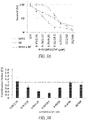
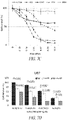
- Cells were treated with nifuroxazide for 72 hours ( Figure 1A ).
- Inhibitory concentration 50% (IC50) of nifuroxazide against BTUC, 9L, SF126, U87, U373, LnCap and MCF7 cells were approximately 15 ⁇ M, 27 ⁇ M, 20 ⁇ M, 20 ⁇ M, 23 ⁇ M, 5 ⁇ M and 20 ⁇ M respectively.
- nifuroxazide on oHSV-1 antitumor efficacy was evaluated.
- oHSV-1 infected treated glioma cells were incubated with low concentration of nifuroxazide.
- Replication increased 27- and 40-fold with 0.5 ⁇ M nifuroxazide and 10 ⁇ M nifuroxazide treated U87 cells respectively.
- virus replication increased 0.8- and 4.7-fold virus in 9L cells treated with 0.5 ⁇ M nifuroxazide and 10 ⁇ M nifuroxazide respectively ( Figure 2A ).
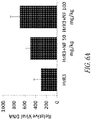
- PCR viral titer also confirms the dose dependent HrR3 replication enhancement in U87 glioma cells but not in normal glial cells ( Figure 2B ).
- HrR3 is an oncolytic HSV-1[59, 60], with a mutation /deletion of ICP6 gene [59].
- Ribonucleotide reductase (RR) is essential for the synthesis of deoxyribonucleotides, which is needed for viral DNA synthesis and replication and it is encoded by the viral ICP6 gene.
- Increased expression of mammalian RR is found in most of the rapidly dividing cells and RR deletion mutants (HrR3) replicate efficiently only in the cells that compensate for the loss of ICP6 by expressing the mammalian complement of RR [61].
- nifuroxazide mediated oHSV-1 replication enhancement was examined.
- the effect of nifuroxazide on viral immediate early gene, ICP27 and ICP4 expression was established by Western blot analysis.
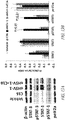
- Low concentration of nifuroxazide (0.5 ⁇ M, 1 ⁇ M and 10 ⁇ M) significantly increases ICP27 expression, but not ICP4 expression ( Figure 4A ).
- qRT-PCR analysis further verify the nifuroxazide mediated up-regulation of ICP27 mRNA expression ( Figure 4B ).
- oHSV-1 replication augmentation effect was evaluated in vivo.
- Subcutaneously implanted U87 tumors were treated with either HrR3 alone or in combination with 50mg/kg nifuroxazide or 100mg/kg nifuroxazide.
- Dose dependent oHSV-1 amplification was determined by measuring viral DNA by qPCR in tumor mass.
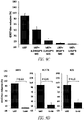
- oHSV-1 augmentation was observed 1.6 fold and 2.2 fold by 50mg/kg nifuroxazide 100mg/kg nifuroxazide respectively ( Figure 6A ).
- Nifuroxazide mediated oHSV-1 amplification was also confirmed by immunohistochemistry assay in harvested tumor tissues ( Figure 6B ).
- nifuroxazide and oHSV-1 were evaluated.
- a variety of cancer cell types were treated with nifuroxazide (from 0-100 ⁇ M) or HrR3 virus at a MOI from 0 to 12.5 or KOS virus at a MOI from 1 to 12.5.
- Cell survival was measured.
- treatment with nifuroxazide caused cell mortality in all cell lines at higher doses (CT26 (colorectal colon carcinoma), LL2 (Murine Lewis lung carcinoma), U87 (human glioma; B16, murine melanoma; 4T1, murine mammary carcinoma)). All cell lines, except B16, were depleted by both KOS and HrR3 viruses.
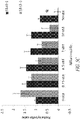
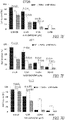
- Tumor cells were treated with nifuroxazide or medium. Following incubation, virus was added and further incubated for 72 ( fig. 7D ) or 48 hrs ( Fig. 7E-7G ). Cytotoxicity was measured by an MTT assay. Error bars represent S.D. and statistically significant differences are indicated. Treatment with both nifuroxazide and virus resulted in significantly less cell survival.
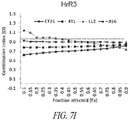
- Fig.7H-7K cells were treated with varying doses of nifuroxazide or the indicated viruses (HrR3, KOS, or VG12TR) alone or in combination for 48 hrs (7J, 7K) or 72 hrs (7H)
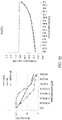
- Cell viability was measured by a MTT assay and combination index (Cl) values were calculated using Chour-Talalay analysis.
- Cl was plotted against the affected fraction (Fa).
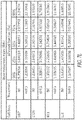
- Fig. 7L presents the dose reduction index for a combination of nifuroxazide and HrR3 virus on various tumor cells.
- the DRI dose reduction index determines the magnitude of dose reduction allowed for each drug when given in synergistic combination, as compared with the concentration of a single agent that is needed to achieve the same effect level. As shown in the table, DRI ranges up to 12.9.
- E18 Sprague Dawley rat was obtained from Charles River Laboratories (Charles River, Wilmington, MA). Rat primary microglia isolation and culture was conducted according to standard protocols. In brief, cortices were isolated from day 18 embryonic E18 Sprague Dawley rat brain. After 30 minutes incubation in trypsin / EDTA (Invitrogen, Canada), harvested tissue was washed with culture medium and minced in the presence of Dnase I (Invitrogen, Canada). The cell suspension was then centrifuged, resuspended in fresh culture medium and plated on 10 cm culture dishes in high confluency.
- Microglia cells were cultured in Dulbecco's modified eagle's medium (Sigma, Canada) supplemented with 10% fatal bovine serum (Invitrogen, Canada), 1% antibiotics (penicillin and streptomycin) and maintained at 37oC in 5% CO2. Culture medium was changed every 3-4 days. After 7-10 days, microglias were harvested by gently rocking the plate by hand a couple of times. Finally, microglia floating in the supernatant were plated on a poly-L-lysine coated plate. Cell purity was routinely tested by immunocytochemistry staining for ITGAM (1:200; ProSci Incorporated, CA), which is a microglia-specific integrin protein.
- ITGAM 1:200; ProSci Incorporated, CA
- U87 human GBM cells and Vero (African green monkey kidney) cells were obtained from American Type Culture Collection (ATCC, Manasas, VA).
- BV2 Mae microglia cells were kindly provided by the University of Manitoba. All cells were maintained in Dulbecco's modified eagle's medium (DMEM) supplemented with 10% fetal bovine serum (FBS) and 1% antibiotics (penicillin and streptomycin). All cultures were maintained at 37°C in 5% CO2.
- DMEM Dulbecco's modified eagle's medium
- FBS fetal bovine serum
- antibiotics penicillin and streptomycin
- G207 virus was obtained from NeuroVir Therapeut Inc. (San Diego, CA). U87 (5X10⁴) cells alone or with the indicated number of microglia cells in co-culture were incubated overnight with complete culture medium (DMEM with 10% FBS and 1% antibiotic). The cells were infected the subsequent day with G207 virus at a multiplicity of infection (MOI) of 1. Virus infection and treatment was maintained in DMEM medium without FBS and antibiotic. Viruses were harvested after 2-4 days post-infection. After three freeze-thaw cycles, viruses were titrated on Vero cells by a standard plaque assay on 12-well plates by triplicates.
- MOI multiplicity of infection
- U87 (5X10⁴) alone or U87 + microglia co-culture (5X10⁴ + 5X10⁴) or BV2 microglia cells (5X10⁴) alone were seeded into a 24-well plate. After overnight incubation (to allow the cells to attach), cells were pretreated with indicated concentration of NFkB inhibitor, Bay-11 (Santa Cruz, Canada) or an indicated concentration of imidazolo-oxindole derivative C16 (Milipore, Canada) or vehicle for 1-2 hours. The cells were then infected with oHSV-1 (G2O7 or HrR3) virus at a MOI of 1 in presence of chemical inhibitors for another 2 days. The viruses were harvested and titrated in vero cells by plaque forming assay in 12-well plates by triplicates.
- oHSV-1 G2O7 or HrR3
- Total protein was harvested with sample buffer (125 mM Tris-HCL, 50% Glycerol, 4% Bromophenol blue and 5% 2-mercaptoethanol) and boiled for 5 minutes. Protein samples were subjected to SDS-PAGE (8% gel), transferred to nitrocellulose membranes and blocked in 5% nonfat milk (Bio Rad) in TBS-Tween 20 (TBS-T) for 1 hour at room temperature.
- sample buffer 125 mM Tris-HCL, 50% Glycerol, 4% Bromophenol blue and 5% 2-mercaptoethanol
- the membranes were then incubated with primary antibody against ⁇ -actin at 1:1000 (Cell Signaling, Danvers, MA) or anti-STAT1 antibody at 1:1000 (Cell Signaling, Danvers, MA) or anti-STAT3 antibody at 1:1000 (Cell Signaling, Danvers, MA) or anti-phospho STAT1 antibody (Tyr701) at 1:1000 (Cell Signaling, Danvers, MA) or anti-phospho STAT3 antibody (Tyr705) at 1:1500 (Cell Signaling, Danvers, MA) or anti-phosphor-eIF2 ⁇ antibody (ser51) at 1:1000 (Cell Signaling, Danvers, MA) or anti-ICP27 antibody at 1:1000 (Abcam, Cambridge, MA) or anti-ICP4 antibody at 1:750 (Abcam, Cambridge, MA) for overnight at 4oC.
- the membranes were washed the next day with TBS-T three times and incubated with corresponding secondary antibody at 1:3000 (Perkim Elmer, Boston, MA), for 1 hour at room temperature. Membranes were washed with TBS-T three times before visualization using ECL reagent (Perkim Elmer, Boston, MA) and VersaDoc imaging system (Bio-Rad). Band density was measured by using ImageJ software (NIH, Bethesda, MD).
- RT-PCR was performed by using one-step real-time PCR using KAPA SYBR ® FAST One-Step qRT-PCR Universal (D-MARK Biosciences, Canada) following the manufacturer's protocol.
- Cells plated onto 8-well chamber slides were infected with G207 virus and mock infected cells were considered as control. After 24 hours post-infection, cells were fixed by using 0.5% glutaraldehyde solution. Fixed cells were washed twice with PBS and then incubated with 1 mg/ml X-gal solution (Sigma, Canada) diluted with X-gal staining solution (5mM K3Fe, 5mM K4Fe and 2mM MgCl2) at 37oC for one hour. Stained cells were then visualized and imaged by using a light microscope.
- Cells were seeded in a 96-well plate at a density of 1 X 10⁴ (U87). After overnight incubation, cells were treated with only vehicle or indicated MOI of virus or indicated concentration of drugs or reagents. After 2 to 3 days of treatment cell viability was measured by MTT assay (Sigma, Canada) according to the manufacturer's instruction. In brief, cells were incubated with MTT solution for 3 hours at 37oC and then incubated with lysis buffer. After overnight incubation with lysis buffer, cell viability was measured at 595 nm using a plate reader (Envision 2103 Multilabel reader, Perkin Elmer).
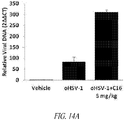
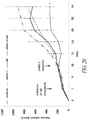
- mice 5 to 6 weeks old female athymic nude mice were obtained from Harlon laboratories. Human glioma U87 cells were implanted subcutaneously into the lower flank. When tumor size reached ⁇ 75 to 100 mm3, vehicle or C16 (5 mg/kg) was administered intraperitoneally (IP). 2 days ( Figure 14 ) or 4 days ( Figure 15 ) after initial C16 administration, vehicle or oHSV-1 were injected intratumourally. Tumor volume was then measured using a caliper (Height x Length x Wide/2). At the end of the experiment, mice were euthanized by using CO2 asphyxiation.
- IP intraperitoneally
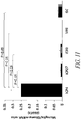
- transcript levels of a panel of viral genes in glioma (U87) and microglia (BV2) cells were measured (Example 13).
- the viral genes included ICP4, ICP27, ICP8, VP5 and Glycoprotein C (gC), representing immediate early, early and late genes, respectively.
- Quantitative RT-PCR results showed that transcription of ICP27, ICP8, VP5 and gC, but not ICP4, were significantly suppressed in BV2 cells compared to U87 ( Figure 11 ).
- PKR inhibitor C16
- NFkappaB inhibitor Bay11
- iNOS inhibitor aminoguanidine hydrochloride
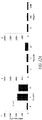
- FIG. 12A The effects of a PKR inhibitor (C16), a NFkappaB inhibitor (Bay11), and an iNOS inhibitor (aminoguanidine hydrochloride) were tested on G207 replication in BV2 cells (Example 15).
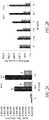
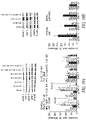
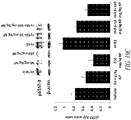
- Treatment with 1 and 10 ⁇ M of C16 significantly enhanced the replication by 9 times and 8 times, respectively ( Figure 12A ).
- Bay11 and aminoguanidine hydrochloride had no effect on oHSV-1 replication in BV2 cells ( Figure 12A ).
- C16 (but not Bay11 nor aminoguanidine hydrochloride) upregulated expression of ICP4 and ICP27 by 1.8 and 25-fold, respectively ( Figure 12B ).
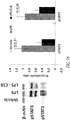
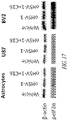
- C16 was also demonstrated to significantly suppress the upregulation of pSTAT1 (Tyr701) and pSTAT3 (Tyr705) induced by oHSV-1 in the BV2 microglia cells, independent of eIF2 ⁇ phosphorylation status.
- expression level of STAT 1, but not STAT 3 was upregulated in G2O7 infected microglial cells and that was also reduced after C16 treatment.
- C16 was also shown to cause inhibition in STAT 1/3 phosphorylation, as confirmed in LPS treated BV2 cells ( Figure 16 ).
- C16 was injected into animals bearing subcutaneously implanted U87 tumors that received oHSV-1 intratumorally (Example 16).
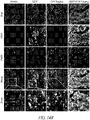
- Immunohistochemistry analysis demonstrated an increased number of replicable HSV-1 cells in animals co-treated with oHSV-1 and 5 mg/kg C16, compared to those treated with oHSV-1 alone.
- NF is a known inhibitor of STAT1 and STAT3.
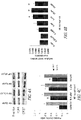
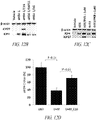
- STAT1 and STAT3 status in U87 cells ( Figure 19A ) and CT26 cells ( Figure 19B ) cells was determined after an overnight treatment with NF and oncolytic viruses.
- NF caused a dose dependent inhibition of phosphorylation of STAT1/3.
- NF also effectively suppressed HrR3 induced upregulation of STAT1/3 phosphorylation in both U87 ( Figure 19A ) and CT26 ( Figure 19B ) cells.
- HrR3 infection elevated STAT1/3 phosphorylation in U87 cells
- NF 50 ⁇ M and HrR3 6.25 MOI reduced STAT1/3 phosphorylation to a level even below that seen with NF alone ( Figure 19A ).
- HSV-1 infection mediated STAT1/3 phosphorylation augmentation was found time dependent, as STAT1/3 phosphorylation is gradually reduced by time (data not shown).
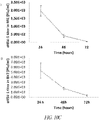
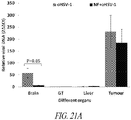
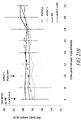
- CT26 colon cancer tumour bearing BALB/C mice were treated with a single dose of HrR3 (oHSV-1) virus (2 ⁇ 10 ⁇ 7 PFU) or vehicle and given daily peritoneal injections of 50mg/kg NF alone or in combination with HrR3 virus (5 mice in each group).Tumor size was measured using calipers (length X height X width /2). Data are the means ⁇ S.E. and statistically significance differences between treatment with the NF and oHSV-1 combination, NF alone, and oHSV-1 alone are indicated by the p value, * P ⁇ 0.05.
- Total DNA was prepared from the tumor, brain, liver and gastrointestinal tract (GT) and subjected to qPCR analysis to measure the amount of viral DNA.
- mice when two mice were injected intratumorally with a high dose of HrR3 (1 ⁇ 10 ⁇ 8 PFU), both mice showed signs of severe HSV-1 toxicity (paralysis of the hind leg or immobility) and were terminated immediately.
- HSV-1 had no toxic effect on mice treated with HrR3 at the same high dose when given in combination with NF (data not shown).
Landscapes
- Health & Medical Sciences (AREA)
- Life Sciences & Earth Sciences (AREA)
- General Health & Medical Sciences (AREA)
- Public Health (AREA)
- Veterinary Medicine (AREA)
- Chemical & Material Sciences (AREA)
- Medicinal Chemistry (AREA)
- Pharmacology & Pharmacy (AREA)
- Animal Behavior & Ethology (AREA)
- Epidemiology (AREA)
- Virology (AREA)
- Microbiology (AREA)
- Mycology (AREA)
- Immunology (AREA)
- Chemical Kinetics & Catalysis (AREA)
- General Chemical & Material Sciences (AREA)
- Nuclear Medicine, Radiotherapy & Molecular Imaging (AREA)
- Organic Chemistry (AREA)
- Pharmaceuticals Containing Other Organic And Inorganic Compounds (AREA)
- Medicines That Contain Protein Lipid Enzymes And Other Medicines (AREA)
- Medicines Containing Material From Animals Or Micro-Organisms (AREA)
Claims (10)
- Virus oncolytique et inhibiteur de STAT1/3 destinés à être utilisés dans une méthode de traitement du cancer, comprenant l'administration simultanée ou séquentielle du virus oncolytique et d'un inhibiteur de STAT1/3, dans lesquels ledit inhibiteur est le nifuroxazide, le C16, ou un dérivé ou analogue de ceux-ci.
- Virus et inhibiteur destinés à être utilisés selon la revendication 1, dans lesquels le cancer est un cancer du foie, un cancer du pancréas, un cancer du sein, un cancer du cerveau, un cancer du côlon, un cancer du poumon ou un cancer de la prostate.
- Virus et inhibiteur destinés à être utilisés selon la revendication 1 ou la revendication 2, dans lesquels le virus oncolytique est un virus herpès simplex, et facultativement, le HSV-1,
en particulier dans lesquels le virus a un gène de ribonucléase réductase viral défectueux, et facultativement, un gène ICP34.5 par ailleurs intact. - Virus et inhibiteur destinés à être utilisés selon la revendication 3, dans lesquels le gène ICP6 est modifié de telle sorte que le gène ICP6 est incapable d'exprimer un produit de gène ICP6 fonctionnel,
ou dans lesquels le virus oncolytique herpès simplex est la souche HrR3, la souche 17 du HSV-1, la souche F du HSV-1, la souche JS-1 ou la souche HG52 du HSV-2. - Composition pharmaceutique comprenant un virus oncolytique, un inhibiteur de STAT1/3 et un support pharmaceutiquement acceptable, dans laquelle ledit inhibiteur est le nifuroxazide, le C16, ou un dérivé ou analogue de ceux-ci.
- Composition pharmaceutique selon la revendication 5, dans laquelle le virus oncolytique est un virus oncolytique herpès simplex,en particulier dans laquelle le virus a un gène de ribonucléase réductase viral défectueux, et facultativement, un gène ICP34.5 par ailleurs intact,et/ou dans laquelle le gène ICP6 est modifié de telle sorte que le gène ICP6 est incapable d'exprimer un produit de gène ICP6 fonctionnel.
- Trousse comprenant une quantité prédéterminée d'un virus oncolytique et une quantité prédéterminée d'agent chimiothérapeutique, dans laquelle l'agent chimiothérapeutique est un inhibiteur de STAT1/3, dans laquelle ledit inhibiteur est le nifuroxazide, le C16, ou un dérivé ou analogue de ceux-ci.
- Trousse selon la revendication 7, dans laquelle la trousse comprend une quantité prédéterminée de virus oncolytique herpès simplex et une quantité prédéterminée d'agent chimiothérapeutique, dans laquelle l'agent chimiothérapeutique est un inhibiteur de STAT1/3, dans laquelle ledit inhibiteur est le nifuroxazide, le C16, ou un dérivé ou analogue de ceux-ci.
- Virus oncolytique et inhibiteur de STAT1/3 destinés à être utilisés dans un procédé d'amélioration de l'efficacité d'une virothérapie oncolytique, qui comprend les étapes :(a) d'administration du virus oncolytique à un sujet ; et(b) d'administration de l'inhibiteur de STAT1/3 en une quantité qui est efficace pour réduire la suppression médiée par la microglie ou les macrophages de la réplication du virus oncolytique, dans lesquels ledit inhibiteur est le nifuroxazide, le C16, ou un dérivé ou analogue de ceux-ci.
- Virus et inhibiteur destinés à être utilisés selon la revendication 9, dans lesquels le virus oncolytique et l'inhibiteur de STAT1/3 sont administrés ensemble,
ou dans lesquels le virus oncolytique et l'inhibiteur de STAT1/3 sont administrés en série.
Priority Applications (1)
| Application Number | Priority Date | Filing Date | Title |
|---|---|---|---|
| EP22180454.5A EP4122478A1 (fr) | 2016-02-19 | 2017-02-18 | Compositions et méthodes d'utilisation d'inhibiteurs des stat1/3 avec un virus oncolytique de l'herpès |
Applications Claiming Priority (3)
| Application Number | Priority Date | Filing Date | Title |
|---|---|---|---|
| US201662297739P | 2016-02-19 | 2016-02-19 | |
| US201662399989P | 2016-09-26 | 2016-09-26 | |
| PCT/US2017/018539 WO2017143308A1 (fr) | 2016-02-19 | 2017-02-18 | Compositions et méthodes d'utilisation d'inhibiteurs des stat1/3 avec un virus oncolytique de l'herpès |
Related Child Applications (2)
| Application Number | Title | Priority Date | Filing Date |
|---|---|---|---|
| EP22180454.5A Division EP4122478A1 (fr) | 2016-02-19 | 2017-02-18 | Compositions et méthodes d'utilisation d'inhibiteurs des stat1/3 avec un virus oncolytique de l'herpès |
| EP22180454.5A Division-Into EP4122478A1 (fr) | 2016-02-19 | 2017-02-18 | Compositions et méthodes d'utilisation d'inhibiteurs des stat1/3 avec un virus oncolytique de l'herpès |
Publications (3)
| Publication Number | Publication Date |
|---|---|
| EP3416680A1 EP3416680A1 (fr) | 2018-12-26 |
| EP3416680A4 EP3416680A4 (fr) | 2019-11-06 |
| EP3416680B1 true EP3416680B1 (fr) | 2022-08-03 |
Family
ID=59626382
Family Applications (2)
| Application Number | Title | Priority Date | Filing Date |
|---|---|---|---|
| EP17754008.5A Active EP3416680B1 (fr) | 2016-02-19 | 2017-02-18 | Compositions et méthodes d'utilisation d'inhibiteurs des stat1/3 avec un virus oncolytique de l'herpès |
| EP22180454.5A Withdrawn EP4122478A1 (fr) | 2016-02-19 | 2017-02-18 | Compositions et méthodes d'utilisation d'inhibiteurs des stat1/3 avec un virus oncolytique de l'herpès |
Family Applications After (1)
| Application Number | Title | Priority Date | Filing Date |
|---|---|---|---|
| EP22180454.5A Withdrawn EP4122478A1 (fr) | 2016-02-19 | 2017-02-18 | Compositions et méthodes d'utilisation d'inhibiteurs des stat1/3 avec un virus oncolytique de l'herpès |
Country Status (5)
| Country | Link |
|---|---|
| US (2) | US20190307820A1 (fr) |
| EP (2) | EP3416680B1 (fr) |
| CN (2) | CN109414487B (fr) |
| ES (1) | ES2930046T3 (fr) |
| WO (1) | WO2017143308A1 (fr) |
Families Citing this family (7)
| Publication number | Priority date | Publication date | Assignee | Title |
|---|---|---|---|---|
| US10590169B2 (en) * | 2015-12-09 | 2020-03-17 | Virogin Biotech Canada Ltd | Compositions and methods for inhibiting CD279 interactions |
| TW202038947A (zh) | 2018-11-28 | 2020-11-01 | 德商創新分子有限責任公司 | 在與溶瘤病毒之組合療法中治療癌症的解旋酶引子酶抑制劑 |
| CN109793729A (zh) * | 2019-02-27 | 2019-05-24 | 四川大学华西医院 | 硝呋齐特或其盐在治疗骨肉瘤中的用途 |
| US20200319163A1 (en) * | 2019-03-29 | 2020-10-08 | Georgetown University | Methods and compositions overcoming cancer cell immune resistance |
| US20230053473A1 (en) * | 2019-12-26 | 2023-02-23 | The Johns Hopkins University | Enhancing expression of line-1 encoded orf2p for cancer therapeutics |
| CN112480097B (zh) * | 2020-11-26 | 2022-07-08 | 汕头大学医学院 | 一种靶向ets结构域蛋白的抑制剂及其应用 |
| CN117159523B (zh) * | 2023-09-12 | 2026-03-13 | 南京农业大学 | 氨基胍类化合物在制备治疗由2型鹅星状病毒引起的雏鹅痛风病药物中的应用 |
Family Cites Families (7)
| Publication number | Priority date | Publication date | Assignee | Title |
|---|---|---|---|---|
| US6713067B2 (en) | 1998-07-31 | 2004-03-30 | Biovex Limited | Herpes viruses for immune modulation |
| GB2375113B (en) | 2000-01-21 | 2004-10-20 | Biovex Ltd | A modified, oncolytic, non-laboratory HSV strain and its use in treating cancer |
| US7063851B2 (en) | 2000-04-12 | 2006-06-20 | Biovex Limited | Herpes viruses for immune modulation |
| US20090171453A1 (en) * | 2007-12-28 | 2009-07-02 | Adams Tara K | Drug Coated Stent Having a Surface Treatment and Method of Manufacturing |
| US9144605B2 (en) * | 2012-02-14 | 2015-09-29 | The Board Of Regents Of The University Of Texas System | Recombinant rift valley fever virus encoding a dominant-negative inhibitor of DSRNA-dependent protein kinase in the NSS region |
| IN2014KN00920A (fr) * | 2012-06-21 | 2015-10-09 | Compugen Ltd | |
| US20140271549A1 (en) * | 2013-03-15 | 2014-09-18 | Aladar A. Szalay | Use of Antibiotics to Enhance Treatment With Therapeutic Viruses |
-
2017
- 2017-02-18 WO PCT/US2017/018539 patent/WO2017143308A1/fr not_active Ceased
- 2017-02-18 EP EP17754008.5A patent/EP3416680B1/fr active Active
- 2017-02-18 CN CN201780022236.7A patent/CN109414487B/zh not_active Expired - Fee Related
- 2017-02-18 US US15/999,281 patent/US20190307820A1/en not_active Abandoned
- 2017-02-18 ES ES17754008T patent/ES2930046T3/es active Active
- 2017-02-18 EP EP22180454.5A patent/EP4122478A1/fr not_active Withdrawn
- 2017-02-18 CN CN202211185711.1A patent/CN116059379A/zh active Pending
-
2021
- 2021-10-07 US US17/496,637 patent/US20220096578A1/en not_active Abandoned
Also Published As
| Publication number | Publication date |
|---|---|
| EP4122478A1 (fr) | 2023-01-25 |
| EP3416680A1 (fr) | 2018-12-26 |
| US20190307820A1 (en) | 2019-10-10 |
| CN116059379A (zh) | 2023-05-05 |
| EP3416680A4 (fr) | 2019-11-06 |
| WO2017143308A1 (fr) | 2017-08-24 |
| ES2930046T3 (es) | 2022-12-05 |
| CN109414487B (zh) | 2022-09-02 |
| CN109414487A (zh) | 2019-03-01 |
| US20220096578A1 (en) | 2022-03-31 |
Similar Documents
| Publication | Publication Date | Title |
|---|---|---|
| EP3416680B1 (fr) | Compositions et méthodes d'utilisation d'inhibiteurs des stat1/3 avec un virus oncolytique de l'herpès | |
| Delwar et al. | Oncolytic virotherapy blockade by microglia and macrophages requires STAT1/3 | |
| US6723316B2 (en) | Herpes simplex virus-1 Glycoprotein C mutants for treating unwanted hyperproliferative cell growth | |
| Ning et al. | Oncolytic herpes simplex virus-based strategies: toward a breakthrough in glioblastoma therapy | |
| Nakamura et al. | Regulation of herpes simplex virus γ 1 34.5 expression and oncolysis of diffuse liver metastases by Myb34. 5 | |
| Haseley et al. | Advances in oncolytic virus therapy for glioma | |
| US20130058899A1 (en) | Cancer Therapy with a Parvovirus Combined with an HDAC Inhibitor | |
| US20200046784A1 (en) | Recombinant oncolytic viruses for cancer therapy | |
| JP2011157399A (ja) | 癌および慢性ウイルス感染の治療処置のための粘液腫症ウイルスの使用 | |
| Carter et al. | Clinical trials of oncolytic viruses in breast cancer | |
| US20230365994A1 (en) | Hsv vectors with enhanced replication in cancer cells | |
| Cinatl Jr et al. | Multimutated herpes simplex virus g207 is a potent inhibitor of angiogenesis | |
| Deng et al. | Oncolytic cancer therapy with a vaccinia virus strain | |
| Delwar et al. | Tumour-specific triple-regulated oncolytic herpes virus to target glioma | |
| US20260091069A1 (en) | Transcriptional and translational dual regulated oncolytic herpes simplex virus vectors | |
| Ogawa et al. | Combined oncolytic virotherapy with herpes simplex virus for oral squamous cell carcinoma | |
| Chen et al. | Oncolytic virotherapy of cancer | |
| Jeyaretna et al. | Oncolytic herpes simplex virus therapy for peripheral nerve tumors | |
| WO2019174610A1 (fr) | Virus oncolytique, séquence d'adn synthétique et utilisation associée | |
| HK40005492B (en) | Hsv vectors with enhanced replication in cancer cells | |
| Delwar | Enhancement of oncolytic herpes simplex type 1 virotherapy | |
| CN119909182A (zh) | Pcsk9抑制剂和溶瘤病毒在制备抗肿瘤药物的应用 | |
| Buhrman et al. | ENGINEERING VIRUS FOR CANCER HERPES ONCOLYTIC SIMPLEX VIROTHERAPY | |
| Buhrman et al. | Engineering Herpes Simplex Virus for Cancer Oncolytic Virotherapy | |
| KR20010064682A (ko) | E1b가 감쇠된 아데노바이러스를 이용한 cd/5-fc및 hsv-1 tk/gcv의 이중 자멸 유전자 시스템 |
Legal Events
| Date | Code | Title | Description |
|---|---|---|---|
| STAA | Information on the status of an ep patent application or granted ep patent |
Free format text: STATUS: THE INTERNATIONAL PUBLICATION HAS BEEN MADE |
|
| PUAI | Public reference made under article 153(3) epc to a published international application that has entered the european phase |
Free format text: ORIGINAL CODE: 0009012 |
|
| STAA | Information on the status of an ep patent application or granted ep patent |
Free format text: STATUS: REQUEST FOR EXAMINATION WAS MADE |
|
| 17P | Request for examination filed |
Effective date: 20180917 |
|
| AK | Designated contracting states |
Kind code of ref document: A1 Designated state(s): AL AT BE BG CH CY CZ DE DK EE ES FI FR GB GR HR HU IE IS IT LI LT LU LV MC MK MT NL NO PL PT RO RS SE SI SK SM TR |
|
| AX | Request for extension of the european patent |
Extension state: BA ME |
|
| DAV | Request for validation of the european patent (deleted) | ||
| DAX | Request for extension of the european patent (deleted) | ||
| A4 | Supplementary search report drawn up and despatched |
Effective date: 20191004 |
|
| RIC1 | Information provided on ipc code assigned before grant |
Ipc: A61P 35/00 20060101ALI20190927BHEP Ipc: A61K 39/00 20060101AFI20190927BHEP Ipc: A61K 35/76 20150101ALI20190927BHEP Ipc: A61K 39/12 20060101ALI20190927BHEP Ipc: A61K 35/763 20150101ALI20190927BHEP |
|
| STAA | Information on the status of an ep patent application or granted ep patent |
Free format text: STATUS: EXAMINATION IS IN PROGRESS |
|
| 17Q | First examination report despatched |
Effective date: 20200630 |
|
| GRAP | Despatch of communication of intention to grant a patent |
Free format text: ORIGINAL CODE: EPIDOSNIGR1 |
|
| STAA | Information on the status of an ep patent application or granted ep patent |
Free format text: STATUS: GRANT OF PATENT IS INTENDED |
|
| INTG | Intention to grant announced |
Effective date: 20220217 |
|
| GRAS | Grant fee paid |
Free format text: ORIGINAL CODE: EPIDOSNIGR3 |
|
| GRAA | (expected) grant |
Free format text: ORIGINAL CODE: 0009210 |
|
| STAA | Information on the status of an ep patent application or granted ep patent |
Free format text: STATUS: THE PATENT HAS BEEN GRANTED |
|
| AK | Designated contracting states |
Kind code of ref document: B1 Designated state(s): AL AT BE BG CH CY CZ DE DK EE ES FI FR GB GR HR HU IE IS IT LI LT LU LV MC MK MT NL NO PL PT RO RS SE SI SK SM TR |
|
| RAP3 | Party data changed (applicant data changed or rights of an application transferred) |
Owner name: VIROGIN BIOTECH CANADA LTD |
|
| REG | Reference to a national code |
Ref country code: AT Ref legal event code: REF Ref document number: 1508212 Country of ref document: AT Kind code of ref document: T Effective date: 20220815 Ref country code: CH Ref legal event code: EP |
|
| REG | Reference to a national code |
Ref country code: DE Ref legal event code: R096 Ref document number: 602017060204 Country of ref document: DE |
|
| REG | Reference to a national code |
Ref country code: IE Ref legal event code: FG4D |
|
| REG | Reference to a national code |
Ref country code: NL Ref legal event code: FP |
|
| REG | Reference to a national code |
Ref country code: LT Ref legal event code: MG9D |
|
| REG | Reference to a national code |
Ref country code: ES Ref legal event code: FG2A Ref document number: 2930046 Country of ref document: ES Kind code of ref document: T3 Effective date: 20221205 |
|
| PG25 | Lapsed in a contracting state [announced via postgrant information from national office to epo] |
Ref country code: SE Free format text: LAPSE BECAUSE OF FAILURE TO SUBMIT A TRANSLATION OF THE DESCRIPTION OR TO PAY THE FEE WITHIN THE PRESCRIBED TIME-LIMIT Effective date: 20220803 Ref country code: RS Free format text: LAPSE BECAUSE OF FAILURE TO SUBMIT A TRANSLATION OF THE DESCRIPTION OR TO PAY THE FEE WITHIN THE PRESCRIBED TIME-LIMIT Effective date: 20220803 Ref country code: PT Free format text: LAPSE BECAUSE OF FAILURE TO SUBMIT A TRANSLATION OF THE DESCRIPTION OR TO PAY THE FEE WITHIN THE PRESCRIBED TIME-LIMIT Effective date: 20221205 Ref country code: NO Free format text: LAPSE BECAUSE OF FAILURE TO SUBMIT A TRANSLATION OF THE DESCRIPTION OR TO PAY THE FEE WITHIN THE PRESCRIBED TIME-LIMIT Effective date: 20221103 Ref country code: LV Free format text: LAPSE BECAUSE OF FAILURE TO SUBMIT A TRANSLATION OF THE DESCRIPTION OR TO PAY THE FEE WITHIN THE PRESCRIBED TIME-LIMIT Effective date: 20220803 Ref country code: LT Free format text: LAPSE BECAUSE OF FAILURE TO SUBMIT A TRANSLATION OF THE DESCRIPTION OR TO PAY THE FEE WITHIN THE PRESCRIBED TIME-LIMIT Effective date: 20220803 Ref country code: FI Free format text: LAPSE BECAUSE OF FAILURE TO SUBMIT A TRANSLATION OF THE DESCRIPTION OR TO PAY THE FEE WITHIN THE PRESCRIBED TIME-LIMIT Effective date: 20220803 |
|
| REG | Reference to a national code |
Ref country code: AT Ref legal event code: MK05 Ref document number: 1508212 Country of ref document: AT Kind code of ref document: T Effective date: 20220803 |
|
| PG25 | Lapsed in a contracting state [announced via postgrant information from national office to epo] |
Ref country code: PL Free format text: LAPSE BECAUSE OF FAILURE TO SUBMIT A TRANSLATION OF THE DESCRIPTION OR TO PAY THE FEE WITHIN THE PRESCRIBED TIME-LIMIT Effective date: 20220803 Ref country code: IS Free format text: LAPSE BECAUSE OF FAILURE TO SUBMIT A TRANSLATION OF THE DESCRIPTION OR TO PAY THE FEE WITHIN THE PRESCRIBED TIME-LIMIT Effective date: 20221203 Ref country code: HR Free format text: LAPSE BECAUSE OF FAILURE TO SUBMIT A TRANSLATION OF THE DESCRIPTION OR TO PAY THE FEE WITHIN THE PRESCRIBED TIME-LIMIT Effective date: 20220803 Ref country code: GR Free format text: LAPSE BECAUSE OF FAILURE TO SUBMIT A TRANSLATION OF THE DESCRIPTION OR TO PAY THE FEE WITHIN THE PRESCRIBED TIME-LIMIT Effective date: 20221104 |
|
| PG25 | Lapsed in a contracting state [announced via postgrant information from national office to epo] |
Ref country code: SM Free format text: LAPSE BECAUSE OF FAILURE TO SUBMIT A TRANSLATION OF THE DESCRIPTION OR TO PAY THE FEE WITHIN THE PRESCRIBED TIME-LIMIT Effective date: 20220803 Ref country code: RO Free format text: LAPSE BECAUSE OF FAILURE TO SUBMIT A TRANSLATION OF THE DESCRIPTION OR TO PAY THE FEE WITHIN THE PRESCRIBED TIME-LIMIT Effective date: 20220803 Ref country code: DK Free format text: LAPSE BECAUSE OF FAILURE TO SUBMIT A TRANSLATION OF THE DESCRIPTION OR TO PAY THE FEE WITHIN THE PRESCRIBED TIME-LIMIT Effective date: 20220803 Ref country code: CZ Free format text: LAPSE BECAUSE OF FAILURE TO SUBMIT A TRANSLATION OF THE DESCRIPTION OR TO PAY THE FEE WITHIN THE PRESCRIBED TIME-LIMIT Effective date: 20220803 Ref country code: AT Free format text: LAPSE BECAUSE OF FAILURE TO SUBMIT A TRANSLATION OF THE DESCRIPTION OR TO PAY THE FEE WITHIN THE PRESCRIBED TIME-LIMIT Effective date: 20220803 |
|
| REG | Reference to a national code |
Ref country code: DE Ref legal event code: R097 Ref document number: 602017060204 Country of ref document: DE |
|
| PG25 | Lapsed in a contracting state [announced via postgrant information from national office to epo] |
Ref country code: SK Free format text: LAPSE BECAUSE OF FAILURE TO SUBMIT A TRANSLATION OF THE DESCRIPTION OR TO PAY THE FEE WITHIN THE PRESCRIBED TIME-LIMIT Effective date: 20220803 Ref country code: EE Free format text: LAPSE BECAUSE OF FAILURE TO SUBMIT A TRANSLATION OF THE DESCRIPTION OR TO PAY THE FEE WITHIN THE PRESCRIBED TIME-LIMIT Effective date: 20220803 |
|
| PLBE | No opposition filed within time limit |
Free format text: ORIGINAL CODE: 0009261 |
|
| STAA | Information on the status of an ep patent application or granted ep patent |
Free format text: STATUS: NO OPPOSITION FILED WITHIN TIME LIMIT |
|
| PG25 | Lapsed in a contracting state [announced via postgrant information from national office to epo] |
Ref country code: AL Free format text: LAPSE BECAUSE OF FAILURE TO SUBMIT A TRANSLATION OF THE DESCRIPTION OR TO PAY THE FEE WITHIN THE PRESCRIBED TIME-LIMIT Effective date: 20220803 |
|
| 26N | No opposition filed |
Effective date: 20230504 |
|
| P01 | Opt-out of the competence of the unified patent court (upc) registered |
Effective date: 20230602 |
|
| P02 | Opt-out of the competence of the unified patent court (upc) changed |
Effective date: 20230619 |
|
| PG25 | Lapsed in a contracting state [announced via postgrant information from national office to epo] |
Ref country code: SI Free format text: LAPSE BECAUSE OF FAILURE TO SUBMIT A TRANSLATION OF THE DESCRIPTION OR TO PAY THE FEE WITHIN THE PRESCRIBED TIME-LIMIT Effective date: 20220803 |
|
| PG25 | Lapsed in a contracting state [announced via postgrant information from national office to epo] |
Ref country code: MC Free format text: LAPSE BECAUSE OF FAILURE TO SUBMIT A TRANSLATION OF THE DESCRIPTION OR TO PAY THE FEE WITHIN THE PRESCRIBED TIME-LIMIT Effective date: 20220803 |
|
| REG | Reference to a national code |
Ref country code: BE Ref legal event code: MM Effective date: 20230228 |
|
| PG25 | Lapsed in a contracting state [announced via postgrant information from national office to epo] |
Ref country code: LU Free format text: LAPSE BECAUSE OF NON-PAYMENT OF DUE FEES Effective date: 20230218 |
|
| REG | Reference to a national code |
Ref country code: IE Ref legal event code: MM4A |
|
| PG25 | Lapsed in a contracting state [announced via postgrant information from national office to epo] |
Ref country code: IE Free format text: LAPSE BECAUSE OF NON-PAYMENT OF DUE FEES Effective date: 20230218 |
|
| PG25 | Lapsed in a contracting state [announced via postgrant information from national office to epo] |
Ref country code: BE Free format text: LAPSE BECAUSE OF NON-PAYMENT OF DUE FEES Effective date: 20230228 |
|
| PGFP | Annual fee paid to national office [announced via postgrant information from national office to epo] |
Ref country code: ES Payment date: 20240304 Year of fee payment: 8 Ref country code: NL Payment date: 20240220 Year of fee payment: 8 |
|
| PGFP | Annual fee paid to national office [announced via postgrant information from national office to epo] |
Ref country code: DE Payment date: 20240226 Year of fee payment: 8 Ref country code: GB Payment date: 20240229 Year of fee payment: 8 Ref country code: CH Payment date: 20240301 Year of fee payment: 8 |
|
| PGFP | Annual fee paid to national office [announced via postgrant information from national office to epo] |
Ref country code: IT Payment date: 20240223 Year of fee payment: 8 Ref country code: FR Payment date: 20240222 Year of fee payment: 8 |
|
| PG25 | Lapsed in a contracting state [announced via postgrant information from national office to epo] |
Ref country code: BG Free format text: LAPSE BECAUSE OF FAILURE TO SUBMIT A TRANSLATION OF THE DESCRIPTION OR TO PAY THE FEE WITHIN THE PRESCRIBED TIME-LIMIT Effective date: 20220803 |
|
| PG25 | Lapsed in a contracting state [announced via postgrant information from national office to epo] |
Ref country code: BG Free format text: LAPSE BECAUSE OF FAILURE TO SUBMIT A TRANSLATION OF THE DESCRIPTION OR TO PAY THE FEE WITHIN THE PRESCRIBED TIME-LIMIT Effective date: 20220803 |
|
| PG25 | Lapsed in a contracting state [announced via postgrant information from national office to epo] |
Ref country code: CY Free format text: LAPSE BECAUSE OF FAILURE TO SUBMIT A TRANSLATION OF THE DESCRIPTION OR TO PAY THE FEE WITHIN THE PRESCRIBED TIME-LIMIT; INVALID AB INITIO Effective date: 20170218 |
|
| PG25 | Lapsed in a contracting state [announced via postgrant information from national office to epo] |
Ref country code: HU Free format text: LAPSE BECAUSE OF FAILURE TO SUBMIT A TRANSLATION OF THE DESCRIPTION OR TO PAY THE FEE WITHIN THE PRESCRIBED TIME-LIMIT; INVALID AB INITIO Effective date: 20170218 |
|
| REG | Reference to a national code |
Ref country code: DE Ref legal event code: R119 Ref document number: 602017060204 Country of ref document: DE |
|
| REG | Reference to a national code |
Ref country code: CH Ref legal event code: PL |
|
| REG | Reference to a national code |
Ref country code: NL Ref legal event code: MM Effective date: 20250301 |
|
| PG25 | Lapsed in a contracting state [announced via postgrant information from national office to epo] |
Ref country code: CH Free format text: LAPSE BECAUSE OF NON-PAYMENT OF DUE FEES Effective date: 20250228 |
|
| GBPC | Gb: european patent ceased through non-payment of renewal fee |
Effective date: 20250218 |
|
| PG25 | Lapsed in a contracting state [announced via postgrant information from national office to epo] |
Ref country code: NL Free format text: LAPSE BECAUSE OF NON-PAYMENT OF DUE FEES Effective date: 20250301 |
|
| PG25 | Lapsed in a contracting state [announced via postgrant information from national office to epo] |
Ref country code: TR Free format text: LAPSE BECAUSE OF FAILURE TO SUBMIT A TRANSLATION OF THE DESCRIPTION OR TO PAY THE FEE WITHIN THE PRESCRIBED TIME-LIMIT Effective date: 20220803 |
|
| PG25 | Lapsed in a contracting state [announced via postgrant information from national office to epo] |
Ref country code: DE Free format text: LAPSE BECAUSE OF NON-PAYMENT OF DUE FEES Effective date: 20250902 |
|
| PG25 | Lapsed in a contracting state [announced via postgrant information from national office to epo] |
Ref country code: GB Free format text: LAPSE BECAUSE OF NON-PAYMENT OF DUE FEES Effective date: 20250218 |
|
| PG25 | Lapsed in a contracting state [announced via postgrant information from national office to epo] |
Ref country code: FR Free format text: LAPSE BECAUSE OF NON-PAYMENT OF DUE FEES Effective date: 20250228 Ref country code: IT Free format text: LAPSE BECAUSE OF NON-PAYMENT OF DUE FEES Effective date: 20250218 |
|
| REG | Reference to a national code |
Ref country code: ES Ref legal event code: FD2A Effective date: 20260330 |
|
| PG25 | Lapsed in a contracting state [announced via postgrant information from national office to epo] |
Ref country code: ES Free format text: LAPSE BECAUSE OF NON-PAYMENT OF DUE FEES Effective date: 20250219 |