EP3419253B1 - Datenverarbeitungsverfahren sowie zugehörige vorrichtungen und systeme - Google Patents
Datenverarbeitungsverfahren sowie zugehörige vorrichtungen und systeme Download PDFInfo
- Publication number
- EP3419253B1 EP3419253B1 EP17762420.2A EP17762420A EP3419253B1 EP 3419253 B1 EP3419253 B1 EP 3419253B1 EP 17762420 A EP17762420 A EP 17762420A EP 3419253 B1 EP3419253 B1 EP 3419253B1
- Authority
- EP
- European Patent Office
- Prior art keywords
- data
- client
- target
- server
- selection policy
- Prior art date
- Legal status (The legal status is an assumption and is not a legal conclusion. Google has not performed a legal analysis and makes no representation as to the accuracy of the status listed.)
- Active
Links
Images






Classifications
-
- H—ELECTRICITY
- H04—ELECTRIC COMMUNICATION TECHNIQUE
- H04L—TRANSMISSION OF DIGITAL INFORMATION, e.g. TELEGRAPHIC COMMUNICATION
- H04L67/00—Network arrangements or protocols for supporting network services or applications
- H04L67/50—Network services
- H04L67/56—Provisioning of proxy services
- H04L67/565—Conversion or adaptation of application format or content
- H04L67/5651—Reducing the amount or size of exchanged application data
-
- H—ELECTRICITY
- H04—ELECTRIC COMMUNICATION TECHNIQUE
- H04L—TRANSMISSION OF DIGITAL INFORMATION, e.g. TELEGRAPHIC COMMUNICATION
- H04L67/00—Network arrangements or protocols for supporting network services or applications
- H04L67/01—Protocols
- H04L67/06—Protocols specially adapted for file transfer, e.g. file transfer protocol [FTP]
-
- G—PHYSICS
- G06—COMPUTING OR CALCULATING; COUNTING
- G06F—ELECTRIC DIGITAL DATA PROCESSING
- G06F16/00—Information retrieval; Database structures therefor; File system structures therefor
- G06F16/20—Information retrieval; Database structures therefor; File system structures therefor of structured data, e.g. relational data
- G06F16/24—Querying
- G06F16/245—Query processing
- G06F16/2458—Special types of queries, e.g. statistical queries, fuzzy queries or distributed queries
- G06F16/2465—Query processing support for facilitating data mining operations in structured databases
-
- G—PHYSICS
- G06—COMPUTING OR CALCULATING; COUNTING
- G06F—ELECTRIC DIGITAL DATA PROCESSING
- G06F16/00—Information retrieval; Database structures therefor; File system structures therefor
- G06F16/20—Information retrieval; Database structures therefor; File system structures therefor of structured data, e.g. relational data
- G06F16/28—Databases characterised by their database models, e.g. relational or object models
- G06F16/284—Relational databases
- G06F16/285—Clustering or classification
-
- G—PHYSICS
- G06—COMPUTING OR CALCULATING; COUNTING
- G06N—COMPUTING ARRANGEMENTS BASED ON SPECIFIC COMPUTATIONAL MODELS
- G06N7/00—Computing arrangements based on specific mathematical models
- G06N7/01—Probabilistic graphical models, e.g. probabilistic networks
-
- H—ELECTRICITY
- H04—ELECTRIC COMMUNICATION TECHNIQUE
- H04L—TRANSMISSION OF DIGITAL INFORMATION, e.g. TELEGRAPHIC COMMUNICATION
- H04L43/00—Arrangements for monitoring or testing data switching networks
- H04L43/02—Capturing of monitoring data
-
- H—ELECTRICITY
- H04—ELECTRIC COMMUNICATION TECHNIQUE
- H04L—TRANSMISSION OF DIGITAL INFORMATION, e.g. TELEGRAPHIC COMMUNICATION
- H04L43/00—Arrangements for monitoring or testing data switching networks
- H04L43/02—Capturing of monitoring data
- H04L43/022—Capturing of monitoring data by sampling
-
- H—ELECTRICITY
- H04—ELECTRIC COMMUNICATION TECHNIQUE
- H04L—TRANSMISSION OF DIGITAL INFORMATION, e.g. TELEGRAPHIC COMMUNICATION
- H04L67/00—Network arrangements or protocols for supporting network services or applications
- H04L67/01—Protocols
- H04L67/10—Protocols in which an application is distributed across nodes in the network
- H04L67/1095—Replication or mirroring of data, e.g. scheduling or transport for data synchronisation between network nodes
-
- G—PHYSICS
- G06—COMPUTING OR CALCULATING; COUNTING
- G06F—ELECTRIC DIGITAL DATA PROCESSING
- G06F2216/00—Indexing scheme relating to additional aspects of information retrieval not explicitly covered by G06F16/00 and subgroups
- G06F2216/03—Data mining
-
- H—ELECTRICITY
- H04—ELECTRIC COMMUNICATION TECHNIQUE
- H04L—TRANSMISSION OF DIGITAL INFORMATION, e.g. TELEGRAPHIC COMMUNICATION
- H04L67/00—Network arrangements or protocols for supporting network services or applications
- H04L67/50—Network services
- H04L67/60—Scheduling or organising the servicing of application requests, e.g. requests for application data transmissions using the analysis and optimisation of the required network resources
Definitions
- the present invention relates to the field of data processing technologies, and in particular, to a data processing method and a related device, and a system.
- Data mining refers to a process of searching for hidden information in massive data by using an algorithm.
- the data mining is implemented by using methods such as statistics, analysis processing, information retrieval, machine learning, and pattern recognition.
- a prediction model is obtained by means of learning according to a short message service message text with a labeled short message service message type (such as a spam short message service message and a normal short message service message), and a type of a new short message service message text is automatically recognized based on the model. This is a data mining process.
- the data mining is usually a scenario based on a client-server architecture.
- a prediction model in which a smart band automatically recognizes a current user behavior mode (such as walking, cycling, and swimming) is learned in a server and synchronized to the smart band.
- the band needs to constantly transmit new data to the server, so that the server constantly updates the prediction model to obtain a more accurate model.
- a prediction model in which an intelligent transportation surveillance camera automatically identifies a vehicle violation (such as driving ignoring a red light, driving against the traffic, and a violated lane-change) is learned in a server and synchronized to the camera.
- the camera needs to constantly transmit new data to the server, so that the server constantly updates the prediction model to obtain a more accurate model.
- Embodiments of the present invention disclose a data processing method and a related device, and a system, so as to reduce resource consumption in a data processing process.
- the client generates the data digest for the stored data set and sends the data digest to the server; and the server determines the feedback information for the client according to the data digest and sends the feedback information to the client.
- the client may determine the data subset from the data set according to the target data selection policy and the target policy parameter and send the data subset to the server.
- the server may establish the prediction model or update the existing prediction model according to the data subset.
- the client before the client selects data and sends the data to the server, the client generates a data digest and sends the data digest to the server, and the server determines a data selection policy and a policy parameter that are suitable for the client.
- the client selects data according to the data selection policy and determines, according to the policy parameter, a quantity of pieces of data that need to be selected. Therefore, an amount of data transmitted by the client to the server can be controlled, and resource consumption in a data processing process can be effectively reduced.
- representative data can be accurately and conveniently selected, so as to obtain a more accurate prediction model.
- the embodiments of the present invention disclose a data processing method and a related device, and a system, so as to accurately and conveniently select representative data to obtain a more accurate prediction model, and effectively reduce an amount of data transmitted by a client to a server. Details are separately described in the following.
- FIG. 1 is a schematic diagram of a C/S structure-based network architecture disclosed in an embodiment of the present invention.
- the network architecture shown in FIG. 1 is based on a client/server (Client/Server, C/S) structure, and may be used for data processing such as data mining.
- the network architecture shown in FIG. 1 may include at least one client (Client) and a server (Server).
- the client may include various devices such as a smartphone, a tablet computer, a palmtop computer, a personal digital assistant (Personal Digital Assistant, PDA), a mobile Internet device (Mobile Internet Device, MID), a smart wearable device (such as a smart watch and a smart band), and an intelligent surveillance camera, and this is not limited in this embodiment of the present invention.
- the server may simultaneously support multiple clients, for example, a client 1, a client 2, ..., and a client n, where n is a positive integer.
- the server may be a database server, which is mainly configured to process a data query request or a data control request, and may provide a user with services such as a query, an update, transaction management, caching, and multi-user access control.
- a communication connection may be established in advance between the client and the server.
- information may be transmitted between the client and the server by using a standard protocol, for example, the HTTP (Hypertext Transfer Protocol, Hypertext Transfer Protocol) protocol.
- Information may also be transmitted between the client and the server by using a dedicated protocol, for example, a sensor specific protocol. This is not limited in this embodiment of the present invention.
- a client may constantly send data to a server, so that the server may establish a prediction model or update an existing prediction model in the server by using received data.
- the server needs to process massive data, and consequently, consumption of resources such as bandwidth, traffic, power consumption, or a computing capability is large.
- the client does not need to send data to the server when no new data is generated in the client or newly generated data is less valuable.
- the server receives and processes data of multiple clients, causing excessively high load pressure (for example, an excessively large amount of data processed at a moment).
- the client before the client sends data to the server, the client generates a local data digest and sends the data digest to the server, and the server determines, according to the data digest, whether the client needs to send the data. Therefore, load pressure of the server can be effectively reduced.
- the server may further determine, according to the data digest, a data selection policy used by the client to select data and a policy parameter used to limit a quantity of pieces of selected data, so that an amount of data transmitted by the client to the server can be controlled, and resource consumption in a data processing process can be effectively reduced.
- representative data can be accurately and conveniently selected and sent to the server, so as to obtain a more accurate prediction model.
- FIG. 2 is a schematic structural diagram of a computer device disclosed in an embodiment of the present invention.
- the computer device may include: a processor 202, a memory 204, a communications interface 206, and a bus 208.
- the processor 202, the memory 204, and the communications interface 206 implement mutual communication connections by using the bus 208.
- the structure of the computer device shown in FIG. 2 does not constitute a limitation on the present invention.
- the structure may not only be a bus structure, but may also be a star structure, and may further include more or fewer components than those shown in FIG. 2 , or combine some parts, or have different parts arrangements.
- the processor 202 may be a general central processing unit (Central Processing Unit, CPU), a microprocessor, an application-specific integrated circuit (Application Specific Integrated Circuit, ASIC), or one or more integrated circuits, and is configured to execute a related program, so as to implement the technical solution provided in this embodiment of the present invention.
- CPU Central Processing Unit
- ASIC Application Specific Integrated Circuit
- the memory 204 may be a read-only memory (Read Only Memory, ROM), a static storage device, a dynamic storage device, or a random access memory (Random Access Memory, RAM).
- the memory 204 may store an operating system 2041 and another application program 2042.
- program code used to implement the technical solutions provided in the embodiments of the present invention is stored in the memory 204, and is executed by the processor 202.
- the communications interface 206 uses, for example, without limitation, a transceiving apparatus such as a transceiver, so as to implement communication with another device or communications network.
- a transceiving apparatus such as a transceiver
- the bus 208 may include a channel through which information is transmitted between parts (for example, the processor 202, the memory 204, and the communications interface 206).
- the processor 202 may invoke the program code stored in the memory 204 to perform the following operations:
- the client before selecting data and sending the data to the server, the client generates a data digest and sends the data digest to the server, and the server determines a data selection policy and a policy parameter that are suitable for the client.
- the client selects data according to the data selection policy and determines, according to the policy parameter, a quantity of pieces of data that need to be selected. Therefore, an amount of data transmitted by the client to the server can be controlled, and resource consumption in a data processing process can be effectively reduced.
- representative data can be accurately and conveniently selected, so as to obtain a more accurate prediction model.
- the processor 202 may invoke the program code stored in the memory 204 to perform the following operations:
- the server before receiving data sent by the client, the server first receives a data digest generated by the client and determines, according to the data digest, whether to allow the client to upload data, and determines a data selection policy and a policy parameter for the client.
- the client selects data according to the data selection policy and determines, according to the policy parameter, a quantity of pieces of data that need to be selected. Therefore, an amount of data transmitted by the client to the server can be controlled, and resource consumption of the server in a data processing process can be effectively reduced.
- representative data can be accurately and conveniently selected, so as to obtain a more accurate prediction model.
- FIG. 3 is a schematic flowchart of a data processing method disclosed in an embodiment of the present invention. As shown in FIG. 3 , the data processing method may include the following steps.
- a client generates a data digest for a stored data set.
- the client sends the data digest to a server.
- multiple pieces of data may be pre-stored in the client, and the data may form a data set.
- the client may generate a data digest for the data set.
- the client may generate a data digest for some or all data in the data set.
- a possible implementation may include but is not limited to the following cases:
- the data digest may refer to a statistics feature and description information of data, that is, a feature used to describe data.
- the data digest may include but is not limited to a statistical magnitude (for example, a quantity of pieces of data, a maximum value, a minimum value, an average value, and a variance), distribution of data (proportions of data in different ranges to all data), a proportion of labeled data (for example, there are six pieces of data, and three of them are labeled, so that a proportion of the labeled data is 50%), a proportion of abnormal data (for example, whether data is the abnormal data may be determined according to a range, and data outside the range is abnormal data), a maximum value, a minimum value, an average value, a standard deviation, and distribution of confidence levels, and the like.
- a statistical magnitude for example, a quantity of pieces of data, a maximum value, a minimum value, an average value, and a variance
- distribution of data proportions of data in different ranges to all data
- step 301 in which the client generates the data digest for the stored data set may include the following steps:
- the client generates data digest subsets for each type of data, and combines the data digest subsets corresponding to each type of data into the data digest.
- a data digest subset corresponding to each type of data may be separately calculated.
- the following uses a speed as an example to describe how to calculate a data digest set, and a calculation method for another type of data is the same as that described below.
- Distribution of data is proportions of data in different ranges to all data. For example, data is divided into four ranges: [0, 6), [6, 8), [8, 10), and [10, ⁇ ). Quantities of pieces of data in the ranges are respectively 1, 2, 1, 2, so that corresponding data proportions are 0.17, 0.33, 0.17, and 0.33, that is, distribution of the data.
- Proportion of labeled data In Table 1, there are three pieces of labeled data and three pieces of unlabeled data, so that a proportion of labeled data is 50%.
- Abnormal data may be detected in multiple methods, and may usually be determined by using a range (average value-3*standard deviation, average value+3*standard deviation). Data outside the range is abnormal data. In this example, the range is (-6.904, 25.904), and no data falls into this range. Therefore, a proportion of abnormal data is 0.
- Data digests of a speed, a heart rate, and an altitude may be obtained by using the foregoing method, as shown in Table 2.
- Table 2 shows only a part of the data digests.
- Statistical magnitudes of confidence levels such as a maximum value, a minimum value, an average value, a variance, and distribution may be calculated in the following manner: The confidence levels may be calculated for each piece of data (which includes each type of data at a moment, for example, one piece of data that includes three pieces of data at a moment: a speed, a heart rate, and an altitude) based on a local prediction model of the client (that is, a prediction model fed back by the server to the client).
- An average value of confidence levels in Table 2 is an average value of a confidence level sequence.
- input of a prediction model is band motion data and output thereof is a probability value of a current user status (for example, walking, cycling, and swimming).
- a group of probability values is predicted by using each piece of data.
- c11, c21, c31, c12, c22, c32, c13, c23, and c33 of the prediction model are known.
- a confidence level of a prediction result of the piece of data may be calculated by using a confidence level calculation formula.
- Table 2 Average value of speeds Variance of speeds Proportion of heart rates (90 to 120 times/minut e) Maximum value of an altitude Average value of a confidence level Proportion of labeled data ... 9.5 5.468 0.5 30 0.2 0.5
- a data digest is a vector, and each element (such as a variance of speeds) of the vector is referred to as one data digest feature.
- a communication connection may be established between the client and the server, and the client may be connected to the server by using a standard protocol (such as the HTTP protocol) or by using a dedicated protocol (for example, a sensor specific protocol), so as to enable the client to send the generated data digest to the server.
- the data digest is used to trigger the server to determine, according to the data digest, feedback information for the client.
- One server may simultaneously interact with multiple clients, so that the server may receive, in a same time period, data digests sent by the multiple clients.
- the server may perform statistical analysis on a data digest sent by each client, so as to determine clients that are allowed to upload data and clients that are not allowed to upload data, and notify the clients of this by using feedback information.
- a condition for triggering the client to generate and send a data digest may include but is not limited to one or more of the following cases:
- step 301 after step 301 is performed and before step 302 is performed, the method described in FIG. 3 may further include the following steps:
- the client may perform similarity calculation on the data digest and one or more historical data digests, and separately calculate similarity between the data digest and each of these historical data digests.
- the client may locally store one or more data digests that are prior to the data digest, that is, the historical data digests. Because a data digest is a vector, similarity between two data digests may be calculated by using a vector cosine similarity formula.
- the client may compare a calculated similarity with a preset threshold.
- a preset threshold When there is similarity greater than the preset threshold, it may indicate that similarity between a newly generated data digest and a historical data digest is high. In this case, the data digest does not need to be sent to the server. Therefore, sending similar data digests to the server for multiple times can be avoided.
- each calculated similarity is less than the preset threshold, it may indicate that similarity between a newly generated data digest and a historical data digest is not high, that is, there is a relatively major difference.
- step 302 may further be performed to send the newly generated data digest to the server, so as to update a prediction model in the server.
- the client receives feedback information sent by the server.
- the client determines a data subset from the data set according to the target data selection policy and the target policy parameter.
- the client when the feedback information received by the client includes the target data selection policy and the target policy parameter, it may indicate that the server allows the client to transmit data to the server. In this case, the client may determine a to-be-transmitted data subset from the data set according to the target data selection policy and the target policy parameter. The client may select a data subset from all data in the data set, or may select a data subset from data that is in the data set and that is used for generating a data digest, and this is not limited in this embodiment of the present invention.
- the target data selection policy is used to indicate a manner in which the client selects data from a data set, and may include but is not limited to at least one of a selection policy based on a confidence level, a sampling selection policy, a clustering-based selection policy, or the like.
- the sampling selection policy may include but is not limited to any one of a random sampling selection policy, an interval sampling selection policy, a stratified sampling selection policy, or the like.
- the target policy parameter is used to indicate a quantity of pieces of data selected by the client from the data set, that is, to limit a quantity of pieces of data in the data subset.
- the target data selection policy is the selection policy based on a confidence level
- the target policy parameter is a confidence level threshold.
- a method based on a confidence level may be used for pieces of data that are with a relatively large variance but with commonly high confidence levels.
- the server may feed back, to the client, a prediction model obtained by means of training.
- the client may calculate a confidence level of each piece of data in the data set by using the prediction model, and extract, from the data set, the data whose confidence level is less than the confidence level threshold.
- the confidence level threshold is 0.5, and all data whose confidence level is less than 0.5 may be selected from the data set. Selected data is relatively highly representative, and a quantity of pieces of the selected data is relatively small. Therefore, an amount of data transmitted by the client to the server can be reduced.
- the target data selection policy is the sampling selection policy
- the target policy parameter is a sampling proportion.
- a small variance of data indicates small fluctuation amplitude of the data.
- a computation amount is small and relatively highly representative data can be selected.
- a quantity of pieces of selected data is determined by the sampling proportion. For example, when the sampling proportion is 0.1, it represents that 10 pieces of data are extracted from 100 pieces of data.
- the sampling selection policy may include but is not limited to any one of a random sampling selection policy, an interval sampling selection policy, a stratified sampling selection policy, or the like. For example, 10 pieces of data need to be extracted from 100 pieces of data. Under the random sampling selection policy, 10 pieces of data may be randomly extracted from the 100 pieces of data to form a data subset.
- one piece of data is extracted at an interval of several pieces of data, and the 1 st , the 11 th , the 21 st , the 31 st , the 41 st , the 51 st , the 61 st , the 71 st , the 81 st , the 91 st pieces of data in the data may be extracted and combined into a data subset.
- the 100 pieces of data are classified into different layers according to a feature or a rule, and then representative data is extracted from the different layers independently, randomly, or at an interval.
- the target data selection policy is the clustering-based selection policy
- the target policy parameter is a quantity of clustered groups.
- a clustering-based method may be used for pieces of data that are with a relatively large variance and with commonly low confidence levels.
- the quantity of the clustered groups is 10, and the data in the data set is classified into 10 groups.
- One piece of representative data is selected from each group, and finally, 10 pieces of representative data are obtained and form a data subset.
- the 10 pieces of representative data may be randomly selected or may be selected based on a specific rule, and this is not limited in this implementation.
- the client sends the data subset to the server.
- the server may establish a new prediction model by using the data subset, or update an existing prediction model by using the data subset, so as to obtain a more accurate prediction model.
- the client may clear the sent data according to a requirement or in consideration of storage space.
- the method described in FIG. 3 may further include the following steps.
- the client responds to the feedback information and forbids sending data to the server.
- the feedback information when the feedback information includes the information that is used to instruct the client to forbid data upload, it may indicate that the server does not allow the client to transmit data to the server. In this case, the client does not send data to the server during a current operation. Carrying out this implementation can reduce unnecessary data transmission and can effectively reduce load pressure of the server.
- the data subset when new data is generated before the client sends the data subset to the server, the data subset may be updated, and then the updated data subset is sent to the server, so that the server obtains more representative data.
- the method described in FIG. 3 may further include the following steps.
- the client obtains, from the data subset, all target data of which a generation time has an interval that is less than a preset time interval and that is from a generation time of the new data.
- the client calculates similarity between all target data and the new data to obtain maximum similarity and target data corresponding to the maximum similarity.
- the client determines whether the maximum similarity is greater than a preset threshold.
- the client replaces the target data corresponding to the maximum similarity with the new data, so as to obtain a first updated data subset.
- step 305 in which the client sends the data subset to the server may be as follows: The client sends the first updated data subset to the server.
- the method described in FIG. 3 may further include the following step: (40) When the maximum similarity is not greater than the preset threshold, the client adds the new data into the data subset to obtain a second updated data subset.
- step 305 in which the client sends the data subset to the server may be as follows: The client sends the second updated data subset to the server.
- all data of which a generation time has an interval that is within a preset time interval and that is from a generation time of the new data may be selected from a previously determined data subset. It is considered herein that data of the client has time validity. Two pieces of similar data appearing in different time periods may have different meanings. Therefore, the two pieces of similar data cannot replace each other. Two pieces of similar data appearing in relatively close time periods may replace each other.
- the new data when there is no data whose generation time has an interval that is less than the preset time interval and that is from a generation time of the new data, that is, when a target data set is empty, it may be considered that the new data is generated long before or after each piece of representative data in the data subset. In this case, the new data may be used as one piece of new representative data and be added into the data subset. If a target data set is not empty, similarity between the new data and each piece of target data may be calculated to find a piece of target data that has maximum similarity.
- a method for calculating similarity between two pieces of data is related to a specific data source. For example, each piece of motion data of a band is multidimensional and may be considered as one vector.
- Similarity between two pieces of motion data may be calculated by using cosine similarity. Similarity between video surveillance data of a camera is similarity between picture frames collected by the camera. When the maximum similarity is greater than the preset threshold, it indicates that the new data replaces target data that is in the data subset and that is corresponding to the maximum similarity, so as to obtain the first data subset; and when the maximum similarity is not greater than the preset threshold, the new data cannot replace the target data that is in the data set and that is corresponding to the maximum similarity, and the new data is directly added into the data subset to obtain the second data subset.
- the data subset includes data 1 with a generation time 10:34:00, data 2 with a generation time 10:35:06, data 3 with a generation time 10:35:56, and data 4 with a generation time 10:36:15.
- the preset time interval is two minutes, so that all obtained target data is the data 2, the data 3, and the data 4.
- Similarity that is between the data A and each of the data 2, the data 3, and the data 4 is separately calculated and is 0.12, 0.75, and 0.50 respectively. Therefore, maximum similarity is 0.75 and is corresponding to the data 3.
- 0.75 is greater than a given preset threshold
- the data A replaces the data 3, and when 0.75 is less than the preset threshold, the data A cannot replace the data 3, and the data A is directly added into the data subset.
- the client In the method described in FIG. 3 , the client generates the data digest for the stored data set and sends the data digest to the server, and the server determines the feedback information for the client according to the data digest and sends the feedback information to the client.
- the client may determine the data subset from the data set according to the target data selection policy and the target policy parameter and send the data subset to the server.
- the server may establish the prediction model or update the existing prediction model according to the data subset.
- the client before selecting data and sending the data to the server, the client generates a data digest and sends the data digest to the server, and the server determines a data selection policy and a policy parameter that are suitable for the client. In this way, the client selects data according to the data selection policy and determines, according to the policy parameter, a quantity of pieces of data that need to be selected. Therefore, an amount of data transmitted by the client to the server can be controlled, and resource consumption in a data processing process can be effectively reduced. In addition, representative data can be accurately and conveniently selected, so as to obtain a more accurate prediction model.
- FIG. 4 is a schematic flowchart of another data processing method disclosed in an embodiment of the present invention. As shown in FIG. 4 , the data processing method may include the following steps.
- a server receives data digests sent by one or more clients.
- one server may be simultaneously connected to one or more clients, so that the server may separately receive, in a same time period, data digests sent by multiple clients.
- the server responds to a request of the client in at least two manners:
- the trigger condition for the asynchronous response includes but is not limited to the following cases:
- the server determines, from the one or more clients according to the data digests, a target client that is allowed to upload data.
- a server may be connected to multiple clients, and when all of the multiple clients send data to the server, load pressure of the server is excessively high. Therefore, some clients in the multiple clients may be selected with a purpose and be allowed to upload data, and some clients are forbidden to upload data. There may be one or more target clients that are allowed to upload data.
- a specific implementation of step 402 in which the server determines, from the one or more clients according to the data digests, the target client that is allowed to upload data may include the following steps:
- clients with similar data digests are clustered into one group by using a clustering method.
- Output of the clustering is multiple groups, and each group includes multiple clients.
- at least one client is selected from each group. The at least one client does not include all clients, so that the selected client needs to transmit data to the server, and a client that is in the group and that is not selected does not need to transmit data. Carrying out this implementation can significantly reduce a concurrent amount of data transmitted by the client to the server.
- Clustering processing may be performed on the M clients in the foregoing table by using a k-means clustering method. When three clustering centers are selected, it is assumed that an obtained clustering result is shown in Table 4.
- Table 4 Client ID Group ID 1 2 2 1 3 1 4 3 ... ... M 2
- One or more representative clients are selected from each group. For example, a client that is closest to a clustering center of the group may be selected by using a random selection method or a rule-based method. With reference to the foregoing example, a result shown in Table 5 is output.
- Table 5 Group ID Representative client ID 1 2 2 100 3 4
- a representative client that needs to send data to the server is a client 2 in the group 1, and another client in the group 1 does not need to send data to the server.
- a representative client that needs to send data to the server is a client 100 in the group 2, and another client in the group 2 does not need to send data to the server.
- a representative client that needs to send data to the server is a client 4 in the group 3, and another client in the group 3 does not need to send data to the server.
- the server determines a target data selection policy according to a data digest corresponding to the target client, and determines a target policy parameter according to the data digest corresponding to the target client and the target data selection policy.
- the target data selection policy may include but is not limited to at least one of a selection policy based on a confidence level, a sampling selection policy, a clustering-based selection policy, or the like.
- the sampling selection policy may include but is not limited to any one of a random sampling selection policy, an interval sampling selection policy, a stratified sampling selection policy, or the like.
- the server may determine the target data selection policy according to feature information in the data digest corresponding to the target client.
- the target data selection policy may be determined based on an empirical rule.
- the sampling selection policy may be selected and used as the target data selection policy of the target client.
- the selection policy based on a confidence level may be used as the target data selection policy of the target client.
- the clustering-based selection policy may be used as the target data selection policy of the target client.
- a specific implementation of step 403 in which the server determines the target policy parameter according to the data digest corresponding to the target client and the target data selection policy may include the following steps:
- a data set in the server is generated by combining data currently stored in the server.
- a method for generating the data digest corresponding to the server is the same as a method used by the client to generate a data digest.
- a data amount of the server is large.
- calculation of a data digest is usually incremental (Increment) calculation, so that a performance is not affected, that is, on the basis of a latest calculated data digest, only newly added data instead of all data needs to be used to update the latest calculated data digest. For example, when an average value is calculated, a new average value may be calculated by using only a previous average value and the newly added data instead of calculating a sum of all data and then calculating an average value.
- Similarity between the data digest corresponding to the server and a data digest corresponding to each target client may be calculated by using multiple similarity calculation methods, and a common method is a cosine similarity method, a Pearson similarity method, or the like.
- a conversion function a historical experience-based conversion function
- the server may also determine the target data selection policy and the target policy parameter of the target client based on data mining modeling.
- a specific implementation of step 403 in which the server determines the target data selection policy according to the data digest corresponding to the target client may include the following steps.
- the server calculates model variation amplitudes under different data selection policies by using the data digest corresponding to the target client, and according to a pre-established correspondence among a model variation amplitude, a historical data digest, and a data selection policy.
- the server obtains a data selection policy corresponding to a maximum model variation amplitude in the calculated model variation amplitudes under the different data selection policies, and using the data selection policy as the target data selection policy.
- step 403 in which the server determines the target policy parameter according to the data digest corresponding to the target client and the target data selection policy may include the following step: (48) The server determines the target policy parameter by using the maximum model variation amplitude and according to a correspondence between a model variation amplitude and a policy parameter under the target data selection policy.
- a training data set is established, and the training data set includes model variation amplitudes obtained when different data digests use different data selection policies and policy parameters in historical data (such as a historical data digest uploaded by the client, and data selection policies and policy parameters obtained by the server according to different historical data digests).
- the training data set on the premise that load of the server (a quantity of pieces of data that can be processed by the server at a moment) is lower than an upper threshold, it is predicted that a data digest of new data may bring a data selection policy with a maximum model variation amplitude.
- the model variation amplitude herein is a variation amplitude of a prediction model, that is, a variation degree that is of a prediction model and that is generated in different data digests.
- the prediction model may be a logistic regression model, a support vector machine model, a decision tree model, or the like.
- Training is intended to establish a correspondence between a model variation amplitude, a historical data digest (that is, a data digest uploaded by the client for the latest one or more times), and a data selection policy.
- Prediction is intended to predict, based on the correspondence obtained by means of training, model variation amplitudes corresponding to a data digest of new data under different data selection policies, and use a data selection policy corresponding to a maximum model variation amplitude as the target data selection policy of the target client.
- the server may train the correspondence between the three each time when a data digest of new data is received, or train the correspondence between the three at an interval of a specific time, or may train the correspondence between the three each time when a quantity of data digests of received new data reaches a specified value. This is not limited in this implementation.
- a training data set is first established based on historical data.
- the training data set includes four types of fields: a data digest, a data selection policy, a policy parameter, and a model variation amplitude.
- Table 6 Average value of speeds Variance of speeds Proportion of heart rates (90 to 120) Maximum value of an altitude Variance of heart rates
- Data selection policy ID Policy parameter Model variation amplitude 5 4.7 ... 12 10.5 Random 0.1 0.3 3 1.9 ... 90 12 Confidence level-based 0.5 1.2 ... ... ... ... Clustering-based 0.3 3.5 10 7.4 ... 52 33 Confidence level-based 0.2 0.8
- a model parameter vector is an equation of a straight line of a support vector.
- a parameter vector of 3*x+2*y is (3, 2).
- the similarity between the new model parameter vector and the old model parameter vector may be calculated by using cosine similarity. It is assumed that a parameter vector of an old model is (1.5, 2.4), and a parameter vector of a new model is (1.7, 2.0).
- a relationship among a model variation amplitude, a data digest, and a data selection policy may be learned by using a regression model (for example, a linear regression model, a polynomial regression model, and an exponential regression model, and the regression model is a prior art and a principle of the regression model is not described in detail.) in data mining.
- a regression model for example, a linear regression model, a polynomial regression model, and an exponential regression model, and the regression model is a prior art and a principle of the regression model is not described in detail.
- model variation amplitude average value of speeds+proportion of heart rates (90 to 120).
- model variation amplitude 0.5*variance of speeds+maximum value of an altitude.
- model variation amplitude 3*average value of speeds-0.3*variance of heart rates.
- estimated model variation amplitudes are predicted based on a data digest of new data under different data selection policies.
- the data digest of the new data is shown in Table 7.
- Table 7 Average value of speeds Variance of speeds Proportion of heart rates (90 to 120) Maximum value of an altitude Variance of heart rates 4 3 0.3 6 2
- the model variation amplitude under the clustering-based selection policy is the largest, and therefore a clustering-based data selection policy is selected. It may indicate that a prediction model changes relatively greatly when representative data is selected by using a clustering method, and the representative data plays an important role in updating the prediction model. Impact on the prediction model is relatively slight when representative data is selected by using a sampling method and a method based on a confidence level. Therefore, a data selection policy that has greatest impact on the prediction model may be first selected.
- the server sends the target data selection policy and the target policy parameter to the target client, so that the target client determines a to-be-transmitted data subset according to the target data selection policy and the target policy parameter.
- the target policy parameter is used to limit a quantity of pieces of data in the data subset.
- the server receives the data subset sent by the target client, and establishes a prediction model or updates an existing prediction model according to the data subset.
- the method described in FIG. 4 may further include the following step: (49)
- the server sends feedback information to a remaining client in the one or more clients except the target client.
- the feedback information is used to instruct the remaining client in the one or more clients except the target client to forbid sending data to the server.
- the client that receives the feedback information may discard corresponding data.
- the server before receiving data sent by the client, the server first receives a data digest generated by the client and determines, according to the data digest, whether to allow the client to upload data, and determines a data selection policy and a policy parameter for the client.
- the client selects data according to the data selection policy and determines, according to the policy parameter, a quantity of pieces of data that need to be selected. Therefore, an amount of data transmitted by the client to the server can be controlled, and resource consumption of the server in a data processing process can be effectively reduced.
- representative data can be accurately and conveniently selected, so as to obtain a more accurate prediction model.
- FIG. 5 is a schematic flowchart of still another data processing method disclosed in an embodiment of the present invention.
- FIG. 5 shows only a process of interaction between a client and a server.
- the data processing method may include the following steps.
- the client generates a data digest for a stored data set.
- the client sends the data digest to the server.
- the server determines, according to the data digest, whether the client is allowed to upload data, and performs step 504 if the client is allowed to upload data.
- the server may determine, by using a clustering method, whether the client is allowed to upload data. Specifically, the server may calculate similarity between the data digest sent by the client and a data digest received by the server from another client in a same time period, and combine the client and a client whose data digest is similar to the data digest of the client into one group, and then select one or more clients from the group randomly or based on an empirical rule, and use the one or more clients as clients that are allowed to upload data to the server. A remaining client in the group is a client that is not allowed to upload data to the server. When the client is the selected client that is allowed to upload data to the server, the client may transmit data to the server. When the client is the client that is not allowed to upload data to the server, the server may send feedback information to the client and notify the client that data does not need to be uploaded and this operation ends.
- the server determines a target data selection policy and a target policy parameter for the client.
- the server may determine the target data selection policy and the target policy parameter of the client according to the data digest of the client or by using a method based on a historical empirical rule, or by using a method based on data mining modeling. This is not limited in this embodiment of the present invention.
- the target data selection policy may include but is not limited to at least one of a selection policy based on a confidence level, a sampling selection policy, a clustering-based selection policy, or the like.
- the sampling selection policy may include but is not limited to any one of a random sampling selection policy, an interval sampling selection policy, a stratified sampling selection policy, or the like.
- the target policy parameter is used to limit a quantity of pieces of data selected when the client performs data selection.
- the server sends the target data selection policy and the target policy parameter to the client.
- the client determines a data subset from the data set according to the target data selection policy and the target policy parameter.
- the client sends the data subset to the server.
- the server establishes a prediction model or updates an existing prediction model according to the data subset.
- FIG. 6 shows a schematic diagram of a prediction model update.
- the prediction model herein is a classification model in which data is classified into two categories. A plus sign represents data points of one category, and a minus sign represents data points of the other category.
- a support vector L may be learned by using a support vector machine method, so as to distinguish between data of the two categories.
- L(old) (indicated by a solid line) is a classification vector of an old model.
- the new data subset may be used to update the old model, so that the classification vector of the model is updated from L(old) to L(new) (indicated by a dashed line) to finely adjust the model to be more accurate.
- the client before the client selects data and sends the data to the server, the client generates a data digest and sends the data digest to the server, and the server determines a data selection policy and a policy parameter that are suitable for the client.
- the client selects data according to the data selection policy and determines, according to the policy parameter, a quantity of pieces of data that need to be selected. Therefore, an amount of data transmitted by the client to the server can be controlled, and resource consumption of the server in a data processing process can be effectively reduced.
- representative data can be accurately and conveniently selected, so as to obtain a more accurate prediction model.
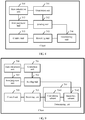
- FIG. 7 is a schematic structural diagram of a client disclosed in an embodiment of the present invention.
- the client may be configured to perform a data processing method disclosed in an embodiment of the present invention.
- the client may include: a generation unit 701, a sending unit 702, a receiving unit 703, and a determining unit 704.
- the generation unit 701 is configured to generate a data digest for a stored data set.
- the data set is obtained by combining one or more pieces of data currently stored by the client.
- the generation unit 701 may generate a data digest for all or a part of data in the data set.
- the data digest is used to describe a data feature and may include but is not limited to a statistical magnitude, data distribution, a proportion of labeled data, a proportion of abnormal data, a maximum value, a minimum value, an average value, a standard variance, and distribution of a confidence level, and the like.
- the data digest is a vector, and each element of the vector may be referred to as one data digest feature.
- the generation unit 701 may be specifically configured to generate data digest subsets corresponding to each type of data, and combine the data digest subsets corresponding to each type of data into the data digest.
- the sending unit 702 is configured to send the data digest to the server.
- a communication connection may be established between the client and the server.
- the client and the server may be connected by using a standard protocol (such as the HTTP protocol), or may be connected by using a dedicated protocol (such as a sensor specific protocol), so that the sending unit 702 sends, to the server, the data digest generated by the generation unit 701.
- the data digest is used to trigger the server to determine, according to the data digest, feedback information for the client.
- the receiving unit 703 is configured to receive feedback information sent by the server.
- the determining unit 704 is configured to: when the feedback information includes a target data selection policy and a target policy parameter, determine a data subset from the data set according to the target data selection policy and the target policy parameter.
- the target data selection policy is used to indicate a manner in which the client selects data from a data set, and may include but is not limited to at least one of a selection policy based on a confidence level, a sampling selection policy, a clustering-based selection policy, or the like.
- the sampling selection policy may include but is not limited to any one of a random sampling selection policy, an interval sampling selection policy, a stratified sampling selection policy, or the like.
- the target policy parameter is used to indicate a quantity of pieces of data selected by the client from the data set, that is, to limit a quantity of pieces of data in the data subset.
- the sending unit 702 is further configured to send the data subset to the server.
- FIG. 8 is a schematic structural diagram of another client disclosed in an embodiment of the present invention.
- the client may be configured to perform a data processing method disclosed in an embodiment of the present invention.
- the client shown in FIG. 8 is obtained by further optimizing the client shown in FIG. 7 .
- the client shown in FIG. 8 may further include: a control unit 705, configured to: when the feedback information includes information that is used to instruct the client to forbid data upload, respond to the feedback information and forbid sending data to the server.
- the client shown in FIG. 8 may further include:
- FIG. 9 is a schematic structural diagram of still another client disclosed in an embodiment of the present invention.
- the client may be configured to perform a data processing method disclosed in an embodiment of the present invention.
- the client shown in FIG. 9 is obtained by further optimizing the client shown in FIG. 8 .
- a determining unit 704 in the client shown in FIG. 9 may include:
- FIG. 10 is a schematic structural diagram of still another client disclosed in an embodiment of the present invention.
- the client may be configured to perform a data processing method disclosed in an embodiment of the present invention.
- the client shown in FIG. 10 is obtained by further optimizing the client shown in FIG. 8 .
- a determining unit 704 in the client shown in FIG. 10 may include:
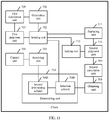
- FIG. 11 is a schematic structural diagram of still another client disclosed in an embodiment of the present invention.
- the client may be configured to perform a data processing method disclosed in an embodiment of the present invention.
- the client shown in FIG. 11 is obtained by further optimizing the client shown in FIG. 8 .
- a determining unit 704 in the client shown in FIG. 11 may include:
- the client shown in FIG. 11 may further include:
- a specific implementation in which the sending unit 702 sends the data subset to the server may be:
- the sending unit 702 sends the first data subset to the server.
- the client shown in FIG. 11 may further include: an adding unit 712, configured to: when the second judgment unit 710 determines that the maximum similarity is not greater than the preset threshold, add the new data into the data subset to obtain a second data subset.
- an adding unit 712 configured to: when the second judgment unit 710 determines that the maximum similarity is not greater than the preset threshold, add the new data into the data subset to obtain a second data subset.
- a specific implementation in which the sending unit 702 sends the data subset to the server may be:
- the sending unit 702 sends the second data subset to the server.
- the client shown in FIG. 7 to FIG. 11 generates, before selecting data and sending the data to the server, a data digest and sends the data digest to the server, and the server determines a data selection policy and a policy parameter that are suitable for the client.
- the client selects data according to the data selection policy and determines, according to the policy parameter, a quantity of pieces of data that need to be selected. Therefore, an amount of data transmitted by the client to the server can be controlled, and resource consumption in a data processing process can be effectively reduced.
- representative data can be accurately and conveniently selected, so as to obtain a more accurate prediction model.
- FIG. 12 is a schematic structural diagram of a server disclosed in an embodiment of the present invention.
- the server may be configured to perform a data processing method disclosed in an embodiment of the present invention.
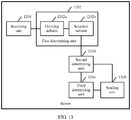
- the server may include a receiving unit 1201, a first determining unit 1202, a second determining unit 1203, a third determining unit 1204, and a sending unit 1205.
- the receiving unit 1201 is configured to receive data digests sent by one or more clients.
- one server may simultaneously establish a connection to one or more clients, so that the receiving unit 1201 may separately receive, in a same time period, data digests sent by multiple clients.
- the first determining unit 1202 is configured to determine, from the one or more clients according to the data digests, a target client that is allowed to upload data.
- the second determining unit 1203 is configured to determine a target data selection policy according to a data digest corresponding to the target client.
- the target data selection policy may include but is not limited to at least one of a selection policy based on a confidence level, a sampling selection policy, a clustering-based selection policy, or the like.
- the sampling selection policy may include but is not limited to any one of a random sampling selection policy, an interval sampling selection policy, a stratified sampling selection policy, or the like.
- the third determining unit 1204 is configured to determine a target policy parameter according to the data digest corresponding to the target client and the target data selection policy.
- the sending unit 1205 is configured to send the target data selection policy and the target policy parameter to the target client, so that the target client determines a to-be-transmitted data subset according to the target data selection policy and the target policy parameter.
- the target policy parameter is used to limit a quantity of pieces of data in the data subset.
- the receiving unit 1201 is further configured to: receive the data subset sent by the target client, and establish a prediction model or update an existing prediction model according to the data subset.
- the sending unit 1205 is further configured to send feedback information to a remaining client in the one or more clients except the target client.
- the feedback information is used to instruct the remaining client in the one or more clients except the target client to forbid sending data to the server.
- FIG. 13 is a schematic structural diagram of another server disclosed in an embodiment of the present invention.
- the server may be configured to perform a data processing method disclosed in an embodiment of the present invention.
- the server shown in FIG. 13 is obtained by further optimizing the server shown in FIG. 12 .
- a first determining unit 1202 in the server shown in FIG. 13 may include:
- FIG. 14 is a schematic structural diagram of still another server disclosed in an embodiment of the present invention.
- the server may be configured to perform a data processing method disclosed in an embodiment of the present invention.
- the server shown in FIG. 14 is obtained by further optimizing the server shown in FIG. 13 .
- a third determining unit 1204 in the server shown in FIG. 14 may include:
- FIG. 15 is a schematic structural diagram of still another server disclosed in an embodiment of the present invention.
- the server may be configured to perform a data processing method disclosed in an embodiment of the present invention.
- the server shown in FIG. 15 is obtained by further optimizing the server shown in FIG. 13 .
- a second determining unit 1203 in the server shown in FIG. 15 may include:
- a specific implementation in which the third determining unit 1204 determines the target policy parameter according to the data digest corresponding to the target client and the target data selection policy may be:
- the third determining unit 1204 determines the target policy parameter by using the maximum model variation amplitude according to a correspondence between a model variation amplitude and a policy parameter under the target data selection policy.
- the server shown in FIG. 12 to FIG. 15 first receives, before receiving data sent by the client, a data digest generated by the client and determines, according to the data digest, whether to allow the client to upload data, and determines a data selection policy and a policy parameter for the client.
- the client selects data according to the data selection policy and determines, according to the policy parameter, a quantity of pieces of data that need to be selected. Therefore, an amount of data transmitted by the client to the server can be controlled, and resource consumption of the server in a data processing process can be effectively reduced.
- representative data can be accurately and conveniently selected, so as to obtain a more accurate prediction model.
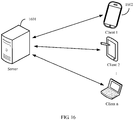
- FIG. 16 is a schematic structural diagram of a data processing system disclosed in an embodiment of the present invention.
- the data processing system may include a server 1601 and at least one client 1602.
- the server 1601 may establish a communication connection to the client 1602, and the client 1602 may include but is not limited to devices such as a smartphone, a tablet computer, a PDA, a smart watch, a smart band, and an intelligent surveillance camera.
- the client 1602 is configured to: generate a data digest for a stored data set, and send the data digest to the server 1601.
- the server 1601 is configured to determine, according to the data digest, whether the client 1602 is allowed to upload data.
- the server 1601 is further configured to: after determining that the client 1602 is allowed to upload data, determine a target data selection policy according to a data digest corresponding to the client 1602, and determine a target policy parameter according to the data digest corresponding to the client 1602 and the target data selection policy.
- the server 1601 is further configured to send the target data selection policy and the target policy parameter to the client 1602.
- the client 1602 is further configured to: receive the target data selection policy and the target policy parameter, and determine a to-be-transmitted data subset according to the target data selection policy and the target policy parameter.
- the target policy parameter is used to limit a quantity of pieces of data in the data subset.
- the client 1602 is further configured to send the data subset to the server 1601.
- the server 1601 is further configured to: receive the data subset, and establish a prediction model or update an existing prediction model according to the data subset.
- the server 1601 is further configured to: when determining that the client 1602 is not allowed to upload data, send feedback information to the client 1602.
- the feedback information is used to instruct the client 1602 to forbid sending data to the server 1601.
- the target data selection policy may include but is not limited to at least one of a selection policy based on a confidence level, a sampling selection policy, or a clustering-based selection policy, or the like.
- the sampling selection policy may include but is not limited to any one of a random sampling selection policy, an interval sampling selection policy, a stratified sampling selection policy, or the like.
- the client before the client selects data and sends the data to the server, the client generates a data digest and sends the data digest to the server, and the server determines a data selection policy and a policy parameter that are suitable for the client.
- the client selects data according to the data selection policy and determines, according to the policy parameter, a quantity of pieces of data that need to be selected. Therefore, an amount of data transmitted by the client to the server can be controlled, and resource consumption of the server in a data processing process can be effectively reduced.
- representative data can be accurately and conveniently selected, so as to obtain a more accurate prediction model.
- a sequence of the steps of the method in the embodiments of the present invention may be adjusted, and certain steps may be merged or removed according to an actual requirement.
- the units or subunits of a client and a server may be merged, divided, and removed in the embodiments of the present invention according to an actual requirement.
- the program may be stored in a computer readable storage medium.
- the storage medium includes a read-only memory (Read-Only Memory, ROM), a random access memory (Random Access Memory, RAM), a programmable read-only memory (Programmable Read-only Memory, PROM), an erasable programmable read-only memory (Erasable Programmable Read Only Memory, EPROM), a one-time programmable read-only memory (One-time Programmable Read-Only Memory, OTPROM), an electrically-erasable programmable read-only memory, (Electrically-Erasable Programmable Read-Only Memory, EEPROM), a compact disc read-only memory (Compact Disc Read-Only Memory, CD-ROM), or another optical disk memory, magnetic disk memory, magnetic tape memory, or any other computer readable medium that can be configured to carry or store data.
Landscapes
- Engineering & Computer Science (AREA)
- Databases & Information Systems (AREA)
- Theoretical Computer Science (AREA)
- Computer Networks & Wireless Communication (AREA)
- Signal Processing (AREA)
- Physics & Mathematics (AREA)
- General Physics & Mathematics (AREA)
- Data Mining & Analysis (AREA)
- General Engineering & Computer Science (AREA)
- Mathematical Physics (AREA)
- Probability & Statistics with Applications (AREA)
- Software Systems (AREA)
- Fuzzy Systems (AREA)
- Computational Linguistics (AREA)
- Computational Mathematics (AREA)
- Computing Systems (AREA)
- Pure & Applied Mathematics (AREA)
- Mathematical Optimization (AREA)
- Mathematical Analysis (AREA)
- Evolutionary Computation (AREA)
- Artificial Intelligence (AREA)
- Algebra (AREA)
- Information Transfer Between Computers (AREA)
Claims (16)
- Datenverarbeitungsverfahren, umfassend:Senden (302), durch einen Client, eines Datenauszugs für einen gespeicherten Datensatz an einen Server, wobei der Datenauszug durch den Client erzeugt wird und dazu verwendet wird, den Server zu veranlassen, gemäß dem Datenauszug Rückmeldeinformationen für den Client zu bestimmen;Empfangen (303), durch den Client, der vom Server gesendeten Rückmeldeinformationen, wobei die Rückmeldeinformationen eine Zieldatenauswahlrichtlinie und einen Zielrichtlinienparameter umfassen, die Zieldatenauswahlrichtlinie eine Stichprobenauswahlrichtlinie, eine auf einem Konfidenzniveau basierende Auswahlrichtlinie oder eine clusterbasierte Auswahlrichtlinie ist, die auf einem Konfidenzniveau basierende Auswahlrichtlinie oder die clusterbasierte Auswahlrichtlinie auf der Grundlage einer Varianz der gespeicherten Daten und des Konfidenzniveaus bestimmt wird und der Zielrichtlinienparameter gemäß der Zieldatenauswahlrichtlinie und dem Datenauszug bestimmt wird;Bestimmen (304), durch den Client, eines Datenteilsatzes aus dem Datensatz gemäß der Zieldatenauswahlrichtlinie und dem Zielrichtlinienparameter, wobei der Zielrichtlinienparameter dazu verwendet wird, eine Menge von Datenstücken im Datenteilsatz zu begrenzen; undSenden (305), durch den Client, des Datenteilsatzes an den Server.
- Verfahren nach Anspruch 1, wobei das Verfahren ferner umfasst:Berechnen, durch den Client, von Ähnlichkeit zwischen dem Datenauszug und mindestens einem historischen Datenauszug;Bestimmen, durch den Client, ob in der berechneten Ähnlichkeit Ähnlichkeit vorliegt, die einen voreingestellten Schwellenwert überschreitet; undwenn in der berechneten Ähnlichkeit keine den voreingestellten Schwellenwert überschreitende Ähnlichkeit vorliegt, Senden, durch den Client, des Datenauszugs an den Server.
- Verfahren nach Anspruch 1 oder 2, wobei, wenn der Datensatz mehrere Datentypen umfasst, das Erzeugen, durch einen Client, eines Datenauszugs für einen gespeicherten Datensatz umfasst:
Erzeugen, durch den Client, von Datenauszugteilsätzen, die den einzelnen Datentypen entsprechen, und Kombinieren der Datenauszugteilsätze, die den einzelnen Datentypen entsprechen, in den Datenauszug. - Verfahren nach einem der Ansprüche 1 bis 3, wobei, wenn die Zieldatenauswahlrichtlinie die auf einem Konfidenzniveau basierende Auswahlrichtlinie ist, der Zielrichtlinienparameter ein Konfidenzniveauschwellenwert ist, und das Bestimmen, durch den Client, eines Datenteilsatzes aus dem Datensatz gemäß der Zieldatenauswahlrichtlinie und dem Zielrichtlinienparameter umfasst:Berechnen, durch den Client, des Konfidenzniveaus von Daten im Datensatz gemäß einem vom Server gesendeten Vorhersagemodell; undExtrahieren, durch den Client aus dem Datensatz, von Daten, deren Konfidenzniveau unter dem Konfidenzniveauschwellenwert liegt, und Kombinieren der Daten in den Datenteilsatz.
- Verfahren nach einem der Ansprüche 1 bis 3, wobei, wenn die Zieldatenauswahlrichtlinie die Stichprobenauswahlrichtlinie ist, der Zielrichtlinienparameter ein Stichprobenanteil ist, und das Bestimmen, durch den Client, eines Datenteilsatzes aus dem Datensatz gemäß der Zieldatenauswahlrichtlinie und dem Zielrichtlinienparameter umfasst:Bestimmen, durch den Client, einer Stichprobenmenge von Datenstücken im Datensatz gemäß dem Stichprobenanteil; undExtrahieren, durch den Client, der Stichprobenmenge von Datenstücken aus dem Datensatz und Kombinieren der Daten in den Datenteilsatz.
- Verfahren nach einem der Ansprüche 1 bis 3, wobei, wenn die Zieldatenauswahlrichtlinie die clusterbasierte Auswahlrichtlinie ist, der Zielrichtlinienparameter eine Menge von geclusterten Gruppen ist, und das Bestimmen, durch den Client, eines Datenteilsatzes aus dem Datensatz gemäß der Zieldatenauswahlrichtlinie und dem Zielrichtlinienparameter umfasst:Bestimmen, durch den Client, einer hochzuladenden Menge von Datenstücken im Datensatz gemäß der Menge der geclusterten Gruppen; undAuswählen, durch den Client, der hochzuladenden Menge von Datenstücken aus dem Datensatz und Kombinieren der Daten in den Datenteilsatz.
- Verfahren nach Anspruch 6, wobei, wenn der Client neue Daten erzeugt, das Verfahren ferner umfasst:Erhalten, durch den Client aus dem Datenteilsatz, aller Zieldaten, von denen eine Erzeugungszeit ein Intervall aufweist, das kleiner als ein voreingestelltes Zeitintervall ist und das von einer Erzeugungszeit der neuen Daten stammt;Berechnen, durch den Client, von Ähnlichkeit zwischen allen Zieldaten und den neuen Daten, zu dem Zweck, maximale Ähnlichkeit und Zieldaten, die der maximalen Ähnlichkeit entsprechen, zu erhalten;Bestimmen, durch den Client, ob die maximale Ähnlichkeit größer als ein voreingestellter Schwellenwert ist; undwenn die maximale Ähnlichkeit größer als der voreingestellte Schwellenwert ist, Ersetzen, durch den Client, der Zieldaten, die der maximalen Ähnlichkeit entsprechen, durch die neuen Daten, um einen ersten Datenteilsatz zu erhalten, wobei das Senden, durch den Client, des Datenteilsatzes an den Server umfasst:
Senden, durch den Client, des ersten Datenteilsatzes an den Server. - Verfahren nach Anspruch 7, wobei das Verfahren ferner umfasst:wenn die maximale Ähnlichkeit nicht größer als der voreingestellte Schwellenwert ist, Hinzufügen, durch den Client, der neuen Daten in den Datenteilsatz zum Erhalten eines zweiten Datenteilsatzes, wobeidas Senden, durch den Client, des Datenteilsatzes an den Server umfasst:
Senden, durch den Client, des zweiten Datenteilsatzes an den Server. - Datenverarbeitungsverfahren, umfassend:Empfangen (401), durch einen Server, von Datenauszügen, die von einem oder mehreren Clients gesendet werden, wobei der Datenauszug durch den Client erzeugt wird und dazu verwendet wird, den Server zu veranlassen, gemäß dem Datenauszug Rückmeldeinformationen für den Client zu bestimmen;Bestimmen (402), durch den Server aus dem einen oder den mehreren Clients gemäß den Datenauszügen, eines Ziel-Clients, der Daten hochladen darf;Bestimmen (403), durch den Server, einer Zieldatenauswahlrichtlinie gemäß einem Datenauszug, der dem Ziel-Client entspricht, und Bestimmen eines Zielrichtlinienparameters gemäß dem Datenauszug, der dem Ziel-Client entspricht, und der Zieldatenauswahlrichtlinie, wobei die Zieldatenauswahlrichtlinie eine Stichprobenauswahlrichtlinie, eine auf einem Konfidenzniveau basierende Auswahlrichtlinie oder eine clusterbasierte Auswahlrichtlinie ist, wobei die auf einem Konfidenzniveau basierende Auswahlrichtlinie oder die clusterbasierte Auswahlrichtlinie auf der Grundlage einer Varianz der gespeicherten Daten und dem Konfidenzniveau bestimmt wird und der Zielrichtlinienparameter gemäß der Zieldatenauswahlrichtlinie und dem Datenauszug bestimmt wird;Senden (404), durch den Server, der Zieldatenauswahlrichtlinie und des Zielrichtlinienparameters an den Ziel-Client, damit der Ziel-Client einen zu übertragenden Datenteilsatz gemäß der Zieldatenauswahlrichtlinie und dem Zielrichtlinienparameter bestimmt, wobei der Zielrichtlinienparameter dazu verwendet wird, eine Menge von Datenstücken im Datenteilsatz zu begrenzen; undEmpfangen (405), durch den Server, des vom Ziel-Client gesendeten Datenteilsatzes und Erstellen eines Vorhersagemodells oder Aktualisieren eines bestehenden Vorhersagemodells gemäß dem Datenteilsatz.
- Verfahren nach Anspruch 9, wobei das Bestimmen, durch den Server aus dem einen oder den mehreren Clients gemäß den Datenauszügen, eines Ziel-Clients, der Daten hochladen darf, umfasst:Klassifizieren, durch den Server, des einen oder der mehreren Clients in mehrere Gruppen gemäß den Datenauszügen; undAuswählen, durch den Server, von mindestens einem Client aus jeder der mehreren Gruppen und Verwenden des mindestens einen aus jeder Gruppe ausgewählten Clients als den Ziel-Client, der Daten hochladen darf.
- Verfahren nach Anspruch 9 oder 10, wobei das Bestimmen, durch den Server, eines Zielrichtlinienparameters gemäß dem Datenauszug, der dem Ziel-Client entspricht, und der Zieldatenauswahlrichtlinie umfasst:Erzeugen, durch den Server, eines dem Server entsprechenden Datenauszugs für einen gespeicherten Datensatz;Berechnen, durch den Server, von Ähnlichkeit zwischen dem Datenauszug, der dem Server entspricht, und dem Datenauszug, der dem Ziel-Client entspricht; undUmwandeln, durch den Server, der Ähnlichkeit in den Zielrichtlinienparameter gemäß einer Umwandlungsfunktion, die der Zieldatenauswahlrichtlinie entspricht.
- Verfahren nach Anspruch 9 oder 10, wobei das Bestimmen, durch den Server, einer Zieldatenauswahlrichtlinie gemäß einem dem Ziel-Client entsprechenden Datenauszug umfasst:Berechnen, durch den Server, von Modellvariationsamplituden unter verschiedenen Datenauswahlrichtlinien unter Verwendung des Datenauszugs, der dem Ziel-Client entspricht, und gemäß einer vorher festgelegten Entsprechung zwischen einer Modellvariationsamplitude, einem historischen Datenauszug und einer Datenauswahlrichtlinie; undErhalten, durch den Server, einer Datenauswahlrichtlinie, die einer maximalen Modellvariationsamplitude in den berechneten Modellvariationsamplituden unter den verschiedenen Datenauswahlrichtlinien entspricht, und Verwenden der Datenauswahlrichtlinie als die Zieldatenauswahlrichtlinie.
- Verfahren nach Anspruch 12, wobei das Bestimmen, durch den Server, eines Zielrichtlinienparameters gemäß dem Datenauszug, der dem Ziel-Client entspricht, und der Zieldatenauswahlrichtlinie umfasst:
Bestimmen, durch den Server, des Zielrichtlinienparameters unter Verwendung der maximalen Modellvariationsamplitude und gemäß einer Entsprechung zwischen einer Modellvariationsamplitude und einem Richtlinienparameter unter der Zieldatenauswahlrichtlinie. - Client, der dafür ausgelegt ist, das Verfahren nach einem der Ansprüche 1 bis 8 durchzuführen.
- Server, der dafür ausgelegt ist, das Verfahren nach einem der Ansprüche 9 bis 13 durchzuführen.
- Datenverarbeitungssystem, umfassend: den Client nach Anspruch 14 und den Server nach Anspruch 15.
Applications Claiming Priority (2)
| Application Number | Priority Date | Filing Date | Title |
|---|---|---|---|
| CN201610136091.0A CN107181776B (zh) | 2016-03-10 | 2016-03-10 | 一种数据处理方法及相关设备、系统 |
| PCT/CN2017/073376 WO2017152734A1 (zh) | 2016-03-10 | 2017-02-13 | 一种数据处理方法及相关设备、系统 |
Publications (3)
| Publication Number | Publication Date |
|---|---|
| EP3419253A1 EP3419253A1 (de) | 2018-12-26 |
| EP3419253A4 EP3419253A4 (de) | 2019-02-06 |
| EP3419253B1 true EP3419253B1 (de) | 2021-10-27 |
Family
ID=59788952
Family Applications (1)
| Application Number | Title | Priority Date | Filing Date |
|---|---|---|---|
| EP17762420.2A Active EP3419253B1 (de) | 2016-03-10 | 2017-02-13 | Datenverarbeitungsverfahren sowie zugehörige vorrichtungen und systeme |
Country Status (4)
| Country | Link |
|---|---|
| US (1) | US10965554B2 (de) |
| EP (1) | EP3419253B1 (de) |
| CN (1) | CN107181776B (de) |
| WO (1) | WO2017152734A1 (de) |
Families Citing this family (13)
| Publication number | Priority date | Publication date | Assignee | Title |
|---|---|---|---|---|
| CN108989383B (zh) * | 2018-05-31 | 2021-08-27 | 创新先进技术有限公司 | 数据处理方法和客户端 |
| CN108984700B (zh) * | 2018-07-05 | 2021-07-27 | 腾讯科技(深圳)有限公司 | 数据处理方法及装置、计算机设备及存储介质 |
| US12450523B2 (en) * | 2018-07-23 | 2025-10-21 | Kabushiki Kaisha Toshiba | Device and method for optimising model performance |
| CN110413856B (zh) * | 2019-08-05 | 2023-11-10 | 腾讯科技(深圳)有限公司 | 分类标注方法、装置、可读存储介质及设备 |
| CN110598918B (zh) * | 2019-08-28 | 2021-06-11 | 宁波海上鲜信息技术有限公司 | 一种水产品价格预测方法、装置及计算机存储介质 |
| CN111506615B (zh) * | 2020-04-22 | 2025-02-07 | 深圳前海微众银行股份有限公司 | 一种无效用户的占有程度确定方法及装置 |
| CN112818183B (zh) * | 2021-02-03 | 2024-05-17 | 恒安嘉新(北京)科技股份公司 | 一种数据合成方法、装置、计算机设备和存储介质 |
| US12124490B2 (en) * | 2021-10-22 | 2024-10-22 | International Busi Ness Machines Corporation | Predicting policy violations in a document with an enterprise data source |
| CN115587631A (zh) * | 2022-09-16 | 2023-01-10 | 阿里巴巴(中国)有限公司 | 数据回传处理、客户端选择方法、装置及电子设备 |
| CN115611393B (zh) * | 2022-11-07 | 2023-04-07 | 中节能晶和智慧城市科技(浙江)有限公司 | 一种多端协同的多水厂混凝剂投放方法和系统 |
| CN116431868A (zh) * | 2023-06-13 | 2023-07-14 | 广州市千钧网络科技有限公司 | 一种数据处理方法、系统及电子设备 |
| CN116860786A (zh) * | 2023-07-11 | 2023-10-10 | 北京火山引擎科技有限公司 | 基于数据库的数据查询方法、装置、电子设备及存储介质 |
| CN117877748B (zh) * | 2024-03-11 | 2024-05-14 | 深圳市艾利特医疗科技有限公司 | 一种多参数心肺功能测试设备及其数据处理方法 |
Citations (1)
| Publication number | Priority date | Publication date | Assignee | Title |
|---|---|---|---|---|
| US20150003808A1 (en) * | 2012-01-20 | 2015-01-01 | Comcast Cable Communications, Llc | Network Storage Device and Method |
Family Cites Families (15)
| Publication number | Priority date | Publication date | Assignee | Title |
|---|---|---|---|---|
| US6748446B2 (en) * | 1996-11-29 | 2004-06-08 | Canon Kabushiki Kaisha | Communication method and apparatus with modification of routing path by intermediate relay apparatus |
| US7375731B2 (en) * | 2002-11-01 | 2008-05-20 | Mitsubishi Electric Research Laboratories, Inc. | Video mining using unsupervised clustering of video content |
| US7664828B2 (en) * | 2004-02-20 | 2010-02-16 | Microsoft Corporation | Invalid policy detection |
| US8073830B2 (en) | 2006-03-31 | 2011-12-06 | Google Inc. | Expanded text excerpts |
| US8781442B1 (en) * | 2006-09-08 | 2014-07-15 | Hti Ip, Llc | Personal assistance safety systems and methods |
| US7761425B1 (en) * | 2007-03-29 | 2010-07-20 | Symantec Corporation | Low-overhead means of performing data backup |
| WO2010125230A1 (en) * | 2009-04-30 | 2010-11-04 | Nokia Corporation | Data transmission optimization |
| CN102915347B (zh) * | 2012-09-26 | 2016-10-12 | 中国信息安全测评中心 | 一种分布式数据流聚类方法及系统 |
| CN102868765B (zh) * | 2012-10-09 | 2015-06-03 | 乐视网信息技术(北京)股份有限公司 | 文件上传方法和系统 |
| US9400800B2 (en) * | 2012-11-19 | 2016-07-26 | Palo Alto Research Center Incorporated | Data transport by named content synchronization |
| US9116941B2 (en) * | 2013-03-15 | 2015-08-25 | International Business Machines Corporation | Reducing digest storage consumption by tracking similarity elements in a data deduplication system |
| CN103812961B (zh) | 2013-11-01 | 2016-08-17 | 北京奇虎科技有限公司 | 识别指定类别ip地址的方法及设备、防御方法及系统 |
| US9742836B2 (en) * | 2014-01-03 | 2017-08-22 | Yahoo Holdings, Inc. | Systems and methods for content delivery |
| US20150317687A1 (en) * | 2014-05-02 | 2015-11-05 | Jaichander Ramesh | System and method for analytics-based advertising |
| CN104794239A (zh) * | 2015-05-08 | 2015-07-22 | 成都博元科技有限公司 | 一种云平台数据处理方法 |
-
2016
- 2016-03-10 CN CN201610136091.0A patent/CN107181776B/zh active Active
-
2017
- 2017-02-13 WO PCT/CN2017/073376 patent/WO2017152734A1/zh not_active Ceased
- 2017-02-13 EP EP17762420.2A patent/EP3419253B1/de active Active
-
2018
- 2018-09-10 US US16/126,056 patent/US10965554B2/en active Active
Patent Citations (1)
| Publication number | Priority date | Publication date | Assignee | Title |
|---|---|---|---|---|
| US20150003808A1 (en) * | 2012-01-20 | 2015-01-01 | Comcast Cable Communications, Llc | Network Storage Device and Method |
Also Published As
| Publication number | Publication date |
|---|---|
| WO2017152734A1 (zh) | 2017-09-14 |
| EP3419253A4 (de) | 2019-02-06 |
| CN107181776B (zh) | 2020-04-28 |
| US10965554B2 (en) | 2021-03-30 |
| EP3419253A1 (de) | 2018-12-26 |
| US20180367423A1 (en) | 2018-12-20 |
| CN107181776A (zh) | 2017-09-19 |
Similar Documents
| Publication | Publication Date | Title |
|---|---|---|
| US10965554B2 (en) | Data processing method and related device, and system | |
| US12470580B2 (en) | Cognitive neuro-linguistic behavior recognition system for multi-sensor data fusion | |
| US20150127595A1 (en) | Modeling and detection of anomaly based on prediction | |
| CN108491720B (zh) | 一种应用识别方法、系统以及相关设备 | |
| CN113642519A (zh) | 一种人脸识别系统和人脸识别方法 | |
| KR102101591B1 (ko) | Ai 기반 백업 데이터 관리 시스템 및 그 방법 | |
| CN113760550B (zh) | 资源分配方法和资源分配装置 | |
| CN106027317B (zh) | 信任感知的Web服务质量预测系统及方法 | |
| CN118831315B (zh) | 一种游戏数据同步方法、游戏客户端及游戏服务器 | |
| CN118138801B (zh) | 视频数据处理方法、装置、电子设备及存储介质 | |
| CN111654538A (zh) | 基于区块链及大数据的通信处理方法及云边端计算服务器 | |
| US8983942B2 (en) | Method and apparatus for providing time machine service based on social network service | |
| US20190238797A1 (en) | Method, device, and storage medium for processing webcam data | |
| Oka et al. | Spatial feature-based prioritization for transmission of point cloud data in 3D-image sensor networks | |
| CN115827944B (zh) | 基于互联网平台系统优化的大数据分析方法及服务器 | |
| CN117170886B (zh) | 一种面向大连接视频分析的连续学习资源调度方法及装置 | |
| CN112925831A (zh) | 基于云计算服务的大数据挖掘方法及大数据挖掘服务系统 | |
| Wu et al. | AutoLTS: Lightweight Transformer-Based Simulation Model for Efficient Communication Using Hybrid Large Language Models | |
| Alsayyad et al. | A survey on time series data classification: Blockchain technologies and security concerns | |
| KR20230126907A (ko) | 연합학습을 이용한 비디오 영상의 특정 구간 추출 방법 및 시스템 | |
| CN113472640A (zh) | 一种智能网关信息处理方法及系统 | |
| KR20230003170A (ko) | 시각적 검색을 위한 방법, 컴퓨터 프로그램 제품 및 장치 | |
| CN115695332B (zh) | 摄像头运行资源分配方法、装置、电子设备及存储介质 | |
| CN120935305B (zh) | 一种基于端云协同的图像处理方法及电子设备 | |
| CN119155355B (zh) | 基于物联网的通讯性能优化方法及系统 |
Legal Events
| Date | Code | Title | Description |
|---|---|---|---|
| STAA | Information on the status of an ep patent application or granted ep patent |
Free format text: STATUS: THE INTERNATIONAL PUBLICATION HAS BEEN MADE |
|
| PUAI | Public reference made under article 153(3) epc to a published international application that has entered the european phase |
Free format text: ORIGINAL CODE: 0009012 |
|
| STAA | Information on the status of an ep patent application or granted ep patent |
Free format text: STATUS: REQUEST FOR EXAMINATION WAS MADE |
|
| 17P | Request for examination filed |
Effective date: 20180919 |
|
| AK | Designated contracting states |
Kind code of ref document: A1 Designated state(s): AL AT BE BG CH CY CZ DE DK EE ES FI FR GB GR HR HU IE IS IT LI LT LU LV MC MK MT NL NO PL PT RO RS SE SI SK SM TR |
|
| AX | Request for extension of the european patent |
Extension state: BA ME |
|
| RIC1 | Information provided on ipc code assigned before grant |
Ipc: H04L 29/08 20060101AFI20181221BHEP |
|
| A4 | Supplementary search report drawn up and despatched |
Effective date: 20190109 |
|
| DAV | Request for validation of the european patent (deleted) | ||
| DAX | Request for extension of the european patent (deleted) | ||
| STAA | Information on the status of an ep patent application or granted ep patent |
Free format text: STATUS: EXAMINATION IS IN PROGRESS |
|
| 17Q | First examination report despatched |
Effective date: 20200701 |
|
| GRAP | Despatch of communication of intention to grant a patent |
Free format text: ORIGINAL CODE: EPIDOSNIGR1 |
|
| STAA | Information on the status of an ep patent application or granted ep patent |
Free format text: STATUS: GRANT OF PATENT IS INTENDED |
|
| INTG | Intention to grant announced |
Effective date: 20210630 |
|
| GRAS | Grant fee paid |
Free format text: ORIGINAL CODE: EPIDOSNIGR3 |
|
| GRAA | (expected) grant |
Free format text: ORIGINAL CODE: 0009210 |
|
| STAA | Information on the status of an ep patent application or granted ep patent |
Free format text: STATUS: THE PATENT HAS BEEN GRANTED |
|
| AK | Designated contracting states |
Kind code of ref document: B1 Designated state(s): AL AT BE BG CH CY CZ DE DK EE ES FI FR GB GR HR HU IE IS IT LI LT LU LV MC MK MT NL NO PL PT RO RS SE SI SK SM TR |
|
| REG | Reference to a national code |
Ref country code: GB Ref legal event code: FG4D |
|
| REG | Reference to a national code |
Ref country code: CH Ref legal event code: EP |
|
| REG | Reference to a national code |
Ref country code: DE Ref legal event code: R096 Ref document number: 602017048305 Country of ref document: DE |
|
| REG | Reference to a national code |
Ref country code: AT Ref legal event code: REF Ref document number: 1442905 Country of ref document: AT Kind code of ref document: T Effective date: 20211115 |
|
| REG | Reference to a national code |
Ref country code: IE Ref legal event code: FG4D |
|
| REG | Reference to a national code |
Ref country code: DE Ref legal event code: R079 Ref document number: 602017048305 Country of ref document: DE Free format text: PREVIOUS MAIN CLASS: H04L0029080000 Ipc: H04L0065000000 |
|
| REG | Reference to a national code |
Ref country code: LT Ref legal event code: MG9D |
|
| REG | Reference to a national code |
Ref country code: NL Ref legal event code: MP Effective date: 20211027 |
|
| REG | Reference to a national code |
Ref country code: AT Ref legal event code: MK05 Ref document number: 1442905 Country of ref document: AT Kind code of ref document: T Effective date: 20211027 |
|
| PG25 | Lapsed in a contracting state [announced via postgrant information from national office to epo] |
Ref country code: RS Free format text: LAPSE BECAUSE OF FAILURE TO SUBMIT A TRANSLATION OF THE DESCRIPTION OR TO PAY THE FEE WITHIN THE PRESCRIBED TIME-LIMIT Effective date: 20211027 Ref country code: LT Free format text: LAPSE BECAUSE OF FAILURE TO SUBMIT A TRANSLATION OF THE DESCRIPTION OR TO PAY THE FEE WITHIN THE PRESCRIBED TIME-LIMIT Effective date: 20211027 Ref country code: FI Free format text: LAPSE BECAUSE OF FAILURE TO SUBMIT A TRANSLATION OF THE DESCRIPTION OR TO PAY THE FEE WITHIN THE PRESCRIBED TIME-LIMIT Effective date: 20211027 Ref country code: BG Free format text: LAPSE BECAUSE OF FAILURE TO SUBMIT A TRANSLATION OF THE DESCRIPTION OR TO PAY THE FEE WITHIN THE PRESCRIBED TIME-LIMIT Effective date: 20220127 Ref country code: AT Free format text: LAPSE BECAUSE OF FAILURE TO SUBMIT A TRANSLATION OF THE DESCRIPTION OR TO PAY THE FEE WITHIN THE PRESCRIBED TIME-LIMIT Effective date: 20211027 |
|
| PG25 | Lapsed in a contracting state [announced via postgrant information from national office to epo] |
Ref country code: IS Free format text: LAPSE BECAUSE OF FAILURE TO SUBMIT A TRANSLATION OF THE DESCRIPTION OR TO PAY THE FEE WITHIN THE PRESCRIBED TIME-LIMIT Effective date: 20220227 Ref country code: SE Free format text: LAPSE BECAUSE OF FAILURE TO SUBMIT A TRANSLATION OF THE DESCRIPTION OR TO PAY THE FEE WITHIN THE PRESCRIBED TIME-LIMIT Effective date: 20211027 Ref country code: PT Free format text: LAPSE BECAUSE OF FAILURE TO SUBMIT A TRANSLATION OF THE DESCRIPTION OR TO PAY THE FEE WITHIN THE PRESCRIBED TIME-LIMIT Effective date: 20220228 Ref country code: PL Free format text: LAPSE BECAUSE OF FAILURE TO SUBMIT A TRANSLATION OF THE DESCRIPTION OR TO PAY THE FEE WITHIN THE PRESCRIBED TIME-LIMIT Effective date: 20211027 Ref country code: NO Free format text: LAPSE BECAUSE OF FAILURE TO SUBMIT A TRANSLATION OF THE DESCRIPTION OR TO PAY THE FEE WITHIN THE PRESCRIBED TIME-LIMIT Effective date: 20220127 Ref country code: NL Free format text: LAPSE BECAUSE OF FAILURE TO SUBMIT A TRANSLATION OF THE DESCRIPTION OR TO PAY THE FEE WITHIN THE PRESCRIBED TIME-LIMIT Effective date: 20211027 Ref country code: LV Free format text: LAPSE BECAUSE OF FAILURE TO SUBMIT A TRANSLATION OF THE DESCRIPTION OR TO PAY THE FEE WITHIN THE PRESCRIBED TIME-LIMIT Effective date: 20211027 Ref country code: HR Free format text: LAPSE BECAUSE OF FAILURE TO SUBMIT A TRANSLATION OF THE DESCRIPTION OR TO PAY THE FEE WITHIN THE PRESCRIBED TIME-LIMIT Effective date: 20211027 Ref country code: GR Free format text: LAPSE BECAUSE OF FAILURE TO SUBMIT A TRANSLATION OF THE DESCRIPTION OR TO PAY THE FEE WITHIN THE PRESCRIBED TIME-LIMIT Effective date: 20220128 Ref country code: ES Free format text: LAPSE BECAUSE OF FAILURE TO SUBMIT A TRANSLATION OF THE DESCRIPTION OR TO PAY THE FEE WITHIN THE PRESCRIBED TIME-LIMIT Effective date: 20211027 |
|
| REG | Reference to a national code |
Ref country code: DE Ref legal event code: R097 Ref document number: 602017048305 Country of ref document: DE |
|
| PG25 | Lapsed in a contracting state [announced via postgrant information from national office to epo] |
Ref country code: SM Free format text: LAPSE BECAUSE OF FAILURE TO SUBMIT A TRANSLATION OF THE DESCRIPTION OR TO PAY THE FEE WITHIN THE PRESCRIBED TIME-LIMIT Effective date: 20211027 Ref country code: SK Free format text: LAPSE BECAUSE OF FAILURE TO SUBMIT A TRANSLATION OF THE DESCRIPTION OR TO PAY THE FEE WITHIN THE PRESCRIBED TIME-LIMIT Effective date: 20211027 Ref country code: RO Free format text: LAPSE BECAUSE OF FAILURE TO SUBMIT A TRANSLATION OF THE DESCRIPTION OR TO PAY THE FEE WITHIN THE PRESCRIBED TIME-LIMIT Effective date: 20211027 Ref country code: EE Free format text: LAPSE BECAUSE OF FAILURE TO SUBMIT A TRANSLATION OF THE DESCRIPTION OR TO PAY THE FEE WITHIN THE PRESCRIBED TIME-LIMIT Effective date: 20211027 Ref country code: DK Free format text: LAPSE BECAUSE OF FAILURE TO SUBMIT A TRANSLATION OF THE DESCRIPTION OR TO PAY THE FEE WITHIN THE PRESCRIBED TIME-LIMIT Effective date: 20211027 Ref country code: CZ Free format text: LAPSE BECAUSE OF FAILURE TO SUBMIT A TRANSLATION OF THE DESCRIPTION OR TO PAY THE FEE WITHIN THE PRESCRIBED TIME-LIMIT Effective date: 20211027 |
|
| PLBE | No opposition filed within time limit |
Free format text: ORIGINAL CODE: 0009261 |
|
| STAA | Information on the status of an ep patent application or granted ep patent |
Free format text: STATUS: NO OPPOSITION FILED WITHIN TIME LIMIT |
|
| PG25 | Lapsed in a contracting state [announced via postgrant information from national office to epo] |
Ref country code: MC Free format text: LAPSE BECAUSE OF FAILURE TO SUBMIT A TRANSLATION OF THE DESCRIPTION OR TO PAY THE FEE WITHIN THE PRESCRIBED TIME-LIMIT Effective date: 20211027 |
|
| 26N | No opposition filed |
Effective date: 20220728 |
|
| REG | Reference to a national code |
Ref country code: CH Ref legal event code: PL |
|
| REG | Reference to a national code |
Ref country code: BE Ref legal event code: MM Effective date: 20220228 |
|
| PG25 | Lapsed in a contracting state [announced via postgrant information from national office to epo] |
Ref country code: LU Free format text: LAPSE BECAUSE OF NON-PAYMENT OF DUE FEES Effective date: 20220213 Ref country code: AL Free format text: LAPSE BECAUSE OF FAILURE TO SUBMIT A TRANSLATION OF THE DESCRIPTION OR TO PAY THE FEE WITHIN THE PRESCRIBED TIME-LIMIT Effective date: 20211027 |
|
| PG25 | Lapsed in a contracting state [announced via postgrant information from national office to epo] |
Ref country code: SI Free format text: LAPSE BECAUSE OF FAILURE TO SUBMIT A TRANSLATION OF THE DESCRIPTION OR TO PAY THE FEE WITHIN THE PRESCRIBED TIME-LIMIT Effective date: 20211027 |
|
| PG25 | Lapsed in a contracting state [announced via postgrant information from national office to epo] |
Ref country code: LI Free format text: LAPSE BECAUSE OF NON-PAYMENT OF DUE FEES Effective date: 20220228 Ref country code: IE Free format text: LAPSE BECAUSE OF NON-PAYMENT OF DUE FEES Effective date: 20220213 Ref country code: CH Free format text: LAPSE BECAUSE OF NON-PAYMENT OF DUE FEES Effective date: 20220228 |
|
| PG25 | Lapsed in a contracting state [announced via postgrant information from national office to epo] |
Ref country code: BE Free format text: LAPSE BECAUSE OF NON-PAYMENT OF DUE FEES Effective date: 20220228 |
|
| PG25 | Lapsed in a contracting state [announced via postgrant information from national office to epo] |
Ref country code: IT Free format text: LAPSE BECAUSE OF FAILURE TO SUBMIT A TRANSLATION OF THE DESCRIPTION OR TO PAY THE FEE WITHIN THE PRESCRIBED TIME-LIMIT Effective date: 20211027 |
|
| PG25 | Lapsed in a contracting state [announced via postgrant information from national office to epo] |
Ref country code: HU Free format text: LAPSE BECAUSE OF FAILURE TO SUBMIT A TRANSLATION OF THE DESCRIPTION OR TO PAY THE FEE WITHIN THE PRESCRIBED TIME-LIMIT; INVALID AB INITIO Effective date: 20170213 |
|
| PG25 | Lapsed in a contracting state [announced via postgrant information from national office to epo] |
Ref country code: MK Free format text: LAPSE BECAUSE OF FAILURE TO SUBMIT A TRANSLATION OF THE DESCRIPTION OR TO PAY THE FEE WITHIN THE PRESCRIBED TIME-LIMIT Effective date: 20211027 Ref country code: CY Free format text: LAPSE BECAUSE OF FAILURE TO SUBMIT A TRANSLATION OF THE DESCRIPTION OR TO PAY THE FEE WITHIN THE PRESCRIBED TIME-LIMIT Effective date: 20211027 |
|
| PG25 | Lapsed in a contracting state [announced via postgrant information from national office to epo] |
Ref country code: TR Free format text: LAPSE BECAUSE OF FAILURE TO SUBMIT A TRANSLATION OF THE DESCRIPTION OR TO PAY THE FEE WITHIN THE PRESCRIBED TIME-LIMIT Effective date: 20211027 |
|
| PG25 | Lapsed in a contracting state [announced via postgrant information from national office to epo] |
Ref country code: MT Free format text: LAPSE BECAUSE OF FAILURE TO SUBMIT A TRANSLATION OF THE DESCRIPTION OR TO PAY THE FEE WITHIN THE PRESCRIBED TIME-LIMIT Effective date: 20211027 |
|
| P01 | Opt-out of the competence of the unified patent court (upc) registered |
Free format text: CASE NUMBER: UPC_APP_326333/2023 Effective date: 20230524 |
|
| PGFP | Annual fee paid to national office [announced via postgrant information from national office to epo] |
Ref country code: FR Payment date: 20251231 Year of fee payment: 10 |
|
| PGFP | Annual fee paid to national office [announced via postgrant information from national office to epo] |
Ref country code: GB Payment date: 20260106 Year of fee payment: 10 |
|
| PGFP | Annual fee paid to national office [announced via postgrant information from national office to epo] |
Ref country code: DE Payment date: 20251230 Year of fee payment: 10 |