EP3420007B1 - Copolymères séquencés de styrène-butadiène avec une séquence butadiène interne pour applications de tubulures - Google Patents
Copolymères séquencés de styrène-butadiène avec une séquence butadiène interne pour applications de tubulures Download PDFInfo
- Publication number
- EP3420007B1 EP3420007B1 EP16826523.9A EP16826523A EP3420007B1 EP 3420007 B1 EP3420007 B1 EP 3420007B1 EP 16826523 A EP16826523 A EP 16826523A EP 3420007 B1 EP3420007 B1 EP 3420007B1
- Authority
- EP
- European Patent Office
- Prior art keywords
- monomer
- phm
- conjugated diene
- monovinylarene
- charge
- Prior art date
- Legal status (The legal status is an assumption and is not a legal conclusion. Google has not performed a legal analysis and makes no representation as to the accuracy of the status listed.)
- Not-in-force
Links
Images
Classifications
-
- A—HUMAN NECESSITIES
- A61—MEDICAL OR VETERINARY SCIENCE; HYGIENE
- A61L—METHODS OR APPARATUS FOR STERILISING MATERIALS OR OBJECTS IN GENERAL; DISINFECTION, STERILISATION OR DEODORISATION OF AIR; CHEMICAL ASPECTS OF BANDAGES, DRESSINGS, ABSORBENT PADS OR SURGICAL ARTICLES; MATERIALS FOR BANDAGES, DRESSINGS, ABSORBENT PADS OR SURGICAL ARTICLES
- A61L29/00—Materials for catheters, medical tubing, cannulae, or endoscopes or for coating catheters
- A61L29/04—Macromolecular materials
- A61L29/041—Macromolecular materials obtained by reactions only involving carbon-to-carbon unsaturated bonds
-
- C—CHEMISTRY; METALLURGY
- C08—ORGANIC MACROMOLECULAR COMPOUNDS; THEIR PREPARATION OR CHEMICAL WORKING-UP; COMPOSITIONS BASED THEREON
- C08F—MACROMOLECULAR COMPOUNDS OBTAINED BY REACTIONS ONLY INVOLVING CARBON-TO-CARBON UNSATURATED BONDS
- C08F293/00—Macromolecular compounds obtained by polymerisation on to a macromolecule having groups capable of inducing the formation of new polymer chains bound exclusively at one or both ends of the starting macromolecule
- C08F293/005—Macromolecular compounds obtained by polymerisation on to a macromolecule having groups capable of inducing the formation of new polymer chains bound exclusively at one or both ends of the starting macromolecule using free radical "living" or "controlled" polymerisation, e.g. using a complexing agent
-
- C—CHEMISTRY; METALLURGY
- C08—ORGANIC MACROMOLECULAR COMPOUNDS; THEIR PREPARATION OR CHEMICAL WORKING-UP; COMPOSITIONS BASED THEREON
- C08F—MACROMOLECULAR COMPOUNDS OBTAINED BY REACTIONS ONLY INVOLVING CARBON-TO-CARBON UNSATURATED BONDS
- C08F297/00—Macromolecular compounds obtained by successively polymerising different monomer systems using a catalyst of the ionic or coordination type without deactivating the intermediate polymer
- C08F297/02—Macromolecular compounds obtained by successively polymerising different monomer systems using a catalyst of the ionic or coordination type without deactivating the intermediate polymer using a catalyst of the anionic type
- C08F297/04—Macromolecular compounds obtained by successively polymerising different monomer systems using a catalyst of the ionic or coordination type without deactivating the intermediate polymer using a catalyst of the anionic type polymerising vinyl aromatic monomers and conjugated dienes
- C08F297/044—Macromolecular compounds obtained by successively polymerising different monomer systems using a catalyst of the ionic or coordination type without deactivating the intermediate polymer using a catalyst of the anionic type polymerising vinyl aromatic monomers and conjugated dienes using a coupling agent
-
- C—CHEMISTRY; METALLURGY
- C08—ORGANIC MACROMOLECULAR COMPOUNDS; THEIR PREPARATION OR CHEMICAL WORKING-UP; COMPOSITIONS BASED THEREON
- C08L—COMPOSITIONS OF MACROMOLECULAR COMPOUNDS
- C08L53/00—Compositions of block copolymers containing at least one sequence of a polymer obtained by reactions only involving carbon-to-carbon unsaturated bonds; Compositions of derivatives of such polymers
- C08L53/02—Compositions of block copolymers containing at least one sequence of a polymer obtained by reactions only involving carbon-to-carbon unsaturated bonds; Compositions of derivatives of such polymers of vinyl-aromatic monomers and conjugated dienes
-
- C—CHEMISTRY; METALLURGY
- C08—ORGANIC MACROMOLECULAR COMPOUNDS; THEIR PREPARATION OR CHEMICAL WORKING-UP; COMPOSITIONS BASED THEREON
- C08F—MACROMOLECULAR COMPOUNDS OBTAINED BY REACTIONS ONLY INVOLVING CARBON-TO-CARBON UNSATURATED BONDS
- C08F2500/00—Characteristics or properties of obtained polyolefins; Use thereof
- C08F2500/12—Melt flow index or melt flow ratio
-
- C—CHEMISTRY; METALLURGY
- C08—ORGANIC MACROMOLECULAR COMPOUNDS; THEIR PREPARATION OR CHEMICAL WORKING-UP; COMPOSITIONS BASED THEREON
- C08L—COMPOSITIONS OF MACROMOLECULAR COMPOUNDS
- C08L2203/00—Applications
- C08L2203/02—Applications for biomedical use
Definitions
- Flexible PVC has been the material of choice for many applications due to its low cost and unique combination of properties. In applications such as flexible tubing for medical applications, flexible PVC has suitable strength, flexibility, and kink resistance, and yet is not too tacky or sticky. However, flexible PVC requires significant amounts of plasticizers, which depending upon the specific composition, are being replaced or phased out due to health concerns and PVC incineration by-product concerns.
- US 2011/319837 A1 discloses kink-resistant tubes made from a resin composition, which comprises a styrene thermoplastic elastomer (a) which is a hydrogenated block copolymer, and a polypropylene resin (b).
- the hydrogenated block copolymer is in particular based on a linear S-(I/B)-S, S-IS and S-B-S-triblock copolymer wherein S is a styrene polymer block and I, B or I/B is a polymer block made from isoprene and/or 1,3-butadiene.
- the styrene polymer block content is preferably 5 to 10 mass % with respect to the total amount of the styrene thermoplastic elastomer (a) before hydrogenation.
- Conjugated diene monovinylarene block copolymers are disclosed and described herein, and such copolymers can comprise from 35 phm to 75 phm monovinylarene monomer (phm is the parts by weight per hundred parts of total monomer in the copolymer), and moreover, can comprise polymer chains containing a block structure having formula IA or formula IB: S 1 - B 1 - (S/B) 1 - (S/B) 2 (IA); or S 1 - B 1 - (S/B) 1 - B 2 (IB).
- S 1 can be a monoblock of the monovinylarene monomer, wherein S 1 can be from 15 phm to 45 phm of the copolymer; B 1 can be a first monoblock of the conjugated diene monomer, wherein B 1 can be from 0.5 phm to 10 phm of the copolymer; (S/B) 1 can be a mixed block of the conjugated diene monomer and the monovinylarene monomer, wherein the monovinylarene monomer content can be from 30 wt. % to 80 wt.
- (S/B) 2 can be a mixed block of the conjugated diene monomer and the monovinylarene monomer, wherein the conjugated diene monomer content can be from 70 wt. % to 99 wt. %, based on the total weight of (S/B) 2 ; and B 2 can be a second monoblock of the conjugated diene monomer, wherein B 2 can be from 8 phm to 30 phm of the copolymer.
- the copolymer can be further characterized by a kink resistance of tubing produced from the copolymer of less than or equal to 32 mm, when tested in accordance with DIN EN 13868.
- the copolymer can contain polymer chains having the block structure of formula IA, and can have the following characteristics: a monovinylarene monomer content in a range from 54 phm to 68 phm, S 1 in a range from 28 phm to 38 phm, B 1 in a range from 2 phm to 8 phm, a monovinylarene monomer content in (S/B) 1 in a range from 50 wt. % to 65 wt. %, and a conjugated diene monomer content in (S/B) 2 in a range from 75 wt. % to 95 wt. %.
- the copolymer can contain polymer chains having the block structure of formula IB, and can have the following characteristics: a monovinylarene monomer content in a range from 54 phm to 68 phm, S 1 in a range from 28 phm to 38 phm, B 1 in a range from 2 phm to 8 phm, a monovinylarene monomer content in (S/B) 1 in a range from 50 wt. % to 65 wt. %, and B 2 in a range from 14 phm to 20 phm.
- the copolymer also can comprise polymer chains containing a block structure having formula IIA or formula IIB: S 2 - B 1 - (S/B) 1 - (S/B) 2 (IIA); or S 2 - B 1 - (S/B) 1 - B 2 (IIB).
- S 2 can be a monoblock of the monovinylarene monomer, wherein S 2 can be from 5 phm to 30 phm, or from 12 phm to 25 phm.
- each of B 1 , (S/B) 1 , (S/B) 2 , and B 2 can be the same as, or different from (e.g., in phm, in relative monovinylarene to conjugated diene content in the mixed block), that described herein for formula IA and IB.
- a conjugated diene monovinylarene block copolymer comprising from 46 phm to 72 phm monovinylarene monomer
- the block copolymer can comprise polymer chains with the following structures: X-X, X-Y, and Y-Y; wherein X is S 1 - S 2 - B 1 - (S/B) 1 - (S/B) 2 - T 1 -, and Y is S 2 - B 1 - (S/B) 1 - (S/B) 2 - T 1 -.
- S 1 and S 2 can be monoblocks of the monovinylarene monomer, wherein a total of S 1 and S 2 can be from 20 wt. % to 60 wt. % (or from 35 wt. % to 48 wt. %) of X, and S 2 can be from 11 wt. % to 30 wt. % (or from 14 wt. % to 26 wt. %) of Y.
- B 1 can be a monoblock of the conjugated diene monomer, wherein B 1 can be from 2 wt. % to 12 wt. % of X, and B 1 can be from 3 wt. % to 15 wt.
- (S/B) 1 can be a mixed block of the conjugated diene monomer and the monovinylarene monomer, wherein the monovinylarene monomer content of (S/B) 1 can be from 30 wt. % to 80 wt. %;
- (S/B) 2 can be a mixed block of the conjugated diene monomer and the monovinylarene monomer, wherein the monovinylarene monomer content of (S/B) 2 can be from 30 wt. % to 80 wt.
- T 1 can be a mixed block of the conjugated diene monomer and the monovinylarene monomer, wherein the conjugated diene monomer content of T 1 can be at least 70 wt. %, or a monoblock of the conjugated diene monomer, wherein the conjugated diene monomer content of T 1 is 100 wt. %. Further, T 1 can be from 10 wt. % to 30 wt. % of X, and T 1 can be from 14 wt. % to 30 wt. % of Y. Additionally, the copolymer can be further characterized by a kink resistance of tubing produced from the copolymer of less than or equal to 32 mm, when tested in accordance with DIN EN 13868.
- Articles can be produced from and/or can contain the block copolymers (or compositions comprising the block copolymers) disclosed herein.
- Representative articles can include, but are not limited to, sheet products, film products, tubing products, and adhesive products.
- Embodiments of the invention also are directed to methods for producing block copolymers.
- One such method can comprise contacting (i) a first initiator charge and a first charge of the monovinylarene monomer and allowing polymerization to occur until minimal free monomer is present; thereafter contacting all products of step (i) with (ii) a second initiator charge and a second charge of the monovinylarene monomer and allowing polymerization to occur until minimal free monomer is present; thereafter contacting all products of step (ii) with (iii) a first charge of the conjugated diene monomer and allowing polymerization to occur until minimal free monomer is present; thereafter contacting all products of step (iii) with (iv) a first mixture of the monovinylarene monomer and the conjugated diene monomer and allowing polymerization to occur until minimal free monomer is present; thereafter contacting all products of step (iv) with (v) a second mixture of the monovinylarene monomer and the
- Another method for producing a block copolymer consistent with this invention can comprise contacting (i) a first initiator charge and a first charge of the monovinylarene monomer and allowing polymerization to occur until minimal free monomer is present; thereafter contacting all products of step (i) with (ii) a second initiator charge and a second charge of the monovinylarene monomer and allowing polymerization to occur until minimal free monomer is present; thereafter contacting all products of step (ii) with (iii) a first charge of the conjugated diene monomer and allowing polymerization to occur until minimal free monomer is present; thereafter contacting all products of step (iii) with (iv) a first mixture of the monovinylarene monomer and the conjugated diene monomer and allowing polymerization to occur until minimal free monomer is present; thereafter contacting all products of step (iv) with (v) a second mixture of the monovinylarene monomer and the conjugated diene monomer and allowing
- Another process for producing a kink-resistant conjugated diene monovinylarene block copolymer comprising from 46 phm to 72 phm monovinylarene monomer is provided herein, and this process can comprise sequentially contacting under polymerization conditions (i) a first initiator charge and a first charge of the monovinylarene monomer; (ii) a second initiator charge and a second charge of the monovinylarene monomer; (iii) a first charge of the conjugated diene monomer; (iv) a first dual charge of the monovinylarene monomer and the conjugated diene monomer, wherein the monovinylarene monomer content of the first dual charge can be from 30 wt.
- the first charge of the monovinylarene monomer and the second charge of the monovinylarene monomer can comprise a total of from 10 phm to 45 phm of the monovinylarene monomer
- the first charge of the conjugated diene monomer can comprise from 0.5 phm to 10 phm of the conjugated diene monomer
- the kink resistance of tubing produced from the copolymer and tested in accordance with DIN EN 13868 can be less than or equal to 32 mm.
- a kink-resistant conjugated diene monovinylarene block copolymer comprising from 46 phm to 72 phm monovinylarene monomer can be formed by the following charge sequence: i 1 -S J -i 2 -S K -B K -(S/B) J -(S/B) K -T-CA (A).
- i 1 can be a first initiator charge
- S J can be a first charge of the monovinylarene monomer
- i 2 can be a second initiator charge
- S K can be a second charge of the monovinylarene monomer
- B K can be a first charge of the conjugated diene monomer
- (S/B) J can be a first dual charge of the conjugated diene monomer and the monovinylarene monomer, wherein the monovinylarene monomer content of (S/B) J can be from 30 wt. % to 80 wt.
- (S/B) K can be a second dual charge of the conjugated diene monomer and the monovinylarene monomer, wherein the monovinylarene monomer content of (S/B) K can be from 30 wt. % to 80 wt. %; T can be a final charge of the conjugated diene monomer and the monovinylarene monomer, wherein the conjugated diene monomer content of T can be at least 70 wt. %, or a final charge of the conjugated diene monomer, wherein the conjugated diene monomer content of T is 100 wt. %; and CA can be a coupling agent charge.
- the first charge of the monovinylarene monomer and the second charge of the monovinylarene monomer can comprise a total of from 10 phm to 45 phm of the monovinylarene monomer
- the first charge of the conjugated diene monomer can comprise from 0.5 phm to 10 phm of the conjugated diene monomer
- the kink resistance of tubing produced from the copolymer and tested in accordance with DIN EN 13868 can be less than or equal to 32 mm.
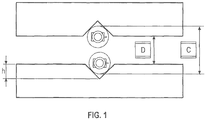
- FIG. 1 presents a schematic of the apparatus used to determine the kink resistance and re-kink resistance of tubing, as described herein.
- compositions and methods are described in terms of “comprising” various components or steps, the compositions and methods can also “consist essentially of' or “consist of' the various components or steps, unless stated otherwise.
- a composition provided in an embodiment of the invention can comprise, or alternatively, consist essentially of, or alternatively, consist of, a block copolymer, a second polymer, and an additive.
- polymer is used herein generically to include homopolymers, copolymers, terpolymers, and so forth, while a “copolymer” is used generically to include copolymers, terpolymers, and so forth.
- copolymer is used generically to include copolymers, terpolymers, and so forth.
- copolymer encompass polymeric materials derived from any monomer and comonomer (one or more than one) disclosed herein.
- block copolymers in accordance with this invention contain a mixture of polymer chains of various sizes (e.g., a distribution of molecular weights), and the respective polymer chains can vary compositionally (e.g., relative amounts of conjugated diene monomer versus monovinylarene monomer).
- conjugated diene monomer refers to an organic compound containing conjugated carbon-carbon double bonds and often a total of 4 to 12 carbon atoms, such as from 4 to 8 carbon atoms.
- exemplary conjugated diene monomers can include, but are not limited to, 1,3-butadiene, 2-methyl-1,3-butadiene (isoprene), 2-ethyl-1,3-butadiene, 2,3-dimethyl-1,3-butadiene, 1,3-pentadiene, 3-butyl-1,3-octadiene, as well as mixtures thereof.
- the conjugated diene monomer can be a butadiene, while in other embodiments, the conjugated diene monomer can be 1,3-butadiene.
- a unit of a polymer, wherein the unit is derived from polymerization of a conjugated diene monomer, can be referred to as a "conjugated diene unit.”
- monovinylarene monomer refers to an organic compound containing a single carbon-carbon double bond, at least one aromatic moiety, and often a total of 8 to 18 carbon atoms, such as from 8 to 12 carbon atoms.
- Exemplary monovinylarene monomers can include, but are not limited to, styrene, alpha-methylstyrene, 2-methylstyrene, 3-methylstyrene, 4-methylstyrene, 2-ethylstyrene, 3-ethylstyrene, 4-ethylstyrene, 4-n-propylstyrene, 4-t-butylstyrene, 2,4-dimethylstyrene, 4-cyclohexylstyrene, 4-decylstyrene, 2-ethyl-4-benzylstyrene, 4-(4-phenyl-n-butyl)styrene, 1-vinylnaphthalene, 2-vinylnaphthalene, diphenylethylene, as well as mixtures thereof.
- the monovinylarene monomer can be styrene.
- a unit of a polymer, wherein the unit is derived from polymerization of a monovinylarene monomer, can be referred to as a "monovinylarene unit.”
- a “conjugated diene monovinylarene block copolymer” is a polymer comprising polymer chains containing monovinylarene monomer units and conjugated diene monomer units.
- the conjugated diene monovinylarene block copolymer can be a styrene butadiene copolymer.
- the conjugated diene monovinylarene block copolymer comprises more than one block, wherein each block comprises monovinylarene monomer units and/or conjugated diene monomer units. If the block comprises only one type of monomer unit, it can be termed a "monoblock.” If the block comprises both, it can be termed a "mixed" block.
- Exemplary mixed blocks can include, but are not limited to, random blocks, tapered blocks, stepwise blocks, or any other type of mixed block.
- a mixed block is "tapered" when both (a) the mole fraction of conjugated diene units in a first section of the block is higher than the mole fraction of conjugated diene units in a second section of the block, wherein the second section of the block is closer to a given end of the block, and (b) condition (a) is true for substantially all sections of the block. Depending on the size of the sections being considered, condition (a) may not be true for all sections, but if so, will be not true at no more than about the level expected by chance.
- a mixed block is "random" when the mole fractions of conjugated diene units and monovinylarene units in a section of the block are substantially the same as the mole fractions of conjugated diene units and monovinylarene units in the entire block. This does not preclude the possibility of sections of the block having regularity (i.e., appearing non-random), but such regular sections will typically be present at no more than about the level expected by chance.
- a representative example follows for the kink resistance of tubing produced from block copolymers in embodiments of this invention. For example, by a disclosure that the kink resistance is in a range from 10 mm to 25 mm, Applicants intend to recite that the kink resistance can be any kink resistance in the range and can be equal to, for instance, 10, 11, 12, 13, 14, 15, 16, 17, 18, 19, 20, 21, 22, 23, 24, or 25 mm.
- the kink resistance can be within any range from 10 to 25 mm (for example, the kink resistance can be in a range from 10 to 20 mm), and this also includes any combination(s) of ranges between 10 and 25 mm. Likewise, all other ranges disclosed herein should be interpreted in a manner similar to this representative example.
- the present disclosure is directed generally to new conjugated diene monovinylarene block copolymers with an internal conjugated diene block, methods for making these block copolymers, and articles produced using these block copolymers.
- the kink resistance and other characteristics of these block copolymers make them suitable to replace flexible PVC in many end-use applications.
- Some embodiments of this invention are directed to conjugated diene monovinylarene block copolymers which can comprise from 35 phm to 75 phm monovinylarene monomer, and further, can comprise polymer chains containing a block structure having formula IA or formula IB: S 1 -B 1 -(S/B) 1 -(S/B) 2 (IA); or S 1 -B 1 -(S/B) 1 -B 2 (IB).
- S 1 can be a monoblock of the monovinylarene monomer, wherein S 1 can be from 15 phm to 45 phm of the copolymer; B 1 can be a first monoblock of the conjugated diene monomer, wherein B 1 can be from 0.5 phm to 10 phm of the copolymer; (S/B) 1 can be a mixed block of the conjugated diene monomer and the monovinylarene monomer, wherein the monovinylarene monomer content can be from 30 wt. % to 80 wt.
- (S/B) 2 can be a mixed block of the conjugated diene monomer and the monovinylarene monomer, wherein the conjugated diene monomer content can be from 70 wt. % to 99 wt. %, based on the total weight of (S/B) 2 ; and B 2 can be a second monoblock of the conjugated diene monomer, wherein B 2 can be from 8 phm to 30 phm of the copolymer.
- the abbreviation "phm" means parts by weight per hundred parts of total monomer in the copolymer.
- the block copolymer also can have a kink resistance of tubing produced from the copolymer of less than or equal to 32 mm, determined using the test method described herein.
- any of these copolymers e.g., the phm monovinylarene content in the copolymer, the block structure having formula IA and IB, the phm monovinylarene content in S 1 , the phm conjugated diene content in B 1 , the monovinylarene monomer content in (S/B) 1 , the conjugated diene monomer content in (S/B) 2 , the phm conjugated diene content in B 2 , and the kink resistance of the copolymer, among others) are independently described herein, and these features can be combined in any combination to further describe the disclosed copolymers.
- these copolymers e.g., the phm monovinylarene content in the copolymer, the block structure having formula IA and IB, the phm monovinylarene content in S 1 , the phm conjugated diene content in B 1 , the monovinylarene mono
- the monovinylarene monomer content of the conjugated diene monovinylarene block copolymers disclosed herein often can be in a range from 46 phm to 72 phm, from 50 phm to 70 phm, or from 52 phm to 68 phm.
- the monovinylarene monomer content, based on the conjugated diene monovinylarene block copolymer can be in a range from 54 phm to 68 phm, from 56 phm to 66 phm, or from 57 phm to 64 phm.
- S 1 (the monoblock of the monovinylarene monomer) can be in a range from 15 phm to 43 phm, from 20 phm to 45 phm, or from 25 phm to 40 phm.
- S 1 based on the conjugated diene monovinylarene block copolymer, can be in a range from 25 phm to 38 phm, from 28 phm to 38 phm, or from 30 phm to 36 phm.
- B 1 (the internal monoblock of the conjugated diene monomer) can be in a range from 1 phm to 10 phm, from 2 phm to 10 phm, or from 3 phm to 10 phm.
- B 1 based on the conjugated diene monovinylarene block copolymer, can be in a range from 2 phm to 8 phm, from 3 phm to 8 phm, or from 3 phm to 7 phm.
- the monovinylarene monomer content in (S/B) 1 often can be in a range from 40 wt. % to 80 wt. %, from 40 wt. % to 75 wt. %, or from 40 wt. % to 70 wt. %.
- the monovinylarene monomer, based on the weight of (S/B) 1 can be in a range from 40 wt. % to 65 wt. %, from 50 wt. % to 70 wt. %, from 50 wt. % to 65 wt. %, or from 50 wt. % to 60 wt. %.
- the conjugated diene monomer content in (S/B) 2 often can be in a range from 70 wt. % to 98 wt. %, from 75 wt. % to 98 wt. %, or from 75 wt. % to 95 wt. %.
- the conjugated diene monomer, based on the weight of (S/B) 2 can be in a range from 72 wt. % to 95 wt. %, from 72 wt. % to 90 wt. %, or from 82 wt. % to 92 wt. %.
- B 2 (the terminal monoblock of the conjugated diene monomer) can be in a range from 10 phm to 30 phm, from 10 phm to 25 phm, from 11 phm to 25 phm, from 11 phm to 22 phm, from 12 phm to 22 phm, or from 13 phm to 21 phm.
- B 2 based on the conjugated diene monovinylarene block copolymer, can be in a range from 13 phm to 23 phm, from 14 phm to 20 phm, or from 15 phm to 19 phm.
- An illustrative and non-limiting example of a conjugated diene monovinylarene block copolymer of the present invention can have formula IA and the following characteristics: a monovinylarene monomer content in a range from 54 phm to 68 phm, S 1 in a range from 28 phm to 38 phm, B 1 in a range from 2 phm to 8 phm, a monovinylarene monomer content in (S/B) 1 in a range from 50 wt. % to 65 wt. %, and a conjugated diene monomer content in (S/B) 2 in a range from 75 wt. % to 95 wt. %.
- a conjugated diene monovinylarene block copolymer of the present invention can have formula IA and the following characteristics: a monovinylarene monomer content in a range from 56 phm to 66 phm, S 1 in a range from 30 phm to 36 phm, B 1 in a range from 3 phm to 7 phm, a monovinylarene monomer content in (S/B) 1 in a range from 50 wt. % to 60 wt. %, and a conjugated diene monomer content in (S/B) 2 in a range from 82 wt. % to 92 wt. %.
- An illustrative and non-limiting example of a conjugated diene monovinylarene block copolymer of the present invention can have formula IB and the following characteristics: a monovinylarene monomer content in a range from 54 phm to 68 phm, S 1 in a range from 28 phm to 38 phm, B 1 in a range from 2 phm to 8 phm, a monovinylarene monomer content in (S/B) 1 in a range from 50 wt. % to 65 wt. %, and B 2 in a range from 14 phm to 20 phm.
- a conjugated diene monovinylarene block copolymer of the present invention can have formula IB and the following characteristics: a monovinylarene monomer content in a range from 56 phm to 66 phm, S 1 in a range from 30 phm to 36 phm, B 1 in a range from 3 phm to 7 phm, a monovinylarene monomer content in (S/B) 1 in a range from 50 wt. % to 60 wt. %, and B 2 in a range from 15 phm to 19 phm.
- S 1 in formula IA and formula IB can be a monoblock of the monovinylarene monomer, wherein S 1 can be from 15 phm to 45 phm of the copolymer.
- S 1 can be a single monoblock of the monovinylarene monomer, or S 1 can be two or more monoblocks of the monovinylarene monomer.
- S 1 can be produced by a process comprising any suitable number of monovinylarene monomer charges to result in 15 phm to 45 phm, for example, from 1 to 10 charges, from 1 to 6 charges, from 1 to 3 charges, 1 charge, from 2 to 8 charges, from 2 to 5 charges, from 2 to 3 charges, 2 charges.
- (S/B) 1 and (S/B) 2 can be, respectively, a mixed block of the conjugated diene monomer and the monovinylarene monomer.
- Any suitable type of mixed block can be used for (S/B) 1 and (S/B) 2 .
- at least one of (S/B) 1 and (S/B) 2 can be a tapered mixed block, while in another embodiment, at least one of (S/B) 1 and (S/B) 2 can be a random mixed block.
- Such mixed blocks can be produced by any suitable technique.
- at least one of (S/B) 1 and (S/B) 2 can be produced by a process comprising dual monomer charges. Additionally or alternatively, at least one of (S/B) 1 and (S/B) 2 can be produced by a process comprising pulsed monomer charges.
- Conjugated diene monovinylarene block copolymers contemplated herein can comprise polymer chains containing a block structure having formula IA, and in certain embodiments, the copolymer can further comprise polymer chains containing a block structure having formula IIA: S 2 -B 1 -(S/B) 1 -(S/B) 2 (IIA).
- conjugated diene monovinylarene block copolymers contemplated herein can comprise polymer chains containing a block structure having formula IB, and in certain embodiments, the copolymer can further comprise polymer chains containing a block structure having formula IIB: S 2 -B 1 -(S/B) 1 -B 2 (IIB).
- S 2 can be a monoblock of the monovinylarene monomer, wherein S 2 can be from 5 phm to 30 phm of the copolymer.
- S 2 (the monoblock of the monovinylarene monomer in formula IIA and formula IIB) can be in a range from 5 phm to 25 phm, from 7 phm to 30 phm, or from 7 phm to 28 phm.
- S 2 based on the conjugated diene monovinylarene block copolymer, can be in a range from 10 phm to 25 phm, from 12 phm to 25 phm, from 14 phm to 24 phm, from 14 phm to 22 phm, or from 14 phm to 20 phm.
- S 2 in formula IIA and formula IIB can be a single monoblock of the monovinylarene monomer, or S 2 can be two or more monoblocks of the monovinylarene monomer.
- S 2 can be produced by a process comprising any suitable number of monovinylarene monomer charges to result in 5 phm to 30 phm, for example, from 1 to 10 charges, from 1 to 5 charges, from 1 to 3 charges, 1 charge
- polymer chains containing a block structure having formula IA and polymer chains containing a block structure having formula IIA can result from a first charge of an initiator and styrene monomer, a second charge of initiator and styrene monomer, a first charge of butadiene monomer, a mixed charge of styrene and butadiene (S/B) 1 , and a mixed charge of styrene and butadiene (S/B) 2 .
- S 1 in formula IA encompasses the styrene blocks from the first two charges
- S 2 in formula IIA encompasses the styrene block from the second charge.
- polymer chains containing a block structure having formula IB and polymer chains containing a block structure having formula IIB can result from a first charge of an initiator and styrene monomer, a second charge of initiator and styrene monomer, a first charge of butadiene monomer, a mixed charge of styrene and butadiene (S/B) 1 , and a second charge of butadiene monomer.
- S 1 in formula IB encompasses the styrene blocks from the first two charges
- S 2 in formula IIB encompasses the styrene block from the second charge.
- such a composition can be achieved by blending two or more separately prepared polymers, respectively, having polymer chains of formula IA (or formula IB) and polymer chains of formula IIA (or formula IIB).
- (S/B) 1 can be a mixed block of the conjugated diene monomer and the monovinylarene monomer, wherein the monovinylarene monomer content can be from 30 wt. % to 80 wt. %, based on the total weight of (S/B) 1 . Yet, in some embodiments, (S/B) 1 can be two mixed blocks of the conjugated diene monomer and the monovinylarene monomer having formula III: -(S/B) 1A -(S/B) 1B - (III).
- the monovinylarene monomer content in (S/B) 1A can be from 30 wt. % to 80 wt. %, and the monovinylarene monomer content in (S/B) 1B can be from 30 wt. % to 80 wt. %.
- the monovinylarene monomer content in (S/B) 1A often can be in a range from 40 wt. % to 80 wt. %, from 40 wt. % to 70 wt. %, from 40 wt. % to 60 wt. %, from 45 wt. % to 65 wt. %, or from 45 wt. % to 60 wt.
- the monovinylarene monomer content in (S/B) 1B often can be in a range from 40 wt. % to 80 wt. %, from 35 wt. % to 65 wt. %, from 45 wt. % to 70 wt. %, or from 50 wt. % to 65 wt. %.
- (S/B) 1A and (S/B) 1B can be a mixed block of the conjugated diene monomer and the monovinylarene monomer.
- Any suitable type of mixed block can be used for (S/B) 1A and (S/B) 1B .
- at least one of (S/B) 1A and (S/B) 1B can be a tapered mixed block, while in another embodiment, at least one of (S/B) 1A and (S/B) 1B can be a random mixed block.
- Such mixed blocks can be produced by any suitable technique.
- at least one of (S/B) 1A and (S/B) 1B can be produced by a process comprising dual monomer charges. Additionally or alternatively, at least one of (S/B) 1A and (S/B) 1B can be produced by a process comprising pulsed monomer charges.
- a kink-resistant conjugated diene monovinylarene block copolymer in accordance with this invention can comprise from 46 phm to 72 phm monovinylarene monomer, and can comprise polymer chains with the following structures: 1) X-X; 2) X-Y; and 3) Y-Y; wherein
- S 1 and S 2 can be monoblocks of the monovinylarene monomer, wherein a total weight of S 1 and S 2 can be from 20 wt. % to 60 wt. % (or from 35 wt. % to 48 wt. %) of X, and S 2 can be from 11 wt. % to 30 wt. % (or from 14 wt. % to 26 wt. %) of Y.
- B 1 can be a monoblock of the conjugated diene monomer, wherein B 1 can be from 2 wt. % to 12 wt. % of X, and B 1 can be from 3 wt. % to 15 wt. % of Y.
- (S/B) 1 can be a mixed block of the conjugated diene monomer and the monovinylarene monomer, wherein the monovinylarene monomer content of (S/B) 1 can range from 30 wt. % to 80 wt. %;
- (S/B) 2 can be mixed block of the conjugated diene monomer and the monovinylarene monomer, wherein the monovinylarene monomer content of (S/B) 2 can range from 30 wt. % to 80 wt. %; and T 1 can be a mixed block of the conjugated diene monomer and the monovinylarene monomer, wherein the conjugated diene monomer content of T 1 can be at least 70 wt.
- T 1 can be from 10 wt. % to 30 wt. % of X, and T 1 can be from 14 wt. % to 30 wt. % of Y.
- the copolymer can be further characterized by a kink resistance of tubing produced from the copolymer of less than or equal to 32 mm, when tested in accordance with DIN EN 13868.
- any of these kink-resistant copolymers e.g., the phm monovinylarene content in the overall copolymer, S 1 , S 2 , B 1 , (S/B) 1 , (S/B) 2 , T 1 , and the kink resistance of the copolymer, among others
- these features can be combined in any combination to further describe the disclosed kink-resistant copolymers.
- X and Y represent uncoupled polymer chains, whereas X-X, X-Y, and Y-Y represent coupled polymer chains.
- the total monovinylarene monomer content of these kink-resistant block copolymers often can be in a range from 46 phm to 72 phm, from 50 phm to 70 phm, or from 52 phm to 68 phm.
- the total monovinylarene monomer content, based on the total conjugated diene monovinylarene block copolymer can be in a range from 54 phm to 68 phm, from 56 phm to 66 phm, or from 57 phm to 64 phm.
- phm means parts by weight per hundred parts of total monomer in the copolymer.
- S 1 and S 2 can be monoblocks of the monovinylarene monomer, wherein a total weight of S 1 and S 2 can range from 20 wt. % to 60 wt. % of X, and S 2 can range from 11 wt. % to 30 wt. % of Y.
- the total S 1 and S 2 content of X can fall within a range from 30 wt. % to 50 wt. %, or from 35 wt. % to 48 wt. %, while in another embodiment, the total S 1 and S 2 content of X can fall within a range from 37 wt. % to 47 wt. %, or from 38 wt.
- the amount of S 2 in Y typically can be within a range from 15 wt. % to 25 wt. %; alternatively, from 14 wt. % to 26 wt. %; or alternatively, from 16 wt. % to 23 wt. % (weight of S 2 , based on the total weight of Y).
- B 1 can range from 2 to 12 wt. % of X, and B 1 can range from 3 to 15 wt. % of Y.
- the B 1 content of X can fall within a range from 2 wt. % to 10 wt. %, or from 3 wt. % to 9 wt. %
- the B 1 content of X can fall within a range from 2 wt. % to 7 wt. %, or from 3 wt. % to 7 wt. % (weight of B 1 , based on the total weight of X).
- the amount of B 1 in Y typically can be within a range from 3 wt. % to 12 wt. %; alternatively, from 4 wt. % to 12 wt. %; or alternatively, from 3 wt. % to 9 wt. % (weight of B 1 , based on the total weight of Y).
- the monovinylarene monomer content of (S/B) 1 often can be in a range from 30 wt. % to 80 wt. %, from 35 wt. % to 75 wt. %, or from 35 wt. % to 70 wt. %.
- the monovinylarene monomer content of (S/B) 1 based on the weight of (S/B) 1 , can be in a range from 35 wt. % to 65 wt. %, from 40 wt. % to 65 wt. %, or from 45 wt. % to 60 wt. %.
- the monovinylarene monomer content of (S/B) 2 often can be in a range from 30 wt. % to 80 wt. %, from 40 wt. % to 75 wt. %, or from 45 wt. % to 75 wt. %.
- the monovinylarene monomer content of (S/B) 2 based on the weight of (S/B) 2 , can be in a range from 45 wt. % to 70 wt. %, from 50 wt. % to 70 wt. %, or from 55 wt. % to 68 wt. %.
- T 1 in the polymer chains disclosed hereinabove can be a mixed block of the conjugated diene monomer and the monovinylarene monomer or, alternatively, a monoblock of the conjugated diene monomer.
- the conjugated diene monomer content of T 1 (in weight percentage) generally can be in one or more of the following non-limiting ranges: from 70 wt. % to 95 wt. %, from 70 wt. % to 90 wt. %, from 80 wt. % to 95 wt. %, from 80 wt. % to 99 wt. %, or from 70 wt. % to 99.5 wt. %.
- T 1 can range from 10 to 30 wt. % of X, and T 1 can range from 14 to 30 wt. % of Y.
- the T 1 content of X can fall within a range from 10 wt. % to 22 wt. %, or from 10 wt. % to 18 wt. %, while in another embodiment, the T 1 content of X can fall within a range from 12 wt. % to 17 wt. %, or from 13.5 wt. % to 16.5 wt. % (weight of T 1 , based on the total weight of X).
- the amount of T 1 in Y typically can be within a range from 15 wt.
- the conjugated diene monovinylarene block copolymer can be an uncoupled conjugated diene monovinylarene block copolymer. Uncoupled block copolymers often can be referred to in the art as terminated or quenched copolymers.
- the conjugated diene monovinylarene block copolymer can be an uncoupled unimodal conjugated diene monovinylarene block copolymer, or alternatively, the block copolymer can be an uncoupled multimodal conjugated diene monovinylarene block copolymer.
- the conjugated diene monovinylarene block copolymer can be a coupled conjugated diene monovinylarene block copolymer.
- the coupled conjugated diene monovinylarene block copolymer can be a coupled unimodal conjugated diene monovinylarene block copolymer or a coupled multimodal conjugated diene monovinylarene block copolymer.
- the block copolymer can be produced by coupling at least two different living polymer chains having been produced by at least two separate charges of initiator. Coupling can be accomplished by any method known to those of skill in the art.
- the conjugated diene monovinylarene block copolymer can comprise at least 3 blocks, or alternatively, at least 4 blocks, or at least 5 blocks.
- the conjugated diene monovinylarene block copolymer can comprise from 3 to 10 blocks, from 4 to 7 blocks, or from 4 to 5 blocks.
- Any blocks in addition to those specified in the formulas for block structures described hereinabove can be selected from any combination of conjugated diene monoblocks, monovinylarene monoblocks, or conjugated diene monovinylarene mixed blocks.
- Any additional mixed block for instance, independently can be a tapered mixed block or a random mixed block.
- the conjugated diene monovinylarene block copolymer can be hydrogenated, although this is not a requirement.
- the block copolymer can be partially hydrogenated, while in another embodiment, the block copolymer can be fully hydrogenated.
- the monovinylarene monomer often can contain from 8 to 18 carbon atoms (e.g., the monovinylarene monomer can be styrene or methylstyrene), and the conjugated diene monomer can contain from 4 to 12 carbon atoms (e.g., the conjugated diene can be isoprene or 1,3-butadiene).
- the conjugated diene monovinylarene block copolymer can comprise a styrene butadiene block copolymer (SBC).
- the block copolymers can be produced using any suitable polymerization process using various types of polymerization reactors, polymerization reactor systems, and polymerization reaction conditions, as recognized by those of skill in the art. While not being limited thereto, general information on processes for producing conjugated diene monovinylarene block copolymers that can be employed in various embodiments of this invention are described in U.S. Patent Nos. 3,639,517 , 6,096,828 , 6,420,486 , 6,444,755 , 6,835,778 , 7,037,980 , 7,193,014 , 7,875,678 , 8,415,429 , and 8,933,171 ,; and U.S. Patent Publication Nos. 2006/0089457 and 2007/0173605 .
- An illustrative process for producing certain block copolymers described herein can comprise contacting:
- Another illustrative process for producing certain block copolymers described herein can comprise contacting:
- At least one step in the processes can comprise polymerization in the presence of a modifier.
- the modifier can comprise any suitable modifier, typically a polar organic compound, non-limiting examples of which can include a potassium alkoxide, a sodium alkoxide, a metal alkoxide or phenolate, a tertiary amine, an ether (e.g., THF, diglyme, etc.), a thioether, as well as a mixture or combination thereof.
- the modifier can comprise dimethyl ether, diethyl ether, ethyl methyl ether, ethyl propyl ether, di-n-propyl ether, di-n-octyl ether, anisole, dioxane, 1,2-dimethoxyethane, 1,2-diethoxypropane, dibenzyl ether, diphenyl ether, 1,2-dimethoxybenzene, tetrahydrofuran (THF), potassium tert-amylate (KTA), dimethyl sulfide, diethyl sulfide, di-n-propyl sulfide, di-n-butyl sulfide, methyl ethyl sulfide, dimethylethylamine, tri-n-ethylamine, tri-n-propylamine, tri-n-butylamine, trimethylamine, triethylamine, tetramethylethylenediamine,
- the modifier e.g., THF
- the modifier often can be utilized at a molar ratio of the modifier to total monomer of less than 1:30, less than 1:50, less than 1:100, or less than 1:500.
- Representative non-limiting ranges for the modifier:monomer molar ratio can include from 1:100,000 to 1:50, from 1:10,000 to 1:500, from 1:10,000 to 1:500, or from 1:5,000 to 1:500, and the like.
- the processes for producing block copolymers are conducted in the presence of an initiator.
- Suitable initiators are well known to those of skill in the art, such as alkali metal hydrocarbons, a representative example of which is n-butyl lithium.
- Each initiator can be either the same or different; for instance, the second initiator charge can be the same as or different from the first charge.
- the amount of initiator employed can depend on many factors, but typically can be in the range from 0.01 phm to 1 phm, or from 0.01 phm to 0.5 phm, or from 0.01 phm to 0.2 phm (phm is parts by weight per hundred parts of total monomer in the copolymer).
- an additional initiator charge can be used in at least one of steps (iii) to (vi), such as, an additional initiator charge in step (iii); additionally or alternatively, an additional initiator charge in step (iv); additionally or alternatively, an additional initiator charge in step (v); or additionally or alternatively, an additional initiator charge in step (vi).
- the steps in these processes can produce block copolymers with polymer chains containing a block structure having formula IA or formula IB, formula IIA or formula IIB, and/or formula III.
- the polymerization process can be conducted in any suitable hydrocarbon diluent at any suitable polymerization temperature, such as in the range of from -10 °C to 150 °C, or from 10 °C to 125 °C, at a pressure sufficient to maintain the reaction mixture substantially in the liquid phase.
- suitable hydrocarbon diluents can include, but are not limited to, pentane, hexane, octane, cyclopentane, cyclohexane, as well as mixtures or combinations thereof.
- the polymerization process can be conducted in the substantial absence of oxygen and water, and more often, under an inert gas atmosphere.
- each charge of monomer or mixture of monomers can be polymerized to substantial completion, before a subsequent charge of monomer or mixture of monomers (with or without initiator) is commenced.
- a coupling agent can be added.
- Suitable coupling agents can include di- or multivinylarene compounds, di- or multiepoxides, di- or multiisocyanates, di- or multiimines, di- or multialdehydes, di- or multiketones, alkoxytin compounds, di- or multihalides (e.g., dimethyl silicon dichloride, other silicon halides, and halosilanes), mono-, di-, or multianhydrides, di- or multiesters (e.g., esters of monoalcohols with polycarboxylic acids, esters of monohydric alcohols with dicarboxylic acids, esters of monobasic acids with polyalcohols such as glycerol), and as well as any mixture or combination thereof.
- di- or multivinylarene compounds di- or multiepoxides, di- or multiisocyanates, di- or multiimines, di- or multialdehydes, di- or multiketones
- Suitable multifunctional coupling agents can include epoxidized natural source oils, such as epoxidized soybean oil, epoxidized linseed oil, as well as combinations thereof.
- the amount of the coupling agent employed can depend on many factors, but typically can be in the range from 0.1 phm to 20 phm, from 0.1 phm to 5 phm, or from 0.1 phm to 2 phm.
- the termination of the polymerization reaction can be accomplished using any suitable deactivating agent, illustrative examples of which can include water, carbon dioxide, an alcohol, a phenol, a mono- or di-carboxylic acid, and the like, and combinations thereof.
- Another process for producing a kink-resistant conjugated diene monovinylarene block copolymer comprising from 46 phm to 72 phm monovinylarene monomer is provided in accordance with this invention.
- This process can comprise sequentially contacting under polymerization conditions:
- the first charge of the monovinylarene monomer and the second charge of the monovinylarene monomer can comprise a total of from 10 phm to 45 phm of the monovinylarene monomer
- the first charge of the conjugated diene monomer can comprise from 0.5 phm to 10 phm of the conjugated diene monomer
- the kink resistance of tubing produced from the copolymer and tested in accordance with DIN EN 13868 can be less than or equal to 32 mm.
- the process can include (v), that is, the process can include the second dual charge.
- any kink-resistant block copolymers produced in accordance with the disclosed processes are encompassed herein.
- a kink-resistant conjugated diene monovinylarene block copolymer comprising from 46 phm to 72 phm monovinylarene monomer can be formed by the following charge sequence: i 1 -S J -i 2 -S K -B K -(S/B) J -(S/B) K -T-CA (A); wherein:
- the first charge of the monovinylarene monomer and the second charge of the monovinylarene monomer can comprise a total of from 10 phm to 45 phm of the monovinylarene monomer
- the first charge of the conjugated diene monomer can comprise from 0.5 phm to 10 phm of the conjugated diene monomer
- the kink resistance of tubing produced from the copolymer and tested in accordance with DIN EN 13868 can be less than or equal to 32 mm.
- the kink-resistant copolymer can comprise from 46 phm to 72 phm monovinylarene monomer, from 50 phm to 70 phm monovinylarene monomer, from 52 phm to 68 phm monovinylarene monomer, from 54 phm to 68 phm monovinylarene monomer, from 56 phm to 66 phm monovinylarene monomer, or from 57 phm to 64 phm monovinylarene monomer.
- the abbreviation "phm” means parts by weight per hundred parts of total monomer in the copolymer.
- the first charge of monovinylarene monomer can comprise from 8 phm to 24 phm monovinylarene monomer, from 10 phm to 20 phm monovinylarene monomer, from 12 phm to 22 phm monovinylarene monomer, or from 12 phm to 20 phm monovinylarene monomer.
- the total amount of the first and second charge of monovinylarene monomer can comprise from 20 phm to 45 phm monovinylarene monomer, from 25 phm to 40 phm monovinylarene monomer, from 26 phm to 38 phm monovinylarene monomer, from 28 phm to 38 phm monovinylarene monomer, or from 30 phm to 36 phm monovinylarene monomer.
- the first charge of the conjugated diene monomer is not particularly limited, but can comprise an amount of the conjugated monomer ranging from 0.5 to 10 phm conjugated diene monomer.
- the first charge of the conjugated diene monomer can comprise from 1 phm to 9 phm conjugated diene monomer, from 2 phm to 10 phm conjugated diene monomer, from 2 phm to 8 phm conjugated diene monomer, or from 3 phm to 7 phm conjugated diene monomer.
- the monovinylarene monomer content of the first dual charge can fall within a range from 30 wt. % to 80 wt. %, from 35 wt. % to 75 wt. %, from 35 wt. % to 70 wt. %, from 40 wt. % to 65 wt. %, or from 45 wt. % to 60 wt. %. This percentage is based on the weight of monovinylarene monomer in the first dual charge versus the total weight of the first dual charge (monovinylarene monomer plus conjugated diene monomer).
- the monovinylarene monomer content of the second dual charge can fall within a range from 30 wt. % to 80 wt. %, from 40 wt. % to 75 wt. %, from 45 wt. % to 75 wt. %, from 50 wt. % to 70 wt. %, or from 55 wt. % to 68 wt. %. This percentage is based on the weight of monovinylarene monomer in the second dual charge versus the total weight of the second dual charge (monovinylarene monomer plus conjugated diene monomer).
- the total of the first dual charge and the second dual charge can comprise from 25 phm to 65 phm, from 30 phm to 60 phm, from 38 phm to 62 phm, from 38 phm to 58 phm, from 40 phm to 54 phm, or from 41 phm to 51 phm.
- approximately half of the total monomer charge can be charged in these two dual charges (i.e., the first dual charge and the second dual charge).
- the final charge can be a dual charge of the conjugated diene monomer and the monovinylarene monomer, while in other embodiments, the final charge can be a conjugated diene monomer charge.
- the conjugated diene monomer content of the final charge can range, for instance, from 70 wt. % to 95 wt. %, from 70 wt. % to 90 wt. %, from 80 wt. % to 95 wt. %, from 80 wt. % to 99 wt. %, or from 70 wt. % to 99.5 wt. %. This percentage is based on the weight of conjugated diene monomer in the final charge versus the total weight of the final charge (monovinylarene monomer plus conjugated diene monomer).
- the final charge can comprise from 5 phm to 35 phm, from 10 phm to 30 phm, from 15 phm to 25 phm, from 16 phm to 24 phm, or from 14 phm to 21 phm.
- the final charge often can comprise from 8 phm to 22 phm conjugated diene monomer, from 10 phm to 20 phm conjugated diene monomer, from 10 phm to 18 phm conjugated diene monomer, or from 12 phm to 20 phm conjugated diene monomer.
- the conjugated diene monovinylarene block copolymers described herein have an unexpected combination of properties which make them suitable for end-use applications not typically considered for such block copolymers.
- these block copolymers can replace flexible PVC in certain end-use applications, such as tubing.
- These block copolymers also can have any of the polymer properties listed below and in any combination.
- the use of an internal conjugated diene block, instead of a mixed block may reduce cost and simplify the polymerization process used to produce the conjugated diene monovinylarene block copolymer.
- the block copolymer can have a kink resistance of tubing produced from the copolymer of less than or equal to 32 mm, tested in accordance with DIN EN 13868 as described herein.
- the kink resistance can be less than or equal to 30 mm, less than or equal to 28 mm, or less than or equal to 24 mm.
- Representative non-limiting ranges for the kink resistance include the following: from 8 to 32 mm, from 8 to 30 mm, from 8 to 26 mm, from 8 to 24 mm, from 8 to 20 mm, from 9 to 20 mm, from 10 to 32 mm, from 10 to 28 mm, from 10 to 25 mm, from 10 to 22 mm, or from 10 to 20 mm.
- the block copolymer also can have a re-kink resistance of tubing produced from the copolymer of less than or equal to 32 mm, less than or equal to 30 mm, less than or equal to 28 mm, or less than or equal to 26 mm.
- representative non-limiting ranges for the re-kink resistance include the following: from 8 mm to 32 mm, from 8 to 30 mm, from 8 mm to 26 mm, from 8 to 24 mm, from 8 to 20 mm, from 10 to 30 mm, from 10 mm to 28 mm, from 12 to 28 mm, or from 12 to 25 mm.
- the re-kink resistance is tested in accordance with DIN EN 13868 as described herein.
- Block copolymers in various embodiments of this invention generally can have a melt flow rate (MFR) of less than or equal to 25 g/10 min.
- MFR is determined in accordance with ASTM D1238-13 at 200 °C with a 5 Kg load. Melt flow rates in the range from 2 to 25, from 3 to 20, from t 4 to 20, or from 5 to 15 g/10 min, are contemplated in embodiments of this invention.
- the block copolymer can have a MFR in a range from 2 to 20, from 3 to 18, or from 3 to 12 g/10 min.
- the Shore A hardness of the block copolymer typically can fall within a range from 20 to 95, from 35 to 90, or from 40 to 90.
- Other suitable and non-limiting ranges for the Shore A hardness include from 50 to 95, from 50 to 90, from 60 to 90, from 65 to 90, from 65 to 85, from 70 to 85, from 72 to 86.
- the copolymer can have a pellet blocking force - equipment and test procedure are described hereinbelow - of less than or equal to 120 lb f , less than or equal to 115 lb f , less than or equal to 110 lb f , or less than or equal to 100 lb f .
- the lower limit of the blocking force is generally not determined (i.e., free flowing pellets).
- block copolymers described herein typically do not contain a plasticizer. Indeed, this can be an advantage over other polymers, such as PVC, which may require relatively large amounts of plasticizers to impart flexibility. However, if desired for a particular end-use, a plasticizer can be combined with the block copolymer at an appropriate loading.
- the block copolymer can be modified with any suitable additive or additives, as recognized by those of skill in the art.
- the copolymer can be modified with one or more additives selected from an antioxidant, an acid scavenger, an antiblock additive, a slip additive (e.g., a fatty acid amide, erucamide), a colorant, a filler, a polymer processing aid (e.g., a fluoroelastomer), a UV absorber, a UV inhibitor, a lubricant (e.g., a wax, a mineral oil), as well as any combination thereof.
- an antioxidant an acid scavenger, an antiblock additive
- a slip additive e.g., a fatty acid amide, erucamide
- a colorant e.g., a filler
- a polymer processing aid e.g., a fluoroelastomer
- UV absorber e.g., a UV inhibitor
- the copolymer can further comprise an antioxidant; alternatively, an acid scavenger; alternatively, an antiblock additive; alternatively, a slip additive; alternatively, a colorant; alternatively, a filler; alternatively, a polymer processing aid; alternatively, a UV absorber; alternatively, a UV inhibitor; or alternatively, a lubricant.
- an antioxidant alternatively, an acid scavenger; alternatively, an antiblock additive; alternatively, a slip additive; alternatively, a colorant; alternatively, a filler; alternatively, a polymer processing aid; alternatively, a UV absorber; alternatively, a UV inhibitor; or alternatively, a lubricant.
- Blends or combinations of the block copolymers and another polymer also are encompassed herein.
- the second polymer can be a different conjugated diene monovinylarene block copolymer, a styrenic polymer (e.g., a styrene butadiene polymer, a polystyrene, a high impact polystyrene, etc.), or a rubber (a polybutadiene, a polyisoprene, a poly-2-chloro-1,3-butadiene, a poly-1-chloro-1,3-butadiene, an ethylene/propylene terpolymer, a butadiene/acrylonitrile copolymer, a butyl rubber, an acrylic rubber, a styrene/isobutylene/butadiene copolymer, an isoprene/acrylic ester copolymer, etc.), as well as combinations thereof.
- compositions containing the block copolymer of this invention and a second polymer also can contain one or more suitable additives or modifiers, such as those described hereinabove.
- Multilayer structures e.g., coextrusions
- laminated structures e.g., adhesive laminations
- block copolymer whether as a single layer or in a blend, and with any additives or modifiers suitable for the end-use application of the multilayer or laminated structure.
- the block copolymers, blends, multilayer and laminated structures, and so forth, can be formed into various articles of manufacture, and these articles of manufacture can have any thickness suitable for the desired end-use application.
- Articles which can comprise block copolymers, compositions, multilayer structures of this invention can include, but are not limited to, a film, a sheet, a bottle or container, a fiber or fabric, an adhesive or coating, a medical device or material, a pipe, or a flexible tube.
- Various processes can be employed to form these articles. Non-limiting examples of these processes include injection molding, blow molding, rotational molding, film extrusion, sheet extrusion, profile extrusion, thermoforming. Such processes and materials are described in Modern Plastics Encyclopedia, Mid-November 1995 Issue, Vol. 72, No.
- an article of manufacture can comprise any of the block copolymers described herein (e.g., including blends, compositions, multilayer structures, etc.), can have any of the copolymer properties described herein, and the article of manufacture can be a tubing product, such as flexible tubing for medical applications.
- Kink resistance testing was performed with an apparatus designed and built in accordance with DIN EN 13868: 2002-11 (Annex A, short term test method), and as described herein.
- the water line consisted of 3/8-inch (9.525-mm) OD (outside diameter) tubing with flow meters to measure water flow.
- the groove used to hold the tubing test specimen in place had a depth of 5.05 mm as measured.
- Tubing test specimens were 16 inches (406.4 mm) in length, and the test speed was kept low enough to avoid over pressurizing the tubing.
- the tubing test specimens had an OD of 1/4 inch (6.35 mm), represented by d in the equation below, and a nominal ID (inside diameter) of 1/8 inch (3.175 mm).
- a manual press capable of providing a force up to 50 lb f was used to close the gap between plates during testing.
- the water temperature was set to ambient conditions of 25 °C.
- the rate at which force was applied by the press was manually adjusted to prevent sudden kinking of the tubing during the test (i.e., to prevent the water flow rate from decreasing to zero before the kink resistance could be measured).
- Re-kink resistance was measured under the same conditions as those described for kink resistance testing. After the initial kink test was performed, the re-kink resistance was measured by opening the plate distance and repeating the procedure to measure the point at which the water flow rate decreased to half of the flow rate observed at the start of the re-kink test. Typically, the re-kink measurement (C in the equation provided above) was higher than the kink measurement due to the weak spot that formed in the tubing during the original kink measurement.
- Shore A hardness testing was performed according to ASTM D2240-05 with a 30 second delay. The Shore A hardness test was performed at ambient conditions on a compression molded 2 inch x 2 inch (50.8 mm x 50.8 mm) square specimen with 1/2 inch (12.7 mm) thickness.
- Melt Flow Rate was measured according to modified ASTM D1238-13 using the standard polystyrene conditions (load of 5 kg and temperature of 200° C) with a holding time of 300 seconds.
- Pellet blocking force was measured as the shear force required to break a cylindrically-shaped pellet aggregate.
- To form the pellet aggregate about 300 grams of pellets were placed in a 3 inch (76.2 mm) ID rigid pipe, a 2.5 kg weight was placed on top of the pellets, and the cylinder and its contents were placed in a forced air oven maintained at 65° C for 90 hours. After cooling to room temperature, the weight and cylinder were removed, then the pellet aggregate was placed in a shearing fixture in an Instron® load frame, and tested in shear.
- the pellet blocking force (anti-blocking property) of the sample was the pound force (lb f ) required to shear the pellet aggregate.
- Examples 4-10 were converted to tubing using single screw extrusion.
- the extruder was a Vented Extruder Model 2523, 3/4", L/D 25:1 Ratio, from C.W. Brabender® Instruments Inc.
- the tubing die was an interchangeable die head with 0.25 inch (6.35 mm) OD and 0.125 inch (3.175 mm) ID mandrel tip combinations.
- the typical temperature profile ranges used for tubing extrusion are provided in Table I below. Table I. Extrusion Conditions.
- the tubing samples of Examples 1-3 had acceptable kink resistance, re-kink resistance, and Shore A hardness.
- the tubing of Example 8 was produced from pellets obtained by chopping the C-Flex® 50A tubing of Example 3 into pieces, and extruding the pieces into tubing using the extrusion system and conditions described above.
- Example 8 also had acceptable kink resistance, re-kink resistance, and Shore A hardness, and had basically the same properties as that of Example 3.
- the tubing samples of Examples 4 and 9-10 showed poor kink resistance and, therefore, would not be suitable to replace flexible PVC in medical tubing applications.
- the Shore A hardness of Example 5 was too high for consideration as a PVC replacement in certain applications.
- Examples 11-18 The materials and polymerization processes for Examples 11-18 are as described below. Cyclohexane was dried over activated alumina and stored under nitrogen. n-Butyl lithium initiator (abbreviated BuLi) was used as received at 2 wt. % in cyclohexane. THF was stored over activated alumina under nitrogen. Styrene (S) and butadiene (B) were purified over activated alumina. Epoxidized soybean oil was a 20% solution in C 6 purged with and stored under N 2 .
- BuLi n-Butyl lithium initiator
- each block was formed by polymerizing the monomer or mixture of monomers from which the desired units of the block are derived.
- Cyclohexane was initially charged to the reactor, followed by THF (0.05 phm). The temperature was adjusted to 60 °C, and the BuLi initiator was charged, followed by the first charge of styrene monomer (Styrene 1). The second charge contained BuLi and a second charge of styrene monomer (Styrene 2). The third charge contained butadiene monomer (Butadiene 1). The next two charges were mixed charges of butadiene and styrene (B2+S3, B3+S4) at specified weight percentages of the butadiene (Bd%).
- the last charge was a mixed charge of butadiene and styrene (B4+S5) at a specified weight percentage of the butadiene (Bd%), or a monoblock of butadiene (B4).
- Feed lines to the reactor were flushed with about 0.1 kg cyclohexane following each charge.
- Polymerization was allowed to continue to completion after each monomer or monomer mixture charge.
- the polymerization temperature ranged from 38 °C to 120 °C, and pressure ranged from 2 psig to 180 psig.
- a coupling agent (CA, epoxidized soybean oil) was charged to the reactor, and reacted at 100 °C for 15 min. After coupling, the reaction was terminated by adding 0.2 phm water and adding CO 2 .
- Table III summarizes certain production parameters (e.g., charge sequence, composition of each charge) and properties of Examples 11-18.
- Tubing specimens of Examples 11-18 were produced from the SBC block copolymers via the extrusion system and conditions described above.
- Examples 11-15 had polymer chains containing an internal butadiene block (Butadiene 1) after two styrene blocks (Styrene 1 and Styrene 2), whereas Examples 16-18 did not contain the butadiene monoblock. While Examples 16-18 demonstrated a good balance of properties desirable for tubing applications (low kink resistance, low re-kink resistance, low pellet blocking force, and acceptable Shore A hardness), Examples 11-15 - which contained an internal butadiene monoblock - unexpectedly had equivalent or superior kink resistance and re-kink resistance, while maintaining both acceptable pellet blocking force and Shore A hardness.
Landscapes
- Chemical & Material Sciences (AREA)
- Health & Medical Sciences (AREA)
- Chemical Kinetics & Catalysis (AREA)
- Organic Chemistry (AREA)
- Polymers & Plastics (AREA)
- Medicinal Chemistry (AREA)
- Inorganic Chemistry (AREA)
- Epidemiology (AREA)
- Veterinary Medicine (AREA)
- Public Health (AREA)
- General Health & Medical Sciences (AREA)
- Animal Behavior & Ethology (AREA)
- Life Sciences & Earth Sciences (AREA)
- Graft Or Block Polymers (AREA)
- Compositions Of Macromolecular Compounds (AREA)
Claims (20)
- Procédé de production d'un copolymère séquencé diène conjugué-monovinylarène résistant au pliage comprenant de 46 phm à 72 phm de monomère de monovinylarène, le procédé comprenant la mise en contact successive, dans des conditions de polymérisation :(i) d'une première charge d'initiateur et d'une première charge du monomère de monovinylarène ;(ii) d'une deuxième charge d'initiateur et d'une deuxième charge du monomère de monovinylarène ;(iii) d'une première charge du monomère de diène conjugué ;(iv) d'une première charge double du monomère de monovinylarène et du monomère de diène conjugué, la teneur en monomère de monovinylarène de la première charge double étant de 30 % en poids à 80 % en poids ;(v) éventuellement, d'une deuxième charge double du monomère de monovinylarène et du monomère de diène conjugué, la teneur en monomère de monovinylarène de la deuxième charge double étant de 30 % en poids à 80 % en poids ;(vi) d'une charge finale du monomère de monovinylarène et du monomère de diène conjugué, ou d'une charge finale du monomère de diène conjugué, la teneur en monomère de diène conjugué de la charge finale étant d'au moins 70 % en poids ; et(vii) d'un agent de couplage ;
dans lequel la première charge du monomère de monovinylarène et la deuxième charge du monomère de monovinylarène comprennent un total de 10 phm à 45 phm du monomère de monovinylarène ;
dans lequel la première charge du monomère de diène conjugué comprend de 0,5 phm à 10 phm du monomère de diène conjugué ; et
dans lequel une résistance au pliage d'un tube produit à partir du copolymère et testé conformément à la méthode DIN EN 13868 est inférieure ou égale à 32 mm. - Procédé de la revendication 1, dans lequel :le copolymère comprend de 54 phm à 68 phm de monomère de monovinylarène ;la première charge du monomère de monovinylarène et la deuxième charge du monomère de monovinylarène comprennent un total de 26 phm à 38 phm de monomère de monovinylarène ;la première charge du monomère de diène conjugué comprend de 2 phm à 8 phm du monomère de diène conjugué ;
etla charge finale comprend de 10 phm à 20 phm du monomère de diène conjugué. - Procédé de la revendication 2, dans lequel :le procédé comporte (v) ;la teneur en monomère de monovinylarène de la première charge double est de 40 % en poids à 65 % en poids ; etla teneur en monomère de monovinylarène de la deuxième charge double est de 50 % en poids à 70 % en poids.
- Procédé de la revendication 1, dans lequel :le monomère de monovinylarène est le styrène ;le monomère de diène conjugué est un butadiène ; etla résistance au pliage se situe dans une gamme de 10 à 22 mm.
- Copolymère produit par le procédé de la revendication 4.
- Procédé de la revendication 1, dans lequel le copolymère a :un indice de fluidité à chaud dans une gamme de 3 à 18 g/10 min ;une résistance au pliage dans une gamme de 9 mm à 20 mm ; etune dureté Shore A dans une gamme de 60 à 90.
- Procédé de la revendication 6, dans lequel le copolymère séquencé diène conjugué-monovinylarène est un copolymère séquencé styrène-butadiène.
- Copolymère séquencé diène conjugué-monovinylarène résistant au pliage comprenant de 46 phm à 72 phm de monomère de monovinylarène, le copolymère séquencé étant formé par la séquence de charges suivante :
i1-SJ-i2-SK-BK-(S/B)J-(S/B)K-T-CA (A)
; dans laquelle :i1 est une première charge d'initiateur ;SJ est une première charge du monomère de monovinylarène ;i2 est une deuxième charge d'initiateur ;SK est une deuxième charge du monomère de monovinylarène ;BK est une première charge du monomère de diène conjugué ;(S/B)J est une première charge double du monomère de diène conjugué et du monomère de monovinylarène, la teneur en monomère de monovinylarène de (S/B)J étant de 30 % en poids à 80 % en poids ;(S/B)K est une deuxième charge double du monomère de diène conjugué et du monomère de monovinylarène, la teneur en monomère de monovinylarène de (S/B)K étant de 30 % en poids à 80 % en poids ;T est une charge finale du monomère de diène conjugué et du monomère de monovinylarène, ou une charge finale du monomère de diène conjugué, la teneur en monomère de diène conjugué de T étant d'au moins 70 % en poids ; etCA est une charge d'agent de couplage ;dans lequel la première charge du monomère de monovinylarène et la deuxième charge du monomère de monovinylarène comprennent un total de 10 phm à 45 phm du monomère de monovinylarène ;dans lequel la première charge du monomère de diène conjugué comprend de 0,5 phm à 10 phm du monomère de diène conjugué ; etdans lequel une résistance au pliage d'un tube produit à partir du copolymère et testé conformément à la méthode DIN EN 13868 est inférieure ou égale à 32 mm. - Copolymère de la revendication 8, dans lequel :le copolymère comprend de 56 phm à 66 phm de monomère de monovinylarène ;la première charge du monomère de monovinylarène et la deuxième charge du monomère de monovinylarène comprennent un total de 28 phm à 38 phm de monomère de monovinylarène ;la première charge du monomère de diène conjugué comprend de 1 phm à 9 phm du monomère de diène conjugué ; etla charge finale comprend de 8 phm à 22 phm du monomère de diène conjugué.
- Copolymère de la revendication 9, dans lequel :la teneur en monomère de monovinylarène de la première charge double est de 45 % en poids à 60 % en poids ; etla teneur en monomère de monovinylarène de la deuxième charge double est de 55 % en poids à 68 % en poids ;le monomère de monovinylarène est le styrène ;le monomère de diène conjugué est un butadiène ; etla résistance au pliage se situe dans une gamme de 10 à 25 mm.
- Produit de tubage comprenant le copolymère de la revendication 8, le produit de tubage ayant une résistance au pliage dans une gamme de 10 à 28 mm.
- Copolymère de la revendication 8, le copolymère étant un copolymère séquencé styrène-butadiène caractérisé par :une résistance au pliage dans une gamme de 9 mm à 20 mm ;une dureté Shore A dans une gamme de 65 à 85 ; etune force de blocage de granulés inférieure ou égale à 120 lbf.
- Produit de tubage comprenant le copolymère de la revendication 12.
- Copolymère séquencé diène conjugué-monovinylarène comprenant de 46 phm à 72 phm de monomère de monovinylarène, et comprenant des chaînes polymères avec les structures suivantes :1) X-X ;2) X-Y ; et3) Y-Y ; dans lesquellesX est : S1-S2-B1-(S/B)1-(S/B)2-T1- ; etY est : S2-B1-(S/B)1-(S/B)2-T1- ; dans lesquels :S1 et S2 sont des monoblocs du monomère de monovinylarène, un total de S1 et S2 constituant de 20 % en poids à 60 % en poids de X, et S2 constituant de 11 % en poids à 30 % en poids de Y ;B1 est un monobloc du monomère de diène conjugué, B1 constituant de 2 % en poids à 12 % en poids de X, et B1 constituant de 3 % en poids à 15 % en poids de Y ;(S/B)1 est un bloc mixte du monomère de diène conjugué et du monomère de monovinylarène, la teneur en monomère de monovinylarène de (S/B)1 étant de 30 % en poids à 80 % en poids ;(S/B)2 est un bloc mixte du monomère de diène conjugué et du monomère de monovinylarène, la teneur en monomère de monovinylarène de (S/B)2 étant de 30 % en poids à 80 % en poids ; etT1 est un bloc mixte du monomère de diène conjugué et du monomère de monovinylarène, ou un monobloc du monomère de diène conjugué, la teneur en monomère de diène conjugué de T1 étant d'au moins 70 % en poids, T1 constituant de 10 % en poids à 30 % en poids de X, et T1 constituant de 14 % en poids à 30 % en poids de Y ; etdans lequel une résistance au pliage d'un tube produit à partir du copolymère et testé conformément à la méthode DIN EN 13868 est inférieure ou égale à 32 mm.
- Copolymère de la revendication 14, dans lequel T1 est un monobloc du monomère de diène conjugué.
- Copolymère de la revendication 14, dans lequel T1 est un bloc mixte du monomère de diène conjugué et du monomère de monovinylarène, et dans lequel la teneur en monomère de diène conjugué de T1 se situe dans une gamme de 70 % en poids à 95 % en poids.
- Copolymère de la revendication 14, le copolymère étant un copolymère séquencé styrène-butadiène caractérisé par une résistance au pliage dans une gamme de 10 à 22 mm, et dans lequel :un poids total de S1 et S2 se situe dans une gamme de 37 à 47 % en poids de X ;S2 se situe dans une gamme de 16 à 23 % en poids de Y ;B1 se situe dans une gamme de 2 à 7 % en poids de X ;B1 se situe dans une gamme de 3 à 12 % en poids de Y ;T1 se situe dans une gamme de 12 à 17 % en poids de X ; etT1 se situe dans une gamme de 18 à 22 % en poids de Y.
- Article manufacturé comprenant le copolymère de la revendication 17.
- Composition comprenant :(a) le copolymère de la revendication 14 ; et(b) un deuxième polymère.
- Composition de la revendication 19, dans laquelle :la composition comprend en outre un additif ; etle deuxième polymère comprend un polymère styrène-butadiène, un polymère de polystyrène, ou une combinaison de ceux-ci.
Applications Claiming Priority (3)
| Application Number | Priority Date | Filing Date | Title |
|---|---|---|---|
| US15/051,807 US9828455B2 (en) | 2016-02-24 | 2016-02-24 | Styrene-butadiene block copolymers with an internal butadiene block for tubing applications |
| US15/226,945 US10023676B2 (en) | 2016-02-24 | 2016-08-03 | Styrene-butadiene block copolymers with an internal butadiene block for tubing applications |
| PCT/US2016/067098 WO2017146804A1 (fr) | 2016-02-24 | 2016-12-16 | Copolymères séquencés de styrène-butadiène avec une séquence butadiène interne pour applications de tubulures |
Publications (2)
| Publication Number | Publication Date |
|---|---|
| EP3420007A1 EP3420007A1 (fr) | 2019-01-02 |
| EP3420007B1 true EP3420007B1 (fr) | 2021-01-27 |
Family
ID=57799802
Family Applications (1)
| Application Number | Title | Priority Date | Filing Date |
|---|---|---|---|
| EP16826523.9A Not-in-force EP3420007B1 (fr) | 2016-02-24 | 2016-12-16 | Copolymères séquencés de styrène-butadiène avec une séquence butadiène interne pour applications de tubulures |
Country Status (6)
| Country | Link |
|---|---|
| US (1) | US10023676B2 (fr) |
| EP (1) | EP3420007B1 (fr) |
| JP (1) | JP7005506B2 (fr) |
| KR (1) | KR20180110179A (fr) |
| CN (1) | CN109563221B (fr) |
| WO (1) | WO2017146804A1 (fr) |
Family Cites Families (88)
| Publication number | Priority date | Publication date | Assignee | Title |
|---|---|---|---|---|
| US3639517A (en) | 1969-09-22 | 1972-02-01 | Phillips Petroleum Co | Resinous branched block copolymers |
| US3855189A (en) | 1972-02-11 | 1974-12-17 | Phillips Petroleum Co | Polar compounds improve effectiveness of polyvinyl aromatic compounds |
| CA1049686A (fr) | 1974-01-10 | 1979-02-27 | Sumitomo Chemical Company | Resine transparente d'un copolymere sequence d'un monomere de vinyle et d'un diene conjugue |
| US3865776A (en) | 1974-02-11 | 1975-02-11 | Shell Oil Co | Kink-resistant polymeric tubing |
| US4048254A (en) | 1975-08-26 | 1977-09-13 | Abbott Laboratories | Blend of thermoplastic polymers with block radial butadiene-styrene polymers |
| US3992483A (en) | 1975-09-25 | 1976-11-16 | Phillips Petroleum Company | Promoters in the polymerization of monovinyl-aromatic compounds with primary lithium initiators |
| DE2550226C2 (de) | 1975-11-08 | 1984-12-13 | Basf Ag, 6700 Ludwigshafen | Verzweigte Blockcopolymerisate und Verfahren zu ihrer Herstellung |
| US4067942A (en) | 1976-02-23 | 1978-01-10 | Phillips Petroleum Company | Heat treatment of resinous block copolymer to improve clarity |
| US4091053A (en) | 1976-06-24 | 1978-05-23 | Phillips Petroleum Company | Coupled resinous diene copolymer with good integral hinge flex life and high hardness |
| DE3032832A1 (de) | 1980-08-30 | 1982-04-22 | Basf Ag, 6700 Ludwigshafen | Verfahren zur herstellung von verzweigten blockcopolymerisaten, verwendung derselben und formteile aus diesen |
| US4440815A (en) | 1981-06-29 | 1984-04-03 | Abbott Laboratories | Clear, autoclavable plastic formulation for medical liquid containers |
| US4615851A (en) | 1981-09-08 | 1986-10-07 | Ford Motor Company | Preparation of beta"-alumina tubes by the extrusion process |
| US4405754A (en) | 1982-01-13 | 1983-09-20 | Phillips Petroleum Company | Haze-free, clear, impact-resistant resinous polymers |
| US4403074A (en) | 1982-01-13 | 1983-09-06 | Phillips Petroleum Company | Clear haze-free impact-resistant resinous polymers |
| US4386190A (en) | 1982-08-23 | 1983-05-31 | Phillips Petroleum Company | Polymer blend of diene/vinyl aromatic block copolymer and styrene/acrylate copolymer |
| US4584346A (en) * | 1984-02-29 | 1986-04-22 | Phillips Petroleum Company | Craze-resistant transparent resinous polymodal block copolymers |
| USH179H (en) | 1984-11-28 | 1986-12-02 | Polybutylene | |
| US4631314A (en) | 1985-06-26 | 1986-12-23 | The Dow Chemical Company | Block copolymers utilizing a mixture of cis and trans-isomers of 1,3-pentadiene |
| US4704434A (en) | 1986-03-24 | 1987-11-03 | Phillips Petroleum Company | Craze-resistant polymodal linear block copolymers with terminal tapered blocks |
| US4704435A (en) * | 1986-03-24 | 1987-11-03 | Phillips Petroleum Company | Craze-resistant polymodal linear block copolymers with resinous terminal blocks |
| US5001009A (en) | 1987-09-02 | 1991-03-19 | Sterilization Technical Services, Inc. | Lubricious hydrophilic composite coated on substrates |
| IT1244813B (it) | 1989-10-03 | 1994-09-05 | Montedipe Srl Ora Ecp Enichem | Mescole a base di polimeri vinil-aromatici aventi elevate caratteristiche meccaniche. |
| US5319033A (en) | 1990-01-02 | 1994-06-07 | Phillips Petroleum Company | Tapered block monovinyl aromatic/conjugated diene copolymer |
| CA2028410C (fr) | 1990-01-02 | 1996-09-17 | William J. Trepka | Copolymeres de styrene/butadiene bloques, en pointe |
| US5227419A (en) | 1990-12-20 | 1993-07-13 | Phillips Petroleum Company | Tapered block styrene/butadiene copolymers |
| US5256736A (en) | 1991-05-08 | 1993-10-26 | Phillips Petroleum Company | Tapered block copolymers of conjugated dienes and monovinylarenes |
| US5274035A (en) | 1991-12-30 | 1993-12-28 | Ferro Corporation | Ethylene vinyl acetate compositions and tubing made therefrom |
| US5272207A (en) | 1992-01-31 | 1993-12-21 | Bridgestone Corporation | Process for continuously producing cyclicly tapered SBR-type copolymers |
| US5369174A (en) | 1992-04-02 | 1994-11-29 | Phillips Petroleum Company | Blends for enhancing properties of vinyl aromatic-conjugated diene block copolymers |
| US5331048A (en) | 1992-08-03 | 1994-07-19 | Phillips Petroleum Company | Blends of vinylaromatic-conjugated diene block copolymers and polybutenes |
| US5290875A (en) | 1992-11-30 | 1994-03-01 | Phillips Petroleum Company | Conjugated diene/monovinylarene block copolymers with multiple tapered blocks |
| CA2111062A1 (fr) * | 1992-12-23 | 1994-06-24 | George A. Moczygemba | Copolymeres blocs effiles a base de monovinylarenes et de dienes conjugues |
| JP3112607B2 (ja) * | 1993-09-28 | 2000-11-27 | 電気化学工業株式会社 | ブロック共重合体及びその熱収縮性フィルム |
| US5436298A (en) | 1993-09-30 | 1995-07-25 | Phillips Petroleum Company | Block copolymers of monovinylarenes and conjugated dienes and preparation thereof |
| CA2117708C (fr) | 1993-09-30 | 2002-10-22 | William J. Trepka | Copolymeres bloques de monovinylarenes et de dienes conjugues, et preparation de ceux-ci |
| US6265484B1 (en) | 1993-11-15 | 2001-07-24 | Phillips Petroleum Company | Tapered block copolymers of monovinylarenes and conjugated dienes |
| CA2134026C (fr) | 1993-11-15 | 1998-06-09 | William J. Trepka | Copolymeres blocs effiles a base de monovinylarenes et de dienes conjugues |
| US5399628A (en) | 1993-12-02 | 1995-03-21 | Phillips Petroleum Company | Block copolymers of monovinylarenes and conjugated dienes containing two interior tapered blocks |
| US5438103A (en) | 1994-03-23 | 1995-08-01 | Phillips Petroleum Company | Block copolymers of monovinylaromatic and conjugated diene monomers |
| CA2193131A1 (fr) | 1994-06-16 | 1995-12-21 | Konrad Knoll | Matiere moulable thermoplastique |
| US6835778B2 (en) | 1995-08-29 | 2004-12-28 | Chevron Phillips Chemical Company Lp | Conjugated diene/monovinylarene block copolymers blends |
| US6096828A (en) | 1995-08-29 | 2000-08-01 | Phillips Petroleum Company | Conjugated diene/monovinylarene block copolymers, methods for preparing same, and polymer blends |
| DE19615533A1 (de) | 1996-04-19 | 1997-10-23 | Basf Ag | Thermoplastische Formmasse |
| US5885529A (en) | 1996-06-28 | 1999-03-23 | Dpc Cirrus, Inc. | Automated immunoassay analyzer |
| BE1010820A3 (nl) | 1996-12-23 | 1999-02-02 | Dsm Nv | Flexibele polyamidesamenstelling. |
| SG55445A1 (en) | 1997-01-07 | 1998-12-21 | Denki Kagaku Kogyo Kabushili K | Block copolymer block copolymer compostion and heat shrinkable films made thereof |
| DE19815895C2 (de) | 1997-04-09 | 2000-04-13 | Asahi Chemical Ind | Hydrierte Blockcopolymere, diese enthaltende Zusammensetzungen und Formkörper |
| JPH10295801A (ja) | 1997-04-25 | 1998-11-10 | Nippon Zeon Co Ltd | バルーンカテーテル |
| DE19914075A1 (de) | 1999-03-27 | 2000-09-28 | Basf Ag | Glasklares, schlagzähes Polystyrol auf Basis von Styrol-Butadien-Blockcopolymeren |
| US6593430B1 (en) | 1999-03-27 | 2003-07-15 | Basf Aktiengesellschaft | Transparent, impact-resistant polystyrene on a styrene-butadiene block copolymer basis |
| US20020061982A1 (en) | 1999-06-11 | 2002-05-23 | Donald Robert J. | Compositions comprising hydrogenated block copolymers and end-use applications thereof |
| US6380304B1 (en) | 1999-09-30 | 2002-04-30 | The Dow Chemical Company | Mass polymerized rubber-modified monovinylidene aromatic copolymer compositions |
| EP1123715B1 (fr) | 2000-01-07 | 2004-04-28 | Nipro Corporation | Tubulure médicale non-collante |
| EP1149598A3 (fr) | 2000-04-27 | 2002-03-06 | Terumo Kabushiki Kaisha | Cathéter et tube médical |
| US6846535B2 (en) | 2000-06-07 | 2005-01-25 | Kraton Polymers U.S. Llc | Kink resistant medical tubes |
| JP3766820B2 (ja) | 2000-11-10 | 2006-04-19 | 電気化学工業株式会社 | 熱収縮性フィルム |
| US7011872B2 (en) | 2001-08-24 | 2006-03-14 | Baxter International Inc. | Method and process for enhancing properties and medical tubing performance in a polybutadiene material |
| US6987142B2 (en) | 2002-02-07 | 2006-01-17 | Kraton Polymers U.S. Llc | Adhesives and sealants from controlled distribution block copolymers |
| US20040115381A1 (en) * | 2002-12-12 | 2004-06-17 | Chevron Phillips Chemical Company, Lp | Method for manufacturing articles with materials containing tapered polymers |
| KR100969338B1 (ko) | 2003-01-28 | 2010-07-09 | 디아이씨 가부시끼가이샤 | 스티렌계 수지 조성물 |
| US20060178485A1 (en) | 2003-03-14 | 2006-08-10 | Jsr Corporation | Hydrogenated diene copolymer, polymer composition, and molded object |
| US7714067B2 (en) | 2003-03-19 | 2010-05-11 | Denki Kagaku Kogyo Kabushiki Kaisha | Block copolymer mixture containing star-branched block copolymer |
| EP1625178B1 (fr) | 2003-05-14 | 2007-07-04 | Dow Global Technologies Inc. | Composition de copolymeres sequences et articles elastomeres transparents produits a partir de cette composition |
| KR101023000B1 (ko) | 2003-07-28 | 2011-03-22 | 덴끼 가가꾸 고교 가부시키가이샤 | 블록 공중합체 조성물 |
| WO2005026222A1 (fr) | 2003-09-16 | 2005-03-24 | Resirene, S.A. De C.V. | Copolymere statistique pour la fabrication de produits extrudes transparents |
| US7037980B2 (en) | 2003-11-10 | 2006-05-02 | Chevron Phillips Chemical Company, Lp | Monovinylarene/conjugated diene copolymers having lower glass transition temperatures |
| US7193014B2 (en) | 2004-02-20 | 2007-03-20 | Chevron Phillips Chemical Company, Lp | Binary and ternary blends comprising monovinylarene/conjugated diene block copolymers and monovinylarene/alkyl (meth)acrylate copolymers |
| US7351767B2 (en) | 2004-02-20 | 2008-04-01 | Chevron Phillips Chemical Company, Lp | Composition for monovinylrenic-based shrink label films |
| US20060047102A1 (en) | 2004-09-02 | 2006-03-02 | Stephen Weinhold | Spheroidal polyester polymer particles |
| JP2006083233A (ja) | 2004-09-14 | 2006-03-30 | Mitsubishi Chemicals Corp | 管状体 |
| US20060100368A1 (en) | 2004-11-08 | 2006-05-11 | Park Edward H | Elastomer gum polymer systems |
| US7776965B2 (en) | 2004-11-09 | 2010-08-17 | Chevron Phillips Chemical Company, Lp | Monovinylarene conjugated diene copolymer compositions for acrylate blends |
| SG156632A1 (en) | 2004-11-26 | 2009-11-26 | Mitsui Chemicals Inc | Medical tube |
| US7875678B2 (en) | 2005-04-15 | 2011-01-25 | Chevron Phillips Cheimcal Company, LP | Process for making high impact strength polystyrene and related compositions |
| US20060235118A1 (en) | 2005-04-18 | 2006-10-19 | Selby Larry M | Antiblock additives for monovinylarene-conjugated diene block copolymers |
| US7737216B2 (en) | 2006-01-26 | 2010-06-15 | Chevron Phillips Chemical Company Lp | Monovinylarene conjugated diene block copolymer compositions for shrinkable films |
| US8415429B2 (en) | 2006-12-11 | 2013-04-09 | Chervron Phillips Chemical Company LP | Styrene butadiene block copolymers for film applications |
| KR101508023B1 (ko) | 2007-09-07 | 2015-04-06 | 가부시키가이샤 구라레 | 튜브 및 그것을 사용한 의료용구 |
| JP5481757B2 (ja) | 2008-06-27 | 2014-04-23 | スティロルーション ゲゼルシャフト ミット ベシュレンクテル ハフツング | 収縮包装フィルム用のスチレンブタジエンブロックコポリマー混合物 |
| US8735491B2 (en) | 2008-12-16 | 2014-05-27 | Polyone Corporation | Solvent bondable thermoplastic elastomers |
| CN101760005A (zh) * | 2008-12-26 | 2010-06-30 | 上海杰事杰新材料股份有限公司 | 一种高粘度无卤阻燃聚酰胺组合物 |
| JP5507540B2 (ja) | 2009-03-09 | 2014-05-28 | 株式会社クラレ | チューブ及びそれを用いた医療用具 |
| JP2014512438A (ja) | 2011-04-25 | 2014-05-22 | サン−ゴバン パフォーマンス プラスティックス コーポレイション | ブレンド組成物、可撓性管材、およびそのブレンド物の製造方法 |
| US9174377B2 (en) | 2011-05-12 | 2015-11-03 | Chevron Phillips Chemical Company Lp | Multilayer blown films for shrink applications |
| JP6049865B2 (ja) | 2012-05-08 | 2016-12-21 | シェブロン フィリップス ケミカル カンパニー エルピー | ゴム及びブロック共重合体を含有する耐コールドフロー性組成物 |
| US9540475B2 (en) | 2015-03-12 | 2017-01-10 | Chevron Phillips Chemical Company Lp | Styrene-butadiene block copolymers for tubing applications |
| US9441090B1 (en) | 2015-03-12 | 2016-09-13 | Chevron Phillips Chemical Company Lp | Methods for controlling hardness of styrene-butadiene block copolymers |
| US20160264773A1 (en) | 2015-03-12 | 2016-09-15 | Chevron Phillips Chemical Company Lp | Styrene-butadiene block copolymers for tubing applications |
-
2016
- 2016-08-03 US US15/226,945 patent/US10023676B2/en active Active
- 2016-12-16 WO PCT/US2016/067098 patent/WO2017146804A1/fr not_active Ceased
- 2016-12-16 JP JP2018544490A patent/JP7005506B2/ja not_active Expired - Fee Related
- 2016-12-16 EP EP16826523.9A patent/EP3420007B1/fr not_active Not-in-force
- 2016-12-16 KR KR1020187027612A patent/KR20180110179A/ko not_active Abandoned
- 2016-12-16 CN CN201680084942.XA patent/CN109563221B/zh not_active Expired - Fee Related
Non-Patent Citations (1)
| Title |
|---|
| None * |
Also Published As
| Publication number | Publication date |
|---|---|
| US20170240679A1 (en) | 2017-08-24 |
| US10023676B2 (en) | 2018-07-17 |
| EP3420007A1 (fr) | 2019-01-02 |
| CN109563221A (zh) | 2019-04-02 |
| KR20180110179A (ko) | 2018-10-08 |
| CN109563221B (zh) | 2021-07-23 |
| JP7005506B2 (ja) | 2022-01-21 |
| JP2019506514A (ja) | 2019-03-07 |
| WO2017146804A1 (fr) | 2017-08-31 |
Similar Documents
| Publication | Publication Date | Title |
|---|---|---|
| EP0600405B1 (fr) | Copolymères blocs diène conjugué/monovinylarène avec des blocs à séquences multiples progressives | |
| EP2439218B1 (fr) | Procede de production de copolymere sequence hydrogene, copolymere sequence hydrogene obtenu par ce procede, et composition associee | |
| TWI547363B (zh) | 熔融模塑三維物件及其製造方法 | |
| JP2009530473A (ja) | 新規の水素付加されていないブロック共重合体組成物 | |
| EP3455267B1 (fr) | Compositions de copolymère séquencé à haute teneur en vinyle à rendement amélioré et leurs utilisations | |
| KR20150012273A (ko) | 블록 공중합체 조성물 및 시트 | |
| EP2439215B1 (fr) | Procede de production d'un copolymere sequence hydrogene, copolymere sequence hydrogene obtenu par ce procede et composition associee | |
| US9540475B2 (en) | Styrene-butadiene block copolymers for tubing applications | |
| US20160264773A1 (en) | Styrene-butadiene block copolymers for tubing applications | |
| EP3268403B1 (fr) | Procédés pour ajuster la dureté de copolymères à blocs styrène/butadiène | |
| EP3420007B1 (fr) | Copolymères séquencés de styrène-butadiène avec une séquence butadiène interne pour applications de tubulures | |
| EP3344701B1 (fr) | Mélanges de copolymères séquencés styrène-butadiène avec des élastomères styréniques thermoplastiques pour des applications de type tubes | |
| US9828455B2 (en) | Styrene-butadiene block copolymers with an internal butadiene block for tubing applications | |
| EP3268402B1 (fr) | Copolymères à blocs styrène-butadiène pour tuyaux | |
| US9598524B1 (en) | Styrene-butadiene block copolymers with a terminal butadiene block for tubing applications | |
| KR102252764B1 (ko) | 적어도 하나의 비닐방향족 디엔 블록 공중합체 및 특정 양의 오일을 포함하는 중합체 조성물 |
Legal Events
| Date | Code | Title | Description |
|---|---|---|---|
| STAA | Information on the status of an ep patent application or granted ep patent |
Free format text: STATUS: UNKNOWN |
|
| STAA | Information on the status of an ep patent application or granted ep patent |
Free format text: STATUS: THE INTERNATIONAL PUBLICATION HAS BEEN MADE |
|
| PUAI | Public reference made under article 153(3) epc to a published international application that has entered the european phase |
Free format text: ORIGINAL CODE: 0009012 |
|
| STAA | Information on the status of an ep patent application or granted ep patent |
Free format text: STATUS: REQUEST FOR EXAMINATION WAS MADE |
|
| 17P | Request for examination filed |
Effective date: 20180905 |
|
| AK | Designated contracting states |
Kind code of ref document: A1 Designated state(s): AL AT BE BG CH CY CZ DE DK EE ES FI FR GB GR HR HU IE IS IT LI LT LU LV MC MK MT NL NO PL PT RO RS SE SI SK SM TR |
|
| AX | Request for extension of the european patent |
Extension state: BA ME |
|
| STAA | Information on the status of an ep patent application or granted ep patent |
Free format text: STATUS: EXAMINATION IS IN PROGRESS |
|
| DAV | Request for validation of the european patent (deleted) | ||
| DAX | Request for extension of the european patent (deleted) | ||
| 17Q | First examination report despatched |
Effective date: 20190531 |
|
| GRAP | Despatch of communication of intention to grant a patent |
Free format text: ORIGINAL CODE: EPIDOSNIGR1 |
|
| STAA | Information on the status of an ep patent application or granted ep patent |
Free format text: STATUS: GRANT OF PATENT IS INTENDED |
|
| RIC1 | Information provided on ipc code assigned before grant |
Ipc: A61L 29/04 20060101ALI20200826BHEP Ipc: C08F 297/04 20060101AFI20200826BHEP Ipc: C08L 53/02 20060101ALI20200826BHEP |
|
| INTG | Intention to grant announced |
Effective date: 20200915 |
|
| GRAS | Grant fee paid |
Free format text: ORIGINAL CODE: EPIDOSNIGR3 |
|
| GRAA | (expected) grant |
Free format text: ORIGINAL CODE: 0009210 |
|
| STAA | Information on the status of an ep patent application or granted ep patent |
Free format text: STATUS: THE PATENT HAS BEEN GRANTED |
|
| AK | Designated contracting states |
Kind code of ref document: B1 Designated state(s): AL AT BE BG CH CY CZ DE DK EE ES FI FR GB GR HR HU IE IS IT LI LT LU LV MC MK MT NL NO PL PT RO RS SE SI SK SM TR |
|
| REG | Reference to a national code |
Ref country code: GB Ref legal event code: FG4D |
|
| REG | Reference to a national code |
Ref country code: CH Ref legal event code: EP |
|
| REG | Reference to a national code |
Ref country code: AT Ref legal event code: REF Ref document number: 1358293 Country of ref document: AT Kind code of ref document: T Effective date: 20210215 |
|
| REG | Reference to a national code |
Ref country code: IE Ref legal event code: FG4D |
|
| REG | Reference to a national code |
Ref country code: DE Ref legal event code: R096 Ref document number: 602016052172 Country of ref document: DE |
|
| REG | Reference to a national code |
Ref country code: NL Ref legal event code: MP Effective date: 20210127 |
|
| REG | Reference to a national code |
Ref country code: LT Ref legal event code: MG9D |
|
| REG | Reference to a national code |
Ref country code: AT Ref legal event code: MK05 Ref document number: 1358293 Country of ref document: AT Kind code of ref document: T Effective date: 20210127 |
|
| PG25 | Lapsed in a contracting state [announced via postgrant information from national office to epo] |
Ref country code: LT Free format text: LAPSE BECAUSE OF FAILURE TO SUBMIT A TRANSLATION OF THE DESCRIPTION OR TO PAY THE FEE WITHIN THE PRESCRIBED TIME-LIMIT Effective date: 20210127 Ref country code: BG Free format text: LAPSE BECAUSE OF FAILURE TO SUBMIT A TRANSLATION OF THE DESCRIPTION OR TO PAY THE FEE WITHIN THE PRESCRIBED TIME-LIMIT Effective date: 20210427 Ref country code: PT Free format text: LAPSE BECAUSE OF FAILURE TO SUBMIT A TRANSLATION OF THE DESCRIPTION OR TO PAY THE FEE WITHIN THE PRESCRIBED TIME-LIMIT Effective date: 20210527 Ref country code: NO Free format text: LAPSE BECAUSE OF FAILURE TO SUBMIT A TRANSLATION OF THE DESCRIPTION OR TO PAY THE FEE WITHIN THE PRESCRIBED TIME-LIMIT Effective date: 20210427 Ref country code: GR Free format text: LAPSE BECAUSE OF FAILURE TO SUBMIT A TRANSLATION OF THE DESCRIPTION OR TO PAY THE FEE WITHIN THE PRESCRIBED TIME-LIMIT Effective date: 20210428 Ref country code: FI Free format text: LAPSE BECAUSE OF FAILURE TO SUBMIT A TRANSLATION OF THE DESCRIPTION OR TO PAY THE FEE WITHIN THE PRESCRIBED TIME-LIMIT Effective date: 20210127 Ref country code: HR Free format text: LAPSE BECAUSE OF FAILURE TO SUBMIT A TRANSLATION OF THE DESCRIPTION OR TO PAY THE FEE WITHIN THE PRESCRIBED TIME-LIMIT Effective date: 20210127 |
|
| PG25 | Lapsed in a contracting state [announced via postgrant information from national office to epo] |
Ref country code: RS Free format text: LAPSE BECAUSE OF FAILURE TO SUBMIT A TRANSLATION OF THE DESCRIPTION OR TO PAY THE FEE WITHIN THE PRESCRIBED TIME-LIMIT Effective date: 20210127 Ref country code: PL Free format text: LAPSE BECAUSE OF FAILURE TO SUBMIT A TRANSLATION OF THE DESCRIPTION OR TO PAY THE FEE WITHIN THE PRESCRIBED TIME-LIMIT Effective date: 20210127 Ref country code: LV Free format text: LAPSE BECAUSE OF FAILURE TO SUBMIT A TRANSLATION OF THE DESCRIPTION OR TO PAY THE FEE WITHIN THE PRESCRIBED TIME-LIMIT Effective date: 20210127 Ref country code: AT Free format text: LAPSE BECAUSE OF FAILURE TO SUBMIT A TRANSLATION OF THE DESCRIPTION OR TO PAY THE FEE WITHIN THE PRESCRIBED TIME-LIMIT Effective date: 20210127 Ref country code: SE Free format text: LAPSE BECAUSE OF FAILURE TO SUBMIT A TRANSLATION OF THE DESCRIPTION OR TO PAY THE FEE WITHIN THE PRESCRIBED TIME-LIMIT Effective date: 20210127 |
|
| PG25 | Lapsed in a contracting state [announced via postgrant information from national office to epo] |
Ref country code: IS Free format text: LAPSE BECAUSE OF FAILURE TO SUBMIT A TRANSLATION OF THE DESCRIPTION OR TO PAY THE FEE WITHIN THE PRESCRIBED TIME-LIMIT Effective date: 20210527 |
|
| REG | Reference to a national code |
Ref country code: DE Ref legal event code: R097 Ref document number: 602016052172 Country of ref document: DE |
|
| PG25 | Lapsed in a contracting state [announced via postgrant information from national office to epo] |
Ref country code: SM Free format text: LAPSE BECAUSE OF FAILURE TO SUBMIT A TRANSLATION OF THE DESCRIPTION OR TO PAY THE FEE WITHIN THE PRESCRIBED TIME-LIMIT Effective date: 20210127 Ref country code: CZ Free format text: LAPSE BECAUSE OF FAILURE TO SUBMIT A TRANSLATION OF THE DESCRIPTION OR TO PAY THE FEE WITHIN THE PRESCRIBED TIME-LIMIT Effective date: 20210127 Ref country code: EE Free format text: LAPSE BECAUSE OF FAILURE TO SUBMIT A TRANSLATION OF THE DESCRIPTION OR TO PAY THE FEE WITHIN THE PRESCRIBED TIME-LIMIT Effective date: 20210127 |
|
| PG25 | Lapsed in a contracting state [announced via postgrant information from national office to epo] |
Ref country code: DK Free format text: LAPSE BECAUSE OF FAILURE TO SUBMIT A TRANSLATION OF THE DESCRIPTION OR TO PAY THE FEE WITHIN THE PRESCRIBED TIME-LIMIT Effective date: 20210127 Ref country code: RO Free format text: LAPSE BECAUSE OF FAILURE TO SUBMIT A TRANSLATION OF THE DESCRIPTION OR TO PAY THE FEE WITHIN THE PRESCRIBED TIME-LIMIT Effective date: 20210127 Ref country code: SK Free format text: LAPSE BECAUSE OF FAILURE TO SUBMIT A TRANSLATION OF THE DESCRIPTION OR TO PAY THE FEE WITHIN THE PRESCRIBED TIME-LIMIT Effective date: 20210127 |
|
| PLBE | No opposition filed within time limit |
Free format text: ORIGINAL CODE: 0009261 |
|
| STAA | Information on the status of an ep patent application or granted ep patent |
Free format text: STATUS: NO OPPOSITION FILED WITHIN TIME LIMIT |
|
| 26N | No opposition filed |
Effective date: 20211028 |
|
| PG25 | Lapsed in a contracting state [announced via postgrant information from national office to epo] |
Ref country code: AL Free format text: LAPSE BECAUSE OF FAILURE TO SUBMIT A TRANSLATION OF THE DESCRIPTION OR TO PAY THE FEE WITHIN THE PRESCRIBED TIME-LIMIT Effective date: 20210127 Ref country code: ES Free format text: LAPSE BECAUSE OF FAILURE TO SUBMIT A TRANSLATION OF THE DESCRIPTION OR TO PAY THE FEE WITHIN THE PRESCRIBED TIME-LIMIT Effective date: 20210127 |
|
| PGFP | Annual fee paid to national office [announced via postgrant information from national office to epo] |
Ref country code: FR Payment date: 20211220 Year of fee payment: 6 |
|
| PG25 | Lapsed in a contracting state [announced via postgrant information from national office to epo] |
Ref country code: SI Free format text: LAPSE BECAUSE OF FAILURE TO SUBMIT A TRANSLATION OF THE DESCRIPTION OR TO PAY THE FEE WITHIN THE PRESCRIBED TIME-LIMIT Effective date: 20210127 |
|
| PGFP | Annual fee paid to national office [announced via postgrant information from national office to epo] |
Ref country code: BE Payment date: 20211217 Year of fee payment: 6 |
|
| PG25 | Lapsed in a contracting state [announced via postgrant information from national office to epo] |
Ref country code: IT Free format text: LAPSE BECAUSE OF FAILURE TO SUBMIT A TRANSLATION OF THE DESCRIPTION OR TO PAY THE FEE WITHIN THE PRESCRIBED TIME-LIMIT Effective date: 20210127 |
|
| PGFP | Annual fee paid to national office [announced via postgrant information from national office to epo] |
Ref country code: DE Payment date: 20220224 Year of fee payment: 6 |
|
| PG25 | Lapsed in a contracting state [announced via postgrant information from national office to epo] |
Ref country code: IS Free format text: LAPSE BECAUSE OF FAILURE TO SUBMIT A TRANSLATION OF THE DESCRIPTION OR TO PAY THE FEE WITHIN THE PRESCRIBED TIME-LIMIT Effective date: 20210527 |
|
| PG25 | Lapsed in a contracting state [announced via postgrant information from national office to epo] |
Ref country code: MC Free format text: LAPSE BECAUSE OF FAILURE TO SUBMIT A TRANSLATION OF THE DESCRIPTION OR TO PAY THE FEE WITHIN THE PRESCRIBED TIME-LIMIT Effective date: 20210127 |
|
| REG | Reference to a national code |
Ref country code: CH Ref legal event code: PL |
|
| GBPC | Gb: european patent ceased through non-payment of renewal fee |
Effective date: 20211216 |
|
| PG25 | Lapsed in a contracting state [announced via postgrant information from national office to epo] |
Ref country code: LU Free format text: LAPSE BECAUSE OF NON-PAYMENT OF DUE FEES Effective date: 20211216 Ref country code: IE Free format text: LAPSE BECAUSE OF NON-PAYMENT OF DUE FEES Effective date: 20211216 Ref country code: GB Free format text: LAPSE BECAUSE OF NON-PAYMENT OF DUE FEES Effective date: 20211216 |
|
| PG25 | Lapsed in a contracting state [announced via postgrant information from national office to epo] |
Ref country code: LI Free format text: LAPSE BECAUSE OF NON-PAYMENT OF DUE FEES Effective date: 20211231 Ref country code: CH Free format text: LAPSE BECAUSE OF NON-PAYMENT OF DUE FEES Effective date: 20211231 |
|
| PG25 | Lapsed in a contracting state [announced via postgrant information from national office to epo] |
Ref country code: NL Free format text: LAPSE BECAUSE OF NON-PAYMENT OF DUE FEES Effective date: 20210127 Ref country code: CY Free format text: LAPSE BECAUSE OF FAILURE TO SUBMIT A TRANSLATION OF THE DESCRIPTION OR TO PAY THE FEE WITHIN THE PRESCRIBED TIME-LIMIT Effective date: 20210127 |
|
| REG | Reference to a national code |
Ref country code: DE Ref legal event code: R119 Ref document number: 602016052172 Country of ref document: DE |
|
| PG25 | Lapsed in a contracting state [announced via postgrant information from national office to epo] |
Ref country code: HU Free format text: LAPSE BECAUSE OF FAILURE TO SUBMIT A TRANSLATION OF THE DESCRIPTION OR TO PAY THE FEE WITHIN THE PRESCRIBED TIME-LIMIT; INVALID AB INITIO Effective date: 20161216 |
|
| REG | Reference to a national code |
Ref country code: BE Ref legal event code: MM Effective date: 20221231 |
|
| PG25 | Lapsed in a contracting state [announced via postgrant information from national office to epo] |
Ref country code: DE Free format text: LAPSE BECAUSE OF NON-PAYMENT OF DUE FEES Effective date: 20230701 |
|
| PG25 | Lapsed in a contracting state [announced via postgrant information from national office to epo] |
Ref country code: FR Free format text: LAPSE BECAUSE OF NON-PAYMENT OF DUE FEES Effective date: 20221231 Ref country code: BE Free format text: LAPSE BECAUSE OF NON-PAYMENT OF DUE FEES Effective date: 20221231 |
|
| PG25 | Lapsed in a contracting state [announced via postgrant information from national office to epo] |
Ref country code: MK Free format text: LAPSE BECAUSE OF FAILURE TO SUBMIT A TRANSLATION OF THE DESCRIPTION OR TO PAY THE FEE WITHIN THE PRESCRIBED TIME-LIMIT Effective date: 20210127 |
|
| PG25 | Lapsed in a contracting state [announced via postgrant information from national office to epo] |
Ref country code: TR Free format text: LAPSE BECAUSE OF FAILURE TO SUBMIT A TRANSLATION OF THE DESCRIPTION OR TO PAY THE FEE WITHIN THE PRESCRIBED TIME-LIMIT Effective date: 20210127 |
|
| PG25 | Lapsed in a contracting state [announced via postgrant information from national office to epo] |
Ref country code: MT Free format text: LAPSE BECAUSE OF FAILURE TO SUBMIT A TRANSLATION OF THE DESCRIPTION OR TO PAY THE FEE WITHIN THE PRESCRIBED TIME-LIMIT Effective date: 20210127 |