EP3423435B1 - Substituierte indol-mcl-1-inhibitoren - Google Patents
Substituierte indol-mcl-1-inhibitoren Download PDFInfo
- Publication number
- EP3423435B1 EP3423435B1 EP17760914.6A EP17760914A EP3423435B1 EP 3423435 B1 EP3423435 B1 EP 3423435B1 EP 17760914 A EP17760914 A EP 17760914A EP 3423435 B1 EP3423435 B1 EP 3423435B1
- Authority
- EP
- European Patent Office
- Prior art keywords
- chloro
- mmol
- cancer
- methyl
- pediatric
- Prior art date
- Legal status (The legal status is an assumption and is not a legal conclusion. Google has not performed a legal analysis and makes no representation as to the accuracy of the status listed.)
- Active
Links
Classifications
-
- A—HUMAN NECESSITIES
- A61—MEDICAL OR VETERINARY SCIENCE; HYGIENE
- A61K—PREPARATIONS FOR MEDICAL, DENTAL OR TOILETRY PURPOSES
- A61K31/00—Medicinal preparations containing organic active ingredients
- A61K31/33—Heterocyclic compounds
- A61K31/395—Heterocyclic compounds having nitrogen as a ring hetero atom, e.g. guanethidine or rifamycins
- A61K31/40—Heterocyclic compounds having nitrogen as a ring hetero atom, e.g. guanethidine or rifamycins having five-membered rings with one nitrogen as the only ring hetero atom, e.g. sulpiride, succinimide, tolmetin, buflomedil
- A61K31/403—Heterocyclic compounds having nitrogen as a ring hetero atom, e.g. guanethidine or rifamycins having five-membered rings with one nitrogen as the only ring hetero atom, e.g. sulpiride, succinimide, tolmetin, buflomedil condensed with carbocyclic rings, e.g. carbazole
- A61K31/404—Indoles, e.g. pindolol
-
- A—HUMAN NECESSITIES
- A61—MEDICAL OR VETERINARY SCIENCE; HYGIENE
- A61K—PREPARATIONS FOR MEDICAL, DENTAL OR TOILETRY PURPOSES
- A61K31/00—Medicinal preparations containing organic active ingredients
- A61K31/33—Heterocyclic compounds
- A61K31/395—Heterocyclic compounds having nitrogen as a ring hetero atom, e.g. guanethidine or rifamycins
- A61K31/55—Heterocyclic compounds having nitrogen as a ring hetero atom, e.g. guanethidine or rifamycins having seven-membered rings, e.g. azelastine, pentylenetetrazole
- A61K31/551—Heterocyclic compounds having nitrogen as a ring hetero atom, e.g. guanethidine or rifamycins having seven-membered rings, e.g. azelastine, pentylenetetrazole having two nitrogen atoms, e.g. dilazep
-
- C—CHEMISTRY; METALLURGY
- C07—ORGANIC CHEMISTRY
- C07D—HETEROCYCLIC COMPOUNDS
- C07D487/00—Heterocyclic compounds containing nitrogen atoms as the only ring hetero atoms in the condensed system, not provided for by groups C07D451/00 - C07D477/00
- C07D487/02—Heterocyclic compounds containing nitrogen atoms as the only ring hetero atoms in the condensed system, not provided for by groups C07D451/00 - C07D477/00 in which the condensed system contains two hetero rings
- C07D487/04—Ortho-condensed systems
-
- C—CHEMISTRY; METALLURGY
- C07—ORGANIC CHEMISTRY
- C07D—HETEROCYCLIC COMPOUNDS
- C07D209/00—Heterocyclic compounds containing five-membered rings, condensed with other rings, with one nitrogen atom as the only ring hetero atom
- C07D209/02—Heterocyclic compounds containing five-membered rings, condensed with other rings, with one nitrogen atom as the only ring hetero atom condensed with one carbocyclic ring
- C07D209/04—Indoles; Hydrogenated indoles
- C07D209/30—Indoles; Hydrogenated indoles with hetero atoms or with carbon atoms having three bonds to hetero atoms with at the most one bond to halogen, directly attached to carbon atoms of the hetero ring
-
- A—HUMAN NECESSITIES
- A61—MEDICAL OR VETERINARY SCIENCE; HYGIENE
- A61K—PREPARATIONS FOR MEDICAL, DENTAL OR TOILETRY PURPOSES
- A61K31/00—Medicinal preparations containing organic active ingredients
- A61K31/33—Heterocyclic compounds
- A61K31/395—Heterocyclic compounds having nitrogen as a ring hetero atom, e.g. guanethidine or rifamycins
- A61K31/495—Heterocyclic compounds having nitrogen as a ring hetero atom, e.g. guanethidine or rifamycins having six-membered rings with two or more nitrogen atoms as the only ring heteroatoms, e.g. piperazine or tetrazines
- A61K31/4985—Pyrazines or piperazines ortho- or peri-condensed with heterocyclic ring systems
-
- A—HUMAN NECESSITIES
- A61—MEDICAL OR VETERINARY SCIENCE; HYGIENE
- A61K—PREPARATIONS FOR MEDICAL, DENTAL OR TOILETRY PURPOSES
- A61K31/00—Medicinal preparations containing organic active ingredients
- A61K31/33—Heterocyclic compounds
- A61K31/395—Heterocyclic compounds having nitrogen as a ring hetero atom, e.g. guanethidine or rifamycins
- A61K31/495—Heterocyclic compounds having nitrogen as a ring hetero atom, e.g. guanethidine or rifamycins having six-membered rings with two or more nitrogen atoms as the only ring heteroatoms, e.g. piperazine or tetrazines
- A61K31/505—Pyrimidines; Hydrogenated pyrimidines, e.g. trimethoprim
- A61K31/506—Pyrimidines; Hydrogenated pyrimidines, e.g. trimethoprim not condensed and containing further heterocyclic rings
-
- A—HUMAN NECESSITIES
- A61—MEDICAL OR VETERINARY SCIENCE; HYGIENE
- A61K—PREPARATIONS FOR MEDICAL, DENTAL OR TOILETRY PURPOSES
- A61K31/00—Medicinal preparations containing organic active ingredients
- A61K31/33—Heterocyclic compounds
- A61K31/395—Heterocyclic compounds having nitrogen as a ring hetero atom, e.g. guanethidine or rifamycins
- A61K31/535—Heterocyclic compounds having nitrogen as a ring hetero atom, e.g. guanethidine or rifamycins having six-membered rings with at least one nitrogen and one oxygen as the ring hetero atoms, e.g. 1,2-oxazines
- A61K31/5375—1,4-Oxazines, e.g. morpholine
- A61K31/5377—1,4-Oxazines, e.g. morpholine not condensed and containing further heterocyclic rings, e.g. timolol
-
- A—HUMAN NECESSITIES
- A61—MEDICAL OR VETERINARY SCIENCE; HYGIENE
- A61K—PREPARATIONS FOR MEDICAL, DENTAL OR TOILETRY PURPOSES
- A61K31/00—Medicinal preparations containing organic active ingredients
- A61K31/33—Heterocyclic compounds
- A61K31/395—Heterocyclic compounds having nitrogen as a ring hetero atom, e.g. guanethidine or rifamycins
- A61K31/535—Heterocyclic compounds having nitrogen as a ring hetero atom, e.g. guanethidine or rifamycins having six-membered rings with at least one nitrogen and one oxygen as the ring hetero atoms, e.g. 1,2-oxazines
- A61K31/5375—1,4-Oxazines, e.g. morpholine
- A61K31/538—1,4-Oxazines, e.g. morpholine ortho- or peri-condensed with carbocyclic ring systems
-
- A—HUMAN NECESSITIES
- A61—MEDICAL OR VETERINARY SCIENCE; HYGIENE
- A61K—PREPARATIONS FOR MEDICAL, DENTAL OR TOILETRY PURPOSES
- A61K45/00—Medicinal preparations containing active ingredients not provided for in groups A61K31/00 - A61K41/00
- A61K45/06—Mixtures of active ingredients without chemical characterisation, e.g. antiphlogistics and cardiaca
-
- A—HUMAN NECESSITIES
- A61—MEDICAL OR VETERINARY SCIENCE; HYGIENE
- A61P—SPECIFIC THERAPEUTIC ACTIVITY OF CHEMICAL COMPOUNDS OR MEDICINAL PREPARATIONS
- A61P35/00—Antineoplastic agents
-
- A—HUMAN NECESSITIES
- A61—MEDICAL OR VETERINARY SCIENCE; HYGIENE
- A61P—SPECIFIC THERAPEUTIC ACTIVITY OF CHEMICAL COMPOUNDS OR MEDICINAL PREPARATIONS
- A61P35/00—Antineoplastic agents
- A61P35/02—Antineoplastic agents specific for leukemia
-
- A—HUMAN NECESSITIES
- A61—MEDICAL OR VETERINARY SCIENCE; HYGIENE
- A61P—SPECIFIC THERAPEUTIC ACTIVITY OF CHEMICAL COMPOUNDS OR MEDICINAL PREPARATIONS
- A61P43/00—Drugs for specific purposes, not provided for in groups A61P1/00-A61P41/00
-
- C—CHEMISTRY; METALLURGY
- C07—ORGANIC CHEMISTRY
- C07D—HETEROCYCLIC COMPOUNDS
- C07D401/00—Heterocyclic compounds containing two or more hetero rings, having nitrogen atoms as the only ring hetero atoms, at least one ring being a six-membered ring with only one nitrogen atom
- C07D401/14—Heterocyclic compounds containing two or more hetero rings, having nitrogen atoms as the only ring hetero atoms, at least one ring being a six-membered ring with only one nitrogen atom containing three or more hetero rings
-
- C—CHEMISTRY; METALLURGY
- C07—ORGANIC CHEMISTRY
- C07D—HETEROCYCLIC COMPOUNDS
- C07D403/00—Heterocyclic compounds containing two or more hetero rings, having nitrogen atoms as the only ring hetero atoms, not provided for by group C07D401/00
- C07D403/02—Heterocyclic compounds containing two or more hetero rings, having nitrogen atoms as the only ring hetero atoms, not provided for by group C07D401/00 containing two hetero rings
- C07D403/04—Heterocyclic compounds containing two or more hetero rings, having nitrogen atoms as the only ring hetero atoms, not provided for by group C07D401/00 containing two hetero rings directly linked by a ring-member-to-ring-member bond
-
- C—CHEMISTRY; METALLURGY
- C07—ORGANIC CHEMISTRY
- C07D—HETEROCYCLIC COMPOUNDS
- C07D403/00—Heterocyclic compounds containing two or more hetero rings, having nitrogen atoms as the only ring hetero atoms, not provided for by group C07D401/00
- C07D403/14—Heterocyclic compounds containing two or more hetero rings, having nitrogen atoms as the only ring hetero atoms, not provided for by group C07D401/00 containing three or more hetero rings
-
- C—CHEMISTRY; METALLURGY
- C07—ORGANIC CHEMISTRY
- C07D—HETEROCYCLIC COMPOUNDS
- C07D519/00—Heterocyclic compounds containing more than one system of two or more relevant hetero rings condensed among themselves or condensed with a common carbocyclic ring system not provided for in groups C07D453/00 or C07D455/00
-
- A—HUMAN NECESSITIES
- A61—MEDICAL OR VETERINARY SCIENCE; HYGIENE
- A61K—PREPARATIONS FOR MEDICAL, DENTAL OR TOILETRY PURPOSES
- A61K2300/00—Mixtures or combinations of active ingredients, wherein at least one active ingredient is fully defined in groups A61K31/00 - A61K41/00
Definitions
- the present disclosure pertains to compounds that inhibit the activity of an anti-apoptotic Bcl-2 family member Myeloid cell leukemia-1 (Mcl-1) protein, compositions containing the compounds, and the compounds and composition for use in methods of treating cancer involving over-expressed or dysregulated Mcl-1 protein.
- Mcl-1 Myeloid cell leukemia-1
- apoptosis pathway can be initiated by various extracellular and intracellular stresses, including growth factor deprivation, DNA damage, oncogene induction, and cytotoxic drugs ( Danial, N. N. and Korsmeyer, SJ. Cell (2004) 116, 205-219 ).
- the death signal leads to the oligomerization of the pro-apoptotic proteins Bax and Bak. Upon activation, they permeabilize the mitochondrial outer membrane and release apoptogenic factors into the cytoplasm.
- Mcl-1 Myeloid cell leukemia-1
- Mcl-1 is one of the most frequently amplified anti-apoptotic genes in human cancers including prostate, lung, pancreatic, breast, ovarian, and cervical cancers, as well as melanoma, B-cell chronic lymphocytic leukemia (B-CLL), acute myeloid leukemia (AML) and acute lymphoblastic leukemia ( ALL) ( Beroukhim et al. Nature (2010) 463, 899-905 ).
- Mcl-1 is an important target for a wide variety of cancers.
- the cancer cell's survival is attributed to the dysregulation of the apoptotic pathway caused by the over-expression of one or more anti-apoptotic Bcl-2 protein family members.
- Bcl-2 family of proteins in regulating apoptosis in both cancerous and non-cancerous cells, and the inter-cell variability of Bcl-2 family protein expression, it could be advantageous to have a small molecule inhibitor that selectively targets and preferably binds to one type or a subset of anti-apoptotic Bcl-2 protein(s).
- a selective compound also may confer certain advantages in the clinical setting, by providing flexibility to select a dosing regimen to reduce on-target toxic effects in normal cells.
- Mcl-1 protein is an important Bcl-2 family member associated with a number of diseases, there is a need for compounds which bind to and inhibit the activity of Mcl-1 protein.
- the present disclosure provides compounds, and pharmaceutically acceptable compositions thereof, that are effective as inhibitors of Mcl-1.
- L 1 is selected from a covalent bond or an optionally substituted bivalent straight or branched C 1-6 hydrocarbon chain wherein one or more methylene units are optionally and independently replaced with -Cy-;
- -Cy- is an optionally substituted bivalent ring independently selected from phenylene, 3-8 membered saturated or partially unsaturated carbocyclylene, 5-6 membered heteroarylene having 1-4 heteroatoms independently selected from nitrogen, oxygen, or sulfur, or 3-8 membered saturated or partially unsaturated heterocyclylene having 1-4 heteroatoms independently selected from nitrogen, oxygen, or sulfur;
- L 2 is an optionally substituted bivalent straight or branched C 3-6 hydrocarbon chain wherein one or two methylene units of L 2 are optionally and independently replaced with -O-, -S-, or -N(R')-, and wherein two substituents of L 2 are optionally taken together to form an optional
- L 1 is selected from a covalent bond or an optionally substituted bivalent straight or branched C 1-6 hydrocarbon chain wherein one or more methylene units are optionally and independently replaced with -Cy-;
- -Cy- is an optionally substituted bivalent ring independently selected from phenylene, 3-8 membered saturated or partially unsaturated carbocyclylene, 5-6 membered heteroarylene having 1-4 heteroatoms independently selected from nitrogen, oxygen, or sulfur, or 3-8 membered saturated or partially unsaturated heterocyclylene having 1-4 heteroatoms independently selected from nitrogen, oxygen, or sulfur;
- L 2 is an optionally substituted bivalent straight or branched C 3-6 hydrocarbon chain wherein one or two methylene units of L 2 are optionally and independently replaced with -O-, -S-, or -N(R')-, and wherein two substituents of L 2 are optionally taken together to form an optionally substitute
- aliphatic or "aliphatic group”, as used herein, means a straight-chain (i.e., unbranched) or branched, substituted or unsubstituted hydrocarbon chain that is completely saturated or that contains one or more units of unsaturation, or a monocyclic hydrocarbon or bicyclic or polycyclic hydrocarbon that is completely saturated or that contains one or more units of unsaturation, but which is not aromatic (also referred to herein as "carbocycle,” “cycloaliphatic” or “cycloalkyl”), that has a single point of attachment to the rest of the molecule.
- aliphatic groups contain 1-6 aliphatic carbon atoms.
- aliphatic groups contain 1-5 aliphatic carbon atoms. In other instances, aliphatic groups contain 1-4 aliphatic carbon atoms. In still other instances, aliphatic groups contain 1-3 aliphatic carbon atoms, and in yet other instances, aliphatic groups contain 1-2 aliphatic carbon atoms.
- cycloaliphatic (or “carbocycle” or “cycloalkyl”) refers to a monocyclic C3-C6 hydrocarbon that is completely saturated or that contains one or more units of unsaturation, but which is not aromatic, that has a single point of attachment to the rest of the molecule.
- Suitable aliphatic groups include, but are not limited to, linear or branched, substituted or unsubstituted alkyl, alkenyl, alkynyl groups and hybrids thereof such as (cycloalkyl)alkyl, (cycloalkenyl)alkyl or (cycloalkyl)alkenyl.
- lower alkyl refers to a C1-4 straight or branched alkyl group.
- exemplary lower alkyl groups are methyl, ethyl, propyl, isopropyl, butyl, isobutyl, and tert-butyl.
- lower haloalkyl refers to a C1-4 straight or branched alkyl group that is substituted with one or more halogen atoms.
- heteroatom means one or more of oxygen, sulfur, nitrogen, phosphorus, or silicon (including, any oxidized form of nitrogen, sulfur, phosphorus, or silicon; the quaternized form of any basic nitrogen; or a substitutable nitrogen of a heterocyclic ring, for example N (as in 3,4-dihydro-2 H -pyrrolyl), NH (as in pyrrolidinyl) or NR+ (as in N-substituted pyrrolidinyl)).
- unsaturated means that a moiety has one or more units of unsaturation.
- bivalent C1-8 (or C1-6) saturated or unsaturated, straight or branched, hydrocarbon chain refers to bivalent alkylene, alkenylene, and alkynylene chains that are straight or branched as defined herein.
- alkylene refers to a bivalent alkyl group.
- An "alkylene chain” is a polymethylene group, i.e., -(CH 2 )n-, wherein n is a positive integer, preferably from 1 to 6, from 1 to 4, from 1 to 3, from 1 to 2, or from 2 to 3.
- a substituted alkylene chain is a polymethylene group in which one or more methylene hydrogen atoms are replaced with a substituent. Suitable substituents include those described below for a substituted aliphatic group.
- alkenylene refers to a bivalent alkenyl group.
- a substituted alkenylene chain is a polymethylene group containing at least one double bond in which one or more hydrogen atoms are replaced with a substituent. Suitable substituents include those described below for a substituted aliphatic group.
- halogen means F, Cl, Br, or I.
- aryl used alone or as part of a larger moiety as in “aralkyl,” “aralkoxy,” or “aryloxyalkyl,” refers to monocyclic or bicyclic ring systems having a total of five to fourteen ring members, wherein at least one ring in the system is aromatic and wherein each ring in the system contains 3 to 7 ring members.
- aryl may be used interchangeably with the term “aryl ring.”
- aryl refers to an aromatic ring system which includes, but not limited to, phenyl, naphthyl, anthracyl and the like, which may be optionally substituted.
- aryl is a group in which an aromatic ring is fused to one or more non-aromatic rings, such as indanyl, phthalimidyl, naphthimidyl, phenanthridinyl, or tetrahydronaphthyl, and the like.
- heteroaryl and “heteroar-,” used alone or as part of a larger moiety refer to groups having 5 to 10 ring atoms, or 5 to 15 ring atoms, preferably 5, 6, or 9 ring atoms; having 6, 10, or 14 ⁇ electrons shared in a cyclic array; and having, in addition to carbon atoms, from one to five heteroatoms.
- Heteroaryl groups include, without limitation, thienyl, furanyl, pyrrolyl, imidazolyl, pyrazolyl, triazolyl, tetrazolyl, oxazolyl, isoxazolyl, oxadiazolyl, thiazolyl, isothiazolyl, thiadiazolyl, pyridyl, pyridazinyl, pyrimidinyl, pyrazinyl, indolizinyl, purinyl, naphthyridinyl, and pteridinyl.
- heteroaryl and “heteroar-”, as used herein, also include groups in which a heteroaromatic ring is fused to one or more aryl, cycloaliphatic, or heterocyclyl rings, where the radical or point of attachment is on the heteroaromatic ring.
- Non-limiting examples include indolyl, isoindolyl, benzothienyl, benzofuranyl, dibenzofuranyl, indazolyl, benzimidazolyl, benzthiazolyl, quinolyl, isoquinolyl, cinnolinyl, phthalazinyl, quinazolinyl, quinoxalinyl, 4H-quinolizinyl, carbazolyl, acridinyl, phenazinyl, phenothiazinyl, phenoxazinyl, tetrahydroquinolinyl, tetrahydroisoquinolinyl, pyrido[2,3-b]-1,4-oxazin-3(4H)-one, 3,4-dihydro-1H-[1,4]oxazino[4,3-a]indole, 3,4-dihydro-1H-[1,4]oxazino[4,3-a
- heteroaryl group may be mono-, bicyclic, or tricyclic.
- heteroaryl may be used interchangeably with the terms “heteroaryl ring,” “heteroaryl group,” or “heteroaromatic,” any of which terms include rings that are optionally substituted.
- heteroarylkyl refers to an alkyl group substituted by a heteroaryl, wherein the alkyl and heteroaryl portions independently are optionally substituted.
- heterocycle As used herein, the terms “heterocycle,” “heterocyclyl,” “heterocyclic radical,” and “heterocyclic ring” are used interchangeably and refer to a stable 5- to 7-membered monocyclic or 7-10-membered bicyclic heterocyclic moiety that is either saturated or partially unsaturated, and having, in addition to carbon atoms, one or more, preferably one to four, heteroatoms.
- nitrogen includes a substituted nitrogen.
- the nitrogen may be N (as in 3,4-dihydro-2H-pyrrolyl), NH (as in pyrrolidinyl), or +NR (as in N-substituted pyrrolidinyl).
- a heterocyclic ring can be attached to its pendant group at any heteroatom or carbon atom that results in a stable structure and any of the ring atoms can be optionally substituted.
- saturated or partially unsaturated heterocyclic radicals include, without limitation, tetrahydrofuranyl, tetrahydrothiophenyl pyrrolidinyl, piperidinyl, pyrrolinyl, tetrahydroquinolinyl, tetrahydroisoquinolinyl, decahydroquinolinyl, oxazolidinyl, piperazinyl, dioxanyl, dioxolanyl, diazepinyl, oxazepinyl, thiazepinyl, morpholinyl, and quinuclidinyl.
- heterocycle refers to an alkyl group substituted by a heterocyclyl, wherein the alkyl and heterocyclyl portions independently are optionally substituted.
- partially unsaturated refers to a ring moiety that includes at least one double or triple bond.
- partially unsaturated is intended to encompass rings having multiple sites of unsaturation, but is not intended to include aryl or heteroaryl moieties, as herein defined.
- compounds of the disclosure may contain “optionally substituted” moieties.
- substituted whether preceded by the term “optionally” or not, means that one or more hydrogens of the designated moiety are replaced with a suitable substituent.
- an “optionally substituted” group may have a suitable substituent at each substitutable position of the group, and when more than one position in any given structure may be substituted with more than one substituent selected from a specified group, the substituent may be either the same or different at every position.
- Combinations of substituents envisioned by this disclosure are preferably those that result in the formation of stable or chemically feasible compounds.
- stable refers to compounds that are not substantially altered when subjected to conditions to allow for their production, detection, and, in certain instances, their recovery, purification, and use for one or more of the purposes disclosed herein.
- Suitable monovalent substituents on R° are independently halogen, -(CH 2 ) 0-2 R • , -(haloR • ), -(CH 2 ) 0-2 OH, -(CH 2 ) 0-2 OR • , -(CH 2 ) 0-2 CH(OR • ) 2 ; -O(haloR • ), -CN, -N 3 , -(CH 2 ) 0-2 C(O)R • , -(CH 2 ) 0-2 C(O)OH, -(CH 2 ) 0-2 C(O)OR • , -(CH 2 ) 0-2 SR • , -(CH 2 ) 0-2 S(O)R • , -(CH 2 ) 0-2 S(O) 2 R • , -(CH 2 ) 0-2 SH, -(CH 2 ) 0
- Suitable divalent substituents that are bound to vicinal substitutable carbons of an "optionally substituted” group include: -O(CR ⁇ 2 ) 2-3 O-, wherein each independent occurrence of R* is selected from hydrogen, C 1-6 aliphatic which may be substituted as defined below, or an unsubstituted 5-6-membered saturated, partially unsaturated, or aryl ring having 0-4 heteroatoms independently selected from nitrogen, oxygen, or sulfur.
- Suitable substituents on the aliphatic group of R ⁇ include halogen, -R • , -(haloR • ), - OH, -OR • , -O(haloR • ), -CN, -C(O)R • , -C(O)OH, -C(O)OR • , -C(O)NR • 2 , -SR • , -S(O)R • , -S(O) 2 R • , -NH 2 , -NHR • , -NR • 2 , or -NO 2 , wherein each R • is unsubstituted or where preceded by "halo" is substituted only with one or more halogens, and is independently C 1-4 aliphatic, -CH 2 Ph, -O(CH 2 ) 0-1 Ph, or a 5-6-membered saturated, partially unsaturated, or aryl ring having 0-4 heteroatoms independently selected from nitrogen, oxygen,
- Suitable substituents on a substitutable nitrogen of an "optionally substituted" group include -R ⁇ , -NR ⁇ 2 , -C(O)R ⁇ , -C(O)OR ⁇ , -C(O)C(O)R ⁇ , -C(O)CH 2 C(O)R ⁇ , -S(O) 2 R ⁇ , - S(O) 2 NR ⁇ 2 , -C(S)NR ⁇ 2 , -C(NH)NR ⁇ 2 , -C(NR ⁇ )NR ⁇ 2 , or -N(R ⁇ )S(O) 2 R ⁇ ; wherein each R ⁇ is independently hydrogen, C 1-6 aliphatic which may be substituted as defined below, unsubstituted -OPh, or an unsubstituted 5-6-membered saturated, partially unsaturated, or aryl ring having 0-4 heteroatoms independently selected from nitrogen, oxygen, or
- Suitable substituents on the aliphatic group of R ⁇ are independently halogen, - R • , -(haloR • ), -OH, -OR • , -O(haloR • ), -CN, -C(O)OH, -C(O)OR • , -C(O)NR • 2 , -SR • , - S(O)R • , -S(O) 2 R • , -NH 2 , -NHR • , -NR • 2 , or -NO 2 , wherein each R • is unsubstituted or where preceded by "halo" is substituted only with one or more halogens, and is independently C 1-4 aliphatic, -CH 2 Ph, -O(CH 2 ) 0-1 Ph, or a 5-6-membered saturated, partially unsaturated, or aryl ring having 0-4 heteroatoms independently selected from nitrogen, oxygen, or sulfur.
- the term "pharmaceutically acceptable salt” refers to those salts which are, within the scope of sound medical judgment, suitable for use in contact with the tissues of humans and lower animals without undue toxicity, irritation, allergic response and the like, and are commensurate with a reasonable benefit/risk ratio.
- Pharmaceutically acceptable salts are well known in the art. For example, S. M. Berge et al., describe pharmaceutically acceptable salts in detail in J. Pharmaceutical Sciences, 1977, 66, 1-19 .
- Pharmaceutically acceptable salts of the compounds of this disclosure include those derived from suitable inorganic and organic acids and bases.
- Examples of pharmaceutically acceptable, nontoxic acid addition salts are salts of an amino group formed with inorganic acids such as hydrochloric acid, hydrobromic acid, phosphoric acid, sulfuric acid and perchloric acid or with organic acids such as acetic acid, oxalic acid, maleic acid, tartaric acid, citric acid, succinic acid or malonic acid or by using other methods used in the art such as ion exchange.
- inorganic acids such as hydrochloric acid, hydrobromic acid, phosphoric acid, sulfuric acid and perchloric acid
- organic acids such as acetic acid, oxalic acid, maleic acid, tartaric acid, citric acid, succinic acid or malonic acid or by using other methods used in the art such as ion exchange.
- salts include adipate, alginate, ascorbate, aspartate, benzenesulfonate, benzoate, bisulfate, borate, butyrate, camphorate, camphorsulfonate, citrate, cyclopentanepropionate, digluconate, dodecylsulfate, ethanesulfonate, formate, fumarate, glucoheptonate, glycerophosphate, gluconate, hemisulfate, heptanoate, hexanoate, hydroiodide, 2-hydroxy-ethanesulfonate, lactobionate, lactate, laurate, lauryl sulfate, malate, maleate, malonate, methanesulfonate, 2-naphthalenesulfonate, nicotinate, nitrate, oleate, oxalate, palmitate, pamoate, pectinate,
- Salts derived from appropriate bases include alkali metal, alkaline earth metal, ammonium and N+(C1-4alkyl) 4 salts.
- Representative alkali or alkaline earth metal salts include sodium, lithium, potassium, calcium, magnesium, and the like.
- Further pharmaceutically acceptable salts include, when appropriate, nontoxic ammonium, quaternary ammonium, and amine cations formed using counterions such as halide, hydroxide, carboxylate, sulfate, phosphate, nitrate, lower alkyl sulfonate and aryl sulfonate.
- structures depicted herein are also meant to include all isomeric (e.g., enantiomeric, diastereomeric, and geometric (or conformational)) forms of the structure; for example, the R and S configurations for each asymmetric center, Z and E double bond isomers, and Z and E conformational isomers. Therefore, single stereochemical isomers as well as enantiomeric, diastereomeric, and geometric (or conformational) mixtures of the present compounds are within the scope of the disclosure. Unless otherwise stated, all tautomeric forms of the compounds of the disclosure are within the scope of the disclosure.
- structures depicted herein are also meant to include compounds that differ only in the presence of one or more isotopically enriched atoms.
- compounds having the present structures including the replacement of hydrogen by deuterium or tritium, or the replacement of a carbon by a 13C- or 14C-enriched carbon are within the scope of this disclosure.
- Such compounds are useful, for example, as analytical tools, as probes in biological assays, or as therapeutic agents in accordance with the present disclosure.
- R 2 is selected from -C(O)-L 3 -R z , -C(O)N(R)-L 3 -R z , -C(O)N(R)-C(R) 2 -L 3 -R z , or -C(O)S-L 3 -R z .
- L 2 is selected from:
- L 2 is
- R 4 is hydrogen; R 5 is hydrogen; and R 6 is halogen, C 1 -C 6 -haloalkyl, or cyclopropyl.
- R 6 is chloro
- the compound of formula (I) has formula (I-a) or (I-b): or a pharmaceutically acceptable salt thereof, wherein: L 4 is independently selected from a covalent bond or an optionally substituted bivalent straight or branched C 1-8 hydrocarbon chain wherein one or more methylene units are optionally and independently replaced with - Cy'-, -O-, -S-, -N(R)-, -N(R)C(O)-, -N(R)S(O) 2 -, -C(O)-, -C(O)N(R)-, -S(O)-, -S(O) 2 -, or -S(O) 2 N(R)-; -Cy'- is an optionally substituted bivalent ring independently selected from phenylene, 3-8 membered saturated or partially unsaturated carbocyclylene, 5-6 membered heteroarylene having 1-4 heteroatoms independently selected from nitrogen, oxygen, or sulfur, 3
- L 4 is independently selected from a covalent bond or an optionally substituted bivalent straight or branched C 1-8 hydrocarbon chain wherein one or more methylene units are optionally and independently replaced with -Cy'-, -O-, -S-, -N(R)-, -N(R)C(O)-, -N(R)S(O) 2 -, -C(O)-, -C(O)N(R)-, -S(O)-, -S(O) 2 -, or -S(O) 2 N(R)-; -Cy'- is an optionally substituted bivalent ring independently selected from phenylene, 3-8 membered saturated or partially unsaturated carbocyclylene, 5-6 membered heteroarylene having 1-4 heteroatoms independently selected from nitrogen, oxygen, or sulfur, 3-8 membered saturated or partially unsaturated
- formula (I-a-1) is formula (I-a-7).
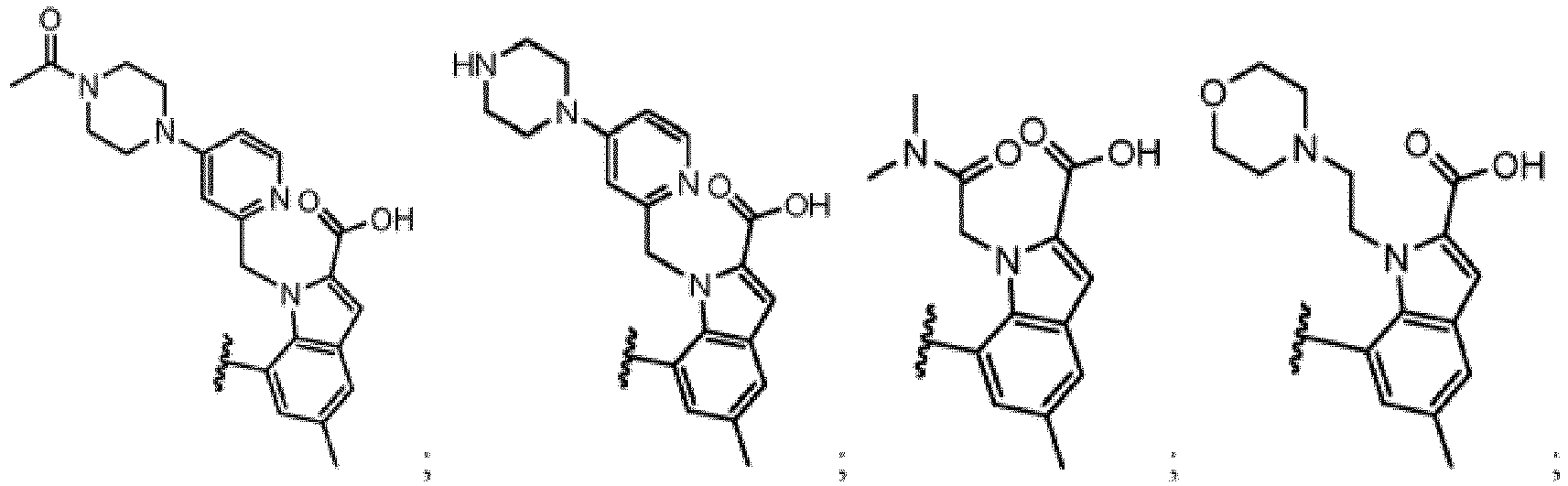
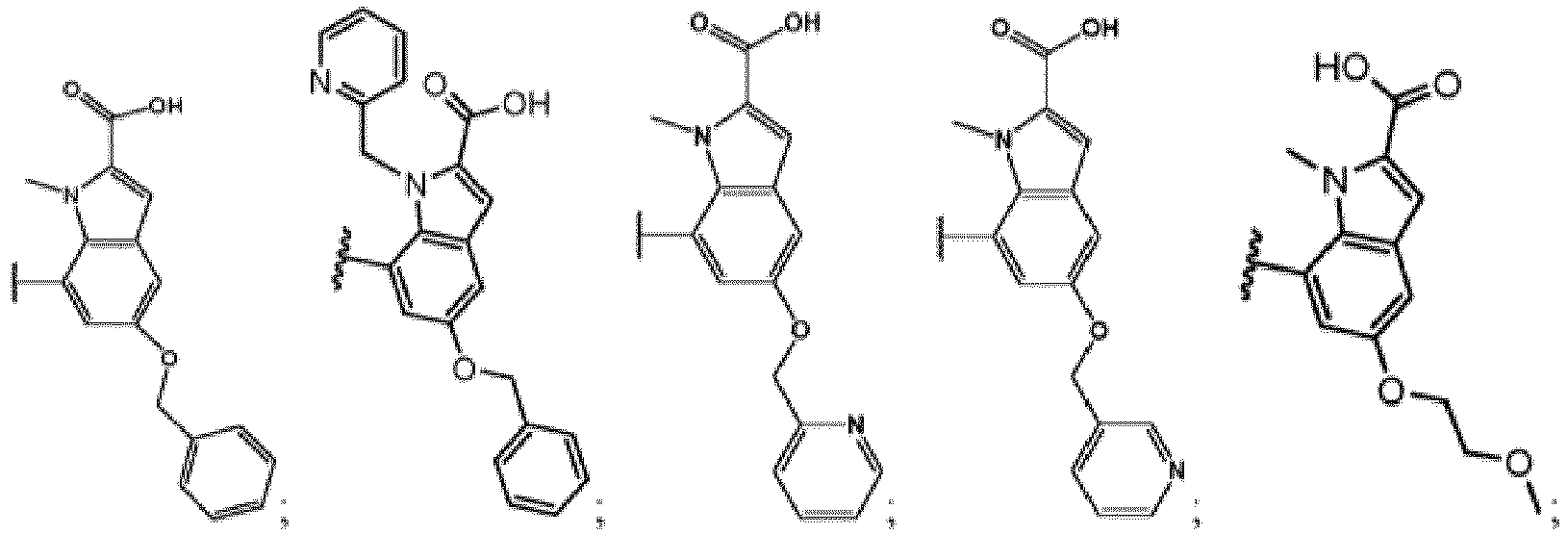
- R 3 is selected from:
- R 3 is selected from
- R 7 may be an optionally substituted group selected from phenyl and a 5-6 membered heteroaryl ring having 1-4 heteroatoms independently selected from nitrogen.
- R a and R b are selected from:
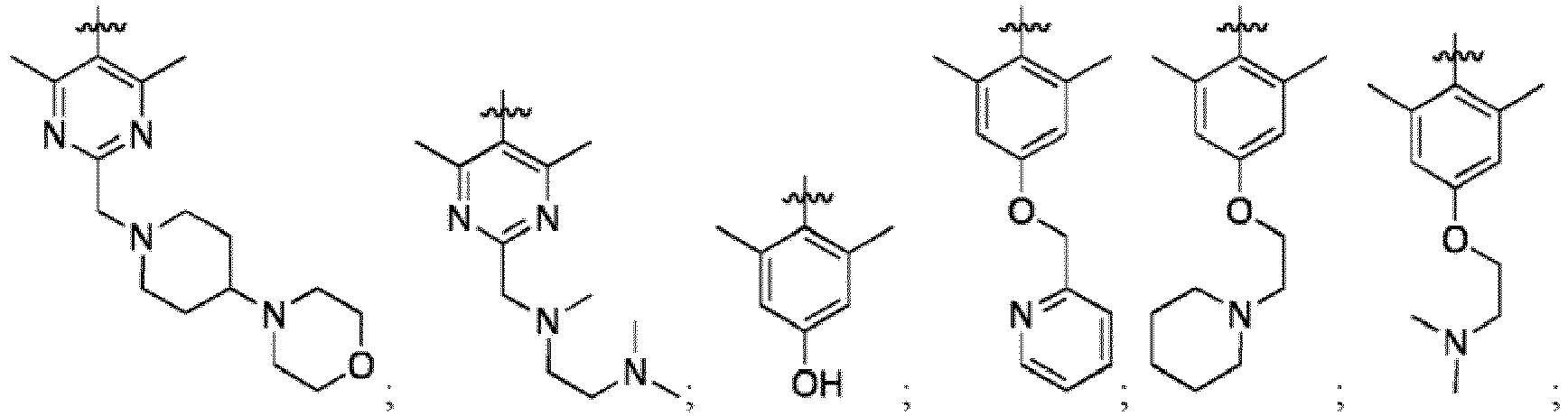
- R 7 is selected from:
- R 7 is selected from:
- R 7 is selected from:
- R 7 is
- L 4 -R w is an optionally substituted 8-10 membered bicyclic saturated, partially unsaturated or aryl ring, an optionally substituted 8-10 membered bicyclic saturated or partially unsaturated heterocyclic ring having 1-5 heteroatoms independently selected from nitrogen, oxygen, or sulfur, or an optionally substituted 8-10 membered bicyclic heteroaryl ring having 1-5 heteroatoms independently selected from nitrogen, oxygen, or sulfur.
- L 4 -R w is an optionally substituted 8-10 membered bicyclic saturated, partially unsaturated or aryl ring, an optionally substituted 8-10 membered bicyclic saturated or partially unsaturated heterocyclic ring having 1-5 heteroatoms independently selected from nitrogen, oxygen, or sulfur, an optionally substituted 8-10 membered bicyclic heteroaryl ring having 1-5 heteroatoms independently selected from nitrogen, oxygen, or sulfur, an optionally substituted 1,2,3,4-tetrahydropyrazino[1,2-a]indole, or an optionally substituted 3,4-dihydro-1H-[1,4]oxazino[4,3-a]indole.
- L 4 -R w is wherein
- L 4 -R w is wherein
- the optionally substituted 4-8 membered heterocyclic ring formed by R 20 and R 21 together with the nitrogen to which they are attached is selected from the group consisting of
- the compounds of the present disclosure can be prepared in a number of ways well known to one skilled in the art of organic synthesis.
- the compounds of the present disclosure can be synthesized using the methods described below, together with synthetic methods known in the art of synthetic organic chemistry, or variations thereon as appreciated by those skilled in the art. Preferred methods include, but are not limited to, those described below.
- the compounds of the disclosure may be prepared using the exemplary reactions and techniques described in this section.
- the reactions are performed in solvents appropriate to the reagents and materials employed and are suitable for the transformations being effective.
- all proposed reaction conditions including solvent, reaction atmosphere, reaction temperature, duration of the experiment and workup procedures, are chosen to be the conditions standard for that reaction, which should be readily recognized by one skilled in the art.
- One having ordinary skill in the art may adjust one or more of the conditions described herein.
- One skilled in the art of organic synthesis understands that the functionality present on various portions of the edict molecule must be compatible with the reagents and reactions proposed. Not all compounds of the disclosure falling into a given class may be compatible with some of the reaction conditions required in some of the methods described. Such restrictions to the substituents, which are compatible with the reaction conditions, will be readily apparent to one skilled in the art and alternate methods can be used.
- Indole 3 can be assembled by using Japp-Klingemann reaction described by, but not limited to, F. G. Salituro, et al. J. Med. Chem. (1990) 33, 2944-2946 as follows. Aniline 1 is converted to the corresponding benzenediazonium intermediate followed by condensation with ethyl 2-oxocyclopentanecarboxylate to give hydrazone 2. Intramolecular Fisher indole cyclization of the intermediate 2 is followed to give indole 3.
- the ethyl ester functional group at the flexible linker of indole 3 can be selectively reduced with excess BH 3 , and the resulting alcohol 4 can be condensed with phenols or hydroxy-heterocycles via Mitsunobu reaction to give the ether 5 using, but not limited to, DEAD or Dt-BuAD.
- Indole acid 6 can be generated by saponification of compounds 5 with appropriate bases, such as Cs 2 CO 3 , K 2 CO 3 , LiOH or NaOH, at a number of conditions that are routine for those skilled in the art of organic synthesis.
- Indole amides 7 can be produced by coupling of compounds 6 with suitable amines using coupling reagents, but not limited to, PyBOP, DCC, EDC, HBTU, or TBTU at a number of conditions that are routine for those skilled in the art of organic synthesis.
- one exemplary such procedure entails treatment of the aryl bromide or iodide 8 with an aryl boronic acid in the presence of a catalytic Pd species, such as Pd(PPh 3 ) 4 , Pd(PPh 3 ) 2 Cl 2 , Pd(OAc) 2 , Pd 2 (dba) 3 and a suitable ligand such as PPh 3 , AsPh 3 , etc., or other such Pd catalyst, and a base such as Na 2 CO 3 , Cs 2 CO 3 , K 2 CO 3 , Ba(OH) 2 or Et 3 N.
- a catalytic Pd species such as Pd(PPh 3 ) 4 , Pd(PPh 3 ) 2 Cl 2 , Pd(OAc) 2 , Pd 2 (dba) 3 and a suitable ligand such as PPh 3 , AsPh 3 , etc., or other such Pd catalyst
- a base such as Na 2 CO 3 ,
- biaryl adducts 11 can be prepared from Pinacolborates 12 which can be prepared from compounds 8 via Pd, such as Pd(PPh 3 ) 4 , Pd(PPh 3 ) 2 Cl 2 , Pd(OAc) 2 , Pd 2 (dba) 3 , catalyzed coupling of bis(pinacolato)diboron.
- Intermediates 12 can be coupled with a variety of aryl-halides or heteroaryl-halides 13 using Suzuki coupling protocol described above to give compounds 11.
- a provided approach allows for great diversity in the subsequent coupling of indole boronic acids or borates with commercially available haloaromatic derivatives.
- Compounds of Formula 18 may be prepared by procedures outlined in Scheme 3.
- Compounds of Formula 14 can be reacted with compounds of Formula 15, wherein X is Cl, Br, I, OMs, or OTs with a base such as NaH, K 2 CO 3 , Cs 2 CO 3 , Et 3 N, or DIPEA in a suitable solvent such as DMF, THF, ether, DME, or the like, to give compounds of Formula 16.
- a base such as NaH, K 2 CO 3 , Cs 2 CO 3 , Et 3 N, or DIPEA in a suitable solvent such as DMF, THF, ether, DME, or the like.
- Compounds of Formula 21 can be synthesized by procedures depicted in Scheme 4 via selective sequential coupling reactions in one-pot.
- An amino group of compounds 19 can be coupled with compounds of Formula 17 as illustrated in Scheme 1 to afford intermediates 20.
- suitable carboxylic acids can be coupled to the sulfonamide group of compounds of Formula 20 using coupling reagents, but not limited to, PyBOP, DCC, EDC, HBTU, or TBTU at a number of conditions that are routine for those skilled in the art of organic synthesis, to yield acylsulfonamides of Formula 21.
- compounds of Formula 25 can be prepared by procedures illustrated in Scheme 5 by similar sequential coupling reactions.
- Compounds of Formula 17 can undergo coupling reactions with an amine functional group of compounds 22 as shown Scheme 1 to give intermediates 23.
- An ester group of Formula 23 can be saponificated using aqueous based, such as Cs 2 CO 3 , K 2 CO 3 , LiOH or NaOH, at a number of conditions that are routine for those skilled in the art of organic synthesis to generated compounds of Formula 24.
- Subsequent coupling reactions of acids 24 with suitable sulfonamides using coupling reagents at a number of conditions that are routine for those skilled in the art of organic synthesis to afford reverse acylsulfonamides of Formula 25.
- the cyclization may be accomplished with a variety of bases, but not limited to, DBU, Et 3 N, DIPEA, Cs 2 CO 3 , K 2 CO 3 , NaH, or t-BuONa in a suitable solvent such as DMF, toluene, THF, DME, CH 3 CN, 1,4-dioxane or the like, to afford compounds of Formula 28 at a number of conditions that are routine for those skilled in the art of organic synthesis.
- bases but not limited to, DBU, Et 3 N, DIPEA, Cs 2 CO 3 , K 2 CO 3 , NaH, or t-BuONa
- a suitable solvent such as DMF, toluene, THF, DME, CH 3 CN, 1,4-dioxane or the like
- the tricyclic amide intermediates of Formula 30 can be prepared by alkylation of the indole NH of ester 14 with optionally substituted cyclic sulfamidates 29 followed by cyclization upon removal of the Boc-protecting group (see, for example, Richter H. G. F. Bioorg. Med. Chem. Lett. 2010, 5713 ).
- the size and stereochemistry of the newly formed cyclic amide can be controlled by size and preset stereo-configuration of the reagent 29.
- the NH group of Formula 30 can undergo alkylation reactions with compounds of Formula 31, wherein X is Cl, Br, I, OMs, or OTs with a base such as NaH, K 2 CO 3 , Cs 2 CO 3 , Et 3 N, or DIPEA in a suitable solvent such as DMF, THF, ether, DME, or the like, to give compounds of Formula 28.
- a base such as NaH, K 2 CO 3 , Cs 2 CO 3 , Et 3 N, or DIPEA in a suitable solvent such as DMF, THF, ether, DME, or the like
- Corresponding compounds of Formulae 32 and 33 can be prepared from the ester 28 by saponification and coupling of sulfonamides to the carboxylic acid functional group of compounds 32 as described in Scheme 5.
- aryl or heteroaryl halides of Formula 34 wherein X is Br, I, or OTf can be coupled to the NH group of Formula 30 in the presence of a catalytic Pd species, such as Pd(OAc) 2 , Pd 2 (dba) 3 and a suitable ligand such as Xantphos and a base such as Na 2 CO 3 , Cs 2 CO 3 , or K 2 CO 3 to generate compounds of Formula 35.
- a catalytic Pd species such as Pd(OAc) 2 , Pd 2 (dba) 3 and a suitable ligand such as Xantphos and a base such as Na 2 CO 3 , Cs 2 CO 3 , or K 2 CO 3
- Compounds of Formula 39 containing tetrazole moiety can be generated by the procedure depicted in Scheme 8.
- a nitrile group of compounds 38 can undergo cyclization reation with NaN 3 in the presence salt such as NH 3 Cl, Et 3 N ⁇ HCl or catalytic amount of I 2 , AlCl 3 or TMSCl in a suitable solvent such as DMF, PhNOz or NMP at a number of conditions that are routine for those skilled in the art of organic synthesis to give tetrazoles of Formula 39.
- the NH group of Formula 30 can undergo cross-coupling reactions with a variety of aryl or heteroaryl halides of Formula 40, wherein X is Br, I, or OTf in the presence of a catalytic Pd species, such as Pd(OAc) 2 , Pd 2 (dba) 3 and a suitable ligand such as Xantphos and a base such as Na 2 CO 3 , Cs 2 CO 3 , or K 2 CO 3 to generate compounds of Formula 22.
- a catalytic Pd species such as Pd(OAc) 2 , Pd 2 (dba) 3 and a suitable ligand such as Xantphos and a base such as Na 2 CO 3 , Cs 2 CO 3 , or K 2 CO 3 to generate compounds of Formula 22.
- compounds of Formula 30 can be produced using the Ullman coupling conditions in the presence of CuI and a suitable ligand such as (trans)-1,2- N,N '-dimethylaminocyclohexane or L-Proline and a base such as Cs 2 CO 3 , K 2 CO 3 or K 2 PO 4 in a suitable solvent such as toluene or DMF.
- a suitable ligand such as (trans)-1,2- N,N '-dimethylaminocyclohexane or L-Proline
- a base such as Cs 2 CO 3 , K 2 CO 3 or K 2 PO 4
- a suitable solvent such as toluene or DMF.
- the R 7 and R W of Formula 21 and 22 can be further elaborated such as saponification, substitution, alkylation of NH or OH, halogenation, amidation and construction of heterocycles under a number of functional group modification conditions that are routine for those skilled in the art of organic synthesis.
- reaction mixture was stirred for 15 min at 0 °C then warmed to 20 °C over 2h and extracted with CH 2 Cl 2 , dried over MgSO 4 , filtered and concentrated in vacuo to give the title compound as a red oil in 7.1 g (90% crude).
- Step B Preparation of ethyl 7-bromo-6-chloro-3-(3-ethoxy-3-oxopropyl)-1 H -indole-2-carboxylate
- Step C Preparation of ethyl 7-bromo-6-chloro-3-(3-hydroxypropyl)-1 H -indole-2-carboxylate
- Step D Preparation of ethyl 7-bromo-6-chloro-3-(3-(4-chloro-3,5-dimethylphenoxy)propyl)-1 H -indole-2-carboxylate
- Step E Preparation of ethyl 6-chloro-3-(3-(4-chloro-3,5-dimethylphenoxy)propyl)-7-(1,3,5-trimethyl-1H-pyrazol-4-yl)-1 H -indole-2-carboxylate
- Step F Preparation of ethyl ( R )-1-(1-((tert-butoxycarbonyl)amino)propan-2-yl)-6-chloro-3-(3-(4-chloro-3,5-dimethylphenoxy)propyl)-7-(1,3,5-trimethyl-1H-pyrazol-4-yl)-1H-indole-2-carboxylate
- Step G Preparation of ( R )-7-chloro-10-(3-(4-chloro-3,5-dimethylphenoxy)propyl)-4-methyl-6-(1,3,5-trimethyl-1H-pyrazol-4-yl)-3,4-dihydropyrazino [1,2-a] indol-1(2H)-one
- Step A Preparation of ethyl 1-(3-(( tert -butoxycarbonyl)amino)propyl)-6-chloro-3-(3-(4-chloro-3,5-dimethylphenoxy)propyl)-7-(1,3,5-trimethyl-1 H -pyrazol-4-yl)-1 H -indole-2-carboxylate.
- reaction mixture was diluted with ethyl acetate (50 mL) and washed with brine (2 x 30 mL), dried over anhydrous MgSO 4 , filtered and concentrated in vacuo.
- the residue was purified by flash chromatography (Combi-flash Rf, eluent 20% ethyl acetate in hexanes) to give the title compound (305 mg, 65%).
- Step B Preparation of 8-chloro-11-(3-(4-chloro-3,5-dimethylphenoxy)propyl)-7-(1,3,5-trimethyl-1H-pyrazol-4-yl)-2,3,4,5-tetrahydro-1 H -[1,4]diazepino[1,2-a]indol-1-one.
- Step C Preparation of Methyl 3-(8-chloro-11-(3-(4-chloro-3,5-dimethylphenoxy)propyl)-1-oxo-7-(1,3,5-trimethyl-1 H -pyrazol-4-yl)-4,5-dihydro-1H-[1,4]diazepino[1,2- a ]indol-2(3 H )-yl)benzoate
- the title compound (66 mg, 76%) was prepared following General coupling procedure B using 8-chloro-11-(3-(4-chloro-3,5-dimethylphenoxy)propyl)-7-(1,3,5-trimethyl-1 H -pyrazol-4-yl)-2,3,4,5-tetrahydro-1H-[1,4]diazepino[1,2- a ]indol-1-one (70 mg, 0.13 mmol, 1.0 eq), methyl 3-bromobenzoate (55 mg, 0.26 mmol, 2.0 eq), CuI (10 mg, 0.052 mmol, 0.40 eq), rac - N,N '-dimethylcyclohexane-1,2-diamine (15 mg, 0.105 mmol, 0.81 eq), and K 2 CO 3 (55 mg, 0.40 mmol, 3.0 eq).
- Step A Preparation of methyl 2-((8-chloro-11-(3-(4-chloro-3,5-dimethylphenoxy)propyl)-1-oxo-7-(1,3,5-trimethyl-1 H -pyrazol-4-yl)-4,5-dihydro-1H-[1,4]diazepino[1,2- a ]indol-2(3 H )-yl)methyl)-6-(piperazin-1-yl)isonicotinate
- Step A Preparation of methyl 4-amino-1-(2-(dimethylamino)ethyl)-1 H -indole-6-carboxylate
- Step B Preparation of methyl 4-(6-chloro-3-(3-(4-chloro-3,5-dimethylphenoxy)propyl)-7-(1,3,5-trimethyl-1H-pyrazol-4-yl)-1 H -indole-2-carboxamido)-1-(2-(dimethylamino)ethyl)-1 H -indole-6-carboxylate
- Step A Preparaion of methyl 6-bromo-2-(2-morpholinoethyl)-2 H -indazole-4-carboxylate
- Step A Preparation of methyl 6-bromo-1-(2-morpholinoethyl)-1 H -indazole-4-carboxylate
- reaction mixture was stirred at room temperature for 4 h.
- the reaction mixture was concentrated to driness then re-dissolved in anhydrous EtOH (20 mL).
- Anhydrous K 2 CO 3 (15 eq.) was added and the reaction mixture was stirred at RT for 2 h then concentrated to 1/3 of original volume and diluted with ethyl acetate (100 mL).
- the solution was washed with brine (3 X 50 mL), dried over anhydrous MgSO 4 , filtered and concentrated in vacuo.
- Step A Preparation of methyl 4-bromo-2-(2-(dimethylamino)ethyl)-2H-indazole-6-carboxylate
- the title compound (28 mg, 22%) was prepared following General Procedure G using methyl 4-bromo-1 H -indazole-6-carboxylate (100 mg, 0.393 mmol), NaH (15 mg, 0.625 mmol), and 2-bromo- N,N -dimethylethan-1-amine (120 mg, 0.515 mmol).
- Step A Preparation of methyl 6-bromo-1-(2-(dimethylamino)ethyl)-1 H -indazole-4-carboxylate
- Step A Preparation of methyl 6-bromo-1-((2-(trimethylsilyl)ethoxy)methyl)-1 H -indole-4-carboxylate
- Step B Preparation of methyl 6-(8-chloro-11-(3-(4-chloro-3,5-dimethylphenoxy)propyl)-1-oxo-7-(1,3,5-trimethyl-1 H -pyrazol-4-yl)-4,5-dihydro-1 H -[1,4] diazepino[1,2-a] indol-2(3 H )-yl)-1-((2-(trimethylsilyl)ethoxy)methyl)-1 H -indole-4-carboxylate
- Step C Preparation of methyl 6-(8-chloro-11-(3-(4-chloro-3,5-dimethylphenoxy)propyl)-1-oxo-7-(1,3,5-trimethyl-1 H -pyrazol-4-yl)-4,5-dihydro-1 H- [1,4]diazepino[1,2-a]indol-2(3 H )-yl)-1 H -indole-4-carboxylate
- Step B Preparation of methyl 4-(8-chloro-11-(3-(4-chloro-3,5-dimethylphenoxy)propyl)-1-oxo-7-(1,3,5-trimethyl-1 H -pyrazol-4-yl)-4.5-dihydro-1 H- [1,4]diazepino[1,2-a]indol-2(3 H -yl)-1-((2-(trimethylsilyl)ethoxy)methyl)-1 H -indole-6-carboxylate
- Step C Preparation of methyl 4-(8-chloro-11-(3-(4-chloro-3,5-dimethylphenoxy)propyl)-1-oxo-7-(1,3,5-trim ethyl-1 H -pyrazol-4-yl)-4,5-dihydro-1 H- [1,4]diazepino[1,2-a]indol-2(3 H )-yl)-1 H -indole-6-carboxylate
- Step A Preparation of methyl 4-bromo-1-(2-(dimethylamino)ethyl)-1 H -indazole-6-carboxylate
- Step A Preparation of methyl 6-bromo-2-(2-(dimethylamino)ethyl)-2H-indazole-4-carboxylate
- Step A Preparation of methyl 6-bromo-1-((2-(trimethylsilyl)ethoxy)methyl)-1 H indazole-4-carboxylate
- Step B Preparation of methyl 6-(8-chloro-11-(3-(4-chloro-3,5-dimethylphenoxy)propyl)-1-oxo-7-(1,3,5-trimethyl-1 H -pyrazol-4-yl)-4,5-dihydro-1 H -[1,4]diazepino[1,2- a ]indol-2(3H)-yl)-1-((2-(trimethylsilyl)ethoxy)methyl)-1 H -indazole-4-carboxylate
- Methyl 6-(8-chloro-11-(3-(4-chloro-3,5-dimethylphenoxy)propyl)-1-oxo-7-(1,3,5-trimethyl-1 H -pyrazol-4-yl)-4,5-dihydro-1 H -[1,4]diazepino[1,2- a ]indol-2(3 H )-yl)-1-((2-(trimethylsilyl)ethoxy)methyl)-1 H -indazole-4-carboxylate was dissolved in TBAF (1.0 M in THF, 3 mL). The reaction was irradiated in the microwave at 100 °C for 1 h.
- Step A Preparation of methyl 3-bromo-1-(2-morpholinoethyl)-1 H -indazole-6-carboxylate
- the title compound (25mg, 62%) was prepared following General coupling procedure A using 8-chloro-11-(3-(4-chloro-3,5-dimethylphenoxy)propyl)-7-(1,3,5-trimethyl-1 H -pyrazol-4-yl)-2,3,4,5-tetrahydro-1 H -[1,4]diazepino[1,2- a ]indol-1-one and methyl 7-bromo-1-methyl-1 H -indole-4-carboxylate followed by saponification using General Procedure D.
- Step A Preparation of methyl 6-bromo-1-(2-morpholinoethyl)-1 H -indazole-4-carboxylate
- the title compound (74 mg, 26%) was prepared following General Procedure G using methyl 6-bromo-1 H -indazole-4-carboxylate (200 mg, 0.784 mmol), NaH (36 mg, 1.5 mmol), and 4-(2-bromoethyl)morpholine (225 mg, 1.16 mmol).
- Step A Preparation of 3,5-dimethyl-4-(4,4,5,5-tetramethyl-1,3,2-dioxaborolan-2-yl)-1-((2-(trimethylsilyl)ethoxy)methyl)-1 H- pyrazole
- Step B Preparation of ethyl 6-chloro-3-(3-(4-chloro-3,5-dimethylphenoxy)propyl)-7-(3,5-dimethyl-1-((2-(trimethylsilyl)ethoxy)methyl)-1 H -pyrazol-4-yl)-1 H -indole-2-carboxylate
- Step C Preparation of ethyl 1-(3-((tert-butoxycarbonyl)amino)propyl)-6-chloro-3-(3-(4-chloro-3,5-dimethylphenoxy)propyl)-7-(3,5-dimethyl-1-((2-(trimethylsilyl)ethoxy)methyl)-1 H -pyrazol-4-yl)-1 H -indole-2-carboxylate
- Step D Preparation of ethyl 1-(3-aminopropyl)-6-chloro-3-(3-(4-chloro-3,5-dimethylphenoxy)propyl)-7-(3,5-dimethyl-1-((2-(trimethylsilyl)ethoxy)methyl)-1 H- pyrazol-4-yl)-1 H -indole-2-carboxylate
- Step E Preparation of 8-chloro-11-(3-(4-chloro-3,5-dimethylphenoxy)propyl)-7-(3,5-dimethyl-1-((2-(trimethylsilyl)ethoxy)methyl)-1 H -pyrazol-4-yl)-2,3,4,5-tetrahydro-1 H- [1,4]diazepino[1,2- a ]indol-1-one
- Step F Preparation of methyl 6-(8-chloro-11-(3-(4-chloro-3,5-dimethylphenoxy)propyl)-7-(3,5-dimethyl-1-((2-(trimethylsilyl)ethoxy)methyl)-1 H -pyrazol-4-yl)-1-oxo-4,5-dihydro-1 H -[1,4]diazepino[1,2- a ]indol-2(3 H )-yl)-1-methyl-1 H -1-indole-4-carboxylate
- Step B Preparation of methyl 5-bromo-4-methyl-3,4-dihydro-2 H -benzo[ b ][1,4]oxazine-7-carboxylate
- the title compound (35 mg, 74%) was prepared following General Procedure G using methyl 5-bromo-3,4-dihydro-2H-benzo[b][1,4]oxazine-7-carboxylate (45 mg, 0.17 mmol), sodium hydride (9 mg, 0.38 mmol), and methyl iodide (40 mg, 0.28 mmol).
- Step A Preparation of methyl 3-bromo-4-(2-(( tert -butyldimethylsilyl)oxy)ethoxy)-5-methoxybenzoate
- the title compound (101 mg, 66%) was prepared following the procedure described in Example 66 step 1 using methyl 3-bromo-4-hydroxy-5-methoxybenzoate (100 mg, 0.381 mmol), 1-(2-bromoethoxy)-2-fluorobenzene (120 mg, 0.547 mmol), and Cs 2 CO 3 (200 mg, 0.615 mmol).
- Step A Preparation of methyl 3-bromo-4-(3-(( tert -butyldimethylsilyl)oxy)propoxy)-5-methoxybenzoate
- Step A Preparation of ( R)-7-chloro-10-(3-(4-chloro-3,5-dimethylphenoxy)propyl)-6-(3,5-dimethyl-1-((2-(trimethylsilyl)ethoxy)methyl)-1 H -pyrazol-4-yl)-4-methyl-3,4-dihydropyrazino[1,2-a]indol-1(2 H )-one
- Step B Preparation of methyl ( R )-6-(7-chloro-10-(3-(4-chloro-3,5-dimethylphenoxy)propyl)-6-(3,5-dimethyl-1-((2-(trimethylsilyl)ethoxy)methyl)-1 H- pyrazol-4-yl)-4-methyl-1-oxo-3,4-dihydropyrazino[1,2-a]indol-2(1 H )-yl)-1-methyl-1 H- indole-4-carboxylate
- Example 91 was separated using reverse phase HPLC (Phenomenex Gemini C18, H 2 O/CH 3 CN gradient to 35-95 % MeCN 0.1% TFA, 10 mins gradient) to give the title compound as the first eluting atropisomer (13 mg, 37%).
- LCMS: R T 1.970 min, MS (ES) 712.0 (M+H).
- Example 91 was separated using reverse phase HPLC (Phenomenex Gemini C18, H 2 O/CH 3 CN gradient to 35-95 % MeCN 0.1% TFA, 10 mins gradient) to give the title compound as a second eluting atropisomer (11 mg, 31%).
- LCMS: R T 1.989 min, MS (ES) 712.0 (M+H).
- Step A Preparation of methyl 6-bromo-1-(2-methoxyethyl)-1 H -indazole-4-carboxylate
- Step A Preparation of ethyl 6-chloro-3-(3-(4-chloro-3,5-dimethylphenoxy)propyl)-7-(2,6-dimethylphenyl)-1 H -indole-2-carboxylate
- the reaction was heated to 110 °C for 16 h then cooled to RT.
- the reaction was diluted into DCM/H 2 O (10 mL, 1:1), the layers were separated, and the aqueous layer was extracted with DCM (2 x 10 mL).
- Step B Preparation of ethyl 1-(3-(( tert -butoxycarbonyl)amino)propyl)-6-chloro-3-(3-(4-chloro-3,5-dimethylphenoxy)propyl)-7-(2,6-dimethylphenyl)-1 H -indole-2-carboxylate
- Step A Preparation of methyl 3-bromo-1-(2-morpholinoethyl)-1 H -indole-6-carboxylate
- Step A Preparation of methyl 5-bromo-4-ethyl-3-oxo-3,4-dihydro-2 H- benzo[ b ][1,4]oxazine-7-carboxylate
- Step A Preparation of methyl ( R )-6-(7-chloro-10-(3-(4-chloro-3,5-dimethylphenoxy)propyl)-4-methyl-1-oxo-6-(1,3,5-trimethyl-1 H -pyrazol-4-yl)-3,4-dihydropyrazino[1,2-a]indol-2(1 H )-yl)-1-((2-(trimethylsilyl)ethoxy)methyl)-1 H -indole-4-carboxylate
- Step B Preparation of methyl ( R )-6-(7-chloro-10-(3-(4-chloro-3,5-dimethylphenoxy)propyl)-4-methyl-1-oxo-6-(1,3,5-trimethyl-1 H -pyrazol-4-yl)-3,4-dihydropyrazino[1,2-a]indol-2(1 H )-yl)-1 H -indole-4-carboxylate
- Step A Preparation of ethyl 7-bromo-1-ethyl-1 H -indole-3-carboxylate
- Step A Preparation of methyl 6-bromo-1-(2-(( tert -butyldimethylsilyl)oxy)ethyl)-1 H- indazole-4-carboxylate
- Step A Preparation of methyl ( R )-3-(7-chloro-10-(3-(4-chloro-3,5-dimethylphenoxy)propyl)-6-(3,5-dimethyl-1-((2-(trimethylsilyl)ethoxy)m ethyl)-1 H- pyrazol-4-yl)-4-methyl-1-oxo-3,4-dihydropyrazino[1,2-a]indol-2(1 H )-yl)-1-methyl-1 H- indole-6-carboxylate
- Step A Preparation of ethyl 6-chloro-3-(3-(4-chloro-3,5-dimethylphenoxy)propyl)-7-(4,6-dimethylpyrimidin-5-yl)-1 H -indole-2-carboxylate
- Step B Preparation of ethyl 1-(3-(( tert -butoxycarbonyl)amino)propyl)-6-chloro-3-(3-(4-chloro-3,5-dimethylphenoxy)propyl)-7-(4,6-dimethylpyrimidin-5-yl)-1 H -indole-2-carboxylate
- Step A Preparation of methyl ( R )-7-(7-chloro-10-(3-(4-chloro-3,5-dimethylphenoxy)propyl)-6-(3,5-dimethyl-1-((tetrahydro-2 H -pyran-4-yl)methyl)-1 H- pyrazol-4-yl)-4-methyl-1-oxo-3,4-dihydropyrazino[1,2-a]indol-2(1 H )-yl)-1-methyl-1 H- indole-3-carboxylate
- Step A Preparation of tert -butyl ( R )-4-(7-chloro-10-(3-(4-chloro-3,5-dimethylphenoxy)propyl)-4-methyl-1-oxo-6-(1,3,5-trimethyl-1 H -pyrazol-4-yl)-3,4-dihydropyrazino[1,2- a ]indol-2(1 H )-yl)-1 H -indole-1-carboxylate
- Step A Preparation of 8-chloro-11-(3-(4-chloro-3,5-dimethylphenoxy)propyl)-7-(3,5-dimethyl-1 H -pyrazol-4-yl)-2-phenyl-2,3,4,5-tetrahydro-1 H -[1,4]diazepino[1,2- a ]indol-1-one
- Step A Preparation of methyl ( R )-7-(7-chloro-10-(3-(4-chloro-3,5-dimethylphenoxy)propyl)-6-(3,5-dimethyl-1-((1-methylpiperidin-4-yl)methyl)-1 H- pyrazol-4-yl)-4-methyl-1-oxo-3,4-dihydropyrazino[1,2-a]indol-2(1 H )-yl)-1-methyl-1 H- indole-3-carboxylate
- Step B Preparation of ethyl 3-bromo-1,7-dimethyl-1 H -indole-5-carboxylate
- the title compound (7.5 mg, 23%) was prepared following General coupling procedure A using 8-chloro-11-(3-(4-chloro-3,5-dimethylphenoxy)propyl)-7-(4,6-dimethylpyrimidin-5-yl)-2,3,4,5-tetrahydro-1 H -[1,4]diazepino[1,2- a ]indol-1-one (25 mg, 0.046 mmol), methyl 3-bromo-1-methyl-1 H -indole-5-carboxylate (20 mg, 0.074 mmol), Pd 2 (dba) 3 (4 mg, 0.0043 mmol), Xantphos (6 mg, 0.010 mmol), and C S2 CO 3 (50 mg, 0.153 mmol) followed by saponification using General Procedure D.
- Step B Preparation of methyl 7-bromo-1,5-dimethyl-1 H- indole-3-carboxylate
- Step A Preparation of ethyl 3-bromo-1-ethyl-1 H- indole-5-carboxylate
- Step B Preparation of methyl 2-bromo-1-methyl-1 H -indole-4-carboxylate
- Step A Preparation of methyl 4-bromo-1-(2-methoxyethyl)-1 H- indole-3-carboxylate
Landscapes
- Health & Medical Sciences (AREA)
- Chemical & Material Sciences (AREA)
- Organic Chemistry (AREA)
- Medicinal Chemistry (AREA)
- Pharmacology & Pharmacy (AREA)
- Life Sciences & Earth Sciences (AREA)
- Animal Behavior & Ethology (AREA)
- General Health & Medical Sciences (AREA)
- Public Health (AREA)
- Veterinary Medicine (AREA)
- Epidemiology (AREA)
- General Chemical & Material Sciences (AREA)
- Chemical Kinetics & Catalysis (AREA)
- Nuclear Medicine, Radiotherapy & Molecular Imaging (AREA)
- Engineering & Computer Science (AREA)
- Bioinformatics & Cheminformatics (AREA)
- Hematology (AREA)
- Oncology (AREA)
- Pharmaceuticals Containing Other Organic And Inorganic Compounds (AREA)
- Medicines That Contain Protein Lipid Enzymes And Other Medicines (AREA)
- Medicines Containing Antibodies Or Antigens For Use As Internal Diagnostic Agents (AREA)
- Nitrogen Condensed Heterocyclic Rings (AREA)
- Plural Heterocyclic Compounds (AREA)
- Nitrogen And Oxygen Or Sulfur-Condensed Heterocyclic Ring Systems (AREA)
Claims (13)
- Verbindung mit der Formel:


wobei:R3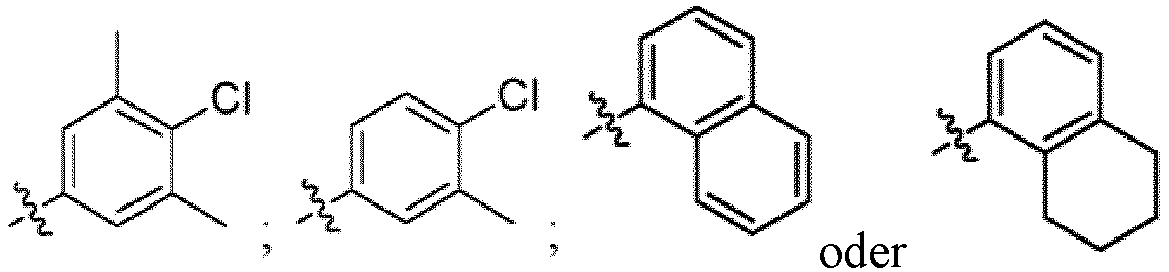 L4-Rw
L4-Rw


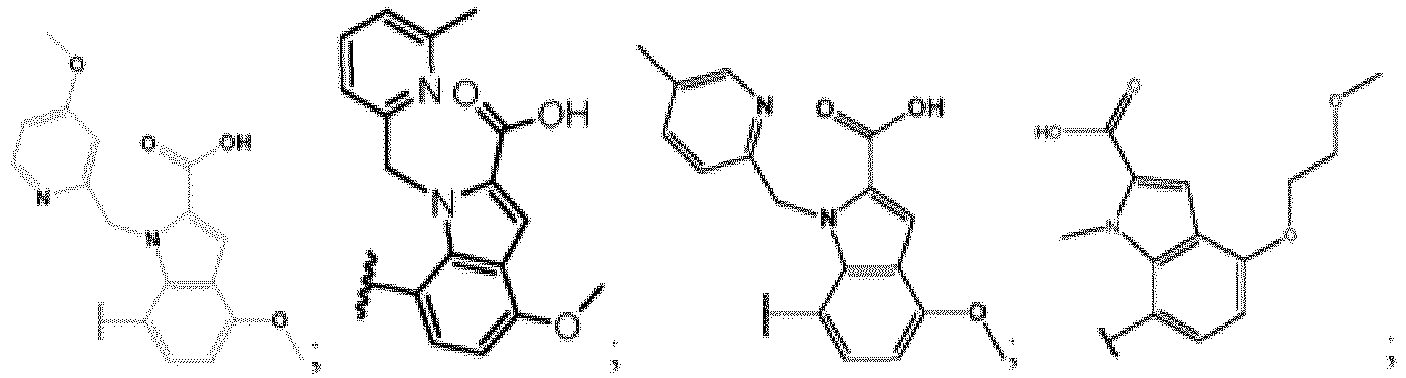

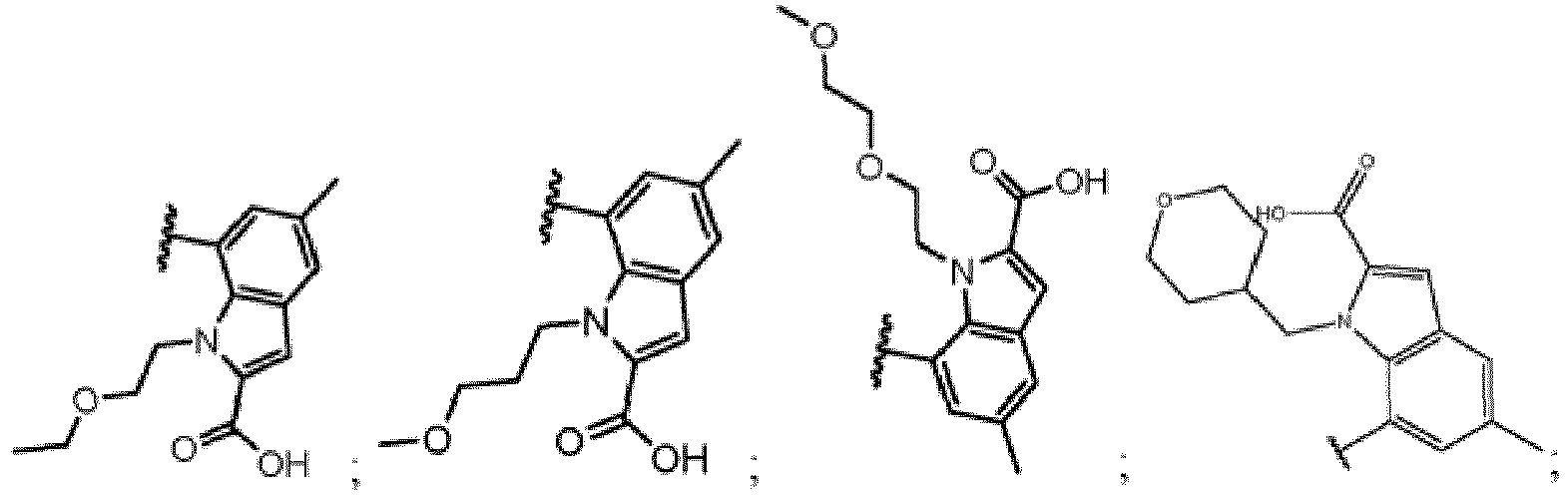


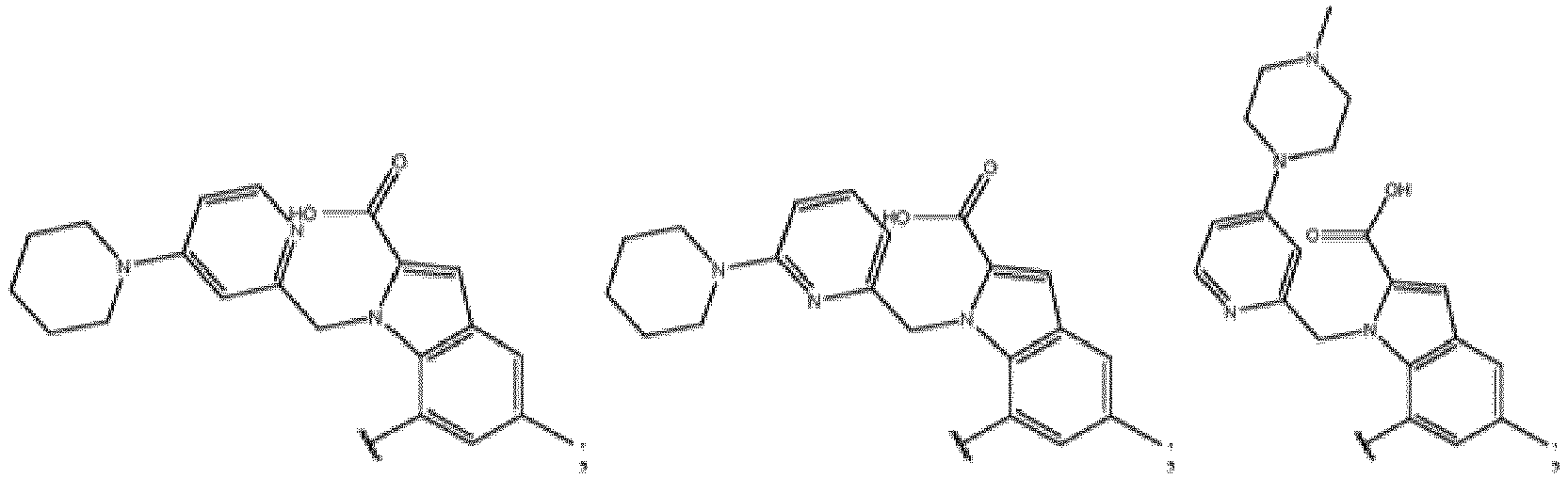





 R7
R7



- Verbindung nach Anspruch 1, oder pharmazeutisch verträgliches Salz davon, mit der Formel

- Verbindung nach Anspruch 1 oder 2, oder pharmazeutisch verträgliches Salz davon, wobei R3 ausgewählt ist aus

- Verbindung nach einem der Ansprüche 1 bis 3, oder pharmazeutisch verträgliches Salz davon, wobei R7 ausgewählt ist aus:

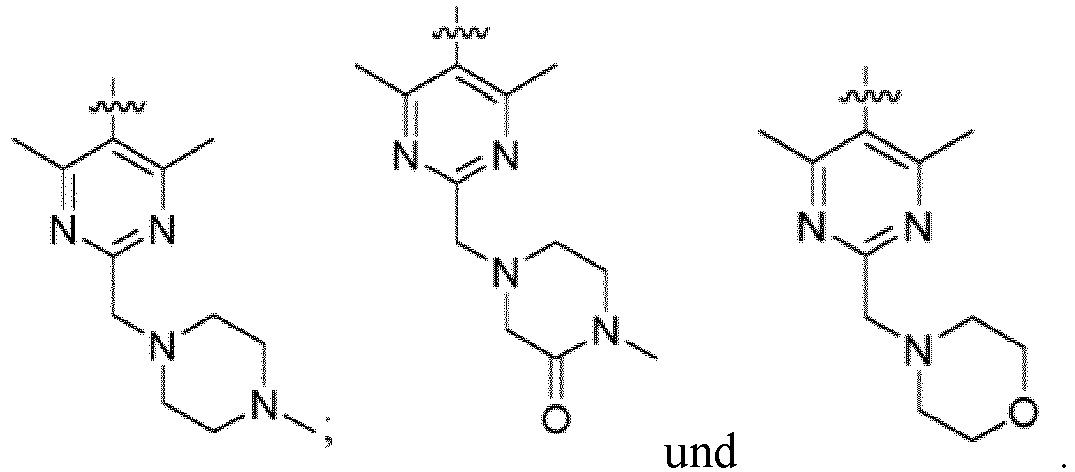
- Verbindung nach einem der Ansprüche 1 bis 4, oder pharmazeutisch verträgliches Salz davon, wobei R7 ausgewählt ist aus

- Verbindung nach einem der Ansprüche 1 bis 5, oder pharmazeutisch verträgliches Salz davon, wobei R7

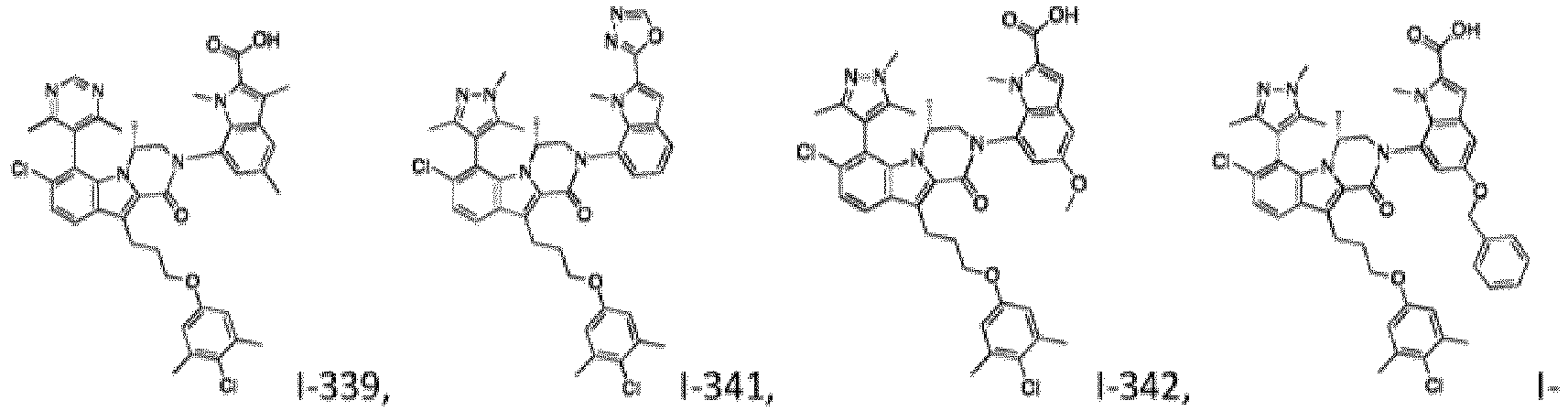
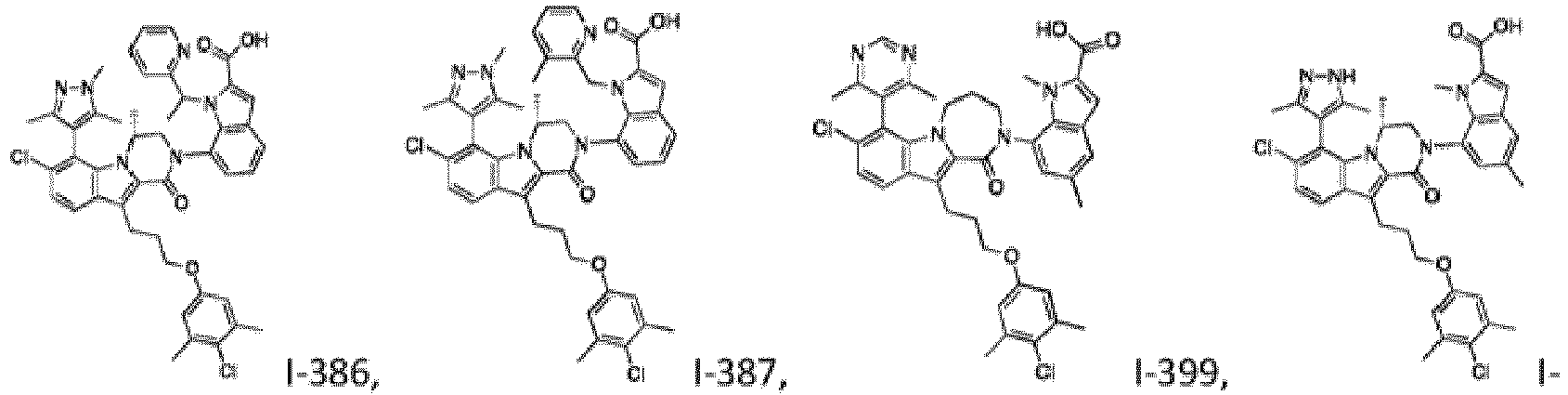
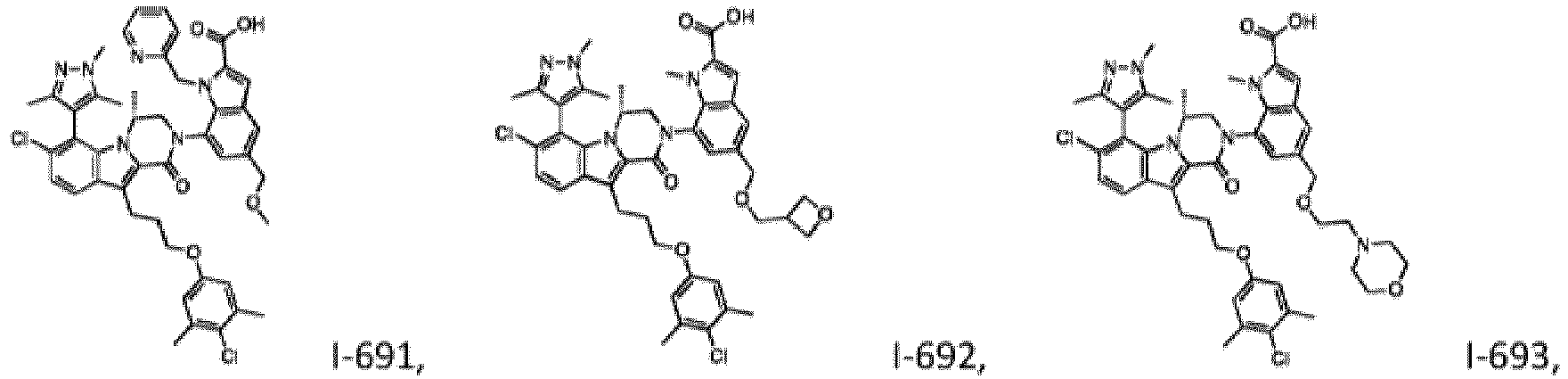
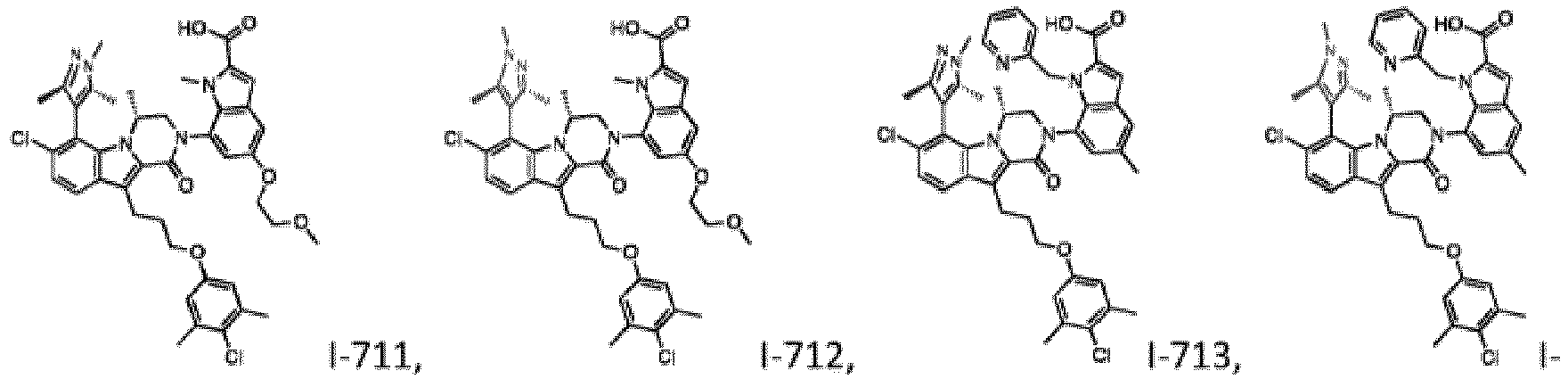
- Verbindung nach Anspruch 1, ausgewählt aus der Gruppe, bestehend aus








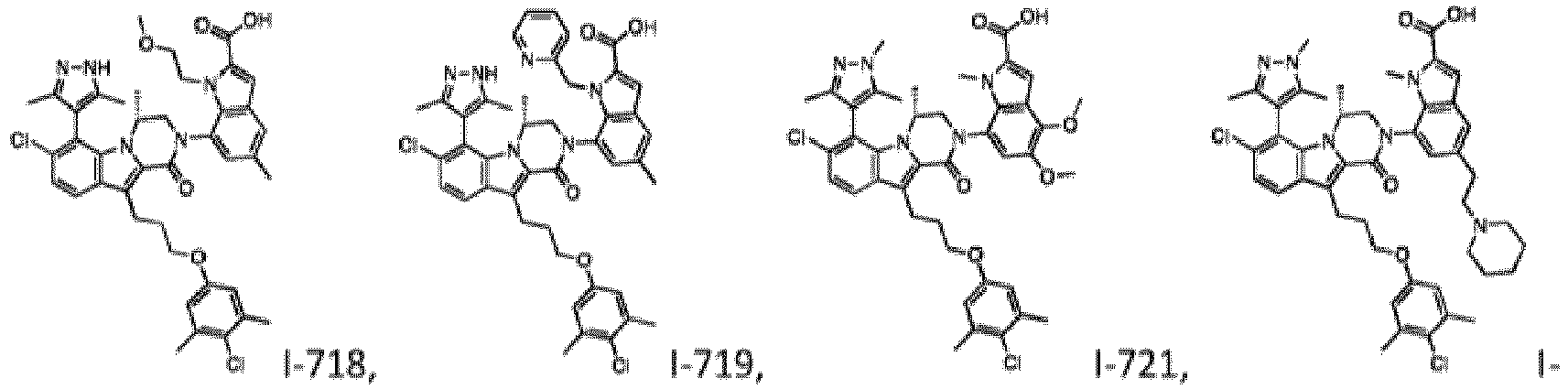

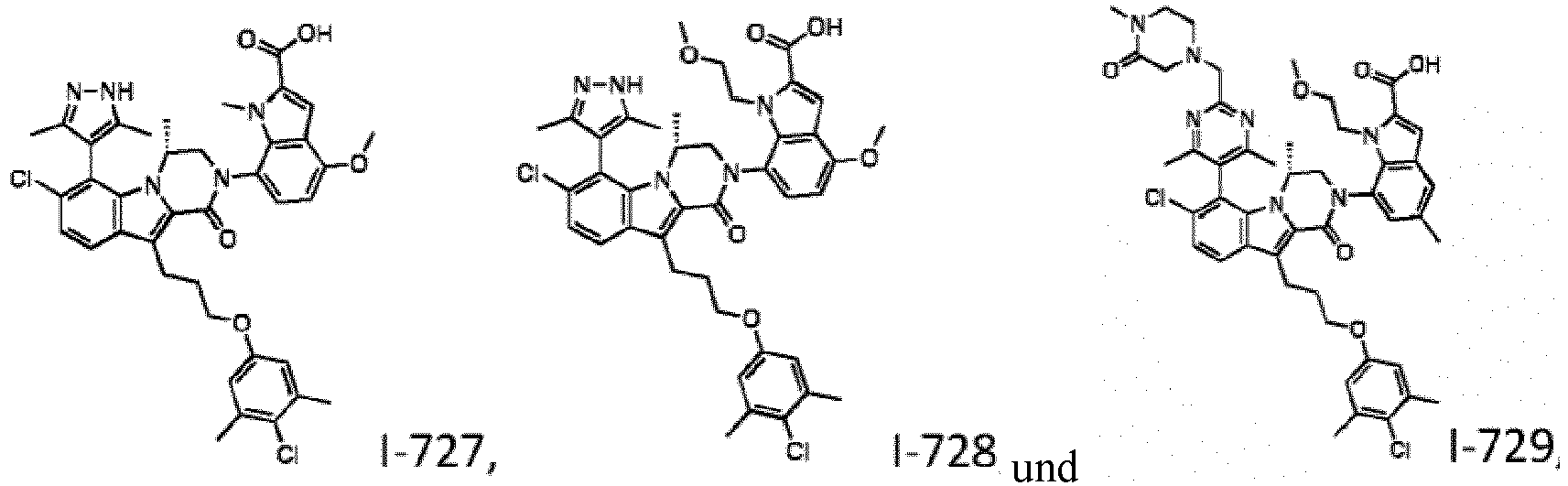
- Pharmazeutische Zusammensetzung, bestehend aus einer Verbindung nach einem der Ansprüche 1 bis 7 und einem pharmazeutisch verträglichen Träger.
- Pharmazeutische Zusammensetzung nach Anspruch 8, ferner umfassend einen oder mehrere zusätzliche therapeutisch wirkende Wirkstoffe.
- Verbindung nach einem der Ansprüche 1 bis 7, oder pharmazeutisch verträgliches Salz davon, zur Verwendung in einem Verfahren zur Modulation der Aktivität der Bcl-2-Proteinfamilie, wobei das Verfahren die Verabreichung einer therapeutisch wirksamen Menge mindestens einer Verbindung nach einem der Ansprüche 1 bis 7 an einen Säugetierpatienten, der dies benötigt, umfasst.
- Verbindung nach einem der Ansprüche 1 bis 7, oder pharmazeutisch verträgliches Salz davon, zur Verwendung in einem Verfahren zur Behandlung von Krankheiten oder Störungen, die mit der Expression oder Überexpression von Mcl-1 verbunden sind, wobei:
die Krankheiten oder Störungen ausgewählt sind aus der Gruppe, bestehend aus Akustikusneurinom, akuter Leukämie, akuter lymphatischer Leukämie, akuter myelogener Leukämie (monozytär, myeloblastisch, Adenokarzinom, Nebennierenrindenkrebs, Angiosarkom, Astrozytom, myelomonozytär und promyelozytär), akuter T-Zell-Leukämie, Basalzellkarzinom, Gallengangskarzinom, Blasenkrebs, Knochenkrebs, Hirntumor, Hirnstamm-Gliom, Brustkrebs, Bronchialkarzinom, Gebärmutterhalskrebs, Cholangiokarzinom, Chondrosarkom, Chordom, Choriokarzinom, chronischer Leukämie, chronischer lymphatischer Leukämie, chronischer myelozytärer (granulozytärer) Leukämie, chronischer myleogener Leukämie, Dickdarmkrebs, kolorektalem Karzinom, Kraniopharyngiom, Zystadenokarzinom, diffusem großem B-Zell-Lymphom, Duodenalkrebs, dysproliferativer Veränderungen (Dysplasien und Metaplasien), Embryonalkarzinom, Endometriumkarzinom, Endotheliosarkom, Ependymom, Epithelkarzinom, Erythroleukämie, Speiseröhrenkrebs, Östrogenrezeptor-positivem Brustkrebs, essentieller Thrombozythämie, Ewing-Tumor, Eileiterkarzinom, Fibrosarkom, follikularem Lymphom, Magenkarzinom, Keimzell-Hodenkrebs, Gestations-Trophoblastose, Glioblastom, Gallenblasenkrebs, Kopf- und Halskrebs, Schwere-Ketten-Krankheit, Hämangioblastom, Hepatom, hepatozellulärem Karzinom, hormonunempfindlichem Prostatakrebs, Leiomyosarkom, Liposarkom, Lungenkrebs, sowohl kleinzelligem Lungenkrebs als auch nicht-kleinzelligem Lungenkrebs, Lymphagioendothelio-Sarkom, Lymphangiosarkom, lymphoblastischer Leukämie, Lymphom, einschließlich diffusem großem B-Zell-Lymphom, follikulärem Lymphom, Hodgkin-Lymphom und Non-Hodgkin-Lymphom, bösartigen und hyperproliferativen Erkrankungen der Blase, der Brust, des Dickdarms, der Lunge, der Eierstöcke, der Bauchspeicheldrüse, der Prostata, der Haut und der Gebärmutter, lymphatischen bösartigen Erkrankungen mit T-Zell- oder der B-Zell-Ursprung, Leukämie, Lymphom, medullärem Karzinom, Medulloblastom, Melanom (kutan oder intraokular), Meningiom, Mesotheliom, multiplem Myelom, myleogener Leukämie, Myelom, Myxosarkom, Neuroblastom, Oligodendrogliom, Mundhöhlenkrebs, osteogenem Sarkom, Eierstockkrebs, Bauchspeicheldrüsenkrebs, papillären Adenokarzinomen, papillärem Karzinom, Nebenschilddrüsenkrebs, peripherem T-Zell-Lymphom, Pinealom, Hypophysenadenom, Polycythemia vera, Prostatakrebs einschließlich hormonunempfindlichem (refraktärem) Prostatakrebs, Rektumkarzinom, Nierenzellkarzinom, Retinoblastom, Rhabdomyosarkom, Sarkom, Talgdrüsenkarzinom, Seminom, Hautkrebs, Dünndarmkrebs, soliden Tumoren (Karzinomen und Sarkomen), kleinzelligem Lungenkrebs, Wirbelsäulentumoren, Milzkrebs, Magenkrebs, Plattenepithelkarzinom, Synoviom, Schweißdrüsenkarzinom, Hodenkrebs (einschließlich Keimzell-Hodenkrebs), Schilddrüsenkrebs, Harnröhrenkrebs, Gebärmutterkrebs, Waldenström-Makroglobulinämie, Hodentumoren, Vaginalkrebs, Vulvakrebs, Wilms-Tumor, embryonalem Rhabdomyosarkom, pädiatrischer akuter lymphoblastischer Leukämie, pädiatrischer akuter myeloischer Leukämie, pädiatrischer alveolärer Rhabdomyosarkom, pädiatrischem anaplastischem Ependymom, pädiatrischem anaplastischem großzelligem Lymphom, pädiatrischem anaplastischem Medulloblastom, pädiatrischem atypischem teratoidem rhabdoidem Tumor des Zentralnervensystems, pädiatrischer biphenotypischer akuter Leukämie, pädiatrischem Burkitts-Lymphom, pädiatrischen Krebsarten der Ewing-Tumorfamilie wie primitiven neuroektodermalen Gerüchten, pädiatrischem diffusem anaplastischem Wilms-Tumor, pädiatrischem Wilms-Tumor mit günstiger Histologie, pädiatrischem Glioblastom, pädiatrischem Medulloblastom, pädiatrischem Neuroblastom, pädiatrischem Neuroblastom-abgeleiteter Myelozytomatose, pädiatrischen Prä-B-Zell-Krebsarten (wie Leukämie), pädiatrischen Osteosarkomen, pädiatrischem rhabdoidem Nierentumor, pädiatrischem Rhabdomyosarkom und pädiatrischen T-Zell-Krebsarten wie einem Lymphom und Hautkrebs. - Kombination einer Verbindung nach einem der Ansprüche 1 bis 7, oder eines pharmazeutisch verträglichen Salzes davon, und eines zusätzlichen therapeutischen Mittels zur Verwendung in einem Verfahren zur Prävention, Hemmung oder Behandlung des Fortschreitens oder Auftretens von Krankheiten oder Störungen, die mit der Expression oder Überexpression von anti-apoptotischen Proteinmitgliedern der Bcl-2-Familie, insbesondere des Mcl-1-Proteins, verbunden sind, wobei:(a) die Krankheiten oder Störungen ausgewählt sind aus der Gruppe, bestehend aus Akustikusneurinom, akuter Leukämie, akuter lymphatischer Leukämie, akuter myelogener Leukämie (monozytär, myeloblastisch, Adenokarzinom, Nebennierenrindenkrebs, Angiosarkom, Astrozytom, myelomonozytär und promyelozytär), akuter T-Zell-Leukämie, Basalzellkarzinom, Gallengangskarzinom, Blasenkrebs, Knochenkrebs, Hirntumor, Hirnstamm-Gliom, Brustkrebs, Bronchialkarzinom, Gebärmutterhalskrebs, Cholangiokarzinom, Chondrosarkom, Chordom, Choriokarzinom, chronischer Leukämie, chronischer lymphatischer Leukämie, chronischer myelozytärer (granulozytärer) Leukämie, chronischer myleogener Leukämie, Dickdarmkrebs, kolorektalem Karzinom, Kraniopharyngiom, Zystadenokarzinom, diffusem großem B-Zell-Lymphom, Duodenalkrebs, dysproliferativer Veränderungen (Dysplasien und Metaplasien), Embryonalkarzinom, Endometriumkarzinom, Endotheliosarkom, Ependymom, Epithelkarzinom, Erythroleukämie, Speiseröhrenkrebs, Östrogenrezeptor-positivem Brustkrebs, essentieller Thrombozythämie, Ewing-Tumor, Eileiterkarzinom, Fibrosarkom, follikularem Lymphom, Magenkarzinom, Keimzell-Hodenkrebs, Gestations-Trophoblastose, Glioblastom, Gallenblasenkrebs, Kopf- und Halskrebs, Schwere-Ketten-Krankheit, Hämangioblastom, Hepatom, hepatozellulärem Karzinom, hormonunempfindlichem Prostatakrebs, Leiomyosarkom, Liposarkom, Lungenkrebs, sowohl kleinzelligem Lungenkrebs als auch nicht-kleinzelligem Lungenkrebs, Lymphagioendothelio-Sarkom, Lymphangiosarkom, lymphoblastischer Leukämie, Lymphom, einschließlich diffusem großem B-Zell-Lymphom, follikulärem Lymphom, Hodgkin-Lymphom und Non-Hodgkin-Lymphom, bösartigen und hyperproliferativen Erkrankungen der Blase, der Brust, des Dickdarms, der Lunge, der Eierstöcke, der Bauchspeicheldrüse, der Prostata, der Haut und der Gebärmutter, lymphatischen bösartigen Erkrankungen mit T-Zell- oder der B-Zell-Ursprung, Leukämie, Lymphom, medullärem Karzinom, Medulloblastom, Melanom (kutan oder intraokular), Meningiom, Mesotheliom, multiplem Myelom, myleogener Leukämie, Myelom, Myxosarkom, Neuroblastom, Oligodendrogliom, Mundhöhlenkrebs, osteogenem Sarkom, Eierstockkrebs, Bauchspeicheldrüsenkrebs, papillären Adenokarzinomen, papillärem Karzinom, Nebenschilddrüsenkrebs, peripherem T-Zell-Lymphom, Pinealom, Hypophysenadenom, Polycythemia vera, Prostatakrebs einschließlich hormonunempfindlichem (refraktärem) Prostatakrebs, Rektumkarzinom, Nierenzellkarzinom, Retinoblastom, Rhabdomyosarkom, Sarkom, Talgdrüsenkarzinom, Seminom, Hautkrebs, Dünndarmkrebs, soliden Tumoren (Karzinomen und Sarkomen), kleinzelligem Lungenkrebs, Wirbelsäulentumoren, Milzkrebs, Magenkrebs, Plattenepithelkarzinom, Synoviom, Schweißdrüsenkarzinom, Hodenkrebs (einschließlich Keimzell-Hodenkrebs), Schilddrüsenkrebs, Harnröhrenkrebs, Gebärmutterkrebs, Waldenström-Makroglobulinämie, Hodentumoren, Vaginalkrebs, Vulvakrebs, Wilms-Tumor, embryonalem Rhabdomyosarkom, pädiatrischer akuter lymphoblastischer Leukämie, pädiatrischer akuter myeloischer Leukämie, pädiatrischer alveolärer Rhabdomyosarkom, pädiatrischem anaplastischem Ependymom, pädiatrischem anaplastischem großzelligem Lymphom, pädiatrischem anaplastischem Medulloblastom, pädiatrischem atypischem teratoidem rhabdoidem Tumor des Zentralnervensystems, pädiatrischer biphenotypischer akuter Leukämie, pädiatrischem Burkitts-Lymphom, pädiatrischen Krebsarten der Ewing-Tumorfamilie wie primitiven neuroektodermalen Gerüchten, pädiatrischem diffusem anaplastischem Wilms-Tumor, pädiatrischem Wilms-Tumor mit günstiger Histologie, pädiatrischem Glioblastom, pädiatrischem Medulloblastom, pädiatrischem Neuroblastom, pädiatrischem Neuroblastom-abgeleiteter Myelozytomatose, pädiatrischen Prä-B-Zell-Krebsarten (wie Leukämie), pädiatrischen Osteosarkomen, pädiatrischem rhabdoidem Nierentumor, pädiatrischem Rhabdomyosarkom und pädiatrischen T-Zell-Krebsarten wie einem Lymphom und Hautkrebs; und(b) das zusätzliche therapeutische Mittel aus der Gruppe der Antikrebsmittel ausgewählt ist, bestehend aus Alkylierungsmitteln, Angiogenese-Inhibitoren, Antikörpern, Antimetaboliten, Antimitotika, Antiproliferativen, Aurora-Kinase-Inhibitoren, Inhibitoren von Proteinen der Bcl-2-Familie (zum Beispiel Bcl-xL, Bcl-2, Bcl-w), Bcr-Abl-Kinase-Inhibitoren, Biologic Response Modifiers, Cyclin-abhängigen Kinase-Inhibitoren, Zellzyklus-Inhibitoren, Cyclooxygenase-2-Inhibitoren, Leukämie-Virus-Onkogen-Homolog-(ErbB2)-Rezeptor-Inhibitoren, Wachstumsfaktor-Inhibitoren, Hitzeschockprotein-(HSP)-90-Inhibitoren, Histon-Deacetylase-(HDAC)-Inhibitoren, Hormontherapien, Inhibitoren von Apoptose-Proteinen (IAPs), Immunologika, interkalierenden Antibiotika, Kinaseinhibitoren, Inhibitoren des Ziels des Rapamycins im Säugetier, Inhibitoren der Mitogen-aktivierten extrazellulären signalregulierten Kinase, microRNAs, kleinen inhibitorischen Ribonukleinsäuren (siRNAs), nichtsteroidalen entzündungshemmenden Medikamenten (NSAIDs), Poly-ADP-(Adenosindiphosphat)-Ribosepolymerase-(PARP)-Inhibitoren, Platin-Chemotherapeutika, Polo-like-Kinase-Inhibitoren, Proteasom-Inhibitoren, Purin-Analoga, Pyrimidin-Analoga, Rezeptor-Tyrosinkinase-Inhibitoren, Retinoide/Deltoide-Pflanzenalkaloide, Topoisomerase-Inhibitoren und dergleichen.
- Verbindung nach einem der Ansprüche 1 bis 7, oder ein pharmazeutisch verträgliches Salz davon, zur Verwendung in einem Verfahren zur Prävention, Hemmung oder Behandlung des Fortschreitens oder Auftretens von Krankheiten oder Störungen, die mit der Expression oder Überexpression von anti-apoptotischen Proteinmitgliedern der Bcl-2-Familie, insbesondere des Mcl-1-Proteins, verbunden sind, wobei:
die Krankheiten oder Störungen ausgewählt sind aus der Gruppe, bestehend aus Akustikusneurinom, akuter Leukämie, akuter lymphatischer Leukämie, akuter myelogener Leukämie (monozytär, myeloblastisch, Adenokarzinom, Nebennierenrindenkrebs, Angiosarkom, Astrozytom, myelomonozytär und promyelozytär), akuter T-Zell-Leukämie, Basalzellkarzinom, Gallengangskarzinom, Blasenkrebs, Knochenkrebs, Hirntumor, Hirnstamm-Gliom, Brustkrebs, Bronchialkarzinom, Gebärmutterhalskrebs, Cholangiokarzinom, Chondrosarkom, Chordom, Choriokarzinom, chronischer Leukämie, chronischer lymphatischer Leukämie, chronischer myelozytärer (granulozytärer) Leukämie, chronischer myleogener Leukämie, Dickdarmkrebs, kolorektalem Karzinom, Kraniopharyngiom, Zystadenokarzinom, diffusem großem B-Zell-Lymphom, Duodenalkrebs, dysproliferativer Veränderungen (Dysplasien und Metaplasien), Embryonalkarzinom, Endometriumkarzinom, Endotheliosarkom, Ependymom, Epithelkarzinom, Erythroleukämie, Speiseröhrenkrebs, Östrogenrezeptor-positivem Brustkrebs, essentieller Thrombozythämie, Ewing-Tumor, Eileiterkarzinom, Fibrosarkom, follikularem Lymphom, Magenkarzinom, Keimzell-Hodenkrebs, Gestations-Trophoblastose, Glioblastom, Gallenblasenkrebs, Kopf- und Halskrebs, Schwere-Ketten-Krankheit, Hämangioblastom, Hepatom, hepatozellulärem Karzinom, hormonunempfindlichem Prostatakrebs, Leiomyosarkom, Liposarkom, Lungenkrebs, sowohl kleinzelligem Lungenkrebs als auch nicht-kleinzelligem Lungenkrebs, Lymphagioendothelio-Sarkom, Lymphangiosarkom, lymphoblastischer Leukämie, Lymphom, einschließlich diffusem großem B-Zell-Lymphom, follikulärem Lymphom, Hodgkin-Lymphom und Non-Hodgkin-Lymphom, bösartigen und hyperproliferativen Erkrankungen der Blase, der Brust, des Dickdarms, der Lunge, der Eierstöcke, der Bauchspeicheldrüse, der Prostata, der Haut und der Gebärmutter, lymphatischen bösartigen Erkrankungen mit T-Zell- oder der B-Zell-Ursprung, Leukämie, Lymphom, medullärem Karzinom, Medulloblastom, Melanom (kutan oder intraokular), Meningiom, Mesotheliom, multiplem Myelom, myleogener Leukämie, Myelom, Myxosarkom, Neuroblastom, Oligodendrogliom, Mundhöhlenkrebs, osteogenem Sarkom, Eierstockkrebs, Bauchspeicheldrüsenkrebs, papillären Adenokarzinomen, papillärem Karzinom, Nebenschilddrüsenkrebs, peripherem T-Zell-Lymphom, Pinealom, Hypophysenadenom, Polycythemia vera, Prostatakrebs einschließlich hormonunempfindlichem (refraktärem) Prostatakrebs, Rektumkarzinom, Nierenzellkarzinom, Retinoblastom, Rhabdomyosarkom, Sarkom, Talgdrüsenkarzinom, Seminom, Hautkrebs, Dünndarmkrebs, soliden Tumoren (Karzinomen und Sarkomen), kleinzelligem Lungenkrebs, Wirbelsäulentumoren, Milzkrebs, Magenkrebs, Plattenepithelkarzinom, Synoviom, Schweißdrüsenkarzinom, Hodenkrebs (einschließlich Keimzell-Hodenkrebs), Schilddrüsenkrebs, Harnröhrenkrebs, Gebärmutterkrebs, Waldenström-Makroglobulinämie, Hodentumoren, Vaginalkrebs, Vulvakrebs, Wilms-Tumor, embryonalem Rhabdomyosarkom, pädiatrischer akuter lymphoblastischer Leukämie, pädiatrischer akuter myeloischer Leukämie, pädiatrischer alveolärer Rhabdomyosarkom, pädiatrischem anaplastischem Ependymom, pädiatrischem anaplastischem großzelligem Lymphom, pädiatrischem anaplastischem Medulloblastom, pädiatrischem atypischem teratoidem rhabdoidem Tumor des Zentralnervensystems, pädiatrischer biphenotypischer akuter Leukämie, pädiatrischem Burkitts-Lymphom, pädiatrischen Krebsarten der Ewing-Tumorfamilie wie primitiven neuroektodermalen Gerüchten, pädiatrischem diffusem anaplastischem Wilms-Tumor, pädiatrischem Wilms-Tumor mit günstiger Histologie, pädiatrischem Glioblastom, pädiatrischem Medulloblastom, pädiatrischem Neuroblastom, pädiatrischem Neuroblastom-abgeleiteter Myelozytomatose, pädiatrischen Prä-B-Zell-Krebsarten (wie Leukämie), pädiatrischen Osteosarkomen, pädiatrischem rhabdoidem Nierentumor, pädiatrischem Rhabdomyosarkom und pädiatrischen T-Zell-Krebsarten wie einem Lymphom und Hautkrebs.
Priority Applications (1)
| Application Number | Priority Date | Filing Date | Title |
|---|---|---|---|
| EP23188050.1A EP4292662A3 (de) | 2016-03-04 | 2017-03-03 | Substituierte indol-mcl-1-inhibitoren |
Applications Claiming Priority (3)
| Application Number | Priority Date | Filing Date | Title |
|---|---|---|---|
| US201662304124P | 2016-03-04 | 2016-03-04 | |
| US201662402903P | 2016-09-30 | 2016-09-30 | |
| PCT/US2017/020699 WO2017152076A1 (en) | 2016-03-04 | 2017-03-03 | Substituted indole mcl-1 inhibitors |
Related Child Applications (1)
| Application Number | Title | Priority Date | Filing Date |
|---|---|---|---|
| EP23188050.1A Division EP4292662A3 (de) | 2016-03-04 | 2017-03-03 | Substituierte indol-mcl-1-inhibitoren |
Publications (3)
| Publication Number | Publication Date |
|---|---|
| EP3423435A1 EP3423435A1 (de) | 2019-01-09 |
| EP3423435A4 EP3423435A4 (de) | 2019-08-14 |
| EP3423435B1 true EP3423435B1 (de) | 2023-08-23 |
Family
ID=59744491
Family Applications (2)
| Application Number | Title | Priority Date | Filing Date |
|---|---|---|---|
| EP23188050.1A Withdrawn EP4292662A3 (de) | 2016-03-04 | 2017-03-03 | Substituierte indol-mcl-1-inhibitoren |
| EP17760914.6A Active EP3423435B1 (de) | 2016-03-04 | 2017-03-03 | Substituierte indol-mcl-1-inhibitoren |
Family Applications Before (1)
| Application Number | Title | Priority Date | Filing Date |
|---|---|---|---|
| EP23188050.1A Withdrawn EP4292662A3 (de) | 2016-03-04 | 2017-03-03 | Substituierte indol-mcl-1-inhibitoren |
Country Status (14)
| Country | Link |
|---|---|
| US (2) | US11596639B2 (de) |
| EP (2) | EP4292662A3 (de) |
| JP (1) | JP7086395B2 (de) |
| KR (1) | KR102396177B1 (de) |
| CN (1) | CN109153643B (de) |
| AU (1) | AU2017228385B2 (de) |
| BR (1) | BR112018067775B1 (de) |
| CA (1) | CA3016182C (de) |
| CL (1) | CL2018002516A1 (de) |
| EA (1) | EA038143B1 (de) |
| IL (1) | IL261231B (de) |
| MX (1) | MX394043B (de) |
| PH (1) | PH12018501877A1 (de) |
| WO (1) | WO2017152076A1 (de) |
Families Citing this family (24)
| Publication number | Priority date | Publication date | Assignee | Title |
|---|---|---|---|---|
| ES2933350T3 (es) | 2014-01-24 | 2023-02-06 | Turning Point Therapeutics Inc | Macrociclos de diarilo como moduladores de proteína quinasas |
| CN106456602B (zh) | 2014-03-27 | 2020-11-24 | 范德比尔特大学 | 取代的吲哚mcl-1抑制剂 |
| AU2016287568B2 (en) | 2015-07-02 | 2020-08-20 | Turning Point Therapeutics, Inc. | Chiral diaryl macrocycles as modulators of protein kinases |
| RU2765181C2 (ru) | 2015-07-06 | 2022-01-26 | Тёрнинг Поинт Терапьютикс, Инк. | Полиморфная форма диарильного макроцикла |
| EP3214092A1 (de) | 2016-03-04 | 2017-09-06 | Bayer Pharma Aktiengesellschaft | Prodrugs vom selektiven progesteronrezeptormodulator (sprm) (11.beta.,17.beta.)-17-hydroxy-11-[4-(methylsulphonyl)phenyl]-17-(pentafluoroethyl)estra-4,9-dien-3-on |
| EP3458459B1 (de) | 2016-05-19 | 2022-04-27 | Bayer Aktiengesellschaft | Makrozyklische indolderivate |
| EP3710450A1 (de) | 2017-11-17 | 2020-09-23 | Bayer Aktiengesellschaft | Makrocyclische chlorsubstituierte indolderivate |
| US11286263B2 (en) | 2017-11-17 | 2022-03-29 | The Broad Institute, Inc. | Macrocyclic fluorine substituted indole derivatives |
| UY37972A (es) | 2017-11-17 | 2019-06-28 | Bayer Pharma AG | Derivados de indol macrocíclicos sustituidos con cloro |
| TWI810220B (zh) | 2017-11-17 | 2023-08-01 | 德商拜耳廠股份有限公司 | 經取代之巨環吲哚衍生物 |
| TW201932473A (zh) * | 2017-11-17 | 2019-08-16 | 美商博德研究所有限公司 | 巨環吲哚衍生物 |
| WO2019168874A1 (en) * | 2018-02-27 | 2019-09-06 | The Research Foundation For The State University Of New York | Difluoromethoxylation and trifluoromethoxylation compositions and methods for synthesizing same |
| KR20210057767A (ko) * | 2018-09-07 | 2021-05-21 | 치아타이 티안큉 파마수티컬 그룹 주식회사 | Crbn단백질에 작용하는 삼환식 화합물 |
| CN111904958B (zh) * | 2019-05-09 | 2022-09-13 | 浙江大学 | Umi-77作为线粒体自噬诱导剂在制备治疗炎症及神经退行性疾病药物中的应用 |
| EP3969457B1 (de) | 2019-05-17 | 2025-08-13 | The Broad Institute Inc. | Verfahren zur herstellung makrocyclischer indole |
| JP7209897B2 (ja) | 2019-09-12 | 2023-01-20 | メッドシャイン ディスカバリー インコーポレイテッド | Crbnタンパク質モジュレーターとしての二環式化合物 |
| US12358894B2 (en) | 2019-11-25 | 2025-07-15 | Unimatec Co., Ltd. | Fluorine-containing pyrimidine compound and method for producing same |
| WO2021231474A1 (en) * | 2020-05-12 | 2021-11-18 | Pmv Pharmaceuticals, Inc. | METHODS AND COMPOUNDS FOR RESTORING MUTANT p53 FUNCTION |
| CN113512025B (zh) * | 2020-07-31 | 2023-01-06 | 四川大学 | 一种吲唑酯类化合物及其制药用途 |
| PE20241304A1 (es) * | 2021-07-30 | 2024-06-24 | Confo Therapeutics N V | Compuestos para el tratamiento del dolor, en particular el dolor neuropatico, y/u otras enfermedades o trastornos que se asocian con at2r y/o senalizacion mediada por at2r |
| TWI878939B (zh) * | 2022-06-29 | 2025-04-01 | 大陸商杭州聖域生物醫藥科技有限公司 | 五元並六元含氮化物、其中間體、製備方法和應用 |
| CN115785014B (zh) * | 2022-12-27 | 2025-01-24 | 瑞石生物医药有限公司 | 四唑衍生物及其用途 |
| CN121399098A (zh) | 2023-06-30 | 2026-01-23 | 赛诺菲 | 取代的环状化合物以及治疗苯丙酮尿症和其他氨基酸尿症的方法 |
| WO2026006356A1 (en) * | 2024-06-25 | 2026-01-02 | Vanderbilt University | 6-(pyrimidin-5-yl)-3,4-dihydropyrazino[l,2-a]imdol-l(2h)-one mcl-1 inhibitors |
Family Cites Families (30)
| Publication number | Priority date | Publication date | Assignee | Title |
|---|---|---|---|---|
| US4703053A (en) | 1985-10-28 | 1987-10-27 | Warner-Lambert Company | Benzothiophenes and benzofurans and antiallergic use thereof |
| GB8531612D0 (en) | 1985-12-23 | 1986-02-05 | Beecham Wuelfing Gmbh & Co Kg | Compounds |
| US4994477A (en) | 1988-03-24 | 1991-02-19 | Abbott Laboratories | Heterocyclic renin inhibitors |
| DE4128015A1 (de) | 1991-08-23 | 1993-02-25 | Kali Chemie Pharma Gmbh | 1,7-anellierte 2-(piperazinoalkyl)indol-derivate sowie verfahren und zwischenprodukte zu ihrer herstellung und diese verbindugnen enthaltende arzneimittel |
| EP0639573A1 (de) | 1993-08-03 | 1995-02-22 | Hoechst Aktiengesellschaft | Benzokondensierte 5-Ringheterocyclen, Verfahren zu ihrer Herstellung, ihre Verwendung als Medikament, ihre Verwendung als Diagnostikum, sowie sie enthaltendes Medikament |
| US5436264A (en) | 1993-08-19 | 1995-07-25 | Syntex (U.S.A.) Inc. | N-aryloxyalkyl tryptamine α1 -adrenergic receptor antagonists |
| JP3739432B2 (ja) | 1994-02-25 | 2006-01-25 | ダイセル化学工業株式会社 | オゾン開裂反応 |
| WO1997042188A1 (en) | 1996-05-08 | 1997-11-13 | Kumiai Chemical Industry Co., Ltd. | Indolyl-substituted uracil derivatives and herbicides comprising them as active ingredients |
| AU738048B2 (en) | 1996-09-12 | 2001-09-06 | Idun Pharmaceuticals, Inc. | Inhibition of apoptosis using interleukin-1beta-converting enzyme (ICE)/CED-3 family inhibitors |
| FR2761070B1 (fr) | 1997-03-20 | 1999-04-23 | Synthelabo | Derives de dihydropyrazino[1,2-a]indole-1-one, leur preparation et leur application en therapeutique |
| US6500853B1 (en) | 1998-02-28 | 2002-12-31 | Genetics Institute, Llc | Inhibitors of phospholipase enzymes |
| AU2002211901A1 (en) | 2000-10-10 | 2002-04-22 | Smithkline Beecham Corporation | Substituted indoles, pharmaceutical compositions containing such indoles and their use as PPAR-gamma binding agents |
| FR2827287B1 (fr) | 2001-07-13 | 2003-10-31 | Servier Lab | Nouveaux derives de benzene sulfonamide, leur procede de preparation et les compositions pharmaceutiques qui les contiennent |
| CN1886133B (zh) | 2003-12-04 | 2010-12-01 | 财团法人卫生研究院 | 吲哚化合物 |
| US7429611B2 (en) | 2004-09-23 | 2008-09-30 | Bristol-Myers Squibb Company | Indole inhibitors of 15-lipoxygenase |
| US8097644B2 (en) | 2006-03-28 | 2012-01-17 | Allergan, Inc. | Indole compounds having sphingosine-1-phosphate (S1P) receptor antagonist |
| DE102006033109A1 (de) | 2006-07-18 | 2008-01-31 | Grünenthal GmbH | Substituierte Heteroaryl-Derivate |
| TW200848036A (en) | 2006-12-14 | 2008-12-16 | Astellas Pharma Inc | Novel oxycarbonyl compound |
| CA2951295C (en) * | 2007-04-16 | 2020-04-28 | Abbvie Inc. | 7-nonsubstituted indole mcl-1 inhibitors |
| MY162157A (en) | 2007-04-16 | 2017-05-31 | Abbott Lab | Substituted indole mcl-1 inhibitors |
| US20090270497A1 (en) | 2008-04-24 | 2009-10-29 | Pharmacyclics, Inc. | Treatment of Non-Localized Inflammation with pan-HDAC Inhibitors |
| EP2161266A1 (de) | 2008-08-22 | 2010-03-10 | EVOTEC Neurosciences GmbH | Benzofuranderivate als Orexin-Rezeptorantagonisten |
| EP3549951A3 (de) | 2008-12-09 | 2019-11-20 | Dana Farber Cancer Institute, Inc. | Verfahren und zusammensetzungen zur spezifischen modulation von mcl-1 |
| FR2961393B1 (fr) | 2010-06-16 | 2013-02-15 | Oreal | Procede de coloration capillaire a partir d'une composition comprenant au moins un compose indolique ou une indolinique, un sel metallique, du peroxyde d'hydrogene et un agent alcalinisant |
| CN103201263A (zh) | 2010-09-08 | 2013-07-10 | 匹兹堡高等教育联邦体系大学 | p53-Mdm2拮抗剂 |
| WO2013078544A1 (en) | 2011-11-29 | 2013-06-06 | Beta Pharma Canada Inc. | Heterocyclic amides compounds which are hdac6 inhibitors and used as anti-tumoral agents |
| WO2013112878A1 (en) | 2012-01-26 | 2013-08-01 | The Penn State Research Foundation | Mcl-1 modulating compositions |
| WO2014047427A2 (en) | 2012-09-21 | 2014-03-27 | Vanderbilt University | Substituted benzofuran, benzothiophene and indole mcl-1 inhibitors |
| CA2922341C (en) | 2013-08-28 | 2022-06-07 | Vanderbilt University | Substituted indole mcl-1 inhibitors |
| CN106456602B (zh) | 2014-03-27 | 2020-11-24 | 范德比尔特大学 | 取代的吲哚mcl-1抑制剂 |
-
2017
- 2017-03-03 US US16/081,709 patent/US11596639B2/en active Active
- 2017-03-03 EP EP23188050.1A patent/EP4292662A3/de not_active Withdrawn
- 2017-03-03 EA EA201891988A patent/EA038143B1/ru unknown
- 2017-03-03 AU AU2017228385A patent/AU2017228385B2/en not_active Ceased
- 2017-03-03 MX MX2018010678A patent/MX394043B/es unknown
- 2017-03-03 JP JP2018546464A patent/JP7086395B2/ja not_active Expired - Fee Related
- 2017-03-03 WO PCT/US2017/020699 patent/WO2017152076A1/en not_active Ceased
- 2017-03-03 EP EP17760914.6A patent/EP3423435B1/de active Active
- 2017-03-03 BR BR112018067775-2A patent/BR112018067775B1/pt not_active IP Right Cessation
- 2017-03-03 CN CN201780027686.5A patent/CN109153643B/zh not_active Expired - Fee Related
- 2017-03-03 KR KR1020187028435A patent/KR102396177B1/ko not_active Expired - Fee Related
- 2017-03-03 CA CA3016182A patent/CA3016182C/en active Active
-
2018
- 2018-08-19 IL IL261231A patent/IL261231B/en unknown
- 2018-09-03 PH PH12018501877A patent/PH12018501877A1/en unknown
- 2018-09-03 CL CL2018002516A patent/CL2018002516A1/es unknown
-
2022
- 2022-12-09 US US18/064,206 patent/US12144816B2/en active Active
Also Published As
| Publication number | Publication date |
|---|---|
| CN109153643A (zh) | 2019-01-04 |
| CL2018002516A1 (es) | 2019-02-01 |
| KR102396177B1 (ko) | 2022-05-09 |
| BR112018067775A2 (pt) | 2019-04-09 |
| EP4292662A3 (de) | 2024-02-21 |
| KR20180118199A (ko) | 2018-10-30 |
| CA3016182C (en) | 2024-02-27 |
| US12144816B2 (en) | 2024-11-19 |
| EA038143B1 (ru) | 2021-07-13 |
| US11596639B2 (en) | 2023-03-07 |
| PH12018501877A1 (en) | 2019-02-04 |
| AU2017228385B2 (en) | 2021-11-04 |
| JP7086395B2 (ja) | 2022-06-20 |
| MX394043B (es) | 2025-03-21 |
| EA201891988A1 (ru) | 2019-02-28 |
| US20210283138A1 (en) | 2021-09-16 |
| CA3016182A1 (en) | 2017-09-08 |
| EP3423435A1 (de) | 2019-01-09 |
| EP4292662A2 (de) | 2023-12-20 |
| BR112018067775B1 (pt) | 2024-02-15 |
| AU2017228385A1 (en) | 2018-09-06 |
| EP3423435A4 (de) | 2019-08-14 |
| MX2018010678A (es) | 2019-01-17 |
| IL261231B (en) | 2021-10-31 |
| CN109153643B (zh) | 2022-06-21 |
| IL261231A (en) | 2018-10-31 |
| JP2019513697A (ja) | 2019-05-30 |
| WO2017152076A1 (en) | 2017-09-08 |
| US20230330099A1 (en) | 2023-10-19 |
Similar Documents
| Publication | Publication Date | Title |
|---|---|---|
| EP3423435B1 (de) | Substituierte indol-mcl-1-inhibitoren | |
| EP3558969B1 (de) | Pyrazolderivate als malt1-inhibitoren | |
| EP3402790B1 (de) | Spiroheptansalicylamide und verwandte verbindungen als rock-hemmer | |
| AU2015289897B2 (en) | Spirocycloheptanes as inhibitors of rock | |
| CA2651363C (en) | Triazolopyrazine derivatives useful as anti-cancer agents | |
| KR20210135539A (ko) | 항암제로 유용한 융합 삼환식 화합물 | |
| IL289038B1 (en) | Substituted fused heteroaromatic bicyclic compounds as kinase inhibitors and the use thereof | |
| CN106928219B (zh) | 含氮稠杂环化合物、制备方法、中间体、组合物和应用 | |
| DK3024826T3 (en) | NEW ISOINDOLINE OR ISOQUINOL COMPOUNDS, A PROCEDURE FOR THEIR PREPARATION AND PHARMACEUTICAL COMPOSITIONS CONTAINING THEM | |
| KR20170040300A (ko) | 2-(모르폴린-4-일)-l,7-나프티리딘 | |
| WO2010080474A1 (en) | Carbazole and carboline kinase inhibitors | |
| AU2015289044A1 (en) | Novel naphthryidines and isoquinolines and their use as CDK8/19 inhibitors | |
| KR20160086930A (ko) | 피롤로피롤론 유도체 및 bet 억제제로서의 그의 용도 | |
| AU2010334591B2 (en) | Inhibitors of AKT activity | |
| EP4055013A1 (de) | Wdr5-inhibitoren und modulatoren | |
| CA3075477A1 (en) | Novel heterocyclic compounds as cdk8/19 inhibitors | |
| EP4519265A1 (de) | Irreversible stummschaltinhibitoren | |
| AU2014284013B2 (en) | Five-membered heterocyclic pyridine compounds and preparation method and use thereof | |
| CA3249669A1 (en) | PI3K-ALPHA INHIBITORS | |
| EP4592283A1 (de) | Cyclinabhängige kinase-7-hemmer | |
| OA22163A (en) | Cyclin-Dependent Kinase 7 Inhibitors. | |
| CA3268634A1 (en) | Cyclin-dependent kinase 7 inhibitors | |
| KR20250113344A (ko) | CBP/p300 저해제로 사용되는 신규 화합물, 및 이를 유효성분으로 포함하는 암, 염증성 장애 또는 자가면역 질환의 예방 또는 치료용 약학 조성물 | |
| EA049140B1 (ru) | Замещенные конденсированные гетероароматические бициклические соединения в качестве ингибиторов киназ и их применение | |
| EA041747B1 (ru) | Ингибиторы g12c kras, содержащая их фармацевтическая композиция и использующий их способ лечения рака |
Legal Events
| Date | Code | Title | Description |
|---|---|---|---|
| STAA | Information on the status of an ep patent application or granted ep patent |
Free format text: STATUS: THE INTERNATIONAL PUBLICATION HAS BEEN MADE |
|
| PUAI | Public reference made under article 153(3) epc to a published international application that has entered the european phase |
Free format text: ORIGINAL CODE: 0009012 |
|
| STAA | Information on the status of an ep patent application or granted ep patent |
Free format text: STATUS: REQUEST FOR EXAMINATION WAS MADE |
|
| 17P | Request for examination filed |
Effective date: 20180905 |
|
| AK | Designated contracting states |
Kind code of ref document: A1 Designated state(s): AL AT BE BG CH CY CZ DE DK EE ES FI FR GB GR HR HU IE IS IT LI LT LU LV MC MK MT NL NO PL PT RO RS SE SI SK SM TR |
|
| AX | Request for extension of the european patent |
Extension state: BA ME |
|
| DAV | Request for validation of the european patent (deleted) | ||
| DAX | Request for extension of the european patent (deleted) | ||
| REG | Reference to a national code |
Ref country code: DE Ref legal event code: R079 Free format text: PREVIOUS MAIN CLASS: C07D0209300000 Ipc: C07D0487040000 Ref country code: DE Ref legal event code: R079 Ref document number: 602017073108 Country of ref document: DE Free format text: PREVIOUS MAIN CLASS: C07D0209300000 Ipc: C07D0487040000 |
|
| A4 | Supplementary search report drawn up and despatched |
Effective date: 20190711 |
|
| RIC1 | Information provided on ipc code assigned before grant |
Ipc: C07D 487/04 20060101AFI20190705BHEP Ipc: A61P 35/00 20060101ALI20190705BHEP Ipc: A61K 31/407 20060101ALI20190705BHEP |
|
| STAA | Information on the status of an ep patent application or granted ep patent |
Free format text: STATUS: EXAMINATION IS IN PROGRESS |
|
| 17Q | First examination report despatched |
Effective date: 20200701 |
|
| GRAP | Despatch of communication of intention to grant a patent |
Free format text: ORIGINAL CODE: EPIDOSNIGR1 |
|
| STAA | Information on the status of an ep patent application or granted ep patent |
Free format text: STATUS: GRANT OF PATENT IS INTENDED |
|
| INTG | Intention to grant announced |
Effective date: 20221219 |
|
| GRAJ | Information related to disapproval of communication of intention to grant by the applicant or resumption of examination proceedings by the epo deleted |
Free format text: ORIGINAL CODE: EPIDOSDIGR1 |
|
| STAA | Information on the status of an ep patent application or granted ep patent |
Free format text: STATUS: EXAMINATION IS IN PROGRESS |
|
| GRAP | Despatch of communication of intention to grant a patent |
Free format text: ORIGINAL CODE: EPIDOSNIGR1 |
|
| STAA | Information on the status of an ep patent application or granted ep patent |
Free format text: STATUS: GRANT OF PATENT IS INTENDED |
|
| INTC | Intention to grant announced (deleted) | ||
| INTG | Intention to grant announced |
Effective date: 20230306 |
|
| GRAS | Grant fee paid |
Free format text: ORIGINAL CODE: EPIDOSNIGR3 |
|
| GRAA | (expected) grant |
Free format text: ORIGINAL CODE: 0009210 |
|
| STAA | Information on the status of an ep patent application or granted ep patent |
Free format text: STATUS: THE PATENT HAS BEEN GRANTED |
|
| AK | Designated contracting states |
Kind code of ref document: B1 Designated state(s): AL AT BE BG CH CY CZ DE DK EE ES FI FR GB GR HR HU IE IS IT LI LT LU LV MC MK MT NL NO PL PT RO RS SE SI SK SM TR |
|
| REG | Reference to a national code |
Ref country code: GB Ref legal event code: FG4D |
|
| REG | Reference to a national code |
Ref country code: CH Ref legal event code: EP |
|
| REG | Reference to a national code |
Ref country code: IE Ref legal event code: FG4D |
|
| REG | Reference to a national code |
Ref country code: DE Ref legal event code: R096 Ref document number: 602017073108 Country of ref document: DE |
|
| REG | Reference to a national code |
Ref country code: LT Ref legal event code: MG9D |
|
| REG | Reference to a national code |
Ref country code: NL Ref legal event code: MP Effective date: 20230823 |
|
| REG | Reference to a national code |
Ref country code: AT Ref legal event code: MK05 Ref document number: 1602493 Country of ref document: AT Kind code of ref document: T Effective date: 20230823 |
|
| PG25 | Lapsed in a contracting state [announced via postgrant information from national office to epo] |
Ref country code: GR Free format text: LAPSE BECAUSE OF FAILURE TO SUBMIT A TRANSLATION OF THE DESCRIPTION OR TO PAY THE FEE WITHIN THE PRESCRIBED TIME-LIMIT Effective date: 20231124 |
|
| PG25 | Lapsed in a contracting state [announced via postgrant information from national office to epo] |
Ref country code: IS Free format text: LAPSE BECAUSE OF FAILURE TO SUBMIT A TRANSLATION OF THE DESCRIPTION OR TO PAY THE FEE WITHIN THE PRESCRIBED TIME-LIMIT Effective date: 20231223 |
|
| PG25 | Lapsed in a contracting state [announced via postgrant information from national office to epo] |
Ref country code: SE Free format text: LAPSE BECAUSE OF FAILURE TO SUBMIT A TRANSLATION OF THE DESCRIPTION OR TO PAY THE FEE WITHIN THE PRESCRIBED TIME-LIMIT Effective date: 20230823 Ref country code: RS Free format text: LAPSE BECAUSE OF FAILURE TO SUBMIT A TRANSLATION OF THE DESCRIPTION OR TO PAY THE FEE WITHIN THE PRESCRIBED TIME-LIMIT Effective date: 20230823 Ref country code: PT Free format text: LAPSE BECAUSE OF FAILURE TO SUBMIT A TRANSLATION OF THE DESCRIPTION OR TO PAY THE FEE WITHIN THE PRESCRIBED TIME-LIMIT Effective date: 20231226 Ref country code: NO Free format text: LAPSE BECAUSE OF FAILURE TO SUBMIT A TRANSLATION OF THE DESCRIPTION OR TO PAY THE FEE WITHIN THE PRESCRIBED TIME-LIMIT Effective date: 20231123 Ref country code: NL Free format text: LAPSE BECAUSE OF FAILURE TO SUBMIT A TRANSLATION OF THE DESCRIPTION OR TO PAY THE FEE WITHIN THE PRESCRIBED TIME-LIMIT Effective date: 20230823 Ref country code: LV Free format text: LAPSE BECAUSE OF FAILURE TO SUBMIT A TRANSLATION OF THE DESCRIPTION OR TO PAY THE FEE WITHIN THE PRESCRIBED TIME-LIMIT Effective date: 20230823 Ref country code: LT Free format text: LAPSE BECAUSE OF FAILURE TO SUBMIT A TRANSLATION OF THE DESCRIPTION OR TO PAY THE FEE WITHIN THE PRESCRIBED TIME-LIMIT Effective date: 20230823 Ref country code: IS Free format text: LAPSE BECAUSE OF FAILURE TO SUBMIT A TRANSLATION OF THE DESCRIPTION OR TO PAY THE FEE WITHIN THE PRESCRIBED TIME-LIMIT Effective date: 20231223 Ref country code: HR Free format text: LAPSE BECAUSE OF FAILURE TO SUBMIT A TRANSLATION OF THE DESCRIPTION OR TO PAY THE FEE WITHIN THE PRESCRIBED TIME-LIMIT Effective date: 20230823 Ref country code: GR Free format text: LAPSE BECAUSE OF FAILURE TO SUBMIT A TRANSLATION OF THE DESCRIPTION OR TO PAY THE FEE WITHIN THE PRESCRIBED TIME-LIMIT Effective date: 20231124 Ref country code: FI Free format text: LAPSE BECAUSE OF FAILURE TO SUBMIT A TRANSLATION OF THE DESCRIPTION OR TO PAY THE FEE WITHIN THE PRESCRIBED TIME-LIMIT Effective date: 20230823 Ref country code: AT Free format text: LAPSE BECAUSE OF FAILURE TO SUBMIT A TRANSLATION OF THE DESCRIPTION OR TO PAY THE FEE WITHIN THE PRESCRIBED TIME-LIMIT Effective date: 20230823 |
|
| PG25 | Lapsed in a contracting state [announced via postgrant information from national office to epo] |
Ref country code: PL Free format text: LAPSE BECAUSE OF FAILURE TO SUBMIT A TRANSLATION OF THE DESCRIPTION OR TO PAY THE FEE WITHIN THE PRESCRIBED TIME-LIMIT Effective date: 20230823 |
|
| PG25 | Lapsed in a contracting state [announced via postgrant information from national office to epo] |
Ref country code: ES Free format text: LAPSE BECAUSE OF FAILURE TO SUBMIT A TRANSLATION OF THE DESCRIPTION OR TO PAY THE FEE WITHIN THE PRESCRIBED TIME-LIMIT Effective date: 20230823 |
|
| PG25 | Lapsed in a contracting state [announced via postgrant information from national office to epo] |
Ref country code: SM Free format text: LAPSE BECAUSE OF FAILURE TO SUBMIT A TRANSLATION OF THE DESCRIPTION OR TO PAY THE FEE WITHIN THE PRESCRIBED TIME-LIMIT Effective date: 20230823 Ref country code: RO Free format text: LAPSE BECAUSE OF FAILURE TO SUBMIT A TRANSLATION OF THE DESCRIPTION OR TO PAY THE FEE WITHIN THE PRESCRIBED TIME-LIMIT Effective date: 20230823 Ref country code: ES Free format text: LAPSE BECAUSE OF FAILURE TO SUBMIT A TRANSLATION OF THE DESCRIPTION OR TO PAY THE FEE WITHIN THE PRESCRIBED TIME-LIMIT Effective date: 20230823 Ref country code: EE Free format text: LAPSE BECAUSE OF FAILURE TO SUBMIT A TRANSLATION OF THE DESCRIPTION OR TO PAY THE FEE WITHIN THE PRESCRIBED TIME-LIMIT Effective date: 20230823 Ref country code: DK Free format text: LAPSE BECAUSE OF FAILURE TO SUBMIT A TRANSLATION OF THE DESCRIPTION OR TO PAY THE FEE WITHIN THE PRESCRIBED TIME-LIMIT Effective date: 20230823 Ref country code: CZ Free format text: LAPSE BECAUSE OF FAILURE TO SUBMIT A TRANSLATION OF THE DESCRIPTION OR TO PAY THE FEE WITHIN THE PRESCRIBED TIME-LIMIT Effective date: 20230823 Ref country code: SK Free format text: LAPSE BECAUSE OF FAILURE TO SUBMIT A TRANSLATION OF THE DESCRIPTION OR TO PAY THE FEE WITHIN THE PRESCRIBED TIME-LIMIT Effective date: 20230823 |
|
| PGFP | Annual fee paid to national office [announced via postgrant information from national office to epo] |
Ref country code: DE Payment date: 20240327 Year of fee payment: 8 Ref country code: GB Payment date: 20240327 Year of fee payment: 8 |
|
| REG | Reference to a national code |
Ref country code: DE Ref legal event code: R097 Ref document number: 602017073108 Country of ref document: DE |
|
| PG25 | Lapsed in a contracting state [announced via postgrant information from national office to epo] |
Ref country code: IT Free format text: LAPSE BECAUSE OF FAILURE TO SUBMIT A TRANSLATION OF THE DESCRIPTION OR TO PAY THE FEE WITHIN THE PRESCRIBED TIME-LIMIT Effective date: 20230823 |
|
| PGFP | Annual fee paid to national office [announced via postgrant information from national office to epo] |
Ref country code: FR Payment date: 20240325 Year of fee payment: 8 |
|
| PLBE | No opposition filed within time limit |
Free format text: ORIGINAL CODE: 0009261 |
|
| STAA | Information on the status of an ep patent application or granted ep patent |
Free format text: STATUS: NO OPPOSITION FILED WITHIN TIME LIMIT |
|
| 26N | No opposition filed |
Effective date: 20240524 |
|
| PG25 | Lapsed in a contracting state [announced via postgrant information from national office to epo] |
Ref country code: SI Free format text: LAPSE BECAUSE OF FAILURE TO SUBMIT A TRANSLATION OF THE DESCRIPTION OR TO PAY THE FEE WITHIN THE PRESCRIBED TIME-LIMIT Effective date: 20230823 |
|
| REG | Reference to a national code |
Ref country code: CH Ref legal event code: PL |
|
| PG25 | Lapsed in a contracting state [announced via postgrant information from national office to epo] |
Ref country code: BG Free format text: LAPSE BECAUSE OF FAILURE TO SUBMIT A TRANSLATION OF THE DESCRIPTION OR TO PAY THE FEE WITHIN THE PRESCRIBED TIME-LIMIT Effective date: 20230823 |
|
| PG25 | Lapsed in a contracting state [announced via postgrant information from national office to epo] |
Ref country code: LU Free format text: LAPSE BECAUSE OF NON-PAYMENT OF DUE FEES Effective date: 20240303 |
|
| PG25 | Lapsed in a contracting state [announced via postgrant information from national office to epo] |
Ref country code: MC Free format text: LAPSE BECAUSE OF FAILURE TO SUBMIT A TRANSLATION OF THE DESCRIPTION OR TO PAY THE FEE WITHIN THE PRESCRIBED TIME-LIMIT Effective date: 20230823 |
|
| PG25 | Lapsed in a contracting state [announced via postgrant information from national office to epo] |
Ref country code: MC Free format text: LAPSE BECAUSE OF FAILURE TO SUBMIT A TRANSLATION OF THE DESCRIPTION OR TO PAY THE FEE WITHIN THE PRESCRIBED TIME-LIMIT Effective date: 20230823 Ref country code: LU Free format text: LAPSE BECAUSE OF NON-PAYMENT OF DUE FEES Effective date: 20240303 Ref country code: BG Free format text: LAPSE BECAUSE OF FAILURE TO SUBMIT A TRANSLATION OF THE DESCRIPTION OR TO PAY THE FEE WITHIN THE PRESCRIBED TIME-LIMIT Effective date: 20230823 |
|
| REG | Reference to a national code |
Ref country code: BE Ref legal event code: MM Effective date: 20240331 |
|
| PG25 | Lapsed in a contracting state [announced via postgrant information from national office to epo] |
Ref country code: BE Free format text: LAPSE BECAUSE OF NON-PAYMENT OF DUE FEES Effective date: 20240331 |
|
| PG25 | Lapsed in a contracting state [announced via postgrant information from national office to epo] |
Ref country code: IE Free format text: LAPSE BECAUSE OF NON-PAYMENT OF DUE FEES Effective date: 20240303 |
|
| PG25 | Lapsed in a contracting state [announced via postgrant information from national office to epo] |
Ref country code: IE Free format text: LAPSE BECAUSE OF NON-PAYMENT OF DUE FEES Effective date: 20240303 Ref country code: BE Free format text: LAPSE BECAUSE OF NON-PAYMENT OF DUE FEES Effective date: 20240331 Ref country code: CH Free format text: LAPSE BECAUSE OF NON-PAYMENT OF DUE FEES Effective date: 20240331 |
|
| PG25 | Lapsed in a contracting state [announced via postgrant information from national office to epo] |
Ref country code: CY Free format text: LAPSE BECAUSE OF FAILURE TO SUBMIT A TRANSLATION OF THE DESCRIPTION OR TO PAY THE FEE WITHIN THE PRESCRIBED TIME-LIMIT; INVALID AB INITIO Effective date: 20170303 |
|
| PG25 | Lapsed in a contracting state [announced via postgrant information from national office to epo] |
Ref country code: HU Free format text: LAPSE BECAUSE OF FAILURE TO SUBMIT A TRANSLATION OF THE DESCRIPTION OR TO PAY THE FEE WITHIN THE PRESCRIBED TIME-LIMIT; INVALID AB INITIO Effective date: 20170303 |
|
| REG | Reference to a national code |
Ref country code: DE Ref legal event code: R119 Ref document number: 602017073108 Country of ref document: DE |
|
| GBPC | Gb: european patent ceased through non-payment of renewal fee |
Effective date: 20250303 |
|
| PG25 | Lapsed in a contracting state [announced via postgrant information from national office to epo] |
Ref country code: TR Free format text: LAPSE BECAUSE OF FAILURE TO SUBMIT A TRANSLATION OF THE DESCRIPTION OR TO PAY THE FEE WITHIN THE PRESCRIBED TIME-LIMIT Effective date: 20230823 |
|
| PG25 | Lapsed in a contracting state [announced via postgrant information from national office to epo] |
Ref country code: DE Free format text: LAPSE BECAUSE OF NON-PAYMENT OF DUE FEES Effective date: 20251001 |
|
| PG25 | Lapsed in a contracting state [announced via postgrant information from national office to epo] |
Ref country code: GB Free format text: LAPSE BECAUSE OF NON-PAYMENT OF DUE FEES Effective date: 20250303 |
|
| PG25 | Lapsed in a contracting state [announced via postgrant information from national office to epo] |
Ref country code: FR Free format text: LAPSE BECAUSE OF NON-PAYMENT OF DUE FEES Effective date: 20250331 |